SFBG Blogs

The Performant: Love is (not) a battlefield

0

Our Genocides and “Combat Paper” speak out for peace.

Along with playing host to all of the fun and fabulous festivals occurring this past weekend (hopefully you managed to make it out to at least one), San Francisco also played host to a more sobering event—the sixteenth play in a cycle of seventeen on the topic of genocide. Penned by Eric Ehn, all seventeen are being prepared and presented in various corners of the country before coming together at La MaMa in New York in November for a complete run entitled “Soulographie: Our Genocides.” Last May, the tenth play in the cycle, “Cordelia,” a Noh-inflected reimagining of King Lear was presented by Theatre of Yugen, and this weekend “Dogsbody”, directed by Rebecca Novick, turned the Mission Street headquarters for Intersection of the Arts into a Ugandan battlefield. 

Humming and singing, the three-person cast enters the room, clad respectively in the garb of a jungle soldier, the mismatched scraps of a peasant child, a flowing white garment and incongruous leggings.

We meet Scovia (Rami Margron), kidnapped by the Lord’s Resistance Army, first as a kitchen slave, second as a spoil of war, with all the violent implications that entails. Over the course of the play we see the tape rewound to the moment when Scovia’s life is changed for the worse—hiding in a schoolyard tree where she is found first by bees, then by the LRA. In a dreamlike, non-linear narrative, Scovia recounts her traumas with expressionistic text and expressive dance (choreographed by Erica Chong Shuch), while a menacing Reggie D. White and sympathetic Catherine Castellanos flank her on either side, unshakable traces of an endless nightmare. 

Drained and devastated, Margron finally describes the moment she is forced to kill her own father, flour falling from her fingers to the stage as she speaks, like handfuls of graveyard dust. In the second half of the play, set in a futuristic, war-torn Texas, this same dust will be thrown over her body by White during a described act of violence, turning her, appropriately, into a funereal witness to her own destruction. In this segment, White as “Dogface” and Margron as “Nipple” navigate the chaotic battlegrounds of Texas, the days of arrows, the death of human compassion. Although not every Ehn-penned message is completely clear, the ultimate implication is: in the brutal arena of war, there is no place for love.

There might be a space for redemption, however, and at Southern Exposure this idea is being explored with a series of interactive paper-making workshops through September 29. Spinning old uniforms into new paper, artist Drew Cameron crafts the materials of war into a civilian statement of catharsis. Himself a former soldier, Cameron’s Combat Paper workshops have been presented on both coasts, geared particularly towards veterans and their families, but embracing participation from all. Just the act of cutting up and pulping a set of fatigues can be an emotional liberation of sorts, and the resultant paper perfectly embodies the idea of a blank slate with the potential to become an expression of peace.


 

Calvin Trillin: Convention bounce for Obama

0

From Charlotte, Obama had hoped for a bounce.

It came in a way unforeseen.

When William J. Clinton had spoken his piece,

He’d furnished a strong trampoline.

Calvin Trillin, Deadline Poet (The Nation 10/1/2012)

On the Om Front: A path with heart

0

I’ve been practicing yoga for 12 years. Over the years, my practice has changed depending on the basic conditions of my life: my age, my health, my schedule, my location, my physical and spiritual interests and needs, my romantic relationships, my relationship with chocolate chip cookies. Each time I’ve come to a point of transition in how I practice, or where I practice, or with whom I practice (and, more recently: how I teach, where I teach, and for whom I teach), I start to question why I’m doing what I am doing and what is the ultimate goal. 

The questioning is uncomfortable—who wants to question a thing they love? 

It feels dirty, disloyal. It creates murk in a stream that once felt swimmingly clear. But I’ve learned that it’s an inevitable part of any path. Whether we like it or not, questions arise—if they didn’t, we wouldn’t have some version of this symbol in every language: “?” Luckily (or unluckily), I come from Jewish heritage, so questioning is in my blood. In Judaism, it’s godly to question. 

So, I’m questioning.

And I’m reading this book right now called A Path With Heart. It’s by Jack Kornfield, one of the founders of Spirit Rock, a Buddhist meditation retreat center up in Marin that runs regular residential silent meditation retreats. (It’s a top local joint that I highly recommend, especially if you’re one of those people who thinks you “could never” sit in silence for a week, which is nearly everyone unless you’ve actually done it and know that you could, in fact, have.) 

Anyway: In the first few pages of his book, Jack gets down to the crux of the matter. He says that no matter what road you’re driving your spiritual chariot down, you’ve got to keep coming back to the question of whether or not your path has heart. To paraphrase, you could be touching your first metatarsal to your crown chakra or chanting Om Namah Shivaya until the cows come home (and if you’re doing that in India, it won’t be very long—the cows are always coming home), but if you’re not practicing from a place of love, there’s no point to it. Or, maybe there’s some point to it … but it’s not the point.

This isn’t just about yoga or meditation. The same is true for anything you do. Take art, for instance. If your art has no heart, it may look or sound pretty, but its cosmic shelf life is going to be shorter than a wink. Good art creates soul grooves. It has a ripple effect. It’s a rechargeable battery that powers up each time it connects with a new source. It needs to be infused with real juice, the kind that comes from that metaphorical, physiological blood pumper that sits just to the right of center—in your chest.

There’s a lot of heart in our city.

I went to see a play last weekend called Dogsbody at Intersection for the Arts by Erik Ehn, a gifted spiritual warrior who has crafted 17 poetic theatrical works on genocide as part of a project called Soulographie to wake us up to the realities of war. (The project is en route to NYC, so if you’re out there November 11-18, get in on it.) I also hit Martin Scott’s Saturday morning yoga class at Union Yoga, for which all proceeds generously go to Headstand.org, an organization that brings yoga to at-risk youth. Both Erik and Martin are heart-ists. 

Here’s a line from Kornfield’s book, which I’ve been reading to my own classes this past week. He’s quoting Carlos Castaneda who’s referring to a teaching by Don Juan: 

“Look at every path closely and deliberately. Try it as many times as you think necessary. Then ask yourself and yourself alone one question …. Does this path have a heart? If it does, the path is good. If it doesn’t, it is of no use.”

Not a bad one to pull out when faced with a moment of evaluation. Here’s to landing in a place where that question has the right answer.

********

Around the Bend 

(some upcoming events with heart)


Sweat and Study: Chants and Invocations for Yoga 

If you love chanting to Ganesh and the other colorful yoga deities, this workshop is the place to be this Sunday. You’ll learn several of the basic yoga mantras and—if you’re already a regular chanter—you’ll learn how to lead them. Sean Feit is a gem. It’s worth the trip to Berkeley.

9/30, 2-5, $20, Yoga Tree Telegraph


Sivananda Poetry Night

The Sivananda center in San Franciso has a new monthly poetry satsang. This week, hear Virginia Barrett (Vidya devi) read poems from her forthcoming  book, I Just Wear My Wings, and bring a short poem (your own or one from a spiritual teacher/writer). Tea and snacks available.

9/28, 7:30 – 9:15 p.m, suggested donation $5-$10, Sivananda Center in SF


Union Yoga’s Donation-Based Vinyasa for Headstand.org

This fun, challenging flow class taught by Martin Scott on Saturday mornings is entirely donation-based, and all of the profits support the non-profit organization Headstand.org, which brings yoga classes to at-risk youth in underserved schools. It fills up (as it should) so register online beforehand.  

Every Saturday, 9am, suggested donation $15, Union Yoga


KFOG Harmony by The Bay

KFOG shows some love to yogis in its Harmony by the Bay concert by offering a special yoga stage. (If you go, please report back on what this actually looked like—I’ve no idea!) Musical acts for the outdoor concert include The Shins, Tegan and Sara, and the holy rapper Matisyahu.

9/29, $40-$75, Shoreline Amphitheatre. More info: www.harmonybythebay.org/2012


Karen Macklin is a yoga teacher and multi-genre writer in San Francisco. She’s been up-dogging her way down the yogic path for over a decade, and is a lifelong lover of the word. To learn more about her teaching schedule and writing life, visit her site at www.karenmacklin.com.

Party Radar: I Heart Cochina Tonga’s, Tyree Cooper in a church, Beat Junkies 20th, 3-D dance fest, more

0

O my goddess, there’s gonna be a yoga rave. Why, Govinda, why??? 

Actually I’m kind of intrigued. But full intriguement will have to wait until I’m hungover from the onslaught of this weekend’s parties. And here I thought I could recover from Folsom. Nah, brah. Not only are there all these parties I listed in my Super Ego clubs column this week, or our rooftop shindig at SFMOMA tonight, there are also all the below, equally worthy.

And before we launch — can I put in just one more plug for the STEREO: 3-D Arts and Music Fest on Saturday? There are going to be giant classic video games there! Plus a DJ set by Ladytron (and a ’80s video arcade set by DJ Omar), 3-D visual projections, and all kinds of cool effects. Go, Govinda, go!

In other news, can a porn star be a gay circuit DJ? The question has burnt a hole through the local gay internet this week, it really has. I never listen to that circuit, er, stuff — so it’s like a 9-inch tree falling in a forest of meth to me, honey. Good luck, though! Here are some real parties: 

——-

I HEART COCHINA TONGA’S

Ay-ay-ay, it’s the first anniversary of this hilariously fun monthly, mashing up budget Mexican fiesta with drag queens on cheap drinks. Ambrosia Salad hosts (and DJs now!), along with DJs Taco Tuesday and Stanley Frank. Lots of maracas shaking, and I’ll be the pinata colada. Disfrutas! 

Thu/27, 9pm, free. LookOut, 3600 16th St., SF. 

———

MUSIC IS FREEDOM

Raising awareness of and money to eradicate leukemia, this third annual shindig boasts the always-fresh Mark Farina, Scott Diaz, Chris Lum, and really tons more local funk-house alums. Greeve for a good cause ok!

Thu/27, 9pm, $10 donation to Leukemia and Lymphoma Society. Monarch, 101 Sixth St., SF. www.monarchsf.com

——- 

DIXON

http://www.youtube.com/watch?v=n-160hf7leA

Berlin’s sophisticated tech-house favorite returns to Public Works with a trademark impeccably calculated set to blow minds, pack floors. 

Thu/27, 9pm-3am, $10-$15. Public Works, 161 Erie, SF. www.publicsf.com 

———

TRUNCATE

Just some really great, kind of heady, deep and dark machine-generated dance music from this LA guy, in a 4-hour set.

Fri/28, 10pm, $15-$20. 222 Hyde, SF. 

———-

PETER VAN HOESEN

I randomly saw this deep-dub Berliner last time he was here, and he blew me away with his techno technique. He’s here this time around as part of the Bunker A/V series at Monarch, courtesy of the great underground techno club Bunker in NYC — and with Detroit-NYC heartthrob Derek Plaslaiko in tow.

Fri/28, 9pm-4am, $10-$20. Monarch, 101 Sixth St., SF. www.monarchsf.com

———

BEAT JUNKIES 20TH ANNIVERSARY

The stellar local turntablist crew has helped keep that native sound alive in the city for more than two decades — whaaaaa??? Craziness. J.Rocc, Rhettmatic, Babu, D Styles, Melo D, Shortkut, Mr.Choc, DJ Curse – long may they reign — and slay Mighty’s mighty soundsystem. 

Sat/29, 10pm-late, $20. Mighty, 119 Utah, SF. www.mighty119.com

______

OCTAVE ONE (lIve) + CARL CRAIG

Old school Detroit techno wizzes will go beyond the dance. Duo Octave One was excellent last last time they were here, playing a driving set that left us breathless. As a DJ, Craig is kind of the Prince of techno — you never know what his live sets will be like, but there will definitely be a soulful eccentricity (and he has one of the unmatched back catalogues in dance music to draw from). 

Sat/29, 9:30-4am, $20-$25. Public Wrks, 161 Erie, SF. www.publicsf.com

———

REVIVAL 001 with TYREE COOPER

Chicago acid hip-house legend is back on the scene – and headlining this amazing-sounding party at St. Johns church, his only US appearance on a grand tour. (Flashback to the wonderful Episcodisco parties at Grace Cathedral!) Also included: 5kinandbone5, DJ Dedan, Castle Hands, and light artist Donovan Drummond. Get spiritual now.

Sun/30, 5:30-10pm, $10-$15. Episcopal Church of St. John the Evangelist, 1661 15th St., SF. 

____

SWAGGER LIKE US

This monthly queer hip-hop patio party brought out the sunshine last time around, with stellar live performances and great tunes ranging across the whole hip-hopiverse. It wasn’t just ironic white hipster kids either! Nice vibes and a good time. plus Salt-N-Pepa. Okrrrr?

Sun/30, 3pm-8pm, $8. El Rio, 3158 Mission, SF. www.elriosf.com

Louis Dunn: On Mormon threats to excommunicate Romney critic

0

Louis Dunn, longtime Guardian cartoonist, comments on the Mormons and the excommunication of a Romney critic. Click on the artwork for the full-sized image.

Localized Appreesh: Kacey Johansing

0

Localized Appreesh is our thank-you column to the musicians that make the Bay. To be considered, contact emilysavage@sfbg.com.

I first learned of Oakland’s Kacey Johansing through another post here at Noise headquarters. The singer-songwriter – who also has played with Geographer and Yesway – played a private mini concert for SFBG videographer Ariel Soto-Suver’s occasional feature, Telegenic Band Check.

Johansing’s sweet, jazz-inflected vocals are what drew me in, they give the folk-pop singer an edge that makes you picture her in a dark nightclub, sidled up next to glossy baby grand, one arm dangling carelessly over the edge of the piano, while a crowd full of admirers sets down dry martinis on cocktail napkins to clap after each dazzling performance. But back to reality; in the Telegenic Band Check video she’s merely strumming quietly in sunny Douglass Park, accompanied by actual chirping birdies, and still manages to make an impact.

Now that she’s about to release her second LP – the moving, piano-tickled Grand Ghosts – it seemed like the perfect time to give her the Localized Appreesh quiz.
http://www.youtube.com/watch?v=lQDXaAFyiKQ

Year and location of origin: 1984 Kalamazoo, Michigan.

Personal motto: You don’t need to take those drugs to enjoy the concert.

Description of sound in 10 words or less: Underwater Dance Party.

Instrumentation: Kacey Johansing-Guitar/Voice, Jeremy Harris-Guitar, Rob Shelton/Keys, Ezra Lipp/Drums, Jamie Riotto/Bass, Andrew Maguire/Vibraphone.

Most recent release: Grand Ghosts LP

Best part about life as a Bay Area musician: Three Guitar Centers! No, just kidding, I love it here so much and am incredibly grateful to be a part of such insanely talented, creative and supportive musical community.

Worst part about life as a Bay Area musician: It’s easy to feel stuck inside of the “bubble”..not that it is a bad thing to feel content where you are, but I think it is difficult for great local bands to think outside of The Bay and venture outward.
 
First album ever purchased: Queen, Best Of.

Most recent album purchased/downloaded: Moody Blues To our Children’s Children’s Childrens on cassette. My dad’s favorite band of all time..listened to this tape more than just about anything growing up.  

Favorite local eatery and dish: Pizzaiolo in the East Bay, best best best housemade gin and tonics.

Kacey Johansing
With Bart Davenport, Anna Ash
Fri/28, 9pm, $9-$12
Brick and Mortar Music Hall
1710 Mission, SF
www.brickandmortarmusic.com

Tonight, a film that will change how you see mental illness

0

What does it mean to be mentally ill? Mentally well? If a person feels debilitating rage and sadness faced with the realities of the world around them, does the problem lie with the person or with society? What exactly needs fixing?

These are some of the questions raised by Crooked Beauty, a 30-minute film that originated in San Francisco and has been translated and distributed internationally.

Filmmaker Ken Paul Rosenthal will screen Crooked Beauty tonight, along with other footage from his ongoing work exploring alternative ways of seeing mental health.The screening is part of the 10-year anniversary celebration of the Icarus Project, a network of support groups, discussion forums, writers and artists, challening the definition of mental health. In their own words, the Icarus Project “envisions a new culture and language that resonates with our actual experiences of ‘mental illness’ rather than trying to fit our lives into a conventional framework.”

It was some of that new language, lines in a book Rosenthal found lying around his Mission Distrtict apartment one day, that first inspired Crooked Beauty.

“The world seemed to hit me so much harder and fill me so much fuller than anyone else I knew,” the lines read. “Slanted sunlight could make me dizzy with its beauty and witnessing unkindness filled me with physical pain.”

The book was Navigating the Space Between Brilliance and Madness: A Reader and Roadmap of Bipolar Worlds, and the writer of the words was Jacks McNamara, one of the Icarus Project’s founders.

The lines made sense to him. “They spoke so much to my experience of the world,” Rosenthal told me in an interview. “They create such a vivid image for me of relating to the world in a skewed way, as opposed to a very bright, shiny, clear way.”

He found that McNamara lived just across the Bay in Oakland “two days later I was sitting with them, talking and proposing this film.”

Rosenthal did several interviews with McNamara that he used for the film’s narrative. McNamara’s storytelling is unscripted and strikingly poetic.  Images, all shot in San Francisco by Rosenthal, illustrate the story– fog rolling in over hills, birds flocking on power lines and trees shaking in the wind as if trying to escape.

The film, Rosenthal said, is “About using [McNamara’s] crucial and critical narrative as a touchstone for the much broader issue of madness, which is not just a biochemical knot from the neck up. That madness is also a reflection of a social condition.”

As McNamara says in the film: “Saying that it is nothing but a biological brain disorder let’s everybody off the hook. Then you don’t have to look at oppression, and you don’t have to look at poverty and injustice and abuse and trauma, and makes it this situation where it’s just the individual versus his of her inevitable biological madness”

Through getting involved in the Icarus Project, Rosenpaul said, “I’ve been radicalized. But that’s not to say that I’m out on the street burning my bra. Or, you know, burning my prescription bottles.”

Instead, he makes films that explore the complexities of mental health beyond the persciption bottle, what he calls “that idea that wellness exists in a pill.”

Rosenthal’s current project, Mad Dance: A Mental Health Film Trilogy, will use archival footage from educational mental health films, which distance the viewer from the patients that need to be “fixed.”

Tonight, Rosenthal will present some of that footage along with Crooked Beauty.

“Mad Dance film screening and Icarus Project benefit”

Thu/27, 8-10pm, $5-10 suggested donation

Artists’ Television Access

992 Valencia, SF

Facebook invite

TIFF happens, part three! Plus top films of the fest

0

Read Jesse Hawthorne Ficks’ first and second reports from the 2012 Toronto International Film Festival.

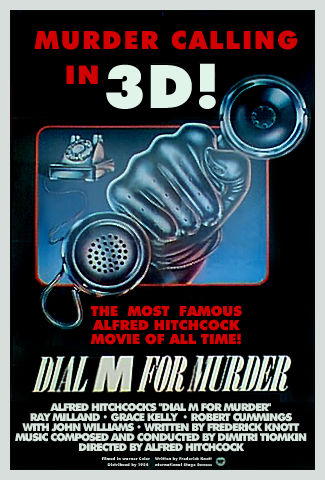
Dial M For Murder 3D Remastered (Alfred Hitchcock, US) The digitally remastered re-release of Alfred Hitchcock’s only 3D production was introduced by none other than film historian David Bordwell, whose introductory textbooks Film Art (1979) and Film History (1994) have shaped countless film students. After an insightful Hitchcock introduction that left me feeling as if I had downloaded an entire book to my central nervous system in only 12 minutes, the 4K, 3D digital restoration began.

What was most exciting about this often-dismissed Hitchcock flick (aside from the highly effective 3D itself) was recognizing how incorrect critics in 1954 had been when they complained about how pathetic the 3D was utilized. Re-evaluating Dial M For Murder in the present 3D age, it is overwhelmingly clear that Hitchcock understood the complexity of his technique; instead of overusing the “in your face” gimmick he directed his attention toward utilizing the depth of the sets and perfectly placed props near the camera. Fifty-eight years later, even one of Hitchcock’s “lesser” films (even according to himself) is still paving the road for future films and filmmakers.


Frances Ha (Noah Baumbach, US) The adorably awkward Greta Gerwig has been this generation’s “It Girl” since arriving on the indie scene in 2006 by way of director Joe Swanberg’s LOL. Frances Ha has given her what should prove to be her defining role in Noah Baumbach’s equally effervescent effort.
Baumbach’s mumblecore-anticipating, French New Wave-inspired films — Kicking and Screaming (1995), Mr. Jealousy (1997), The Squid and the Whale (2005), Margot at the Wedding (2007), and Greenberg (2010) — showcase flawed characters who some find so intolerable that watching a Baumbach film feels like getting stuck at an upper-class dinner party with the most unlikable people on the planet. But as in a Coen Brothers or Woody Allen film, these characters’ ugly truths are the key to what makes them so memorable.

In fact, it’s why all of Baumbach’s films have struck such a chord with me for 15-plus years. I keep seeing my own personality pitfalls in these Gen X-ers’ self-destructive decisions (I will literally say out loud, “I just pulled a Greenberg.”) And Frances Ha‘s hilarious train-of-thought odyssey is as profound as it is whimsical. With a cast pulled straight out of Lena Dunham’s HBO series Girls and added to the glorious black and white cinematography by Sam Levy (2008’s Wendy and Lucy), this ode to Allen’s Manhattan (1979) most definitely will make it to the top of a ton of critic’s lists. But more importantly you’ll find yourself thinking about the film as it relates to the most embarrassing moments of your own life.

http://www.youtube.com/watch?v=THh1krqYwo4

The Act of Killing (Joshua Oppenheimer, Denmark) Easily one of the most horrific and disturbing films ever made, and what’s even more frightening is that it’s a documentary. I have tried to explain this film to numerous people since being utterly transfixed and totally destroyed by it and often I see an odd glaze creep across the listener’s eyes. Filmed over a six-year period in Indonesia by filmmaker Joshua Oppenheimer, The Act of Killing plays out like a misanthropic satire, where the characters are so honest about their pure apathy towards other human lives that you as a viewer become unaware of what psychological quicksand lies ahead.

Again, this is a documentary and as it painstakingly introduces you to a group of elders in a small Indonesian village, self-revered war heroes from the military coup of the Communist government in 1965. Their leader, Anwar, and his friends decide they don’t want to just tell their war stories for a documentary, they want to re-enact each type of their actual killings in all the flair and glory of the movies that they grew up watching — John Wayne Westerns, extravagant musicals, and gangster epics like Scarface (1983). What ensues feels like Alfred Hitchcock’s Murder! (1930) or even the third act of Hamlet and could leave you absolutely accosted, obliterated, and feeling an unwanted amount of affectionate understanding. Either way, you will never be the same after watching this movie.

http://www.youtube.com/watch?v=pKG63WoOFGI

Berberian Sound Studio (Peter Strickland, UK) My favorite film of the festival takes place on the post-production set of a Dario Argento-esque, Italian horror film in the late 1970s-early 80s. This hypnotic, nostalgic, and ultimately transcendental experimental exercise will test the patience of just about every audience member. But anyone who has worked at a job (much less on the production of a film) where the possibility of losing the concept of time, as well as one’s grasp on reality, is a possibility may be able to conquer this monotonous, mind-bending ode to Brian De Palma’s Blow Out (1981). (Actual quote from a fellow press member leaving the screening: “Are you kidding me?!”)

Another quote — this one by filmmaker Paul Schrader, in his life-altering book Transcendental Style In Film (1972)  — says it best: “I would rather do something really small of some value than do what Marty Scorsese’s doing. I don’t see the fun in that.”

Top films of the 32 films I saw at the Toronto International Film Festival:

1. Peter Strickland’s Berberian Sound Studio (UK)
2. Joshua Oppenheimer’s The Act of Killing (Denmark)
3. Xavier Dolan’s Laurence Anyways (Canada)
4. Michael Haneke’s Amour (Austria)
5. Rob Zombie’s The Lords of Salem (US)
6. Jun Lana’s Bwakaw (Philippines)
7. Miguel Gomes’ Tabu (Portugal)
8. Noah Baumbach’s Frances Ha (US)
9. Brian De Palma’s Passion (Germany/France)
10. Martin McDonagh’s Seven Psychopaths (UK)
11. Bahman Ghobadi’s Rhino Season (Iran/Turkey)
12. Anurag Kashyap’s Gangs of Wasseypur (India)

http://www.youtube.com/watch?v=vrshKIuQyLk

(Buzzed-about fest favorites that I was sadly unable to screen: David O. Russell’s Silver Linings Playbook, Ben Affleck’s Argo, Sarah Polley’s Stories We Tell, Cristian Mungiu’s Beyond the Hills, and Lee Daniels’ The Paperboy).

Jesse Hawthorne Ficks is the Film History Coordinator at the Academy of Art University and hosts Midnites for Maniacs, a film series devoted to underrated, overlooked, and dismissed cinema.

Party with us (and toast the Cindy Sherman show) on SFMOMA’s roof

0

This evening, Thu/27, the Guardian is teaming up with SFMOMA for a super-neato event marking the coming end of the awesome Cindy Sherman show: “A toast to Cindy Sherman.”

Every Thursday evening, 6pm-8:45, is half-price admission to the museum (thats when all the cool people go). Now, throw in the gorgeous rooftop sculpture garden, complimentary wine from local vintners Bluxome Street Winery, and wild popup drag performances from three of the queens from our Tastes of Cindy photospread.

All this plus full access to the Cindy show itself and the rest of the mueum? You’re Sherman me! Full info after the jump:

Toast the final days of Cindy Sherman at SFMOMA (closing Oct 8) with a fabulous evening on SFMOMA’s Rooftop presented by the San Francisco Bay Guardian!

Come check out pop-up drag performances by Lil’ Miss Hot Mess, Boychild, and Ladybear — artists who re-created works by Cindy Sherman for the SF Bay Guardian’s fantastic piece, “Tastes of Cindy.”

Guests are encouraged to bring cameras and be inspired to create their own photographs. There will be a cash bar + complimentary wine from Bluxome Winery.

This is the perfect opportunity to catch Cindy Sherman’s blockbuster retrospective at SFMOMA before it closes. Don’t forget to invite your friends!

This event is FREE with half-priced Thursday evening admission! All ages are encouraged to attend

“A TOAST TO CINDY SHERMAN”

Thu/27, 6pm-8:45pm, free with half-price admission to museum

SFMOMA

151 Third St., SF

Facebook invite


Live Shots: Wilco and Jonathan Richman at the Greek Theatre

0

What’s that thing that guitarists do in concert, where they get real close, face-to-face, and gaze down intently as if sizing up the other’s instrument? The sort of maneuver that the Traveling Wilburys probably did on almost every occasion, in a full circle formation? Does it serve a purpose? Timing perhaps?

While Wilco’s Nels Cline was having his standout moment Saturday, taking his time delivering his solo for “Impossible Germany” off of 2007’s Sky Blue Sky, the other guitarists were communing at center stage, giving each other a Wilbury. At the moment, it seemed that the show – the second of two nights at Berkeley’s Greek Theatre – was dangerously close to veering into jam band territory.

Luckily, as much as Wilco gets indulgent at times – going extra long on a solo or an outro – the songs are the opposite of improvised. That the band’s live performances so closely resemble the album versions is impressive, given how structured and varied the songs are on record. Only listen to recordings, and one could assume that a lot of the music is overdubbed, until seeing the band live and discovering that on tracks like “Misunderstood,” all that percussion is purely drummer Glenn Kotche, whose bass drum seemed extra powerful Saturday night.

Seeing Wilco more than once, there are things you come to expect. “Misunderstood” will have a shout along coda of potentially endless “Nothing”s. “Via Chicago” will see the band’s alternation between harmony and noise exaggerated to an extreme, with the guitarists in the front strumming and carrying on, seemingly oblivious to a blaring interjection of distorted noise created by the rest of the band behind. It would be tiresome if it wasn’t so well done.

At the same time, new material was given deserving attention and time in the set. Singer Jeff Tweedy started soft with a tender rendition of “One Sunday Morning,” the closing track from 2011’s The Whole Love, before building the intensity with the opening track from that same album, “Art of Almost.” It was an immediate showcase of the band’s range, and the live recreation of the shifting “Art of Almost” was particularly electric, complete with the synchronized pulsing strobes accompanying the driving, snare-cracking build that happens near the five minute mark.

Maybe the band just seemed particularly tight since I was comparatively sober. And apparently not alone. “The wind must be blowing out tonight, because I don’t smell nearly as much mari-joo-wanna tonight,” Jeff Tweedy said, adding “No, that’s good for me. I’m still high from last night.”

Elsewhere in his brief mic breaks Tweedy took the time to both thank the Bay Area crowd for “inventing concerts” and also praise the always endearing Jonathan Richman, who Tweedy called one of 12 American originals, along with Little Richard, Buddy Holly, Hank Williams, Louie Armstrong, Woody Guthrie and “the dude from Night Ranger.”

Richman opened the evening with perpetually stoic drummer Tommy Larkins. Tweedy is right, and it’s always great to see Richman, but given the opportunity, catch him at a smaller venue like the Makeout Room, where he seems to leach the life force and feed off the crowd in an intimate setting. Saturday night was sadly lacking in age-defying roundhouse kicks.

Why do people have a problem with bikes?

68

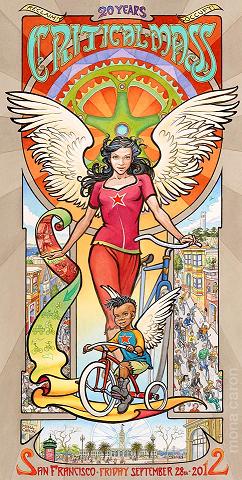
I’ve always been perplexed at all negativity that gets directed at bicyclists in general, and those who ride on Critical Mass in particular. The people from around the world that I’ve met this week as I worked on our cover story about the 20th anniversary of Critical Mass have been some of the nicest and most positive and life-affirming people I’ve met in a long time, the exact opposite of the sometimes-voiced stereotype that they’re entitled or angry.

So I was interested to read a pair of dueling online posts this week analyzing why motorists and other non-cyclists feel such disproportionate and inexplicable anger and resentment toward a whole class of people who have made a transportation choice that helps everyone, reducing traffic congestion and transit costs while helping protect the environment and reduce dependence on oil.

Their answers range from the affect heuristic, which is the idea that emotional triggers like seeing a cyclist almost get splattered affect our perceptions far more than our reason, to the resentment many drivers feel about being stuck in traffic while cyclists zip past them and just the basic sense of how foreign and strange cycling seems to many who don’t do it.

Some of those arguments ring more true to me than others, but I think the entire discussion is a fascinating one to have in the days leading up to this Friday’s 20th anniversary Critical Mass ride, which will feature a rainbow of nationalities, ideologies, ethnic and class backgrounds, and other traits – their only real commonality being an affinity for bikes.

“I just really like to ride. It’s a meditative thing for me. All my epiphanies come to me on a bike,” Alix Avelen, a 25-year-old woman who just moved to San Francisco from Toronto, bike touring the final leg from Vancouver starting in July, told me during Sunday’s Art Bike/Freak Bike Ride, part of the CM20 celebration.

It was her very first Critical Mass, although she’s been a regular urban cyclist for the last six years, and she believes that it’s important to have events, communities, and cultural happenings that promote cycling: “It just makes sense in cities.”

“We’re going to end up riding bikes because oil is getting more expensive and the streets are becoming more crowded,” rRez, a San Francisco native and longtime supporter of the city’s cycling community, told me on that ride. “Things are changing partly because we want them to change and partly because the old world is not sustainable.”

We can continue to cling to the old ways in the face of evidence that neither local roads nor our taxed planet can accommodate an indefinitely growing number of cars. Or we can encourage more people to try riding bikes, and give us the infrastructure we need to do it safely, rather than seeing us as a hostile force trying to take over your roads.

Even grungy looking anarchists like Justin Hood of the Black Label Bike Club offer surprisingly clear-eyed assessments of the role of bikes and Critical Mass. “The point of Critical Mas is just to go out and ride your bike. It’s not supposed to be about confronting drivers and smashing cars,” Hood said, admitting that there are times and places for such aggressive resistance, just not during this ride. “The point of Critical Mass is that if there’s enough of us, we are traffic. And this Critical Mass coming up is going to be gigantic!”

Or if you’d rather talk than ride, there are some opportunities for that this week as well, including the Shift Happens: Critical Mass at 20 book release party and discussion at 5:45 this afternoon at the Main Library; and the International Critical Mass Symposium from 5-8pm on Saturday at the California Institute of Integral Studies.

Total Trash adds second Coachwhips show

0

So, you know how you were super bummed that you forgot to buy Coachwhips reunion tickets for the now sold-out Oct. 27 show at the Verdi Club in San Francisco? Total Trash just announced that it added a second Coachwhips show that weekend – and this one is all-ages and in Oakland, with Pangea.

Coachwhips, as you know, was John Dwyer’s (Pink and Brown, Thee Oh Sees) screamy punk band that existed from 2001 through 2005 and released the excellent Bangers Versus Fuckers LP in 2003. These shows will be hot, sweaty fun.

http://www.youtube.com/watch?v=0rZ6SQtYpPk

Total Trash Halloween Bash with Coachwhips, Traditional Fools, Moonhearts, and more
Oct. 27, 7pm, sold out
Verdi Club
2424 Mariposa, SF
www.verdiclub.net

new show added:
Coachwhips
With Pangea, FIDLAR, Guantanamo Baywatch, White Mystery
Oct. 29, 7pm, $12
Lobot Gallery
1800 Campbell, Oakl.

Get tickets here: totaltrashfest.brownpapertickets.com.

TIFF happens, part two!

2

Read Jesse Hawthorne Ficks’ first report from the 2012 Toronto International Film Festival here.

In Another Country (Hong Sang-soo, South Korea) This highly enjoyable Éric Rohmer-esque vehicle for Isabelle Huppert continues Hong’s tradition as being the Korean Woody Allen by making a highly personal comedies. Huppert is masterful bouncing in and out of each random-yet-interconnected sequence, but Yu Jun-sang steals the show as the local lifeguard who hilariously channels Roberto Benigni (circa Jim Jarmusch’s 1986 Down By Law). It’s one of the funniest comic performances of 2012.

http://www.youtube.com/watch?v=kveNw8uD2kY

Passion (Brian De Palma, Germany/France) Brian De Palma is back, and primed for those of us who love the way he remixes his favorite Alfred Hitchcock movies (see: 1976’s Obsession, 1980’s Dressed To Kill, 1984’s Body Double, and 2002’s Femme Fatale). This time, though, De Palma remakes a French thriller: Alain Corneau’s 2010 Love Crime. It begins with a whiter-than-Wonder Bread color scheme and structurally devolves into something much more sinister combined with a crisp HD cinematography by Jose Luis Alcain (of Pedro Almodovar fame.)

De Palma said in the press that he really wanted someone who “understood how to make a woman look beautiful” — and by gawd, leads Rachel McAdams and Noomi Rapace not only look flawless but deliver deliciously diabolical performances. Passion also boasts what has to be one of De Palma’s most exciting conclusions. As soon as it was over, I wanted to watch it again! Who says De Palma peaked with Scarface (1983)?!

http://www.youtube.com/watch?v=j-AkWDkXcMY

Gangs of Wasseypur (Anurag Kashyap, India) Only 10 critics (yes, I counted) at the festival completed both parts of Anurag Kashyap’s Gangs of Wasseypur, which runs five hours and 15 minutes long. But I feel those of us who did are bonded together forever.

This historical Hindi gang epic, which begins in 1941 ends in the present day, is massive film that transcends generations and should make Ram Gopal Varma (of Sarkar films fame, clearly an inspiration here) proud. Director Anurag Kashyap pays attention to the details: wonderfully changing fashion and hair styles, ever-evolving movie posters on the alley walls. Not only is Gangs a tribute to the history of Hindi cinema, it establishs quite brilliantly where and what time period the characters are in — and during a five and half hour movie, you need all the help you can get.

http://www.youtube.com/watch?v=3SiHa6gVuyI&feature=related

Spring Breakers (Harmony Korine, US) This extremely hyped Harmony Korine dream project does exactly what you could ever fantasize about by delivering a T&A-filled exploitation film, led by James Franco as a grimy, gold-grilled-grinning, dreadlocked drug dealer who lives to prey on bikini-clad young girls (which is perfectly punctuated by the brilliant casting of Disney darling Selena Gomez.)

Spring Breakers is poised to become Korine’s most popular film to date, but its commercial appeal will likely overshadow perhaps his greatest film: Lotus Community Workshop, which played the San Francisco International Film Festival earlier this year and features a legendary performance by the almighty Val Kilmer! Don’t miss either of these soon-to-be contemporary cult classics.

http://www.youtube.com/watch?v=jgzkzVI5O3c

Aftershock (Eli Roth and Nicolas Lopez, US) Eli Roth and Nicolas Lopez’s earthquake horror flick Aftershock is a gleefully mean-spirited grindhouse thriller that sends a group of annoying American tourists (led by Roth himself, as the dorkiest douchebag of the year) into earthquake-ridden Santiago, Chile. Throw in every tried and true obstacle from 70s genre flicks such as Mark Robson’s Earthquake (1974) and Wes Craven’s Last House on the Left (1972) and you’ve got either one helluva hilarious tongue-in-cheek horror roughie, or, as some critics leaving the press screening were saying: “One of the worst films of the year. It definitely should go straight-to-streaming.”

http://www.youtube.com/watch?v=1YjIWEky81M

Laurence Anyways (Xavier Dolan, Canada) Winner of the Best Canadian Feature at this year’s fest, Xavier Dolan’s Laurence Anyways is yet another OCD, gorgeously-designed love story; it fits perfectly alongside his extremely personal I Killed My Mother (2009) and his devastatingly spot-on hipster classic Heartbeats (2010).

Once again, Dolan’s characters are allowed to feel obsessive about one another while encased in jaw-dropping mises en scène. Some critics seem to take issue with this 24-year-old’s influences (Wong Kar-wai, Pedro Almodovar), which led many reviews suggesting that Dolan needs to hire an editor (Laurence Anyways clocks in at two hours and 41 minutes).

But I would argue that this epic, gender-bending love story needs to take its time to do what no other film has ever done right. By humanizing not only Laurence, the transgendered lead character (epically performed by Raúl Ruiz’s ingenue, Melvil Poupaud), but also his life-long lover Fred, performed with an Elizabeth Taylor-esque guttural passion by Suzanne Clément, who won the Best Actress prize in this year’s Cannes Film Festival’s sidebar competition, Un Certain Regard.

For those willing to give in to a decade’s worth (1989-1999) of hypnotic set and costume designs, cryptic character development, a crew of campy castaways, and a killer soundtrack ranging from Visage to Celine Dion, Laurence Anyways should elevate Dolan from Canada’s best kept-secret to being an integral leader of a post-gender film movement that is just about to explode.

Jesse Hawthorne Ficks is the Film History Coordinator at the Academy of Art University and hosts Midnites for Maniacs, a film series devoted to underrated, overlooked, and dismissed cinema.

“Z is for Zest”: A kids book of alphabet affirmations

2

Perhaps you have run aground of late, or know someone who has. Maybe you’ve forgotten your alphabet (or know somebody who has.) At any rate, a Bay Area couple would like to help. Rebecca Kovan and Daniel MacIntyre have put together a lovely, illustrated ABCs book perfect for remembering your values. Its name is Alphabet Living, and we challenge you to click through the above slideshow and not dissolve in a puddle of love. Or a stain of irritation, depending at what point in your Folsom Street Fair comedown you are.

The duo (“Hobo Dan” and “Dr. Bee” as they are calling themselves for the sake of the printing) found it necessary to craft their own A-to-Z exploration when they got pregnant with their babe Julien, who now figures in the book’s promotional video. Hobo Dan and Dr. Bee wanted to make a book talking about life they way they want to live it, which as you can tell from these images include acting zestfully and questioningly, and being . Each letter’s accompanied by a poem, which reinforces said letter’s lesson.

And lest you think that the project is just a bunch of hippies with paintbrushes, consider this: the book’s already gone through its Kickstarter process and been funded completely, which makes Hobo D. and Dr. Bee the first authors in awhile to send their press release out after the funded creation of their book. 

So congratulations Alphabet Livers! And congratulations to us, because gosh darn we’re worth it. 


Dick Meister: Danger and death in the tobacco fields

5

By Dick Meister


Dick Meister, who has covered labor and political issues for more than a half-century, is co-author of “A Long Time Coming: The Struggle To Unionize America’s Farm Workers” (Macmillan). Contact him through his website, www.dickmeister.com.

Amid all the well-deserved concern over the deadly effects of tobacco on smokers, we’ve largely overlooked  tobacco’s other major victims – the workers who harvest the damn stuff for the great profit of  tobacco companies, often because they have virtually no other way to make a living.

There are nearly 100,000 tobacco harvesters, some as young as 12, most of them Mexican immigrants. They work during the summer in the tobacco fields of North Carolina, the country’s leading tobacco producer. As the AFL-CIO, its Farm Labor Organizing Committee (FLOC), the human rights group Oxfam America and others have reported, the workers’ pay and working and living conditions are abominable.

The reports note that year after year, thousands of the workers are afflicted with “green tobacco sickness,” which is caused by overexposure to the highly toxic nicotine in tobacco leaves that ‘s absorbed into their bodies.

Victims feel a general weakness or shortness of breath, severe headaches, vomiting, dizziness, cramps, heightened blood pressure or speeded-up heart rates. At the least, they break out in rashes.  The symptoms frequently last for several days.

Workers’ body temperatures, already high because of the southern heat in which they work, are raised even higher by the nicotine, which sometimes leads to dehydration and heat strokes that kill them.

Yet many workers get little or no medical attention. They’re lucky if they even get rest breaks during working hours. Most work for growers who do not provide health care benefits and are exempt from the law that requires employers to make Workers Compensation payments for employees who are hurt on the job.

Workers whose productivity declines because of tobacco sickness face firing or being turned over to government authorities for deportation, as do those who dare complain about working conditions or demand union rights. There are many more desperately poor immigrants to take their places.

One-fourth of the workers are paid less than the federal minimum wage of $7.25 an hour, most of the others barely above the minimum.

Living conditions, described as “inhumane” in the recent reports by the AFL-CIO and others, generally are as bad as working conditions. Most workers live in crowded, dilapidated, frequently rat-infested shacks in labor camps or in stifling, broken-down trailers near fields that are sprayed regularly with dangerous pesticides.

Finally, however, there’s genuine hope for change. It rests primarily with the AFL-CIO’s FLOC, which has helped thousands of workers in other crops in North Carolina and elsewhere win decent treatment.

Backed by an array of community and religious groups, FLOC has been waging a nationwide drive seeking collective bargaining agreements from growers to improve pay and conditions.  They’ve pressed their demands by tactics such as threatening to lead boycotts of the companies that buy the growers’ crops for manufacturing cigarettes and other tobacco products. They’re aiming as well at the supermarket chains and others who sell the products.

The main target has been R.J. Reynolds, which alone manufactures just about one of every three cigarettes bought in this country. FLOC and its allies are attempting to force Reynolds and other tobacco companies to demand that their grower-suppliers improve pay and working conditions or lose their business.

But realistically, what are the chances of success in the drive to provide decent treatment for the highly exploited and until now virtually powerless tobacco workers?

FLOC President Baldemar Velasquez says the chances are good, despite the great political influence and wealth of those who are resisting the demands of the union and its growing numbers of supporters.

 As evidence that it can be done, Velasquez cites the union’s five-year long boycott that in 2004 finally forced a major North Carolina corporation, the Mount Olive Pickle Co., to raise the price it paid for cucumbers as a way to finance higher pay for the company’s workers. It also agreed to allow union organizers to circulate in its labor camps.

The struggle in behalf of the workers is certain to continue in any case, the struggle to erase what, as Velasquez notes, is a national shame – “the deplorable condition of the tobacco workforce that remains voiceless, powerless and invisible to mainstream America.”

Dick Meister, who has covered labor and political issues for more than a half-century, is co-author of “A Long Time Coming: The Struggle To Unionize America’s Farm Workers” (Macmillan). Contact him through his website, www.dickmeister.com.


Perjury charges don’t look so good for the mayor

65

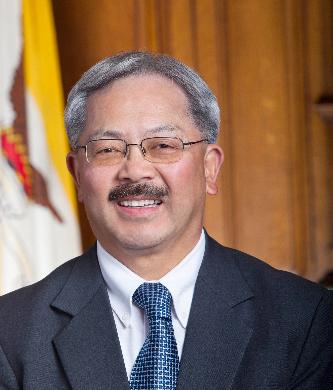
The Chron doesn’t think it’s important, but there’s some serious evidence in today’s Ex that the mayor wasn’t entirely forthcoming when he testified before the Ethics Commission. The declarations from Debra Walker and Aaron Peskin are attached at the end of the story; they’re worth reading.

Walker is very straightforward: She says she’s friends with Sheriff Ross Mirkarimi and his wife, Eliana Lopez. She’s also been close friends with Sup. Christina Olague:

Ms. Olague and I often got together for coffee or movies, and we talked often about land-use issues. I wrote a letter of support for Ms. Olague to Mayor Lee, asking him to appoint her as supervisor. At her request, I loaned her a painting to hang in her office when she took office.

All of that is consistent with what I’ve heard about their friendship, and it doesn’t sound like Walker was ever out to get Olague or to put her in a bad situation.

Then Walker  explains that during the week of March 6, she was talking to Olague and complained about the Mirkarimi case. “She said the mayor had asked her about the case when they were talking about other issues, and had asked her for her thoughts.”

The declaration goes on a bit, with plenty of backup to the idea that Olague and Lee had discussed how to deal with the sheriff. Which doesn’t surprise me — I have heard from other prominent people in the city that Lee reached out to them for advice on whether to suspend Mirkarimi.

But it’s a problem for two reasons. One is that Olague, sitting as a judge in this case, isn’t supposed to have talked to anyone else about it — certainly not the prosecuting authority, the mayor.

The other is that Lee denied under oath that he had talked to any of the supervisors about the case.

Debra Walker isn’t a fan of Ed Lee, but she would have had to go to considerable lengths to create this level of fiction. It rings honest to me, particularly when she notes that “on June 29, 2012, at 2:10 pm, I received a phone message from Supervisor Olague saying ‘Debra, the converstaion never happened.'”

Look: This is a sworn statement, made under penalty of perjury. So either Walker’s lying and guilty of perjury, or the mayor is. Which seems more likely?

Ditto for the Peskin declaration, which includes dates, times, places, and specific messages. Again: Did Peskin go out of his way to perjury himself — or did the mayor fail to tell the truth on the stand?

This is now part of the case, like it or not: The credibility of the mayor is one of the issues at hand — and more important, if Lee talked to Olague he probably talked to others. Who would then have to recuse themselves.

Mission residents connect at community meeting

7

Police hosted a Mission community meeting yesterday in response to the Sept. 16 death of Jesus Solis, 20, who was shot at Treat Ave and 26th St. But before the meeting could take place on its scheduled date, another shooting took place; police officers shot Oscar Barceñas, 22, Sept. 20. Barceñas has survived his injuries.

The second shooting sparked two nights of late-night demonstrations during which protesters broke the windows of banks and a local business and painted “killers” on the Mission police station.

At last night’s meeting, Police Chief Greg Suhr, district Captain Robert Moser, and district Sup. David Campos spoke to a group of more than 100, then listened as the group asked questions, commented on their experiences and made suggestions. Ricardo Garcia-Acosta, regional director of the Community Response Network, took a seat next to the city officials about halfway through the meeting to address the community as well.
 
Suhr said that Barceñas may have been planning to act in revenge for the death of Solis.

Many at the meeting spoke of their mourning process for Solis, known as Chuy. He had been working, employed with help from the office of Sup. David Campos, before he was killed last week.

“This individual was trying go change his life. He was going to work, we was trying to turn his life around,” Campos said during the meeting.

Long-time Mission resident Roberto Hernandez said that he has been to 50 meetings after deaths of people in the community.

“I’ve buried too many kids in this barrio,” said Hernandez.

How to help?

Some residents at the meeting called for increased police presence, and one requested mounted police at Garfield Park. Others, such as Yaron Milgram, owner of two upscale restaurants in the 24th street area, expressed a desire to be more involved in the community.

“I know that there’s been a lot of change, and I know I’m considered part of that change,” said Milgram.

Many at the meeting had suggestions of how other residents could help.

Some advocated getting to know neighbors.

“For some of you hear who are quick to call the cops, when’s the last time you went outside and said how, how are you guys doing? What are your names?” said Garcia-Acosta.

“It really hurts when you hear people ask for these youth to be pushed out of the neighbrohood,” said Susana Rojas, director of the Mission Clubhouse. “Never forget they’re somebody’s son, they’re somebody’s brother, they might be somebody’s dad.”

She said that, if residents didn’t want to talk to the kids themselves, “talk to the people that are working with them” to learn more about them. She recommended donating to local community centers like the Mission Boys and Girls Club and the Good Samaritan Family Resource Center, where the meeting was held.

“A lot of the people I work with, they’re angry,” said Jae Maldonado, Community School Coordinator at Buena Vista/ Horace Mann. “The community is changing at a pace they don’t have any control over.”

Maldonado suggested that local business owners play an active role in getting resources and jobs to youth, offering Mission Pie as an example of a company that employs local youth and helps prepare employees for careers in catering or baking.

One resident, Anabelle Bolaños, decided to help set up a police and community meeting in Spanish, which she hopes can take place monthly. According to staff at the Mission Police Department, the first such meeting is tentatively scheduled to take place at some point in November. Tonight, police will host their regular community meeting at Mission Police Station meeting, which occur the last Tuesday of every month at 6pm.

Rojas also announced a “peace march,” to leave Thursday from 24th and Mission at 4pm.

Ballot-access crew hit with huge legal fees

19

Six activists are being hit with overwhelming legal fees after their attempt to reverse California’s new election process was blocked by a wealthy Republican.

Richard Winger, the San Francisco-based editor of Ballot Access News, and five others went to court in 2010 to block the open-primary system, which mandates that the top two finishers in any primary battle move on to the November election. The plaintiffs argued that the provisions were bad for third parties.

The lawsuit named Secretary of State Debra Bowen, but Charles Munger Jr., the chairman of the Santa Clara County Republican Central Committee, won the right to intervene in the case on behalf of the top-two system. He hired the powerhouse law firm Nielsen Merksamer, and Winger’s case, Field v. Bowen, went down to defeat.

Now Munger has convinced the court to award his law firm $243,000 in fees — money that the small band of activists can’t possibly pay. 

“The fees are contrary to law and precedent,”  Winger told us.

Winger, whose annual income was $6,000 for the last two years in a row, says he lives mostly off his savings, doesn’t have a pension and only receives $180 in social security each month.

Since $240,000 is an impossible sum that would wipe out the public-spirited activists — and means nothing to Munger — you have to wonder: What is this really about?

“Sometimes lawyers are really competitive. It’s like a sport to them. They just want to win,” says Winger.

From the outside, the fee request seems like a classic case of schoolyard bullying. In fact, it’s a prime example of what the legal community appropriately calls a S.L.A.P.P. lawsuit (strategic lawsuit against public participation).  Such cases are meant to intimidate one party with legal fees until they abandon the case, something the plaintiffs haven’t done quite yet.

Political insiders are wondering why Secretary of State Debra Bowen hasn’t done more on behalf of the plaintiffs. “She’s leaving these people hanging out to dry,” says Steven Hill, the former director of the Political Reform Program of the New American Foundation. “The ironic thing is that you have a secretary of state who calls herself a progressive, but her name is on a lawsuit that’s being used by Nielsen Merksamer to slap down a public interest lawsuit brought by her own supporters.”

Adding to the irony of Bowen’s lack of involvement is that the very political process that Winger and others were trying to stop is what drove her out of her 2011 congressional bid in California’s 36th district.

That special election — forced after incumbent Jane Harman resigned — was also a test run of the new top-two open primary system.

Bowen’s opponent, liberal centrist Janice Hahn, saw a way to squeeze her out of the race by leveraging the potential candidacy of another leftist liberal, Marcy Winograd. Hahn’s tactics succeeded as Bowen and Winograd essentially split the left-liberal vote, allowing Hahn to reap the primary benefits and move into the general election where she won with ease against Republican Craig Huey.

Nonetheless, Bowen is failing to speak up on the matter.  After multiple requests for an interview, Bowen’s press secretary, Shannan Velayas said in an email: “The Secretary of State’s office does not comment on pending litigation.”


The strange deal behind the SF Weekly sale

13

We all knew something like this was coming. Village Voice Media, owner of SF Weekly and 12 other alternative papers, has been looking for a way out of a seemingly intractable bind for some time now.

See, the sex ads the VVM sells on its Backpage web site have created a huge stir. After NY Times columnist Nicholas Kristof started a moral crusade to rid the world of the demonic prostitution ads, a lot of national and local advertisers decided they didn’t want to be affiliated with VVM, so they pulled millions of dollars worth of print advertising. Then Goldman Sachs dumped its ownership stake. And since some of the VVM papers were already doing poorly, the cascade of bad news was a real threat to the chain’s bottom line — and possibly its future. VVM was already underwater on its bank loans, and the Bank of Montreal had in effect foreclosed and taken control of the company’s finances.

Oh, but there’s nothing that could be done about Backpage, since (according to Reuters) it pulls in about $3 million a month in sex-ad revenue. That money was paying the bankers off and keeping the whole operation afloat.

So what is a poor predatory chain to do? Can’t live with Backpage; can’t live without it.

It doesn’t take a rocket scientist to figure out what Mike Lacey and Jim Larkin have been thinking about: If Backpage were just conveniently put into a separate company, then everyone would have plausible deniability. So suddenly Village Voice Media becomes Voice Media Holdings, under new management — that is, the same management that’s always been there, except for Lacey and Larkin, who now own Backpage. The headlines blare: SF Weekly has been sold! No more evil Backpage! Come on back, noble advertisers!

But let’s remember: Lacey and Larkin are Village Voice Media. They built the company and hand-picked the senior management. I know how hard it is for an owner to give up his newspaper; these guys are control freaks and there’s no way they were walking away totally from VVM.

Scott Tobias, the new CEO, isn’t responding to my messages. Neither is Lacey. But let’s take a look at the essential element here: How did Tobias and his team come up with the cash to buy VVM — which isn’t worth what it was five years ago, but is still a significant media property? How did they actually “buy” it when the Bank of Montreal owns most of VVM and would want to be paid back some $70 million in outstanding loans? How would they find private financing for a company that couldn’t pay its bills without the Backpage revenue that will suddenly be going away?

Tobias told Reuters that “some private investors” were found, and maybe so, but I bet it’s this simple: The deal was financed with the Bank of Lacey and the Larkin National Trust. Those two almost certainly still hold the note on the company, and thus are still in a way the owners, and will probably still play a management role — if only because their money (and whatever deal they wheedled out of the Bank of Montreal) is still in the game.

So yes, you can say that SF Weekly and its brother and sister papers have been “sold.” But unless Nick Kristof and the advertisers who cut off the dollars are pretty damn dumb, they’ll take a hard look at this and say: Really?

Six Organs of Admittance march into battle at Bottom of the Hill

0

On Saturday night, a small cadre of dedicated fans waited patiently for Ben Chasny’s psychedelic folk project, Six Organs of Admittance, to take the stage at Bottom of the Hill just before midnight. Six Organs is currently touring the West Coast in support of their LP Ascent, which was released last month on Drag City. Members of his other project, the noise rock group Comets on Fire, accompanied Chasny on the album and onstage at BOH.

Lead guitarist Chasny and supporting guitarist Noel Harmonson, bassist Ben Flashman, and drummer Utrillo Kushner effectively drenched the punkish, gently swaying crowd in raw, unplugged, cacophonic tribal noise as they orchestrated spooky guitar symphonies, hard rock riffs, and fuzzed-out surf numbers. About half of Six Organs’ jams possessed an epic “I’m marching into battle with a large horned animal” vibe, and Chasny’s intermittent vocals felt dark, scratchy, wispy, and perhaps slightly demonic.

The band clearly had chemistry and sections flowed seamlessly together, but each musician appeared to be having a wholly immersive experience with his instrument, as if he were, at times, unaware of his co-conspirators. I found it especially hard to stop staring at Kushner because I was intrigued by his ecstatic way with the drums, and also because his gold hawk-with-outstretched-wings necklace was awesome.

While the band’s tendency to break into ear-deadening drone strikes enhanced the show’s overall excitement, they could have, perhaps, turned it down a few decibels. And although the crowd more often favored soft head-banging and slow movements, at one point the guy in front of me unleashed some potentially destructive, solo dance moves that almost took me out at the ankles. But that, again, simply added to the show’s excitement.

After playing his last song with the full band, Chasny quietly reappeared on stage and performed a short, quiet, solo encore that completely juxtaposed the sound of the past 45 minutes. I found this a brilliant way to end the evening. And yes, my ears are still ringing. 

Politics, love, and photography: ‘Time Stands Still’ in Mountain View

0

Some people need to take photos to snap their chaotic perspective into focus. This is the theme of the 2009 Tony-nominated play Time Stands Still, which just enjoyed a successful run (ending Sept. 16) at TheaterWorks in Mountain View. I saw both the TheatreWorks version and the play on Broadway, and as a comparison, I found that this production kept the set and acting to high standards.

Two journalists, a couple, return from Iraq after documenting the affects of the American occupation. The woman photojournalist, Sarah Goodwin, was badly injured from a roadside bomb while on the job. This occurred when her partner, James Dodd, had already returned to New York City after witnessing an incident of especially traumatizing civilian deaths.

Although the play shows us the aftermath of their time documenting civilian casualties, their trauma is tangible. The play sparks many philosophical debates as you watch the couples personal lives, as they struggle to regain steadier footing back on home soil.


The juxtaposition between the main couple and their best friends — Goodwin’s editor Richard Ehrlich and his young, happy-go-lucky partner, Mandy Bloom — is fascinating. On Broadway the young woman was played by Christina Ricci, and in this production Sarah Moser does an exquisite job with this complex role.

Although Goodwin (Rebecca Dines, who did an amazing job portraying the fierce temperament of her character) has the most lines in the play, Moser as Mandy created a stereotype and then unpacked that two-dimensional portrayal. At first it’s easy to judge the personality type that Mandy embodies, and to assume that she “just doesn’t get it” compared to these worldly journalists. In comparison she seems shallow, fluffy and even stupid.

But Mandy has the pleasure of delivering one of the most striking lines in the play — as she turns to James and Sarah after a charged debate they were having with Richard, Mandy is able to have the last word, in complete exasperation and disbelief: “Why can’t you just let yourself enjoy life? You are always focusing on war and death, and I think if you can’t also enjoy being alive, then really, what’s the point?” This line drew an audible murmur of acknowledgement from the audience.

As a journalist and human rights activist I found this play incredibly fascinating. It highlights the differences between a passive observer and someone who can affect change, and the obligation some Westerners feel to forsake comfortable lifestyle options and put themselves in dangerous situations. How much can taking a photo of the slain bodies of innocent civilians in foreign countries really show respect to the victims? I would call the play an exploration of the lines between personal and professional, one country and another, taking a photo and actually understanding what is being photographed.

The production was amazing, and despite that some lines were delivered in exaggerated tones, I think that the hearts of Donald Margulies’ script and those bringing it alive, including director Leslie Martinson and scenic designer Erik Flatmo, shone through. (Playwright Margulies won the Pulitzer Prize for Drama in 2000 for his play Dinner with Friends.)

A powerful work like Time Stands Still has the ability to motivate audience members to become politically aware and active. “Well, what’s the point of preaching to the choir?” James complains after he and Sarah return home from a political play with Mandy and Richard. “The audience is just going to say, oh how awful, how unjust! And then go back to taking a huge bite of their fancy appetizer.”

Heads Up: 6 must-see concerts this week

0

Waiting for the second manicure of my life, flipping through trashy magazines with my excitable fellow preeners, I came upon a photo of glittery purple monster Katy Perry; the conversation switched to her skills as a pop singer and place in the cultural zeitgeist (general consensus: the candy-coated songs are terrible guilty pleasures, her candy-coated bosom and infantilizing sexuality are kind of ick). We flipped the page.

Fast-forward several hours and – tickled by intense declarations of love and copious champagne at an intimate ranch wedding – the preeners and I are ecstatically throwing our whole selves into this “Teenage Dream.” Limbs in the air, with broad toothy smiles, we were in it, and without any trace of remorse or snark.

Music does that to you. We all seek out the challenging works of the genius craftspeople, but sometimes, it’s all about that quick and thrilling release, of both endorphins and mind. Letting it all go for the moment. Soaking up the sound. Musicians and bands below such as Naytronix and Father John Misty – and even genuine pop-star-in-training Maria Minerva – have both the challenge and the release. Why pass up the chance to see that live?

Here are your must-see Bay Area concerts this week/end:

Naytronix
Let’s get this out of the way: Naytronix is actually Oakland’s Nate Brenner, tUnE-YaRds’ bassist, who has her tripped out mixing sensibility, and is also a member of experimental East Bay act Beep! That said, he’s clearly on his own path with the robotic-dance-party Naytronix project, with dense synth samples and shiny disco pop grooves. Plus, I’m partial to Bay Area-heavy outputs. Check out the video for his single “Baby Don’t Walk” off his debut album, Dirty Glow (Oct. 9). It’ll make you want to Frankenstein twist in Golden Gate Park like some kind of Lynchian character.
With Sonnymoon, Bells, B. Lewis
Tue/25, 7:30pm, $8
Cafe Du Nord
2170 Market, SF
(415) 861-5016
www.cafedunord.com
http://www.youtube.com/watch?v=wMv9srKQn-0

Father John Misty 
This Father John Misty appearance comes before the long-sold out show later this week at the same venue. The absurdist LA folk singer-songwriter (a.k.a Fleet Foxes drummer J. Tillman), with strong vocals, a dapper sense of humor, and cocked hips, sent electrifying ripples through the Outside Lands crowds last month; one can only imagine how he’ll creep indoors. Silver lining: if this one does indeed sell out, there’s always the Jansport/Noisey Bonfire Sessions party thingy this weekend on Treasure Island – it’s free with RSVP and he plays alongside the Dodos, Geographer, and White Fence.
With Jenny O
Wed/26, 8pm, $15
Independent
628 Divisadero, SF
(415) 771-1421
www.theindependentsf.com
http://www.youtube.com/watch?v=KtOToiIDNRA

Dreamdate
Oakland’s Dreamdate could have been born of the 1990s Pacific Northwest. The trio, led by singer-songwriter Yea-Ming Chen, is lo-fi but poppy, minimalist but warm and sweetly melodic. A stripped down garage rock effort worthy of both tween swooning and headbanging. The trio has been bopping around the Bay for a few years now, and tonight, it shares the stage with some more melodic up-and-comers, the She’s.
Thu/27, 9pm, $7-$10
Brick and Mortar Music Hall
1710 Mission, SF
(415) 371-1631
www.brickandmortarmusic.com
http://www.youtube.com/watch?v=QNlEmSaNH74

Erin Brazill and the Brazillionaires
Self-described noir pop six-piece Erin Brazill and the Brazillionaires is set to use its Amnesia performance as an opportunity to release a new video. Not just any run-of-the-mill, song-to-performance video, this is the visual version of a song suite based on Hitchcock films including Rear Window, The Birds, Psycho, and Frenzy. A brow-raising undertaking indeed. But this talented local group – which includes the use of a washboard, clarinet, cigar-box guitar, and organ – doesn’t seem to shy away from a challenge. Plus, Amnesia says there will be a “lingerie fashion show” that night, whatever that means, presumably not the bands in their delicates.
Sat/29, 9pm, $7-$10
Amnesia
853 Valencia, SF
(415) 970-0012
www.amnesiathebar.com
http://www.youtube.com/watch?v=fFFl2kZy5a8

Maria Minerva
“Like a ’90s TRL countdown as envisioned by Peaking Lights, Maria Minerva’s fuzzed-out hypnagogia is the stuff of bygone pop anthems, filtered experimentally and relentlessly through Macbooks, cheap software, and a boatload of filters and effects. Commended by The Wire for her contribution to the blossoming meta-pop movement, the elusive Estonian producer strikes a captivating balance between high art and radio trash, traditional top-40 conventions and anarchic nonconformity. “ — Taylor Kaplan
With Father Finger, Bobby Browser, EpicSauce DJs
Sun/30, 8pm, $12
Rickshaw Stop
155 Fell, SF
(415) 861-2011
www.rickshawstop.com
http://www.youtube.com/watch?v=fvSQ7OnJMlA

Under the Central Freeway: A Live Music Festival
The main room will have locals Kelley Stoltz, Religious Girls (who just dropped new album I Want to Believe last week), Sweet Chariot, Will Sprott, the Wrong Words, Shalants, and Super Natural. And in the loft, DJs the Selector DJ Kirk of Sweater Funk, TS and OddznEndz, PASystems, and Dr. Linder. This one’s kind of a no brainer. Spend all day under the freeway at Public Works, then squint when the doors open and release yourself into the night.
Sun/30, 2-9pm, $15
Public Works
161 Erie, SF
(415) 932-0955
www.publicsf.com

Live Shots: Aesop Rock at the Fillmore

0

The anticipation was killing me. After waiting through 10 weeks of postponement and three openers, I just wanted to see Aesop Rock. Well over two hours past showtime on a Sunday night at the Fillmore, the audience was getting restless.

The show, originally scheduled in July, was canceled just hours before, when someone broke into Aesop Rock’s tour van. Now, 10 weeks later, we were tired of waiting. When Aesop Rock finally burst onto the stage with his touring group (and Hail Mary Mallon bandmates) DJ Big Wiz and Rob Sonic, the energy in the room exploded.

Aesop Rock raced through standout tracks such as “Dark Zero Thirty” and “ZZZ Top” from his new album Skelethon, spitting his verse at lightning speeds. His rapid-fire, pop-culture-referencing, stream-of-consciousness lyrics, which have earned him a reputation as one of the smartest MCs in the industry, sparkled under the stage lights.

The increased speed of the live performance allowed the tracks to take on new life, both more playful and more aggressive.

Halfway through the show, Aesop Rock paused before preforming “Racing Stripes,” a song about a bad haircut, to call up an audience member to get sheared on stage by opening band Dark Time Sunsine. The deal is that the scissors start moving when the beat drops and don’t stop until the song is over.

Aesop Rock has performed this stunt at every stop of his tour, but tonight was a special night. Since it was the last show of the tour, they also pulled up their long-haired tour manager to get his cut by “a person who knows a lot about hair….Ms. Kimya Dawson!” Dawson, who will be releasing an album with Aesop Rock later this year, ran onto the stage, afro bouncing. By the end of the song, both men onstage had extremely, uh, creative asymmetrical haircuts and Dawson had even started in on her subject’s chest hair.

After the barbershop was cleaned up, some of Aesop Rock’s older songs started surfacing. This setlist, to the audience’s delight, contained several odes to San Francisco eateries. “Check it out,” he shouted. “Y’all like late-night eating?” The rapper, who lives in the city, devoted an entire song each to late night diner Grubstake and Polk Street’s 24-hour donut shop Bob’s.
“This city has been fucking fantastic to me,” Aesop Rock shouted in one of his rare moments of earnestness. By the end of the packed two-hour set, he had certainly returned the favor.