Print sections as they appeared in the early 2010s

To find articles by keyword or author, you may want to use our Search function.

Print Sections

Muni fare shakedown

43

Update: Just a day after the release of this article, advocacy group POWER announced that Google pledged to pay for Free Muni For Youth for two years. “This validates both the success and necessity of the Free Muni for Youth program,”said Bob Allen, leader in the FreeMuni for Youth coalition, in a press release. “We need tech companies in San Francisco and throughout the region to work with the community to support more community-driven solutions to the displacement crisis.” 

The funding though is promised only for two years, and when that timeframe is up the question will still remain — will Muni’s operating budget pay for something Mayor Ed Lee could find funding for elsewhere? Additionally, Google hasn’t announced funding for free Muni for seniors or the disabled, another program up for consideration in the San Francisco Municipal Transportation Agency’s new budget. That may change if and when it is approved by the SFMTA for the next budget year. 

“I think it’s a positive step in the right direction,” Superivsor David Campos, the sponsor of Free Muni For Youth, told us. “But there are still questions about what it means in terms of the long term future of the program. It’s only a two year gift.” 

“We have asked for a meeting with Google and the mayor’s office and the coalition to talk about long term plans, to find out more information about what this means.” 

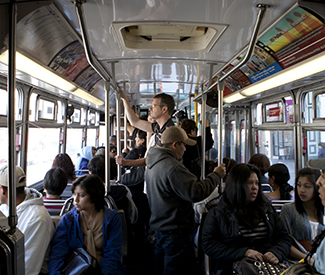
There’s a tie that binds all Muni riders. From the well-heeled Marina dwellers who ride the 45 Union to Bayview denizens who board the T-Third Sunnydale line, we’ve all heard the same words broadcast during sleepy morning commutes.

“Please pay your fare share.”

The play on words (also seen on Muni enforcement signage) would be cute if it didn’t perfectly represent how Muni riders may now be stiffed. A slew of new budget ideas hit the San Francisco Municipal Transportation Agency Board of Directors last week (Feb. 18), and who will pay for it all is an open question.

The first blow to riders is a proposed single-ride fare hike from the current $2 to $2.25.

Other proposals include expanding the Free Muni for Youth program, rolling out a new program offering free Muni for seniors and the disabled, and a fare hike to $6 for the historic F streetcar.

The odorous price jumps (and costly but promising giveaways) are moving forward against a backdrop of a Muni surplus of $22 million, which the board has until April to decide how to use, and a controversial decision by Mayor Ed Lee to make a U-turn on charging for parking on Sundays.

The meter decision would deprive Muni of millions of dollars.

“We’re not proposing anything here, just presenting what we can do,” SFMTA Director Ed Reiskin told the SFMTA board at City Hall last week.

There’s still time to change the SFMTA board’s mind on the proposals between now and final approval of the budget in April. But who will end up paying for a better Muni?


FARE HIKES NOT FOUGHT

In 2010, the SFMTA instituted a policy to raise Muni fares along with inflation and a number of other economic factors, essentially putting them on autopilot. The SFMTA board still has to approve the fee hikes, which may rise across the board.

fares One-time fares may jump to $2.25. Muni’s monthly passes would see an increase by $2 next year and more the following year. The “M” monthly pass will be $70 and the “A” pass (which allows Muni riders to ride BART inside San Francisco) will be $81.

Muni needs the money, Reiskin said.

“To not have (fares) escalate as fuel and health care costs increase, you can’t just leave one chunk of your revenues flat,” he told the Guardian. Muni’s operating budget will expand from $864 million this year to $958 million in 2016. “Salary and benefit growth is the biggest driver of that,” Reiskin said.

Mario Tanev, spokesperson for the San Francisco Transit Riders Union, said the hike was expected.

“We’re not necessarily against the inflation increase,” he said. “But though the parking fines SFMTA levies are inflation adjusted, other rates (against drivers) are not. There are many things in our society that disincentivize transit and incentivize driving.”

Drivers enjoy heavy subsidies to their lifestyle on the federal, state, and local levels, from parking lot construction, the cost of gasoline, and now it seems, renewed free Sunday parking meters. The new fare increases are hitting transit riders just as the mayor is poised to yank funding from Muni to put in the pockets of drivers.


PLAYING POLITICS

When the paid Sunday meter pilot began in early 2013, it was a rare flip in a city that often treats Muni like a piggy bank: money was floated from drivers and dropped onto the laps of transit.

A report from SFMTA issued December 2013 hailed it as a success for drivers as well: Finding parking spaces in commercial areas on Sundays became 15 percent easier, the study found, and the time an average driver spent circling for a space decreased by minutes.

Even some in the business community call it a success, since a higher parking turnover translates to more customers shopping.

Jim Lazarus, senior vice president of public policy at the Chamber of Commerce, is a supporter of the paid Sunday meters. “You can drive into merchant areas now where you couldn’t before,” he told us.

Eliminating Sunday meter fees would punch a $9.6 million hole in Muni’s budget next year, by SFMTA’s account.

The timing couldn’t be worse. On the flip side the Free Muni for Youth program, which targets low-income youth in San Francisco, may expand next year at an estimated cost of about $3.6 million, and a program to offer free Muni for the elderly and disabled would cost between $4 and $6 million — close to the same the same amount that would be lost by the meter giveback.


BOOSTING SAN FRANCISCO FAMILIES

“As an 18-year-old in high school it was a struggle to get to school, it was a struggle to find 75 cents or two dollars to get home,” Tina Sataraka, 19, told the SFMTA board last week. As a Balboa High School student, Sataraka had a 30-minute commute from the Bayview. She’s not alone.

A study by the San Francisco Budget & Legislative Analyst’s office found that 31,000 youth who faced similar financial hurdles had signed up for the Free Muni for Youth pilot program, a resounding success in a city where the youth population is dwindling. Authored by Sup. David Campos, the program may redefine “youth” to include 18-year-olds, who are often still in high school.

But initial grant funding for the program has dried up, so now Muni will foot the bill.

Not one to say “I told you so,” Sup. Scott Wiener said there were reasons for objecting to the program a year ago.

“My biggest, fundamental objection to the program was less that they were giving free fares to kids, and more that they were taking it out of Muni’s operating budget,” Wiener told us. “They need to find a way to pay for it, perhaps from the General Fund, and not just taking the easy and lazy way out.”

The Budget & Legislative Analyst recommended several options for alternative funding: special taxes on private shuttle buses (Google buses), or an increased vehicle license fee specially earmarked for the youth bus program. So far, Mayor Ed Lee hasn’t shown an interest.

“There haven’t been discussions of having the Board of Supervisors fund free Muni for youth,” Reiskin told us. The same goes for the mayor. And though Reiskin was cautious and political about the possibility of Sunday meters becoming free again, he didn’t sound happy about it.

“As for what’s behind [the mayor’s] call for free Sunday parking, that didn’t come from us,” Reiskin told us. “That came from him.”


NOVEMBER RISKS

Mayor Lee’s office didn’t answer our emails, but politicos, including Wiener and Chronicle bromance Matier and Ross, indicated the mayor may be reversing on Sunday parking meters to appease the driving voter electorate.

There are two measures up on the November ballot, and one is aimed right at drivers’ wallets.

The two measures, a $1 billion vehicle license fee hike, and a $500 million transportation bond, are both aimed at shoring up the SFMTA’s capital budget. An October poll paid for by the mayor showed 44 percent of San Franciscans in favor of a vehicle fee hike, and 50 percent against, according to the San Francisco Chronicle.

Reiskin said the loss of those two ballot measures would be crippling to Muni’s future.

“The improvements we’re trying to make to make Muni more reliable, more attractive, those won’t happen. This is our funding source for that,” he said.

The mayor is busy smoothing the potholes towards the bonds’ success in the November election, but it seems he’s willing to pile costs onto Muni and its riders to do it.

Correction 2/26: An editing error led to the erroneous calculation of Free Muni For Youth at near $9 million. Free Muni For Youth is only estimated to cost the SFMTA $3.6 million. It is the combination of Free Muni For Youth and free Muni for the disabled and elderly that equal about $9 million. 


Beautiful path to now

2

culture@sfbg.com

VISUAL ART/YOGA I attended my first yoga class in 2000, at the Mindful Body on California Street. I’d arrived by way of much prodding from a journalism colleague who thought yoga might help with an increasingly debilitating chronic pain condition I’d mysteriously developed. A Brooklyn-raised fiery gym rat in my early 20s, I had just moved to San Francisco and simply couldn’t fathom doing this New-Agey exercise routine. I’d also recently been to India (to see the country — not to learn yoga), and I’d resented the hippie Westerners who seemed to be eagerly consuming yoga study, but staying clear of the places where starvation and disease had riddled the practice’s homeland.

With all of this emotional baggage — and an additional few suitcases that I’ll leave unpacked for the moment — I put on a pair of old blue leggings and an oversized T-shirt, and dragged myself to yoga class. And then I went back again.

It was a good workout. But, more significantly, by the time each class was midway through, my pain would temporarily disappear. Plus, the practice made me feel a way no native New Yorker ever expects to feel: peaceful. I committed myself to yoga harder and faster than I had to anything in years. It was doing something to me, changing me in some way.

Now it’s 2014; I’ve become a yoga teacher. And tonight I’m at the opening party for the Asian Art Museum of San Francisco’s “Yoga: The Art of Transformation,” the first ever comprehensive art exhibit on yoga’s history. Upstairs, yoga teacher-rapper-celebrity-activist MC Yogi is performing his signature ditty “Ganesh is Fresh” to a crowd of fans, some dressed in colorful spandex yoga clothes, others in traditional Indian garb, and still others in contemporary SF duds. Downstairs, some people are engaged in high-level philosophical discussion about the winding path of yoga history, while others are learning AcroYoga maneuvers, drinking “all-natural, gluten-free” margaritas, or striking yoga poses for Instagram-able photos in the museum entranceway.

From an anthropological perspective, it’s quite the scene. And though I’m intimate with my own personal trajectory, there’s a bigger question at hand. How did we all get here?


UNEARTHING ROOTS

Though many of us have been taught (or have simply assumed) that ancient Indian sages were waking up at dawn to do sun salutations, we now know that this was likely not the case. Recent scholarly research tell us that the yoga we practice today in our heated, hard wood-floored, lavender-smelling classrooms is a new breed of practice, most of which was developed in the last century. So, what is the origin of this practice?

In town until May 25, this gorgeous 135-piece sprawling exhibit — which includes towering Tantric stone goddesses, colorful renderings of intricate yogic energy systems, and exciting film footage of 1930s yoga masters — offers some answers. Originally created by art historian Debra Diamond for the Sackler and Freer Galleries at the Smithsonian Institution in Washington, DC, the exhibit’s just arrived to town amid great enthusiasm. “San Francisco has such a long rich history with yoga,” says Qamar Adamjee, in a recent phone conversation, who, along with Jeff Durham, curated the local presentation of the exhibit. “It was a no-brainer to bring the exhibit here.”

Though yoga’s origin is typically thought to go back at least 2,500 years, the exhibit’s scope is from 100 CE to the 1940s; the museum, along with a board of local yoga advisers, also created supplemental content, like a California yoga timeline, and supplemental programming, including talks with local luminaries. “It’s important to have a sense of where you came from,” says senior yoga teacher Judith Hanson Lasater, founder of both the Iyengar Yoga Institute in San Francisco and Yoga Journal magazine, and one of the exhibit’s advisers, told me over the phone. “That helps us define who we are.”

The art here is laid out by topic, less than it is chronologically, because yoga’s history did not develop in a straight line; different aspects of the practice appeared in different places at different times. “When talking about the exhibit, I like to use the word histories instead of history,” says Adamjee. “While we associate yoga as primarily a Hindu practice, its history is actually shared by three main religious systems of ancient India: Buddhism, Jainism, and Hinduism.” She adds that connections to Islam and Sufism are also seen in the exhibit. “This multiplicity is what makes it so fascinating and rich.” It’s important to remember, too, that this is yoga’s history as depicted primarily by visual art, not by texts — and that the story could change (and likely will) as new findings surface. Yoga research is currently one of the fastest growing fields in South Asian studies.

But for now, our journey begins not where some might expect — say, with a serene yogi practicing Tree Pose by a river bank — but with practices of extreme austerity in the name of enlightenment.


ANCIENT RELEASE

In modern yoga culture, we use the practice to help heal the body — I know I did. But some of the earliest yogis had a different point of view. Well-preserved stone sculptures from the first millennium depict worshippers starving themselves in the hopes of being released from the cycle of reincarnation. (Mortal life here was viewed as pure suffering and these devotees were hoping not to come back again.) An emaciated, pre-enlightenment Buddha is depicted here, too, in an intricate ivory carving from 700-800 CE.

A thousand years later, the art becomes more sophisticated and more focused on deity worship, but practices of austerity and self-mortification remain. For instance, detailed paintings with tiny strokes show devotees of Shiva uncomfortably hanging themselves upside down from trees, or standing or sitting in one position for years. In the mid-late 1800s, photographs begin to appear showing Indian ascetics doing extreme things: lying on a bed of nails, wearing an irremovable contraption around one’s neck, even piercing one’s penis with a heavy metal object.

The images themselves are hard for our soft Western eyes to endure, but even less palatable is the story behind them. With the British invasion, the rights of wandering ascetics were restricted, so they moved from forests into cities, where they were forced financially to parade their devotional practices to local audiences for a quick rupee. Many of the photographs on display were shot by professional British photographers, and were then turned into postcards that the photographers sold for great profit throughout Europe. Non-yogi locals took note that money could be made from Europeans by staging tricks, and it soon became hard to tell who was a true ascetic, and who was a random yoga hack laying on a bed of nails for cash.


YOGA MAGIC

Though yoga was initially seen as a practice of bodily transcendence, some practitioners decided that, so long as they were in their bodies, it might be useful to score some superhuman psychic and physical abilities. During the Tantric era, these yogis are believed to have used practices like mantra, visualization, and goddess worship (sometimes occurring at cremation grounds) to channel these powers.

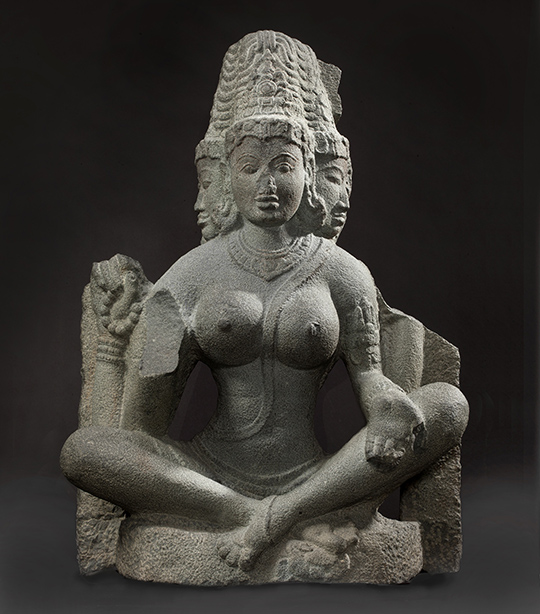
One of the exhibit highlights is a room filled with striking stone goddesses from this time. The slate-gray statues of worship, which date from 900-975 CE, show large-breasted, small-waisted female yogis (yoginis) complete with fangs and pet snakes, holding cups meant for liquor or blood. Today the word “yogini” is used when simply referring to female practitioners, but these original figures were fierce and to be feared. (They were also sculpted with perfect bods, offering an interesting parallel to the depictions of female practitioners in modern day yoga magazines.)

Later on, in 1830, Indian watercolor and gold paintings show the mystical use of yogic superpowers: to win battles by creating a flood where enemies are charging forth, and to magically fly through the sky. Of course, a hundred years later, the West chimes in, and starts making a mockery of yogic powers in the cinema and in profitable magic shows like “Koringa, the Female Yogi.”


MINING THE FLOW

Throughout the early years, we see all manners of meditators, perhaps practicing classical yoga (as handed down by Patanjali’s Yoga Sutras), often sitting with legs in a lotus-like position, gazing up or inward toward a third eye. But as the years pass, the physical body starts to take more prominence, in the Tantra and Hatha Yoga traditions, as a tool on the yogic path of self-realization. One treasure here is a 10-page excerpt from an early 1600s Muslim Sufi book called Bahr al-hayat (Ocean of Life), said to contain the earliest illustrated renderings of physical yoga poses. Most of the poses shown here are seats like lotus pose, but there is one drawing of a guy rocking a headstand.

Around the 1700-1800s, intricate Tantric renderings of the energetic yoga body, including the chakras (energy centers), appear. A total must-see: a watercolor scroll that contains detailed, gold-laced drawings of Ganesh and his two wives (at the root chakra), and Shiva and Shakti joined together (in the crown chakra).

In the final gallery, we come into the 20th century. Yoga made its big debut in the US when Swami Vivekananda, who practiced Raja Yoga, based on Hindu philosophy and meditation, made a speech about yoga at the first World’s Parliament of Religions in 1893. Seven years later, he set up the Vedanta Society in San Francisco to offer his teachings. (Many of his materials are displayed here.) The early 1900s is also where we begin to see evidence of the more athletic yoga practice most of us do today. This new form came about as prominent Indian yoga teachers began to blend ancient postures and energetic techniques with strength-training exercises that had been brought in by their British invaders.

A mesmerizing video shows T. Krishnamacharya (often considered the grandfather of modern day yoga) and his young disciple BKS Iyengar performing expertly executed postures in smooth, rhythmic flows — now things are really starting to look familiar. Displayed here are also numerous books promoting yoga as a way to improve one’s health, including a book by Indian bodybuilder Raja of Aundh called Surya Namaskars (The Ten-Point Way to Health). According to the exhibit, this text from the 1920s is where our beloved sun salutations were initially birthed.

While the new physical fitness-form of yoga may have looked different than its predecessors of seated meditation, goddess worship, and self-mortification, it required the same intense attention and dedication. It arrived to the US on the tails of Vivekananda’s yoga, so by the mid-1900s, West Coasters already had different practices from which to choose.

Yoga caught on quickly here in San Francisco. By 1955, Walt and Magana Baptiste (parents of famed modern-day yogi Baron Baptiste) had founded the Center for Physical Culture, one of SF’s first bona fide yoga studios. The 1970s saw the opening of Integral Yoga and the Iyengar Yoga Institute in San Francisco, as well as the birth of Yoga Journal magazine. Yoga soon became not only a practice, but a business and a lifestyle. Over the years, Americans here and throughout the country started blending various yoga teachings, shaping the practice to address our cultural, health, fitness, community, commercial, and varied spiritual (or anti-spiritual) needs and interests. Today, San Francisco is one of the world’s most booming yoga communities. Every offering one can imagine exists here: from contemplative retreats to sweaty flow classes to corporate yoga, ecstatic chanting, naked yoga, scholarly study, and yoga therapeutics.

IN THE NOW

The exhibit helps us get a sense of where the practice came from — but it still begs the question of what yoga actually is. Is yoga a practice of transcending the body in an effort to attain enlightenment? Is it a way of gaining supernatural powers so you can beat your opponents at war? Is it a seated meditation practice focused on stilling the mind, or a physical fitness routine designed to rid the body of impurities? Is it something you do on the weekends in your Lululemon leggings to feel good before going for mimosas at a hipster brunch spot?

“The exhibit forces some interesting self-reflection about our beliefs,” says Kaitlin Quistgaard, the former longtime editor of Yoga Journal magazine, in a phone conversation. “What do we actually know to be true about yoga?” Quistgaard was part of the advisory board that helped to create the exhibit’s supplementary content. “For me, the thing that ties it all together is self-awareness. Through any yoga practice, even one that would seem completely physical, there’s a process of coming to know yourself.” She adds that it’s the development of this deeper awareness that can enable us to lead more connected and fulfilling lives.

In the same vein, Adamjee reflects that one of the key aspects uniting all of the yoga paths over the years is the “radical insight that human beings possess the ability to transcend our own suffering.” Looking back at my own path, it’s easy to see the truth in this. Whether a yogi is engaged in intense physical or energetic practices, deep meditation, scholarly pursuit, or singing the names of Indian gods, the goal has always been — through devotion and attentive awareness — to find peace. To experience, if only briefly, that delicious taste of freedom.

As a writer and practitioner, I love the study of yogic history. But there is also a part of me that knows that the history is not as important as our actual practice — what we do each day, how we show up to our lives. As any yoga devotee will tell you, the past and the future don’t really exist; all we can ever really know is this very moment.

“Yoga will live on,” says Adamjee, somewhat wistfully. “But it will become something different. We are just another moment in that long timeline.”

YOGA: THE ART OF TRANSFORMATION

Through May 25

Asian Art Museum of San Francisco

200 Larkin, SF.

www.asianart.org

(See next page for more details)

HAS YOGA SOLD OUT?

Yoga started as a spiritual discipline. Now, it’s reportedly a $27 billion dollarindustry in the US with an estimated 15 million practitioners, not to mention high fashion clothing, expensive yoga vacations, and “yogalebrity” teachers. Some say that commercialization is just what the practice had to do to survive in a capitalist culture. Others, like Indian American graphic artist Chiraag Bhakta, find the face of modern day yoga disturbing. Bhakta’s art installation, #WhitePeopleDoingYoga, will be on view at the Asian Art Museum as a supplement to the larger yoga exhibit, March 26-May 25.

A 13-by-30-foot wall of Western yoga marketing materials (from the 1960s-80s), it includes book covers, advertisements, and album covers that depict white folks promoting yoga for all kinds of spiritual, dietary, and fitness purposes, wearing everything from canary yellow leotards to traditional Indian garb. The idea of putting all of this ephemera on one wall, he says, is to give the viewer a feeling of being suffocated — which is how the onslaught of these images have made him feel. “It’s fascinating to me that this ancient practice from my culture is being mined and then appropriated and commodified, while removing everyone that looks like me,” he adds. “The philosophy of yoga is the dissolution of one’s ego — and the irony is that there’s so much ego being attached to all of this.”

Bhakta’s exhibit is part of *Pardon My Hindi, a project he created to explore first generation Indian American identity using humor and serious social commentary. Bhakta admits that he himself practices yoga at studios in the Bay Area, and he’s not against the popularization of the practice. He simply questions the way in which it’s being done. “My goal is just to bring this discussion to the table,” he says.

GO DEEP

The museum is offering some amazing activities during the show’s run. Highlights include storytelling, dance, and yoga, as well as lectures by yoga luminaries. Among the scheduled speakers are Senior Iyengar teacher Manouso Manos, director of UCSF’s Osher Center for Integrative Medicine Dr. Margaret Chesney, curators Debra Diamond and Qamar Adamjee, AcroYoga co-founder Jenny Sauer-Klein, mindfulness educator Meena Srinivasan, Google’s Gopi Kallayil, graphic designer Chiraag Bhakta, and yoga historian Eric Shaw. For the full list of events, go to www.asianart.org/exhibitions_index/yoga-related-events.

Karen Macklin is a writer and yoga teacher living in San Francisco. Find out more about her at www.karenmacklin.com .

Psychic Dream Astrology: Feb 19-25, 2014

0

Mercury retrograde can mean having to say you’re sorry. Avoid problems by double-checking plans and communications.

ARIES

March 21-April 19

Share your achievements with your family, Aries. It doesn’t have to be your Maw and Paw, whoever you love and are setting roots with will do nicely. There is so much going for you and to make the most of it you should include others and let them share in your joy this week.

­TAURUS

April 20-May 20

Pay attention to the difference between actual problems related to scarcity or failure, versus worry that those things will happen. Don’t create the things you fear by focusing all of your attention on them, Taurus. Practice positive reinforcements, even if you have to fake it till you make it.

GEMINI

May 21-June 21

Concentrate, Gemini! This is not the time to be running around like a chicken with it’s head cut off, worrying over all the things you could, should, or would be doing, if only you weren’t so overwhelmed. Focus on three goals. Only three! Execute with the wit and style that can only be yours.

CANCER

June 22-July 22

This is an excellent time for taking control of your life, but the rub is that you’ve gotta do it without being controlling. Take on bite sized pieces of your goals. You are capable of great things but if you take on too much you risk feeling like crap and undermining yourself. That’d be a waste!

LEO

July 23-Aug. 22

There’s no rushing time or the progress of others. You can’t know how everything is going to turn out. Be the change you wish to see in your world, Leo. While you shouldn’t rush others or push your agenda on them, that doesn’t mean you need to put off your progress while things develop.

VIRGO

Aug. 23-Sept. 22

Learn from your past, Virgo. Your relationships need you to show up, but you’ve got to be clear about how you’re doing it. Don’t alienate yourself in your efforts to give others what you need (or visa versa). You are never doing the right thing when you act out of fear, doll.

LIBRA

Sept. 23-Oct. 22

You are being called upon to act, but don’t get it twisted; you’re not meant to run yourself ragged and do it all at once. This is the time to dig deep inside yourself to find what you have to offer of your heart and soul. Life may not be easy right now, but you have to gifts to cope.

SCORPIO

Oct. 23-Nov. 21

In the words of the late, great, Harvey Milk, “you’ve gotta give them hope”! Look for the possibility and potential in all things, even if it’s a stretch. You’re poised to build on top of the foundations you’ve been nurturing over the past year. Focus on what you want and how to make it happen.

SAGITTARIUS

Nov. 22-Dec. 21

Find creative ways of handling fear. There is an infinitude of things that could go wrong at any time; the sky could fall, you could loose all your hair, your favorite restaurant could close. Stay present and deal with problems as they arise. Preemptive strikes are poorly starred for you this week.

CAPRICORN

Dec. 22-Jan. 19

You don’t have to do it all right away, Cap. In fact, you need a time out. There is no thing that you will do better when you’re rushing, and there’s no use in bringing bad vibes to things that you actually feel really good about. Take a step back, gather up your energy, and then knock ‘em dead.

AQUARIUS

Jan. 20-Feb. 18

How you deal with hardships is wicked important. You may be going through an emotional tailspin, but there is a reason why. You are meant to look at the big picture of your life and strive to understand how your participation brought you here. Change your part and you’ve changed the game.

PISCES

Feb. 19-March 20

Your creative process is essential to who you are. Whether you express it in the private realm of your oh-so fertile mind, in your work, or interpersonally, this is not the time to give up on your own process. Don’t confuse a speed bump with a roadblock. Shit happens; don’t let it get you down.

Want more in-depth, intuitive or astrological advice from Jessica? Schedule a one-one-one reading that can be done in person or by phone. Visit www.lovelanyadoo.com

Music Listings

0

WEDNESDAY 19
ROCK
Amoeba Music: 1855 Haight, San Francisco. Phantogram, 6 p.m., free.
The Chapel: 777 Valencia, San Francisco. Marissa Nadler, Donovan Quinn, 8 p.m., $12-$15.
Elbo Room: 647 Valencia, San Francisco. Peace Creep, Future Twin, Buffalo Tooth, George Chen, DJ Jello Biafra, 9 p.m., $5.
Hemlock Tavern: 1131 Polk, San Francisco. Bellyfruit, The Vans, Conspiracy of Venus, 8:30 p.m., $6.
Hotel Utah: 500 Fourth St., San Francisco. Animal Super Species, Cuban Cigar Crisis, 9 p.m., $7.
The Knockout: 3223 Mission, San Francisco. The Younger Lovers, Half Blast, No Bone, 9:30 p.m., $6.
Milk Bar: 1840 Haight, San Francisco. Graph Rabbit, The Desert Line, Builders, Crowding Out, 8 p.m., $5.
DANCE
Beaux: 2344 Market, San Francisco. “BroMance: A Night Out for the Fellas,” 9 p.m., free.
The Cafe: 2369 Market, San Francisco. “Sticky Wednesdays,” w/ DJ Mark Andrus, 8 p.m., free.
Cat Club: 1190 Folsom, San Francisco. “Bondage A Go Go,” w/ DJs Damon, Tomas Diablo, & guests, 9:30 p.m., $5-$10.
Club X: 715 Harrison, San Francisco. “Electro Pop Rocks: Mardi Gras,” 18+ dance night with B33son, Carlos Alfonzo, Krishna, Linx, Non Sequitur, D Menis, more, 9 p.m., $15-$20.
DNA Lounge: 375 11th St., San Francisco. God Module, The Witch Was Right, Mordacious, Product, DJs Decay & Unit 77, 9 p.m., $10-$15.
F8: 1192 Folsom, San Francisco. “Housepitality,” w/ Dr. Nojoke, Victor Vega, Miguel Solari, DJ Platurn, 9 p.m., $5-$10.
Infusion Lounge: 124 Ellis, San Francisco. “Indulgence,” 10 p.m.
Lexington Club: 3464 19th St., San Francisco. “Friends of Dorothy,” w/ DJ Sissyslap, 9 p.m., free.
Lookout: 3600 16th St., San Francisco. “What?,” w/ resident DJ Tisdale and guests, 7 p.m., free.
Madrone Art Bar: 500 Divisadero, San Francisco. “Rock the Spot,” 9 p.m., free.
Make-Out Room: 3225 22nd St., San Francisco. “Burn Down the Disco,” w/ DJs 2shy-shy & Melt w/U, Third Wednesday of every month, 9 p.m., free.
MatrixFillmore: 3138 Fillmore, San Francisco. “Reload,” w/ DJ Big Bad Bruce, 10 p.m., free.
Q Bar: 456 Castro, San Francisco. “Booty Call,” w/ Juanita More, Joshua J, guests, 9 p.m., $3.
Showdown: 10 Sixth St., San Francisco. “Nokturnal,” w/ DJs Coyle & Gonya, Third Wednesday of every month, 9 p.m., free.
HIP-HOP
Neck of the Woods: 406 Clement, San Francisco. “Over the Hump,” w/ Children of the Funk, 10 p.m., free.
Skylark Bar: 3089 16th St., San Francisco. “Mixtape Wednesday,” w/ resident DJs Strategy, Junot, Herb Digs, & guests, 9 p.m., $5.
Slate Bar: 2925 16th St., San Francisco. “Special Blend,” w/ resident DJs LazyBoy & Mr. Murdock, 9 p.m., free.
ACOUSTIC
Bottom of the Hill: 1233 17th St., San Francisco. Shareef Ali, Whiskerman, Sparkbox (Megan Keely & Kelly McFarling), 9 p.m., $8.
Brick & Mortar Music Hall: 1710 Mission, San Francisco. Lou Evans, Robin Applewood, Kenny Crowley, Melted State, 9 p.m., $5-$8.
Cafe Divine: 1600 Stockton, San Francisco. Craig Ventresco & Meredith Axelrod, 7 p.m., free.
El Rio: 3158 Mission, San Francisco. Redrick Sultan, The Liquorsmiths, Sister Exister, 8 p.m., $5-$10.
Plough & Stars: 116 Clement, San Francisco. Daniel Seidel, 9 p.m.
Yoshi’s San Francisco: 1330 Fillmore, San Francisco. Ane Brun, Linnea Olsson, 8 p.m., $24-$29.
JAZZ
Amnesia: 853 Valencia, San Francisco. Gaucho, Eric Garland’s Jazz Session, The Amnesiacs, 7 p.m., free.
Burritt Room: 417 Stockton St., San Francisco. Terry Disley’s Rocking Jazz Trio, 6 p.m., free.
Cigar Bar & Grill: 850 Montgomery, San Francisco. Sandor Moss Organ Quartet featuring Brian Ho, 8 p.m.
Hotel Rex: 562 Sutter, San Francisco. Ben Goldberg, 6:30 p.m., $20.
Jazz Bistro at Les Joulins: 44 Ellis, San Francisco. Charles Unger Experience, 7:30 p.m., free.
Le Colonial: 20 Cosmo, San Francisco. The Cosmo Alleycats featuring Ms. Emily Wade Adams, 7 p.m., free.
Pier 23 Cafe: Pier 23, San Francisco. Ned Boynton & Friends, 6 p.m., free.
Sheba Piano Lounge: 1419 Fillmore, San Francisco. Fran Sholly, 8 p.m.
Top of the Mark: One Nob Hill, 999 California, San Francisco. Ricardo Scales, Wednesdays, 6:30-11:30 p.m., $5.
Zingari: 501 Post, San Francisco. Carol Luckenbach, 7:30 p.m., free.
INTERNATIONAL
Bissap Baobab: 3372 19th St., San Francisco. “Baobab!,” timba dance party with DJ WaltDigz, 10 p.m., $5.
Cafe Cocomo: 650 Indiana, San Francisco. “Bachatalicious,” w/ DJs Good Sho & Rodney, 7 p.m., $5-$10.
Pachamama Restaurant: 1630 Powell, San Francisco. Cafe Latino Americano, 8 p.m., $12.
BLUES
Biscuits and Blues: 401 Mason, San Francisco. K.K. Martin, 7:30 & 9:30 p.m., $15.
The Saloon: 1232 Grant, San Francisco. Craig Horton, 9:30 p.m.
SOUL
Boom Boom Room: 1601 Fillmore, San Francisco. “Soul Train Revival,” w/ Ziek McCarter, Third Wednesday of every month, 9:30 p.m., $5.
The Royal Cuckoo: 3202 Mission, San Francisco. Freddie Hughes & Chris Burns, 7:30 p.m., free.

THURSDAY 20
ROCK
Boom Boom Room: 1601 Fillmore, San Francisco. Huntinanny, Lee Gallagher & The Hallelujah, Talk of Shamans, The Dedications, 9:30 p.m., $5-$7.
Bottom of the Hill: 1233 17th St., San Francisco. Night Riots, The Epilogues, Ghost Parade, Kiven, 9 p.m., $10-$12.
The Chapel: 777 Valencia, San Francisco. The Thermals, Colleen Green, 9 p.m., $15-$17.
DNA Lounge: 375 11th St., San Francisco. Dark Tranquillity, Omnium Gathering, Exmortus, Alterbeast, 7:30 p.m., $20-$25.
The Knockout: 3223 Mission, San Francisco. Dancer, The Rantouls, So What, Graaar, DJ Beth Amphetamine, 10 p.m., $5.
Milk Bar: 1840 Haight, San Francisco. Ale-Jhay; Lush Vibes; Not Sure. Not Yet; Hot Flash Heat Wave, 8 p.m., $5.
Rickshaw Stop: 155 Fell, San Francisco. “Popscene,” w/ Wildcat! Wildcat!, Seatraffic, Popscene DJs, 9:30 p.m., $12-$14.
Slim’s: 333 11th St., San Francisco. Public Service Broadcasting, Kiev, 8 p.m., $13.
DANCE
1015 Folsom: 1015 Folsom, San Francisco. “A Light in the Attic,” w/ Vaski, Buku, R/D, Psymbionic, Le Portal, Danny Weird, 10 p.m., $10 advance.
Abbey Tavern: 4100 Geary, San Francisco. DJ Schrobi-Girl, 10 p.m., free.
Aunt Charlie’s Lounge: 133 Turk, San Francisco. “Tubesteak Connection,” w/ DJ Bus Station John, 9 p.m., $5-$7.
Beaux: 2344 Market, San Francisco. “Men at Twerk,” 9 p.m., free.
The Cafe: 2369 Market, San Francisco. “¡Pan Dulce!,” 9 p.m., $5.
California Academy of Sciences: 55 Music Concourse, San Francisco. Noise Pop 2014: Universal Rhythm NightLife, w/ YACHT (DJ set), 6-10 p.m., $10-$12.
Cat Club: 1190 Folsom, San Francisco. “Throwback Thursdays,” ‘80s night with DJs Damon, Steve Washington, Dangerous Dan, and guests, 9 p.m., $6 (free before 9:30 p.m.).
The Cellar: 685 Sutter, San Francisco. “XO,” w/ DJs Astro & Rose, 10 p.m., $5.
Club X: 715 Harrison, San Francisco. “The Crib,” 9:30 p.m., $10, 18+.
DNA Lounge: 375 11th St., San Francisco. “8bitSF,” w/ Doctor Popular, Together We Are Robots, Cartoon Violence, 8 p.m., $8-$11.
Elbo Room: 647 Valencia, San Francisco. “Afrolicious,” w/ DJs Pleasuremaker, Señor Oz, and guests, 9:30 p.m., $5-$8.
F8: 1192 Folsom, San Francisco. “Beat Church,” w/ B.R.E.E.D, Dov, Da Moth, more, 9 p.m., $5-$10.
Infusion Lounge: 124 Ellis, San Francisco. “I Love Thursdays,” 10 p.m., $10.
John Colins: 138 Minna, San Francisco. “SoLuna,” w/ resident DJ Miquel Penn, Third Thursday of every month, 9 p.m., free.
Laszlo: 2532 Mission, San Francisco. “Werk It,” w/ DJ Kool Karlo, Third Thursday of every month, 9 p.m., free.
Madrone Art Bar: 500 Divisadero, San Francisco. “Night Fever,” 9 p.m., $5 after 10 p.m.
Mezzanine: 444 Jessie, San Francisco. “House of Mezzanine,” w/ Pat Mahoney, Museum of Love, Curses, Eug, Richie Panic, Kevin Meenan, 9 p.m., $10.
Monarch: 101 Sixth St., San Francisco. “Hey Young World,” w/ Tanner Ross & Nick Monaco, 9:30 p.m., $10 advance.
Q Bar: 456 Castro, San Francisco. “Throwback Thursday,” w/ DJ Jay-R, 9 p.m., free.
Raven: 1151 Folsom, San Francisco. “1999,” w/ VJ Mark Andrus, 8 p.m., free.
Ruby Skye: 420 Mason, San Francisco. “Awakening,” w/ Myon & Shane 54, Late Night Alumni, 9 p.m., $25 advance.
Slide: 430 Mason, San Francisco. “Euphony,” w/ Mikey Tan, Sebastian Concha, Mari Mar, Matth, 9 p.m.
Underground SF: 424 Haight, San Francisco. “Bubble,” 10 p.m., free.
Vessel: 85 Campton, San Francisco. “Base,” w/ Lee Foss, 10 p.m., $10 advance.
HIP-HOP
Eastside West: 3154 Fillmore, San Francisco. “Throwback Thursdays,” w/ DJ Madison, 9 p.m., free.
Showdown: 10 Sixth St., San Francisco. “Tougher Than Ice,” w/ DJs Vin Sol, Ruby Red I, and Jeremy Castillo, Third Thursday of every month, 10 p.m.
Skylark Bar: 3089 16th St., San Francisco. “Peaches,” w/ lady DJs DeeAndroid, Lady Fingaz, That Girl, Umami, Inkfat, and Andre, 10 p.m., free.
ACOUSTIC
Atlas Cafe: 3049 20th St., San Francisco. Nearly Beloved, 8 p.m., free.
Bazaar Cafe: 5927 California, San Francisco. Acoustic Open Mic, 7 p.m.
Hemlock Tavern: 1131 Polk, San Francisco. Idea the Artist, Terrible Buttons, City Tribe, 8:30 p.m., $6.
Hotel Utah: 500 Fourth St., San Francisco. The Liquorsmiths, Grover Anderson, Pete Ahonen, 9 p.m., $10.
Plough & Stars: 116 Clement, San Francisco. Crooked Road Ceili Band, 9 p.m.
JAZZ
Blush! Wine Bar: 476 Castro, San Francisco. Doug Martin’s Avatar Ensemble, 7:30 p.m., free.
Cafe Claude: 7 Claude, San Francisco. Marcus Shelby Trio, 7:30 p.m., free.
Cafe Royale: 800 Post, San Francisco. West Side Jazz Club, 9 p.m.
Cigar Bar & Grill: 850 Montgomery, San Francisco. Royal Jelly, 8 p.m.
Feinstein’s at the Nikko: 222 Mason, San Francisco. Paula West, 8 p.m., $35-$50.
Jazz Bistro at Les Joulins: 44 Ellis, San Francisco. Eugene Pliner Quartet with Tod Dickow, First and Third Thursday of every month, 7:30 p.m., free.
Le Colonial: 20 Cosmo, San Francisco. Steve Lucky & The Rhumba Bums, 7:30 p.m.
The Lucky Horseshoe: 453 Cortland, San Francisco. Ralph Carney’s Serious Jass Project, 9 p.m.
Pier 23 Cafe: Pier 23, San Francisco. Dick Fregulia Trio, 7 p.m., free.
The Royal Cuckoo: 3202 Mission, San Francisco. Charlie Siebert & Chris Siebert, 7:30 p.m., free.
Top of the Mark: One Nob Hill, 999 California, San Francisco. Stompy Jones, 7:30 p.m., $10.
Zingari: 501 Post, San Francisco. Barbara Ochoa, 7:30 p.m.
INTERNATIONAL
Bissap Baobab: 3372 19th St., San Francisco. “Pa’Lante!,” w/ Juan G, El Kool Kyle, Mr. Lucky, 10 p.m., $5.
Cafe Cocomo: 650 Indiana, San Francisco. Julio Bravo y Su Orquesta Salsabor, El DJ X, 8 p.m., $12.
Jewish Community Library: 1835 Ellis, San Francisco. Veretski Pass, 7 p.m., free.
Pachamama Restaurant: 1630 Powell, San Francisco. “Jueves Flamencos,” 8 p.m., free.
Red Poppy Art House: 2698 Folsom, San Francisco. Fishtank Ensemble, 6:30 p.m., $15-$20.
Sheba Piano Lounge: 1419 Fillmore, San Francisco. Gary Flores & Descarga Caliente, 8 p.m.
Verdi Club: 2424 Mariposa, San Francisco. The Verdi Club Milonga, w/ Christy Coté, DJ Emilio Flores, guests, 9 p.m., $10-$15.
REGGAE
Pissed Off Pete’s: 4528 Mission St., San Francisco. Reggae Thursdays, w/ resident DJ Jah Yzer, 9 p.m., free.
BLUES
50 Mason Social House: 50 Mason, San Francisco. Bill Phillippe, 5:30 p.m., free.
Biscuits and Blues: 401 Mason, San Francisco. Hunter & The Dirty Jacks, 7:30 & 9:30 p.m., $15.
The Saloon: 1232 Grant, San Francisco. Chris Ford, Third Thursday of every month, 4 p.m.; Wendy DeWitt, 9:30 p.m.
COUNTRY
Amnesia: 853 Valencia, San Francisco. Rose’s Pawn Shop, Miss Lonely Hearts, 9 p.m., $10.
The Parlor: 2801 Leavenworth, San Francisco. “Twang Honky Tonk & Country Jamboree,” w/ DJ Little Red Rodeo, 7 p.m., free.
EXPERIMENTAL
The Luggage Store: 1007 Market, San Francisco. zBug, A Tribute to John Tchicai with members of The Archetypes, 8 p.m., $6-$10.
FUNK
Brick & Mortar Music Hall: 1710 Mission, San Francisco. New Orleans Suspects, Breakestra, 8 p.m., $17-$20.

FRIDAY 21
ROCK
Bottom of the Hill: 1233 17th St., San Francisco. American Steel, The Criminals, Arliss Nancy, 9:30 p.m., $12.
Brick & Mortar Music Hall: 1710 Mission, San Francisco. King Lollipop, Santoros, Wyatt Blair, Levitation Room, DJ Al Lover, 9 p.m., $6-$8.
The Chapel: 777 Valencia, San Francisco. R. Stevie Moore, The Memories, Seventeen Evergreen, 9 p.m., $15-$18.
El Rio: 3158 Mission, San Francisco. Friday Live: Audrey Howard & The Special Guest Band, DJ Emotions, 10 p.m., free.
Hemlock Tavern: 1131 Polk, San Francisco. DSTVV, Snow Wite, Blood Sister, 9 p.m., $6.
Hotel Utah: 500 Fourth St., San Francisco. Ringo Deathstarr, Purple, Surf Club, 9 p.m., $8-$10.
Milk Bar: 1840 Haight, San Francisco. Modern Kicks, Dumbsaints, Lucabrazzi, The Basements xoxo, Banshee Boardwalk, 8 p.m., $5.
Neck of the Woods: 406 Clement, San Francisco. Van She, on the upstairs stage, 10 p.m., $15-$18.
Sub-Mission Art Space (Balazo 18 Gallery): 2183 Mission, San Francisco. Commissure, You May Die in the Desert, Wander, Dissolve, 7:30 p.m., $6.
Thee Parkside: 1600 17th St., San Francisco. Life Leone, Wild Wild Wets, Daikon, 9 p.m., $8.
Vacation: 651 Larkin, San Francisco. Male Gaze, Useless Eaters, Glitz, 9 p.m., free.
DANCE
1015 Folsom: 1015 Folsom, San Francisco. Red Bull Music Academy: Bass Camp San Francisco, w/ DJ Lo Down Loretta Brown (aka Erykah Badu), Thundercat, Cosmo Baker, Kid Smpl, more, 10 p.m., $10-$25.
111 Minna Gallery: 111 Minna, San Francisco. “Trap + Art 3: I Am Basquiat,” 10:30 p.m., $15 advance.
Audio Discotech: 316 11th St., San Francisco. The Knocks, Justin Milla, Split, 9 p.m., $10 advance.
BeatBox: 314 11th St., San Francisco. “U-Haul: 1-Year Anniversary Party,” w/ DJs Jenna Riot & China G, 9 p.m., $5-$10.
Beaux: 2344 Market, San Francisco. “Manimal,” 9 p.m.
Cafe Flore: 2298 Market, San Francisco. “Kinky Beats,” w/ DJ Sergio, 10 p.m., free.
The Cafe: 2369 Market, San Francisco. “Boy Bar,” w/ DJ Matt Consola, 9 p.m., $5.
The Cellar: 685 Sutter, San Francisco. “F.T.S.: For the Story,” 10 p.m.
DNA Lounge: 375 11th St., San Francisco. “Turbo Drive,” w/ D/A/D, Devon, MyKill, Netik, Fact.50, Mr. Smith, 9:30 p.m., $8 advance.
The EndUp: 401 Sixth St., San Francisco. “Trade,” 10 p.m., free before midnight.
F8: 1192 Folsom, San Francisco. “Freeform vs. Dubalicious: Reunited and It Feels So Good,” w/ Jonboy, Iyad, Floorcraft, more, 9 p.m., $5.
The Grand Nightclub: 520 Fourth St., San Francisco. “We Rock Fridays,” 9:30 p.m.
Infusion Lounge: 124 Ellis, San Francisco. “Flight Fridays,” 10 p.m., $20.
Lookout: 3600 16th St., San Francisco. “HYSL: Handle Your Shit Lady,” 9 p.m., $3.
Madrone Art Bar: 500 Divisadero, San Francisco. “That ‘80s Show,” w/ DJs Dave Paul & Jeff Harris, Third Friday of every month, 9 p.m., $5.
Manor West: 750 Harrison, San Francisco. “Top Shelf Friday,” w/ DJs Alie Layus & Marcus Lee, 10 p.m., $20.
MatrixFillmore: 3138 Fillmore, San Francisco. “F-Style Fridays,” w/ DJ Jared-F, 9 p.m.
Mighty: 119 Utah, San Francisco. “theLIFT S.F.: 4-Year Anniversary,” w/ Gilles Peterson, Jeremy Sole, Wiseacre, 10 p.m., $20 advance.
Monarch: 101 Sixth St., San Francisco. Marques Wyatt, Jayvi Velasco, Jimmy B, Dan Suda, 9 p.m., $10-$20.
Public Works: 161 Erie, San Francisco. Daniel Bortz, Bells & Whistles, Dax Lee, in the OddJob loft, 9:30 p.m., $10-$15.
Q Bar: 456 Castro, San Francisco. “Pump: Worq It Out Fridays,” w/ resident DJ Christopher B, 9 p.m., $3.
Ruby Skye: 420 Mason, San Francisco. Deniz Koyu, Danny Avila, Mikael Weermets, 9 p.m., $20 advance.
Slate Bar: 2925 16th St., San Francisco. “Darling Nikki,” w/ resident DJs Dr. Sleep, Justin Credible, and Durt, Third Friday of every month, 8 p.m., $5.
Temple: 540 Howard, San Francisco. “Resonance Friday,” w/ Giuseppe Ottoviani, Betsie Larkin, Reverse, DJ Tone, DJ Von, 10 p.m., $15.
Underground SF: 424 Haight, San Francisco. “Bionic,” 10 p.m., $5.
Vessel: 85 Campton, San Francisco. Hook N Sling, Enso, 10 p.m., $10-$30.
Wish: 1539 Folsom, San Francisco. “Bridge the Gap,” w/ resident DJ Don Kainoa, Fridays, 6-10 p.m., free; “Depth,” w/ resident DJs Sharon Buck & Greg Yuen, Third Friday of every month, 10 p.m., free.
HIP-HOP
Elbo Room: 647 Valencia, San Francisco. Sadat X, El Da Sensei, Qwel & Maker, 10 p.m., $10.
EZ5: 682 Commercial, San Francisco. “Decompression,” Fridays, 5-9 p.m.
John Colins: 138 Minna, San Francisco. “Juicy,” w/ DJ Ry Toast, Third Friday of every month, 10 p.m., $5 (free before 11 p.m.).
Mezzanine: 444 Jessie, San Francisco. DJ Don Cannon, DJ Orator, DJ Amen, 9 p.m., $10-$15.
Public Works: 161 Erie, San Francisco. Talib Kweli Gravitas Record Release Party, 9 p.m., $15-$20.
Showdown: 10 Sixth St., San Francisco. “Fresh to Def Fridays: A Tribute to Yo! MTV Raps,” w/ resident DJs Boom Bostic, Inkfat, and Hay Hay, Third Friday of every month, 10 p.m.
Slim’s: 333 11th St., San Francisco. T. Mills, Blackbear, Cody Brazil, The Wilde, 9 p.m., $16.
Yoshi’s San Francisco: 1330 Fillmore, San Francisco. Dead Prez, 10:30 p.m., $25-$30.
ACOUSTIC
Amnesia: 853 Valencia, San Francisco. Michael Musika & Eric Kuhn, Eric & Erica, Bob Thayer, 8 p.m., $8-$10.
Bazaar Cafe: 5927 California, San Francisco. Geoff Baker & Lesley Greer, 7 p.m.
BrainWash Cafe & Laundromat: 1122 Folsom, San Francisco. The Mercy Kit, The Scruttocks, Evan Raymond, 8 p.m., free.
Hotel Rex: 562 Sutter, San Francisco. Ukulenny, 6:30 p.m., free.
Mercury Cafe: 201 Octavia, San Francisco. Toshio Hirano, Third Friday of every month, 7:30 p.m., free, all ages.
Plough & Stars: 116 Clement, San Francisco. “Hillbilly Robot: An Urban Americana Music Event,” w/ The Earl Brothers, Left Coast Country, 9 p.m., $10-$15.
The Sports Basement: 610 Old Mason, San Francisco. “Breakfast with Enzo,” w/ Enzo Garcia, 10 a.m., $5.
JAZZ
Atlas Cafe: 3049 20th St., San Francisco. Jazz at the Atlas, 7:30 p.m., free.
Beach Chalet Brewery & Restaurant: 1000 Great Highway, San Francisco. Johnny Smith, 8 p.m., free.
Bird & Beckett: 653 Chenery, San Francisco. The Third Quartet, Third Friday of every month, 5:30 p.m., free.
Cafe Claude: 7 Claude, San Francisco. Jerry Oakley Trio, 7:30 p.m., free.
Cafe Royale: 800 Post, San Francisco. Cyril Guiraud Trio, 9 p.m.
Cliff House: 1090 Point Lobos, San Francisco. David Costa, 7 p.m.
Club Deluxe: 1511 Haight, San Francisco. Lavay Smith & Her Red Hot Skillet Lickers, 9:30 p.m.
Feinstein’s at the Nikko: 222 Mason, San Francisco. Paula West, 8 p.m., $35-$50.
Jazz Bistro at Les Joulins: 44 Ellis, San Francisco. Charles Unger Experience, 7:30 p.m., free.
The Palace Hotel: 2 New Montgomery, San Francisco. The Klipptones, 8 p.m., free.
Pier 23 Cafe: Pier 23, San Francisco. Maikel Garcia Quartet, 8 p.m., free.
Red Poppy Art House: 2698 Folsom, San Francisco. Tiffany Austin Quartet, 7:30 p.m., $15-$20.
Revolution Cafe: 3248 22nd St., San Francisco. Emily Anne’s Delights, Third Friday of every month, 8:45 p.m., free/donation.
The Royal Cuckoo: 3202 Mission, San Francisco. Wil Blades & Jack Tone Riordan, 7:30 p.m., free.
Savanna Jazz Club: 2937 Mission, San Francisco. Kendra McKinley & Camille Mai Trio, 7:30 p.m., $10.
Sheba Piano Lounge: 1419 Fillmore, San Francisco. Steve Snelling Quartet, 9 p.m.
Top of the Mark: One Nob Hill, 999 California, San Francisco. Black Market Jazz Orchestra, 9 p.m., $10.
Zingari: 501 Post, San Francisco. Joyce Grant, 8 p.m., free.
INTERNATIONAL
Asiento: 2730 21st St., San Francisco. “Kulcha Latino,” w/ resident selectors Stepwise, Ras Rican, and El Kool Kyle, Third Friday of every month, 9 p.m., free.
Bissap Baobab: 3372 19th St., San Francisco. Individúo, 6:30 p.m.; Qumbia Qrew, Third Friday of every month, 8 p.m.; “Paris-Dakar African Mix Coupe Decale,” 10 p.m., $5.
Cafe Cocomo: 650 Indiana, San Francisco. Taste Fridays, featuring local cuisine tastings, salsa bands, dance lessons, and more, 7:30 p.m., $15 (free entry to patio).
Cat Club: 1190 Folsom, San Francisco. “Gigante Temblor,” 10 p.m., $5.
Cigar Bar & Grill: 850 Montgomery, San Francisco. Alexis y la Original, 10 p.m.
Pachamama Restaurant: 1630 Powell, San Francisco. Cuban Night with Fito Reinoso, 7:30 & 9:15 p.m., $15-$18.
Roccapulco Supper Club: 3140 Mission, San Francisco. Los Hermanos Flores, Pastor Lopez, 8 p.m., $35 advance.
REGGAE
Gestalt Haus: 3159 16th St., San Francisco. “Music Like Dirt,” 7:30 p.m., free.
BLUES
Biscuits and Blues: 401 Mason, San Francisco. Shane Dwight, 7:30 & 10 p.m., $22.
Lou’s Fish Shack: 300 Jefferson, San Francisco. Little Wolf & The HellCats, 6 p.m.
The Saloon: 1232 Grant, San Francisco. Highwater Blues, 4 p.m.; Steve Freund, 9:30 p.m.
FUNK
Amnesia: 853 Valencia, San Francisco. “Hella Tight,” w/ resident DJs Vinnie Esparza, Jonny Deeper, & Asti Spumanti, Third Friday of every month, 10 p.m., $5.
Make-Out Room: 3225 22nd St., San Francisco. “Loose Joints,” w/ DJs Centipede, Damon Bell, and Tom Thump, 10 p.m., $5-$10.
SOUL
Edinburgh Castle: 950 Geary, San Francisco. “Soul Crush,” w/ DJ Serious Leisure, 10 p.m., free.
The Knockout: 3223 Mission, San Francisco. “Oldies Night,” W/ DJs Primo, Daniel, Lost Cat, and friends, Third Friday of every month, 10 p.m., $5.

SATURDAY 22
ROCK
Bender’s: 806 S. Van Ness, San Francisco. The Radishes, High & Tight, 10 p.m., $5.
The Chapel: 777 Valencia, San Francisco. Magic Trick, Kevin Morby, Joseph Childress, 9 p.m., $12-$14.
Hemlock Tavern: 1131 Polk, San Francisco. Synthetic ID, POW!, Airfix Kits, The Riflemen, 9 p.m., $6.
Hotel Utah: 500 Fourth St., San Francisco. Uncle Frank & The Co-Defendants, Good Luck Jimmy, Dudley Hughes, 9 p.m., $10.
Make-Out Room: 3225 22nd St., San Francisco. Carlton Melton, White Manna, 3 Leafs, 6:30 p.m., $8.
Milk Bar: 1840 Haight, San Francisco. Benefit for the Haight-Ashbury Street Fair with Sea Dramas, Dangermaker, Sweetwater Black, Margaret the King, 8 p.m., $5.
Rickshaw Stop: 155 Fell, San Francisco. DRMS, Con Brio, Systemritual, 8 p.m., $12-$15.
Slim’s: 333 11th St., San Francisco. “Hillbilly Robot: An Urban Americana Music Event,” w/ Stellar Corpses, The Quarter Mile Combo, Hopeless Jack & The Handsome Devil, RocketShip RocketShip, 8 p.m., $15.
Sub-Mission Art Space (Balazo 18 Gallery): 2183 Mission, San Francisco. Power, Lies, Volatile Substance, Worship, 7:30 p.m., $8.
Thee Parkside: 1600 17th St., San Francisco. Slick’s Bash #102: The Stitches, The Richmond Sluts, Modern Action, Lazerwolf, 9 p.m., $12.
DANCE
Audio Discotech: 316 11th St., San Francisco. Anthony Attalla, Teddy C, 9 p.m., $10 advance.
BeatBox: 314 11th St., San Francisco. “Chaos,” w/ DJs Guy Scheiman & Tristan Jaxx, 10 p.m., $20 ($5 before 11 p.m.).
Cafe Flore: 2298 Market, San Francisco. “Bistrotheque,” w/ DJ Ken Vulsion, 8 p.m., free.
Cat Club: 1190 Folsom, San Francisco. “Villainy: The Dance Club with a Dark Side,” w/ DJs Tomas Diablo, Donimo, Fact.50, Daniel Skellington, and Shindog, 9:30 p.m., $5-$8.
DNA Lounge: 375 11th St., San Francisco. “Bootie S.F.,” w/ The First Church of the Sacred Silversexual, A+D, Entyme, Keith Kraft, Lucio K, more, 9 p.m., $10-$15.
The EndUp: 401 Sixth St., San Francisco. Shangri-La, Asian queer dance party., Fourth Saturday of every month, 10 p.m., $15-$20 (free before 11 p.m.).
F8: 1192 Folsom, San Francisco. Lindsay Lowend, DJ Hoodboi, Lil Texas, The Pirate, Mack Blajik, Mr. Humphreeze, Boats, Obstac, 9 p.m., $5-$20.
Harlot: 46 Minna, San Francisco. “Gotta Dance Dirty,” 9 p.m.
Infusion Lounge: 124 Ellis, San Francisco. “Set,” Fourth Saturday of every month, 10 p.m., $20.
The Knockout: 3223 Mission, San Francisco. “Galaxy Radio,” w/ Plaza, 9:30 p.m.
Lookout: 3600 16th St., San Francisco. “Bounce!,” 9 p.m., $3.
Manor West: 750 Harrison, San Francisco. Tigran, St. John, Key Method, 10 p.m.
Mezzanine: 444 Jessie, San Francisco. The Twelves, 9 p.m., $15.
Mighty: 119 Utah, San Francisco. “Put on the Breaks,” w/ Kapt’n Kirk, Tamo, Shissla, Zach Moore, Nerd Nate, Melyss, 9 p.m., free before midnight with RSVP.
Monarch: 101 Sixth St., San Francisco. “Lights Down Low: 8-Year Anniversary,” w/ Kevin Saunderson, MPHD, Myles Cooper, Split, Richie Panic, Sleazemore, 9 p.m., $15-$20.
Public Works: 161 Erie, San Francisco. “Deep Blue,” w/ Carl Craig (DJ set), François K, Rooz, Bo, Ghosts on Tape, Austin Cesear, Suzanne Kraft, Avalon Emerson, Shawn Reynaldo, 9:30 p.m., $15-$20.
Ruby Skye: 420 Mason, San Francisco. MAKJ, Drezo, 9 p.m., $20 advance.
The Stud: 399 Ninth St., San Francisco. “Dark Room,” w/ Lady Bear and the Dark Drag Dolls, DJ Le Perv, more, 10 p.m., $8 before 11 p.m.
Temple: 540 Howard, San Francisco. “Life,” w/ Sound It Out, Linx, Kepik, Brian Cabalic, Carlos Tino, J Funk, more, 10 p.m., $20.
Vessel: 85 Campton, San Francisco. DJ Scotty Boy, Fyasko, 10 p.m., $10-$30.
HIP-HOP
John Colins: 138 Minna, San Francisco. “Nice,” w/ DJ Apollo, Fourth Saturday of every month, 10 p.m., $5.
Madrone Art Bar: 500 Divisadero, San Francisco. Dre Day 2014, w/ DJs Ma Yeah, Honeyknuckles, and Spank Bank, 10 p.m., $5.
ACOUSTIC
Atlas Cafe: 3049 20th St., San Francisco. Craig Ventresco and/or Meredith Axelrod, Saturdays, 4-6 p.m., free.
Bazaar Cafe: 5927 California, San Francisco. Rozanne Gewaar, 7 p.m.
Exit Theatre: 156 Eddy, San Francisco. Songwriter Saturdays, hosted by Melissa Lyn, Last Saturday of every month, 8:30 p.m., free/donation.
Plough & Stars: 116 Clement, San Francisco. The Fireflies, 9 p.m.
The Riptide: 3639 Taraval, San Francisco. Back40, 9:30 p.m., free.
JAZZ
Feinstein’s at the Nikko: 222 Mason, San Francisco. Paula West, 7 p.m., $35-$50.
Jazz Bistro at Les Joulins: 44 Ellis, San Francisco. Bill “Doc” Webster & Jazz Nostalgia, 7:30 p.m., free.
The Rite Spot Cafe: 2099 Folsom, San Francisco. Mr. Lucky & The Cocktail Party, 9 p.m., free.
The Royal Cuckoo: 3202 Mission, San Francisco. Steve Lucky & Carmen Getit, 7:30 p.m., free.
Savanna Jazz Club: 2937 Mission, San Francisco. Savanna Jazz Trio, 7 p.m., $8.
Sheba Piano Lounge: 1419 Fillmore, San Francisco. The Robert Stewart Experience, 9 p.m.
Zingari: 501 Post, San Francisco. Anne O’Brien, Last Saturday of every month, 8 p.m., free.
INTERNATIONAL
1015 Folsom: 1015 Folsom, San Francisco. “Pura,” 9 p.m., $20.
Bissap Baobab: 3372 19th St., San Francisco. “Paris-Dakar African Mix Coupe Decale,” 10 p.m., $5.
Cafe Claude: 7 Claude, San Francisco. Trio Garufa, 7:30 p.m., free.
Cafe Cocomo: 650 Indiana, San Francisco. N’Rumba, DJ Luis Medina, 8 p.m., $15.
Cigar Bar & Grill: 850 Montgomery, San Francisco. Mario Flores, 10 p.m.
El Rio: 3158 Mission, San Francisco. “Mango,” Fourth Saturday of every month, 3 p.m., $8-$10.
Make-Out Room: 3225 22nd St., San Francisco. “El SuperRitmo,” w/ DJs Roger Mas & El Kool Kyle, 10 p.m., $5 before 11 p.m.
OMG: 43 Sixth St., San Francisco. “Bollywood Blast,” Fourth Saturday of every month, 9 p.m., $5 (free before 10 p.m.).
Pachamama Restaurant: 1630 Powell, San Francisco. Eddy Navia & Pachamama Band, 8 p.m., free.
Red Poppy Art House: 2698 Folsom, San Francisco. Redwood Tango Ensemble, Trio Zincalo, 7:30 p.m., $10-$15.
Space 550: 550 Barneveld, San Francisco. “Club Fuego,” 9:30 p.m.
REGGAE
Pier 23 Cafe: Pier 23, San Francisco. Native Elements, Last Saturday of every month, 10 p.m., $10-$15.
BLUES
Biscuits and Blues: 401 Mason, San Francisco. Earl Thomas & The Rhumboogies, 7:30 & 10 p.m., $24.
Lou’s Fish Shack: 300 Jefferson, San Francisco. Willie G, 6 p.m.
The Saloon: 1232 Grant, San Francisco. Dave Workman, Fourth Saturday of every month, 4 p.m.; Ron Hacker, Last Saturday of every month, 9:30 p.m.
EXPERIMENTAL
Center for New Music: 55 Taylor, San Francisco. Hyejin Jun: Dots & Lines, 4 p.m., free.
Noisebridge: 2169 Mission, San Francisco. Godwaffle Noise Pancakes, noon.
FUNK
Boom Boom Room: 1601 Fillmore, San Francisco. Vinyl, Soul Mechanix, DJ K-Os, 9:30 p.m., $12-$15.
Brick & Mortar Music Hall: 1710 Mission, San Francisco. New Orleans Suspects, Breakestra, 8 p.m., $20-$25.
Yoshi’s San Francisco: 1330 Fillmore, San Francisco. Icons of Funk featuring Leo Nocentelli, Bernie Worrell, Bill “The Buddha” Dickens, and Adrian Harpham, 8 & 10 p.m., $22-$34.
SOUL
Edinburgh Castle: 950 Geary, San Francisco. “Nightbeat,” w/ DJs Primo, Lucky, and Dr. Scott, Fourth Saturday of every month, 9 p.m., $3.

SUNDAY 23
ROCK
El Rio: 3158 Mission, San Francisco. Panic Is Perfect, Brainstorm, Sweat Lodge, 8 p.m., $6.
Hemlock Tavern: 1131 Polk, San Francisco. Kowloon Walled City, Drunk Dad, Gaytheist, Hornss, 6:30 p.m., $8-$10.
The Independent: 628 Divisadero, San Francisco. The Independent 10th Anniversary Show: Two Gallants, 8 p.m., $25.
DANCE
440 Castro: 440 Castro, San Francisco. “Sunday Furry Sunday,” Last Sunday of every month, 4-10 p.m., $1.
Audio Discotech: 316 11th St., San Francisco. “London Calling (Chapter 2),” w/ Honey Dijon, Tedd Patterson, Nikita, Manny Ward, Keith Kraft, more, 2 p.m., $10 advance.
Beaux: 2344 Market, San Francisco. “Full of Grace: A Weekly House Music Playground,” 9 p.m., free.
The Cellar: 685 Sutter, San Francisco. “Replay Sundays,” 9 p.m., free.
DNA Lounge: 375 11th St., San Francisco. “Sunset Arcade,” w/ Camo & Krooked, B33son, Frank Nitty, Sonny Daze, Carlos Alfonzo, Sychosis, Infusion, more, 9 p.m., $15-$25.
The Edge: 4149 18th St., San Francisco. “’80s at 8,” w/ DJ MC2, 8 p.m.
Elbo Room: 647 Valencia, San Francisco. “Dub Mission,” w/ Daddy Spleece, DJ Sep, Maneesh the Twister, 9 p.m., $6 (free before 9:30 p.m.).
The EndUp: 401 Sixth St., San Francisco. “T.Dance,” 6 a.m.-6 p.m.
F8: 1192 Folsom, San Francisco. “Stamina,” w/ Sigma, Jamal, Lukeino, 10 p.m., free.
The Knockout: 3223 Mission, San Francisco. “Sweater Funk,” 10 p.m., free.
Lookout: 3600 16th St., San Francisco. “Jock,” Sundays, 3-8 p.m., $2.
MatrixFillmore: 3138 Fillmore, San Francisco. “Bounce,” w/ DJ Just, 10 p.m.
Otis: 25 Maiden, San Francisco. “What’s the Werd?,” w/ resident DJs Nick Williams, Kevin Knapp, Maxwell Dub, and guests, 9 p.m., $5 (free before 11 p.m.).
The Parlor: 2801 Leavenworth, San Francisco. “Sunday Sessions,” w/ DJ Marc deVasconcelos, 9 p.m., free.
Q Bar: 456 Castro, San Francisco. “Gigante,” 8 p.m., free.
S.F. Eagle: 398 12th St., San Francisco. “1982,” 7 p.m., $5.
The Stud: 399 Ninth St., San Francisco. “Cognitive Dissonance,” Fourth Sunday of every month, 6 p.m.
HIP-HOP
Boom Boom Room: 1601 Fillmore, San Francisco. “Return of the Cypher,” 9:30 p.m., free.
ACOUSTIC
Alley Cat Books: 3036 24th St., San Francisco. Babar Jug Band, 2 p.m., free.
Amnesia: 853 Valencia, San Francisco. Indianna Hale, Brianna Lea Pruett, Eight Belles, 8 p.m., $7.
Bazaar Cafe: 5927 California, San Francisco. Manjali Light, Jean Marc, Dinner with the Kids, Heather & Jessica, 6 p.m.
The Chapel: 777 Valencia, San Francisco. Griffin House, Clarence Bucaro, Jeff Campbell, 8 p.m., $18-$20.
Hotel Utah: 500 Fourth St., San Francisco. Aiden James, Dawn Thomas, 8 p.m., $10.
The Lucky Horseshoe: 453 Cortland, San Francisco. Bernal Mountain Bluegrass Jam, 4 p.m., free; Second Annual Stanley Sing & Birthday Party, 4 p.m.
Madrone Art Bar: 500 Divisadero, San Francisco. “Spike’s Mic Night,” Sundays, 4-8 p.m., free.
Plough & Stars: 116 Clement, San Francisco. Seisiún with John Sherry & Kyle Thayer, 9 p.m.
St. Luke’s Episcopal Church: 1755 Clay, San Francisco. “Sunday Night Mic,” w/ Roem Baur, 5 p.m., free.
JAZZ
Chez Hanny: 1300 Silver, San Francisco. Janis Mann & Kenny Werner, 4 p.m., $20 suggested donation.
Feinstein’s at the Nikko: 222 Mason, San Francisco. Paula West, 7 p.m., $35.
Jazz Bistro at Les Joulins: 44 Ellis, San Francisco. Bill “Doc” Webster & Jazz Nostalgia, 7:30 p.m., free.
Jazz Heritage Center: 1320 Fillmore, San Francisco. Conversations with Sonny, featuring Sonny Buxton & Frank Jackson, 4-6 p.m., $15.
Madrone Art Bar: 500 Divisadero, San Francisco. “Sunday Sessions,” 10 p.m., free.
Revolution Cafe: 3248 22nd St., San Francisco. Jazz Revolution, 4 p.m., free/donation.
The Royal Cuckoo: 3202 Mission, San Francisco. Lavay Smith & Chris Siebert, 7:30 p.m., free.
Yoshi’s San Francisco: 1330 Fillmore, San Francisco. Omer Avital Quintet, 7 & 9 p.m., $17-$22.
Zingari: 501 Post, San Francisco. Hubert Emerson, 7:30 p.m., free.
INTERNATIONAL
Atmosphere: 447 Broadway, San Francisco. “Hot Bachata Nights,” w/ DJ El Guapo, 5:30 p.m., $10 ($18-$25 with dance lessons).
Bissap Baobab: 3372 19th St., San Francisco. “Brazil & Beyond,” 6:30 p.m., free.
El Rio: 3158 Mission, San Francisco. Salsa Sundays, Second and Fourth Sunday of every month, 3 p.m., $8-$10.
Thirsty Bear Brewing Company: 661 Howard, San Francisco. “The Flamenco Room,” 7:30 & 8:30 p.m.
REGGAE
Il Pirata: 2007 16th St., San Francisco. “Ragga Ragga,” w/ DJs Vinny Ras, Kure All, & Theory, Last Sunday of every month, 7 p.m., free.
BLUES
Biscuits and Blues: 401 Mason, San Francisco. Kirk Fletcher, 7:30 & 9:30 p.m., $15.
Lou’s Fish Shack: 300 Jefferson, San Francisco. Jim Moore & Funktional Soul, 4 p.m.
Pier 23 Cafe: Pier 23, San Francisco. Mighty Mississippi, 5 p.m., free.
The Saloon: 1232 Grant, San Francisco. King Perkoff, 4 p.m.; The Door Slammers, Fourth Sunday of every month, 9:30 p.m.
Sheba Piano Lounge: 1419 Fillmore, San Francisco. Bohemian Knuckleboogie, 8 p.m., free.
Swig: 571 Geary, San Francisco. Sunday Blues Jam with Ed Ivey, 9 p.m.
SOUL
Delirium Cocktails: 3139 16th St., San Francisco. “Heart & Soul,” w/ DJ Lovely Lesage, 10 p.m., free.

MONDAY 24
ROCK
Brick & Mortar Music Hall: 1710 Mission, San Francisco. Waters, The Tambo Rays, James Supercave, 9 p.m., $6.
Milk Bar: 1840 Haight, San Francisco. Void Boys, Blackstone Rangers, Burnt Palms, 8:30 p.m., free.
Rickshaw Stop: 155 Fell, San Francisco. Noise Pop 2014: Pre-Party with Courtney Barnett, Fever the Ghost, Kins, Rich Girls, 8 p.m., $12-$14.
DANCE
DNA Lounge: 375 11th St., San Francisco. “Death Guild,” 18+ dance party with DJs Decay, Joe Radio, Melting Girl, & guests, 9:30 p.m., $3-$5.
Q Bar: 456 Castro, San Francisco. “Wanted,” w/ DJs Key&Kite and Richie Panic, 9 p.m., free.
Underground SF: 424 Haight, San Francisco. “Vienetta Discotheque,” w/ DJs Stanley Frank and Robert Jeffrey, 10 p.m., free.
ACOUSTIC
Amnesia: 853 Valencia, San Francisco. The Pick Bluegrass Jam, Fourth Monday of every month, 6 p.m., free; The Earl Brothers, Fourth Monday of every month, 9 p.m., free.
Bazaar Cafe: 5927 California, San Francisco. West Coast Songwriters Competition, 7 p.m.
The Chieftain: 198 Fifth St., San Francisco. The Wrenboys, 7 p.m., free.
Fiddler’s Green: 1333 Columbus, San Francisco. Terry Savastano, 9:30 p.m., free/donation.
Hotel Utah: 500 Fourth St., San Francisco. Open Mic with Brendan Getzell, 8 p.m., free.
Osteria: 3277 Sacramento, San Francisco. “Acoustic Bistro,” 7 p.m., free.
The Saloon: 1232 Grant, San Francisco. Peter Lindman, 4 p.m.
JAZZ
Jazz Bistro at Les Joulins: 44 Ellis, San Francisco. Eugene Pliner Quartet with Tod Dickow, 7:30 p.m., free.
Le Colonial: 20 Cosmo, San Francisco. Le Jazz Hot, 7 p.m., free.
Sheba Piano Lounge: 1419 Fillmore, San Francisco. City Jazz Instrumental Jam Session, 8 p.m.
Zingari: 501 Post, San Francisco. Nora Maki, 7:30 p.m., free.
REGGAE
Skylark Bar: 3089 16th St., San Francisco. “Skylarking,” w/ I&I Vibration, 10 p.m., free.
BLUES
The Saloon: 1232 Grant, San Francisco. The Bachelors, 9:30 p.m.
EXPERIMENTAL
Elbo Room: 647 Valencia, San Francisco. “Slowed/Throwed,” w/ Jim Haynes & Jon Porras, 8 p.m., free.
SOUL
Madrone Art Bar: 500 Divisadero, San Francisco. “M.O.M. (Motown on Mondays),” w/ DJ Gordo Cabeza & Timoteo Gigante, 8 p.m., free.

TUESDAY 25
ROCK
Amnesia: 853 Valencia, San Francisco. Bill Baird, Janina Angel Bath, Sama Dams, James Riotto, 9 p.m.
Bottom of the Hill: 1233 17th St., San Francisco. No Way North, Sunhaze, The Wearies, 9 p.m., $8.
DNA Lounge: 375 11th St., San Francisco. Pentagram, Radio Moscow, Kings Destroy, DJ Rob Metal, 7:30 p.m., $20-$25.
The Knockout: 3223 Mission, San Francisco. Bädr Vogu, Femacoffin, Tomes, DJ CZLA, benefit show for Bädr Vogu, 9:30 p.m., $6-$20 sliding scale.
Rickshaw Stop: 155 Fell, San Francisco. Ty Segall, Scraper, Chad & The Meatbodies, 8 p.m., sold out.
DANCE
Aunt Charlie’s Lounge: 133 Turk, San Francisco. “High Fantasy,” w/ DJ Viv, Myles Cooper, & guests, 10 p.m., $2.
El Rio: 3158 Mission, San Francisco. Hyenaz, Acreaturas, Believe, DJ Lovely Lesage, 7 p.m., $10.
Monarch: 101 Sixth St., San Francisco. “Soundpieces,” 10 p.m., free-$10.
Q Bar: 456 Castro, San Francisco. “Switch,” w/ DJs Jenna Riot & Andre, 9 p.m., $3.
Underground SF: 424 Haight, San Francisco. “Shelter,” 10 p.m., free.
Wish: 1539 Folsom, San Francisco. “Tight,” w/ resident DJs Michael May & Lito, 8 p.m., free.
HIP-HOP
Double Dutch: 3192 16th St., San Francisco. “Takin’ It Back Tuesdays,” w/ DJs Mr. Murdock & Roman Nunez, Fourth Tuesday of every month, 10 p.m., free.
Elbo Room: 647 Valencia, San Francisco. Local Celebrity, Stand-up comedy and hip-hop with Telli Prego, Gram, Brendan Lynch, Jules Posner, Christian Reyes, Nick Palm, Zach Chiappellone, DJ Iron Mike, and host Sergio Barajas, 8 p.m., $12.
ACOUSTIC
Bazaar Cafe: 5927 California, San Francisco. Songwriter in Residence: Paige Clem, continues through.
El Rio: 3158 Mission, San Francisco. Dillbilly, Genesis Fermin, in the front room, 7 p.m., free.
Hotel Utah: 500 Fourth St., San Francisco. The Goat Rodeo, Thee Hobo Gobbelins, Willy Tea Taylor, 8 p.m., $10.
Plough & Stars: 116 Clement, San Francisco. Song session with Cormac Gannon, Last Tuesday of every month, 9 p.m.
The Rite Spot Cafe: 2099 Folsom, San Francisco. Toshio Hirano, 8 p.m., free.
Yoshi’s San Francisco: 1330 Fillmore, San Francisco. Shannon Corr, 8 p.m., $25-$30.
JAZZ
Beach Chalet Brewery & Restaurant: 1000 Great Highway, San Francisco. Gerry Grosz Jazz Jam, 7 p.m.
Blush! Wine Bar: 476 Castro, San Francisco. Kally Price & Rob Reich, 7 p.m., free.
Burritt Room: 417 Stockton St., San Francisco. Terry Disley’s Rocking Jazz Trio, 6 p.m., free.
Cafe Divine: 1600 Stockton, San Francisco. Chris Amberger, 7 p.m.
Jazz Bistro at Les Joulins: 44 Ellis, San Francisco. Clifford Lamb, Mel Butts, and Friends, 7:30 p.m., free.
Le Colonial: 20 Cosmo, San Francisco. Lavay Smith & Her Red Hot Skillet Lickers, 7 p.m.
Revolution Cafe: 3248 22nd St., San Francisco. West Side Jazz Club, 5 p.m., free.
Sheba Piano Lounge: 1419 Fillmore, San Francisco. Michael Parsons, 8 p.m.
Tupelo: 1337 Green, San Francisco. Mal Sharpe’s Big Money in Jazz Band, 6 p.m.
Verdi Club: 2424 Mariposa, San Francisco. “Tuesday Night Jump,” w/ Stompy Jones, 9 p.m., $10-$12.
Wine Kitchen: 507 Divisadero St., San Francisco. Hot Club Pacific, 7:30 p.m.
Zingari: 501 Post, San Francisco. Brenda Reed, 7:30 p.m., free.
INTERNATIONAL
Cafe Cocomo: 650 Indiana, San Francisco. Salsa Tuesday, w/ DJs Good Sho & El de la Clave, 8:30 p.m., $10.
The Cosmo Bar & Lounge: 440 Broadway, San Francisco. Conga Tuesdays, 8 p.m., $7-$10.
F8: 1192 Folsom, San Francisco. “Underground Nomads,” w/ rotating resident DJs Amar, Sep, and Dulce Vita, plus guests, 9 p.m., $5 (free before 9:30 p.m.).
REGGAE
Milk Bar: 1840 Haight, San Francisco. “Bless Up,” w/ Jah Warrior Shelter Hi-Fi, 10 p.m.
BLUES
Biscuits and Blues: 401 Mason, San Francisco. The Hound Kings, 7:30 & 9:30 p.m., $15.
The Saloon: 1232 Grant, San Francisco. Powell Street Blues Band, 9:30 p.m.
SOUL
Make-Out Room: 3225 22nd St., San Francisco. “Lost & Found,” w/ DJs Primo, Lucky, and guests, 9:30 p.m., free. 2


Goldies 2014 Music: The Seshen

2

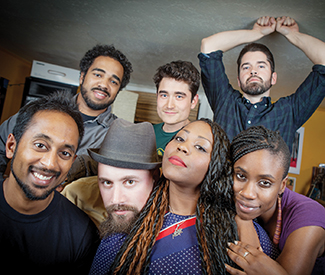
GOLDIES “What was the latest? Afro-futurism? Afro-futurism,” says Lalin St. Juste, songwriter and lead singer in the East Bay band The Seshen, of how the somewhat un-categorizable band has been categorized by critics most recently. “Which we’re kind of OK with. It makes me think of, like, a silver afro.”

“Or, you know, like we trade in afro futures,” says keyboardist Mahesh Rao, between bites of chips and salsa, eliciting a burst of laughter from his bandmates. “Electro-soul is OK too. We were calling ourselves electro-pop for a while, but then Paris Hilton came out with a record a while back that she was calling electro-pop, and I was like, Lalin, we gotta take that off our business cards.”

Call them what you will. The sounds this seven-piece band makes are captivating, layering the soulful, Erykah Badu-reminiscent vocals of St. Juste and the musical theater-trained Akasha Orr — whose smile you can hear in her voice — with precise electronic samples, dub sounds, R&B guitar grooves, bass lines that beg to be bumped out your car window at a stoplight, and percussion that seems to borrow from at least three continents.

It’s both sexy and a little nerdy: immersive, inviting, warmer than your weirdest Radiohead, but with a chilled-out, dreamy, late-night sensibility and spirituality. It’d be just at home on an indie-rock mix as, say, Beach House, but it’s hardly background music — there’s just too damn much going on. Live, the Seshen is committed to a specific blend of electronic elements and “humanity…I think we have something really human and warm, because of the vocals, live drums, other human elements,” says percussionist Mirza Kopelman. Regardless, the band’s setup is far from straightforward; St. Juste’s custom pedal board looks like it could power a small plane. “Sound guys hate us,” offers synchronizer-sampler Kumar Butler.

People often don’t quite know what to do with them, Seshen members are the first to admit. They’ve been labeled “world music” in the past simply because, as far as they can tell, they’re seven people representing a wide range of ethnicities. But especially following the release of last summer’s spaced-out, sped-up trip-hoppy, drum-and-keyboard-driven single “2000 Seasons,” which revealed a more upbeat sound than The Seshen’s self-titled 2012 debut, hip-shaking seems to be a common reaction.

seshen

Guardian photo by Saul Bromberger and Sandra Hoover

“Some songs are meant for sitting and relaxing,” says St. Juste, “but in general, we want people to dance.” Bigger crowds and stages have followed. Playing Oakland’s Hiero Day last year, band members were overwhelmed to hear that some of their local childhood hip-hop heroes were Seshen fans, too.

It’s a rehearsal evening, which means members are sprawled around their studio — the tricked-out den of an El Cerrito house that St. Juste, producer-bassist Aki Ehara, and Orr all share — with snacks and beers and their notes about the most recent mixes of their upcoming EP, due out this spring. There’s a dartboard in one corner; a campy poster featuring the winged angel version of Michael Jackson dominates another, while D’Angelo stares across the room from an LP cover.

Just past a tiny enclave marked by a photo of Ehara’s grandfather is the producer’s recording and mixing setup — the band does it all, quite literally and very meticulously, in-house. The value of Ehara’s determined focus on the subtleties of a mix cannot be overstated, say his bandmates. In honing the band’s sound, says Ehara, he’s influenced by delving into the history of electronic music, he says, going back to John Cage and early BBC radio electronica. “That, alone, opened a whole other door for me.”

“I’ve played in a lot of bands, and I’ve never been in one that pays this much attention to detail,” says drummer Chris Thalmann. “Everyone has a really high level of expectation for what we put out there.” That perfectionism is starting to get attention: In January, they inked a deal with Tru Thoughts, an independent label out of Brighton, UK. After the EP comes out, the big plan for 2014 is to tour more — pack themselves into a 15-passenger van and find out if they get along as well on the road, stinky socks and all, as they do at home.

“We do have to corral ourselves back into working sometimes,” says Orr. “It is pretty amazing that with this many people we all really get along, but we do. We have fun, and we love each other. That part’s organic.”

“I think that’s part of what sets us apart from some electronic acts,” says Kopelman. “We’re seven people making something together. Not, you know, a mustachioed hipster on a laptop.”

www.theseshen.com

https://www.youtube.com/watch?v=gOkubxzD4gY

Rep Clock: February 19 – 25, 2014

0

Schedules are for Wed/19-Tue/25 except where noted. Director and year are given when available. Double and triple features marked with a •. All times pm unless otherwise specified.

ARTISTS’ TELEVISION ACCESS 992 Valencia, SF; www.atasite.org. $5-10. San Francisco Cinematheque presents: “The Cinema of Narcisa Hirsch,” Wed, 7:30. Other Cinema presents collaged, remixed, and found films by Soda Jerk, Stacey Steer, Robert Todd, and others, Sat, 8:30.

BALBOA THEATRE 3630 Balboa, SF; cinemasf.com/balboa. $7.50-10. “Popcorn Palace:” Shrek 2 (Vernon and Asbury, 2004), Sat, 10am. Matinee for kids. “Balboa Theatre’s 88th Birthday Party:” The Strongman (Capra, 1926), plus live 1920s music, food, beer, wine, and prizes, Sun, 7.

CASTRO 429 Castro, SF; (415) 621-6120, www.castrotheatre.com. $8.50-11. •Miller’s Crossing (Coen and Coen, 1990), Wed, 7, and Barton Fink (Coen and Coen, 1991), Wed, 9:30. On the Waterfront (Kazan, 1954), Thu, 7, and The Night of the Following Day (Cornfield, 1968), Thu, 9. “Midnites for Maniacs: Kreative Killers Double Bill:” •Clue (Lynn, 1985), Fri, 7:20, and Crimes and Misdemeanors (Allen, 1989), Fri, 9:20. Mary Poppins (Stevenson, 1964), presented sing-along style, Sat-Sun, 2 (also Sat, 7). This event, $10-16; advance tickets at www.ticketweb.com. Saving Mr. Banks (Hancock, 2013), Sun, 6, 8:30. “Nitey Awards 2014,” Mon, 7. This event, $15-75; advance tickets at www.niteyawards.com. Her (Jonze, 2013), Tue, 2, 4:30, 7, 9:30.

CHRISTOPHER B. SMITH RAFAEL FILM CENTER 1118 Fourth St, San Rafael; (415) 454-1222, www.cafilm.org. $6.50-$10.75. times. “Oscar Nominated Short Films 2014,” call for dates and times. Gloria (Lelio, 2013), call for dates and times. “Mostly British Film Festival:” Love Me Till Monday (Hardy, 2013), Wed, 7; Life’s a Breeze (Daly, 2013), Thu, 7.

CLAY 2261 Fillmore, SF; www.landmarktheatres.com. $10. San Francisco Film Society presents: Magic Magic (2013), Thu, 7. With filmmaker Sebastián Silva in person; visit www.sffs.org for more info on Silva’s artist-in-residence events through Feb 28. “Midnight Movies:” The Rocky Horror Picture Show (Sharman, 1975), Sat, midnight. With the Bawdy Caste performing live.

EXPLORATORIUM Pier 15, SF; www.exploratorium.edu. Free with museum admission ($19-25). “Off the Screen: Caroline Martel’s ‘Wavemakers,'” Thu, 7. Filmmaker in person with post-screening Ondes Martenot demonstration.

MECHANICS’ INSTITUTE 57 Post, SF; milibrary.org/events. $10. “CinemaLit Film Series: Villains We Love:” The Stranger (Welles, 1946), Fri, 6.

NOURSE THEATER 275 Hayes, SF; www.cityarts.net. Free. “Remembering Philip Seymour Hoffman,” screenings of nine Hoffman films, Sat, 10am; Sun, noon. Check www.cityarts.net for complete schedule.

PACIFIC FILM ARCHIVE 2575 Bancroft, Berk; (510) 642-5249, bampfa.berkeley.edu. $5.50-9.50. “Film 50: History of Cinema:” Citizen Kane (Welles, 1941), with lecture by Emily Carpenter, Wed, 3:10. “Committed Cinema: Tony Buba:” Lightning Over Braddock: A Rustbowl Fantasy (Buba, 1988), Wed, 7; We Are Alive! The Fight to Save Braddock Hospital (Buba and Dubensky, 2013), Thu, 7. “Against the Law: The Crime Films of Anthony Mann:” He Walked By Night (1949), Fri, 7; Border Incident (1949), Fri, 8:40. “Funny Ha-Ha: The Genius of American Comedy, 1930-1959:” Some Like It Hot (Wilder, 1959), Sat, 6. “Jean-Luc Godard: Expect Everything from Cinema:” Band of Outsiders (1964), Sat, 8:20; “Godard’s Early Shorts,” Sun, 5. “The Brilliance of Satyajit Ray:” The Expedition (1962), Sun, 2. “Documentary Voices:” May They Rest in Revolt (George, 2010), Tue, 7.

ROXIE 3117 and 3125 16th St, SF; (415) 863-1087, www.roxie.com. $6.50-11. SF IndieFest, through Thu. For program info, visit www.sfindie.com. Love & Air Sex (Poyser, 2014), Feb 21-27, call for times. “Roxie’s Future Filmmakers Program: TILT,” Sat, noon. Short films by young filmmakers.

TANNERY 708 Gilman, Berk; berkeleyundergroundfilms.blogspot.com. Donations accepted. “Berkeley Underground Film Society:” “LOOP Presents:” “Old School, New Light:” •This is Marshall McLuhan: The Medium is the Message (1967), and At Home, 2001 (1967), Sat, 7:30; Annie Hall (Allen, 1977), Sun, 7:30.

VICTORIA THEATRE 2961 16th St, SF; www.wearebatman.com. $8.50-11. Legends of the Knight (Culp, 2014 ), Fri, 7:30.

VOGUE 3290 Sacramento, SF; www.mostlybritish.org. $12.50. “Mostly British Film Festival,” 25 classic and new films from the UK, Ireland, Australia, and India, through Thu. “SF Jewish Film Festival Winter Fest:” It Happened in St. Tropez (Thompson, 2013), Sun, noon; Cupcakes (Fox, 2013), Sun, 2:30; Bethlehem (Adler, 2013), Sun, 4:30; A Short History of Decay (Maren, 2013), Sun, 6:40; S#x Acts (Gurfinkel, 2013), Sun, 8:40. Passes ($30-40) and more info at www.sfjff.org. *


Film Listings: February 19 -25, 2014

0

Film listings are edited by Cheryl Eddy. Reviewers are Kimberly Chun, Dennis Harvey, Lynn Rapoport, Sam Stander, and Sara Maria Vizcarrondo. For rep house showtimes, see Rep Clock. Due to the Presidents’ Day holiday, theater information was incomplete at presstime.

OPENING

Barefoot Tonight, the part of manic pixie dream girl will be played by Evan Rachel Wood. (For another MPDG option, see The Pretty One, below.) (1:30)

Hank: Five Years from the Brink This latest doc from Joe Berlinger (the Paradise Lost trilogy) follows the template favored by Errol Morris in films like 2003’s The Fog of War and last year’s The Unknown Known, surrounding an extended sit-down interview with news footage and home movies reflecting on a political subject’s career. On the hot seat is former Treasury Secretary and Goldman Sachs CEO Hank Paulson, who walks us through the 2008 financial crisis (Jon Stewart referred to him as “Baron Von Moneypants”) with the benefit of hindsight, and a certain amount of self-effacing humor. Whether or not you agree with the guy’s actions, he’s actually pretty likeable, and Berlinger’s decision to include interviews with Paulson’s no-nonsense wife, Wendy, adds a human angle to the decisions behind the “too big to fail” fiasco. (1:25) Roxie. (Eddy)

In Secret Zola’s much-adapted 1867 novel Thérèse Raquin is the source for this rather tepid period melodrama with Elizabeth Olsen as that character, dumped by the seafaring father she never sees again on the doorstep of a joyless aunt (Jessica Lange). The latter pretty much forces Thérèse to eventually marry her own son, sickly Camille (Tom Felton), and even a move to Paris does little to brighten our heroine’s dreary existence. Until, that is, she meets Camille’s contrastingly virile office coworker Laurent (Oscar Isaac), with whom she’s soon more-or-less graphically doing all the sweaty sexy thangs Zola could only hint at. When their passion becomes more than they can bear maintaining “in secret,” they find themselves considering murder as one way out. The original author’s clever plot mechanizations create some suspense in the late going. But despite good performances around her, Olsen doesn’t make her heroine very interesting, and director-adaptor Charlie Stratton is all too faithful to the depressing nature of this classic tale — visually the film too often seems to be crouching beneath a heavy, damp cloak, proud to be saving on candle wax. (1:47) (Harvey)

Love & Air Sex Convinced his life has gone nowhere since/because they broke up, Stan (Michael Stahl-David) hops the next plane to Austin upon hearing that his ex girlfriend Cathy (Ashley Bell from the Last Exorcism movies) is headed there to visit BFF Kara (Sara Paxton), the ex-gf of his BFF Jeff (Zach Cregger). Cathy isn’t over him, either. But the other duo are apparently really, really over each other, as they have a full weekend of hopeful revenge sex with as-yet-unmet strangers planned out. Jeff is taking it even further by participating in the Alamo Drafthouse’s Air Sex Championship. (This is an actual event, and better yet, it tours. Best name for a team competing against Jeff: Insane Clown Pussy.) This raunchy independent comedy doesn’t stray too far from formula, coming up with a Mr. (Justin Arnold as a romance-novel-grade old school Southern gentleman) and Ms. Right (Addison Timlin, playing a Fiona Apple-like song with cello) for heroine and hero to be distracted by. Never mind that you have to accept two almost churchy-nice types like Cathy and Stan would be friends with the incredibly crass, filter-free likes of Kara and Jeff — if you expect credibility from a rom-com, you are barking up the wrong genre. Bryan Posner’s film is a bit hit-and-miss, but the cast is excellent, and there are a fair share of hilarious bits. Special honors go to native Austinite Marshall Allman as Ralphie, a very dim bulb with one extra-large virtue. (1:31) Roxie. (Harvey)

Omar Palestine’s contender for Best Foreign Language Film is a mighty strong one, with a top-notch script and direction by previous nominee Hany Abu-Assad (2006’s Paradise Now). After he’s captured following the shooting of an Israeli soldier, the titular freedom fighter (a compelling Adam Bakri) is given an unsavory choice by his handler (Waleed F. Zuaiter): rot in jail for 90 years, or become an informant (or “collaborator”) and rat out his co-conspirators. The situation is further complicated by the fact that Omar is in love with Nadia (Leem Lubany, blessed with a thousand-watt smile), the younger sister of his lifelong friend, Tarek (Iyad Hoorani), who planned the attack. Betrayals are imminent, but who will come out ahead, and at what price? Shot with gritty urgency — our hero is constantly on the run, ducking down alleys, scaling walls, scrambling across rooftops, sliding down drainpipes, etc. — Omar brings authenticity to its embattled characters and setting. A true thriller, right up until the last shot. (1:38) Embarcadero, Shattuck. (Eddy)

Pompeii Game of Thrones‘ Kit Harington stars as a gladiator in this action epic about Mount Vesuvius erupting all over you-know-which ancient city. (1:45)

The Pretty One Examined from a certain remove, the premise of writer-director Jenée LaMarque’s first feature is a pretty bizarre exercise in wish fulfillment. Zoe Kazan plays a pair of identical twins who, if you swirled their DNA together, would make up one pretty decent manic pixie dream girl, but separate out into perfectly drawn foils: awkward, stay-at-home oddball Laurel and LA professional hipster Audrey — aka the pretty one, who left their small hometown while Laurel hung back to look after their father in the long wake of their mother’s death. Laurel is clearly stuck. But it’s unfortunate that it takes a fiery car wreck that kills Audrey and leaves her body burned beyond recognition, while flinging Laurel to safety, to get her to move forward — which she does by letting everyone believe that she died and taking on Audrey’s identity, as well as her job, her BFF, the mortgage payments on her two-unit bungalow in L.A., and her tenant, scruffy charmer Basel (New Girl‘s Jake Johnson). Turning these circumstances into romantic comedy gold doesn’t sound likely. But in LaMarque’s sweet, funny, slightly off-center film, the oddity of the situation begins to give way, or rather to make some room for an odd girl to fumble around in. The glare of the artifice dims a bit, revealing a peculiar, affecting manifestation of grief and loss. And while LaMarque cuts a few corners in steering her protagonist toward a life of her own, Laurel and Basel’s engaging, comic rapport, as they begin keeping company, is pleasurable to watch. (1:30) Metreon. (Rapoport)

3 Days to Kill McG directs, Luc Besson produces, and Kevin Costner plays the dad-by-day, Secret-Service-agent badass by night. What, Liam Neeson had something better to do? (1:40)

The Wind Rises Hayao Miyazaki announced that Oscar nominee The Wind Rises would be his final film before retiring — though he later amended that declaration, as he’s fond of doing, so who knows. At any rate, it’d be a shame if this was the Japanese animation master’s final film before retirement; not only does it lack the whimsy of his signature efforts (2001’s Spirited Away, 1997’s Princess Mononoke), it’s been overshadowed by controversy — not entirely surprising, since it’s about the life of Jiro Horikoshi, who designed war planes (built by slave labor) in World War II-era Japan. Surprisingly, a pacifist message is established early on; as a young boy, his mother tells him, “Fighting is never justified,” and in a dream, Italian engineer Giovanni Caproni assures him “Airplanes are not tools for war.” But that statement doesn’t last long; Caproni visits Jiro in his dreams as his career takes him from Japan to Germany, where he warns the owlish young designer that “aircraft are destined to become tools for slaughter and destruction.” You don’t say. A melodramatic romantic subplot injects itself into all the plane-talk on occasion, but — despite all that political hullabaloo — The Wind Rises is more tedious than anything else. (2:06) Embarcadero. (Eddy)

ONGOING

About Last Night (1:40)

American Hustle David O. Russell’s American Hustle is like a lot of things you’ve seen before — put in a blender, so the results are too smooth to feel blatantly derivative, though here and there you taste a little Boogie Nights (1997), Goodfellas (1990), or whatever. Loosely based on the Abscam FBI sting-scandal of the late 1970s and early ’80s (an opening title snarks “Some of this actually happened”), Hustle is a screwball crime caper almost entirely populated by petty schemers with big ideas almost certain to blow up in their faces. It’s love, or something, at first sight for Irving Rosenfeld (Christian Bale) and Sydney Prosser (Amy Adams), who meet at a Long Island party circa 1977 and instantly fall for each other — or rather for the idealized selves they’ve both strained to concoct. He’s a none-too-classy but savvy operator who’s built up a mini-empire of variably legal businesses; she’s a nobody from nowhere who crawled upward and gave herself a bombshell makeover. The hiccup in this slightly tacky yet perfect match is Irving’s neglected, crazy wife Rosalyn (Jennifer Lawrence), who’s not about to let him go. She’s their main problem until they meet Richie DiMaso (Bradley Cooper), an ambitious FBI agent who entraps the two while posing as a client. Their only way out of a long prison haul, he says, is to cooperate in an elaborate Atlantic City redevelopment scheme he’s concocted to bring down a slew of Mafioso and presumably corrupt politicians, hustling a beloved Jersey mayor (Jeremy Renner) in the process. Russell’s filmmaking is at a peak of populist confidence it would have been hard to imagine before 2010’s The Fighter, and the casting here is perfect down to the smallest roles. But beyond all clever plotting, amusing period trappings, and general high energy, the film’s ace is its four leads, who ingeniously juggle the caricatured surfaces and pathetic depths of self-identified “winners” primarily driven by profound insecurity. (2:17) (Harvey)

August: Osage County Considering the relative infrequency of theater-to-film translations today, it’s a bit of a surprise that Tracy Letts had two movies made from his plays before he even got to Broadway. Bug and Killer Joe proved a snug fit for director William Friedkin (in 2006 and 2011, respectively), but both plays were too outré for the kind of mainstream success accorded 2007’s August: Osage County, which won the Pulitzer, ran 18 months on Broadway, and toured the nation. As a result, August was destined — perhaps doomed — to be a big movie, the kind that shoehorns a distracting array of stars into an ensemble piece, playing jes’ plain folk. But what seemed bracingly rude as well as somewhat traditional under the proscenium lights just looks like a lot of reheated Country Gothic hash, and the possibility of profundity you might’ve been willing to consider before is now completely off the menu. If you haven’t seen August before (or even if you have), there may be sufficient fun watching stellar actors chew the scenery with varying degrees of panache — Meryl Streep (who else) as gorgon matriarch Violet Weston; Sam Shepard as her long-suffering spouse; Julia Roberts as pissed-off prodigal daughter Barbara (Julia Roberts), etc. You know the beats: Late-night confessions, drunken hijinks, disastrous dinners, secrets (infidelity, etc.) spilling out everywhere like loose change from moth-eaten trousers. The film’s success story, I suppose, is Roberts: She seems very comfortable with her character’s bitter anger, and the four-letter words tumble past those jumbo lips like familiar friends. On the downside, there’s Streep, who’s a wizard and a wonder as usual yet also in that mode supporting the naysayers’ view that such conspicuous technique prevents our getting lost in her characters. If Streep can do anything, then logic decrees that includes being miscast. (2:10) (Harvey)

Dallas Buyers Club Dallas Buyers Club is the first all-US feature from Jean-Marc Vallée. He first made a splash in 2005 with C.R.A.Z.Y., which seemed an archetype of the flashy, coming-of-age themed debut feature. Vallée has evolved beyond flashiness, or maybe since C.R.A.Z.Y. he just hasn’t had a subject that seemed to call for it. Which is not to say Dallas is entirely sober — its characters partake from the gamut of altering substances, over-the-counter and otherwise. But this is a movie about AIDS, so the purely recreational good times must eventually crash to an end. Which they do pretty quickly. We first meet Ron Woodroof (Matthew McConaughey) in 1986, a Texas good ol’ boy endlessly chasing skirts and partying nonstop. Not feeling quite right, he visits a doctor, who informs him that he is HIV-positive. His response is “I ain’t no faggot, motherfucker” — and increased partying that he barely survives. Afterward, he pulls himself together enough to research his options, and bribes a hospital attendant into raiding its trial supply of AZT for him. But Ron also discovers the hard way what many first-generation AIDS patients did — that AZT is itself toxic. He ends up in a Mexican clinic run by a disgraced American physician (Griffin Dunne) who recommends a regime consisting mostly of vitamins and herbal treatments. Ron realizes a commercial opportunity, and finds a business partner in willowy cross-dresser Rayon (Jared Leto). When the authorities keep cracking down on their trade, savvy Ron takes a cue from gay activists in Manhattan and creates a law evading “buyers club” in which members pay monthly dues rather than paying directly for pharmaceutical goods. It’s a tale that the scenarists (Craig Borten and Melisa Wallack) and director steep in deep Texan atmospherics, and while it takes itself seriously when and where it ought, Dallas Buyers Club is a movie whose frequent, entertaining jauntiness is based in that most American value: get-rich-quick entrepreneurship. (1:58) (Harvey)

Endless Love Just about everything about this very, very loose rework of the 1981 Franco Zeffirelli schmaltzathon-slash-cinematic stab at Scott Spencer’s well-regarded novel — apart from Alex Pettyfer’s infallible chest — is endlessly laughable. The Zeffirelli effort was dedicated to the nation’s sexualization of all things Brooke Shields, with an added Reagan-era rebuff of perceived loosey-goosey boomer mores. Mixed messages, certainly, but that was a different time and place, and instead of viewing youthful sexual obsession-cum-romance as an almost-anarchic force of nature, threatening life, limb, and everything we hold dear, this venture defuses much of that dangerous passion and turns it all into a fairly weak broth of watered-down Romeo and Juliet. Here, Jade (Gabriella Wilde) is the privileged, golden-girl bookworm who has no social life — her family, headed by control-freak doctor dad (Bruce Greenwood), has been preoccupied with the care and finally passing of her beloved, cancer-striken brother. Enter hunky po’ boy David (Pettyfer), who finds a way into a lonely girl’s heart, with, natch, his social savvy and fulsome pecs. Standing in the way of endless love? A great medical internship for Jade and a bossy pants father who worked very hard to get that internship for her. Pfft. Love finds its work-around amid those low stakes, and we’re all left marveling at Wilde’s posh, coltishly thin limbs and Pettyfer’s depthless dimples. (1:44) (Chun)

Frozen (1:48)

Gloria The titular figure in Sebastian Lelio’s film is a Santiago divorcee and white collar worker (Paulina Garcia) pushing 60, living alone in a condo apartment — well, almost alone, since like Inside Llewyn Davis, this movie involves the frequent, unwanted company of somebody else’s cat. (That somebody is an upstairs neighbor whose solo wailings against cruel fate disturb her sleep.) Her two children are grown up and preoccupied with their adult lives. Not quite ready for the glue factory yet, Gloria often goes to a disco for the “older crowd,” dancing by herself if she has to, but still hoping for some romantic prospects. She gets them in the form of Rodolfo (Sergio Hernandez), who’s more recently divorced but gratifyingly infatuated with her. Unfortunately, he’s also let his daughters and ex-wife remain ominously dependent on him, not just financially but in every emotional crisis that affects their apparently crisis-filled lives. The extent to which Gloria lets him into her life is not reciprocated, and she becomes increasingly aware how distant her second-place priority status is whenever Rodolfo’s other loved ones snap their fingers. There’s not a lot of plot but plenty of incident and insight to this character study, a portrait of a “spinster” that neither slathers on the sentimental uplift or piles on melodramatic victimizations. Instead, Gloria is memorably, satisfyingly just right. (1:50) Smith Rafael. (Harvey)

Gravity “Life in space is impossible,” begins Gravity, the latest from Alfonso Cuarón (2006’s Children of Men). Egghead Dr. Ryan Stone (Sandra Bullock) is well aware of her precarious situation after a mangled satellite slams into her ship, then proceeds to demolition-derby everything (including the International Space Station) in its path. It’s not long before she’s utterly, terrifyingly alone, and forced to unearth near-superhuman reserves of physical and mental strength to survive. Bullock’s performance would be enough to recommend Gravity, but there’s more to praise, like the film’s tense pacing, spare-yet-layered script (Cuarón co-wrote with his son, Jonás), and spectacular 3D photography — not to mention George Clooney’s warm supporting turn as a career astronaut who loves country music almost as much as he loves telling stories about his misadventures. (1:31) (Eddy)

The Great Beauty The latest from Paolo Sorrentino (2008’s Il Divo) arrives as a high-profile contender for the Best Foreign Language Film Oscar, already annointed a masterpiece in some quarters, and duly announcing itself as such in nearly every grandiose, aesthetically engorged moment. Yes, it seems to say, you are in the presence of this auteur’s masterpiece. But it’s somebody else’s, too. The problem isn’t just that Fellini got there first, but that there’s room for doubt whether Sorrentino’s homage actually builds on or simply imitates its model. La Dolce Vita (1960) and 8 1/2 (1963) are themselves swaying, jerry-built monuments, exhileratingly messy and debatably profound. But nothing quite like them had been seen before, and they did define a time of cultural upheaval — when traditional ways of life were being plowed under by a loud, moneyed, heedless modernity that for a while chose Rome as its global capital. Sorrentino announces his intention to out-Fellini Fellini in an opening sequence so strenuously flamboyant it’s like a never-ending pirouette performed by a prima dancer with a hernia. There’s statuary, a women’s choral ensemble, an on-screen audience applauding the director’s baffled muse Toni Servillo, standing in for Marcello Mastroianni — all this and more in manic tracking shots and frantic intercutting, as if sheer speed alone could supply contemporary relevancy. Eventually The Great Beauty calms down a bit, but still its reason for being remains vague behind the heavy curtain of “style.” (2:22) (Harvey)

Her Morose and lonely after a failed marriage, Theodore (Joaquin Phoenix) drifts through an appealingly futuristic Los Angeles (more skyscrapers, less smog) to his job at a place so hipster-twee it probably will exist someday: beautifulhandwrittenletters.com, where he dictates flowery missives to a computer program that scrawls them onto paper for paying customers. Theodore’s scripting of dialogue between happy couples, as most of his clients seem to be, only enhances his sadness, though he’s got friends who care about him (in particular, Amy Adams as Amy, a frumpy college chum) and he appears to have zero money woes, since his letter-writing gig funds a fancy apartment equipped with a sweet video-game system. Anyway, women are what gives Theodore trouble — and maybe by extension, writer-director Spike Jonze? — so he seeks out the ultimate gal pal: Samantha, an operating system voiced by Scarlett Johansson in the year’s best disembodied performance. Thus begins a most unusual relationship, but not so unusual; Theodore’s friends don’t take any issue with the fact that his new love is a machine. Hey, in Her‘s world, everyone’s deeply involved with their chatty, helpful, caring, always-available OS — why wouldn’t Theo take it to the next level? Inevitably, of course, complications arise. If Her‘s romantic arc feels rather predictable, the film acquits itself in other ways, including boundlessly clever production-design touches that imagine a world with technology that’s (mostly) believably evolved from what exists today. Also, the pants they wear in the future? Must be seen to be believed. (2:00) Castro. (Eddy)

Inside Llewyn Davis In the Coen Brothers’ latest, Oscar Isaac as the titular character is well on his way to becoming persona non grata in 1961 NYC — particularly in the Greenwich Village folk music scene he’s an ornery part of. He’s broke, running out of couches to crash on, has recorded a couple records that have gone nowhere, and now finds out he’s impregnated the wife (Carey Mulligan) and musical partner of one among the few friends (Justin Timberlake) he has left. She’s furious with herself over this predicament, but even more furious at him. This ambling, anecdotal tale finds Llewyn running into one exasperating hurdle after another as he burns his last remaining bridges, not just in Manhattan but on a road trip to Chicago undertaken with an overbearing jazz musician (John Goodman) and his enigmatic driver (Garrett Hedlund) to see a club impresario (F. Murray Abraham). This small, muted, droll Coens exercise is perfectly handled in terms of performance and atmosphere, with pleasures aplenty in its small plot surprises, myriad humorous idiosyncrasies, and T. Bone Burnett’s sweetened folk arrangements. But whether it actually has anything to say about its milieu (a hugely important Petri dish for later ’60s political and musical developments), or adds up to anything more profound than an beautifully executed shaggy-dog story, will be a matter of personal taste — or perhaps of multiple viewings. (1:45) (Harvey)

Labor Day Sweet little home repairs, quickie car tune-ups, sensual pie-making, and sexed-up chili cookery — Labor Day seems to be taking its chick-flick cues from Porn For Women, Cambridge Women’s Pornography Cooperative’s puckish gift-booklet that strives to capture women’s real desires: namely, for vacuuming, folded laundry, and patient listening from their chosen hunks of beefcake. Let’s call it domestic close encounters of the most pragmatic, and maybe most realistic, kind. But that seems to sail over the heads of all concerned with Labor Day. Working with Joyce Maynard’s novel, director-screenwriter Jason Reitman largely dispenses with the wit that washes through Juno (2007) and Up in the Air (2009) and instead chooses to peer at his actors through the seriously overheated, poetically impressionistic prism of Terrence Malick … if Malick were tricked into making a Nicholas Sparks movie. Single mom Adele (Kate Winslet) is down in the dumps over multiple miscarriages and her husband’s (Clark Gregg) departure. Son Henry (Gattlin Griffith) becomes her caretaker of sorts — thus, when escaped convict Frank (Josh Brolin) forces the mother-and-son team to give him a ride and a hideout, it’s both a blessing and a curse, especially because the hardened tough guy turns out to be a compulsively domestic, hardworking ubermensch of a Marlboro Man, able to bake up a peach pie and teach Henry to throw a baseball, all within the course of a long Labor Day weekend. Hapless Adele is helpless to resist him, particularly after some light bondage and plenty of manly nurturing. Ultimately this masochistic fantasy about the ultimate, if forbidden, family man — and the delights of the Stockholm Syndrome — is much harder to swallow than a spoonful of homemade chili, despite its strong cast. (1:51) (Chun)

The Lego Movie (1:41)

Like Father, Like Son A yuppie Tokyo couple are raising their only child in workaholic dad’s image, applying the pressure to excel at an early age. Imagine their distress when the hospital phones with some unpleasant news: It has only just been learned that a nurse mixed up their baby with another, with the result that both families have been raising the “wrong” children these six years. Polite, forced interaction with the other clan — a larger nuclear unit as warm, disorganized, and financially hapless as the first is formal, regimented and upwardly mobile — reveals that both sides have something to learn about parenting. This latest from Japanese master Hirokazu Koreeda (1998’s After Life, 2004’s Nobody Knows, 2008’s Still Walking) is, as usual, low-key, beautifully observed, and in the end deeply moving. (2:01) (Harvey)

The Monuments Men The phrase “never judge a book by its cover” goes both ways. On paper, The Monuments Men — inspired by the men who recovered art stolen by the Nazis during World War II, and directed by George Clooney, who co-wrote and stars alongside a sparkling ensemble cast (Cate Blanchett, Matt Damon, John Goodman, Jean Dujardin, Bob Balaban, Hugh “Earl of Grantham” Bonneville, and Bill Fucking Murray) — rules. Onscreen, not so much. After they’re recruited to join the cause, the characters fan out across France and Germany following various leads, a structural choice that results in the film’s number one problem: it can’t settle on a tone. Men can’t decide if it wants to be a sentimental war movie (as in an overlong sequence in which Murray’s character weeps at the sound of his daughter’s recorded voice singing “White Christmas”); a tragic war movie (some of those marquee names die, y’all); a suspenseful war movie (as the men sneak into dangerous territory with Michelangelo on their minds); or a slapstick war comedy (look out for that land mine!) The only consistent element is that the villains are all one-note — and didn’t Inglourious Basterds (2009) teach us that nothing elevates a 21st century-made World War II flick like an eccentric bad guy? There’s one perfectly executed scene, when reluctant partners Balaban and Murray discover a trove of priceless paintings hidden in plain sight. One scene, out of a two-hour movie, that really works. The rest is a stitched-together pile of earnest intentions that suggests a complete lack of coherent vision. Still love you, Clooney, but you can do better — and this incredible true story deserved way better. (1:58) (Eddy)

Nebraska Alexander Payne may be unique at this point in that he’s in a position of being able to make nothing but small, human, and humorous films with major-studio money on his own terms. It’s hazardous to make too much of a movie like Nebraska, because it is small — despite the wide Great Plains landscapes shot in a wide screen format — and shouldn’t be entered into with overinflated or otherwise wrong-headed expectations. Still, a certain gratitude is called for. Nebraska marks the first time Payne and his writing partner Jim Taylor weren’t involved in the script, and the first one since their 1996 Citizen Ruth that isn’t based on someone else’s novel. (Hitherto little-known Bob Nelson’s original screenplay apparently first came to Payne’s notice a decade ago, but getting put off in favor of other projects.) It could easily have been a novel, though, as the things it does very well (internal thought, sense of place, character nuance) and the things it doesn’t much bother with (plot, action, dialogue) are more in line with literary fiction than commercial cinema. Elderly Woody T. Grant (Bruce Dern) keeps being found grimly trudging through snow and whatnot on the outskirts of Billings, Mont., bound for Lincoln, Neb. Brain fuzzed by age and booze, he’s convinced he’s won a million dollars and needs to collect it him there, though eventually it’s clear that something bigger than reality — or senility, even — is compelling him to make this trek. Long-suffering younger son David (Will Forte) agrees to drive him in order to simply put the matter to rest. This fool’s mission acquires a whole extended family-full of other fools when father and son detour to the former’s podunk farming hometown. Nebraska has no moments so funny or dramatic they’d look outstanding in excerpt; low-key as they were, 2009’s Sideways and 2011’s The Descendants had bigger set pieces and narrative stakes. But like those movies, this one just ambles along until you realize you’re completely hooked, all positive emotional responses on full alert. (1:55) (Harvey)

“Oscar Nominated Short Films 2014: Animated” Five nominees — plus a trio of “highly commended” additional selections — fill this program. If you saw Frozen in the theater, you’ve seen Get a Horse!, starring old-timey Mickey Mouse and some very modern moviemaking techniques. There’s also Room on the Broom, based on a children’s book about a kindly witch who’s a little too generous when it comes to befriending outcast animals (much to the annoyance of her original companion, a persnickety cat). Simon Pegg narrates, and Gillian Anderson voices the red-headed witch; listen also for Mike Leigh regulars Sally Hawkins and Timothy Spall. Japanese Possessions is based on even older source material: a spooky legend that discarded household objects can gain the power to cause mischief. A good-natured fix-it man ducks into an abandoned house during a rainstorm, only to be confronted with playful parasols, cackling kimono fabric, and a dragon constructed out of kitchen junk. The most artistically striking nominee is Feral, a dialogue-free, impressionistic tale of a foundling who resists attempts to civilize him. But my top pick is another dialogue-free entry: Mr. Hublot, the steampunky tale of an inventor whose regimented life is thrown into disarray when he adopts a stray robot dog, which soon grows into a comically enormous companion. It’s cute without being cloying, and the universe it creates around its characters is cleverly detailed, right down to the pictures on Hublot’s walls. (Eddy)

“Oscar Nominated Short Films 2014: Live Action” With the exception of one entry — wryly comedic The Voorman Problem, starring Sherlock‘s Martin Freeman as a prison doctor who has a most unsettling encounter with an inmate who believes he’s a god — children are a unifying theme among this year’s live-action nominees. Finnish Do I Have to Take Care of Everything?, the shortest in the bunch, follows a cheerfully sloppy family’s frantic morning as they scramble to get themselves to a wedding. Danish Helium skews a little sentimental in its tale of a hospital janitor who makes up stories about a fanciful afterlife (way more fun than heaven) for the benefit of a sickly young patient. Spanish That Wasn’t Me focuses on a different kind of youth entirely: a child soldier in an unnamed African nation, whose brutal encounter with a pair of European doctors leads him down an unexpected path. Though it feels more like a sequence lifted from a longer film rather than a self-contained short, French Just Before Losing Everything is the probably the strongest contender here. The tale of a woman (Léa Drucker) who decides to take her two children and leave her dangerously abusive husband, it unfolds with real-time suspense as she visits her supermarket job one last time to deal with mundane stuff (collecting her last paycheck, turning in her uniform) before the trio can flee to safety. If they gave out Oscars for short-film acting, Drucker would be tough to beat; her performance balances steely determination and extreme fear in equally hefty doses. (Eddy)

“Oscar Nominated Short Films 2014: Documentary (presented in two separata programs)”

Philomena Judi Dench gives this twist on a real-life scandal heart, soul, and a nuanced, everyday heft. Her ideal, ironic foil is Steve Coogan, playing an upper-crusty irreverent snob of an investigative journalist. Judging by her tidy exterior, Dench’s title character is a perfectly ordinary Irish working-class senior, but she’s haunted by the past, which comes tumbling out one day to her daughter: As an unwed teenager, she gave birth to a son at a convent. She was forced to work there, unpaid; as supposed penance, the baby was essentially sold to a rich American couple against her consent. Her yarn reaches disgraced reporter Martin Sixsmith (Coogan), who initially turns his nose up at the tale’s piddling “human interest” angle, but slowly gets drawn in by the unexpected twists and turns of the story — and likely the possibility of taking down some evil nuns — as well as seemingly naive Philomena herself, with her delight in trash culture, frank talk about sex, and simple desire to see her son and know that he thought, once in a while, of her. It turns out Philomena’s own sad narrative has as many improbable turnarounds as one of the cheesy romance novels she favors, and though this unexpected twosome’s quest for the truth is strenuously reworked to conform to the contours of buddy movie-road trip arc that we’re all too familiar with, director Stephen Frears’ warm, light-handed take on the gentle class struggles going on between the writer and his subject about who’s in control of the story makes up for Philomena‘s determined quest for mass appeal. (1:35) (Chun)

Ride Along By sheer dint of his ability to push his verbosity and non-threatening physicality into that nerd zone between smart and clueless, intelligent and irritating, Kevin Hart may be poised to become Hollywood’s new comedy MVP. In the case of Ride Along, it helps that Ice Cube has comic talents, too — proven in the Friday movies as well as in 2012’s 21 Jump Street — as the straight man who can actually scowl and smile at the same time. Together, in Ride Along, they bring the featherweight pleasures of Rush Hour-style odd-couple chortles. Hart is Ben, a gamer geek and school security guard shooting to become the most wrinkly student at the police academy. He looks up to hardened, street-smart cop James (Cube), brother of his new fiancée, Angela (Tika Sumpter). Naturally, instead of simply blessing the nuptials, the tough guy decides to haze the shut-in, disabusing him of any illusions he might have of being his equal. More-than-equal talents like Laurence Fishburne and John Leguizamo are pretty much wasted here — apart from Fishburne’s ultra lite impression of Matrix man Morpheus — but if you don’t expect much more than the chuckles eked out of Ride Along‘s commercials, you won’t be too disappointed by this nontaxing journey. (1:40) (Chun)

RoboCop Truly, there was no need to remake 1987’s RoboCop, Paul Verhoeven’s smart, biting sci-fi classic that deploys heaps of stealth satire beneath its ultraviolent imagery. But the inevitable do-over is here, and while it doesn’t improve on what came before, it’s not a total lost cause, either. Thank Brazilian filmmaker José Padilha, whose thrilling Elite Squad films touch on similar themes of corruption (within police, political, and media realms), and some inspired casting, including Samuel L. Jackson as the uber-conservative host of a futuristic talk show. Though the suit that restores life to fallen Detroit cop Alex Murphy is, naturally, a CG wonder, the guy inside the armor — played by The Killing‘s Joel Kinnaman — is less dynamic. In fact, none of the characters, even those portrayed by actors far more lively than Kinnaman (Michael Keaton, Gary Oldman, Jackie Earle Haley), are developed beyond the bare minimum required to serve RoboCop‘s plot, a mixed-message glob of dirty cops, money-grubbing corporations, the military-industrial complex, and a few too many “Is he a man…or a machine?” moments. But in its favor: Though it’s PG-13 (boo), it’s also shot in 2D (yay). (1:50) (Eddy)

Saving Mr. Banks Having promised his daughters that he would make a movie of their beloved Mary Poppins books, Walt Disney (Tom Hanks) has laid polite siege to author P.L. Travers (Emma Thompson) for over 20 years. Now, in the early 1960s, she has finally consented to discuss the matter in Los Angeles — albeit with great reluctance, and only because royalty payments have dried up to the point where she might have to sell her London home. Bristling at being called “Pam” and everything else in this sunny SoCal and relentlessly cheery Mouse House environ, the acidic English spinster regards her creation as sacred. The least proposed changes earn her horrified dismissal, and the very notion of having Mary and company “prancing and chirping” out songs amid cartoon elements is taken as blasphemy. This clash of titans could have made for a barbed comedy with satirical elements, but god forbid this actual Disney production should get so cheeky. Instead, we get the formulaically dramatized tale of a shrew duly tamed by all-American enterprise, with flashbacks to the inevitable past traumas (involving Colin Farrell as a beloved but alcoholic ne’er-do-well father) that require healing of Travers’ wounded inner child by the magic of the Magic Kingdom. If you thought 2004’s Finding Neverland was contrived feel-good stuff, you’ll really choke on the spoons full of sugar force-fed here. (2:06) Castro. (Harvey)

The Square Like the single lit candle at the very start of The Square — a flicker of hope amid the darkness of Mubarak’s 30-year dictatorship — the initial street scenes of the leader’s Feb. 11, 2011, announcement that he was stepping down launch Jehane Noujaim’s documentary on a euphoric note. It’s a lot to take in: the evocative shots of Tahrir Square, the graffiti on the streets, the movement’s troubadours, and the faces of the activists she follows — the youthful Ahmed Hassan, British-reared Kite Runner (2007) actor-turned-citizen journalist Khalid Abdalla, and Muslim Brotherhood acolyte Magdy Ashour, among them. Yet that first glimmer of joy and unity among the diverse individuals who toppled a dictatorship was only the very beginning of a journey — which the Egyptian American Noujaim does a remarkable job documenting, in all its twists, turns, multiple protests, and voices. Unflinching albeit even-handed footage of the turnabouts, hypocrisies, and injustices committed by the Brotherhood, powers-that-be, the army, and the police during the many actions occurring between 2011 and the 2013 removal of Mohammed Morsi will stay with you, including the sight of a tank plowing down protestors with murderous force and soldiers firing live rounds at activists armed only with stones. “We found ourselves loving each other without realizing it,” says Hassan of those heady first days, and Noujaim brings you right there and to their aftermath, beautifully capturing ordinary people coming together, eating, joking, arguing, feeling empowered and discouraged, forming unlikely friendships, setting up makeshift hospitals on the street, and risking everything, in this powerful document of an unfolding real-life epic. (1:44) (Chun)

Stranger by the Lake Franck (Pierre Deladonchamps) is an attractive young French guy spending his summer days hanging at the local gay beach, where he strikes up a platonic friendship with chunky older loner Henri (Patrick d’Assumcao). Still, the latter is obviously hurt when Franck practically gets whiplash neck swiveling at the sight of Michel (Christophe Paou), an old-school gay fantasy figure — think Sam Elliott in 1976’s Lifeguard, complete with Marlboro Man ‘stache and twinkling baby blues. No one else seems to be paying attention when Franck sees his lust object frolicking in the surf with an apparent boyfriend, one that doesn’t surface again after some playful “dunking” gets rather less playful. Eventually the police come around in the form of Inspector Damroder (Jerome Chappatte), but Franck stays mum — he isn’t sure what exactly he saw. Or maybe it’s that he’s quite sure he’s happy how things turned out, now that sex-on-wheels Michel is his sorta kinda boyfriend. You have to suspend considerable disbelief to accept that our protagonist would risk potentially serious danger for what seems pretty much a glorified fuck-buddy situation. But Alain Guiraudie’s meticulously schematic thriller- which limits all action to the terrain between parking lot and shore, keeping us almost wholly ignorant of the characters’ regular lives — repays that leap with an absorbing, ingenious structural rigor. Stranger is Hitchcockian, all right, even if the “Master of Suspense” might applaud its technique while blushing at its blunt homoeroticism. (1:37) (Harvey)

That Awkward Moment When these bro-mancers call each other “idiots,” which they do repeatedly, it’s awkward all right, because that descriptor hits all too close to home. Jason (Zac Efron) and Daniel (Miles Teller) are douchey book-marketing boy geniuses, with all the ego and fratty attitude needed to dispense bad advice and push doctor friend Mikey (Michael B. Jordan), whose wife recently broke it off after an affair with her lawyer, into an agreement to play the field — no serious dating allowed. The pretext: Anything to avoid, yup, that awkward moment when the lady has the temerity to ask, “So — where is this going?” How fortuitous that Jason should run into the smartest, cutest author in NYC (Imogen Poots), all sharp-tongued charisma and sparkling Emma Stone-y cat eyes; that Daniel would get embroiled with his Charlotte Rampling-like wing woman (Mackenzie Davis); and Mikey would edge back into bed with his ex. That’s the worst — or best — these tepid lotharios can muster. The education of these numbskulls when it comes to love and lust aspires to the much-edgier self-criticism of Girls — but despite the presence of Fruitvale Station (2013) breakout Jordan and the likable Poots, first-time director Tom Gormican’s screenplay lets them down. (1:34) (Chun)

Tim’s Vermeer “I’m not a painter,” admits Tim Jenison at the start of Tim’s Vermeer. He is, however, an inventor, a technology whiz specializing in video engineering, a self-made multimillionaire, and possessed of astonishing amounts of determination and focus. Add a bone-dry sense of humor and he’s the perfect documentary subject for magicians and noted skeptics Penn & Teller, who capture his multi-year quest to “paint a Vermeer.” Inspired by artist David Hockney’s book Secret Knowledge: Rediscovering the Lost Techniques of the Old Masters, Jenison became interested in the theory that 17th century painters used lenses and mirrors, or a camera obscura, to help create their remarkably realistic works. He was especially taken with Vermeer, feeling a “geek kinship” with someone who was able to apply paint to canvas and make it look like a video image. It took some trial-and-error, but Jenison soon figured out a way that would allow him — someone who barely knew how to hold a brush — to transform an old photograph into a strikingly Vermeer-like oil painting. He decides to recreate The Music Lesson (1662-65), using only materials Vermeer would have had access to, and working from an exact replica of the room in Vermeer’s house where the painting was made. A few slow moments aside (“This project is a lot like watching paint dry,” Jenison jokes), Tim’s Vermeer is otherwise briskly propelled by the insatiable curiosity of the man at its center. And Jenison’s finished work offers a clear challenge to anyone who subscribes to the modern notion that “art and technology should never meet.” Why shouldn’t they, when the end results are so sublime? (1:20) (Eddy)

12 Years a Slave Pop culture’s engagement with slavery has always been uneasy. Landmark 1977 miniseries Roots set ratings records, but the prestigious production capped off a decade that had seen some more questionable endeavors, including 1975 exploitation flick Mandingo — often cited by Quentin Tarantino as one of his favorite films; it was a clear influence on his 2012 revenge fantasy Django Unchained, which approached its subject matter in a manner that paid homage to the Westerns it riffed on: with guns blazing. By contrast, Steve McQueen’s 12 Years a Slave is nuanced and steeped in realism. Though it does contain scenes of violence (deliberately captured in long takes by regular McQueen collaborator Sean Bobbitt, whose cinematography is one of the film’s many stylistic achievements), the film emphasizes the horrors of “the peculiar institution” by repeatedly showing how accepted and ingrained it was. Slave is based on the true story of Solomon Northup, an African American man who was sold into slavery in 1841 and survived to pen a wrenching account of his experiences. He’s portrayed here by the powerful Chiwetel Ejiofor. Other standout performances come courtesy of McQueen favorite Michael Fassbender (as Epps, a plantation owner who exacerbates what’s clearly an unwell mind with copious amounts of booze) and newcomer Lupita Nyong’o, as a slave who attracts Epps’ cruel attentions. (2:14) (Eddy)

Vampire Academy After playing hooky for a year in the real world (if Portland, Ore. counts), nice vampire Lissa (Lucy Fry) and wisecracking half-human BFF Rose (Zoey Deutch, channeling plagiaristic levels of Ellen Page) are dragged back to their Hogswarts-like gated high school-estate where life is just like Beverly Hills 90210 except the parts that are more like Twilight or Harry Potter. I’m willing to believe Richelle Mead’s well-regarded series of YA novels are much better than the horrible first-last movie anyone will ever make from them. But once upon a time, the Brothers Waters made 1988’s Heathers (scenarist Daniel), Mean Girls (2004), and 1997’s The House of Yes (director Mark), so need this have been so bad? Vampire Academy is frantically paced in inverse proportion to its sluglike delivery of laughs, thrills, and general give-a-shit-ability. So you’ll be wide awake to all feelings of annoyance and déjà vu. Not to mention horror upon hearing such witty exchanges as “After all that, to be shamed by our queen bee?!” “You mean ‘queen bee-atch’?” Oh snap. As in, snap my cerebral cortex right off if you ever see me within a block of a theater playing Vampire Academy 2. (1:45) (Harvey)

Winter’s Tale Adapted from Mark Helprin’s fantastical 1983 novel of the same name, but with most of the sense and all of the wonder drained from it, Winter’s Tale follows the fortunes of Peter Lake (Colin Farrell), a mechanic turned expert thief on the run from evil incarnate in early-19th-century New York City. Having incurred the wrath of one Pearly Soames (Russell Crowe) — presiding boss of the five boroughs and dedicated minion of Lucifer (Will Smith) — Peter Lake scrapes acquaintance with a magical white horse and then, while burglarizing her mansion home, with a lovely, doomed young consumptive named Beverly (Downton Abbey‘s Jessica Brown Findlay), with whom he falls in love. A marvelous destiny is much hinted at, and something about the balance of good and evil in the world, but it’s hard to connect these exalted bits, or a series of daffy voice-overs by the ethereal Beverly about light and stars and angels’ wings, with the tortured plotline. First-time feature director Akiva Goldsman, whose writing and producing credits include A Beautiful Mind (2001), I Am Legend (2007), and the TV show Fringe, has written a screenplay that attempts to rein in Helprin’s sprawling, complicated epic — and in doing so, simplifies his tale to the point of nonsensicality. The metaphysics are fuzzy, while the miraculous is so insistently heralded that when we see it, it doesn’t leave much of an impression.(1:58) (Rapoport)

The Wolf of Wall Street Three hours long and breathless from start to finish, Martin Scorsese’s tale of greed, stock-market fraud, and epic drug consumption has a lot going on — and the whole thing hinges on a bravado, breakneck performance by latter-day Scorsese muse Leonardo DiCaprio. As real-life sleaze Jordan Belfort (upon whose memoir the film is based), he distills all of his golden DiCaprio-ness into a loathsome yet maddeningly likable character who figures out early in his career that being rich is way better than being poor, and that being fucked-up is, likewise, much preferable to being sober. The film also boasts keen supporting turns from Jonah Hill (as Belfort’s crass, corrupt second-in-command), Matthew McConaughey (who has what amounts to a cameo — albeit a supremely memorable one — as Belfort’s coke-worshiping mentor), Jean Dujardin (as a slick Swiss banker), and newcomer Margot Robbie (as Belfort’s cunning trophy wife). But this is primarily the Leo and Marty Show, and is easily their most entertaining episode to date. Still, don’t look for an Oscar sweep: Scorsese just hauled huge for 2011’s Hugo, and DiCaprio’s flashy turn will likely be passed over by voters more keen on honoring subtler work in a shorter film. (2:59) (Eddy) *


Events: February 19 – 25, 2014

0

Listings are compiled by Guardian staff. Submit items for the listings at listings@sfbg.com. For further information on how to submit items for the listings, see Selector.

WEDNESDAY 19

Anita Diamant Osher Marin JCC, 200 N. San Pedro, San Rafael; www.marinjcc.org. 7pm, $15. The best-selling author (The Red Tent) and essayist discusses marriage, parenthood, recovering from loss, and other topics.

Owen Egerton Booksmith, 1644 Haight, SF; www.booksmith.com. 7:30pm, free. The author reads from his collection of short fiction, How Best to Avoid Dying.

“Unwrapping the Visual Discovery of Spiral Nebulae” Randall Museum, 199 Museum Way, SF; www.randallmuseum.org. 7:30pm, free. Illustrated astronomy lecture by visual observer Steve Gottlieb.

THURSDAY 20

Mary Ellen Hannibal Northbrae Community Church, 941 the Alameda, Berkeley; www.northbrae.org. 7-9pm, $5. Golden Gate Audobon Society presents this talk by the author of “conservation biography” The Spine of the Continent.

“Happy Birthday Edward Gorey!” Cartoon Art Museum, 655 Mission, SF; thirdthursdaysf.wordpress.com. 5-8pm, free. Celebrate the late author and artist’s 89th birthday with dramatic readings, tea and cookies, and more. Costumes encouraged.

Michelle Richmond Book Passage, 1 Ferry Bldg, SF; www.bookpassage.com. 6pm, free. The novelist shares her latest work, Golden State.

“YBCA ConVerge” Yerba Buena Center for the Arts, 701 Mission, SF; www.ybca.org. 4-8pm, free. Artist Ilana Crispi shares her new project, “Tenderloin Dirt Harvest: Please be seated on the ground,” featuring drinking vessels made from Tenderloin soil, plus discussions and storytelling about the neighborhood.

FRIDAY 21

“Birding the Hill” Corona Heights Park, meet in front of Randall Museum, 199 Museum Way, SF; www.randallmuseum.org. 8am, free. Kids under 10 must be accompanied by an adult. Explore the park and check out its current bird population with Audobon experts.

Russian Festival of San Francisco Russian Center of San Francisco, 2460 Sutter, SF; www.russiancentersf.com. Today, 5pm-12:30am; Sat/22, 11am-10pm; Sun/23, 11am-7pm. $6-10. Performances by Russian dancers, musicians, and others, plus Russian cuisine, crafts, gifts, and more.

“Word/Play: Shenaniganery of the Highest Brow” Booksmith, 1644 Haight, SF; www.booksmith.com. 7pm, $10. Book and lit-themed game show starring Nate Waggoner, Melissa Manlove, Steven Westdahl, Casey Childers, Sarah Griffin, and Lara Starr.

SATURDAY 22

“Great San Francisco Crystal Fair” Fort Mason Center, Bldg A, Marina at Buchanan, SF; www.crystalfair.com. Today, 10am-6pm; Sun/23, 10am-4pm. $8. Featuring crystals, minerals, beads, psychic readings, and more.

“Hidden Cities: Experiments and Explorations” SOMArts Cultural Center, 934 Brannan, SF; www.somarts.org. Opening reception 6-9pm, free. Exhibit on view through March 22. Twenty-six moving and still images and interactive, site-specific installations that present alternative ways of exploring San Francisco.

“Lost Landscapes of Oakland” Oakland Museum of California, 1000 Oak, Oakl; www.museumca.org. 3-5pm, free with museum admission ($6-15; seating is limited and available on a first-come, first-served basis). Rick Prelinger brings his popular historical screening and discussion series, with audience participation encouraged, to Oakland for the first time.

“Who Are We? Exploring Black Identities” Center for History and Community, 2488 Coolidge, Oakl; www.peraltahacienda.org. 6-7:30pm, free (RSVP to info@peraltahacienda.org). Panel discussion about African American identity moderated by Rick Moss, chief curator of the African American Museum and Library at Oakland.

SUNDAY 23

Lemony Snicket and Lisa Brown Booksmith, 1644 Haight, SF; www.booksmith.com. 3pm, $5. The author and illustrator discuss 29 Myths on the Swinster Pharmacy. Buy a copy and get a free Melancholy Sour Phosphate from the Ice Cream Bar.

TUESDAY 25

“From Pillar to Post: The 100-Year Peregrinations of the Sutro Library” St. Philip’s Catholic Church, 725 Diamond, SF; www.sanfranciscohistory.org. 7:30pm, $5. The Sutro Library’s former head librarian discusses the long history of the unique rare book and manuscript collection.

Anna Leonard Booksmith, 1644 Haight, SF; www.booksmith.com. 7:30pm, free. The debut novelist discusses Moth and Spark.

“Now That You’re Gone … San Francisco Neighborhoods Without Us” SF City Hall, Ground Floor, 1 Dr. Carlton B. Goodlett Place, SF; www.sfgov.org. Opening reception 5:30-7:30pm, free. Exhibit on view through May 23. San Francisco Arts Commission Galleries’ Art at City Hall Program and PhotoAlliance presents this exhibit of works by NorCal emerging and established artists, showcasing SF urban landscapes and neighborhoods without any people in them.

“Whale Disentanglement in Northern California” Bay Model Visitor Center, 2100 Bridgeway, Sausalito; www.acs-sfbay.org. 7-9pm, $5. Kathy Koontz from the Whale Entanglement Team — working to rescue whales from entanglement in fishing gear and marine debris — discusses how the public can get involved in the group’s Northern California efforts. *


Goldies 2014 Comedy: Sean Keane

4

GOLDIES At a recent edition of the Business — his weekly comedy showcase at the Dark Room Theater — Sean Keane is fulfilling one of stand-up’s most cherished rituals: skewering the absurdities that inconvenience our daily lives.

Like BART seats, for instance. “Who’s the person with the bright idea of making BART seats out of carpet?” Keane asks, before re-creating one possible scenario for an uproariously-laughing audience: “Sir, I think we should use carpet, as much carpet as possible, carpet on the floor, carpet on the seats, carpet that we scavenge from an elementary school in the ’70s. And it should be as absorbent as a sponge. Every spill, every odor, every terrible thing that happens on a BART train should be preserved for eternity. And for cleaning we’ll shut down the whole system for six hours a night and lightly sweep it with a broom.”

Keane’s specialty is the observation beat. The self-described “baby-faced man with the body of a dad” deftly riffs on the various mishaps and oddities he encounters. With his sports-announcer voice, he spins comedy gold from that time he ate at an Ethiopian-Irish food truck, or witnessed the announcement of Osama bin Laden’s death on ESPN, or found himself having to react to a stranger’s curiosity about his “I’ve Got Beaver Fever!” T-shirt (true story: he used to coach a middle school swim team with a beaver mascot).

It’s no surprise that a unique city like San Francisco has produced such an effective observational comic. “It’s interesting how what’s unacceptable in SF is acceptable in other places,” Keane says. “The worst thing you can do is use a plastic bag. At the Folsom Street Fair, you can see guy in a full leather outfit just sitting on a street corner jacking off, but if he was jacking off into a single-use plastic bag, he’s a monster.”

Keane is also a sports fanatic. Stories from one of his blogs, sportscentr.tumblr.com, have been picked up by Deadspin and other mainstream outlets. Though he avoids incorporating wonky inside-baseball jokes into his comedy act, he’s able to combine his two passions by regaling crowds with hilarious sports-related happenings. (Like, say, his ejection from a bar after accosting someone clad in a 49ers pajama onesie.) His best sports-related gag is his hilariously accurate impression of a British commentator covering the NFL draft, and the inevitable culture clash that follows.

Keane comes from a humor-loving family that encouraged his performing ambitions. In high school, he was involved in musical theater, which he credits for helping him overcome a speech impediment and learning to properly enunciate. At UC Berkeley, he started doing stand-up, opening for touring acts like Dave Attell.

seancomedy

Guardian photo by Saul Bromberger and Sandra Hoover

Cal is also where he developed his material-generating process. “We had a big white board in our living room where I would write ideas down,” he recalls. “The key is to write things down everywhere. When I’m driving, I record voice memos. You kind of feel like a crazy person when you do that, and duck to the side of the street and just start dictating something into the phone. I write things out like they’re lecture notes, with a subject and heading. Jokes comes first and then wording gets fixed later.”

After doing a lot of writing and improv, Keane fully committed himself to stand-up in late 2005 and early 2006. In 2009, he co-founded the Business, which has become a popular fixture on the local comedy scene.

“The Business helped with developing our style and skills due to the regular 20-25 minute sets,” says Keane. Of his fellow Business comics — including Caitlin Gill, Nato Green, and Bucky Sinister — Keane says, “When you perform with people every week, you pick up on stuff from them and you get pushed by seeing someone go out and kill.”

“Sean is someone who makes stand up look easy,” Gill says. “He is impossibly likable, endlessly witty, and incredibly fun to watch, even more fun to be around.” One of Gill’s most memorable moments with Keane was the “Competitive Erotic Fan Fiction” show, in which Keane performed bits entitled “Riding Miss Daisy” and “Zero Dark 69.”

Sadly for San Francisco comedy fans, Keane is at that point in his career where a move may soon be necessary. “SF is a great place, but I need to get to the next level and there’s no comedy industry here,” he points out. “Your ceiling as a SF comic is two weekends a year at the Punchline, and two weekends a year at Cobb’s. To become a headliner, you have to be famous. To be famous you have to get on TV. And it’s hard to get on TV in a place that does not produce many TV shows.”

Until then, Keane’s Business is booming on Mission Street, delighting audiences every week — even those who have to ride those carpeted BART seats to get home. Catch him while you can.

www.seankeanecomedy.com

Goldies 2014 Lifetime Achievement: Sara Shelton Mann

5

GOLDIES In 1979, Sara Shelton Mann — the farm girl from the wilds of Tennessee who ended up studying with such greats as Alwin Nikolais, Erick Hawkins, and Merce Cunningham — moved to San Francisco. Earthquake country. And did she ever shake up the place. With Contraband, the collective of performers she directed until 1996, she reconfigured what the dancing body can be. Their aim, she has said, was to “make bold live theater with an aggressive, lyric physicality.”

But why San Francisco? “I was lonely in those cold winters in Nova Scotia,” she recalls; she’d been working there with a support of a Canadian arts support program. So she jumped at the chance when Mangrove (the all-male troupe that grew into Mixed Bag Productions) invited her to join it. It was here where she translated concepts like “improv-based,” “collaborative,” “interdisciplinary,” and “dance theater” into vital, raucous, and highly effective performances that inspired a whole generation of artists to wander into unknown territory. The Bay Area would not be as welcoming and supportive of experimentation in dance were it not for the ongoing presence of Sara Shelton Mann.

With Contraband, she staged pieces in theaters, warehouses, the pit of a former apartment building, an abandoned public housing project, under bridges, and on the streets, both in this country and abroad. The troupe described itself as wanting to “manifest joyous creation — reclaiming the flight of the imagination, laughter, love, truth, and evolutionary impulse.”

The works were irresistible because of the daring, the force, and the integrity of the processes that made them possible. “We believed that art could change the world,” Shelton Mann says. At the height of the AIDS crisis, Evol turned the concept of love inside out. Religare honored the people who died or became homeless after the 1975 arson fire that gutted the Mission District’s Gartland Apartments. Oracle was a painful examination of the burdens of the past. The Mira Cycles and Monk at the Met dug deep into spirituality, both individual and communal.

sheltonmann

Guardian photo by Saul Bromberger and Sandra Hoover

“I had only one rule,” she explains. “Everybody does personal inquiry, everybody does contact, everybody sings, everybody dances, everybody writes, everybody makes images, everybody works outdoors.”

This process encouraged individual voices to emerge, allowing members of the group to go on to substantial careers of their own. Besides designers and musicians, there were, among others, Rinde Eckert; Jess Curtis (“Contraband was an amazing laboratory of group process and collaboration, always with Sara at the center,” he says); Keith Hennessey (“Working with Sara revealed me to myself, and revealed me to the worlds around me”); Nina Haft (“I like to think my work is better for having been part of that wild soup of training in the ’80s. Sara still amazes me with what she does”); and Kim Epifano (“We learned from each other as we created with Sara’s thrust of topic and mastery of metaphor. It was a place where gender did not define the physicality but a common ground of athletic love”).

Indeed, in addition to her formidable reach as an artist, Shelton Mann’s role as a teacher has been immense. The latest wave of artists to find Shelton Mann and the rare degree of mutual inspiration she offers includes many of the most persuasive dance makers in the Bay Area.

“When you’ve trained with Sara, and you’ve worked with Sara, your idea of dance really explodes,” says Jesse Hewit. “You identify what your dance is in your body.” Hewit explains the difference as distinct from a focus on mere technical perfection. “The dancing is crazy virtuosic,” he notes, “but not virtuosic in the high-kick, pointed-toe sense; virtuosic in that it’s infused with an intense energetic focus.”

Shelton Mann celebrated her 70th birthday in December, and her work shows no signs of dimming. Even in the smaller, minimalist dances of recent months she proves riveting: a lovingly rowdy duet with Hewit at Z Space during the 2013 West Wave Dance Festival; a reading at Kunst-Stoff in January for Fresh Festival — delivering a slipstream rumination on time, decay, and memory in the body, the body social, the body politic. More recently still, she had a cameo during a comic-chaotic conversation about contemporary dance in Guillermo Gomez-Peña, Saul Garcia Lopez, and Esther Baker Tarpaga’s Part 1: Dancing with Fear at Galería de la Raza.

In the last two years, Shelton Mann has been at work on a set of extraordinary solos, a series she calls The Eye of Leo. Each has been made on a different dancer, and each one thus far has premiered in the plain white box of the Joe Goode Annex.

In October 2012, the first, featuring Jorge De Hoyos, was a revelation. The limpidness of these works, their spare quality — in contrast to the exuberant sumptuousness of Contraband or even recent Shelton Mann work like 2011’s Zeropoint, made with regular collaborator David Szlasa — combined with a quivering field of contact between dancer and choreographer, represents a powerful shift in focus.

The Leo series culminates outdoors and downtown this April, in a simultaneous unfolding she calls a “mandala of magic,” The Eye of Horus. The project is more proof that Shelton Mann is working at the height of her powers. One of the country’s supreme artists, she continues to evolve — moving more than the land she adopted back in 1979, and more sensitive to the tremors beneath our feet than a Richter scale.

“She’s a very strong conduit now. A very strong conduit. I mean, I think she’s a goddess,” says Kathleen Hermesdorf, another Contraband veteran who has gone onto a formidable career of her own. “I can’t help but deify her a bit. I can’t pigeonhole her. She’s still an iconoclast; she’s still part of the avant-garde. And it still comes from so deep inside her.”

Goldies 2014 Performance: SALTA

0

GOLDIES Creating a space for experimental contemporary dance and performance in Oakland, outside of the usual channels and roadblock$, has been an instigating, galvanizing mission for SALTA. The collective — a sharp and motivated group of seven women, all Oakland-based choreographers and dancers under 30 — has made a scene, built an audience, developed a network, enlarged an ethic, and opened up horizons in a beleaguered arts ecosystem.

They also know how to party.

SALTA was born at the same time as its monthly curated performance series, a spirited affair known during its first year as PPP (apropos of nothing), which rides high on a principle of serious experimentation in an utterly laid-back, strictly noncommercial setting.

A roving event that settles wherever the keys are handed over gratis (a surprising number of places), PPP and its progeny have showcased ragtag and newer pieces by a range of young, mid-career, and senior artists whose only brief is that they try something. While such a platform naturally embraces failure in the cause of exploration, the results have held many surprises and epiphanies.

A few dancer-choreographers spotted at past SALTA evenings: Mary Armentrout, Christine Bonansea, Abby Crain, Hana Erdman and Allison Lorenzen, Keith Hennessy, Kathleen Hermesdorf and Albert Mathias, Monique Jenkinson, and fellow Goldies 2014 honoree Brontez Purnell.

Meanwhile, an open-door policy and community-stocked bar and boutique contribute to the lighthearted, well-oiled mingling of a crowd that often goes beyond dance initiates to embrace artists, bohos, and travelers of many kinds. (The first installment, at poet Zach Houston’s space downtown back in June 2012, was already bringing together normally discrete artistic milieus. As much a social experiment as an artistic one, it’s set the tone for those that have followed.)

salta

Guardian photo by Saul Bromberger and Sandra Hoover

SALTA has ambitions beyond the performance series. Back in June 2013, when the collective was celebrating its first birthday with the 11th installment of PPP, its members decided to take a summer hiatus from the performance series to concentrate on other projects. The plan was to reinstate it in the fall at a slower clip. But the momentum proved hard to deny, as the seven members of SALTA (who prefer to speak as a collective rather than use their individual names) recently explained.

“I think after we last talked to you in [June 2013] we were going to do our anniversary performance, and then we were going to do less. We were going to do one every three months or something. But we had people contact us. And people really followed through who wanted us in their spaces. So we couldn’t say no, in a way.”

“We got swept up.”

“Yeah, it was really great, because with some — like Transmission Gallery [last December] — there was that intent, an invitation to collaborate with the space. People were interested in what we were doing in this different way. And that just provides us with food for thought, as far as how we then invite artists to be in that space in a particular way.”

“It’s kept us interested and engaged doing these events.”

“We’ve been talking more about finding some permanent space as well.”

A permanent space?

“We aren’t going to go into details because it’s still in the works, but let’s just say we’re looking at a space in the Temescal area to do more curation, and hopefully be able to invite more people from out of town.”

“The other exciting thing for us about this opportunity is that it is a collective of collectives, here in Oakland. So it’s not just us who would be in the space but several other groups.”

“It still reflects our spirit, how we intend to be in spaces, engaging alternatively, without a big output of money. We found freedom in not doing that. It’s very specific to this opportunity, which is not set at all, but it’s a nice thing to think about.”

Among the advantages of such a move, they say, is the chance to become part of a touring network, while providing ongoing workshops and rehearsal room — “affordable open space for people to not just show work but develop.”

With or without a permanent space, SALTA’s second year is poised to expand. In April, the collective travels to the East Coast to co-curate an evening with New York’s AUNTS, another dance-performance collective (and an early inspiration), and to take part in an international symposium in Montreal on alternative models of curation in the performing arts. They’re already networking with other likeminded groups along the route, like Montreal’s Wants&Needs and the Centre for Feminist Pedagogy.

And, for the first time, they’re making a piece of their own together: an experience they call “pretty amazing and crazy.” As a process it’s also, needless to say, “as collaborative as possible.” SALTA moves in collaboration.

“Somehow we end up having this momentum. There’s this ease that just happens. We definitely work hard but with joy, I think. All of a sudden we’re rolling really fast.”

Goldies 2014 Dance: RAWdance

0

GOLDIES “Anybody want more popcorn? How about coffee?”

Ryan T. Smith is calling out to a packed audience in the oddest-shaped dance studio in San Francisco — long and narrow, like a bowling alley. The occasion is the latest installment in RAWdance’s popular bi-annual CONCEPT series, started in 2007 by Smith and partner Wendy Rein in their Duboce Triangle neighborhood.

CONCEPT is an occasion where dance watching and socializing go hand in hand. You pay what you can … and you pitch in with moving the furniture. An old-fashioned salon of serious fun but also serious art, the series has become one of the most congenial places to watch dance in SF.

And yet the project started as something like a self-help group. When Smith and Rein moved to the city, they came into an environment rich in dance theater, multimedia, text-based dance, and identity- and gender-inspired material. “This is not who we are,” Rein explains while sitting at their kitchen table. “Our dances are abstract.” And, continues Smith, “We also didn’t know anybody [at the time].”

Looking around, however, they found artists who — like themselves — had pieces that had been seen only once, or were works in progress. Artists who wanted to rework something, or just try out new material. Today, over 60 choreographers have shown at CONCEPT; anyone can apply, though the team curates the show lightly to ensure a good mix.

Another reason behind CONCEPT arises from the duo’s desire to make dance more generally accessible. “We are so tired of going to dance concerts and seeing the same people all the time,” they agree. Rein remembered a couple who just walked into CONCEPT off the street. “I just loved that.”

rawdance

Guardian photo by Saul Bromberger and Sandra Hoover

They don’t complain about the lack of attention paid to theatrically demanding dance. They don’t wait for audiences — they go to them. Locally, they have performed in public spaces like Union Square and beneath the SF City Hall Rotunda.

The duo calls its choreography “abstract;” in truth, that’s something of a misnomer since there is no such thing as abstract dance. When you put a human being on a stage, abstraction goes out the back door. RAWdance derives its strength from the fact that the pieces tell stories without relying on explicit narratives. “We don’t spoon-feed our audiences. We just want to go so deep that the experience becomes visceral,” they agree.

For Two by Two: Love on Loop, they created a 20-minute dance on themselves, and then taught it to 12 very different couples who performed it over an eight-hour period in the middle of the UN Plaza. For A Public Affair, a 10-minute duet performed at the height of the dinner hour at the now closed Orson Restaurant, they condensed gestures and movements that would have looked familiar to the patrons. The Beauty Project, first performed in an empty storefront, eventually made it into a theater — but its inspirations (mannequins, a fashion-show runway) remained unmistakable.

In their own duets — still their preferred way of working — Smith and Rein often move like liquid sculptures; we see them as one even as they strive to pull apart. They were at first drawn to each other in college because choreographers so frequently paired them together. It makes sense.

Both of them are tall and long-limbed, with superb techniques. Rein looks fragile but she is fierce. “I feel more comfortably working with Wendy, trying out things that are physically bizarre, than with anybody else in a studio,” Smith says. “I trust her with my weight.”

Rein feels the same way but explains the trust also comes from the fact that “we create everything together, so we are interested in seeing the interactions between us.” Chatting with them in their kitchen, you get the sense that they are completely in tune with each other. They finish each other’s sentences like an old married couple (which they are not).

At the most recent CONCEPT series last August, RAWdance showed the beginnings of new piece, Turing’s Appel, inspired by Alan Turing, the pioneering British scientist who was driven to suicide because of his homosexuality. (The piece is set to premiere this summer at Z Space.) Dance critic Heather Desaulniers described the excerpt in terms of the questions she saw the choreographers raising: “How do constraints affect physicality; how do situations differ when change is purposeful or accidental; what circumstances make the most sense in the body?”

Goldies 2014 Music: DJ NEBAKANEZA

0

marke@sfbg.com

GOLDIES “I don’t care how much equipment you have, how many laptops you’ve got hooked together — if you’re just making a bunch of trendy electronic sounds, if you don’t know melody or dynamics or how to really play an instrument… you aren’t making any music.”

The masked man known as DJ Nebakaneza is notorious for his dazzling and unsettling outfits, gonzo energy, brain-scrambling bass, and rollicking social media presence. He isn’t afraid to court controversy or speak his mind about what’s going on in dance music, either. But dig a little beneath the flash and bombast and a portrait of an artist as a young bass maven emerges, one brimming with deep musical knowledge, canny intellectual vision, disarming charm, and inspiring faith in his hometown scene.

It’s almost impossible to talk about Neb without including the rest of his Irie Cartel DJ crew — JohnnyFive, Mr. Kitt, Miss Haze, and Danny Weird. Irie Cartel has had a profound effect on the San Francisco dance music scene. But to understand just how much of an effect, we’ll need to run down a little history of what didn’t happen in the San Francisco clubs.

In the early 2000s a deep and throbbing apocalyptic sound from the grimier neighborhoods of London called dubstep started shaking the bass bins of the underground. By 2007, it was seeping into club nights here like Grime City, Brap Dem, and Full Melt, drawing critical interest and providing a nice complement to the minimal techno and disco revivalism that was also happening at the time.

But then a funny thing happened: mainstream America, apparently looking for a new arena-style rockout, hijacked dubstep, gutting it of all but its deep bass and catchy name. Pop artists adopted the sound, twisting it into a series of bowel-rumbling bass drops (nothing wrong with those, really), and it became known more for its fist-pumping frat party reputation than a reflection of the more angsty corners of urbanity. A wave of bro-step began washing over US clubs, threatening to wash out more subtle party expressions with its macho aggression.

DJneb

Guardian photo by Saul Bromberger and Sandra Hoover

That onslaught was stopped at our borders, thanks to Irie Cartel, whose weekly Ritual dubstep nights kept the fun factor high (and the bass extremely low), but also made room for classic bass music sounds, experimental electronic showcases, and flights of melodic beauty. It still melted your face, but poetically. Irie also emphasized old school rave community spirit: At its height, in the basement of club Temple, the Ritual party included a community marketplace for people to sell their handmade wares and food. It was like a cosmic bass bazaar full of beautiful bass faces. “We’re all musically nerdy,” Neb says of his crew. “But we strip out all the ‘look at me’ ego that came with the mainstream dubstep scene.”

DJ Neb got into dubstep, in fact, as a fresh-faced youth who wandered into Grime City one night. “I spotted this flyer pasted to a wall and decided to check it out — it was at the old Anu club on Sixth Street at the time. And when I walked in, I was blown away by this wave of bass, these awesome sounds that seemed to be pulling me apart. I never looked back from there,” he told me over the phone, as he prepared to leave for a gig in Uruguay. “It seemed to pull together something that had been brewing in me somewhere. I’d always been into music. I started working at Rasputin Records as soon as I could, and would spend all my free time in there, too — just digging through bins and listening to music. My paycheck would go right back into those records. They used to pay me in music, essentially.

“As a kid, I played percussion. I went through a Janet Jackson and New Jack Swing phase, got really into hip-hop. I was deep into downtempo, trip hop, and rare groove when I started DJing. It was the whole ‘lounge era’ of nightlife, so I started getting a lot of gigs as a cocktail hour DJ. I even had a chillout show on KKSF, the smooth jazz radio station,” he laughed.

“But when the dubstep thing started blowing up for me, I realized it was time to create a new persona, and that’s when DJ Nebakaneza was born. I had to delete my previous existence. I made a ceremonial sacrifice of that guy.” Neb went on to host the Wobble Wednesdays show on Live 105 and rise to the forefront of forward-thinking yet accessible bass purveyors.

But now it’s 2014, dubstep has almost completely played itself out — bro-step wiz Skrillex’s latest shows have been billed as “playing the classics” — and Ritual is on hold. (“When dubstep became popular, Ritual suddenly had this massive influx of people who were drawn to the sound but had never been in a club before, didn’t know how to act,” Neb said. “They were spurned by a lot of our regulars, who closed ranks. But I was like, ‘We were all new at the party at one point, wouldn’t it be better to connect with these people?’ It was sad that our scene got so defensive. I wish we could have embraced the fear a little more. But we’re just giving everything a time out. Ritual will be back.”)

If dubstep is no longer an option, what’s a dubstep DJ to do?

Go back to the drawing board, of course. Last year, DJ Nebakaneza started releasing a series of exquisite mixes tapping into his vast knowledge banks. Each month he would take on a new, unexpected genre — yacht rock, rare disco, Dirty South hip-hop, instrumental funk, even emerging ones like half-time — and weave something magical from his roots. The Expansion Series is one of the most ambitious things I’ve heard a Bay Area DJ attempt, and it comes off pretty flawless.

“I was having an identity crisis,” Neb said. “Dubstep had kind of moved on, and I missed my crate-digging days. Playing those lounge sets — some of them were four or more hours long. That’s a lot of music. I missed being able to sneak all kinds of colors into it. I also missed playing the music that’s closest to my heart: Isley Brothers, James Brown, all that beautiful old funk and soul. I needed to break myself down a little to see how to move ahead.”

Currently, Neb is throwing a bass-oriented monthly party called Paradigm with fellow head Lud Dub. But he’s still planning his next sonic move. “I want something sexy, still with the bass, but a more ‘purple’ feel. Not the trap sound that’s been happening, but something deep and hot.”

Heavens, does that mean the edgy Nebakaneza persona will be tossed to the wind? “Don’t worry, Nebakaneza’s not going anywhere. And I’m still keeping the mask.”


Goldies 2014 Film: Malic Amalya

0

GOLDIES If you want to see a filmmaker light up brighter than a brand-new projector bulb, ask him about his camera.

“For my 30th birthday, my cousin, Peter Miller, who’s also a filmmaker, sent me this big box,” Malic Amalya says of his Krasnogorsk-3, or K-3, camera. “As soon as I saw it, I was like, ‘The best present that could be in there is a 16mm camera.’ And it was! And it’s wonderful. It has different lenses, it can go at different speeds. I’ve been working with 16mm since 2006, and the process is so different than video. You have to set the focus, set the aperture. And it’s so heavy, and so expensive. Every shot that you take matters. That slowing-down really changed my practice, in making every shot intentional.”

That love of 16mm entered Amalya’s life while he was earning a filmmaking MFA from the University of Illinois at Chicago. After graduating in 2009, he spent a few years in Seattle (he’s been the Experimental Film Curator for the city’s Lesbian and Gay Film Festival since 2010) before the San Francisco Art Institute’s MA program lured him south. “I wanted to be re-engaged in the theory process,” he says.

At SFAI, he fell under the spell of legendary underground filmmaking brothers Mike and the late George Kuchar. “When I started there, I had known their work, but not super in-depth,” Amalya says. “Claire Daigle, the director of the MA program, was like, ‘You have to take a Kuchar class!’ So I took a class with Mike, and that informed my thesis in a lot of ways.”

He graduated in 2013, and his graduate thesis, “Divine Abjection,” explores the idea that artists like George Kuchar and John Waters “deploy the grotesque and the titillating to confront the violence targeted at queer bodies,” Amalya explains. “Building on psychoanalytic feminist theorist Julia Kristeva’s work on the subject, I assert that these filmmakers command their audience to either find elation within queer ‘perversion’ or eject themselves from the narrative via nausea.”

malic

Guardian photo by Saul Bromberger and Sandra Hoover

Given his enthusiastic pursuit of education, Amalya’s career goal is no surprise. “I would love to teach experimental filmmaking or queer filmmaking. I’d like to bring in a lot of theory and academic texts into my production classes.” And he’s on his way; this summer, he’ll be teaching Kuchar films, among others, in “Transgressive Transmissions: The Art of Lo-Fi and High-Horror,” offered as part of SFAI’s public education program.

But don’t get Amalya the film scholar (interested in “messy-grotesque” work) confused with Amalya the artist (who makes what he describes as “quiet-formal” films). “The films I write about are quite different from the work I’m making,” he says. “While my interest in film theory inspires my films, and my knowledge of filmmaking informs my analysis, the distinction in genre helps separate my working styles. My writing process is analytical, while my filmmaking process is very intuitive.”

“A lot of times, my process is filming things that I’m visually interested in. A gesture that I’m interested in capturing, or colors and movement. I’m always filming different things and then sitting with them. I still have rolls of film from years ago, where I’m like, ‘Someday this is going to come together.’ And then, in the editing process, it does.”

Local filmgoers have had a chance to see Amalya’s work at venues like Periwinkle Cinema at Artists’ Television Access and San Francisco Cinematheque’s Crossroads Festival. The latter’s 2013 incarnation is where I caught Amalya’s Gold Moon, Sharp Arrow, a 12-minute exploration of social psychologist Stanley Milgram’s 1963 obedience experiment; it interweaves a re-creation of the experiment (in which participants, asked to administer electric shocks to subjects who faltered in a word game, followed instructions all too well) with shots of nature and decay — a bee’s nest, a chicken coop, smashed windows, an abandoned house. The film was created with Max Garnet, a performance artist and makeup artist Amalya shared a house with in Seattle.

“Max had the idea of working with the Milgram experiment. So I started reading up on it. On YouTube, you can watch the original footage,” he says. “We were interested in the power relationships that were played out in this experiment, and we were talking a lot about the different power engagements in our queer community in Seattle, and in the greater culture. What really captivated me was the word pairings they used in the original experiment and how seemingly arbitrary they were, but how loaded they were as far as gender norms and cultural expectations.”

Though Amalya enjoys working with others, “A lot of my filmmaking practice is me with a camera exploring different places,” he says. “My process of writing scripts, setting up shots, and editing feels very internal, and at times almost private.”

The theories of another experimental artist — musician Michel Chion — have provided further inspiration. “In his book, Audio Vision, Chion argues that sound never replicates an image, but rather adds a another dimension to the picture. [His notion of] ‘added value’ has become a mantra of sorts while I’m working. In my films, I work against illustration, as well as music videos and didactic polemics. Rather, I strive for movement, light, dialogue, and text to ricochet off each other, forging new and unforeseen connections.” *

www.malicamalya.com

Goldies 2014 Dance/Film: San Francisco Dance Film Festival

0

GOLDIES Greta Schoenberg founded the San Francisco Dance Film Festival in 2008, but she didn’t realize it at the time. It began as “Motion Pictures,” a gallery show combining dance photography with screenings of Schoenberg’s “screen dance” films — short works she’d made specifically for the camera.

It was a success, so the next year, she asked other artists who were making dance films to contribute. (The dance-film genre also includes staged performances filmed for archival purposes and dance-themed documentaries, in addition to more experimental works.) The 2009 event was also a hit; it attracted the interest of the Ninth Street Independent Film Center, which was searching for a way to celebrate Bay Area National Dance Week. Schoenberg’s shorts program was a perfect fit.

“Skye Christensen — who was the director [at Ninth Street], and is now on our board — suggested that we make it into a real festival,” remembers Schoenberg. “It was her idea to call it the San Francisco Dance Film Festival, which was a little daunting. But I’m so glad I did, because I think that leap forward was just the risk somebody needed to take, and it happened to be me.”

With help from Christensen and other community arts organizations, Schoenberg assembled a volunteer staff and launched the first official San Francisco Dance Film Festival in 2010. The DIY effort worked. “We had people sitting on the floor in the lobby in our rush ticket line. We had already outgrown the [Ninth Street] space.”

An evolution into something even bigger seemed inevitable. Enter Judy Flannery, who was looking for a way to bring Dance Screen — the prestigious dance film and video competition presented by the Vienna-based International Music + Media Centre, or IMZ — to San Francisco.

“When I was first asked by this European organization if I could help them collaborate with a US dance film festival, I said the only two I knew of were in LA and New York,” recalls Flannery — until she learned about Schoenberg’s fledgling enterprise.

Guardian photo by Saul Bromberger and Sandra Hoover
dance

“I made this proposition to Greta that it would be great to get the San Francisco festival better-known. I felt she’d done this amazing thing, which was to identify a need. There wasn’t anything in Northern California that allowed filmmakers to show dance films,” Flannery says. “Plus, this is one of the most vibrant dance communities in the country, and we’re also renowned for having a super independent film community. So why hadn’t they gotten together to make dance films? This was a golden opportunity to make this a more established festival.”

She adds with a laugh, “I basically said I’d like to put it on steroids.”

Initially, Schoenberg hesitated — but Flannery won her over.

“I made this Faustian deal with Greta that I would do a big chunk of the work, alongside Greta and a lot of volunteers, to help establish the fourth festival, in 2013, as a collaboration between the San Francisco Dance Film Festival and the European Dance Screen,” she says. “I was also able to get some other artistic organizations involved, like the San Francisco Ballet and the San Francisco Film Society.”

The SFDFF’s newly heightened profile allowed for an expanded program beyond screenings, with panel presentations (on topics like digital distribution and music-rights issues) and the “Co-Laboratory” program, which paired local choreographers with local filmmakers and gave them a compressed window of time (one week!) to create a short dance film together.

“We wanted to encourage local dancers and filmmakers — who are very busy doing their own things — to go, ‘Look what happens if we work together!’,” Flannery says. “It was a wonderful way to engage the very communities we want to celebrate. This year, we want to build on what we were able to pull off last year.”

And the SFDFF’s upward trajectory shows no sign of leveling off. Plans for the future include, of course, the 2014 festival (calling all filmmakers: submissions are open through May 1), which takes place in November and will include a tribute to veteran documentarian Frederick Wiseman. Eventually, the SFDFF hopes to become a year-round organization. Expanding its audience is a key goal.

“This genre is not new — it’s been around since the early days of cinema,” Schoenberg says, citing the works of Muybridge and Maya Deren as examples. “What is new is the technology that’s available for the average dancer. Now, you can make a film on your iPhone. That’s exciting! And through these works, you can expose somebody to dance in a way that they’re comfortable with. They might not inclined to go to a live performance of an unknown contemporary dance company, but if they’ve seen a shorts program of contemporary dance works, maybe they would. As a dancer, I don’t feel like dance films can ever replace live performance. That would never be the goal. But using these films as ambassadors, and getting people to understand dance a little bit more — I think they’re an amazing tool for outreach.”

Goldies 2014 Performance/Music: Brontez Purnell

0

GOLDIES After being informed that Bay Guardian editors and a theater critic vetted his Goldie nomination, Brontez Purnell reacts. “I think it’s fuckin’ rad. I’m pretty into it. A theater critic? Was I criticized?”

Sitting in the backyard of his Mission District apartment, braced leg extended with crutches at his side, Purnell reflects on roughly 12 years of living in the Bay Area (his Mission digs are temporary; he’s about to move back to Oakland). A storyteller of many mediums, his injury prevents him from dancing until mid-March, which is no good since he’s the founder of the Brontez Purnell Dance Company. If you’ve lived here a minute, you might recognize him as a former Sparky’s Diner waiter, working the “drunk tank” every Saturday night.

“When I was 24, my entire dating pool had seen me dance naked or in my underwear — literally get fingered at a Gravy Train!!!! show. They’d see [me] there and think they could be mean to me like, ‘Gimmie my fries!'” He recalls this, along with other illicit memories from his time in the Oakland-based, exclamation point-loving electro clash band.

But like fans of that fad, he’s moved on. He’s 31 now and for the past 10 years the music he writes, records, and performs live is for his band Younger Lovers. Its newest record, Sugar In My Pocket, recently came out on Southpaw Records.

“I don’t think anyone knew I had this background of a punk that had been playing in bands since I was a teenager,” he says, explaining there was overlap between the two music projects with distinctly different flavors, though Younger Lovers’ first album initially received a “hateful response from a lot of the gay boys around.

Everyone thought it was this flash-in-the-pan thing, but it’s something I was actually working on for a long time. It was cool to smash a lot of assumptions with Younger Lovers. People would say, ‘Wow, we didn’t know you played an instrument. We thought you were just kind of drunk and danced around.'”

Guardian photo by Saul Bromberger and Sandra Hoover
brontez

People still ask him about those old shows, but he admits to not

remembering a lot of it and that some of that life bleeds over to now. “I would call myself an alcoholic.

I would never call myself a drug addict. I feel like the next set of Younger Lovers’ songs will probably be about addiction.”

Purnell is nothing if not self-aware; he points out his own patterns of over-consumption, whether it be food, men, drugs, or alcohol. But his ability to turn weakness into strength is artistry in itself. In his dance company’s The Episodes, universal themes of struggling with identity and finding oneself are apparent, but being black and gay only makes the search for acceptance that much harder.

“I romanticize the outsider. There’s always going to be this running theme of me versus the world, but it’s never so personal to me because I feel like I’m embodying the story of 100 of my friends in one voice.”

In one sequence, “Tub,” Purnell soaks a new pair of jeans while talking on the phone to a friend. The veil of humor is used to deal with heavier topics, as he segues from commentary on butch gays (or “bearded ladies,” as he likes to call them) with their trendy “Hitler Youth haircuts” and how he’s disappointed when they think he’s too effeminate for them, to his own T-cell count, to some suspiciously descriptive-drug scenarios that involve snorting heroin. Another segment recalls a “redneck teacher bitch” from his home state of Alabama, giving the class scientifically incorrect and insensitive, to say the least, explanations of where AIDS comes from.

“I never let humor interfere with what is definitely a message,” Purnell says. “Underneath it all, there is going to be that point where somebody is like, ‘Oh shit. He’s not joking. He’s joking, but he’s totally not joking.’ Humor is actually a really dangerous tool.”

His truth, he says doesn’t always set him free, but as the saying goes — sometimes it hurts. And that’s the beauty of what Purnell does: He looks at his reality, his disappointments, and his personal achievements, and he’s able to persist. He remains one of the more resilient creative forces on the scene he helped make, despite oftentimes receiving second-tier ranking to some of his contemporaries.

Does he play the victim? Well, he gets accused of it a lot, but that’s because of “people’s fucked-up views on what a victim is.” He recites a James Baldwin quote he loves: “The victim who is able to articulate the situation of the victim has ceased to be a victim: he or she has become a threat.”

In short: Purnell is not a victim — he’s a fighter. And as a singer, songwriter, musician, choreographer, dancer, and performer, he proves himself by doing all these things … and then some.

Guardian investigation honored

0

Bay Guardian News Editor Rebecca Bowe and Staff Writer Joe Fitzgerald Rodriguez are being honored by the Society of Professional Journalists of Northern California with a James Madison Freedom of Information Award for “Friends in the Shadows,” our investigation of the shady ways that developers and other powerful players buy influence at City Hall.

The package of articles, prepared for the Guardian’s 47th anniversary issue of Oct. 6, used extensive public records to show how contributions to the city’s various “Friends Of…” organizations create cozy relationships between regulators and the regulated, donations that are often designed to skirt public disclosure requirements.

“Their detailed and thorough account explored a trail of money through myriad city agencies and departments,” the awards committee wrote, noting how the paper “used public records, interviews and independent research to probe how developers, corporations and city contractors use indirect gifts to city agencies to buy influence.”

The Guardian will profile the other winners in our annual Freedom of Information Issue on March 12, and all the winners will be honored at SPJ’s James Madison Awards banquet on March 20.

Who influenced the Google-bus policy?

7

On SFBG.com last week, we published a list of the attendees (and corporate affiliations) who were recorded as having attended stakeholder meetings with the San Francisco Municipal Transportation Agency to discuss that private shuttle pilot program that caused such a dustup last month. The list is a matter of public record and was submitted to the Bay Guardian by a source who wished to remain anonymous.

Google was in the room, of course, but not all attendees were affiliated with corporate shuttle providers who bus employees to their workplaces. One company, called Leap Transit, has started a private luxury bus in San Francisco that is not affiliated with any particular employer.

“Our buses are clean and our staff is friendly,” according to Leap’s website. “Sip your morning coffee in peace.” (Leap did not respond to our request for an interview about its future plans.)

Another participant who seemed a bit far afield from the transportation sector was a representative from TMG Partners, a real-estate developer. Also included in the meeting was a representative from a law firm called Morrison Foerster which has represented major tech investors such as Kleiner Perkins, according to its website, which can be found at mofo.com.

How did these individuals manage to get invites? We emailed SFMTA spokesperson Paul Rose to ask that question. He told us, “When we started the work, we received a set of shuttle sector contacts from the [San Francisco County Transportation Authority], who started looking at this issue. One of the first things we did was reach out to these companies and confirm the right contact people. We also reached out to companies who we’d heard had shuttles.”

He added, “Over time, additional shuttle service providers and companies that offer shuttles for their employees contacted the agency to let us know that they were either providing service or considering to provide shuttle service and wanted to know about our policy development process. This also grew our list. And, as we heard about new shuttle programs, we reached out the companies to make contact. Also, at meetings with shuttle providers, we also asked if there were other providers we should include. Some members of the shuttle sector brought their legal or PR reps with them to the meetings — they were not on our list.”