Print sections as they appeared in the early 2010s

To find articles by keyword or author, you may want to use our Search function.

Print Sections

Glimmers of sunshine

3

rebecca@sfbg.com

For 29 years, San Francisco Bay Area journalists have gathered in mid-March — around the birthday of founding father and free-press advocate James Madison — to recognize reporters, attorneys, citizens, and others who fight to shake or keep information free.

The act of standing up to defend the principle of freedom of information can be rather unglamorous, sometimes leading to grueling lawsuits. It’s grown even more complicated with the rise of the Internet, the decline of traditional newspapers, and the dawn of an Information Age that delivers instantaneous material that is at once more slippery and abundant than ever.

And yet, the digital realm has opened up a whole new battlefield in the fight for open access to relevant information the public needs to know. This year, the Northern California chapter of the Society of Professional Journalists’ Freedom of Information Committee took the rare step of granting a posthumous Public Service James Madison Award to Internet activist Aaron Swartz.

As a leader in the digital rights movement, Swartz, who died at the age of 26 by taking his own life, was on the forefront of a movement that fought to uphold open access to information in the face of a corporate power grab that threatened to result in online censorship.

The fight against SOPA (the Stop Online Piracy Act) and PIPA (the Protect Intellectual Property Act) in early 2012 marked just one of Swartz’s accomplishments as he fought for free and open access to information. Among his other contributions was RECAP, an online listing of court materials that allowed free access to documents held in the federal, paywall-protected court filing system called PACER.

To commemorate Swartz’s work, the Bay Guardian presents in this issue an illustrated history of his activism. While recipients of James Madison Awards have typically been individuals who took on government bureaucracies to wrest information out of the shadows and into the public eye, Swartz’s battle revolved around freeing information that is locked up by private interests, or protected by copyright.

“We need to take information, wherever it is stored, make our copies and share them with the world,” he wrote in a 2008 essay titled “Guerilla Open Access Manifesto.” “We need to take stuff that’s out of copyright and add it to the archive. We need to buy secret databases and put them on the Web. We need to download scientific journals and upload them to file sharing networks.”

But first, here are a few updates on the fight for open access to information in San Francisco and beyond.


NO SHINING EXAMPLE

In 1999, San Francisco voters enacted a law to strengthen citizens’ access to government records and public meetings. To ensure that the open-access law was properly upheld, it also created a local body called the Sunshine Ordinance Task Force.

At each meeting, San Franciscans frustrated by their inability to get the information they sought from city bureaucracies appear before the board to air their grievances, in the hopes that the decisions to withhold documents will be reversed. Typically, citizens lodge around 100 complaints per year, according to task force clerk Victor Young.

But the Sunshine Ordinance Task Force has not been going at full speed for some time now. There’s a backlog of 62 cases, in part because the body could not legally meet for five months in 2012 because it did not have a member who was physically disabled, in accordance with the law establishing criteria for who can serve. (The previous member to meet the criteria, Bruce Wolfe, was denied reappointment. In an op-ed published in political blog Fog City Journal, task force member Rick Knee links this and the Board of Supervisors’ general foot-dragging on Sunshine with a political skirmish dating back to 2011, when the task force found the Board of Supervisors to be in violation of the Sunshine Ordinance.)

There have been two vacant seats on the task force for around two years, as well as two holdover members whose terms have technically expired. Applicants have sought out those seats, but the Board of Supervisors Rules Committee hasn’t gotten around to appointing new members; the most recent appointment was made in October of 2012, according to Alisa Miller, Rules Committee clerk.

Come April 27, meanwhile, all of the current task force members’ terms will expire. Miller said she expects the Board of Supervisors to revisit nominations before the end of April. There are a grand total of 10 applications for all 11 seats. Given all of this, plus a lawsuit revolving around the city’s refusal disclose how the City Attorney’s Office advises agencies on Sunshine Ordinance interpretations, San Francisco is going through some dark days for open government.


NAVIGATING FOIA

Anyone who’s ever tried to request public documents from government officials under the Freedom of Information Act knows that it feels more like a bureaucratic nightmare than a federal right. But a new project from the Center for Investigative Reporting is hoping to streamline the entire process into a (relatively) painless procedure.

FOIA Machine (foiamachine.org) is a website to request public documents at the federal, state, or local level, and is described by its creators as the “TurboTax for government records.”

“We wanted to make the FOIA experience better for journalists,” said Shane Shifflett, a data reporter at The Huffington Post who helped build the tool. “We built up a prototype and applied for grants. Then we put it on Kickstarter and it went crazy. That gave us a lot of confidence to see it through to the end.”

On Kickstarter, FOIA Machine raised over $53,000 from more than 2,000 backers, more than triple its goal.

FOIA Machine allows registered users to prepare requests, search a database of contacts, track the status of a request, and work with a community of fellow users.

Shifflett considers the community aspect to be the site’s strongest feature. “It’s crowdsourcing, so as people create requests, they can add contacts into the database. Now there will be a history of who worked with who, and it makes the process of figuring out where to send requests so much simpler.”

The site is still in development, and users who try to register promptly receive an email asking them to “stay tuned” for information in the coming weeks and months. Shifflett said that the group hopes for FOIA Machine to be up and running by June.


LEAK US YOUR DOCUMENTS

From time to time, sources have told us at the Bay Guardian that they would love to share sensitive information for news articles, but fear they would be retaliated against or even terminated from employment if they were to do so.

We have found a way around that.

Sources who wish to retain their anonymity while sharing information they believe the public has a right to know now have the option of using an encrypted submission system to anonymously send documents to our news team.

Created by Bay Area technologists in partnership with the San Francisco Bay Guardian, BayLeaks uses the latest cryptography software to protect the identities of our sources. This is a secure, anonymous way for concerned citizens to communicate with journalists to release information.

Our system uses SecureDrop, a whistleblowing platform managed by the Freedom of the Press Foundation, and Tor, an online anonymity network that has gained the trust of Internet users around the world.

To learn more, visit sfbg.com/bayleaks-intro


MONEY IN POLITICS

It’s not really a secret that big money has a colossal influence on politics, but the groups and individuals that write those hefty checks to lawmakers often prefer to stay secret themselves. And while political donations aren’t illegal, most voters would like to know exactly who is funding a piece of legislation or a political campaign, and where that money is coming from.

Fortunately for us in California, we already have a resource to easily find that information.

“There’s a collective influence of money in our political system,” said Pamela Behrsin, spokesperson for MapLight, a nonpartisan research organization based in Berkeley that tracks the influence of money in politics. “Our founders said, ‘Look at all this money, and how this legislator voted on this bill. Do you think the money had any influence on how the legislator voted?'”

Through the website, users can also search by bill or proposition to find, for example, that big companies such as Philip Morris spent nearly $48 million to defeat Prop. 29, a proposed cigarette tax in California, on the June 2012 ballot. Supporters of the tax, such as the American Cancer Society and Lance Armstrong Foundation, could only muster a quarter of that amount.

“There’s a whole breadth of people wanting to understand the problem of money and politics,” Behrsin said. “This is one of the largest issues in our democracy right now. People are starting to stand up and say unless we get money out of our system, it’s going to be that much more difficult to fix.”

Lee must pay for his promises

19

EDITORIAL

Mayor Ed Lee has made a lot of promises to San Franciscans, but he has been unwilling to pay for them with money from the city or his wealthy backers, transforming these statements in hollow political platitudes — or, less charitably, calculated lies meant to mask the true state of the city.

Lee pledged to build 30,000 units of new housing — a third of it affordable to those with moderate incomes and below — by 2020. By that same year, Lee set the goal of increasing bicycling to 20 percent of all vehicle trips in the City. Lee also directed city departments to develop strategies for reducing pedestrian deaths by 50 percent by 2021. And so Muni’s aging fleet can keep up with population growth, Lee’s SF2030 Transportation Task Force said the transportation system needs a $10 billion capital investment over the next 15 years, a target Lee endorsed.

These were all admirable goals, and in each case, city agencies studied the problems and developed detailed strategies for getting there. And in each case, Mayor Lee chose to fund just small fractions of what the city would need to make his promises come true.

Actually, the housing problem is still being studied, but nobody thinks this goal will be met — as even the pro-development San Francisco Business Times said in a recent editorial — particularly given how the Mayor’s Office structured the business tax reform and Affordable Housing Fund ballot measures in 2012, with giveaways to developers and favored economic sectors, such as tech.

Lee’s WalkFirst program would need $240 million to meet his modest goals — far more to actually realize the VisionZero goal of eliminating all pedestrian deaths, which Lee said he supports — and the Mayor’s Office has only pledged $17 million in funding. The cycling goals would take more than $500 million, not the $30 million currently pledged. Even with approval of the two transportation ballot measure proposed for this fall, and those planned for future years, that only gets the city about a third of the way to meeting San Francisco’s future transportation needs.

Meanwhile, a downtown SF congestion pricing charge that has been studied using federal funds — which would reduce traffic and pedestrian deaths while raising $80 million annually — is being ignored by Lee, as is the once-promising idea of downtown transit assessment districts. Lee is refusing to seek the city’s share of the tremendous wealth now be generated in this city.

As a result, Lee is making promises that he knows he won’t deliver on. And last week, in the five-year budget projection his office is required to issue, we all saw the results of Lee’s economic policies: growing budget deficits for this booming city. Next year’s $67 million deficit is projected to balloon to $340 million by 2017-18. Mr. Mayor, “getting things done” requires more than just words, it requires the political courage to make your promises comes true.

They deported my mom

8

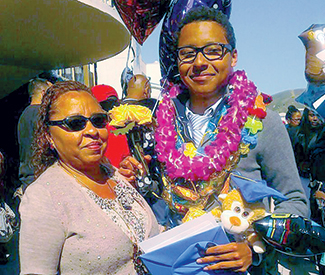
Eight months ago, I kissed my mother goodnight and walked down the hall to my bedroom. Eight months ago, I was a few weeks away from attending Seattle University. Eight months ago was the last time I saw my mom.

In the early morning, my sister barged into my room. Phone in hand and tears in her eyes, she said, “They got her again.” Sitting up in my bed, still half-asleep, it took me awhile to process what was going on. “Huh?” I replied. “Mom, she’s getting deported,” my sister sobbed. US Immigration and Customs Enforcement arrested her on the way to work. They had watched us until they knew my mom’s routine.

My sister left and I had a minute to think. From then on, I knew everything had changed. I wasn’t going to Seattle. How was I supposed to pay for it now? And my mom was getting deported. Again.

My mother came to the US in 1992. Her plan was to work for a few years and send money back to Mexico to support her parents. She also wanted to save money so she could return to Mexico and finish nursing school. But she met my father, a law school dropout who came to the US to work and save money for law school. Long story short, I was born and they decided to settle down here in the States. They knew that we had better opportunities in the US.


VULNERABLE TO SCAMS

Later, my parents decided that it was time to “become legal.” They sought the legal services of attorney Walter Pineda. He told my parents, and countless others, that if they had been in the country for longer than 10 years, had no criminal record, and had kids that were born in the US, he’d get them a green card in 12 months. Oh, and he wanted $10,000 per person. My parents couldn’t pay $20,000 at once for the both of them so they decided that my mom should be the first one to get a green card.

The thing is, Pineda wasn’t telling the truth. There was no such law that stated, “If you have been in the country for 10 years or longer, have no criminal record, and have kids who are US born, Uncle Sam will mail you a green card.” But Pineda took the money and filed an asylum claim for my mother. Since my mom wasn’t seeking asylum, the claim was denied. (It also didn’t help that Pineda never actually went to court, leaving that to his assistants). My mother was handed an order of deportation instead of a green card.

Pineda, a native San Franciscan and a graduate from San Francisco State University and the University of San Francisco, was later investigated by the State Bar of California and was accused by the bar of a “despicable and far-reaching pattern of misconduct.” He later resigned from the State Bar when he faced charges of legal malpractice in 41 cases he handled. Records indicate Pineda left the area, and our efforts to reach him for comment were unsuccessful.

After those legal avenues were shut down, our family ran. We moved from house to house. My parents lived in the shadows, like escaped felons. They got nervous each time they signed any paperwork for fear that it would alert ICE. We would gather around the TV every night and watch the news, hoping to hear that immigration reform was on its way. But all we ever saw was members of Congress shaking their heads and saying, “Not this year,” year after year.

I remember learning about what the plaque at the foot of the Statue of Liberty says, “Give me your tired, your huddled masses yearning to be free.” I thought about what a lie that was. My parents, and everyone like them, aren’t welcomed here. They’re “illegal aliens.” Me, and those like me, we’re “anchor babies.”

We moved some more. Years passed. We all forgot about the order of deportation. We bought a car, a dog, and a few years after that, we were thinking about buying a house. The American dream, my mom’s dream, was almost within her reach.


KNOCK ON THE DOOR

I was in the seventh grade; my sister was in third. I kissed my mom goodnight and went to sleep. At 3am, I heard a knock on the door and “police.” I opened it and there were two immigration agents. They were there to inform me that they were taking my mom and then left. 

As it turns out, they had been watching us for at least a few days because they knew that my mother leaves the house at 4:30am to go to her job as a sous-chef at a catering company. They knew my name.

A few months later, my mom was back. Yes, she returned illegally. But when your options are paying a guide $2,000 and walking a few hours or paying a lot more than $2,000 for a lawyer to file papers and then wait years with no guarantee that you’ll be let into the US, the choice for my mom was easy. Cross the border and come back to her kids.

More years passed, we moved some more. We forgot. Once again, ICE had been watching us. It knew where she worked. Her route. The license plate number on her car. Everything. Then, my mom was picked up on her way to her job at a fast food restaurant.

We called lawyers. “There’s nothing I can do,” was all they said. There was no hearing; no judge; no day in court; 24-hours later, my mom called me from a phone booth in Tijuana. That was eight months ago. My mother is still in Tijuana, unable to enter the US, legally or otherwise.

mom1

ILLEGAL PEOPLE

I will not deny that my mother has broken laws. I won’t deny the fact that the 11 million undocumented residents who are currently in the US have also broken laws.

But my mother, and others like her, were victims of predatory system. They were lured by a country that offers opportunities here and pursues policies that shut them down elsewhere. They turn to attorneys who, out of greed or spite, waste the time and money of many immigrants whose only intentions are to become “legal.” They live amid a citizenry that values the products of their cheap labor but denies their basic humanity.

Many others are victims of predatory employers, who have no second thoughts about forcing immigrants to work long hours in hazardous conditions, and even rape some employees, because they know that their worst nightmare is being deported, and separated from their loved one, rather than enduring the indignities of individual predators.

All of them are victims of a broken immigration system.

Many who face deportation, and who have been deported, were and are upstanding members of society. They have families, hopes, and dreams. Many, like my mother, have no criminal record, not even a speeding ticket to their names.

They pay taxes and support the Social Security system, knowing they will never be able to collect those retirement benefits or anything of the sort. Their only crime, my mother’s only crime, was that they, like so many millions before them, crossed an imaginary line to seek a better life.

Watchdogs in action

1

news@sfbg.com

The Society of Professional Journalists, Northern California, will honor the following James Madison Freedom of Information Award winners during a March 20 banquet. Details on their work and the dinner are available at www.spjnorcal.org.


VOICE FOR PRISONERS

Throughout his 29-year journalism career, Peter Sussman, a retired San Francisco Chronicle editor, advocated for greater media access to prisoners and fought to uphold the rights of inmate journalists. In the 1980s, federal prison officials cracked down on inmate Dannie “Red Hog” Martin for writing to Sussman to share what life was like behind bars.

The retaliation spurred an epic battle over free speech within prison walls, and Sussman responded by publishing Martin’s regular writings about prison life, and later co-authoring a book with him titled Committing Journalism: The Prison Writings of Red Hog.

In the mid-’90s, Sussman fought state prison officials’ restrictions on media interviews with prisoners. He also helped write and sponsor statewide legislation to overturn limits restricting media access to prisons. Sussman will receive the Norwin S. Yoffie Award for Career Achievement.


GUIDING ASPIRING JOURNALISTS

Beverly Kees Educator Award winner Rob Gunnison is a former instructor and administrator at UC Berkeley’s Graduate School of Journalism, where he arrived after spending 15 years covering government and politics in Sacramento for the San Francisco Chronicle.

As a longtime instructor of a course called “Reporting and Writing the News,” Gunnison has continued to educate hungry young journalists on how to seek public records and carry out investigative reporting projects.


EXPOSING ATROCITIES

Peter Buxton will be honored with the FOI Whistleblower/Source Award. In 1972, Buxton played a key role in alerting the press to the ongoing operation of the Tuskegee syphilis experiments, where African American sharecroppers were intentionally exposed to the disease, without treatment or their knowledge, so researchers could study its progression.

By the time the story was related to the press, 28 men had died of syphilis, and 100 others had died of related complications. That leak helped spur Congressional hearings on the practice beginning in 1973, ultimately spurring a complete overhaul of federal regulations. A class-action lawsuit was filed, resulting in a $10 million settlement.


EXPOSING BART’S SCHEME

Reporter Tom Vacar of KTVU pushed for records determining whether replacement drivers that BART was training to help break last year’s labor strike were qualified to safely operate the trains, eventually finding that they had been simply rubber-stamped by the California Public Utilities Commission.

Those findings proved gravely significant on Oct. 21 when two workers on the tracks were killed by a BART train operated at the time by an uncertified trainee, an accident still being investigated by the National Transportation Safety Board.


STANDING FOR SUNSHINE

California Sen. Leland Yee is once again being honored by SPJ Norcal for his work on sunshine issues, including last year criticizing Gov. Jerry Brown and other fellow Democrats who had sought to weaken the California Public Records Act, instead seeking to strengthen the ability of the courts to enforce the law.


FIGHTING THE CITY

Freelance journalist Richard Knee’s Distinguished Service Award caps a 12-year fight for open government in a city eager to stash its skeletons securely in closets.

Knee is a longtime member of the San Francisco’s Sunshine Ordinance Task Force, created in 1994 to safeguard the city’s Sunshine Ordinance, and he has fought to maintain its power and relevance.

Over the years, many city agencies have fought against the task force, from the City Attorney’s Office to a group of four supervisors who claimed the task force was wasting public money, a struggle that is still ongoing.


BADGES AND ACCOUNTABILITY

The Lake County News and its co-founders Elizabeth Larson and John Jensen will received a News Media Award for a protracted legal battle with local law enforcement for a simple journalistic right: interview access.

The scrappy local paper detailed allegations that Lake County Sheriff Frank Rivero and his deputies wrongfully detained suspects on trumped up charges, made threats, conducted warrantless home searches, and violated suspects’ civil rights.

Rivero’s office responded by blacklisting the paper from interviews, a fundamental building block of news coverage. The paper sued the Lake County Sheriff’s Department, eventually winning its battle to obtain the right to keep asking the sheriff the tough questions.


PROTECTING THEIR SOURCES

When Saratoga High School student Audrie Potts committed suicide in September 2012, her parents alleged she was pushed over the edge by cyber bullying over photos of Potts at a party. High school journalists Samuel Liu, Sabrina Chen, and Cristina Curcelli of The Saratoga Falcon scooped the sensational national media outlets that descended on the story, but they were subpoenaed by the Potts family to reveal their sources.

They refused, citing California’s shield law in a successful legal defense that strengthened the rights of student journalists. As Liu said, “We are not willing to destroy our journalistic integrity by giving up our confidential sources, we got this information on the condition of anonymity, from people that trusted us.”


BUYING FRIENDS AT CITY HALL

Bay Guardian News Editor Rebecca Bowe and Reporter Joe Fitzgerald Rodriguez are being honored with a Journalist Award for “Friends in the Shadows,” (10/8/13) our investigation of the shady ways that developers and other powerful players buy influence at City Hall.

“Their detailed and thorough account explored a trail of money through myriad city agencies and departments,” the awards committee wrote, noting how the paper “used public records, interviews and independent research to probe how developers, corporations and city contractors use indirect gifts to city agencies to buy influence.”


NEWS FROM INSIDE

For accomplishing “extraordinary journalism under extraordinary circumstances,” The San Quentin News is being honored with a News Media Award. It is California’s only inmate-produced newspaper, and one of the few in existence worldwide.

The San Quentin News publishes about 20 pages monthly, and has a press run of 11,500 for inmates, correctional officers, staff, and community members. It’s distributed to 17 other prisons throughout California.

Under the scrutiny of prison authorities, the inmate journalists and volunteers wound up covering a historic prison hunger strike, the overcrowding of the prison population, and the denial of compassionate release for a dying inmate, an octogenarian with a terminal illness.


EXPOSING TORTURERS

The Western Hemisphere Institute for Security Cooperation (WHINSEC), better known as the name it held prior to 2001, the School of the Americas, is a combat training school for Latin American soldiers and commanders, with many graduates going on to commit human rights atrocities.

School of the Americas Watch founder Judith Litesky, a former nun, and Theresa Cameranesi, filed a lawsuit in federal court in San Francisco seeking the list of those who had gone though courses that include counter insurgency techniques, sniper training, psychological warfare, military intelligence and interrogation tactics.

Last year, the pair won a significant victory when a federal judge in Oakland ruled that the government could not cite national security reasons in withholding the names. Although the case is ongoing, they are being honored with a Citizen Award.


FIGHTING CORPORATE SNOOPS

In 2008, journalists from The New York Times and BusinessWeek looked to Terry Gross of Gross Belsky Alonso for legal counsel in a case against Hewlett-Packard. In a staggering display of corporate snooping, the tech giant had illegally obtained private telephone records of the journalists, in an attempt to gain access to the identities of their sources.

Gross has also defended journalists against police in cases regarding media access for breaking-news events, and he’s helped to expand the rights of online journalists. This year, Gross will receive the FOI Legal Counsel Award.


BAD BRIDGE, GOOD JOURNALIST

Sacramento Bee Senior Investigative Reporter Charles Piller will be honored with a Journalist Award for exposing corrosion problems in the long delayed, cost-plagued eastern span of the San Francisco-Oakland Bay Bridge. His breaking story and subsequent follow-ups revealed Caltrans’ inadequate corrosion testing, as well as inadequate responses to bridge inspectors who for more than two years warned Caltrans of water leaks and corrosion — only to go unheeded.


SUNSHINE COLUMNIST

Editorial and Commentary Award winner Daniel Borenstein, who writes for the Bay Area News Group, issued a strong response to a legislative attack on California’s Public Records Act last year, ultimately helping to defeat proposed changes that would have gutted the law.

“Without the state Public Records Act, we would never know about the Oakley City Manager’s $366,500 taxpayer-funded mortgage scheme, the Washington Township hospital CEO’s $800,000-plus annual compensation or the retired San Ramon Valley fire chief’s $310,000 yearly pension,” Borenstein wrote in one of his columns. “We would be ignorant of broken bolts on the Bay Bridge, the cover-up of Moraga teachers sexually abusing students, a BART train operator who collected salary and benefits totaling $193,407, the former BART general manager who received $420,000 the year after she was fired or the Port of Oakland executives who spent $4,500 one night at a Texas strip club.”

Music Listings: March 5-11, 2014

0

WEDNESDAY 5
ROCK
Boom Boom Room: 1601 Fillmore, San Francisco. “The Larkade,” w/ Major Powers & The Lo-Fi Symphony, Rachel Lark, JK47, 9:30pm, free.
Bottom of the Hill: 1233 17th St., San Francisco. Together Pangea, Mozes & The Firstborn, Burning Curtains, 9pm, $10.
El Rio: 3158 Mission, San Francisco. Meat Market, Yi, Cop Out, 9pm, $7.
Elbo Room: 647 Valencia, San Francisco. We Are the Men, Bearcubbin, Face Tat, Van Wave, 9pm, $7.
Hemlock Tavern: 1131 Polk, San Francisco. Personal & The Pizzas, plus free Escape from New York pizza (while supplies last), 9pm, free.
The Independent: 628 Divisadero, San Francisco. The Mowgli’s, Tumbleweed Wanderers, Cocktails, 8pm, free with RSVP.
The Knockout: 3223 Mission, San Francisco. Modern Man, Paint the Trees White, Joseph Childress, 9:30pm, $6.
Milk Bar: 1840 Haight, San Francisco. Thufoxxtrots, Jam, The Cushion Theory, The Twitches, 8pm, $5.
Neck of the Woods: 406 Clement, San Francisco. The Pizza Underground, Windham Flat, Toby Goodshank, 6 & 9pm, $10-$15.
Yoshi’s San Francisco: 1330 Fillmore, San Francisco. Commander Cody & His Lost Planet Airmen, 8pm, $21-$25.
DANCE
111 Minna Gallery: 111 Minna, San Francisco. “Qoöl,” w/ DJs Ruchir, Alex Blackstock, Petko Nikolov, Spesh, Dan Sherman, and Will Spencer, 5-10pm, $5.
Beaux: 2344 Market, San Francisco. “BroMance: A Night Out for the Fellas,” 9pm, free.
The Cafe: 2369 Market, San Francisco. “Sticky Wednesdays,” w/ DJ Mark Andrus, 8pm, free.
Cat Club: 1190 Folsom, San Francisco. “Bondage A Go Go,” w/ DJs Damon, Tomas Diablo, & guests, 9:30pm, $5-$10.
Club X: 715 Harrison, San Francisco. “Electro Pop Rocks: Blood, Sweat, and Bass,” 18+ dance night with Downlink, Dieselboy, Ajapai, more, 9pm
F8: 1192 Folsom, San Francisco. “Housepitality,” w/ Jay Tripwire, Andrew Phelan, Stay Deep, Dr. Rek, Skyler Mendoza, 9pm, $5-$10.
Infusion Lounge: 124 Ellis, San Francisco. “Indulgence,” 10pm
Lookout: 3600 16th St., San Francisco. “What?,” w/ resident DJ Tisdale and guests, 7pm, free.
Madrone Art Bar: 500 Divisadero, San Francisco. “Rock the Spot,” 9pm, free.
MatrixFillmore: 3138 Fillmore, San Francisco. “Reload,” w/ DJ Big Bad Bruce, 10pm, free.
Q Bar: 456 Castro, San Francisco. “Booty Call,” w/ Juanita More, Joshua J, guests, 9pm, $3.
HIP-HOP
Neck of the Woods: 406 Clement, San Francisco. “Over the Hump,” w/ Children of the Funk, 10pm, free.
Skylark Bar: 3089 16th St., San Francisco. “Mixtape Wednesday,” w/ resident DJs Strategy, Junot, Herb Digs, & guests, 9pm, $5.
ACOUSTIC
Cafe Divine: 1600 Stockton, San Francisco. Craig Ventresco & Meredith Axelrod, 7pm, free.
The Chapel: 777 Valencia, San Francisco. A Salute to John Fahey in Honor of His 75th Birthday, w/ Sean Smith, Chuck Johnson, Henry Kaiser, Dibson Hoffweiler, Andrew Weathers, Adam Snider, Danny Paul Grody, Richard Osborn, 9pm, $12.
Hotel Utah: 500 Fourth St., San Francisco. Chris Trapper, Korby Lenker, 8pm, $15.
Plough & Stars: 116 Clement, San Francisco. Jeanie & Chuck’s Bluegrass Country Jam, First Wednesday of every month, 9pm, free.
JAZZ
Amnesia: 853 Valencia, San Francisco. Gaucho, Eric Garland’s Jazz Session, The Amnesiacs, 7pm, free.
Balancoire: 2565 Mission St., San Francisco. “Cat’s Corner,” 9pm, $10.
Burritt Room: 417 Stockton St., San Francisco. Terry Disley’s Rocking Jazz Trio, 6pm, free.
Cigar Bar & Grill: 850 Montgomery, San Francisco. Afro-Cuban Jazz Cartel, 8pm
Club Deluxe: 1511 Haight, San Francisco. Patrick Wolff Quartet, 9pm, free.
Jazz Bistro at Les Joulins: 44 Ellis, San Francisco. Charles Unger Experience, 7:30pm, free.
Le Colonial: 20 Cosmo, San Francisco. The Cosmo Alleycats featuring Ms. Emily Wade Adams, 7pm, free.
Pier 23 Cafe: Pier 23, San Francisco. Ned Boynton & Friends, 6pm, free.
Top of the Mark: One Nob Hill, 999 California, San Francisco. Ricardo Scales, Wednesdays, 6:30-11:30pm, $5.
Zingari: 501 Post, San Francisco. Anne O’Brien, First Wednesday of every month, 7:30pm, free.
INTERNATIONAL
Bissap Baobab: 3372 19th St., San Francisco. “Baobab!,” timba dance party with DJ WaltDigz, 10pm, $5.
Cafe Cocomo: 650 Indiana, San Francisco. “Bachatalicious,” w/ DJs Good Sho & Rodney, 7pm, $5-$10.
Make-Out Room: 3225 22nd St., San Francisco. “Frigo-Bar,” First Wednesday of every month, 8pm, free.
Pachamama Restaurant: 1630 Powell, San Francisco. Cafe Latino Americano, 8pm, $12.
BLUES
Biscuits and Blues: 401 Mason, San Francisco. Bob Margolin & Bob Corritore, 7:30 & 9:30pm, $20.
EXPERIMENTAL
Center for New Music: 55 Taylor, San Francisco. Sten Sandell with Gino Robair, 7:30pm, $10-$15.
Meridian Gallery: 535 Powell, San Francisco. Xo Xinh, Van-Anh Vanessa Vo, and Chris Brown, 7:30pm, $10.
SOUL
Monarch: 101 Sixth St., San Francisco. “Color Me Badd,” coloring books and R&B jams with Matt Haze, DJ Alarm, Broke-Ass Stuart, guests, Wednesdays, 5:30-9:30pm, free.

THURSDAY 6
ROCK
111 Minna Gallery: 111 Minna, San Francisco. RubberSideDown, Chris James & The Showdowns, Etro Canova, 7pm, free/donation.
Bottom of the Hill: 1233 17th St., San Francisco. Eyes on the Shore, Sunrunners, Dogcatcher, 9pm, $10.
Brick & Mortar Music Hall: 1710 Mission, San Francisco. Mirah, AgesandAges, M. Lockwood Porter, 9pm, $12-$15.
The Chapel: 777 Valencia, San Francisco. Arthur Beatrice, 9pm, $12-$14.
DNA Lounge: 375 11th St., San Francisco. The Vile Augury, Limnus, Roadside Memorial, Loveless Love, Mr. Smith, 8pm, $10 advance.
El Rio: 3158 Mission, San Francisco. Year of the Fist, Money for Rope, Muñecas, 8pm, $5.
Hemlock Tavern: 1131 Polk, San Francisco. Yogurt Brain, Divers, Nasty Christmas, 8:30pm, $6.
Rickshaw Stop: 155 Fell, San Francisco. “Popscene,” w/ Glasvegas, 10pm, $15-$17.
S.F. Eagle: 398 12th St., San Francisco. Slough Feg, Wild Eyes, Older Sun, 9pm, $8.
SFSU Campus, Cesar Chavez Student Center: 1650 Holloway, San Francisco. Useless Eaters, The Sweethearts, Scraper, Mane, 6pm, free.
DANCE
1015 Folsom: 1015 Folsom, San Francisco. Stwo, The Whooligan, Mikos Da Gawd, DJ Dials, Chad Salty, 9pm, $10 (free before 11pm with RSVP).
Abbey Tavern: 4100 Geary, San Francisco. DJ Schrobi-Girl, 10pm, free.
Audio Discotech: 316 11th St., San Francisco. “Common Ground,” w/ Shur-i-kan, Greg Yuen, Dino Velvet, Fil Latorre, Joey Alaniz, 9pm, $5-$10.
Aunt Charlie’s Lounge: 133 Turk, San Francisco. “Tubesteak Connection,” w/ DJ Bus Station John, 9pm, $5-$7.
Beaux: 2344 Market, San Francisco. “Men at Twerk,” 9pm, free.
The Cafe: 2369 Market, San Francisco. “¡Pan Dulce!,” 9pm, $5.
Cat Club: 1190 Folsom, San Francisco. “Throwback Thursdays,” ‘80s night with DJs Damon, Steve Washington, Dangerous Dan, and guests, 9pm, $6 (free before 9:30pm).
The Cellar: 685 Sutter, San Francisco. “XO,” w/ DJs Astro & Rose, 10pm, $5.
Club X: 715 Harrison, San Francisco. “The Crib,” 9:30pm, $10, 18+.
DNA Lounge: 375 11th St., San Francisco. Sound Remedy, Clark Kent, 8pm, $12-$15.
Elbo Room: 647 Valencia, San Francisco. “Afrolicious,” w/ DJs Pleasuremaker, Señor Oz, and guests, 9:30pm, $5-$8.
F8: 1192 Folsom, San Francisco. “Beat Church,” w/ resident DJs Neptune & Kitty-D, First Thursday of every month, 10pm, $10.
Infusion Lounge: 124 Ellis, San Francisco. “I Love Thursdays,” 10pm, $10.
Madrone Art Bar: 500 Divisadero, San Francisco. “Night Fever,” 9pm, $5 after 10pm
Q Bar: 456 Castro, San Francisco. “Throwback Thursday,” w/ DJ Jay-R, 9pm, free.
Raven: 1151 Folsom, San Francisco. “1999,” w/ VJ Mark Andrus, 8pm, free.
Ruby Skye: 420 Mason, San Francisco. “Awakening,” w/ Felix Cartal, 9pm, $15-$20 advance.
Underground SF: 424 Haight, San Francisco. “Bubble,” 10pm, free.
Vessel: 85 Campton, San Francisco. “Base: Local,” w/ Bardia F, ThuyVu, Mac Vaughn, John Kaberna, Lexel, 10pm, free with RSVP.
HIP-HOP
Eastside West: 3154 Fillmore, San Francisco. “Throwback Thursdays,” w/ DJ Madison, 9pm, free.
John Colins: 138 Minna, San Francisco. “Rewind,” w/ DJ J.W. Sounds, First Thursday of every month, 10pm, free.
Skylark Bar: 3089 16th St., San Francisco. “Peaches,” w/ lady DJs DeeAndroid, Lady Fingaz, That Girl, Umami, Inkfat, and Andre, 10pm, free.
Slim’s: 333 11th St., San Francisco. Aer, RDGLDGRN, New Beat Fund, 8pm, $17.
ACOUSTIC
Amnesia: 853 Valencia, San Francisco. Misisipi Mike & The Midnight Gamblers, First Thursday of every month, 9pm
Atlas Cafe: 3049 20th St., San Francisco. The Bogues, 8pm, free.
Bazaar Cafe: 5927 California, San Francisco. Acoustic Open Mic, 7pm
Hotel Utah: 500 Fourth St., San Francisco. Songwriters in the Round with Heather Combs, Kelly McFarling, Eoin Harrington, Brad Brooks, 8pm, $8.
The Independent: 628 Divisadero, San Francisco. Agnes Obel, 8pm, sold out.
The Lost Church: 65 Capp, San Francisco. Jeff Conley & Elena de da Garza, Brandon Eardley, 8pm, $10.
Milk Bar: 1840 Haight, San Francisco. S.F. Acoustic Sessions, w/ Leila Motaei, Scarth Locke, Jeff Desira, 7:30pm, free.
Musicians Union Local 6: 116 Ninth St., San Francisco. San Francisco Singer-Songwriters’ Workshop, hosted by Robin Yukiko, First Thursday of every month, 6:30pm, $25 (free for AFM members).
Plough & Stars: 116 Clement, San Francisco. The Shannon Céilí Band, First Thursday of every month, 9pm, free.
JAZZ
Blush! Wine Bar: 476 Castro, San Francisco. Doug Martin’s Avatar Ensemble, 7:30pm, free.
Cigar Bar & Grill: 850 Montgomery, San Francisco. Jimmy Grant Quartet, First Thursday of every month, 8pm, free.
Feinstein’s at the Nikko: 222 Mason, San Francisco. Paula West, 8pm, $35-$50.
Jazz Bistro at Les Joulins: 44 Ellis, San Francisco. Eugene Pliner Quartet with Tod Dickow, First and Third Thursday of every month, 7:30pm, free.
Le Colonial: 20 Cosmo, San Francisco. Steve Lucky & The Rhumba Bums, 7:30pm
Pier 23 Cafe: Pier 23, San Francisco. Judy Hall Trio, 7pm, free.
The Royal Cuckoo: 3202 Mission, San Francisco. Charlie Siebert & Chris Siebert, 7:30pm, free.
Savanna Jazz Club: 2937 Mission, San Francisco. Savanna Jazz Jam with David Byrd, 7pm, $5.
Top of the Mark: One Nob Hill, 999 California, San Francisco. Stompy Jones, 7:30pm, $10.
Zingari: 501 Post, San Francisco. Barbara Ochoa, 7:30pm, free.
INTERNATIONAL
Bissap Baobab: 3372 19th St., San Francisco. “Pa’Lante!,” w/ Juan G, El Kool Kyle, Mr. Lucky, 10pm, $5.
Pachamama Restaurant: 1630 Powell, San Francisco. “Jueves Flamencos,” 8pm, free.
Sheba Piano Lounge: 1419 Fillmore, San Francisco. Gary Flores & Descarga Caliente, 8pm
Verdi Club: 2424 Mariposa, San Francisco. The Verdi Club Milonga, w/ Christy Coté, DJ Emilio Flores, guests, 9pm, $10-$15.
REGGAE
Neck of the Woods: 406 Clement, San Francisco. Maoli, Mango Kingz, on the upstairs stage, 9pm, $12-$15.
Pissed Off Pete’s: 4528 Mission St., San Francisco. Reggae Thursdays, w/ resident DJ Jah Yzer, 9pm, free.
BLUES
50 Mason Social House: 50 Mason, San Francisco. Bill Phillippe, 5:30pm, free.
Biscuits and Blues: 401 Mason, San Francisco. Tad Robinson, 7:30 & 9:30pm, $20.
The Saloon: 1232 Grant, San Francisco. Chris Ford, First Thursday of every month, 4pm
SFJAZZ Center: 205 Franklin, San Francisco. Lavay Smith & Her Red Hot Skillet Lickers, playing the music of Bessie Smith (in the Joe Henderson Lab), 7 & 8:30pm, $30.
COUNTRY
The Parlor: 2801 Leavenworth, San Francisco. “Twang Honky Tonk & Country Jamboree,” w/ DJ Little Red Rodeo, 7pm, free.
EXPERIMENTAL
The Luggage Store: 1007 Market, San Francisco. Power Stations, Conan the Barbiturate, 8pm, $6-$10.
SOUL
Boom Boom Room: 1601 Fillmore, San Francisco. West Grand Boulevard, 9:30pm, $5.
Yoshi’s San Francisco: 1330 Fillmore, San Francisco. Teena Marie Birthday Tribute with Ashling “Biscuit” Cole, 8pm, $19-$23.

FRIDAY 7
ROCK
Boom Boom Room: 1601 Fillmore, San Francisco. Chum, 9:30pm, $12-$15.
Bottom of the Hill: 1233 17th St., San Francisco. Scale the Summit, The Ocean, The Atlas Moth, Silver Snakes, DJ Rob Metal, 8pm, $12-$14.
Brick & Mortar Music Hall: 1710 Mission, San Francisco. Gripin, Twenty7, 9pm, $30-$40.
The Chapel: 777 Valencia, San Francisco. Black Cobra Vipers, Jefferititi’s Nile, Sister Chief, 9pm, $12.
DNA Lounge: 375 11th St., San Francisco. Fake Your Own Death, I Am Animal, In Letter Form, Cash for Gold, 8:30pm, $8-$10.
El Rio: 3158 Mission, San Francisco. Friday Live: Mary Ocher, DJ Emotions, 10pm, free.
Elbo Room: 647 Valencia, San Francisco. Glitter Wizard, Christian Mistress, Ovvl, 9:30pm, $8.
Hemlock Tavern: 1131 Polk, San Francisco. Donkee, Tiger Honey Pot, Majestic Beast, Manstration, 9pm, $6.
Hotel Utah: 500 Fourth St., San Francisco. Overland, Crash Landings, First Contact, Sean O’Brien & His Dirty Hands, 9pm, $10.
The Independent: 628 Divisadero, San Francisco. Gardens & Villa, Waterstrider, Reuben & The Dark, 9pm, $13-$15.
Milk Bar: 1840 Haight, San Francisco. Solids, Pup, Balms, 9pm, $8-$10.
Slim’s: 333 11th St., San Francisco. The Greening, Everyone Is Dirty, Sweet Chariot, 9pm, $14.
Thee Parkside: 1600 17th St., San Francisco. Heartsounds, The Mighty Fine, Point of View, The Business End, 9pm, $8.
DANCE
1015 Folsom: 1015 Folsom, San Francisco. MartyParty, Joker, Robot Koch, Nick Hook, Pumpkin, Nesta, Releece, Dov, Jocelyn, 10pm, $15 advance.
Amnesia: 853 Valencia, San Francisco. “Brass Tax,” w/ resident DJs JoeJoe, Ding Dong, Ernie Trevino, Mace, First Friday of every month, 10pm, $5.
Audio Discotech: 316 11th St., San Francisco. Umek, Ben Seagren, Dean Samaras, 9pm, $15 advance.
BeatBox: 314 11th St., San Francisco. “Pulse SF: 3-Year Anniversary,” w/ Ticon, Emok, Critical Choice, 10pm, $25-$30 advance.
Beaux: 2344 Market, San Francisco. “Manimal,” 9pm
The Cafe: 2369 Market, San Francisco. “Boy Bar,” w/ DJ Matt Consola, 9pm, $5.
Cat Club: 1190 Folsom, San Francisco. “Strangelove: A Tribute to Skinny Puppy,” w/ DJs Tomas Diablo, Daniel Skellington, Lexor, and Panic, 9:30pm, $7 ($3 before 10pm).
The Cellar: 685 Sutter, San Francisco. “F.T.S.: For the Story,” 10pm
The EndUp: 401 Sixth St., San Francisco. “Trade,” 10pm, free before midnight.
The Grand Nightclub: 520 Fourth St., San Francisco. “We Rock Fridays,” 9:30pm
Harlot: 46 Minna, San Francisco. DJ Spider, 9pm
Infusion Lounge: 124 Ellis, San Francisco. “Flight Fridays,” 10pm, $20.
Lookout: 3600 16th St., San Francisco. “HYSL: Handle Your Shit Lady,” 9pm, $3.
Madrone Art Bar: 500 Divisadero, San Francisco. “Dirty Rotten Dance Party,” w/ Kap10 Harris, Shane King, guests, First Friday of every month, 9pm, $5.
MatrixFillmore: 3138 Fillmore, San Francisco. “F-Style Fridays,” w/ DJ Jared-F, 9pm
Mezzanine: 444 Jessie, San Francisco. “Future Fridays,” w/ Posso, Non Sequitur, Erika K, Monika Santucci, 9pm, $10.
Monarch: 101 Sixth St., San Francisco. Bob Moses, DJ M3, Lisbona, 9:30pm, $15-$20.
Powerhouse: 1347 Folsom, San Francisco. “Nasty,” First Friday of every month, 10pm, $5.
Public Works: 161 Erie, San Francisco. “Direct to Earth,” w/ Barem, Troy Pierce, Brian Knarfield, Max Gardner (in the main room), 9pm, $13-$20; “Play It Cool,” w/ Hound Scales, Avalon Emerson, Derek Opperman, Matthew Favorites, Guillaume Galuz (in the OddJob Loft), 10pm, $10.
Q Bar: 456 Castro, San Francisco. “Pump: Worq It Out Fridays,” w/ resident DJ Christopher B, 9pm, $3.
Rickshaw Stop: 155 Fell, San Francisco. Rüfüs, Lemaitre, DJ Aaron Axelsen, 9:30pm, $15-$17.
Ruby Skye: 420 Mason, San Francisco. Quintino, 9pm, $20-$30 advance.
Slate Bar: 2925 16th St., San Francisco. “Haçeteria,” w/ New Jack, Greg M, Jason P, Smac, Tristes Tropiques, Nihar, 10pm, $5.
Temple: 540 Howard, San Francisco. “Boogaloo Bounce,” w/ Brother Board, D-Clan, Freefall, 10pm, $15.
Underground SF: 424 Haight, San Francisco. “Bionic,” 10pm, $5.
Vessel: 85 Campton, San Francisco. “Blitz,” w/ Revolvr, DJ MyKill, Shawn Steele, Keelan, 10pm, $10-$30.
Wish: 1539 Folsom, San Francisco. “Bridge the Gap,” w/ resident DJ Don Kainoa, Fridays, 6-10pm, free; “Depth,” w/ resident DJs Sharon Buck & Greg Yuen, First Friday of every month, 10pm, free.
HIP-HOP
EZ5: 682 Commercial, San Francisco. “Decompression,” Fridays, 5-9pm
Mighty: 119 Utah, San Francisco. “Where’d You Get Those?,” w/ Bobbito, Stretch Armstrong, DJ Shortkut, DJ Proof, 9pm, $15 advance.
Nickies: 466 Haight, San Francisco. “First Fridays,” w/ The Whooligan & Dion Decibels, First Friday of every month, 11pm, free.
Yoshi’s San Francisco: 1330 Fillmore, San Francisco. De La Soul, 8 & 10pm, $46.
ACOUSTIC
Bazaar Cafe: 5927 California, San Francisco. Vessna Scheff, 7pm
Dolores Park Cafe: 501 Dolores, San Francisco. Beryl Baker & Co., 7:30pm
The Lost Church: 65 Capp, San Francisco. Cotton Polly, David Sobel & The Toms, 8pm, $10.
Plough & Stars: 116 Clement, San Francisco. A Talent for Mischief, 9pm
Red Poppy Art House: 2698 Folsom, San Francisco. Squid Inc. with Carrie Katz, 7:30pm, $10-$15.
The Sports Basement: 610 Old Mason, San Francisco. “Breakfast with Enzo,” w/ Enzo Garcia, 10am, $5.
St. Cyprian’s Episcopal Church: 2097 Turk, San Francisco. First Fridays Song Circle, First Friday of every month, 7pm, $5-$10.
JAZZ
Atlas Cafe: 3049 20th St., San Francisco. Jazz at the Atlas, 7:30pm, free.
Beach Chalet Brewery & Restaurant: 1000 Great Highway, San Francisco. Johnny Smith, 8pm, free.
Bird & Beckett: 653 Chenery, San Francisco. Don Prell’s SeaBop Ensemble, First Friday of every month, 5:30pm, free.
Cafe Royale: 800 Post, San Francisco. Wrapped in Plastic, First Friday of every month, 9pm
Feinstein’s at the Nikko: 222 Mason, San Francisco. Paula West, 8pm, $35-$50.
Jazz Bistro at Les Joulins: 44 Ellis, San Francisco. Charles Unger Experience, 7:30pm, free.
The Palace Hotel: 2 New Montgomery, San Francisco. The Klipptones, 8pm, free.
Pier 23 Cafe: Pier 23, San Francisco. Hard Bop Collective, 8pm, free.
Savanna Jazz Club: 2937 Mission, San Francisco. Savanna Jazz Trio, 7pm, $8.
SFJAZZ Center: 205 Franklin, San Francisco. Lavay Smith & Her Red Hot Skillet Lickers, playing the music of Billie Holiday (in the Joe Henderson Lab), 7 & 8:30pm, $30.
Top of the Mark: One Nob Hill, 999 California, San Francisco. Black Market Jazz Orchestra, 9pm, $10.
Zingari: 501 Post, San Francisco. Joyce Grant, 8pm, free.
INTERNATIONAL
Bissap Baobab: 3372 19th St., San Francisco. “Paris-Dakar African Mix Coupe Decale,” 10pm, $5.
Cafe Cocomo: 650 Indiana, San Francisco. Taste Fridays, featuring local cuisine tastings, salsa bands, dance lessons, and more, 7:30pm, $15 (free entry to patio).
Cigar Bar & Grill: 850 Montgomery, San Francisco. Rumbaché, 10pm
City Hall: 1 Drive Carlton B. Goodlett, San Francisco. Gamelan Sekar Jaya, The Rotunda Dance Series opens its 2014 season with this free Balinese music and dance performance., noon, free.
Pachamama Restaurant: 1630 Powell, San Francisco. Cuban Night with Fito Reinoso, 7:30 & 9:15pm, $15-$18.
REGGAE
Gestalt Haus: 3159 16th St., San Francisco. “Music Like Dirt,” 7:30pm, free.
Showdown: 10 Sixth St., San Francisco. “How the West Was Won,” w/ Nowtime Sound, First Friday of every month, 10pm, free.
BLUES
Biscuits and Blues: 401 Mason, San Francisco. Tad Robinson, 7:30 & 10pm, $22.
Lou’s Fish Shack: 300 Jefferson, San Francisco. Little Wolf & The HellCats, 6pm
Tupelo: 1337 Green, San Francisco. Jinx Jones & The KingTones, First Friday of every month, 9pm
EXPERIMENTAL
Artists’ Television Access: 992 Valencia, San Francisco. Mission Eye & Ear #4, New experimental film and sound collaborations by Suki O’Kane & John Davis, Jason Hoopes & Azin Seraj, Marielle Jakobsons & Kirthi Nath, and more., 8pm, $7-$10.
FUNK
Amnesia: 853 Valencia, San Francisco. Swoop Unit, First Friday of every month, 6pm, $3-$5.
Make-Out Room: 3225 22nd St., San Francisco. “Loose Joints,” w/ DJs Centipede, Damon Bell, and Tom Thump, 10pm, $5-$10.
SOUL
Edinburgh Castle: 950 Geary, San Francisco. “Soul Crush,” w/ DJ Serious Leisure, 10pm, free.
The Knockout: 3223 Mission, San Francisco. “Oldies Night,” w/ DJs Primo, Daniel, Lost Cat, friends, First Friday of every month, 10pm, $5.

SATURDAY 8
ROCK
Bender’s: 806 S. Van Ness, San Francisco. Electric Funeral, Hell Fire, 10pm, $5.
Bottom of the Hill: 1233 17th St., San Francisco. The Ataris, Authority Zero, Drag the River, Versus the World, 8pm, sold out.
Brick & Mortar Music Hall: 1710 Mission, San Francisco. Dead Ghosts, Los Craters, Mujeres, Banshee Boardwalk, DJ Al Lover, 9pm, $8-$10.
The Chapel: 777 Valencia, San Francisco. JD Samson & MEN, Skip the Needle, People at Parties, 9pm, $16-$18.
El Rio: 3158 Mission, San Francisco. Kepi Ghoulie with Dog Party, Unko Atama, Pogo Ono, 10pm, $8.
Hemlock Tavern: 1131 Polk, San Francisco. The Librarians, Victory & Associates, Charmless, 9pm, $6.
The Knockout: 3223 Mission, San Francisco. Abrupt, Serpent Crown, Sciatica, Syzygz, 4pm, $6.
Milk Bar: 1840 Haight, San Francisco. Hungry Skinny, Ape Machine, The Missing Pieces, Strange Hotel, DJ Chad Stab, 9pm, $7.
Thee Parkside: 1600 17th St., San Francisco. Stomper 98, The Old Firm Casuals, Control, Custom Fit, 9pm, $15.
DANCE
Amnesia: 853 Valencia, San Francisco. Jonas Reinhardt, Pharaohs, Roche, ProFan DJs, 9pm, $10.
Audio Discotech: 316 11th St., San Francisco. Fur Coat, Pacific Disco, Papa Lu, 9:30pm, $5-$10 advance.
BeatBox: 314 11th St., San Francisco. Official S.F. White Party Palm Springs Kick Off Party, w/ DJs Chris Cox & Del Stamp, 10pm, $10-$20.
Beaux: 2344 Market, San Francisco. Official Clueless After Party, With Peaches Christ, Mahlae Balenciaga, and DJ Guy Ruben., 9pm, $3.
Cat Club: 1190 Folsom, San Francisco. “Club Gossip: Depeche Mode Night,” w/ DJs Damon, Shon, Low-Life, Melting Girl, and Daniel Skellington, 9pm, $5-$8 (free before 9:30pm).
DNA Lounge: 375 11th St., San Francisco. “Bootie S.F.,” w/ DJ BC, A+D, DJ Jimig, Smash-Up Derby, DJ Dcnstrct, more, 9pm, $10-$15.
Elbo Room: 647 Valencia, San Francisco. “Tormenta Tropical,” w/ Jah Wave, Mr. E, Oro11, Deejay Theory, 10pm, $10.
The EndUp: 401 Sixth St., San Francisco. “Eclectricity,” Second Saturday of every month, 10pm
F8: 1192 Folsom, San Francisco. HGMNY: A Celebration of International Women’s Day, Benefit for the Center for Young Women’s Development with Astronautica, SoSuperSam, Kittens, Smasheltooth, Jaqi Sparrow, Umami, and Pony P., 9pm, $10-$15 advance.
Harlot: 46 Minna, San Francisco. WhiteNoize, 9pm
The Hot Spot: 1414 Market, San Francisco. “Love Will Fix It,” w/ DJ Bus Station John, Second Saturday of every month, 10pm, $5.
Infusion Lounge: 124 Ellis, San Francisco. “One Way Ticket Saturdays,” w/ Eric D-Lux, Second Saturday of every month, 10pm, $20.
The Knockout: 3223 Mission, San Francisco. “Galaxy Radio,” w/ resident DJs Smac, Emils, Holly B, and guests, Second Saturday of every month, 9pm, free.
Lookout: 3600 16th St., San Francisco. “Bounce!,” 9pm, $3.
Madrone Art Bar: 500 Divisadero, San Francisco. “Music Video Night,” w/ DJs Satva & 4AM, Second Saturday of every month, 10pm, $5.
Mezzanine: 444 Jessie, San Francisco. “Lights Down Low,” w/ Four Tet, Natasha Kmeto, DJ Dials, Sleazemore, Richie Panic, 9pm, sold out.
Mighty: 119 Utah, San Francisco. “Salted,” w/ Colette, Fred Everything, Julius Papp, 10pm, $10-$15 advance.
Monarch: 101 Sixth St., San Francisco. “As You Like It + The Bunker,” w/ Voices from the Lake, Jason Kendig, Christina Chatfield, Carlos Souffront, Mossmoss, 9pm, $20-$25.
OMG: 43 Sixth St., San Francisco. “Fixup: Grime City Reunion,” 10pm, $5.
Public Works: 161 Erie, San Francisco. Burnal Equinox 2014: The Multiverse Outpost, 7pm, $15-$20.
Q Bar: 456 Castro, San Francisco. “Shoop!: The Janet Remix,” w/ DJs Tommy T & Bryan B, 9pm
Rickshaw Stop: 155 Fell, San Francisco. “Cockblock,” w/ DJs Kidd Sysko & Chelsea Starr, 10pm, $10.
Ruby Skye: 420 Mason, San Francisco. Audien, 9pm, $20 advance.
The Stud: 399 Ninth St., San Francisco. “Frolic,” w/ Raid Zero, Lycan Catt, Cohn Jonner, NeonBunny, 8pm, $8 ($4 in costume).
Temple: 540 Howard, San Francisco. Andy Caldwell, Lucas Med, Magnetic, Rich Era, 10pm, $20.
Vessel: 85 Campton, San Francisco. The Chainsmokers, John Beaver, 10pm
Wish: 1539 Folsom, San Francisco. “All Styles & Smiles,” w/ DJ Tom Thump, Second Saturday of every month, 10pm, free.
HIP-HOP
111 Minna Gallery: 111 Minna, San Francisco. “Back to the ‘90s,” Second Saturday of every month, 9:30pm, $10.
Double Dutch: 3192 16th St., San Francisco. “Cash IV Gold,” w/ DJs Kool Karlo, Roost Uno, and Sean G, Second Saturday of every month, 10pm, free.
John Colins: 138 Minna, San Francisco. “Frothin,” w/ resident DJ Matt Cali, Second Saturday of every month, 10pm
Showdown: 10 Sixth St., San Francisco. “The Shit Show,” w/ resident DJ Taurus Scott, Second Saturday of every month, 10pm, two for $5.
ACOUSTIC
Atlas Cafe: 3049 20th St., San Francisco. Craig Ventresco and/or Meredith Axelrod, Saturdays, 4-6pm, free.
Bazaar Cafe: 5927 California, San Francisco. Songwriters in the Round with Alex Jimenez, 7pm
Hotel Utah: 500 Fourth St., San Francisco. The Royal Oui, Tall Heights, Keyan Keihani, 9pm, $10.
Neck of the Woods: 406 Clement, San Francisco. Grow & Twine, Trebuchet, Travis Hayes, on the downstairs stage, 9pm, $8.
Pa’ina: 1865 Post, San Francisco. Jim “Kimo” West, 7pm, $10.
Plough & Stars: 116 Clement, San Francisco. “Americana Jukebox,” w/ One Grass Two Grass Red Grass Bluegrass, 9pm, $6-$10.
St. Cyprian’s Episcopal Church: 2097 Turk, San Francisco. Misner & Smith, Maurice Tani, Sound of Sirens, 7:30pm, $15-$18.
JAZZ
Center for New Music: 55 Taylor, San Francisco. Vardan Ovsepian, 8pm, $10-$15.
Cigar Bar & Grill: 850 Montgomery, San Francisco. Josh Jones Latin Jazz Ensemble, 10pm
Feinstein’s at the Nikko: 222 Mason, San Francisco. Paula West, 7 & 9:30pm, $35-$50.
Jazz Bistro at Les Joulins: 44 Ellis, San Francisco. Bill “Doc” Webster & Jazz Nostalgia, 7:30pm, free.
Savanna Jazz Club: 2937 Mission, San Francisco. Savanna Jazz Trio, 7pm, $8.
SFJAZZ Center: 205 Franklin, San Francisco. Lavay Smith & Her Red Hot Skillet Lickers, playing the music of Etta James (in the Joe Henderson Lab), 7 & 8:30pm, $30.
Sheba Piano Lounge: 1419 Fillmore, San Francisco. The Robert Stewart Experience, 9pm
INTERNATIONAL
1015 Folsom: 1015 Folsom, San Francisco. “Pura,” 9pm, $20.
Amoeba Music: 1855 Haight, San Francisco. Sila, 2pm, free.
Bissap Baobab: 3372 19th St., San Francisco. Misión Flamenca, Monthly live music and dance performances., Second Saturday of every month, 7:30pm “Paris-Dakar African Mix Coupe Decale,” 10pm, $5.
Make-Out Room: 3225 22nd St., San Francisco. “El SuperRitmo,” w/ DJs Roger Mas & El Kool Kyle, 10pm, $5 before 11pm
Pachamama Restaurant: 1630 Powell, San Francisco. Eddy Navia & Pachamama Band, 8pm, free.
Red Poppy Art House: 2698 Folsom, San Francisco. Bang Data, 7:30pm, $10-$20.
Space 550: 550 Barneveld, San Francisco. “Club Fuego,” 9:30pm
BLUES
Biscuits and Blues: 401 Mason, San Francisco. Sista Monica, 7:30 & 10pm, $24.
Lou’s Fish Shack: 300 Jefferson, San Francisco. Robert “Hollywood” Jenkins, 6pm
The Riptide: 3639 Taraval, San Francisco. G.G. Amos, 9:30pm, free.
The Saloon: 1232 Grant, San Francisco. Dave Workman, Second Saturday of every month, 4pm
FUNK
Boom Boom Room: 1601 Fillmore, San Francisco. The Humidors, Jordan & The Ritual, DJ K-Os, 9:30pm, $10 advance.
The Independent: 628 Divisadero, San Francisco. Dumpstaphunk, Katdelic, 9pm, $22-$25.
ROCKABILLY
Pier 23 Cafe: Pier 23, San Francisco. The Royal Deuces, 8pm, free.
Slim’s: 333 11th St., San Francisco. Kim Lenz & The Jaguars, The B-Stars, Secret Town, DJ Tanoa, 9pm, $15.
SOUL
Yoshi’s San Francisco: 1330 Fillmore, San Francisco. Chanté Moore, 8 & 10pm, $35.

SUNDAY 9
ROCK
Brick & Mortar Music Hall: 1710 Mission, San Francisco. Richie Ramone, He Who Cannot Be Named, Bite, The Unfortunate Bastard, 8pm, $12-$15.
DNA Lounge: 375 11th St., San Francisco. Scarlett Fever ‘14, Rett Syndrome benefit show with The Chop Tops, MoFo Party Band, The Memphis Murder Men, Lords of S.F., Stigma 13, more, 1pm, $15.
El Rio: 3158 Mission, San Francisco. Down & Outlaws, Mark Nelsen Band, The Parmesans, 8pm, $5.
Make-Out Room: 3225 22nd St., San Francisco. Sea Dramas, New Sun Company, 7:30pm, $8.
DANCE
Beaux: 2344 Market, San Francisco. “Full of Grace: A Weekly House Music Playground,” 9pm, free.
The Cellar: 685 Sutter, San Francisco. “Replay Sundays,” 9pm, free.
The Edge: 4149 18th St., San Francisco. “’80s at 8,” w/ DJ MC2, 8pm
Elbo Room: 647 Valencia, San Francisco. “Dub Mission,” w/ Mungo’s Hi Fi featuring Solo Banton, DJ Sep, 9pm, $12-$17.
The EndUp: 401 Sixth St., San Francisco. “T.Dance,” 6am-6pm; “The Rhythm Room,” Second Sunday of every month, 8pm
F8: 1192 Folsom, San Francisco. “Stamina,” w/ Drumsound & Bassline Smith, 10pm, free.
The Knockout: 3223 Mission, San Francisco. “Sweater Funk,” 10pm, free.
Lookout: 3600 16th St., San Francisco. “Jock,” Sundays, 3-8pm, $2.
MatrixFillmore: 3138 Fillmore, San Francisco. “Bounce,” w/ DJ Just, 10pm
Otis: 25 Maiden, San Francisco. “What’s the Werd?,” w/ resident DJs Nick Williams, Kevin Knapp, Maxwell Dub, and guests, 9pm, $5 (free before 11pm).
The Parlor: 2801 Leavenworth, San Francisco. “Sunday Sessions,” w/ DJ Marc deVasconcelos, 9pm, free.
Q Bar: 456 Castro, San Francisco. “Gigante,” 8pm, free.
Temple: 540 Howard, San Francisco. “Sunset Arcade: Mardi Gras Madness,” 18+ dance party & game night with Mt. Eden, Sound It Out, Harris Pilton, Russ Mack, Self Dustrukt, Saphyre, more, 8pm, $10-$20; “Sunset Arcade,” 18+ dance party & game night, 9pm, $10.
HIP-HOP
Boom Boom Room: 1601 Fillmore, San Francisco. “Return of the Cypher,” 9:30pm, free.
ACOUSTIC
Amnesia: 853 Valencia, San Francisco. Levi Strom, Matthew Hable, The Gospel Flats, 8pm, $8-$10.
Hemlock Tavern: 1131 Polk, San Francisco. David Novick, Matt Kivel, 8:30pm, $6.
Hotel Utah: 500 Fourth St., San Francisco. Maggie McClure, Jessica Campbell, Essence, Sara Beth Go, 8pm, $10.
The Lucky Horseshoe: 453 Cortland, San Francisco. Bernal Mountain Bluegrass Jam, 4pm, free; The Bernal Hillbillies, Second Sunday of every month, 8pm
Madrone Art Bar: 500 Divisadero, San Francisco. “Spike’s Mic Night,” Sundays, 4-8pm, free.
Milk Bar: 1840 Haight, San Francisco. Lonesome Locomotive, Rocket Frog Rodeo, Dusty Green Bones Band, 4pm, free.
St. Luke’s Episcopal Church: 1755 Clay, San Francisco. “Sunday Night Mic,” w/ Roem Baur, 5pm, free.
Tupelo: 1337 Green, San Francisco. “Twang Sundays,” w/ The Coburns, 7pm, free.
JAZZ
Chez Hanny: 1300 Silver, San Francisco. Calvin Keys Trio, 4pm, $20 suggested donation.
Feinstein’s at the Nikko: 222 Mason, San Francisco. Paula West, 7pm, $35-$50.
Jazz Bistro at Les Joulins: 44 Ellis, San Francisco. Bill “Doc” Webster & Jazz Nostalgia, 7:30pm, free.
Madrone Art Bar: 500 Divisadero, San Francisco. “Sunday Sessions,” 10pm, free.
Martuni’s: 4 Valencia, San Francisco. Madame Jo Trio, second Sunday of every month, 4-6pm, free.
Pier 23 Cafe: Pier 23, San Francisco. Gary Flores Ensemble, 5pm, free.
Revolution Cafe: 3248 22nd St., San Francisco. Jazz Revolution, 4pm, free/donation.
SFJAZZ Center: 205 Franklin, San Francisco. Lavay Smith & Her Red Hot Skillet Lickers, playing the music of Sarah Vaughan (in the Joe Henderson Lab), 5:30 & 7pm, $30.
Yoshi’s San Francisco: 1330 Fillmore, San Francisco. Kris Bowers Quintet featuring Julia Easterlin, Myele Manzanza Trio with Mark de Clive-Lowe & Ben Shepherd, 7pm, $17-$19.
Zingari: 501 Post, San Francisco. Carol Luckenbach, 7:30pm, free.
INTERNATIONAL
Atmosphere: 447 Broadway, San Francisco. “Hot Bachata Nights,” w/ DJ El Guapo, 5:30pm, $10-$20.
Bissap Baobab: 3372 19th St., San Francisco. “Brazil & Beyond,” 6:30pm, free.
El Rio: 3158 Mission, San Francisco. Salsa Sundays, Second and Fourth Sunday of every month, 3pm, $8-$10.
Thirsty Bear Brewing Company: 661 Howard, San Francisco. “The Flamenco Room,” 7:30 & 8:30pm
BLUES
Lou’s Fish Shack: 300 Jefferson, San Francisco. Sam Johnson, 4pm
The Saloon: 1232 Grant, San Francisco. Blues Power, 4pm; The Door Slammers, Second Sunday of every month, 9:30pm
Sheba Piano Lounge: 1419 Fillmore, San Francisco. Bohemian Knuckleboogie, 8pm, free.
Swig: 571 Geary, San Francisco. Sunday Blues Jam with Ed Ivey, 9pm
COUNTRY
The Riptide: 3639 Taraval, San Francisco. Joe Goldmark & The Seducers, Second Sunday of every month, 7:30pm, free.
SOUL
Delirium Cocktails: 3139 16th St., San Francisco. “Heart & Soul,” w/ DJ Lovely Lesage, 10pm, free.

MONDAY 10
ROCK
Hemlock Tavern: 1131 Polk, San Francisco. Books on Fate, Night Train, City of Women, 6pm, $5.
Milk Bar: 1840 Haight, San Francisco. Lemme Adams, Red Ribbon, Charm, 9pm, free.
DANCE
DNA Lounge: 375 11th St., San Francisco. “Death Guild,” 18+ dance party with DJs Decay, Joe Radio, Melting Girl, & guests, 9:30pm, $3-$5.
Q Bar: 456 Castro, San Francisco. “Wanted,” w/ DJs Key&Kite and Richie Panic, 9pm, free.
Underground SF: 424 Haight, San Francisco. “Vienetta Discotheque,” w/ DJs Stanley Frank and Robert Jeffrey, 10pm, free.
ACOUSTIC
Amnesia: 853 Valencia, San Francisco. The Pick Bluegrass Jam, Second Monday of every month, 6pm, free; Toshio Hirano, Second Monday of every month, 9pm, free.
Brick & Mortar Music Hall: 1710 Mission, San Francisco. Scott Barkan, Muncie, The Old Way, 9pm, $5.
The Chapel: 777 Valencia, San Francisco. Diane Cluck, Sondra Sun-Odeon, 8pm, $13-$15.
The Chieftain: 198 Fifth St., San Francisco. The Wrenboys, 7pm, free.
Elbo Room: 647 Valencia, San Francisco. The Riverbreaks, Evan & The Eccentrics, 9pm, $8.
Fiddler’s Green: 1333 Columbus, San Francisco. Terry Savastano, 9:30pm, free/donation.
Hotel Utah: 500 Fourth St., San Francisco. Open Mic with Brendan Getzell, 8pm, free.
Osteria: 3277 Sacramento, San Francisco. “Acoustic Bistro,” 7pm, free.
The Saloon: 1232 Grant, San Francisco. Peter Lindman, 4pm
JAZZ
Jazz Bistro at Les Joulins: 44 Ellis, San Francisco. Eugene Pliner Quartet with Tod Dickow, 7:30pm, free.
Le Colonial: 20 Cosmo, San Francisco. Le Jazz Hot, 7pm, free.
Sheba Piano Lounge: 1419 Fillmore, San Francisco. City Jazz Instrumental Jam Session, 8pm
Zingari: 501 Post, San Francisco. Nora Maki, 7:30pm, free.
REGGAE
Skylark Bar: 3089 16th St., San Francisco. “Skylarking,” w/ I&I Vibration, 10pm, free.
BLUES
The Saloon: 1232 Grant, San Francisco. The Bachelors, 9:30pm
EXPERIMENTAL
Center for New Music: 55 Taylor, San Francisco. Thom Blum: Soundscraper, 8pm, $10-$15.
SOUL
Madrone Art Bar: 500 Divisadero, San Francisco. “M.O.M. (Motown on Mondays),” w/ DJ Gordo Cabeza & Timoteo Gigante, 8pm, free.

TUESDAY 11
ROCK
Amnesia: 853 Valencia, San Francisco. Cellar Doors, Cool Ghouls, 9:15pm continues through March 25, $7-$10.
Bottom of the Hill: 1233 17th St., San Francisco. Little Sister, Apogee Sound Club, The Secret Secretaries, 8:30pm, $8.
El Rio: 3158 Mission, San Francisco. Alone in the Universe, Miss Massive Snowflake, Lucid Optics, 7pm, $5.
Hemlock Tavern: 1131 Polk, San Francisco. Lo Cash Ninjas, Jokes for Feelings, Spawn Atomic, Black Dream, 9pm, $5.
The Knockout: 3223 Mission, San Francisco. Shannon & The Clams, Marriage & Cancer, Mane, DJ Hang The, 9:30pm, $8.
DANCE
Aunt Charlie’s Lounge: 133 Turk, San Francisco. “High Fantasy,” w/ DJ Viv, Myles Cooper, & guests, 10pm, $2.
Harlot: 46 Minna, San Francisco. “Tutu Tuesday,” w/ resident DJ Atish, Second Tuesday of every month, 9pm, $7 ($2 in a tutu before 11pm).
Monarch: 101 Sixth St., San Francisco. “Soundpieces,” 10pm, free-$10.
Q Bar: 456 Castro, San Francisco. “Switch,” w/ DJs Jenna Riot & Andre, 9pm, $3.
Underground SF: 424 Haight, San Francisco. “Shelter,” 10pm, free.
Wish: 1539 Folsom, San Francisco. “Tight,” w/ resident DJs Michael May & Lito, 8pm, free.
HIP-HOP
Double Dutch: 3192 16th St., San Francisco. “Takin’ It Back Tuesdays,” w/ DJs Mr. Murdock & Roman Nunez, Second Tuesday of every month, 10pm, free.
ACOUSTIC
Bazaar Cafe: 5927 California, San Francisco. Songwriter in Residence: Lonnie Lazar, 7pm continues through March 25.
Hotel Utah: 500 Fourth St., San Francisco. Amy Obenski, ArtemesiaBlack, David Colón, 8pm, $7.
Plough & Stars: 116 Clement, San Francisco. Seisiún with Barry O’Connell & Vinnie Cronin, 9pm
Rickshaw Stop: 155 Fell, San Francisco. Scott H. Biram, Larry & His Flask, Whiskey Shivers, Tom VandenAvond, 7:30pm, $13.
JAZZ
Beach Chalet Brewery & Restaurant: 1000 Great Highway, San Francisco. Gerry Grosz Jazz Jam, 7pm
Blush! Wine Bar: 476 Castro, San Francisco. Kally Price & Rob Reich, 7pm, free.
Burritt Room: 417 Stockton St., San Francisco. Terry Disley’s Rocking Jazz Trio, 6pm, free.
Cafe Divine: 1600 Stockton, San Francisco. Chris Amberger, 7pm
Jazz Bistro at Les Joulins: 44 Ellis, San Francisco. Clifford Lamb, Mel Butts, and Friends, 7:30pm, free.
Le Colonial: 20 Cosmo, San Francisco. Lavay Smith & Her Red Hot Skillet Lickers, 7pm
Revolution Cafe: 3248 22nd St., San Francisco. West Side Jazz Club, 5pm, free.
Tupelo: 1337 Green, San Francisco. Mal Sharpe’s Big Money in Jazz Band, 6pm
Verdi Club: 2424 Mariposa, San Francisco. “Tuesday Night Jump,” w/ Stompy Jones, 9pm, $10-$12.
Wine Kitchen: 507 Divisadero St., San Francisco. Hot Club Pacific, 7:30pm
Yoshi’s San Francisco: 1330 Fillmore, San Francisco. Tommy Igoe Big Band, 8pm, $22.
Zingari: 501 Post, San Francisco. Riley Bandy, 7:30pm, free.
INTERNATIONAL
Brick & Mortar Music Hall: 1710 Mission, San Francisco. Gautam Tejas Ganeshan, Classical Revolution, Cash Pony, 7:30pm, $7-$10.
Cafe Cocomo: 650 Indiana, San Francisco. Salsa Tuesday, w/ DJs Good Sho & El de la Clave, 8:30pm, $10.
The Cosmo Bar & Lounge: 440 Broadway, San Francisco. Conga Tuesdays, 8pm, $7-$10.
F8: 1192 Folsom, San Francisco. “Underground Nomads,” w/ rotating resident DJs Amar, Sep, and Dulce Vita, plus guests, 9pm, $5 (free before 9:30pm).
REGGAE
Milk Bar: 1840 Haight, San Francisco. “Bless Up,” w/ Jah Warrior Shelter Hi-Fi, 10pm
BLUES
Biscuits and Blues: 401 Mason, San Francisco. Ron Thompson & The Resistors, 7:30 & 9:30pm, $15.
EXPERIMENTAL
Center for New Music: 55 Taylor, San Francisco. sfSoundSalonSeries, w/ Joan La Barbara, 7:49pm, $10-$15.
SOUL
Make-Out Room: 3225 22nd St., San Francisco. “Lost & Found,” w/ DJs Primo, Lucky, and guests, 9:30pm, free. 2


Yesterday, today, and Tomorrow

5

cheryl@sfbg.com

VISUAL ART Tom Tomorrow’s real name is Dan Perkins. This is important information if you ever happen to call him up, because you will have to squelch the urge to blurt out “Hi, Tom!” when he answers the phone.

“It happens! That’s what I get for coming up with a pen name,” the editorial cartoonist laughs from his home in Connecticut. “When I was starting out, I was in San Francisco running in a little anti-corporate ‘zine called Processed World. A lot of the contributors used pen names, because there was always a sense that you might get blacklisted or boycotted or something if you were associated with it. So I started using this pen name, which was a misremembered version of an old cartoon character. I didn’t quite realize that I was going to have this 25-year career, and would be stuck with this thing!”

He chuckles before adding, “I would also say, even more than the anonymity in the early days, I thought it would be a mnemonic [device]. The cartoon was called This Modern World. It wasn’t about politics so much in those days, it was riffing on technology and consumerism, and ‘Tom Tomorrow’ seemed appropriate to this kind of retro-futurist thing I was doing.”

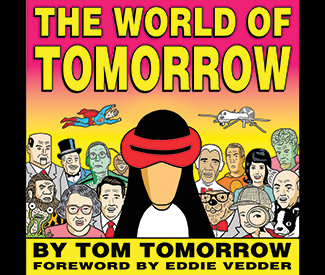
Longtime Guardian readers need no introduction to Perkins’ work. This Modern World — which satirizes current events with wry humor and laser-sharp intelligence — has appeared weekly in these pages for nearly 20 years; it’s also syndicated in other papers across America. In addition, he’s authored a children’s book and several cartoon anthologies, including 2012’s The World of Tomorrow, which features an introduction by rocker Eddie Vedder (Perkins drew the album art for Pearl Jam’s 2009 Backspacer, which elevated him to a level of fame he never expected: “There are people who have tattooed [my art] on their flesh!”) Last year, he added the prestigious Herblock Prize to his list of cartooning and journalistic accolades. Though he’s East Coast-based these days, he’ll be heading to California next week for events at the Cartoon Art Museum in San Francisco and the Charles M. Schulz Museum in Santa Rosa.

Long before he made his name with This Modern World, Perkins says he was “always drawing little comics and cartoons, as far back as I can remember. I’ve been putting together a new PowerPoint show for this Cartoon Art Museum event, and I’ve actually dug up some of these old cartoons. I have this political cartoon that I drew at the age of 14! It’s terrible [laughs], but it’s kind of funny to show it. It’s about Jimmy Carter! Because when I was 14, Jimmy Carter had just given an interview to Playboy magazine, and was being widely mocked for saying that he had lusted after women in his heart. So here I am at 14, drawing a cartoon about that, which is very funny to me in retrospect.”

As he got older (“like every young cartoonist in the 1980s, I went through a phase of trying to do a Gary Larson rip-off, because The Far Side was at the height of its popularity”), he began combining collage with cartooning “in order to riff on advertising culture and technology and so on,” before circling back to politics.

“I’m just doing this one cartoon — it’s not a comprehensive news source — so each week has to be some mixture of something I’m really interested in; something that maybe, hopefully has a news hook; and something that I have something interesting to say about,” he says. “Something that I can be funny about. It may not always show, but I really don’t want to waste the reader’s time.”

Though he admits George W. Bush was an easier politician to make fun of, the Obama administration has also supplied him with plenty of material. “I have a recurring character named ‘Droney’ — the friendly surveillance drone. I do a lot of stuff on the NSA, and the fact that Guantanamo has not been closed, and so on.”

A veteran of the alt-weekly publishing world, Perkins has a unique perspective on how the industry has changed over the years. “I think the short answer is, alt-weekly cartoonists — and there’s maybe a dozen of us working right now — are truly an endangered species. We came into a certain ecosystem and set our own rhythms around that ecosystem,” he says. “Obviously, between the financial crash in 2008, and the ongoing influence of the Internet, that’s been a more tenuous ground. I’m profoundly grateful to the papers that still run cartoons like mine, but it’s an era of entropy. We’re all kind of just hanging on. I’m not the only content creator ever to point out the fact that it’s tricky to figure out how to make a living online. It’s ironic, because [thanks to the Internet], my reach as a cartoonist has never been greater.” (His semi-joking advice to young cartoonists: “Marry someone with tenure.”)

For his Cartoon Art Museum gig, he’ll be sharing the spotlight with a special guest: one of San Francisco’s famed Doggie Diner heads. “To me, the Doggie Diner heads represent my San Francisco. They represent the San Francisco of artists and pranksters. I have a real affection for them. Sometimes, when I have a dream sequence and I need to convey something strange and surreal, I’ll have a Doggie Diner head say a few words, floating in the background.” *

THE WORLD OF TOMORROW: AN EVENING WITH TOM TOMORROW

Tue/11, 7-9pm, $5

Cartoon Art Museum

655 Mission, SF

www.cartoonart.org

March 15, 2pm, free with admission ($5-$10)

Charles M. Schulz Museum

2301 Hardies, Santa Rosa

www.schulzmuseum.org

www.thismodernworld.com


Rep Clock: March 5 -11, 2014

0

Schedules are for Wed/5-Tue/11 except where noted. Director and year are given when available. Double and triple features marked with a •. All times pm unless otherwise specified.

ARTISTS’ TELEVISION ACCESS 992 Valencia, SF; www.atasite.org. $5-10. “OpenScreening,” Thu, 8. “Mission Eye and Ear,” new music/sound and film collaborations curated by Lisa Mezzacappa and ATA, Fri, 8. Other Cinema: Pussy Riot: A Punk Prayer (Pozdorovkin and Lerner, 2013), Sat, 8:30.

BALBOA THEATRE 3630 Balboa, SF; cinemasf.com/balboa. $7.50-10. “Popcorn Palace:” Labyrinth (Henson, 1986), Sat, 10am. Matinee for kids.

BAY THEATER Pier 39, SF; www.oceanfilmfest.org. Most programs $8-15. San Francisco Ocean Film Festival, ocean-themed films from over 17 countries, plus discussions and special events, Wed-Sun.

BERKELEY CITY COLLEGE 2050 Center, Berk; www.mecaforpeace.org. $5-10. Middle East Children’s Alliance presents: A World Not Ours (Fleifel, 2012), Wed, 7.

CASTRO 429 Castro, SF; (415) 621-6120, www.castrotheatre.com. $8.50-11. “Philip Seymour Hoffman (1967-2014):” •Capote (Miller, 2005), Wed, 7, and The Master (Anderson, 2012), Wed, 9:10. American Hustle (Russell, 2013), Thu-Fri, 2:30, 5:30, 8:30. Call for Sat-Tue shows and times.

CHRISTOPHER B. SMITH RAFAEL FILM CENTER 1118 Fourth St, San Rafael; (415) 454-1222, www.cafilm.org. $6.50-$10.75. times. Omar (Abu-Assad, 2013), call for dates and times. America the Beautiful 3: The Sexualization of Our Youth (Roberts, 2014), Wed, 6:15. Benefit for Beyond Hunger; advance tickets ($25-50) at www.beyondhunger.org. Femme: Women Healing the World (Itier, 2013), Thu. 7. The Rocket (Mordaunt, 2013), March 7-13, call for times.

“EAST BAY INTERNATIONAL JEWISH FILM FESTIVAL” Various venues in Pleasant Hill, Livermore, and Orinda; www.eastbayjewishfilm.org. Most programs $8-11. Featuring more than 40 international movies.

EXPLORATORIUM Pier 15, SF; www.exploratorium.edu. Free with museum admission ($19-25). “After Dark: Extended Cinema,” Thu, 6-10.

GOETHE-INSTITUT SAN FRANCISCO 530 Bush, SF; goethe.de/ins/us/saf/enindex.htm. $5. 11 Freundinnen (Cho, 2013), Wed, 6:30.

KANBAR HALL JCCSF, 3200 California, SF; www.jccsf.org. $12-25. SF Jewish Film Festival presents: “Hummus, Falafel, and Brisket — Oh, My!”: Make Hummus Not War (Graham, 2012), Sun, 1; Meat Hooked! (Wasserman, 2012), Sun, 2:30; Falafel! Give Peas a Chanse (Cohen, 2012), Sun, 3:45.

MECHANICS’ INSTITUTE 57 Post, SF; milibrary.org/events. $10. “CinemaLit Film Series: Mystique of the City: Films Shot in San Francisco:” After the Thin Man (Van Dyke II, 1936), Fri, 6.

OSHER MARIN JCC 200 N. San Pedro, San Rafael; www.marinjcc.org. $10. “Best of the San Francisco Jewish Film Festival:” American Jerusalem: Jews and the Making of San Francisco (Shaffer, 2013), Tue, 7.

PACIFIC FILM ARCHIVE 2575 Bancroft, Berk; (510) 642-5249, bampfa.berkeley.edu. $5.50-9.50. “Film 50: History of Cinema:” Early Summer (Ozu, 1951), with lecture by Emily Carpenter, Wed, 3:10. “Jokers Wild: American Comedy, 1960-1989:” What’s New Pussycat? (Donner, 1965), Wed, 7; The Producers (Brooks, 1967), Fri, 7; Take the Money and Run (Allen, 1969), Fri, 8:50. “The Brilliance of Satyajit Ray:” Kanchenjungha (1962), Thu, 7; Charulata (1964), Sat, 6; The Hero (1965), Sun, 3. “Jean-Luc Godard: Expect Everything from Cinema:” Masculine Feminine (1966), Sat, 8:30; Pierrot le fou (1965), Sun, 5:30. “Inside the BAM/PFA Film Collection,” recently acquired short films, Mon, 7:30. “Documentary Voices:” Body of War (Spiro and Donahue, 2007), Tue, 7.

ROXIE 3117 and 3125 16th St, SF; (415) 863-1087, www.roxie.com. $6.50-11. The Men’s Story Project: Out Loud! (Lehrer, 2013), Wed, 7. 7 Boxes (Maneglia, 2014), Wed-Thu, 7, 9. Stranger by the Lake (Guiraudie, 2013), Wed, 9:30; Thu, 9:15. Groove Move (Coleman, 2014), Thu, 7. “Teenage Mutant Ninja Turtles All-You-Can-Eat Pizza Party:” •Teenage Mutant Ninja Turtles (Barron, 1990), Sat, 8, and Teenage Mutant Ninja Turtles II: The Secret of the Ooze (Pressman, 1991), Sat, 9:45. Tickets ($25) include hella pizza (including vegan options).

“SAN FRANCISCO INTERNATIONAL WOMEN’S FILM FESTIVAL” New Parkway, 474 24th St, Oakl; www.sfiwff.com. Free. “First Friday Shorts,” short films by local female filmmakers, Fri, 6. Also March 29, awards reception (1pm) and global shorts program

UNITY IN MARIN 600 Palm, Hamilton Center, Novato; www.unityinmarin.org. $10. Rebels With a Cause (Kelly, 2013), Fri, 7.

YERBA BUENA CENTER FOR THE ARTS 701 Mission, SF; www.ybca.org. $8-10. “Design and Architecture Films Showcase:” 16 Acres (Hankin, 2012), Thu and Sat, 7:30; Lost Rivers (Bacle, 2013), Sun, 2. *


Psychic Dream Astrology: March 5 -11, 2014

0

Psychic Dream Astrology

March 5-11, 2014

ARIES

March 21-April 19

You are made of fire, Aries, so acting impulsively or for the joy of the action often works for you. What doesn’t work is when you are freaking out and not sure what to trust so you lash out to get away from something instead of move towards the something new. Don’t act out with fear this week or you’ll end up manifesting it.

TAURUS

April 20-May 20

Get it together, pal. If you keep on looking for proof that the world is unkind and you’re not safe you won’t have any problem finding it. But the same can be said if you seek out hope and potential in this crazy life. Look for what you desire with at least as much passion as you have for avoiding what you don’t.

GEMINI

May 21-June 21

It’s not enough that I believe in you, Gem, in order to get where you want to go you need to believe in yourself. There’s a meaningful difference between self-assurance and egoism, and you need more of the former and less of the latter. Break down the constraints that are holding you back from being your most successful self.

CANCER

June 22-July 22

If you’re willing to see new perspectives, you’ll find that they’re everywhere. You don’t need to think about how things will turn out or how viable your plans are; first generate new ideas and you can check for viability and edit them later, Moonchild. Get excited about what’s possible, not probable, this week.

LEO

July 23-Aug. 22

Move slowly so you can be certain that your actions reflect your intentions, Leo. There’s no rush, even though you may feel compelled to act fast this week. What you do now will influence your foreseeable future in untold ways, so make sure you can stand behind not only what you’re doing, but why.

VIRGO

Aug. 23-Sept. 22

It’s all too much, Virgo, and you need to find a way to prioritize your priorities. Don’t think about what you can do; think about what you can do in a healthy way. If ever there was a time for lists and sub-lists, this is it. Make sure you can arrive with enough energy left to enjoy your accomplishments.

LIBRA

Sept. 23-Oct. 22

Friendship doesn’t just happen when everything is easy and fun. Share what’s going on for you in a meaningful way with the people who you care about this week. If you find that a relationship can’t hold up when shit gets real, then you deserve to know that. Let the truth shine through, even if it’s uncomfortable.

SCORPIO

Oct. 23-Nov. 21

In order to have the life you want, you have to make some changes. Strive towards a healthy balance between pleasure and work, even if it requires some shifting of priorities to create it. This is not the week for conservatism or to put off a personal revolution, friend.

SAGITTARIUS

Nov. 22-Dec. 21

Get motivated to better understand what’s driving you, because what you don’t know can hurt you. You may say you want to go left but keep finding yourself right. Do the uncomfortable work of looking at your less conscious motivations so you can get yourself to a better place, Sagittarius.

CAPRICORN

Dec. 22-Jan. 19

Life is a roller coaster! If you’re on the ride thinking about the mechanics of all that could go wrong, fretting over the safety procedures and whether your seat belt was fastened securely enough, then how are you going to enjoy the ride? Don’t look for what’s wrong; look for what can be gained, Capricorn.

AQUARIUS

Jan. 20-Feb. 18

Are you paying attention to how your actions are impacting others? You may find yourself so focused on having a good time that you fail to notice the ripple effect it has on your life this week. Make sure you’re willing to deal with the consequences of your actions, or change your course while you’re still having fun.

PISCES

Feb. 19-March 20

There’s no wisdom in fighting yourself. This week may find you plagued by self-criticism but don’t take it too seriously. Combat your worries by getting clear about what’s happening in the now, and what tangible steps you can take to overcome your troubles. Get focused on the constructive, Pisces.

Want more in-depth, intuitive or astrological advice from Jessica? Schedule a one-on-one reading that can be done in person or by phone. Visit www.lovelanyadoo.com


Award-winning writer Michelle Tea and intuitive counselor Jessica Lanyadoo have been fraternizing with fate together for the past six years. Call Lanyadoo for an astrology or tarot reading at (415) 336-8354. Write to Double Team at lovedoubleteam@hotmail.com.

Theater Listings: March 5 – 11, 2014

0

Stage listings are compiled by Guardian staff. Performance times may change; call venues to confirm. Reviewers are Robert Avila, Rita Felciano, and Nicole Gluckstern. Submit items for the listings at listings@sfbg.com.

THEATER

OPENING

Crystal Springs Eureka Theatre, 215 Jackson, SF; www.crystalspringstheplay.com. $20-65. Previews Thu/6, 8pm. Opens Fri/7, 8pm. Runs Fri-Sat, 8pm; Sun, 2pm. Through March 23. Eureka Theatre presents Kathy Rucker’s world-premiere drama about parenting in the digital age.

BAY AREA

Accidental Death of an Anarchist Berkeley Repertory Theatre, Roda Theatre, 2015 Addison, Berk; www.berkeleyrep.org. $29-99. Previews Fri/7-Sat/8 and Tue/11, 8pm; Sun/9, 7pm. Opens March 12, 8pm. Runs Tue and Thu-Sat, 8pm (no show April 18; additional 2pm shows March 20 and April 17; also Sat, 2pm, but no matinee March 22); Sun, 2 and 7pm. Through April 20. Berkeley Rep presents comic actor Steven Epp in Dario Fo’s explosive political farce, directed by Christopher Bayes,

Once On This Island Lucie Stern Theatre, 1305 Middlefield, Palo Alto; www.theatreworks.org. $19-73. Previews Wed/5-Fri/7, 8pm. Opens Sat/8, 8pm. Runs Tue-Wed, 7:30pm; Thu-Sat, 8pm (also Sat, 2pm); Sun, 2 and 7pm. Through March 30. TheatreWorks performs the Tony-nominated musical about a star-crossed love affair in the tropics, inspired by Hans Christian Andersen’s The Little Mermaid.

ONGOING

The Altruists Shelton Theater, 533 Sutter, SF; www.shewolftheater.com. $19-34. Thu/6-Sat/8, 8pm. She Wolf Theater performs Nicky Silver’s “politically incorrect” play that exposes the real motivations behind altruistic behavior.

Children Are Forever (All Sales are Final!) Stage Werx Theatre, 446 Valencia, SF; www.brownpapertickets.com. $15. Fri-Sat, 8pm. Through March 22. Writer-performer and comedian Julia Jackson’s well acted and consistently funny autobiographical solo show details her and her female partner’s attempt to adopt a newborn girl from a young African American mother in Florida. Along the way, Jackson’s smart script details the trials, red tape, and unexpected market incentives in the field of adoption for a same-sex, interracial couple. If the generally involving story nevertheless attenuates a little across its two-act structure, Coke Nakamoto’s precise direction (which builds on original direction by W. Kamau Bell) offers a lively framework for Jackson’s excellent characterizations as well as her frank and interesting commentary on the social, political messiness of certain natural urges. (Avila)

Feisty Old Jew Marsh San Francisco Main Stage, 1062 Valencia, SF; www.themarsh.org. $25-100. Sat, 8pm; Sun, 7pm (Sun/9, performance will be a reading of Charlie Varon’s Fish Sisters). Through March 16. Charlie Varon performs his latest solo show, a fictional comedy about “a 20th century man living in a 21st century city.”

Foodies! The Musical Shelton Theater, 533 Sutter, SF; www.foodiesthemusical.com. $32-34. Fri-Sat, 8pm. Open-ended. AWAT Productions presents Morris Bobrow’s musical comedy revue all about food.

Hundred Days Z Space, 450 Florida, SF; www.zspace.org. $10-100. Wed and Sun, 7pm; Thu-Sat, 8pm. Through April 6. Married musical duo the Bengsons (Abigail and Shaun) provide the real-life inspiration and guiding rock ‘n’ roll heart for this uneven but at times genuinely rousing indie musical drama, a self-referential meta-theater piece relating the story of a young couple in 1940s America who fall madly in love only to discover one of them is terminally ill. As an exploration of love, mortality, and the nature of time, the story of Sarah and Will (doubled by the Bengsons and, in movement sequences and more dramatically detailed scenes, by chorus members Amy Lizardo and Reggie D. White) draws force from the potent musical performances and songwriting of composer-creators Abigail and Shaun Bengson (augmented here by the appealing acting-singing chorus and backup band that also feature El Beh, Melissa Kaitlyn Carter, Geneva Harrison, Kate Kilbane, Jo Lampert, Delane Mason, Joshua Pollock). Playwright Kate E. Ryan’s book, however, proves too straightforward, implausible, and sentimental to feel like an adequate vessel for the music’s exuberant, urgent emotion and lilting, longing introspection. Other trappings of director Anne Kauffman’s elaborate production (including an inspired set design by Kris Stone that echoes the raw industrial shell of the theater; and less-than-inspired choreography by the otherwise endlessly inventive Joe Goode) can add texture at times but also prove either neutral figures or distracting minuses in conveying what truth and heft there is in the material. Ultimately, this still evolving world premiere has a strong musical beat at its core, which has a palpable force of its own, even if it’s yet to settle into the right combination of story and staging. (Avila)

Jerusalem San Francisco Playhouse, 450 Post, SF; www.sfplayhouse.org. $20-100. Wed/5-Thu/6, 7pm; Fri/7-Sat/8, 8pm (also Sat/8, 3pm). SF Playhouse presents the West Coast premiere of English playwright Jez Butterworth’s West End and Broadway hit, a three-act revel led by a larger-than-life rebel, a stout boozed-up drug-dealer, habitual fabulist, and latter-day Digger of sorts named Johnny “Rooster” Byron (Brian Dykstra). The dominion of this Falstaffian giant is the English countryside outside his squalid trailer door, not far from Stonehenge, where he seems to incarnate a rather dissipated version of an ancient English independence, like one of the great mythical beings of rural lore. Aptly enough, it’s Saint George’s Day, the feast day of England’s national saint, but it’s not all a party this time around. Authorities have issued a final 24-hour eviction notice on Rooster’s tin door; there are luxury apartments in the works; and there’s concern in town about the underage teens who flock to Rooster like so many fledglings — one, in particular, has gone missing: Phaedra (Julia Belanoff), who we see at the very outset of the play donning a fairy costume and singing the title song, based on the Blake poem and England’s unofficial national anthem. The next 24 hours will be either the breaking point or the apotheosis for all Rooster has made himself out to be. In Butterworth’s big-eyed comedy, we are meant to feel a stake in this outcome whether we actually like Rooster or not — his independence, the scope of his life and vision, suggests the outer limit of possibility in an ever more disciplined and circumscribed world. Director Bill English (who also designed the impressive bucolic-trailer-park set) and his large cast (which includes a strong Ian Scott McGregor as longtime Rooster sidekick, Ginger) dive into the comedy with gusto. But somehow the drama, the larger stakes in the storyline, falls short. A certain requisite intensity and momentum are only fitfully achieved. Dykstra, as the expansive antihero, has the biggest burden here. And while he has an appealing swagger throughout, his wayward brogue and unconvincing bellicosity undercut the culmination of the play’s (admittedly somewhat overwrought) mythopoeic proportions. (Avila)

Lovebirds Marsh San Francisco Studio, 1062 Valencia, SF; www.themarsh.org. $15-50. Thu-Fri, 8pm; Sat, 8:30pm. Through March 15. Theater artist and comedian Marga Gomez presents the world premiere of her 10th solo show, described as “a rollicking tale of incurable romantics.”

Mommy Queerest Exit Studio, 156 Eddy, SF; www.divafest.info. $15-25. Fri-Sat, 8pm. Through March 29. DIVAfest and Guerrilla Rep present Kat Evasco (who co-wrote with John Caldon) in an autobiographical solo comedy about the relationship between a lesbian daughter and her closeted lesbian mother.

Napoli! ACT’s Geary Theater, 415 Geary, SF; www.act-sf.org. $10-120. Wed/5-Sat/8, 8pm (also Sat/8, 2pm); Sun/9, 2pm. American Conservatory Theater offers Bay Area audiences a rare look at one of the Neapolitan plays by Italy’s famed writer Eduardo De Filippo (1900-1984). Set in a humble home in working-class Naples during and just after World War II, amid the transition from Fascism to the postwar order, the play’s broad comedy comes with a strong undercurrent of social drama, as well as unexpectedly poignant moments. Its hero is the head of the household, Gennaro (former ACT core company member Marco Barricelli in a boisterous and gently moving performance), whose upright nature proves increasingly out-of-step with the times and indeed his own family, as his wife, Amalia (a commanding Seana McKenna), begins a black-market trade in coffee beans that becomes an all-out family crime ring by war’s end. While this dynamic offers fodder for some rather hokey if not unenjoyable comedy, the play gathers itself into a serious and timely indictment of privilege and its corrosion of community, as well as the need for solidarity as the only viable, indeed the only satisfying way forward. If the message and the playwright-messenger (De Fillipo, also an actor, originated the part of Gennaro himself) come across today as somewhat heavy-handed, it remains hard to dismiss Napoli! as just a museum piece. That’s due in part to director Mark Rucker’s large and graceful cast, as well as a buoyant new translation by Linda Alper and ACT’s Beatrice Basso. But it’s also the prescience and appositeness for us, all these many years later and miles away, of the play’s fundamentally social and political concerns. (Avila)

“Risk Is This … The Cutting Ball New Experimental Plays Festival” Tides Theater, 533 Sutter, Second Flr; www.cuttingball.com. Free ($20 donation for reserved seating). Fri-Sat, 8pm. (Starting March 14, venue changes to Exit on Taylor, 277 Taylor, SF). Through March 29. Five new works in staged readings, including two from Cutting Ball resident playwright Andrew Saito.

The Scion Marsh San Francisco, 1062 Valencia, SF; www.themarsh.org. $15-60. Thu-Fri, 8pm; Sat, 5pm. Through April 18. In his latest solo show, Brian Copeland (Not a Genuine Black ManThe Waiting Period) explores an infamous crime in his hometown of San Leandro: the 2000 murder of three government meat inspectors by Stuart Alexander, owner of the Santos Linguisa Factory. The story is personal history for Copeland, at least indirectly, as the successful comedian and TV host recounts growing up nearby under the common stricture that “rules are rules,” despite evidence all around that equity, fairness, and justice are in fact deeply skewed by privilege. Developed with director David Ford, the multiple-character monologue (delivered with fitful humor on a bare-bones stage with supportive sound design by David Hines) contrasts Copeland’s own youthful experiences as a target of racial profiling with the way wealthy and white neighbor Stuart Alexander, a serial bully and thug, consistently evaded punishment and even police attention along his path to becoming the “Sausage King,” a mayoral candidate, and a multiple murderer (Alexander died in 2005 at San Quentin). The story takes some meandering turns in making its points, and not all of Copeland’s characterizations are equally compelling. The subject matter is timely enough, however, though ironically it is government that seems to set itself further than ever above the law as much as wealthy individuals or the bogus “legal persons” of the corporate world. The results of such concentrated power are indeed unhealthy, and literally so — Copeland’s grandmother (one of his more persuasive characterizations) harbors a deep distrust of processed food that is nothing if not prescient —but The Scion’s tale of two San Leandrans leaves one hungry for more complexity. (Avila)

Shit & Champagne Rebel, 1772 Market, SF; shitandchampagne.eventbrite.com. $25. Fri-Sat, 8pm. Open-ended. D’Arcy Drollinger is Champagne White, bodacious blonde innocent with a wicked left hook in this cross-dressing ’70s-style white-sploitation flick, played out live on Rebel’s intimate but action-packed barroom stage. Written by Drollinger and co-directed with Laurie Bushman (with high-flying choreography by John Paolillo, Drollinger, and Matthew Martin), this high-octane camp send-up of a favored formula comes dependably stocked with stock characters and delightfully protracted by a convoluted plot (involving, among other things, a certain street drug that’s triggered an epidemic of poopy pants) — all of it played to the hilt by an excellent cast that includes Martin as Dixie Stampede, an evil corporate dominatrix at the head of some sinister front for world domination called Mal*Wart; Alex Brown as Detective Jack Hammer, rough-hewn cop on the case and ambivalent love interest; Rotimi Agbabiaka as Sergio, gay Puerto Rican impresario and confidante; Steven Lemay as Brandy, high-end calf model and Champagne’s (much) beloved roommate; and Nancy French as Rod, Champagne’s doomed fiancé. Sprawling often literally across two buxom acts, the show maintains admirable consistency: the energy never flags and the brow stays decidedly low. (Avila)

The Speakeasy Undisclosed location (ticket buyers receive a text with directions), SF; www.thespeakeasysf.com. $60-90 (add-ons: casino chips, $5; dance lessons, $10). Thu-Sat, 7:40, 7:50, and 8pm admittance times. Through March 15. Boxcar Theater’s most ambitious project to date is also one of the more involved and impressively orchestrated theatrical experiences on any Bay Area stage just now. An immersive time-tripping environmental work, The Speakeasy takes place in an “undisclosed location” (in fact, a wonderfully redesigned version of the company’s Hyde Street theater complex) amid a period-specific cocktail lounge, cabaret, and gambling den inhabited by dozens of Prohibition-era characters and scenarios that unfold around an audience ultimately invited to wander around at will. At one level, this is an invitation to pure dress-up social entertainment. But there are artistic aims here too. Intentionally designed (by co-director and creator Nick A. Olivero with co-director Peter Ruocco) as a fractured super-narrative — in which audiences perceive snatches of overheard stories rather than complete arcs, and can follow those of their own choosing — there’s a way the piece becomes specifically and ever more subtly about time itself. This is most pointedly demonstrated in the opening vignettes in the cocktail lounge, where even the ticking of Joe’s Clock Shop (the “cover” storefront for the illicit 1920s den inside) can be heard underscoring conversations (deeply ironic in historical hindsight) about war, loss, and regained hope for the future. For a San Francisco currently gripped by a kind of historical double-recurrence of the roaring Twenties and dire Thirties at once, The Speakeasy is not a bad place to sit and ponder the simulacra of our elusive moment. (Avila)

Tipped & Tipsy Marsh Studio Theater, 1062 Valencia, SF; www.themarsh.org. $15-50. Sat, 5pm; Sun, 7pm. Through April 6. Solo performer Jill Vice performs her Fringe Festival hit.

Ubu Roi Exit on Taylor, 277 Taylor, SF; www.cuttingball.com. $10-50. Thu/6, 7:30pm; Fri/7-Sat/8, 8pm (also Sat/8, 2pm); Sun/9, 5pm. Cutting Ball Theater performs Alfred Jarry’s avant-garde parody of Shakespeare’s Macbeth, presented in a new translation by Cutting Ball artistic director Rob Melrose.

The World of Paradox Garage, 715 Bryant, SF; www.paradoxmagic.com. $12-15. Mon, 8pm (no show Mon/10). Through April 7. Footloose presents David Facer in his solo show, a mix of magic and theater.

The World’s Funniest Bubble Show Marsh San Francisco, 1062 Valencia, SF; www.themarsh.org. $8-11. Sun, 11am. Through March 9. The popular, kid-friendly show by Louis Pearl (aka “The Amazing Bubble Man”) returns to the Marsh.

Yellow New Conservatory Theatre Center, 25 Van Ness, SF; www.nctcsf.org. $25-45. Wed-Sat, 8pm; Sun, 2pm. Through March 23. New Conservatory Theatre Center performs the Bay Area premiere of Del Shores’ Mississippi-set family drama.

BAY AREA

Bread and Circuses La Val’s Subterranean, 1834 Euclid, Berk; www.impacttheatre.com. $20-25. Thu-Sat, 8pm; Sun, 7pm. Through April 6. Impact Theatre performs “a cavalcade of brutal and bloody new short plays” by various contemporary playwrights.

Escanabe in da Moonlight Live Oak Theatre, 1301 Shattuck, Berk; www.theatrefirst.com. $10-30. Thu/6-Sat/8, 8pm. TheatreFIRST performs Jeff Daniels’ raucous comedy.

Geezer Marsh Berkeley, 2120 Allston, Berk; www.themarsh.org. $25-50. Thu, 8pm; Sat, 5pm. Through April 26. Geoff Hoyle moves his hit comedy about aging to the East Bay.

Gideon’s Knot Aurora Theatre, 2081 Addison, Berk; www.auroratheatre.org. $32-60. Wed/5-Sat/8, 8pm; Sun/9, 2 and 7pm. Aurora and director Jon Tracy’s Bay Area premiere of Johnna Adams’ two-hander features strong acting, strong enough almost to make us believe in its premise. A harried mother named Corryn (a terrific Jamie J. Jones) arrives at the empty middle-school classroom overseen by a distracted teacher, Heather (a subdued yet agitated Stacy Ross). Corryn, proud but somehow desperate, admits to having not slept. Heather initially doesn’t know why she’s there — until it becomes clear she’s the mother of a recent suicide, who has come to keep her appointment for a parent-teacher conference. The two women await the arrival of the absent principal, but Corryn presses for answers now to the circumstances surrounding her child’s final days, which included his suspension from school and a beating received at the hands of fellow students. Heather, who seems to be hiding some separate anxiety or grief of her own (and is, though what we don’t learn until nearly the end of the play), does her best to deflect any such conversation until the principal arrives but is soon embroiled in an argument with the headstrong and canny mother in front of her, a literature professor at a major university. Their dance centers on Corryn’s son’s last assignment, a short story, one his teacher sees as nothing but “hate-filled poisonous attacks,” but his mother calls “poetry.” In addition to the clash between a teacher’s authority and a mother’s regard, there’s a class component to these differing perspectives, we presume. Yet there is a real issue here, somewhere, about art and education and authority — or would be if it did not end up buried along with the young writer we never meet. Playwright Adams advances the dramatic tension by tacking this way and that around her subject, but loses sight of the shore meanwhile, as her characters debate whether or not the short story contains a virtuous accusation against an instance of child abuse, only to drop this crux a moment later in a hard-to-credit squeamishness on Corryn’s part over the potentially homoerotic longings of her deceased son. The final note lands in an even hokier key of mutual sorrow and understanding. (Avila)

The House That Will Not Stand Berkeley Repertory Theatre, Thrust Stage, 2025 Addison, Berk; www.berkeleyrep.org. $29-59. Tue and Thu-Sat, 8pm (also Sat and March 13, 2pm); Wed, 7pm; Sun, 2 and 7pm. Through March 16. July 4, 1836: As a white New Orleans patriarch (Ray Reinhardt) passes from the scene, under somewhat mysterious circumstances, his longtime mistress, Beartrice (an imposing, memorable Lizan Mitchell), and their daughters (the charmingly varied trio of Joniece Abbott-Pratt, Flor De Liz Perez, and Tiffany Rachelle Stewart) — all free women of color — vie for dominance while trying to secure their respective futures in Berkeley Rep’s sumptuous and beautifully acted world premiere. Nationally acclaimed playwright and Oakland native Marcus Gardley (And Jesus Moonwalked the Mississippi; This World in a Woman’s Hands) brews up a historically rich and revealing, as well as witty and fiery tale here, based on the practice of plaçage (common-law marriages between white men and black Creole women), grounding it in the large personalities of his predominately female characters — who include a nosy and angling intruder (played with subtlety by Petronia Paley) — and lacing it all with a delirious dose of magical realism via the voodoo charms of Beartrice’s slave, Makeda (Harriett D. Foy, who with Keith Townsend Obadike also contributes lush, atmospheric compositions to the proceedings). Gardley delves productively into the history overall, although he sometimes indulges it too much in awkward and ultimately unnecessary expository dialogue. When he allows his characters full scope for expression of their personalities and relationships, however, the dialogue sails by with brio and punch —something the powerhouse cast, shrewdly directed by Patricia McGregor, makes the most of throughout. (Avila)

Lasso of Truth Marin Theatre Company, 397 Miller, Mill Valley; www.marintheatre.org. $37-58. Tue and Thu-Sat, 8pm (also Thu/6, 1pm; March 15, 2pm); Wed, 7:30pm; Sun, 2 and 7pm. Through March 16. Marin Theatre Company performs Carson Kreitzer’s new play about the history of Wonder Woman.

The Lion and the Fox Berkeley City Club, 2315 Durant, Berk; www.centralworks.org. $15-28. Thu-Sat, 8pm; Sun, 5pm. Through March 30. Central Works performs a prequel to its 2009 hit, Machiavelli’s The Prince, which depicts a face-off between Niccolo Machiavelli and Cesare Borgia.

A Maze Ashby Stage, 1901 Ashby, Berk; www.justtheater.org. $20-25. Wed/5-Sat/8, 8pm; Sun/9, 5pm. Following a well-received run last summer at Live Oak Theater, Just Theater’s West Coast premiere of Pittsburgh-based playwright Rob Handel’s 2011 jigsaw drama gets a second life, courtesy of presenter Shotgun Players, in this remounting at Ashby Stage. Half the pleasure of a play like this is the unfolding of its serpentine plot, which becomes much more linear in the second half but initially seems to hover around three very disparate situations: 17-year-old Jessica (Frannie Morrison), recently escaped from eight years of captivity in the home and cellar of her kidnapper, prepares for an interview with a Barbara Walters-like TV journalist (Lauren Spencer); Oksana (Sarah Moser) and Paul (Harold Pierce), who head up their own highly successful rock band (suggestively titled the Pathetic Fallacy), are in the midst of a tough transition as Oksana checks Paul into rehab; and a fairytale King (Lasse Christiensen) responds to the Queen’s (Janis DeLucia) news that they are about to have an “heir” by beginning construction on a gigantic, seemingly endless maze emanating outward from their cozy den to the furthest reaches of the kingdom. Meanwhile, the director of the rehab clinic (Carl Holvick-Thomas) introduces Paul to another artist-resident, a fussy, eccentric author named Beeson (Clive Worsley) at work on a multi-volume graphic novel of maddening intricacy. As the three storylines begin to coalesce, the play asks us to consider questions about artistic liberty, authorship, responsibility, human connection — big themes like that. It does so in a mostly playful, only slightly eerie way, despite the grim central situation revolving around the bright and surprisingly outgoing Jessica. Employing almost the identical cast as last time, again under director Molly Aaronson-Gelb, the proceedings unfold with generally solid acting, if not always persuasive dialogue, at least where things are meant to be more or less realistic (to an extent, the fairytale segment comes across more compellingly for being strictly bound by the artificial nature of its narrative). There’s a quirky quality to the play, and the production, that amuses, even as the coy plotline bemuses. And much like an amusement park adventure, the play makes sure no one really gets lost. This is a play that is happy to tell you the various ways the central “maze” might be read metaphorically, for instance, so that everything is tidy and clear — like a fairytale, or a graphic novel — not so mysterious in the end, just tinged with a kind of comfortable melancholy. (Avila)

The Music Man Julia Morgan Theater, 2640 College, Berk; www.berkeleyplayhouse.org. $17-60. Fri and March 20, 7pm; Sat, 1 and 6pm; Sun, noon and 5pm. Through March 23. There’s trouble in River City! See it unfold amid all those trombones at Berkeley Playhouse.

PERFORMANCE/DANCE

“Acentos Revival” Red Poppy Art House, 2698 Folsom, SF; www.redpoppyarthouse.org. Thu/6, 7:30pm. $10-15. Three featured poets and two open mic segments.

“Bad Ass B!tches” Bindlestiff Studio, 185 Sixth St, SF; www.bindlestiffstudio.org. Sat/8, 9pm. $12. Performance extravaganza in honor of International Women’s Day, with comedy, burlesque, live music, dance, and more.

“The Balcony” Exit on Taylor, 277 Taylor, SF; www.cuttingball.com. Sun/9, 1pm. Free. Cutting Ball Theater’s Hidden Classics Reading Series presents this reading of Jean Genet’s experimental play.

“Belles and Whistles Variety Show” Boom Boom Room, 1601 Fillmore, SF; www.boomboomblues.com. Tue/11, 8:30pm. $10. Comedian Danny Dechi hosts this variety show of music, comedy, magic, dance, and more.

“Black Choreographers Festival: Here & Now” ODC Theater, 3153 17th St, SF; www.bcfhereandnow.com. Thu/6-Sat/8, 8pm. $18-30. “Draft/By Series” presented by Robert Moses’ Kin in association with the Black Choreographers Festival and ODC Theater.

“The Buddy Club Children’s Shows” Randall Museum Theater, 199 Museum Wy, SF; www.thebuddyclub.com. Sun/9, 11am-noon. $8. With illusionist Timothy James.

Caroline Lugo and Carolé Acuña’s Ballet Flamenco Peña Pachamama, 1630 Powell, SF; www.carolinalugo.com. Sat/8, March 16, 22, and 30, 6:15pm. $15-19. Flamenco performance by the mother-daughter dance company, featuring live musicians.

“Comedy Bottle with Sean Keane” Purple Onion at Kells, 530 Jackson, SF; www.purpleonionatkells.com. Fri/7-Sat/8, 7pm. $10. The stand-up comedian performs.

Feinstein’s at the Nikko Hotel Nikko, 222 Mason, SF; www.feinsteinssf.com. This week: Paula West, Thu/6-Fri/7, 8pm; Sat/8-Sun/9, 7pm (also Sat/8, 9:30pm), $35-50.

“Letter from Birmingham Jail” Grace Cathedral, 1100 California, SF; www.gracecathedral.org. Mon/10, 7:30pm. $30-50. Acclaimed actor and playwright Anna Deavere Smith perfoms in this performance of Martin Luther King, Jr.’s landmark document of the civil rights movement.

“Magic at the Rex” Hotel Rex, 562 Sutter, SF; www.magicattherex.com. Sat, 8pm. Ongoing. $25. Magic and mystery with Adam Sachs and mentalist Sebastian Boswell III.

“The Magic Flute” Center for New Music, 55 Taylor, SF; themagicflute.brownpapertickets.com. Fri/7, 7pm. $15-20. Waffle Opera performs a stripped-down version of Mozart’s classic, with new English dialogue.

“Peiling Kao and Christy Funsch” Meridian Gallery, 535 Powell, SF; www.meridiangallery.org. Fri/7-Sat/8, 6pm. $8-10. Choreographer-performers Kao and Funsch perform a work inspired by Abby Leigh’s current exhibit in the gallery, with live music and additional performances by Aura Fischbeck and Celine Alwyn Parker.

“Point Break Live!” DNA Lounge, 373 11th St, SF; www.dnalounge.com. Fri/7 and April 4, 7:30 and 11pm. $25-50. Dude, Point Break Live! is like dropping into a monster wave, or holding up a bank, like, just a pure adrenaline rush, man. Ahem. Sorry, but I really can’t help but channel Keanu Reeves and his Johnny Utah character when thinking about the awesomely bad 1991 movie Point Break or its equally yummily cheesy stage adaptation. And if you do an even better Keanu impression than me — the trick is in the vacant stare and stoner drawl — then you can play his starring role amid a cast of solid actors, reading from cue cards from a hilarious production assistant in order to more closely approximate Keanu’s acting ability. This play is just so much fun, even better now at DNA Lounge than it was a couple years ago at CELLspace. But definitely buy the poncho pack and wear it, because the blood, spit, and surf spray really do make this a fully immersive experience. (Steven T. Jones)

“Rotunda Dance Series: Gamelan Sekar Jaya” San Francisco City Hall, 1 Carlton B. Goodlett Pl, SF; www.dancersgroup.org. Fri/7, noon. Free. The Balinese music and dance ensemble performs.

San Francisco A Cappella Festival Palace of Fine Arts, 3301 Lyon, SF; harmony-sweepstakes.com/bayarea.html. Sat/8, 8pm. $29.50. With hosts Ro Sham Bo and 38th Ave., Business Casual, Halfway to Midnight, Hearsay, Loose Interpretations, and others.

Sarah Berges Dance Dance Mission Theater, 3316 24th St, SF; www.sarahbergesdance.com. Fri/7-Sat/8, 8pm; Sun/9, 4pm. $10-15. Spring Season 2014 performance with premieres including The Black Dahlia, Kyrie, and The Kiss.

“Writers with Drinks” Make-Out Room, 3225 22nd St, SF; www.writerswithdrinks.com. Sat/8, 7:30pm. $5-10. With Clifford Chase, Rachel Cantor, AV Flox, and Melissa Broder.

BAY AREA

Bay Area Playback Theatre Open Secret, 923 C St, San Rafael; www.brownpapertickets.com. Sat/9, 8pm. $12-18. Improv based on true tales from the audience.

“Collage des Cultures Africaines Dance and Drum Conference” Oakland Technical High School Theater, 4351 Broadway, Oakl; www.diamanocoura.org. Sat/8, 8pm. $15-30. A gala performance highlights this weekend-long conference and class series hosted by the Diamano Coura West African Dance Company. Check website for complete schedule of events.

Diablo Ballet Lesher Center for the Arts, 1601 Civic, Walnut Creek; www.diabloballet.org. Thu/6, 6:30pm. $26-52. The company celebrates its 20th anniversary with this special performance, featuring premieres, a film retrospective, and more.

“MarshJam Improv Comedy Show” Marsh Berkeley, 2120 Allston, Berk; www.themarsh.org. Fri, 8pm. Ongoing. $10. Improv comedy with local legends and drop-in guests.

“Di Megileh” JCC East Bay, 1414 Walnut, Berk; www.jewishmusicfestival.org. Thu/6 and Sat/8, 8pm; Sun/9, 2pm; Mon/10, $15-22. Yiddish Theater Collective presents a Purim musical by Itzik Manger, performed in Yiddish with English supertitles.

“Pinball Prom with Feminist Tendencies” Pacific Pinball Museum, 1510 Webster, Alameda; www.pacificpinball.org. Sat/8, 8pm. $15. All-women’s pinball league Belles and Chimes and the Pacific Pinball Museum present this night of political comedy with Feminist Tendencies, followed by a “pinball prom” with dancing and photos.

“Poetry Express” Himalayan Flavors, 1585 University, Berk; poetryexpressberkeley.blogspot.com. Mon, 7pm. Free. Ongoing. This week: Hao Tran, plus open mic.

“The Pump and Dump: A Parentally Incorrect Comedy Show” Sweetwater Music Hall, 19 Corte Madera, Mill Valley; www.pumpanddumpshow.com. Wed/5, 8pm. $20. Also Fri/7, 8pm, $20, Verdi Club, 2424 Mariposa, SF. Comedian Shayna Ferm and sidekick MC Doula host this raucous evening of mom-focused comedy, music, and more.

“Some Girl(s)” Dragon Theatre, 2120 Broadway, Redwood City; www.dragonproductions.net. Fri-Sat, 8pm (also Sat, 2pm); Sun, 2pm. Through March 16. $15. Dragon Theater’s 2nd Stages Program kicks off with this production of Neil LaBute’s dark comedy. *


Film Listings: March 5 – 11, 2014

0

Film listings are edited by Cheryl Eddy. Reviewers are Kimberly Chun, Dennis Harvey, Lynn Rapoport, Sam Stander, and Sara Maria Vizcarrondo. For rep house showtimes, see Rep Clock.

OPENING

Bethlehem Teenaged Sanfur (Shadi Mar’i) is the younger brother of Ibrahim (Hisham Suliman), a leader in Palestinian militant group al-Aqsa Martyrs’ Brigades. When the latter claims responsibility for a suicide bombing in the center of Jerusalem, the Israelis want Ibrahim dead or in custody, immediately. That ought to be easy enough, since Sanfur is not just a potential freedom fighter himself but also, contrarily, an informant to Israeli Secret Service officer Razi (Tsahi Halevy). Their relationship is complex, to say the least, with an aspect of genuine paternal bonding even as Razi’s superiors pressure him to treat the youth as an expendable asset; Sanfur in turn resents the position he’s been cornered into. Just how he got there isn’t revealed until near the end of this taut thriller, co-written by Palestinian Ali Waked and Israeli director Yuval Adler, and acted with considerable power by non professional leads. Bethlehem isn’t quite as strikingly accomplished or ingeniously plotted as the concurrent, similarly themed Omar. But it delivers its own cumulative punch as characters likewise cross ethical and political lines in increasingly desperate efforts at self-preservation that can only end one bleak, bitter way. (1:39) Embarcadero. (Harvey)

The Lunchbox Ila (Nimrat Kaur) is a self-possessed housewife and a great cook, whose husband confuses her for another piece of furniture. She tries to arouse his affections with elaborate lunches she makes and sends through the city’s lunchbox delivery service. Like marriage in India, lunchbox delivery has a failure rate of zero, which is what makes aberrations seem like magical occurrences. So when widow Saajan (Irrfan Khan) receives her adoring food, he humbly receives the magical lunches like a revival of the senses. Once Ila realizes her lunchbox is feeding the wrong man she writes a note and Saajan replies — tersely, like a man who hasn’t held a conversation in a decade — and the impossible circumstances lend their exchanges a romance that challenges her emotional fidelity and his retreat from society. She confides her husband is cheating. He confides his sympathy for men of lower castes. It’s a May/December affair if it’s an affair at all — but the chemistry we expect the actors to have in the same room is what fuels our urge to see it; that’s a rare and haunting dynamic. Newcomer Kaur is perfect as Ila, a beauty unmarked by her rigorous distaff; her soft features and exhausted expression lend a richness to the troubles she can’t share with her similarly stoic mother (Lillete Dubey). Everyone is sacrificing something and poverty seeps into every crack, every life, without exception — their inner lives are their richness. (1:44) Clay. (Vizcarrondo)

Mr. Peabody and Sherman The time-traveling characters from the 1960s animated Rocky and Bullwinkle Show finally get their own feature film, with voices by Modern Family co-stars Ty Burrell and Ariel Winter. (1:30) Four Star, Presidio.

The Rocket When a terrible accident befalls a Laotian family already in a bad situation — they’re being displaced from their home thanks to a massive dam-building project — 10-year-old Ahlo (Sitthiphon Disamoe) is blamed, with particular malice coming from his superstitious grandmother, who believes the boy has been cursed since birth. In the squalid relocation camp, Ahlo finds a buddy in Kia (adorbs Loungnam Kaosainam), who lives with her James Brown-obsessed uncle (Thep Phongam), who provides drunken comic relief — but not without a certain sadness, since he’s a former soldier still suffering, like Laos itself, from the aftereffects of war. Ahlo may be unlucky, but he’s also crafty and fearless, and when he hears about a rocket-building competition offering a much-needed cash prize, he seizes the chance to prove to his family that he’s no bad penny. Though The Rocket was made in Laos, it’s from Australian writer-director Kim Mordaunt, who frames his simple story with gorgeous photography and an admirable lack of sentimentality. He’s also found a winner in first-time actor Disamoe, who’s a natural. (1:36) Opera Plaza, Shattuck, Smith Rafael. (Eddy)

Run & Jump San Francisco-born director Steph Green’s first feature is a likable seriocomedy about an Irish family trying to adjust to some drastic, unforeseen changes. After suffering a stroke and coming out of a coma, Conor Casey (Edward MacLiam) is a changed man — uncommunicative, sometimes volatile, seldom at all like the beloved husband and father he was. As wife Venetia (Maxine Peake) and their two kids tiptoe around him, they get a houseguest in the form of American neurologist Ted (Will Forte), who’s here to study Conor’s recovery (or lack thereof) with clinical detachment. The reserved, emotionally withdrawn Yank finds himself drawn into the Caseys’ shared warmth, particularly in its current need for a fill-in adult male — opening up to the children and, more riskily, striking romantic sparks with the Mrs. A bit formulaic but a crowd-pleaser nonetheless, the film is perhaps most notable for its winning dramatic turn by Saturday Night Live alum Forte, after another excellent showing in last year’s Nebraska. (1:42) Vogue. (Harvey)

300: Rise of An Empire Sequel to the 2006 action fantasy, because yelling “Spartaaaa!” never gets old. (1:43) Balboa, Marina.

Visitors Godfrey Reggio, the man behind the Qatsi Trilogy (1982’s Koyaanisqatsi, 1988’s Powaqqatsi, 2002’s Naqoyqatsi), delivers a new feature-length serving of chicken soup for the soul — this time aimed at a more scopophillic society. A procession of viewers (watching what, it’s never revealed) get patient close-ups, giving us time to observe the observers as their expressions change from elation to disappointment, rapture to ennui. The first observer is Triska, the famous gorilla on loan from the Bronx zoo, whose expressions are like a familiar foreign language conveyed by another species. Interpreting Triska begins a process that director Godfrey Reggio renews with every new take, and demands a degree of audience involvement that’s not to everyone’s taste — the Phillip Glass score throughout is a draw but is another factor for acquired tastes. Discretely we transition to a hollowed out building, an abandoned amusement park, the surface of the moon; in black and white the images have a coolness that undermines their grandeur. A slow moving camera circumnavigates an Louisiana swamp, and in the slits between the cypress roots you see new views of the distant terrain as if through a zoetrope, and the most mundane, ancient landscape is somehow new again. In an ocean of media, how often does a movie do that? (1:27) Embarcadero, Shattuck. (Vizcarrondo)

ONGOING

About Last Night (1:40) Metreon, 1000 Van Ness.

American Hustle David O. Russell’s American Hustle is like a lot of things you’ve seen before — put in a blender, so the results are too smooth to feel blatantly derivative, though here and there you taste a little Boogie Nights (1997), Goodfellas (1990), or whatever. Loosely based on the Abscam FBI sting-scandal of the late 1970s and early ’80s (an opening title snarks “Some of this actually happened”), Hustle is a screwball crime caper almost entirely populated by petty schemers with big ideas almost certain to blow up in their faces. It’s love, or something, at first sight for Irving Rosenfeld (Christian Bale) and Sydney Prosser (Amy Adams), who meet at a Long Island party circa 1977 and instantly fall for each other — or rather for the idealized selves they’ve both strained to concoct. He’s a none-too-classy but savvy operator who’s built up a mini-empire of variably legal businesses; she’s a nobody from nowhere who crawled upward and gave herself a bombshell makeover. The hiccup in this slightly tacky yet perfect match is Irving’s neglected, crazy wife Rosalyn (Jennifer Lawrence), who’s not about to let him go. She’s their main problem until they meet Richie DiMaso (Bradley Cooper), an ambitious FBI agent who entraps the two while posing as a client. Their only way out of a long prison haul, he says, is to cooperate in an elaborate Atlantic City redevelopment scheme he’s concocted to bring down a slew of Mafioso and presumably corrupt politicians, hustling a beloved Jersey mayor (Jeremy Renner) in the process. Russell’s filmmaking is at a peak of populist confidence it would have been hard to imagine before 2010’s The Fighter, and the casting here is perfect down to the smallest roles. But beyond all clever plotting, amusing period trappings, and general high energy, the film’s ace is its four leads, who ingeniously juggle the caricatured surfaces and pathetic depths of self-identified “winners” primarily driven by profound insecurity. (2:17) Castro, Metreon, 1000 Van Ness, Sundance Kabuki. (Harvey)

Beijing Love Story Writer-director-star Chen Sicheng adapts his 2012 Chinese TV series, adding movie stars Carina Lau and Tony Leung Ka-fai to the cast to up the big-screen wattage. The film follows an array of couples, starting with Chen and real-life wife Shen Yan as a young couple forced to make some hard choices after an unplanned pregnancy. “What’s love? It’s like a ghost. Everyone’s heard of it, nobody’s seen it,” the reluctant father-to-be’s cynical friend tells him. Said friend has been hitched for years; the film’s next storyline follows what happens when his wife finds out he’s been cheating (as it turns out, she has some secrets of her own). At one point, the action shifts from Beijing to Greece (for the Lau-Leung segment), before returning to the city for a teenage love story involving a cello prodigy who wants to compete on TV, and a boy who can “see auras,” among other fanciful talents. Finally, an elderly man embarks on a series of blind dates, looking for a second chance at love, with a twist that’s obvious to anyone who’s ever seen a rom-com before. By the time this flowery Valentine’s card of a movie reaches its melodramatic conclusion, it’s abundantly clear that Chen knows his target audience — see: the film’s multiple Titanic (1997) references — and that he’s a huge fan of the romance genre himself. (2:02) Metreon. (Eddy)

Dallas Buyers Club Dallas Buyers Club is the first all-US feature from Jean-Marc Vallée. He first made a splash in 2005 with C.R.A.Z.Y., which seemed an archetype of the flashy, coming-of-age themed debut feature. Vallée has evolved beyond flashiness, or maybe since C.R.A.Z.Y. he just hasn’t had a subject that seemed to call for it. Which is not to say Dallas is entirely sober — its characters partake from the gamut of altering substances, over-the-counter and otherwise. But this is a movie about AIDS, so the purely recreational good times must eventually crash to an end. Which they do pretty quickly. We first meet Ron Woodroof (Matthew McConaughey) in 1986, a Texas good ol’ boy endlessly chasing skirts and partying nonstop. Not feeling quite right, he visits a doctor, who informs him that he is HIV-positive. His response is “I ain’t no faggot, motherfucker” — and increased partying that he barely survives. Afterward, he pulls himself together enough to research his options, and bribes a hospital attendant into raiding its trial supply of AZT for him. But Ron also discovers the hard way what many first-generation AIDS patients did — that AZT is itself toxic. He ends up in a Mexican clinic run by a disgraced American physician (Griffin Dunne) who recommends a regime consisting mostly of vitamins and herbal treatments. Ron realizes a commercial opportunity, and finds a business partner in willowy cross-dresser Rayon (Jared Leto). When the authorities keep cracking down on their trade, savvy Ron takes a cue from gay activists in Manhattan and creates a law evading “buyers club” in which members pay monthly dues rather than paying directly for pharmaceutical goods. It’s a tale that the scenarists (Craig Borten and Melisa Wallack) and director steep in deep Texan atmospherics, and while it takes itself seriously when and where it ought, Dallas Buyers Club is a movie whose frequent, entertaining jauntiness is based in that most American value: get-rich-quick entrepreneurship. (1:58) Embarcadero, Presidio, Sundance Kabuki. (Harvey)

Endless Love Just about everything about this very, very loose rework of the 1981 Franco Zeffirelli schmaltzathon-slash-cinematic stab at Scott Spencer’s well-regarded novel — apart from Alex Pettyfer’s infallible chest — is endlessly laughable. The Zeffirelli effort was dedicated to the nation’s sexualization of all things Brooke Shields, with an added Reagan-era rebuff of perceived loosey-goosey boomer mores. Mixed messages, certainly, but that was a different time and place, and instead of viewing youthful sexual obsession-cum-romance as an almost-anarchic force of nature, threatening life, limb, and everything we hold dear, this venture defuses much of that dangerous passion and turns it all into a fairly weak broth of watered-down Romeo and Juliet. Here, Jade (Gabriella Wilde) is the privileged, golden-girl bookworm who has no social life — her family, headed by control-freak doctor dad (Bruce Greenwood), has been preoccupied with the care and finally passing of her beloved, cancer-striken brother. Enter hunky po’ boy David (Pettyfer), who finds a way into a lonely girl’s heart, with, natch, his social savvy and fulsome pecs. Standing in the way of endless love? A great medical internship for Jade and a bossy pants father who worked very hard to get that internship for her. Pfft. Love finds its work-around amid those low stakes, and we’re all left marveling at Wilde’s posh, coltishly thin limbs and Pettyfer’s depthless dimples. (1:44) Metreon. (Chun)

Frozen (1:48) Metreon, 1000 Van Ness, Shattuck.

Gloria The titular figure in Sebastian Lelio’s film is a Santiago divorcee and white collar worker (Paulina Garcia) pushing 60, living alone in a condo apartment — well, almost alone, since like Inside Llewyn Davis, this movie involves the frequent, unwanted company of somebody else’s cat. (That somebody is an upstairs neighbor whose solo wailings against cruel fate disturb her sleep.) Her two children are grown up and preoccupied with their adult lives. Not quite ready for the glue factory yet, Gloria often goes to a disco for the “older crowd,” dancing by herself if she has to, but still hoping for some romantic prospects. She gets them in the form of Rodolfo (Sergio Hernandez), who’s more recently divorced but gratifyingly infatuated with her. Unfortunately, he’s also let his daughters and ex-wife remain ominously dependent on him, not just financially but in every emotional crisis that affects their apparently crisis-filled lives. The extent to which Gloria lets him into her life is not reciprocated, and she becomes increasingly aware how distant her second-place priority status is whenever Rodolfo’s other loved ones snap their fingers. There’s not a lot of plot but plenty of incident and insight to this character study, a portrait of a “spinster” that neither slathers on the sentimental uplift or piles on melodramatic victimizations. Instead, Gloria is memorably, satisfyingly just right. (1:50) Opera Plaza. (Harvey)

Gravity “Life in space is impossible,” begins Gravity, the latest from Alfonso Cuarón (2006’s Children of Men). Egghead Dr. Ryan Stone (Sandra Bullock) is well aware of her precarious situation after a mangled satellite slams into her ship, then proceeds to demolition-derby everything (including the International Space Station) in its path. It’s not long before she’s utterly, terrifyingly alone, and forced to unearth near-superhuman reserves of physical and mental strength to survive. Bullock’s performance would be enough to recommend Gravity, but there’s more to praise, like the film’s tense pacing, spare-yet-layered script (Cuarón co-wrote with his son, Jonás), and spectacular 3D photography — not to mention George Clooney’s warm supporting turn as a career astronaut who loves country music almost as much as he loves telling stories about his misadventures. (1:31) Metreon, 1000 Van Ness, Presidio. (Eddy)

The Great Beauty The latest from Paolo Sorrentino (2008’s Il Divo) arrives as a high-profile contender for the Best Foreign Language Film Oscar, already annointed a masterpiece in some quarters, and duly announcing itself as such in nearly every grandiose, aesthetically engorged moment. Yes, it seems to say, you are in the presence of this auteur’s masterpiece. But it’s somebody else’s, too. The problem isn’t just that Fellini got there first, but that there’s room for doubt whether Sorrentino’s homage actually builds on or simply imitates its model. La Dolce Vita (1960) and 8 1/2 (1963) are themselves swaying, jerry-built monuments, exhileratingly messy and debatably profound. But nothing quite like them had been seen before, and they did define a time of cultural upheaval — when traditional ways of life were being plowed under by a loud, moneyed, heedless modernity that for a while chose Rome as its global capital. Sorrentino announces his intention to out-Fellini Fellini in an opening sequence so strenuously flamboyant it’s like a never-ending pirouette performed by a prima dancer with a hernia. There’s statuary, a women’s choral ensemble, an on-screen audience applauding the director’s baffled muse Toni Servillo, standing in for Marcello Mastroianni — all this and more in manic tracking shots and frantic intercutting, as if sheer speed alone could supply contemporary relevancy. Eventually The Great Beauty calms down a bit, but still its reason for being remains vague behind the heavy curtain of “style.” (2:22) Opera Plaza. (Harvey)

Her Morose and lonely after a failed marriage, Theodore (Joaquin Phoenix) drifts through an appealingly futuristic Los Angeles (more skyscrapers, less smog) to his job at a place so hipster-twee it probably will exist someday: beautifulhandwrittenletters.com, where he dictates flowery missives to a computer program that scrawls them onto paper for paying customers. Theodore’s scripting of dialogue between happy couples, as most of his clients seem to be, only enhances his sadness, though he’s got friends who care about him (in particular, Amy Adams as Amy, a frumpy college chum) and he appears to have zero money woes, since his letter-writing gig funds a fancy apartment equipped with a sweet video-game system. Anyway, women are what gives Theodore trouble — and maybe by extension, writer-director Spike Jonze? — so he seeks out the ultimate gal pal: Samantha, an operating system voiced by Scarlett Johansson in the year’s best disembodied performance. Thus begins a most unusual relationship, but not so unusual; Theodore’s friends don’t take any issue with the fact that his new love is a machine. Hey, in Her‘s world, everyone’s deeply involved with their chatty, helpful, caring, always-available OS — why wouldn’t Theo take it to the next level? Inevitably, of course, complications arise. If Her‘s romantic arc feels rather predictable, the film acquits itself in other ways, including boundlessly clever production-design touches that imagine a world with technology that’s (mostly) believably evolved from what exists today. Also, the pants they wear in the future? Must be seen to be believed. (2:00) 1000 Van Ness, SF Center, Sundance Kabuki. (Eddy)

In Secret Zola’s much-adapted 1867 novel Thérèse Raquin is the source for this rather tepid period melodrama with Elizabeth Olsen as that character, dumped by the seafaring father she never sees again on the doorstep of a joyless aunt (Jessica Lange). The latter pretty much forces Thérèse to eventually marry her own son, sickly Camille (Tom Felton), and even a move to Paris does little to brighten our heroine’s dreary existence. Until, that is, she meets Camille’s contrastingly virile office coworker Laurent (Oscar Isaac), with whom she’s soon more-or-less graphically doing all the sweaty sexy thangs Zola could only hint at. When their passion becomes more than they can bear maintaining “in secret,” they find themselves considering murder as one way out. The original author’s clever plot mechanizations create some suspense in the late going. But despite good performances around her, Olsen doesn’t make her heroine very interesting, and director-adaptor Charlie Stratton is all too faithful to the depressing nature of this classic tale — visually the film too often seems to be crouching beneath a heavy, damp cloak, proud to be saving on candle wax. (1:47) Metreon. (Harvey)

The Lego Movie (1:41) 1000 Van Ness, Presidio, SF Center.

The Monuments Men The phrase “never judge a book by its cover” goes both ways. On paper, The Monuments Men — inspired by the men who recovered art stolen by the Nazis during World War II, and directed by George Clooney, who co-wrote and stars alongside a sparkling ensemble cast (Cate Blanchett, Matt Damon, John Goodman, Jean Dujardin, Bob Balaban, Hugh “Earl of Grantham” Bonneville, and Bill Fucking Murray) — rules. Onscreen, not so much. After they’re recruited to join the cause, the characters fan out across France and Germany following various leads, a structural choice that results in the film’s number one problem: it can’t settle on a tone. Men can’t decide if it wants to be a sentimental war movie (as in an overlong sequence in which Murray’s character weeps at the sound of his daughter’s recorded voice singing “White Christmas”); a tragic war movie (some of those marquee names die, y’all); a suspenseful war movie (as the men sneak into dangerous territory with Michelangelo on their minds); or a slapstick war comedy (look out for that land mine!) The only consistent element is that the villains are all one-note — and didn’t Inglourious Basterds (2009) teach us that nothing elevates a 21st century-made World War II flick like an eccentric bad guy? There’s one perfectly executed scene, when reluctant partners Balaban and Murray discover a trove of priceless paintings hidden in plain sight. One scene, out of a two-hour movie, that really works. The rest is a stitched-together pile of earnest intentions that suggests a complete lack of coherent vision. Still love you, Clooney, but you can do better — and this incredible true story deserved way better. (1:58) 1000 Van Ness, SF Center, Sundance Kabuki. (Eddy)

Non-Stop You don’t want to get between Liam Neeson and his human shield duties. The Taken franchise has restyled the once-gentle acting giant into the type of weather-beaten, all-business action hero that Harrison Ford once had a lock on. Throw in a bit of the flying-while-addled antihero high jinks last seen in Flight (2012) and that pressured, packed-sardine anxiety that we all suffer during long-distance air travel, and we have a somewhat ludicrous but nonetheless entertaining hybrid that may have you believing that those salty snacks and the seat-kicking kids are the least of your troubles. Neeson’s Bill Marks signals the level of his freestyle alcoholism by giving his booze a stir with a toothbrush shortly before putting on his big-boy air marshal pants and boarding his fateful flight. Marks is soon contacted by a psycho who promises, via text, to kill one person at a time on the flight unless $150 million is deposited into a bank account that — surprise — is under the bad-good air marshal’s name. The twists and turns — and questions of who to trust, whether it’s Marks’ vaguely likeable seatmate (Julianne Moore) or his business class flight attendant (Michelle Dockery) — keep the audience on edge and busily guessing, though director Jaume Collet-Serra doesn’t quite dispel all the questions that arise as the diabolical scheme plays out and ultimately taxes believability. The fun is all in the getting there, even if the denouement on the tarmac deflates. (1:50) 1000 Van Ness, Presidio, SF Center. (Chun)

Omar Palestine’s contender for Best Foreign Language Film is a mighty strong one, with a top-notch script and direction by previous nominee Hany Abu-Assad (2006’s Paradise Now). After he’s captured following the shooting of an Israeli soldier, the titular freedom fighter (a compelling Adam Bakri) is given an unsavory choice by his handler (Waleed F. Zuaiter): rot in jail for 90 years, or become an informant (or “collaborator”) and rat out his co-conspirators. The situation is further complicated by the fact that Omar is in love with Nadia (Leem Lubany, blessed with a thousand-watt smile), the younger sister of his lifelong friend, Tarek (Iyad Hoorani), who planned the attack. Betrayals are imminent, but who will come out ahead, and at what price? Shot with gritty urgency — our hero is constantly on the run, ducking down alleys, scaling walls, scrambling across rooftops, sliding down drainpipes, etc. — Omar brings authenticity to its embattled characters and setting. A true thriller, right up until the last shot. (1:38) Opera Plaza, Smith Rafael. (Eddy)

“Oscar Nominated Short Films 2014: Animated” Five nominees — plus a trio of “highly commended” additional selections — fill this program. If you saw Frozen in the theater, you’ve seen Get a Horse!, starring old-timey Mickey Mouse and some very modern moviemaking techniques. There’s also Room on the Broom, based on a children’s book about a kindly witch who’s a little too generous when it comes to befriending outcast animals (much to the annoyance of her original companion, a persnickety cat). Simon Pegg narrates, and Gillian Anderson voices the red-headed witch; listen also for Mike Leigh regulars Sally Hawkins and Timothy Spall. Japanese Possessions is based on even older source material: a spooky legend that discarded household objects can gain the power to cause mischief. A good-natured fix-it man ducks into an abandoned house during a rainstorm, only to be confronted with playful parasols, cackling kimono fabric, and a dragon constructed out of kitchen junk. The most artistically striking nominee is Feral, a dialogue-free, impressionistic tale of a foundling who resists attempts to civilize him. But my top pick is another dialogue-free entry: Mr. Hublot, the steampunky tale of an inventor whose regimented life is thrown into disarray when he adopts a stray robot dog, which soon grows into a comically enormous companion. It’s cute without being cloying, and the universe it creates around its characters is cleverly detailed, right down to the pictures on Hublot’s walls. Embarcadero. (Eddy)

“Oscar Nominated Short Films 2014: Live Action” With the exception of one entry — wryly comedic The Voorman Problem, starring Sherlock‘s Martin Freeman as a prison doctor who has a most unsettling encounter with an inmate who believes he’s a god — children are a unifying theme among this year’s live-action nominees. Finnish Do I Have to Take Care of Everything?, the shortest in the bunch, follows a cheerfully sloppy family’s frantic morning as they scramble to get themselves to a wedding. Danish Helium skews a little sentimental in its tale of a hospital janitor who makes up stories about a fanciful afterlife (way more fun than heaven) for the benefit of a sickly young patient. Spanish That Wasn’t Me focuses on a different kind of youth entirely: a child soldier in an unnamed African nation, whose brutal encounter with a pair of European doctors leads him down an unexpected path. Though it feels more like a sequence lifted from a longer film rather than a self-contained short, French Just Before Losing Everything is the probably the strongest contender here. The tale of a woman (Léa Drucker) who decides to take her two children and leave her dangerously abusive husband, it unfolds with real-time suspense as she visits her supermarket job one last time to deal with mundane stuff (collecting her last paycheck, turning in her uniform) before the trio can flee to safety. If they gave out Oscars for short-film acting, Drucker would be tough to beat; her performance balances steely determination and extreme fear in equally hefty doses. Embarcadero. (Eddy).

Philomena Judi Dench gives this twist on a real-life scandal heart, soul, and a nuanced, everyday heft. Her ideal, ironic foil is Steve Coogan, playing an upper-crusty irreverent snob of an investigative journalist. Judging by her tidy exterior, Dench’s title character is a perfectly ordinary Irish working-class senior, but she’s haunted by the past, which comes tumbling out one day to her daughter: As an unwed teenager, she gave birth to a son at a convent. She was forced to work there, unpaid; as supposed penance, the baby was essentially sold to a rich American couple against her consent. Her yarn reaches disgraced reporter Martin Sixsmith (Coogan), who initially turns his nose up at the tale’s piddling “human interest” angle, but slowly gets drawn in by the unexpected twists and turns of the story — and likely the possibility of taking down some evil nuns — as well as seemingly naive Philomena herself, with her delight in trash culture, frank talk about sex, and simple desire to see her son and know that he thought, once in a while, of her. It turns out Philomena’s own sad narrative has as many improbable turnarounds as one of the cheesy romance novels she favors, and though this unexpected twosome’s quest for the truth is strenuously reworked to conform to the contours of buddy movie-road trip arc that we’re all too familiar with, director Stephen Frears’ warm, light-handed take on the gentle class struggles going on between the writer and his subject about who’s in control of the story makes up for Philomena‘s determined quest for mass appeal. (1:35) Embarcadero, Sundance Kabuki. (Chun)

Pompeii There’s not a single original idea in Resident Evil series prolonger Paul W.S. Anderson’s take on the legendary volcanic eruption, but what did you expect? Among its cast, only Kiefer Sutherland (as a lasciviously evil Roman senator) seems to be enjoying himself, camping it up alongside deeply serious young leads Emily Browning and Kit Harington. The mop-topped Game of Thrones stud doesn’t expand his brooding act beyond what we’ve seen him do in Westeros — though it’s likely he expanded his workout routine, what with all the muscular emoting he gets to do in the gladiator ring. The tissue-thin plot involves forbidden romance, revenge, a couple of swipes at big-city corruption, and male bonding ‘twixt Harington and Lost‘s Adewale Akinnuoye-Agbaje, who brings a certain amount of gravitas to his one-dimensional slave character. But the film’s most interesting player is giant Mount Vesuvius, which grumbles in the background as it readies for its big scene — reassuring the audience that deadly chunks will eventually spew all over this mediocre movie and hasten its necessary conclusion. (1:45) 1000 Van Ness, SF Center. (Eddy)

Ride Along By sheer dint of his ability to push his verbosity and non-threatening physicality into that nerd zone between smart and clueless, intelligent and irritating, Kevin Hart may be poised to become Hollywood’s new comedy MVP. In the case of Ride Along, it helps that Ice Cube has comic talents, too — proven in the Friday movies as well as in 2012’s 21 Jump Street — as the straight man who can actually scowl and smile at the same time. Together, in Ride Along, they bring the featherweight pleasures of Rush Hour-style odd-couple chortles. Hart is Ben, a gamer geek and school security guard shooting to become the most wrinkly student at the police academy. He looks up to hardened, street-smart cop James (Cube), brother of his new fiancée, Angela (Tika Sumpter). Naturally, instead of simply blessing the nuptials, the tough guy decides to haze the shut-in, disabusing him of any illusions he might have of being his equal. More-than-equal talents like Laurence Fishburne and John Leguizamo are pretty much wasted here — apart from Fishburne’s ultra lite impression of Matrix man Morpheus — but if you don’t expect much more than the chuckles eked out of Ride Along‘s commercials, you won’t be too disappointed by this nontaxing journey. (1:40) Metreon. (Chun)

RoboCop Truly, there was no need to remake 1987’s RoboCop, Paul Verhoeven’s smart, biting sci-fi classic that deploys heaps of stealth satire beneath its ultraviolent imagery. But the inevitable do-over is here, and while it doesn’t improve on what came before, it’s not a total lost cause, either. Thank Brazilian filmmaker José Padilha, whose thrilling Elite Squad films touch on similar themes of corruption (within police, political, and media realms), and some inspired casting, including Samuel L. Jackson as the uber-conservative host of a futuristic talk show. Though the suit that restores life to fallen Detroit cop Alex Murphy is, naturally, a CG wonder, the guy inside the armor — played by The Killing‘s Joel Kinnaman — is less dynamic. In fact, none of the characters, even those portrayed by actors far more lively than Kinnaman (Michael Keaton, Gary Oldman, Jackie Earle Haley), are developed beyond the bare minimum required to serve RoboCop‘s plot, a mixed-message glob of dirty cops, money-grubbing corporations, the military-industrial complex, and a few too many “Is he a man…or a machine?” moments. But in its favor: Though it’s PG-13 (boo), it’s also shot in 2D (yay). (1:50) Metreon, 1000 Van Ness. (Eddy)

7 Boxes If Paraguayan cinema can make such a splash with wheelbarrow chases, one wonders what Outer Mongolia can do with dolly races. Despite its determinedly lo-fi look and feel — US reality TV looks downright slick in comparison — and some very camp acting, 7 Boxes demands respect, like the scruffy street urchins it champions, for its will to cobble together movie magic out of gritty, street-level material. The scene is Asunción’s municipal marketplace. Fascinated by the pirated DVD crime dramas playing out on the screens around him, wheelbarrow delivery boy Victor (Celso Franco) is determined to get a camera of his own — attached, of course, to a way-too-expensive phone. It seems far out of reach, until butchers offer him a US $100 bill to cart seven mysterious boxes away until the coast is clear. The meat purveyors’ regular cart-pusher Nelson (Victor Sosa Traverzi) is desperate to get those boxes — and get paid — instead, and Victor has to depend on his mouthy, spunky friend Liz (Lali Gonzalez) to help him out, as they grapple with cops and robbers, attempt to collect, and uncover the boxes’ nasty secrets. Like charismatic leads Ferreira and Gonzalez, 7 Boxes is full of promise. Directors Juan Carlos Maneglia and Tana Schembori pour considerable energy into 7 Boxes‘ somewhat absurd wheelbarrow high jinks and attempt to humanize their characters while capturing some of the multicultural, screen-laden complexity of anarchic 21st-century urban life in Paraguay. Detracting from the cause are some of the more OTT, unintentionally laughable performances, gratuitous narrative twists, and the alternately jerky and fluid video work — which, appropriately enough, looks to be shot from a phone and, in spite of the moviemakers’ moments of bravura editing and inventive swings in and out of the marketplace labyrinth, never manages to rise above the unlovely. (1:45) Roxie. (Chun)

Stalingrad Behold, Russia’s highest-grossing blockbuster of all time, which presents (in 3D IMAX) a very small story contained within the enormous titular World War II battle, previously dramatized by the West in 2001’s Enemy at the Gates. Stalingrad begins in the aftermath of the 2011 Japanese earthquake, in which an aid worker tells stories to a group of trapped German tourists as they await rescue. Seems the man’s mother, a Russian teenager during the Battle of Stalingrad, met five Red Army soldiers who bonded while fighting the invading Nazis, and helped her survive while all kinda, sorta, falling for her at the same time. There are plenty of lavish battle scenes for war-movie buffs — likely the only people who will seek out this film during its limited US run, and it is interesting to see a WW2 tale with zero American perspective or involvement — but the film is earnest to a fault, with plot holes that may or may not be a result of cultural and language barriers. And speaking of the plot: isn’t the bloody, epic tale of Stalingrad compelling enough without awkward romance(s) shoehorned in? Eliminate that, and you eliminate the need for that ham-fisted frame story, too. (2:15) Metreon. (Eddy)

Stranger by the Lake Franck (Pierre Deladonchamps) is an attractive young French guy spending his summer days hanging at the local gay beach, where he strikes up a platonic friendship with chunky older loner Henri (Patrick d’Assumcao). Still, the latter is obviously hurt when Franck practically gets whiplash neck swiveling at the sight of Michel (Christophe Paou), an old-school gay fantasy figure — think Sam Elliott in 1976’s Lifeguard, complete with Marlboro Man ‘stache and twinkling baby blues. No one else seems to be paying attention when Franck sees his lust object frolicking in the surf with an apparent boyfriend, one that doesn’t surface again after some playful “dunking” gets rather less playful. Eventually the police come around in the form of Inspector Damroder (Jerome Chappatte), but Franck stays mum — he isn’t sure what exactly he saw. Or maybe it’s that he’s quite sure he’s happy how things turned out, now that sex-on-wheels Michel is his sorta kinda boyfriend. You have to suspend considerable disbelief to accept that our protagonist would risk potentially serious danger for what seems pretty much a glorified fuck-buddy situation. But Alain Guiraudie’s meticulously schematic thriller- which limits all action to the terrain between parking lot and shore, keeping us almost wholly ignorant of the characters’ regular lives — repays that leap with an absorbing, ingenious structural rigor. Stranger is Hitchcockian, all right, even if the “Master of Suspense” might applaud its technique while blushing at its blunt homoeroticism. (1:37) Roxie. (Harvey)

3 Days to Kill (1:40) 1000 Van Ness, SF Center.

Tim’s Vermeer “I’m not a painter,” admits Tim Jenison at the start of Tim’s Vermeer. He is, however, an inventor, a technology whiz specializing in video engineering, a self-made multimillionaire, and possessed of astonishing amounts of determination and focus. Add a bone-dry sense of humor and he’s the perfect documentary subject for magicians and noted skeptics Penn & Teller, who capture his multi-year quest to “paint a Vermeer.” Inspired by artist David Hockney’s book Secret Knowledge: Rediscovering the Lost Techniques of the Old Masters, Jenison became interested in the theory that 17th century painters used lenses and mirrors, or a camera obscura, to help create their remarkably realistic works. He was especially taken with Vermeer, feeling a “geek kinship” with someone who was able to apply paint to canvas and make it look like a video image. It took some trial-and-error, but Jenison soon figured out a way that would allow him — someone who barely knew how to hold a brush — to transform an old photograph into a strikingly Vermeer-like oil painting. He decides to recreate The Music Lesson (1662-65), using only materials Vermeer would have had access to, and working from an exact replica of the room in Vermeer’s house where the painting was made. A few slow moments aside (“This project is a lot like watching paint dry,” Jenison jokes), Tim’s Vermeer is otherwise briskly propelled by the insatiable curiosity of the man at its center. And Jenison’s finished work offers a clear challenge to anyone who subscribes to the modern notion that “art and technology should never meet.” Why shouldn’t they, when the end results are so sublime? (1:20) Balboa, Embarcadero, Sundance Kabuki. (Eddy)

12 Years a Slave Pop culture’s engagement with slavery has always been uneasy. Landmark 1977 miniseries Roots set ratings records, but the prestigious production capped off a decade that had seen some more questionable endeavors, including 1975 exploitation flick Mandingo — often cited by Quentin Tarantino as one of his favorite films; it was a clear influence on his 2012 revenge fantasy Django Unchained, which approached its subject matter in a manner that paid homage to the Westerns it riffed on: with guns blazing. By contrast, Steve McQueen’s 12 Years a Slave is nuanced and steeped in realism. Though it does contain scenes of violence (deliberately captured in long takes by regular McQueen collaborator Sean Bobbitt, whose cinematography is one of the film’s many stylistic achievements), the film emphasizes the horrors of “the peculiar institution” by repeatedly showing how accepted and ingrained it was. Slave is based on the true story of Solomon Northup, an African American man who was sold into slavery in 1841 and survived to pen a wrenching account of his experiences. He’s portrayed here by the powerful Chiwetel Ejiofor. Other standout performances come courtesy of McQueen favorite Michael Fassbender (as Epps, a plantation owner who exacerbates what’s clearly an unwell mind with copious amounts of booze) and newcomer Lupita Nyong’o, as a slave who attracts Epps’ cruel attentions. (2:14) Embarcadero, Four Star, Marina, Vogue. (Eddy)

The Wind Rises Hayao Miyazaki announced that Oscar nominee The Wind Rises would be his final film before retiring — though he later amended that declaration, as he’s fond of doing, so who knows. At any rate, it’d be a shame if this was the Japanese animation master’s final film before retirement; not only does it lack the whimsy of his signature efforts (2001’s Spirited Away, 1997’s Princess Mononoke), it’s been overshadowed by controversy — not entirely surprising, since it’s about the life of Jiro Horikoshi, who designed war planes (built by slave labor) in World War II-era Japan. Surprisingly, a pacifist message is established early on; as a young boy, his mother tells him, “Fighting is never justified,” and in a dream, Italian engineer Giovanni Caproni assures him “Airplanes are not tools for war.” But that statement doesn’t last long; Caproni visits Jiro in his dreams as his career takes him from Japan to Germany, where he warns the owlish young designer that “aircraft are destined to become tools for slaughter and destruction.” You don’t say. A melodramatic romantic subplot injects itself into all the plane-talk on occasion, but — despite all that political hullabaloo — The Wind Rises is more tedious than anything else. (2:06) Embarcadero, Sundance Kabuki. (Eddy)

The Wolf of Wall Street Three hours long and breathless from start to finish, Martin Scorsese’s tale of greed, stock-market fraud, and epic drug consumption has a lot going on — and the whole thing hinges on a bravado, breakneck performance by latter-day Scorsese muse Leonardo DiCaprio. As real-life sleaze Jordan Belfort (upon whose memoir the film is based), he distills all of his golden DiCaprio-ness into a loathsome yet maddeningly likable character who figures out early in his career that being rich is way better than being poor, and that being fucked-up is, likewise, much preferable to being sober. The film also boasts keen supporting turns from Jonah Hill (as Belfort’s crass, corrupt second-in-command), Matthew McConaughey (who has what amounts to a cameo — albeit a supremely memorable one — as Belfort’s coke-worshiping mentor), Jean Dujardin (as a slick Swiss banker), and newcomer Margot Robbie (as Belfort’s cunning trophy wife). But this is primarily the Leo and Marty Show, and is easily their most entertaining episode to date. Still, don’t look for an Oscar sweep: Scorsese just hauled huge for 2011’s Hugo, and DiCaprio’s flashy turn will likely be passed over by voters more keen on honoring subtler work in a shorter film. (2:59) 1000 Van Ness, SF Center, Sundance Kabuki. (Eddy) *


Year of the Workhorse

57

Photos by Erin Conger

arts@sfbg.com

Patrick Brown, sound engineer and owner of the Mission’s Different Fur Studios, is a busy guy — both literally a man about town, as well as on the internets. I’ve started calling him the Santa Claus of social medias — always watchin’ his friends’ web behaviors, good, bad, whatever. He’s consistently first to like posts and favorite tweets, while simultaneously pulling off epic shifts in the studio.

But despite the screen-mediated chatter we had recently traded, I hadn’t actually seen the guy in months. I wanted to interview him: I hoped for secrets, opinions about the SF music biz, and other pertinent wizardry. With this in mind, I got an insider tip from his girlfriend: the promise of dim sum could usually lure him out of the studio.

Our “date” landed on Superbowl Sunday, and we happily avoided sports fans by venturing to Chinatown. Beneath red lanterns and pouring rain, we pulled up barstools at the Buddha Lounge and ordered Lucky beers, listening to “PYT” on the jukebox and watching a regular sway his hips in the doorway.

“Is that some kind of fat joke?” he asked, when I ‘fessed up to the social-media Santa nickname, as he nibbled on the bartender’s gift of microwave popcorn. It was Chinese New Year; a celebratory firecracker screeched in the street.

“I regularly spend 12 hours a day in a room. I can’t be out in the world, but I still want to exchange information out there,” he explained. Social media is his way of showing support while buried beneath work, he said. He links people to projects, and projects to people, patting the community on the back with likes and re-tweets.

In the seven years that he’s owned The Fur — he bought it from the previous owners in 2008, just four years after starting as an intern — it’s become increasingly important for him to extend his love of the music scene beyond the studio. This means showing face at venues, promoting bands, and partnering with brands that share like-minded intent.

“It’s important for people here to be building things versus bashing,” he says, noting the city’s current debate about tech and how it’s affecting the SF music scene. (Brown recently spoke to the issue while seated on a panel of music industry folks at The Chapel, seeming relatively unfazed by the complaints and quandaries.)

“This is all awfully familiar,” he says, recalling his experiences throughout the first dot-com boom — when, much like the current, monetarily-fueled tension, swarms of musicians and sound engineers left for the promised lands of LA and New York. The music biz ached with abandonment.

While things today may appear similar, he insists they’re not the same.

“The culture of San Francisco has changed, but it doesn’t mean the music business is suffering. It may mean musicians are suffering,” he says, adding that this city isn’t particularly fair to a lot of people and industries. “Sure, musicians should be able to make a living, but not everyone is gonna make it. It’s no different with sound engineers. Do you know how many interns I’ve fired? It’s really competitive out there.”

When Brown himself began as an intern at Different Fur in 2004, the SF scene was still recouping from tech deflation. Business was dry, and Brown saw opportunity in the quiet: space to learn, fuck up, and grow. It worked. He took over as studio manager three years later, and then in 2008 he bought the whole damn rig.

“I decided to stay and make my own shit,” he says. “And now I can do whatever I want. I know it sounds cliché, but it’s true.” At the time of our interview, the studio’s calendar was booked through May, sometimes double-booked. Does The Fur hog too much of his time? He scoffs.

“I didn’t pick a career where I would make a million dollars and I didn’t pick a 9-to-5,” he says. “I work long hours for crazy people — musicians — and in the process, I’ve become one of those crazy people.”

Brown’s career path followed a nomadic, diverse education: he studied architecture in Paris, English and psychology in New York, and advertising and film in SF. He repeatedly found himself failing, bored, and planning his escape to the next shiny curriculum.

By the time art school had begun to lose its appeal, he’d begun recording a few low-key recording projects with musician friends. The needle dropped: He did a year at SF State for Music Business, following it up with two years at Ex’pression College. He was hooked.

“People always ask me if listening to the same three-minute track for 12 hours on repeat drives me nuts,” he says, shaking his head, and takes a sip of round two: a pink Mai Tai. “I love it. It was my cue — that’s how I knew I actually wanted to be a sound engineer.”

The more diverse his repertoire can be, the better: A long list of recent projects includes an Armenian classical quartet, a dance hall remix, darkwave, and a Brazilian pop group. (“They all inform each other,” he says.) Brown is also a member of the Grammy board, plays host for the Converse Rubbertracks sessions, and occasionally makes music with his buddy Robert Pera as Woof Beats. He loves throwing events, like a recent listening party for the Grouch and Eligh. His latest addition is sound consulting for GitHub, a partnership aimed at creating fruitful connections between music and tech.

To put it lightly, he’s a workhorse. The horse is, of course, the latest Chinese zodiac sign to come into its 12-year rotation and, as a 1978 baby, Brown claims stallion status. The timing is right, too, since 2013 proved rough: Steve Brodsky, one of his closest friends and cohorts, passed away, and two much-loved Fur employees gave their notice. Brown’s mood shift was palpable, the year of grieving slowly eroding his usual sarcastic banter.

But the new year is freshly upon us and there’s already a notable difference in his mood. His hooves are shiny, so to speak — geared up for the gallop ahead.

“This year I want hang time with my girlfriend…I can’t sit in front of a console for 16 hours a day,” he says with conviction, then contradicts it all by admitting he also doesn’t want to work less. He laughs. “I’m not sure how it’s going to work exactly. All I know is that I’m in a better mood about it all.”

Sturm und drang

1

arts@sfbg.com

FILM It is awkward, no doubt, living in a land whose 20th-century legacy was becoming synonymous with evil — “Nazi,” “Hitler,” and “Holocaust” are still terms we use in describing or comparing the absolute worst human behaviors. Toward the end of Generation War, a three-part TV miniseries being shown here as a two-part movie, one character anticipates the cultural amnesia of peacetime by saying “Soon there will only be Germans and not a single Nazi.” That’s a canny statement in a nearly five-hour soap opera that doesn’t have quite enough of them.

Postwar Germany willed itself not only into economic rehabilitation, but into becoming one of the world’s more politically progressive and socially tolerant societies. (With exceptions, of course.) No doubt part of this was a function of guilt, and younger generations’ determination not to repeat the past. But it must also have been driven by a desire to bury that past as discreetly as possible without actually seeming to do so. Neo-Nazi freaks aside, you won’t likely now meet anyone in Germany who pledged allegiance to Hitler. Nor would you have 30 or 50 years ago. Even (or especially) guards at Auschwitz shared in the selective national amnesia that followed capitulation and the subsequent revelations of war atrocities. It’s understandable, if not entirely to be sympathized with: How do you live publicly with being on the side of the exterminators? You don’t, that’s how. You gradually build up personal distance until it’s a wall scarcely more abstract than the one that came down to reunite Germany in 1989.

Generation War was originally called Our Mothers, Our Fathers, to underline the relevancy of the discussion it’s presumably trying to stir at home — even if for many viewers the war generation would have been their grandparents’. Directed by Philipp Kadelbach and written by Stefan Kolditz, it starts out in dismayingly hackneyed fashion as we’re introduced to our youthful protagonists. Celebrating a birthday in 1941 near the war’s start, when Axis victory seems assured, they pose for a photo you know damn well is going to be the heart-tugging emblem of innocence horribly lost for the next 270 minutes.

There’s true-blue Wilhelm (Volker Bruch), who’s already served one tour of duty to the west, and is now heading to the Eastern front with younger brother Friedhelm (Tom Schilling), a dreamy pacifist. In love with Wilhelm but annoyingly reluctant — for years on end — to say so is sugary Charlotte (Miriam Stein), herself headed to the front as a nurse. Staying behind are Greta (Katharina Schüttler), who fancies herself the next Marlene Dietrich, and her boyfriend Viktor (Ludwig Trepte), who can’t convince his willfully oblivious parents that German Jews like themselves are in mortal danger.

Needless to say, all illusions are eventually dashed. Amid the grueling, endless, disastrous campaign against the Soviet Union, Wilhelm is embarrassed by his “cowardly” brother until the latter adapts to pervasive inhumanity by becoming a cold killing machine himself. Charlotte overcomes her squeamishness at the daily hospital carnage while retaining her compassion. Greta does become famous, thanks to the high-ranking Gestapo patron (Mark Waschke) she sleeps with. But the prima donna arrogance she develops proves perilous, and her attempts to get Viktor smuggled out to safety go awry — escaping a train headed to a concentration camp, he joins a group of Polish partisans scarcely less anti-Semitic than the Nazis.

Fast-paced yet never achieving the psychological depth of similarly scaled historical epics, Generation War grows most interesting in its late going, when for all practical purposes the Allies have already won the war (at least in Europe), but Germany continues to self-destruct. Imminent peace provides no relief for protagonists who’ve survived only to find themselves fucked no matter what side they stay on, or surrender to.

That moral and situational complexity is too often missing in a narrative that aims for sympathy via simplicity. None of the protagonists are “really” Nazis — they’re mysteriously free of racial prejudice and other drummed-in ideological points, even if (for a while) they dutifully speak about serving der Fatherland. (Only bad, subsidiary people seem to buy into those concepts; Wilhelm is never shown killing women or children, and the death camps remain off-screen.) The underrated recent film version of The Book Thief (2013) was criticized for soft-pedaling the era, but it was about (and from the viewpoint of) somewhat sheltered Aryan children living in a civilian wartime. Generation War‘s characters are of exactly the age to be fully indoctrinated young zealots, yet none of them seems touched by National Socialist dogma. Even though it’s mid-1941 when we meet them, they act like official anti-Semitism is still a some minor, misguided inconvenience.

Of course such naiveté is designed to maximize their later disillusionment. But War doesn’t even try to approach the serious analysis of national character in something like Ursula Hegi’s great novel Stones from the River, in which we come to understand how time, propaganda, and preyed-upon weaknesses can turn a town of perfectly nice Germans into fascists capable of turning a blind eye toward the Final Solution. Embarrassingly, this shallower fiction tries in the end to pass itself off as truth: Before the closing credits we’re given birth and death dates of principal characters as if they were inspired by real people. (One purportedly lives still.) It’s one thing when some dumb horror movie opens with “Based on a true story” — wanna buy a bridge too? — but in this context, the fib is worse than disingenuous, it’s slimy.

In addition to being hugely popular at home, Generation War stirred considerable controversy (not least among insulted Poles), which is good. “Never forget,” indeed — but for such a big populist cultural event, it’s an awfully soft reminder. If it were one of the 1970s miniseries it recalls, it wouldn’t be relatively hard-hitting Roots, but Rich Man, Poor Man, in which tough sociopolitical issues of postwar America were whipped into sudsy melodrama cloaked in somber self-seriousness. *


GENERATION WAR opens March 14 in San Francisco.

Bar none

2

SUPER EGO So a toothy blonde pretend social media exec, a blindingly sequined Latina drag queen, a huge rack of elk antlers with hot-pink panties on them, and a pair of Google Glasses walk into a “punk bar” …

What the holy highballs is happening on our bar scene lately? Rowdy Mission hangout Pop’s Bar closed over the weekend. (Who got all those panties, I wonder?) Last week, 40-year-old Mission gay hangout Esta Noche announced it was shutting down (new owners and a hetero-craft cocktail concept). And then there was that oddball Google Glass kerfuffle at Molotov’s, wherein a social media starlet claims she was the victim of a tech hate crime when the patrons allegedly got in her privacy-violating face.

The Esta Noche situation hits close to my floppy liver’s home most, though. With the recent closures of Marlena’s, Deco, and Ginger’s Trois (and the Transfer, Mister Leeona’s, and practically every gay watering hole on Polk Street shuttering in the past decade), there are hardly any queer bars outside the Castro and SoMa left. Lady, can you pour a fierce cosmo out those Google Glasses of yours? Until then, I won’t have what she’s having. I need my queer space to get sozzled!


JAY TRIPWIRE

There are DJs to love, and then there are DJs to love. Fiercely intelligent yet laidback, shaggy in that classic rave-dude way, Vancouverite Jay Tripwire has been honing his deep, deep techno sound for more than two decades and 200 releases. Like every great DJ wizard, he transforms the records on his tables into other beasts entirely. You just hear differently after his masterly sets. At the Housepitality weekly, he’ll get a warm reception.

http://www.youtube.com/watch?v=0n7ahLdh8yM

Wed/5, 9pm, free before 11 with RSVP at www.housepitalitysf.com/rsvp, $10 after. F8, 1192 Folsom, SF.


BAREM

The splendid Direct to Earth and Public Works crews bring in Buenos Aires- and Berlin-based Mauricio Barembuem, aka Barem of Minus Records, for some good old fashioned Germano-Latin post-minimal techno swing. Bring a couple pairs of (cute) shoes, because he’ll wear your kitten heels right out.

Fri/7, 9pm-4am, $13–$20. Public Works, 161 Erie, SF. www.publicsf.com


HOUND SCALES

It’s a great weekend for hard-driving and esoteric techno in the Bay. It’s even getting into our more melodic parties, like the monthly Play It Cool, which is showcasing wiggy Brooklyn-based, SF-native “junta rave” purveyor Hound Scales of the Fifth Wall label. The speaker bins, they will explode I think. Jolly good show.

http://www.youtube.com/watch?v=vEr-zgTrh7Y

Fri/7, 10pm-3am, $10. Public Works, 161 Erie, SF. www.publicsf.com


DRINK

Hey, $35 all you can drink from dozens of local spirits concocters, brew houses, and wineries? Plus: cosmic tunes from Cosmic Amanda (she’s cosmic), tarot readings by the zebra-leotarded Dr. Zebrowski, and one last time to party in the glorious Old Mint building before it gets renovated into the SF History Museum? Why am I still asking questions? Our sister-paper SF Weekly’s Drink event is sloshy, superb.

Sat/8, 2pm-5pm, $35 advance. Old Mint, 88 Fifth St, SF. drink2014.strangertickets.com


FOUR TET

Please immediately check out the fantastic new Neneh Cherry album, produced by this wide-eared, super-innovative UK genius, who can jet from bright, ecstatic jazziness to haunting bass apocalypse in the blink of a strobe. A trippy treat in store, indeed.

Sat/8, 9pm, $30. Mezzanine, 444 Jessie, SF. www.mezzaninesf.com


POUND PUPPY

Go-go boys are probably my least favorite things at clubs. (We were mercifully mostly free of them until a few years ago: They were “an LA thing” then. Sock’s on the other cock now!). But apparently, once a month, if they are dressed up like leather-fetish puppies, dancing to cutting-edge tunes in cages at the gay biker bar, and being petted by the sexiest characters of the SF queer underground, I’m totally down. I still refuse to say “woof,” though. With DJs Taco Tuesday and Chip Mint, hosted by Blake and Jorge.

Sat/8, 9pm, $7. SF Eagle, 398 12th St, SF. www.sf-eagle.com


VOICES FROM THE LAKE

Hyper-atmospheric ambient techno delight from this duo, composed of acclaimed Italian players Donato Dozzy and Neel. Don’t worry, you’ll still end up dancing. With Jason Kendig, Christina Chartfield, Carlos Souffront, and MossMoss at the As You Like It party.

http://www.youtube.com/watch?v=ooxO0VaZt9M

Sat/8, 9pm-4am, $20–$25. Monarch, 101 Sixth St, SF. www.monarchsf.com


Branching out

1

DANCE

ODC Theater has a good track record of presenting homegrown and visiting companies, some making their local debuts, others having been around for a while. In between these ODC-presented programs — or, increasingly these days, co-presented with other organizations — are slots for artists who want to self-produce, which means that they rent the space for a fixed fee.

The remodeled theater, with its upgraded technical facilities, can accommodate not only dance, but musical and language-based performances. It has become a flexible, desirable venue in a city that has too few of them. Yet if I read history correctly, a kind of open-door policy has always been part of ODC’s mission, even during its more modest times — as in 1976, when it bought what used to be a hardware store and before that a stable.

Bianca Cabrera’s two-year-old East Bay-based troupe Blind Tiger Society (the name comes from a Prohibition-era speakeasy) is the latest of these self-producing independents to take advantage of what ODC Theater has to offer.

Though Cabrera has shown work locally in small studio settings, the world premiere of the hourlong The Aftermath Affair is the company’s most ambitious effort yet. Sixteen women, some clearly more technically trained than others, threw themselves with considerable energy and commitment into fast-paced unisons, scurrying on the tips of their toes one moment, and then entangling themselves head over heels, only to then freeze into identical sculptural poses.

By far the most intriguing aspect of what was a decidedly odd affair was Cabrera’s attempt to create her own language from disparate sources. With a background in cabaret and musical theater, in addition to modern dance and ballet, she has a lot to draw on. While her vocabulary doesn’t yet cohere into a flexible enough tool, the yanking together or simple juxtaposing of elements from modern dance, cabaret, contact improvisation, and even ballet was intriguing in the way it tried to break down easy categorizations and perceptual barriers.

Cabrera’s dancers make good use of strong upper-body movements with articulated necks and shoulders, perhaps borrowed from belly dancing. Much of the movement for the many duets and small ensembles, however, was crystallized out of contact improvisation, with its give and taking of weight, supporting each other, and allowing a movement thread to run its course. Despite their robust physicality, these encounters were so formalized that sometimes they felt regimented. The plain beige-brown costumes, which looked like uniforms, probably didn’t help. Fortunately, several of the solos communicated a controlled but enthusiastic sense of being in the moment.

Contrasting with earthbound sequences were formal unisons of lines: diagonals, wedges, parallels, intersections, and overlappings that could have come from Broadway or movie musicals. To see a kick line of 16 pairs of (more or less) unison legs advance downstage was really most unusual.

A finely developed tactile sense proved an essential ingredient to Aftermath. Hands were everywhere. The dancers contacted each other with their fingers, exploring each other’s bodies and their own as if wanting to access some hidden knowledge. They wrapped arms tightly around themselves and held their hands over their pelvis as if trying to hold something in. Yet all of this was curiously clinical, devoid of any erotic implications.

Some the imagery also recalled wildlife observations on the National Geographic channel, in which animals sniff each other out and make tentative physical contact only to retreat again. When some of the dancers scurried back and forth across the stage on tiptoes, I thought of sandpipers trying to escape approaching waves.

Toward the end, pallor drops on Aftermath like fog with a sense of impending doom. The dancers plopped to the ground, rolled like logs, and then mechanically turned like the hands of a clock. I couldn’t quite see a connection to the rest of this worthwhile though not entirely successful endeavor.

Ben Juodvalkis’ dramatic and colorful score gave Aftermath its backbone. Cabrera, however, should have hired a lighting designer. Making such primitive use of the theater’s excellent facilities was a waste.

Independent productions at ODC resume with Gamelan Sekar Jaya (April 4-5) and Company C (April 25-May 5). Immediately on the horizon are three co-presentations. March 6-8, as the last lineup of this year’s Black Choreographers Festival, Robert Moses’ Kin has a double bill: as part of the company’s 2014 “BY Series,” Bliss Kohlmeyer, Dexandro Montalvo, and Gregory Dawson set works for the Kin dancers; for Draft, Moses choreographed for 10 guest performers.

March 21-22 brings Israeli dancers Niv Sheinfeld and Oren Laor, in Two Room Apartment, their adaptation of what was considered a highly erotic duet by the husband and wife team Liat Dror and Nir Ben-Gal.

And joined by guest artist and former Sweet Honey of the Rock member Ysaye M. Barnwell, Eric Kupers’ Dandelion Dancetheater will reprise his double bill Tongues/Gather March 26. *

www.odcdance.org


In the cut

0

LIT “Everywhere the gay narrative in this country is about freedom, but the reality doesn’t match up. I’m interested in exploring the corners that aren’t free — from bullied queer children killing themselves to the elaborate social prisons we concoct for ourselves online,” Randall Mann told me. “The landscape is definitely changing, but I’m not convinced that the most exciting, most pressing thing is to slap a smiley face over everything and post about ‘look how awesome my life is.’ I think it diminishes the present and the past.”

That may seem like a cynical take on the spurty arc of gay liberation. And a quick glance at Mann’s latest book Straight Razor (Persea Books), prickling with darkness, insecurity, suicide, longing, and Smear the Queer, probably bears that observation out. But the thrilling poems in Mann’s third volume are tenderly, uncannily, often hilariously on point when it comes to how we live our gay life now: the blundered hookups, halfhearted experiments, weird ghosts of old behaviors, buried childhoods, shady exchanges, unbelievable luck, the precarious balance of living at once in the glaring political spotlight and the throbbing shadows of history.

Or, as Mann exclaims with either surprise or sarcasm (or both) in “Teaser”:


Look at us — we’re smarter

Than our hair!


Mann and I met in the Castro near his house, at a posh wine bar in that increasingly upscale, mainstream neighborhood — a scrubbing that sometimes renders Mann’s gritty lines (As I skipped out this morning,/ skipping down Castro Street,/ the queens upon the asphalt/ were racks of hanging meat) into totems of nostalgia, no matter how recent they were written. But his electric language is so of the moment it carries the past into a timeless, shared present, as in one of my favorite poems from the collection, eerie AIDS-survivor ode “The Afterparty”:


I hover over the caviar, between

two spray-on queens, their asides –


eye cream, Pac Heights, microderm

winningly vulgar. And when someone turns

the beat around, pure disco,


we’re dated, we’re done for…


“Our walls are crumbling, but that also means we’re losing our queer space,” said the soft-spoken but impassioned Mann, who spent his childhood in Florida before moving here in the late 1990s. “Gay people are shifting from a very defined identity to an unknown, and we’re performing this shift very much on a public stage. I’m fascinated by the way we construct and perform our identities — but at the same time we’re always undercutting ourselves. That moment or mode of undercutting, of self-effacement, is the poetic moment I always find myself seeking out.”

The pivotal moment of undercutting, when the straight razor is lifted, provides much of the humor in the book, as in the wonderful “Blind Date at the Blue Plate,” in which Mann, in “Striped shirt, skinny jeans, new-old Chucks/ I am sporting the usual bankruptcies” awaits a possible mate by reliving his entire sexual past — who doesn’t? — finally wishing he could redo it all, “much richer, cleaner,/ yet still dark, dark, dark./ A Michael Haneke shot-by-shot remake of my life.” One guesses the date won’t top that.

Mann’s poems are direct and structural — he was enthralled by formal-leaning Modernist icons Bishop, Moore, Auden, Lowell, and Stevens in college, rather than the shaggy Beats or the hyper-experimental Language Poets most young poets his age were obsessing over. His biggest influence is the great gay poet Thom Gunn, who died in the Haight 10 years ago next month. Gunn cheekily set strict forms and an Elizabethan wit against often-raunchy contemporary subject matter. (His Man With Night Sweats is an AIDS-era monument.)

Mann’s not after that kind of irony; for him, “Structure is something erotic to me, it leads me places that free verse doesn’t, it gives me a definition that I can surmount, a path to take and sometimes step off from.” His loose forms and half-rhymes become a metaphor for a community that’s redefining itself against its past even as it clings to its history. One shiver-inducing poem, the horror-porn-meets-Judy-Garland riff “Fantasy Suite,” is literally an invert — the first half of the poem is repeated in the second half in reverse order.

“Structure also gives me a sort of permission to speak about the unspeakable,” Mann told me, in context of the Straight Razor poem that’s getting the most attention, “September Elegies.” That poem, heartbreaking yet hardly mawkish, is dedicated to Seth Walsh, Justin Aaberg, Billy Lucas, and Tyler Clementi, four young people who killed themselves after being bullied about their sexuality.

“I had to be very careful with that one, but I couldn’t be silent. I didn’t want to capitalize on or cheapen their deaths with useless sentiment, but I was driven to honor them in some way. I found that the repetition of their ages — 13, 15, 18 — and their final social media messages (“jumping off the gw bridge sorry”), those secondhand details, it became a kind of incantation, of bringing them back into our world,” Mann said.

“The words turn and turn on themselves,” Mann says in that poem — just like we turn on ourselves and each other, and the world still turns on us.


ERRATA

I’m a little punchy after all the lines

and torture-lite. And since this isn’t glitter underneath

my nails, pass me an emery board and the strip brush –


I’ll meet you out front, by the STD truck.

We’ll get Ray-Banned, and torch

a Castro twink, or three. And kee kee.


Enough with the ritual attachments. I prefer the steel

implication, the gash in the erstwhile

model’s face, the snip of the top chef’s tongue.


Your assignment is to lurk, but not

like that shower goblin at the gym. No. Like a cemetery

wildflower at Badlands. Like monogamy.


No use now for embarrassment,

the blinking-back-the-tears.

The administration will exempt each one of us


with a bathwater apology, an errata list…  


“Errata” by Randall Mann, from Straight Razor, copyright © 2013 by Randall Mann. Reprinted by permission of Persea Books, New York.

Crooked cops

2

steve@sfbg.com

It’s a bombshell police scandal befitting San Francisco’s restive mood, dropping at a time when simmering class tensions have been making national news, and one more example of how the poor are getting trammeled by those with power.

As politicians and tech titans were trying to make the gritty central city more welcoming to corporations and their workers three years ago, a half-dozen plain-clothed police officers were allegedly abusing poor people, illegally busting into their rooms, stealing anything that had value, forcing criminals to sell stolen drugs for them, and repeatedly telling lies in police reports.

When the targets of these abuses complained to the authorities, they were dismissed or ignored. Only when Public Defender Jeff Adachi and his investigators found and publicly revealed damning video surveillance from the targeted single-room occupancy hotels did federal authorities launch an investigation.

Adachi held press conferences in March and May of 2011 showing officers brutalizing SRO residents and leaving their rooms with laptops and other valuables that were never booked as evidence. When Greg Suhr was sworn in as police chief in April 2011, he put the officers on administrative duties, forced some to give up their weapons, changed department policies to deter cops from barging into people’s rooms without warrants or probable cause, and cooperated with the Federal Bureau of Investigation on the case.

That investigation resulted in federal grand jury indictments that were unsealed on Feb. 27, charging six SFPD cops with a variety of serious charges, including civil rights violations and conspiracies, theft, extortion, drug conspiracies, and falsification of records.

They are Officers Arshad Razzak, Richard Yick, and Raul Eric Elias, who worked in Southern Station, dealing with residents of SoMa SROs; and Sgt. Ian Furminger, Officer Edmond Robles, and Reynaldo Vargas (who Suhr says was dismissed from SFPD for unrelated reasons as the investigation got underway), who worked in Mission Station, where the drug conspiracy allegedly took place, on top of shakedowns in Mission District SROs.

All defendants are facing more than 20 years in prison (except Elias, who faces 10 years for civil rights conspiracy and one year for deprivation of rights under color of law). The Southern Station defendants are also facing $250,000 in fines. The Mission Station defendants face $1 million in fines on the drug conspiracy charges, which allegedly involved having informants sell a few pounds worth of marijuana seized by police.

Attorney Michael Rains, who represents Razzak and has been designated by the San Francisco Police Officers Association as a spokesperson for the others, told the Guardian that all the defendants had difficult undercover jobs in the murky world of informants and drug dealers.

“There was sloppiness in the reporting [in officials police reports], but sloppiness doesn’t rise to the level of criminal activity,” Rains told us, questioning the credibility of witnesses who have criminal records and the reliability and context of the video evidence.

But Suhr strongly condemned the behavior outlined in the criminal complaints, telling reporters that other SFPD officers connected to the case may still face disciplinary action and that, “My officers know I will not have dishonest cops among us.”

He called the indictments a serious blow to the SFPD, appearing to choke up with emotion.

“Our department is shaken,” Suhr, who has been with the SFPD more than 30 years, told reporters. “This is as serious a matter as I’ve ever encountered in the Police Department.”

Yet Suhr also distanced himself from scandal, telling reporters, “This conduct occurred before my time as chief.”

Most of the alleged crimes happened under former Police Chief and current District Attorney George Gascón shortly before he made that transition, one in which critics at the time raised concerns about whether he could be an effective watchdog of SFPD misconduct. That conflict of interest was what sent this case to the feds.

“It is extremely disappointing that the officers violated the trust of the community and tarnished the reputation of all the hard working men and women in uniform,” Gascón said in a press release.

During a brief press conference that afternoon, Gascón denied responsibility for the misconduct: “Anytime you have a large organization, you are going to have people who operate outside the boundaries of what is acceptable.”

Asked by the Guardian when he became aware of allegations that his officers were abusing SRO residents, he said, “We became aware at the same time everyone else did, when the videos came out.”

Gascón’s Press Secretary Alex Bastian cut the press availability off after 10 minutes so Gascón could prepare for his State of Public Safety speech that afternoon, but Bastian told the Guardian he would get answers to our questions about the office’s police accountability record.

“When appropriate, we ensure the integrity of the system is not compromised by referring cases to other prosecuting agencies. In the abundance of caution, when this case was brought to my attention, I referred the case to the federal authorities to safeguard a thorough investigation and guarantee maximum consequences,” Gascón said in a prepared response, while Bastian ignored our requests for more responsive answers to our questions.

But Adachi says these indictments are just the tip of the police misconduct iceberg, charging that police officers routinely lie in police reports and in court to justify illegal searches and other abuses of defendants who are poor or have drug problems, knowing that judges and juries tend to believe cops over criminals.

“The indictments today are a victory for ordinary San Franciscans,” Adachi told reporters, emphasizing that in addition to personally profiting from the shakedowns, these officers were also submitting false testimony in perhaps hundreds of cases, including about 100 that his office has gotten dismissed. “These allegations not only involve violations of the constitutional rights of our clients, but also lying on police records that were used to send individuals to prison based on the testimony of these officers.”

Residents and employees of the Henry Hotel, one of four SROs involved in this case, told the Guardian that the indictments are a rare repudiation of police mistreatment of SRO residents, which they say continues to the day.

“A lot of these people need help. They need guidance. They need a program. They need somebody to motivate them to go to their programs, not a fucking cop who keeps harassing them,” Jessie Demmings, a manager at the 132-room Henry Hotel on Sixth Street, told the Guardian. “They try to take that one step to go forward and then when you come outside you get greeted by a fucking cop having a bad day.”

Even though new SFPD policies prohibit officers from using passkeys to enter people’s rooms without a warrant, Demmings said it still happens. “The reason why we give the passkey is because they always threaten we’re gonna kick in the door, we gonna have a batting ram come and bust the door in,” he said.

Adachi cited his office’s long history of cases in which “officers were barging into rooms without warrants and they were lying about it in police reports.”

Cases of police abuse are handled by the city’s Office of Citizen Complaints, but its work is shrouded in secrecy, thanks to the California Peace Officers Bill of Rights, and officers rarely face serious consequences for their actions.

“We do have complaints with regard to the conduct within the SROs and we have made policy recommendations to the chief,” OCC Director Joyce Hicks told reporters at the SFPD press conference. She called the indictments “extra serious because it implicates the Fourth Amendment and people’s rights.”

Adachi said that after revealing the videos in 2011, he persuaded Mayor Ed Lee to fund two positions in his office investigating police misconduct, but the Mayor’s Office defunded those positions after a year and ignored Adachi’s calls to restore them (as well as Bay Guardian calls for comment on the issue).

“We felt like the public needs to know about this,” Adachi said of the behavior revealed by the federal investigation. “What happened today is significant, and I think it will have deterrent effect.”

Sabrina Rubakovic and Brian McMahon contributed to this report.

Bogus chain store study ignores small biz benefits

10

OPINION

Earlier this month, San Francisco’s Office of Economic Analysis waded into the debate over whether the city should beef up its policy restricting the spread of chain stores. In a new study, the OEA concludes that the city’s regulations are harming the local economy and that adding additional restrictions would only do more damage. But this sweeping conclusion, hailed by proponents of formula retail, rests on a deeply flawed analysis. The study is riddled with data problems so significant as to nullify its conclusions.

San Francisco is the only city of any significant size where “formula” businesses, defined as retail stores or restaurants that have 10 or more outlets, must obtain a special permit to locate in a neighborhood business district. The law’s impact, in one sense at least, is readily apparent: Independent businesses account for about two-thirds of the retail square footage and market share in San Francisco, compared to only about one-quarter nationally. Although chains have been gaining ground in San Francisco, the city far outstrips New York, Chicago, and other major cities in the sheer numbers of homegrown grocers, bookstores, hardware stores, and other unique businesses that line its streets.

San Francisco’s policy has gaps, however, which have prompted a slew of recent proposals to amend the law. Members of the Board of Supervisors have proposed a variety of changes, such as extending the policy to cover more commercial districts (it only applies in neighborhood business districts) and broadening the definition of what counts as a formula business.

The OEA presents its study as an injection of hard economic data into this policy debate. There are three pieces to its analysis. Let’s take each in turn.

First, the OEA reports that chains provide more jobs than independent retailers do. It presents U.S. Census data showing that retailers with fewer than 10 outlets employ 3.2 workers per $1 million in sales, while chains (10 or more outlets) employ 4.3 people.

One major problem with this statistic is that the OEA includes car dealerships. Retail studies generally exclude the auto sector, because car dealers differ in fundamental ways from other retailers and car sales account for such a large chunk of consumer spending that they can skew one’s results. The OEA’s analysis is a classic example of this. Because the vast majority of car dealerships are independently owned and employ relatively few people per $1 million in sales, by including them, the OEA drags down the employment figure for local retailers overall.

If you take out car dealers, which are not subject to San Francisco’s formula business policy anyway, and also remove “non-store” retailers, a category that includes enterprises like heating oil dealers and mail order houses, a different picture emerges. Retailers with fewer than 10 outlets employ 5.3 people per $1 million in sales, compared to only 4.5 for those with 10 or more locations.

The actual difference is even a bit more than this, because chains handle their own distribution, employing people to work in warehouses, while independents typically rely on other businesses for this. And, of course, a portion of the jobs chain stores create are not local jobs; they are housed back at corporate headquarters. The OEA fails to mention either of these fairly obvious caveats.

The superior ability of non-formula businesses to create jobs is notably evident across many of the categories that generate most of the city’s formula business applications, including clothing, grocery, and casual dining. The only exception is drugstores, a category in which chains appear to be supporting more jobs. But even this may not be a true exception, since most independent pharmacies focus almost exclusively on medicine, while chain drugstores are hybrid convenience stores, employing people to ring up sales of cigarettes and greeting cards.

The second and third pieces of the OEA’s analysis are linked together. The study concedes that, compared to chains, independents circulate more of their revenue in the local area, creating additional economic activity and jobs. But, it contends, prices at chains are 17 percent lower; enough, according to the OEA’s math, to outweigh the economic benefits of this recirculation.

On the lighter side of this seesaw calculation sits the OEA’s estimate of how much money local retailers circulate in the city’s economy. This estimate is notably smaller than what other studies have found. When I asked Dan Houston, a principal with Civic Economics, why his firm’s studies show that independent businesses have a bigger impact, he pointed to two areas where his firm’s figures differ from the OEA’s. One is labor.

“We’re finding that local wages and operating income [at independent businesses] are much bigger, closer to 25 percent [of expenses] rather than the 15 percent the OEA finds,” said Houston.

The other is spending on inventory. Civic Economics has found that independent retailers and restaurants source some of their goods locally, whereas the OEA assumes that all of this spending leaves the area.

Sitting on the heavier side of the OEA’s seesaw is its conclusion that chains charge lower prices. As definitive as its 17 percent figure sounds and as pivotal as it is to the study’s math, it is a highly questionable number. It’s based on a limited sampling of prices in which large swaths of the retail sector, including apparel stores and restaurants, were excluded.

“I just hate to see a statistic like that being used when it is so limited in what was being measured,” said Matt Cunningham, another principal at Civic Economics.

It only takes a slight adjustment of these wobbly figures to produce the opposite conclusion: that formula businesses do more economic harm than good. All one has to do to tip the OEA’s seesaw in the other direction is to assume a slightly larger recirculation of revenue on the part of independents and a slightly lower price advantage on the part of chains. (Just dropping the price difference to 14 percent will do it.)

Perhaps the worst aspect of the OEA’s study is that it seems to float in space, untethered to what’s actually happening on the ground. Many of the chains that are clamoring to open in the city’s neighborhoods are high-end retailers whose products carry a price premium. Their arrival typically drives up commercial rents, making it harder for businesses that sell basic low-margin goods to survive.

Nor does the OEA attempt to situate its analysis in the context of several peer-reviewed studies that don’t just model the potential impacts of corporate consolidation, but actually track them. In a study published in Economic Development Quarterly, for example, economists Stephan Goetz and David Fleming report that counties that have a larger share of their economy in the hands of locally owned businesses have experienced higher median household income growth than places dominated by large corporations.

The OEA’s study will not be the city’s only analytical look at its formula business policy. The Planning Department has commissioned its own study, preliminary findings of which were released this week. Among other useful statistics, the draft notes that most formula business applications are approved and fully one-quarter of the retail space in the city’s neighborhoods is now occupied by chains, which suggests the permitting process is not as unfriendly to formula businesses as the law’s opponents contend.

Still, this figure is much smaller than in San Francisco’s more centralized commercial districts, which are not covered by the policy. Here, the chains’ share of the available square footage stands at 53 percent and growing.

___

Stacy Mitchell is a senior researcher at the Institute for Local Self-Reliance and author of Big-Box Swindle: The True Cost of Mega-Retailers and the Fight for America’s Independent Businesses.