Print sections as they appeared in the early 2010s

To find articles by keyword or author, you may want to use our Search function.

Print Sections

Film Listings

0

Film listings are edited by Cheryl Eddy. Reviewers are Kimberly Chun, Max Goldberg, Dennis Harvey, Lynn Rapoport, and Matt Sussman. For rep house showtimes, see Rep Clock. Complete film listings, including ongoing films, at www.sfbg.com.

OPENING

*Applause See “Diva in the Headlights.” (1:27) Lumiere, Shattuck.

Bad Fever Dustin Guy Defa’s tiny, odd character study centers on one Eddie Cooperschmidt (Kentucker Audley, a director himself), who looks like Mr. February 1992 on a calendar of sensitive grunge band hunks, but acts more like Homer Simpson — the Nathanael West version, not Matt Groening’s. He still lives with mom (unsympathetically played by Annette Wright), doesn’t or can’t hold a job, has no friends, fumbles through an oddly formal vocabulary, and carries himself like a 13-year-old who’s just had all his growth spurts in one go. In other words, he’s the sort of character whose precise status — just socially inept, or developmentally disabled, or both? — is a mystery the film doesn’t bother clarifying. Nor do we find out what the story is behind Irene (Eleonore Hendricks), his hard-bitten antithesis, who seems to be staying in an empty school classroom as some sort of weird art experiment rather than because she’s “homeless,” and who manipulates the hapless Eddie into videotaped situations that are perverse but stop short of pornography. (Or rather he — almost certainly a virgin — stops short there.) As if more goofy pathos were needed here, Eddie’s dream is to be a stand-up comedian, a career he is about as well equipped for as brain surgeon. When Eddie plays his big first (and probably last) comedy gig, the onscreen audience appears to be wondering the same thing you might: is this just sad, or some kind of Andy Kaufman-type performance piece? Painstakingly low-key and realistic in execution, Bad Fever‘s success will depend on whether you can swallow it conceptually — these characters are surrounded by a real world, but they can seem unreal themselves. (1:24) Roxie. (Harvey)

Blue Like Jazz Tap or bottled water, rainy Portland, Ore. or dry Texas — how does a sincere, young Bible-thumping Baptist reconcile the two — a fish out of water nonetheless determined to swim upstream and make his way to adulthood. Based on the Donald Miller memoir-of-sorts, Blue Like Jazz may look like a Nicholas Sparks romantic opus from afar, but in the care of director-cowriter Steve Taylor, this tale of a young man coming to terms with the wider, wilder world apart from the strict confines of lock-in abstinence groups snatches a bit of the grace John Coltrane tapped in A Love Supreme. The earnest Donald (True Blood‘s Marshall Allman) is all set to go to his nearby Bible Belt Christian university until his bohemian jazz-loving dad pulls favors and enrolls him at free-form Reed College. Donald will have to closet his holy-roller background if, as his new lesbian pal (Tania Raymonde) cautions, he “plans on ever making friends or sharing a bowl or seeing human vagina without a credit card.” Donald finds his way back to meaning and spirit — and the fun is getting there, as he joins a civil-disobedience-club-for-credit (Malaysian cocktail tennis was canceled) and falls for passionate activist Penny (Claire Holt). Allman, who also co-executive produced, emerges as a thoughtful actor who can carry a potentially maudlin and ultimately lovable collegiate coming-of-age story on his own. (1:47) (Chun)

*Bully Anyone who’s ever been a kid on the wrong side of a bully — or was sensitive and observant enough not to avert his or her eyes — will be puzzling over the MPAA’s R rating of this doc, for profanity. It’s absurd when the gory violence on network and basic cable TV stops just short of cutting characters’ faces off, as one blurred-out bus bully threatens to do to the sweet, hapless Alex, dubbed “Fish Face” by the kids who ostracize him and make his life hell on the bus. It’s a jungle out there, as we all know — but it’s that real, visceral footage of the verbal (and physical) abuse bullied children deal with daily that brings it all home. Filmmaker Lee Hirsch goes above and beyond in trying to capture all dimensions of his subject: the terrorized bullied, the ineffectual school administrators, the desperate parents. There’s Kelby, the gay girl who was forced off her beloved basketball team after she came out, and Ja’Maya, who took drastic measures to fend off her tormenters — as well as the specters of those who turned to suicide as a way out. Hirsch is clearly more of an activist than a fly on the wall: he steps in at one point to help and obviously makes an uplifting effort to focus on what we can do to battle bullying. Nevertheless, at the risk of coming off like the Iowa assistant principal who’s catching criticism for telling one victim that he was just as bad as the bully that he refused to shake hands with, one feels compelled to note one prominent component that’s missing here: the bullies themselves, their stories, and the reasons why they’re so cruel — admittedly a daunting, possibly libelous task. (1:35) Piedmont, Shattuck. (Chun)

*The Cabin in the Woods If the name “Joss Whedon” doesn’t provide all the reason you need to bum-rush The Cabin in the Woods (Whedon produced and co-wrote, with director and frequent collaborator Drew Goddard), well, there’s not much more that can be revealed without ruining the entire movie. In a very, very small nutshell, it’s about a group of college kids (including Chris “Thor” Hemsworth) whose weekend jaunt to a rural cabin goes horribly awry, as such weekend jaunts tend to do in horror movies (the Texas Chainsaw and Evil Dead movies are heavily referenced). But this is no ordinary nightmare — its peculiarities are cleverly, carefully revealed, and the movie’s inside-out takedown of scary movies produces some very unexpected (and delightfully blood-gushing) twists and turns. Plus: the always-awesome Richard Jenkins, and in-jokes galore for genre fans. (1:35) California, Presidio. (Eddy)

*Damsels in Distress Whit Stillman lives! The eternally preppy writer-director (1990’s Metropolitan; 1994’s Barcelona; 1998’s The Last Days of Disco), whose dialogue-laden scripts have earned him the not-inaccurate descriptor of “the WASP Woody Allen,” emerges with this popped-collar take on girl-clique movies like Mean Girls (2004), Clueless (1995), and even Heathers (1988). At East Coast liberal-arts college Seven Oaks (“the last of the Select Seven to go co-ed”), frat guys are so dumb they don’t know the names of all the colors; the school newspaper is called the Daily Complainer; and a group of girls, lead by know-it-all Violet (Greta Gerwig), are determined to lift student morale using unconventional methods (tap dancing is one of them). After she’s scooped into this strange orbit, transfer student (Analeigh Tipton) can’t quite believe Violet and her friends are for real. They’re not, of course — they’re carefully crafted Stillman creations, which renders this very funny take on college life a completely unique experience. Did I mention the musical numbers? (1:38) (Eddy)

Detention The latest from A-list music video director turned B-movie helmer Joseph Kahn (2004’s Torque) realllllly wants to be a cult classic. Not sure that’s a certainty, but midnight would definitely be the appropriate hour to view this teen-slasher parody that also enfolds body-swapping, time travel, out-of-control parties, stuffed bears, accidental YouTube porn, unrequited love, the dreaded Dane Cook, and cinema’s most sledgehammer-heavy 1990s nostalgia to date — despite the fact that Detention‘s central homage is to The Breakfast Club, which came out in 1985. Nominally grounding the film’s garish look, broad humor, and breakneck pace are the charms of young leads Shanley Caswell (as klutzy tomboy Riley) and Hunger Games star Josh Hutcherson (as a Road House-worshiping skater), who displays questionable if admirable show biz aspirations by serving as one of Detention‘s executive producers. He was, after all, born in 1992, which in Detention‘s estimation was “like, the coolest year ever!” (1:30) (Eddy)

*The Lady Luc Besson directs Michelle Yeoh — but The Lady is about as far from flashy action heroics as humanly possible. Instead, it’s a reverent, emotion-packed biopic of Nobel Peace Prize winner Aung San Suu Kyi, a national hero in Burma (Myanmar) for her work against the country’s oppressive military regime. But don’t expect a year-by-year exploration of Suu’s every accomplishment; instead, the film focuses on the relationship between Suu and her British husband, Michael Aris (David Thewlis). When Michael discovers he’s dying of cancer, he’s repeatedly denied visas to visit his wife — a cruel knife-twist by a government that assures Suu that if she leaves Burma to visit him, they’ll never allow her to return. Heartbreaking stuff, elegantly channeled by Thewlis and especially Yeoh, who conveys Suu’s incredible strength despite her alarmingly frail appearance. The real Iron Lady, right here. (2:07) Bridge, Shattuck. (Eddy)

L!fe Happens Ah, another movie in the Juno-Knocked Up continuum of “Unplanned and totally ill-advised pregnancy? Welp, guess I’m having a baby!” We never know if a “shmishmortion” occurs to Kim (Krysten Ritter), because she has unprotected sex in the first scene and the next scene is “one year later,” with infant in tow. The wee babe’s dad, a surfer with neck tattoos, is out of the picture; Kim makes do with her job as a dog walker (Kristen Johnston plays her kid-hating, cheesy-diva boss) and the good graces of her roommates, sardonic budding self-help guru Deena (Kate Bosworth) and cheerful Laura (Rachel Bilson), whose only defining characteristic is that she’s a virgin (omg, the irony). As directed by Kat Coira (who co-wrote with Ritter), L!fe Happens lurches toward Hollywood conventionality by pairing Kim with a hunky guy (Geoff Stults) who doesn’t realize she’s a MILF. Fortunately, that storyline is frequently overshadowed — seriously, they might as well have named the baby “Plot Device” or “Conflict Generator” — by the remarkably realistic I-love-you-but-sometimes-I-want-to-kill-you relationship between BFFs Kim and Deena, which forms the film’s true emotional core. +100 for casting Weeds‘ Justin Kirk as an ascot-wearing weirdo who woos the icy Deena, with (not-so) surprising results. (1:40) (Eddy)

Lockout Just when you thought Luc Besson was turning over a new, serious-minded leaf with Aung San Suu Kyi biopic The Lady, Lockout arrives to remind you this is the dude whose earliest efforts (1990’s La Femme Nikita, 1997’s The Fifth Element) have since been subsumed beneath piles of dispose-o-flicks that resemble outtakes from the Transporter movies (which he produced, natch). That’s not to say there aren’t certain pleasures to be found in tossed-off action flicks; Lockout, which inexplicably required two directors (James Mather and Stephen St. Leger, who co-wrote with Besson), is enjoyable enough in the moment, in addition to being completely, consistently ludicrous throughout. Guy Pearce plays the wisecracking Snow, a wrongfully-convicted government agent who’s about to suffer the Punishment of the Future: being sedated and blasted to space prison to drool on himself for 30 years. That is, until the First Daughter (Maggie Grace) is trapped aboard the facility when a riot erupts. Naturally, reluctant rescuer Snow is chosen for prison-break-in-reverse duties. The rest goes like this: Boom! Quip! Boom! Quip! Lockout purports to be from an “original idea” by exec producer Besson, a bold claim considering the movie is more or less Con Air (1997) pasted over the Die Hard series and John Carpenter’s Escape movies. (1:35) Shattuck, Vogue. (Eddy)

*Monsieur Lazhar When their beloved but troubled teacher hangs herself in the classroom — not a thoughtful choice of location, but then we never really discover her motives — traumatized Montreal sixth-graders get Bachir Lazhar (Fellag), a middle-aged Algerian émigré whose contrastingly rather strict, old-fashioned methods prove surprisingly useful at helping them past their trauma. He quickly becomes the crush object of studious Alice (Sophie Nelisse), whose single mother is a pilot too often away, while troublemaker Simon (Emilien Neron) acts out his own domestic and other issues at school. Lazhar has his own secrets as well — for one thing, we see that he’s still petitioning for permanent asylum in Canada, contradicting what he told the principal upon being hired — and while his emotions are more tightly wrapped, circumstances will eventually force all truths out. This very likable drama about adults and children from Quebec writer-director Philippe Falardeau doesn’t quite have the heft and resonance to rate among the truly great narrative films about education (like Laurent Cantet’s recent French The Class). But it comes close enough, gracefully touching on numerous other issues while effectively keeping focus on how a good teacher can shape young lives in ways as incalculable as they are important. (1:34) Albany, Embarcadero, Smith Rafael. (Harvey)

People v. The State of Illusion Writer-producer-star Austin Vickers’ slice of self-help cinema is a motivational lecture illustrated by a lot of infomercial-type imagery, plus a narrative strand: when a stressed-out yuppie single dad’s carelessness results in a traffic death, he’s sent to prison. Naturally Aaron (played by J.B. Tuttle) hate, hate, hates it there, until the world’s most philosophically advanced janitor (Michael McCormick) gradually gets him to understand that the real “prison” is his mind — freedom requires only an “awareness shift.” The larger film, with Vickers addressing us directly and various experts chipping in, furthers that notion to suggest even cellular science supports the notion that reality is a matter of perception — and thus the roadblocks and limitations that gum us up on life’s paths (relationships, income, self-doubt, et al.) can be overcome if one believes so and acts accordingly. This elaborate pep talk isn’t really the sort of thing you can evaluate in art or entertainment terms, save to say it’s well-crafted for its type. As for value in other terms, well, odds are you’ve heard all this in one form or another before. But if you happen to be stuck in any kind of personal prison, who knows, People might be just the prod that gets you moving. (1:26) Opera Plaza. (Harvey)

A Simple Life When elderly Ah Tao (Deanie Ip), the housekeeper who’s served his family for decades, has a stroke, producer Roger (Andy Lau) pays for her to enter a nursing home. No longer tasked with caring for Roger, Ah Tao faces life in the cramped, often depressing facility with resigned calm, making friends with other residents (some of whom are played by nonprofessional actors) and enjoying Roger’s frequent visits. Based on Roger Lee’s story (inspired by his own life), Ann Hui’s film is well-served by its performances; Ip picked up multiple Best Actress awards for her role, Lau is reliably solid, and Anthony Wong pops up as the nursing home’s eye patch-wearing owner. Wong’s over-the-top cameo doesn’t quite fit in with the movie’s otherwise low-key vibe, but he’s a welcome distraction in a film that can be too quiet at times — a situation not helped by its washed-out palette of gray, beige, and more gray. (1:58) Metreon. (Eddy)

The Three Stooges: The Movie Why? (1:32) Presidio. *The Turin Horse Hungarian auteur Béla Tarr’s final cinematic statement is extrapolated from a climactic episode in the life of Friedrich Nietzsche, wherein the philosopher tearfully intervened in the beating of a horse on the streets of Turin. Tarr, working with frequent collaborators Ágnes Hranitzky and László Krasznahorkai, conjures the lives of a horseman and his daughter as they barely subsist amid a windswept wasteland. This glacial Beckettian dirge of a film, shot in black and white and composed of Tarr’s trademark long takes, doesn’t so much develop these two characters as wear them down. Their stultifying daily routines — cleaning the stable, fetching water from the well, changing and cleaning their numerous layers of clothing — occupy much of the film, so it is all the more unsettling when this wretched lifestyle is torn asunder by the whims of nature. (2:26) SF Film Society Cinema. (Sam Stander)

We Have a Pope What if a new pope was chosen … but he didn’t want to serve? In this gentle comedy-drama from Italian writer-director Nanni Moretti (2001’s The Son’s Room), Cardinal Melville (veteran French actor Michel Piccoli) is tapped to be the next Holy Father — and promptly flips out. The Vatican goes into crisis mode, first calling in a shrink, Professor Brezzi (Moretti), to talk to the troubled man, then orchestrating a ruse that the Pope-elect is merely hiding out in his apartments as the crowds of faithful rumble impatiently outside. Meanwhile, Melville sneaks off on an unauthorized, anonymous field trip that turns into a soul-searching, existential journey; along the way he hooks up with a group of actors that remind him of his youthful dreams of the stage — and help him realize that being the next Pope will require a performance he’s not sure he can deliver. Back at the Vatican, all assembled are essentially trapped until the new Pope is publicly revealed; the bored Cardinals kill time by playing cards and, most amusingly, participating in a volleyball tournament organized by Brezzi. Irreverent enough, though I’m not sure what kind of audience this will draw. Papal humorists? (1:44) Embarcadero. (Eddy)

On the Cheap Listings

0

On the Cheap listings are compiled by Soojin Chang. Submit items for the listings at listings@sfbg.com. For further information on how to submit items for the listings, see Picks.

WEDNESDAY 11

“The End of the Line” film screening and topical food conversation 18 Reasons, 593 Guerrero, SF. (415) 568-2710, www.18reasons.org. 7pm-9pm, $8 for students; $10 for members; $12 general admission. Have a “halibut” time getting a wake-up call on how our self-fish tastes impact marine life. The film follows Charles Clover to the Straits of Gibraltar through the Tokyo fish market and exposes over-fishing as a global issue that we shouldn’t simply skate around. Mullet over in a discussion with sustainable seafood experts after the film screening.

THURSDAY 12

Lee Ranaldo of Sonic Youth Amoeba, 1855 Haight, SF. (415) 831-1200, www.amoeba.com. 6pm, free. Ranaldo’s newly released album Between the Times and The Tides is a blissful synthesis of saturated melodies and superstar cameos. Produced by longtime Sonic Youth producer John Agnello, the record is interwoven with the guitar strums of Wilco’s Nels Cline as well as nostalgic collabs with a number of the Sonic Youth alumna.

FRIDAY 13

West Portal Avenue’s sidewalk arts and crafts show 236 West Portal, SF. (415) 566-3500, www.pacificfinearts.com. Through Sun/15. 10 am- 5pm, free. Take a stroll through West Portal’s vibrant neighborhood as it becomes colorfully adorned with photography, paintings, ceramics, and jewelry for its three-day artwalk.

“Zen Monster” poetry, art, and political journal launch event San Francisco Zen Center, 300 Page, SF. (415) 863-3136, www.sfzc.org. 7:30 p.m., $5–<\d>$10 donation suggested. Tri-coastal community of poets, writers, artists, and activists inaugurate their third magazine issue. Edited by Buddhists but aesthetically liberated from any particular artistic ideology, “Zen Monster” is intellectually, artistically, and politically-engineered by thinkers committed to the working middle class.

“Rusted Souls” 1AM Gallery, 1000 Howard, SF. (415) 861-5089, www.1amsf.com. 6:30pm-9:30pm, free. Machine versus Man takes a visceral turn in 1AM Gallery’s newest conceptual art exhibit. The future illustrated in this tragic yet eerily beautiful exposition revolves around the concept of a life in which technology eliminates rather than benefits mankind. The Rusted Souls are the seven gifted artists who use their extrasensory powers to lead humanity back from this hypothetical darkness.

“Five Creative Energies: a Tribute to the Muse” a.Muse Gallery, 614 Alabama, SF. (415) 279-6281, www.yourmusegallery.com. Opening reception 6pm-9pm, free. Roman lyrical poet Horace claimed that the muses gave the Greeks their genius. As part of the spring Open Studios day in the Mission, five artists of Art, Wine, and Dine celebrate the people and ideas that spark inspiration and creativity in our contemporary world through an abstract and surrealistic group show.

SATURDAY 14

45th Annual Cherry Blossom Festival Japantown, Post at Buchanan, SF. (415) 563-2313, www.nccbf.org. Through Sun/15. 11am-5pm, free. Cherry blossoms are flourishing just in time for the double weekend extravaganza celebrating the works of local Asian American artists. The Japan Center and its adjacent blocks will be embellished with costumed performers, kendo experts, massive taiko drums, and community-sponsored food bazaars. Classes and demonstrations on flower arranging, ink painting, bonsai, origami, and doll-making are offered throughout.

“Taste 2012: Cultivar” Root Division, 3175 17th St., SF. (415) 863-7668, www.rootdivision.org. Through Sat/28. Gallery hours Wed.-Sat., 2pm-6pm, free. Cultivar is a multi-disciplinary project that incorporates visual, performance, and interactive pieces that communicate the importance of environment sustainability and social practice. Artists blur distinctions between art and life, and strive to expand the urban agricultural evolution through their creative work.

SUNDAY 15

Sunday Streets 2012 spring edition Great Highway route through Golden Gate Park, SF. www.sundaystreetssf.com. 11am-4pm, free. Have you ever walked through Golden Gate Park, mesmerized by its beauty, only to have the rapturous moment destroyed by the sight and sound of passing cars? To celebrate spring in all its natural glory, an extensive route through the park and along the coast to the zoo will be vacated of all automobile traffic.

“World’s Longest chain of Skaters” world record challenge Skatin’ Place, Sixth Ave., SF. (415) 412-9234, www.cora.org. 10am-3pm, $15 includes skate rental. The California Outdoor Rollersports Association cordially invites you to assist in breaking the Guinness World Record for the longest chain of roller skaters and/or the longest skating serpentine. With miles opened up for non-motor vehicles, this Sunday marks an opportune moment for all competition-addicts.

Vegan cooking demonstration Whole Foods Market, 230 Bay Place, Oakl. (510) 834-9800, www.oaklandveg.com. 12:30pm-1:30pm, free. Life without dairy is definitely a daunting notion for first-timers to grasp. Join Allison Rivers Samson of Allison’s Gourmet as she reinvents omnivorous meals and learn how normally and appetizingly life can resume sans gouda.

MONDAY 16

“Aging Gracefully” member-led forum Commonwealth Club Office, 595 Market, SF. (415) 597-6700, www.commonwealthclub.org. 5:15pm, free for members; $20 general admission; $7 for students. Liz Lemon harshly describes the dilemma of aging as having two roads: the youth-clinging lane of Madonna, or the poised, dignified path of Meryl Streep. The folks at Commonwealth Club believe that aging gracefully doesn’t have to involve such diabolically opposed decisions, and that the key is lifestyle changes that can help personally prepare you to keep enjoying life to the fullest.

TUESDAY 17

“Sky Train: Tibetan Women on the Edge of History” City College of San Francisco, Ocean Campus, 50 Phelan, SF. (415) 239-3000, www.canyonsam.com. Noon-1pm, free. Writer and activist Canyon Sam explores the history of Tibet through the lens of its women. The memoir encompasses 20 years of personal interactions with Tibetan families, life stories of the people she met on the Beijing-to-Lhasa train, and profound conversations of Tibet’s courage and resilience.

“Can Sex Save the Planet?” Good Vibrations, 1620 Polk, SF. (415) 648-3392, www.savenature.org. 5:30pm-7:30pm, free. We have always thought so, but now it’s definite that sex can save the world. Good Vibrations is partnering up with SaveNature.Org to teach the public about the allure of safe sex while simultaneously raising funds to help global wildlife.

Oh high!

1

caitlin@sfbg.com

HERBWISE Say “cannabis,” not “weed.” Couch discussion in the language of medicine, not intoxication. There are a lot of rules when it comes to talking about marijuana — and the country’s most beloved cannabis publication breaks most of them.

That’s because at High Times magazine, the general take is that herb should be legal across the board, not just for consumption by the verifiably sick. “Until it’s legal for all adults, medical marijuana patients are going to be regarded as second class citizens,” said Elise McDonough, who besides having worked as a graphic designer with the magazine for 10 years is the author of the brand-new-for-420 Official High Times Cannabis Cookbook (Chronicle Books, 160pp, $18.95).

>>Join the Guardian and a stellar lineup this Friday 4/20 at El Rio for the Stoned Soul Picnic party!

In her Guardian phone interview, McDonough pointed out that eating may be the first way human beings consumed cannabis. She’s certainly done her part to give us options beyond the basic brownie — the book includes recipes for “psychedelic” spanikopita, tamales, cocktails, holiday feasts, and a host of canna-bases, from dosed butter to olive oil. McDonough wrote many, but also gets help from other High Times luminaries, like the dearly departed Chef Ra, who contributed to the rag’s recipe column for 15 years.

Interest, ahem, sparked? The following recipes from the book will make a stellar foundation for next week’s holiday festivities, medicinal or not. 


SIMPLE CANNABUTTER

Makes 1/2 cup

1/2 cup (1 stick) salted butter*

1/4 ounce cannabis buds, finely ground

*To make cannamargarine, simply substitute margarine for butter in this recipe

1. Melt the butter on low heat in a saucepan. Add the ground buds, and simmer on low heat for 45 minutes, stirring frequently.

2. Strain the butter into a glass dish with a tight-fitting lid. Push the back of a spoon against the plant matter and smash it against the strainer to squeeze out every drop of butter available. When you’re done, discard the plant matter.

3. Use your cannabutter immediately, or refrigerate or freeze until it is time to use. You can easily scale this recipe up for larger batches of cannabutter. One pound of butter (4 sticks) can absorb 1 ounce of cannabis, but you may want to simmer for up to 60 minutes.

Drizzle this cannabutter over freshly cooked pasta or popcorn for instant satisfaction. Reserve large batches in the fridge or freezer for use in recipes.


GREEN GANJA GARLIC SMASHED POTATOES

Stones 4

1 1/2 pounds potatoes, unpeeled and cut into chunks (Yukon Gold potatoes are great)

1 pound parsnips, peeled and cut into chunks

1 head garlic, cloves separated and peeled

1 1/2 tablespoons salt, plus more as needed

4 tablespoons Simple Cannabutter

Black pepper

1. Put the potatoes, parsnips, and garlic in a large pot and cover them with water. Bring to a boil over high heat and then add the salt. Reduce the heat to medium-low and simmer for about 15 minutes. The potatoes, parsnips and garlic should be tender and easy to smash. Drain the vegetables and reserve 1/2 cup of the cooking water.

2. In a small saucepan over medium heat, melt the cannabutter.

3. Return the vegetables to the pot or a large serving bowl, and begin to smash them with a potato masher, slowly adding the melted cannabutter a little at a time. Use spoonfuls of the reserved cooking water to thin the mixture if the smashed veggies are too thick. Season with black pepper and more salt and serve.


Diva in the headlights

0

arts@sfbg.com

FILM It’s a bit difficult from hereabouts to get a hold on what kind of star Paprika Steen is in Denmark, beyond being a kinda huge one. Here, she’s at most a familiar face from the Dogme 95 movies of a decade or more ago, having appeared in such significant entries as Thomas Vinterberg’s The Celebration (1998), Lars von Trier’s The Idiots (1998), and Susanne Bier’s Open Hearts (2002), as well as subsequent non-Dogme films by those and other leading directors. From those you might figure she’s a leading light in a sort of loose stock company of people who constantly work in each others’ emotionally unruly, sometimes outrageous, usually satisfying movies.

But at home it seems she’s more ubiquitous, in various media and as an all around personality. There they’ve gotten to see her in films we haven’t (particularly envied is 2007’s The Substitute, in which she plays a space monster posing as the world’s worst elementary school teacher), in TV series, as a skit comic, stage actress, and god knows what else — there’s a mystifying YouTube clip of her gyrating through a “Single Ladies” cover on some awards show, and it does not appear intended as a joke.

The new-ish (it’s taken its sweet time crossing the Atlantic) Applause distills what we might already know and guess at about this skillful, somewhat larger-than-life actress. She plays Thea Barfoed, a duly larger than-life actress undeniably skillful at her job — a flunky gushes she’s “one of the best in the whole country,” causing Thea to bristle not just at “one of,” but at the dinkiness of said country — but a floundering mess everywhere else.

We first see her playing Martha, natch, in Who’s Afraid of Virginia Woolf? onstage (sequences shot during a real-life production of the Albee play Steen starred in), boozing and yelling, reeling and lashing about. It’s typecasting: offstage, Thea is just out of rehab, having hit a bottom that ended her marriage and handed her husband (Michael Falch) sole child custody. Yet she’s still sneaking booze, even during performances; attending AA meetings she yawns and smokes through while others bare their souls. Snapping “I hate ordinary people” — no one is convinced when she claims that was a joke — she has that unpleasant brat-egomaniac’s manner of suggesting everyone else is wasting her time with their stupidity, and that any attempts to be civil on her part require a Herculean exercise in acting. It’s hard to pity her evident self-loathing when she’s such a complete asshole.

Still, she wants to be better, sort of, and others are trying to help. Ex spouse Michael and his infuriatingly reasonable new partner (Sara-Marie Maltha) have decided it’s best for all that she have visitation rights to her young sons, despite the past (which included unspecified maternal physical violence). When Thea sees the boys for the first time in 18 months, they’re understandably skittish. Struck by their fearful distance, she goes home and pours every intoxicant down the drain. But she still has the overpowering and impulsive needs of an addict — whether exercised in her way-too-soon demands for custody, a weird and unwise bar pickup (Shanti Roney), or the rant directed at a dim Toys R Us salesgirl who momentarily gets between Thea and the impossible dangling carrot of happiness.

Rather incongruously nostalgic in its Dogme-style aesthetic of shaky camera and jump cuts (editor-turned-director Martin Zandvliet has since made a much more classically polished second feature), Applause is a good movie that’s unimaginable without Steen. Yet it might have been better still if less overwhelmed by her. Like a salad plate supporting an entire roast turkey, its narrative framework is underscaled for such a glistening mass of banquet-sized acting meat.

With her great mane of hair looking magnificent one minute and Medusa-like the next, she’s a glam gorgon, both utterly credible and nearly Joan Crawford-esque in determination to stare the medium down. Paprika Steen is the kind of actress who revels in making herself unattractive, though the ravaged result is less “plain” than its own kind of masochistic spectacle. (Thea is the very picture of a proud 25-year-old beauty two decades and umpteen cosmos later.) It’s a flamboyant, arresting, faultless star turn — even if Applause itself is finally just a vehicle. To really gauge what she’s capable of, we’d probably need to see that Virginia Woolf? in its entirety. 

APPLAUSE opens Fri/13 in Bay Area theaters.

If I could do it all over

2

If had to re-start your academic career today, what would you study? In this era of budget cuts to education and general economic miasma, some Bay Area academics would be reconsidering their options, some would stay their course — and some have important advice for today’s budding scholars. 

MELINDA STONE, UNIVERSITY OF SAN FRANCISCO ASSOCIATE PROFESSOR

FILM STUDIES

I would first take some time off from school, jump into the world, and try it out for a year or two. I would WWOOF (Willing Workers on Organic Farms) around the country and around the world. Once I had some out of school experience, I would be ready and willing to pursue a higher education — not just because my parents or society said it was the thing to do, but because I was excited and eager to learn more. I would study urban agriculture — funnily enough, my colleagues and I just created an urban agriculture program at USF. We need to be thinking and engaging critically and creatively to shape our urban spheres into sustainable systems. Programs like urban agriculture are doing just that.

JAMES MARTEL, SAN FRANCISCO STATE UNIVERSITY PROFESSOR

POLITICAL SCIENCE

I’d ideally do exactly what I am doing now: studying political theory. I really love my job and feel very grateful that I get paid to do this. However, I don’t think that I could have had the career I had if I was starting out today.

What I’d probably do is to bolster my study of political theory with more courses in continental philosophy and critical thinking, that way I could present myself to more kinds of jobs and broaden my reach. I also think it would help to focus on something concrete — an area study, a specific tradition, a specific thinker, because I think generalists don’t do so well these days. In graduate school I would concentrate more on publishing and going to conferences than I did when I was getting my own Ph.D.

When I was in grad school, the belief was that we lived in a meritocracy and good work would get good jobs; even then (the mid-’90s), the profession was changing, but I didn’t pay any attention and got lucky. Not that I had it that easy, I was a visiting professor at three universities before I got a tenure track job. Even so, I don’t think a newly minted Ph.D. can have the same luxury anymore. Today you can’t hide in your ivory tower. My younger peers are much less starry-eyed about academia than I was at their age. Maybe that is one small silver lining to the horrendous academic job market.

VINCENT BARLETTA, STANFORD UNIVERSITY ASSOCIATE PROFESSOR

IBERIAN AND LATIN AMERICAN CULTURES

At the end of Don Quijote, the eponymous main character emerges from his book-induced delirium, renounces chivalry, and dies. I’m not ready to die, so I’m reluctant to imagine a career course other than the wholly quixotic, book-filled one that I chose over two decades ago. The Quijote teaches us that all imagining has consequences. If I begin to imagine another less difficult life, what will become of me? Will this life begin to crack and splinter? While I’m not simple enough to believe that flirtations and daydreams can hasten death, why tempt fate?

If imagination is a lethal pin, history is a cushion. When I was a kid growing up in the East Bay, an aluminum bat under my bed and a stack of bootlegged Elvis Costello cassettes in a shoebox, I dreamed of being lots of things: a private eye in Honolulu, a blade runner, the president. I dreamed of a playing guitar like Marc Ribot. Of being rich. Does Barack Obama play guitar? If so, he’s realized all of my adolescent dreams, and I hope they make him happy. As for my life, Don Quijote was born only for me, and I for him.

DINA IBRAHIM, SAN FRANCISCO STATE UNIVERSITY ASSOCIATE PROFESSOR

BROADCAST AND ELECTRONIC COMMUNICATION ARTS

If I were starting my career all over again, I would still get a bachelor’s degree in journalism with a minor in international relations. I would also get a master’s degree in Middle East studies, followed by a Ph.D. in journalism. The only thing I would change is making up my mind a little faster. I was undeclared during my freshman year, with no clue what I wanted to study. I met a bunch of cool kids who were working at the college newspaper and as I began hanging out in the newsroom, suddenly it all made sense. I was naturally nosy, I love writing, and get a huge kick out of talking to strangers and telling stories. Journalism was the perfect career for me. I always had a fascination with global politics so I looked forward to attending every IR class. I’m glad I didn’t get a master’s in journalism, because I don’t think that would have advanced my career at all. But the Middle East studies degree gave me an in-depth understanding of the region’s history, societies, economies and political systems. It was an excuse to read a lot about subjects I was passionately interested in, and being required to read and write papers kept me in line and gave me the discipline I needed. I got the Ph.D. because I wanted to teach at the university level, and I enjoyed learning to do research. 

I tell my students all the time that it is really important to study what you love, but I know it isn’t easy to figure out what that is, and whether they can actually make a decent living out of it. I often begin advising sessions by asking my student “what’s your dream job?” and if they give me a specific answer, it makes it much easier to help them pick the right classes that they are paying a lot of money for. I knew I wouldn’t necessarily get rich as a journalist, but I knew it would be fun and rewarding. My parents are both medical doctors and wanted me to be a physician as well. I have no regrets whatsoever, because I know I would have made a great doctor, and definitely made more money than I do now, but I would have been miserable. A college degree is increasingly expensive, and it is crucial that a lot of thought and consideration goes into choosing a field of study that is a good investment. A good degree of study should train you to acquire actual skills that you can use to market yourself in today’s competitive job market.

Two on the rise

0

virginia@sfbg.com

APPETITE Age is good thing: for wine, whiskey, cheese, wisdom, sense of self… Age deepens, fills out, matures. In the scheme of things, these two restaurants are youngsters — Bar Tartine has been successful since opening in 2005, Txoko was the new kid on the block in 2011. But they’ve steadily improved: what was exceptional at times last year is now more consistently so. 

BAR TARTINE

Bar Tartine has long been notable. Now it has become exciting. Last year I wrote of new chef Nick Balla, fresh from Nombe, who launched a Hungarian-influenced menu acknowledging his roots. Eastern European touches render the food unique yet exude down-home goodness.

Tripe strikes fear in the hearts of many. I don’t mind it, but only at Oliveto’s 2010 Whole Hog dinner had I found it delicious. Balla’s grilled tripe ($12) stands as the best tripe dish I’ve ever tasted. Silky (not slimy) strips of tripe fill a bowl aromatically entwined with fennel, cabbage and paprika. Beets, an ingredient we’ve been inundated with in recent years, are electrifying in an ensalada rusa ($12) with celery root, dill, chili, peppercress, and plenty of lime. This invigorating expression stands above the best beet dishes. An entree winner is Hungarian farmer’s cheese dumplings, nokedli ($17). Sunchoke (Jerusalem artichoke) and wild onion meld with doughy, slightly cheesy, dumplings: sheer comfort.

Puffy, fried Hungarian potato bread, langos ($10), remains the must-order menu item upon every visit, drizzled with sour cream and dill — it is blissfully garlicky. Not since my travels through the Hungarian countryside have I seen this addictive bread. Here’s hoping when cherry season hits, we’ll witness the return of Balla’s fantastic version of Hungarian chilled sour cherry soup, meggyleves.

The wine list persists in quality, a recent example being two Riesling beauties set in contrast: a dry, elegant, German 2009 Keller Von der Fels Trocken Riesling alongside a lively, unusual-but-refined Santa Barbara 2008 Tatomer Vandenberg Riesling.

Balla’s proven addition to Bar Tartine’s expanded, inviting, glowing space, confirms the restaurant as a personal favorite — and one of the best in town.

8561 Valencia, SF. (415) 487-1600, www.bartartine.com

TXOKO

With so little Basque cuisine in our city, I was delighted when Txoko (pronounced “choko”) opened in the spacious space that was once home to Enrico’s, promising Basque influence. (See Paul Reidinger’s August 2011 review.) Lots of small plates and just a few larger ones appealed with an opportunity to try more. Early visits last year yielded delectable small bites, while I found larger plates less exciting. When the menu recently changed to a more traditional appetizer and entree format, I feared it would lose its uniqueness. Pleasingly, however, Txoko’s menu has been rounded out, entrees keeping pace with starters. I do sense the Basque influence is looser than it was before, however, and would rather not see that aspect fade.

Txoko’s Wednesday night, four-course foie gras dinners ($55) are arguably the best way to ride out the remaining months until June when the California foie gras ban takes effect (Txoko owner Ryan Maxey is a foie defender.) The menu varies weekly though typically finishes with buttery foie gras ice cream. One week I savored silky foie gras torchon on a flaky puff pastry, in a lavender golden raisin sauce redolent with thyme. My main was a gorgeous foie gras a la plancha (grilled), savory and meaty on a mound of beluga lentils, mirepoix, and chorizo, surrounded by strips of duck jamon, topped with crispy chicharrones.

On the regular menu, two dishes left an impression. Warm lamb’s tongue salad ($11) is a surprisingly light salad of lamb mixed with poached potatoes, manchego cheese, shishito peppers and frisee, surrounded by smoked tomatoes. Different and delightful. A heartwarming dish of grilled venison Denver leg ($29) is served medium rare, draped over mashed yams in blood orange endive marmelata, dotted with crispy sage leaves and pine nuts. Each dish is artfully presented and generously portioned.

Drink options are vibrantly varied, with choices like a bone dry 2009 Isastegi Basque cider ($6) and wines like an earthy, plum and berry-inflected 2001 Senorio de P. Pecina Reserva Rioja. Txoko has a full bar with commendable cocktails ($10), such as a playful, refreshing Cool Hand Luke Fizz utilizing Fighting Cock bourbon, Peychaud’s bitters, and egg whites for froth, made vivacious with Mexican Coke.

Finishing the evening with moist, Spanish-style bread pudding ($8), sweetened with prunes, olive caramel, and candied marcona almonds is a pleasure. I look forward to Txoko’s continued evolution, keeping up its refreshing change of pace in North Beach, and, indeed, the city.

504 Broadway, SF. (415) 500-2744, www.txokosf.com

Subscribe to Virgina’s twice-monthly newsletter, The Perfect Spot, www.theperfectspotsf.com


Heading East: The musician

0

This week’s Guardian takes a look at San Francisco versus Oakland — and asks whether the big city may have lost its caché to the East Bay

tredmond@sfbg.com

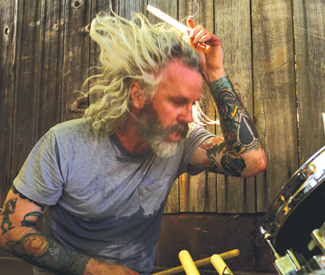
Andy Duvall arrived in San Francisco in 1995, moved with some friends into a flat where his rent was $250 a month. It was a great town for musician, and for 15 years, he was part of the local scene.

Then he looked around in 2010 and realized that he was paying $750 a month for a tiny room with a housemate he barely knew. “It was so hard to find a place I could afford,” Duvall, the former Zen Guerilla drummer who is now part of the experimental band Carleton Melton, told us.

So he packed up and moved across the Bay — and he’s never looked back. “When I moved out, I was afraid I’d totally miss SF,” he said. “But I got to Oakland, and now even if I could I wouldn’t move back.”

Duvall lives in a 900-square-foot place off 40th Street with his girlfriend; they split the $900 rent. “It just seems like there are more artistic and musical people around here,” he said. “I’m surrounded by musicians, instead of worrying that the person downstairs is going to try to get me kicked out of the building.”

Duvall’s main worry now? He sees the pattern that drove him out of San Francisco happening again. “In five years, the same thing is going to happen to Oakland,” he said. “This neighborhood is just exploding. It’s good, I guess — but it’s bad for the artists and musicians.”

Heading East: The photographer

7

This week’s Guardian takes a look at San Francisco versus Oakland — and asks whether the big city may have lost its caché to the East Bay

caitlin@sfbg.com

Sasha Kelley grew up in the East Bay. The 22-year old photographer moved to San Francisco for the love of art — but she moved back East for the same reason.

“I was expecting [SF] to be this free-loving, accepting, encouraging place where anything can happen and everything would be welcomed.” Kelley told the Guardian through a series of phone and email interviews. “But it’s a place that is already established, the different art scenes have been formed and branded. Unless you are fortunate enough to have your own space, you are almost forced to fall into line with the given formula.”

That wasn’t the kind of artistic guidelines Kelley was looking for when she moved to the Tenderloin to study at the Academy of Art. While in San Francisco, she started C Proof (c-proof.org), a site she uses to explore African American life.

But she was having trouble finding the black arts community in the city. Besides MoAD, “the big exception,” as she put it, “the voice of the black artist just wasn’t there.”

And the call of home was a BART ride away. After three years in SF, Kelley decided to move away from the cramped studio she shared with two other people to Oakland in the summer of 2011.

“Right now in Oakland there is a little more wiggle room for experimentation,” she said. “There is still a lot of room to grow, to hold space, and establish new norms.”

One day, attending a general assembly meeting of Occupy Oakland, she met artist Githinji Mbire, who was opening up Omiiroo, a community gallery just one block from the 12th Street BART station (400 14th St., Oakl.) Kelley spent eight hours there the first time she visited.

“We just talked about art,” Kelley said. “A vision of a community space where people could just be and where it’s not about the formal aspects of it, it’s just really the work and reaching out to people.”

Now, Kelley hosts Sunday dinners at Omiiroo to bring together local artists. It’s become a drop-in creative space where Mbire crafts his multimedia maps of Africa. Local vegan food activist Bryant Terry stops by to sell his tea and talk to passers-by during the neighborhood’s thriving monthly Art Murmur. Kelley thinks such a space is possible in SF, but it would depend on finding an investor. “It’s a lot easier to sustain yourself in the East Bay,” she said.

The problem with Laura’s Law

9

OPINION Mental health conditions and mental illness are issues that bring passionate people to the table from all sides of the spectrum. Individuals who have lived with the experience of mental-health conditions, clinicians, family members, researchers, and advocates all have a lot to say.

But as a March 11 San Francisco Chronicle piece, “Laura’s Law likely to save lives,” suggests, people can be fueled by pain and emotion, rather than logic and information. It’s in such a hot zone that AB 1421 emerged, after the tragic death of a young woman at the hands of a violent man who also happened to be dealing with mental health conditions.

The so-called Laura’s Law passed the state Legislature in 2002, and counties have a choice whether to implement it locally. If enacted in San Francisco, AB 1421 would mandate outpatient treatment for some people with mental illness — and those out of compliance would get a 72-hour hold under lock and key at the hospital, and would be at risk of being thrown into the revolving door of the criminal justice system.

The public support for AB 1421 and similar involuntary measures outlines the pervasive misunderstanding that comes when emotion rules the fray over common sense and dignity. And more dangerously, it promotes the long-debunked myth that mental illness is related to violence. In fact, individuals with mental illness are one percent less likely to commit violence than other individuals.

Often, the very people whose voices are left out of the decision making process in legislation such as AB 1421, are the ones who are directly affected personally by mental illness and mental-health conditions. That’s due in large part to the lasting impact of stigma, which deprives people of dignity, individual choice, and the empowerment to seek their own goals and paths in life.

What we know is this: voluntary treatment that is accessible in community settings and centered on individual strength is by far the best option for recovery from mental health conditions and the path for a rewarding, enriched life.

San Francisco typically leads the state in the number of involuntary commitments for people in acute psychiatric crisis. That’s proven to be not only a colossal waste of resources but also the wrong approach. Many of those who are involuntarily detained are accessing the mental health system for the first time—in restraints. This leads to further mistrust and trauma for those dealing with mental health challenges.

When it comes to embracing laws such as AB 1421, California voters know better. After the passage of that measure, California voters passed the landmark Mental Health Services Act in 2004. It is the principles of MHSA—voluntary, community-driven treatment, and full inclusion of individuals with mental health conditions as decision-makers—that should guide our efforts in recovery from mental health conditions and eliminating the pervasive stigma and bias that are the true culprits in causing pain and trauma in our society. MHSA provides funding for innovative, alternative approaches to Treatment As Usual.

Michael Gause is deputy director of the Mental Health Association of San Francisco.


Heading East: The flight from San Francisco

13

EDITORIAL There is no simple free-market solution to gentrification and displacement. There’s no way a crowded city like San Francisco can simply rely on the forces of supply and demand to protect vulnerable populations. And there’s no way the city’s flawed housing policy can prevent the loss of thousands of San Franciscans — particularly young, creative people who help keep a city lively — from fleeing to a town where they can actually afford the rent.

Richard Florida, the famous social and economic theorist who coined the term “creative class” argues that artists and writers and geeks and musicians are the forces that drive modern economies. His pioneering 2002 essay in the Washington Monthly was titled “Why cities without gays and rock bands are losing the economic development race.”

Florida’s something of an elitist and he ignores the contributions that tens of thousands of others (including retired people, union members and nonprofit workers) make a community. He idolizes tech culture and often ignores issues like class and race.

But he’s got a point: Nobody who’s doing anything cool wants to live in a city where everyone is rich and everything is clean and boring. And that’s the danger San Francisco faces.

Just go over to Oakland for a few days and talk to all the people who were once part of this city’s cultural scene. They’ll tell you what anyone with any sense knows: You don’t attract creative people to a city by giving out tax breaks for corporations and building fancy office space. The rock bands that Florida talks about aren’t going to stay in a city because it has high-end jobs for people with advanced degrees. Artists need a place where they can afford the rent.

San Francisco is still a great urban center, by any possible standard, and has all the qualities of diversity, openness, energy, politics and fun that have made generations of immigrants from all over the world want to make it their home. But at a certain point, housing becomes more important than all of the other development issues that local government can address.

Take Andy Duvall, a musician we interviewed who was part of San Francisco for 15 years before he was literally priced out of town. For half of what he was paying in the Mission, Duvall has more than twice the space in Oakland — and the situation is just getting worse. While most of the country is still mired in a deep housing slump (and parts of San Francisco are facing a foreclosure crisis), rents in this town are soaring, beyond the affordability of almost anyone who currently lives here. According to the city’s own statistics, only about 10 percent of San Franciscans can afford the rent on a median market-rate apartment. That means if they’re evicted or lose their homes, they have to leave town.

The supervisors held a hearing April 9 on affordable housing, and the message was profound: “Affordable housing preserves the neighborhood in more ways than one; residents are the foundation on which the economy is built. From any angle, if we can’t afford to live here, there is no city,” observed Val Sinckler, a Western Addition resident.

But while the mayor is working to attract companies that will pay high-end salaries to people who can afford to pay far more rent than the average San Franciscan, he’s a long way from coming up with the money to even begin to mitigate the problem.

An effective policy to preserve San Francisco requires strict regulation (to prevent evictions and displacement), a mandate that commercial developers build housing for their workforce and that residential developers meet the needs of low- and moderate-income residents — and a large investment of public money in affordable housing. If Lee isn’t willing to talk serious about those three crucial elements, then he’s presiding over the decline of one of the world’s coolest cities.

The necessity of images

0

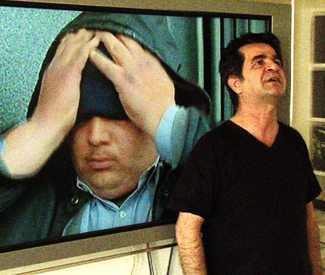
FILM Jafar Panahi is no longer allowed to make films in Iran. So, with the help of documentarian Mojtaba Mirtahmasb, he made This Is Not a Film.

After arrests in 2009 and 2010, Panahi was sentenced to a 20-year ban from filmmaking and a six-year prison term for “assembly and colluding with the intention to commit crimes against the country’s national security and propaganda against the Islamic Republic,” as reported by the Green Voice of Freedom, a human rights website. He is also barred from leaving the country or giving interviews.

This Is Not a Film, an “effort” credited to him and Mirtahmasb, was smuggled from Iran for its premiere at Cannes in 2011. Its title is an obvious provocation, and in translation a nod to Magritte’s ubiquitous painting of (not) a pipe, The Treachery of Images. Its content seems simple: Panahi eats breakfast and gets dressed in long, self-shot takes. Then, after Mirtahmasb arrives to take over the camera, he talks to his lawyer, begins to narrate and reconstruct the last film he was working on, explores memories of filmmaking, and interacts with his neighbors. The editing becomes more complex, more cinematic, and more problematic as the day progresses.

http://www.youtube.com/watch?v=czXsGPqYjhE

Panahi (2006’s Offside, 2000’s The Circle) is an established filmmaker, a contemporary and collaborator of the renowned Abbas Kiarostami, if slightly less internationally well-known. But as he revisits his past work on a TV in his living room, it is clear that this not-a-film is hardly his first flirtation with metanarrative experimentation. He discusses a sequence in his second film, The Mirror (1997), where the lead actress, a young child, refuses to continue participating in what — up to that point — had been a contained fictional narrative. Her character’s arm is in a cast, but she takes off the cast and walks off the set — and Panahi says he, too, must throw away his cast. This cryptic prescription for his predicament is just the first of an increasingly tortuous set of philosophical considerations he tackles.

As he proceeds to read and describe his last screenplay, which he was banned from filming, he maps out the film’s set on his carpet with tape. These shots have more than a little resonance with Charlie Kaufman’s Synecdoche, New York (2008), in which a space for creative performance is inscribed within a real, lived-in space.

In some slower and more willfully meta moments, Panahi and Mirtahmasb banter about the filmic potential of the footage they are producing. This could never be part of a film, they say, but documentation is an end in itself. And yet this isn’t pure document — it is edited, and often at strikingly emotional moments, to create cinematic effects. One beat, where Panahi halts his narration and looks suddenly overcome with frustration, is suspiciously preceded by a change of camera angle. But then, Panahi and Mirtahmasb even discuss the possibility of editing their footage, so even that aspect is a performative extension of the “documentary” content. Furthermore, the notion that Panahi is not directing is repeatedly challenged by the fact that he can’t stop telling Mirtahmasb when to cut.

But the work is not nearly as dry as all this analytical babble might imply. It is also deeply funny, in the parts where the camera follows Igi, Panahi’s daughter’s pet iguana. And then, in a startling final sequence, it becomes weirdly claustrophobic and suspenseful as Panahi joins his building’s custodian on a longish elevator ride.

There’s a cliché in criticism that certain technically accomplished movies are “pure cinema,” and in a sense, if this is not a film, it’s pure filmmaking. It presents itself as a document, but its authenticity is questionable, and for a man who is banned from filmmaking, so is its legitimacy. But it is a process in action and in dialogue with itself. It is an act of defiance, and the product of an artist’s self-effacing need to express himself. Whether or not this is a film, it is a profound artistic howl.

THIS IS NOT A FILM opens Fri/6 at SF Film Society Cinema.

Who bombed Judi Bari?

5

THE GREEN ISSUE Darryl Cherney is determined. “I have a mission in life,” he says. “And that is to find out who bombed Judi Bari.” This week, a judge may have gotten him closer to that goal, ordering evidence in the case be sent to a lab for forensic testing.

Cherney was in the car with Bari, a fellow environmental activist from Earth First, when a pipe bomb wrapped with nails exploded, maiming Bari and leaving Cherney with serious injuries.

It was 1990, and the two were in Oakland on their way to speak about the upcoming Redwood Summer, three months of picketing, tree-sitting, and otherwise blocking the clear-cutting of the California redwoods.

The Redwood Summer went on, but not before Bari and Cherney were arrested: The Oakland Police Department said they had constructed the bomb themselves and were transporting it in the back seat.

Before Bari and Cherney went to trial, it became clear that the bomb had been under the front seat (Exhibit A: Bari’s shattered pelvis and the unscathed backseat), and that there was absolutely no evidence Bari or Cherney had known it was there, and the charges were dropped. But the true culprit was never found.

In 2002, Cherney sued the FBI for attempting to frame him and Bari (who died of breast cancer in 1997), and won. But he’s still set on testing the remaining evidence for DNA.

“We rely on the government to examine physical evidence in a violent criminal case, and when they fail to do that, we have to react,” Ben Rosenfeld, Cherney’s attorney, told the Guardian.

“It should be an open attempted-murder investigation.”

But the authorities not only weren’t investigating, they were seeking to destroy the evidence, something Cherney and his lawyers have been fighting. On April 2, they scored an important victory when U.S. District Court Judge Claudia Wilkens issued an order preserving the material and allowing its transfer to a Hayward forensic lab for testing.

In August 2010, government lawyers had unceremoniously announced that they planned to destroy the case’s remaining evidence, which includes remnants of this bomb and another one that partially exploded in Cloverdale two weeks earlier, as well as a hand-lettered sign that was near the Cloverdale bomb. The Cloverdale bomb and the bomb that exploded in Bari’s car were constructed similarly, and no one has been convicted of either attack. Because they contain unintentionally intact evidence, partially exploded bombs are “considered to be the Holy Grail in bombing investigations. That slightly exploded bomb in Cloverdale is key to solving the case,” said Cherney. Lawyers for Cherney responded with a motion calling instead for testing of the evidence; the government opposed the motion.

But at a Sept. 8, 2010 hearing, Magistrate Judge James Larson ordered the FBI to turn the evidence over to an independent analyst for testing.

Again, the feds opposed the order, and asked for a de novo review of the case, essentially asking that the court go over all previous briefings once again. The motion seemed like a stalling tactic, and it worked; the motion was pending in court for a year.

Recently, it was brought back up again, when the plaintiff’s motioned to move forward with testing the evidence. They suggested a lab in Hayward, Forensic Analytics Laboratories, and Wilkens agreed on April 2.

Bari’s case came out at the start of what became a large-scale FBI crackdown on environmental justice movements in the 1990s and throughout the 2000s. Activists protesting companies that they thought were harmful towards animals and the earth became a special target of the FBI in what became known as the “Green Scare.”

The era was characterized by crackdowns on the Earth Liberation Front and the Animal Liberation Front, although it also affected groups like Food Not Bombs and Earth First.

“The case was an early forerunner of what we call the Green Scare cases, where the government sets out to make examples of people it perceives as leaders to try to chill activism in the environmental movement,” said Rosenfeld. “It was quite a scary season for environmental activists.”

The Green Scare did a lot to quell environmental activism, and some who were arrested at its peak remain in prison. But it didn’t stop many — including Bari and Cherney — from continuing their work.

“Both Judi and I continued right out of jail. Actually, in jail the police wrote in their police report that I was trying to convert them to environmentalism,” laughed Cherney.

“I participated in Redwood Summer and the Headwater Forest Campaign right through 1999 and continued through 2003. And now I’m making a movie about it.”

The movie, Who Bombed Judi Bari? has been doing well since it had its world premiere at the SF Green Film Festival March 2.

The film’s reception is “definitely very gratifying,” says Mary Liz Thomson, the film’s director, who “spent a lot of time editing it living in a cabin on [Cherney’s] land up in the woods, using solar power.”

Now she’s touring California with sold-out screenings, as well as some free screenings, including a well-attended March 26 screening at Occupy Oakland.

Thomson says she has gotten positive feedback from occupiers and others currently working in social movements.

“We’re just at the beginning of our launch and people are saying that it’s really relevant right now. The timing was great”

Indeed, laws that build on the Green Scare have been rapidly passed in recent months, targeting other political groups.

Controversy flared after President Obama signed the National Defense Authorization Act, which allows the U.S. to detain suspects without charge. Attorney General Eric Holder claimed that the government can kill its own citizens abroad without trial. And on Feb. 27, The House of Representatives voted in favor of HR 347, the so-called “Anti-Occupy Bill.”

Who Bombed Judi Bari? is an important history lesson for those faced with these new challenges. And Cherney may finally be on track to finding out the answer to the title’s question.

Guardian exclusive: the health-care scam chart

17

We’ve always found it a bit annoying when restaurants charge an additional fee to pay for Healthy San Francisco, the law that mandates health care for workers. If the cost of eggs goes up, there’s no “special breakfast cost pass-along surcharge.” So it seems to us more like a political statement in opposition to the law than a business expense.

That said, we’re happy to pay an extra 3 percent for a nice meal — if it means the people who cook and serve it get health insurance.

But it’s more than annoying to find that a lot of restaurants charge a special HSF fee — but it never goes for employee healthcare. Attached is an Excel file, based on data from the San Francisco Department of Labor Standards Enforcement, that shows which restaurants charge extra for health care — and how much of that money actually goes to employees.

We’ve also pulled out a list of the top 10 offenders — the restaurants who put the lowest percentage of their Health Savings Account money into actual employee health care. A caveat: Some of these places may just be lucky — maybe none of their employees got sick all year. But still, they’re collecting a surcharge for employee health care, and that’s not where the money’s going.

>>CLICK HERE FOR OUR EXCLUSIVE CHART OF RESTAURANTS WITH SURCHARGES — AND WHERE THE MONEY GOES (xls)

TOP 10 RESTAURANT OFFENDERS
 
Eagle Café

Surcharge: 3%

Reimbursement plan (total allocated): $ 55, 768

Reimbursement plan (total reimbursed): $425.00

 
Tres Agraves

Surcharge: 4%

Reimbursement plan (total allocated): $ 103,503.00

Reimbursement Plan (total reimbursed): $1,497

 
Amici’s

Surcharge: 4.85%

Reimbursement plan (total allocated): $ 125,763.00

Reimbursement plan (total reimbursed): $1,995

 
Blue Plate

Surcharge: 4%

Reimbursement plan (total allocated): $ 41,859.00

Reimbursement plan (total reimbursed): $723

 
Park Chow

Surcharge: 2%

Reimbursement plan (total allocated): $ 93,072.00

Reimbursement plan (total reimbursed): $1,680

 
2223 Restaurant

Surcharge: 4%

Reimbursement plan (total allocated): $79, 817

Reimbursement plan (total reimbursed): $ 1,687

 
Johnny Foleys Irish House

Surcharge: 4%

Reimbursement plan (total allocated): $73, 133

Reimbursement plan (total reimbursed): $ 1,550

 
MarketBar

Surcharge: 3%

Reimbursement plan (total allocated): $ 76,404.00

Reimbursement plan (total reimbursed): $1,673

 
Andalu

Surcharge: 3%

Reimbursement plan (total allocated): $ 122,742.00

Reimbursement plan (total reimbursed): $3,762

 
Wayfare Tavern

Surcharge: 3.5%

Reimbursement plan (total allocated): $ 60,114.00

Reimbursement plan (total reimbursed): $2,403

Alerts

0

yael@sfbg.com


WEDNESDAY 4

Occupy the Dream

The SF Interfaith Allies of Occupy call for a rally to end racism, stop foreclosures, protect jobs, and hold corporations and financial institutions accountable. “At a time when Jews and Christians celebrate the ancient stories of liberation let us name the Caesars and Pharaohs of today,” say organizers of this latest event as part of Occupy the Dream. The event also commemorates the assassination of Martin Luther King, Jr on April 4, 1968.

11:30am, free

City Hall

1 Dr. Carlton B. Goodlett Place, SF


SATURDAY 7

Bill McKibben speaks

Bill McKibben is a leading figure in the fight against global warming. He started in 1989 with his book The End of Nature and went on to found 350.org, which has coordinated 15,000 rallies against climate change since 2009. He will speak about where to go next in the climate change crisis as well as discussing the current struggle against the Keystone XL pipeline.

10am, $15 in advance and $18 at the door

First Unitarian Universalist Church

1187 Franklin, SF

www.postcarbon.org/event/776185-progressive-perspectives-presents-bill-mckibben-in


SUNDAY 8

Birding by bike

The SF Bike Coalition hosts this tour of the birds of Lake Merced and Golden Gate Park. San Francisco could always have more bike routes, but the ones it does have provide an excellent pathway for this birding trip, in which participants don’t need to leave the city to observe both resident and migrating species. David and Annie Armstrong host birding by bike; David is an amateur ornithologist who has been birding and leading bike trips in San Francisco for 12 years. Bring your bike and binoculars.

8:45am, free

Vélo Rouge Café

798 Arguello, SF

www.sfbike.org/?chain#4876


TUESDAY 10

Remembering Bataan

On April 9, 1942, Filipino and American soldiers surrendered to Japanese forces after more than four months of holding their ground in the forest of Bataan, a large Philippine province; 15,000 then died en route to prisoner of war camps in what became known as the Bataan Death March. Students and faculty at Cal State University-East Bay will commemorate its 70th anniversary with a night of voices and perspectives from the battle. The event will feature a screening of the documentary Forgotten Soldiers, as well as speakers from the Philippine Scouts Heritage Society, Battling Bastards of Bataan, Bay Area Civilian Ex-Prisoners of War and the U.S. Armed Forces of the Far East, the the Philipine-American Student Alliance, who will present research on American film depictions of Filipino soldiers at the time and the stories of Bataan Death March survivors.

4pm, free

Cal State University- East Bay Theater

25800 Carlos Bee Blvd, Hayward

(510) 885-3000


“Your Money, and How Wells Fargo Gets Away With It”

To prepare for the April 24 Wells Fargo shareholders’ meeting in San Francisco, the International Forum on Globalization’s plutonomy program is sponsoring this teach-in and training. David Solnit from the Occupy SF direct action work group will be leading a workshop on nonviolent action, and people from across the social spectrum will be speaking on how irresponsible corporate banking has adversely affected their lives — from janitors to students, families to immigrant rights advocates. 

6pm-9pm, free

San Francisco State University

Humanities Building, Room 587

1600 Holloway, SF

www.moveon.org

Reject the CPMC deal

0

EDITORIAL For most of the past year, Mayor Ed Lee had been taking a tough line with California Pacific Medical Center, the health-care giant that wants to build a state-of-the-art 555-bed hospital on Cathedral Hill. The mayor had been telling a stunningly recalcitrant CMPC management that the outfit would have to put upwards of $70 million into affordable housing and spent millions more on transit, neighborhood and charity-care programs to mitigate the impacts of the massive project.

But late in March, something happened. Under immense pressure from the Chamber of Commerce and other big business groups, the mayor buckled and agreed to a deal with woefully inadequate mitigation measures. The supervisors should reject the plan and force CPMC to do better.

The biggest problem with a project this size is the mix of jobs and housing. Lee is properly concerned about creating jobs in a city where unemployment in some neighborhoods is stubbornly high. But the proposed deal only guarantees a tiny fraction of the 1,500 permanent new jobs for San Francisco residents.

That means a city that has almost zero vacancy in affordable housing is going to have to absorb a workforce much of which won’t be able to buy or rent anything at current market rates. That means more competition for scarcer housing and higher rents and home costs for everyone.

By any basic planning logic, CPMC should be on the hook for providing enough affordable housing for at least some reasonable percentage of its workforce. Instead, the hospital chain is offering about $33 million, only $3 million of which will be paid up front. That won’t even address half of the housing impact. Besides, the jobs will be there when construction starts, and more when the hospital opens; the limited affordable housing money will come much later. The highest-paid doctors and administrators may be able to afford the pricey new market-rate condos the city is madly approving — but where, exactly, are the nurses, orderlies, clerks, janitors and other health-care workers going to live?

CPMC has agreed to provide charity care at the same level is currently does — which is abysmally low, among the lowest of all nonprofit hospital chains in California. So that’s not an advantage.

And it has promised to keep open St. Luke’s Hospital in the Mission — the only full-service hospital other than SF General in the southeast part of town. But the proposal calls for cutting the number of beds by nearly two-thirds, from 229 to 80. And it allows for the closure of that hospital if CPMC’s system-wide operating margin falls below 1 percent (something that will be hard for the city to challenge, since CPMC handles the books).

It’s cynical how CPMC is using this critical medical facility in an underserved area as a bargaining chip. Already, hospital lobbyists are warning that St. Luke’s will be shut down if they don’t get what they want on Cathedral Hill.

Meanwhile, CPMC has labor trouble and is refusing to guarantee that existing employees at facilities that will be demolished will be able to keep their jobs and seniority at the new hospital.

We realize that CPMC needs to build a new facility to replace aging and seismically unsafe structures elsewhere in town. But the hospital chain also has a responsibility to address the impacts this project will have on San Francisco. And right now, it’s not a good deal.

End the health-care scam

15

OPINION Last year, after receiving data from San Francisco, the Wall Street Journal reported on an investigation into the use of health reimbursement accounts by several local restaurants. It showed a group of employers evading the city’s health care law while charging their customers a “Healthy San Francisco” surcharge that is never actually spent on employees’ health care.

Rather than providing health coverage to their workers, as customers are led to believe, the restaurants are allocating funds for HRAs — and taking back the funds before they can be used.

The numbers speak for themselves: Of the $62 million that was set aside for health care accounts in 2010, more than $50 million was kept by employers.

>>WHO’S GAMING THE SYSTEM? CLICK HERE FOR OUR COMPLETE GUIDE TO RESTAURANTS WITH SURCHARGES — AND WHERE THE MONEY GOES

Workers spoke about never being notified about the accounts; being forced to jump through numerous, often onerous hoops to receive reimbursements or never receiving reimbursements; facing severe restrictions on use of the funds; and fearing retaliation for seeking to access the funds. It was clear that as long as employers can take back unspent funds they have a large incentive to restrict workers’ access.

In response, Supervisor Campos drafted an amendment to the Health Care Security Ordinance (known as Healthy San Francisco) that would have closed this loophole, which was being exploited by a small number of employers. The Chamber of Commerce, accompanied by the San Francisco Chronicle, made hysterical claims about impending job loss and business closures, and after the Board of Supervisors approved the legislation on a 6-5 vote, Mayor Ed Lee vetoed it.

Supervisors Malia Cohen and David Chiu then authored “compromise” legislation that actually didn’t address the problem. Their version merely allowed employers to take back workers’ health care dollars after two years instead of one. This cosmetic change did, however, provide enough window dressing to please the Chamber, so the supervisors approved it and Mayor Lee signed it into law.

Now, just a few months later, an article in the Public Press showed exactly why we opposed the Cohen/Chiu amendment in the first place: It doesn’t really close the loophole. Employers can still take money back from the HRAs. This creates a clear incentive to choose HRAs over insurance — the worst option for workers. Furthermore, the loophole leaves responsible businesses that provide health coverage to employees through insurance or HSF competing against employers that exploit it by paying less into HRAs.

We find it unconscionable that there are businesses charging customers a health-care surcharge and then keeping the money for profit. What is more unconscionable is that City Hall passed an amendment that continues to let it happen.

The Department of Labor Standards Enforcement compliance data for 2011 will be available next month — and if that continues to show abuse of the HRA provision, then it’s time for the Board of Supervisors to end the charade and truly close the loophole once and for all. Healthy San Francisco is about providing health care for workers — not creating additional profit for businesses.

Assemblymember Tom Ammiano represents the 13th District. Supervisor David Campos represents District 9.

Playing God?

6

steve@sfbg.com

THE GREEN ISSUE When Richmond was selected as the site for Lawrence Berkeley National Laboratory’s huge second campus in January, city officials and community leaders celebrated the “green” jobs it would create, hundreds of them, diversifying an economy dependent on Chevron and its massive oil refinery. But a new coalition called Synbiowatch (www.synbiowatch.org) is questioning how green those jobs really are and raising fears about the new scientific realm on which they rely.

It’s called synthetic biology, which combines engineering and computer science with the biological sciences to design new microbes that don’t exist in nature — living, self-replicating organisms — taking the field of genetic engineering to another level by allowing scientists to actually write new DNA codes and incubate new life forms.

Proponents tout myriad potential benefits from the approach, from medical treatments (such as developing new anti-malarial drugs or creating new viruses that would attack cancer cells in humans) to the creation of renewable energy sources that might eventually replace fossil fuels, a major focus of the new lab and its main partner, the U.S. Department of Energy’s Joint BioEnergy Institute (JBEI).

“JBEI researchers are engineering new types of microbes using the latest tools in biotechnology,” notes a cartoonish video on its website (www.jbei.org) explaining how these engineered organisms will turn grasses and other abundant biomass matter into powerful fuels — a task that is not yet possible — which can run cleaner burning internal combustion engines.

But the environmentalists, labor organizers, scientists, and community activists who make up Synbiowatch say this technology not only doesn’t live up to its speculative hype, but that it is being developed too rapidly and without adequate oversight given its potential to alter natural ecosystems in unpredictable ways.

“We need a precautionary approach to health and safety,” Jim Thomas — program manager for ETC Group (which stands for Erosion, Technology, and Concentration) and lead author of the 2007 report “Extreme Genetic Engineering: An Introduction to Synthetic Biology” — told journalists during a March 28 briefing at Center for Genetics and Society in Berkeley.

He was joined by UC Berkeley microbial ecologist Ignacio Chapela, a researcher who has publicized environmental impacts of the biotechnology industry; Nnimmo Bassey, executive director of Environmental Rights Action in Nigeria and chair of Friends of the Earth International; molecular biologist Becky McClain, who won a $1.4 million civil lawsuit against her old employer, Pfizer, after blowing the whistle on safety violations in its biotech research; Henry Clark of the West County Toxics Coalition; and Richmond activist Gopal Dayaneni of Movement Generation Justice and Ecology Project. All took part in a conference the next day entitled “Unmasking the Bay Area Bio Lab and Synthetic Biology: Health, Justice, and Communities at Risk.”

Thomas said this coalition formed in recent years to counter the rapid development of what he says is now a $1.6 billion industry that has successfully resisted meaningful government regulation and oversight, despite the fact that the microbes it produces “have no analog in nature, and they will grow and reproduce.”

With no natural predators, the new microbes could reproduce unchecked. “We cannot allow these corporations to play God. They are not God,” said Bassey, who has spent a career combating the false claims and environmental degradation of some of the same big energy corporations (such as Chevron, Shell, and BP) sponsoring this new research. “It’s reckless, it’s out of control, it’s all about money.”

The biggest target of these activists’ ire is Jay Keasling, who directs the JBEI program, helped found the Richmond lab, and has pioneered synthetic biology research for LBNL and UC Berkeley, in addition to starting several companies to take advantage of that research. His latest is Lygos, which he formed in February to develop commercial applications for JBEI’s work on developing new fuels.

Keasling tells us that his critics are wrong and that these new microbes are basically just modifications of substances that scientists have worked with for decades and know how to safely handle. “What we’re trying to do is make the engineering of biology more reliable, so it’s safer and more predictable,” Keasling told us.

He dismissed the idea that these new microbes could threaten ecosystems if they escape from the lab, noting that microbes whose genetic sequencing has been altered in experiments over the last 40 years haven’t proven to be resilient in nature. “When they’re exposed to the environment, they generally don’t survive,” he said. “They get eaten by the other microbes completely.”

But the fear raised by Synbiowatch is that these rapid technological advances could produce a more durable new microbe, and that these scientists are essentially playing God with the basic building blocks of life before they really understand the implications of what they’re creating. Does Keasling think it’s possible that one of his new microbes might be more of a survivor than its predecessors?

“There’s always a possibility, but in 40 years of doing research in this area, that has not been found,” Keasling told us.

That’s not good enough for Synbiowatch and other critics, who say that it’s important to practice the Precautionary Principle — which places the burden of proof on innovators to prove that new technologies won’t be harmful to the environment or human health — before this new lab ramps up its research and development.

The new facility is expected to produce more than 800 jobs. Dayaneni said it’s understandable that Richmond officials embraced the new lab and the prospect of green jobs, but he called the promises of synthetic biology “a wolf in sheep’s clothing, or a wolf genetically engineered to look like a sheep.” He called the new lab “a shell institution for a host of corporate interests” seeking to “synthesize fuel in a petri dish” as much to create an economic bubble as a long-term energy solution.

But he and Bassey said the nascent industry isn’t focused on the many potential downsides of its pursuit, including the degradation of vast tracts of land and consumption of natural resources in order to acquire the sugars needed to fuel the process. “They will need a massive amount of land,” Bassey said. “This is what the progenitors of synthetic biology have failed to acknowledge.”

Keasling does acknowledge that to develop large-scale energy production of the new technology — something he said is still decades away from being viable — will indeed require vast tracts of land growing crops such as jatropha that have been developed for their fuel production potential, something Bassey said will displace poor people around the world.

“Farmers are being tricked to grow crops that are only for industrial uses,” he said. “Farmers that would normally grow crops for food will now be growing it for machines.”

Bassey ridiculed claims that such crops would only utilized marginal lands, but Keasling said the idea is to make use of currently nonproductive vegetation such as switchgrass, using the new microbes to extract sugars from their cellulose. “My hope is the plants will be grown on marginal land and the people who own it will make money from growing it,” Keasling said. “In some ways, it’s giving something back to the farmers.”

Dayaneni compared the new facility and industry to the short-sighted hubris of the nuclear industry before Japan’s Fukushima disaster: “You don’t build a nuclear power plant on the edge of the ring of fire and you don’t build a synthetic biology laboratory on the edge of the ring of fire either.”

Yet Keasling said he and his colleagues are far more aware of these issues and the need for safety and security than activists are giving them credit for. “The synthetic biology community is made up of people who are really concerned about the environment,” Keasling told us.

But McClain said her case shows corporations will often disregard worker safety and environmental consequences in pursuit of profits, often with the complicity of scientists enamored by new discoveries. “There is a lack of integrity and leadership in our scientific leadership,” she said, later adding, “The bottom line is we’re giving the scientific community the right to self-regulate, but that comes with responsibility.”

Keasling said he thinks there is a middle ground possible because “we’re not against regulation, we believe in regulation, it’s important, but it has to be sensible.” He also defended the role that large energy and biotechnology corporations have played in funding this research and licensing the patented new technologies it produces.

“We live in a capitalist system, somebody has to fund this research and science,” Keasling said. “The government doesn’t have the money.”

Restaurant 1833

0

virginia@sfbg.com

APPETITE There’s nothing quite like Monterey’s Restaurant 1833 in San Francisco. Yes, we boast fantastic food, cocktails, wine and beer lists that are competitive with the best in the world. But 1833’s magical setting sets it apart, truly the whole package. Housed in an adobe structure from 1833 (hence the name), I was captivated from the moment I stood on the patio lined with firepits, beneath a sprawling oak. A giant palm tree and redwoods tower over an expansive side deck. 1833 evokes New Orleans or haunted Savannah in Spanish-influenced California architecture.

A broad wood door opens onto a series of enchanting rooms. Red velvet antique couches sit in front of a roaring library fireplace, an absinthe bar is tucked away upstairs, dining rooms are presided over by ghosts that have haunted the house over a century (note Hattie’s Room upstairs). There’s an intimate, one-table dining room, Gallitan’s Room, with a boar’s head guarding relics from the restaurant’s former incarnation as Gallatin’s, a restaurant where presidents and movie stars dined in decades past. The bar is mesmerizing — an illuminated white onyx top glows under slanted roof rafters, imbibers perched in coveted raised booths gaze down at the scene.

But what about the food? This no style-over-substance scenario. Chef Levi Mezick’s menu wanders from whole-roasted meats to pizzas and pastas. There’s bone-in ribeye for two ($75) or a real splurge (temporary until the foie ban kicks in this June) of whole roasted lobe of foie gras ($150). Whole truffle chicken ($38) is blissfully decadent. The chicken is brined for two days with truffle butter injected under the skin. Pizzas ($16-17) are topped with Dungeness crab and leeks or pineapple and sopressatta, while dense, pillowy gnocchi ($22) rest in Parmesan cream with Swiss chard, chanterelles, pickled onions, and crispy croutons.

Appetizers shine, like a delicate beet salad ($12) accented with Greek yogurt and hazelnuts, or a heartwarming helping of bone marrow ($16) with horseradish crust. Bites offer more gourmet delights, particularly fresh, raw hamachi ($6) dotted with pickled jalapenos, avocado, oranges. Among the best items on the entire menu are $4 biscuits: sundried tomato feta biscuits with roasted garlic basil butter or a bacon cheddar biscuit with maple chili butter. Both are flaky, dreamy delights, warm and soft under a smear of butter.

Generous portions leave you fat and contented, while drink offerings threaten to outshine the food. Wine director Ted Glennon curates a playful, sophisticated wine list highlighting the best of the Central Coast and the world. His passion and palate have deservedly led to accolades such as being named one of 2012’s Food and Wine’s top 10 sommeliers. Glennon’s wine list is whimsically annotated with comments such as this one about Chardonnay: “The blonde bombshell has taken the hearts of so many…”

http://www.youtube.com/watch?v=kKY1F0jQank

There’s no slacker in any of his pairings. I was absolutely smitten with 2000 López de Heredia Viña Tondonia Rosé ($50 bottle). This stunning rosé is unlike any I’ve ever had, crisp and acidic, yes, but also funky, earthy, with notes of mushroom and ripe cheese. As it sits it sweetens, evoking sherry while maintaining its crispness.

Local highlights were 2006 Caraccioli Cellars Santa Lucia Highlands Brut Rosé, a dry, floral, sparkling beauty, and 2007 Pelerin Wines Rosella’s Vineyard Pinot Noir, from a Santa Lucia micro-winery producing age-worthy California Pinot. With acidity and body, green tea and licorice notes play with cranberry and dark cherry — lovely with the truffled chicken.

As a cocktail destination, 1833 has no equal in the entire area. Bar manager Michael Lay oversees aging cocktails in barrels with colonial names like Betsy and Abigail. Lay’s talent is apparent in a range of classically influenced cocktails like Commander in Chief ($11), Bulleit Rye whiskey, Carpano Antica sweet vermouth, Campari, Cherry Heering, and orange bitters with a peaty Laphroaig Scotch rinse.

Besides a tableside absinthe cart (brilliant), offering some of my favorites like Duplais or Vieux Pontarlier, Lay makes a mean Hot Buttered Rum prepared tableside. His recipe is perked up with pumpkin pie spice and lemon peel. My favorite cocktail here is a twist on the Penicillin, a Penicillin No. 2 ($11). Instead of Scotch, Lay uses Tres Agaves Reposado Tequila and tops the drink with smoky mezcal, alongside the usual lemon and candied ginger. Further fun is had comparing barrel-aged Negronis, a nine-week-aged Abigail ($12) using Tanqueray gin, Campari, Amaro Nonino, Carpano Antica sweet vermouth, and Ruth-Anne, a more gin-forward Negroni.

We’ve seen each of these parts, yes, but not this exact whole. I long for more settings in my own city as bewitching and multifaceted as 1833. Thankfully, Monterey is not too far away. *

RESTAURANT 1833

500 Hartnell, Monterey

(831) 643-1833

www.restaurant1833.com

Subscribe to Virgina’s twice-monthly newsletter, The Perfect Spot, www.theperfectspotsf.com


Parks and leaks

0

THE GREEN ISSUE It happens suddenly, unexpectedly: you turn a corner or hike up a street and notice, almost out of the blue, a well-kept spot of green, a surreal bit of nature sliced out of all the housing and concrete. According to a list provided to us by San Francisco Recreation and Parks (www.sfrecpark.org), there are 46 designated mini-parks, or pocket parks, nestled in various SF neighborhoods: publicly maintained, accessible areas usually no bigger than the size of a single vacant lot. We set off to discover five perhaps lesser known ones, described in the map below.

Then, in a nod to one of our all-time favorite cartographic-experimental books, Infinite City by Rebecca Solnit (UC Press, 2010, www.rebeccasolnit.com) we decided to overlay a map of locations of leaking underground storage tank (“LUST”) cleanup sites, found at geotracker.waterboards.ca.gov. LUSTs are buried tanks of toxic material, usually containing petroleum but sometimes solvents or other hazardous waste, that threaten groundwater, soil, and air and must be cleaned up — often with the help of state and federal funds — before the land they’re beneath can be built on or repurposed. We’ve plotted 85 LUST sites, many of them former or current gas station locations, whose statuses are under assessment or being monitored or remediated.

There is no direct connection between mini-parks and LUST cleanup sites; we think, though, that there is the suggestion of an environmental tale, a hidden history maybe, in the visual juxtaposition of the two.

>>CLICK HERE TO SEE THE MAP (PDF)

Sea, here

0

arts@sfbg.com

>>See more astounding images from Beneath Cold Seas here.

THE GREEN ISSUE Most people associate underwater photography with the tropics, but the beautiful shots that appear in Beneath Cold Seas (University of Washington, $45, 160pp) were shot in the Pacific Northwest. What’s most striking about the book is the color and vibrance that photographer David Hall was able to capture. It’s a bit mind-blowing to imagine that the hooded nudibranches and grasping octopi found in the book live in the inky depths abutting our very own rocky shores. The next time you take a dip at Baker or Muir Beach don’t forget that you’re frolicking with some seriously stunning fauna. 

SFBG: Where did you shoot Beneath Cold Seas?

DAVID HALL: I shot Beneath Cold Seas in British Columbia. The water tends to be more clear and there’s less pollution because of the small population density. But the same animals in the book are found in Northern California, they don’t recognize international borders. Technically biologists say the ecosystem extends from Southern Alaska down to Point Conception (north of Santa Barbara). That entire area is referred to as the Pacific Northwest.

SFBG: What environmental issues are facing the Pacific Northwest?

DH: One problem is the introduction of alien species. For instance farm-raised salmon taken from New England genetic stock occasionally escape and interbreed with the five or six Pacific species. So you’re getting a genetic mixture which endangers the original Pacific species. But the environmental issues that most people are worried about are overfishing and pollution, like oil spills. As more Canadian oil is being developed and exported to places like China, it will have to be shipped across these waters. So that becomes a concern, especially after what happened in the Gulf of Mexico last year.

SFBG: When did you start taking photos underwater?

DH: Many years ago I took a trip to the Virgin Islands. I’d never seen a coral reef before and was completely overwhelmed by what I saw while snorkeling. I felt that I had to photograph it because I’m not so good at describing things. I went out and bought the best camera I could afford which was a Kodak Instamatic in a plastic housing with flashbulbs. That was how it all started. In those days the bar was very low, if you got an underwater photograph that was somewhat recognizable you could get it published.

http://www.youtube.com/watch?v=NgDfA61OpFI

SFBG: What would you say inspired this project?

DH: At first I started going because I loved the diving, I enjoyed being there and getting photographs. But after the first half dozen trips I realized that the material I was getting was good enough for a book. I got the idea for the book about five years ago, but all in all it took about 15 years.

SFBG: What was a typical shoot like?

DH: I was living on a small boat for a couple of weeks at a time, doing three dives a day, and then reviewing photos at night. The days would be consumed with getting ready for the dive, getting all the equipment on, waiting until the current was just right, getting into the water, diving for an hour, getting back to the boat, getting warm — which takes another hour or two — and then getting ready to dive again. Altogether I made about 500 dives from 1995 to 2010.

Photographing underwater is much more difficult than photographing in air, and photographing in cold water is that much more difficult than photographing in warm water. No one had ever published a good book on underwater photography from a cold water destination in North America before. There are plenty of field guides, and fish ID books for fisherman, but no one had ever published a photographic book that tried to show the character of the ecosystem in an artistic way.

The book required getting a lot of wide angle shots to include the scenery as well as the animals. Getting good clear, colorful photographs in cold water is difficult because of visibility issues. Also cold water filters out all of the warm colors in the spectrum (red, orange, yellow) so to see the colors you have to add light back. So I dive with a pair of powerful flash units that attach to the camera by way of articulated arms that keep my hands free.

SFBG: So there wasn’t someone handling lighting for you?

DH: If I were a National Geographic contract photographer I’d probably have had a few assistants holding lights for me, but I wasn’t so lucky. I had to do everything myself. And in most cases I was diving completely alone.

SFBG: People don’t associate such colorful and exotic creatures with our coast. It’s really wonderful that your book is changing that perception.

DH: I certainly hope that’s what’s happening. The book has been very well received, largely because nobody was aware of what was down there. I mean marine biologists and divers were, but ordinary people had no idea.

People tend to protect what they know and value. Most Americans and Canadians are familiar with the aquatic species that we eat, but there’s a whole ecosystem there that the great majority of us are completely unfamiliar with. I hope my book will make people aware that these things exist and want to feel more protective toward that whole environment.