Print sections as they appeared in the early 2010s

To find articles by keyword or author, you may want to use our Search function.

Print Sections

Oh, the cutlery

0

le.chicken.farmer@gmail.com

CHEAP EATS This bums me out: hearing straight-phobic comments from queers. It’s a San Francisco thing. I’ll leave it to better minds than mine to figure out why. But in New Orleans, among our queer community, I never heard anything like it. And in New York City, among Hedgehog’s … nope.

Nothing.

But here, home, in San Francisco, it happens repeatedly. And as much as it used to bother me, as a closeted queer, to hear straight friends (assuming my sameness), make trans- and homophobic statements and jokes, it hurts now to hear the reverse.

Plus which, it’s stupid. So stop it. Just: stop.

Seriously, if we’ve become so proud of being queer that we devalue and disrespect “other,” then it’s time to reread Dr. Seuss.

The one with the Star-Bellied Sneetches, I’m thinking. But really they’re all very good, even “Hop on Pop.” Theodore Dreiser may have been a straight white male, but — like a lot of straight white men, including my dad, and possibly yours — he fucking rocked.

See, so it’s never as simple as Us vs. Them. You, dear heterophobe, have allies — important, awesome, straight allies, like

continued after sports section

CHEAP SPORTS

by Hedgehog

Last week was very football-oriented in our little neck of the Mission, what with the NFL and the San Francisco Women’s Flag Football League both kicking off their seasons and all.

Sunday morning, Kayday and I sat on the sidelines and watched Chicken Farmer and the rest of the team play their season-opener, but between the lack of instant replay and the lack of microphones on the refs, we rarely understood what the hell was going on. According to Chicken Farmer, her team lost. We’ll take her word for that.

And I’d tell you all about the 49ers game Sunday afternoon but that would be pointless since, obviously, you all witnessed it with your very own ocular orbs, right?

So what does that leave me with by way of football-orientated conversation? Gay marriage, of course. The nutshell, for those of you who are communists or live in a sports-free cave, is that Baltimore Ravens linebacker Brendon Ayanbadejo supports same-sex marriage. Openly. A certain Maryland State Delegate name of Burns took exception to Ayanbadejo voicing opinions about politics and wrote a letter to the Raven’s owner requesting that he put a muzzle on Ayanbadejo.

Enter Minnesota Vikings punter Chris Kluwe, who is some kind of Good Will Hunting-type genius (except with words instead of numbers). He has a gay brother-in-law, and apparently is really stoked to see an honest man made of him some day because he wrote a doozy of a letter to this Burns fellow. Look it up. It’s the kind of letter that makes State Delegates blush and concede that maybe linebackers have First Amendment rights, too.

So there you have it, sports fans: 24 hours into the NFL regular season and I have not one but two new favorite football players.

continued from before sports section

….Chris Kluwe and Brendon Ayanbadejo.

But speaking of Dr. Seuss, Hedgehog and me get to don Cat-in-the-Hat hats and solicit donations for the Children’s Book Project at Candlestick before the home-opener Sunday. Meaning: Not only do we get to see the game, we get to annoy tailgaters beforehand.

Now, if only I can get Hedgehog a press pass (plus one), for the rest of the — Wait a minute. Isn’t there a connection now between the Guardian and the Examiner?

My new favorite restaurant is Spoon, that awesome Korean joint at the corner of Ashby and something-or-other in Berkeley, where we ate, coincidentally, with Spoonbender, my new favorite unprofessional football player.

I had this fantastic kimchi fried rice, with beef (or bacon), and topped with a sunny-side-up egg. Spoonbender had Jhap Chae, which she loved, and Hedgehog had (and loved) Kimbop and chicken wings.

Then we went to the park and played catch.

SPOON

Daily 8am-8pm

933 Ashby, Berk.

(510) 704-9555

AE,D,MC,V

No alcohol


Pop love

0

emilysavage@sfbg.com

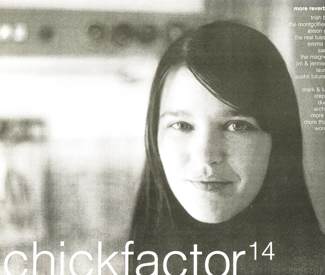
MUSIC There was a time, not so long ago, when the fanzine was a glittering portal. It was the best avenue for learning about new, underground, innovative music across the country, before the all-powerful grip of the Internet forced us to idly click our way through back catalogs. The ink and paper projects were passed to friends in the same manner one traded handmade mixtapes.

High among those infamous fanzines and punk mags was a pioneering indie pop-centric zine called chickfactor — put out by then-New York based editor-writer-photographer Gail O’Hara and Black Tambourine singer Pam Berry (who moved to London in 1995). Perhaps you’ve heard Belle and Sebastian’s song “Chickfactor” about it?

The publication’s print heyday lasted from 1992 through ’02, and is now present mostly as an online museum, but with some hints of movement in the near future. For one, its first paper issue in 10 years will be released next month, October 2012. And two, to celebrate her zine’s 20th anniversary, O’Hara has put together a series of shows around the country — and in London — featuring bands and musicians that came of age on the pages of the publication.

Just last week I saw something about an EDM blog that’s now putting on club nights up and down the coast. That’s not really what this is. This is a more DIY reunion, of bands, of fans, of readers, and of early twee pop enthusiasts (though the bands and the zine’s founders would probably disagree with the twee part).

“It was just an excuse to have a party with great live music,” says O’Hara, now based in Portland, Oreg. “I am pretty good at setting up shows, and it used to be something I did all the time when I lived in New York and London. One reason I’m good at it is that I ask people who never play, and sometimes they say yes. I really missed doing it, and the 20th anniversary seemed a good excuse to plan something in advance.”

“Many of these bands take a lot of prodding, and I was up for the task,” adds O’Hara.

All of the lineups are slightly different, but share in a common thread of the early twee and indie pop scenes in the ’90s Pacific Northwest. One of the headliners in San Francisco, the Softies, are only doing four shows this year, and the one in SF will be the last one.

The Softies, a beloved guitar-and-vocals duo formed in 1994, was one of those bands that hadn’t played in some time. The Pacific Northwest duo was made up of Rose Melberg and Jen Sbragia, both musicians who were in other bands prior to, during, and after their stint as the Softies (Melberg in Tiger Trap and Go Sailor; Sbragia of the All Girl Summer Fun Band). The Softies’ last show was in 2000 on a brief tour for their last LP, Holiday in Rhode Island.

“We had not even thought about the possibility of playing any shows until [O’Hara] asked us,” says Melberg, “and it never even crossed my mind that we could do it. When [Sbragia] said yes, I was amazed and totally excited. It was a lovely, unexpected surprise.”

Both have young kids and there’s a geographic distance between them now — Melberg in Vancouver BC, and Sbragia in Portland — but they made it work for the chickfactor shows.

Plus, they were never really out of touch, says Sbragia. The Softies first began as an intimate friendship between the two, so it came “as an extension of our friendship” says Melberg.

That closeness was apparent in the music of the Softies, a endearing, melodic blend of influences with tender-hearted vocals that inspire a still-dedicated fan base. It also inspired a somewhat dirty word to those involved: twee.

“[The ‘twee’ label] used to really bother me, because we were writing sad love songs with a lot of meaning packed in. We weren’t singing about daisies and ice cream,” Sbragia says. “But we got lumped in with that. Maybe if you weren’t singing about political ’90s issues then you were twee by default. It doesn’t really bother me anymore.”

chickfactor itself was often mentioned in the same breath as twee, but in truth, it was simply intertwined with indie music and indie pop from the start. “I worked at Spin and took full advantage of advance tapes, free concert tickets, and everything else music related in the early ’90s,” O’Hara explains. “Most of my friends were music intensive nerds too. I had a big Manhattan studio so I put a lot of bands up over the years and set up many concerts at Fez, Under Acme, Tonic, and Mercury Lounge…and I hired musicians to work as writers and/or copy editors at Spin and Time Out New York when I was there.”

She also asked musicians to contribute to chickfactor, including Carrie Brownstein and Stephin Merritt — an aside, O’Hara later co-directed and co-produced the documentary Strange Powers: Stephin Merritt and the Magnetic Fields. And many of the interviews in the zine were casual riffs with soon-to-be-famous indie artists (Stephen Malkmus, Superchunk, Neko Case, Cat Power).

So what’s up for the 30th anniversary, next decade? Who’s left for O’Hara to pester for live shows?

“Well, since you asked. I plan to head into the woods in Northern California and find Kendra Smith and ask her to play. That would be my number one dream. I recently read an entry in a journal from 1995: ‘Kendra Smith called and left a message. She is still working on the chickfactor interview I gave her two years ago.'”

We’re still waiting on that interview, Kendra.

CHICKFACTOR 2012: FOR THE LOVE OF POP

With Stevie Jackon (Belle and Sebastian), the Softies, Lilys, Kim Baxter, Allen Clap, and MC Daniel Handler

Sat/22, 7:30pm, $20–$25

Rickshaw Stop

155 Fell, SF (415) 861-2011

www.rickshawstop.com

Beyond the curtain

0

arts@sfbg.com

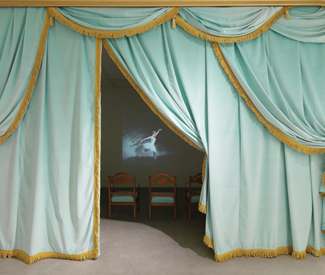
DANCE/VISUAL ART Nineteenth century story ballets raise a lot of questions: how come Prince Siegfried can’t tell the difference between the Black and the White Swans? What’s the matter with La Sylphide‘s James that he runs after the Sylph and foregoes his lovely human bride? In her first West Coast solo exhibit, Philadelphia-based visual artist Karen Kilimnik addresses these issues and more. The works in “Dance Rehearsal: Karen Kilimnik’s World of Ballet and Theatre,” at Mills College Art Museum through December 9, use clever reframing to suggest why these apparently outmoded stories remain popular classics.

Kilimnik works in a variety of mediums — video, live performance, and installation included. In this show, comprised of works from 1988 to the present, she investigates ballet as a 19th century artifact, studying it with her own wary, 21st century eyes. She gives us a complex perspective on an art that aims to transcend human limitations, both physical and intellectual. The result is a kind of double vision in which she simultaneously evokes the objects within their own exquisite context even as she superimposes borders or lenses on them. “Dance Rehearsal,” guest curated by Melissa E. Feldman, is a passionate tribute to this most artificial of genres looked at from a distance.

I am not sure to what extent “Dance Rehearsal” will communicate to a viewer who doesn’t have at least some basic knowledge of and sympathy for ballet. Longing, the otherworldly, sylphs, swans, magicians, and fairy princesses are not everybody’s cup of tea. But if you can play along with Kilimnik’s conceits, the show offers intriguing insights and re-interpretations of still-popular ballets, none of which I found in the least bit questionable. Some were more serious than others, but none of these “re-viewings” were facile.

It helps, for instance, to know that Gelsey Stuck on the Matterhorn, which resembles calendar art, refers to dancer Gelsey Kirkland, here shown as Giselle, a role she frequently played. Kilimnik suggests consanguinity between two dancers — one real, one imagined — who suffered similar fates. The elaborately titled Prince Siegfried Arriving Home in Vienna 1800’s, from Versailles, 1500’s — painted in what looks like roughed-up 18th century French style — shows a young man bowing courteously in a plumed hat and over-the-knee boots, certainly not what Swan Lake‘s Siegfried would ever have worn. Kilimnik is likely commenting on the fact that this most romantic of princes was a descendant of French court ballet at its most artificial.

However, I don’t think I would have understood (though I liked its warm colors) a C-print of two shadowy peasant girls from Giselle without Kilimnik’s title: 2 Peasant Girls, Silesia-future wilis. I had never considered that the cheerful village girls seen in Giselle’s first act might have ended up as haunted, ghostly women.

Some other works have an unexpected poignancy to them. The installation Paris Opera Rats shows three worn ballet slippers, grey tulle seemingly from a dirty tutu, and some plastic mice, all bunched up around a foam curbstone. Paris Opera Ballet’s young dancers are still (affectionately) called rats, and this piece speaks eloquently about who 19th century ballerinas were — poor, working-class women, one step above living in the gutter. The longer you study Kilimnik’s crayon-on-paper Seating Chart of the Paris Opera House, the more you see in the rigidity of its grid patterns, its ranked subdivisions, and careful color allocations a reflection of an implacable hierarchy, not just of ballet patrons, but a critique of a social system.

Perhaps “Dance Rehearsal”‘s most spectacular work, choreographed by Kilimnik, is the video installation Sleeping Beauty and friends. It’s a love letter to ballet as something that aims for an ideal that, inevitably, is held in check by what we are. The video of the stage performance was intentionally wobbly, so was the dancing. Using variations from specific ballets and jumbling them up, Kilimnik tries to help Siegfried distinguish between the Black and White Swans. Here two women dance neck-to-neck, and he still doesn’t get it. What about James in La Sylphide? Truthfully, he and the sylph, who wears tons of Swarovski crystals, are made for each other — each is more self-involved and narcissistic than the other, not far from the truth. Sleeping, which also included perspectives on Don Quixote and Diana and Actaeon, was nothing less than brilliant. A number of lectures and a ballet film series are scheduled concurrently with this exhibit.

DANCE REHEARSAL: KAREN KILIMNIK’S WORLD OF BALLET AND THEATRE

Through Dec. 9

Tue.-Sat., 11am-4pm; Wed, 11am-7:30pm, free

Mills College Art Museum

5000 Macarthur Blvd., Oakl.

mcam.mills.edu


Cocktail harvest

0

virginia@sfbg.com

APPETITE Judging a cocktail contest in Calistoga and sampling Wine Country cocktails early in 2011, I witnessed a rise in quality congruent with the cocktail renaissance exploding across the nation, beyond longtime torchbearers like SF and NYC. This is especially notable in tourist-heavy Wine Country, where shaking off the all-consuming culture of the grape is an uphill battle (so local bartenders tell me). Although you won’t see many cocktail bars opening up, restaurants continue to refine their cocktails and spirits selections. You’ll now find a few city-quality drinks among the vineyards. Here are two intriguing spots in Napa, perfect for harvest-time exploration.


GOOSE AND GANDER

Scott Beattie has long been considered the number one talent in Wine Country — he crafted exquisite cocktails in sleepy, chic Healdsburg at Cyrus long before many of the country’s big cities had clued in, leading the way in farm-fresh, artisanal cocktails (see his book, Artisanal Cocktails, www.scottbeattiecocktails.com), torching kumquats and crisping apple slivers from his backyard as garnishes.

When Beattie left Spoonbar to take over the bar at St. Helena’s Goose and Gander, which opened in April, Sonoma’s loss was Napa’s gain. Goose and Gander is in the former Martini House in a 90-year-old craftsman bungalow with idyllic yard and patio. Red walls, bookshelves, brown leather booths, fireplaces, wood ceilings and floors impart a charming hunting lodge feel. Beattie works alongside talent like Michael Jack Pazdon, who previously supervised the bar program at SolBar and has won numerous cocktail contests. Beattie, Pazdon, and crew serve fantastic drinks from a handful of cocktails (all $11) on the regular menu. Ask for “the book” for a more extensive selection — and peruse an impressive spirits collection lining the bar.

The Mellivora Capensis (a.k.a. honey badger) is a prime example of Beattie-style cocktails: Eagle Rare 10 year bourbon, honey, and lemon sound like a classic base, but it gets interesting with a touch of peat from Ardbeg Scotch, pineapple, black cardamom, and chili, with coconut foam contributing texture, and edible flowers the crowning touch. A Cucumber Collins (Square One cucumber vodka, yuzu, lemon, fresh and pickled cucumber, huckleberries, seltzer) is classic Beattie: striking visuals, artfully refreshing.

Executive Chef Kelly McCown’s food is notable. Spicy whole blue prawns ($16) are large and juicy, skillet-roasted brown, swimming in shallot garlic butter, rosemary, and chilis over polenta. A bright crudo of Hawaiian lemon snapper ($17) is lined up next to heirloom tomatoes dotted with shaved tomatillos and sea beans. As a twist on the ever-gratifying wedge salad, a Berkshire pork belly “wedge” ($15) is an understandable hit: a disc of iceberg topped with a hefty chunk of pork belly and Shaft’s blue cheese dressing. Jersey cow’s milk ricotta gnocchi ($18) melt joyously in the mouth, intermingling with cherry tomatoes, basil, and tomato coulis, crowned by a light Parmesan crisp. Goose and Gander is the whole package and works both as a romantic date locale or relaxed stop for bite and drink.

1245 Spring, St. Helena. (707) 967-8779, www.goosegander.com


THE THOMAS

Follow the vintage neon signage of the former Fagiani’s, where The Thomas opened just last month in a 1909 building restored by New York’s AvroKO Hospitality Group. First visiting during opening week, I dined on the partially covered third floor terrace (although housing a second bar, this floor is for diners only) gazing out over downtown Napa. As the sun set over the river below, rooftops and hills peeking above the the deck, I was transported to Europe, a timeless moment on a summer night.

I was immediately hooked, but I’m waiting to see how the place evolves, particularly with just-launched brunch and recently named bar manager Jim Wrigley of London’s Albannach and the Lonsdale. During my visit, AvroKO cocktail director Naren Young was in town serving drinks from the menu he co-created with Linden Pride, with whom he runs Saxon+Parole in NY. Drinks are classic, simple, playful with the ubiquitous (though not so much in Napa) Negroni on tap ($12), and a generous White Manhattan on tap ($15), utilizing Death’s Door white whiskey, white vermouth, kirschwasser, jasmine bitters. An ideal aperitif is Jasmine ($14), made of Campari, Beefeater Gin, Combier triple sec and lemon juice. Dessert was a winning round of a Grasshopper and an elegant whiskey cocktail with biscotti, ideal alongside dreamy dark chocolate pot de creme with cookies or decadent monkey bread.

Though it’s a bit too early to call, there’s plenty to enjoy on Executive Chef Brad Farmerie’s casual, comfortable American food menu. (he’s formerly of The Public in NYC.) On a warm night with an icy-cool White Manhattan, a raw bar seafood tower (mini $22, medium $67, large $125) suited perfectly with a sampling of East and West Coast oysters, smoked mussels, Dungeness crab, and plump shrimp. Grilled chorizo sausage ($13.50) was lively, with txiki cheese, black bean chocolate puree, and padron peppers.

The three-story space has a big city energy, with much of the staff from NY, imparting a welcome cosmopolitan vibe atypical of the area. The bottom floor boasts a vintage oak bar and pressed-tin ceiling, which looks like it’s been there for 100 years, in keeping with the historicity of the building, freshly incarnated.

813 Main, Napa, 707-226-7821, www.thethomas-napa.com

Subscribe to Virgina’s twice-monthly newsletter, The Perfect Spot, www.theperfectspotsf.com


Psychic Dream Astrology: September 19-26

0

ARIES

March 21-April 19

There are no quick fixes that will make you happy, Aries. The emotional struggles that you are going through are trying to teach you to better listen to yourself. Take the time to understand how your own participation helped to create the situations you’re embroiled in, so that you can stealthily work your way out, for good.

TAURUS

April 20-May 20

It’s impossible to clearly see through dirty lenses, Taurus. You should be trying to assert your needs calmly and directly, but panic is twisting your thoughts and throwing you off your center. Realign yourself with your values, and so that you can act from a place that reflects the things that matter to you most.

GEMINI

May 21-June 21

There is such a thing as over-processing an idea. This week you should say what needs to be said, and listen to others well, then leave enough time between conversations for all parties to take in and act on what was discussed. Without time for integration, it’s just more blah-blah-blah, Twin Star.

CANCER

June 22-July 22

You don’t need to know how it’s all going to pan out in order for you to participate openly, do ya, Cancer? This week your mind wants to know the future in efforts to take care of your heart. Trust in the process of unfoldment that your life is going through, and be kind to yourself in the meantime.

LEO

July 23-Aug. 22

Leo, even if you do everything right and the people sing your praises and emulate your style, you may not feel confident, ’cause your self esteem has to come from within. Practice validating the complexity of what you’re feeling, even when it’s messy or doesn’t match what people want from you this week.

VIRGO

Aug. 23-Sept. 22

You’ve gotta take full responsibility for how you behave. Stress threatens to turn your common sense into a chaotic tangle of reactions if you don’t get it together this week. For best results, run some of your nervous energy out through your body and exercise before you make your next moves.

LIBRA

Sept. 23-Oct. 22

Please do not wait until things suck before you set to improving them, Libra. Your distaste for confrontation may lull you into believing that things will fix themselves, but the truth is that your life requires attention right now. Deal with the things that are out of whack before they get serious this week.

SCORPIO

Oct. 23-Nov. 21

Can you learn a lesson without getting attached to the insight? There are deep emotional shifts that you’re going through this week, and you may make meaningful discoveries from them. Avoid being conclusive based on what you feel, though. Stay present with your emotions, for they may shift wildly.

SAGITTARIUS

Nov. 22-Dec. 21

Be true to yourself, Sagittarius. Strive to get things done this week, but if achieving those things doesn’t serve your greater happiness and emotional well being, then the success you achieve will feel hallow. Make necessary compromises, but don’t compromise on the needs of your heart, even if that slows down progress.

CAPRICORN

Dec. 22-Jan. 19

You should not take shortcuts this week, because they are sure to backfire, Cappy mon Capitan. Fear can make you believe that there’s not enough for you and make you want to cut corners, but this is the wrong attitude. Trust in the course you have set yourself on, and be playful and trusting in your pursuit of it.

AQUARIUS

Jan. 20-Feb. 18

The last thing you should do now is quit, Aquarius. No matter how frustrating things get this week, you are capable of dealing with them and coming out on top. The key is to look for the growth opportunity in everything, even the crap. Strive to build upon the insights you gain from your struggles.

PISCES

Feb. 19-March 20

In order for you to go forth and get yours, you need to be willing to make some internal adjustments, Pisces. You should not take more than your share, of course, but sometimes it’s hard for you to know what you deserve in the moment. Slow down and make sure that you own your game. You can stay committed to playing nicely with others without diminishing your own needs.

Jessica Lanyadoo has been a Psychic Dreamer for 18 years. Check out her website at www.lovelanyadoo.com to contact her for an astrology or intuitive reading.

Stage Listings

0

Stage listings are compiled by Guardian staff. Performance times may change; call venues to confirm. Reviewers are Robert Avila, Rita Felciano, and Nicole Gluckstern. Submit items for the listings at listings@sfbg.com. For further information on how to submit items for the listings, see Picks.

THEATER

OPENING

Family Programming: An Evening of Short Comedic Plays Shelton Theater, 533 Sutter, SF; www.brownpapertickets.com. $20. Opens Fri/21, 8pm. Runs Thu-Sat, 8pm. Through Oct 13. Left Coast Theatre Company performs short plays about gay and alternative families.

ONGOING

Asteroids: Live! Dark Room Theater, 2263 Mission, SF; (415) 401-7987. $20. Fri-Sat, 8pm. Through Sept 29. Interstellar comedy “based very, very loosely on the arcade game.”

Henry V Presidio of San Francisco, Main Post Parade Ground Lawn, SF; www.sfshakes.org. Free. Sat/22-Sun/23, 2pm. The San Francisco Shakespeare Festival celebrates the 30th anniversary of Free Shakespeare in the Park with this history play.

Invasion! Boxcar Playhouse, 505 Natoma, SF; crowdedfire.dreamhosters.com. $20-35. Wed-Sat, 8pm. Through Sept 29. Crowded Fire mounts the West Coast premiere of Swedish-born playwright Jonas Hassen Khemiri’s postmodern dark comedy, a deconstruction of language and power in an American culture of perpetual war, which made a well-received New York debut last year. Translated from the Swedish by Rachel Willson-Broyles, and directed by Evren Odcikin, the play immediately subverts the usual multi-culti narrative of otherness and tolerance with a po-faced feint (featuring ensemble members Lawrence Radecker and Olivia Rosaldo-Pratt) that ends with a boisterous disruption of the proceedings from unexpected quarters (courtesy of ensemble members George Psarras and Wiley Naman Strasser). From there, we get a series of interrelated largely comical scenes, wherein — in shades of Martin Crimp’s Attempts on Her Life — a certain figure by the name of Abulkasem dissolves into the ultimate cipher, tied to everything from terror to pick-up lines in bars, and meaning absolutely anything and nothing. Nevertheless, in the interstices of language lurks real power — as the play implies most overly in a scene of intentional mistranslation, which twists a hapless and bemused immigrant’s tale into line with the war-on-terror mythos. In the end, the complexity the play adds does not completely dissolve that liberal narrative skewered at the outset, and its efforts remain only half-convincing. The problem may lie partly in the production’s inconsistent, often sluggish pace, as well as a tendency toward didacticism in director Odcikin’s staging. The material of this sardonic play doesn’t support too literal or even empathetic a reading, but rather seems best translated as a raucous premonition, dream, or intimation of our own guilty seduction by the sadistic, totalizing power of such stories. (Avila)

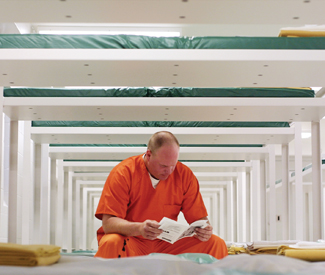
Kiss of the Spider Woman Phoenix Theatre, 414 Mason, SF; secondwind.8m.com. $15-35. Thu-Sat, 8pm; Sun, 2pm. Through Sept 29. Second Wind presents Manuel Puig’s acclaimed drama about cellmates in a Buenos Aires jail.

My Fair Lady SF Playhouse, 533 Sutter, SF; www.sfplayhouse.org. $30-70. Tue-Thu, 7pm; Fri-Sat, 8pm (also Sat, 3pm). Through Sept 29. SF Playhouse and artistic director Bill English (who helms) offer a swift, agreeable production of the Alan Jay Lerner and Frederick Loewe musical, based on George Bernard Shaw’s Pygmalion. The iconic class-conscious storyline revolves around a cocky linguist named Higgins (Johnny Moreno) who bets colleague Colonel Pickering (Richard Frederick) he can transform an irritable flower girl, Eliza Doolittle (Monique Hafen), into a “lady” and pass her off in high society. A battle of wills and wits ensues — interlarded with the “tragedy” of Alfred Doolittle (a shrewd and gleaming Charles Dean) and his reluctant upward fall into respectability — and love (at least in the musical version) triumphs. The songs (“Wouldn’t It Be Loverly,” “I Could Have Danced All Night,” “Get Me to the Church on Time,” and the rest) remain evergreen in the cast’s spirited performances, supported by two offstage pianos (brought to life by David Dobrusky and musical director Greg Mason) and nimble choreography from Kimberly Richards. Hafen’s Eliza is especially admirable, projecting in dialogue and song a winning combination of childlike innocence and feminine potency. Moreno’s Higgins is also good, unusually virile yet heady too, a convincingly flawed if charming egotist. And Frederick, who adds a passing hint of homoerotic energy to his portrayal of the devoted Pickering, is gently funny and wholly sympathetic. (Avila)

The Normal Heart American Conservatory Theater, 415 Geary, SF; www.act-sf.org. $25-95. Tue, 7pm; Wed-Sun, 8pm (also Sat, 2pm); Sun, 2pm (also Sept 23, 8pm). Through Oct 7. Larry Kramer’s groundbreaking 1985 drama about the AIDS epidemic — winner of a 2011 Tony for Best Revival of a Play — has a limited run at ACT.

The Other Place Magic Theatre, Fort Mason Center, Bldg D, Third Flr, SF; www.magictheatre.org. $22-62. Previews Wed/19, 8pm. Opens Thu/20, 8pm. Runs Tue, 7pm; Wed-Sat, 8pm (also Sat/22 and Oct 3, 2:30pm); Sun, 2:30 (Oct 7 show at 7pm instead). Through Oct 7. Sharr White’s plot-twisty thriller has its West Coast premiere at Magic Theatre.

Port Out, Starboard Home Z Space, 450 Florida, SF; www.foolsfury.org. $12-35. Wed/19-Sat/22, 8pm; Sun/23, 2pm. foolsFURY performs the world premiere of Sheila Callaghan’s black comedy.

The Real Americans Marsh Studio Theater, 1062 Valencia, SF; www.themarsh.org. $25-50. Fri, 8pm; Sat, 8:30pm. Through Sept 29. Dan Hoyle’s hit show about his trip across America returns.

Rigoletto War Memorial Opera House, 301 Van Ness, SF; www.sfopera.com. $10-340. Wed/19 and Sept 25, 7:30; Fri/21, 8pm; Sun, 2pm. Through Sept 30. “Fidelity is for weaklings!” Despite this rousing cry from its philandering villain, SF Opera opens its 90th season with a faithful and winsome double-cast production of Giuseppe Verdi’s immortal Rigoletto. Based on a play by Victor Hugo, the story concerns the titular court jester and hunchback (played opening night by the imposing Serbian baritone Zeljko Lucic, who alternates nights with Italian Marco Vratogna) whose attempt to revenge himself on the goatish Duke of Mantua (Sardinian tenor Francesco Demuro, alternating with Mexican tenor Arturo Chacón-Cruz) for seducing his beautiful daughter, Gilda (the thoroughly enchanting Polish soprano Aleksandra Kurzak, alternating with Russian coloratura soprano Albina Shagimuratova), backfires with tragic consequences. The production includes free simulcast presentations at AT&T Ballpark on consecutive weekends for those more inclined to recline, especially in the fresh free air, but either way the show’s a little staid but charming and the music, under SF Opera’s Nicola Luisotti, utterly transporting. (Avila)

Strange Travel Suggestions MainStage, Marsh San Francisco, 1062 Valencia, SF; www.themarsh.org. $20-50. Sat, 8:30pm. Through Sept 29. Author and Ethical Traveler founder Jeff Greenwald (Shopping for Buddhas, Snake Lake) has done his solo show Strange Travel Suggestions dozens if not hundreds of times and still has no idea where it’s going. No wonder he and his audience keep coming back for more. The unknown, an aphrodisiac to the traveler, also makes great catnip for the storyteller. Still, there are consistent elements. There is no need to reinvent the wheel — or the impressive Wheel of Fortune that sits just off center stage, painted with a map of the globe and ringed with symbols abstract and evocative enough to conjure up myriad adventures, peak experiences, and humbling encounters from the vivid grab-bag memory of an accomplished travel writer and inveterate globetrotter. There’s also a real grab bag, just in case, and an oversize tarot card, a sort of visual aid cum talisman sporting a classic image of the Fool, patron saint of the traveler’s heedless leaps of faith. Greenwald’s stories possess a fine sense of humor and a knack for the shrewd detail and telling observation. They also contain a Zen-inflected homespun wisdom no doubt born of leaving home on a regular basis. If slightly self-conscious at times, these tales are always genuine and appealing. In the end, Greenwald’s show, as reliable as it is unpredictable, mimics a genie-from-a-bottle experience: What you get is three spins, three stories, and a lot of unexpected truth. Note: capsule condensed from 2008 feature review of this production. (Avila)

Tripping on the Tipping Point Stagewerx, 446 Valencia, SF; (707) 322-5731. $15-20. Thu-Sat, 8pm. Through Sept 29. Human Nature performs a new comedy about global warming.

Twelfth Night San Francisco Maritime National Historic Park, Hyde Street Pier, 2905 Hyde, SF; www.weplayers.org. $30-80. Fri-Sun, 5:30pm (also Sat-Sun, noon; matinee only Sat/22; no performances Sept 29; evening performances only Oct 6-7). Through Oct 7. We Players board the Balclutha and the Eureka for this jazzy take on Shakespeare’s romance.

The Waiting Period MainStage, Marsh San Francisco, 1062 Valencia, SF; (415) 282-3055, www.themarsh.org. $15-50. Thu-Fri, 8pm; Sat, 5pm. Extended through Sept 29. Brian Copeland (comedian, TV and radio personality, and creator-performer of the long-running solo play Not a Genuine Black Man) returns to the Marsh with a new solo, this one based on more recent and messier events` in Copeland’s life. The play concerns an episode of severe depression in which he considered suicide, going so far as to purchase a handgun — the title coming from the legally mandatory 10-day period between purchasing and picking up the weapon, which leaves time for reflections and circumstances that ultimately prevent Copeland from pulling the trigger. A grim subject, but Copeland (with co-developer and director David Ford) ensures there’s plenty of humor as well as frank sentiment along the way. The actor peoples the opening scene in the gun store with a comically if somewhat stereotypically rugged representative of the Second Amendment, for instance, as well as an equally familiar “doood” dude at the service counter. Afterward, we follow Copeland, a just barely coping dad, home to the house recently abandoned by his wife, and through the ordinary routines that become unbearable to the clinically depressed. Copeland also recreates interviews he’s made with other survivors of suicidal depression. Telling someone about such things is vital to preventing their worst outcomes, says Copeland, and telling his own story is meant to encourage others. It’s a worthy aim but only a fitfully engaging piece, since as drama it remains thin, standing at perhaps too respectful a distance from the convoluted torment and alienation at its center. (Avila)

BAY AREA

Chinglish Berkeley Repertory Theatre, Roda Theatre, 2015 Addison, Berk; www.berkeleyrep.org. $14.50-99. Tue and Thu-Sat, 8pm (also Sat, 2pm; no show Oct 5; additional 2pm show Oct 4); Wed and Sun, 7pm (also Sun, 2pm). Through Oct 7. Tony Award-winning playwright David Henry Hwang (M. Butterfly) delivers this inconsistent but generally lively and fascinatingly au courant comedy about a down-on-his-luck American businessman (Alex Moggridge) who visits China hoping to win a contract for English-language signage. Hiring a British expat (Brian Nishii) to smooth the way for him, he enters negotiations with a local official (Larry Lei Zhang). Although things seem to be going well (across some hilarious scenes of half-assed simultaneous translation), he finds the deal running inexplicably aground, then finds unexpected help from a hard-nosed, initially hostile, and beautiful Party official (a standout Michelle Krusiec), with whom he soon begins an extramarital affair. But the American (who has a past of his own that eventually comes to light with surprising consequences) has no idea of the machinations taking place behind the formal business meetings and other confused cross-cultural encounters. What unfolds is a sometimes stretched but generally shrewd and laugh-out-loud funny assessment of has-been American delusions through the prism of rising Chinese ambitions and clout, cultural and otherwise. If the central dynamic between the lovers is not always convincing on the individual or metaphorical level, Leigh Silverman directs for Berkeley Rep a super slick production, complete with rotating sets and precisely timed entrances, featuring an enjoyable cast rounded out by Vivian Chiu, Celeste Den, and Austin Ku. (Avila)

The Death of the Novel San Jose Rep, 101 Paseo de San Antonio, San Jose; www.sjrep.com. $23-69. Wed/19, 7:30pm; Thu/20-Sat/22, 8pm (also Sat/22, 3pm). Vincent Kartheiser (a.k.a. Pete Campbell from Mad Men) stars in Jonathan Marc Feldman’s drama about creativity in post-9/11 America at San Jose Rep.

The Elaborate Entrance of Chad Deity Aurora Theatre, 2081 Addison, Berk; (510) 843-4822, www.auroratheatre.org. $32-60. Tue and Sun, 7pm (also Sun, 2pm); Wed-Sat, 8pm. Through Sept 30. Playwright Kristoffer Diaz, a self-professed fan of the aggressively-theatrical spectacle that is professional wrestling, delivers much more than a “wrestling 101” primer for the uninitiated with The Elaborate Entrance of Chad Deity. Beneath the razzle-dazzle of the arena lighting (Kurt Landisman), the gaudy costuming (Maggie Whitaker) and the giant televised image of a hot bikini babe (Elizabeth Cadd, video by Jim Gross) lies the trampled luster of an American Dream. The dreamer, Macedonio “The Mace” Guerra (Tony Sancho), a wiry fall guy for THE Wrestling, wrestles not for money or glory (he is rarely privy to either), but for his love of the strange ballet that occurs in the ring. Guerra’s job is to make his opponents look good, including the pec-flexing, bling-booted Chad Deity (Beethovan Oden), leaving him to wrestle alone with the identity politics of being a marginalized but fully capable warrior battling perennially stacked odds. Willing suspension of disbelief does get stretched pretty thin when the character Vigneshwar Paduar, a smooth-talking hustler chance-met on the basketball courts of Brooklyn, rises to championship levels in record-breaking time as the truly cringe-worthy persona known as “The Fundamentalist,” but Nasser Khan’s skillfully self-possessed performance as Paduar makes it impossible not to root for him all the way. Rod Gnapp as foul-mouthed bossman “EKO” and fight director Dave Maier as a whole squadron of hapless B-list wrestlers round out the excellent cast. (Gluckstern)

The Fisherman’s Wife La Val’s Subterranean, 1834 Euclid, Berk; www.impacttheatre.com. $10-20. Thu-Sat, 8pm. Through Sept 29. The latest from playwright Steve Yockey (Bellwether, Skin) is an exercise in pure pleasure, not least for the devious sea creatures preying lustily and unashamedly on the hapless human flesh of a small coastal town. There, in cracked fairytale fashion, an unsuccessful fisherman named Cooper Minnow (an endearingly nerdy but passionate Maro Guevara) is preparing to set out to sea, leaving at home frustrated wife Vanessa (a wonderfully, volcanically bitchy yet complex Eliza Leoni) and their sinking marriage, when he meets an oddly brazen pair of sexy, sassy bathers in old-fashioned beach attire (the swimmingly synchronized duo of Sarah Coykendall and Roy Landaverde). At more or less the same moment, a devilishly dashing yet prim traveling salesman (poised, nicely offbeat Adrian Anchondo) is offering a clearly aroused Vanessa an erotic woodcut featuring monstrous tentacles groping human victims at a very familiar-looking dock. Will she take the woodcut? Will she ever! And later she’ll defend her husband’s honor and swap places with him too, much to the commercial advantage of the ever-accommodating salesman who — like Yockey’s smart and sure sex farce — has a little something for everyone. Directed with smooth precision by Ben Randle for Berkeley’s Impact Theatre, The Fisherman’s Wife again finds Yockey playing productively with the fine fuzzy line separating human nature from nature at large (as in Large Animal Games, the winning 2009 co-production from Impact and Dad’s Garage). The animals come through for playwright and company once more, with a thoroughly enjoyable comedy whose borrowed maritime mythos has just enough metaphorical pull to lead those so inclined out beyond the shallow waters. (Avila)

Keith Moon/The Real Me TheaterStage at the March Berkeley, 2120 Allston, Berk; www.themarsh.org. $15-50. Thu, 8pm. Through Sept 27. Mike Berry workshops his new musical, featuring ten classic Who songs performed with a live band.

The Kipling Hotel: True Misadventures of the Electric Pink ’80s Marsh Berkeley, 2120 Allston, Berk; (415) 282-3055, www.themarsh.org. $20-50. Sat, 8:30pm; Sun, 7pm. Extended through Oct 14. This new autobiographical solo show by Don Reed, writer-performer of the fine and long-running East 14th, is another slice of the artist’s journey from 1970s Oakland ghetto to comedy-circuit respectability — here via a partial debate-scholarship to UCLA. The titular Los Angeles residency hotel was where Reed lived and worked for a time in the 1980s while attending university. It’s also a rich mine of memory and material for this physically protean and charismatic comic actor, who sails through two acts of often hilarious, sometimes touching vignettes loosely structured around his time on the hotel’s young wait staff, which catered to the needs of elderly patrons who might need conversation as much as breakfast. On opening night, the episodic narrative seemed to pass through several endings before settling on one whose tidy moral was delivered with too heavy a hand, but if the piece runs a little long, it’s only the last 20 minutes that noticeably meanders. And even with some awkward bumps along the way, it’s never a dull thing watching Reed work. (Avila)

A Midsummer Night’s Dream Forest Meadows Amphitheater, 890 Belle, Dominican University of California, San Rafael; www.marinshakespeare.org. $20-35. Check website for schedule. Through Sept 30. Marin Shakespeare Company performs the Bard’s classic, transported to the shores of Hawaii.

PERFORMANCE/DANCE

“Comikaze Lounge” Café Royale, 800 Post, SF; www.comikazelounge.com. Wed/19, 8pm. Free. Comedy with Kevin Camia, Mike Drucker, Paco Romane, Lydia Papovich, and more.

“Dogsbody” Intersection for the Arts, 925 Mission, SF; dogsbody.eventbrite.com. Fri/21-Sun/23, 8pm. $10. Erik Ehn’s play about child soldiers features choreography by Erika Chong Shuch.

“Elect to Laugh” Studio Theater, Marsh San Francisco, 1062 Valencia, SF; (415) 282-3055, www.themarsh.org. Tue, 8pm. Through Nov 6. $15-50. Veteran political comedian Will Durst emphasizes he’s watching the news and keeping track of the presidential race “so you don’t have to.” No kidding, it sounds like brutal work for anyone other than a professional comedian — for whom alone it must be Willy Wonka’s edible Eden of delicious material. Durst deserves thanks for ingesting this material and converting it into funny, but between the ingesting and out-jesting there’s the risk of turning too palatable what amounts to a deeply offensive excuse for a democratic process, as we once again hurtle and are herded toward another election-year November, with its attendant massive anticlimax and hangover already so close you can touch them. Durst knows his politics and comedy backwards and forwards, and the evolving show, which pops up at the Marsh every Tuesday in the run-up to election night, offers consistent laughs born on his breezy, infectious delivery. One just wishes there were some alternative political universe that also made itself known alongside the deft two-party sportscasting. (Avila)

“The Ella Effect” Shotwell Studios, 3252-A 19th St, SF; www.ftloose.org. Fri/21, 8 and 9:30pm. $15. Josh Klipp and the Klipptones join with a crew of local dancers to honor the music of Ella Fitzgerald.

“Fauxgirls! San Francisco’s Favorite Drag Revue” Infusion Lounge, 124 Ellis, SF; www.fauxgirls.com. Thu/20, 8pm. Free. With Victoria Secret, Alexandria, Chanel, Maria Garza, and more.

“Hella Gay Comedy Show: Bear Comedy Night” Deco Lounge, 510 Larkin, SF; www.decosf.com. Sun/23, 8pm. $10. Comedy with host Charlie Ballard and performers Kurt Weitzmann, David Gborie, Nick Leonard, Antwan Johnson, and more.

Kathy Mata Ballet San Francisco Conservatory of Music, 50 Oak, SF; www.kathymataballet.com. Fri/21, 8pm. Free-$30. The company performs a variety of dance styles, including ballet, jazz, modern, and belly dance, plus guest performers the Gnosis Dance Collective and live musical accompaniment.

Napoles Ballet Cowell Theater, Fort Mason Center, Marina at Buchanan, SF; www.napolesballet.org. Sat/22, 8pm; Sun/23, 7pm. $18-25. The new company presents Carlos Molina in the world premiere of Fausto.

“Open” Garage, 715 Bryant, SF; www.brownpapertickets.com. Fri/21-Mon/24, 8pm. $20. When a couple decides to try an open marriage, hilarity (and jealousy) ensues in Jeff Bedillion’s play, performed by Back Alley Theater Productions.

“Second City for President” Palace of Fine Arts Theatre, 3301 Lyon, SF; www.captivatearts.com. Sun/23, 3pm. $30-55. Political comedy revue by the renowned Second City troupe.

Gina Yashere Brava Theater Center, 2781 24th St, SF; www.brownpapertickets.com. Sat/22, 8pm. $18-20. The British Nigerian comedian performs.

BAY AREA

“Freedom House” Eastside Cultural Center, 2277 International, Oakl; (510) 420-0920. Fri/21-Sat/22, 8pm; Sun/23, 2pm. $10-25. dNaga, Eastside Arts Alliance, and the Asian Pacific Islander Center present this “dance art experience” inspired by the experiences of people of color who live in Oakland.

“Risk for Deep Love” Temescal Art Center, 511 48th St, Oakl; www.eroplay.com. Fri/21, 8pm. Free. Frank Moore leads this “ritual audience participation experience experiment.”


Film Listings

0

Film listings are edited by Cheryl Eddy. Reviewers are Kimberly Chun, Dennis Harvey, and Lynn Rapoport. For rep house showtimes, see Rep Clock.

3RD I

The San Francisco International South Asian Film Festival runs Sept. 19-30 at various Bay Area venues. Tickets and schedule at thirdi.org/festival. For commentary, see "Cinetology."

OPENING

About Cherry See "Sex Things We Love." (1:42) Castro.

Dredd 3D See "Cinetology." (1:38)

End of Watch See "Cinetology." (1:49) Marina.

Hello I Must Be Going Blindsided by her recent divorce, 35-year-old Amy (Melanie Lynskey) flees New York City for quaint Westport, Conn., where she nurses her wounds, mostly by sleeping and watching Marx Brothers movies. Amy’s protracted moping rankles her perfectionist mother (Blythe Danner, bringing nuance to what could have been a clichéd character) and concerns her workaholic father (John Rubenstein). Dad’s trying to land a big client so he can "make back some of the money we lost in the market" — a subtle aside in Sarah Koskoff’s script that suggests Amy’s parents aren’t as well-heeled as they used to be, despite the ongoing renovations to their swanky home, catered dinners, and expensive art purchases. Money woes are just one of Amy’s many concerns, though, and when a distraction presents itself in the form of 19-year-old Jeremy (Girls’ Christopher Abbott), she finds herself sneaking out at night, making out in her mom’s car, smoking weed, and basically behaving like a teenager herself. As directed by indie actor turned director Todd Louiso (2002’s Love Liza), Hello I Must Be Going is a nicely contained, relatable (self-loathing: we’ve all been there) character study — and props for casting the endearing Lynskey, so often seen in supporting roles, as the film’s messy, complex lead. (1:35) SF Center. (Eddy)

House At the End of the Street Oh, Jennifer Lawrence, don’t you know better than to poke around in that creepy house where all those murders happened? (1:43)

How to Survive a Plague David France’s documentary chronicles the unprecedented impact political activism had on the course of AIDS in the U.S. — drastically curtailing its death toll within a few years despite considerable institutional indifference and downright hostility. As the epidemic here first surfaced in, and decimated, the gay male community, much of Reagan America (particularly in religious quarters) figured the death sentence was deserved. The President himself infamously refrained from even saying the word "AIDS" publicly until his final year of office, after thousands had died. Both terrified and outraged, the gay community took it upon themselves to demand treatment, education, and research. Most of this urgent 1980s overview is concerned with the rise of ACT-UP, whose angry young men successfully lobbied and shamed corporate, academic, medical, and pharmaceutical bodies into action, with the result that by the mid-90s new drugs existed that made this dreaded diagnosis no longer a necessarily terminal one. France is a journalist who’s been covering AIDS practically since day one, and his first feature (made with the help of numerous first-rate collaborators) is authoritative and engrossing. Just don’t expect much (or really any) attention paid to the contributions made by S.F. or other activist hotspots — like many a gay documentary, this one hardly notices there’s a world (or gay community) outside Manhattan. (1:49) Embarcadero. (Harvey)

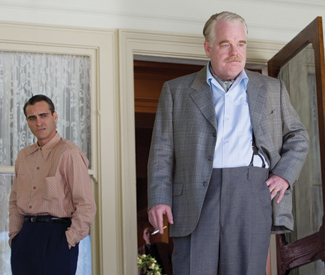
The Master See "Cinetology." (2:17) Embarcadero, Presidio.

Somewhere Between Five years ago, when filmmaker Linda Goldstein Knowlton adopted a baby girl from China, she was inspired to make Somewhere Between, a doc about the experiences of other Chinese adoptees. The film profiles four teenage girls, including Berkeley resident Fang "Jenni" Lee, whose American lives couldn’t be more different (one girl has two moms and attends a fancy prep school; another, raised by devout Christians, dreams of playing her violin at the Grand Ole Opry) but who share similar feelings about their respective adoptions. The film follows the girls on trips to London (as part of an organized meeting of fellow adoptees), Spain (to chat with people interested in adopting Chinese babies, and where the question "What does it feel like to be abandoned?" is handled with astonishing composure), and China (including one teen’s determined quest to track down her birth family). Highly emotional at times, Somewhere Between benefits from its remarkably mature and articulate subjects, all of whom have much to say about identity and personal history. Lee and filmmaker Goldstein Knowlton will appear in person at select opening shows; visit www.landmarktheatres.com for more information. (1:28) Opera Plaza. (Eddy)

10 Years Channing Tatum and Rosario Dawson star in this high-school reunion comedy. Which one of them invented Post-its, again? (1:50)

Trouble with the Curve Baseball scout Gus (Clint Eastwood) relies on his senses to sign players to the Atlanta Braves, and his roster of greats is highly regarded by everyone — save a sniveling climber named Sanderson (Matthew Lillard), who insists his score-keeping software can replace any scout. Gus’ skill in his field are preternatural, but with his senses dwindling, his longtime-friend Pete (a brilliant John Goodman) begs Gus’ daughter Mickey (Amy Adams) to go with him — to see how bad the situation is and maybe drive him around. Ultimately, the film’s about the rift between career woman Mickey, and distant dad Gus, with some small intrusions from Justin Timberlake as Mickey’s romantic interest. Trouble with the Curve is a phrase used to describe batters who can’t hit a breaking ball and it’s a nuance — if an incontrovertible one — unobservable to the untrained eye. While Mickey and Gus stumble messily toward a better relationship (with a reasonable amount of compromise), Curve begins to look a bit like The Blind Side (2009), trading the church and charity for therapy and baggage. But what it offers is sweet and worthwhile, if you’re tolerant of the sanitized psychology and personality-free aesthetics. But it’s a movie about love and compromise — and if you love baseball you won’t have trouble forgiving some triteness, especially when Timberlake, the erstwhile Boo-Boo, gets to make a Yogi Berra joke. (1:51) Four Star, Marina. (Sara Vizcarrondo)

ONGOING

Arbitrage As Arbitrage opens, its slick protagonist, Robert Miller (Richard Gere), is trying to close the sale of his life, on his 60th birthday: the purchase of his company by a banking goliath. The trick is completing the deal before his fraud, involving hundreds of millions of dollars, is uncovered, though the whip-smart daughter who works for him (Brit Marling) might soon be onto him. Meanwhile, Miller’s gaming his personal affairs as well, juggling time between a model wife (Susan Sarandon) and a Gallic gallerist mistress (Laetitia Casta), when sudden-death circumstances threaten to destroy everything, and the power broker’s livelihood — and very existence — ends up in the hands of a young man (Nate Parker) with ambitions of his own. It’s a realm that filmmaker Nicholas Jarecki is all too familiar with. Though like brothers Andrew (2003’s Capturing the Friedmans) and Eugene (2005’s Why We Fight), Jarecki’s first love is documentaries (his first film, 2006’s The Outsider, covered auteur James Toback), his family is steeped in the business world. Both his parents were commodities traders, and Jarecki once owned his own web development firm and internet access provider, among other ventures. When he started writing Arbitrage‘s script in 2008, he drew some inspiration from Bernard Madoff — but ultimately, the film is about a good man who became corrupted along the way, to the point of believing in his own invincibility. (1:40) Metreon, Smith Rafael, Sundance Kabuki. (Chun)

Bachelorette A movie called Bachelorette is inevitably going to be accused of riding Bridesmaids‘ coattails, even if — as it happens — Bachelorette‘s source-material play was written years before the 2011 comedy hit theaters. (That said, there are inevitable similarities, what with the shared wedding themes and all.) Playwright turned scriptwriter-director Leslye Headland does a good job of portraying women who are repulsive in realistic ways: a decade ago, Regan (Kirsten Dunst), Gena (Lizzy Caplan), Katie (Isla Fisher) were the popular "B-Faces" at their high school and haven’t matured much since. Competitive Regan is a Type A blonde; Gena’s the queen of one-night stands; and Katie’s a self-destructive party girl. All of them are pushing 30, and though Regan’s the most functional among them, she’s the hardest-hit when she learns that Becky (Bridesmaids‘ Rebel Wilson), always treated as a second-tier B-Face by virtue of being plus-sized, is engaged. "I was supposed to be first," Regan wails via three-way cell call to Gena and Katie, who’re sympathetic to this sense of entitlement. The wedding is a fancy New York City affair, so the B-Faces reunite for what they think will be a bachelorette party for the ages. Most of the film takes place during that single night, a madcap, coke-fueled, mean-spirited spiral into chaos. It’s raunchy and funny, but every character is utterly unlikable, which becomes more of a problem and less of an amusement as the movie trundles onward toward the expected happy ending. Bachelorette would’ve been better served by sticking with its rallying cry — "Fuck everyone!" — to the bitter end. (1:34) 1000 Van Ness. (Eddy)

Beasts of the Southern Wild Six months after winning the Grand Jury Prize at Sundance (and a Cannes Camera d’Or), Beasts of the Southern Wild proves capable of enduring a second or third viewing with its originality and strangeness fully intact. Magical realism is a primarily literary device that isn’t attempted very often in U.S. cinema, and succeeds very rarely. But this intersection between Faulkner and fairy tale, a fable about — improbably — Hurricane Katrina, is mysterious and unruly and enchanting. Benh Zeitlin’s film is wildly cinematic from the outset, as voiceover narration from six-year-old Hushpuppy (Quvenzhané Wallis) offers simple commentary on her rather fantastical life. She abides in the Bathtub, an imaginary chunk of bayou country south of New Orleans whose residents live closer to nature, amid the detritus of civilization. Seemingly everything is some alchemical combination of scrap heap, flesh, and soil. But not all is well: when "the storm" floods the land, the holdouts are forced at federal gunpoint to evacuate. With its elements of magic, mythological exodus, and evolutionary biology, Beasts goes way out on a conceptual limb; you could argue it achieves many (if not more) of the same goals Terrence Malick’s 2011 The Tree of Life did at a fraction of that film’s cost and length. (1:31) Four Star, Lumiere, Smith Rafael. (Harvey)

Beauty is Embarrassing You may not recognize the name Wayne White offhand, but you will know his work: he designed and operated many of the puppets on Pee-Wee’s Playhouse, including Randy (the blockheaded bully) and Dirty Dog (the canine jazzbo). Neil Berkeley’s Beauty Is Embarrassing — named for a mural White painted on the side of a Miami building for Art Basel 2009 — charts the life of an artist whose motto is both "I want to try everything I can!" and "Fuck you!" The Southern-born oddball, who came of age in the early-1980s East Village scene, is currently styling himself as a visual artist (his métier: painting non-sequitur phrases into landscapes bought from thrift stores), but Beauty offers a complex portrait of creativity balanced between the need to be subversive and the desire to entertain. (1:27) Roxie. (Eddy)

The Bourne Legacy Settle down, Matt Damon fans — the original Bourne appears in The Bourne Legacy only in dialogue ("Jason Bourne is in New York!") and photograph form. Stepping in as lead badass is Jeremy Renner, whose twin powers of strength and intelligence come courtesy of an experimental-drug program overseen by sinister government types (including Edward Norton in an utterly generic role) and administered by lab workers doing it "for the science!," according to Dr. Rachel Weisz. Legacy‘s timeline roughly matches up with the last Damon film, The Bourne Ultimatum, which came out five years ago and is referenced here like we’re supposed to be on a first-name basis with its long-forgotten plot twists. Anyway, thanks to ol’ Jason and a few other factors involving Albert Finney and YouTube, the drug program is shut down, and all guinea-pig agents and high-security-clearance doctors are offed. Except guess which two, who manage to flee across the globe to get more WMDs for Renner’s DNA. Essentially one long chase scene, The Bourne Legacy spends way too much of its time either in Norton’s "crisis suite," watching characters bark orders and stare at computer screens, or trying to explain the genetic tinkering that’s made Renner a super-duper-superspy. Remember when Damon killed that guy with a rolled-up magazine in 2004’s The Bourne Supremacy? Absolutely nothing so rad in this imagination-free enterprise. (2:15) 1000 Van Ness, SF Center, Sundance Kabuki. (Eddy)

Branded (1:46) SF Center.

The Bullet Vanishes Veteran Hong Kong actor Lau Ching-wan stars as a Sherlock Holmes type in 1930s Shanghai, bumped up from prison-guard detail to homicide detective by top brass impressed with his talent, if not his unusual methods. Good timing, since there’s been a series of killings at the local munitions factory, an operation run by a Scooby Doo-ish villain — in cahoots with corrupt cops — who’s prone to snappy hats and checkered overcoats. Adding to the mystery: a tragic back story involving Russian roulette and blood-written graffiti promising "The phantom bullets will kill you all!" Helping solve the crimes is Nicholas Tse as "the fastest gun in Tiancheng," no slouch of an investigator himself; together, the sleuths compile evidence and recreate scenes of murders, including one that seemingly transpired in a locked room with only one exit. The Bullet Vanishes contains more plot twists, slightly fewer steampunk flourishes, and way less slo-mo fist action than Guy Ritchie’s recent attempts at Holmes; though it’s no masterpiece, it’s a fun enough whodunit, with a reliably great and quirky performance from Lau. (2:00) Metreon. (Eddy)

The Campaign (1:25) 1000 Van Ness, SF Center.

Cane Toads: The Conquest They’re baaack — and in 3D. Director Mark Lewis returns to the subject that made him famous, or notorious, in Cane Toads: The Conquest. Lewis’ 1988 short doc Cane Toads: An Unnatural History — about the warty critters’ population explosion after being imported to Australia as part of an unsuccessful pest-control experiment, after which they became pests themselves — is by now a cult hit, thanks to its droll tone, quirky interview subjects, and toad’s-eye-view P.O.V. shots. These days, Australia’s toad situation has, predictably, gotten worse — and weirder, thanks in part to the popularity of the first film, as Lewis chats up a mix of scientists, government officials, and everyday folk on the subject. High points: a man whose "traveling toad show" includes dioramas of costumed, taxidermied toads (there’s a wrestling match, a nightclub scene, a highway accident, and an Aussie rules football game); advanced production values, which render our bulging-eyed buddies in lush detail; and fun 3D flourishes, as when a squeezed poison gland splatters the lens. (1:25) Smith Rafael. (Eddy)

Celeste and Jesse Forever Married your best friend, realized you love but can’t be in love with each other, and don’t want to let all those great in-jokes wither away? Such is the premise of Celeste and Jesse Forever, the latest in what a recent wave of meaty, girl-centric comedies penned by actresses — here Rashida Jones working with real-life ex Will McCormack; there, Zoe Kazan (Ruby Sparks), Zoe Lister Jones (Lola Versus), and Lena Dunham (Girls) — who have gone the DIY route and whipped up their own juicy roles. There’s no mistaking theirs for your average big-screen rom-com: they dare to wallow harder, skew smarter, and in the case of Celeste, tackle the thorny, tough-to-resolve relationship dilemma that stubbornly refuses to conform to your copy-and-paste story arc. Nor do their female protagonists come off as uniformly likable: in this case, Celeste (Jones) is a bit of an aspiring LA powerbitch. Her Achilles heel is artist Jesse (Andy Samberg), the slacker high school sweetheart she wed and separated from because he doesn’t share her goals (e.g., he doesn’t have a car or a job). Yet the two continue to spend all their waking hours together and share an undeniable rapport, extending from Jesse’s encampment in her backyard apartment to their jokey simulated coitus featuring phallic-shaped lip balm. Throwing a wrench in the works: the fact that they’re still kind of in love with each other, which all their pals, like Jesse’s pot-dealer bud Skillz (McCormack), can clearly see. It’s an shaggy, everyday breakup yarn, writ glamorous by its appealing leads, that we too rarely witness, and barring the at-times nausea-inducing shaky-cam under the direction of Lee Toland Krieger, it’s rendered compelling and at times very funny — there’s no neat and tidy way to say good-bye, and Jones and McCormack do their best to capture but not encapsulate the severance and inevitable healing process. It also helps that the chemistry practically vibrates between the boyish if somewhat one-note Samberg and the soulful Jones, who fully, intelligently rises to the occasion, bringing on the heartbreak. (1:31) Presidio, Sundance Kabuki. (Chun)

Chicken With Plums Steeped in whimsy — and a longing for love, beauty, and home — this latest effort from brilliant Persian-French cartoonist-filmmaker Marjane Satrapi and director Vincent Paronnaud flaunts the odd contours of its eccentric narrative, enchants with its imaginative tangents, sprawls like an unincapsulated life, and then takes off on aching, campy romantic reverie—a magical realistic vision of one Iranian artist’s doomed trajectory. Master violinist Nasser Ali Khan (Mathieu Amalric) is seeking the ineffable — a replacement for his destroyed instrument — and otherwise he’s determined to die. We trace the mystery of his passing, backward, with wanders through the life of his family and loved one along the way in this playful, bittersweet feast. Despite Amalric’s glazed-eyed mugging, which almost spoils the dish, Satrapi’s wonderfully arch yet lyrical visual sensibility and resonant characters — embodied by Maria de Medeiros, Jamel Debbouze, Golshifteh Farahani, and Isabella Rossellini, among others — satisfy, serving up so much more than chicken with plums. (1:31) (Chun)

The Cold Light of Day (1:33) 1000 Van Ness, SF Center.

Compliance No film at this year’s Sundance Film Festival encountered as much controversy as Craig Zobel’s Compliance. At the first public screening, an all-out shouting match erupted, with an audience member yelling "Sundance can do better!" You can’t buy that kind of publicity. Every screening that followed was jam-packed with people hoping to experience the most shocking film at Sundance, and the film did not disappoint. (Beware: every review I have happened upon has unnecessarily spoiled major plots in the film, which is based on true events.) What is so impressive about Zobel’s film is how it builds up a sense of ever-impending terror. In fact, I would go as far as to say that the film steps into Psycho (1960) terrain, as it boldly aims to confront a society filled with people who are trained to follow rules without questioning them. Magnolia Pictures, which previously collaborated with Zobel on his debut film Great World of Sound (which premiered at Sundance in 2007), picked up the film for theatrical release; if you dare to check it out, prepare to be traumatized as well as intellectualized. You’ll be screaming about one of the most audacious movies of 2012 — and that’s exactly why the film is so brilliant. For an interview with Zobel, visit www.sfbg.com/pixel_vision. (1:30) (Jesse Hawthorne Ficks)

Cosmopolis With end times nigh and the 99 percent battering the gates of the establishment, it’s little wonder David Cronenberg’s rendition of the Don DeLillo novel might rotate, with the stately rhythm of a royal funeral and deliciously tongue-in-cheek humor, around one of the most famed vampire heartthrobs at the cineplex. Sadly, a recent paparazzi scandal threatens to eclipse this latest, enjoyably blighted installment in the NYC urban nightmare genre. Robert Pattinson’s billionaire asset manager Eric Packer takes meetings with his new wife Elise (Sarah Gadon) and staffers like his monetary theorist Vija (Samantha Morton) in his moving office: a white, leather-bound stretch limo that materializes like a sleek, imposing extension of his pale frame. Seriously disassociated from reality on multiple levels, Eric is a 28-year-old boy in a bubble, speaking of himself in third person and willing to spend all day making his way across town to get a haircut at his father’s old barbershop, even though his head of security (Kevin Durand) warns him that at least one "credible threat" has designs on his life. The passing of his favorite Sufi rapper (K’Naan), a possible Rothko for sale, a mad pie-thrower, and an asymmetrical prostate all threaten to capsize those, as it turns out, not-so-humble plans. Warning: the brainier members of Team Edward might plan on finding their minds blown by this thoughtful and mordantly humorous meditation on this country’s cult of money, while Cronenberg watchers will be gratified to pluck out his recurring themes, here dealt with a lighter hand than usual. At this date, rather than telegraphing how one might feel about a scene by way of, say, music, the director is increasingly comfortable with the ambiguity — and the uneasy, pleasing mix of sneaking repulsion and gimlet-eyed humor, of these scenes and their language. Thus the autoerotic-car fetishism of Crash (1996) and hallucinatory culture grazing of Naked Lunch (1991) — and that fascination with how a body intersects sexually or otherwise with a machine or "other" — seems completely natural here. Or perhaps it’s a measure of how much Cronenberg’s preoccupations and cinematic language have made themselves at home in the vernacular. (1:49) (Chun)

The Dark Knight Rises Early reviews that called out The Dark Knight Rises‘ flaws were greeted with the kind of vicious rage that only anonymous internet commentators can dish out. And maybe this is yet another critic-proof movie, albeit not one based on a best-selling YA book series. Of course, it is based on a comic book, though Christopher Nolan’s sophisticated filmmaking and Christian Bale’s tortured lead performance tend to make that easy to forget. In this third and "final" installment in Nolan’s trilogy, Bruce Wayne has gone into seclusion, skulking around his mansion and bemoaning his broken body and shattered reputation. He’s lured back into the Batcave after a series of unfortunate events, during which The Dark Knight Rises takes some jabs at contemporary class warfare (with problematic mixed results), introduces a villain with pecs of steel and an at-times distractingly muffled voice (Tom Hardy), and unveils a potentially dangerous device that produces sustainable energy (paging Tony Stark). Make no mistake: this is an exciting, appropriately moody conclusion to a superior superhero series, with some nice turns by supporting players Gary Oldman and Joseph Gordon-Levitt. But in trying to cram in so many characters and plot threads and themes (so many prisons in this thing, literal and figural), The Dark Knight Rises is ultimately done in by its sprawl. Without a focal point — like Heath Ledger’s menacing, iconic Joker in 2008’s The Dark Knight — the stakes aren’t as high, and the end result feels more like a superior summer blockbuster than one for the ages. (2:44) Metreon, 1000 Van Ness, Sundance Kabuki. (Eddy)

The Expendables 2 (1:43) Metreon, 1000 Van Ness.

Farewell, My Queen (Benoît Jacquot, France, 2012) Opening early on the morning of July 14, 1789, Farewell, My Queen depicts four days at the Palace of Versailles on the eve of the French Revolution, as witnessed by a young woman named Sidonie Laborde (Léa Seydoux) who serves as reader to Marie Antoinette (Diane Kruger). Sidonie displays a singular and romantic devotion to the queen, while the latter’s loyalties are split between a heedless amour propre and her grand passion for the Duchess de Polignac (Virginie Ledoyen). These domestic matters and other regal whims loom large in the tiny galaxy of the queen’s retinue, so that while elsewhere in the palace, in shadowy, candle-lit corridors, courtiers and their servants mingle to exchange news, rumor, panicky theories, and evacuation plans, in the queen’s quarters the task of embroidering a dahlia for a projected gown at times overshadows the storming of the Bastille and the much larger catastrophe on the horizon. (1:39) Opera Plaza. (Rapoport)

Finding Nemo 3D (1:40) 1000 Van Ness, Presidio, SF Center, Sundance Kabuki.

For a Good Time, Call&ldots; Suffering the modern-day dilemmas of elapsed rent control and boyfriend douchebaggery, sworn enemies Katie (Ari Graynor) and Lauren (Lauren Miller) find themselves shacking up in Katie’s highly covetable Manhattan apartment, brought together on a stale cloud of resentment by mutual bestie Jesse (Justin Long, gamely delivering a believable version of your standard-issue young hipster NYC gay boy). The domestic glacier begins to melt somewhere around the time that Lauren discovers Katie is working a phone-sex hotline from her bedroom; equipped with a good head for business, she offers to help her go freelance for a cut of the proceeds. Major profitability ensues, as does a friendship evoking the pair bonding at the center of your garden-variety romantic comedy, as Katie trains Lauren to be a phone-sex operator and the two share everything from pinkie swears and matching pink touch-tone phones to intimate secrets and the occasional hotline threesome. Directed by Jamie Travis and adapted from a screenplay by Miller and Katie Anne Naylon, the film is a welcome response to the bromance genre, and with any luck it may also introduce linguistic felicities like "phone-banging" and "let’s get this fuckshow started" into the larger culture. The raunchy telephonic interludes include cameos by Kevin Smith and Seth Rogen (Miller’s husband) as customers calling from such unfurtive locations as a public bathroom stall and the front seat of a taxicab. But the two roomies supply plenty of dirty as Katie, an abashed wearer of velour and denim pantsuits, helps the more restrained Lauren discover the joys of setting free her inner potty mouth. (1:25) SF Center. (Rapoport)

Girl Model Everyone wants to be special — though of course that only works if other people aren’t. The disturbingly instructive new documentary Girl Model makes a good case for not encouraging such desires in your child, because the likelihood is that someone will come along to exploit that desire, convincingly promise them fame, then leave them worse off than before. "The first secret to a successful modeling career is to start modeling at five or ten years old," says an emcee at a cattle-call showcase early on in David Redmond and Ashley Sabin’s film. It’s Russia, where the relatively new capitalism trickles down even less than here, so the families are even more eager to turn little Svetlana into a moneymaker. But that way lies madness, or at least deceit and disappointment. Plucked from a couple hundred pretty, rail-thin girls, 13-year-old wide-eyed blonde Nadya Vall is yanked from her rural Siberian village and mother and sent to Japan, where she fits a general type sought there. The younger the better, as talent scout Ashley Arbaugh tells us, qualifying that it’s not her taste, but she’s learned to see through the clients’ eyes. An ex-model herself, Ashley gives off disillusioned, compromised vibes. (It takes a while for us to realize that she’s a user and a hypocrite — not a buffer between the girls and harsh reality but a key part of the problem herself.) Needless to say, Nadya ends up owing rather than making money. Meanwhile Ashley lounges around the immaculate, expansive, coldly all-white house her job as middleman has earned; at the end of the film, she’s telling a new group of parents "Every model has success in Japan, unlike other markets where they might go into debt. They never do in Japan." For a longer version of this review, visit sfbg.com/pixel_vision. (1:17) (Harvey)

The Imposter A family tragedy, an international thriller, a Southern-fried mystery, and a true story: The Imposter is all of these things. This unique documentary reveals the tale of Frédéric Bourdin, dubbed "the Chameleon" for his epic false-identity habit. His ballsiest accomplishment was also his most heinous con: in 1997, he claimed to be Nicholas Barclay, a San Antonio teen missing since 1994. Amazingly, the impersonation worked for a time, though Bourdin (early 20s, brown-eyed, speaks English with a French accent) hardly resembled Nicholas (who would have been 16, and had blue eyes). Using interviews — with Nicholas’ shell-shocked family, government types who unwittingly aided the charade, and Bourdin himself — and ingenious re-enactments that borrow more from crime dramas than America’s Most Wanted, director Bart Layton weaves a multi-layered chronicle of one man’s unbelievable deception. (1:39) (Eddy)

The Inbetweeners The bro-bacchanal never stops being funny in some circles, and those acolytes might want to attempt to penetrate the thick, juicy UK accents in this writ-large version of the English sitcom of the same name. The deliciously awkward teenage boy gang’s all here — with an added dose of ultragross-out humor that one-ups the American Pie gang. Brainy Will (Simon Bird), aggressively gelled Simon (Joe Thomas), super-horndog Jay (James Buckley), and lanky oddity Neil (Blake Harrison) are off on summer break before "uni" on a booze- and sex-swathed Greek isle. The goal: to get soundly laid and eradicate Simon’s heartbreak over recently departed girlfriend Carli (Emily Head). As luck would have it, the bunch even stumble over some nubile, nice cuties — including doll-faced blonde Allison (Laura Haddock) and far-too-accommodating brunette Lucy (Tamla Kari) — in their quest for "fit" slatterns. In between them and a very certain happy ending, in more ways than one, are plenty of excess, barf, poo, blackouts on ant hills — what’s not to love, provided you can overlook the very un-PC rumblings from this dude-a-rama? A self-fellatio interlude even takes on the Jackass posse on their own physically challenging turf. (1:37) Metreon. (Chun)

The Intouchables Cries of "racism" seem a bit out of hand when it comes to this likable albeit far-from-challenging French comedy loosely based on a real-life relationship between a wealthy white quadriplegic and his caretaker of color. The term "cliché" is more accurate. And where were these critics when 1989’s Driving Miss Daisy and 2011’s The Help — movies that seem designed to make nostalgic honkies feel good about those fraught relationships skewed to their advantage—were coming down the pike? (It also might be more interesting to look at how these films about race always hinge on economies in which whites must pay blacks to interact with/educate/enlighten them.) In any case, Omar Sy, portraying Senegalese immigrant Driss, threatens to upset all those pundits’ apple carts with his sheer life force, even when he’s shaking solo on the dance floor to sounds as effortlessly unprovocative, and old-school, as Earth, Wind, and Fire. In fact, everything about The Intouchables is as old school as 1982’s 48 Hrs., spinning off the still laugh-grabbing humor that comes with juxtaposing a hipper, more streetwise black guy with a hapless, moneyed chalky. The wheelchair-bound Philippe (Francois Cluzet) is more vulnerable than most, and he has a hard time getting along with any of his nurses, until he meets Driss, who only wants his signature for his social services papers. It’s not long before the cultured, classical music-loving Philippe’s defenses are broken down by Driss’ flip, somewhat honest take on the follies and pretensions of high culture — a bigger deal in France than in the new world, no doubt. Director-writer Olivier Nakache and Eric Toledano aren’t trying to innovate —they seem more set on crafting an effervescent blockbuster that out-blockbusters Hollywood — and the biggest compliment might be that the stateside remake is already rumored to be in the works. (1:52) Lumiere. (Chun)

Keep The Lights On In Ira Sachs’ intensely discomfiting Keep the Lights On, Erik (Thure Lindhardt) is a Danish documentarian in late-1990s New York City, prodding his career along, spending time with friends, having casual sex with strangers. One of the latter is Paul (Zachary Booth), a publishing-house lawyer who first tells him "I have a girlfriend, so don’t get your hopes up." Yet some time later they’ve become a tentative couple, then a live-in one. Erik is patient and easygoing, but Paul has secrets and problems all the more difficult to deal with because he denies, hides, or lies about them. He disappears for days at a time, then turns up wrecked. Crack is just the addiction we see; there are evidently others. Erik tries everything — group interventions, rehab, endless attempts at frank conversation that invariably turn into Paul accusing him of being unreasonable — but nothing sticks. It takes Erik a decade to come to terms with, and extricate himself from, a relationship in which all his best efforts only bring torment, grief, and exasperation. Keep the Lights On is the kind of excellent movie a lot of people don’t like: it’s not just depressing in the sense of having downbeat, difficult subject matter, it actually sets out to be unpleasant and succeeds. There is a point to that. Leaping forward a couple years at a time, leaving us to figure out how things have shifted in the interim, Sachs’ script (co-written with Mauricio Zacharias) induces in the viewer the disoriented helplessness of dealing with a loved one who can’t or won’t tell the full truth — it’s his best defense. (1:42) Lumiere. (Harvey)

Kumaré Just as there was a certain bullying pride of snark that made Bill Maher and Larry Charles’ Religulous (2008) more mean-spirited than necessary, Kumaré leaves a sour, smug aftertaste. Raised in New Jersey by a first-generation immigrant family of Hindus, Vikram Gandhi proclaims himself a skeptic who started out wanting to make a documentary about the opportunistic charlatans one can find passing as spiritually enlightened gurus in both India and around the booming US yoga industry. "I wanted to prove to others looking for answers that no one is more spiritual than anyone, that spiritual leaders are just illusions," he tells us. A noble impulse. Yet somehow this took the form of growing his hair and beard out, wearing saffron robes, and posing as Sri Kumaré, a fresh-off-the-boat guru who arrives in Phoenix, Ariz. to open up shop as a one-stop spiritual guide for the gullible. He asks "Could people find the same peace in a made-up religion that they would in a real one?" But too often the real question here seems to be "How silly can I make these chumps look while starring in my very own nonfiction version of The Love Guru?" The comedy Kumaré has been primarily compared to is 2006’s Borat, another Larry Charles joint. As unhappy as their portraiture in Borat made its duped participants, it was hard to feel sorry for them — given enough rope they gladly hung themselves expressing racism, homophobia, sexism, and sheer Ugly Americanism. But those who fall under Kumaré‘s farcical spell don’t deserve to be exposed and ridiculed; they’re just people with real-world issues — financial struggles, low self-esteem, empty-nest loneliness, etc. — looking for somebody to tell them what to do. (1:24) Roxie. (Harvey)

Lawless Lawless has got to be the most pretentiously humorless movie ever made about moonshiners — a criminal subset whose adventures onscreen have almost always been rambunctious and breezy, even when violent. Not here, bub. Adapting Matt Bondurant’s fact-inspired novel The Wettest County in the World about his family’s very colorful times a couple generations back, director John Hillcoat and scenarist (as well as, natch, composer) Nick Cave have made one of those films in which the characters are presented to you as if already immortalized on Mount Rushmore — monumental, legendary, a bit stony. They’ve got a crackling story about war between hillbilly booze suppliers and corrupt lawmen during Prohibition, and while the results aren’t dull (they’re too bloody for that, anyway), they’d be a whole lot better if the entire enterprise didn’t take itself so gosh darned seriously. The Bondurant brothers of Franklin County, Va. are considered "legends" when we meet them in 1931, having defied all and sundry as well as survived a few bullets: mack-truck-built Forrest (Tom Hardy); eldest Howard (Jason Clarke), who tipples and smiles a lot; and "runt of the litter" Jack (Shia LeBeouf), who has a chip on his shoulder. The local law looks the other way so long as their palms are greased, but the Feds send sneering Special Deputy Charlie Rakes (Guy Pearce), it’s an eye for an eye for an eye, etc. The revenge-laden action in Lawless is engaging, but the filmmakers are trying so hard to make it all resonant and folkloric and meta-cinematic, any fun you have is in spite of their efforts. (1:55) 1000 Van Ness, SF Center, Sundance Kabuki. (Harvey)

Little White Lies In the wake of a serious accident that puts magnetic Ludo (Jean Dujardin, just briefly seen) in the hospital, his circle of closest friends go without him on their annual vacation at a beachfront summer home, courtesy of well-off restaurateur Max (Francois Cluzet) and wife Vero (Valerie Bonneton). But this year they’ve all got a lot of drama going on. Marie (Marion Cotillard) is suffering the uncomfortable consequences of all the lovers (male and female) she’s run out on when "commitment" reared its head. Similarly, the roving eye of actor Eric (Gilles Lellouche) threatens the stable relationship he’s finally sorta settled on. Hapless boy-man Antoine (Laurent Lafitte) obsesses over the longtime girlfriend who’s dumping him. And Vincent (Benoit Magimel) endangers his marriage to Isabelle (Pascale Arbillot) by privately proclaiming more-than-platonic love for best friend Max — whose discomfort manifests itself in hostile behaviors that threaten to ruin everyone’s stay. Actor Guillaume Canet’s third film as writer-director (following the 2006 hit thriller Tell No One) has been compared, even by himself, to 1983’s The Big Chill. But while that slick, somewhat glib seriocomedy’s characters had 1960s activist pasts and faded ideals to square with encroaching midlife, this slicker, glibber ensemble piece is about people who’ve never shared much more than good times and mutual self-absorption. Though Canet has worked with most of these actors before, and developed Lies in collaboration with them, the thinly amusing, often contrived results hardly tax anyone’s resources. (Nor are they equal-opportunity: star attraction Cotillard aside, he barely seems interested in the women here.) It takes two and a half hours for this overblown fluff to arrive at a group-hug freeze frame (ugh), aiming for emotional heft it still hasn’t earned. (2:34) (Harvey)

Moonrise Kingdom Does Wes Anderson’s new film mark a live-action return to form after 2007’s disappointingly wan Darjeeling Limited? More or less. Does it tick all the Andersonian style and content boxes? Indubitably. In the most obvious deviation Anderson has taken with Moonrise, he gives us his first period piece, a romance set in 1965 on a fictional island off the New England coast. After a chance encounter at a church play, pre-teen Khaki Scout Sam (newcomer Jared Gilman) instantly falls for the raven-suited, sable-haired Suzy Bishop (Kara Hayward, ditto). The two become pen pals, and quickly bond over the shared misery of being misunderstood by both authority figures and fellow kids. The bespectacled Sam is an orphan, ostracized by his foster parents and scout troop (much to the dismay of its straight-arrow leader Edward Norton). Suzy despises her clueless attorney parents, played with gusto by Bill Murray and Frances McDormand in some of the film’s funniest and best scenes. When the two kids run off together, the whole thing begins to resemble a kind of tween version of Godard’s 1965 lovers-on the-lam fantasia Pierrot le Fou. But like most of Anderson’s stuff, it has a gauzy sentimentality more akin to Truffaut than Godard. Imagine if the sequence in 2001’s The Royal Tenenbaums where Margot and Richie run away to the Museum of Natural History had been given the feature treatment: it’s a simple yet inspired idea, and it becomes a charming little tale of the perils of growing up and selling out the fantasy. But it doesn’t feel remotely risky. It’s simply too damn tame. (1:37) Four Star, Sundance Kabuki. (Michelle Devereaux)

The Odd Life of Timothy Green (2:05) SF Center.

ParaNorman (1:32) Metreon, 1000 Van Ness.

The Possession (1:31) Metreon, 1000 Van Ness.

Premium Rush "Fixed gear. Steel frame. No brakes. Can’t stop … don’t want to." Thus goes the gear breakdown and personal philosophy of New York City bike messenger Wilee (Joseph Gordon-Levitt), an aggro rider who uses his law school-refined brain to make split-second decisions regarding which way to dart through Midtown traffic. Though bike messengers had a pop culture moment in the 1990s, Premium Rush is set in the present day, with one of Wilee’s numerous voice-overs explaining the job’s continued importance even in the digital era. One such example: a certain envelope he’s tasked with ferrying across the city, given to him by the troubled roommate (Jamie Chung) of the pretty fellow messenger (Dania Ramirez) he’s romantically pursuing. The contents of the envelope, and the teeth-gnashingly evil-cop-with-a-gambling-problem (Michael Shannon, adding some weird flair to what’s essentially a stock villain) who would dearly love to get his mitts on it, are less crucial to Premium Rush than the film’s many, many chase scenes featuring Wilee outwitting all comers with his two-wheeled Frogger moves. Silly fun from director David Koepp (2008’s Ghost Town), but not essential unless you’re a fixie fanatic or a JGL completist. (1:31) Metreon, 1000 Van Ness. (Eddy)

The Queen of Versailles Lauren Greenfield’s obscenely entertaining The Queen of Versailles takes a long, turbulent look at the lifestyles lived by David and Jackie Siegel. He is the 70-something undisputed king of timeshares; she is his 40-something (third) wife, a former beauty queen with the requisite blonde locks and major rack, both probably not entirely Mother Nature-made. He’s so compulsive that he’s never saved, instead plowing every buck back into the business. When the recession hits, that means this billionaire is — in ready-cash as opposed to paper terms — suddenly sorta kinda broke, just as an enormous Las Vegas project is opening and the family’s stupefyingly large new "home" (yep, modeled after Versailles) is mid-construction. Plugs must be pulled, corners cut. Never having had to, the Siegels discover (once most of the servants have been let go) they have no idea how to run a household. Worse, they discover that in adversity they have a very hard time pulling together — in particular, David is revealed as a remote, cold, obsessively all-business person who has no use for getting or giving "emotional support;" not even for being a husband or father, much. What ultimately makes Queen poignantly more than a reality-TV style peek at the garishly wealthy is that Jackie, despite her incredibly vulgar veneer (she’s like a Jennifer Coolidge character, forever squeezed into loud animal prints), is at heart just a nice girl from hicksville who really, really wants to make this family work. (1:40) Opera Plaza. (Harvey)

Red Hook Summer It seems like lifetimes ago that Michelle and Barack found each other beneath the flicker of filmmaker Spike Lee’s Do the Right Thing (1989), so the director-cowriter’s cameo in his now-graying, still-pizza-delivering Mookie guise, in this hot, bothered return to Brooklyn, reverberates with meaning. Less polemical and now complicated by an acute, confused love and loathing for certain places and faces, Red Hook Summer takes a different tact — the Red Hook projects rather than the streets of Bedford-Stuyvesant — and narrows its focus on Flik Royale (Jules Brown), the reluctant young visitor to the humble home of his grandfather, Da Good Bishop Enoch Rouse (Clarke Peters from Treme and The Wire). A true child of his time and place, the introverted, rebellious Atlanta kid would rather hide behind his favorite screen, a.k.a. the iPad that he’s using to document his world, than engage with reality, even when it’s raging in his face by way of his grandfather’s fiery sermons or threats from the glowering rapper Box (Nate Parker). Only a charismatic girl his age, Chazz Morningstar (Toni Lysaith), seems to get through, despite the Bishop’s passionate efforts to bond with the boy. Alas, Lee himself doesn’t seem to quite get his youthful protagonist — one who’s predisposed to turn inward rather than turn a politicized lens outward — and instead casts about restlessly to the detriment of this supposed coming-of-age narrative. No shock that somehow Red Hook Summer gets caught in the undertow of the magnetic Peters, who will turn heads with his take on a tormented believer, eager to forgive and equally hopeful for forgiveness. (2:01) Roxie. (Chun)

Resident Evil: Retribution (1:35) Metreon, 1000 Van Ness.

Robot and Frank Imagine the all-too-placid deadpan of Hal from 2001: A Space Odyssey (1968) coming out of a home-healthcare worker, and you get just part of the appeal of this very likable comedy debut with a nonrobotic pulse directed by Jake Schreier. Sometime in the indeterminate near future, former jewel thief and second-story man Frank (Frank Langella) can be found quietly deteriorating in his isolated home, increasingly forgettable and unable to care for himself and assemble a decent bowl of Cap’n Crunch (though he can still steal fancy soaps from the village boutique). In an effort to cover his own busy rear, Frank’s distracted son (James Marsden) buys him a highly efficient robotic stand-in (voiced by Peter Sarsgaard), much to his father’s grim resistance ("That thing is going to murder me in my sleep") and the dismay of crunchy sibling Madison (Liv Tyler). The robot, however, is smarter than it looks, as it bargains with Frank to eat better, get healthier, and generally reanimate: it’s willing to learn to pick locks, participate in a robbery, and even plan a jewel heist, provided, say, Frank agrees to a low-sodium diet. Frank flourishes, like the garden the robot nurtures in a vain attempt to interest his human charge, and even goes on a date with his librarian crush (Susan Sarandon), though can the self-indulgent idyll last forever? A tale about aging as much as it is about rediscovery, Robot tells an old story, but one that’s wise beyond its years and willing to dress itself up in some of the smooth, sleek surfaces of an iGeneration. (1:30) Opera Plaza, Sundance Kabuki. (Chun)

Samsara Samsara is the latest sumptuous, wordless offering from director Ron Fricke, who helped develop this style of dialogue- and context-free travelogue with Koyaanisqatsi (1982) and Baraka (1992). Spanning five years and shooting on 70mm film to capture glimmers of life in 25 countries on five continents, Samsara, which spins off the Sanskrit word for the "ever-turning wheel of life," is nothing if not good-looking, aspiring to be a kind of visual symphony boosted by music by the Dead Can Dance’s Lisa Gerrard and composers Michael Stearns and Marcello De Francisci. Images of natural beauty, baptisms, and an African woman and her babe give way to the madness of modern civilization — from jam-packed subways to the horrors of mechanized factory farming to a bizarre montage of go-go dancers, sex dolls, trash, toxic discarded technology, guns, and at least one gun-shaped coffin. After such dread, the opening and closing scenes of Buddhist spirituality seem almost like afterthoughts. The unmistakable overriding message is: humanity, you dazzle in all your glorious and inglorious dimensions — even at your most inhumane. Sullying this hand wringing, selective meditation is Fricke’s reliance on easy stereotypes: the predictable connections the filmmaker makes between Africa and an innocent, earthy naturalism, and Asia and a vaguely threatening, mechanistic efficiency, come off as facile and naive, while his sonic overlay of robot sounds over, for instance, an Asian woman blinking her eyes comes off as simply offensive. At such points, Fricke’s global leap-frogging begins to eclipse the beauty of his images and foregrounds his own biases. (1:39) Embarcadero. (Chun)

Searching for Sugar Man The tale of the lost, and increasingly found, artist known as Rodriguez seems to have it all: the mystery and drama of myth, beginning with the singer-songwriter’s stunning 1970 debut, Cold Fact, a neglected folk rock-psychedelic masterwork. (The record never sold in the states, but somehow became a beloved, canonical LP in South Africa.) The story goes on to parse the cold, hard facts of vanished hopes and unpaid royalties, all too familiar in pop tragedies. In Searching for Sugar Man, Swedish documentarian Malik Bendjelloul lays out the ballad of Rodriguez as a rock’n’roll detective story, with two South African music lovers in hot pursuit of the elusive musician — long-rumored to have died onstage by either self-immolation or gunshot, and whose music spoke to a generation of white activists struggling to overturn apartheid. By the time Rodriguez himself enters the narrative, the film has taken on a fairy-tale trajectory; the end result speaks volumes about the power and longevity of great songwriting. (1:25) Clay. (Chun)

Sleepwalk with Me Every year lots of movies get made by actors and comedians who want to showcase themselves, usually writing and often directing in addition to starring. Most of these are pretty bad, and after a couple of festival appearances disappear, unremembered by anyone save the credit card companies that vastly benefited from its creation. Mike Birbiglia’s first feature is an exception — maybe not an entirely surprising one (since it’s based on his highly praised Off-Broadway solo show and best-seller), but still odds-bucking. Particularly as it’s an autobiographical feeling story about an aspiring stand-up comic (Mike as Matt) who unfortunately doesn’t seem to have much natural talent in that direction, but nonetheless obsessively perseveres. This pursuit of seemingly fore destined failure might be causing his sleep disorder, or it might be a means of avoiding taking the martial next step with long-term girlfriend (Lauren Ambrose, making something special out of a conventional reactive role) everyone else agrees is the best thing in his life. Yep, it’s another commitment-phobic man-boy/funny guy who regularly talks to the camera, trying to find himself while quirky friends and family stand around like trampoline spotters watching a determined clod. If all of these sounds derivative and indulgent, well, it ought to. But Sleepwalk turns a host of familiar, hardly foolproof ideas into astute, deftly performed, consistently amusing comedy with just enough seriousness for ballast. Additional points for "I zinged him" being the unlikely most gut-busting line here. (1:30) Embarcadero. (Harvey)

Ted Ah, boys and their toys — and the imaginary friends that mirror back a forever-after land of perpetual Peter Pans. That’s the crux of the surprisingly smart, hilarious Ted, aimed at an audience comprising a wide range of classes, races, and cultures with its mix of South Park go-there yuks and rom-commie coming-of-age sentiment. Look at Ted as a pop-culture-obsessed nerd tweak on dream critter-spirit animal buddy efforts from Harvey (1950) to Donnie Darko (2001) to TV’s Wilfred. Of course, we all know that the really untamable creature here wobbles around on two legs, laden with big-time baggage about growing up and moving on from childhood loves. Young John doesn’t have many friends but he is fortunate enough to have his Christmas wish come true: his beloved new teddy bear, Ted (voice by director-writer Seth MacFarlane), begins to talk back and comes to life. With that miracle, too, comes Ted’s marginal existence as a D-list celebrity curiosity — still, he’s the loyal "Thunder Buddy" that’s always there for the now-grown John (Mark Wahlberg), ready with a bong and a broheim-y breed of empathy that involves too much TV, an obsession with bad B-movies, and mock fisticuffs, just the thing when storms move in and mundane reality rolls through. With his tendency to spew whatever profanity-laced thought comes into his head and his talents are a ladies’ bear, Ted is the id of a best friend that enables all of John’s most memorable, un-PC, Hangover-style shenanigans. Alas, John’s cool girlfriend Lori (Mila Kunis) threatens that tidy fantasy setup with her perfectly reasonable relationship demands. Juggling scary emotions and material that seems so specific that it can’t help but charm — you’ve got to love a shot-by-shot re-creation of a key Flash Gordon scene — MacFarlane sails over any resistance you, Lori, or your superego might harbor about this scenario with the ease of a man fully in touch with his inner Ted. (1:46) Metreon. (Chun)

To Rome with Love Woody Allen’s film legacy is not like anybody else’s. At present, however, he suffers from a sense that he’s been too prolific for too long. It’s been nearly two decades since a new Woody Allen was any kind of "event," and the 19 features since Bullets Over Broadway (1994) have been hit and-miss. Still, there’s the hope that Allen is still capable of really surprising us — or that his audience might, as they did by somewhat inexplicably going nuts for 2011’s Midnight in Paris. It was Allen’s most popular film in eons, if not ever, probably helped by the fact that he wasn’t in it. Unfortunately, he’s up there again in the new To Rome With Love, familiar mannerisms not hiding the fact that Woody Allen the Nebbish has become just another Grumpy Old Man. There’s a doddering quality that isn’t intended, and is no longer within his control. But then To Rome With Love is a doddering picture — a postcard-pretty set of pictures with little more than "Have a nice day" scribbled on the back in script terms. Viewers expecting more of the travelogue pleasantness of Midnight in Paris may be forgiving, especially since it looks like a vacation, with Darius Khondji’s photography laying on the golden Italian light and making all the other colors confectionary as well. But if Paris at least had the kernel of a good idea, Rome has only several inexplicably bad ones; it’s a quartet of interwoven stories that have no substance, point, credibility, or even endearing wackiness. The shiny package can only distract so much from the fact that there’s absolutely nothing inside. (1:52) (Harvey)

Total Recall Already the source material for Paul Verhoeven’s campy, quotable 1990 film (starring the campy, quotable Arnold Schwarzenegger), Philip K. Dick’s short story gets a Hollywood do-over, with meh results. The story, anyway, is a fine nugget of sci-fi paranoia: to escape his unsatisfying life, Quaid (Colin Farrell) visits a company capable of implanting exciting memories into his brain. When he chooses the "secret agent" option, it’s soon revealed he actually does have secret agent-type memories, suppressed via brain-fuckery by sinister government forces (led by Bryan Cranston) keeping him in the dark about his true identity. Shit immediately gets crazy, with high-flying chases and secret codes and fight scenes all over the place. The woman Quaid thinks is his wife (Kate Beckinsale) is actually a slithery killer; the woman he’s been seeing in his dreams (Jessica Biel) turns out to be his comrade in a secret rebel movement. Len Wiseman (writer and sometimes director of the Underworld films) lenses futuristic urban grime with a certain sleek panache, and Farrell is appealing enough to make highly generic hero Quaid someone worth rooting for — until the movie ends, and the entire enterprise (save perhaps the tri-boobed hooker, a holdover from the original) becomes instantly forgettable, no amnesia trickery required. (1:58) Metreon, 1000 Van Ness. (Eddy)

2 Days in New York Messy, attention-hungry, random, sweet, pathetic, and even adorable — such is the latest dispatch from Julie Delpy, here with her follow-up to 2007’s 2 Days in Paris. It’s also further proof that the rom-com as a genre can yet be saved by women who start with the autobiographical and spin off from there. Now separated from 2 Days in Paris‘s Jake and raising their son, artist Marion is happily cohabiting with boyfriend Mingus (Chris Rock), a radio host and sometime colleague at the Village Voice, and his daughter, while juggling her big, bouncing bundle of neuroses. Exacerbating her issues: a visit by her father Jeannot (Delpy’s real father Albert Delpy), who eschews baths and tries to smuggle an unseemly selection of sausages and cheeses into the country; her provocative sister Rose (Alexia Landeau), who’s given to nipple slips in yoga class and Marion and Mingus’ apartment; and Rose’s boyfriend Manu (Alexandre Nahon), who’s trouble all around. The gang’s in NYC for Marion’s one-woman show, in which she hopes to auction off her soul to the highest, and hopefully most benevolent, bidder. Rock, of course, brings the wisecracks to this charming, shambolic urban chamber comedy, as well as, surprisingly, a dose of gravitas, as Marion’s aggrieved squeeze — he’s uncertain whether these home invaders are intentionally racist, cultural clueless, or simply bonkers but he’s far too polite to blurt out those familiar Rock truths. The key, however, is Delpy — part Woody Allen, if the Woodman were a maturing, ever-metamorphosing French beauty — and part unique creature of her own making, given to questioning her identity, ideas of life and death, and the existence of the soul. 2 Days in New York is just a sliver of life, but buoyed by Delpy’s thoughtful, lightly madcap spirit. You’re drawn in, wanting to see what happens next after the days are done. (1:31) Bridge, Smith Rafael. (Chun)

The Words We meet novelist Rory Jansen (Bradley Cooper) as he’s making his way from a posh building to a cab in the rain; it’s important the shot obscures his generally shiny exterior, because we’re meant to believe this guy’s a sincere and struggling novelist. Jeremy Irons, aged with flappy eye makeup, watches him vengefully. Seems Rory fell upon the unpublished novel Irons’ character wrote in sadness and loss — and feeling himself incapable of penning such prose, transcribed the whole thing. When his lady friend (Zoe Saldana) encourages him to sell it, he becomes the next great American writer. He’s living the dream on another man’s sweat. But that’s not the tragedy, exactly, because The Words isn’t so concerned with the work of being a writer — it’s concerned with the look and insecurity of it. Bradley and Irons aren’t "real," they’re characters in a story read by Clay Hammond (Dennis Quaid) while the opportunistic, suggestive Daniella (Olivia Wilde) comes onto him. She can tell you everything about Clay, yet she hasn’t read the book that’s made him the toast of the town — The Words, which is all about a young plagiarist and the elderly writer he steals from. "I don’t know how things happen!", the slimy, cowering writers each exclaim. So, how do you sell a book? Publish a book? Make a living from a book? How much wine does it take to bed Olivia Wilde? Sure, they don’t know how things happen; they only know what it looks like to finish reading Hemingway at a café or watch the sun rise over a typewriter. Rarely has a movie done such a trite job of depicting the process of what it’s like to be a writer — though if you found nothing suspect about, say, Owen Wilson casually re-editing his 400-page book in one afternoon in last year’s Midnight in Paris, perhaps you won’t be so offended by The Words, either. (1:36) 1000 Van Ness, SF Center, Sundance Kabuki. (Vizcarrondo)


On the Cheap Listings

0

Submit items for the listings at listings@sfbg.com. For further information on how to submit items for the listings, see Picks.

WEDNESDAY 19

Meet the artist: “Photographs From Lebanon” SF Main Library, 100 Larkin, SF. www.sfpl.org. 6pm, free. Najib Joe Hakim went back to his hometown Beirut to capture the culture that survived after Israel bombed the country. Coffee, candles, fishermen repairing nets — the resulting photo exhibit is a testament to resiliency, check it out today with the artist as your guide.

Elizabeth Rosner reads Grace Paley Pegasus Books, 1885 Solano, Berk. (510) 525-6888, www.pegasusbookstore.com. 7:30pm, free. The award-winning bookstore and Berkeley establishment Pegasus Books is starting up a brand-new reading series showcasing local writers opining on and dissecting the works of other writers. The first writer’s words to be in the spotlight will be activist Grace Paley, whose three feminist short stories will be interpreted by novelist Elizabeth Rosner.

24th Street Listening Project Brava Theater, 2781 24th St., SF. (415) 641-7657, www.brava.org. 5pm-9pm, free. In this project, artists Lynn Marie Kirby and Alexis Petty double as your tour guides as they take you on a vibrant five-block excursion complete with colorful meditation and reverberating echoes and concludes with the creation of a collective pigment poem. After the walk there will be a presentation at the Brava that will include mapping videos, local music, and story-telling.

THURSDAY 20

California history third Thursdays Society of California Pioneers, 300 Fourth St., SF. (415) 957-1849, www.californiapioneers.org. 4-7pm, free. Full of California pride, but uninformed on California history? The Society of California Pioneers will gladly school you on the history of our great state with their “Third Thursday” bargain book sale. Visitors and amateur California historians will also have the chance to check out the current exhibit “Singing the Golden State,” which showcases a collection of late 18th and early 19th century songs that pay homage to our fair state.

“Art Making in the 21st Century: Social and Subversive Practices” Yerba Buena Community Benefit District, UC Berkeley Extension, 95 Third St., (415) 644-0728, www.artsindialogue.org. 7pm, free. Reactionary artists Anthony Discenza, Dawn Weleski, and Ray Beldner will convene to tackle issues surrounding community-based art-making on a panel sponsored by the Yerba Buena Community Benefit District. These artists whose work involves re-appropriating common items of normal will be discussing interactive media, guerrilla interventions, and more.

SATURDAY 22

LOTR roundtable discussion Books Inc., 601 Van Ness, SF. www.booksinc.net. 7pm, free. In honor of the 75th anniversary of The Hobbit, this bookstore hosts an open panel discussion on the books. Guinness for the grown-ups will be provided, plus birthday cake for all ages.

Tour de Fat Lindley Meadow, Golden Gate Park, SF. www.newbelgium.com. 11am-5pm, parade registration 10am, free admission, $5 parade admission. A bike-beer carnival par excellence, featuring live bands, a costumed bike parade, and an elaborate ritual in which a lucky automobilist trades in their car for a fly new cycle.

North Beach Art Walk North Beach neighborhood, SF. www.artwalk.thd.org. Also Sun/23, 11am-6pm, free. The fifth annual NB art walk visits a plethora of cafes, galleries, and studios. Snag a map from Live Worms Gallery (1345 Grant, SF), and discover the northern neighborhood’s founts of creativity.

Roadworks: A Steamroller Printing Festival Rhode Island between 16th and 17th Sts., SF. www.sfcb.org. Noon-5pm, free. San Francisco Center for the Book celebrates the art of printed matter with this street fair, which features a three-ton construction steamroller that will put the finishing touches on 3-foot square linoleum block prints.

Superhero Street Fair Cesar Chavez and Indiana, SF. www.superherosf.com. 2pm-midnight, $10 in costume, $20 otherwise. Flip those undies outside your tights and soar down to Bayview for this open-air weirdo-fest in honor of caped crusaders. Climbing walls, jousts, floating pontoon boats — plenty of trouble to get into, while sound camps like Pink Mammoth, Opel, and Dancetronauts provide beats.

Precita Eyes 35th anniversary gala Meridien Gallery, 535 Powell, SF. www.precitaeyes.org. 5:30pm, VIP cocktail reception; 7pm, gala, $35-100. Is there a single arts organization that has done more to beautify the city of San Francisco? Debatable. Tonight, the transcendent community arts program that sponsors murals by established artists and schoolchildren alike takes a moment to reflect on its achievements. Bay graff cornerstone Estria Miyashiro will be honored for his epic contributions to the culture, and Susan Cervantes gets her due for 45 years of wall painting.

SUNDAY 23

Teacher supplies swap Fontana Room, 1050 North Point, SF. www.educycle.com/party. 3-6pm, free. Maestros, bring your old classroom accoutrements and trade up with your peers. There will be wine, snacks, chances to share back to school war stories.

Yerba Buena family day Yerba Buena Gardens, Mission and Fourth St., SF. www.ybfamilyday.org. 11am-4pm, free. Grab the fam for cost-free entry at the SFMOMA, Children’s Creativity Museum, Contemporary Jewish Museum, and Museum of the African Diaspora. When the troops tire of the museum track, head to the YB Gardens for free performances by Latin jazz great Eddie Palmieri, Red Panda Acrobats, Afro-Puerto Rican group Los Pleneros de la 21, and much more.

MONDAY 24

“20 Years of Critical Mass Art” 518 Valencia, SF. www.sfcriticalmass.org. Opening reception: 6pm, free. The 20th anniversary of SF’s world-famous monthly bike parade-protest kicks off its celebrations with this show of posters, t-shirts, graphics, and more from the last two decades.


Beyond the video

124

steve@sfbg.com

The Board of Supervisors received the official misconduct case against suspended Sheriff Ross Mirkarimi this week, with a majority of Ethics Commission members urging supervisors to give more weight to the 45-second video that started this sordid saga than the voluminous record they have compiled at great expense over five months of hearings.

Yet Chair Benedict Hur, the commission’s sole vote against finding that Mirkarimi committed official misconduct, last month argued that supervisors shouldn’t take such a narrow view of this decision, expressing concern about the “dangerous precedent” of removing an elected official for conduct unrelated to his job.

Ironically, Hur will be the one presenting the commission’s case to the board later this month, a decision his colleagues made because the other options weren’t good and because they said he has been so knowledgeable and fair-minded through the process. While Hur is likely to play it straight, the supervisors will have an opportunity to elicit his true perspective — raising questions that will be central to the sheriff’s future.

Will supervisors see their decision as a matter of showing zero tolerance for even minor acts of domestic violence, as Mayor Ed Lee and some women’s groups are urging? Or will they see this as governmental overkill in pursuing a punishment that doesn’t fit the crime, overturning an election and giving mayors too much power to go after their political rivals?

Is this just about Mirkarimi and his actions, or are there larger, more important principles involved in this unprecedented decision?

In the video, Mirkarimi’s wife, former Venezuelan soap opera star Eliana Lopez, displays a small bruise on her right bicep and tearfully tells the neighbor who filmed it, Ivory Madison, that Mirkarimi caused it the previous day, Dec. 31, and “this is the second time this is happening.” She also said that she wants to work on the marriage, but that, “I’m going to use this just in case he wants to take [her son] Theo away from me.”

Lopez last month spent more than three hours on the witness stand being grilled by Deputy City Attorney Peter Keith and Ethics commissioners, explaining why she made the video and how she believed Madison was an attorney and their conversations were confidential. She repeatedly insisted that she was not a victim of domestic violence and criticizing city officials and prosecutors for persecuting her family and taking away her husband’s livelihood.

There was nothing in the testimony that obviously impeached Lopez or hurt her credibility. To many observers -– particularly Mirkarimi supporters, who made up the vast majority of those giving public comments to the commission -– her testimony marked the moment when the city’s case began to unravel. Indeed, on Aug. 16 the commissioners voted unanimously to reject most of the charges that Lee filed, including witness dissuasion, abuse of authority, and impeding the police investigation.

In the end, there was just that video, and commissioners on Sept. 11 added a final statement into the record that they believed it more than anything Lopez has said since then. Even Hur said that he found it compelling, and that more may have happened on Dec. 31 than Lopez and Mirkarimi have admitted.

But there really isn’t much evidence to support that belief, and Hur said in August that it shouldn’t matter anyway. If the city’s vague and untested official misconduct language can apply to low-level misdemeanors unrelated to an official’s duties, he said, “we are opening this provision up to abuse down the road.”


Torture, for real

3

OPINION Last week I walked into my favorite café in SoMa and noticed the barista wearing a t-shirt emblazoned with the black and orange word “torture.”

I froze. I knew I was holding up the line but I didn’t care. I had to ask about that shirt.

“Oh, it’s to promote the San Francisco Giants,” he said. He continued speaking, not noticing my umbrage. “So do you want your coffee hot or cold today?”

I wanted to keep talking about that shirt, but I didn’t know what to say. “I will have my coffee cold please,” I told him.

For the past ten years, torture has never been far from me. When I worked at Amnesty International, it was two doors down in the person of my colleague Kumar, who was tortured in Sri Lanka for advocating for Tamil rights. When I was on Capitol Hill as a foreign policy aide in the House of Representatives, I saw lawmakers justify President Obama’s lackadaisical attitude towards US torture.

One of the first things I learned at Amnesty International is the power and the responsibility of words. Human-rights work is about finding and verifying stories and then giving those stories names: war crime, rape, genocide … torture. It’s in the naming that our action begins. When we use the word torture it carries weight—and can heal wounds—because for so many people, their torture is denied, rationalized, or trivialized.

When I see the word torture on a t-shirt I do more than cringe: I mourn how far we are as a nation from a serious discussion of the use of torture by our own government.

Just last week Attorney General Eric Holder announced that the Justice Department was closing the last two cases examining harsh CIA interrogation tactics during the Bush administration.

According to the ACLU, “(CIA) Interrogators were told they could use, among other tactics, extended sleep deprivation; ‘stress positions’ such as forced-standing, handcuffing in painful crouched positions and shackling people to the ceiling, usually for hours or even days; confining prisoners to small, coffin-like boxes with air and light cut off; extended forced nudity; sensory bombardment; extreme temperatures; hooding; and physical beatings, including slamming prisoners into walls.”

I can understand and I can attest that watching your team blow a lead in the bottom of the ninth is painful, excruciating even. It might cause you to drink or curse or smoke more. But it’s not torture. It doesn’t violate the core of your being. It doesn’t terrorize your nights.

Standing in line at the café that day, I thought of my friend Firoze who was tortured so badly he can no longer have sex. I wonder what he would say if were staring at the Barista with the “torture” t-shirt.

He would probably laugh and say it’s just a game. And then he might say what he told me each time we met: “People have no idea.”

Zahir Janmohamed recently completed a fellowship at the San Francisco Writers’ Grotto and is writing a book about Juhapura, the largest ghetto of Muslims in India

.

Locking down reforms

0

steve@sfbg.com

Realignment, California’s year-old program of diverting more inmates and parolees from state prison to county jails and probation offices, was borne of necessity: The state faced a severe budget crisis and had been ordered by the federal courts to reduce the population in its overcrowded prisons. But Realignment is proving to be a real opportunity to address inmates’ needs and reduce recidivism, particularly in San Francisco, where progressive notions of rehabilitation and redemption have deep roots.

“Realignment is the most significant criminal justice reform in decades,” says Assembly member Tom Ammiano, the San Francisco Democrat who chairs the Assembly Public Safety Committee and has helped oversee the process. “The motivation of many of us came from things that were thwarted, like sentencing and parole reform, in Sacramento for many years.”

San Francisco was uniquely positioned to thrive under the new system and to be a model for other counties that seek to improve on the 70 percent recidivism rate among state prison inmates, and the myriad problems and costs that spawns. Former Sheriff Michael Hennessey brought a variety of innovative educational and support services into the jail during his 32-year reign that ended last year (see “The unlikely sheriff,” 12/20/11).

“It’s more than an opportunity. It’s in line with the Michael Hennessey doctrine of enhancing public safety while elevating the idea of redemption, and I subscribe to that,” said suspended Sheriff Ross Mirkarimi, who successfully ran as Hennessey’s endorsed heir before Mayor Ed Lee ousted him over domestic violence allegations. “Michael Hennessey made famous the rehabilitation programs inside the jail and outside the jail.”

San Francisco was also in a good position as both a manageably sized city and county, and one that had room for the influx of inmates. It was ordered by the courts in the 1980s to reduce its crowded jail population – the peak jail population of 2,300 is now down to about 1,550 – and gained even more capacity last year when the SFPD’s crime lab scandal resulted in hundreds of drug cases being thrown out by the courts.

“It’s something that makes sense for San Francisco,” Acting Sheriff Vicky Hennessy told us. “We’re doing better than most other counties because we had the bed space and we had community programs. Michael Hennessey is a visionary…and he got these community programs out there.”

Undersheriff Ellen Brin, who oversees the jail, said the main difference among inmates that San Francisco is dealing with under Realignment – a total of 2,258 in the jail over the last year, staying an average of 60 days each, and another 306 convicts under post-release supervision – is that they’re in local custody longer than before.

“It’s sort of the same population we’ve always dealt with, but maybe we’re dealing with them on a longer term,” she said.

That creates some challenges – Brin said there are more inmates who are a little more hardened and “more sophisticated” – but it also gives local programs more of a chance to help the inmates. That was one of the arguments for Assembly Bill 109, the main legislation that created Realignment, along with five other related bills.

“That was the whole plan about AB 109 is the counties do it better,” Brin said. “For us, we’ve been doing these programs for so long, with reentry and other community programs, so it’s easy for us to manage this population because they’re here longer.”

Realignment has also prompted more collaboration among the affected local agencies – particularly the Sheriff’s Department, Adult Probation Services, and the District Attorney’s Office – and their counterparts on the state level.

“We haven’t had an overarching initiative that we’ve all been required to sit around a table and work on. This has kind of brought us together, and we’ve discovered other areas where we need to work together as well,” Hennessy said.

That has sparked new programs. For example, San Francisco just started to bring those about to be paroled from state prison into the local jail before their release in order to integrate them into the San Francisco rehabilitation system. “We’re creating a reentry cycle for them so they aren’t just getting off the bus and landing here and going directly to Probation for an interview,” Hennessy said. “Now, we’re going to try to bring them here 60 days early and provide them with wrap-around services, so that we can get them established, get them housing, give them the best opportunity we can for a successful reentry.”

With counties now responsible for the people local judges send to jail, there’s more interest in reforming sentencing laws and exploring more progressive and community-based alternatives to incarceration, which is the focus of the new San Francisco Sentencing Commission that held its first meeting last month.

“District Attorney [George] Gascon is very supportive of Realignment, DA’s Office spokesperson Stephanie Ong Stillman told us. “He has said it could have the greatest impact on justice reform in decades. San Francisco is on its way to being a model for the state.”

But the flip-side of San Francisco’s advantages has been a growing backlash against Realignment in conservative counties with disproportionately high incarceration rates and a lack of capacity in their jails – which is often a byproduct of combining tough-on-crimes policies with anti-tax attitudes, something Ammiano is now dealing with in Sacramento.

“There is a lot of push-back from the Republican Party and alarmism over Realignment,” Ammiano said, noting that he’s just waiting to be hit with anecdotal stories about a transferred inmate committing some horrific crime, even though Realignment only involves low-level convicts who committed non-violent and non-sexual crimes.

Ammiano will work with a newly constituted Board of State and Community Corrections that will distribute funds to counties that need to beef up each their jail capacities or their treatment programs. That mix hasn’t been set yet, but Ammiano said he won’t support counties that simply seek more state resources to maintain high incarceration rates.

“In one way, it’s perturbing and the other way, it’s exciting,” Ammiano said. “For me, the more the county has programs, the more sympathetic I’ll be.”

Yet in this era of chronically underfunded government entities, even San Francisco is strained. Hennessy and Brin say Realignment has brought more inmates with serious mental health issues into the jails for longer periods of time — and that has stretched their resources.

“That’s where we lack, even before AB 109, and I’d like to get more people in there who are experts in the mental health field,” Brin said.

Hennessy agreed, but added, “The mental health program we have is extremely good, it’s just overtaxed because we’re seeing many more people, and this is across the state.” Mental health isn’t the only issue. “The other thing that is a concern is housing for people,” Hennessy said, explaining that the city needs both supervised housing and regular low-income housing for former inmates returning to the community. Maintaining the Sheriff’s Department progressive legacy in the face of new challenges is one reason why Mirkarimi sees danger in Lee’s decision to overturn that election and consolidate more power in the Mayor’s Office. “It’s important that the independence of the Sheriff’s Department be preserved,” Mirkarimi said. “Programs can easily be changed by successive mayoral administration if there isn’t that check on power.” But for now, Brin said San Francisco’s various law enforcement officials have been working well to realize the potential of Realignment: “The collaboration between the criminal justice partners has just been really, really great. Everybody is working together to try to accomplish the same thing.”

Ending the mayor’s commission monopoly

2

EDITORIAL Ten years ago, San Francisco voters took a huge step toward decentralizing control of city planning, approving a measure that splits the appointments to the powerful Planning Commission between the mayor and the Board of Supervisors. A year later, a similar change gave the supervisors a role in appointing Police Commission members.

By any rational account, it’s been a complete success. The commissions better reflect the diversity of opinion in the city, function well and are no longer complete rubber stamps for the mayor and his planning director and police chief.

The mayor still controls the majority on both panels; his ability to set the direction of city policy hasn’t been harmed. But there’s a least a chance for a dissenting voice or two.

Compare that to, say, the Recreation and Parks Commission.

Rec-Park is a disaster. The seven members are all appointed by the mayor. Some have little or no past experience in anything related to recreation or parks. One actually works as Mayor Ed Lee’s scheduler. Commission votes are nearly always unanimous and the panel supports the director more than 90 percent of the time.

The mayoral appointees have overseen the rampant privatization of public space and a change in direction that undermines the entire concept of urban parks. Rec-Park staff have been directed to find increased ways to turn the parks into cash machines, prioritizing revenue over public access.

The result: So many people are angry at the department that it’s possible San Francisco voters will reject a bond act in November aimed at providing badly needed money to fix up ailing parks and facilities.

The discontent with Rec-Park stems in significant part from the perception that the commission is inaccessible and uninterested in public input. Since all of the members typically line up in lockstep on every decision, there’s little discussion and less chance for opposing opinions to get heard.

There’s a pretty easy fix — the supervisors could put a charter amendment on the ballot giving the board three of the seven appointments. But that would leave a long list of other key commissions unchanged — and there’s no reason to address the problem piecemeal. It’s time for the supervisors to push a comprehensive reform package that redefines how every policy commission in the city is structured.

The reason district elections of supervisors has been such an unqualified success (and remains incredibly popular) is that it guarantees not only neighborhood input on issues but a diverse board. Fiscal conservatives have a voice; so do left-progressives. You won’t find that on most mayoral commissions; it’s very, very rare for a mayor to appoint someone who doesn’t share his or her policy perspectives.

The mayor of San Francisco — who needs to raise huge gobs of money to get elected, leaving him or her deeply in debt to powerful and wealthy individuals and interests — has too much power. That’s a basic problem in the City Charter. The supervisors should start holding hearings now on alternative approaches to a more equally shared governance. Splitting appointments to all commissions would be a great start.


Convict clinicians

1

news@sfbg.com

Editor’s Note: Dey is an inmate at Soledad State Correctional Facility serving 25 years-to-life for his third strike.

Recidivism is like a circular river of criminality. After picking up toxic momentum in my neighborhood, deviance carves a path of destruction through yours. Being a participant in this tragic affair while defined indefinitely by a rap sheet from hell — it’s a feeling worse than death.

Someone has to put their foot down and say enough is enough. If I only had one wish — I’m almost embarrassed to say — prisons and jails would become factories that turn lawbreakers into advocates for change. Sound crazy? Welcome to my world, where sanity is a luxury. But I’m willing to put up or shut up.

In 2007, the Legislature approved Assembly Bill 900 to bring the smart-on-crime movement to the California Department of Corrections and Rehabilitation (CDCR). An expert panel designed the California Logic Model to evaluate and measure evidence-based methods, which are supposed to combine education, lifeskills, and cognitive restructuring. In theory, it makes perfect sense.

Then the recession hit, and the labor-intensive smart-on-crime movement never got moving. Budget cuts brutalized rehabilitation. About the only austerity measure left to impose, according to conventional wisdom, is to remove the word “rehabilitation” from the agency’s masthead. As the state struggles with a federally imposed prison population cap and counties scramble with Realignment’s influx of prisoners, I’m through waiting. Seventy percent of incarcerated people who still suffer from untreated substance abuse will continue to recidivate 70 percent of the time. It’s not a puzzle. People need help, and lives are at stake — including my own.

OPPORTUNITIES INSIDE

In late 2009, I found myself part of a mass transfer of long-term offenders being sent to the Correctional Training Facility (CTF) in Soledad. Attempts to think outside the box in higher security prisons always fell on deaf ears. However, the abundance of rehabilitative programs being offered in CTF presented a rare opportunity.

Inmate-run groups grew roots in CTF in the mid-’00s, and programming cuts didn’t impact CTF to the same degree as other prisons. In the self-help method, volunteers from the community or correctional employees in their off-hours team up with prisoners to deliver services. Soledad is unique. Seven days a week, seminars and workshops facilitated by inmates for inmates cover 12-steps, anger management, and victim awareness, to name just a few.

One shining example is a self-funded college program that serves almost 300 students a semester. In 2010, a small cohort of determined individuals established an arrangement with Palo Verde College to become specialists in their Alcohol and Drug Studies (ADS) program. Since I’m “struck-out” for a three-strikes drug offense, I have a vested interest in this concept. Thirteen years of bearing witness to political and governmental indifference to public safety has turned me into a fanatic on a mission. We need training and treatment — and we need it now. The CDCR does have a substance abuse certification program in Solano State Prison, but it is too exclusive and expensive, not to mention a logistical nightmare.

Palo Verde College offers ADS to some CDCR prisoners via distance education, but obtaining state credentials requires a larger investment. We found an investor. With the help of a generous nonprofit organization, we intend to use the ADS program to develop an inclusive and mobile method of cost-effective licensing.

As the spring 2011 semester comes to an end, we have almost 20 students ready to begin the final phase of state certification. Twenty guys might not be able to change the world, but if given the chance, we can lay a solid foundation to make an impact on the underworld. I’m excited.

In-custody substance abuse treatment followed by aftercare is most effective when total exposure lasts two to three years. It’s also very expensive. Post-secondary training tied to long-term treatment is fiscally and socially responsible — cutting right to the heart of criminal thinking, anger, and addiction. Our specialized studies empower us to develop promising methods that can be delivered for next to nothing.

We follow the evidence. A rehabilitative oversight committee identified adult education and addiction as the two greatest criminogenic needs not being met. In response, a handful of us formed Inside Solutions, an evidence-based think-tank, and designed a program that addresses these unmet needs.

Starting in the summer of 2011, college-educated tutors began helping illiterate offenders raise their test scores while the ADS students began facilitating cognitive-lifeskills workshops. By establishing a voluntary program that doesn’t impact the budget, we are delivering group-oriented treatment to those who need it the most. One prisoner helping another is power without equal. Delivering programs doesn’t take a lot of money — it takes ingenuity, passion, and tenacity. We do things for pennies on the dollar, and we wouldn’t even know what to do with the type of funds it takes to mismanage a fully-staffed program. Rather than some bunk program ran by a bunch of timecard punching half-assers, we remain true to our cost-effective roots by making something out of nothing. More bang for the buck is the motto of our method. For years, I felt like I was buried alive on the banks of the Recidivism River. Not anymore. Now I’m on a collective sojourn of systemic self-actualization. Accumulating multiple ADS certifications, college degrees and delivering treatment is a life-changing convergence of therapeutic alchemy. I have been transformed by the process of turning convict lead into clinical gold — social justice of the highest order. If we had a budget to match our enthusiasm, I can only imagine. In the here and now, not bad for a bunch of criminals.

1,2,3, kinky

0

caitlin@sfbg.com

SEX 2012 For youse who are considering dipping toes into a pool of liquid latex this weekend, Mollena Williams, co-author of Playing Well With Others: Your Field Guide to Discovering, Exploring and Navigating the Kink, Leather and BDSM Communities (Greenery Press, 312pp, $19.95) and long time player on the Bay Area BSDM scene, has a clarifying statement about making Folsom Street Fair your first kinky sex event.

“It’s probably akin to getting to know the animals on the African plain by visiting the Bronx Zoo,” Ms. San Francisco Leather 2009 told me when I caught her on the phone. “You will have an idea of what the giraffes do when you see them in the Bronx Zoo, but if you travel and see them wandering the plains you’re going to be like, oh my gosh!”

But if the fair that’s launched a thousand sluts isn’t a good place to learn how to be a responsible kinkster, one might ask, how does a nipple clamp-craving individual who just read that book and has a new profile on FetLife (user name: ChristianGreysTie) — or has a yen for rough play that is entirely unrelated to popular fiction — get one’s start on the scene?

Never fear, my corseted dear. Playing Well With Others holds the answer to that question, and then some. Genderqueer leather lad Lee Harrington came up with the idea for the book some years ago, drafting Williams as co-scribe to diversify and deepen the perspective offered in the book. Their voices are perfection — Williams’ experience as a person of color on the scene and Harrington’s as a transperson make for a 101 to the BDSM community that takes very little for granted about the reader.

In straight-forward, friendly language, the book covers basic identity issues such as what and why kinksters exist. There’s a vast chapter that runs down the various kinds of kink events, from woo-woo spiritual retreats to clothing swaps to fetish balls. It’s really all in there: advice on making kinky business cards for passing out to possible paramours, ways to trick out your sexy social networking profile, and how to negotiate safely and sanely with a partner regarding just what your relationship can handle at that pony play conference.

Williams told me there has been a gentle surge in participants in the BDSM scene, offering the real-life, previously-mentioned 50 Shades of Grey-based FetLife handle as proof that popular culture is causing an uptick in online participants, at least. Playing Well With Others offers important tips on the perils and pitfalls of kink community. Williams cited her own sexual assault that occurred during a play scene as an example of something that she had trouble wrapping up into a neat, advice column package for the book. The BDSM scene has its “criminally pathological,” just like every other segment of society, she said.

Boundaries weren’t a real big part of 50 Shades, in which dominant, older Christian Grey does not take no for an answer from his virginal quarry. His doltishness is presented in the book’s pages as the height of romance. “It’s not romantic to stalk someone,” cautions Williams. “I don’t care how wretched hot you are, if someone says they don’t want to see you and you show up on their doorstop — that’s not a thing.”

“We wanted to have a road map, because it is a jungle out there,” she told me.

Sorry to leave you hanging back there if you were waiting to hear what Williams had to say about the perfect starting point for your public pervert-dom. That would be at your local munch, or casual (think streetwear and sneakers, not harnesses) gatherings of kinksters.

The more-intimate affairs take place in non-intimidating public venues and offer a chance to have conversations about who or what you’re trying to kneel to, as opposed to mega-events like this weekend’s fair, where the emphasis is more on show ‘n’ tell peacocking than one-on-one information share.

“I don’t know if Folsom is there to help you find your community,” reflected Williams. “But it’s there to help you celebrate your freakiness. In that, it’s unparalelled. There’s nothing like being able to walk down the street in your corset, bra, and panties, and share that part of you.”


Alerts

0

WEDNESDAY 19

Day of action for free Muni passes for youth Balboa BART Station, 401 Geneva Ave, SF; www.peopleorganized.org. 1:30pm, free. POWER has been working for years to get free Muni passes for youth, but the fight is not over. Come help keep the pressure on in a campaign that aims to "shift local, regional, and national mass transit priorities towards the needs of working class communities of color and to bring an analysis of race, class, and gender to bear on transportation planning decisions," starting with free Muni for youth in San Francisco.

Norman Yee happy hour Rio Grande, 1108 Market, SF; www.tinyurl.com/kim4yee. 6pm, free. Connect with some politicians at this happy hour, which District 6 Sup. Jane Kim is throwing for District 7 candidate Norman Yee. Yee is currently on the school board and hopes to represent District 7, which spans from Judah in the north to Lake Merced.

THURSDAY 20

Speak-out and march for Derrick Gaines Arco gas station, 2300 Westborough Blvd., South San Francisco; Derrick Gaines was just 15 years old when he was killed on June 5, 2012 by an officer of the South San Francisco Police Department. Police approached Gaines and a friend, who they say were "looking suspicious." Police say Gaines ran away from them and drew a gun. Family and friends don’t buy it. They will meet at the site of Gaines’ death, the Arco gas station, in a continuing campaign to demand justice.

Icarus 10-year anniversary concert El Rio, 3158 Mission, SF; www.theicarusproject.net. 6pm, $5-25. The Icarus Project is celebrating a decade of redefining mental illness by "navigating the space between brilliance and madness." Learn more about the Bay Area-born group in our story "Still Soaring" (9/12/12). Join them for live music, poetry, and an open mic.

SATURDAY 22

Out from the Wreckage Thrillhouse, 3422 Mission, SF; heatherwreckage.blogspot.com. "The collected, rejected, and recent works of punk artist Heather Wreckage." Her art has fueled revolutionary movements and counterculture at places like the Slingshot Collective, Occupy Oakland, and Hellarity House. Her zine, Dreams of Donuts, is on its 15th edition. Celebrate Wreckage with live music and zine bartering Saturday.

Third annual Castro nude-in Jane Warner Plaza, 17th and Castro, SF; nude-in.blogspot.com. Noon, free. It’s that time again. Come celebrate and defend the right of the Castro’s nude dudes and everyone who likes to be naked in public space. Of recent concern: cops unhappy with the public donning of cock rings. Decorated or not, nude-in organizers say, cocks should be able to fly free. So come support, nude or not- you can even dig up your Guardian butt guard from last year!

Self respect and community defense people’s forum Humanist Hall, 390 27th Street, Oakl; peopleshearing.wordpress.com. 12pm, free. Registration is at noon with events at 1, 3, and 6pm in this all-day forum on self-defense in the face of racial profiling and violence. In the wake of a report from The Malcolm X Grassroots Movement that shows that "every 36 hours a black man, woman, or child is murdered by the police, private security guards, prison guards or vigilantes in the US," this forum will discuss the history and current state of racial profiling and violence and how to launch a movement of people protecting themselves and their communities.

SUNDAY 23

Effective Animal Advocacy 101 371 10th St., SF; www.tinyurl.com/veg101. 1pm, free. Farm Sanctuary works to help animals by spreading the word about going vegetarian or vegan. They launch their Compassionate Communities national tour in San Francisco Sunday. Join them for a vegan lunch and workshop on "Effective Animal Advocacy 101," and be sure to pick up some leaflets explaining the merits of "going veg."

MONDAY 24

Nonprofit workers’ victory party El Rio, 3158 Mission, SF; www.tinyurl.com/seiunonprofit. 6pm, free. San Francisco nonprofit workers, represented by SEIU 1021, won a 2 percent increase in funding and prevented layoffs this year. Celebrate with the SEIU nonprofit division at El Rio, with DJ Carnita of Hard French.

Words and deeds

4

steve@sfbg.com

When Mayor Ed Lee appointed engineer and pro-development activist Rodrigo Santos to fill a vacant seat on the City College of San Francisco Board of Trustees, both men talked about the urgent need to save this troubled but vitally important institution.

“Our economic future is directly tied to the success of City College,” Lee said at a press conference, touting the school’s critical job-training role.

But when you cut through all the politics and hyperbole, the school’s biggest single problem is a lack of money — and the mayor and his new trustee aren’t doing much to help.

Neither Lee nor Santos have yet endorsed or publicly supported Proposition A, the $79-per-parcel tax that would stave off deep cuts to a district whose accreditation has been threatened over its anemic cash reserves and reluctance to scale back its course offerings (see “City College fights back,” July 17).

Nor have they appealed for support from their deep-pocketed allies in the business community, which City College supporters say should be doing more to support the district.

And while some say Lee is finally getting ready to endorse Prop. A, he’s done nothing to help the campaign.

“It’s a shame because [the mayor] has pledged to support City College,” John Rizzo, president of the Board of Trustees and a supervisorial candidate from District 5.

Lee also refused a request the trustees made last year to ease the more than $2.5 million in rent and fees that the district pays annually to the city. That’s a stark contrast to the city’s generous support of the San Francisco Unified School District, which gets an annual subsidy from the city of around $25 million, thanks to a ballot measure pushed by city officials of various ideological stripes.

“K-12 is important, but when we try to get help from the city, it falls on deaf ears and I don’t know why. Maybe little kids are cuter,” Rizzo told us.

Sup. Eric Mar said that dichotomy is a real problem, particularly given City College’s current challenges and the important role it plays in providing low-cost training to local workers. Mar has called for a hearing this month before the Joint City and School District Select Committee, which oversees SFUSD’s relationship with the city.

“I support stronger city support for City College,” Mar told us.

Asked about Lee’s unwillingness to help with City College’s fiscal situation, mayoral Press Secretary Christine Falvey said Lee has offered logistical support from city officials to help City College overcome the threats to its accreditation and has been carefully monitoring the situation, but she didn’t directly address why he has withheld financial support or endorsed Prop. A.

“The mayor has not taken a position on the parcel tax and is focusing his efforts on supporting the college’s need for serious fiscal and management changes and protecting its accreditation,” she told us by email Sept. 7. “The mayor knows it is more important than ever that the City support City College to make sure they get back on their feet for the sake of current and future City College students and for all San Francisco residents.”

But City College officials aren’t buying it. “Talk and nice words don’t mean anything anymore,” Rizzo said.

Other Prop. A supporters agree.

“The mayor needs to step up and support this,” Trustee Chris Jackson told the Guardian, arguing that most of the district’s problems stem from steadily declining financial support from the state. “We have a revenue problem.”

“It is the workforce training vehicle for the city,” said Rafael Mandelman, a candidate for trustee who has been actively supporting Prop. A. “Maybe now is the time when the city shouldn’t say no to that.”

Falvey responded by saying, “The City supports all of our public education institutions in some capacity. Each public education institution also pays the city for some of the required services it is provided.”

Other Prop. A supporters say they are hopeful that Lee may still come around. Alisa Messer, president of American Federation of Teachers Local 2121, which represents City College faculty, told us, “The mayor says he supports City College and we’re hoping he will support the measure soon.”

Gabriel Haaland, who has been working on the measure for SEIU Local 1021, also told us as we were going to press on Sept. 10, that Lee seems to be coming around: “From what I understand, the mayor is about to endorse it.”


PROMISE OF SUPPORT

When Lee appointed Santos — who has raised an unprecedented amount of money for his race, $113,153 as for July 1, mostly from the real estate and development interests he represents as president of Coalition for Responsible Growth — some argued that it would bring needed financial support for the district and the Prop. A campaign.

“He is expected to bring his allies in these fields into the fight to save City College, which faces a critical 2/3 vote on a parcel tax this November,” Tenderloin Housing Clinic Director Randy Shaw wrote on his Beyond Chron blog on Aug. 22, a day after telling the Guardian how the parcel tax was essential to City College’s future and Santos was uniquely positioned to support it.

But Santos, whose campaign didn’t return Guardian calls on the issue, hasn’t appeared at any Yes on A campaign events or offered any discernible support for the measure, whose supporters had only raised a little over $20,000 as of July 1. While there is little organized opposition to Prop. A, the fact that it needs approval by two-thirds of voters is a challenge that requires strong support.

Rizzo said Shaw’s argument doesn’t hold up. “It’s a nice theory,” he said, “but I haven’t seen evidence of that, and I haven’t seen Rodrigo at any Prop. A events.”

Santos hadn’t been involved with City College or educational issues before deciding to run for trustee, and he’s widely perceived as an ambitious politico setting himself up to run for the Board of Supervisors. At his press conference, Santos pledged to aggressively fight for City College.

“I join an institution that must be saved, and I’m absolutely committed to that goal,” Santos said.

Lee assembled a variety of representatives from “the city family” at his press conference, including trustees Natalie Berg and Anita Grier, Interim Chancellor Pamila Fisher, representatives from the Controller’s Office, Board of Education, Department of Children Youth and their Families, and the Mayor’s Budget Office.

“They, after all, need our help, need our support and they will not be able to accomplish it all by themselves,” said Lee, who pointedly didn’t say anything about the parcel tax at the event, even though he sang the praises of the district. “It empowers those economic sectors that we consider most valuable to our future, especially in the area of health care, hospitality, biotech, and now technology in general. We have become dependent on City College for their ability to prepare future workforces.”

Lee also sounded a tough love theme, saying “any improvement means a change from the status quo” and praising Santos as “someone who shares my vision of reform and will support the tough decisions ahead.”

Indeed, the board members face a number of tough decisions in the coming weeks, from whether to abdicate some of their authority to a special trustee empowered to make unilateral decisions about what programs to cut or campuses to close. The college is responding to a threat from the Accrediting Commission for Community and Junior Colleges to live within its means or lose its accreditation.

Santos didn’t mention Prop. A during the press conference that followed his swearing in, instead offering vague platitudes and promises that he’s willing to work hard and make tough decisions, while also making some puzzling statements about the district’s current situation.

“We must support the interim chancellor, Pamila Fisher,” he said. “Our primary duty is to ensure she enjoys the support and tools needed to implement difficult reforms. At the same time, we will hold her accountable, we will help her, we will challenge her.”

He appeared unaware that Fisher’s tenure ends in just a few weeks, well before any reforms could possibly be approved or implemented.

Some Prop. A supporters are hoping Santos will also challenge his allies in the business community to open their wallets and support both Prop. A and ongoing operations at City College.

“It would be great for the businesses to step up in a big way because they are really benefiting from our workforce training programs,” Messer said. “It’s clear to me the business community understands how important City College is to this city.”

Now, City College’s biggest supporters say it’s time for the city and the business community to put their money where their mouths are.

“City College certainly gives back to the people of San Francisco,” Rizzo said, “and it’s time for the city to give back to City College.”