• No categories

Politics Blog

Guardian forum July 28: Immigration, education and youth

3

The next Guardian Forum on issues in the mayor’s race will take place Thursday, July, when we’ll be talking about immigration, education and youth issues. We’ve got a great panel lined up:


Sherilyn Adams, Larkin Street Youth Services
Angela Chan, Asian Law Caucus
David Campos, Supervisor, District 9
Mario Yedidia, Director, Youth Commission*
Pecolia Manigo, Coleman Advocates


(*for identification only)


It’s at the Bayanihan Community Center, 1010 Mission (at 6th), 6-8 p.m.


(Powell Street BART and MUNI 14, 19, 27, or 31)


As always, plenty of time for audience participation. Hopy you can make it.

Enviro justice groups spar with SFPUC on power program

A Pew Research Center analysis based on the latest U.S. Census data has found that Latino and African American households weathered deeper blows in the economic recession, driving the wealth gap between whites and minorities to an historic high. As things stand under current economic conditions, the Washington Post reports, the median net worth of a white family is now 20 times that of a black family, and 18 times that of a Latino family — roughly twice the gap that existed before the recession, and the biggest gap ever since 1984.

Meanwhile, a report issued yesterday by the Natural Resources Defense Council hit on another alarming trend, outlining the water-related challenges coastal cities will face as climate change takes its toll. The report highlights sea level rise, land erosion, saltwater intrusion, flooding, impacts to fisheries, and more frequent and intense storm events. (That’s to say nothing of wildfires.)

In San Francisco, a small group of environmental justice advocates has been working for the better part of a decade to help craft a municipal energy program with the aim of turning the tide, at least on a small local scale, to promote greater economic equality and fend off the worst impacts of climate change. Advocates from groups such as Global Exchange, the Local Clean Energy Alliance, the Sierra Club, the Brightline Defense Project, the San Francisco Green Party, and others have long envisioned CleanPower SF as a way to bolster local job creation, particularly for people who reside in the city’s low-income neighborhoods. The twin goal of CleanPower SF, also known as community choice aggregation (CCA), is to launch a local response to climate change by offering San Franciscans the option of purchasing clean electricity generated from local, renewable energy sources such as wind and solar.

At a July 26 meeting of the San Francisco Public Utilities Commission (SFPUC) in City Hall, however, it became clear that this overarching vision for the program wasn’t gaining traction with the agency that is tasked with implementing it. As the program inches closer to a review by the Board of Supervisors, advocates have reached an impasse with SFPUC staff as to how the whole endeavor should proceed.

Grassroots advocates raised concerns that the latest proposal for CleanPower SF amounted to a setup for failure, unless there was a concerted effort to plan for robust development of local green-energy sources. While SFPUC staff indicated that the current proposal would result in new jobs at call centers, advocates said more needed to be done to plan for installing local energy-generating sources which could truly bolster local job creation.

Yet SFPUC General Manager Ed Harrington said that what the advocates were asking for wasn’t realistic. He dismissed the original vision for CCA, articulated in a 2007 board-approved ordinance, as “not a realistic goal.” And he spoke in a condescending tone about the grassroots stakeholders, saying, “People saw that they would like green power to be cheaper, and therefore they believed that it was.”

Under the proposal that the SFPUC described to commissioners July 26, monthly electricity rates under CleanPower SF would be at least $7 more than estimated PG&E rates. That’s a key difference from the original draft implementation plan, hammered out in 2007, to “meet or beat” rates offered by the investor-owned utility.

The new proposal has also been scaled down considerably since 2007. As planned, CleanPower SF would contract with Shell Energy North America to begin offering 30 megawatts of 100 percent green power to just 75,000 municipal customers by the spring of 2012. That’s assuming most of the 229,000 residential account holders who will initially be enrolled will opt out; and SFPUC media relations representative Charles Sheehan noted that the full customer base would eventually roll up to the original goal of 340,000 customers. Still, the target at the outset represents just a fraction of the 360 megawatts of power for 340,000 customers originally called for, with a 51 percent renewable energy mix. Under this new scheme, electricity would be purchased through Shell on the open market, with long-term plans to develop local sources but no solid short-term goals for achieving that end.

SFPUC Commissoner Francesca Vietor asserted that SFPUC staff should continue working closely with the grassroots stakeholders and find a way to seriously plan for building local renewable sources, which could ultimately serve to drive municipal rates down and make the program more viable and competitive. “I think local build-out is a really exciting and important opportunity, and a critical piece of the CCA program,” she said.

Commissioners continued the decision on whether to approve parameters for a term sheet and submit it to the full board, pushing the discussion back until September unless a special meeting is called. Several commissioners raised concerns about the financial risk to the city, since the program would have higher rates than PG&E and is designed in such a way that a bulk of power would have to be purchased up front before the agency can determine how many customers will opt out.

“I was actually glad to hear a lot of commissioners raise a lot of concerns, especially about the financials,” Eric Brooks, a long-time CCA advocate speaking on behalf of the Green Party and an organization called Our City, told commissioners. “The more of a local build-out … the lower your price, and the lower you can get in terms of the risks.”

June Brashares, green energy director at Global Exchange, echoed Brooks’ comments in a telephone interview with the Guardian. “The proposal they’re doing now is really vulnerable,” because the higher rates will make the alternative power program less competitive, she said. “The whole reason for CCA — yes, we want cleaner energy — but the real key is the building of local energy sources to create an economic boost, and local green careers. And that’s not at the core of what the SFPUC is doing.”

This article has been corrected from an earlier version.

Frustrations rise with skyrocketing prices for scalped Burning Man tickets

58

In the wake of yesterday’s announcement that Burning Man tickets have sold out for the first time, scalpers have been offering tickets online for several times their face values – some for as much as $5,000 each – frustrating burners and raising difficult questions about what the laws of supply and demand are doing to a community that eschews “commodification” as one of its core principles.

Members of Black Rock City LLC have been worried about this problem since back in January when tickets first started selling briskly. When I asked BRC board members Larry Harvey and Marian Goodell about the possibility of its selling out early, they each asked me not to publicize that possibility because they were worried about scalpers making runs on tickets.

A few months ago, they announced that tickets wouldn’t be available at the gate, and they began to put out word through registered theme camps and occasional notices in the Jack Rabbit Speaks newsletter that selling out was a possibility and that those planning to attend should buy their tickets now.

“I feel bad if anyone was caught unaware, but they should have known,” Goodell told me yesterday.

But if the high prices being asked for Burning Man tickets on sites like eBay and StubHub are any indication, it seems that those looking to profit off the event were just waiting for the announcement that tickets had sold out. High ticket prices are also likely to add incentive to the regular ticket scams that occur, resulting in the likelihood of people getting stuck outside the gate at this far-flung locale.

BRC spokesperson Will Chase addressed that possibility in a post on the Burning Blog yesterday: “For those considering venturing out to Black Rock City without a ticket to ‘try your luck’ purchasing one at or near the entrance to Burning Man, we ask that you do NOT do so, for your own safety and the well-being of the surrounding communities. The Black Rock Desert is an extremely remote, inhospitable environment with limited resources, minimal facilities, and few camping opportunities in the vicinity.”

Longtime burner Chicken John Rinaldi, who has turned into a staunch critic of the way BRC is governed in recent years, said burners who don’t have much money will be tempted to sell their tickets if they really start going for thousands of dollars and he said BRC should have consulted the larger community about the issue.

“They don’t have a plan. They knew it was going to sell out and they didn’t have a plan,” said Rinaldi, who has also been critical of BRC’s plans for converting to a nonprofit with little input from the community about process or potential new governance models. “It was another missed opportunity for Larry to engage with his community…This is going to be a fucking disaster.”

As for what steps BRC is taking to discourage price gouging by scalpers, whether they are beefing up security to better fight off gate-crashers, and responses to criticisms rippling through online discussions among burners about “gentrification” of the event and related concerns, we’re still waiting for responses from BRC members who we expect to interview over the coming days.

So check back for updates on this blog and in next week’s special Guardian issue on Burning Man, which celebrates its silver anniversary this year.

Kim removes homeless shelter reform measure from ballot

8

Under pressure from the Mayor’s Office, Sup. Jane Kim today removed her sponsorship of the Fair Shelters Initiatives, effectively killing the measure that was set to appear on the November ballot, according to activists working on the issue. Sup. Eric Mar reportedly followed Kim’s lead and also removed his sponsorship, telling activists he was deferring to Kim’s decision.

“We hardly expected the supervisors would put a measure forward and then cave in before the campaign had even started,” said Bob Offer-Westort of the Coalition on Homelessness, which had asked Kim to be the lead sponsor of a measure that he said is the homeless community’s highest priority.

The measure would have removed shelter beds from the definition of housing under the city’s voter-approved Care Not Cash program, thus freeing up beds for the larger homeless population that is often denied space in shelters even as beds reserved for CNC recipients – who give up most of their welfare support in return for housing and services – often remain vacant.

The measure — which was sponsored by Sups. Ross Mirkarimi, David Campos, and John Avalos, in addition to Kim and Mar, giving it one more than the four votes it needed to make the ballot – had been harshly criticized by the San Francisco Chamber of Commerce and other downtown groups, as well as Mayor Ed Lee and other moderate politicians, who said it would somehow destroy CNC and attract more homeless people to the city.

In a recent email blast, Chamber head Steve Falk called the measure “alarming” and was “effectively dismantling the nationally-recognized program.” He tried to use the 100 nightly vacant shelter beds as a rationale against the measure (despite the fact that was the very problem the measure tried to correct), and wrote, “This measure is nothing more than pure politics to turn out progressive voters in a crowded mayoral race.”

Kim and her staffers haven’t returned Guardian calls for comments, and neither Mar nor Mirkarimi could be reached. But Offer-Westort said the arm-twisting by the Mayor’s Office shows just how little things have really changed at City Hall.

“It sets a really bad precedent when once again a mayor bullies members of the Board of Supervisors to get his way,” he said, noting that Kim still claimed to support the reform in her conversations with COH members. “It certainly wasn’t because she changed her mind about whether this was right or wrong. It had more to do with her concerns over the board’s relationship with Room 200.”

The BART cover-up crumbles

8

Zusha Elinson at the Bay Citizen continues to do great work on the BART Police shooting, and today he’s got a scoop: The audio of the incident gave him the names of the officers involved. OF course, BART can’t confirm or deny anything, as is typical — but the fact that we now know that the shooter was James A. Crowell, who had been on the force for just 18 months, gives some further insight into what happened. I’ve argued for years that the BART Police lack the training and the experience to know when to use lethal force, and this “newbie,” as other officers called him perhaps reacted too quickly to a threat that could have been defused.


At any rate, the whole thing demonstrates a fundamental point of politics: Cover ups don’t work. Information gets out eventually, and the people who are trying to suppress it just look bad.

Week of action for detained hikers

Family, friends, and supporters of Shane Bauer and Josh Fattal, the Berkeley graduates who have been detained in an Iranian prison for nearly two years, are organizing a week of action leading up to the men’s July 31 trial date.

Fattal, Bauer, and Bauer’s fiancée, Sarah Shourd, were arrested two summers ago along an unmarked Iranian border while on a hiking trip in Iraq. Shourd was released last fall, but Fattal and Bauer have languished in prison ever since. They are expected to face trial on charges of espionage on Sunday, the two-year anniversary of their arrest.

A campaign for their release has been in swing since they were first taken to Iran’s Evin Prison, but it’s heating up this week with an effort called Two Years Is Too Long: One Million Voices for Shane Bauer and Josh Fattal. Organizers are asking supporters to phone the Interests Section of the Islamic Republic of Iran in Washington D.C. each day, from July 25 to July 29, with the following message: “I am a supporter of Shane Bauer and Josh Fattal. I know that the two are not spies and urge you to release them and allow them to travel home to their families tomorrow.” The idea is to use a flood of (polite) phone calls to build pressure for their release.

The Interests Section of the Islamic Republic of Iran in Washington D.C. can be reached at (202) 965-4990. For more information, go here, here, or here.

Harding’s family speaks out

On July 25, the family of Kenneth Wade Harding, Jr. — the 19-year-old who was killed in the Bayview by a gunshot wound after he ran from being detained for MUNI fare evasion by San Francisco police — attended a press conference in Oakland at the law offices of John Burris.

News of Harding’s criminal history quickly surfaced in the days following his death, with reports focusing on how the African American man from Seattle had served time in prison for attempting to promote prostitution, and had been named as a person of interest in connection with the fatal shooting of a 19-year-old Seattle woman.

Harding’s mother, Denika Chatman, presented an alternative profile of her son, describing him as an independent person who cared for his family and dreamed of a music career as a rapper. Chatman said Harding had planned on attending Seattle Central Community College and would have turned 20 on Aug. 5. As for his criminal background and allegations that he violated his parole, “it doesn’t have anything to do with what happened to him,” she said.

Chatman and Pointer asserted that Harding was not in San Francisco because he was on the run. Instead, they said, he was there to visit with family and friends in the Bay Area and meet with his music manager. Chatman said Harding’s older brother is signed on with a record label in San Francisco, but declined to say which label.

Attorney Adante Pointer called Harding’s death “a tragedy and a shocking incident, which has brought us here seeking answers.” While he did not directly address the police account of the shooting thus far — that he was killed not by multiple rounds fired by San Francisco police officers, but a self-inflicted gunshot wound — Pointer did express skepticism.

“Those stories continuously shift,” Pointer said. “That’s nothing that you can build any kind of trust or credibility with.” He added, “This community is seeking some type of logical explanation as to what happened, as opposed to what amounts to be knee-jerk speculation.”

Pointer said his office had met with five eyewitnesses so far and hoped to find more. “There are eyewitnesses, there are persons in that community who’ve said this young man never fired a shot,” he said. “That’s inconsistent with what the police have said … let’s find out what the truth is.”

Pointer and Chatman were joined by members of Harding’s extended family, as well as African American community leaders in the Bay Area including Nation of Islam minister Rev. Christopher Muhammad and Rev. Renard Allen of San Francisco’s Third Baptist Church. Also present was Cephus “Uncle Bobby” Johnson, the uncle of Oscar Grant, the 20-year-old Hayward man who was fatally shot Jan. 1, 2009 by BART police officer Johannes Mehserle in a case which prompted riots. The Law Offices of John Burris represented Grant’s mother in a federal civil rights lawsuit against BART, striking a $1.3 million settlement with the transit agency in late June.  

Video by Rebecca Bowe

What will the judges do?

1

Presiding judge Katherine Feinstein is being forced to cut radically the Superior Court staff in the wake of more state budget cuts. It’s a serious problem — among other things, the cuts will allow landlords to evict tenants on a fast track, but won’t allow tenants to sue landlords on the same timeline. But the whole thing raises another interesting question: What are they going to do with all the judges?


San Francisco has 51 Superior Court judges — and if half the courtrooms are going to be essentially shut down, what will all those people do all day? You can’t run a courtroom without staff; at the very least, for any real judicial work to go forward, there has to be a court reporter to create a legal record. So a lot of the wheels of justice will simply grind to a halt.


You can’t lay off judges, of course — they’re elected officials. So they have to go to work every day and get paid. For what?


Well, I asked Ann Donlan, a spokesperson for Judge Feinstein (who, by the way, sounds just like her mother — it’s uncanny), she agreed it was an issue. “It will be Judge Feinstein’s job to keep them busy,” she said.


And no, they won’t be sitting around watching videos to learn about judicial demeanor.


For starters, 11 court commissioners who are getting laid off will have to be replaced — and that means full-on Superior Court judges will be handling drug court, the community justice center, even — yes — traffic court. This is typically stuff that’s considered below the pay grade of the men and women in black robes, but hey: Someone’s got to do it. “We may have to double up some judges in courtrooms,” Donlan said (and I wonder how that will work out).


Feinstein is hoping that the judges can spend a lot of time in chambers, trying to meet with litigants and settle cases. And I suspect some people (particularly plaintiffs) are going to be much more ready to settle, since it may be five or more years before a case can go to trial. Defendants, on the other hand, may be happy to wait it out; they get to keep their money for five years or more. So I don’t know how much settling is really going to go on.


I dunno; I bet someone’s going to making money selling golf shoes over at 400 McAllister.

Ed Lee is going to run

79

We might as well get used to it: Mayor Ed Lee is going to run in November.


It’s not just about getting his old job back. It’s about the fact that he’s starting to really like being mayor — and that his closest allies have made it clear to him that the choice is either him or State Sen. Leland Yee, and that they find Yee unacceptable.


Lee has been talking to all the people you would expect him to talk to over the past few days, my sources tell me, letting them know that he’s seriously considering it and looking for support. It’s a little late to be lining up big endorsements; a lot of people have already signed on with one of the other candidates. But he’ll be happy with co-endorsements and second-place endorsements — and given his connections, he’ll be able to raise substantial amounts of money quickly.


Oddly enough, if he gets in, the big loser won’t be Yee, who will go out and try to run a campaign as an independent outsider against the old machine (and who doens’t have to worry about offending Lee’s supporters, who dislike him anyway). And John Avalos will be running to the left of both of them. 

Will Kopp’s competitive bidding initiative derail Recology’s train to Yuba?

1

Sponsors of an initiative to require competitive bidding on all aspects of the city’s multi-million-dollar garbage services say they plan to deliver their initiative petitions to the Department of Elections this afternoon. The petitions contain 12,000 signatures, far more than the 7,000-8,000 required, effectively signalling that, even after the city weeds out non-valid signatures, the initiative will qualify for the June 2012 election.

The move threatens to give the Board a political migraine, since the Board is set to vote July 26 on a Department of Environment resolution to expand Recology (formerly Norcal Waste System, Inc)’s monopoly on San Francisco’s garbage and recycling services.

In fact, the DoE resolution contains two separate agreements: a $112 million long-term landfill disposal agreement that was competitively bid, and a facilitation agreement that governs how waste is transported to the landfill and that was not competitively bid. As such, the city’s facilitation agreement is already the subject of a lawsuit that Waste Management Inc. filed in San Francisco Superior Court last week.

Sponsors of the competitive bidding ordinance, which include retired judge Quentin Kopp, community activist Tony Kelly and Waste Solutions CEO David Gavrich,believe the Board should delay voting on the landfill disposal and facilititation agreements until next summer, after voters have had a chance to weigh in on the bigger question of whether folks want competitive bidding on all the city’s garbage-related services, which are worth a quarter of a billion, each year. “

“It would be disrespectful to voters to accept a resolution while an initiative is pending,” Kopp stated.

“It would make sense if they severe the landfill disposal and facilitation agreements into two files,” Kelly added, referring to how the two separate agreements are currently lumped into one item on the Board’s July 26 agenda, under the section titled “recommendations of the Budget and Finance sub-committee.”

How the deal got filed in the B&F sub-committee’s recommended section is another story unto itself: Last Wednesday, after Sups. Ross Mirkarimi and Jane Kim, who sit on the Board’s Budget and Finance sub-committee, voted to send the deal to the Board with no recommendation, (a vote that suggested that they had some concerns with the deal) and after members of the public who came to testify about the item had left,  Mirkarimi asked to rescind the landfill vote.

“I think there was some misunderstanding a little bit in wrapping up the landfill agreements with Recology, “ Mirkarimi said, as he asked for the vote to be rescinded, “so we can accurately reflect some of the sentiments being articulated here.”
“I think we just learned some things on the fly,” Mirkarimi stated, as he and Kim joined committee chair Sup. Carmen Chu, one of the Board’s more conservative members, in sending the deal to the full Board “with recommendation.”

The Guardian learned of the vote switcheroo, after the DoE, which is apparently anxious to see the Recology agreements move forward, contacted us to say that our blog post about the Budget and Finance sub-committee, incorrectly stated that Mirkarimi and Kim had not given the deal their unmitigated thumbs-up. (The Guardian has since amended its blog post to accurately reflect what happened at the meeting, after this reporter and most members of the public, except the Chamber of Commerce’s Jim Lazarus, who supports the Recology agreements, had left the Board’s Chambers.)

Asked about the last-minute move to amend the vote Kelly said, “It was Ross at his Rossest.”

And in many ways, Mirkarimi’s move to rescind made sense: neither he nor Kim had registered any problems with the landfill disposal and facilitation agreements during the committee hearing, though a number of seemingly valid concerns were raised, including the observation by Yuba County supervisor Roger Abe that Yuba County is considering raising its host fees at Recology’’s Ostrom Road landfill in Wheatland from $4.40 a ton to $20- $30 a ton. If Yuba County does raise itsw fees, the move could wipe out the estimated $100 million in savings that DoE claims Recology’s proposal represents for San Francisco ratepayers. According to Abe, Yuba’s fees have not been raised for 14 years, and his county, which is one of the poorest in California, could use the additional income, especially if it is going to see its local landfill fill up faster than anticipated, thanks to San Francisco sending up to 5 million tons of trash over a 10-year period.

To be fair, Mirkarimi did warn that it would be unwise to dismiss Yuba County’s concerns , but he countered that any county can raise its fees. And DoE suggested that it was unlikely that Yuba County can raise its fees excessively, because those same fees would have to be paid by the other municipalities that use the Ostrom ROad dump, most of which are small towns that can’t afford to pay as much as relatively prosperous Bay Area cities like San Francicso.

Instead, Mirkarimi and Kim reserved most of their concerns for the bigger question of whether San Francisco ratepayers are best served by the city’s continuing lack of competitive bidding and franchise fee requirements on San Francisco’s remaining $225-million-a-year garbage collection related services–concerns that seem to bring us back full circle to Kopp and Kelly’s competitive bidding ordinance, which they had hoped to qualifty for

Asked how many supervisors he thought will stand up tomorrow and dig into the details of the DoE agreements and how they contradict with the requirements of the Kopp-Kelly-Gavrich competing bidding initiative, Kelly said, “Two.”

If so, that’s not likely to derail Recology’s train to Yuba, especially given that Mayor Ed Lee, who holds veto power over any item that less than eight supervisors support or oppose, told the Guardian in February that he believes Recology had earned its privilege.

But so far the City Attorney’s Office is remaining mum about the potential impact of WM’s lawsuit on Recology’s train to Yuba County, a silence that will give the Board the political cover they apparently so desperately need, if they vote tomorrow to haul San Francisco’s trash to Yuba County by rail, an arrangement that won’t start until after the city’s current contract at Waste Management’s Altamont landfill expires, something that is not anticipated to happen until 2015, based on the city’s current diversion rates.


Mayoral candidates scurry for signatures

33

San Francisco mayoral candidates and their volunteers have been scrambling to gather the signatures of registered voters needed to reduce their filing fees and demonstrate popular support, over the weekend hitting popular gathering spots such as Dolores Park with a combination of earnest appeals and election-year gimmicks.

Volunteers for candidate John Avalos were the first to hit a crowded Dolores Park on Saturday, canvassing throughout the day, but they may have been upstaged by the campaign of David Chiu, which featured both the candidate himself and his Star Wars-inspired alter ego Chiu-bacca – a campaign volunteer dressed up as Chewbacca. The campaign even carried the motif through at the table it set up, which was staffed by someone in a space helmet that was reminiscent of a stormtrooper. No other mayoral or district attorney candidates seemed to have a visible presence there.

A Clonetrooper for David Chiu

Candidates have until this Thursday, July 28, to turn in the signatures of registered voters, each of which reduces that candidate’s filing fees by 50 cents. So mayoral candidates can eliminate their $5,048 filing fee (which represents 2 percent of the mayor’s $252,397 annual salary) by turning in 10,096 signatures. For district attorney candidates, the goal is 8,704 sigs, while sheriff candidates need 7,990 to get the freebie.

An Avalos volunteer gathers signatures (and possibly PBRs)

The other important upcoming election-related dates are Aug. 1, when the semi-annual campaign finance statements are due and we find out who’s been raising the most money, and Aug. 12, the deadline for candidates to file their intent to run for office. That’s when we find out whether Mayor Ed Lee breaks his pledge not to run, and whether there are any other surprise late entrants into the race, which is always a possibility.

How to avoid smart meters

30

PG&E’s smart meters are coming to my Bernal Heights street — and I don’t want one. I’m not really that worried about getting zapped by radiation from the radio transmitter — the whole house is abuzz in wifi anyway. But it seems as if everyplace that the new meters have been installed, people are unhappy; bills go up at random, complaints aren’t answered etc. And honestly, I’m not sure I want PG&E to have such detailed information about my electricity use. Bottom line: I don’t trust PG&E. And I’d rather wait until the CPUC is done with its hearings on the matter and has issued some guidelines.


Okay, maybe I’m crazy. Maybe I ought to just accept that the private electric company is going to know every time I turn on a lightbulb. But for now, I’ll wait.


And there’s a way to get out of it. All you have to do is call 877-743-7378. It’s a 24-hour line. I was only on hold for about four minutes. I told the person I didn’t want a smart meter; she asked why, and I told her I didn’t trust PG&E. She told me I would be put on the delay list and no new meter would be installed until the CPUC issues new rules.


So I’m probably good for another year or two. 877-743-7378. Give it a try.


Burning Man tickets sell out for the first time

34

For the first time in the event’s 25-year history, tickets to Burning Man have sold out. With more than a month left to go before the gates to Black Rock City open at midnight on Aug. 28, burners have already started a mad scramble for spare tickets through various message boards and online networks.

Shortly after tickets started selling at the fastest pace ever on Jan. 20, officials with Black Rock City LLC, the SF-based company that staged Burning Man in Nevada’s Black Rock Desert, privately warned that they may sell out this year. The event, which last year peaked at almost 52,000 attendees, is limited by its permits with the US Bureau of Land Management and BRC’s own desire to control its ever-growing size.

A couple months ago, the company announced that tickets would not be available at the gate (which had happened only once before, in 2008) and urged burners to get their tickets because it could sell out. Then, over the weekend, that’s what happened. “This is new territory,” BRC board member Marian Goodell told the Guardian, noting that its BLM permit (which is up for renegotiation after this year’s event) calls for capping the population at last year’s level. “If we didn’t have the BLM permit restrictions, we could manage an increased population.”

BRC, nicknamed the Borg, had privately been trying to dampen public speculation that the event would sell out, worried that scalpers would make a run on tickets. It’s illegal in California to sell tickets for more than their face value, and it has traditionally been a strong part of the burner ethos not to profit off reselling of the tiered-pricing tickets (which ranged from $210-360 this year). But that will be tested this year by the laws of supply and demand. There have also been counterfeit ticket scams exposed recently, and that will be an even greater concern now that legitimate ticket outlets are no longer an option, although the Burning Man website lists ways to check whether a ticket is legitimate.

Meanwhile, BRC has been settling into its new headquarters in Mid-Market Street area, and it has recently announced an Aug. 5 launch date for The Burning Man Project, the new nonprofit organization that will slowly began taking over control of the event over the next several years, with a kickoff party in United Nations Plaza starting at 5 pm.

For more on Burning Man during this important transitional year, look for the Guardian’s special Playa Prep issue hitting the streets on Aug. 3; grab a copy of my new book, The Tribes of Burning Man; or attend one of my upcoming book-related events. And, if you can manage to get a ticket, I’ll see you on the playa.

More questions in Bayview shooting

After receiving a San Francisco Police Department (SFPD) press release issued July 21 stating that the man who died July 16 following an officer-involved shooting in the Bayview had been killed by a self-inflicted gunshot wound, I phoned the city’s Chief Medical Examiner, Dr. Amy Hart.
 
I asked Hart to walk me through how the conclusion that the gunshot wound was self-inflicted had been reached. But Hart responded that the Medical Examiner has not reached any conclusion so far about the cause of Harding’s death.

“That’s not a component of the press release that we issued,” Hart said. “Maybe it’s a question that would be best addressed to the San Francisco Police Department, probably their homicide division. For us, the cause and manner of death are pending. So, we are going to complete our investigation before we discuss the manner of death. The question that you’re asking is something that came from the police press release, so you have to ask them the nature of why they said that.”

I called the SFPD and left a message, and I’ll be sure to provide an update once they call back.

The SFPD release stated that the Medical Examiner had detected two gunshot wounds in the body of Kenneth Wade Harding, Jr., the 19-year-old from Washington state who died after being shot on a crowded sidewalk in San Francisco’s Bayview neighborhood. One gunshot wound entered and exited Harding’s left leg, the statement said. A second gunshot wound entered the right side of Harding’s neck, and the bullet remained in his head. The round that was lodged in his head was of .380 caliber, police said, so it could not have come from a .40 caliber SFPD-issued firearm.

A .380 caliber round was discovered in the pocket of the jacket Harding was wearing, the press release added. “Based upon evidence known at this time including: officer and witness statements that Harding shot at the police officers, Shot Spotter data, video tape evidence that depicts a firearm at the scene that was subsequently taken and the location of gunshot residue on Harding’s right hand, it appears that Mr. Harding’s head wound was self inflicted,” the press release stated.

The Medical Examiner’s office hasn’t issued a death certificate yet, Hart said, and it generally takes several weeks to determine the cause of death.

I asked Hart if the Medical Examiner’s office had any way to determine which bullet had entered Harding’s body first.

“I wouldn’t say there’s a good way, except for eyewitness accounts,” she responded, adding that the Medical Examiner’s Office doesn’t have information to determine which bullet entered the body first.

While the Medical Examiner determined that the .380 caliber bullet entered through the right side of the neck, it is the ballistics section of SFPD’s crime lab that determines the caliber of the rounds, Hart explained.

When I asked Hart what process the Medical Examiner’s office would follow to determine the cause of death, she said, “It’s a completion of our investigation that will need to happen here at the Medical Examiner’s office. We’re going to make a final determination, and what goes into an investigation depends on a case, there’s no set thing that has to happen.” Eventually, she said, the various components of the investigation, such as witness accounts, the ballistics analysis, and the examination of the body will be merged.

Meanwhile, Mayor Ed Lee offered brief comments to the media today in response to the most recent findings released by the SFPD. The mayor attended a groundbreaking ceremony for the new Bayview Branch Library at Third and Revere streets, which is expected to open in December of 2012. Here’s a video of Lee’s response to the latest evidence released by SFPD:

http://www.youtube.com/watch?v=-YSz1l4mOHQ

Video by Rebecca Bowe

Lee was joined by District 10 Supervisor Malia Cohen as well as Sen. Mark Leno, Sen. Leland Yee, Sup. Scott Weiner, newly installed Municipal Transportation Agency Director Ed Reiskin, City Librarian Luis Herrera, and other prominent San Franciscans. City officials emphasized the positive at the press conference, stressing that the new library would be a center for learning that could serve the youth of the Bayview and offered hope for the future of a neighborhood in transition. “It’s not all doom and gloom here,” Cohen told reporters.

I asked Cohen if she had a comment about the police deparment’s latest findings, but she declined to say anything about it.

At this point, there are still a lot of unanswered questions surrounding Harding’s death. So far, the gun that discharged the .380 caliber bullet into Harding’s head has not been recovered by police. Police believe an unidentified man in a hooded sweatshirt who can be seen in a YouTube video picking up a silvery object off the sidewalk removed Harding’s weapon from the scene, and they say they are searching for the man and the gun. But if the object shown in the video is a gun, and it was Harding’s gun, it’s still not clear how it wound up some 10 yards away from the body after he shot himself.

SFBG Radio: GOP tries to bankrupt the country

12

Today, Johnny talks to economist Johhny Venom about the debt limit, how the GOP is holding the country hostage and how it could cause severe, lasting damage to the American economy. Listen after the jump.


DebtDisaster by endorsements2010

The BART Police video raises new questions

12

BART, under public pressure, has finally released a video that shows part of the shooting of Charles Hill. Zusha Elinson of the Bay Citizen continues to do great work on this story (which the Chron didn’t even put on the front page). He’s got a good analysis, but after watching the video about 20 times, with as much stop action as my computer could give me, it seems pretty clear that:


1. The officers made no credible attempt to calm Hill down or de-escalate the situation. The shooting happens only 25 seconds after the cops arrived on the scene.


2. There’s no evidence on the video that Hill threw a bottle at the officers. It does appear that he threw what BART identifies as a four-inch knife, but it didn’t come anywhere close to the cop you can see in the video. And it appears, from my viewing (and Elinson’s) that the knife was thrown AFTER the shot was fired. Which could mean the guy was holding the knife and it flew out of his hands as he got hit — or it could mean that once he realized he was shot, he heaved it toward the officer.


3. Hill was not anywhere near close to the officer (and thus couldn’t have been credibly threatening to stab him) when the shot was fired.


As an aside: It’s clear that a knife can be a deadly weapon. A cop being attacked by a knife has the right to defend himself with lethal force. And a knife that it thrown with the right degree of skill and accuracy can be every bit as lethal as a bullet. But in this case, Hill was visibly intoxicated (which was why the cops were called in the first place). He may have been an expert knife-thrower (although it appears he wasn’t — the knife clattered away several feet from the officer). But I can tell you, because I’m into this sort of thing, that’s it’s very difficult to throw a knife well from even a few feet away. It takes years of practice to get good with a perfectly balanced knife, one that’s designed to be thrown. If the “four inch knife” Hall threw was a pocket knife or any kind of knife with a heavy handle, the difficulty would increase dramatically; those knives tend to travel in an unbalanced spin and wind up hitting the target handle-first (and thus fairly harmlessly). And I don’t know very many people who can throw any sort of knife with any degree of accuracy when they’re drunk.


Again: The cops had no way of knowning what this guy’s skill level was. He could have been a ninja assasin able to stick a dull pocket knife in someone’s heart from 50 feet away blind and dead drunk. I’m just saying: The level of threat here was a lot lower than, say, a man holding a guy, or a man holding a knife a foot away.


San Francisco cops are required to undergo training to deal with people who are mentally ill, unstable, drunk or on drugs. Part of that training involves trying to talk the person down, trying to avoid a situation where any sort of force is necessary. That clearly didn’t happen here.


One more note: When I was working on another BART shooting story years ago, I read a book on police use of force and it had an interesting comment. I quote from my prior story:


In Modern Police Firearms, a textbook on law-enforcement procedures, Professor Allen P. Bristow of California State University, Los Angeles, writes that deadly force should be used to stop a fleeing felon only when “he cannot be contained or captured” through other means. Further, Bristow notes, an officer considering deadly force should ask the following question:


“Is the crime this suspect is committing, or are the consequences of his possible escape, serious enough to justify my taking his life or endangering the lives of bystanders?”


 In this case, the guy wasn’t fleeing, but the question remains: Was his alleged crime serious enough to justify taking his life?


Recology president Mike Sangiacomo disses the Guardian as landfill agreements head to full Board

4

Dressed in neon- yellow vests, a crowd of Recology employees filed into the Board’s Chambers to witness the Board’s Budget and Finance subcommittee, which Sup. Carmen Chu chairs, vote to forward the Department of Environment’s proposal to award the city’s landfill disposal and facilitation agreements to Recology (formerly NorCal Waste, Inc), to the full Board.

The B&F vote wasn’t exactly a surprise. In the past six months, Recology’s top brass have been exerting pressure on the committee members to approve the agreements, which got delayed after folks started raising questions about the lack of a franchise fee and competitive bidding on all other aspects of San Francisco’s multimillion dollar municipal solid waste stream. And lobbyist Alex Clemens reported $17, 134.25 in promised payments from Recology between January and June 2011 for services that included contact with B&F subcommittee vice-chair Ross Mirkarimi in mid-June.

If the full Board goes ahead and gives the green light July 26, that approval would authorize Recology, which Waste Age’s June 2011 issue named as the 10th largest waste management company in the U.S.,  to start transporting and disposing up to 5 million tons of municipal solid waste in its Ostrom Road Landfill in Wheatland, Yuba County, once the city’s agreement at Waste Management’s Altamont landfill in Livermore expires, which is expected to happen some time in 2014 or 2015.

The initial refusal of Mirkarimi and fellow B&F subcommittee member Sup. Jane Kim to agree to Chu’s suggestion that they forward the proposed agreements “with recommendation” appeared to be indications that both supervisors harbored some concerns about the deal. UPDATE: But According to DoE communications director Mark Westlund, before yesterday’s meeting was over, Mirkarimi called to rescind the vote on the landfill item asking for it to go to the full Board with recommendation. Jane Kim concurred, and so now it goes to the Board with unanimous committee support. 

“Overall, I think this was a good contract,” Kim said during the July 20 hearing.

Kim added that she thinks “We need to continue the dialogue,” about the city’s 1932 refuse collection and disposal ordinance, which resulted in Recology gaining a monopoly over every aspect of the city’s $225 million-a-year waste stream, except the $11-million-a-year landfill disposal agreement.

Kim noted that under the arrangement that grew out of the 1932 ordiance the city doesn’t get a  franchise fee. And she claimed that San Francisco is getting half of what other Bay Area cities, which all have franchise fees, get from their waste contractors. “So, I’m really interested in continuing that conversation, but I think it’s a separate conversation,” Kim said.

Mirkarimi, who is running for sheriff this fall, noted that he has been “the most outspoken member” of the committee on the Recology item, and that his concerns were what led the committee to “put a pause” on the deal, until the committee could “undertake more homework.”

Thanks to that pause, the city’s LAFCO committee was able to commission a report on what other jurisdictions do around transporting and disposing of their solid waste in landfills, and Mirkarimi noted that his office “held a number of meetings” and he tried to leverage this opportunity to “reanimate activity at the Port.”

“I was hoping we might be able to arrive at something much more deliverable,” Mirkarimi said, presumably referring to the fact that these efforts only resulted in DoE unveiling a last-minute amendment to include two “possible changes” to operations and facilities at the Port of San Francisco in the agreements.

These possible changes, which DoE director Melanie Nutter presented during the July 20 hearing, involve a) utilizing modes of transportation, including barges, other than, or in addition to, the rail haul plan proposed in the agreement, b) developing new facilities at the Port for the handling of waste, recyclables, organics and other refuse, meeting no later than the fifth anniversary of the agreement to discuss the feasibility of such changes, and c) incorporating into the rates, or otherwise financing, the cost of implementing such transportation alternatives and the cost of such facilities.

“I think that cost-effectively we may be able to insert the Port into this equation, but it’s not ready for prime-time yet,” Mirkarimi observed.

Mirkarimi concluded by noting the many innovative things Recology has done in terms of making the city’s waste disposal system more environmentally friendly. “This should be a front-burner conversation,” Mirkarimi said noting that Mayor Gavin Newsom made it a focus of his administration to make San Francisco the greenest city. Referring to the fact that San Francisco claims to have a 77 percent diversion rate—the highest in the U.S—Mirkarimi said, “That comes at a cost, it doesn’t come for free.”

Mirkarimi’s comments came in the wake of Nutter’s claims that Recology’s bid for the landfill disposal agreement will save ratepayers $130 million, over the 10-year course of the agreement, compared to the bid that Waste Management submitted. “This is the best deal for San Francisco,” Nutter said.

Nutter’s estimates were repeated by Jim Lazarus, who spoke on behalf of the SF Chamber of Commerce and the Alliance for Jobs and Sustainable Growth. “This is the right contract for the people of San Francisco,” Lazarus said.

But Nutter’s $130 million estimate was thrown into question by Yuba County Sup. Roger Abe, who had driven the 130 miles from Wheatland to alert San Francisco  that Recology’s bid is based on the assumption that Yuba County will only charge San Francisco a $4.40 per ton host fee.

As Abe pointed out, Yuba’s rates have not changed in 14 years, and his county is considering increasing them later this year by up to $20 or $30 a ton.
Such an increase, multiplied by the 5-million tons of garbage in the agreement, could dramatically increase the cost to San Francisco ratepayers over the course of 10 years, Abe observed..

[If Yuba County approves an increase, and diesel fuel prices also increase, it could eliminate much of the cost differential between Recology’s and WM’s bid: a recent Budget and Legislative Analyst report shows that Recology would charge $58.94 a ton, ($28.53 for tipping and other fees + $30.14 transportation cost per ton), while WM would charge $66.79 for tipping and other fees + $18.33 transportation costs per ton.). But if diesel rises above $2:30 a gallon, SF ratepayers could also get hit with a fuel surcharge.]

Also speaking at the hearing was former D10 supervisorial candidate Tony Kelly, who along with retired Judge Quentin Kopp, David Gavrich’s SF Bay Railroad, and other concerned citizens, recently gathered 12,000 signatures to qualify a petition to require all aspects of San Francisco’s $225-million-a-year waste services to be put out to bid, and to require the winning bidder to pay San Francisco an annual franchise fee.

Kelly et al were originally aiming to qualify their petition for the 2011 ballot, but they blame what Kelly described during public comment as, “a very expensive advertising campaign,” by Recology, plus harassment of petition gatherers and signers, as why they ultimately had to delay qualifying their initiative until the June 2012 election cycle.

Kelly urged the committee to probe the details of a $10 million Special Reserve fund, which Recology could access, under the terms of its facilitation agreement, to cover all its expenses that have not yet been reimbursed through rate hikes. “You’d think the Budget and Finance sub-committee would want to explore those things,” Kelly said.

David Gavrich, who is also President & CEO of Waste Solutions Group, which has hauled 6 million tons of waste in the last 20 years, said approving the landfill disposal agreement, without knowing what rates Yuba County are about to set, was tantamount to “opening up San Francisco’s check book to Yuba County.”

“Recology has never moved a single ton by rail,” Gavrich also asserted.

But while none of the supervisors asked for any clarification of details in the proposed agreements, including the last-minute amendment, during the hearing, Chu was quick to comment about Gavrich’s “blank check” comment, noting that any county can increase its rates. “Alameda County already charges a lot more, so there are no guarantees either way,” Chu said.

She also claimed that the agreements had been subjected to a “very extensive, competitive and open process, especially around tipping fees.” What Chu didn’t mention is that earlier this week, WM filed a writ of mandate with San Francisco Superior Court to prevent the final award of a new long-term solid waste transportation agreement and landfill disposal contract to Recology ordinances, on the grounds that the deal violates the City’s competitive procurement laws.

Instead, Chu urged moving on the deal as soon as possible, by invoking the specter of a disaster hitting San Francisco before a landfill agreement is reached.
“Imagine if we had to go to the open market,” Chu said, apparently ignoring the fact that WM has stated that it would take SF’s waste in an emergency.

After the vote, Kelly expressed concern that the agreements are not competitive, but cost-plus, which means all costs get passed along to ratepayers. And that the city continues to lack a contract and ensuing franchise fees. “They are running this as if it’s still the 1950s,” Kelly said.

Kelly claimed that Recology Vice President John Legnitto, who is the 2011 Chair of the SF Chamber of Commerce’s Board, told him that Recology had been in negotiations with City Hall around a $4 million franchise fee, but that the money would now be spent opposing Kelly et al’s competitive bidding initiative.
But when the Guardian approached Legnitto after the hearing, he refused to comment, telling me my questions should go to Recology’s Robert Reed.
And Recology President Mike Sangiacomo, who was speaking to Chronicle reporter Rachel Gordon rudely told me, “Not today thank you,” when I approached him seeking comment on the Board committee’s vote.

“What did you do to him?” Gordon asked, as she followed Sangiacomo into a corner of City Hall. Er, nothing. Except what any self-respecting reporter would do. Like ask questions, read documents, and challenge the spin.

But that something clearly has ruffled the feathers of Recology’s top brass.
 “It’s like Godzilla, it’s like Monster Island, they can’t help themselves,” Beyond Chron’s Eric Smith commented to me during the hearing. “I’m disgusted by how money, labor and all these different entities can influence what happens. They don’t care about the little people. They care about the bottom line.”

Smith, who ran for D10 supervisor in 2010, spoke to the huge pressure that has been exerted on those supervisors who have publicly raised questions about Recology’s monopoly over all other aspects of the city’s $225 million-per-year waste stream. “Big corporations like Recology throw big money around and intimidate the electeds,” Smith said.

Meanwhile, DoE deputy director David Assmann confirmed that the City Attorney’s Office is looking at WM’s writ of mandate. But Assmann added that it is too early to respond to questions about the implications of that legal action on the Recology agreements.

Assmann also responded to a number of questions I’d already raised on the Guardian’s blog about the juicy details buried in the Recology agreements, beginning with a special reserve fund that was established in 1988, as part of Recology’s facilitation agreement that governed the transportation of waste to WM’s Altamont landfill, which is where San Francisco has been depositing its trash since 1987, and that will be rolled over to form the basis of a new special reserve fund.

Assmann said the fund currently contains almost $29 million, but only needs a baseline of $15 million. The extra funds will be the subject of a hearing this fall, he said, to determine how to use the balance, including exploring the possibility of using the funds, which were collected through a 1.3 percent surcharge on ratepayers, to lower the garbage rates.

Assmann also noted that while there is no limit on how much Yuba County can theoretically increase its host fees, “there has to be a nexus with associated costs,” and that Yuba County supervisors would have to bring any such proposed increase, which would also apply to all their other landfill users, to their voters.

Assmann further noted that the idea behind developing new facilities relates to the city’s 2020 goal of zero waste is “to get to zero waste we need new methods of handling waste,” Assmann told me explaining that San Francisco wants to be able to take residual material and process it so it could be recycled and wouldn’t end up in the landfill.

Assmann said a consultant is comparing the feasibility of building those facilities on land next to Recology’s Tunnel Road facility in Brisbane, or on land the Port owns in San Francisco, and the report should be completed later this year. He also noted that the transportation amendment would allow the City to switch or improve its transportation mode, during the life of the agreement, should cleaner technologies be developed, “including trains that run on less polluting fuel.”

Assmann clarified that San Francisco ratepayers won’t be footing the cost of building a new rail spur in Yuba County. “We’re not paying capital costs. The rail spur is not a cost that Recology can charge because it’s out of county. And if San Francisco only produces 2 million tons during the life of the agreement, we are under no obligation beyond that.”

And he noted that a potential $10 million contingency payment would only go into play if the City gave Recology the green light, and the company incurred costs related to rail haul, and the City then reneged on its deal, at which point Recology could then use its incurred costs to justify why it needs up to $10 million to included in the garbage rates.

All interesting details as we approach the Board’s July 26 vote—with a lawsuit hanging over the City’s head. So stay tuned…


Carfree crowd praises SFMTA’s choice of Reiskin

4

Today’s announcement of Ed Reiskin as the new executive director of the San Francisco Municipal Transportation Agency is being warmly welcomed by bicyclists, transit riders, and other advocates for alternatives to the automobile – and not just because Reiskin doesn’t own a car and gets around by bike and Muni.

As the head of the Department of Public Works, Reiskin transformed the agency into one that facilitated the creation of more vibrant public spaces and safer, multi-use streets, overseeing some of the Newsom Administration’s most significant progressive accomplishments.

“He really began the process of turning DPW into a complete streets agency,” says Tom Radulovich, executive director of Livable City and an elected member of BART’s Board of Directors. He noted that Reiskin is widely respected by city staff, department heads, and a variety of community groups.

San Francisco Bicycle Coalition director Leah Shahum said she was “really pleased” with the choice – saying Reiskin has been “lights years ahead” of previous DPW administrators – and said it bodes well for an agency that faces some difficult challenges.

“I think Ed Reiskin has proven himself as a leader and someone who is really involved with San Francisco,” she said. “He will be the MTA director who most understands the real needs that San Franciscans have in terms of mobility.”

For example, she said Reiskin prioritized repaving and filling in potholes on streets that have bike lanes, where bad pavement can cause serious crashes or conflicts with drivers. “The fact is he understands that is a safety issue,” she said.

Radulovich offered two cautionary notes in his praise of the choice. The first was his hope that Reiskin will be allowed to take the bold action the MTA needs to reform Muni and create truly mulit-modal, safe streets, rather than being micromanaged and having the agency turned into a piggybank for other departments, as Mayor Newsom did with former MTA director Nat Ford.

“Is the mayor finally going to allow the MTA director to do what he needs to do to fix the agency?” Radulovich asked.

Secondly, he fears that DPW might backslide to the days before Reiskin took over, when the agency was removing public benches all over the city and making public spaces less inviting, rather than taking the lead on creating new, more inviting public spaces – from parklets to Sunday Streets – as Reiskin did.

“The worst case is you don’t gain anything at the MTA and you lose something at Public Works,” Radulovich said.

For his part, Mayor Ed Lee sounded a note of optimism that Reiskin will transform the agency. “I thank the SFMTA Board of Directors for their thoughtful, deliberative and unanimous support of Ed Reiskin as the new leader of the SFMTA,” Lee in a prepared statement. “Now is the time to focus on the future of the SFMTA and continue to make good on our promise to San Francisco transit riders and taxpayers by creating greater efficiency in our transit system, improving on-time performance, and honoring our City’s Transit First Policy.”

“Contrary to common sense”

16

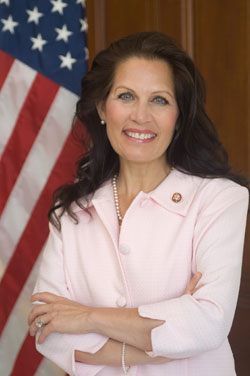
It’s been my observation over 20 years in journalism that the politicians who most often refer to “common sense” tend not to possess it. And that was reinforced this morning when I got an email for Republican presidential candidate Michelle Bachman plugging a new television commercial opposing raising the nation debt ceiling.

“Dear Fellow Conservative,” it began, misreading her audience by a big way in my case, “I will not vote to increase the debt limit. Period.” And in the commercial, she follows this opening line with, “It goes completely contrary to common sense.”

With six words, she tortures not just grammar, but also the very notion of common sense. Because it make not one iota of sense to let the U.S. default on its debts, lower its credit rating and artificially jack up interest rates, simply because these ignorant Tea Party fools don’t like the size and scope of the federal government.

If the people really agreed with the right-wingers’ plans to gut government, Bachman would have the votes in Congress and the White House to make deep cuts during the normal budget process, which common sense should indicate is the proper time to make budget cuts. But instead, she and other conservatives are pandering to ignorant yahoos who think greatly reducing government will somehow help the economy, when actually it would kill economic growth.

“When times are tight for your family or mine, we know that’s not the time to call the credit card company and ask for a higher credit limit. But that’s what many elected officials in Washington are suggesting we do for our nation, right in the midst of an economic crisis!” Bachman argues.

Clearly, Bachman has never actually been in the position of having to make the tough decisions between buying groceries for your kids and refusing to take on more debt, because many families often do choose the former. And no matter what cash-strapped families decide, they also usually look at ways to increase their revenue, something Bachman and the conservative refuse to do, for ideological reasons that make no sense.

But that’s really beside the point, because there is no equivalency between family and federal budgets. While it is certainly true that Congress and President Obama should take steps to reduce the budget deficit – hopefully addressing the ridiculously high and growing wage and wealth gaps in the process, problems directly connected to the ballooning federal debt – no reputable economist would support the deep cuts Bachman advocates while the unemployment rates are as high as they are.

And when the time comes to start making deep cuts in government spending, we should start with the military budget, because it’s the lion’s share of the budget and ultimately an investment that harms our species. It’s just common sense.

The (unsafe) UCSF shuttles

9

No question: The shuttles used by UCSF (which, is, forgodsake, a health-care organization) ought to have seat belts. So should school buses (actually, full-body restraints in school buses might not be such a bad idea. I want them in my car, too. Shut up and sit down, you little bastards — we’re driving here.) And the UCSF drivers should be more careful.


There are also other safety issues around those shuttles, though. Particularly when they pick up and drop off passengers on city streets.


The UCSF campuses have their own shuttle stops; the ones at Mission Bay are the same as any normal bus stops. But the shuttles don’t just stop on the campuses. They stop, among other places, at 16th and Mission — and typically they use the Muni stop.


Or sort of. Travel west on 16th St. any afternoon, and you’ll see this scene: A UCSF shuttle is halfway in and halfway out of the Muni stop. A Muni bus is stopped behind, unable to pull in. Cars are pulling around the bus and can’t see the (smaller) shuttle as it starts to pull out of the stop (and the bus starts to pull in). Traffic is all backed up waiting for this mess to clear — except for the drivers in a rush, who pull around (sometimes inching into the opposing lane of traffic), typically missing the shuttle bus by inches as it slides back onto the street.


And there are a lot of bicycle riders in the mix. It’s pretty much a bloody accident waiting to happen.


If UCSF gets to use Muni stops (nobody else can — nobody. Not the On Lok shuttle, not the private Genentech buses, not commercial tourist vehicles) then the university ought to pay the city a fee to make the stops big enough, then the drivers ought to be trained to pull forward all the way into the stop to let the Muni bus in behind (and so other cars can see them). And the Muni drivers and everyone else should be trained to treat the shuttles as part of the local transit system.


I get the need for the UCSF shuttles. Without them, all those doctors and medical students might be driving all over town between the campuses (although again: health-care organization. Bicycles are very healthy). But either they’re part of the city system and can use city facilities (properly) — or they aren’t, and they shouldn’t stop in the Muni zones.


Pet peeve of the week.   

Decide, Ed, Decide

23

So Ed Lee maybe, sorta is thinking he might want to consider running for mayor. He tells folks in the Mission that “I’ve made no decision yet.” He leaves the Chron with some pretty strong hints:


Asked if he would categorically rule out running in November, Lee sidestepped the question, saying he is proud of his achievements so far, including unanimous votes at the board this week on his budget and his pension reform plan, and has more goals to accomplish, like increasing the city’s workforce and affordable housing stock.


When a reporter noted to the mayor that his answer didn’t rule out running, Lee smiled and hopped into his car.


That alone is a clear and dramatic shift in his position. He told us back in February that running in November was out of the question:


Although rumors had been circulating that Lee might seek a full term, he told the Guardian he’s serious about serving as a caretaker mayor. “If I’m going to thrust all my energy into this, I don’t need to have to deal with … a campaign to run for mayor.”


So now he’s being coy — and that’s not an appealing position for a mayor who has made it his trademark to be honest and straightforward with people.


I know what’s happening: Some of his best friends and allies are terrified of the prospect of Mayor Leland Yee, and Yee appears to be the frontrunner — and so some powerful people are putting immense pressure on him to put aside his own desires and do what they think is best for the city (which means blocking Yee).


If Lee wants to run, that’s his choice. I know he said he wouldn’t, but times change and the situation changes and that’s why I was against the whole “caretaker” mayor thing in the first place. When you define someone as a caretaker who can’t run again, you deprive San Franciscans of the right to choose the next mayor. (I don’t like legislative term limits, either — same argument.)


But this dancing around and playing games is a bad thing. Run, Ed, Run, or Don’t, Ed, Don’t — but please: Decide, Ed, Decide. Now. Then you can start telling everyone the truth and we can believe it.


Outrage at the Bayview Opera House (VIDEO)

A community meeting July 20 at the Bayview Opera House dissolved into chaotic shouting when Police Chief Greg Suhr attempted to present the San Francisco Police Department’s version of what transpired July 16 when a 19-year-old African American man was shot nine times by police and killed just blocks from where the meeting was held.

“On Saturday afternoon, two officers at the Bayview station … contacted a fare evader whose name ended up being Kenneth Wade Harding, Jr. of Seattle, Washington,” Suhr began. “After asking him for his identification, he became a little bit anxious, and at one point in time he jumped off the platform and ran across the street, and ran through crowded Mendell Plaza. I cannot tell you how badly that I feel … as captain of this station for two years. I love the Bayview community.”

At that point, angry shouts rose up and Suhr started getting booed, but he continued. “During this foot pursuit, at some point in time, the suspect … fired at the officers, and the officers returned fire. This is the account that we have so far.”

Kilo Perry began shouting back at the chief, saying, “You are not a friend of ours. You are the enemy,” before bystanders tried to calm him down. The SFPD had planned on showing a power point presentation about the incident, but that didn’t happen. Instead, Suhr was drowned out, and the microphone was passed to various community representatives and members of the clergy, who’d helped organize the meeting, as they tried to regain control. Lifelong Bayview resident Charlie Walker asked people to sit down and relax.

Several hundred people had gathered at the Bayview Opera House to get answers about the shooting, and most remained seated as people continued to swarm around the police chief. After some time had passed, community leaders managed to set up a question-and-answer session with Suhr.

From this brief exchange and venting session, it became clear that people had come to the meeting with broader concerns than just what transpired Saturday. Elvira Pollard stood to recount how, seven years ago, her son had been shot by police 36 times, and that police had claimed that he’d shot first. She said it took more than nine months to get an autopsy report. “It’s the same scenario!” she charged. “Do you really think they aren’t going to lie about this one?” Suhr said that he couldn’t comment on that case specifically since he didn’t know the details, but offered to meet with her.

As people spoke, police violence against youth emerged as a theme. Harding was not a resident of the Bayview, and it came to light after his death that he had served time for attempting to promote prostitution and was a person of interest in connection with the fatal shooting of a 19-year-old woman. But to many who expressed outrage at the meeting, his death was linked to past instances in which youth had been gunned down by law enforcement. One woman showed up wearing a T-shirt, earrings, and a handbag displaying images of Oscar Grant, the 20-year-old unarmed Hayward man who was shot and killed by BART officer Johannes Mehserle on January 1, 2009.

A concern that was voiced again and again was that people felt the police routinely harrassed youth on the T-Third line. Grilled about why police were constantly stopping young people over MUNI transfers, Suhr responded that police had recovered weapons from T-line passengers while conducting fare inspections in the past.

The meeting broke apart when Suhr was escorted out, surrounded by uniformed officers, news cameras, and angry residents who continued to demand that he release the names of the officers who shot Harding. One simply yelled, “stop shooting black people in the back!” Once outside, with beads of sweat rolling down his face, Suhr told reporters, “I’ll be back.”

Here’s a video of the tense exchanges that took place at the July 20 meeting. 

http://www.youtube.com/watch?v=l3cQwtKMsXM

Video by Rebecca Bowe

Wage theft prevention ordinance moves forward

Supervisors expressed strong support July 20 for an ordinance that a San Francisco coalition of labor advocates is pushing for to prevent wage theft and shore up protections for low-income workers. Spearheaded by Sups. Eric Mar and David Campos with Sups. Ross Mirkarimi, Jane Kim, John Avalos, and David Chiu as co-sponsors, the legislation would enhance the power of the city’s Office of Labor Standards and Enforcement (OLSE) and double fines for employers who retaliate against workers.

Dozens of low-wage restaurant workers, caregivers, and day laborers turned out for a July 20 Budget & Finance Committee meeting to speak in support of the Wage Theft Prevention Ordinance, which was drafted in partnership with the Progressive Workers Alliance. The umbrella organization includes grassroots advocacy groups such as the Chinese Progressive Association, the Filipino Community Center, Pride at Work, Young Workers United, and others.

A restaurant worker who gave his name as Edwin said during the hearing that he’d been granted no work breaks, no time off, and had his tips stolen by his employer during a two-and-a-half year stint in a San Francisco establishment, only to be fired for trying to take a paid sick day. “When I was let go, I did not receive payment for my last days there,” he said.

His experience is not uncommon. An in-depth study of labor conditions in Chinatown restaurants conducted by the Chinese Progressive Association found that some 76 percent of employees did not receive overtime pay when they worked more than 40 hours in a week, and roughly half were not being paid San Francisco’s minumum wage of $9.92 an hour.

“People who need a job and can’t afford to lose it are vulnerable to exploitation,” Shaw San Liu, an organizer with the Chinese Progressive Association who has been instrumental in advancing the campaign to end wage theft, told the Guardian.

The ordinance would increase fines against employers from $500 to $1,000 for retaliating against workers who stand up for their rights under local labor laws. It would establish $500 penalties for employers who don’t bother to post notice of the minimum wage, don’t provide contact information, neglect to notify employees when OLSE is conducting a workplace investigation, or fail to comply with settlement agreements in the wake of a dispute. It would also establish a timeline in which worker complaints must be addressed.

“The fact is that even though we have minimum wage laws in place, those laws are still being violated not only throughout the country but here in San Francisco,” Campos told the Guardian. “Wage theft is a crime, and we need to make sure that there is adequate enforcement — and that requires a change in the law so that we provide the Office of Labor Standards and Enforcement more tools and more power to make sure that the rights of workers are protected. Not only does it protect workers, but it also protects businesses, because the vast majority of businesses in San Francisco are actually … complying with the law, and it’s not fair for them to let a small minority that are not doing that get away with it.”

So far, the ordinance is moving through the board approval process with little resistance. Mayor Ed Lee has voiced support, and Budget Committee Chair Carmen Chu, who is often at odds with board progressives, said she supported the goal of preventing wage theft and thanked advocates for their efforts during the hearing. The item was continued to the following week due to several last-minute changes, and will go before the full board on Aug. 2.

Mayor Lee meets with Bayview community leaders about officer-involved shooting

Mayor Ed Lee and officials from the San Francisco Police Department met with Bayview community leaders in City Hall July 19 to discuss the police investigation surrounding a July 16 officer-involved shooting that has prompted intense community anger and protests. While city officials indicated that the meeting was called to provide information and updates for the community, frustrated community members emerging from the City Hall conference room dismissed it as “more of a lecture,” saying city officials weren’t open to hearing broader community concerns that have intensified in the wake of this tragic event.

Reporters were not allowed in the room while the meeting was held because “it’s more of a community meeting,” according to mayoral communications staff member Francis Tsang. Attendees included Bayview community leaders Chris Jackson, Geoffrea Morris, Mike Brown, Charlie Walker, Ed Donaldson, and the Rev. Amos Brown. District 10 Sup. Malia Cohen also issued invitations to the meeting, which was scheduled at the same time as the full Board of Supervisors meeting, and sent a representative.


The shooting victim was Kenneth Harding Jr., 19, from Washington. Police say he fired one round at officers before police fired nine rounds, killing him. However, some witnesses initially reported that they did not see Harding fire a gun, and a firearm wasn’t immediately recovered from the scene. Police initially tried to detain Harding on the station platform of the Oakdale / Palou stop on the T-Third line on suspected fare evasion. After Harding was killed, it came to light that he had a criminal history and had been named as a person of interest in the fatal shooting of a 19-year-old pregnant woman from Washington. The incident, which occurred in broad daylight and was captured on film and witnessed by people who were out on the street, proved to be a traumatizing event for a low-income, predominantly African American community where tensions already run high between police and residents.

Lee indicated to the Guardian that the July 19 meeting had been called primarily to clear up misinformation. “There have been a lot of stories spreading about what did and didn’t occur, and we felt it was necessary to get the community updated as quickly as possible,” Lee said. “Any time there is a death in any community we’re very concerned … this one in particular has been represented in many different ways, and a lot of it has been very inflammatory in terms of what people have said occurred. We’ve heard points like there was no gun, when in fact now we’ve found a gun through police investigation. That there was no shot made at officers when … the officers have at least some evidence through the ShotSpotter program that there was an initial shot made by the suspect.”

Lee added that MUNI staff had reported people relaying “all kinds of stories” while riding the buses. “These are very hard, hard feelings,” he said. “So I felt it necessary that we confront this head on with community leaders. We met with some yesterday, we’re meeting with some today, [Police Chief Greg Suhr] is hosting a town-hall meeting in the Bayview tomorrow to yet again find every opportunity to fully explain what they have uncovered as the evidence, and to make sure people base their views on the facts.” A larger community meeting is scheduled for July 20 at 6 p.m. at the Bayview Opera House.

Meanwhile, Bayview community leaders Chris Jackson and Geoffrea Morris were not pleased when they emerged from the conference room. “The mayor left without hearing one public comment,” Morris said. “It was just a lecture. It wasn’t addressing the police, and how they deal with fare evasion, and harass people along the T train. It was not that. It was just, the mayor said his little thing, did not say goodbye, and ran out.”

Morris went on, “We don’t have grief counselors out there. We don’t have the police saying that they’ll stay off the T-Train platform until the investigation is done. We thought this meeting was going to be for them to go, ‘where do we go from here?’ And the thing that people are missing … whatever demon that boy had, that was a human life.” Concerns are still swirling about how long it took for an ambulance to arrive after the shooting, Morris said, and about how police arrived at the scene with high-powered weapons which they kept drawn even as Harding writhed in a pool of blood on the sidewalk.

Morris and Jackson said that during the meeting, officials showed a Channel 7 TV news broadcast clip and played an audio of gunshots being fired to demonstrate that the suspect had fired an initial shot before police opened fire. “We all have Internet, smart phones, and all the footage as well,” Morris said. “I was there on the site.”

Shortly after the meeting, the San Francisco Police Department issued a statement to announce that gunshot residue had been detected on Harding’s right hand during an investigation. “The presence of gunshot residue on Harding’s right hand supports statements from witnesses that Harding held the gun in his right hand as he fired at the police officers,” the press release stated. It went on to note that the presence of gunshot residue on an individual’s hand could indicate that the individual fired a gun, or was in close proximity to a gun when it was fired, or touched something that was coated with gunshot residue.

Morris and Jackson also voiced concerns that went beyond the details of this particular case. “The response really needs to be a policy shift,” Jackson said. “We need a better approach in terms of violence prevention. We cannot address this with more cops on the T line.”

Jackson, who ran for District 10 supervisor in 2010, also questioned why police officers had been tasked with fare evasion enforcement on the T-Third line in the first place. MUNI also employs fare inspectors, he pointed out, and the city has a specialized program, called the ambassadors program, which was created last year in the wake of violence along the T-Third line directed at members of the Asian community. “Where was the public conversation about putting cops on MUNI trains?” Jackson wanted to know. “Who came up with that idea?”

Asked about this, Lee told the Guardian that he had specifically requested a higher police presence in areas where higher levels of crime were anticipated – and the July 16 shooting occurred in just such an area.

“I actually asked the chief to pay more attention to areas that had a history of gun violence and shootings and other kinds of violence … and it just so happens that this particular area, Third and Palou, is a place where there’s a lot of violence,” Lee said. “So we had more uniformed officers on that specifically at not only my request, but with the understanding of the police chief, too. He’s trying to do his best to keep everybody safe. And that in the summer, with all of the evidence that we have about where the shootings are and where they’re occurring, we naturally focus on areas where we think there’s going to be more violence to have more presence. So circumstances occurred where an individual was stopped because of a fare evasion, and I believe police were there to begin to detain him, and ask him to provide some evidence of who he is and why he did what he did, and that turned out to be a chase. A chase is one thing, but a chase with an opening of a firearm is a completely different thing.”

Meanwhile, Bayview community residents who ride the T-Third line experienced delays in recent days because MUNI operations staff decided to stop running light rail trains into the Bayview, instead dropping people off partway through the route and then directing them to wait for shuttle buses.

On July 18, a little before dark, a T-Third driver stopped at the Marin Street stop and announced that all passengers would have to wait for a shuttle bus. When passengers demanded to know why, she responded, “They’re acting up on Third Street, and our bosses don’t want us in the middle of it.”

According to SFMTA spokesperson Kristen Holland, operations staff began receiving reports around 6:30 or 7 p.m. July 18 that “there were upwards of 50 people walking on the right-of-way for the trains. As a safety precaution, our operations folks deployed buses for that portion of the line. We were told that they started at the southern terminus, and were walking north.”

This Guardian reporter hopped onto a shuttle bus with a notebook in hand after hearing that people were “acting up,” but by the time the bus made its way into the heart of the Bayview, the streets were calm. A MUNI employee who asked not to be named said he’d heard that someone had kicked in a window on one of the T-Third cars, and that was why the trains weren’t going through.

Meanwhile, the unexpected transfer left passengers weary, since for many waiting for the shuttle marked a second or third transfer on public transportation to get home. “People’s kind of frustrated. You go a few blocks, and they say it’s the end of the line. You go a couple blocks and they tell you the same thing,” said Darwin Green.

Another passenger, a youth who was with a friend and seemed concerned about the unfamiliar route the shuttle bus was taking, said, “I think it’s bullshit that they’re issuing citations. And there’s no need to shoot somebody because they didn’t have change for the bus fare.”
 
Another passenger was also disgruntled about the delays. Asked what he thought about everything that had been going on in recent days, he said, “It seems like they spend an awful lot of money in wages chasing down $2 fares.”