• No categories

Politics Blog

What the mayoral polls mean

25

We’ve seen a lot of polls on the mayor’s race, and they’re all pretty similar to the one the Examiner reported today: Ed Lee has about 30 percent of the vote, and everyone else is in a big, undifferentiated pack way back in the single digits. A couple of thoughts to put this in perspective:


One: All of these polls have a margin of error; a poll of 500 voters, like this one, has an MOE of at least +/- 5 percent. Which means that Lee has somewhere between about 25% and 35% of the vote. The rest of them? They’re all effectively tied. Yee and Herrera at 7 percent and Avalos at 5 percent is a statistical dead heat.


Two: What a poll like this shows, among other things, is that 70 percent of the voters are not supporting the incumbent right now. About as many are undecided as are supporting Lee. That’s not a whopping show of support for the front-runner.


Three: On the other hand, nobody else in the race is even close to Lee at this point, and he’s far enough ahead that he will be hard to catch — unless either (a) one of the other candidates catches fire, comes up with a campaign that really takes off and pulls away from the pack, or (b) the other candidates attack Lee enough, and the attacks are effective enough, to bring his numbers down significantly.


Four: There’s never been a ranked-choice vote for mayor, so nobody knows exactly how it will play out.


I don’t buy the line that Adachi is a “long shot” — not any more than anyone else. In fact, for better or for worse (and it cuts both ways) he’s better positioned than most of the candidates to get votes from both the right and the left. If I were running Adachi’s campaign, I’d be sending him out to the west side of town to tell everyone he was the only candidate tough enough to stand up to those damn city employee unions — then I’d be going to the east side of town and saying he was the only candidate who could stand up to the cops. Tell the conservatives that pension reform is about the greedy bureaucrats; tell the progressives that it’s about the greedy cops and firefighters. Wear a nice silk suit and look like a manager out west; take the tie off and talk about cops breaking into SRO rooms on the east. And with Ed Lee as an incumbent who supports a more modest pension reform plan, Adachi can run against City Hall wherever he goes.


I’m not saying he’s going to win, or even that he’s the number one challenger, but he did get 190,000 votes the last time he ran. And he can raise money. So he’s going to be a factor in the race.


What I’m waiting for is the breakout issue, the line that takes, say, John Avalos into striking range of Lee (at which point, he can start collecting “anyone but Ed” votes from the other candidates). Remember Harris Wofford, who was given absolutely zero chance of retaining his U.S. Senate seat in November, 1991? Wofford, who had been appointed that spring, was a virutal unknown (and something of a nerd) who was facing the slick and popular former Govenor Dick Thornburgh. Wofford’s campaign came up with a single-issue line that caught Thornburgh by surprise: “If every criminal has the right to a lawyer,” he asked in campaign ads, “then why doesn’t every sick person have the right to a doctor?” That  slogan, and that issue, brought him from about 30 points behind to a ten-point victory.


What’s going to catch the San Francisco public’s attention over the next two months? I don’t know. Here’s my suggestion:


“If San Francisco has 14 billionaires, why can’t we afford to buy pencils for the public schools?”


Monty Python, AI and the end of the world

1

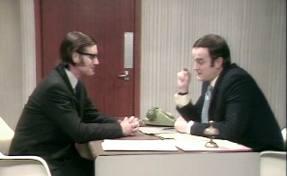
AI is already scary enough to Sci-Fi fans — you can go all the way back to Hal, or Mike, or just to Continuity, but the idea of an artificial intelligence that starts to fuck with its human creators is a deep part of modern mythology. And now it’s happening. For real. And instead of Clarke, Kubrick, Heinlein and Gibson, we get … John Cleese.


Check out this boingboing video, which appears to not be a joke.


 And then check out this Monty Python skit, which is pretty much the same discussion.


  This is the way the world ends — not with argument, but contradiction

Don’t search my cell phone

7

Privacy and civil-liberties activists are thrilled by state Sen. Mark Leno’s bill the prevents the cops from searching cell phones without a warrant. And the bill makes perfect sense — if I get stopped and arrested and have a laptop computer in my backpack, the police can’t turn it on and start reading my email without a warrant. But right now, they can freely scroll through the same information on my cell phone.


But one of the more interesting things this bill would do is protect reporters.


Think about it: When I’m out covering a demonstration, I’m not only getting tips from sources (possibly confidential sources) about what’s going on, I’m probably writing dispatches for this website — and it’s pretty well established in law that the police can’t force me to give up sources or to show them unpublished drafts of news reports. But it’s all sitting there in my phone — which these days functions as a mobile office. I might have emails from my lawyer, discussing police access issues and possible litigation, on the phone. I might have messages from other reporters making comments about individual police officers that aren’t likely ever to be printed. And unless Gov. Brown signs the Leno bill, that’s all material that any police officer who arrests me for anything (and I was once arrested at a demonstration for “conspiracy to loiter”) can start reading.


Law enforcement gave Brown a lot of money, but come on — this one’s a no-brainer.

Doctor questions BART shooting

28

Nice piece in the Bay Citizen by Rupa Marya, M.D., who treated Charles Hill, the man killed by BART police. She points to the essential problem — BART cops don’t seem to be able to deal with people who are agitated or mentally ill without shooting them:


While I had seen him agitated before and while I can’t speak to all of his behavior, I never would have described him as threatening in such a way as to warrant the use of deadly force. We often have to deal with agitated and sometimes even violent patients in the hospital. Through teamwork, tools and training, we have not had to fatally wound our patients in order to subdue them.


I understand the police are there to protect us and react to the situation around them, but I wonder why the officer who shot Charles did not aim for the leg if he felt the need to use a gun, instead of his vital organs. I wonder if he possessed other training methods to subdue an agitated man with a knife or bottle.


I feel this situation quite deeply. It is hard to watch our civil servants (police) brutally handle a person and their body when I spend my time and energy as a civil servant (physician) honoring the dignity of that person, regardless of their race or social class, their beliefs or their affiliations.


I can tell you why the officer didn’t shoot Hill in the leg. Cops are trained to to shoot to kill, and only to kill — once a cop draws a gun and fires, he or she has already decided to use lethal force and is supposed to aim for center body mass and fire until the target is down. There are reasons for that — shooting someone in the leg is hard, and if you miss and the person shoots back, you can get killed yourself. Also, if cops were allowed to shoot people in the legs to stop or slow them down, there’d be a lot more police shootings — and sometimes the cops would miss the legs and kill somone who was only supposed to be disabled. Bottom line: Cops shouldn’t be firing their weapons at all unless there’s an immediate threat to their lives or the lives of others.


But therin lies the problem: Since the death of Idriss Stelley, San Francisco cops have been getting additional training in dealing with mentally ill people. It hasn’t always worked, and it’s not a perfect system, but at least there’s been an effort. As Dr. Marya clearly knows, health-care workers in the city have to handle mentally ill people, sometimes agitated people, all the time –without killing them.


The BART cops who shot Hill handled the situation really badly


And I don’t blame Dr. Marya for wanting to join the next protest.

Corporate vampires drink your blood

13

The same week that Warren Buffett gave an anemic Bank of America a $5 billion transfusion of capital, a score of protesters in downtown San Francisco said they know why the economy still sucks: corporate greed.

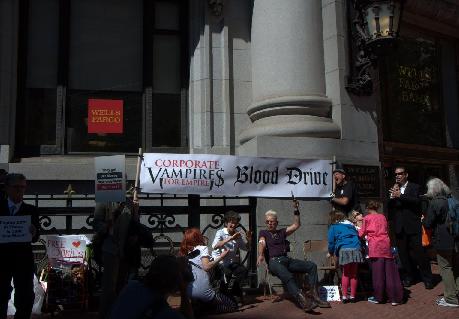
Demonstrators from US Uncut held a “corporate vampires for the empire” blood drive in front of several of Market Street’s most prominent storefronts August 27, pointing out corporations that haven’t paid their fair share of taxes.

“We have taken your money. We have taken your houses – now we want your blood!” cried out Vlad the Impaler in front of a Bank of America branch on Market street.

“No more, please no more,” his victim begged, a mock blood transfusion bag attached to her neck.

“More blood, more, you can give more!” laughed a jovial Vlad.

The victim fell to the sidewalk after giving her last ounce of blood to Bank of America.

According to US Uncut, Bank of America, despite having $2.2 trillion in assets, pays less in taxes than an average American household.

“Corporate tax evaders have no shame, they are sucking the economic vitality out of our country,” said protester and vampire hunter Bill Schwalb, who was quick to say he was in no way related to Charlies Schwab.

A crowd on lower Market drew its own picture of the American economy as a pair of women with shopping bags passed by in one direction and a homeless man with a bed roll passed the other way, both stopping a moment to observe the mock blood drive.

Pre-positioned victims at the Apple Store, Wells Fargo, FedEx, and Verizon were bitten and bled dry while waiting in line, to the shock and amusement of customers, while outside the blood donors were administered to by vampire nurses.

“Tax evasion, though vilified by the truthmongers of the left, is as American as apple pie. It’s an orgy of greed and blood lust,” Vlad told a crowd of bystanders who had stopped to gawk at the spectacle.
While the pantomime was funny, the issue is not. The group said the companies they targeted represented the worst of the worst of corporate tax dodgers. Together they represent billions of dollars in lost tax revenue – losses that are translating into service cuts to societies most vulnerable.

“No wonder we’re broke, all these corporations not paying their taxes,” exclaimed an irate passer-by in front of the Apple Store after listening to the group.

The super-wealthy want our waterfront

13

We are at the Guardian have been raising questions about the deal that the city cut to bring the America’s Cup here – which involves turning prime waterfront property over to wealthy developers with long-term leases – since it was first proposed. But our valid concerns have been largely drowned out by economic development boosterism and the view that we need to simply accept whatever billionaire CEO/sailor Larry Ellison and his partners say they want.

So we were as cheered as we were dismayed to read writer John King’s article in this week’s San Francisco Chronicle about how race organizers are trying to build a harbor for the super-rich to park their yachts so they can watch the races right in the middle of the Embarcadero’s longest stretch of open water and unobstructed bay views, a harbor that would likely be permanent.

King supports the race and its economic benefits. “But we also need to remember that it never hurts to look a gift horse in the mouth. And the open water along Rincon Park is not a cavity that needs to be filled,” he writes. This proposal is so appalling that even Chronicle readers and blog commenters – usually a conservative and curmudgeonly lot that bristles at the idea of asking anything of capital – have overwhelmingly criticized the idea, filling most of today’s Letters the Editor section.

Hopefully, that’s a sign that this idea – which the EIR on the America’s Cup incomprehensibly concluded was not a “significant impact” – is dead in the water. But given how far city leaders like Mayor Ed Lee and Board President David Chiu have been willing to bend over backward to give race organizers what they want, I wouldn’t be so sure.

At its best, the America’s Cup could be a great opportunity to showcase San Francisco and bring in much-needed tax revenues. But if journalists, citizens, and city leaders don’t remain vigilant and skeptical, this race might be remembered most as the ruse that the greedy rich used to sully and exploit one of San Francisco’s most valuable public resources.

BART board mulls nation’s first cell service disruption policy

44

A special meeting of BART’s Board of Directors yesterday (Wed/25) was the first step in crafting a policy outlining the circumstances under which BART staff would be authorized to cut off cell phone service in its train stations. The resulting policy will be the first in the nation, and is likely to act as a model for other government agencies to address the issue.

While BART’s top management defended the suspension of cell phone service to disrupt a protest planned for August 11, BART’s board was divided over whether the suspension of cell service to prevent a protest was justified and what would constitute a justification for cutting cell service in the future.

“This group was encouraging, promoting and inciting illegal behavior on our platform,” BART police Chief Kenton Rainey reminded the board.

“Well, there is illegal activity every day at BART. The response does not feel proportional enough for justification,” responded BART director Tom Radulovich,

BART director Robert Raburn echoed Radulovich’s concerns. “Neither speculation about a protest, nor mere disruption of train service, nor other illegal activity by itself constitutes a risk to passenger safety that would warrant interrupting cell service. We must guard First Amendment freedom of speech, and this will become a landmark case,” said Raburn.

Staff and union representatives stressed that public safety was always BART’s top concern.

Officials from BART’s three unions generally agreed that the shutting of cell phone service was inappropriate, but admonished protesters for conducting protests on the platforms where they say there is a safety risk due to crowding.
“I applaud the individuals, the union supports the individuals who organize, for I understand organizing. I understand protesting,” said Austin Thomas, who represents BART employees from SEIU Local 1021. “But, I would like to see that this forum be the forum to bring your protest, to have your grievances redressed here.”

“The bottom line for BART is that downtown San Francisco at 5 pm is the maximum stress point at the maximum stress time. It’s all about public safety and keeping the trains moving,” stressed BART Assistant General Manager of Operations Paul Oversier.

“We keep going around with these safety issues, but do not be confused: We do not have to have one or the other,” urged director Lynette Sweet, who referenced the 1955 case Pike vs Southern Bell Telegraph.

“In this case, a gentleman by the name of Bull Connors ordered Southern Bell to remove the telephone of one Lewis Pike, described by Mr. Connors as a negro of questionable character who is known to be using his phone for unspecified illegal purpose. That is not where we as BART want to go. We don’t want to tell people, or signify, or specify, that you can’t talk, that you don’t have the ability to talk.”

But BART board Vice President John McPartland took a harder stance. saying the action was justified, and BART need to post signs informing the public of possible disruptions in cell service due to safety issues.

“This is the beginning of a review from a national perspective on this issue. I, for one, think we should maintain our ability to control cell service until we have it looked at from a legislative perspective.” said McPartland.

“Not all free speech is protected. There are some very narrow exceptions, and I believed this to be one of them,” Oversier insisted.

“If we are ever going to shut off cell phone service, ever, it should be for the most valid reasons that I equate with 9-11 [terrorist attack] level. Not the protests that we thought were going to happen on August 11th. We can’t do that,” cautioned Sweet, who wondered out loud if BART couldn’t just apologize for making a mistake and move on.

Members of the public present for the meeting remained dubious about BART creating policy concerning cell phone disruption at all.

Speaking on behalf of protest group No Justice No BART, an activist identifying himself only as Christof told the board, “We are not asking you to fix anything. We just simply don’t trust you to run a police force at all. We are not asking you to improve your free speech policy, we already have a free speech policy – it’s called the constitution.”

He expressed doubts as to whether BART should be trusted with the power to cut cell phone service. “What is the first thing that your police officers did on the Fruitvale platform after they shot Oscar Grant in the back? They tried to confiscate video footage taken by passengers,” Christof accused.

That footage from the New Years Eve shooting of Grant by officer Johannes Mehserle was the beginning of BART’s problems with anti-police brutality protesters.

Other speakers from the public had similar concerns about BART overreaching its authority.

“The proper place to present the arguments we have just heard is not to this board, but in a court room before a judge considering a motion or injunction. Instead of using those existing legal mechanisms, you have taken matters into your own hands as vigilantes,” said Edward Hasbrook representing the Identity Project.

BART officials expect the new policy will be crafted and voted on within a month. They say the new policy will be vetted through BART attorneys, the ACLU, and and BART’s civilian advisory committee. But they cautioned that BART could not envision every emergency that would warrant shutting off of cellular service as they craft their forthcoming policy, so the policy would include some flexibility at the discretion of BART management.

Both the California Public Utilities Commission and the Federal Communications Commission, who regulate cell phone providers, are already examining the legality of BART’s actions. As an afterthought, at the close of the meeting, Sweet urged the board to consult with those agencies over the policy before it is implemented.

BART has only provided cell service in its stations for a short time. While BART is under no legal obligation to provide phone service, once they began providing service they fall under the jurisdiction of the FCC, which regulates cell service nationally.

Speaking in Denver to CNET, FCC Commissioner Robert McDowell said the matter was still under investigation.

“What the heck happened, what precedent does it set, were there any laws that were broken?” McDowell questioned. “Let’s continue with the investigation. We’ll draw conclusions after we have all the facts.”

Guardian forum tonight: Energy and Environment

19

We’ve got a great lineup for tonight’s Guardian forum on Energy, Environment and Climate Change. I’ll be moderating. The panelists are Antonio Diaz for PODER, Alicia Garza from POWER, former Supervisor Aaron Peskin and Saul Bloom from Arc Ecology. We’ll be talking about energy policy, environmental racism, how climate change will impact the southeast neighborhoods, the privatization of public space, Treasure Island and a lot more.


It starts at 5:30 pm, in the Koret Auditorium at the main library in the Civic Center. Lots of time for audience participation. Hope to see you there.


SF sued for approving AT&T’s sidewalk boxes without an EIR

19

A coalition of San Francisco citizens groups today sued the city over the 5-6 vote last month by the Board of Supervisors to allow AT&T to install 726 utility boxes on sidewalks throughout the city without studying the impact and alternatives with an environmental impact report.

The groups include San Francisco Beautiful (filing its first lawsuit against the city in its 64-year history), San Francisco Tomorrow, Dogpatch Neighborhood Association, Potrero Boosters, and the Duboce Triangle Neighborhood Association. Their appeal of AT&T’s permit was rejected by Sups. Sean Elsbernd, Mark Farrell, Malia Cohen, Carmen Chu, David Campos, and Scott Wiener, allowing the project to move forward.

“The city has refused to do what should be a routine environmental review,” Milo Hanke, a past president of San Francisco Beautiful, told us. He said the public should have been allowed to consider alternatives to the “unwanted and unwarranted degradation of the public sidewalks by a greedy corporation.”

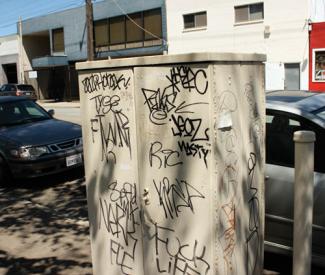
While the project will allow AT&T to upgrade its Internet service and other capabilities, many in the technology community told us back in May that there are better options for improving the high-tech infrastructure in the city without the unsightly boxes that will block sidewalks and be magnets for graffiti.

But those groups, and the groups that filed this lawsuit, say they felt ignored by City Hall and AT&T. “We were shut out of the process,” Hanke said. Now, the plaintiffs will go to court to seek an injunction to stop the project as they wait for a ruling on the merits of the case.

Even BART must honor free speech rights

46

Given the recent battles between BART and both the physical and online protesters organized by the group Anonymous, it’s no surprise that the live video feed of this morning’s (Wed/24) BART Board of Directors meeting is down due to “technical difficulties.” But we’ll try to follow-up later with what happened during the special meeting focused on BART’s decision to shut down cell service in an effort to thwart a threatened Aug. 11 protest against the latest fatal shooting by BART police.

In the meantime, we have an interesting letter sent this week to the agency by the American Civil Liberties Union, which cites relevant caselaw and makes it clear that BART exceeded its legal authority in shutting down the system. Unfortunately, BART’s stubborn refusal to acknowledge its mistake has spawned continuing protests that are snarling commutes and – given the trigger-happy nature of some BART cops – unnecessarily creating dangerous situations for everyone.

“The people of our state have the right to speak freely as Americans and as Californians. Our supreme court has long held that cutting off telephone service can infringe upon the right guaranteed by the First Amendment, reasoning that because ‘the right of free speech and press are worthless without effective means of expression, the guarantee extends both to the content of the communication and the means for its dissemination.’ Our state constitution is even more protective of free expression than is the First Amendment,” writes staff attorney Michael T. Risher, citing the 1966 Sokol v. Public Utilities Commission case, among others.

The standard set by the Supreme Court for when speech or networks may be cut off is when it creates “a clear and present danger of imminent violence,” which he argues simply wasn’t the case with a protest that never even materialized. And he notes that the courts take an even more dim view of prior restraint, or the regulation of speech before it even occurs.

“BART cannot properly prevent protestors or other cell-phone users from speaking with one another on the telephone in the first place. Our courts have held that even private telephone carriers, whose actions are not constrained by the First Amendment, cannot shut off service simply because they believe that their customers may be using their services to facilitate crime,” he wrote, citing the 1942 ruling in People v. Brophy. “BART, which is bound to follow both the First Amendment and the California Constitution’s Liberty of Speech clause, must not do so either.”

Central Subway gravy train shows how City Hall works

69

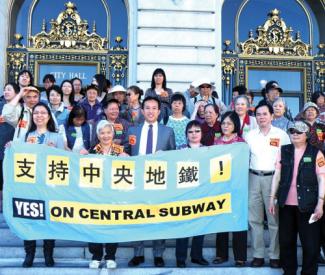
Despite its skyrocketing cost, inefficient design, and a growing chorus of criticism – ranging from a Wall Street Journal editorial today to an op-ed in the SF Chronicle last week – the Central Subway project continues to move forward for one simple reason: rich and powerful people want it to happen, whether it makes sense or not, because it benefits them directly.

“The subway is a case study in government incompetence and wasted taxpayer money,” the Wall Street Journal wrote in a “Review & Outlook” piece today (full text below), but it was only partially correct. The Central Subway is actually a case study in how things get done at City Hall, and how connected contractors and their political patrons make off with that taxpayer money.

“San Francisco is embarking on a Big Dig of the West, and unless our local leadership applies the brakes soon, the damage to our transit systems will be all but guaranteed. I urge local and national leaders to recognize what is obvious and stop this train to nowhere,” former San Francisco Transportation Agency Chair Jake McGoldrick wrote in his Aug. 18 op-ed.

But that isn’t likely to happen, given the political dynamics that have taken root at City Hall this year. Remember, this project was the result of a mutually beneficial deal that then-Mayor Willie Brown cut with Chinatown power broker Rose Pak back in 2003 (when the project was estimated at $648 million, before it ballooned to its current price tag of $1.6 billion).

This was the same duo that engineered the appointment of Ed Lee as interim mayor earlier this year and then pushed him to break his word and run to retain control of Room 200, as well as pressuring David Chiu into being the swing vote to give Lee that job and secretly backing Jane Kim’s run for the Board of Supervisors. All are big supporters of the Central Subway project, despite all the experts calling it an wasteful boondoggle that will be the most expensive 1.7-mile piece of track ever built in this country.

But the opinion of fiscal and transportation policy experts matters little in a town that is once again being governed by shameless power brokers. Hell, Brown even uses his weekly column in the Chronicle to confirm his weekly breakfast date (every Monday at the St. Regis Hotel) with his “friend” and client Jack Baylis, a top executive at AECOM, the main contractor for the Central Subway, as well as the America’s Cup, Transbay Terminal, the rebuild of the city’s sewer system, and all the other most lucrative city contracts.

In turn, AECOM kicks down contracts and payouts to a network of political supporters that will ensure that the project gets built, such as Chinatown Community Development Center, which signed an $810,000 contract in December to support the Central Subway in unspecified ways right before CCDC and its director Gordon Chin provided crucial support for getting Lee into the Mayor’s Office, where he can ensure the Central Subway project remains on track.

Yes, it’s just that crass and obvious. And it isn’t even about politics. Hell, Baylis is a Republican from Los Angeles, despite his meddling in San Francisco’s political affairs by sponsoring the Alliance for Jobs and Sustainable Growth and other groups that will be doing independent expenditures on behalf of Lee this fall, trying to tell us that “it’s all about civility.”

No, it’s about money and it’s about power, straight up. The Central Subway is really more of a gravy train than a sensible transit project, but that’s just how business is being done at City Hall these days.

One of the people who has long criticized the project – noting how Chinatown would be served far better with surface transit options, at a fraction of the cost – is Tom Radulovich, executive director of Livable City and an elected BART board member. He was heartened to see so many more voices – from the editorials to a recent Civil Grand Jury report to internal audits in the San Francisco Municipal Transportation Agency, which will lose money operating the new system – echoing his concerns.

“There are more people who seem to be sharing my thoughts,” Radulovich said. “It would be good to have a civic debate on this.”

But he’s not confident that will happen, despite the fresh wave of concerns. “There’s a lot of stuff that looks like planning that has gone into justifying this,” he said. “When the political culture of City Hall and the planning culture come together, this is what you get.”


Full text of WSJ article:

Off the San Francisco Rails

Tony Bennett may have left his heart in San Francisco, but the politicians who contrived the city’s Chinatown subway project must have left their brains somewhere else. The subway is a case study in government incompetence and wasted taxpayer money.

P.S. The Obama Administration is all for it.

Former Mayor Willie Brown sold a half-cent sales tax hike to voters in 2003 to pay for the 1.7-mile line on the pretext that the subway would ease congestion on Chinatown’s crowded buses, but he was more interested in obtaining the political support of Chinatown’s power brokers. In 2003, the city estimated the line would cost $647 million, but the latest prediction is $1.6 billion, or nearly $100 million for each tenth of a mile.

Transportation experts say the subway’s design is seriously flawed and that improving the existing bus and light-rail service would make more sense. The subway misses connections with 25 of the 30 light-rail and bus lines that it crosses, and there’s no direct connection to the 104-mile Bay Area Rapid Transit line or to the ferry.

Commuters will have to travel eight stories underground to catch the train and walk nearly a quarter of a mile to connect to the Market Street light-rail lines—after riding the subway for only a half mile. Tom Rubin, the former treasurer-controller of Southern California Rapid Transit District, calculates that taking the bus would be five to 10 minutes faster along every segment.

The city’s metro system, which is already running $150 million operating deficits, isn’t likely to have the money to keep the subway running in any case. Last month the San Francisco Civil Grand Jury, a watchdog group, warned that the subway’s costs “could stretch the existing maintenance environment [of the metro system] to the breaking point” and will defer the purchase of a new communications system.

Alas, San Francisco will likely drag national taxpayer money into the bay too. The city has applied for a multiyear $942 million “full funding grant agreement” from the Federal Transit Administration (FTA) to cover 60% of its capital costs. In 1964 Congress created a back-door earmark program called “New Starts” to subsidize local transportation projects. The FTA rates and recommends projects for grants, and Congress usually rubber-stamps its recommendations.

In January 2010, Transportation Secretary Ray LaHood modified the grant criteria by adding environmental and communal benefits and minimizing cost-effectiveness. The change effectively means that any project can get federal funding as long as its sponsors claim they’re moving cars off the road.

“Measuring only cost and how fast a project can move the most people the greatest distance simply misses the boat,” Mr. LaHood wrote in January 2010 on his Fast Lane blog. “Look, everywhere I go, people tell me they want better transportation in their communities. They want the opportunity to leave their cars behind . . . And to enjoy clean, green neighborhoods. The old way of doing things just doesn’t value what people want.” We’re told Mr. LaHood is smarter than he sounds.

The FTA has given the Chinatown subway one of its highest project ratings, which virtually assures a full funding grant agreement. Once the city receives such an agreement, the feds are obligated to provide whatever funds they promise. The FTA won’t approve the agreements until the fall, so there’s still hope that someone wises up and nixes the project. Oh, and if Congress is looking for discretionary programs to cut, New Starts would be a good start.


Workin’ at the car wash

Worker advocates with La Raza Centro Legal and the San Francisco Day Labor Program are partnering with city officials for a creative approach to addressing the pervasive issue of wage theft: A worker-owned car wash.

On Aug. 17, attorneys from La Raza joined with City Attorney Dennis Herrera to announce that a lawsuit had been filed against the owners of Tower Car Wash for longstanding labor law violations that resulted in workers earning less than minimum wage. The complaint, filed jointly with the city and La Raza, seeks to recover up to $3 million in compensation, penalties, and interest for the cheated workers.

The Tower Car Wash lawsuit, along with other high-profile complaints alleging wage theft that the city has filed against the owners of Dick Lee Pastry and Danny Ho, who allegedly cheated day laborers out of the money they were owed, would never have come to fruition if low-wage workers hadn’t come forward. Individuals like Tower Car Wash employee Rosa Ochoa, who’s involved with La Raza’s Colectiva de Mujeres, have publicly challenged their employers for labor violations, a tough stand in a state with exceptionally high unemployment in the midst of a recession.

“What we feel like is really important about this lawsuit is that for us, it’s about worker empowerment,” says Workers’ Rights Coordinating Attorney Kate Hegé of La Raza. “It wouldn’t be possible without these workers being able to come forward.”

The idea for a worker-owned car wash emerged out of a desire to advance the goal of worker empowerment, Hegé notes. With help from Sup. David Campos, interim Mayor Ed Lee, and pro bono assistance from the law firm Orrick, Herrington & Sutcliffe, La Raza and the San Francisco Day Labor Program hope to establish a regular car wash on weekdays in the city-owned lot on Bayshore and Alemany boulevards, the location of the Alemany Farmer’s Market and the Alemany Flea Market on Saturdays and Sundays.

“We’ve been working with the city for the past several months to start a green, worker-owned car wash cooperative where workers of the San Francisco Day Labor Program would not only administer it, but work and gain benefits,” Renee Saucedo, Community Empowerment Coordinator at La Raza, told the Guardian. “The main thing about this day labor car wash is that it’s going to be run by the workers themselves.”

The project comes on the heels of a broader local effort to improve protections for low-wage workers. Earlier this month, the Board of Supervisors approved the Wage Theft Prevention Ordinance, crafted in partnership with the Progressive Workers Alliance to strengthen the the city’s Office of Labor Standards & Enforcement.

Chiu and Kim are making a quick trip to Burning Man

18

Board of Supervisors President David Chiu will take a day off from his busy mayoral campaign next week to attend Burning Man, which he’ll fly into on a small private airplane along with Sup. Jane Kim and spend less than 24 hours on the ground.

“For several years, I’ve wanted to visit the Black Rock Desert to learn about how Burning Man is building 21st Century community, creating art, and fostering sustainability,” Chiu told the Guardian after we learned about the trip from several sources.

Black Rock City LLC, the company that stages Burning Man – an arts and cultural extravaganza that began in 1986 on San Francisco’s Baker Beach and now takes place in Nevada’s Black Rock Desert – has long sought to woo influential city officials to the event, offering free tickets to elected officials and some board aides. With this year’s move into a new Mid-Market headquarters space and creation of the new Burning Man Project nonprofit, both the LLC and City Hall have more reason than ever to seek stronger ties.

Sup. Eric Mar, who attended his first Burning Man last year, will be returning this year on his own to spent most of the week on the playa. By contrast, Chiu and Kim will fly into an airport set up at the event on the morning of Sept. 1 – accompanied by activists Sunny Angulo and Dan Nguyen-Tan, who will essentially staff them during their visit – stay in accommodations set up by supporters and the LLC, and fly out the next morning.

“It’ll be a super quick trip,” Chiu said, but he says that he’s excited to experience the event because, “Burning Man is an extension of our San Francisco community.”

Neither Kim nor Angulo returned calls for comment. Sources who helped set up the trip say they are trying to keep the value of the contributions to each supervisor under California’s $420 limit on gifts to public officials, and that if the value of the tickets, flight, and accommodations exceed that, Kim and Chiu will pay for the difference.

Organizers of the trip were also trying to woo another mayoral candidate, Sup. John Avalos, who considered it but ultimately decided against it. “Can’t pull away, what with being from a working family and with the kids and campaign and all,” he told us.

Tickets to Burning Man, which runs from Aug. 29-Sept. 5, sold out for the first time in its history this year, setting off a mad scramble for tickets that belied the event’s focus on a decommodified gift economy. To deal with that escalating demand, the event is expected to grow from a population of around 52,000 this year up to 70,000 within five years.

To learn more about the event and the culture is has spawned, check out our recent guide; read my book, The Tribes of Burning Man: How an Experimental City in the Desert is Shaping the New American Counterculture; or listen to the podcast of KQED’s Forum that I was on last week with event founder Larry Harvey and celebrated artist Karen Cusolito.

Why doesn’t BART just apologize?

48

It’s pretty clear that people are still mad at BART for cutting off cell phone service — and that the agency is doing a miserable job of responding. The latest protest featured BART cops arresting people for nothing more than speaking out in the station, which leaves the train system in the horrible position of attacking First Amendment rights. And the protests are likely to continue, making life difficult for commuters and discouraging people from taking BART.

And it’s all so pointless.

All the anonymous protesters want is for BART to apologize and promise not to cut off cell phone service again. That seems like a really easy solution. Cutting off service was a bad idea in the first place; why not admit it, enact a policy against future disruptions and call it a day? How hard can that be? What level of arrogance is required to ignore a simple way of resolving an increasingly intractable conflict?

The BART directors, never a blue-ribbon bunch, need to get their collective act together. Because this is really stupid.

BART arrests protesters for speaking out

Faced with yet another protest over BART’s disruption of cell phone service on August 11 to preemptively disrupt a protest, and with lingering anger over the BART police shooting of Charles Hill on the Civic Center station platform on July 3, BART police stifled vocalizations of dissent with immediate arrests during an Aug. 22 protest on the Civic Center Station platform.

“Free speech is the best kind of speech,” said one protester on the Civic Center BART platform as the second protest called by the international hacker group Anonymous in as many weeks challenged the BART system at rush hour.

As a few protesters began to gather, surrounded by dozens of riot police and media, a uniformed BART police officer told a young African American man he would be arrested if he raised his voice. Chanting began in response among the small pack of protesters, and the man was promptly arrested by BART police.

As he was being led off the platform by police, a woman who stood in the center of the platform began verbally engaging a BART officer, saying, “BART police need to be reformed. Make BART Safe. Make BART safe.” She was apparently arrested for nothing more then her words. Deputy BART Police Chief Daniel Hartwig said he could not provide any information about what the arrestees would be charged with.

Video by Shawn Gaynor

Shortly after, BART police declared the small gathering an illegal assembly. Riot police surrounded some 40 protesters for arrest as media was ejected from the station.

Civic Center station and Powell Station were both shuttered, blocking many transit passengers from their evening commute.

What started as a cell phone disruption has apparently escalated into BART arresting anyone expressing an unfavorable opinion of BART.

When asked if the arrested represented a new BART police policy for protests, Hartwig told the Guardian BART’s policy remains the same. “This environment has to remain safe, and if that safety is jeopardized in any way, we will make arrests,” he said. “We have a responsibility to maintain a safe station.”

Protesters said it was appropriate to protest on the Civic Center platform because it is the location of the July 11 shooting of Hill by BART police.

Earlier in the day, the National Lawyer’s Guild issued a statement calling on BART to respect passengers’ and community members’ civil liberties during the Aug. 22 demonstration.

“First and foremost, the BART Police should provide transparency regarding the killing of Charles Hill and should stop shooting people, especially unarmed and incapacitated individuals,” the NLG statement read. “Second, BART should apologize for its disruption of cell service on August 11th and not repeat this unconstitutional action. Finally, BART should recognize passengers’ right to freedom of speech on platforms and in trains.”

Calls to the BART for the names of the arrestees and number of arrests had not yet been returned by press time.

Polls suggest anti-Lee mudslinging is coming

10

One of the advantages of ranked-choice voting is that candidates have a disincentive for nasty attacks — after all, you want second-place votes from the other candidates, so you don’t want to piss off their supporters.


But when you have a dominant front-runner, as we appear to have in the San Francisco mayor’s race, all bets are apparently off.


I get this from the reports I’m hearing on recent polls. Sue Hestor, the land-use lawyer, tells me she got two calls from pollsters in the past few days — one apparently from the Michela Alioto-Pier campaign, the other most likely commissioned by Dennis Herrera. Both included plenty of questions about Ed Lee. Hestor’s impression: Both campaigns are digging in to the Ed Lee negative stuff to develop their attack lines. They asked about Mohammed Nuru, about Willie Brown and Rose Pak, and about Lee’s promise not to run. The Alioto-Pier poll also had some negative stuff on Herrera and on Jeff Adachi.


Alioto-Pier’s pollster asked a lot of questions about the schools — should the superintendent be elected? Should the board members be elected by district? Should school selection be based on neighborhoods? And there were questions about Alioto-Pier’s support for increased condo conversion. Oddly, there was a public-power question that made it sound as if Alioto-Pier would be the only candidate opposing public power.


The Herrera poll was more subtle, with a lot of questions about how the voters view him.


But the key element is that both candidates are apparently poll-testing how attacks on Lee would play and what might work. And I’m sure many of the others are doing the same thing. So we may be heading for a gang-up, where candidates from the back of the pack converge on the leader. That could get ugly, fast.  

Who doesn’t support Ed Lee?

37

One of the more interesting things about the Democratic County Central Committee’s mayoral endorsements was the lack of support for Mayor Ed Lee among the eight state and federal office holders who sit on the panel.


Under the party charter, any Democrat who lives in the city and represents San Francisco in Sacramento or Washington gets to vote at the DCCC. So U.S. Senator Dianne Feinstein, U.S. Reps. Nancy Pelosi and Jackie Speier, state Senators Mark Leno and Leland Yee, State Assembly Members Tom Ammiano and Fiona Ma and Attorney General Kamala Harris all had a say in who the party would support for mayor. None of those people ever show up at the meetings, but they’re allowed to appoint an alternate to represent their views.


And only Feinstein voted to endorse Lee.


Pelosi’s alternate didn’t show up for the endorsement meeting. Speier abstained. Yee voted for himself. Leno voted No Endorsement. Ammiano suported Avalos. Harris abstained. Fiona Ma voted for Bevan Dufty.


Not a rousing show of support for the incumbent.


(It would have been interesting if Lt. Governor Gavin Newsom were still on the DCCC, but Gav has moved to Marin, and he will now have the distinct honor of serving on that county’s committee.)


Meanwhile: I almost want to ignore Randy Shaw’s attempt to portray the DCCC (and some white progressives in general) as racist for not supporting any of the Asian candidates, since I think it’s too easy to throw that word around in this city, and journalists ought to be pretty careful when they do it. White people (like me and Randy Shaw) need to be particularly sensitive to race issues in the media — and I do think there are real tensions between some old-line progressives and emerging Asian political leaders who don’t always agree with progressives on issues. But that sensitivity should include not sensationalizing race or using race to score political points.


That said, it’s worth noting that of the four Asians on the Board of Supervisors, the DCCC endorsed three (Eric Mar, David Chiu, and Carmen Chu). The only one who didn’t get the DCCC nod for supervisor was Shaw’s candidate in District 6, Jane Kim.


Oh, and the Number 1 candidate endorsed by the Democratic Party is Latino. And the two fastest-growing non-white political populations in the city are Asians and Latinos.


You can fight forever about the politics of the DCCC endorsement and why the panel only chose two candidates. The Guardian will almost certainly support three, since that’s how RCV works. Why Yee, who has the support of both SEIU Local 1021 and the Sierra Club, got only two votes at the DCCC is a fair question. Why Chiu, who is a member of the DCCC, didn’t win the third slot is also an interesting political question. But I honestly don’t think race was a factor. Maybe I’m wrong.    


And as for the whole flap about Aaron Peskin, Rose Pak and the People’s Republic of China (based, by the way, on Peskin’s comments in a Falun Gong newspaper): I met with Rose Pak a few weeks ago, and in the course of talking about Leland Yee (who I will be profiling in the Aug. 31 Guardian) she told me that some progressives were accusing her of being a Communist — a reference to comments by Peskin and Chris Daly linking her to the PRC. She called it “red baiting.”


Just for the record: I’d by happy if Pak WAS a communist — maybe she’d be more interested in income redistribution, progressive taxation and land reform in San Francisco. I like communists. I even got me a picture of ol’ Leon Trostky hangin’ in my office (along with a picture of John Ross, another noted pinko). And years ago, when I had a garage, I really did have a commie flag tacked up on the wall. A friend bought it for me in the Soviet Union back in the day, and one of the reasons I loved it was that it was so poorly made that it started to unravel the minute I stuck the tacks in it, and the colors weren’t quite right, and the silkscreened hammer and sickle was way off center. Go team.


Seriously, I think the era when the label “Communist” was a serious smear is long over. Nobody cares any more. Besides, China isn’t really a Communist country these days, is it? I’m not an expert on the Chinese economy, but it seems much more hyper-capitalist to me. And it’s safe to say that there’s no Cuba-style forced economic equality in China, a country that has a handful of billionaires and a lot of very poor people and may have even worse income distribution than the United States.


Maybe we could talk about the issues?

Imprisoned hikers’ families react to sentencing

12

The families of Shane Bauer and Josh Fattal issued a statement yesterday (Sun/21) after receiving confirmation that the two men, both 29, had been sentenced to eight years in prison after an Iranian court found them guilty of illegal entry into Iran and espionage on behalf of the United States.

“Of the 751 days of Shane and Josh’s imprisonment, yesterday and today have been the most difficult for our families,” the statement notes. “Shane and Josh are innocent and have never posed any threat to the Islamic Republic of Iran, its government or its people.

“We are encouraged that the Iranian Foreign Minister, Ali Akbar Salehi, has said he hopes the case will proceed in a manner that will result in Shane and Josh’s freedom. We appeal to the authorities in Iran to show compassion and allow them to return home to our families without delay.

“We also ask everyone around the world who trusts in the benevolence of the Iranian people and their leaders to join us in praying that Shane and Josh will now be released.”

Bauer and Fattal were arrested with Bauer’s fiancée, Sarah Shourd, on July 31, 2009 on the unmarked border between Iran and Iraqi Kurdistan where the three had been hiking during a vacation. Shourd, 32, was released on humanitarian grounds last September after spending 410 days in solitary confinement. Bauer and Fattal were sentenced after more than two years of detainment awaiting trial.

“We have repeatedly called for the release of Shane Bauer and Joshua Fattal,” U.S. State Department Spokesperson Victoria Nuland told the Guardian. “Shane and Josh have been imprisoned too long, and it is time to reunite them with their families.”

The United States maintains the two men have no connection to the United States government. Speaking earlier on the issue, President Barack Obama said, “I want to be perfectly clear: Sarah, Shane and Josh have never worked for the United States government. They are simply open-minded and adventurous young people who represent the best of America, and of the human spirit.”

Iraqi Kurdistan, the region where the three had been hiking, is a semi-autonomous region of northern Iraq that has been notably more stable then other areas of Iraq since the 2003 U.S. lead invasion. The U.S. State department had affirmed the relative safety of travel in the Kurdistan region of Iraq just weeks before their ill-fated trip.

Bauer, a freelance writer and photojournalist who has written for the Guardian and other Bay Area news outlets, and Fattal, an environmental advocate, are both graduates of UC Berkeley had both traveled extensively abroad pursuing their vocations and interests.

Shourd has indicated that she does not plan to return to Iran to stand trial, but has been a constant advocate for the release of her traveling companions. Supporters have organized several events in the Bay Area, including an art auction and film screening, to assist in the efforts calling for the hikers’ release from Iran.

Bauer and Fattal appeared in court only once on February 6 this year when they testified to their innocence verbally and in writing. Their Iranian lawyer, Masoud Shafiee, has said he will appeal the verdict. It remains unclear if the time they have served thus far will apply to the court sentence.

Speaking about the case, Secretary Of State Hillary Clinton said, “We continue to express our hope that the Iranian authorities will exercise the humanitarian option of releasing these two young men.”

The Iranian Ambassador to the United Nations has not yet returned the Guardian’s request for comment.

Rebecca Bowe contributed to this report.

San Franciscans want higher taxes

94

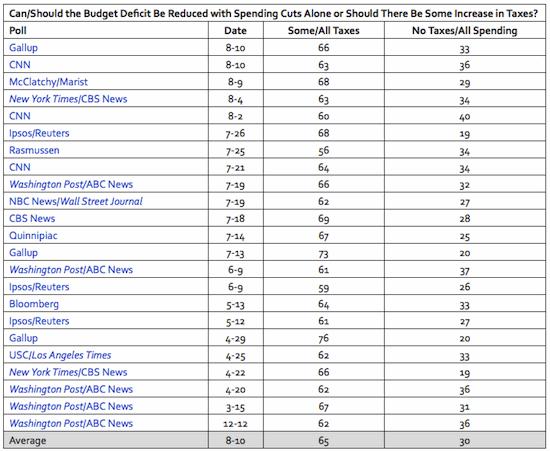
At least, I assume they do. That would seem to be the what the evidence shows. Because in 23 polls taken over the past nine months, Americans say they support higher taxes  as a part of the budget solution — by an average margin of 65-30. And by almost every measure, San Franciscans are more liberal than Americans as a whole. So it’s likely that if those polls collected data just from this city, we’d see closer to 75 percent of the voters saying they support higher taxes, particularly on the rich and big corporations.


And since San Francisco is so far out on the cutting edge on so many other issues, I have to wonder: Why is everyone at City Hall so afraid of taxes? Why is progressive taxation (and not pension reform) the central issue in the mayor’s race?


Gavin Newsom build his political career on a plan to cut welfare payments for homeless people. Jeff Adachi is trying to get elected mayor by campaigning to cut city employee pensions. Dennis Herrera is talking about his efforts to legalize same-sex marriage. But there’s not a single politician in town who has made fair taxation the centerpiece of a citywide campaign. Although it’s likely that three-quarters of city residents would support at least the concept of higher local taxes on the local rich, this isn’t a signature issue for anyone running for anything. 


Doesn’t that seem a little odd?

Inside the V.I.P. cocktail party with Willie Brown

The Alliance for Jobs and Sustainable Growth hosted a V.I.P. reception just before a mayoral candidate forum held at UCSF Aug. 16, and former Mayor Willie Brown appeared to be the guest of honor. Although the theme of the event was technically “honoring San Francisco’s mayors” — former Mayor Frank Jordan was there, someone indicated that former Mayor Art Agnos was in the room, former Mayor Gavin Newsom was invited but didn’t show, and Mayor Ed Lee was of course in attendence — Brown seemed to be given more prominent recognition than any of the others.

The moment he strolled in, Sup. Mark Farrell, who was doing introductions for the the affair, scrambled onstage to announce Brown’s presence and deliver a warm welcome, and everyone applauded. Within minutes, the former mayor was seen chatting with a crowd that included Mayor Lee and several others. Soon after, Brown and former Mayor Frank Jordan were summoned to the stage to say a few words.

Once in the limelight, Brown cracked a few jokes. He said he felt for the 36 mayoral candidates, who are forced to campaign in an era when the Internet threatens to reveal videos and photos of them at any time to thousands of online viewers. “I’m glad they didn’t have that kind of communication system when I was running,” he said. “I can’t imagine the photographs you’d have of me floating around doing things I shouldn’t have been doing.”

As for his own time in Room 200, “I enjoyed every single solitary minute of it, and if I really thought I had great skills, I would be number 37,” he said, drawing more applause.

Then again, common wisdom says it isn’t necessary for Brown to bother campaigning in order to gain access to Room 200 these days. Later that same evening, during his own turn in the spotlight at the mayoral debate, Mayor Lee came under fire from Board President David Chiu, who revealed that Lee had privately confided to him about a week before he announced his candidacy that he was having a difficult time saying no to Brown and influential Chinatown business consultant Rose Pak when it came to launching a campaign for a full term.

Chiu’s pointed question for the mayor was what had changed in his mind since that conversation, but Lee referenced neither Brown nor Pak in his answer. Instead, he said he’d changed his mind after witnessing his success in changing the tone of government and getting things done in City Hall.

Back at the V.I.P. reception, Brown and Jordan were invited onstage again, this time to receive awards presented by the Alliance for Jobs and Sustainable Growth. But first Steve Falk, president and CEO of the San Francisco Chamber of Commerce, reminded the crowd that there was still time to buy a drink before the debate got underway. He said, “Debates are much more interesting after three drinks.”

Before Falk presented Brown with a commemorative plaque, he said, “It’s tough to put in a few sentences the life and times of Willie Brown,” and proceeded to note that, with his term in the California Assembly and time serving as mayor of San Francisco behind him, Brown “has now followed his friend Herb Caen into an honest line of work as a columnist for the San Francisco Chronicle.”

Being a newspaper columnist doesn’t mean Brown is always kind to members of the local media. While mixing through the crowd minutes after receiving his award, he fired some harsh words at a well-known City Hall reporter who had recently published some unflattering articles about the “Run, Ed, Run” effort to encourage Lee to seek a full term.

In recent months, Brown’s columns have provided the public at large with a rare glimpse into Mayor Lee’s dining experiences in San Francisco. In February, Brown wrote in one of his columns that he went out to North Beach Restaurant at sat at the window table with Lee, Brown’s “friend” Sonya Molodetskaya, and Jack Baylis, who serves as the US Group Executive of Strategic Development for AECOM, one of the city’s largest contractors and a sponsor of the Alliance for Jobs and Sustainable Growth Event. (Baylis was on the invite list for the V.I.P reception, too.)

Apparently, AECOM had something to celebrate that same day — according to an Aug. 16 press release, an AECOM joint venture was just awarded a $150 million contract for program management services for the San Francisco Public Utilities Commission’s wastewater improvement program.

The V.I.P. reception had representation from many key players in the downtown business community, with sponsorship from AT&T, AECOM, Pacific Gas & Electric Co., Wells Fargo, Motorola, California Pacific Medical Center, the San Francsico Chamber of Commerce, the Building Owners and Managers Association, the San Francisco Police Officer’s Association, Shorenstein Properties, and others. Several labor unions, including the United Association of Plumbers & Pipefitters Union Local 38, United Brotherhood of Carpenters and Joiners of America Local Union No. 22, and United Food and Commercial Workers Union Local 5 were also listed as sponsors. Guests included district supervisors, developers, lobbyists, business owners, mayoral candidates, media spokespeople, executives from the health care industry, and other political insiders.

Clearly, there were many people in the room who wanted to get on Brown’s good side.

New comments policy

107

My friends on the politics blog:


We’ve been getting a lot of complaints about the tone of some of the comments here. We are all for vigorous debate, and we have no desire to censor anyone’s ideas. As you all know, you are free (in fact, encouraged) to disgree with what you see here, in the strongest terms. But of late, the nastiness quotient is driving some of our loyal readers away and discouraging others from joining the discussion.


We aren’t going to try to block anyone or force registration or do anything else that would discourage any of you from easily posting. But we are going to get a bit more aggressive about deleting comments that are nothing more than personal ad hominem attacks — mean-spirited stuff that is off point, does nothing for the issue debates and seeks to abuse or intimidate individuals.


You know who you are, and you know what I’m talking about.


I can’t promise that we’ll catch everything (we have a small staff), but if there’s anything in particular that bothers you that we missed, just let me know. Thanks.


Our new comments policy is here


Will progressives prevail at DCCC? — UPDATED

57

UPDATE: The DCCC endorsed Ross Mirkarimi for sheriff; John Avalos in first place for mayor and Dennis Herrera in second place; and David Onek in first place for DA and Sharmin Bock in second place.

There’s been a flurry of negotiations, backroom deal-making, and wild conspiracy theories leading up to tonight’s (Wed/17) San Francisco Democratic County Central Committee meeting, where the big item on the agenda is endorsements for this fall’s citywide elections, endorsements that are among the most influential in this one-party town.

Depending on one’s definition of the label, progressives still hold a majority of seats on the 32-member elected body, so solidly progressive candidates Ross Mirkarimi, who is running for sheriff, and John Avalos, who is running for mayor, have a decided advantage going into the vote.

Nothing is certain given the crowded fields in both races, although we’re hearing Mirkarimi getting the first place – and probably the only – endorsement in that race is the only prediction those involved are willing to make. Everything else is up in the air.

“How it goes down, only tonight will tell,” DCCC Chair Aaron Peskin told us. “Anything can happen. It is real democracy, with a lowercase D.”

We’ve spoken to other current and former DCCC members on background and gotten a sense of how things are shaping up, although new plays have been popping up all the time. Avalos seems to be close to the 17 votes that he needs to get the endorsement, with the second largest block of votes being supporters of Dennis Herrera, including savvy and influential players such as Carole Migden who will try to leverage at least a second place endorsement for him.

Mayor Ed Lee also has some support on the DCCC, probably not enough to get on the slate without some serious deal-cutting, but maybe enough to gum up the works and threaten to prevent a mayoral endorsement and neutralize the DCCC. Leland Yee also has some support, but it would still be a surprise if he or Lee ends up on the slate, even in third place.

In the District Attorney’s race, it seems to be coming down to a contest between David Onek and Sharmin Bock, who has gained significant ground on the committee in the last couple months to pull almost even with Onek, although neither appears to have the 17 votes they need (or 16 is someone abstains). While the very few George Gascon and Bill Fazio supporters on the DCCC may try to make mischief and deny anyone the DA’s endorsement, a more likely scenario is the Onek and Bock camps will cut a deal to give them the endorsements, probably with Onek first and Bock second.

DCCC rules don’t allow for dual endorsements – they must be ranked – it’s also possible that in either the DA or mayor’s races that there will be a movement to postpone the vote and change that rule to allow a dual endorsement. But again, things are still in such flux that anything can happen, so stop by the 6 pm meeting in the basement of the state building at 455 Golden Gate Avenue, if you’re into that sort of thing.

After ordering phones censored, BART spokesperson took vacation during protest

7

On August 16, one day after a transit system disruption caused by protests over BART’s unprecedented decision to temporary cut cellular phone during a previous protest, BART Chief Communications Officer Linton Johnson acknowledged to the press that the idea to cut service had been his from the start.

Johnson defended his decision telling the San Francisco Chronicle, “A 1969 U.S. Supreme Court decision, in the Brandenburg v. Ohio case, allows public agencies to put public safety before free speech when there is an imminent danger to the public.”

But was there an imminent danger?

What Johnson failed to acknowledge was that after his idea to order a unprecedented disruption of cellular service to thwart the protest anticipated on August 11 was vetted by BART police, Johnson went on vacation and wasn’t around to help determine what kind of danger the protest – which didn’t end of happening – may have posed. NOTE THE UPDATE BELOW. JOHNSON CLAIMS HE WAS MONITORING THE STATIONS.

In fact, Johnson left on vacation on August 11, the same day the fizzled protest that started a national controversy occurred. So with BART’s plan in motion, and Johnson apparently not on hand, nothing of note happened. No indication was reported by BART or by the media of any trouble at all breaking out on the platforms or paid areas of BART stations on August 11. BART may have been left holding the bag.

An automatically generated e-mail response to the Guardian’s request to interview Johnson read “I will be out of the office starting 08/11/2011 and will not return until 08/16/2011. Please contact Deputy Chief Communications Officer Jim Allison while I am gone.”

On August 15, Johnson’s voicemail message indicated he had returned from vacation early, and would do his best to field phone interview requests within 20 minutes of receiving them.

August 15 happened to be the day that fallout from his plan lead to evening rush hour transit disruptions by protesters with swarms of national and international news representatives on hand. Though interviewed by the nation’s press corp, Johnson chose not to acknowledge the primacy of his decision making role in the censorship until the following day.

Comparing the “imminent danger,” declared by BART, and the #opBART protest called by international hacker group Anonymous on August 15 that caused all Downtown San Francisco BART stations to close for the evening rush, questions arise over what, if any, criteria Johnson used in deciding to pull or not pull the plug on BART cell service.

The Federal Communications Commissions has launched an investigation into BART’s actions, responding to a call by California State Senator Leland Yee.

“We are continuing to collect information about BART’s actions,” stated FCC spokesperson Neil Grace in a statement issued by the agency. “(We) will be taking steps to hear from stakeholders about the important issues those actions raised, including protecting public safety and ensuring the availability of communications networks.”

UPDATE: Johnson finally got back to us by email and wrote, “I offered up the idea on Thursday morning.  BART PD took it to the Interim GM.  The GM approved it then let the Board of Directors know what was to happen that night.  I was  on scene in case the protest broke out.   I left downtown SF around 8pm – I was on a plane that night, which left at 11:50pm.”