• No categories

Politics Blog

Chronicle taps Chiu, opening up the mayoral field

112

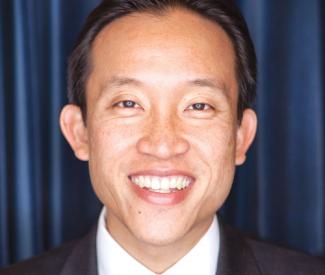
David Chiu has snagged the mayoral endorsement of the San Francisco Chronicle, beefing up his fairly paltry list of endorsers and giving his campaign something to trumpet with its hefty cash reserves in the final weeks. Most importantly, the endorsement opens up the race and probably hurts perceived frontrunner Ed Lee.

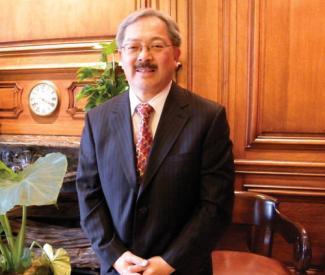
After the Examiner endorsed Lee as its top pick, it would have solidified the appointed incumbent mayor’s standing as the consensus pick of pro-business centrists – who always have a strong influence in the mayor’s race – if the Chron had also gone that way. But now, both that vote and the Chinese-American vote will be divided, with some of the latter also picked up by Leland Yee, who got the top endorsements of the Labor Council, Sierra Club, and other influential groups.

The Chronicle endorsement probably gives the biggest advantage to Dennis Herrera, who has placed second in most public opinion polls as well as many endorsements, including getting the second place nod in the Guardian, Examiner, Labor Council, Milk Club, San Francisco Democratic Party, and others – an impressive array that covers the full spectrum of San Francisco politics.

Lee, Herrera, and Jeff Adachi also got praised by the Chronicle in a companion editorial entitled “Three other candidates to consider,” and that will also help Adachi with his left-right punch and outsider appeal, making him another candidate who can’t be counted out just yet.

By opening up the mayor’s race and creating a more complicated calculus in the city’s ranked choice voting system, the varied list of endorsements and the dethroning of Lee as a done-deal could also be a boon to John Avalos, the consensus pick of the city’s left who has a long list of first place endorsements (including those of the Guardian, Milk Club, SF Democratic Party, and many others). Avalos could capitalize on the rising frustration with corporate America that is embodied to the Occupy movement, which he has been nearly alone among the mayoral field in actively supporting.

(You can read an Excel file of the endorsements of various San Francisco organizations, which we’ll periodically update, here.)

While the Lee campaign and the many independent expenditure groups that back him are expected to vastly outspend the rest of the field, obscene displays of corporate cash could end up backfiring this year, particularly against the backdrop of OccupySF and the business community’s raid on employee health care funds and deceptive surcharges on restaurant bills, which Chiu and Lee have been supporting.

Bottom line: with four weeks left until Election Day, the mayor’s race is still up for grabs.

Brown vetoes bicycle buffer zone

92

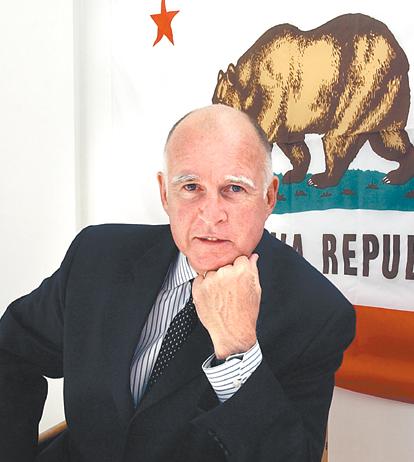
Anyone who has ever ridden a bicycle knows how scary and dangerous it is when cars pass too closely at high speed. So the California Bicycle Coalition made its top legislative priority for the year a bill, SB 910, to require drivers to give bicyclists a three-foot buffer or slow down to 15 mph. And even though the Legislature overwhelmingly approved this reasonable traffic safety measure, Gov. Jerry Brown vetoed it on Friday.

“His veto made no sense. We honestly can’t figure out why he vetoed the bill,” said CBC executive director Dave Snyder, a San Francisco resident who used to run the San Francisco Bicycle Coalition and who founded Transportation for a Livable City (now known as Livable City). “It’s not based on logic or public policy, but just based on politics.”

The California Highway Patrol and California Department of Transportation opposed the measure on the grounds that it could impede the flow of automobile traffic, and Brown cited their stand in his veto message. Indeed, keeping cars moving at high speed has long been the central goal of these agencies, even when it has high economic, environmental, or public safety costs.

But Snyder is right that Brown’s veto message is confusing and contradictory. He expresses support for the three-foot buffer, but expresses concern about slowing traffic to 15 mph, seemingly confused about the meaning of the word “or,” meaning drivers can provide the buffer or slow down to a safe passing speed if they’re unable to give bicyclists that much room.

People who don’t ride bikes tend to forget that automobiles are deadly weapons, and that a bicyclist’s brief swerve to avoid a pothole, broken glass, or other hazard can have disastrous consequences if a car is passing too closely. This veto follows another illogical one – Brown’s rejection of Sen. Mark Leno’s local vehicle license fee bill, which would have pumped $75 million into SF’s coffers and was almost universally supported by this year’s mayoral field – that gave undue deference to automobile owners.

Meanwhile, the San Francisco Police Department recently launched a crackdown on bicyclists in the city, issuing dozens of tickets on Market Street for running stop lights and on Townsend for briefly riding on the sidewalk en route to the Caltrain station – and ignoring the nearby cars parked in bike lanes and running those same red lights.

Now, before we get to the commenters’ tirade about scofflaws on bicycles – which come every time we write about bikes – let me note that people break the law on every form of transportation, everyday. Motorists speed, run stop signs and lights, and illegally edge past pedestrians (who themselves jaywalk with great regularity). And every Muni bus has several riders who haven’t paid. None of us are angels, so try not to get too worked up into a sanctimonious rage.

But if you want to truly understand why bicyclists can often be so flagrant in our disregard for the law, consider that we’re using a transportation system and abiding traffic laws that weren’t designed for us. Seriously, just ride a bike and you’ll quickly understand. We don’t need to stop at every stop sign or signal light to have a safe, smooth-flowing transportation system that doesn’t steal the right-of-way from drivers, who we can usually see and hear coming with plenty of time to stop. Idaho and other jurisdictions actually treat bikes differently than cars in this realm, with laws that don’t require cyclists to lose momentum by repeatedly coming to complete stops, and it works well.

The fact is, the bike buffer bill is the very minimum that we need to encourage cycling as a safe and appealing transportation option to more people, which would only help our environment, public health, and dependence on fossil fuels. And the fact that it was vetoed for petty, illogical reasons is incredibly frustrating.

Yet there may be a silver lining to this. Snyder said the CBC, which is just beginning to increase its reach and influence and to prepare a more ambitious agenda on behalf of California cyclists, will use this defeat as a launching pad for future efforts.

“The main benefit of the three-foot bill was the community organizing that we did to get is passed. So now we can leverage that for our next steps,” Snyder said. “California needs a lot more than a three-foot buffer to give people more safe transportation choices.”

Lee’s talking points sound familiar

Interim Mayor Ed Lee released a 17-point jobs plan last week as part of his bid for mayor, prompting City Attorney Dennis Herrera to accuse the interim mayor of “plagiarism” since Herrera, also a contender for mayor, issued a 17-point jobs plan himself earlier this year.

Herrera’s campaign also criticized Lee for ending his plan with Herrera’s signature slogan, “a city that works.”

But Herrera isn’t the only mayoral candidate for whom Lee’s campaign rhetoric rings a bell. Board President David Chiu, who attracted a great deal of attention earlier this year for his statement that supervisors are elected not to take positions but to “get things done,” seems to have served as a muse to the campaign consultants who thought up Lee’s campaign slogan: “Ed Lee Gets it Done.”

(Which — is it just me? — or does having that phrase plastered everywhere bring to mind something more like this?):

http://www.youtube.com/watch?v=OnDO5VTge6w

Lee’s “new era of civility in City Hall,” meanwhile, closely echoes language Chiu has used on the campaign trail. At a campaign stop in June, Chiu told a room of supporters that before civility was restored this year, “City government was frankly pretty dysfunctional.” Politicians from different political factions bickered with one another, he said, and “they literally couldn’t even sit in the same room.”

At an Aug. 11 rally, Lee told supporters, “We have changed the tone in which we run government,” and added, “I still have in my mind the screaming and the yelling” that the city family used to engage in. 

A few more striking similarities, taken from the candidates’ respective campaign websites:

*  David Chiu says he’ll “Prioritize hiring of local residents.”
*  Ed Lee says he’ll “Hire San Franciscans.”

*  David Chiu says he’ll “Invest in community institutions and infrastructure.”
*  Ed Lee says he’ll “Invest in infrastructure jobs.”

*  David Chiu says he’ll “Support the continued growth of the technology sector.”
*  Ed Lee says he’ll “Attract & grow the jobs of the future.”

*  David Chiu says he’ll “[Expand] the impact of SFMade.”
*  Ed Lee says he’ll “Revive local manufacturing – ‘Made in San Francisco.’”

*  David Chiu says he’ll “Fill vacant storefronts.”
*  Ed Lee says he’ll “Improve blighted areas.”

*  David Chiu says he’ll “Reform our broken business tax. San Francisco is the only city in California that levies a tax on businesses exclusively on payroll.”
*  Ed Lee says he’ll “Reform the Payroll tax  … Mayor Lee knows that San Francisco’s current business tax structure punishes job creation when it should reward it.”

Asked to comment on the remarkable similarities in campaign materials, Lee spokesperson Tony Winnicker told the Guardian, “It’s just another baseless attack from Dennis Herrera’s campaign, only this one sounds like he’s in the third grade.

“Mayor Lee has been giving small business loans and recruiting new jobs to San Francisco from his first days as Mayor,” Winnicker continued. “His economic plan builds on the good work and projects underway and includes many genuinely new ideas to create even more jobs for the future.”

Winnicker added, “As for President Chiu, it’s no surprise that he and Mayor Lee would share many views on how to create jobs for our City as they’ve worked together closely on many issues throughout the year. He thinks President Chiu has many good ideas in addition to Mayor Lee’s own new proposals in our 17-point economic plan. Mayor Lee looks forward to continuing to work with Board President Chiu to create jobs for every neighborhood of our City.”

Louise Renne’s confused history

6

Wow, the Chron found a way to take a swipe at Dennis Herrera for getting involved in politics — and guess who the expert source is? Former City Attorney Louise Renne — who politicized her office so dramatically that the voters approved a measure barring city attorneys from endorsing candidates.

The Chron piece goes back and forth on whether Ed Lee properly disclosed city contracts. Then it quotes Tony Winnicker from Lee’s campaign:

They must get exhausted over there at that campaign throwing stones out of their glass house all day long,” Winnicker said. ”What’s really too bad is we can’t actually look to our legal counsel to get guidance on this. .. because the mayor’s only legal counsel is too busy attacking him.

Which apparently disturbed Renne:

“I think the city attorney has to be particularly careful  in what he or she says and in what he or she does,” Renne said. “I don’t know if that line has been crossed here. I’m trying to stay out of the mayor’s race. I’m extremely troubled that these questions are even being raised.”

Please, Louise.

First, Renne ran for mayor herself while she was city attorney, in 1987, against Art Agnos and John Molinari (who, as a supervisor, was her client). She didn’t get far. Over the next few years, she regularly supported candidates and took stands on propositions, even when her office was involved in evaluating those measures or giving advice to elected officials. In 1995, she endorsed Willie Brown for mayor — even though he was running against her client, incumbent Mayor Frank Jordan.

It was exactly that sort of conflict that led to the city law that now prevents the elected city attorney from making endorsements in local elections. And now she’s worried about Dennis Herrera?

Jeb Bush, Rupert Murdoch bound for S.F.

The Foundation for Excellence in Education, a Florida-based nonprofit led by Jeb Bush, will host its National Summit on Education Reform at the Palace Hotel in San Francisco Oct. 13 and 14.

Bush, former Florida governor and the brother of former President George W. Bush, will deliver a welcome address Thursday. Rupert Murdoch, the billionaire head of News Corporation who came under pressure in recent months as the News of the World phone-hacking scandal erupted, will deliver a keynote address Friday.

Washington Post columnist Valerie Strauss sums up the irony of having Murdoch as the guest of honor at the conference here:

“Yes indeed, the Rupert Murdoch set to speak on technology’s power to transform education is the same Rupert Murdoch recently hauled before a British parliamentary committee to explain why a newspaper he owned had used technology to hack the phones of thousands of British citizens for years — including the phone of a murdered 13-year-old girl, thus interfering with the police investigation. (Murdoch closed the newspaper.)”

Panelists at the event will include News Corporation executives, CEOs of for-profit schools, state senators from Florida, Arizona, and Oklahoma, and the author of a book titled School Boards in America: A Flawed Exercise in Democracy.

The conference will feature a number of “strategy sessions,” and one is actually called, “Don’t Let a Financial Crisis Go To Waste.” The session will focus on education funding formulas and purports to explain “just what lawmakers and policymakers can do to get a better return-on-investment for their education dollars,” according the conference agenda. It will be moderated by a director of education policy at the George W. Bush Institute, which “champions change” based on the educational policies of No Child Left Behind.

The first strategy session is called “The Teaching Profession 2.0,” and hints of an anti-union agenda: “During the last two years, states across the country have ushered in the most sweeping reforms of the teaching profession in our nation’s history,” according to the workshop description. “More meaningful evaluations. An end to tenure and destructive last-in, first-out policies. Salaries that reflect student learning rather than seniority. Learn how lawmakers and policymakers from states around the nation are changing the paradigm of the teaching profession.”

Another segment will focus on digital learning, or teaching through technology, which the Foundation for Excellence in Education seems dedicated to advancing. A video on a newly launched website touted by the foundation features Tom Vander Ark, CEO of Open Education Solutions, explaining, “Our mission is to advance digital learning in every classroom, in every school, in every state in America.” But Vander Ark’s recent vision for opening charter schools in New York City did not go so well, according to this New York Times story. Murdoch delivered an address at the e-G8 in Paris last year titled, “Digital’s Next Frontier: Education.”

In any case, San Francisco — famed for its left-leaning politics — seems an odd choice for Bush and Murdoch, especially during a week when the streets are likely to be filled with protesters marching in solidarity with the Occupy Wall Street movement. 

Low-income tenants face possible eviction at Parkmerced

At least nine eviction proceedings have started at the Parkmerced housing complex, the site of a controversial new housing development, in response to an effort by the property management company to collect back payments on rent and utility bills, the Guardian has learned.

In recent months, nearly 200 residents received official notices warning that they would face eviction if they did not take steps to bring their accounts current within three days, according to Sara Shortt, executive director of the Housing Rights Committee of San Francisco. About 80 three-day notices were issued to tenants who are on Section 8, a federal low-income housing assistance program that subsidizes rental payments using public funds provided by the local housing authority.

“They’re extremely low-income renters, and they’re suddenly being asked to pay large balances,” Shortt explained. “It’s blood from a turnip.” Most of the amounts owed ranged between $600 and $800, she added.

Shortt said that while some tenants were being allowed to set up payment plans, this measure wasn’t guaranteed for every tenant attempting to address the problem within the three-day timeframe. And she was skeptical that the payment-plan arrangements being presented by management were realistic in every case.

“I don’t know if Parkmerced is doing anything illegal,” Shortt said, acknowledging that she was receiving conflicting accounts of the situation. “But they’re executing something about legitimate recovery of money in an unfair manner. To allow people to slide for years and suddenly come at them for back bills is a one-way ticket for eviction.”

The Guardian was unable to reach Stellar Management, the real-estate management company at Parkmerced, but Shortt said she had spoken with Stellar representatives on behalf of tenants who were contacting the Housing Rights Committee in a panic.

Stellar representative Bryce Boddie explained the situation to her by saying a previous property management company had left billing records in disarray, and the company was finally getting around to straightening out its books by demanding payments that had long since been owed. “Their contention was that they basically decided it was time to clean house and recoup payments,” she said. Shortt said she’d also been told that Stellar had come under pressure from Fortress Investment Group, a firm that took ownership of the property last year, to get payments in order.

But P.J. Johnston, a public relations representative for Parkmerced, rejected that account, saying, “We absolutely follow up with residents who are not paying their bills.” Johnston said the number of three-day notices served this year were in keeping with last year, indicating that there had been no drastic changes in policy since the approval of the new housing project. He did not know how many Section 8 tenants received the warning notices in 2010. “Whether someone is a Section 8 certificate holder or just a regular resident, everybody’s got to pay their rent,” he said.

Johnston bristled at the criticism that renters were being asked to fork over unrealistically high sums on the spot for payments that had lapsed for long periods, saying, “If we had moved swiftly to evict residents sooner, we’d be hearing that we didn’t give them a chance.”

The issue comes on the heels of Board of Supervisors approval for a controversial housing development project at Parkmerced that tenant groups opposed because they felt it didn’t go far enough to protect renters. A development agreement negotiated between Parkmerced Investors and the city guarantees that rent-controlled tenants will be able to move into brand-new units at the same rent-controlled rate once the old units are demolished. Some residents are suspicious that management’s decision to issue three-day notices and take steps to evict tenants who cannot pay is a strategy for skirting these requirements.

Shortt said she couldn’t be sure that this was the case, but worried nevertheless that low-income tenants could wind up being tossed out of Parkmerced, which is just the scenario that tenant advocates had feared. “The end result really is in clear conflict with the spirit of negotiations and tenant protections,” she said.

Protesters blast Wall Street and war; support OccupySF

93

Story by Nena Farrell, photos by Ariel Soto-Suver

“We’re mad as hell, and we’re not taking it anymore!” was Tanya Dennis’s cry yesterday (Thurs/6) afternoon at a march and rally that drew from the Occupy San Francisco/Occupy Wall Street and the anti-war movements. It began at the Federal Building at Mission and 7th streets, where protesters will return today at 4:30 pm for a march marking the 10th anniversary of the war against Afghanistan.

Dennis got the crowd to scream the words with her, chanting it. Because it’s true—they’re not taking it anymore. She was one of the many featured speakers at the protest, along with representatives from OccupySF, the California Democratic Party, the American Indian Movement, and so many more. There were also sections of open microphones, where people could stand up to make a proposal, or usually just to make a point.

One of the open speakers proposed we free people. She had the entire gathering call it out with her: “Free people, free people.”

That’s one of the four demands that the 99 percent – the people that the occupiers say they represent – is making. One, to protect the environment. Two, to care for the people. Three, to tax the rich. And four, to end the wars. These are the four demands of the movement. At the protest, these four demands were posted on multiple signs.

The protest was in solidarity with the anti-war action in Washington DC. And from DC, the event had Dick Cheney – or rather, an impersonator of the former vice president – here to open the event. Upon his arrival, he was booed, but Cheney himself seemed fairly pleased with the entire situation. He joked that he brought three virgin hearts with him in case he was shot.

After the speakers, the protest moved to march down to 101 Market Street, where Occupy San Francisco has its movement encampment. The group moved down the blocks, chanting “Banks got bailed out, we got sold out!” Each time they came to a bank along Market Street, the entire group would stop and cry together “Make banks pay” and “Tax the rich.”

It was the speakers, overall, that brought the real power to the event. They described the madness the working class was facing, the entire country and our state, and even the outside countries that we have both declared and undeclared wars on. And not just by the selected featured speakers, but also the ones like Sheila Gun Cushman, a blind woman who spoke up during the open speakers, saying “We have wanted this for years, it’s about bleepin’ time!”

Janet Weil, a Code Pink activist, was moved by the speakers as well: “[The] testimony of people at open mike was very powerful and important.”

Ed Lee’s funny money

33

The break on the big campaign news of the week goes to the Bay Citizen’s Gerry Shih, who tracked down a couple of employees of GO Lorrie’s and got them to admit that they had no idea who Ed Lee was and had given him $500 because their boss had agreed to reimburse them in cash. Now the other candidates are making an issue of it — Dennis Herrera has called for a criminal investigation, David Chiu has issued a somewhat weaker statement and Jeff Adachi’s campaign is calling the whole thing sleazy.

What makes this so interesting is not just that someone at GO Lorrie’s may have been laundering contributions — the airport shuttle company has been lobbying the city to try to change the rules around where the shuttle vans get to park. So it’s not just a funky operation to push money to the mayor — it’s money from a company that has a big financial stake in a decision made by city officials (and by the way, the airport commissioners are appointed by the mayor).

Matt Dorsey, a spokesperon for Herrera’s campaign, told us that “there’s a point where campaign activities stop being cute and questionable and become illegal.” He noted that Mayor Lee, while vowing to return the tainted money, hasn’t called for a further inquiry.

“If laundered campaign contributions came to the attention of the Herrera campaign, the first person to call for an investigation would be Dennis Herrera,” Dorsey said.

Chiu’s statement: “These revelations raise deeply troubling questions that merit a full investigation by state authorities.  City Hall cannot be for sale.  Pay-to-play politics has no place in San Francisco, and will have no place in a Chiu administration – you can count on that.”

More: “Incidents like these are a reminder of the backroom deals and crony politics that San Franciscans are sick of,” said Colin Dyer, field director for Jeff Adachi. “This is just another in a long line of questionable activities surrounding Ed Lee and his powerful special interest backers. He promised to be a different sort of mayor, Ed Lee is just more of the same.

The big question, of course, is whether this will finally start to take the edge off the Ed Lee Teflon. And that depends in part on the San Francisco Chronicle — which put a far less relevant story about Dennis Herrera (one that didn’t involve illegal money laundering) right on the front page in the lead space above the fold.

The Chron, weakened as it is, still helps define the daily news cycle in this town. But guess what? The Chron didn’t break this story. The Bay Citizen did. And it there’s one thing I’ve found to be consistent about the ol’ Chron over the years is that the paper tends to ignore stories broken by the competition.

But this ought to be front-page news everywhere, not just because it’s a potential felony but because it represents the side of Ed Lee that we’re all worried about. In the Bad Old Days, Willie Brown’s operation did stuff like this all the time. Money went in and out of shadow committees and independent expenditure groups and it was almost impossible to keep track of who was giving how much to Brown — except that anyone who wanted to do business with the city had to pay up.

If Ed Lee’s folks are starting to play those same games, then it’s a very bad sign.

SFBG Radio: Abolish the sales tax?

21

Today Johnny offers a remarkable sensible economic proposal: What if California got rid of sales taxes entirely — putting almost 10 percent more money in the pockets of consumers — and replaced that revenue with higher income taxes on the wealthy? Now, why do you suppose this isn’t going to happen? Listen after the break.

AbolishTheSalesTax by endorsements2011

Few surprises in Examiner endorsements

15

The San Francisco Examiner – a paper with a generally conservative editorial stance, and one that endorsed John McCain for president in 2008 – has endorsed a slate of Establishment candidates for citywide office: Ed Lee for mayor, George Gascon for DA, and Chris Cunnie for sheriff.
That’s not really surprising, but its second and third choices for mayor were: Dennis Herrera second and Bevan Dufty third. Herrera was also the Guardian’s second choice and Dufty was someone we considered for third, choosing instead to go with Leland Yee. As the Examiner wrote, there are lots of qualified candidates in this race, and there were a lot more worrisome ones the paper could have picked.
For a newspaper that often takes ridiculous right-wing stances, such as its editorial last year denying global warming, the mayoral endorsement actually reads fairly reasonably. I don’t agree with its conclusion that Lee’s aversion to politics and business-friendly focus are good things, but I was happy to see the Examiner call out Lee’s cronyism and uncritical praise for bad corporate actors like PG&E.
“We do have some concerns about his ties to former power-brokers and off-the-cuff comments that are now being blasted in negative campaign ads. We implore Lee to work harder to separate himself from those who claim responsibility for his success, for they are just as likely to be responsible for any downfall. We ask that Lee, as we would any mayor to be open and honest about his relationships,” the paper wrote.
And its comments about the other candidates it liked were also pretty much on target. The only real criticism I would offer – and it is a significant one – is that progressive favorite John Avalos didn’t even get mentioned among the eight it discussed. WTF?
Now I’m sure they wouldn’t have had great things to say, given their conservative leanings. But to simply leave Avalos out shows the paper has a disregard and disdain for the left that is a big part of what’s wrong in San Francisco. It’s why our mayor and police chief can make this the first city in the country to launch an aggressive midnight raid on the Occupy Wall Street movement. It’s why the Chamber of Commerce can so shamelessly demand that businesses be allowed to drain the employee health funds that a hard-won city law requires them to provide.
San Francisco is not a progressive city, although a large number of San Franciscans are progressive and they have helped usher in a number of important progressive reforms, from worker and tenants protections to environmental initiatives, often through battles that Avalos helped wage on the people’s behalf.
So to ignore Avalos is to ignore progressives in this city. And they can steal our money or our tents, but we aren’t going away.

Duck! It’s the Blue Angels!

54

My poor dog will be hiding under the table when I get home, hyperventilating. I’m trying to make phone calls — and I feel like I’m in a war zone. I know, I know — it’s fleet week and we support the troops and an expensive, dangerous, ostentatious display of military might should make us all feel better.

But I’m not feeling it.

I like a noisy event as much as anyone else. I’m all for street fairs, music in the parks, random shouting … it’s all good. This is a big city.

But do we really have to have Navy jets buzzing over us for several days? Is this a good way to spend our tax dollars? Does a city where JROTC is a huge issue need to celebrate what’s really primarily a military recruiting event?

Or am I just jealous because they won’t let me fly one?


Lee backs crackdown; Avalos: “I stand with Occupy SF”

136

Mayor Ed Lee has just released a statement on last night’s police raid of the Occupy San Francisco encampment – claiming to basically support the movement but also support the harsh police crackdown and seizure of tents, food, and other personal property – that offers a sharp contrast to the position of his mayoral rival, John Avalos, who is condemning the SFPD’s actions.

Once again, as Lee also did this week in defending businesses that seize money set aside for employee health care costs, our “consensus and civility” mayor is showing that if you try to stand for everything, you end up standing for nothing. Yet Avalos understands that there are times when one side is simply wrong and that supporting the people means being willing to fight for them.

On both issues, Lee mouthed the meaningless “jobs” defense, claiming that he was trying to help working people by letting their employers raid their health care funds, allowing restaurants to fraudulently jack up their bills, or directing the police to seize their tents and food. That’s not just pandering, it’s insulting.

I’ve tried unsuccessfully to get Lee’s office to offer more detailed explanations of his positions, but they’re so far sticking to prepared statements that are riddled with contradictions. So we’re just going to run the full statements by Lee and Avalos and let you decide who makes more sense and best reflects San Francisco values.

Lee wrote:

“I understand and sympathize with the anxiety and frustration felt by so many in our country caused by a lingering recession and joblessness. That’s why I am doing everything I can to create jobs, get people back to work and make our families stronger here in San Francisco. I support the spirit of the Occupy Wall Street movement that calls for peacefully assembling to protest and bring national attention to disparity issues in our country.
“In San Francisco, protesters are acting within their First Amendment right to free speech and freedom to assemble. While allowing for peaceful protests, we also must ensure that our streets and sidewalks remain safe and accessible for everyone. I will continue to work closely with our Police Chief to ensure San Francisco responds appropriately to these demonstrations.  
“San Francisco is a city that embraces free speech and freedom to assemble like no other city.”

Indeed, no other city among the 60 or so that have followed the Occupy Wall Street example of occupying public spaces has sent police and trucks in to raid encampments in the middle of night, so San Francisco is indeed alone in its treatment of the movement that Lee shamelessly claims to support.

And now Avalos:

“Last night I gathered in solidarity with the protesters Occupying San Francisco. Like many people all over the country, I have been watching this protest gather strength and grow as more and more of us, more of the 99 percent, demand accountability from the corporations and people who are responsible for the destruction of our economy and devastation of our families.

“I came to down to observe the protest last night in response to summons from protesters and a notice from the police accusing their encampment of a number of minor infractions, ranging from open flames on a city street or sidewalk to serving food without a permit. I observed and negotiated with police in good faith to keep the peace and allow the encampment to remain, only to hear of a crackdown shortly after I left.

“This is not the San Francisco that I know. This is not the San Francisco I love. This City has served as a sanctuary for free speech and assembly for generations, and we must protect that legacy. With our unemployment rate nearing 10 percent, we have a responsibility to be a sanctuary for the 99 percent.

“Instead, last night we witnessed that 99 percent being detained, arrested, and intimidated with force.

“My vision is of a true sanctuary city – one that protects our right to free speech and assembly, and one that holds real criminals accountable. This should be a city for the rest of us – for the 99 percent. I stand with Occupy SF.”

Endorsement interviews: Bevan Dufty

1

Bevan Dufty’s been running for mayor for about two years now. He’s often the star of the debates — if only because he has an engaging personality and is willing to laugh at himself, a rare trait in a politicians. And although he way typcially aligned with the fiscal conservatives on the Board of Supervisors, he has the support of the progressive SEIU Local 1021 — in large part because he’s talking about working with city employees instead of demonizing them. He also told us that the next mayor of San Franciisco needs to have a black agenda — to address the alarming outmigration of African Americans and the economic damage that’s been done to that community. You can listen to the full interview and watch video after the jump.


Dufty by endorsements2011


http://www.youtube.com/watch?v=GPohsxUCQao

Alioto-Pier plays the school card

8

Former Supervisor Michela Alioto-Pier is barely registering in the mayoral polls and at this point has about zero chance of getting elected. So she’s thrown out a desperation pitch, trying to get votes from people who think kids should all go to neighborhood schools.

A mailer that I got yesterday shows two sad looking children in front of a Muni bus with the line: “Our ride to school is longer than our parents’ ride to work. Who will stand up and fight for us?”

There are shades of the old (sometimes racist) anti-busing stuff here — why should kids have to ride buses – buses — to go to a school that isn’t right in the neighborhood? There’s also very much a class issue — the public schools in rich neighborhoods have resources (that is, rich parents) that schools in poor neighborhoods don’t. So kids who grow up in (still segregated) poor neighborhoods won’t get a chance to have the same quality education as kids who had the skill and drive that it took to be born to wealthy parents.

Sure, we could “make every school a great school,” as the neighborhood schools crew likes to say — but that would take money. Tax money. Lots more tax money.  And I don’t hear Alioto-Pier talking about repealing Prop. 13.

Here’s the reality: In most public schools, parents have to raise money to supplement what the district can offer. You want smaller classes, or language options? Fine — come up with $50,000. Hold fundraisers, write grants, beg and plead — and some school communities are very good at it. Clarendon routinely raises $200,000 or more a year. My daughter’s school, McKinley, holds a car was and Dog Fest, and we got a corporate grant to rebuild the playground. Those things take (a) parents who have time and (b) parents with the skills to write grants and (c) parents who have money to contribute on their own.

You segregate school attendance by neighborhood and you’ll get some schools that have a lot of a, b, and c — and some that have almost none. Now, you could “tax” the good fundraisers — force, say, the Clarendon and McKinley parents to give 25 percent of everything they raise to other schools that don’t have the same parent resources. I’m not actually against that. But it’s almost impossible to administer and unlikely to happen.

Or you could say that parents all over town have the right to choose a school anywhere, including one of the ones in the wealthier parts of town. Then the parents who have resources wind up helping out kids who come from poorer families, because the schools are more socio-economically diverse.

There’s also the fact that San Francisco is a pretty small city; taking a bus from my neighborhood, Bernal Heights, to my son’s middle school, Aptos — in a different neighborhood in another part of town — isn’t that big a deal.

And there’s the indisputable fact that most parents don’t want to be limited to their neighborhood schools. They want choice. There are different types of programs for different kids — and you can’t have Mandarin, Spanish and Japanese immersion all offered at every single elementary school. 

And by the way: Most parents who want to send their kids to the nearby schools get their way already. The new assignment policy gives priorioty to neighborhood residents. And 80 percent of the parents who enter the lottery get one of their seven choices. (Enter the lottery and chose your neighborhood school and the odds are pretty good that you’ll get it. But a lot of people don’t do that — they want a different program or opportunity somewhere else. San Francisco very rarely forces kids to take long bus rides; those kids mostly go to schools that their parents chose for them.) It’s not a perfect system, but as a parent who’s been through it (twice), I can tell you it’s really not that bad.

Then there’s the fact that the mayor doesn’t actually get to decide any of this. The school assigment policy is set by the School Board. So even if Alioto-Pier got elected, there’s no way she could implement the “neighborhood school plan” that she’s talking about.

This is just outright pandering to a West Side crowd. And it’s probably a waste of paper and ink — Alioto-Pier’s not going back to City Hall.

BREAKING: SFPD threatening to break up Occupy S.F. encampment

San Francisco city government is cracking down on the Occupy S.F. movement, with public officials waiting until around 11 p.m. on Oct. 5 to move in and try to clear out the camp.

Police appeared on the scene in front of the Federal Reserve at the foot of Market Street in downtown San Francisco where roughly 200 protesters were camped out as part of the Occupy SF movement, and threatened to make arrests if protesters did not clear out completely within 30 minutes. The protest was a peaceful affair and the encampment had been in place since Sept. 29. The protest was called to mirror the growing Occupy Wall Street movement to oppose corporate greed and highlight the role of financial institutions in an economic decline resulting in a rising wave of foreclosures, unemployment, and cuts to public services.

Yael Chanoff, who was at the encampment on behalf of the San Francisco Bay Guardian, phoned in to report that police officers had issued notices telling people that they had to clear out because they were in violation of local city ordinances such as public nuisance laws, rules requiring permits for temporary structures, and the newly adopted sit/lie ordinance. Officers were taking photographs of the camp, presumably for evidence. Trucks from the city’s Department of Public Works had lined up on the street, she said.

Roughly 50 police officers in standard uniform were there, carrying “stacks of zip ties,” she added. Alexandra List, a protester, said that a commanding officer on the scene had told her no one would be arrested if the structures were removed completely within 30 minutes. Chanoff estimated that there were about 20 structures.

Chanoff said protesters were meeting to try and find out how to proceed, but some had decided to begin taking down the tents.

UPDATE: The Guardian spoke with SFPD public information officer Albie Esparza, who told us, “the sidewalks are being cleared of debris,” and mentioned that protesters had been in violation of certain codes, such as a fire code prohibiting open flames that applied to outdoor cooking setups. “They have the right to protest as individuals, obviously,” he said. Asked why it was so urgent that these codes be enforced at 11 p.m. when the streets are virtually empty, Esparza said, “I don’t know what the reason was for the timing.”


Yael Chanoff contributed to this report.


Lee under pressure for contract disclosure law violations

By Lisa Carmack

Mayor Ed Lee has allegedly failed to file 67 reports detailing contracts worth $50,000 or more with the San Francisco Ethics Commission.

Lee has come under attack by fellow candidate City Attorney Dennis Herrera, who claimed that he has “repeatedly delayed filing his required disclosure forms.”

“I’m not aware of specific delays yet, but any time we get a notice and our campaign is reviewed, everything we’re supposed to file as far as I know, we’re in compliance,” Lee said when asked about the claims.

According to city law, any elected official who approves contracts worth $50,000 or more is required to file a report within five days of approval. The requirement serves as a safeguard against illegal campaign contributions, since the city’s Campaign Finance Reform Ordinance bars officials from receiving contributions from vendors within six months of contract approval.

“It just came to my attention today,” said the executive director of Ethics Commission John St. Croix. “We’re gonna have to talk to him and his folks about why these reports have been excessively late.”

On Oct. 5, Herrera publicized records listing each time Lee failed to comply with the ordinance since becoming interim mayor in January of this year.

Whether or not punitive actions will be taken is up to the Ethics Commission. “In this case we have to investigate first,” said St. Croix, adding that while the agency would look into the matter, he could neither confirm nor deny the existence of an official investigation. “I’m not aware of any other entity that files late on a routine basis.”

Occupy SF marches on the banks again

5

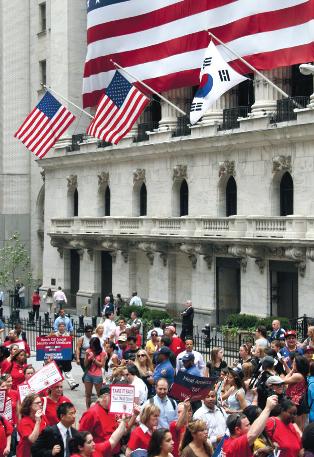
Occupy San Francisco — the local manifestation of the Occupy Wall Street movement that is spreading across the country — took to the streets today with a rally numbering in the hundreds. Marching up Market Street and through the heart of the Financial District, protesters met supportive car horns as often as tight-lipped disapproval. Today’s protest followed a similar one last week when six activists were arrested, with no arrests reported this time.

“We are the 99 percent!” was the most resounding chant, one that prompted several onlookers to join in. “We are 99 cents,” replied one man, walking through the crowd as they strode through the Tenderloin. Signs ranged from the plain – “Stop this” – to the hard-hitting: “Greedy Bastards!”

“I saw them on my way to get her immunization record,” related one woman, gesturing at a sleeping toddler in a stroller. “And I had to join in.” Visibly swelling in size throughout the two-hour march and stretching as far as six blocks at a time, the rally stopped in front of Wells Fargo, Chase Bank, and City Hall before ending back at the Federal Reserve Building where it began and where protesters have been camped out.

“Whose streets?” yelled a megaphone-toting activist. “Our streets!” the crowd bellowed back, spilling off the sidewalks and into the roadway. As rain threatened the Financial District, the protesters’ chants and shouts were not dampened.

Photos by Lucy Schiller

The goals of Occupy Wall Street

74

Occupy Wall Street is an easy target — a group of protesters taking on one of the most powerful institutions in the country, with loose spinoffs in cities all over, and no clear leadership or (many would say) agenda. The Atlantic’s business writer, Danile Indiviglio, weighed in Oct 5 with an essay he called “Five Reasons Occupy Wall Street Won’t Work.” Some of it’s your typical musings from a guy in a suit who doesn’t understand direct action (“But the Occupy Wall Street movement’s anger is directed at bankers. Here’s the problem: they really don’t care.”)

But his main pitch is one that I’m sympathetic to, and so are a lot of other supporters of the growing movement. He says the protesters don’t know what they want:

Any protest that hopes to accomplish some goal needs, well, a goal. If a demonstration like this lacks concrete objectives, then its purpose will be limited at best and nonexistent at worst. At this time, all the protest really appears to stand for is a general dislike of Wall Street. But what does that mean?

And that’s where I think he’s wrong. The occupiers may have started off with only vague objectives, but some tangible, progressive goals are starting to emerge — and they don’t in any way require the bankers to care.

The Wall Street protests are growing — and some of the people getting involved have a very clear agenda. The most dramatic evidence is the growing role of organized labor in the actions. The nurses marched Oct. 5 — and they have a very specific platform, well thought-out, that calls for a financial transactions tax. AFSCMA, CWA and the city’s transit workers joined the march, too. And the head of the AFL-CIO, Richard Trumka, is now on board. And while Trumka made it clear that labor isn’t going to try to dominate the spontaneous protests,

The labor leader was specific as he summarized his demands: make Wall Street invest in creating jobs for Americans, stop foreclosures and write down problem mortgages. Paying for government programs would come from a “very tiny” tax on speculation, he said.

I’m not seeing any kind of political turf war here — the original Occupy Wall Street folks seem happy to have labor on the team. And once you get tens of thousands of labor activists in the streets — and using the media and the growing groundswell of support for the protests to push a Congressional agenda — then something potentially powerful is happening.


Lee seeks to lessen political damage from his promised veto

3

Mayor Ed Lee says he will veto legislation that the Board of Supervisors approved yesterday that would have banned San Francisco businesses from keeping money they’re required to set aside for employee health care costs. But he seems to be worried about how that move will be seen by voters, touting his support for a “consensus strategy” that doesn’t yet exist and might not be possible given the fundamentally different way both sides see the issue.

The legislation by Sup. David Campos addresses the $50 million per year that businesses have been taking from their employees’ health savings accounts, which they set up to comply with city law requiring them to cover employee health care costs and which many restaurants subsidize by placing a 3-5 percent surcharge on their customers’ bills.

The San Francisco Chamber of Commerce and opponents of the Campos legislation defend the practice and cast efforts to reserve that money for employee health care as a job-killing loss to the business community, although some have finally come around to calling the practice a “loophole” that should be addressed with minor reforms. Yet labor groups and consumer advocates say businesses have no valid claim to that money, making it difficult to see where this elusive common ground might lie.

Supporters of the legislation – including mayoral candidates Leland Yee, Dennis Herrera, John Avalos, and Phil Ting, as well as Assemblymember Tom Ammiano, who authored the Health Care Security Ordinance as a supervisor – rallied on the steps of the City Hall today, calling for Lee to sign the legislation.

Shortly thereafter, the Mayor’s Office issued a press release with the headline “Mayor Lee Convenes Group to Improve Health Care Access & Protect Job,” announcing a “consensus building effort” that includes business groups and Campos and other supporters of the measure. Campos tells the Guardian that he did get a call from the Mayor’s Office today and he agreed to take part in the effort – just as he did in fruitless negotiations with Chamber officials – but he still has a fundamental disagreement with Lee and other Chamber allies over the issue.

“I talked to the Mayor’s Office about their proposal and I have indicated my concerns,” Campos said. He noted that both Lee’s proposal and another alternative by Board President David Chiu – who was quoted in Lee’s press release saying “I am committed to continuing the collaborative effort to ensure health care access to workers while protecting jobs.” – let businesses profit from money that’s supposed to be dedicated to employee health care

“So far, none of the proposals except for mine ensure that whatever consumers pay goes to health care,” Campos said, expressing confidence that public opinion is on his side. “It’s one of those issues that the more everyday San Franciscans hear what’s happening, the more outraged they are.”

But while Lee and Chiu each use the language of seeking compromise and trying to “close the loophole,” both rely on the basic Chamber paradigm that this money belongs to the businesses and setting it aside for employee health care as city law calls for would hurt “jobs.”

When Lee was asked about the issue by a group of reporters today, he said: “Next week, we’re forging a labor and management entities’ meeting with the Mayor’s Office and supervisors to try to forge changes to the Campos legislation. I cannot sign it the way it is now, because of two reasons. One, it does not focus on the healthcare needs of the employees; and two, it will force the employers to just keep millions of dollars lying around without any use and that will decrease the efforts to create more jobs. So both objectives have to be reflected in the ordinance, and I want to make the changes appropriate for that.”

The first reason seems to ignore the fact that the city is barred by federal ERISA law from telling businesses how to provide health coverage, which is why so many of them opted to create these health savings accounts – which are almost useless for people facing serious medical costs – rather than providing health insurance or paying into the city’s Healthy San Francisco program. And supporters of the legislation simply reject the validity of Lee’s second reason.

“That position is based on a false premise. This money belongs to the workers and it’s something that consumers are paying for,” Campos said. “We have a fundamental disagreement.”

City contractors plunk down for Lee

Representatives from Stellar Services, an IT infrastructure services provider that also does business as 4 U Services, contributed a total of $7,500 in support of Mayor Ed Lee’s bid for a full term, filings with the San Francisco Ethics Commission show. The New York-based company holds a contract with the San Francisco Public Utilities commission (SFPUC) and has been paid $91,737.80 to date for programming and coding services.

Lee also received a maximum $500 contribution from a senior vice president at AECOM, another city contractor. While the contributions may have squared with campaign finance law, significant support from companies doing business with the city nevertheless give the impression of businesses attempting to advance their own interests through political influence.

The majority of the contributions from Stellar came in the form of a $5,000 donation from 4 U Services to the Committee for Effective City Management, an independent expenditure committee created in support of Lee that recently hosted a Lee fundraiser in Millbrae honoring special guests Sup. Jane Kim and former Mayor Willie Brown.

4 U, according to its website, also does business as Stellar Services, a company based in New York that has an office in San Francisco. “Stellar is currently a sub-consultant that is working to develop our new online invoicing system called SOLIS,” SFPUC spokesperson Tyrone Jue told the Guardian. “The invoicing system centralizes and streamlines the invoicing process, makes invoicing transaction transparent to all users, increases reporting and transparency, and makes invoicing completely paperless.” Jue noted that the contract was signed in July 2009, and the SOLIS pilot program is underway.

The remainder of contributions from Stellar were made to Lee’s official mayoral campaign. Five individuals who listed Stellar Services or 4 U Services as their employer, including company founder and president Liang Chen, made maximum contributions of $500, according to a report filed with the San Francisco Ethics Commission.

Shaista Shaikh of the Ethics Commission noted that it is legal for city contractors to make contributions to independent expenditure committees formed in support of a candidate for public office. City contractors run afoul of ethics law if they make campaign contributions to an elected official who must approve the contract at any time during contract negotiations or until six months have passed from the date of contract approval, she explained. Since the contract with Stellar was approved in 2009, the contribution would have been made well past the six-month mark  — so it apparently squares with the campaign finance reform ordinance.

Reached by phone, Lee spokesperson Tony Winnicker told the Guardian that if the contract was approved in 2009, it would not be included in a database of city contractors maintained by the campaign, since “there’s no prohibition” against accepting campaign money after the six-month ban has passed. “So that should not be a concern to the Guardian,” he said.

On Sept. 17, Lee received a maximum $500 contribution from Joseph G. Moss, Jr., who listed his occupation as a senior vice president of AECOM in Atlanta, according to an Ethics filing. Lee received another $875 in contributions from AECOM employees, Ethics records show. According a press release on the AECOM website which seems to have been taken down since the Guardian highlighted it, an AECOM joint venture was awarded a $150 million contract for program management services for the SFPUC’s wastewater improvement program on Aug. 16. AECOM is also a partner in a joint venture working on construction of the controversial Central Subway project.   

Since the contractor contribution ban (Section 1.126 of the city’s campaign finance reform ordinance) sets a number of parameters for determining the legality of contributions, it wasn’t immediately clear whether the contributions from AECOM were in line with the ordinance.

Regardless of whether the campaign cash falls on the right side of the law, however, substantial support for Lee from city contractors is likely to raise eyebrows, especially in light of concerns progressives have raised that San Francisco is about to witness a resurgence of the pay-to-play politics that characterized City Hall under Brown.

Jerry Brown has lost his mind

8

He’s all for “realignment” — giving counties more responsibility for public services. He’s all for environmental initiatives that decrease the state’s reliance on fossil fuels. But when a measure comes along that does both — at no harm to anyone in Sacramento, and has the support of just about everyone in San Francisco from the Chamber of Commerce to the Labor Council — he vetoes it.

Brown just announced that he won’t sign Sen. Mark Leno’s SB 223, which would have allowed San Francisco to bring in as much as $75 million a year in new revenue by raising license fees on cars.

Let’s look at this for a moment. New revenue to handle increased state mandates — without Brown having to raise anyone’s taxes. Local control (San Franciscans would have to vote to tax themselves on car use.) A rejection of his Republican predecessor’s unliateral decimation of the state budget. And someting that discourages car use in the process.

A winner on every account. A perfect piece of Jerry Brown legislation that fits in precisely with everything he’s been talking about as governor.

And yet, he vetoes the bil, issuing a ridculous statement calling Leno’s bill “piecemeal” and asking for “a broader revenue solution to the state’s fiscal crisis” — something he knows the Republicans won’t allow and thus will not happen any time soon.

I dunno. Looks to me like Jerry’s gone off the deep end.

Will Mayor Lee veto legislation that helps workers and protects consumers?

10

After the Board of Supervisors today voted 6-5 to bar San Francisco businesses from pocketing money they and their patrons set aside for employee health care, Mayor Ed Lee faces a tough but telling choice: Whether to heed business community demands that he veto legislation that has wide labor and consumer support.
A veto is widely expected, but complicating that decision is the position that was staked out today by one of his main rivals as a mayoral candidate, Leland Yee, who issued a statement echoing supporters claims that this is an issue of workers’ rights and consumer protection versus corporate greed: “This is a defining issue of who we are as a city. If Ed Lee vetoes this legislation, one of my first acts as Mayor will be to reverse his veto and sign this legislation into law.”
Neither Lee’s mayoral nor campaign spokespersons answered a Guardian email about whether he will veto the measure, which would kill it unless two supervisors who opposed the measure (David Chiu, Sean Elsbernd, Mark Farrell, Carmen Chu, and Scott Wiener) break ranks, which is unlikely given the polarization on this measure. San Francisco Chamber of Commerce officials have made a top priority of killing the measure, even threatening to withdraw support from Prop. C, the pension reform measure that they helped create with Lee.
At issue is the roughly $50 million per year that San Francisco businesses have been taking from health savings accounts they create for employee health care – funds that are often subsidized by 3-5 percent surcharges that many restaurants have chosen to tack onto their customers bills – under legislation that then-Sup. Tom Ammiano created to require employers to provide health care coverage for their employees.
The position of the Chamber – which fought Ammiano’s legislation and supported years of unsuccessful lawsuits challenging it – is that this $50 million “loss” to city businesses would be a “job killer.” Chiu has also accepted that paradigm and introduced legislation that would let businesses use that money, but require them to let employees know they can tap into it and other reforms. But supporters of the legislation say these businesses are deceiving their customers, defying city law, and stealing from their employees.
“People have tried to complicate this issue, but it is a simple issue. It’s about the right of workers to have health care,” Sup. David Campos, the author of the legislation, said at today’s hearing.
Campos said he would limit his comments, given how widely the issue has already been discussed, and he announced a limitation on how long employees could tap the fund after their termination “in the spirit of compromise.” But then opposing supervisors attacked the measure, its timing, and supporters’ refusal to “compromise,” with Elsbernd chiding Campos that his legislation is “not the best way to encourage jobs.”
So Campos went into more detail about why his measure was needed, noting that Chiu’s alternative would cap an employee’s access to health care at just $4,300, far less than the cost of a night’s hospital stay and a small fraction of the cost of a serious ailment. “You’re looking at a situation where very little could be provided for them,” Campos said.
He also said how important it is to ban the fraudulent practice of restaurants charging customers for employee health care costs and then simply keeping the money, a practice that a recent Wall Street Journal investigation discovered was widespread. Campos said 80 percent of the money collected on diners’ bills is pocketed by the restaurants.
“When consumers are paying for this, the expectation is that workers will have basic coverage,” Campos said, noting that his legislation would guarantee that “every cent that that consumer pays is actually spent on health care…This is not just about workers, it’s about consumer protection.”
Even worse, Campos noted that these consumers are actually paying twice for restaurant employees’ health coverage, first on their dinner bills, and then again as taxpayers when those uninsured employees end up in General Hospital with their expenses paid for by the city.
Under the federal ERISA law – which was the basis for the failed lawsuit challenging the city program, brought primarily by the Golden Gate Restaurant Association – the city cannot tell employers how to provide health coverage, and so they have the option of providing health insurance, paying into the city’s Healthy San Francisco plan, or providing the medical savings accounts that this legislation addresses.
Sup. Jane Kim said she supported the legislation largely because of the horror stories she’s heard from employees who not only weren’t told of the existence of these accounts, but who were denied payment for medical procedures even after they learned about them. She also said the city could be vulnerable to another ERISA lawsuit if it took Chiu’s approach of directing how businesses used their funds, citing an earlier discussion of the board’s role in protecting the city from litigation.
On that issue, Kim today introduced an alternative to legislation by Farrell and Elsbernd that would end the city’s program of providing matching funds to publicly financed mayoral and supervisorial candidates once their privately financed competitors break the spending cap. The US Supreme Court recently ruled a similar program in Arizona to be unconstitutional.
The Chamber and other downtown groups – mostly supporters of Mayor Lee, who are close to breaking the spending limits – had signaled their intent to sue the city over the issue. The Farrell/Elsbernd legislation, which needed eight votes to change the voter-approved program, today failed on a 6-5 vote, with Sups. Campos, Kim, John Avalos, Eric Mar, and Ross Mirkarimi opposed.

Rick Perry’s nutcase preacher

32

Did anyone else catch Terry Gross’s brilliant interview with C. Peter Wagner, the leader of the New Apostolic Reformation? He’s one of Rick Perry’s peeps, and his crew was involved in Perry’s big prayer meeting a few months back.

Lord, the guy is off his tree. I mean, full-on wackamole batso crazy.

Japan, for example, is in deep economic decline because it’s controlled by demons who were allowed to take over the country when the emperor had sex with the Sun Goddess. (She’s not a nice girl, the Sun Goddess.) Wagner isn’t sure how that happened, physically, but he’s certain that it did (since humans have been known to have sex with the incubus and succubus).

Must have been hot.

And, of course, there are a lot of demons in Congress — and not only Democrats. There might be some demonic Republicans, too. They have to be diagnosed with a five-page questionnaire so the demons can be cast out.

Oh, and some whole cities are controlled by demons. (I wonder which ones those might be?)

When you talk about demons over cities, we’re talking about what — sometimes what we refer to as territorial spirits, and they’re more high-ranking spirits in the hierarchy of darkness and they’re more powerful and they require different approaches, and it’s not as easy as commanding them to leave in the name of Jesus. So sometimes there has to be repentance, sometimes there has to be — there has been bloodshed in that city that needs to be repented of, there has been idolatry in the city that has ruined the land. There’s been immorality that needs to be repented of, and there are several social things that people really need to acknowledge that they’re bad and repent of them and ask forgiveness.

Mercy.

So this is the kind of dude who will be hanging around the White House in the Perry Administration. Talk about demons overhead.