• No categories

Politics Blog

The occupiers of SF, NYC, and next DC gain momentum

8

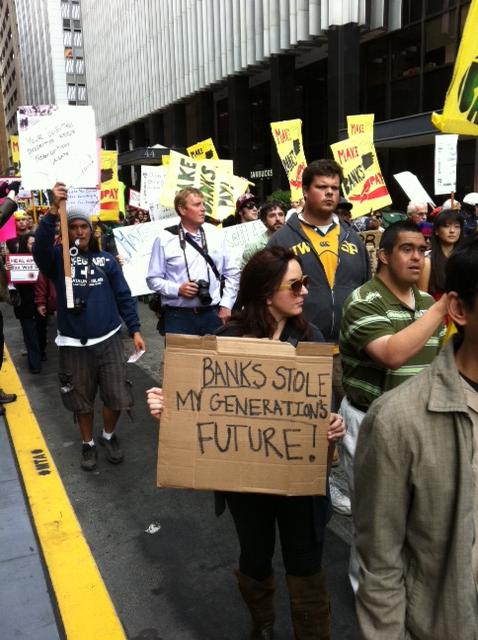
It’s been almost three weeks and they’re still there. It’s been raining, and they’re still here. Not only that, but their numbers are growing. The Occupy Wall Street movement – and its local counterpart, the Occupy San Francisco group that has been camped in front of the Federal Reserve at the foot of Market Street – is showing real staying power as it demands social and economic justice.

Following last week’s march through the Financial District, the local group plans to brave the rain storm expected to hit tomorrow (Wed/5) and to stage another march on the banks and big financial players that they blame for crashing the economy and transferring more and more wealth from the bottom to the top. The fun begins at noon outside the Federal Reserve, 101 Market Street.

Then, the next day, protesters plan to gather outside the Federal Building at Mission and 7th streets from 3-6 pm to voice solidarity with the latest big city occupation that starts that day: the “Stop the machine! Create a new world!” occupation of Freedom Plaza in Washington D.C., which organizers intend to last throughout the month.

And on Friday, the 10th anniversary of the U.S. military campaign against Afghanistan, anti-war groups will again gather at the Federal Building for a rally and march starting at 4:30 pm, with a message that seeks to link this country’s ongoing wars with the messages being sounded by the occupiers in the streets, that it’s time to divert resources being wasted on war and Wall Street toward the 99 percent of Americans who could really use them right now.

The mainstream media has been struggling with how to cover that linkage and convey the protesters’ long list of grievances and demands. But as groups of teachers and pilots and other exploited professionals join the Occupy Wall Street movement, and as noted economists and celebrities stop by to show their support, the effort is entering a new phase, and we should all seek to understand what’s driving it and where this might be headed.

What the Republicans agree on (scary)

32

The most interesting thing about the Republican debates is not where the candidates disagree — it’s where they all seem to agree. And it’s pretty fucked up.

My friends at CalBuzz say this is the big story missing from the MSM coverage of the campaign so far. They point to a remarkable article in The New Republic titled “Five Things All The GOP Candidates Agree On (They’re Terrifying).”

He notes:

Add all this up, and it’s apparent the Republican Party has become identified with a radically conservative world-view in which environmental regulations and collective bargaining by workers have strangled the economy; deregulation, federal spending cuts, and deflation of the currency are the only immediate remedies; and the path back to national righteousness will require restoration of the kinds of mores—including criminalization of abortion—that prevailed before things started going to hell in the 1960s. That Republicans hardly even argue about such things anymore makes the party’s transformation that much more striking—if less noticeable to the news media and the population at large.

And you wonder why Johnny Wendell wants to change the name from the GOP to the Shit Head Party.

Endorsement interviews: Terry Baum

26

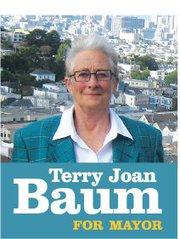
Terry Joan Baum is the Green Party candidate for mayor. She told us she got in the race to get progressive issues out and on the agenda; she was a candidate before Sup. John Avalos announced, and she says she’d be supporting him if she weren’t a candidate. She told us she’s the only candidate calling for criminal charges against PG&E in the San Bruno explosion. “I understand that I’m a longshot,” she said, “but I’ve already influenced the debates.” Listen to the interview and watch the video after the jump.


Baum by endorsements2011

Taking sit-lie lying down: Graduate student beds down on Haight Street

3

Some things seem strange even for San Francisco. The pedestrian double take was in full effect at the Haight Street curb where Bennett Austin fed the meter for his bed last Thursday. And it wasn’t even Parking Day

Austin hoped to create awareness about the homeless youth who wander, sleep, and hang out on Haight Street. The graduate school student set up a bed to demonstrate that the only safe space for the homeless to sleep in public are curb spots that they must pay for by the hour, joining the tradition of artists speaking out against sit-lie. 

His campaign, “Keep the Meter Running,” spun from last year’s sit-lie ordinance, which prohibits sitting or lying on the sidewalk or public spaces for more than three minutes at a time. Although this law is nominally meant to be enforced uniformly, it is widely understood that it targets the homeless. 

Austin wanted to do something. “I wanted to put creative efforts to solutions,” he told the Guardian that day on Haight Street. He contacted the Homeless Youth Alliance (HYA), a youth-focused organization in the Haight-Asbury which provides food, clothing, showers, counseling, and mental health and medical services to the homeless. Within three weeks his idea was in action. 

The project was also accepting donations for HYA’s HIV prevention program, whose  funding was recently cut, reducing the organization’s total funds by one-third. Mary Howe, founder and executive director for HYA, said she and her staff was very open to Austin’s advertising idea.

“It brings attention to the sit-lie law, which doesn’t solve the problem [of homelessness],” Howe said.  

Austin said he understands that everyone’s circumstances are different and he is hoping his campaign can help people become more open-minded. He said he has received very few negative responses. The first six people to donate to the HYA, Austin said, were homeless youth themselves.

Because the parking spot is paid for and Austin moves the bed every two hours (to comply with San Francisco parking laws) everything he is doing is legal. “Keep the Meter Running,” is costing Austin $16 per day to advertise on a historic street. For him, it is the cheapest and easiest way. 

“I’m reclaiming public space,” he added. “Because these kids are just as much a part of the Haight as the Haight is a part of them.”

Bevan Dufty loves Muni

8

The award for the best political ad of the year (so far) goes (no surprise) to Bevan Dufty, who is the only mayoral candidate willing to laugh about himself and the only one who could pull off an ad that’s a love poem to Muni.

I’m sympathetic: I love Muni, too. But I’m not running for mayor and trying to explain why the system is so fucked up.

Still: It’s great to see Dufty on the train with his kid, and it’s great to remember how exciting Muni is for kids, and I laughed when I saw the ad. Which is something.

Check it out:


SFBG Radio: The GOP or the SHP?

3

Today Johnny makes a modest proposal: Instead of calling the Republicans the Grand Old Party, let’s be honest and call them the Shit Head Party. Listen up after the jump.

TheShitheadParty2 by endorsements2011

SFBG Radio: A left-wing tea party?

38

In this episode, Johnny and economist Johnny Venom talk about the Wall Street protests, what will and won’t work, whether the system is too rigged — and possibly the birth of a left-wing tea party. Check it out after the jump.

FivePointsOfVenom by endorsements2011

On the streets with Occupy San Francisco

31

The messages sounded yesterday on the streets of San Francisco – delivered in speeches, chants, signs, songs, interviews, and the petition handed to Chase Bank officials by a half-dozen protesters before their arrest – should resonate with most Americans. After all, while rich corporations and individuals have been accruing ever more wealth, the vast majority of us have been falling behind.

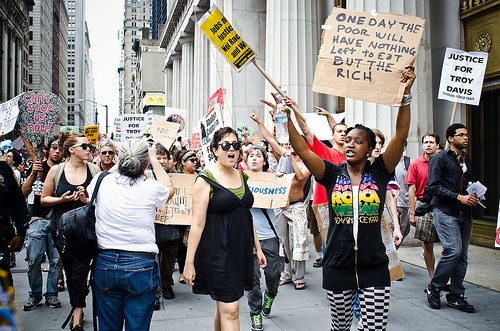
“Banks get bailed out, we get sold out,” was one of those chants by the several hundred people who marched through the Financial District – our OccupySF effort building off the two-week Occupy Wall Street events – targeting some of the villains of the economic meltdown: JPMorgan Chase, Bank of America, Citibank, Charles Schwab, the Federal Reserve, and Goldman Sachs.

They may be relatively small and easy to ignore, these “occupations” of Wall Street and San Francisco and other cities that are entering their third week, but they’re being driven by a palpable anger and stirring critiques of economic and political systems that exploit the powerless. But as the foreclosures, layoffs, and other hardships continue, this nascent movement could have some staying power.

“I think it’s starting to wake people up out of their complacent distraction,” Robin Kralique, a 26-year-old SF resident holding a sign that read “Let’s have the GDP measure happiness,” told the Guardian. “We’re planting the seeds for a better future, and I’m hoping it wakes some people up.”

Like many of the young protesters gathered outside the corporate office building at 555 California at the start of the march, she was inspired by Occupy Wall Street. They’re angry watching their economic opportunities evaporate as more and more of the country’s wealth accumulates in fewer and fewer hands.

“There’s an insane amount of greed in this country,” 24-year-old Erin Kramer, a dancer and performance artist stuck in a corporate job she needs to get by, told me. Her sign read, “Don’t be afraid to say revolution!”

And many weren’t, with calls for revolution on the tips of many lips, albeit tempered with healthy doses of realism. “Even if it isn’t at critical mass yet, it sets the stage for the next revolution,” Kralique said when I asked her what she hoped this moment would accomplish.

Sup. John Avalos, a progressive mayoral candidate who spoke at the rally, is pushing legislation to create a municipal bank in San Francisco, one that would invest far more money in local projects and small businesses than Bank of America, which manages most of the city’s money.

“We have to figure out new ways to use our local dollars to help our economy,” Avalos told us. “The message here is we’re pulling our dollars out of these banks unless they help us.”

Before Avalos spoke – asking the boisterous crowd, “Have you ever felt like you’ve been had?” – activist Bobbi Lopez was on the microphone decrying the “lack of accountability for the people responsible for this decline.”

And then, the march was off – flanked by dozens of San Francisco Police officers on motorcycles, riding bicycles, and in cars – to deliver creative forms of protest around the Financial District, including a funny song and dance routine by Fresh Juice Party in front of the Schwab office, singing, “Land of the free, home of the brave, this is the street our labor paved.”

In fact, that was almost literally true at the San Francisco march, which was shepherded by off-duty city workers from SEIU Local 1021.

“This Wall Street thing is really spreading. The message of a small group of people in New York has really spread…Wall Street is a symbol of all this corruption, cronyism, and greed,” Gabriel Haaland, an organizer with SEIU Local 1021, told me at the start of the march. “It’s really resonated with our members…It’s been picking up steam as things have been unraveling over the last year.”

An hour or so later, Haaland was one of six people who staged an occupation of the Chase branch at Market and 2nd streets, along with two women in his union who have been unsuccessfully battling bank foreclosures on their homes – Brenda Reed and Tanya Dennis – and three other activists: William Chorneau, Manny S. Tucker, and Claire Haas.

Tipped off by Haaland, I was inside the bank lobby as the march approached and a police officer on a bicycle came inside to warn bank officials, “The protest is headed your way, you may want to secure the premises.”

He and another officer helped prevent protesters from getting inside, but the six protesters had already infiltrated the building. They began chanting and pulled blankets out of a suitcase, laying them out and placing them on the ground.

Reed spoke for the group, demanding to meet with JPMorgan Chase & Co. CEO Jamie Dimond to present a petition calling for a halt to the bank’s foreclosures. Through tears, she told the story of her long struggle to protect her home from foreclosure by Chase, which had taken her loan over from another lender.

SFPD Lt. M.E. Mahoney told the group, “You’re not going to be able to camp out here and wait for the CEO to come talk to you,” asking store managers whether they wanted to make a citizen’s arrest. They did, but Mahoney also told Reed that he would watch as she handed the petition to store managers.

“I’m here today because for two and a half years, I have desperately tried to get Chase to work with me,” Reed told a bank employee as hundreds of protesters outside looked on and chanted their support. “You have put me through hell. You’ve destroyed my health, you’ve destroyed my business, and it’s not fair what you’ve done.”

After she was finished, another bank manager (who refused to give his name) told Reed, “Just to let you know, we are compassionate to your cause,” drawing from the protesters the frustrated retort, “No you aren’t!” Through the day, protesters noted that the banks have been profitable and don’t need to be foreclosing on so many homes, sitting on so much capital, and funneling their profits out of desperate communities and into the accounts of wealthy investors – particularly after being bailed out by taxpayers in 2008.

Outside, the crowd chanted “Go, Brenda, go!” and “Let those people go, arrest the CEO!”

The crowd remained outside for more than an hour as police tried to wait them out, finally arresting the occupiers on trespassing charges and quickly citing and releasing them, apparently in the hope it would clear the people out of congested Market Street. “That was my quickest arrest ever,” Haaland, a veteran of many labor actions and progressive protests over the years, told me afterward.

Reed addressed the crowd on a bullhorn, explaining that she refinanced her home in 2007 with a shady “pretender lender” who misrepresented what her monthly payments would be. They ballooned to a level she was unable to cover and she sought a loan modification from Chase, which had taken over the loan from the now defunct Washington Mutual.

“Chase Bank is trying to steal my home of 38 years,” she told the crowd. “Jamie Dimond, come out from under your rock and let me talk to you.”

She decried how government bailed out the banks and then allowed them to aggressively foreclose on homes whose mortgages they didn’t originate, but who acquired the title out of the complex financial derivatives that has sliced and diced mortgages into complex financial instruments.

“It’s government-sanctioned fraud,” she said. Despite what she said were Chase’s plans to auction her home in Oakland next month, she pledged, “You will not get my home. You will not get what belongs to me.”

But whether that kind of fierce resolve – voiced over and over again, by hundreds of activists fed up with economic injustice – translates into any kind of real change is yet to be determined.


City College execs get away with it

3

What a deal. Former City College Chancellor Phil Day and one of his associates have agreed to a plea bargain in the City College corruption case. There will be no jail time for Day and Stephan Herman; they’ll pay a fine ($30K for Day, $20K for Herman), make some sort of undetermined “restitution” and walk away with no felony convictions on their records. Cris Arguedas, Day’s celeb attorney (who also represents Barry Bonds), did a hell of a job turning all the years of sleaze at City College into a relatively modest non-event. Ho hum. Pay a fine (which, with his string of well-compensated jobs, he can certainly afford — he clearly paid Arguedas more than the fine will ever be), walk away. No big deal.

But as G.W. Schulz reported for us over the years, this wasn’t just a little tiny mistake. There’s been a pattern of underhanded operations out on Phelan Ave. for years — and now the office of District Attorney George Gascon is allowing it all to disappear under the well-worn rug.

Damn.

Here’s what I wonder: Does anybody really believe that Day and Herman acted alone — that nobody on the Community College Board knew what they were doing? Did the chancellor cook up this whole scheme to ship money to a bond campaign without any of the elected officials who were directly involved in that campaign realizing what was going on?

I realize that the majority of the folks on the college board today are trying to clean up the mess that Day left behind and move the institution forward, but I have always thought that there was more here than the formal legal charges indicated. And now we’ll never know.


Six arrested protesting bank foreclosures during Occupy SF

131

Six activists protesting bank foreclosures were arrested after occupying Chase bank on Market Street in downtown San Francisco this afternoon (Thurs/29) as part of a broader action organized to mirror the Occupy Wall Street protests in New York City.

Brenda Reed, Tanya Dennis, William Chorneau, Manny S. Tucker, Gabriel Haaland, and Claire Haas were all arrested inside Chase on Market and Second streets while hundreds rallied outside, according to Guardian City Editor Steven T. Jones, who is there at the scene. The occupation was staged following a march that originated at San Francisco’s Goldman Sachs offices at 555 California Street and then progressed to the offices of CitiBank, Charles Schwab, and Chase.

The arrests prompted protesters to chant, “Let those people go! Arrest the CEO!” They also chanted, “Go, Brenda, go!” and “Shame on Chase!”

When they first entered the downtown San Francisco bank, Reed, who has battled a Chase foreclosure for two years, demanded to speak to the CEO. “You have put me through hell, and devastated my health,” she told the bank manager.

“Just to let you know, we are compassionate to your cause,” the manager responded, but was greeted by shouts of “No, you’re not!” from the crowd.

When Reed and her small group of supporters were asked to leave, they refused. As of 5:20 p.m., there was still a crowd of hundreds protesting out front.

UPDATE: They’ve been released, and Reed made the following statement to the crowd: “Chase Bank is trying to steal my home of 38 years.”

She said, “It’s government-sanctioned, nationalized fraud,” and added, “there are thousands and thousands and thousands of people like me, all over California.”

Video by Steven T. Jones


Will Brown sign Leno’s VLF bill?

11

We’re still waiting. A bill that could bring San Francisco another $75 million a year — just by restoring the vehicle license fee that people in this city paid before Arnold Schwarzenegger gutted it — is still sitting on Gov. Jerry Brown’s desk. And we have no idea what action he’s going to take on Sen. Mark Leno’s SB 223.

The good news is that he has already signed one bill that grants local governments in the East Bay to raise sales taxes with a vote of the people. So he’s clearly open to the idea. Leno told us he remains hopeful. “We’ve been working on this for eight years,” he told me. “And there’s never been a time when local government needs it more.”

Mayor Ed Lee has voiced his support; so has the Board of Supervisors. The SF Chamber of Commerce and the Labor Council are on board. “You can’t get much more broad-based support than we have in San Francisco,” Leno said.

There’s a form to email the governor here.

Occupy Wall Street comes to SF: VIDEO

24

Guardian City Editor Steven T. Jones is out in the streets this afternoon (9/29) covering the Occupy Wall Street protests that were brought to San Francisco by a coalition of labor and economic justice advocates, and inspired by ongoing demonstrations in New York City. Mayoral candidate Sup. John Avalos was spotted mixing with demonstrators as they flew signs calling for taxes on the rich.

“People are understanding that we’ve had the wool pulled over our eyes,” Avalos said, “and they’re fighting back.”

Here’s footage from the scene shot outside 555 California, a San Francisco skyscraper that was the former Bank of America headquarters and now houses offices for Goldman Sachs and other major financial players.

Video by Steven T. Jones

Endorsement interviews: Sharmin Bock

4

Sharmin Bock is one of just two candidates for district attorney ever to try a criminal case in court. In fact, she’s tried plenty of them in a 23-year career as an Alameda County prosecutor. She’s lived in San Francisco all that time, commuting across the Bay because, she told us, Alameda County had one of the two best D.A.’s offices in the country. (Not a nice assessment of the office she’s seeking; her implication is that she didn’t want to work at home because the office was never up to her standards).

Bock really pushed the experience line, saying that a candidate who hadn’t been in the trenches couldn’t lead a team of lawyers on the path toward reform. She told us she doesn’t think low (or maybe even mid-level) drug dealers should be in jail, and is big on changing the was cases are charged. She told us she opposes the death penalty, would never charge a non-violent felony as a third strike, and would focus on fixing the crime lab problems. She also vowed to be aggressive about municipal corruption.

Check out the audio and video after the jump.


Bock by endorsements2011

Progressives battle downtown over economic and political reforms

63

Battles between progressive members of the Board of Supervisors and downtown power brokers such as the San Francisco Chamber of Commerce defined City Hall politics for much of the last decade, until the new politics of “civility” and compromise took hold this year, a dynamic that has favored downtown interests. But now, a pair of important, high-profile issues headed to the full board on Tuesday has revived the old dynamic. And in both cases, wealthy interests are putting enormous pressure on the board.

The first involves a proposal – put forward by Sups. Sean Elsbernd and Mark Farrell, the two most conservative supervisors – to gut the city’s system for publicly financing campaigns because downtown is threatening a lawsuit. They propose to end San Francisco’s program of giving publicly financed candidates more money when a privately funded candidate exceeds the spending cap because the Supreme Court recently struck down similar provisions in Arizona.

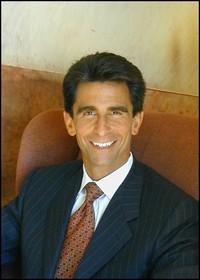
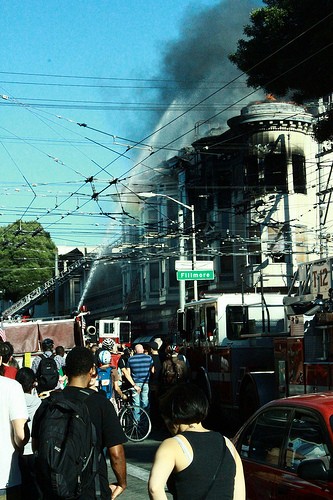
This week, after convening in closed session to discuss the threat of litigation by downtown groups, the board voted 7-3 – with Sups. David Campos, Jane Kim, and Eric Mar opposed, and Sup. Ross Mirkarimi absent because he rushed out to large structure fire in his district – for the Elsbernd/Farrell measure, one vote short of the supermajority needed to amend the current city law.

Campaign finance reform advocates such as Steven Hill argue that it’s unfair to modify the city program right in the middle of an election season in which Mayor Ed Lee and the wealthy independent expenditure groups supporting him are poised to spend millions of dollars to defeat a large field of mostly publicly funded mayoral candidates.

Hill and his allies are appealing to Mirkarimi – who told the Chronicle that he is leaning toward supporting the amendment when the measure returns to the board on Tuesday – not to support what they consider an overly broad capitulation to downtown’s threats. They’re also lobbying Sup. John Avalos to switch his vote, while downtown players are putting the screws to supervisors as well.

In an interview with the Guardian, Mirkarimi clarified his stance, noting that he was the sponsor of the original public financing law and his goal is to protect it, even if it needs to be modified to withstand a legal challenge. “I’m looking for alternatives to fortify San Francisco’s program,” he told us, noting that he missed some of this week’s discussion and he’s hoping something can be done to retain provisions that level the financial playing field with wealthy candidates.

Meanwhile, downtown forces are pulling out the stops to kill Sup. David Campos’ legislation that would prevent San Francisco businesses from pocketing money they set aside for their employees’ health care under a city mandate that they provide health coverage – totaling about $50 million last year – legislation that gets its first hearing tomorrow (Friday/30) at 10 am.

Board President David Chiu has put forward competing legislation that is more to the Chamber’s liking, letting businesses (mostly restaurants that are even placing surcharges of customers’ bills, ostensibly to subsidize their legal obligations) keep the money. But Campos and his labor allies believe they have the six votes they need to pass the legislation, thanks largely to moderate Sup. Malia Cohen’s pledge to support the measure.

While even some supporters have quibbled with the timing of this measure, Campos notes the urgency of keeping money intended for workers in their hands. “It’s an outrage and the longer we wait, the worse it gets,” Campos tells us, noting that the practice, “is what many of us consider fraud.”

Unfortunately, even if the board approves the measure this Tuesday, it will still need the signature of Mayor Lee to become law. While he hasn’t formally taken a position, given that his political base is the downtown crowd, he’s expected to veto the measure. But we’ll ask him about it tomorrow when he’s scheduled to meet with the Guardian for an endorsement interview at 2 pm.

CCDC, the Central Subway, and media manipulation (?)

21

I talked for some time yesterday with Gen Fujioka, an attorney at the Chinatown Community Development Center (CCDC), about an editorial he wrote criticizing a San Francisco Chronicle story revealing stunningly high payments to CCDC for subcontracting work on the Central Subway. (A better read, we must say, than Randy Shaw’s whining about how he’s a real journalist, he really really is, and it’s a grave injustice that someone denied him a press release.)

Fujioka claimed that the Chronicle had used fuzzy math, saying the per-hour breakdown of payments to the affordable housing nonprofit were lower in reality than the apalling $750 fee reported in the Chron. He said the management meetings listed in the purchase order actually took eight or nine hours per week to prepare for, which would bring the hourly payment closer to $102 an hour, which still strikes us as kind of steep.

Fujioka also took issue with the Chron’s report that CCDC received $25,000 for holding a single meeting.

We asked the city to send us the documents so we could have a look for ourselves. The $25,000 piece refers to two payments listed under “community relations / public outreach management” on the purchase order for CCDC’s subcontracting work with the Central Subway Partnership. CCDC, which is engaged in affordable housing work, will work with low-income tenants who will be uprooted and relocated as a result of Central Subway construction.

Essentially, the city paid CCDC $15,000 to “plan, coordinate, and implement Chinatown community briefings in cooperation with the San Francisco Municipal Transportation Agency (SFMTA),” plus another $10,000 to “collect and analyze input from community briefings, provide written report of recommendations, implement and support staff and social media at 821 Howard.” Next to each of those items is listed “Quantity: 1.” This seems to explain why the Chron reported that the combined payments were $25,000 for one meeting — the first payment was apparently to plan and host the meeting, while the second seemed to be for processing information gleaned from it.

Fujioka stressed that the description referred to briefings, plural, and that the item “is not one meeting — it’s one of that set of activities. The quantity is not ‘1.’ It’s the category of work.”

Other items on the purchase order, which totaled $410,500, show that the affordable housing nonprofit received $8,000 per month to develop and staff a Central Subway Development liason to publicize the transit project and create informational workshops, $35,000 to develop and implement an outreach plan for Chinese-language media, $95,000 to work with the SFMTA to create a public process for coordinating the design of the Chinatown station and transit-oriented development, and $10,000 to “attend meetings for and provide support services to Chinatown Public Art Plan.”

Fujioka claimed the article was an example of the media being used by one mayoral campaign to attack another, and hinted in his editorial that there was some kind of coordinated media campaign against his nonprofit.

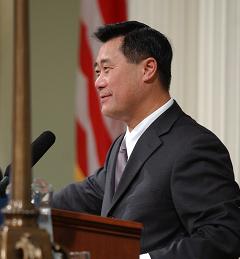
The Chron story spurred a press conference by mayoral candidate and Sen. Leland Yee on Monday, who said he was submitting a request for all correspondence between CCDC, Chinatown power broker Rose Pak, and the mayor’s office in light of this information to pin down all instances of waste and abuse relating to the Central Subway. (Of course, he might want to look beyond CCDC — while the nonprofit may have ties with Lee and Pak, you can be sure that Aecom, the general contractor which has already secured multiple city contracts worth millions of dollars, is doing alright for itself in the Central Subway deal too.) Sources from Yee’s campaign told the Guardian that the senator might hold another press conference if he doesn’t get all the information he asked for, but Lee spokesperson Tony Winnicker told me on Monday that the information would be released “within hours.”

Meanwhile, there’s another interesting tidbit buried in this whole flap. The Chron ran a photograph with its article showing a chalkboard at CCDC offices depicting a power map of the city, with Mayor Ed Lee’s name appearing at the top as interim mayor. The caption said the snapshot was taken before Lee was appointed — which would suggest that CCDC had prior knowledge that Lee would be tapped to serve as caretaker mayor. Yet Fujioka claimed the photo was really taken after Lee had already been installed, and said the drawing was simply “a power map of the city, with the new mayor.” There was no timestamp on the grainy photo, so it’s impossible to verify.

So who’s the mystery photographer? The Chron lists it as an anonymous source.

Someone from Herrera’s camp told me that she’d heard rumors the photo was submitted by a “mole from Leland’s camp.” However, a source in Yee’s camp blatantly rejected that idea, telling me he was certain that it didn’t come from anyone working on Yee’s campaign — and had confirmation from campaign manager Jim Stearns to that effect.

Fujioka didn’t name the source, but said he was pretty sure he knew who it was. “We have a pretty strong suspicion it was a visitor to our office who happened to be there on behalf of a developer who was trying to promote a project,” he said. “He actually is a supporter of one of the other candidates.”

SFBG Radio: Why California needs a state bank

104

Today we talk about why California should follow North Dakota and create a state bank — and why San Francisco needs a public bank, too. Listen after the jump.

BankOfCalifornia by endorsements2011

Endorsement interviews: Paul Miyamoto

4

Paul Miyamoto is a captain in the Sheriff’s Office and is running for the top job. He told us that at a time when significant change is coming — from the retirement of longtime Sheriff Mike Hennessey to state realignment on prison policy — it’s important to have “someone from within, someone who’s been doing the job.” He vowed (as did all the candidates) to continue Hennessey’s progressive policies, but was a little fuzzy in some areas. He said, for example, that he’s against privatizing jail health services — but would be willing to examine the issue if there were a viable alternative. Audio and video after the jump.

Miyamoto by endorsements2011


Endorsement Interviews: Leland Yee

73

State Sen. Leland Yee, who is running for mayor, has been involved in local politics since the 1980s, when he joined the School Board. He’s been a supervisor elected at-large, a district supervisor, a state Assembly member and now a senator. And he stirs up strong passions in the city — supporters of Mayor Ed Lee say they urged him to get into the mayor’s race in part to stop Yee from winning. Yee was a fiscal conservative on the Board of Supervisors, but in Sacramento, he’s been a foe of budget cuts. And he told us he wants to see new revenue — including a city income tax — to make sure that “the people who need services get them.”

You can listen to our interview with Yee and see the video after the jump.

Yee by endorsements2011

Gascon justifies secrecy in Guardian interview

2

Three top candidates for district attorney held a joint press conference this morning calling out District Attorney George Gascon for refusing to release a controversial memo by a consultant hired by the DA’s office outlining problems with DNA analysis in the city’s crime lab, which was overseen at the time by then-Police Chief Gascon.

Instead of obeying a judge’s order that he release the document, Gascon is clinging to a thin legal interpretation that it is a work product that he can withhold, choosing instead to spend city resources appealing the ruling. Journalist Peter Jamison has repeatedly written about the memo and the crime lab in the SF Weekly, but it was the Bay Guardian who got Gascon’s most extensive comments to date on it during his endorsement interview with us last week.

Starting just after the 23 minute mark when I asked about the memo and continuing for more than 10 minutes, Gascon – who earlier presented himself as one of the state’s most progressive law enforcement officials – takes credit for exposing problems with the crime lab but offers a fairly tortured rationale for hiding a document that might prove embarrassing during election season.

The California Public Records Act allows limited disclosure exceptions for what’s called “work product,” or drafts of internal documents meant to be works in progress, but it doesn’t require those documents to remain secret (as with personnel records, for example). Gascon admits that he could release the document but that he chooses not to.

“There are several concerns here. This is a memo that is largely the opinions of an individual that is a work product, it is within the office of the District Attorney’s Office, and there is good public policy as to why you have work product. You want to have robust discussions and honest self assessment of what works and what doesn’t work,” he said.

We noted that the consultant, Rockne Harmon, was brought in to bring problems with the crime lab to light so they could be addressed (not attorneys discussing the strengths and weaknesses of a case, the example Gascon cited), that Harmon actually wants to memo to be released, and that no possible public harm could come from this.

Gascon even agreed with that last point, telling us, “This document is quite harmless, but it’s the concept of the ability of people to have honest self-assessment and self-critical discussions.” He said they were reviewing the judge’s ruling and “we’ll comply with the court.” Then, the very next day, he announced that he would appeal the ruling.

Clearly – as DA candidaes David Onek, Sharmin Bock, and Bill Fazio noted this morning – Gascon is hiding the document because he’s worried it will make him look bad. And as our discussion with Gascon illustrates, he is not someone who places a high value on transparency, which is a real problem given the history of damaging secrecy in both the SFPD and the DA’s office.

So give a listen to a candid discussion about a breaking news story on an important issue and weigh in with your thoughts. BTW, as an added bonus, keep listening to the interview to hear the perspective of an unlikely supporter that Gascon brought with him: attorney Matt Gonzalez, who galvanized the progressive movement with his 2003 mayoral run.

Endorsement Interviews: George Gascon

16

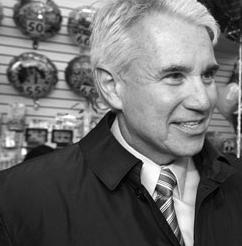
George Gascon is, as far as we can determine, the only police chief in the country ever to become a district attorney. It’s put him in an odd position, particularly given the recent problems in the SFPD: He has to monitor and possibly prosecute people who used to work for him. That conflict has been a big part of the campaigns against him.

Gascon discussed the situation at length, telling us that he’s proud to be “a progressive chief of police who became district attorney.” He said that he was the one who brought some of the department’s problems (the crime lab, the lack of a Brady policy) to light. “I have taken on police corruption aggressively,” he said.

You can listen to the full interview (and see the video) after the jump.

Gascon by endorsements2011


The Quezada memorial

0

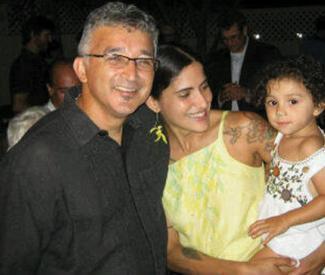
It was standing room only, and not even much of that left, when I arrived at the memorial for community organizer and Mission District icon Eric Quezada Sept 25. “It is,” my friend Chri Cook noted, “as if the entire San Francisco left is here.”

Well, maybe not quite — but close. The auditorium at Horace Mann Middle School couldn’t hold the huge, diverse crowd that packed the downstairs and the balcony and flowed out the doors and into the halls. The speakers talked of Eric’s life — as an activist, a soccer player and a father  — but also, in a dramatic way, about the part of the Mission, the part that doesn’t live off tapas and $12 martinis on Valencia Street, a community that fought displacement in the dot-com era, that fights evictions and condo conversions and high-end housing developments every day, that supports artists and musicians and immigrants and working-class people … Eric Quezada’s Mission. Long may it live.

The family needs help with medical expenses — and also to help with the education of Eric’s daughter, Ixchel. Contributions can be made to the Ixchel Quezada education fund or mailed to 470 Columbus Ave., Suite 211, San Francisco, 94133. Checks should be made payable to Eric Quezada Memorial Fund. A fundraiser is being held at Jane Morrison’s home at 44 Woodland Ave. on Oct. 16 between 3 and 5 p.m.