• No categories

Politics Blog

Economic and social equality: WTF?

1

Fascinating oped piece in the Oct 23 New York Times by Alexander Stille about economic and social equality. He starts right out with the issue:

It’s a puzzle: one dispossessed group after another — blacks, women, Hispanics and gays — has been gradually accepted in the United States, granted equal rights and brought into the mainstream.

At the same time, in economic terms, the United States has gone from being a comparatively egalitarian society to one of the most unequal democracies in the world.

The two shifts are each huge and hugely important: one shows a steady march toward democratic inclusion, the other toward a tolerance of economic stratification that would have been unthinkable a generation ago.

More:

Europe has maintained much more economic equality but is struggling greatly with inclusiveness and discrimination, and is far less open to minorities than is the United States.

Now: You can argue (and make a good case) that the dispossessed groups Stille talks about really haven’t won mainstream acceptance. But the fact is that over the past 30 years, this country has made considerable progress on the civil rights and social equality front — and has lost just as much ground or more in economic equality.

I don’t buy the hidden argument in here that social and economic equality are tradeoffs, that you have to give up one to get another. That’s ridiculous. And I think there are still times when race matters more than class. When you look at patterns of environmental justice, for example, you find that African American communities face far more toxic contamination than white communities — and income doesn’t seem to be as much a determining factor. In other words, middle class black communities have been dumped on more than poor white communities.

But I do think he makes an excellent point about class-based organizing in the U.S. It hardly exists anymore. And that’s something we all need to worry about.

The city is famous for its identify politics, and much of that is good. When Harvey Milk said that gay people should have their own supervisor, when Asians and Latinos and African Americans say they need to be represented in government, that’s not only valid but an important progressive goal.

But when we leave class, poverty, equality and economic justice out of the picture, or when we fail to make it a priority, we get what we have — a godawful economic mess.

Ed Lee’s voter fraud problem

142

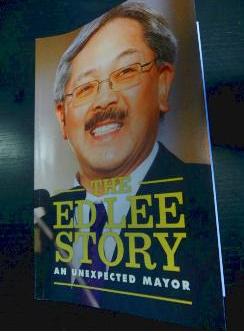
I realize that Mayor Ed Lee has denounced what appears to be clear voter fraud, but he has a problem and it’s not going to go away. Lee has allowed himself to be surrounded by the same sort of sleaze artists who circled around the administration of Willie Brown, doing the same sorts of things. And simply calling this crew and its actions “moronic” isn’t going to cut it.

Does anybody really believe that there’s no connection at all between Lee and the San Francisco Neighbors Alliance or the other independent expenditure committees working for Lee? No way that Rose Pak, Lee’s friend who meets with him regularly, is communicating with Enrique Pearce, the consultant for the IE, who worked with Pak on the Run Ed Run committee?

Does anybody really believe that this kind of activity would continue if Lee really wanted it to stop?

Lee’s supporters say the guy is new to this level of politics and is a little naive about the rules. Sorry — that’s not an excuse. The last thing we need is a mayor who doesn’t understand how important honest, open government is and who can’t figure out how to keep the likes of Enrique Pearce in line. Because then we get Willie Brown all over again.

Brown’s administration was full of lobbyists and so-called independent operators who had the mayor’s ear, got what they wanted — and had no accountability to anyone. Brown also had some problems with election laws.

This is a bad sign, and the district attorney ought to be investigating, fast — and releasing the results before Election Day.


SFPD allows OccupySF to grow into a tent city

14

Photos by Steven T. Jones, who also contributed to this report.

It seems the San Francisco Police Department is laying off the OccupySF encampment, at least for now. After top city officials sent mixed messages to the occupiers during a pair of high-profile hearings in City Hall this week, a full-blown tent city with working kitchen and medical tent has now been erected in Justin Herman Plaza.

During the Board of Supervisors meeting on Tuesday, Mayor Ed Lee voiced support for the movement’s message, but said that tents, tarps, and cooking in the plaza or in OccupySF’s presence on the sidewalk in front of the Federal Reserve wouldn’t be tolerated.

A string of protesters testified against the policy and the two recent police crackdowns, which was also criticized by John Avalos and other progressive supervisors who are working on a legislative solution to the standoff. But at the Police Commission hearing the next night, Police Chief Greg Suhr seemed to announce that police would stand  down and allow the encampment to continue.

Protesters packed the meeting and disrupted the proceedings with chants of “SFPD where is your humanity” and accusations of police brutality at several recent raids of their camp. Many representatives made public comments condemning police brutality and repression of the protests, and many speakers also connected it with a broader problem of police harassment, notably in Bayview-Hunters Point.

Said OccupySF protester Christopher Ray: “Obama himself does not have the right to come tell us to stop, to tell us to take down our tarps, to tell us we can’t eat, to cook food, to sleep there. Period. You would have change the Constitution of the United States in order to do that. We’re not leaving.”

By the end of the long meeting, Suhr expressed support in what seemed like a promise to OccupySF: “We have no future plans to go into the demonstration. We know that it’s for the long haul. We did work, or, I’m told that we were trying to work all day Sunday to take down the tarps and the structures. We did meet last week and I did provide a written notice that’s been provided wholesale since down there. We realize that this movement could go on indefinitely, and as such, I’m actually working with the Mayor’s Office personally to put the port-o-potties and the handwashing stations down there to provide sanitation. I don’t know that anybody’s doing that. And in other towns where this movement has grown and is very large, they’re already experiencing things like dogs that have bitten people, rats, sanitation issues, the lack of running water so I can assure you that our efforts are to keep it safe and to facilitate the First Amendment demonstration.”

His statement was meant with a cry of “Now that’s what I’m talking about!” and thunderous applause from the chamber, and the OccupySF movement has interpreted the remarks as permission for the encampment to continue without further police harassment. Guardian calls to the SFPD Public Affairs Office to clarify the policy have not yet been returned.

By last night, the encampment’s numbers and infrastructure had grown — with a kitchen producing group dinners and new tents being added throughout the evening — and there seemed to be only a cursory police presence. Many protesters were essentially declaring victory, telling the Guardian that the numbers only grew after each police raid, expressing hope that the city has now had a change of heart. 

This comes after a rocky history of SFPD relations with the protest. On October 5, police issued a notice requiring all tents at the encampment to be removed. Protesters complied, but police still moved in, confiscated all the protest’s materials, and ended up making one arrest in the ensuing altercation. Since, OccupySF has mostly refrained from erecting any structures; instead, the growing numbers, now an average of 200 per night, sleep on the sidewalk. When they put up two tarps when weather turned rainy on Sunday the 16th, the result was another nighttime police raid, this time with five arrests and several injuries to demonstrators.

Yet the next morning, protesters had strung up more tarps.  And in the past few days, many have pitched tents. Now, tents number over 40, and the police are yet to raid.

On Thursday, California Nurses Association and the National Nurses Association worked with OccupySF’s medic team to set up a medical tent. The tent has been sorely needed for a while, but it is only recently that supporters of the protest felt safe creating it.

When the tent was put up, police came and circulated a notice that had been issued on Oct. 1 stating, “Tents, overhead tarps, and/or wooden pallets are not to be within the demonstration area unless appropriate permits are obtained because of the potential hazard they present.” But police exited without attempting to enforce this notice, and as of now the medical tent, complete with a cot and a growing stock of supplies, is still in place.

Said Pilar Schiavo, an organizer with CNA who has been working with OccupySF: “We were able to provide treatment to a bunch of occupiers today.” She says there are many at OccupySF with no other access to health care besides the new tent. “It’s just basic first aid so far, but a little goes a long way here. One had a broken finger from Sunday’s raid.”

Schiavo says when they set up the tent early Thursday morning, protesters Tweeted, Facebooked, and otherwise put out calls for needed medical supplies. Shiavo was proud to report that “supplies started showing up an hour later.”

Just a short BART ride away, city officials in Oakland have accommodated Occupy Oakland and it has grown into a large tent city with ever-improving infrastructure and organization. Perhaps OccupySF is now headed down the same path.

Another bad guy executed without trial

8

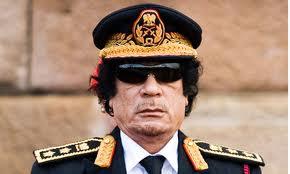
Moammar Gadafi was a tyrant and something of a nut job. I’m all for deposing dictators. But once again, the U.S. has participated in a summary execution — in this case, by an angry mob — that seems a little bit out of synch with international law.

I was one of the few people who didn’t like the idea that Osama Bin Laden was shot — apparently not during a fight but intentionally killed as part of a military action. OBL was a bad guy, and should have been tried as a criminal; the international court on the Hague doesn’t issue the death penalty, but he could have been locked up for life. Same with Anwar Al-Awlaki; he wasn’t my kind of guy, either (I’m not big on violent religious fundamentalists who kill people) but he was a U.S. citizen who was never arrested and charged with a crime.

In fact, it turns out the White House has a secret panel that can put U.S. citizens on a “kill list.”

Again: Not defending any of these creeps. But is it really okay to just kill them? Even in wartime, aren’t there rules of law?

Gee, thanks Kamala

3

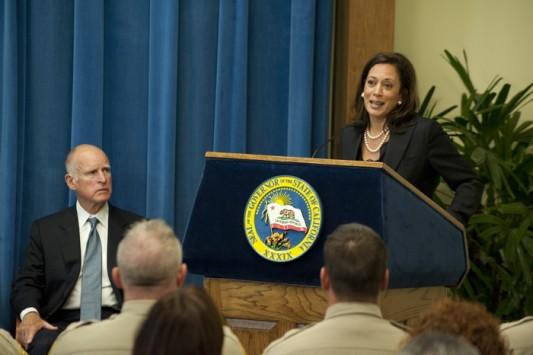
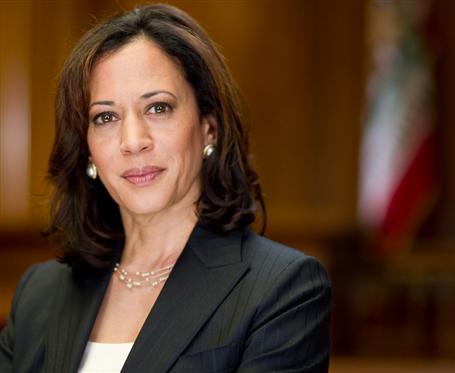
After ducking the issue for more than a week, Attorney General Kamala Harris has finally weighed in on the feds crackdown on medical marijuana. Just after Assemblymember Tom Ammiano and state Sen. Mark Leno denounced the bizarre move by the U.S. attorneys, Harris issued a weak, lame and overall pointless statement that shows she is unwilling to be a leader on this issue. The statement doesn’t even appear on the front page of her website.

Here’s what she has to say:

Harris said she was worried that “an overly broad federal enforcement campaign will make it more difficult for legitimate patients to access physician-recommended medicine in California.”

She urged federal authorities to make sure their enforcement efforts are focused on significant traffickers of illegal drugs.

Come on, Kamala. This is a blatant effort by the Obama Administration to overrule state law. It’s an attack on an industry that creates jobs, pays taxes and helps sick people. It’s another front in the failed War on (some) Drugs. And you’re the chief law enforcement officer in the state of California, charged by the Constitution to defend state statutes, including Prop. 215. You can do a lot better than this.

Harris should have joined Ammiano and Leno at their press conference. She should have pointed out that the state is trying to regulate dispensaries, but the federal government has made that almost impossible by pulling this kind of shit.

And the most frustrating this is that Harris could actually make a difference here. What, exactly, is she hiding from? Does she think fighting the U.S. attorneys will make her look soft on drugs or crime and hurt her changes to be elected governor? Doesn’t she realize that medical marijuana is really popular with the voters and that the anti-pot crowd is almost gone?

Dumb. Frustrating and dumb.


Line blurred between Ed Lee campaign and “independent” expenditures

28

From the public’s perspective, it’s hard to tell where the official Ed Lee for Mayor campaign – with its $500 limit on campaign donations – ends and where the various independent expenditure campaigns that we cover in this week’s issue begin. And that’s a problem given their ability to raise cash in unlimited amounts, coordinate with one another, and essentially act in concert with the official campaign.

For example, when San Francisco voters recently got telephone calls that began, “Hi, how are you? May I speak with ______. My name is ______ and I am a volunteer for Mayor Ed Lee. Will you support Mayor Ed Lee this upcoming election?”

The average voter would probably assume that the caller was a volunteer for the Lee campaign, but the phone banking was actually done by a group called Committee for Effective City Management, although that was never identified in the script that it was required to file with the Ethics Commission.

Campaign consultant David Looman, who runs the group, disputed that interpretation, telling us, “It doesn’t present as part of the campaign.” When we noted that was the obvious impression it left, he still wouldn’t budge, “It doesn’t say I’m a part of the campaign or anything of the sort.” When we asked whether they are required to identify themselves as an independent expenditure, he responded, “I’m not clear about that.”

Ethics Commission Executive Director John St. Croix said it is a clear violation of the law for an IE to identify itself as part of the official campaign. When he read him the script, he responded, “I don’t like it, but I can’t say off the top of my head it’s absolutely a violation because that isn’t the exact name of the campaign, which is Ed Lee for Mayor 2011.”

But clearly, voters are left with the impression that it’s a Lee campaign volunteer calling, right? “I think that’s a legitimate layman’s perspective on this, yes,” St. Croix responded.

Will the Ethics Commission do anything about this, or the numerous other campaign finance law violations that CitiReport, Bay Citizen, and other media outlets have been unearthing? Don’t bet on it, particularly because of the commission’s history of ignoring problems and overcomplicating its role in watchdogging even the most obvious violations.

For example, at tonight’s Ethics Commission hearing, the body is considering relaxing rules that require the reporting of big campaign finance expenditures within 24 hours, pushing that requirement back to the last week before the election — right after the Guardian’s final pre-election issue hits the streets. 

OccupySF appeals to City Hall, but the standoff continues

40

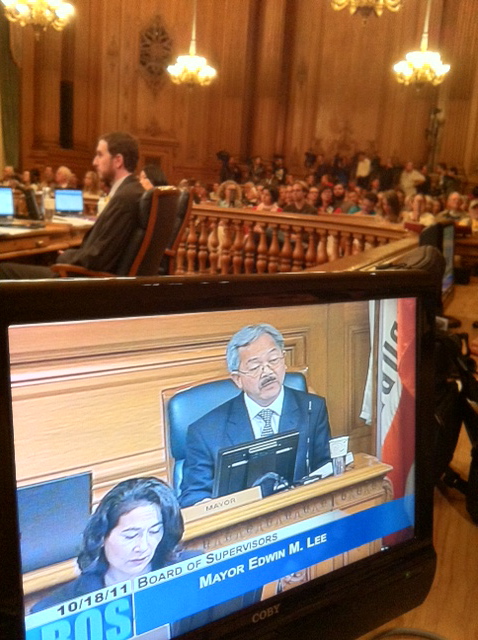
Frustrated by repeated late-night police raids on their encampments and empty statements of support by top city officials, hundreds of protesters with OccupySF entered City Hall today – under the watchful eyes of a large police presence with riot gear at the ready – to testify at today’s Board of Supervisors meeting.

The meeting began with the scripted monthly question time session with Mayor Ed Lee, who was asked by Sup. Jane Kim – whose District 6 includes the OccupySF encampment, which she visited for a couple hours last night – to “describe the plan that our offices have been developing” to facilitate the OccupySF movement.

But in Lee’s response and in exchanges with journalists after the meeting, as well as Guardian interviews with people in both offices, it doesn’t seem city officials have a coherent plan for carrying out Lee’s contradictory goals of supporting the Occupy movement and keeping sidewalks and parks clear of encampments.

Kim seemed to acknowledge as much later in the meeting when she said voiced support for OccupySF and for city officials who object to tents, kitchens, and other basic infrastructure that the month-old movement needs to continue. “We’re all struggling to figure out the best way to accommodate it,” she said.

Lee’s message was even more muddled, saying he supported the movement and agreed with its economic justice message. “From the very beginning, I have fully supported the spirit of the OccupySF movement,” Lee told the crowd, transitioning into reciting a litany of economic development efforts with little relevance to the demands of the movement.

“Then don’t send the police in to destroy it,” a protester shouted from the audience, which was filled to capacity and had a line out front and an overflow room. “We are working with you,” Lee responded, but then went on to complain about the lack of consistent contacts in the leaderless movement and emphasizing his bottom line that any kind of encampment with infrastructure is an impermissible violation of city codes.

“I need to make sure our public spaces are open to be used by anyone,” he said. Later, his Press Secretary Christine Falvey clarified the mayor’s stance by saying he supports the message but not the movement: “The tactic of camping overnight, he does not support.”  

Afterward, talking to reporters, Lee couldn’t really explain why the police needed to do their raids in the middle of the night, why San Francisco is cracking down on conditions that are being allowed in many other Occupy cities, or how the movement might be able to avoid future crackdowns if it continues, ignoring questions about where OccupySF might be able to go to avoid police raids.

Sup. John Avalos, who has been working to try to mediate the dispute between OccupySF and the city, responded to Lee’s speech by calling it “very frustrating. I’m alarmed that he is moving toward nightly standoffs with the Occupy movement.” Avalos says he supports protesters’ right to peacefully occupy public spaces and acknowledges their need for basic supplies to do so, calling the current standoff, “unsafe for both sides.”

“I’m proud to say that we are the 99 percent,” Sup. Eric Mar said, echoing the movement’s mantra and saying he would defer to Avalos’ leadership to create a “resolution strongly holding the police accountable for the crackdowns.”

Avalos had invited OccupySF participants to raise their concerns during the public comment portion of the meeting, and he said that he plans to use their input to form a resolution or plan for how the city should accommodate a movement that six of the 11 supervisors professed to support at the meeting.

When the long line of OccupySF protesters finally took to the microphone for public comment, they made it clear that the issue wasn’t as complicated as some city officials were trying to make it.
“It is outrageous and inhumane to see our camp raided in the middle of the night by San Francisco Police,” Magic, a middle-aged woman and lifelong activist, told the supervisors, closing with, “This can be a celebration or a battle, but we will not back down.”

Several speakers were dismissive of city claims to be protecting public health and safety, noting how dangerous the midnight confrontations have been, saying food and shelter are basic human needs, and noting how peaceful and cooperative OccupySF has been with the escalating series of city demands as the protest’s numbers have grown.

Michael Goldman said police have asked them to return to the sidewalk in front of the Federal Reserve, where they are densely packed in what he called unsafe conditions. “We have too many people to fit in front of 101 Market,” he said.

That was what prompted the move to nearby Justin Herman Plaza, where police cracked down Sunday night, citing a violation of the park’s 10 pm curfew. Another protester who works at the Ferry Building angrily noted that even before OccupySF began, he regularly watched city crews chase the homeless away from the site at 3 am with water trucks.

“We are a peaceful and nonviolent people and we do not deserve to be treated this way by our city and our country,” he said.  

“They were waiting to be talked to and not just run over by the police,” said iconic San Francisco activist Father Louie Vitale, who gestured to the waiting protesters and said, “We’re very proud of these people, very proud.”

It was a point echoed by others like local resident Andy Blue, who said, “They are doing a great service to this city and the world.”

When OccupySF occupied my car

13

By David Adler

I began the week a brooding and self-pitying writer, who was spending far too much time sucking on sour grapes until they were bitter raisins.  I even went back and forth via email with an editor who had rejected one of my stories.  This is not a good way to endear yourself with potential future patrons.  But it had been far too long a time since I’d torched a bridge (and, in this case, I’m fairly certain that I burned the fucker to the ground), and in that sort of “I love the smell of napalm in the morning” empty machismo way, well, I still didn’t feel better.  I felt like I do when I yell at the television while watching a Laker game, screaming at Andrew Bynum as if I were sitting courtside next to Jack Nicholson and sneaking out with him for blow during TV timeouts or just when we damn well wanted to.  I was a crazy man.  A loon in sweats and a Cal hoodie. 

Determined to regain a semblance of human dignity, and equally committed to acquiring as little of it as necessary (the stuff is pricey, I don’t care what my therapist says), I got on the BART last Wednesday, October 5th, at the cavernous and exposed Millbrae station, the end of the peninsula line. 

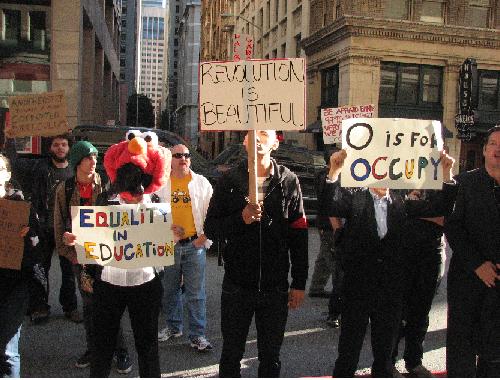
The electric train screeched and squealed and screamed north into the city, where a half hour later I emerged from the Embarcadero station on Market Street.  A motley camp came into view, pitched on the sidewalk in front of the Federal Reserve building.  It was the Occupy San Francisco Financial District camp.  In solidarity with the original Occupy Wall Street movement, and the dozens other others cropping up daily, which defibrillates my long spasming liberal heart into a peaceful rhythm. The 99% in action. Could’ve been 1969.  They had a kitchen, a library/bookstore, it was a little city of dissent, and the forces of everyday people were now gathering, enlarging the camp’s population, in anticipation of the noon march.  The police were mostly in the background, talking with a few suits and ties out for a smoke, or lunch, who observed with amused smiles on their faces as they looked at the Occupy camp and the crowd.  Stupid people, they seemed to be thinking, though I obviously can’t know.  Perhaps they just didn’t get it. But they didn’t have to.  It was getting itself just fine. 

There were old and young, every race and color and creed.  There were hippies in their seventies and students in their teens and twenties, nurses of all ages, punks and patriots of equal concern, workers and laborers and normal folkies of every stripe and sandal.  Yes there was a progressive and lefty and outsider’s insider vibe to the signs and the chants. Banks got BAILED out, we got SOLD out!! Banks got BAILED out, we got SOLD out!!  We ARE the 99 percent!!  We ARE the 99 percent!!  But that’s the whole friggin’ point. There was a tiny dog, a Puggle the owner told me, who was wearing a sign that said “Justice for the Little Guys.”  A woman who looked to be on lunch break held a small sign aloft: “I’m here because I can’t afford a lobbyist.”  End The Fed.  Tax the Rich.  So many more, so varied.  And my favorite, which was a bit longer:

The Amercian Paradox:
Unionized Public Employees
Cracking Down on Those
Seeking to Save Their Jobs & Pensions

Now, I may not agree with everything and everyone in this movement, not even close, but the fetid financial powercore as the center of this mass and evolving dissent?  Bring it on.  My wife works for a good little bank, worked for another one in Southern California that was shut down by regulators and sold off under dubious circumstances, and those kinds of community institutions have been run over by the too-big-too-fail Gods.  I loved it, in other words.  And we marched.  The official count, I read, was 800.  Horseshit.  No way.  I couldn’t give an exact number, but I know it was many more than that paltry figure.  Cabbies were honking at us, but in a rhythm, a beat that said they were with us and not annoyed.  I carried my sign, given by a representative of the nurse’s union, because their cause really resonates with me: Tax Wall Street Transactions – Heal America.  I waved it for a few miles, but my arms never got sore.  The spirit was grand and vital and patriotic and American.  We were engaged in the only thing freedom really means.  The right to say no to the powers that be, to protest without the fear of unjust reprisal.

And there’s the rub.

After marching, I had to hop the train home quickly and pick up my son from school.  I rode south toward Millbrae, while behind me in the city the ruckus remained and grew and settled back into camp for the night. 

The night.

Always the best time for the authorities to do their dirty work. The next morning, after being told by my wife that on the news they reported the police had busted up the Occupy camp, I watched the videos that had already been posted online.  And there they were, those unionized public employees, heading down the street in riot gear toward the Occupy Camp.  The irony is too rich.  And disturbing.  They came in riot gear, apparently, to protect themselves from a bunch of barefoot hippies and thread-thin vegan rebels. The police confiscated a lot of the stuff from camp, ordering the reluctant Department of Public Works employees to carry out the deed, without giving the kids time enough to gather it themselves.  Then the police got rough, nightsticks into ribs and arms and thighs. All of it, needless to say, completely unnecessary.  The only thing freedom means, and that’s what it gets you.  In America.  Didn’t those police want to set a better example, to be better than the police and soldiers we see all over the world stomping on their people’s hopes?  I guess not.  They’ll say it was a safety issue, a private property issue, that it was this or that, but none of it required riot gear and physical violence at all. Disgraceful and depressing.

On Thursday evening, the 6th, on the Occupy SF website I saw that they had put out a call for anyone with a car or truck to help them get their stuff back.  It had been taken to the Department of Public Works yard off Bayshore.  Friday morning, as I sat staring at my computer trying to write, I decided to do something to help these kids out.  I got in my Prius and headed into the city, to the DPW yard.  On the way there, in my idealistic mind (at least I still have one at my age), I envisioned a huge caravan of progressive minded people arriving on the scene in solidarity, ready to help get this stuff back to whom it rightfully belonged. I wished.  But when I got there a little after nine, I was the only one there.  Soon, however, a tiny old Japanese hatchback rumbled past with what I took to be three activists of various ages riding inside.  They had to be Occupy people, I thought. But they drove past, appearing lost, and turned out of sight at the far corner.  Hmm.  In a few seconds, however, they reappeared, the car pulling to a stop at the red curb where I was standing at what looked like the front door to the DPW offices.

“Are you with Occupy?” I asked the bearded young man in the passenger seat, who had a thick mane of wavy dark hair pulled back into a long ponytail.

Yes, they all answered, who are you?  Where do we park?  The driver was in her sixties, clad in black I noticed, with long gray hair.  The passenger in the back seat was a younger gal, heavy, a punk lesbian vibe about her, with her short cropped hair painted red, blonde, and blue.

“I’m just a guy,” I told them.  “Just someone who showed up to help you out.”  The young gal in the back looked at me oddly, with an expression of curious surprise, then pointed at me slowly, like a b-ball teammate acknowledging a sweet assist, as if thinking, “Yes, even the fake hippies in the Adidas gear are with us!”

“And you probably want to park anywhere you can,” I continued. “I just got lucky across the street there.”

Just then we got the attention of a DPW worker inside the glass door.  A big African-American guy in a yellow work vest, he asked if we were from Occupy and looking to get our stuff back.  He gladly directed us where to pull our cars, and he told us he’d instruct someone to meet us back there.  This is when I learned, from the kid with the ponytail, that the DPW workers were not happy about having to obey the police and confiscate the protesters’ stuff, their own union supporting the Occupy movement.  So the courtesy and patience of all these DPW workers was no surprise.

A few minutes later, as the four of us waited on the sidewalk, I realized I’d forgotten their names, or if we’d exchanged them at all.  I thought we had, but I’m terrible with names, which I told the young guy with the beard and ponytail.

“Chris,” he replied to my re-query. “You’re Dave, right?”

I felt guilty that he remembered and I didn’t. 
“I’m Diana,” the younger gal introduced herself, “And I really have to pee.  You think you guys could form a perimeter here for me so I can go in the bushes?”

I suggested she go behind the black van that was completely blocking some bushes about twenty feet away.  She nodded, good idea, and walked over to relieve herself.

“I’m Dagny,” the older woman said as she sat on the curb and lit a cigarette.  “And the name’s not from that useless fucking Ayn Rand book, thank you very much.”  Dagny seemed an experienced San Francisco hellraiser, and I would discover that she had little time for taking any shit or wasting any time. 

Returning from her bathroom bivouac, Diana was hopping mad.  “You’ll have to excuse me, I really got a fire in me today, after what went down last night.  I may be young, but I can get stuff done.  And today we’re going to.”

I told her I understood the fire she had in her.  When I asked how old she was, she replied twenty-two.  Exactly half my age, I told her.  She thought for a second and mouthed forty-four, barely audible enough to be heard.  Just then another DPW worker showed up and told us to follow him in our cars.  He led us through the sprawling yard, crowded with trucks and tankers and service vehicles of every odd variety and size, many in the repair bays, where workers crawled under and around and atop them like Lilliputians upon Gulliver.

We finally made it to a parking area, filled with more trucks, and with a storage area surrounded by a patchwork chain link fence.  The DPW guy unlocked the fence gate and led us in.  There was junk covered in blue tarps on both sides, with a cleared path in between. Everything on the left, he told us, was homeless stuff, which made sense once we saw how many bicycles and shopping carts poked out from under the tarps.  On the right side was the Occupy SF stuff.  It had rained the previous night, so it was a wet mess of backpacks and chairs and tarps and toolboxes, storage containers and tents and camp stoves, furniture and clothes and food. A lot of food.  They’d been living there, after all. Some of it had spoiled, some was still good.  Chris and Diana were kind of overwhelmed at first, but Dagny just laid it down: let’s just get all the food out first, and figure out what’s still good to keep, and what’s not, and we’ll put the good stuff here, and the bad stuff goes in this trash bag.  Wet clothes over there, office stuff here, tarps in a pile, Dagny continued like a former flower-child field general, until we were moving with as swift an organization as possible under the shorthanded circumstances.

A half-hour later my car had been designated as the de-facto catering truck.  It was full of all the canned food, as well as the fresh stuff that hadn’t gone bad.   Bread and bagels that stayed dry, tea and coffee, oats and nuts, produce that included a large crate of oranges and a box full of various types of squash.

We had my Prius packed tight and Dagny’s hatchback full to the brim, with at least several more trips worth ahead of us, if no other vehicles showed up to help with the rest. More importantly, we had no place to go.  Diana made a harried phone call.  Then Chris made another.  There was supposed to be a storage space rented, but no one could seem to figure out who to contact to find out where it was.  It was then that a pickup truck and an SUV showed up.  Cool, now we could at least get the rest of the stuff loaded, those two trucks should be big enough to hold it all.  The truck and SUV, as well, brought four or five other people.  A guy about my age from Marin, who had picked up a gal from the city, and three younger guys in their early twenties (or so I assumed).  These threee were thin and vegan and dressed in clothes that looked like they’d been living outside for a couple of weeks.  When I introduced myself to one of them, he told me that I could call him “Just One.”  After a few moments, I got it.  A leaderless movement.  He was just one. There was something poetic and beautiful about it.  Just One seemed a tad wary of me at first, but by the end of the day was thanking me profusely.

“I really appreciate it, man.  I was worried I was gonna be the only mule out here.”

With more hands to help and more trucks to load, Just One and his friends started to voice their own concerns about how we should be separating the stuff.  They started to disagree among each other while trying to come to a community decision.  Dagny took charge once again, overriding the consensus confusion.

“We’re packing it all up and just taking it to this damn storage space, if anyone can figure out where the hell it is.  Then we’ll deal with it all there.  These people who volunteered their cars and trucks have to get other places, so we need to waste as little of their time as possible.”
Focused by a veteran of many movements, we got the remaining stuff loaded into the trucks, cramming in furniture and containers and everything we could that seemed worth saving. Dagny had decided to take all the wet clothes that looked like they could be salvaged and washed.  She told the kids that she’d bring it clean and dry to camp the next day.  She even told Chris that she was going to lend him her car for the rest of the day, all he needed to do was drop her off and pick her up from a class she teaches.  Lefty teamwork gave us an energizing rush.  Unity flowed like fine, and rare, wine.  On the last sweep of the space, Chris found the handmade red and black OccupySF flag, that had flown at the campsite. It was under a tarp and was still attached to the end of its long bamboo pole, having survived relatively undamaged.

“Yes!” Chris declared, holding it up.  “The flag survived!”  The others shared his small victory enthusiasm.  “We’ll take it with us,” he told me.

Colors ready to fly again, trucks and cars loaded with recovered possessions, we nonetheless continued to wait.  No one, still, could figure out where this storage space was.  A few people made a few more harried phone calls to certain people, not leaders of course, but people in the movement who might know who else in the movement would know where to send us.

“Quite a lovely clusterfuck” Dagny said to me.  “And what the hell am I thinking?  I’m missing prime smoking time here.”

As the guy from Marin, who brought the truck, finally managed to pin down the location of the storage space, I told Diana she could ride over with me, I had a passenger seat free.  She said okay, but didn’t seem too enthused.  As directions to the storage space were given out, Diana hung out next to the passenger door of Dagny’s car.

“I think she’d be more comfortable riding with you,” I said in Dagny’s ear. 

“I think you’re right.  Take Chris and we’ll meet you there.  It’s easy to find, right down 3rd.”

In the Prius and on the way, Chris told me he’d been living at the camp since he got into San Francisco.  He was raised in New Jersey, then he spent some time in Florida, which he hated.  “So I just took off west, ended up here, and I don’t think I’ll ever leave.  I just love the whole spirit here.”  I told him that I’d just moved to the bay area, with my wife and son, from San Diego, and that I’d spent my whole live in Southern California until we moved up here.  When he asked what I did, I talked for a few minutes about being a Hollywood dropout (though I made some good money for a brief time), and that I was now trying to write some fiction.  After I described what made SoCal and NoCal seem like two separate states, Chris repeated his mantra. “I just love it here.”

“Dagny’s a character,” I said after a moment.

“Oh man, she’s hilarious, you shoulda heard the stuff she was saying on the way over here.”

I asked him about Wednesday night, when the police in riot gear had busted up the Occupy camp in front of The Fed.. 

“They were the instigators of the violence, they really were,” he said.  “I mean a couple people yelled some stupid stuff, but we weren’t violent at all, and they just come at you with those batons.  I got nice lump right here on my arm.”

I said I’d heard that some of the police didn’t want anything to do with it.

“Yeah, there were some who wouldn’t even look at you, and you knew they were just torn and didn’t want to be there.  And the female cops, as usual, were fine.”

“Never had a problem with a woman in uniform,” I told him.  “Never even that cop attitude you get if you have the nerve to politely question them.”

He agreed, his eyes looking for the street off Third where we’d find the storage place. 

“Here it is!”

I made a quick sharp right, and I heard several oranges spill out of the crate and juggle down onto the floor.

Pulling into the parking lot, Chris and I realized everyone had made it there before us, even though we’d left pretty much first.  “That’s how you know we haven’t been in the city long,” he smiled, getting out to help unload.

Most of the food packed into my car, it turned out, was headed for a charity called Food Not Bombs.  I was going to drive it over there, a task Dagny had assigned to me, but she couldn’t get Food Not Bombs to pick up their phone, and no one knew where it was.

“They kind of operate under the radar,” Just One told us.  “They really don’t want the authorities to know where they are, so they kind of move around.”

I was stuck with a carload of provisions with no charity to feed.  Damn.  As my time got short, Dagny saved me again and told the kids that they should unload the food from my car, and set it aside with everything else that wasn’t going to stay at the storage space.
“We’ll put it all into one truck, keep it as organized as we can.”
Good call.  I pulled out the bamboo pole with the OccupySF flag on it.  I waved it around for them, and everyone gave a cheer.  “Let it fly, man!” Chris exhorted.  I flew it from the Prius for my last few minutes there.

Chris and I exchanged cell phone digits, and I told him to keep me in mind if they ever needed a car during the week, that mornings and early afternoons are when I’m mostly free.  We shook hands, and he thanked me again, so genuinely, as did everyone else. 

I drove away, got onto 101 south and headed back to Millbrae.  And, in my swelling head, I heard the line from Jack Kerouac’s “October in the Railroad Earth”: …and here’s all these Millbrae and San Carlos neat-necktied producers and commuters of America and Steel civilization rushing by with San Francisco Chronicles and green Call-Bulletins not even enough time to be disdainful…

I cherish those words: …not even enough time to be disdainful. 

So many critics fit that suit perfectly.  It offends them simply to take the time to disdain it.  It bothers them to even bother.  The people, many young, who started this Occupy movement and continue it, deserve much better, as does the entire nation.  These free and peaceful Americans have made the time to do much more than disdain or merely talk. For now, until who knows when, they have made it their lives to act.

The positive vibes from that day must have carried over, because on Sunday I pulled off another online poker miracle.  (I say another because last year I turned thin air, literally nothing but a few bucks won in a free tournament, into more than ten grand in about four months.  All of it ended up in the bank, thankfully.)

This was an equally daunting assignment.  Two thousand and fifty-six players were entered in the tournament on ClubWPT dot com.  It was first place or nothing.

Four hours later, I had beaten them all.

And I had won the grand prize: a $3500 Main Event seat at the World Poker Tour Jacksonville event in November, plus another $1000 in travel money. 

Now what the hell do I do?  I never play live.  And the tournament is at a dog track, of all places.  Greyhound Rescue, condemn me now.

But I could win a bundle.  Or nothing, in which case I’m still on the hook for taxes on this $4500 package.

Wall Street has their casino, albeit a much more rigged one, and I have mine.  Stay tuned.

Mormons and Republicans

12

CalBuzz, one of my favorite political sites, has an interesting essay on what the anti-Mormon sentiment in America means for Mitt Romney. Among the central points:

Gallup found that Democrats (27%) were more unlikely to support a Mormon than were Republicans (18%) – suggesting that in a general election, a Mormon’s hard-right views on gays, marriage, abortion and women’s rights might have more to do with resistance to an LDS candidate than religion itself.

Actually, not all politically active Mormons share that “hard right” approach — Stew Udall, the Arizona environmentalist, Congressmember and interior secretary under Kennedy and Johnson was a Mormon. So was his brother Mo, a liberal member of Congress who ran for president in 1976 as a left alternative to Jimmy Carter. But like evangelical Christians, Mormons in general tend to be conservative, especially on social issues.

The CalBuzzers are puzzled by the distrust of this particular religion:

It’s hard to determine what, exactly, drives anti-Mormon sentiments – whether it’s what people know, what they don’t know or what they think they know.

Are they familiar with Joseph Smith, Jr., the treasure digger from Palmyra, New York, who said he was visited by the angel Moroni in 1827 and guided to a box of golden plates which he said contained what is now known as the Book of Mormon, after he transcribed them from “reformed Egyptian”?

Are they thinking about the breakaway Mormons in HBO’s late great “Big Love” with Bill Paxton, Jeanne Tripplethorn, Chloe Sevigny, Ginnifer Goodwin, Bruce Dern, Mary Kay Place and Amanda Seyfried? Maybe they think Mormons are all like Roman Grant, the evil self-proclaimed prophet and leader of the Juniper Creek Compound played by Harry Dean Stanton.

Or are they like one wag we know who argues that the only difference between Mormonism and Scientology is the choir?

If you want to pounce on logical improbabilities in religions, you’ve got your parting of the Red Sea and the burning bush, the immaculate conception and the resurrection and that passel of virgins waiting for you in Heaven. Pick your myth.

The point, of course, is that the stuff Mormons believe is no odder than the teachings of most major religions. But there’s a big difference, and I find it fascinating.

The thing is, if you believe in Jesus or Abraham or Mohammed, you’re talking about people who lived a really long time ago, before there were accurate written records. Despite former Guardian writer Burton Wolfe’s best efforts, you can’t really prove that Jesus lived or didn’t live, or did or didn’t turn water into wine or cure lepers. The Bible has been translated so many times (and by many accounts, rewritten so many times) that it’s hard to know exactly what the original stories even were.

On the other hand, there are people alive today whose grandparents might have known Joseph Smith. Mormonism came to life in a time of newspapers and nearly-modern record keeping. Upstate New York in 1827 wasn’t exactly Manhattan today, but it wasn’t the Middle East in 44 B.C. either. There are still accounts of newspapers of the day denouncing Smith as a charlatan and fraud. Nobody can argue about whether he was into polygamy or not.

In the context of the 1800s, although there was plenty of strange religious stuff going on, the notion of a failed treasure hunter finding golden plates left by an angel (who then took the plates back after Smith made the one and only translation) seems pretty bizarre. That’s in part because the traditional religions all teach that the weird shit took place a really long time ago, which somehow makes it easier to justify.

If the son of a carpenter announced in 1827 that he was really the son of God, and that his mother was a virgin who had been impregnated by something called the Holy Spirit, who was also sorta, kinda part of God, isn’t it likely he might be called a nutjob? Ya think?

And the way the Mormon Church operates, with all of its official secrecy, just encourages people to think of it as a cult. But you ever tried really looking into the Vatican?

My point is that poor Mitt is going to face an uphill battle over his religion largely because the stuff that’s really, really hard to believe supposedly happened a couple millenia after stuff that’s really, really hard to believe was supposed to happen.

Not defending the Mormons here. (Although, if you stipulate that women have equal opportunity and gay people can get married, too, what IS wrong with polygamy?)

Just saying.


SFBG Radio: Has official SF lost its mind?

54

Today Johnny and Tim talk about the police raid on Occupy SF — and why San Francisco officials insist on making this the only large city in the nation that’s sending the cops to clear out Occupy Wall Street protesters. Listen after the jump.


RiotGoinOnCops by endorsements2011

Oakland is hella occupied

The Occupy Oakland encampment at Frank Ogawa Plaza is about 150 strong at any given time, and with a march, rally, and live musical performances on Oct. 15, the protest zone in the heart of Oakland was buzzing with energy.

Oakland is home to hundreds of seasoned activists who’ve made headlines in the past for organizing mass demonstrations against police violence, pushing back against cuts to public education, and moving to save Oakland public libraries from closing their doors in the face of budget cuts. Now, in solidarity with Occupy Wall Street and the Occupy movements that have sprouted up across the country in recent weeks, they’ve staked out a tent city in front of Oakland City Hall to join the national chorus condemning income inequality, corporate influence in government, and the role of major banks in unleashing a tide of unemployment and foreclosure that has swept working-class and middle-class Americans.

In just a week’s time, the occupiers have managed to create a community space governed by consensus that has the feeling of being an established space. Wooden pallets create walkways that criss-cross through the tents, which are staked close together. A kitchen area has been set up, with industrial-sized pots and pans piled high, and regular meals served to more than 100 people. There are portable toilets, portable outdoor sinks, a library supplied with zines and radical literature, an arts and crafts area, a kids’ area, a first-aid tent, and a makeshift stage in the plaza near the entrance of the 12th Street BART station.

The space is continually evolving, several activists told me when I chatted with various people at the camp. A few small arguments have broken out here and there, but on the whole things have been extraordinarily peaceful despite the close quarters and wide-open vibe. This past weekend, a tall structure with a pointed rooftop materialized overnight, adorned with colorful fabric and curtains. Tables and chairs had been brought in so people could play cards, hay bales served as structural dividers between encampment spaces, and the plaza was adorned with posters bearing statements like “The First American Revolution Since the First American Revolution.”

What sets the Oakland occupation apart in some ways is the diversity of people who’ve been drawn to participate. From black youth born and raised in Oakland, to Muslim women donning traditional headscarves, to white anarchists, to parents of young kids, to college students, to people in wheelchairs, to aging hippies, to transgender people, Occupy Oakland reflects the diversity of the city — and it’s bringing together a group of people who might not necessarily share the same space at the same time on a regular basis.

Boots Riley of The Coup performed at Occupy Oakland on Oct. 13, and other musicians have treated occupiers to live music as well. Shane Bauer, Sarah Shourd, and Josh Fattal — the three activists who were imprisoned in Iran and are now back on the West Coast — were scheduled to speak on Oct. 17. At one point just before dark on Oct. 15, a group of bikers blew past the camp in what seemed to be a show of support, performing tricks while everyone applauded.

On Oct. 15, Move On staged a Jobs Not Cuts rally at Occupy Oakland, but because activists decided by consensus beforehand that they did not want any politicians speaking at their encampment, several elected officials whom the group had invited to speak were struck from the roster. (However, a representative from the office of Congressional Representative Barbara Lee did deliver a prepared statement, which some occupiers characterized as going back on their agreement with Move On.)

Danny Glover delivered a passionate speech at the rally, telling the crowd, “We are here because it’s the right time to be here.” He spoke about transforming and reinventing the system so that it could work for the people and the planet, asking, “What does it mean to be a human being in the 21st Century?” He urged the activists to hold their ground, and then said, “What it’s going to look like, I don’t know.” But he asked people to believe that a new system could come out of this grassroots movement, “based on our faith in humanity.”

All photos by Rebecca Bowe

SFPD raids OccupySF again, using more force this time (PHOTOS AND VIDEO)

10

2:10 pm UPDATE: OccupySF plans to march on City Hall today (Mon/17) starting at 5 pm at Justin Herman Plaza.

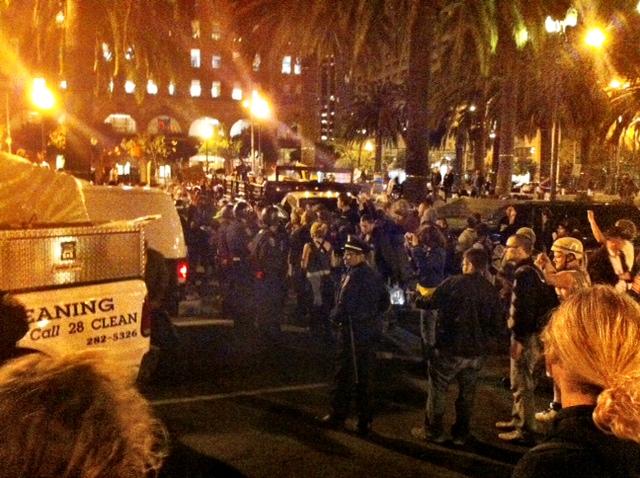
Police raided the OccupySF encampment for the second time last night. The events were similar to the Oct. 5 incident, where police stood in riot gear while the protesters’ materials were loaded into Department of Public Works trucks, then protesters sat, lay, and stood on the street around the trucks in an attempt to prevent them from leaving. In both cases, a kitchen and medical tent that had been set up by protesters were dismantled.

Police were by many accounts more aggressive than in the previous raid, which was the first direct police attack on an Occupy encampment in a major U.S. city. Last night, protesters were dragged, kicked, and struck by police officers, prompting the dispatch of an ambulance to take an injured protester to the hospital. There were at least five arrests.

Journalist Josh Wolf shot some excellent footage of the raid:

San Francisco Police Department spokespersons didn’t answer calls from the Guardian. Police Chief Greg Suhr told us after the last raid (which was also approved by Mayor Ed Lee) that they were only removing public safety hazards and “we will surgically and as best as possible and with as much restraint as possible try to deal with the hazards while protecting people’s First Amendment rights.” Yet last night’s raid shows the city is actually dealing more harshly with the Occupy movement than most cities. 

Around 10:15 pm, the group received a warning that police planned to enforce 10 pm curfew in Justin Herman Plaza. The camp had moved there on Saturday to accommodate growing numbers. Police informed protesters that they could not sleep in the park and that they would need to take down a few tarps that had been propped up, providing a roof for the kitchen and communications area in camp. They claimed that there would be no trouble if the camp moved back to their previous location at nearby 101 Market Street, on the sidewalk in front of the Federal Reserve Building.

Protester Katt Hobin served as a liaison with police throughout the night. She was skeptical of police claims that 101 Market Street was an “agreed upon spot.” Hobin told us, “We were encouraged to relocate. We were never told we could be at 101, or that we could be here.”

There were about 100 protesters gathered. In response to warnings of arrest for those who stayed at Justin Herman Plaza, about 30 moved to 101 Market Street. Protesters began texting, calling and tweeting supporters to come join, and by 11:30 pm there were about 200 protesters at camp.

At first, when asked, police could not provide any written statement detailing reasons for disturbing the camp or arresting participants. An officer whose nametag read G. Tom said they were there based on grievances from the Recreation and Parks Department, but that he could not name a specific individual who had complained. After some deliberation, police produced a copy of San Francisco Park Code Section 3.13, which prohibits sleeping in public parks during certain hours.

Sup. John Avalos, the mayoral candidate who has been most actively engaged with the OccupySF movement, negotiated with officers and protester representatives on speakerphone. Avalos suggested that the police come back during the day; Officer Tom replied, “It works better for us to do this in the middle of the night.”

After some negotiations, officers warned that if the tarps that had been erected were not taken down, they would have to proceed with the raid.

Around 11:30 pm, protesters met briefly and agreed not to comply with that order. Said one protester, “We took down the tents last time, and they still took our stuff and arrested people. We can’t trust them. We need to stand our ground.”

At 11:47, about 70 police in riot gear marched on to the scene. They surrounded the camp and began dismantling structures. At 11:53, Department of Public Works trucks pulled in and police began loading them with items from the camp. This included food, tarps, signs, and personal and communal items.

One protester had duct taped himself to a poll within the camp structure. Police ripped him off the poll, threw him to the ground and struck him in the head and ribs. When he left by ambulance a few hours later, he appeared to be convulsing or seizing.

As they had on Oct. 5, protesters poured into the street in an attempt to block trucks from leaving with their possessions. But the street next to Justin Herman Plaza, the southbound side of Embarcadero, separated from the northbound side by a large concrete platform, is quite narrow compared to Market Street where a similar confrontation happened last Wednesday.

Protesters were much more successful last night in blocking the trucks from leaving, and it took about an hour before the four DPW trucks were able to exit. Protesters sat, lay, and stood in the way of trucks, chanting “the people united shall never be divided” and “we shall not be moved.”

Between about midnight and 1:30 am, police tactics escalated. At first, they attempted to back the trucks out, but protesters ran to block all paths. Then one truck lurched forward onto the sidewalk dividing area, where protesters ran to block it as well as talk with the driver about why he was participating in confiscating their belongings.

Soon, police began dragging and pulling protesters who were in their way and the way of the trucks, throwing them from the street to the sidewalk. They also arrested four of those sitting in on the street.

Protester Ryan Hadar, 19, told us: “They bent back my thumbs, trying to pry me away from the people I was locking arms with. When I asked if they were trying to break my thumbs [one officer] replied, ‘only if I have to.’ Then they dragged me to the sidewalk by my index finger. I asked if they were trying to break my finger, and this time they replied, ‘Yes.’”

This level of activity continued about an hour. Protesters sprinted and zoomed back and forth on skateboards, blocking trucks from leaving in all directions. Police pushed protesters out of their path as they marched back and forth, trying to maintain hold of the situation.

At 1 am, the last truck successfully left. Police who had been behind the truck, pushing protesters away from it, were suddenly alone in a sea of OccupySF particpants. They quickly formed into a block, batons poised, as protesters encircled them. A tense moment passed before protesters broke out in cries of “the whole world is watching!”

There were reportedly 2,100 people viewing the live video stream of the events.

The altercation ended in a bizarre fashion, as police marched across Justin Herman Plaza, stopped in the tracks, then seemingly changed their minds and marched back towards the Embarcadero. A smaller contingent then reappeared at the corner of Mission and Steuart streets. Protesters formed a line confronting them and demanding that they release those arrested; a man who had been arrested at the previous week’s altercation had been held 10 days before he was released on bail funds raised by OccupySF.

One officer said that police would continue standing there until protesters left; many protesters were determined to stand until the police left. Eventually, around 1:40 am, police did decide to exit first. A chorus burst out, singing “Na na na na, hey hey hey, goodbye” as they left.

Ten minutes after the incident ended, about four tarps had been restrung and the camp had begun to rebuild its food and water supply. Protesters surveyed the aftermath, including loads of fresh vegetables and other food strewn on the ground near the former kitchen. Many picked up brooms and began cleaning, while others got to work compiling media information.

Those arrested were released around 3 am and arrived back at camp at 3:30. Xander, a protester who had been sleeping at the camp since its first night on Sept. 17, was one of those arrested. He recounted, “They hit me a couple of times on my shoulders and put me in the truck. We weren’t able to leave because our brothers and sisters had surrounded the truck. We were singing and banging on the walls.”

Those arrested were charged with resisting arrest and impeding traffic.


BREAKING: Police threaten another OccupySF raid

4

After moving yesterday from the sidewalk in front of the Federal Reserve into nearby Justin Herman Plaza, the OccupySF encampment is again being threatened by the San Francisco Police Department, which is telling the group the city will enforce the nighttime curfew on the park and protesters must disperse. Sup. John Avalos is trying to mediate the conflict and Guardian news intern Yael Chanoff is covering the situation from the scene. Check back in the morning for a full report on this and other developments in the Occupy movement and its many manifestations around the world.

UPDATE: During an impromptu General Assembly, OccupySF votes to peacefully defy the police and not take down the camp as ordered. You can follow live video of the action here.

Medical marijuana protesters gather at City Hall in wake of federal raids

9

Protesters met in front of the San Francisco Federal Building this afternoon to challenge the recent federal crackdown on California’s medical marijuana industry. The rally formed on the heels of yesterday (October 13)’s raid by federal agents on Northstone Organics, a Ukiah medical marijuana cooperative.  

“Our state, our medicine,” protesters chanted. Among those present — about 30 individuals, per Guardian estimates — were medical marijuana patients, patient advocates, dispensary employees, and a representative of the Medical Cannabis Association

“When you’re a part of the medical cannabis movement, you feel personally affected by these raids,” said Shantanae Todd, an advocate and patient herself. Todd suffers from seizures and says she has found relief through her medical cannabis presciption for two years.

“What’s the difference between Democrats and Republicans? I’m not seeing much of a difference here,” cried Shona Gochenaur, executive director of low income medicinal cannabis center Axis of Love and member of the city’s Medical Cannabis Task Force. Gochenaur urged Kamala Harris, California’s Attorney General — who has resisted taking a stand on the federal government’s persecution of medicinal cannabis producers — to lend more vocal support. 

“We need to give everyone a clear message today that patients are not willing to go underground,” said Gochenaur. The protesters plan to meet and rally at noon the day after each and any future large-scale federal raids on California marijuana producers.

To the wonderful folks at Occupy SF/Wall Street/Everywhere

122

First of all, don’t get depressed by this sort of stuff. During the occupation and blockade at Diablo Canyon, when about two thousand people managed to prevent the opening of the nuclear power plant, the mainstream news media kept reporting that the blockade was failing, that the protesters were getting tired, that everyone had given up and was going home. One person starting walking around with a poster that said “The media is getting tired and hungry and going home.”

Press accounts typically understate the numbers and dedication of protest movements. Instead of talking about how amazing it is that so many people have given up everything else in their lives to protest economic injustice, the press will say: Why aren’t there more?

So hang in — overall, the message is getting out. As we said in an editorial this week:

If the demonstrators don’t have all the solutions, at least they’ve identified the problem. And that’s more than Obama, Congress, or the mainstream news media have done.

But as someone who has watched, written about, worked on, joined and been otherwise involved in direct action and community organizing efforts for more than 30 years (yeah, I’m old), let me make a friendly suggestion.

Saul Alinsky, who pretty much invented modern community organizing, always said that building an effective organization and agitating for social change was as much about empowering the powerless as it was about winning a specific battle. He and his students learned quickly that nothing is worse for an organized movement than the frustration of constant failure. The movement that arose against the Iraq and Afghanistan wars suffered from that — when it was clear that nothing any of us did (including electing Obama) was going to bring the troops home and end hostilities, a lot of people gave up and stopped marching.

The people I learned from back at the Connecticut Citizens Action Group, which practiced Alinsky-style organizing, used to say that victories, even small victories, would prove to people that they really could fight City Hall. If a low-income neighborhood was worried about cars speeding down the streets where kids were playing, fine: Organize everyone and demand stop signs, speed bumps and police patrols. Once you’ve shown disenfranchised people that they can force the powers that be to listen and respond, you have the basis for something much more ambitious.

I guess what I’m saying here is that you might want to think about setting a goal that’s a little bit short of decentralizing all of society. When I worked with the Abalone Alliance, we were all about changing the way people related in the world; everything worked by consensus, we spent an immense amount of time discussing power relationships and we all had a radical model for rebuilding the United States (and the world). But we also wanted to stop a nuclear power plant from being built on an earthquake fault. And when that happened — the protests actually delayed the opening for several years — it gave tremendous life and energy not just to the movement but to all the people in it. It was radically empowering.

The Livermore Action Group, which emerged out of the Abalone Alliance, was dedicated to ending the threat of nuclear war (and all war), among other things. But it had as an immediate first step ending weapons reasearch at the Lawrence Livermore Lab.

Around the same time, the American Friends Service Committee came up with a campaign called the Nuclear Freeze. The bumper stickers read: “Step one: Freeze Nuclear Weapons.” The idea: When you’re in a hole, stop digging. Nuclear proliferation was threatening the world; as a first step, we ought to stop building more bombs. 

Since this is all about Wall Street, and you’ve got momentum on your side, maybe you want to start talking about something specific. How about “Step One: Tax Wall Street Transactions and Create A Million Jobs.” A transactions tax dedicated to public-sector job creation would do wonders for the economy. It’s the kind of campaign that a wide range of allies could join. It’s got simple, populist appeal. It’s not everything you want, but it’s not bad — and remember, it’s ony Step One.

Just a thought from a friend.


Protesters disrupt Murdoch speech (VIDEO)

In the Grand Ballroom of the Palace Hotel in downtown San Francisco on Oct. 14, News Corporation CEO Rupert Murdoch delivered a keynote address to a crowd that included senators, businesspeople, and high-ranking education officials from throughout the country — yet he was interrupted repeatedly by activists, some of whom were dressed as Sesame Street characters.

Murdoch was there to speak at an annual summit held by the Foundation for Excellence in Education, a Florida-based nonprofit led by Jeb Bush. The billionaire media mogul, who came under pressure in recent months as the News of the World phone-hacking scandal erupted, spoke about revolutionizing education with technology.

Several moments after he began speaking, a man wearing a suit stood and yelled out, “Isn’t it time to resist corporate domination?” In what seemed like an odd statement, he added, “They’re occupying Wall Street — maybe they should be occupying Sesame Street!” He was quickly escorted out by hotel security, but this proved to be only the first of a handful of outbursts orchestrated by San Francisco U.S. Uncut, a grassroots organization that plans actions to draw attention to income inequality and low taxes for major corporations.

Murdoch referenced his friendship with Apple founder Steve Jobs, who passed away less than a week ago, and praised the iPad as an educational tool. But protesters dressed as characters from Sesame Street — Elmo and Count von Count, for instance — stood and spoke out of turn from tables throughout the room. “Mr. Murdoch, I’ve been doing some counting,” the activist dressed as the Count yelled out. “Seven corporations own all the media in the world — why shouldn’t they own all the education as well?”

There were five different interruptions in all, the final featuring a woman who yelled out, “Occupy, occupy, occupy!”

SFBG Radio: Jerry Brown, WTF?

4

In today’s episode, we try to figure out WTF is up with Jerry Brown — and what Californians can do about it. Listen after the jump.

RecallMoonbeam by endorsements2011

Homeless families in SF hits record high

10

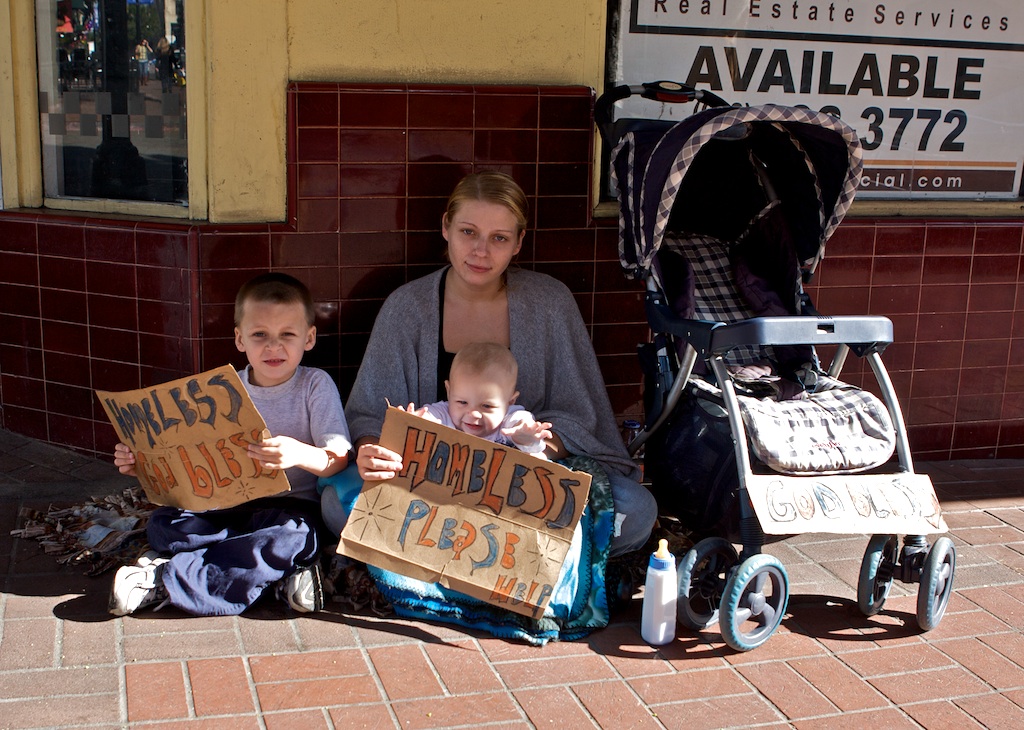
The number of homeless families awaiting shelter space in San Francisco has reached an all-time high, and homeless advocates say city officials are ignoring the problem, which can have disastrous consequences when parents are forced to choose among bad options out of desperation.

Compass Connecting Point, a nonprofit agency with a city contract to provide homeless services and outreach, reports that 227 families – including 342 children – are now on a waiting list for temporary housing, with waits of at least six months. That’s 13 more families than the previous peak during the height of the recession in 2009.

“We’re seeing an increase in families coming in for the first time,” Elizabeth Ancker, an assistant program manager for the agency, told us. “There is definitely not enough shelter space.”

That’s been a complaint from a variety of homeless individuals and advocates who note that the city has reduced the number of shelter beds due to budget cuts at a time when they are needed more than ever. And a fall ballot measure that would have freed up shelter beds that have been set aside for Care Not Cash recipients and other mayoral pet projects was removed from the November ballot under pressure from Mayor Ed Lee.

“A couple weeks ago, it was the largest number [of homeless families on shelter waiting lists] since the recession first hit, and now it’s just the largest number overall,” Jennifer Friedenbach, executive director of the Coalition on Homelessness, told us. “We’re really concerned and we’re particularly concerned that there has not been any kind of response from the city…The most eerie part is the absolute silence from Room 200.”

Indeed, even the Guardian’s repeated requests for comment from the office of Mayor Ed Lee (aka Room 200) have not yielded any answers or explanations. Friedenbach said Lee’s promise to release more shelter beds from mayoral programs like CNC and the Community Justice Court – where they often go unused despite long shelter waiting lists – have only freed up a few beds, nowhere near the actual demand.

“They’re ignoring the problem,” she said. “What’s happening in San Francisco is a mirror of what’s happening nationally to poor families.”

Some studies place the number of homeless children in the U.S. at 1.5 million, although most advocates believe that number has actually risen in the last two years. Meanwhile, the budgets of nonprofits and government agencies who provide homeless services have been shrinking.

Ancker said her agency – which provides a variety of homeless services and gets partial funding from the city and the U.S. Department of Housing and Urban Development – has actually avoided deep budget cuts in the last two years. “But we have the budget we had when we had 79 families on the waiting list,” she said.

Both she and Friedenbach say homeless families present particular challenges for social service agencies. “What happens with families is they end up being in really unsafe situations,” Friedenbach said. “They’ve forced to stay with people they otherwise wouldn’t, or they end up in their cars, or with children being separated from their parents.”

Ancker agreed: “Right now, the wait for a shelter is six months and increasing, and people can’t wait for six months.”

OccupySF protesters shut down Wells Fargo HQ

30

At 7 a.m. this morning (Wed/12), protesters against corporate greed were poised for one of the most impactful actions since OccupySF began.

About 50 people associated with the Foreclose Wall Street coalition were seated in front of all the entrances to the Wells Fargo corporate headquarters on California and Montgomery streets. Back at the site of the OccupySF camp in front of the Federal Reserve Bank on Market Street, protesters gathered. They held a rally there that included a speech from Sup. John Avalos, the only mayoral candidate to actively support the movement.

When the march started off to join those blockading Wells Fargo, there were about 1,000 protesters present, according to estimates of those present. They stopped off at the Hyatt across the street from the Fed to support Unite Here Local 2 hotel workers who are involved in a boycott against the Hyatt before continuing in the march. Protesters chanted, “make banks pay” and “we are the 99 percent.”

The march reached the Wells Fargo building and began rallying there. The sit-ins in front of entrances were still going strong. There, activist and author Naomi Klein addressed the crowd.

When Wells Fargo employees began to arrive at work. According to Max Bell Alper, one of those involved in the blockade, “a number of bankers were trying to get in and yelling at us.” Then they called the police.

When the police arrived, Alper says, “at first, the people from the march were physically blocking them from arresting us.”

Around 8:30 a.m., 11 were arrested. They were brought to the North Beach/Chinatown police station, were they were cited for trespassing, held for about an hour and then released. When I spoke to Alper, he was back from the police station, chanting and marching with the crowd.

He told me that when his parents’ home was foreclosed this year, they moved in with his uncle, whose home was then foreclosed. Currently his grandmother is facing foreclosure. He listed Chase, Wells Fargo, and Bank of America as the banks involved in his family members’ foreclosures.

“Enough is enough. Banks need to recognize that they need to pay,” said Alper.

Protesters continued to block every entrance besides the employee entrance on Leidesdorff Street with sit-ins, as well as march in picket lines, chant “banks got bailed out, we got sold out”, and cheer as organizers spoke. The bank was unable to open until they chose to leave around noon.

SFPD Lt. Troy Dangerfield said that no more arrests were made because Wells Fargo did not request them- apparently, they preferred to wait it out. Said Dangerfield, “It would make it worse if they had to remove them. It doesn’t look good.”

Dangerfield insisted that he “had no stake whatsoever” in what will result from the Occupy movement throughout the country. He has noticed, “it seems like it’s growing nationwide.”

Activist Lucia Kimble sat helping to block the bank’s California entrance from 7:15 to noon. She says protesters voluntarily left at noon because, “We’ve been out here five hours. We successfully shut down the bank. I think our message has been heard.”

Kimble, 27, is a Bay Area resident and housing counselor with Causa Justa :: Just Cause, a group that works to advocate for housing and tenants rights for low income and African American and Latino communities in San Francisco and Oakland. Kimble said that her group was part of the coalition that put on this event “to give a voice to those most affected by our economic crisis.”

Kimble listed the Foreclose Wall Street West coalition’s demands with this action: an immediate moratorium on foreclosures, fixed annual interest rates, an end to Wells Fargo’s financing of high-interest Pay Day Loans, and that they “pay their fair share – pay taxes and give them to the community.”

Shaw San Liu of the Chinese Progressive Association – which just voted to endorse OccupySF and today joined the movement – was an energetic and inspiring speaker throughout the event. Said Liu: “A lot of folks have been saying there’s no diversity in the Occupy movement…In San Francisco it’s becoming clear the diversity of groups that support this movement. Youth, community groups, anti-war, we’re all coming together”

Liu maintained that the problems she was fighting did not start with the financial collapse in 2008. “In my work in Chinese immigrant communities, I know that even before the recession, we were already suffering from unemployment, low wages, and poor housing. I’m excited to see how the country is waking up to oppose a system that allows 1 percent of the people to control 42 percent of the wealth.”

The California Nurses Association, one of the many labor organizations that have showed support for OccupySF, was present at the protest. Said Pilar Schiavo, 36, a CNA organizer from Oakland, “I’m fed up with social inequity. I’m tired of corporate America buying politicians and passing laws to benefit the rich.”

“Patients are foregoing treatment and losing their healthcare. The nurses are here fighting for everyone,” she said.

Schiavo’s father, Bill, drove from Sonora to be at the protest today. A 65-year-old retired electrician, he says that the medical benefits he felt fortunate to have after retiring from a secure job have become unaffordable. “My medical benefits went up $300 a month this year. Who can afford that? Does anyone get a $300 raise? But Wall Street has benefits galore.”

Schiavo made his opinion clear about the Wall Street crisis and bailouts: “It was unbridled theft. We’re angry.”


Two words Ed Lee doesn’t want to hear

13

There are two words no candidate wants to hear a month before Election Day:

“Criminal investigation.”

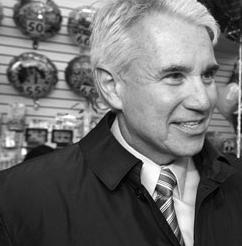
I give District Attorney George Gascon credit — I didn’t think he’d ever really go after municipal corruption, but he’s showing at least a bit of political spine here, launching an investigation into the dubious campaign contributions of Ed Lee. Lee’s campaign immediately said there would be full cooperation:

Last week, Mayor Lee’s campaign returned 23 contributions associated with Go Lorrie’s Shuttle company as a result of the campaign’s own concerns and compliance review. On Friday, the campaign reached out to the District Attorney’s Office, the U.S. Attorney’s Office, the Ethics Commission and the Fair Political Practices Commission to offer its full assistance in any investigation or review. It is important to note that there is nothing about the District Attorney’s statement or initiation of an investigation that suggests that Mayor Lee’s campaign is a target.

And at this point, there’s no way to know how far the investigation will go or what it will turn up. But the very fact that the D.A. is looking into all of this looks bad for Lee.

And if Gascon’s office scours not only the Go Lorrie’s money but the rest of Lee’s campaign contributions — and the independent expenditure committees that aren’t supposed to be coordinating with each other or the main campaign — he might find more.

Bill Barnes, who works with the Lee campaign, told me that he was doing everything possible to make sure the contributions were all on the up-and-up. “I can’t control the i.e.’s,” he said, “but we are very careful to follow the law.”

He also said that it’s possible there were mistakes, like the Go Lorrie’s money. “We’re raising a lot of money in a short period of time,” he said.

But you see, that’s part of the problem. You enter the race late, refuse to accept public financing (and abide by spending limits) and start trying to raise more than a million bucks in a few weeks, and it’s too easy to get sloppy. Add in the fact that people like Willie Brown, who never cared much for campaign contribution or ethics laws, are involved in the fundraising, and you have a recipe for real trouble.


Why are Harris, Newsom, and other pols silent on the federal pot crackdown?

24

UPDATED BELOW As I worked on this week’s story about the federal crackdown on California’s marijuana industry, I tried to get a statement from California Attorney General Kamala Harris. After all, it’s her job to defend California’s medical marijuana laws, which she was fairly supportive of as our district attorney. And she was an early Barack Obama backer who could probably get him or U.S. Attorney General Eric Holder on the phone to say, “What the hell are you guys doing? Please, for your own sake and California’s, just back off.”

After all, as I reported, this multi-agency federal crackdown could destroy a thriving industry that is pumping billions of dollars into California’s economy and employing tens of thousands of people – at a cost of many millions of dollars in enforcement costs to simply destroy the state’s top cash crop, ruin the lives of people working in the industry, and strain our already overtaxed court and prison systems.

“It’s a policy with no upsides and all downsides,” Steve DeAngelo of Harborside Health Center correctly told me.

But when I finally got Harris’ Press Secretary Lynda Gledhill on the phone, she said Harris had nothing to say on the issue. “Nothing?” I asked, “Really?” What about off-the-record, I asked, how does she feel about it and might she make some statement in the future. Again, nothing to say, no comment.

So I tried Lieutenant Governor Gavin Newsom, another San Franciscan who as mayor helped oversee the creation of the city’s widely lauded system for regulating the dispensaries, which by all accounts has made it a legitimate and thriving member of the business community. Given Newsom’s current obession with job creation and how hungry he’s been for attention, surely he’d have something to say in defense of the good jobs that this sustainable industry has created in California. Again, nothing. I haven’t even gotten a call back yet from his press secretary, Francisco Castillo.

Also, no public statements have been issued by Mayor Ed Lee, David Chiu, or most other mayoral candidates who have put “jobs” at the center of their agendas – or from the SF Chamber of Commerce or other business groups that regularly deride bad government actions as “job killers – despite this move by the Obama Administration to destroy an important industry in California.

The only major politician from San Francisco (SEE UPDATE BELOW) to come out strongly against the federal crackdown was Assemblymember Tom Ammiano, author of measures to legalize and tax marijuana, who put out the following statement: “I am bitterly disappointed in the Obama Administration for this unwarranted and destructive attack on medical marijuana and patients’ rights to medicine.  Today’s announcement by the Department of Justice means that Obama’s medical marijuana policies are worse than Bush and Clinton.  It’s a tragic return to failed policies that will cost the state millions in tax revenue and harm countless lives. 16 states along with the District of Columbia have passed medical marijuana laws – whatever happened to the promises he made on the campaign trail to not prosecute medical marijuana or the 2009 DOJ memo saying that states with medical marijuana laws would not be prosecuted?  Change we can believe in?  Instead we get more of the same.”

But from most of the politicians who claim to support both jobs and the right of patients to access medical marijuana, we also get more of the same. They pander to people’s economic insecurities in order to give corporations and wealthy what they want – tax cuts, deregulation, union-busting, corporate welfare — but aren’t willing to risk any political capital defending the rest of us.

UPDATE (11/13): San Francisco’s other two representatives in the Legislature have also criticized the crackdown.


Sen. Leland Yee put out a statement saying: “Medical marijuana dispensaries are helping our economy, creating jobs, and most importantly, providing a necessary service for suffering patients. There are real issues and real problems that the US Attorney’s Office should be focused on rather than using their limited resources to prosecute legitimate businesses or newspapers. Like S-Comm, our law enforcement agencies – both state and local – should not assist in this unnecessary action. Shutting down state-authorized dispensaries will cost California billions of dollars and unfairly harm thousands of lives.”

Sen. Mark Leno, another medical marijuana support, also criticized the move. He told the Los Angeles Times, “”The concern here is that the intimidation factor will directly impact safe and affordable access for patients.” And he told Associated Press, “”I don’t understand the politics of it, and certainly if we haven’t learned anything over the past century, it’s that Prohibition does not work.”

The Ed Lee Story: Gack!

4

I finally got a copy of The Ed Lee Story — a 132-page paperback hagiography written by campaign flak Enrique Pearce — and it’s way, way over the top. I shouldn’t even compare it to the lives of the saints — I read that stuff in Catholic School, and none of it was a sappy, drippy and utterly lacking in perspective as this. The Ed Lee Story reads like what it is — a giant, extended campaign flier, produced by a supposedly independent group backing Lee for mayor.

Willie Brown appears in the first chapter, speaking with “characteristic showmanship and hypnotic charm.” Pearce once worked for Matt Gonzalez — who ran for supervisor as a strong opponent of Brown’s administration and was such a critic of the City Hall corruption that the mayor represented that he didn’t even return Brown’s call congratulating him on winning a seat on the board. But he has either forgotten or utterly sanitized that era.

Rose Pak appears a page later, described as a “community leader and Ed’s longtime friend,” which is one way of putting it.

I haven’t been able to reach Pearce; if he calls me I’ll update this post. But in other news accounts, Pearce insists that Lee had no role in the great work — it’s described as an “unauthorized biography,” and Tony Winnicker, the press spokesperson for the official Ed Lee for Mayor campaign, told me his crew had nothing to do with it. Pearce must have gone to great lengths to get all those high school and college photos.

Most of the footnotes cite the San Francisco Examiner and BeyondChron, but Pearce interviewed a number of Lee’s old friends. This was a fair amount of work, including a lot of research.

But here’s the thing: Pearce (who’s had problems with keeping independent campaigns independent in the past) supposedly wrote this book without any help or support from any of the people who are involved in the Lee adminstration or in his campaign. I don’t know, maybe he did. But that’s the problem with these “independent expenditure” committees — it’s hard to believe that there’s truly zero coordination between the various groups that are working to get Lee elected.

The Chron notes at least one indication that it’s not all as independent as it seems:

Pearce said he never spoke with Lee or his family for the book. However, at a golf tournament at the Olympic Club on Monday to benefit the nonprofit Chinese Hospital, Lee’s wife, Anita, beamed as she signed copies.

Plus, he clearly worked with Pak on the book:

Pearce swears all those family photos in the book were gleaned from various websites and family friends. And where did Pearce get Lee’s favorite recipe for “No-longer secret Poongaloong” (basically spaghetti with frozen peas, corn and a half-bottle of Del Monte ketchup thrown in)?

“The recipe was from Rose,” he said. Of course it was.

And we know that Pak meets with the mayor regularly.

Independent expenditure committees have a huge advantage — they can raise unlimited money, in unlimited amounts. In San Francisco, candidates for mayor can only take money in $500 chunks, and can’t accept contributions from corporations or entities that have contracts with the city. The folks who funded this book — and we still don’t know who they are — were under no such regulations.

The trade off is that the “real” campaign — the one financed with regulated money — can’t have any contact at all with the “independent” campaign.

Meantime, Enrique Pearce wrote 132 pages about Ed Lee, complete with childhood anecdotes, pictures, interviews with old friends and testimonial statements — and the mayor’s office and campaign had no input, connection, information, coordination or anything? Geez. Maybe Kitty Kelley’s got some competition.


The odd twist to the Chron’s Chiu endorsement

18

The most obvious interpretation of the San Francisco Chronicle’s endorsement of David Chiu is that the Chron thinks Chiu has completely left the progressive camp and is now aligned with the political wing the daily paper calls “moderates:”

What is impressive about Chiu is that “change” and “jobs” are not just campaign slogans for him. He can go into detail about the redundancies and red tape at City Hall that are holding back economic development: the 15 departments that regulate the private sector, the hundreds of fees that burden businesses big and small, a payroll tax that is a disincentive to hire … If elected, he would have a mandate to make city government more efficient and effective.

(I don’t know how many times I have to say this, but the payroll tax is NOT a disincentive to hire.)

The Chron — which, on economic issues like taxes and development, is a very conservative paper — clearly thinks Chiu can be trusted, which ought to make progressives nervous.

But here’s the other interesting twist.

Hearst Corporation bought the San Francisco Chronicle in 2000, at the top of the market, for more than $500 million. I guarantee the paper isn’t worth more than a tiny fraction of that today. It’s still losing money, and has been for years, and nobody’s buying daily newspapers any more, and if Hearst wanted to unload the Chron, the New York publishing chain would be lucky to get $50 million. Hell, they’d be lucky to get $25 million.

So the bean counters in New York have this nonperforming half-billion-dollar asset on their balance sheets, and there’s no way to recover that money — except for one thing: The Chron owns a bunch of land around Fifth and Mission, including its own historic building. And that property is potentially worth a whole lot of money. When the economy picks up, Hearst can develop the parking lots, old press facilities and even its HQ; turn it all into condos and office space, and suddenly there’s a real chance of recouping some of those deep losses.

The process is already underway — the Chron’s been moving tech firms into vacant space in its building, and is working with developers on the shape of what could be a major project still to come.

And guess what? In June, William Randolph Hearst III — heir to part of the Hearst fortune and a member of the Hearst Corp. board — made a rare campaign contribution to a San Francisco political candidate. He gave the maximum allowable $500 to … David Chiu. Around the same time, Michael Cohen and Jesse Blout, the partners in a firm called Strada that’s working on the redevelopment of the Chron’s property, also gave Chiu the maxiumum $500.

I figured the top people at the Chron would back Ed Lee because they figured he’d be down with whatever they wanted to do with that land — particularly since Lee’s good buddy Willie Brown is now a San Francisco Chronicle columnist. But it appears they’ve cast their lot with Chiu. As Mr. Spock would say, fascinating.