• No categories

Politics Blog

The end of the death penalty?

9

Could 2012 be the year when we finally end the death penalty in California? It’s entirely possible. The polls now show a majority of people in the state support replacing the death penalty with life without parole. There’s a growing movement against executions (in part because of the cost , in part because it doesn’t work (most death-row inmates die of old age before they are killed) in part because it’s so grisly — and, of course, in part because it’s barbaric and has been outlawed in most of the civilized worle.

And the ACLU and a wide range of allies are now starting to gather signatures for what will be a well-funded, well-organized ballot initiative campaign next November.

It’s the right time (a presidential election year), the right coalition (including law-enforcement folks, wrongfully incarcerated people and victims’ families), and the right message. The first step is to gather signatures; go the the web site here and sign up to help.

Progressive group stands out as the lone Lee endorser

86

Mayor Ed Lee’s support by the wealthy power brokers and his checkered history with the Willie Brown administration has caused most progressive groups to shun him in this election, with one notable exception. San Francisco Rising Action Fund, a grassroots organization for working class people of color, gave Lee its second place endorsement, right after progressive favorite John Avalos. It’s the only slate that the two political opposites appear on together.

The San Francisco Democratic Party, Sierra Club, San Francisco Labor Council, the Bay Guardian, and other progressive groups have all issued endorsement slates that generally include Avalos, Dennis Herrera, and sometimes Leland Yee. But Lee has been almost entirely shut out on the left – except for a third place endorsement by the San Francisco Bicycle Coalition, which is generally left but mostly single issue – making SFRAF the rare exception.

Alex Tom, one of the directors of SFRAF, clarified that its endorsement “ is not about Ed, but about the larger progressive movement.” Going against the endorsement grain, he said SFRAF consolidates the Asian, Latino, and Black communities— a strategy to compensate the divided nature in the political left.

“We need to step back in general and have a conversation with how people of color engage with politics and the progressive movement,” Tom told us.

Like many liberal groups, SFRAF is at the front lines of OccupySF and supports progressive bills like the Health Care Security Ordinance, which was the subject of Lee’s first veto this week, angering progressive groups who sought to close a loophole that lets businesses raid the health savings accounts of their employees.

But Tom points out that “there is an assumption in SF that to get progressive things passed you need to go to District 5, 6, and 9— you don’t go to the Southeast,” or other lower income neighborhoods. SFRAF is trying to reframe the broad spectrum of progressives, to “civically engage [voters of color and lower incomes] and [include them] in the electorate.”

Voters of color don’t engage in the same spaces that other progressive do. “We are not insiders, we are not even inside the progressive circle,” Tom says.

SFRAF’s Board of Directors includes Joel Aguilar, who recently left SF Day Labor Program; Chelsea Boilard with Coleman Advocates for Children and Youth; Antonio Diaz of People Organized to Demand Environmental and Economic Rights; Ariana Gil of Mujers Unidas y Activas; Adam Gold of Causa Justa: Alex Tom with the Chinese Progressive Association; and Steve Williams of People Organized to Win Employment Rights (POWER).

The Directors promote Ed Lee’s platforms on local hire, summer school, fight against wage-theft, and facilitating equitable budget process. Lee’s a viable candidate for a new type of progressive, says SFRAF, who doesn’t “agree with the insider game” in regards to Rose Pak and Willie Brown, Lee’s closest associates.

SFRAF doesn’t believe the company Lee keeps makes him untrustworthy. While many progressives see a politician’s connections as good indicators of their future actions and allegiances, SFRAF doesn’t seem to place much emphasis on this. Indeed, Lee seems to be an obstacle to much of the group’s agenda.

Take the SFRAF’s 10-point platform, which is diametrically opposed to many of Lee’s recent actions. In the matters of health care, SFRAF’s promotes, “policies that require employers to provide quality, affordable healthcare coverage to their employees and their families,” something that Lee’s recent veto seemed to weaken, letting businesses take about $50 million per year that city law required them to set aside for employee health care.

The next day, Lee faced the same groups he voted against— at a labor union rally— and explained his veto was an act of diligence to protect jobs. But the sponsor of the vetoed legislation, Sup. David Campos, said the veto was an setback for workers’ rights and consumer protection. “It’s a defining issue for us at City Hall,” Campos told us.

But Tom disagrees with progressive assessments that “pay to play” is a major force in City Hall politics, although to did say it is important to “acknowledge your power structure.” To SFRAF, the progressive sector cannot duplicate a city run by a few insiders— a fear SFBG expects to be a reality with Ed Lee as mayor. Instead, he says a progressive City Hall must bring a “multi-sectored” people into the decision-making process.

And he think Lee will be an ally in doing so.

Steven T. Jones contributed to this report.

Bronc busting: Allegations of cruelty to animals at this year’s Grand National Rodeo

78

When the Grand National Rodeo was in town Oct. 14-15 and 21-22, we wrote about the presence of animal rights advocates lofting signs in the parking lot of Cow Palace outside the vernerable event. But it turns out the activists got to catch the show too — the Guardian has been sent videos from a local animal advocate that suggest that animals were in fact being mistreated at the event. The video shows a man prodding a bronco that’s waiting to be ridden with a long, angular object. Broncs are also shown having their tail twisted and at one point, being touched with a black object by a cowboy that Andrew Zollman of animal rights group LGBT Compassion says the video is “clearly showing two instances of electric shocks administered to animals” — and that’s illegal.

But when contacted for comment Lindsay Branquinho, press liasion for the Grand National stuck by what she had told this reporter on the sidelines of the very event in the video.

“For these animals their quality of life far exceeds that of most. They are fed the highest quality feeds, given frequent regular medical attention (i.e., check-ups, vaccinations, etc). The amount of time, money, and love that is wrapped up in these animals is huge and the people that own them do all that they can to protect them. These animals are their livelihood, and they would not jeopardize that.” She denied that the black object seen in the video was an electric prod, and said she’d get back to us about what it really was.

But Zollman wasn’t surprised by the contents of the video at all. He says that abuse from the kinds of offenses he sees in it — in addition to “painful caustic ointments” and stabbing, all which he says are violations of California’s penal code section 597(b) which bars tormenting, needless suffering, and unnecessary cruelty towards animals with the exception of slaughter for food — is endemic to all rodeos. He leads a campaign against the Golden State Gay Rodeo Association as well. A history of the Grand National Rodeo’s past offenses can be found here

The official response from the Professional Rodeo Cowboys Association was as follows (yawn): 

The Professional Rodeo Cowboys Association (PRCA) is committed to the proper care and handling of all animals that participate in our sanctioned rodeos.  There are 60 rules governing the treatment of the livestock are enforced by on-site rodeo officials.  A veterinarian is in attendance at all rodeo competition.  In addition to the PRCA rules, we are aware that the Grand National has additional standards for livestock care. 

The PRCA and the management of the Grand National were contacted regarding videotapes taken by those who wish to ban many uses of animals, including rodeo.  The videotapes have been reviewed by officials at the Grand National, the PRCA  as well as experts on the care of livestock and upon initial review the overall opinion is that the livestock were properly handled in accordance with standard livestock practices and PRCA rules.  There were, however,  a few instances where the care and handling of the livestock was not up to Grand National standards.  In one case, a livestock handler’s actions did not meet Grand Nationals standards for livestock care and was dismissed from working the remainder of the show.  

 The PRCA will continue to work with local officials, rodeo judges, on-site rodeo veterinarians, rodeo livestock owners and our members to insure that the livestock at PRCA sanctioned events is afforded proper care and handling. 

Calls for comment from the SFPD Mounted Unit (who ride at the Grand National and were also forwarded Zollman’s emails) and the Peninsula Humane Society, the organization who handles animal cruelty law enforcement for San Mateo County Animal Control, have so far gone unanswered. We’ll update when they get back to us. 

But is tail twisting inexcusable abuse? Akin to a horseback rider’s spurs? This reporter attended the rodeo and was standing quite close to the bronco pit as the above video was being taken — the tail twisting seemed a little harmful, but it’s hard to say with animals this large how much permanent damage that could cause to a 1,700 pound bull. Of course, some would say that any abuse to animals, regardless of severity, counts as cruelty. And the cattle roping — in which calves are lassoed around the neck as they run at top speed through the ring and thrown to the ground — definitely gave me pause. How much discomfort should animals have to endure to lead cushy lives (as doubtless the broncs’ are, bred as they are for generations to be in top form for the events). 

Thoughts from the cowpokes?


Kamala Harris likes Bob Marley and Chris Cunnie

3

My Sublime station on Pandora just got interupted by California Attorney General Kamala Harris, telling me that she likes Jay Z, Bob Marley, and Chris Cunnie.

It was sponsored by the latter’s Sheriff campaign. I’m not surprised by the Cunnie part, but Bob Marley? With that kind of musical taste, you’d think Kamala would take a stronger stand in defense of California’s medical marijuana laws.

Bob would certainly be disappointed that she’s not standing up for our rights — and he’d probably back Ross Mirkarimi, who created San Francisco’s successful framework for dealing with the pot clubs.

Mayor Lee still moving toward showdown with OccupySF

22

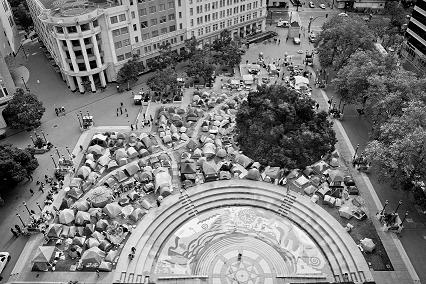
Mayor Ed Lee continues to insist that OccupySF break down its encampment in Justin Herman Plaza and threaten to send in riot police if that doesn’t happen, even as this week’s violent police raid on Occupy Oakland has sparked international outrage, condemnation, and solidarity with other occupations.

Reporters packed into the Mayor’s Office for a photo op with a good samaritan who recently helped rescue an injured truck driver, clearly waiting for the chance to interview Lee and Police Chief Greg Suhr about last night’s aborted police raid on the OccupySF encampment, asking repeated questions seeking to clarify Lee’s confusing political doublespeak before his communication staff shuffled him out of he room after about 10 minutes.

“I, like all of you, were watching in somewhat of very big deep concern as I saw things unveiled in Oakland, certainly in constant communication with not only our chief of police, Chief Suhr, but also all of our departments to say that’s not what we want to happen in San Francisco,” Lee began. “We’re trying to enforce all the laws here, and of course it’s public health stuff that we’re emphasizing. We need to make sure our public spaces are clean and healthy, and to protect their First Amendment rights. But we didn’t want to get into a situation where we’re just busting heads because then it’s all lost.”

Yet neither Lee nor Suhr could articulate why they think Oakland’s raid turned so violent or how to guard against a similar fate here in San Francisco, particularly because they reiterated their position that the encampment must go and held open the possibility that another police raid – there have been two so far, the second more violent than the first, and the camp has only grown in size since then – could come at any moment.

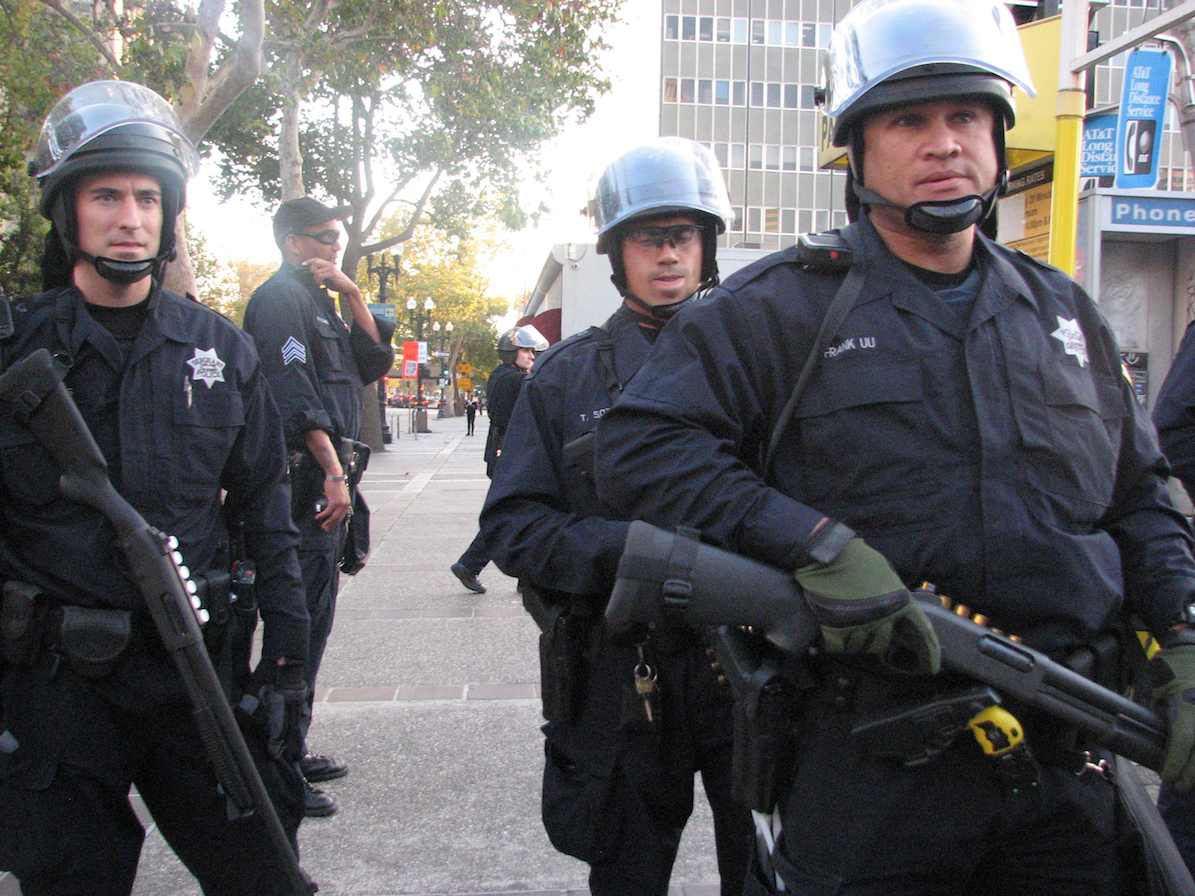
They also offered shifting explanations for last night’s massing of SFPD troops in riot gear in buses on Treasure Island, which protesters believe was turned back only because of the huge presence in the camp, which included five members of the Board of Supervisors and various labor leaders, a group that Lee says he would be meeting with shortly after the event (“We’re seeing if they’d like to propose some additional solutions,” Lee said).

When asked about plans for yesterday’s raid, Suhr initially said it was simply a normal Wednesday evening training exercise. “There were that many police amassed last Wednesday, there will be that many police amassed next Wednesday. Wednesday is a standard training day for the Police Department,” Suhr said.

But when reporters expressed skepticism – many aware of the busloads of police in riot gear massing on Treasure Island, the last minute changes in police staffing schedules, and the notices of possible police activity sent to businesses around Justin Herman Plaza – Suhr said police were preparing to either assist in Oakland or deal with trouble from OccupySF.

“Out of deference for what was going on in Oakland, we felt that the more pressing need was whether we needed to assist Oakland and/or whether that situation was going to come to us,” Suhr said. “I didn’t say it was a training exercise, we took advantage of the presence on what was training day and to train to what we may have to do down the line.”

Lee also raised the concern that violent agitators might come to San Francisco: “They had to get ready for what they saw in downtown Oakland. They had to get ready for hundreds of people coming to San Francisco, either walking over the bridge or coming through the BART system. So they were trying to get ready for that particular activity because we didn’t know what was going to happen. We saw a lot of anger and a lot of frustration by people who wanted to come over to San Francisco and we didn’t know what their intention was.”

But reporters noted that Lee ordered OccupySF to take down its encampment two weeks ago, that he told reporters this week that they must do so “within days,” and that Suhr circulated a memo in the camp yesterday entitled “You are Subject to Arrest” if they didn’t heed city codes regarding overnight camping. Given all that, we again asked if there was any intention to go into the camp last night?

“That was not our intention, but I’ve always asked the chief to be ready. I’ve been insistent that we have to be ready to enforce our laws so he’s been under that instruction for quite some time. But the tactical decisions are the chief’s responsibilities,” Lee said.

Yet later in the press conference, after Lee had left the room, Suhr made it clear that the decision about if and when to stage another raid on OccupySF is the mayor’s. “Make no mistake about it, Mayor Lee is in charge of this situation,” Suhr said.

In fact, when we asked Suhr about this constant threat of a violent police raid in the middle of the night hanging over the protesters – which is a wearying distraction from the main economic justice purpose at best, and at worst what some protesters told us was akin to psychological warfare – Suhr said that even he didn’t know when a raid might come.

“There’s nobody more anxious that I am because I don’t know when the raid is coming either, so I can attest to the fact that it makes me anxious. We are working painstakingly and patiently to make sure that area is safe and sanitary,” Suhr said.

But while Lee insists that dialogue and compromise could still avert another crackdown, he refuses to accept that occupation is a tactic that protesters aren’t likely to abandon anytime soon. So Lee’s insistence that the camp be broken down seems to be putting the city and OccupySF on a collision course that most members of the Board of Supervisors – including those sponsoring resolution urging the city to allow overnight camping – fear could be a disastrous stain on the city.

“Our message to OccupySF is we’re still wanting you to comply,” Lee said. “That’s been the consistent message we’ve been sending clearly these last couple weeks…We’re trying to ensure that [the ban on] overnight camping is still enforced, but also respecting their rights to protest.”

I and other reporters tried to push Lee on the potentially harmful standoff he was creating, and he tried to make it sound as if the OccupySF movement could avoid another police crackdown, something he said depends on protesters submitting to his demands.

“It’s optimistic on our part that we would get some sensible minds who want to help us find a way to clean up the area, because that ultimately what we want to do,” he said.

But for all his statements of support for the Occupy Wall Street movement and stated desire to avoid the violent confrontation in Oakland, he refuses to allow tents on the site.

“There’s a fine line between occupying public space within your First Amendment rights and sleeping overnight and causing health conditions that we’ve been very concerned about. So we’re going to take it step by step,” Lee said. When asked about whether tents would still be allowed if the camp was clean and otherwise compliant, he said, “We’re still saying no tents.”

So then when and how will you be enforcing that, reporters kept asking.

“Let’s see what can voluntarily be done through the dialogue that trying to establish. We’ve given them a lot of notices. I want to be sure that if we have to do things to enforce our laws, that we’re quite justified and that everybody knows,” Lee said.

Yet that was the same stance that Oakland Mayor Jean Quan took, and it’s one that she is reportedly backtracking on in the wake of the violence and international condemnation. And Lee couldn’t explain how a crackdown might go differently in San Francisco, particularly none that OccupySF has grown larger and more empowered by defying Lee’s edict for so long.

“Everyone agrees that we don’t want to Oakland situation to happen here,” Lee said, at which point Press Secretary Christine Falvey said he would take only two more questions.

“We’re putting a responsible burden on the occupiers to work with us so we can avoid situations like Oakland,” Lee said. “They have to take responsibilities for what they’ve done.”

“Frankly, it sounds like you’ve said nothing, and I think some other reporters are feeling the same way,” KCBS reporter Barbara Taylor, the senior journalist stationed at City Hall, said with a tone of exasperation. “So can you just outline, when you say to do the right thing, what is the right thing? Do you expect them to voluntarily take down the tents, clean up the camp, only be there within certain hours?”

“Yes. The right thing for them to begin showing responsibility,” Lee responded.

“But what does that mean?” Taylor persisted.

Lee said they need to clean up the camp, saying that “cleanliness has been our number one concern….They have to show signs that they’re willing to work with us.” But the protesters have been diligent about regularly cleaning the camp, and they have complied with other city requests such as no open flames. And when the city refused to make porta-potties available at night, supporters of the camp rented four of their own after the city and its daily newspapers complained about public urination and defecation.

“I’ve said all along that public safety is our number one concern,” Lee said.

Fire Chief Joanne Hayes-White reinforced Lee’s point, complaining about open flames, car batteries, and generally “unhealthy and unsafe conditions.” When we noted that the protesters have already addressed and abated many of these issues in recent days, she admitted that she hasn’t been to the site recently, but said, “The tarps and the tents are not something we’re going to tolerate.”

Suhr made it clear that police action would be done in support of other city departments who ordered hazards to be abated. As for when and how officers would do so: “If we believe we could go into the camp safely, if we think we can go in and support the agencies that will be doing the cleanup, without having to go past a measured response, we would do that,” Suhr said. “That opportunity did not present itself last night.”

And so the standoff continues.

Guardian editorial: Let OccupySF and Oakland stay

18

With all of the police raids and arguments over messages and demands and tactics, it’s easy to forget that the Occupy Wall Street movement has a clear political point — and it’s right.

The movement is about the devastating and unsustainable direction of the American economy, about the fact that a tiny elite controls much of the nation’s wealth, that virtually all of the income growth over the past 20 years has gone to the very top, about the collapse of the middle class and the rise of economic inequality that would have been unthinkable a generation ago. Those are the central issues facing the United States, the state of California and the cities of San Francisco and Oakland today — and instead of trying to crack down on the protests, city officials ought to be endorsing the occupy movement and talking about cracking down on the financial institutions and the wealthy.

A few things worth noting:

1. The protesters are almost entirely nonviolent. Although there have been a few isolated incidents in Oakland and SF, the overwhelming majority of the thousands of people at Justin Herman Plaza and Frank Ogawa Plaza are actively promoting and insisting on nonviolence. This is not a crowd that is a threat to anyone.

2. The city of San Francisco’s citations — reported without question in the daily newspapers — about health and sanitation problems are way overblown. The OccupySF protesters are making extraordinary efforts to keep the place clean. When the city failed to live up to its promise to provide portable toilets, the protesters ordered (and paid for) their own. As state Sen. Leland Yee (not known as a crazy radical) noted after a visit Oct. 26: “While hundreds gathered, there was not one incident of violence. If the interim mayor thinks there are health issues, I certainly didn’t see them.”

3. The SF Mayor’s Office and the police have made no serious effort to work with or negotiate with the protesters. Even the five supervisors who arrived Oct. 26 (and good for them) when there were rumors of a police action, had no idea what the cops were up to — and Police Chief Greg Suhr wasn’t responding to their phone calls. It’s the equivalent of psychological warfare; protesters have to be on edge at all times for fear of a crackdown that may or may not come.

4. Mayor Jean Quan made a bad mistake sending in the cops to roust Occupy Oakland. Nothing good at all can come of any further police eviction action.

Frankly, we don’t see why the protesters — who are well-behaved, represent no threat to anyone, and are doing a huge civic and national service by bringing attention to an issue that the powers that be in Washington, Sacramento and (sadly) San Francisco have largely ignored — can’t stay where they are. If there are health issues, let the Department of Public Health work with the occupiers. If there’s a problem with a portable kitchen, let the Fire Department show the protesters how to run it safely and legally (there are portable cooking devices at every street fair, in dozens of food trucks and in probably 100 other places around town).

The people at OccupySF and Occupy Oakland have done an amazing job of building a safe, respectful and inclusive community. They are the political heros of 2011. If there’s anyplace in America where the movement ought to be allowed to grow and thrive, it’s here in the Bay Area.
 

Quan’s legal advisor: “Which side are we on?”

The scene in Oakland was calm and peaceful around 9 p.m. last night as some 2,000 occupiers met in the amphitheater outside Oakland City Hall at Frank Ogawa Plaza. In sharp contrast with the war zone-like scene the previous evening, police did not mobilize to try and put a stop to the massive and highly organized general assembly meeting. Protesters have vowed to reconvene at 14th and Broadway at 6 p.m. every single day to continue organizing using a consenus process.

The night before, police in riot formations threatened “serious injury” if protesters did not disperse and assailed them with projectiles and blasts of teargas. But spirits were high as a fence blocking Frank Ogawa Plaza came down and the occupiers regrouped in the square, which they’d renamed Oscar Grant Plaza.

According to some news reports, Oakland Mayor Jean Quan had a change of heart. “Clearly, a decision was made last night not to involve the police,” Attorney Dan Siegel, a legal advisor to Quan, told the Guardian.

“My sense of things is that the city as a whole made a conclusion that it did not want to have another confrontation with Occupy Oakland.” Siegel said that when he was at City Hall in the early evening Oct. 26, before the General Assembly got underway, he was challenged by protesters who were angered by police actions the night before. “I said I didn’t agree with the decision of the police to break up the encampment,” he explained.

“I thought the police overreacted and committed actions of improper violence.”

In the heat of the confrontation, he even said he would think about resigning as Quan’s legal advisor.

But Siegel added that he hoped Quan was coming around. “I’ve been trying to convince her and others that there’s a different paradigm at issue here,” he said.

Instead of focusing on inconveniences and city ordinances about camping overnight in public parks, he said, Oakland could be taking the perspective that “we are really in a situation of crisis in the United States … and the Occupy movement is a response to that. It is very likely to be a longstanding movement.”

He added that problems could be mitigated without involving police or using force. “As a city and as individuals, which side are we on?” Siegel said.

The Guardian sent messages to Quan’s office a short time ago to find out what the mayor’s intentions are regarding Occupy Oakland, whether instances of police violence are being investigated, and whether the city planned to meet with Occupy Oakland organizers. We haven’t yet heard back.

How about Scott Olsen Plaza?

14

Occupy Oakland changed the name of Frank Ogawa Plaza; it’s time for OccupySF to do the same.

The place where the protesters are gathered is named for Justin Herman, the notorious director of San Francisco’s Redevelopment Agency in the terrible days of the 1950s and 1960s, when “redevelopment” meant removing black people from the Western Addition and removing poor people, particularly Filipinos, from South of Market and later the International Hotel. Herman once famously said that the SOMA land where he wanted to build hotels was “too valuable to permit poor people to park on it.”

In the 1960s, the battle against redevelopment was one of the defining political struggles in San Francisco, bringing Asians, African Americans, white progressives, young community organizers, affordable housing and tenant activists, poverty and civil rights lawyers … just about the whole spectrum of the city’s left. It’s been the subject of books and movies. The people who fought Justin Herman are part of a long political thread in San Francisco — as is OccupySF today.

I’ve always thought it was an abomination to have a downtown plaza named after a guy who did so much to destroy San Francisco. Maybe from now on we should all call it Scott Olsen Plaza.

How OccupySF thwarted a police raid

9

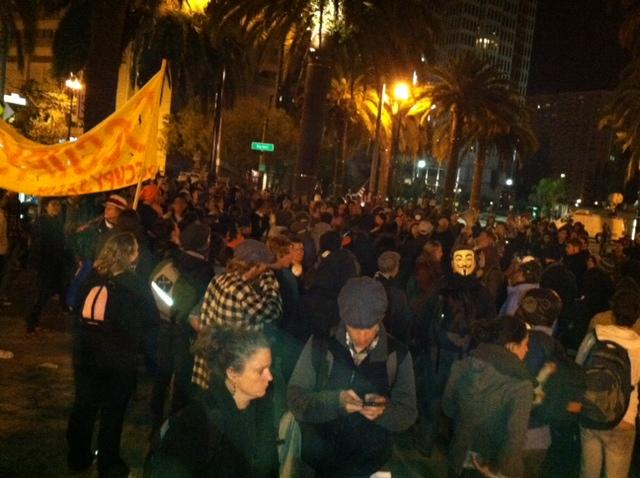
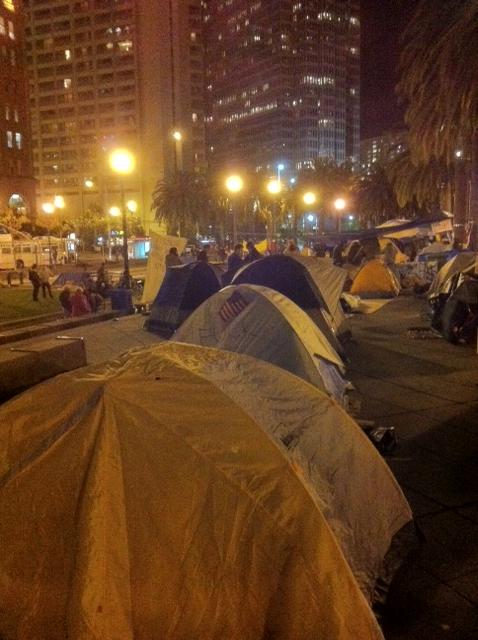
More than 1,000 people amassed at the OccupySF camp last night based on word that police would be raiding the camp. At 4:30 am, there were still 500 gathered in Justin Herman Plaza when OccupySF organizer Ryan Andreola finally announced: “We just got a report from an official police statement that the raid has been called off because there were not enough police for the number of people here,” as the crowd erupted in applause.

It was the end of what was for many protesters a long — and remarkably successful — day. Word began circulating of possible police altercation at 6 a.m. October 26, when police passed through the encampment handing out notices titled “You are subject to arrest,” which claimed that the protest was in violation of several city and state laws and had become a public health hazard.

On Oct 19, city officials had communicated to OccupySF that they would provide portable toilets, but a week later had not followed through; to deal immediately with public health concerns, protesters acquired them on their own.

Around 8:00, having received various tips and seen a document warning nearby businesses of police activity that night, OccupySF put out a call for supporters, saying police raid was confirmed. Justin Herman Plaza officially closes at 10 p.m., so protesters mobilized to be ready for an attack then.
At 9:00, hundreds of people were at the encampment and were meeting about tactics in case the raid occurred. For the next several hours, as hundreds more continued to pour into camp, supporters practiced formations to defend the camp and separate those who were willing to risk arrest from those who weren’t.

At 9:30, photos began circulating social media of scores of police in riot gear waiting with six muni buses near the police operations building in Potrero Hill. Many feared that they were gearing up to descend on Justin Herman Plaza.

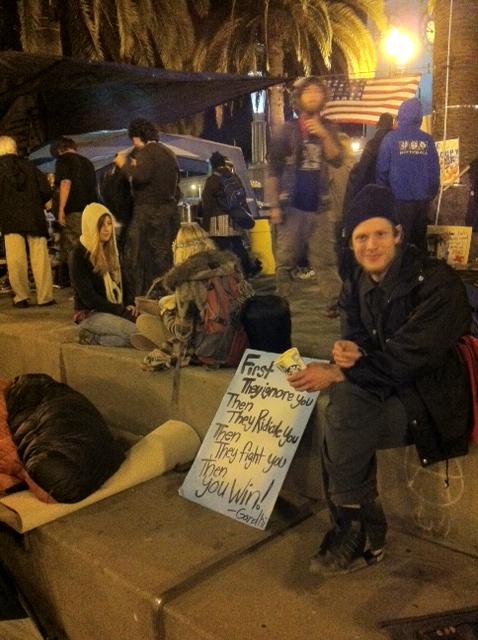
Different groups, including a group of clergy, SF Labor Council representatives, a meditation circle and groups practicing blockade formations met throughout the camp. Drum circles continuously pounded, and the Brass Liberation Orchestra jammed throughout the night.

Nurses and medic volunteers distributed materials to protect from and relieve the effects of tear gas, and National Lawyers Guild volunteers scoured the camp making sure protesters had their legal hotline phone number. Talk of the violence and mass arrests at Occupy Oakland that had happened the past few days permeated the group.

The BART stations closest to the OccupySF and Oakland camps were closed last night due to “civil disturbance,” but many supporters still crossed the Bay to swell the OccupySF ranks.

At 10:00, between 500 and 600 people had gathered at the camp. Protesters danced to the constant music and chanted political cries to the beat: “This system has got to die, hella hella occupy!”

Others waited in defense formation around the camp. After spotting Supervisor John Avalos, many began imploring him to sit down in the ranks, which he did.

As the night went on, sightings of police with buses continued. Some protesters joked, “the police are on the way, but they’re taking Muni so it will be a few hours.”

At 12:40, though much of the camp’s kitchen supplies and food had been moved offsite, protesters continued to serve free food. A young man serving up salad and bread gestured to several cases of food, saying “this has all been donated within the last hour.”

At 1 a.m., the group had reached its peak numbers. All sides of Justin Herman Plaza were blocked by masses of people, who also spilled out into the street on Steuart and Market, attracting virtually all passers-by into the crowd. Organizers urged supporters to stay prepared, but as one woman emphasized on a bullhorn “Remember, 99 percent means we are all individuals. It’s your choice how you respond.”

At 1:30, an impromptu speak-out began as protesters, amplified by the Peoples Mic, explained who they were and why they were there that night. Ten minutes later the group decided to allow a makeshift press conference, giving a formal space for five city officials present to speak.

Supervisors John Avalos, Jane Kim, David Campos, David Chiu and Eric Mar, along with state Senator Leland Yee, professed their support for OccupySF and commitment to protecting it from raids. The group was met with mixed responses. Many cheered their support, and one woman said, “I’m from Oakland and I wish Oakland supervisors had done what San Francisco supervisors have done tonight.” Others were less receptive, crying “I don’t trust you!” and “remember, these are the same supervisors that helped pass sit-lie!”

After the politicians finished speaking at 2:00, many supporters left the camp. One man declared, “I’m glad they came, but they do not represent us.”
About 30 minutes later, new reports were coming in that police were massing at Treasure Island. Protesters surveyed their drastically reduced numbers, and voted on what new formations to practice. As the group discussed, drummers punctuated each point, keeping energy high.

Protesters organized new strategies, but by 3:38 there was still no sign of cops. Representatives of labor organizations began a spontaneous rally, speaking to why they supported OccupySF. Mentions of Occupy Oakland’s vote to call for a general strike on Wednesday November 2 circulated, and one labor rep recalled the 1934 general strike.

At 4 a.m., hundreds were still awake and prepared in the camp. Said protester Robert Duddy, “I’m tired. I stayed up last night until 5:30 after getting the notice that we might be evicted. I think they’re trying to wait us out and have our numbers dwindle.” Duddy added that he did not expect the police to show up that night.

Won-Yin Tang wasn’t convinced. “I won’t feel [that we’ve won] until 7 a.m. when they’re not waiting in riot gear anymore. We have to stay focused. When everyone leaves, that’s when they’ll come.”

At 4:30, the long-awaited announcement of victory came. The crowd cheered, and many headed to nearby Muni stations, now open for the morning. Said protester Sam Miller, waiting exhausted in Embarcadero Station, “Tonight was a great triumph of the human sprit. It was the middle class showing we can’t be beaten down anymore. We’re not the zombies that they think we are.”

Protester Sean Semans also celebrated. Said Semans, “We won tonight. Now we just have to sure, if we need to, we can do the same thing tomorrow.”
Staying up until 5 a.m. on weeknights is no easy call to action. But it seems thousands throughout the Bay Area are willing to step up to the plate.

Big victory for OccupySF, Occupy Oakland reconvenes after crackdown (VIDEO)

36

(UPDATED/CORRECTED AT 11:30 AM)The Occupy movements in San Francisco and Oakland reportedly scored big victories last night, with huge numbers of people overcoming police crackdowns and the shutdown of public transit stations, turning back city efforts to clear the OccupySF encampment and voting in the General Assembly in Oakland to call a general strike for Nov. 2.

We’ll have a full reports later today. Occupy Oakland protesters showed up outside a cordoned-off Frank Ogawa Plaza to figure out how to respond to the previous day’s aggressive police raid, which made national news and left Iraq War veteran Scott Olsen in the hospital with a fractured skull after apparently being hit by a tear gas canister or some other projectile fired by police.

In San Francisco, Mayor Ed Lee and the SFPD threatened to shut down the OccupySF encampment over alleged public health problems – which the movement tried to address by bringing in their own porta-potties because the city refused to provide them at night – but the camp swelled with supporters. Among them were mayoral candidates John Avalos, Leland Yee, Jeff Adachi, and David Chiu, as well as Sups. Jane Kim, Eric Mar, and David Campos.

Video by Rebecca Bowe

They spoke to the crowd around 2 a.m., expressing their support and saying that neither police nor Lee had responded to requests for information about the city’s intentions. Other notables on the scene included writer Rebecca Solnit, SF Democratic Party Chair Aaron Peskin, Shawn San Liu of the Chinese Progressive Association, and local labor leaders Tim Paulson, Gabriel Haaland, and Mike Casey. Spirits were high, and protesters were ready to link arms and form a human blockade in the event that police showed up.

SF police reportedly massed nearby in the early morning hours, preparing to clear Justin Herman Plaza, and there were rumors that hundreds more were on the way. BART stations in the area were shut down to prevent more arrivals, while police in Oakland also reportedly stopped protesters there who tried to cross the bay to support OccupySF. But the raid was then reportedly called off because police were outnumbered and possibly to avoid a repeat of the violence and mass arrests that have plagued Oakland since the decision to clear the encampment there, and protesters sent out jubilant messages of victory.

Check back later for video and eyewitness details of what went down, from the the Guardian’s Rebecca Bowe (who contributed to this report) and Yael Chanoff, as well as information on what comes next. Or follow the Oakland live stream here or San Francisco live stream here.

The richest 1 percent get richer

7

If there was any doubt in the message being sounded from the streets these days — that the richest 1 percent has been taking a disproportionate and growing share of the nation’s wealth — a long-awaited new study issued yesterday by the Congressional Budget Office makes it crystal clear.

Not only has their share of the nation’s income doubled in the last 30 years, but the report found that concentration was accelerated by a tax structure that has become steadily less progressive, allowing the very rich to keep more of the wealth that the rest of the country so desperately needs.

And the reason the tax code has become far less redistributive is because wealthy special interests have been rewriting it in their favor, and being allowed to do so by politicians in both major parties whose elections and post-service employment the wealthy sponsor.

These same politicians and the mainstream media have been trying to cast the Occupy movement as dirty, disorganized, and incoherent, but it central message — which is now being chanted in cities across the country — couldn’t be more clear and compelling.

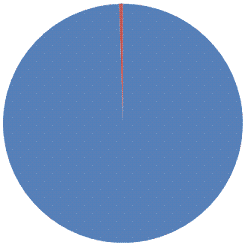
“We are the 99 percent!” they’re shouting, a simple truth that highlights the biggest problem that our country is facing: an unfair and unsustainable consolidation of wealth, the central problem that spawns the myriad other problems we face, from underfunded schools and public infrastructure to corruption in our financial and political systems to the economic hardships that most of us face.

Politicians like Mayor Ed Lee, the clear choice of the 1 percent in this mayor’s race, can talk all he wants about “jobs” and the imperative of enforcing minor municipal codes against OccupySF, which is expecting its third raid by the police as soon as tonight. But those are meaningless abstractions compared to the simple truth that is being so clearly articulated by young people in streets.

We’re not the problem, they are. We are many, they are few. We know the truth and we aren’t giving up. Power to the people!

The new attack on Herrera

25

Well, the salvo coming from the Lee campaign trying to smear Dennis Herrera for not being a strong enough supporter of same-sex marraige shows at least one thing: The race is closer than the polls are reporting.

For the former staffers of Gavin Newsom — and everyone knows who they are, because there weren’t that many people in those meetings — to come forward two weeks before the election with these allegations was a serious political risk. For starters, Herrera is really popular in the LGBT community, and already, much of the city’s queer leadership (including Tom Ammiano, Mark Leno and Scott Wiener) has responded by denouncing the attack. The three, along with Phyllis Lyon and representatives of both major clubs, Harvey and Alice, will be holding a press conference Oct. 27 in the Castro. A letter that went out today under Lyon’s name notes:

A petty smear campaign is underway to personally discredit City Attorney Dennis Herrera over his years of work for marriage equality.  Incredibly, despite all the heroic efforts of Dennis and his office right from the start, anonymous sources have pushed a story in the San Francisco Chronicle that Dennis wasn’t “supportive” of Mayor Newsom’s decision to issue same-sex marriage licenses back in February 2004.  It’s not true.  These politically motivated attackers are hoping we’ll forget the years of hard work Dennis and his deputies invested — and continue to invest even now, in the federal challenge to Prop 8 — for LGBT equality.

So this could easily backfire and wind up focusing attention on all of Herrera’s LGBT support.

It’s also a risk for Lee. Although his name isn’t on any of this, his people are clearly behind it; Newsom (who just endorsed Lee) and his former staffers (some of whom are now Lee’s staffers) wouldn’t have contacted the Chronicle and pushed this story without the knowledge and permission of the mayor and his senior campaign people. Wiener, who is often one of Lee’s allies on the board, is clearly unhappy about the blast at his former boss. Leno, who isn’t involved in the election all, is now going to be pissed at the mayor. And if this winds up looking like a Lee-sponsored political swipe at an LGBT community ally, Lee’s going to lose votes and support.

So why do it? It makes no sense — Lee has tried to appear as the candidate of civility and reason, above the mudslinging fray. He’s trying to act so much like the inevitable winner that he doesn’t even show up for a lot of the debates and forums. There’s no point in dishing this kind of story up — unless the Lee camp has polling data showing the race tightenting and Herrera emerging as a serious challenger.

It’s a pretty basic rule in campaigns: You don’t risk political capital attacking candidates who are no threat to you. So if I were Herrera, I’d be mad — but also encouraged. They’re obviously worried.

Occupy camps don’t create social ills, they showcase them

14

By Anna Lacey

OPINION When I entered the public square off Broadway and 14th on Oct. 17 — the site of the Occupy Oakland camp that police violently broke up this week — I immediately felt dazed by the atmosphere. But rather than seeing the squalor that has been highlighted by city officials and the media, I saw it as a place of real possibilities, particularly from my perspective as a social worker

Surrounded by tall buildings, the square is in the heart of downtown Oakland. It felt like I was in a commune of sorts. Walking through the rows of tents, I found myself amidst a sea of commotion; there were children of different ethnicities playing, a crowd was listening to some guy on a microphone talking about political freedom, a marching band was performing, and lines of people were dishing out and receiving free food. The energy in the air was almost tangible.

The police raided the square Monday night, October 24th, arguing that the occupiers were dangerous or directionless substance abusers. They had also been complaining about a rat infestation and other problems and about the camp being a magnet for homeless people. But when I visited the camp several times before it was raided, there were two important points that struck me about what has really been happening in Oakland’s occupation.

First: The occupation did not create new social problems. Instead, the movement has been making existing problems visible. Oakland is a city with an overwhelming crime problem and serious financial woes, a city known by many as “Oaksterdam” because of its many marijuana dispensaries as well as the presence of weed smokers on the streets. It’s a city with rats, gangs, unemployment, and school closures. Existing social problems have become more visible because people have congregated together, largely because they were sick of suffering from social ills in silence and isolation.

It should also be pointed out that the homeless population was in the square before the occupation. Yet only now are they able to receive free healthcare, learn about available social services, and enjoy respite from police harassment. The police were not allowed in the square for two weeks, and participants in the movement voiced extreme pride of the “liberated space.” As one organizer put it, “Here in Oakland we have a history that makes us unable to dialogue with the police. Occupy Oakland is unique due to the legacy of the Oscar Grant movement; we know the police are not on our side.”

It does seem quite clear that, instead of trying to resolve the problems being brought to light in the square, the police would prefer the protesters remain isolated from each other, so as not to bring attention to existing social problems. I suppose a gang of police in riot gear followed by the terrorizing and arrests of almost 100 peaceful organizers is easier, thanks to our flawed governmental system, than responding to the social issues put forth by the public.

Second: The occupation was never a party zone. Quite the opposite, for two weeks the participants functioned as an organized political and social union. By day, various presenters lectured the crowds on such things as the rights and responsibilities of political beings. One evening, several youth spoke of their hopes and dreams, saying things like, “I want to be the future of America, but I can’t if there’s no money to fund my school.”

Dusk would mark the start of the nightly General Assembly, a sort of lengthy debate giving all the opportunity to make propositions to influence the movement. The assembly would last until after midnight, and a 90 percent majority of votes was needed to pass any given proposition. One evening, the General Assembly closed with everyone chanting, “This isn’t Burning Man,” implying the seriousness of the movement and the need to leave the party in the desert.

At the same time, the square was far from utopian. There were a couple of fights, which were deescalated quickly. Another key issue remains how to manage the movement’s ethos of equality while still moving in a unified direction. However, as one organizer put it, “Our power is in the lack of a leader, and our diversity is a blessing. The media doesn’t know how to control the masses.” There are discussions of new occupations to bring attention not only to the recent jailing of many protestors but also to school closures, police brutality, prison hunger strikes, foreclosures, and other social and political injustices.

Obviously, the Occupy Oakland that I experienced was very different than what the media and police accounts would have you believe. I wish I could tell you to come and judge for your self, but unfortunately there is no longer any one identified place to congregate. Instead, following Monday night’s raid and Tuesday’s squirmishes, many involved in the movement have been scattered out on the streets, forced to defend themselves from the police without the sanctuary of a peaceful and supportive liberated space.

Snow Park, along Lake Merritt, originally an extension of the original camp, is currently one meeting place for those involved in the movement. While I think the police’s senseless and heartless behavior has, at least for the time being, destroyed much of the beauty taking place in Occupy Oakland, I still urge you to lend your support. As one occupier told me, “Be a part of the process. It’s not perfect. Then again, if it was so easy, it wouldn’t be worth it.”

Anna Lacey is MSW trainee and therapist with La Clínica de la Raza who lives in Oakland and is working on her master’s in social work at UC Berkeley

Dailies dutifully vomit out the city’s misleading portrait of OccupySF

8

Both the Examiner and the Chronicle reported this morning that the OccupySF encampment has become a public health hazard, setting the stage for what many believe is an imminent police raid. The newspapers’ only source: a notice that the Department of Public Health handed out to protesters, at their camp in Justin Herman Plaza, at 6am today. I have been reporting eyewitness accounts from OccupySF for several weeks, and if any reporters from these papers had bothered to go there themselves, they would be telling a very different story.

The Department of Public Health states that fecal matter, urine and vomit have been observed in Justin Herman Plaza and on surrounding streets. That’s accurate. Like many streets in San Francisco and in any city, members of the public sometimes relieve themselves on the streets. The difference is that at OccupySF, people from the 300-person community camped out there take it upon themselves to clean up any occurrences of waste as soon as it’s observed. Scheduled cleaning teams coordinated by the camp’s  Sanitation Committee sweep the streets three times per day, and wash when necessary. Late last night, even as protesters focused on plans in case of a police raid, which the city has been threatening everyday for most of the week, protesters went over the camp many times over with brooms.

Perhaps these issues could be resolved if the city were to provide the port-o-potties that Police Chief Greg Suhr and Mayor Ed Lee promised OccupySF last week. At last Wednesday’s Police Commissioner meeting, Suhr said, “We have no future plans to go into the demonstration. We know that it’s for the long haul…I’m actually working with the Mayor’s Office personally to put the port-o-potties and the handwashing stations down there to provide sanitation.”

In an Oct. 20 email to OccupySF, the deputy communications director for Mayor Ed Lee stated that “porta-potties are available by request.” A press release from OccupySF today claimed that “Port-o-potties are currently only available during daytime hours. OccupySF’s repeated requests for 24-hour port-o-potties have not been met.” When we asked mayoral Press Secretary Christine Falvey why the city hasn’t helped mitigate the public health issues they seem to be using as a pretext to break up the camp, she said, “There are porta-potties and hand washing stations at 101 Market Street, as the mayor directed, and are available for demonstrators to use. They are delivered in the morning and removed at night.”

I can confirm that port-o-potties for use at night, when no bathrooms on surrounding blocks are available, are yet to arrive. And police certainly have continued to “go into the demonstration”—making rounds and handing out notices from different city departments every day, “reminders” that protesters are illegally camping in a public park, violating sit/lie ordinances, and are now, apparently, a “public health hazard.” Today, a notice was circulated that cited all of these issues and informed protesters: “You are subject to arrest.” The camp is preparing for a possible police raid tonight.

These issues are not unique to San Francisco. Barbara Ehrenreich reported October 24 that, at Occupy demonstrations throughout the country, “for the individual occupier, one problem often overshadows everything else, including job loss, the destruction of the middle class, and the reign of the 1 percent. And that is the single question: Where am I going to pee?” In her piece in Mother Jones, “Why Homelessness is Becoming an Occupy Wall Street Issue,” Ehrenreich notes that “What the Occupy Wall Streeters are beginning to discover, and homeless people have known all along, is that most ordinary, biologically necessary activities are illegal when performed in American streets—not just peeing, but sitting, lying down, and sleeping.” San Francisco has some of the harshest laws in the country in this regard.

Many cities have accommodated Occupy protesters. Why won’t the city bring port-o-potties? And why are city publications reporting the city’s official statements without any perspective from the encampment itself? The people are speaking: that the powers that be won’t listen is what the Occupy movement is fighting against in the first place.

Avalos offers resolution supporting OccupySF and its camp

57

In the wake of last night’s violent police raid on the Occupy Oakland encampment (a still-tense situation that we’re now on the scene covering) and two similar late-night police crackdowns on OccupySF in recent weeks, Sup. John Avalos and co-sponsors Eric Mar and David Campos are introducing a resolution at today’s San Francisco Board of Supervisors meeting that calls for the city to explicitly allow the OccupySF encampment and its related infrastructure to remain.

That resolution (the full text follows below), which Avalos legislative aide Raquel Redondiez says will be the subject of a special hearing on Monday before being considered by the full board on Tuesday, Nov. 1, grew out of testimony from OccupySF participants that Avalos solicited at last week’s board meeting following a late night police raid on Oct. 16 that resulted in five arrests and many injuries.

As we report in this week’s paper (see “Mixed messages,” to be posted this evening, Tues/25), at that Oct. 18 board meeting, Mayor Ed Lee took the position that no tents, kitchens, or other infrastructure would be permitted, a stance that Police Chief Greg Suhr seemed to soften slightly at a raucous Police Commission hearing the next day. In the face of those mixed messages, OccupySF grew into a full-blown tent city in Justin Herman Plaza and there have been no real conflicts with police since.

Both the San Francisco Police Department and the Mayor’s Office were slow to respond to messages we left all week seeking to clarify the city’s policy toward OccupySF, but both finally got back to us last night after the article had gone to press.

SFPD spokesperson Daryl Fong told us, “We’re still currently doing daily safety inspections at Justin Herman Plaza and continuing to provide leafletting…We’re educating the campers about violations and concerns for public safety,” such as unsanitary conditions or unsafe camping structures.

But he said OccupySF hasn’t been given any deadlines for removing structures and there are no current plans for another raid. “Our goal is to get compliance from the campers voluntarily,” he said. “This situation is being continually monitored as it progresses.”

When we asked the Mayor’s Office about the contradiction being Lee’s stance and the city’s reaction to the growing tent city, Press Secretary Christine Falvey wrote, “The mayor’s position on Occupy SF has not changed. He has directed his departments to facilitate peaceful protest, but not allow structures, tents, or a permanent campsite. He wants to ensure the area is safe for demonstrators and the general public. If you have been to the site, you may have seen the Fire and Public Health Departments conducting inspections for public health and safety concerns and you may have seen Recreation and Park and Police staff informing people of the parks and public safety codes that prohibit camping equipment. Individuals are being informed daily of this and the city’s Homeless Outreach Team is offering services to anyone in the area who may need it. The policy stands and departments are educating the group about what is and is not allowed and the mayor expects those who want to use the space to protest, to follow the rules.”

But OccupySF protesters say they have no intention of leaving the space, believing it’s their right to be there as part of a national movement spotlighting the greed and corruption of the wealthiest 1 percent of Americans. And when I told Falvey that the encampment seems to defy the mayor’s stated position, she wrote, “The mayor has asked several departments to enforce the existing codes, and I understand a number of informational contacts have gone out daily to educate those using the plaza about what is allowable in addition to Fire and Public Health inspections to make sure open flames or dangerous materials are not being used or stored at the site.”

I told her that didn’t address my question, and I asked for a reaction to the Avalos legislation that would explicitly allow “tents, tarps, First Aid supplies, environmentally clean and fire-safe energy sources, and the ability to store, prepare, and serve hot food,” which is the reality now on the ground. I’ll update this post when I get a response.

In the meantime, here’s the full text of the resolution:

[Expressing Support for Occupy Wall Street Protest Movement and the People’s Right to Peaceful Assembly in San Francisco]

Resolution Supporting the Occupy Wall Street Protest Movement and Urging Mayor Lee to Uphold People’s Right to Peaceful Assembly and Collaborate with Occupy SF to Ensure Safety of the Protestors, their Supporters, and the Greater Public.

WHEREAS, “Occupy Wall Street” was formed by a broad spectrum of people coming together to protest the corporate-serving economic and political system controlled by the 1 percent, profiting at the expense of 99 percent of the people; and

WHEREAS, Three years after the current financial crisis caused by Wall Street speculators and profiteers, the unemployment rate in the United States is still at the highest level since the Great Depression with the unemployment rate in San Francisco currently at 8.3 percent; and,

WHEREAS, The United States’ major banking institutions, which have been bailed-out by the government and United States taxpayers, have done little to prevent massive foreclosure of residential properties or support the revitalization of local economies by sustaining small businesses; and,

WHEREAS, Since 2008, there have been 1.2 million foreclosures in California, with 12,410 homes in San Francisco alone; and,

WHEREAS, The “Occupy Wall Street” protest movement has struck a chord with the people of the United States and around the world, inspiring over 900 similar protests and solidarity actions across the country, where tens of thousands of people have come out to express their deep indignation against Wall Street greed and systemic socio-economic injustices; and,

WHEREAS, The “Occupy” demonstrations are a rapidly growing movement of people from all walks of life with the goal of occupying public space in order to create a shared dialogue and assert demands for economic justice; and,

WHEREAS, The “Occupy” demonstrations have been supported by the California Nurses Association/ National Nurses Association, American Federation of Labor -Congress of Industrial Organizations, Change to Win, International Longshore and Warehouse Union-International, Teamsters Joint Council 7, Services Employees International Union, Laborers International Union of North America, and many others; and,

WHEREAS, The OccupySF demonstrations began in September with small gatherings of people and have since grown and gained supported from thousands of individuals, community and faith-based organizations, and unions; and,

WHEREAS, On October 12, a 500-person march and civil disobedience organized by local community groups received national media attention, exposing the struggles of San Francisco residents against foreclosure, corporate control, and spiraling unemployment; and,

WHEREAS, The October march and protest action culminated in civil disobedience and, despite the arrest of 11 people, lacked any antagonistic conflict between the police and protestors; and,

WHEREAS, Similar to demonstrations in hundreds of cities across the United States, OccupySF demonstrators are asserting their rights to free speech and peaceful assembly 24 hours a day, seven days a week, in order to create public dialogue around corporate control of the political process and public space; and,

WHEREAS, Numerous and various groups continue to join the protesters at OccupySF, including an interfaith clergy contingent and the California Nurses Association, which has set up a First Aid tent to support the protestors and help ensure public safety; and,

WHEREAS, The City of San Francisco has a right and duty to ensure the safety and security of the general public including the protestors and their supporters; and,

WHEREAS, Since the beginning of the protest, City actions have resulted in the confiscation of food, tents, sleeping bags, and other belongings from the OccupySF demonstrators as well as causing preventable injuries and arrests; and,

WHEREAS, The City has a lengthy and proud history of political protest and has upheld the rights of people to free speech, freedom of assembly, and peaceful protest; and,

WHEREAS, With clear leadership from the Mayor, City departments can set a tone of cooperation and collaboration with OccupySF protestors and supporters, help mitigate harm, and address any public safety, health and sanitation concerns, all while avoiding unnecessary conflict; now, therefore, be it

RESOLVED, That the Board of Supervisors supports the Occupy Wall Street protest movement and the rights of all who protest to assemble peacefully and enjoy free speech in the City and County of San Francisco; and, be it

FURTHER RESOLVED, That the Board of Supervisors recognizes that Free Speech and Freedom of Assembly should not be limited to daytime nor short-term activities and we deem the need of protesters to have tents, tarps, First Aid supplies, environmentally clean and fire-safe energy sources, and the ability to store, prepare, and serve hot food reasonable; and, be it

FURTHER RESOLVED, That the Board of Supervisors urges the Mayor, the Police Department, and other City agencies to uphold the rights of protestors to political speech and public assembly, and to recognize that the full exercise of such rights requires that participants are able to attend to the needs of everyday life, and have a space free from harassment; and, be it

FURTHER RESOLVED, That the Board of Supervisors urges Mayor Ed Lee to direct the Recreation and Park Department, the Department of Public Works, the Police Department, and other City agencies, as relevant, to be flexible and to collaborate with protestors for the safe sharing of public spaces, in which demonstrators can exercise their political rights and the City can address legitimate safety concerns while avoiding unnecessary antagonism; and, be it

FURTHER RESOLVED, That the Board of Supervisors urges Mayor Ed Lee, in order to prevent further harm and conflict to any members of the public, including protestors of OccupySF, to direct the Police Department to ensure that there will be no use of force to dislodge the OccupySF demonstrators and confiscate their belongings.


WTF, Chuck?

18

And now for a new installment in the ongoing saga of What the Fuck, Chuck?, our attempt to figure out the unfathomable positions of the Chron’s local columnist, C.W. Nevius. Today’s episode: Why is Nevius so determined to stir up a clash between the police and the OccupySF protesters?

Although the Oakland cops have rousted Occupy Oakland — with a nightime raid, arrests, and the works — things have been pretty mellow in San Francisco for the past week. Police Chief Greg Suhr has tried to avoid sending riot troops in to evict the camp. The campers are working with city officials to get a permit for a stove. The camp is largely peaceful; nobody’s hurting anyone or anything.

Oh, but Chuck is nervous:

Many of the city’s homeless residents have gravitated there, the sanitation is a nightmare, there are rats, and car batteries are neither a safe nor ecological energy source.

Well, there were rats there before the protesters arrived. City officials have offered to set up portable toilets. Car batteries aren’t perfect, but if you charge them by riding a stationary bicycle, the energy is pretty darn ecological. And really, unless you knock the battery over and it cracks and spills, car batteries are pretty safe; the don’t explode or emit fumes. The acid and lead are toxic, but they’re pretty well contained. There are more than 300,000 car batteries on the streets of San Francisco already; every car has one.

And so what if “many of the the city’s homeless residents” have gone to join the protests? Some are eager for the free food and shelter, which is fine — putting the more middle-class radicals side by side with homeless people isn’t a bad thing at all. In fact, it’s about the most radical thing that OccupySF is doing. Homeless people are the most visible victims of the economic injustict that the occupyers are protesting; shouldn’t they be part of the action?

I realize that some homeless people have mental health and substance abuse issues, but those didn’t start with OccupySF. Instead of whining about the situation, the city ought to be taking advantage of it — here’s a group of hard-to-reach folks who social workers can probably connect with more easily in an environment and community that’s supportive.

But Nevius can’t imagine anything good coming of any of this:

As Occupy SF gets bigger and louder, the potential for trouble only increases.

I guess Nevius doesn’t believe it’s possible for an alternative community that includes a wide range of activists and homeless people to grow and make its voice heard without “trouble.” And the only way out is to send in the troops.

What the Fuck, Chuck?


Lee fraud bumped by Hammer

24

The San Francisco Chronicle finally — finally — put the story about voter fraud by Ed Lee’s supporters on the front page Oct. 25, and it was on the top of sfgate for a few hours. But by 11:30 a.m., the story was off the front page of the paper’s website, buried where it’s impossible to find without searching — and replaced by a big story about this bizarre Ed Lee rap video featuring Hammer, will.i.am and Brian Wilson. It’s almost a joke, the video, a cartoon version of a music video featuring young women chanting “Ed Leeeeee” and lyrics that just about left me speechless:

My my my, music hits me so hard,
Newsom left and they put him in charge,
Thank you, for blessing me,
and the rest of the city with Mayor Ed Lee
Got us all sayin’ “Run Lee Run”
Only five-foot-five but he gets (bleep) done
So tell them other candidates to find a bus pass,
Unless you ridin’ with us…FEAR THE MUSTACHE!

It’s almost like Rappin Ronald Reagan. Except that one was actually funny.

So: A real, serious story about the kind of dangerous sleaze that we can expect from an Ed Lee administration is bumped off the top of the city’s daily newspaper website to make room for a weak joke. Go Chronicle. Go sfgate.

Oakland occupiers vow to fight back against police raid

The Occupy Oakland encampment, which was established Oct. 10 in solidarity with the Occupy Wall Street movement in Oakland’s Frank Ogawa Plaza, was dismantled by police in an early morning raid on Oct. 25. The city of Oakland had issued eviction notices over the last several days, and sent a strongly worded notice the night of Oct. 24.

Police in full force descended upon the city park — christened Oscar Grant Plaza by the activists — at 4 a.m., clad in riot gear. They moved in swiftly, deployed teargas, and made mass arrests.

As of noon on Oct. 24, Frank Ogawa Plaza was still blocked off, with the remnants of the camp still scattered in the square. Oakland City Hall was closed to all but city employees.

Occupy Oakland protesters planned to respond to the raid with an emergency demonstration against police repression, scheduled to be held Oct. 25 at 4 p.m. at the Oakland library on 14th and Madison.

“Occupy Oakland is not finished, it has only begun,” a media statement from the occupiers said. “Our numbers will be larger than ever.” The statement also noted, “Occupy Oakland urges people to contact Oakland’s mayor and tell her what you think of her actions.”

Sue Piper, Special Assistant to Mayor Jean Quan, rejected the idea that the order had come from Quan alone. “It was a team effort,” Piper said. “We have the mayor, the City Administrator, the police chief, and the fire chief. The decision was made by that team to do it early this morning.”

Piper said the raid was carried out because “the people who were camping out were contributing to a health and safety issue.”

Asked how the city would respond to concerns that this appeared to be a crackdown on freedom of speech, Piper said protesters had the to right to assemble in public parks between the hours of 6 a.m. and 10 p.m.

“They cannot occupy our parks,” she said.

For an in-depth account of what it was like inside the camp at Occupy Oakland, pick up tomorrow’s issue of the Guardian.

Lee under fire over voter fraud accusations (VIDEO)

    Just over two weeks before election day, allegations of voter fraud carried out by agents of an independent expenditure committee created on behalf of Mayor Ed Lee threw a curveball into the San Francisco mayor’s race. Lee has been the clear front runner for months.

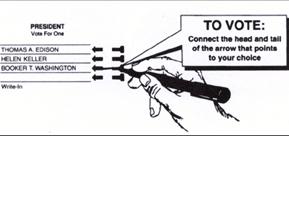
    Volunteers for Sen. Leland Yee, a mayoral candidate, accused Lee supporters working on behalf of the San Francisco Neighbor’s Alliance in Chinatown of marking ballots for San Francisco voters, guiding ballot selections with stencils, and collecting ballots in a bag, in apparent violation of election law. Videos of a voting station where the activity occurred were shot by Yee volunteers and aired on major media outlets.

    An onslaught of questions about these accusations were directed at Lee at a campaign event Oct. 24, in which Lt. Gov. Gavin Newsom, the former San Francisco mayor, announced his endorsement for Lee’s candidacy. Lee sought to distance himself from the independent expenditure committee in question, saying his own campaign has kept things clean. The mayor said he supported his rivals’ calls for investigation into any “fishy business,” and supported the idea of bringing in federal election monitors.

    Here’s a video of Lee getting the third degree from reporters at the press event, which was held in the office of a SoMa-based tech company called BranchOut.

Video by Rebecca Bowe

A vote-fraud video primer

29

The Leland Yee campaign has produced a nice little video primer on the Ed Lee vote scandal. It’s short, to the point, and gives you a sense of what has been going on with volunteers who are supposedly independent from the official Lee campaign. Check it out after the jump.

WashPost gets the headline right

5

Somehow, you never see headlines like this in the Chron:

Former SF Mayor Newsom endorses hand-picked incumbent Ed Lee amid ballot tampering charges

Pretty much says it all.