• No categories

Politics Blog

Charges dropped in police-resident brawl at Valencia Gardens

285

After spending the weekend and Monday in jail, D’Paris “DJ” Williams’s was released this morning (Tue/19) at 2am. Williams was initially charged with felony counts of assault with a deadly weapon in a widely publicized brawl between police and residents of Valencia Gardens on Friday, but the case was discharged pending further investigation, according to the District Attorney’s office.

It was Friday afternoon, and 20-year-old Williams was having a very good day. As his cousin Dave (last name withheld due to his fear of retaliation) tells it , Williams had just finished applying for a job at Goodwill, and spent the afternoon enjoying the Batkid festivities along with thousands of his fellow San Franciscans. On his way to visit his cousin in the Valencia Gardens housing complex in the Mission, plainclothes officers spotted Williams riding his bicycle on the sidewalk.

That’s when all hell broke loose.

According to the SFPD, the plainclothes officers identified themselves as police, displayed their badges, and when Williams “failed to comply” with their orders to stop, they caught up to him and attempted to detain him. As they struggled to put Williams on the ground, nearby neighbors came out to defend him.

“He became combative, resisted arrest, and multiple subjects came out of that residence and formed a hostile crowd around the officers,” Gordon Shyy, a spokesperson for SFPD, told the Guardian.

In layperson’s terms, a brawl broke out.

Someone allegedly threw a cane that nearly hit an officer. An officer let loose haymaker punches towards a backpedaling neighbor, as a crowd shouted them down. By the end, Williams and three of his cousins’ neighbors were bloodied and bruised as they were taken into custody.  

Williams was charged with felony assault with a deadly weapon, which Shyy said was for biting an officer. Shyy maintains that the officers pulled him aside for a traffic infraction of riding a bicycle on a sidewalk, and the officers decided to detain Williams because he ignored their calls to stop and continued toward the residence.

But just why they decided to pull Williams over is questionable.

The officers were undercover, plainclothes narcotics and gun seizure agents called the “Violence Reduction Team,” Shyy said. Why such specialized officers would leave their vehicle only to make a traffic citation is still unclear, and the SFPD declined to answer that question.

“What were these guys doing stopping DJ for a traffic violation?” Jensen said, incredulous, to the Guardian.

When asked how the officers justified their use of force, Shyy read directly from the police report: “Williams continued to resist by pushing his upper body against the sidewalk and tried to get to his feet. Williams was unhandcuffed and unsearched at this point. From my knowledge and experience I know this is a high crime area and people in this area often carry weapons. I believed if Williams were able to free himself from us, he may attempt to access a weapon.”

Not long after, Williams’ friend Travis Jensen, a local photographer who was teaching Williams the trade, took to Instagram to sound the horn, describing it as police misconduct.

“This isn’t the DJ I know,” Jensen said of the SFPD’s characterization of how Williams reacted. None of the men involved have criminal records, as far as Jensen knows, and were just concerned about their friend.

Video of the incident widely circulated around the internet, riding the wave of Batkid publicity. All were taken to SF General Hospital, according to the SFPD.

The cops, having no other information except that Williams was riding his bike on the sidewalk, were afraid Williams would have a weapon. In the end, all he had on him was a Capri Sun and a cupcake.

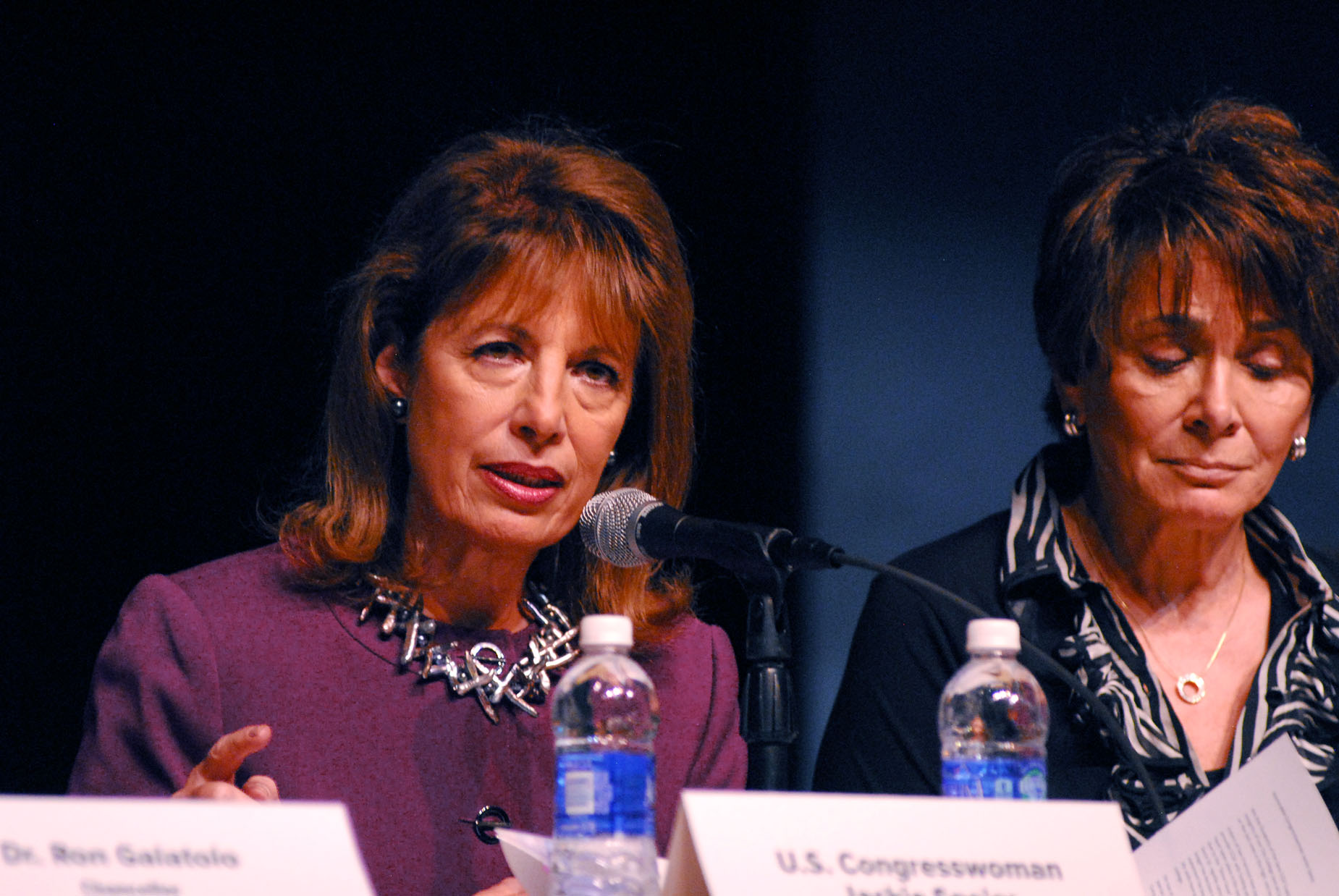
Now that the case is discharged, does Williams have to wait in fear? Not likely, Public Defender Jeff Adachi told the Guardian.

“The reason you discharge cases is you can’t prove them,” Adachi said. Though this shouldn’t be taken as sacrosanct, he clarified, it’s likely Williams can leave the incident behind him. “If I was advising him I would say the case was discharged, and they’re not going to file. Generally speaking if they could, they would file it now.”

A protest is planned for tonight at 5pm in front of SFPD’s Mission station, which Williams’ cousin Dave said was a “peaceful protest. I’ll make sure of that.”

Albany Bulb squatters lose in court and turn to direct action to resist evictions

4

Yesterday marked a big day for Albany Bulb residents. The Bulb, a closed landfill turned homeless encampment, has been under the threat of eviction by the Albany City Council for the last month. 

After an afternoon in a San Francisco courtroom, Judge Charles Breyer of the US District Court for the Northern District of California denied a stay away order filed by the residents’ attorneys seeking to prevent an imminent eviction by the City of Albany. Later that day, after an Alban City Council meeting, residents and activists marched to the Bulb and set up a permanent occupation in protest of the impending eviction.

The stay away order was filed last week in order to prevent eviction during the winter. Osha Neumann, one of the residents’ attorneys and a longtime artist whose work is represented at the Bulb, said that it was unusually cruel to make the residents, some with severe disabilities and mental health issues, move off the Bulb without any homeless shelters or temporary housing available in Albany.

“They haven’t said what is the urgency or need to do it in the middle of winter,” Neumann said of the city, “It’s nonsense.”

Albany Housing Advocates was also a plaintiff, along with 10 of the Bulb residents in the lawsuit.  Julie Winklestein, the president of the AHA was in the court audience, said she hoped that the stay away order would be given: “We decided for a temporary restraining order to keep the conversation going.”

And while that conversation was put to a halt, another has started.

According to a press release issued by area activists and Bulb residents sent early this morning, “activists say they will be participating in trainings, hosting workshops, and planning more actions targeting the City of Albany, as well as the Sierra Club and Citizens for East Shore Parks, recreationalist organizations that are sponsoring the eviction.”

Based on information obtained in court documents, $570,000 was allocated to remove the Bulb residents, based on an Albany City Council decision made on October 21, with $171,000 spent on the cleanup of the campsites and the remainder spent on two portable trailers with bunk beds to serve as transitional housing for six months.

 Many of the campers, such as six-year resident Amber Lynn Whitson, believe that the transitional housing isn’t responsive enough for disabled people, as they believe it would not be open during the day.

“It’s ridiculous that they say they don’t know of any specific disabilities,” said Whitson about the city’s attempt provide transitional housing.

“If I’m not back there, I’m on the streets,” Kris Sullivan, an 18-month Bulb resident said about the encampment. “We’re safe back there.” 

Richmond resident saved from deportation at the last moment

7

Felipe Valdes has lived and worked in the United States for 23 years. Two weeks ago, he received a letter ordering his deportation. Valdes reported to the Immigration and Customs Enforcement (ICE) office in downtown San Francisco yesterday (Mon/18) morning as he instructed and prepared to say his final goodbyes to his family before boarding one of ICE’s deportation buses at noon. Instead, he was released after five hours and allowed to return to his home in Richmond.

“It’s one in a million,” stated Marie Vincent, Valdes’ attorney. She had filed a stay of removal on her client’s behalf to delay his deportation, but such claims rarely get reviewed quickly. Vincent believes Valdes was awarded additional time in the US at the last moment because of media attention he received in recent weeks.

“His case was very compelling,” she explained. “He’s been here so long, and he has contributed greatly to the United States. He’s worked the whole time, he’s active at his church, his children are here. This is his country.”

While Valdes met with ICE officers inside, more than 50 local faith leaders, community members and reporters assembled on the street outside the office, with supporters there to protest the deportation. According to Vincent, this pressure was critical in influencing ICE’s decision to approve Valdes for a one-year work permit, temporarily halting his deportation.

That year may prove to be enough time for the currently pending residency visa application that Valdes recently submitted to be reviewed. His application is the latest in a long history of attempts to become a legal resident of the U.S. stretching back to 1997, seven years after he immigrated here from Mexico with his wife, their baby son, and their unborn daughter. Now, Vincent thinks he finally has a strong case that will earn him legal status in the US.

If Valdes is forced to return to Mexico, it could result in major consequences for his family. His wife, their three children, and their granddaughter all depend upon his wages as a plumber to survive.

“We would have really struggled just to buy food or make rent,” his daughter, Mayra Valdes, reflected after the family received the news that Valdes would not be deported that day.

Mayra’s younger brother suffers from severe scoliosis. The family does not have medical insurance and without Valdes’ earnings, they would be unable to afford the specialized chiropractic and medical care that he needs. With his father gone and no one to pay for his costly weekly treatments, there would be weeks when the boy would not even have been able to walk.

The family depends on Valdes for more than his income too.

“He really pushes me and my siblings to keep going to school,” says Mayra, a Contra Costa Community College student. Her older brother is at the University of California at Davis, and her younger brother is a senior at Richmond High School. With a four-year-old daughter and a second child on the way, Mayra relies on her father to babysit after he gets off work so that she can attend classes.

Valdes’ victory on Monday was a bright note in the sad story of deportation in this country. His single case may not mean much in the broader fight for immigration reform, but for his family, it has meant the world.

“I wanted today to disappear from the calendar,” Mayra recalls, “but now I feel like it was the happiest day of my life. My father was able to come home today—it’s the best present I’ve ever received.”

SF General will lose much of its federal subsidy under Obamacare

137

As President Obama’s Affordable Care Act is phased in over the next couple years, San Francisco General Hospital will lose at least 25 percent of the $123 million it receives from the federal government to offset costs of caring for the uninsured, but hopefully that will be offset by its expansion of those who will have health insurance.

General Hospital receives those funds for being a so-called “safety-net hospital,” a place where those without insurance can still get quality healthcare. Even though the need for such safety nets is supposed to diminish under Obamacare, SF General will remain a critically important safety-net hospital.

Many San Franciscans – including non-U.S. citizens who won’t qualify for coverage under the Affordable Care Act, as well as homeless individuals – will continue to rely on the hospital when in need of medical care.

Yet here and nationwide, concern is brewing about whether funding for safety-net hospitals could be impacted if enrollment in the new state health exchanges doesn’t reach anticipated levels.

“The financial question every state is asking is: What are the newly eligible patients going to do? What plan will they enroll in? Will they enroll?” Greg Wagner, CFO of the San Francisco Department of Public Health, told the Guardian, referring to the health insurance marketplaces created under the Affordable Care Act.

Most safety-net hospitals in the country are bolstered with federal subsidies, and are especially reliant on funds known as disproportionate share hospital payments, or DSH. However, those subsidies are about to be slashed with machete-like strokes.

All told, as much as $18 billion nationwide could be siphoned away from safety-net hospitals by 2020. Compounding that is another $22 billion that could be cut from Medicare subsidies, depending on the number of insured.

There’s an expectation that the looming safety-net budget cut will be offset by the burgeoning population of insured residents who would flock to state health exchanges. It makes sense: Instead of absorbing the entire cost of an uninsured patient, hospitals would be getting money from newly active insurance policies, and no money would be lost.

The New York Times recently ran a story detailing how low-income patients in Georgia may be put in a precarious position under federal healthcare reform because safety-net hospitals in Georgia might not be able to make up for lost funding once DSH payments evaporate.

California isn’t likely to experience this problem to the same degree, Wagner said, because the state chose to expand Medi-Cal, the state version of Medicaid, to include all low-income residents and not just those who previously qualified under a narrow set of criteria. Georgia had the same option to expand, but chose to keep its Medicaid qualifications in place, like many states led by Republicans looking to tweak President Obama.

As things stand, enrollment in Covered California – the state’s health insurance marketplace under the Affordable Care Act – remains low. Until enrollment closes at the end of March, it’s an open question whether it will reach the necessary levels to make up for pending cutbacks.

So far, 59,000 Californians had completed applications and enrolled in health insurance plans within the new marketplace as of Nov. 13. That’s a drop in the bucket, considering that 2.3 million are eventually expected to enroll. According to state data, 203,904 applications had been started online (reflecting an estimated 370,000 individuals). In addition to those applying for Covered California plans, another 72,000 people were determined eligible for Medi-Cal. 

“SF General operates on a huge amount of federal money,” Wagner explained. “Some comes directly from the federal government, and some comes from DSH.” He said the hospital received $123 million in DSH funds last year, “and not all of that will go away” once cuts go into effect.

“Healthy SF will still be around after March 31,” said Wagner. “We’re still retaining the program for anybody not eligible for Medi-Cal, and through Healthy SF those people can still access primary healthcare.”
He even said that under extreme circumstances, like the delivery of a child, for instance, some undocumented immigrants will have the opportunity to enroll in Medi-Cal. 
And it’s not all gloom-and-doom on the subsidy front, either. There is a safety-valve for the safety-net hospitals: If everyone who is expected to enroll in Covered California actually does so, the funding will be available without the need to rely on federal aid. 
But in order to achieve that idyllic plateau, a serious push is needed on the enrollment level. Granted, those enrollment figures should rise. But what if they don’t? 
“If people don’t enroll in the new programs, it will be a big problem,” said Wagner. “If we have a significantly lower enrollment number than we initially predicted, we will have some major financial issues. There’s still some uncertainty.”

He added, “We’ll still provide care for the uninsured at SF General. The money will decrease, but it won’t disappear. By no means will all of the money go away. The hope is that the newly enrolled will offset the decreasing number of uninsured, then the federal government could take the DSH payment and redirect it to the providers.” 

That being said, “we still have lots of optimism moving forward,” Wagner said. “We think people will enroll.”

[Correction: We corrected the amount of the reduction from 50 percent down to 25 percent].


Parents under pressure

In recent weeks, the San Francisco Unified School District has held a series of community forums to ask parents what they think kids need in order to thrive in school. The meetings were held as part of a policymaking process leading up to next year’s renewal of two important funds – the Children’s Fund and the Public Education Enrichment Fund, which account for some $100 million in funding combined.

There were huge turnouts – a Chinatown forum, where Mayor Ed Lee was reportedly in attendance, attracted more than 180 participants, while a Nov. 14 meeting at Cesar Chavez Elementary in the Mission District drew a crowd of between 80 and 90.

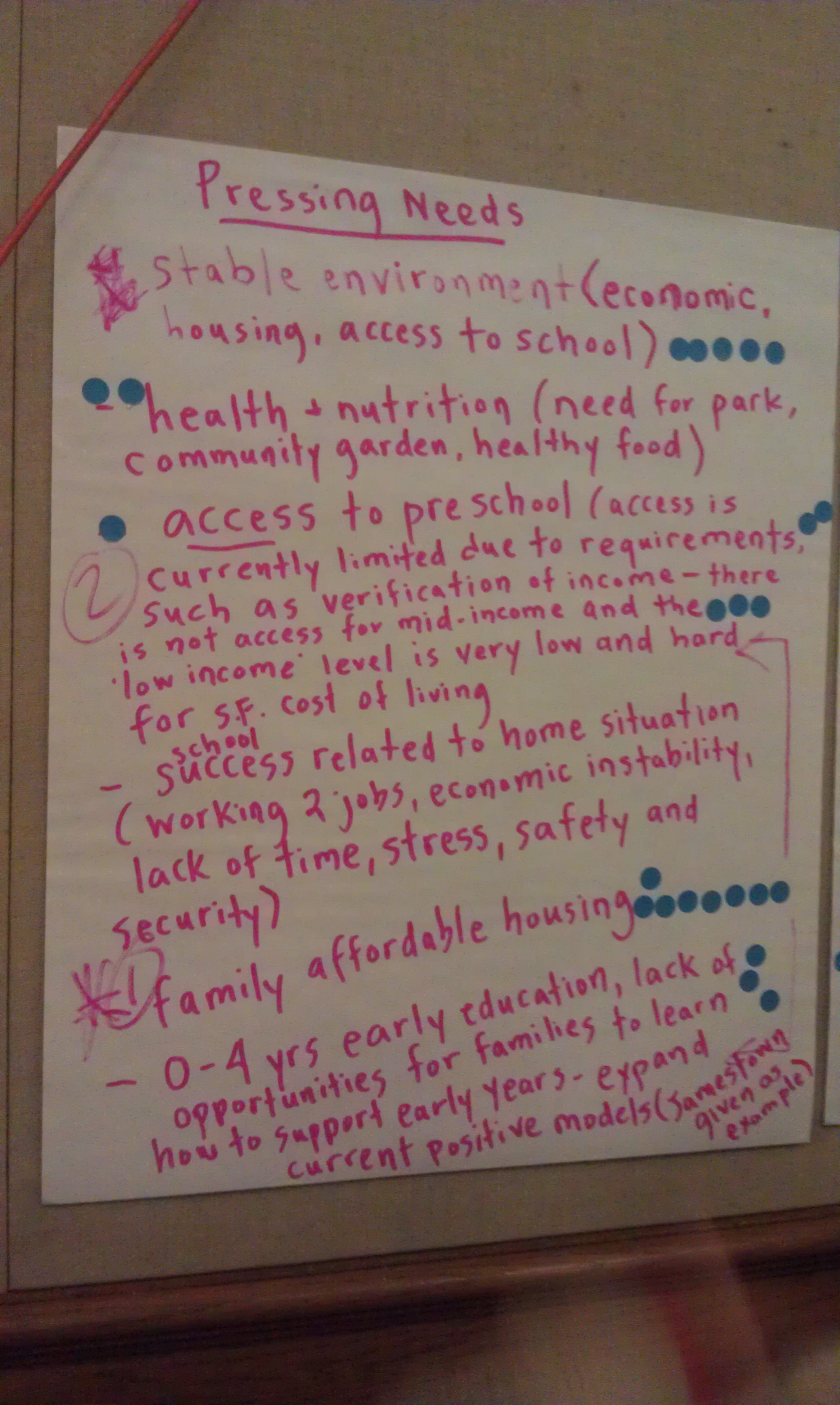
The parents weren’t exactly asking for more museum field trips for their kids. During breakout sessions where facilitators wrote group members’ concerns on flip pads, a few recurring themes emerged. “Job security for parents,” one read. “Affordable housing,” another stated. “It’s a shame to have to talk about lack of funds given wealth and corporations in SF,” more parent feedback stated.

Maria Su, director of the San Francisco Department of Children, Youth and their Families, thanked parents for coming and told them, “We know how hard it is and how challenging it is to survive in the city. But that doesn’t mean we should give up.”

The event provided a glimpse into just how tough it is for families to get by in a city where a hefty cost of living amounts to serious pressure. “The sacrifices they make is, their children will have access to resources you can’t get anywhere else,” said Mario Paz with the Good Samaritan Family Resource Center, who works with a lot of Latino immigrant families.

A report digesting the findings of stakeholder focus groups distilled the pressures facing families. “Many participants commented on … the extraordinarily high cost of living in San Francisco,” it noted, which “contributes to both financial and emotional strain on the part of our many working class and lower income residents.”

BART “mistake” threatens its contract agreement with workers UPDATED

35

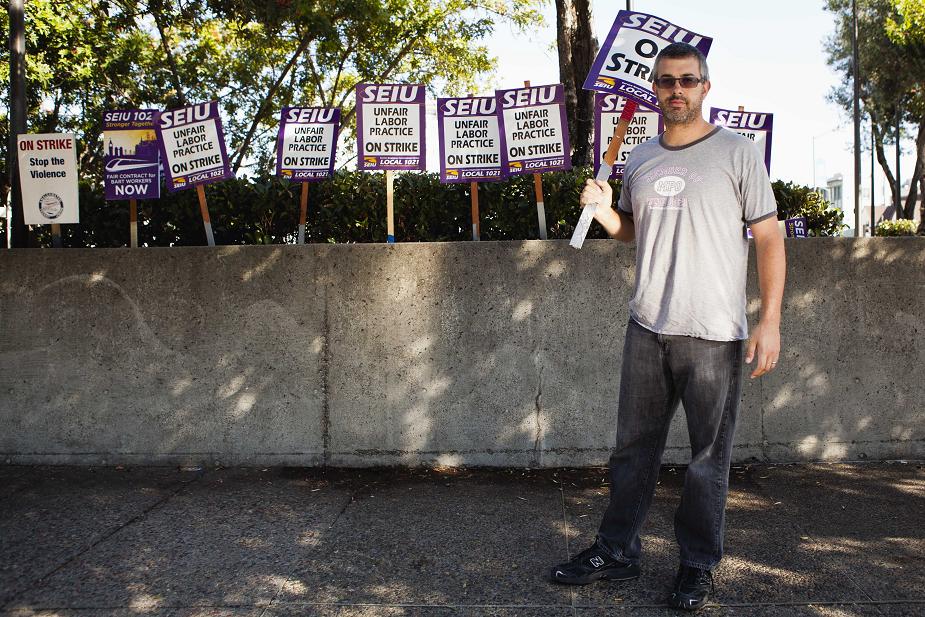
Just when it appeared the ugly contract impasse between BART management and workers was over — a divisive struggle that resulted in two debilitating four-day strikes and the Oct. 19 death of two workers struck by a train being used to train possible replacement drivers — BART management is threatening to scuttle the deal over a provision it says was mistakenly added to the contract.

At issue is a contract provision where BART workers from SEIU Local 1021 and ATU Local 1555 who go on leave under the federal Family and Medical Leave Act will be paid for six of the 12 weeks the law allows them to take unpaid, BART spokesperson Luna Salaver told the Guardian.

While BART management and its negotiators — including Assistant General Manager of Operations Paul Oversier and Thomas Hock, a contractor who the district paid $400,000 to lead its negotiations — signed off on the provision back in July and again when the final deal was reached last month, Salaver said BART didn’t mean to include it.

“It was a mistake that a provision rejected twice by BART management ended up in the stack of approved documents,” Salaver said, noting that it was caught this week as the district prepared to give the contract final approval on Nov. 21. It has already been approved by the two unions.

“We were never confused as to the status of the Family and Medical Leave Act agreement,” Local 1021 Political Director Chris Daly told the Guardian, calling the provision a reasonable benefit similar to one that he sponsored for city employees when he was on the San Francisco Board of Supervisors.

But Salaver said it could add tens of millions of dollars in costs (the district still isn’t sure how much) to a contact that will already cost the district an additional $67 million, so management is convening a special session of BART’s Board of Directors this afternoon (Fri/15) to discuss the issue, saying that management isn’t yet recommending the contract be rejected, as some had reported. [UPDATE: The BART board told administrators to re-open negotiations with the unions, but the unions are resisting a return to the bargaining table and urge the board to approve the contract on Thursday].

“There is an erroneous report that BART management is going to tell the BART board to reject the contract,” Salaver told us, inside calling the closed-session discussion a “fact-finding session.”

But Daly said BART management had told the unions that it would recommend rejection of the contract, and that it is now backpedaling because some directors are unhappy with the snafu. It also has a serious public relations problem on its hands, finding itself in a position to reignite the battle with workers while also contending with angry state legislators and an ongoing NTSB investigation into its culpability in the worker deaths.   


The complete prepared statement issued last night from SEIU 1021 Executive Director Pete Castelli follows:  

“BART Management has been in contact regarding the tentative agreement they reached with SEIU 1021 and ATU 1555 on October 21st and which our members unanimously ratified. We’ve been informed that they’ve scheduled a special meeting with the BART Board of Directors to discuss the terms of the contract and to clarify details regarding certain provisions for tomorrowafternoon.

“In July, BART Management and its unions reached a tentative agreement on family medical leave, which was signed by BART Management and their chief negotiator. During a thorough review of the final settlement last month, BART Management and their attorneys did not raise any concerns about how this tentative agreement or other provisions in the final settlement would prevent them from recommending the contract to the Board for approval.

“It’s disappointing to hear BART Management would recommend that the BART Board reject this agreement—a contract they negotiated with their workers for more than five months, signed, and praised in the public as a fair compromise.

“We expect the BART Board of Directors to vote on and approve this fair and reasonable contract.”

Hundreds attend hearing to call for action on evictions

Tenants, organizers and residents impacted by Ellis Act evictions packed the Board of Supervisors Chambers at San Francisco City Hall today, Thu/14, for a hearing called by Sup. David Campos on eviction and displacement in San Francisco.

“It seems to me that we have a tale of two cities,” Campos said at the outset of the hearing, which was held by the Board of Supervisors Neighborhood Services and Safety Committee. “The vast majority of individuals are struggling to stay in San Francisco. We must act urgently to address this crisis, which I believe is a crisis.” He added, “We are fighting, I think, for the soul of San Francisco.”

Tony Robles of Senior and Disability Action, who showed up at the hearing wearing a black hooded sweatshirt with pobre (the Spanish word for “poor”) printed across the front, expressed his frustration with the surge of evictions taking place in the booming economic climate. “We have been overlooked – the workers, communities of color … it’s almost as if we are an afterthought,” he said.

Fred Brousseau of the San Francisco Budget and Legislative Analyst’s office delivered a report on his recent analysis of eviction and displacement trends across the city.

Overall evictions in San Francisco rose from 1,242 in 2010 to 1,716 in 2013, reflecting an increase of 38.2 percent, according to San Francisco Rent Board Data highlighted in Brousseau’s report. 

Ellis Act evictions in particular increased by 169.8 percent in that same time frame, he said, with the most recent data showing a total of 162 Ellis Act evictions over the twelve months ending in September 2013. That number reflects units evicted, not how many tenants were impacted.

Ted Gullicksen of the San Francisco Tenants Union emphasized that tenant buyouts, frequently offered in lieu of an eviction, are also driving displacement even though these transactions aren’t reflected in city records.

“We need to get in control of these buyouts,” he said. “There are about three of them for every Ellis Act eviction. When you consider them in combination with Ellis, the numbers are very dramatic.”

Brousseau also showed a slide profiling the people who’ve been impacted by evictions citywide. Almost 42 percent had some form of disability, the data revealed, while 49 percent had incomes at or below the federal poverty level.

On the whole, Brousseau said, a total of nearly 43 percent of San Francisco households are “rent-burdened,” a term that officially means devoting more than 30 percent of household income to monthly rental payments.

Throughout the afternoon, tenants shared their stories and fears about getting frozen out of San Francisco by eviction. “I’m looking at shopping carts, and I’m terrified,” one woman told supervisors during public comment. “You have to do something. It might not be enough for me right now, but you can’t do this to any more people.”

Hene Kelly noted that elderly tenants are being disproportionately impacted by Ellis Act evictions. “They don’t have the reserves, they don’t have the jobs, and they don’t have the money to be able to move if they are evicted,” she said. Referencing landlords and speculators who are driving displacement, she added, “It makes me think of cabaret. Money, money, money, money, money makes the world go round.”

Campos noted that he is working with Assembly Member Tom Ammiano on a proposal to grant San Francisco the authority to place a moratorium on Ellis Act evictions.

He’s also working toward legislation that would create a mechanism at the San Francisco Rent Board allowing tenants to register complaints of harassment or other forms of pressure from landlords seeking to drive them out.

His proposal also envisions doubling the amount of relocation assistance that landlords would have to provide to tenants, in the case of no-fault evictions. He also mentioned the possibility of regulating buyouts, by requiring landlords to record these transactions with the rent board, and possibly prohibiting property owners from charging market-rate rent directly after completing a tenant buyout.

Meanwhile, Mayor Ed Lee recently announced that he is working with Sen. Mark Leno on legislation that is meant to reduce Ellis Act evictions. That proposal would require additional permits or hearings before an Ellis Act eviction could go forward, and place more stringent regulations on the sale and resale of properties where tenants have been evicted under the state law.

Just a couple weeks ago, a coalition of housing advocates proposed a sweeping package to turn the tide on evictions.

At the end of the day, it’s clear that housing advocates are gaining momentum as the spike in tenant ousters continues in pricey San Francisco, where rents are the highest in the nation.

“We’ve never been late on our rent,” noted Beverly Upton, executive director of the San Francisco Domestic Violence Consortium, who is battling an Ellis Act eviction. “We’ve paid for every improvement ever done in 25 years. And now we have to leave.” She appealed for legislators to take action for the sake of the city’s future, asking, “Once the advocates and the organizers and the people who care are gone, who will be left in our city?”

Small number enroll in health insurance exchange

Covered California, the state-run health insurance exchange established under the Affordable Care Act, released its first set of enrollment data today (Wed/13), providing an initial glimpse of how the program commonly known as Obamacare is working in practice in California.

From Oct. 1 until yesterday (Tue/12), a total of 59,000 enrollees completed applications and enrolled in health insurance plans under Covered California.

As a report in the Sacramento Bee pointed out, that number pales in comparison with the estimated 2.3 million Californians who are expected to enroll for coverage by 2017.

Still, a larger number have begun the process, which entails submitting an application and clearing eligibility criteria before selecting a plan and enrolling. Californians initiated a total of 203,904 applications online, according to state data, reflecting an estimated 370,000 individuals.

Of those, 85,960 individuals were determined to be eligible for Covered California, the state-run marketplace that offers coverage at more affordable rates than conventional insurance plans. Another 72,000 were determined to be eligible for Medi-Cal, a program for low-income residents that was expanded under the Affordable Care Act.  

Despite the low initial enrollment, representatives from the Greenlining Institute and the California Pan-Ethnic Health Network welcomed the initial figures as a positive development.

“It’s a great start – and that’s what it is, it’s a start,” said Ellen Wu, executive director of the California Pan-Ethnic Health Network. “There was this pent-up demand,” she added. “The majority of people who enrolled are people who don’t qualify for government subsidies but are seeking health insurance because they’ve been turned away or charged an arm and a leg” when seeking coverage elsewhere. “What you’re going to see, come November and December, is people for whom it might not be top-of-mind priority.”

Covered California began accepting applicants on Oct. 1, but the program will not take effect until Jan. 1, 2014. Californians who are eligible for coverage will have until the end of March to enroll.

Carla Saporta, Health Policy Director for the Greenlining Institute, emphasized the challenge of reaching out to diverse communities in multiple languages to inform people of their options under the new program. 

“I’m disappointed that they have yet to release enrollment data by demographic,” she noted. “I am particularly interested in knowing the breakdown by region, race and primary language because knowing this information will help with targeting outreach efforts.”

According to a report released by the Department of Health and Human Services, California has spent $94 million on outreach to help community groups, local health clinics, and labor unions to make residents aware of their options and sign them up for coverage. 

How San Francisco should really be helping the Philippines

49

There were a couple good stories in today’s San Francisco Chronicle related to concerns the Guardian and its readers have sounded in recent months: Mayoral appointees blocking CleanPowerSF against the will of the elected Board of Supervisors, and the massive scale of the proposed Warriors Arena, which is now getting slightly downsized.

It was getting a little lonely beating the drum over the anti-democratic actions of the Mayor Ed Lee and his minions to undermine the only plan San Francisco has to substantially decrease its greenhouse gas emissions and meet its own ambitious goals for addressing climate change. Glad to see the Chronicle turn up the heat, at least in its news section (unlike the neocon neanderthals that write the paper’s editorials).

While the mainstream media sometimes does good work, it usually fails to connect the dots, which is an important journalistic function. So if I would find fault with the otherwise solid and long overdue story by reporters Marisa Lagos and David R. Baker, it would be with its failure to note that CleanPowerSF is really the only plan for seriously addressing climate change, which is one of the biggest and most impactful challenges we face.

This morning on KQED’s Forum, while discussing the devastating typhoon that struck the Philippines — one of the strongest ever recorded — they did connect the dots between the severity of that storm and the warming oceans of the world, albeit in fairly detached and non-urgent way.

So please allow me to connect another dot.

“Our hearts go out to all of those who have suffered in the Philippines from possibly the world’s strongest storm. The people of the Philippines are in our thoughts and prayers today, and we will continue to support them in the days and months ahead as we learn the true impact caused by Typhoon Haiyan,” Mayor Lee said Friday in a prepared statement sent to the media. “San Francisco stands ready to aid in the rebuilding and recovery efforts. The work of rebuilding communities begins immediately, and San Francisco understands how important a sustained, vigorous recovery effort is. Our City stands ready with the Bay Area Filipino-American community to assist today and into the future to help in the rebuilding efforts in the Philippines.”

What he didn’t mention was climate change. While it’s great that San Franciscans stand ready to address the effects of this and other natural disasters — which all the global warming models show will become stronger and more frequent — why aren’t we willing to show more leadership in addressing the root cause of this problem?

Instead of collaborating with developers on ever more ambitious schemes to build expensive buildings on a waterfront that will already be challenged by rising seas, the Mayor’s Office should be channeling its energies into making San Francisco a role model for other 21st century cities to follow.

The real challenges that we and other cities around the world face now are how to address poverty, the energy and transportation needs of a growing population, and a planet in peril; instead, this Mayor’s Office is focused on poaching Oakland’s basketball team and building more housing for the 1 percent.

If Mayor Lee is serious about the sympathies he’s expressing for vulnerable populations in the developing world, then he and allies should do more than send care packages when they are devastated by the byproducts of the wasteful and overly consumptive economic policies that they are promoting.  

NYT asks, “Is it okay to kill cyclists?”

157

It was great to read the provocative opinion piece about cycling in San Francisco in yesterday’s The New York Times’ Sunday Review (“Is It O.K. to Kill Cyclists?”), which amplified recent reporting and editorial messages from the Bay Guardian.

Kudos especially to the writer of that headline, which crystallizes the issue beautifully. San Francisco and other cities have essentially sanctioned violence against cyclists by refusing to issue citations against negligent motorists who kill and seriously injure cyclists. (It’s a sadly similar story with pedestrians, as a Bay Citizen investigation found last year).

“There is something undeniably screwy about a justice system that makes it de facto legal to kill people, even when it is clearly your fault, as long you’re driving a car and the victim is on a bike and you’re not obviously drunk and don’t flee the scene,” wrote Daniel Duane, a San Franciscan who now says he’s too scared to ride local roadways.

San Francisco will never get anywhere close to its official goal of having 20 percent of all vehicle trips being by bicycle by 2020 if the San Francisco Police Department focuses more on harassing cyclists running stop signs than it does on citing motorists that are actually responsible for most car versus cyclist collisions (according to a study cited in the article).

The reasoning for going easy on drivers who kill cyclists and pedestrians has been the assumption that juries won’t convict because “accidents happen” and we all need to keep driving, right? But that societal attitude causes problems ranging for needless death to global warming, and it only begins to change with good think-pieces like the New York Times piece.    

BART’s safety culture slammed at Assembly hearing

7

BART was slammed by legislators and its workers today for refusing to make a key worker safety improvement demanded by state regulators since a 2008 fatality, instead choosing to aggressively defend the “simple approval” process that contributed to two more fatalities on Oct. 19, after which the district finally made the change.

The Assembly Committee on Labor and Employment had already planned today’s San Francisco hearing into why BART spent years appealing rulings by the California Occupational Safety and Health Administrations before the recent tragedy, but that incident sharpened criticism of the district for valuing efficiency over safety.

“The culture of safety at BART must change,” said BART train operator Jesse Hunt, who gave dramatic testimony about the callous culture at BART that led to the Oct. 19 tragedy. “It’s not a single incident, it’s a pattern of disregard for safety.”

The hearing also delved into why BART had an uncertified trainee at the helm of the train that killed Christopher Sheppard and Laurence Daniels on Oct. 19, despite warnings by its unions that district preparations to run limited service during the strike would be unsafe.

“Simple approval” made employees doing work on the tracks responsible to avoid being hit by trains moving silently at up to 80mph. When BART exhausted its administrative appeals of Cal-OSHA’s rulings in June, it filed a lawsuit in Alameda County Superior Court and continued to defend the practice, which its unions had long sought to end. 

“BART challenged that citation and continues to do so to this day,” Chair Roger Hernandez (D-West Covina) said in his opening remarks, noting that it took two recent fatalities for BART to drop its stance. “I’m deeply troubled this decision wasn’t made much earlier.”

For BART, the hearing only went downhill from there as state regulators testified to the district’s litigious refusal to adopt important safety precautions, employees painted a picture of a district hostile to them and their safety concerns, and legislators chastised BART managers for not having reasonable answers to their questions.

In response, BART Assistant General Manager of Operations Paul Oversier denied the district undervalues safety and said that it defended the simple approval process because it had been used tens of thousand of times and, “We had a track record in mind of a procedure that was working well.”

Asked whether he continues to defend it after the Oct. 19 incident, Oversier said, “Irrespective of what our opinion might be, we suspended the simple approval process,” a decision that he said could disrupt service, increase costs, and “that may cause us to look at what our hours of operation are.”

That suggestion drew murmurs of outrage from the union members that packed the hearing, including those who had just testified about how the district refuses to work collaboratively with its workers, who even had to learn of the district’s decision to end simple approval from evening news reports rather than directly.

“Shifting the burden from people in the field to the control center is not a long term solution,” testified Sal Cruz, a BART train controller of 15 years who was on the contract bargaining team. “Time and time again, we’re never really involved in these decision-making processes.”

Christine Baker, director of the Department of Industrial Relations, and Juliann Sum, acting director of its Division of Occupational Safety and Health (better known as Cal-OSHA), testified as to their agency’s long, trying history of getting BART to comply with its rulings, with Baker calling the resistance to reform “clearly an issue of grave concern.”

Legislators probed why that might be the case, asking whether abating the problems might be seen as an admission of liability to either the agency and a victim and whether it was the norm for those cited. Baker said no to both questions: “It is not an admission of guilt if they abate…Many employers abate as soon as there is a citation.”

So why is it standard practice at BART to avoid correcting the 40 violations it received from Cal-OSHA in the last 12 years?

“In most cases, the district has acted in good faith to try to abate the citations,” Oversier testified, but he said that BART often disagreed with Cal-OSHA’s findings and that “the investigation doesn’t really start until you appeal.” He said BART has paid just 22 percent of what it has intially been fined by OSHA, casting that as smart stewardship of ratepayer money and saying, “It’s the appeal process that brings closure to the process.”

Meanwhile, Baker, Sum, and Cal-OSHA attorney Amy Martin said they are currently investigating the Oct. 19 incident for both civil violations and penalties and the possibility of criminal prosecution of BART officials if “they intentionally took the action that led to the fatality,” Martin said.

The hearing was called by Assemblymember Phil Ting, D-SF, who said in his opening remarks, “I was very concerned to read many of the OSHA findings, that it found BART was in violation of California state law,” which prohibits employers from making workers responsible for their own safety in dangerous situations. 

Later, Ting questioned BART Chief Safety Officer Jeff Lau — whose testimony came almost entirely from prepared statements he read, in a way that didn’t inspire much confidence in the material — about how many of OSHA’s safety violations it had taken steps to correct versus how many it continues to resist. Lau said that he couldn’t answer the question, even though Ting noted that he first called this hearing back in June and Lau should have been prepared to answer that central question.

“I’m extraordinarily disappointed in your response,” Ting told Lau, demanding that he prepare a detailed written response to the questions and submit it to the committee, which plans to revisit the issue once more details emerge from the NTSA investigation of the Oct. 19 incident.

Most of the panel criticized BART’s foot dragging and called for reforms.

“This latest accident, a terrible tragedy, could have been avoided,” said Assemblymember Bob Wieckowski (D-Fremont), decrying Gov. Jerry Brown’s recent veto of Assembly Bill 1165 by Assemblymember Nancy Skinner (D-Oakland), which would have expedited Cal-OSHA appeals and perhaps required BART to fix the problems pending its appeal.

Assemblymember Tom Ammiano (S-SF) recounted his own history of difficult dealings with intransigent BART officials, from trying to improve station safety when he was a supervisor starting in the mid-‘90s to his work as a legislator trying to provide some oversight of the BART Police after the Oscar Grant shooting.

“I feel like it still has a long way to go. Transparency and accountability will be very important around this issue,” Ammiano said.

Later, Ammiano asked Cruz whether the ill-fated Oct. 19 train should have been traveling slower than 60-70mph, and Cruz responded, “With knowledge of people being wayside [a term that means on the tracks], you would think that.”

The most scathing and dramatic testimony came from the nine workers called to testify at the hearing, three from each of BART’s three unions, all of which had made safety reforms a big part of their recent contract negotiations, with varying degrees of success.

“We are dealing with a culture at BART that doesn’t take workers seriously or the safety of workers seriously,” began AFSCME District Council 57 Executive Director George Popyack. “Our objective today is to make BART a better and safer place to work.”

Several workers said the district’s main imperatives are to cut costs and keep the trains on time, which causes safety compromises on an almost daily basis. “We’re so pushed to keep that schedule sometimes we push on the edge,” said train controller Ken Perez. 

While BART officials refused to discuss details of the Oct. 19 incident, as per a gag order from the NTSB, union members that testified said it’s clear that the district’s disregard for safety and its desire to break the strike are what led to the tragedy.

“BART was planning to run a limited service with people not trained to run those trains and that was connected to this accident,” ATU Local 1555 President Antonette Bryant testified.

“The train that hit the workers was a manager being trained to run the train in the event of an extended strike,” Poyyack said, noting how irresponsible it was to be running a train at what the NTSB said was 60-70mph on the one line where there were workers on the track. He and others said there was no good reason for the district to do so, calling it an example of the district’s flagrant disregard for safety.

“The culture of BART is a significant contributor to the incident,” said BART train operator Jesse Hunt. “The culture is one of gambling with worker and rider safety.”

Hunt said BART’s safety culture directly caused the Oct. 19 tragedy: “There was no reason for a trainee train to be operated or for employees to be on the ground.”

John Arantes, president of the BART Professional Chapter of SEIU Local 1021, said the district took an extremely aggressive posture in labor negotiations — “a scorched earth strategy encouraged by directors like Zachary Mallet,” the newest elected member and one critical of unions in the press — forcing the strike and the unnecessary Oct. 19 tragedy.

And he posed a question that remains unanswered, despite the hearing and the Guardian’s attempts to get an answer: “Who authorized the training exercise and to what extent were the BART directors involved?”

Hearing to probe safety at BART and issues related to recent tragedy

10

The Assembly Committee on Labor and Employment will hold a hearing in San Francisco tomorrow (Thu/7 at 10am) looking at workplace safety issues in the BART system, one initially prompted by the district’s record of unaddressed safety violations, but which took on special resonance when two BART workers were killed on the tracks on Oct. 19.

Assemblymember Phil Ting called for the hearing back in June, but he postponed it until the district resolved a protracted contract impasse with its three unions that resulted in two four-day strikes this year, with an agreement finally reached two days after the tragedy — and at least partially prompted by it.

Ting told the Guardian that he was motivated by dozens of violations from the California Occupational Safety and Health Administration that the district has received since its last fatality in 2008 — which were highlighted by the unions and reported by us — and the fact that “BART ended up appealing them instead of going to fix them.”

“It’s so unfortunate that we have this tragedy, which will create a greater sense of urgency on this issue,” Ting said, noting that he wants to focus on, “How do we move forward and fix these problems?”

Beyond those safety issues lurk another important issue that we at the Guardian have been raising, but which most journalists have ignored and the district has tried to avoided addressing: Was the district ignoring safety concerns by its unions to train replacement drivers on that ill-fated train, and did its preparations to run limited service during a strike harden its negotiating stance and force the strikes and ultimately the tragedy?

It may be many months before the National Transportation Safety Board investigation arrives at conclusions about what caused the fatalities, but it has already said that a trainee was at the helm at the time. Although the NTSB has told the district not to publicly discuss the accident, that doesn’t cover the labor negotiations that led up to it, and the Guardian has finally been able to get some responses from the district to our questions (below, you can find an extended exchange between me and BART spokesperson Alicia Trost), but key questions remain unanswered.

Will tomorrow’s hearing illuminate the connection between the labor impasse and the tragedy? “We’ll have to touch on some of it,” Ting told us. “But I’m not sure what they’ll say.”

BART Board President Tom Radulovich discussed the issues with the Guardian, and he cautioned about any rush to judgement about the cause of the Oct. 19 accident and whether it was connected to preparations that the district was making to possibly offer replacement service, which the board would have had to approve.

Although he said the board was briefed by district officials about the possibility of offering service, Radulovich said he didn’t consider the idea feasible and that “a lot of directors had misgivings about even the possibility of running replacement service.”

Radulovich also defended the eventual deal as resulting from compromises on both sides and not simply the district sweetening its offer and dropping some of its work rule demands — which the unions had blamed for the Oct. 17 breakdown in negotiations — and “I don’t think [limited replacement service] would have broken a strike.”

But SEIU Local 1021 Political Director Chris Daly, who was part of the union’s negotiating team, said the district was “bargaining toward a strike” all year and that the threat of running replacement service was taken seriously by the unions, all of whom warned the district it would be unsafe.

“We would have lost this fight if they had put limited service on,” Daly told us, noting how that would have allowed the district to weather a strike long enough to break the will of union members.

Daly also disputes the district’s characterization that relaxed work rules demands by the unions settled the impasse, telling us, “In the end, the deal was a little more compromise on substance, but not as much as that would have occurred in the binding arbitration that we proposed before the strikes.”

The district rejected that offer, setting the stage for the latest strike, and Daly said the only reason why BART softened its stance was because the tragedy made BART realize its plan to run replacement service was not longer a viable option: “There is not question in anyone’s mind that was the breakthrough.”

Both Radulovich and district officials insist there were no active plans to run replacement service, although BART spokesperson Alicia Trost made clear that the district had publicly raised that possibility and that training to that end was already underway at the time the tragedy.

Radulovich insists that the district wasn’t bargained toward a strike and that “we just wanted a balanced package.” But he also wasn’t at the bargaining table, and he says that he’s not aware of how much driver training had been done and whether it was being done on the ill-fated train in preparation for replacement service.

“I still have a lot of questions and I do want to see the facts,” Radulovich told us.    

We at the Guardian also still have a lot of questions, which Trost was dodging until just a few days ago, when my last blog post on the topic finally prompted a substantial response. So here’s our most recent email exchange:


SFBG: Who at the district proposed training replacement drivers and did the board approve that training?
Did the district discuss warnings from the unions that such training would be unsafe? Why was the decision made to go ahead with the training anyway?
Why did it take days for BART to admit a trainee was driving the train that killed those men? And wasn’t casting that train as solely on a maintenance run deceptive?
Does the district regret the decision to train replacement drivers?
What role did the tragedy play in BART’s decision to sweeten its final offer and end the strike?
Did anyone at the district discuss with Tom Hocke how running replacement service could help break a strike? Do you deny that running limited service would help to break a strike?
Did the possibility of running replacement service allow the district to take a tougher stance at the bargaining table? And did this tragedy help the district conclude that running such service wasn’t a viable option?
Can you characterize what you meant by an “extended strike” and explain why training took place immediately at the onset if the strike?


BART: The District wanted a plan in place to run limited train service in the event of a prolonged strike.  The intent was never to replace workers, as our workers would be welcomed back once a strike ended, but to provide some limited congestion relief if the Bay Area was faced with a long, crippling and economically devastating strike. 

If the district was going to provide this limited service for the public it would need more certified managers which is why we were training. At the same time we were negotiating in good faith and trying to prevent a strike from happening in the first place. Our priority was always to get to a deal and avoid an unnecessary strike.  Once the unions went on strike for the second time we continued to negotiate and leave the door open for a deal. Which is exactly what happened. A deal came together and BART never needed to go to the board with a limited train service plan. Safety is always our top priority and is always the first, second and third consideration in everything we do. 

The NTSB immediately put a gag order on BART officials just hours after the tragic deaths, which remains in place today. Only the NTSB can provide information surrounding the incident. The NTSB announced the train was being used for both maintenance and training purposes. Under the gag order, BART is allowed to site what the NTSB has reported to date. 

The tragedy certainly redoubled everyone’s efforts to get to a deal.   The breakthrough came when the unions presented language on Beneficial Past Practice on Sunday night. This opened the door to continue to work off the progress that had been made on the economic components with the mediators just days before and resolve the remaining issues. 


SFBG: Thanks for finally getting back to me, but I don’t think you directly answered any of the questions that I posed.


BART: Did BART management consider the warnings (include one in the form of a

lawsuit) that running that service was unsafe?  Safety is always our top priority and is always the first, second and third consideration in everything we do.

And did the tragedy reinforce that safety question and signal to the district that running trains during a strike was probably unwise and that the district should sweeten its contract offer?

We have to run trains during a strike to exercise the system (details sent in a earlier email.) If you are talking about running passenger service, we never needed to move forward with such a plan as we were not faced with a prolonged strike.  The tragedy certainly redoubled everyone’s efforts to get to a deal.   The breakthrough came when the unions presented language on Beneficial Past Practice on Sunday night. This opened the door to continue to work off the progress that had been made on the economic components with the mediators just days before and resolve the remaining issues.

Who at the district proposed training replacement drivers and did the board approve that training?

The Operations Department was conducting the training as publically discussed by Paul Oversier to the MTC and to the media.  The board does not need to approve training.  (on background: I do not know if or who officially “proposed it.”  The first I learned of the concept was the MTC meeting.)

Did the district discuss warnings from the unions that such training would be unsafe? Why was the decision made to go ahead with the training anyway?

Safety is always our top priority and is always the first, second and third consideration in everything we do. The District wanted a plan in place to run limited train service in the event of a prolonged strike.

Why did it take days for BART to admit a trainee was driving the train that killed those men? And wasn’t casting that train as solely on a maintenance run deceptive?   

During the press conference immediately following the accident, a reporter asked where the train was going.  Mr. Oversier explained the train had just dropped off the graffiti train and was headed back to Concord.  He said he didn’t know who was driving the train as he had just arrived to the scene. The NTSB immediately put a gag order on BART

officials just hours after the tragic deaths, which remains in place today. Only the NTSB can provide information surrounding the incident. The NTSB announced the train was being used for both maintenance and training purposes. Under the gag order, BART is allowed to site what the NTSB has reported to date, which is why we can now point out the fact the train was both a training train and a maintenance/inspection trains we routinely run during strikes to exercise the system and deploy staff to assignments.
Does the district regret the decision to train replacement drivers?

This is a difficult question to answer without a summary of findings from the NTSB.
What role did the tragedy play in BART’s decision to sweeten its final

offer and end the strike?

The tragedy certainly redoubled everyone’s efforts to get to a deal.   The breakthrough came when the unions presented language on Beneficial Past Practice on Sunday night. This opened the door to continue to work off the progress that had been made on the economic components with the mediators just days before and resolve the remaining
issues.

Did anyone at the district discuss with Tom Hocke how running replacement

service could help break a strike?

No, the intent was to provide some contingencies for the travelling public being adversely impacted by the unions decision to strike.  

Do you deny that running limited service would help to break a strike?

The intent was never to replace workers, as our workers would be welcomed back once a strike ended, but to provide some limited congestion relief if the Bay Area was faced with a long, crippling and economically devastating strike.  Skeletal service would never be able to replace BART’s normal operation but it could provide a tiny bit of
congestion relief to the public.  BART’s bargaining team was always focused
on getting a deal with union leadership- one that would be approved by the
workers as well.

Did the possibility of running replacement service allow the district to take a tougher stance at the bargaining table? And did this tragedy help the district conclude that running such service wasn’t a viable option?

Our priority was always to get to a deal and avoid an unnecessary strike. Once the unions went on strike for the second time we continued to negotiate in good faith and leave the door open for a deal. Which is exactly what happened. A deal came together and BART never needed to go to the board with a limited train service plan.

Can you characterize what you meant by an “extended strike” and explain why training took place immediately at the onset if the strike?

There was never an exact time period placed on what an “extended strike” would be, but
union leadership indicated publically they were prepared for a month long strike which would be the “longest and bloodiest strike” we’ve ever seen. We began initial training weeks before the strike- as widely covered by the media.  If the district was going to provide limited service for the public it would need more certified managers than we had.




Go vote! And then go party!

23

It’s been quiet at the polls for today’s election with just a few more hours until they close. Although the Department of Elections predicted a 35 percent turnout, it’s possible that San Francisco could vie for the historic low turnout of just under 23 percent.

If you’re still heading to the polls and don’t know how to vote, read our endorsements, and then check back here later tonight to see what happened. The only real drama tonight is surrounding Props. B&C, which would authorize the 8 Washington waterfront luxury condo project.

I’ll be reporting from the No on B&C campaign party being held at 443 Broadway (formerly Club 443), Rebecca Bowe will covering the Yes on B&C party at Coqueta on Pier 5, and our resident tech geek Joe Fitzgerald Rodriguez will be at Guardian HQ compiling our tweets (@sfbg) and others here on the Guardian Politics blog and making it look all pretty for y’all.

The pickings are a little slim for our usual list of election night parties, but the others that we know about are Treasurer Jose Cisneros, who will be at Beaux (2344 Market) from 6-9pm, and the Yes on D party at the 03 Bistro & Lounge, which will supposedly be packed with politicos supporting cheaper drugs. Yay cheap drugs! 

UPDATED: Board narrowly approves closing city parks at night

44

The San Francisco Board of Supervisors today narrowly approved Sup. Scott Wiener’s legislation to close parks and large plazas from midnight to 5am, a measure that Wiener said was about preventing vandalism but which progressive activists called an attack on the homeless.

The vote was 6-5, with Sups. John Avalos, London Breed, David Campos, Jane Kim, and Eric Mar voting against the proposal. The key swing votes in the decision were Breed — who wrote an op-ed for this week’s Guardian (posting soon) explaining her position — and Sup. Norman Yee, who was elected last year in Dist. 7 with progressive support.

To address the homeless issue, Kim asked for an amendment to make an exception for sleeping in the parks. Without the amendment, “we are criminalizing poverty and issuing fines people will never pay, and not getting the results we wanted,” she said. 

Hundreds of homeless lay their heads to rest in the parks of San Francisco every night as the city struggles to meet housing demand, which is already illegal under city law. Kim’s amendment says those sleeping in parks are to be cited under previously existing codes against sleeping in parks and not double-fined under this ordinance. Wiener supported the amendment and it was inserted into the legislation, although that didn’t end the debate over the legislation or win over its main opponents.

As the legislation was first introduced, Wiener made the argument he’s made many times before. Closing the parks at night is about vandalism, he said. 

“We need to establish a clear baseline that establishes hours for the park to combat vandalism and dumping,” Sup. Scott Wiener told the board. He made the case that most major cities in the U.S. have laws closing their parks and playgrounds at night, and that even New York City had them on the books.

Wiener also directly and flatly denied that his legislation was an attack on the homeless. 

“If the police wanted to remove people sleeping and camping in parks, they already have the tools to do that. This legislation does not give them those tools beyond what they have,” he said. 

But opponents of the measure, who have been organizing against it for weeks, said it will target the homeless and be selectively enforced. As Mar said at the hearing, “I think this is a really mean-spirited ordinance.”

And that’s when the avalanche of arguments began. Campos, Mar, Avalos, and Kim all  passionately defended the homeless that sleep in the parks. But no one brought more facts to the argument than Breed.

“We have 1,339 shelter beds and 6,000 people in San Francisco with nowhere to sleep,” she said. “I’ve been told again and again this will not target the homeless. But if it doesn’t target the homeless or the investment banker or the firefighter, who will this law target? Suspicious looking people in hoods? Teenagers?” 

The room took on a chill as she evoked echoes of Trayvon Martin and others who have been selectively targeted in the name of justice. Enforcement was her next bone of contention. There are only a handful of park police, often only two, that patrol over 220 parks in San Francisco, she said. 

If the ordinance is supposed to combat vandalism, it doesn’t even do that effectively, she said to the board: “We don’t have a legislative problem, we have an enforcement problem.”

To that end, Yee amended Wiener’s proposal to identify more funding for the park police. Everyone on all sides of the argument acknowledged that two to three officers to cover over 4,000 acres of San Francisco parks was woefully inadequate. 

It’s still unclear where that funding will come from, and how much it will be. 

After the meeting the Guardian asked Police Chief Greg Suhr, who was present for the meeting, if the homeless would be targeted under the ordinance.

“We’re not that Police Department,” he said. But he also said the controversial Sit/Lie Ordinance doesn’t target homeless people either, a claim that homeless advocates would dispute. “We’re a reasonable suspicion detention department.” 

An audio interview with Police Chief Greg Suhr just after the park closure legislation passed, where we asked Suhr, “Will the homeless be targeted?”

Tom Temprano, president of the Harvey Milk LGBT Democratic Club, disagreed. 

“I think that anyone who tells you the homeless will not be targeted in legislation that closes our parks at night are lying to you. There’s no other way to read this legislation,” he said. Temprano was one of the lead organizers of the sleep-in protest of the ordinance, which we previously covered.

When we asked if the ordinance would spur increased law enforcement in the parks, Suhr referred us elsewhere. 

“I leave the deployments to the station captains… certainly [the captains] have a pulse on what’s going on in the parks,” he said. 

So we called Captain Greg Corrales at Park Station, which oversees one of the most populous sections of Golden Gate Park, filled to the brim with campers. Corrales told us he didn’t imagine this ordinance would spur him to increase patrols or enforcement.

“There will not be more officers. The hours of the park have been posted on signs in the park, and past closing time people were cited for failure to abide by the signs,” he said. 

They cite 10-20 people for sleeping in the park per night, he said. As Kim noted, often these don’t lead to any prosecutions at all. 

But as for vandalism, Corrales said that there was recently a vandal throwing rocks through the windows of the Conservatory of Flowers and McLaren Lodge in Golden Gate Park. Would the ordinance help curb people from that kind of behavior?

“We’re already enforcing park closure,” he said. “It really doesn’t have much impact on us.”