


Today we discuss why Obama hasn’t moved faster on getting rid of Don’t Ask, Don’t Tell — and what BP’s ultimate liability will be for the oil spill. You can listen after the break
SFBGRadio5252010 by SFBG- No categories
Politics Blog
Immigration update: good news, bad news
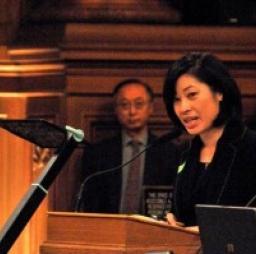
Yesterday, the Board of Supervisors unanimously appointed tireless immigrant rights advocate Angela Chan to the San Francisco Police Commission.
That’s the good news.
The bad news? Attorney General and gubernatorial candidate Jerry Brown declined San Francisco Sheriff Mike Hennessey request to allow San Francisco to opt out of Secure Communities, ICE’s latest federal-local law enforcement collaboration.
“I think this program serves both public safety and the interests of justice,” Brown said. “ICE’s program advances an important law enforcement function by identifying those individuals who are in the country illegally and who have a history of serious crimes or who have previously been deported.”
“ Before the inception of Secure Communities allowing fingerprint identification, if a county suspected an arrestee was in the country illegally, the county submitted the person’s name to ICE for a background check,” Brown stated.
What Brown’s letter didn’t say was that, up until now in San Francisco, the county only submitted folks’ names to ICE if they were charged with a felony. Nor did he address why the federal government is sneaking around, switching this program on, without openly and transparently announcing their intentions to the local community.
Eileen Hirst, spokesperson for the San Francisco Sheriff’s Office said that, as a result of Brown’s letter, “As far as we know, San Francisco will be a part of Secure Communities as of June 1.”
In a statement, Sheriff Hennessey said, “I am disappointed with the Attorney General’s position and continue to be concerned that U.S. citizens and minor offenders will be caught up in the broad net of Secure Communities, and I will be studying the issue further to see how this program can be applied as fairly as possible and in the spirit of the sanctuary ordinance.”
So far, ICE’s data reveals the number of folks caught up in the Secure Communities net, plus a brief breakdown of the deportees’ level of crime.
It would be helpful, as several immigrants rights groups have suggested, if ICE revealed the nationality of these deportees, clarified if these folks were convicted of crimes or simply charged with them, and had to make frequent reports to Congress in which they included this data along with evidence that the program actually deports convicted criminals rather than folks simply arrested. Otherwise, the program could potentially be abused by renegades who realize that all you have to do to get someone deported is arrest them on trumped up charges
Anyways, you can read the rest of AG Brown’s letter below. My favorite line from Brown’s letter is, “Many of the people booked in local jails end up in state prison or go on to commit crimes in other counties or states.”
Hmm. Does that mean that folks charged with crimes in this state are presumed guilty then, until proven otherwise? Or is that just the presumption about immigrants?
AG Brown’s letter:
“Dear Sheriff Hennessey:
I am writing in response to your letter regarding the Secure Communities program developed by U.S. Immigration and Customs Enforcement (ICE). The program is scheduled to be rolled out in San Francisco next month. You requested that the California Department of Justice (DOJ) block ICE from running checks on the fingerprints collected in San Francisco. The Secure Communities program is up and running in 169 counties in 20 states, including 17 counties in California. Because I think this program serves both public safety and the interest of justice, I am declining your request.
The DOJ Bureau of Criminal Identification and Investigative Services is the entity designated by California law to maintain a database of fingerprints used in the state for law enforcement purposes. When someone is arrested, the county forwards the fingerprints to the DOJ to identify the person, determine his or her criminal history and to discover any outstanding warrants. As in every other state, the DOJ forwards those fingerprints to the FBI to check for a history of criminal activity outside of the state. Under the Secure Communities program, the FBI forwards fingerprints collected at arrest to ICE. If ICE finds a match to prints in its database, ICE notifies the county. ICE’s stated intent and practice is to place holds on those individuals who are in the country illegally and who have a history of serious crimes or who have been previously deported.
Prior to the Secure Communities program, the name, but not the fingerprint, provided by an individual on arrest was run through ICE’s database of people known by ICE to be in the country illegally. Often, individuals with a criminal history were released before their immigration status was discovered. Using fingerprints is faster, race neutral and results in accurate information and identification.
In these matters, statewide uniformity makes sense. This is not simply a local issue. Many of the people booked in local jails end up in state prison or go on to commit crimes in other counties or states.
I appreciate your concern. But I believe that working with the federal government in this matter advances important and legitimate law enforcement objectives.
Sincerely,
EDMUND G. BROWN JR.
Attorney General.”
The Bay Citizen makes a strong debut
The Bay Citizen, a well-funded newsroom that is the most anticipated of several new media experiments in San Francisco, officially launched today with some solid, interesting stories that include an investigation of toxic pesticides being illegally applied to local marijuana crops and a look at how Prop. 13 has obscenely benefited the wealthiest San Francisco residents.
The organization also announced today that it has raised an additional $3.5 million in donations to supplement the $5 million in seed money that local investment banker Warren Hellman provided to the start-up. Meanwhile, another new media start-up that we profiled this week, SF Streetsblog – one of The Bay Citizen’s many local partners — has issued a fundraising plea for $50,000 that it needs by July 1 to continue its award-winning coverage of local transportation issues.
But today is a day for The Bay Citizen to bask in its initial success, which it will do tonight starting at 7:30 with a launch party at the Great American Music Hall. And then tomorrow, once the hoopla is over and the stories that have been in development for weeks or months are replaced by fresh content, San Franciscans will begin to learn whether The Bay Citizen represents a new journalistic powerhouse or just a well-funded website with some powerful friends.
I’ve heard some detractors in the local media grumble that their presentation seems “banal” and unworthy of their big budget, but I don’t agree. Personally, I think The Bay Citizen strikes the right tone and balance, emphasizing solid journalism rather than flashy gimmicks, while also drawing on multimedia tools such as the video of yesterday’s protests against President Obama’s visit to SF.
San Francisco needs relevant, well-presented, serious journalism more than the snarky, juvenile stories we see in design-heavy local start-ups such as The Bold Italic, where The Bay Citizen’s culture writer came from, or the often out-of-touch, sneering, or self-important stories that we see in corporate-run papers like SF Weekly, San Francisco Chronicle, and San Francisco Examiner.
Instead, our first peek at The Bay Citizen seems to show that it might just be up to the important task of providing relevant content for the New York Times’ twice-weekly Bay Area section – which has also demonstrated a tin ear for San Francisco values since it launched last year – providing an important new forum for those who believe in speaking truth to power.
Receiver appointed to investigate assets of SF Weekly and parent chain
The California Superior Court has appointed a receiver to investigate the finances of SF Weekly’s parent company and develop a plan to pay the Bay Guardian the $22 million that the chain owes as a result of our predatory pricing lawsuit.
On May 25, Commissioner Everett A. Hewlett, Jr., entered an order appointing professional receiver David Summers to investigate the assets of New Times Media LLC and its subsidiary, SF Weekly LP.
New Times Media LLC is the holding company for the nationwide Village Voice chain of alternative weekly newspapers.
Summers has been ordered to develop a plan for the disposition of the company’s assets so the Bay Guardian can get paid.
“This is a very significant step forward in our collection efforts,” said Bruce B. Brugmann, Bay Guardian editor and publisher.
After a six-week trial in 2008, a San Francisco jury found that the Weekly and New Times had intentionally sold ads below cost in an effort to damage the independently owned local competitor.
The jury awarded the Bay Guardian $6.39 million, and Judge Marla Miller trebled part of the damages and added on attorney’s fees. With interest accruing at 10 percent a year, the judgment is now more than $22 million.
New Times and SF Weekly Have appealed the judgment. The California Court of Appeal has set oral argument for 9 a.m. June 11.
Earlier this year, a lending syndicate lad by Bank of Montreal declared the Village Voice chain to be in default of their $77 million loan arrangements. Bank of Montreal claims to be daily sweeping the moneys earned by the Village Voice chain into a special account so as to protect the lenders’ interests.
The banks in the syndicate that are holding the VVM debt (as of March, 2009) are Bank of Montreal, U.S. Bank, Wells Fargo, WestLB AG, Rabobank, BNP Paribas, and Brown Brothers Harrimann.
The Bay Guardian has already seized two of SF Weekly’s vehicles and the rent that the paper’s subtenants pay. The California Superior Court has previously ordered half the SF Weekly’s advertising revenues diverted into an independent bank account, and placed a lien on New Times’ interests in its subsidiaries to protect the Bay Guardian’s interests.
Andy Van De Voorde, spokesperson for VVM, didn’t respond to an email requesting comment.
That strange DCCC tenant mailer

Paul Hogarth at Beyond Chron has a nice piece on all the money being poured into the Democratic County Central Committee races — and the odd mailer from the Affordable Housing Alliance that talks about “renters choice” but then gives to nod to some candidates who couldn’t even meet AHA’s own standards:
One slate card that has attracted some attention is from the Affordable Housing Alliance – which touts the “renters’ choice” for the June ballot. While urging a “yes” vote on the pro-tenant Proposition F and a few progressive candidates, the mailing also encourages a vote for DCCC moderates Scott Wiener on the East Side and Mary Jung on the West Side. Which raises the question who exactly the Affordable Housing Alliance really is.
Well, we got into this ten years ago, when AHA was fronting for the Brown machine. Hogarth quotes from the story (which predates our current web system), but I’ve posted it here in case you want to read the whole thing. We’ll see more of this in the next week or so as the race heats up; slate cards are a big business.
PG&E has no friends

The full-page ad on the back of the front section of today’s San Francisco Chronicle shows exactly how far PG&E has fallen in its political fortunes.
The Yes on 16 ad lists all endorsers of this godawful ballot measure — and other than the Chamber of Commerce, there’s not one San Francisco politician, community group, or organization on the list. Not one.
In fact, there’s not one statewide elected official. Nobody wants to carry PG&E’s water any more (unless you count the California Republican Party and the San Bernadino County Tea Party, two listed endorsers who will no doubt sway a lot of votes in the Bay Area).
That’s a big change. In past public-power campaigns in San Francisco, the giant utility was able to call in its chits and find a handful of politicians (who had been elected in part with PG&E campaign money) and community groups (who paid their bills in part with PG&E grants) willing to be PG&E shills. Now: Nobody.
Part of that is a reflection of just how bad Prop. 16 is — not one significant newspaper in the state has endorsed it, and most have blasted it. But it also shows how badly CEO Peter Darbee and his minions have alienated the California political world. “Nobody remembers them acting so outrageously,” State Senator Mark Leno told me. “They’ve just gone down a whole new path, and Peter Darbee is leading the charge.”
And if Prop. 16 goes down, PG&E’s fortunes will just fall further.
And it was over before it really began

MoveOn.org co-founder Peter Schurman has dropped out of the governor’s race. What, you didn’t know Schurman was in the governor’s race? Well, you aren’t alone, but it is true that he was seeking the Democratic nomination, jumping into the race in March “in response to a widespread call for a stronger, more issues-based campaign than Jerry Brown was running at the time,” he wrote today in his withdrawal announcement.
I was among those at the time pointing out that Brown wasn’t exactly bringing his A-game, but Brown was still a lock for the nomination and Schurman never really did get much attention or run a very strong campaign. Yet he says that his work here is done, so he’s getting out and endorsing Brown: “Jerry Brown has begun to do what it will take to win: speaking up on issue [sic] like green jobs, reaching out to voters, and confronting the Republicans on their ties to Wall Street. At the same time, the Republicans in this race are tearing each other apart.”
And speaking of work, Schurman closes his announcement with an appeal for some: “Of course, this means I’m looking for regular work again. Please let me know if you hear of anything.”
Dems in Sacto want to raise taxes — what about Newsom?

Well, the Democrats in Sacramento have finally decided that they aren’t completely terrified of tax hikes; they’re proposing a $5 billion package to help make the bloody cuts for next year a little less horrible. It’s mostly stuff that a majority of the voters would approve — a modest income tax hike on high earners, an increase in the vehicle license fee, and the reduction of some corporate tax breaks. And it’s nowhere near enough — but it’s a start. In fact, politically it’s a huge deal, because it puts the debate in the right place: Tax cars and rich people, or devastate public education, public safety and social services.
So here’s the question: Now that the leaders of the not-terribly-progressive state Senate are willing to talk about new sources of revenue, where is the mayor of San Francisco?
The politics of sit/lie

It’s no surprise that Mayor Gavin Newsom wants to put a sit/lie law on the ballot, and it has absolutely nothing to do with the fact that the supervisors are moving slowly on his proposal. It has nothing to do with any facts — the cops could enforce existing laws and address the problem.
No, this is all about politics. Newsom never wanted the supervisors to approve a sit.lie law; he and his operatives want to put it on the November ballot, so they can use it as a wedge issue to attack progressive candidates. They can also use it to raise money, which can be spread around through slate cards to support his supervisorial picks.
Remember, this is how Newsom got elected mayor: He picked a wedge issue (general assistance payments to homeless people), created a slogan (“care, not cash”), raised a ton of money, and made it his signature campaign strategy. It worked, so he’s trying again.
Before Arthur Evans leaps in and attacks me, let me say: I know there are people in the Haight who want this law. (There are also people in the Haight, including the venerable Haight Ashbury Neighborhood Council, who oppose it.) But I don’t think Newsom really cares about that; if he did, he’d work with the supervisors on a compromise or alternatives. Instead, he’s refusing to participate in the board’s debates.
This is all about November’s board elections. Sorry, Arthur, but your pet cause is now the mayor’s political tool.
The battle over Muni reform
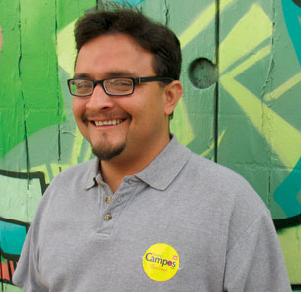
Sup. Sean Elsbernd is getting a lot of attention for his plan to change the way Muni drivers are paid, and although he’s going to have a hard time getting 70,000 signatures for a Charter Amendment, the fact that Muni’s unions have given back to the city less than the other major employee unions gives he move a boost. There are arguments in favor of the current salary structure, but as long as it’s set in the Charter this way, it’s hard for the city to get any leverage on work-rul changes, which are really what Elsbernd is after.
But if you want to look at reforming Muni, you have to go beyond this one issue — and that may be the battle that takes place this fall. Sup. David Campos, along with Sups. Ross Mirkarimi and Eric Mar, has put together a comprehesive Muni reform Charter amendment that includes some of the changes Elsbernd is proposing — but addresses Muni governance and funding, too.
The Municipal Transportation Agency, which oversees Muni, is now run by a seven-member board, with all the members appointed by the mayor. That’s hardly created the sort of political independence that the supporters of the system wanted. So under the Campos proposal, three members would be appointed by the mayor, three by the Rules Committee of the Board of Supervisors, and the final member, the potential swing vote, would be appointed jointly by the mayor and board president (boy, that meeting will be fun). All seven would be subject to board confirmation.
The MTA would also be guaranteed a stream of income equivalent to 2.5 cents for every hundred dollars of property tax valuation.
The reform plan creates an Office of Inspector General in the MTA, and gives that person the authority to conduct audits and monitor waste and fraud — something sorely needed in the agency. And it would allow the supervisors to reject the MTA budget by a simply majority vote.
It’s likely that Campos, Mirkarimi and Mar will get the six votes they need to put this on the ballot, so they won’t have to go out and get signatures. Which means that even if Elsbernd’s ambitious grassroots effort is successful, the voters won’t be deciding whether to accept or reject a Muni reform measure; they’ll be choosing between one that only addresses pay for Muni workers and one that changes the pay system — but also seeks to overhaul how the system is run.
Chris Daly’s progressive primary

Sup. Chris Daly’s proposal for a progressive primary — and his pledge for candidates who want to participate — is starting to get attention in the mainstream media. The Chron had an item on it that, not surprisingly, makes it look like some sort of commie-style litmus test. (“I pledge allegiance to the Progressives,” the headline read. And even by Chron standards, the comments were pretty harsh.)
I’ve never been personally too fond of the idea of the progressive primary, particularly in its rather elaborate manifestation. (You can see what some of the D6 candidates think of it here.) I think the whole thing could have been done as a caucus, and cost a lot less money. And I told Daly when he first suggested this that he ought to make his “pledge” into a scorecard: Let the candidates answer the questions, then decide how much you like them based on their answers. That’s what the Guardian does in its endorsements. The pledge term just doesn’t sound very good, and it leaves progressives open to the charge that we expect purity and will somehow blackball candidates who don’t follow the every whim of one supervisor.
Truth is, Daly just compiled his list of 30 questions from the endorsement questionnaries that a bunch of progressive groups put out for Democratic County Central Committee Candidates; he used a copy of ours, too. And the positions on the list are pretty much representative of the general consensus of progressive San Francisco. So it’s less a “purity test” than a determination whether someone generally adheres to the positions that the Tenants Union, the Sierra Club, Local 1021 and the Milk Club promote. There’s no big secret here, and nothing terribly alarming — all of these same District Six candidates are going to appear before all of those organizations and answer, in one way or another, all of the same questions. Daly just put it all in one place.
And if we had an umbrella progressive organization in San Francisco, which Daly, among others, has tried but failed to create, what this would be is the basic platform of the city’s left. There may be some in the progressive camp who disagree with some of it, and others who think it should be longer, stronger, etc., but it’s pretty basic stuff.
The problem, really, is that it’s not coming from an organization — it’s coming from Chris Daly. And the winner of the progressive primary gets Daly’s endorsement. I like Chris, and he’s been solid on almost every issue (PDF), and taken on causes nobody else will touch — but any one individual politician who tries to establish this kind of standard is going to set himself up for bad press.
SFBG.COM Radio: Johnny and Tim on the collapse of the GOP

Today Tim and Johnny talk about all the nutty candidates that the Republican party will be fielding in the fall, from Nevada to Kentucky — and how that will alter the midterm elections. Listen after the jumpSFBGRADIO5/24/2010 by SFBG
Who’s afraid of taxes?

Well, the candidates for governor are, but apparently the people of California are not. The latest Public Policy Institute poll makes it pretty clear:
Of the four main spending categories of the state budget, Californians are the most willing to consider a tax increase to spare K–12 education from budget cuts (69%), while just over half would pay higher taxes to maintain current funding levels for higher education (54%) or for health and human services (54%). A large majority (79%) opposes paying higher taxes to spare prisons and corrections from budget cuts.
Californians would consider some other ways to raise revenues: 67 percent favor raising the top rate of the state income tax paid by the wealthiest Californians and 58 percent would favor raising state taxes paid by California corporations. Residents are much less likely to support extending the state sales tax to services that are not currently taxed (35%) or increasing the vehicle license fee (28%).
More than two-thirds of the voters want to raise the top tax rate for the rich. Almost 60 percent want to raise corporate taxes. Why is this not part of anyone’s platform?
Don’t touch Dan Noyes!
Beth Spotswood has a very funny piece on SF Appeal about Channel 7 news reporter Dan Noyes and a very odd press flak at Laguna Honda who keeps trying to feel up Noyes’s shoulder. Over and over again, until Noyes finally slaps his hand away. Then the guy tries to do it again.
There’s an actual story here, about how the Laguna Honda patients’ fund is spent, but the video of the touchy-feely session has already overwhelmed the actual news. You gotta watch:
SFBG Radio: Johnny and Tim on the craziest Senate campaign in years

In today’s installment, Johnny and Tim talk about Meg Whitman’s precipitous poll collapse — and the Senate race in Kentucky, which could turn out to be one of the wildest in years. Will mainstream Republicans actually get behind a guy who doesn’t support the Civil Rights Act?
SFBGRadio5/20/2010 by SFBGWho’s fighting PG&E on Prop 16?
All week, I’ve been talking to people who are getting together to oppose Prop. 16, the Pacific Gas and Electric Co.-bankrolled ballot measure that seeks to kill community choice aggregation by launching a deceptive, $35 million campaign to alter the state constitution by requiring a two-thirds vote before local government could move forward with an alternative energy program. It’s sad, yet inspiring in a way, to hear volunteer anti-Prop 16 campaigner Ben Zolno say, “We spent $30 of our own money” to make YouTube videos against Prop 16, in hopes that the clips might go viral and counter PG&E’s corporate marketing pitches that Californians who watch a lot of television could probably recite from memory.
Groups, including The Utility Reform Network (TURN), the Local Clean Energy Alliance, and a number of informative Web sites have sprung up to fight the top-dollar PR blitz and set the record straight on Prop 16.
Will Twitter accounts, Facebook pages, Web videos, and a growing stack of newspaper editorials against Prop 16 be enough to counter a slick advertising campaign with a recession-friendly title like the “Taxpayers Right to Vote Act?” It’s a stretch but, to borrow a phrase, you can’t fool all the people all of the time. We haven’t seen any die-hards break out the rock-climbing gear to scale a skyscraper and drop a No on 16 banner, nor have any crowds of demonstrators been spotted surrounding PG&E’s San Francisco headquarters demanding the right to choose green, publicly owned power. Then again, pressure is building around PG&E, and fed-up ratepayers are gearing up to speak out this coming Monday, May 24.
Protests and rallies are planned for a May 24 public information session about PG&E’s requested rate increases over the next four years, totaling 30 percent. The May 24 public participation hearings will take place at 2 p.m. and 7 p.m. at the California Public Utilities Commission, in the auditorium at 505 Van Ness Ave. in San Francisco. Rallies decrying PG&E’s proposed rate hikes, its brazen Prop 16 campaign, and its attempts to thwart Marin County’s Community Choice Aggregation program will be held at noon and 5 p.m.
“It is a bad decision to vote on Prop 16,” Zolno says. “It is a bad decision for everybody, except PG&E.” But he’s also realistic about what he and other Prop 16 opponents are up against. The company has rolled out a stunningly deceptive multimillion-dollar media campaign, featuring enough mailers to equal a small forest as well as endless TV ads with slick sound bites that have little to do with the motive behind the measure. And, “It’s conservatives and Republicans who are going to be the main voters in this election,” Zolno pointed out.
Paul Fenn, an architect behind the concept of community choice aggreation whose vision lies squarely in the crosshairs of PG&E’s big-gun campaign, likened the company’s behavior to that of robber barons. “What does it cost to brainwash five million people into shooting themselves in the foot?” Fenn wonders. “I feel like I’m in South America, where it’s normal to have this stuff.”
On May 20, the California Public Utilities Commission modified its rules to make it clear that PG&E is barred from printing outright lies and sending them to voters on mailers that relate to CCA, but failed to prohibit the company from engaging in the kind of smear campaigns it’s unleashed in San Francisco and Marin against the competing programs. “PG&E’s chronic attacks are out of control,” San Francisco Sup. Ross Mirkarimi noted. “They act as if they are above the law using ratepayer money for political purposes.”
http://www.youtube.com/cp/vjVQa1PpcFMkGv-PLCi01m6SrYjEaNBoiqSGhZjeiog=
Ben Zolno’s anti-Prop 16 film
Most Californians want legal weed

By Brady Welch
Puff, puff, pass on the good news. A new poll finds that a majority of California voters—51 percent—support the fall ballot measure to legalize, tax, and regulate marijuana for even strictly recreational uses (40 percent opposed it). And support rises a point when respondents are asked about its various benefits.
According to the poll by Oakland-based firm EMC, 69 percent agree that the initiative “will raise needed tax revenue,” arguably its largest selling point. Supporting this notion of turning green into more green, the state’s tax regulator, the Board of Equalization, issued a study last summer noting that taxing pot could bring in an estimated $1.4 billion to state and local governments’ starved coffers.
“We only need fifty plus one,” Dale Sky Clare, Executive Chancellor of Oaksterdam University, told us referring to the percentage needed to pass the initiative. “We’re excited. Even with conservative questions, the poll numbers still show support.”
Six in 10 voters believe the initiative “will save the state money.” This is in line with the nonpartisan Legislative Analyst’s office estimation of “savings of several tens of millions of dollars annually… on the costs of incarcerating and supervising certain marijuana offenders,” according to a report on its website. Even a number of state law enforcement figures have come out in support of the initiative, including Oakland City Attorney John Russo.
“Folks are becoming frustrated with the politics of pure symbols,” Russo told us, referring to the failed War on Drugs. “Marijuana is widespread among otherwise law-abiding people, and it’s viewed by people morally as no different from alcohol. We should stop pretending.”
Other polls have been floating around recently, some slightly higher in one direction or the other, but overall, the numbers suggest the political winds are moving in the right direction. More than three in four voters (77 percent) have heard of the initiative, according to EMC, and awareness is particularly high among newer voters, young folks, and independents—exactly the kind of people who voted for change in 2008, and exactly the kind of voters that will move California, and the country, into a greener (in more ways than one) and brighter future.
Realtors send deceptive mailer to SF renters
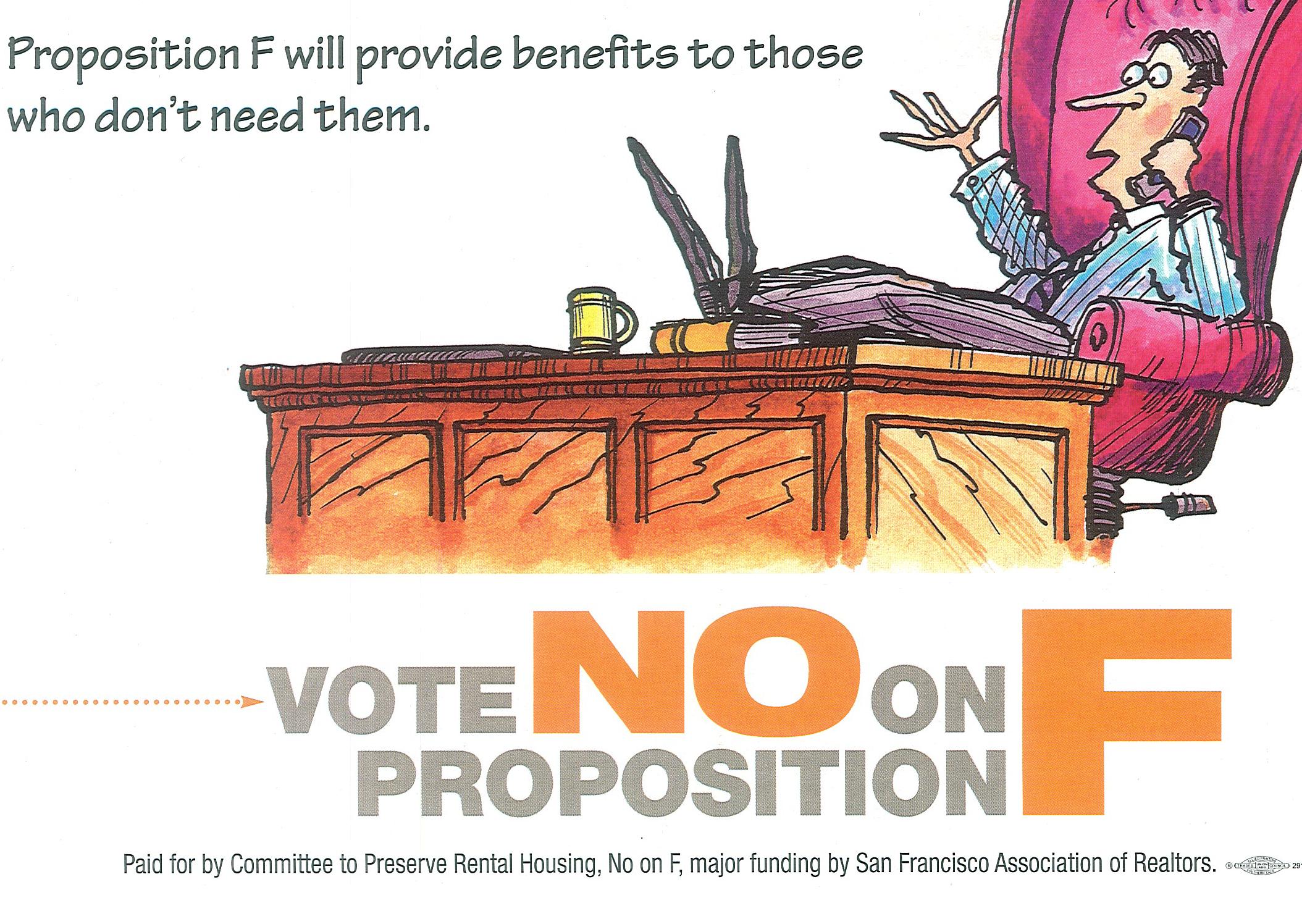
The San Francisco Association of Realtors, which has a long history of actively opposing the protection of tenants and rental housing, now wants tenants to believe it is on their side. The Realtors even recently formed and funded the Committee to Preserve Rental Housing to alert tenants about a ballot measure that they say favors dreaded rich people.
The only problem: It’s complete bullshit.
“Wealthy tenants will benefit most if Proposition F passes,” warns a mailer that landed this week in the mailboxes of San Francisco apartment dwellers, referring a local ballot measure that would allow renters to delay rent increases if they lose their job or their salaries dip by 20 percent or more.
But the mailer warns that the measure would somehow favor rich renters, citing this example: “Take a tenant whose annual income has dropped, for any reason, from $250,000 to $200,000. Under Proposition F, that tenant would be able to apply for financial hardship status and, at the discretion of a public official, qualify for financial relief.”
Yet the measure doesn’t really allow that scenario. Ted Gullicksen, director of the San Francisco Tenants Union, which helped draft the measure, points out that it only applies to renters who pay 33 percent or more of their incomes in rent, which in the Realtors’ example, would be a $5,500 per month home.
“Which, even in San Francisco, is pretty high,” he said. Plus, the Rent Board (that “public official” the mailer darkly warns of) could still tell that poor rich guy, sorry, you’re denied, perhaps it’s time to find a slightly cheaper place to live. But Gullicksen said he’s not surprised at such a deceptive attack from the Realtors (which formed the group on April 30 using campaign attorney Jim Sutton, downtown’s usual dirty trickster, according to an Ethics Commission filing).
“The Realtors over the years have increasingly taken the lead in fighting rent control measures, so they are now even more active than groups like San Francisco Apartment Association,” Gullicksen said, noting the Realtors have also pushed hard on ending condo conversion limits and other efforts to protect rental housing. “The individual Realtors are also landlords and speculators to a great degree.”
I called the Association of Realtors for comment and am waiting for a return call, but I’ll add their response as a comment if and when I hear back.
Gullicksen was confident renters would see through the mailer, particularly because it was required by law to include the line “major funding by San Francisco Association of Realtors.” He’s more worried about voter turnout, which could be low for the June 8 election. And even though two-thirds of San Franciscans are renters, they aren’t the most reliable voters and could constitute as low as 40 percent of voters in this election.
So if you rent, don’t be fooled and don’t forget to vote.
The feminization of Mexican agriculture

SANTA CRUZ TANACO (May 20th) – When I first settled into this tiny Purepecha Indian village high in the Meseta Tarasca of west-central Michoacan state 50 years ago, few women tilled the land. Tending the “milpa” (corn patch) was strictly a man’s work. The men ploughed the fields and planted in the spring and the wives and daughters would help to weed (“barbechar”) and glean in the harvest — but it was the men who strapped on the “tchundi” basket as they moved up and down the rows, snapping off the big ears of maiz to be sold in the markets of neighboring cities.
While the men lorded it over the corn patch, women had dominion over the home and the children. They cared for the kids and the chickens and prepared the meals. At mid-day, they wrapped up fresh, warm tortillas in colorful “servietas” and carried them out to the fields to feed their husbands.
Only two women in Tanaco actually worked their own “parcelas” (plots.) Dona Teresa Garcia had a handful of fields scattered up and down the valley she had inherited from her murdered husband and many sons to work them, and although she was known to get her hands dirty, she was more an overseer and administrator.
Slight and sprightly, Tere delighted in a full storehouse and was proudest of her purple and red and blue pinto corn she grew from her cache of grandfather seeds.
Nana Eloisa, on the other hand, was a mountain of a woman who ploughed the rocky valley soil at the foot of volcanic mountains and lush pine forests — when she didn’t have an ox or the wherewithal to rent one, Eloisa was known to harness up the plough and pull it herself. Nana Eloisa had no husband although men sometimes hid in her long serge skirts. Unlike Dona Teresa, who preferred to negotiate off stage with the men who ruled the community, Eloisa, who was equipped with a stentorian voice, often spoke up at assemblies of the “comuneros” (indigenous landholders.) The neighbors talked about her in awed whispers.
Times have changed up in the Meseta — and changed again. In the 1980s, as the first of five neo-liberal regimes took hold far away in Mexico City, the Purepechas — who never strayed far from the Meseta, unlike their mestizo neighbors in Tangancicuaro and Gomez Farias who first began trekking north a hundred years ago — plunged into the immigration stream with a vengeance. Fathers and sons went off to find their fortunes in El Norte and many never came back.
The women were left in charge of the house and the milpa both, a double workday (“doble jornada.”) Their husbands would send home the “remisas” (money orders) with instructions on where and how much corn to plant. Any cash left over was destined to pay off loans for the “coyotes” who charged thousands of pesos to get the men across the border.
Often the women would hire “peones” and “jornaleros” to do the fieldwork, but others worked the milpas on their own. Gradually the women began to make their own decisions about their husbands’ land. Many stepped out of the traditional long Purepecha skirts and literally and figuratively put on the “pantalones.”
There are more women than men in Mexico 53,000,000 to 50,000,000, according to the 2005 half census. Although many are still tied to the home, women now comprise 40% of the workforce.
In the rural sector where 28% of the population continues to subsist, the stats are even more skewed. One estimate is that 18 million women are now the primary workers on the land — but only 4.5 million actually have title to it. Title allows them membership and voice and vote in the ejido (villages that are designated rural production units) and community, access to agricultural credits, and full agrarian rights. But women landholders are often relegated to servant stature in the ejido assemblies where only 2.5% serve as officials of the 28,000 communal farms so designated by the Secretary of Agriculture.
Although many women farmers or “campesinas” join mixed gender farmers organizations like the PRI party-run National Confederation of Campesinos (CNC) or the more left UNORCA and El Barzan, the dismaying disparity in their recognition as producers have motivated the women to form their own groupings such as the Ecological Campesinas of the Sierra of Petatlan Guerrero and the CONOC (National Council of Women Farmers’ Organizations.)
But whether within the male-dominated farmers centrals or those of their own making, equal recognition has been slow in coming for the campesinas. Although agricultural budgets put together by the Secretary of Agriculture (SAGARPA) and the Secretary of Social Development (SEDESO) appear to allocate 42% of their resources to women, the numbers are deceiving – most of the money designated for women farmers is assistencial aid drawn down from the “Oportunidades” poverty program.
Other monies are assigned to crafts collectives such as the ceramicists of Ocumicho just over the mountain from Tanaco, where the women throw the much-in-demand pots and the men bring the wood to keep the ovens fired up. Funds for micro-projects such as keeping chickens are available to women farmers but as Blanca Rubio writes in the left daily La Jornada, the campesinas would rather be recognized as producers of maiz than for their ancillary talents.
In addition to the gender of farming, the gender of out-migration from feeder states like Michoacan, Jalisco, Guanajuato, Zacatecas, and more indigenous Chiapas and Oaxaca, has changed radically. Once upon a time only men headed for El Norte and the potentially mortal consequences of this dangerous migration but womens’ numbers in the flow north have tripled in the last decade as neo-liberal agrarian policies imposed from Mexico City have devastated the “campo” and the bottom has fallen out of Mexican agriculture.
Under presidents Carlos Salinas and Ernesto Zedillo (1988-2000), the Constitution was mutilated to allow the privatization of communally-held land, grain distribution was handed over to transnationals like the Cargill Corporation, guaranteed prices were scrapped, and credit for poor farmers dried up. Vicente Fox and Felipe Calderon (2000-2010), presidents chosen from the right-wing PAN party, have hastened the demise of the agricultural sector.
The coffin nail was the 1994 North American Free Trade Agreement. Every year since, millions of tons of cheap U.S. and Canadian corn swamp Mexico forcing small-hold campesinos and campesinas out of business. A Carnegie Endowment investigation into the impacts of NAFTA on poor Mexican farmers published on the tenth anniversary of the trade treaty calculated that 1.8 million farmers had abandoned their milpas in NAFTA’s first decade – since each farm family represents five Mexicans, the real number of expulsees comes in close to 10,000,000, at least half of them women.
One consequence is that women now swim in the migration stream in dramatically increased numbers. Sisters follow their brothers north and wives their husbands, leaving the children at home with the grandmothers. A third of the households in Tanaco and just down the valley in Cucucho have no mother or father at home.
For those women who stay behind, lifestyles have changed. Families have abandoned or sold off their milpas and the remisas from El Norte (which decreased 20% in recession-ridden 2009) are now invested in building up the house, laying cement floors and hooking up electricity lines. Women open “changaros,” storefronts where they sell knicknacks and snacks to their neighbors.
Women farmers who still till their parcelas now have to work a triple workday (“triple Jornada”) just to make ends meet, finding jobs outside of the community as domestics or factory workers, taking care of the house and the kids and the chickens, and tending to the milpa. When the husbands do come home, the once rigidly defined roles of men and women in the Mexican countryside have been irreversibly altered. Men are not the sole breadwinners now and decisions must be taken together. Left to their own devices to survive, the campesinas have become empowered. They have feminized agriculture.
The feminization of the Mexican campo is a bright light in a dismal prospectus, thinks the much-respected agrarian analyst Armando Bartra. Gender articulates how farmers approach the land, Bartra writes. Men wrest the crops from the soil. They plant to achieve bigger and better harvests and resort to chemical fertilizers and pesticides and genetically modified seed to speed up the bounty. They pin their hopes on the market, Bartra underscores, “and the market has no future” for small farmers.
By way of contrast, women are more in sync with the land. They don’t till the soil for profit as much as to keep their families well nourished. They are commited to auto-sufficiency first and do not poison the land upon which they grow their family’s food with chemicals. The feminization of farming, Bartra concludes, is “the only salvation for Mexican agriculture.”
John Ross has returned to El Monstruo (Mexico City), the title of his most recent volume “El Monstruo – Dread & Redemption in Mexico City” and the most contaminated, crime-ridden, corrupt, and conflictive megalopolis in the Americas.
I want to throw up

I’ve gotten a pretty strong stomach after 25 years of political reporting, but when I read stuff like this, I reall want to throw up. It’s not just pandering or corruption or sleaze — that shit’s common enough, and I can deal. It’s this utter, blatant, mind-boggling lack of reality that makes me start to lose my lunch.
(Pretty good lunch, too — I made myself a nice turkey sandwich with havarti cheese and mayo, on a crispy roll, bag o’ chips, bottle of sparkling Calistoga — hate to see it come back up again.)
But please, folks: Cannot anyone running for governor of California be remotely honest about the budget problem? These people are not fools; Meg Whitman and Steve Poizner have run businesses. Jerry Brown has been governor before, and has been a mayor. They know how budgets work. And they know this:
You cannot — cannot — solve a $19 billion budget deficit by reducing waste and fraud. Even Schwarzenegger admits that:
Shortly after taking office, Schwarzenegger also promised to find billions in fraud through a top-to-bottom review of state government. But after the 2006 review, Schwarzenegger admitted his advisers “did not find the kind of abuse that I thought there is.”
There’s not $19 billion worth of bureaucratic waste, either. It’s just not there.
There are only two options to make this state fiscally sound again: Fundamentally restructure what the state of California does (that means, for example, eliminating most of the social safety net, giving up on public education and releasing about half the prison population), or raise taxes.
Only two options. Anyone with any sense knows that; as my friend and colleague Johnny Angel Wendell likes to say, it’s just simple math.
And yet nobody’s talking about it. Nobody’s even coming close. And the press isn’t pushing all that hard, either.
I was pleased to see that my old pal Jerry Brown saying that “those with the biggest belts” should tighten them. At least that has a tiny nod to the notion that some people are better off than others and the rich ought to pay more than the poor. But what the hell does it mean?
I called Jerry’s campaign office this afternoon and asked Sterling Clifford, his press person, to help me out a little. Is Brown saying that he thinks the wealthy should pay more taxes?
Actually, no: “I think he has been very clear that there will be no new taxes unless the people vote on them,” Clifford told me.
Okay, so does that mean he’s going to cut the budget of the biggest departments — say, the prison system? Well, no: “He intends to enter the budget negotiations with the Legislature with all options on the table.”
Shit. How about restoring the Vehicle License Fee to what it was before Schwarzenegger rolled it back? That a good Jerry Brown issue, environmentally sound. How about it? “I don’t know,” Clifford said. “I’ve never asked him about it.”
Well, you should, Sterling, and so should every reporter who sees him at every press event and every activist who sees him at every rally. And the same goes for Meg and Steve. These people are acting delusional — and we just have to call them on it.
Progressives, labor, grassroots win in May 18 primaries

Forget all the talk of anti-incumbent (and by implication, anti-Democrat and anti-Obama) sentiment in the electorate. The primaries May 18, which I talk about here, actually sent a much more interesting message.
Yes, there was the election of Rand Paul, who is about as looney as they come , but Republicans have nominated looneys before. What’s interesting is that in most contested Democratic races, the more progressive candidate won. Randy Shaw points out that CNN had it all wrong, and refuses to acknowledge what actually happened. The Chron actually notes (in one of the few intelligent MSM post-election pieces) that labor, particularly the AFL-CIO, won big in Pennsylvania and Arkansas. In the only open house seat, the Democrats won.
In the Democratic primary in Kentucky, the more progressive candidate won. In Pennsylvania, the more progressive Democrat won. In Arkansas, a Democrat in name only is facing a runoff she might lose.
So the progressives and the grassroots organizers can get people to the polls — if there’s a candidate to vote for. What Nancy Pelosi needs right now is a good national issue to run on. Electoral reform, for example.
SFBG.COM Radio: Tim and Johnny on yesterday’s primaries

Today we talk about last night’s primaries, what they meant — and what they didn’t mean. In fact, the conventional wisdom in the MSM is all wrong about what happened. Listen after the jump