• No categories

Politics Blog

DTS voters must re-register to cast DCCC ballots

10

Like nearly 30 percent of San Franciscans, I’m not registered with a political party, but when I got a letter from the Department of Elections a few weeks ago letting me know that I had the option of choosing either a Democratic or Republican ballot, I thought that I was all set to be able to vote for my favorite Democrats in the June 8 primarily election.

So last night, I sat down with my “(NP) Democratic Party” absentee ballot to vote, I made strong and clear “No” votes on state Propositions 16 and 17, I voted for Jerry Brown and other Democrats for statewide office, and I flipped the ballot over and over to find the Democratic County Central Committee race – but it wasn’t there.

It turns out, only registered Democrats are allowed to vote for the DCCC, the body that controls San Francisco’s Democratic Party operations and will be hugely influential in the fall elections for the Board of Supervisors. Even some DCCC candidates weren’t aware of the restrictions and are now scrambling to let their supporters know to re-register as Democrats.

May 24 is the deadline to register – or to re-register – for the June 8 primarily election. And Elections officials say that if you’ve already received your absentee ballot, it’s best if you bring it with you down to the Department of Elections in the basement of City Hall and turn it in as a spoiled ballot as you re-register.

And once you do, click here to vote for the Guardian’s slate of progressive DCCC candidates.

Sheriff: ICE referrals will leap from 2,000 to 40,000

4

There was a strong showing of supervisors, activists and community members at today’s rally to urge San Francisco to opt out of the Secure Communities Initiative, an automated fingerprint screening system that U.S. Immigration and Customs Enforcement (ICE) plans to switch on, in San Francisco on June 1—just two weeks ago.

The program links local law enforcement agencies to the Department of Homeland Security’s biometric system through interoperability agreements with each state. Scott Lorigan in the California Department of Justice’s Bureau of Criminal Identification and Information reportedly signed such an agreement with John P. Torres, acting assistant Secretary of ICE, over a year ago, on April 10, 2009. And according to ICE, As April 2010, biometric identification has been activated in 169 jurisdictions in 20 states:

In California, the system has already been activated in Alameda, Contra Costa, Fresno, Imperial, Los Angeles, Monterey, Orange, Sacramento, San Bernadino, San Diego, San Joaquin, San Luis Obispo, Santa Barbara, Solano, Sonoma, Stanislaus, and Ventura.But as speakers pointed out at today’s rally, the supervisors and the communities they represent would not have even known that this system was about to go live in San Francisco, had it not been for San Francisco Sheriff Mike Hennessey, who spoke out after ICE informed local law enforcement agencies about the program three weeks ago.

Eric Quezada of Mission-based Dolores Street Community Services kicked off the rally with a rousing speech in which he warned that this “draconian Policy” was happening in the “shadow of Arizona.

Sup. Eric Mar warned that ICE’s proposed program will not make communities more safe.
”It was developed in the dead of night,” Mar said. “The police-ICE entanglement will hurt our communities and tear families apart.”

The Bush administration introduced the Secure Communities Initiative in March 2008. But as Mar observed, it is now being expanded under President Obama.“Many people accused of minor crimes will see families torn apart,” Mar said, citing statistics to show that  “90 percent of those IDed have been arrested for minor, less severe crimes.

“The shadow of Arizona is starting to cover other cities,” Mar continued. “We can’t let Arizona come to SF.”

Sheriff Hennessey told the crowd that he had written to California Attorney General Jerry Brown asking for his assistance in opting San Francisco out of the ICE program.“The Sheriff already has the authority to report foreign born folks charged with serious  felonies,” Hennessey explained.

In a May 18 letter to AG Jerry Brown, Hennessey wrote that he believed that Brown’s agency “has the technological capability to isolate by agency the information linked to ICE.”

““I ask that you isolate transactions from the San Francisco Sheriff’s Department because Secure Communities conflicts with local laws,” the Sheriff continued. “My department already has a system in place that reports individuals to ICE and I do not wish it to be replaced by Secure Communities.”

Hennessey also expressed concern about the unintended consequences of ICE technology interfacing with that of the Department of Justice’s fingerprint database, which also holds fingerprints collected for non-criminal justice purposes such as employment applications. And he warned that the number of ICE referrals could explode under the new system.
Under this system, we’ll be fingerprinting 35,000-40,000 persons annually, “ Hennessey said. “I think that’s excessive.”

Currently the Sheriff’s Dept. reports foreign-born individuals arrested on a felony crime or found during the booking process to have a felony of a previous ICE contact in their criminal histories.

‘Since 2007, the department has delivered more than 3,100 individuals to ICE, and has reported at least twice that number,” Hennessey wrote. “I would like to keep system that way.”

At the rally, Hennessey warned that the new system will widen excessively to include folks who were charged with misdemeanors, infractions and traffic violations, but failed to show up in court.

“ICE has a record of secrecy. They won’t tell me what happened to folks they picked up, they won’t say if they are still in custody, been released or deported,” Hennessey said.

Sup. John Avalos said the Secure Communities Initiative is yet another example of why the nation needs comprehensive immigration reform.
“I don’t know if we have the ability to opt out, there are a lot of obstacles in our oath, right now.”

But he warned that the nation is passing laws that “stand at odds” with the U.S. Constitution and the Bill of Rights “And we have rogue departments in the Obama administration, “ Avalos added. “ I consider ICE a rogue department. “
 
Rev. Phillip Lawson, a retired Methodist minister said he wanted to stand in solidarity with “resident aliens”.
“As black people, we know what it’s like to be aliens in our own land. And this enlarges the net of ICE. We will soon not be able to tell any difference between the police and ICE. And no one will trust the police.”

“I give thanks to the courage of folks here for instituting this attempt to say, no we will not cooperate…And we can also resist the law.”

Sup. David Campos, who provided much leadership in the last two years around the city’s sanctuary legislation, thanked Hennessey for blowing the whistle.

“None of us would have known this was happening,” Campos said. “This is the time for all San Francisco’s elected officials to stand up in support of the principles that led us to establish a sanctuary city. It’s not just the Board, but also the mayor who needs to step up and say that what just happened is not acceptable. This program eviscerates sanctuary city.”

Campos warned that the community has already lost trust in the local police, over the last two years, thanks to the city’s policy of referring juveniles to ICE when they are booked.

“If we cooperate [with SCI] that lack of trust will intensify,” he warned. “I applaud the sheriff, but we also need the police department to come forward.”

Campos laid the blame at Obama’s door.
“This is a Democratic president, who was elected with the support of the Latino and the immigrant community, but is engaging in practices worse than any other president.”

Tim Paulson, executive director of the Labor Council spoke on behalf of 150 unions in town. “Our work is dependent on the immigrant community,” He said. “Secure Communities is absolutely divisive and unconstructive. It pits worker against worker, families against families.”

Heidi Li of Asian Pacific Islander Legal Outreach warned that victims of domestic violence, trafficking and elder abuse would be at risk from ICE’s program.

“It will result in a situation where folks who need trust and assurance the most, will not feel safe and will no longer report to the police when they are the victims of abuse,” Li said.

At rally’s end, Hennessey told the Guardian, “The basis of Sanctuary city is to protect immigrants who are not doing anything wrong or serious. When ICE grabs someone who failed to pay a traffic ticket, and that person is supporting a family, I don’t think those crimes should rise to the level of deportation.”

Warning folks that folks did not know that SCI had been activated in Alameda and Contra Costa counties, Hennessey said all he can do is “raise the issue” of opting out. 

Sup. Mar told the Guardian that the request to opt out is a “unique and creative tactic.”

“We have the strong legal backing from organizations around the country, but SFPD Chief George Gascon doesn’t seem convinced,” Mar observed

Christine Gasparac, Attorney General Jerry Brown’s press secretary told the Guardian that they received Hennessey’s May 18 letter requesting to opt out and are reviewing it.

“To clarify, the California Department of Justice manages the statewide database of fingerprints that are essential to solving crimes, but we have no direct role in enforcing federal immigration laws,” Gasparac said. “We were informed by ICE yesterday that they will work with counties to opt out of their program. Because that is a process directly between the county and ICE, we are advising local authorities who want to opt out to contact ICE directly.

Virginia Kice, ICE’s Western Regional Communications Director said, “under Secure Communities jurisdictions can choose not to receive the immigration-related information on individuals who are fingerprinted, but that information will still be provided to ICE.

As April 2010, biometric identification has been activated in 169 jurisdictions in 20 states. Since it’s unclear, which communities know about the program, the Guardian is posting the list here:

In Arizona:  Cochise, Maricopa, Pima, Pinal, Santa Cruz, Yavapai and Yuma

In California Alameda, Contra Costa, Fresno, Imperial, Los Angeles, Monterey, Orange, Sacramento, San Bernadino, San Diego, San Joaquin, San Luis Obispo, Santa Barbara, Solano, Sonoma, Stanislaus, and Ventura

In Delaware: Kent, New Castle and Sussex

In Florida: Brevard, Browar, Charlotte, Clay, Collier, Duval, Escambia, Highlands, Hillsborough, Lake, Leon, Manatee, Marion,Miami Dade, Monroe, Orange, Osceola, Palm Beach, Pinellas, Polk
Sarasota, St. Johns, St. Lucie, Volusia

In Georgia: Clayton, DeKalb and Gwinnett

In Hawaii: Oahu

In Illinois: DuPage, Kane, Lake, Madison, McHenry, St. Clair, Will and Winnebago

In Lousiana: Jefferson Parrish

In Maryland: Frederick, Prince George’s, Queen Anne’s and St. Mary’s.

In Massachusetts: Suffolk

In Michigan: Wayne

In North Carolina: Brunswic, Buncombe, Cabarrus, Catawba, Columbus , Cumberland, Dare , Duplin, Durham, Gaston, Halifax, Harnett, Henderson, Jackson, Lee, Mecklenburg, New Hanover,
Orange, Transylvania, Union and Wake.

In New Mexico: Bernalillo, Dona Ana, Grant, Hidalgo, LunaOhio, Cuyahoga and Franklin

In Oklahoma: Oklahoma, TulsaOregon and Clackamas

In Pennsylvania: Bucks, Montgomery and Philadelphia

In Utah: Box Elder, Davis, Salt Lake, Utah and Weber

In Virginia: Alexandria City, Arlington, Fairfax, Fauquier, Henrico, Loudoun, Norfolk City, Prince William, Rappahannock. Richmond City and Virginia Beach City

In Texas: Bexar, Brazoria, Brewster, Brooks, Collin, Culberson, Dallas Dallas County Jail, Dallas Farmers Branch PD, Dallas Irving PD, Dallas and Collin Richardson PD, Dallas and Kaufman Mesquite PD, Dallas, Collin, Denton Carrollton PD, Denton, Dimmit, El Paso, Fort Bend, Galveston
Grayson, Harris, Hidalgo, Hudspeth, Hunt, Jeff Davis, Jefferson, Jim Wells, Johnson, Kaufman, Kenedy, Kinney, Kleberg, Maverick, McLennan, Montgomery, Nueces, Pecos, Presidio, Real, Starr, Tarrant, TDCJ, Terrell, Travis, Uvalde, Val Verde, Webb, Willacy, Williamson, Zapata and Zavala.


Will cyclists and motorists ever get along?

34

Bicyclists and motorists often clash in San Francisco, over space on the roadways and in conversations about each others’ behaviors, often in the most acrimonious fashion imaginable. My recent writing on bike issues has prompted lots of feedback and controversy – including lovely comments such as “Steve, keep riding your bike without a helmet, with any luck you’ll get in an accident and what little brains you have will spill out onto the street and we won’t have to read your smug condescending bullshit about bikes anymore.” – but I’m not the only one interested in trying to figure out how this gulf got so wide or how to bridge it.

The San Francisco Civil Grand Jury recently issued a report entitled “Sharing the Roadway: From Confrontation to Conversation,” that identifies strife between cyclists and drivers as a serious problem and seeks “to move towards everyone seeing him/her self as part of the community sharing the roadway.”

It’s an admirable goal that echoes that of the SF Bicycle Plan, and the 40-page report occasionally offers some insight into diagnosing why the problem exists, although it focuses mostly on the behaviors of bicyclists and the view by motorists that people who bike are arrogant, dangerous, irresponsible, erratic, inconvenient, vulnerable, and despised, all adjectives it gleaned for a 2002 study in Scotland, for some reason.

The report calls for more education and enforcement that targets all road users, but it seems most focused on criticizing bicyclists for running stop signs and other traffic violations, noting how cyclists are rarely given citations and saying that’s at least partly because cyclists have become politically powerful and are more likely to file complaints about cops who ticket them. In other words, we cyclists are the overentitled special interest that the angriest motorists say we are.

The report even discusses such radical ideas as requiring cyclists to get licenses, pay registration fees, and buy insurance, but it gives no mention to radical ideas on the other end of the spectrum, such as importing traffic laws from Idaho, where cyclists legally treat stop signs as yield signs and stop lights as stop signs, which conforms to current behaviors and the laws of momentum and doesn’t steal anyone’s right-of-way. Clearly, this was not a report written by cyclists.

“If San Francisco truly wants to increase responsible bicycle use, it will need to solve the issues of anger, misunderstanding, and mistrust between motorists and cyclists, and increase everyone’s view of shared responsibility on the roadway,” recommends the report.

I thought it was a bit vague and one-sided, but San Francisco Bicycle Coalition acting director Renee Rivera said it strongly supports the SFBC-backed Bike Plan, which was its target subject. “The report goes into a lot of anecdotal detail, but the recommendations are pretty good stuff,” she said, adding that SFBC’s members aren’t exclusively cyclists, “but people using different modes at different times for different reasons.”

On the other end of the spectrum are people like local bike messenger Adam Shapiro, who says he also wants to improve communication between cyclists and motorists, but he’s come up with a different kind of conversation starter, one he’s been handing out to fellow cyclists.

It’s a magnetized “Yellow Card” that cyclists can toss onto a car that reads, “This magnet was tossed onto your car by a cyclist who felt that you had been driving in a way that could endanger their life. They chose to toss this magnetic note because it can neither damage your automobile, nor will it disrupt your driving. It serves as our communication in a world buffered by steel, glass, and speed. With mutual respect, we can each adjust our behavior to allow all people to live in safety. This is a yellow card, your awareness can keep us out of the Red.”

Shapiro said he heard about the idea from East Coast cyclist Peter Miller, who he met and borrowed the concept from, changing the wording on his version. “This is starting a conversation between two human beings who can be more civil to each other than they have been,” Shapiro told me. Shapiro said he’s experienced the full range of emotional responses to threatening behavior by motorists, from fear to rage to “dreary acceptance,” but that lately, “I’ve shifted away from cycling as war.”

He still rides quite aggressively, in a fashion likely to anger many biker-haters, and he says that his Yellow Card is actually made more for good, respectful cyclists that want to communicate their fear and vulnerability to distracted or self-centered motorists, but who often feel powerless to do so in a highly buffered urban culture. “This subversion of that is unique in saying, ‘We can communicate in a way that’s non-violent,” he said.

And perhaps that’s true, although I tend to think that neither the yellow cards nor educational campaigns are likely to lessen the tension anytime soon. There’s still too much resentment on both sides, with motorists feeling judged for their wasteful and dangerous transportation choice and outraged that bicyclists flout traffic laws, and bicyclists feeling judged for riding in a way that makes sense (even to The Ethicist Randy Cohen) and doesn’t hurt anyone and outraged for being the target of such scorn for choosing such a widely beneficial way of getting around.

But Rivera said she thinks tensions will wane as traffic design improvements “lessen the places where friction develops on the streets,” and the growing number of cyclists forces everyone to get used to each other and figure out strategies for peaceful coexistence.

BP still claiming exploded oil rig was safe and reliable

0

The corporate communications industry has gotten so ridiculous, so disconnected from reason and a sense of shame, or an obligation to provide some semblance of truth or credibility, that it’s amazing we still listen to these people at all anymore. And the best example of that right now is BP, the oil giant that is well on its way being responsible for the worst oil spill in history.

Beyond the sheer magnitude of this Gulf of Mexico spill, there have been well-sourced media reports that political appointees in the regulator agencies ignored the warnings of Minerals Management Services scientists that a devastating spill was a real possibility and that even BP employees warned that a spill could happen and that internal documents were a mess.

But rather than simply accepting responsibility and their newfound infamy and humbly trying to make amends, BP’s flaks have instead been sending out regular press releases attacking the media reports and making claims that this rig was safe, well-operated, and aggressively regulated – all evidence to the contrary.

“As CEO Tony Hayward constantly makes clear, safe and reliable operations are his number 1 priority for BP and the company has a very strong record of safe and reliable operations in the Gulf of Mexico,” the company wrote. “It is completely erroneous to suggest that the minor internal process issue we identified and immediately amended last year on the Atlantis platform suggests anything different.”

Sure, our rig blew up and created an oil gusher that we have no idea how to stop, but that doesn’t mean we aren’t “safe and reliable,” right? Um, actually it does, otherwise this wouldn’t have happened. BP even tries to claim credit for the fact that this spill didn’t happen even earlier.

“The Atlantis field has been in service since October 2007 and has safely produced many million barrels of oil. The platform was successfully maintained through the course of two major hurricanes in 2008. Its safety, operations and performance record is excellent,” they wrote.

Sure, right up until it was terrible. But even now, with the irreparable devastation this company has caused, they are also trying to sound like good guys for generously offering to pay for some of the ancillary damage they caused. Here’s what the company sent out under the cheery heading, “BP Announces Tourism Grants to Four Gulf States”:

“BP is today announcing grants to each of the states of Florida, Alabama, Mississippi and Louisiana to help their Governors promote tourism around the shores of the Gulf of Mexico over the coming months. This is part of our ongoing commitment to help mitigate the economic impact of the oil spill.

BP is providing $25 million to Florida and $15 million each to Alabama, Mississippi and Louisiana. “The Gulf Coast is our home too. We are doing everything we can to plug the leak, contain the spill offshore and protect the shoreline.  With the deployment of the riser insertion tool yesterday, we made important progress in containing the spill, and that will further strengthen our ability to keep oil off the shore,” said Tony Hayward, BP’s Group Chief Executive.

Sure, BP and their allies in the oil industry and the conservative movement put a cap of $75 million on how much the U.S. government can make oil companies pay to clean up their messes, but they’re happy to promote the area they marinaded in crude oil as a tourist destination. This is a weird world we live in.

Fiona Ma’s cash machine

6

Why does Assembly member Fiona Ma take on odd causes like ending rent control for trailer parks?


Maybe it’s because almost 90 percent of the money she raises comes from outside her district. From the Chron today:


But San Francisco’s Fiona Ma, who was elected in 2006 and quickly rose to power within the Democratic Caucus, took the top spot when it came to sheer cash collected out of district: $1.68 million. Ma, now speaker pro tempore, raised more campaign cash from outside her district than either of the leaders of both houses. Her outside contributions made up 88 percent of the money she raised, placing her 29th in funds raised outside the district. Ma attributed the prolific fundraising to her involvement in statewide issues, such as high-speed rail, agriculture and domestic violence, that take her on the road. She said that as a member of the Assembly’s Democratic leadership – and someone from a safe Democratic district – she funnels a lot of money to other candidates. But she said the interests of her San Francisco constituents are well served because her high profile helps her promote those interests.


UC, CSU chiefs need to quit the Chamber of Commerce board

1

The California Chamber of Commerce is one of the most consistently right-wing organizations in the state, particularly on economic issues. The Chamber’s against pretty much all taxes and supports pretty much all cuts in government spending.

So why are the heads of the three largest public educational institutions in California, the University of California, California State University, and the California Community Colleges, members of the Chamber board?

It’s a tradition at the Chamber to put the UC president and the CSU and CCC chancellors on the board, which has about 100 members. But the three educators came under fire recently when the Chamber put out a blatantly partisan ad attacking Jerry Brown

And in fact, UC President Mark Yudof told the Chamber’s fundraising chair last year that he couldn’t donate to the CalChamberPAC because that group was trying to make sure that Democrats don’t win enough seats in the Legislature to hold a two-thirds majority. “As president of a public institution that is both in practice and in policy nonpartisan, I must decline your request for a contribution,” Yudof wrote in an Oct. 9, 2009 letter, a copy of which I obtained under the state’s Public Records Act.

But Yudof also stated: “As a member of the Board of Directors, I appreciate the Chamber’s engagement in the political process and its advocacy for a strong and vibrant California economy.”

The truth is, the Chamber’s “engagement in the political process” is almost always adversarial to the interests of the state’s public education system. The fundraising letter Yudof was responding to specifically sought money to block Democrats from holding enough seats to raise taxes — and the refusal of the governor and his GOP colleagues to seek any new revenue sources has been the major reason the state’s budget is so horribly messed up. And that’s the main reason the University of California and CSU have faced such alarming budget cuts.

Why are the people in charge of promoting public higher education willingly putting their names, and their credibility, behind what’s really a Neanderthal institution? Because that’s what’s going on here — Yudof, CSU Chancellor Charles Reed and CCC Chancellor Jack Scott aren’t on the Chamber board to offer advice. They’re on the board to give the Chamber more credibility. They help make the organization seem more friendly, more concerned with the public interest.

They help make an organization devoted to reducing the role of the public sector in this state seem supportive of public education. They help propagate a political lie.

I asked Yudof, Reed and Scott why they’re still on the board, and got pretty weak responses. Here’s Yudof’s spokesperson, Peter King:

[President Yudof] considers the California business community to be one of several key constituency groups that are important to the University, which is why traditionally higher education leaders in California have held seats on the Chamber board. In general, President Yudof has found the Chamber to be highly supportive of higher education in California. He cannot recall in his tenure as President a single Chamber proposal to reduce funding for higher education.

Um, actually that’s not true at all. The Chamber just released its 2010 “job killer” list — a roster of bills that the organization will oppose on the grounds that they’re bad for business. Among them: Assemblymember Tom Ammiano’s bill to fix a loophole in Prop. 13 (and provide more money for public education), and a bill by Sen. Leland Yee that would allow the state to recapture tax-credit money if the company that got the credits (for increasing employment in the state, for example) winds up leaving California or shipping jobs elsewhere. That money would be available for higher education.

 Passage of those bills would allow the state to stop cutting UC and CSU. The Chamber wants to kill them.

King did say, however, that after the Brown ad aired, he “has informed the Chamber that he will continue to serve on the board only if his status is changed to that of an ex officio member.” But that doesn’t mean anything; it’s his name on the letterhead that matters.

Reed’s press person, Erik Fallis, was even more vague. He would only refer me to a statement Reed and Yudof issued after the Brown ad controversy, which said, in part:

We value our inclusion on the Chamber board, which provides an opportunity to interact with business leaders on issues that are of vital importance to the future of California. This is a dialogue that has been of great benefit to higher education, the business community and the state as a whole.

Actually, the inclusion of top state education officials  is detrimental to the public interest, detrimental to public education and really bad form. Particularly now, when the Chamber is going out of its way to make sure that the state budget crisis is solved with nothing but cuts.

Scott has been openly complaining about budget cuts (PDF) but his office hasn’t responded to my questions.

Yee, a frequent critic of UC management, responded, though, and he didn’t mince words:

It would be one thing if President Yudof and Chancellor Reed used their positions on the California Chamber of Commerce board to support more revenue for our beleaguered public universities.  Unfortunately, the CalChamber is categorical in its opposition to new revenues and has become nothing short of a mouthpiece for the Republican Party.  The Chamber benefits from the prestige that Yudof and Reed bring to the table, and uses it to advance a right-wing agenda that includes questioning the validity of global warming (AB 32, 2006) and the need to protect workers from discrimination (AB 793, Jones, 2009), blocking universal health care (SB 810, Leno, 2010), and holding corporations accountable to their promises to create jobs (SB 1391, Yee, 2010).  It is outrageous that Yudof and Reed would serve as accomplices to killing bills that would increase revenue for higher education.

The top education executives need to resign from the Chamber board, now.

Supes to SF: Let’s opt out of ICE’s automatic fingerprint referral program

8

Just two weeks before a controversial collaboration between local police and ICE is set to get switched on in San Francisco, Sups. Eric Mar, John Avalos, David Campos, Chris Daly and Sophie Maxwell are introducing a  resolution that calls on the city to opt out of a program that could undermine public safety and threaten innocent community members with deportation.

Sheriff Michael Hennessey, who blew the whistle on this program, and Labor Council Executive Director Tim Paulson will join the supervisors May 18,  9 a.m. on the steps of City Hall. The resolution will be formally introduced at the Board’s afternoon meeting.

Sup. Mar’s legislative aide Lin-Shao Chin told the Guardian that it looks like an opt-out option is possible.
“It’s very vague, the way it’s written,” Chin said, referring to the contract that the Department of Homeland Security has drafted and that cities are required to sign onto, via a statement of intent.”So, while it doesn’t say you can opt out, it’s very vague, and from what we’ve heard, so far it’s all just been verbal communication between the law enforcement agencies.”

The fed’s proposed Secure Communities Initiative (SCI) has been criticized by civil rights experts.They say the program causes immigrants to be reported for deportation without due process and that it destroys trust between the police and immigrant communities.

The program seeks to check the immigration status of anyone whose fingerprints are taken by law enforcement personnel by cross-checking fingerprints through a federal database. They warn that  immigrants who are simply charged with very  minor charges – such as selling ice cream bars without a permit– or those who are overcharged on arrest–could end up torn from their families without due process and reported for deportation.
 
Advocates see similarities between the program and Arizona’s SB1070, since SCI gives discretion to individual police officers, who may mistakenly arrest or overcharge innocent immigrant residents, thereby triggering their deportation. 

“ICE’s own statistics, cited in news reports, indicate that some 88 percent of the 33,000 immigrants deported to date under the program had committed non-violent offenses or no offense at all,” community advocates note.

“Five percent of people tagged are actually documented, and only 10 percent are actually felons,” Chin claimed, warning that there is also, “the  potential for a whole bunch of databases, including those containing information on legal citizens, to be hooked together in ways that pose civil liberty concerns.”

Earlier this month, Washington, DC’s City Council unanimously introduced legislation that would prohibit local police from sharing arrest and booking information with ICE. But the Board’s resolution will be the first in the nation to urge an opt-out.

“The feds didn’t present opting-out as an option, they made it sound compulsory, but immigrant groups who met with ICE were verbally told the could opt out,” Chin claimed.
“Immigrant advocates in Contra Costa and Alameda counties didn’t even know their cities had opted into the program, until folks were referred to ICE. The good news is that we are touching this before we have been hooked into the program.”

Chin said it seems the SFPD CHief George Gascon’s office is “under the impression that the program is mandatory, but that’s not the impression we get from ICE.”
Chin also noted that the SCI is an “unfunded mandate,” since there could be costs to cities and municipalities who have to hold folks in jail longer than usual, while they wait for the feds to come and pick them up.

“From what we have heard, these [SCI] contracts are negotiated at the state level,” Chin added, suggesting that the ball on this issue in California lies within Attorney General and gubernatorial candidate Jerry Brown’s court.
 

OMFG, Meg Whitman’s a smut dealer!

1

Or so Steve Poizner says, in a battle of the airwaves that’s getting completely insane.


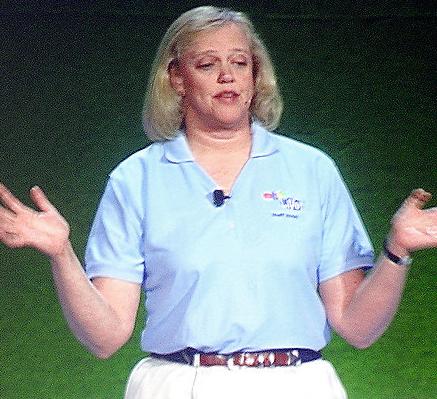
In a new ad, Poiz charges that Whitman, as CEO of EBay, allowed (oh no!) dirty movies to be sold on EBay. You can buy other dirty things there, too, like a Voodoo Hot Sex Life Improvement Love Spell (bidding starts at $9.99). And it’s all Meg’s fault!


The problem with this approach is that I suspect a lot of Republicans may also shop on EBay, and some of them may want their own copy of the official Naughty and Bawdy Songs of England CD — or maybe something even a little naughtier. And they may not be that upset that ol’ Meg allowed them an easy and discreet way to buy the things that the GOP kinks in the closet wouldn’t want to be seen picking up at the mall. (That kind of thing gets around.)


Now Meg will have to respond with something even more harsh about Poizner. What fun.


SFBG Radio: Johnny and Tim on the worst state budget ever

0

In today’s SFBG.COM Radio, Johnny and Tim talk about the worst state budget proposal ever, why higher taxes won’t drive rich people and businesses out of California and how the next budget battle will play out in Sacramento. You can listen after the jump.

SFBGRadio5/17/2010 by SFBG

Arnold’s attack on the poor

5

As usual, Robert Cruickshank at Calitics has it exactly right: The governor’s budget isn’t just bloody and brutal, it’s a direct attack on poor people — and an effort to divide the interests of the poor and the middle class. If the new round of budget cuts had continued to hit public schools, higher education, state parks and other things that benefit the middle class and the people who are slightly better off, there might be a huge public backlash. Instead, almost everything that he’s hacking away is a program that helps the most needy:


Arnold is implicitly telling the middle-class “either you screw these poor families or we’re cutting something you want” and counting on the middle-class to react the same way they did in the ’80s and ’90s – by saying “go ahead, we won’t stop you.” 


In a sick way, it’s brilliant; it worked so well for Ronald Reagan, and Schwarzenegger figures it might work for him, too.


So this budget battle will not just be a test of whether the Democrats have the spine to stand up to the guv and the political skill to outflank the Republicans; it will be a test of whether they — and the better-off among the voters — are willing to go beyond narrow self-interest and stand up for the people at the bottom.


If not, what the governor is proposing will be the creation of a permanent underclass in California.

Never mind the budget, Gavin’s worried about himself

2

So this afternoon, the governor released a truly horrifying mid-year budget revise, a bloody proposal that would eliminate CALWORKS, the state’s major welfare program, and cut billions out of other essential services. Calitics puts it nicely:


At today’s press conference unveiling the May Revise of the 2010-11 budget, Arnold Schwarzenegger said “the budget should be a reflection of California’s values.” If that’s the case, then California’s values are protecting the wealthy and the large corporations from having to contribute anything to this society while making old people and children suffer. Arnold’s California is a place where if you aren’t wealthy, you don’t deserve to have health, food, or any other form of economic security.


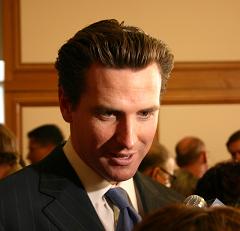
And about an hour later, the mayor of San Francisco sends a text to Assemblymember Tom Ammiano, who represents the city. Was he asking for Ammiano’s help in fighting the budget cuts? Was he suggesting they work together on strategy to save the city’s most needy from the governor’s axe? No. Here’s what the text from Newsom, who is running for Lt. Governor, said:


I hear you voted for Hahn at the convention.


That’s right — a month after the state Democratic Convention, Newsom is complaining that Ammiano voted for his opponent in the endorsement derby. That’s what he cares about? More than the worse budget in state history?


Ammiano’s response:


And what???


Good question.


Pelosi needs to support the Fair Elections Act

8

In the wake of the horrible Supreme Court decision in Citizens United, Rep. John Larson of Connecticut has introduced a bill that would reform substantially the way members of Congress are elected. It’s not perfect, but it’s a big step. The Fair Elections Now Act, H.R. 1826, would create partial public funding for Congressional races, with a 4-1 match for contributions of $100 or less. The money would come from a small fee on goverment contractors.


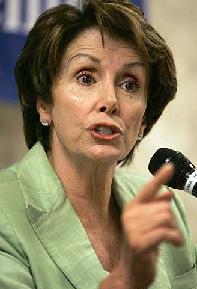
There are now more than 130 co-sponsors in the House, and they’re pusing for a floor vote. But Speaker Nancy Pelosi hasn’t decided whether to allow the bill to come to the floor.


The politics of that are crazy. If the Democrats want to keep control of the House, they need to have something to campaign on this fall. During the presidential campaign, the party promise reform — but so far, other than a mild health care bill, there’s no real reform on the table.


“If Democrats don’t have a real reform agenda that includes election reform — and that shows the party wants to change how business is done in Washington — we could be in big trouble in the fall,” Steve Hildebrand, a former Obama strategist who is helping the Fair Elections Now Act folks, told me.


So what’s up. Nancy?  Why not at least give the bill a chance.


SFBG Radio: Tim and Johnny on Pelosi and how Newsom could be really green

0

Today on SFBG.COM Radio: Tim and Johnny talk about why Nancy Pelosi isn’t more of a progressive — and how Gavin Newsom could follow the lead of a Republican from Utah and cut down dramatically on car use in San Francisco. You can listen after the jump.

SFBG.COM Radio 5/14/2010 by SFBG

Bicycling set a record in SF today

7

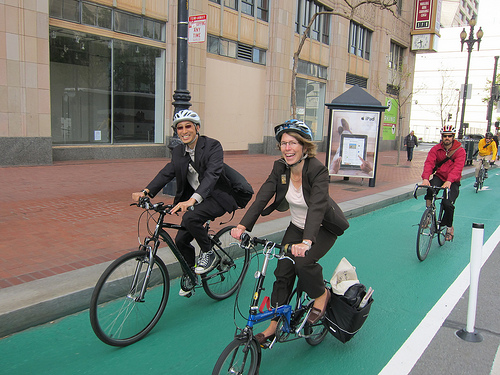
It was only two years ago that bicycle advocates celebrated Bike to Work Day traffic surveys that for the first time counted more bikes than cars on Market Street during the morning commute, a feat repeated last year. But today (5/13), that ratio had jumped to three bicycles for every car. The counts, which found a record-breaking 75 percent of vehicles were bikes, were performed by employees of the San Francisco Municipal Transportation Authority and announced in a press release from the San Francisco Bicycle Coalition.

“I was thrilled to ride alongside Mayor Newsom and scores of smiling people this morning in the newly separated and green Market Street bike lanes. So many more people are bicycling on Market, because they feel safer in these separated, green bike lanes,” Renee Rivera, acting Executive Director of the SF Bicycle Coalition, said in the press release, which also quoted Newsom as saying, “We are taking hold of an incredible opportunity to transform Market Street into one of the greatest streets in the world. San Francisco is an innovator and this newly separated, green bike lane is one example of how we can make Market Street safer and more bike friendly for the tens of thousands of people who use it everyday.”

For his part, Newsom seemed to be riding a cooler bike than in years past, when he rode a Blazing Saddles rental. But some bike advocates still grumbled about his choice of attire: he once again donned a sweat suit, rather than work clothes, which doesn’t exactly send the message that cycling can be an everyday transportation option. But for bike advocates, this was a day for celebration, both of the huge numbers and recent improvements such as the five on-street bicycle parking areas that have been added to Valencia Street in the last week, part of a trend toward rethinking the streets of San Francisco.

Should bicycling adults wear helmets?

91

Did you pedal today, on Bike to Work Day? And if so, did you wear a helmet? I biked without a helmet, and in the eyes of some, that makes me reckless and irresponsible. Similarly, they say the Guardian has done a disservice to the community by featuring photos of cyclists-sans-helmets in our current issue, a criticism we also received about our Bike Issue last year. It’s an interesting enough debate that I thought I’d move it from the comments section on my latest story up into its own blog post.

“Helmets save lives. I was amazed to go through the entire issue and not see one helmet on your biker models. Please mention this in your paper,” Jim A wrote in our comments section. And when I responded that it was a personal decision for adults (children are required by law to wear them), another commenter wrote, “So isn’t requiring bicyclists to wear helmets something that would benefit all of us in terms of preventing injuries we all pay for (not to mention emergency room costs and police reports, ambulances etc) — and therefore much more than a ‘personal decision?’”

It’s certainly true that helmets make cyclists safer and that’s why most cyclists in San Francisco wear them, but there is a significant minority who regularly ride without head protection, for reasons ranging from a simple preference to philosophical opposition to the notion that cycling is dangerous enough to require armor. The best way to make cyclists safe is to prevent them from crashing, and that means wide, hazard-free bike lanes and awareness by motorists of cyclists and our right to share the road.

“It’s an extremely fraught and charged issue. People have very strong views on both sides,” says Andy Thornley, program director with the San Francisco Bicycle Coalition. The SFBC does bike safety and urban cycling classes, which include instruction on properly fitting one’s helmet, but they stop short of exhorting everyone to wear them.

In fact, Thornley is among those who rarely wears a helmet. “On balance, you’re going to be a little safer riding with a helmet,” he told me.”But I choose not to for my own personal reasons.”

Context is important here. The most recent federal statistics on bicyclist accidents shows there were 716 bicyclists killed on roadways in the U.S. in 2008, or about 2 percent of all traffic fatalities. Certainly, helmets might have prevented some of those deaths, but from public health or statistical perspectives, this is a pretty low number.

By contrast, there were 4,378 pedestrians killed in traffic that year, but nobody is suggesting they should wear helmets, even though it’s likely helmets would have saved many of their lives. So this is about how much risk adults are willing to accept, and Thornley argues that if you’re safely cycling at the typically leisurely pace that most people ride at in cities, you’re unlikely to ever need your helmet.

“We want bicycling to be something that everyone can do without special clothing or gear or feeling the need to wear armor on their heads,” Thornley said.

He notes that in the most bike-friendly cities in the world, such as Amsterdam and Copenhagen, helmets are rare because riding a bike is widely seen as a safe, everyday activity. It would be a bit like pedestrians strapping on a helmet to cross the street, something most would interpret as slightly paranoid overkill.

Yet Thornley also admits that he’s perhaps a little ahead of his time for San Francisco, a city with few separated bike lanes or other features that would make cycling safer. But that’s starting to change, particularly on a day like today when there are so many cyclists the road, something that studies show makes them safer because motorists are more aware of them and drive more carefully.

Personally, I wear a helmet when I go mountain biking, when it’s raining, when I go for long recreational rides, sometimes when I’m wearing headphones, or if I’m just feeling unlucky or not on my game – but most of the time, I don’t. And I resent the condescending criticism that I’m being irresponsible or that I somehow deserve to be injured.

But what do you think?

P.S. BTW, those federal statistics also show that about a quarter of the bicyclists who were killed were legally drunk at the time, something to keep in mind if you hit any of the BTWD evening afterparties, including the SFBC event at Rickshaw Stop, the Rock the Bike event at the Academy of Sciences, or the Timbuk2 party at their 583 Shotwell Street headquarters. Come think of it, perhaps I should swing by my apartment on the way and grab my helmet.

What happens when Lennar doesn’t have a say

1

Today the Planning Commission holds a hearing about Lennar’s massive development plan for Candlestick and Hunters Point Shipyard, a plan the Guardian has been critically tracking for years, but the Mayor’s Office and a non-profit called the Center for Creative Land Recycling have been busily promoting (check out the above video clip). But one thing they won’t be talking about is the Alternatives For Study that Arc Ecology proposed, Bionic developed and Urban Strategies reviewed two years ago, in an effort to improve the developer’s otherwise Foster City-like vision for the heart of District 10 in the city’s southeast sector.

And that’s ironic, because the AFS proposal just received an honor award.(Scroll to bottom of AFS proposal link to see award.)

Saul Bloom, Arc Ecology’s excutive director, explains why Bionic got the award, and who was involved in the AFS proposal.
“Bionic is our landscape architectural and planning consultant,” Bloom said. “We do the conceptual planning and they do the detail, design and associated planning work. So in AFS, I worked with Bionic to develop the land use plans and analysis. I conceptualized where they would put various features of the plan, they either agreed, offered alternatives, or argued why I didn’t know what I was talking about. It was then my decision as to what went forward to the draft document.Once the draft document was produced Eve Bach [recently deceased], Ruth Gravanis, Arthur Feinstein, Junious and Anne from Urban Strategies and a number of other folks reviewed the materials and edited text. Bionic then finalized the design, I gave final approval and the document was published.  As such it really was a team planning effort.However because Bionic is the landscape architecture firm – they get the fame.  Because of Arc’s karma we get the infamy.”

So, is it fair to say that none of the AFS proposal are in the plan that will be the subject of today’s hearing, which promises to focus on the below-market rate housing plan, the community benefits plan, workforce development and local hiring policies?

 “Not entirely,” Bloom quipped. “They have been integrated into the study in order to reject them.”

Consumer Watchdog launches air strike against Prop. 17

0

For decades, respected consumer advocate Harvey Rosenfield has been battling Mercury Insurance and other corporations that have sought to undermine Proposition 103, the landmark car insurance regulatory measure that he wrote and California voters approved in 1988. But he’s never felt the need to advertise on television, until now.

Today in San Francisco, Rosenfield and the organization he founded, Consumer Watchdog, unveiled a 15-second commercial urging voters to reject Proposition 17, an effort by Mercury Insurance to overturn part of Prop. 103 to allow big surcharges on new drivers or those who have let their coverage lapse for even one day.

Mercury has spent more than $10 million and counting to blanket the media with its messaging, while Rosenfield has scraped together just $250,000 for a one-week Bay Area ad buy.

“We’ve never done this before, but given that Mercury Insurance is carpet bombing the airwaves with 30-second lies all over the state, we thought we’d do the equivalent of David’s slingshot,” Rosenfield told the Guardian.

Most newspapers, consumer groups, and other public interest entities have come out strongly against both Prop. 17 and Prop. 16, an effort by Pacific Gas & Electric to consolidate its monopoly and stop local governments from doing clean energy projects. But these two corporations are expected to spend about $35 million to fool Californians into voting against their interests and to increase corporate profits.

For more, read “Buying Power,” our recent investigation into these companies and their deceptive tactics.

SFBG Radio: Tim and Johnny on Meg’s collapse

3

On today’s SFBG Radio, Tim Redmond and Johnny Angel Wendell talk about the sudden collapse of Meg Whitman’s once-mighty lead in the GOP primary and the nomination of Elena Kagan to the Supreme Court. You can listen after the jump.

sfbgradio5/12/2010 by SFBG

Ending the crackdown is as easy as ABC

0

Sup. Bevan Dufty brought a surprise guest to the “Death of Fun” panel at SPUR that we each served on last night: Steve Hardy, director of the California Department of Alcoholic Beverage Control, an agency that has played a key role in the crackdown on San Francisco nightlife.

Hardy sounded a conciliatory tone, telling me that ABC agent Michelle Ott is no longer working with SFPD officer Larry Bertrand – the undercover duo has wreaked havoc on clubs and parties – and telling the large crowd that he’s trying to heed the criticisms and change his agency’s ways. Well, sort of.

“We’re working very hard to create an image that does not draw so much hostility,” Hardy said, later complaining about the state budget shortfall’s squeeze on his agency and saying, “It’s wearing thin and there’s no relief.”

Hardy said he was raised and still lives in San Francisco and served as an SFPD beat cop before a 25-year career staffing the California Legislature, mostly with the Senate Committee on Government Organization. Three years ago, he was appointed by Gov. Arnold Schwarzenegger to run the ABC, an agency that has cited many SF clubs for noise complaints and not serving enough food with their booze, and private parties for serving alcohol without permits.

“We do have a tremendous relationship with the SFPD,” he told the crowd, as if that weren’t already clear.

SFPD Inspector Dave Falzon of the Vice Crimes Division, another panelist, repeatedly emphasized the department’s desire to improve communications with the community, which has organized against the crackdown by forming the California Music and Culture Association. And Falzon announced a new SFPD initiative to centralize and streamline its permitting functions for clubs and special events.

But when I was answered a question about what we’d like to see in terms of improved communication by saying I wanted the SFPD to finally grant the Guardian’s longstanding request to interview Bertrand (whose brutal and illegal actions have been publicly condoned by his captain) and to directly address the community’s concerns about the SFPD’s hostility to nightlife, I didn’t get much of a responsive answer from Falzon.

Two separate legal teams who are suing the department for its overreaching tactics are also seeking to depose Bertrand and his superiors, and to review Bertrand’s personnel file, but the city has so far been stonewalling them. The consensus on the panel was that city leaders haven’t adequately valued nightlife or special events or sent the message to various city departments that protecting the urban culture from bureaucratic excess is important.

For example, in the current budget crisis, most departments that deal with clubs and special events have adopted full cost recovery policies, and then jacked up those costs with demands that promoters pay for excessive police protection and other services. Just a few weeks ago, the Municipal Transportation Agency approved a budget that made full cost recovery official policy, thus jacking up prices for all events that require street closures or Muni diversions.

Who’s to blame? Well, Dufty and Sup. Ross Mirkarimi (who also served on the panel) each laid the blame squarely on Mayor Gavin Newsom, who they say has abdicated his responsibility to lead city departments through the sometimes complicated balancing act between protecting the urban culture and being sensitive to neighborhood concerns, leaving the city essentially rudderless on an issue vital to maintaining San Francisco’s status as a world-class city.

Goat news

4

City Grazing, the adorable weed-eating goat herd in Bayview, has a ton of upcoming events, starting tomorrow, May 12, at 6 p.m., when City Grazing founder David Gavrich will talk at a community forum on the urban farming movement at the Commonwealth Club.

Other speakers include Novella Carpenter (author of Farm City), Jason Mark, manager of Alemany Farm and editor of Earth Island Journal. Tickets are $20 and the price includes local, sustainable food. 

On Sunday, June 20, City Grazing’s ambassador Momma Goat will be at the Giants County Fair with her two 3-month-old kids as part of CUESA’s Urban Eats program

And on Sunday June 27, City Grazing will make goat history by providing the first goats ever to join the SF Pride Parade!  So, keep an eye out for their Goat Float.

The organization is also finalizing its new state of the art goat shelter design, redesigning its website, and looking for volunteers. Maa!

Chris Jackson leaps into the District 10 race

9

Community College Board Trustee Chris Jackson has thrown his hat into the District 10 Supervisor race. The move is guaranteed to upset the already crowded field of candidates in the district. District 10 lies in the city’s southeast sector and is home to San Francisco’s largest remaining African American community, and some of its most economically disadvanted communities and environmentally polluted lands.

Jackson was elected to the Community College Board in 2008, winning more than 8,000 votes in District 10, as part of that citywide election. And he has done a good job on the Board ever since.

The only African-American male currently holding elected  public office in San Francisco, Jackson works as a policy analyst for the San Francisco Labor Council. That position is sure to raise questions about Jackson’s ties to Lennar’s redevelopment proposal at Candlestick Point and the former Hunters Point Naval Shipyard. The Labor Council entered a community benefits agreement with the developer shortly before the June 2008 election on Prop. G. and Labor Council representatives appear to be proponents of Lennar’s draft environmental impact report (DEIR). A final version of that report is expected to come before  the Board of Supervisors for approval in June.

But Jackson told us that he will fight to keep District 10 a middle-class district and not a neighborhood dominated by millionaire’s condos.


Sit-lie proponents criticize their allies

37

It’s really amusing to read the recriminations and second-guessing from the most vociferous proponents of criminalizing sitting or lying on San Francisco sidewalks after yesterday’s Public Safety Committee hearing on the matter. And the funniest part is their failure to understand that this punitive, overreaching law just isn’t needed to deal with aspects of street life that scare them most, as the police reluctantly testified.

Chronicle columnist C.W. Nevius and Haight Street resident Arthur Evans have been the two most vocal promoters of the sit-lie ordinance, and both sounded similar criticisms of the Police Department and the Mayor’s Office (as well as progressives, their usual target), Nevius in the paper and Evans on the Guardian’s Politics blog (last comment on this item). They call on the so-called “moderates” step up their games or be defeated.

But they miss the point, and falsely believe that “common sense” is on their side. Certainly police officers have the ability to deal with rowdy groups of vagrants who are blocking the sidewalks and intimidating people. They do it all the time, and simply walking a beat usually prevents such behavior. To argue that tough police officers are powerless to deal with thugs defies common sense. And Assistant Chief Kevin Cashman even testified that police don’t need an official citizen complaint to deal with people who are blocking the sidewalk, debunking a fallacy that is oft-cited by Evans and others.

But the efforts by Evans and the Chamber of Commerce to rebrand the sit-lie ordinance as the Civil Sidewalks Law – and to threaten to use it as a wedge issue on the November ballot – reveals their true intentions. The bottom line is they don’t like the more unruly aspects of urban life, and they believe that they can legislate “civility” and have the cops enforce it.

That’s a scary notion, and it’s part of larger campaign to, as Nevius writes, “demonstrate to the far-left supervisors that they were seriously out of step with the residents of the city.” Nevius, who is not a resident of this city, wants San Francisco to be a bit more like his hometown of Walnut Creek. But San Franciscans shouldn’t fall prey to their divisive fear-mongering, and supervisors like Sup. David Chiu – who has publicly toyed with the idea of compromising on sit-lie with some kind of restorative justice program – should heed the message of this hearing and resist creating an unnecessary new law that the community opposes.

Unfortunately, that didn’t happen yesterday as the committee voted to continue the matter for two weeks. And you better believe that next time, the Evan-Nevius crowd will come back strong, with more fearful anecdotes than ever. But the opposition campaign to sit-lie has been strong, creative, and effective — the true voice of San Francisco — and it seems up to the fight.

John Ross: To stop is to die

1

Editors note: John Ross is finishing up a book tour across the United States, and sending us his impressions of Obamalandia. You can read some of his previous posts here, here and here.


I. Baltimore/Washington


The Amtrak rumbles into the back end of Baltimore past block after block of abandoned, boarded-up row houses ripe for burning. This city of such magnificent renegades as Edgar Allen Poe, John Wilkes Booth, and Billie Holliday is mapped by grimy pocket ghettoes that made Baltimore a perfect stage-set for “The Wire.” When contrasted against the gleaming, refurbished downtown, these crime-scene neighborhoods incubate urban uprising.  Red Emma’s is one of a skein of anarcho bookstores with names like Sedition, Monkeywrench, and Bluestockings that have welcomed me on this grueling odyssey across the underbelly of Obamalandia. I’m enlivened by the energies these oases exude. Contemporary anarchists seem to have little time for the crippling ideological jousting that drained the lifeblood of my generation. Those bad old days of Marxist Leninist Maoist Trotskyist Stalinesque backbiting seem an absurd nightmare on the barricades of change these days.  

Tiffany, a tenor saxophonist who day gigs at OSHA over in D.C. and puts in after hours at the bookstore-cafe, and I pitch in to unload a busload of Bread & Puppet props for a zany, Zen show at a cavernous performance space Red Emma’s maintains in a vacated church. I get to trundle in the head of Ben Franklin, the villain in B&P’s latest mini-extravaganza in which $100 bills are the most pertinent puppets. A half century after its founding even before Vietnam caught fire, the puppeteers are still serving bread and aoeli to grateful audiences.

In D.C., I speak at the Institute for Policy Studies, a perennial leftist sounding board four blocks north of the White House and a billion light years from power, about how Washington has hooked Mexico on drug war. It is my first visit to the nation’s capitol with a black president in residence in the house that slaves once built. The Capo de Tutti Capos of the most grotesque criminal conspiracy on earth is too overwhelmed by swelling catastrophe offshore in the Gulf that will make Katrina look like a summer squall, impending car bombs in Times Square, and an economy that continues in freefall, to take time out for a chitchat.

On the day I speak in Washington, Teabaggers and their ilk are massing across the Potomac in an open-carry anti-Obama rally — newspaper photos depict white American males with what look like rocket launchers slung over their shoulders. The threats of this nativist scum are not idle ones. The economic collapse has stoked the bumfires that burn fiercely in the dormant craters of the American volcano.


II. New York
My roots on the North American landmass snake under the lower east side of Manhattan. The Ross (nee Grossinsky) DNA is imprinted everywhere on these mean streets. My grandma Mamie Zief (Ellis Islandese for “Jew”) relocated from Poland to a Rivington Street tenement at the turn of the 20th Century. Although I grew up in the West Village, I went east at an early age; after fleeing the family nest I squatted in the Shastone Monument building on Essex and Houston before escaping to Mexico in the late 1950s. Two of my kids grew up on Second Street and Avenue A, and my son the hiphop mogul still lives 500 yards away from the old homestead (Dante and I are working on a book that bounces off our mutual addictions to black music.)  

My presentations in the Big Apple fit neatly into this geographical schema. I lecture at NYU’s King Juan Carlos Center, once the site of concrete basketball courts where I expanded oodles of adolescent energies. I talk to the Friends of Brad Will at the Sixth Street Community Center where the slain Indymedia journalist, a lower east side rabble-rouser during the darkest days of the Giuliani dictatorship, regularly practiced yoga. Justice for Brad Will remains undone.
And I am lured into Amy Goodman’s state-of-the-art lair for 20 minutes of fame. Democracy Now even sends a car to fetch me up to Chelsea and I induce the stern goddess of left radio to smile — but perhaps it was merely a grimace.  

New York is chockablock with “I Love/Hate New York” minutes. One morning I descend from Dante’s sixth story inferno for a double espresso and the Lowisaida is infested with cops. I approach one of New York’s Finest, an amiable Caucasian, and inquire about the blue plague: “it’s the Will Smith show,” he smiles mischievously. Just then a motorcade of 50 bullet-proofed black vehicles swings off Houston with their lights flashing and sirens screaming and heads down the Bowery to Cooper Union where our commander-in-chief is to make a major speech addressing financial “reform” (in Mexico, we call this “plugging up the hole after the baby has drowned.”)

Goldman Sachs vultures in dark suits and furrowed brows listen intently but go mum to the press when they deadhead downtown back to Wall Street to continue fleecing the public’s pocket.

I step around the corner onto Houston, where a large enigmatic Shepard Fairey montage that references climate change has just been tagged (Dante who is well-versed in such iconography, speculates that the culprit is a tagger named “Nah” who is dedicated to dissing the public art of the stars of this genre.) Gallery slaves have been bussed in to erase the offending stains.  I am wearing my Mexican Electricity Workers tee-shirt, whose black and red colors and clenched fist logo match Fairey’s throw-up, and I am suddenly surrounded by a bevy of documenterians, at least one of whom is just off the boat from Andalusia. They pose me against Fairey’s wall for a thousand-click fashion shoot. New York New York!

Ironically (a word that doesn’t have much scratch here in Gotham), the Banksy flick “Exit Through The Gift Shop” is playing at a grind house across Houston, a cheese ball mockumentary that destroys this world-famous outlaw’s once-pristine reputation for thumbing his nose at power. Indeed, the best thing about the movie is that it is playing right next door to the Yonah Schimmil knishery. I order a kasha knish and sign the guest book with Subcomandante Marcos’s rubric.  

Also a mandatory dining stop in the old neighborhood: the immortal Katz’s (“Send a salami to your boy in the Army”) where pushy New Yorkers of the Hebraic persuasion scuffle to be next in line at the counter of this now 100% Puerto Rican-run deli. The brisket is still to die for.

New York City and environs is now home to a half million Mexicans, mostly from Puebla state, whose slow country drawls are a foil for the tropical machine-gun accents of Puerto Ricans and Dominicans. The Poblanos work in the kitchens of yupped-up food palaces (16 Oaxaquenos were burnt to a crisp walloping pots up in “Windows On The World” on the 108th floor of the Twin Towers on 9/11 day) or slave in 24-hour grocery stores run by Arabs and Hindus and Koreans.  

Mexican elites who have fled here from their imploding fatherland do not much rub elbows with their impoverished compatriots, except when they employ them as maids and babysitters One of the few upsides of the new Arizona Breathing While Brown law is that former pundit and Foreign Minister Jorge Castaneda might be jailed by Sheriff Joe Arpaio and his storm troopers and forced to don pink underwear if he were to be stopped without papers in Maricopa County.

III. BOSTON

The new Boston Tea Party that catapulted Scott Brown into the suddenly Kennedy-less Senate is not an anomaly in a city where the name of Charles Stuart (Google him up) still rings a bell.  

I speak at the Harvard Coop to a handful of bedraggled Harvard Square denizens who have found sanctuary from a driving rainstorm in this hallowed readery. I am invited to the David Rockefeller Center for Latin American Studies to rant at the future leaders of Latin America — but none show up. I spend an engaging evening with Jack Womack, whose “Zapata & The Mexican Revolution” is still the definitive text on the struggle of the incorruptible revolutionary. Jack, now emeritus in Harvard Yard, recently rebuked the Mexican government by turning down a literary prize because of President Felipe Calderon’s role in the firing of 43,000 workers in an undisguised ploy to privatize electricity generation in Mexico, and is currently chipping away at his life work, a history of working class struggle in the state of Veracruz. Jack and I converse in an argot stippled with so many arcane references to social upheaval south of the border that FBI eavesdroppers could surmise we are planning a new Mexican revolution — which, 100 years to the date of the last one, is not such a bad idea.    

I warm up for May 1st rallies by urging attendees at community meetings at the UNITE building in Chinatown and a U-U church in Jamaica Plains to join the protests. There are two marches and rallies set for International Workers Day in Beantown, the bitter fruit of a split in the movement the seeds of which I could not divine.  

On the Boston Commons, I spiel about the first May 1st back in 1886 when 80,000 immigrant workers stomped through Chicago to demand the eight-hour day, a day of solidarity and struggle around the world everywhere except in the country where it was birthed. The Haymarket Martyrs join us for a stroll through the streets of downtown Boston, held aloft by the ubiquitous Bread & Puppet comrades.  

All across Amerikkka, immigrant workers, incensed by the enactment of a law that makes inhaling the air of Arizona a jailable crime if you are a person the color of the earth, were on the march, perhaps a half million (high end estimates) strong — as many as 200,000 in Los Angeles and another 100,000 in Chicago; 25,000 more in Dallas and significant turnouts in New York and Washington but only 6,000 or so in Boston to which Mexicans have migrated in smaller numbers.  

This year’s surge, which was dwarfed by the gargantuan outpourings of 2006, featured a marked absence of Mexican flags as undocumented workers chose to cloak themselves in the Stars and Stripes in response to the feeding frenzy of the Fox News lynch mob.  

Although the condemnation of Arizona Goddamn was vibrant, it must be noted that there have been as many ICE raids under the Obaminators as under Bush and the crackdown on employers is targeting union-organized janitors. David Bacon, whose reportage remains a light in this darkness, recently noted that 175 SEIU janitors are about to be fired in San Francisco, once a sanctuary city for labor.

The People the Color of the Earth rolled through the streets of east Boston with gusto. “No One Is Illegal!” Sandra, my displaced Chilanga guardian angel, and I yodeled in unison with the compas.  “Do I Look Illegal?” read the homemade banner draped around the shoulders of a skinny pre-teener. Many high schoolers wore caps and gowns to highlight the prohibitions on financial aid that doom their college educations to MacDonald’s Hamburger U.

Speaker after speaker in a park down by the harbor  — where, indeed a few hundred years back down the pike the original Boston Tea Party was staged — raged against a system that still consigns immigrant workers to the lowest step on the American food chain. “Justicia! Justicia!” they clamored and their cries were no less relevant than those uttered by the “Martires de Chicago,” as the Haymarket martyrs are known throughout Latin America. By the time I took the mic, all the words had already been spoken but I finished up with the chant of the pensioners’ movement in Mexico City in whose ranks I am enrolled: “Parar Es Morir!” — To Stop Is To Die!

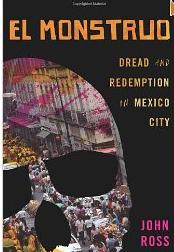
Me and the Monstruo have come to the end of our three month 66 performance journey through Obamalandia but there’s one thing you can count on: “Parar Es Morir.”  I’m not planning on stopping (or dying) any time soon.
  
John Ross will be returning to Mexico in mid- May to begin work on a new book, “From Bebop To HipHop – Fathers & Sons.”  You can consult him on particulars at johnross@igc.org