• No categories

Politics Blog

Is it okay to be quietly gay?

16

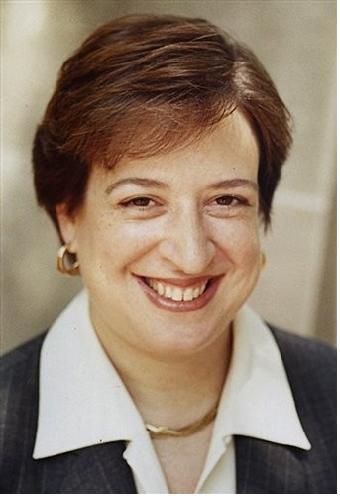
The White House barely had time to announce President Obama’s latest Supreme Court nominee, Elena Kagan, before the spin controllers were scrambling to deal with rumors that — gasp! the horror! — she might be gay.

The Chron blamed “the lesbian rumor” on “conservatives.” The Washington Post (and the White House) blamed CBS for letting a right-wing blogger report as a fact that Kagan likes girls, leading to this great moment in American politics:

“An administration official, who asked not to be identified discussing personal matters, said Kagan is not a lesbian.”  

And of course, no Washington rumor should ever be believed until an official source who won’t be named officially denies it.

The real question here is: Who cares? It’s actually worth discussing.

Andrew Sullivan kind of mangles logic in a post called “So is she gay?” . He starts off saying “it should mean nothing either way,” but then argues that it does:

“To put it another way: Is Obama actually going to use a Supreme Court nominee to advance the cause of the closet (as well as kill any court imposition of marriage equality)? And can we have a clear, factual statement as to the truth? In a free society in the 21st Century, it is not illegitimate to ask. And it is cowardly not to tell.”

Harvey Milk, of course, always said that everyone should be out, and that the cause of queer rights depended on tearing open the closet door. But that was then, and this is now, and I wonder: Has the United States, and the queer community, reached a point where it’s okay for someone to say that his or her sexuality is none of anyone’s business?

Judge Vaughn Walker, who’s handling the Prop. 8 case, is gay — but has never made a big deal of it one way or the other. I guess he’s sorta in the closet, but not really — he just keeps his personal life to himself.

What if Kagan’s the same way? What if she’s got a lesbian partner but isn’t going to talk about it? What about if she’s straight and isn’t going to talk about it? How can the White House prove she’s not gay, anyway — is her confirmation hearing going to feature a ten-minute televised session of her making out with a man? (And how would we know she wasn’t just acting, anyway?

Obviously, if she is gay, and she came out, having a lesbian on the Supreme Court would be a huge deal to the queer community, a major breakthrough in one of the highest offices in the land. And you can certainly argue that she shouldn’t be hiding anything, that the whole denial and ducking is an admission that homosexuality is something to be hidden in the first place. And that’s really sad.

In a perfect world, none of this would matter at all, and she could freely talk about her sexuality without any impact on her political career. But in a perfect world, could she also just say: Ain’t none of your business?

And are we anywhere close to that today?

Ammiano property tax bill passes key committee

12

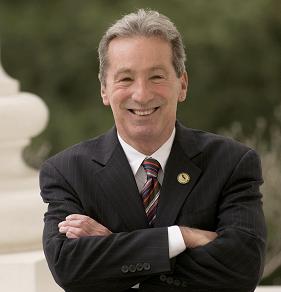
A bill by Assemblymember Tom Ammiano that would have a huge impact on the state’s budget and close a serious loophole in Prop. 13 cleared the Revenue and Taxation Committee today. AB 2492 won approval on a strict party-line 6-3 vote, with every Democrat in favor and every Republican opposed.


The measure is brilliant: It doesn’t undo Prop. 13 (which a lot of us would love to see, but is politically almost impossible). Instead, it simply defines property transfer in a way that forces commercial property owners to play by the same rules as everyone else.


It would bring in billions for the state — and has a great political twist. Homeowners, for better or for worse, are a powerful voting bloc — and although there hasn’t been much talk about it, over the years, residential property has had to shoulder more and more of the total tax burden. So if Ammiano can keep this debate alive, those more conservative homeowners who would never accept a change in Prop. 13 that might undermine their precious tax break might slowly come to realize that the law, as it’s written, is screwing them. (It’s particularly screwing people who brought property at the height of the boom, and are paying taxes far higher than their neighbors who bought a few years earlier.)


Ammiano told me he was encourged by the vote. The bill now goes to Appropriations, which shouldn’t be a problem since it won’t cost the state anything. And in a few weeks, it will be on the Assembly floor.


I don’t expect this governor to sign it, but if he vetos, it could be a great campaign issue — the Republicans are on the side of big landlords — and against homeowners.


By the way, our old pal Matt Smith at SF Weekly decided to take a swipe at me and the Guardian for our support for AB 2492, arguing that somehow it would benefit those of us who own homes. It’s a refrain I’ve heard from Smith before, and in the caption on his blog picture he talks about “getting in the game early and pulling up the ladder behind you.” I guess that’s about my opposition to more condos for millionaires, which has nothing to do with anything and no basis in reality. Building market-rate housing isn’t going to do anything to help middle-class people (and I assume Matt Smith falls in that category) buy homes in San Francisco.


The point of his blog is that we’re somehow pushing to protect our privileged position under Prop. 13. But anyone who knows me (and reads the Guardian) knows that’s nuts: I have long advocated the complete repeal of Prop. 13, and I’m one of the few people in town who wants higher taxes on myself. Besides, the Guardian’s owners, Bruce Brugmann and Jean Dibble, also own the commerical office building where we do business. So anything that could raise taxes on commerical landlords would directly affect the paper –and we still support it.


I called Smith today to give him a hard time about his item; you can accuse me of a lot of things, and attack my political positions (that’s easy; there are a lot of them, and some are pretty far out there). But don’t say I want to preserve my own (relatively) low property taxes, because that’s demonstrably wrong.


I’ll give Smith credit — he listened to me and reported my comments. But we could have avoided all of this if he’d just called me first.

SFBG Radio: Johnny and Tim on immigration politics

0

Today, the always calm, moderate and soft-spoken Johnny Angel Wendell talks to Tim Redmond about how the insanity of immigration politics in Arizona is going to impact the races for governor and senate in California. You can listen after the jump.

sfbg radio 5/11/2010 by SFBG

ICE says it will automatically vet juvenile immigrants fingerprints

25

In what appears to be another fatal blow for San Francisco’s sanctuary laws–and due process in general— officials for U.S. Immigration and Customs Enforcement (ICE) say the fingerprints of juvenile immigrants charged with serious offenses will also be automatically forwarded to ICE

“My colleagues in SF advise that the fingerprints of juveniles arrested for criminal offenses will also be vetted through Secure Communities,” Virginia Kice, ICE’s Western Regional Communications Director, told the Guardian.

“If that’s the case, that’s pretty significant,” said Sup. David Campos, who was under the impression that the Secure Communities initiative would not touch juveniles. The thinking, Campos said, was that juveniles’ fingerprints were handled through a separate database and therefore would be exempt from the new federal initiative.

Sheriff Mike Hennessey, who does not handle juvenile detainees, told the Guardian,  “If I had to guess, I would say that Ms. Kice is correct, but it’s possible that the computer could be bifurcated.”

Calls to Mayor Gavin Newsom, San Francisco Juvenile Probation Department Chief William Siffermann and California Attorney General Jerry Brown (whose office maintains fingerprinting databases) remained unanswered, as of blog posting time.

SF nightclubs fight back with new organization

8

In the ongoing War on Fun in San Francisco, a new combatant officially entered the battlefield last night with the launch of the California Music And Culture Association (which strangely goes by the acronym CMAC rather than CMCA). It aims to be a political advocacy organization and to provide members with services such as neighbor relations advice, group insurance, and discounted legal services.

“We’re here to celebrate a new era of nightlife and entertainment in San Francisco,” CMAC President Sean Manchester, owner of Mighty and Wish, told a crowd at Mezzanine that included club owners, lawyers, promoters, performers, and politicians ranging from supervisorial candidates Scott Wiener from D8 to Debra Walker in D6. California Sen. Mark Leno also sent a formal resolution of support for CMAC.

A video prepared for the event included an even wider array of local figures extolling the importance of nightlife to San Francisco, including SF Convention & Visitors Bureau chief Joe D’Alessandro and San Francisco Planning and Urban Research Association (SPUR) director Gabriel Metcalf, who said, “I think it’s great that the nightlife industry is getting organized.”

That organization was prompted by threats and harassment from the San Francisco Police Department, the California Department of Alcoholic Beverage Control, neighbors of some clubs, and Mayor Gavin Newsom and others who have been on a campaign to demonize the industry and its regulation by the Entertainment Commission.

It’s a trend that the Guardian has been writing about for years, and one that I’ll be discussing this Tuesday as part of a panel assembled by SPUR that includes representatives from the SFPD and Entertainment Commission, as well as Sup. Bevan Dufty, who spearheaded the cancellation of Halloween in the Castro.

Gun nuts gone wild

29

It’s no surprise to see the Republican Senate candidates pandering desperately to the right wing, but at a certain point, it becomes a total farce. For example: Both Carly Fiorina and Chuck DeVore actually said during a taped debate that they think people on the federal no-fly list should be allowed to buy guns.


I know, I know — there are people on that list who shouldn’t be, and it’s a pain to get off it, but still: Buying guns?


Even Tom Campbell, who is running far to the right of where he’s always been, was a bit flabbergasted:


“That is not an infringement on anybody’s Second Amendment rights,” said Campbell, a former law professor at Stanford. “It seems somewhat unusual to take that position – except perhaps in a Republican primary.”


If Nancy Pelosi’s such a ‘progressive’ ….

32

… and even though Randy Shaw has become convinced that she is, I’ve never bought it, and I still don’t. A progressive in Congress would never have privatized a national park. A progressive wouldn’t have ducked same-sex marriage. But whatever — here’s my question for the day:


If Pelosi really believes in progressive causes, why doesn’t she do anything about it at home?


Pelosi’s almost never on the progressive side in local races. She never helps local progressive causes, raises money (which she’s really, really good at) for local progressive campaigns or takes visible stands on local progressive issues. Would it kill the Democratic Party if she helped defeat Prop. 16? Would it be the end of the Democratic majority if she went to bat for her own city’s sanctuary policies (and tried to block the horrible new policy on deporting anyone who gets arrested?)


Pelosi helped push health-care reform through, and that’s a fine thing. But unless you want to redefine “progressive,” I don’t think Nancy Pelosi fits the bill. (And I’m still proud I voted for Harry Britt for Congress.)

Knocking on fascism’s door

12

Like many folks in the United States, I’m an immigrant. But unlike many folks who crossed this nation’s borders, I was lucky to come here with a green card. I say “lucky” because getting a green card typically involves having the money and educational skills to make you “desirable” in the eyes of federal immigration authorities, things you are less likely to have if you are born into a dirt-poor country.

Getting my green card involved getting fingerprinted and biometrically assessed. So, I understand the national security argument for wanting every immigrant’s fingerprints. And I hear the feds saying that, thanks to limited resources, their prime objective is to deport undocumented immigrants with criminal records.

The question I have around the Secure Communities program is this: Where are the guarantees that this system won’t be used, now or in the future, to deport long-term or juvenile residents who haven’t actually committed serious crimes?

Imagine that your legal immigrant co-worker is charged with terrorist activity? You’d expect them to get their day in court before being stripped of their citizenship, right? You wouldn’t say “due process’ was never meant to protect criminal behavior, would you? But that’s exactly the slippery slope that folks start sliding down when they say that sanctuary city policies were never meant to protect criminal behavior, while refusing to stand up for the due process rights of immigrants who aren’t guilty as charged.

The point here is that there is a world of difference between being charged with and being guilty of a crime, (which explains why Arizona is trying to make it a crime to be here without paperwork.)  And without guarantees of due process, the potential for abuse of any law becomes immense.So, it’s kinda important that folks who want to be politcal leaders show us that they get that point. Otherwise, how can we trust them to stand up and do what’s right in the future?

Chiu moves to reject Muni budget

At the May 4 Board of Supervisors meeting, Board President David Chiu introduced a motion to reject the Municipal Transportation Agency budget, approved by the MTA Board on April 20.

Noting the deep service cuts that are scheduled to inflict the city’s public transportation system on Saturday, May 8, Chiu said riders could expect “longer wait times, more crowding, and people being passed up by full trains.”

Chiu has signaled his frustration with the MTA before and called for reform. “We will be having many conversations with the MTA and with the Mayor’s Office, but I do think at this time we can do better than the budget that we have in front of us,” he said.

Chiu also referenced a recently issued City Controller’s review of SFMTA work orders, conducted to find out if various city departments contracted to provide services for Muni are fairly and accurately billing the agency. The report indicated that MTA work order expenditures have been on the rise, while various city departments “did not often provide sufficient reporting documentation in their billings, and we don’t have a strong sense of whether these bills were paid appropriately for services rendered,” Chiu noted.

Accordingly, he introduced accompanying legislation requesting that the City Attorney draft legislation to implement key recommendations in the controllers’ review.

“It’s just not responsible,” said Tony Winnicker, press secretary to Mayor Gavin Newsom, when asked for a comment on the proposal to reject the Muni budget. “If they’ve got specific solutions … then that’s different. But for now it’s just political grandstanding of the worst kind, and it’s really irresponsible.”

According to section of the City Charter that deals with the public-transit system, however, the board doesn’t have the power to modify the MTA’s budget — it can only accept it or give it a thumbs down. According to Section VIII A 106 (c): “the Board of Supervisors may allow the Agency’s budget to take effect without any action on its part or it may reject but not modify the Agency’s budget by a seven-elevenths’ vote.”

Is ICE planning to destroy sanctuary city?

10

Virginia Kice, spokesperson for the Department of Homeland Security’s Immigration and Customs Enforcement (ICE), sounded hopping mad at the way that ICE’s Secure Communities initiative is being represented as undermining San Francisco’s sanctuary policy and possibly creating an even worse federal immigration system.

“It’s just an information sharing system,” Kice told the Guardian. “Any time someone is electronically booked by local or state law enforcement agencies, their fingerprints will be compared up against biometrics in U.S. Department of Justice, the F.B.I. and the Department of Homeland Security (DHS) databases. “


If a match is found, then ICE will do the follow-up investigation, Kice said.

“Not everyone in the system has violated the law,” Kice explained. “They may have applied for an immigration benefit or they could already be naturalized [have become a U.S. citizen]. It just means that they have had an encounter with DHS.”

Alluding to the ongoing debate about immigration law and racial profiling, Kice stressed that this new system doesn’t selectively finger print.

“It finger prints everybody, and because this system uses biometrics, it’s going to be accurate in terms of i.d.ing people who have had prior encounters with D.H.S,” she said.
“Some people use multiple aliases and give misinformation about their history. We know people have escaped deportation this way in the past, but fingerprints don’t lie.”

Local law enforcement officials are concerned that though the new policy is supposed to target folks charged with serious crimes, including murder, rape, sex crimes, serious assault, and resisting arrest, it will also sweep up folks charged with minor infractions, such as being drunk in public, who could now fall into ICE’s hands for deportation, especially if they resist arrest at the time, which happens to be defined as a serious crime.

“Not everybody who is in the country illegally has ever been encountered by D.H.S. and because we don’t have their biometrics, the system would not detect a match,” Kice continued. “But that does not mean they won’t be referred for a follow-up investigation. And it ensures that we get their information shortly after an encounter occurs.”

But despite Kice’s rosy assessment of the federal government’s Secure Communities program which she says has already been set up in 15 other California communities, 20 states and about 160 municipalities nationwide, the San Francisco Sheriff’s Office continued to express unease at how the new program will shift the local landscape.

 “The ground rules in the jails have changed, but not due to any decision on our part,” Eileen Hirst, spokesperson for the San Francisco Sheriff’s Department told the Guardian.

The interlinking automated database will remove the firewall that used to protect folks booked with low-level crimes from being referred to federal immigration authorities.

“The firewall was the discretion of local law enforcement,” Hirst explained.

In San Francisco, the Sheriff’s Department developed laws that were consistent with federal laws, as well as San Francisco’s sanctuary ordinance, which was enacted in 1989.

Under San Francisco’s current “City of Refuge” ordinance, local law enforcement officials refer individuals who are booked on felony charges, or have a history of felony charges, and are foreign born and have previous deportation orders or ICE holds.

But now everyone who gets arrested will be fingerprinted and referred to ICE, not through human intervention, but through a fingerprint database that connects to similar databases in Canada, Mexico and within Interpol.

“DHS, of which ICE is part, has interoperability agreements with California’s Department of Justice, which maintains a fingerprint database for state,” Hirst said.” ICE now has complete access to the DOJ databases and vice versa.”

This fundamental change in policy means that any time anyone is booked in San Francisco, they will be fingerprinted and automatically reported, including folks charged with misdemeanors, such as minor drug possession, low level financial crimes and misdemeanor battery.

“What happens next will depend on DOJ’s response,” Hirst said. “We are putting the word out because it was clear that the immediate community did not know about this.”

Local law enforcement officials say they were verbally informed of the new initiative at a recent meeting at ICE’ office at 630 Sansome Street in San Francisco. Asked if the system will go into effect June, Kice said the agency doesn’t typically inform communities when the program will be deployed, but promised to get back to us.

David Venturella, who has been involved with ICE for years and is currently the head of ICE’s Secure Communities initiative was not available for comment, but Kice sent a fact sheet, which claims the program “is leading ICE’s efforts to modernize and transform its criminal alien enforcement model, through technology, integration and information sharing.”

“This is the first time that the Federal government has used biometric identification technology to enforce immigration laws at the state and local law enforcement level,” the fact sheet states. “This enables ICE to accurately identify dangerous criminal aliens much more efficiently, and in significantly greater numbers. This also helps local law enforcement officials get dangerous criminals off their streets, at little or no additional cost. If an individual’s fingerprints match those of a person in DHS’s biometric system, the new automated process will notify ICE and the participating agency submitting the fingerprints. ICE will evaluate each case to determine the individual’s immigration status and take appropriate enforcement action. Top priority will be given to offenders who pose a threat to the public safety, such as aliens with prior convictions for major drug offenses, murder, rape, robbery, and kidnapping.”

The ICE fact sheet notes that, “Deployment of this interoperable technology across the nation is now underway as is expected to be complete by 2012.”

“Congress has allocated $350 million for Secure Communities in FY 2008 and FY 2009,” the fact sheet continues.  “As of March 2009, Secure Communities has been deployed to 48 sites in seven states – Arizona, Florida, Massachusetts, North Carolina, Pennsylvania, Texas, and Virginia.”

And clearly, it’s already expanded beyond those boundaries and is about to kick in, right here in San Francisco and other Bay Area municipalities.


More fun with political ads

1

You don’t have to look far to find creative parodies of the famous Carly Fiorina demon sheep ad. But now the Democratic Party — finally stepping up — has released it’s own weirdo ad, called Demon Sheep II. It attacks both Fiorina and Tom Campbell, and has a toss-off at the end about Chuck DeVore, but it’s clearly aimed first and foremost at Carly — which suggests, no surprise, that the Dems (that is, the Democratic Senatorial Campaign Committee) is getting out of the box, now, with attacks on Barbara Boxer’s likely November foe. Carla Marinucci calls the ad “hysterical,” and while I wasn’t laughing that hard, you have to admit: The goofiness level of big-time California campaign ads is on the rise.


The ad hints at what Boxer’s camp is going to focus on this fall — and it’s similar to what Jerry Brown needs to do to defeat Meg Whitman. The ad is all about Carly Fiorini, rich business excutive who owns two yachts, flew around in corporate jets and moved 28,000 jobs offshore — then got fired. That works pretty well for Boxer, who can contrast her progressive stands on economic issues to the GOP’s pro-rich agenda. Now Brown needs to start taking a more populist stand (on Prop. 13 reform, for example) if he wants to make his attacks on Whitman stick.


Check out Demon Sheep II:


Moyers: Plutocracy and democracy can’t co-exist

0

The great public-interest journalist Bill Moyers, 75, ended his long-running Journal program on Friday with a warning: Plutocracy and democracy don’t mix. And these days, it appears that the former has all but destroyed the latter, turning American democracy into a cruel and deceptive farce. The fact that many readers will need to scramble to their dictionaries or computers to look up “plutocracy” is a good sign of how unaware the average citizen is of what ails this country and keeps them down. So let me save y’all the trouble, it means rule by the rich, and it’s what we now have in this country.

I got a lot of criticism last week when I raised the issue of how Meg Whitman, Goldman Sachs, and the other scions of our plutocracy have fatally undermined our democratic values, which used to involve taxing the rich adequately enough to fund our infrastructure, alleviate poverty, and protect the planet. So rather than repeating that point, I thought I’d just let Moyers carry the argument, as he did so effectively on his final Journal broadcast, calling for a kind of public-interest journalism, biased in favor of the people and the planet, that I firmly believe in. He’ll be missed, and we would all be wise to heed his words and his warning.

Moyers said: 

You’ve no doubt figured out my bias by now. I’ve hardly kept it a secret. In this regard, I take my cue from the late Edward R. Murrow, the Moses of broadcast news.

Ed Murrow told his generation of journalists bias is okay as long as you don’t try to hide it. So here, one more time, is mine: plutocracy and democracy don’t mix. Plutocracy, the rule of the rich, political power controlled by the wealthy.

Plutocracy is not an American word but it’s become an American phenomenon. Back in the fall of 2005, the Wall Street giant Citigroup even coined a variation on it, plutonomy, an economic system where the privileged few make sure the rich get richer with government on their side. By the next spring, Citigroup decided the time had come to publicly “bang the drum on plutonomy.”

And bang they did, with an “equity strategy” for their investors, entitled, “Revisiting Plutonomy: The Rich Getting Richer.” Here are some excerpts:

“Asset booms, a rising profit share and favorable treatment by market-friendly governments have allowed the rich to prosper…[and] take an increasing share of income and wealth over the last 20 years…”

“…the top 10%, particularly the top 1% of the US– the plutonomists in our parlance– have benefited disproportionately from the recent productivity surge in the US…[and] from globalization and the productivity boom, at the relative expense of labor.”

“…[and they] are likely to get even wealthier in the coming years. [Because] the dynamics of plutonomy are still intact.”

And so they were, before the great collapse of 2008. And so they are, today, after the fall. While millions of people have lost their jobs, their homes, and their savings, the plutonomists are doing just fine. In some cases, even better, thanks to our bailout of the big banks which meant record profits and record bonuses for Wall Street.

Now why is this? Because over the past 30 years the plutocrats, or plutonomists — choose your poison — have used their vastly increased wealth to capture the flag and assure the government does their bidding. Remember that Citigroup reference to “market-friendly governments” on their side? It hasn’t mattered which party has been in power — government has done Wall Street’s bidding.

Don’t blame the lobbyists, by the way; they are simply the mules of politics, delivering the drug of choice to a political class addicted to cash — what polite circles call “campaign contributions” and Tony Soprano would call “protection.”

This marriage of money and politics has produced an America of gross inequality at the top and low social mobility at the bottom, with little but anxiety and dread in between, as middle class Americans feel the ground falling out from under their feet. According to a study from the Pew Research Center last month, nine out of ten Americans give our national economy a negative rating. Eight out of ten report difficulty finding jobs in their communities, and seven out of ten say they experienced job-related or financial problems over the past year.

So it is that like those populists of that earlier era, millions of Americans have awakened to a sobering reality: they live in a plutocracy, where they are disposable. Then, the remedy was a popular insurgency that ignited the spark of democracy.

Now we have come to another parting of the ways, and once again the fate and character of our country are up for grabs.

So along with Jim Hightower and Iowa’s concerned citizens, and many of you, I am biased: democracy only works when we claim it as our own.

SFBG radio: Tom Ammiano on Prop. 13 reform

1

Today on SFBG Radio: Johnny Angel Wendell talks to Assemblymember Tom Ammiano about his plans to reform Prop. 13 and add a little fairness to a law that is giving big commercial property owners a huge windfall at the expense of homeowners — and state services. Listen after the jump


sfbgradioammiano by SFBG

Spotted today at City Hall

That’s right, folks, this “Stand Against Sit/ Lie” sticker was slapped onto a fire extinguisher locked inside a glass case in the City Hall corridor just outside the Board of Supervisors’ Chambers. Obviously, the message this totally badass sit/lie critic is trying to get across is that it’s possible to oppose sit/lie and still care about public safety. The proposed law to ban sitting or lying down on the sidewalk, which has triggered a smoldering citywide debate, is slated to go before the Public Safety Committee on Monday, May 10.

Is porn worse than shilling for developers?

5

It’s taken us a little while to finally comment on today’s Matier & Ross scoop on four Planning Department employees being recommended for dismissal for surfing porn at work, mostly because we can’t stop laughing about it.

Of all the things that Zoning Administrator Larry Badiner could have gone down for, watching porn at work was pretty low on our long list. A Guardian source that closely watches the Planning Department said many people thought his overly cozy relationship with developers or some revelation of what’s behind it would eventually drag him down, but not this.

Badiner has long been the best friend that big developers have in the Planning Department, someone who not been shy about pushing their interests or lunching at tables with men in expensive suits in pricey restaurants. And to go down for occasionally clicking by Fleshbot is like Al Capone going to prison for tax evasion. 

http://www.youtube.com/watch?v=8JxcBH_rA2Y

Oil spill secrecy: What’s in the dispersal chemicals?

3

One the major responses to the Gulf of Mexico oil spill has been the use of chemical dispersants, compounds that break up the oil before it gets to shore. But Propublica’s raising an important issue:


Dispersing the oil is considered one of the best ways to protect birds and keep the slick from making landfall. But the dispersants contain harmful toxins of their own and can concentrate leftover oil toxins in the water, where they can kill fish and migrate great distances.


And the sharp-eyed sunshine advocates at the Sunshine in Government blog picked up on another element of this: We don’t really know how dangerous the chemicals are — because even though BP is dumping vast amounts of the stuff into the ocean, the dispersant formulas are secret:


In situations where the public interest in knowing what science can tell us about the chemical product we’re blasting into the Gulf of Mexico in a vast, untested experiment to stop a petroleum hemmorage in deep waters that threatens life in nature and livelihood in the Gulf Coast, the federal government, private companies and the industry they are a part of ought to do the right thing and make public all  the science they’re holding that sheds light on how the government and private sector are responding to this very current environmental and economic crisis.


Now, the sources I have in this clean-up tell me that the dispersant is a lot less toxic than the oil itself — but there are no long-term studies on the damage it might do to deep-sea biota and to the larger ecosystem. Not that they should stop dumping the stuff — it’s probably the best alternative, given a lot of bad alternatives — but since BP is taking responsibility for the spill and cleanup, we ought to know what the impacts of this chemical solution are — because the company ought to be responsible for those, too.

Will Arizona trigger even worse federal immigration laws?

5

During interviews with civil and immigrant rights advocates about the complicated dynamics around immigration, several expressed concern that Arizona won’t be the ultimate game changer. Instead, they worried that it could result in the creation of an even worse federal immigration system.  And President Barack Obama, who has been accused of not doing enough to push ahead with federal immigration reform since he came into office, came under renewed fire last week, when he told reporters that “may not be an appetite” in Congress to deal with immigration, after a tough legislative year.

At the time, Obama had already denounced the Arizona bill as “misguided” and outlined a series of steps that he believes needs to happen to bring millions of undocumented residents out of the shadows.

“We are a nation of immigrants,” Obama said. “But we are also a nation of laws. The truth is that 11 or 12 million folks, we’re gonna have to make them take responsibility for what they did. And the way to do that is to make them register, make them pay a fine, make them learn English, make them take responsibility for the fact that they broke the law.”

But when the president praised as “an important first step” an April 29 framework for reform that Sen. Charles Schumer and a handful of other Democratic senators put together within a week of SB 1070’s passage, civil rights advocates voiced concerns.

The Democratic senators proposal includes efforts to enhance border security and create fraud-resistant social security cards. But some immigrant advocates fear such steps will lead to a less democratic society, without addressing the underpinning causes of undocumented immigration such as international trade agreements and the appetite of U.S. employers for cheap, but legally unprotected and easily disposable, migrant workers.

Latino advocate Robert Lovato, who co-founded presente.org and led the successful “Basta Dobbs!” campaign, isn’t convinced that SB 1070 will be the ultimate game changer.

“SB 1070 gives a national platform to the kind of sinister policies that extremist hate groups like FAIR and the Minute Men have been pushing for some time in Arizona,” he warned. “Those policies that have been in effect at the border are now going statewide and perhaps nationally.”

“The Obama administration has expressed brief and tepid concerns but has not done anything to demolish the legal foundation on which these racist policies are built,” Lovato continued.

Lovato points to the Bush administration’s flawed Section 287(g) program, which authorizes local and state law enforcement officials to be enforcers of federal immigration law, and has led to serious civil rights abuses and public safety concerns.

‘Now Obama and the Democrats are going to try and pin the tail of failure for federal immigration reform on the Republicans, ” Lovato claimed, criticizing, amongst other things, the Democrats’ national I.D. card program proposal.

Lovato believes the immigrant rights community and Latinos will rise to the occasion and face “unprecedented sinister hate.”
But he is less confident in spineless Democratic officials.
‘Immigration is a thorny issue, especially for spineless Democrats,” Lovato said. “That Mayor Gavin Newsom would waffle and water down boycott attempts is no surprise.”

Lovato recalled how national Latino organizations begged and pleaded with Newsom not to require local probation officers to refer youth to U.S. Immigration and Customs Enforcement (ICE) before they had their day in court, a policy Newsom ordered in July 2008, when he was running for governor.
Lovato said Newsom’s subsequent failure to respond to the community and their concerns “reflects an utter lack of leadership.”

Meanwhile, the American Civil Liberties Union is urging senators to press Department of Homeland Security secretary Janet Napolitano to terminate the 287(g) programs, and to make sure that lawmakers don’t acquiesce on civil liberties and privacy concerns in their rush to respond to demands for comprehensive immigration reform.

ACLU legislative counsel Joanne Lin told the Guardian that while Northern California does not have any official 287(g) agreements in place, Newsom’s flawed juvenile immigrant policy is part of a bigger and equally worrisome trend.

“The city’s sanctuary ordinance collapses criminal justice and the law enforcement system into one process,” Lin said. “And if we look at the federal Secure Communities Initiative that is now in over 100 jails, primarily those in southwest border districts, everyone is fingerprinted and run through a DHS and FBI database. It’s basically a way for DHS to i.d. everyone who is booked, whether they are here lawfully or their charges as are subsequently dropped or dismissed, and to fast track deportation.”

Supes continue AZ boycott resolution; Daly calls for boycott of AZ Diamondbacks

The San Francisco Board of Supervisors was scheduled to vote yesterday, May 4, on a resolution introduced by Sup. David Campos for a municipal boycott of Arizona-based businesses as a response to Arizona’s anti-immigration measure, which we report on in this week’s issue.

“I would imagine that if Arizona had passed a law that said if any person is Latino or who looks Latino has an added burden to prove and demonstrate their immigration status, then most of us would say that … action is needed,” Campos said. “Arizona hasn’t done that, explicitly, but … that is the direct result of this piece of legislation.

“At some point,” Campos added, “those of us who are looking at what’s happening in Arizona have to recognize that for us not to do something, or not to say something, in some respects, in an indirect way makes us complicit in that.”

The resolution was continued until May 11 on a motion by Sup. Sean Elsbernd, seconded by Sup. Carmen Chu.

Reached later by phone, Elsbernd said he opposes the boycott, and that he continued the item so he could cast a ‘no’ vote. If an item is introduced and then goes directly to the full board without committee reference, as happened in this case, it requires a unanimous vote to pass, he said — so if he had voted against it on May 4, the whole thing would have died. “I think the boycott is misguided. It’s not hitting the target,” Elsbernd said, adding that he opposes the law but thinks a boycott would have unintended consequences. He said he thought energy and resources should go instead toward fundraising support for Arizona Democrats who oppose the law, or lobbying in D.C. for federal immigration reform. While he said he traveled to D.C. for that purpose in 2007, he doesn’t have any concrete plans to organize a fundraiser or book a trip anytime soon.

Sup. Chris Daly rose from his seat and left the room the moment the item was continued. Earlier in the meeting, Daly introduced a resolution urging a boycott of the Phoenix-based Arizona Diamondbacks, scheduled to play the San Francisco Giants here in the city on May 28, 29, and 30. Daly’s resolution notes that team owner Ken Kendrick has contributed significantly to the Republican Party, although he has claimed to oppose the controversial legislation.

Daly’s resolution encourages “those concerned about immigrant rights to protest the Arizona Diamondbacks in San Francisco on May 28th – 30th,” encourages Giants fans to attend other games to support the team, and “encourages the San Francisco Giants and San Francisco Giants fans to wear Gigantes uniforms during our home stand against the Arizona Diamondbacks to show our support for Latino baseball players and the Latino and immigrant communities.”

Secrecy and criminality in the SFPD

15

Today’s Chronicle unveils more problems at the scandal-plagued San Francisco Police Department, as well as the District Attorney’s Office, raising new questions about their commitment to public accountability and protecting civil liberties at a time when the SFPD is seeking more authority and asking for the public’s trust.

At issue are police officers with criminal histories and disciplinary records serious enough to warrant disclosure to the criminal defendants that they testify against in court, which the story indicates is more than 80 officers. Such disclosures have been a standard requirement for almost 40 years, but neither police nor prosecutors in San Francisco have been making them, a revelation that could overturn hundreds of felony convictions because of this official misconduct, the Chron reports.

That bombshell comes in the wake the SFPD’s crime lab scandal, in which lab technician Deborah Madden – herself a court witness with a criminal history that should have been disclosed to defense attorneys – is suspected of regularly stealing from the seized narcotics that she tested.

The SFPD and its undercover party-busting cop Larry Bertrand are also accused of harassing nightclub owners and patrons, busting private parties using excessive force and warrantless raids, and illegally seizing computers and other personal items – all while publicly seeking to discredit the Entertainment Commission and seize its power to shut down nightlife in the city, as well as seeking greater authority to roust and threaten vagrants by proposing a law to ban sitting or lying on city sidewalks.

SFPD officials have repeatedly claimed the agency can be trusted not to abuse these new authorities, but the latest revelations about criminal cops highlights how difficult it is for the public or the press to keep tabs on the agency.

The Guardian today sent the SFPD a Sunshine Ordinance request for the names and violations of the officers in question, but if the past is a predicator, it’s likely to be denied with the claim that such records are exempt under the Peace Officers Bill of Rights, a state law with strict privacy protections for cops.

Even defense attorneys who have well-established rights to examine an arresting officer’s criminal and disciplinary histories through what’s known at Pitchess motions are routinely stonewalled by the SFPD, say defense attorneys. For example, attorneys for Arash Ghandan, an alleged victim of Bertrand’s brutality and retaliation, are now having a hard time getting information on the officer’s history. “We are in a battle for Bertrand’s personnel file,” Ghanadan’s attorney, Steve Sommers, told the Guardian. “The city of San Francisco just does not hand over documents without a fight.”

In 2006, former SDPD attorney Reno Rapagnani and his wife, former SFPD Sgt. Leanna Dawydiak, raised the issue of SFPD secrecy, its pattern of routinely shielding problem officers from discipline and public scrutiny, and retaliating against whistleblowers – and were then subjected to a witch hunt that forced them out of the department.

More recently, SFPD and its powerful Police Officers Association succeeded in watering down an early warning system for violence-prone officers, removing a number of triggers – such as resisting arrest and assault on a police officer charges that often accompany cases of abusive police conduct – that had been recommended by a police practices expert and which are currently used in San Jose and other cities. 

Meanwhile, District Attorney Kamala Harris, a candidate for California Attorney General, is also being criticized for the latest scandal. Under the Penal Code, she bears the responsibility for ensuring that her prosecutors are doing background checks on all witnesses and sharing that information with defense attorneys.

“Ultimately, the district attorney has to answer for this. It is the prosecution’s duty to check the criminal backgrounds of officers called to testify. That never happened, and as a result, people have been denied fair trials,” Public Defender Jeff Adachi said in a press conference on the issue this morning.

The tough-on-crime era of the 1990s — when politicians, police, and prosecutors did all they could to create new laws and enforcement powers – is over, and we have a severely overcrowded prison system to show for its short-sightedness. But that mentality continues to guide the SFPD.

Since the arrival of Police Chief George Gascon from Arizona last August, SFPD has undertaken a series of crackdowns, including hundreds of drug arrests in the Tenderloin, raids on marijuana-growing operations in the Sunset and parties in SoMa, citing Dolores Park-goers for drinking, and, on Friday, giving at least two Critical Mass bicyclists tickets for amplified music. He’s also said he wants more power to discipline problem officers, but he has yet to show that’s anything more than just talk.

Perhaps now it’s time for the pendulum to swing back in favor of restoring damaged civil rights and raising our expectations of the agencies that have such power over our daily lives and freedom. The SFPD should adequately police itself before it looks for new ways to police the rest of us.   

Sounds and slides from May 1 immigration rally

Thousands of people spilled out into the streets of San Francisco on Saturday, May 1, to march for federal immigration reform and to denounce Arizona’s SB 1070, an anti-immigration measure widely perceived as a racist, ill-advised approach to addressing illegal U.S. border crossings. The law makes it a state-level crime to be in the U.S. illegally, and criminalizes failure to carry immigration papers at all times.

Sup. David Campos, who introduced a resolution at last week’s Board of Supervisors meeting calling for a city boycott of Arizona-based businesses until the law is repealed, delivered remarks in Spanish to a crowd of rally participants, which can be heard in the slideshow below. (Those of you with delicate sensibilities may want a heads up that his remarks are interrupted a couple times by a guy screaming “Fuck Arizona!!!” right into the mic.) Campos’ resolution is on the agenda for the May 4 Board of Supervisors meeting.

Here’s a translation of the Supervisor’s remarks: “Power to immigrants! Power to the workers! Power to the Latino community! Power to America! This is our country, we’re Americans like anyone else. We’re sending a clear message to the president and the Democratic Congress. They’ve been elected by the Latino Community. They were elected to pass immigration reform. It makes me proud that San Francisco was the first to send a message to the whole country. We’re going to boycott Arizona. We’re going to send a message to Arizona that they’re not going to violate our rights, that they’re not going to violate this country’s constitution. Let’s send a message to our brothers and friends in Arizona that you are not alone. We’re with you. Power to the immigrants! Yes we can! Let’s keep fighting onto victory!”

Audio and photos by Rebecca Bowe

For a more detailed story about the day’s events and local responses to the Arizona legislation, pick up this week’s Guardian.


PG&E gets spanked

The California Public Utilities Commission, the state agency tasked with regulating investor-owned utilities, seldom holds Pacific Gas & Electric Co.’s feet to the fire — even when advocacy groups are in an uproar over company practices. However, this may be changing.

PG&E’s brazen effort to alter the state constitution by placing Proposition 16 on the ballot to secure its own competitive advantage over municipal power programs drew skepticism from Commission President Michael Peevey, a former energy executive, at a hearing in March. And yesterday, the CPUC issued a stern warning to PG&E that it must stop breaking the law, now. In a strongly worded letter, CPUC executive director Paul Clanon ordered the San Francisco-based corporation to halt practices employed in Marin County to urge customers not to join the county’s brand-new Community Choice Aggregation (CCA) program, which will launch officially on Friday, May 7. Customers are automatically enrolled into the municipal power program, which offers a greener energy mix than PG&E, unless they take steps to opt out.

Under Public Utilities Commission law, there are only two legal methods of opting out: Customers can notify the Marin Energy Authority, which presides over the CCA, either by phone or online. Nonetheless, PG&E has tried creating new channels for customers to leave the fledgling CCA and go back to PG&E, the CPUC noted in a press release. One tactic is to send out mailers that are designed to look like real opt-out notices, which are “likely to create unnecessary customer confusion,” according to the regulatory agency. Another method is telephoning customers to ask them to opt out, then transferring the call that PG&E initiated to a PG&E customer service representative. Aside from bombarding energy customers with annoying telemarketing pitches and junk mail solicitations, these tactics are a violation of state law. The CPUC not only told PG&E to stop immediately, it did so publicly.

“I expect PG&E to cooperate fully with the directives given today and comply with the community choice aggregation law in California,” said CPUC Executive Director Paul Clanon.

The problem with Willie Brown Jr. Boulevard

3

Ok, Eve Batey has a fun item on SF Appeal: Even the Chronicle, which pays Brown to write his deeply conflicted newspaper column, doesn’t want to see Third Street renamed for the former mayor. That’s probably because Hearst Corp., which owns property on Third Street, doesn’t want to spend the money to change all of its letterhead, documents, mailing address etc. to reflect a street name change. We saw a lot of the same complaints when Army Street was changed to honor Cesar Chavez; some local businesses got mad because of the (modest) costs involved.


I’ve got a much bigger problem with the name change.


You name a street after someone who deserves a major civic honor. Naming a street in the Mission after Cesar Chavez makes a strong, positive statement about San Francisco’s values. So what would Willie Brown Jr. Boulevard celebrate?


One of the most corrupt mayors in San Francisco history, a guy who sold out the city to developers, stood by and allowed the greatest displacement of low-income San Franciscans in modern history, presided over the economic cleansing of San Francisco, and now flaks for PG&E, the pharmaceutical industry, and who knows what other private clients (despite writing about politics in his column, he hasn’t disclosed the list of which political interest groups are paying his sizable legal fees).


Brown’s a fun guy, and I always read his column, and when he did a radio show, he often had me on as a guest, and we joked about the old days, and I have to admit, he’s the life of the party. But let’s not forget the history here; his record in politics stinks.


Besides, he’s still alive — and although he’s smart enough that he’s never been caught doing anything illegal, you never know what trouble he could get into, and how badly he could embarrass the city, in the years to come.

The guv runs away from offshore drilling

8

The fallout from the disaster in the Gulf of Mexico has Repulicans scurrying for cover, and the latest on the list is Gov. Schwarzenegger, who just announced he no longer supports the Tranquillon Ridge project. (SacBee, from SFist). But Meg Whitman is still hanging tough; her website still says:

“With advances in drilling technology that reduce environmental risks, we need to re-look at offshore drilling. We have to utilize our resources here at home to reduce dependence. I want to look at new technologies such as slant drilling.”

As recently as May 2, her campaign confirmed that she’s still open to drilling off the California coast, as long as the cool new technology she talks about can minimize risks:

Whitman opposes new offshore drilling unless technological advances can minimize risks. Pompei defined the threshold as “next to a zero chance of an environmental impact.” Whitman has suggested, however, that slant drilling may be safe enough.

Let’s remember: the BP oil rig that blew up off the coast of Louisiana was state-of-the-art technology, the latest in drilling hardware:

BP suggested in a 2009 exploration plan and environmental impact analysis for the well that an accident leading to a giant crude oil spill — and serious damage to beaches, fish and mammals — was unlikely, or virtually impossible.

Oil Spill Meg is going to have a hard time with this one — and the way things look now, the issue isn’t going away for a long, long time. 

SFBG Radio: Tim and Johnny on sit-lie

0

ON SFBG radio today, Tim Redmond and Johnny Angel Wendell talk about the foolishness that is San Francisco’s proposed sit-lie law. Listen after the jump


Johnny Angel SFBG Radio Show 5/2 by SFBG