• No categories

Politics Blog

Danny Glover, DCCC stand up for HANC

The Haight Ashbury Neighborhood Council (HANC) Recycling Center has gained some powerful allies in its ongoing fight against eviction.

A YouTube video posted over the weekend shows actor Danny Glover, a resident of the Haight, sitting in his car at the recycling center. If it were shut down, “I would be dismayed,” Glover tells a staff member. He also says, “It would be a tragedy. It would be a great loss to this city.” (Scroll down to watch.)

On Jan. 26, the Democratic County Central Committee (DCCC) voted in favor of a resolution calling for the HANC recycling center to stay at its location behind the Kezar Stadium in Golden Gate Park. The statement noted that “San Francisco is notoriously underserved by recycling centers,” adding that “people want to receive their California Redemption Value deposit, especially in this depressed economy, which can only be done at recycling centers.”
 
In recent weeks, Sup. Eric Mar told the Guardian he was strongly supportive of the recycling center’s continued operation in the park. He added that he planned to encourage Mayor Ed Lee to overturn the eviction.

The San Francisco Recreation & Park Commission voted in December 2010 to evict the recycling center from a paved lot in Golden Gate Park, where it has been operating for more than three decades. Since the center was originally on a quarterly lease, it was given 90 days notice — but HANC’s lawyer contends that it could legally occupy the property till June.

The eviction, supported by former Mayor Gavin Newsom and a commission composed of his appointees, was widely viewed by recycling center supporters as a form of political payback. HANC, a progressive organization that was at odds with the Newsom administration on a variety of issues, was particularly outspoken against the sit/lie ordinance, which Newsom placed on the ballot.

A neighborhood group, the Inner Sunset Park Neighbors, also supported the ouster of HANC, citing quality-of-life issues such as aggressive panhandling and public safety concerns that the group believes to be linked to recycling center patrons. Rec & Park plans to use the lot for a community garden, at a cost of $250,000.

http://www.youtube.com/watch?v=l09tUCChOiA

Protest in solidarity with Egypt and Tunisia uprising

30

As President Barack Obama insists that governments must maintain power “through consent and not coercion” organizers have announced a protest this Saturday, January 29, in San Francisco, in solidarity with people in Egypt, Tunisia, and other countries struggling against 30 years of dictatorship, poverty, unemployment and torture–and are condemning what they call Obama’s “refusal to condemn the Mubarak regime.”

In a press release, Mohammed Talat, an Egyptian organizer of Saturday’s protest commented that “Despite the extreme Egyptian government repression of its citizens on the streets, mass police violence, killings, and arrests, the blocking of internet and cell phone communication, the US government is still refusing to condemn the Mubarak regime.  As individuals in the US, we protest this inaction and express support for our brothers and sisters in Egypt.”

The protest begins noon, Saturday, at Montgomery BART, followed by a march to the UN Plaza.

Activists and former prisoner call for Obama to close Guantánamo

0

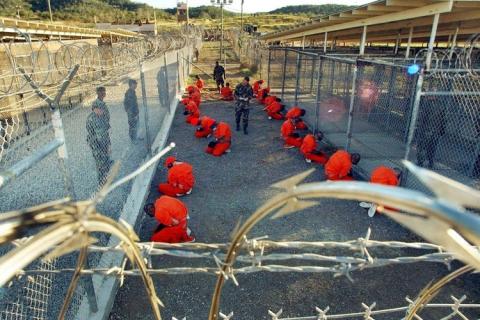
The second anniversary of President Obama’s promise to close the Guantánamo Bay detention center was recognized this week at an event about torture and human rights abuse that continue to take place there.

“There doesn’t seem to be an end in sight…as far as we can tell the [Obama] administration has no intention to close it at this point.,” Rini Chakraborty, Western Regional Director of Amnesty International USA, said at a panel discussion about Guantánamo Bay human rights abuses Wednesday at UC Berkeley.

That conclusion contradicts the assertion by White House spokesperson Adam Abrams that closing Guantánamo is still a “national security imperative.” While the White House says President Obama remains unwavering in his commitment to eventually close the center, more than a hundred detainees remain locked up for years without so much as charges brought against them, according to Chakraborty.

Among those featured at the Amnesty International event was former detainee Omar Deghayes who spoke via video conference from the United Kingdom, where he is a citizen. He spent six years at Guantánamo and was released in what even United States officials eventually considered a case of mistaken identity. He was living in Pakistan in 2002 when one night he was abducted from his home by Pakistani security personnel and later taken into American custody.

“They didn’t know anything about us, ” he said, recalling his first interrogations by Americans at the U.S detention center in Bagram, Afghanistan. “They never accused us of anything…then every year they alleged something and then realized it is completely false…then the next year they would make something up that was more believable.”

What led to Deghayes’ release was a deal with the United Kingdom, where his family conducted a wide campaign to pressure British politicians into action. President Obama has made two recent statements about Guantánamo, stressing the importance of and difficulties inherent in closing Guantánamo Bay, but neither statement gave any indication of when the closure would happen.

“[We need to close it] to make sure that we’re also living up to our values and our ideals and our principles. And that’s what closing Guantánamo is about — not because I think that the people who are running Guantánamo are doing a bad job, but rather because it’s become a symbol,” Obama said in a Dec. 22 news conference.

He failed to specify what Guantánamo might symbolize. It is fair to assume President Obama was referring to widespread allegations of torture and human rights abuse that take place in Guantánamo and U.S. facilities all over the world.

Deghayes shared horrid details of his treatment at the hand of U.S. prison guards. He lost vision in one eye in a beating and had his nose, finger and ribs broken in other instances of abuse. “There were physical beatings, interrogations, chains…we were not allowed to speak to anyone for days and months,” he said.

He also said other cases were worse than his. “Some died under torture, some were sexually abused, they were raped.”

Chakraborty said that Guantánamo’s closing would not spell an end to torture and abuses because there is an unknown number of overseas and secret U.S. interrogation and detention facilities. But she called closing Guantánamo “one very important first step,” adding that it would “show we have the kind good political will to ensure justice for detainees.”

Currently, Deghayes works with lawyers and activists to fight for accountability. “We want help from lawyers in the United States to bring cases [to trial] and help accountability…not just damages to rebuild shattered lives of [former prisoners],” he said.

Next month, the Berkeley City Council will vote on a resolution to welcome Guantánamo detainees who have been released and cleared as not posing a threat. Many such detainees have no country to be released to because of political circumstances. So far, the United States has refused to let these former detainees live in the United States and so a vote in favor of the resolution would have only symbolic value.

GOP is wrong: Most Californians want taxes

50

The Public Policy Institute of California generally has some of the most reliable polls in the state. It’s not a partisan group or part of anyone’s campaign, and the questions tend to be framed in a fair manner. So I take the results of the PPIC polls as a decent indicator of where the state is going.


And where it’s going right now could not be more clear: A vast majority of Californians in the latest PPIC poll want to see a June ballot measure to address the state budget, and they support higher taxes, particularly to save education. And 60 percent think the state should raise taxes on corporations.


It’s going to be tricky: Gov. Brown will need two Republicans in each house to go along if he wants to get a tax measure on the ballot. And the GOP is holding out for changes in the state pension system, which is a complex issue and will be hard to nail down in the short time that remains before the Legislature would have to vote on a June ballot measure. But Brown has the support of the public — even the support of most Republican voters — so it’s possible.


“I’m crossing my fingers,” Assembly member Tom Ammiano told me. “But I think we can get there.”

Can they shut off the Internet?

20

Proverbs for paranoids: If they can catch you asking the wrong questions, they don’t have to worry about answers.


— T. Pynchon


Indulge me here while I get a little paranoid and venture into a realm where it’s easy to get dismissed as a nutcase. And I’ll say this upfront: I really don’t know how much I ought to worry about this.


But: The Egyptian government just tried to decapitate the protests in the streets by shutting down the Internet, and it was relatively easy; four ISPs threw the switches at government command, and bingo — no more email or websites talking about how to toss the bums out. John Weber at the Bay Citizen (who is neither a nutcase nor a paranoid) says this is a first (although China and other countries have censored internet traffic and limited use, this is different; it’s a total sudden shutdown of what was an open service).


So it’s worth asking, anyway: Could that happen in other countries, including ours?


Well, you don’t have to be way out in loony land to be worried about the Lieberman Protecting Cyberspace as a National Asset Act. Yes, I realize all the talk of an Internet Kill Switch sounds batty. We talked about this today on sfbg radio, and Johnny told me I was way wacko: the Internet is so essential to commerce in this country that the corporate powers that be would never allow it to be throttled. Tens of billions of dollars would be lost in moments; the stock market and the banking system couldn’t function.


But the scary thing is that it wouldn’t be all the difficult. All you’d have to do is cut off the domain name servers and nobody could find anything. (Yeah, you can bypass that with website numbers — IP addresses — but most people don’t have those handy.) And one company, Sprint (I think) owns most of the switches that direct all the traffic in this country; shut them off and every city would be isolated.


The web was designed to be redundant; a natural (or unnatural) disaster in New York or Chicago wouldn’t cripple Internet traffic around the country. And I’m not saying that Obama (or his successors) would ever actually try to squelch protest in the U.S. by taking such a drastic step.


But the fact remains that technically, it wouldn’t be that hard to do what Egypt did, and shut things down for a while. And since so much of our political communication in this country is based on the web, it seems somehow that our ability to talk to each other in times of crisis is a wee bit fragile.


Or am I out of my mind here? It wouldn’t be the first time.


More John Ross poems

2

Thanks to some of the many John Ross fans out there, I’ve begun to collect a treasure trove of his poetry, much of it either unpublished or published in limited-circulation chapbooks. Even John didn’t have all of his work when he died, and there’s no central collection. So I’m going to post a couple more of my favorites here — and at somepoint, we have to figure out a way to publish the whole collection.


Here’s one from Running Out of Coast Lines (1985) called “Ohio.”


The snow is sooted


with the scrapings of burnt toast


and the crumbs of industry.


There are citizens asleep beneath it,


buried alive inside dark cocoons,


out of work and under the quilts


alarm clocks left unwound


to roll back the boozy winter,


just a deep snooze in February


the drifted fields and streets,


unscuffed, untraveled,


unhitched trailers,


going nowhere, no one


can find their car in Toledo anymore.


Snow is stasis, it sticks in Cleveland,


it freezes the veins of venom


inside the Cayahuga, gases


are suspended until further notice.


A man who once turned tractor tires


big as a house both of them


rolls over in the white bed


in Sandusky and tries to dream


only of the good parts.


Here’s “Kansas City” from The Daily Planet (1981)


Just when we absolutely had to split


she stepped up


like she owned a piece of history


and meant to lease it to us


right there on the spot.


I never knew Charlie Parker she said


slipping Bish the pic


in which she looked so slick


in a tophat and tuxedo


but I danced in the line


with June Williams


at the Jockey Club


before she run crazy in the streets


buckass naked up 18th


my she had a beautiful figure


June Williams


she said standing alone


in the doorway of the peeling porch


in the spring thundershower


pelting the helpless shrubbery outside.


O I toedance and play the vibes


and I can dance on tabletops too


only isn’t no work in Kansas City


since they merged the unions


the black union and the white one.


She wore a red beret and talked slow


loke she’d been slipping sweet-toothed wine


or else jamming skag, one.


Nope no work here in Kansas City


the machines play all the music now


they got a clique down at the union hall


things ain’t what


they used to be.


And one of my all time favorites, from The Daily Planet, is called “Wanted.”


 She is wanted


Catherine Louise Como


also known as


Kathleen May Wright


Manon Minette


Catherine Ann James


Manon James


Cathy Wright


Minon Manette


She is wanted


also known as


Catherine Share


Catherine Louise Share


Janice Thompson


Betty Cox


Darleen Cook


also known as


Suzanne Bronson


Donna Todd


Mary Thomas


Janet Gross


Betty Bowers


Jessica Daniels


also known as


Gypsy


she is wanted


born Xmas ’42


France a tough war


a known Caucasian


she is wanted.


She is wanted


and she has


brown eyes, brown hair


and small bullet wound scars


on her right sholder


and her right hip.


In two of the mug shots


taken several years ago


Sacramento Calif


her hair is pulled too taut


atop her ears


and her swollen lower lip


curls defiantly


at the police photographer.


In the third, taken months later,


the unbraided hawsers of her hair


tumble wantonly to her shoulders


and she looks like she wants to bite


the arresting officer


on the fat white folds


of his throat.


There are two sets of


small dangerous fingerprints,


checkforging fingerprints,


mail fraud fingerprints,


tilltapping fingerprints.


She is wanted by the FBI


she is wanted by the federal marshalls,


she is wanted in the U.S. Mails,


she is wanted in California, Oregon, Nevada,


and 47 other states.


She is wanted


and she is armed


and considered to be dangerous


and that small I think crescent-shaped scar


on her smooth white hip


drives me 74 way bananas


every time


I try to buy


a 20-cent stamp.


SFBG Radio: Egypt and the Internet

11

Protests erupting all over Egypt as democracy comes to life in North Africa — and the government’s response is to shut off the internet. Could that happen here? Johnny thinks Tim is just a delusional conspiracy nut. Check it out after the jump.

sfbgradio1282010 by endorsements2010

Obama addresses DREAMer Steve Li’s video

0

Earlier this week, I posted a video clip that Community College nursing student Steve Li, who narrowly avoided deportation from San Francisco to Peru last year, submitted to the White House in answer to Obama’s groundbreaking online State of the Union outreach effort. And yesterday, Obama addressed Li’s video (featured at 33.10 minutes into a Jan. 27 interview that YouTube’s Steve Grove moderated) as he answered questions on a wide range of issues submitted by and voted on by YouTube users.

Li is a supporter of the DREAM Act, which would allow undocumented youth who attend college and/or serve in the military to apply for citizenship. And while the DREAM Act failed to get the necessary votes last year, advocates like Li have vowed to keep up the pressure until it becomes law. And Obama indicated yesterday that he believes expelling undocumented youth who are ready to serve in the military or at college makes no sense.

“Let’s stop expelling talented, responsible young people who can staff our research labs, start new businesses and further enrich this nation,” Obama said

DREAMers like LI and their allies will doubtless take Obama’s words and try to get the president to back them up with concrete actions, so stay tuned as the seemingly endless fight to reform the federal immigration system in a humane way continues.

Don’t nobody give a damn: day 3

1

Unemployed construction workers protested outside UC Mission Bay’s Hospital building for the third day straight—but by early afternoon seemed to have got some clarification from UC officials over upcoming job opportunties at the site.


At issue is the tension between UCSF’s stated desire to be a good neighbor and put local residents to work, and the reality that while unemployment remains high throughout the construction industry, the communities immediately neighboring UC’s Mission Bay campus have been hard hit.


.“I want them to set up a system where we have a referral mechanism that includes CityBuild, and for UC to discontinue using DPR’s subcontractor Cambridge and other consultants,” James Richards, President of Aboriginal Blackmen United (ABU), said shortly before he met with UC officials. “Because if you don’t have a community-based organization helping UC make good on its commitment to be a good neighbor, then you are going to see stuff like UC’s voluntary local hire system. The idea that you can have a voluntary system without someone like ABU, which organizes folks from the community, is why this system is going to fail. And it’s why we only see token folks on the site. Because if you don’t work with the community, you won’t get the community to work. Really it’s an easy proposition: you have unemployed union workers at the gate. So put them to work.”

Just then Dwayne Jones, who worked in the Mayor’s Office when Gavin Newsom occupied Room 200, stopped by to chat with Richards and the ABU crew. 
Jones, who is now with Platinum Advisors, told the Guardian that he works as consultant for DPR Construction, UC’s prime contractor at Mission Bay. Fortune recently ranked DPR number 22 in its list of Top 100 companies to work for in the U. S.


Jones noted that his work with DPR had nothing to do with ABU’s local hire protest. “I’m only involved because I have worked with all these folks in the past and know all the players,” Jones said. “So, I’m helping these folks. At the end of the day, DPR’s concerns and mine are the same: I want to facilitate a process that maximizes opportunities for local folks.”

“These are all great people,” Jones continued. “I’ve worked for them for 15 years.”

Asked what the city can do to get the state-owned UC to hire more folks from economically disadvantaged communities on a project that isn’t financed by city funds, Jones said, “I agree that there is little leverage that the city has, given the constraints of the contract, so people need to be creative.”

Jones said he was not aware that Dr.Arelious Walker and the San Francisco Workforce Collaborative has issued a flier stating that they were gathering lists of names to be submitted to UC for jobs, amove that angered ABU members since they have been protesting for jobs at the site for over a year


“I was not aware of this group but there are a multitude of organizations trying to do good work,” Jones said. “And frankly this [multitude] was one of the things that led to the end of the lead agency methodology, because it caused so much division in the community. I hope we build a really strong coalition in the community that leverages its strengths.”

Jones gave UCSF credit for trying to move the local hire process forward
“I’m glad that they accepted the initial recommendation to do whatever they can to mirror the city’s local hire legislation,” he said. “Because although it’s voluntary, if it’s part of your culture and you embrace it, it’ll get done. And these are the people who have been out here for a year.”

Last December, the Board approved local hire legislation for city-funded projects. Mayor Gavin Newsom did not sign the legislation, which met stiff opposition from the building trades, and it’s fallen to Mayor Ed Lee to mplement this new law, which does not apply to state agencies,but had led to a parallel dialogue with UC.


“Much like any policy, implementation is the biggest challenge,” Jones observed. And until we do some inventory of which organizations, contractors, individuals and groups can do each piece of the work, it’s going to be a struggle. What I’m praying for is that local hire legislation allows us to get a bigger table. What I’m interested in doing is creating a pipeline of qualified workers, so that whenever something like this happens, I don’t have to hear the excuse that folks aren’t ready to work.”

Then Richards took off for a meeting with UC Vice Chancellor Barbara French that lasted two hours during which time rumors started circulated that Mayor Ed Lee had called French to try and help move the conversation along, as ABU members continued their protest and shared stories with reporters of how they came to be standing on a picket line in Mission Bay.

One worker, who preferred to remain anonymous, said he was frustrated by UCSF’s plea for workers to remain patient because jobs are coming soon. “We’ve been out here for one and a half years, so since before they did their demolition, and they have been playing games with us,” he said. “ Folks with ABU were promised jobs. But then they didn’t get anything. That’s what UC does. They try to pacify you and tell you stories, then the money gets taken out of the community, and another year goes by. So, if anybody says, why aren’t you more patient, the answer is that the whole area has been built with only a handful of people from our community. Especially now, when no one has jobs, and everybody wants to work here. We are not going into other communities and trying to steal their jobs. We just want to work here. But we could be protesting every day, until this whole stuff has been built. It’s a city within a city. Just look around you. We was patient. And all this stuff has been built and we got no jobs.”

Michelle Carrington, 58, a flagger and an operating engineer from the Bayview, said Dwayne Jones helped her graduate from Young Community Developers. “He got me in tears, he dropped me in the mud at 5 in the morning and made me do push ups, but I fought and kept on and graduated at the top of my class out of three women and 15 men,” she said. “But now we got people going behind the gate, folks who used to work for Dwayne Jones, like Dr. Arelious Walker, who are trying to say that they are the ones who have got the sign-up list for jobs here. But you ain’t been here marching, or down at City Hall fighting for local hire. And I saw Rodney Hampton Jr. on the number 54 bus, and I let him have it. I said, what’s this I heard about you and Walker? And he said he went to UCSF and tried to get a bid but was told ABU had it. So the only way to get in was for him and Marcellus Prentice to go to God’s house.  But Walker’s not out here. Meanwhile, we see folks coming from Hayward, Sacramento and Vallejo and working on this yard. Why is it such a hard decision to try and put us to work? It’s easy. Just take 5 or 10 of us, put us to work, and we will go away. Work smarter, not harder.

Laborer Sharon Brewer, who was born and raised in the Bayview and has been out of work for two years. She helped her granddaughter, Akira Armstrong, hold a protest sign and talked about losing her apartment because she lost her job.
“I had to move back in with my daughter because nobody lets you live for free,” she said. “I used to work for UCSF as a patient coordinator for physical therapy but I got laid off. Now I have to dummy down my resume to try and get a job making $8 an hour selling coffee and donuts .”

Jesse Holford said he had reached the fourth level of his apprenticeship as a Carpenter.
‘There are eight levels between an apprentice and a journeyman,” he said.

Jason Young and Alonzo McClanahan said they were unemployed laborers from  Bayview Hunters Point resident. Robert English, a carpenter journeyman from the Bayview, had been out of work 6 months. Tina Howards, a carpenter’s apprentice from the Bayview with four kids,  had been out of work for a year. And Keith Williams, a carpenter from the Bayview, had been out of work for nine months.


Fred Green, who has lived in the Bayview for 50 years and has five kids, said protesters were trying to remain as peaceful as possible.


“But an empty belly makes you do strange things,” Green said. “If there’s enough work for everybody, why should we be stuck at home while someone comes into my community and takes food out of my kids’ mouths. I got five kids and they all go hungry.”

Bayview resident Carlos Rodriguez has three kids and has been out of work for two years.
“They called me to work before Christmas but never hired me, “ he said.


Bayview resident Truenetta Webb has two kids and has been out of work for four months.
‘Some guys called me and took my information, but there’s been no work,” she said.

Troy Moor, who has lived in the Bayview for 47 years and has two kids, worked in January on Lennar’s shipyard development for 17 days.


“Two weeks ago, UC said they were going to hire four folks on ABU’s list, but they didn’t,” he said. “We don’t want it to get ugly out here. All we want to do is feed our families.”

Moor said he believes Mayor Ed Lee will ensure local hire is implemented on city-funded projects. “Ed don’t want no problem, we know him personally, we used to work for him when he was at DPW (the city’s Department of Public Works),” he said. “He’s a decent guy, as long as you keep the pressure on him.”

Moor speculated that if ABU blocked both gates to the UC Mission Bay hospital project, it would cost UC thousands of dollars.“Here at the front gates, we are visible, but we figure that if by next week, nothing is happening, we’ll start making them lose money,” he said.

Ed Albert, a retired painter and a Bayview resident for 57 years, said he was protesting for folks in his community.
“I grew up in the Bayview, I’m a servant of the Bayview,” he said. “I went from paperboy to contractor. I was a painter for Redevelopment and the San Francisco Housing Authority. But I don’t want a job. Who’d hire a 67-year-old guy with one eye? But I want to see my people get a job.”

James Amerson, a laborer with Local 261, said he worked on the Transbay Terminal in July, then got transferred to Pier 17.
“But when that was over, they didn’t bring me back to the Transbay, so I’ve been out of work since the end of December,” Amerson said. “They sent me to the Transbay as a flagger, and I rode by the other day, and saw they had an apprentice operator doing flagging.”


“When we are not working, we always come back to James [Richards]’s church at Double Rock,” he continued. “We meet at 9 a.m., Monday through Thursday. James is sick with diabetes. But he ain’t asking for anything. He’s here for the people, coming out here, buying food every day. We feed everybody. Yesterday he was feeding the police officers.”

Finally, Richards emerged from his meeting with UC officials. After he crossed 16th Street slowly, Richards was encouraged take a swig of orange juice from the back of ABU’s flatbed truck before giving folks an update.


“When DPR needs someone for a job, they’re gonna call Dwayne Jones, and then Dwayne will let us know,” Richards finally said. “There’s enough work for everybody. There’s hundreds of jobs, but I don’t know if they are in every trade. So, I feel good. But not so good that I can say that ten carpenters will be hired tomorrow. There’s not enough need for that, right now. But the work that’s there, when they call, you’re going to know it. Laborers, there are going to be no others going first. You guys are going first. So, I suppose next week, more laborers should be going, then more carpenters.”

Asked if ABU was going to continue its protest, Richards ‘said he thought folks needed to regroup.


“I think we got enough to not have to come out here tomorrow again. So, we’ll come back to church on Monday and let everyone know what happened. Then we’ll make a decision about what we are going to do. If the majority says, fuck this man, make ‘em hire 10 or 20 more folks, then that’s what we’ll do. But for now, we gotta regroup.”

Reached by phone, as ABU members prepared to pack up for the day, Cindy Lima, executive director of UC Mission Bay Hospitals Project, said she felt UC’s meeting with Richards was positive


“We clarified some misunderstandings and made some progress,” Lima said. “Our goal is still to create jobs for San Francisco residents and make this project happen. So, we are continuing to try and match people who need to go to work with available job opportunities. The bottom line is that there are a lot of people in this city who are out of work and a lot of groups with different intentions in mind and we get tangled in that process. So, maybe we need to have more dialogue about when jobs will become available. And we have made a commitment to talk more.”







BART removes anti-Palestinian ad

39

Offensive advertisements promoting a right-wing Zionist viewpoint of the Israeli-Palestinian conflict were removed from all BART stations this week. “They could be commonly interpreted as disparaging or demeaning to Palestinians as a whole,” according to BART spokesperson Jim Allison told us, saying the violated the district’s advertising standards.

The ad featured the words “Stop Palestinian Terrorism” above a picture of a face covered with a traditional Arab scarf, known as a keffiyeh, and the words “Teach Peace” above the picture of children playing soccer. The keffiyeh has evolved into a symbol of Palestinian resistance to occupation after former PLO leader Yasser Arafat began regularly wearing one. StandWithUs, a self-purported pro-Israel advocacy organization, produced and paid for the ad.

Per BART policy, StandWithUs was informed about the decision to remove the ads and asked to provide substitutes, which it did. The organization’s CEO, Roz Rothstein, told us she felt BART’s evaluation of the ad was “unfair…It would only be disparaging if you don’t look at it properly… the Palestinians deserve a future too, that was the message of the ad. Just as it is not disparaging for an Iranian to point a finger at a [Iranian President Mamhoud] Ahmadinejad, it is not disparaging to point a finger at Hamas.”

However, three individual who did find the ad offensive enough that they complained to BART, initiating the reevaluation of the ad’s content, according to Allison. One Palestinian American who thought they were offensive was Miriam Zouzounias who is the membership coordinator for San Francisco’s Arab Resource and Organizing Center.

She said the ad made her feel “sick to her stomach.” The keffiyeh is a common cultural and political item of clothing, she said, and she happened to be wearing one on her backpack when she noticed the ad. “I hate that [the keffiyeh] is being targeted, portrayed as what terrorists wear.” According to Zouzounias’s interpretation, the ad’s message was that Palestinians do not but should start to invest in productive and peaceful activities for their children, a message that was markedly untrue to her. “Kids playing sports…and doing art are the kind of outlets…Palestinian civil society works really hard for,” she said.

In responding to claims the ad might be offensive, San Francisco’s StandWithUs lay leader Mike Harris told us, “I don’t think that claiming [the keffiyeh] is cultural in that instance is really justified…You don’t see many people in their routine, everyday lives, even if they are Arab American, wearing scarves covering their faces.” He agreed the keffiyeh could be considered a cultural symbol if was adorned on someone’s head rather than covering a face because that it is how the scarf is normally worn.

The StandWithUs ad was response to a previous ad by a group with an opposing view of the conflict. That ad by Friends of Sabeel-North America, a organization that supports the Palestinian Christian liberation theology movement, advocated that “peace and justice” requires an “end to U.S. military aid to Israel,” referring to decades-long aid which has transferred more than $100 billion from the United States treasury to the state of Israel.

Harris said, however, that the ad was “very misleading. The website connected to it promoted BDS (Boycott, Divestment, and Sanctions against Israel) and [mentioned] groups that cannot be considered as promoting peace and justice.” Harris said true peace is “peace between Israelis and Palestinians” and not “peace without Israel.”

FOSNA administrative officer Sister Elaine Kelley said the problem with the StandWithUs ad is that it “turns the focus away from the topic of the occupation and toward the unfortunate violence of some Palestinians.”

SFBG Radio: Obama is like the Seattle Seahawks

1

Okay, these webcasts have been getting long, and nobody has the time, and we get it. So it’s a new era for SFBG Radio: This one’s less than nine minutes. Here Johnny explain why Obama is like the Seattle Seahawks (really, it makes sense). Take eight minutes to check it out after the jump.

sfbgradio1/27/2100 by endorsements2010

Don’t nobody still give a damn?

33

For the second day in a row, Aboriginal Blackmen United (ABU), a community organization that represents unemployed construction workers from Bayview Hunters Point, embarassed University of California officials by blocking the front gate of UC’s $1.7 billion Mission Bay hospital project.


ABU members claim UCSF is refusing to hire workers from local neighborhoods and they say they are prepared to go to jail if their demands aren’t met.

“At 6: 30 this morning, we were full of energy,” ABU President James Richards said on the first day of the protest. And ABU members recalled that they saw ” nothing but skunks”  when they arrived outside the construction site at 6 a.m.


“They’d locked up everything and guarded back fence, so we stopped everyone from coming in this front entrance, including management and cars,” Richards said, as he stood outside UC’s 16th Street and Fourth Street construction site, while ABU members chanted, “If we don’t work, nobody works.”


Richards said the police told employees to go around to the site’s back entrance, as they made calls, trying to figure out what was going on.

“We’ve been out here every day for almost a year and nothing has changed except the paperwork,” Richards continued. “We have qualified union workers standing outside the job site that are ready, willing, and able to work and if the community doesn’t work, no one works.”

But UC officials say they want the Mission Bay Hospitals project to be a model for the nation of how to put people to work, even though, as a state agency, they cannot mandate local hire requirements or give preference to any particular domicile.

“UC is very committed to maximizing local hire where we can,” Cindy Lima, executive director of the Mission Bay Hospitals project, said. “It’s unfortunate that there is a protest because it gives the sense that we haven’t been working with the community, when in fact we have been working with the Mayor’s Office, CityBuild and every stakeholder interested in this project, including ABU.”

Richards said ABU decided to mount their protest this week for two main reasons: to challenge UC’s claims that it has been hiring more local residents at the site, and to register anger over the distribution of a  flier that encouraged local residents interested in working at the UC site and other construction projects in town to sign up with a group called the San Francisco Workforce Collaborative.


The flier, which fueled suspicions that UC is trying to divide the city’s disadvantaged communities, named Dr. Arelious Walker as President of BayView Hope Community Development Corporation.


“We at the San Francisco Workforce Collaborative partnered with BayView Hope CDC are currently doing sign-ups in ALL trades to afford you the opportunity to work on these projects,” the flier stated.


Richards was particularly outraged that Walker was calling his group “the San Francisco Workforce Collaborative,” since this was the name UC used to describe its community outreach efforts last year.


“We guys were with Walker when he was fighting the Nation of Islam’s attempt to stop development at the shipyard, so it hurts so bad to see this,” he said, pointing to a copy of Walker’s flier, which listed Jan. 25 and Jan. 27 as sign-up dates at Walker’s Gilman Avenue building.

“All I know is that ABU is here for the long run and we’re prepared to go to jail,” Richards said. “Never again will we stand by and let people come into the southeast community and take our jobs. We’re going to fight until the end.”


“When Dwayne Jones was with the City, DPR [which is UC’s construction contractor] was trying to notify him about requirements for job hire, and Jones was supposed to notify ABU for job placements, but now we find out that they have brought in another consultant,” Richards said, noting that Jones has left the city and now works for Platinum Advisors. “And now all of a sudden, UC hires this company and is giving this list to DPR?” Richards continued, noting that UC has hired a consultant called Marinus Lamprecht to handle job submissions at its hospital site, but no one from ABU had been hired, despite the fact that Richards submitted five names to UC, months ago.


“We’ve been demonstrating at this site and marching down the street, and UC was telling us at that time, we’re gonna put some of your folks to work,” Richards said. ” All I know is that ABU is working diligently to try and get our people hired. We want to be the first organization, not the only organization to have people work here. After demonstrating and protesting for over a year, we feel that the people who brought UC to the table and supported the city’s new local hire legislation have the right to work first. But it always seems that the powers-that-be go outside our community to cause division amongst the community.”

“We’ve been here since 6 a.m. today and this is the community,” Richards continued. “No so-called community leaders have joined forces with us, including pastors and political leaders. And that’s why we say, don’t nobody give a damn about us, but us.”

Reached by phone, UCSF’s news director Amy Pyle clarified that in recent weeks UC has committed to voluntary hiring goals at the site. The goals start at 20 percent, and increase 5 percent each year until the completion of the project in 2014, Pyle said.

This means UCSF’s voluntary local hiring plan was put together shortly after the Board of Supervisors approved Sup. John Avalos’ mandatory local hire legislation for city-funded projects. Former Mayor Gavin Newsom refused to sign Avalos’ legislation, leaving Mayor Ed Lee to figure out how to implement Avalos’ legislation, which mandates 20 percent local hire this year, increasing 5 percent each year until mandatory 50 percent goals are reached. And UCSF officials stress that, as a state agency, UC can’t have quotas and isn’t subject to the city’s local hire mandates, since its hospital project is not city-funded. But they note that the university has set voluntary local hiring goals, held monthly meetings with stakeholders, and is currently working on carving out financial incentives to encourage contractors to achieve these voluntary goals.

“Our voluntary goals are not a result of their protest,” UCSF news director Pyle said. “We have been aware of the local hire concerns since before they were protesting. So, I don’t think people should expect there to be a quid pro quo.”

And Lima observed that UC has tried to maximize local hire on construction sites, since 1993. “It’s ranged from 7 to 24 percent, so the average has been about 12 percent,” she said, stressing that a lot has changed in recent years, regarding UCSF, local hire, and the overall economy.

“For a start, this project is six times larger than anything we’ve done,” Lima said. “There’s been a shift in capacity of community groups. The city has centralized its actions, concerning local hire efforts. And now it’s advancing its local hire goals, and then there’s the economy.”

Lima said that it’s because of this changed landscape that UCSF is ramping up its efforts to hire local residents.

“While we cannot mandate that our contractors hire locally, we are holding monthly meetings that are open to all community stakeholders,” she said. “We are doing extensive outreach to offer any stakeholders to submit names. We are keeping a list so as jobs become available. We are able to provide those names to unions for job call opportunities. And we have tried to carve out part of our payment to contractors to put it into an incentive program if they hit those goals.”

Lima said the final details of the incentive plan haven’t been worked out.
“But they are substantial,” she said.

She insisted that ABU did not succeed in completely shutting down UC Mission Bay Hospitals’ construction site in the last two days, and she claimed that if the goals of UCSF’s voluntary local hire program are reached, UC will double its historical local hire average, eventually.

Lima pointed to UC Mission Bay’s website where minutes of a Jan. 13 meeting between UCSF and representatives for the local workforce are posted.

Those minutes show that UCSF has agreed to work with its Mission Bay construction contractor DPR “to ensure that qualified San Francisco residents have access to jobs, Lima said, and that names can be submitted to consultant Marinus Lamprecht, using submission forms available here.

UCSF also intends to prepare trade-by-trade name call opportunities and has promised to report on actual local hiring progress at monthly community workforce meetings to be held the second Thursday of each month, she said.


UCSF’s news director Amy Pyle clarified that under UC’s voluntary local hire program,  “local residents mean people who live in San Francisco generally.”


“Of course we are looking to be good neighbors and hire people from an area we know has been hard hit,” Pyle said.

Meanwhile, Lima said UC has not entered into any contract with BayView Hope CDC and requested a copy of Walker’s flier to see if his group “overstepped.”
“For many years, UC did have a memorandum of understanding with the community and was working with a group called the San Francisco Workforce Collaborative,” Lima clarified. “The name has lasted, but the organization has changed. It was very successful historically, and there’s been an effort in the community to resurrect that group and make it stronger, but the landscape has changed, so we decided to open the doors to everybody.”

According to Lima, any interested party can now submit names to UC’s sign-up list.

“I carry that list around with me,” Lima said, promising folks will be hired in the order their names are received, if they match available opportunities.

“The contractors talk to the subcontractors who give them their best monthly estimates,” Lima said, noting that the subcontractors arrive with a core crew and then call the unions to fill their remaining needs.


Lima said part of the current uproar over local hire at UC Mission Bay’s hospital site stems from the misperception that there are lots of jobs available now.


“Job opportunities should ramp up in May, but right now, they are installing 1,052 structural piles,” she said. “So if there is an opportunity for a carpenter or a laborer to get decks built, we call the union.”

Lima added that folks are welcome to review data that UC’s compliance officer gathers.
‘It’s in our and the community’s best interest to put people to work,” she said.

But so far UCSF’s stance has continued to angered ABU members. They note that the university’s local hiring rates hovered at less than 10 percent until a series of ABU-led community protests in late 2010 forced UCSF and its contractor DPR  to request voluntary reporting of worker residency. 

And while UCSF claims that local employment is on the rise at the site, ABU questions the reliability of the university’s self-reported performance at the site. As a result, ABU imembers continued to protest at the site Jan. 26, even as efforts appeared to be underway to address their concerns.

“Dr. Walker called us, he was apologetic,” ABU’s Ashley Rhodes told the Guardian Jan. 26, referring to BayView Hope CDC’s flier. “And the Mayor’s Office just called, saying they wanted to talk with James [Richards, ABU’s leader]. So, that’s where he is right now. But tomorrow we may go to jail.”

Rhodes noted that on Jan. 26, DPR hired one carpenter from ABU’s list.  “And a female receptionist is being interviewed, but we still have three out of five names we submitted last year to bring in,” he said.

Outside UC’s Mission Bay construction site , Michelle Carrington, a 58-year-old Hunters Point resident, continued her protest for a second day straight.

“I’ve been out of work for ten years,” Carrington said, noting that she has over a decade of construction experience as a flagger and an operating engineer.
“I graduated from YCD in 1999,” she said, referring to Young Community Developers. “Dwayne Jones trained me. He just left the Mayor’s Office and now he is working to help us get jobs.”

What if everybody ran for mayor?

66

I mean, not everybody. I’m not running. Tom Ammiano isn’t running. Mark Leno isn’t running. Ed Lee isn’t running, unless he is.


But as the progressives think about the 2011 mayor’s race, there’s a strategy that’s been floating around, mostly in bars, that’s crazy and I’m not even sure I’m serious about it myself, but it might actually make sense.


See, right now there’s no one progressive candidate that everyone can get behind. And there’s no single progressive candidate who has the resources and the citywide base to win a contest where millions of dollars will be spent, not only by the candidates but by indepenent expenditure groups.


So suppose a whole bunch of people ran? Suppose the field included Aaron Peskin, Chris Daly, David Campos, John Avalos, Ross Mirkarimi (although he might want to run for Sheriff), Eric Mar … a half dozen decent candidates get in the race, each of them bringing along constituencies who might not otherwise vote. And in the end, it all comes down to ranked-choice voting, and as we know from the Oakland mayor’s race and D10, anything can happen.


Aaron Peskin gets 15 percent of the vote, comes in first, gets enough second-place votes and suddenly — he’s mayor! Take that, Arthur Evans!


Seriously, the point isn’t to elect Peskin or any other individual. It’s too see if a concerted progressive campaign, involving candidates who work together, the way Jean Quan and Rebecca Kaplan did in Oakland, could get enough voters excited and involved to put one of the candidates over the top.


Again: I’m not even sure this is a good idea. But it’s worth thinking about.

Obama can’t “win” the future

5


Most of the pundits in the center, like the New York Times, liked Obama’s State of the Union Speech. And for good reason: It was a centrist, cautious speech that promised lower corporate taxes, conservative education policy, lots of money for the military and cuts for everyone else. Two things, thought, that stood out for me:


1. Obama still believes in government. He made it very clear that he thinks the public sector has an important role to play, not just in regulation but in spurring and stimulating economic growth. He’s going about it all wrong, but he did remind people that government — the public sector — won the space race, gave birth to the internet, built the interstate highway system and in the process created tens of millions of jobs. The GOP is already going batshit about it; they got the message.


2. The crux of the speech, the “Sputnik Moment,” was this line: “To win the future, we’ll have to take on challenges that have been decades in the making.” Win the future. In fact, over and over, all night, we heard about “winning the future.”


But since when was the future a war, something to be fought with an enemy? To “win” the space race we had to “beat” the Soviets, which we did (ha ha, we got to the moon first). To “win” the future, do we have to beat someone else? The Russians aren’t up for winning much of anything these days, but Obama seems concerned about competing with China; do the Chinese have to “lose” the future for us to “win?”


It wasn’t a random choice of words. The White House speechwriters take this stuff very seriously. “Winning the future” is a catchphrase that the Obama administration wants to be attached to. And it’s a bad one.


The future of the planet can’t be about winning. When you look at the serious crisis facing the world — climate change that’s going to transform agriculture, put the homes of hundreds of millions of people under water and alter the way every single human being lives — beating China isn’t really relevant. Thomas Friedman says the world is flat, and he’s got a point — if Obama were able to articulate a message of cooperation, of seeking peace and working together with other nations, it would have been a remarkable speech.


Instead: Winning the future. What a loser.


DREAMer Steve Li asks Obama for a moratorium

0

Steve Li is a nursing student at San Francisco’s City College who narrowly avoided deportation to Peru last November, after a massive outpouring of community support and Sen. Dianne Feinstein’s decision to introduce a private bill to delay his removal from the United States. Now,  Li has issued a short video in anticipation of the President’s State of the Union address, in which he asks Obama  if he can commit to a moratorium on deportations of DREAM Act-eligible youth.

Watch Li’s video:

then watch the President’s address to see what happens.

Lyon Martin clinic facing closure

7

Lyon Martin Health Services — a legendary health clinic that specializes in women’s and LGBT health, celebrating its 30th anniversary last year — is having serious financial problems and could close down as soon as Thursday.

Rumors of the closure have been circulating all day, with Sup. Scott Wiener telling the SF Appeal that a source told him the clinic was closing. And the Guardian has now learned that at least one patient, health educator Catie Magee, had an appointment for Monday canceled by the clinic and was told, “We have to cancel your appointment because Lyon Martin is closing.”

The clinic is the only free-standing community clinic in California that serves to women and transgender people in a place sensitive to sexual and gender identity. The non-profit closure of the clinic would be a great loss to the community since it also provides healthcare regardless of one’s ability to pay.

“If you’re uninsured and your trans or a lesbian, you’ve probably been to Lyon Martin,” transgender labor organizer Gabriel Haaland, who used the clinic for his transition in 1997, told us. Unlike most medical providers, he said Lyon Martin offered hormone shots and other services to anyone who sought them “without making you jump through a whole bunch of hoops.”

Haaland and other supporters of the center plan to gathered tonight at 7 pm in Room 301 of the LGBT Center (1800 Market) to discuss the center and what can be done to save it.

The clinic’s namesakes, pioneering lesbian and feminist activists Del Martin and Phyllis Lyon, were the first same-sex couple to be issued a marriage license by the city back in 2004, and they were married by then-Mayor Gavin Newsom on Feb. 16, 2004,

In the past year, the clinic served 2,500 patients. Elizabeth Sekera, the clinic director told us that the clinic even sees patients outside the county of San Francisco and unfortunately if the clinic closes, those patients won’t even be covered under the city’s health access program, Healthy San Francisco, since they do not live here.

Sekera said she was unable to comment on why and when the clinic will be closed. She also did not give any information on where patients would be referred to but did say that the staff at Lyon Martin has opposed the closure of the clinic because there isn’t a transition of care plan and the abandonment of patients is unethical.

It is uncertain whether the clinic, which is funded solely by donations, is closing due to funds. The clinic is run by about 23 staff members, interns, and lots of volunteers. The support section in its website pleads, “We need your help! We need it now.”

Magee said the loss of Lyon Martin would be huge blow to the city, particularly after New Leaf, which also served an LGBT clientele, closed last year. “It’s a shame,” Magee said, noting Lyon Martin’s excellent “reputation as a place for women’s and LGBT healthcare.”

Charlene Hawek, who has been a patient at the clinic for two years, expressed concern for where she will go if the clinic does close. When asked if there is any other option she responded, “There’s the Tom Waddell center but it’s not the same.”

Sekera hopes to see the clinic “remain open, possibly under a different name, or a full institution to exist in the same state, live for another 30 years.”

Republicans worry about their “brand”

12

Like every political junkie in this state, I was fascinated to hear that Republican operatives think there’s a problem with their “brand.” It’s simple: Even when the state’s voters approve horrible right-wing anti-tax measures, they don’t seem willing to vote for Republicans. The way the operatives discuss the situation, it’s all about messaging; I think Robert Cruickshank at Calitics has a better analysis: “The CAGOP has made itself unelectable by being a white man’s party.”


It runs even deeper, though. In order to win a statewide GOP primary, you have to:


1. Oppose all taxes


2. Oppose gun control, even to the point of insanity


3. Support harsh crackdowns, bordering on open racism, on immigration and immigrants


4. Either be rich or toady up to the rich


And those positions aren’t winners in a statewide race.


The Democratic Party, for better or for worse (often for worse) has no such litmus tests. Yeah, it’s hard to get elected without labor support, but the Demos are much more of a “big tent” these days. Jerry Brown is more of a fiscal conservative than a lot of Republicans (who love to cut waste as long as it doesn’t hurt their rich supporters), but the tax-and-spend types like me all voted for him. Our senior senator, who happens to be the most popular politician in California in poll after poll, is only barely to the left of Joe Lieberman.


As long as the far right controls the part in what’s very much a centrist kind of state, the GOP isn’t going anywhere. Brand or no brand. 

Why is Guantánamo Bay still open?

5

Amnesty International reminds us that despite President Obama’s promise two years ago to shut down the Guantánamo Bay detention center, it remains open. The activist organization will hold a panel discussion on torture and human rights tomorrow (Wed/26), which is the second anniversary of his promise.

The event is free and open to the public will take place at 7:30 p.m. at 2050 Valley Life Sciences Building on the UC Berkeley Campus. The panel will provide detailed summary of human rights crimes that continue to take place at the detention center. Among the panelists participating is former Guantánamo detainee Omar Deghayes, who has never been charged with or convicted by the United States. (Asaf Shalev)

Daly’s Dive has become a progressive gathering place

36

In the three weeks since Chris Daly left the Board of Supervisors, the bar he bought – Buck Tavern, to be renamed Daly’s Dive next month – has become a popular place for progressives to commiserate and conspire with one another. And many of them plan to gather there this evening for the State of the Union speech by President Obama, who has been a disappointment to many leftists.

“The good news is for this year’s State of the Union, we have a pub, we’ll be serving the hard stuff, and the faithful might need that,” said Daly, who will be behind the bar.

Daly and allies like Aaron Peskin were an early supporters of Obama’s presidential aspirations, back in the primaries when Gavin Newsom and most of San Francisco’s political moderates were backing Hillary Clinton. So how does Daly feel about Obama now that the president has capitulated to conservatives on tax cuts for the rich, requiring all Americans to sign up with health insurance companies, and maintaining his predecessor’s approach to “fighting terrorism”?

“I can’t say that I’m disappointed because I didn’t have the same expectations other people had,” Daly said. And he maintains that supporting Obama in 2008 was the right thing to do for the country, and a smart political move for San Francisco progressives.

“Barack Obama gave us two more years in San Francisco City Hall,” Daly said, arguing that his campaign maintained the ascendancy of progressives in San Francisco and helped Sups. John Avalos and Eric Mar (and probably Board President David Chiu, although Daly didn’t mention the man he has likened to Judas for betraying the progressive movement) win close races for the Board of Supervisors and for progressives to take over the DCCC. “Obama and the campaign around him helped us very much in San Francisco in 2008.”

But like most progressives, Daly does admit that Obama hasn’t realized his potential as president. While Daly thinks health reform was important, even without a public option, “he was too quick to compromise and the rest of his agenda is in the shitter.”

And that’s likely to be a fairly mild reaction for what could be a cantankerous crowd bellying up to the bar (1655 Market St.) for tonight’s speech, which starts at 6 p.m.

Historic preservation fight at the board

3

The supervisors will hear a recommendation from the Rules Committee Jan. 25th to appoint Richard Johns to a seat on the Historic Preservation Commission. These things typically aren’t that controversial — but there will probably be a fight over this one. And it’s significant because of what it says about the new board committees appointed by board President David Chiu.


Background: The Historic Preservation Commission was created by the voters with the passage of Prop. J in 2008. Then-Sup. Aaron Peskin authored the ballot measure, which gave the panel real teeth, the ability to prevent the destruction of important pieces of local history — and mandated professional qualifications for six of the seven members. The goal: Prevent a mayor who cared nothing about preservation from appointing hacks and cronies to the board.


Seat number 4, for example, is set aside for a professional historian, someone with exensive academic background in California and Bay Area history.  As Mike Buhler, director of the San Francisco Architectural Heritage foundation, noted in a Jan. 3, 2010 letter to the Rules Committee:


The minimum professional qualifications in history are a graduate degree in history or closely related field; or a bachelor’s degree in history or closely related field plus one of the following:
1. At least two years of full-time experience in research, writing, teaching, interpretation, or other demonstrable professional activity with an academic institution, historic organization or agency, museum, or other professional institution; or
2. Substantial contribution through research and publication to the body of scholarly knowledge in the field of history.


Just before leaving office, Newsom nominated Richard Johns, a lawyer, to that seat. Johns has been active in the movement to restore the Old Mint and create a San Francisco History Museum, and he clearly has more than a passing interest in local history — but he doesn’t even remotely meet the qualifications for this seat.


He also happens to be married to Eleanor Johns, who was chief of staff to Mayor Willie Brown.


Johns has done some good volunteer work, but according to Peskin, he’s a perfect case study in what Prop. J was supposed to prevent. “We wrote the measure to ensure high professional standards and qualifications for each seat,” Peskin told me. “If they can get away with this, the voters got bamboozled.”


Or, as Robert Cherny, an eminent professor and historian at San Francisco state, noted in a Jan. 17 letter to the commitee:


I am concerned that this nomination will set a precedent that the professional qualifications established by the charter can be ignored if a mayor wishes to do so.


The other problem with Johns became clear in his Jan. 20 testimony to the committee, when he talked about the important of the need for change and growth in San Francisco — key words that anyone who has followed local politics knows are the mantra of developers who want to get rid of historic landmarks.


I asked Sup. David Campos, who was on the previous Rules Committee, about Johns’ qualifications, and he told me that you could make a strictly legal argument either way; the charter language could be interpreted by a court to allow Johns to slide in. But he also said he didn’t support the nomination. “I had to ask,” he told me, “is this the best we can do?”


Good point — this is a city full of professional historians. Is Richard Johns the best we can do?


The current Rules Committee — with two conservatives (Mark Farrell and Sean Elsbernd) and one progressive (the chair, Jane Kim), apparently thought so. His nomination was approved unanimously.


It’s only one seat on one commission, but the precedent is important: You can’t set professional standards for commissions then let the mayor ignore them an appoint his political allies. And historic preservation is under attack in the city: Sup. Scott Wiener just announced that he’s calling for a hearing on how the city’s “prioritization of historic preservation is impacting, and possibly undermining, other key policy objectives.” In a press statement, he complained about too many things having to go through the Historic Preservation Commission.


Most nominations that get approval at Rules slide right through the full board. That’s the problem with a Rules Committe stacked with conservative, pro-development supervisors.


In this case, though, we can expect a bit of a fuss. I know the progressives on the board won’t be unanimous in approving Richard Johns. 

Newsom’s (unbelievably short) resignation letter

10

When I clicked on the link to “Mayor resignation” on the Board of Supervisor’s website, I expected a video of Newsom making an incredibly gushy and long-winded resignation speech to pop up.

Instead, I found a one-sentence resignation letter that Starr Terrell faxed to Clerk of the Board Angela Calvillo at an unspecified time on Jan. 10, 2011.

“I am resigning my position as Mayor of the City and County of San Francisco, effective this date, so as to assume the role of Lieutenant Governor of the State of California,” Newsom wrote.

The brevity of Newsom’s letter—and the seemingly endless time it took him to vacate the post–reminded me of something Newsom said the Friday before he resigned.

We were all standing outside Room 200, listening to Newsom go on about how great it was that the outgoing Board had nominated Ed Lee to be the new mayor, especially since Lee reportedly didn’t even want the job—an attitude that apparently impressed Newsom when reviewing potential candidates for both the mayor’s and D.A.’s post.

Anyways, some brave reporter asked Newsom something about his swearing-in ceremony as Lt. Governor, which was slated to take place at 1:30 p.m. Monday, Jan. 10.

At which point Newsom said, “Willie Brown said it best, when he told me, don’t worry, I’ll be at your funeral Monday.”


SFBG Radio: The economics of pearl handled dildos

2

In today’s episode, we discuss the economics of pearl-handled dildoes — and how supply, demand and income inequality impact the unemployment rate. Just in time for the State of the Union speech. You can check it out after the jump.

sfbgradio1/24/2010 by endorsements2010