• No categories

Politics Blog

Ting’s “knee-jerk car populism”

31

By Asaf Shalev

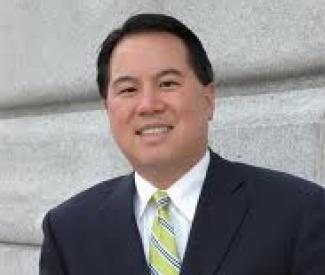
Assessor-Recorder Phil Ting’s campaign for mayor is trying to rile up San Francisco’s car drivers with a new petition called “San Francisco Parking Ticket Overload,” but it seems to be misrepresenting the situation to score election season points.

In the recent email launching the petition, Ting provoked drivers to help “tear up the unfair ticket plan” in order to prevent “turning the whole city into a ‘parking trap.’” Ting said he opposes the MTA’s plan to jack up the enforcement of parking restriction by dolling out more tickets, which was reported in C.W. Nevius’s column. But Ting’s email also made it sound as if parking fines were going up and the MTA was launching a new initiative targeting drivers.

MTA spokesperson Kristin Holland told us that it isn’t true the agency has any intention to increase the cost of parking fines. In response, Ting spokesperson Eric Jaye (who ran Gavin Newsom’s two mayoral campaign) told us, “We are taking [the MTA] at their word and we are very happy to hear that,” insisting the campaign honestly thought that rates were going up.

Tom Radulovich, a transportation policy expert who founded Livable City, called Ting’s messaging and the stance behind it “knee-jerk car populism” and a “saber-rattling election stunt.” He said Ting’s campaign is playing to the fears of drivers who are the more privileged commuters of the city, with most studies showing motorists don’t pay the full costs of their impact to society.

“Even if [Ting’s claim] was true, the premise that motorists have an undue burden is untrue,” Radulovich said. Even with increased enforcement, drivers can still avoid fines by obeying the laws whereas all Muni passengers have had to bear the brunt of higher fares, which doubled under Newsom’s tenure. “I’d like to see someone saying how transit passengers have an unfair deal,” Radulovich said.

Jaye takes a different tone than some of the campaign missives. According to Jaye, what Ting opposes is that the increase in tickets is not the result of policy or enforcement considerations but specifically meant to increase revenue for the city. “We are just trying to pursue a revenue generating policy that is a little more progressive,” Jaye said. Guardian Executive Editor Tim Redmond also recently made the point that parking tickets were meant primarily to keep cars flowing in urban areas and not as a revenue source, but he also noted that motorists don’t pay for their impacts and should pay far higher car taxes.

But Radulovich’s question is left unanswered: “Are any of the candidates going to talk about the plight of transit passengers?”

Calling all John Ross fans

0

I’m compiling some of John’s best poetry for the next issue of the Guardian, and I’m thinking we might try to collect them all in some sort of anthology. But I only have a few of his chapbooks, and I don’t know if anyone has all of them. If you have any of the books on this list, can you give me a call (487-2554)?

  • Jam (Mercury Litho-Bug Press: 1976)
  • 12 Songs of Love and Ecocide (1977)
  • The Psoriasis of Heartbreak (1979)
  • The Daily Planet (1981)
  • Running Out of Coastlines (1983)
  • Heading South (1986)
  • Whose Bones (1990)
  • Jazzmexico (Calaca de Pelón: 1996)
  • Against Amnesia (Calaca de Pelón: 2002)
  • Bomba (Calaca de Pelón: 2007)

SFBG Radio: Why is Reagan still an icon?

4

In Republican land, Ronald Reagan is still such an icon that when his son’s book raises questions about whether he was mentally competant to be president, the GOP squawk machine goes into overdrive. But as Johnny and Tim discuss on today’s show, Reagan wouldn’t get elected to anything in today’s Republican Party — he raised taxes. 

HipsterRickshawReagan by endorsements2010

CA Labor stats: Bay Area schools shed jobs, department stores hire

A new set of labor market data released Jan. 21 by California’s Employment Development Department reveals that unemployment in San Francisco was 9.2 percent in December 2010, compared with 12.3 percent for California and 9.1 percent for the nation during the same period.

Marin County had the lowest unemployment rate of all California counties in that month, and San Francisco had the fifth lowest. Worst off was Imperial County, with an unemployment rate of 28.3 percent.

In San Francisco, Marin, and San Mateo counties, there were 800 more jobs than in the previous month, according to the data. Yet while some sectors actually hired new employees, others continued to let people go.

Government in the three counties cut back by 2,200 jobs — mostly in local public schools. Around 700 jobs in construction were slashed. Some 200 jobs in arts, entertainment, and recreation were lost.

Retail, especially clothing and department stores, added 1,700 jobs — but that fell short of the average gain of 3,000 new retail jobs during the holiday season. Leisure and hospitality gained 500 jobs, restaurants and bars added another 500, and hotels added 200 jobs.

The big picture for the three-county area from December 2009 to December 2010 is sobering, with a total loss of 12,800 jobs, or 1.4 percent. The greatest losses occurred in finance, construction, transportation and utilities, government (especially schools), and health services. 

On a positive note, manufacturing recorded its first net gain — 100 jobs — since 2007.

On the whole, the Bay Area’s employment situation continues to look pretty grim. To all the job seekers out there: Good luck.

What you can do for your country

31

The radio’s been full of stories about the Kennedy inauguration, about that cold, snowy day in 1961 when a young president inspired the nation and the world with a call to civic engagement and sacrifice. Kennedy spoke of the torch being passed to a new generation, and in some ways, he was the first real post-War president. But his most stirring line — “Ask not what your country can do for you; ask what you can do for your country” — was very much a WWII-era sentiment, a notion that everything wasn’t about getting rich and demanding things, but that America stood for public service.


Not surprisingly, the taxes on rich people back then were much higher, and the income and wealth gap much smaller, and the middle class much larger. There was, of course, terrible poverty, but Kennedy and his successor, Lyndon Johnson, talked about using government resources to end it. The idea of a “war on poverty” wasn’t even that radical.


It’s stunning to me how quickly that spirit vanished.


The Vietnam War, the Nixon-era crackdown on protesters, COINTELPRO, the war on drugs … by the 20th anniversary of that famous speech, it was all over. And the anthem of the late 1970s, in the leftist circles where I hung out, went like this:


Ask not what you can do for your country


What’s your country been doin’ to you?


And when Ronald Reagan said government is not the solution, it’s the problem, lots of those Avengers fans cheered, too.


Now it’s almost impossible to get anyone to support even modest taxes to pay for basic government services, and the public sector is under constant attack.


Man, if I were into conspiracies, I could go a long way with this one.


Is Ed Lee a caretaker?

36

It’s not a moot question. Already, the Chron’s C.W. Nevius, in an otherwise innocuous column on Question Time, tossed out this nugget:


Lee may be the interim, but don’t kid yourself. There are people right now who are asking him if he’d like to make a run for the office in November.


This, of course, is the problem with the concept of a “caretakler” mayor. There’s no law, no rule that says Ed Lee can’t decide round about mid-summer, shortly before the filing deadline, that he’s changed his mind, loves the job, and can’t resist the siren song of his supporters urging him to seek a full term.


And hey: maybe he does do a great job in the next few months. Why shouldn’t San Franciscans have the right to elect him in November?


Of course, he promised that wasn’t going to be part of the deal. And if he had given any signals that he might want a full term, Sup. Sean Elsbern, who was adamant that he wanted a caretaker, wouldn’t have nominated Lee. David Chiu, who might want to run for mayor himself, would have been a lot less likely to vote for a potential rival. Lee the candidate wouldn’t have gotten the job.


So when he should up for Question Time, one of the supes ought to ask him: Right now, in public, for the record, will you tell us — is there any possibility that you will consider running in November?


I’m not saying the guy should be forced to give up his civic and Constitutional right to seek public office; as I said, that’s why I never liked the caretaker thing. But if he’s thinking of running, the city needs to know that, now, so we can work with him on an honest basis. And if he’s not, he needs to tell Nevius’ sources to quit spinning rumors.


Net neutrality: “The American Way”

Media Alliance, an Oakland-based organization advocating for press freedom and media access, has teamed up with San Francisco-based Bad Monkey Studios to produce a quirky cartoon about net neutrality called “The Internet You Need.”

The short film follows a December vote by the Federal Communications Commission approving a set of net neutrality rules.

Critics say those regulations fall short of what’s truly needed to maintain an even playing field for all internet users, and Media Alliance is encouraging people to write to their congressional representatives to push for stronger rules.

(There’s a broad array of opinion as to whether the FCC vote resulted in protecting an open internet, or whether it sold consumers short in favor of internet service providers.)

The Media Alliance and Bad Monkey cartoon and website seem like an attempt to make the issue accessible to those of us who aren’t technology wizards. The emphasis on soda pop and BBQ strikes us as a little weird, but sparking dialogue about net neutrality seems like a worthy goal.

Here’s the pitch from Media Alliance: “Net Neutrality really means ‘Internet Freedom.’ The freedom for you to put up what you want when you want to and have it seen equally by everyone in the world. It means what you put up has as much chance of being seen as something created by a major corporation. It’s innovation from the ground up in the truest sense. It’s the American Way.”

KUSF meeting venue changed

0

By Carly Nairn

In an effort to accommodate more participants, tonight’s informational meeting and rally in support of KUSF – which was suddenly shut down this week – has changed venues from Fromm Hall on USF’s campus to Presentation Theater on Turk and Masonic.

The meeting with discuss KUSF’s recent boot from the 90.3 signal to make way for USC’s Classical Public Radio Network (CPRN) nonprofit takeover of commercial classical music outlet KDFC. Following secret negotiations, CPRN purchased the rights from USF to broadcast on the signal last week.

Both the CPRN and the university did not inform KUSF’s staff about the purchase until yesterday morning. USF President Rev. Stephen A. Privett will be in attendance to answer questions about the future of KUSF and its changed format to an online-only radio station. The meeting is still scheduled at 7pm.  

Blue Shield: pay up or die

0

A Blue Shield customer from San Diego emailed Consumer Watchdog recently to complain about a 59 percent rate hike. his comment, according to Consumer Watchdog’s Jamie Court:


There is no market for health insurance. You have two choices: 1. Pay whatever they say. 2. Die.


That’s about it, right there.


You know why nobody in Sacramento can do anything about health insurance rates? It’s because by law our state Insurance Commissioner is really just a car-insurance and home-insurance commissioner with little authority over health insurers. That goes back to Prop. 103, the landmark ballot measure that created an elected insurance commissioner and dramatically restricted unfair practices by liability insurers. But Prop. 103 (thanks to the one-subject rules for initiatives) couldn’t take on health insurance.


Now there’s a bill in Sacramento, AB 52, that would give the insurance commissioner the ability to regulate health insurance rates — and the lobbyists are going nuts. But as Court says, Blue Shield made a big mistake — not only by radically raising rates but by refusing a request by Insurance Commissioner Dave Jones for a 60-day delay. “They have become the poster child for rate regulation,” Court told me. And if the Legislature doesn’t pass the bill (a similar effort failed last year) Court and Consumer Watchdog are looking at a major mesure for the 2012 ballot that would be the health-insurance equivalent of Prop. 103, a measure to control rates — and mandate a public option for Californians.


“We will have the same conditions in 2014 that we had with car insurance in 1984,” he said. “The government says you have to buy it, but there’s no regulations on cost.”


There’s more info about it here and you can contact your legislator here.


They have issues: Members of the new Board speak

20

Board President David Chiu touched off a broad political discussion in recent weeks with his statement that officials were elected “not to take positions, but to get things done.” Delivered just before his reelection as Board President with the solid backing of the board’s moderate faction, Chiu’s comment has been viewed in light of City Hall’s shifting political dynamic, a subject the Guardian explores in a Jan. 19 cover story. Politics aside, Chiu’s statement also begs the question: Just what do members of the board hope to get done, and how do they propose to accomplish the items on their agenda?
Last week, Guardian reporters tracked down every member of the board to find out. We asked, what are your top priorities? And how do you plan to achieve them? Some spoke with us for 25 minutes, and others spoke for just 5 minutes, but the result offers some insight into what’s on their radar. Not surprisingly, getting the budget right was mentioned by virtually everyone as a top priority, but there are sharp differences in opinion in terms of how to do that. Several supervisors, particularly those in the moderate wing, mentioned ballooning pension and healthcare costs. Aiding small business also emerged as a priority shared by multiple board members.

Sup. Eric Mar
District 1

Issues:
*Budget
*Assisting small businesses
*Programs and services for seniors
*Food Security
*Issues surrounding Golden Gate Park

Elected in 2008 to represent D1, Sup. Eric Mar has been named chair of the powerful Land Use & Economic Development Committee and vice chair of the City Operations and Neighborhood Services Committee.

Asked to name his top priorities, Mar said, “A humane budget that protects the safety net and services to the must vulnerable people in San Francisco is kind of the critical, top priority.”

It’s bound to be difficult, he added. “That’s why I wish it could have been a progressive that was chairing the budget process. Now, we have to work with Carmen Chu to ensure that it’s a fair, transparent process.”

A second issue hovering near the top of Mar’s agenda is lending a helping hand to the small businesses of the Richmond District. “There’s a lot of anxiety about the economic climate for small business. We’re trying to work closely with some of the merchant associations and come up with ideas on how the city government can be more supportive,” he said. Mar also spoke about the need to respond to the threat of big box stores, such as PetCo, that could move in and harm neighborhood merchants. “I’m worried about too many of the big box stores trying to come in with an urban strategy and saying that they’re different — but they sure have an unfair advantage,” he noted.

Programs and services for the senior population ranked high on his list. Mar noted that he’d been working with senior groups on how to respond to a budget analyst’s report showing a ballooning need for housing – especially affordable housing – for seniors. “It’s moving from the Baby Boom generation to the Senior Boomers, and I think the population, if I’m not mistaken, by 2020 it’s going up 50 percent,” he said. “It’s a huge booming population that I don’t think we’re ready to address.”

Addressing food security issues through the Food Security Task Force also ranked high on Mar’s list, and he noted that he’s been working with a coalition that includes UCSF and the Department of Public Health to study the problem. “We’ve had a number of strategy meetings already, but we’re trying to launch different efforts to create healthier food access in many of our lowest income neighborhoods,” Mar said.

Finally, Mar talked about issues relating to the park. “I do represent the district that has Golden Gate Park, so I’m often busy with efforts to preserve the park, prevent privatization, and ensure enjoyment for the many residents not just in the Richmond but throughout the city that enjoy the park.” Although it’s not technically in his district, Mar noted that he is very supportive of HANC Recycling Center – and plans to advocate on their behalf to Mayor Lee.

Sup. Mark Farrell
District 2
Issues:
*Pension reform
*Long-term economic plan for city
*Job creation
*Quality-of-life issues

Elected to replace termed-out D2 Sup. Michela Alioto-Pier, Farrell has been named vice-chair of the Government Audits & Oversight Committee and a member of the Rules Committee. A native of D2, Farrell told the Guardian he believes his roots in the city and background as a venture capitalist would be an asset to the city’s legislative body. “I know at the last board, Carmen [Chu] was the only one who had any finance background,” he said. “To have someone come from the private sector with a business / finance background, I really do believe … adds to the dialogue and the discussion here at City Hall.”

Along those lines, Farrell said one of his top priorities is the budget. “I’m not on the budget and finance committee this time around, but given my background, I am going to play a role in that,” he said.

So what’s his plan for closing the budget deficit? In response, he alluded to slashing services. “In the past, there have been views that we as a city don’t provide enough services and we need to raise revenues to provide more, or the perspective that we first need to live within our means and then provide more services. Everyone’s going to disagree, but I’m in the latter camp,” he said. “I do believe we need to make some tough choices right now – whether it be head count, or whether it be looking at …pension reform. I do believe pension reform needs to be part of the dialogue. Unfortunately, it’s unsustainable.”

He also said he wanted to be part of “trying to create and focus on a framework for a long-term financial plan here in San Francisco.”

Secondly, Farrell discussed wanting to put together a “jobs bill.”

“Jobs is a big deal,” he said. “It’s something I want to focus on. There are only so many levers we can pull as a city. I think the biotech tax credits have spurred a lot of business down in Mission Bay.”

Next on Farrell’s agenda was quality-of-life issues, but rather than talk about enforcing San Francisco’s sit/lie ordinance – supported by political forces who organized under the banner of maintaining ‘quality-of-life’ – Farrell revealed that he is incensed about parking meter fines. “It is so strikingly unjust when you are 1 minute late to your parking meter and you have a $65 parking fine,” he said.

Farrell also mentioned development projects that would surely require time and attention. “CPMC is going to be a major dominant issue,” he said. He also mentioned Doyle Drive, and transitional age youth housing projects proposed in D2 – but as far as the housing project planned for the King Edward II Inn, which has generated some controversy among neighborhood groups, he didn’t take a strong position either way, saying he wanted to listen to all the stakeholders first.

Board President David Chiu
District 3
Issues:
*Budget
*Preserving neighborhood character
*Immigrant rights
*Preserving economic diversity
*Transit

Elected for a second two-year term as President of the Board, D3 Sup. David Chiu is rumored to be running in the mayor’s race, after he turned down former Mayor Gavin Newsom’s offer to appoint him as District Attorney. That offer was made after Kamala Harris won the state Attorney General’s race this fall. And when Chiu turned it down, former Mayor Gavin Newsom shocked just about everybody by appointing San Francisco Police Chief George Gascon, who is not opposed to the death penalty and was a longtime Republican before he recently registered as a Democrat, instead.

A temporary member of the Board’s Budget acommittee, Chiu is also a permanent member of the Board’s Government Audits & Oversight Committee.

Asked about his top priorities, Chiu spoke first and foremost about  “ensuring that we have a budget that works for all San Franciscans, particularly the most vulnerable.” He also said he wanted to see a different kind of budget process: “It is my hope that we do not engage in the typical, Kabuki-style budget process of years past under the last couple of mayors, where the mayor keeps under wraps for many months exactly what the thinking is on the budget, gives us something on June 1 for which we have only a couple of weeks to analyze, and then engage in the tired back-and-forth of debates in the past.” Chiu also spoke about tackling “looming pension and health care costs.”

Another priority, he said, was “Ensuring that our neighborhoods continue to remain the distinctive urban villages that they are, and protecting neighborhood character,” a goal that relates to “development, … historic preservation, [and] what we do around vacant commercial corridors.”

*Immigrant rights also made his top-five list. “I was very sad that last November we didn’t prevail in allowing all parents to have a right and a voice in school board elections,” he said, referencing ballot measure Proposition D which appeared on the November 2010 ballot. “I think we are going to reengage in discussion around Sanctuary City, another topic I have discussed twice already with Mayor Lee.”

Another issue for Chiu was  “ensuring again that hopefully San Francisco continues to remain an economically diverse city, and not just a city for the very wealthy.” He spoke about reforming city contracts: “In particular, dealing with the fact that in many areas, 70 to 80 percent of city contracts are awarded to non-San Francisco businesses. … I think there is more significant reform that needs to happen in our city contracting process.” Another economic-diversity measure, he said, was tax policy, “particularly around ensuring that our business tax is incenting the type of economic growth that we want.”

Finally, Chiu spoke about “Creating a transit-first city. This is not just about making sure MUNI is more reliable and has stable funding, but ensuring that we’re taking steps to reach a 2020 goal of 20 percent cycling in the city. Earlier this week I called for our transit agencies to look at pedestrian safety, because we are spending close to $300 million a year to deal with pedestrian deaths and injuries.”

Sup. Carmen Chu
District 4
*Budget
*Core Services
*Jobs
*Economy

Chiu has just named Sup. Carmen Chu as chair of the powerful Board and Finance Committee. And Chu, who worked as a budget analyst for Newsom’s administration, says the budget, core services, employment and the economy are her top priorities.

“My hope is that this year the budget is going to be a very collaborative and open process,” Chu said.

Chu believes workers benefits will be a central part of the budget-balancing debate.
“Any conversation about the long-term future of San Francisco’s budget has to look at the reality of where the bulk of our spending is,” she said.

Chu noted that the budget debate will have to take the state budget into account.
“At the end of the day, we need to take into account the context of the state budget, in terms of new cuts and taxes, because anything we do will be on top of the state level.

“We need to ask who do these measures really impact,” she added, noting that there were attempts to put revenue measures on the ballot last year.

Sup. Ross Mirkarimi
District 5
* Local Hire / First Source / Reentry programs
* Budget / generating revenue
* Infrastructure improvements
*Reversing MTA service cuts

With only two years left to serve on the Board, D5 Sup. Ross Mirkarimi has been named chair of the Board’s Public Safety Committee and vice-chair of the Budget and Finance Committee.

“One of my top priorities is building on and strengthening the work that I’ve already done and that Avalos is doing on mandatory local hire and First Source programs,” Mirkarimi said. He also spoke about “strengthening reentry programs for those coming out of the criminal justice system, because we still have an enormously high recidivism rate.”

The budget also ranked high on Mirkarimi’s list, and he stressed the need for “doing surgical operations on our budget to make sure that services for the vulnerable are retained, and looking for other ways to generate revenue beyond the debate of what’s going on the ballot.

“For instance, I helped lead the charge for the America’s Cup, and while the pay-off from that won’t be realized for years, the deal still needs to be massaged. What we have now is an embryonic deal that still needs to be watched.”

Mirkarimi mentioned safeguarding the city against privatization, saying one of his priorities was “retooling our budget priorities to stop the escalating practice of privatizing city services.”

 He spoke about “ongoing work citywide to make mixed-use commercial and residential infrastructure improvements, which coincide with bicycle and pedestrian improvements.”

Finally, Mirkarimi said he wanted to focus on transportation issues. “As Chair of the Transportation Authority, if I even continue to be chair, to take the lead on signature transit projects and work with the M.T.A. to reverse service cuts.”

Sup. Jane Kim
District 6
Issues:
*Jobs
*Economic Development
*Small Business
*Pedestrian Safety
*Legislation to control bedbug infestations

Elected to replace termed-out D6 Sup. Chris Daly, Kim has been named chair of the Rules Committee and a member of the Budget & Finance committee.

Kim believes that she will prove her progressive values through her work and she’s trying to take the current debate about her allegiances on the Board in her stride.

“The one thing I learned from serving on the School Board was to be really patient,” Kim told me, when our conversation turned to the issue of “progressive values.”

“I didn’t want to be President of the School Board for the first few years, because I loved pushing the envelope,” Kim added, noting that as Board President David Chiu is in the often-unenviable position of chief negotiator between the Board and the Mayor.

But with Ed Lee’s appointment as interim mayor, Kim is excited about the coming year.
“There are a lot of new opportunities, a different set of players, and it’s going to be very interesting to learn how to traverse this particular scene.”

Kim is kicking off her first term on the Board with two pieces of legislation. The first seeks to address bedbug infestations. “Particularly around enforcement, including private landlords,” Kim said, noting that there have also been bedbug problems in Housing Authority properties.

Her second immediate goal is to look at pedestrian safety, a big deal in D6, which is traversed by freeways with off-ramps leading into residential zones.
“Pedestrian safety is a unifying issue for my district, particularly for all the seniors,” Kim said, citing traffic calming, speed limit enforcement and increased pedestrian traffic, as possible approaches.

Beyond those immediate goals, Kim plans to focus on jobs, economic development and small businesses in the coming year. “What can we do to create jobs and help small businesses? That is my focus, not from a tax reduction point of view, but how can we consolidate the permitting and fees process, because small businesses are a source of local jobs.”

Kim plans to help the Mayor’s Office implement Sup. John Avalos’ local hire legislation, which interim Mayor Ed Lee supports, unlike his predecessor Mayor Gavin Newsom.

“Everyone has always liked the idea of local hire, but without any teeth, it can’t be enforced,” Kim observed. “It’s heartbreaking that young people graduate out of San Francisco Unified School District and there’s been not much more than retail jobs available.”

She noted that jobs, land use and the budget are the three overarching items on this year’s agenda. “I’m a big believer in revenue generation, but government has to come half-way by being able to articulate how it will benefit people and being able to show that it’s more than just altruistic. I think we have to figure out that balance in promoting new measures. That’s why it’s important to be strong on neighborhood and community issues, so that folks feel like government is listening and helping them. I don’t think it’s a huge ask to be responsive to that.”

Kim said she hoped the new mayor would put out a new revenue measure, enforce local hire, and implement Sup. David Campos’ legislation to ensure due process for immigrant youth.

“I think Ed can take a lot of the goodwill and unanimous support,” Kim said. “We’ve never had a mayor without an election, campaigns, and a track record. Usually mayors come in with a group of dissenters. But he is in a very unique position to do three things that are very challenging to do. I hope raising revenues is one of those three. As a big supporter of local hire, I think it helps having a mayor that is committed to implement it. And I’m hoping that Ed will implement due process for youth. For me, it’s a no brainer and Ed’s background as a former attorney  for Asian Law Caucus is a good match. Many members of my family came to the U.S. as undocumented youth, so this is very personal. Kids get picked up for no reason and misidentified. People confuse Campos and Avalos, so imagine what happens to immigrant youth.”

Sup. Sean Elsbernd
District 7
Issues:
*Parkmerced
*Enforcing Prop G
*Pension & healthcare costs
*CalTrain

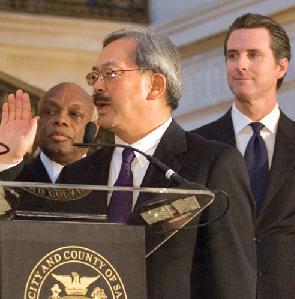
With two years left to serve on the Board, D7 Sup. Sean Elsbernd has been named vice-chair of the Rules Committee and a member of the City Operations & Neighborhood Services Committee. He was congratulated by Chinatown powerbroker Rose Pak immediately after the Board voted 11-0 to nominated former City Administrator Ed Lee as interim mayor, and during Lee’s swearing-in, former Mayor Willie Brown praised Elsbernd for nominating Lee for the job.

And at the Board’s Jan. 11 meeting before the supervisors voted for Lee, Elsbernd signaled that city workers’ retirement and health benefits will be at the center of the fight to balance the budget in the coming year.

Elsbernd noted that in past years, he was accused of exaggerating the negative impacts that city employees’ benefits have on the city’s budget. “But rather than being inflated, they were deflated,” Elsbernd said, noting that benefits will soon consume 18.14 percent of payroll and will account for 26 percent in three years. “Does the budget deficit include this amount?” he asked.

And at the afterparty that followed Lee’s swearing in, Public Defender Jeff Adachi, who caused a furor last fall when he launched Measure B, which sought to reform workers’ benefits packages, told the Guardian he is not one to give up lightly. “We learned a lot from that,” Adachi said. “This is still the huge elephant in City Hall. The city’s pension liability just went up another 1 percent, which is another $30 million.”

As for priorities, Elsbernd broke it down into district, city, and regional issues. In D7, “Hands-down, without question the biggest issue … is Parkmerced,” he said, starting with understanding and managing the environmental approval process. If it gets approved, he said his top concerns was that “the tenant issue. And the overriding concern of if they sell, which I think we all think is going to happen in the near-term – do those guarantees go along with the land?”

Also related to Parkmerced was planning for the traffic conditions that the development could potentially create, which Elsbernd dubbed a “huge 19th Avenue issue.”

Citywide, Elsbernd’s top priorities included enforcing Proposition G – the voter-approved measure that requires MUNI drivers to engage in collective bargaining – and tackling pension and healthcare costs. He spoke about “making sure that MTA budget that comes to us this summer is responsive” to Prop G.

As for pension and healthcare, Elsbernd said, “I’ve already spent a good deal of time with labor talking about it, and will continue to do that.” But he declined to give further details. Asked if a revenue-generating measure could be part of the solution to that problem, Elsbernd said, “I’m not saying no to anything right now.”

On a regional level, Elsbernd’s priority was to help CalTrain deal with its crippling financial problem. He’s served on that board for the last four years. “The financial situation at CalTrain – it is without question the forgotten stepchild of Bay Area transit, and the budget is going to be hugely challenging,” he said. “I think they’ll survive, but I think they’re going to see massive reductions in services.”

Sup. Scott Wiener
District 8
Issues:
*Transportation
*Reasonable regulation of nightlife & entertainment industry
*Pension reform

Elected in November 2010 to replace termed-out D8 Sup. Bevan, Wiener has been named a temporary member of the Board’s Budget and Finance Committee and a permanent member of the Land Use and Economic Development Committee.

“Transportation is a top priority,” Wiener said. ‘That includes working with the M.T.A. to get more cabs on the street, and making sure that the M.T.A. collectively bargains effectively with its new powers, under Prop. G.”

“I’m also going to be focusing on public safety, including work around graffiti enforcement, though I’m not prepared to go public yet about what I’ll be thinking,” he said.

“Regulating nightlife and entertainment is another top priority,” Wiener continued. “I want to make sure that what we do is very thoughtful in terms of understanding the economic impacts, in terms of jobs and tax  revenues, that this segment has. With some of the unfortunate incidents that have happened, it’s really important before we jump to conclusions that we figure out what happened and why. Was it something the club did inappropriately, or was it just a fluke? That way, we can avoid making drastic changes across the board. I think we have been very reactive to some nightclub issues. I want us to be more thoughtful in taking all the factors into consideration.”

“Even if we put a revenue measure on the June or November ballot, we’d need a two-thirds majority, so realistically, it’s hard to envision successfully securing significant revenue measure before November 2012,” Wiener added. “And once you adopt a revenue measure, it takes time to implement it and revenue to come in, so it’s hard to see where we’ll get revenue that will impact the 2012 fiscal year. In the short term, for fiscal year 2011/2012, the horse is out of the barn”

“As for pension stuff, I’m going to be very engaged in that process and hopefully we will move to further rein in pension and retirement healthcare costs.”

Sup. David Campos
District 9
Issues:
*Good government
*Community policing
*Protecting immigrant youth
*Workers’ rights and healthcare

Elected in 2008, D9 Sup. David Campos has been named chair of the Board’s Government Audit & Oversight Committee and a member of the Public Safety Committee. And, ever since he declared that the progressive majority on the Board no longer exists, in the wake of the Board’s 11-0 vote for Mayor Ed Lee, Campos has found his words being used by the mainstream media as alleged evidence that the entire progressive movement is dead in San Francisco.

“They are trying to twist my words and make me into the bogey man,” Campos said, noting that his words were not a statement of defeat but a wake-up call.

“The progressive movement is very much alive,” Campos said. “The key here is that if you speak your truth, they’ll go after you, even if you do it in a respectful way. I didn’t lose my temper or go after anybody, but they are trying to make me into the next Chris Daly.”

Campos said his overarching goal this year is to keep advancing a good government agenda.

“This means not just making sure that good public policy is being pursued, but also that we do so with as much openness and transparency as possible,” he said.

As a member of the Board’s Public Safety Committee, Campos says he will focus on making sure that we have “as much community policing as possible.

He plans to focus on improving public transportation, noting that a lot of folks in his district use public transit.

And he’d like to see interim mayor Ed Lee implement the due process legislation that Campos sponsored and the former Board passed with a veto-proof majority in 2009, but Mayor Gavin Newsom refused to implement. Campos’ legislation sought to ensure that immigrant youth get their day in court before being referred to the federal immigration authorities for possible deportation, and Newsom’s refusal to implement it, left hundreds of youth at risk of being deported, without first having the opportunity to establish their innocence in a juvenile court.
‘We met with Mayor Lee today,” Campos told the Guardian Jan. 18. “And we asked him to move this forward as quickly as possible. He committed to do that and said he wants to get more informed, but I’m confident he will move this forward.”

Campos also said he’ll be focusing on issues around workers’ rights and health care.
“I want to make sure we keep making progress on those fronts,” Campos said.

“It’s been a rough couple of days,” Campos continued, circling back to the beating the press gave him for his “progressive” remarks.“But I got to keep moving, doing my work, calling it as a I see it, doing what’s right, and doing it in a respectful way. The truth is that if you talk about the progressive movement and what we have achieved, which includes universal healthcare and local hire in the last few years, you are likely to become a target.”

Sup. Malia Cohen
District 10
Issues:
*Public safety
*Jobs
*Preserving open space
*Creating Community Benefit Districts
*Ending illegal dumping
Elected to replace termed-out D10 Sup. Sophie Maxwell, Cohen has been named chair of the City & School District committee, vice chair of the Land Use and Economic Development Committee and vice chair of the Public Safety Committee.

Cohen says her top priorities are public safety, jobs, open space, which she campaigned on, as well as creating community benefits districts and putting an end to illegal dumping.

“I feel good about the votes I cast for Ed Lee as interim mayor and David Chiu as Board President. We need to partner on the implementation of local hire, and those alliances can help folks in my district, including Visitation Valley.”

“I was touched by Sup. David Campos words about the progressive majority on the Board,” she added. “I thought they were thoughtful.”

Much like Kim, Cohen believes her legislative actions will show where her values lie.
“I’d like to see a community benefits district on San Bruno and Third Street because those are two separate corridors that could use help,” Cohen said. 

She pointed to legislation that former D10 Sup. Sophie Maxwell introduced in November 2010, authorizing the Department of Public Works to expend a $350,000 grant from the Solid Waste Disposal Clean-Up Site trust fund to clean up 25 chronic illegal dumping sites.
“All the sites are on public property and are located in the southeast part of the city, in my district,” Cohen said, noting that the city receives over 16,000 reports of illegal dumping a year and spends over $2 million in cleaning them up.

Sup. John Avalos
District 11
*Implementing Local Hire
*Improving MUNI / Balboa Park BART
*Affordable housing
*Improving city and neighborhood services

Sup. John Avalos, who chaired the Budget committee last year and has just been named Chair of the Board’s City Operations and Neighborhood Services Committee, said his top priorities were implementing local hire, improving Muni and Balboa Park BART station, building affordable housing at Balboa, and improving city and neighborhood services.

“And despite not being budget chair, I’ll make sure we have the best budget we can,” Avalos added, noting that he plans to talk to labor and community based organizations about ways to increase city revenues. “But it’s hard, given that we need a two-thirds majority to pass stuff on the ballot,” he said.

Last year, Avalos helped put two measures on the ballot to increase revenues. Prop. J sought to close loopholes in the city’s current hotel tax, and asked visitors to pay a slightly higher hotel tax (about $3 a night) for three years. Prop. N, the real property transfer tax, h slightly increased the tax charged by the city on the sale of property worth more than $5 million.

Prop. J secured only 45.5 percent of the vote, thereby failing to win the necessary two-thirds majority. But it fared better than Prop. K, the competing hotel tax that Newsom put on the ballot at the behest of large hotel corporations and that only won 38.5 percent of the vote. Prop. K also sought to close loopholes in the hotel tax, but didn’t include a tax increase, meaning it would have contributed millions less than Prop. J.

But Prop. N did pass. “And that should raise $45 million,” Avalos said. “So, I’ve always had my sights set on raising revenue, but making cuts is inevitable.”


Do free trips influence SF’s elected officials?

6

San Francisco public officials have received $44,000 in trips and travel expenses from private interests in the last two years – with Board of Supervisors President David Chiu the biggest recipient and controversial Chinatown power broker Rose Pak the biggest giver – according to “Flying Through Loopholes,” a report by a new group named San Franciscans for Clean Government.

The report questions whether the gift of free trips, a rare exception to the city’s otherwise strict ban on gifts to public officials, is a way of currying favor with decision-makers. “The appearance of thousands of dollars changing hands doesn’t look good and it could be easily fixed,” says attorney Jon Golinger, Chiu’s former campaign manager and a founder of the group. He raises the question, “Is a person who paid for a trip more likely to get a return phone call?”

The disclosure of Pak’s largesse comes in the wake of reports that she engineered the selection of Ed Lee as the city’s new mayor. The records show that Pak and the Chinatown Chamber of Commerce she heads gave travel gifts totaling nearly $20,000, almost half of the total. Most of that was for sending Sups. Chiu, Eric Mar, and Carmen Chu to southern China in November at a cost of $6,122 each. Pak also sent Chiu to China in September, with the World Economic Forum Young Leaders Program also kicking in another $1,544 for the trip.

Chiu was by far the largest recipient of the travel funds, taking in $16,640 for seven trips, including trips to the Netherlands, Taiwan, Washington DC, and Cambridge, Mass., in addition to his two China trips. Neither Pak nor Chiu have returned Guardian calls for comment yet, but we’ll update this post when and if they do. UPDATE: Chiu returned our call and said, “Our trips provide significant public benefits to San Francisco, from advocating for federal stimulus funds in Washington DC, to strengthening ties with government leaders in San Francisco’s sister cities, to learning about comparative transit first practices.  The report shows that our system of full disclosure of travel is working, and I welcome the conversation.”

The group is calling for the city to close the travel gift loohole and require fuller reporting of the details of the trips – such as where they stayed and other indicators of how lavishly the officials were treated – as well as calling on elected officials to voluntarily refuse to accept gifts. Golinger also raised questions about the influence that Pak is exerting on city government, which is largely invisible considering that she doesn’t even register as a lobbyist even though she’s known to be in regular contact with public officials.

“That is the bigger issue that needs to be looked at,” he said, “now that it’s become clear that Rose Pak and her group are so influential.”

SFBG Radio: Truth and MLK Day

2

Today Johnny and Tim talk about how Martn Luther King Jr. Day celebrations tend to ignore the history of the civil rights leader who was also a progressive on labor and economic issues — and an outspoken opponent of the Vietnam war. Listen after the jump. 

sfbgradio1182011 by endorsements2010

John Ross dies at 72

21

When John Ross left Terminal Island, the federal prison in Los Angeles, after serving a couple of years for refusing the Vietnam draft, the warden shook his head and said: “Ross, you never learned how to be a prisoner.”


I’m not writing the epitaph for whatever gravestone he has or doesn’t have, wherever it might be in the world, but that’s what I’d put on it: “John Ross, 1938-2011. Never learned how to be a prisoner.”


John, who died over the weekend, was a poet, author, activist, agitator and uncontrollable shit disturber, utterly and sometimes insanely fearless, pure of heart and devoted to the cause of social justice so deeply that he could never let up, even for a minute. He was also my friend.


John was a tenant organizer in San Francisco in the 1960s. He ran for supervisor once on a platform of rent control and ending the war; he was kicked off the ballot on the basis that he was a convicted felon. He never got his filing fee back.


After a while, he headed north for Arcata, back to the land, so to speak, and became something of a farmer. He wrote poetry, self-published maybe half a dozen books, most of which I have, some of which are probably lost forever. He wrote freelance for the Guardian, but he had no phone; you’d call him at a bar in Arcata (he swore later that Thomas Pynchon was one of his barmates), leave a message and he’d check in when he got it.


Then in 1984, he showed up at our office in San Francisco, fleeing the Campaign Against Marijuana Planting, which had raided his plot, trashed his house, thrown his typewriter out the window and missed capturing him by a few minutes. He sold the last of the crop in the city, found a room and started writing for us regularly.


He was one of the single most talented writers I’ve ever met — and a reporter willing to go anywhere for a story. He was also an absolute pain in the ass to work with. Every John Ross story I ever edited was a nightmare. He hated editors, almost as a matter of religion; every single word was sacred, and anytime I tried to mess with what he’d created he’d threaten to quit. “Take my name off the masthead; I’m never working for you again” was almost a mantra with us. It got to the point where I had to say: No, John. You can’t quit. You’re part of this operation forever, like it or not. And he always came around.


But it’s not a surprise that he never held down a real job for long.


Sandy Close at Pacific News Service sent him to Mexico City after the big earthquake in 1985, and he wound up at the Hotel Isabel, where he lived for the next 25 years. He took on stories nobody else would do or could do; he’d go places nobody else would dare. “Tim,” he’d always tell me, “you have to go where the story is.”


When the Zapatistas began their rebellion, he hitched a ride south from Mexico City, then hiked into the hills in Chiapas with a bag of granola and a couple of bottles of water, found the rebels in a little hamlet, met Subcommander Marcos and got interviews and information that left the rest of the media in the dust. In the first story he sent me, he described seeing a couple of reporters from the San Francisco Chronicle zipping by in a fancy rented jeep, with about $1,000 worth of camera gear, totally befuddled. They were out of their league; John was right at home.


He called me once, late at night, to ask if I knew any doctors in town. Turns out he’d been beaten pretty badly by the Mexican authorities just before getting on a plane to SF. I asked him how it happened, and he told me that he’d decided, on his own, to stand in the Mexico City airport and make a speech denouncing the government. The cops didn’t respond kindly.


He went to Iraq before the war to serve as a human shield in Baghdad (his emails were all signed “John Ross, humanshield”), left after having some clashes (imagine that) with his Iraqi government minders, travelled all over the world writing and selling his books, sent me pieces from everywhere, lost his eye to an old injury from fighting with the SFPD (his email signature became “Juan Eye”), won and refused an award from the City of San Francisco, wrote a major investigative piece on the death of journalist Brad Will and kept writing until the very end. When he was diagnosed with terminal liver cancer, he started signing his emails “John Ross, not dead yet.”


The last message I got was on Nov. 4. After complaining some more about the cops, he wrote:


“it appears ive written my last articles for the bay guardian — the doctors have given me six months on the outside and then its goodbye this cruel world — we raised some hell when i was here.” It’s signed: “insolidarity johnross enroute.”


Yes, John: We raised some some hell when you were here. Good luck enroute. And I will miss you forever.


John Ross leaves a son, Dante A. Ross, a daughter, Carla Ross-Allen, and a granddaughter, Zoe Ross-Allen, as well as a stepdaughter, Dylan Melbourne and her daugther Honore, as well as a sister, Susan Gardner. Memorial info is pending; I’ll keep you posted.


You can read some of John’s recent articles here and here and a lot more here.

Notes on tragedy in Tucson

A dear friend and former classmate of mine, Sarah “Uppie” Updegraff, recently began working the night shift as a nurse at the NICU, the Tucson hospital where Rep. Gabrielle Giffords is in intensive care.
 
Today, Uppie sent me a link to a blog she recently created to post her personal reflections on life as she makes the transition from nursing school to a career in health care. Just days after she began writing, she found herself processing not only what it’s like to be up all night caring for patients, but doing so in a highly charged atmosphere and media zoo that’s been thrust into the center of a national tragedy. I thought I’d share some excerpts, which offer a real-life, on-the-ground glimpse into what it’s like to be in Tucson in the wake of this horrific incident.

Here are a few of the thoughts and reflections from her blog, “The Uppie Update.”

From an entry titled, Sad Times in Tucson, City that I Love …

“Of course, then there are politics.  Our liberal wild-west gun laws.  The overall culture of dislike for Sarah Palin (with a comparable vigor to any liberal small college town), and my beloved NPR, blaming Republicans as usual. Usually I find it consoling to listen to news that agrees with me, but I’ve been rolling my eyes all morning, exhausted and unsatisfied.

“And then I think about this young man’s parents.  And this little girl’s parents. How terrible. It’s hard for me to understand these actions, to make sense of anything, other than to believe this boy must have had some psychological issues which compelled him. I can’t believe that a ‘regular’ person could just wake up one day and decide to shoot some people they have decided not to like. … I want to know more about this boy. What systems  have failed? I’ve been obsessively listening to the news, as though I’ll find an answer there. Instead, I find just more politics.”

Here’s more, from an entry titled, My First Week of Night Shift Amidst Tragedy.

“I just move through it, making too much eye contact or none – waiting in line to have multiple security people check my badge on my way to my floor. The Obama hospital parade – a pensive fanfare. 

“They show the little girl, smiling with her milk-carton-worthy optimism, making me notice feeling nauseous. 

“In my time off, I’m unable to focus on anything requiring attention. I find myself, wandering Target alone, watching people, eavesdropping. Listening to chatter, chatter about groceries, children, and shootings woven by many mouths – so strange. Is Target always this strange and solemn, or is it just me, in a disconnected haze of exhaustion? And of course everyone knew someone, everyone’s comparing notes on who they knew and how – as they do in newsworthy tragedies like these. Tucson is so small.  I haven’t met anyone yet who had no connection to the people killed or shot. Droning punctuated by sentences that seem to lift out of the shoppers around me: ‘It could have happened here, it could have happened anywhere.’ ‘I had just been at that Safeway the day before.’ ‘My brother works there.’ conversations laced in and out. This is my community after all, even at Target in the middle of the day/night. It feels lonely and connected at the same time.”

SFBG Radio: A split decison for Jerry Brown

0

In today’s episode, we look at Jerry Brown’s first week in office — and give him an A for perception and a weak C for reality. Listen after the jump.

sfbgradio1/14/2011 by endorsements2010

When will the gun madness stop?

37

Tucson was a disaster, a tragedy, possibly a result of overheated political rhetoric driving a deranged man to action. It was also the result of a national culture that makes it too easy to obtain a powerful weapon.

I looked at the top three stories on SFGATE this afternoon, and here they are:

1. More on the Tucson shootings.

2. 96-year-old woman and grandson shot to death in Livermore.

3. Man shot in Tenderloin coffee shop.

I know, the Chron loves to lead with mayhem, but seriously: That’s a lot of dead people for one day. And you can’t shoot someone if you don’t have a gun. You wonder when this madness will ever end.


George Gascon, longtime Republican

51

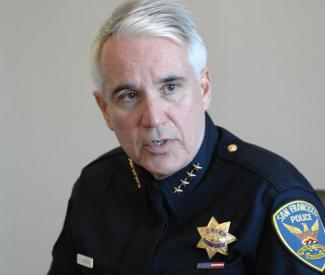
One thing I didn’t know when I wrote about former police chief George Gascón’s shocking Jan. 9 appointment as San Francisco’s next district attorney is that he has Republican roots. But then I came across a January 10 Los Angeles Times article that revealed that in 2008, Gascón described himself to the L.A. Times “as a longtime Republican.”

Gascón is now registered as “decline-to-state” but his Republican leanings could become an issue in the D.A.’s race this November, depending on what happens between now and then, in terms of decisions Gascón makes, especially around cases the San Francisco Police Department refer to his new office.

Paul Henderson, who was D.A. Kamala Harris’ chief of staff before she won the Attorney General’s race, was rumored to be Harris’ preferred choice as her replacement. But he now finds himself in the awkward position of reporting to the man he will be running against this fall.

“I respect Gascón as a law enforcement officer and I appreciate that he called me personally to inform me of the mayor’s decision,” Henderson told me. “D.A. Gascón and I will be discussing next steps and I stand ready to help him address the pressing issues facing the office.”

Henderson said the atmosphere over at the D.A.’s office is “a little crazy these days.”

“Everyone is trying to figure out what is going to happen,” Henderson said.  “All of this happened out of the blue, out of left field.”

Or right field, if you consider Gascón’s former voter registration.

“I think a lot of people were expecting something and someone different,” Henderson observed. “That’s the reality and the truth. I know I have a lot of support, but I need a little time to weigh and evaluate things.”

Political consultant Jim Stearns told the Guardian that he believes Gascón and Newsom when they say Newsom’s offer of the post to Gascón was a spur-of-the-moment decision

“I know for a fact that [Board President] David Chiu was offered the D.A. position and that Chiu and Newsom were genuinely confused about whether Chiu was going to take it or not,” Stearns said. “Chiu had discussed it at length a long time ago and rejected the notion. But then, when the offer was actually made, he said ‘I don’t know’ for a few days. Then, when he turned it down, the Mayor’s Office was in a quandary. So, I think Newsom was trying to pull a rabbit out of the hat, but this is one of those appointments that you might not make, if you really thought about it.”

As Stearns notes, Gascón had only been SFPD Chief for 18 months, and before that he was chief in Mesa, Arizona, which as Stearns puts it, “is not what you’d call a big city.”

And while Gascón, who was former high-ranking official in the Los Angeles Police Department, has since scored high marks for reducing violent crime, there were a lot of issues between SFPD and the D.A.’s office during his tenure, leaving him at risk of being accused of conflict of interest in his new role.

Perhaps the biggest of these conflicts is the question of police misconduct, which became a political hot potato during the Attorney General’s race, when attention was brought to a law that’s been on the books since 1963, when the Supreme Court ruled in Brady vs. Maryland that the government has a duty to disclose material evidence to the defense which could tend to change the outcome of the trial.

In 1972, “Brady” was expanded to require District Attorneys to turn over any information that could impeach the credibility or veracity of a police officer’s testimony, or if an officer has a past record of falsifying reports or other conduct that could impact their truthfulness. But it turned out that San Francisco had never formalized a “Brady” policy. It’s true that Gascón as SFPD Chief requested that searches be done as far back as 1980 for any sustained discipline actions that could be interpreted as possible “Brady” issues, but his move to D.A. raises the issue afresh.

“What better way to keep a lid on it,” Stearns opined.

So far, the D.A.’s office has not released a statement on how Gascón intends to handle potential conflicts of interests, but I’ll update this post, if it does.

Stearns speculates that part of the decision to appoint Gascón was a result of the foot-dragging that went on as a result of Chiu’s indecision, allowing lots of competing camps to canvass for their preferred picks.

“The Gettys were pushing Bock,” Stearns said, referring to Alameda County Deputy District Attorney Sharmin Bock, an expert in human trafficking. “Others were pushing for [Assistant D.A.] Andy Clark, Paul Henderson, and [Deputy City Attorney] Sean Connelly [who represented the city in police excessive force cases].”

Other names floated were Chief Assistant District Attorney David Pfeifer, David Onek, senior fellow at the Berkeley Center for Criminal Justice; and San Francisco attorney John Keker.

“Newsom may have concluded that if he pushed for any of these folks, he’d be taking sides, and that if he went for Gascón, he wouldn’t be pissing anyone off,” Stearns said.

But now it seems the whole law enforcement world in San Francisco is in an uproar, as folks start to try and figure out how the appointment impacts the D.A.’s race in November.

‘The politics of a D.A.’s office is unique,” Stearns observed. “You can be thrown a curve ball at any moment. You never know what crime is going to be committed, and all of a sudden you have to make a decision that can impact the race.”

Stearns notes that Gascón has some positives going for him.
“He has fairly well-known name recognition, he had good grades, mostly, from the mainstream press for the work he has done as police chief, and it sounds like he is a pretty good manager and administrator.”

On the downside, there’s his statement that he’s “not philosophically opposed to the death penalty,” and the latest shocker that he’s been a longtime Republican.

And then there are the vagaries of running for elected office under San Francisco’s instant run-off voting (IRV) system.
“He could end up like Don Perata,” Stearns said, referring to Perata’s recent loss to Jean Quan in the race for Oakland mayor. “He could have the most money, the most endorsements and even the most votes, but no second and third place votes, and therefore he loses. But that depends on who else is going to run against him.”

Calls to David Onek, who filed in the D.A.’s race last summer and has already raised over $130,000 and collected a ton of endorsements, went unreturned, but if he gets back, I’ll be sure to post his comments here.

And as Henderson previously stated, he doesn’t plan to make any decisions until he has a substantive conversation with Gascón.

“Paul is pretty anti-death penalty, but like Gascón he came out in favor of sit-lie,” Stearns said, noting that Gascón may not feel he has to actively campaign to win in November.

“It’s a shock to the system what you have to go through to campaign in this city, especially if you believe in authority and hierarchy, and all of a sudden you have to go to every Democratic Club in town and listen to everyone’s questions and comments. But he sounds pretty serious about running, and I certainly believe that every election is competitive, so it remains to be seen what kind of candidate Gascón is and the deals he makes”.

Kim remains mum during Pledge of Allegiance

70

As the old progressive majority on the Board of Supervisors dissolves into uncertain new political dynamics, everyone has been looking for signs of what’s to come, large and small. Do the new committee assignments mean the moderates will have more power? Have identify politics moved to the forefront? If the new marching order is “getting things done,” what kinds of things will get done?

It feels a bit like the end of an era after 10 years of progressives running the show, but there are small signs that progressivism under the dome isn’t dead yet. Here’s one: on Saturday, when the new Board of Supervisors was sworn in, new Sup. Jane Kim stood for the Pledge of Allegiance but remained mum, not saying a word.

When I asked her about it later, Kim said that she doesn’t believe in the pledge and has never said it throughout her tenure on the Board of Education. Her predecessor Chris Daly, as well as Sup. Ross Mirkarimi, generally say the pledge but pointedly drop the words “under God” from it, with Daly sometimes being quite loud and pronounced in his modified lyrics.

There’s no legal requirement for the Board of Supervisors to pledge allegiance to a flag, and there are many political jurisdictions that don’t say it. So, is dropping the pledge from the board agenda one of those things that the new board would like to get done? Don’t bet on it. But personally, it did make my heart go pitter-pat to watch Kim’s lips remain still as her colleagues aligned themselves with a piece of cloth.

And at this point, I plan to savor the small things.

A (not so brief) history of hate

9

Since the horrific shooting of Rep. Giffords and the loss of Judge Roll, Christina Green, and four other innocent bystanders, folks have been grappling with the role of violent rhetoric in triggering the tragedy. And now the National Day Laborer Organizing Network has set up A History of Hate: Political Violence in a Rogue State to chronicle political violence and intimidation in Arizona since 1987, which is when U2’s Bono received a death threat because of his stance on Martin Luther King.

“Something strange happened toward the end of the Joshua Tree tour,” Bono noted in a 2006 interview. “We had campaigned for Martin Luther King Day in Tempe, Arizona, where the tour opened back in April. There was a governor there called Mecham who was holding out against it, and we had got involved in local politics there and took a stand. We went back to Tempe at the end of the tour, in December, to play the Sun Devil Stadium.”

“I was getting death threats throughout the tour,” Bono said. “This character was a racist offended by our work, he thought we were messing in other people’s business and taking sides with the Black man. One night the FBI said: ‘Look, it’s quite serious. He says he has a ticket. He said he’s armed.’… So we played the show, the FBI were around, everyone was a little unnerved. You just didn’t know, could he be in the building?”

A History of Hate’s stated mission is “collecting evidence of intolerance that have been brewing and boiling over in this country.” And it’s asking folks to  contribute their story to this growing archive, “so we can turn the tide from a history of hate to a future of progress.”

 “Our hearts go out to the victims and their families in this horrible tragedy,” NDLON director Pablo Alvarado stated. “We mourn alongside them in part because as day laborers, we understand deeply the experience of being targeted by violent hatred and extremism. If there is one lesson from those who have built the historical rights and privileges we enjoy, it is this: hate must be confronted so it can be overcome by love. It cannot be ignored and the world needs to know,” Alvarado continued. “What Arizona needs, and what all of us need, is to confront the hard truth of our current political environment with unifying steps. After we have paused to comprehend the immeasurable tragedy in Arizona, we must now do our part to make a more just society.”

Sounds like a good idea. Hey, maybe immigrant rights advocates and the communities they represent can submit all the hate mail and death threats they regularly receive –a burden they have so far largely borne alone and in silence.


The problem with parking tickets

63

Naturally, C.W. Nevius is outraged that the poor drivers in San Francisco are going to get hit with more parking tickets since the Municipal Transportation Agency has a budget shortfall. We’re going to hear the usual whining form the cars-have-rights-too crowd; why is everybody always picking on the owners of internal combustion vehicles? I mean, they pollute the air and are destroying the planet, but paying for the right to drive in a city is such a horrible oppresive burden. 


But here’s the thing: In this case, I don’t thing Nevius and the gang are entirely wrong.


Parking tickets were never meant to be primarily a revenue source. If you ask any rational urban planner or transporation expert, they’ll tell you that parking meter rates should be designed to encourage turnover of spaces and fines should be used to discourage illegal parking. In a perfect urban setting, the parking fines would be adequate to keep everyone following the rules, and there would be no revenue from tickets at all.


You start depending on illegal behavior as a source of revenue and you get into trouble fast. You get to the point where the city wants you to break the law so there will be enough money to pay for Muni service. Which makes no sense.


The system is also utterly unfair. Some people will never get parking tickets in San Francisco — because they have garages where they live (and garages seriously jack up the cost of housing) and garages where they work (and subsidized parking is an untaxed benefit for the few that harms society as a whole) and large parking lots where they shop (which encourages people to use big chain stores instead of neighborhood merchants.) Those people who never get tickets do just as much damage to the environment — and pay nothing for it.


In the end, parking fines are a somewhat regressive source of revenue. The very rich either don’t pay them or don’t care (in which case the deterrent is missing). Companies that do a lot of deliveries in congested parts of the city just factor the tickets into the cost of doing business — which means the drivers have no reason not to double-park. The average person who is five minutes late to pick the kids at child care (and is getting a $1 a minute penalty for being late; that’s standard in this city) and in desperation sticks the damn car in a yellow zone for just a couple of seconds and gets caught — that person is paying the cost of everyone else’s bad behavior.


But there’s no question that cars have serious negative impacts on the city, and San Franciscans shouldn’t be subsidizing their use. In fact, car users should be subsidizing Muni, big time. It just ought to be fair.


So for once, I’m with Nevius: Let’s use parking fines to discourage illegal parking, free up spaces and stop the damn double-parkers, who screw up everything, particularly Muni service (ever watch a trolley coach try to pull around a double-parked delivery truck downtown?). But when it comes to MTA revenue, we should try to go for a single, annual, progressive car tax. And it should be based on the value of the car.


You own and operate a $50,000 car in San Francisco? Costs you $500 a year in city taxes. Your car’s a 15-year-old beater worth $5,000? Pay $50. Yes, some people will cheat and pretend to live in Berkeley (although once we make this work, every other Bay Area city’s going to join us). Some people always cheat. If they get caught, their car gets towed and impounded. Most people will pay the tax.


Oh, and the neighborhood parking stickers need to be fixed. It costs, what, $300 a month to rent a garage these days — and for $70 A YEAR, you get the equivalent of a city-owned parking space on the street, all yours, all the time. That should be at least doubled. Then in exchange we can cut back on the street sweeping in neighborhoods.


I’ve always suspected that the city’s street-cleaning program was largely a post-Prop.13 way of raising revenue by taxing the people who are well enough off to own a car but not rich enought to have a garage. Sure, the city needs to clean Mission Street three times a week, but where I work, in Potrero Hill, the streets would be fine with a monthly sweeping. Save the city some money, too.


Owning a car in the city should be expensive. But the taxes ought to be fair. That’s all I’m saying.


The Ed Lee files

9

Ed Lee’s swearing-in as San Francisco’s first Asian American mayor was a historic occasion, especially in light of the city’s dark history of supporting the Chinese Exclusion Act. And it led to an impressive hands-across-the-water moment when Oakland Mayor Jean Quan arrived to see the Board vote for Lee.


But after Campos declared the progressive majority dead, folks across the city started debating the meaning of “progressive.” And after San Francisco got its first sighting of Mayor Lee’s wife and family, everyone was left wondering what his rapid ascension means for the mayor’s race in November.

Chiu stiffs progressives on key committee appointments

21

Belying his repeated claims to being part of the progressive movement, Board of Supervisors President David Chiu has ousted his progressive colleagues from key leadership positions on board committees, placing fiscal conservatives into the chairs and majorities on the three most important committees and giving downtown interests more control over city legislation and projects than they’ve had in a decade.

Most notably, the chair of the Budget & Finance Committee was taken away from Sup. John Avalos – who challenged Chiu for the board presidency on Saturday – and given to Sup. Carmen Chu. While Chu did work on budget issues as a staffer in the Mayor’s Office before being appointed supervisor, which Chiu cited in support of his decision, she has consistently voted with the three-member minority of fiscal conservatives throughout her tenure as supervisor, opposing even the most widely accepted revenue proposals and progressive initiatives.

Chiu also placed himself in the swing vote role on that committee, naming Sups. Ross Mirkarimi and Jane Kim as the permanent committee members and Scott Wiener and himself as the temporary members who serve on the committee from March 1 through budget season. Asked if that was intentional, Chiu told us, “Sure was.” With the city facing a budget deficit of almost $400 million after seven years of budget deficits that were closed almost entirely through service cuts and fee increases – rather than general revenue increases targeted at the city’s richest individuals and corporations – the committee will be a key battleground between progressives and fiscal conservatives this year.

“The makeup of the committee reflects a real need for collaboration at this time of transition,” Chiu said of the Budget Committee. But Sup. David Campos was among the many progressives calling the committee assignments a major political realignment, telling us, “I don’t see how you can look at the committee assignments and not see some kind of realignment. The progressives are no longer in control of the key committees.” Avalos called it, “the price of moderates voting for Chiu.”

Also disappointing to progressives were Chiu’s choices for the Rules and Land Use committees. On the Rules Committee, which confirms mayoral appointments, approves the placement of charter amendments on the ballot, and will play a big role this year in approving the redrawing of supervisorial districts in the wake of the 2010 Census, Chiu named Kim and Sups. Sean Elsbernd and Mark Farrell, the latter two childhood buddies who represent the city’s two most conservative districts.

The committee takes the lead role in proposing the board’s three appointees to a task force that will draw the new legislative lines, as well as reviewing the other six appointees (three each from the Mayor’s Office and Elections Commission) and approving the plan that the task force produces. Downtown groups are expected to use the opportunity to negate the gains progressives have made in electing supervisors, probably in collaboration with Elsbernd and Farrell, a venture capitalist new to politics.

“Sean and Mark understand that if they push things through Rules that are outside the mainstream of who the board is, I expect that the full board will stop them,” Chiu told us. He also emphasized that Kim is chairing the committee, a role that can influence what items the committee considers: “On Rules, Sup. Kim will set the agenda there.”

Chiu sounded a similar rationale in defending a makeup on the Land Use & Economic Development Committee, to which he named new Sups. Scott Wiener and Malia Cohen – who were backed by development interests and opposed by tenant groups in last year’s election – along with Sup. Eric Mar as chair.

“With Eric at the helm, he will do a very good job at fighting for neighborhoods, tenants, and other interests,” Chiu said. But Avalos noted that Mar will have his hands full trying to manage a high-stakes, high-profile agenda with little help from his colleagues. “There’s a lot on Eric Mar’s shoulders. It’s his coming of age moment and he’ll have to step up big time to run that committee,” Avalos said.

Avalos said he was disappointed to be removed from the Budget Committee after working on it for eight of the last 10 years, first as Sup. Chris Daly’s legislative aide and then as a supervisor. “But I’m going to work behind the scene on the budget to make sure the communities are well-spoken for,” he said.

Chiu said he has gotten assurances from both Chu and Mayor Ed Lee “about the need for an open, transparent, and community-based budget process.” Carmen Chu echoed the point, telling us, “My hope is that this year the budget is going to be a very collaborative and open process.”

But on the need for need for revenue solutions, which Avalos has said are vital, David Chiu only went this far: “I am open to considering revenues as part of the overall set of solutions to close the budget deficit.” And Carmen Chu wouldn’t even go that far.

“At the end of the day, we need to take into account the context of the state budget, in terms of new cuts and taxes, because anything we do will be on top of the state level,” she told us, adding this about the revenue measures that she opposed last year, “We need to ask who do these measures really impact.”

For progressives, the only bright spots in the committee appointments were Avalos chairing the City Operations & Neighborhood Services Committees, with Mar and Elsbernd also serving; and Sup. Ross Mirkarimi chairing the Public Safety Committee, with Cohen and Campos on it as well.

“I told people I was going to be fair in committee assignments and I have been,” Chiu said.

Sarah Phelan and Tim Redmond contributed to this report.

SFBG Radio: Why is Sarah Palin whining?

8

It’s not bad enough that Sarah Palin is trying to take advantage of the tragedy in Tucson; she’s also complaining that she’s a victim. Johnny and Tim talk about how odd this is after the jump.

sfbgradio1122010 by endorsements2010

Will the “real” progressives please stand up?

Before Ed Lee was unanimously appointed interim mayor at the Jan. 11 Board of Supervisors meeting, Sup. David Campos delivered a speech about the progressive movement in San Francisco.

“Progressives are no longer in control of this Board of Supervisors,” Campos noted. “We have a president of the Board of Supervisors who was elected without a clear progressive majority, and who was elected with a clear backing of the moderate block of supervisors.”

Speaking to the notion that supervisors were not elected to take positions, but to get things done, an idea aired by Board President David Chiu, Campos demurred. “I don’t think it’s entirely accurate to say that none of us are elected to take certain positions,” he said.

“It’s important to get things done,” Campos continued. “But I don’t think getting things done is enough. We have to ask ourselves, what is it that we’re getting done? How is it that we’re getting things done? And for whom is it that we’re doing what we’re doing?”

Would things be done in the interests of the people, Campos wanted to know, “or the downtown corporate interests?”

Would things be done in a transparent way? “I hope we’re not getting things done behind closed doors,” Campos said.

Campos also took issue with the implication that “progressives cannot get things done.” He pointed to district elections, universal healthcare, domestic partner benefits, and police reform as accomplishments of the progressive community.

Despite Campos’ pronouncement that progressives were on the losing end, nearly every elected official who stood to speak throughout the course of the historic day uttered the P-word — including Lee himself.

“I was a progressive,” Lee said during his inaugural speech, “before progressive was a political faction in this town.” Lee pointed to his history of fighting for the rights of African Americans and Latinos, his move to establish a whistle-blower program, and his role in creating a recycling program for the city as evidence of his progressive credentials.

Supervisors Eric Mar, Ross Mirkarimi, and Chiu also touched on the issue of progressive politics in comments delivered before Lee was unanimously appointed. “Progressive politics needs to qualify its new definition,” Mirkarimi said, “which is more than just who we are by name or

by ethnicity or culture but by what we stand for.” Mirkarimi also spoke about the transition representing an opportunity to “inject a level of smart politics, not necessarily branded as a progressive or moderate or conservative, but smart politics that take us forward.”

Mar spoke about “our changing progressive movement,” and Board President David Chiu countered Campos’ charge that progressives had lost their control of the board, saying, “I do believe that the majority of this board shares progressive values.”

Chiu also said he believed that there is “a danger in an overly narrow definition of what is progressive.”

At this point, given so many different opinions and affiliations with the label, the very word “progressive” is starting to take on a confusing quality. Does this stem from a lack of a better term? Is it simply that many people with different sets of alliances and perspectives, sometimes at odds with one another, nonetheless identify as “progressives?”

Or is does this new, more complex version of “progressive” relate to the void left behind by two polarizing figures, who drew definitive battle lines between “progressives” and “moderates” by staking out furious opposition to each other? The transition of power in City Hall was marked not only by the introduction of new elected officials in the board chambers and Room 200, but by the departure of former Sup. Chris Daly and former Mayor Gavin Newsom, both towering white men known for relishing the limelight, delivering long-winded addresses, and waging fierce battles against their enemies.

If those elected officials once viewed as the solidly progressive block – former Sup. Chris Daly and Sups. John Avalos, David Campos, Eric Mar, and Ross Mirkarimi – were swept out of power with this shift, as Campos suggested, their political label seems to have survived intact. Despite the approving nod of the board’s moderates and two business-friendly powerhouses who hold tremendous sway even if they don’t hold office, the city’s top two officials — Chiu and Lee — nonetheless seemed eager to be associated with “progressive” values.