

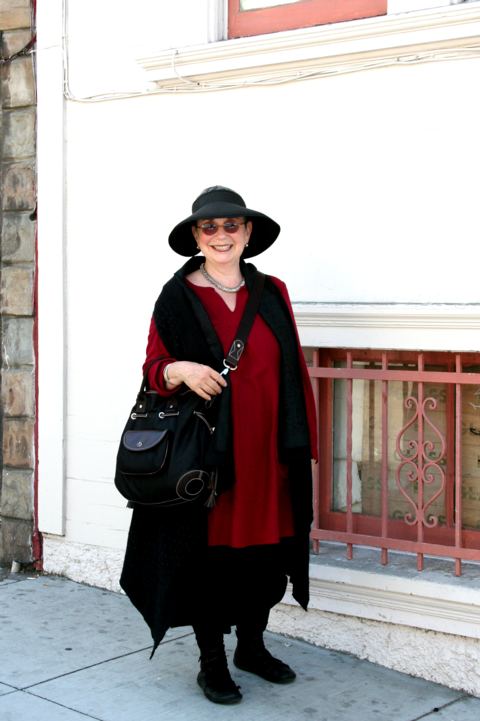
Today’s Look: Micki, Jasper and Union
Tell us about your look: “I got my coat at a food market in Paris.”
Today’s Look: Micki, Jasper and Union
Tell us about your look: “I got my coat at a food market in Paris.”
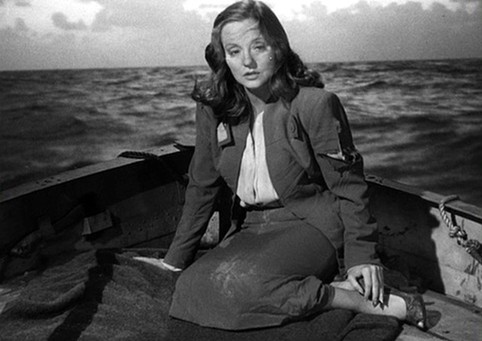
An inspired idea for a film series if ever there was one — the SF Maritime National Historical Park is showing nautically themed films onboard the ferryboat Eureka at Hyde Street Pier. They began last month with 2003’s Pirates of the Carribean: The Curse of the Black Pearl, and they’re picking up Thurs/15 with Lifeboat (1944), Alfred Hitchcock’s production of a John Steinbeck story, starring Tallulah Bankhead. Next month, step aboard the Eureka for Jaws (1975) — that is, if they don’t end up needing a bigger boat. Teasers and show info after the jump:
http://www.youtube.com/watch?v=BMtiqQEc85Q
http://www.youtube.com/watch?v=0zkYRD51I34
FLOATING FILMS
8 p.m., $5 donation
Eureka
Hyde Street Pier
Hyde & Jefferson, SF
(415) 561-6662
www.maritime.org
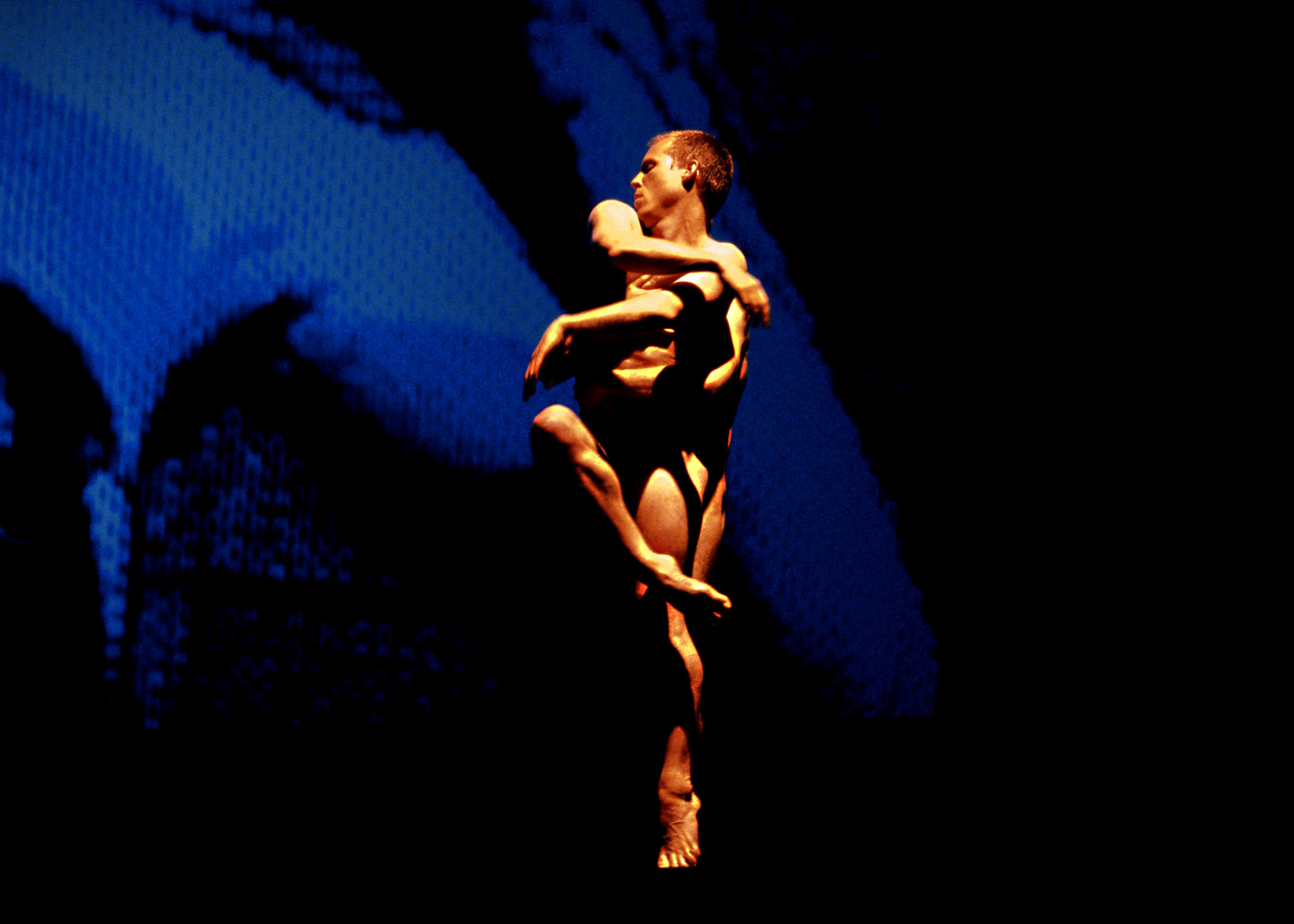
After the SF-based dance company the Foundry (founded by Alex Ketley and Christian Burns in 1998) performed their most recent project, Please Love Me, July 7 at Theater Artaud, I overheard a woman ask her friend: “Well, what did you think?” After a minute of searching for just the right words, her friend replied, “I feel like I just had really intense, emotional sex. I need a second to process it.” While Please Love Me isn’t about sex, the woman’s answer seems fitting. Combining dance with original music and video projection by former Ballet Frankfurt media artist Les Stuck, Please Love Me is intense, beautiful and emotionally poignant.
The piece starts with dancer Malinda Lavelle slowly moving through a series of gestures and shapes as the Foundry’s four other dancers (Burns, Andrea Basile, Kara Davis and Joy Prendergast) sit in a line of chairs behind her. Our attention is immediately drawn to the relationship between performer and audience as we watch not only Lavelle, but also the other dancers watching Lavelle. In addition to this “audience” of four dancers, chairs occupied by regular audience members line both sides of the stage and add an element of up-close-and-personal intimacy to Theater Artaud while blurring the line between performer and observer.
Ketley’s interest in that blurry line, so to speak, is key to his innovative choreography. As Basile and Davis dance together in one of the pieces’ fast-paced duets, their movements build in speed and momentum to the point where it becomes difficult to tell whether their powerful intensity conveys a sense of fighting or loving. It is exactly these kinds of dichotomies (love and frustration, connection and disconnection, performer and observer) that Ketley captures so eloquently.
Later in the piece, Burns and Davis dance together as they voice stream-of-consciousness dialogue. Phrases like “all I ever do is this,” “more sex, more couples,” “movie rentals,” “a policeman shoots himself the neighbors’ backyard,” “I saw you twice, briefly, but never again,” and finally, “in the end, please love me” add a sense of loaded meaning to each action. While following no specific storyline, each piece of movement and phrase is relatable and random enough for open interpretation by the audience.
In their duet, Davis and Burns maintain a constant awareness of each other even when moving independently. We see this same awareness in a roantic duet between Burns and Basile. Always in the present movement and moment, they own each step with a sense of life-or-death urgency that gives the piece its characteristic realness and honesty.
It’s hard to pinpoint or describe what makes the Foundry dancers so amazing. Surely, they all have breathtaking technique, yet they also bring something more. They each possess a unique quality that refuses to be pinned down. My eye kept being drawn again and again to subtle nuances: the way Lavelle suggests a world of meaning and emotion through a single small gesture; the way Prendergast moves through a flurry of guttural movement and sound before striking a classical ballet arabesque; the way Davis walks away from Andrea Basile at the end of their duet, and then the way she returns. The way Basile leans her head on Burns’ chest during their duet. All these instances drew me in and left me feeling connected to the dancers in a profoundly moving, yet inexplicable way.
Kara Davis and Christian Burns dancing in Please Love Me:
This from Michael Sturtz, creative director of the berth of the Bay’s fire community, the Crucible. This weekend (Fri/16 and Sat/17), HEAT: the Fire Cabaret, rises up like a sultry phoenix, an onstage imagining of a flame speakeasy during fire Prohibition at whose “height, lighters and matches were confiscated.” Involved in the production:
1 flaming entryway
4 large fire sculptures
30 fire safety staff each night
60 security staff (“for crowd management, and to make sure no photographers cross any lines”)
30-40 onstage fire sources
100 isolated fire sources in all
150 fire extinguishers (“maybe upwards of a few hundred, it’s hard to tell”)
“It’s kind of like our own fire department,” Sturtz told me this morning, still a little groggy from the Cabaret’s first and only dress rehearsal last night. But it’s not all about flames and iron.
Last night at the run-through, which was the first time performers and live music had taken the stage together, I saw evidence enough that the production is hot to handle. The stage (made entirely of re-purposed steel crafted into an apocalyptic distillery by what Sturtz affectionately termed “the Crucible community”) was birthing speakeasy scenes that swerved between sexy and… well I guess I should get over calling what the circus folks do dangerous, it’s just a little nerve-wracking for us momma-type squares. Tracy Piper, straight out of an R. Crumb cartoon in denim Daisy Dukes and scuffed black playa boots, mixed acrobatic archings and seductive glass blowing, while performers Scarlett and Axelrod, Fleeky Flanco, and Jennings and Xiaohong hornily stalked around her in the first act, guiding ray guns of fire blasts, balancing on wooden blocks, seducing each other wildly. Corsets, fishnets, flame retardant costumes go!
Off stage — there’s more? Damn, there’s more! The Crucible staff has cooked up all manner of sparks to light your fire between on stage acts. The usuals; torch wielding burlesque, dance welders, vintage cars, booze. Of the performer’s crossover between the technical and artistic, Sturtz was comfortably matter of fact, very apropos of the mind that founded the organization itself back in 1999; “It’s easier to teach a singer how to weld than a welder how to sing.”
Dig. See you there – in 1920s flapper wear, please. Just be careful with that fringe.
HEAT: A Fire Cabaret
Fri/16 and Sat/17 7 p.m., $43-48
The Crucible
1260 7th St., Oak.
(510) 444-0919
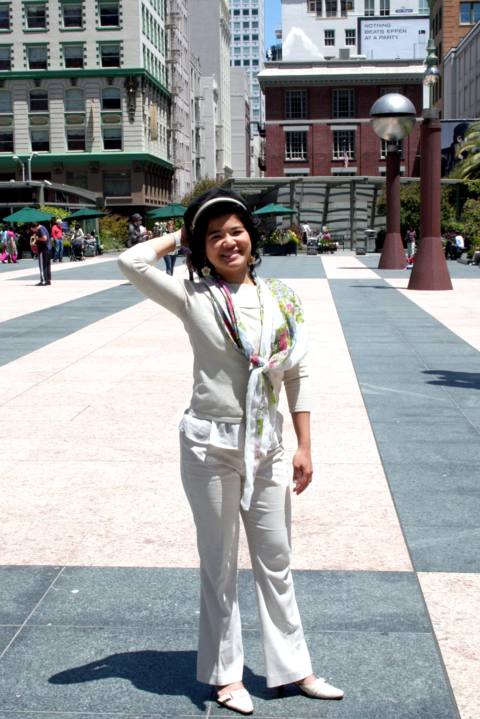
Today’s Look: Kristina, Union Square
Tell us about your look: “This is a ‘going to meet the boyfriend’s family for the first time’ outfit.”
Sometimes a great yoga class can be a relief. Like, that kind of relief. A pelvic floor loosening, an unwinding, a drowsily loving feeling that usually comes after a pleasurable close (naked) encounter with a certain sexy someone. But I little imagined that American yoga got its limber legs in an elite tantric love nest — that is, until I read Robert Love’s The Great Oom: The Improbable Birth of Yoga in America. The book tells the story of the revered and reviled Dr. Pierre Bernard, who actually started the debaucherous deep breathing in that Sodom of the early 20th century – the city by the Bay.
I called up Robert – Bob to his friends – to get the inside scoop. “It was the great cosmopolitan center of the west,” Love told me of SF’s appeal to the young yogi. “The east was physically coming to the west; the swamis from India would land on the west coast, if not directly in San Francisco. It was a welcoming city to new ideas.” Those new ideas would eventually land Dr. Bernard, aka “the omnipotent Oom,” on the wrong side of the law, and secure for yoga a safe berth in the, admittedly expansive at that time, corrupting-to-young-ladies category in the minds of most Americans.
So yeah, new ideas indeed. Bernard (nee: Perry Baker), came from a poor family in Iowa and had already been studying with Sylvais Hamati, a “Vedic philosopher,” for many years before his triumphant arrival in San Francisco. The city was holding it’s Golden Jubilee, which marked the 50th anniversary of the Gold Rush, when Bernard staged a performance of the “Kali mudra.” Basically, he put himself in a trance that allowed assistants to run needles through his face, lips, and tongue. And the crowd goes wild!
No, truly, they did. That kind of deep meditation had rarely been seen before in the U.S. — and certainly Bernard’s performance was the first time that such Hindu learning had been exhibited by a honky. Impressed, a lot of the young richies decided to throw their lots in with Bernard to learn his lady-pleasing feats. The “tantrics,” as they were called, moved into penthouse (for “a little more privacy and unobstructed views of the night sky,” those devils) apartments on Ellis, Golden Gate, Pine and Jones Streets, where they had, like, the best life ever, studying yoga sometimes and holding mysterious rites always, which may or may not have — but according to Love’s research, probably did — include casual sex with other tantrics.
Love, who is quick to point out that he’s not himself a philosophy scholar and but a casual practicioner of yoga, told me “hatha yoga has a Tantric underpinning philosophically, which is really — what’s the word — welcoming in terms of bodily function. Its not Victorian. Sexuality is part of life, part of the Tantric philosophy in that it has the potential to be sacred. There’s a strong connection between the yoga that we practice today and the Tantric philosophy in India. Its not unlikely that [sexual rites] would come into play.”
Sweet! I mean, immoral! The powers-that-be didn’t dig their youngster tripping quite that light fantastic, so they scooted Bernard off and away, as in they ran him out of town real good. He and his eventually alit in Manhattan, where they again commenced wooing the handsome, supple, and financially well endowed, and where they were to get into even bigger trouble for the supposed abduction and pillage of unsuspecting young ladies. Love’s research turns up an interesting mix of intense devotion to Hindu principles and signs of careerism and profiteering on the part of Bernard and his inner circle. Plus, they always wore really form-fitting outfits to yoga class. Those heathens!
I predict yoga yuppies love this book. Really, when was the last time their favorite exercise class was considered subversive? And where, oh where, are these yoga love cults nowadays? Enquiring minds…
The topic fell to Love in a rather occult manner itself. He had just moved into a cottage in South Nyack, New York, when he found mystical symbols engraved into his new home’s bones. An Egyptian ankh over the front door, a brass bell with Kali, the goddess of time and change, reclining erected on a wall of the abode. It turns out, he was living down the road from Bernard’s old “country club,” the pastoral setting where the troupe had wound up after being ejected from their more cosmopolitan digs on either coast.
The writer found himself entranced by the connection, although even yesterday he still couldn’t give me an unequivocal answer on whether Love was playing it straight when it came to principled yoga teaching. He answers the “genius or fraud” question of Bernard’s legacy (one, in fact, posed by the book’s final chapter title) with “a resounding yes. [Bernard] was an American go-getter with a spiritual bent who thought that there was nothing wrong with being successful and enjoying life. You can’t really call somebody a fraud if they were teaching and standing up for something for 15 years in front of the slings and arrows of society. I think he put his flag in the ground for yoga, and stood by it. That’s a dopey phrase, I’m sure you’ll clean it up.”
Which should resonate with all you downward facing dog deviants out there; persevere in your eccentricity long enough, gang, and it’s bound to rub off on someone. And sorry Mr. Love, I’m no good at cleaning.
The Great Oom: The Improbable Birth of Yoga in America
Viking Press. 402 pages. $27.95
I received an email the other day with the terribly alarming subject line “FINAL. THRILLVILLES. EVER. No fooling.” Could Will “The Thrill” Viharo, a veteran host of cult movie nights around the Bay Area, be hanging up his fez and smoking jacket for good?
Well, not exactly. Fans already know he’s been scaling back his “Thrillville” events since the Parkway Theater closed and the Cerrito Theater changed ownership in 2009 (both East Bay venues, operated by Speakeasy Theaters, had hosted Viharo’s regularly-scheduled B-movie extravaganzas). Over the past year, Viharo’s taken his show — which includes his wife and assistant, Monica Tiki Goddess, and usually a pre-movie band or performing group — on the road, sprinkling a bit of sleaze, gore, trash, and monster mayhem on an assortment of Bay Area theaters.
Now, he explains in his (sorta) sign-off email, “I am giving up the Thrillville road show concept and sticking exclusively to my new home base at Forbidden Island in Alameda, where I’ll be hosting my mellower movie series ‘Forbidden Thrills’ one Monday a month, for as long as people show up. It’s a stripped down version of Thrillville — (mostly) public domain cult classics, cocktail specials, prizes, no cover, [and] free popcorn.” In other words, you can take the Thrill off the B-movie road, but you can’t take him out of the tiki bar. Or something.
Fear not, Viharo devotees: you have some excellent upcoming chances to support all he’s done for fans of obscure cult cinema over the years. First, he’s got two more movie-theater gigs in the works: “Thrillville’s Tribute to Bob Wilkins,” paying homage to the Creature Features legend with another legend, John Stanley, in person — that’s tonight at San Jose’s Camera 3 Cinema. The event also features a screening of The Creature Walks Among Us, the 1956 second sequel to The Creature From the Black Lagoon (1954).
Then next week, Viharo will show ’em how it’s done at the Another Hole in the Head Film Festival, presenting a Luchadore-sploitation double feature of 2007’s Mil Mascaras vs. The Aztec Mummy (did ever a more Thrillville-esque title exist?) and 2008’s Academy of Doom, both at San Francisco’s Roxie. Viharo dares to suggest that this event will be the last-ever appearance of the prize-giving Magic Tiki, so unless you’re a total square, or you happen to be Vincent Price in the Brady Bunch Hawaii episode, you should probably be there.
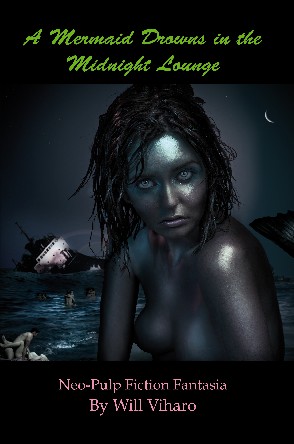
So with this phasing-out of larger-scale movie events, what’s next for the Thrill? Seems all this time he was programming movies, Viharo was also an author in disguise. His latest novel is entitled A Mermaid Drowns in the Midnight Lounge.
“When Speakeasy Theaters suddenly crashed and burned in mid-2009, my 12 year career as programmer-publicist suddenly ended as well, and my future, which I’d been taking for granted, was suddenly a big blank,” Viharo explains. “I kept my Thrillville show going as a road show, but I felt it too had run its course. For most of the general public, diehard fans aside, Thrillville in its ‘cult movie cabaret’ incarnation effectively died with Speakeasy, and I was determined to carve out a niche for myself unattached to that debacle. The show was no longer giving me any creative satisfaction and I never thought of myself as primarily a live entertainer, anyway.”
Being a writer was, it seems, a natural progression. “I’d seemingly shown every B movie ever made, except the one I really wanted to see: Mermaid is like the ultimate Thrillville movie as directed by David Lynch, but in literary form,” he says of his new book. “It is a sexy, stylized smorgasbord of hardcore exploitation elements — crime, horror, zombies, Elvis, and lots of gratuitous sex, which you don’t see enough of in cinema of any kind these days (though violence is not a taboo, which I find odd). Along with this you’ll find my characters musing on universal mysteries like loneliness, love, death and all that jazz as they’re swept away in this cross-dimensional whirlwind.”
As it turns out, Viharo began writing Mermaid soon after he started his Parkway gig (fun fact: Thrillville was originally called “The Midnight Lounge.”) He became so busy that he set Mermaid aside — but he always intended it to be a temporary break.
“Thrillville was a fun ride, but I’m happy to have returned to my original dream of being a novelist,” he says. “I feel like I was coasting on my lounge lizard laurels for too long, waiting for Christian Slater to finally make good on his perpetual optioning of my detective novel Love Stories Are Violent For Me, originally published by Wild Card Press back in 1996. It was time for me to get back to work.”
After giving it some thought, Viharo decided he’d release Mermaid himself. “As for why I decided to self-publish (via Lulu): I won’t mention names but I have several prominent author friends who privately expressed disgust and contempt for the current state of the publishing industry, which, in its desperation, is increasingly mid-listing or simply dropping established, professional novelists in search of that elusive mass-market commodity,” he explains. “I’ve always known my stuff would have “cult appeal” at best — more Harvey Pekar than Stephen King — so when I finished Mermaid, and suffered from the usual ‘post-novel depression,’ I thought to myself: why waste any more of my life and dreams awaiting mainstream acceptance and recognition, especially when I can’t relate to most popular media nowadays myself?”
Fortunately, as he points out, 21st century (if retro-leaning) hep cats have all the tools to get their work out to the public, the Man be damned.
“Unlike when I first began writing fiction over 30 years ago, I now have a platform and online resources that didn’t exist back then, enabling me to bypass corporate compromising or mainstream middlemen and take my stuff straight to the people,” he says. “Nobody but me really ‘gets’ my work, so who better than me to promote it, especially since PR has been my professional racket for the past dozen or so years? I am simply pooling my resources and re-channeling my promo skills into my literary ambitions. Mermaid is the first of many novels, past and future, I plan to roll out of ‘Thrillville Press’ in the months and years to come. I may not make a living at it, but the creative freedom and fulfillment it’s giving me already is priceless.”
Appropriately enough, Viharo’s having his book release party at Forbidden Island, in tandem with his Forbidden Thrills series. Even more appropriately, the double-feature deals in magical sea creatures: the Dennis Hopper-starring Night Tide (1961) and Mermaids of Tiburon (1962). Though the book itself may not be available by July 19, Viharo hopes to have copies of the book’s “soundtrack” (by Actual Rafiq) and, you know, just get people jazzed about his latest project. Mermaids? Zombies? Sex? Elvis? As Viharo himself likes to say, cheers!
“Thrillville’s Tribute to Bob Wilkins”
Wed/14, 8 p.m., $10
Camera 3 Cinema
288 S. Second St, San Jose
www.thrillville.net
A Mermaid Drowns in the Midnight Lounge release party
With screenings of Night Tide and Mermaids of Tiburon
Mon/19, 7:30 p.m., free
Forbidden Island Tiki Lounge
1304 Lincoln, Alameda
www.forbiddenislandalameda.com
Mil Mascaras vs. The Aztec Mummy and Academy of Doom
Thurs/22, 9 p.m., $15
Roxie, 3117 16th St, SF
www.sfindie.com
Nicole Gluckstern reports on the Bay Area arts and culture scene
It sounds a little strange, but I’ve been thinking about shrouds. Not in a morbid way, just in the practical sense. Mostly I wonder what kind of material gets used. Movie mummy shrouds always seem to be made of cheesecloth, but that strikes me as a little flimsy for a swaddled delivery into the afterlife. Actually, speaking of swaddling, doesn’t it seem a little curious that babies and corpses should be wrapped so similarly — at least in the days before they invented the Tickle-Me-Elmo onesie?
But back to the shrouds. I’m sure they’re on my mind because of the Illuminated Forest exhibit at The LAB, part of this summer’s Soundwave festival. I walked in and these great swaths of white tulle were draped, floor to ceiling in front of the entryway and all around the exhibit hall, separating each small nook from the next cranny, and providing screenage for video projections of forest color and form. Occasionally someone would get lost in the layers and have to flail their way out again. But the ghostly silhouettes of gallery-goers flowed smoothly, for the most part, like physical embodiments of the trickling water field recordings provided by Ben Bracken and Agnes Szelag.
Hiding behind one curtain/shroud/swaddle – a parade of turtle-like sculptures with rippling clam-shell bodies (Vaughn Bell); behind another –a Dr. Seuss-ian grove of calico trees and cuddly corduroy stones (Suzanne Husky). Oh to curl up on this forest floor and take a nap! Behind another curtain, some people were sneaking in, if not naps, then at least a bit of down time, watching a film clip of body as landscape while a nearby video installation shrouded within a hand-crafted nest screened the intrepid adventures of a burrowing mole (San Easterson).
Saturday, the theme remained intact. I walked into the Garage for Dark Porch Theatre’s “Comedy Ballet,” and a white curtain was hanging across the stage. While the curtain didn’t last long, death remained an almost constant presence onstage, as the assembled company riffed on Dia de Los Muertos, crematory ashes, Mesoamerican mythology, human sacrifice, and a journey to the underworld, as well as job insecurity, betrayal, bizarre sex fetishes, and other trauma
topics.
Margery Fairchild’s dance choreography, more comedy than ballet, brought a welcome leavening of slapstick to the action, and in particular to the menacing trio of “intrepid gentlemen” (Anjeli Jana, Matthew von MeeZee, Bryce Charley). Nathan Tucker’s out-of-work, off-his-nut, alcohol-soaked Foreplay embodied the term “blowhard” in the most bombastic sense of the word. And a deadpan Amy Seimetz as an increasingly frazzled interviewer for some unnamed project or research facility kept the metaphysical conundrums from over-powering the fun.
Slated for a November run at the EXIT Theatre, it’s easy to see this quirky square peg of a show fitting more smoothly into the traditional Halloween-tide niche, but the attentive crowd at the Garage didn’t seem to mind the head start. As for me, I’m sorry to report that despite the abundance of funereal themes, not a single shroud was featured in “Comedy Ballet”—but some fetching silver lame swaddling is, which pretty much made up for it.
Illuminated Forest at the LAB through August 7
Wed-Sat, 1 p.m.-6 p.m.
2948 16th St, SF
(415) 864-8855
www.thelab.org
“Comedy Ballet” at the Garage through July 18
8 p.m.
975 Howard, SF
(415) 518-1517
www.975howard.com
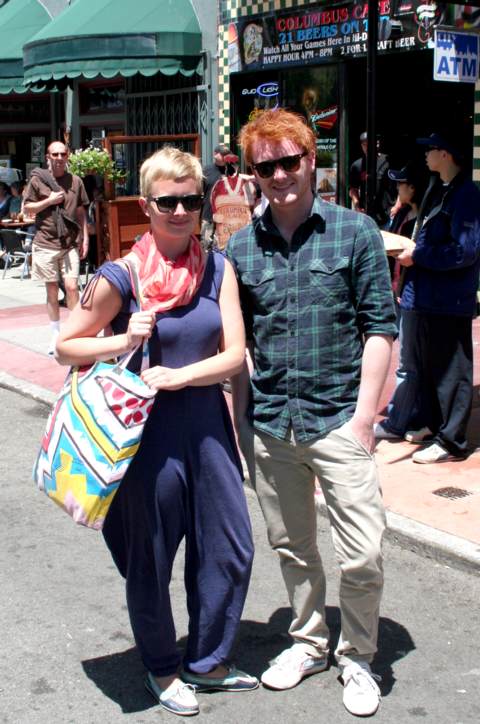
Today’s Look: Katrin and Kristoffer, Bannan and Green
Tell us about your look: “We’re from Denmark.”
Could the past be a kaleidescope, a pattern of images that shift with each disturbance of a sudden breeze… and if the shift is everywhere, how would we know?
-Alan Lightman
If heritage remains constant, what changes is the inheritors. In a project that will live in interactive kiosks at the Jewish Film Festival (Sat/24), as well as in our own Internet devices, young artists are using websites to tell tales that only last year would have taken the shape of a movie. Modernity, man. Their theme? “Half Remembered Stories,” subject matter that lends itself to the nebulous, fragmentary nature of our online lives.
Zoe Pollak’s multimedia project “Memory Paths,” (which makes use of the above quote from Einstein’s Dreams (2004), explores this fluctuating notion of memory. Pollak set 12 videos from her tow-headed childhood to three different sounds ‘o thought – quotes from Einstein and other Jewish thinkers, nocturnes by Chopin, heady intellectual musings all of it – on a site that centers around the image of a clock. Her inspiration came from the sense of pending mortality that strikes most recent high school grads.
“I’ve been getting nostalgic as it’s getting to be time for me to leave for college,” Pollak told me in a phone interview. “For my project, I wanted to look at individual memories I have, like the first day of preschool, and look at how my relationship to that memory has changed over time. Sometimes when I look back at that event, like when I have a lot of homework, I might be very nostalgic, but if I’m reading a very interesting article, I might notice how now I have the ability to process more complicated ideas.”
The project was organized through the New Jewish Filmmaking Project, which hosts documentary producers from Citizen Film helping 11 young digital bards to focus on gaps in recall. It segueways nicely with the panorama of stories invoked in the film festival as a whole, even if the divergent format seems to crown the young storytellers as the new generation.
Although the project did yield one bad ass reflection on the notion of zombie takedown, family history seems to have been a natural choice for many of the participants; a young uncle’s overseas death from Hepatitis C is explored, a grandfather’s gambling addiction, a great-grandmother that had refused to emigrate to the U.S. if it meant leaving her young lover.
The latter was the vision of a NJFP participant from year’s past, Klaira Markenzon, who in 2004 directed a movie about her family’s prolonged stay in their native Ukraine, Leap of Fate. “Half Remembered Stories” sees Markenzon develop that film into an online choose your own adventure book. “I wanted it to be about how every decision can change the rest of your life,” says Markenzon. Elect to have Grandma take that long steerage boat ride to America in Markezon’s “game,” and players can find themselves sick, rejected at the gate of Ellis Island and forced to return to the Ukraine, or perhaps Palestine. Immense historical research went into the making of the project.
“This format is outside of the tradition of beginning, middle, and end,” says Sophie Canstantinou, one of the project’s facilitators and co founder of Citizen Film. Her cohort, Sam Ball, told me that the new format of story not only gave young people the opportunity to create their own vision (in place of the collective product of years past), but that it also reflected the gyrations of information culture today. “What’s new this year is everything that’s going on in this online media, and that the population we’re working with spends so much on time engaging in stories – we wanted to see if we could harness that.”
But do the stories pack the same punch on our computer screens as they would have screened in a dark theater? Hard to say, really – but Ball is confident that they are indeed harbingers of a new kind of cultural experience. “Eighty years ago,” he told me “the only way you could see a movie was having a shared, communal experience in a theater. In this new medium you’re back to having a communal experience, but its a different one. It’s people sitting in environments of their own making, being able to communicate.” Perhaps the past is indeed a kaleidescope: one that calls up a different jewel tone image with each generation’s shake of it’s mirrors.
The New Jewish Filmmaking Project’s “Half Remembered Stories”
Launch party Sat/24 (through Aug 9) 12:30 p.m., $12 (includes 1:30 p.m. screening of Te Extraño)
Castro Theatre
429 Castro, SF
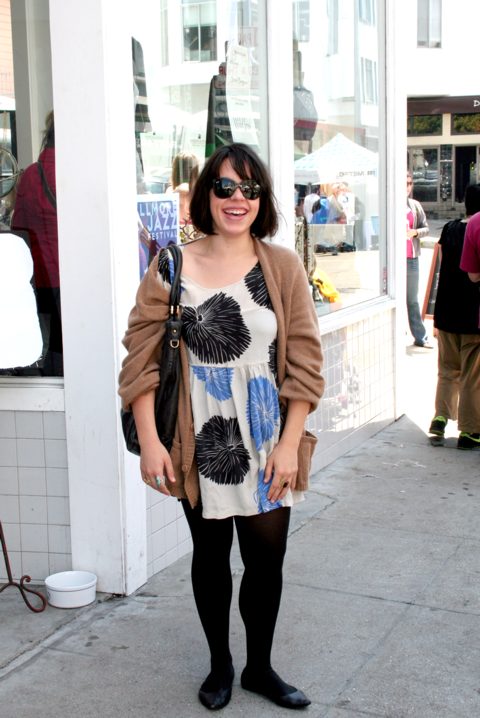
Today’s Look: Katelyn, Grant and Green
Tell us about your look: “This is my favorite dress. I’ve had it for six years.”
Paul was right! Will Spaniards give up eating octopus? Will the Dutch avenge their loss with grimmer graphic design and tinier eyewear? In any case, yesterday’s Civic Center scene was one of friendly competition and colorful exuberance. (Check out the entire ON SIDES: San Francisco Watches the World Cup photo series here.)

Today’s Look: Masaki, 17th Street and Mission
Tell us about your look: “I got this dress used from a store in Tokyo about 5 years ago.”
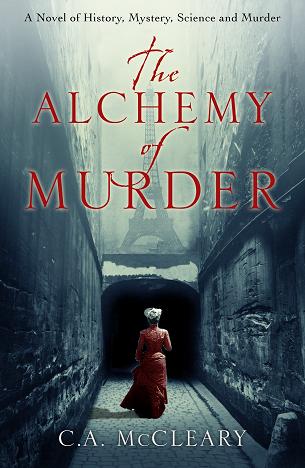
The Alchemy of Murder
Carol McCleary
Forge, 365 pp. $24.99
Nice effort for a first novel. A fun premise, fairly well executed. Nellie Bly, the famous (for real) investigative reporter for Joseph Pulitzer’s New York World, goes to Paris in 1898, just as the World’s Fair is attracting throngs of tourists, to catch a brutal murderer.
The guy’s apparently a doctor, and has been hacking up girls and taking away parts of their bodies. Now he’s going about his nasty business in a city that’s not only overwhelmed with the fair (and trying to hush up the killings to avoid bad publicity) but in the throes of an epidemic of something called Black Fever.
The authorities think the fever is spread by miasma rising from the sewers. The anarchists, who control the Montmarte section of the city, think it’s a plot by the rich to kill the poor. And of course, as McClearly points out about Montmarte, “the immorality and depravity of its bohemian inhabitants is a scandal known throughout the world.” Bly runs into Louis Pasteur, Jules Verne (who she eventually sleeps with), Oscar Wilde, Louise Michel and a host of other characters from late 19th century Paris as she chases around, putting herself forward as bait for the killer.
McCleary isn’t terribly kind to the anarchists, but there’s a lot of (relatively) accurate historical description of the politics of the time, with ample references to Kropotkin, Bakunin, and Haymarket Square. And the scenes in Montmart, the Pasteur Institute and the Parisian sewers are worth the price of admission – even if the eventual plot twist, involving an anarchist attempt at biowarfare with anthrax, plague and cholera – is a bit of a stretch.
Lesbian sex in a café with ample absinthe. Blow jobs in another café. A bladder filled with plumbers acid that gets sprayed on a bad guy’s dick. Sex with Jules Verne. Lectures by the radical Ms. Michel. I wouldn’t sell it as a history book, but as an entertaining mystery, it actually works.
Gosh I love a good bite of propaganda. But maybe instead of “good” I should demur to “appealing”; it’s probably a bit redundant to say that I don’t brook with the smug-mongering on FOX, and even if it’s couched in concern for the personal safety of Americans, the advisories that our government puts out on the countries of our brothers and sisters in South American scared the dickens out of my mom when I decided to do Carnaval in Colombia.
Point being, we’re surrounded by propaganda. And I know Oliver Stone thinks so too. The fact appears to be the motivation behind his new movie South of the Border (opens Fri/16 in Bay area theaters), in which he travels down there to meet with Hugo Chavez and seven other leaders of what he believes to be the new Bolivarian movement. “I think that there has been so much unbalance [in American coverage of Latin America] that we are definitely a counter to that,” the director told the New York Times.
And like any good propaganda, the movie’s raised a tidy amount of hullabaloo. Maria Conchita Alonso is raising a stink at Stone appearances, and Larry Rohter wrote a scathing piece on the film’s inaccuracies for the NYT (see the film’s rebuttal to his points here). Even that astute analyzer of Western Hemisphere policy, Perez Hilton “weighed in.”
So why then did our friendly neighborhood center for Latino arts care to show such a piece of inflammatory rhetoric? I hollered at Jason Wallach, who was the evil mastermind behind a recent showing of South of the Border at the Mission Cultural Center for Latino Arts. Jason, you crazy commie red, what gives?
“It’s like this,” said Wallach, cheerfully disregarding my hate speak. “The cultural center for many years has taken it upon itself to be the outlet for news and critical analysis in Latin America, and helping the community stay up to date on development.” Wallach told me that the Latino activist community has taken issue with Washington’s trade policies, which “are only there so that the U.S. can have access to new markets and have nothing to do with those countries. We never hear that in the U.S.”

Somewhere between Evo Morales supplying Oliver Stone with amphetamines and what happens next in this scene with Hugo and some kid’s bike lies the genius of South of the Border. Photo by Jose Ibanez
Wallach noted that although MCCLA does not endorse everything said in the film, and that even though the left also has its concerns about Chavez (see in particular his sorry record on freedom of the press) “our job is to create a space for open debate.”
And so it came to be that the other night I turned off Hannity and Colmes for a moment, and had the pleasure of watching the Bay area premiere of the film at the Mission Cultural Center for Latino Arts, where it was screened for an assemblage of political activists and alternative press (meaning for once I was the most mainstream journalist in the room, ha!).
It was a highly amenable audience. In one Stone-Chavez interview scene, the two discuss the aftermath of the 2002 attempted coup on the president (that many have found similar to CIA interventionist operations in the past). Chavez described his version of non-violence, the art of being “pacífico, pero armado” (peaceful, but armed). Seated behind me, a man breathed a sigh of relief. “Exacto,” he whispered. Like I said, every once in awhile we all need a shot of the propaganda that tastes good to us.
South of the Border opens Fri/16 at the Sundance Kabuki (1881 Post, SF. (415) 929-4650, www.sundancecinemas.com) and Rialto Cinemas Elmwood (2966 College, Berk. (510) 433-9730, www.rialtocinemas.com) )
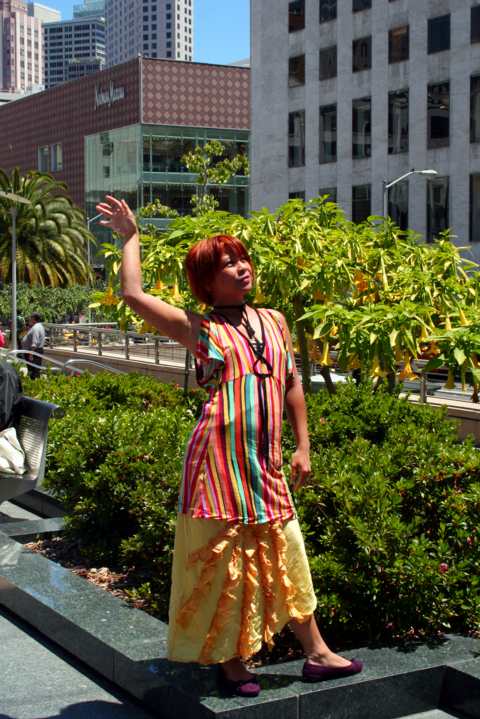
Today’s Look: Melissa, Union Square
Tell us about your look: “I got this outfit at a store called P-Kok in Lower Haight.”
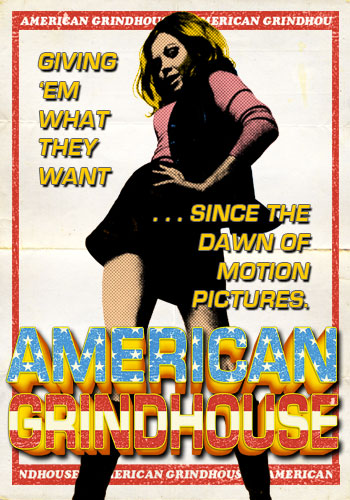
More bloodthirsty coverage of the San Francisco IndieFest’s horror-fest offshoot, Another Hole in the Head, in this week’s Guardian.
Another Hole in the Head’s two documentary offerings concern themselves with the distinctly American roots of two related strains of genre filmmaking. Elijah Drenner’s American Grindhouse traces the history of exploitation film, with a particular focus on the grindhouse theater as a cultural institution. Narrator Robert Forster recounts the tendency of even the earliest films to cater to prurient interests, and how the establishment and eventual dissolution of the Motion Picture Production Code stimulated the development of exploitation subgenres. The featured film clips are impeccably selected, mixing titillation and shock with a healthy sense of humor about the over-the-top absurdity of films like Ilsa: She Wolf of the SS (1975). Surprisingly candid interviews with gore luminary Herschell Gordon Lewis and blaxploitation director Larry Cohen prevent the film from taking on a too-self-important tone — these folks knew they were making b-pictures, and were damn proud of it. One of the most charming aspects of the documentary is the juxtaposition of different attitudes, wherein one interviewee will sing the praises of a classic, followed in quick succession by another talking head declaring it to be trash. It feels like John Landis gets the most screen time of any subject, but his charisma as well as the breadth of his oeuvre make it seem appropriate.
Nightmares in Red, White, and Blue, on the other hand, focuses specifically on horror, and director Andrew Monument in turn delivers a harsher, more self-serious take on shocking cinema. Some interviewees cross over, but standouts here include John Carpenter and modern torture porn auteur Darren Lynn Bousman. The editing here is less edifying and more irritating, though since we’re dealing with horror films, sometimes the heavy-handedness works — case in point, a lengthy montage of nudity and sex from slasher films effectively communicates both the puerile interests and blunt moralizing of much of the genre. Nightmares is also more explicitly concerned with how horror films relate to America, with many interview subjects noting how each decade’s horror trends mirrored its political issues, hence the title’s direct allusion to the perversion of the American dream.
Both films provide a historical framework for films that, as Grindhouse insists, have become part of our modern mythology and mindset. Grindhouse is more watchable, but both are worth seeing for anyone who didn’t live through the long history of genre madness and brilliance.
ANOTHER HOLE IN THE HEAD FILM FESTIVAL
July 8–29, $11
Roxie, 3117 16th St, SF
Viz Cinema, New People, 1746 Post, SF
www.sfindie.com
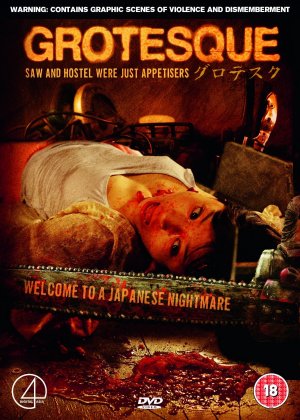
More bloodthirsty coverage of the San Francisco IndieFest’s horror-fest offshoot, Another Hole in the Head, in this week’s Guardian.
Grotesque (Koji Shiraishi, Japan, 2009) When did gorno stop being sick and start becoming sad? In Koji Shiraishi’s Gurotesuku, or Grotesque – banned in the UK – a chainsaw is brought to chests, arms, legs, and fingers when really it should be brought down on this celluloid garbage. Shiraishi presents a film that is sloppy, badly written, badly acted, and is above all things, deeply unentertaining. The plot is as thin and drawn-out as one of the protagonist’s intestines: While on a date, two dumbfucks get picked up by a craaaaaazy doctor (at least I think he’s a doctor – and I think he’s lost his board certification) who proceeds to do sick but unoriginal things to them (sawing off a girl’s fingers and stringing them on a necklace for her BF? C’MON!). There are some brief moments of respite, albeit painfully acted and ridiculous respite, but the torture tries not to let up its chokehold on the audience. Unfortunately, it just ends up being a chokehold on our time. Fri/16, 5 p.m. and Sun/18, 7 p.m., Roxie.
Ticked-Off Trannies With Knives (Israel Luna, USA, 2010) Trannies should get ticked-off more often. In a mock-exploitation fest like this one – which has the candid crudeness of a John Waters film – the tranny is the ultimate hero because she embodies the street smarts and agility of a woman, and the muscles and thirst for vengeance of a man. After an aggressive brush-up with some nasty bros (and what’s worse than a weapon-wielding homophobe?) the titular trannies in Ticked-Off set out to put the ol’ Hammurabi’s Code to the test – and with results both hilarious and flat-out gross. The cheeseball aesthetics and maudlin acting are surprisingly funny and self-conscious rather than self-effacing – yet in dealing with something like a hate crime, how else can you approach the material? July 22, 5 p.m., Roxie and July 23, 9 p.m., Viz.
Doctor S Battles the Sex Crazed Reefer Zombies (Bryan Ortiz, USA, 2008) Apparently, Reefer Madness (1936) and the public health warnings like it were right: weed does turn you into a monster. But in this underachieving student film, the message arrives a little too late. Doctor S has a promising start: some hilarious faux-film reel ads, and many a nod to cult horror films. In stark black-and-white, it’s as if Candace Hilligoss were running from stoners in Carnival of Souls (1962). But once the PhD of the title teams up with a cheerleader, saved from her post-puff zombified boyfriend at Make Out Hill, the film quickly devolves into amateurism. The thrills are cheap – too cheap – and the laughs are forced. Not to mention the title is way cooler than the movie itself. July 23, 7 p.m and July 26, 9 p.m., Viz.
ANOTHER HOLE IN THE HEAD FILM FESTIVAL
July 8–29, $11
Roxie, 3117 16th St, SF
Viz Cinema, New People, 1746 Post, SF
www.sfindie.com

Today’s look: JM, Union and Grant
Tell us about your look: “It’s purple.”
It would appear they got in under the radar. After all, the Mission Mission blog post on the Levi’s pop-up store on Valencia didn’t hit until today, stirring up an American Apparel-sized storm of anti-capitalist harrumphs and hurrahs. There was even a press embargo on mentioning details about the space until yesterday.
But here it was, and here I was getting a tour of the store with various superlatively attractive employees, who were quick to remind me that the space is “not just a multi-national corporation opening up a store in a community.”
This according to Josh Katz, whose official title at Levi’s is Head of Collaborations, Partnerships, and Creative Concepts. I prefer to refer to him more succinctly as “hot man with shockingly blue eyes in striped cardigan and tie made of interesting material who had the controversial idea of opening up a corporate entity in the thick of indie-rama Valencia land.”
But where the devil were the clothes? Katz chuckles, adorably. “It’s a good question – we make clothes, don’t we?” Yes. But apparently that’s not all that sets Levi’s heart aflame. “Whether it’s providing products or not, it’s important to create physical manifestations of the brand,” says Katz.
The company is pushing its association with American hard work – its 1900s Valencia Street denim factory, after all, was one of the first sites of workclothes manufacturing. Riffing on this image of industrial creativity, its stocked the 17th and Valencia storefront with all manners of vintage letterpresses and printers. Although there’s a rack of work clothes up for sale, the space is not meant so much as a point of purchase as much as a branded community art “hub.” Every Sunday, budding local artists can screenprint on free cardstock, churn out a zine on the cheerfully supplied Xerox machine, even cobble together a rack of words that a friendly staffer (some of them straight from their day gigs at the Center for the Book) will stick through the ancient letterpress on hand. As part of a tie-in with its Go Forth ad campaign, the company’s planning another photography based pop up space in New York, due to open Sept 18.

You’d be hard pressed (ha!) to find a more attractive print shop staff
“This allows us to sustain an engagement with the community. We’ve maintained strong relationships with every aspect of San Francisco,” Katz tells me. Knee jerk reaction: scoff scoff scoff. But it gets “tricky,” as Mission Mission’s Ariel Dovas puts it, when you consider that the “printshop” is providing the Mission use of some pretty serious art equipment and space free of charge, and that those are both hot commodities in this neck of the woods. Plus, Katz and the company have scheduled workshops and other partnerships with a shockingly legitimate lineup of Bay area creative types, from Aaron Rose (who as far as I can tell is not really a Bay Area creative type, but I suppose that’s getting hung up on semantics) and Alice Waters to Craig Newmark, the most famous list maker in the world, and a slew of nonprofits who you wouldn’t think would throw in their lot with an evil company set to commodify and pablumize the Mission.
Right? I called Courtney Fink, who is the executive director of Southern Exposure, and whose community art-funding organization is one of the three to benefit from the proceeds generated at 580 Valencia (the other two are Plaza Adelante and the Women’s Building). I asked her if she was surprised that Levi’s sought out such locally rooted groups as partners for this venture. “I guess I’m not surprised,” she told me. “I feel like it’s a strategy that a lot of big companies are taking, forming these creative partnerships to support what they’re doing.” Fink said that Levi’s was backing Southern Exposure’s new postcard guide to the 45 art venues in the neighborhood, which they had been unsure where to find funding for. “As long as we can maintain our integrity, we’ll do what we can,” she said, pragmatically. Fink also noted that Levi’s had refurbished a building that otherwise might have sat empty, though she could see how there’d be numerous different opinions on their presence in the neighborhood.
Of course, not everyone’s stoked. I got an email from one Elle Ko, who is launching a guerrilla assault on this corporate infiltration. Quoth she: “that evening i decided to graffiti the storefront. i wrote ‘SCAM’, ‘BUY USED’, and other similar wording on the storefront. the graffiti was promptly removed the next morning. the following evening i wrote ‘UNEMPLOYED? KEEP SHOPPING’ on the pavement in front of the entrance of the building, also ‘LOCAL FARTISTS’ [author’s note: double ha!], ‘PLAGUE’ and a large red X across the door. i then dumped a pile of old clothes and rags in front of the entrance.” She says her actions led to the installation of a round-the-clock security guard at the site.
“Levi’s has been on Valencia for over 100 years,” Katz told me as we moseyed about his new to-do, bustling with a whole team of fresh-faced creative-type staffers. The company maintained a presence at Valencia and Brosnan (now the site of the SF Friends School) up until 2002. But to its assertion that they’ve maintained relationships with the area, I offer a hearty, resounding, whatever. Levi Strauss moved those jobs to countries with cheaper labor forces awhile ago. They haven’t had a single factory in the US, in fact, since 2003. But their corporate offices are still in the city…

Let’s go printin’ now, everyone is learnin’ how
I’m hollering at you though, Elle — all that talk about “American workmanship” and “community values” is a little problematic coming from a company that moved all their production not only out of the neighborhood and metro area, but our entire country, seven years ago. But hell, who am I to harsh on a good time? Not to mention a powerful benefactor for organizations that kick ass in our neighborhoods. So if you’re down, go and try out the toys, check out the admittedly cool workshops they’ve got coming. You might as well get some enjoyment out of it. It’s like digging the aesthetics of a cool-looking national ad campaign. Oh wait, that’s what it is.
Levi’s Workshop
public events and Sunday studio hours through Aug 28, free
580 Valencia, SF

If you’ve ever stepped outside the BART/MUNI Powell Street Station, or passed by the three-story Forever 21, you’ve probably seen the group of street dancers between Market Street and the cable car turnaround. They make spinning on their sneakers look deceptively easy. They form right angles with their arms behind their backs. And most impressively, they flaunt fast-paced hand gestures and optically illusory movements with a crisp, clean swagger.
The dancers, a dozen or so boys (with personas like Sir, Fracture, J-Tro, and Inspector Gadget) and two girls (Charmika and Vernita) all share a distinct dance style. It’s called turfing. TURF, an acronym for Taking Up Room on the Floor, incorporates elements from various dance styles like breakdancing, popping, and gliding, but has a much smoother, free -flowing look than its popping and locking counterparts.
With roots that reach back to the Bay Area’s hyphy movement and beyond, turfing is a specifically local dance form. Some of today’s freestyle turf groups — Get Wet Ent., Best Alive, and Turf Feinz, to name a few — host and participate in battles where the best turf dancers come out to strut their stuff.
A few dancers at Powell Street spoke of original turf dancers and older styles, suggesting that turfing is an evolving art form shaped by different generations of dancers. While different dancers come out to Powell Street each day, there is a core group of regulars who all know and support each other.
The Powell Street turf dancers are aware of their place within a larger group and also more than capable of holding their own on the dance floor. Moreover, these relatively young dancers, ranging in ages from 16 to 25, possess a level of maturity and confidence akin to professional dance artists. With believe-it-or-not moves, they certainly know how to work a crowd.
Turf dancers outside Powell Street Station:
http://www.youtube.com/watch?v=un7L6gWyKfI
A turf battle hosted by Get Wet Ent.:
http://www.youtube.com/watch?v=eg8ntk_86Xw
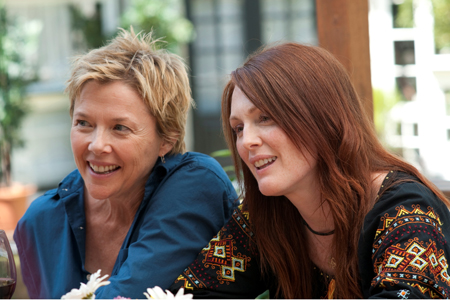
Writer-director Lisa Cholodenko earned attention with critically acclaimed features like High Art (1998) and Laurel Canyon (2002). Her latest movie, The Kids Are All Right, is a “personal film” about a lesbian couple raising teenagers. I spoke to Cholodenko about queer politics, explicit content, and keeping things lighthearted.
San Francisco Bay Guardian: Recently, there was a lot of controversy surrounding a Newsweek article, in which the author wrote about the difficulty of queer actors playing straight roles. I was wondering about your take on that, and on the opposite — straight actors playing queer roles. Is that something you even considered when casting?
Lisa Cholodenko: I’ll be honest, I was just told about this article and I didn’t read it. You know, I think it’s kind of weird thing to even discuss in a way, to me. Chiefly because I think actors’ personal lives — I just think people should have a private life, not that they should be in the closet, but that there should be a separation between professional life and personal life. And if a director feels like so-and-so, whether they’re gay or straight, would be good for a role, give them the role. What does it matter? As it turns out, I think gay people have more of an affect, whether they’re lesbians or gay men, that’s harder to camouflage in straight roles. Why that is, I mean, you could talk about that. I think it’s easier to go the other way. That’s just what it is. I say that without a value judgment. It is what it is.
SFBG: The Kids Are All Right has a same-sex relationship, of course, but it also has a fair amount of graphic sex and even a snippet of hardcore gay porn. Do you think it will shock a mainstream audience? Are they ready for it, and does that matter?
LC: I think it’s shocking in a sense that it’s portrayed in such a real way, that it’s not super arch, or it’s not like The L Word. This stuff has been on TV and in films. In a way, I’m not inventing the wheel at all. But I think the package that it’s coming in is going to be disarming to people. I think we tried and I think we were somewhat successful in making it so that you don’t realize exactly what you’re watching, the subversiveness of what you’re seeing. You can settle into watching it without that kind of discomfort of being super aware of, “This is something I’m not. I’m other and this is not my thing.” I think we figured out a way for people to enter it, and that was really important for us.
SFBG: I ask because I do feel like this shouldn’t be a big deal, that people should be able to handle it. And yet, the night before I saw your movie, I saw Sex and the City 2, in which there was a gay wedding. And as soon as the two men kissed, the camera cut away. There’s a lot of intimacy between Nic and Jules in the movie, so I was wondering particularly about that. Are people outside of San Francisco going to be apprehensive?
LC: Yeah. You know, I think we didn’t really know. I think we tried to write it and I tried to direct it in a way that the humor would be disarming enough, and the images themselves, if you really deconstruct it, would be tame enough. So it was more the suggestion of it. That would be the kind of twist. The people in the know would get it more than the people that were not in the know, maybe. I think we hoped that it would have a mainstream appeal to it, and that we could get beyond the people who would be apprehensive. There were questions about the gay porn and about how much sexuality we were showing, but we felt like, this is the fun of the film. It’s not going to be Spider-man 12 or something. It’s not going to be a multiplex film. But we hope it’s not going to be super rarefied art house film. So in terms of the Sex and the City thing, I think that they’re looking to go as wide as humanly possible, to every grandmother to every neck of whatever, so you can only take it so far.
SFBG: I want to touch on the humor that you mentioned, because I think it’s one of the movie’s real strong points. It’s so funny. What was your approach when you were co-writing to keeping the drama of the story but still making it fun?
LC: It was like a process, it was a real evolution. We had sort of a plot, a conceit for how the plot comes together, which was this thing about the kind of doofus friend wanting to watch the DVDs, and finding the porn, and blah, blah, blah, blah. So that all was funny, and then the kind of awkward conversation about trying to tiptoe around trying to figure out if their kid was gay, and that they would even care that the kid is gay, and how ironic that two gay moms are going to care that there kid is gay. And all that stuff. So it made us laugh, but there was a lot of other stuff in there that we took a lot more seriously and played a lot more seriously. I think as we went deeper into the drafts and moved along in the evolution of getting the film done, I really, really, really pushed for us to take whatever was potentially funny in there and just kick it up a notch. Stuart [Blumberg, who co-wrote the film] is a really funny guy — we have a similar sensibility. The same kind of stuff makes us laugh. So we knew if we were sitting there writing it and laughing, it was good. We had kind of gotten there.
SFBG: I think a lot of the humor comes from the fact that the film is so real and grounded. You have Laser, a 15-year-old boy, who talks like a 15-year-old boy, and that’s something we don’t always see in movies. And so it’s not stereotypical or preachy—it feels more organic than that.
LC: Yeah, we were really passionate about making it not politically correct and not sanctimonious and not super earnest and just hoping that there would be heart in it, simply because these were sympathetic and three-dimensional characters in a difficult situation.
SFBG: I wanted to ask about the character of Nic [played by Annette Bening], who could have been played very typically butch, because she has a masculine name and short hair and these traditionally “male” qualities. In terms of the writing and the directing, how did you make sure there was more complexity there?
LC: You know, I think that wasn’t super overdetermined. It’s really just kind of my worldview. I don’t live in a world where people are super stratified. I don’t feel like my partner and I are super — I kind of see the butch and femme in every lesbian I know. I know that there are lesbians who really kind of identify with that, and that’s there thing in the world, and that’s good. But it’s a personal film, so it’s written from my worldview. So there’s that, and then there’s also, you get Annette Bening and you get Julianne Moore, and they come with their own essence and personality. Julianne Moore has some butch in her and Annette Bening has some femme in her. They are who they are.
SFBG: There’s a great conversation early on in the film about the spectrum of sexuality and how it’s not so easily defined, which ties into Jules sleeping with a man. Were you concerned about an audience’s reaction to a lesbian having sex with a straight guy?
LC: I mean, it was a concern for me, but I felt like, you know what, oh well. I might be nailing the coffin. It might just be a bad choice. But in essence, the whole plot of the film revolves around that, so it was either, ditch the film or run with it and try to make it feel earned and interesting and viable and what not. In the early drafts I would show people — and when I started getting feedback in the early drafts, and “This is good,” I stopped being so uptight about that and just let myself kind of take it to the next place.
SFBG: It wasn’t an issue for me, but I think for a lot of people, they expect more rigid definitions. We don’t see a lot of queer characters on screen, and so when we do, many want them to be perfect: the queer voice, the lesbian, the gay man. And when they step outside those boundaries, suddenly it becomes an issue, politically.
LC: The calculated thing was that, I thought, a) I identify with this. This is something that I feel like, that makes sense to me. That makes sense to people I know. That makes sense to whatever. So it didn’t feel like some weird kind of conceit that I came up with that was like, that never happens. All lesbians are rigidly this and don’t go over that boundary. Because we know that’s not true. So there was that, and then I thought, I like this set-up and I like this plot, and also I feel like, it’s kind of an interesting intermingling of straight and gay. I felt like, if I really want this to be a mainstream film, that’s good. This is really inclusive of gay and straight, and I like that. I like that personally and I like that for this film. I was much more interested in reaching out to the male population than I was concerned about alienating a sector of the lesbian population.
SFBG: I wanted to talk about the title, The Kids Are All Right, and that focus on the children. How did the title come about? How do you feel about the role the kids play, and why is that central to the film?
LC: The film is about, you know, these women and their experience making a family. The family. The man who comes in and wants to be part of the family. Really when you’re talking about the family, it’s about the life of the kids. So it’s sort of an ironic title, in the sense that the kids are kind of doing better than the moms, in a way. And it’s also a kind of a wink to the notion that gay people can’t raise healthy, psychologically healthy children. Like, the kids are fine. Don’t worry about them. They’re just right.
SFBG: You talked a bit about what Annette Bening and Julianne Moore brought to the film, but I was wondering if you could elaborate on casting.
LC: Julianne was someone I had probably 10 years ago, just at some function somewhere. We had spoken about wanting to work together at some point. She was a fan of the first film that I made, High Art, and I was always a fan of hers, particularly in Boogie Nights (1997). So when Stuart and I wrote this, we asked ourselves several times, could Julianne play this part or that part? We were sort of on the fence. We thought she could play either part. So I sent it to her and I said, “Which part would you like to play?” And she picked Jules. Which, we weren’t surprised. We knew she’d want to play that part, but I thought I’d offer her the other one if she wanted it. And that was great.
Then finding her counterpart, the Nic character, was more difficult. It was kind of vexing. I just didn’t know what actor in that age group who had great acting chops, who was funny and dramatic and sexy, could be a good match for her. But when I stumbled on the idea of Annette Bening, I kind of got rabid about it. OK, this is it, this is the only person who can do it. So come hell or high water, she’s gonna do it.
SFBG: And then in terms of the younger actors — you don’t always see teenagers who actually look like teenagers.
LC: Well, they’re pretty close to the ages they’re supposed to play. Mia [Wasikowska] was like 19 at the time, and Josh [Hutcherson] was maybe 16, going on 17. So they were pretty close. Mia was someone that I had seen on an HBO series called In Treatment and thought she was interesting. I liked that she was Australian, not a typical American young actor, from LA or New York and wouldn’t have that baggage or affect that you might find in a lot of young actors from here. And he — I didn’t know his work, but I knew that he had done a lot of work. I was told he was an up-and-coming actor, so I was open to meeting him as well as other people, but when he came in and did the scene, it was just one of those things where you go like, “Oh, yeah.” I thought maybe Laser would be more of a Paul Dano-type kid, a little bit more twee, but when I saw him, I thought, oh, that’s good. He should be more boyish and more kind of robust, and just like a dude. I like that.
SFBG: There’s a lot of subtlety in The Kids Are All Right. I liked Nic’s drinking, which was fairly underplayed but came up several times. What was the thought process behind that? Does she have a drinking problem, or is that just the manifestation of the turmoil going on in her family?
LC: I think we felt like, oh, you know what? She’s kind of borderline. She’s a little bit of a lush. She’s kind of leaning on the wine too much, and this has become a thing and the other partner is now noticing. She’s drinking too much and she’s a stress case and she’s not dealing with it very well. She doesn’t have a good off valve. I think we tried to design it in a way that it felt like, this is something that’s coming to a head in their relationship. One partner’s seeing a behavior that’s making her concerned and the other one doesn’t want to deal with it yet, and she’s boozing it up.
SFBG: It’s also interesting because it’s easy to label Nic the control freak. But here’s Nic, who can’t control her drinking, and Jules, the free spirit, trying to get her to keep it in line.
LC: Right, right, right. Well, I felt like everybody has their ironies and contradictions and stuff. It’s endemic, I think, in all long-term relationships.
SFBG: There was another relationship that interested me, which was the relationship between Paul [Mark Ruffalo] and Tanya [Yaya DaCosta]. I was wondering if it was significant that it was an interracial relationship. In the sense that, 40 years ago, audiences might have been shocked by an interracial relationship, but now it plays naturally — and hopefully, the same will be true of same-sex relationships. Was that intentional, or am I reading into things too much?
LC: You know, I think it wasn’t totally consciously mediated, but at a certain point when I was thinking about casting, I had Erykah Badu in my mind for that role. I felt like, who’s the kind of person who Paul would be with? It seems like he’s the kind of guy who would be running after the most exotic person. That character to me was sort of gorgeous and exotic and whatever. And then, to go from that to Jules, who is totally exotic in her own way, because she’s who she is and she’s older and she’s beautiful and she’s a lesbian. It was this kind of motif of like, what’s exotic? The Tanya character, the black character, is clearly in love with him and would be devoted to him in a heartbeat. And the white character, who’s a lesbian and completely inaccessible, is not available at all.
I guess the second part to that question is, at a certain point when we were putting this together was, it’s not only that, in terms of the psychology of the character, but I think this is good to mix it up. You know, he’s screwing this black woman, and OK, compare that to the lesbians watching gay male porn. This is what people do in life. It’s not just white people and straight people. It’s mixed up.
The Kids Are All Right opens Fri/9 in San Francisco.
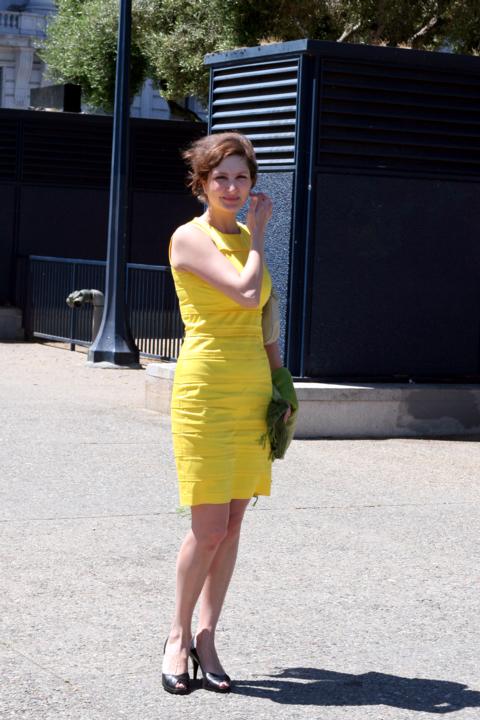
Today’s Look: Arpi, Fulton and Grove
Tell us about your look: “This dress is from Calvin Klein.”

Ways to have fun while giving back this week
Thursday, July 8
Do Good Lab
Join the Do Good Lab to raise money for The Champions, a primary school for orphans and vulnerable children who lack access to state provided education. Baobab Restaurant will donate 20% of their proceeds to the project.
6 p.m., donations encouraged
Baobab Restaurant
2323 Mission, SF
www.do-good-lab.org
IFCO Pastors for Peace Cuba Caravan
Attend this sendoff and benefit for the 21st annual Cuba Caravan carrying 100 tons of humanitarian aid to the blockade-starved people of Cube featuring a potluck dinner at 6pm, speakers from the caravan, two short films, music by Dave Welsh, salsa dancing lessons, and more.
6:30 p.m., $10-$15 suggested donation
Berkeley Fellowship Unitarian Universalists
Fellowship Hall
1924 Cedar, Berk.
(510) 495-5132
Saturday, July 10
“Land, Villains, and Revolutionaries”
Take a walking tour across 200 years of the social movements of San Fransico history and help raise funds for Revolution Books’ ongoing program, Put Revolution on the Map.
1 p.m., $15
Meet at Cable Car turnaround
Powell and Market, SF
www.thecommonsSF.org
Sunday, July 11
ArtSeed Apprenticeships
Join Surfpulse for a benefit party and surf board raffle for ArtSeed’s Apprenticeships Program, which brings long term artist mentors into the lives of children. Featuring food, music, raffles, and surf flicks.
6 p.m., free
Joxer Daily’s
46 West Portal, SF
www.artseed.org
Berkeley East Bay Humane Society
Help raise funds for the Berkeley East Bay Humane Society, which suffered a tragic fire that destroyed most of the building and help get their adoption offices and hospital open again at this fundraiser featuring performances by over a dozen singer-songwriters.
2 p.m., $10 suggested donation
Starry Plough Pub
3101 Shattuck, Berk.
www.starryploughpub.com