• No categories

Pixel Vision

28 films in six days: Jesse Hawthorne Ficks at the 2011 Toronto International Film Festival (part two)

0

Check out part one here and part three here. More from the man who slept nary a wink at TIFF 2011 (or so it seems!) follows.

11) Twenty Cigarettes (James Benning, USA) Following the basic concept of 20 different people smoking an entire cigarette gives each segment its own time frame. It allows the viewer to get into a rhythm that becomes as addictive as smoking itself. Being a non-smoker, I found myself hypnotized by each person’s physical stance and style as well as what each participant must have been thinking about during the five to eight minute process. Museum cinema at its finest.

12) La folie Almayer (Chantal Akerman, Belgium/France) Adapting Joseph Conrad doesn’t sound that exciting, even for fans of Chantal Akerman (Jeanne Dielman, 1975). But there is something absolutely alluring about this experimental mood piece. Feeling abandoned and lost in the jungle becomes a state of mind here; the film sincerely builds towards two of the most beautiful shots Akerman has ever created. With an audacity that can infuriate even the most weathered cinephile, this 65-year-old French auteur has created a new work that is crisp, inventive, and quite alive. For anyone who was also ignited by Godard’s most recent abstraction, 2010’s Film socialisme — here’s another from an innovator who we too often take for granted.

13) Damsels in Distress (Whit Stillman, USA) Whit Stillman’s much-anticipated return (showcasing mumblecore queen Greta Gerwig) has all the elements you’d expect from the maker of Metropolitan (1990) and The Last Days of Disco (1998). But this is his first film since Disco, and Damsels somehow feels like a half-step behind Tina Fey’s Mean Girls (2004) and Greg Araki’s Kaboom (2010). Have people been so influenced by his films that they’ve all caught up with him by now? It’s good to have you back, Mr. Stillman, but I’m looking for you to pave some new roads with your next one.

14) Comic-Con Episode IV: A New Hope (Morgan Spurlock, USA) How has this documentary not been made until now? Spurlock (who already had a film out this year, inspired product-placement doc The Greatest Movie Ever Sold) takes a break from being in front of the camera and delivers a straightforward look at a handful of Comic-Con attendees as they hope to achieve their respective goals at the ever-growing event. As the film follows a couple of animators, a costume designer, a guy who wants to propose to his girlfriend, and a comic book seller who’s ironically trying to figure out how to sell comic books at the largest comic book convention in the world, this celebratory (if not a bit too self-congratulatory) journey refreshingly doesn’t have a shred of mean-spirited irony in a single edit. This is a movie that considerately allows its subjects to freely wear their nerd status on their sleeves.

15) Twixt (Francis Ford Coppola, USA) Val Kilmer hilariously leads the way in this low-budget, campy, sometimes-in-3D horror flick that even sports narration by Tom Waits! While being both surreal and boring, this mish-mash of genres has some particularly classic moments when master of impressions Kilmer and the magical Elle Fanning are given free reign to eat up the scenery. While seemingly inspired by John Carpenter’s In the Mouth of Madness (1995), this Edgar Allen Poe tale feels like something fun you make with your friends while you’re prepping for the next project to finally get started. Except it’s by Francis Ford Coppola.

16) The Skin I Live In (Pedro Almodóvar, Spain) Before this film’s world premiere, star Antonio Banderas gave a speech about Pedro Almodóvar and reminded everyone that even though the director is considered one of our era’s most celebrated and critically acclaimed filmmakers, it hasn’t been an easy road. Almodóvar has constantly dared to explore subject matter and characters that are still not accepted in most circles of the world. His films aim to open people’s hearts and minds, rather than reinforce already-accepted attitudes. What could be more amazing than this introduction? How about the film itself, The Skin I Live In, which could be Almodóvar’s most cryptic and difficult film to watch yet?! Don’t read any more about it. Just go experience it.

17) Livid (Alexandre Bustillo and Julien Maury, France) Creating a follow-up to this directing duo’s brilliantly feminist horror film Inside (2008) — which had more stomach-churning, psychotic gross-out sequences than Peter Jackson’s whole career combined — was a tough task. Yet this low-budget, surreal fantasy subverts every convention, twists every cliché, and culminates with a lingering aftertaste that leaves you wanting even more. It’s hard not to get excited about these filmmakers, who are clearly unafraid to push their imaginations to the limit.

18) Drive (Nicholas Winding Refn, USA) With this combination of David Lynch’s Lost Highway (1998) and Luc Besson’s Transporter (2001), all wrapped up in a John Hughes soundtrack, Refn has designed a minimalist genre classic for the Y2teens. Ryan Gosling gives an adorable performance that is sure to evoke giggles and swoons from both women and men alike (a la Steve McQueen in 1968’s Bullitt), while Albert Brooks does wonders with his deliciously demented deliveries. This is a romantic-violent cult classic has the possibility to even make some money at the box office. And, unlike any other movie on this list, it’s out in theaters now. Go see it … multiple times! 

19) Crazy Horse (Frederick Wiseman, USA/France) I can’t think of a more exciting concept for Frederick Wiseman’s 40th film: a beautiful exploration of France’s most famous burlesque strip club, the Crazy Horse. Delivering both tantalizing and uneven performances (surprisingly similar to Paul Verhoeven’s misunderstood 1995 Showgirls) combined with profoundly insufferable yet oddly relatable conversations about artistic dilemmas, this two hour and 15 minute experience perfectly encompasses everything you wanted to know about strip clubs but were afraid to ask.

20) Life Without Principle (Johnnie To, Hong Kong) Reinventing himself once again, Hong Kong auteur Johnnie To was often finishing script pages the night before scenes were to be shot, forcing this financial fable to be three years in the making. The inventive editing interweaves a disconnected group of fools who were caught within the weekend of our most recent stock market crisis. Director To painstakingly exposes how sketchy our banks and investments are contrasted with one of the best Method acting performances HK legend Lau Ching-Wan has ever given. He’s a bumbling, blinking wannabe gangster — the perfect martyr for an era that truly lives up to the title of this existential action film.

Check back soon for Jesse Hawthorne Ficks’ final eight picks from TIFF 2011! When he’s not mainlining celluloid at festivals, Ficks teaches film history at the Academy of Art University and curates the film series Midnites for Maniacs, which celebrates dismissed, underrated, and overlooked films.
Consider it moved: Shots from Saturday’s Moving Planet Day celebrations

2

Cloudy skies may have kept the crowds down at Saturday’s Moving Planet Day celebration in Civic Center Plaza, but the people that did show up could see light shining through. For being a climate change demonstration, the tone was pretty sunny. After marching from Justin Herman Plaza through downtown, a passel of environmental speakers, from 350.org founder Bill McKibbon to Richmond mayor Gayle McLaughlin, took the stage to talk about ongoing clean energy projects — and to exhort attendees to keep doing their part to reduce fossil fuel reliance. Click here to check out our interview from last week with one of the day’s organizers. Check back tomorrow, when we’ll run photos and talk to organizers from Moving Planet Days around the world. 

28 films in six days: Jesse Hawthorne Ficks at the 2011 Toronto International Film Festival (part one!)

0

Check out parts two (here) and three (here).

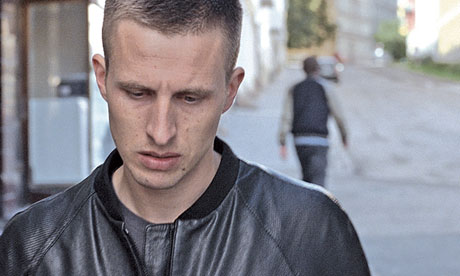
1) Oslo, August 31st (Joachim Trier, Norway) This bleaker-than-bleak exploration of drug addiction hypnotically deconstructs the genre, exposing previous entries like 2000’s Requiem for a Dream as oddly glorified and even romanticized. As with his surprise hit Reprise (2008), the soundtrack for Trier’s film (Chromatics, White Birch) seals the colder-than-cold universe that lead character Øystein (played brilliantly by Anders Borchgrevink) inhabits. Not for folks who can’t handle needles dangling out of arms.

2) This Is Not a Film (Jafar Panahi, Iran) As immediate as a heart attack, this 75 minute documentary by prison-bound Iranian filmmaker Jafar Panahi (who is serving a six-year sentence with a 20-year ban on directing films or even talking to the media), truly is not a film. What is it actually? How about a terrifying cry for expression from one of the most daring and political filmmakers alive. While the world waits for his hopeful release, go watch The White Balloon (1995), The Mirror (1997), The Circle (2000), Crimson Gold (2003), and Offside (2006) as soon as possible.

3) Mausam (Pankaj Kapur, India) Withdrawn from the festival’s public screening schedule at the last minute due to censor complications by the Indian Film Board, this epic melodrama starts out joyous and clean-shaven and devolves into a ferris wheel of destruction. While the tone feels off-balance in the film’s second half, especially with its baffling sequences mimicking Top Gun (1986), Sonam Kapoor’s devastating performance, combined with some foot stompin’ singing and dancing, make this a quite enjoyable ride. Indian censors put a disclaimer before the film, explaining that the Indian Air Force did not approve the film’s presentations of flight sequences or fire explosions.

4) The Ides of March (George Clooney, USA) In the same vein as Michael Ritchie’s The Candidate (1975) and Tim Robbins’ Bob Roberts (1992), George Clooney explores the nooks and crannies of the contradictions and hypocrisies of the idealistic Democratic Party. Whereas those films were ripe with cinema verite stylings, Clooney oddly steers clear of any sort of artistic pretension and lets his actors (Ryan Gosling, a snaggletoothed Paul Giamatti) chew up the scenery.

5) Into the Abyss (Werner Herzog, Germany/Canada) This dark and memorable look at death row inmates as well as the families of the victims should spark some spectacular debates, in true Herzog fashion. Though he sometimes only had 15 minutes to interview a particular prisoner, Herzog’s footage is gripping; the finesse of Herzog’s longtime editor Joe Bini helps make the subjects seem human — not simply, solely, monsters, but rather people who have committed monstrous acts. I can’t stop thinking about this one.

6) Le Havre (Aki Kaurismäki, Finland) The almighty Finnish filmmaker is back with yet another old fashioned morality tale for the Nick Cave generation. His characters may be a whole lot older than those in Leningrad Cowboys Go America (1989), but Kaurismäki’s take on the world is just as delightfully offbeat as ever, when an eight-year-old African refugee washes ashore in a small town in Finland. As the kindly Marcel (André Wilms) and other townsfolk do their best to protect the boy from a policeman who feels like he’s just stepped out of 1940s film noir, time seems to be running out for Marcel’s longtime life partner. Be prepared for a handful of frogs getting caught in your throat as this mini masterpiece gently rests itself onto your list of underrated films in the coming year.

7) A Dangerous Method (David Cronenberg, Canada/Germany/UK/Switzerland) Don’t believe those disappointed critics! This tightly-knit theatrical adaptation accessibly explores the worlds of Freud and Jung with a precise coldness that should remind Cronenberg fans of Dead Ringers (1991) and Spider (2006). And while this film isn’t as gooey as his visceral entries Videodrome (1983) and A History of Violence (2005), the absence of spilled guts is exactly why this film might reach a much wider audience. (Folks who may keep their psyches much cleaner than you or I). Potential Oscar nods are in order for a jaw-dropping Keira Knightley and the ever-flawless Viggo Mortensen.

8) Keyhole (Guy Maddin, Canada) Given $100k to make anything he’d like (“I could’ve taken a Polaroid and pocketed the rest”) Canadian enfant terrible Guy Maddin has concocted yet another whirlwind of black and white tears, repressed fears, and a lifetime of forgotten years. With more oppressed family members hidden away in closets and attics than a V.C. Andrews book, the psychotic camerawork, ominous narration, and ever-present rapid-fire editing equals offbeat cinematic bliss.

9) Jeff Who Lives at Home (Jay Duplass and Mark Duplass, USA) The Duplass Brothers have officially gone Hollywood. Jason Segal is a perfect fit for the brothers’ slacker lead and Susan Sarandon plays his poignant mother perfectly. It’s Ed Helms who’s the odd one out in this surprisingly moral tale; he seems to overplay his middle-class character rather than disappearing into the role. Though the film is funny, it’s more of a drama than a comedy; for that reason (along with its big-name cast), Jeff might be the Duplasses’ first big hit. It just feels a bit half-in/half-out. Either way, you’ve got to root for the Duplass Brothers. Plus this film should make you appreciate how priceless last year’s underrated Cyrus (2010) truly was.

10) Dark Horse (Todd Solondz, USA) For better or worse, Todd Solondz has made a name for himself. And his latest is right on par with the rest of his films. In fact Dark Horse could be a remake of his debut Welcome to the Dollhouse (1995), but this time we’re following a 250-pound Jewish man child, Abe (Jordan Gelber) who still lives at home, collects action figures, and hates just about everyone on the planet. The film plays like a live-action adaptation of Chicago cartoonist Chris Ware’s Rusty Brown as Abe defiantly self-destructs as well as destroys everything he may or may not love. Will polarize audiences, per usual for Solondz, as audiences question if he’s being mean-spirited or just self-reflexive. (I can’t wait to watch it again.)

Coming soon: more of Jesse Hawthore Ficks’ takes on the 2011 Toronto International Film festival, including films from Lars von Trier, Michael Winterbottom, and … Bobcat Goldthwait? Ficks teaches film history at the Academy of Art University; he also curates the Midnites for Maniacs film series, celebrating celebrates dismissed, underrated, and overlooked films.

Moving the planet: The beat quickens in Buenos Aires

0

In Day Two of our series on Moving Planet Day organizers and events around the world (check out yesterday’s chat with San Francisco MPD planner Morgan Fitzgibbons), we’re taking it south to Buenos Aires. 

You might remember Matias Kalwill, founder of the bike-art website La vida en bici, from my article this summer on his city’s emerging bike culture. Since we last checked in, Kalwill has become the leading bike advocate in his city of nearly 13 million people. Over the last few months, Kalwill and his La vida en bici team have been painting a plaza not far from where he grew up. Their goal is to make Plaza Luna de Enfrente — which already includes a playground for the neighborhood kids — the first “bicifriendly” plaza in Buenos Aires. It’ll make a great backdrop for the day of political action and personal development that Kalwill and the Moving Planet Day organizers have planned.

Check out what Saturday will feel like in Argentina — we caught up with Kalwill via email last night in the middle of his pedal-powered preparations. Check in next week when we’ll hear about how the day went from an organizer in Austin, Tex. as well as other places around the globe. 


SFBG: What is your role in your city’s Moving Planet Day events?

MK: I’m organizing the event. I invited Greenpeace Argentina, FARN, ITDP, and other NGO’s to participate. I’m also hosting a conference on “biking for sustainable development” and am the main author of the project proposal letter that will be handled to representatives of the National Congress on Saturday. I wrote the series “Moving Cities” for Treehugger Latin America, which had support from 350.org addressing urban mobility and the road to the MP events in Latin American cities.

Matias Kalwill and David Byrne on the musician and bike activist’s recent trip to Argentina. 

SFBG: What inspired you to get involved?

MK: The chance to put on a high impact action connecting bikes and sustainability. The opportunity to share a common effort with people from all over the world. Bill Mckibben’s work, wich is amazing. Previous 350.org’s events in which I participated. The idea that we could share what’s happening in Buenos Aires with the rest of the country.

Buenos Aires’ Plaza Luna de Enfrente with it’s bici-friendly makeover — ready to go for Sat/24’s festivities. 

SFBG: What does your city have planned for Saturday?

MK: We will be doing live art and music and conferences and personal workshops in the Plaza Luna de Enfrente, and then a ride to deliver a project proposal to representatives of the National Congress. The proposal aims to have urban cycling declared “of interest for the sustainable development of the country” by the Congress and can be read here. If eventually this project is aproved by the Congress, it will become a tool for local bike advocates, politicians, and activists all over Argentina. Awesome!


SFBG: How many people are expected to attend?

MK: I’m guessing 50 to 200.


SFBG: Why is this such a big deal?

MK: I feel it’s another step forward in the road to urban sustainable mobility. In this case, it’s a big one since there will be so many people doing similiar things at the same time. And because so much energy from all over the world will be focused on a few ideas it will be a strong push to get more people involved in the positive and urgent changes we are riding for.


SFBG: What do you hope that this day achieves?

MK: More visibility for these problems and more commitment to the solutions for sustainable mobility and climate change.


SFBG: How will you transport yourself to the festivities?

MK: With my dear bike of course!


SFBG: Complete this sentence: We can reverse the causes of man-made climate change if we…

MK: Come up with exciting and accessible ways to engage people in low-impact city life. Bikes are an excellent example of this: make it sexy and sustainable and available, and the hype is on!


Moving Planet Day Bay Area

Sat/24 10 a.m.-6 p.m., free

March starts at Justin Herman Plaza, SF

Afternoon activities at Civic Center Plaza, SF

www.moving-planet.org

Moving the planet: San Francisco speaks

2

As far as the planet is concerned, it’s probably a good thing that Morgan Fitzgibbons is adept at guilt trips. Consider the Huffington Post editorial the SF neighborhood activist and founder of Western Addition’s Wigg Party wrote earlier this year. You know our descendents? “They will either remember you as someone who fought for life against the greatest odds, or someone who simply neglected your most fundamental responsibility — to pass the world on to the next generation,” wrote Fitzgibbons. 

In the same editorial he promised to “see you in the streets.” Well ready your street-walking shoes, because that day has come: Sat/24 is Moving Planet Day, which will see 2,000 events in more than 168 countries, promises to be one of the largest global manifestations for the environment to date. People across the Earth will be speaking out, massing up, and getting loud about the need to stop our fossil-fueled ways before it’s too late.

Morgan Fitzgibbons walks the walk at a tree planting in July. Photo via St. Cyprian’s Episcopal Church

And you should hear the voicemail we got from Fitzgibbons yesterday. Jesus, blistering. Invoking our duty as agents of change in the Bay Area, for chrissakes. So we decided to swing into action: today, tomorrow, and next week we’ll be profiling Moving Planet Day events across the planet. We’ll begin close to home with Fitzgibbons explaining what will be happening in our very own city. Tomorrow: an organizer from Buenos Aires tells us what’s in store down south. 

San Francisco Bay Guardian: What is your role in your city’s Moving Planet Day events?

Morgan Fitzgibbons: As a leader of a neighborhood based resilient community organization, I am of course a long time fan of 350.org and know from previous experience that their annual days of action are the biggest events in the whole world of climate change, sustainability, etc. So I’ve been doing general volunteering since May to help produce the event – anything from finding a scissor lift to media outreach to hopefully being able to say a few words on stage on Saturday.

SFBG: What inspired you to get involved?

MF: I’ve known and worked with the 350.org folks for a number of years now, and so I know there is no bigger event on the scene. They have done an excellent job of galvanizing the whole world to stand together, and that’s really key – this is a global problem that requires a global solution. 


SFBG: What does your city have planned for Saturday?

MF: Our event is going to bring together people from all over the Bay Area. People will meet in their regional cities and towns and then travel to San Francisco at 12 p.m. to march from Justin Herman Plaza down Market Street to Civic Center for a big rally featuring 350.org founder Bill McKibben and the Sierra Club’s executive director Mike Brune as well as a bunch of great music, including Ashel Seasunz!


SFBG: How many people are expected to attend?

MF: We won’t really know until Saturday, but we are anticipating somewhere in the 2,000-4,000 range.


SFBG: Why is this such a big deal?

MF: It’s a huge deal because climate change and the related planetary crises threaten the very foundations of our society. The world’s governments have obviously demonstrated that they are going to put short-term profits ahead of any long-term security and are effectively ignoring these issues. Saturday is the rare time when we can push the clueless governments out of the way and stand together as a concerned global population. Millions of people around the world are going to devote their day to standing up for this cause, because they know that the maintenance of a healthy planet is more important than anything else in the world. 


SFBG: What do you hope that this day achieves?

MF: You know rallies are notoriously tricky because everyone shows up, everyone’s excited, and then at the end of the day you’re not always sure what came out of it. I think obviously a big takeaway is going to be knowing that millions of people around the world feel the same urgency that you do, which is extremely empowering. But what I personally hope people take away from the day is that this isn’t a problem that’s solved with a rally or voting for or against some bill at the  ballot box. It’s something that is going to require us to get out in our neighborhoods every day to organize and build more resilient communities. That’s what I’ll be preaching if they hand me the mic.


SFBG: How will you transport yourself to the festivities?

MF: I’m going to be riding from Tour de Fat in the morning, so I’ll be taking my bicycle through the Wiggle. I wouldn’t have it any other way.


SFBG: Complete this sentence: We can reverse the causes of man-made climate change if we…

MF: …get out in our neighborhoods and organize. This must happen in every community big and small. There is no movement without this. We need no less than a cultural revolution. But as soon as people take this aspect of the work seriously… look out.


Moving Planet Day

Sat/24 10 a.m.-6 p.m., free

March starts at Justin Herman Plaza, SF

Afternoon activities at Civic Center, SF

www.moving-planet.org


Other Cinema remembers Helen Hill with “The Florestine Collection”

0

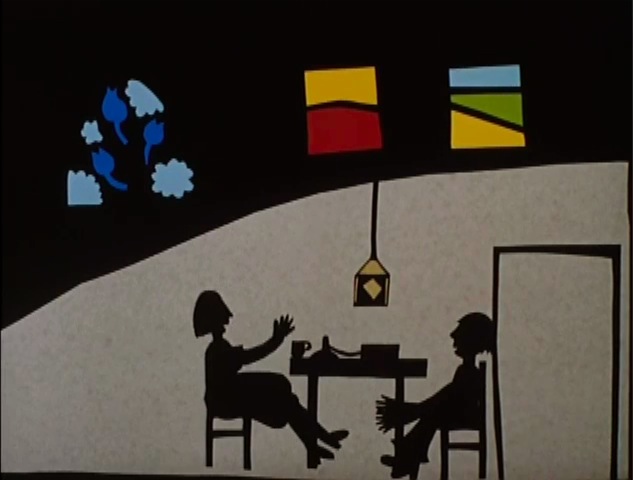
Other Cinema kicks off its fall 2011 season Sat/24 with a bittersweet program: the local premiere of Helen Hill‘s The Florestine Collection — her last film, left unfinished after her 2007 death, completed thanks to the dedicated efforts of her husband, Paul Gailiunas. Hill was only 36 when she was shot to death by an intruder (still unidentified) who broke into her New Orleans, LA home; her husband was injured but survived, and the couple’s toddler thankfully escaped unharmed.

South Carolina-born Hill made her first film at age 11, attended Harvard for undergrad, and received her MFA from California Institute of the Arts. Her unique animation techniques (including cut-out puppets) drew from the fairy-tale works of groundbreaking German animator Lotte Reiniger (whose remarkable filmography stretched from the 19-teens up through the 1970s) as well as DIY methods like hand-processing. She was continually inspired by her adopted hometown of New Orleans, as well as her chosen activist causes, including Food Not Bombs and animal rights. She also created the 2001 reference tome Recipes for Disaster: a Handcrafted Film Cookbooklet.

http://www.youtube.com/watch?v=o7ReG3l_9fM

Hill’s upbeat, friendly attitude (“I love New Orleans!”) and excitement at helping to set up the New Orleans Film Collective (you can also catch a glimpse of her pet potbellied pig!) are evident in this 2003 interview with Timecode: NOLA. The Florestine Collection was inspired by a particularly special day in 2001 (detailed in this interview with Gailiunas) when Hill discovered some 100 handmade dresses discarded after the recent death of an elderly seamstress. Hill’s reaction (per the article: “‘This is the best trash-pile find in the world!’ she exclaimed”) was followed by curiosity about the woman’s identity; the film reflects her findings. Joy and wonder, it seems, were two of Hill’s most accessible emotions — and despite her tragic, terrible death, her work lives on to inspire other creative thinkers and free spirits.

Other Cinema’s program also includes a slew of work by other experimental animators, including Martha Colburn, Kelly Sears, Jim Trainor, Janie Geiser, and more; the fall season runs through Dec. 17 and includes nights dedicated to such diverse topics as Muzak, Mexico and Canada, eco-horror films, social media, and Marshall McLuhan. In other words, fans of strange and unusual cinema: your Saturday nights are set until 2012.

Sat/24, 8:30 p.m., $6
Artists’ Television Access
992 Valencia, SF
www.othercinema.com

The Performant: The mundane sublime

1

Park(ing) and Fold {Live} were far from humdrum

It’s the little things. The things we do over and over again—the automatic, the routine, the de rigueur, the rote—that we need to find ways to celebrate above all, because every moment past could be a moment wasted, or a moment redeemed. But as with conceptual artist Kate Pocrass’ long-running Mundane Journeys project, sometimes the moment needs to be curated in order to be illuminated. That principle got some play over the past weekend with Park(ing) Day and Surabhi Suraf’s “Fold {Live}” installation, two very different projects which nonetheless served to turn the most banal of routines into conscious acts.

On Friday, the mundane act of feeding the meter was celebrated with the now-worldwide annual tradition of Park(ing) Day. Though it was occasionally difficult to tell Parks from Parklets, the Valencia corridor was a hopping Park(ing) Day hotspot, with hay bales and a live sheep parked out front Ritual Coffee, a proto-type vertical garden in front of Range, and a green-roofed doghouse in front of Thrifttown. My favorite concept was a little more scaled back yet more performative: a fundraiser for the Prison Yoga Project spearheaded by Mariah Rooney, whose streetside yoga lessons provided both visual and physical stimulation for passerby. Thank goodness for yoga mats, because there wasn’t much else protecting participants from the asphalt jungle, but there was no sign of discomfort marring the serene faces of the stretchers. Down wiggle way, aka Fell Street, the Wigg Party had set out cushions and camp chairs, and were plying people with tea and books of esoterica from founder Morgan Fitzgibbons’ collection. There was still plenty of traffic, and one bargain hunter who wanted to browse the selection of cushions, but the Wigg party’s little oasis of tranquility held strong though the day, despite the wind and uncomprehending cars rushing past.

Sunday at four p.m., a small group gathered expectantly in front of the Federal Building on the corner of Seventh and Mission to bear witness to the second of four “Fold {Live}” performances, conceptualized and choreographed by recent transplant Surabhi Saraf. Based on her 2010 video project Fold, “Fold {Live}” took the familiar act of folding the laundry and turned it into a group meditation. In silence, nine participants entered the staging ground, collapsible laundry totes in hand, and sat streetside on the round cement “stumps” built as if with this very performance in mind. Carefully, fluidly, each took from their tote a black shirt and began to fold them, in unison, with methodical care. A pair of inside-out jeans followed, which each performer first pulled rightside-out with slow, steady motions, and then gently folded them into little squares. Gradually, particularly in the case of colorful, billowing scarves which made a couple of appearances, the work took on an aesthetic cast which solitary laundry-folding rarely seems to embody, but essentially could.

Like any mundane moment, there is always the potential to turn it into something more meaningful. The hows and whys are up to us.

SEX ISSUE: Fun with cover model Leo Forte

0

Photographer Matthew Reamer and Art Director Mirissa Neff had a steamy Sex Issue cover shoot with strapping adult performer Leo Forte last week. Rrroaw!

Leo — a self-proclaimed Latin musclepup, up-and-coming porn star, and jack of all trades — is part of the Kink.com kingdom (we’re partcularly fond of his work on the Naked Kombat series), has appeared in several flicks from Raging Stallion studios, and will be appearing at the huge Falcon Studios 40th anniversary party at Mezzanine, which looks kind of sexy-scary!

Check out more pics of Leo above — and grab a hard copy (tee hee) of the Sex Issue, out now on the streets. If you see him at the Folsom Street Fair, he might autograph it for you!

Going bare? Get your official Butt Guardian here!

0

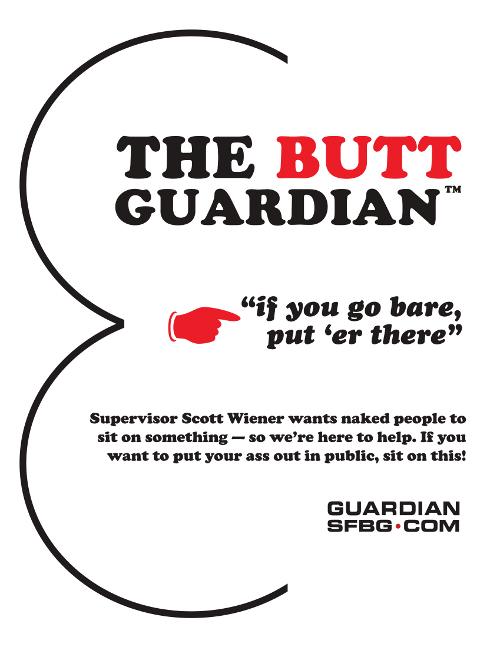
Whether you’re a fulltime nudist or a mere Folsom Street Fair tourist who suddenly finds yourself bereft of tush-covering after a hot dom cat-whips the ass of your fancy jeans off (“insta-chaps”) — you’ll want to print out one of our official SFBG Butt Guardians to comply with Supervisor Scott Weiner’s proposal that bare butts be placed on some sort of suitable covering in order for public nudity to remain lawful in San Francisco.

Weiner is attempting to soothe the heebie jeebies induced in some shrinking violets about stray hairs and other hysterical anal imaginings covering the seats of our fair city in the Castro and beyond. And we want to help. Print out this handy Butt Guardian PDF or grab a current copy of the Bay Guardian on the streets in order to sit pretty without leaving any nitty gritty. See — our paper isn’t just for wrapping fish and lining birdcages after all.

PS: Look for us at the Castro Nude-In at noon on Saturday and the Foslom Street Fair on Sunday where we’ll be passing out a fancy towel version of the Butt guardian. it’s assouvenir!


Free Farm Stand faces an uncertain fall harvest after call from Rec and Parks Department

1

Every Sunday at the Parque Niños Unidos in the Mission, an eager group of people gather to receive free, organic food from the Free Farm Stand. The incredible project has been going on since since 2008 and has to date given out almost 17,000 pounds of fresh produce.

This is the brainchild of Tree Rub, a volunteer who started the project “to create a network of neighbors and local farmers who grow fruit, vegetables, and flowers and share their surplus with the community and especially with those in need.” But last Sunday Tree announced that the SF Recreation and Parks Department had received two complaints that the Free Farm Stand is “having a negative impact on the park.”

He was also informed that the group would need a permit for its tent, which it set up to protect to food and volunteers from the sun. Tree says he applied for a permit in 2008 but “never heard back” from authorities.

Sometime the produce that’s given out is extremely ripe and almost past it’s peak, but the savvy San Franciscans who receive the Free Farm Stand’s food (the bounty can include heirloom tomatoes and sun-kissed white peaches) are happy to take the time to can and preserve them. The stand not only creates access to extremely nutritious foods, it saves them from getting composted. Tree also distributes organic seedlings so that people can grow their own veggies and then share any surplus they might have with the community — a feedback loop of neighbors nourishing each other.

I contacted the permits office at SF Rec and Park to ask about the future of the Free Farm Stand and got a message back from Dana Ketcham, the permits and reservations manager.

According to Ketcham, her office doesn’t want to shut down the Free Farm Stand, but employees there “have received complaints that families feel overwhelmed by the crowds as they use this park with their children.”

As of two weeks ago, people waited in line outside of the park, and were only actually in the park when receiving produce. Since the lines have gotten long, last Sunday a new system had been implemented in which numbers are handed out so that people can relax in the grass until it their turn to get food.

Ketcham said that parks are “not authorized places for distribution of food” and “that we needed to give the organizer time to find a new location.” The Free Farm Stand has until October 15th to find an alternative location.

As a long time patron of the Free Farm Stand, this came as very sad news. Tree has created an amazing community that feels like a gigantic potluck. You can meet up with friends and enjoy the sunshine there, in addition to getting fresh food for dinner.

Ketcham suggested the Free Farm Stand re-locate to an “empty parking lot” in her email to me. That plan would mar the beauty of having the stand alongside a community garden where people sometimes wander while they wait and are able to relax in the shade of a tree.

I made of a video of the Free Farm Stand right when it opened, back when it was still a pretty small operation. Tree was handing out jars of honey from his personal bee hives and sprouts. Now, there’s the Free Farm and more than 200 people receiving food each week. It would be a horrible loss to San Francisco if Free Farm Stand disappears.

If you know of any locations where the Free Farm Stand might be able to re-locate, please contact Tree at: iamtree99@gmail.com.


Portland scene clocked by Time Based Arts Festival

0

Just up the coast, the contemporary art binge that is Portland Institute of Contemporary Art’s (PICA) ninth Time Based Art Festival (TBA) bubbled with fluidity and openness as the resounding spirit. From September 8-18 that fluidity and openness occurred between contemporary art practices, between the city and the art, between performers and audience members, between onstage and offstage. Not only addressing current global issues, the festival embraced the increasingly porous walls between art disciplines and outside fields, collapsing the container for presenting art experiences.

Under the direction of Cathy Edwards (also the Director of Performance Programs at New Haven’s International Festival of Arts and Ideas and formerly of Dance Theater Workshop and Movement Research), TBA employs a nomadic citywide platform requiring attendees to explore nooks and crannies with eleven main venues spread throughout the four quadrants of Portland. PICA headquarters the festival at the closed Washington High School called “The Works,” a hub for the round-the-clock possibilities including morning workshops with the TBA artists, noontime salons, afternoon happenings, evening performances and late night activity with a beer garden for gathering, digesting and discussing. The clear nights, lush nature, industrial pockets, culinary delights and bike-friendliness that accompany the festival indeed dovetail with the tastes of many San Francisco residents, and help make TBA a ten-day utopia for art lovers.

“The TBA Festival future-forecasts important aesthetic developments,” writes Edwards in the program, and the performances do, in fact, ripple out, with a handful of the TBA artists appearing recently and upcoming in San Francisco. On the opening day of the festival, Shantala Shivalingappa performed solos by her mentors Ushio Amagatsu (of Sankai Juku) and Pina Bausch. Catch her in San Francisco with a Kuchipudi program at the Herbst Theater November 1, presented by San Francisco Performances.

Also coming to town this season, the Portland-based company tEEth appears at Yerba Buena Center for the Arts’ Left Coast Leaning Festival, December 1-3. Directed by choreographer Angelle Herbert and composer Phillip Kraft, tEEth performed Home Made at TBA, an intimate work with live-feed video, haunting vocals, and plenty of nudity. In the push-pull between hostility and tenderness, hostility dominated the stage for the majority of the work, demonstrating missed connections and relationship struggle with silent and amplified screams, as well as quick-morphing theatrical expressions.

Kyle Abraham, who appeared in San Francisco during the 2011 Black Choreographers Festival with his work-in-process Live! The Realest MC, brought a further developed version of that solo, as well as his full-length work The Radio Show to the festival with his company Abraham.In.Motion. His technique, illuminated during a TBA Institute class, unfolded as a fast-moving mashup of postmodern movement, incorporating influences from New York teacher Kevin Wynn, Merce Cunningham and, naturally, the swift and luscious language of Abraham’s own body.

Taylor Mac, having recently completed his San Francisco run of the epic The Lily’s Revenge, performed his first cabaret at the festival, Comparison is Violence or Ziggy Stardust Meets Tiny Tim Songbook. Highlighting the human tendencies to bring an agenda to the theater and resist audience participation, Mac interrupted himself for a dramatic song here, a David Bowie story there, and, in the end, had the audience on their feet for a mime routine dancing in imaginary bubblegum bubbles.

These are just a handful of the performances that occurred during the ten days in Portland. Augmented by the evening’s natural fade from light to darkness, the Offsite Dance Project, in three parts by Japanese choreographers, immersed witnesses in the playful with Mika Arashiki and Mari Fukutome, the complex with Yukio Suzuki and the disorienting with Yoko Higashino. A train actually ran through the site-specific work, featuring the dance of the city. The program used sites in Southeast Portland’s industrial district for fresh remix of the surroundings.

Austin’s Rude Mechs performed The Method Gun, a theater work based on A Streetcar Named Desire, and gave a talk at the TBA Institute discussing the consensus necessary to create devised work with their group of thirty artists. Additionally, Malina Rodriguez’s Dance Truck – a mobile project that uses the back of a rental truck as a stage – made an appearance from Atlanta. Participatory games by artist Michael Groisman stirred the crowds at Washington High several afternoons. Andrew Dinwiddle’s Get Mad at Sin revisited a 1971 Alabama sermon by Pentecostal preacher Jimmy Swaggart performed in a tent at dusk. Add to that a 24-hour monologue by Mike Daisey, an installation and performance by Seattle-based Zoe|Juniper, and visit from French choreographer Rachid Ouramdance L’A, and you get a sense of the possibilities at TBA.

This year marked a leadership transition for the festival as Cathy Edwards ends her three-year tenure as guest artistic director, passing the torch to San Francisco export and former Yerba Buena Center for the Arts performing arts curator, Angela Mattox. Mattox will remain in Portland year-round (unlike previous directors) expanding PICA’s performing arts programming. While the dates for next year’s TBA are, well, TBA, San Francisco art lovers should plan a jaunt up the coast next September – just a quick flight or ride-share away.

Check yo’ head: “The Book of Skulls”

0

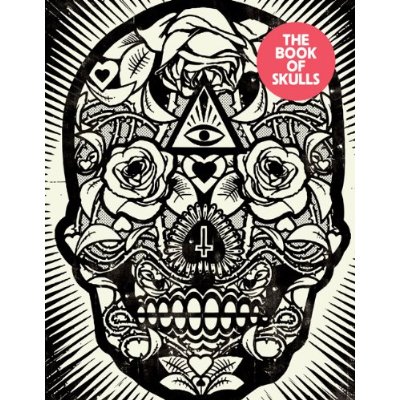
Sure, it’s still only September, but in my mind (and at Walgreens, have you noticed?) it’s totally Halloween season. What better time to get your bony hands on The Book of Skulls (due in October from Laurence King Publishing, 160 pages, $14.95), Faye Dowling’s new compilation of all things Memento mori? The table of contents page is illustrated by San Francisco’s own Matt Furie, people. Get on this!

The strikingly-designed (dig the nifty “skeleton binding”) Book of Skulls packs a lot into its petite pages. Dowling, a “freelance editor, curator, and art buyer,” draws together a huge array of representations of skulls (in fine art, street art, fashion, rock n’ roll, etc.), all of them visually stirring but with different levels of spookiness.

Page through and you’ll find a Noel McLaughlin photograph of Paris’ catacombs; examples from Noah Scalin’s popular “Skull-A-Day” blog; Boo Davis of Quiltsrÿche‘s “evil quilts,” works by Shepard Fairy and Damien Hirst; plus giant skull skull-ptures, teeny skull minatures, Day of the Dead art, skull murals and graffiti, crystal skulls, jewel-encrusted skulls, skateboard skulls, skull tattoos, biker skulls, Grateful Dead skulls, the Misfits fiend, Skullphone (you know it), and Alexander McQueen and Vivienne Westwood jewelry. (Blessedly, there’s no Ed Hardy.) The Book of Skulls isn’t your typical hefty art book — obviously, it’s aimed at a wider audience, and is potentially something you’d pick up and flip through while in line at Urban Outfitters. So what? It’s a thoughtfully-curated, great-looking book. Read it while eating your way though that bag of Creepy Peepers.  

Street Threads: Look of the Day

0

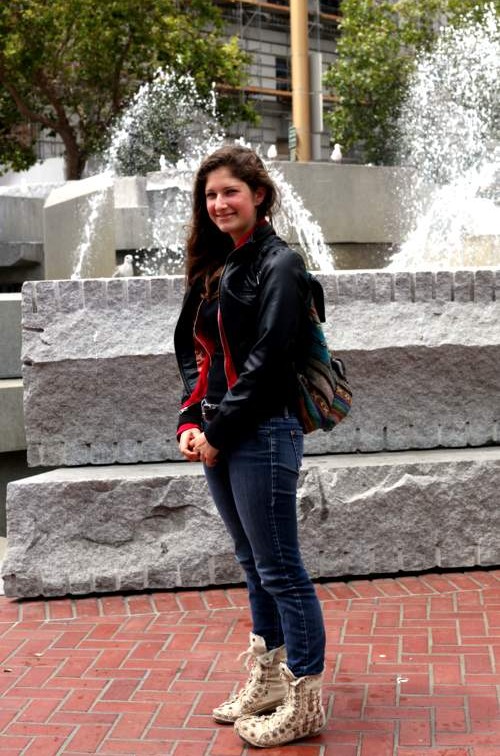
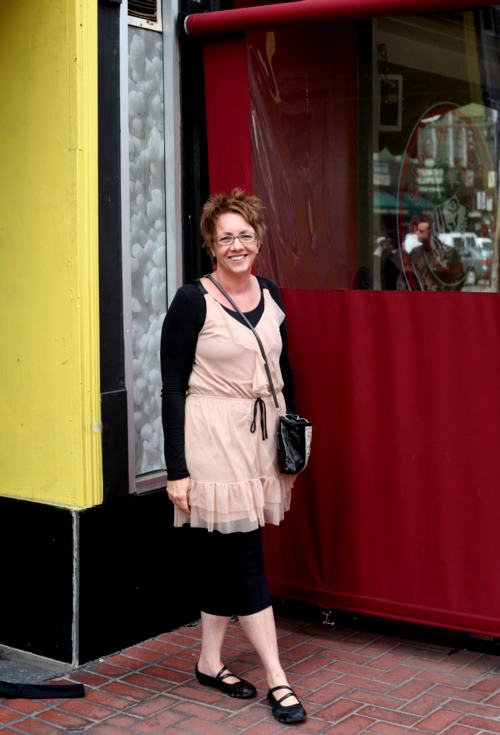
Today’s Look: Lea, Civic Center

Describe your fashion philosophy: “Whatever works.”

Appetite: What not to miss during SF Cocktail Week 2011

0

For those of you who attended last year’s San Francisco Cocktail Week, you know it was jam-packed with some downright magical events, celebrating our city’s rich cocktail heritage, bar talent and innovation. Monday begins the fifth annual Cocktail Week, bigger than ever, with numerous national and local brands represented, an extensive schedule of seminars, parties, events, and the first ever Legends Awards honoring key contributors in the field.

I’d recommend Cocktail Week certainly for aficionados (cocktail/spirits geeks), but equally for the curious or those who just plain love classy, transporting events.

To name a few, the enchanting Cocktail Carnival Gala and St. George’s Cocktail Cookout last year were unforgettable for all of us lucky enough to attend. We basked in the glow of camaraderie and unparalleled settings like the historic Old Mint (where this year’s Barbary Coast Bazaar will be held) or along the Bay in Alameda. I’m anticipating more memorable events this year.

MAIN EVENTS  include the first ever Legends Awards Gala, showcasing some of our best talent in a multi-course dinner from chef Jen Biesty (of Top Chef fame), cocktails prepared by some of our best bartenders at stations throughout the room, awards announced, with live music and performance interspersed. The list of 5 award winners (including Lifetime Achievement and Renegade awards), along with the all-star bartender line-up, is here.

This is also the first year for an event like Best of the West, where top talent from cities of the West (LA, Victoria, San Diego, Portland, Seattle, Sacramento, Las Vegas) compete with local bartenders, showing off drink style in each of their cities.

SEMINARS are a new addition this year. The line-up is rich with around 15 seminars. Learn how to stock your own home bar, about the science of taste, or the history of cocktails in San Francisco. Seminars are all held at the Boothby Center for the Beverage Arts (1161 Mission St., Suite 120, San Francisco), the non-profit behind Cocktail Week.

DINING EVENTS are being thrown all week by restaurants and bars, with special cocktail guests and multi-course menus, at bar-star restaurants like Bar Agricole, Heaven’s Dog, and Jasper’s Corner Tap.

AFTERPARTIES include the big shindig at the newly revamped Starlight Room atop the Sir Francis Drake hotel following the Legends Awards Gala (afterparty included in Legends Award ticket price).

Tickets and schedule here www.sfcocktailweek.com. See you there!

— Subscribe to Virgina’s twice monthly newsletter, The Perfect Spot

Street Threads: Look of the Day

0

Today’s look: Lea, Civic Center

Describe your fashion philosophy: “Do what works for you.”

The Performant: Dumpster Dive

0

“Elite Waste” dumpster home makes its San Francisco Fringe Festival debut

There aren’t usually too many compelling reasons to hang out on the first block of Eddy Street, unless the exquisite aroma of urine, pigeon shit, corner store fried chicken, and tour bus exhaust appeals. But during the San Francisco Fringe Festival, now in its 20th year, there’s always a bit of a horde milling around the entrance of the EXIT Theatre-plex: patrons waiting to see shows, performers handing out postcards to the undecided or hauling heavy trunks of props up the sidewalk. 

This year the crowds have been larger than ever, thanks to the public unveiling of a unique, experiential performance-space: a customized luxury living dumpster home parked outside the front door of the theatre for all to enjoy.

And I do mean all. Numerous residents of the nearby SROs and their friends have all scored a tour of the tiny premises, as have Scandinavian backpackers, police officers, and other random passers-by.

Walking down the sidewalk, you can literally hear the word spreading from neighbor to neighbor: “they’ve got a popcorn machine in there… and a toilet!”. 

“Elite Waste” creator Gregory Kloehn is an affable sculptor from the East Bay who has also crafted office and studio spaces from shipping containers. He stands by to answer questions about the features and press hot dogs from the dumpster’s miniature outdoor grill onto anyone who will accept one. 

Meanwhile — it’s not just a draw but a bona-fide Fringe performance — a handful of performers interact with the onlookers in character. There’s Robin Fisher as Olivia Ford, a survivalist with a matter-of-fact approach to her lifestyle. For her, the importance of a self-contained, camouflaged mobile home is obvious.

“I can’t be taking care of everybody in the world like Angelina Jolie,” she declares as she arranges a tangle of sliced onions on the grill. “I take care of myself, and you take care of yourself. That’s how it has to be. You know. When the apocalypse comes.” 

At the same time, a posh bon vivant in an haute couture trashbag ensemble (Catherine Debon) picnics luxuriously on the roof, alternating stage time with Alison Sacha Ross as Italia Orchid, a self-involved New-Ager, who ignores the gawkers in order to meditate. The scent of incense mingles with that of the grill and the stalwart popcorn machine, transforming the usual bouquet of Eddy Street into a much more user-friendly redolence.

And what about the sales pitch? Though no one has of yet made a solid offer on a designer dumpster of their own, Kloehn is open to the possibility. He estimates he spent between $5000-$7000 on materials for his own little “Luxury Living” property, and with labor calculates the price tag would run somewhere around $15,000. 

“The great thing is it’s all totally customizable,” he says with a smile, gesturing to his own hardwood flooring, stainless steel accents, and granite countertop framed by the cheerful red interior paint and sleek black vinyl cushion-covers of the attendant bench-bed. 

Functional planter boxes line the back windows and the miniature kitchen, though tiny, is as serviceable as any hot plate-toaster-oven-cube-fridge-popcorn-maker setup could be. True, the rustic romance of the campground-style outdoor shower might seem less appealing come winter, but a bracing shot from the adjacent mini-bar would go a long way towards alleviating that trauma. Want a tour of your own? Look for the dumpster of your dreams “somewhere on Eddy Street”


“Elite Waste”

Sat/17-Sun/18  5 p.m., free 

“Somewhere on Eddy”, SF


Cover in pinot: Behind the scenes at the Beer and Wine photoshoot

0

I don’t think I’ve ever seen anyone so covered in wine so early in the morning. Clearly, neither had cover model Diego’s three-year old daughter, who I was hanging with during our photoshoot at Matthew Reamer’s studio in the Mission for this week’s Beer and Wine special issue

“Daddy!” She had a good point — he was standing barefoot in a puddle of wine. Ever the conscientious dad: “Don’t worry sweetie, it’s grape juice!”

And so on. Diego — who you can catch spinning reggae, hip-hop, and world around town as DJ Mr. Lucky — actress Carolyn, and creative-of-all-trades Bayview native Tossie got a chance to experiment with the trajectory of wine last week at our 10 a.m. cover shoot call. That’s real morning to be messing around with flying booze, but they’d pro’d out. Even our art director Mirissa got involved, high-kicking and air-punching Diego into the appropriate defensive posture. 

Bay artists look down — on history!

0

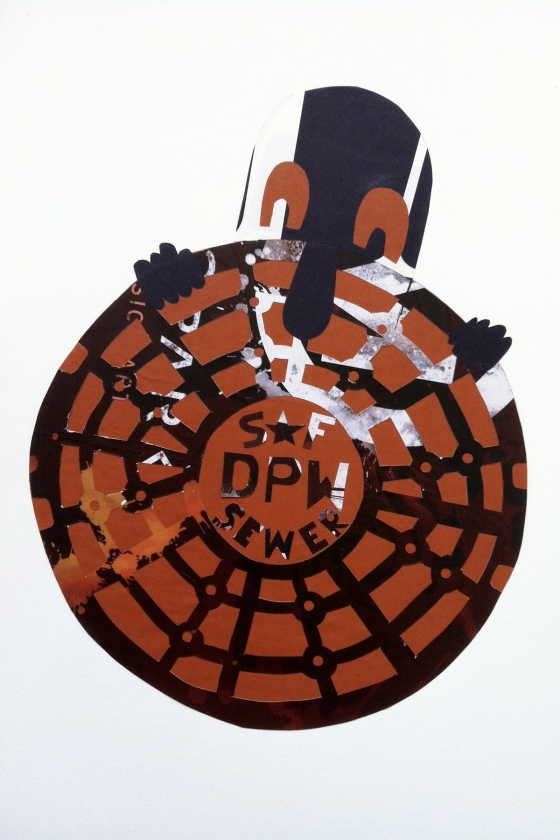
Your kicky little shoes walk (or perhaps prance) over it every day. No, not fossilized dog poop — but myriad and fascinating street-level relics of San Francisco history. A huge amount of our provenance can be gleaned by a closer look at manhole covers, pavement stamps, and other utility markings of ages past and current. It’s actually pretty dang cool what’s down there.

Designer Christopher Reynolds of Reynolds-Sebastiani Design put together a kick-ass photo feature for us earlier this year of some of those markers. Now he’ll be leading a virtual tour tonight, Wed/14, of the city’s past as part of walk SF’s “Underfoot: Bay Area Artists Look Down,” an awesome-looking minifestival of street history for buffs and casual glancers alike. Did someone say “sewer ride”? Oh yes, someone did! Full schedule after the jump.

“Underfoot: Bay Area Artists Look Down”

Wednesday Sept 14 – Saturday Sept 17
Workspace Gallery, 2150 Folsom
Free; donations benefit Walk SF

Wednesday Sept 14: Opening night
Drinks, popcorn, and aesthetic appreciation of a whole new realm:

7:00 pm – Art Opening: Workspace Gallery presents 14 Bay Area artists responding to the land below our feet. What do we see and feel about this ground we walk over, tunnel under, drink and eat from, dig up, and bury our dead in?

8:00 pm – “Exploring the Lost Marks of San Francisco’s Unseen Tradesmen,” by Christopher Reynolds of Reynolds-Sebastiani Design. Enjoy a virtual photographic tour of street utility covers and what they reveal about San Francisco history.

Saturday Sept 17: Bike tour and art party
Follow the unseen waterways of the city, then celebrate:

3:00 pm – The Sewer Ride: Join us for an aboveground bike tour of San Francisco’s sewer-stormwater system, with a focus on the Mission District and Mission Creek. The tour will be approximately three hours with stops; it starts and ends at Workspace.

7:00 pm – Gallery Party! Come together on the show’s final night to raise a glass to artists, streets, and waterways as we close out this marvelous show. Special bonus: Live music from delightful Blues/Americana musician Deborah Crooks.

Bring your friends and support local art and advocacy! All events are free. Donations requested to support Walk San Francisco’s work to make city streets better for you and your feet.

Street Threads: Look of the Day

0

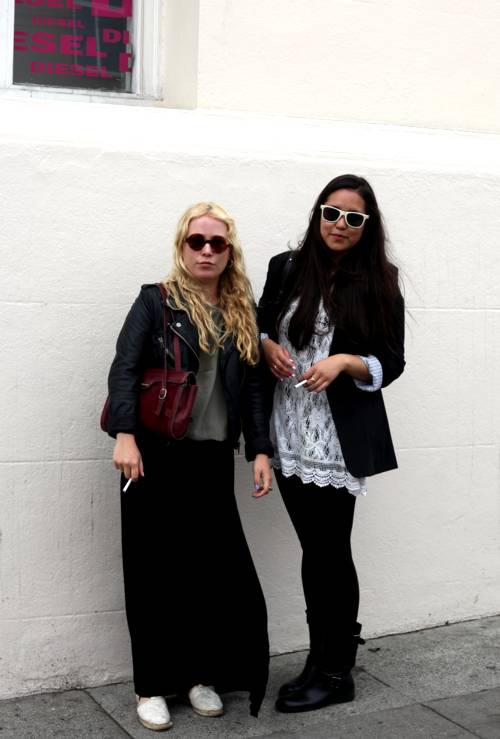
Today’s Look: Ophelia and Michelle, Castro and Market

Describe your style philosophy: “Black and comfort.”

Trash Lit: Demon hunting with John Wayne Cleaver

0

I Don’t Want to Kill You, By Dan Wells
Tor, 320 pages, $11.95

One of the reviews on the back of this book says that “regardless or your age or your genre preferences, you will find this story both profound and enthralling.” The usual blurb crap, but it did make me think that this could be another series like the Maximum Ride books –stuff my 12-year-old son and I could share.

He’s pretty advanced in the thriller world; he reads Stephen Hunter and Lee Child. And this one seemed right up his alley — a shy high school kid who has to fight off a demon made of black goo that takes over the bodies (and minds) of humans. John Wayne Cleaver (perfect name for a demon hunter) is the only one who can stop the evil creature from killing everyone in town.

But I Don’t Want To Kill You is just a tad too creepy for young teens, even kids raised on today’s violent video games. See, Cleaver’s mom is an undertaker, and John lives in the family funeral home and helps with the embalming — and while I appreciate the grisly details of mortuary science, particularly the use of vaseline to plug bullet holes so the preservative fluid can be pumped through the veins, it gets to be a bit much.

So I’ll wait a couple of years before I pass this along to Michael — but I’m happy to share it with my adult friends. It’s great — weird, nasty, sometimes sick, but brilliantly written with memorable prose, a great plot and lively characters.

Our protagonist is a diagnosed sociopath, someone pretty much incapable of feeling empathy for other human beings. He’s positively beastly to his poor mom. But he’s not as cold-hearted as he seems — he knows that he has to risk his own life to save everyone else in the town, and he goes about it in a methodical and logical way.

The only problem: This depraved and confused high school kid starts to maybe, sorta fall in love. With a girl who’s hot and popular and ought to want nothing to do with him. For a while, we suspect that she might be the demon, but she’s not — she just likes John, the way cute teenage girls sometimes like boys who are so odd that they’re attractive.

The thing is, her friends, the other teenage girls, start killing themselves, for no good reason, and it’s clear that the demon is somehow at work. Oh, she (John is convinced that the demon is female) also kills a priest and a teacher — and it’s not clear exactly how or why she’s choosing her targets. Except that John Wayne Cleaver is going to be one of them.

Slashed up body parts. Gross post-autopsy mortuary scenes. Eyes gouged out, tongues cut off, bodies stuck up on poles, gunshots, death by fire … and a first date and a first kiss and some honest puberty angst. You know, to go with all the blood and petroleum jelly and body fluids and black goo.

You gotta check this one out.
 

Suds on sea legs: A photo journey through Brews on the Bay

0

All photos by Allen David

“Fuck the wine industry! I mean, I drink wine like everybody else.” Brenden Dobel, brewmaster at Thirsty Bear Brewing Company may be tipsy — but then again, we are on a boat.

A bigass boat in fact — the S.S. Jeremiah O’Brien, one of the mere two Liberty ships still afloat from the batch of 2,710 that were constructed during WWII. But we were pretty far from Normandy on Saturday; the O’Brien was hosting Brews on the Bay, a celebration of San Francisco’s alcoholic beverage of choice.

At least, that’s how Dobel would have it. “Our entire civilization is based on beer — and I’ll stand by that statement,” said the brewer from behind his aviator glasses and cigarette, hanging out by the cask ale at his brewery’s tasting table, perched on a platform atop the 441-foot boat. 

But for too long California wine producers have been outhustling brewers in terms of public relations, even in the food pairing arena (“wine cannot handle heavy cheeses, spicy food — beer has much more dimensions,” he says). Dobel and other SF brewers’ answer to the problem was to form the SF Brewer’s Guild in 2003. The associationa has been holding Brews on the Bay for eight years to celebrate San Francisco beer — suds from “the birthplace of the American craft brewery revolution,” as Dobel puts it. 

This weekend, 50 beers from eight breweries were on offer to the exuberant crowd of mostly-young people swilling on the O’Brien’s deck. Thirsty Bear’s brewmaster was excited about the possibilities of adding more guild members in the years to come, possibly from the ranks of the nanobreweries that have begun to make their mark on the San Francisco scene. 

“By 2013, we should have 11 breweries here,” he shares — although from the look of the crowd swerving down the gangplank at the end of the day (your author definitely included), Brews of the Bay’s beer selection left nothing to be desired. 

The Performant: Space cadets

1

Cosmic San Francisco mainstays Audium and Planet Booty shoot us to the moon.

Some only-in-San-Francisco adventures are subtler than others — they’re you-have-to-know-they’re-there treasures, unencumbered by a surfeit of fanfare or weight of fickle expectation.

Audium, a continually-morphing collaboration in sound design between composer Stan Shaff and electronics “architect” Douglas McEachern, definitely counts as one of these.

Beginning in 1960 with a single performance involving eight speakers and a four-channel board, Shaff and McEachern have spent decades perfecting their singular brainchild—a custom-built performance space where the structural relationships of sound and space can be fully explored.
       
Walking into the intimate theatre is a small adventure in and of itself, feet shuffling along a path of illuminated glow tape arrows leading the opposite direction, as ripples of sound bounce along the barely lit passage. Beneath a mothership portal of speakers arranged in concentric circles, three fairy rings of chairs encircle a large multi-directional speaker positioned in the very center of the room. More speakers discreetly line the walls and crouch beneath chairs, 176 in all. Once all are seated, the lights fade from dim to black to the sounds of waves crashing along a sandy shore, and the immersive Audium experience begins.

As with any musical composition, there is a set order in which the vast catalogue of field recordings is played, but Shaff manipulates the trajectory and emphasis of each at every performance: both conductor and orchestra of one. In addition to water sounds of all varieties are numerous birdsongs, snatches of children’s voices, galloping horses, thunder, laughter, drumrolls, horns, strings, West African polyphony, a pipe organ, and synthesized electronica zinging from wall to wall, ceiling to floor, ear to ear. Without benefit of sight, the body’s capacity to trace the actual physical curve of each sound as it travels from speaker to speaker becomes enhanced, and the occasional rustling of listening bodies adds a subtle layer of improv to the piece, a connection that Shaff strives to enhance with every performance. Upon exiting, the sole visual component of the work—a video projection of flowing water—allows each visitor a brief moment to reintegrate sight and sound before heading off into the multi-dimensional night.

A completely different iteration of “Space” music landed Sunday on the Peace Pagoda of Japantown as part of the newly-established Convergence Fest, dedicated to alternative music and art. Planet Booty, a hyper-active ensemble of post-funkadelic bass lines and warp-speed retro remixes livened up the stage along with the theatrical antics of frontman Dylan Germick, whose self-assured commitment to booty-bouncing caused him to literally split his pants about a minute into the rollicking set. More dance moves courtesy of poker-faced Lady Emasita, rap vox and occasional trombone by Josh Cantero, drumming from Max Reed, and electronic manipulations by Nathan Germick rounded out the “stripped-down” festival day ensemble, who normally number eight. And though they couldn’t quite inspire the entire crowd of lazy-afternoon onlookers to bounce along, the good denizens of Planet Booty did fulfill their roles as ambassadors for their rump-shaking cause, which will undoubtedly be fully realized at their upcoming September 10 show at Bottom of the Hill.

Lit love at Ourshelves, the Mission’s new lending library

1

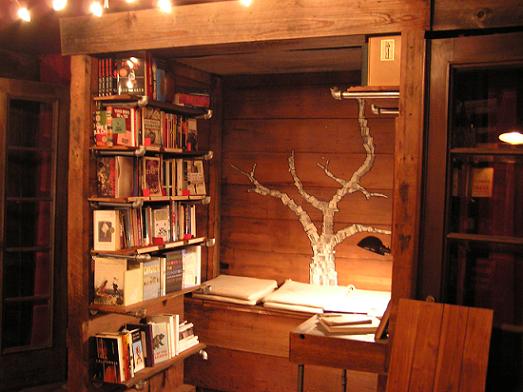
Perched on a wooden bench built into the salvaged redwood walls of the back room of Viracocha, surrounded by the Ourshelves lending library she’s created in the nook, the soft-spoken Kristina Kearns reads “literary heroine.” For Pete’s sake, she’s making literature that you can’t find at the library available to the masses in the heart of the Mission. 

But also this: Kearns once worked in a small bookshop on the island of Santorini, Greece. She lived in the store, in fact, tending it while the owner was away during the off season. “That was when Greece started to fall apart,” she says. Political unrest made her stay untenable, so she flew back to the United States — with very little funds to nurture her bibliophilic nature.

Our heroine is a fan of hard-to-find European authors. She points me towards a slim volume by Hungarian author László Krasnahorkai entitled Animalinside and speaks reverently of Scottish poet W.S. Graham. “He’s not even in print here,” she tells me disbelievingly. 

To go from literally living amongst her favorite tomes to not being able to afford to read them at all must have been fairly heartbreaking. 

“It’s hard to find international books in the library,” says Kearns, who recently scratched a cornea and couldn’t see print for six days. During that time she “realized I don’t love reading. I need reading.” She invokes Vonnegut’s theory of reading as occidental meditation, saying “It makes me a happier person.”

Even sadder than Kearns’ empty wallet was the general sense of doom she discovered in the publishing world.

“It was difficult to come back to the States and hear from authors that publishing is dead. It’s not! The history of books is long. What if we just try? What if we don’t complain and just try? Jonathan let me try, and I think that’s awesome.”

She had this thought: “one of the things we can do is flex our idea of what a bookshop is. Why do people go to bookshops in the first place?” Many people, she thought, have to be led to a good book — and to be led, people have to trust their curator. 

“Jonathan” is Johnathan Siegel, owner of Viracocha. Siegel and Kearns met and wound up talking about her dream to create a space dedicated to books, one that wasn’t a library or commercial bookstore. Kearns says she didn’t think much of the conversation, but one month later Siegel called to offer her a room at the back of his antiques and art store that was at the time being used, Kearns says, “for haircuts and storage.” 

She had been working five part-time jobs to assemble the library necessary for the space, and had been contacting publishing houses and authors, asking anyone who would listen if they would donate books towards her nascent lending library. The San Francisco Public Library now donates five copies each time there is a new volume being read in the city’s “One City, One Book” book club. Michael Chabon offered up his home library. “We just kind of roamed through and took what we wanted,” says Kearns. 

But there was still the matter of the space itself. 

“I was naïve in the beginning — I thought I would magically start on June 1, like the shelves would magically appear,” Kearns says, remembering that it took three to four tries for her to properly install each shelf, made from wood and metal pipes. Others contributed elbow grease and artistic aptitudes and soon enough Kearns was hosting an opening party with a surprising crowd of 100 attendees. 

Ourshelves as a physical space is somewhat transcendent. Kearns carefully arranges the books on the shelves, and the antique volumes of Alice and Wonderland and other classics on the table. There is a painted tree made of books that grows out from the bench seating in the back corner, and a whiskey bottle placed just so on an antique desk. She now has shelves “curated” by local authors, among them, Stephen Elliott, Tamin Ansary, and one-time editor of The Believer Andrew Leland. It’s hush is perfect for running a hand across the spines of the new and used novels and poetry volumes — and once one is selected it, reading it in view of its brothers and sisters. 

Tucked away at the back of Viracocha, Kearns puts much truck in the experience of stumbling across Ourshelves. On the day I visited, a man had done just that and after speaking with Kearns for a comfortable spell, he donated money to the library without even checking out a book.

There are 62 members now, each paying $10 each month to check out as many books as they’d like. Their fees go towards rent, and towards the 20 to 40 titles a month that Kearns aims to bring in at members’ requests. 

“Learn about the world, dammit!” Siegel interrupts a discussion Kearns and I are having about superlative fiction writers. He is, she tells me, going to be the space’s non-fiction curator.

“You can in fiction!” she retorts. 

Certainly, Kearns has found a way to manifest her version of a better world through books with Ourshelves. The small room has become a place to honor the written world, a place where quiet conversations between strangers can start — and a place to discover that perhaps publishing is not so dead, after all. 

“For people who love books,” Kearns smiles. “Being surrounded by books is nice feeling.”