• No categories

Pixel Vision

Haunting the lens: Ralph Eugene Meatyard at the de Young

0

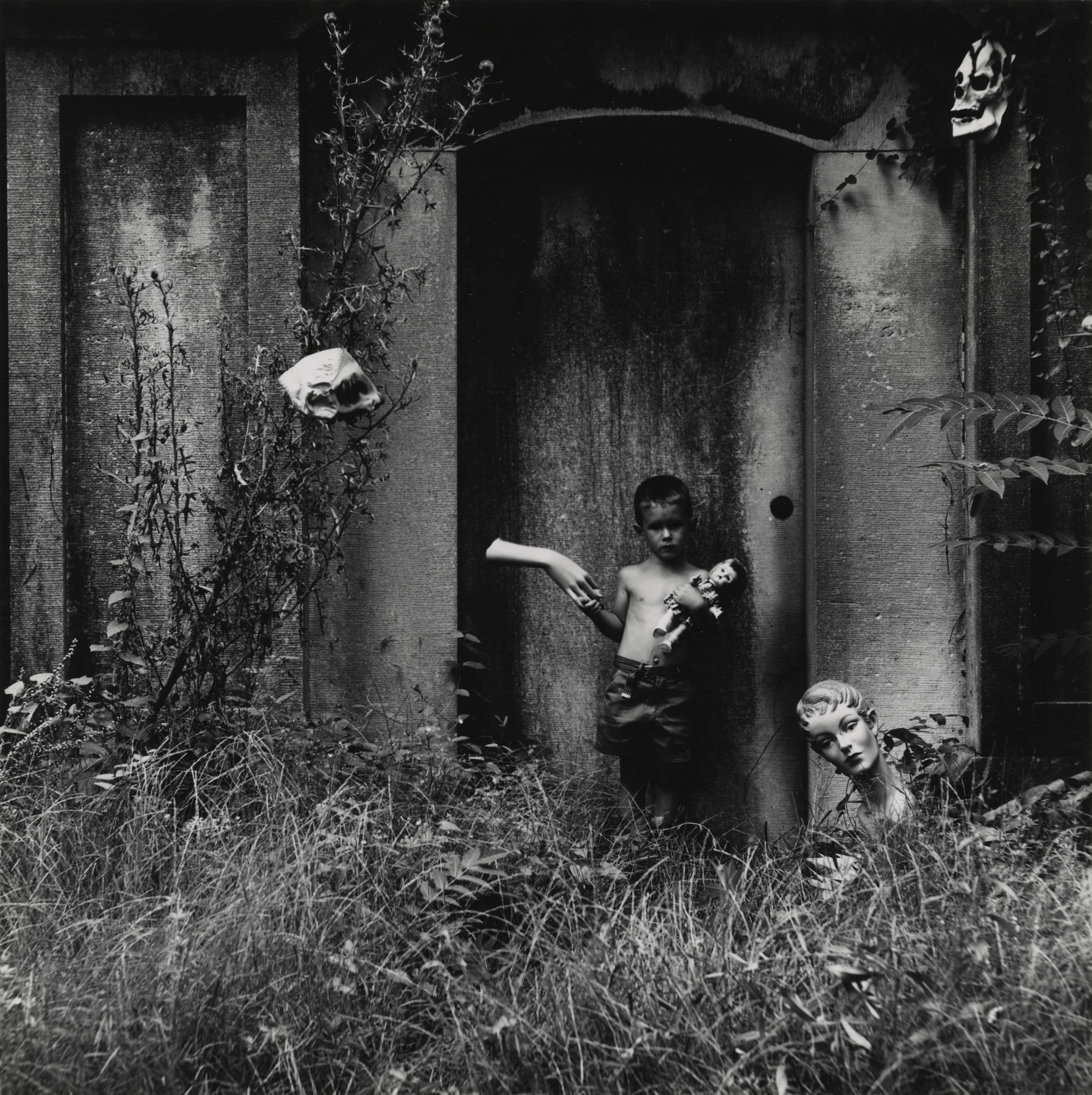
Photographer Ralph Eugene Meatyard (1925-1972) is an anomaly. There’s little consensus about the nature of his work beyond its unusualness. Throughout the late 1950s and 60s, Meatyard drove his wife and kids to dilapidated farm houses outside Lexington, Kent., where he used them as models for his photographs. He adorned them with cheap masks and accessorized the settings with broken mannequins, mutilated dolls, and other props that he would obtain from thrift shops and junkyards. He ultimately created a series of heavily shadowed, black and white photos that are chilling (but sentimental), surreal (but in an everyday sort of way), and at times, plain weird (I guess?)

Needless to say, the series is not an obvious one. “Ralph Eugene Meatyard: Dolls and Masks,” now showing at the de Young through February, collects 60 of the photos from that period — all of them not much larger than a CD case. But even the museum is ambivalent about explaining the work to visitors. They refer to quotes from Meatyard and have them by certain photos hoping they might shed some light. They mention, for instance, how Meatyard cited Zen Buddhism as an influence, and that he turned the idea of the family photo on it’s head. In truth, though, Meatyard was notoriously silent about how his work should be viewed. Guy Davenport, a close friend of Meatyard’s, said in the nine years he knew Meatyard, his friend  said relatively little about his work: “He never instructed one how to see, or how to interpret the pictures, or what he might have intended.” Virtually all of the photographs in “Dolls and Masks” are untitled, too, which certainly makes the tour guide’s job difficult. “I will try my best to answer your questions,” I heard one guide say, overcome.

However, one influence that’s often mentioned and that does seem to ring true about Meatyard’s work is literature. Meatyard was a devoted reader (he even read while driving), had an immense library, and walked in the same circles as writers and poets; it seems, to a certain extent, the reason why it’s difficult to narrow down what the photos in “Dolls and Masks” are doing is because they aren’t necessarily exploring a theme, an idea, posing a question, or trying to evoke a particular sensation or response. Rather, Meatyard imagined an entire world with these photos as though he’d written a story, in the same way Lewis Carroll imagined a world in Alice in Wonderland and Franz Kafka evoked one in The Trial or The Castle. In Meatyard’s so-called world, it’s normal for people to be wearing hideous masks and wandering outside abandoned buildings with mutilated dolls; so that, in fact, the masks and props are secondary to understanding the work.

This makes the series as rich and elaborate as a novel, and it’s why it can be all the aforementioned things at once: chilling, surreal, sentimental, commonplace … etc. Collectively, they are like illustrations for an unwritten story, perhaps a children’s story. Occasion for Diriment, for instance, one of the few titled photos within “Dolls and Masks” that combines the words “Dire” and “Merriment” (something, of course, Carroll was known to do), shows two kids in the dark, one wearing a cartoonish mask, jumping up in the air and pounding their chests. The photo is not haunting, but instead, speaks to the spirit of childhood, like a scene out of Peter Pan. The same could be said of one of Meatyard’s more famous untitled photos, which shows a shirtless boy standing in a doorway and holding a mannaquin’s hand. It recalls the lost boys.

“I remember thinking that here was a photographer who might illustrate the ghost stories of Henry James,” Davenport wrote. Meatyard’s work suggests he could have illustrated James and more: Edgar Allen Poe, for instance, or even some poems by Samuel Coleridge (I’d appreciate an illustration of “The Devil’s Thoughts”). But Meatyard died of cancer in 1972 at the age of 46, shortly after the photos in “Dolls and Masks” were taken. And, as has always been the case with his photography, in life and posthumously, Meatyard will hold a relatively quiet and humble place in the museum.

“Ralph Eugene Meatyard: Dolls and Masks”

Through Feb. 26, 2012

de Young Museum

50 Hagiwara Tea Garden Dr., Golden Gate Park, SF
deyoung.famsf.org

The Peformant: Neither bloody nor bowed

0

Bullfighting Cali-style

If you want to go to a bullfight in California, you have to do a little preliminary sleuthing. Just why you would decide to go in the first place can’t be easily explained. But it helps to note that unlike more traditional forms of bullfighting, California bullfighting is billed as “bloodless.” That is to say, no bulls are killed in the ring.

It helps too that bullfighting in California is allowed only in conjunction with religious festivals, conducted primarily by and for a tightly-knit yet far-flung community of Portuguese-Americans who travel long distances to attend, and connect with family from all across California, even farther.

Your bullfight-savvy buddy sleuths away. One website in particular yields good information. The last bullfights of the season are scheduled during the “Festa de Nossa Senhora de Fatima” in Thornton, California. You make a plan.

It’s a hot day, but the seats of the Praça de São João are packed. Portuguese is the vernacular language of the day; all announcements and introductions will be conducted in it, as well as much of the multi-generational spectator chatter. Portuguese bullfighting differs from its Spanish counterpart in its proscribed cast of characters. The first to enter the ring is a cavaleiro on horseback, who performs in tandem with two bandarilheiros whose job it is to distract the bull with capes at crucial times during the fight.

The cavaleiro rides slowly around the arena and cautiously approaches the bull, allowing it to rush at him whereupon he aims a Velcro-covered staff at a Velcro pad positioned on the back of the bull, then repeats in a series of daring passes. Once the cavaleiro has reached his quota of strikes, it’s time for the forcados to perform. 

What could possibly compel a team of grown men to approach an angry bull unarmed, wait for it to charge, and grab onto its face (the pega de cara) for a joyride is truly a mystery, but there they are, one man strutting in front of the bull in a green-and-red elf cap, the others hanging back behind him in a line, ready to rush the bull and rescue their buddy as soon as his feet leave the ground. One experimental maneuver has the line of backup forcados waiting in the stands rather than standing in the ring. The audience becomes concerned—this is not the norm. 

“What the hell is this?” grumbles the vocal gentleman in the row behind you. The experiment does not go well, a dramatic trampling ensues, not once but twice. A collective sigh of relief rises from the stands as once more, all eight men stand together in the ring, ready to pounce. Once they have successfully completed their counter-intuitive task, the bull is led out of the ring by a docile herd of cows, and the fighting team makes a circuit of the ring to be showered with flowers from the women, hats from the men.

Lest Ernest Hemingway enthusiasts feel completely left out, Spanish matador Sánchez Vara also displays his gracefully balletic bullfighting skills: drawing the bull in close with a flutter of an iconic red cape, pretending to ignore it by turning his back to it, then paying homage to it on bended knee, the ultimate bravery. Outside the ring, the prayerful begin to gather for the outdoor mass and the candlelight procession to honor “our lady of Fatima”. You eat lukewarm linguiça and piping-hot tacos from stands lining the road and ride off into the sunset—not on horseback, nor even clinging to the face of a charging bull — but in that ubiquitous new-world contraption, the rental car. You still aren’t entirely sure how you feel about California-style bullfighting. But at least you can say you went.


A broke ass in our ranks: SFBG Culture Editor Caitlin Donohue honored by Broke Ass Stuart for her insolvency

1

We here at the Guardian pride ourselves on being populist. That means documenting the latest in the people’s protests, and generally being a resources for students, artists, families, anyone in that good old 99 percent. But it’s not 100 percent for your benefit, dear readers. SF’s not a cheap city to live in. Case in point: Culture Editor Caitlin Donohue’s been chosen as Broke Ass Stuart’s Broke Ass of the Week.

Kudos, Donohue. Now the whole Internets is aware that you beg quarters off of us for beer.

And thanks for the shout-out. We quote:

I dig working there because it’s locally owned and I am no longer the weirdest person at the office.

In response to Stuart’s questionaire (the same queries are posed to each week’s Broke Ass) she also covers her favorite dive bar, favorite cheap meal, best thing she ever dropped serious cash on, and what she does when she’s hungover. 

Street Threads: Look of the Day

0

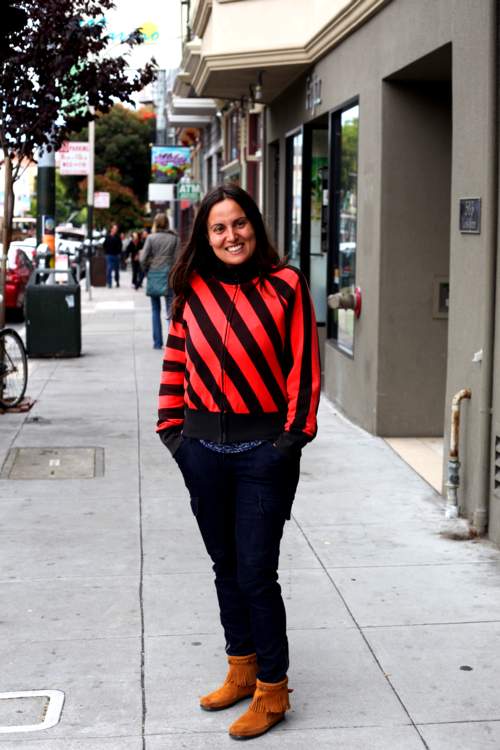
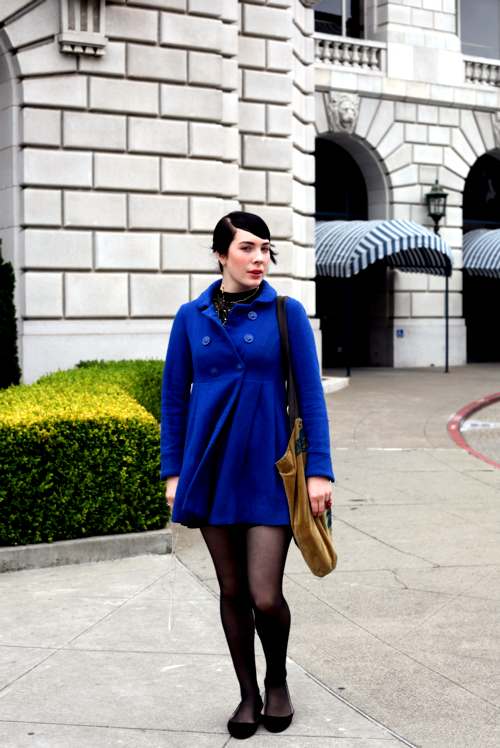
Today’s Look: Kylie, outside the San Francisco Opera House“Tell us about your look: “I was born in the wrong decade.”

45 years of printing the news and raising hell

11


When the Bay Guardian produced its first issue in October, 1966, the paper described itself as “a fortnightly journal of news, analysis and opinion.” Circulation was soon running at 20,000 copies.

Over the past 45 years, the Guardian has become one of the preeminent alternative weeklies in the country. The selection of past covers here gives a hint of the broad range of political and cultural events that have been part of the city — and its alt-weekly — in four and half momentous decades.


The X Factor: Oh, the drama! Oh, the weeping!

0

Okay, I thought American Idol was getting bad. And I missed Simon Cowell. But the Next Big Thing, called The X Factor — featuring not just Simon but Paula Abdul, along with L.A. Reid (who discovered Rihanna!) and Nichole Sherzinger (from Pussycat Dolls, and she once won Dancing With the Stars) — is out of control.

Epic Fail Number One: The 32 semi-finalists are broken up into four categories — girls, boys, over 30 and (gasp) groups. Four from each category move forward. That means four groups, even though almost all of the groups totally suck, four boys (although at least six of the girls were better than all but two of the boys) and four over 30s (well, I guess people over 30 deserve special consideration, particularly women who were once married to Ike Turner).

Epic Fail Number Two: The semifinal round is set at the judges “houses” (although I can’t believe Simon, who appears only in his designer shades, actually lives full time in that glorious mansion in St. Tropez). L.A. Reid is a serious music dude, but his McMansion in the Hamptons is hideous. Paula is (of course) in Santa Barbara, and Nichole is (of course, maybe, if that’s really her house) in Malibu. It’s like Lifestyles of the Rich and Famous; I desperately wanted to hear Robin Leach introduce the scenery.

Epic Fail Number Three: The Oct 18 show had no music at all. No entertainment. Just two hours of people getting kicked off (and weeping) or getting sent through (and weeping). We watched contestant after contestant bawling as the judges tried to drag out the drama as long as possible by saying things like “the news I have for you isn’t good …. (weep, weep, sniff, my young life is ruined) … actually, it’s fantastic” (weep, weep, joy, hug Simon, I’m gonna be a contender). I’ve never seen so much mascara running down so many cheeks. Pepsi’s the wrong sponsor; should have been Kleenex.

It’s like Total Drama Mansions. I can’t believe anyone (other than Vivian and me) actually sat through that whole thing.

The good news is that the homeless guy (Dexter Haygood) and the burrito maker (Josh Krajcik) made it through to the live performances starting next week. So did Rachel Crow, the 13-year-old from Colorado. Viv would have been boycotting the rest of the season if Simon had kicked her out.

As it is, sigh, we’re still watching, and maybe next week someone will actually sing.

Marc Bamuthi Joseph gets the green movement to live, already

0

Consider, if you will, the prosaic class issues in the green movement. The price of BART vs. driving, the utility of feeding one’s children McDonald’s after one’s shift is order so you can play with them outside the kichen, the inconvinient truth of Maslow’s hierarchy of needs. Now add race, and stir. 

Dancer-community activist-poet Marc Bamuthi Joseph did. The result was the Life is Living festival, which he stages in underserved ‘hoods throughout the country (and took place in West Oakland Oct. 8). The festival’s amazing, but its creation was a journey — which Bamuthi has brilliantly set to stage with dancing and singing at the Yerba Buena Center for the Arts through Sat/22. It’s called red, black & GREEN: a blues“I’ve got this male Liz Gilbert eat-pray-hip-hop kind of thing,” recounts Bamuthi onstage during opening night at YBCA. Around him, bisected sharecropper’s cabins swing open and shut, revealing their innards and front porches by turns. The set was made from repurposed materials and clay by Theaster Gates (new favorite name), who is participating in double-time — Gates is one of three supporting characters in the play, mainly contributing those eponymous blues in a rich voice from a porch.

Bamuthi’s flip remark (it reaps a guffaw from the audience, one of many garnered from the play’s dealings with race and class) evokes the difficulties that he and his “do-gooder” team faced in cobbling together Life is Living. Originally meant as an eco-festival — Bamuthi’s account of meeting with New Age Oakland environmental activists is gold — the group shifted the traveling events focus to “the celebration of living.” 

The cast of red, black & GREEN: the blues. Photo by Bethanie Hines

The play could be read as an explanation of why this transformation took play. In the scene that serves as the performance’s chorus, repeating through the play, Bamuthi talks to a grieving mom about his festival. “I ask a mother about environment/She tells me of guns/Of emotionally disabled boys.”

She’s got bigger fish to fry than hydroponic gardens. As does a sculptor: “He speaks to me of misters/Old men gathered to pastime/Play young/men games/Share news/Insult/Seed comfort/Cultivate friendship.” A freezing crackhead in the New York winter: “I’m calling collect from tomorrow/track riding.”

And you forget you’re being taught (Bamuthi is fond of likening himself to a 10th grade teacher) because it’s all gorgeous, real artists doing their real artist things. Characters recreate sunny day hip-hop cut-ups, but they also morph their bodies to evoke addiction, old age — two miraculous transformations that showcase the talent in their bodies through the way they restrict their own mobility.

Asking about “what sustains life” instead of “what is sustainable” could be an important cognitive shift for the green movement — one that would reactivate the choir and provide an entry point for people just coming to the green movement. Bamuthi was a featured artist for the NAACP’s centennial anniversary celebration during Barack Obama’s inauguration exercises. President Obama… I hear you’re having some PR troubles. Were you listening to this guy? 


red, black & GREEN: a blues

Thu/20-Sat/22 7:30 p.m., $10-$25

Yerba Buena Center for the Arts

701 Mission, SF

(415) 978-2787

www.ybca.org

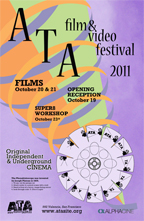
Notes from the indie underground: the ATA Film Festival

0

For more reviews from the sixth ATA Film and Video Festival, check out this week’s film listings. The fest kicks off tonight with an opening reception.

Piena En Mi Alexandra Cuesta’s short film “Piena En Mi” is an impressionistic portrait of Los Angeles, where, in addition to Quito, Ecuador, the filmmaker lives and works. Primarily shot from a bus that traverses the sprawling metropolitan, the film is told with the the city’s different neighborhoods, its sounds, and its patchwork of ethnic groups. It’s an honest portrait of  LA — economically depressed in most places, polluted, congested – but beautiful, nonetheless, and unapologetic. Cuesta treats her city with tenderness and it renders her film graceful and intimate. It’s sensitive to the very subtlties that make LA radiate with character, whether it’s odd haircuts, dirty bus windows, or bells on an ice cream carriage. It’s in these shots that the filmmaker’s background in street photography shows, and make it a highlight of the ATA festival. Program One, “City Symphonies”
Imperceptihole Vivid and atmospheric, “Imperceptihole” is a high contrast, black & white film by Lori Felker and Robert Todd. Developed from a correspondence wherein the two filmmakers exchanged film rolls, “Imperceptihole” is shot between desolate woods, a hay bail structure, an ice skating rink, and several other seemingly random places. Using sychzophrenic pans, transparent shots, breathing and harsh grating sounds that gradually intensify, the film creates the sensation of a deep, hair-raising descent. It’s the camerawork that builds up this sensation, which is either swinging, crawling, sprinting or dead still. And it’s that very camerawork that is most impressive about the film. Vaguely disquieting, the film is initially very stimulating, but in light of its ambiguity, rather too long. Over the course of the fourteen minutes,  the visual experience is lost and you’re wondering what it’s all about. Program One, “City Symphonies”

Workers Leaving the Googleplex While working for a company called TransVideo, Andrew Wilson was subcontracted by Google to work at its Silicon Valley headquarters where he started an investigation into the company’s class structure and what the different colored badges worn by employees represented. “I found the social situation interesting,” he says in the film. He became particularly interested in the yellow badge wearers, employees who are denied most of the Google benefits such as bikes and gourmet meals. Wilson’s investigation led him into conflict with Google when he was caught filming the yellow badge wearers in the parking lot and trying to interview them. Ultimately, he was fired from TransVideo. Wilson’s film is an interesting look at class as well as an honest personal story, and an inside look at the workings of one of America’s most powerful companies. It’s a story you could very well have heard on “This American Life.” Program Two, “Sling-Shots”

“ATA Film and Video Festival”

Opening reception Wed/19, 7 p.m

Short film screenings Thurs/20 (“City Symphonies”) and Fri/21 (“Sling-Shots”), 8 p.m.

Super 8 film workshop, Sun/23 and Nov. 12, 1-4 p.m., free-$35

Artists’ Television Access
992 Valencia, SF
www.atasite.org

Save a horse, ride these cowboy pictures: Shots of the Grand National Rodeo

0

So struck were we by the spectacle that is the first weekend of the Grand National Rodeo (read our print coverage of the event here), your Guardian news team lost a couple hundred dollars worth of camera equipment, by a conservative (uneducated in the ways of photography) estimate (your writer’s). Luckily, we still brought back photo documentation. They never should have let us stand by the bronc pit.

City slickers be forewarned: rodeo nights’ll make you dizzy. Thousands of cowboys hats cruise through the Cow Palace on each of the Grand National’s yearly four main evenings of existence. Last weekend two of these took place, but you’ve still got two more in store for you, should you want them: Fri/21 and Sat/22. You can check out the show ponies in the unfathomably large stables section of the event, take a stadium seat to watch the cattle roping, bronc riding, and barrel racing events, and eventually (they all do) wind up back in line at the concession stand for a cold Coors Light.

How’d we lose the camera lenses? Standing up on the same platform that the cowboys vault from to reach the backs of their designated bucking broncos. You’d do well to stay far from the gaze of these finely-bred, but nonetheless brutally strong hunks of animals. But they sure are fine to look at. So you’re welcome for the slideshow.


Grand National Rodeo

Remaining dates: Fri/21-Sat/22 7:30 p.m., $23–$44

Cow Palace

2600 Geneva, Daly City

www.cowpalace.com


The art and music of OccupySF: a work in progress

4

In a recent Super Ego clubs column, I challenged the San Francisco music, arts, and nightlife community to create a better OccupySF soundtrack than old Michael Franti tracks — and to perhaps update the slightly cliche V for Vendetta look of the movement a bit. (Not to mention throw a few hot-hot benefit parties.) We can do it!  

I was originally inspired by a bangin’ mix posted on Faceboook by former Bay Arean global funk DJ Tee Cardaci (see below). I was also stoked by news of amazing writer Hiya Swanhuyser’s “OccupySF: Art and Performance Series” which featured some major players performing at the ocupado camp downtown, like Heklina, Lil Miss Hot Mess, W. Kamau Bell, and Nato Green — and totally distraught that I had missed the series completely. (Although she just told me she’s got Michelle Tea and Brontez Purnell reading down there at 5pm on Thu/20 — check the series Tumblr for updated info.) In fact, there’s been so much Occupy SF art, music, and expression going on that it’s easy to miss quite a bit of it.

So I wanted to make a page that gathers together some of the stuff people are doing in solidarity with the OccupySF movement — DJ mixes, music tracks, guerilla artwork, unique performance, wild parties (oh hey, you should really hit up the rad Salsa Sunday OccupySF benefit at El Rio this Sunday, 10/23). 

I really want this page to grow and grow — and also help connect the activist-creative community that’s been mobilized and inspired by the #occupy movement in general. Rap tracks, recipes, animated gifs, spoken word, mixtapes, collages, mashups, whatever you’ve made and dedicated to the indignados. If you have something you’d like me to post, please email me at marke@sfbg.com and I’ll see about adding it (no attachments more than 2MB please). Let’s keep this thing rolling!

DJ Tee Cardaci’s #OccupyThisMixtape:

#OccupyThisMixtape – tee cardaci by OneLoveMassive

A great track composed by dread bass master Kush Arora last year in honor of Anonymous, rededicated here to the OccupySF folks hacking the system:

Kush Arora – The Hacker 2010 by KushArora

The group Classical Revolution performing as part of the Occupy SF: Arts and Performance Series:


Occupy Jello! (Biafra)

Brontez Purnell and Michelle Tea read at OccupySF

Style Paige: Crushing on velvet

0

At Otis Lounge on a Thursday night when the bar’s eclectic crowd was enjoying the mellow party atmosphere, Kaz walked in with a quiet confidence. Dressed in a white button-up shirt, a cardigan sweater and a blazer, he said he was ready for a drink.

I complimented his outfit.

“Why thank you,” he said.

What I adored most was his blazer, which was a brown velvet material. Yes, men often wear blazers, but the velvet blazer is a novel entry on the fall fashion scene. You would think that such an eye-catching piece would only be fitting when attending a formal dinner (maybe in Vegas), but paired with a simple button-up — or even colored denim pants, the velvet blazer can be dressed up or down. It is sleek, polished and if styled correctly, effortless. Not stiff like tuxedo blazers, it often looks more expensive than its price tag.  

Of course department stores like Macy’s and Nordstrom sell velvet sportcoats by brands like Dolce and Gabbana and Paul Smith, but you may be able to find a jacket with the same modern cut at half the price at Buffalo Exchange or Crossroads Trading Co. – if you don’t mind digging through the racks. 

Not just for Halloween: bone tome “Empire of Death”

1

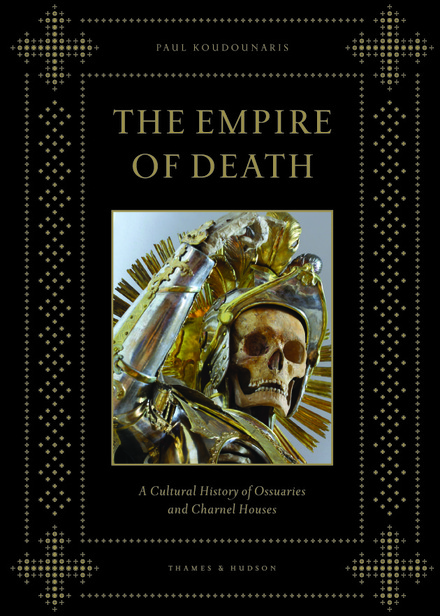
Sometimes, you can judge a book by its cover. Case in point: Dr. Paul Koudounaris’ The Empire of Death: A Cultural History of Ossuaries and Charnel Houses (Thames and Hudson, 224 pgs., $50), a hefty black tome emblazoned with shiny gold letters and a photo of a skeleton posed with its arm raised, clad in a helmet and suit of armor.

Sold! So, uh, what’s this book about, now? Koudounaris, whose credentials include a PhD in Art History from UCLA and an innate curiosity about things he terms “bizarre and suspicious,” spent five years traveling the globe learning more about the ancient (and primarily Catholic) practice of massing bones in charnel houses, often with eerily artistic results. He’ll be in town for a series of Empire of Death-related events starting Thurs/20.

To gather the book’s 260 photos (plus dozens of illustrations), the author traveled across multiple continents to 70 different locations, many of which are off-limits to the public. Lest you think he’s some kind of ghoulish Ed Gein type, Koudounaris explains his motivation on his website (a companion source for the book): “The Empire of Death [contains] hundreds of photographs and a text which not only recovers their history, but the history of the religious movement which gave birth to them. This is not a book about the macabre or death. It is a book about beauty and salvation. If you understand that when looking at these photos, then I hope you will choose to read the book.”

And the photos are beautifully presented, with accompanying text to contextualize, and share the significance of, exactly what you’re looking at: a wall of skulls arranged behind a “plague crucifix” in Switzerland; mummified monks posed beneath the memento mori symbol of an hourglass with wings (“time flies”) in Rome; painted skulls and a spectacularly bejeweled skeleton in Germany; and that fellow from Empire of Death‘s cover, martyr St. Pancratius, articulated using a “fine mesh fabric” and dressed in gleaming armor, forever on guard at the Church of St. Nikolaus in Wil, Switzerland.

Koudounaris’ author bio reveals that while he was working on the book, “he managed to become cursed, exorcized, arrested, and manacled by a deranged Italian monk,” so expect some hair-raising storytelling during his Bay Area appearances. Also on tap: slide shows, book signings, and a chance to check out prints of original photos from the book.

Thurs/20, 6:30 p.m., free
Paxton Gate
824 Valencia, SF
www.paxtongate.com

Thurs/20, 9 p.m., $20 (part of a larger event)
Trickster Salon, SF
For location information, RSVP here)

Fri/21, 7 p.m., free
Dark Carnival Imaginative Fiction Bookstore and Escapist Comic Bookstore
3086 and 3090 Claremont, Berk.
www.darkcarnival.com

Sun/23, 8 p.m., free
Dog Eared Books
900 Valencia, SF
www.dogearedbooks.com

Street Threads: Hayes Valley Edition

0

Today’s Look: Beatriz, Hayes and Laguna

Beatriz: “Soy de Bilbao, España.”


Introducing the Guardian’s 2011 Amateur Hour talent competition!

0

In anticipation of our annual arts awards, the GOLDIES, announced November 9, we proud to present 2011 Amateur Hour: The San Francisco Bay Guardian’s Undiscovered Talent Competition.

You could win $200 and be featured on SFBG.com by submitting a 30-second video that showcases your unique talent. Enter now!

HOW TO PARTICIPATE

   1. Upload your video
   2. Readers vote
   3. The video with the most votes wins!

 For more information, full contest rules, or to enter — click here
. Entry deadline is 10/25. Good luck!


Live Shots: The Hula Show 2011 at Palace of Fine Arts

0

Images of chilling fog sweeping over the Golden Gate Bridge and a glowing sunset illuminating the Painted Ladies might not conjure thoughts of hula and Hawaii, but the Hula Show at the Palace of Fine Arts bridged that connection, bringing swaying hula hips to San Francisco in a unique aloha tribute to our fair city.

All the classic Hawaiian moves were there, with a twist of Bay Area flair — plus some Arabic chanting, Hindi ragga, New York house music, and even a cheeky tribute to Lady Gaga. A heart-stoppingly lovely performance of the classic Frank Sinatra song “Somethin’ Stupid,” a wholly enthralling Mexican-tinged hula solo, and a dance in honor of the Dungeness crab (performed with snappy aplomb by the warrior-like male members of the company) proved the full range of the graceful Na Lei Hulu I Ka Wekiu dancers. They flashed genuine, welcoming smiles when dancing; it was clear that they were having fun, and their easy island spirit wafted down from the stage. With live musicians giving rhythm to the dancers movements, a breath of fresh Hawaiian breeze didn’t seem all that far away. See them this coming weekend if you have the chance, and partake of the global island spirit.

The Hula Show 2011
Through Oct. 23
Palace of Fine Arts Theater
www.naleihulu.org
Tickets $35/$45


Spike salute: Showing love for Mission High volleyball team

3

When head coach Geraldine Poon and assistant coach Kris Thomas got involved with Mission High School’s volleyball program two years ago, their goal was to significantly improve the team’s attitude on the court and in the classroom. They did. 

The young women on the team made such strides on and off the court, in fact, that Thomas got in touch with the Guardian to ask if we could show them some love. We would love to!

“Over the years our student athletes have really put in tons of effort and it really does show,” Thomas told the Guardian in an email. This year has been the strongest start of a season in the history of Mission High School’s volleyball program with a 5-1 record.  

When Poon and Thomas came aboard as the team’s coaches, they started teaching skills that had nothing to do with volleyball. The two thought that for this team, communication skills were more important. The 12 girls on the roster learned how to offer constructive criticism, how to identify a problem and fix it, how to be supportive of their teammates, and how to play with composure and poise. Their new set of skills improved their playing and their schoolwork. 

Most of Mission High School’s student body is made up of students who know or are learning English as a second language and live in underprivileged neighborhoods such as Bayview, Hunters Point, Fillmore, and the Tenderloin. The school is not known for high levels of academic achievement, but the volleyball team has improved its GPA from 3.06 in 2008 to 3.65 in 2010. Many of the girls received straight A’s. 

On the court, the girls have shown a great amount of improvement as well. Middle blocker junior Leonida Radford has been dominating at the net in kills and blocks, totaling 27 kills for the season. 

Thomas offered specific commendations for many of the young women. He expects co-captain and outside hitter sophomore Katie Regalia to continue to post big numbers for the team in kills, digs and aces. She totals 137 service aces and 62 assists for the season. “She is by far the biggest asset to the team,” Thomas wrote. “[Her] undying effort and sheer selflessness …She is the glue that holds the team together.”

Sisters seniors Tianna, middle blocker and Nailafou Mitchell, outside hitter have significantly improved their grades and have both boasted a formidable offense when attacking. “They both had a rocky start to the season, but have both made major adjustments and are also huge assets to the team,” Thomas wrote. 

Coaches also commended junior captain and setter Michelle Li for the way she rallies and holds her teammates responsible. 

Despite its success, the team still has to deal with challenges they have no control over: it’s had to wear the same uniforms for three years and there is no funding to purchase new ones. “Some of the uniforms have holes in the sleeves and are worn and discolored,” Thomas wrote. But that doesn’t discourage the girls when playing volleyball powerhouse high schools like Washington, Lowell, or Lincoln.

There is still a month of games left on their schedule, but next Tuesday is the team’s last home game. “We have full confidence in making playoffs this year,” Thomas wrote. “In fact, I think it would be quite a disappointment if we don’t. A championship would be the proverbial icing on the cake.”


Period Piece: A Carnegie library reopens in the Marina

0

Period Piece is Lucy Schiller’s recurring feature on the hidden histories of San Francisco. Give her a shout at culture@sfbg.com if you know of some hot dirt on olden times in the city

About a hundred years ago, Andrew Carnegie was giving away most of the money he had amassed from a gargantuan steel empire. Eight libraries in San Francisco directly resulted from Carnegie’s efforts, including the Marina’s Golden Gate Valley branch – the recipient of a much needed facelift that concluded last week.

The library was the eighth branch to open in San Francisco. It was born in 1918 to a city less than thrilled about accepting money from a man with a terrible labor rights record. Various arguments at City Hall had already played out over whether to accept the dirty money or refuse it, dedicate most of the funds to a main library or allocate more to several branches, elect trustees or keep the wealthy, elite ones around. 

After years of stalling, it was decided. Half of Carnegie’s grant went to the Main Library, the other half to seven branches. Last week, the Golden Gate Valley branch reopened after an extensive renovation thanks to B.L.I.P. (the inauspicious acronym for the Branch Library Improvement Project).

You can sense the money that went into this place’s initial construction. Shaped like a big wedge of cake, the Golden Gate Valley branch nestles into the corner of Octavia and Green and is decked out with stately columns, heavy copper doors, and high ceilings. 

Libraries have come a long way from their original intended purpose of providing literature to the masses. There are books here, of course — lots and lots of them. But the Golden Gate Valley branch also holds features for kids who can’t even read yet, digital signage in the teens’ area, a program room for community events, and of course, rows of computers for what is perhaps the library’s most salient role in today’s society: free Internet access. 

“Part of the mission of the library is to be a family destination,” says Mindy Linetzky, bond program administrator for BLIP. “We really want teens to come, for example.” With the library’s plans to hold occasional Wii gaming days, you can be sure they will, in droves.

B.L.I.P. has seen marked increase in community engagement since the start of the renovations. According to Michelle Jeffers, public relations officer at SFPL, the Visitation Valley branch’s recent renovation was met with a 406 percent increase in library card registration. 

BLIP’s job is almost done now with twenty-two refurbished libraries under its belt and only two more on the docket. Safer (with seismic bracing), greener (with solar panels), and more accessible (with elevators), our new libraries hold a lot of their former glory but also some fancy new swag.

Golden Gate Valley Public Library
 1801 Green, SF
(415) 355-5666


Get lit! A handy guide to Saturday night’s LitCrawl

0

LitQuake has been rough. You’ve been dashing out of work, shoving people away from their cabs to make it to the Chuck Klosterman event and sprinting after buses to catch Karen Russell; you’ve had to make the hard decision between “Kafkaesque” and “Rock Out with your Book Out;” and all the while, you keep thinking Jeffrey Eugenides has just passed you on the street. With LitCrawl coming up Sat/15, things become even more overwhelming and terrific. In the Mission, bars, cafes, and bookstores together host 450 readers in 79 readings, all free and open to the public. One way to navigate the event might be to pick your favorite bar or cafe, find a chair, order a drink and wait for something to happen. Or, you can check these readings out:
 
I Live Here: SF. How We Got Here, Why We Stay
Not a lot of us can say we were born and raised in San Francisco. Most of us fled here from elsewhere for one reason or another: failed relationships, parents kicked you out, a nervous breakdown, a mid-life crisis, you formed an indie-rock band. Maybe you came for LoveFest and simply forgot whom you were. There are a thousand reasons for arriving and a thousand more for staying. In Clarion Alley, writers and non-writers alike including Mark Bittner and M.C. Mars talk about what brought them here and why they haven’t budged. 6 p.m., Clarion Alley, between Mission and Valencia, and 17th and 18th Sts, SF

BARTab’s Blame it on the a a a a a Alcohol: Tall Tales of Inebriated Adventures
Alcohol and writers have always had a vital, if tumultuous relationship. Hemingway said that when you worked in your head day after grueling day, the only viable remedy was whiskey; that “The only time it isn’t good for you is when you write or when you fight. You have to do that cold.” Luckily, a drunken night can become a source of inspiration, if not the next morning, sometime when you’re “cold.” At this reading, writers like Daphne Gottlieb, Jon Ginoli, Brenda Knight, and the editor of BARtab, Joe Provenzano, read about nights of drunken debauchery. 6 p.m., Martuni’s, 4 Valencia, SF
 
Come Cheer the Reaper: Readings from the San Francisco Writers’ Grotto
The San Francisco Writers’ Grotto was founded because, dammit, this writing business can be agonizing, but it’s more manageable when others surround you with whom you can collectively suffer. Convening at the Elbo Room for a night of readings tied around death, you might think that collectively suffering wasn’t working out so well for the Grotto. However, tonight is not a night for morbidity and gloom. Nine writers, including Janis Cooke Newman, Marianna Cherry, Gerard Jones, and Chris Colin read work that looks at death with humor and lightheartedness. 7:15 p.m., Elbo Room, 647 Valencia, SF
 
The Three-Penny Review Presents…
The Three-Penny Review, based out of Berkeley, would naturally host a night of premium writers at LitCrawl. The journal has been hosting the best authors, poets, and critics in its pages since 1980, and it publishes reviews and essays about everything under the sun (their recent issue features 3 great essays about live music). A good way to gauge the journal’s breath is looking at tonight’s lineup at the Summit. Kay Ryan is, of course, the former Poet Laureate of the U.S. and the Pulitzer Prize winner for The Best of It: New and Selected Poems; Walter Murch is a three-time Oscar-winning film and sound editor famous for his work on Apocalypse Now and The English Patient; Louis B. Jones is an author whose most recent novel is Radiance. Others tonight are poet Victoria Chang and the playwright and screenwriter Erik Tarloff. 7:15 p.m., Summit, 760 Valencia, SF
 
Zyzzyva Presents…
If you’ve taken a look at the West Coast writers and artists magazine Zyzzyva lately, you probably noticed some substantial changes: a new design, a full color art spread, an additional 40 pages of content. The changes are credited to the magazine’s first new editor since its founding in 1985, Laura Cogan. At 29, Cogan has breathed new life into the magazine and given it more presence in the community by doing, among other things, events like this one. Contributors to the fall issue of the magazine W.S. Di Piero and Troy Jollimore are joined by Heather Altfeld, and Malena Watrous. 7:15 p.m., Blue Macaw, 2565 Mission, SF
 
From Buddha to Batman
If you’re a fan of comic superheroes and also have a costume you’re dying to wear before Halloween, this event is most certainly for you. Gotham Chopra, co-founder of Liquid Comics and co-author of the comic Bullet Proof Monk, discusses our persistent fascination with muscles, spandex, super powers, and sidekicks. If you’re one of the first 20 to arrive to the event in a superhero costume, you get a free drink, while the best three costumes win signed books. 8:30 p.m., Laszlo Bar, 2526 Mission, SF

McSweeny’s and The Believer Present…
McSweeny’s and The Believer need no introduction. They are of what they are, and everyone knows that, together, the publisher and magazine support the very best writing. This event features a handful of those talent writers and personalities: poets Matthew Zapruder and Tess Taylor, columnist Daniel Handler (known by some as Lemony Snicket), and Anthony Myint and Karen Leibowitz, founders of Mission Street Food, and authors of the book Mission Street Food: Recipes and Ideas from an Improbable Restaurant. 8:30 p.m., Latin American Club, 3286 22nd St., SF

The World Cries Out for Revolution
Some, like the protestors defiantly camping outside the Federal Reserve Building for OccupySF, get their voices heard by taking to the streets. Others, like us at the San Francisco Bay Guardian, stir things up with the written word. You can see this every week in the articles written by our own Steven T. Jones (check out his article on the pot club crackdowns in this week’s issue). At Cafe La Boheme, Jones reads in the spirit of dissent with former Black Panther Richard Brown, as well as Larry Everest, the author of Oil Power & Empire: Iraq and the U.S. Global Agenda.
8:30 p.m., Cafe La Boheme, 3318 24th St., SF

Appetite: Recapping Whiskyfest 2011

1

Another year, another WhiskyFest. I’ve been attending a number of years now, ever relishing an opportunity to try unexplored whiskies, refresh my taste memory on others, and connect with whisk(e)y industry folk and distillers here from Kentucky to Scotland.

A number of options listed as VIP tastes (more than ever this year) were not, in fact, available at all. Some purveyors said these bottles — like Isle of Jura’s Shackleton or Pierre Ferrand Ancestrale Cognac — hadn’t reached the States yet. I find this a problem, particularly for those paying more to hit VIP hour for these rare tastes ($135 regular tickets; $185 for VIP hour).

One that WAS there however, was the soft, layered, fruity yet slightly oaky, Tamdhu 30 year from Gordon and MacPhail.

Their Benromach 10 yr (available all night, not just during VIP hour) is surprisingly complex, with essence of cedar, nuts, smoke, and spice. Aged in bourbon casks, then finished off in sherry, it does not taste a full 20 years younger than the Tamdhu. I chatted with the company’s friendly managing director, Michael Urquhart, one of 3rd and 4th generations of the Urquhart family who own the company and have been making single malts long before they were ever marketed as a category.

My favorite VIP taste may have been Ardmore’s gorgeous 30 yr Scotch. Surprisingly light, it evokes coffee, caramel, dried orange and a long, gently peaty finish. I found this beauty at the Laphroaig table, where I also enjoyed another taste of Laphroig’s Cairdeus and Triple Wood whiskies).

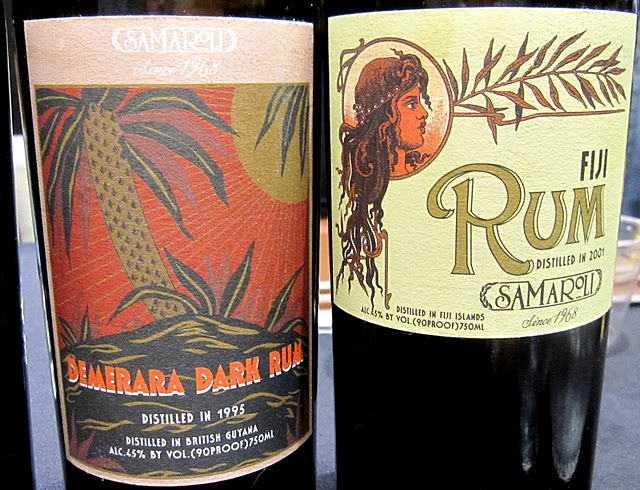
Italian company Samaroli imports a number of special edition whiskies, but of greater interest to me were their unique rums, some layered and elegant, others funky, but all fascinating, particularly Caribbean2003, a rum that is predominantly Cuban, and a French-style rhum agricole: Guadaloupe 1998.

Bruichladdich, who wins for hippest, out-of-the-norm packaging, is doing some interesting things, particularly with their new gin (yes, I said gin), The Botanist. Though containing far too many botanicals (22 in all, from bog myrtle leaves to apple mint), somehow it manages to come together in a cohesive, smoothly refined whole. Their unique Black Art 2 whisky, an uber-secretive recipe that purportedly only distiller Jim McEwan knows, was aged in a range of unlisted barrels, possibly sherry, even wine casks, just like the first limited edition of Black Art.

High West Distillery in Park City, Utah, has a new bottled Manahattan cocktail. Though it’s a decent product, I couldn’t fathom preferring it to a freshly made (or barrel-aged at a bar) Manhattan. All initial barrels in Utah sold out in 8 days, so they launched the product beyond. I sampled their new 21 yr Rocky Mountain Rye, but actually preferred another new bottling: OMG (meaning Old MononGahela, a Western Pennsylvania river) Pure Rye Silver Whiskey. They left the heads and tails in, giving it a rugged, green profile of Meyer lemon citrus and rye spice, best enjoyed neat at room temperature.

Tequila Corrido, a tequila line I enjoy from start to finish, poured their new Extra Anejo from the first barrel to ever leave the distillery. It tastes of lemongrass, oak and chocolate, with agave actually detectable (a fault of many anejos when wood drowns out the agave).

Great King Street
, a blended Scotch made by the Compass Box Whisky Company wasn’t my top taste of the night, but is a smooth blend of Lowland, Highland and Speyside single malts, lightly toasty with vanilla and spice. It’s fresh, classically modern packaging and approach of bringing back respect for blends make it stand out.

WHISKYFEST Seminar with Parker Beam and Alain Royer

My seminar of choice was the evening’s highlight, led by one of my whiskey heros, Parker Beam (who I had the privilege of meeting last year and chatting again with this week), and master Cognac blender Alain Royer of the Renaud Cointreau Group. Beam and Royer discussed Parker’s Heritage Collection 2011 release: a 10-year bourbon aged first in charred American white oak barrels, then 6 months in used Limousin oak Cognac casks. You wouldn’t know it’s a bracing 100 proof, as it goes down smooth, sweet and silky with maple, apple, and gentle spice. It might not be as revelatory as Parker’s Golden Anniversary or 27 year whiskeys, but alongside last year’s robust Wheated Bourbon, it’s yet another winner in Beam’s impeccable collection.

Only Heaven Hill, the company that makes Parker’s Heritage Collection (among my top bourbons of all time), can claim that since 1934 every drop of whiskey from their distillery (all their brands) is overseen by Earl, Parker or Craig Beam of the esteemed Beam family. They produce 900,000 barrels of whiskies out of 49 rickhouses across 30+ acres.

Parker ever charms with his slow-as-molasses (or maybe even slower) Southern drawl belying his feisty sense of humor. Keeping it real, he says, “If you want to make good bourbon, you make it in Kentucky. If you want to sell it, you damn well make it in Kentucky.” He sips one of Heaven Hill’s most popular, affordable whiskeys during his down time, however: “At home I kick back with our Evan Williams single barrel.”

In regards to joining forces with Parker to make Parker’s Heritage Cognac Barrel-finished Bourbon, Alain states: “When I tasted Parker’s bourbon, it reminded me of Borderies.” Known for their floral richness, Cognacs from Cognac’s Borderies region are often elegant beauties with heart, just like Parker’s Cognac Bourbon.

Parker talked about the process of deciding what this year’s special release would be (each of his annual releases are rare, limited editions): “We had some older products [older than his 27yr bourbon] that wasn’t up to snuff. I didn’t like it, anyway… To make Cognac bourbon we went gung ho, as we knew the bourbon was gonna be good… and we trusted Alain’s selection of barrels”.

Next to the final product, we sampled Heaven Hill’s Bourbon Rye Mashbill (10yr bourbon, 100 proof) from new charred white oak barrels. Even in its raw form, the rye exhibits fullness and spice, coconut and vanilla. We also savored Alain’s Chateau de Fontpinot XO Cognac, aged an average of 18-20 years and produced on one single estate from ugni blanc grapes. It’s seductive with apple and apricot, subtly earthy with hay and wood notes, a sophisticated Cognac.

Subscribe to Virgina’s twice monthly newsletter, The Perfect Spot

The next week and a half in free bike events

0

“Everything I do for the environment, I do it for my own vanity” remarked a friend of mine while we hoofed it towards a social engagement. I will be the first to tout the glut-shaping powers of the bicycle, but – being as we are still three days away from my payday – I have to tinker with his truism. Everything I do for the environment, I do it for my wallet. That being said, here’s this list of free bike events around the city over the next 10 days.


Pedal Across the Americas send-off

Set to coincide with Hayes Valley Farm’s harvest festival, well wishers can stop by today to say bon voyage to the PAA team, who will be following up its last trek from Ontario to San Francisco with a bike ride all the way from SF to Costa Rica. The riders do it all to raise awareness about sustainability initiatives in the Americas. Hop abroad your cruiser to accompany them at 3 p.m. on a ride out to Ocean Beach. 

Sun/16 1-5 p.m., free

Hayes Valley Farm

450 Laguna, SF

www.hayesvalleyfarm.com


“How Women Rode on Bike to Freedom”

History has it that back when the Outer Sunset was nothing but dunes and people living in repurposed street cars (Carvillehttp://www.sfbg.com/pixel_vision/2010/05/10/carville-black-rock-city-more-history , don’tchaknow), there was a woman’s cycling club out there in the sand drifts. Their techniques for navigating the terrain has been lost in the tides of history, but documentation of women and bikes throughout history is still there. Sue Macy wrote the book on the 1890s connection between bikes and female radicals. It’s called Wheels of Change, and she’ll be sharing her findings at this reading at the Public Bikes HQ.

Mon/17 6-8 p.m., free

Public Bikes headquarters

123 South Park, SF

www.suemacy.com/books


Artcrank

Bike nightlife, bike empowerment, bike fashion – but let’s hear it for bike art, shall we? Fliers for Critical Mass and other group rides have long attracted the skills of talented artist types. Artcrank is a yearly expo of such two-wheeled images. The event began in Minneapolis and has expanded to biking towns across the country: SF, Portland, Des Moines, and St. Louis among other towns. Catch the wonder at 111 Minna, where they’ll be raffling off Chrome bags full of prints. Drinks will be available, because early holiday shopping (yeah I said it) goes better when you’re tipsy.

Fri/21 7 p.m., free

111 Minna, SF

www.artcrank.com


Pedalfest

Handmade bikes, vintage bikes, chances to ride on a velodrome – this all day fest is a great chance to see all the ways people are taking their rides to another level (or sideways, as the case may be). Unique and one-of-a-kind bikes will be on display, not to mention BMX and dirt jump demos, vendors, kid’s stuff, a beer garden, and a stage powered by the generator steeds of Rock the Bike. 

Sat/22 10 a.m.-5 p.m., free

Jack London Square, Oakl.

www.pedalfestjacklondon.com


A decade of DocFest: more reviews!

0

Check out more coverage of the 10th San Francisco Documentary Film Festival in this week’s Guardian.

Beaverbrook (Matthew Callahan, U.S., 2010) If you attended Camp Beaverbrook, which operated in California’s Lake County from 1961-85, this film is required viewing. It offers an intensely wistful look at an old-fashioned sleepaway camp that thrived in an era before insurance companies started frowning on things like helmet-free kids galloping wildly on horseback. If you don’t have Beaverbrook in your blood, however, watching 1979’s Meatballs will offer a similar overdose of nostalgia, plus the huge added bonus of Bill Murray. Sun/16, 5 p.m. and Oct. 18, 7:15 p.m., Roxie; Fri/14, 7:15 p.m., Shattuck.

Heavy Metal Picnic (Jeff Krulik, U.S., 2010) Everyone’s seen Heavy Metal Parking Lot, the 1986 Jeff Krulik and John Heyn short that became a pre-internet cult classic. Shot amid the beer-y, mullet-y, “party-as-a-verb” shenanigans that transpired before a Judas Priest-Dokken show, Parking Lot is a seminal document for metalheads and anthropologists alike. Twenty-five years later, the prolific Krulik, again with Hayn, returns to the subject matter that made him famous with Heavy Metal Picnic, a 666 … er, 66-minute look at an notorious 1985 concert known as “The Full Moon Jamboree” — described as a “heavy metal Woodstock” by the nervous local press at the time. Basically, this is Parking Lot shifted to the Maryland woods; there’s a concert going on in the background (the bigger acts were Pentagram and the Obsessed, but there’s hardly any footage of them; local boys Asylum and show organizer Billy Gordon of Blue Rockers are prominently featured, however) but the main attraction is, as ever, the fans assembled for raucous raging.

Krulik adds depth to the footage shot that weekend (not by him; from what I can tell, he didn’t actually attend) by tracking down various participants — from the show’s perma-grinning hosts to the members of Asylum to the ne’er-do-wells who patrolled the crowds with a video camera, still a novelty at the time, pouncing on pretty girls and eliciting slurred commentary from the assembled shirtless masses — and interviewing the 21st century versions. The film also traipses back to the spot where the party was held, still intact but now closely surrounded by McMansions. Times have changed, hairlines have receded, cut-off T-shirts are no longer fashionable — but the pursuit of establishment-ranking good times remains irresistible. Essential hesher viewing. Sat/15 and Mon/17, 7:15 p.m., Roxie; Oct. 19, 9:30 p.m., Shattuck.

http://www.youtube.com/watch?v=pBdzQxVWnVU

Peep Culture (Sally Blake, Canada, 2011) Sally Blake’s Peep Culture adds one more layer of media to the journey of one Hal Niedzviecki, following him as he agrees (for the documentary) to have cameras installed in his house so he can join the legions of “lifecasters,” everyday folks who believe sharing every detail of their lives will lead to internet-borne fame and possibly fortune. (His wife, who lives in the house too, along with the couple’s young daughter, is less than thrilled by this.) Though his online profile was previously pretty low, Niedzviecki did build up some expertise on the matter: he’s the author of The Peep Diaries: One Man’s Journey into Self-Exposure, Surveillance, and the Future of Voyeurism. But why read the book when you can actually peep at the guy, as he goes about his everyday life (making lunch, sleeping, peeing) on camera?

Fortunately, there’s more to Peep Culture than pee-pee. Niedzviecki also launches an investigation into the movement he’s recently, somewhat reluctantly, become a part of. He visits a few folks who’ve become “famous” due to their online openness, then travels to Hollywood to attend a boot camp for people desperate to get cast on reality TV shows, then checks out the Fox Reality Channel’s headquarters. That channel has since ceased to be, but reality shows are still going strong: hunting the next great American singer or chef, charting the foibles of Teen Moms and Housewives, exposing hoarders of objects and children, manufacturing lavish Kardashian weddings, etc., feeding the belief that absolutely anyone can be famous. (Which is, of course, the most important thing in life ever, aside from getting gloriously rich off that fame … right?) Though Niedzviecki is not the most compelling film subject ever (probably the biggest reason his online “life” never really takes off — he can’t quite put aside how ridiculous the whole thing is, and never lets totally loose) Peep Culture offers a timely take on the overshare era. Oct. 22 and 26, 7:15 p.m., Roxie; Fri/14, 12:30 p.m., Shattuck.

SAN FRANCISCO DOCUMENTARY FILM FESTIVAL
Oct 14-27, $11
Roxie Theater
3117 16th St, SF
Shattuck Theatre
2230 Shattuck, Berk
www.sfindie.com

Get used: Your retro fix is waiting at the Alameda Point Vintage Fashion Faire

2

That inevitable turn of the seasons is fast approaching. Perhaps you’ve already had one of those moments when, standing in front of your closet, you wonder where all your cable-knit cardigans and berets got too. But no worries – next weekend provides the best indoors opportunity to re-up on retro: the second Alameda Point Vintage Fashion Faire (Sat/22).

But why wait until the hectic fair itself to scope out your crisp weather wardrobe? Three large ballrooms of vintage fashion will be on view at the fair’s preview party the day before (Fri/21) – and if you go, your ticket includes re-admittance to Saturday’s faire. 

The sneak peek will allow you to purchase items early, drink signature cocktails (the event is only open to those of legal drinking age, sorry tykes), and enjoy the smooth live jazz of the Blue Bone Express. This being the Bay Area, there will even be a Halloween costume contest with prizes. 

Something for that treasure chest. Photo by Calibree Photography

With any luck, the fair’s venue is soaked in enough glam history that it’ll rub off on your fashion sense. The Albert H. Dewitt O’Club was built on the Alameda Naval Air Station in 1941, when America was entering World War II – a time during which Uncle Sam wasn’t too keen on luxuries. 

But the O’Club is glamorous – there’s massive front doors and a 40-foot-long canopy that shelters the walkway from the street to the front doors. John F. Kennedy once attended a gala at the club, and Lucille Ball, Henry Fonda, and Van Johnson filmed a scene on the base in the movie Yours, Mine and Ours (1968). 

All in all, the perfect setting for 50 booths of fabulous fashions from the Victorian eras all the way up to the 1980s. Attendees can support the troops at the event by bringing food, DVDs, CDs, toiletries, batteries and phone cards for donation to Operation Care and Comfort.  


Alameda Point Vintage Fashion Faire

Preview party: Fri/21 6 p.m.-9 p.m., $10, 

Fair: Sat/22 10 a.m.-5 p.m., $5 

Albert H. Dewitt O’Club

641 West Red Line, Alameda

(510) 522-7500

www.alamedapointantiquesfaire.com


One last cannabis fest? Despite IRS ruling, medical community soldiers on

1

Last week, the IRS’ two year audit of Harborside Health Center ended poorly for the medical marijuana industry. The federal government agency decided that the dispensary (Oakland’s largest, as the Bay Citizen reported in its coverage of the craziness — check out our story in today’s paper about the additional threats that have been made) couldn’t deduct standard business expenses, a move that left Harborside in the hole for $2 million and the rest of its industry in need of a joint. 

Such was the setting for the West Coast Cannabis and Music Festival this weekend (Fri/7-Sun/9). Things got a little weird. Which is not to say that things weren’t also good. The 215 legal smoking area was ample proof that medical cannabis is alive and thriving, especially in the here and now. How else to explain the booths hawking aphrodisiac cannabis drinks and medicated vanilla chai truffles? Outside, the fresh-faced and strongly-quadricepped carried forth at the Rock the Bike music stage, its live and DJ offerings projected into the Cow Palace parking lot by a woefully shallow pool of volunteers. The muscle mass we pay for music… 

Even the charming gentlemen at the Harborside booth were all kinds of upbeat, eager to talk about their new Discovery Channel reality TV show. They were handing out copies of their dispensary’s newsletter, the Harborside Illuminator. In it, general manager Andrew DeAngelo’s column, which contained a transcript of a conversation he had with the show’s producer, Chuck Braverman:

DeAngelo: Chuck, I really liked the name Cannabis Confidential — why did they go with Weed Wars?

Braverman: Bigger tent

DeAngelo: What do you mean bigger tent?

Braverman: The title Weed Wars will get more people into the tent to watch the show.

DeAngelo: But we don’t call it ‘weed’ and there is no war.

Of course, some would say there is a war on now. It certainly felt like I was being drafted by Sunday afternoon, when California state senator John Vasconsellos’ time to occupy the speaker’s stage was approaching. A barker alternatively sang and cajoled into the microphone, eventually resorting to bribes. “Anyone who sits down over here will receive a free joint. People, you need to hear this!” Ever obliging, we sat and listened to the woman who introduced the senator. She informed us she was filming the talk, although the final destination of the video was unclear to those of us who had just made her acquaintance. 

“Senator,” she trilled. “Look at all these people here who love you!” You and free marijuana, doll. 

Which is a really snarky thing to say, because we had little to say against the senator’s speech, which was 45 minutes of a call to arms to save patients’ right to access their medicine. And truly, we had to agree with the woman who had repurposed an electric green sleep sack as a dress, but not before cutting out the tits, donning a black mesh garment underneath, affixing a fake weed plant to the crotch area, and boldly Sharpie-ing across the front of it all “Obama can you replace our tax revenue?”

She giggled and posed in front of a strangely perfect WCCMF logo-ed wall when asked by (more than one) photographer if they could digi-capture her. Probably because she knew we all agreed with her, which come to think of it is a big part of these festivals: meeting other stoners that share your concerns. 

Like, does that aphrodisiac stuff really work or what?