• No categories

Pixel Vision

Appetite: Insects and mezcal

2

A new twist on the tequila worm at Don Bugito dinner at Headlands Center for the Arts

Nestled near the ocean in the wilds of the Marin Headlands sits Headlands Center for the Arts, an artists’ haven in a reclaimed military barracks that is inspiring just to be in, as it must be for its artists in residence. Known for the culinary care and special event meals they host in their warm, open kitchen and dining room, I was intrigued to check it out. So what better excuse than for a five-course insect and mezcal dinner?

You heard right. Don Bugito, a new La Cocina business that premiered at SF Street Food Festival this August (which I wrote about here), hosted this unique meal.

Paired with Mexican juices, a take on the Michelada (a beer and spice-based imbibement), and the Mission’s De La Paz Coffee, the drink highlight was San Honesto Mezcal, a bright, grassy, gently smoky mezcal that is not yet available in the US but should be by early next year.

Having eaten mealworms and wax moth larvae with Don Bugito before, I was hoping for even further challenges at this meal. As an intro to bugs, the textures and tastes of the five insects served were inoffensive (yes, even to those who fear bugs), even tasty, proving the points made in a pre-dinner educational session: eating insects is nutritional, ecological and sustainable. One could see this becoming a micro movement in urban centers such as ours, just as beekeeping and urban farming have become.

Don Bugito owner, Monica Martinez, says, “Our goal is not to introduce insects as a novelty, but as something that will last.” I’d say with the palatable insect-tinged dinner we experienced, she is introducing an approachable, realistic way to eat insects.

The Headlands Center’s next dining event is December 7, a speakeasy-style, small plates dinner with cocktails from the incomparable Bon Vivants.

Subscribe to Virgina’s twice-monthly newsletter, The Perfect Spot at www.theperfectspotsf.com


The (theater)-sporting life: BATS Improv turns 25!

0

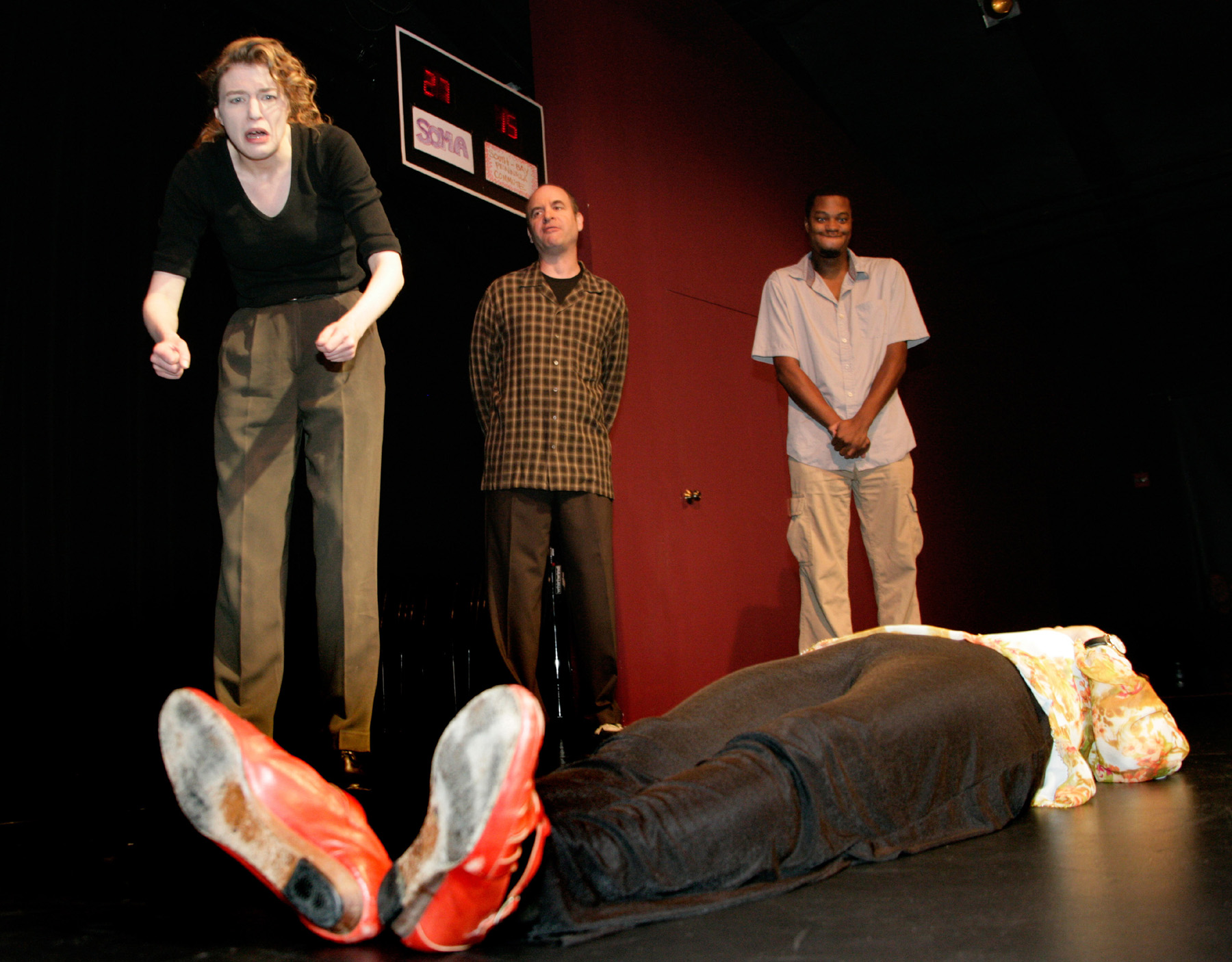
It was 1986, the year of Top Gun, Dallas, “Hands Across America,” and “Papa Don’t Preach.” In San Francisco, a comedy troupe called Fratelli Bologna joined forces with Seattle Theatresports’ Rebecca Stockley, and the rest was history. Bay Area Theatresports, now known as BATS Improv, marks its 25th anniversary this year with a special show Sat/12 — a one-off celebration smack-dab in the company’s already-packed calendar of weekly shows. How does an arts organization stay so energetic after 25 years? Could a certain flair for improv have something to do with it? I spoke with BATS artistic director Kasey Klemm to get the scoop.

San Francisco Bay Guardian: What’s your history with the company?

Kasey Klemm: I started taking classes at BATS when I was 17, back in 1997. I’ve been with the organization ever since. I just became artistic director in April of this year. I’m just at the beginning of my three-year term.

SFBG: Is that an elected position?

KK: It’s an open job position, so anyone in the main stage company is allowed to apply for it. People put together their artistic vision for where they want to develop and see the company grow, and move toward, as well as some organizational stuff. How they kind of functionally see the company working with each other, and developing as artists as well, so that we’re not just staying stagnant and doing the same stuff, and we keep challenging each other. And also, a proposed six-month calendar.

SFBG: How do you think BATS has managed to stick around for 25 years?

KK: This organization has got a tremendous amount of heart behind it, and it really is the people that make it [that way]. We were just looking at some old photos that we had blown up for our lobby for the 25th anniversary display, and we have this company photo from, I think it was 1989. And it was about nine people who were with us in ’89, still with us today. Phenomenal actors, and not people who are staying here because they have no other choice, but because the work that we do is so rewarding, both for the audience and personally as an artist. It’s really a thrill to literally go do something new every night. It’s exciting and the craft of it keeps you coming back for more.

I also think it’s because we’re an organization that really values stories, and stories that are driven by relationships and truth, versus trying to make something funny happen. That keeps people connected and interested much more than trying to be funny, or if this were a group where people were trying to outshine each other. But there’s a real passion for telling truthful, connected stories. And what happens is, because it’s being improvised, the result is often much more hilarious than anything that could have been written.

SFBG: So does BATS identify as a comedy group, or more just as a theater troupe?

KK: We self-identify more as a theater group. In some of our marketing, we started using the term “comedy theater,” but the word theater is really important and central to what we do, because it’s not about doing sketches or telling jokes. It’s about creating theater that an audience can connect with and can be moved by, whether it’s moved to uproarious laughter, or tears sometimes. We’re after that sincere stuff, the sincere human experiences that are traditionally at the roots of theater.

SFBG: Do you think having strong improv skills has helped the company beyond just performing onstage?

KK: Absolutely. There’s a culture of yes, and being inclusive, so it’s an organization where everybody’s voice gets to be heard. We’re really good at communicating with each other, because you need to be. And we honor that kind of direct and honest communication with each other. Everybody knows that everybody else is here for the same reason: because we love doing theater-based improvisation. We’re a group that all has the same goal: we’re all artistically in pursuit of a very special kind of theater that we think only gets created through making it up on the spot.

With that, you get to know each other very well. Our main stage company is 19 people right now, some of whom have been around for the whole 25, some who are as new as having joined us last year. But because of the way we work onstage, we’re very connected to each other.

SFBG: Why do you think Bay Area audiences love improv so much?

KK: Well, it’s not boring! There’s a lot of theater out there that for whatever reason, doesn’t connect with every audience. An experimental new play might not be any good. But if we’re in the middle of something, we’ve got the ability to go, “Hey, this is not very good. Let’s change it up, let’s start again.” And everybody can laugh with the release of that kind of tension or pressure, so you don’t have to sit through stuff that’s not working.

As an audience member, when you’re watching the improv happen onstage, you’re much more engaged than in a scripted play, because you know the actors are creating it on the spot, so there’s a part of you that’s always creating these shadow stories: “Oh, I bet those two characters are going to end up romantically linked together.” So they’re creating the story with us. And it’s a much more engaging type of theater than one that’s just being told to the audience.

I think that’s why you get those moments where 200 people laugh at the same time, because we’ve just put our finger on something that everybody was thinking, whether it was conscious or subconscious. We tap into this kind of group experience with it, and there’s this explosion of laughter that happens from just hitting some sort of primal truth that exists in that moment, in that theater, with these particular actors onstage, and these particular audience in the house.

SFBG: What’s the backstory on the 25th anniversary show this weekend?

KK: This weekend we’re celebrating the 25th anniversary of the first Theatresports show in San Francisco. So 25 years ago there was a group of local actors that was kind of housed by a group called Fratelli Bologna, who brought their friend down from Seattle, Rebecca Stockley, who’s now with us here at BATS. And she started teaching some workshops on the Theatresports format, which is creating theater with this kind of imaginary hook of it being a competition that draws people forward in their seats the same kind of way that a sporting event would, and gives the actors a lot of opportunities to create a lot of different types of theater in one night.

For a scene where there wasn’t much improvisation happening, there were mostly scripted actors, to be able to work in film noir, and Tennessee Williams, and play a silly game all on the same night created this kind of magic that everyone got really inspired by. So 25 years ago on November 10, 1986, they did the first public performance of Theatresports in San Francisco, and there was such a great response from the audience and from the players that those players went, “There’s something here. We want to keep doing this!” So that group went on and formed Bay Area Theatresports, which is now known as BATS Improv.

On Saturday night, we’re going to have a Theatresports match that’s going to be hosted by one of our founding members, and it’s going to feature two teams of improvisers that are a mix of some of our most veteran players, and some of our newest players, and they’re going to do about a 70-minute Theatresports match, and after that we’re going to hold a champagne and dessert reception with the cast and audience. We’re going to have people there from our history who’ve been important to us, longtime fans, etc. So it’s going to be a big community celebration.

SFBG: What else is coming up for BATS Improv?

KK: More great theater! We’re doing Theatresports on Friday nights through the end of the year. On Saturday nights in November we’re doing a format called “Family Drama,” which is an improvised three-act play, done very much in the classical stage play format. It’s a single set that the audience helps endow at the beginning of the show; each actor only plays one character, there are no cuts or time jumps. It’s a very straight-ahead, relationship-driven, three-act play.

In December, we’re bringing back a show called “Very Merry Murder Mystery!,” which is a British whodunnit with the hook being that not even the improvisers know who committed the murder. It’s a very strongly character-driven piece that feels very much like a big, silly Agatha Christie play. It’s a really fun show filled with a bunch of surprises.

“BATS Improv 25th Anniversary”
Sat/12, 8 p.m., $30
Bayfront Theater
Fort Mason Center, Marina at Laguna, SF
(415) 474-6776
www.improv.org

Wag the dog: The SF kennel that makes your apartment look like kibble

2

Wiggle that paw into your trusty Birkin for a spare $150 this holiday season — you’re staying in the best room in town. Of course, the hospitality staff there is going to be a little hands-on. They’ll wake you at 6 a.m., feed you breakfast, put you in a play group with future-friends that share your weight, age, and temperment. They’ll read you a short story during nightly “cuddletimes” and make sure your owners can see you on the livefeed at all times. Also, in this scenario you are a dog.

“People don’t want a kennel these days,” Jose Gonzales, director of guest services at the Mission’s Wag Hotel, is showing me through his kennel’s state-of-the-art facilities. “They want a safe, clean, convenient place to leave their pet.”

Wag’s first branch opened in Sacramento in 2005, at which time Gonzales tells me “we really, literally redefined pet care.” Redefined it to mean luxury summer camp for the dander set, that is.

Where’s my mint. Guardian photo by Caitlin Donohue

The center is open 24 hours a day. In Wag’s parlance, its human customers are “parents,” individuals who need only peek at their iPhones and the hotel’s playroom livestreams shown thereon to determine whether Pawla Abdul needs another dog biscuit (Gonzales says he is wont to call in requests that employees give snacks to his own pooch when he leaves his furry friend to Wag). 

Wag smells more like air freshener than canine as the two of us explore its bowels, Gonzales imparting a stream of information and myself dutifully following after. Here are the glistening, occasionally flatscreen-bedecked two-room enclosures that house steerage boarders (the dog bowl in the door means the “room” has been serviced), the vast playrooms looked down upon by even more vast skylights. 

There are 239 of these quarters at Wag. Usually there are less than 100 dogs staying in them, although at peak times over holidays, there can be enough to necessitate 50 to 60 employees, when it’s “all paws on deck,” as Gonzales puns. There is a rooftop garden for dogs that love to feel the sun on their furry faces, even report cards given to each parent at their offspring-from-another-bitch’s terminus at Wag. These rate Puppy’s bowel movements, and cite the friends they’ve made at Wag by breed and name. There are special activities planned intermittently, like the 12 Days of Winter event from Dec. 1-16 that will afford the dogs opportunities to take photos on Santa’s lap and have staff members design stockings for them that suit their personalities. 

Reading selections in the Wag Suite. Guardian photo by Caitlin Donohue

But for some, this comfort is not enough. And there is still a chance for your young pup to be the first guest at the $150 a night Golden Gate Suite.

This is the grand finale of Gonzales’ tour. Here, in a secluded hallway far from the whines and yelps of steerage, a genteel canine can while away the three to four days that constitute the average stay at the hotel, in jet-setting style. 

A double bed (slung low to the floor, no jumping for the dogs of the one percent) with organic sheets, layers of pillows, and a faux fur throw is the centerpiece of the room, which rather resembles a slick private double in a high-end hostel. Upon the pillows rest a box of doggy “chocolates” made by a local artisan and a plush remote control, which does not operate the large flatscreen on one side of the room where room occupants will view their owners each night for a heart-warming Skype chat. 

There is also a stack of books for storytime on a coffee table. “I personally like The Giving Tree,” Gonzales tells me. “But that’s a personal favorite.”

“A lot of people thought that the room was built to be over the top,” he reflects, shortly before we call in a golden labrador named Montana to lounge for my camera on the bed and whine impatiently for the box of artisan treats Gonzales has safely hid behind his back. “But we built it to be practical. We looked at what a dog needs and what will make the client and dog super-happy.”

This super-happiness, Wag has decided, lies in bridging the gap between pet and human when the two must be geographically separated. To mimic the home environment, Golden Gate Suite patrons can even sit down with hotel employees to determine which Pandora channel their beloved four-legger will listen to. 

On the occasion of my visit, classical is playing throughout the hotel. “We’ve had different feedback from clients that they don’t want their dog listening to classical,” says the director of guest services. “Maybe they want movie noise. Yeah, dogs don’t watch movies. But we want them to feel at home.”


Wag Hotel

25 14th St., SF

(415) 876-0700

www.waghotels.com

The Performant: Revenge of the nerds

0

Gaiman and Palmer, the Bay Area Science Festival, and a live game of Frogger

Nerd might still be a four-letter word in high school locker rooms (assuming these are still high school locker rooms to be found), but there’s really never been a better time in history to be an adult nerd. No matter if your inclinations lie in language, linux, or the laws of thermodynamics, a nerdish life lived well is truly the best revenge for all those real or imagined slings and arrows of awkward youth.

Epitomizing this truism, geek-elite power couple Neil Gaiman and Amanda Palmer launched a joint mini-tour across the West Coast entitled simply “An Evening with Neil Gaimna and Amanda Palmer,” which turned out to be exactly that, no more and no less.


Though shades of goth tinge both artists’ output, their overall aesthetic is more playful than grim. Neil Gaiman, a prolific writer in many mediums, will perhaps always be best known for his long-running graphic novel series The Sandman, while Amanda Palmer, first hit international acclaim as co-founder of the antique punk/Weimer cabaret act The Dresden Dolls. During a pleasurably meandering three-hour evening at the Brava Theatre (two days before their appearance at The Palace of Fine Arts), the two performed bits of their own work—Neil reading from his 2006 collection of short stories Fragile Things, she playing the ukulele and piano with her singular panache. The songs that they performed together were naturally the highlights. Who knew that Neil Gaiman had a torch singer tucked within his black garb and quiet English reserve? He also penned the lyrics for some of the more notable tunes, including a lovelorn lament “I Google You,” plus one of opening act The Jane Austen Argument’s tunes: “Holes.”

It was a brainiac weekend all around, thanks to the Bay Area Science Festival, which hosted a plethora of walking tours, lectures, exhibitions, and hands-on activities for all. Ducking into my friendly neighborhood Sci-Fi/Fantasy/Horror fiction bookshop, Borderlands, I got an earful from science fiction authors Scott Sigler, Mira Grant, and Jeff Carlson about the “Science of Science Fiction,” primarily about how much research goes into being able to create with a mostly scientific justification for “melting faces” and “zombification”.

Last but not least, the Come Out and Play Festival, wrapped up a week’s worth of street games with an intensely-packed weekend of battle-scaled dodgeball, cardboard tube fighting, city-wide scavenger hunts, and labyrinths. In Everett Middle School’s vast playground, about forty adults plus a handful of kids, showed up to play a few rousing rounds of Field Frogger, a completely analog twist on the classic arcade game of yore. Participants playing “froggers” sat on giant yoga balls and bounced through an obstacle course of banner-carrying “cars,” “turtles,” and ”logs.” By the end of the morning, there were six froggers hopping through the roads and rivers at the same time, which gave the playing field more of an appearance of a collision course than in the original Konami version, combining innovation with chaos and homage with humor.

http://www.youtube.com/watch?v=zDgqJjht2vQ

Live Shots: The Guardian’s 45th Anniversary Happy Hour

4

On Thursday November 3rd the Guardian family descended upon Buck Tavern to toast 45 years of “Printing the News and Raising Hell.” The cadre included current and former staffers, as well as SF politicos and friends of the Guardian from over the years. While Chris Daly and his staff kept busy slinging stiff drinks and setting out yummy snacks, the Guardian family was aglow in celebrating four and half decades of representing San Francisco values. Hip Hip Hooray! 

[Photos by Ariel Soto-Suver] 

Period Piece: Duels to death on the shores of Lake Merced

0

Leaving aside the wanton killing, there was something charming about olden-style justice. Back in the day, a political figure could draft a nasty note that ended with  “your obedient servant,” pass it off to some friends to deliver to a sworn enemy, and wait for his duel to the death to be scheduled. 

It’s probably good those days are over. Bay Area pacifists have two men to thank for the cessation of formalized murder: Senator David Broderick and Judge David Terry – who were probably not the original frenemies, but certainly early bearers of the standard. The two ensured the end of legal dueling with their fatal 1859 clash on the banks of Lake Merced.

San Franciscans of the 19th century already knew both Broderick and Terry to be firebrands. “Dave” Broderick worked as a barkeeper before making his way into a California Senate seat, a vocal working-class Democrat. In his first-ever speech to colleagues, Broderick stood up and criticized President Buchanan on the issue of slavery to a room of aghast murmurs.

(A) is for Assasination. Site of the 1859 Broderick-Terry duel.

Terry, a Democrat from the South and California Supreme Court judge, had stabbed an opponent in the neck a few years before the Lake Merced incident came to fruition. His victim survived, and Terry narrowly escaped hanging. 

The Lecompton Constitution, attempting to install slavery in the new state of Kansas, met turmoil within the Democratic Party. Broderick took a cutting abolitionist stance and Terry a bloated pro-slavery one.

“A miserable remnant of a faction, sailing under false colors, trying to obtain votes under false pretenses,” Terry said of Broderick’s supporters in a speech that later compared Broderick (unfavorably) to Frederick Douglass. 

Broderick perturbedly read the speech at breakfast a few days later. A friend of Terry’s sat nearby.

“I have said I considered him the only honest man on the Supreme bench, but now I take it all back,” remarked Broderick.

Letters were delivered between the two. Honors began to be questioned. 

“I…require of you a retraction of those remarks,” wrote Terry, angrily.

“I have to desire you to state what were the remarks that you designate…as offensive,” Broderick obliquely replied.

Terry, frustrated, quoted his opponent, ending the note with an invocation of his honor as “an officer or a gentleman.” But Broderick seemed determined to cause Terry irritation.

“You are the best judge as to whether this language affords good ground of offence,” he wrote back, retraction not included.

Poked into a fury, Terry demanded a duel at “Laguna Merced,” and Broderick accepted. 

Those present at the duel later pegged Terry as the more practiced marksman. Broderick, it was said, seemed unprepared and awkward from the get-go. He carelessly chose an unfamiliar hairtrigger pistol, which fired early and off-mark. Terry took careful aim an instant later and struck Broderick in the breast. 

Broderick was to die within a few days. Anti-dueling legislation was enacted shortly afterwards. But Terry escaped legal retribution and joined up with Confederate forces at the start of the Civil War. For all the talk of glory and honor, he was shot and killed after slapping a U.S. Supreme Court judge in the face (an old friend of Broderick’s, the judge had jailed Terry for contempt during a hearing relating to Mrs. Terry).

“Slavery is old, decrepit and consumptive; freedom is young, strong and vigorous,” spoke Broderick early in his senatorial career. After his galvanizing death, much of California agreed, pushing pro-slavery Democrats out of office in favor of Republican ones. 

Today, the shady spot hosts two stone markers that indicate where the duelers faced off. 

Going veg at the wing shop: Wing Wings’ deep-fried oyster mushrooms

1

Owner Christian Ciscle’s been trying to get me to come into his Lower Haight wings shop for a minute. I was always like “Christian (full disclosure: Ciscle took me on board as counterperson back in the days when he managed SoMa’s Little Skillet to-go window), they’re wings. I don’t eat meat.”

But then I went, and now I have to apologize because: Wing Wings‘ deep-fried oyster mushrooms.

When do you get to eat a whole tray of oyster mushrooms? And for $5? It’s improbable, really. Wing Wings’ side of them occupies a hefty paper tray. They’re crispy and just salty enough on the outside, juicy on the inside. Dunk them in some ranch dressing or Wing Wing remoulade and you’re good to go. I nearly took down the whole thing, but I had a friend there to fight me for the bottom of the tray (thank god).

They don’t really have anything to do with each other, but if you stop by for the oyster mushrooms you can also pick up a brown sugar-black pepper biscuit what that Ciscle has been baking since the Little Skillet days. Call it dessert if you’re a label person. 

Pairing suggestion: Wing Wings, limeade, and some headphones at nearby Rookie Ricardo’s LP listening stations

Of course, there’s no veggie entrees per se at Wing Wings – normally. But tomorrow, Tue/8, the counter shop will host a pop-up dinner by chef-about-town Dontaye Ball of Good Foods Catering, who has lent his culinary chops to everywhere from the kitchens at Google to Delfina and the Presidio Social Club.

Ball’s entrees will include, yes, pork belly and beef meatloaf ($15) and slow-braised chicken in a white wine-thyme gravy with cornbread dressing ($14), but also blackened tofu with roasted veggies and mashed yams ($12). Check out the evening’s menu here

A full vegetarian belly — at a wings shop. Will wonders never cease?


Good Foods Catering’s “Soulful Food” pop-up dinner 

Tue/8 6-9 p.m., check Good Foods website for prices

Wing Wings

422 Haight, SF

www.wingwingssf.com

www.goodfoodsonthego.blogspot.com

A journey through “Gay in America” with photographer Scott Pasfield

0

Incredibly, considering what a visual people my lavender tribe are, there has been no major photographic survey of gay men in America until now. (Well, at least in book form. I’m not counting Manhunt, here.) Author-photographer Scott Pasfield journeyed around the country for three years, taking some wonderfully enlightening shots of gay men, couples, and more who had responded to his online ads for photographic subjects who were willing to tell their stories. The tally for his “Gay in America” book: 224 pages, 140 men, 50 states.

Scott will be narrating a slideshow presentation of the book (“Not boring like a travel slideshow!” he says) on Sat/5 at 7 p.m. at Magnet in the Castro. I chatted with him over the phone about the project, the men, and the concept of gay “normalization.”  

SFBG What drove you take on a project of this magnitude?

SCOTT PASFIELD It was a combination of a lot of things. I work as a professional photographer in New York, but as with most things in this economic climate, that work was drying up. My fourteen-year-old dog passed away, and I found myself mourning more than I thought. And I really just needed to get back in touch with my craft, to reignite my passion for what I do, to push myself to do something big. I have an incredibly supportive partner now — but I was raised in a difficult household, my father had been very conservative and uncomfortable, to say the least, with my sexuality. So in the big scheme of things, I wanted to connect with other gay men around the country and get them to talk about their experiences, to see where we all were at this very interesting period in the gay American journey — and hopefully learn a bit about myself as well.

I had no idea what I’d find, but the response was pretty overwhelming when I started placing the ads for subjects. People welcomed the opportunity to talk about their lives, where they’d come from and what they were doing. As gay men, we often see each other through these restrictive lenses. I wanted to open that up.

<<<<<<<<<<<<<<<<<<<<<<<<<<<<<<<<<<<<<<<<<<<<<

SFBG A lot of your subjects live in places like Oklahoma, Arkansas, or Kentucky that aren’t exactly known for gay cheerleading. Did you run up agaiinst any major barriers in getting them to pose for you? Or have attitudes changed in this age of the Internet and niche gay communities?

SP You know, it was the strangest thing. I had no problem finding guys in some of those more “remote” places. Of course, homophobia is still a major thing, but I felt that people in some of the out-of-the -way places really wanted to connect and tell their stories, maybe because they had to be strong to be who they are where they are, maybe just because no one had asked.Maybe there just aren’t as many social outlets.

It was in the big cities like San Francisco, Los Angeles, and New York that I had the darnedest time finding subjects. I don’t know if it’s because people are more jaded, or maybe they thought I was going to take advantage of them — that this was a hoax or porn. [Laughs.] I was blanketing chat rooms and social media for people to open up, and I did eventually find some great guys, but it was work.

SFBG What are some of the things you’ve taken away from doing this project? Did anyone in particular inspire you?

SP This has been a very emotional journey and I hope I’ve done justice to all the people who appear in the book. You know, five of the guys have died and I hope Gay in America is a fitting tribute to their lives. 

Beyond that, everyone’s story was really affecting. I think the one that most sticks with me is Ken from Maryland, who calls himself “a true redneck.” He and his best friend Kevin had fallen in love, gone to school together, celebrated their anniversary, but had never come out. Until the night they got in a car accident and Kevin was killed. Ken couldn’t see him after they had taken him to the hosital, so he started yelling that he was Kevin’s boyfriend until they let him through. That was how he came out to the world. It’s such an emotional story.

SFBG In the trailer for the Gay in America, you say, “Feeling normal about yourself — which we all are — and that’s the whole point of this.” With all the advances that gay America has made in recent years, from the repeal of DADT to the continued gradual acceptance of same-sex marriage, many people feel the assimilation and normalization are pushing queer diversity and radicalism under the rug. The people in your book are incredibly diverse, although all men. Now that you’ve taken this wide view of gay men, do you have any opinions about the push toward mainstream assimilation?

SP I think there is a very valuable contingent, loud if nonetheless small, of people within our community who are raising important points about the cost of assimilation, and I appreciate that they’re around. The reason I used the word “normal” was more in a personal sense. I was raised to think that homosexuality wasn’t normal, and it took me a long time to accept that I was just as valuable as anyone else. That’s what I mean about feeling normal, feeling OK.

With Gay in America I wanted people to see that the people telling their stories may have been through some crazy stuff, but inn the inside the weren’t so different after all. And I wanted to upend some stereotypes — that gay men do and look like all kinds of things, we’re not all drag queens and mean twinkie-types like you see on TV. Although there are some drag queens out of drag in the book!  

SFBG Now that you’ve been all over the country, what was your favorite place? Would you relocate if you had the chance?

SP Well , Hawaii’s awfully nice [laughs]. So is Alaska, so beautiful. And, surprising to me, I really like Maine. But if I and my partner didn’t have our work in Manhattan, I think I’d move to Portland. I love the liberal vibe, how it’s so close to nature, and how the city itself is laid out. I’m an architect before a photographer, and the urban planning and regional architecture of portland was fascinating to me. Oh, and of course, I’m looking forward to sending some time in San Francisco — my partner’s flying in and we’ll be staying with friends.

GAY IN AMERICA PRESENTATION WITH SCOTT PASFIELD
Sat/5, 7p.m., free
Magnet Center
4122 18th St, San Francisco
(415) 581-1600
www.magnetsf.org

Followed by a book signing, drinks, and hors-d’ouvres at
Under One Roof
518A Castro Street
San Francisco,
(415) 503-2300
www.underoneroof.org


The X Factor: It’s all Paula

0

After an embarassing selection episode,  the Simon Cowell Show (excuse me, the X Factor) is actually allowing the contestants to sing. And while Simon is strutting around trying to steal the limelight and show how incredibly cool and smart he is (at one point telling one of the contestants to kiss him because he knew what kind of music was best for her) the real star was … Paula Abdul.

Not because she’s appears perfectly sober (amazing) and looks great in purple — but because she’s taken the people with by far the least talent and turned them into winners.

See, each judge gets to mentor one category. Simon, of course, has the girls (more on that later). L.A. Reid has the boys. Nichole Sherzinger has the over-30s … and Paula has the groups.

Frankly, the groups were the weakest entries. In the early rounds, some of them were train wrecks and none of them were terribly good. But somehow, Paula has turned three of them into real contenstants; she’s picked good music, helped with good dance moves, given them confidence … even Simon admits she’s done well. Not that any of her folks are going to win (first prize — you get to make a Pepsi ad!); they aren’t that good. But while the other judges, particularly Simon the Great, have made some awful mistakes, the spaced-out daffy Paula has kept it together.

So onto the show.

What’s up with the interplanetary opener? Like the folks on Saturn are really zipping through the Solar System at warp nine just to see the X Factor? If this is the random picture of life on Earth that reaches the Vulcans, they’re going to continue to believe that the third rock from the sun is still far too primitive for First Contact.

The host, Steve Jones (no, not THAT Steve Jones) is as dull as dishwater, and needs a personality implant.

Stereo Hogzz open the show; I wasn’t impressed last time, and the red vests gotta go — but man, Paula worked a miracle with these guys. They’re actually ready for prime time. Chris Rene tries to do a hip-hop version of Karen Carpenter, complete with flames shooting out of what looks like a giant barbecue. Ack. Leroy Bell is 59, does a decent job with a bad song.

Rachel Crow is Viv’s favorite, of course, since she’s 14. She does a tolerable “Walking on Sunshine,” except that Simon has changed the lyrics to “You are my Sunshine” and the rythm is all wrong. Oh, and the bad psychedelic graphics in the background made the whole thing hard to follow.

Lakoda Rayne. Paula’s girls. They’re all dressed up like colored crayons, and they all look exactly the same. They have very little talent among them. But they managed to make a Fleetwood Mac song sound okay. A little less sexy than Stevie Nicks, but what are you going to do.

I hope Joch Krajcik wins, if only because he looks so much like Jack Black in School of Rock, complete with a girlfriend who clearly has been supporting him all these years while he makes an occasional burrito and sings in unsuccessful bands. I like the girlfriend; she better get half the money. And the guy can sing, he really can.

Melanie Amaro does “Desperado.” Jean hates the Eagles and always has, but not me, and that’s a great song for the right singer, and Melanie is the right singer. Something Simon did right. She’s got as much vocal talent as anyone in the show.

Astro — man, you have to love Astro. He’s 14, he writes his own raps, and even when he’s a little shaky, he’s awesome. He just is.

Marcus Canty is L.A. Reid’s guy, and Reid has him sing a song by … L.A. Reid. But it’s good, and he’s good, and L.A. gets a good one on Sir Simon, to wit:

Simon: It’s a little bit narcissistic to have your artist sing one of your own songs, but …

L.A.: Well, Simon, we were going to do one of yours, but …

Stacy Francis. Girl has pipes. Not my kind of singer. Amazing voice, though.

InTENsity. Some shit about America. Drew: Cute but predictable.

Tonight someone goes home. I predict weeping.


The Performant: Hell of a ‘ween

0

Getting scared with The Residents — and other Hallowed traditions

Used to be that on Halloween you could be assured of catching either The Residents or The Cramps storming the stages of San Francisco; bands practically designed to blend in with the emissaries of the afterlife creeping through the thin membrane demarcating the spiritual plane. But with the sad passing of The Cramps iconic frontman Lux Interior in 2009, and the always-sporadic scheduling of The Residents, it seems like those days may be gone forever. But perhaps not coincidentally, in a unique twist on the Halloween season tradition, The Residents lead singer Randy Rose has been workshopping a disturbing cabaret all his own at the Marsh in Berkeley.

Entitled “Sam’s Enchanted Evening,” the production in its current permutation is a stripped-down acoustic medley of altered cover tunes and rambling monologues, blustery dispatches from the tortured depths of a character named Sam—an old high school chum, according to Randy. A broken-down shell of a former Casanova and Vietnam War veteran, a stooped and decrepit figure tottered onstage, walker and bourbon in tow, dragging the oddience down the claustrophobic rabbit hole of his pessimistic world view. Accompanied by occasional Resident’s collaborator and Marsh stalwart Joshua Raoul Brody on the keys, Sam warbled through an All-American pop-culture soundtrack from “Sixteen Tons,” to “Living the Vida Loca,” with desperate intensity. A haunting portrait of a twisted, tragic life, and possibly the scariest thing you could have seen during the long Halloween weekend.

As party-packed as the weekend was, for Halloween traditionalists, Monday night was still the real deal. And what better way to celebrate the scariest night of the year than at a bona-fide, old-fashioned, haunted house? For years, tiny corner grocery store Appel and Dietrich Market at 6001 California has been hosting haunted house mayhem in its basement, conceptualized and staffed by a stalwart crew of Richmond district denizens. An eye-catching guillotine and witch-burning stake out on the sidewalk entertained the passerby, while in the “dungeons” below the street, mouthy chopped off heads in baskets, strobe-lit tortures chambers, a mad scientist’s laboratory, and a sacrificial ritual lay in wait for the thrill-seeking horrorphiliacs who ventured down.

Later that evening, the third annual Halloween edition of FlashDance, one of the city’s most low-key yet exuberant howl-day traditions, occupied an anonymous pier on the Embarcadero, affording a great view of the Bay bridge, lit up in the background like a strand of party lights. While the mild evening pulsed with the soundtrack of the evening (heavy on the Michael Jackson, a favorite of FlashDance founder Amandeep Jawa), a costumed frenzy of flashdancers put their hands in the air like they just didn’t care. If there were any spirits walking that evening, they blended right in with the spunky aerobics instructors, zombies, and deep sea creatures otherwise disguised as party revelers, which is exactly the point of such revels, both for the living and the dead. It makes one suspect that whatever the afterlife has going for it, dance parties are not among them, so we’d best enjoy them now while we can.

Sam’s Enchanted Evening
Through November 26
The Marsh Berkeley
2120 Allston Way, Berkeley
$15-$50
(415) 826-5750
www.themarsh.org

Dancing with the dead at Día de los Muertos

0

Candles were lit, marigolds were trimmed, and white face paint was spread carefully over cheeks.

A large crowd gathered by sunset, meandering their way through Garfield Park to look at all the exquisitely decorated altars that honored friends and family who have passed on. The annual Día de los Muertos procession and display is always such a vibrant and colorful event, embracing the reality that eventually we’ll all disappear, to who knows where, but buoyed by the thought that we’ll never be forgotten. There is sadness, but that’s part of life — so why not have an amazing night party in the park to make things just a little happier!

¡Felíz Día de los Muertos mis amigos!

Far from heaven: Sam Brower takes aim at the FLDS church in “Prophet’s Prey”

2

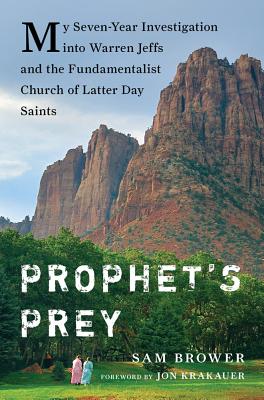
If you read Jon Krakauer’s 2003 book Under the Banner of Heaven, and followed the trial of Warren Jeffs — notorious leader of the Fundamentalist Church of Christ of Latter-Day Saints, now in jail for life for sexual assault (after a stint on the FBI’s 10 Most Wanted List) — you’ll dig Sam Brower’s Prophet’s Prey (Bloomsbury, 336 pgs., $27).

Brower’s book, subtitled My Seven-Year Investigation into Warren Jeffs and the Fundamentalist Church of Latter-Day Saints, is the thrilling and disturbing tale of the private investigator’s relentless crusade for justice — not just in the Jeffs case, but against high-ranking FLDS members across Texas, Utah, Arizona, and beyond. The sect, which is completely removed from mainstream Mormonism, is best-known for its polygamist beliefs, often pairing underage brides with elderly church leaders (Jeffs is estimated to have over 50 wives, including the two, ages 12 and 15, that he was convicted of assaulting). They’re extremely well-funded, with leaders who live in mansions even as the rank-and-file go hungry. They also don’t care much for outsiders.

In Brower’s estimation, the FLDS church is “an organized crime syndicate that specializes in child abuse” — after reading his book (with a preface by Krakauer), you’ll tend to agree. He’ll be reading in Berkeley Tues/15; I caught up with him by phone at his home in snowy Cedar City, Utah, just over an hour’s drive from FLDS stronghold Short Creek, an isolated community straddling the Utah-Arizona border.

San Francisco Bay Guardian: I was just watching the recent clip of you on Dr. Phil, opposite former FLDS spokesperson Willie Jessop [an antagonistic figure in Prophet’s Prey]. That must have been an interesting experience.

Sam Brower: It was. It was weird, first of all, being there with Willie, who’s been on the opposite side of things throughout this whole ordeal. And then, Willie showed his true colors — he can’t answer a question and lies at the drop of a hat.

SFBG: He was in the news a couple of weeks ago, when the story broke about one of Warren Jeffs’ wives escaping from the church compound. I think you were quoted in the article, actually.

SB: Yeah, could be. One of Warren Jeffs’ wives took off, which is a very rare occurrence. This is the second one — the first one, I wrote about in the book; her name was Janetta — so it’s kind of a weird thing that they would actually let one of his wives get out of their grip, you know. And then just recently I heard that she has gone back to him. She’s with her family now, and so she’s back in the FLDS from what I understand. I was just waiting for that to happen. I know that they can’t afford to have one of Warrens wives out and talking, and that they’ll stop at nothing to try and get her back.

SFBG: You talk about this in the book a bit, but why is it so hard for them to escape?

SB: Number one, it’s not like they’re brainwashed. A lot of people use the term brainwashed, but it’s much, much deeper than that. They’re indoctrinated. It’s a cultural thing, and they really have no understanding of any other parts of the world. Their entire existence revolves around their life with the prophet. Many of them don’t have birth certificates. They don’t have drivers’ licenses. They’re with “caretakers,” they’re called — so there’ll be a group of wives and children that are being watched over by their caretakers.

In fact, it would be hard to trace wives, because they have no credit. They’re like non-entities. So it’s easier to trace their caretakers, the guys that are watching them. So they’re being watched constantly. They’re being shuttled around from place of refuge to place of refuge, and so, you know, they just don’t have a life or a world outside the relationship with Warren Jeffs and the church. So for [the wife who recently escaped] to get away is highly unusual, and my understanding was that she was in her stocking feet. She literally ran away.

SFBG: Do you think she had her own children that she left behind?

SB: I don’t know if she does or not. Some of his wives have not had children, mostly because there’s just so many wives. By the same token, some very young wives do have children, too. And I know that part of their existence is a very deviant existence, it’s a very deviant life — some of the things that came out in Warren’s trial regarding, basically, ritualistic orgies with his wives, in which he would say, “We all have to participate.” It was something that, before they became involved with Warren, was completely foreign to them. And it has to rock them a little bit to go from absolutely no sex education, no idea what it’s even about, to such a bizarre world.

SFBG: Warren Jeffs is serving a life sentence. Is he still in charge of the church?

SB: He’s running the show from prison as much as he can. While he was in jail, he had more access, because he was spending tens of thousands of dollars a month on calls from the jail. Now that he’s in prison he’s more restricted, but he still gets a 15-minute phone call every day, and he has two hours’ worth of visits on Saturday and on Sunday. And there are people who are called to visit him for those two hours on each day, and take down his revelations and notes and orders to the people.

So he’s still running the show, not as freely as had been in the past, but he still is, and he has his brother, Lyle Jeffs, who is now the prophet’s mouthpiece — the man who’s running the show on the ground, who is just as bad as Warren. Some people say he’s worse. And he also has his places of refuge all around the country in Colorado, South Dakota, and Texas, and different compounds. He has little kind of clones of himself there who also run those operations as well.

It’s a little bit of both: he’s still overseeing everything. He still has his input in everything. But he’s gotten rid of anybody within his crime syndicate that has any kind of moral compass, and instilled people who are blindly obedient and will do whatever he tells them to do.

SFBG: In the book, the first case that draws you into the FLDS world illustrates that obedience: a family nearly loses their home after the father is kicked out of the church, seemingly on a whim, and nobody outside of his immediate family questions the decision. How come nobody rebels?

SB: That’s the hardest thing for us, people on the outside, to wrap our minds around. And I think that’s what really grabbed me when I first started working on it, when I saw [the recently excommunicated man] Ross Chatwin holding up a copy of [history book] The Rise and Fall of the Third Reich [in a newspaper photo]. I read that book when I was a kid, and in my mind I was thinking, “Good grief, when I was a kid and read that book, I couldn’t understand what would make this whole country do whatever this madman told them to do!” And that’s what Ross Chatwin was saying.

And sure enough, I go down to [Short Creek], and good grief, there’s 10, 15 thousand people that’ll do anything that this guy tells ’em. He tells them to leave their home, their family, kids, and go repent from a distance, and they do it, and the wives go to another man. It’s nuts, crazy. It took me a long time to kind of get a feel for it. I still struggle with it. It goes back again to this deep-seated cultural thing, where blind obedience gets you stature within the culture. The more you can demonstrate this obedience, the more you demonstrate your faith, and the higher up on the pedestal you are.

It’s to the point where, this is an example, a mother who’s a nurse has a daughter who is hemorrhaging. The daughter was married off at 14 to some old lecher, and she’s hemorrhaging and about ready to die, and the mother won’t take her daughter to the hospital because Warren Jeffs told her not to, because they might be able to trace her to the “priesthood,” quote-unquote, and it may result in charges. It may lead them to the prophet. And she doesn’t do it. She’s willing to let her daughter die to prove her obedience and her faith. It illustrates how there are no boundaries there.

I’ve thought many times that, had not there been a handful of people that went after Warren Jeffs and tried to expose these things, how would it have ended? In fact I still worry about that. Would it have been another Waco, or another Jonestown? Right now there are edicts coming down that are out in Short Creek that there can be no more sex, period. Not even for procreation. They can’t watch TV, listen to the radio, read books, magazines, newspapers. Get on the internet. Nothing. They have no hope in their lives, no joy. It makes me wonder, how’s this all going to end? Is going to be, just a vision, some kind of huge manifestation of their faith that ends in some other tragedy? What’s going to happen?

SFBG: If their leader is in jail and they’re all behaving the same way, is there any hope for the future?

SB: I wish I knew. The way it appears now is that it’s just getting worse. Lyle Jeffs is a real mental case himself, and he’s the one who’s running the show now. I have a client, actually a half brother of Lyle and Warren, who wants to have his children. They’re his children. He has legal custody of them. But Lyle has taken them and is hiding the children from him. So we’re having to go to court, and jump through all these hoops to try and get this guy’s children back. And for some reason Lyle just doesn’t want him to have these children. Because he’s received some revelation saying that he shouldn’t have his own children.
I see it just continuing to get worse and worse. It’s anybody’s guess, really.

SFBG: You mentioned earlier that the church is like a “crime syndicate” — is that sort of the go-to argument to convince people who wonder about freedom of religion in this case?

SB: The freedom of religion thing is the FLDS’s wild card. You know, they try and go around and say that people are going after them because they’re an unpopular religion, and they practice polygamy, or whatever. But the fact is, they have turned into a crime syndicate that specialized in child abuse. And everything they do is in support of their illegal activities. They marry little girls off as young as 12 years old. They groom them from the ages of eight, nine, even younger, to become “heavenly comfort wives.”

You know, you can can believe whatever you want, as part of your religious doctrine or theology. If you want to believe that it’s OK to sacrifice virgins and throw them in a volcano, that’s fine. But when you start acting on those beliefs — when you start breaking the law — then it’s not OK anymore. And that’s what they’ve done. They’ve regressed to the point where, anything they do, anything that’s in violation of the law is, to them, within their rights to do that. That’s part of their free exercise of religion. And that’s not true. That’s not what the constitution says. It’s not OK to break the law just because you think it’s part of your religion. You can believe it if you want, but you can’t act on it.

SFBG: In the book, you discuss your own faith as a member of the mainstream Mormon church. I know the two aren’t connected, but is the FLDS church a topic of interest for mainstream Mormons? What’s been their reaction to the book?

SB: I think mainstream Mormons have been very interested in it. It’s one of the few times they’re able to read about it and find out what’s going on without being blamed for it. In fact, I just did a signing in Salt Lake City that was attended by a lot of mainstream church members.

SFBG: It sounds like you’re still very involved in FLDS cases, even now that Warren Jeffs is in prison. What are you up to now, and — as seen in the book — are you still a target for the church?

SB: Yeah, I’m still not on their Christmas list. I still have clients that are FLDS or former FLDS, and am still involved in it, and I guess I will be for as long as they’re still abusing children. It’s been a roller coaster ride and of course they do everything they can to try and get me out of the way, but it hasn’t worked in eight years. I feel sometimes like [the third] Godfather movie, where Michael Corleone says, “Just when I think I’m out, they pull me back in.” I have those moments every once in awhile, but I think I’m probably going to be in it for awhile.

When Warren’s trial happened, it was a good feeling in Texas. Life plus 20. But it was kind of bittersweet at the same time. Because then I leave, and I’ve got another client who’s still struggling to get his kids back. Lyle Jeffs is still doing the same things out in Short Creek. And part of me is going, “Yeah, we’ve come a long way. Things are happening.” But also, it’s still going on, too.

Sam Brower

Tues/15, 7 p.m., free

Books Inc.

1760 Fourth St., Berk.

(510) 525-7777

www.booksinc.net/Berkeley

Start your day off dead: Your Dia de los Muertos events guide

0

There is probably no more devastatingly beautiful day in San Francisco as today, Dia de los Muertos. It’s more neighborly than Burning Man Decompression, more colorful than a march on the Federal Building — and has more emphasis on colored tissue paper than even the Mission’s spectacular Carnival parade (see here for last year’s Guardian photo gallery). Peep the community altars at SOMArts Cultural Center (above) and read on for more on where you can let those skeletons out of the closet.

So who are you remembering this year? At SOMArts “Illuminations” altar exhibition (read our interview from last year with Rene and Rio Yañez, the father-son team that curates the event) this year’s artists have created homages to Martha Sanchez, deceased doyenne of the Casa Sanchez taqueria and brain behind everyone’s favorite cheap tortilla chips; friends who passed away in the San Bruno fires; victims of Hurricane Katrina; and Pablo Picasso. Rene Yañez’ 3-D art pops from one end of the maze of installations.

You still have ’til Saturday to check those out, but be sure you drop through the Mission tonight if you haven’t seen the explosion of creativity that goes into all the house parties, kids costumes, dance performances, and altars artistically lounging about Parque de los Niños Unidos this time of year. 


“Illuminations” altar exhibit

Through Sat/5

Closing party: Sat/5 6-9 p.m., $6-$10 suggested donation

SOMArts Cultural Center

934 Brannan, SF

(415) 863-1414

www.somarts.org


Day of the Dead procession

Join in with your still-living loved ones — contrary to popular belief, facepaint and costumes are not required — and march to the park where all the altars are set up. In prior years, the parade has been marked by paper mache puppetry on a massive scale, dance performances, and cross-cultural celebration.

7 p.m., free

22nd St. and Bryant, SF

www.dayofthedeadsf.org  


Day of the Dead Festival of Altars

Genuflect in front of the wall of Michael Jackson remembrances (one of last year’s efforts), or just kick back and take pleasure in a Mission District park full of happy families — and sure, partying — after dark. This is one of the neighborhood’s most special happenings of the year. 

6-11 p.m., free

Garfield Park

26th St. and Harrison, SF

www.dayofthedeadsf.org


SF Symphony Dia de los Muertos family performance

Mexican tenor David Lomelí will join the symphony’s world-class cast for this family day on Van Ness Street. “Besame Mucho,” “Granada,” and works by Mexican composers will stud the program, and from 1 p.m. traditional dancers strut their stuff in the lobby, right by the tables full of pan de muerto and Mexican hot chocolate drinks. 

1 p.m. procession, 2 p.m. performance, $15–$68

Davies Symphony Hall

201 Van Ness, SF

(415) 552-8338

www.sfsymphony.org


See listings for more dead head events

A walk with the Valencia Street smile lady

1

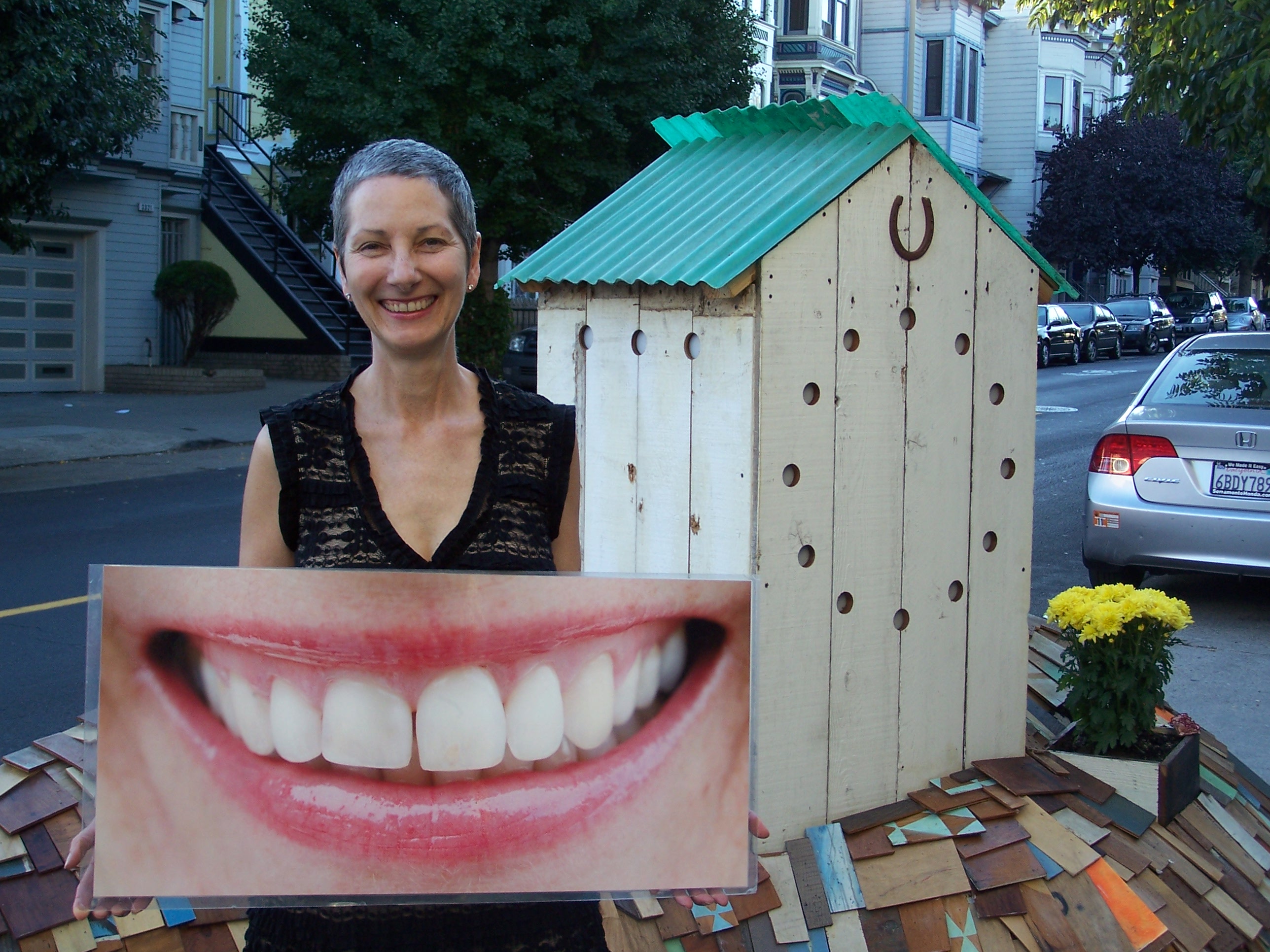
“Ooh, out of state, too,” Claire Lemmel winces as a parallel parker crunches his van into the side of a Jaguar. Then she puts her smile back on.

There’s a strong possibility you’ve seen Lemmel’s teeth, either on her “smile car” or on the enlarged mounted photo she holds while sauntering daily down Valencia Street. Lemmel takes her smile to the movies. She takes it to the ophthalmologist. The gleaming eight-inch incisors could be frightening, but no one seems to think so.

Instead, Lemmel’s interactive art generates exactly what she wants it to: interpersonal connection. It’s fascinating to walk with this earnest, sunhatted woman and watch the reactions. 

Most people avert their eyes, glance again, avert once more, and start to involuntarily smile as they walk. Others engage directly, laughing or quickly snapping a photo. Cars honk, bicyclists stare, and narrowly avoid injury. “Are you a dentist?” seems to be the most common question, “awesome” the most frequent comment. Lemmel began her smile project one year ago as part of a public art initiative called CONNECT. 

“People are always texting,” she says, “but they’re not connecting. They’re unengaged, even as they interact.” Lemmel has made it her daily mission to spread goodwill, roaming her Mission neighborhood and beyond with the sign. Walking behind her is a bit bizarre; ten or eleven oncoming faces will split in unison into grins. 

It doesn’t hurt Lemmel’s cause that she’s extremely personable, blessed with both good teeth and a warm Texas drawl. Mission shopkeepers, walkers, and street vendors know her and expect her. Many folks seem to take the sign as an invitation to flirt rather shamelessly with Lemmel, who chucklingly engages and walks on.  

And it’s hard to imagine, after a Valencia Street cruising session with this beaming being, a time that she isn’t smiling. But everyone has their limit, and two hours is Lemmel’s. She walks home with tired cheeks, the mouth tucked under her arm still joyful.  


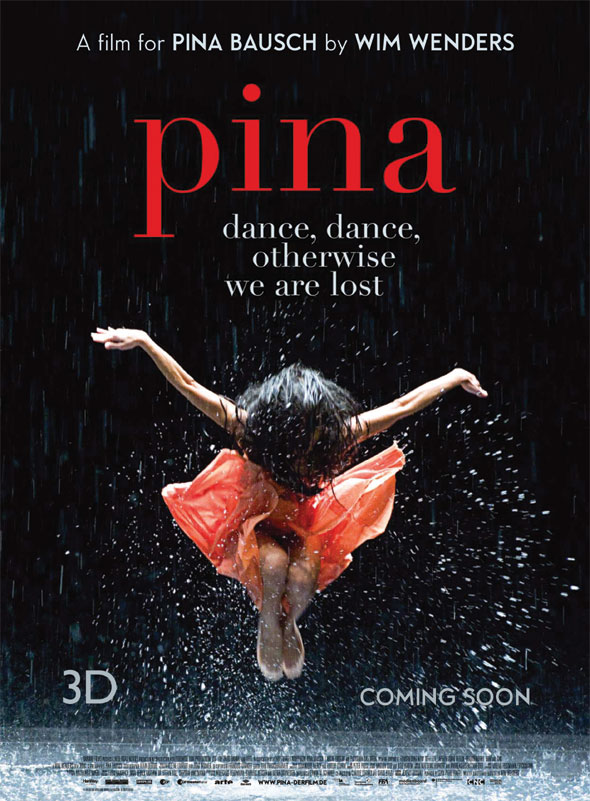
Remembering Pina Bausch onscreen … and onstage

1

One reason I love dance so much is the transcendence I feel when I watch really powerful dance. It is the feeling that somehow the bodies onstage have moved beyond being simple dancers on an elevated platform and are instead communicators of something that can’t be written or painted, but can only be communicated through the medium of physical movement. When I have this feeling I know I will once again be swept up in dance and cry or laugh or simply feel my soul reverberate. 


 One such great practitioner of dance passed away in 2009. Her name was Pina Bausch, and she created epic dance-theater pieces for her company in Wuppertal, Germany. Bausch’s work built itself upon the personalities of her dancers, asking them to emote theatrically in order to create meaning in movement. Her pieces were characterized by elaborate sets, including stages covered in dirt, flowers, leaves, chairs, and even rain. Her dancers were incredibly devoted to her, some staying in her company for two to three decades, investing their lives in her work. She delved into themes ranging from sex to death, heavy topics she explored through repetition, pushing both her dancers and her audiences’ comfort thresholds. She is attributed with creating the genre of tanztheater, or dance-theater. While not all loved her work, she undeniably pushed hard and said much through dance.
 
Wim Wenders, renowned film director, playwright, author, photographer, and producer, has long been spellbound by Bausch’s work. While he had discussed with Bausch on many occasions documenting her work, it wasn’t until the advent of 3D technology that he knew he had found the perfect medium to capture the essence of Bausch’s work on film. The resulting film, Pina, began as a collaboration between Bausch and Wenders, but after Bausch’s sudden death Wenders decided to complete the film as a tribute to her. I recently saw Pina at the recent Mill Valley Film Festival, and found it deeply touching.

The care and devotion both Wenders and the dancers have in creating a testament to their lost teacher, leader and friend is evident in every beautiful shot and scene. The film walks a fine line between trying to be representational of Bausch’s work and knowing it cannot begin to do it justice in one short film. Excerpts from some of her more famous works are interspersed with choreography taken off of the stage and out into Wuppertal. From a dancer struggling up a huge hill of dirt to a man catching a woman as she falls down steps, these moments of site-specific dance are not an attempt to change the perspective of Bausch’s choreography, which was always presented in proscenium theaters, but simply to honor the spirit of her choreography by showcasing it in different settings.
 
Pina left me incredibly sad, for I will never have the opportunity to see much of her work. Her pieces, with their elaborate stage sets and their dependence on the dancers’ personalities, cannot easily be reset on other dance companies. Yet somehow the ephemeral nature of her work makes it all the more special. Her company is touring for what might be the last time, and is coming to the Bay Area via Cal Performances on December 2 and 3. The piece being presented, Danzón, is a meditation on life’s trajectory through childhood and sexual awakening on into adulthood and death. This will be one of the last chances to see Bausch’s work performed with the dancers she crafted the piece on.
 
What little I’ve seen of Bausch’s work has left me breathless. Knowing that dance like Bausch’s exists, dance that can communicate a feeling so powerful across generations and cultures, fills me with such love and reverence for the art form. I highly recommend seeing either Pina or Danzón. See Bausch’s work one way or another. It might be the last time we can.

Gear up: Trevor Traynor’s lowrider captures cruise into the Mission

1

Photographer Trevor Traynor is moved by lowriders. And he says he’s not the only one.

“Lowriders move people,” he wrote to the Guardian in an email interview. “Literally and figuratively. When you’re cruising people smile, wave, they take pictures. The cars connect people of all walks of life and the clubs enjoy it as well. It keeps people productive with a strong passion in cars.”

You can tap into his love for the low on Thu/3, when Traynor’s photo show “Low Life” opens at The Summit SF in the Mission.

Though the Mac-sprouting coffeeshop might seem like an odd venue for a show that celebrates the Mission’s Latino car clubs, the San Francisco-based shutterbug’s exhibition will be hanging just a few blocks away from where his passion for lowriders was first spawned on Cinco de Mayo in 2010. 

“As a native New Yorker, seeing 30-plus lowriders cruising low and slow, hopping on three wheels down Mission Street was something new and exciting and the energy [could] not be ignored,” Traynor recalls. The sight was enough to get him in a ride. “I remember hanging out of the back of a mint 1969 yellow [author’s note: he’s also described it as “flan-colored”] Buick Skylark Convertible while Lexxx from the Padrinos Car Club drove nice and slow for me to steady my camera.”

Traynor’s body of work has tended to specialize in hip-hop culture — he’s shot everyone from Mos Def and E-40 to Lil’ B and N.E.R.D. over the years. But since that Cinco, Traynor has ridden with a score of Bay Area clubs: The Inspirations (the only cars people are stoked to see when Sunday Streets hits the Mission), Padrinos, Pachuco, Aztecas, Excandalow, Frisco’s Finest, Bay Riders, and Fo’ Fifteen Car Club among others. The images from the show come from outside the Bay, too — places like Santa Fe and Sacramento make appearances. On opening night, they’ll be accompanied by shifting motion visuals from John Coyne, and DJs bumping lowrider anthems from the Summit sound system.  

It’s clear from looking at the shots of the cars and their riders that result that he digs the aesthetic (craziest thing he’s ever seen airbrushed on a ride: “A nude angel goddess holding two smoking guns riding a fire-breathing dragon above the pits of hell”) but he insists that these are more than just pretty machines. 

“Lowriders hold history in the Chicano community. [The cars’ purpose is] a sense of pride, passion, and respect. Car clubs are a small community, a family, a group of friends that are all car-loving aficionados.” He’s even seen car clubs that do youth outreach programs and toy drives. 

“Some people wake up on a sunny Sunday and go golfing, go to the park, go to the courts, go hiking. Car clubs cruise. Lowriding is a lifestyle.”


“Low Life”

Through Dec. 1

Opening reception: Thu/3 7-10 p.m., free

The Summit

780 Valencia, SF

(415) 861-5330

www.thesummit-sf.com


Poet of dissonance: Anna Moschovakis at Meridian Gallery

0

I bought Oprah’s O Magazine in March — my first — after learning it had 24 glossy pages to honor (or degrade, depending on how you look at it) National Poetry Month. In the issue, among other things, was a photo spread of eight female poets modeling the latest spring fashion. “Spring Fashion Modeled by Rising Young Poets” was one of those rare occasions when mainstream culture and poetry awkwardly attend the same party. It’s the kind of thing that makes poets and scholars blink in disbelief and send heavy sighs over the Internet. One of the poets featured in O was Anna Moschovakis: the author of two books of poems, a translator, and an editor at Ugly Duckling Presse. (Moschovakis, who lives between Brooklyn and Delaware County, NY, reads at San Francisco’s Meridian Gallery Sat/29.) She was modeling a pink Candela dress ($359) and an Haute Hippie jacket ($995). 

It started something of an Internet brawl.

David Orr for the New York Times: “It’s impossible to say what Moschovakis was thinking during this shoot — I certainly hope one of her thoughts was ‘I better get to keep this damn jacket’.”

Jessica Winter for Slate Magazine: “How have eight lady poets and their outfits managed to put Orr in such a despondent frame of mind?”

Orr’s criticism of Moschovakis was warranted in some respects. Her latest book of poems, You and Three Others Are Approaching a Lake (Coffee House Press 2011), which was awarded the 2011 James Laughlin Poetry Prize, is a critique of gluttonous contemporary culture — a culture she arguably sold into.

So, naturally, you do wonder what she was thinking. In the stark, analytical poems that make up You and Three Others Are Approaching a Lake, Moschovakis assualts materialism, waste, and the internet and repossesses elements of that culture in her poems — Craigslist ads, Wikipedia articles, and MySpace posts — in such a way that proves how demoralizing it can all be. Her style is somewhat similar to Rae Armantrout’s. Both poets are infinitely curious, and not only do they approach each poem with a question, but they often end the poem with a question. There’s rarely a straight answer. Nonetheless, the poems manage to tear down our comfortable preconceptions anyway. Here’s an excerpt from “The Tragedy of Waste”:
  
Human wants:

First the necklace of bone
then the shift of leather

tea, tobacco, and gambling

in other words

Ten men could live on the corn
where only one can live on the beef

Emily Warn, writing for the Poetry Foundation blog, called Moschovakis to ask her about the feature in O Magazine and to see whether Moschovakis could resolve her “cognitive dissonance.”

Warn writes: “[Moschovakis] asks whether ‘cognitive dissonance’ — mine or Orr’s — is necessarily a bad thing, if it might lead us to be more critical of our assumptions.” In essence, this is what Moschovakis’ poems do: challenge our assumptions. A quote from the poet by her photo in O reads: “Poems allow us to hold two ideas that don’t hold up.”
 
Perhaps this doesn’t resolve the overwhelming question. I myself cannot say for certain what Moschovakis was thinking. But I enjoy and appreciate her philosophically bent poetry, her austere use of language, and the sense of violence that charges her poems. She is always second-guessing herself and I like that, too. Besides, dark times call for a dark poet like Moschovakis.

With John Sakkis
Sat/29, 7:30 p.m., $10
Meridian Gallery
535 Powell, SF
(415) 398 7229
www.meridiangallery.org

The Performant: Baring all

0

The Trial of Lucullus at CounterPULSE and Shazia Mirza at the Punchline

Open rehearsals are a hot topic in the theatre world, with compelling arguments on both sides of the debate about how much of the “process” in the creation of theatre should be public? On the one hand, the argument goes, the demystification of the process can only help audiences to understand a piece better, and connect more deeply with the finished production. On the other hand, the counter-argument proposes, so much is subject to change during rehearsal, that judging the potential merits of a future work based on an unfinished version may not be in the best interests of either audience or company.

My feeling is that transparency in art, as in life, enhances our experiences—and open rehearsals, like staged readings, can afford an audience a rare look at a work stripped down, naked, unencumbered by the dazzle of tech design and polish. To this end, during a special edition of the Shaping San Francisco Public Talk series at CounterPULSE, a group of San Francisco Sate University students performed an open rehearsal of Bertolt Brecht’s “The Trial of Lucullus,” which opens on the 27th for a weekend-long run.

For Joel Schechter, who co-directed the piece with fellow SFSU professor Barbara Damashek, the chance to test drive the work in front of an audience who probably won’t make the trek to SFSU for the finished production is definitely of value for the students. An ensemble cast of undergrads took the CounterPULSE stage to enact this little-performed Brecht play, which was originally written for the radio, and later staged as an opera with music by Paul Dessau.

Casey Robbins played the Roman General Lucullus on trial in the Underworld for his worldly deeds, the decision to send him to Hades or to the Elysian Fields in the hands of a panel of five jurors, commoners, whose ilk have not fared particularly well at the hands of fighting men. With movement, song, and somber monologue, the trial proceeds to its end, a plea for peace, as timely now as when Brecht wrote the play in 1939, and even as far back as 57/56 BC, when Lucullus himself passed away.

Are there any performers more naked than stand-up comedians? Those mercurial characters whose success so often comes at the expense of familial harmony. Friends, lovers, siblings, and parents are all perfect fodder for the stand-up comedian’s wry outlook and devastating observations, and the better the comedian, the less separate their “private” life becomes.

Shazia Mirza, who hails from Birmingham, England, the eldest daughter of devout Pakistani Muslims, has a wealth of family anecdotes to draw upon, many of which center around her parents’ desire to marry her off, or at least reap grandchildren from her. When Mirza points out laconically that for grandchildren to happen she “needs cock” for it to work, her mother apparently agrees. “Fine, have cock, have five cocks!”

Mirza, who also writes a column entitled “Diary of a Disappointing Daughter” for the Guardian (the UK Guardian), has a seemingly endless treasure trove of such stories, and during her set at the Punchline last Tuesday, she put a number of them on display. Naked. Beguiling. Human. Hilarious.

The Trial of Lucullus
Oct. 27-28, 2 p.m. and Oct 29-30, 2 p.m.
$5
SF State Studio Theatre
(415) 338-2467
creativearts.sfsu.edu/events/3086/trial-lucullus

Halloween style guide: A timely warning about hipster headdresses

22

One of my favorite activities of late seems to be railing against the prevalence of “Native American”-themed swag that a certain demographic has recently been using to accessorize their MDMA and Chromeo sets (no thanks to you Urban Outfitters — but reluctant semantic kudos for de-naming the line in question “Navajo”). Just in time for Halloween, along comes a blog that can neatly sum up these feelings, and do it in a constructive way. Please forward to your girlfriend frantically readying her dreamcatcher earrings.

Cherokee (“really!” as she asserts on her site) blogger Adrienne K. has assembled an ace 101 on why you can’t dress up like another ethnic group on her blog Native Appropriations, which is pretty much devoted to the topic. Her rationale (which comes structured as a conversation with a feather-sporting individual): you’re promoting a wildly stereotypical image of actual Native Americans, for one. Your godawful headdress is mocking someone’s spiritual rites, for two. Additional reasons are unnecessary, but they include the fact that you’re basically walking around in blackface. 

On a local note: Asterisk Magazine, I loved your recent Style Issue. But this single paragraph was enough to halt me in my see-through clothing raptures:

Just when you thought we took everything from American Indians, these Navajo prints are popping up on handbags and jackets everywhere. What may be culturally insensitive is also pretty sharp when done right. This is nothing new, but the urban arena is really just getting on board, and huge turquoise jewelry is surely close behind.

Who let that one slip through? Ick.

While we’re at it, you might want to check out this post by queer Chicana blogger April’s Eye on (white-and-)blackfacing it on Dia de los Muertos.

Interview with a master pumpkin carver: Shawn Feeney of Team Bling Bats

0

The triumphant Team Bling Bats might owe some of their success to German electronic music pioneer Karlheinz Stockhausen. Without it, the champions of the Food Network reality design show Halloween Wars might not have had the kickass contributions of SF local Shawn Feeney, who helped drive the team to victory in the four-episode series final show on Sunday.

Feeney is an concept art illustrator working at Industrial Light and Magic, but in his spare time he creates these killer jack-o-lanterns that feature the face of a musician who has passed away in the last year (wo0o0o0o0o0oo!). Stockhausen, a composer who made music to be performed on helicopters, by three orchestras at once, and in weeklong cycles. His face was one of the ones that Food Network brass saw on Feeney’s website, who then contacted him to be on the show. 

On Sunday, Feeney sat down with buddies at Asiento in the Mission to watch his Bling Bats defeat Team Boo. Then he sat down to email us his secret tricks and what he’s going to say to Obama to put this country back on track, via pumpkinery. 


SFBG: Where’d you get them carving skills from?

SF: I used to work in a prosthetic hand laboratory. I also got a master of fine arts in New Zealand, and later worked as a forensic artist for the New York police. Recently, I have been working at effects studio Industrial Light and Magic, where I’ve further developed my analog and digital sculpting skills.

Karlheinz Stockhausen, German godfather of electronic music, composed pieces that were meant to be performed in a helicopter and one for three orchestras. He became Feeney’s gourd muse when he passed away in 2007.

SFBG: How did you prepare for last night’s battle?

SF: There was an enormous amount of surface area on that 1200-pound pumpkin, so I knew the ribbon loop tool I usually use wouldn’t suffice to get the skin off. Instead, I got an angle grinder – that thing vaporized the pumpkin skin into a fine mist (although it made the floor dangerously slippery).


SFBG: How would you rate your performance?

SF: I think Karen Portaleo, Susan Notter, and I really worked well together as a team, with each member contributing equally. I’m in awe of their talents. I didn’t approach this as a pumpkin carving contest – rather, I tried to develop designs that showcased everyone’s skills in a cohesive manner.


SFBG: How are you celebrating your triumph?

SF: I watched the final episode at Asiento in the Mission with some friends – the whole bar was on pins and needles! I’ve decided to use the winnings to further develop my carving practice, even beyond pumpkins. I’ll be making a lot more work in this field in the coming months, and I’m available for custom carvings, events, and teaching. I’ve really excited to offer my skills to the Bay Area foodie culture. 


SFBG: I hear you’re carving presidents for Obama. Please explain. 

SF: I’m carving pumpkins for Obama. A couple weeks ago, I got in touch with fruit and vegetable artist James Parker. He’d been watching Halloween Wars and liked my work. James organizes this event to bring some of the top carving and culinary artists to create displays for the White House lawn on Halloween. I feel honored that he invited me to participate.


SFBG: Also, can you tell him that we’re a little frustrated with him right now? I’m not sure if you can work that into pumpkin discussions, but surely you can craft a metaphor involving pumpkin smashing. Or whatnot. 

SF: Hopefully Obama is astute enough to realize there is much unrest in the country right now due to vast economic inequality. At this event though, I’m really aiming to inspire (and perhaps scare) the trick-o-treaters, and to collaborate with some of the top food sculptors in the country.


Street Threads: Look of the Day

0

Today’s Look: Cindy, Hayes and Octavia

Tell us about your look: “I love vintage and I own vintage stores in Hayes Valley.”