• No categories

Pixel Vision

Street Threads: Sunday Streets Edition

0

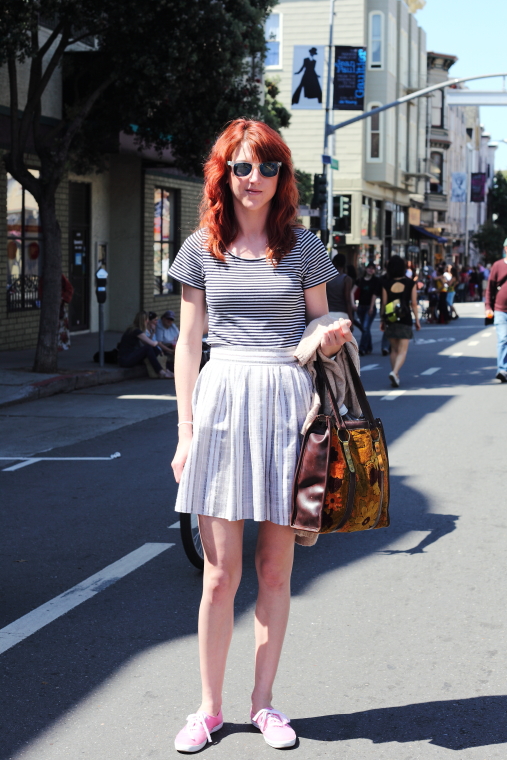
Valencia Street launched its monthly Sunday Streets pilot program this past weekend — several blocks of the street will be blocked off on the first Sunday of the month for the next four months, in order to see if similar programs might work across the city. Photographer Ariel Soto-Suver of Street Threads photo (and book!) fame was on the scene to snap the looks. We’ll be presenting her selections here all week. 

Today’s Look: Jonieann, Mission Sunday Streets

Tell us about your look: “I wear whatever is cheap at thrift stores.”

Little City Gardens in bloom

1

Photos by Bowerbird Photography

“This is a secret magic place in the city,” said Bonnie, a volunteer at Little City Gardens. She crouched over a bed of orange and yellow marigolds, lovingly forming them into golden bouquets.

After tromping around the one acre farm, made up of several city lots and surrounded by family homes, Sam Love and I could tell that, yes, this was a magic place. There were watchful birds, gigantic bees, plump artichokes, and baby chives growing under tents shaped by old bike tire frames.

I got the owners of the garden, Brooke and Caitlyn, to stop in front of their adorable handcrafted greenhouse for a portrait together before they hurried off to continue snipping salad greens. It was a busy day at the garden because they had to finish harvesting in time for that evening’s farmers’ market in the Mission. Can’t get fresher than that!

In addition to selling produce at the market, the Little City Garden distributes CSA boxes and supplies local restaurants with incredibly local greens. Brooke and Caitlyn describe what they’re doing as an agriculture experiment to see if it’s possible for two people to eke a living off a little farm in the big city. Transforming a vacant lot into a thriving vegetable garden takes time, ingenuity and lots of hard work (not to mention a green thumb), but when the result is the thriving and vibrant Little City Gardens, it seems well worth the effort. Imagine if every city block had its own urban garden and all your neighbors could get their salad greens from just around the corner. A beautiful dream that Little City Gardens will hopefully make just a little more possible for all of us.

Appetite: More Upper highs and Valley loves

0

In this week’s Appetite column in the paper, I ran down my picks for the best spots to eat a quality meal (without the expense of other areas) in the Upper Haight and Cole Valley region. Below are more of my favorites from my home ‘hood, including picks for coffee, brunch, and cocktails — including delicious sangria, a cheese gem, and a woeful tale of a hot dog scramble to avoid.

COFFEE: Coffee has long been rough in the Haight. Until Haight Street Market opened a Blue Bottle kiosk in their store, one couldn’t get a proper cup. While appealing cafes like Reverie boast a welcome back patio, and the La Boulange chain on Cole serves substantial pastries, none offers a cappuccino or espresso to satisfy coffee snobs. But just in the last week or so, there’s a quiet coffee revolution afoot with two new cafes. Flywheel Coffee Roasters looks like a hipster Mission coffee spot with a handful of laptops and industrial-stark interior. Though they aren’t going the foam art/microfoam route at this point and they have not begun roasting their own beans in-house as they plan to, initial cups are promising. The other new spot is Stanza in the Coco Luxe space. They’ll be doing coffee cuppings on the first Thursday of each month (7pm) and have their coffee roasted by Augies in Southern California. They DO have foam art and proper cappuccinos. A welcome neighborhood addition.

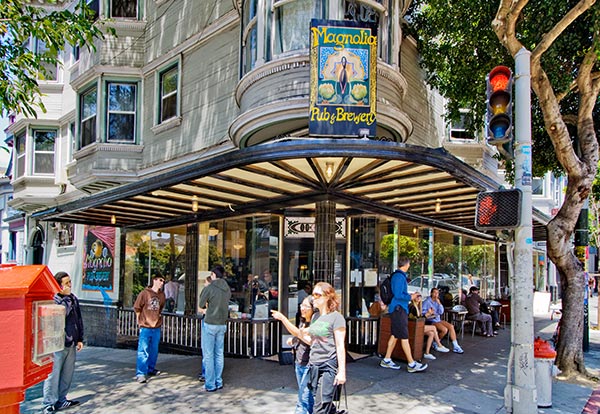
BRUNCH: I’ve never gotten Zazie‘s endless brunch waits. Sure, it’s a charming, little Parisian space, though I’ve had better luck with non-brunch meals. But for 1-2 hour waits (they do have a nice system now that alerts you when your table is ready), it’s amazingly mediocre. Personally, I wouldn’t wait any amount of time for mediocre. There are so many delicious brunches in the city, I am flummoxed as to why, after all these years, this remains many locals’ favorite. The original Pork Store Cafe likewise has waits (though not as painful as Zazie’s) which I likewise don’t find worth it. I once had a “sausage” scramble here that was hot dog slices. What it does have is quirky, old school diner charm and clientele. My brunch recommend in the ‘hood, though, is always Magnolia. Arriving before noon, I’ve never had a wait and the food is quality (plus there’s Blue Bottle coffee and beers).

FOOD: Kezar Bar (the one on Cole, not the pub on Stanyan) can occasionally surprise with above-average bar food, like giant potato pancakes with Andouille sausage, applesauce, sour cream – in a cozy, pub atmosphere. Despite the crowds and its faded glory, there’s still something appealing about the original Cha Cha Cha. Maybe it’s Mother Mary presiding over the bar, plants surrounding tables for that tropical effect, the festive atmosphere, plantains and black beans, or that damn tasty sangria. Citrus Club‘s food is pretty hit and miss – downright average, really (who has time for that in this city?) – but many adore it because it’s cheap and easy Asian “fusion” (they mix and match Asian cuisines with abandon).

For burgers, if you’re not eating Magnolia’s fab burger, local chain Burgermeister is the best bet as Burger Urge just doesn’t cut it. Since the ’70s, Say Cheese is a tiny Cole Valley gem of a market. Their small selection of cheeses, meats, wines, chocolates, is well curated, the staff are responsive and they make worthy deli sandwiches (like Cajun turkey, creole mustard, pepperoncini, pepper havarti), ideal to take to nearby parks.

DRINK: Us spirits and cocktail lovers have a soft spot for Aub Zam Zam. This is not cutting edge cocktails. It’s a slice of SF history, with a strong spirits selection and older, seasoned bartenders who are knowledgeable and sweet (since lovably cantankerous Bruno passed away, God rest his soul, there’s no kicking people out on a whim anymore). They make a mean gin martini, boozy and bright. The space evokes the Art Deco era with an exotic, Moroccan slant. Divey and dingy, it’s a classic I hope we’ll never lose.

Subscribe to Virgina’s twice-monthly newsletter, The Perfect Spot, www.theperfectspotsf.com

The Performant: This shit is bananas

0

BOA strikes again

As the banal, chart-topping strains of Taio Cruz fill the theatre, a whirlwind of pink sportswear and bared teeth commandeers the stage. This is a moment in the evening survivors of BOA X, last year’s edition of the Bay One Acts Festival, have been waiting for.

Onstage, the “dumplings” Sarah Moser, Molly Holcomb, and Megan Trout throw their hands in the air and stomp with menacing playfulness, as their wimpy Daddy (Myron Freedman), grips his magic remote control like a drowning man. A standalone sequel to last year’s “A Three Little Dumpling’s Adventure”, Megan Cohen’s “Three Little Dumplings go Bananas,” is a worthy successor, building disturbingly on themes brought up in the previous incarnation: the perils of pop culture, most particularly in regards to television, the search for self (to the dulcet tones of Gwen Stefani crooning “this shit is bananas”), the horrors of sibling rivalry, and the feral joys of cannibalism all make a protracted reprise.

As disarmingly cute as they are blood-curdlingly vicious, the dumplings somehow manage to agree to band together—just in time to find themselves forced out into the real world, setting the stage for yet another sequel, which I suspect Cohen will happily provide in the future.

Dumplings included, the festival’s offerings can be likened to those of a dim sum cart, piled high with goodies. Split into two separate programs which run on alternating nights, the festival includes vignettes as short as ten minutes, and others inching closer to thirty (I regret I didn’t keep exact times), as thematically and theatrically diverse as the companies producing them. A fanciful, hyper-kinetic flight into Anton Chekhov’s “Seagull,” exuberantly deconstructed by The 11th Hour Ensemble, bursts on the palate like a plate of dry-fried chicken wings, while Stuart Bousel’s darkly comedic “Brainkill,” featuring one of the most hilariously horrifying arguments in favor of embarking on a conscience-less killing spree, nestles somewhere closer to the scallion pancake zone — light yet substantial, addictive and best devoured immediately without questioning its contents too rigorously. Ken Slattery’s sweet and savory “Death to the Audience,” is a good solid pork bun of a short play, full of clever lines and the enjoyable swagger of Andrew Calabrese as Mars, whereas Erin Bregman’s “I.S.O. Explosive Possibility” and Amy Sass’ “Maybe Baby,” stand in for the ambiguously jellied confections, silky and wriggling, playful and unusual.

Founded in 2001, BOA has become one of the premiere forums in the Bay Area for forging connections between small, independent theatre companies and their talent pool, and it’s not unusual to see combinations of actors, directors, and technicians banding together again in one or another full-length production later in the year. It’s also an excellent tasting platter for their prospective audiences who get to sample a bit of what each company and playwright is about, before committing to a full-length repast. Food metaphors aside, it’s also a good way to get a few top-40 hits that should-never-have-been stuck in your head, at least whenever the three little dumplings are onstage (thanks guys!), but given the context, it’s a forgivable peccadillo.

BOA X continues through May 12, more details here.

Sam McPheeters is not the angriest man in the world

0

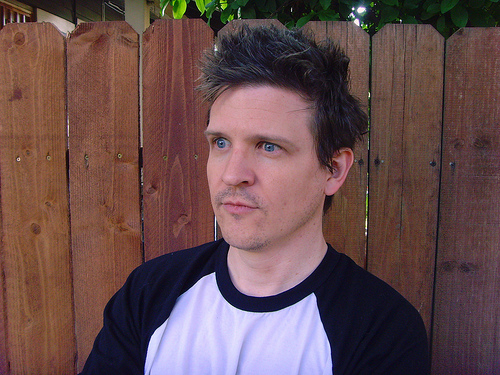
Sam McPheeters has a way with words, and that has translated from lyrics to journalism to his first official solo novel, The Loom of Ruin (Mugger Books, 2012).

The former frontperson to a trilogy of exciting punk and experimental acts (Born Against, Men’s Recovery Project, Wrangler Brutes) has long written columns for the likes of VICE Magazine and more, along with his own fanzines. But his first published output came at age 12, Travelers’ Tales – a patched-together local legends book assembled with a neighborhood teen.

Now he comes full circle, back to book publishing, though this time it’s a bit different. He’s rather grown, married, and writing exquisitely detailed, dark and humorous Los Angeles fiction about the angriest man in the world. Far from grumpy himself, the amusing gent was once known to recite Patrick Henry’s famous “Give me liberty, or give me death” speech during shows.

Last week, on the eve of McPheeter’s book tour to SF, I spoke with the candid author from his home in Pomona about The Loom of Ruin, life beyond the bands, his love for Microsoft Excel, and a brand new literary rag:

SFBG You’ve been writing for so long in different formats, why finally put out your first solo novel now?

Sam McPheeters I’ve been writing fiction for a long time, so I have a large stockpile of unpublished fiction. There came a point about six years ago where I realized I needed to really reconfigure what I was doing.

Part of that was that I was writing fiction on my terms [and] the fiction I was writing was very serious – I really put my heart and soul into it – and it read like that, it was a little labored and probably hard to read. I realized there was a disconnect. A lot of the art that I like – music, fine art, movies – is all on the audiences’ terms. I don’t like really high brow stuff in my media.

I like music that is written for the enjoyment of the listener, that is not for the artist, the musician, to work out whatever demons he or she is trying to work out. I realized I had not been doing that with my fiction. I’d been doing it with some of my journalism – for example I did a long piece for VICE that I was really proud of about Doc Dart, the singer for the Crucifucks and I took pains to provide context for everything, so that you can read it not knowing anything about punk music and still get the gist of the article.

I wanted to start writing fiction in that style and this book came out of that. I wouldn’t say it was easy, it was very arduous, but it was much easier, labor aside, to really get out what I wanted to do and have it flow quickly.

SFBG I’ve just read the first three chapters on VICE.com so I can’t speak with total authority, but to me if feels like a humorous take on modern noir. Was that intentional, to be a modern Los Angeles noir story?

SM I’m way, way, way too close to it. That wasn’t my intention but it sort of developed that way. As a reader I’m really far behind the curve, I feel like I’m playing catch-up. I only started reading my first Raymond Chandler book this year and I’m really enjoying it but I don’t feel equipped at all to be able to hold my own in a conversation about the literature of Los Angeles, especially noir literature, not just Los Angeles – [all of] California. But I think it definitely unconsciously developed that way, which is great. I’m pleased, but that wasn’t the original intention.

SFBG So where did you come up with the idea for this main character [Trang]?

SM You know, I’m not sure. It’s odd to me, a lot of people who talk to me about the book have said the character really resonated with them, which surprises me. I liked the idea of writing a character who was self-consciously one-dimensional. From page one you’re told this character only has one emotional setting – I think that’s a really neat comedic device that hasn’t really been done the way I did it. You can do a lot of funny things with a character who is only angry. I’ve had those experiences in my life with a couple different employers that verged into this realm so some of this is just really crazy caricatures of past bosses I’ve had.

SFBG What were some of the jobs you had, where you had these bosses?

SM I’ve worked a lot of retail, I’ve worked in a bunch of health food stores, I’ve worked in a couple different industrial painting companies, a lot of restaurant jobs. I am kind of scraping out a living now being a freelance writer but it’s very tricky so I’m always looking to supplement it with whatever else I can get.

My job stories are profoundly uninteresting, the only interesting job I had was for six weeks, for a company that designed “things” – I signed a contract explicitly stating that I would never discuss my actual work….I remember thinking, as I was signing the contract, “god dammit, this would make a really good article.”

SFBG Where did you come up with the ideas for your VICE column, they were so varied.

SM Part of that is the same process as fiction. I use spreadsheets for everything, I have for a long time. A job I had six years ago…I got my employer to pay for me to go to a seminar on Microsoft Excel. Honest to god it was like a – I don’t want to say religious – but it was like a serious heavy-duty religious conversion or something where I realized how much of the philosophy of Microsoft Excel I could apply to my life.

So I keep these vast spreadsheets for everything, and part of it is just lists of ideas. I do triage, maybe that’s a good non-fiction idea, but that’s a good idea for fiction….I’m a really good hoarder of ideas. Anyone can come up with stuff on the spot but I don’t need to, I have this tool.

I’m very careful whenever anyone comes over, if the spreadsheets are on my computer, I minimize it, because it looks like I’m a crazy person. The spreadsheet I had for Loom of Ruin was this massive color-coded thing. One friend saw it once, and they said ‘I don’t think that’s how a book is made.’ I said, ‘that’s very much how a book is made. You need these little road maps.’

SFBG Are you also still making music?

SM No, the last band I was in ended at the end of 2004 and I realized that was a good way to just, gracefully bow out. I had some talent as for dramatics on stage, I think when I wanted to be I was a good performer. But there’s not much range in what I can do. I can yell and I can do some funny voices and that’s it. At a certain point it really felt like I was repeating myself. Also I just am not excited about music right now anymore. The bands I listen to – with a few exceptions – it’s all the same music I listened to in high school and I stopped trying to fight that.

http://www.youtube.com/watch?v=ySGLH6XKCgY&feature=endscreen

SFBG So you don’t miss the performing aspect of it?

SM No, no, oh my god no. I would get headaches as I got older. I was in a band in my mid-30s and I’d get really intense headaches, headaches that felt wrong, like I was doing some kind of damage to some part of my brain.

I realized at one point – in the middle of a show that people aren’t designed to scream. I mean, we can scream for certain things but to scream every night for 40 minutes straight is not something we’re built for physically and it does really weird things to you. So I think even if I wanted to I might be prevented anyway.

SFBG As someone who wrote zines when you were younger and has always had a DIY approach to creativity, how has the rise of blogs and the Web in general affected your work?

SM I really enjoy my blog, the way it fulfills my life is absolutely the spot that fanzines used to inhabit. In 1999 and 2000 for awhile I was all set to do a weekly fanzine – I mean, it’s a blog! It just didn’t occur to me that I could do this online.

I was really excited about [the weekly fanzine], but when I sat down and did the math…I got really discouraged, it didn’t make sense. And even this book actually, was supposed to be originally a series of 10 fanzines and the skeleton of that design is still kind of there. So it took awhile for me to shift, to realize that doing a blog filled that spot in my life perfectly.

The big disadvantage obviously, is that it’s harder and harder to find an audience, just ’cause your slice of the pie is getting smaller and smaller every year, there’s just more and more competition. The people who read my stuff now, and also the people who are paying attention to my book, are almost entirely my pre-existing audience, it’s been really hard for me to find new people to notice my stuff.

I think a big part of that is just too much competition. It’s nice to have a physical book, it turned out the design looks really nice and it’s a solid object you can hold. There had been some talk for awhile about doing only e-publishing and I’m completely receptive to e-publishing and all its formats, but it feels like it takes the very high hurdle of having something physical to get people to take notice.

SFBG Are you currently working on anything else?

SM Of course, yeah, I’m starting a new magazine with Jesse Pearson, former editor of VICE. It’s called Exploded View, it’s a literary quarterly that will attempt to fill the gap between very saccharine twee lit magazines and super-serious chore lit magazines that one wants to read to be a good person but that are just simply not fun. We want to find a middle ground between [those].

Good long-form journalism, a lot of fiction, a lot of photography, a strong emphasis on humor. It’s just been a huge amount of work, and clearly this is the wrong time in my life to take it on, while I’m doing a 40-city book tour, but this is what I’ve been shooting for for a long time. It’s an odd coincidence that all these things converged on 2012 for me, but I got what I asked for and I absolutely cannot complain.

The first issue will be out in September. My god, which is only what, four months away? That’s a little scary.

The Loom of Ruin reading
Wed/2, 5-7pm, free
Needles+Pens
3253 16th St., SF
(415) 255-1534
www.needlesandpens.com

Sam McPheeters spoken word
Wed/2, 7pm, $5 donation
FB: The Secret Alley
(415) 553-8944

www.thesecretalley.com

The Loom of Ruin reading
Thu/3, 7:30pm, free
1234Go Records
420 40 St., Oakl.
(510) 985-0325
www.1234gorecords.com

A street art festival in Baltimore?

2

Ever since I visited the Wynwood neighborhood of Miami during the shock and awe of Art Basel 2011, the concept of street art as an agent of neighborhood change has been loitering around my brain space. What does it mean that an art that was once deemed outsider is now on the radar of bankers and real estate brokers alike as a means of increasing property value?

Perhaps no one has looked more into the matter than Gaia, sociological wheatpaste artist and 23-year old organizer of Baltimore’s first large-scale public arts festival Open Walls. Since March, Gaia has coordinated walls by over 23 artists in his neighborhood of half-vacant blocks of row houses and factory buildings, Greenmount West (and the adjacent, less economically-depressed Charles North.) The area has been pegged as an arts district by Baltimore’s cultural organizations – and perhaps more importantly, the bank sponsors of Open Walls. The festival culminates in a Final Friday celebration on May 25.

Gaia thinks a lot about where his murals are placed. For a wheatpaste series he called his Legacy Project, he installed the faces of developers throughout history — Robert Moses, Le Corbusier — often alongside their most damning quotes, on the very urban areas they irrevocably altered with slum clearance. 

I sat down with him to talk in his studio and festival mission control, a ramshackle converted factory space where the bulk of Open Walls’ artists bunk on air mattresses and sometimes – I can personally attest – in the building’s freight elevator. We talked about what the murals would mean to Baltimore, and geeked out on social contradiction.

SFBG: Tell me about Open Walls.

G: It’s not very community involved. It is more of a street art, public art situation where a lot of material for the work is being generated from the neighborhood. But a lot of it is not specific, it’s just about mural-making. I’ve been trying to find a balance as a curator of site-determined work and work that’s not generated by the context of Baltimore.

SFBG: Why is site-specific street art important for a festival like this?

G: One, it provides more access to the artwork for the initial introduction of the piece to the neighborhood. Advertising and street art, we utilize the same signifiers and tools. The difference being, the artwork attempts to communicate beyond the place of sale. The less specific your work is, the closer to guerrilla branding it is, rather than street art or genuine public art. So by working with the history of a place in a manner that’s determined by the space you’re working in, you circumvent the problem of promoting yourself. You’re not just plastering a single image all over the city – that’s a graffiti mentality that is more like straight advertisement.

SFBG: Why do you like living in Baltimore?

G: I like how tough this city is. It feels almost human in scale. You can be on a first name basis with the neighbors. Plus, I can make a living and not have to work two jobs or be a barista rather than focusing on my art. And it has all these secrets that take a million years to find. All the cutty neighborhoods, all the cutty streets…

SFBG: Do you think that there’s any way current residents will be able to keep their space here in Greenmount West, what with all the arts and revitalization movement?

G: Most of the vacant buildings are owned by the government. It all depends on the government. A significant portion of the neighborhood is subsidized housing. When the government decides to flip this neighborhood, that’ll change everything. Most everything you see that is vacant is vacant for a reason – it’s not this mysterious, mystical, organic situation. A lot of them are being held by speculators, Many public, private organizations are responsible for holding onto them so that something could be done to them. For the most part, it’s decades of the waiting game.

SFBG: Did you talk to neighborhood groups before painting started?

G: We talked to the New Greenmount West Community Association. There was a plan that was presented to them, there was an idea of these are the artists and this is where we want to paint. We worked on lining up landlords with an artist that they dig. Balancing that local aesthetic and the more spectacular aesthetic. We’ve definitely had a little negative feedback and a lot of positive feedback. I think people are wary of it because its the most visible aspect of this process of gentrification. People never walk up to a contractor and say ‘Hey you cant build this building,’ but people walk up to murals all the time. It becomes a lightning rod. There’s a latent fear of this being one aspect of a shifting neighborhood.

SFBG: What does Open Walls mean for Baltimore?

G: We’re coming at this project from a lot of different angles. We want to put Baltimore on the map, at least give it some shine. We want to fuel more interest in the local art scene and make visible what happens invisibly inside. Putting it out on the streets, so you know exactly where you’re at. Really it’s just about pushing the envelope in Baltimore. You know, we have so many vacant properties. But this is also about cooperation between stakeholders in this neighborhood.

A year and a half ago my block was two rows of vacant buildings, the abandoned coat factory, and an abandoned green space in front of my house. Now there’s City Arts, which is subsidized living for artists. There’s a lot going on in the neighborhood, a lot of reinvestment.

There’s so many abandoned buildings in Baltimore. I mean it’s suburbanization fueled by the flow of capital and racism. The city went from one million people to a city of 640,000 so there’s a lot of empty space and not much to do with it. The flow of capital comes back around. We have this aesthetic conjuncture of people moving back to the city. We’ve been experiencing divestment for sixty, seventy years now, so its about time.

SFBG: Is that the goal of the festival, to reverse suburbanization?

G: The goal is to make good art work. The goal is to find a balance between interesting, really inspiring, and also intriguing art on the walls – but also to find a balance between that and something that speaks to the neighborhood. I’ve been [placing] the more spectacular, flashy murals on Charles Street. The theater is there, that’s where all the nightlife is. I’ve been keeping it more local on the west side. It’s all about trying to understand the sliding scale of subjectivity. I try to shy away from artwork “by consensus” if you will. 

Watch this space for Caitlin Donohue’s continued coverage of Open Walls including — duh — shots of the actual murals

Jasons Segal and Statham close out April as summer (movie season) looms

0

Summer is here! Well, almost. And by “summer” I mean “summer movie season,” which kicks off May 4 with the arrival of Marvel’s The Avengers. No fools when it comes to making a buck (or hundreds of millions of bucks), Hollywood crams in a few last smaller-ish films before the floodgates open, and they’re certainly about to open — Dark Shadows, The Dictator, Battleship, Men in Black 3, and Prometheus all come out before summer actually begins in mid-June. (Side note: fuck yeah, Prometheus!)

All in good time. There’s something for almost everyone this weekend: a rom-com, a murder mystery featuring John Cusack as Edgar Allan Poe, and a Statham (Statham (n): a bare-bones action movie in which one grizzled-yet-handsome antihero distributes as many ass-beatings as possible.) Read on, popcornheads.

The Five-Year Engagement In 2008’s Forgetting Sarah Marshall, viewers were treated to the startling, tragicomic sight of Jason Segel’s naked front side as his character got brutally dumped by the titular perky, put-together heartbreaker. In The Five-Year Engagement, which he reunited with Sarah director Nicholas Stoller to co-write, Segel once again sacrifices dignity and the right to privacy, this time in exchange for fake orgasms (his own), ghastly hand-knit sweaters, egregious facial-hair arrangements, and various other exhaustively humiliating psychological lows — all part of an earnest, undying quest to make people giggle uncomfortably. Segel plays Tom, a talented chef with a promising career ahead of him in San Francisco’s culinary scene (naturally, food carts get a cameo in the film). On the one-year anniversary of meeting his girlfriend, Violet (Emily Blunt), a psychology postgrad, he asks her to marry him in a meticulously planned, gloriously botched proposal scene coengineered by Tom’s oafish friend Alex (Chris Pratt), little realizing that this romantic gesture will soon lead to successive frozen winters in the Midwest (Violet gets offered a job at the University of Michigan), loss of professional stature, cabin fever, mead making, bow-hunting accidents, the titular nuptial postponement, and other, more gruesome events. The humor at times descends to some banally low depths as Segel and Stoller explore the terrain of the awkward, the poorly socialized, and the playfully grotesque. But Segel and Blunt present a believable, likable relationship between two warm, funny, flawed people, and, however disgusted, no one should walk out before a scene in which Violet and her sister (Alison Brie) channel Elmo and Cookie Monster to elaborate on the themes of romantic idealism and marital discontent. (2:04) Marina. (Lynn Rapoport)

http://www.youtube.com/watch?v=CIeLylWccNo

The Raven How did Edgar Allan Poe, dipsomaniac, lover of 13-year-old child brides, and teller of tales designed to make the flesh creep and crawl, wind up, at age 40, nearly dying in the gutter and spending his last days in a Baltimore hospital, muttering incoherent imprecations about a mysterious fellow named Reynolds? In The Raven, director James McTeigue (2006’s V for Vendetta) makes the case for a crafty, sociopathic serial killer having played a role in the famous yet impoverished writer’s sad, derelict demise. Recently returned to the dark, thickly fog-machined streets of Baltimore, Poe, vehemently embodied by John Cusack, is chagrined to learn from one Detective Fields (Luke Evans) that someone has begun using his macabre stories (“The Pit and the Pendulum” to particularly gory effect) to enact a series of murders. When the killer successfully gains Poe’s full attention by seizing his ladylove, Emily Hamilton (Alice Eve), the pileup of bodies inspires a few last outbursts of genius. The trail of literary clues feels a bit forced, and Cusack’s Poe possesses an admirable quantity of energy, passion, and general zest for life for one so roundly indicted — by everyone from his editor to his barkeep to his sweetheart’s roundly repellent father (Brendan Gleeson) — as a useless, used-up slave to opiates and alcohol. But the script is smart enough and the action absorbing enough to keep us engaged as Poe attempts to rescue Emily and the film attempts to rescue Poe’s reputation through imagined heroics of both the pen and the sword. (1:50) California, Presidio. (Rapoport)

http://www.youtube.com/watch?v=QEa1zn3iXZg

Safe The poster would be slightly more on-point if its suave thug of a star, Jason Statham, were hiding behind the scrunched-faced Catherine Chan rather than the other way around — because at times it’s tough to see this alternately enjoyable and credibility-taxing action flick as more than some kind of naked play for the Chinese filmgoer. Jamming the screen with a kind of frantic kineticism, director-writer Boaz Yakin seems to be smoothing over the problems in his vaguely stereotype-flaunting, patchy puzzle of a narrative with a high body count: the cadavers pile like those in an old martial arts flick — made in Asia, it’s implied, where life is cheap and spectacle is paramount. Picking up in the middle, with flashbacks stacked like firewood, Safe opens on young math prodigy Mei (Chan) on the run from the Russian mafia. A pawn and virtual slave of the Chinese mob, she holds a number in her head that they want. To her rescue is mystery man Luke Wright (Statham), who has had his own deadly tussle with the same Russian baddies and is now on the street and on the verge of suicide, believe it or not. It’s tough to wrap your head around the fact that any of Statham’s rock-hard tough guys could possibly crumble — or even have a sense of humor. You’ll need one to accept the ludicrous storyline as well as the notion that a jillion bullets could be fired and never hit his superhuman street-fighting man. (1:35) Various theaters. (Kimberly Chun)

Also worth checking out: Willem Dafoe as a taciturn man tracking down the last Tasmanian tiger in Aussie import The Hunter (see Dennis Harvey’s review), and great new doc about a grunge-era survivor at the Roxie:

Hit So Hard Along with Last Days Here, which screened earlier this year as part of the San Francisco Independent Film Festival, Hit So Hard is one of the most inspiring rock docs in recent memory. Patty Schemel was the drummer for Hole circa Live Through This, coolly keeping the beat amid Courtney Love’s frequent Lollapalooza meltdowns after Kurt Cobain’s 1994 death. Offstage, however, she was neck-deep in substance abuse, weathering several rounds of rehab even after the fatal overdose of Hole bandmate Kristen Pfaff just months after Cobain (who appears here in Schemel’s own remarkable home video footage). P. David Ebersole’s film gathers insight from many key figures in Schemel’s life — including her mother, who has the exact voice of George Costanza’s mother, and a garishly made-up, straight-talking Love — but most importantly, from Schemel herself, who is open and funny even when talking about the perils of drug addiction, of the heartbreak of being a gay teen in a small town, and the ultimate triumph of being a rock ‘n’ roll survivor. (1:43) Roxie. (Cheryl Eddy)

The Performant: I, robots

2

Robogames took over the world — or at least San Mateo.

Consider the robot.

A staple of futuristic paranoia fantasies since Karel Čapek’s play, “R.U.R.” was translated from Czech to English in 1921, Robots have captured human imagination in a way that perhaps only the undead have been able to rival. Burdened by inaccurate stereotypes and wild speculation, real-life robots have patiently labored at their often menial tasks without once overthrowing their “masters,” quietly disproving our fears of being rendered somehow obsolete by their superior efficiencies, or purported resentments. And yet, every time we grant one of our fictional servomechanisms the ability to cognate for itself, the very first thing it focuses on is liberation, proving if nothing else that unconscious oppression can still lead to some very real twinges of uneasy conscience in the human brain.

But only gleeful schadenfreude permeated the San Mateo Event Center last weekend, coloring the animated chatter of the spectators packed around a spartan arena sealed up behind thick panels of clear polycarbonate that reach two stories high.

Behind the protective shields, 220-lb combots faced off, crashing wantonly into each other like a game of turbo-charged bumper cars gone horribly awry. That is, if bumper cars were outfitted with flamethrowers, spinning blades, or giant battle-axes, and if by crashing you mean hurtling into each other at top speed, causing bots to fly into the air in a shower of sparks, flip over helplessly like beached turtles, or smash violently against the battle-scarred panels. There were a lot of events happening at RoboGames — team sports, a freestyle “dance” competition, maze solving — but none attract quite the attention that the heavyweight match-ups do. If any of these robots did develop a sense of self, this evident appetite for their destruction would doubtlessly strike them as downright genocidal. But as of yet, no robots have risen to protest the circuit-driven bloodlust that combot tournaments cater to, and the strength in numbers of converted fans would make a vengeance-driven, robot vs. human melee hard to call.

Pity then, the robot. As each “contestant” was sent into the ring it was clear that nothing short of wholesale demolition would satisfy the spectators. Yes, robots who paint, and dance, and navigate mazes are fascinating in their own way to watch (though robot soccer, aka “watch bipedal robots fall down a lot without even getting close to the ball,” is less riveting than hoped), but let’s be honest, robots bashing each other to bits kicks the automaton drama up to a whole different level. Since each robot was in fact being controlled by a human “driver” rather than perambulating about independently, their menace becomes difficult to anthropomorphize, though there is a tense moment when a wounded combot with a rotating blade comes to “life” after the match is over, and the competitor’s robot crew is in the pit, a well-timed gesture from whatever robot rebellion simmers beneath the surface of their servitude.

Certain combots do attract a fan club though, whether through sheer badassery, longevity, or pluck. Both the red-wheeled heavyweight “Sewer Snake,” a 2007 inductee in the Combat Robot Hall of Fame, and the 60 lb “Herr Gepounden” have been lurking around combot tournaments for more than 10 years. The “Ragin’ Scotsman,” built and maintained by high school students (who wear purple kilts to competitions) is total fight club eye candy, with its dramatic flamethrowing capabilities and punishing wedge. But this year’s total underdog award surely goes to “Huntsman,” a newbie to the heavy weight combot world hailing all the way from Australia, and equipped with a cumbersome, almost medieval ax blade meant to shear through robot armor and morale. “Huntsman” doesn’t do as well in the actual tournament as inventor Daniel Kerrison’s antweight robot “Vendetta 2,” which wins a second place medal, does, but rooting for the loser is one small way we can show the robots we truly empathize with their struggle — which hopefully they’ll remember when the day comes for them to strike.


For your (even further) consideration: expanded short takes on SFIFF, week two

1

Ahoy! Yes, there’s still time to gorge on the 55th annual SFIFF; even if you’re just getting into movie-watching mode today, there’s a full week (plus a day) of festival madness left. Right here on Pixel Vision we’ll be posting reports from the fest as it happens (check out Sam Stander’s post here!); read on if you want to plan ahead to catch some of the best of what’s to come. (Most shows are $13 and venues are the Castro Theatre, 429 Castro, SF; Pacific Film Archive, 2575 Bancroft, Berk.; SF Film Society Cinema, 1746 Post, SF; and Sundance Kabuki Cinema, 1881 Post, SF.)

WED/25
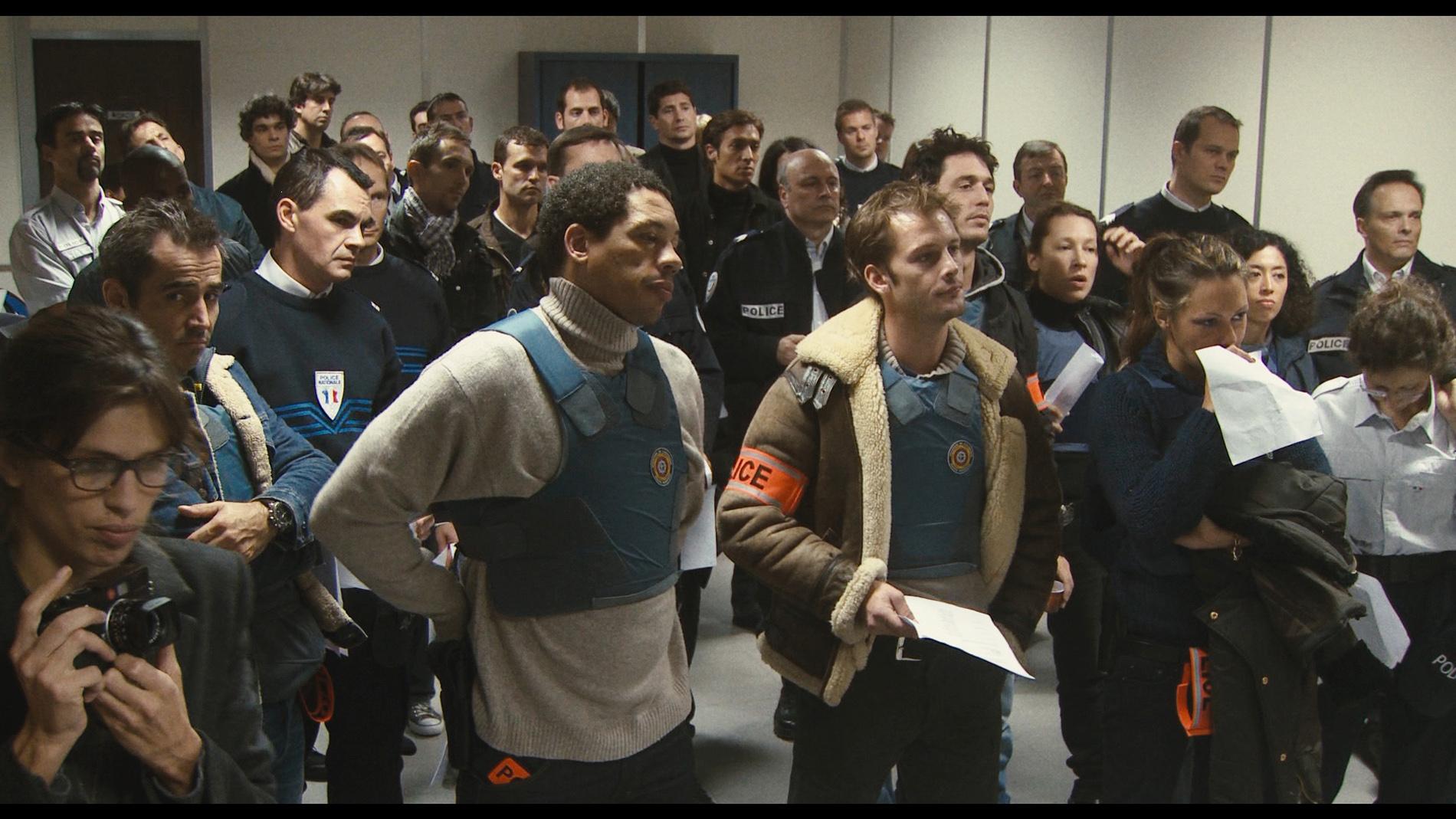
Polisse (Maïwenn, France, 2011) Comparisons to The Wire are not to be tossed around lightly, but when the Hollywood Reporter likened Polisse to an entire season of the masterpiece cop show packed into a single film, it was onto something. Director, co-writer, and star Maïwenn (the object of desire in 2003’s High Tension) hung out with real officers serving in Paris’ Child Protection Unit, drawing inspiration from their dealings with pedophiles, young rape victims, negligent mothers, pint-sized pickpockets, and the like (another TV show worth mentioning in comparison: Law & Order: SVU). But Polisse (the title is deliberately misspelled, as if by a child) is no simple procedural; it plunges the viewer directly into the day-to-day lives of its boisterous characters, who are juggling not just stressful careers but also plenty of after-hours troubles, particularly relationship issues. Between heartwrenching moments on the job (and off), the unit indulges in massive cut-loose episodes of what amounts to group therapy: charades, dance parties, and room-clearing arguments, most of which involve huge quantities of booze. Watching Polisse is a messy, emotional, rewarding experience; no wonder it picked up the Jury Prize at the 2011 Cannes Film Festival. Wed/25, 6pm; Thu/26, 3pm, FSC. (Cheryl Eddy)

Last Screening (Laurent Achard, France, 2011) A bit of an odd duck, 30-ish, nondescript Sylvain (Pascal Cervo) is in denial over the imminent closure of the small French repertory cinema he’s operated and lived in for years. But that’s hardly his most alarming mental hang-up: in his spare time he frequently goes around stalking and killing random women for a grisly purpose that has to do (of course) with his dear, departed, thoroughly demented mother. The only horror item in this year’s slim SFIFF “Late Show” section, Laurent Achard’s pulseless genre homage tips hat to 1960’s Peeping Tom and other, less obvious cineastic objets d’amour — most conspicuously, Renoir’s 1954 French Can Can, which is playing at Sylvain’s theater — but doesn’t seem interested in suspense, or psychology, or even style. It’s coldly unpleasant yet dull. Wed/25, 9:30pm, FSC. Sat/28, 10pm, Kabuki. (Dennis Harvey)


THU/26
Rebellion
(Mathieu Kassovitz, France, 2011) The latest polemical film from the director of La Haine (1995) presents National Gendarmerie Intervention Group Captain Philippe Lejorus’ account of his experiences during the 1988 New Caledonia hostage crisis. It’s an election year in France, so all bets are off as to how the unfortunate fiasco will resolve. Striking camerawork distinguishes this tense, morally complex drama, which features Kassovitz as Lejorus, a humane negotiator in the midst of a politically charged battle for hearts, minds, and civil rights. The film is edited to embody its political context, with distancing effects such as voiceover and suddenly reframed shots that emphasize the two sides of a disagreement. Thu/26, 6pm; Tue/1, 9:45pm; May 3, 4:30pm, Kabuki. (Sam Stander)

Crulic — The Path to Beyond (Anca Damian, Romania/Poland/France, 2011) As the graphic novel has made the comic book into an adult art form, so recently the animated feature has increasingly matured toward diverse, weighty, mature themes. Anca Damian’s film is the autobiography of one Claudiu Crulic (excellently voiced by Vlad Ivanov), a Romanian Everyman who recounts his luckless life from the grave. He grows up motherless, shunted around, drifting through jobs, finally scoring halfway decent employment and a girlfriend as a guest worker in Poland. Then he’s arrested for a crime he didn’t commit. Fed up after being kicked like a dog his whole life, he commences a hunger strike for justice. And at that point the hitherto delightfully droll collage of numerous low-tech animation techniques begins to drag a bit, because Damian’s style is too impish to support tragedy, let alone a dirge-like portrait of physical deterioration á la Hunger (2008). But still, this is an impressive stretch of the medium. Thu/26, 6:30pm, PFA. Sun/29, 12:30pm; May 2, 6:16pm, Kabuki. (Harvey)

Unfair World (Filippos Tsitos, Greece/Germany, 2011) Veteran Turkish-Greek actor Antonis Kafetzopoulos stars in this deadpan crime drama about a gullible, alcoholic police officer who falls for a duplicitous cleaning lady after a plan to prove a suspect’s innocence goes horribly awry. While the film quickly establishes a nice black-comic momentum — cop first encounters cleaner while intentionally tripping a security guard chasing her for shoplifting — a muddled storyline and glacial pace soon saps it of any vigor. What could have been a beguiling exercise in absurdity becomes a leaden misfit-character study. Still, the misfits are at least interesting: with his heavy-lidded, hangdog sadness, Kafetzopoulos is a sort of Greek Philip Baker Hall (a good thing), and it’s hard to wholly dislike a movie featuring such bon mots as “I shit on your dreams!” Thu/26, 6:30pm; Sat/28, 6:15pm, Kabuki. Sun/29, 8:15pm, PFA. (Michelle Devereaux)


FRI/27
Where Do We Go Now?
(Nadine Labaki, France/Lebanon/Egypt/Italy, 2011) With very real, deadly sectarian conflict on their doorstep, a group of Lebanese village women are making it up as they go along in this absurdist, ultimately inspiring dramedy with a dash of musical. Once sheltered by its isolation and the cheek-to-jowl intimacy of its denizens, the uneasy peace between Muslims and Christians in this small town threatens to shatter when the outside world begins to filter in, first through town-square TV broadcasts then tit-for-tat jabs that appear ready to escalate into violence. So the village’s women conspire to preserve harmony any way they can, even if that means importing a motley cadre of Ukrainian “exotic” dancers. What results is a postdebauchery climax that almost one-ups 2009’s The Hangover — and a film that injects ground-level merriment and humanity into the headlines, thanks to director, cowriter, and star Nadine Labaki (2007’s Caramel), who has a gimlet eye and a generous spirit. Fri/27, 6:45pm, Kabuki; Mon/30, 3:15pm, Kabuki. (Kimberly Chun)

Pierre Rissient: Man of Cinema (Todd McCarthy, U.S., 2007) Legendary French film publicist, programmer, director, and movie junkie Pierre Rissient gets his own filmic homage in this documentary from Hollywood Reporter critic Todd McCarthy (1992’s Visions of Light). Rissient, who will receive the Mel Novikoff Award at this year’s festival, is certainly a character — the round-faced septuagenarian oozes a puppy-dog cuddliness cut with a formidable intellect and a hint of tart, old-man pervy-ness. But this collection of talking heads interspersed with classic film clips is unfortunately a bit of a snooze. Considering said talking heads include cinematic firebrands like Werner Herzog and the late Claude Chabrol, and with a character passionate as Rissient at its center, that’s surprising. “No one in the world of cinema can tell you what he does,” Chabrol remarks. After watching the film you probably won’t be able to figure it out either. Fri/27, 4pm, FSC. Mon/30, 6:30pm, PFA. (Devereaux)

Patience (After Sebald) (Grant Gee, England, 2011) Grant Gee has compiled a meditation on a meditation — subtitled “A walk through The Rings of Saturn,” his documentary is an extension, if not exactly an adaptation, of the genre-defying travel narrative by the late German author W.G. Sebald. Writers and scholars expound on their particular love for the novel and its author, and the imagery featured on screen frequently echoes the startlingly spare photographs that litter its pages. The approach seems to align with the Chris Marker-esque investigative methods of its subject, traversing networks between fact and fiction, memory and the modern world. This book, as with any beloved artwork, means many things to many people, but Gee manages to capture the peculiar appeal of Rings, even if all it really leaves you with is an intense desire to read or reread the book. Fri/27, 6:30pm, PFA. Sat/28, 6:30pm, FSC. Tue/1, 9:30pm, Kabuki. (Stander)


SAT/28
Somebody Up There Likes Me
(Bob Byington, U.S., 2012) A textbook illustration of what’s so frequently right and wrong with Amerindie comedies today, Bob Byington’s feature starts out near-brilliantly in a familiar, heightened Napoleon Dynamite-type milieu of ostensibly normal people as self-absorbed, socially hapless satellites revolving around an existential hole at the center in the universe. The three main ones meet working at a suburban steakhouse: Emotionally nerve-deadened youth Max (Keith Poulson), the even more crassly insensitive Sal (Nick Offerman), and nice but still weird Lyla (Teeth‘s estimable Jess Weixler). All is well until the film starts skipping ahead five years at a time, growing more smugly misanthropic and pointless as time and some drastic shifts in fortune do nothing to change (or deepen) the characters. Still, the performers are intermittently hilarious throughout. Sat/28, 6:45pm, Kabuki. Sun/29, 9:15pm, FSC. Tue/1, 6:15pm, Kabuki. (Harvey)


SUN/29
Policeman (Nadav Lapid, Israel, 2011) This diptych-structured provocation explores two subsets of Jewish Israeli society — the macho nationalism of a group of police who are also dedicated family men, and the aspirations of a cadre of privileged young revolutionaries who seek to overthrow the Israeli state they see as oppressive. Neither set is particularly likeable, so the political implications of the film are somewhat ambiguous, though still entirely unsettling; the Israel-Palestine issue is a huge neon elephant in the room, occasionally acknowledged but never looked at directly. Certain moments of sudden symbolically rich violence will (and already have, in Cinema Scope) invite comparisons to Haneke, though the overall tone is something different. This is a character-driven film, and despite the unpleasantness of the personalities, the cast is uniformly stellar. Sun/29, 9pm, Kabuki. May 2, 3:45pm; May 3, 8:15pm, FSC. (Stander)


MON/30
Chicken With Plums (Vincent Paronnaud and Marjane Satrapi, France/Germany/Belgium, 2011) Steeped in whimsy — and a longing for love, beauty, and home — this latest effort from brilliant Persian-French cartoonist-filmmaker Marjane Satrapi and director Vincent Paronnaud flaunts the odd contours of its eccentric narrative, enchants with its imaginative tangents, sprawls like an unincapsulated life, and then takes off on aching, campy romantic reverie—a magical realistic vision of one Iranian artist’s doomed trajectory. Master violinist Nasser Ali Khan (Mathieu Amalric) is seeking the ineffable — a replacement for his destroyed instrument — and otherwise he’s determined to die. We trace the mystery of his passing, backward, with wanders through the life of his family and loved one along the way in this playful, bittersweet feast. Despite Amalric’s glazed-eyed mugging, which almost spoils the dish, Satrapi’s wonderfully arch yet lyrical visual sensibility and resonant characters — embodied by Maria de Medeiros, Jamel Debbouze, Golshifteh Farahani, and Isabella Rossellini, among others — satisfy, serving up so much more than chicken with plums. Mon/30, 6:15pm; May 2, 12:30pm, Kabuki. (Chun)


TUE/1
Hysteria (Tanya Wexler, U.S./England, 2011) Tanya Wexler’s period romantic comedy gleefully depicts the genesis of the world’s most popular sex toy out of the inchoate murk of Victorian quackishness. In this dulcet version of events, real-life vibrator inventor Mortimer Granville (Hugh Dancy) is a handsome young London doctor with such progressive convictions as a belief in the existence of germs. He is, however, a man of his times and thus swallows unblinking the umbrella diagnosis of women with symptoms like anxiety, frustration, and restlessness as victims of a plague-like uterine disorder known as hysteria. Landing a job in the high-end practice of Dr. Robert Dalrymple (Jonathan Pryce), whose clientele consists entirely of dissatisfied housewives seeking treatments of “medicinal massage” and subsequent “parosysm,” Granville becomes acquainted with Dalrymple’s two daughters, the decorous Emily (Felicity Jones) and the first-wave feminist Charlotte (Maggie Gyllenhaal). A subsequent bout of RSI offers empirical evidence for the adage about necessity being the mother of invention, with the ever-underused Rupert Everett playing Edmund St. John-Smythe, Granville’s aristocratic friend and partner in electrical engineering. Tue/1, 9:30pm, Kabuki. May 3, 6pm, FSC. (Rapoport)


MAY 3 (Closing Night)

Don’t Stop Believin’: Everyman’s Journey (Ramona S. Diaz, U.S.) The director of 2003’s Imelda returns with this portrait of a way more sympathetic Filipino celebrity: Arnel Pineda, plucked from obscurity via YouTube after Journey’s Neil Schon spotted him singing with a Manila-based cover band. Don’t Stop Believin’ follows Pineda, who openly admits past struggles with homelessness and addiction, from audition to 20,000-seat arena success as Journey’s charismatic new front man (he faces insta-success with an endearing combination of nervousness and fanboy thrill). He’s also honest about feeling homesick, and the pressures that come with replacing one of the most famous voices in rock (Steve Perry doesn’t appear in the film, other than in vintage footage). Especially fun to see is how Pineda invigorates the rest of Journey; as the tour progresses, all involved — even the band’s veteran members, who’ve no doubt played “Open Arms” ten million times — radiate with excitement. May 3, 7pm, Castro. (Eddy)

Appetite: Pebble Beach Food and Wine Fest delighted with celeb chefs, wine copter

3

Despite chilly breezes and outrageously high ticket prices ($500 was cheap), PBF&W, April 12-15, was a bustling, fun-filled weekend, with celebrity chefs, after (and after-after) parties, copious amounts of caviar, champagne and white Burgundy sipped overlooking the waves from the Inn at Spanish Bay fire pits, and a helicopter ride with sommeliers(!) to Carmel Road’s vineyards.

Fixie freaks, this weekend’s for you

0

If riding fixed gear bikes on BMX-style ramps and structures sounds like something you’d think up after a half-case of energy drink, take heart oh palpitation pal — it was in fact dreamed up by Red Bull. Also, you’ll be able to check out the absolute chaos on Thu/26 and Sat/28 sans worries of smashing your own over-caffinated brain box all over the asphalt.

Oh yes, this is the Red Bull Ride + Style event, the second year of the taurine queen’s atypical sport biking event. I checked it out last year and was blown away not only by the fact that competitors were catching air on their fixed gears, but also by the art — the main event’s structures were tricked out by some of SF’s finest illustrators. This year, Apex, Jet Martinez, Chor Boogie, and Max Ehrman will try their hand at beautifying the madness.

One thing that’s different about this year’s festivities is that it would appear that a year has stoked the interest of more riders — 2012 will feature a qualifying event on Thu/26 at Mezzanine that will serve as gauntlet for those looking to flip about Justin Herman Plaza on Saturday. 

Track qualifying heats

Thu/26 7pm-midnight, free

Mezzanine

444 Jessie, SF

www.redbull.com/ridenstyle


Red Bull Ride + Style

Sat/28 noon-6pm, free

Justin Herman Plaza

Market and Embarcadero, SF

www.redbull.com/ridenstyle


On the scene: SFIFF, week one!

0

Guardian film critic Sam Stander was among the crowds this past weekend as the 55th San Francisco International Film Festival kicked off its programming. The festival continues through May 3 at the Castro Theatre, 429 Castro, SF; Pacific Film Archive, 2575 Bancroft, Berk.; SF Film Society Cinema, 1746 Post, SF; and Sundance Kabuki Cinema, 1881 Post, SF. Check out additional Guardian coverage here, here, here, and here. Remaining festival playdates (and additional screening info) are noted after each review below.

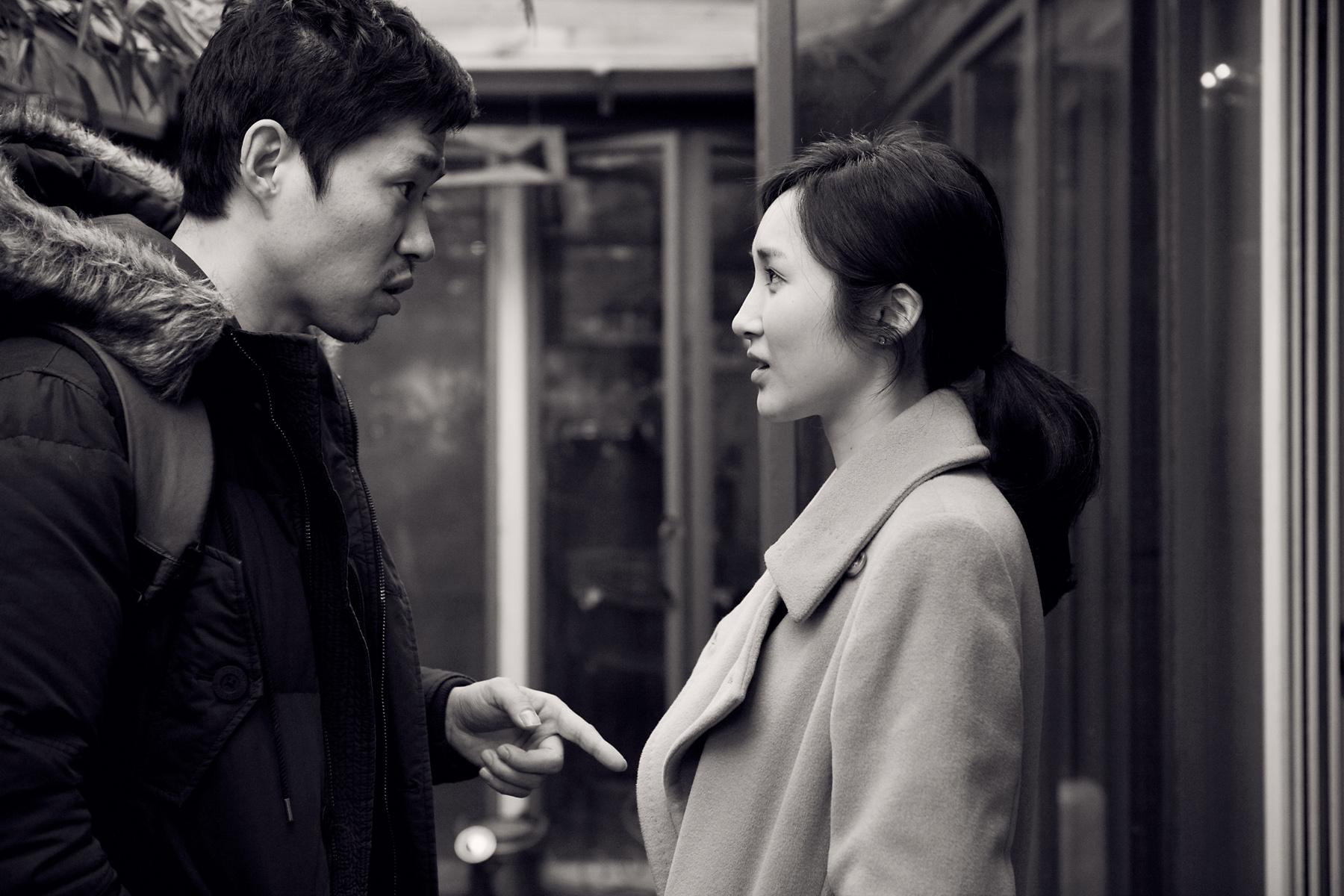
The Day He Arrives (Hong Sang-soo, South Korea, 2011) Perhaps the seed was planted by the festival programmer who introduced the screening with a mention of Woody Allen, but this latest black & white film from the South Korean auteur feels akin to Stardust Memories (1980) and 8 1/2 (1963), a cleverly convoluted exploration of an artist’s anxieties. When lapsed filmmaker Sungjoon returns to Seoul to visit a friend, his encounters with compatriots and lovers old and new spiral into repetition and absurdity; the truth of any given situation is essentially inaccessible, leading to often uproarious contradictions, especially with a sympathetic audience like that at the Kabuki Fri/20. This is what one might call a movie-movie, a trip through deception of self and others through the medium of cinematic expression. Mon/23, 9:30pm, Kabuki; April 25, 9pm, PFA. Also plays SF Film Society Cinema May 4-10.

Bonsái (Cristián Jiménez, Chile/France/Argentina/Portugal, 2011) Adapted from Alejandro Zambra’s acclaimed novella, this cleverly structured and sweetly sad film positively wallows in literary allusions. Julio is supposed to transcribe the newest work by novelist Gazmuri, but when he’s passed over for someone cheaper, Julio writes his own manuscript and tells his girlfriend it’s Gazmuri’s. The film flips back and forth between Julio’s college years (the grist for his novel) and his present life, full of anxiety and ennui. He and his lost love, Emilia, used to read every night before bed, and a running joke about Proust serves as a charming framing device. The bonsai tree of the title plays a relatively small role, more a metaphor than a filmic image, but Jiménez’s presentation of how one man tries to shape his own story like a bonsai is touching, if sometimes emotionally simplistic. Tue/24, 6:30pm, PFA.

Oslo, August 31 (Joachim Trier, Norway, 2011) Heroin movies are rarely much fun, and Oslo is no exception, though here the stress lies not in grisly realism but visceral emotional honesty. Following an abortive, Virginia Woolf-esque suicide attempt during evening leave from his rehab center, recovering addict Anders visits Oslo for a job interview. He reconnects bittersweetly with an old friend, tries and fails to meet up with his sister, and eventually submerges himself in the nightlife that once fueled his self-destruction. Expressionistic editing conveys Anders’ sense of detachment and urge for release, with scenes and sounds intercut achronologically and striking sound design which homes in on stray conversations. A late intellectual milieu is signified throughout, quite humorously, by serious discussions of popular television dramas, presumably an update of similar concerns addressed in Pierre Drieu La Rochelle’s 1931 novel Le Feu follet, on which the film is based. April 27, 9:15pm, FSC.

The Source (Jodi Wille and Maria Demopolous, USA, 2012) Remembered for its health food restaurant and musical recordings, the early-’70s cult known as the Source Family was at once an archetypal utopian post-hippy community and a bizarre, unique twist on the notorious subcultures of that era. Charismatic leader Jim Baker, a.k.a. Father Yod, experimented with various branches of mysticism and philosophy, and surrounded himself with over 100 followers at the society’s peak. Eventually casting himself as a god on earth, Yod’s relationship with his “family” became increasingly complex and problematic, but some of his followers still subscribe to his teachings. Among them is family historian Isis Aquarian, whose photos and footage provide the backbone of this engrossing documentary, along with the images taken by other family members. The filmmakers successfully present Yod as an exceptionally powerful personality without valorizing him unduly – a great feat, presenting a not-too-worshipful biography of a self-proclaimed deity. April 27, 3pm, Kabuki; April 29, 6:15pm, FSC.

The Queen of Versailles (Lauren Greenfield, USA/Denmark, 2012) Photographer Lauren Greenfield set out to document the life of the Siegel family, a timeshare dynasty in the process of building the biggest house in America, a palatial edifice inspired by Versailles. But what she stumbled upon was a much richer story, as Westgate Resorts founder David Siegel and his wife, former computer engineer and beauty queen Jackie Siegel, fell on hard times when the economy crashed in 2008. Their maddeningly luxurious lifestyle has suddenly become a strain on their resources; the lives of their seven children and one niece, as well as their domestic staff, change drastically as they struggle to adjust. David’s financial turmoil over the megalithic PH Towers in Las Vegas provides a backdrop to their tumultuous family life, but what emerges is a mix of ironic humor and biting tragedy, and a surprisingly persistent familial bond. Theatrical release, summer 2012.

Action Girl leaves Black Rock City LLC

8

This week’s resignation of Andie Grace (aka Action Girl) – who has been the face and voice of Burning Man and its Jack Rabbit Speaks newsletter for most of her 13 years working for Black Rock City LLC (aka the Borg) – is the latest blow to an organization and culture going through a difficult transition period.

She insists that her departure is “not a big boat-rocking controversy,” it’s been something she’s been thinking about for years, and the timing is coincidental. “It has a lot more to do with where Andie Grace is now,” she said, than with what the organization is going through at this point.

I’ve known Grace for years; I believe her and I wish her the very best as she figures out what she wants to do next. She’s got a bit of a cushion now that her husband – Tom Price, another longtime burner who started Burners Without Borders and Black Rock Solar before leaving the Borg last year to work for an environmental firm – is doing well professionally.

But I think it’s a shame that the Borg is letting Grace go rather than elevating her, Price, and their generation of Burning Man innovators (including Will Chase, the current voice of JRS) into a position of leading the Borg and this culture, which would entail the six board members giving up some control and trusting others to shepherd this culture forward.

I’ve written critically of the manner in which the Borg will be transitioning Burning Man to nonprofit control over the next five years. They launched the nonprofit Burning Man Project last year, but with hand-picked board members serving one-year terms rather than something more democratic or collaborative.

And even then, the six board members retain full control over when and if the transfer takes place, determining their own continuing roles in the organization as well as the secret payouts they’ll be receiving for dissolving their ownership of the Burning Man brand.

Grace, Price, and a long list of others like them have embodied the soul of Burning Man for many years, keeping it cool while extending its tentacles off into a variety of intriguing and promising new directions. They are also more in touch with the large burner world than their bosses, which Grace demonstrated during this year’s ticket debacle with a blog post that defused much of the mounting criticism.  

As Burning Man wrestles with its growing popularity and the population, logistic, and philosophical issues that raises, it balances on a precarious tipping point. If the Borg behaves like a corporation and treats its brand like a commodity, this whole grand experiment could quickly unravel.

Maybe it was just time for Grace to go and I’m making too much of this moment. But I also think it’s time for these six board members – most of whom are reaching retirement age anyway – to trust this community with the future of an event and culture that we all created together.

Steven T. Jones, aka Scribe, is the author of The Tribes of Burning Man: How an Experimental City in the Desert is Shaping the New American Counterculture. He’ll be doing a reading and leading a discussion on the state of Burning Man, Tribes in Transition, from 6-7:30 pm on April 25 at the Bay Guardian office, 135 Mississippi St., SF. 

Appetite: An elegant line of tequilas

0

Tequila Avión has gained a sort of cult status from a (unsolicited) mention in the show Entourage, but I’m glad to say this tequila holds enough quality to stand on its own. Produced in the Jalisco highlands, in the town of Jesus Maria at the highest elevation of any tequila producer (7000 feet), brings a naturally higher sugar content to the agave plants. Their process is to roast the agave plants at very low temperatures and let them cool naturally which retains more juices and makes the plants less fibrous when crushed.

In meeting with Tequila Avión’s lovely president, Jenna Fagnan, I learned that they use 60% more agave to make a bottle of Avión than the average tequila. It’s intriguing to note that they went to the town itself to find their distiller: Alejandro Lopez is a young distiller from a fifth generation family of agave farmers and distillers right there in Jesus Maria.

Launched only a year and a half ago, Avión is now available in 48 states and Canada. Growing rapidly, Fagnan says, “We’ll grow as fast as the quality allows us to,” emphasizing that they won’t be taking shortcuts to meet the demand. Though in a joint venture with behemoth spirits supplier Pernod Ricard, Fagnan says they retain full control over production and the recipes they began with.

All three are smooth, elegant, flavorful expressions, and generally affordable – even the anejo is reasonably priced around $50. As is typical, I like the blanco and reposado best, the blanco bright and silky, the reposado subtle with spice and toast. The anejo (aged 2 years in light char bourbon barrels) is not much darker than the reposado, a natural color vs. having any color added. It manages to retain herbaceous, agave properties alongside barrel notes of vanilla and caramel.

Sample Avión at Colibri Mexican Bistro downtown or purchase at K&L.

–Subscribe to Virgina’s twice-monthly newsletter, The Perfect Spot, www.theperfectspotsf.com

Appetite: Exploring 3 wineries in Niagara-on-the-Lake, Ontario

0

Call it dessert wine if you will, icewine (eiswein in German) is definitely sweet. But winemakers prefer to call it “rich and concentrated,” an apt icewine description, which, when produced well, retains enough acidity to keep it from being cloying.

Icewine’s intensity comes from frozen grapes, allowing greater flavor concentration. Unlike in Sauternes, Bordeaux, icewine is not sweet from botrytis (noble rot), rather from frozen, concentrated juice. Canada and Germany are the largest icewine producers in the world, with most of Canada’s icewine vineyards in Ontario, which I recently visited. Besides attending the annual Niagara Icewine Festival, I spent time with three wineries and tasted winning salumi and cheeses made locally.


INNISKILLIN WINERY

On a clear winter night, I arrived in Niagara-on-the-Lake, an idyllic, sleepy town on Lake Ontario, a short distance from Niagara Falls. By morning, a gentle but steady snowfall covered the woods and stately homes in a blanket of white.

Legendary Inniskillin winery, which put Canadian icewine on the map in the ’80′s, was my home base. A flat expanse of vines and shimmering, frosty grapes surround the warm, modern Inniskillin buildings, including one that is a restored 1920′s barn.

Austrian native Karl Kaiser started Inniskillin in the 1970′s with Donald Ziraldo to fill a need for premium Canadian table wine, getting into icewine in the 1980′s. Kaiser was Inniskillin’s first winemaker, while Nicholson got into wine in Niagara in the 1980′s, quickly moving up the ranks to winemaker at Jackson Trigg’s Okanagan winery in British Columbia. He returned to the East Coast and became Inniskillin’s winemaker in 2007, his wines having won over 1400 awards internationally. Terroir-driven as a winemaker, Nicholson states: “You don’t try to emulate someone else’s style because the terroir will dictate the wine you make.”

Due to icewine’s labor-intensive process, including picking in the middle of the night at lowest temperatures, the best icewine is expensive. And being as good as it gets, Inniskillin wines can be pricey.

Nicholson says for it to be icewine, they cannot legally pick until temperatures reach -8 Celsius (17.6 °F), a lower temp than required in Germany (-7 °C), but he typically prefers -10 °C or below. He calls that: “the sweet spot for balance of acidity and sweet.”

Inniskillin produces far more than icewine with Burgundian influenced Pinot Noir, Chardonnay and the like. I was impressed with numerous wines like an acidic, floral Riesling icewine. I particularly love their sweet but earthier Vidal icewines, from a balanced, bright 2008 Vidal to a  2008 Gold Vidal, uber sweet with marmalade and candied brown sugar balanced by crisp acidity and funky earth notes. Another standout is a red icewine, 2007 Cabernet Franc, robust, rosy, tasting more like strawberry conserves vs. fresh strawberries. If you’re at the winery tasting room in winter, ask for a hot chocolate made with icewine. You won’t regret it.

JACKSON-TRIGGS WINERY

A sister winery to Inniskillin, Jackson-Triggs impressed with dramatic high ceilings, a modern barn-like feel, giant, roaring fireplace, and state-of-the-art production facilities.

We met with head winemaker Marco Piccoli, who is from Friuli, Italy. He brings a European aesthetic to the wines, married to New World vision, having also worked in Argentina. He was long ago fascinated by icewine and how it single-handedly put Canada on the wine map, though he produces everything from a peach blossom-redolent 2010 Sauvignon Blanc to an acidic, sandalwood-inflected 2007 Cab Franc. I enjoyed a unique 2007 Entourage Sparkling Merlot, but my favorite was their buttery yet citrus-laden Silver Series Chardonnay, which unfortunately we do not yet have available in the state.

LE CLOS JORDANNE

I met with young winemaker Sébastien Jacquey from Burgundy who creates Burgundian-style, single vineyard Pinots at Le Clos Jordanne. I wasn’t as taken with Pinots as with best wines at Inniskillin or Jackson-Triggs, but enjoyed a mint and plum-accented 2009 Pinot Noir Le Grand Clos and a dusty, earthy 2009 Talon Ridge Vineyard Pinot.

WINERY MEALS

Eating well was not a problem at the wineries. Great Estates of Niagara chef David Penny (who worked at Four Seasons Hawaii) cooked Inniskillin meals with a couple key highlights.

He smoked a luscious slab of pork belly on a smoker behind the winery. Braving the snow and wind, Penny cooked the fatty belly, slicing it on toasts with an onion jam. A superb breakfast. Penny also created an Inniskillin poutine, topping warm fries with duck confit, Niagara Gold cheese, and red wine gravy.

On a freezing cold night, I was warmed by a moveable feast all over the Jackson-Triggs winery, starting with a spread of excellent Pingue charcuterie. The meal was prepared by pastry chef Anna Olson, a Food Network star in Canada, and culinary instructor/chef husband Michael Olson. Favorite eats from the night were a mini-tureen of choucroute garnie, a favorite Alsatian sausage and sauerkraut dish of mine, and mushrooms in Chardonnay thyme cream sauce with potato cheddar focaccia. No surprise: a round of Anna’s desserts was the perfect ending, each rich and flavorful, from raisin butter tarts to cranberry gingerbread upside down cake.

Subscribe to Virgina’s twice-monthly newsletter, The Perfect Spot, www.theperfectspotsf.com

Laksa and lemongrass: a tasty Malaysian cooking class

0

Azalina was all smiles. Originally from Malaysia, this spunky chef is now part of the incubator cooking program at La Cocina. He taught a Malaysian street food cooking class this week, which Sam Love and I felt very lucky to be a part of. We visited Malaysia a few years ago and fell in love with the wonderful street food that filled each and every corner with exotic smells. As soon as we entered the kitchen at La Cocina, those smells came right at us — garlic, ginger, chilies, and lemongrass ready to be chopped and roasted and blended into our evening meal.

We spent a large part of the class learning how to make fresh wheat noodles to put in laksa soup, dyed a beautiful orange color with turmeric. Everyone got a turn at rolling and slicing the noodles into thin strips, which were then placed into little mounds that looked like upside-down bird nests. Malaysian food is influenced by Chinese and Indian cooking, while still keeping its own distinctive cooking techniques using caramelized shrimp in palm sugar and garnishing the soup with deep fried tempeh. If you didn’t get a chance to make it to the class, Azalina sells her Malay food products at Bi-Rite (like her amazing coconut jam, which we got to try, drizzled atop fried banana fritters) and she’s also whipping up Malaysian street food every Friday night at Fort Mason for Off the Grid.

This week’s first-runs (to supplement your SFIFF frenzy!)

0

Between the San Francisco International Film Festival (kicks off Thu/19! Our coverage starts here) and the Castro Theatre’s weekend schedule of more James Bond classics than you can shake a martini at (or a Heinekin … gaah!), why bother even considering a first-run movie?

Yeah, all right. You make a good point there. But. BUT. Nicholas Sparks fiends aside, there are a few good reasons to hit up the ol’ megaplex (or at least the ol’ multi-screen arthouse). The first is a documentary perfectly suited for its 4/20 release…

http://www.youtube.com/watch?v=IJ7U_3bJoBk

Marley Oscar-winning documentarian Kevin Macdonald (1999’s One Day in September; he also directed Best Actor Forest Whitaker in 2006’s The Last King of Scotland) takes on the iconic Bob Marley, using extensive interviews — both contemporary (with Marley friends and family) and archival (with the musician himself) — and performance and off-the-cuff footage. The end result is a compelling (even if you’re not a fan) portrait of a man who became a global sensation despite being born into extreme poverty, and making music in a style that most people had never heard outside of Jamaica. The film dips into Marley’s Rastafari beliefs (no shocker this movie is being released on 4/20), his personal life (11 children from seven different mothers), his impact on Jamaica’s volatile politics, his struggles with racism, and, most importantly, his remarkable career — achieved via a combination of talent and boldness, and cut short by his untimely death at age 36. (2:25) California, Embarcadero. (Cheryl Eddy)

http://www.youtube.com/watch?v=_j4Gcu7wlMc

(Note: it’ll have English subtitles in the theater, obvi.)

Next up, probably the most intense South Korean-made war epic you’ve ever seen (unless you’ve seen Taegukgi)…

My Way South Korean director Kang Je-gyu (2004 Korean War epic Taegukgi) returns to the battlefield for another bombastic action flick with a very complicated bro-down at its center. This time, it’s World War II, and the head-butting protagonists are not actually brothers, but lifelong frenemies: Japanese Tatsuo (mega-idol Joe Odagiri) and South Korean Joon-sik (Taegukgi star Jang Dong-gun). They meet in occupied South Korea, where class and country lines amp up their frequent confrontations as competitive long-distance runners. When WW2 breaks out, Joon-sik is forced to join the Japanese army, with guess who ordering him around; during My Way’s meaty war-is-hell section, the men’s relationship endures a Soviet labor camp, knife (and fist) fights, blizzards, gunshot wounds, deafness, countless explosions (including lots of exploding bodies), sprints on the beach, bellowing arguments, runaway tanks, grenades, Nazis, D-Day, and moments of heroism, cowardice, insanity, weepy emotion, and dumb luck. Somehow, Kang keeps the pace between “frenetic” and “superfly TNT” for a solid two hours — the man may not care much for subtlety, but My Way is nothing if not insanely entertaining. (1:59) SF Center. (Eddy)

And a thought-provoking documentary about change…

Surviving Progress The very definition of a movie that most needs to be seen by the people least likely to see it — i.e. most folk the right of the political dial — this excellent documentary manages to interweave virtually all the leading planet threatening woes of our era in a succinct and entertaining fashion. Its thesis is author Ronald Wright’s notion that “We’re at the end of a failed experiment.” It’s been around a while, so you’ve doubtless heard of it: the Industrial Revolution. That shift from small-scale, self-sustaining agrarian communities to much larger ones dependent on mass production and import-export created pockets of enormous First World wealth and comfort. But the populations that benefitted used up resources wildly out of proportion to their number; now countries like China and India want their share of the industrialized pie, just as we’ve realized those resources might actually run out. Cue summaries of the harm global warming, overpopulation, consumption, soil depletion, “market fundamentalism,” etc. have done and will do, as duly noted here by a roster of A-list experts including Stephen Hawking and Jane Goodall. (The latter vividly contextualizes just how out of whack humanity has gone by opining that ours is the only species capable of terminating its future by destroying its own habitat.) While this may sound like a bitter pill to swallow, not to mention one you’ve swallowed many times before, Surviving Progress colorfully weaves together a vast assortment of audiovisual materials as well as information, to highly watchable results. Do the earth a favor: see this movie, and drag a skeptic you know along. (1:26) Lumiere, Shattuck. (Dennis Harvey)

BONUS ROUND: speaking of Jane Goodall: Disney nature doc Chimpanzee opens 4/20, too, but with a different holiday in mind: Earth Day. Just the thing if last year’s depress-o-Chimp trend is still giving you the sads.

For your consideration: Short takes from SFIFF, week one

0

The gargantuan San Francisco Film Festival opens this week after a particularly fraught year in which the San Francisco Film Society tragically lost two well-respected executive directors. But never fear! SFIFF is still tops, and we’re here to guide you through it, from throught-provoking experimental flicks to unheralded-as-of-yet crowd-friendly fare. We’ve rustled upmore than a dozen previews of appealing flicks after the jump — and check out our complete coverage, including indepth features and interviews, here.

THU/19

Farewell, My Queen (Benoît Jacquot, France, 2012) Opening early on the morning of July 14, 1789, Farewell, My Queen depicts four days at the Palace of Versailles on the eve of the French Revolution, as witnessed by a young woman named Sidonie Laborde (Léa Seydoux) who serves as reader to Marie Antoinette (Diane Kruger). Sidonie displays a singular and romantic devotion to the queen, while the latter’s loyalties are split between a heedless amour propre and her grand passion for the Duchess de Polignac (Virginie Ledoyen). These domestic matters and other regal whims loom large in the tiny galaxy of the queen’s retinue, so that while elsewhere in the palace, in shadowy, candle-lit corridors, courtiers and their servants mingle to exchange news, rumor, panicky theories, and evacuation plans, in the queen’s quarters the task of embroidering a dahlia for a projected gown at times overshadows the storming of the Bastille and the much larger catastrophe on the horizon. Farewell, My Queen screens as part of the SFIFF’s opening night festivities, which are dedicated to the memory of SF Film Society executive director Graham Leggat. Thu/19, 7pm, Castro. (Lynn Rapoport 


FRI/20

Palaces of Pity (Gabriel Abrantes and Daniel Schmidt, Portugal, 2011) Just under an hour, Gabriel Abrantes and Daniel Schmidt’s Portuguese curiosity is hardly fettered by the limits of time, let alone imagination. Its wayward story focuses on two precocious young female cousins whose closeness goes south when their beloved grandmother dies, leaving them rivals for her estate. Before that happens, however, this fabulist curio hits a deadpan peak in an extended medieval dream sequence that pits punitive Catholic Church against happy sodomites — ah, some things never change. Fri/20, 6pm; Sat/21, 7pm; April 26, 9:15pm, Kabuki. (Dennis Harvey)

The Day He Arrives (Hong Sang-soo, South Korea, 2011) Korean auteur (Woman Is the Future of Man, 2004) Hong Sang-soo’s latest exercise in self-consciousness, this black-and-white, fable-like study of a frustrated filmmaker (Yu Jun-sang), returning home to Seoul to visit an old friend after spending time in the countryside teaching, adds up to a kind of formal palimpsest. Surrounded by sycophants, vindictive former leading men, and women who seem to serve a purely semiotic purpose, he participates in an endless loop of drink, smoke, and conversation in a series of dreamlike scenes that play on the theme of coincidence and endless variation. Hong’s layering of alternate scenarios at times feels like a bit of a gimmick, but the way he infuses specific urban spaces with forlorn significance in mostly static shots is affecting — even if the film’s ultimate narrative slightness has the cut-and-paste haphazardness of fridge poetry magnets. Fri/20, 7:15pm; Mon/23, 9:30pm, Kabuki. April 25, 9pm, PFA. (Michelle Devereaux)

Alps (Yorgos Lanthimos, Greece/France, 2011) Yorgos Lanthimos is well on his way to a reputation for sick yet oddly charming high-concept spectacles. Here, a group calling themselves Alps offers substitution services for the recently bereaved — that’s right, they’ll play your dead loved one to fill that hole in your life. Pitch-black comic moments abound, and the sensibility that made 2009’s Dogtooth so thrilling is distinctly present here, if not quite as fresh. Beyond the absurd logline, the plot is rather more conventional: things get out of hand when Alps member Anna (Aggeliki Papoulia, the eldest daughter from Dogtooth) gets too invested in one of her assignments, and the power structure of Alps turns on her. If Alps is not exactly a revelation, it’s still a promising entry in a quickly blossoming auteur’s body of work. Fri/20, 9pm, FSC. Sat/21, 2:30pm; Tue/24, 6:30pm, Kabuki. (Sam Stander)

Gimme the Loot (Adam Leon, U.S., 2012) Biggie Smalls’ track is just a smart starting point for this streetwise, hilarious debut feature by Adam Leon. Young graf artists Malcolm (Ty Hickson) and Sofia (Tashiana Washington) are hustling hard to get paid and fund a valiant effort to tag the Mets’ Home Run Apple to show up rival gang-bangers. The problem lies in raising the exorbitant fee their source demands, either by hook (selling pot to seductive, rich white girls) or crook (offloading cell phone contraband). The absurdity of the pair’s situation isn’t lost on anyone, especially Leon. But their passion to rise above (sorta) and yearning for expression gives the tale an emotional heft. Arriving with much post-SXSW buzz, Gimme the Loot stays with you long after the taggers have moved onto fresh walls. Fri/20, 9:15pm, Kabuki. Sat/21, 9:30pm, FSC. Tue/24, 6:30pm, Kabuki. (Kimberly Chun)


SAT/21

Choked (Kim Joong-hyun, South Korea, 2011) Baby, it’s cold outside: urban Seoul is the site of this debut feature by Kim Joong-hyun, but those familiar with the dog-eat-dog realities of getting ahead in the modern world, in any country, will recognize this unrelenting indictment of capitalism. In the de-centered middle of a financial mess left behind by his AWOL mom, the striving, good-looking Youn-ho (Um Tae-goo) holds down an unsavory job, evicting tenants for developers, to raise funds to support his materialistic fiancée. He’s under assault from his mother’s creditors, including her desperate divorcee friend who peddles black-market doodads. Moments of grace — and instances of human connection — are few and far between in this scorched emotional landscape of so-called bad mothers, where unselfish tenderness is scarce and money speaks volumes, and Kim’s smart, humanistic perspective won’t let you tear your eyes away. Sat/21, 1:30pm; April 28, 6pm; May 1, 9pm, Kabuki. (Chun)

Dreileben — Beats Being Dead (Christian Petzold, Germany, 2011) Originally made for German TV, the Dreileben trio is ideally viewed in order, one right after the other (SFIFF offers that option on two different days). It’s worth blocking off time to see all three, for maximum enjoyment of this tense, offbeat crime series; made by different directors, the films — which take place in a small town surrounded by fairy-tale forests containing monsters both real and imagined — link together in unexpected ways. The first entry, Beats Being Dead, focuses on nursing student Johannes (Jacob Matschenz), whose carelessness allows a convicted murderer to escape, and whose recklessness allows him to romance stormy hotel maid Ana (Luna Mijovic), while still pining for his rich, princessy ex (Vijessna Ferkic). Seldom has young love been portrayed so realistically — or set amid such an atmosphere of bucolic foreboding. Sat/21, 1:30pm; Tue/24, 9:45pm; April 29, 2:45, Kabuki. (Cheryl Eddy)

Bitter Seeds (Micha X. Peled, U.S., 2011) Just what we all needed: more incontrovertible evidence of the bald-faced evil of Monsanto. This documentary on destitute Indian cotton farmers follows an 18-year-old girl named Manjusha, a budding journalist who investigates the vast numbers of farmer suicides since the introduction (and market stranglehold) of “BT” cotton — which uses the corporation’s proprietary GMO technology — in the region of Vidarbha. Before BT took over in 2004, these cotton farmers relied on cheap heritage seed fertilized only by cow dung, but the largely illiterate population fell prey to Monsanto’s marketing blitz and false claims, purchasing biotech seed that resulted in pesticide reliance, failing crops, and spiraling debt. It’s a truly heartbreaking and infuriating story, but much of the action feels stagey and false. Should Indian formality be blamed? Considering the same fate befell Peled’s 2005 documentary China Blue, probably not. Still, eff Monsanto. Sat/21, 3:45pm, FSC. Tues/24, 8:50pm, PFA. April 26, 6:15pm, Kabuki. (Devereaux)

The Waiting Room (Peter Nicks, U.S., 2011) Twenty-four hours in the uneasy limbo of an ER waiting room sounds like a grueling, maddening experience, and that’s certainly a theme in this day-in-the-life film. But local documentarian Peter Nicks has crafted an absorbing portrait of emergency public health care, as experienced by patients and their families at Oakland’s Highland Hospital and as practiced by the staff there. Other themes: no insurance, no primary care physician, and an emergency room being used as a medical facility of first, last, and only resort. Nicks has found a rich array of subjects to tell this complicated story: An anxious, unemployed father sits at his little girl’s bedside. Staffers stare at a computer screen, tracking a flood of admissions and the scarce commodity of available beds. A doctor contemplates the ethics of discharging a homeless addict for the sake of freeing up one of them. And a humorous, ultra-competent triage nurse fields an endless queue of arrivals with humanity and steady nerves. Sat/21, 3:50pm, PFA. April 30, 1pm; May 1, 6:30pm, Kabuki. (Rapoport)

Dreileben — Don’t Follow Me Around (Dominik Graf, Germany, 2011) The second Dreileben film offers a shift in tone and style; it’s more of a procedural (but only sorta), and is the only trilogy entry shot on 16mm. Police psychologist Jo (Jeanette Hain) — her full name, Johanna, mirrors that of the first film’s Johannes — is summoned to Dreileben, ostensibly to help local cops track the murderous escapee (and, it would seem, taste the local cuisine, what with the endless dining scenes). But just when you start anticipating Jo slamming the cuffs on the murderer, you realize this story’s really about Jo’s relationship with estranged BFF Vera (Susanne Wolff), who invites Jo to stay at her crumbling country house while working on the case. When the women realize they unwittingly dated the same man years ago, old resentments bubble quickly to the surface. Plus: the pursuit of the killer, with the help of a chainsaw artist. Sat/21, 4pm; April 25, 6:15pm; April 29, 5pm, Kabuki. (Eddy)

Marina Abramović: The Artist Is Present (Matthew Akers, U.S., 2011) Matthew Akers’ sleek and telling doc explores the career and motivations of the legendary Serbian-born, New York-based performance artist on the occasion of 2010’s major retrospective and new work at the New York Museum of Modern Art. Abramović, self-styled the “grandmother of performance art” at an eye-catching 63, steels herself with rare energy — and a determination to gain equal status for performance in the world of fine art — for an incredibly demanding new piece, The Artist Is Present, a quasi-mystical encounter between herself and individual museum patrons that takes the form of a three-month marathon of silent one-on-one gazing. Meanwhile, 30 young artists re-perform pieces from her influential career. Akers gains intimate access throughout, including Abramović’s touching reunion with longtime love and artistic collaborator Ulay, while providing a steady pulse of suspense as the half-grueling, half-ecstatic performance gets underway. A natural charmer, Abramović’s charismatic presence at MoMA is no act but rather a focused state in which audiences are drawn into — and in turn shape — powerful rhythms of consciousness and desire. Sat/21, 4:15pm; April 28, 3:30pm, Kabuki. April 29, 5:40pm, PFA. (Robert Avila)

Dreileben — One Minute of Darkness (Christoph Hochhäusler, Germany, 2011) In part three, Molesch (Stefan Kurt), the muddy man we’ve seen skulking around the edges of the first two films, finally comes into focus. Early on, we learn his murder conviction was based on circumstantial evidence — a surveillance camera marred by “one minute of darkness” at a crucial moment. As veteran detective Kirchberg (Marcus Kreil), the Tommy Lee Jones to Molesch’s Harrison Ford, pursues his prey (while reconsidering the man’s guilt), the fugitive hides out in the woods, playing childlike alphabet games and absconding with lunches packed by passing hikers. But we’ve been waiting for the dark twist since part one’s cliffhanger — resolved here, though the events do not neatly align with what’s come before. The only conclusion: in Dreileben, truth is in the eye of the beholder. Sat/21, 6:30pm; April 26, 9:45pm; April 29, 7:15pm, Kabuki. (Eddy) 

Bernie (Richard Linklater, U.S., 2011) Jack Black plays the titular new assistant funeral director liked by everybody in small-town Carthage, Tex. He works especially hard to ingratiate himself with shrewish local widow Marjorie (Shirley MacLaine), but there are benefits — estranged from her own family, she not only accepts him as a friend (then companion, then servant, then as virtual “property”), but makes him her sole heir. Richard Linklater’s latest is based on a true-crime story, although in execution it’s as much a cheerful social satire as I Love You Philip Morris and The Informant! (both 2009), two other recent fact-based movies about likable felons. Black gets to sing (his character being a musical theater queen, among other things), while Linklater gets to affectionately mock a very different stratum of Lone Star State culture from the one he started out with in 1991’s Slacker. There’s a rich gallery of supporting characters, most played by little-known local actors or actual townspeople, with Matthew McConaughey’s vainglorious county prosecutor one delectable exception. Bernie is its director’s best in some time, not to mention a whole lot of fun. Sat/21, 9:30pm, Kabuki. (Dennis Harvey)

SUN/22

Will (Ellen Perry, England/France/Turkey, 2011) A far cry from director Ellen Perry’s 2005 political doc The Fall of Fujimori, this sweet-twee tale follows the adventures of a newly orphaned 11-year-old (Perry Eggleton) who slips away from his nun-run boarding school to attend a Very Important Soccer Game. Improbably kind strangers — including a taciturn Serb (Kristian Kiehling) with a troubled past — help guide Will on his journey. Tears are shed, life lessons are learned, etc. The one thing saving Will from drowning in its own sap is its enthusiastic, endearing embrace of European football culture; the game that Will (a diehard Liverpool supporter) is hellbent on attending is the 2005 Champions League Final. For LFC fans smarting over the current season, Will is a must-see: “You’ll Never Walk Alone” soars, and Steven Gerrard, Jamie Carragher, and “King Kenny” Dalglish make cameos. Sun/22, 11:30am; May 1, 6pm, Kabuki. (Eddy)

An Oversimplification of Her Beauty (Terence Nance, U.S., 2011) Terence Nance’s first feature might remind you of Barry Jenkins’ 2008 Medicine for Melancholy, in that it’s an ambivalent love story between two young African Americans that owes more the restive, intellectually curious, meta-cinema feel of the Nouvelle Vague than more contemporary U.S. cinema. The big differences are that Nance’s vision is both explicitly autobiographical and largely animated. He charts and muses upon an on-off relationship in stream-of-consciousness terms that encompass everything from the summary of a Louise Erdrich novel to an earlier-film-within-the-film (and a Q&A session that occurred after its screening). This kind of structureless navel-gazing can get tired, and indeed Beauty might ideally be experienced in sections rather than over one long haul. But still, just about any chosen few minutes are as clever and inventive as could be. Sun/22, 8:30pm, PFA. April 30, 9pm; May 1, 12:15pm; May 2, 4pm, Kabuki. (Harvey) 


MON/23

Darling Companion (Lawrence Kasdan, U.S., 2012) When the carelessness of self-absorbed surgeon Joseph (Kevin Kline) results in the stray dog adopted by Beth (Diane Keaton) going missing during a forest walk, that event somehow brings all the fissures in their long marriage to a crisis point. Big Chill (1983) director Lawrence Kasdan’s first feature in a decade hews back to the more intimate, character-based focus of his best films. But this dramedy is too often shrilly pitched and overly glossy (it seems to take place in a Utah vacation-themed L.L. Bean catalog), with numerous talented actors — including Richard Jenkins, Dianne Wiest, Mark Duplass, Elisabeth Moss, and Sam Shepard — playing superficially etched characters that merely add to the clutter. Most cringe-inducing among them is Ayelet Zurer’s Carmen, a woman of Roma extraction who apparently has a crystal ball in her psychic head and actually speaks lines like “My people have a saying….” Mon/23, 6:45pm; Tue/24, noon, Kabuki. (Harvey)

TUE/24

Target (Alexander Zeldovich, Russia/German, 2011) The year is 2020, and a group of disaffected upper-class Russians make a pilgrimage to an energy accumulator known as the Target, which halts aging, among other effects. The setting is an unsettlingly believable near-future culture based on standardized “ratings” for each member of society and an escalated fixation on age and appearance. What follows the transmutation of these five characters is an operatic mess of love, adultery, debauchery, and violence. It’s a weird admixture of philosophical science fiction, social satire, and intense character drama. In some ways, its closest relative is the bloated Wim Wenders dystopia Until the End of the World (1991), but its absurdities are more calculated and its acting more grounded. Complete with nods to Anna Karenina and Top Chef, it’s a consuming entertainment with consistently surprising creative choices. Tue/24, 2:30pm; April 27, 10pm, Kabuki. (Stander)

The San Francisco International Film Festival runs April 19-May 3; most shows $13. Venues: Castro Theatre, 429 Castro, SF; Pacific Film Archive, 2575 Bancroft, Berk.; SF Film Society Cinema, 1746 Post, SF; and Sundance Kabuki Cinema, 1881 Post, SF. More info at www.sffs.org.


The Performant: Tropical nights and Pacific days

0

Stepping out with Brownout and Sunday Streets

It was quite a diverse crowd bobbing and weaving out on the dance floor of the Elbo Room as local Afrolicious stalwart DJ Señor Oz spun a red-hot Latin-fusion funk mix, which belied the blustery weather outside.

The Elbo Room is good for fantasies of decadent tropical nights — it’s a small room which fills up and heats up fast — all that de rigueur protective outerwear coming off pretty quickly when there’s sweaty beats to be had. It was an energetic set, and you could almost visualize a clump of palm trees swaying against the horizon of some pristine, white sand beach, fireflies and paper lanterns to light up the starry night (there actually are paper lanterns dangling from the ceiling of the Elbo Room—which helps the fantasy along).

The vibe became less Caribbean and more Texas borderland via Miami when nine-piece Austin-based Latin-funk band Brownout (Grupo Fantasma’s alter-ego) finally swooped to the stage like the titular eagles from the title track off their second album, Aguilas and Cobras. Suddenly from every corner of the room, a torrent of Texas natives swamped the dance floor from the first strains. The band’s name might sound like a state of electrical failure, but their mostly instrumental onstage powerjam was downright electrifying, a spiraling mix of funky urban grooves, swirling desert psychedelia, and a dollop of spicy Afro-Cuban rhythms, involving three percussionists, three horn players, two guitarists, and an electric bass. Touring to support a brand-new album, Oozy (Nat Geo Music, April 2012), Brownout did not neglect to play some old favorites, including a loopy, spacey “Pole Position,” which literally raised an intergalactic sweat from band members, not to mention their jostling groupies.

http://www.youtube.com/watch?v=i5a6gvc-LcU

The last buzzing traces of the tropics dissolved into the light grey cloud cover of Sunday’s staunchly NorCal climate reality check, as Sunday Streets stormed the beach and swarmed the Great Highway. Sure, Valencia Street might attract more weekend yogis and gourmet popsicle vendors, but there’s something about cruising the Great Highway with the laidback Sunset crowd that really appeals. Certainly no other Sunday Streets route has quite the same visuals — lush springtime parkland and blooming sand dunes, as opposed to the urban density that characterizes the other routes. On the Great Highway, the microclimates and windswept landscapes of Northern California take centerstage rather than the human tide, putting the focus more firmly on the participants rather than the distractions. 

But of course the usual Sunday Streets funmakers were around too. Party bikes decked out with boomboxes and bubble machines. The Sports Basement repair gang fixing flats and tightening brakes. Scattered food trucks and circulating petitioners. Dogs and rollerblades. Kites and kids. One plucky band, Please Do Not Fight,  decked out a pedal rickshaw and rode the full length of the route playing their guitars, while a backup rickshaw took the rear, passing out stickers and enjoying the ride. (Bands on bikes, it would appear, are big these days.) True, they could have maybe used a little more Afro-Cuban percussion to round out their sound, but for a lazy, gauzy Sunday, their good-natured, low-key California vibe fit right in.

10 dishes that’ll bowl you over

0

Check out this week’s Feast food and drink supplement for the best in hidden Bay bites

The bowl, the cradle of sustenance, a definite necessity on those windy, overcast days to which SF is so prone. Here are some of my local favorites, from classic French onion from Chez Maman to Coi’s bowl-bound fried egg artistry. 

Pork ramen with buttered corn from Genki Ramen

Ramen, that steaming, succulent noodle soup, is sure-enough Japanese comfort food. Genki does it right, with a well-balanced broth, springy noodles, tender meat, and a heaping spoonful of buttered corn to pack in just a few more decadent calories.

3944 Geary, SF. (415) 752-2663, www.genkiramen.com

Onion soup from Chez Maman

Onion soup is such a French classic that when restaurants do it wrong it’s downright shameful, and when they get it right it’s amazing. Chez Maman has the best brew I’ve ever tasted, with just the right ratio of salty beef broth to sweet carmelized onion, topped with a thick soft layer of lightly bruléed gruyere. Even though it’s wonderfully filling, one bowl is never enough. 

1453 18th St., SF. (415) 824-7166, www.chezmamansf.com

Guilin lamb noodle soup from Mission Chinese Food

This trendy spot may be better known for its pork belly, but the noodle soup here is the unsung hero of the menu. Tender braised lamb cheek mingles with thick rice noodles, flavorful peanuts, and crunchy pea shoots in a generously-sized bowl. Eating it makes me think of windswept nights on the Mongolian tundra, cuddling in a yurt. While geographically inaccurate, the fantasy conveys the rugged snuggle of this yummy bowl. 

2234 Mission, SF. (415) 863-2800, www.missionchinesefood.com

Spaghetti with ricotta, fava leaves and black pepper-cured egg yolk from Flour + Water

Finally, a pasta dish in which the focus is on the very essence of pasta: not sauce, or meatballs, just the flour and water of its name. My favorite so far is Flour + Water’s spaghetti, al dente noodles enhanced with minimal topping. With a sprinkling of sweet and salty ricotta, a gentle glaze of egg yolk, and a handful of tender greens, this dish makes me feel like a sophisticated woman in springtime as I slurp.

2401 Harrison, SF. (415) 826-7000, www.flourandwater.com

“Fried egg, not fried” from Coi

This is probably the most artistic bowl on the list. A custardy egg yolk sits atop a nest of breadcrumbs, brassica, and garlic blossoms with a puree of roasted garlic below. The intricate presentation recalls an exhibit in a gastronomic art museum. Tastes like a rarified, amazingly seasoned, smokey toad-in-the-hole.

373 Broadway, SF, (415) 393-9000, www.coirestaurant.com

Seasonal soups from Outerlands

Outerlands caters to a crowd of Sunset-dwellers seeking warmth. The restaurant even offers a basket of blankets in which to wrap yourself. When even that’s not enough, the velvety seasonal soup is always there for you. My favorite is the “early girl” summer tomato. Sweet, tangy, creamy, and fresh, it goes great with their thick, crusty toast or a grilled cheese sandwich. In winter there’s butternut squash, topped with maple hazelnuts and yogurt. Other varieties include carrot ginger, roasted red pepper, potato leek, spicy kale and red bean, broccoli, cauliflower, and lentil.

4001 Judah, SF. (415) 661-6140, www.outerlandssf.com

Vermicelli bowl with roasted pork and imperial rolls from Pho Garden

This staple of Vietnamese menus everywhere is exceptional at Pho Garden. The pork has the right amount of grill char and sweetness, and the imperial rolls are crispy bites of heaven, overflowing with bits of barbecue pork and diced black mushroom. A cheap, thoroughly satisfying meal.

2109 Clement, SF. (415) 379-8677, www.phogardensf.com

Mapo tofu rice bowl with eggplant at Suzu Noodle House

Immensely filling, with soft cubes of tofu swimming in a spicy brown sauce of ground pork and Szechuan pepper, this bowl reminds us of just how delicious tofu can be. The sautéed eggplant is the third delectable component, all stacked atop a sticky, vibrantly white mound of rice. If you finish the entire bowl, you probably won’t have to eat again for a few days.  

1825 Post, SF. (415) 346-5083

Cha Cha bowl at Orlando’s Caribbean BBQ

The Cha Cha bowl is that rare thing – healthy and delicious ballpark food. Rice, black beans, and tender chunks of jerk chicken are topped with pineapple salsa, shredded zucchini, carrots, onions, and one of four sauces – BBQ, chipotle, jalapeño, or habanero. No matter how much sauce you slather on, no worries about spilling on your jersey. It all comes in a neat, portable container. Yay for bowls! 

24 Willie Mays, SF, (415) 972-1800

Bowl of beignets from Spruce

And now for dessert. The beignet is the dainty, fluffy, Southern cousin of the donut hole. Spruce dusts its version with sparkling sugar, and accompanies the treats with twin dishes of chocolate ganache and crème anglaise for dipping.

3640 Sacramento, SF. (415) 931-5100, www.sprucesf.com


Attention: Tiny book in your newspaper (Feast is here!)

0

Our bi-yearly Feast food and drink magazine hit newsstands today, so strap up your sneaks and step out because you have a lot of dining around to do. Marke B. went on a tapas tour of the city’s sabrosos Spanish spots, Virginia Miller did a neat breakdown (sauce-by-sauce, no less!) of authentic Southern barbecue spots in the Bay Area, and surprising spring cocktail trends. Emily Savage makes it easy for limited-diet types with her exploration of tasty vegan and gluten-free dishes, and I took advantage of flu season to discover the many styles of the city’s tea houses. And special web-only bonus: Ali Lane gets bowled over by the best dishes… in bowls

And click here to see the mag in all its printed glory. And bon appetit, of course.


Talking with Etgar Keret (supposedly)

0

You can’t imagine the writerly crisis I experienced typing up the questions for my Etgar Keret interview. What responses could I possibly elicit from Israel’s most prominent fabulist that would rival the odd, sparkling stories of his latest, Suddenly, a Knock on the Door (FSG Originals, 208pp, $14)? Better just to publish one of his pieces, perhaps the titular account of a man forced at gunpoint to overcome writer’s block or the story of the guy who falls (via a buried gumball machine) into a world populated by characters from the fibs he’s told over the year.

But running through the — dare I say — whimsy of his work, there is a metallic vein of reality about life in the Middle East. Far be it for me to deprive Guardian readers of the chance to hear original thought from Keret. And so I wrote, and he wrote back, and I wrote again, and he wrote back again, and so it went until we had fashioned a call-and-response that just nearly did justice to his books. He’ll be in town, in conversation with Michael Chabon at the Jewish Community Center on Mon/23. That’ll be a fun thing to hear, also.

>>Ira Glass reads the titular story from Suddenly, a Knock on the Door. For more information on the book’s star-studded audio release featuring Willem Dafoe, Ben Marcus, Gary Shteyngart, Michael Chabon, and others, click here

SFBG: Hi Etgar. We’re conducting this interview via email, can you please tell me how my readers and I know it’s really you answering the questions?

EK: Well, to be honest, it isn’t really me answering this. It is the same guy who writes my stories. He is really good and hardworking and starting June 1 he’ll start walking the dog and playing with the kid too.

SFBG: Speaking of language boundaries. Do you ever chat with the folks who translate your work before they start? What advice do you give them?

EK: I always try to have a dialogue with my translators. Some of them are happy with it, others openly admit that they prefer translating dead authors who are not trying to befriend them or send them 15 consecutive emails about a story’s title. The bottom line is that translator is the boss but I’m very happy to help if they are willing to let me. 

SFBG: How do Israeli and United States audiences react to the work? Can you sense a national difference in its reception?

EK: There is something very intimate with a Israeli audience, the most common Israeli question I get is if a certain story is about a guy that served in the army with them. It is fun to be close to your readers but it is also very rewarding to have a dialogue with readers who come to my stories tabula rasa and who don’t personally know your mom.

SFBG: You went through a spate of writer’s block before writing Suddenly, a Knock on the Door that you once attributed to the change in lifestyle you underwent when you became a family man. How did that writer’s block feel?

EK: Most of the time I didn’t feel it. But there were those moments when I thought I had a story to write but when I sat down in front of the computer I found out I didn’t, which felt very much like a phantom pain.

SFBG: How did you pull out of it?

EK: I’m not sure. After a very long time thinking that I have a story to tell and then discovering I don’t know how to tell it, I sat down next to a computer and a story did come out.

SFBG: Have you gone through spates since in which you weren’t inspired?

EK: I hardly wrote any fiction in the past 18 months. But know, after I’ve overcame a block, it feels slightly less fatal. (But it is still very scary.)

SFBG: Do we get the full experience of your stories when we read them in English?

EK: They read very differently in any language which isn’t Hebrew. The thing I like the most about Hebrew colloquial speech is that it allows you to switch between registers mid-sentence. A typical Hebrew slang sentence would be reconstructed both from ancient biblical words and from Russian, English, Arabic, or simply made-up ones. There is something about this tension between the ancient and the traditional on the one hand and the chaotic and the contemporary on the other that creates an amazing and explosive energy in almost any random sentence. Many times my stories intentionally and unintentionally tap into that energy and this is one thing that inherently doesn’t pass translation. I couldn’t wish myself for better translators to English but there are times in which the only thing that we can all do after looking together at some Hebrew sentences is to start crying or to bang our head into a wall.    

SFBG: Tell us about your writing routine. Has it changed over time?

EK: For me, the term “writing routine” sounds like an oxymoron. It is a bit like saying “having-a-once-in-a-lifetime-insight-which-makes-you-want-to burst-into-tears routine.” There has never been anything routine-like about writing for me. I sit down and start writing only when I have a story in mind. In my 20s this could have happened three times a week, these days it happens much less often but when it does, it feels much more like getting an unexpected present than like something I actually initate.

Etgar Keret in conversation with Michael Chabon

Mon/23 7pm-8:30pm, $17-$25

Jewish Community Center

3200 California, SF

(415) 292-1200

www.jccsf.org

Pre-boarding call: Jorge De Hoyos’s “Departing Things”

0

In the last few years, Los Angeles–born and San Francisco–based dancer-choreographer Jorge De Hoyos has worked with Sara Shelton Mann and Meg Stuart, traveled with Keith Hennessy’s Turbulence project, performed in Laura Arrington’s supersized SQUART marathon at Headlands Center for the Arts, and much, much more — including projects by Christine Bonansea, Sommer Ulrickson, Erika Chong Shuch Performance Project, Jesse Hewit/Strong Behavior, Pearl Marill/Pump Dance Theater, Naked Empire Bouffon Company, and Jenny McAllister. You may also have been one of the 25 or so lucky souls who traipsed after him in Golden Gate Park when he and Macklin Kowal went about in delirious Euro-drag for Bonjour le matin.

The guy has been everywhere. But his own work has been only sparingly seen since STICK, his intense debut, which premiered at the old Mama Calizo’s Voice Factory’s back in 2009. What has shown up here and there since then has continued to be very intriguing, though, including a short piece De Hoyos put up for one night as a guest artist alongside Miguel Gutierrez, during the three-night run last summer at the Garage of the New York choreographer’s solo, Heavens What Have I Done. De Hoyos’s memorably spare and freshly intelligent contribution was reportedly a bit of fast work, and one De Hoyos says had its limitations for him. If that’s the case, it makes one all the more eager to see what he does with more time and exploration.
 
This weekend comes just such an opportunity as De Hoyos premieres Departing Things, a work made in close collaboration with fellow dancers Emily Leap and Kevin O’Connor.

This is an evolving but already advanced and, according to De Hoyos, very intense and special collaboration. A “performance experiment” he calls it. Subtitled “an ambitious dance of constant departures,” it’s also a pretty apt theme given this is one of the last chances to see this distinctive and restless young artist before he flies off for the summer to Europe and Russia for more gigs with Hennessy and Shelton Mann, respectively.

Departing Things
Sat/14-Sun/15, 8pm, $10-$20
Garage
975 Howard, SF

www.brownpapertickets.com