

Okay, here’s some excellent news: You can now carry a concealed weapon in a national park. So when I’m hiking in Muir Woods or the GGNRA, I can look forward to running into a gun toter. I hope my dog doesn’t pee on his leg.

Okay, here’s some excellent news: You can now carry a concealed weapon in a national park. So when I’m hiking in Muir Woods or the GGNRA, I can look forward to running into a gun toter. I hope my dog doesn’t pee on his leg.

San Francisco missed an opportunity last fall. While communities around the Bay Area were approving new revenue plans, addressing devastating budget cuts in part by raising their own taxes, San Francisco’s mayor and supervisors were sitting on their hands, bewailing the fact that passing tax measures is tough.
But this year’s budget is even worse than last year’s, and the cuts are going to be even more brutal (particularly when you realize that the cuts will come on top of several years of previous cuts). And still, nobody at City Hall seems to be putting forward any plans to mount a campaign for new revenues in the fall.
It’s not that hard a sell, really. Brian Leubitz has an excellent report on Calitics about a new poll showing how people in California feel about pressing issues. Budget cuts are a serious concern; so is employment and the economy. Taxes don’t even rate.
In other words, even across California, where the population is far more conservative than it is in San Francisco, people worry more about budget cuts than about taxes.
If the supervisors and the mayor made even a half-serious effort to get the message out — you can raise these taxes or you can accept these cuts — I think more than half the voters (all you would need this November) would go for the new revenue, easy.
At this point in the budget cycle, this ought to be not only on the table but front and center. We should have half a dozen different revenue plans in the works; legislation should be floating around, the Budget and Finance Committee should be holding hearing, the Controller’s Office should be studying the impacts and issuing reports, and the supervisors should be preparing to include the potential revenue from a November ballot measure in their 2010-2011 budget calculations.
Why isn’t this happening? It’s almost March, and the mayor will be delivering a budget in less than three months, and at that point the supervisors will have a short few weeks to deal with devastating cuts. And it will be too late at that point to start the debate over new revenue sources.
This is the year, folks. Let’s get on the stick.
For hiring a scorched-earth guy like Garry South, who will turn on you in a second.

The SF Weekly, in its continuing effort to make everything the progressives in San Francisco do look stupid, just stepped in a major turd. A piece by Matt Smith seeks to trash the supes for passing a resolution supporting Mexican electricity workers against an effort by the Mexican government to privatize the nation’s electricity system.
He notes:
However, the government of Mexico felt this one to be so egregious as to warrant fact-checking. As it happens there was no privatization. The government transferred Luz y Fuerza del Centro to a much larger power utility called the Comision Federal de Electricidad — which is, you guessed it, also government-run.
His single source for that information? The (utterly unbiased, of course) Mexican consulate.
Well, John Ross, our Mexico City correspondent, who has lived there more more than 25 years, has written several books on Mexican politics and is nationally known an expert in the area, has written about this issue extensively. I just sent him Smith’s blog post, and here’s how he responded:
Consul general Carlos Felix Corona’s response to the Board of Supervisors resolution re Felipe Calderon’s efforts to break the mexican electricity workers union (SME) is disingenuous. The Luz y Fuerza Company was forced to buy electricity from the federal electicity commission (CFE) at an exorbitant price, with the costs then passed along to the consumer by presidential fiat. The CFE itself now buys a third of the electricity it generates from private corporations — in violation of the Mexican Constitutionl, which ascribes electricity generation as a state function, thus privatizing electricity generation in Mexico City and five other states in the center of the country. According to the SME, whose workers were forced out of the generating plants and which the Mexican Labor Commission has now stripped of its authority to represent the workers, Luz y Fuerza lines will now be sold off to W Communications, a Madrid-based transnational represented in Mexico by two ex-energy secretaries (Calderon himself is an ex energy secretary). W Communications is expected to install fiber optic cables on the old Luz y Fuerza lines. The Calderon administration will no doubt wait several months to seal this deal until the clamor about priviatization recedes. But the contracts have been signed, so don’t be fooled by the consul’s disingenuous response that Luz y Fuerza has not yet been privatized. Now that US unions and the SF Board of Supes have expressed their solidarity with the electricity workers, Felix Corona, a shill for calderon, seeks to bamboozle San Franciscans that all is honky dory South of the border and that protest marches that regularly turn out a quarter of a million Mexicans are just the work of a few malcontents
So there’s another side to this story, Matt, and the consulate is hardly a trustworthy source.
There are really only two obstacles to Newsom’s jumping into the Lt. Gov.’s race. One is the possibility that he might lose, but he would be the instant front runner. The other is the supposed fear of leaving the city in the hands of whatever mayor the Board of Supervisors chose.
And according to the Chron’s politics blog, he’s gotten over the second hurdle:
“It’s no surprise I’m looking at running for another office,” he continued. “I’m out of here. I’m termed out anyway…I do take my job seriously, but I’m capable of doing a lot of things at one time. By definition, it’s a skill set I must have.”
He added that if people are so concerned about one of the supervisors becoming mayor for the year before the next scheduled mayoral election, maybe they shouldn’t have elected them to the board in the first place.
“If it’s just concern with me leaving, maybe they should look at who they elected,” he said.
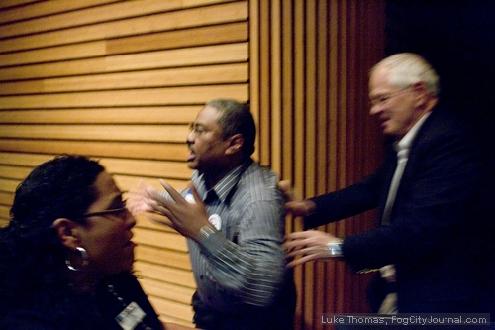
At least, that’s what Luke Thomas is reporting in Fog City Journal. He’s got photos, too.
The way the story goes, Bates was speaking at a PG&E-sponored forum, and Mark Toney, director of The Utility Refrom Network (TURN) came up uninvited to speak out against Prop. 16. So the mayor of Berkeley physically pushed him out of the way.
Now, why Tom Bates was speaking at a PG&E-sponored forum (and saying nice things about the company) at a time like this is beyond me. And typically mayors don’t take it upon themselves to eject protesters from meetings.
I’ve got a call into Bates for comment, but his staff hasn’t gotten back to me.

Joel Kotkin, the author and urban scholar, was on KQED’s Forum this morning talking about what he called “the war on the suburbs.” He’s got a new book out, called The Next Hundred Million: America in 2050, and he’s arguing, among other things, that the election of Scott Brown in Massachusetts signals that the Democratic Party and progressives in America have lost touch with the suburbs and are being mean to the poor suburbanites.
He talked, for example, about Tracy, California, and noted that a suburbanite living in Tracy doesn’t want to pay taxes because he doesn’t see what he’s getting for his money. Kotkin sugggestes that the state ought to go back to the Pat Brown era, and focus on spending money on infrastructure, instead of on “state employee pensions.”
Never mind that when Pat Brown was governor, the population of California was less than half what it is today — and the state was far less diverse, had far fewer immigrants, far fewer residents whose primary language is not English and, frankly, was a lot more tolerant of poverty.
That was also before the passage of Prop. 13, so the state didn’t have to spend money on schools and local government; local property taxes covered those things.
In fact, I think what’s going on is just the opposite of what Kotkin is talking about. (He, by the way, says that suburbs are going to be more and more sustainable as more jobs relocate and we start using natural gas in our cars.) I realize that suburban voters can easily shift to the Republican party if the Democrats aren’t careful, but I also think that what’s happening in the United States today is not a war on suburbs but a war on cities.
The state and federal governments have systematically defunded urban America for more than 30 years now, and we’re paying the price. The hypothetical suburbanite in Tracy may think he’s not getting his money’s worth, but the truth is just the opposite; the suburbs — typically, not always but typically — have better-funded schools, better maintained streets, better sewage systems, less crime … and less of an income gap among residents.
Cities are, and will remain, America’s future, and we ignore that at our peril.
Come on, folks.
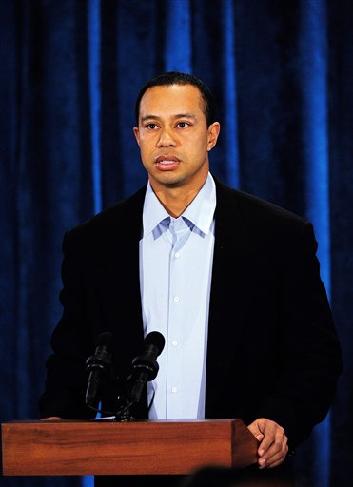
Tiger woods just made international news with a 15-minute press conference in which he … apologized to his wife. Oh dear me, I’m so bad, I’ve let the whole world down, won’t you ever forgive me, I need more treatement, I need more therapy, please oh please I’m an awful human being but I’m trying to win back your respect …
Ladies and Gentlemen of the press: Tiger Woods didn’t kill anyone. He didn’t run over a child, or beat up a nun, or stab someone to death in a drunken bar fight. He didn’t steal money, or bankrupt the United States financial system. His dick just isn’t that important.
And Tiger, dude, get a grip: You cheated on your wife. You had affairs. I’m not condoning it, but Jesus: If every prominent person in the world who was unfaithful to his or her spouse had to take six months off, go into seclusion and act like a little spoiled baby, the world would come to a halt and nothing would ever get done.
Man up, Mr. Woods. The Masters starts in a month and a half. Quit whining and get back to work.

II mean, they’re really hot, of course, almost by definition.
But that’s not why I love the snowboarder girls. Here’s the thing (and it goes for the men, too; I just happened to be watching the women last night):
Every Olympics, every major competition, the boarders push the limits, try to do something they might not be able to pull off, and half of them fall, crash and burn, wipe out — and when they take off their helmet and goggles, they’re smiling.
It’s as if they love what they’re doing so much that it hardly matters if they just lost a shot at an Olympic gold medal.
It’s like, “dude — fuck the hardware. Did you see that sick move I almost landed? Whoa, I was like 20 feet above the pipe, man.”
For the snowboarders, it’s about the sport, not the winning. Sure, they’re intense competitors, but they also cheer each other on, and never play it cautious and just go out there and have a blast.
Compare that to the figure skaters, who are, of course, astonishing athletes and beautiful to watch — but they do their pre-scripted routines and seek perfection in planning and execution … and if they miss a jump or fall, it’s as if the world has ended. They try to smile through the obvious pain and you almost don’t want to watch.
The boarders, though, they’re into the real Olympic spirit. Swifter, higher, stronger, dude! Party on.

You can say this for Police Chief George Gascon: He’s not shy. He’s pushing so many things, on so many fronts, that it’s hard to keep track, and some of them are real problems. One example: The Feb. 17th Police Commission meeting, where Gascon paraded a bunch of experts to talk about how great it would be if the SF cops had tasers.
I’m not against tasers per se; I’d rather the cops were shooting people with less-lethal weapons than with pistols. Quite a few people might be alive today if the more trigger-happy among Gascon’s force pulled a trigger that didn’t send a deadly bullet into a suspect’s body.
But you have to remember that a taser can be a lethal weapon, too; people die from taser blasts.
And when I talked to the folks in the SFPD public affairs office recently, they told me that the chief was drafting guidelines on the use of tasers, and that the taser would fall somewhere in between the use of a baton (non-lethal in all but the most exceptional cases) and a gun (lethal). That’s the wrong approach — and it’s what’s missing from Gascon’s argument.
A cop is only allowed to pull a gun in a situation where lethal force is justified; that is, when the officer’s life of the life of another person is in imminent danger. Same rules should go for the taser. That’s where the commission has to come in, because I don’t think Gascon is going to make that policy.
In fact, I’m getting the impression that the chief doesn’t like anyone else to make policy for him. That’s why he’s got an oped in the Chronicle today that goes after two proposals from Sup. Ross Mirkarimi. Gascon:
The San Francisco Board of Supervisors has proposed two pieces of legislation that would directly impact my ability as chief to provide effective and efficient public safety. One of these pieces, which would establish a community-based foot-beat patrol program, directs subordinates under my command to establish staffing levels absent my direction or control. The second, which seeks to require the police department to itemize the cost of dignitary protection, would jeopardize the safety of public officials who receive valid threats against themselves or their loved ones. These legislative proposals directly circumvent my ability to lead this department effectively. This ultimately makes the goal of making San Francisco the safest large city in America more difficult to achieve.
Translation: I don’t like the San Francisco supervisors setting law-enforcement policy. But actually, that’s the board’s job — to set the rules for how all city departments, including the SFPD, operate.

I’m not going to actually suggest that anyone watch all four hours-plus of the Planning Commission hearing last week on the highrise condo tower at 555 Washington. But if you’ve got the time, it’s a fascinating video.
And here’s what’s most interesting: A lot of the discussion revolved around what Commissioner Michael Antonini said was a need to continue the item to a later date. That’s because three of the commissioners — the ones appointed by the Board of Supervisors — were dubious about the project’s environmental impact report, so it would take all four of the mayoral appointees to let the project go forward. But Commissioner Gwyneth Borden couldn’t make the meeting. Antonini went ballistic at one point, and stormed out of the room, saying that it was disrespectful to Borden not to grant a continuance.
That struck Commission Vice-President Christina Olague as kind of odd. “I was taken aback by the accusations that we were somehow being insensitive,” she told me. “To my knowledge, Commissioner Borden never made any request for a continuance. There was nothing in writing and she never communicated it to me.”
But then the strangeness started to happen. Commissioner Hisashi Sugaya moved not to certify the environmental impact report on the project. That motion was defeated, 3-2, with Antonini off in a huff somewhere and Borden absent.
Now, normally, in these situations, the president looks for a substitute motion. In this case, a motion to approve the DEIR could have been made, and that, too, would have been defeated. Once the motion to approve went down, the DEIR would be scuttled and the developer would have to start again.
But instead, the commission secretary simply announced that the matter would be continued to March 18. And a week later, I’m still trying to figure out how that was possible.
After all, the commission had decided — openly, in public — NOT to accept a continuance. Then all of a sudden, without a vote of the body, Antonini got his way. The DEIR will be heard again, presumably with the mayor’s fourth vote present.
This is a major project, and I’m not going to argue that it’s fate should hang on an issue of procedure. But nobody has been able to explain to me how a matter gets continued without a vote to continue. The best I can figure is that without any motion on the floor, and no action pending, the secretary had no choice but to continue the matter.
“It all happened so fast,” Olague said. “I want to go back and review everything to see exactly what ocurred.”
Attorney Sue Hestor, who opposes the project, told me that after the lengthy list of serious flaws with the DEIR, which were presented in great detail at the hearing, it will be hard for the commissioners to certify the document. But the pressure from the Mayor’s Office is intense — Michael Yarne, the mayor’s Economic and Workforce Development advisor, was at the meeting, cornering commissioners outside. And four of the members serve at the mayor’s pleasure.

Gavin Newsom still hasn’t said for sure that he’s in the race for lt. governor, although just about everyone in town now thinks he’s going for it.
But the very prospect of the mayor leaving office before his term is up has the political classes speculating: Who gets that job? And how does it happen?
It’s actually pretty interesting.
Under the City Charter, the president of the Board of Supervisors becomes acting mayor in the event that the mayor leaves office before the end of his or her term. Then the supervisors, by a six-vote majority, can appoint someone else to the job.
Melissa Griffin lays out one piece of the scenario, which is that the board could appoint a new mayor in advance, without anyone serving as acting mayor.
But there’s much more to the story.
According to a fascinating city attorney’s opinion issued in 1978 (PDF), when George Moscone and Harvey Milk were killed and Dianne Feinstein was board president, no supervisor is allowed to vote on his or her own appointment. Which would mean that if, say, Board President David Chiu wanted the job, he’d need six votes not including his own.
Now the plot thickens. Suppose nobody can round up six votes — that is, a majority of the supervisors can’t agree on a new mayor? Well, Chiu, as board president, would be acting mayor — potentially for the entire duration of Newsom’s term, roughly a year. He’d also remain as board president. It’s the same as if the mayor goes out of the state and names an acting mayor in his place; that person is still a supervisor. So Chiu would have all the powers of both the mayor and the board president — and immense amout of clout for one person at City Hall.
But wait, there’s more: Chiu is board president only until the board elected in November of this year takes office, which would be about five days after Newsom would become lite guv. So unless the current board can choose a new mayor, with six votes (not including the vote of any supervisor being nominated), the new board would elect a new board president — who would instantly become acting mayor at the same time.
And since supervisors are allowed to vote for themselves for board president, any member would be allowed to vote for him- or herself for acting mayor.
Confused yet? Clearly, the folks who wrote the City Charter never actually envisioned this scenario (or didn’t think about it very much).
Of course, what that means that with the current board split the way it is, with exactly six solid progressive votes, someone who isn’t currently on the board (say, Aaron Peskin — or Tom Ammiano, or Mark Leno, or whoever) would have a better chance of getting a majority than a current member, who would need at least one of the moderate bloc votes.
And if Newsom runs, it will make the fall supervisorial elections even more important, because potentially those newly elected supes will be choosing not only a board president but a mayor.
Here’s another fun twist: If District Attorney Kamala Harris is elected attorney general, the mayor gets to appoint a new D.A. But suppose Newsom also wins and is sworn in a few minutes before Harris. Presumably acting mayor David Chiu (a former prosecutor who rumor has it might like to be D.A. himself someday) would choose the new D.A. — and suppose Chiu knows he doesn’t have six votes to be mayor. There’s no reason why he couldn’t appoint himself D.A., leaving a vacancy on the board and a vacancy for board president, which would be filled by anyone who could get six votes, who would then be acting mayor and could appoint a new supervisor to Chiu’s seat. Who could then be the deciding vote on who gets to be mayor.
Whoa. I can’t wait. Run, Gavin, Run.
Assemblymember Tom Ammiano is trying to put property-tax reform back on the California agenda. He’s introducing a measure that would call for taxing commercial and residential property at different rates — which would involve a significant change to Prop. 13. It’s been tried before, and big business interests have always managed to shoot it down, but as Ammiano puts it, these are different times:
“For over thirty years, Proposition 13 has allowed corporate landowners to benefit from tax loopholes while shifting the real tax burden to individual homeowners and reducing California’s tax base. “We cannot continue to cut funding from our schools, our parks and our vital human services without addressing the need for new revenue and an equitable tax system. Reforming Proposition 13 will not solve all of the state’s budget problems but it’s a crucial step in the right direction.”
It’s not exactly clear at this point what form the legislation will take; it might be a resolution followed by a Constitutional amendment. And I don’t think even Ammiano believes that both houses of the Legislature will happily vote to make big commercial property owners pay their fair share of the state’s tax burden. But it’s worth talking about, worth pushing, worth reminding people that one of the reasons the state is so broke is that the property tax system is frozen in time, a legacy of a very different era in California.For over thirty years, Proposition 13 has allowed corporate landowners to benefit from tax loopholes while shifting the real tax burden to individual homeowners and reducing California‘s tax base. We cannot continue to cut funding from our schools, our parks and our vital human services without addressing the need for new revenue and an equitable tax system. Reforming Proposition 13 will not solve all of the state’s budget problems but it’s a crucial step in the right direction.”
And a split roll is probably the only way to amend Prop. 13 at this point, since so many homeowners are so happy with it.

The rumors that Newsom is going to announce imminently that he’s running for Lt. Governor turned out to be a bit premature.
But I am still hearing from very solid sources that he’s seriously considering jumping into the race — and while the San Francisco left didn’t back his run for governor, this would be a very different campaign. The Lt. Gov. isn’t really in charge of anything, but has a certain amount of power, not just from the platform and the ability to issue press statements (one of Newsom’s favorite hobbies), but because that person gets a seat on the state Lands Commission (offshore oil drilling) and the U.C. Regents (education cuts). Newsom would most likely be fine on both issues.
And the truth is, we all know Newsom doesn’t really want to be a wine clerk.
And lieutenant governors are often well positioned to move on to higher offices it worked for John Kerry, for example (and for Gray Davis, if you call that working). I think Newsom would love to position himself to run for U.S. Senate when Dianne Feinstein, who will be 79 when her current term expires in 2012, decides to retire.
And, of course, from the perspective of progressives infuriated with what he’s done as mayor, it would get him out of town a year early, and let this district-elected board appoint a new chief executive.
That’s got all sorts of talk started, with the typical Chronicle-style “Oh My God Aaron Peskin could be mayor” stuff (and let’s be serious — Peskin would be a way better mayor than the current occupant of Room 200) to serious discussion about how this will affect the 2011 mayor’s race.
If any of the current contenders could round up six votes, it would be a major boost; that person could then run as an incumbent.
I don’t think this board would ever choose state Sen. Leland Yee, who is positioning himself for the run. City Attorney Dennis Herrera? Maybe — but given how pissed some of the progressives are about the Sanctuary Ordiance, it would be a stretch.
Sfist is running a poll, and right now it looks like the readers like Ross Mirkarimi but think Peskin or David Chiu is a more likely winner.
And trust me, even the thought of Gavin leading town has that scramble already heating up.

Tredmond@sfbg.com
I have been watching and listening to the Meg Whitman for Governor ads, and they all seem to have the same basic message, one we’ve heard many times before from rich former executives wanting to get into politics. Whitman thinks that her experience in private business will make her a good governor, that she can run the state the same way she ran eBay.
Her policy proposals are horrible (just check out what she wants to do to the schools and how she plans to cut the state workforce by 40,000 people, a brilliant move in a recession). But beyond that, there’s a serious disconnect here.
See, California isn’t a business. And private-sector training, private-sector models, and private-sector management don’t translate very well.
At eBay, Whitman’s goal was to make money for shareholders. The idea was to expand markets, grow market share, increase revenue, and keep expenses low enough that at the end of the year, there’s a nice profit left over. Not to go all Marxist or anything, but you had to pay every employee a bit less than actual value of their work; that’s how investors make money.
California is — at best — a nonprofit, and even that model doesn’t directly apply. Forget the political skills it takes to work with the Legislature and thousands of interest groups and stakeholders. Just consider the basic economics.
The state doesn’t exist to make money, but to provide public services. Fiscal prudence may be necessary to keep things afloat, but it’s not the point. As the late, great David Brower used to say, any environmental group that isn’t busting its budget, isn’t doing enough work. Revenue doesn’t exist to pay dividends, or even big salaries. In a well-run state, just about every dollar that comes in gets spent. And many of the outcomes — the results that CEOs are always looking for — can’t be easily quantified, certainly not in the short term. (Spend an extra $20 billion on public education and you’ll definitely get better schools — but you might not get better test scores, certainly not for the first few years.)
There’s a reason that CEOs don’t tend to do well in politics. It’s a different game.

Gavin Newsom’s going to announce his campaign for Lt. Governor in a few days.
That’s what inside sources are telling us, anyway. (And the rumor’s been circulating for a bit.) The mayor has been making a lot of phone calls in the past few days, checking in with supporters and lining up allies. And he’s ready to make the leap.
(Other sources say just the opposite, but such is San Francisco politics.)
The move makes a lot of sense from Newsom’s point of view; he’ll be termed out of office in two years, with nothing much to do on the horizion. And for a politician with heavy ambitions, that’s a bad place to be.
In the Lite Gov’s spot, he can keep a high profile, push education issues (the Lt. Gv. is a member of the UC Regents), make a bunch of speeches — and have no responsibility at all for actual follow through, which was never his strong suit.
And he’ll be positioned to run for an office like U.S. Senate should Dianne Feinstein decide to retire.
The issue has always been the local impact: If Newsom wins — and he would enter the race as the odds-on favorite — then he’d have to resign his job as mayor with a year left, and the supervisors would pick an new mayor, who could then run for re-election as an incumbent. Newsom’s money guys have never been happy with the prospect of leaving the city in the hands of a mayor appointed by a progressive majority on a district-elected board, but Newsom’s over that, our sources say. He’s thinking of his own future, and it looks like Sacramento.
So no confirmation, this is still at the rumor stage, but I’m betting he goes for it.
Los Angeles Times writer Michael Hiltzik weighs in again on the PG&E initiative, which is now on the ballot as Prop. 16.
He argues that the deck is stacked in PG&E’s favor here — the utility can spend all the money it wants — $30 million, $40 million, whatever — and the public agencies that will be hurt by the measure have no ability to fight back since they can’t spend taxpayer money that way PG&E can spend ratepayer money.
His conclusion:
Every candidate for governor should be required to state, for the record, whether he or she thinks it’s OK for PG&E to subvert the electoral process by spending $6.5 million (and counting) exclusively for its own corporate benefit. Thus far the GOP candidates, Meg Whitman and Steve Poizner, have been silent as far as I can tell, as has the putative Democratic nominee, Attorney General Jerry Brown.
And the rest of us should turn out to vote June 8, by the millions, to make a statement about who owns the state of California: the people, or PG&E?

The battle over 555 Washington — the too-big highrise that will house 248 luxury condos that San Francisco doesn’t need — is going on right now, and you can watch it on sfgtv.
Supporters and opponents have been testifying for more than two hours. Sue Hestor mae one of the key points toward the end of the testimony: Does “new urbanism” say that we have to fight suburban sprawl by putting 400-foot buildings everywhere in San Francisco?
She also pointed out that the building has so much parking that the lines to get in and out of the underground garage will impact the only downtown fire station, a block away.
Already, Planning Commissioner Hisashi Sugaya is arguing that the EIR on the project is completely bogus and invalid (although he carefully avoiding saying he will vote against the project).
This is one of the major development battles of the year, and will demonstrate whether the Planning Commission and Recreation and Park Commission have the independence and integrity to reject a project the mayor and the Chamber of Commerce support.
UPDATE: The hearing ended in the strangest way. After more than two hours of testimony — most of which showed the inadequacy of the EIR, which has to be certified as complete before a final vote on the project itself — Sugaya moved NOT to certify the document. That motion failed, 3-2. At that point, the commission secretary said that the matter would be put off until March 18th.
The strange thing is that if the motion had been in reverse – a motion TO certify — that also would have failed (either way, four yes votes were needed, and two commissioners weren’t there). And then the matter would be over; the EIR would not be certified, and the developer and city planning dept. would have to go back and redo it. In this case, since a motion to reject failed, and there was no motion to accept, it’s not clear where the EIR is.
Aaron Peskin, a foe of the project, told me just now that he doesn’t see how the commission can legally continue the hearing. “There’s nothing to continue,” he said. “There’s no certified EIR.” That, in the end, will be up to the city attorney. I’ll keep you posted.
The Bay Guardian will be in court Thursday morning, Feb. 11, to ask a San Francisco judge to force SF Weekly to hand over half its advertising revenue as partial payment on a $21 million judgment.
The paper also filed a motion Feb. 9th asking Judge Marla Miller to add two of the corporations that make up SF Weekly’s parent company to the judgment.
The judgment came as the result of a Guardian lawsuit charging SF Weekly and the national chain that owns it with predatory pricing — that is, selling ads below cost in an effort to harm the locally owned, independent competitor. A San Francisco jury awarded the Guardian $6.3 million, which Judge Marla Miller increased to $15.6 million. With attorneys fees and interest, the judgment is now worth more than $21 million.
But Village Voice Media, the SF Weekly’s owner, has refused to pay — hiding in part behind a complex corporate structure (pdf).
The motion that will be heard Feb. 11 before Judge Paul Slavit marks the latest effort by the Guardian to collect some of the money. The paper has already seized two SF Weekly vehicles and the rent the company gets from subtenant.
The other motion, which will be heard March 12 in Judge Miller’s court, seeks to amend the May, 2008 judgment to include Village Voice Media LLC and Village Voice Media Holdings LLC.
VVM is arguing that that the Weekly has no unencumbered assets and that New Times Media LLC, which owned the weekly at the time we filed the suit, is just an empty holding company.
The Guardian’s lawyers argue that VVM and New Times are essentially the same company, with the same directors and same owners, and that VVM is a successor to New Times because of a 2006 merger.
There’s a good report on the issue in the Stranger.
The motion for assignment of ad revenue will be heard at 10:30 a.m. in San Francisco Superior Court, Dept. 610.
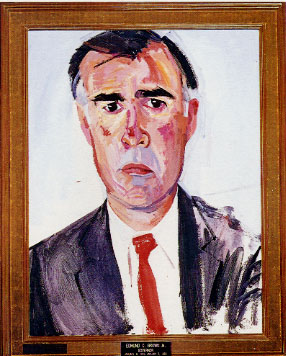
When the state Legislature approved the law allowing cities to create local public power co-ops, the bill specifically barred private utilities from interfering. So it’s easy to argue that Pacific Gas and Electric Co.’s ballot initiative to squash public power is, in fact, direct interference.
After all, the measure would create an almost insurmountable obstacle to creating community choice aggregation.
And the attorney general of California ought to be making that precise argument in court and trying to get this ballot initiative thrown out.
Sen. Mark Leno, a strong foe of the measure, told us he’s been in touch with Attorney General Jerry Brown’s staff, and is urging them to take action. He said he’s been assured the office is looking into the issue.
It will be interesting to see what Brown does. As governor, he was a strong opponent of PG&E’s Diablo Canyon nuclear power plant, and spoke at anti-nuclear rallies, but since then, he’s been awful wishy washy (and has, for example, never been an open supporter of public power.)
Now, however, he’s running for governor — and PG&E is one of the most hated institutions in the state. The old Jerry took on corporate power and positioned himself as a populist; this latest incarnation of Jerry could pick up a lot of progressive support (which he badly needs) and force Meg Whiman into a corner (what, is she going to support PG&E?).
So how about it, Jerry?
(And by the way, the San Francisco supervisors ought to pass a resolution calling on Brown to sue to get this evil measure off the ballot.)

tredmond@sfbg.com
It was, the San Francisco Chronicle proclaimed, the end of the world for development in the city, or at least something close to that. A ballot measure, sponsored by Sup. David Chiu, restricting new buildings from casting shadows on city parks “could imperil major development projects,” a Jan. 28 article by John Cote said. “Everything from a new wing at the San Francisco Museum of Modern Art to the expansion of the Moscone Center and creation of a new downtown core around a rebuilt Transbay Terminal could be affected.”
A lot of that is wildly exaggerated. The Chiu ordinance, which has since been pulled from the ballot pending a city study of the issue, would hardly have halted all development — or even all high-rises — in San Francisco. It wouldn’t have gutted the Transbay Terminal plan (although it might have forced planners to reduce the height of a tower that would soar 400 feet above the tallest building in San Francisco). In fact, the real story is how Chiu has managed — for now — to stop a backroom attempt by developers to undermine a 25-year-old environmental law. We found some fascinating evidence of how Mayor Gavin Newsom has been working with the San Francisco Chamber of Commerce to undermine Chui’s efforts — using broad threats to try to get his way.
Chiu’s legislation sought to clear up a couple of loopholes in a landmark 1984 law, which passed on the ballot as Proposition K. The measure, authored by then-Sup. Bill Maher, essentially barred any new construction that would cast a significant shadow on a city park.
In 1989, the final implementation guidelines were approved, and they’ve stopped literally hundreds of proposed projects from casting dark shadows on public open space.
But in the past year, city planners have been meeting with lawyers for big developers and looking for a way to change the rules. Citing new technology that better measures the curve of the earth and complex algorithms that calculate sunlight, the Planning Department has since proposed revising the Prop. K guidelines — in a way that would allow taller buildings and more shadows without getting the approval of voters or supervisors.
Chiu told us he’s been trying for months to find out exactly what the proposed guidelines would do — how many new buildings, at what heights, would be able to shadow which parks. “I was unable to get any answers,” he said.
The measure he drafted would have barred any new guidelines that allowed more shadows — and would have required the Board of Supervisors to sign off any changes. It would still allow the city to make case-by-case exemptions for projects that cast minor shadows but are otherwise deserving of approval — affordable housing developments, for example.
But downtown went nuts — and Newsom joined the fray.
The crux of the opposition came from the Chamber — and is outlined in an e-mail from Chamber Vice President Rob Black to members of the Chamber board.
“The mayor was very direct and clear about the need to defeat the measure,” the e-mail, which we obtained, states. “The mayor was also very clear that he was in no mood for deal-making on the issue and that he would look very unfavorably on any developer or anyone else who tries to cut a deal with David Chiu on the issue. He literally said, you will be on your own for the next two years if you go there.”
Black confirmed that the e-mail was in fact his — but said the version we’d obtained “has been edited. Some words were changed and other omitted.” He refused to say what the changes were, saying that the e-mail was meant to be a confidential communication to his board. However, he confirmed that the basic message and descriptions of a meeting with Newsom were accurate.
Tony Winnicker, Newsom’s press secretary, confirmed that Newsom had been directly involved in trying to scuttle the ordinance — and didn’t deny the mayor had made those threats.
“The mayor made clear the importance of asking the supervisor to withdraw the measure,” Winnicker wrote in an e-mail to us. “The mayor was clear that backroom deal-making should not be tolerated on the issue.”
Chiu was somewhat aghast at the mayor’s statements. “The context for all this is that the developers and their lawyers were trying to change the rules,” he said.
Aaron Peskin, the former supervisor and longtime North Beach neighborhood activist, told us that the “hysteria around this is factually untrue. This isn’t about stopping development — it’s about making sure development doesn’t have an adverse impact on the city’s common space.”
So now Chiu has agreed to hold off — but only if the key stakeholders (not just developers) have some input into how planning devises new shadow rules. And he’s ready to go back to the ballot in November if the developers try to play games again.
That makes sense, Gabriel Metcalf, executive director of the San Francisco Planning and Urban Research Association, told us. “There should be a heavy burden of proof on the people who want new rules,” he said. “And there should be a heavy burden of proof for anyone who wants a ballot measure.”
In other words, Prop. K — as it is, as it’s stood all these years — is working pretty well. And if the developers hadn’t tried to sneak in some big changes, none of this would have happened in the first place.
tredmond@sfbg.com
Progressives don’t have to be afraid of economic development, don’t have to be afraid of promoting business and creating private-sector employment. And we don’t have to be terrified of a mayor who wants to label anyone who opposes Reagan-era economic policies as anti-jobs.
The thing is, San Francisco needs to promote the biggest engine of new employment — small business — and needs to encourage entrepreneurship and innovation. But there’s enough good economic science out there, enough evidence of what works and what doesn’t, that we don’t have to be stupid.
The most obvious example of that is tax cuts. We talk about the mayor’s tax plans this week — and what’s most remarkable is the consensus among economists, even the city’s own economist, that what Newsom is proposing won’t work.
If cutting specific taxes for certain businesses — say, waiving the 1.5 percent payroll tax for biotech — would actually lead local companies to hire hundreds of new people, it might be worth the budget pain. But that’s not going to happen. If allowing developers to pay their affordable housing fees years down the road would put thousands of construction workers back on the job, you could make the case for it — but nobody with any sense really thinks that’s likely.
What do we know would create employment opportunities? Well, a giant affordable housing bond, hundreds of millions in city money going to build new apartments, would generate construction jobs. But what most small businesses really need, what would really encourage hiring, is credit. If San Francisco took the money it’s going to expend (and tax cuts are an expense; let’s be honest) and put all of it into a revolving microloan fund for community businesses, we’d get a lot more jobs. In fact, almost any way that San Francisco spends that money on direct services would create more jobs than these tax cuts.
That’s not politics or ideology or anything else. It’s just reality.

By Tim Redmond
I want to come to the defense of Beyoncé. Not that anyone who just won six Grammys needs my defense or cares much what I have to say, but the talented Ms. Knowles has gotten some shit lately, particularly from my colleague at BeyondChron, Randy Shaw, who says she “embodies the soulless Starbucking of the Music Industry.”
He complains:
“Beyoncé provides the homogenized sound that today’s music industry touts, and which it rewards as the best it has to offer.”
And he waxes nostalgic about the good old days of
“the rebellious rock stars of the 1960’s, and the soulful and truly passionate voices of Aretha Franklin, Mary J. Blige, Janet Jackson, and the stars of Motown.”
Well, Randy Shaw’s not known as a music critic, and neither am I, but I can tell you this: As the father of a seven-year-old girl, I know from today’s pop.
Movin’ 99.7 is the soundtrack of the Redmond-Field household these days. Vivian has pretty much seized control of the CD player, and when she’s dancing at night instead of doing her homework, and dancing in the morning instead of getting dressed and ready for school, the living room is filled with Lady Gaga, Taylor Swift, Miley Cyrus, the occasional Jonas Brothers tune (although she generally sneers at anything that isn’t sung by a girl) and, of course, Beyoncé.
We watch Hannah Montana, I Carly, and Wizards of Waverly Place. We party with “Party in the USA.” Sometimes, we go to the show.
It’s what’s going on in her world – and frankly, it’s not that bad.
Look, I grew up around the same time Randy Shaw did, and while we can all celebrate the great rock, soul and Motown hits of the time — and there was outstanding, world-changing music being produced — the popular songs dominating the airwaves were often terrible.
When I was Viv’s age, the number one song on the New York music stations was an abomination called “Wedding Bell Blues” (The Fifth Dimension). My classmates dug Bobby Sherman (“Easy Come, Easy Go,”) – I mean, Woof. We endured a group called The Archies, which was a fake rock band derived from an awful cartoon TV show derived from a really lame comic book – and on the bogosity level, that’s even more meta than Hannah Montana. And remember that blockbuster band America, with the heavy hit “Muskrat Love,” which may count as the single worst pop song ever to make it onto the public braodcasting spectrum?
In fact, I think it’s safe to say that nothing I hear on Viv’s radio stations is anywhere near as bad as 50 percent of what WABC played in those glorious days of the late 1960s and early 1970s.
There was a whole lot of starfucking soullessness in the music industry back then, too. And the record companies were always looking for ways to exploit garbage and turn it into money through relentless hype.
I’d even argue that the power of the soulless recording industry is far less now than it was when we grew up. The Oakland hip-hop movement in the 1980s proved that you could bypass the big guys by selling CDs out of the back of your car and get traction. Today you can do it with Itunes and Twitter and your website.
And honestly? As pop music goes, you can do a lot worse than Beyoncé. Maybe her live performances don’t excite Randy Shaw, but the Grateful Dead couldn’t do studio. I’m not so into the endorsements thing, either, but I think we all lost our virginity on that one when Jagger, Richards & Co. sold “Start Me Up” to Microsoft in 1995.
And you have to admit, the girl can sing.
We listen to “I am … Sasha Fierce,” Viv and me, and we crank it up and dance and sing along and have a great time. I love “Halo.” I have it on my Ipod. It plays in my party shuffle mix when I’m at the gym, along with “Radar Love” (Golden Earring), “Roll With the Changes” (REO Speedwagon), “Fool in the Rain” (Led Zeppelin), “Love Child (Diana Ross), “Apeman” (the Kinks) and about 100 more examples of the Most Important Songs Ever Written.
In fact, when I read Randy’s piece, I thought about my father, looking at my brother and me as we took his Perry Como records off the player and put on some Rolling Stones, and shaking his head and saying:
“Kids these days.”
This is the kind of thing that drive me nuts about the Newsom administration.
A few days ago, SF Appeal ran an item on a speech Newsom gave about condo conversions. The mayor wants to let more people turn rental units and tenancy-in-common units into condominiums; that, Newsom argues, will bring more revenue into the city treasury (those conversion permits are expensive).
But there’s a reason why the city limits to 200 the number of units that can be converted in any one year. Turning a rental unit into a condo reduces the number of rentals available, and turning a rent-controlled unit into a condo (or into a TIC and then a condo) cuts into the affordable housing stock.
And a majority of the supervisors, who recognize the impact the mayor’s plan would have on tenants (by making it easier to take rental units off the market), are dubious.
Okay, that’s a difference of opinion. You don’t have to make it personal. And yet, at his press conference, the mayor insisted that
“Half of the members of the board have been beneficiaries of condo conversions, and yet they deny it to other people.”
As the Appeal pointed out, that’s simply untrue.
A majority of Board members own their homes, according to a check of property records: mayoral allies Michela Alioto-Pier, Sean Elsbernd and Carmen Chu all enjoy the benefits of owning and equity, as do Sophie Maxwell and progressive Budget chairman John Avalos.
Eric Mar and David Chiu rent, according to a City Hall source. Chris Daly lives in a condo, but “my condo has always been a condo,” according to the supervisor (and according to the Assessor-Recorder’s Office, Daly at least bought his condo as a condo and not a tenancy-in-common or conversion).
By all accounts, progressive Ross Mirkarimi is on the condominium-conversion waitlist (an older news report says Ross owns a TIC and is on the conversion list; we’ll check in with him to confirm, he is at this moment still in committee). Mirkarimi and Bevan Dufty would be the two Board members conflicted-out of any votes on condo-conversions; Dufty went from a condo to a TIC after his daughter was born.
“And nobody was evicted,” the Bev told us today.
Okay, as I see it only one supervisor is even in a position to benefit from the condo conversion law. So I asked Tony Winnicker, the mayor’s press secretary, whether Newsom had been misquoted. Apparently not. So why did ne make an innacurate statement that insulted half the members of the board?
Winnicker:
His comments came in the context of the polarized politics of San Francisco which pit tenants vs homeowners to the benefit of no one. He was speaking that many Boardmembers enjoy the benefits of homeownership and that opposing the condo conversion proposal denies those benefits to others who are already living in TICs and displacing no one through condo conversion.
But there’s a big distinction between what Winnicker is talking about and what Newsom actually said. It’s entirely possible to be a homeowner in this city without evicting anyone and without taking a rental unit off the market. That’s what most of the homeowning board members have done.
As for TICs “displacing no one,” that’s wrong, too. The number one cause of no-fault evictions in this city is the use of the Ellis Act to clear the tenants out of a building to create a TIC. The only thing holding the TIC epidemic in check is the fact that the TIC ownership model is complex and a bit tricky. The minute you can convert those TICs into condos, you open the floodgates for a lot more of them — and that means a lot more evictions.
Newsom can make the case for condo conversions just fine without making factually inaccurate statements that insult the supervisors. Instead he pulls this shit. And then he complains about the supervisors not wanting to work with him
Drives me nuts.