Tim Redmond

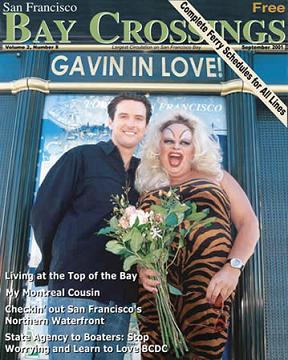
Gavin for Lite Guv?

1

Willie Brown thinks it’s a good idea. And you can tell Newsom wants to consider it, since he knows there’s nothing else obvious for him to do once his term as mayor is up — and there are going to be a lot of options not too far down the road. Sen. Dianne Feinstein isn’t getting any younger, and at some point she’ll retire. If Jerry Brown doesn’t get elected governor, the Democrats will be looking for someone very different in four years. But once a politician like Newsom is out of office and out of the spotlight, he’ll have a hard time coming back.

So he could sit up there in the Lite Gov’s office, doing what John Garamendi did — taking on issues like cuts to the University of California (the Lt. Gov. sits on the Board of Regents) and making speeches about reform, and maybe he could get out in front of this constitutional convention stuff, and keep his name in the news, without having to make a single difficult or unpleasant decision that he can be blamed for later.

You know he wants to do it ….

But there’s this problem, and for Newsom, it’s very real.

As people close to the mayor have told me repeatedly, the money people who helped put the mayor in office — and who would have to be around to help him run for any other office — are not at all pleased with the prospect of Newsom leaving San Francisco a year early. See, that would give the district-elected supervisors the chance to fill the mayor’s job for the last year of Newsom’s term, and the person they appointed would be able to run as an incumbent.

And while it’s not clear who could get six votes (David Chiu? David Campos? Ross Mirkarimi? Aaron Peskin?) it’s pretty clear that the new mayor would not be an ally of Newsom’s pals.

Sure, when he was running for governor, it seemed fine — having their guy in charge of the state was worth the loss of the San Francisco mayor’s office. But for a relatively powerless job? I think they’d crucify him.

Trash Lit: Things are weird around ‘Mariposa’

0

Editor’s note: Guardian Executive Editor Tim Redmond has a bad 30-year addiction to mystery/crime/thriller books. He’s decided that he may as well put this terrible habit to productive use by writing about these sometimes awful, sometimes entertaining and — on rare occasion — significant works of mass-market literature. Read his last installment here

mariposa.jpg

Mariposa
By Greg Bear
(Vanguard Press, 340 pages, $25.95)

By Tim Redmond

Good science fiction has a moral, of sorts. Frank Herbert wrote about the scary power of a charismatic leader. Robert Heinlein gave us the fun of free love and the lie of religion. William Gibson outlined the weird dangers of a digital society. My favorite sci-fi movie ever, RoboCop (1987), was all about the perils of privatizing public services.

Mariposa is part science fiction and part action thriller, and the mix works. I liked this book a lot – it’s got creepy tech advances — digital storage devices that dissolve in your blood; tattoos that allow you to exchange information by skin-to-skin contact; monitoring chips that follow your every move; roller bots; a new drug that makes you a near-legendary fighter and totally fucks up your brain – as well as a message that’s eerily relevant.

Mariposa‘s opening is bizarre. The first chapter seduces you in a way that reminds me of Neuromancer. It’s the second decade of the 21st century. Oil prices have collapsed, destabilizing much of the Middle East. The United States is $30 trillion in debt and the president has had to accept IMF-style international receivership. “And it’s all our fault,” one character notes. “We do hate paying taxes, and we do love our government services.”

And the news media? “The dwindling national press – those journalists who still worked for networks or newspapers or the five prime news sites and could afford to travel rather than just sit in front of a screen and suck coffee and pontificate on what others saw and wrote – was as worn out and discouraged as the rest of the nation.”

Most of Texas is no longer under effective federal control. The FBI is in the process of being dismantled.The real, emerging power in the nation, and perhaps soon the world, is the head of a giant private security company that got rich off military contracts. In fact, he’s trying to prove how powerful he is by orchestrating the death sentence of a 15-year-old kid who has the misfortune to be the son of a federal agent.

Into this nightmare step a handful of still-loyal FBI operatives working directly for the dying president, who has been shot with a bullet laced with deadly engineered proteins. They’re trying to rescue a deep cover agent planted in the Talos Corporation — someone who is trying to sneak the explosive data in the company’s files out of a tightly controlled compound. They’re also out to save the 15-year-old’s life before the Texas corrections system, which pretty much reports to Talos, gets to stick him with a lethal injection.

Syntobe proteins that turn Coca Cola syrup into bombs. Desert car chase with hellfire missiles in drone planes. Robot snakes retrieving blood laced with digital downloads. Slightly lame FBI sex. Wicked drug-addled martial arts fighting. A hero who fights off powerful sedatives to take out six guys with a pole ax. I have to say: This one goes down as one of the best action books of the last year.

Editor’s Notes

0

The mayor of San Francisco is mad that the Board of Supervisors won’t even schedule a hearing on his proposals to stimulate business and job creation in San Francisco. He ought to be happy. If this loopy plan ever gets to the point of open, full discussion, Gavin Newsom will wind up with a real political embarrassment.

Let’s analyze, for example, the suggestion that the city waive payroll taxes for biotech companies. That’s supposed to make those companies more likely to hire new people. After all, any economist knows that taxing something discourages people from doing it, so taxing a payroll ought to make companies less likely to hire. And getting rid of that tax ought to create jobs.

Well, since one of the things I do is help run a small business in San Francisco, let me explain how it actually works.

Say you’re a biotech company that wants to hire a new entry-level worker at a modest $35,000 a year. Can you afford it? Let’s cost it out.

There’s the salary, of course. Then there’s the 7.5 percent you’re paying in federal Social Security tax. That’s $2,626 more. And since you’re in San Francisco, you’re paying for health insurance; that’s probably between $2,000 and $4,000 a year, depending on the plan, but let’s peg it at the city’s minimum mandate, which is $1.09 an hour, or $2,267.

So now your $35,000 worker costs $39,893. Then there’s unemployment and disability insurance and workers’ compensation. The person’s going to need a desk and a chair, or a lab bench and a stool (and they have to be ergonomically correct), and probably a computer, a phone line, and software. And you’re going to have to spend some money on training. You’re going to offer a couple weeks of paid vacation, right? And you have to give sick days. So you have to account for the money you’re spending to cover your new worker when he or she isn’t working. If it all pencils out at less than $42,000, you’re doing well.

Oh, wait, I forgot — there’s the damn city payroll tax. That job-killing factor that could make the difference between hiring and not hiring. Better account for that; it could be a deal breaker.

Are you holding your breath? Ready for the ax to fall? Here you go: the payroll tax on your new hire is a whopping $525 a year. About $10 a week. You probably spent more on the help wanted ads.

So let’s be honest — the payroll tax may sound awful (and actually, I think a gross receipts tax would be more fair, for a lot of reasons). But suspending it won’t create a single new job. It’s too small a factor to count as more than decimal dust in anyone’s hiring decisions.

Here’s what suspending the payroll tax for biotech companies will do: reduce city revenue, almost certainly by enough to force more program cuts, and that means more job cuts for city workers. So you gain no private sector jobs — zero — and you lose public sector jobs. How, exactly, is that encouraging employment growth?

Quit complaining, Mr. Mayor — the last thing your proposals need is real public scrutiny.

GOP meltdown could help Jerry Brown

0

And lord knows, he needs it. Jerry’s campaign is nowhere, his message is muddled, he’s got no connection at all to young voters and unless he takes steps to define himself pretty darn soon, he’s going to be chopped up into yesterday’s hash by the Republican hit squads.

But here’s a glimmer of hope: The last two GOP candidates are at war. Really. Steve Poizner has even called in the FBI.

In a remarkable letter, Poizner argues that Meg Whitman’s campaign threatened to spend $40 million beating him up — and then promised to deliver a U.S. Senate nomination to him if he’d come to his senses and get out of the race.

Here’s an email that Poizner claims came from Mike Murphy, one of Whitman’s top campaign consultants:

212010whitman.jpg

Pretty harsh. You know this stuff goes on all the time — power politics is a lot like the world of the Mob, except more careers die than people. But only rarely is a consultant so stupid as to put it in an email.

Poizner wants the U.S. Attorney, the FBI and everyone else he can think of involved, but guess who gets first crack at what could be a violation of state election law? That’s right — Attorney General Jerry Brown. Who really can’t lose here — if he finds that Whitman’s campaign was guilty of threats and intimidation, he makes his likely primary opponent look awful. If he thinks she didn’t break any laws, he can claim a conflict of interest, make it sound like the feds really ought to prosecute, and walk away shaking his head.

A rare bit of good news. And a bit of insight into how Ms. Ebay would actually govern.


How bad does Muni have to get

1

By Tim Redmond

Before Gavin Newsom is willing to consider extending parking meter hours to make drivers pay their fair share?

The budget picture is increasingly bleak, and Muni’s talking about some very unpleasant cuts that may wind up to be ineffective; if buses are slower, dirtier and cost more, then fewer people will ride, and Muni will collect less fare money.

So how bad does it have to get? Does the system have to reach total collapse before Newsom is willing to take a little political risk and raise some money from people who drive downtown and park their cars?

Editor’s Notes

0

When Ronald Reagan took office as president in 1981, Democrats controlled the House of Representatives and the Republicans only had a narrow majority in the Senate. Yet Reagan was able to undertake a series of profound, far-reaching and radical policy changes that transformed the United States. He cut taxes on the rich, deregulated industries, drove up the military budget (and the deficit) and reshaped the Supreme Court — all without seeking bipartisan unity or offering major concessions to the Democrats.

That, I think, is why so many people are so mad at the Obama administration — and why we shouldn’t panic about the loss of a Senate seat in Massachusetts. Yeah, it’s terrible (and historic) to lose Ted Kennedy’s seat to a weak and lame Republican. And it’s alarming to think the Democrats could lose several more Senate seats this fall.

But that shouldn’t either stop Obama from pushing a legislative agenda or terrify the Democrats into paralysis.

Look, the Democrats still control Washington. The Republicans still have no ideas of their own, and are doing nothing but obstructing progress so the Obama administration will fail. And nobody seems to be calling them on it. The Democrats were a lot more vocal (and acted a lot more like Democrats) when Bush was in office.

I can’t get too agitated about the loss of a 60-vote majority in the Senate; the Democrats never really had that anyway. One of the 60 was Joe Lieberman, who isn’t even a Democrat in name anymore and who held Obama hostage, demanded concessions and cave-ins for his vote on health care, and still couldn’t be trusted. Now there are 58 Democrats instead of 59; most Democratic presidents in the past century would have loved those numbers. So would most Republicans.

And let’s remember — the economy was almost as bad during Reagan’s first year as it is now, and it wasn’t showing any signs of getting better.

Reagan was a Hollywood-trained actor who’d been a pitchman for cigarette companies; he knew how to look into a camera and make an emotional case for his positions. Obama is by far the best speaker the Democrats have had in decades, and he has the natural ability to go beyond what Reagan did. He can go after the Republicans, make the case for legislative action, push the voters to push their senators and Congress members to approve his agenda, and turn this political funk around. But he’s got to give up the bipartisan rhetoric (been there, tried that), convince the millions of people who put their hopes in him that there’s still reason to believe, and stop looking at the Massachusetts vote as a rejection of progressive policies.

The mood in the country is anxious, restive, impatient, and displeased — not with the ideas Obama presented during his campaign, but with his failure to make them happen. He can still turn this around by talking about the economy, creating (public sector) jobs — now — and using the still-solid majorities in Congress.

Or he can get all defensive and change course. We know how well that’s going to work.

The truth behind the Prop. 8 lies

0

By Tim Redmond

Another day of amazing evidence in the Prop. 8 trial. Check out Robert Cruickshank’s report here. I’m still not so sure that this will turn out to be a smart legal strategy; even if we win at the trial court level and the 9th Circuit, I’m not sure I want this current Supreme Court to make law on same-sex marriage. But the trial has absolutely and positively produced evidence showing the bigotry behind Prop. 8.

Editor’s Notes

0

I was in the Haight the other day, and saw something that would have made Police Chief George Gascón and Chronicle columnist C.W. Nevius apoplectic. A group of young people, mostly men, were sitting right in the middle of the sidewalk. The scofflaws weren’t blocking my path since I was on Haight and they were a ways up Ashbury. But if I had wanted to walk in that direction, they would have been in the way. Which means they were already breaking the law, and if I’d complained and a cop had come along, they probably would have stood up and walked away. I can’t imagine they would have been arrested. In fact, if a beat officer had been walking Haight Street, they wouldn’t have been sitting there in the first place.

Gascón and Nevius are beating the drums for a “sit-lie” law, which would make it a crime to sit or lie on a public sidewalk. Since young thugs hassling residents, tourists, and shoppers in the Haight have become a problem, the sit-lie thing has legs; it could become this year’s version of Care Not Cash, the utterly bogus but politically catchy slogan that put Gavin Newsom in the Mayor’s Office.

There’s a populist anger about the poor behavior of a relatively small number of losers who are making life difficult for the generally upscale residents of the Haight, and progressives can’t ignore it. Frustration over decades of failed homeless policies made Newsom’s tough-love measure attractive. Explaining that it would never work, that it wasn’t a rational policy response, didn’t get the left anywhere.

That’s what we’re dealing with here. I can tell you, after watching Haight Street and its various generations of problems for more than 25 years, that a sit-lie law won’t solve anything. I can tell you that as soon as an officer approaches the troublemakers sitting on the street, they’ll do what any sane small-time crook would do: they’ll stand up. Then they’ll walk a few blocks away. If it keeps up, they’ll stop sitting down altogether. You can threaten, bully, and hassle people just as easily from a standing position.

And if they do get arrested, they’ll be released quickly (the city’s overcrowded jails, packed to the gills with the folks Gascón has rounded up in his Tenderloin sweeps, has no room for people charged with a minor crime like sitting on the sidewalk). Then they’ll be back.

I can tell you that the cost of arresting, charging, prosecuting, defending, and incarcerating these jerks would be way higher than the cost of having two cops walk up and down Haight Street all day, in uniform — a move that would absolutely solve the problem.

But this isn’t about rationality — it’s about emotion. Gascón has done a brilliant job, with the help of the Chron, of framing this as hard-headed law enforcement against the liberal supervisors.

Sup. Ross Mirkarimi, no fan of street crime, wants a hearing on the issue, to get some rational facts on the table. That’s a good start — but we need an alternative proposal. How about a test: try having two cops walk the beat every day for three months, a visible community policing presence on Haight Street. If that doesn’t work, we can always try something else.

The truth about San Francisco’s budget

0

“San Francisco,” SF Weekly recently proclaimed, “is arguably the worst-run big city in America.” That’s a hell of a claim — the levels of corruption and mismanagement in urban America are legendary. But the Weekly’s Benjamin Wachs and Joe Eskenazi set out to prove their case — with a series of mostly anecdotal points that looked at the usual targets: Nonprofits. Unions. And one senior Newsom administration staffer who pretty much everyone agrees was a horrible manager.

We were tempted to just let it go. Sure, there’s plenty of incompetence and waste in the Newsom administration. There’s a need for more accountability in some of the nonprofits that get city money. The police union got too big a raise in 2007.

That pattern also exists in a lot of other big cities. You wanna make a big headline by claiming SF is the very worst? Whatever.
But the heart of the Weekly’s factual analysis was a chart that purports to show that San Francisco spends vastly more per capita than other “comparable” cities. That’s a claim we hear all the time, one that the more conservative political forces constantly use to argue against higher taxes (and in favor of big spending cuts).

So it’s worth exploring a little further. Because when you look at all the facts, the Weekly analysis is just wrong.

Comparing cities is a complex task — urban areas in America are governed in very different ways. You can’t, for example, compare San Francisco to any other city in California because San Francisco is the only combined city and county. Get arrested in Berkeley, and the Alameda County sheriff locks you up, the Alameda County district attorney prosecutes you, the Alameda County public defender takes your case, and the Alameda County courts adjudicate it. And if you win, you ride home on AC Transit — a separate system that isn’t in the budget of either the city or the county.

In San Francisco, all those things are in the same city budget.

But Wachs and Eskenazi decided to get beyond that. “Any time someone tries to point out that San Francisco has serious systemic problems, the response (from the Mayor’s Office, from city bureaucrats, and sometimes even from city activists) is that ‘San Francisco is both a city and a county,’ as if that explained everything,” Wachs told us in an e-mail. “So the comparison was already being made as part of the city’s defense: San Francisco is a city-county, and what appear to be systemic problems are actually just features of being a city-county.

“We proved that isn’t the case: San Francisco’s per capita spending is significantly out of line even when compared to other large city-counties.”
Actually, it’s more than just the city-county distinction. The large cities-counties SF Weekly chose are so dramatically different in the services they do — and don’t — provide that the comparison comes close to being meaningless. Ken Bruce, a partner in the Harvey Rose Accountancy Firm, which serves as San Francisco’s budget analyst and does similar work in other cities, is no fan of wasteful spending. But he told us he wasn’t impressed with the Weekly chart: “I have yet to see a rigorous analysis done comparing San Francisco to other cities,” he said.

And the way the Weekly added up the numbers was, at best, misleading.

For starters, San Francisco runs (and includes in its city budget) an airport, port, public transit system, county hospital, and skilled nursing facility (Laguna Honda), for a total of more than $2 billion. None of the comparison cities do all those things. Or rather, some do those same things — but they aren’t in the local budget.

In Philadelphia, for example, the public transit system is a regional agency. Philly chips in $63 million from its general fund to help the Southeast Pennsylvania Transit Authority (SEPTA). SF pays almost three times that much to run its own Muni, because the overhead costs are included in the local budget. Philly taxpayers spend much more than $63 million on SEPTA — it just comes out of a different budget and funding stream, so it isn’t in the figures the Weekly used. Denver’s transit system is regional too, and thus not in the city-county budget.

In Indianapolis, the city transit system, Indygo, is far less complicated than ours. Jenny Brown, a spokesperson for Indygo, told us she was amazed her city was being compared to San Francisco: “Our transit system is not in the same league as yours,” she said.

Philadelphia also does not pay for a county hospital or include its port or airport in its budget. Neither does Denver.

There’s also a difference in most municipalities between the general fund (locally allocated spending) and the total budget, which includes federal and state money, self-sustaining departments, etc. In Philadelphia that’s a big distinction — more than $3 billion a year — but the Weekly compared Philly’s general fund to SF’s total budget (something Wachs admitted to us was his mistake).

So we took this a step further. First, in Chart A, we compare apples to apples — general funds to general funds. It turns out SF and Philly are relatively close in per capita spending. Then we adjusted the budgets to account for the fact that SF includes in its budget a lot of services other cities and counties budget somewhere else. That makes all the comparison cities a lot closer.

But can you really compare San Francisco — with its diverse and complex population and urban problems — to Indianapolis or Nashville? Even Denver? If even the folks in Indianapolis think that’s kind of bogus, we figured we could do better. So we set out to find some cities that make a more fair comparison. We included Philadelphia, but added Los Angeles and Chicago (New York, by the way, is so big, so complex, and has so many counties, boroughs, and budget items, that it’s not fair to compare that city to any other — even though is would help our case). To account for the city-county issue, we added to the L.A. and Chicago city budgets a percentage of the L.A. County and Cook County, Ill. spending equal to each city’s percentage of the county population. (Not a perfect yardstick, but pretty close).

As Chart C shows, all four big cities are within about 30 percent of each other in terms of per capita spending.

But there’s another big factor — cost of living. The vast majority of the budgets of these cities goes to employee pay and benefits — and it stands to reason that a city with a higher cost of living would have to pay its employees more. And San Francisco has by far the highest cost of living (according to the latest figures from the Council for Community and Economic Research’s ACCRA Cost of Living Index) of all the cities in this chart.

So we adjusted per capita spending by the cost of living index (SF = 169, L.A. 145.4; Philadelphia, 124.1; and Chicago, 110.8) and discovered that in fact all four big cities spend roughly the same per capita — although San Francisco spends the least.

So is San Francisco a service-rich city (like L.A., Philadelphia, and Chicago)? Absolutely. Is SF’s spending far out of whack with what other similar municipalities spend? No, not at all. All things considered, it’s a little low.

PS: The Weekly spent much of its article attacking the lack of accountability in the city’s $500 million’ worth of nonprofit spending. That’s a huge issue, but oddly, the Weekly didn’t quote a single person who supports the system San Francisco uses to distribute services through nonprofits.

We’ve been critical of many individual nonprofits, and some are over-funded, wasteful, and of dubious value. But overall, as labor activist Robert Haaland told us: “The fact that an individual nonprofit isn’t performing up to standard doesn’t mean that the services aren’t needed.”

And there are many who say the San Francisco model is, in fact, a national standard. Margaret Brodkin, former director of the Mayor’s Office for Children, Youth, and Families, helped develop the current system of nonprofit accountability in that office. She has been invited to speak all over the country about the standards and data system they developed. “Others have replicated the data system we had in place. It’s held up as a national model, the data system as well as the standards,” she explained.

So it’s not so simple — and to use a few anecdotes and some inaccurate and misleading figures to call San Francisco the worst managed city in the nation is, well, a bit of a stretch. To say the least.


Editor’s Notes

0

A year ago, we were dancing in the streets celebrating Barack Obama’s election. Now we’re marching in the streets protesting his escalation of the war in Afghanistan — and a lot of us are calling for the defeat of his signature legislation. That’s a failure that goes well beyond a couple of bad policy decisions, and it threatens more than just the next few years of Obama’s presidency.

The late philosopher Herbert Marcuse used to say that the worst disaster of the Vietnam War was the division it created between the baby boomers and their parents, the generational distrust that would last well beyond the final artillery fire. And I fear that the worst legacy of Afghanistan and the mess that is health care reform will be another deep blow to whatever fragile faith remains among young Americans that a well-meaning president and his party can make a difference, the faith that government can accomplish something worthwhile — and that the public sector is worth the fight it takes to save it from a well-organized and lavishly funded effort to continue the privatization of the United States.

The fight over the public option in the health care bill wasn’t just about containing costs, or preventing tax hikes, or mandating fair competition. The insurance industry knew that from the start.

One of the reasons the radical right has always hated Social Security is that it’s a government program that helps people, one that tens of millions of citizens rely on and support. When the government sends you a check every month, you tend to think of the folks in Washington as something other than crooks, liars, and villains.

And if the government offered health insurance that cost less than the private companies, covered more, and was less of a hassle to use, then millions more American voters would begin to realize that the public sector can do some things very well — much better than private industry. And that would be a social transformation on the scale of the New Deal.

So that’s why the insurers and their toadies wouldn’t allow it to happen — and why, in the wake of the Afghanistan fiasco, Obama’s failure to force the issue is such a momentous disappointment.

Just look around the streets of San Francisco at any antiwar demonstration and you see the problem. We’re mad at the president, not at the insurance industry. Nobody’s marching in front of the headquarters of the handful of big companies that have — as a matter of course and intentional policy — destroyed the health care system in America. We figure: hey, they’re just big businesses, doing what they do.

So instead, we’re going to be pissed off for a long time at the man who — maybe for just a moment, one bright shining moment — had the ability to turn around about 50 years of cynicism and distrust that has poisoned American politics. And we should be pissed, because he let us down. He promised us hope. Now he’s giving up, without even putting up much of a fight.

Editor’s Notes

0

A year ago, we were dancing in the streets celebrating Barack Obama’s election. Now we’re marching in the streets protesting his escalation of the war in Afghanistan — and a lot of us are calling for the defeat of his signature legislation. That’s a failure that goes well beyond a couple of bad policy decisions, and it threatens more than just the next few years of Obama’s presidency.

The late philosopher Herbert Marcuse used to say that the worst disaster of the Vietnam War was the division it created between the baby boomers and their parents, the generational distrust that would last well beyond the final artillery fire. And I fear that the worst legacy of Afghanistan and the mess that is health care reform will be another deep blow to whatever fragile faith remains among young Americans that a well-meaning president and his party can make a difference, the faith that government can accomplish something worthwhile — and that the public sector is worth the fight it takes to save it from a well-organized and lavishly funded effort to continue the privatization of the United States.

The fight over the public option in the health care bill wasn’t just about containing costs, or preventing tax hikes, or mandating fair competition. The insurance industry knew that from the start.

One of the reasons the radical right has always hated Social Security is that it’s a government program that helps people, one that tens of millions of citizens rely on and support. When the government sends you a check every month, you tend to think of the folks in Washington as something other than crooks, liars, and villains.

And if the government offered health insurance that cost less than the private companies, covered more, and was less of a hassle to use, then millions more American voters would begin to realize that the public sector can do some things very well — much better than private industry. And that would be a social transformation on the scale of the New Deal.

So that’s why the insurers and their toadies wouldn’t allow it to happen — and why, in the wake of the Afghanistan fiasco, Obama’s failure to force the issue is such a momentous disappointment.

Just look around the streets of San Francisco at any antiwar demonstration and you see the problem. We’re mad at the president, not at the insurance industry. Nobody’s marching in front of the headquarters of the handful of big companies that have — as a matter of course and intentional policy — destroyed the health care system in America. We figure: hey, they’re just big businesses, doing what they do.

So instead, we’re going to be pissed off for a long time at the man who — maybe for just a moment, one bright shining moment — had the ability to turn around about 50 years of cynicism and distrust that has poisoned American politics. And we should be pissed, because he let us down. He promised us hope. Now he’s giving up, without even putting up much of a fight.

Is Meg Whitman Sarah Palin?

0

By Tim Redmond

Nice radio ad by the Courage Campaign.

Muni and the shuttle buses

12

By Tim Redmond

As far as I can tell, those shuttle buses run by UCSF don’t have the legal right to use Muni bus stops to load and unload passengers. So how come I see them day after day, sliding into the stop at 16th and Mission — sometimes right ahead of a Muni bus, which then has to wait behind the shuttle van, backing up traffic for everyone?

I asked Judson True, Muni’s spokesperson, about this, and he referred me to a study MTA did on the role of shuttle buses in San Francisco.

It doesn’t get into my particular gripe in great detail, but does say this:

Conflicts with Muni vehicles when loading or idling: MTA staff report this has been a general problem at several locations, a concern also echoed by both MTA field supervision staff and in resident outreach surveys. MTA field staff also cited stress reported by Muni drivers if passengers were compelled to try and board outside of the Muni zone. Muni drivers are instructed not to pick up passengers outside the bus zone for safety reasons, yet passengers often insist on boarding. Authority staff witnessed only a few instances of shuttles blocking Muni vehicles in Muni zones, though one recent instance at Glen Park was troublesome. A shuttle in the process of boarding passengers on Bosworth Street in a Muni zone blocked an incoming Muni bus, thus causing a conflict and even secondary queueing along Diamond Street where another Muni bus waited for both vehicles to move forward before proceeding onto Bosworth Street.

I think this is a bigger problem than the report suggests — and UCSF isn’t the only outfit running these things. The Academy of Art University, Google and all sorts of other private operators are doing it. Which is fine, if they want to offer students and employees and alternative to driving.

But if they use Muni stops, they ought to be paying the city a license fee for the right to do it.

Should Pelosi oppose the Health Care bill?

12

By Tim Redmond

There are some good reasons, I suppose, to support the Obama insurance bill. It’s a start, anyway — and you could argue that once it gets up and running, the flaws will become obvious and we can fix them later (by adding a public option, say).

You could also argue that this is the only chance we’re getting, and once this behemoth is in place, it’ll be hard to open the debate up again for years.

And the list of problems with the bill is growing.

Which is why Howard Dean is leading the charge to defeat it (and pissing off the White House in the process.)

In my Editors Notes column this week, I noted that a new poll shows Democrats less likely to come to the polls and vote for their party’s candidates next fall if there’s no public option in the health care bill. That leaves an interesting question: Once the bill gets out of the Senate, the House will have to reconcile the differences (since the House bill was not at all like the Senate bill is currently). If Speaker Nancy Pelosi doesn’t support the bill — that is, if she takes Dean’s line — the it could well die. So far, she’s not saying much:

House Speaker Nancy Pelosi declined to show her hand on the matter Wednesday, telling reporters that she won’t make a call on the Senate bill until she sees it. She suggested she’s open to compromise.

“We do know that, between the two bills, we have the makings of a … big difference for the American people,” she said. “And our members are very enthusiastic about our House bill, and we want to defend our position. At some point, though, the legislative process will say that they have to yield on things and we have to yield on things.”

I’m starting to go with the Howard Dean line — we’ve given up absolutely everything. There’s no public option. There’s no Medicare buy-in. There’s not really a ban on pre-existing conditions.

So what, exactly, are we getting here?

Ants attack!

3

By Tim Redmond

121509ants.jpg

While the health-care bill is melting down and the global warming conference is frozen, we have some unavoidable news of a different sort: The ants are attacking.

I have ants in my house. Half the people I know are under ant attack. Dave Crow, the tenant lawyer (and one-time Guardian staffer) who writes for SF Appeal, says ants aren’t covered by city health codes and landlords don’t really have to do anything about them. Which is something I didn’t know.

The commenters on Crow’s piece say, among other things, that all you have to do is seal up all the cracks in your house with caulk and the nasty little beasts won’t get it. That’s not much help to those of us who live in older houses that have so many cracks, crevices, holes and tiny entryways that there’s no way to find them all, much less seal them all up.

Of course, you could also carefully remove every tiny scrap of food from counters, floors and sinks and seal everything in airtight bags and bins, but frankly, some of us just aren’t that clean.

We used to use vaseline, which traps the ants but makes an awful mess. Now we pour cinnamon in their path, which confuses them and sometimes sends them away. I’ve also had luck with a mixture of molasses and yeast, dropped onto small pieces of paper; the ants love the sweet stuff, and take it home to the rest of the nest — and since ants can’t fart, the yeast makes them explode. At least it’s an organic form of chemical warfare.

Other suggestions?

Editor’s Notes

0

Tredmond@sfbg.com

Rep. Nancy Pelosi is scared. She hasn’t told me about it (we’re not that kind of friends), and she hasn’t said much in public, but I can sense it in her political decisions. She’s facing her toughest test yet as Speaker — managing the ambitious agenda of a new president whose popularity is declining while at the same time trying to avoid the type of loss in House seats that almost always befalls the president’s party at the first midterm elections.

In the past four years, with the Bush administration in shambles and Obama ascendant, the Democrats in Congress were soaring — Pelosi’s party picked up seats in 2006 and 2008, even in places where Democrats have never had much success. The Republican Party was on the ropes a year ago, staggering around like a punch-drunk boxer who can only swing wildly and blabber incoherently while the folks in the audience alternately laugh and shake their heads with pity.

But Pelosi’s discovering that it’s not so easy being in charge. The wars in Iraq and Afghanistan, the bank bailouts, the continued recession, the health care debate … it’s all wearing on the voters, and the Democrats no longer seem to have all the answers. So Pelosi is looking at a potential train wreck next fall, a drop in her majority that will have people questioning her leadership ability as Speaker.

I hope she’s taken the time to read a recent poll commissioned by the Progressive Change Campaign Committee, which shows that as many as a third of the Democratic voters in the country are less likely to go to the polls and support their party’s candidates in 2010 if Pelosi, Obama, and Co. can’t deliver a public option for health insurance.

"Obviously, passions over the public option are on full boil right now," blogger Greg Sargent wrote in his report on the poll in the Plum Line. "Passage of a health care bill of some kind, not to say the passage of time, could reduce the impact that dropping the public option could have on Dem turnout in the 2010 elections, particularly since they’re nearly a year away.

"But these numbers are a reminder of just how dispirited the Dem base is by the party’s inability to leverage their comfortable majority in support of an agenda built on core liberal priorities."

See, the danger for Pelosi and the Democrats isn’t that a few swing seats in traditionally Republican districts will shift away from the D column. It’s that millions of Democrats, particularly young, motivated, idealistic Democrats who worked their asses off to get Obama elected, and partied in the streets when he won, will give up next year and stay home.

That will have an impact on key Senate races, key House races, and races for governor in dozens of states (including California). The party’s activist base didn’t just help elect the president last fall; those organizers and campaigners gave Pelosi her powerful majority and bolstered the Democrats’ control of the Senate. And their efforts trickled down to the state and local level.

But we’re unhappy now. Afghanistan has us wondering what Obama’s idea of change really is — and a health care bill that caters to the private insurance industry is going to make it hard to get any of us motivated next year. We all know the difference between the Democrats and Republicans, and we’re not naive idiots who are going to vote the wrong way out of spite. But we might not fight so hard next time around — and for Pelosi, that would be a serious problem.

Deck the halls — and hit the deck

2

By Tim Redmond

The estimable Gar Smith, longtime environmental writer and editor, sent me a photo that somehow says something about the holiday season, 2009:

xmas1215.jpg

Prison report: Finally, some truth

20

By Just A Guy

Editors note: Just a guy was recently released from a California state prison. For the past year, he covered the prison system from the inside, and continues to comment on prisons, crime and law-enforcement issues.

Kudos to the Orange County Register for writing a piece not completely marred with negativity toward prisoners and for taking an objective view of the fucking mess in California.

I think it’s refreshing that a more mainstream media outlet has actually put out a piece that doesn’t label every prisoner in California (or the country) as an incorrigible ingrate with no future.

What is it going to take for the rest of the state to pick up pieces like this one? Where are the LA Times, San Francisco Chronicle, and the San Diego Union/Tribune? Why is it only small papers or independents and weeklies are telling the truth?

The writers of the OC Register article put the numbers out there for all to see — come on, California spends more than double that of Illinois per inmate. DOUBLE. There is no conclusive proof that this spending is doing shit. Well, it’s definitely doing shit, just not good shit! Lining someone’s pockets somewhere.

Quotes like this in the article crack me up: “Only four guards are assigned to the gymnasium at any given time; they watch from an elevated platform at one end of the floor. Traveling between the bunks, especially at the end of the gym, you are putting your life into the hands of bored criminals. The inmates are so close you can smell their sweat and stale breath.”

I guess the guards are all fresh and rosy and don’t have odors, kind of like when they stopped allowing visits because the swine flu outbreak was just occurring — but didn’t stop anything else, as if the only people that could get the swine flu were the inmates and their families.

Police showdown today

5

By Tim Redmond

The Board of Supervisors vote today on Sup. Ross Mirkarimi’s legislation requiring city officials to repay the taxpayers for the cost of police security while campaigning out of town is an early skirmish in next year’s budget battles.

The cops really, really don’t want this to pass, and they’re lobbying hard against it. They didn’t even want to release the annual cost of protecting the mayor and other dignitaries. Chief Gascon is treating this whole thing like the CIA’s black-ops budget — secret, untouchable, a matter of national security.

It’s silly: Yes, Mayor Newsom needs police protection; he’s a big-city mayor who supports same-sex marriage and there are all kinds of nuts out there. And San Francisco hosts politicians from all over the world, some of whom are controversial figures; they need security, too. But I don’t see how anyone’s safety is put at risk when the cops release the gross figures for the cost of that security.

And I don’t see how anyone could reasonably argue that when Newsom (or, say, District Attorney Kamala Harris) is out campaigning up and down the state for higher office, that campaign shouldn’t reimburse the city for police protection costs.

Part of what’s going on here, I think, is Gascon testing his political clout. The new chief has a lot of political capital right now, and he’s twisting arms to see if he can get some of the progressive supes to slide his way on this measure. If that happens, it could be an indication that the chief will be twisting the same arms to avoid any cuts to his budget.

Chances are that Newsom will veto the Mirkarimi bill anyway (at which point it may wind up on the ballot — and wouldn’t that be an interesting campaign?). But the breakdown of the vote today will be fascinating.

Phil Bronstein likes the (anti-gay) Salvation Army

10

By Tim Redmond

The Chron’s Bronstein has a long post today on why he’s going to keep giving money to the Salvation Army, the conservative Christian organization that thinks homosexuality is a sin and fights to keep having to provide benefits for domestic partners.

I get that they do (some) good work. So does the Catholic Church. There are all sorts of right-wing characters who give to charity, serve soup to the poor — and try to make goddamn sure that the world never changes in such a way that the need for charity will decline.

The Army’s supporters say 89 percent of the money goes directly to service. So 11 cents out of every dollar you drop in the red can goes to support an agenda dedicated to bigotry and intolerance that doesn’t belong anywhere in society any more. That’s too much for me.

Public option: Is Pelosi listening?

8

By Tim Redmond

Nancy Pelosi lives, breathes, eats and sleeps to elect more Democrats to the House. That’s why she’s so wimpy on tough issues, why she won’t (so far) oppose the troop surge in Afghanistan and why she sometimes infuriates the progressive voters in her home town.

She long ago stopped representing San Francisco; her constituency is the Democratic Caucus — and the consultants who are running campaigns for Democrats in swing districts.

So I hope she’s seen this poll. It shows that the public option is not just good policy — it’s what Democratic voters demand. It’s what could make the difference between a weak effort in the mid-term elections and another strong year for Pelosi’s party and her speakership.

Cops break word, bust UC protesters

4

By Sarah Morrison.

Police arrested 65 students and local protesters at 4.40 a.m. this morning inside UC Berkeley’s Wheeler Hall – a building that had been informally taken over by students since Monday of this week.

The protesters, who had been sleeping, studying and holding workshops in the building as part of a larger protest against recent fee increases, faculty furloughs and alleged police brutality hoped to “open the university” to the larger student community through their demonstrations. They have been charged with misdemeanor trespassing and are currently in the process of being released from Santa Rita jail, where they have been held all day.

According to a UC Berkeley spokeperson, the group included approximately 41 UC Berkeley students and 24 individuals not affiliated with the campus. One additional individual, who officials say was being disruptive, was arrested outside of the building, bringing the total number of arrests to 66.

UC officials said they arrested the group to prevent disruptions to the final examination schedule – set to start tomorrow – and to protect the rest of the student population not involved with the 24-hour presence inside Wheeler Hall. They said that the protestors had planned and publicized an all-night, unauthorized concert tonight in the Hall that would include artists and guest DJs.

Yet, the protestors said they were taken by complete surprise this morning, because they thought they had an informal agreement with the police who had been monitoring them since they entered the building at the start of the week. They students had said previously they would leave the Hall when the concert was over, late Friday or early Saturday morning, and certainly before exams started.

“Throughout the week Wheeler has been a fully-functioning university space, where students, professors and visitors have come in, taught and even given lectures,” said UC Berkeley senior Will Reeves. “Police would come in every evening and remind us that we were illegally trespassing but they never made us leave. This created an informal agreement between us and we thought it was okay.”

Reeves, who said that most of the protestors were asleep when police entered the building this morning, added: “Absolutely no one had any clue this was going to happen.”

While no one has yet come forward with allegations of police brutality, some of the students involved said that they thought the situation had been handled particularly badly.

Roey Kruvi, a third year geography student at UC Berkeley was sleeping in the hall when he was arrested this morning. He said he was put in zip-tie handcuffs and taken down to the basement of the hall where he and the other protestors were kept for two hours without any of their possessions.

“We were not allowed to speak to lawyers, we had all our stuff taken from us, and we were kept unaware of what was going to happen to us,” he said, noting that he did not think the police went beyond normal tactics the students had come to expect. “It was a freezing cold room where we were kept and some students had no shoes on. One boy did not even have pants on – he was left in boxers and a t-shirt in the cold all day.”

Kruvi said that it took the police more than four hours to process all the protestors once they arrived at Santa Rita jail, stressing that they were never told clearly what was going on.

As of now, protestors are being released from Santa Rita jail with court dates organizes for January 2010. Many of the students being released will now have to start preparations for final examinations tomorrow. According to UC officials, individuals with prior warrants could not be released until bail was posted.

According to the students, the concert will still go ahead tonight in the form of a protest rally for those arrested. Performer Boots Riley of the Coup is expected to attend.

Joe Lynn, 1945-2009

3

By Tim Redmond

121209lynn.jpg
Joe Lynn with Sup. John Avalos at a celebration of Lynn’s life in August. Photo by Luke Thomas.

Joe Lynn — crusader for sunshine, crusader for honest, ethical government, font of wisdom and knowledge about campaign reform and wonderful, sweet man — died yesterday after a six-month battle with leukemia.

The former staffer at the Ethics Commission was fearless, willing to risk his own job to take on the likes of Pacific Gas and Electric Co. After leaving the commission, he was a frequent critic of its practices.

He was a fighter to the end; a lot of us didn’t think he’d make it through the summer, but he left the hospital, and when I saw him at the Guardian Best of the Bay party in September, he was in great spirits. But his body finally gave out at 5:45 p.m. Dec. 9th.

The web is full of plaudits for Lynn, but one of my favorites comes from Marc Salomon:

Let’s hope that instead of the usual hyperventilating memorializing by politicos, that instead of mourning, they can organize to pass the Joe Lynn Ethics Reform Act of 2010 so that Joe’s passing will not be cause for the clinking of champagne glasses by the elites in their mansions who feel entitled to own San Francisco politics.

Well said. We’ll miss you, Joe.

Will Newsom follow Obama’s sunshine lead?

2

By Tim Redmond

The Obama administration has begun releasing a complete list of White House visitors. It’s pretty cool — who knew that my old friend David Binder, who did some polling work for the Obama campaign, is now hanging out at the White House?

But it raises a question: If the president of the United States is willing to tell us who is visiting what may be the most secure facility in America, why can’t the mayor of San Francisco tell us who’s coming to see him at City Hall?

No such list has ever been released. The mayor’s appointment calendar is sparse and incomplete.

I emailed the mayor’s press spokesperson, Joe Arellano, to ask if Newsom was willing to become as sunshine-friendly as the prez, but no word yet.