Tim Redmond

Why McChrystal had to go

1

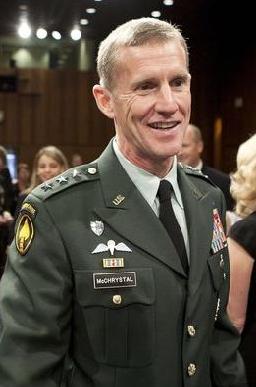
Respect for civilian control over the military chain of command. That’s what Obama talked about in his comments on “accepting the resignation of” (that is, firing) Gen. Stanley McChrystal. And it was the right point to make. The president noted that McChrystal’s conduct “doesn’t meet the standard of a commanding general,” and I think what he was really saying was this:


I may be a Democrat, and I may be (something of) a liberal, and I may never have served in the armed forces, and the military officer corps tends to be overwhelmingly Republican and conservative, but guess what: I’m still the boss. Don’t forget it.


I still think the real issue here isn’t McChrystal — it’s the fact that the war in Afghanistan was and is a mistake, and we can’t possibly win, and the president can shuffle the generals around all he wants, but it won’t change the doomed nature of this pointless mission.


But it seems pretty clear from the tone of Obama’s remarks that he saw a need to remind the military about respect for the commander in chief. And that’s a good thing: When the military starts getting uppity, and the senior officers start acting as if they know more about running things than the elected leaders, you plant the seeds for some very nasty trouble.


And by the way: What a coup for Rolling Stone, for Michael Hastings and for the world of in-depth reporting. It took Hastings more than a month to get this story; without the support of a magazine that could pay for that kind of work, we never would have learned how the military leadership in Afghanistan feels about the president. A reminder that despite the light-speed pace of modern journalism, paying writers to take the time they need to get big stories is still central to democracy. 

The real issue in Afghanistan

0

The Rolling Stone article on Gen. Stanley McChrystal has the blog and pundit world all atwitter, with calls for the general’s resignation, deep sighs of remorse, lofty comments about the sanctity of the commander in chief and the chain of command and lots more. The dude screwed up; you don’t let your aides dis the president like that. But that’s really off the point.


Frankly, if there were a way for the U.S. to be successful in Afghanistan, and McChrystal were the guy to do it, Obama shouldn’t care what the guy says. Whatever; you mean you never griped about your boss? It happens. Calling dinner with a French cabinet minister “fucking gay” is pretty fucking stupid, I admit. Overall, the interviews show astonishly bad judgment. (Oh, and General, sir: Don’t go out drinking and get shitfaced with a reporter if you don’t want to look bad in print.)


But the real point of the Rolling Stone story comes at the very end:


Whatever the nature of the new plan, the delay underscores the fundamental flaws of counterinsurgency. After nine years of war, the Taliban simply remains too strongly entrenched for the U.S. military to openly attack. The very people that COIN seeks to win over – the Afghan people – do not want us there. Our supposed ally, President Karzai, used his influence to delay the offensive, and the massive influx of aid championed by McChrystal is likely only to make things worse. “Throwing money at the problem exacerbates the problem,” says Andrew Wilder, an expert at Tufts University who has studied the effect of aid in southern Afghanistan. “A tsunami of cash fuels corruption, delegitimizes the government and creates an environment where we’re picking winners and losers” – a process that fuels resentment and hostility among the civilian population. So far, counterinsurgency has succeeded only in creating a never-ending demand for the primary product supplied by the military: perpetual war. There is a reason that President Obama studiously avoids using the word “victory” when he talks about Afghanistan. Winning, it would seem, is not really possible. Not even with Stanley McChrystal in charge.


In other words, who cares if the commanding general is a moron with a staff made up of armed frat boys? We can’t win anyway. And we don’t belong there. That’s the only thing that matters.


We tax, they spend

8

There’s nothing terribly new about this data, but it’s still worth a look. Guess who pays most of the taxes in California? The Democratic counties whose legislators don’t mind raising revenue to solve the budget crisis. And guess who gets the greatest share of that tax money? The counties dominated by Republicans, who want to cut services and keep taxes low.


In other words, the tax-and-spend liberals like me are trying to get more money that will go to the folks who elect those assholes that take the “no-new-taxes-ever” pledge.


A little bit of lovely irony for this fine summer day.

Ammiano wants to clean up crime labs

1

Why could the San Francisco crime lab operate with so many problems for such a long time? One reason: There’s little or no effective state oversight or regulation of local crime labs in California.


That seems like a glaring problem — crime labs can mean the difference between guilt and innocent, the difference between a long prison term and a free life, between an innocent party getting wrongly convicted and a guilty party getting away with murder.


Assemblymember Tom Ammiano told me he’s worried that problems in cities and counties are going to continue unless somebody’s paying attention — so he’s introducing a bill that would create some form of state oversight body to monitor crime labs and make sure they maintain credible standards.


“I think it’s like the BART Police, they aren’t going to reform unless the state tells them they have to,” Ammiano said. He’s going to have legislation drafted shortly.

SFBG Radio: Tim and Johnny on channeling the inner Huey Long

1

Today, Tim and Johnny talk about GOP loonies, Carly and Sarah and the case for our inner Huey Long. You can listen after the jump.

sfbgradio6212010 by bgedit

The insanity of cutting pensions

15


The New York Times has picked up the pension-reform banner, promoting the issue to the lead story on the front page of the June 20th issue.


If, as the Times reports, some of the reformers want to cap pensions – that is, go for the folks at the very top of the pile – it’s worth discussing. But most of the “reform” ideas involve either cutting the take-home pay of existing employees, cutting the take-home pay of pensioners or making sure that future workers don’t get as much of a pension.
The problem with that is simple: We’re in a deep recession. And the last thing we need to do is cut paychecks and encourage people not to spend money.


Let me quote from a brilliant blog post on Calitics.com from the always insightful Robert Cruickshank:


Cutting pensions would be like taking a shotgun, aiming it at our feet, and pulling the trigger. It would cause a cascade of economic problems that would dramatically worsen our economic crisis…


And yet the solution being proposed – slashing benefits – will do absolutely nothing to make state government fiscally solvent. It will mean there’s less money available to spend, meaning less sales tax revenue. Less consumer activity means there’ll be less jobs available, meaning less income tax revenue. With fewer jobs available, and wage stagnation, and now the added financial burden of paying the costs of retired family members that used to be borne by the pensions and other state services that have been cut, younger folks won’t be able to sustain the economy. Retirees and baby boomers will have to sell their homes for the cash, and in a recessionary environment where the young aren’t able to afford the present market value, home values will spiral downward, causing further economic ripple effects as well as reducing property tax revenues.
 
… The notion that ‘everyone needs to give back’ just doesn’t make sense given our economic distress. We’ve already given back too much. We gave back our wages. We gave back our ability to afford health care and housing and transportation. We gave back the robust public sector services that created widespread prosperity in the 1950s and 1960s. We gave back affordable, quality education. And too many of us have given back our future.
No, it’s time for someone else to give back. It’s time for the wealthiest Californians, and the large corporations, to give back. For 30 years now they have benefited from economic policy designed to take money and benefits from the rest of us and give it to those who already have wealth and power.
We are now experiencing the predictable outcome of such policies – the worst recession in 60 years, an intractable downturn. The way out isn’t to worsen the crisis by slashing pensions. The way out is to return to the sensible tax rates of the 1950s and 1960s and make the rich pay.


That’s what I’m talking about.

SFBG Radio: Johnny and Tim on the Whitman clan and class privilege

2

Today, Johnny and Tim talk about the Whitman family — and why the rich are different from you and I. Not to mention some choice GOP oil spill commentary. You can listen after the break.

sfbgradio6182010 by sfbgradio

No traffic lights on Market Street!

3

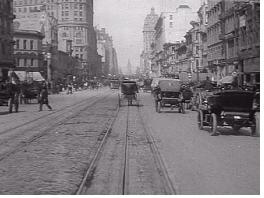
No stop signs, either. Just an amazing collection of horses, cars, trolleys and — yes! — bicycles crowding the city’s main drag, just four days before the 1906 quake. Check out the footage here. 


Bicycles sharing the street with cars (and also horses, and people who just run right out in front of traffic), police foot patrols, multi-modal transportation … good times. It’s great film, and fun to watch.


From the email Larry Fahn, former Sierra Club president sent me:


This film, originally thought to be from 1905 until David Kiehn with the Niles Essanay Silent Film Museum figured out exactly when it was shot. From New York trade papers announcing the film showing to the wet streets from recent heavy rainfall & shadows indicating time of year & actual weather and conditions on historical record, even when the cars were registered (he even knows who owned them and when the plates were issued!).. It was filmed only four days before the quake and shipped by train to NY for processing. Amazing but true!


The Gaza resolution

25

I know that the discussion over the John Avalos/Sophie Maxwell resolution on the Gaza flotilla took a long time, and kept the supervisors and assorted city employees at work until midnight, and Sweet Melissa says that cost the city some money. And she makes the same argument we hear all the time when these things come up:


Run for Congress. Jump onto a plane. Send money to a worthy organization. But don’t pat yourselves on the back for a job well done for getting a resolution passed at the San Francisco Board of Supervisors. No one cares what supervisors in San Francisco think about foreign policy — not other governments, not the U.S. government and especially not those of us who live here.


And while I agree that the Avalos/Maxwell resolution was long, and isn’t going to change anyone’s foreign policy, and a lot of the other supervisors wish the thing had never come up and consider it a terrible time suck, let me gently argue the contrary.


I remember back in 1984, when a group of Berkeley activists put a measure on that city’s ballot calling on the United States to reduce its aid to Israel by the amount that Israel was spending on settlements in the occupied territories. It bitterly divided the Berkeley City Council, stirred up a giant fuss on the city’s left and led to a long, dramatic meeting of the progressive coalition called Berkeley Citizens Action. BCA was at that point the equivalent of a political party that dominated city politics.


There were some BCA members who thought the measure was horrible, anti-semitic and needed to be killed. There were some who argued that the situation in the occupied territories was so bad that Americans needed to take a stand. There were others who said this was none of Berkeley’s business — much as a lot of San Francisco pundits say that the Avalos resolution was none of San Francisco’s business.


But I was there and I watched all of this come down — and in the end, it was a good thing for Berkeley, for progressive politics, and for the way the left in the Bay Area thought about the Middle East.


Lee Halterman, who was an aide to then-Rep Ron Dellums, chaired the BCA meeting where the measure was debated, and he did a fabulous job — everyone got a chance to speak, nobody was cut off, the discussion was remarkably civil and in the end, the group voted not to endorse either side. “This was healthy for BCA,” Halterman told me afterward. “This was a discussion that we needed to have.”


I didn’t know much of anything about the politics of Israel’s settlement policies back then, and I got quite an education. The Arab-American Anti-Discrimination committee folks came down to the Guardian and — calmly, without harsh rhetoric, explained why the continuing settlement construction was creating a serious obstacle to future peace (they were absolutely right). I learned that John B. Oakes, the former editorial page editor of the New York Times, had written a series of columns saying, in essence, that building all the new settlements was going to make a two-state solution almost impossible. Slowly, political observers who fully supported Israel on almost every issue were starting to question the Israeli government’s actions.


We heard the other side, too: Anna Rabkin, the Berkeley city auditor and an icon on the Berkeley left, came in and told us how painful this would be to progressive Jews and how harmful it would be to the progressive agenda. She made a powerful, impassioned argument. 


And all of this came to a head with a ballot campaign that generated both heat and light. We endorsed Measure E (I wrote the endorsement myself); it went down overwhelmingly, but it got a lot of people thinking. I think today it would pass overwhelmingly. And while the usual snipers complained the “Berserkeley” was wasting everyone’s time and money on a foreign policy statement that nobody would pay attention to anyway, I think a lot of us were glad it happened.


And I think that the members of Congress who represented the Bay Area were paying close attention.


So let’s not trash the Avalos/Maxwell resolution so quickly. Sometimes these debates are good; sometimes they help the local voters — who, after all, decide who to elect to Congress, the U.S. Senate and the White House — hear conflicting sides of a complicated story.


The Gaza flotilla wasn’t just about breaking the blockade; it was about getting people in the United States to pay attention to a terrible situation that the daily papers and TV stations typically ignore. I don’t see why it’s so bad for the San Francisco supervisors to help spread that word. 

The public-employee pension fight

11

Public employees are getting attacked on all fronts, and one of the major issues is pensions. Forum did a show on it this morning, and all the usual suspects were there arguing that the public is outraged, that pensions are out of control, that nobody in the private sector gets these kinds of deals and that high pensions are damaging the very social programs that progressives love. Jeff Adachi, SF’s public defender, is making some of the same arguments in his pension-reform proposal.


Let me add a little perspective.


First of all, the majority of the public-sector workers who get pensions in CA don’t get huge payouts — the average pension, SEIU’s Terry Brennand pointed out on the show, is a little over $2,000 a month. Teachers get a little more, but they don’t get social security; they give up that federal benefit in exchange for pensions that pay maybe $3,000 a month.


There are serious problems with pensions — and most of them involve two categories of workers: Management employees and public safety. Those $100K-plus pensions? Check em out. In San Francisco, anyway, and I’m sure it’s the same in most of the state, the majority of them go to cops, firefighers and people in senior positions who manage to figure out how to bump their pay scales up in their final years.


The bigger cost may be retiree health care — but that’s a bit misleading, too. If we had a single-payer health care system, we wouldn’t need to worry about all these retiree health costs busting state and local budgets. And if retired public employees weren’t getting health care through a pension system, a lot of them would wind up in the public-health system anyway, through Medicare or Medi-Cal; we, the taxpayers, would be covering that cost anyway.


You want to save money on pensions? Quit giving the cops and prison guards everything they want.

Newsom’s plan for DCCC domination

4

Gavin’s not quite ready to take over the world, or even California, but he’s not leaving office without trying to mess up the progressive majority on the Democratic County Central Committee. The plan he hatched June 15: Ban elected city officials from sitting on the DCCC. The idea: Get rid of Supervisors David Campos, David Chiu, John Avalos and Eric Mar. The overall plan: With the progressive supervisors — who have high name recognition and thus get easily elected — gone, the Newsom allies can take back control of the local Democratic Party.


It’s a pretty blatant move — far beyond Aaron Peskin’s so-called coup. And I must say, it’s a bit hypocritical.


See, the DCCC isn’t just made up of 24 elected members. Every San Francisco Democrat who holds state or national office — or who is a candidate for state or national office — is also an automatic member. So Senator Diane Feinstein is a DCCC member; so is House Speaker Nancy Pelosi, Assemblymember Tom Ammiano and Sen. Mark Leno. And guess who gets a seat this fall? Lt. governor candidate Gavin Newsom. People like Feinstein and Pelosi never show up; at best, they send a proxy. They rarely pay much attention to the local party, don’t help out much with party fundraising, don’t even come to the party’s annual dinner (Newsom didn’t show this year, even though he’s the mayor of a Democratic city.)


There have been members of the Board of Supervisors on the DCCC for years. The late Sue Bierman was always a member, and actually cared about and paid attention to the local Democratic Party. Leslie Katz was a member as a supe, and still is. It’s never been that big a deal to anyone — until the progressives starting winning seats. Then suddenly it’s a horrible conflict.


The real conflict has nothing to do with city officials sitting on the committee; it’s the fundraising issue. The city’s campaign finance rules don’t apply to DCCC races, so candidates for DCCC who are also running for supervisor — Scott Wiener, Rafael Mandelman, Debra Walker — can raise unlimited money for their DCCC races and use that additional name recognition for the fall elections. The thing is, I think most of the candidates who benefit from this loophole agree that it needs to be fixed; Mandelman certainly does, and he’s told me that several times. I couldn’t reach Walker or Wiener this morning, but I’d be very surprised if both of them wouldn’t endorse some kind of contribution limits for DCCC races.


I asked Newsom’s press spokesperson, Tony Winnicker, if the mayor would support fundraising limits. Apparently he doesn’t (or at least, he doesn’t want to push the issue):


“For this November’s local ballot, which the Mayor can place an initiative on, we propose eliminating the potential conflict that exists between City officeholders also holding office as elected County Party Committee members.”


How about getting rid of all the elected officials, and creating a real grassroots county committee? No, that won’t fly with Newsom either. Winnicker:


It’s appropriate for state and federal Democratic elected officials from San Francisco to serve on the Democratic County Central Committee.


The city/local offices — Mayor, Board, Treasurer, Assessor, City Atty, Sheriff, District Atty, Public Defender — are nonpartisan offices who have direct oversight over City business. That’s the difference and conflict. This is a local initiative, so our focus and concern is local good government and local conflicts or appearance of conflicts.


From everything I can figure, Newsom doesn’t want campaign-finance reform and doesn’t want to put the party in the hands of local activists; he just wants to get rid of the supervisors who take positions he doesn’t like. That seems like a pretty bad way to make public policy. 


UPDATE: Just talked to Scott Wiener, who told me he agrees that the whole issue of DCCC campaign spending ought to be on the table. And he said he is not at this point prepared to support Newsom’s initiative. “I have concerns with the number of elected officials on the DCCC,” he said, “but there are times when it’s entirely appropriate to have people who have a demonstrated commitment to the DCCC and then get elected supervisor to stay on it.”

Muni workers and common sense

7

I’m never the one arguing that city workers should take pay cuts, furloughs, benefit cuts or layoffs when there are ways to bring in new revenue. Remember: Layoffs and furloughs are, by definition, service cuts. And it’s a good thing to have city employees make enough money to live in San Francisco, raise families, send their kids to college etc. Maintaining a middle class in San Francisco through public-sector jobs is a fine use of taxpayer dollars (particularly if those dollars can come from the rich).


But I have to say: The Muni workers union isn’t being very smart. Refusing to accept any concessions at a time when every other union in the city — particularly SEIU Local 1021, whose members typically earn a lot less money than the bus drivers — have stepped up to the plate and accepted painful cut is politically foolish.


And for the Muni union leaders to say that the system’s budget problems aren’t their responsibility sounds terrible. Most other city employee unions show some loyalty to the people they serve, and are interested in making their departments work, and understand that in very bad times, everyone’s got to give a little.


The problem is that Sup. Sean Elsbernd wants to change the way Muni workers are paid, and his ballot measure could lead to significant pay cuts and work-rule changes, things the union really doesn’t want. And every headline about Muni workers refusing concessions gives Elsbernd more signatures, more supporters and more votes. 

Elsbernd blocks state budget resolution

1

The Democratic leadership in the state Assembly has a budget plan that challenges the entire approach Gov. Schwarzenegger is taking on the state budget. It’s not perfect; it relies on borrowing (although it’s borrowing against the revenues from a new oil severance tax). But it will, Speaker John Perez says, save more than 400,000 jobs. And it’s way, way better than what the governor wants to do. “It’s good,” Assembly member Tom Ammiano, who has always been willing to challenge party leadership and take progressive stands. “It’s something we can support.”

Among other things, it would bring San Francisco another $40 million next year as part of a plan to end the raids on city and county treasuries.

So the Dems in the Assembly are trying to get cities, counties and school boards to endorse their plan. Sup. David Chiu did the honors in San Francisco, asking the supes to approve, on consent calendar, a fairly innocuous resolution endorsing the so-called “Jobs Budget.” Nobody objected — except Sup. Sean Elsbernd, who demanded that the measure be sent to committee for further review.

I don’t get that; San Francisco’s support won’t determine the future of this budget, and it’s not a huge deal — but Elsbernd’s a Democrat, he doesn’t like what the governor is doing, and if this could help even a little bit with the forces pushing for an alternative, what’s the big deal?

Well, I talked to Elsbernd about it (one of the things I respect about Elsbernd is that he never ducks questions; unlike some politicians I know, he always returns my calls, always responds, is willing to have an intelligent discussion and doesn’t try to hide). His argument: “I’m not following the details of the state budget yet. I would love to hear a little more about it.” His concern is with the borrowing; “I’m sure,” he said (perhaps a bit sarcastically) “that President Chiu will be able to explain to me why this isn’t just kicking the can down the road.”

He went further: “If the mayor tried to balance the budget by borrowing money with general obligation bonds, you guys would blast him, right?” Well, not necessarily, I told him. Sometimes, governments ought to borrow money, to save and create jobs during an economic downtown. In fact, that’s exactly what President Obama did, borrowing heavily and adding to the already massive federal debt with a stimulus plan that probably prevented the recession from becoming another depression.

I mean, didn’t Sup. Elsbernd support the Obama stimulus package?

“Frankly, Tim,” he said, “I’ve been too busy trying to do my job in San Francisco to be taking a stand on state and federal issues.”

Okay, Sean — it’s a good line. But every elected official in every city in America was paying attention to the Obama economic plans. And SF supervisors have to be paying attention to the state budget. Counties are, in part, the local arms of the state; making sure there’s money to do what the state tells us is part of the job.

SFBG Radio: Tim and Johnny on Obama, Whitman and the hypocrisy of sit-lie

2

Today Tim and Johnny talk about Obama’s energy policy, Whitman’s only hope — and why it’s so silly for the mayor of San Francisco to be pushing a sit-lie law that can only lead to selective enforcement. You can listen after the jump.

sfbgradio6162010 by sfbgradio

And now, the race to replace Kamala Harris

2

David Onek, who has strong political connections and little courtroom experience, sent out a email today announcing that he wants to be San Francisco’s next district attorney:


As many of you know, District Attorney Kamala Harris is very likely to become California’s next Attorney General. DA Harris is a friend and I would never run against her, but her victory in November will open up the office as early as the end of this year. This means the time to get organized is right now.


He adds his name to the list of people, including former chief homicide prosecutor Jim Hammer, who want the job. But it’s going to be an unconventional campaign, to say the least. Because if Harris wins, her successor won’t be chosen by the voters of San Francisco.


There are three relevant scenarios here.


1. Harris loses the AG race. Entirely possible; she’s got a tough campaign ahead of her. Then all of this talk is moot; Onek clearly isn’t going to run against her, although Hammer might.


2. Harris wins the AG race, and Newsom loses his race for lieutenant governor. In that case, Newsom will be mayor of San Francisco when Harris resigns to move up to Sacramento — and under the City Charter, he will appoint someone to serve out the rest of Harris’s term.


3. Harris and Newsom both win — in which case there’s a fascinating legal issue. Do Harris and Newsom leave at the same moment — in which case the Board of Supervisors appoint the next mayor, who appoints the next DA? Or does Newsom try to fill Harris’s job before he resigns himself? In the end, Matt Dorsey, spokesperson for City Attorney Dennis Herrera told me, “that’s a question that will be answered by the attorney general. Theoretically, it could get very complicated.”


Under the state Constitution, the governor, lt. governor and attorney general all take office the same day, the first monday after Jan. 1st, which in this case is Jan. 3. The constitution doesn’t say what time of day that happens. In theory, then, Harris could take the oath of office at 9 am, Newsom could wait until 10 am, and appoint a new DA in between. Then somebody who didn’t get appointed (or, frankly, any angry citizen of San Francisco) could sue — because if Newsom’s term technically starts at 12:01 am Jan. 3d, then at that moment, by city law, the president of the Board of Supervisors instantly becomes mayor, meaning David Chiu should be the one making the DA appointment.


Or Harris and Newsom (and whatever other parties wanted to play ball) could cut a deal. Harris could resign a day early, and Newsom could appoint her replacement with no legal consequences at all. That would look sleazy as hell and be a rotten way for the mayor to start his term as lieutentant governor, but he could do it.


Of course, that will all depend on an interpretation from the attorney general on when the AG and lt. gov. terms actually begin — and the AG at that point will be Jerry Brown, who may have just been elected governor on a ticket with Newsom and Harris.


What a clusterfuck.


At any rate, David Onek now has to build a campaign aimed not really at winning an election, but at convincing either Newsom or Chiu (or, potentially, the next mayor, who would be named by the supervisors) that he ought to be district attorney. Part of that calculation will hinge on whether he can hold onto the job when it comes up for a real election in November.


If it’s a simple deal with Newsom, Onek will be relying on his political allies. He notes:


A broad range of leaders in government, in law enforcement and in the broader criminal justice community have already pledged their support – including former San Francisco City Attorney and Police Commission President Louise Renne, former state Treasurer Phil Angelides, Supervisor Carmen Chu, School Board Commissioner Hydra Mendoza, former Mayor Art Agnos, former Police Chief Heather Fong, Berkeley Law School Dean Christopher Edley, Jr., Police Commission President Joe Marshall and former Chief Probation Officer Jeanne Woodford. 


Although I’m not sure that Newsom cares much these days what Louise Renne, Art Agnos or Phil Angelides think.


So what Onek — and anyone else who wants to be the next DA — needs to do is convince the next mayor that he’s not only going to be a good chief prosecutor (already a hurdle for someone with no background as a prosecutor) but that he has the political ability to convince the actual voters that he’s qualified. Otherwise he’s just another Kim Burton waiting to happen.


I haven’t been able to reach Onek yet to discuss all of this, but the minute he calls me I’ll post an update.

Us vs. SF Weekly: the next step

0

tredmond@sfbg.com

The California Court of Appeal heard oral arguments on the Guardian’s lawsuit against SF Weekly and its chain parent June 11, and the discussion focused almost entirely on the Weekly’s assertion that it’s too easy to prove predatory pricing under California’s Unfair Practices Act.

Justices James J. Marchiano, Sandra L. Margulies, and Robert L. Dondero peppered the Weekly’s lawyer, Dennis Maio, with questions as he attempted to argue that state law needed to be brought in line with federal standards.

The Unfair Practices Act bars companies from selling products below costs with the aim of harming a competitor. The Guardian sued the Weekly and its parent company, New Times, under that statute, claiming that the chain had deliberately sold ads below cost with the aim of driving a smaller, locally-owned competitor out of business.

In March 2008, a San Francisco jury found in favor of the Guardian and awarded more than $6 million in damages. Judge Marla Miller trebled some of the damages, and with attorney’s fees and interest, the judgment is now close to $23 million.

Maio argued that the intent of the law was to protect consumers, and that below-cost sales are often beneficial. “Low prices are good,” he said. “Below-cost prices are even better, because they’re cheaper.” He compared the Village Voice Media chain, which owns SF Weekly, to Costco, suggesting that the justices might shop there for better prices.

The thrust of Maio’s claim — and the heart of the Weekly’s appeal — is the argument that the Weekly shouldn’t have been held liable for predatory pricing unless the Guardian could prove that the chain would be able to recoup its losses after its competitor was gone. The federal courts have adopted that approach — and the result has been the effective end of predatory pricing suits in federal court.

But there’s nothing in California law that requires so-called “recoupment” proof, and the justices focused on that in their questions to Maio.

Maio argued that antitrust law was all about protecting consumers, and that the only danger of below-cost sales is if they lead to higher prices later, when a monopoly company has driven away competitors. “Causing a competitor to lose money isn’t a violation,” he said. “The purpose of the statute is to protect the public.”

Under questioning, Milo admitted that there’s no mention of recoupment in the Unfair Practices Act, and no discussion of it in the legislative history.

In a somewhat bizarre diversion, Maio tried to argue that the UPA had anti-Semitic roots because it could have been devised to hurt Jewish-owned chain stores. Then he compared below-cost pricing to pro bono legal work — although it’s hard to make any rational argument that SF Weekly owners were attempting to do a charitable act by putting the Guardian out of business.

Ralph Alldredge argued the Guardian’s case. “This is,” he said, “a plain and simple matter of statutory interpretation.

“This is black-letter law,” Alldredge continued. “You can’t take the preamble to a law and use it to add things that aren’t there — especially to add things that are completely inconsistent with the terms of the statute.”

When Dondero asked why there are so few cases under the California Unfair Practices Act, Alldredge explained that until 1987, federal antitrust law took the same approach as the state, so most cases went to federal court. The federal judges added the recoupment standard — “and essentially closed the door to these cases,” Alldredge said.

“And that’s what they’re asking this court to do.”

Alldredge pointed to a number of cases where state antitrust law goes beyond federal law. He also said that the standard or proving below-cost sales and intent to harm a competitor has been tested in other cases “and the Unfair Practices Act has sailed through all those tests.”

Maio then tried to bring up the issue of whether New Times, now part of Village Voice Media, could be held liable for the actions of the Weekly, but the justices cut him off, saying they’d already read all the relevant briefs and testimony.

A ruling is expected in several weeks.

VVM’s Executive Associate Editor Andy Van De Voorde, whose coverage of the trial has been nasty, bitter, and personal, took a remarkably muted approach to the Court of Appeal hearing. The Chronicle’s Bob Egelko turned in a typically clean, accurate account of the proceedings.

Reading the June election tea leaves

0

Everyone’s reading the tea leaves after the local election. The November supes races will be a huge deal, and it’s really tempting to try to figure out what the DCCC results mean for the fall. Paul Hogarth at BeyondChron takes it on here. Chris Daly (no surprise) disagrees.


Let me see if I can sort some of this out.


Hogarth’s basic argument is that the progressives didn’t really do so well in the election:


“In District 8, moderate Scott Wiener finished 1,400 votes ahead of progressive Rafael Mandelman – as the two face the same electorate in November. The renters’ financial hardship measure, Proposition F, lost badly citywide – and finished far worse in neighborhoods that are usually pro-tenant. Debra Walker fared well in her run for DCCC, but most of her votes were not in District 6 – and results there suggest that another candidate for Supervisor could make such a race highly competitive.”


Hogarth is completely upfront and honest about disclosing that he’s a supporter of one of Walker’s opponents, Jane Kim — a former Green who is now a Democrat (and is very much a progressive), but wasn’t in the DCCC race. Theresa Sparks wasn’t in the DCCC race either. Nor was Jim Meko. There are several strong candidates in that race, and they don’t break down along easy political lines. So looking at how many votes Walker got in D6 seems a little off point; there’s nobody to compare her to.


Back to D8. Hogarth:


“Now we know [the D8 breakdown], and the numbers are even worse for Mandelman. Scott Wiener finished approximately 1,400 votes ahead in District 8 (my vote count shows him at 5,954 to Mandelman’s 4,561.) As a comparison, in December 2002 – the last time District 8 saw a hotly contested race on “moderate v. progressive” lines – Bevan Dufty got 11,000 votes, Eileen Hansen 10,000.”


That would seem to make Wiener the much stronger candidate going into the fall.


But there’s another key factor here: turnout. Low-turnout races are mostly (not always, but mostly) better for the more conservative candidate, and in this case, the turnout was really low. Just 32 percent of the voters went to the polls.


Let’s take a look at the 2002 election, the last time we had an open seat in D 8 with a progressive and a moderate running. In the general election in November, progressive Eileen Hansen came in first, with 9,820 votes to Bevan Dufty’s 8,795. But another progressive, Tom Radulovich was also in the race, and this was before ranked-choice voting. Radulovich got 5,221 votes, the majority of which probably would have gone to Hansen.


Turnout was a little over 50 percent.


In the runoff, in December, turnout dropped to 38.8 percent. Dufty got 11,096 votes, and Hansen 9,995. You could argue that most of the Radulovich votes went to Dufty — possible — but more likely, in the runoff, the more liberal voters who had come out in November to vote for Gray Davis for governor and also voted for Hansen just stayed home in December.


And this fall, Wiener will be more in the position that Hansen was in: There’s a third candidate in the race, Rebecca Prozan, and she’s more likely to take votes from Wiener than from Mandelman. And, of course, there’s RCV this time around — and with two gay men and a lesbian in the race, nobody really knows how the second-choice votes will play out.


Daly plays with the turnout numbers:


For the sake of argument, let’s concede that Mandelman starts out 1000-1400 votes behind Wiener among the 11,000 or so District 8 Democrats who voted for DCCC last week. Given that over 31,000 District 8 residents voted in the 2006 Supervisor race (in a contest that was not the most competitive,) we can assume that at least 20,000 additional people will vote this November. In a 2-person contest, Mandelman would need to win 53.5% of these votes in order to win. Given that less frequent voters trend significantly more progressive, and with the addition of Democratic Party branding and the weight of its mail program, 53.5% is almost assured.


Well, I dunno — in 2002, with a contested governor’s race and a contested D8 race, only 26,600 people voted, but it’s safe to say the numbers will be well above 11,000. And it’s not a two-person contest. But I think it’s also safe to say that those higher-turnout voters are the votes most likely to swing toward Mandelman.  


Jim Stearns, a political consultant with long experience in San Francisco (and no candidate in the D8 race), has another interesting analysis he sent over to me:


“Mandelman’s strategy was to spend his limited resources as part of a team effort to maintain progressive leadership on the DCCC. In so doing, he focused more heavily on slate cards that went district-wide than on mailers in District 8 promoting his own candidacy.


 Wiener, on the other hand, abandoned his fellow moderates and spent his money mostly on his own candidacy. This shortsighted strategic blunder will be extremely costly for Wiener in November.


 The result? Wiener got more votes in District 8, but lost his bid to regain his position as chair of the DCCC. Mandelman got fewer votes, but has significantly increased his chances of winning the Democratic Party endorsement this November. That endorsement is worth far more than the mere 1,000 vote difference between Wiener and Mandelman today.”


None of this means Walker will beat Kim and Sparks in November, or that Mandelman will beat Wiener and Prozan. It just means that I suspect the DCCC results don’t really say much about the relative strengths of any of the candidates when it comes to a focused, district-centered race in a high-turnout fall election.


I emailed Hogarth and ran the turnout argument by him. His response:


I tried to caution in my piece that there’s only so much you can see in the numbers — and that you’re right; voter turnout in November will be a lot higher.  Maybe I should have made this a bigger point.  But progressives are deluding themselves if they think turnout will be as high as it was in November 2008.  And if I were Rafael, I would have reason to worry that Scott did so much better than me in D8.  Also keep in mind that, despite the drop-off of DCCC voters, 48% of people in D8 who participated in this election cast a ballot for Scott Wiener.


Correct — turnout won’t be as high as it was in the presidential race. But it might very well be as high as it was in 2002, when there was a contested race for governor, as there will be this fall. Lots of Democratic candidates — particularly Gavin Newsom and Kamala Harris — will be doing GOTV operations in the city, and while Newsom and Harris won’t be supporting Mandelman, I don’t think either of them will limit their turnout efforts to precincts that run toward Wiener. The more liberal dems who vote in November, the better Harris and Newsom do against Republicans; that’s what they care about.


There’s no question that Scott Wiener will be a formidable contender in November. He’s got money, he’s got Mark Leno, and he’s running in a district that has elected moderate gay men since the return of district elections. But it’s remarkable how well the progressives have done in swing districts of late (see: Eric Mar, John Avalos), and Mandelman will, as Daly says, be the consensus candidate of every progressive group in town. He’ll almost certainly have the Democratic Party — which matters even more when Democrats at the top of the ticket are driving turnout. And he’ll have the same sort of boots on the ground that gave Mar a victory in a very tight race.


At this point, I think Mandelman and Wiener both have a shot at finishing first; it will probably be very close. And Rebecca Prozan runs third.


Oh, and the tenant measure? It lost because there wasn’t an effective campaign behind it. Tenant measures don’t automatically win in tenant-heavy San Francisco; time and again over the years we’ve seen that when there’s a measure that pushes the edge (and face it, I strongly supported Prop. F, but it was pushing the edge) and there’s landlord money against it, you need a full-scale concerted campaign for it. Progressives were paying a lot of attention to the DCCC, and to defeating Props. 16 and 17. Prop. F got lost. I’m not happy about that, but I’m not terribly surprised, either — and I don’t think it means much in the long run.


Chris Daly went a bit too far attacking Hogarth for his connections to Mark Leno, who is a Wiener supporter, and suggesting that the folks at BeyondChron — who are, after all, first and foremost tenant lawyers — are going to be backing Scott Wiener in the fall. I don’t see that happening; I can’t imagine it happening. I just think they read a little too much into the DCCC results.

Why Newsom loves sit-lie

43

To the surprise of exactly nobody, Mayor Gavin Newsom is putting his sit-lie law on the November ballot. And I think he’s thrilled about it.


The last thing the mayor wanted was to have the supervisors approve its own version. He’d much rather have his name on it. This way, he not only gets a wedge issue to attack the progressives in the fall; he gets to run his statewide campaign as someone who’s cracking down on the homeless. It’s tough for a San Francisco politician to win in more conservative parts of the state — but if he can say he stood up to those crazy “ultra-liberals” on the board and is willing to beat up on the poor and homeless, he can shed some of that liberal image.


But it’s not clear that the strategy will work at home. Even David Latterman, a political consultant for Scott Wiener and other downtown-backed candidates, downplayed the role that sit-lie will play in the fall election. “It’s just a wedge issue and it’s not going to change people’s minds on who they support,” Latterman told a crowd that including Chron columnist CW Nevius — who is perhaps the most enthusiastic backer of the measure — during a post-election wrapup at SPUR on June 10.


And among the DCCC candidates in this election, the only one to really champion sit-lie and make it a part of his campaign was David Villa-Lobos, who is also running to replace Chris Daly on the Board of Supervisors, but who finished 26th out of 30 candidates in District 12.


The law also seems a little hinky. It would ban sitting on the sidewalk — or “any object placed on the sidewalk, like a crate or folding chair,” according to the Chron. Everywhere I go in the city these days, people are sitting on folding chairs on the sidewalk — typically eating at a restaurant or cafe that has outdoor seating. I suspect many of those eateries have no specific permits to put chairs on the sidewalk; they just do it, which is fine, and nobody minds.


But technically, I guess, outdoor diners could be cited under the mayor’s law. Or the cops could just ignore them, and decide how and where to enforce the law. Which is never a good thing.


I asked the mayor’s press office for clarification on this point, and I’m still waiting for a response.

Editor’s Notes

0

 Tredmond@sfbg.com

I went through the house the other day and sorted out all the old toys my kids never play with any more. They’re 8 and 11 now, so they’ve outgrown a lot of stuff. Some of it went to Goodwill, some of it went to friends who have younger children, some of it went out on the sidewalk with a “free” sign — and still, there was a pile left over.

Broken plastic. Shit nobody wants. Can’t be recycled. It went in the trash.

And now, as Sarah Phelan reports in this issue, it’s probably sitting in a landfill across the bay, taking up space and waiting a couple thousand years until it becomes the archeological remnants of our civilization. Stuff from the ancient world is valuable because it’s fragile, and there’s not much left; our society is leaving an excellent record. That plastic will never decompose.

And now two private companies are fighting for the right to pile up my trash in a landfill, either at Altamont or in Yuba County. It’s a high-stakes battle; there’s a lot of money in garbage. And it’s a little disturbing to realize that in San Francisco, the entire process of collecting, recycling, composting, and dumping our solid waste stream is controlled by private companies.

What if we actually succeed in reducing our waste stream to zero? What if we reach the point where we’re buying less, tossing less, reducing the 1,800 tons of crap that flows into landfills from SF every day? Isn’t that what we ought to be doing? And what interest does a private landfill owner, who makes money from my kids’ broken toys, have in seeing the flow of detritus — and thus the flow of money — cut off?

I’m not arguing that we municipalize the trash system (not today, anyway; let’s do electric power, cable TV, and Internet first). But while she was working on the story, Phelan kept telling me that the city ought to look at keeping all the trash in town. If you could see that horrible mountain of crap right out your window, maybe you wouldn’t throw so much of it away.

She was kidding, of course. Sort of.

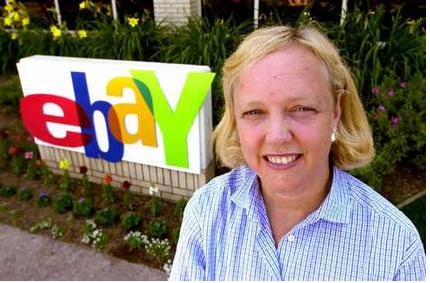
Meg Whitman, helluva boss

3

Meg is proud of her success at EBay. I wonder if she’s proud of shoving one of her employees. I know, I know — Meg was a tough-love employer who demanded the best and would tolerate nothing less. She relishes the reputation that, as the NY Times says, she


was known as a demanding leader who did not hesitate to express displeasure with employees who failed to live up to her standards.


Guess that’s what we want up in Sacramento, right? Someone tough enough to take on the special interests.


Except that in this case, she was tough enough, if the Times account is accurate, to bat around someone who worked for her. As some other tough folks have learned in the past, physical abuse of subordinates doesn’t tend to help your reputation.


Calitics asks:


Will she shove the Speaker of the Assembly when she doesn’t get her way? Verbally abuse her Director of Finance when it becomes clear her “fire everybody” strategy only worsens the budget deficit? It certainly does not speak well to Whitman’s judgement or her personality, which appears to be that of a pampered CEO who cannot deal with the rest of society as equals, but instead treats them like indentured servants.


So now we’ve got a GOP senate candidate who makes fun of her opponent’s hair and a GOP guv candidate who knocks around the help. Hell of a ticket.

SFBG Radio: Johnny and Tim on the stink of desperation

3

Today, Johnny and Tim discuss the World Cup, Carly Fiornia, Afghanistan and the stink of desperation. You can listen after the jump.


sfbgradio6/14/2010 by sfbgradio

Leno bill would limit PG&E political spending

5

State Senator Mark Leno is introducing a bill that could stop Pacific Gas and Electric Company from spending ratepayer money on political campaigns.


The bill, which doesn’t yet have a number, would put a serious crimp in the private utility’s ability to launch another effort like Prop. 16 — the $50 million campaign to block public power in California.


The bill wouldn’t stop PG&E from spending money on politics — that might fly in the face of the Supreme Court’s rulings on corporations and campaign finance. It just says that no ratepayer money can be spent — and since PG&E gets the vast majority of its money from ratepayers, the measure would at the very least significantly limit the company’s political efforts.


And since PG&E is a regulated utility, the state of California has every right to control how much money PG&E collects from its customers — and where that money goes.


Not only would the bill ban PG&E from running its own Prop. 16-style statewide campaign, it could block the company from spending tens of millions of dollars to oppose public-power efforts. The bill states that any gas and electric utility with more than three million customers in California (and there’s only one such company)


“shall not spend funds received from ratepayers as authorized revenues on political and public affairs related to state or local governments. For purposes of this section, political and public affairs spending includes any activities involving, directly or indirectly, advocacy of the election or defeat of political candidates and of the adoption or defeat of ballot measures, through the actions of the corporation or through a third party.”


A few years ago, a bill like this would have had little chance in the state Legislature, where PG&E spent lavishly and was relatively popular. But under CEO Peter Darbee, the company has done nothing but piss off legislators. Not one state lawmaker endorsed Prop. 16. It’s safe to say that today, PG&E doesn’t have many friends.


More details to come as I get them.


UPDATE: Here’s Leno’s comment, from a press release I just got:


“PG&E launched a dangerous and misleading political campaign – with ratepayer funds – that had only one goal, to preserve the corporation’s monopoly. The state’s largest electrical and gas company should not be able to use ratepayer-generated profits to write special rules into the state constitution protecting it from competition. This measure ensures that local communities across the state have the ability to launch their own municipal power agencies, which will in turn encourage competition and help keep our rates low.”


UPDATE TWO: I just spoke with Leno, and he noted that the bill has a decent chance, since PG&E at this point “would be hard pressed” to find any friends in Sacramento. “The bill is to protect ratepayers,” Leno said. “It requires the California Public Utilities Commission, when it hears PG&E’s rate cases, to disallow any spending on political campaigns.”


Court hears Weekly’s appeal in Guardian suit

12


The California Court of Appeal heard oral arguments on the Bay Guardian’s lawsuit against SF Weekly and its chain parent June 11, and the discussion focused almost entirely on the Weekly’s assertion that it’s too easy to prove predatory pricing under California’s Unfair Practices Act.


Justices James J. Marchiano, Sandra L. Margulies and Robert L. Dondero peppered the Weekly’s lawyer, Dennis Maio, with questions as he attempted to argue that state law needed to be brought in line with federal standards.


The Unfair Practices Act bars companies from selling products below costs with the aim of harming a competitor. The Guardian sued the Weekly and its parent company, New Times, under that statute, claiming that the chain had deliberately sold ads below cost with the aim of driving a smaller, locally owned competitor out of business.


In March 2008, a San Francisco jury found in favor of the Guardian and awarded more than $6 million in damages. Judge Marla Miller trebled some of the damages, and with attorney’s fees and interest, the judgment is now close to $23 million.


Maio argued that the intent of the law was to protect consumers, and that below-cost sales were often beneficial. “Low prices are good,” he said. “Below-cost prices are even better, because they’re cheaper.” He compared the Village Voice Media chain, which owns the Weekly, to Costco, suggesting that the justices might shop there for better prices.


The thrust of Maio’s claim — and the heart of the Weekly’s appeal — is the argument that the Weekly shouldn’t have been held liable for predatory pricing unless the Guardian could prove that the chain would be able to recoup its losses after its competitor was gone. The federal courts have adopted that approach — and the result has been the effective end of predatory pricing suits in federal court.


But there’s nothing in California law that requires so-called “recoupment” proof, and the justices focused on that in their questions to Maio.


Maio argued that antitrust law was all about protecting consumers, and that the only danger of below-cost sales is if they lead to higher prices later, when a monopoly company has driven away competitors. “Causing a competitor to lose money isn’t a violation,” he said. “The purpose of the statute is to protect the public.”


Under questioning, Milo admitted that there’s no mention of recoupment in the Unfair Practices Act, and no discussion of it in the legislative history.


In a somewhat bizarre diversion, Maio tried to argue that the UPA had anti-semitic roots, because it could have been devised to hurt Jewish-owned chain stores. Then he compared below-cost pricing to pro-bono legal work — although it’s hard to make any rational argument that the SF Weekly owners were attempting to do a charitable act by putting the Guardian out of business.


Ralph Alldredge argued the Guardian’s case. “This is,” he said, “a plain and simple matter of statutory interpretation.


“This is black-letter law,” Alldredge continued. “You can’t take the preamble to a law and use it to add things that aren’t there — especially to add things that are completely inconsistent with the terms of the statute.”


When Dondero asked why there are so few cases under the California Unfair Practices Act, Alldredge explained that until 1987, federal antitrust law took the same approach as the state, so most cases went to federal court. The federal judges added the recoupment standard — “and essentially closed the door to these cases,” Alldredge said.


“And that’s what they’re asking this court to do.”


Alldredge pointed to a number of cases where state antitrust law goes beyond federal law. He also said that the standard or proving below-cost sales and intent to harm a competitor has been tested in other cases, “and the Unfair Practices Act has sailed through all those tests.”


Maio then tried to bring up the issue of whether New Times, now part of Village Voice Media, could be held liable for the actions of the Weekly, but the justices cut him off, saying they’d already read all the relevant briefs and testimony.


A ruling is expected in several weeks.


PS: Andy Van De Voorde, whose coverage of the trial has been nasty, bitter and personal, took a remarkably muted approach to the Appeals Court hearing. The Chron’s Bob Egelko turned in a typically clean, accurate account of the proceedings.


SFBG Radio: Johnny and Tim on American Tories

1

Today, Johnny and Tim talk about why so many of the internet trolls — and conservatives in general — are writing and acting against their own interests. You can listen after the break.

sfbgradio6/11/2010 by sfbgradio