Tim Redmond

Newsom’s ambitions trump local needs

1

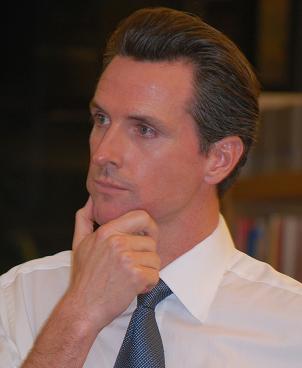
I guess that’s nothing new, and I could have written the same headline dozens of times over the past couple of years. But in this case, the Bay Citizen has a nice scoop — Newsom personally scuttled a deal that would have created a $50 million annual stream of affordable housing money because he didn’t want to be on record supporting any new taxes.


The Bay Citizen story, which also ran in the New YorkTimes, doesn’t go quite as far as to say that the tax issue scuttle the whole thing, but I think it’s pretty clear that’s what happened. The deal — a highly unusual agreement between warring parties — involved an increase in the real-estate transfer tax on high-end buildings. The private developers agreed to support it — if the housing advocates would allow some of the money to be used to subsidize the requirement that developers build affordable housing along with market-rate units.


I’m no so into subsidizing private housing developers, but the money would be coming from people who sell high-end properties. At any rate, whether it was a good deal in the end or not, Newsom’s own staff was involved in making it happen — and the mayor only killed it for one reason.


He doesn’t want his Republican opponent this fall to accuse him of raising taxes.


That’s a hell of a way to run a city. 

Boxer’s better off than Brown

0

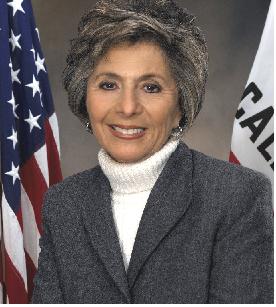
I know this is political heresy, but I was encouraged by the results of the Field poll on Boxer and Fiorina. I remember back in 1982, when Milton Marks, then a liberal Republican state senator, challenged incumbent Congressmember Phil Burton — the legendary Democratic leader — with an anti-incumbent message fairly similar to what Fiorina is throwing at Boxer. “The arrogance of power” was the slogan, and while Marks didn’t try to say that Burton was too liberal (this was, after all, a San Francisco seat) the basic push was that an entrenched incumbent had grown stale and was unpopular. And in fact, the early polls showed Burton losing.

But a campaign consultant who was there at the early Burton strategy meetings told me a few years ago what the mood was like when the numbers came in: “We saw that he was down ten points, and we all breathed a sigh of relief. Because we knew we could make that up.”

Some thing when Silicon Valley whiz kid Ed Zschau took on incumbent senator Alan Cranston in 1986. Cranston, the polls showed, had been around too long, was old and boring, an entrenched incumbent … all the same messaging. Zschau was young, exciting, a moderate Republican who everyone thought was a shoo-in to unseat the incumbent. And Cranston ran a great campaign and beat him.

Boxer’s negatives are too high, but she hasn’t really reminded Californians yet of what she’s been doing in Washington and who she really is. And she hasn’t even begun to remind voters that Fiorina is anti-choice — a position that really, really doesn’t play in California.

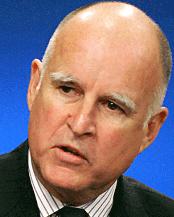
Jerry Brown also has some good news from the Field poll, but he’s not the campaigner that Boxer is. And he’s got more trouble with younger voters. Frankly, he’s worse off right now than she is. In fact, if I were in Boxer’s camp right now, I’d be heaving a sigh of relief: She can turn this around.


The good news for Jerry Brown

4

The press is all over the latest Field Poll, which shows Jerry Brown and Meg Whitman in a dead heat.  And it’s no surprise that, thanks to a campaign that thus far has been almost entirely negative, voters aren’t particularly thrilled with either candidate.


But I think there’s some good news for Jerry Brown here. Whitman has spent more than $90 million so far, and the voters like her less than they did six months ago. After all that money, some of which has gone for blistering attacks on Brown, Whitman is still not ahead. And it’s hard to see what she can do now to move the needle.


CallBuzz:


Moreover, it looks like the attack ads on Whitman by Brown’s labor allies — including California Working Families 2010 — have had their intended effect: to increase Whitman’s negatives and keep her from pulling away from Brown during the summer, before he can afford to put his own ads on TV.


Meanwhile, Brown’s favorability is only marginally changed from March. It’s 42-40% favorable today, compared to 41-37% favorable before. (Of course, Brown’s favorable was 50-25% back in March of 2009, but that was when he was just the new Attorney General and not a candidate for governor with rivals.)


At some point, Jerry’s got to start seriously campaigning, and he’s got a lot of work to do. He has to define himself to younger voters, who know a lot more about Ebay than about Brown’s tenure as governor, which was generally pretty good. He has to remind Latinos of how awful Whitman is on immigration. He’s got to spend some money.


But at this point, there’s hardly a voter in California (at least, not one with a TV set) who hasn’t seen multiple Whitman ads, defining her as a successful business person and attacking Brown as a failed politician. Those are powerful messages. The ads have been well produced, well targeted and should have been effective. And they haven’t gotten her over the halfway point yet — even against an opponent who is vulnerable to attack and hasn’t campaigned much at all.


Both candidates seem to be holding the party loyalists — the vast majority of the Republicans like Meg, the vast majority of the Democrats like Jerry. And there are more Democrats than Republicans. The independents aren’t breaking Meg’s way, either — she’s only slightly ahead, not enough to make up the difference.


Now if Brown can just get his people to care enough to go to the polls. …

SFBG Radio: The guv’s minimum wage scam

0

In today’s installment, Johnny and Tim talk about the governor’s attempts to cut state employee pay to the federal minimum wage level — and how that will affect the fall election. You can listen after the jump.

sfbgradio 7/7/2010 by jangel

Sorting out the Adachi initiative

37

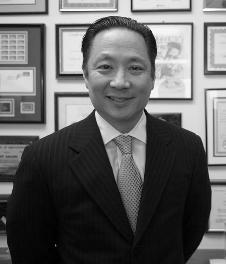
Lots of press on the Adachi pension-reform measure, a proposal that would amount to cutting the pay of city workers during a recession. It turns out even Gavin Newsom doesn’t like the plan:


The mayor also attacked Adachi’s pension plan, arguing that the public defender never discussed it with the employee unions, city officials or others affected by the measure and that it could have “unintended consequences” for the city.


And while I think it’s a bit of a stretch to say that the Adachi measure “could reshape national politics,” Randy Shaw makes a good point:


Adachi’s measure would join with Sean Elsbernd MUNI charter amendment to create a one-two punch against public employees on San Francisco’s November ballot. The national media will have a field day with the prospect of “liberal” San Francisco, and Nancy Pelosi’s home turf, voting to cut public employee compensation.

While this is not the message Adachi wants to send, it will likely be the one that is heard. It emerges at a time when the entire Republican Party and corporate Democrats are in a full-fledged media campaign to redirect public anger over the fiscal crisis toward excessively compensated public employees, and away from banks, oil companies, hedge fund managers, and an under taxed and poorly regulated private sector.


Shaw also says that the campaign will “bitterly divide progressives,” and I’m not sure it has to turn out that way. There’s always the danger that liberal voters who work in the private sector, and are struggling to keep their jobs and health insurance, will be seduced by the notion that public-sector employees are too well paid already. And the donwtown folks, who will soon be fully on board with the Adachi measure, will seek to divide the nonprofit sector and labor by arguing that nonprofit workers don’t get the same benefits as city employees — and city funding for nonprofits is threatened by the budget deficit. Both those things are true, but it’s also true that there’s a growing movement to challenge that approach. This battle will be a test for the city’s progressive movement, but I think the overwhleming majority of progressive leaders, activists and nonprofits will stick together and oppose Adachi.


The more important political impact will be felt in the tightly contested district-election contests, where city-employee pensions could join the sit-lie measure as wedge issues that the moderates will use against progressives. When Adachi came down to see us, I asked him if he was worried about that; he didn’t really seem to think it was important.


But there’s a reason we talk about a “progressive movement” (and don’t start on the “machine” stuff again, we had that debate over here). We all ought to be concerned about how one campaign affects the larger goal of building a better and more sustainable city. And while I hate to say it, I have to agree with Gavin Newsom: This thing could have “unintended consequences.”


Editor’s Notes

15

Tredmond@sfbg.com

I’m a pension-reform advocate. I think the current system is not only bad public policy, but that it’s not sustainable in the long run. But I’m not convinced that the plan proposed by Public Defender Jeff Adachi is good public policy, either — and I’m not convinced that it works in the long run.

Adachi wants to mandate that city employees pay between 9 percent and 10 percent of their salaries into the city pension fund. He also wants to make employees pay more for dependent health care. He points out that the changes would save the city around $170 million a year.

But what he’s proposing is an across-the-board pay cut for city employees — on top of the cuts they’ve already taken in the past several budget cycles — and that’s a dangerous thing to do in a recession.

Think about it. That $170 million is money that city workers won’t be spending buying food, clothes, movie tickets, restaurant meals, or any of the thousands of other things that can help get the economy going again. It won’t be a fair pay cut, either. The clerk who makes $40,000 a year will get a $4,000 cut, leaving him or her with just $36,000, while the senior manager who makes $150,000 a year will get hit with the same 10 percent cut, leaving him or her with $135,000 a year. In one case, it’s the difference between making rent and not; in the other, it’s cutting out some discretionary spending. Even the Internal Revenue Service doesn’t operate on that principle.

There’s a larger point here, too. I hear from Adachi, and from many others, that when the city is broke, when the pension system can’t meet its obligations, then everyone has to give back. Everyone has to take a haircut. Everyone has to share the pain.

But as Robert Cruickshank pointed out on the Calitics blog recently, public employees, and poor people, and middle-class private sector workers, and people who need public services, and kids who go to public schools, and college students … they’ve been giving back for years. The rich, the big corporations, the people and institutions that have fared so well under the Bush-era tax cuts … they haven’t given back a dime.

It’s true that there’s pension abuse, the vast majority of it in the management and public safety areas. There are cops who make too much money anyway, get pay bumps right before they retire, and walk away with 90 percent of their artificially inflated salaries — for life. I could see capping pensions for each pay grade, and I could see requiring people who make more than $100,000 a year to contribute more to their pension funds.

But I think it has to be done in combination with new revenue. It has to be done in combination with an acknowledgment that in this budget crisis, some parts of our city, some parts of our society, aren’t hurting at all, and are refusing to help out with anyone else’s pain. We simply are not sharing the burden equally. And until we can start to change that, I’m not so thrilled with blaming the middle-class city workers for the local budget problem.

SFBG radio: Public power and public schools

1

Today, Johnny and Tim talk about why private power companies don’t want to see more solar and wind generation, and why San Francisco’s public-school admission lottery isn’t really as bad as its critics say.

sfbgradio7/2/2010 by jangel

The problem with the Students First initiative

219

I’m not surprised that there’s an initiative in circulation that would set this as city policy:


The proximity of a student’s home to the assigned school should be the highest priority in San Francisco Unified School District’s student assignment system.


For those of you who are new to San Francisco: To enroll a child in a San Francisco public school, parents apply to seven schools and then pray their child gets into one of them. Unless a child has a sibling at a particular school, he or she will be assigned based on a secret algorithm created by monkeys throwing darts (or something like that).

Actually, most people (about 80 percent) get at least one of their school choices. And yeah, the algorithm is a bit complicated. But there’s a good reason why:

Many San Francisco neighborhoods are still racially segregated. Which means if everyone goes to his or her neigborhood school, we will have some schools at are 70 percent black, some that are 70 percent white and some that are 70 percent Asian. And that’s a bad idea.

San Francisco fought for years to comply with a 1983 consent decree in a lawsuit filed by the NAACP. THe idea was to desegregate the schools; part of the process that was developed involved giving parents a choice (which many want) over where to sent their kids — and a system for maintaining some degree of ethnic balance in the school. Subsequent litigation has made it almost impossible to use race as a factor in placing kids, so now the district uses a different system. Since we’ve stopped using race, the federal monitor reported five years ago on

the increasing resegregation prevalent in the District since 1999, and the parameters of an achievement gap that only became apparent over the past few years.


The district’s making progress on a lot of fronts, but the achievement gap and segregation are still serious issues in the district. The other serious issue is resources: In an era when there’s no public money, kids who go to schools where most of the parents are rich get better educational services. The parents raise money to pay for libraries, special classes, music, art, enrichment programs etc. Schools that have a demographic base that doesn’t allow for extensive fundraising can’t offer those programs to the students.

So ideally, you’d have a mix — poor kids and rich kids in the same schools. Some of that has happened at McKinley Elementary, where my daughter is going into third grade and my son just finished fifth. There are better-off families who contribute and raise money, people with financial connections who get grants etc. — and that benefits the majority of the kids, who come from lower-income families.

Actually, ideally you’d have fair property taxes, and every kid in every school would get enough tax money to thrive. But you get the point.

So this “neighborhood schools” rhetoric sounds good. But until we desegregate the neighborhoods — and change the distribution of wealth — it just ain’t gonna work. The system we have is imperfect — but it’s certainly better than what it could be if we just send everyone to school where they live.

Weird Uncle Jerry

0

I’m starting to feel as if Jerry Brown is that strange old uncle who comes over for dinner and says things that make you cringe — and you can’t really tell if he’s just a loveable old character, a bright guy with a weird sense of humor, or someone who’s completely losing his marbles.


Check this out: First he makes a very valid, even insightful statement that’s right on target:


“Were I a CEO and someone said, ‘You know what, I’ve never been in this company, I never saw the product and I want to be a boss,’ I’d say, ‘Hey, why don’t you start at the bottom and work your way up,’ ” he said. “That’s the same way with government — you can’t wake up one morning and say, ‘Gee, I’ve got a billion dollars and I want to be governor.’ You got to learn something because those people up in Sacramento are sharks.”


Then he goes completely off the deep end:


Brown discussed his implementation of Prop. 13 despite his earlier opposition to it, as well as support for the 2nd Amendment and same-sex marriage. He said he opposed efforts to legalize marijuana, which will be on the November ballot.


“We got to compete with China, and if everybody’s stoned, how the hell are we going to make it?” he said.


Jerry, pal, I’ve got news for you: The people who are the most successfully competing with China, the brilliant high-tech visionaries you love so much? They’re already stoned. All we can do now is get some tax money out of it.


Besides, China can’t compete with this:


Is there still a political machine in San Francisco?

2

There’s some interesting discussion going on about Jane Kim, Willie Brown, Gavin Newsom, and political machines here. Check it out if you haven’t read it already.

SFBG Radio: Meg ducks debates, Gav’s oil money and crazy CEO pay

2

Today, Johnny and Tim talk about why Meg Whitman is ducking debates, why Gavin Newsom has money invested in oil company stocks — and why a corporate CEO can buy an $8 million resort property the same week he lays off 8,000 workers. You can listen after the jump.

sfbgradio6/30/2010 by bgedit

Another reason we love Pete Stark

0

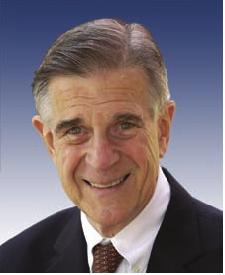
He’s the only openly atheist member of Congress. He refused to apolgize after announcing that he had “no respect for” the commander in chief, George W. Bush or the generals who were sending young people to Iraq “to get their heads blown off for the presidents amusement.” He called one of his colleagues a “whore for the insurance industry.” The mainstream press refers to these statements as “gaffes.” But really, foul-mouthed as he can be, much of what he says is true.


And now he’s finally called out the anti-immigration nuts. They don’t make congressmembers like this any more.


Why can’t Kagan talk?

0

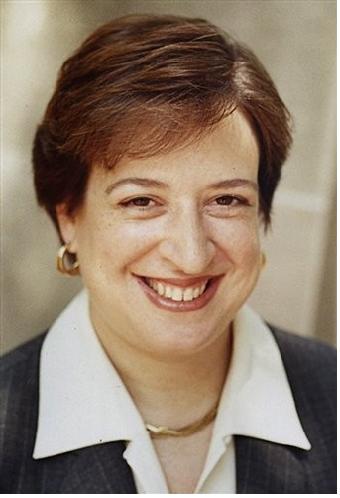
Everyone knows that Elena Kagan’s going to get confirmed by the Democratic majority in the Senate, so it’s too bad that she won’t answer anyone’s questions. I listened to the hearings for a while this morning, and she ducked every single serious issue, hiding behind the notion that she can’t discuss current issues, the court itself, or any issue that might come before the court.


Kagan’s not the only guilty party here; this game’s been going on for years. Remember when Clarence Thomas said he had no opinion on Roe v. Wade?


I’m sure Kagan will be fine on the court — not great, not inspiring, but perfectly adequate in that centrist I’m-really-a-liberal-but-embarassed-to-show-it way. She’s also, clearly, a very intelligent person who has spent years studying and thinking about Constitutional law. It’s crazy that she couldn’t have an honest discussion with the Senate Judiciary Committee. We all could have learned a lot from it.

Powder keg

5

news@sfbg.com

Ask any pollster, political consultant, or academic who studies the American electorate about the mood of the voters this year and you’ll get the same one-word answer: Angry.

Everyone’s pissed — the liberals, the conservatives, the moderates, the people who don’t even know where they fit in. It’s an unsettled time and, potentially, very bad news for a progressive agenda that seeks to address issues ranging from poverty and war to the long-term health of the public and the planet.

The Democrats, who swept into power with an enormously popular president just 18 months ago, may lose control of Congress. The tea partiers have driven the Republicans so far to the right that some candidates for Senate are openly talking about eliminating Social Security. The unemployment rate — the single most important factor in the politics of the economy — remains high and doesn’t show any signs of improving.

And the progressive left seems frustrated and demoralized, particularly in California. The Golden State, which once led the nation in innovation and enlightened social policy, now seems to be leading the politically dysfunctional race to the bottom.

The nation could be headed for a dangerous era, rife with the potential for right-wing demagoguery and other nasty political schisms. The state of the economy could easily fuel a more powerful movement to shrink the scope of government and a continuing backlash against the public sector — and the financial backers of the antitax and antiregulation movement are drooling at the prospect.

But there’s also a chance for progressives to seize a populist narrative and shift the discussion away from traditional disagreements and toward those areas, particularly the destructive influence on government by powerful corporations, where the grassroots right and grassroots left might actually agree.

The anger that voters feel toward a government that isn’t meeting their needs is starting to find other outlets. People are as mad about the abuses of big business — the Wall Street meltdown, the bailouts, the BP oil spill, the political manipulation — as they are about the failures of Congress and the president. If you ask Americans of every political stripe who they least trust — big government or big business — even conservatives aren’t so sure anymore.

For 30 years, the central narrative of American politics has revolved around the size and effectiveness of government. Now there’s a chance to shift that entire debate in American politics toward the largely unchecked power of corporations. It is, populist writer Jim Hightower told us, “an enormous opportunity handed to us by the bastards.”

But so far, none of the Democratic leaders in California are taking advantage of it to start dispelling damaging myths and crafting political narratives that might begin to create some popular consensus around how to deal with society’s most pressing problems.


THE PEOPLE WANT TAXES

There have been many polls gauging voter anger, but one of the most comprehensive and interesting recent ones was “Californians and Their Government,” a collaborative study by the Public Policy Institute of California and the James Irvine Foundation that was released in May.

It shows that Californians are mad about the state’s fiscal problems, disgusted with their political leaders, divided by ideology, and deeply conflicted over the best way forward. An astounding 77 percent of respondents say California is headed in the wrong direction and 81 percent say the state budget situation is a “a big problem.”

But the anti-incumbent message isn’t necessarily an anti-government message. Most Californians are willing to put more of their cash into public-sector programs, even during this deep recession. When asked to name the most important issues facing the state, 53 percent mentioned jobs and the economy . The state budget, deficit, and taxes only got the top billing of 15 percent.

And contrary to the conventional wisdom espoused by moderate politicians and political consultants, most voters say they are willing to pay higher taxes to save vital services. “Californians tell us they continue to place a high value on education and want education to be protected from cuts. And they’re willing to commit their money to help fund that,” PPIC director Mark Baldassare told the Guardian.

The survey found that 69 percent of respondents say they would pay higher taxes to protect K-12 education from future cuts, while 54 percent each say they would pay higher taxes to prevent cuts to higher education and to health and human services programs. In other words, voters seem to recognize where we’ve cut too deeply — and where we haven’t cut enough: only 18 percent of respondents would be willing to pay higher taxes to prevent cuts to prisons and corrections.

Baldassare said the June primary results also showed that people are willing to pay more in taxes for the services they value. “Around the state, there was a lot of evidence that people responded favorably to requests by their local governments for money, particularly for schools,” he said.

Both the California Legislature and Gov. Arnold Schwarzenegger are held in very low esteem with voters, according to the PPIC study, and Schwarzenegger’s 23 percent rating is the lowest in the poll’s history.

Barbara O’Connor, political communications professor who heads the Institute for the Study of Politics and the Media at Sacramento State University, told us that voter unhappiness with elected leaders is no surprise. Right now, most people are afraid that their basic needs won’t be met over the long run.

“The common narrative is fear, and fear channels into anger,” O’Conner said.

And that fear is being tapped into strongly this year by the Republican candidates, who are trying to scare voters into embracing their promises to gut government and keep taxes as low as possible.

“If there’s any lesson to be learned from Meg and Carly’s early ads, it’s fear-mongering, fear-mongering all the time — and that doesn’t create a very positive narrative,” O’Connor said of gubernatorial candidate Meg Whitman and U.S. Senate candidate Carly Fiorina.

O’Connor noted that Barack Obama’s campaign had great success in using a positive, hopeful message and said she believes the right leader can also do so in California. “I talked to Jerry [Brown]’s people about it and said you can’t just run a negative campaign because that’s what Meg is doing.”

Despite the tenor of the times, O’Connor said she’s feeling hopeful about hope. She also believes Californians would respond well to a leader like Obama who tried to give them that hope — if only someone like Brown can pick up that mantle. “I think the environment is right for a positive message. But the question is: do we have people capable of delivering it?”

She said the no-new-taxes, dismantle-government rhetoric has started to wear thin with voters. “The real fiscal conservatives are badly outnumbered in Californian,” O’Connor said. As for the corporate sales jobs, O’Connor said voters have really started to wise up. “They aren’t going to be scammed.”

The results of the June primary election showed that voters across the spectrum were also disturbed by big special-interest money. Proposition 16, backed by $46 million from Pacific Gas and Electric Co., went down to defeat — even in counties that tend to vote Republican.

And this fall, with two rich former CEOs spending their personal wealth to win two of California’s top elected offices and energy companies pushing a measure to roll back California’s efforts to combat global warming, there could be great opportunity in a narrative targeting those at the top of our economic system.


THE TOP AND THE BOTTOM

Some observers say that whatever their shared feelings about corporate scams, conservatives and liberals in the state are just too far apart, and that there’s little hope for any substantive agreement. “People are becoming more polarized,” said consultant David Latterman, who often works for downtown candidates and interests. “I think we’re beyond compromise.”

Allen Hoffenblum, a Los Angeles-based Republican strategist, agreed. “The voter are all mad, but they’re mad at different things. I just don’t see where they come together.”

But Hightower, who has spent a lifetime in politics as a journalist, elected official, author, and commentator, has a different analysis.

“As I’ve rambled through life,” he wrote in a recent essay, “I’ve observed that the true political spectrum in our society does not range from right to left, but from top to bottom. This is how America’s economic and political systems really shake out, with each of us located somewhere up or down that spectrum, mostly down.

“Right to left is political theory; top to bottom is the reality we actually experience in our lives every day — and the vast majority of Americans know that they’re not even within shouting distance of the moneyed powers that rule from the top of both systems, whether those elites call themselves conservatives or liberals.”

In an interview, he told us he sees a lot of hope in the fractured and potentially explosive political ethos. “There’s all this anger,” he said. “People don’t know what to do. And I think the one focus that makes sense is the arrogance and abuse of corporate executives.”

In fact, Hightower pointed out, the teabaggers didn’t start out as part of the Republican machinery. “Wall Street and the bailouts sparked the tea bag explosion,” he said. It wasn’t until big right-wing outfits like the Koch brothers, who own oil and timber interests and fund conservative think tanks, started quietly funding tea party rallies that the anti-corporate, anti-imperial edge came off that particular populist uprising.

“At first, the teabaggers didn’t even know where the money was coming from,” Hightower said. “You can’t be mad at the teabaggers; we should have been out there organizing them first.”

There’s plenty of evidence that anger at big business is growing rapidly — and rivals the distrust of big government that has defined so much of American politics in the past 30 years. The bailouts were “the first time in a long time that people have been slapped in the face by collusion between big business and its Washington puppets,” Hightower noted.

Then there’s the Supreme Court decision in Citizens United v. Federal Elections Commission. In January, a sharply divided court ruled 5-4 that corporations had the right to spend unlimited amounts of money supporting or opposing political candidates. Progressives were, of course, outraged — but conservatives were, too.

Polls show that more than 80 percent of Democrats think the decision should be overturned. So do 76 percent of Republicans. “This is a winner for our side,” Hightower noted. “But our side’s not doing anything about it.”

Sure, President Obama denounced the ruling in his State of the Union speech and promised reform. But the bill the Democrats have offered in response does nothing to stop the flow of money; it would only increase disclosure requirements. And in response to furor from the National Rifle Association, it’s been amended and is now so full of holes that it doesn’t do much of anything.

Political consultants advising Whitman are clearly looking for ways to direct the voter unhappiness into a demand for lower taxes and smaller budgets. She’s already vowed to fire 40,000 state workers, and her most recent campaign ad attacks Brown for expanding public programs and raising the state deficit.

So far Brown hasn’t challenged that narrative — and some Democrats say he shouldn’t. It would be safer, they say, for Brown to get out front and demand his own cuts in Sacramento. “Going after public-sector pensions is a winner,” one Democratic campaign consultant, who asked not to be named, told us. “If Whitman beats Brown on those issues, she wins.”

But that approach is never going to be effective for Democrats. If the argument is over who can better cut government spending, the GOP candidates will always win. The better approach is to see if progressives can’t shift the debate — and the anger — toward the private sector.

As Hightower put it: “You can yell yourself red-faced at Congress critters you don’t like and demand a government so small that it’d fit in the backroom of Billy Bob’s Bait Shop and Sushi Stand, but you won’t be touching the corporate and financial powers behind the throne.”

That’s where the discussion has to start. And there’s no better place than California.

The Golden State is a great example of what happens when the tax- cutters win. In 1978, the liberals in Sacramento, operating with a huge state budget surplus, couldn’t figure out how to derail the populist anger of property tax hikes. So Proposition 13, the beginning of the great tax revolt, passed overwhelmingly. Over the next decade, more antitax initiatives went before the voters, and all were approved.

Now the state is heading toward fiscal disaster. The schools are among the worst-funded in the nation. The world-famous University of California system is on the brink of collapse. Community colleges are turning away students. The credit rating on California bonds have fallen so far that it’s hard for the state to borrow money. And there’s still a huge budget gap.

The tax-cut mentality that led to the so-called Reagan revolution started in California; a political movement that shifts the blame for many of the state’s problems away from government and onto big business ought to be able to start here as well. And it’s potentially a movement that could bring together people who normally find themselves on opposite sides of the fence.

A case in point: the measure the oil companies have put on the November ballot to repeal the state’s greenhouse gas limits. The corporations backing the initiative, led by Valero, argue that California’s attempts to slow climate change will cost jobs. That’s a line we’ve heard for decades. Every tax cut, every move toward deregulation, is defended as helping spur job growth.

But the past four presidents have done nothing but cut taxes and reduce regulations — and the result is facing Americans on the streets every day. There is also growing evidence that even Republican voters don’t believe everything big businesses tell them anymore. And they’re starting to grasp that sometimes deregulation leads to outcomes like larcenous CEOs and unstoppable oil leaks.

So the potential for a successful progressive populist movement is out there. But it’s not going to happen by spontaneous combustion.


SF SHOWS THE WAY

On the national level, one of the factors creating this gloomy electorate is the failure of President Obama to keep the coalition that elected him active and engaged. The intense partisanship in Washinton has turned off many independent Obama voters, while his progressive supporters have been disappointed by issues ranging from his escalation in Afghanistan to tepid reforms on health care and Wall Street.

“One of the narratives now is where are the Obama voters and will they participate?” Jim Stearns, a San Francisco political consultant who works mostly on progressive campaigns, told us. “They still love Obama but they’re not moved by him anymore.”

Perhaps more important, they have lost the sense of hope that he once instilled. The Republican Party’s descent into right-wing extremism and the strong anticorporate narratives that have emerged in the last year — from BP’s oil spill to PG&E’s political manipulation to Goldman Sachs’ self-dealing to the prospect of unrestricted corporate campaign propaganda unleashed by the Citizens United ruling — have created the possibility that the negative narratives by the left may crowd out the positive ones.

“Meg Whitman is someone you can hate. She’s the rich Republican CEO trying to buy her way into office,” Stearns said. “But it’s a depressing message.”

But Stearns said there is another, most hopeful political narrative that is emerging in San Francisco, one that might eventually grow into a model that could be used at the state and federal levels. “We’re lucky in San Francisco. Progressive voters are engaged.”

He noted that San Francisco’s voter turnout was higher than expected in the June primary, and far higher than the record low state number, even though there really weren’t any exciting propositions or closely contested races on the local ballot — except for the Democratic County Central Committee, where progressives maintained their newfound control. And it’s because of the organizing and coalition-building that the left has done.

“What you’ve seen over the last few years is a coalition of labor, neighborhood groups, environmentalists, and the progressives now operating through the Democratic Party. That’s a great coalition with a lot for people to trust,” Stearns said.

Meanwhile, downtown has all but collapsed as a unified political force. “They don’t really have a political infrastructure,” Stearns said of downtown. “Normally it would be the mayor who gets everyone in line and working together.”

Even Latterman, the downtown-oriented consultant, agrees that the business community is no longer setting San Francisco’s agenda because it’s become fractured and unable to push a consistent political narrative: “There’s certainly been a lack of coordination.”

He also agrees that progressives have become more organized and effective. “Clearly, the Democratic Party of San Francisco has become a conduit for progressive politics and politicians, but not issues,” Latterman said. “What a lot of people get wrong in the city is the difference between politics and policy.”

Part of the reason is economic. With scarce resources, a high threshold for approving new revenue sources, and a fiscally conservative mayor unwilling to talk taxes, it’s been difficult to move a progressive agenda for San Francisco. And in Sacramento, it’s barely part of the discussions.

“The people of California have been held hostage by a handful of Republicans who are making us cut everything we care about,” while in San Francisco “Newsom is taking an entirely Republican approach to the budget,” Stearns said.

Looking toward the fall races, Stearns said the progressive coalition and majority on the Board of Supervisors will be tested on issues such as Muni reform, and the question will be whether fiscal conservatives like Sup. Sean Elsbernd can blame Muni’s problems on drivers, or whether progressives can create and sell a broader package that includes new revenue and governance reforms.

“The drivers are going to get their guarantee taken out of the charter, that’s going to happen. But people know that isn’t all that’s wrong with Muni,” Stearns said.

But to craft a more comprehensive solution, he said the progressives are going to need to use their growing coalition to connect the dots for voters. “We need to run a citywide campaign around a whole constellation of issues,” Stearns said, citing Muni, schools, taxes, resistance to mean-spirited measures like sit-lie, and the larger issues raised by the Brown and Barbara Boxer campaigns. “We need to figure out a way to put all that in the same coalition and run one campaign around it. And we can do that because progressives retained control of the DCCC.”


THE STRUGGLE AHEAD

Although they’ve made great strides, San Francisco progressives are still struggling with a mayor who sees the solution to every budget crisis as cuts — and with a growing number of efforts to blame public employees for the city’s fiscal problems. Even Jeff Adachi, the public defender once considered a standard-bearer for progressive causes, is pushing a ballot measure that would require city workers to pay more for their pensions.

Gabriel Haaland, who works with Service Employees International Union Local 1021, made the right point in the pension debate. “Big financial institutions crashed the stock market,” he said recently, “and now they want to blame city workers.”

In a blog post on the political website Calitics, Robert Cruickshank put it clearly: “The notion that ‘everyone needs to give back’ just doesn’t make sense given our economic distress. We’ve already given back too much. We gave back our wages. We gave back our ability to afford health care and housing and transportation. We gave back the robust public- sector services that created widespread prosperity in the 1950s and 1960s. We gave back affordable, quality education. And too many of us have given back our future.

“No, it’s time for someone else to give back. It’s time for the wealthiest Californians and the large corporations to give back. For 30 years now they have benefited from economic policy designed to take money and benefits from the rest of us and give it to those who already have wealth and power.”

That’s a message that ought to appeal to anyone who’s hurting from this recession. It ought to cross red and blue lines. It ought to be the mantra of a new progressive populism that can channel voter anger toward the proper target: the big corporations that created the problems that are making us all miserable.

If Jerry Brown could adopt that narrative, he could change the state of California — and the state of the nation.


Editor’s Notes

23

Tredmond@sfbg.com

Jane Kim, the San Francisco school board president running for supervisor in District 6, has a tough question to answer. When there’s already a solid progressive in the race, Debra Walker, someone who has lived in the district for years and agrees with Kim on almost all the key issues, why is Kim running?

She gave a hint at her campaign kickoff June 24 on how she’s going to portray herself: "I’m not part of anyone’s machine, and I’m certainly not part of anyone’s master plan." It’s an attractive statement — nobody likes machine politics — and the idea that she’s an independent candidate makes her all the more appealing.

Except that it also says something about the progressive movement in San Francisco — and that’s a little disturbing. Because no matter how you try to spin it, when you say you aren’t part of anyone’s machine, you’re implying that maybe your opponents are.

Let me take a step back here, because this is important stuff. There’s a fine line between an effective, organized political coalition that can actually win elections and a political machine, which stifles political innovation and grassroots candidates. And in part it’s about motivation.

When Willie Brown ran San Francisco, it was all about Willie Brown. I’ve never believed the guy had much of an ideology or that any political cause really mattered to him; he loved power, he knew how to use it and he didn’t want to give it up. That was the bottom line.

Now that he’s pretty much out of the picture — although he was at Kim’s party, he’s not a factor anymore — there’s a very different power balance in this city. There’s nobody at City Hall (or in Sacramento, or Washington, or downtown, or anywhere else) who has machine-style control of local politics.

There are people who can build coalitions that work — Aaron Peskin, for example, did exceptionally well with putting together a campaign to elect progressive Democratic County Central Committee elections. And there are people who would love to be power brokers.

But I’ve been around politics here a long time, and I can tell you: Aaron Peskin doesn’t have a machine. Neither does Mark Leno, or Gavin Newsom, or Tom Ammiano, or David Chiu, or anyone else. Thanks in part to district elections, there aren’t many call-up votes on the Board of Supervisors these days. In fact, the left in San Francisco is famously unable to agree on much of anything half the time. Note, for example, the fact that Chiu — often called a Peskin ally — is not supporting Peskin’s candidate in D-6. He’s with Jane Kim.

The thing is, unlike the players in a typical political machine, most of the progressives care about issues. It’s about a shared ideology more than it’s about power. That’s a hugely important difference.

The way the mainstream media has it, the San Francisco left is either fatally fractured and can’t do anything — or it’s becoming a machine. For the moment — a great moment — neither is true. Let’s all keep that in mind. Because when we beat each other up with words like "machine," we undermine the whole progressive movement.

Bad way to start a campaign.

The D6 progressive primary is defunct

1

Luke Thomas at Fog City Journal had it first: Sup Chris Daly’s progressive primary for district six didn’t work out. But there will be a District Six Symposium at the same place, at the same time. Daly told me that the primary hadn’t exactly morphed into the symposium: “I’ve been planning to do a symposium anyway, and I scheduled it for that day because, well, I had the day free.”


He had the day free because his call for a primary among the progressive candidates in the district pretty much collapsed when most of them said they weren’t interested. I never quite saw this as working out, but I give Daly credit for trying to do something to prevent the competing progressives from fighting (and wounding) each other and allowing a more moderate candidate to win his seat. In the end, he said, “I’m just one guy, and I didn’t have to power to prevent a train wreck.”


Of course, a primary battle could have had the opposite effect, stirring up competing negative campaigns. And that’s what we simply have to avoid this fall. With ranked-choice voting, Debra Walker, Jane Kim and Jim Meko don’t have to run the kinds of campaigns that would cost the district its progressive representation. But if things get nasty, that could easily happen.


In District Five in 2004, the progressive candidates (and lord, there were a lot of them) pretty much all agreed to keep it positive and civil, and it worked. If the D6 symposium can lead to some discussion of how the candidates can work together, it will be worthwhile.


In the end, I supposed it’s too much to ask people who have decided they really want to be supervisors to think about the progressive movement first, and their own ambitions second. But they could try.

SFBG Radio: Should the Pride Parade boycott California?

2

Today at SFBG Radio, Johnny argues that all pride celebrations should be cancelled in California until the state recognizes same-sex marraiges. Tim begs to disagree. You can listen after the jump.

sfbgradio6/28/2010 by bgedit

Mirkarimi wants state franchise fee change

1

Sup. Ross Mirkarimi has introduced a resolution calling on the state Legislature to reform the law that allows Pacific Gas and Electric Company to pay a miniscule fee, in perpetuity, for the right to run its lines, poles and cables on and below the city streets.


The franchise fee was signed in 1939, and requires PG&E to pay just one half of one percent of its revenue to the city. Berkeley charges ten times that much. But since the deal has no expiration date, the supervisors can’t renegotiate it.


If San Francisco raised its fee to 5 percent for both electricity and gas the city would pick up an extra $50 million a year.


Both state Sen. Mark Leno and Assemblymember Tom Ammiano have told us they’re looking at ways the state Legislature could end perpetual franchise deals.


SFBG Radio: Johnny and Tim on big government v. big business

1

Today, Johnny and Tim talk about the upcoming Guardian cover story on the changing political narrative in America and ask: Who do the angry voters hate more, big government or big business?

sfbgradio6252010 by bgedit

Why SF cops shouldn’t have tasers

19

So let’s assume, arguendo as the lawyers say, the Johannes Mehserle is telling the truth, that he thought he had drawn his taser instead of his handgun when he shot Oscar Grant in the back. I’m not saying I believe him, but suppose that’s true.


It’s still an excellent argument against giving tasers to the SF cops.


So is this.


I don’t think anyone, even the still-clueless BART police, would argue that Oscar Grant had created a situation that justified the use of lethal force. He was unarmed, not an imminent threat to the life of a cop or a bystander. But a taser is just so convenient; you can zap someone who is just a little unruly. It’s a weapon that’s just too easy to justify.


If Mehserle didn’t have a taser, Grant might still be alive.


And I don’t care how much training you give the cops: As we saw with the BART cop zapping the fare evader, give them a weapon and they’ll use it.

A tough choice for C.W. Nevius

9

It’s no surprise the C.W. Nevius thinks the city has too many public services and that “some have to go.” Nonprofits that get city funds are an easy target. Some of them aren’t too good at paperwork, and have a hard time providing tangible evidence of results. (If you run a violence-prevention program for kids, and some of them still get in trouble, can you”prove” that the others didn’t because of your help? Of course not.) And there’s no doubt some waste and duplication of services in the system.

Some perspective: When I was on the Board of Trustees of Wesleyan University (as an elected member from the Wesleyan Progressive Alumni Network), I constantly complained about waste in the budget. I wanted to know why we spent so much money on dinners for the trustees (most of whom could well afford their own food and wine) when we were cutting ethnic studies programs and tightening up on financial aid. Colin Campbell, the president, gave me a very good answer:

In any $60 million budget, for any public or nonprofit organization, there’s going to be some waste. It’s unavoidale. And, he said, there are also going to be things that ought to be in the budget but aren’t.

(By my second year on the board, they did cut back on wine at lunch, which may have been due to my complaints but was more likely a result of too many of the older board members getting a little looped and falling asleep during the afternoon meetings.)

So yeah, there are things that could be eliminated in the current nonprofit system. There are also a lot of services that ought to be in the city budget, but aren’t.

C.W.:

There’s just one flaw in our civic personality.

Tough choices.

We’d rather not make them.

That’s correct, and it’s true for everyone in California, probably everyone in the United States. We want good schools, clean streets, nice parks, plenty of cops and firefighters .. and we don’t want to pay for it.

Taxes in this state, and in this country, are the lowest they’ve been in decades. State spending is back to early 1990s levels. State cuts have forced cities to take on more and more burdens.

So the tough choice isn’t whether we can afford to provide public services. It’s whether we have the courage to demand that the people who have seen their tax rates plummet while social problems skyrocket pay their fair share. How about that one, Chuck?

SFBG Radio: Johnny and Tim on Meg, McChrystal and the Messiah

0

 In totday’s installment, Johnny and Tim talk about whether McChrystal is the fall guy for a failed war, Meg’s foolish fight with the nurses — and a very strange Pew poll on the return of Jesus Christ. You can listen after the jump.

sfbgradio6222010 by bgedit

Lights out? I think not

0

The big bold headline on the front page of the Ex: Lights out for power project. The article actually isn’t that bad, although it’s framed as a setback for public power.


But that spin is completely wrong. A huge victory for public power — the defeat of Prop. 16 — gives the city a little breathing room to get a better contract. That’s all that’s happening.


Sup. Ross Mirkarimi was pushing hard to get the San Francisco Public Utilities Commission to sign at least a tentative deal to get the city’s community choice aggregation program locked in before June 8, just in case Prop. 16 passed. The artificial deadline set by Pacific Gas and Electric Company was, frankly, forcing the city to get the best deal possible in a short time frame. And even an imperfect deal would have been preferable to losing out on CCA altogether.


But now that threat is gone, and the city has a little breathing room to negotiate — and to nobody’s suprise, the SFPUC, with Mirkarimi’s full support, is taking advantage of it. CCA isn’t dead; it’s not “lights out.” It’s not even that far off schedule. If the PUC doesn’t drag its feet, the program can be up and running early next year.


So there’s no cause for alarm or panic. The city will probably get a better deal now, anyway.