Tim Redmond

Herrera’s right to appeal the Alioto-Pier decision

5

I’m not exactly sure what Ken Garcia was trying to say here — his argument is rambling and makes no sense — but Dennis Herrera really had no choice: He had to appeal the Alioto-Pier decision.


The Superior Court ruling in the case screws up the city’s term-limits law. It’s not clear now, for example, when Sup. Carmen Chu will be termed out. It’s not clear whether the mayor can appoint someone midway into a vacant term and essentially give that person an extra two years on the board. And one ruling from one Superior Court judge doesn’t clarify the law (which the judge acknowledged was at the very least ambiguous) or set a binding precedent.


When the voters approved district elections, they also approved term limits; everyone gets two four-year terms. But under Judge Peter Busch’s decision, that’s no longer true.


Suppose, for example (and this is a wild scenario, but such things happen in local politics) that Gavin Newsom gets elected lieutenant governor (entirely possible) and in January, the newly elected supervisors choose the next mayor. Here’s what happens: The board president becomes interim mayor until somebody lines up six votes.


So let’s say (and this just happened with David Chiu) that one of the newly-elected, first-time supervisors — Debra Walker, or Rafael Mandelman, or Scott Weiner, or Jane Kim, or someone else — lines up six votes and becomes board president, and thus mayor. Then he or she immediately appoints a successor as supervisor. That person gets a free four-year term that doesn’t count against term limits at all.


So the city needs clarity, and the only way to get it is to ask the Appeals Court to weigh in. And if it turns out that the current law does, indeed, set a double standard, and that appointed supervisors get special treatment, then the board needs to be a Charter amendment on the ballot fixing the problem.


If Sup. Alioto-Pier wants to claim this is just politics, let’s remember: She’s already run for Congress, for secretary of state, and was planning to run for insurance commissioner until she fell ill this spring. Now that nothing else has worked out, she wants another term on the board. She has every right to challenge Herrera’s opinion, but asking him to apologize is wrong; he’s just doing his job.

SFBG Radio: Lies, truth and Meg Whitman

1

In today’s episode, Johnny and Tim talk about fact, fiction, reality – -and Meg Whitman. You can listen and join the fun after the jump.

WarmingWhitman by johnnywangel

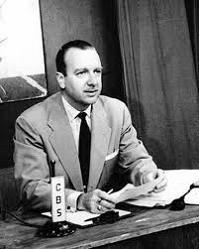
Van Jones misses Walter Cronkite

2

The world has become a very strange place when someone like Van Jones — a certified left-liberal, a member of the progressive political movement that has spent decades denoucning the biases and unfair coverage of the mainstream media — says he misses the old days when a few editors controlled what the public saw. From an oped he wrote in the NYTimes July 26:


Anyone with a laptop and a flip camera can engineer a fake info-virus and inject it into the body politic. Those with cable TV shows and axes to grind can concoct their own realities. The high standards and wise judgments of people like Walter Cronkite once acted as our national immune system, zapping scandal-mongers and quashing wild rumors. As a step toward further democratizing America, we shrunk those old gatekeepers — and ended up weakening democracy’s defenses.


Jones also wrote — and I agree — that the era of rampant character assassination by fraudulent bloggers will eventually end:


The worst of the partisans will get their comeuppance and become cautionary tales for others. Public leaders will learn to be more transparent. We will teach our children not to rush to judgment. Technology will evolve to better expose fakers.


But wow, when we start to miss the old CBS/ABC/NBC monopolies, things have gotten pretty bad. Or else we’ve finally started to realize that, in an era when anyone can be a mass-media publisher, credibility, standards and principles still matter.


Memorial for Rene Cazenave

0

Rene Cazenave, a stalwart in the affordable housing movement in San Francisco for 40 years, died June 27. Although he insisted that he didn’t want a big memorial, he touched so many people in this city and this community that we’ll be gathering to celebrate his life on Saturday, July 31, from 2-5 pm. The event’s at Fromm Hall at the University of San Francisco (right behind St. Ignatius Church). See you there.

SFBG Radio: Who’s afraid of the right-wing nuts?

30

In today’s episode, Johnny and Tim talk about news fabrication — and why anybody still respects Andrew Brietbart. You can listen after the jump.

sfbgradio7/23/2010 by johnnywangel

Janet Reilly should stay in the race

9

Now that a judge has ruled that Michela Alioto-Pier can run again for her District Two seat, a wide-open race has become a little strange. Janet Reilly had already rounded up the endorsements of Democratic Party heavies like Dianne Feinstein and Nancy Pelosi, along with Gavin Newsom. Of course, Newsom has always supported Alioto-Pier in the past; he no doubt backed Reilly because he figured (as did a lot of us) that City Attorney Dennis Herrera was right and Alioto-Pier was termed out. Same goes for Feinstein and Pelosi, who won’t want to be in the position of opposing an incumbent supervisor who has always sided with the downtown establishment.

So now what do all those people do?

Add in the fact that Herrera, who still thinks his position was correct, might decide to appeal, and the state Appeals Court might still intervene and kick Alioto-Pier off the ballot, and anyone who switches endorsements after this ruling might have to do it again after that one, and you’ve got quite a political mess.

The only thing that gets the entire power structure of the local Democratic Party off the hook is if Reilly drops out and says she doesn’t want to fight Alioto-Pier. There’s going to be immense pressure on her to do just that; I bet someone from Pelosi’s office has already called.

But Reilly needs to hang tough. She’s a good candidate who could mount a serious challenge to Alioto-Pier, who needs a challenge. District Two isn’t going to elect a left-progressive, but Reilly would be a much more independent supervisor. I couldn’t reach her today, but she told the Chron she was going to make up her mind this fall. My advice: Don’t spend a lot of time debating (which leaves all your supporters up in the air). Announce right away that you’re in the race for good, that you’re in it to win and that you look forward to a lively debate on the issues facing the city. And if Pelosi and Feinstein back off from their endorsements, they look bad and you look fine.


Restore Hetch Hetchy throws another curveball

8

It would be lovely to be able to talk seriously about removing the dam in Hetch Hetchy Valley, to restore John Muir’s “holiest temple” and expand hiking and camping areas in Yosemite. But I’m not ready to go there right now — and to claim that giardia in the water is a good reason to dynamite O’Shaugnessy Dam is a bit beyond silly.


The Chron writes about the Restore Hetch Hetchy movement every now and then, and there’s always a lot of talk about the water system. But the paper never seems to mention the other part of the dam — it generates electricity. And it was, and remains, the lynchpin of what’s supposed to be a public power system in San Francisco.


Congress would never have allowed San Francisco to build the dam if it was just for water. The whole deal, memorialized in the Raker Act of 1913, hinged on the city using the dam for both water and power, and using the power to establish a public-power beachead in Northern California to compete against Pacific Gas and Electric Co. Tear down the dam and the city loses not only a pristine water supply but enough non-fossil-fuel electricity to power a significant part of its electricity needs.


I know that there’s a lot of controversy about large hydro as renewable power, but the dam’s already there, and I think everyone agrees that existing hydro is a better source of electricity than coal, oil, natural gas or nukes.


In a perfect world (and we’ll get there one day), San Francisco would have a municipal power system that relied entirely on solar, wind, and tidal energy. And we’d have a Bay Area water system that reduces use dramatically, recycles gray water, shifts agriculture to drought-resistant sustainable crops, replaces lawns with native ground cover and requires far less fresh-water input every year. At that point, the dam will be redundant and pointless. Bombs away.


But until we no longer rely on a privately-controlled electrical grid based on fossil-fuel and nuclear generation, we just can’t afford to lose the dam. Why the Chron never talks about that side of the equation remains one of the great mysteries of local journalism.


McGoldrick to challenge Fang for BART Board?

14

The calls are already going out: former Supervisor Jake McGoldrick ought to challenge James Fang for BART Board. Bruce Balshone reported enthusiastically on the draft Jake effort in the Examiner, and when I called McGoldrick tonight, he seemed open to the idea. After all, Fang has been on the board 20 years, is the lone Republican elected official from San Francisco — and frankly, hasn’t done much of anything important in terms of improving transit (or controlling the BART police).


I called McGoldrick tonight to ask about it, and he told me he’s open to the idea. “I’m just juggling and weighing parts of my life,” he said. “I’m a teacher, the president of a union, the president of the Richmond District Democratic Club and a grandfather.” But he added: “The one thing that’s absolutely true is that James Fang need to be replaced. It doens’t have to be me, but I’m giving it serious consideration.”


Of course, he said (in typical McGoldrick fashion) that his family has to sign off: “I finally got home after eight years at City Hall and made some soup instead of being a supe,” he said. “I asked my wife about it, and she thought I was talking about Bart Simpson or something.”


Stay tuned.

SFBG Radio: Meg’s taxes, Jerry’s campaign, Linda’s music

4

In today’s episode, Johnny and Tim talk about why Meg Whitman wants to avoid paying taxes, why Jerry Brown is so late in getting a campaign started … and why the oldies stations never play Linda Rondstadt songs. You can check it out after the jump.

sfbgradio7/21/2010 by johnnywangel

What radio stations did the armed nut-case listen to?

6

The Rush Limbaughs and Sean Hannitys  and Glenn Becks of the world are quick to point at Muslim religious leaders and schools and say they’re inciting violence against the United States. But you have to wonder: What incited Byron Williams to decide that he could start a revolution by killing ACLU and Tides Foundation workers? I don’t know anything about his background or psychology, but given all the increasingly violent hate speech directed at Obama, the progressive movement and the American left, is it fair to at least ask:


What radio shows was this guy listening to? What TV stations did he watch? His mom said he was upset by TV news stories about the “left wing agenda.” Did the ultra-right-wing rhetoric drive him to what would have been an act of domestic terrorism?


Sean? Rush? Glenn?

Newsom’s extortion

3

The mayor really wanted the supervisors to get rid of two reform measures that would have shifted to the board some of the appointments to the Recreation and Park Commission and Municipal Transportation Agency. The landlords really wanted the board to scrap a plan to reform the Rent Board. And both got exactly what they wanted.


I agree that the budget has some good news, that Newsom has agreed to fund more than $40 million worth of necessary services that he initially wanted to cut. But the price was high: The supervisors had to go along with Newsom’s attempt to undermine structural reforms at two city agencies. The mayor essentially held the board hostage: If he didn’t get his way on issues totally unrelated to the budget, then he’d refuse to pay for a long list of things that the supes wanted. (And these weren’t pet projects of board members; we’re talking about life-saving essential services. The mayor in effect said that he’d allow desperately sick people to die on the streets for lack of a bed at SF General if the board tried to take away his ability to pack Rec-Park and MTA with his favorite political hacks. Sweet guy, huh?)


Is balanced representation on two important city agencies worth the price of $43 million in cuts to essential programs? That’s a nasty question, and the mayor put the board in a very bad position. In the end, the supes could have stood up to his extortion, and didn’t.


Meanwhile, the landlords threatened to spend millions to defeat a measure reforming the Rent Board — and then they threatened to also pour money in to supporting Public Defender Jeff Adachi’s pension measure, which labor is really nervous about. And there was always the implied threat that landlord money would go into the district supervisor races. So progressives decided that they couldn’t win that battle and the rent board measure died


And, of course, Newsom’s sit-lie law and his plan to kick members of the Board of Supervisors (but not himself) off the Democratic County Central Committee are both still on the ballot. He didn’t give up a thing.


So the landlords and the mayor won this round, but the supes can still fight back. What Newsom did was unconscionable; it’s not as if he was negotiating a tax hike measure against cuts, or a measure that would have mandated new spending against reductions somewhere else. He took two items that had nothing to do with finance and made them bargaining chips in the budget discussions.  If the supervisors did that, they’d be violating state law, which forbids vote trading.


So what San Francisco needs now is a law that bars the chief executive from vote-trading, too. Let’s get that introduced and approved — and see if Newsom wants to veto it.

Editor’s Notes

0

Tredmond@sfbg.com

I just got back from a short trip to Canada, the land of government health care and tight bank regulations, where business is booming. From my hotel room in downtown Toronto, I could see construction cranes everywhere. The Globe and Mail had a fascinating report on a construction company manager in Winnipeg who was learning the language of the Cree tribe and creating a new apprenticeship program for First Nations people — in large part because he was facing a serious labor shortage.

Yeah, that’s right: in Canada, they can’t find enough construction workers to fill all the jobs. And there’s a good reason (which has nothing to do with zoning or taxes or fees on developers): The banks in our neighboring country to the north have always been more tightly regulated, so they didn’t have the same meltdown we saw here in the USA.

Then I came back and read that Meg Whitman, candidate for governor of California, wants to eliminate the capital gains tax in the state. I like the Huffington Post headline: "Meg Whitman tax plan: she stops paying hers."

There are two types of people in the world, the rich and the rest of us, and the rich quite often don’t work for a living. Whitman, for example, doesn’t have a day job. She pays the bills with the money she makes by investing the billion dollars or so that she racked up working at eBay.

Actually, she probably doesn’t invest much of it herself these days; she hires someone else to do that. Which means she doesn’t do anything at all to earn the money that comes in each week.

That income is called capital gains — and the HuffPo estimates that she’s bringing in enough that she’d probably owe the state about $4 million a year in taxes at current rates. If she gets elected, and manages to repeal the capital gain tax, she won’t pay any taxes on that money at all.

Which means the state will be even more broke — or that the rest of us suckers, who actually go to work every morning, will have to pay more to make up for it.

I suppose next she’ll want to deregulate the banks.

The tax poll is seriously messed up

19

Chuck Nevius, who doesn’t seem to like any taxes, weighed in this morning on a poll paid for by the city’s Transportation Authority that, the way Nevius puts it, “[cast] doubt on whether it would be wise to put some tax issues on the ballot in November.” His analysis of the numbers:


[W]hen it comes to the hotel, parking, business and real estate transfer tax, the voters had four responses: no, no, no and hell no.


His ideological soulmate over at the Ex, Ken Garcia, had a similar report. “San Francisco,” he wrote, “is not in a tax-supporting mood.”


But that’s not how I read the poll at all.


You can see the actual document here. The first thing I’ll note is that 67 percent of the people who responded were over 40. That’s not a surprise; telephone polls skew older these days. (How many young people have land lines, which are the numbers primarily called by pollsters?) The second is that some of the questions are pretty close to incomprehensible. Imagine someone reading this to you over the phone and asking for a quick answer:


To provide loans to pay for seismic retrofits of certain multi-story wood structures at significant
risk of substantial damage and collapse during a major earthquake and funded by a qualified
governmental housing finance agency for permanent or long-term affordability, or single room
occupancy buildings owned by private parties, and pay related costs, shall the City and County
of San Francisco issue up to thirty nine million one hundred forty thousand dollars of general
obligation bonded indebtedness, subject to citizen oversight and regular audits?


But the most important thing is that the tax questions were more than misleading; they’re phrased in a way that almost begs for a No. Here’s the real-estate transfer tax question:


Shall the City and County of San Francisco increase the real property transfer tax on certain
properties by between $3.75 and $10.00 per $500.00 of value, depending on the overall
property value and exempting rent-restricted affordable housing units from the increased tax rate?


That sounds like the average person trying to buy or sell a house is going to get hit with more taxes. Actually, nobody’s proposing a tax on low-end sales. If you asked the real question — should people or businesses that sell property worth more than $5 million pay a slightly higher transfer tax — you’d get a very different answer.


Here’s another one:


Shall the City and County of San Francisco establish a progressive payroll expense tax rate
structure and impose a gross receipts tax on the rental of commercial real property?


My immediate response: What the hell does that mean? It sounds like higher taxes on payrolls and a new tax on rents. Sounds like it’s bad for small business. Actually, that’s an utterly inaccurate representation of the tax the Sup. David Chiu is proposing. How avbout an honest question: Should the city cut taxes on small businesses and make banks and insurance companies pay their fair share? I suspect that would poll a little higher.


You want a real snapshot of how a conservative, older groups of voters, the ones represented in this poll, feel about taxes? Check out question 13, which asks people if they agree or disagree with this statement:


It is crucial to have high quality streets, roads and public transit, even if it means raising taxes.


A full 71 percent said they agree.

I’m not arguing that it’s going to be easy to pass any tax proposals on the fall ballot. But if you put the question the right way, and explain that these revenue measures impact primarily the wealthier residents and businesses and that they money is needed for essential public services, I think most voters are going to say Yes.


Trash Lit: Doo-dah, hoo-hah, winkie, and cooter with Janet Evanovich

0

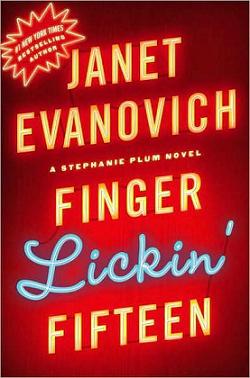
Finger-Lickin’ Fifteen
Janet Evanovich
St Martin’s Press, 318 pp, $27.95


I’m just going to come right out and say it: Janet Evanovich is the funniest writer to come along on the scene since Carl Hiassen, and in some ways, she’s got Hiassen beat. He writes about Florida, where unreal people do some bizarre stuff; her turf is Jersey, where the characters are pretty close to normal life. Which is to say, totally strange and fucked up. She is my favorite living writer, and after fourteen previous novels, the tales of Stephanie Plum and her cohorts just seem to get better.


Finger Lickin’ Fifteen is among the best of the series. Before you even get to page five, there’s a decapitation, witnessed by Lula, the ‘ho turned bounty hunter who works with Plum. And not just any decapitation: A guy swings a meat cleaver, the head hits the ground, blood spurts up like Old Faithful, Lula tells the story in vivid detail, Stephanie throws up … it’s glorious.


The scene in Trenton hasn’t changed much since the last book, except that Plum has temporarily broken up with her boyfriend Morelli. She’s still working for her cousin’s bail bonds agency, still trying to make a living catching deadbeats, still trying to figure out which hot guy she wants more, Morelli the cop or the mysterious (and even hotter) Ranger, who’s an insanely cool and tough private security mogul.


It turns out that the headless guy is a celebrity chef, and Plum and her gang think the hit may be all about barbecue sauce, and wind up investigating, sort of. And of course, Plum’s Grandma Masur, one of the great characters in the history of American literature, gets deeply involved.


I’ll just give you a few tidbits of why I love Janet Evanovich. Here’s Lula on men: “You don’t want to go around thinkin’ shit is your fault. Next thing you know, they got you makin’ pot roast and you’re cutting up your Mastercard.”


Grandma Masur on a neighbor girl: “She was Mary Jane Turley then. Up until the fourth grade, she quacked like a duck. Never said a blessed word in school. Just quacked. And then one day she fell off the top of the sliding board in the park and hit her head and started talking. Never quacked again. Not to this day.”


Some of the things that happen in this book: An exploding back yard gas grill sets off a huge fire in her family’s back yard. A toxic barbecue sauce gives everyone horrible diarrhea. An exploding pressure cooking puts a dent in Plum’s ceiling. A cross-dressing chef works days in a chicken outfit. Plum goes on a blind date with a man named Peter Pecker. Two guys in Zorro masks toss a fire bomb into her building. A car bomb blows up Lula’s ride. Grandma Masur shoots a guy’s ear off. Lula is stuck in a car window until she farts for a minute straight. There’s a lot of talk of doo-dah, hoo-hah, winkie, cooter, wangers, boners, and the knicky-knacky.


It’s enough to make me proud to be an American.

Nice boats, Carly

7

Carly Fiorina’s got herself a couple of nice boats.


Barbara Boxer, that damn liberal, is making fun of poor Carly just because she has not one but two yachts, one in Sausalito and one in DC. The Chron’s got a pic of the 70-foot Dyna Craft, which looks a bit small in the photo. There’s also a 56-foot Sea Ray.


Of course, as her spokesperson points out, it makes perfect sense for her to be part of a two-yacht family; after all, she has two houses. And if you’ve got two houses, you need a boat (which costs more than most houses) near each of them.


So let’s check out the craft. Here’s what the interior of the 70-foot Dyna Craft Laguna looks like. Here’s one going under the Golden Gate Bridge.  A few of the features:


The D70 has a powerful yet elegant Italian-Designed profile. This is a superb large-size model with a high level of sophisticated design and luxury equipment. All surfaces are decorated with the highest grade materials that are pleasing both to the eye and to the touch. Like all DYNA yachts, it has a very high degree of customizability and is built with the most fastidious attention to detail and quality. This model is available in open flybridge, skylounge, and hard top version.


I’m partial to the flybridge, myself. The standard model is done in teak, maple or cherry wood, although it has (gasp) “synthetic leather headliners.” I’m sure she tossed those out and got real leather. And I like that king-sized bed. The galley’s got a full-size refrigerator, granite counters and a convection microwave, which I bet she doesn’t use much, but I’d be making some mean mac and cheese in it.


Now here’s a 56-foot Sea Ray, which is probably a little more my size. There’s a nice slide show on the Sea Ray site; check it out. I like the galley a little better on this one that on the Dyna, and the accomodations, though not as luxurious, are fine for the likes of me. Check out the bath and shower. This baby has only 1,100 gallon fuel tanks, and the Dyna’s got 1,300 gallons, but the Dyna’s a beast and must use a lot more gas.


The Chron says the Sausalito yacht is valued at about $1 million, but unless she’s had some serious interior work done, that seems a little pricey to me; you can get these things at a pretty steep discount these days. Last summer I met a guy who was ready to let go of his 60-foot Yacht for less than $200,000. Like a lot of the former HP folks that Carly laid off, he lost his job and couldn’t afford the gas.


On the other hand, Carly’s never had much business sense. She probably overpaid. 

SFBG Radio: Wall Street and the Dead Kennedys

0

Today, Johnny talks to Johnny Venom about the state of financial reform — and to D.H. Peligro about his time with the Dead Kennedys and his new punk version of Purple Haze. You can listen after the jump.


sfbgradio7/19/2010 by johnnywangel

Meg wants to stop paying taxes

16

The rich are not like you and I — a lot of the money they make comes from something other than working. I don’t begrudge Meg Whitman the billion bucks she made at EBay (well, I do, really, but never mind). But when you sit on a pile of money, hire someone to manage it for you, and reap major windfalls on the interest, well, you’re basically making money for doing nothing.


And you ought to at least pay taxes on it.


But Whitman thinks she and other rich people are so special that she wants to exempt them from taxes on capital gains. That means the rest of us — the poor fools who actually get up every monring and go to work — will have to pick up the slack.


Oh, but won’t this “create jobs?” Chris Kelly in Huff Po:


For example, if a billionaire didn’t have to pay taxes, he could hire you to express his dog’s anal glands. And you could pay taxes.


Pardon me for thinking this is about the dumbest tax idea I’ve heard since Ronald Reagan decided to tax the unemployed.


SFBG Radio: Why’s the stock market strong and the economy weak?

1

Today, Johny talks to economist and day trader Johnny Venom about why the stock market seems strong when unemployment is high and the economy is weak. You can listen after the jump.


sfbgradio7/15/2010 by jangel

Editor’s Notes

0

tredmond@sfbg.com

Broken windows can be replaced, and in two weeks, they will be. Stolen merchandise can be replaced, and it will be. But who’s going to replace this justice system that got looted? What insurance policy takes care of that?

Davey D Cook, Hard Knock Radio, KPFA, July 9

I’m not going to argue with the jury that convicted Johannes Mehserle of involuntary manslaughter in the death of Oscar Grant. I didn’t sit through the entire trial; I didn’t hear all of the testimony; I didn’t get the judge’s instructions on the law. I know it looks a lot like murder when you take a gun and shoot someone in the back, but the law requires intent, and the jury clearly believed — based on the evidence presented at trial — that the white officer made a mistake and never wanted to kill the young black man.

Based on the evidence I’ve seen — the videotape of the shooting, which, like many Bay Area residents, I’ve watched dozens of times— Mehserle had plenty of opportunity to back off, to recognize that he was about to fire a weapon at a man who was already on the ground and under police control. And remember: a Taser can also be lethal.

But the jury didn’t see evidence of murder, and voluntary manslaughter is a strange amalgam that’s very hard to fit with this case. If the judge sentences Mehserle to something close to the maximum (14 years), then some form of justice will have been done.

I say some form because it’s impossible to talk about this case without talking about race.

If Oscar Grant had been a white guy — even a drunk, belligerent, obnoxious white guy — I don’t think he ever would have been shot. The cops deal with annoying white people all the time, and they don’t get beat up, shot, or abused anywhere nearly as often as black people. That’s just reality.

Well-trained police officers working for professional law enforcement agencies are taught to be sensitive to race issues. They’re also taught how to make sure not to confuse a pistol with a Taser. It doesn’t always work — anyone who follows the criminal justice system knows that racism is very much a part of life. (And, of course, the BART police force is not a professional operation, and its officers aren’t well trained.)

If Mehserle had been a black kid from Hunters Point who was involved in a shooting death — even if he didn’t pull the trigger, even if he never meant to kill anyone — he’d be going to prison for a long, long time. The very fact that people are discussing the possibility of probation or a short sentence for Mehserle is a statement about the unfairness of our justice system.

And that’s not going to get fixed in two weeks. *

SFBG Radio: Should SF ban pet sales?

4

In today’s episode, Johnny argues that San Francisco should ban all pets in the city. Tim says his dog has a great life. Plus: The latests on the Mehserle verdict. You can listen after the jump.

sfbgradio7/12/2010 by jangel

Tax cuts, unemployment and the deficit

10

Fifty-five thousand people a day are losing their unemployment insurance because Congress won’t extend benefits. Why? Well, gee, any federal spending will increase the deficit — and like Herbert Hoover, everyone in Washington is talking about cutting deficits.


But check out this handy chart from the Commitee on Budget and Policy Priorities (thanks, Calitics). The overwhelming factors in the current budget deficit are left over from the Bush administration: Two wars, massive tax cuts for the rich, and an economic meltdown. Unemployment insurance barely even counts.


So the obvious solution to the deficit problem is to get the hell out of Iraq and Afghanistan, cut the size of the military and end the tax cuts. Funny: The deficit hawks aren’t talking about any of those things. 


Trash Lit: Nellie Bly meets old-school hacker in “The Alchemy of Murder”

0

The Alchemy of Murder
Carol McCleary
Forge, 365 pp. $24.99

Nice effort for a first novel. A fun premise, fairly well executed. Nellie Bly, the famous (for real) investigative reporter for Joseph Pulitzer’s New York World, goes to Paris in 1898, just as the World’s Fair is attracting throngs of tourists, to catch a brutal murderer.

The guy’s apparently a doctor, and has been hacking up girls and taking away parts of their bodies. Now he’s going about his nasty business in a city that’s not only overwhelmed with the fair (and trying to hush up the killings to avoid bad publicity) but in the throes of an epidemic of something called Black Fever.

The authorities think the fever is spread by miasma rising from the sewers. The anarchists, who control the Montmarte section of the city, think it’s a plot by the rich to kill the poor. And of course, as McClearly points out about Montmarte, “the immorality and depravity of its bohemian inhabitants is a scandal known throughout the world.” Bly runs into Louis Pasteur, Jules Verne (who she eventually sleeps with), Oscar Wilde, Louise Michel and a host of other characters from late 19th century Paris as she chases around, putting herself forward as bait for the killer.

McCleary isn’t terribly kind to the anarchists, but there’s a lot of (relatively) accurate historical description of the politics of the time, with ample references to Kropotkin, Bakunin, and Haymarket Square. And the scenes in Montmart, the Pasteur Institute and the Parisian sewers are worth the price of admission – even if the eventual plot twist, involving an anarchist attempt at biowarfare with anthrax, plague and cholera – is a bit of a stretch.

Lesbian sex in a café with ample absinthe. Blow jobs in another café. A bladder filled with plumbers acid that gets sprayed on a bad guy’s dick. Sex with Jules Verne. Lectures by the radical Ms. Michel. I wouldn’t sell it as a history book, but as an entertaining mystery, it actually works.

SFBG Radio: The Mehserle verdict — and beyond

0

Today, Johnny and Tim talk about the Mehserle verdict, the riots, and what comes next. You can listen after the break.

sfbgradio7/9/2010 by jangel

Meg, Jerry and the Latino vote

0

It’s easy for political analysts to talk about “the Latino vote” as if 15 million people in California all shared exactly the same views and cared about exactly the same issues. Which is nuts: Latino voters are a diverse group.


On the other hand, it’s safe to say that over the past 15 years or so, as the California Republican party has become more and more viciously anti-immigrant, Latinos have been rejecting GOP candidates. When Pete Wilson pushed Proposition 187 — which would have prevented undocumented Californians from receiving public health services and would have kicked their kids out of public schools — he wrote off an entire generation of Latino voters.


And Jerry Brown has a strong history of supporting causes that resonate with a lot of Latinos.


So in general, recognizing that not all Latinos remember Brown’s support for Cesar Chavez or cae about the creation of the Agricultural Labor Relations Board, it ought to be a good assumption that Brown will win the Latino vote by a pretty wide margin. The fact that Whitman is narrowing his lead among Latinos is, I think, a sign that Brown is resting too much on history and hasn’t offered much in the way of ideas about jobs, education, or any of the other crucial issues that middle-class voters of all ethnic groups care about.


Still, the Spanish language billboards were really dumb. For a campaign that’s been as disciplined and message driven as the Whitman effort, it’s kind of a surprise. All Meg has done is give Brown a nice weapon, a reason to talk about an area where she’s very weak. And the more he can keep playing on that — the more he can point out how far to the right she and her advisors really are on immigration — the more it hurts her.