Tim Redmond

Court denies SF Weekly’s request for rehearing

0

The state Court of Appeal denied Sept 9th a request by SF Weekly and its chain parent for a rehearing in the Bay Guardian’s lawsuit. That allows the appelate decision affirming the Guardian’s trial court victory  to stand.

The court issued a few minor amendment to footnotes in the case, but denied the Weekly’s request that the evidence be reconsidered. That means the decision remains as precedent-setting case law in California.

The court decision was a major victory not just for the Bay Guardian but for small businesses across the state who are facing predatory chains that sell below cost with the goal of harming competition.


Endorsement interviews: Eric Smith

10

Eric Smith’s passion is environmental justice. He’s the director of Green Depot, a coalition of biodiesel organizations, and has helped lead the city to switch its buses and official vehicles to the cleaner fuel. He’s working on ways to get the city to move its waste by train. And he talks about the important of green jobs (and not just green jobs for the top college graduates.)


Smith told us he’s not fond of the Lennar project, but he supports the Communit Benefits Agreement and would have voted for the project EIR. He’s concerned about the city’s plans to bring 40,000 more housing units, mostly high-end condos, to the neighborhood, particularly the threat to light-industrial jobs. He complains about the lack of centralization in city services and the sometimes overlapping jobs of nonprofits and public agencies. He’s an opponent of the gang injunctions and Sit-Lie.


You can listen to our interview here:


esmith by endorsements2010


Endorsement Interviews: Malia Cohen

7

Malia Cohen has three priorities: She wants to keep District 10 residents working, healthy and safe.

Healthy means expanding open space in the district, creating more pocket parks and turning McLaren Park into more of a destination. Safe means more community policing and using nonprofits like TURF to help monitor streets and buses. “I’m a believer in the broken windows theory,” she said, arguing for brighter lights on Third Stree and San Bruno Ave. She’s also calling for community clean-up days to “change the culture of Third Street.” But she opposes the city attorney’s gang injunctions. Working means more jobs for local people from development and better educational opportunities, particularly for people who might not go on to college.

Cohen took some strong progressive stands — she’s against Sit-Lie, and for public power (although she wasn’t too familiar with Community Choice Aggregation.) She supports the hotel tax, the real estate transfer tax and the vehicle license fee.

But she has a decidedly conservative streak, too: She wouldn’t support any further limits on condo conversions, Ellis Act evictions, or TICs, saying those regulations would infringe on the rights of property owners. You can listen to our interview here:


mcohen by endorsements2010

The Nevius rumor mill

1

After defending Pet Food Express, a chain that worries local independent pet stores, the Chron’s C.W. Nevius has the latest rumor in the who-will-be-the-next-mayor game. Here’s how it goes: Newsom becomes lieutenant gov, the supes pick Dennis Herrera as mayor, Herrera appoints David Chiu city attorney, and David Campos becomes board prez.


I’m not buying it. Herrera is well short of six votes on the current board, and Chiu has sufficiently pissed off progressives that he can’t cut that deal and make it happen. Besides, Chiu doesn’t want to be city attorney, he wants to be D.A. Or mayor.


Matt Gonzalez, Tony Hall, and Ron Paul

26

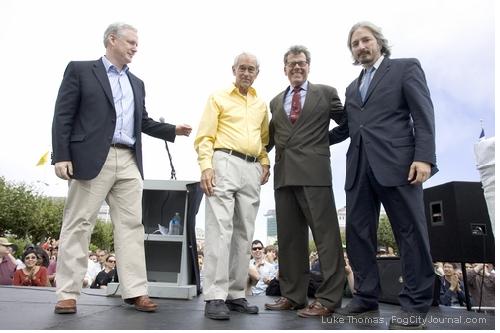
If Luke Thomas didn’t have the pictures to prove it, I might never have believed this story, but there they are — the former supervisor and progressive candidate for SF mayor, Matt Gonzalez, hanging out with his old (odd) BFF Tony Hall — and libertarian Republican Ron Paul and John Dennis, a Republican running against Nancy Pelosi, at an “anti war and anti-incumbent” rally Sept. 4.

I guess they’re all against the wars in Iraq and Afghanistan. So am I. Dennis is also one of those “federal reserve is the devil” types who wants all of our currency once again backed by gold. I’m not defending the federal reserve here. I’m just saying — this is an odd crew.


SFBG Radio: Why voters should think like junkies

11

Today we talk about a different approach to politics: Why voters should think like junkies. Johnny’s got a good argument here — your typical junkie is a lot more cynical about people trying to sell him something than the typical voter who listens to Glenn Beck. Oh, and why is that preacher in Florida going to burn a stack of Korans? Any junkie could figure out that it’s all about making a fast buck. You can hear the discussion after the jump.

sfbgradio9/7/2010 by endorsements2010

Editor’s Notes

0

tredmond@sfbg.com

California politics starts early. The campaigns in this state were underway long before the traditional Labor Day launch of the fall campaign season. Except for Jerry Brown, who only in the past week has started acting like a candidate for governor of the most populous state in the nation.

And that’s not a mistake.

Here’s how I’m seeing things shape up at what is more accurately described as a midpoint in the campaign season:

Jerry Brown’s starting to hit back. The once and maybe future governor has much of the state’s political class mystified; with Meg Whitman blanketing the airwaves, promoting herself and whacking away at him, why has he waited so long to fight back? Actually, it’s a calculated strategy, Jerry’s version of the old Muhammed Ali rope-a-dope. He knew he couldn’t match Whitman blow for blow — and he also suspected that at a certain point, she’d start to punch herself out. It’s been working: after spending more than $100 million, Whitman hasn’t cracked 45 percent in the polls. And some polls now show that the more people view her ads, the less they like her.

So now Jerry Brown appears — a 72-year-old career politician who’s going to look like a fresh face. And all he has to do is knock her back a little and the race is his.

Barbara Boxer’s nailed Carly Fiorina where she’s most vulnerable. Boxer’s got incumbency trouble — that is, everyone’s sick of incumbents. But she has an opponent who has something even worse — a record of sending jobs offshore while collecting $100 million for herself. Boxer hammered that point home in the first and only Senate debate — and I can see that clip appearing in TV ads all fall.

And I hate to say it, but those two campaigns are going to eat up all the statewide campaign oxygen between now and November. Between those four candidates, we’ll see upwards of $120 million in TV spending — and the rest of the campaigns probably won’t even be able to buy much time in major markets.

That could be good for Gavin Newsom and Kamala Harris. They’re Democrats in a state where Democrats way outnumber Republicans, and Republicans only win when they make a strong case that the Democrat sucks. Whitman can try to do that, and so can Fiorina, but even if they had the money, I don’t see Abel Maldonado or Steve Cooley, the GOP candidates for lieutenant governor and attorney general, getting their messages heard in the cacophony that will be the top of the ticket.

So maybe Whitman is not only hurting herself with her excessive spending. Maybe she’s hurting the rest of the party, too. Not that she cares.

Endorsement interview: Tony Kelly

7

Tony Kelly’s been involved in land-use and development battles in the district for more than a decade — and it shows. He talks about zoning, redevelopment, and urban finance with the ease of an expert. He complains that funding affordable housing just by asking developers to include a little bit in their market-rate units is “a sucker’s game.” He talks about the need for public-sector investment to handle the major influx of population projected for the district over the next 20 years. He’s also thought a lot about city finance, and suggests, among other things, that San Francisco demand that the University of California pay some sort of fee in lieu of the $60 million the giant institution doesn’t pay in local property taxes.


Kelly also talks about environmental justice in the district, and is willing to go as far as suggesting that the city look at ending I-280 at either Cesar Chavez or Alemany as part of a program to expand rail service along the corridor. You can listen to our interview here:


kelly by endorsements2010

SFBG Radio: Johnny’s had it with Obama

5

The economy’s not getting any better, we still have 50,000 troops in Iraq, and the Democrats are in serious trouble this fall — because they refuse to act like Democrats. That’s why Johnny’s had it with Barack Obama (though Tim says the Dems are still better than the alternative ….) Listen to the ranting and raving after the jump.


sfbgradio932010 by endorsements2010

Endorsement interview: DeWitt Lacy

0

DeWitt Lacy wants District 10 to get its fair share — of the city’s economic pie, of the programs that serve San Franciscans, of the parks and infrastructure that San Francisco pays for. He complains that the district has some of the worse environmental problems in the city “and we don’t even protect the parkland we have now.” He’s taking a generally progressive approach — he opposes sit-lie, is against the gang injunctions, and supports all the revenue measures on the fall ballot. He also thinks the city makes it too hard on the working class; in fact, he complained about the cost of parking tickets, saying they’re a real burden for people trying to support a family on moderate incomes. And he’s concerned that the emphasis on housing in the city’s Eastern Neighborhoods Plan could impact light industry.

You can listen to the interview here:


lacy by endorsements2010

Endorsement interviews: Steve Moss

1

Steve Moss sees the future of District 10 as a great opportunity — for all of California. “We are a solution to the state’s problem,” he told us. Development in D 10 can help solve suburban sprawl and reduce commuting time and build a more sustainable state. But that means the state and the region need to help pay for the infrastructure needed to accomodate some 40,000 new residences over the next 20 years.

Moss had plenty of ideas about how to pay the huge tab for public amenities, including tapping existing state and regional money for transit, wetlands restoration and port and waterfront use — as well as a substantial local infrastructure bond. He talks and thinks like the policy analyst and professor he’s been, saying that the way to address issues is to identify the problems then target resources to fix them.

But he’s still a little vague on some of the city’s pressing issues. He wouldn’t take a stand on sit-lie (although he’s leaning against it), wouldn’t take a stand on the Campos Sanctuary City measure (although he said the city should “stay away from interacting the the federal government) and didn’t seem to have any problems with gang injunctions, which he said “have calmed things down.”

You can listen to the entire interview here:


moss by endorsements2010

Lynette Sweet and the IRS: The strange story

3

Lots of people have trouble with the IRS. Almost everyone I know has run afoul of the tax man at some point in time, and the fact that BART Board member and District 10 candidate Lynette Sweet at one point owed the feds $14,500 isn’t exactly a major crime.


But there’s a part of her story, at least at Matier and Ross present it, that strikes me as odd:


Sweet says she thought the tax lien was cleared up years ago.


She said she cut a deal with the IRS in 2007 to pay $14,500 in back taxes plus interest, in return for additional fines being dropped.


Sweet said she sent the feds a cashier’s check and pretty much forgot about it.


The thing is, the IRS never cashed the cashier’s check – which, it turns out, was made out to Sweet herself, according to a copy of a 2007 check she provided to us.


IRS spokesman Jesse Weller declined to discuss details of the case, but said: “The IRS does not accept checks – personal or cashier – or money orders made out to individuals. We ask that the payment be made out to the United States Treasury.”


Sweet “sent a cashier’s check and pretty much forgot about it” — although the check was never cashed? And she didn’t notice? Here’s where it gets strange.


Sweet told me that she bought the cashier’s check from Wells Fargo, mistakenly made it out to herself and mailed it off to the IRS in 2007. At that point, the money had already come out of her account, so she assumed the debt was paid. But the IRS never cashed the check, since it wasn’t made out to the United States Treasury and, of course, the agency couldn’t cash a check made out to someone else.


And Wells, she said, never told her that the check hadn’t been cashed. (That makes sense, in an odd way; I just talked to a banker who couldn’t comment for the record but who comfirmed that cashier’s checks are like cash; once the bank issues one it doesn’t have any responsibility to call the buyer if the check is never cashed.)


“That’s why I don’t recommend the use of cashier’s checks for tax payments,” the banker said. “You want your own hard copy of your payment when it’s cashed.”


So how come the IRS didn’t contact Sweet for three years to tell her the check she sent was invalid? That’s not like the IRS I know. Sweet’s response: She was using a tax firm to help her with the account, and the notices must have gone there, and those people must never have told her.


And she never knew that she had an IRS lien on her house that had grown to $20,000.


Could be. But what a bizarre story. 


(By the way, I also invited Sweet to come down to the Guardian for an endorsement interview, and she had her campaign manager call to say she’d declined to talk to us. That’s pretty unusual behavior, esp. for an elected official. Even Gavin Newsom came to talk to us when he was running for re-election for mayor and we’d been blasting him for four years. Pretty weak.)


Editor’s Notes

1

Tredmond@sfbg.com

The rich are getting screwed in the United States today. And that’s not a statement from Sarah Palin, Glenn Beck, or the remnants of George W. Bush’s brain. It’s coming from mainstream, even liberal economists, who have looked at the hard numbers around the battle over the expiration of the Bush tax cuts.

See, if you consider anyone who makes more than $250,000 a year "rich," then they’re due to lose the income-tax break they got under Bush. And they can afford to pay higher taxes, and most of them are doing fine, despite the complaints about the cost of private schools these days.

But they’re still getting screwed. Because, as James Surowiecki noted in the Aug. 16 issue of The New Yorker, ordinary, garden-variety rich people haven’t seen a lot of income growth in the past decade. They aren’t gaining much more than the middle class. The money in this country isn’t going to the rich any more. It’s not even going to the very rich, say, the people who make more than $500,000 a year, or even $1 million a year.

No, the extraordinary income growth in this country has been going to the very, very rich, the top 1 percent of the top 1 percent —the 5,600 families who now have more wealth than the bottom 120 million. And, as Surowiecki points out, those very, very, exceedingly filthy rich pay the same tax rates as the people who earn $250,000 a year.

The New York Times ran an interesting report Aug. 29 on the looming problems of crumbling old infrastructure in the United States — dams that are well beyond their designed life, levees that are crumbling, subway switching stations designed and built in the 1920s. Millions of people can’t find jobs and the government can’t afford to pay for the work that desperately needs to be done. The economic policies of the past decade have sucked all the money out of society — and given it to a tiny number of people who live like ancient feudal royalty.

That’s what we’ve achieved in this country of late. I don’t know why this isn’t the biggest — or the only — issue in the fall campaigns.

It’s not about taxes

3

I heard an executive from Coda Automotive, which makes electric cars, talking on NPR this morning about why the company is going to locate its manufacturing plant in Southern California. He talked about the quality of the workforce, about the demographics of the state, about the fact that Californians understand environmental issues … all sorts of reasons to build a plant here. And he never once mentioned taxes.


That’s not surprising — for all the whining the California Chamber of Commerce does, corporate taxes aren’t a major factor when businesses look at setting up shop in this state. We’d do a lot better to raise taxes to the level where we could afford to educate the next generation of workers. That’s far more important in building a strong economy.

The truth about Death Row

3

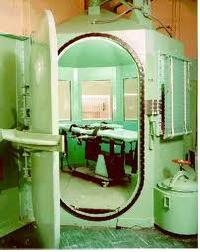
This story is really just tragic, but it does reflect a reality in the California prison system. Very few people on death row die by execution. The leading cause of death is old age.


George Smithey, for example, was 70, and had been on Death Row since 1989. That’s 21 years, during which the state has spent a fortune on high-security imprisonment and legal appeals. It costs millions to prosecute the death penalty to its conclusion, and in most cases, the state has to pay millions more to defend the accused. Those costs are mandatory; the Supreme Court (and the basic rules of human civilization) require that someone facing the ultimate penalty be given every possible avenue of appeal, every chance to make sure that the state isn’t making an irreversible mistake. 


Life without parole is way cheaper — and in most cases, gets you to the same place anyway.

SFBG Radio: Do-it-yourself politics

1

Today Johnny and Tim talk about the rise of DIY politics — from northern Michigan to San Francisco. Check it out after the jump.


SFBGRadio8/30/2010 by endorsements2010

Newsom and the mighty duck

5

Remarkable (or sadly, maybe not so remarkable) interview with Gavin Newsom on the Bay Citizen website. Remarkable because the candidate for lt. governor ducked every single significant issue. Not so remarkable, I guess, because it’s just more of what we’ve seen for years.

And because it really did show his political priorities.

His repsonse, for example, to a question about the cost of higher education in California: “You have to stop all these budget cuts. … Stop the draconian budget cuts. It’s counter to fiscal prudency, economic growth and competitive advantage.”

So how do you do that? How do you find the money?

Quack:

“It’s a question of priorities, what do you value. San Francisco … didn’t cut in those areas we value.”

Oh, so we don’t care about services for the poor?

Then there’s Prop. 13. His answer to the complete unfairness of the state’s property tax system? Quack:

“Difficult questions. It requires a debate, and I’m not afraid of saying we should have a debate about this.” Amazing. The almighty duck.


SFBG Radio: Glenn Beck goes to Washington

8

Today Johnny and Tim talk about Glenn Beck’s march on Washington — and why all those people who rail about the inappropriateness of an Islamic cultural center in New York see nothing wrong with Beck dishonoring the memory of Martin Luther King Jr. Listen after the jump.


sfbgradio8272010 by endorsements2010

The Chamber of Commerce is clueless

7

Check out the Chamber of Commerce and its vice president for public policy, Jim Lazarus, commenting on the state of the city’s finances in the Chron:


The Chamber opposes forcing the mayor to appear at “question time,” — “pure political theater,” — and an increase in property transfer tax — “Why do we need it? The budget is balanced.”


Yes, Jim — the budget is balanced. That’s a legal requirement. And it’s balanced by cutting all sorts of essential services. You like what’ s happening to Muni, and to public health? You like having mentally ill homeless people on the streets because there’s nowhere for them to get treatment?


But don’t worry — the budget is balanced.


Endorsement interviews: Rafael Mandelman

14

Rafael Mandelman told us that “local government matters.” He’s talking about a more rational budget process, with the supervisors offering their own alternative instead of just responding to the mayor. He’s in favor of raising new revenue — hundreds of millions in new revenue — to fund the critical priorities in the city, and he points out that there’s enough wealth in San Francisco to pay for it. He also thinks that all city commissions should have split appointments, with the mayor naming some members and the supervisors naming others. He’s running as the progressive candidate in a three-way race; you can listen to our discussion here:

mandelman by timred

Endorsement interviews: Margaret Brodkin

7

Editors note: The Guardian is interviewing candidates for the fall elections, and to give everyone the broadest possible understanding of the issues and our endorsement process, we’re posting the sound files of all the interviews on the politics blog. Our endorsements will be coming out Oct. 6th.

Margaret Brodkin’s spent her entire adult life as an advocate for children, youth and families. She been a nonprofit director (she ran Coleman Advocates for 24 years), a department manager (running the Department of Children, Youth and Families until Gavin Newsom fired her for refusing to go along with his budget plans) and was the author of the legislation that created the Children’s Fund. She has a wealth of knowledge about the school district and is full of ideas about what a 21st century education would look like.

Brodkin talks about big-picture issues — experiential learning, the problems with the Obama Administration’s education policies — and basic local issues (the need for a central kitchen to make healthy school lunches).

You can hear our interview with her here:

mbrodkin by endorsements2010

Endorsement interview: Jim Meko

5

Editors note: The Guardian is interviewing candidates for the fall elections, and to give everyone the broadest possible understanding of the issues and our endorsement process, we’re posting the sound files of all the interviews on the politics blog. Our endorsements will be coming out Oct. 6th.

Jim Meko’s been part of western SOMA for decades. He founded the SOMA Leadership Council, played a key role in Western SOMA planning, helped create the Entertainment Commission and now sits on that panel. He probably knows the details of land-use policy better than half the professional planners in the city and has all sorts of ideas about using zoning and traffic engineering to improve the neighborhood (two-way traffic on Folsom, for example). He’s pushing to be sure that market-rate housing development not skew the existing ration of affordable to expensive housing. He’s a small business owner and a supporter of the entertainment industry.

He’s got a bit of a fiscal conservative side, too: He told us he supports Jeff Adachi’s pension-reform measure and wants to get rid of many of the set-asides in the city budget. You can listen to his views here:


jimmeko by janwend

Legislators behaving badly

15

There’s only one country in the world that allows children to be sentenced to life without parole. Only one place on Earth where a 16-year-old can be sent to prison for life, without any chance at redemption. Only one place that doesn’t recognize that brain development, including judgment, isn’t complete until a person reaches his or her 20s.


And that’s the United States.


State Sen. Leland Yee, a child psychologist, had a very moderate bill in the Legislature this year that would have given juveniles sentenced to LWOP a chance after 15 years to be reconsidered for parole. That would put California somewhere close to the rest of the civilized world.


“SB 399 is not a get-out-of-jail-free card; it is an incredibly modest proposal that respects victims, international law, and the fact that children have a greater capacity for rehabilitation than adults,” Yee noted.


It cleared the state Senate, and should have cleared the Assembly Aug 24. But even with the Democrats firmly in control of that body, Yee failed to get enough votes for SB 399. And one of the people who refused to vote for it was San Francisco Assembly member Fiona Ma.


You expect this sort of shit from Republicans and from some conservative law-ond-order Democrats. But it’s inconceivable that a San Francisco Democrat would be against a bill like this. 


What on Earth was Ma thinking? I couldn’t get her on the phone, but her communications aide, Cataline Hayes-Bautista, sent the following Ma statement:


 “I did not come to my decision on SB 399 easily – it’s legislation that I have carefully reviewed and considered for months. While I acknowledge that some juveniles in the correctional system may have the capacity to be rehabilitated after decades of being incarcerated, I feel that we cannot reset a defendant’s clock 25 years later expecting a victim’s family will reset their hearts.


I know our District Attorneys do not take life sentences lightly. These crimes are limited to first and second degree murder offenses with a special circumstance which include the most troublesome crimes: murdering a peace officer, murdering to achieve a hate crime, committing a murder that’s especially heinous, murdering for financial gain, and murdering while escaping lawful custody.


All of these sentences were handed down after murder victims’ families had the chance to speak out and address the court on the impact of these murders. To re-open these closed cases to new sentencing hearings would re-open the wounds already suffered by murder victims’ families, forcing these victims to re-visit and re-live cases they were told had been closed forever. I think it would be unfair to these victims’ families to have to re-live these horrific crimes and for that reason I felt compelled to oppose this legislation.


There are already deliberative checks in place throughout the system where prosecutors, defense attorneys, jurors, and particularly our judges, have the ultimate discretion to choose a lesser juvenile sentence when sentencing a juvenile murderer. In addition, the Governor has the power to grant pardons and commute sentences. This already provides an avenue for juveniles to seek extraordinary relief if justice calls for it.


 While I appreciate Senator Yee’s intent to create opportunities to rehabilitate juvenile criminals, these particular crimes rise to a standard in which we need to hold those responsible accountable for their actions.”


Sorry, but that’s just terrible. To say that the victims’ families are better off if juveniles — people who were too young to be fully responsible for what they did, and who in some cases didn’t even kill anyone (just being present when someone kills someone can be a life sentence) are locked up until they die is just kind of sick. I don’t know what else to say. Except to give an example of who is serving life without parole (from Yee’s press release):


One such case involves Anthony C., who was 16 and had never before been in trouble with the law. Anthony belonged to a “tagging crew” that paints graffiti.  One day Anthony and his friend James went down to a wash (a cement-sided stream bed) to graffiti.  James revealed to Anthony that he had a gun in his backpack and when another group of kids came down to the wash, James decided to rob them. James pulled out the gun, and the victim told him, “If you don’t kill me, I’ll kill you.” At that point, Anthony thought the bluff had been called, and turned to pick up his bike. James shot the other kid.


 The police told Anthony’s parents that he did not need a lawyer. He was interviewed by the police and released, but later re-arrested on robbery and murder charges. Anthony was offered a 16-to-life sentence before trial if he pled, but he refused, believing he was innocent. Anthony was found guilty of first degree murder and sentenced to life in prison without parole. Charged with aiding and abetting, he was held responsible for the actions of James.


 Okay, this kid doesn’t belong in prison for life, without any chance of parole. Thanks, Fiona.


Meanwhile, without the support of Yee, Assemblymember Tom Ammiano’s bill that would allow a traffic camera at Market and Octavis narrowly squeaked by the state Senate Aug. 24 and will now head for the governor’s desk. The bill has generated a lot of commentary on this blog; bicyclists and pedestrians think it will save lives in a crazy intersection, and privacy types worry about the creeping police state.


Adam Keigwin, Yee’s chief of staff, insists that Yee didn’t do anything to block the bill:


FYI: Senator Yee did not block the bill.  In fact, he told his colleagues who were looking for his input on a San Francisco specific bill that it was ok for them to vote for it, even though he voted no.  The bill passed today.  Again, the Senator has opposed all camera enforcement bills for several reasons: such cameras create a police state; law enforcement could use the film to enforce other laws; we should use actual officers, have better traffic improvements – like we have done on 19th avenue where we have gone from several deaths a year to zero; open government problem – film (government document) is allowed to be destroyed without the public ever gaining access to it; and finally other privacy concerns.


Still, he didn’t vote for it, forcing Ammiano and Sen. Mark Leno to scramble around trying to find another vote to put it over the top.


SFBG Radio: We fight over tolls

2

In today’s episode, Tim and Johnny battle over whether raising the bridge tolls to fight congestion is a fair and progressive idea. You can listen to the argument after the jump.

sfbgradio8262010 by jangellw