

Today Johnny and Tim talk about the bill that the Democrats are using to fight back against Republican nonsense — and why the GOP is all about scaring white people. You can listen after the break.
sfbgradio9272010 by endorsements2010

Today Johnny and Tim talk about the bill that the Democrats are using to fight back against Republican nonsense — and why the GOP is all about scaring white people. You can listen after the break.

Pretty goddam lame.
Bruce Brugmann always says that the way to tell where a big-city daily newspaper stands is to look at its endorsements for mayor and United States Senate. And on Sept, 26, the Chronicle endorsed for United States Senate and said:
Man, we suck. In a race with a crystal-clear choice, we can’t make up our minds. So we won’t endorse either of them.
The Guardian’s done a few “no endorements” too — but only in races where an incumbent who’s really bad is unopposed, or where the outcome is pretty much pre-determined and we want to make a statement. In a race like this, ducking the question is completely irresponsible. One of these two women is going to get elected to the United States Senate — and the outcome of the vote will have major national significance. Make a choice, folks. The voters have to.
Stay tuned for our local and statewide endorsements issue, coming out October 6. Listen to our interviews with the candidates here.

Today, Johnny and Tim talk about all the fuss that the Guardian’s cover on hot sluts has stirred up — and Johnny goes off in praise of sluts, sex, and nice asses. You can listen after the jump.
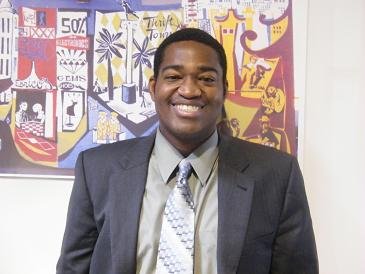
In 2008, San Francisco voters elected Chris Jackson to the Community College Board, where he serves as Budget Chair. And from 2007 until spring 2010, Jackson worked as a policy analyst for the San Francisco Labor Council.
Those experiences helped convince Jackson, whose grandfather came from Mississippi to work at Hunters Point Shipyard, of the pressing need for the next D10 supervisor to promote progressive policies that help working class families remain in San Francisco.
“People in D. 10 aren’t asking for market rate housing, they are looking for job opportunities,” Jackson said, clarifying that he wants to see the creation of good-paying, entry-level jobs with health and retirement benefits and the shoring up of local hiring policies, so workers can support their families and stay in the local community.
Jackson plans to create a stable funding source for truly affordable housing. He wants to help Section 8 recipients to rent in San Francisco. He thinks the city needs a different vision of redevelopment—one in which the Redevelopment Commission is brought within the control of the Board. He thinks gang injunctions serve to accelerate gentrification in low-income communities of color. And he thinks the city needs to reduce the number of high-level management positions before it fires and rehires thousands of public health workers at lower wages.
“I believe that the role of the supervisor is to empower local residents and community groups to be voices for real transformative chang,” Jackson said.
You can listen to the full interview here:

The new Forbes 400 list of the richest Americans is out, and guess what? Sixteen of them live in San Francisco. That’s a lot of very rich people. Some new ones on the list this year, too. And that doesn’t count all the very, very rich who didn’t quite make the cut (Warren Hellman, for example, isn’t quite rich enough for this list.)
It’s another reminder: This is a wealthy city, folks. And some of the people who live here, who have done exceptionally well with the Bush tax cuts (and despite the recession) can well afford to pay more local taxes.
So next time a political candidate tells you we can’t raise taxes in a recession, tell them to check out the Forbes 400 and our own 16 billionaires.

Today we ask some questions: With Whitman behind in the polls, is there any chance she could win? And why did the state just spend more than $800,000 building a new death chamber? Listen after the jump.
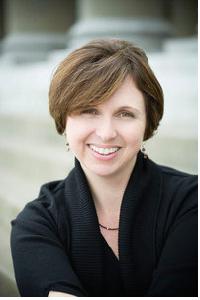
Nataha Hoehn got her start in public education teaching junior high English in the South Bronx, and she’s now working for an education nonprofit. She chairs the After School for All Committee, and is a big fan of community schools for every kid.
Hoehn also wants to see more local control over education spending. The SFUSD, she pointed out to us, has to apply for state funds in 136 categories — textbooks, transportations, etc. “It ought to be a block grant,” she said.
She supports the new school assignment system, including the middle-school feeder; she argues that “moving students in cohorts is an important model.”
Hoehn doesn’t oppose charter schools, but questions the need for many of them, and suggests that the total be capped at 5-7 percent of the district. You can listen to our full interview here:
hoehn by endorsements2010
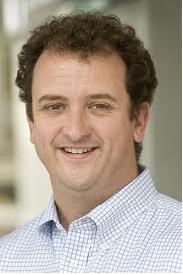
Sup. Sean Elsbernd came by to talk to us about Prop. G, his ballot initiative to change Muni workers’ pay, and threw in a pitch for Prop. F, a fairly minor change in the way the Health Service Board is elected.
His central argument on Prop. G: Muni workers are the only city employees with a salary guarantee in the City Charter. The law says the drivers have to be paid at the level of the second-highest-paying comparable urban transit district. It’s not that they make too much money, Elsbernd says; it that the Charter requirement puts the city in a bad place during contract negotiations and gives Muni management “zero leverage to make any changes in the egregious work rules.”
Interestingly, the drivers don’t seem to oppose the idea of taking their salaries out of the Charter and negotiating like other city employees. They’re upset about another provision of the Elsbernd measure — a binding arbitration rule. The city has binding arbitration for all labor negotiations, but under Prop. G, if the Muni unions and the city are at an impasse over work rules, the burden of proof would be on the union to demonstrate that its proposals won’t impact service.
“Fixing this,” Elsbernd says, “is central to fixing Muni.”
You can listen to the interview here.
elsbernd by endorsements2010

The press coverage of the new execution chamber at San Quentin has been astonishing. Check out Kevn Fagan in the Chron:
The spacious $853,000 center has three brightly lit witness viewing rooms, and each gives a considerably better view than the cramped gas chamber’s lone, poorly illuminated viewing room.
It’s like a damn real-estate review. A bright, well-lit place with a great view. And in Marin County, no less. A bargain at the $800,000 the taxpayers coughed up for this construction job.
KTVU news last night wasn’t much better. Scott Shafer on KQED was a little more reasonable; at least he noted that “On some level it’s hard to imagine an execution being humane.”
Folks, please: This is a room where people are going to be killed. Human beings. Strapped to a gurney, hooked up to an IV line and injected with poison. It’s ghastly, it’s disgraceful, it’s something that puts the United States far out of synch with the rest of the civilized world.
It’s also, by the way, insanely expensive; California pays more than $100 million a year to keep its death row operating, and according to the L.A. Times, it costs $250 million every time we kill someone.
It would have been nice to see a little perspective when the California Department of Corrections does a dog and pony show to present its latest killing machine.

tredmond@sfbg.com
Gabriel Haaland, a longtime queer labor activist, was talking to a friend from District 8 the other day, chatting about the race for a supervisor to fill the shoes of Harvey Milk, Harry Britt, Mark Leno, and Bevan Dufty. “She told me that she didn’t know who to vote for,” Haaland said, “because she didn’t know who the progressive was in the race.”
For supporters of Rafael Mandelman, that’s a serious challenge. “The polls are very consistent,” Haaland said. “Most of the voters in D-8 would prefer a progressive over a moderate, and when they know who the progressive is, they support that candidate.”
But oddly enough, although District 8 — the Castro, Noe Valley, and parts of the Mission — is one of the most politically active parts of the city, where voter turnout is consistently high, the supervisorial race is getting only limited media attention. The neighborhood and queer papers are doing a good job of covering the race, but for the rest of the media, it’s as if nothing’s happening. And that’s left voters confused about what ought to be a very clear choice.
The San Francisco Chronicle featured the District 6 race on the front page Sept. 19, with a long story about how demographic changes in the South of Market area would affect the successor to Sup. Chris Daly. District 10, with the mad political scrum of 22 candidates, no clear front runner and endorsements all over the map, has received considerable media attention.
Yet D–8 — which offers by far the most striking distinctions between candidates and the sharpest divisions over issues — has been flying under the radar.
Three major candidates are in the race, two gay men and a lesbian. All of them, for what it’s worth, are lawyers. Rafael Mandelman, who works for a firm that advises cities and counties, has the support of the vast majority of progressive leaders and organizations. Rebecca Prozan, a deputy district attorney, and Scott Wiener, a deputy city attorney, are very much on the moderate-centrist (some would say, by San Francisco standards, conservative) side of the political spectrum.
“As Barbara Boxer has said in her ads, the choice is clear,” Aaron Peskin, chair of the local Democratic Party and a Mandelman backer, told us. “Not to exaggerate, but this is like Boxer v. Carly Fiornia, and Rafael is our Boxer.”
Yet by almost all accounts, Wiener is ahead in the race.
The San Francisco Board of Supervisors has been roughly divided in the past decade between the progressive camp and moderate camp. And while those labels are hard to define (the Chronicle won’t even use the term “progressive,” preferring “ultraliberal”), most observers have a basic grip on the differences.
The moderates, who tend to support Mayor Gavin Newsom, are social liberals but fiscal conservatives. They talk about the city surviving budget red ink without major tax increases. They talk about controlling government spending and increasing public safety. The progressives generally see local government as underfunded after four years of brutal cuts and support the idea of raising new revenue to fill the gap. They support tenants over landlords, seek stronger protections for affordable housing, support Sanctuary City, and oppose sit-lie.
Certainly with Wiener and Mandelman, it’s abundantly clear where the candidates fall. The two agree on some things (they both oppose Prop. B, the pension-reform measure that would reduce health care payments for the children of city employees) and they both support nightlife. But overall, they take very different political stands.
Wiener told us, for example, that the city’s structural budget problems won’t be solved without cuts. “We’re not going to able to tax our way out of this,” he said in an endorsement interview. “We have to lower our expectations for government.”
Other than Muni, public safety, and core public health services, cuts “will have to be across the board,” he said. “What are the things we really can’t do without?”
Wiener supports the sit-lie proposal, saying that he doesn’t think the local police have the tools they need to get poorly behaving people off the streets. He doesn’t support Sup. Ross Mirkarimi’s measure mandating foot patrols because, he told us, he doesn’t think the supervisors should micromanage the Police Department.
Sup. Bevan Dufty, who currently holds the D–8 seat, has voted with the progressives occasionally — but almost never on tenant issues. And Wiener, who has the support of the rabidly anti-tenant Small Property Owners of San Francisco, is likely to follow that approach. Although he told us he supports rent control (which just about everyone in local politics agrees on at this point), he’s not a fan of additional protections against evictions and condo conversions. “I’m not prepared to go beyond what we have now” on eviction protections, he said. He supported Newsom’s plan to allow people to buy their way out of the waiting list and lottery for condo conversions.
And when it comes to public power, he’s to the right of the incumbent: Dufty has said repeatedly that he supports the city taking over Pacific Gas and Electric Co.’s infrastructure and putting the city in control of a full-scale public power system. Wiener says he supports community choice aggregation (CCA), but not full-scale public power.
Mandelman is a big supporter of local government and says, without hesitation, that the city needs more revenue. “The public sector is dramatically underfunded,” he told us in a recent interview. “There’s great wealth in the city and it needs to be tapped to preserve public services.” Mandelman said he’s not “tax happy,” but told us that the structure of how the city raises revenue is a mess. He supports a top-to-bottom review of the city’s revenue base with the goal of making taxation more progressive — and bringing in enough money to fund crucial services.
Mandelman is a foe of sit-lie, which he sees as punitive and ineffective. He opposes gang injunctions and supports Sanctuary City. And he’s a strong advocate for tenants, supporting stronger eviction protections and limits on condo conversions that take away affordable rental stock.
“You have to look at the candidates and ask what their priorities are,” he said. “Are the displacement of long-time residents critically important or something that’s not on the top of the list? Do you believe we need to rebuild the safety net? Or is queer politics all about property values?”
Prozan told us that she’s the one who can “bring the two sides together” and said that, like Dufty, she is “right up the middle.” She supports the hotel tax and the vehicle license fee and opposes sit-lie, but also thinks gang injunctions are a useful tool for law enforcement. She doesn’t see any reason to split appointments between the mayor and the supervisors for the board that oversees Muni or the Redevelopment Agency. She doesn’t think the city can or should do anything more about the conversion of rental property to tenancies in common, but supports the idea of taking over foreclosed properties to create housing for teachers, cops, and firefighters. So it’s safe to say the Prozan would probably be similar to the incumbent — with the progressives on a few things, against them on others.
Wiener and Mandelman agree on two basic points: there are stark differences between the candidates — and the city’s major media outlets aren’t paying enough attention. That’s probably because the relatively tame politics doesn’t compare to the sort of wild excitement you see in Districts 6 and 10.
“There’s less chaos than some of the other districts,” Wiener said. “The three major candidates are all hard-working, respected people who have all lived in the district a while.”
He also agreed that he and Mandelman have “very different visions” for the district and the city, and that there are sharp contrasts and divisions between the two candidates.
Prozan also argued that the political differences on issues aren’t going to be the only — or even the deciding — factor for many voters. “I think they’re looking for who’s got the courage and independence to do what’s right,” she told us.
But Mandelman told us there’s a crucial story here that needs to be told: “It’s a definitional fight about what the queer community is about in 2010. As goes D–8, so goes San Francisco.”
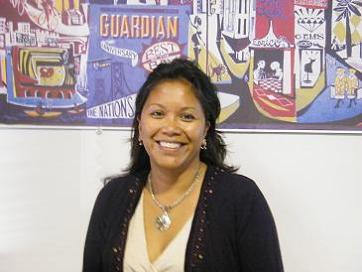
Hydra Mendoza is running for a second term on the school board, and she told us that four years wasn’t enough time to get done all the work that she’s taken on. She’s pushing for the “career to college” program and for citywide preschool.
Mendoza supports the new enrollment process, saying it offers some certainty to parents. She’s a friend of Arne Duncan, the Obama Administration’s education secretary, whose policies have infuriated progressive educators, but she says he’s in a tough job: “It’s ahrd to set national education policy when you have states that are failures for kids.”
She supports the charter schools that the district currently has, although she argues that “I’ve yet to see a charter school that offers something we can’t do ourselves.”
You can listen to our full interview here:
Mendoza by endorsements2010
Jane Kim’s top issues are economic development and jobs. She told us she wants to encourage small business in the district, starting with an “empty storefronts” campaign. She’s pushing local-first hiring for construction and development.
Kim said she wants the city to index affordable housing to market-rate housing and try to keep the ratio from getting too far unbalanced. She’s calling for a new affordable housing bond.
She recognizes that the city needs substantial new sources of revenue, and supports a transit fee on downtown businesses, a transfer tax hike for properties selling for more than $825,000, and would explore a city income tax. She said she’s open to congestion pricing for downtown drivers.
Kim supports the City Place project, saying that a lot of the residents of the Tenderloin want discount retail in the area.
She’s a fairly new arrival to the district, having moved in about a year and a half ago, but she told us: “D6 is a district you can run in without having lived there a long time.”
Listen to the full interview here:
janekim by endorsements2010

PG&E has been hiding the map of where its high-pressure pipes run under San Francisco, but we’ve got it. Or most of it. Using existing public records and open-source mapping software, we’ve pieced together a pretty complete map of where the hazardous 30-inch pipes are buried. Check it out here.
Tredmond@sfbg.com
On Sept. 16, supporters of Proposition B, the pension reform measure that would also reduce health care benefits for the children of city workers, held a fundraiser at Le Méridien Hotel — which is one of the hotels on the union boycott list. That was a bad idea, and it put Public Defender Jeff Adachi, the sponsor of Prop. B, in a difficult bind. His proposition, his fundraiser — and he had to cross a picket line to get in the door. So did former mayor Willie Brown, who was one of the fundraiser’s feature guests.
Labor people were furious about the two Democrats crossing the line. Labor Council Executive Director Tim Paulson told Guardian City Editor Steven T. Jones that the move was "outrageous." At the very least, it’s highly unusual in this labor town.
And I thought of something else unusual: Brown, who among other things is a San Francisco Chronicle columnist, was helping host a political fundraiser. That’s interesting because just a few weeks earlier, the conservative San Francisco Coalition for Responsible Growth invited the Chron’s C.W. Nevius to speak at a fundraising event — and when the SF Appeal reported on it, Chron management told Nevius that wasn’t allowed.
What’s the difference? One columnist can do fundraisers and one can’t? When I asked Chron Editor Ward Bushee, he referred me to a Matier and Ross column, which included a quote on the matter from Managing Editor Steve Proctor:
"When we gave him a column, we never had any illusion he would cease to be involved in politics. I think the readers of the Chronicle understand that."
So it’s one standard for Willie, another for everyone else. Just like old times.

Today Johnny and Tim talk about the fact that only 5 percent of the people who lost their jobs in the recession have found new jobs. The receession’s over? My ass. Listen after the jump.
sfbgradio9/21/2010 by endorsements2010
Today we talk about the new data that shows one in seven Americans now live in poverty — and why the rich ought to be willing to pay more taxes. You can listen after the jump.
sfbgradio9.17.2010 by endorsements2010
In today’s episode, Johnny and Tim ask the $119 million question: How come after Meg Whitman has spent a fortune on advertising, she still isn’t ahead? And nobody knows who exactly is going to vote in November, either. Listen after the jump.
sfbgradio9162010 by endorsements2010
Theresa Sparks says her first priority is jobs and public safety. She wants to more agressively pursue clean technology, with tax breaks if necessary. She wants more development in the district (but “smart development.”) She argues that the city should do an “incubator,” to really focus on new technologies.
She’s also not a big fan of taxes — she supports the real-estate transfer tax, but not the hotel tax (“next year could be a great convention year,” she said, arguing that higher taxes would put that at risk.) She didn’t like Sup. David Chiu’s business tax reforms beause, she said, she thought it would replace private-sector jobs with public-sector jobs. And she said she thinks there’s more at City Hall to cut, particularly in the nonprofits that get city contracts.
She says she supports full staffing for the Police Department, wants to repair the “broken disciplinary” system — and supports sit-lie. You can listen to our entire interview here:

Tredmond@sfbg.com
We’ve been doing a lot of reporting on Steve Moss, a candidate for supervisor in District 10 who lived in District 8 when he filed his initial election papers and launched his campaign. Moss, who owns a residential building on Liberty Street near Dolores Park, insists he is now a full-time resident of Potrero Hill, renting a nice place at 18th and Vermont — and that he moved in long before the legal deadline for declaring an official candidacy.
It’s actually not a high standard — city law says you only have to live in a district for 30 days prior to the filing deadline. And since Moss is hardly the only candidate to make a relatively recent relocation, it’s worth asking the question: how important is long-time residence to a candidate for district supervisor — and how long is long enough?
I’ve always supported district elections, in part — and this is critically important — because you can win in a district without raising a huge amount of money. When the universe of voters you’re trying to reach numbers around 30,000, you don’t need $500,000. You can knock on doors, go to neighborhood forums, mobilize volunteers for a get-out-the-vote operation, and get elected with the kind of money you can raise in a real grassroots campaign. That means downtown, the landlords, the developers, and big business interests don’t carry the day, the way they did when the board was elected at-large.
But the other goal of district elections was to ensure that every part of town got represented on the board — and to bring legitimate activists with roots in a community to the table. That means people who have more than a passing interest in where they live.
The first few times around, it wasn’t much of an issue — with the obvious exception of Ed Jew, and the possible exception of Michela Alioto-Pier, everyone who has been elected so far under the district system ran from a neighborhood where he or she had be living, and doing community work, for years.
But this time, people have been venue-shopping. I heard a lot of potential candidates over the past year talk about moving into one district or another to run, and I think we’ll see more of it in the future. It can get tricky; Moss, for example, owns the Potrero View newspaper and lived in D-10 for years, then moved out and bought a place near Dolores Park. When he decided to run for supervisor, he moved back. At least he has some history and ties to the community — but I don’t think there’s a lot of dispute over the fact that he moved back to run for office, and that if he hadn’t decided to run, he’d still be living on Liberty Street.
Jane Kim, president of the School Board, moved into District 6 about a year and a half ago — about the same time she started talking about running for supervisor from that district. Again: perfectly legal — although her ties to the neighborhood and to neighborhood activism aren’t anywhere near as strong as some of the other candidates in the race.
We’re going to have to watch this, carefully — and the 30-day requirement is clearly too weak. You should have to live in a district for at least a year before you can file even exploratory papers — and every neighborhood questionnaire should ask candidates to list every address they’ve lived in for the past five years. That might slow down the shopping a bit.

Emily Murase has a lot on her plate. The mother of two daughters in the San Francisco public school system, she is also the executive director of the San Francisco Department on the Status of Women, a member of the Rosa Parks School Site Council, the Japanese Bilingual Bicultural Program Parent Teacher Community Council, and the Lowell Alumni Association Board of Directors; she also sits on the boards of the Lakeshore Acres Improvement Club, the San Francisco Girl Scouts, and Democratic Women in Action.
As if that weren’t enough, she’s running for school board, and has earned the endorsements of California Senators Mark Leno and Leland Yee, Mayor Gavin Newsom, five members of the Board of Supervisors, and United Educators.
When she met with the Guardian, Murase spoke about tackling the budget deficit, addressing the opportunity gap for African American, Latino, and Pacific Islander students, and fighting truancy. She said she’s in favor of reforming Prop. 13 to promote adequate funding for education, but in the short-term she envisions setting up a system to solicit ideas from people working within the school system to identify opportunities for savings.
Murase said she supports a parcel tax to generate more funding for schools. She’s also in favor of developing a formal system for evaluating teacher performance. Murase said she supported JROTC in the past, but would be interested in forging more robust partnerships between public schools and skilled trades in order to create a broader array of career pathways for students. School lunches should be prepared locally, she added, and this could also translate into a learning opportunity for kids.
Listen to the entire interview below.

In today’s episode, Tim talks about how PG&E blew up San Bruno — and Johnny complains about 9/11 symbolism. You can listen after the jump.
Editor’s note: On Sept. 10, we posted a story called “Steve Moss, carpetbagger,” explaining how a leading candidate for District 10 had had filed his intent to run for office while he still lived in another district. Moss sent us a response, which we’re posting below (and our response to him follows that).
There are many things you could say about me. You could say that you hope
someone else wins the race for Supervisor in District 10. You could say that
you don’t like my politics. You could say you think that if I were Supervisor,
the city would fall into the ocean (although that seems a bit extreme).
But to suggest that I’m not really in the district, as your reporter did in a
story on 9/10 – what’s up with that?
If you really wonder whether I live in District 10, you could send a reporter
over to my house on Potrero Hill. You’ll see a home lived in by a family (and a
very large mutt), my family…not a Potemkin village. Or come by my office at the
Potrero View. Or talk to the folks at Farley’s or Goat Hill Pizza or The Good
Life Grocery. I’m not saying that I’m known to everyone, but I’m hardly a
stranger.
Three years ago, after living in the district for years, I moved to Mission
Dolores so we could walk our daughter to her new school (Alvarado). When she
switched schools, and I decided to run for Supervisor, we moved back. That was
last winter.
That’s not a secret. There’s no secret life, no secret pied a’ terre, no
secret, period. I completed all the paper work the city and state asks of a
candidate, using my office address for mailing purposes and my home address on
the appropriate forms. I’m a resident of District 10. My daughter was born in
District 10. I work in District 10. I have history in District 10.
If you want to say that you don’t like what I think about development in the
district, schools, or post-modern theater – by all means, let’s have that
debate. But surely, even in San Francisco, we can find a way to disagree with
one another politically without resorting to something like this.
P.S. Regarding Form 501 referenced in your article, see the official FPPC
instructions on page 38 in this link, which states that using a
business address is fine.
Tim Redmond responds:
For the record, we never stated that Moss is “not really in the district.” He says he lives in D-10 now, and we have no reason to doubt him. What we said was that he didn’t live in the district when he launched his campaign by filing his statement of intent to run for supervisor. We reported that he had moved out of the district, and apparently — according to an email from his wife — moved back specifically to enter this race. I quote the July 8, 2009 email Debbie Findling, Moss’s wife, sent to friends:
“Steven has decided to run for City Supervisor in District 10!!! (Sophie Maxwell’s term ends in November 2010) so we’ll be moving back to the Hill in early spring! If you hear of any lovely rentals let us know. Or—I know it’s a crazy idea—but if you’re interested in swapping houses with us for a year as an even trade—you can move into our place on Dolores Park! (We’re hedging our bets in case he doesn’t win we’d be moving back to Dolores Park after the elections- If he does win, we’ll find a long-term place to live…).”
Here’s the key: “We’re hedging our bets in case he doesn’t win we’d be moving back to Dolores Park after the elections.” And, from his comment above: “When … I decided to run for supervisor, we moved back.”
That sounds like someone moving into a district just to run for office.
Now, Moss is singing a slightly different tune today. When I asked him if he intended to stay past the election, he said:
“We love our home on 18th and vermont street, and very much hope to stay here (its a rental). If I don’t win I’m thinking of launching a southside newspaper, to serve the neighborhoods of district 10.”
Good for him; we need more neighborhood newspapers.
Still, our point remains: Moss wasn’t living in the district when he started his campaign for D-10 supervisor.
It’s not illegal to move into a district to run for supervisor. You just have to live there 30 days prior to filing. But I still think it’s wrong. The law ought to mandate at least a year’s residency prior to filing an intent to run. And since Moss’s residency in D-10 seems based at least in part on his desire for a job at City Hall, that’s something the voters ought to know.

The San Francisco Chronicle used gigantic type on its front page two days in a row, and put out an entire special Sunday supplement on the San Bruno fire. The daily is struggling, but still has substantial staff, and this is a perfect daily-paper story — a dramatic explosion, events unfolding quickly, compelling visuals, dozens of story angles.
And the new, much smaller online Bay Citizen is making the Chron look weak.
The Bay Citizen got the real scoop that the Chron missed — area residents have been complaining about gas leaks for weeks, and PG&E more or less ignored them. And PG&E’s own internal reports said that the pipeline was dangerous and needed to be fixed.
Once news outlets have reported on the basic facts of an incident like this — how many dead, how many houses burned — they need to start looking immediately at why it happened — and that’s where the Chron has fallen down. None of this was all that hard to find — all the Bay Citizen reporters did was talk to people in the neighborhood about PG&E, then get a copy of a public report.
And with all the talented staff of reporters at the Chron, they couldn’t manage to take on PG&E.

In today’s episode, Johnny and Tim talk about the news of the day — the Florida Koran burning, the Senate and Obama’s small business bill, and the state of the next head of the state. You can listen after the jump.