


Today we talk about jobs, the economy — and why Obama should create a WPA for musicians. Listen after the break.
Tim Redmond
Talking with Pelosi’s GOP opponent
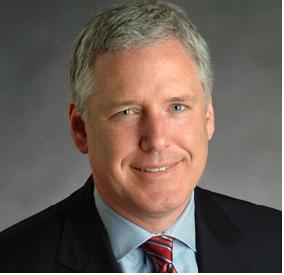
I had a fascinating discussion this morning with John Dennis, the Repubican candidate running against Nancy Pelosi. He’s not going to win, of course, but he’s gotten some national press, including a nice piece by John Nichols, the veteran liberal editor at the Madison-based Capitol Times and a plug from the Huffington Post. Matt Gonzales has endorsed him.
Dennis is a libertarian Republican, but not a nut job or a conspiracy wacko. He’s intelligent, articulate and makes some very good points. He is, for example, totally against the wars in Iraq and Afghanistan, and calls for an immediate pullout of both quagmires. He supports same-sex marriage (it took me a while to get that out of him, but he does), supports Prop. 19, opposes DADT, and wants the feds to stop cracking down on undocumented immigrants in California. He’s against warrantless wiretaps and torture, and wants to repeal the worst parts of the PATRIOT Act. He thinks we should review all of our military bases abroad — just as we have with domestic bases — and close the ones we don’t really need anymore.
In other words, on Iraq, Afghanistan, the Pentagon budget, social issues, the drug war and civil liberties, he’s way out of synch with his party — and a lot better than Pelosi, the good liberal Democrat. And Arthur Bruzzone, my old pal and the former chair of the Republican Party, came down with Dennis and told me that the Guardian really ought to endorse him.
We’ve said some bad things about Pelosi; after all, she privatized the Presidio. She’s been weak on the wars, weak on same-sex marriage, weak on taxes and corporate welfare — and a lot more interested in raising money for Democrats than in representing her district. She won’t even debate Dennis, which is typical of her arrogance.
On the other hand: Dennis has a problem. He’s a member of a party that’s run by barbarians, and if he got elected, and was part of a GOP majority, some very bad people would be in charge. He knows that, and says he wants to change the GOP from within; good luck with that.
And since I spent much of my time these days talking about the gap between the rich and the poor and how utterly unsustainable a nation is when 5,000 families at the top control more wealth than 160 million at the bottom, I have a hard time with libertarians who don’t believe in income taxes.
And that’s Dennis. He told me that he thinks the income tax should be replaced with a consumption tax (that is, a sales tax), which is about the most regressive idea you can imaging. He said he thinks the Bush tax cuts should continue. He thinks government is too big and ought to be dramatically cut back.
I don’t think Pelosi much supports a radical redistribution of wealth in this country, but the Democrats at least are going to let the insane tax cuts for the rich expire. And that’s something.
So I understand Matt Gonzalez, and I had a wonderful talk with Dennis, and I hope you all listen to it (below). And I get the “beyond left and right” thing that the HuffPo talks about. But on the basic economic issues — like wealth redistribution through progressive taxation — the good libertarians and I will never agree. And that’s kind of a deal-breaker.
SFBG Radio: The Whitman-Brown debate

Today we look at last night’s debate, at Meg v. Jerry, at Gavin v. Abel, at why such a sorry crew are running for Lt. Gov — and why it’s so hard for independent candidates to run for statewide office. Listen after the jump.
sfbgradio10/13/2010 by endorsements2010Don Perata — lazy, corrupt and armed
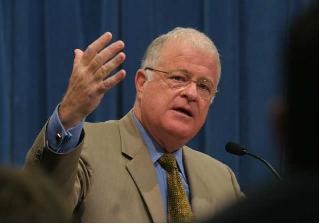
The East Bay Express, now in independent hands, is endorsing candidates — which is a very good thing in a community where the daily paper is marginal, at best — and the paper’s editors pretty much agreed with us in the Oakland mayor’s race. They endorsed both Rebecca Kaplan and Jean Quan (along with Joe Tuman), and made about the same arguments we did — Kaplan’s a visionary, Quan’s experienced, either would be fine — and Don Perata would be a disaster. In fact, my favorite part was their “anti-endorsement” — 25 reasons not to vote for Perata — which included some stuff I did know (“he’s lazy” and “he’s corrupt”) and some stuff I didn’t:
Perata has purposely fostered the image of a mobster. Friends and foes have called him “The Don,” he conspicuously carried a gun around with him, and he kept a life-size cutout of Tony Soprano in his senate office. He also posted a plaque in his office that read, “The Peratas,” written like the logo from The Sopranos with a handgun in the place of the “r.”
Don Perata, armed. That’s scary.
I hope Greg Mankiw stops working

The eminent and distinguished N. Gregory Mankiw, a professor of economics at Harvard and former White House aide (under GW Bush) presented one of the most convoluted and misleading antitax arguments in the history of the dismal science Oct. 10. His New York Times piece argues that the effective tax rate on his marginal income is 90 percent, and because of that, if the Bush tax cuts on the rich expire, he isn’t likely to write any more articles.
That’s yet another wonderful reason to raise his taxes. The less of this crap the world has to deal with the better.
Kevin Drum has a nice takedown in Mojo, but the biggest problem with Mankiw isn’t that he compounds his tax liability over 30 years to make things look worse. It’s that he starts his article with the assumption that he should pay zero taxes — and so should corporations — and there should be no estate tax (which it’s highly unlikely Mankiw will have to pay anyway).
Yes: The difference between paying zero taxes and paying 39.5 percent is significant. The money the profressor would earn 30 years from now on a $1,000 investment if there were no corporate taxes would indeed be higher. But there would also be no streets for him to drive on, no police and fire departments to protect his house, no unemployment benefits to keep the people who aren’t as fortunate as him from breaking down his door to get food for their kids, no social security, no medical care for indigent sick people, no federal funding for the scientific research he and his colleagues do at Harvard … in other words, not much of a country. I don’t think even Mankiw wants to live there.
So what’s the difference in his life if his taxes go up — as proposed — from 35 percent to 39.6 percent? Well, on the $1,000 article, he’d pay an extra $46 in taxes. Big fucking whoop. He probably spends more than that on lunch at the Harvard Club. Even if he invested that $46 for 30 years — AND there were no corporate taxes, AND he got 8 percent a year in the stock market (which remained stable despite the massive social upheaval caused by a society with inadequate tax revenue to provide basic public services), we’re talking $462.88. That’s less than he’d get by putting $4 a year — yes, four dollars a year — into the same account.
In other words, he’d have to be pretty fucking stupid to decide not to write a $1,000 article entirely on the basis of a modest increase in taxes on someone with his level of income.
On the other hand, he clearly is pretty fucking stupid. Or else he’s smart and he’s intentionally skewing the facts to protect his own economic interest. Either way, the world will be a better place if he doesn’t write any more articles. So let’s raise his taxes.
Janet Reilly wants a centrist mayor. Ick.
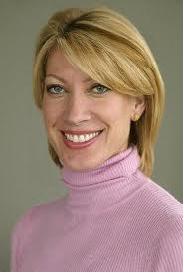
Janet Reilly’s the overwhelming frontrunner in District 2, and has the support of just about everyone in the Democratic Party establishment, including U.S. Senator Dianne Feinstein and Mayor Gavin Newsom. But she seems to be nervous that someone might suggest she would support a progressive (like, Gasp! Aaron Peskin) for mayor if Newsom leaves the city for Sacramento and the Lt. Guv’s office.
So she sent out an email to her supporters today, announcing that she wouldn’t support any current member of the board — or any former member of the board who has served with any current member of the board. You following? Here’s the message:
I would strongly support a true interim Mayor who pledges not to seek
re-election to a 4-year term. The interim Mayor’s sole ambition should
be to successfully steward the city until the people choose the next
Mayor. I believe this person should be a senior statesperson or a
non-partisan city official with unquestioned expertise and integrity.
There may be others who have never been elected who would be suitable
for the position.
In recent years, I have disagreed with the divisive politics of the
Board. Therefore, if given the chance, I will not cast my vote for
interim Mayor for any currently sitting or former Supervisor who has
served with any member of the current Board. We need a caretaker Mayor
who will guide San Francisco until voters choose long-term leadership in
the November 2011 election. This should be a thoughtful decision.
The next mayoral election will give the city an important opportunity to
chart its future. I think we need to let this debate take place without
any one candidate enjoying the advantage of incumbency.
If I am elected and called upon to vote on this matter, I will vote “no”
on any current member of the Board of Supervisors for interim Mayor, and
I will also vote “no” on any past Supervisor who has served with any
member of the current Board.
I would look for a moderate, custodian Mayor who will govern from the
center for all San Franciscans.
Gawd — governing from the center. What a joke. There is no center in San Francisco politics today, not for the mayor who has to decide whether to raise taxes or cut services, whether to deal with police and fire or stick public health, the schools, human services and rec-park with all the cuts. There are tough decisions coming up, and they’ll require a mayor to take a stand.
And if all Janet Reilly really wants is someone who can duck like a champion, it won’t be in the interest of any San Franciscans.
(I’ve tried to call Reilly for comment on this, but she hasn’t gotten back to me. She’s probably watching the Giants game, which is what I should be doing instead of blogging on this fine Monday afternoon. But I’ve got it on the radio. Go Giants.
Scott Wiener’s TIC letter
EDITORS NOTE: Includes corrections, noted at the bottom of the post.
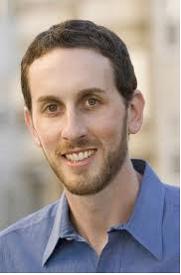
Scott Wiener, candidate for district 8 supervisor, is sending out a letter to people who own tenancy-in-common buildings, telling them he supports the rights of TIC owners to convert their properties to condos and seeking their support.
And he’s very nervous about discussing it.
Wiener’s support for TICs — which amount to a backdoor way to avoid the conversion lottery — is no secret. But raising money by promising to encourage condo conversions defines him pretty clearly as a candidate of the landlords and property owners and against tenant rights.
A bit of background: TICs are a way for several people to buy a multi-unit building, share ownership and each occupy one of the apartments. The strategy allows people who can’t afford single-family houses to become homeowners — and in theory, isn’t all bad (except that every TIC removes a rental housing unit from the city and indirectly drives up rents).
In practice, TICs have become eviction machines.
That because landlords have found that they can make a fortune by evicting all of their tenants under the state Ellis Act and then selling the place as TICs. And if the TIC owners can convert to condos, they can make money, too.
The big losers — and there are thousands of them — are tenants who can’t afford to buy a TIC, so wind up losing their homes to someone a little better off.
But again: It’s no secret where Wiener stands on the issue. What’s odd is that when I first called him about the letter, which I heard rumors about last week, he told me flat out that there was no such thing. “I hear there’s some i.e. [independent expenditure group] doing something like that, but it’s not us,” Wiener said.
A few days later, I got a (low-quality) copy of the letter, which is on Scott Wiener for Supervisor letterhead and signed by Wiener. So I called him again, and asked about it, and he again said his campaign had mailed no such letter. When I pressed, and said I had what looked like a letter from him that started of “Dear TIC owner,” he said that there might be something coming in the future, but he couldn’t talk about it.
Then he called me back half an hour later to tell me that yes, his campaign was indeed sending a letter to TIC owners seeking support.
Wiener’s always been straightforward with me; we don’t always agree on issues, but he always tells me where he is. So this one’s a little baffling — unless, of course, Wiener is hoping that the tenants who live in D8, and there are a lot of them, don’t know what Scott Wiener is saying to landlords and speculators. Maybe he doesn’t want them to think he’s being funded by TIC money.
But in the end, these things always come out anyway.
UPDATE: My original report called this a fundraising letter. But I admit my copy was hard to read, and Wiener just called me to say that the letter isn’t a fundraising letter, it’s only a letter seeking votes, and went out only to D8. He told me the reason he said he had no such letter when I first called is that it wasn’t finalized and hadn’t been sent out (although there was apparently an i.e. letter to TIC owners, which neither of us has seen). He told me he couldn’t discuss the letter until after it was sent out because “no candidate should discuss his future mail strategy with the press.” Fair enough.
Still: I’ve spoken to Wiener many times, and he’s never been this nervous about talking about what he or his campaign is doing. I think the TIC stuff is sensitive in D8.
SFBG Radio: Explaining the state props

Today we talk through all the state propositions — the good, the bad and the truly evil. Listen to the conversation, and pick up some advice on how you might want to vote, after the jump.
SFBG Radio: The market’s up, but jobs are down

So if the unemployment rate keeps going up, and the recession is in full swing, why is the stock market doing so well — and what does that say about American politics? Check out out after the jump.
A tax break for the billionaire Fisher family
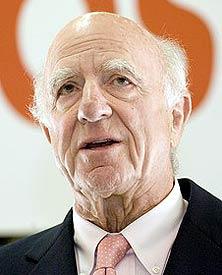
The L.A. Times reported Oct. 6 that the Fisher family — the heirs to right-wing power-broker Don Fisher’s GAP fortune — is set to get a $20 million tax break in the new state budget. It’s astonishing, and an example of how the backroom budget process is utterly corrupt.
From what I hear in Sacramento, the proposal came from the Republicans, although so far, nobody outside the small circle of budget dealmakers knows exactly which legislator or lobbyist pushed the issue. And it now appears, I’m told, that the tax break won’t be in the main budget; it will be addressed later in the week, as part of another bill.
But it’s not going to be easy to defeat — there are plenty of Democrats who support the deal, in part because the Fisher family is saving some old-growth redwoods.
But please: This is one of the richest families in America. These folks don’t need a $20 million handout from the state of California.
How Team Whitman blew the housekeeper story
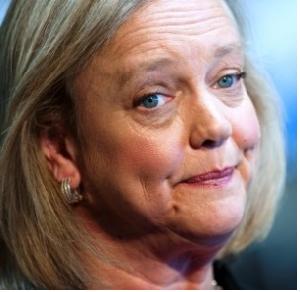
The folks at Calbuzz are asking the same questions that have been bothering me for a while now: How could Team Whitman, with its legions of high-paid political consultants, have bungled the Nicky Diaz story so badly?
If her campaign team knew about the problem a year ago (and she swears she told her consultants), why didn’t they go public themselves, control the damage and eliminate the story as an October Surprise?
Calbuzz:
According to Political Consulting 101, this is standard operating procedure: control the bad news, put it out yourself, do it early to inoculate against a late hit. It borders on campaign consultant malpractice to have handled it as it was handled.
Of course, campaign consultants can’t be sued for malpractice; there’s no regulatory body, no disciplinary association. But it’s astounding that so many professionals who are earning so much money did such a bad job here.
More important, it borders on criminal arrogance (alas, that’s not a crime) that Whitman didn’t give Diaz some sort of decent severance:
Why not spend $20,000 or so (or more, if need be) to hire her the best immigration attorney she could find to help her see what could be done to stay in the country or ease her return or whatever?
Why not offer her a year’s severance (about $18,000) or help her with re-settlement costs in Mexico? She was, in eMeg’s words, “a member of our extended family” (or as Meg said in one press conference, Freud never sleeping, “an extended member of our family”).
Okay, so Whitman and Harsh had to fire Diaz once they knew she was here illegally, if you buy their story. But they didn’t have to kick her to the curb.
I was pretty sure Whitman was on track to lose even before this happened, but I think the Diaz fiasco has sealed the deal. And it’s not so much the fact that she hired an undocumented worker (LOTS of Californians do that every day) but the fact that she was such an asshole to her employee.
And the $120 million campaign to create a carefully crafted image couldn’t deal with that basic problem.
SFBG Radio: A modest (boycott) proposal

In today’s episode, Johnny puts forth a modest proposal. Plenty of big American companies are sitting on piles of cash right now, money they’ve made in part because they aren’t hiring anyone. Of course, businesses don’t exist to create jobs, they exist to make money — but consumers ought to have a say, too. So Johnny suggests that we all boycott big companies that have lots of money on hand, but refuse to spend it in a productive way — that is, by hiring people. You can listen to his proposal after the jump.
sfbgradio10/6/2010 by endorsements2010D8 debate: “Filling Harvey’s Shoes”
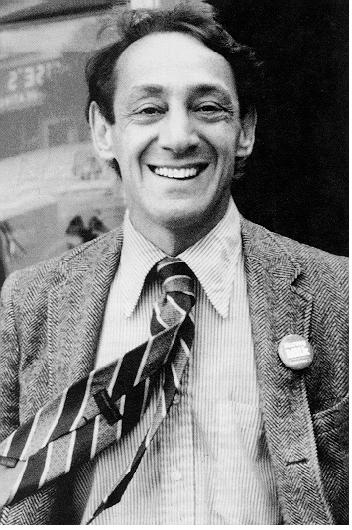
Editors note: I ran out of space for opinion pieces this week (endorsements just ran too long) so I’m posting this timely oped here.
By Jeff Sheehy
Harvey Milk Civil Rights Academy, a public elementary school in the heart of the Castro, is hosting a debate between the four candidates for District 8 Supervisor on Friday, October 8 at 7 pm. The school, formerly Douglass Elementary, was named for Milk in 1996.
The community that comprises the school has adopted an unique mission to honor Milk’s life: to empower student learning by teaching tolerance and non-violence, celebrating our diversity, achieving academic excellence, and fostering strong family-school-community connections.
The theme of the debate—“Filling Harvey’s Shoes”— centers on the values inspired by Harvey Milk’s life that have now been enshrined in the mission of the school named after him. Cynthia Laird, the editor of the Bay Area Reporter, and Christina Velasco, principal of Harvey Milk Civil Rights Academy, will moderate, asking questions themselves, taking questions from the audience and reading questions submitted by Harvey Milk students.
One of the candidates was quoted in this paper a couple of weeks ago saying about the race: “It’s a definitional fight about what the queer community is about in 2010.” This debate offers the candidates the opportunity to directly address this “definitional” question.
In many ways, the LGBT community is at a crossroads. For those with good jobs and good incomes and the means to rent or own a house in District 8, much of the struggle for LGBT civil rights in San Francisco must feel more like history than a critically important issue for someone who seeks election in his former district.
However, I wonder if Harvey’s oft-referenced kid from Altoona hopping a bus to San Francisco in search of freedom would feel the same way. The kids arriving here are much more likely to be kids of color, transgender or undocumented. To what degree does District 8 or even San Francisco offer a place to live or real economic opportunity? Is Harvey’s legacy a gentrified Oz, great for those who can afford it, but little solace to those desperately seeking haven?
Plus, what is Harvey’s larger legacy? Harvey Milk Civil Rights Academy defines one vision. Kids from under-resourced areas and under-represented communities are actively recruited to the school as part of its commitment to teaching tolerance and diversity. The LGBT experience is presented as one among the many struggles that communities of color, women, the undocumented and working people have fought in America to create a more just and tolerant society. Consciousness of shared struggle and the necessity of creating community amongst the disenfranchised and marginalized are crucial values inculcated at the school. The school’s pledge sums up this vision of Harvey’s legacy: “I pledge allegiance to the world, to cherish every living thing, to care for earth and sea and air with peace and freedom everywhere.”
My husband and I thought deeply about community and values when we were deciding where to send our daughter to school. We felt that our daughter should begin to understand the world and how to act in it in the context of struggles for civil rights and social justice.
I hope others in the LGBT community will take a moment and think about their values, hopefully attend the debate on Friday, and recognize that the election for this seat is about the future direction of the community.
Indeed, next May would have been Harvey’s 80th birthday and one wonders which candidate he would have endorsed and in what direction he would have advised the LGBT community to take had he lived.
Sheehy is the parent of a kindergartener at Harvey Milk Civil Rights Academy
The debate will be held in the auditorium at Harvey Milk Civil Rights Academy at the corner of 19th and Collingwood, in the Castro.
Get a clue, Randy Shaw
I read BeyondChron every day, and Randy Shaw, who operates the site, and Paul Hogarth, his managing editor, often have interesting commentary. But I’m constantly annoyed by people who run what by any stretch is a journalistic operation, but don’t follow the basic rules of (even alternative, activist) journalism: When you’re going to say something nasty about somebody, you call that person for comment.
Randy never called me, or Steve Jones, or Bruce Brugmann, before he launched an attack on the Guardian as part of a political machine. If he had — or if he’d done any reporting work and called around town — he might have learned something.
Randy’s argument is that the “machine” — including the Bay Guardian — is trying to block Jane Kim’s election as D6 supervisor. Let’s examine that for a minute.
There are plenty of people in San Francisco who would love to have a political machine. But it’s just not happening. The very fact that Jane Kim has the support of so many progressives — including the Board president, David Chiu, and Supervisors Eric Mar and John Avalos (all part of what Shaw calls the “machine”) suggests that nobody has to clout — not even me — to tell a candidate whether she can run for office, to control (or cut off) campaign contributions, or to wire an election.
In the days when Willie Brown ran San Francisco, the machine really did keep people from running for office. It really did close off avenues to political advancement. And if the machine was against you, it was really hard to raise money. If Brown were still the boss, and he didn’t want Kim to run, she would have been frozen out of much of the support and money she has today. Instead, Brown was at her campaign kickoff — and nobody’s manged to intimidate her many supporters and campaign contributors.
And guess what? The Guardian — the axis of the machine evil trying to freeze out Kim — endorsed her as our second choice.
I stand by what I said months ago — there’s nobody in San Francisco today — and no cadre or group — with the clout to operate as a political machine.
Nobody can line up six automatic votes on the Board of Supervisors. Even the progressives on the Democratic County Central Committee can’t always seem to get it together (note that Aaron Peskin, the chair and supposed machine honco, supported Tony Kelly for supervisor, and the DCCC didn’t put Kelly on its slate).
Right now, power in this city is fairly diffuse. That’s both a good and a bad thing. Good because machines are exclusionary, bad because it means the progressives can’t always function on a level that gets the right candidates elected and the right legislation through. Good because the left in this city is aggressively, almost happily disorganized and politically diverse, full of characters, voices, interest groups, candidates and elected officials who don’t always agree with each other and take orders from nobody. Bad because when we’re disorganized, we tend to lose.
Jane Kim didn’t get the DCCC endorsement. Nobody talked to me about that; I’m not on the panel and none of the members called to ask my advice. I would have said what the Guardian said in our endorsement package: There are exactly two progressive candidates who are qualified to be the next D6 supervisor, and their names are Debra Walker and Jane Kim. I still don’t understand why Kim entered the race against an established candidate with whom she has no substantial policy disagreements; I think that, before Kim moved to the district and entered the race, Walker was the clear consensus candidate of progressives, and as a matter of strategy, since Kim and Walker are both on the same side on the key issues, it might have made more sense for the left to unite behind one candidate.
But that’s not the issue anymore; Kim had every right to run, and now any cogent, honest ranked-choice voting strategy includes both her and Walker.
That statement alone makes clear that the Guardian’s not exactly in synch with the DCCC or any of Shaw’s other “machine” operations. The DCCC decided that the top candidate in D10 should be DeWitt Lacy, and left Tony Kelly off the slate entirely. We endorsed Tony Kelly as our first choice. The labor activists on the DCCC (and in the “machine”) are dead set against Margaret Brodkin winning a seat on the Board of Education; we endorsed her.
I would have explained our positions to Randy Shaw if he’d called or emailed me; I’m really easy to reach. And slapping people around without talking to them is bad journalism and bad progressive politics. Randy and I have disagreements, but I don’t consider him the enemy; we’re both part of a larger progressive community, and while I love (and thrive on) disputes in that community, we ought to be civil about it.
(I always contact Randy before I write about him. I did that yesterday, and asked him a series of questions, including why he never called me for comment. His non-response: “I write 3-4 articles a week and have published three books. You are free to quote from anything I have written without asking me about it.”)
Herb Caen used to say (somewhat in jest) that if you “check an item, you lose it.” In other words, once you start talking to everyone involved in an issue, you sometimes find out that the story isn’t at all the way you heard it.
That’s what should have happened with Shaw’s completely inaccurate claim about Steve Jones.
BeyondChron says that Jones was trying to get Kim to challenge Carmen Chu in D4 because they’re both Asian-American, ” in effect saying that as an Asian-American Jane should run among ‘her people,’ implying that demographics prevailed over issues and political stands.”
I talked to Steve about it; he did, indeed, talk to Jane Kim when Kim was shopping around for a district to run in. What he told her — and would have told Randy Shaw — was that it would be great for Kim, a school board member with citywide name recognition, to knock off Carmen Chu and expand the progressive majority rather than going after a strong progressive candidate in a solidly progressive seat. Race had nothing to do with it.
In fact, just about everything we’ve written about Kim comes down to the same argument: Sometimes, you have to think about the larger progressive movement, not just about yourself.
I sometimes wish the all the people who say the Bay Guardian is part of a powerful Peskin Machine were right: I’d love to pass a city income tax, hit the wealthy up for about half a billion dollars a year, eliminate the budget deficit without cutting services, municipalize PG&E (and have municipal cable TV and broadband), ban cars on a lot of streets, create 25,000 units of affordable housing … I’ve got a great agenda. And the Guardian’s so powerful that none of it ever happens.
Randy Shaw and I were both around for the tail end of the Burton Machine, and I think he gives the brothers Phil and John Burton too much credit. They were great on national issues, progressive champions in Congress. But they weren’t progressive leaders on local issues.
The Burton Machine was nowhere on the fights against overdevelopment and downtown power. Phil Burton rarely used his clout to support progressive causes and candidates at home. The machine got Harvey Milk fired from a commission appointment when he announced he was going to run for state Assembly against Art Agnos. The machine came together to make sure that Nancy Pelosi, an unknown who had never held office, got elected to Congress instead of Harry Britt, the most progressive elected official in the city at the time. The machine never helped out on public power, the numerous anti-highrise initiatives, rent control, or much of anything else that challenged the real estate interests like Walter Shorenstein, who gave vast sums of money to the Democratic Party.
Yes, George Moscone, a Burton ally, supported district elections, but once he got elected he stopped challenging downtown power.
And, of course, when Willie Brown emerged as heir to the machine throne, he was a disaster for progressives. He also at one point controlled an unshakable majority on the Board of Supervisors; he could call up votes whenever he needed.
The progressives in San Francisco today share an ideology on local issues — tough local issues that involve powerful economic forces at home.
And honestly, Randy: It’s not all about Jane Kim.
Opinion: For Democratic unity
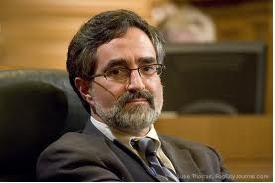
We ran out of space in today’s print edition and couldn’t publish either of the two opeds I wanted to run, so I’m posting them here. The first one is by the chairman of the SF Democratic Party.
By Aaron Peskin
As one of the most Democratic cities in California, San Francisco has a special responsibility to make sure we help elect a Democratic ticket on November 2nd. We always take that responsibility seriously – but this year we will have the pleasure of helping elect our own to statewide office: Gavin Newsom as Lt. Governor, Kamala Harris as Attorney General and even native son Jerry Brown as California’s next Governor.
Because so many of our nominees are from San Francisco – and because San Francisco is so Democratic – and because so many of the statewide elections are so, so close – what we do to turn out the vote here in San Francisco could very well be the difference between victory and defeat for many statewide candidates.
A quick look at the numbers shows just how important San Francisco could be in this year’s statewide races. In November of 2008, a total of 388,112 San Franciscans cast ballots. In November of 2006, the last gubernatorial contest, just 253,719 San Franciscans voted. That is a difference of 134,393 votes.
Local Democratic Party leaders agree a coordinated campaign could turn out at least 20% of these “occasional” voters and probably many more. That means we could add a minimum of more than 25,000 votes from this Democratic base to the statewide total.
In a year in which the polls show razor-thin margins separating the winners from the losers, a 25,000 vote margin could make the difference between Democratic policies like support for schools, investing in green jobs and protecting a woman’s right to choose and the Republican reaction supported by Meg Whitman, Carly Fiorina, Steve Cooley and Able Maldonado.
Considering how important Democratic unity is to our city and our state – we need to pay it more than lip service. And that’s what our local party is trying to do.
It is certainly true that there are important local issues upon which we disagree. For example, I certainly take issue with some of Mayor Newsom’s positions – such as his so-called Sit/Lie ordinance. I know that he takes issue with many of my positions.
There are many in our party unhappy with Newsom for putting an attack on the ballot on the elected members of the local party in this crucial election. Again, I know Mayor Newsom has expressed his displeasure with the local party for not supporting some of his candidates and positions.
But these local disagreements are small in comparison to what is at stake for Californians. They are actually small compared to what is at stake for San Franciscans – a city that relies on state aid to support our schools and colleges, much of our local health services and many other important programs.
That’s why unity is the only sensible policy in this crucial 4-weeks of voting until the November 2nd election. And that’s why I have a simple and genuine invitation to Mayor Newsom and the other statewide candidates.
Come help us help you.
We are gathering every day at our headquarters at 1261 Howard Street to knock on doors, register voters and make phone calls to get out the vote. Come show with your presence that turning out the vote is so important that we will turn aside both petty differences and legitimate policy disagreements on local concerns.
Across California our opponents are attacking “San Francisco” Values. Come show that a core value of San Francisco Democrats is uniting to support the greater good.
The D6 Ranked Choice debacle
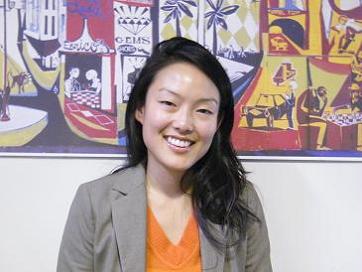
I must admit, I was pretty astonished when I read that Jane Kim had endorsed two other candidates in District 6, and Debra Walker wasn’t among them.
I understand that there’s bad blood here — Walker’s supporters are pissed that Kim moved into the district and entered a race that Walker had been working on for years. She effectively challenged another progressive with whom she has no substantive policy disagreements, and it looked a lot like personal ambition trumping progressive strategy. And the Walker team managed to keep Kim off the Democratic County Central Committee slate.
But please, folks: The real issue here is Theresa Sparks — and the possibility that we’ll lose D6 to a downtown candidate. And there are only two people in the race capable of beating Sparks, and they’re Walker and Kim. I’ve been wrong before, but I don’t think I’m wrong here — this is a three-person race at this point. And two of those people are qualified progressives.
It took me a while to reach Jane Kim, but I finally talked to her today, and I had one basic question: Does she really think her candidates would be better supervisors than Debra Walker? Well, she said her endorsement strategy was only to support people who were also doing ranked-choice endorsements, and Walker had declined to do that. (Correct: I called Walker, who told me she’s not endorsing anyone for the second and third slots).
But come on: If you want to be a progressive leader, you have to be responsible not just to yourself but to the movement — and the only way we’re going to save D6 is if Walker or Kim wins the election. And the best way to help Theresa Sparks is for Kim to snub Walker and urge her supporters to vote for someone who isn’t likely to win.
I’m one of the people who has publicly questioned whether Kim should have entered this race, and I’ve argued — to Kim, and to anyone else willing to listen — that while she had every right to run for supervisor, and is by any account a qualified progessive candidate, she risked splitting progressive resources and energy and, purely from the perspective of a larger progressive movement, running against Walker might not have been the smartest strategy. Kim’s response: Well, that’s why we have ranked-choice voting, so nobody becomes the spoiler.
Again: True. And that’s why when you use ranked-choice voting, you don’t play the spoiler.
Kim told me that if Walker would also do ranked-choice, she’d reconsider her endorsements. (That’s tough, too — what, is she going to un-endorse someone?) And honestly, it’s better for Walker to do no endorsements than to endorse two candidates and leave Kim off. But at this point, with big money pouring into the district for Sparks, everyone’s got to take the high road and work on the real issue.
The strangest election ever

It’s getting really wierd out there. There’s a campaign video featuring the white face of a dark-haired politician emerging from an all-black background and proclaiming:
“I am not a witch.”
And she’s a serious (more or less) candidate for the United States Senate. Check out the strangest campaign ad of the year after the jump.Huffington Post interviewed a Wiccan, who complained about the demonizing of witches; Wicca is an ancient religion that, typically, doesn’t involve blood sacrifices on altars.
But I have to say, Christine O’Donnell’s plea reminds me of the last time I remember someone saying “I’m not a witch.”
SFBG Radio: Is the Republican Party a cult?

In today’s epidsode, Johnny and Tim talk about the showdown in Fresno, the Dream Act — and whether the Republican Party has become a cult. Listen after the jump.
sfbgradio1042010 by endorsements2010SFBG Radio: Whitman’s immigration problem

Today Johnny and Tim talk about why Meg Whitman won’t recover from her immigration problems — and whether the roomate who drove a gay college student to suicide should wind up in prison. Listen up after the break.
sfbgradio1012010 by endorsements2010Sfbg Radio: The debate and the wealth gap

In today’s episode, Johnny and Tim deconstruct the Whitman-Brown debate — and talk about how the gap between the rich and the poor is so unsustainable that it’s taking the nation down a very dangerous road. Check it out after the jump.
sfbgradio9292010 by endorsements2010Jerry v. Meg: Reality and the robot

I watched the Brown-Whitman debate on TV, and I had an eerie Nixon-Kennedy experience. On the tube, Whitman looked …. creepy. That fake, plastic smile and the strictly scripted talking points made her appear almost robotic. I kept thinking about the employee she allegedly abused and I wonder if she had that same scary expression on her face when she pushed around and fired people.
Calitics thinks Brown won the debate handily and that Whitman acted as if she were running for governor ot Texas. I thought Jerry went a little over the top when he ranted about how the state’s pension funds would be in fine shape if everyone worked until his age (which just reminded the voters how old he is), but overall, he at least seemed real, interesting, and an actual human being. He also talked, at least somewhat, about fiscal reality. Whitman was channeling Schwarzenegger, who decided he could cut $5 billion out of the budget by eliminating the car tax and never worry about replacing the revenue. Her proposal for eliminating capital gains taxes makes even less sense; at least middle-class people got a break when the car tax was cut. All she would do is hlep the very rich.
Overall, I thought it was reality v. the robot. Reality generally wins that round.
When you’re having more than one

tiredmond@sfbg.com
BEER I saw a great T-shirt in upstate New York this summer, and it’s become my official motto: “You can’t drink all day if you don’t start in the morning.”
Well, maybe that’s a bit of an exaggeration — I’m not as young as I used to be, and the days of morning (or even afternoon) drinking are becoming rarer. But I’m still the guy Schaefer Beer was thinking about when they wrote that slogan in the 1960s about the “one beer to have when you’re having more than one.” Frankly, I’d rather down three or for (or five) cheap light beers than sit around all evening nursing one fine IPA.
So I’ve taken quite an interest in session beers — craft brews with an ABV (alcohol by volume) level of less than 4.5 percent. You can drink a session beer at lunch and still go back to work. You can drink a couple-three after work and not be too blotto to make dinner and put the kids to bed. Or, as one of our tasters put it: “If I hit a happy hour, I’m usually done for the night. But after these beers, I was still ready for an evening of drinking.”
The term “session beer” is usually traced back to England in the World War II era, where the pubs were only open for a short “session” during the lunch hour so the workers could get back to the munitions plants. They’ve become pretty popular on the East Coast, where session beer festivals abound, and they’re making their way west.
It’s still not easy to find good session beer — we live in the land of high-craft, high-alcohol brews, and a lot of the smaller breweries (scared, perhaps, of the evil “light beer” rep) stay away from the weaker, or at least less alcoholic, stuff. But if you shop around a bit, you can find some excellent local choices.

Our willing lab rats sampled six local brews — well, one, Stone Levitation Ale, comes from San Diego, but you can buy it locally — with Bud Light thrown in as a ringer. The tasting was blind, the labels on the bottles well disguised; I was the only one who knew which beer was which.
What we found: There are some truly excellent session beers out there. But not every craft session beer is created equal; our panel liked some a lot better than others. “None of them will grab a beer snob,” one taster noted. “But there were some good ones.”
(A note: Some of these brews — particularly the ones from Haight Street’s Magnolia Pub and Brewery — are available only from the brewhouse. Others can be found in bottles anywhere that carries a wide assortment of craft beers.)
The two samples from Magnolia were the clear winners. Our tasters uniformly liked the Dark Star Mild, calling it “dark and rich tasting, with a light finish and soft aftertaste.” One noted: “I could see sitting on a roof on a hot day and drinking this with my lunch.” Even one of our skeptics, who wasn’t thrilled with any of the offerings, noted “I could drink this one.”
Magnolia’s Sarah’s Ruby, a dark, thick brew, was a close second. One panelist noted: “It has a lot of flavor going on, something I would be happy to order in a bar.” Another liked the “nice taste of toasted barley and hops” while another called it “very robust, not at all like a light beer.”
Anchor Brewing Company’s Small Beer was a close third. The beer, which comes in at just 3.3 ABV, has an interesting history. Anchor brews a barleywine ale, Old Foghorn, that’s almost 10 percent ABV. The brewers then take the once-used mix of malt mash and brew from it a second time, getting a much lighter result. But it doesn’t taste like a rerun at all; one of us said it was “a nice beer that I’d like to keep at home and drink a lot of.” Another called it “musty and earthy” and noted that it would “go well with a cheeseburger or pizza.” And even the critics said, in the words of one, “this is pretty damn okay.”
Ale Industries’ Bliss got points for being “very drinkable.” Our panelist noted a nice malty taste and called it “woodsy and smooth,” although some described it as a bit watery. Stone Brewery’s Stone Levitation Ale came off as “strong, with a bit of licorice flavor,” although one drinker said its strength was also a weakness: “A bit to hoppy to drink a lot of it.”
The Bud Light, I fear, didn’t fare so well. We threw this in for fun (I, for one, remain a Bud Light fan) and for comparison. Although not technically defined as a session beer, it does clock in at 4.5 ABV, 20 percent lower than a standard Bud. Our tasters were not impressed: “This tastes like the 3.2 beer I had to drink during basic training in Fort Carson,” our resident former infantryman wrote. Or, as another put it, “Has the metallic finish that makes for great keg parties and awful hangovers.” Still the Bud Light got points for sessionability; “For sure the best choice for beer pong. You could probably consume mass quantities and still be OK in the morning.”
Ale Industries Orange Shush came in last, probably because its flavor is unique and quite different from the other samples. The critics called its flavor too fruity. The people who liked it, though, said that it was a “good light beer that I could drink all night.”
Which is, after all, the point.
Editor’s Notes
› tredmond@sfbg.com
Jane Reilly, a candidate for supervisor in District Two, came in to talk to us last week, and before we got around to interrogating her about tax policy, she told us a bit about her background. And while she was describing all of her (considerable) qualifications for the job, she noted that she’s done a lot of good work in the community and is "passionate about volunteerism."
Reilly’s a nice person, and (like a lot of wealthy people) she means well, so I didn’t get all Marxist on her and say that volunteerism is a bourgeois concept. And I know, poor people volunteer too, and it’s a wonderful thing that so many people do so much for so many, thousands of points of light and all that. It’s great, I really mean it.
But I’m also getting fucking sick of volunteerism and charity.
Because it’s not only an incomplete solution to our worst social problems — it also diverts attention from the full solutions.
Warren Buffett, the multibillionaire, is getting a lot of press attention and lavish praise for his pledge to give half of his fortune to charity. He’s got Larry Ellison and David Rockefeller and Ted Turner and a bunch of others to join him. How grand.
Meanwhile, most of these people have been paying a fraction of the tax burden that falls on the middle class (what’s left of it) and getting more and more wealthy from Reagan-, Bush-, Clinton-, and Bush II–era tax breaks.
The richest 5,000 Americans now own more than the poorest 160 million, combined. Millions are out of work while the nation’s infrastructure crumbles. The connection between those problems is clear and direct: since 1980, the U.S. government has stopped trying to redistribute the wealth of the superrich in ways that create jobs and economic opportunities for everyone else.
No amount of charity will change that (especially since "charity" includes gifts to extrawealthy institutions like Harvard University and the Getty Museum). No amount of volunteerism will lift huge masses out of poverty. There’s only one institution that can do that — government — and one effective way to make it work: progressive and redistributive taxation.
My new hero is a woman named Jill Heavenrich, of Milwaukee, Wisconsin. The New York Times published a letter from her on Sept. 20, which reads:
I’m 81. I don’t have to worry about losing my home. I know I’ll never go hungry.
I can help my grandchildren go to college. I can give to causes I believe in.
Why am I not being taxed more? Why was I told to go out and shop after 9/11? Why wasn’t I asked to help pay for two wars in which brave young men and women are dying? The question remains for me: ‘It’s my country. I love it. Where is my responsibility to help the only way I can with my taxes?’
That’s not charity. That’s reality.
Endorsement interviews: James Keys
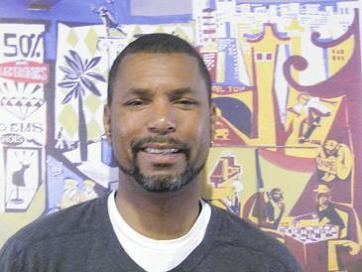
James Keys, a former legislative intern in Sup. Chris Daly’s office now running for supervisor in D6, is making economic and social justice the centerpiece of his campaign. He talks, for example, about using city resources to make sure that SRO residents have a chance to move on to more traditional apartments. “We have a lot of housing in the pipeline,” he told us. “But I’m not sure if people are really moving in.”
Keys wants to see the city figure out some want to take over empty apartment buildings to use for housing for SRO residents. “Entities ought to be moving people through SROs and out,” he noted.
He’s a fan of community policing (“there are no cops on the beat in the neighborhood”) and wants to put unemployed people to work doing graffiti removal and cleaning the streets.
He also taked about offering free Muni service (although he had a little trouble explaining how the city would pay for that) and wants to combine the Sheriff’s Office and the Police Department.
You can listen to our interview here: