

After Michael Nava came in first in the June primary and looked as if he might oust sitting judge Rochard Ulmer, the local judiciary and much of the legal establishment came together and began raising a ton of money to try to crush this upstart. And it’s had an impact; in the early results, Nava is behind. But it’s going to be very close; by the end of the night, the 54-46 margin will get a lost closer. This one’s impossible to call.
Tim Redmond
Election 2010: Early SF results
The absentee votes are in, and it’s a very mixed bag. If trends hold, and the absentees represent the most conservative votes, Prop. B is going down — the result of a very successful labor campaign. Prop. L, the sit-lie law, is solidly ahead. The two hotel tax measures are both losing by about the same percentage, suggesting that the anti-tax group’s focus on just Prop. K, which liberals also opposed, was effective. But it’s still to early to call those.
In D2, Janet Reilly is well ahead. In D8, Scott Wiener is ahead of Rafael mandelman 54-22; that’s going to be hard to make up, even though Mandelman had a strong GOTV drive today.
D6 and D10 are still way up in the air. Jane Kim is ahead in D6, and Marlene Tran — the only Asian in the race, is winning in D10, a testament to the fact that 10 is becoming an increasingly Asian district. But neither of those two will be over tonight, and will come down to ranked-choice voting.
Election 2010: Newsom in, Harris trailing
That’s based on very early results. But with Boxer’s numbers creeping up, and Newsom comfortably ahead, it looks as if San Francisco will be getting a new mayor in January. The very early results have Harris pretty far behind, but those numbers will change. Since the early returns are always conservative, thought, the news for Gav is very good.
Election 2010: Boxer should be okay
The earliest results — which would be absentees from conservative areas — have Fiorina slightly ahead, but if typical trends hold, Boxer will be fine. So the question is: If voters support the two Dems at the top of the ticket, what happens to the downticket races? Are there coattails?
Election 2010: Well, there goes $160 million
CNN, using exit polls, just called the governor’s race for Jerry Brown. Meg Whitman spend $160 million and is getting trounced. Think of what else that money could have gone for.
Editor’s Notes
tredmond@sfbg.com
Here’s what really scares me about Republicans in Washington: they don’t want the economy to get better.
I’m not just saying that they’re wrong on the issues, or that their prescriptions — tax cuts for the rich, fewer regulations for big business, privatization of health care and Social Security — will only make things worse. I’m saying that, right now, in November 2010, the GOP leaders want continued high unemployment. They want Americans to suffer. They want conditions to get worse and worse — because all they really care about right now is defeating Barack Obama in 2012. And they know and I know and everyone else knows that if the economy improves, he’ll be a two-term president.
I’m not the only one who sees this open conspiracy. Former Secretary of Labor Robert Reich has been Twittering about it, and bloggers have been floating it out, but the mainstream news media doesn’t’ seem to want to take the risk of saying what’s right in front of everyone’s face: Republicans are lying, outright. They’ve campaigned on the promise that their ideas and agenda will put America back to work — but they know that’s not true. What the agenda is going to be is obstruction.
The Democrats have never done that, at least not in recent history. Oh, they fought W. on all sorts of policy issues, but they never tried to make sure that the country collapsed. That’s a big difference between the two parties, and it comes down to a basic question: How many people are you willing to hurt, how much suffering are you willing to promote, just to get back in power??
I’ve been talking to a lot of political activists, elected officials, and outside agitators of late about the next president of the Board of Supervisors (with all that implies) and I keep hearing the same name: David Campos.
Campos has been one of the great success stories of the class of 2008, an effective legislator who can work with just about everyone. He’s a solid progressive, but with a gentle personality — someone who sticks to his principles but doesn’t pick personal fights. I don’t know how he puts together six votes, but he might surprise us.
I’m writing this the day before the election and it comes out the day after, by which time Jerry brown will be the governor-elect, Barbara Boxer will have won another Senate term, and the Giants will be holding their World Series victory parade. You read it here last.
GOTV volunteers needed at 1261 Howard

Although the statewide picture is looking okay, here in San Francisco big money is making a major push to take over the Board of Supervisors, with hundreds of thousands coming in to support Steve Moss in D10, Scott Wiener in D8 and Theresa Sparks in D6. But there’s still hope for progressive victories; I’m told that polls show Rafael Mandelman within striking distance of victory in 8 and although I don’t think anyone has polls in D6, Debra Walker has plenty of momentum. D10 will amost certainly come down to turnout and ranked-choice voting.
The bottom line: You can make a huge difference by volunteering to help the last-minute progressive GOTV efforts. Volunteeers are needed, right now; head on down to 1261 Howard and ask for Gabriel.
It’s a beautiful day

It was mayhem out at 30th and Mission last night, people pouring into the streets, shouting and shooting off fireworks and cars cruising along, slowly throught the crowd, big “Gigantes” banners hanging out the doors and windows. A beautiful night in San Francisco, people coming together to celebrate, G.W. Bush and Nolan Ryan looking dejected and rejected, that rare sense of victory in the air … and it’s a beautiful morning, good weather across most of the state, turnout heavy in my precinct, anyway, and that’s very bad news for Meg Whitman, whose only real hope is that Democrats don’t show up at the polls.
So maybe we’ll have more to celebrate tonight.
It’s hard to predict the outcome of the state and local elections based on the latest polls, since at least a third of the voters have already cast their ballots. If Whitman and Brown were tied a month ago, when absentee voting started, and Brown is up 5-10 points today, which poll reflects how the voting actually went over the past four weeks? If Prop. 19 was ahead three weeks ago and is behind now, did supporters lready vote for it?
But I think I can safely predict that one the statewide level, big money isn’t going to take the day: Whitman’s going to lose, Carly Fiorina’s going to lose and Prop.23 is going to lose. If the left turns out to vote. Polls are open until 8.
SFBG Radio: Will the Democrats get the message?

In today’s episode, Johnny talks about his frustration with the Democrats and asks: Are they getting the message? And Tim argues that we need to vote Democratic anyway … Listen after the jump.
sfbgradio11/1/2010 by endorsements2010SFBG Radio: How did Obama fail?

Today Johnny and Tim talk about the end of Meg Whitman, the Tea Party’s influence and why Obama let himself get so vulnerable. Listen after the jump.
sfbgradio 10/29/2010 by endorsements2010Tony Serra weighs in on the election
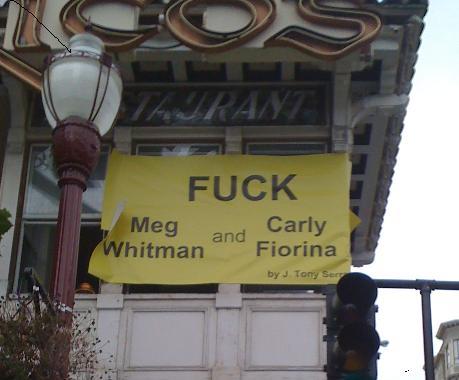
Tony Serra, the legendary local lawyer and one of my favorite members of the legal profession, sent us this photo with his commentary on the Nov. 2 election. It’s hanging from his office out at 506 Broadway.
I just talked to Serra, and he said he’s had great feedback. “Channel Five came out and did a story,” he said. “They managed to shoot it so the lightpost covered up the U and the C. They interviewed people on the street, and a lot of them were cheering me on.”
His critique of the GOP candidates doesn’t mean he’s a Jerry Brown supporter; Serra has sworn off electoral politics, which he told me is part of the corruption of capitalism. But he’s happy to go after Meg and Carly: “I’m not going to let those two motherfuckers buy the election.”
I told Serra he’s always been one of my heroes. Still is.
SF Weekly tries the Supreme Court
SF Weekly and its chain parent have asked the state Supreme Court to review the precedent-setting victory for small business in our predatory pricing suit. The appeal’s a longshot — the high court only takes a small fraction of the cases presented to it. But the appeal shows that Village Voice Media is still trying to overturn the state’s Unfair Practices Act. I’ve posted our reply brief here; it demonstrates very clearly how the big newspaper chain is trying to twist the law to allow big outfits to crush independent businesses.
The Supreme Court is expected to decide whether to take the case by Nov. 29, but can give itself anothrt 60-day extension.
Oddball billionaire wants to wreck California
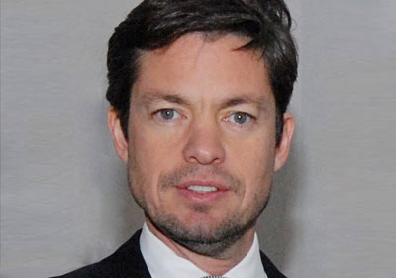
Okay, this is really scary. An oddball billionaire who used to have homes in New York and Florida but now lives just in hotels — and who has no apparent connection to California — is going to spend $20 million promoting a plan to restructure the state.
And who’s going to be drawing up the blueprints? A bunch of right-wingers from the Reagan and Bush days, a failed way-too-conservative former governor — and Willie Brown.
The entire progressive movement, which represents at least a third of California, is totally absent from this conversation, whereas the right-wing is there in the form of Condi Rice and Arnold Schwarzenegger.
The problem is, unlike the doomed effort by the Bay Area Council to create a constitutional convention, (the biggest companies in the region couldn’t manage to put together the funding to put it on the ballot) this nightmare has real resouces. I mean, $20 million is enough to run a statewide campaign. And people are so frustrated now that almost any lunacy (spending limits, more tax cuts, eliminating major social programs etc.) could get traction.
Be very afraid.
Sfbg Radio: Sex, drugs and rock ‘n’ roll

You want to save the American economy? Try legalizing sex, drugs and roc ‘n’ roll. That’s Johnny’s proposal. listen up after the jump.
sfbgradio10272010 by endorsements2010Editor’s notes
Tredmond@sfbg.com
At a certain point, you have to stop trying to project what’s going to happen and just wait for the election results. Because what matters now isn’t the $140 million Meg Whitman has spent or Carly Fiorina’s record at Hewlett-Packard or which aide to Jerry Brown called Whitman a whore. It’s who shows up to vote.
If I were Meg Whitman’s campaign manager, I’d stop spending money. Go into hiding. Pretend there’s nothing going on here, no big deal next Tuesday morning — and then pray for rain. Because the way Whitman wins — possibly the only way she wins — is if huge numbers of Californians don’t bother to vote.
If the turnout is reasonable — that is, if enough Democrats realize the danger posed by of the GOP candidate and go to the polls — then Jerry Brown is in. And if that happens, chances are good that the rest of the Democratic ticket — including Gavin Newsom and Kamala Harris — squeaks in, too. And then we can all start to have fun figuring out the future of San Francisco politics.
That, of course, depends on the same factor: Who’s going to show up to vote? Will all the tenants in District 8 — many of them unexcited about Jerry Brown — take the time to vote for Rafael Mandelman for supervisor? Will the progressive voters who have lived in District 6 for a while get to the polls in greater numbers than the conservative newcomers in the pricey condos? Will the next Board of Supervisors — which could be choosing the next mayor — be as progressive as the current board (which also might wind up choosing the next mayor?)
And who’s even on the mayoral short list?
At the Haight Ashbury Neighborhood Council forum Oct. 14, former Supervisor (and potential mayoral contender) Aaron Peskin noted that the person in Room 200 year “is going to have to take out the garbage.” The city’s going to face another awful budget deficit and a progressive interim mayor will have to make a lot of enemies. Who wants to face the voters in November 2011 after making more cuts and raising taxes?
Well, somebody needs to — because the “caretaker” mayor some people are pushing for won’t have the clout to make tough decisions. And frankly, a progressive with the power of incumbency might actually be able to win a full term, even up against a huge downtown war chest.
Fun stuff. Go out and vote.
The politics of the World Series

Well, on one level there’s no political significance at all: Two teams made up of high-paid mercenaries who go where the money is and have only fleeting and often temporary connection to their respective cities will play for the national championship. The “World Series,” of course, is not a “world” anything since only two nations have ever been eligible to field teams.
Still: The Giants, a teram from San Francisco with a distictly nontraditional fan base is playing the team that launched the political career of George W. Bush.
Remember: Bush was a failed business owner and failed politician when he put together the group that bought the Texas Rangers in 1989. His initial investment was about $600,000, which he covered in part through a dubious stock sale. After he conviced the good people of Texas to foot most of the bill for a new stadium, the team shot up in value and he cashed out at $15 million.
He also built the contacts and political base that would lead to his election as governor of Texas. Which led to his election as president, two wars and the ecomic meltdown we’re all trying to survive today.
Is that the fault of the players who wear the Rangers uniform? Of course not. And I don’t know how many of the Giants players support same-sex marriage. But if there’s any symolism in pro sports, an underdog SF team taking on Bush’s legacy counts for something.
And does anyone really think Arlington, Texas would have embraced Tim Lincecum?
Go Giants.
What if Meg just quit campaigning?
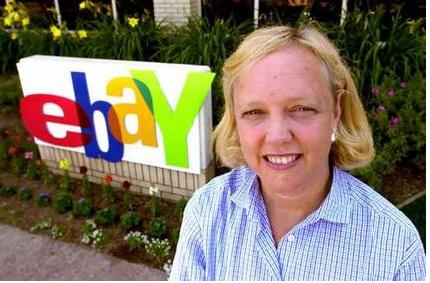
The more money Meg Whitman spends, the worse she does in the polls. More than $150 million, and she’s in worse shape than she was six months ago. At least, that’s what the LA times says. And while that’s clearly the most optimistic poll around, the signs aren’t looking good for Whitman.
In fact, the smartest thing she could do now is to quit campaigning. Seriously: The more money she spends, the less people like her. Disappear and hope for low turnout — that’s her only hope.
Calbuzz has an interesting take: Whitman’s initial support of Prop. 23 has really hurt her. I also really, really like the Calbuzz analysis of Meg and “class warfare,” which ought to be required reading for every political reporter in the state.
SFBG Radio: Old ladies love prop 19

In today’s episode, Johnny talks about the conservative old ladies at the gym who hate the drug war and love Prop 19. Listen after the jump.
sfbg radio: the jobs picture

Today Johnny talks to economist Johnny Venom about the jobs picture. Listen after the jump.
SFBG Rado: Fuck the FCC

In today’s episode, we ask: What the fuck is up with the FCC — and who really cares these days what language you use on broadcast radio? Check it out after the jump.
The soul of the city
tredmond@sfbg.com
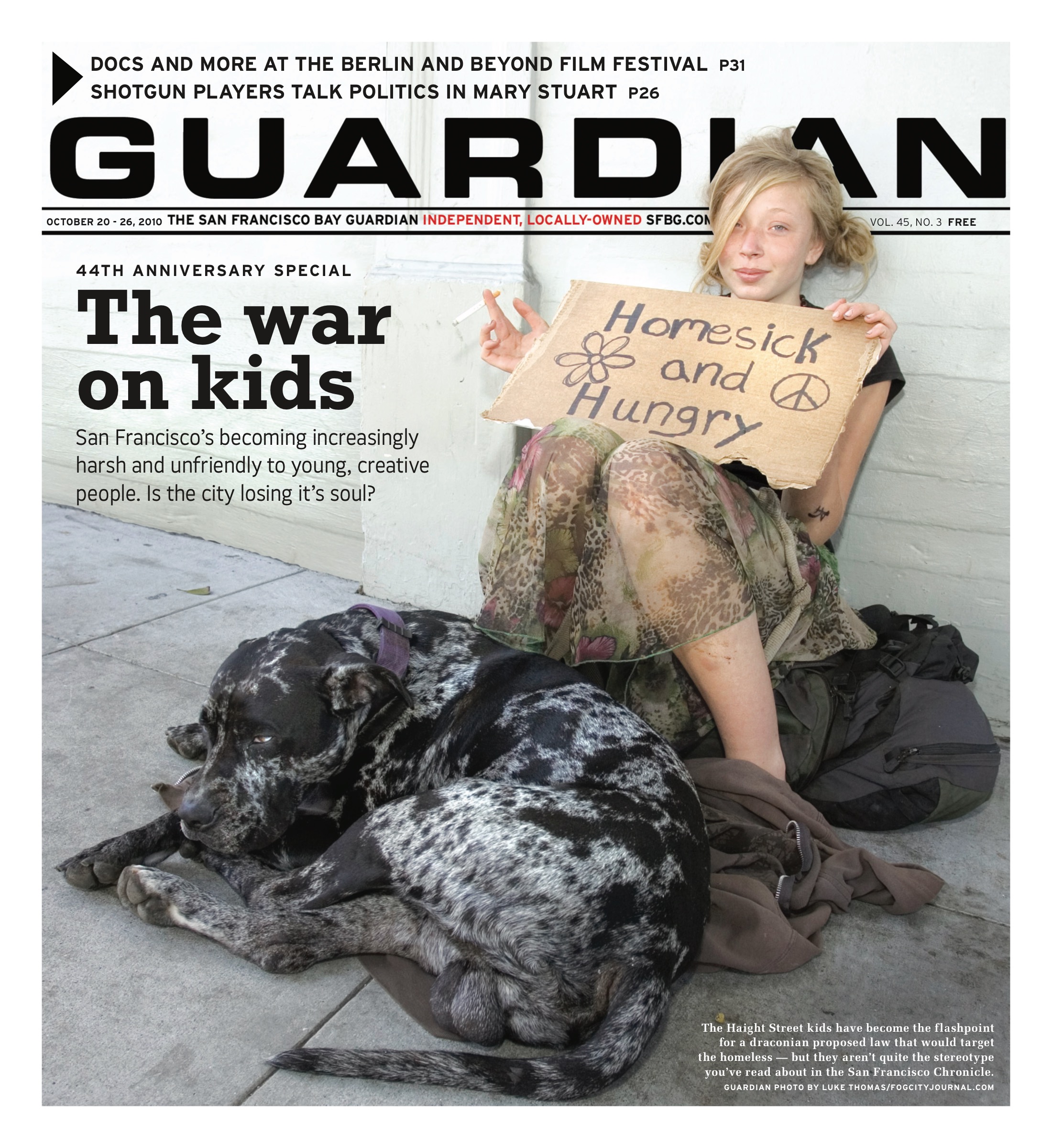
44th ANNIVERSARY SPECIAL We all arrived in San Francisco broke: Paulo and me in the ’73 Capri, crawling over Donner Pass with a blown valve and three cylinders firing; Tracy and Craig in the back of a VW van, behind in the payments and on the run from the repo men; Tom and Sharon hitching across the Southwest after Tom, who could bullshit with the best, talked himself out a jail cell in New Orleans. Moak showed up in a rusty Datsun with the wheels falling off. Jane and Danny came on the old hippie bus, the Green Tortoise, $69 across the country.
But we all had a friend who knew a friend where you could crash for a little while. And in the early 1980s you got food stamps the first day and it only took a couple of weeks to get a job waiting tables or canvassing or selling trinkets on the Wharf. And once you’d scraped together a couple hundred dollars — maybe two weeks’ work — you could get a place to live. My first room in a flat in the Western Addition was $120 a month.
We did art and politics and writing and music. After a while, some of us went to law school, some of us became journalists, some of us went into government and education. A few of us fled, and Paulo died in the plague (dammit). But in the end, a lot of us were — and are — San Franciscans, part of a city that welcomed us and gave us a chance.
It was a very different time to be young in San Francisco.
I’m not here to get all nostalgic, really I’m not. There were serious problems in 1982 — raging gentrification was creating clashes in the Mission and the Haight and south of Market that were more violent than anything going on today. And frankly, broke as we were, most of my friends were from middle class homes and were college educated and had a leg up. We weren’t going to starve; we didn’t have to make really ugly choices to eat.
Most of the stories in this special anniversary issue are about marginalized youth — young people trying to survive and make their way against all odds in an increasingly hostile city and a bitter, harsh economy.
But there’s an important difference about San Francisco today, something earlier generations of immigrants didn’t face. The cost of housing, always high, has so outstripped the entry-level and nonprofit wage scale that it’s almost impossible for young people to survive in this town — much less have the time to add to its artistic and creative culture.
I met the 21-year-old daughter of a college friend the other day. She’s as idealistic as we all were. She wants to move to San Francisco for the same reasons we did and you did — except maybe she won’t. Because she felt as if she had to come visit first, to use her dad’s network, see if she could line up a job and figure out if her likely earnings would cover the cost of living. When I mentioned that I’d just up and left the East Coast and headed west, planning to figure it out when I got here, she gave me a look that was part amazement and part sadness. You just can’t do that anymore.
The odds are pretty good that San Francisco won’t get her — her talent and energy will go somewhere else, somewhere that’s not so harsh on young people. I wondered, as I do every once in a while when I’m feeling halfway between an angry political writer and an old curmudgeon: would I come to San Francisco today?
Would Harvey Milk? Would Jello Biafra? Would Dave Eggers? Would you?
If you were born here, would you stay?
Are we squandering this city’s greatest resource — its ability to attract and retain creative people?
The two people who started the Bay Guardian 44 years ago were young arrivals from the Midwest. Bruce Brugmann looked around the city room at the Milwaukee Journal, where he worked as a reporter, and realized there wasn’t any job he wanted there in 10 years. With two young kids and a dream of starting a weekly newspaper in one of the world’s most exciting cities, Bruce and his wife, Jean Dibble, settled in a $130-a-month flat. The Guardian’s first office was a desk in the printers shop. When they paper could finally afford its own space, Bruce and Jean moved the staff into a $60-a-month four-room place on Ninth and Bryant streets.
From the start, the paper was a “preservationist” publication — both in terms of environmental issues like saving the bay and in the larger political sense. The San Francisco Bay Guardian was out to save San Francisco.
The city was under assault — by the developers who were making fast money tossing high-rises into downtown; the speculators making fast money flipping property, ducking taxes, and driving up rents; the unscrupulous landlords who were letting their buildings fall apart while they charged ever higher rent. For the Guardian, fighting this urbicide meant protecting San Francisco values, preserving the best of the city from what Bruce liked to call “the radicals at the Chamber of Commerce.”
For the Guardian, progress wasn’t measured in the number of new buildings constructed, but in the ability of the city to remain a place where artists and writers and community organizers and hell-raisers — and the young people who were always bringing new life to the city — could survive. We supported rent control, and growth limits, and affordable housing policies, and limits on condo conversions, and minimum-wage and sanctuary city laws — and a long list of other things that together amounted to a progressive agenda.
And in 2010, the assault on the young, the poor, the nonconformists, the immigrants, is still on, at full force. The mayor and his allies are pushing a ballot measure that would make it illegal just to sit on the sidewalk. He’s also turning the local juvenile authorities into immigration cops, breaking up families in the process. He’s cut funding for youth services, and wants to make it easier for speculators to evict tenants, take affordable rental housing (especially the flats that young people share to save money) off the market, and create high-priced condos. Virtually all of the new housing he’s pushing is for rich people. He’s shutting down parties and arresting DJs and, in effect, declaring a War on Fun.
What he’s doing — and what the downtown forces want — is the transformation of San Francisco from a welcoming city where the weird is the normal, where the young and the crazy and the brilliant and the broke can be part of (or even drivers of) the culture, to one where profit and property values are all that matter. And that’s a recipe for urban doom.
Richard Florida’s 2004 bestseller The Rise of the Creative Class shook up political thinking by pointing out that cities thrive with iconoclasts, not organization people. Everyone likes to talk about that now, even Mayor Gavin Newsom. But the missing piece, from a policy perspective, is that the creative class — particularly the young people who are going to be the next generation of the creative class — needs space to grow. And that means the most important thing a creative city can do is nurture the very people Newsom and his allies want to drive away.
If Prop. L, the “sit-lie” law, passes, if the rental flats in the Mission that have been home to several generations of young artists, writers, musicians and future civic leaders vanish in the name of condo conversions, if 85 percent of all the new housing in San Francisco is affordable only to millionaires, if the money that helps foster kids and runaways and at-risk youth dries up because this rich city won’t raise taxes, if nightlife becomes an annoyance to be stifled…then we’re in danger of losing San Francisco.
Our 44th Anniversary Issue also includes stories by Sarah Phelan on SF’s disadvantaged youth, Caitlin Donohue’s account of the Haight street kids, and Rebecca Bowe’s look at ageing out of the foster care system
SFBG Radio: No New Deal

In today’s episode, we discuss why Abama is not FDR, why he’s refusing to do what has to be done to put Americans to work — and why that’s his real political liability. Listen after the jump.
sfbgradio10/18/2010 by endorsements2010The myth of the overpaid public employee

Lots of press — as there should be — on the new UC Berkeley study that debunks the myth of the overpaid public employee. The Chron had a decent story this morning, The Bay Citizen, which has been reporting pretty heavily on high wages and pensions in the public sector, acknowledged the study today. It’s a pretty big deal: Since much of the poltics of 2010 seems to be about bashing public employees and complaining about bloated pensions, some hard reality — backed up with a sophisticated regression analysis — was badly needed.
And the study is prettty clear: public employee salaries and pensions are not the cause of California’s (or San Francisco’s) budget problems:
The Great Recession continues to leave a great deal of economic pain and scarring in its wake. But, the
vilification of government workers is sorely misplaced and has left the real culprits of this devastating
downturn off the hook. Compensation received by public sector employees is neither the cause—nor can
it be the solution—to the state’s financial problems. Only an economic recovery can begin to plug the hole
in the state’s budget. Unfortunately, the current budget balancing efforts in California are anti-simulative
and further act to depress demand in an economy already operating way below capacity. Budget cuts have
helped to keep California’s unemployment rate well into the double-digits for over a year and a half—and
there is no end in sight. Thousands of California public employees have lost their jobs and many more
have forgone pay through forced furloughs and their families have experience considerable pain and disruption.
All the workers who have lost their jobs or took cuts in pay or benefits were made to do so not
because of their work performance, or because their services were no longer needed, nor because they were
overpaid. They were simply causalities among a list of millions of hard working innocent victims of a financial
system run amuck. Public sector workers help our communities to thrive and provide services that
make it worthwhile to live in them—it is wrong to blame them for the fallout from the greatest economic
downturn since the Great Depression.
The study’s out in enough time to make a potential difference in the election — on both the state and the local level, attacks on public employees are driving major campaigns. Meg Whitman is all about tying Jerry Brown to those evil unions, and Prop.B, the measure to cut health care and pensions for city employees, is a wedge issue. A little logic shows that it’s not only misleading but factually wrong to blame the public-sector workers for the recession.
District 10 endorsement madness
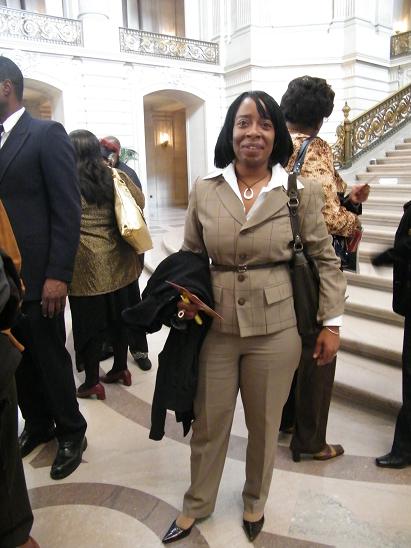
Both the Chronicle and Sophie Maxwell have now endorsed Lynette Sweet for supervisor, and I suppose I shouldn’t be surprised. But I am: I know the Chron and Maxwell don’t share my politics, but there are plenty of moderate, centrist candidates in D-10 who don’t have the real problems Lynette Sweet carries with her. The Chron’s a newspaper, sometimes a champion of open government; the folks there don’t care that Sweet seems to ignore the disclosure requirements that come with her current job on the BART Board? Even when the Chron reported that she never disclosed the $120,000 she was paid by HMS Associates, a lobbying firm that represents many of the most powerful interests in the city? (Oh, and HMS Principal Marcia Smolens is one of Sweet’s top campaign donors.)
You’d think that would matter, particularly when there are alternatives. Apparently not.