Tim Redmond

Imagine evacuating New York

2

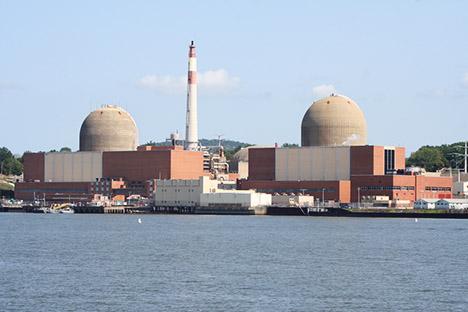
My brother lives a few miles upwind (usually) of the Indian Point nuclear plant on the Hudson River, north of New York City. He called me this morning to ask if we were worried about radiation hitting the West Coast, which all of the government isn’t anything to worry about. Of course, if it were something to worry about, we’d be hearing the same thing anyway.


Truth is, I’m only a little nervous right now. One really cool chart of prevailing winds shows some of a possible plume hitting right smack into the San Francisco area, although by that point it should be sufficiently dispersed that the concentration won’t be high enough to cause any immediate human health impacts. That, of course, assumes that the reactors are brought under control before the plutonium in the core and the spent fuel rods catches fire, explodes or otherwise becomes airborne. Plutonium’s an alpha-emitter with a half life of 24,500 years, and you only need to inhale a tiny speck before it becomes fatally toxic.


Still, let’s not forget: When you release significant amounts of radioactivity into the atmosphere, there are human health consequences — and not just in the immediate area. There’s no doubt in my mind (and in the minds of many experts) that above-ground nuclear testing in the 1950s and 1960s contributed to cancer rates world wide. You can’t prove that any individual got cancer because of exposure to the specific fallout from a specific explosion on a specific date; you can prove that the likelihood of increased cancer risk in large populations increases with almost any measurable increase in background radiation.


That said: My worries are pretty minor compared to the folks in Japan. The head of the company that ran the nukes now admits that the radiation released over the past few days will kill people. And if the situation deteriorates any further, the risk is going to ge beyond a few miles.


The heartbreaker: There’s not a lot anyone can do. You can’t evacuate Tokyo. Where would the people go?


Ralph Nader send out a press release today warning about the problem the United States would face if one of its nuclear plants — say, Indian Point — had a similar accident:


Imagine evacuating the long-troubled Indian Point plants 26 miles north of New York City. Workers in that region have a hard enough time evacuating their places of employment during 5 pm rush hour. That’s one reason Secretary of State Clinton (in her time as Senator of New York) and Governor Andrew Cuomo called for the shutdown of Indian Point.


You can’t evacuate New York. My brother’s on the edge of the official evacuation zone for Indian Point (which is a creaky, leaky old nuke); the roads aren’t wide enough to handle the traffic where he is — and he’s a fair ways upstate from NYC.


The New York Daily News headline talks about the handful or workers still trying (at the risk of their own lives) to get the troubled nukes under control: “The Whole World Is Depending On Them.” And if they somehow prevent disaster, we can all take a deep breath — and start working to shut down the old, past-their-prime, unsafe power plants that are near populated areas.


Oh: that’s almost all of them.

SFBG Radio: Good news from Wisconsin — maybe

0

A judge in Wisconsin has tossed out the governor’s anti-labor law — but does that just mean the Republicans are going to go back and do it again? And what’s going on in Michigan, where the governor wants to get rid of labor contracts by taking control of local government? Check out our discussion after  the jump.


sfbgradio3182011 by endorsements2010

Kids, drinking and smoking

4

I don’t know why this hit me today, but it did. I was at the corner store on Potrero Hill, looking at a sign I see every day and ignore every day, reminding patrons that nobody under 21 can buy alcohol — and nobody under 18 can buy tobacco products.


That’s the law.


First of all, the drinking age is dumb and dangerous. But why can you smoke at 18, if you can’t drink until you’re 21? Frankly, tobacco use in high school (and that’s what we’re talking about) demonstrably leads to a tobacco habit in later life, and that’s far more dangerous to personal and public health than a drinking habit. Alcohol, used in reasonable doses, doesn’t kill people and may even have some health benefits. Tobacco in any dose is deadly.


I’d much rather have my kids drinking in high school than smoking at any age. I’m not for banning cigarettes, but this particular disparity seems to make no sense at all.

American Idol: First bad vote

1

What’s the matter — nobody but Steven Tyler celebrates St. Patrick’s day? Jennifer must have some sort of green outfit she could wear.


But no: Other than Steven’s little green necklace, it’s as if there’s no holiday. And that’s not the only thing that went wrong.


First the good news: the Born to Be Wild/ Baby I Was Born This Way medley could have been awful, but it was really cool. The “field trip” to the Ford music video studio was shameless. The “something about you” clips were funny,a nd I’m glad to hear that Paul has a 14-year-old wiener dog that smells bad.


Naima gets the best line of the night for telling Randy she has “a passionate hatred for the word ‘pitchy.'”


For the most part, the voting was predictable — until the end. I almost had it right — Naima and Haley were in the bottom three. But so was Karen — and that was just wrong. She’s great; I love her personality, her story, and what S. Tyler calls here “ethnic what it is-ness.” And her mom is soooo cute.


I figured it was Naima’s last night; she’s by far the weakest of the performers, and isn’t going to last another week. But no: the American voters kicked off …. Karen! 


Awful, wrong, indescribable injustice. She’s far better than the other two — and here last-ditch rendition of “Hero” was stunning. J-Lo wanted to save her, but the other judges wouldn’t go for it.


So for the first time this spring, a really bad result. Ick.  

Taxes = prosperity

4

I found this nifty chart on DailyKos, along with an article about the idiot who wants to cut taxes on the rich again. I realize it’s a little hard to read the exact dates, but here’s the overall point:


High taxes on the wealthy, generally speaking, correspond to periods of economic prosperity. Low taxes on the rich, generally speaking, correspond to bad economic periods.


Gee, could there be a connection here?

American Idol: Elvis and the Lion Queen

0

I was out at the SPJ FOI Awards event early in the evening, so I missed the first few performances, but no worries: Vivian and Michael were taking excellent notes and filled me in. And the best stuff came at the end anyway.


First: What was UP with J-Lo’s hair? I can’t find any pix on the web (Idol is insanely protective of its imagery) but trust me: She looked like something out of the Lion King. And the leopard-print dress didn’t help much. It’s a jungle out there, Jennifer. Grrr.


Next: The background video/light show continues to be utterly moronic, mixing psychedelia and syrup pretty much at random. With the millions they’re making from the Ford commercials, they could get a decent designer.


Also: These people are all so young. The night’s theme was picking a song from the year you were born; for Scotty, that was 1993. As his backstage producers noted, “I have a pair of jeans that were born in 1993.” Five of the finalists aren’t even old enough to buy a drink. No OGs in the lineup this year; Paul clocks in as the senior citizen at 26.


The baby and kid pics were cute; I loved watching Scotty as Halloween Elvis. And with 12 contestants, there wasn’t a whole lot of time for nonsense; the show kept moving. Oh: Casey’s back form the hospital and seems fine.


The details: Naima does “What’s Love Got To Do With It.” Eh. From Viv: “J-Lo thought it was a little pitchy and Randy agreed. Really, it was just okay.”


Paul: Elton John. “I Guess That’s Why They Call It the Blues.” Not Sir Elton’s best song, not Paul’s best performance.


Thia: “Colors of the Wind.” Again, nothing special.


So overall a slow start — until James hit the stage with Bon Jovi. Steven Tyler was so impressed he offered to quit Aerosmith (can you really quit a band that isn’t really there anymore?) and join him onstage. The kid can rock.


Haley: Whitney Houston. Oops.


Stefano, the guy who almost got sent home, turned the entire show around with “If You Don’t Know Me By Now.” His parents weren’t out of diapers when Harold Melvin and the Blue Notes first released that, but somebody else did it 22 years ago, so it counts. Perfect song for him, perfect rendition of a tough piece.


Pia: Whitney Houston, too. The girl is drop-dead beautiful and has a stunning voice — but that horrid white outfit looked like someone had wrapped her in a plastic garbage bag. (“You can’t say it made her look fat,” Jean told me harshly. And it didn’t, really, because she isn’t, but it might have.) Hideous, I almost couldn’t listen to the song. 


Scotty is always solid, born to be a country singer. He’s so good it’s almost boring.


Karen: Marge Simpson hairdo. Devo-meets-Vegas outfit. The song was okay, and the interview with her mom was too cute for words, but next time let mom check the look before you go out the door, okay?


Casey went on with his bass and tried to be Kurt Cobain — and oddly, it worked. Kind of scary, actually. But it worked. Steven: “Crazy and talented — that’s the goop that great stuff was made of.” J-lo still thinks he’s sexy. Grrrr, Lion Queen.


Lauren’s got the flu, but did a great job with Melissa Ethridge. Jacob tried Heart, and failed.


Naima, Haley and Jacob — bottom three. And Naima’s going home. Tune in tomorrow; I’m never right.

SFBG Radio: Wavy Gravy on Owsley

2

In a special episode today, Johnny talks to Wavy Gravy, founder of the Hog Farm, patron of Camp Winnarianbow, MC at Woodstock and close friend of Stanley Owsley, the late acid avatar. Hear him talk about Owsely’s home in Australia, the dangers of the platypus, the acid test days, the all-meat diet and much more after the jump.

sfbgradio3/16/2011 by endorsements2010

Ammiano: what about the hospitals?

2

One of the most frightening aspects of an major earthquake in the Bay Area is the potential destruction of some of the big  local hospitals. “If it happened today, we’d have no SF General, no Kaiser,” Assembly Member Tom Ammiano told me. St. Lukes? I wouldn’t bet on it. And considering the conditions in Sendai, that’s not a pleasant prospect.


State law requires all hospitals to undergo seismic upgrades by 2013 — but the deadline keeps getting pushed back. Ammiano said there are more delays pending, more bills in the Legislature that would allow some operators (particularly private hospitals) to miss the deadline without penalty.


Both Stanford and CPMC has tried to claim that they can’t do the work yet because of local obstacles. (Actually, there are no local obstacles to upgrading exisiting CPMC facilities, just to the construction of a new hospital on Cathedral Hill.)


Sme public hospitals say they lack the money. “But in Francisco, we did the right thing. We passed a hospital bond,” Ammiano said. “When my colleagues from other areas say they can’t meet the deadline, I ask them — did you vote for a hospital bond?”


Ammiano plans to introduce legislation to pre-empt any further delays and get this process back on track. “It’s horrifying to see what happened to the hospitals in Japan,” he said. “We need to be prepared in California.”


Finally, the Chron’s against nuclear power

17

Well, maybe not entirely against nuclear power, but in a rather surprising editorial, the paper noted:


Suddenly, nuclear doesn’t seem so safe. The truth is that it never has been. As we’re learning from Japan, it’s impossible to ensure full stability with the nuclear energy production process. Japan was known for being extraordinarily cautious with its nuclear energy plants and safety procedures, and disaster still struck. All that means is that there are too many contingencies and too many opportunities for things to go wrong.


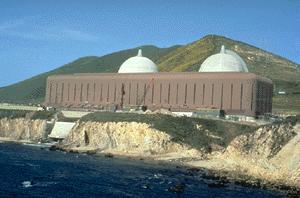
Damn. I wish we’d had that sort of editorial support when we were fighting PG&E over Diablo Canyon. That plant was a serious mistake, is still a serious mistake and ought to be shut down. But in the long, long years of protests against the plant’s construction, licensing and operations, I don’t remember the Chronicle ever saying that nuclear power “has never been safe.” We were up against the pro-PG&E press as much as we were up against PG&E.


So now the paper has figured out that boiling water with a nuclear fission reaction to generate electricity is a bad idea. Now we need the Chron to come out in strong opposition to the relicensing of Diablo Canyon and start calling for the plant to be decomissioned. Starting now.


The GOP convention dilemma

9

Word in Sacramento is that five Republicans may be close to going along with the governor’s plan to put $12 billion in tax extensions (NOT tax increases, just extensions of existing taxes) before the voters. The problem: They don’t want to vote for taxes and then have to show up at the state convention March 18 — where there’s a move afoot (I kid you not) to pass a resolution (thanks, CalBuzz) that calls on the party to censure any “traitorous Republicans-in-Name-Only, ask for their resignation from their positions within the California Republican Party, pledge to endorse and support efforts to recall them from office, and direct the California Republican Party staff, agents and officers to refuse to provide them with funding or assistance in future elections.”


Why can’t the Democrats do shit like this? Censure and abandon any Democrat-in-Name-Only who supports continuing the wars in Iraq and Afghanistan and refuses to increase taxes on the rich? (Oh, wait — then we wouldn’t have very many Democrats left. Which, I guess, is the GOP problem.)


At any rate, the Legislature is going into session this afternoon to try to push this package through — and it could be one of those marathon sessions that lasts all night. Or maybe the Republicans will vote for the budget plan — but only if they can wait until Monday.


By the way: Isn’t it odd that two crazy talk-show hosts in L.A. can hold an entire state hostage? How come we don’t have a couple of crazy talk show hosts in San Francisco who can make very Democrat in Sacramento pay attention?

Cult fiction

0

arts@sfbg.com


LIT I read a lot of thrillers. Mysteries, murder, international intrigue, weird pulp crime … I’ve been addicted since I was in high school and discovered John D. McDonald, Alistair McLean, and Trevanian. These days, I live by James Patterson, Michael Connolly, Robert B. Parker, Janet Evanovich, Lee Child, and John Lescroart.


And I just found the best new thriller writer, and the best new character, to come along since Mr. Child invented Jack Reacher. The writer’s name is Taylor Stevens, her character is Vanessa Michael Munroe, and the first book of what I hope will be a continuing series is called The Informationist (Crown, 307 pages, $23).


Buy it. It’s amazing. And when Stevens is as big as Patterson, you can say you helped discover her.


V. M. Munroe is an awesome protagonist. She ran away from her missionary parents as a teen to sign on with one of Africa’s most notorious gunrunners, and now she deals in information — secrets somebody wants but almost nobody can find.


The book’s set in Central Africa, where Munroe has been hired to find the kidnapped daughter of a Texas oil billionaire.


By the way: she’s skinny, slight, and a total fucking badass who rides a Ducati and effortlessly beats the shit out of the poor losers who try to accost her at a gas station. She speaks 22 languages. She’s the first trans thriller lead, too, a person who slips effortlessly from female to male. Of course, she’s got personal demons, and part of the back story is her battle to silence them. By the end of the second chapter, I had written this in my notes: “I love Vanessa already. Nobody else like her on the literary scene. Nobody.”


The plot is tight, the characters come alive, the sex is fun and intense sometimes but not overdone. The scene at the end involving a sniper, a knife fight, and a stunning decapitation (tell you more and I’ll ruin a gut-wrenching chapter) as good as anything I’ve read in years.


Unlike a lot of thriller authors, Stevens can write. Check it out:


The details of the case ran through her head, and with them came the memories. It was another life, another world, untamed and vast, where stretches of two-lane tarmac ran vein-like through sub-Saharan emptiness, and buses — old, rusting, belching black smoke — pumped the blood of humanity along the way.


And this from a woman who has a sixth-grade education.


Seriously. One of the most amazing things about Stevens is that she grew up in a cult in Central Africa, wasn’t allowed to go beyond basic education, and wasn’t allowed to read books.


I caught up with her in February; here are some excerpts from our talk.


SFBG Tell me a little about your background and how you came to write this book.


Taylor Stevens I was born into and raised in the Children of God, an apocalyptic religious cult. That’s the only world I knew. It was very secluded; all our interactions with what went on outside the community were accompanied by an adult cult member. We didn’t have access to TV; books were almost nonexistent; we didn’t listen to the radio. My entire world was framed within the context of the cult.


SFBG When did you get out?


TS I didn’t get out until I was in my late 20s. I was quite afraid to leave, not of what the cult would do to me, but of what God would do to me. My ex husband — then my husband — and I took a long time to plan how to get out because we didn’t want to end up like some other cult members who had left with no education, no money, no career, on the streets. We had a baby at the time. The group didn’t believe in education. The standard acceptance was sixth-grade education.


SFBG So where did you learn to write?


TS It’s a big mystery, huh? Like my main character, I guess, I absorb languages — at least I absorbed English. I had to teach myself.


The ultimate inspiration came from reading Robert Ludlum, one of the first authors I read, and it was quite by accident. After we made it to the United States, we were so broke, we were living — a family of four — on $13 an hour. I would buy books at garage sales because it was so cheap, then I would sell them again and use the money to buy more books. The first book I read was The Holcroft Covenant. It was so much beyond anything I’d seen before in reading, so I started reading Ludlum voraciously. I found The Bourne Identity and started reading it, and when I was reading The Bourne Ultimatum I was amazed by these places and people. I said to myself, “I wish I could write about all these exotic settings.” And then I thought, “Wait a minute, I’ve lived in places far more exotic than this.”


I’ve always wanted to write, but the cult would never let me write. I got in horrible trouble growing up and trying to write.


SFBG So did you just sit down and start working on The Informationist?


TS That was the first thing I wrote. I had dabbled when I was 15, but I had all my stuff taken and burned. I figured that if I’m going to write, I’d


better learn something about writing. So I bought a couple of used books on writing fiction and I learned from those.


SFBG In this genre of thriller fiction, there aren’t a lot of female protagonists. Was that something you were thinking about?


TS No, because I had no idea. I didn’t know what was out there at all. Even to this day, I’m not very widely read. I’ve read maybe 250 books. I just wrote what made sense to me.


SFBG One of the interesting things about Vanessa is that she has something of a trans element to her. Sometimes she’s Vanessa and sometimes she’s Michael. How did you come up with that?


TS When I first started writing this book, it didn’t have any plot. I just wanted to use Africa as my setting. Jason Bourne was my ideal because I wanted a character who was tormented — not the ideal good guy or good girl, because life doesn’t work like that. Right while I was reading the Ludlum books, I saw the Tomb Raider movies, back to back, and what I loved about Lara Croft was that, while she was a bit of a caricature, she was very sexual, very feminine on every level. I didn’t want my character to lose her femininity in her badassery.


As far as playing the role of a male, in my experience in having lived in some of these countries, it’s completely implausible that you would have a woman be able to go in there and root around and get what she needed. It wouldn’t happen. So the only way she could do it is if she could pull herself off as a man.


SFBG I’m not going to give away too much of the plot, but the subplot of her coming from of a background where she was living at 14 with a gunrunner, there is a certain parallel with you.


TS Her life and my life are not at all similar. But to understand her pain and the frustrations she went through — there’s no way to create that without living with it. I did draw on the sense of emotions my friends and I grew up with. We didn’t have a happy childhood, so it wasn’t difficult to conjure that emotional torment, because it’s very real.


SFBG They’re going to make a movie out of this book, and I’m thinking if they stay true to the scene at the end with the decapitation, you’re going to have a hard time getting even an R rating. I read a lot of thrillers, and I’ve rarely seen such a graphically brutal thing. It’s brilliant, and it’s gut-wrenching. Where did that come from?


TS It just made sense. This person already straddles a fine line between brilliance and insanity. And for her to lose the only one person who loves her for what she was, in such an arbitrary manner, there was no other way she could respond.


SFBG I hope there’s a sequel.


TS It’s already written. And I use my background in a more direct way — and there’s a third book I’m working on now. And if I’m given an opportunity, I hope there will be much more of Michael Munroe.

Unregistered lobbyist

0

tredmond@sfbg.com

In 2007 and 2008, Pacific Gas and Electric Co. paid former Mayor Willie Brown a total of $480,000 for consulting work. Since Brown has never been utility lawyer, it’s almost certain that money has bought political advice and access.

Brown is also working for the owners of the Fairmont Hotel, which wants to tear down one of its towers and build as many as 180 luxury condos.

His public affairs institute shares office space with one of the most powerful lobbying firms in town. He meets with or talks regularly with the mayor and members of the Board of Supervisors.

Yet unlike dozens of others who seek to influence public policy for hire, Brown is not registered as a lobbyist at City Hall.

On the surface, it’s a fairly modest issue — all Brown would have to do to comply with the letter and spirit of the city’s law is to fill out a form, list his clients, and reveal which officials he’s been talking to. It would take him 10 minutes.

But the fact that someone who is widely acknowledged to be among the most influential power brokers in San Francisco refuses to disclose whom he’s working for leaves city officials and the public in the dark — and raises a long list of questions about the effectiveness of the city’s ethics laws.

There’s a reason city law requires people who seek to influence city officials for money to disclose what they’re up to. When elected officials, commissioners, or department heads meet with advocates, they need to know who’s paying the bills. If, for example, Sup. Jane Kim has breakfast with Brown (which Brown himself reported on in a recent column in the San Francisco Chronicle), she needs to know: Does he have a client with an agenda? If he asks her to meet with someone, is he just looking out for the interests of the city — or is he pushing a paid special interest?

When Brown has dinner with Mayor Ed Lee (as he did several weeks ago) the voters need to know: Is this dinner companion pushing the mayor to make policy decisions that might help a private interest?


THE RULES

The definition of “lobbyist” in city law is designed to avoid putting special requirements on advocates who push issues on their own or for purely political reasons. A neighborhood activist pushing for a stop sign or better police patrols doesn’t have to register. Neither does a restaurant owner looking for a permit to put tables on the street. The only people who have to register are those who represent a client who pays them more than $3,000 in any given three-month period.

Lawyers are exempt if they’re contacting city officials purely about specific pending litigation or claims. Labor leaders are exempt if they’re talking about wages or benefits for their union members.

The requirements aren’t onerous. Lobbyists simply disclose their clients, the issues they’re working on, the city officials they have contacted, and any campaign contributions they’ve made.

There’s no doubt Brown meets the financial threshold in at least one instance. Documents on file with the state Public Utilities Commission show that PG&E paid him $280,000 in 2007 and almost $200,000 in 2008. And although Brown is a lawyer, there’s no indication that he is representing PG&E in any litigation against the city.

On the other hand, PG&E is fighting hard to derail the city’s community choice aggregation program. Is Brown part of that effort? There’s no way to know.

It’s clear he talks to local officials regularly. Most members of the Board of Supervisors we contacted said they had talked to Brown at some point in the past year. “He called me to ask how he could help with the local hire legislation,” Sup. John Avalos told us. “I told him he could call (then-Sup.) Bevan Dufty. He said he would, but I don’t know if it ever happened.” Sup. Sean Elsbernd told us he speaks to Brown about “the state of local political dynamics,” but said he can’t remember being lobbied on any particular issue.

Insiders say that’s typical — Brown rarely lets anyone know exactly what his interests are. “The talent of Willie is his ability to create plausible deniability,” one city official, who asked not to be named, told us.

But when Brown is involved, things have a funny way of happening. Take the Fairmont Hotel.


FRONT OF THE LINE

The Fairmont’s owners, who include the Saudi royal family and a group of American investors, want to tear down one of the hotel’s towers, eliminate several hundred hotel rooms, and replace them with high-end condominiums. That requires a city permit — legislation by former Sup. Aaron Peskin limits the number of hotel rooms that can be converted to condos and requires applicants to submit to a lottery for the right to convert.

The Fairmont applied for a permit in 2009, and won tentative approval. But in October 2010, the Planning Commission refused to certify the project’s environmental impact report. With no valid EIR, the permits expired, meaning the hotel would have to go back and reenter the lottery, with no guarantee of success.

So the Fairmont owners are seeking special legislation that would allow them to submit a new EIR without going to the back of the line — in essence, an exemption from the lottery. So far there’s no champion on the Board of Supervisors, and the hotel workers union has been dubious about the project, fearing it will cost union jobs in the long run.

But early in March, Mayor Lee quietly submitted his own legislation to the board, offering the Fairmont everything the owners want.

Who’s working for the owners? Willie Brown.

Bill Oberndorf, part of the local ownership group, told us Brown was an “advisor” to the project. “Nobody in the city has more knowledge about how to get things done than Mayor Brown,” he said.

So did Brown talk to Lee before the mayor introduced his Fairmont bill? And isn’t that a valid question? At press time, Lee’s office hadn’t responded to my questions. But if Brown was a registered lobbyist, he’d have to report that information.

Who else are Brown’s clients? Since he doesn’t register, there’s no list. But there are some clues.

For example, the headquarters of the Willie Brown Institute is situated at One Market Plaza, Suite 2250. That’s the same address as Platinum Advisors, the high-powered lobbying firm founded by Darius Anderson. Among the firm’s clients: AECOM, the engineering and construction giant, which has a $147 million contract on the Chinatown subway project; PG&E; and Sutter Health, which wants to build a $1 billion hospital on Van Ness Avenue.

Others who lobby regularly at City Hall don’t always register. Rob Black, who works for the Chamber of Commerce, is a constant presence.

Black told us the chamber used to be considered a “registered lobby entity” that was required to report all contacts with public officials and the issue involved. But the Board of Supervisors changed that law last year, requiring lobbyist registration only from individuals who are paid at least $3,000 per quarter for lobbying. Furthermore, the definition of lobbying doesn’t include attending or speaking at public hearings or writing letters. So while the SF Chamber’s Black, Steve Falk, and Jim Lazarus all lobby city officials, Black said, none have exceeded that threshold. “If we hit the monetary threshold, we’ll start filing individually,” he said.

The fact that Brown is a lawyer doesn’t excuse him from registering, said Ethics Commission director John St. Croix “If someone is paid specifically to lobby government, they should register,” St. Croix said.

Sup. Ross Mirkarimi told us that the city needs to take a look at the lobbyist registration law to make sure that everyone who has private interests is properly registered.

Elsbernd said that others — particularly labor leaders and union staffers — also regularly lobby but don’t register. And while the law may allow them to skate underneath (like Black), there’s a huge difference between, say, Labor Council Executive Director Tim Paulson appearing at City Hall and Brown meeting with city officials.

When Paulson appears, there’s no doubt in anyone’s mind whom he represents. The same could be said of Black. Although the chamber has many members, it’s clear that he’s pushing the interests of the big-business community.

On the other hand, Ken Cleaveland, public affairs director of the Building Owners and Managers Association, is duly registered with the Ethics Commission.

Brown — as is his typical practice — didn’t return my calls seeking comment. But by flouting the rules, he’s able to operate completely behind the scenes, influencing policy decisions in secrecy, with no accountability whatsoever. That’s a violation of the exact reason the lobbyist registration laws exist.


Nuclear meltdown: It could happen here

67

The death toll from the earthquake and tsunami in Japan is horrible, and it’s going to get worse. In fact, it could get a whole lot worse, if one of the nuclear power plants now on the edge of disaster actually melts down or cracks open. Either way, a huge amount of radioactive material could be dispersed in an densely populated area. It’s a nightmare that a lot of us have been worried about for years.


I got my start in politics in California organizing against the construction of Pacific Gas and Electric Co.’s Diablo Canyon nuke. It was a long, sometimes brilliant, sometimes frustrating struggle. We tried to warn people about rate hikes (which happened) and about the lack of a solution for the nuclear waste (still a problem) and the immense cost ($7 billion, about 200 times as much as projected) and the potential for accidents. But the argument that I always found most compelling, even with people who sorta, kinda supported nuclear power, was this:


Diablo Canyon is built on an active earthquake fault.


In fact, it’s built on a fault similar to the one that just shook Japan. The Hosgri is what’s called a “thrust fault,” meaning that the tectonic plates slide over each other. (The San Andreas, near San Francisco, is a slip fault, meaning the plates slide next to each other.) And the plant is perched on the edge of the Ocean.


PG&E has always insisted that the plant is built to withstand the greatest likely earthquake (about a 7.7 Richter). I don’t trust the company, but let’s say that’s true.


It’s also true that the Japanese plants (unlike, say, Chernobyl) were built to the highest standards. Japan was about as well prepared for this sort of disaster as a rich, industrized country could be. Japanese engineers are as good as any in the world, and the plants were well monitored and inspected. It’s just that the experts never predicted that a quake this large, and flooding this severe, could possibly happen.


Ths thing about major industrial accidents (and I learned this years ago researching the TMI near-meltdown for a book I was writing) is that they happen not because of one bad event but because of several unpredictable events happening at once. TMI was a series of errors. The plants in Japan are in trouble because the quake knocked out power (predictable) then the tsunami knocked out the backup generators (not as predictable) and the intense flooding also fried the emergency batteries. Three systems, all reliable, all redundant — and they all failed at once.


Oddly enough, the greatest danger to a nuke (other than a terrorist attack) is a loss of electric power. If there’s no power, you can’t pump cooling water into the core — and things get nasty really fast. The overheated core produces hydrogen gas, which can explode; that makes the mess even worse. If it gets bad enough, the 4,000-degree fuel rods melt right through the concrete and steel containment facility — and you have a catastrophic release of some of the world’s most toxic material.


Could a larger-than-predicted quake on the Hosgri Fault — combined with, perhaps, some human error of the sort PG&E is famous for, combined with bad weather and high seas — put Diablo in the same precarious situation as the Japanese plants? Of course it could. Is there any human way to put a nuclear plant on an active earthquake fault and make sure there’s zero potential for disaster? Of course not.


Now: You can argue that other forms of energy generation are also dangerous (coal miners die; natural gas facilities pollute the water etc., though I’ve never heard of a death from solar panels). But these things have to be discussed in terms of the disaster potential — and the potential of a massive radiation release on the California Coast, close enough to both San Francisco and Los Angeles to cause horrendous loss of life, makes almost any odds unacceptable.

SFBG Radio: What is NPR afraid of?

4

Today we discuss why everyone seems to be afraid of a few right-wing nuts and why an undercover videographer whose work is consistently shown to be shoddy keeps getting all this attention. Listen after the break.

sfbgradio3/24/2010 by endorsements2010

American Idol: Adam Lambert and Diddy

36

My first question: How are they going to fill an hour getting rid of one person (when Survivor does it at the end of the show in about five minutes)?


Answer: The 13 contestants engage in a Michael Jackson medly, a couple of shots of the Idol mansion (a giant Beverly Hills house converted into a luxury hostel where the boys and the girls each share a giant bedroom), a long, bizarre promo for a movie, and a music video for Ford. That, plus a stunning performance the great Adam Lambert and a mediocre gig by Diddy — and the requisite amount of melodrama and tears.


The Jackson thing wasn’t so bad, and some of the singers were great. The mansion is what you’d expect — except that it must be built for 20 bedrooms but has been converted to force all the contestants to bunk in some sort of giant rec rooms. Weird.


Then, in an all-new low for Idol (and that’s saying something)  the contestants all had to do a commercial for Ford. After than, in another all-new (and utterly transparent) low, they did the equivalent of a movie trailer for Red Riding Hood, featuring a meet and greet with the stars, a lot of trailer shots and some footage of the Idol folks registering shock and alarm as they watched the film. Gawd. The Coke bottles everywhere were bad enough. Now half the show is an ad.


But: How cool is Adam Lambert? I loved his unplugged version of his new song — or rather, I loved the way he sang it. He’s not showing great talent as a songwriter, not yet, anyway, and the words and music were pretty banal. Still: All the profits are going to the “It Gets Better” project.


Diddy’s backup singers were great. He wasn’t. And I don’t think he’s donating anything to anyone.


On to the elimination round: Three at a time, I got a little nervous when Karen, my favorite female, was in the bottom three, but it all worked out. Ashton was clearly the weakest of the singers, and we all knew she was going home; it was almost too sad to force her to sing a Diana Ross song (again) and miss some of the notes (again) and cry when the judges said No. I mean, human drama is great, but in the end, this was just needlessly harsh.


On to the round of 12.

SFBG Radio: The end of Democrats?

11

Today, Johnny Angel (check out his new tune here) and Johnny Venom talk about the situation in Wisconsin, how the Republicans are trying to defund the Democratic Party — and why they may live to regret it. Listen after the jump.

EndOfDemocrats by endorsements2010

What has happened to America?

13

I’m serious. I listened to the news this morning on the radio, and I started to wonder if I hadn’t gone through some kind of a time warp, back to the 1950s. The House Homeland Security Committee is actually holding hearings on whether members of a certain religion have become too radical — and what the U.S. government can do about it.


Richard Nixon used to say that the Jews were part of the Commie Radical Conspiracy, and J. Edgar Hoover thought that black religious leaders, including the Rev. Marting Luther King, Jr, were linked to the Communist Party, but it’s been a while since the U.S. government officially investigated an entire religion on the grounds that it might contain radical elements.


Of course, as Rep. Loretta Sanchez (D-Calif.) notes:


Yet, since September 11, 2001, there have been at least 78 terrorist attacks around the world which did not involve Muslim perpetrators. During the same period, there were 45 incidents connected to Islamic radicals.


Same thing in the United States. Timothy McVeigh? Not a Muslim.


Here’s Rep. Dan Lundgren (R-Calif.) telling us all about this particular scare:


I think moderate voices in this country are intimidated by the radicals. If we hide this and pretend that it doesn’t exist, we’re ignoring reality.


It’s funny — I could make that same argument about the Republican Party. The moderates (if any are left) are intimidated by the Tea Party and anti-tax radicals. Now we have a HUAC-style investigation of the Muslims.


And then in Wisconsin, one of the birthplaces of the modern labor movement in America, the state Legislature is stripping public employees of almost all collective bargaining rights. Forget wages and benefits, which the unions have already agreed to open up for discussion. This is about the most central tenet of organized labor — the right to collective bargaining. It’s as if all the victories we’ve won in the past half century (or more) are going away. With a Democrat in the White House.


It’s funny: I was drinking beer with my neighbor the other night and talking about tax policy (you wonder why I have so many friends) and he told me he’d  given up any thoughts of socialist revolution or radical change: “I’d just take the 1950s,” he said.


Because in the 1950s, the rich people paid taxes.


So now we’ve got the worst of both worlds: We have 50s-era witch hunts and union busting — and we don’t even have 50s-era taxes. What the fuck?   


American Idol: Easy on the lipstick, Jennifer

0

So J-Lo walks out with the other judges in a kind of a three-way hug (with the girl in the middle, of course; this is American Idol, after all) and the first thing I can see is that massive glob of bright-red lipstick, so overwhelming and dominant that it’s almost like some of those earliest colorized movies Ted Turner did, where the tinting is way off and it looks too weird. Course, as my daughter Vivian noted, her nails matched her lips, and that’s cool. But all night, I couldn’t even look at the panel without seeing: Giant. Red. Mouth.


Easy, girl, easy. Trust me, you look just fine without the flaming lips. (Can you imagine kissing her? Of course you can, I mean, but: My mustache would look like I’d stuck my face in a bowl of strawberry Jello.)


Now then, onto the music.


The theme was songs from your favorite idol, meaning your personal top musician. Lauren, who is Vivian’s fave, picked Shania Twain, and frankly, it wasn’t up to her potential. Casey went next, with the Joe Cocker version of “Little Help From My Friends” — and damn, he was good. Perfect choice, strong delivery — he’s a shoo-in for the next round and is going to be one of the final half dozen.


Ashton. Diana Ross. Don’t do it unless you can do it. She didn’t.


Pia. Best in the show last week. This time she tried Celine Dion, “All By Myself.” (Didn’t Eric Carmen do that song first? The man who sang the Raspberries hit, “Hey Baby Go All the Way?” I suppose “ABM” was a step up from that, but not much.) I’m biased because I hate the song, but I like Pia, and she didn’t pull it off.


On the other hand: James did “Maybe I’m Amazed” better than Paul McCartney. Seriously. The original’s not Sir Paul’s best effort, but this kid (who, with the departure of Brett, gets the Best Hair In Show Award) is awesome. If he weren’t such a hard-rock-guy-with-a-fauxhawk, he’d be my pick for the final.


Haley. She’s 16. “Blue.” Better than the other girls, but it was the guys’ night.


Jacob. “I Believe I Can Fly.” Horrible, stupid song that belongs in a Kindergardent graduation ceremony. And God — the background! The clouds zipping by! I was waiting for the Rapture. The man can sing, but this one? No.


Thia tried Michael Jackson. Not that good.


Stefano tried Stevie Wonder. J-Lo loves him (watch out for the strawberry Jello, dude), and both of my kids think he’s a winner, but I’m not that impressed. 


Karen is my favorite of the women. She did Selena, and (according to the adorable video) she was doing Selena when she was about six. She’s got charm, personality, sings better in Spanish than English .. and this wasn’t her night. I voted for her anyway.


Scotty, of course, did country, Garth Brooks singing about a river. Again, the background was ridiculous; folks, the song’s about a river. We get that. You don’t need to flash slides of rivers on screen. But he’s just so cute and talented that it didn’t matter. Another one for the final grouping (but can he get beyond country?)


Tonight: The endless, endless, endless drama of who goes home.   

More than 80 percent of Americans want to tax the rich

9

Senator Bernie Sanders (I-VT) is calling for an emergency surtax on millionaires as a way to combat the deficit. Which, of course, is a great idea. His colleague Chuck Schumer (D-NY) is on the same page. And the polls show that most of the country agrees with the concept; in fact, a Wall Street Journal/NBC News poll says that a staggering 81 percent of Americans think it’s basically a good idea to increase taxes on incomes of more than $1 million a year.


I imagine that the population of San Francisco is somewhat more liberal on the issue of taxes than the nation as a whole, which leads me to believe that a very substantial percentage of the city’s residents (including some of the very rich ones) was support increased local taxes that would require the wealthy to pay more to preserve city services.


There are, I’m sure, plenty of creative ways to do that. But it doesn’t seem to be at the top of the budget discussion at City Hall.


I realize that it would require a two-thirds vote in November for any tax hikes — unless the supervisors declared a financial emergency. And it certainly seems as if we’re in a state of emergency — and if the governor can’t find a couple of Republicans to vote for his budget package, it’s going to get much worse, very quickly.


If we can’t do that, and we have to wait a year and do it next fall, we still ought to be starting now — and the supervisors ought to be telling every community that’s facing cuts that there won’t be any more reductions without at least a plan for new revenue.


Editor’s Notes

1

Tredmond@sfbg.com

Back in the early 1990s, when the city was hurting for money even more than usual, Sue Hestor, the environmental lawyer who is always full of good ideas, called me up and suggested that the city start charging banks a fee for every storefront ATM. "They have turned the public sidewalks into their bank lobbies," she said. ATMs can lead to congestion and are magnets for crime; why shouldn’t the banks (which made a lot of money replacing human tellers with machines and costly private space with public property) help pay for some of those impacts? After all, banks escaped most local business taxes.

I ran that one up the old flagpole, and got nowhere. Back then, the city attorney was Louise Renne, who wasn’t known for aggressive approaches to revenue generation; she immediately told me it wasn’t legal. Back then, at least nine of the 11 supervisors were guaranteed to vote against anything that would offend big business.

A few years later, Tom Ammiano, who had become the only supervisor serious about brining in new money for San Francisco, suggested that the city put a tiny tax on transactions at the Pacific Stock Exchange. A similar tax in New York City had brought in millions. The exchange quickly marched up to Sacramento and got the state to outlaw the idea.

Down in Los Angeles, they’re trying to put a severance tax on oil production. Great idea. Too bad (not really) we have no oil wells here.

Lots of good ideas. It’s time for some more.

Things in San Francisco are really, really dire, and the district-elected supervisors are far more open to progressive approaches to the budget crisis. And if you’re willing to stipulate — as I am — that San Francisco has a revenue problem as much as a spending problem, and that the rich and big businesses are radically undertaxed, then its time for a comprehensive look at the ways this city might bring in some more money.

There are some nice concepts floating around. David Chiu, the Board of Supervisors president, is talking about reforming the city’s business tax. Sup. John Avalos tried to put a nickel-a-drink impact fee on alcohol wholesalers. Sup. David Campos thinks downtown should help pay for Muni service. I still like the notion of a city income tax.

But what we need is a long list of options — a complete guide to how a charter city and county in California in 2011 is legally allowed to raise money.

Dennis Herrera, the city attorney, is a smart guy; he’s figured out all kinds of ways to use his office to go after polluters, scam artists, and crooks. I suspect that with a bit of a nudge, he could help develop a few dozen legally sound ways to tax the wealthy individuals and institutions. That ought to be priority one for the Budget Committee.

I’m not sure what would work best, and nobody else is either. But we ought to have all the options.

Mystery of the school lunches — revealed!

0

Editors note: My son, Michael, constantly complains that none of the reporters who cover the public schools (including me) ever talk to the students. We listen to school board members, adminstrators, parents, sometimes teachers — but the kids never get a voice. I agree — it’s a problem. So when his sixth grade Language Arts class at Aptos came by the Guardian for a field trip (thanks, Ms. Oryall), I decided to let them write their own story, about whatever was bothering them. Here’s the result; I have edited it only for style.

Did you know that the school lunches are made in Illinois? They’re not always organic; in fact, at best they’re only organic once a month.


The district spends $18 million a year on about 4 million lunches.

They’re shipped in a refrigerated truck about 2,000 miles – releasing CO2 emissions.

We got this information by calling Nancy Waymack, executive director of policy and operations for SFUSD.

The lunches are made, she said, by human beings but are packaged by machine. The salads are grown in California and the bread is made in the Bay Area, but those are the only local parts of the lunch.

Aleta Oryall, sixth grade teacher who has worked at Aptos for 12 years, said that for the first nine years she was at the school, food was made at the cafeteria. “They would bake real chickens,” she said. “They served turkey over sweet potatos. It was good.”

Why has it changed?

Waymack said the reason the district can’t go back to local cooking is that it would take more labor, more time and more money. “The district would have to charge $5 or $6 for lunches.”

Students at Aptos are not thrilled with the quality of the lunches. “Most lunches are good, but they are not priced well,” said Jimmy Paterson. “They should be made in the kitchen.”

Jie Tao Tan said that “some are good, but the ones that aren’t good are disgusting because they are soggy.”

Emmanuel Nwabueze said that they lunches were “bad because they’re cold, and they should be made by real people.”
 
Editor’s PS: When Margaret Brodkin was running for school board, she proposed the district do a bond act to pay for a new central kitchen so all the district’s lunches could be made locally. She didn’t win, but it’s still a good idea.

SFBG Radio: From Rodney King to Tasers

1

Today we remember the 20th anniversary of the Rodney King beating — and talk about police accountability, videos and why the SFPD should not have Tasers. Listen after the jump.

sfbgradio372011 by endorsements2010