Tim Redmond

Editor’s notes

1

tredmond@sfbg.com

Does anybody else feel as if the whole country is collapsing around us?

I mean, I’m not an apocalypse fan. I remember when Ronald Reagan was elected and we had a big meeting at the Connecticut Citizen Action Group, where I worked, and a lot of people were on the edge of a serious panic, and Miles Rapoport, the staff director, told us all to calm down: the organization, and our work, would survive. So would the nation. I spent a lot of time with serious anarchist types in the 1980s, and I never really bought the notion that the revolution was at hand (alas, it was not) or that the United States of America and the corporate world order were on the brink of collapse (alas, again).

I think I slept through the great Harmonic Convergence on Aug. 17, 1987 (“the point at which the counterspin of history finally comes to a momentary halt”) and I’m not terribly concerned about the Mayan calendar.

But I’m getting so I wake up every morning these days asking myself exactly what the fuck is going on.

I called my old friend Calvin Welch the other day to talk about the San Francisco mayor’s race, and when I asked him how he was doing, he told me: “Well, other than the fact that America is falling apart everywhere I look, I’m doing fine.” And he’s not any crazier than me.

It’s funny. I never felt as nervous about the state of the nation under Reagan or Bush as I’m feeling right now under President Obama. And I wasn’t as scared about California when Arnold Schwarzenegger was governor as I am now, with Jerry Brown in charge.

Not that Reagan and Bush weren’t far, far worse, or that Brown isn’t doing a decent job, all thing considered. But when our folks are in charge — decent, smart folks who, for all their flaws, have essentially decent ideas about politics and humanity — and they can’t seem to make anything better … I guess that’s when I start to wonder if anyone can.

I’m not one to make sweeping generalizations (well, not usually), but in 2011, the country, and the state, are being run by a handful of bullies. They’re wrecking the economy, wrecking the schools, wrecking the future — and nobody seems to be able to stand up to them. And even this diehard optimist is starting to wonder when it will ever end.

Avalos for mayor? He’s talking about it

130

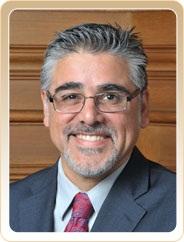
The San Francisco mayor’s race is taking a new twist: Sup. John Avalos — one of the best, most consistent and productive progressives on the board — is looking at running.


Avalos told me he wasn’t interested in the interim mayor job and “this was never on my mind when I ran for supervisor.” But the process of selecting an interim mayor and the politics of Sup. David Chiu’s re-election as board president left him deeply disturbed. “I was blown away by how the process was perverted into a backroom deal based on personal ambition,” he said. “The side of the progressive movement that’s about good government and transparency was lost.”


So he’s been meeting with potential supporters and discussing what an Avalos for Mayor campaign would look like.


Although he’s only been in office two years, Avaos has been Budget Committee chair and has a solid and impressive legislative record (the local hire law being his most recent accomplishment). He has as much experience as Matt Gonzalez did when he ran for mayor (and, obvioulsy, as much experience as Chiu, who is also running.)


He makes the case that the progressive movement is better off in the long term if there’s a strong progressive in the race: “If we don’t have someone running, we won’t do as well in district elections next time,” he said, noting that the progressive victories in 2000 and 2004 were helped by the energy generated by Tom Ammiano’s mayoral campaign in 1999 and the Gonzalez campaign in 2003.


Not everyone in progresive poltics agrees with that analysis; I’ve heard from a number of community leaders who question whether what everyone agrees would be a longshot mayoral campaign is the best use if prorogressive resources right now.
But Avalos, to his immense credit, isn’t going to do this on his own. “I don’t believe in just announcing one day,” he told me. “I’m going to talk to people, and if there’s enough support for me, fine, and if there isn’t, I won’t run.”


That’s a sharp contrast to Chris Daly, who has pretty much announced that if no other progressive runs, he will. And with all due respect to the former District 6 supervisor — who has done a tremendous amount of good for the city, and I mean that with all sincerity — Daly’s not the right person to carry the progressive standard in the November mayor’s race.

SFBG Radio: Obama is no Chicago politician

4

If Barack Obama has his roots in Chicago poltiics — where people play for keeps — why is he such a candyass who gets rolled by an orange-faced guy who’s half in the bag? Johnny Angel and Johny Venom discuss after the break.


ObamaCandyassOrRepublican by endorsements2010

Republicans favor unemployment

6

I like the chart that the Economic Policy Institute has put out on the value of spending vs. tax cuts, but one of the critical points is deep in the report: The GOP budget plans in Washington would lead to the loss of as many as 800,000 jobs in the next year.


Considering that business leaders and economists of all political stripes agree that the modest uptick in new jobs (about 210,000 in March) shows signs of a slow, fragile recovery, you’d think that the loss of four times that many jobs would be a matter of concern.


But no: public-sector jobs don’t count. 

SFBG Radio: Parents gone wild

3

In today’s episode, Johhny takes a break from budget politics to talk about crazy parents and youth sports. Imagine: Johnny Angel, peaceful soccer dad. Next, the minivan. Listen after the jump.

sfbgradio492011 by endorsements2010

American Idol: The Pia shocker

0

When I first saw that Jacob was in the bottom three, I wondered: Did the hard-core Christian vote fail to turn out in a crucial election? Did his on-camera (much hyped) decision to make a moral statement about Marvin Gaye (he refused to sing “Let’s Get it On” because he couldn’t do a song about people “doing the nasty”) make enough of us want to puke that his incredible singing talent was eclipsed?


No: He made it through. Which is fine; the guy can sing. My kids love him. I just hope he’s not a finalist; there’s enough religion on the airwaves as it is.


Now to the real scandal: Pia.


A couple of weeks ago, I was the one complaining about her being boring, and she clearly needs a new stylist; if she’d worn the Thursday outfit (whoa!) for the Wednesday performance, instead of those silly bloomers, she’d have won about 10 million more votes.


But still — she has an amazing voice, and this week’s “River Deep Mountain High” was a breakout performance.
J-Lo was in tears when Ryan announced the last results: Stephano, in, Pia out. Stephano? One of the weakest competitors? One of the two (along wth Paul) who everyone knows is on borrowed time?


I have to feel a little sorry for the guy — the audience bitterly booed when he was left standing. But he didn’t deserve to continue on, and she did, and the judges knew it and the audience knew it and you know it too. And now he can’t possibly succeed — everyone pissed about Pia will vote against him next week.


Next week’s losers: Paul (who mangled “Folsom Prison Blues”), Stefano (see above) and Haley (you can’t sing Janis Joplin with a stupid shit-earting grin on your face.)


You read it here first. I haven’t been right yet.

SFBG Radio: If the government shuts down

3

What will happen if the federal government shuts down, and 800,000 people lose their jobs, and basic services ground to a halt — and how long will this nasty game last? Johnny Angel and Johnny Venom discuss the implications after the jump.

sfbgradio462011 by endorsements2010

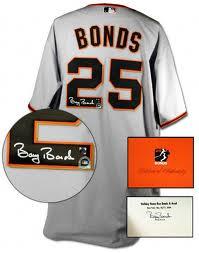
Barry Bonds trial: Why?

14

Can somebody pleae explain why the United States government is spending all this money trying to put someone in jail who is clearly no threat to society, already has had his career ruined (unlike the Wall Street guys who actually damaged the economy and got away not only without criminal charges but with increased riches) and at worst, lied about something that he knew would leak out?


Remember: Bonds was worried from the start that his grand jury testimony would not remain confidential. And it didn’t.


I don’t know. The case is weak, the prosecution is weak, I don’t care about the size of his testicles and this is all costing the taxpayers millions of dollars. Why can’t the U.S. attorney prosecute some real bad guys? How about investigating municipal corruption?


Okay, I’m done now.

Where’s Jerry Brown’s leverage?

17

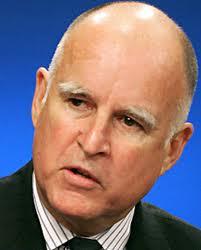
Jerry Brown’s travelling around the state, trying to get Republican voters to urge their legislators to go along with his budget plans. And he’s telling the harsh truth: If he’s forced to do an all-cuts budget, not just the poor but the middle class will get hammered. One of the most dramatic changes will be in higher education.


Brown says that if he has to make another $15 billion in cuts, the price of a year at UC will go up to $20,000. That’s going to price a lot of kids out of the college market and undermine one of the pillars of California society — the provison of affordable higher education for all. It will have another insidious impact: More kids will graduate deeper in debt — and will be unable to pursue public-interest occupations that don’t pay well.


Think about it: You graduate with $80,000 in debt, it’s much harder to work at a community-based nonprofit, or even as a teacher. God forbid you decide to go to law school or medical school; by the time you’re out, there’s no way you’re doing public interest law or working in a community clinic.


That, of course, is part of the hidden agenda here: The people who want tax cuts and small government also want to get rid of those pesky social change organizations and povery lawyers.


Here’s the odd thing, though, about Brown’s barnstorning tour:


He’s going into Republican districts — and threatening to do exactly what the Republicans in Sacramento want. They want an all-cuts budget, and they want a Democrat to have to take responsibility. So Brown what Brown is saying to the GOP legislators is: Do what I ask — or I’ll give you everything you want. Not exactly an offer they can’t refuse.


His big mistake was assuming that the Republicans would ever work with him. He should have started back in January with a signature drive to put an all-taxes (or mostly taxes) solution on the ballot. You want to block my half-cuts, half-taxes budget? Fine — I’ll give you a budget with no cuts at all. That’s how you deal with assholes.


And that’s why the Democrats need to be pushing their own ballot initiative(s) — now.

Editor’s notes

0

tredmond@sfbg.com

The American environmental movement emerged out of the late 1800s, when a few visionaries like Gifford Pinchot, John Muir, and Teddy Roosevelt decided that America’s mad rush to tame the wilderness and conquer the continent from sea to shining sea had gone too far. They weren’t always in synch, the early conservationists — Muir thought wilderness should be left alone, and Pinchot, the first director of the National Forest Service, thought forests should be managed to improve the lives of people. But the early battles all followed a basic underlying theme: it was about taking land out of private hands and putting it into the public sector.

They didn’t always talk about it that way, but when you follow the great philosophical and political arguments of the day, that’s what it came down to. The mining, logging, and ranching interests (and land speculators, like Pinchot’s father) wanted the federal government to keep its nose out of the great forests, plains, mountains, and deserts. Roosevelt realized that the only way the land would be preserved for future generations was to nationalize it — and he fought mightily to do it. (In 1907, Roosevelt designated 16 million acres of land as national forests minutes before Congress voted to suspend all future acquisitions.)

That’s something the modern environmental movement has lost sight of in the past couple of decades. Some major enviro groups in California supported energy deregulation in the 1990s, arguing that the private sector could do a better job of managing sustainable electricity generation (that worked out well). Respected green leaders like Adam Werbach argue that they can convince giant corporations to make the planet more sustainable. When you hear about solar energy projects at the governmental level these days, the discussion is all about public-private partnerships.

Now, I’m not going to argue that all business is evil, or that there’s no way to combine profit and environmental consciousness. But in the end, economist Robert Reich is correct: private corporations are accountable to their shareholders and the bottom line — not to the public good. That’s how it’s always going to be.

Which means that, in the end, saving the planet is going to be a public-sector responsibility. It’s going to be about strict regulations, about public control of essential resources, about changing the way we think about energy (it’s now a commodity to be sold instead of a public service), and about maintaining and increasing the amount of land that’s permanently owned and operated by the public.

That’s my message for Earth Day 2011.


SFBG Radio: Will Obama be re-elected?

4

Will Obama be re-elected in 2012? Will you want to work for him, or give him money, or vote for him? Johnny and Tim talk about the future of the president. Listen after the jump.


sfbgradio442011 by endorsements2010

Editor’s Notes

7

Tredmond@sfbg.com

The San Francisco City Planning Department is revising its housing plan, and there’s a lot of indignation on the west side of town. See, the Housing Element of the city’s General Plan calls for a little bit of increased density in some of the neighborhoods that have fought density for years.

The unwritten law of San Francisco housing politics is that you don’t even talk about density west of 19th Avenue, and it’s pretty hard to talk about it anywhere beyond the western borders of Districts 3, 5, 8 and 11. So all the new housing gets pushed into the eastern neighborhoods — and all the rational planning people agree that the other side of town should absorb at least some of it. Density doesn’t always mean big, tall buildings, by the way — legalizing in-law units would create more housing, and more density, in single-family-home areas. But you run into the problem of everyone wanting a car — and turning garages into apartments means more cars fighting for that almighty parking space. Housing cars in this town sometimes seems more important than housing people.

So we’re going to hear some squawking — and a lot of it’s going to be misplaced. Because the real issue in the Housing Element isn’t density — it’s affordability.

The city acknowledges, in its own documents, that based on local needs, more than 60 percent of the new housing in the city has to be available at below-market-rate prices. The planners also admit they have no idea how to make that happen:

“The city will not likely see the development 31,000 new units, particularly its affordability goals of creating over 12,000 units affordable to low and very low income levels projected by the [city’s needs assessment] … [But] realizing the city’s housing targets requires tremendous public and private financing, [which] given the state and local economy and private finance conditions, is not likely to be available during the period of this Housing Element.”

Translation: we can’t afford to do what everyone agrees we have to do.

San Francisco city planning has been driven for decades by the needs of the private sector. It’s made good money for the developers (building housing in SF is still highly lucrative). But as public policy, the model has failed.

Until we set clear policies saying that the needs of local residents come first — and that high-end housing isn’t meeting those needs — we’re going to keep living with a serious disconnect.

Animal instinct

0

PETS A pet-free existence — who needs it? Creature comfort can’t be underestimated, whether you’re ready for a one-time volunteer session, a casual relationship, or some long-term lovin’.


ADOPT AWAY

In this country of serious pet overpopulation, there’s no need to buy your next animal companion from a pet store. Whatever you’re looking for — cats, dogs, parakeets, rabbits, mice, rats, chickens, snakes, lizards, even chinchillas — the odds are good that some local shelter or rescue group will have one waiting to be adopted.

Animal advocates (and even some pet stores) urge seekers of furry, scaly, or feathered companions to think adoption first. “That’s been our message for years,” said Jennifer Scarlett, co-president of the San Francisco SPCA.

In most cases adopted pets work out better for the animal and the human, notes Deb Campbell, spokesperson for the city’s Animal Control Commission. “People who impulsively buy pets tend to have more problems,” she said.

In this city alone, there are too many unwanted dogs and cats — many the result of backyard breeders and owners who fail to get their animals spayed or neutered. And with the recession, more people have been forced to give up their pets. So adoptable creatures abound.

If dogs are your thing, the SPCA (www.sfspca.org) and the city shelter (www.animalshelter.sfgov.org) have dozens waiting for the right home. So do several local rescue groups. Wonder Dog Rescue (www.wonderdogrescue.org), Rocket Dog Rescue (www.rocketdogrescue.org), Family Dog Rescue (www.norcalfamilydogrescue.org), and Grateful Dogs Rescue (www.gratefuldogsrescue.org) all offer large and small pups of all ages and breeds for adoption— you can even snag a ex-racer from Golden State Greyhound Rescue (www.goldengreyhounds.com).

Many adoption programs are able to give you the lowdown on your prospective pet’s personality. “Our dogs all live in foster homes, so we have a real sense of what they’re like and how they interact,” says Wonder Dog’s Linda Beenau.

Muttville (www.muttville.org) specializes in placing older dogs. “With a senior dog, you know exactly what you’re going to get,” said Sherri Franklin, the group’s founder. “We evaluate the people who are looking to adopt, evaluate the dogs, and try to fill everyone’s need. We’re matchmakers.”

Shelters and rescue groups spend a lot of money making sure the animals they adopt out are in good medical condition (and won’t reproduce).

Cats are the most popular pets in the city, and the SPCA and the city shelter both offer cat adoptions. “We adopt out about 4,000 animals a year, and two-thirds are cats,” said Scarlett. There’s even a working-cat program for feral cats that may not be cuddly but can offer businesses an organic solution to rodent problems.

But the list doesn’t stop there. The city shelter “adopts out small exotic animals, fish, birds, poultry — you name it,” Campbell said. “It’s illegal to buy a rabbit in San Francisco, but you can adopt one from us.”

“Chickens are very popular pets these days,” she added. “They can give you breakfast.” (Tim Redmond)


FOSTER BLISS

We don’t know about you, but seeing precious pets cooped up in cramped shelter cages — well, it makes us knock over garbage cans, spray urine on an expensive sofa, and caterwaul at the moon. And this is a country that euthanizes between 50 percent and 70 percent of its shelter animals. Sorry to be a bummer. But you can help, even if you’re not ready for a 10-year commitment. Really — you can!

Fostering a pet serves a lot of purposes. First, for us flighty city creatures, it provides a low-commitment avenue to pet ownership. Second, to foster is to play a vital role in the shelter system. Many of the city’s smaller animal rescue organizations and humane societies couldn’t exist without a network of caring foster homes to nurture pets while their shelter facilities are full. And for some, saving animals from shelter euthanasia wouldn’t be possible without temporary homes.

“We’re a grassroots organization that doesn’t have a brick and mortar location besides our three adoption sites,” says Lana Bajsel of Give Me Shelter cat rescue, a group that typically cares for 54 cats at a time. “The fosters serve as our safety net. Their role is crucial.”

Cats and dogs aren’t the only cuddly creatures that can join your family for a short period of time. Wonder Cat (wondercatrescue.petfinder.com), Pets in Need (www.petsinneed.org), Furry Friends Rescue (www.furryfriendsrescue.org), and Rocket Dog Rescue do concentrate on dogs and cats, but you can also foster a rabbit through Save A Bunny (www.saveabunny.org) or birds through Mickaboo Companion Bird Rescue (www.mickaboo.org).

Foster systems provide a way for many shelters to save furry friends that are long-shot adoptees or would fare poorly in cages. The SPCA’s “fospice” program can match you with a chronically ill (but not contagious) pet that needs your love. As in most foster programs, the SPCA will pay for any medical care fospice animals need (although as a foster parent, you’re usually responsible for food and other daily needs).

Organizational requirements vary from group to group, but Bajsel says that most of the time all it takes to be a foster parent is a safe home (for example, no windows without screens that open onto busy streets), your landlord’s permission, and preferably, a little animal savvy. “But we’ve placed cats with fosters who have never had one before. In those cases, we can provide a little more hand holding” she says.

With such demonstrable need, most organizations will accept any help you can give — even if it means a little something before you leave on your summer vacation. It’s really contingent on you, the foster parent. “The time commitment can be as little as two weeks,” Bajsel says. (Caitlin Donohue)


VICARIOUS

Say your flea trap apartment or Scrooge-like landlord prohibits adopting or fostering — you can always volunteer at one of the many Bay Area organizations dedicated to animal welfare. Once you catch the scent of the needy pooches, cats, rats, and people dedicated to saving them, it’ll be tough not to volunteer.

Cat lovers will feel right at home at Give Me Shelter cat rescue, which can use your help with anything from petting a purr-er to cleaning cages to lending a hand at adoption events. If you’re more of a man’s best friend kind of gal or boy, lend a hand at one of the city’s incredible dog shelters. Muttville can hook you up with a variety of ways to get involved, including matching elderly dogs with lonely older folks as part of its heart-melting “seniors for seniors” program.

Rocket Dog Rescue is another all-breed dog rescue organization with a mission to save animals “at the speed of light.” Learn more at one of its volunteer orientations on second Sundays of the month.

Bad Rap (www.badrap.org) stands for Bay Area Dog Lovers Responsible About Pit Bulls, a group that’s serious about reeducating the public about pits, as well as getting perfectly adoptable pits placed with loving owners. Volunteers with the group will discover the secret world of big, barrel-headed sweethearts — and their ardent admirers. Bad Rap needs volunteers who can show up on Saturdays to train pits on leash skills at Berkeley Animal Care Service.

It doesn’t take an overly sappy soul to see the appeal in puppies and kitties, but can all our rodent people please stand up? Rattie Ratz (www.rattieratz.com) is a sweet-hearted organization in Woodside that rescues rats and treats these surprisingly amenable pets with respect. The group is all about rat rescue, resources, and referrals, and needs volunteers to help with animal therapy programs, adoption, fostering, and education.

Finally, we know that some of the sweetest creatures can’t be happily held — but they can still use your help! You can lend a hand at the Marine Mammal Center (www.marinemammalcenter.org) by getting trained to find and transport stranded animals and bring them to medical centers. Wild Care also (www.wildcarebayarea.org) has plenty of volunteer opportunities to help save Bay Area wildlife — it needs folks to work the hotline call center, do outreach education, and work directly with pet hospital staff. (Hannah Tepper)


A creative way out of the state budget mess

36

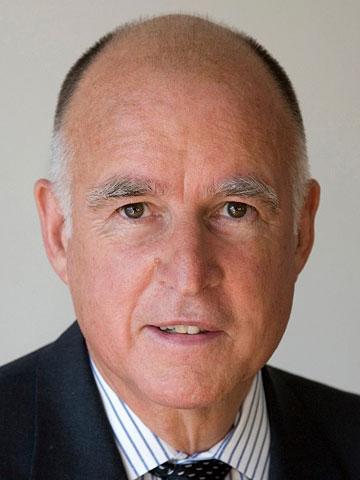
With no Republicans willing at this point to go along with the governor’s June election plans, Jerry Brown has quite the problem on his hands. There never really was a Plan B. And now he’s got to find one, fast. He’s already made the cuts, and they’re awful. He’s not going to get his own party to go along with much more. But it’s legally dubious whether he can put taxes on a special election ballot without any Republican support, and he clearly doesn’t want to.


So what’s the best option? Well, the deep thinkers over at CalBuzz have a brilliant scheme. The idea: Pass an all-cuts budget, a devastating, ugly, puke-inducing thing — then


gather signatures to place that on the November ballot, with a provision that if the measure fails the cuts will not occur because the 2009 taxes and fees will be re-instated for five years. As a practical matter, cuts can be delayed to occur after November. And costs can be shifted to local government for local responsibilities whether the measure wins or loses.


Then let Grover Norquist, Jon Fleischman, radio heads John and Ken and the rest of their not-our-problem cadre be forced to argue for the budget ballot measure while Democrats and labor argue against it.


It’s much easier to get a vote against something in California — particularly when that something contains provisions that nobody wants. A No vote means Yes on taxes and No on cuts.


Man, why aren’t these guys running for office?


Housing: Density and affordability

44

The way the Chron describes it, the debate over the city’s updated Housing Element is all about density. And that’s part of the issue, no doubt: For years, people on the west side of town have resisted any increased density, meaning all the new housing has to get crammed into the eastern neighborhoods. And increased density, on some level, is going to have to be part of the future in San Francisco.

But there’s another, more important, piece of the puzzle. The Housing Element draft acknowledges that, based on community needs, more than 60 percent of all new housing in San Francisco should be affordable — that is, below market rate. And the draft admits that’s not about to happen:

However, even with these strategies the City will not likely see the development 31,000 new units, particularly its affordability goals of creating over 12,000 units affordable to low and very low income levels projected by the RHNA.

In other words: Existing city policy is inadequate to meet the needs that the city formally agrees must drive public policy.

The Planning Department won’t come right out and say it, but the message is pretty clear: Our current planning and housing policy — driven primarily by the needs of the private sector — is not going to come remotely close to solving the housing crisis. Either San Francisco has to come up with a huge amount of public money — billions of dollars — to underwrite new affordable housing construction or there has to be a much greater requirement that private developers chip in.

Building market-rate condos in San Francisco is a lucrative business. It does nothing to meet the city’s needs. There’s a disconnect here, and until we resolve it, the affordable housing crisis will continue. 

American Idol, Motown edition

0

So Simon Cowell seems to think that the judges are too nice this year and there’s too much sappy drama. I’m with him on the second point, but a big difference this time around is that the talent is so consistently good, so much better than in the past, that there’s less reason to be harsh. That said, it is a bit of a lovefest and I do miss Simon.


On to the round of 11:


Jennifer’s got a shiny pink top on, which is fine, and her hair is much better, but my god, the makeup! The blue eyeshadow and pink blush makes her face look like a clown. Somebody backstage is out of control.


Steven has the best line of the night, as always. Ryan: “How did Motown affect you?” Steven: “It made me want to make out with girls.”


He’s also got the rock-performer ethos down. Casey does “I Heard It Through the Grapevine,” good job if a bit over the top, and Steven says: “Perfect pitch and perfect mix of crazy-ass out-of-control ego.” Ayup.


Thia’s dress looks like a wedding cake and her singing isn’t exceptional. The judges love Jacob, and so do Vivian and Michael; I’m not such a fan. Maybe it’s my bad attitude toward anything remotely religious; he always sounds like he’s singing in church. And I don’t like church. Not his fault; he’s doing well.


Lauren’s probably the best of the women, and “You Keep Me Hanging On” was just right for her. The zebra dress was a problem, though.


Stefano. White lounge-lizard jacket; on anyone else, it would be a joke. He actually pulls it off, and does a fine Lionel Richie “Hello.” Haley’s doing her best, and “You Really Got A Hold On Me” was adequate, but she’s just not up to the level of the others. And she shouldn’t wear hot pants. 


I was worried about Scotty doing Motown, but wow! He sings “For Once In My Life” with a country edge, and it’s awesome. Steven says he’s just like Glen Campbell, which is kind of insulting, but he’s the breakout artist of the show so far, the one who’s going to wind up with a recording contract win or lose.


There’s something weird about Pia. I mean, lots of women can be really sexy without being classically beautiful, but Pia manages to be drop-deal gorgeous — and not sexy at all. She has an amazing voice — maybe the best in the show — but she’s … boring. She just stands there and sings ballads. Not working for me.


Paul. “Tracks of My Tears,” with the guitar. Bad hair day. He sounds a little like Rod Stewart trying to do Smokey Robinson, but it’s such a good song and he sorta pulls it off.


Naima. I was worried about her. She needed a big hit — and she got it. “Dancing in the Streets” was perfect for her, and the African drums at the end let her show off her dance moves, which frankly are better than her singing. So she ought to survive this round.


James is the other guaranteed star. “Living for the City” isn’t an easy song, and he nails it. He’s going to the final round.


Tonight’s bottom three: Thia, Haley and Pia. But pretty soon, this is going to get tough.


SFBG Radio: Right-wing talk runs America

4

Why does a member of Congress from Virginia get away with something as stupid as a bill to put the words “In God We Trust” on every public school? It’s all about right-wing radio. Listen to Johnny expound after the jump. 

sfbgradio3232011 by endorsements2010

Editor’s Notes

2

tredmond@sfbg.com

Calling for painful spending cuts, it turns out, is the easy part. Calling for relatively painless tax increases requires real political courage.

— The New York Times, March 13

The Times is hardly a crazy socialist rag; it’s always been the voice of the establishment, more Democrat than Republican but never even close to radical. The Gray Lady certainly can’t be accused of fomenting class warfare.

But in a calm, measured tone this week, the paper made the exact point about New York State that some of us whose politics lean a bit more to the left have been making about San Francisco.

The governor of New York, Andrew Cuomo, has presented the state Legislature with an all-cuts budget. The Times suggests that the wealthier residents of the state should share just a small amount of the economic pain. Extending a surtax on high earners would be more than tolerable, the paper notes:

“A couple with $350,000 in taxable income would simply continue to pay an extra $3,500; a couple with taxable income of $1.5 million would continue to pay $31,800 more. Those payments would be more than offset by the federal tax breaks those same taxpayers got with the recent renewal of the Bush-era tax cuts.”

Of course, in New York, as here, those state tax payments are deductible from the already-too-low federal income taxes the rich are paying.

It’s too much to ask that the San Francisco Chronicle pick up that line; the Chron, out here on the Left Coast, is far more conservative than the stodgy old Times. But you’d think that in a city where Republican voter registration is below 10 percent, that local officials — including a mayor who calls himself “progressive” — would be able to go at least as far as a moderate national newspaper.

Because the argument is pretty simple and basic.

Cuts in public services fall hardest on the poor and middle class. Families that can afford to join a private club don’t have to worry when hours at the city pools are cut back; their kids learn to swim anyway. People with good health insurance can try to ignore the conditions at San Francisco General Hospital. Private school parents think the size of classrooms in the public schools isn’t a big factor in their lives.

But it all comes back to haunt us, every one of us, in this city. When the number of beds in General’s psych ward is cut from 80 to 20, more people with severe mental illness are out on the streets. Cutting public schools not only makes class divisions more deeply entrenched, it damages the city’s economy.

As the Times says, painful cuts are easy. Taxing the rich never seems to be on the table

Tiny city makes $250 mil from public power

10

I wasn’t paying much attention to the move by state Assembly Speaker John Perez to abolish the tiny town of Vernon, California — until I read the column in today’s Sacto Bee by Dan Walters. Walters thinks it’s all about money — Vernon’s got a lot, neighborhoring L.A., which wants to annex Vernon, needs it.


But here’s what’s so interesting:


Tiny Vernon generates a quarter-billion-dollar stream of revenue each year, much of it from city-owned electric, gas and water utilities.


Imagine: A town of 112 residents, with a daytime population of 50,000, gets $250 million a year from public power. And San Francisco, with a federal mandate for public power, doesn’t.


Any on the Budget Committee paying attention?


SFBG Radio: What if we stopped shopping?

83

Today, Johnny offers a fascinating idea. The GOP in Arizona has been forced to back down on some of its worst immigration policies — purely because of the economic impact. What if the 26 million or so American consumers who fall into the general category of the Left (and the anti-war Right) just stopped spending money on anything beyond essentials for one week — a boycott against the wars in Iraq and Afghanistan and in favor of taxes on the rich. Would it make anyone in Washington listen? You, of course, can listen all you want, after the jump.

sfbgradio3212011 by endorsements2010

Is the California GOP done?

16

The folks at CalBuzz — veteran political reporters who know their shit — thing the CAGOP is teetering on the brink of irrelevance:


Like a herd of wooly mammoths at the end of the Pleistocne epoch, the California Republican Party is on the verge of extinction.


It may still recover. The CRP has come back from near death before. And redistricting, alongside the top-two primary system may yet revive it. But judging from the infighting, narrow thinking and rigid ideological positioning on display at the party’s organizing convention last weekend in Sacramento, the signs are not good.


But that assumes that the party wants to recover, wants to be part of governing the state and actually has a plan to do that. Right now, Republicans in Sacramento are standing up and denouncing some of Gov. Brown’s proposed cuts — while refusing to even allow a public vote on extending taxes.


Over at Calitics, David Atkins suggests another perspective:


In reality, the GOP at a national and state level exists to 1) deliver money from the poor and middle class to the rich; and 2) feed enough red meat to their prejudiced and unthinking base to garner just enough votes to continue achieving objective #1. That’s pretty much it.


Right now, the GOP doesn’t actually need to win any of the statewide elections in order to accomplish those goals. Winning them would be helpful, but is ultimately unnecessary. Knowing that the chances of anyone overturning Prop 13 and the 2/3 requirement on revenues are slim to none, all they need is at least 1/3 of the members of just one of the statehouse chambers. To ram through all cuts budgets and destroy faith in government, they need do nothing more.


In fact:


There’s nothing that serves Republican interests at a state and national level more than to see California fiscally collapse. That means shock doctrine, a transfer of wealth from the middle class to the rich, an ability to end all state labor contracts in a way Governor Walker would only dream of, and ultimately the ability to crush the belief of the People in the power of their government to do good on their behalf.


I’m not sure everyone in the GOP thinks this way, but on a macro level, it certainly makes sense. That’s exactly what the Repubicans are doing in Congress — make it impossible for the Obama Administration to succeed, and you’ve done your job. It doesn’t hurt that Obama is allowing that to happen.


Brown continues to say that he doesn’t want to pull any legal chicanery, that he wants Republican support for his plan to but the tax extensions before the voters in June. But if this is the game they’re playing, he may have to reconsider.

If we hadn’t gone to war in Iraq

4

This is nothing new, but at a time when every state and local government is scrambling for spare change, it’s worth thinking about what what we could have done with the Iraq war money. For example:


We could have closed every single state’s FY2012 budget deficit—totaling nearly $112 billion — nearly seven times over. That means no protests in Wisconsin, no mass teacher firings, and no school closures.


And:


 We could have outfitted 31.2 million detached, single-family homes— about 45 percent of the detached, single-family homes in America—with solar paneling.


No more need for nuclear power plants.


Makes you want to cry.