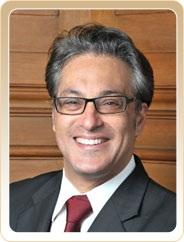
Tim Redmond

New comments policy

107

My friends on the politics blog:


We’ve been getting a lot of complaints about the tone of some of the comments here. We are all for vigorous debate, and we have no desire to censor anyone’s ideas. As you all know, you are free (in fact, encouraged) to disgree with what you see here, in the strongest terms. But of late, the nastiness quotient is driving some of our loyal readers away and discouraging others from joining the discussion.


We aren’t going to try to block anyone or force registration or do anything else that would discourage any of you from easily posting. But we are going to get a bit more aggressive about deleting comments that are nothing more than personal ad hominem attacks — mean-spirited stuff that is off point, does nothing for the issue debates and seeks to abuse or intimidate individuals.


You know who you are, and you know what I’m talking about.


I can’t promise that we’ll catch everything (we have a small staff), but if there’s anything in particular that bothers you that we missed, just let me know. Thanks.


Our new comments policy is here


Editor’s Notes

14

tredmond@sfbg.com

August is a bad time to split town. When I left for vacation a couple of weeks ago, Ed Lee was just starting to act like a candidate in a slow-developing mayor’s race. Nobody except my lunatic pal h. brown had any inkling that Public Defender Jeff Adachi would jump into the Room 200 sweepstakes at the last minute. And the Giants were three games up.

Now Lee is the clear front-runner, Adachi — a guy who defends criminals for a living — is the darling of a some anti-government conservatives, there are Avalos signs all over the Mission, and nobody knows exactly how to figure this all out.

Oh, and Arizona — which I hate (yeah, I hate the entire state, including the governor, the baseball team and the newspaper chain that’s based there) — is leading the National League West.

Welcome home, I guess.

The first thing I want to say about the mayor’s race is that none of this would be possible without ranked-choice voting and public financing. Think about it: Five serious Asian candidates, two of them leading in the polls and at least three of them real contenders — and nobody’s complaining that Adachi or Lee will “split” the Asian vote. If anything, several strong Asian candidates help each other; the supporters of Ed Lee and Leland Yee may be trashing the opposition day and night, but in the end, a lot of Chinese voters will probably still rank the incumbent mayor and the man who’s been elected citywide four times as two of their three choices.

And without public financing, the race would be dominated by one or two contenders — the ones who could privately raise $1 million or more to stay in the game. Instead, we have at least four and perhaps as many as five or six candidates who have a real chance of finishing on top. Already, the Chron and the Ex are complaining about the cost of public financing; the cost of closed elections where only those with big-business connections could win was much, much higher.

The other factor that will make this fascinating is that Lee’s job just got much, much harder. He’s not the amiable technocrat who comes to work early and gets the job done anymore; now he’s an ambitious pol who has never had to stand up to the heat of a tough campaign. He’s going to have to be a candidate, and campaign, and answer some hard questions about some of his political allies and supporters. That’s not the gig he wanted in February. And I don’t know how well he’s going to handle it.

The post-labor world

8

The engineers at Intel are thinking about the future, and they’ve hired sci-fi writers to help them imagine what the next few generations of chips will need to do. We’re talking about cars that drive themselves and space stations with AI — and, of course, about a future where robots do most of the work:


In one of the stories in “The Tomorrow Project,” a couple dash from Paris to the south coast of France to provide an injured relative with a blood transfusion. They travel in a car that navigates and drives itself. Medical information is wirelessly beamed to the vehicle’s dashboard and into mobile-phone-like ear studs. In another story, robotic automation has rendered jobs a thing of the past, and one human ponders what to do with his free time.


What to do with your free time. Imagine that.


Got me thinking about Player Piano, the first Vonnegut novel (and the first one I read, back in high school). In Vonnegut’s world, there are rich, educated people who control the machines — and then there’s everyone else, poor and frustrated and marginalized because there’s no meaningful work to do.


Seem familiar? Sound a little tiny bit like our jobless recovery?


Let me suggest something radical, something that a few futuristic writers have discussed but that’s no longer part of our national political consciousness. We may soon be heading for an economic system that involves massive structural unemployment. There may not be a need for as many human beings to do as much labor, particularly manual labor, as there has been in all of the history of civilization. That’s not necessarily a bad thing — but it will require us as a society to be willing, at a certain level, to divorce labor from income.


In other words, we’ll have to accept that the productive wealth of society will have to be distributed in part on the basis of need, not just on work. I know that sounds awful Marxist, but it’s also the only way a post-labor world can actually work. It’s that or massive starvation and global warfare.


This stuff wasn’t all that crazy a generation ago. In 1973, with Nixon in the White House, Daniel Patrick Moynihan wrote “The Politics of a Guaranteed National Income,” and he wasn’t remotely a commie. But with the “end of welfare as we know it” and the Reagan-Bush II tax cuts and the worship of wealth that passes for civil discourse in the United States today, it seems hard to imagine how anyone can talk seriously about giving people money — for the long term, for life — even if they aren’t employed in compensated labor as we know it today.


The dystopian novels like “Player Piano” assume that there’s some inherent value in labor — that people who can’t find meaningful work that requires skill and pride and offers the rewards of craftsmanship — will become morose and depressed. That’s only true if you assume that work and pay are connected in a 2011-style model. There’s plenty of good work to do in the world; shit, I could put 200 people to work today, researching and writing articles and reports that would add to the base of civic knowledge and do at least some good for the world. I just can’t afford to pay them. There’s so much else that the world needs — work that can only be done by humans and that will enrich us all, but that has no “value” in the modern economic paradigm. That is, it’s good work — and nobody will pay anyone to do it.


I’ll give you a good example: San Francisco alone could probably use 500 full-time people to take care of seniors. I don’t mean people with medical training; I mean people who can cook and clean — and, more important, sit around and talk to lonely single seniors, give them company, make their lives more full. There’s absolutely no economic model for that work right now — the seniors who need it can’t afford to pay for it, there’s nowhere near enough government money (thank you, tax cuts) and no conceivable private-sector role. Good, meaningful work that needs to be done. Lots of qualified people around with no jobs. No functional way to pair them.


Now, you ask me, we raise taxes profoundly on the wealthy and big business and create government jobs to do all the work that needs to be done. Redistribute enough wealth and create enough public-sector employment and we’ll be able to keep modern capitalism going for a while longer.


But we also need to start thinking about the post-labor world, about whether we want people to “ponder what to do with their free time” (which isn’t such an awful thing) and then think about good uses for that free time (acknowleging that there will always be some freeloaders who get money and don’t do jack shit for anyone) — or whether we want large number of people to starve in the streets because there’s no paying work.


When robots do the labor, who gets the paycheck? If it’s the small class of people who own all the robots, we’re looking at a pretty damn ugly future.

Warren Buffet’s money

10

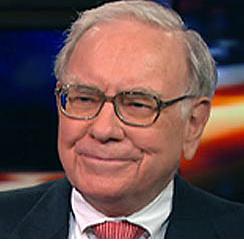
Just about everyone I know has been emailing and posting and talking about the Warren Buffett New York Times oped piece on the mega-rich (and I’m not alone — it’s the single most emailed piece on nytimes.com today). I appreciate what Buffett has to say; I’m glad he’s willing to point out that the “shared sacrifice” we’re hearing about from Washington doesn’t include any sacrifices at all from the people who can most afford to give up a little. But that’s not my favorite line; here’s the real crucial argument:


Back in the 1980s and 1990s, tax rates for the rich were far higher, and my percentage rate was in the middle of the pack. According to a theory I sometimes hear, I should have thrown a fit and refused to invest because of the elevated tax rates on capital gains and dividends.


I didn’t refuse, nor did others. I have worked with investors for 60 years and I have yet to see anyone — not even when capital gains rates were 39.9 percent in 1976-77 — shy away from a sensible investment because of the tax rate on the potential gain. People invest to make money, and potential taxes have never scared them off. And to those who argue that higher rates hurt job creation, I would note that a net of nearly 40 million jobs were added between 1980 and 2000. You know what’s happened since then: lower tax rates and far lower job creation.


Get it? Raising tax rates on investments and on the income of the very rich doesn’t impede job creation. RIch people don’t stop working or investing when they have to pay higher taxes. (And local business taxes don’t have a measurable impact on job creation or preservation in San Francisco.)


Here’s where Buffett’s argument bothers me: The guy’s got more money than he can ever spend. He’s going to give most of it away. If he really believes in what he wrote, why doesn’t he use some of that vast wealth to fund a campaign to educate American voters about the truth about taxes and jobs? Imagine what a billion dollars — a modest fraction of his wealth — could do to change the political dynamic in this country. Imagine a concerted advertising and PR campaign, similar to what the right wing has used over the years to promote its pro-corporate agenda, making the case that higher taxes on the rich are good for the economy, that government spending on job creation is a positive thing and that the central dynamic that dominates discussion in both parties is entirely wrong?


Warren: You can do it. I know there are plenty of great charities out there that can use your money, but that won’t change the world. This might.

City workers union backs Yee — and Avalos

18

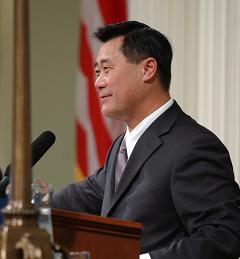
The press release I got from Leland Yee’s campaign made it sound as if Yee had won a major victory over progressive supervisor John Avalos:


SAN FRANCISCO – Senator Leland Yee has landed the first choice endorsement of the largest organization of city workers – Service Employees International Union (SEIU 1021) – in his campaign for San Francisco Mayor. The move by the 54,000 member union is a complete rejection of the city’s top official, interim Mayor Ed Lee.


The endorsement comes after Yee has landed virtually every major labor endorsement in the race, including the California Nurses Association, California School Employees Association, International Brotherhood of Electrical Workers, San Francisco Building and Construction Trades Council, Laborers International Union, United Brotherhood of Carpenters, Communication Workers of America, and the American Federation of State, County, and Municipal Employees, among others.


Yee has also been endorsed by the major environmental groups, including the Sierra Club and San Francisco Tomorrow.


“I am proud to be the labor candidate in this race and honored to receive the endorsement from SEIU 1021 and our city’s workforce, who run our city and provide us essential services,” said Yee. “SEIU 1021 represents some of our lowest paid and hardest working employees, including healthcare workers, nurses, and janitors. Together, we have fought to ensure greater transparency and accountability at City Hall and within state government. I look forward to working with SEIU as we move San Francisco forward.”


Local 1021 is among the most progressive unions in the city — and when it comes to local politics, one of the most effective. Candidates backed by 1021 get the union’s volunteer work and wealth of political organizing skill, and it can make a huge difference.


Avalos, the leading progressive in the race, would seem a natural for the SEIU nod, and at first glance, it appeared that one of labor’s best friends at City Hall had been stiffed. You don’t learn until the end of the Yee release what really happened:


SEIU 1021 also endorsed John Avalos as a first or second choice and Bevan Dufty as a third choice.


Yep — Yee didn’t win the endorsement outright. Local 1021 was split between Yee supporters and Avalos supporters, and wound up doing a dual endorsement. Here’s what the official 1021 statement says:


The delegates were in support of both Supervisor John Avalos and State Senator Leland Yee, both progressives with strong labor credentials and records, both having been in SEIU at one time, and both friends. The delegates reasoned that with so many candidates in the race, neither could win without the others second votes, so they made a dual endorsement of them, asking members and supporters to vote their choice of first or second between them.


Dufty came in third in part because he did (and does) really well in these kinds of interviews. Watch the candidates on the trail — Dufty is funny, relaxed, personable … the kind of guy you want to go have a beer with. The others often come off as stiff and scripted. That doesn’t mean I’m necessarily voting for Dufty, who has been on the wrong side of too many issues. But in a crowded field, his personality stands out.


What does this mean? It means that SEIU members can and will work for both Yee and Avalos, which is good news for Avalos and probably better news for Yee. The senator has been working hard to get as many Avalos/Yee dual endorsements or 1-2 endorsements as he can, since any apparent connection between the two helps Yee with the progressive vote. And while I understand and appreciate the rights of candidates to promote themselves and hype every endorsement they get in the best terms possible, this one was a bit misleading. 

Those crazy San Franciscans

63

Joe Eskenazi has an SF Weekly piece that pretty much repeats what he’s been saying for years: That San Francisco has too much government. This time he goes after all the boards, task forces and commissions — and yeah, there are a lot of them, and yeah, some of them might not be necessary. I could also argue, though, that San Francisco is one of the most politically active cities in the world, and that having a whole lot of ways for residents to plug in to what’s going on in their city isn’t a bad thing at all.


Whatever. Here’s the stuff that drives me nuts:


Last month, the volunteer body appointed by the Board of Supervisors advocated curtailing all pet sales in the city — including guppies, goldfish, and live rodents meant as snake food. Coming on the heels of a proposed criminalization of circumcision, San Francisco was, once again, reduced to an international punchline — many were left to wonder whether a ban on circumcising goldfish is our logical next step. Disbelieving articles poured in from around the globe. Perhaps none was as caustic as a piece in London‘s Telegraph titled “San Francisco goldfish ban exposes the pathology of America’s bourgeois liberal nutjobs.”


Ah, yes, Joe: Those crazy San Francisco liberals and their madcap ideas.


I’m not for banning pet sales (although I think banning puppy mills — also a wacky idea that came out of the Animal Control and Welfare Commission — is a fine thing). And I’m not for the circumcision ban (although, geez, it has lead to some interesting commentary that gives new meaning to the term “dick face.”)


But every time I hear somebody talk about how San Franciscans should stop it with the nutty ideas, I think about a few I’ve followed over the years — and how they’ve changed the way the entire nation thinks. Let me suggest a few for Eskanazi to look at:


“Those crazy San Franciscans don’t want to build freeways.” Yep — in the late 1950s and early 1960s, while the rest of the country (and in particular, California) was rushing to build freeways as fast as possible, people in this city decided to say No. The freeway revolt and the movement that grew out of it changed the way Americans view cities. Wacky shit.


“Those crazy San Franciscans think homosexuals should have the same rights as married people.” Yep, back in the 1970s San Franciscans started talking not only about nondiscrimination — they actually said that gay people who live together should have health insurance benefits. Imagine that.


“Those crazy San Franciscans think that women should make the same amount of money as men.” When then- Sup Nancy Walker introduced legislation in 1985 making “comparable worth” (the notion that men and women who do jobs that require comparable skills should be paid the same) it made headlines all over the country — and was universally derided by the same set that now complain about “liberal nutjobs.” It cost the city a lot of extra money (money that the Eskinazi crew of the day said was too much for a broke city) and led to all sorts of comments about social engineering. San Francisco was the first to push the issue, and it’s now considered mainstream employment policy.


“Those crazy San Franciscans think we ought to give bicycles the same rights as cars.” All the way back in the mid-1980s, bicycle advocates were talking about bike lanes, bike maps, bike racks and alternatives to the automobile. What were they drinking?


“Those crazy San Franciscans think that transgender people ought to get health benefits.” This was as recent as 1993 — and if you think circumcision and pets put SF in the right-wing-talk-show and late-night-comedy targets, imagine when the city decided “to use taxpayer dollars to fund sex-change operations,” as the detractors insisted. Guess what? It turned out to be a major step forward for transgender rights.


“Those crazy San Franciscans think gay people should be allowed to get married.” We did. We do. We were first. The rest of the country is following.


“Those crazy San Franciscans want to ban plastic bags.” We did. For good reason. So did L.A. In another few years, it will be national policy.


“Those crazy San Franciscans want to ban happy meals.” Guess what — McDonald’s got the message. 


I could list plenty more.


Yeah, we’re ahead of the curve. Yeah, sometimes our shit seems crazy. But it’s the crazy shit that makes the world change — and over time, the world catches up to San Francisco. And if we weren’t doing it, the world would get better just a little more slowly.


Guardian forum July 28: Immigration, education and youth

3

The next Guardian Forum on issues in the mayor’s race will take place Thursday, July, when we’ll be talking about immigration, education and youth issues. We’ve got a great panel lined up:


Sherilyn Adams, Larkin Street Youth Services
Angela Chan, Asian Law Caucus
David Campos, Supervisor, District 9
Mario Yedidia, Director, Youth Commission*
Pecolia Manigo, Coleman Advocates


(*for identification only)


It’s at the Bayanihan Community Center, 1010 Mission (at 6th), 6-8 p.m.


(Powell Street BART and MUNI 14, 19, 27, or 31)


As always, plenty of time for audience participation. Hopy you can make it.

The BART cover-up crumbles

8

Zusha Elinson at the Bay Citizen continues to do great work on the BART Police shooting, and today he’s got a scoop: The audio of the incident gave him the names of the officers involved. OF course, BART can’t confirm or deny anything, as is typical — but the fact that we now know that the shooter was James A. Crowell, who had been on the force for just 18 months, gives some further insight into what happened. I’ve argued for years that the BART Police lack the training and the experience to know when to use lethal force, and this “newbie,” as other officers called him perhaps reacted too quickly to a threat that could have been defused.


At any rate, the whole thing demonstrates a fundamental point of politics: Cover ups don’t work. Information gets out eventually, and the people who are trying to suppress it just look bad.

What will the judges do?

1

Presiding judge Katherine Feinstein is being forced to cut radically the Superior Court staff in the wake of more state budget cuts. It’s a serious problem — among other things, the cuts will allow landlords to evict tenants on a fast track, but won’t allow tenants to sue landlords on the same timeline. But the whole thing raises another interesting question: What are they going to do with all the judges?


San Francisco has 51 Superior Court judges — and if half the courtrooms are going to be essentially shut down, what will all those people do all day? You can’t run a courtroom without staff; at the very least, for any real judicial work to go forward, there has to be a court reporter to create a legal record. So a lot of the wheels of justice will simply grind to a halt.


You can’t lay off judges, of course — they’re elected officials. So they have to go to work every day and get paid. For what?


Well, I asked Ann Donlan, a spokesperson for Judge Feinstein (who, by the way, sounds just like her mother — it’s uncanny), she agreed it was an issue. “It will be Judge Feinstein’s job to keep them busy,” she said.


And no, they won’t be sitting around watching videos to learn about judicial demeanor.


For starters, 11 court commissioners who are getting laid off will have to be replaced — and that means full-on Superior Court judges will be handling drug court, the community justice center, even — yes — traffic court. This is typically stuff that’s considered below the pay grade of the men and women in black robes, but hey: Someone’s got to do it. “We may have to double up some judges in courtrooms,” Donlan said (and I wonder how that will work out).


Feinstein is hoping that the judges can spend a lot of time in chambers, trying to meet with litigants and settle cases. And I suspect some people (particularly plaintiffs) are going to be much more ready to settle, since it may be five or more years before a case can go to trial. Defendants, on the other hand, may be happy to wait it out; they get to keep their money for five years or more. So I don’t know how much settling is really going to go on.


I dunno; I bet someone’s going to making money selling golf shoes over at 400 McAllister.

Ed Lee is going to run

79

We might as well get used to it: Mayor Ed Lee is going to run in November.


It’s not just about getting his old job back. It’s about the fact that he’s starting to really like being mayor — and that his closest allies have made it clear to him that the choice is either him or State Sen. Leland Yee, and that they find Yee unacceptable.


Lee has been talking to all the people you would expect him to talk to over the past few days, my sources tell me, letting them know that he’s seriously considering it and looking for support. It’s a little late to be lining up big endorsements; a lot of people have already signed on with one of the other candidates. But he’ll be happy with co-endorsements and second-place endorsements — and given his connections, he’ll be able to raise substantial amounts of money quickly.


Oddly enough, if he gets in, the big loser won’t be Yee, who will go out and try to run a campaign as an independent outsider against the old machine (and who doens’t have to worry about offending Lee’s supporters, who dislike him anyway). And John Avalos will be running to the left of both of them. 

How to avoid smart meters

30

PG&E’s smart meters are coming to my Bernal Heights street — and I don’t want one. I’m not really that worried about getting zapped by radiation from the radio transmitter — the whole house is abuzz in wifi anyway. But it seems as if everyplace that the new meters have been installed, people are unhappy; bills go up at random, complaints aren’t answered etc. And honestly, I’m not sure I want PG&E to have such detailed information about my electricity use. Bottom line: I don’t trust PG&E. And I’d rather wait until the CPUC is done with its hearings on the matter and has issued some guidelines.


Okay, maybe I’m crazy. Maybe I ought to just accept that the private electric company is going to know every time I turn on a lightbulb. But for now, I’ll wait.


And there’s a way to get out of it. All you have to do is call 877-743-7378. It’s a 24-hour line. I was only on hold for about four minutes. I told the person I didn’t want a smart meter; she asked why, and I told her I didn’t trust PG&E. She told me I would be put on the delay list and no new meter would be installed until the CPUC issues new rules.


So I’m probably good for another year or two. 877-743-7378. Give it a try.


SFBG Radio: GOP tries to bankrupt the country

12

Today, Johnny talks to economist Johhny Venom about the debt limit, how the GOP is holding the country hostage and how it could cause severe, lasting damage to the American economy. Listen after the jump.


DebtDisaster by endorsements2010

The BART Police video raises new questions

12

BART, under public pressure, has finally released a video that shows part of the shooting of Charles Hill. Zusha Elinson of the Bay Citizen continues to do great work on this story (which the Chron didn’t even put on the front page). He’s got a good analysis, but after watching the video about 20 times, with as much stop action as my computer could give me, it seems pretty clear that:


1. The officers made no credible attempt to calm Hill down or de-escalate the situation. The shooting happens only 25 seconds after the cops arrived on the scene.


2. There’s no evidence on the video that Hill threw a bottle at the officers. It does appear that he threw what BART identifies as a four-inch knife, but it didn’t come anywhere close to the cop you can see in the video. And it appears, from my viewing (and Elinson’s) that the knife was thrown AFTER the shot was fired. Which could mean the guy was holding the knife and it flew out of his hands as he got hit — or it could mean that once he realized he was shot, he heaved it toward the officer.


3. Hill was not anywhere near close to the officer (and thus couldn’t have been credibly threatening to stab him) when the shot was fired.


As an aside: It’s clear that a knife can be a deadly weapon. A cop being attacked by a knife has the right to defend himself with lethal force. And a knife that it thrown with the right degree of skill and accuracy can be every bit as lethal as a bullet. But in this case, Hill was visibly intoxicated (which was why the cops were called in the first place). He may have been an expert knife-thrower (although it appears he wasn’t — the knife clattered away several feet from the officer). But I can tell you, because I’m into this sort of thing, that’s it’s very difficult to throw a knife well from even a few feet away. It takes years of practice to get good with a perfectly balanced knife, one that’s designed to be thrown. If the “four inch knife” Hall threw was a pocket knife or any kind of knife with a heavy handle, the difficulty would increase dramatically; those knives tend to travel in an unbalanced spin and wind up hitting the target handle-first (and thus fairly harmlessly). And I don’t know very many people who can throw any sort of knife with any degree of accuracy when they’re drunk.


Again: The cops had no way of knowning what this guy’s skill level was. He could have been a ninja assasin able to stick a dull pocket knife in someone’s heart from 50 feet away blind and dead drunk. I’m just saying: The level of threat here was a lot lower than, say, a man holding a guy, or a man holding a knife a foot away.


San Francisco cops are required to undergo training to deal with people who are mentally ill, unstable, drunk or on drugs. Part of that training involves trying to talk the person down, trying to avoid a situation where any sort of force is necessary. That clearly didn’t happen here.


One more note: When I was working on another BART shooting story years ago, I read a book on police use of force and it had an interesting comment. I quote from my prior story:


In Modern Police Firearms, a textbook on law-enforcement procedures, Professor Allen P. Bristow of California State University, Los Angeles, writes that deadly force should be used to stop a fleeing felon only when “he cannot be contained or captured” through other means. Further, Bristow notes, an officer considering deadly force should ask the following question:


“Is the crime this suspect is committing, or are the consequences of his possible escape, serious enough to justify my taking his life or endangering the lives of bystanders?”


 In this case, the guy wasn’t fleeing, but the question remains: Was his alleged crime serious enough to justify taking his life?


The (unsafe) UCSF shuttles

9

No question: The shuttles used by UCSF (which, is, forgodsake, a health-care organization) ought to have seat belts. So should school buses (actually, full-body restraints in school buses might not be such a bad idea. I want them in my car, too. Shut up and sit down, you little bastards — we’re driving here.) And the UCSF drivers should be more careful.


There are also other safety issues around those shuttles, though. Particularly when they pick up and drop off passengers on city streets.


The UCSF campuses have their own shuttle stops; the ones at Mission Bay are the same as any normal bus stops. But the shuttles don’t just stop on the campuses. They stop, among other places, at 16th and Mission — and typically they use the Muni stop.


Or sort of. Travel west on 16th St. any afternoon, and you’ll see this scene: A UCSF shuttle is halfway in and halfway out of the Muni stop. A Muni bus is stopped behind, unable to pull in. Cars are pulling around the bus and can’t see the (smaller) shuttle as it starts to pull out of the stop (and the bus starts to pull in). Traffic is all backed up waiting for this mess to clear — except for the drivers in a rush, who pull around (sometimes inching into the opposing lane of traffic), typically missing the shuttle bus by inches as it slides back onto the street.


And there are a lot of bicycle riders in the mix. It’s pretty much a bloody accident waiting to happen.


If UCSF gets to use Muni stops (nobody else can — nobody. Not the On Lok shuttle, not the private Genentech buses, not commercial tourist vehicles) then the university ought to pay the city a fee to make the stops big enough, then the drivers ought to be trained to pull forward all the way into the stop to let the Muni bus in behind (and so other cars can see them). And the Muni drivers and everyone else should be trained to treat the shuttles as part of the local transit system.


I get the need for the UCSF shuttles. Without them, all those doctors and medical students might be driving all over town between the campuses (although again: health-care organization. Bicycles are very healthy). But either they’re part of the city system and can use city facilities (properly) — or they aren’t, and they shouldn’t stop in the Muni zones.


Pet peeve of the week.   

Decide, Ed, Decide

23

So Ed Lee maybe, sorta is thinking he might want to consider running for mayor. He tells folks in the Mission that “I’ve made no decision yet.” He leaves the Chron with some pretty strong hints:


Asked if he would categorically rule out running in November, Lee sidestepped the question, saying he is proud of his achievements so far, including unanimous votes at the board this week on his budget and his pension reform plan, and has more goals to accomplish, like increasing the city’s workforce and affordable housing stock.


When a reporter noted to the mayor that his answer didn’t rule out running, Lee smiled and hopped into his car.


That alone is a clear and dramatic shift in his position. He told us back in February that running in November was out of the question:


Although rumors had been circulating that Lee might seek a full term, he told the Guardian he’s serious about serving as a caretaker mayor. “If I’m going to thrust all my energy into this, I don’t need to have to deal with … a campaign to run for mayor.”


So now he’s being coy — and that’s not an appealing position for a mayor who has made it his trademark to be honest and straightforward with people.


I know what’s happening: Some of his best friends and allies are terrified of the prospect of Mayor Leland Yee, and Yee appears to be the frontrunner — and so some powerful people are putting immense pressure on him to put aside his own desires and do what they think is best for the city (which means blocking Yee).


If Lee wants to run, that’s his choice. I know he said he wouldn’t, but times change and the situation changes and that’s why I was against the whole “caretaker” mayor thing in the first place. When you define someone as a caretaker who can’t run again, you deprive San Franciscans of the right to choose the next mayor. (I don’t like legislative term limits, either — same argument.)


But this dancing around and playing games is a bad thing. Run, Ed, Run, or Don’t, Ed, Don’t — but please: Decide, Ed, Decide. Now. Then you can start telling everyone the truth and we can believe it.


Editor’s notes

0

So now I’m really confused.

State Assemblymember Tom Ammiano met July 18 with representatives of BART and the BART Police (three BART lobbyists, a deputy chief, and a sergeant). He wanted to get some sense of what’s going on with the investigation into the Civic Center shooting. Ammiano had pushed last year for legislation forcing BART to create a civilian oversight agency for the cops; instead, BART created its own police auditor position.

Ammiano asked when BART would start releasing information, starting with the station video of the event, which ended with a homeless man dead on the platform. BART, Ammiano told me, said the whole thing had been turned over to the San Francisco Police Department.

But the SFPD Public Affairs Office tells me that it won’t release anything — that all information has to come from BART. Linton Johnson, BART’s public affairs person, tells me that it’s SFPD’s investigation and nothing will be forthcoming until SFPD turns its files over to the district attorney — but yes, even then, thanks to an interagency deal, all info will have to come from BART.

Round and round and round we spin. And nobody tells us anything.

There are some serious questions here. BART officials told Ammiano that Charles Hill, the dead man, was “armed with two knives and a bottle.” That’s the current narrative — that the guy was a mortal threat to the officers, who had the discretion to use lethal force.

Quintin Mecke, Ammiano’s press aide, asked the obvious question: Was Hill in fact wielding the weapons in a threatening way? Were the knives later found on his body? Did he throw the bottle or was it in his hand?

BART’s response: “They told me that was part of the investigation,” Mecke said.

As for the SFPD, Mecke said he’s been told that the investigation should be concluded in 45 days — which is crazy. I can’t imagine why it takes that long to review a police shooting that took place on a public train platform — and was recorded on video. “It is,” Mecke told me, “a stonewall all around.”

The good news is that BART now has an official police auditor. His name is Mark Smith. He has no staff at all, so he can’t investigate the case — but that’s okay, because the BART police are offering to help him.

For the record, I remain dubious.

Trash (summer) lit: Shut Your Eyes Tight

0

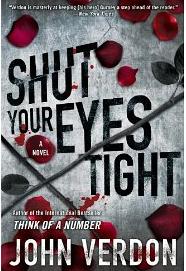
Shut Your Eyes Tight
By John Verdon
Crown, 509 pp, $24


Ever since Thomas Harris created Hannibal Lecter and James Patterson devised the twisted psychokillers who populate the Alex Cross novels, there’s been something of a drive in thriller lit to top even the worst, most grusome stuff imaginable. It’s the Pulp Fiction Syndrome in trash lit — and although Shut Your Eyes Tight is hardly the worst of the recent offerings, I was only about a third of the way through the book when I took out my notepad and wrote:


“This is some sick fucking shit.”


Yep: Ritual machete decapitations (including the bride at a society wedding). Headless body in a rich man’s freezer (below a hundred chickens and some broccoli). Doll equivalent of a horse’s head in a bed. Sexual sadists taking advantage of kids at a reform school for juvie sex offenders.


Oh, and our hero gets a roofie in his drink and gets blackmailed by a fake art patron with no real vowels in his name over (possible) unconsious underage sex. And the Sicilian mob is involved. And an obscure-Elizabethan-literary-reference murderer who cites the works of  Thomas (why should this not surpise me) Kyd.


Naturally, Dave Gurney, the reluctant former homicide detective caught in the middle of all of this, is having tortured relationship problems. It’s sort of a bloody Green Acres: His wife wants to live a nice peaceful life in the country, and he can’t stop himself from getting dragged into dangerous and horrifying crime investigations. In fact, for all the gore, the scenes with the wife are some of the most painful stuff in the book.


In this case, Gurney is called to help solve the wedding-day homicide, which the husband (a truly weird psychiatrist) wants to blame on the household help, in this case a young man who — according to the police — might have been having an affair with the late lamented, or might have been mad at her husband, or might just be a crazed killer who conveniently split town and can’t be found. But the facts don’t quite add up — and Gurney has to piss off not only all of the direct players but a crew of state cops who have bungled the preliminary investigation.


He follows the threads through a bizarre world of crooks, fashion models, child molesters, billionaires, and assorted upstate New York characters until he runs into the grisly world he retired to avoid. You can imagine how his wife feels.


Somehow, it all works as a perfectly adequate (if a bit too lenghty) beach book for the lovers of batshit psychos and the cops who chase them. It’s on my recommended list.

The Chron says “Ed, Don’t Run”

8

Interesting, the politics of the media and the mayor’s race. While the Chron is typically the downtown/conservative paper, and some of those same folks are pushing Mayor Ed Lee to run for another term, the Chron’s big editorial July 17th made the case against Run Ed Run. Why? Well, mostly because the mayor promised:


But there is an even more important reason Ed Lee should not run: He said he would not. … He also said he took the job with a “clear, basic understanding” that he would run the city for the final year of Gavin Newsom’s term with “no distractions.”


The Chron clearly likes Ed Lee, and projects that as a candidate, he would lose the good will he’s created as mayor:


One of the reasons the atmosphere at City Hall this year has been so calm – and the results so impressive – it that the self-effacing occupant of Room 200 has gone out of his way to be collaborative, and the good feeling has been reciprocated.


That dynamic would change in an instant if Lee joined nine very ambitious politicians in the race for mayor. He would be widely regarded as the front-runner and thus would become the No. 1 target of the other nine.


His opponents would include two key members of the Board of Supervisors: President David Chiu and progressive stalwart John Avalos. The chances of anything meaningful emerging out of City Hall for the remainder of the year would plummet.


I’m not sure that’s true, not with ranked-choice voting. Nobody would want to anger Lee or his supporters; they’d all be going for the Number Two votes. (All except Leland Yee. Lee’s biggest backers in Chinatown despise Yee; it would be hard to keep that one civil.) And I don’t think Lee’s personality would suddenly change the minute he entered the race.


It would mean that David Chiu and Dennis Herrera would start to drop in the polls, since at least some of their core supporters would move to Lee. The race would be defined (with some reason) at Yee v. Lee.


But I don’t think it’s going to happen. As long as the mayoral candidates agree to let Lee have his job back (and Yee would be crazy not to make that promise — the thought of Mayor Yee AND Lee having no job might be the kicker that would push Lee into the race), I think the caretaker mayor would be just as happy to bow out. And the more times he says he won’t do it, and the more times players like the Chron urge him not to (and make it about civility and honoring his word) the harder it will be to jump in at the last minute.


(Before all the trolls attack me: I’m not telling Lee not to run. I’ve said all along: I hated the idea of a “caretaker” mayor, and I think Lee has been a great improvement over Gavin Newsom. I just think if he wants to run, he shouldn’t wait until the last minute. And the last minute is getting closer all the time.)


Chiu blocks health-care bill (for now)

22

Sup. David Chiu has blocked a health-care reform bill from advancing to the full Board of Supervisors. And it’s particularly ironic since he’s a cosponsor of the measure.


The bill, by Sup. David Campos, is a key labor priority this year. It modifies the Healthy San Francisco program, which requires businesses with more than 20 employees to either offer health insurance, pay about $1.09 an hour into a fund for the city’s own health-care system, or set aside money to reimburse workers for health-care expenses. The last option is the least effective; asthe Chron points out


Part of the problem, said Matt Goldberg of the city’s labor office, is that some individual employers tailor their plans so restrictively that it’s difficult for workers to tap into their accounts. At some businesses, he said, employees can’t get reimbursed for such expenses as dental work and health insurance premiums.


The other part of the problem: Employers set aside the money, and at the end of the year, if the workers haven’t used it, they simply take it back. The payments (which, frankly, are an alternative to benefits that an employee would consider part of his or her compensation) don’t roll over to the next year. Campos wants to change that (and in the process, perhaps, discourage businesses from using the benefits-account option, which doesn’t work very well for employees). The bill would require businesses to make the money they put aside in one year available for the next year.


The Chamber of Commerce hates it, of course, but Campos had six co-sponsors. Until July 14.


At the Government Audit and Oversight Committee, Campos — the committtee chair — sought to get the bill approved and sent on to the full board. Committee member Mark Farrell, of course, opposes it, so the swing vote was the third committee member, Chiu — who, to the surprise of Campos, insisted on holding it in committee.


Chiu told me that he still supports the idea of the legislation, but thinks it needs a little more work, and that it’s better to amend bills in committee than send them on to the full board with changes pending. His main concern, he said, was potential job loss.


The city’s economist, Ted Egan, concluded that there could be job loss — but not really. What he said was that the city could expect 20,000 new jobs next year, and 15,000 the year after — but this legislation might mean a loss of as many as 400. So instead of 20,000 new jobs, SF might wind up with 19,600. Since the 20,000 is clearly an estimate, the actual impact seems pretty minor. Chiu told me that 400 jobs lost out of 700 businesses wasn’t minor — but the reality is that this isn’t a huge economic deal for the businesses. Just for the employees.


Campos said he thinks Chiu “wants to water it down.”


Henoted: “from a public policy standpoint, the Health Care Security law was designed to relieve the burden on the taxpayers of coveirng the costs of uninsured employees, who wind up at the public hospital emergency room.” He noted that the health care accounts, which can amount to about $4,000 a year, are of only limited use for a lot of people — “that doesn’t even cover one night in the hospital.” (Tell me about it — when I broke my hand, I wasn’t even in the hospital overnight, but I had two surgeries, one to put pins in the bone and one to take them out, and the cost, before my insurance payments, was close to $20,000. I’d still be typing with one hand if I didn’t have real insurance.)


“I don’t know what the hesitation is,” Campos said. “That money is for the workers, it belongs to the workers, and in some restaurants, customers are being asked to pay extra fees to cover the cost of healthcare that isn’t being provided. The businesses that play by the rules are at a competitive disadvantage.”


It takes four votes to pull a measure out of committee and bring it to the board. Campos so far has three — himself, John Avalos and Eric Mar. I’ll keep you posted. 



Republicans raise taxes

24

Nice piece in the Chron pointing out what a lot of us have been saying for years: The Republicans who hate taxes (on the rich) have actually forced state and local government to raise taxes (on the poor). How? By Calling those taxes “fees.”


When you hike Muni fares, you’re raising taxes on transit riders. When you hike tuition at UC and CSU, you’re raising taxes on college students and their families. And all of those are regressive taxes, hittin harder on the poor and middle class:


“In a crazy place like California, you look for strange and wonderful places to raise revenues – like higher fees for UC students and entrance fees for parks,” said John Ellwood, a professor of public policy at UC Berkeley’s Goldman School of Public Policy.


“We’re nickel-and-diming people because they’re unwilling to pay taxes,” Ellwood said, adding that Republicans are “claiming victory because they hate government.”


Yes, the size of the state government has been cut by 20 percent. But much of that was state funding that would have gone to counties — so now counties are raising taxes (on the poor and middle class) to keep the lights on. So we’re still paying — we’re just paying in a less efficient and less fair way.

By the way: A bill that would potentially change all that and allow counties to raise progressive taxes has passed the state Senate. But the author, Darrell Steinberg, hasn’t sent it over to the Assembly yet; it was caught in the budget limbo. But it’s crucial that local government gets this sort of authority. If you agree with me, you can call Steinberg’s office at (916) 651-4006. The bill is now known as SBX1 23.


Chris Cunnie running for sheriff?

65

It appears that the race for San Francisco sheriff is about to get more competitive: Chris Cunnie, the former Police Officers Association president, the former undersheriff and chief district attorney investigator is getting close to deciding to run, numerous sources tell me.


I haven’t been able to reach Cunnie directly, but he’s been calling around to local political types and talking about the race, and several people close to him say he’s about ready to make the jump.


Cunnie was widely expected to run when incument Mike Hennessey appointed him as undersheriff more than a year ago, but Cunnie left that job for personal reasons and appeared to have no interest in trying for the top position.


But he’s apparently changed his mind, and he would be the third candidate in the race and likely to get more traction than Paul Miyamoto, a captain in the Sheriff”s Department who has no prior political experience.


At this point, however, Hennessey has already endorsed Ross Mirkarimi, who is by any account the front-runner. He’s the only candidate with any electoral experience and he’ll have the progressives united behind his campaign. Cunnie’s time as the POA boss will hurt him on the left.


It’s not clear why Cunnie has decided to enter the race, but I think it’s safe to say that a lot of powerful people in this town are worried that Mirkarimi — a stalwart progressive who happens to have been very involved in law-enforcement issues — could wind up in a citywide office from which he might at some point seek to run for mayor. Cunnie would make it much safer for the more conservative types.


Where does Gavin Newsom vote?

23

Now that it’s pretty clear Gavin Newsom no longer has a residence in San Francisco, when is he going to change his voter registration? According to the San Francisco Department of Elections, there’s no statutory deadline; he can stay registered in San Francisco as long as he wants.

But he can’t vote here if he doesn’t live here — which means that if he wants to vote in the November election, he’s going to have to either (a) rent an apartment or buy another house in San Francisco that he can claim is his primary residence or (b) re-register as a resident of Marin County. As it is now, with no fixed place of abode in this city, he can’t come back and vote for the next mayor or sheriff or vote against the measure to change Care Not Cash. Because that would be voter fraud. And the lieutenant governor of California would never want to break the law.

SFBG Radio: Secession planning

0

Today we talk about whether it’s crazy for the southern part of the state to secede — and assorded other topics including the nation’s debt limit. Check it out after the jump. 


Heavyshit by endorsements2010

Human rights for felons

57

Matier and Ross have a way with making any story into something the national news media will use to say “only in San Francisco.” And here it is again; check out hte first paragraph of the July 13 item:


Ex-convicts may soon become a “protected class” in San Francisco – joining African Americans, Latinos, gays, transgender people, pregnant women and the disabled.


Right there in one sentence, everything Fox news loves to report: That crazy city that loves gays and trannies now wants to protect criminals.

And this is going to play out as an issue in the sheriff’s race, since Supervisor (and sheriff candidate) Ross Mirkarimi is the one carrying the legislation. You know, that crazy liberal — the guy who whant to give civil rights to ex-cons. I can see the ads now — if any of the other candidates decide to go negative on something that actually makes a lot of law-enforcement sense.

See, if people returning from prison can’t get a place to live or a job, they’re going to be homeless and back to a life of crime. Pretty basic math. And thanks to the governor’s realignment plan, a lot more prisoners are coming to San Francisco, and the next sheriff is going to have to make anti-recidivism programs a top priority. That’s really what this is.

And the fact that the district attorney and former police chief supports it was buried in the story.