steve@sfbg.com, rebeccab@sfbg.com, tredmond@sfbg.com
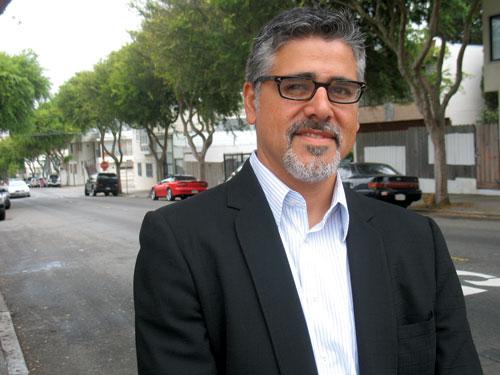
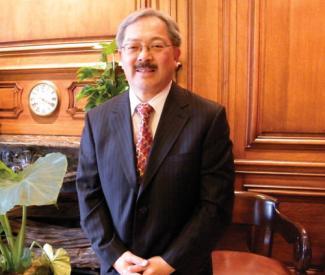
Of all the election night parties held in San Francisco Nov. 8, the two that most closely illustrated the city’s political divide were the ones hosted for the winner of the mayoral contest, Mayor Ed Lee, and for the progressive candidate who came in second, Sup. John Avalos.
Lee’s campaign held its own event at Tres, but the really eye-catching bash was thrown in his honor by former Mayor Willie Brown and billionaire tech investor Ron Conway in the decadent, high-ceilinged Garden Court of the prestigious Sheraton Palace Hotel. It attracted high-profile businesspeople, political operatives, tech executives, and celebrities.
Brown and influential Chinatown business consultant Rose Pak — both of whom played key roles in Lee’s appointment as interim mayor and his decision to run for office — attended the Palace event. Real-estate developers, public relations representatives, and others circulated around the room, sipping $17 martinis. MC Hammer, a legend of the 1990s who recently started his own search engine, hovered over his laptop onstage while a cluster of his fans tore up the dance floor.
When Lee arrived, he appeared with Brown, Hammer, and Conway, a Republican who spearheaded an independent expenditure committee (IE) to bolster Lee’s campaign. “He said San Franciscans have spoken,” Lee spokesperson Christine Falvey explained, summarizing the mayor’s comments, which were delivered before the Guardian arrived. “They like what they’ve seen in the last 10 months.”
When we approached Conway, he said he supported the mayor because “Ed Lee’s going to bring jobs to San Francisco.” Asked to comment on the influence of the independent expenditure committee he funded to alter the outcome of the race, Conway dismissed the question and repeated, “Ed Lee’s going to bring jobs to San Francisco.”
The Avalos event was at the jam-packed Roccapulco Supper Club in the Mission. The party drew a host of young, progressive supporters, many of whom are deeply engaged in social justice organizing, promoting workers’ rights, and protecting affordable housing. At least two bicycles were locked to every parking meter and street sign for more than a block in each direction, many sporting Avalos signs in the rims or attached to their frames.
There were live musical performances by The Bayonics and a mariachi band, plus rousing speeches cheering Avalos on as the peoples’ choice for mayor. Former Sup. Chris Daly was there, as was Sup. David Campos and a host of progressive movers and shakers.
Twitter updates offered snapshots of what was happening in the different venues. “This is how I’m doing it tonight! The ‘Too Legit To Quit’ Party! Ed Lee, Willie Brown & MC Hammer,” tweeted DJ MindMotion, who performed at Lee’s event. Later, he offered a few more updates. “Rocking with SF politicians! Getting my parking tickets cleared!” And a few minutes later, “I have a lot of parking tickets.”
At Roccapulco, Avalos’ wife Karen Zapata introduced her husband with a rallying cry for progressives to keep up the fight. She offered a long view of this struggle, a people’s movement battling for the city’s soul and future. If Ed Lee hangs on to win, she said, “We could be screwed unless we work together and organize…We have to stick together and we have to push from outside the system.”
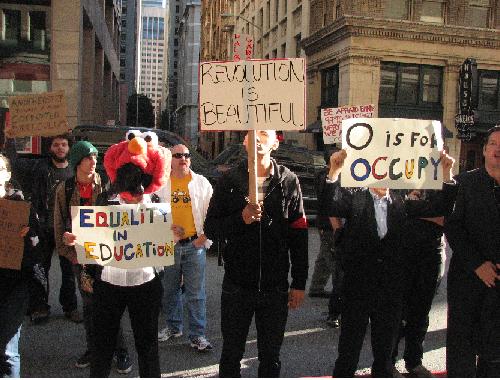
It was a theme and a feeling that would permeate the event, this sense that Avalos and the progressives enjoyed a resurgence in the last month thanks to what’s happening in the streets, both with this campaign and the OccupySF movement that Avalos has taken a lead role at City Hall in supporting. “We’ve got everyone here,” Avalos said when he took the mic. “Except for the 1 percent!”
They were at the Palace, celebrating with Ed Lee.
HOW LEE WON
Lee had the support of establishment politicians at every level. “He is my man. He’s genuine, he’s competent, he’s no flash in the pan,” Rep. Jackie Speier told us at district attorney candidate Sharmin Bock’s campaign party at Yoshi’s. “He’s going to put San Francisco first and check his ego at the door.”
Yet other politicians — even moderates like Sup. Scott Wiener, who supported Dennis Herrera — felt the outcome of the election was skewed by the advantage Lee enjoyed from incumbency that he attained under false pretenses and the huge spending on his behalf by outside groups.
“When you have that big a curve ball thrown three months before the elections, those are the dynamics,” Wiener said.
Part of Lee’s victory was due to turnout — heavy turnout in areas where he won, and low turnout in areas where he didn’t. There’s an important lesson for progressives here — Lee’s campaign (and the independent expenditure groups that supported him) spent considerable money and time on an absentee voter program and on GOTV.
The result: Avalos actually got more votes than Lee on election day — but Lee still came in far ahead, thanks to absentees.
Some of the absentee efforts created controversy and may have been illegal — videos taken by workers with Leland Yee’s campaign showed Lee backers helping voters in Chinatown fill out their ballots (using a stencil to make sure Lee’s name was properly marked) and collecting those ballots in a bag. And while District Attorney George Gascon has announced an investigation, it’s not likely much will come of it: The people caught on film were not senior campaign aides, and the effort was run by one of the Lee IEs.
At any rate, whatever the Lee supporters were doing, legal or not, it worked. An analysis of voting results shows that in Lee strongholds, far more than half the ballots cast were absentees. For example, in Chinatown, where Lee beat Avalos by a margin of more than 4-1, 4,200 of the 7,161 ballots cast — that’s 60 percent of the total — were vote by mail (VBM). In Bayview/Hunters Point, where Lee (with the strong backing of former Mayor Willie Brown) topped Avalos by a 3-1 margin, 64 percent of the turnout was VBM.
Avalos had almost twice as many votes as Lee in the Haight Ashbury, but turnout there was lower than usual — and only 34 percent was VBM. The same pattern appeared in the Mission and Bernal Heights.
Overall, Lee’s support was strong in most parts of the city — of the 26 neighborhoods identified by the Department of Elections, Lee beat Avalos in 18.
Leland Yee, who came in surprisingly low for an elected official who has held public office for more than 20 years and has been elected citywide several times, ran strongly only in the Sunset, the Richmond and the Excelsior. City Attorney Dennis Herrera demonstrated fairly broad-based (but more limited) support, running consistently in second or third place around the city and doing particularly well in the Marina and Upper Market/Castro. Board President David Chiu ran strongest in his district (Chinatown/North Beach), the Marina and the Sunset and Richmond.
And there’s no question that the Asian vote was critical to this race. For perhaps the first time in history, Asian voters turned out in heavy numbers and demonstrated that they are a major factor in San Francisco politics. Some of that was the presence of four major Asian candidates on the ballot, but a lot was due to the excitement of supporting the city’s first Chinese mayor.
“There are really two elections going on in San Francisco,” one longtime activist told us. “There’s the election in the Chinese community, and then there’s everywhere else.”
But Lee also won in the traditionally more conservative parts of town, beating out the other centrist candidates and even former Sup. (and conservative darling) Michela Alioto-Pier.
THE AVALOS FACTOR
Six months ago, when John Avalos first decided to get in the race, a lot of people (including some of his supporters) figured he was running primarily to get his issues out and make sure the progressive perspective was represented. He was up against three people who had won citywide races (Herrera, Yee, and Assessor-Recorder Phil Ting) as well as the president of the Board of Supervisors. Later, of course, the incumbent entered the contest. A first-term district supervisor didn’t seem that formidable.
But the Avalos campaign worked wonders, pulling together hundreds of volunteers, working precincts, getting out the progressive vote and giving tens of thousands of people a candidate to believe in. His strong second-place showing did two things: It demonstrated that the left vote in the city is still strong, and it established Avalos as a credible new leader of the progressive coalition, someone who was able to attract votes across the city and position himself for future runs for higher office.
While Avalos didn’t win any districts outside of the traditional progressive strongholds on the east side of town, he did surprisingly well citywide.
Even moderates like political consultant David Latterman praised the race Avalos ran. “Next to Ed Lee, Avalos had the most solid base in the city,” Latterman said at the San Francisco Planning and Urban Research Association’s regular post-election wrap-up. “With John Avalos, it’s fair to say he maxed out his base. He ran a positive campaign.”
Alex Clemens, the other political analyst at the SPUR event, agreed: “John Avalos cemented his base and they turned out.”
Election reform activist Steven Hill went even further, noting that Avalos picked up a significant number of second- and third-place votes to hang onto his solid second place standing throughout the ranked choice voting tabulations to finish with about 40 percent of the vote.
“What this election showed is John Avalos had a strong core, and then he broadened his appeal,” Hill said.
Contrary to characterizations that the outcome of this election represented a shift to the right, Latterman noted that voters sided with the endorsements of the Bay Guardian and other progressive entities on more of the ballot measures than they did with the San Francisco Chronicle and others entities to the right of the progressives. Voters aligned with Guardian endorsements on six of the eight measures (almost seven, given that Prop. H, the neighborhood schools measure, won by a fraction of a percentage point).
WHAT’S NEXT?
After Avalos spoke, Daly offered us some insights into a race whose outcome he predicted months ago, consistently telling skeptics that even though the power play that put Lee into office was all but assured of victory, he believed the progressive movement was still strong and that Avalos would place second, ahead of a large field of well-qualified candidates with high name recognition.
“We did as well as we could have,” Daly said, “because the whole thing was juiced from a year ago, with their dirty backroom deal at City Hall and all their dirty money.”
Daly said he saw a new political narrative beginning to take shape, one with the potential to revive the progressive movement in San Francisco. Infused with energy from the campaign volunteers and the rise of the Occupy movement, Daly said it was notable that Avalos got more election day votes than Lee.
“That momentum, we didn’t have it a month ago when the absentee ballots went out,” he said. So now what? “We just keep going. We now have a leader of the progressives in San Francisco and his name in John Avalos,” Daly said. “John has a broad, active base of appeal.”
Avalos echoed similar themes when we spoke on election night, emphasizing the importance of the long struggle of the progressive movement over whether he won the mayor’s race. When we asked him whether election night felt like a victory for him, Avalos replied, “I felt like it was a victory yesterday.”
“All I wanted is for people to be turned out big time for this campaign, and they did that,” Avalos said. “So now, we’ll see what’s next.”
Here’s what’s happening now: The Avalos campaign did, to a significant extent, what the mayoral campaigns for Tom Ammiano in 1999 and Matt Gonzalez in 2003 did — it got the progressives excited and brought a new generation of activists into the world of local electoral politics. As Avalos called up his key supporters to the stage at Roccapulco on election night, it was clear that a broader progressive coalition was forming, with new faces, young organizers, and people of color.
The left in this town has a long history of winning by losing: The Ammiano campaign created the movement that took back the Board of Supervisors a year later, and the Gonzalez campaign drew more activists into the movement. Gonzalez, of course, left office a year later — but Avalos shows no signs whatsoever of backing down from the leadership role he has created.
The other very good news for progressives is the victory of Ross Mirkarimi, who won the race for sheriff and became the first staunch progressive to win a citywide race in more than two decades. He is also positioned to take more of a leadership role, and possibly to run for the mayor’s office at some point down the road. Since there are no term limits for the sheriff, he doesn’t have to rush.
A DIVIDED CITY
One of the key decisions Lee now faces — and one that will define his administration — is choosing a replacement for Mirkarimi. District Five is probably the most progressive district in the city, one that voted overwhelmingly for Avalos. And while Lee will want a loyalist in that job, most of the people who are likely to be able to win an election in 2012 supported another candidate. If Lee puts someone who will vote with the centrists on the board in that seat, he — and his anointed supervisor — will take a big loss in the fall.
He will also have to deal with the city budget — and it won’t be easy. Nonprofits like the Tenderloin Housing Clinic, where he had strong support, are already clamoring for more money for raises for their underpaid staff who have effectively had pay freezes for the past four years. Prop. G, the sales tax measure that Lee was hoping would fill part of the revenue gap, went down in flames. And the big-money people who spent so much getting him elected are supporters of tax breaks for business, not tax increases on the wealthy.
He’ll have to figure out whether to join Avalos and support OccupySF — or join with the more conservative law-and-order types who want the encampment evicted. At press time, as police erected barricades around the encampment, it seemed like that decision was imminent.
And Lee will have to face the fact that, for all his talk about unity and consensus, this is a city deeply divided. There is a huge political and economic gap between the rich and the poor, the haves and the have-nots, the 99 percent and the 1 percent, the folks at the Palace Hotel with their limousines and $17 cocktails and the folks in the Mission with their bicycles and beer. Their interests are often directly and unalterably opposed — and on Nov. 8, the powers-that-be made it very clear whose side they think Mayor Ed Lee is on. Additional research by Nena Farrell