Tim Redmond

The 8 Washington disaster goes to Planning

100

The urban planning disaster that is 8 Washington goes before the San Francisco City Planning Commission March 8 amid a long list of questions — including Mayor Lee’s position on the project and how it could screw up the America’s Cup.

Developer Simon Snellgrove wants to build the most expensive condos in San Francisco history on the waterfront, 145 units that will be far out of reach to anyone who makes less than half a million dollars a year. And many of the units will require income far higher than that. It’s not just housing for the 1 percent; it’s housing for the top half of the 1 percent.

There’s no need for this kind of housing in SF; the very rich have no problem finding places to live. And the spot zoning violates every standard of good waterfront planning practice.

The project will benefit the Port of San Francisco, which stands to take a cut of the money since some of the project is on Port land. But more than half of the land is owned by Golden Gateway and is a former redevelopment area, so the supervisors and the Port are going to have to fight over who gets the property tax increments and how that’s all financed.

More interesting, 8 Washington will be a boon to Golden Gateway, which as the landowner is a partner in the deal. And Golden Gateway is one of those big properties that are paying far too little in city taxes. When the complex changed hands several years ago, the owners used a stock-swap deal to transfer it, avoiding the Prop. 13 reassessment that could have substantially raised its taxes. So the city’s losing millions of dollars — and now Timothy Foo, who is the principal owner of Golden Gateway, will be getting a nice favor from the city he’s been screwing.

Oh, and by the way — a lot of Golden Gateway units are being advertised as short-term (that is, hotel) rentals — something that violates at least the spirit of city law. This is an outfit that deserves special zoning treatement from San Francisco?

Then there’s the fact that this could be a serious problem for the big America’s Cup party. Project critic Brad Paul has been analyzing the impacts of the development, and noticed some new language in the comments and responses to the Environmental Impact Report suggesting that excavation could lead to something like 200 dump-truck trips a day along the Embarcadero — roughly one trip every two minutes. In an email to Paul, Paul Matltzer in the Planning Department confirmed that the likely construction process could, indeed, involve that many dump trucks, rumbling along the Embarcadero during the peak construction period, which will also be the peak period for America’s Cup tourism.

Dump trucks, Paul (who used to drive one) notes, start slowly and brake slowly. The Embarcadero is already crowded — and will be far more crowded during the Cup races, so much so that city officials are thinking of closing traffic lanes to all but bicyles and transit. How, exactly, will that work out with 200 trucks a day fighting for room?

I’ve called and emailed the America’s Cup people, but they haven’t gotten back to me. I’ll keep you posted.

Lee’s office hasn’t gotten back to me, either, but I’m hearing that the mayor is telling people he hasn’t made up his mind — on a project that’s a week away from the Planning Commission and that one of his close allies, Rose Pak, is strongly promoting.


The right to a civil lawyer

10

I like Sup. David Chiu’s idea of giving indigent plaintiffs in civil cases the right to a lawyer. It’s one of those legal and political issues that’s been hanging around for decades: Everyone accused of a crime has the Constitutional right to counsel, but if you’re sued and have no money, you could very well be  SOL.

Now, there are a few places that some people can get help — nonprofit legal groups that help seniors, tenants, and others, but there aren’t enough of those lawyers to meet the need, and some people don’t qualify for any of the available help. Under the law, a poor person who gets sued has no guaranteed right to any assistance at all, and can wind up representing him- or herself in court, even if he or she has no legal background or experience.

That’s one reason landlords tend to win eviction cases against low-income people: If the tenant can’t find free legal help, it’s high-priced landlord lawyer who knows all the tricks against poor tenant who has no idea how to respond to a summons and complaint.

The supervisors have approved Chiu’s resolution, which asserts than San Francisco is a “right to civil counsel” city, but there’s not a whole lot of money around to fund it. He’s asking for a modest pilot program costing no more than $100,000 and focusing on eviction defense, which is a great place to start. His idea is to get the big law firms in the city to help out — to devote some of their time and money to pro bono work in the city’s indigent civil defense program.

And some of them will, and that’s great. But what we really need is a funding source for this — and it seems to me that the lawyers of the city are a logical place to start.

Yes, there are unemployed lawyers and lawyers who barely make rent. But as a whole, the class of people licensed to practice law in San Francisco is better off than most of the rest of us. The state bar hits every lawyer up for about $400 a year to fund bar operations, and the interest that lawyers earn on client trust funds has to go to indigent legal defense.

So why not set up a San Francisco lawyer’s fee — say, $50 a year for everyone practicing in the city — to fund the city’s civil legal defense program? I don’t know exactly how many lawyers we have, and I can’t find anyone at the state bar who can answer that, but I’ve seen published reports in the past suggesting that the city has more lawyers per-capita than anywhere else except Washington, D.C. One story that ran years ago in the Examiner put it at one per 70 residents — which would mean more than 10,000 lawyers in the city. So a $50 fee would bring in half a million dollars –plenty to set up an office and hire a couple of lawyers and have a director who could spend time running down pro bono counsel to help.

I have no idea if the city can legally do that; I checked with the folks in the City Attorney’s Office, and they have no simple answer. So Chiu would have to request a legal opinion on the question.

But if it’s possible, it’s a great idea, and I suspect even most lawyers in the city would support it. 


UPDATE: The state bar folks pointed me to the right place on the bar website, and it turns out there are 17,000 lawyers in SF. That’s $850,000 a year.


Sorting out the America’s Cup re-do

8

I have to say this for Mayor Ed Lee: He’s not so stubborn or egotistical. He’s willing to listen. And when something really, really doesn’t make sense, he’s willing to let it slide.

Not like Gavin Newsom.

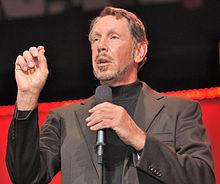
If Newsom were still the mayor (ick! gasp!), he’d be desperately trying to keep together the deal that gave five pieces of the waterfront to the sixth richest person on Earth for more than two-thirds of a century. He’d refuse to admit that maybe the promises of vast wealth accruing to the city from what’s really an untested event might be a little lower than projected. He’s be sucking up madly to Larry Ellison, promising him more and more city money if only His Larryness would bestow the greatness of his hotel, restaurant and condo manna upon us poor lowly San Franciscans.

The current mayor has a little more sense. But then, I don’t think Ed Lee spends much time dreaming about the Oval Office.

So now that Ellison’s team realized they weren’t going to be guaranteed enough of a profit on waterfront development and Lee realized that giving away any more of the store, or rushing this through any faster, was bad for the city, we have a deal that’s based on San Francisco hosting a sports event, not on extensive real-estate development on the waterfront. It’s better than it was, and I give the mayor credit for that.

But a few things are worth remembering:

The proverbial devil is in the proverbial details, and right now they aren’t so proverbial. There’s the minor matter of about $15 million worth of upgrades and repairs to the waterfront that’s needed for the race — and the city’s on the hook for it. Right now, it’s not clear where that money’s going to come from.

One option: The city could go back to giving Ellison some property or development rights. The Chron quotes Jennifer Matz, the mayor’s economic development director, saying that the rights to Seawall Lot 330 are still on the table (bad, bad idea). Stephanie Martin, spokesperson for Ellison’s operation, told me there are no long-term development plans included at all. Maybe the city will just pay cash from the General Fund to Ellison (seems unlikely; I’d love to watch that Budget and Finance Committee meeting.) Maybe the Port will sell revenue bonds and pay Ellison out of the projected new income from the event.

Or maybe some other deal that will be bad for the city and good for Larry will emerge, and we’ll all have to fight that one.

I realize that, if the attendance figures are anywhere near what’s projected, the city will still wind up millions of dollars to the good.

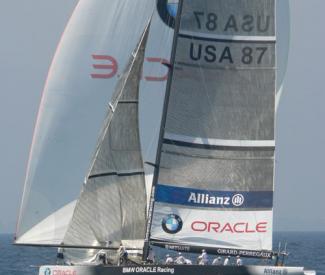
But I still don’t understand: Why are we paying Ellison to hold his race here? Yeah, it will bring tourists to the city — but as former Sup. Aaron Peskin points out, we don’t pay the Navy to bring Fleet Week and the Blue Angels to town. If anything, we should be charging these folks for the right to use so much public property for their own commercial gain. (Yes, the America’s Cup involves commercial gain. Ellison does it because he loves yacht racing and likes to win shit, but you don’t think that giant Oracle logo in 80 million pictures in newspapers and on TV isn’t worth a whole lot of money?)

Why isn’t a guy who counts as one of this generation’s great industrialists, with a fortune rivaling the Rockefellers and the Morgans and that gang, donating anything at all to San Francisco? Those old robber barons built libraries and museums and stuff for the benefit of the public. Come on, Larry — step up and help out here. Do the race, defend your Cup, then give something back to the city instead of asking the taxpayers to cover your tab.

PS: I read Randy Shaw’s attack (if that’s what this odd little piece was) on Aaron Peskin, and I wonder — what’s wrong with being a maverick who works from the outside to try to defend the city’s interests? I don’t always agree with Peskin (see: Home Depot) but I can tell you: There are a lot of people inside City Hall who are really, really happy that he’s out there doing what he’s doing. If nobody on the outside was taking on the America’s Cup deal, the city would absolutely be worse than it is. Peskin’s trying to save the city money. Why is that a bad thing?

Here’s what made me really laugh, though: Shaw criticizes Peskin for failing to support Malia Cohen and Jane Kim for supervisor, saying that he could have been mayor if he’d been working for candidates who ended up winning. Huh? Don’t progessives usuall go after pols who sell out their principles for political gain? If Peskin thought that Debra Walker and Tony Kelly would be better supervisors than Cohen and Kim, shouldn’t he be working for them instead of thinking about his own political future?

Odd where Randy Shaw is going these days.


Dramatic change in the America’s Cup deal

25

Mayor Ed Lee has announced dramatic changes in the deal for the America’s Cup race, essentially eliminating the massive real-estate development contract with Oracle CEO Larry Ellison.

Under the new agreement, the city will work with Ellison to host the race — but that’s about the beginning and the end of it.

“There is no long-term development,” Stepahnie Martin, spokesperson for the America’s Cup Event Authority, told me.

The previous deal, set for a Board of Supervisors vote Feb. 28, has been scrapped, so there won’t be any board action tomorrow, Judson True, an aide to Board President David Chiu, told me.

That deal would have given the world’s sixth richest person a swath of valuable waterfront property, with 66-year leases and development agreements, in exchange for Ellison investing millions in renovating the aging piers.

But criticism over what some called a huge giveway of public land was diverting discussion of the yacht race and threatened to undermine the city’s ability to serve as the venue host. Some supervisors were demanding more guarantees that the city wouldn’t lose money on the deal, and Ellison’s team was unwilling to budge.

In a Feb. 27 press release, Lee announced that the teams will be building a race village at Piers 27-29 and consolidating the boat launching facilities at Pier 80, on the southern waterfront. The race village will be temporary, and when the yachts leave, Ellison won’t have title to that property.

He won’t have title or development rights at Pier 80, either, and the plan to let him build on Piers 30-32, 26 and 28 as well as a lot across the Embarcadero appears to be dead.

So the America’s Cup is moving back to what it should be — a sporting event, a race on the Bay, and not some bloated development agreement that involves leases lasting more than half a century.

It’s still not clear how this happened — except that the numbers clearly weren’t working out for either side. The scaled-back agreement prevents the city from losing a fortune if the race doesn’t draw the anticipated crowds, and protects Ellison from losing money on waterfront development plans that regulators (including the Bay Conservation and Development Commission) might never have approved.

The city will still pay the ACEA about $16 million to fix a few things necessary to make the race work, and it’s not clear where that money will come from,

Aaron Peskin, a leading critic of the old deal, told me he’s cautiously optimistic. “It sounds promising, we’re getting this event down to the proper size,” Peskin said.

But he said that he hasn’t seen a written agreement “so it’s hard to tell what is and isn’t still in the deal.”

No mattter what the final agreement looks like, it’s clear that Ellison’s control of the future of the central waterfront has been radically reduced. And it’s clear that the deal former Mayor Gavin Newsom cut with Ellison wasn’t going to work for the city.

It also showed something that I’ve seen over and over again in these city deals with private parties: If the public refuses to go along, most of the time the Larry Ellisons of the world — the same people who insist they won’t move an inch and that the deal can’t be changed — will eventually back down.


Video admitted in Mirkarimi trial

90

A videotape and related statements that the prosecution said was critical to the domestic violence case against Sheriff Ross Mirkarimi will be admitted at a trial set to begin Feb. 28, Judge Garrett Wong has ruled.

The ruling allows prosecutors to show the roughly 50-second video in which Mirkarimi’s wife, Eliana Lopez, tearfully recounts the incident of New Years’s Eve, 2011 and shows a bruise on her arm.

“Without this evidence we have no legal recourse to completely move forward with this case,” prosecutor Elizabeth Aguilar-Tarchi told the judge, reflecting what observers have been saying for weeks: The case against the sheriff could hinge on how the trial judge interprets a complex part of the state’s Evidence Code.

At issue is whether a statement that would normally be excluded as hearsay can be allowed in court as a “spontaneous or excited utterance” — a statement made after a crime when a victim or witness hasn’t had time to reflect on the events or plan to fabricate or alter the story of what happened.

In this case, the video was made a day after the alleged violence, and Mirkarimi’s lawyer, Lidia Stiglich, argued that it was carefully scripted and staged for reasons that had little to do with Mirkarimi’s specific behavior the day before.

In fact, she said, Lopez and Ivory Madison, a neighbor who made the video, discussed how the information would only be used if Mirkarimi and Lopez divorced or had a custody fight over the couple’s two-year-old son, Theo.

Lopez was hardly still excited or emotional over the incident, Stiglich said: “There is evidence that Ms. Lopez went shopping, made phone calls, including two calls to Ms. Madison, and texted [Madison’s] husband.”

The video, Stiglich argued, “was the antithesis of a spontaneous statement” — it was made after Lopez had a day to calm down and was made specifically for evidence in a child-custody case, the attorney noted.

But Aguliar-Tarchi insisted that Lopez was sufficiently emotional that the time frame wasn’t the central issue — and Judge Wong agreed. “Time is a factor to consider, but not determinative,” he said from the bench. “What is crucial is the mental state of the speaker.”

The ruling complicates Mirkarimi’s defense: Photos released by the District Attorney’s Office from the video show a clearly upset Lopez showing the camera a bruise on her upper arm and saying that this wasn’t the first such incident.

If Wong hadn’t accepted the video, it’s likely that the District Attorney’s Office would have to drop the charges, since Lopez has refused to testify and the rest of the case is so thin and circumstantial that it would be hard to present it to a jury. “This is the focal point and crux of our case,” Aguilar-Tarchi said.

Now Mirkarimi will have to come up with a more compelling narrative as to why the story that his wife described to a camera wasn’t an accurate reflection of the facts. 

The ruling could certainly be grounds for appeal — based on the courtroom discussion, the video falls very close to the line in what can and can’t be admitted, and while the judge has broad discretion on these issues, criminal defendants have challenged such rulings in higher courts numerous times. But the jury — and the news media, and thus the public — will now be allowed to see what is by any definition a very damaging video that will hurt Mirkarimi’s political career, whatever the outcome of the trial.


What’s wrong with the America’s Cup deal? A lot

21

Let’s start out with a premise that even Larry Ellison’s minions have come to accept: The race is happening here. Too late now to move it to another city. Worst-case scenario, according to Stephen Barclay, the point person for the world’s sixth-richest man: “If we don’t meet those dates, the teams will be forced to relocate to other places around the bay.”

That’s right — the teams will relocate to other places around the bay. The host city will still, for all practical purposes, be San Francisco; the races will happen off SF’s waterfront (where the Coast Guard is willing to allow them and the conditions are right) and the rich tourists will stay here, not in Burlingame or Fremont.

If Ellison decides the city’s not giving him enough, he won’t put up $55 million to fix up some of the waterfront piers. The city may decide that a development deal of some sort with him makes economic sense. But it’s a real-estate deal at this point, not a deal for the race. At least, that’s what the Ellison team seems to be confirming.

And I fear that the real-estate deal that the Board of Supervisors Finance Committee sent forward yesterday, 2-1, is a bad deal for the city.

The terms are really complicated, and it makes my head hurt just trying to figure it all out — and still, the supes are expected to vote on the 120-plus-page document Feb. 28. Here’s what we do know, though:

The supervisors originally came to a deal with the America’s Cup Event Authority back in December. The concept was — and is — pretty straightforward, the same sort of deal the city has done (or, certainly, the Redevelopment Agency has done) many times in the past. In exchange for putting cash into renovating several piers, Ellison’s group would get long-term leases and development rights on the property. The idea: The city can’t afford to fix the piers. Ellison’s organization can. And once the property is renovated, the developer can make back that initial investment, and a profit, by building commercial space, condos and whatever else the Port decides to allow.

In a perfect world, San Francisco (and the state and the feds) would tax the hell out of people like Ellison, and there’d be public money to rebuild the waterfront as public open space, recreational facilities and the like. And wouldn’t that be utterly cool? Wouldn’t this city have the most awesome waterfront in the world?

But no: The only way the piers are going to anything but a place to park cars until they fall into the bay is if some private developer gets the rights to build something that I won’t like.

Supervisors Jane Kim and Mark Farrell, who don’t agree on a lot of things, both agreed with my basic analysis of the politics here: We shouldn’t let the excitement over the prospect of a boat race get in the way of analyzing this for what it is: A financing tool for the Port to get its infrastructure fixed up. Without a private investor, “they just don’t have the capacity to do that,” Kim told me.

So let’s just stipulate for a moment that this is the best, maybe the only way the city can restore the Port. Then it comes down to the real issue: Has the Mayor’s Office negotiated a good enough deal? Is San Francisco getting enough out of this? Or is everyone so hyper-buzzed about fancy carbon-fiber boats in the water (and I admit, they’re pretty cool) and free-spending tourists in the hotels and restaurants that we’re letting Mr. Ellison — who didn’t get so stinky rich by being a weak negotiator — walk away with most of the cookies?

Remember: Ellison’s not doing the city any favors. He’s only fixing up the piers that he will effectively own (as least for most of the rest of this century).

Back in December, the rough outlines looked like this: A corporation set up by Oracle, called the America’s Cup Event Authority, would put $55 million into repairing and renovating piers, then would get  66-year leases and development rights on piers 30-32, 26 and 28, as well as seawall lot 330, across the Embarcadero, which Ellison’s team wants to turn into more condos for rich people. If that’s not enough to pay for Ellison’s investment, Ellison’s heirs or successors get half the rent for the piers for another 15 years. That’s 81 years.

The original deal mandated that the city would collect a 1 percent fee on the re-sale of the new condos. It also had a requirement that Ellison share with the city any profits he made by flipping the long-term leases.

That’s a big deal, because almost nobody in the city actually holds onto development entitlements anymore. A developer wins the right to build an office building — and next week, he or she sells that right to somebody else. It’s almost certain that at some point, Ellison — whose sole goal here is going to be making a profit off city land — will decide that the best way to make money is to cash out. He’ll keep his 66-year leases for a few years, maybe lobby his way to approvals for office, condos, time-shares (gasp! yeah, they’ll do that if it’s legal) restaurants or whatever — then sell the remaining time on the leases, plus the development rights, to somebody else. And because he’s Larry Ellison, he’ll wind up making a nice tidy profit.

That used to be what happened with Port property (see: Pier 39) but lately, the Port’s gotten a bit wiser and has, in some cases, insisted that part of the profit from flipping a lease goes back to the city. In the original discussions, Ellison was going to have to pay the Port 15 percent of any net gains he made from the almost inevitable sale of the valuable leases.

But that’s gone now. After the board approved Newsom’s deal, the former mayor — who was always terrible at negotiation with the rich and powerful and always gave away the store — went back and monkeyed around with it. He and Sup. David Chiu insisted that the changes were just technical, not substantive enough to require a new board vote — but the current deal has no 15 percent cut for the Port, and the 1 percent levy on condo sales only applies after the second owner sells — which will be years down the road.

Then there’s the part where the city has to reimburse Ellison if the cost of renovating the piers exceeds what’s expected (oh, and we have to pay him 11 percent interest, which is about ten times what I get on my bank account; how about you?) There’s no cap on what the city might have to pay. And Ellison gets to develop a new marina.

And while Pier 29 is no longer a part of the deal, the city has to give Ellison $12 million — or rights to a pier to be named later. (Maybe Ellison figures that in a few years the people who opposed Pier 29 development will be out of office and he can convince the new mayor and supervisors to give Pier 29 back. It’s not legally excluded.)

Kim told me she’s going to insist that the final deal include a local-hire provision, which the rest of the board would be crazy not to support (and which Ellison, despite his company’s problems with local labor laws in the past, would be crazy not to accept).

But overall, Kim — who with Sup. Carmen Chu was part of the 2-1 majority sending the package to the full board — told me she thought the city got a good deal. “It took me a while,” she said. “But [Port Director] Monique Moyer convinced me that this was good for them.”

Sup. John Avalos, the dissenting vote on the Finance Committee, isn’t convinced. He’s got a long list of concerns, starting with the fact that he thinks the projected attendance and economic benefits are a bit delusional. “The figures seem farfetched,” he told me. “I’m seeing a lot of pumped up numbers. And those numbers drive whether this is a good deal for the city or not.”

He’d like to see the 1 percent rule apply to the second condo sale, not the third. He’d like to see the Port get 15 percent of the profits from any sale. And he’d like a cap on the reimbursements the city has to give to Ellison.

But here’s the problem: When the development agreement comes before the board, sitting as a Committee of the Whole Feb. 28, it will be hard to put any of that back in the agreement. This is a contract, and while the board can pass a resolution asking for more, in the end, it’s a matter of voting it up or down.

Vote yes and it’s done — more or less as is — although Kim says there will be another chance to make changes down the road, since the board and the Planning Commission will have to sign off on whatever type of development Ellison wants to do. The problem with that scenario? Ellison’s lawyers will wave this development agreement around like a Giants victory towel and proclaim that it binds the city and limits any ability to demand any more changes later. That’s how these people operate.)

Vote no and the ball goes back to Larry’s Court: His group can sit down with the Mayor’s Office and make some changes, or they can walk away (and build their boat sheds in …. where? Oakland? Foster City? Who’s got waterfront that can handle this?)

When the Finance Committee send the package to the full board, Avalos said, “we pretty much lost our ability to influence the agreement. Now we have to decide if we want to call [Ellison’s] bluff.”

PS: One of the lingering issues is whether the America’s Cup Organizing Committee can raise the $30 million-odd that is needed to make the numbers pencil out. If I were a rich person and Mark Buell, the ACOC point person, called me for money, here’s what I’d say:

How much is Larry Ellison contributing?

See, Ellison’s improvements on the waterfront aren’t charity. He’s looking to make a buck off everything he does. In past eras, the great robber baron capitalists would donate civic monuments — libraries and museums and stuff — and by any traditional standard of great wealth, Ellison ought to be writing a personal check for that $30 million. Or at least for some of it.

But so far, he hasn’t given a penny. The sixth richest man in the world isn’t actually donating anything to San Francisco. Yeah, he’s gracing us with his lordly presence, but cash? Nada.

Good luck with that one, Mark.

PPS: This whole concept that the city needs to fix the “crumbling” piers ought to be examined. First of all, nobody’s ever said that Pier 29 was in anything but fine shape. But beyond that, the Bay Conservation and Development Commission considers piers to be bay fill, and in the long term, wants San Francisco to get rid of some of them. “Maybe it’s a good thing if some of the piers fall into the bay,” former Sup. Aaron Peskin told me. “Then we’ll have more leeway with BCDC when we want to fix up some of the others.”

Research assistance by Royce Kurmelovs

The ‘ruination’ of Peter Gleick

27

Oooh, sfgate has dropped climate scientist Peter Gleick’s column on the City Brights section of the site. Harsh, man; I guess that’s enough to “damage, if not ruin” the reputation of one of the world’s leading authorities on climate change. Fired by City Brights; I bet he feels as if he’s been unfriended by Garrison Keillor.

I continue to be amazed at the ethics of the San Francisco Chronicle, which can’t tolerate Gleick but still allows Willie Brown to write a column in the news section of the paper.

And I’m amazed at all the handwringing over this incident. I means, what, exactly did Gleick do that is going to destory his scientific reputation after years of unimpeachable work? Here’s what he did: He contacted the nuts at the Heartland Institute and asked them to send him some material. Oh, and he didn’t give his real name.

It doesn’t appear that he broke into the Heartland office, or hacked into the Heartland server, or went in under false pretenses and made a bogus video. In fact, I’d argue that, whatever the Chron’s legal sources say, it’s pretty hard to call this “stealing.”

Look, if my phone rang and the person on the line said his name was Warren Buffet and he asked me to send him confidential Guardian business information because he was thinking about investing $1 billion in the alternative press, I’d make a coupla phone calls first — wouldn’t you? If I ran a right-wing nonprofit and somebody called and said she was a board member and could you please send a package of sensitive internal documents to an address in Oakland, California, I’d call back at the number I had for her and ask if she’d move to crazyland — wouldn’t you? Who on Earth sends that kind of material out without making sure it’s going where it’s supposed to go — unless the vast majority of what Heartland sent Gleick was in fact the same sort of stuff that the loonies there regularly ship out to other loonies who they think might agree that Al Gore was born a thetan and is secretly plotting the United Nations takeover of the planet so that nobody can have round light bulbs any more.

I’m not condoning this sort of behavior — although the history of journalism (sometimes excellent, important journalism) is filled with examples of reporters using what some would call dubious methods to get through what Robert Scheer used to call “the palace guard.” But compared to shit the right wing pulls routinely, as a matter of practice, this is hardly a major crime. And you have to put some of the blame on whatever fool at the Heartland Institute mailed the company secrets off without checking where they were going.

And isn’t it good that we now know how the oil industry is trying to create a K-12 curriculum that denies climate change?


Editor’s Notes

1

“San Francisco’s economy is moving in the right direction,” Mayor Ed Lee told the Examiner last week. “My economic development and job creation policies are setting San Francisco on a path toward economic recovery.”

The normally modest mayor is making a rather sweeping statement there — the US economy is improving in general, and I don’t think the mayor can take credit for all of it. But he’s absolutely correct that he’s promoted policies that are aimed at bringing more tech companies in to San Francisco, and over the next few years, they will no doubt create a lot of high-paid jobs for people with specific skills that require a high degree of training and education.

Is that “the right direction” for the city? I lived here the last time that San Francisco was part of a tech boom, and I’m not so sure.

See, bringing all sorts of new wealth into town sounds good on the surface, and for some people — particularly real-estate speculators, landlords and purveyors of high-end services — it is. But in a city that has limited space and nearly unlimited demand for housing, lots of new rich people and lots of high-paid people looking for places to live puts pressure on the existing residents, particularly the poor and the working class. It screws the middle class, too — if you’re a teacher or a nurse and you want to buy a house in San Francisco during a boom, you’re S.O.L. You can barely afford to rent — and if you’re already renting, you’re constantly at risk of losing your home, and your ability to live in this city, because your landlord can make more money kicking you out and selling the place as a tenancy in common to someone with more money.

There’s no way to build enough new affordable rental housing, or housing that middle-class families can buy, to keep up with the demand. It’s impossible. Developers won’t do that — there’s too much money to be made in high-end housing for anyone in the private marketplace to waste time on anything else.

The only way to preserve the middle class in the upcoming boom that Lee is promoting is to aggressively protect existing rental housing stock — which means preventing condo conversions and TICs and the stuff that gets promoted as “middle-class housing.” The only way to prevent massive displacement of people and existing businesses is to regulate space in the city more tightly than anyone has ever done — which will, by its nature, make it harder for the newcomers and new millionaires to find places to live.

That’s the tradeoff. That’s the fact that Lee and his allies don’t seem to want to grasp

GOP race is all about poo-poo

1

And you thought it was all about birth control.

Can anybody seriously say that all the reporters and editors who write these stories and headlines about Santorum surging from the bottom and Santorum surging from behind don’t know what they’re doing?

Can anybody seriously say that the gooey brown liquid that the esteemed senator is getting sprayed with in this new ad doesn’t look just like the stuff on the spreading Santorum website?

And is there really a new defintion for the word “Romney?

I’m afraid it’s all rolling downhill from here.

Is SF’s DA investigating Rose Pak?

18

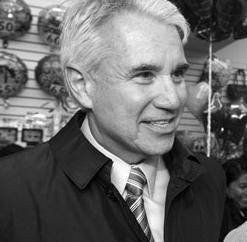
Well, Ms. Pak thinks he is. At the Chinese New Year parade, where she wields the mic at the reviewing stand and typically makes nasty comments about local politicians, she was relatively muted this year –– except when D.A. George Gascon rode by. “I read in the blogs that you’re still investigating me,” she shouted. “What the hell did I do? I just elected the first Chinese American mayor. You will find nothing, except that I swear a lot.”

Gascon has for more than four months been investigating irregularities in the Ed Lee campaign, including charges of illegal campaign contributions and voter fraud. Gascon’s office issued a press release Feb. 14 announcing the indictments of Go Lorries and two of its senior employees. The airport shuttle outfit allegedly laundered campaign money by asking its employees each to donate the maxium $500 to Lee’s campaign and then paying them back from company funds. From the release:

The defendants are accused of making an unlawful $11,500 campaign contribution from GO Lorrie’s to the Ed Lee campaign by passing it through GO Lorrie’s drivers and staff. … “Campaign finance and disclosure laws help to ensure fairness and transparency in our elections,” said District Attorney George Gascón, “and my office takes the violation of these laws very seriously.  After a thorough investigation, we have found clear evidence to charge Go Lorrie’s and two of its employees with making illegal campaign contributions.”

Nobody from the Lee campaign has been charged with anything.

So what about the other apparent violations? Is that still under investigation? Is Rose Pak a target? I asked Stephanie Ong Stillman, Gascon’s spokesperson, and she told me that she can’t confirm or deny that there’s any further investigations under way or that any specific individual is under investigation.

So I’m glad to see the Go Lorries indictment, which marks a rare instance of somebody taking campaign laws seriously. But there’s a lot more here, and I hope Gascon doesn’t think that nailing one company that everyone will insist acted on its own with no support from or connection to a pretty darn sleazy campaign will end the controversy.


Why is this not a structural budget deficit?

30

The economy’s improving. Tax revenue is up. So why is the city still facing a budget deficit of more than $200 million? Easy: San Francisco has, and will continue to have, a structural budget deficit. The amount of money that comes in from taxes in all but an unusual boom year isn’t enough to cover the cost of providing the services the city has taken on. Some of those services are things that the state and feds used to provide. Some are things that San Francisco does because it’s a decent and humane city. All of those things cost money, and our tax base doesn’t generate enough to pay for them.

It’s easy to blame the problem, as the Examiner does, on “employee costs.” But city employees have already taken significant pay cuts and layoffs. The pension-reform plan passed last year reduced costs further. The reality is that the city has never taken seriously the need to raise enough revenue to cover its operating costs. That’s why we see headlines like this every single year, and it’s not going to change.

And that’s why city officials who deny that there’s a structural problem are kidding themselves.

By the way: The economy’s improving around the nation. It’s not just because of Ed Lee.

The Obama budget, beyond the politics

3

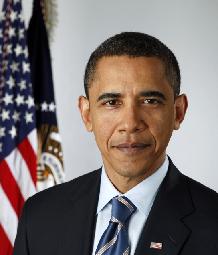
Man, the way the president’s talking it sounds as if he’s appointed the General Assembly of OccupySF to write his budget plans. He’s going to make everyone pay a fair share of taxes. He’s going to invest in affordable higher education. He’s going to spend $350 billion on jobs programs. Just about everyone in the news media is calling it a “populist budget.

I love the politics. It’s the year Occupy will dominate the national political debate, and for Obama to decide that he wants to hitch his wagon to the tax-the-rich star can only be a positive development. Washington is listening, and is starting to talk. We’re making progress.

But we haven’t made that much. Because the actual Obama budget isn’t such a radical departure from what he and his predecessors have been doing for years: Spending far too much on the military, cutting tax rates for high incomes and leaving largely intact the class divide.

There’s a good NYT analysis here but you have to go through it carefully. Here’s what our populist leader wants to do:

1. He’s going to spend $613.9 billion on the military, more than most other departments combined. When you add in the $64 billion we’re spending to clean up the human costs of former wars (which isn’t enough) and the $40 billion we’re spending on Homeland Security, that’s a big, big number. Yeah, it’s about 2 percent less than last year. It’s still far too large, dwarfing all other federal spending. And we’re supposed to be winding down wars.

2. He’s not going to raise the marginal tax rate on the rich. In fact, he’s talking about lowering it. That’s crazy, that’s criminal, that’s a recipe for continued deficits and increased wealth disparity. All he’s proposing is to raise the tax rate on stock dividends — yeah, that’s something that mostly benefits the wealthy (although also some middle-class retired people), but it’s a tiny fraction of the money that would be available if the top bracket was raised just a little bit. His goal for new taxes? About $20 billion a year. Peanuts.

3. He’s not investing heavily in critical transportation priorities like high-speed rail. The funding for the transpo system of the nation’s future: $47 billion over six years. That’s less than $8 billion a year, which won’t build much track. His annual commitment to a project that would create tens of thousands of jobs and go a long way to end fossil-fuel reliance? About what the Pentagon will spend every four days. Whoopee.

So while I get the rhetoric, and it demonstrates that he’s going to make a few nods to the left during the campaign, I wouldn’t get too excited about this budget. It’s really business as usual.


Missed the state Dem party convention? No worries

3

I missed the state Democratic Party convention, too — had the kids all weekend while the partner was partying in Vegas. But that’s OK — lots of other people were there, and while the MSM mostly missed what was going on, the bloggers had it covered.

If you want the live blow-byblow and some excellent post-prandial analysis, CalBuzz had the scoop. Mostly: Jerry Brown was acting like, well, Jerry, and ducking the major issue of the competing tax measures. John Burton said fuck a lot. Kamala Harris had the best speech (and is already positioning herself to run for guv or maybe senate, maybe against Gavin Newsom, who was working every room).

If you want all the drama around the Howard Berman v. Brad Sherman battle, John Meyers of KQED has the story and the audio.

If you want to know — suprise, surprise — how the Old Guard in the party (once again) screwed the grassroots activists and kept an iron fist of control over the outcome of some of the key votes, Paul Hogart tells the sad, predictable tale here and Brian Leubitz at Calitics has an overview here.

And if you’ve read all of that and still need to know more about the insides of the San Diego Convention Center, then you’re a sicker soul than I.

Trash Lit: The Expats (almost) lives up to the hype

0

There’s an awful lot of hype around this first novel by Chris Pavone. John Grisham compares it to the early works of Ken Follett, Frederick Forsyth, and Robert Ludlum. The folks at Crown publishing think this is going to be the Next Big Thing in the thriller world. And since I’m such a huge fan of overhyped authors, I decided I’d pour a nice glass of Buffalo Trace and read the first 20 pages.

I have a William Shakespeare theory about thrillers. The way my English Lit professor in college used to tell it, Willie played to a tough room: The theater-goers in 16th Century London got bored fast, and they brought rotten vegetables, and it wasn’t pleasant up there on stage if the plot started to drag. So there’s always action in the Bard’s first scene or two.

I read a lot of thrillers and I drink fast, so if I can’t get past the first couple of chapters, I’m done. Saves a lot of time.

I got past the start of The Expats and kept going; it became hard to put down.

Grisham is wrong: It’s not a lot like the work of Robert Ludlum or Frederick Forsyth — but I can live with that. The world only needed one Ludlum; you like his style, have at it — he wrote 25 books.

Pavone is different, in an odd way more polished. The Expats is as much a novel about a woman trying to balance a job, a husband and kids as it is a spy thriller. And while there’s a little too much Mr. and Mrs. Smith going on, it’s really a pretty fun read.

You get fake passports, big money and a gun just a few pages in. Then you get the more mundane story of Kate giving up her job as a run-of-the-mill government analyst (read: deadly killer spy) to move with her husband to Luxembourg, where he’s got a job doing computer security for a bank.

Except, of course, that’s not what he’s really doing. And the nice expat couple that happens to befriend Kate and hubby might be CIA assassins coming to take out Kate for her past indescretions, or they might by FBI agents trying to frame hubby for something that he might or might not be doing, or they might be something else altogether. But nobody is telling the truth about anything. And Kate is bored taking care of the kids and the house, so she has to become a secret agent again to find out what’s going on.

There’s a great section about what it means to quit your job so you have more time to spend with the kids and then discover that you can’t stand being a full-time parent. There’s a Paris nightclub with naked people and random sex and violence. There’s wierd almost-sex with the hubby’s new best bud who is supposed to be married but really wants to fuck her. She has to fend him off, spy on hubby, spy on the neighbors, lie to everyone involved and still get home in time for dinner.

Unusually literary for a thriller. The flashbacks got tiring after a while, but overall, it works. Put it on the spring list.


Would Sept. elections be better than RCV?

25

A proposal by Supervisors Sean Elsbernd and Mark Farrell to end San Francisco’s experiment with Ranked Choice Voting will come before the board Feb. 14, and RCV suporters are organizing to fight it. According to an email I just got from Steve Hill, one of the leaders in the RCV movement, “the vote is going to be close.”

The first version of the Elsbernd-Farrell legislation would have returned the city to the pre-RCV situation — the general election for city offices would take place in November, and runoffs in any race where nobody got a majority (almost every contested city race these days) would take place in December. 

The December turnout in Board of Supervisors races was always way lower that the turnout in the November election (although that hasn’t always been the case in mayoral races — more people voted in the Matt Gonzalez-Gavin Newsom runoff than voted in that year’s general election).

But the two conservative supervisors have backed off that plan and replaced it with another one: The first election (in effect, the primary) would be held in September, with the runoff in November.

Some years, that would be three elections in the city in five months — the normal June state election, a September city election, and a November general election.

I realize that a lot of people, including some of my friends on the left, aren’t thrilled with RCV. If the mayor’s race had a runoff, it would have been a head-to-head contest between Ed Lee and Dennis Herrera, and that would have been fun. (Where would David Chiu, who got stabbed in the back by Lee and who criticized him during the general election, have gone in the runoff? What about Leland Yee?)

But I have to say, a September election seems like a really terrible idea. When are the candidates going to campaign — during August, when about half of the city is out of town? Would the candidates all have to trek out to Burning Man? (You can’t send direct mail flyers to the playa.) Maybe you hold the election late in September — but then the absentee ballots would arrive when, over Labor Day weekend? Talk about low turnout.

The whole idea of RCV was to get more people involved in electing their representatives at City Hall. You can talk about whether it helps the left or the right or incumbents or whatever, but it’s really all about turnout. One election: More people vote. Two elections: Fewer people vote. September election: Very few people vote.

Then in November, when the turnout is highest, the choice will be lowest, because the candidates who did well in the low-turnout election (typically the more conservative candidates) will be the only ones on the ballot.

On balance, I’m sticking with RCV — but if you have to change it, why not make the primary election in June? There’s already a June election in even-numbered years, it’s no added expense — and there’s the additional value of forcing candidates for mayor and supervisor to declare their intentions and get in the race early on. No more Ed Lee August surprise.

I asked Elsbernd about it and he told me that New York City holds its primary in September, and that’s an effective model. And, he pointed out, there’s no June primary in the odd-numbered years, when the mayor, sheriff, city attorney, treasurer and public defender are on the ballot.

True — but if you’re going to have a special municipal election anyway, June makes more sense to me. People are used to voting in June. I worry about September.

Larry Ellison won’t miss $22 million

52

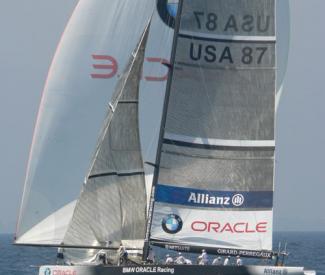
If the America’s Cup fundraising committee can’t come up with $32 million, the city’s going to be on the hook for a big chunk of change — as much as $22 million — budget analyst Harvey Rose says. Just for the record, I’d like to point out that the America’s Cup won’t just be an economic bonanza for the city (if it in fact turns out to attract a lot of people) — it will be a huge advertising and public-relations boon for Oracle Corp, which will have its singature logo and the sail of its boat. Larry Ellison, who will be helping skipper the boat, will be all over the news. You won’t be able to read a newspaper or watch the TV news or read anything online about the cup race without seeing the Oracle logo. You can’t buy that kind of exposure for any level of money.

And as far as I know, Ellison hasn’t contribute a dime to this fundraising committee.

For the record — and I’m pretty sure I have the math right — $22 million would be less than one tenth of one percent of Ellison’s net worth.

Larry, for god’s sake: Write out a check.

Wiener wants a sunshine audit

44

Sup. Scott Wiener is calling for an audit of the costs of complying with the city’s Sunshine Ordinance — a move that could lead to some great ideas for better public access to records or to a dangerous attack on one of the city’s most important local laws.

I first learned about Wiener’s proposal from the Petrelis Files, which posted Wiener’s letter asking the ciyt’s budget analyst to determine how much each city department spends annually complying with the law, including staff time. That could turn out to be a fairly big number, the sort of thing that will make Matier and Ross and lead to headlines about a few crazy sunshine activists costing the taxpayers millions.

There will be a lot less discussion about the cost to the city and the taxpayers of government secrecy, which Wiener agrees is substantial but can’t be quantified.

Wiener told me he thinks the Sunshine Ordinance is important — “its value goes without saying.” He also said the Sunshine Ordinance Task Force is “poorly run and inefficient.” Wiener, who has been the subject of a sunshine complaint that wound up with the Task Force finding him in violation of the law, said city employees often have to spend hours and hours waiting at Task Force meetings. “They’re collecting overtime and sitting there waiting for their case to be called for five, six, seven hours,” he said. “Then it’s my understanding that sometimes the case doesn’t even get called.”

I called Rick Knee, who has been on the Task Force for many years, and he told me he agreed that there were probably some inefficiencies. But he said that in the past year, there’s been a huge backlog of complaints.

“Maybe that’s because of increased public awareness of the Task Force and the ordinance,” he said. “But I think there’s also an increase in sunshine problems.” Why? Well, for one thing, the Ethics Commission — which has enforcement power — almost never acts on Task Force findings. “The word has gotten out at City Hall that you can violate the sunshine law and skate,” Knee told me.

As for city employees having to wait around all day? “What about the people whose rights have been violated? They have to wait, too, and they aren’t even getting paid.”

No matter what Wiener’s survey finds, it’s pretty clear that the Task Force has saved both the city and the public money by resolving a lot of cases outside of court. Without the Task Force, the only recourse sunshine complainants have is to sue — which costs everyone involved a lot more than a few hours in a hearing room.

I’m not going to argue that the Task Force always operates with maximum efficiency or that there aren’t ways to make the hearings easier on both complainants and respondents. But there’s a much easier solution for everyone involved:

Make it easier to get public records in the first place.

I’ve been reporting on San Francisco City Hall for a long, long time, and I can tell you that, more often than not, it’s difficult and frustrating to get access to even basic records that ought to be handed over instantly. Why waste all of our time? Why not just make every document created by any city employee immediately available in an online database? Easy to do, cheap to do — and simple to check a box that would keep those very, very few records that truly ought to be confidential out of the public eye.

Wiener agreed there was merit to that suggestion, and I hope his audit looks beyond the dollars and cents of city workers complying with a city law and looks at the reason we have all these problems. The best way to save money on sunshine fights is not to force the public to fight to get access to information.


WTF, Debra Saunders?

12

I really, really can’t figure out what the Chron’s only local editorial page columnist, the conservative Debra Saunders, is trying to say. If I read her Feb. 8 column right, she’s opposing the Appeals Court ruling on same-sex marriage — and she seems to be saying that Mayor Gavin Newsom was wrong to allow gay marriages and that the whole matter ought to be decided by a statewide vote:

When the California Supreme Court ruled in favor of same-sex marriage, Newsom stood on the steps of City Hall crowing, “It’s going to happen – whether you like it or not.” Newsom didn’t bother trying to win Californians over to his cause. He figured the courts would impose same-sex marriage on them. And then voters don’t have to like it.

Again — I don’t get it. By the tone of her column, you could almost get the impression that she’s against same-sex marriage. At the very least, she doesn’t seem to fathom that some basic civil and human rights aren’t and never have been subject to the will of the voters. If you asked the voters in Topeka, Kansas in 1954 whether the local schools should be forcibly desegregated, I think it’s a good bet that segregation and racism would have won at the ballot box. Is she trying to argue against Brown v. Board of Education?

I wrote her an email and asked her to explain — really, Debra, I want to understand, but I’m baffled — and I gave her all day to get back to me, but I haven’t heard.


Catholic hospitals and birth control

7

I’m glad Sen. Barbara Boxer, along with Sens. Patty Murray and Jeanne Shaheen, are supporting the Obama administration’s decision to mandate contraceptive coverage at Catholic hospitals. I read the Wall Street Journal editorial denouncing it as an assault on religious freedom, and I think there’s something that is too easily overlooked here.

Religious institutions like the Catholic Church are not just churches these days; they’re major employers and the operators of major health-care facilities that are intertwined with insurance companies. And for a lot of employees and patients, there isn’t any choice.

People who work for the hundreds of nonprofit social-service agencies run by the Catholic Church aren’t necessarily Catholics, or even religious. They might be receptionists, or janitors, or computer systems operators, or counselors who needed a job and happened to get hired by an agency that needed their (secular) skills. Jobs are hard to come by these days; a person who works in an administrative job at a Catholic nonprofit and is trying to pay the rent and support a family may not have the option of simply leaving because she doesn’t agreed with the Church’s position on birth control. She’s got a health plan paid for by her employer, just like most of the rest of us, and if that plan doesn’t cover contraception, she’s SOL. It’s not fair.

My health-insurance plan recently decided not to do business any more with Brown and Toland medical group and instead contract with Hill Physicians. I had nothing to do with that decision, which was based on some financial negotiations around reimbursement rates that were entirely out of my control, part of an ongoing fight between major hospital groups, physician groups and insurance companies that leave patients entirely out of the loop.

So I had to leave the doctor I’d been seeing for many years (who was a member of Brown and Toland and affiliated with the Sutter-owned California Pacific Medical Center) and I was reassigned to a new doctor, who is a member of Hill — and because of economic issues that have nothing to do with religion, my Hill doc is affiliated with Catholic Healthcare West. So now any major medical treatment I need is at St. Mary’s, or St. Francis, or Seton — all excellent hospitals, and I have no complaints. My new doctor is great, and frankly, the medical staff who are part of what happens to be a Catholic Church affiliated hospital chain aren’t a whole lot different from the medical staff at the secular CPMC — skillful, devoted, caring, and so far as I can tell, entirely free of any type of evangelism. I have no idea what, if any, religious affiliation the doctor who patched my broken hand back together last year had; it wasn’t an issue. Who cares?

But still: It’s a Catholic hospital chain. With all the issues that creates. And it’s part of the city’s public-health infrastructure. A lot of us didn’t choose a religious-based medical center; our insurance company did that for us.

Catholic Healthcare West just changed its name to Dignity Health, apparently for marketing reasons (interesting that they chose the name of a longtime group of gay Catholics) but according to the group’s website:

All of our Catholic hospitals, as well as those that may join the system at a later date, will continue to be Catholic and follow the Ethical and Religious Directives for Catholic Health Care Services (ERDs).

Among the rules that guide those ERDs:

First, Catholic health care ministry is rooted in a commitment to promote and defend human dignity; this is the foundation of its concern to respect the sacredness of every human life from the moment of conception until death. … Catholic health care does not offend the rights of individual conscience by refusing to provide or permit medical procedures that are judged morally wrong by the teaching authority of the Church.

I’m all for religious freedom. But under our current healthcare system, a lot of people have no choice as to their employer or their health-care system. And as long as that’s the case, I don’t see why the Church (which has to pay payroll tax on its employees and abide by the state’s employment laws) shouldn’t fall under the same health-insurance rules as everyone else.


The marriage decision, for better and for worse

7

The Ninth Circuit Court of Appeals judges cited both Groucho Marx (“marriage is a great institution, but who wants to live in an institution?”) and Marilyn Monroe (what if the movie was called “Who Wants to Enter Into a Domestic Partnership With a Millionaire?”) in discussing the importance of the word “marriage.” Justice Stephen Reinhardt’s ruling made clear that the only purpose of Proposition 8 was to “lessen the status and dignity of gays and lesbians in California.” The decision makes clear that the law against same-sex marriage is by its nature discriminatory.

But in the end, the ruling was very narrow. If you read the entire decision, it’s not a sweeping affirmation of the legal rights of Americans to marry the person of their choice. The court basically concluded that California voters had no legal right to take away marriage rights that had previously existed. Since the state Supreme Court had granted marriage equality, and 18,000 people got married before Prop. 8 passed, the ballot measure was in fact a reduction in rights, which, the court said, requires a different level of scrutiny and analysis.

The Chronicle calls it a “wise decision,” but in political terms, it’s a bit wimpy: It stops far short of where Judge Vaughn Walker went in his original ruling on this case, which essentially said that marriage is a fundamental right for all.

The good news: If the ruling stands up, same-sex marraige will be legal in the state of California. The bad news: If the ruling stands up, it’s likely that it will apply only to California.

But that could be good news in a sense, too. Here’s why.

The proponents of Prop. 8 are going to appeal to the U.S. Supreme Court. Everyone knows that. And if the 9th Circuit had come out with a sweeping ruling stating that the right of gays and lesbians to marry is fundamental and can’t be abridged under any circumstances, it’s almost certain the the Supreme Court would hear the case. That might be wonderful; the Supremes could come down with a decision like Brown v. Board of Education  that forever changes the civil rights landscape and ensures full equality for the LGBT community in every aspect of society.

On the other hand, I worry that if this current Supreme Court heard Brown, five members might have sided with the Board of Education.

In other words, there are four very conservative justices who could easily proclaim the sanctity of heterosexual marriage in a ruling that would set us back years — and depending on how Justice Anthony Kennedy was feeling that day, he could go either way. So giving the current Supreme Court a chance to rule on the larger issue was, and is, risky. Now, Justice Reinhardt’s decision repeatedly cited a case that Kennedy had personally written, the 1996 Romer v. Evans, which would have made it harder for the swing judge to reverse the 9th Circuit — but you never know.

As it is, there’s a good chance now that the High Court will just take a duck. That would mean that same-sex marriage was restored to legal status in California (and there’s no way that another Prop. 8 will ever pass in this state, ain’t happening, don’t waste your money, bigots — this train is only going in one direction, and the population has already changed enough that same-sex marriage would easily win at the polls). And it will be legal in eight other states and D.C., and the movement will continue and in a few years, it will be legal everywhere, without the U.S. Supreme Court making the final call. (Or Kennedy will retire and Obama will be re-elected and it won’t matter because the Supreme Court will no longer have a troglodyte majority.)

And even if the court takes the case, it’s possible that Kennedy would go along with the narrow ruling (Reinhardt has been around a long time and he’s no fool — he knows who his audience is on a final appeal, and it’s one Supreme Court justice). It’s possible Kennedy might agree that you can’t take away existing rights, which would be good news for California and not terrible news for the rest of the country.

That’s the cautious approach. I’m the sort who usually wants to push issues as far as we can (wouldn’t a showdown over the defining LGBT issue of the day at the Supreme Court be exciting? Wouldn’t it be amazing to see Justice Scalia try to argue, in 2012, that it’s okay to deny marriage rights to lesbians and gay people?) And I believe that both the legal and political ground is shifting fast on this issue and we might get a grounbreaking Supreme Court decision the way we did in Lawrence v. Texas. But the downside is potentially huge.

So while I was disappointed in the rather limited scope of the decision, I suspect a lot of the lawyers who support marriage equality are quietly pleased. This is a big victory, and it might actually last.


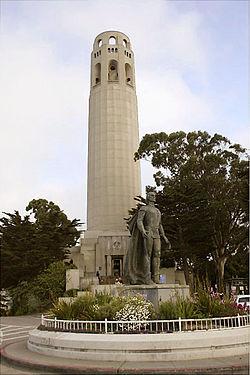
Coit Tower battle: How do we fund the parks?

59

The emerging battle over whether San Francisco should allow private parties at Coit Tower is really part of a much larger political debate: How do we fund public parks? Is public space something that resources are put into, something that’s paid for by tax money and preserved and made available for everyone — or should part of the role of parks be to generate cash?

The Republicans in Congress, with the help of San Francisco’s own Rep. Nancy Pelosi, came down clearly on the side of self-funding around the Presidio, and it’s been a disaster.

I have friends who work at Rec-Park, and they tell me that at least the new revenue initiatives have prevented layoffs and kept some programs going. Which is true. But it’s the wrong question.

Parks are public commons. They’re not supposed to be private space (yeah, they rent out space for weddings in the park, but that’s a pretty minor deal). The city ought to be funding the parks. The city ought to be raising taxes enough to do it. Yeah, I know — you’re bored. I’m tired of saying it, too.