Wine

The secret life of Michael Peevey

11

rebeccab@sfbg.com

Inside a legislative hearing room at the state capitol, things were beginning to get uncomfortable. Roughly five weeks had passed since a Pacific Gas & Electric Co. pipeline explosion killed eight and leveled an entire San Bruno neighborhood, and this California Senate committee hearing was an early attempt to get answers.

San Bruno residents who lost loved ones in the deadly explosion huddled in the front row, their eyes fixed on company representatives and agency bureaucrats as they spoke. At the back of the room, a band of immaculately dressed PG&E executives and utility lawyers sat clustered together.

Richard Clark, director of the consumer protection and safety division of the California Public Utilities Commission (CPUC), fielded questions from visibly frustrated state legislators. Sen. Dean Florez (D-Shafter) wanted know why the CPUC hadn’t done anything when PG&E ignored an impaired section of the ruptured pipeline even after it was granted $5 million to fix it.

“Did the PUC do any accounting when you gave them $5 million?” Florez demanded. “Do we just give them money and cross our fingers and hope they fix it? Is that what we do? Until some terrible tragedy occurs?”

Sen. Mark Leno (D-San Francisco) said the CPUC needed to step it up and start practicing serious hands-on oversight. He recalled a tragedy that occurred in 2008 when a gas leak in Rancho Cordova triggered a pipeline explosion, killing one person and injuring several others. Although an investigation determined that PG&E was at fault, the CPUC hadn’t yet gotten around to fining the company.

“We’ve got a pattern here,” Leno said. “And we’re not doing anything differently.”

Less than three weeks after CPUC staff members were grilled in Sacramento, Michael Peevey — president of the CPUC and the top energy official in the state — boarded an airplane for Madrid. He was embarking on a 12-day travel-study excursion, with stops in Sevilla and Barcelona, sponsored by the California Foundation on the Environment and the Economy (CFEE).

Peevey’s wife, California Sen. Carol Liu (D-Glendale), was along for the trip. So were two other state senators, several members of the state Assembly, CPUC commissioner Nancy Ryan, and a host of representatives from the energy industry. The group included executives from Chevron, Mirant (now GenOn, the owner of the Potrero power plant), Covanta Energy Corporation, Shell Energy North America, and engineering giant AECOM. High-ranking executives of the state’s investor-owned utilities also participated, including Fong Wan, the senior vice president of energy procurement for PG&E.

Although strict rules normally govern commissioners’ interactions with parties that have a financial stake in the outcomes of commission rulings, there wasn’t anything especially unusual about Peevey traveling internationally with a group that included representatives from the same companies his regulatory commission oversees. CFEE trips happen every year. The nonprofit has footed the bill to fly groups of regulators, legislators, and utility executives to prime vacation destinations like Italy, Brazil, and South Africa in recent years, excursions organizers say are critical for educating top-level stakeholders about worldwide best practices for sustainable systems. However, groups such as The Utility Reform Network (TURN) have decried CFEE trips as “lobbying junkets.”

As PG&E and the CPUC both work to win back the public’s confidence after their latest deadly failure, it’s worth analyzing whether their relationship — shaped by vacations together at exotic locales — has grown too cozy.


THE BUDDY SYSTEM

CFEE isn’t the only nonprofit that regularly flies Peevey overseas for green travel tours with high-ranking utility executives, and the 12 days he spent in Spain wasn’t the only time he spent away from official duties and in the company of the corporations his commission regulates.

These controversial getaways are just a small part of Peevey’s involvement with private-sector interests. He also chairs the board of a nonprofit investment fund created as part of a $30 million settlement agreement with PG&E. Called the California Clean Energy Fund, it funnels money into private venture-capital funds that invest in green start-ups, plus a few companies in the fossil-fuel sector.

While legislators have voiced frustration that lax CPUC oversight of PG&E on pipeline-safety issues opened the door to disaster in San Bruno, inside observers are critical of the outright favors Peevey has granted utilities, such as guaranteeing an unprecedented, higher-than-ever profit margin for PG&E as part of the company’s 2004 bankruptcy settlement.

The CPUC is set up to perform as a watchdog agency, yet social and professional ties running deep within California’s insular energy community mean regulators sometimes run in the same circles as the executives who answer to them, making for cozier relationships than the general public might anticipate. It’s an old-fashioned insider game that one longtime observer wryly characterizes as “the buddy system.” But the buddy system can bring consequences.

As the public face of the CPUC, Peevey repeatedly has been thrust into the spotlight. He has absorbed advocates’ concerns about pipeline safety, rising electricity rates, SmartMeters, missed targets for energy efficiency, and municipalities’ David-vs.-Goliath battles with PG&E to implement community choice aggregation (CCA), to name a few. He’s a magnet for public scrutiny while occupying the center seat at commission meetings, but Peevey’s behind-the-scenes engagements with private-sector organizations bent on shaping statewide energy policy demonstrate how power is wielded in California’s energy world, a system in which regulators seem to be partnering with utilities rather than policing them.

Based at Pier 35 in San Francisco, CFEE’s board of directors is composed of a small group of officers, plus a long list of members who hail from some of the most prominent businesses nationwide. Shell, Chevron, J.P. Morgan, Goldman Sachs, AT&T, and PG&E all hold positions on CFEE’s membership board, and each entity chips in to fund the foundation’s activities and travel excursions.

The group also includes representatives from labor organizations like the International Brotherhood of Electrical Workers and mainstream environmental groups such as the Natural Resources Defense Council. Among the emeritus members of CFEE’s governing board are some high-ranking figures, such as CIA director-turned-Pentagon boss Leon Panetta. CFEE received $45,000 in donations from PG&E in 2009 (the most recent year available) and was granted similar amounts in prior years.

CFEE spokesperson P.J. Johnston, the son of former state senator and CFEE officer Patrick Johnston and the press secretary under former Mayor Willie Brown, described the trips as valuable opportunities for top-level stakeholders to gain insight on best practices and engage in noncombative dialogue on key issues.

“The idea for us was that it made sense to have someplace where it was nonconfrontational to engage in policy, work-type discussions,” Johnston explained. He added that the trips are “all about policy, on the 30,000-foot level,” and emphasized that discussions aren’t about specific decisions pending before the CPUC.

Loretta Lynch, a former president of the CPUC who brought a reformist spirit to the agency and was never shy about rebuking utilities, is skeptical of CFEE’s stated program goals. When she was first appointed to the commission, Lynch said, CFEE contacted her to ask where she wanted to travel. If the trips are arranged to fly regulators to destinations they’ve been itching to visit, she reasoned, must-see green innovations probably aren’t dictating the itineraries. “To me,” Lynch said, “they don’t have anything to study in mind.”


“PARTYING WITH THE JUDGE”

The CFEE trip to Spain included a briefing on developing wind energy from AES, a company working on wind and solar development in California that also operates polluting, gas-fired power plants in Huntington Beach, Long Beach, and Redondo Beach. There was a round table on solar energy featuring a presentation from the Independent Energy Producers Association, a trade group that regularly files petitions and comments on CPUC proceedings. The trip included a tour of a desalination plant, a talk from the president of the Madrid Chamber of Commerce, and discussions about California’s energy market. Scheduled activities ended by midafternoon on some days, and the itinerary left a Friday afternoon, Saturday, and Sunday in Sevilla wide open.

Asked to comment on concerns about inappropriate lobbying, Johnston said: “We’re not guarding against anyone’s potential behavior any more than we would be on the streets of Sacramento. We’re not setting ourselves up as the guardians. We’re not facilitating that, per se, either.” He added, “I realize there are critics of any kind of travel and any kind of commingling. But it is wise for us not to close our eyes to the rest of the world, and there’s not a great appetite for spending taxpayer money on these trips.”

Yet Lynch countered that there is an important distinction between the roles of Sacramento legislators and that of utility commissioners. “Regulators are not legislators,” Lynch said. “They’re more like judges. Their decisions have the power of a judge’s decision.” By inviting commissioners along on these lavish getaways, she said, “it’s as if you’re partying with the judge.”

Mindy Spatt, a spokesperson for TURN, echoed Lynch’s concerns. “These ostensibly educational trips are essentially lobbying junkets, where utilities … wine and dine legislators,” Spatt said. TURN raised the issue several years ago, she said, when Peevey joined a CFEE trip attended by a representative of Southern California Edison “just coincidentally at the exact same time that he was penning an alternate decision in Edison’s rate case.” She added: “In TURN’s perspective, the commissioners need to be more in touch with what actual utility customers are experiencing, rather than in touch with the top restaurants in Brazil.”

While Peevey is only one of a host of officials who attend CFEE trips, he has more than just a casual tie to the nonprofit. From 1973 to 1983, he served as president of the California Coalition for Environment and Economic Balance (CCEEB), an organization CFEE grew out of and whose membership shares some overlap with CFEE.

Based in San Francisco, CCEEB was founded by Edmund G. “Pat” Brown (Gov. Jerry Brown’s father) in 1973. CCEEB backed a late-1970s proposal to construct a series of nuclear power plants along the California coastline. More recently, the group honored BP with a 2009 award for environmental education — shortly before the company and lax federal regulators were responsible for the worst oil spill in U.S. history.


A YEAR IN THE LIFE

Spain wasn’t the only country Peevey jetted off to with complimentary airfare in 2010. According to a Form 700 filing with the Fair Political Practices Commission, he also traveled to Germany from Aug. 1–5 for a sustainable energy study tour organized by the Energy Coalition. Joining that trip were representatives from investor-owned utilities PG&E, Southern California Edison, and Sempra, plus various city officials and energy experts from the Swedish Energy Agency.

The group stayed at the Radisson Blu Berlin Hotel, which is famous for its AquaDom. “Standing at 25 meters high, it is the world’s largest cylindrical aquarium containing 1 million liters of saltwater,” according to the hotel website. All Radisson Blu Berlin guests have free access to “the hotel’s well-being area,” called Splash, which features a pool, sauna, steam bath, and fitness room.

Based in Irvine, the Energy Coalition’s Board of Directors is chaired by Warren Mitchell, a retired chair of the Southern California Gas Co. and San Diego Gas & Electric Co.. Another director is a utility lawyer who also sits on the board of directors of the Northeast Gas Association, a consortium of natural gas companies in the northeastern U.S.

Founded in the late 1970s by John Phillips to get large businesses to reduce energy consumption in partnership with utilities, the Energy Coalition has arranged excursions for years to bring energy regulators, city officials, and utility executives to Sweden (where Phillips’ wife was born) to exchange ideas on energy issues. The nonprofit organizes an annual summit called the Aspen Accord, “an energy policy forum where cities, utilities, regulators, and end-users collaborate to identify problems and propose solutions to our most pressing energy issues,” according to a 2009 tax filing. While it used to be held in Aspen, Colo., the most recent Aspen Accord was held at San Francisco’s Westin St. Francis. Peevey gave introductory remarks, and the conference featured talks from PG&E, among others.

Craig Perkins, executive director, told the Guardian that the Aspen Accord and study trips are designed to create a venue for major stakeholders to arrive at outside-the-box solutions. “What we try to do is get everybody out of their comfort zone, if you will — that’s the best way to support more creative thinking,” he said. Official regulatory proceedings are “so rigidly legalistic and bureaucratic that it almost prevents any creative thought from happening,” he added. “We’re not in San Francisco, we’re not in Sacramento, we’re not in corporate offices — let’s just talk about these really big issues, and really big challenges.”

The Germany tour included meetings with the Berlin Energy Agency, talks about climate policy, and a tour of an eco-community in Freiburg. Perkins said utility companies must to pay their own way on the trips, but costs are covered for governmental officials.

An Energy Coalition tax filing reveals that board members receive a monthly retainer of $1,000, quarterly meeting fees of $1,000, plus $500 for each board committee meeting. Teleconferences also result in $500 meeting fees.

Several years ago, the Energy Coalition partnered with PG&E to create the Business Energy Coalition, which paid businesses including Bank of America and the Westin St. Francis $50 per KW of energy savings for banding together to reduce energy during peak load hours. According to a tax filing, total annual Energy Coalition revenue dropped from $10.7 million in 2008 to $3.75 million in 2009 “due to large revenue receipts for participant incentives” for the Business Energy Coalition program, as “revenues were used for direct pass-through payments to program participants and contractors.” In 2006, according to a CPUC filing, PG&E paid the Energy Coalition $227,373 for unspecified consulting services.

In addition to the $8,880 trip to Spain (comped), and the $6,583 trip to Germany last year (comped), Peevey’s 2010 disclosure form shows that he also went to Australia May 14-19 to participate in a conference hosted by the Sydney-based Total Environment Center called “Smart Metering to Empower the Smart Grid” ($12,577, comped). And while it doesn’t show up on his FPPC filing, an agenda for CFEE’s Energy Roundtable Summit from Dec. 9-10 at the Carneros Inn in Napa lists Peevey as a participant. A glance through past filings suggests that 2010 was no anomaly; it’s a typical year in the life of a jet-setting utilities regulator.


GREEN CAPITALISM

Peevey once served as president of the Southern California Edison, an investor-owned utility, and was president of NewEnergy, Inc., an electricity company that later was sold to Williams Energy. Yet his professional image is that of a forward-thinker on climate change. According to a bio on the CPUC website, he’s received awards for achievements on green and sustainable energy from various organizations throughout California.

In 2005, speaking in Berkeley at an annual conference for the California Climate Action Registry, Peevey touted a list of his accomplishments on sustainable energy. My final example of PUC actions on climate change is related to PG&Es bankruptcy, he said. When they emerged from bankruptcy last year, one of many conditions of our support for their reorganization plan was that they create a $30 million Clean Energy Fund, devoted to investing in California businesses developing and producing clean technologies.

What Peevey didnt mention is that he chairs the board of directors of that fund. As a nonprofit venture capital fund, the obscure, San Francisco-based CalCEF sounds like an oxymoron. Based on the terms of the PG&E bankruptcy settlement, its governed by a nine-member board consisting of three CPUC appointees, three PG&E appointees, and the rest selected jointly by the CPUC and PG&E appointees. Other board members include past PG&E executives, a former member of the California Energy Commission, and a former chair of the board of governors of the California Independent System Operator (Cal-ISO), the body that ensures statewide grid reliability and blocked the closure of the Mirant Potrero Power Plant for years.

The nonprofit’s stated mission is to catalyze clean energy investment to aid in the state’s transition away from fossil fuels. CalCEF president Dan Adler described it as a sort of seasoned guide for fledgling green companies that might otherwise fail to navigate the murky, complicated clean-energy sector. CalCEF is in a position to usher start-ups toward success with a combination of funding, networking, and insider wisdom on state energy policy.

Among the challenges that the clean-energy sector faces, Adler said, are the utilities themselves. “They are effectively monopoly, or oligopoly, controllers of the energy industry,” he said. “And they don’t like outside innovation coming and disrupting their work process or their relationship with their customers.”

CalCEF aims to guide the finance community “to be partners with what public policy is doing around clean tech and clean energy,” Adler went on. “There’s a tremendous amount of money to be made, but there’s also a lot of opportunity for money to be wasted. If you don’t have a private-sector investment community that understands these rules and can put their money alongside these rules in a collaborative framework, we’re very unlikely to achieve the really aggressive energy targets that California has set.”

Yet as one skeptical energy insider noted, “there are 15 to 20 other funds, with 10 times as much money, an hour south in the same field,” referring to the burgeoning clean-tech hub in Silicon Valley. It’s questionable whether the CPUC is actually fulfilling some dire need with CalCEF, this person said.

Lynch, not surprisingly, takes a dim view of CalCEF. The former CPUC president questions what business the CPUC has creating a private foundation to guide venture capital investment. “It is a fundamental distortion of the PUC’s authority,” she charged, “all in service of Peevey’s ambitions.”

Peevey’s economic disclosure showed that he holds more than $1 million in a private family trust, without disclosing whether private investments contributed to that fund.

Adler stressed that there is arms-length relationship between CalCEF board members and the companies that benefit from the fund’s investments. “Because we are a nonprofit, and because we have on our board members of the regulatory community, we recognized quickly that we can’t be making direct investments into companies,” said Adler, a former CPUC staff member who was highly regarded even by the critics of CalCEF. “So … we’ve picked the venture-capital funds that we wanted to partner with.”

CalCEF funnels its capital into three different for-profit investment firms, which in turn select the companies that will be included in CalCEF’s investment portfolio. Several directors of the partnering investment firms also sit on the boards of directors of the companies they invest in. The startups run the gamut, from carbon-offset outfits, to energy-efficient lighting manufacturers to solar and wind companies, to biofuels startups to various kinds of technology firms related to the smart grid.

But CalCEF has also poured money into companies that bolster the fossil-fuel industry. One of its first investments was CoalTek, a company developing technology for so-called “clean coal.” Asked to explain why, Adler told the Guardian, “We don’t have veto power on every deal that goes down.”

Adler said he personally believes that “there’s no such thing as clean coal,” but tempered this by adding, “there are some very smart people in our community who will tell you that there’s no future … without coal.”

Another CalCEF investment, DynaPump, is developing technology to make it more energy efficient to pump oil and gas. Asked about this decision, Adler responded: “I will say that when we were approached with this investment by the venture partner that ultimately undertook it, we had our misgivings. If you can save energy in the production of oil and gas, then you’re definitely making a contribution to overall energy efficiency.”


TAX-EXEMPT TESLA

There appear to be some closer-than-arms-length links between CalCEF board members and the investment fund’s beneficiaries. A bio for CalCEF director Nancy Pfund, for example, notes that in her capacity as manager of an outside investment fund, she had “worked closely” with Tesla Motors, a CalCEF investment. Tesla provided CalCEF’s first investment return earlier this year after Tesla went public. A principal of one of the investment firms that works with CalCEF, Stephen Jurvetson of Draper Fisher Jurvetson, holds Tesla shares in a personal trust, according to a filing with the U.S. Securities and Exchange Commission.

Tesla manufactures sleek, electric, zero-emission sports cars with prices in the six-figures, and it’s gearing up to roll out a model that will cost somewhere closer to $50,000. The company’s success was helped by a sales-and-use-tax exclusion granted by the state of California last year. Peevey had a hand in that, too. Few Californians may have heard of the California Alternative Energy and Advanced Transportation Financing Authority (CAEATFA), a state body within the Office of the Treasurer, which has the power to authorize sales-tax exclusions for companies that are developing alternative energy technologies. Peevey has a seat on it.

In October 2009, according to a CAEATFA document, Tesla was granted a sales tax exclusion from that financing authority. The sports car manufacturer had received a tax break of $3.3 million as of December 2010, and stands to gain a tax break as large as $29.1 million, depending on its property purchases. As a CAEATFA member, Peevey approved the deal by proxy.

A central question is whether the CalCEF dollars that benefited Tesla and other CalCEF portfolio investments were originally derived from PG&E shareholder profits or ratepayer funds. Adler was careful to note that the initial $30 million came from company shareholders, not PG&E customers. But Lynch pointed out that every dime in PG&E coffers originates with the millions of customers who pay utility bills.

Lynch noted another provision of the bankruptcy settlement agreement, which guarantees PG&E a minimum annual profit of 11.2 percent, catapulting it forever into a higher rate of return than the 8 percent to 11 percent profit traditionally granted by the CPUC in prior decades. “They’re manipulating how big this bucket is to siphon off funds into programs like CalCEF,” Lynch said. “It’s all to give Peevey and his friends access — and to greenwash what was a very stinky deal for the ratepayer.”


ELUSIVE CLEAN ENERGY FUTURE

In California, a national leader in addressing climate change, the stakes are high in the energy sector. The CPUC is tasked not only with shoring up transmission-pipeline safety to prevent another San Bruno disaster, but helping to chart a course away from reliance on fossil fuel-powered energy sources.

CFEE, the Energy Coalition, and CalCEF share a common thread — their missions relate to advancing the cause of a clean energy future in California. And while utility funding and partnership is evident in all three operations, the overarching goal is understood to be green.

But as Adler observed, the utilities themselves present one of the greatest obstacles to progress on a clean-energy transition. While California has increased renewable energy sources, it’s done a poor job at supplanting fossil fuel generation with green alternatives, in part because the CPUC has allowed for increasing fossil fuel power generation even as renewable energy expands. According to a listing on the California Energy Commission website, nine natural gas power plants have won approval statewide and are moving toward construction, while six new ones are under review.

The CalCEF approach to addressing climate change, rather than aggressively targeting polluting industries, is to encourage the fledgling green industry in hopes of facilitating success in partnership with the financial sector. In many cases, the backers of the clean-tech companies are the same players behind the big energy giants.

Environmental advocates are critical. “If anyone thinks the CPUC is set up to serve public interests, forget that,” says Al Weinrub, executive director of the Local Clean Energy Alliance, a group that organized against PG&E’s ill-fated Proposition 16 last year. “They never have and they never will.”

Weinrub said he viewed proponents of green energy as falling into two camps: Moneyed interests motivated by a growing new market sector, and activists motivated by environmental and social justice causes. Major green investment firms “want to de-carbonize capitalism,” he observed. “But everything else stays the same.”

Peevey is considered a major driver behind the state’s climate change legislation, and he’s highly regarded for his dedication to green energy. Yet as long as the interlocking dynamic between energy regulators and California’s largest utilities goes unchallenged, change will only come in a way that’s as comfortable, profitable, and manageable for the state’s top polluters as they wish. And in a state with an aging energy infrastructure that’s vulnerable to the impacts of climate change, that pace isn’t nearly quick enough. 


Appetite: Napa’s affordable eats and surprising treats

10

After countless weekends in Napa over the years, I’m flush with recommendations for worthy restaurants and hotels. It’s not always the most affordable area, but my recent visits north have revealed a number of delightfully reasonable options within the bounds of Napa and Yountville, both new and established. 

They’ve also uncovered a few unexpected dishes – and in the case of one restaurant with a new chef, a whole range of them.

Napa Valley Marriott: Sleep… and a superior burger 

Breakfast, lunch, or dinner — don’t check your watch, just order the Knife and Fork burger at the Marriott

For those familiar with the hotel before its two years of multi-million dollar renovations, Napa Valley Marriott is a whole new ballgame. It now sports a warm, modern look with a soothing spa, an ultra-cool poolside patio with couches and firepits, and a new restaurant-bar. Though you may not be able to tell from the street outside, it’s really a dramatic revamp.

In the high season summer months, make a weekend of it with rooms in the low $200-300 range (or mid $200 range on weeknights). Rooms have also been completely redecorated with gentle colors and artwork, plasma screens, and comfy beds. The ones facing the courtyard are particularly tranquil. The only thing lacking? Free wi-fi. It’ll run you $4.95 a day.

Chef Brian Whitmer’s garden restaurant is a revelation. I’ve seen Napa restaurants with their own gardens, but nothing as lush as his. Spring peas are crispy and sweet right off the vine, and leafy greens make for abundant salads. Whether you stay in the hotel or not, it’s worth a detour to check out.

Cozy up in a chic booth, or a grab a stool at the curved bar and order the spicy Knife and Fork burger ($12) for breakfast, lunch, or dinner. It doesn’t matter when, just order it. This burger is made of Caggiano chorizo, which is savory and spicy, yet also delicate, melt-in-your-mouth, on a Model Bakery brioche. Layered with aged cheddar, watercress, the restaurant’s secret sauce, and a fried egg, it’s one of the better things I’ve eaten in Napa in awhile — an utterly unique burger. You won’t regret making a stop for this one.

3425 Solano, Napa. (707) 253-7433, www.napavalleymariott.com


Ubuntu: Vegetarian perfection

Chef Jeremy Fox brought nationwide fame to this eatery, often named among the best vegetarian restaurants in the country by publications like the New York Times. I’ve always enjoyed my previous visits.

But I’ll tell you now, with young chef Aaron London at the helm, it’s better than ever. The food has moved from winning vegetarian cuisine to work-of-art vegetarian cuisine. It’s gone from high quality to superb. As a non-vegetarian, I would say it has become possibly the best vegetarian restaurant I’ve been to anywhere and one of the best dining experiences in Napa.

What’s interesting about chef London is that he’s been at Ubuntu since the beginning, working as Fox’s sous chef. I hear he influenced a number of dishes in those lauded early days, though we did not hear much about him. Nominated for Rising Star Chef at this year’s James Beard Awards, we should be hearing a lot more about him.

He’s revamped the menu in such a way that each $10-19 dish is far more than the sum of its parts. You read of roasted and raw asparagus ($16) with burratta cheese coated in potato chip crumbs, but you really have no idea what you’re in for. A garden-fresh dish comes out, smeared with earthy potato skin puree, lavished with pine nut and currant soffrito, dotted with frisee, greens, and edible flowers. It’s an art piece that not only stuns visually but tantalizes the tongue with its range of flavors.

The two key words I’d use to describe London’s cooking outside of artistic? Texture and contrast. Every single dish of the six I recently had the pleasure of dining on were a study in layers and texture. Sweet complimented savory. Earthy and bright co-mingled. Crunchy partnered with creamy. Surprises came in every dish. Not a one was lackluster.

I could wax eloquent about the merits of each — some served on stone labs that kept them warm – but the menu changes frequently and this article would grow tedious. So I will simply say: go, and be prepared to be blown away.

1140 Main, Napa. (707) 251-5656, www.ubuntunapa.com


Bistro Sabor: Funky, fun Latin

Bistro Sabor‘s menu initially appears Mexican, but it’s really a mix of Latino cuisines in the new downtown Napa. The space is hip with brightly-painted, graffiti-bedecked walls, and the staff couldn’t be more helpful, particularly considering its order-at-the-counter casualness. 

On a Saturday night, tables were cleared for 10 p.m. salsa dancing, a hit with the local Latino community. Beer and wine keep it festive (wish they had a hard liquor license to serve tequila). The food? Fresh, satisfying, and all under $15. A two taco special of grilled sea bass ($11) is impeccably flaky, topped with scallion-cilantro slaw and a pineapple habanero salsa. Even accompanying rice and black beans are a notch above the rest. A rock crab quesadilla ($10) is less creative but still warm and cheesy, while pupusas, pozole, blood orange avocado salad, and lomo saltado exhibit a range from El Salvador to Peru. It’s playful Latin street food with quality ingredients. A win for Napa and cheap eats.

1126 First St., Napa. (707) 252-0555, www.bistrosabor.com


Dim Sum Charlie’s: Dim sum with a side of magic

I’ll tell you right now: you can get better, cheaper dim sum at dozens of places in SF. In fact, for the nearly $7 Dim Sum Charlie’s charges for a mere four dumplings, I can get at least twelve, and buns, at my favorite city spots. Why go? First off, there’s not much dim sum in Napa and Charlie’s is decent, though far from memorable. Warning: some have commented on menu listings that could be perceived as racist (“ten dolla make you holla”?).

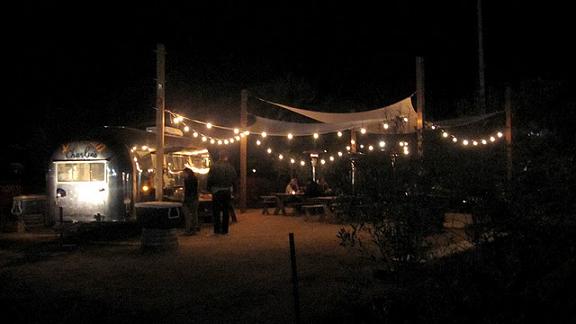
But the setting is still a reason to go. Dim sum and noodles are served out of a classic Airstream trailer. Sure I’ve seen it before, but lover of all things retro that I am, I still find it charming. And what’s different about this trailer setting is its canopy of lights and dirt lot strewn with picnic tables and a campfire. Rollicking tunes make it feel like a backyard party — a bit like camping in retro-kitsch style. With dim sum.

It doesn’t really matter what you order. Bring friends. Pull up to a picnic table or fireside with hot sauce and chopsticks, and sing along to the Beastie Boys as you slurp noodles and fill up on pork buns.

728 First St., Napa. (707) 815-2355, www.dimsumcharlies.com (look for the Airstream trailer)


Yountville Coffee Caboose: Coffee lovers

You’ll not go wrong with coffee and pastries at the original Bouchon Bakery across the street. But when that line is unbearable (or even if it isn’t), I’m delighted to hit up a locals coffee go-to: Yountville Coffee Caboose. Yes, it’s actually in a train caboose off Washington Street. It often features Bay Area coffees like Ritual, brewed strong, robust and with proper crema.

6523 Washington, Yountville


Grace’s Table: Local’s breakfast 

Grace’s Table has its minor missteps: its raved about skillet cornbread with lavender butter ($6) was dry and rather flavorless. And $10-18 entrees for breakfast pushes a little high for a casual neighborhood restaurant. But as an open air, corner space with sweet waitstaff and soothing decor, it’s a welcome brunch stop.

Quiche of the day ($12 with salad or soup – can also be had a la carte) was the stand-out, fluffy and light. The crust almost reminded me of Tartine in its buttery flakiness. Mini bagels with house-cured salmon and cream cheese ($10) are playful approach to morning food, though the bagels are not exceptional (but isn’t that ever the case outside of New York?) Grace’s is a pleasant place to start your day with coffee and a newspaper. 

1400 Second St., Napa. (707) 226-6200, www.gracestable.net


C Casa Taqueria: Breakfast to go 

C Casa, a worthy newer addition to Oxbow Public Market, works for a cheap breakfast. With grass-fed beef, free range chicken, sustainable fish, and local produce, it’s a forward-thinking taqueria, yet it maintains authenticity of flavor. A breakfast taco brimming with over-medium egg and chorizo ($4.50), is meaty and satisfying first thing in the morning. Also stuffed in there? Black beans, avocado, pico de gallo, garlic aioli, and cilantro.

Located within Oxbow Public Market, 610 First St., Napa. (707) 226-7700, www.myccasa.com


Ad Hoc: Ok, one splurge

Ad Hoc’s Liberty Farm duck breast: more than a mouthful

At $52 per person without anything to drink (its another $39 for wine pairings), Ad Hoc is quite expensive, even if it is the one and only Thomas Keller’s “casual” venture. Watch where you sit: I’d be annoyed eating inside where too many kids (at this price?) and a noisy din make make for a less than appealing ambiance. The few tables outside on the tiny patio, however, are idyllic. 

As is the food in the four-course dinner. One appetizer, a main, a cheese course, and dessert, all served family-style and impeccably prepared with ingredients from their cheery garden behind the restaurant. No substitutes — you eat whatever is on the daily menu. 

And that’s alright when you get a salad as a beautiful as a recent mix of lettuces, pickled haricots verts (green beans), toasted pine nuts, red radishes, and shaved asparagus. Dotted with green garlic buttermilk dressing and king trumpet mushrooms, it was far more gratifying than those ingredients may sound on paper. Ditto the added course of ivory salmon ($15 supplement) baked in phyllo pastry, drizzled with porcini cream, and accented with fresh, white corn. Liberty Farm duck breast was actually a little too much for two people, but deftly prepared and served with a bowl of chickpea stew gentle with curry. We finished with strawberry shortcake on biscuits, slathered in lemon curd.

At roughly $34 per person, the Sunday brunch is the way to do Ad Hoc from a slightly more affordable, angle.

6476 Washington, Yountville. (707) 944-2487, www.adhocrestaurant.com


— Subscribe to Virgina’s twice monthly newsletter, The Perfect Spot


Summer fairs and festivals

0

ONGOING

Young At Art Festival de Young Museum, Golden Gate Park, SF. (415) 695-2441, www.youngatartsf.com. Through May 22, free. The creative achievements of our city’s youth are celebrated in this eight day event curated and hosted by the de Young Museum.

* Oakland Asian Cultural Center Asian Pacific Heritage Festival Oakland Asian Cultural Center, 388 Ninth St., Oakl. (510) 637-0462, www.oacc.cc. Through May 26. Times and prices vary. Music, lectures, performances, family-friendly events in honor of Asian and Pacific American culture and traditions.

DIVAfest Exit Theatre, 156 Eddy, SF. (415) 931-2699, www.theexit.org. Through May 28. Times and prices vary. Bastion of the alternative, EXIT Theatre showcases its 10th annual buffet of fierce women writers, performers, and directors. This year features two plays, beat poetry, musical exploration, and more.

* Yerba Buena Gardens Festival Yerba Buena Gardens, Mission and Third St., SF. (415) 543-1718, www.ybgf.org. Through Oct. 31. Times vary, free. A series of cultural events, performances, activities, music, and children and family programs to highlight the green goodness of SoMa’s landscaped oasis.


May 18-June 5

San Francisco International Arts Festival Various venues. (415) 399-9554, www.sfiaf.org. Times and prices vary. Celebrate the arts through with this mish-mash of artistic collaborations dedicated to increasing human awareness. Artists included hail from around the world and right here in the Bay Area.


May 21

* A La Carte & Art Castro St. between Church and Evelyn, Mountain View. (650) 964-3395, www.miramarevents.com. 10am-6pm, free. With vendors selling handmade crafts, microbrewed beers, fresh foods, a farmers market, and even a fun zone for kids, there’s little you won’t find at this all-in-one fun fair. Asian Heritage Street Celebration Larkin and McAllister, SF. www.asianfairsf.com. 11am-6pm, free. This year’s at the country’s largest gathering of APA’s promises a Muay Thai kickboxing ring, DJs, and the latest in Asian pop culture fanfare — as well as tasty bites to keep your strength up.

Freestone Fermentation Festival Salmon Creek School, 1935 Bohemian Hwy, Sonoma. (707) 479-3557, www.freestonefermentationfestival.com. Noon-5pm, $12. Learn about the magical wonders of fermentation with hands-on and mouth-on demonstrations, exhibits, and tasty live food nibbles.

Uncorked! San Francisco Wine Festival Ghirardelli Square, SF. (415) 775-5500, www.ghirardellisq.com. 1-6pm, $45-50 for tasting tickets, free for other activities. Uncorked! brings you the real California wine experience with tastings, cooking demonstrations, and even a wine 101 class for those who are feeling not quite wine-refined.


May 20-29

SF Sex Worker Film and Art Festival Various venues, SF. (415) 751-1659, www.sexworkerfest.com. Times and prices vary. Webcam workshops, empowering film screenings, shared dialogues on plant healing to sex work in the age of HIV: this fest has everything to offer sex workers and the people who love ’em.


May 22

Lagunitas Beer Circus Lagunitas Brewing Co., 1280 N McDowell, Petaluma. (303) 447-0816, www.craftbeer.com. Noon-6pm, $40. All the wonders of a live circus — snake charmers, plate spinners, and sword swallowers — doing their thing inside of a brewery!


May 21-22

* Maker Faire San Mateo County Event Center, 2495 South Delaware, San Mateo. www.makerfaire.com. Sat, 10am- 8pm; Sun, 10am-6pm, $5-25. Make Magazine’s annual showcase of all things DIY is a tribute to human craftiness. This is where the making minds meet. Castroville Artichoke Festival Castroville, Calif. (831) 633-0485, www.artichokefestival.org. Sat., 10am- 6pm; Sun., 11 am- 4:30 p.m., free. Pay homage to the only vegetable with a heart: the artichoke. This fest does just that, with music, parades, and camping.


May 28-29 

San Francisco Carnaval Harrison between 16th and 22nd St., SF. 10am-6pm, free. The theme of this year’s showcase of Latin and Caribbean culture is “Live Your Fantasy” — bound to bring dreams alive on the streets of the Mission.


June 3-12

Healdsburg Jazz Festival Various venues, Healdsburg. (707) 433-463, www.healdsburgjazzfestival.org. Times and prices vary. Bask in the lounge-lit glow of all things jazz-related at this celebration in Sonoma’s wine county.


June 3-July 3 

SF Ethnic Dance Festival Zellerbach Hall, Berk. and Yerba Buena Center for the Arts, SF. www.worldartswest.org. Times and prices vary. A powerful display of world dance and music taking to the stage over the course of five weekends.


June 4

* Berkeley World Music Festival Telegraph, Berk. www.berkeleyworldmusicfestival.org. Noon-9pm, free. Fourteen world music artists serenade the streets and stores of Telegraph Avenue and al fresco admirers in People’s Park.

Huicha Music Festival Gundlach Bundschu Winery, 2000 Denmark St., Sonoma. (707) 938-5277, www.gunbun.com/hmfevent. 2-11pm, $55. Indie music in the fields of a wine country: Fruit Bats, J Mascis of Dinosaur Jr, Sonny and the Sunsets, and more.


June 4-5

Union Street Eco-Urban Festival Union from Gough to Steiner and parts of Octavia, SF. (800) 310-6563, www.unionstreetfestival.com. 10am-6pm, free. Festival goers will have traffic-free access to Cow Hollow merchants and restaurant booths. The eco-urban theme highlights progressive, green-minded advocates and products.

The Great San Francisco Crystal Fair Fort Mason Center, Building A., SF. (415) 383-7837, home.earthlink.net/~sfxtl/index.html. Sat., 10am-6pm; Sun., 10am-4pm, $6. Gems and all they have to offer: beauty, fashion, and mysterious healing powers.


June 5

* Israel in the Gardens Yerba Buena Gardens, SF. (415) 512-6420, www.sfjcf.org. 11am-5pm, free. One full day of food, music, film, family activities, and ceremonies celebrating the Bay Area’s Jewish community and Israel’s 63rd birthday.


June 10-12

Harmony Festival Sonoma County Fairgrounds, 1350 Bennett Valley, Santa Rosa. www.harmonyfestival.com. 10am-10pm, $45 one day, $120 for three day passes. This is where your love for tea, The Flaming Lips, goddess culture, techno, eco-living, spirituality, and getting drunk with your fellow hippies come together in one wild weekend.

Queer Women of Color Film Festival Brava Theater. 2789 24th St., SF. (415) 752-0868, www.qwocmap.org. Times vary, free. A panel discussion called “Thinkers and Trouble Makers,” bisects three days of screenings from up-and-coming filmmakers with stories all their own.


June 11-12

* Live Oak Park Fair 1301 Shattuck, Berk. (510) 227-7110, www.liveoakparkfair.com. 10am-6pm, free. This festival’s 41st year brings the latest handmade treasures from Berkeley’s vibrant arts and crafts community. With food, face-paint, and entertainment, this fair is perfect for a weekend activity with the family.


June 11-19 

San Mateo County Fair San Mateo County Fairgrounds. 2495 S. Delaware, San Mateo. www.sanmateocountyfair.com. June 11, 14, 18, and 19, 11am-10pm; all other days, noon-10pm, $10 for adults. It features competitive exhibits from farmers, foodies, and even technological developers — but let’s face it, we’re going to see the pig races.


June 12

Haight Ashbury Street Fair Haight between Stanyan and Ashbury, SF. www.haightashburystreetfair.org. 11am-5:30pm, free. Make your way down to the grooviest corner in history and celebrate the long-standing diversity and color of the Haight Ashbury neighborhood, featuring the annual battle of the bands.


June 16-26

Frameline Film Festival Various venues, SF. www.frameline.org. Times and prices vary. This unique LGBT film festival comes back for its 35th year showcasing queer documentaries, shorts, and features.


June 17-19 Sierra Nevada World Music Festival Mendocino County Fairgrounds. 14400 CA-128, Boonville. (916) 777-5550, www.snwmf.com. Fri, 6pm-midnight; Sat, 11am-midnight; Sun, 11am-10pm, $60 for Friday and Sunday day pass; $70 for Saturday day pass, $150 three day pass. Featuring Rebulution, Toots and the Maytals, and Jah Love Sound System, this fest comes with a message of peace, unity, and love through music.


June 18 

Summer SAILstice Encinal Yacht Club, 1251 Pacific Marina, Alameda. (415) 412-6961, www.summersailstice.com. 8am-8pm, free. Boat building, sailboat rides, sailing seminars, informational booths, music, a kid zone, and of course, wind, sun, and water.

Pinot Days Festival Pavilion, Fort Mason Center, SF. (415) 382-8663, www.pinotdays.com. 1-5pm, $50. Break out your corkscrews and head over to this unique event. With 220 artisan winemakers pouring up tastes of their one-of-a-kind vino, you better make sure you’ve got a DD for the ride home.


June 18-19

North Beach Festival Washington Square Park, SF. (800) 310-6563, www.northbeachchamber.com. Sat, 10am-6pm; Sun, 10am-6pm, free. Make your way down to the spaghetti capital of SF and enjoy food, music, arts and crafts booths, and the traditional blessing of the animals.

Marin Art Festival Marin Civic Center, San Rafael. (415) 388-0151, www.marinartfestival.com. 10am-6pm, $10. A city center designed by Frank Lloyd Wright plays host to this idyllic art festival. Strolling through pavilions, sampling wines, eating grilled oysters, and viewing the work of hundreds of creative types.


June 20-Aug 21

Stern Grove Music Festival Stern Grove. Sloat and 19th Ave., SF. (415) 252-6252, www.sterngrove.org. Sundays 2pm, free. This free outdoor concert series is a must-do for San Francisco summers. This year’s lineup includes Neko Case, the SF Symphony, Sharon Jones, and much more.


June 25-26

San Francisco Pride Celebration Civic Center Plaza, SF; Parade starts at Market and Beale. (415) 864-FREE, www.sfpride.org. Parade starts at 10:30am, free. Gays, trannies, queers, and the rest of the rainbow waits all year for this grand-scale celebration of diversity, love, and being fabulous. San Francisco Free Folk Festival Presidio Middle School. 450 30th Ave., SF. (415) 661-2217, www.sffolkfest.org. Noon-10pm, free. Folk-y times for the whole family — not just music but crafts, dance workshops, crafts, and food vendors too.


June 29-July 3

International Queer Tango Festival La Pista. 768 Brannan, SF. www.queertango.freehosting.net. Times vary, $10-35. Spice up your Pride (and Frameline film fest) week with some queer positive tango lessons in culturally diverse, welcoming groups of same sex couples.


June 30-July 3

High Sierra Music Festival Plumas-Sierra Fairgrounds, Quincy. www.highsierramusic.com. Gates open at 8am Thursday. $205 weekend pass, $90 parking fee. Yonder Mountain String Band, My Morning Jacket, and most importantly, Ween. Bring out your sleeping bags for this four day mountaintop grassroots festival.


July 2

Vans Warped Tour Shoreline Amphitheatre, Mountain View. www.vanswarpedtour.com. 11am, $46-72. Skating, pop punk, hardcore, screamo, and a whole lot of emo fun.


July 2-3

Fillmore Jazz Festival Fillmore between Jackson and Eddy, SF, 1-800-310-6563, www.fillmorejazzfestival.com. 10am-6pm, free. Thousands of people get jazzed-up every year for this musical feast in a historically soulful neighborhood.


July 4

City of San Francisco Fourth of July waterfront celebration Pier 39, Embarcadero and Beach, SF. (415) 709-5500, www.pier39.com. Noon-9:30pm, free. Ring in the USA’s birthday on the water, with a day full of music and end up at in the city’s front row when the fireworks take to the sky.


July 9-10

Renegade Craft Fair Fort Mason Festival Pavilion. Buchanan and Marina, SF. (312) 496-3215, www.renegadecraft.com. 11am-7pm, free. Put a bird on it at this craft fair for the particularly indie at heart.


July 14-24

Midsummer Mozart Festival Various Bay Area venues. (415) 627-9141, www.midsummermozart.org. Prices vary. You won’t be hearing any Beethoven or Schubert at this midsummer series — the name of the day is Mr. Mozart alone.


July 16-17

Connoisseur’s Marketplace Santa Cruz between Camino and Johnson, Menlo Park. (650) 325-2818, www.miramarevents.com. 10am-6pm, free. Let the artisans do what they do best — you’ll polish off the fruits of their labor at this outdoor expo of artisan food, wine, and craft.


July 21-Aug 8

SF Jewish Film Festival Various Bay Area venues. www.sfjff.org. Times and prices vary. A three week smorgasbord of world premiere Jewish films at theaters in SF, Berkeley, the Peninsula, and Marin County.


July 22-Aug 13

Music@Menlo Chamber Music Festival Menlo School, 50 Valparaiso, Atherton. (650) 330-2030, www.musicatmenlo.org. Classical chamber music at its best: this year’s theme “Through Brahms,” will take you on a journey through Johannes’ most notable works.


July 23-Sept 25

 SF Shakespeare Festival Various Bay Area venues. www.sfshakes.org. Various times, free. Picnic with Princess Innogen and her crew with dropping a dime at this year’s production of Cymbeline. It’s by that playwriter guy… what’s his name again?


July 30

Oakland A’s Beer Festival Eastside Club at the Oakland-Alameda Coliseum, 7000 Coliseum Way, Oakl. www.oakland.athletics.mlb.com. 4:05-6:05pm, free with game ticket. Booze your way through the Oakland A’s vs. Minnesota Twins game while the coliseum is filled with brewskies from over 30 microbreweries, there for the chugging in your souvenir A’s beer mug.


July 30-31

 Berkeley Kite Festival Cesar Chavez Park, 11 Spinnaker, Berk. www.highlinekites.com. 10am-5pm, free. A joyous selection of Berkeley’s coolest kites, all in one easy location.


July 31

Up Your Alley Dore between Folsom and Howard, SF. www.folsomstreetfair.com. 11am-6pm, $7-10 suggested donation. Whether you are into BDSM, leather, paddles, nipple clamps, hardcore — or don’t know what any of the above means, this Dore Alley stroll is surprisingly friendly and cute once you get past all the whips!


Aug 1-7

SF Chefs Various venues, SF. www.sfchefs2011.com. Times and prices vary. Those that love to taste test will rejoice during this foodie’s paradise of culinary stars sharing their latest bites. Best of all, the goal for 2011’s event is tons of taste with zero waste.


Aug 7

SF Theater Festival Fort Mason Center. Buchanan and Marina, SF. www.sftheaterfestival.org. 11am-5pm, free. Think you can face about 100 live theater acts in one day? Set a personal record at this indoor and outdoor celebration of thespians.


Aug 13

San Rafael Food and Wine Festival Falkirk Cultural Center, 1408 Mission, San Rafael. 1-800-310-6563, www.sresproductions.com. Noon-6pm, $25 food and wine tasting, $15 food tasting only. A sampler’s paradise, this festival features an array of tastes from the Bay’s best wineries and restaurants.


Aug 13-14

Nihonmachi Street Fair Post and Webster, SF. www.nihonmachistreetfair.org. 11am-6pm, free. Founded by Asian Pacific American youths, this Japantown tradition is a yearly tribute to the difficult history and prevailing spirit of Asian American culture in this SF neighborhood.


Aug 20-21

Oakland Art and Soul Festival Entrances at 14th St. and Broadway, 16th St. and San Pablo, Oakl. (510) 444-CITY, www.artandsouloakland.com. $15. A musical entertainment tribute to downtown Oakland’s art and soul, this festival features nationally-known R&B, jazz, gospel, and rock artists.


Aug 20-22

* SF Street Food Festival Folsom St from Twenty Sixth to Twenty Second, SF. www.sfstreetfoodfest.com. 11am-7pm, free. All of the city’s best food, available without having to go indoors — or sit down. 2011 brings a bigger and better Street Food Fest, perfect for SF’s burgeoning addiction to pavement meals.


Aug 29-Sept 5

Burning Man Black Rock City, Nev. (415) TO-FLAME, www.burningman.com. $320. This year’s theme, “Rites of Passage,” is set to explore transitional spaces and feelings. Gather with the best of the burned-out at one of the world’s weirdest, most renowned parties.


Sep 10-11

* Autumn Moon Festival Street Fair Grant between California and Broadway, SF. (415) 982-6306, www.moonfestival.org. 11am-6pm, free. A time to celebrate the summer harvest and the end of summer full-moon, rejoice in bounty with the moon goddess.


Sept 17-18

SF International Dragon Boat Festival California and Avenue D, Treasure Island. www.sfdragonboat.com. 10am-5pm, free. The country’s largest dragon boat festival sees beautiful man-powered boats take to the water in 300 and 500 meter competitive races.


Sept 23-25

SF Greek Food Festival Annunciation Cathedral. 245 Valencia, SF. www.sfgreekfoodfestival.org. Fri.-Sat., 11am-10pm; Sun., noon-9pm, free with advance ticket. Get your baba ghanoush on during this late summer festival, complete with traditional Greek dancing, music, and wine.


Sept 25

Folsom Street Fair Folsom between 7th and 12th St., SF. www.folsomstreetfair.org. 11am-6pm, free. The urban Burning Man equivalent for leather enthusiasts, going to this expansive SoMa celebration of kink and fetish culture is the surest way to see a penis in public (you dirty dog!).


Sept 30-Oct 2

Hardly Strictly Bluegrass Speedway Meadows, Golden Gate Park, SF. www.strictlybluegrass.com. 11am-7pm, free. Pack some whiskey and shoulder your banjo: this free three day festival draws record-breaking crowds — and top names in a variety of twangy genres — each year.


Items with asterisks note family-fun activities.


A tale of two cocktail trends

0

virginia@sfbg.com

In the shifting sea of drink menus around San Francisco, one of the world’s leading cocktail cities, excellent cocktails have long been the standard rather than the stand-out. Keeping up on trends can be exhausting — but staying abreast of a great mixology culture can be well worth the hefty bar tabs. This week, we examine two new shakes to the cocktail scene that hail from outside city limits — and have us asking the bartender for another round.


BARREL AGING

Thanks to Jeffrey Morgenthaler of southeast Portland, Ore.’s Clyde Common restaurant, the barrel-aged cocktail phenomenon has taken off over the past year. If you’re new to the aging scene, here’s the gist: take an already brilliant drink — Morgenthaler finds his muse in a classic negroni — and age it in a barrel for weeks or months, letting the flavors meld into a more integrated whole.

And barrel-aged cocktails have made it to the Bay Area in a big way. Joel Teitelbaum of Zero Zero launched a barrel-aged negroni of his own earlier this spring. Made with Beefeater gin, Campari, sweet vermouth, and aged in an American oak barrel for three months, it’s a sexy, lush version — even deeper than an iconic negroni when you taste the two side by side. Still thirsty? Head in a slightly different direction with Teitelbaum’s negroni bianco: Leopold’s gin, infused Cocchi, and white vermouth.

On a recent trip across the bay to Oakland’s forward-thinking Adesso, I tried a house barrel-aged martini made with Karlsson’s Gold vodka, an already unusual (read: flavorful and high quality) spirit. The white vermouth and vodka meld into a sophisticated, layered martini.

If you see a barrel-aged cocktail on a menu, order it — and quickly, since a bar’s stock of these beauties can run out rapidly. Even better, sample one next to its young version to fully comprehend the difference a little oak aging can make. It’s a trend whose novelty may pass eventually, but the barrel aging technique can put a new spin on your favorite cocktail.


WINE COUNTRY RISING

Sonoma County has long had one of the best bartenders in the country in Scott Beattie, formerly of Cyrus and now at Spoonbar, even if wine country on the whole continues to be far better known for, well, the wine. But a cocktail renaissance seems to be on the rise.

In early 2009, a wave of new restaurants debuted, including Bardessono in Yountville, whose farm-fresh cocktail menu was assembled by SF experts like Thad Vogler. Around the same time, old school-spirited Jack & Tony’s opened in Santa Rosa, heavy on boozy cocktail classics and whiskey selections. Sweeping change did not follow; nor has the wine country become a cocktail mecca. Yet slowly, steadily, it has been gaining momentum.

Healdsburg’s Spoonbar serves some of the best cocktails anywhere. Recently, beloved culinary destinations like Terra opened a more casual bar focused around — you guessed it — cocktails. At Bar Terra, you can get a Jack Rose or a Rob Roy as easily as a glass of Cep Vineyards rosé.

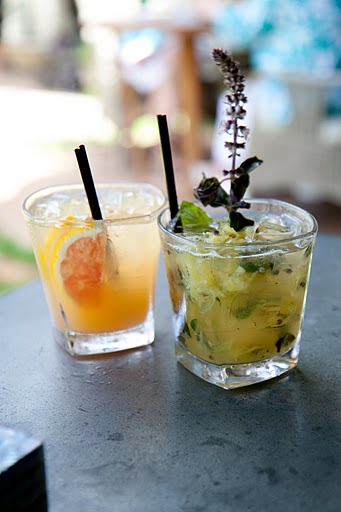
One of the best places for cocktails in Sonoma county is Medlock Ames’ Alexander Valley Bar. It’s a winery, but if you arrive after 5 p.m., walk around to the back side of the tasting room. There you’ll find a retro-casual bar with design touches of Prohibition and the Wild West mingling with a vintage photo booth and a bar lined with herbs and citrus. Cocktails like the Verdant Virtue/Vice exemplify the garden fresh harvest of ingredients from Medlock’s own backyard. Hendrick’s Gin and green Chartreuse are amplified with mint, basil, rosemary, cucumber, and lime to yield refreshing beauty. A nocino manhattan plays heavier and muskier with Buck Bourbon, Carpano Antica, and the nuttiness of nocino walnut liqueur.

And while wine still reigns in Napa and Sonoma counties, contests like Charbay and Perfect Puree’s second annual wine country cocktail competition, held May 16, showcase the increasing array of talent in both counties. It may not be up with the big cities yet, but the region has caught onto the cocktail renaissance, infusing it with its fresh local flair. It would seem that the wine country is not just for winos anymore. 

Subscribe to Virginia’s twice monthly newsletter, the Perfect Spot.


Appetite: Island bites, part four

0

I spent some brilliant days — and the first three of five installations in my Hawaiian series — exploring Oahu. But based on what every traveler I’d ever met had told me, I knew it could only get better with Kauai. This time around, let’s talk the restaurant scene on Kauai – next time, I’ll feature its hotels and drink. 

But first, the ugly: traffic jams are jarring shocks on the island’s east side near Lihue, particularly in Kapaa. One-lane roads at a dead stop along stetches of strip malls are downright irritating. I almost missed my flight home when it took one hour to go 10 miles from Kapaa to Lihue Airport (the day before the same route took 10 minutes).

But on the South and North shores there was little to no traffic. Even in Lihue, where the main airport is based, mountains and fields surround the tiny town. Kauai is imminently more laid back than the already relaxed Oahu — a distinction I savored, even if Honolulu is clearly the leader in food and dining.

A helicopter ride over the famed Napali Coast and around the entirety of Kauai is nothing short of magical. Though you will spend roughly $350 per person, it’s worth it. It cost $250 when we payed in cash at Inter-island Helicopters – whose friendly, fun staff and pilot gave us a wonderful, hour-long tour, just take note: those shiny, red copters on the website are not the ones we rode, ours was more like an old army helicopters, with open air, no doors — terrifying to take off in, but one quickly acclimates to the feeling.

You’ll need a helicopter ride to take in the Napali Coast, sans blisters

I can honestly say this was one of the best travel adventures of my life, and I’ve traveled to five continents. Views are breathtaking, yes, but getting up close and personal is the real thrill.

On a less windy day, our pilot flew close into craters and mountain niches, through the gorgeous Waimea Canyon, over blowholes and coffee plantations, and along the coastline. We covered the entire island, smelled rain from the highest peaks, and took in the pristine blue of the ocean.

Whatever you do on Kauai, do this. Next time I will try an ocean boat ride, the only other way to actually see the Napali Coast without hiking it (an arduous journey meant for the hardcore and even then, limited paths mean you can’t hike it in its entirety). I’m sure a boat ride can be full of thrills, but it can’t give the all-encompassing view of the entire island you can see via air.

But no matter how you see it, see Kauai at least once in your life. It’s incredible how a tiny island can enchant. Even for a big city girl like myself, Kauai had a way of wrapping my days up in its mellow spell.


CHEAP EATS

Mark’s Place, Lihue:

Mark’s Place musubi, for those who like their Hawaiian snacks authentic

My favorite plate lunch of the trip, Mark’s Place is a true local’s gem. It’s a clean hole-in-the-wall with creative daily specials and desserts and salads on top of traditional loco moco, beef stew, and chicken katsu.

Specials were not just ultra-fresh, they were gourmet. I loved a dish of blackened mahi mahi ($8.95) gently drizzled in a lilikoi (passion fruit) mustard sauce, served over quinoa and sauteed spinach. A green salad in papaya seed dressing accompanied the fish.

At that price, the dish was a steal, and you’d expect it to shine in any restaurant setting – only you order it as take-out in an industrial neighborhood frequented by blue collar workers, with whom you’ll be sharing one outdoor picnic table. Mark’s Place’s simple, fresh musubi ($2.25), particularly the teriyaki beef variety, makes a fine snack.


Kountry Kitchen, Kapaa: 

Kountry Kitchen was my top breakfast on Kauai. Packed with locals, my eyes widened at the sight of what must have been the most massive pancakes I’ve seen (and I’ve had some gigantic ones). Good thing I saw them before ordering two — it’s a mere $6-8 for two pancakes, which could feed a few tourist between them.

Macadamia nut pancakes are a popular pick at Kountry Kitchen, but I couldn’t resist the day’s special: Elvis pancakes. Yes, this means peanut butter and bananas, the King’s beloved combo. Accompanied with awesome housemade coconut syrup, they were perfection.


Shrimp Station, Waimea:

If you’re going to Waimea, don’t miss this classic shrimp window with outdoor picnic tables, reminiscent of the shrimp trucks and window fronts on Oahu’s North Shore. Shrimp Station serves killer coconut shrimp, plus beer-battered, garlic, or sweet chili garlic.

A basket of coconut shrimp was juicy and savory with ginger-papaya tartar sauce. Our pace was slow while we lingered at the picnic tables in this sleepy little town. Quintessential southern Kauai.


Koloa Fish Market, Koloa: 

An authentic, plate lunch take-out only shop, Koloa Fish Market is beloved in southern Kauai. It serves heaps of Kalua pork, lau lau (shredded pork wrapped in a taro leaf), and all kinds of poke, from raw ahi to octopus. Ordering food and taking it back to our Grand Hyatt porch with a bottle of wine was a pleasure.

Though cheap and plentiful, I found Koloa’s flavors not particularly impressive. I’m crazy about fish (raw, cooked, any which way), but this is no pristine poke experience. Fresh as it is, I find eating at similar hole-in-the-walls around Hawaii, authenticity seems to mean hunks of seafood drowning in oil — well-prepared but lacking that ultra-fresh, of-the-sea taste. I find plenty to love in local Hawaiian cooking, but personally find more flavor and finesse with raw fish in other culinary styles.

Salty, fall-apart pork (in lau lau or Kalua styles) was better than the seafood but not as satisfying for me as pulled pork barbecue from the South. 


Papalani Gelato, Koloa: 

It’s no Italian gelato or San Francisco ice cream (à la Humphry or Bi-Rite), but Papalani Gelato is organic, with straightforward island flavors like lilikoi, mango, papaya, and macadamia nut. It’s the go-to local ice cream shop (as opposed to sugary, lower quality cream at the shop a couple doors down – I tried both).


Mermaids Cafe, Kapaa:

Mermaids Cafe is about one thing: ahi nori wraps ($9.45). Basically a giant burrito made with a green tortilla with a layer of nori, or seawood, they come stuffed with seared ahi tuna tossed in wasabi cream, pickled ginger, and rice.

This hippie-spirited walk-up counter isn’t quite what I’d call gourmet – there is something slightly amateur about the food (are things cooked in burnt oil?) But the cafe does bring fresh, vegetarian-oriented food and hippie clientele to the island — and those factors hardly mask its Hawaiian spirit. Plus, you can fill up for $10.


MID-RANGE

22 North, Lihue: 

Maybe the best meal I had in Kauai, and certainly the most creative, 22 North is on the grounds of Kilohana Plantation. Kilohana, if you squint past the touristy jewelry shops and such, is among the last remaining glimpses of the sugar glory days of Hawaii. The 1930s spirit prevails, lazy breezes blowing through the original house (where a few rooms still showcase ’30s decor), while whiffs of whole pig roasting underground in expectation of a luau intoxicate.

Tourist trappings aside, I enjoyed an hour and a half ride on the plantation’s 1939 Whitcomb diesel engine train, taking in 50 varieties of fruits and vegetables growing alongside the tracks that ran through the working farm. The best part was stopping to feed bread to a herd of pigs.

Afterwards, I sat in the courtyard of the plantation house for a meal at 22 North. Farm fresh is no exaggeration here — many ingredients come straight from the surrounding fields. 

The playful, contemporary hand given to many a dish is reason enough to dine here. But 22 North’s cocktails were the best I had on Kauai. Intriguingly, one was unlike any other I’ve had before – a rare occurrence for me anywhere, much less in a region not known for cocktails. Blue Rhum ($8) impressed me with its light rum, home-grown Kilohana pineapple, lime, and a stunning frond of African blue basil – it was aromatic and sophisticated. 

The rest were a mixed bag. The Paloma Fresca ($8) was unable to find a harmony between its tequila and grapefruit, but it benefited from local citrus and Kiawe honey. Fried Green Tomatoes ($11) gave a nod to the Southern United States with tomatoes from the farm encrusted in cornmeal, served with a romaine salad in a Maui onion buttermilk chive dressing.

22 North’s burger ($11) was satisfyingly juicy, made with local meat (rotates between beef, lamb, and veal). The cubano sandwich ($9) was pulled pork and house-cured ham laden with homemade pickles and mustard. The restaurant serve gougères ($5) made with fennel honey butter, baccala fritters ($7) with macadamia nut romesco, and sesame-crusted tuna ($28) poached in carrot, ginger, and white wine with a “forbidden rice cake.”

Dessert (all $8) is another highlight here. Local fruit pie benefits from even more home-grown produce, served warm, enclosed in a surprisingly French pie crust that was flaky and buttery, and topped with a scoop of Kauai’s own Lappert’s vanilla ice cream.

22 North has four different “adult floats” ($12) all made with ice cream and beer or spirits — oddly delightful. Though I’ve had beer floats before, I’ve never had one with the refreshing tang of the coconut porter float made with Maui Brewing Co. coconut porter and toasted coconut.

All around, this meal was the most uniquely satisfying of my Kauai visit, and the one that best represents local bounty.


EXPENSIVE

Tidepools, Koloa:

Tidepools at the otherworldly Grand Hyatt captures the magic of its setting in a Disneyland-esque way. It almost feels fake: tiki torches light up a lagoon as you dine under open-air, thatched-roof huts listening to frogs croak. Idyllic.

Certainly the menu reads old school – and there is a dated air about the place, but there are culinary surprises that hold the spell of the setting. It’s $32-55 for entrees and a more reasonable $9-15 for appetizers. You’re right: in the scheme of fine restaurants, it’s not worth that high price tag. But you’re in Kauai and this is one of the best meals you’ll have there, in an environment that helps that cost go down more easily.

Salads (like $9 Manoa lettuce with a creamy Maui onion-garlic dressing and shaved manchego cheese) and sashimi starters (like $15 ahi with Hawaiian hearts of palm and shiso leaf) are fresh and pleasing. Brandt Farms organic prime NY strip steak ($48) is shockingly juicy when cooked medium-rare, and packed with flavor. The other surprise is the crowd-pleasing macadamia nut mahi mahi ($32): lightly encrusted in nuts over coconut jasmine rice in a tropical rum buerre blanc. It tastes of Hawaii: redolent of the sea, gently sweet, with a nutty goodness.


— Subscribe to Virgina’s twice monthly newsletter, The Perfect Spot


Drinking al Frisco

0

ruggy@yelp.com

RUGGY’S YELP Lately the weather around San Francisco has been more akin to what you’d expect in a city like San Diego. Or San Antonio (remember Pewee, there’s no basement in the Alamo!). Or heck, even San Felipe, Mexico.

Feel free to insert your own tropical “San” destination as a point of comparison, but the fact remains: we’ve been as spoiled as a Kardashian sister in an NBA locker room over the last couple of weeks with this delicious abundance of California sunshine. When those warm days and nights take hold in our usually mild metropolis, the low hanging fruit for al fresco assimilation frequently ends up being Zeitgeist. But believe it or not, that’s not the only gunslinger in the Wild West of outdoor indulgence.

Looking to take a break from slugging bloody marys among a sea of tight-jeaned counter-culturalists? Check out a few of these lesser-known destinations for exoteric irrigation.


JONES

Taking up residency in an area of town better known for its seedy rathskellers and nondescript, shadowy tap rooms lies one of the most impressive open air asylums in town. With enough room to play a round of jai alai with every last member of the Polyphonic Spree, Jones is easily the most sprawling rooftop deck you’ll find anywhere in this seven-by-seven-mile playground. Featuring nibbles by Ola Fendert of Oola fame, the menu includes everything from fried chicken and waffles and Humboldt Fog pizza to lighter fare of seasonal soups, steamed mussels, and ambrosial salads, accompanied by an array of beer, wine, and specialty cocktail selections. Jones does channel a bit of the fist-pumping Ruby Skye scene at times, but don’t let a few spray-tanned fashionistas deter you from one of the best hangs under the stars for a balmy, cloudless night.

620 Jones, SF. (415) 496-6858, www.620-jones.com


PASSION CAFÉ

This relative newcomer to the skids sits high above the curbs of the Sixth and Market interchange with a cozy garden setting ripe for an extended stopover any time of day. While pigeons fight over discarded bones from nearby Louisiana Fried Chicken and free-spirited drifters engage in heated debates with various inanimate objects, dive into a chilled glass of pinot grigio or a frothy pint of Lagunitas IPA (beer and wine only here) while devouring French-inspired treats like artisan fromage and meaty baguette sandwiches. While most menu selections don’t necessarily give Thomas Keller a run for his money, the croque monsieur is not to be missed if you know what’s good for ya.

28 Sixth St., SF. (415) 437-9730


SPORK

In the space where the parking lot for the KFC that previously called this space home once stood is a finger-lickin’ good outdoor veranda, perfect for throwing back a few adult libations in the heart of the Mission. Few are aware of Spork’s hidden bucolic surroundings, so if it’s date night and you’re looking to impress your boo with an under-the-radar retreat, it will do the trick nicely.

And it ain’t no parking lot ambiance, either. The vintage record player that spits out tunes in the corner makes for a easefully hip aura perfect for tipping back a gaggle of hard-to-pronounce barley-malted bevies. In the event temperatures dip a little beyond your comfort level, the crew will gladly fire up the heatlamps to ensure that your goose bumps don’t get too out of hand. (Of course you could always take the opportunity to keep your dining companion warm with some old-fashioned 98 degree body heat, but we’ll leave that up to you, player.)

1058 Valencia, SF. (415) 643-5000, www.sporksf.com

The raffish Ruggy Joesten is senior community manager at Yelp.com.


Appetite: Our picks from Dry Creek

1

Last year’s Passport to Dry Creek festival (April 30-May 1) was quite the weekend of hops between wineries in Dry Creek Valley. How was it different than any of the dozens of events in wine country at any given time, you might ask?

Unlike barrel tasting weekends mobbed with drunken carousers and not-yet-mature wines, or smaller events where you gain merely a handful of tastes, Passport includes the majority of wineries in the Dry Creek valley and keeps the crowds regulated enough to be enjoyable. Each winery serves unlimited food and wine, often with live music and engrossing themes.

With a Passport ticket in hand, it’s like you’re invited to a private party at each winery. Some of the wines triumphed over the others, but then, many of the vineyard settings bested the rest during the weekend’s typically brilliant weather. After visiting 24 wineries, here’s my take on this year’s Passport highlights in the categories of ambiance, food, and of course, wine.


AMBIANCE

Bella Vineyards: 

Just like last year, Bella‘s African safari theme and moody, cool caves were a highlight of the entire weekend. Lingering here with a crisp rose is a joy every time.

Truett Hurst Vineyards:

Your drinking buddies at Truett Hurst

Another top spot from last year, Truett Hurst has a memorable zinfandel rose ($15) best enjoyed in the spot’s red Adirondack chairs alongside the river running through its property – after you’ve visited the goats and sheep on the back of the property. A dreamy respite, I always leave this winery relaxed.

Family Wineries: 

I don’t go to Family for the wine, nor for the cluster of non-descript tasting rooms situated off the parking lot, but I stop in annually here to spend a happy hour watching the California Cowboys play. A truly an awesome country band that keeps it real with tunes any classic country fan will love (from Waylon Jennings to Roger Miller), plus a few newer favorites. Vocals, musicianship, the Cowboys are top-notch.

Seghesio Family Vineyards:

A bowlful of steamin’ zydeco at Seghesio

With a raucous New Orleans theme based on the winery family’s NoLa roots, Seghesio boasted one of the top bands of the weekend: Andre Thierry & Zydeco Magic. Grilling Cajun ribs and spooning up bowlfuls of seafood gumbo, the spirit was festive and familial here, like one big backyard party.


FOOD

Frick Winery: 

I’m impressed every year by Frick‘s complicated bite-sized snacks offered by chef John Mitzewich and Michele Manfredi, a husband and wife dynamic duo. Chef John is known for his site Food Wishes (last year’s Saveur winner for best food video blog, nominated again this year).

Manfredi created SFQ sauce, our fair city’s first native BBQ sauce (try it if you haven’t!). Its East-meets-West flair appeared at this year’s Passport in their duck a la SFQ: duck confit in SFQ sauce on a cocoa corn chip, garnished with duck crackling remolata. Yum. 

My two favorites? Main line Philly cheesesteak: mini-baguettes topped with Snake River Farms Kobe-style steak over truffled “cheese whiz” (you read right — chef John is on the money with this one. I’ll take a jar?) Dotted with peppadew peppers and jalapeños, its perfection.

One of the ‘simplest’ bites was the best: the sausage luxe, Boccalone‘s sweet Italian sausage dusted with fennel pollen and skewered with a Luxardo maraschino cherry. Seductive and lush.


WINE

Quivara Vineyards: 

Quivara‘s high quality relies on hand-picked grapes and biodynamic farming methods. Its wines reflect care and attention, whether you’re sipping its 2008 grenache ($26) or 2008 mourvedre ($32).

Frick Winery: 

Frick is a Dry Creek favorite – from grenache blanc to C3 and C2 (Rhone blends), Bill Frick produces sophisticated wines that maintain Old World balance. This year, I’m really taking to his cinsaut and grenache.

Seghesio Family Vineyards: 

Seghesio‘s home ranch zinfandel has been an at-home go-to for a balanced zin, reflecting dark berries and the clay soil it’s grown in. At Passport, we tasted pre-releases of 2009 Home Ranch Zin ($38), a highlight of the 10 Seghesio wines sampled.

Unti Vineyards:

I’ve enjoyed Unti‘s wines the last couple years, and was reminded again last weekend that its 2007 grenache is a standout with blackberry, pepper, and even licorice notes.

Stephen & Walker: 

Besides appreciating their female winemaker, Nancy Walker, who I had the pleasure of meeting during Passport, there was a number of drinkable wines from Stephen & Walker‘s line-up of 10. The most celebrated is Walker’s 2006 Howell Mountain cabernet sauvignon ($65). Winner of multiple awards and the vineyard’s benchmark wine, it’s a fine showcase of the region’s cabs.

— Subscribe to Virgina’s twice monthly newsletter, The Perfect Spot


Ideale

0

paulr@sfbg.com

Grant Street is so strongly associated with Chinatown that it’s easy to forget there’s a segment of it north of Columbus. There, running along the west shoulder of Telegraph Hill, it becomes a part of — and maybe the heart of — Little Italy. In its narrowness and festive congestion, the street does come to seem Roman, and, as in Rome, it has better restaurants than the bigger, gaudier boulevard nearby. American tourists in Rome, it is said, will not leave the well-lighted thoroughfares to investigate dimmer side streets, so those thoroughfares are where you’re most likely to find rip-off joints with “turistica” menus in English.

Our own Columbus Avenue, while splendid in its way, is a kind of Fisherman’s Wharf of Italian cooking, so it’s no surprise that a restaurant like Ideale would situate itself on nearby Grant, out of sight of the hoi polloi, who are attracted to neon and other manifestations of brightness the way moths are to porch lamps. Ideale, which opened in late in the 1990s, is the kind of place you would seek out if you were in Rome; it draws the locals, and it is a curious fact of even the most touristy neighborhoods that they’re filled with locals. Locals are the fourth dimension in such one-dimensional universes.

The restaurant is bigger than it appears, because its second dining room, in the adjoining storefront, is fully separated from the main one and the entryway. And (huzzah!) its walls are hung with splendid paintings, which we supposed to be oil on stretched canvas, with impasto visible even from distant tables, like the little nubs you see in linen. There are few spectacles more discouraging to me than bare restaurant walls. The sweeps of emptiness make me think of prison, or foreclosure.

Chef Maurizio Bruschi is said to have learned to cook from his grandmother, and his style accordingly emphasizes the Italian classics, at least as those are understood in this country. Your first clue about the cooking can be found in the house-baked bread, which in true Italian fashion we found to be adequately salted. Salt makes an enormous difference in most foods, but particularly in bread, which is almost impossible to season after the fact. And Italian chefs, in my experience, aren’t afraid to salt their food. We took Bruschi’s bread to be a good omen. (Is he any relation of Tedy Bruschi? Probably not.)

Good bread implies good pizza, and Ideale’s pies are intense. (Naples is said to be the birthplace of Italian pizza, but Roman pies are reliably sensational.) We were particularly smitten with the funghi e salsiccia version ($14), which combined a crispy thin crust, a judicious ladling of well-seasoned and garlicky tomato sauce, enough mozzarella to glue things together, and a tossing of mushroom slices and bits of sausage that didn’t taste overwhelmingly of fennel — a frequent fault of Italian-style sausage as made in this country, in my view.

We noticed several effusions of fresh arugula. One thatch appeared beside the eggplant parmigiana ($11), which was baked in a crock like a little lasagna — not remarkable, but any halfway decent handling of eggplant gets at least one gold star from me. More arugula turned up with the grilled local calamari ($12), mostly tubes, nicely charred but still tender and lemony.

Risotto alla pescatore has to be, at $17.75, one of the better buys on this or any comparable menu. For one thing, it was just choked with seafood, including black mussels, clams, calamari, and prawns. For another, the rice was cooked in flavorful liquid. The menu card mentioned pinot grigio and garlic, but I suspected the presence, too, of some kind of seafood stock, whether shrimp, clam, or fish. Makers of risotto tend to be obsessed with the complex mechanics, in particular the need to stir the rice constantly for 18 minutes, and to keep the stock at a simmer as you add it cupful by cupful, so you produce the characteristic creaminess. You can make perfectly creamy risotto with plain water, then tart it up Milanese-style with butter, pepper, and parmesan. But there is nothing like cooking rice, whether arborio or some other kind, in flavorful stock or broth, as here.

The flaps of veal in saltimbocca ($23) were generously overlaid with flaps of prosciutto,, whose saltiness helped balance the sauce, a frascati wine reduction infused with rosemary. Frascati is the wonderfully fruity white wine produced in Lazio, the region around Rome — highly drinkable, but if it isn’t on the wine list, having it as a sauce isn’t a bad fallback position. The plate was finished with coins of roasted potato and asparagus tips, the pinnacle of adequacy.

Dessert: how about profiteroles ($7)? With a twist: the pastry balls were filled with pastry cream, while the vanilla ice cream (as a scoop) had to wait outside. Lots of chocolate sauce. too, just the way Nonna used to do it.

IDEALE

Dinner: Mon.–Thurs., 5:30–10:30 p.m.;

Fri.–Sat., 5:30–11 p.m.; Sun., 5–10 p.m.

1315 Grant, SF

(415) 391-4129

www.idealerestaurant.com

Beer and wine

AE/DS/MC/V

Noisy

Wheelchair accessible


The Performant: Vice squad

0

The Thrillpeddlers take on Poe, plague, and poop

In Edgar Allan Poe’s grisly tale The Masque of the Red Death, a group of wealthy nobles hole up in a fortified abbey to avoid the ravages of a mysterious ailment sweeping the countryside, which causes its victims to sweat blood and keel over dead in the streets. 

Led by their host, Prince Prospero, they gather beneath his roof and weld the gates shut against the outside world, availing themselves of the comforts he provides: food, wine, and “all the appliances of pleasure”. Six months into their isolation the Prince arranges a masquerade ball, a gala affair that fills seven rooms, each decorated in a different color. In his zeal to describe at length how each room even boasted windowglass the color of the décor, and how the partiers were costumed with “much glare and glitter and piquancy and phantasm,” Poe neglects to describe much of the evening’s entertainment. 

Fortunately for the curious, the gender-bending, genre-blending ensemble The Cockettes decided to reimagine the spectacle in their final show, Vice Palace, now being revived by the Thrillpeddlers in their way-off-market digs, the Hypnodrome.

As grotesque and depraved as Poe must have imagined the desperate pastimes of the filthy rich to be, it’s my guess that he wouldn’t have come up with entertainments half as perverse as those showcased in Vice Palace

Wrangled into place by flamboyant, fabulously-coiffed hostess Divina (Leigh Crow) and her crop-wielding, high-bosomed secretary Bella (Eric Tyson Wertz), the entertainers went right for the gusto early in the “yellow room” with a buxom burlesque dancer (Tina Sogliuzzo) and a ribald ditty about a camel’s hump(s) performed by dishy tattooed “boy toys” Steven Satyricon and Joshua Devore (the artist formally known as Tober Brandt). 

Next followed a lascivious ode to tantric sex, a bawdy, bloody ballad about Caligula, a Cockettes classic “A Crab on Uranus (Means You’re Loved),” and a sweetly-sung solo performed by Birdie-Bob Watt as Vagina Dentata about her life as a floating turd. Incidentally, this last song included a “scat break”. Of course it did! But even this paled in comparison to the titillating, wordless “Flesh Ballet” performed by an acrobatic (and totally nekkid) Ste Fishell.

The greatest thrill of the production is watching how easily the company weds their long-standing focus on the Grand Guignol with their more recent forays into Theatre of the Ridiculous territory in a single piece. Incorporating all of the gratuitous violence and bloodshed of the former, with the audacious camp of the latter, this show provides a quick and dirty primer on their longstanding love affairs with both. Blood, babes, beefy love slaves, boss wigs, striking black-and-white costumes (designed by Kara Emry), creepy blood effects (Rob Fletcher), and terrific tunes (Richard “Scrumbly” Koldewyn): this charming little anti-musical has something in it for everyone, with the possible exception of Poe. But he’s dead. 


Vice Palace: The Last Cockette Musical

Through July 31, $20-35

The Hypnodrome

575 10th St., SF

(415) 377-4202

www.thrillpeddlers.com


Appetite: Upcoming contests, from Napa cocktails to the ultimate sausage recipe

0

It’s a privilege to be part of a food and drink judging panel. One witnesses wild creativity from up-and-coming stars as well as established greats in the field. Competitions are where food geniuses take risks, and step out further than the bounds of set menus sometimes allow. 

Here are two upcoming contests I’ll be judging: one for cocktails up in Napa (wine country bartenders, please apply!) and one in SF showcasing five local chefs creating gourmet sausage recipes.

2nd Annual Wine Country Cocktail Competition 

Head to Calistoga’s Solage Resort on a Monday night to support your favorite wine country bartender. The mixologists will compete for best cocktail using two winning products: Charbay’s exceptional spirits and Perfect Purée of Napa Valley’s purees and concentrates. Top three winners get cash prizes, while first place gets to participate in a drink photo shoot at Perfect Purée’s headquarters. Bartenders work with ingredients like Perfect Purée’s yuzu luxe sour and carmelized pineapple concentrate, and are allowed to use any base spirit from Charbay’s portfolio, from vodkas to rum (with the exception of its Whiskey Release II, Nostalgie, and brandy). 

The last Charbay-Perfect Purée contest I judged at Rye delivered many memorable beauties. Wine country in the spring is already worth an excursion north, and if you attend the contest you can experience a growing cocktail scene in a region traditionally dominated by wine  – not to mention a showcase of two of the area’s best local products.

Monday, May 16, 6-8 p.m., free

The Solage Resort 

755 Silverado Trail, Calistoga

www.charbay.com 

www.perfectpuree.com


Tailgate Throwdown

Mark your calendars for what will be one of the most fun competitions of the summer. Tres Restaurant is the setting, and $10 is an oh-so-right price to sample five unique recipes featuring Saag’s Sausage. Here’s the meat of the competition: five popular Bay Area chefs will vie for best tailgating sausage recipe. You’ll get to sample each entry, along with classic game day sides like potato salad and coleslaw, then vote on who you think is top dog of the night. You’ll take home a swag bag stuffed with sausage samples, recipes, and more — the winning chef gets $250. Best of all, all ticket proceeds benefit Food Runners of San Francisco

Monday, June 20, 6:30-8:30 p.m., $10

Tres Restaurant 

130 Townsend, SF

(415) 227-0500

www.tailgatethrowdown.eventbrite.com 


–Subscribe to Virgina’s twice monthly newsletter, The Perfect Spot


Alerts

0

ALERTS


By Jackie Andrews

alert@sfbg.com


WEDNESDAY, MAY 4


Robert Reich lecture

Robert Reich — UC Berkeley professor of public policy, former U.S. secretary of labor, and best-selling author — asks the question, “Will corporate social responsibility stop a race to the bottom in labor standards?” Come hear what the man The Wall Street Journal called one of the “most influential business thinkers” has to say.

4–6 p.m., free

SFSU Seven Hills Conference Center

1600 Holloway, SF

(415) 338-2885

www.sfsu.edu/~news


THURSDAY, MAY 5


Chabot College walk-out

Chabot College students, as well as middle and high school students and other community members in and around Hayward, will walk out in protest of the construction of the Russell City Power Plant. Meet at Chabot College and march en masse to the proposed site of the plant for a lively rally.

Noon–3 p.m., free

Meet at Chabot College main courtyard

25555 Hesperian, Hayward

Facebook: Powerplanttaskforce Hayward


Hecho en San Francisco

Commemorate the Battle of Puebla while supporting local food vendors at this benefit for La Cocina and CUESA. Taste fresh tortillas, authentic puebla cooking, and the best of las cocinas Nopailito, Mijita, y Tacolicious — not to mention top shelf tequila, beer, and wine.

5:30–8:30 p.m., $50

CUESA Kitchen

Ferry Building, North Arcade, SF

www.hechoensanfrancisco.eventbrite.com


FRIDAY, MAY 6


War-tax resistance conference

Any interest in cutting off your own personal funding of America’s wars? Join the club. War-tax resisters from around the country are sure to attend this three-day national conference, which begins tonight and ends Sunday (at differing locales, so check the website for more info). Tonight’s discussion — following dinner at 6 p.m. — is on strengthening resistance through social networking.

6–9:30 p.m., $15

Berkeley Friends Church

1600 Sacramento, Berk.

www.nwtrcc.org


SATURDAY, MAY 7


Beyond gang injunctions

Join this community discussion on gang injunctions — a new strategy for policing gangs that has been criticized for siphoning money away from community programs while increasing racial profiling and other attacks on civil liberties. You’ll hear from prominent community leaders such as Sagnitche Salazar of Stop the Injunction Coalition and Whitney Young of Critical Resistance, among others, followed by a Q&A.

2:30–4:30 p.m., free

EastSide Arts Alliance

2277 International, Oakl.

www.radioproject.org


TUESDAY, MAY 10


Activism is not terrorism

Attend this reading and discussion of Will Potter’s Green is the New Red: An Insider’s Guide to a Social Movement Under Siege. In it, the award winning journalist discusses the “green scare” trend in the media and popular culture, which portrays environmental and animal rights activists as so-called ecoterrorists. Even the federal government is flippant with its use the word “terrorism,” he says, and it recently convicted a group of animal rights advocates of “animal enterprise terrorism.”

7 p.m., free

City Lights Books

261 Columbus, SF

www.citylights.com 

Mail items for Alerts to the Guardian Building, 135 Mississippi St., SF, CA 94107; fax to (415) 437-3658; or e-mail alert@sfbg.com. Please include a contact telephone number. Items must be received at least one week prior to the publication date.

FEAST: 5 tapioca delights

0

diane@sfbg.com

When it comes to tapioca pudding, levels of neurosis tend to equal levels of nostalgia, with the haters depicting the starchy little pearls as “gummy, scary fish eyes” and the aficionados invoking Mom patiently stirring vanilla extract into the sweet milky mixture over a prairie Wedgewood.

Pearl drinks notwithstanding — and haven’t all those bubble tea places peaked yet? — tapioca pudding remains a rarity outside of a few Jewish delis and Southeast Asian restaurants. But when you do see it, the all-white comfort food has been getting a foodie and fusion makeover, with infusions of lime, maple syrup, and Grand Marnier; bases of cream, orange juice, or coconut milk (join us, lactose intolerant ones!); real vanilla beans instead of extract (sorry, moms), and purees of passionfruit, banana, and mango. Here are five places that serve their tapioca pudding proudly. Indeed, at a few of them, you either eat your tapioca (or sticky rice) or end your meal on a sour note. You choose. (Diane Sussman)


OUT THE DOOR

Oh, Charles Phan — is there no humble Vietnamese street food you can’t turn into a sought-after gourmet delicacy? Not even tapioca pudding — to which you added a dollop of mango mousse for extra sweetness, a splash of lemon juice for refreshing tartness, a bit of cream for extra richness, all in a smooth coconut milk base? If there’s any criticism to be had, it’s that OTD’s tapioca pudding is only offered every day at the Westfield Centre outpost (sorry, Ferry Buildingers, you have to wait until summer to get yours). Not nice, Charles Phan, making us traverse the carny ride of an escalator for a bit of tapioca. And while we’re at it, here’s another criticism: OTD’s Ferry Building tapioca comes in prepackaged plastic containers — or is it a compostable composite? — so BYOB (bowl).

845 Market, SF. (415) 541-9913, www.outthedoors.com


LE COLONIAL

Who says a night on the town can’t end in tapioca pudding? At the classic and classy Le Colonial, the French-Vietnamese restaurant in the Financial District, you can have it all. Le Colonial may also be the only restaurant in town that suggests a wine pairing for your tapioca pudding (a 2003 Royal Tokaji Aszu 5 Puttonyos). And, Le Colonial serves its tapioca, infused with coconut, over banana custard. That’s right, puddin’ heads, you don’t have to choose! Sop up the two-fer with Le Col’s wonton crisps, and get your textural, salty contrast. Granted, this tapioca isn’t cheap ($9). But this is your big night out — go ahead and splurge in your own homey, comfy way.

20 Cosmo Place, SF. (415) 931-3600, www.lecolonialsf.com


THE HOUSE

The House, along with lingering traces of the Beats, are two small respites from North Beach’s Italian theme-park vibe. Situated in an off-kilter, oddly-painted building on a triangulated corner at Grant and Fresno, the House serves Asian fusion fare like Maine crab cake with pickled ginger remoulade and wasabi noodles with Angus steak. Fusions aside, the House’s tapioca pudding may well be prettiest in all the land (take that, shellacked and air-brushed Martha Stewart Living centerfolds). For starters, House decorates its tapioca with a flowery swirl of mango puree that melds into the pudding for a jolt of extra sweetness. But it’s not just the artistry that makes it worth the $4 price tag: the pudding is smooth and creamy, with large pearls that have had all traces of gumminess warmed out of them.

1230 Grant, SF. (415) 986-8612, www.thehse.com


PHUKET THAI

If there’s a tapioca pudding that has remained faithful to its pedestrian roots, this is it. No cream, no liqueur, no mousse. Indeed, compared to other places, Phuket’s tapioca can seem on the thin side, and the corn kernels for added sweetness and texture are decidedly off-trend. But Phuket has one thing going for it that no other local tapioca purveyor has: it serves its tapioca warm. That’s right, the cooks make it just for you. And nothing says “ma-ma” like tapioca right off the stove.

248 Divsadero, SF. (415) 864-8584, www.phuketthaisf.com


WHOLE FOODS

Some days you need tapioca. You need it bad. You need it bad and you sure as hell aren’t going to make it yourself. And you’re certainly not going to eat another satay dish just to get to the tapioca, or resort to Kozy Shack (not because it’s bad — it’s good — but because the four-ounce containers are just too damn small and you’d have to eat the whole pack). Those are the days to head to Whole Foods’ prepared foods section, where eight-ounce containers of tapioca await. Although Whole Foods takes a classic approach to tapioca, it does up the gourmet ante by using cream (and milk) and a generous helping of vanilla. The result, of course, is smooth, creamy, and sweet — the way you wish your Mom had made it, if she hadn’t been saving the cream for something “special.”

Various locations, www.wholefoodsmarkets.com


FEAST: 8 intriguing entrees

0

virginia@sfbg.com

Forget that gourmet mac ‘n’ cheese, leave behind another night of Neapolitan pizza — it’s time to consider a meal that has yet to be repeated all over town. Here are a few that have really turned my head of late.


HIBISCUS

Hop a flight to the Caribbean via this downtown Oakland eatery, where chef Sarah Kirnon pulls together stimulating new interpretations of classic island flavors. A stand-out on this menu of tastes native to Barbados and Jamaica is Kinon’s Dungeness crab cornmeal porridge, a comforting blue cornmeal mash laced with chunks of crab, butternut squash, carrots, leeks, and spiced up with bird’s eye chili. It may be one of the best dishes she’s served yet.

1745 San Pablo, Oakl. (510) 444-2626, www.hibiscusoakland.com


WISE SONS DELI

As long as it stays in its current form — a pop-up eatery that takes over Jackie’s Vinoteca and Cafe on Saturdays — lines at Wise Sons are sure to stay painfully long. That’s because nowhere else in the city can you get the authentic Jewish eats these young guys serve up. It’s no surprise that after only a few weeks of operation, they’re already in hot demand. Corned beef and pastrami are sliced before your eyes in all their meaty glory, excellent chocolate babka is earthy with dark chocolate or laced with Clairessquares caramel in a sweeter incarnation. Don’t miss house-smoked salmon with red onions and capers on a bialy, a traditional roll that’s similar to a bagel but baked instead of boiled.

Saturdays 9 a.m .–2 p.m. 105 Valencia, SF. (415) 787-DELI, www.wisesonsdeli.com


BAR BAMBINO

It was with delight I heard that one of the city’s first Italian charcuteries was shifting to a Germanic-Italian cuisine that would focus on the Tyrol and Friuli regions. I’ve been craving Tyrolean food ever since I traveled the area in Italy — its melting pot of cultures equals pleasure on a plate. Bambino’s executive chef Lizzie Binder plays with unique dishes like chewy, subtle pumpkin seed spaetzle, but my favorite is the Alpine bruschetta, simple hunks of rustic bread layered with Alpine ham, melted Montasio cheese, and horseradish kraut. It transported me straight back to dining on ham and cheese on sunny patios in the Alps.

2931 16th St., SF. (415) 701-VINO, www.barbambino.com


GITANE

Do not fear raw lamb. Do not expect gaminess. Order this dish — and prepare for fresh, succulent meat to rival the best beef tartares you’ve ever had. Chef Batson’s lamb tartare is unexpectedly silky meat, loaded with flavor. The added bonus is three dollops of worthy spreads, from an eggplant compote to a mix of pomegranate, walnut, and red pepper. There’s just no dish like it in town.

6 Claude, SF. (415) 788-6686, www.gitanerestaurant.com


FIFTH FLOOR

Since executive chef David Bazirgan recently climbed aboard, there are a number of noteworthy dishes here — particularly the Mendocino uni flan. It arrives unceremoniously, resembling a little bowl of foam. Dig into this “saffron air” and underneath you’ll find Dungeness crab fondue and a silky uni flan. Heightened by aged kaffir lime and Sichuan pepper, you’ll be dreaming about it all week.

12 Fourth St., SF. (415) 348-1555, www.fifthfloorrestaurant.com


HELMAND PALACE

A highly underrated SF gem. Decor is not the latest or hippest — but even better, it’s mellow and unassuming. It’s easy to get a reservation, you can fill up for $15, and even after 20 years, Helmand Palace remains our city’s best Afghani restaurant. Although kaddo (pumpkin that is pan-fried, then baked) in yogurt-garlic sauce remains a favorite dish of mine, I’m just as crazy about aushak, Afghan raviolis filled with leeks and scallions and served in a sauce of yogurt, mint, garlic, tomato, and ground beef: Middle Eastern cuisine meets red sauce Italian.

2424 Van Ness, SF. (415) 345-0072, www.helmandpalace.com


ICHI SUSHI

Industry insiders sidle up to Ichi’s sushi bar for impeccable fish from chef Tim Archuleta and crew. Archuleta keeps it seasonal and affordable — you’ll find far less interesting slices of fish elsewhere at higher prices. There are also high quality hot plates, and a particular stand-out is the artistic beef tataki. All-natural beef is seared sous vide, then accented with radish, kimchee, white ponzu, and crispy burdock root. The meat oozes tenderness while the accompanying ingredients add dimension to the dish.

3369 Mission, SF. (415) 525-4750, www.ichisushi.com


SPQR

Though everyone loves SPQR’s rustic pastas and exquisite antipasti, you’ll be equally satisfied at its bar with spuntini small bites and a glass of Italian wine from Shelley Lindgren’s impeccable list. Executive chef Matthew Accarrino infuses Roman sensibilities throughout the menu, achieving near-perfection in snacks like milky burrata cheese, which runs over accompanying toast and is sweetened with honey, hazelnuts, and a hint of chili — savory, sweet, silky. Spiced ricotta fritters are equally unforgettable: warm, with a whisper of smoked maple syrup.

1911 Fillmore, SF. (415) 771-7779, www.spqrsf.com


FEAST: 10 contemporary kitchen essentials

0

By now, you (hopefully) know the basic building blocks of good eating: fresh, in-season vegetables and fruits, whole grains, and — for the carnivorous set — lean, unprocessed meat and fish. Awesome. But unless you’re an adherent of the new Paleo diet fad, which mimics the eating habits of our hunter-gatherer ancestors, it’s going to take a bit more to transform this no-frills foundation into something you’d want to sit down to. Here are a few kitchen essentials that can quickly shift your cooking from serviceable to superb. (Emily Appelbaum)


SESAME OIL

Ancient Assyrian legend holds that when the gods assembled to create the universe, their drink of choice was sesame seed wine. And when Ali Baba needed to unseal a magic cave stocked with treasure, it was Sesamum indicum, which bursts open at maturity, that he invoked with the famous phrase “Open, Sesame!” If you’re looking to introduce some similar magic into your cooking, sesame oil is a good place to start. The cold-pressed oil has a light flavor and high smoke point, making it ideal for fast, high-temperature stir fries and wok cooking. When toasted, the oil becomes rich, smoky, and deep. A few drops make salads and noodle dishes sinfully savory and create the perfect base for dipping sauces. For a decadent indulgence, try the following: spread hot toast with miso (fermented soybean paste), top with a slice of avocado, and a drizzle of toasted sesame oil, then close your eyes and float a bit.

Available at Ming Lee Trading Inc. 759 Jackson, SF. (415) 217-0088


TAHINI

Speaking of sesames, Bay Area veggies, vegans, and carnivores alike have been blending tahini, a paste made from hulled sesame seeds, into homemade hummus for years. When mixed with a little fresh garlic, lemon, and salt, tahini will make quick work of a can of garbanzos — but there are tons of other uses for this simple spread. Try branching out with bean dips. Include white cannellini beans, black beans, or even kidney beans, which are super-high in antioxidants. Ditch expensive bottled salad dressing in favor of tahini mixed with soy sauce, lemon juice, or cider vinegar, and any fresh herbs you like. Toss soba noodles with steamed veggies and tahini for a fast, healthy dish served hot or cold. Or, for a whole array of desserts, start by kneading tahini and honey into flour for a tender, pliable pastry.

Available at Semiramis Imports, 2990 Mission, SF. (415) 824-6555


QUINOA

If you haven’t tried this indigenous staple from the Andes, you’re missing out. Stocked with the full set of essential amino acids, these unassuming seeds may be the most complete protein source the plant kingdom can provide. Quinoa even made NASA’s short list for crops to be included in ecological life support systems for long-duration manned spaceflights. It cooks in minutes and — with its mild, nutty taste and light texture — it’s an ideal base for curries, stews, and cold salads mixed tabouleh-style. Unfortunately, the quinoa craze in wealthy countries has left the crop unaffordable in some traditional regions such as the Bolivian salt flats, where most cultivated quinoa is now grown for export. Be sure to look for quinoa from companies like La Yapa Organic that pay a fair price to farmers.

Available at Rainbow Grocery, 1745 Folsom, SF. (415) 863-0620, www.rainbow.coop


COCONUT MILK

If you’re the kind of good San Francisco citizen who duly visits the local farmers market every week, gets carried away by the textures and colors and aromas of nature’s bounty, and then balks at everything you’ve brought home when it comes time to stuff it in the fridge — fear not. Coconut milk is the thing for you. Nothing else can so quickly transform a mountain of disparate vegetables into a rich, harmonious meal. Nearly any food in any season (potatoes regular and sweet, carrots, sweet and spicy peppers, pineapple, green beans, onions, garlic, eggplant, zucchini, tomatoes, pumpkin, spinach, kale) can feel at home in a coconut milk bath, spiced with a pinch of curry powder or garam masala and perfumed with handful of fresh herbs.

Available at Khanh Phong Supermarket, 429 Ninth St., Oakl., (510) 839-9094


FRESH-GROUND BLACK PEPPER

My list of Things for Which There Is No Excuse is short, and most of the items on it — like tube tops and being mean — are negotiable under certain circumstances. But one entry that cannot be compromised on is the use of pre-ground black pepper. It is simply never, ever OK. The difference between the freshly cracked pepper and the plebian, tasteless grey powder that sifts from a can is like the difference between a jam band CD and a live show. Invest in a good-quality peppermill and you’ll end up putting pepper in all kinds of places you never imagined: after experiencing pepper’s pungency in soups and bisques, on roasted root vegetables, and over tomatoes served sliced and sprinkled with kosher salt, you’ll find yourself shaking it onto strawberries marinated in balsamic vinegar and pondering the possibilities of peppercorn ice-cream. A few turns of your grinder set to coarse can quite possibly make the world go ’round.

To browse more varieties of pepper than you crank a mill at, visit San Francisco Herb Co. 250 14th St., SF. (415) 861-3018, www.sfherb.com


FRESH-GROUND NUTMEG

Everything said on the subject of black pepper applies — with perhaps a smidge less fervor — to nutmeg. That sickly stuff stuck with humidity to the inside of a glass shaker at Starbucks does not even remotely resemble the delicately perfumed flakes that you scrape from a whole nutmeg seed, the hard, egg-shaped center of the nutmeg tree’s fruit). Once you stop shaking the horrid pre-ground granules over your coffee, you’re likely to realize the nutmeg is not just a sweet spice. It goes particularly well with cheese and cream sauces, enriches egg and pasta dishes, and enhances all types of savory cookery with that little something-something that makes diners go “hmmm.” But if you want to relegate it to the dessert realm, no one’s going to stop you from grating a little bit over your midnight dish of chocolate ice-cream.

Fremont-based organic spice company Spicely distributes to a bevy of Bay Area retailers, but their products are also available in bulk on its website, www.spicely.com


FRESH GINGER

Like nutmeg, the edible rhizome of Zingiber officinale is often relegated to the subsidiary role of sweet spice — at least in American cooking. But travel nearly anywhere else in the world, from Morocco to Malaysia, Venezuela to Vietnam, and ginger plays the snappy star in soups, roasts, stews, and salads. Grate fresh ginger and garlic into peanut oil as the base for a superlative stir-fry. Stir into soups for a revitalizing broth. For a crisp, peppery salad, shred cabbage, carrots, and green beans and toss with ginger, vinegar, or lime juice, and maybe a dollop of peanut butter (or use your newly purchased tahini). Pulse ginger, chiles, and garlic in your food processor for a quick crust to sear onto meats or tofu. Ginger is a versatile gal, so don’t be afraid to experiment.

Available at New May Wah Market, 707-719 Clement, SF. (415) 668-2583


FRESH LEMONS AND LIMES

Nothing wakes up heavy, sleepy flavors like a bright squeeze of acid, but don’t even bother with the bottled stuff here. Before you juice, take a second to zest the thin colored rind — which contains tons of essential oils — from the outside of the fruit, being careful to stay away from the white pith. Then cut in half through the equator and squeeze. Older fruits can be coaxed to spill their juice by rolling back and forth between the palm and the cutting board. Or zap in the microwave for just a few seconds. Lemons add zip to Italian and French dishes, limes to Asian, Indian and Latin. The brave and adventurous might even try whole lemons or limes — rind, pith, pulp, and all — chopped very finely in salsas; crusts for veggies, fish or tofu; and marinades. An old-timey recipe for something called Funeral Pie uses whole lemons, thrown in a blender with some sugar, eggs, and a little flour. The result is poured in a pie crust and “Viola!” A super-quick desert ready in a flash, in case of Great Aunt Millie’s untimely demise.

Bi-Rite Market stocks organic, biodynamic lemons and limes from Becks Grove whenever possible. 3639 18th St., SF. (415) 241-9760


BLACK BEAN SAUCE

Hot Chinese sriracha sauce might be manufactured right here in Northern California, but that’s no excuse for indiscriminately squirting that sticky red rooster bottle over everything — from eggs to escargot — that stands still long enough. If it’s spice you’re craving, aim for a subtler, deeper flavor. Chinese-style black bean sauces, garlic or chili, provide plenty of heat without the cloying, vinegary sweetness of sriracha. Instead, their fire is mellow and a bit smoky, and develops on the tongue. Try over steamed veggies such as asparagus, broccoli, or bok choy. Use to marinate tofu or chicken, and serve over everything from tempeh to tacos. If you like the taste, try going a step further and purchasing some fermented black beans — a salty, spicy condiment something like a cross between miso and Marmite.

Available at Pang Kee Bargain Market, 1308 Stockton, SF., (415) 982-1959


REAL MUSTARD

All mustards are essentially a combination of whole or ground mustard seeds suspended in vinegar and spices. But subtle variations in the type of grind and proportions of ingredients can make all the difference. If you inhabit the realm of ballpark-yellow, your culinary development has been sorely stunted. All mustards work as emulsifiers, making them ideal mix-ins for dressings, marinades, and notoriously finicky Hollandaise sauces. Whole grain mustards combined with miso, maple syrup, horseradish, or Parmesan cheese (not all at once!) make a crunchy coating for salmon, chicken, pork chops, or baked squash. Finely-ground mustards like German Hangstenberg are superhot and go well with preserved meats and blander veggies like cabbage. Some mustards are made with imported vinegars or champagnes, and are best paired with simple breads and cheeses so their unique flavors come through. And for something a little closer to home, try Mendocino Mustards, made in Fort Bragg.

Available at Canyon Market, 2815 Diamond, SF. (415) 586-9999


This place

0

arts@sfbg.com

LIT Begun in part as a series of maps accompanying public lectures, Rebecca Solnit’s Infinite City: A San Francisco Atlas (University of California Press, 167 pages, $24.95) is a remarkable act of gathering, one that presents myriad versions and visions of San Francisco and its surrounding areas that can inform a reader’s experience.

Infinite City was recently selected by the Northern California Independent Booksellers as one of its 2011 winners. Duality is a fundamental aspect of the book’s breadth and depth and sense of sharply critical appreciation — structurally, Solnit pairs distinct maps with corresponding chapter-length essays. In keeping with that characteristic, and also with the book’s group spirit (though admittedly on a much smaller and less intensive scale), I asked different Guardian contributors to share appraisals of one, or in most cases two, of the 22 sections. The result provides just a hint of what can be found within Infinite City. (Johnny Ray Huston)

MAP 3. “Cinema City: Muybridge Inventing Movies, Hitchcock Making Vertigo

The map for this chapter tracks the San Francisco life of Eadweard (sic) Muybridge, alongside landmarks from Alfred Hitchcock’s Bay Area masterpiece Vertigo. In “The Eyes of the Gods,” Solnit, who won the National Book Critics Circle award for her 2003 Muybridge bio River of Shadows, writes of the 19th century artist’s breakthrough high-speed photography, “It was as though the ice of frozen photographic time had broken free into a river of images.”

Many such rivers flowed all over this fair city when Vertigo premiered at the Stage Door Theatre at 420 Mason St. on May 9, 1958. Alas, only 10 of the more than 60 single-screen venues extant that year, all demarcated on Shizue Seigel’s fine map, are still functioning. Solnit rightly describes the shift to watching films on various digital delivery mechanisms as leaving contemporary culture with a “curious imagistic poverty.” As she concisely describes watching Milk and Once Upon a Time in the West on the Castro Theatre’s giant screen, we’re reminded that there is no comparison between enjoying cinema in such a grand setting and staring at a laptop. The great 20th century memoirist and observer Quentin Crisp wrote, “We ought to visit a cinema as we would go to a church. Those of us who wait for films to be made available for television are as deeply suspicious as lost souls who claim to be religious but who boast that they never go to church.”

That applies to you too, Netflix subscribers! The Roxie, Castro, Red Vic, Clay, and a small number of other houses of worship are still in business, so what are you waiting for? (Ben Terrall)

MAP 4. “Right Wing of the Dove: The Bay Area as Conservative/Military Brain Trust”

In “The Sinews of War are Boundless Money and the Brains of War Are in the Bay Area,” Solnit argues that antiwar, green, and left Bay Area hotspots are well known and don’t need to be charted again — unlike military contractors and assorted other forces of reaction in the region.

Solnit notes that many military bases that used to operate in the Bay Area are closed, “but the research, development, and profiteering continue as a dense tangle of civilian and military work, technological innovation, economic muscle, and political maneuvering for both economic and ideological purposes.”

Among the hard-right compounds providing counterevidence for that demonstration chestnut “the people united will never be defeated”: Lawrence Livermore National Labs (birthplace of Star Wars — the Reagan era money pit, not the George Lucas movie); Lockheed Martin, world’s largest “defense” contractor; the Hoover Institution, Stanford’s reactionary think tank; and Northrop Grumman, missile component designer. It’s useful to have so many of them in one place, if queasy-making.

On the lower left of the map sits Sandow Birk’s beautifully warped code of arms, which features the Cicero quote (Nervi belli pecunia infinita) that Solnit cites in her chapter title, under a half eagle/half dove, a rifle-toting soldier, and a scythe-clutching skeleton. It should be on the door of every U.S. military recruiting center. (Terrall)

MAP 6. “Monarchs and Queens: Butterfly Habits and Queer Public Spaces”

“How thoroughly the lexical landscape of gay history is invested with [a] paradigm of emergence,” notes poet Aaron Shurin in “Full Spectrum,” the chapter accompanying Infinite City‘s sixth map. Like one of the dazzlingly-named butterfly species rendered by Mona Caron on the map, Shurin flits gracefully between memoir and historiography as he tracks San Francisco’s ongoing evolution as a locus for queer emergence.

From North Beach to Polk Gulch, from Folsom to Castro, LGBT folk — be they American painted ladies, Satyr angel wings, or Mission blues — have continually migrated to and within the city to shed their cocoons and show their true colors. Local faux-queen Fauxnique traced this metamorphosis at the 2003 Miss Trannyshack Pageant when she climatically emerged as a regal butterfly to Elton John’s “Someone Saved My Life Tonight” (apropos to Shurin’s royalty motif, she won the crown). So too did the late Age of Aquarius painter Chuck Arnett, who often nestled butterfly imagery into his portraits of SoMa’s leather demimonde, and whose murals once adorned some of the many now-extinct bars also denoted by Ben Pease’s cartography. Only more than half a dozen of these “wildlife sanctuaries,” in Shurin’s parlance, have survived, with the Eagle Tavern’s announced closure marking another loss of habitat. Queers, though, are if anything adaptive, and my hope is that the future fluttering tribes of San Francisco will keep alighting on new ground to unfurl their wings. (Matt Sussman)

MAP 7. “Poison/Palate: The Bay Area in Your Body”

“Food is part of the Bay Area you hear about nowadays, exquisite upscale food at famous restaurants and gourmet markets. But it’s so boring we couldn’t stay focused on it in this map.” These refreshing, if rarely uttered words come two-thirds of the way through the chapter that accompanies the “Poison/Palate” map, Rebecca Solnit’s “What Doesn’t Kill You Makes You Gourmet.”

The phony Tuscany of Napa and the once-orchard-filled, now-EPA-Superfund-site-speckled Silicon Valley are wisely singled out for derision, a convenient duality in both geography and culture and the perfect framework on which to hang a critique of the local culinary community’s smug, myopic self-indulgence, by raising the not-so-elite-specters in Bay Area food history (the It’s It, the Popsicle, the Hangtown Fry, the Rice-a-Roni), and reintroducing the politics of food into the conversation, in the form of the chemical tonnage used to produce wine grapes, food giveaways at community gardens, Diet for a Small Planet, and Black Panther breakfast programs for school-kids. The sprawling topic is almost given too short a shrift, threatening to leap its mutant-mermaid-bedecked map.

Better is the 18th chapter, “How to Get From Ethiopia to Ocean Beach.” Solnit begins by loosely charting the ingredients that go into your cuppa joe: the water from Hetch Hetchy, the milk from West Marin, the coffee that courses through the port of Oakland, and, impishly, the leavings that flow toward the Southeast Water Pollution Control Plant. All that’s missing from the equation is the sugar that I need to make the darkest, brandy-and-cherry-tinged brew palatable. SF’s cafe culture is also deservedly lionized — though some might want to hurl china due to the exclusions on the accompanying map: why, for instance, call out Blue Danube Coffee House and not the grungier, more Chinese-populated Java Source? (Kimberly Chun)

MAP 8. “Shipyards and Sounds: The Black Bay Area since World War II”

Though author Joshua Jelly-Schapiro opens this chapter, subtitled “High Tide, Low Ebb,” with an eloquent invocation of Otis Redding’s “(Sittin’ on) The Dock of the Bay” — penned in Sausalito, by the way — it was the slight mention of Lowell Fulson’s “San Francisco Blues” that most resonated with me. “Ohh, San Francisco,” the lyric goes, “Please make room for me.” The facts presented in “Shipyards and Sounds” record The City’s answer as a genteel and progressive “No nigger.”

Beginning at the start of WWII, when Southern blacks migrated to the Bay Area to build ships in Hunters Point, Jelly-Schapiro points out that the main areas of wartime shipbuilding (Richmond, Hunters Point, Marin City) are “places that today remain centers of black population and of black poverty.” Indicating, to me, that little has changed since the 1940s in some significant ways. Don’t get mad at me, I didn’t say it. Jelly-Schapiro did.

Jelly-Schapiro also shows how terms like “redevelopment” displaced black Fillmore District residents to housing projects they’d been banned from during the war and land-grab euphemisms like “urban renewal” decimated black neighborhoods such as West Oakland. Electoral laws mandating that the SF Board of Supervisors be elected by citywide contests and not by district allowed a city that desegregated its schools and transit system in the 1860s to remain progressive and very, very white.

Jelly-Schapiro’s conclusion contains a critique of Bay Area celebrations when “Negro president” Barack Obama was elected in 2008. What he won’t say is covered in Shizue Seigel’s map. A sidebar shows the dwindling soul of a city, while the headers cover the founding of the Black Panthers and Sylvester’s solo debut at Bimbo’s. (D. Scot Miller)

MAP 9. “Fillmore: Promenading the Boulevard of Gone”

After the damned disheartening facts presented in the previous chapter, it’s both merciful and hopeful that “Little Pieces of Many Wars” — though just as rage-inducing — establishes some kind of equilibrium.

Gent Sturgeon’s incredible Rorschach-inspired artwork opens a thoroughly-researched piece on Fillmore Street and its many incarnations. Mary Ellen Pleasant’s abolitionist work and her eucalyptus trees — which still stand on the corners of Bush and Octavia streets — are a starting point for a leisurely stroll with Solnit, who runs the voodoo down, “The war between the states left its traces here,” she says, “as did the Second World War, and the war on poverty, the war on drugs, the stale and ancient war of racism, and the various forms of freelance violence.”

She remembers San Francisco as an abolitionist headquarters, and Fillmore Street as the first place Allen Ginsberg read “Howl.” Recalling the Fillmore’s rich heritage of jazz, poetry, and art, Solnit takes it even further, adding, “The wealthy sometimes claim to bring civilization to rough neighborhoods, but the Upper Fillmore neighborhood that was so culturally rich when it was the property of poor people in the 1950s is smoothed over in significance now.”

The tragedy of Japanese internment, and the cross-cultural exchange that was demolished by it and redevelopment loom like white sheets over the city to this day. But Solnit closes with an optimistic sense of resurgence, even though Nickie’s has gone Irish.

Ben Pease’s cartography shows the cross-currents of culture of yesterday’s Fillmore Street, but not much else. That’s not a complaint, really. (Miller)

 MAP 13. “The Mission: North of Home, South of Safe”

Two 2009 shootings on 24th Street pop out, in blood red, on the map accompanying Adriana Camarena’s “The Geography of the Unseen,” in much the same way that the spate of shooting deaths the previous year marked my brief time spent living in the Mission. In ’08, I lived in a Victorian flat at Treat and 23rd, distinguished by the fact that it was a favorite hang for the teenaged homies — its steps were slightly tucked back off the street, ideal when it came to hiding out, smoking dope, and snacking out — until my landlords installed a fence, ostensibly to keep the steps free of spit.

We were on the same block as an appliance-loaded junkyard; the last stop of an ancient Mission industrial railroad; and the Parque Niños Unidos, with its swampy, grassy corner, so often cordoned off to keep the tots from wading in the mud, its circling ice cream carts and its de facto refreshment stand, El Gallo Giro taco truck; and the community garden, where the feral kittens tumbled and hid and fresh produce was given away free every Sunday afternoon.

The Parque likely was the last thing 18-year-old poet Jorge Hurtado saw when he was shot and killed on our corner at 1 a.m. that year. I remember waking up that night to what sounded like a cannon boom, only the first of a slew that sweltering, ominous summer — Mark Guardado, president of the SF chapter of the Hells Angels, was killed a little over a week later, down Treat, in front of Dirty Thieves. The tension was thick and gooey in the air — who was next? The beauty of Shizue Seigel’s Mission map lies in how intimate it is, how it’s threaded around the shaggy-dog snatches of yarns Camarena catches among the day laborers waiting at Cesar Chavez and Bayshore, from the long litany of splintered families, time spent in the refuge of gangs at 24th and Shotwell, and then, in Frank Pena’s case, lives cut sadly short farther up 24th at Potrero. The included stories, rarely straying beyond the tellers’ voices and the facts they choose to reveal, stay with you — even if her sources’ internal lives remain, as the chapter’s subtitle goes, “the Geography of the Unseen.” (Chun)


NORTHERN CALIFORNIA INDEPENDENT BOOKSELLERS 2011 BOOK OF THE YEAR AWARDS


FICTION


Gold Boy, Emerald Girl, stories, Yiyun Li (Random House, 240 pages, $25)

Nonfiction

Packing for Mars: The Curious Science of Life in the Void, Mary Roach (W.W. Norton and Company, 336 pages, $15.95)

Honorable Mention: Autobiography of Mark Twain, Vol. 1, (University of California, 760 pages, $34.95)


POETRY

Come On All You Ghosts, Matthew Zapruder (Copper Canyon, 96 pages, $16)

Food Writing

My Calabria: Rustic Family Cooking from Italy’s Undiscovered South, Rosetta Costantino, Janet Fletcher, and Shelley Lindgren (W.W. Norton and Company, 416 pages, $35)

Children’s Picture Book

The Quiet Book, Deborah Underwood and Renata Liwska (Houghton Mifflin Books for Children, 32 pages, $12.95)

Honorable mention: Zero, Kathryn Otoshi (KO Kids, 32 pages, $17.95)


TEEN LIT

The Sky is Everywhere, Jandy Nelson (Dial, 288 pages, $17.99)

Honorable mention: The Mockingbirds, Daisy Whitney (Little, Brown Books for Young Readers, 352 pages, $16.99)


REGIONAL TITLE

Infinite City: A San Francisco Atlas, Rebecca Solnit (University of California, 167 pages, $24.95)

Honorable mention: A State of Change: Forgotten Landscapes of California, Laura Cunningham (Heyday, 352 pages, $50)


Appetite: Island bites, part three

0

After a dreamy week in Hawaii, I have a slew of recommendations to share with you in a multi-part series. In part one, I covered farmers market street food in Oahu. In part two, Honolulu’s cocktail scene. Now we dine in Honolulu, on the hunt for the best. (Next up, Kauai.)


THE SPENDY

Sushi Sasabune:

Starting off with a bang, the first course was Canadian albacore sashimi in miso. All photos by Virginia Miller

Though Honolulu’s Sasabune is related to the restaurant by the same name in LA, I had a superior experience here in Hawaii – probably due to the fact that I went whole hog here and ordered the 13 course omakase menu. It’s around $120 per person at lunch and costs over $200 for the same menu at dinner.

Lunch is peaceful – only the hardcore patronize Sasbune during the daytime hours. The restaurant’s decor is humble and pleasant with classic jazz playing.

13 courses really means over 20 varied bites as many courses include two different pieces of nigiri. You can spend less by stopping before your 13 courses have been brought out – just give the sushi chefs a few minutes’ warning, they prep a course or two ahead. 

Though I was stuffed around course nine, I couldn’t bring myself to tell them to stop, such was my desire to see what they would serve me next. Everything was impeccably fresh and expertly prepared — one of the best sushi meals of my life.


The Royal Hawaiian Hotel’s Azure:

Azure’s butter-poached filet of Wagyu beef

Island spirit and urban sophistication reign at Azure, one of the newer, hotter restaurants in Waikiki. It’s dinner companion is the magical Mai Tai Bar, which sits just outside its front door. 

I sat at a cabana-covered area on the sand amid ocean breezes, sipping from the well-chosen wine list. The a la carte menu is pricey ($12-29 for appetizers, $35-60 for entrees), making the ‘steal’ the five-course, $69 tasting menu – it only costs an additional $20 for wine pairings.

My tasting menu included a sashimi starter of Hawaiian yellowtail ahi and Japanese hamachi over an avocado and watermelon radish salad. Ginger syrup and a hint of lemongrass enhance the dish’s Asian spirit. A 2009 Crios de Susana Balbo malbec rose made for a refreshing pairing.

The second course was the strongest: the ocean cappuccino, a creamy bouillabaisse with chunks of Dungeness crab, black tiger shrimp, and potato, accented by Thai basil. Another highlight was an intermezzo between third and fourth courses, a lemon basil sorbet infused with pop rocks.

Third course was the Kona lobster tail risotto. Though I adore lobster tail, the risotto was not on par with the silky texture I expect from a Italian risotto.

Fourth course was butter-poached filet of Wagyu beef. The sweetness of Madeira and brandy played off the earthiness of taro and black truffle in the sauces. The presentation of the dish was striking: crowned with a fried duck egg, it came out under glass cover, smoke swirling inside.

For dessert we had local Kula strawberries and fior di latte cheese ice cream drizzled in balsamic and cinnamon syrup. A clean, straightforward finish.


Hiroshi:

Luxurious miso butterfish at Hiroshi

Our experience turned out to be a mixed bag at Hiroshi: despite the sweetest hosts at the door, our waiter was lackluster and disinterested. No explanation of dishes were offered until we asked for them. The other downside? A corporate, bland decor that lacks warmth or even casual sophistication. 

I’m keeping it on my recommendation list for one reason alone: chef Hiroshi Fukui’s creative food. A fish fanatic, he catches some of the menu’s offerings himself.

Fukui’s foie gras sushi ($10.50) was as decadent as it sounds: two nigiri pieces topped with lush foie gras and drizzled with a teriyaki-shiso glaze. Portuguese sausage potstickers ($9) came surrounded by sweet corn and tatsoi (rosette bok choy) with a kimchee foam that I wish had tasted more like kimchee.

Another stand-out was the miso yaki butterfish ($14.50). The small serving of butterfish melts and lingers like a luxurious dream, brightened with lemon ume gelee. Chef Hiroshi shows off his deft hand with a crispy skin New Zealand snapper ($24.95). The fish flakes beautifully in a tomato-hijiki (brown sea vegetable) broth. Tofu, fennel, edamame, and local Kahuku corn round out the platter. Try to ignore the service as you savor some of the more imaginative dishes and impeccable fish preparation in Honolulu.


THE MID-RANGE

Side Street Inn:

Prepare ye for gigantic plates of family-style Hawaiian food. Side Street Inn has two locations and both are packed with locals gorging on mountains of meat. Given the size of the plates ($11-15 for your average dish, $17-26 for steak/beef and pork entrees), eating here can be a steal. Beware of over-ordering. 

You’ll leave happy after traditional dishes like fresh ahi poke tossed with Maui onions, signature pan-fried island pork chops ($22), or lilikoi-glazed baby back ribs ($17). 

The two most satisfying dishes out of the eight I tried? One was the straightforward, utterly comforting kim chee fried rice ($13), a mountain of rice laced with everything from Portuguese sausage to peas. Number two was the catch of the day, the opakapaka (Hawaiian pink snapper), a giant whole fish grilled in citrus and oil. Flaky and delicious, this was the more elegant of the otherwise hearty platters, and a fine example of local fish specialties. It’s easy to see why this is a local classic. But whatever you do, come starving.


Alan Wong’s Pineapple Room: 

The Pineapple Room’s superb Loco Moco

As my schedule sadly did not afford time for dinner at Alan Wong‘s signature restaurant, I made do with what I would knew would be a distant second, lunch at his more casual Pineapple Room inside the Macy’s at the Ala Moana Center.

The Pineapple Room threw me off with its mall setting and Denny’s-style diner place settings. They would have been fine if they fit the decor, but it was a discordant mix of vintage Hawaiian plantation with dated 70’s tableware. But casual is great as long as the food is good, and here the food is playful and generously-portioned, one dish often enough for two.

$15.75 is a lot for a rueben, but Wong’s is a big one. Too bad the reuben didn’t hold up to exemplary versions elsewhere, although the addition of kimchee is conceptually brilliant. The sandwich was dry and the pastrami decent but lackluster — a side of wasabi potato salad fared much better.

The popular stir-fried soybeans ($8.50) were likewise disappointing: a pile of beans soaked in sesame oil, garlic, and chilies. They sounded better than they tasted, missing the crisp snap and heat that could have made the dish addictive.

The dish that got me, however, was Wong’s updated version of classic Loco Moco ($18.50). Using quality Kuahiwi Ranch natural beef for the hamburger patty, it rested on fried rice in a veal jus, topped with two Peterson Farm fried eggs. This was a blue collar dish elevated to culinary heights.

Skip the cocktails – the passionfruit “mojito” ($12) sounded good, made with cachaca, basil, tarragon, and mint, but I could not taste any cachaca. Better to go with Wong’s house-made fountain sodas. At $6 a pop, they hold a lot more flavor. I loved the intense tart of the yuzu soda.


THE CHEAP

Char Hung Sut: 

Making manapua at Char Hung Sut

Dingy Char Hung Sut was among the best food of my entire Hawaiian trip. Chinese women and men rolled dough for pork buns and formed dumplings as friendly staff chatted me up while I ordered just about everything on the menu. For less than $5, I walked out with a bag full of dim sum from this humble, take-out only storefront. 

The sticky sweet half moon dumpling contrasted nicely with the savory manapua (local term for pork bun): among THE best pork buns I’ve ever tasted. Completely unique to traditional Chinese versions, these are Hawaiian-style pork buns. The filling’s dark pink color comes from marinating the pork with just a bit of saltpeter (stone salt) prior to slow roasting. Dumplings were equally exemplary. Order everything. You’ll leave happy.


Liliha Bakery:

Liliha Bakery is a dated bakeshop serving what is now legendary in Honolulu: Liliha Bakery’s Coco Puffs. I can’t say I get the craze exactly. Chocolate pudding filled mini-cream puffs aren’t exactly melt-in-your-mouth. The pastry is a little dry and thick pudding filling is decidedly old school. But more power to ’em.

Where they got me was with lilikoi (passion fruit) or haupia (coconut cream)-filled malasadas. These sugar-crusted, Portuguese donut-like pastries are perfection filled with either. I have been craving them ever since I left the islands.

–Subscribe to Virgina’s twice monthly newsletter, The Perfect Spot


Our Weekly Picks: April 20-26

0

WEDNESDAY 20

DANCE

“MOVE(MEN)T4”

The “MOVE(MEN)T” concerts plug into a men-only choreography tradition from the 1980s (although women do perform in them. Joe Landini revived the idea four years ago because the guys so clearly enjoyed the camaraderie that comes from working together. The artists for the second week’s program include Tim Rubel, who creates text-heavy pieces notable for their humor, and Honey McMoney and Kowal in what Landini calls “very queer” work. Jesse Bie has been dancing with and choreographing for Steamroller for more than 10 years while Michael Velez, a stunningly beautiful dancer, is a still-young choreographer. Todd McQuade is creating an installation in the basement; he will later perform it with Sasha Waltz and Guests in Berlin. (Rita Feliciano)

Wed/20-Thurs/21 8 p.m., $10-20

Garage

957 Howard, SF

(415) 518-1517

www.brownpapertickets.com


MUSIC

Dengue Fever

In trying to deal with the challenge Dengue Fever poses — singer Chhom Nimol belting out 1960s-style Cambodian pop played by L.A.-based musicians — critics have appealed to a unifying element: funk. Whether you’re Sharon Jones and the Dap-Kings, Antibalas Afrobeat Orchestra, or Dengue Fever, anachronism doesn’t matter, if you make the beat move. On its newest album, Cannibal Courtship, Dengue Fever twists the cultural novelty out of their lyrics, turning songs unexpectedly strange. (In the first track, Nimol shakes up the bored, hand-clapping back-up singers, transitioning from “you wouldn’t understand” to “be my sacrificial lamb.”) Funk is universal, and makes for a hell of a party. Just like LSD. (Ryan Prendiville)

With Maus Haus and DJ Felina

8 p.m., $22.50

Fillmore 

1850 Geary, SF

(415) 346-6000

www.livenation.com


THURSDAY 21

EVENT

“Salmon in the Trees”

What are fish doing up in the leafy branches of trees? The punch line (spoiler alert!) requires thinking web-of-life style. Salmon swim upstream from the ocean to spawn and then die, having successfully laid the next generation. In the process, some are hunted by hungry bears — among 50 other salmon-eating animals, including us — who consequently spread carcasses and salmon-fortified poop far and wide on the forest floor. Nutrients are absorbed, reaching the tops of even the oldest-growth trees. Learn about this phenomenon and more with award-winning conservation photographer and author Amy Gulick, who talks about her adventures documenting this wild interconnectivity in Alaska’s Tongass National Forest, one of the rarest ecosystems on the planet. (Kat Renz)

5:30 p.m., $20

Commonwealth Club

595 Market, SF

(415) 597-6700

www.commonwealthclub.org


PERFORMANCE

The Lily’s Revenge

What happens when a flower goes on a quest to become a man in order to wed his beloved bride? Or rather, what doesn’t happen, during this five-hour theater extravaganza in which playwright and burlesque performer Taylor Mac — along with dozens of local Bay Area artists — tackles love, marriage, and Prop. 8 using vaudeville, haiku, drag queens, ukuleles, feminist theories, dream ballets, and public dressing rooms, culminating in an interactive town hall. You heard right. Five hours. The first of three intermissions serves as a communal dinner, and wine and snacks are available for the long journey. Get ready for a spectacular adventure. (Julie Potter)

Through May 22

Tues-Sat 7 p.m.; Sun 2:30 p.m., $20-150

Magic Theatre

Fort Mason Center, SF

(415) 441-8822

www.magictheatre.org


FRIDAY 22

FILM

“John Waters’ Birthday Weekend”

John Samuel Waters was born April 22, 1946, which means he’s 65 today — but let’s hope one of America’s most daringly creative, bitingly hilarious, boundary-pushing filmmakers (not to mention authors, visual artists, and stand-up performers) has no intention of retiring anytime soon. The Castro pays tribute to “the Pope of Trash” with a quartet of essential early films (1972’s Pink Flamingos, 1974’s Female Trouble, 1981’s Polyester, and 1977’s Desperate Living), plus the (slightly) more mainstream 1994 Serial Mom and the movie that spawned the musical that spawned the movie musical, 1988’s Hairspray. True fiends will want to rush home post-weekend to watch all the movies not contained here, plus the DVD edition of 1981’s Mommie Dearest that contains Waters’ brilliant commentary, “Filth is my life!” (Cheryl Eddy)

Fri/22-Sun/24 $7.50-$10 

Castro Theatre

429 Castro, SF

(415) 621-6120

www.castrotheatre.com


MUSIC

Amon Amarth

Though they’ve been a band since 1992, the five burly Vikings in Sweden’s Amon Amarth didn’t really hit their stride for a decade. While headlining a U.S. tour in 2002, the quintet introduced stateside death metal maniacs to its untrammeled beards, overflowing, belt-mounted drinking horns, and soaring, harmonized riffs. With Oden on Our Side (2006) cemented the band’s status as standard bearers for the now-burgeoning Viking metal subgenre, partially on the strength of two hair-whipping music videos. New release Surtur Rising marks a historic chapter in the band’s career — one without headliners. This year’s “An Evening with Amon Amarth” tour features the band playing the new platter in its entirety, before launching into another set’s worth of old favorites. (Ben Richardson)

9 p.m., $22.50

Regency Ballroom

1300 Van Ness, SF

(415) 673-5716

www.theregencyballroom.com


DANCE

Bay Area National Dance Week

Free. Dance. Everywhere. Kicking off with the participatory “One Dance” in Union Square Plaza at noon today, Bay Area National Dance Week, presented by Dancers’ Group, encourages everyone to bust a move with classes, workshops, performances, and events across the region. Head to ODC Dance Commons for free classes from bhangra and ballet to the Rhythm and Motion dance workout. Impress your friends with new fire dancing skills learned at Temple of Poi. Or get close to your favorite performers during an open rehearsal. Whatever your style, be sure to enjoy some of the more than 400 events taking place as part of this dance celebration. (Potter)

Through May 1, free

Various Bay Area locations

(415) 920-9181

www.bayareandw.org


MUSIC

Questlove

From busking on the streets of Philadelphia in the late 1980s to a nightly gig on Late Night With Jimmy Fallon (with more than 12 albums in between), the Roots have never slowed down. It’s no blind guess that Ahmir Thompson, a.k.a. Questlove (a.k.a. ?uestlove), is a driving force behind its success (particularly if you’ve ever seen the look on his face when someone dropped the beat). A talented drummer with few peers, Questlove is the major reason the band is credited with not using recorded samples; he keeps them in his head and plays them with his hands. His deep knowledge of music, hip-hop, and beyond will be on display in an extensive four-hour DJ set. (Prendiville)

9 p.m., $20

Mezzanine

444 Jessie, SF

(415) 625-8880

www.mezzaninesf.com


SATURDAY 23

EVENT

“Cycles of History: Ecological Tour”

Feel the shape of San Francisco imprinted on your ass during a four-hour bike tour pedaling through the ecological past and present of the city’s northern neighborhoods. Sponsored by Shaping San Francisco, a living archive of lost local history, the two-wheeled trip explores the nature currently occupied by the towers of downtown, the landfilled waterfront, and the Presidio’s culturally-constructed forest, among other buried treasures. The tour is one of several offered throughout the year on everything from dissent to cemeteries, organized and led by the excessively knowledgeable and accessible Chris Carlsson, one of San Francisco’s premier activists and visionaries. An afternoon that’s good for the brain and the butt. (Renz)

Noon, $15-$50 sliding scale

Meet at CounterPULSE

1310 Mission, SF

(415) 608-9035

www.shapingsf.org


TUESDAY 26

MUSIC

tUnE-YarDs

It should be clear by now, given that name, its punctuation, the previous album (BiRd-BrAiNs) and the new one (w h o k i l l), plus the cover art, that Merrill Garbus has a thing for collage. Without hearing the music, you see it’s going to be a strange assembly. Sure as hell isn’t going to fit set styles in any easy way. But. Oh, she put that there? Kind of works. And those clippings on top of that image? It’s actually a little inspired (the glitter in particular.) Is she one of these crazy bedroom producers? Would explain the uncanny intimacy. The live show should explain how she puts it all together. (Prendiville)

With Buke and Gass, Man/Miracle

8 p.m., $15

Great American Music Hall

859 O’Farrell, SF

(415) 885-0750

www.gamh.com


FILM

Valley Girl

OK, so Nicolas Cage’s career of late has taken a strange turn. Bad Lieutenant: Port of Call New Orleans (2009) showed that under the right conditions, he can still contain his spiraling zaniness, but films like Season of the Witch, The Sorcerer’s Apprentice (2010), Knowing (2009), and Next (2007) — not to mention 2006’s remake of The Wicker Man — show that often he’d simply prefer not to. With Drive Angry 3-D and, Lord help us, an upcoming Ghost Rider (2007) sequel hinting that won’t be changing soon, take the time to revisit 1983’s Valley Girl, featuring a teenage Cage as a Hollywood demi-punk wooing adorable, mall-fixated Valley gal Deborah Foreman. The “I Melt With You” sequence is the gold standard for teen-dream falling-in-love montages; the dialogue, as always, remains totally tripendicular. (Eddy)

Tues/26-Weds/27 7:15 p.m., 9:25 p.m. (also April 27, 2 p.m.), $6-$10

Red Vic Movie House

1727 Haight, SF

(415) 668-3994

www.redvicmoviehouse.com


The Guardian listings deadline is two weeks prior to our Wednesday publication date. To submit an item for consideration, please include the title of the event, a brief description of the event, date and time, venue name, street address (listing cross streets only isn’t sufficient), city, telephone number readers can call for more information, telephone number for media, and admission costs. Send information to Listings, the Guardian Building, 135 Mississippi St., SF, CA 94107; fax to (415) 487-2506; or e-mail (paste press release into e-mail body — no text attachments, please) to listings@sfbg.com. Digital photos may be submitted in jpeg format; the image must be at least 240 dpi and four inches by six inches in size. We regret we cannot accept listings over the phone.

Fondue Cowboy

0

paulr@sfbg.com

The word “cowboy” has carried its share of evocative adjectives over the years — midnight, urban, lonesome (yet do we really believe that an urban cowboy would be lonesome at midnight?) — but fondue is unexpected. In part this must be because fondue itself is slightly unexpected in these parts. Our best-known fondue restaurant, Matterhorn, is something of a Swiss period piece, and whatever else Fondue Cowboy might be, it certainly isn’t that. The place, which opened early last summer in a SoMa spot that had been an Extreme Pizza outlet, is surprisingly light on the Wild West kitsch you might expect to find inside. Indeed, there is virtually none, other than the black-and-white cowboy movies playing silently on the flat-screen behind the bar. The crowd is interestingly mixed, if not quite emulsified: groups of shrieking (and apparently heterosexual) 30-ish people, along with dottings of young gay men, heavy of bicep, who look as if they might have just stepped off the set of Cruising, William Friedkin’s dark cinematic ode to life in Manhattan’s meatpacking district circa 1980.

What binds these disparate elements is fondue, whether melted cheese or chocolate. Fondue should probably be more popular than it is; for shareability and participation, it’s hard to beat. And because the dunkables are brought to you almost in mis en place form, you get a good, close look at what you’re about to eat. In these respects, Fondue Cowboy shares some ancestry with Matterhorn — but in the execution, the new place goes its own way. A lot of its distinctiveness has to do with the cheese blends in the savory fondues (all $20 for two). They’re given atmospheric names — Desperado, Quick Draw, Rawhide — and are seasoned accordingly, with real Southwestern verve. For traditionalists, there is the Traditional, of Gruyère and Emmenthaler cheeses, white wine, roasted garlic, and nutmeg. More typical of the Fondue Cowboy experience is the Outlaw, which begins with cheddar cheese and adds beer, roasted tomatoes, garlic, cilantro, and jalapeños.

The presentation turned out to be not entirely unlike that of a queso fundido, with the seasoned cheese bubbling in its little cast-iron chafing pot above a blue Sterno flame. But whereas queso fundido is generally accompanied just by tortillas, the Outlaw turned up with an impressive ensemble of bite-sized items ready for dipping: baguette squares, roasted fingerling potato, broccoli florets, black grapes, black olives, cornichons, and green apple. A modest surcharge of $8 brought a sizable plate of sausage coins, spicy Louisiana edition. The coins were delicious, whether dipped in the melted cheese or eaten straight, and they compared favorably with chorizo, the Mexican sausage that has made many a queso fundido memorable.

The brief menu does offer a few other items, mostly salads, such as white bean ($8), a jumble of mixed baby greens, pickled red onions, red and orange pepper julienne, shredded black olives, and plenty of the advertised white beans. The dressing: an extroverted red-wine vinaigrette that glistened like morning dew on the greens. I would have liked a little more sugar for balance in the dressing, since sourness and saltiness were already strongly represented by the onions and olives. A vinaigrette is a bar stool, and a bar stool needs three legs, the third — and sometimes neglected — leg being sugar in some form.

Speaking of sugar: the marvelous Happy Trails ($18 for two), the dark-chocolate dessert fondue, was notable at least as much for its cayenne kick as for its sweetness. Of sweetness, it had just enough, and of kick, it had .. just enough. I have eaten chili-infused chocolate before, but never did I find it sublime, as I did here. Maybe this had to do with the chocolate being molten. Or maybe it had to do with the supporting cast, a rich array of fruit (kiwi, strawberries, banana), along with baked goods (pieces of madeleine and squares of chocolate-cherry cake) from nearby Pinkie’s, and — for the final festive touch — slivers of marshmallow. Roasting marshmallows over embers in a Weber kettle was one of the great treats of childhood — maybe something that actual cowboys might have done — but dipping them in pepper-charged melted dark chocolate, in a handsome urban restaurant far from midnight, turned out to be a fine alternative.

FONDUE COWBOY

Dinner: Tues.–Sun., 5–10 p.m.

1052 Folsom, SF

(415) 431-5100

www.fonduecowboy.com

Beer and wine

AE/MC/V

Noisy

Wheelchair accessible


Appetite: Island bites, part two

0

After a dreamy week in Hawaii, I have a slew of food and drink recommendations to share. Part one of these covered farmers market and street food in Honolulu and snacks from the North Shore of Oahu. This time, we sleep and drink in Honolulu. In part three, we’ll talk Honolulu restaurants.

Though I arrived islandside with a head full of romantic, slightly improbable Blue Hawaii dreams — me wearing a vintage bathing suit, lei, and a mai tai being serenaded by Elvis — my vacation reality was no letdown. No doubt the touristy scourge of chain shops, restaurants, and photo-snapping throngs do indeed exist in Waikiki, but contrary to what some told me, Hawaii’s largest city can be clean and relaxed. Though you truly find “island time” on Kauai and quieter locales, Honolulu is by no means hectic (if you ignore the traffic). It is that island city where you can while away hours at the beach, explore hole-in-the-wall eats, or listen to live music as the sun sets.

Hotel Renew, Waikiki Beach: 

With Asian-modern, Zen-like decor, clean lines and big city chic, these rooms are a welcome respite from the all-day party of Waikiki surfers and sunbathers. No pool or beachfront property here, though upper rooms on the south side have views of the beach. After long walks and lots of sun, I was grateful to enter the heavy front doors of Renew and be welcomed by the tinkle of the lobby’s water fountain. I’d grab a glass of water laced with fresh oranges and head up to my room with ultra-comfy bed and an ocean view.

The winning points of Hotel Renew, which is located on the eastern end of Waikiki, is affordability and peace. Plus, you can always take their complimentary boogie boards and towels a block away to the beach. But the best part? As overpriced as Waikiki can be, here you can get a room on a busy weekend for $180 to $225 a night. 


COCKTAILS

The cocktail renaissance is finally hitting Hawaii. Here’s a handful of places and bartenders forging the way.

Lobby Bar at The Waikiki Edition:

Although it is to be found by pushing aside a bookshelf in a hotel lobby, the Lobby Bar is no speakeasy — it’s a white, urban bar with muted lighting and long couches with a semi-exclusive, yet unpretentious air in The Edition, a hot hotel perfect for ultra-cool poolside lounging.

Bar manager Sam Treadway hails direct from Boston’s best-known cocktail bar, Drink and he’s clearly loving the warm island breezes, playing off of the canon of island classics, like the deconstructed mai tai ($11). Treadway has toned down the drink’s characteristic sweetness, amping up the rum (Pyrat XO) and orgeat (almond syrup) and topping it off with mai tai foam and a shiso leaf. He served me a lovely rum manhattan made with Montecristo 12 year rum, and he’s also handy with mezcal. The Agony and the Ecstasy ($11 – nice literary reference) is a winning mix of Del Maguey’s Mezcal Vida, St. Germain, and fresh grapefruit juice, topped with a house ginger beer. Spicy, smoky, gently sweet.

The cherry on top? Treadway combines Mezcal Vida, Campari, and soda to create, yes, a mezcal negroni. I long for the day when I can get one here, in my own negroni-obsessed city.

Town:

Another of the city’s great bartenders is Town‘s Dave Power. Located in Kaimuki, just a few minutes drive from Waikiki, Town feels like I’m back home in San Francisco. Local, organic foods served with with rustic, Italian technique, all-American heart, gourmet animal parts, and classic cocktails (all $10).

Power executes cocktails simply but with a beautifully, even literary, bent. His tequila negroni is a revelation. He explains that his inspiration is M.F.K. Fisher‘s love of equal parts gin, vermouth, and bitters in her cocktail. His version adds an equal part of Don Julio Reposado and a Campari infused with local Hawaiian Kiawe wood chips for a gentle smoky taste.

He also makes a Very Very Good Martini (this being how it’s listed on the menu) and my beloved Death’s Door — something you don’t see much in these parts — and a white manhattan with moonshine (white whiskey) and Dolin Blanc vermouth.

I’d recommend eating as well as drinking here. It’s a special place that evokes other big cities, but uses Hawaiian ingredients and laid-back charm.

Mai Tai Bar:

I am in love with the Royal Hawaiian Hotel. A pink, playful beacon that jumps out of the town’s blanket of highrises, it is the one hotel that evokes the history of old Waikiki. Built in 1927 and dubbed the Pink Palace of the Pacific, this is the classic Hawaii I dreamed of.

I’ll stay there one day. But in the meantime, one can always head through its grove of trees laden with hanging lights, past torches, through the lobby, and out to the back lawn where the Mai Tai Bar looks out over the beach. Live music at sunset and my own private cabana on the beach made this scene one of the most magical I spent in Honolulu.

This is not the place for refined cocktails but the bar has a history of providing tropical oceanside drinks. Manager Mike Swerdloff is a wine lover himself, but keeps up on the national cocktail scene and is passionate about great service, food and drink.

As for cocktails, there are various versions of the mai tai here — all too sweet for me, but they’re destined to be crowd-pleasers, and are greatly enhanced by the paradisical surroundings. Were I to really go for sweetness here, I’d prefer the Chi ($13), made from coconut and Maui’s organic Ocean Vodka and perked up with fresh pineapple and basil; or Pina Rocks ($10): Bacardi 8 year, coconut cream, pineapple, and a lemon-thyme float.

We had a lot of fun with our Smoking Gun mai tai, a winner in last year’s Mai Tai Festival on Kona. A glass of Whaler’s dark rum, Bacardi White, and a housemade velvet falernum was torched with smoke, then topped with a brown sugar-torched pineapple wedge. The presentation was quite dramatic — smoke even spilled out from the glass — but I could still taste the propane when I sipped the drink. That aside, the Smoking Gun yielded a delightfully sweet, smoky island imbibement that evoked roasting marshmallows over a campfire.

Lewers Lounge:

Inside the gorgeous Halekulani Hotel hides a classic New York hotel bar, rich with history and flush with jazz. And the music really is the reason to come. Nightly live jazz sets the classy, upscale tone of Lewers — don’t you dare wear shorts or flip-flops because this elegance is maintained with a strict dress code. You’ll also need a reservation on many nights.

Despite the legendary stamp of Dale DeGroff on the menu (he created it), drinks are of the sweet, fruity variety, like the refreshing ginger lychee caipirissima ($12). More ambitious efforts like the Amante Picante ($12) — tequila with cucumber, cilantro, green tabasco — have the right idea but lack balance. All in the execution?

What is impressive is the bar’s dessert menu. The ever-popular Halekulani coconut cake ($9) is ordered for weddings all over the islands, even from as far as LA. Adult gourmet versions of popsicles and ice cream sandwiches on ice are also available. One can always order from the spirits and wine lists and enjoy a sip of brandy and a slice of cake while taking in Tennyson Stephens and Rocky Holmes’ delightful jazz duo.

La Mariana:

No, I am not recommending La Mariana Sailing Club for the drinks — this write-up is a nod to the historical appeal and charm of a rundown but well-loved space. One of the last remaining kitschy tiki bars from the 1950′s, it can be an adventure just getting here.

Located way out on a harbor, you won’t be sure you’ve found it even when you’ve arrived at the right spot. Park on the street near the “sailing club” sign, then walk around to the right side of the building and enter through the back along the water. Tiki decor and thatched roofs abound in a multi-room layout with open air patio.

The day after the Japanese tsunami hit Hawaii’s shores, I sat here with a pina colada watching boat owners pull their damaged sailboats out of the water. Crusty, sun-scorched sailors sipped mai tais and beers around me, comparing damage done to their boats.

If you go, be sure to read the story of owner Annette Nahinu on the menu. She’s the sort of local character that will make you fall in love with Honolulu and its colorful international history.

Note: I tried to make it to a new Honolulu hotspot that local bartenders recommended, Apartment 3, but couldn’t make it there on a day when Kyle was bartending (Friday nights at the moment). I hear he’s a whiskey lover like myself, and I was sure he’d be another envelope-pushing bartender on this list.

–Subscribe to Virgina’s twice monthly newsletter, The Perfect Spot


A Beirut festival

0

paulr@sfbg.com

DINE Mazzat used to be a deli, and some of the badges and incidents of deli-hood remain — mostly the glass cases, full of delectables, that run deep into the restaurant like a half-wall. The neighborhood setting is unusual. The old Central Freeway used to run almost directly overhead as a kind of hellish roof of concrete, but it’s gone now, leaving — across the street — a large gap with an improvised garden: an open wound that’s slowly healing. The setting reminds me of Prenzlauer Berg, an area of what was once East Berlin, with weedy emptiness and the memory of damage just steps away from gleaming renewal.

Mazzat (which opened in December in the old Apollo Market & Deli space) does gleam. With its rather formal look — of polished dark wood and taupe paint, inverted tulip lamps, white linen tablecloths, and a handsome wooden wine rack at the rear of the narrow dining room — it belongs in spirit to the renewed heart of Hayes Valley rather than to the whitewater river of traffic surging along Fell Street past the restaurant’s front door. It also implies much higher prices than those you actually find, with the majority of items — the menu is Lebanese — under $10, and in many cases well under $10. You can enjoy a brilliant feast at Mazzat and still find yourself looking at surprisingly reasonable number at the end.

The menu includes quite a few choices you would expect to find throughout the eastern Mediterranean, including dolma, tabbouleh, and baba ghanoush. The hummus ($5), served in a slanted oval bowl, was wonderful, with its potentially overbearing constituents, including garlic, lemon, and tahini (which can be quite bitter) held in a proper balance. On the side came warm pita triangles in a bottomless basket. Even better was the yogurt-cucumber dish known in Greece as tzatziki ($5); it tasted as if it had been made with whole-milk yogurt, which has a velvety quality its more gelatinous low-fat cousins can’t match.

The Lebanese salad fattoush ($8) is something of an analog to the Italian bread salad panzanella, in that each is a way of making use of stale bread. In fattoush, the bread is pita, and at Mazzat, the toasted pita chunks were tossed with shreds of romaine, chopped red pepper, and bits of cucumber. It was as if a panzanella had collided with a caesar salad and the result given a tangy-sweet dressing.

Also slightly sweet were the meat pies ($6 for four), pastry rosettes filled with chopped beef that had been simmered with onion and tomato. I would have liked the filling a little better if it had been a bit less sweet and more savory (onion has surprising sweetening power, almost like carrot, when cooked enough), but it was easy to balance the sweetness with a hit of tzatziki.

On the savory-verging-on-salty part of the spectrum, there is the halloumi cheese ($4), presented as a quartet of fried chips with a slight softness and rubberiness inside. Halloumi is a Cypriot cheese, typically made with blend of cow and sheep milk, and this halloumi did indeed seem like a well-trained feta, with some of the pungency and saltiness nicely muted by the cow milk. If you like saganaki (the Greek cheese that gets doused with brandy and set on fire tableside) and can live with less theatrics, you’ll like the halloumi.

There was a divergence of views on the chicken shawerma wrap ($8), a burrito-sized cylinder of lavash stuffed with chicken that smelled and tasted of clove. The party of the second part didn’t care for the clove, and I understood the objection — clove has a strong personality — without joining it. The discordant association, for me, had to do with Christmas, since clove, with its penetrating perfume, is a key ingredient of mulled cider, a holiday favorite. On the other hand, the presence of clove meant that the wrap (with its flatbread skin nicely pressed and warm like a freshly ironed shirt) would never be mistaken for a burrito.

The desserts were of a proportion I would call ideal. They were bigger than petits fours, but several degrees of magnitude smaller than what you usually find at restaurants — and pay $9 or $10 for now. Nammura ($2.50), a kind of semolina cake that looked like a rectangle of corn bread, was nicely moist and just sweet enough to qualify as a dessert, although it did look lonely and naked on its plate. Almost anything would have helped: a scattering of berries, a sifting of powdered sugar, a splash of liqueur — maybe some arak, the Lebanese answer to pastis? More complete was the baklava ($3), intense with honey and fresh chopped pistachio, which also lent a lovely sheen of pale green, a hint of spring inside Mazzat as in the garden across the way.

MAZZAT

Mon.–Thurs., 4–10 p.m. Fri.–Sun., 11 a.m.–10 p.m.

501 Fell, SF

(415) 525-3901

www.mazzatsf.com

Wine and beer

DS/MC/V

Not noisy

Wheelchair accessible


Infrequent flyer

0

le.chicken.farmer@gmail.com

CHEAP EATS My flight was cancelled so I did my taxes. I tried to do my taxes. What I did, I wrote to Coach and said, “Let’s play catch. My flight was cancelled.” She was at work.

I went to get my nails done. After, I saw Sockywonk sitting on the step of her soap store, so I sat down next to her.

“I’m sorry I’m a bad friend sometimes,” I said. “Here.” And I handed her a small bag I’d been carrying around. Inside: the sexy nightie she lent me to go roller skating in last fall.

It was decided that I wasn’t a bad friend.

I went in the store and bought two tubes of Chapstick and deodorant. Then it was time to throw the football with Coach, but something had come up, for her, so I went home and unpacked my suitcase, then repacked it, only with Chapstick. The deodorant, I decided, smelled worse than me, so I filed it in my medicine cabinet.

Can I tell you how hungry I was? And I had eaten my refrigerator the evening before, in anticipation of two weeks away. Coach was in Dolores Park with cookies and crazy people, and kept texting me to say be patient, we would throw, we would eat. “Wait for it. Wait for it,” she said.

I have blood sugar issues, everyone knows. One thing, it gets harder for me to make decisions, the farther away I get from my last meal. So when, having waited for it, my time came, I was not as prepared as I should have been. I was, in fact, unprepared.

In other words, I needed Coach to step up, and, being Coach, she did! With flair and brilliance. She grabbed the first rubber-band-stuck paper flyer menu from the first gate we saw and said, before even looking at it: “Let’s go here.”

So we did. We walked to Market and 15th streets, to Bombay. The menu had a picture of an elephant parading a banner between its trunk and tail: “Best Indian Food in the Castro!”

I don’t know about that. I had eaten there once before but didn’t have much to say. I think they dogged me on the spice factor. This time I ordered better, in part because I was with a goddamn vegetarian, which shows to go you. So instead of ordering chicken tikka masala or something predictable, I got chana palak, which is spinach and garbanzo beans (two things I love) and, in honor of the sad fact that I wasn’t in New Orleans, a bunch of fried stuff. Pakoras, samosas …

All of which were just dandy, drenched in the tabletop hot sauce and green stuff. But what stole the show for me was my own personal li’l bowl of chicken and lemon soup that I tacked on by way of having some meat in my day, and therefore not going completely crazy.

This soup, it was fantastic! It was spicy, creamy, and wonderful, and it was called mulligatawny — which in itself is cause for celebration.

I was all set to love the best Indian food in the Castro this time around, except that something happened to ruin everything. And it wasn’t that we were fighting, which we were, kind of. I forget why. I remember I showed Coach my fingernails, how shortly manicured they were. She wants to help me be a better lesbian, see, as surely as I want to help her be a better outside linebacker. “Trim your fingernails,” she’s always telling me. “Lesbians don’t like long fingernails.”

I think I understand why, but then (not that I ever said this out loud, or ever would, it’s such a fucked-up thing to say:) most lesbians don’t have as many fingers as I do. Ba-dum-bum …

Um, but that wasn’t it, either.

The paper menu had a coupon for one free entrée, but we tripped up so much over the fine print ($25 minimum, one coupon per table, dine-in only and between 5 and 10:30 p.m.) that we neglected to consider the bigger print, the point: that to get one free entrée (of lesser value, not to exceed $8), you had to of course order two entrees. They dazzle you with so much fine print you miss the point. Tricky, innit? 

BOMBAY

Daily: Lunch 11:30 a.m.–2:30 p.m.;

Dinner 5–10:30 p.m.

2217 Market, SF

(415) 861-6655

AE/D/MC/V

Beer and wine