Water

Alerts

0

alert@sfbg.com

WEDNESDAY, SEPT. 22

District 10 candidate forum


With all the candidates running for supervisor in District 10, it’s difficult to decide whom to vote for in the upcoming election. Hear from candidates for D10 supe at this forum hosted by the League of Women Voters, Potrero Hill Association of Merchants and Businesses, Potrero Boosters, Dogpatch Neighborhood Association, and UCSF.

6 p.m., free

Genentech Auditorium

UCSF Mission Bay

1675 Owens, SF

www.lwvsf.org

Inside Pakistan and Palestine


Listen to viewpoints from humanitarian workers who have spent time in Pakistan or Palestine at this benefit featuring authors Sadia Ashraf and Ethan Casey, Comprehensive Disaster Response Services (CDRS) Executive Director Todd Shea, and grassroots human rights organizer Kathy Sheetz. Proceeds benefit SHINE/CDRS, who provide medical supplies, food, water, and volunteers in Pakistan’s flood-affected areas.

7:15 p.m., $5–$10 sliding scale

Starr King Room

First Unitarian Universalist Church and Center

1187 Franklin, SF

(415) 355-0300

SATURDAY, SEPT. 25

California Coastal Cleanup Day


Lend a hand to help clean up our beaches and shorelines and raise awareness about the importance of coastal environmental stewardship at one of the 800 clean-up site locations. Make Cleanup Day greener by taking public transportation and bringing a bucket or reusable bag, lightweight gardening gloves, and a reusable water bottle.

9 a.m.–noon, free

Various locations, contact for details

1-800-COAST-4U

www.coast4u.org

Reset San Francisco


Learn more about the new online community, Reset San Francisco, which aims to bring San Franciscans together to share ideas and solutions on ways to make the city work better for everyone. Find out how you can weigh in on the budget crisis, Muni reform, public schools, taxes, and more of the issues that contribute to the quality of life in the city.

10 a.m., free

Dianne Feinstein Elementary School

2550 25th Ave., SF

www.resetsanfrancisco.org

Tenderloin Community Health and Safety Fair


Find out about community resources in the Tenderloin at this family fair featuring live music, free health care for teens, free dental screenings for children, flu shots, mental health screenings, parent support and domestic violence services, information about the new Safe Passage program, tenant and immigration rights, legal services, and more. Interpreters available in Chinese, Vietnamese, Spanish, Thai, Arabic, Lao, and Russian.

11 a.m.–3 p.m., free

Tenderloin’s Children’s Playground

570 Ellis, SF

(415) 592-2714

SUNDAY, SEPT. 26

Lymewalk


Wear lime green, bring signs, balloons, and pets and join in this walk around Civic Center to help raise awareness for Lyme disease and funds for the California Lyme Disease Association (CALDA). Following the walk, attend a slideshow and discussion on the spread of Lyme disease by ticks and how to protect yourself and your pet.

1 p.m., free

Meet at Larkin at Fulton in front of Main Library, SF

www.lymedisease.org
Mail items for Alerts to the Guardian Building, 135 Mississippi St., SF, CA 94107; fax to (415) 437-3658; or e-mail alert@sfbg.com. Please include a contact telephone number. Items must be received at least one week prior to the publication date.

Appetite: The great vodka debate

0

Vodka — it’s a spirit that in sophisticated drink communities like San Francisco can sometimes elicit more scorn than love, even if most of the country drinks it well above other spirits. I’m not alone in saying it tends to be the last spirit I’d order at a bar. The SF chapter of the USBG (US Bartenders’ Guild) recently re-created their Great Vodka Debate for USBG members and industry folk, which was a popular seminar at 2010 Tales of the Cocktail in New Orleans.

An all-star bartender, brand ambassador, and drink writer panel discussed vodka’s merits (rich history, a “blank slate” from which to create cocktails) and negatives (aggressive marketing, “blank slate”/lack of flavor, sometimes unchallenging ingredient to make cocktails with). The debate never got nasty but it was, by all accounts, lively. Brand ambassadors for more conscious brands, like H. Joseph Ehrmann with Square One Organic Vodka or Borys Saciuk with 42 Below, talked convincingly of quality vodka beyond heavily-marketed, celebrity-sponsored brands that overpower the market. (Case in point, a recent Sobieski Vodka event at the Fairmont Hotel where none other than Bruce Willis came out for about two seconds to give his stamp of approval – granted, it is better than most mainstream brands). Then I visit bars like the icy, cold Vodbox of Nic’s in Beverly Hills, tasting through a range of vodkas from around the globe, and it’s clear vodka has its place.

While I may never be a vodka fanatic, I appreciate those are who are doing vodka “right”… and readily admit there are times when a vodka martini satisfies (I like mine dry, thank you). Besides craft vodka kings (who also happen to be local), like Hangar One and Charbay, here are three more that stand out from the fray:

STILLWATER SPIRITS – In a side-by-side tasting, this is the most complex, full-bodied of the three, an under-the-radar, single malt vodka made locally in Petaluma. Consequentially, Stillwater is also the pricier and hardest to find of the three. It’s a stand-alone vodka you can sip neat, made from 100% barley malt and copper-distilled. K&L has it for special order at $49.99.

FAIR – Ethically produced, fair-trade-certified ingredients, the first fair trade vodka… what other reasons do you need? Oh, it tastes good, too. This vodka is made from Bolivian quinoa and French distillers, notes of white pepper and berries give way to a creamy finish. Retails around $35. Available at Cask.

42 BELOW – The most accessible, easiest to find of the three is New Zealand’s 42 Below, claiming the pristine qualities of Kiwi water in its pure taste. Made from winter wheat, it does go down smooth and easy with hints of anise and a lightly sweet finish… it is also the right price. Retails around $19.95. Available everywhere from The Jug Shop to Bev Mo.

The Other kind of SF comedy makes a comeback

0

“The stage used to be right here.” Bob Ayres, founding partner of the classic Haight-Ashbury stand up comedy club, The Other Café, is sitting in his old yuckster stomping grounds, now a neighborhood crepery. He’s gesturing to the corner of the restaurant, roughly where we’re sitting, and where his small stage used to host everyone from Robin Williams to Jerry Seinfeld. Now in its place it’s just me and Bob and a guy eating a sandwich two tables down. Could a desire for resurrection be driving Ayres’ Other Café reunion show this weekend (Sat/25)?

Ayres, fresh back from living in Nevada City (“I missed my peeps”) is now rocking an impressive Jew ‘fro and a distinctive pendant under a partially unbuttoned shirt.  Over a bottle of mineral water and a cup of coffee we chat about just what San Francisco misses about the scene at The Other, which he opened with partner Steve Zamek in 1977. It was initially a place for bluegrass shows as well as the comedy it eventually chose to specialize in. 

Located in a neighborhood known for its progressive values – “the Haight was ground zero for that,” Ayres tells me — the club gained a reputation for comedians that avoided berating their audience and using swear words or “take my wife” jokes as a cheap crutch for laughs. Eschewing liquor sales and smoking inside the club doors (perhaps the first venue in California to do so), the team cultivated an environment that was less a meat market, bar-like ambience, and more a place where people came to hear consistently good jokes. 

A generation of comedians with sitcoms built around their act would come up from L.A. to play the cafe, agents sent up their big name clients to practice their material for the Tonight Show in front of an audience that could appreciate clean jokes. When the club first opened, the glut of comedy now available on cable was merely a glimmer in the distance, long before the 1990 merger of the Ha! Channel and Comedy Central that brought stand up into living rooms from San Francisco to San Antonio. Clubs like these were where comedy lovers came to see everyone who was new and hot. “It became the hottest thing around for three to four years,” says Ayres.

A young Jay Leno holds the mic to his chin at the Other, circa 1980

With an official crowd capacity of 49, the Other would regularly squeeze in 180 comedy fans for local favorites like Dana Carvey, who pioneered his “Church Lady” character right where I’m sipping my cup of soy milk and medium roast. “Our doorman was always on the lookout for the fire marshall,” Ayres tells me. So you could squeeze everyone out the back door real quick if he came? “We didn’t have a back door. That was another problem,” he laughs.

A community of sorts formed around the Other, whose staff was dedicated to promoting unique, non-repetitive shows that they themselves would watch. Some employees were more passionate about punchlines than others – Paula Poundstone washed dishes in the Other Café’s kitchen before she made the leap to the stage, knowing the neighborhood well enough to even time comments about the perennially empty 10 p.m. #37 Corbett Muni bus, which would thunder past the club each evening when the headliner was onstage. 

One such night, Poundstone stopped her set, strode out the door and boarded the bus, leaving club staff to cover the mid-set interruption. Slightly uncomfortable for those left behind, yes, but indicative of a place where comedians felt comfortable experimenting with their act. “That was a time when it was more funny to tell the story later,” Ayres tells me. That said, he relished those moments when the stars would go off script into moments of improv. “That’s usually when they were the best.”

I ask him what makes good comedy, and he answers with a story about his “hero,” Steve Martin. Before shows, Ayres says, Martin would stuff baloney into his shoes “so if he didn’t get laughs he could always think of the baloney.” The point being that if you can make yourself laugh, you stand a good chance of making your audience laugh as well. “I think that plays out in every part of life,” Ayres counsels me.

So what does he miss most about the days of fire code violations and impromptu sets? “Knowing there’s a great comedian in your club that night, and inviting all your friends and family. After you see a good comedy show you are happy.” Ayres remembers standing at the front door on Cole and Carl after such a night’s performance, watching smiling faces leave the club. “Then you’re high. You’re, like, doing something good for the people.”

But when I ask Ayres what young comedians he recommends for a night on the town like the ones he’s reminiscing about, he demurs to name a single one, telling me that he’s not well enough acquainted with the scene today. Look for that coyness to change: Ayres is setting up young comedian showcases in Boston, Chicago, and New York over the next year. He says he’ll be checking out possible acts for upcoming shows he’ll be putting together in the Bay Area. 

“It’s clear to me that we have a following: an older crowd who wants a more focused, comfortable setting,” he tells me with an air of a man who knows that he knows what he knows. Look to his reunion show this weekend, then, not just for a look at once was, but possibly what will be for San Francisco comedy.

The Other Café reunion show

Sat/25 7:30 p.m., $70

Palace of Fine Arts

3601 Lyon, SF

(415) 563-6504

www.theothercafe.com


The Asylum: an appreciation

1

By Landon Moblad

The fine art of creating shitty movies can be divided into two camps — intentional and unintentional. And while I have to admit, I’m much more a fan of the latter (Troll 2, The Room and the Blair Witch sequel all come to mind), I really love what the folks at the Asylum are up to. Any film studio with the balls to release a movie called Titanic II (“Looks like history is repeating itself”) is just fine in my book.

Based out of Burbank, CA, the Asylum produces truly awful rip-offs of major Hollywood blockbusters, which they’ve dubbed “mockbusters.” These straight-to-video travesties are hastily thrown together (the studio makes a movie a month) with a mix of embarrassing CGI, surreal casting decisions (Debbie Gibson, the scientist!) and insulting plots. They’re then promptly thrown into stores to coincide with the theatrical releases of the films they’re capitalizing on. Transformers becomes Transmorphers. I Am Legend turns into I Am Omega. And Snakes on a Plane is now Snakes on a Train (a spoof of a spoof — so meta!) But here’s the thing. These films are supposed to be bad and the guys calling the shots wouldn’t have it any other way. In fact, they think it’s hilarious.

“There’s a part of me that thinks that anyone who walks into a store, sees Transmorphers on the shelf and thinks that it’s the Michael Bay film on the same day that it’s entered into the theater, to a certain extent deserves to be fooled,” said Asylum partner, Paul Bales during this YouTube interview.

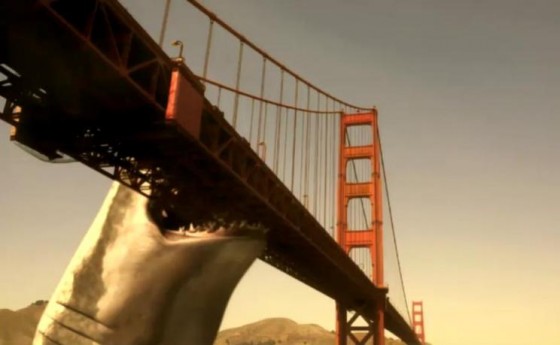
The self-awareness the studio employs in making these films and the fact that a lot of the audience is in on the joke leads to some opportunities to push the limits of what defines a bad movie. Sure, a lot of films have wooden acting, grade-school level writing and hilarious plot holes. But do they have a giant shark leaping out of the water and attacking a plane at full elevation, like in Mega-Shark vs. Giant Octopus? Nope. They don’t.

I also love how much the Asylum seems to revel in its shamelessness. You called your movie, Indiana Jones and the Kingdom of the Crystal Skull? Well, ours is called Allan Quatermain and the Temple of Skulls. Deal with it.

Really though, there’s something wonderful about consciously creating trash. Especially in the world of film, where we’ve grown accustomed to movies being synonymous with insane budgets, top-notch special effects, and elaborate scores. To turn that all on its head and make something terrible in the interest of just allowing people to laugh and be entertained is pretty awesome.

And to the sourpusses who find this all to be offensive or harmful to the Hollywood system, Asylum partner David Rimawi has offered up this advice: “If you want this to stop, you’ve gotta stop watching these movies.” Love ‘em or hate ‘em, that’s going to be easier said than done.

Quick Lit: Sept 15-Sept 21

0

Literary readings, book tours, and talks this week

Jonathan Safran Foer, Rebecca Solnit, How to Grow a School Garden, digital art collecting, and more.

Thursday, Sept 16

Stephen Breyer
Supreme Court Justice Stephen Breyer will discuss his new book, Making Our Democracy Work.
8 p.m., $20
Herbst Theater
401 Van Ness, SF
www.cityboxoffice.com

East Eats West: Writing in Two Hemispheres
Hear author Andrew Lam in conversation with Richard Rodriguez about his new collection of essays about the unexpected consequences of the Vietnamese diaspora.
6 p.m., $12
Mechanics’ Institute
57 Post, SF
(415) 393-0100

How to Grow a School Garden
Author Arden Bucklin-Sporer will discuss How to Grow a School Garden: A Complete Guide for Parents and Teachers, which offers parents, teachers, and school administrators tips and advice on how to build school gardens and how to develop the programs that support them. 
7 p.m., free
BookShop West Portal
80 West Portal, SF
(415) 564-8080

Rebecca Solnit
Hear one of San Francisco’s most provocative writers discuss her past book, which include Wanderlust, A Paradise Built in Hell, and A Field Guide to Getting Lost, and her upcoming book, Infinite City: A San Francisco Atlas.
7 p.m., $10-$20
JCCSF
3200 California, SF
(415) 292-1233

Saturday, Sept 18

Diane K. Martin, Lisa Gluskin, and Melissa Stein
Attend this poetry reading with recently published poets Diane K. Martin, author of Conjugated Visits, Lisa Gluskin, author of Tulips, Water, Ash, and Melissa Stein, author of Rough Honey.
7:30 p.m., free
Pegasus Books Downtown
2349 Shattuck, Berk.
(510) 649-1320

Sunday, Sept 19 

“Collecting the Impossible”
Prominent collectors, critics, and artists will discuss the historical dynamics or collecting digital art and building an art market for challenging work. Panel participants will include Richard Rinehart, Digital Media Director & Adjunct Curator of the Berkeley Art Museum and Pacific Film Archive, collectors Dennis Scholl and Jeff Dauber, Katie Clark from the Catharine Clark Gallery in San Francisco, Chief U.S. Correspondent for The Art Newspaper Jason Kaufman, and artist Lynn Hershman Leeson.
2 p.m., $12
Yerba Buena Center for the Arts
701 Mission, SF
(415) 978-2787

Tuesday, Sept 21

Jonathan Safran Foer
Join Foer, author of Everything is Illuminated and Eating Animals, as he talks about our dining habits, insatiable appetites, and the cultural meaning of food. He will explore the ethical, environmental, and health risks behind commercial fishing and factory farming.
7 p.m., $18
Shultz Cultural Hall
Oshman Family JCC
3921 Fabian, Palo Alto
www.tickets.commonwealthclub.org

Words for Empty and Words for Full
Poet Bob Hicok will read from his new collection.
7 p.m., free
BookShop West Portal
80 West Portal, SF
(415) 564-8080

Appetite: 3 twists on the Caprese salad

0

The purity and simplicity of a caprese salad, or insalata caprese as it is known in Campania, Italy, where it originated, is hard to outdo. Silky buffalo mozzarella, red tomatoes and fresh basil are drizzled with olive oil and salt. When I eat a quality caprese, I am immediately transported to Italia, eating lunch alongside glimmering water, maybe the canals of Venice or the expanse of Lake Como, the juice of the tomatoes dripping down my chin and a glass of Sangiovese in hand. That this experience could be improved upon is doubtful, but what of variations in a caprese’s perfection? A few local San Francisco restaurants have taken its key elements of tomatoes and mozzarella and created something unexpected… 

ROCKETFISH’S FARMERS TOMATO SALAD — Rocketfish, Potrero Hill’s newest sushi lounge, also deals in Japanese small plates. In this izakaya spirit, the kitchen serves what seems to be a simple farmers tomato salad ($7). Caprese elements create the base: heirloom tomatoes and buffalo mozzarella. But it takes on a whole new dimension sprinkled with honey balsamic and ume salt, then given a bit of crisp with caramelized fennel crumbled over the top. It works so well, it almost outshines the sushi. 

JARDINIERE’S HEIRLOOM TOMATO SALAD — Pop into Jardiniere‘s bar or sit down for a meal and start with its heirloom tomato salad ($16). You’ve seen all this before: plump, gorgeous heirloom tomatoes over arugula with croutons for crunch. But wait: interspersed in the arugula are Padron peppers and Castelvetrano olives. Sweet tomatoes, salty olives, and piquant peppers hint of a marriage between Italy and Spain, one officiated by California. The combo feels so natural, you’ll wonder why you don’t see it more often. 

BAR CRUDO’S LOBSTER SALAD — A recent visit to the ever brilliant crudo haven of Bar Crudo yielded salad loaded with chunks of lobster and creamy burrata (the pinnacle of mozzarella… with cream) topped with mache leaves. While some nights they make it with gold and chiogga beets ($17), my last visit entailed a load of plump tomatoes with the lobster and burrata ($18), again elevating the basics of a caprese to luxury salad level. 

Music to cross the globe for

0

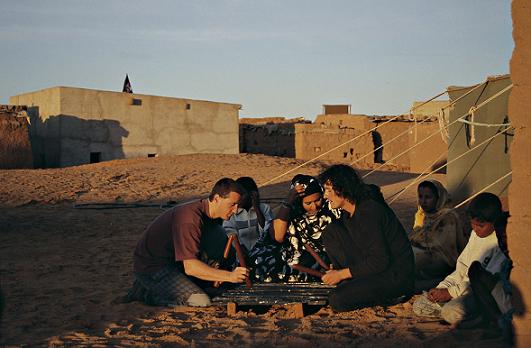
If you hoisted up a park bench, cut the back off of it, removed the legs, placed it on top of cushion on a saw stand, and commenced to thrum on it with headless croquet mallets with a dear friend, you’d have created a bootleg version of the txalaparta, a traditional instrument from the Basque region of Spain. Two of the area’s most renowned musicians took this contraption on a trip to play with indigenous nomadic musicians the world over, creating Nomadak TX, a music documentary where notes are exchanged in culture-to-culture melodies.

Igor Otxoa is a member of the group, Oreka TX, that embarked on the project that took them to India, Mongolia, Lapland, and the Sahara. Days away from the group’s launch of their North American tour –and in the midst of a visa kerfuffle that threatened to derail the whole thing — Otxoa (who is staying in Spain while band members Mikel Ugarte and Harkaitz Martinez de San Vicente man the txalaparta in the States) answered our questions via email from San Sebastian. His group will be in town next week (Thurs/23) at the Basque Cultural Center for a live performance of the music in Nomadak TX.

Oh you say you like guttural rhythm? Do we have the trailer for you… 

San Francisco Bay Guardian: Why do you play the txalaparta? 

Igor Otxoa: I saw it played in my neighborhood fiesta and I loved it. “Percussion and related to Basque culture, that’s for me!” I told myself. After that I saw it again at school played by the Artze brothers, some of the ones that brought back the instrument. After that, I started looking for somewhere I could learn it.


SFBG: The txalaparta almost disappeared at one point in the 20th century. Is there a well-documented tradition of how to play it, or have you developed your approach independently?

IO: The way to play it that we received was the one that the last of the old txalaparta players left to us. In the ’60s there were only two txalaparta player couples, the Zuaznabar brothers and the Goikoetxea brothers, and they left us the way of playing that they learned from their grandfathers. But after that there was a process in which the Beltran brothers and the Artze brothers started to develop the instrument in a more musical way. We are from the next generation — we learned from the Beltrans, and we developed the instrument in our own way.


SFBG: Why is it important that it be a two person instrument? 

IO: It was related to the work on the farms, and as in many percussion instrument that come from a tradition of work, it became an instrument. For us the txalaparta it is not the physical instrument itself — it is the way of playing it, sharing the rhythm between two people. That is why we don’t understand the txalaparta without two players. It’s its peculiarity, what makes it unique in the world, this way of sharing the rhythm between two players.


SFBG: Tell us about the motivation behind the film Nomadak TX. Why nomadic peoples?

IO: We choose the countries and peoples we wanted to meet for different reasons. One was the level of nomadity that they had. Another reason was the music of those cultures. We were very interested in the Khoomi singing in Mongolia. And the Bereber women´s singing. And the Indian rhythms. Another reason was the materials that condition the way of living in those parts of the world. The ice and snow that takes up many months in Saapmi, the sand and stones of in the Sahara dessert, the wood in India, and the air in Mongolia. We wanted to play txalaparta with those materials. And we got to!


SFBG: How did you locate the musicians that would be in the movie?

IO: Sometimes we made the arrangements before traveling. The musicians, we contacted them by different ways — the Internet helped a lot. Other times we didn’t contact any of them and it was just who we found on the trip. We think that like in music, on the trips the improvisation was the most interesting as we never knew what we would find. We had unforgettable musical surprises on all the trips. For us it had the same value: the music of a professional musician in a studio or old men singing in a yurt in the Mongolian steppe. 


SFBG: In Nomadak TX you make txalapartas out of everything from ice to stone — why the multi-media?

IO: That was one of the most marvelous moments of the project. We never expected to do a txalaparta with ice. Our idea was that we were going to play with the txalaparta of wood and the Terje Isungset “Iceman” in Saapmi would play with ice. But we tried it, and it was so nice to work with the ice. If you cut too much we would throw water on it and in few seconds it was frozen and the note was changed!


SFBG: Now that you’re doing the North America tour, inquiring minds want to know — when’s the Oreka TX hip hop remix coming out?

IO: Good question! I hope that during the USA Tour we will be able to contact good hip-hop musicians that can work on it. It is not our music style, so if we want to have a quality result, better if someone from USA makes it!


Oreka TX’s Nomadak TX live concert

Thurs/23 8 p.m., free

SF Basque Cultural Center

599 Railroad, SF

www.sfbcc.us


On the Cheap listings

0

On the Cheap listings are compiled by Paula Connelly. Submit items for the listings at listings@sfbg.com.

WEDNESDAY 15

Bad Movie Night Argus Lounge, 3197 Mission, SF; (415) 824-1447. 8pm, $2. If you’ve got a bad film you’ve been secretly wishing to screen, here’s your chance to share it. Bring any film on DVD, made by you, that is under 10 minutes and enter for a chance to win a best worst mystery prize. Proceeds benefit the Cut and Run Tour, a traveling film festival specializing in short, avant-garde, and experimental film. With DJ Squid spinning punk, core, and alt rock.

"Hot and Cold Extreme Environments" Randall Museum, 199 Museum Way, SF; (415) 554-9600. 7:30pm, free. Join planetary scientist Chris McKay, from the Space Science Division of the NASA Ames Research Center, for a presentation on life in extreme environments and how it is relevant to the search for life in the Solar System.

Ten Fingers Café Royale, 800 Post, SF; (415) 441-4099. 8pm, free. Everyone has a story to tell, so come share yours at this live storytelling event where performers have a chance to win $150 or be featured on NPR’s Snap Judgment. The only rules are: no reading, keep it under 10 minutes, and aim for nonfiction. To sign up in advance, email stephanie@snapjudgment.org.

BAY AREA

El Grito Bicentennial Jack London Square, Franklin at Water, Oakl.; www.jacklondonsquare.com. 4pm, free. Celebrate the 200 year anniversary of Mexican independence from Spanish rule at this outdoor festival featuring artists, craft vendors, live music, activities, and more.


THURSDAY 16

Inside Storytime Café Royale, 800 Post, SF; (415) 505-0869. 6:30pm, $3-$5. A fun, cozy event where you can booze and schmooze with the San Francisco literati featuring readings from Raj Patel, author of The Value of Nothing, Justine Sharrock, author of Tortured, Gordy Slack, author of The Battle Over the Meaning of Everything, Anna Mantzaris, Hank Pellissier, and James Warner.

Project Censored City Lights Bookstore, 261 Columbus, SF; (415) 362-8193. 7pm, free. Each year, Project Censored lists the top 25 major news stories that were ignored or underreported by the mainstream press and presents the details of these stories in depth. Join Mickey Huff and Peter Phillips in discussing this year’s most censored stories and celebrating the release of Censored 2011.

FRIDAY 17

Readings from Joyland Dog Eared Books, 900 Valencia, SF; www.joyland.ca. 8pm, free. Catch the second stop of the Joyland American tour celebrating the release of books from Joyland founders Emily Schultz and Brian Joseph Davis who will be reading along with San Francisco writers Peter Orner, Tamar Halpern, Helene Wecker, Ruth Galm, and host Kara Levy. All authors have been published on the joyland.ca site, which aims to make the international local by providing a platform for unique voices in short fiction.

SATURDAY 18

J-Pop Summit Festival Post between Webster and Buchanan, SF; www.j-pop.com.

11am-6pm, free-$20. Take in the Japanese pop-inspired attractions at this annual festival featuring musical performances by some of Japan’s hottest bands, fashion shows, film screenings, art and anime booths, live art performances, Japanese food vendors, and more.

Literary Tribute to Al Robles Intersection 5M, 925 Mission, SF; (415) 626-2787. 6pm, $5 suggested donation. Join members of the Bay Area literary community as they honor poet, educator, community activist, and advocate for the poor and senior citizens, Al Robles. The evening of storytelling hosted by D. Scott Miller to include poetry, prose, conversation, and recollections of Robles with Jessica Hagedorn, Jack Hirschman, Janice Mirikatani, Alejandro Murguia, Jaime Jacinto, Ishmael Reed, and more.

BAY AREA

Artspark San Pablo Park, 2800 Park between Russell and Ward, Berk.; www.artsparkfestival.org. 11am-4pm, free. Enjoy this free, community sponsored festival promoting community health by offering free health information from East Bay health organizations and free art lessons in drawing, painting, dancing, spoken word, and more. Also featuring nutritious, hot meals for under $5 and entertainment and performances including live music, spoken word, and more.

SUNDAY 19

Dancing in the Streets Noe at Market, SF; www.castrocbd.org. 1pm-4pm, free. Enjoy a live band and dancing in the streets with the Byran Keith Country Band and Queer Ballroom giving free country two step lessons.

Leland Avenue Fair Leland at Bayshore, SF; www.sfvvboom.blogspot.com. 10am-4pm, free. Celebrate the recently completed Visitacion Valley public art and streetscape at this community festival featuring local talents including Latin jazz percussionist Pete Escovedo and his six-piece orchestra, artists, chefs, entertainers, and vendors.

Roadworks Street Fair Rhode Island between 16th and 17th St., SF; www.sfcb.org. Noon-5pm, free. Using a three ton steamroller, a team of featured artists will be making large-scale prints right in the street from carved linoleum blocks. Watch the action and enjoy the bazaar featuring wares from over 80 artists, vendors, and organizations, live music, entertainment, street food, and activities.

Comedy Day Sharon Meadow, Golden Gate Park, SF; www.comedyday.com. Noon-5pm, free. Thirty comedians will be performing in a non-stop relay of jokes to celebrate the 30th anniversary of Comedy Day. Comics to include up-and-coming talent, national and Bay Area favorites, and a few who performed at the original Comedy Day. Food and beverage vendors available.

Stage listings

0

Stage listings are compiled by Guardian staff. Performance times may change; call venues to confirm. Reviewers are Robert Avila, Rita Felciano, and Nicole Gluckstern. Submit items for the listings at listings@sfbg.com.

THEATER

OPENING

Anita Bryant Dies For Your Sins New Conservatory Theatre Center, 25 Van Ness; 861-8972, www.nctcsf.org. $24-40. Fri/17-Sat/18, 8pm; Sun/19, 2pm; Wed/22-Fri/26, 8pm. Opens Sept 25, 8pm. Runs Wed-Sat, 8pm; Sun, 2pm. New Conservatory Theatre Center presents a show by Brian Christopher Williams.

KML Holds the Mayo Zeum Theater, 221 4th St; www.killingmylobster.com. $10-20. Opens Thurs/16, 8pm. Runs Thurs-Fri, 8pm. Through Oct 3. Killing My Lobster presents its fall comedy show, directed by co-founder Paul Charney.

The Secretaries Boxcar Playhouse, 505 Natoma; 255-7846, www.crowdedfire.org. $15-25 (pay what you can previews). Previews Sat/18, 8pm; Sun/19, 5pm. Opens Wed/22, 8pm. Runs Wed-Sat, 8pm. Through Oct 9. Crowded Fire Theatre brings the irreverent feminist satire by Five Lesbian Brothers to the stage.

BAY AREA

Angels in America, Part One Pear Avenue Theatre, 1220 Pear, Mtn View; (650) 254-1148, www.thepear.org. $15-30. Previews Thurs/16, 8pm. Opens Fri/17, 8pm. Runs Thurs-Fri, 8pm; Sat, 2 and 8pm; Sun, 2pm. Through Oct 16. Pear Avenue Theatre kicks off its fall "Americana" program with the Tony Kushner play.

La Cage Aux Folles San Mateo Performing Arts Center, 600 N. Delaware; (650) 579-5565, www.broadwaybythebay.org. $20-48. Dates and times vary. Through Oct 3. Broadway By the Bay presents the gay musical based on the play of the same title.

ONGOING

Aida War Memorial Opera House, 301 Van Ness, 864-1330, www.sfopera.com. $25-320. Thurs/16, 7:30pm; Sun/19, 2pm; Sept 24, 8pm; Sept 29, 7:30pm; Oct 2, 8pm; Oct 6, 7:30pm. San Francisco Opera presents Verdi’s classic, a co-production with English National Opera and Houston Grand Opera.

Bi-Poseur StageWerx Theatre, 533 Sutter; (800) 838-3006, www.brownpapertickets.com. $20. Thurs-Sat, 8pm. Through Sept 25. W. Kamau Bell directs a solo piece by Oakland native Paolo Sambrano.

The Brothers Size Magic Theatre, Bldg D, Fort Mason Center; 441-8822, www.magictheatre.org. $20-60. Dates and times vary. Through Oct 17. Magic Theatre presents the West Coast premiere of Tarell Alvin McCraney’s play, directed by Octavio Solis.

Cat on a Hot Tin Roof Actors Theatre, 855 Bush; 345-1287, www.actorstheatresf.org. $26-38. Wed-Sat, 8pm. Through Oct 2. Actors Theatre presents Tennessee Williams’ sultry, sweltering tale of a Mississippi family, directed by Keith Phillips.

*Dieci Giorni Thick House Theater, 1695 18th; (800) 838-3006, 282-5616. $25. Fri-Sun, 8pm (through Sept 19). Premonitions of the end of the world in Plague-ravaged 14th-century Florence send a group of women and men into hiding in the countryside where lust, betrayal, high spirits and low comedy make for saucy times at the edge of the abyss. Based on the ribald tales of love and death in Boccaccio’s Decameron —with one contemporary riff about some rowdy bachelorettes in Las Vegas and a misplaced box of whip-its—this collaborative chamber opera directed by Jim Cave brings together new work by Bay Area–based composers Erling Wold ( Mordake ), Lisa Scola Prosek ( Belfagor ), Martha Stoddard and Davide Verotta. The wry, boisterous narration (by actor Robert Ernst, his gusto balanced by mute assistance from Roham Sheikhani’s placidly odd stagehand) has a jagged meta-theatrical quality of its own that charms us with self-conscious references to the production, while tacitly underscoring Boccaccio’s resonance for the present, but does not always aid in entering the individual stories, performed by impressive singers Sascha Joggerst, Maria Mikheyenko, Crystal Philippi, William Sauerland, and Wayne Dexter Wong. The musical aspects are generally more successful. Put fluidly into play under conductor Stoddard and five musicians sporting clarinet, cello, accordion, violin, and keyboard, the compositions offer up vivid, moody passages with contemporary flare yet something evocative too of its subject, a combination at times as contagious and fever-inducing as a touch of the Bubonic (without the swelling of the armpits).

Don’t Ask New Conservatory Theatre Center, 25 Van Ness, 861-8972; www.nctcsf.org. $24-36. Wed-Sat, 8pm; Sun, 2pm. Through Sun/19. New Conservatory Theatre Center presents the West Coast premiere of Bill Quigley’s play about the affair between a Private and his superior.

*Dreamgirls Curran Theatre, 445 Geary; (888) SHN-1749, www.shnsf.com. $30-99. Wed, 2 and 8pm; Thurs-Fri, 8pm; Sat, 2 and 8pm, Sun, 2pm; Tues, 8pm. Through Sept 26. The touring version of director-choreographer Robert Longbottom’s revamped revival of the 1981 Broadway sensation (with book and lyrics by Tom Eyen and music by Henry Krieger, under original direction by A Chorus Line‘s Michael Bennett) is a visually and aurally dazzling spectacle that is also a knowing (if now familiar) take on the history and business of latter-20th-century American pop music from the perspective of African American R&B. The cast, operating with ease against and within a remarkable videoscape projected onto large draped screens center stage, charms from the outset of this story about the rise of a female vocal group called the Dreams (a loose composite of the Supremes and the Shirelles). The first act enthralls with the plot’s gathering possibilities, the sparkling music and the irresistible performances—not least Moya Angela’s unstoppable Effie and Chester Gregory’s heroically soulful, funky Jimmy "Thunder" Early. But the second act stretches things unnecessarily with one too many power ballads (albeit lunged to perfection) and a slowpoke approach to the all but predictable plot resolution. Still, this is a masterful production on many counts and an infectious evening overall. (Avila)

Jerry Springer the Opera Victoria Theatre, 2961 16th; www.jerrysf.com. $20-36. Wed-Sat, 8pm. Through Oct 16. Ray of Light Theatre presents the West Coast premiere of the operatic farce by Stewart Lee and Richard Thomas.

Law and Order San Francisco Unit: The Musical! (sort of) Metreon Action Theater, Metreon Cineplex, second floor, 101 4th St; www.brownpapertickets.com. $10. Mon, 8pm. Through Sept 27. Funny But Mean comedy troupe presents an original production.

Olive Kitteridge Z Space at Theater Artaud, 450 Florida; (800) 838-3006, www.zspace.org. $20-40. Wed-Thurs, 7pm; Fri-Sat, 8pm; Sun, 5pm. Through Sept 26. Word for Word presents a premiere production of stories from Elizabeth Strout’s award-winning novel.

*Oscar Wilde’s The Picture of Dorian Gray Eureka Theatre, 215 Howard; 552-4100, www.TheRhino.org. $10-25. Wed-Sat, 8pm (also Sun/19, 3pm). Through Sept 19. John Fisher adapts the Oscar Wilde novel for the stage and directs the production.

A Picasso Royce Gallery, 2901 Mariposa; (866) 811-4111, www.apicassoonstage.com. $12-28. Thurs-Sat, 8pm. Through Oct 9. Expression Productions presents Jeffery Hatcher’s drama about the authenticity of three Picasso paintings.

*Posibilidad, or Death of the Worker Dolores Park and other sites; 285-1717, www.sfmt.org. Free. Fri/17, 8pm). Through Sept 17. It may have been just a coincidence, but it certainly seems auspicious that the San Francisco Mime Troupe, itself collectively run since the 1970’s, would preview their latest show Posibilidad on the United Nations International Day of Cooperatives. The show, which centers around the struggles of the last remaining workers in a hemp clothing factory ("Peaceweavers"), hones in on the ideological divide between business conducted as usual, and the impulse to create a different system. Taking a clip from the Ari Lewis/Naomi Klein documentary The Take, half of the play is set in Argentina, where textile-worker Sophia (Lisa Hori-Garcia) becomes involved in a factory takeover for the first time. Her past experiences help inform her new co-workers’ sitdown strike and takeover of their own factory after they are told it will close by their impossibly fey, new age boss Ernesto (Rotimi Agbabiaka). You don’t need professional co-op experience to find humor in the nascent collective’s endless rounds of meetings, wince at their struggles against capitalistic indoctrination, or cheer the rousing message of "Esta es Nuestra Lucha" passionately sung by Velina Brown, though in another welcome coincidence, the run of Posibilidad also coincides with the National Worker Cooperative conference being held in August, so if you get extra inspired, you can always try to join forces there. (Gluckstern)

*The Real Americans The Marsh MainStage, 1062 Valencia; (800) 838-3006; www.themarsh.org. $20-50. Wed-Fri, 8pm; Sun, 5pm. Through Nov 6. The fifth extension of Dan Hoyle’s acclaimed show, directed by Charlie Varon.

*"San Francisco Fringe Festival" Various venues; www.sffringe.org. $6-10 ($40 for 5 shows; $75 for 10 shows). Dates and times vary. Through Sun/19. The marathon of indie theater returns, with a lineup that includes 43 companies.

BAY AREA

Anton in Show Business Marion E. Green Black Box Theater, 531 19th St; (510) 436-5085; www.theatrefirst.com. $10-30. Thurs-Sat, 8pm; Sun, 2pm. Through Sept 26. TheatreFIRST presents Jane Martin’s theater comedy, under the direction of Michael Storm.

Antony & Cleopatra Forest Meadows Ampitheatre, 1475 Grand, San Rafael; 499-4488, www.marinshakespeare.org. $20-35. Fri-Sat, 8pm; Sun, 4pm. Through Sept 25. Marin Shakespeare Company’s summer season continues with the tale of the Egyptian queen.

Bleacher Bums Contra Costa Civic Theatre, 951 Pomona, El Cerrito; (510) 524-9132, www.ccct.org. $18. Runs Fri-Sat, 8pm; Sun, 2pm. Through Oct 3. A sports comedy conceived by Joe Mantegna, directed by Joel Roster.

Compulsion Berkeley Repertory Theatre, Thrust Stage, 2025 Addison; (510) 647-2949, www.berkeleyrep.org. $29-85. Dates and times vary. Through Oct 31. Mandy Patinkin stars in a world premiere of Rinne Groff’s play, directed by Oskar Eustis.

*East 14th: True Tales of a Reluctant Player Marsh Berkeley, 2120 Allston, Berk; www.themarsh.org. $20-50. Dates and times vary. Through Nov 21. Don Reed’s solo play, making its Oakland debut after an acclaimed New York run, is truly a welcome homecoming twice over. (Avila)

In the Red and Brown Water Marin Theatre Company, 397 Miller, Mill Valley; 388-5208, www.marintheatre.org. $32-53. Tues, 8pm; Thurs-Sat, 8pm; Wed, 7:30pm, Sun, 7pm (also Sept 23, 1pm; Sat/18 and Oct 2, 2pm). Marin Theatre Company presents the West Coast premiere of Tarell Alvin McCraney’s play.

In the Wound John Hinkel Park, Berk; (510) 841-6500, www.shotgunplayers.org. $10 (no one turned away). Sat-Sun, 3pm. Through Oct 3. Shotgun Players’ annual free performance in Berkeley’s John Hinkel Park is this year an impressively staged large-cast reworking of the Illiad from playwright-director Jon Tracy. In the Wound is actually the first of two new and related works from Tracy collectively known as the Salt Plays (the second of which, Of the Earth will open at Shotgun’s Ashby stage in December). Its distinctly contemporary slant on the Trojan War includes re-imagining the epic’s Greek commanders as figures we’ve come to know and loath here in the belly of a beast once know by the quaint-sounding phrase, "military-industrial complex." Hence, Odysseus (Daniel Bruno) as a devoted family man in a business suit with a briefcase full of bloody contradictions emanating from his 9-to-5 as a "social architect" for the empire; or Agamemnon (an irresistibly Patton-esque Michael Torres) as the ridiculously macho, creatively foul-mouthed redneck American four-star commander-clown ordering others into battle. While the alternately humorous and overly meaningful American inflections can feel too obvious and dramatically limiting, they’re delivered with panache, amid the not unmoving spectacle of the production’s energetic, drum-driven choreography and cleverly integrated mise-en-scène. (Avila)

The Light in the Piazza TheatreWorks at the Mountain View Center for the Performing Arts, 500 Castro, Mtn View; (650) 463-1960, www.theatreworks.org. $19-67. Tues-Wed, 7:30pm, Thurs-Fri, 8pm; Sat, 2 and 8pm; Sun, 2 and 7pm. Through Sun/19. TheatreWorks presents Craig Lucas’s tale of love under the Tuscan sun.

MilkMilkLemonade La Val’s Subterranean, 1834 Euclid, Berk; www.impacttheatre.com. $10-20. Thurs-Sat, 8pm. Through Oct 2. Impact Theatre presents Joshua Conkel’s off off Broadway play about a lonely gay man trapped in a chicken farm.

She Loves Me Lesher Center for the Arts, 1601 Civic Drive, Walnut Creek; (825) 943-7469, www.CenterREP.org. $36-45. Wed, 7:30pm; Thurs-Fri, 8pm; Sat, 2:30 and 8pm; Sun, 2:30pm. Through Oct 10. Center REPertory company presents a musical choreographed and directed by Robert Barry fleming.

The Taming of the Shrew Forest Meadows Amphitheatre, 1475 Grand, San Rafael; (415) 499-4488, www.marinshakespeare.org. $20-25. Fri-Sun, 8pm; Sun, 4pm and 5pm. Through Sept 26. Marin Theatre Company presents a swashbuckling version of the classic.

Trouble in Mind Aurora Theatre, 2081 Addison, Berk; (510) 843-4822, www.auroratheatre.org. $10-55. Wed-Sat, 8pm; Sun, 2 and 7pm; Tues, 7pm. Through Oct 3 Aurora Theatre presents Alice Childress’ look at racism through the lens of theater.

PERFORMANCE/DANCE

Alice NOHspace, 2840 Mariposa; (800) 838-3006, www.brownpapertickets.com. Wed-Sun, 8pm (continues through Sun/19). $15. An original revision of Lewis Carroll, directed by Allison Combs.

The Book The garage, 975 Howard; 518-1517, www.975howard.com. Sat/18, 8pm, $10-20. RAW presents an audio-visual wotk by Erika Tsimbrovsky and Vadim Pyundaev.

"Previously Secret Information" StageWerx Theatre, 533 Sutter; (800) 838-3006, www.brownpapertickets.com. Sun/17, 7pm. $15.The comedic storytelling series returns for a monthly installment.

"WestWave Dance" Cowell Theater, Fort Mason Center; 345-7575, www.westwavedancefestival.org. Mon/20, 8pm. The 19th annual season of contemporary choreography kicks off with Amy Seiwert, Kat Worthington, and three others.

Zhukov Dance Theater Cowell Theater, Fort Mason Center; 345-7575, Thurs-16-Sat/18, 8pm. $25. The company presents its third annual season.

The battle against desalination in the bay

2

OPINION In July 2010, in one fell swoop, the Marin Municipal Water District’s board of directors ambushed an initiative that would force a public vote on an expensive an environmentally destructive desalination plant on the edge of the bay.

In August 2009, the board unanimously voted to approve an environmental study to pave the way for the desalination plant, which would suck up bay water, filter out the salt, and dump the briny extract back into the bay.

In response, a group of unpaid, grassroots volunteers gathered more than 18,000 signatures to qualify Measure T for the November ballot. The measure requires voter approval before up to $51 million in public money is spent on desalination planning.

On July 6, 2010, the board had a chance to avoid the ballot fight by adopting the proposed initiative as an ordinance. Instead, MMWD voted to “study” Measure T’s impact on desalination planning. And at a packed special four-hour meeting on July 26, the board announced that it decided to place its own rival initiative, Measure S, on the ballot, which allows the plant to move forward without delay.

Then, on Aug. 18, the board went a step further and enacted Measure S as law. Consequently, even if S loses in November, the path is cleared for the environmentally damaging project. And the only way it can be stopped is if Measure T wins.

MMWD argues that Measure T ties the agency’s hands and that the 18,000 signatories knew not what they signed. According to MMWD General Manager Paul Helliker (founding member of CalDesal, “a unified voice for water desalination in the Golden State,”) the actual cost of the plant could run as high as $400 million.

Measure T allows MMWD to study desalination, but the agency can’t start making concrete plans for the project — and start collecting permits and issuing multimillion dollar contracts — without a vote.

MMWD argues its desalination plant is a small capital expenditure for ratepayers. As one Measure T proponent, Bill Rothman, observed, MMWD’s profligate spending needs to be checked because its hands are “in our pockets.” In the past three years, for example, ratepayers have shelled out $252,176 in benefits to directors. It’s no wonder MMWD is drowning in $2.56 million in debt.

This November, the choice is clear: Measure T, the people’s initiative, endorsed by 18,000 Marin voters, would mandate a public vote before any further wasteful, costly, desalination proceeds for a plant that poses health risks from the toxic bay.

Yes on T, no on S.

Joan Bennett is a member of the Coalition for the Public’s Right to Vote About Desalination.

Appetite: SF Cocktail Week is coming September 21-27

0

Last year’s San Francisco Cocktail Week was a full-but-chill week of parties and cocktails at some of our best bars. This year, the fourth annual SF Cocktail Week steps it up with a whole slew of events I’m excited (and proud) to see us throwing in the name of the cocktail, especially as our city has been one of the two leading the cocktail renaissance long before the rest of the country caught on.

This year we celebrate in a big way with the unveiling of a new Center for the Beverage Arts, the Boothby Center (named after Cocktail Boothby) on Cocktail Week’s opening night. Cocktail Carnival Gala is the big shindig held at the magnificent Old Mint and co-presented by The Bon Vivants. There are daytime seminars, late night after-parties and a cook-out (including ferry ride) at Hangar One/St. George Distillery. Some events are free, while tickets range anywhere from $10-$95.

Decide which ways you will imbibe, knowing your tickets support our city’s rich drinking and cultural heritage via the event’s presenters, Barbary Coast Conservancy of the American Cocktail (BCCAC), founded by H. Joseph Ehrmann (Elixir), Jeff Hollinger (Comstock Saloon), and Duggan McDonnell (Cantina).

Check the schedule for events you most want to hit. I’ll see you at the Ragtag Rabble Gaming Soirée on Thursday, or maybe the Cocktail Carnival Gala Saturday night? Oh, “whimsical” attire is recommended, so do what San Franciscans do well and dress to “impress.”

This year’s official event cocktail is “Papa Ghirardelli”, a moniker honoring Ghirardelli’s founder, Domingo Ghirardelli. Italian-born, but living in Peru where he first became successful with his confections prior to moving to San Francisco, the drink gives a nod to his dual roots with Campari (Italy) and Pisco (Peru), using Encanto Pisco. You can try the recipe at home before raising a glass next week:

Papa Ghirardelli
1.5 oz Encanto Pisco
.5 oz Campari
.5 oz Martini & Rossi Rosato Vermouth
.25 oz Benedictine
.5 oz Lemon Juice
Seltzer Water, to fill
Orange Slice, for garnish
 
Combine Encanto Pisco, Campari, Rosato, Benedictine and lemon juice in an ice-filled shaker and shake for 10 to 15 seconds, or until chilled. Strain over fresh ice into a Collins glass, and top with seltzer. Garnish with a slice of orange.

Purchase tickets for Cocktail Week here.

Subscribe to Virgina’s twice-monthly newsletter, The Perfect Spot

Let’s date!

0

le.chicken.farmer@gmail.com

CHEAP EATS While the Maze’s mom was fighting for her life, he sat and stood by her side, in San Diego, and talked to her, even though she couldn’t hear him, or respond.

Her coma was induced, more-or-less medically, according to the Maze, who went to med school. After seven days, they more-or-less medically weaned her back into life as we know it. Where you breathe, you know, air, and eat, you know, food, and go to the bathroom. When he left San Diego, she could do some of the above, plus take six steps.

Coincidentally, as misfortune would have it, for the two weeks the Maze was with his mom, the woman the Maze dates was also bedridden back home here, on account of broken legs and surgery and shit.

I gave her a lot of movies, and some lasagna, but that was about it. And I thought about her a lot, and the Maze’s mom, who was only in her 60s. And the Maze: how the women in his life were all down, but not for the count.

Nor did it escape my attention that I am, in many respects, a woman in the Maze’s life, so I was careful to look both ways before crossing streets, drive defensively, and wash my hands many times during a day. I might have even eaten more healthily, but I wouldn’t count on it.

Whatever the reason, I was very, very hungry when the Maze called me from the airport on Monday. Did I want to get something to eat?

"I do!" I said. I told him I’d been thinking all day about barbecue. This meant nothing to him, not because he’s cruel but because he knows me well. I might as well have said, "All day long my heart has been pumping blood through my veins and arteries."

Or: "Yep, I checked, and I still have hands!"

Since the Maze is one of many friends I suspect of being a closet vegetarian, we settled for pizza. At … Delfina Pizzeria. Finally!

Because I live on one side of it, and park on another, I have been walking past this place for years, often with my one-string water-jug-on-a-toilet-plunger bass, the smell of diapers all over me, or some other symbol of my not being able to eat there. And I have slowed down and stared. Not at the beautiful people who litter the sidewalk in front of Delfina, lunchtime and evenings. I have stared at their pizzas.

I think it’s cruel and unusual for establishments to serve food that looks and smells that damn good on narrow sidewalks with a lot of foot traffic in not entirely affluent neighborhoods.

I’ve seen me some pies with some pretty amazing things on them, like fried eggs, and I have fantasized about sitting down with some party of two or three and pretending like I know one of them. Or just grabbing a slice and flying. I’m pretty fast for an aging ex chicken farmer.

It’s not like Delfina’s out-of-reachably expensive, either. I think of it as a date place. I just don’t, as a rule, have dates. So when the Maze nixed my barbecue idea and suggested Delfina, if there wasn’t a line, I jumped on it.

Here was a special occasion. His mom was alive! He was coming home! I still had hands! And — and this is a big and — it was early enough that we wouldn’t have to wait in line. So there we had it, and you have it, everything stacked up so that at 6 p.m. on a Monday. I ate my first Delfina pizza.

It was good. As good as it always looked. And in spite of the fact that we didn’t get one of the meat ones, the Maze being a closet vegetarian. I think the pizza, with broccoli raab, olives, mozzarella, and hot peppers, was $14.50. Share-able, sure, but barely so. Put it this way: either one of us could have eaten the whole thing alone.

Plus salad plus drinks = yeah, not cheap eats. But damn good ‘uns. I can’t wait to have dates.

DELFINA PIZZERIA

Mon. 5–10 p.m.; Tue.–Thu. 11:30 a.m.–10 p.m.;

Fri. 11:30 a.m.–11 p.m.; Sat. noon–11 p.m.;

Sun. noon-10 p.m.

3611 18th St., S.F.

(415) 437-6800

AE,D,MC,V

Beer and wine

Transfigurations

0

arts@sfbg.com

MUSIC/THE NEW SHOEGAZE The Waves. The title of the first album by Tamaryn is big and elemental. It’s also dramatic and literary, invoking the writing and the death of Virginia Woolf and evoking the ocean’s fatal pull in a classic Romantic sense. Tamaryn’s music is all of these things.

The vast, vague, cacophonous yet harmonic sound that Melody Maker deemed shoegaze back in the late 1980s has made a strong return in recent years, but Tamaryn — comprised of Tamaryn and producer-instrumentalist Rex John Shelverton — distinguishes itself from the pack through epic scope and high fidelity of production, and most of all, through sheer force of presence. Shoegaze so often buried rock’s persona in noise’s capacity for jouissance that the sound became (and remains) a too-easy way to mask a lack of musicality and personality. Not so on The Waves. You’d be hard-pressed to find a more confidently unique rock album this year. On “Haze Interior” and “Dawning,” the result is literally awesome.

Tamaryn lives in the Bay Area, but I have to go through a publicity company to arrange an interview, and our conversation takes place over the phone, on a hot afternoon, after she’s found a place to park her car in the East Bay. This roundabout route to getting in touch with the lady herself is fitting, since much of The Wavestension generates from the mysterious way in which Tamaryn moves through the huge and dense sounds that Shelverton generates. “To go into something that loud and overwhelming and do something completely restrained — that was the real challenge,” she says, after sizing up my own voice as that of a young person. “You play music like that in a practice space and you as a singer don’t hear a note coming from your voice. You have to go from muscle memory. It’s about finding your place in the sound.”

It’s easy to connect with Tamaryn on the subject of music, because her appreciation of it is as immense and intense as the album she’s made. When I mention that aspects of The Waves remind me in a flattering way of the ’90s group Curve, she’s appreciative. “The British [shoegaze] bands were all so specific and very restrained,” she says. “Bands like Curve were more in your face. Curve is what Garbage wanted to be — you can see the direct line.”

Tamaryn’s lyrics, guiding the listener through deep oceanic contours, ranging from choral winters to coral flowers, possess a strong sensory quality. She agrees. “Sensory is a perfect way to describe it,” she says. I wrote the lyrics in response to my experience of the music — my experience of being part of the song. There are performers that realize they are not playing an instrument — it’s almost like they are a participant, a part of the audience that is moved by the music to respond and perform. Ian Svenonius of the Make-Up had another band where he’d walk onstage and go, ‘I like this music,’ and start to be inspired. I always thought that was really cool.”

Without a doubt, The Waves is a San Francisco album, with lyrics written at Fort Funston, and music by a surfer — Shelverton — from Half Moon Bay. The album’s final track, “Mild Confusion,” draws from notes on a psychiatric patient that Tamaryn came across during a day job, and it brings the more classical doom-laden aspects of the opening title track to a specific, realistic modern realm. “It’s very extreme here, with water on three sides, and it can be totally inspiring,” Tamaryn says, amid talk of the Golden Gate Bridge’s beauty and tragic lure. “If you come to San Francisco with plans to destroy yourself, it will let you. But if you come self-contained, with a strong personal or creative identity, you can use the energy of the city to inspire you.”

At the moment, one of Tamaryn’s chief sources of inspiration is fellow singer and recent Guardian cover star Alexis Penney. The night of our interview, she assists Penney onstage during a Some Thing drag performance at the Stud that concludes with Penney being pelted with long-stemmed roses. Penney is also the nude star of the video for Tamaryn’s “Love Fade,” which uses Derek Jarman’s films for the Smiths as a touchstone. “Alexis is like everybody’s muse,” Tamaryn says. “He’s amazing.” The friendship makes perfect sense, because Tamaryn is no slouch when it comes to iconic and androgynous imagery: she looked to the rare monograph Trans-figurations, Holger Truzsch’s photo collaboration with Veruschka, when putting together band portraits for The Waves.

A few nights later at Honey Soundsystem’s BUTT Bias mixtape listening party, and then later by text, Penney is more than happy to repay the compliment. “I remember the first time I saw Tamaryn,” Penney writes. “She is so striking and startlingly beautiful, with a piercing gaze, and you can tell she knows exactly what she wants. She’s definitely lived a life and is full of stories, but also retains that same real-life mystery that pervades her music. Her music is so her in essence, almost as if she was even singing the guitars and drums. Composed, but very raw and real and spontaneous, with a voice that is so powerful. Which is funny, because when she’s speaking she’s so girlish, but when she sings she’s definitely channeling spirits — there’s primal earthy old magic in her voice, even when she’s whispering.”

The Waves is an album of staying power and growing rewards because of the subtle and understated way Tamaryn adds human emotion to the Slowdive-like dinosaur yawns and Loveless-era My Bloody Valentine blur of Shelverton’s guitar. Tamaryn makes no bones about the fact that she has set out to create an album that can stand alongside those bands’ best recordings, and the work of Talk Talk’s Mark Hollis, who she simply refers to as “my heart.”

“The kinds of things I write are always bittersweet,” Tamaryn says, as our conversation falls again into the subject of favorite music. “It’s my experience of life and that’s the music that makes me feel better. I feel that music is so liberating and it has the biggest impact on you because it captures how you feel about yourself. I’ve given up on my dream of having a fulfilling personal life — I’m more interested in making sacrifices in order to make the music I want to make. Being able to make a record I’m proud of is more fulfilling than some day-to-day activity.”

TAMARYN

with Weekend; DJ sets by oOoOOO, and Nako and Omar

Sept. 15, 9pm, $8

Elbo Room

647 Valencia, SF

(415) 552-7788

www.elbo.com

Play at work, or more at play?

8

rebeccab@sfbg.com

There’s a long-standing perception in San Francisco that certain development firms are treated more favorably than others thanks to insider politics. And while supporters of Mayor Gavin Newsom say he’s cleaned up the pay-to-play culture, a look at the list of contributors to Newsom’s run for lieutenant governor at the very least raises questions.

For example, according to campaign filings, Newsom received $6,500 from a business called 706 Mission Street Co. LLC, which was formed to construct a condo high-rise at Yerba Buena Center. The building would also be a new permanent home for the city’s Mexican Museum. The 706 Mission project, which has been in the works for several years, is a joint venture between developer Millennium Partners and JMA Ventures, a San Francisco-based real estate investment firm. JMA Ventures contributed $5,000 to Newsom, campaign finance records show, and the firm’s president and CEO, Todd Chapman, also made a generous donation of $1,000. Effectively, Newsom’s campaign received a total of $12,500 from individuals or firms associated with 706 Mission.

The project has been under the jurisdiction of the San Francisco Redevelopment Agency since 2008, when the Redevelopment Commission authorized an exclusive negotiations agreement with the developer for the mixed-use high-rise and museum, to be partially constructed on a parcel owned by Redevelopment and later included plans to integrate the landmark Mercantile Building. The project went dormant in the face of the economic downturn, but it’s now moving forward again, and the environmental review of the proposed 600-foot tower falls under the purview of the city’s Planning Department. On Sept. 1, Newsom mentioned 706 Mission, a “new, world-class facility,” in a press release announcing a new director for the Mexican Museum.

“The Redevelopment Agency and the city are fully committed to the public/private/nonprofit partnership that will eventually bring the Mexican Museum to a new home in the heart of Yerba Buena Center, San Francisco’s premier cultural district,” Redevelopment Agency executive director Fred Blackwell proclaimed.

Another contributor that demonstrated strong financial support for Newsom’s bid is a global technical firm that has a hand in several major infrastructure and development projects throughout San Francisco. AECOM contributed $13,000 to Newsom’s campaign, and a handful of people who work for AECOM chipped in smaller amounts totaling $3,600, according to campaign-finance records. In an April 15 news release for investors, AECOM noted that it had been awarded a $26 million contract for construction management of the San Francisco Public Utilities Commission’s Water Improvement Infrastructure Project. As the San Francisco Chronicle reported in May, the firm was also awarded a five-year, $147 million contract with the San Francisco Metropolitan Transportation Agency for construction management on the Central Subway project. AECOM is also playing a role in a number of major developments currently under review in city planning. It is the prime environmental impact report consultant for the California Pacific Medical Center proposal for a giant new hospital on Van Ness Avenue. It’s also completing a traffic corridor analysis for 19th Avenue on behalf of the developers of Parkmerced, a renovation and in-fill project on track to be one of the largest new residential developments in the city.


A $2 MILLION BONUS

The Parkmerced developers have helped Newsom’s campaign along too. Craig Hartman, an internationally renowned architect with Skidmore, Owings & Merrill who is a design partner for the project, dropped $1,000 into Newsom’s hat. Two executives associated with Parkmerced each pitched in another $1,000.

A smaller project that has been in the works for years also seems close to home for Newsom. Michael Yarne, of the Mayor’s Office of Economic and Workforce Development, is a former director of development of the Martin Building Co., the lead developer on mixed-use residential project located in Central Waterfront at 2235 Third St. The project has commendable features such as a reuse of an existing industrial building, proximity to transit, and 39 below-market-rate units — and the project developer managed to secure an incredible deal with the city.

This past April, the Planning Commission approved an unprecedented in-kind agreement with Martin Building Co. that waived nearly $2 million in development fees, including about $1.2 million for 2235 Third St. and the rest for a second Martin Building Co. project on Townsend Street, in exchange for the developer’s commitment to construct a space for a day-care facility on the Third Street site and lease that portion of the property to a childcare provider for free for 55 years. The provider would have to operate the facility without profit and would be required to have low-income child-care slots, so this bargain would serve to create affordable day care.

Yarne’s close ties to the mayor and the developer — plus a $2,000 campaign contribution to Newsom from the head of the project’s general contractor, a building company called Nibbi Bros. — could raise a few eyebrows in light of this unprecedented deal, especially given the city’s gaping deficit and the question of how else that $2 million might have been put to use. The project was also awarded more than $1.6 million in American Recovery and Reinvestment Act funds to excavate lead-contaminated soil from the property and transport it away for off-site disposal. The project, which has already been approved and moved to the Department of Building Inspection phase, also incorporates a City CarShare space. Yarne’s on the board of City CarShare, too.

It’s always possible that there is no connection between Newsom’s campaign contributions, his personal staff, and contributors’ connections to the myriad development projects in the hopper — but that doesn’t stop observers from asking questions. Developers who are anxious about the economic downturn may be motivated do everything in their power to speed a project along, and it’s possible that throwing money at a political campaign is just one tool among many.

Or maybe they just think Newsom would make a great lieutenant governor.


PLANNERS COMPLAIN

Nonetheless, the perception that certain developers get special treatment is shared by at least two former planners in the city’s Planning Department — one of whom is facing termination in the wake of a recent investigation surrounding porn email.

Following an internal shake-up at the planning department triggered by the discovery that some staffers shared pornographic e-mails, messages started flying about what was behind the crackdown. “Porn is not the real story,” Lois Scott, a retired planner and former president of International Federation of Professional and Technical Engineers Local 21 wrote in an e-mail to the Guardian.

After the porn scandal broke, the hammer came down. Five people were terminated effective this past May, and another 20 or more reportedly faced some form of disciplinary action.

Some have interpreted the move as a signal that Planning Director John Rahaim, a Newsom appointee, won’t stand for inappropriate conduct on his watch. At the same time, others have contacted the Guardian to voice concerns that the firings and internal shakeup were connected to something deeper than dirty emails.

Although speculative theories abound and there is a paucity of official comments on the firings due to privacy laws, one point is abundantly clear. In a city where powerful developers will go to great lengths to secure approval for lucrative projects, there’s a great deal of wariness surrounding city planning. San Francisco is host to leagues of developers, real estate investment groups, prestigious law firms specializing in land use, technical consultants, and politically powerful associations of residential builders, building owners, and building-trade unions — all with a huge financial stake in seeing projects make it past the approval finish line and onto groundbreaking.

When it comes to a major project that will transform a city block in San Francisco, the planning department (which relies on development fees to pay the bills) inevitably encounters pressure from two sides: well-connected development teams with economic interests on the one hand, and neighborhood groups or historic preservationists who aren’t shy about hurling criticism on the other.

So it’s no surprise than anything affecting the planning staff in a major way would not pass quietly.

One of the planners affected by the firings told the Guardian that the porn investigation went on for months. There were one-on-one interviews, and some 70 staff members were called in and questioned, some two or three times. Contents of computer hard drives and city e-mail accounts were analyzed. Later, huge posters went up, displaying questions like, “How Are You Going to Make a Better Planning Department?”

“It was bizarre,” the former planner said.

According to Leigh Kienker — a former planner who recently retired and was not implicated in the computer misuse investigation — the result of all this was to create a sort of chilling effect on the planning staff, especially since she said two of the five individuals who lost their jobs had been more likely to question management and speak up when they didn’t think a project was being handled properly. When it comes to ensuring that projects conform to the planning code, “We need to be able to speak up,” she said. “This is our expertise.”

Jim Miller, who had been with the department for more than 32 years and is regarded by his peers as very outspoken, discussed his own termination in an e-mail to a number of supporters. “I was given a loose-leaf binder indicating the reasons for the firing,” he wrote. “The information contained therein was decidedly very thin. This, plus the fact that others who had a greater role in the ‘wrongdoing’ received job suspension rather than termination, leads me to believe that there is some other reason for the action taken. This reason is heretofore unbeknownst to me.”

Cynthia Servetnick, shop steward for IFPTE Local 21 planner’s chapter and a historic preservation advocate, voiced concerns about how the department dealt with the porn problem in an e-mail to Rahaim. “Frankly, the firing of so many senior Planning Department staff members not only seems like a ‘witch hunt,’ but smacks of age discrimination against a class of union-represented employees for the purpose of shoring-up budget deficits and intimidating less senior employees,” she charged. In response, Rahaim dismissed her comments as baseless accusations.


BADINER GETS $82,500

At a Feb. 18 Planning Commission meeting, when the department’s proposed budget came under review, commissioners noted that Rahaim was in the unenviable position of having to lay off four to six staffers in order to balance the budget. Noting that a great deal of effort had gone into attracting fresh talent and hiring younger planners, several commissioners expressed hope that they wouldn’t be the first to go. Rahaim responded that, given the union’s seniority rules, his hands were tied to an extent. In light of that conversation, Servetnick suggested that the porn e-mails presented a convenient solution for a director faced with a thinly stretched budget. All of the five who were fired were 50 or older.

At the same time, others who closely follow city planning rejected the idea of any ulterior motive. Sue Hestor, a land-use attorney who seems to have her finger firmly on the pulse of San Francisco development, told the Guardian that she’d heard plenty of rumors, but wasn’t necessarily buying the hype. Charles Marsteller, a former director of Common Cause and a keen observer of the planning process, said he had little reason to suspect that what had happened was anything more than responding to inappropriate conduct.

Zoning Administrator Larry Badiner, a 28-year veteran of the department who critics say was friendly to high-end developers, was fired in the wake of the porn investigation along with three lower-level staffers — but he appeared to walk away with a better deal than his subordinates.

A Guardian sunshine request revealed that Badiner received a six-month severance package amounting to $82,500, plus benefits he was eligible for that could have amounted to more than $57,000 (but may be significantly less). In exchange, he agreed not to sue the city. None of the other planning staffers who were terminated appear to have received such a payout.

Meanwhile, Badiner may not have been the highest-ranking city employee to be snagged in the porn investigation. An e-mail address of dlmacris[at]aol.com was included on an e-mail provided to the Guardian that contained a rather tame pornographic image.

The planner who sent the e-mail was fired after the porn investigation, and so were three of the recipients. Former Planning Director Dean Macris, who more recently served as a special advisor to Newsom, stopped working for the city around the same time Badiner and the others were terminated. Mayoral spokesperson Tony Winnicker told the Guardian he could not discuss anything related to how or why Macris left city service.

Rahaim said he had no choice in the Badiner severance. “The issue with Larry Badiner was required as part of a MEA labor contract. It requires a payout in any situation where a person is terminated or laid off.” He added that the firings were “strictly because of inappropriate use of city resources and also because of the type of material” that was being viewed. There was “absolutely no other reason.”

And he insisted that no developers get favoritism: “I have no idea who’s contributing to whose campaign.”

At least one response to the rash of firings commended the planning director for taking action. “I applaud your efforts to address hostile working conditions related to gender and sexual preference, which have long existed in the Planning Department,” a retired senior planner wrote to Rahaim shortly after the firings. “There is, perhaps as you have realized, a deep undercurrent of unresolved and unpleasant practices which perhaps finally led to the present complaints.”

Does the planning department shake-up indicate a move away from the bad old days of quid pro quo dealings and hostile working conditions, thanks to a director who’s standing strong against inappropriate conduct — or is it a move to consolidate power in a department led by a mayoral appointee at a time when the development community is particularly hungry to move new projects forward? Given the knock-down, drag-out fights that have unfolded over planning in the city’s history, and the high sums of money that are gushing into project proposals and campaign coffers, it’s no wonder the question is being posed.

“The bottom line is, the public is not being served,” Servetnick said. “Developers shouldn’t be able to come in and say, ‘Just for me!’ If everybody who pays to play gets away with that, we’re going to end up with a really ugly city.”

Blocking the bridge

1

sarah@sfbg.com

The Sierra Club and Golden Gate Audubon Society have sued to block the final environmental impact report on the Lennar Corp. redevelopment project, a move that could force reconsideration of a bridge over Yosemite Slough.

The suit against the city, Board of Supervisors, and Redevelopment Agency charges that the final EIR for Lennar’s Candlestick Point-Hunters Point Shipyard project was inadequate, in part because it didn’t consider all the impacts of the bridge or look properly at alternatives.

The move comes as no big surprise: these environmental groups vowed to file a suit within 30 days of the city’s August certification of the project EIR. But advocates hope it will lead to a change in the proposal.

Arthur Feinstein, a member of the Sierra Club’s San Francisco Bay Chapter, said the EIR didn’t comply with the California Environmental Quality Act, or CEQA.

The introduction to the Sierra Club suit notes that “the FEIR failed to identify or underestimated the significance of environmental impacts associated with the project; failed to address the alternative proposed by Arc Ecology, which provides for a bus rapid transit route around Yosemite Slough; and failed to provide adequate responses to comments on the draft EIR.”

Or as Feinstein puts it: “There’s a bridge, and it’s going through a nature area where they say the sound level from the buses will be the equivalent to standing 50 feet from a freeway.

“They say there is no impact and that you can’t have an undisturbed nature experience in an urban area, but you can,” Feinstein continued, pointing to the Presidio, Golden Gate Park, and Crissy Field as examples of places where you can have undisturbed experiences.

Feinstein noted that Candlestick Point State Recreation Area is the only large park on the city’s eastern shoreline, and the only park that people in the Bayview can access easily.

“The city boasts about how much it was improving the Bayview, but this park is the only major open space where you can get away from urban stress — and folks have a lot of stress in the Bayview,” Feinstein said. He added that building the bridge will involve sinking pilings in Yosemite Slough that will disturb wildlife and stir up PCBs and other known contaminants.

“Noise, light and glare all have impacts on wildlife, but the city’s EIR said these are insignificant because these critters are insignificant,” Feinstein said.

Feinstein noted that the city’s final environmental impact report did make a finding of overriding concern that the project will cause air pollution at levels that exceed Bay Area Air Quality Management District (BAAQMD) health standards.

“But [the city] decided that this was a regional problem, so they did not attempt any mitigations for the 25,000 new residents that this 700-acre redevelopment plan is supposed to bring into the Bayview — which already has the city’s highest asthma and cancer rate and the largest number of polluting sources,” Feinstein said. “But they could say that all buses going into the development need to be electrified, or they could limit the number of parking spaces the way they did at Octavia-Market and South of Market.”

Feinstein said the next step in this CEQA lawsuit in a pretrial negotiation session to see if a settlement can be reached. “We’re not looking for a long drawn out fight. We’re ready for one, but we’re also ready to negotiate because that’s how you achieve things.”

Feinstein also noted that the Sierra Club had to go to Los Angeles to hire a traffic consultant to work on its suit because Lennar has contracts with just about every shop in the Bay Area, thanks to its various projects at Hunters Point, Treasure Island, and Mare Island.

“The related problem is that the city is no longer looking at the project with a steely eye,” Feinstein said. “Instead, they have become the developer — except that they are working with Lennar and not reviewing Lennar’s plans with objectivity. By filing this lawsuit, we’re keeping the conversation about this project alive and reminding folks that you don’t have to take everything this mayor and his administration gives you.”

The Sierra Club/Audubon Society suit came four days after the San Francisco Chronicle reported that the California State Parks Foundation entered into an agreement with Lennar to help prepare conceptual designs that reportedly will be used as the basis for the actual bridge over the Yosemite Slough.

Some critics interpreted the timing of CSPF’s announcement, which the Chronicle reported under a confusing “Environmentalists to help design span” headline, as an attempt by Lennar’s well-oiled PR machine to undermine the Sierra Club/Audubon Society suit.

They also questioned CSPF’s independence from Lennar, and from the Mayor’s Office, because Guillermo Rodriguez Jr. from the Mayor’s Office of Economic and Workforce Development sits on CSPF’s board. So does Peter Weiner, a partner at Paul, Hastings, Janofsky & Walker, which has contracts with Lennar. Representatives from Southern California Edison, Toyota, the Walt Disney Company, Pacific Gas and Electric Co., and several other companies that either have contracts with Lennar or have given to Mayor Gavin Newsom’s campaign for lieutenant governor campaign also sit on the park foundation board.

CPSF’s President Elizabeth Goldstein told us that “as park supporters and defenders, we consider ourselves environmentalists.” CSPF originally planned to fight approval of the project’s final EIR when it came before the board in July. But unlike the Sierra Club, CSPF pulled its appeal at the last minute.

Goldstein told the Guardian that the foundation reversed its decision because it had initiated what she characterized as “a fruitful discussion with Lennar.”

“We wanted to play that out,” Goldstein said. “And now we’re glad we did, because the design criteria look quite good and hopefully will be compatible with the project.”

“What we’ve agreed with Lennar about is a set of design criteria to be applied to the bridge, she continued. “These criteria are intended to make sure the bridge fits aesthetically into the park as much as is possible. Lennar asked us, and we agreed, to develop the first set of conceptual plans — obviously in cooperation with them — to make sure that they are, from their first iteration, as sympathetic as possible to the park.”

Goldstein said that some of these design criteria are “quite global.”

“Some are big arcs of things that are very important to us, such as impact from light, glare and noise,” she said, noting that they don’t want to see the proposed bridge lighted at night, à la the Golden Gate Bridge.

“We want the environment at dusk to be as unimpacted as possible,” she said.

Other CSPF concerns are more situation specific.

“We want safe, attractive, easy-to-use signage,” Goldstein said, referring to need to help users and neighbors find their way around and across the bridge. “We also talk about minimizing piers in the water at the slough, and if possible, eliminating them altogether since they impact vehicles and kayaks.”

Goldstein agreed that the foundation’s roots are not in political advocacy. “We were founded as a philanthropic land acquisition partner to the Department of State Parks.” But she noted that the group was involved in blocking a proposed toll road through Orange County and is a leading supporter of Proposition 21, which seeks to raise nearly $500 million a year for state parks by tacking on an $18 vehicle registration fee that would give all vehicles registered in California free access to the majority of state parks.

As Feinstein observed, “The CSPF does great work, but they are not usually advocates for conservation and biodiversity. That is what the club and Audubon Society does.”

Stuart Flashman, attorney for the Sierra Club and the Golden Gate Audubon Society, said that in the long run the lawsuit won’t stop the project from going forward. “But in the short term, if the court finds that the EIR wasn’t adequate and that there are significant impacts from the bridge that could have been avoided, then the city has to go back and redo that part of the EIR, a process that could take two to four months. And if they conclude, yeah, the impacts from the bridge are unavoidable, then they’d have to redo it to go around the slough.”

Flashman says he hasn’t seen the proposal CPSF and Lennar are working on. “But as part of this suit, we are required to sit down with the city and see if we can settle — and we are hopeful we can do that.”

Film listings

0

Film listings are edited by Cheryl Eddy. Reviewers are Kimberly Chun, Michelle Devereaux, Peter Galvin, Max Goldberg, Dennis Harvey, Johnny Ray Huston, Louis Peitzman, Lynn Rapoport, Ben Richardson, and Matt Sussman. For rep house showtimes, see Rep Clock. For first-run showtimes, see Movie Guide. Due to the Labor Day holiday, theater information was incomplete at presstime.

OPENING

*The Agony and the Ecstasy of Phil Spector See “Agony Uncle.” (1:42) Roxie, Smith Rafael.

Bran Nue Dae An energetic screen translation of a 1990 Australian stage musical, Rachel Perkins’ film is tourist cliché spun into crowd-pleasing slop, like a Down Under Riverdance. Young Aboriginal Willie (Rockie McKenzie) escapes the “corrective” environ of a 1969 Perth Catholic boarding school and flees homeward, only to be pursued by mercilessly hammy Geoffrey Wright’s racist priest baddie. The crude humor, generic tunes, and hectically shot and dance-poor numbers have about as much to do with Aussie abo culture as The Lion King does with “Africa” — it’s prefab feel-good pap posing as multicultural representation. (1:28) Sundance Kabuki. (Harvey)

Change of Plans Emmanuelle Seigner stars in this ensemble comedy revolving around a dysfunctional Parisian dinner party. (1:40) Sundance Kabuki.

I’m Still Here Casey Affleck’s long-awaited Joaquin Phoenix documentary follows the maybe-crazy actor during his mountain man-bearded hip-hop phase. (1:48)

*Mademoiselle Chambon See “Mellow Noir.” (1:41)

Resident Evil: Afterlife Milla Jovovich picks up her guns again, this time to fight zombies in 3D. (1:30)

*White Wedding Every culture’s gotta have its own version of the wacky road-trip movie, in which a series of snafus (mechanical failure, miscommunication, booze, rednecks, farm animals, etc.) sidetrack hapless travelers en route to their (inevitably very important) destination. If the basic structure of Jann Turner’s White Wedding feels rather familiar, at least this South African import has its share of original charm. Groom-to-be Elvis (Kenneth Nkosi) misses a bus at the beginning of the film (we know he’s a nice guy, because he misses it helping a lost child), setting in motion a series of mostly comical disasters en route to his Johannesburg wedding. While his beloved, Ayanda (Zandile Msutwana), clashes with her mother over her choice of wedding (she wants a modern, sophisticated affair; mom wants a more traditional party) — and fends off the advances of a suave ex — Elvis and best friend Tumi (Rapulana Seiphemo, who co-wrote with Turner and Nkosi) attempt to cross miles of countryside despite fate throwing every kind of theoretical and metaphorical roadblock in their paths. One happy distraction is Rose (Jodie Whittaker), an English doctor grappling with travel woes of her own. There’s never any real doubt that Elvis and Ayanda will get hitched at film’s end, but White Wedding‘s journey, which is mostly featherlight despite some eye-opening insights into South Africa’s post-apartheid culture, is worth taking. (1:33) (Eddy)

A Woman, a Gun and a Noodle Shop Zhang Yimou remakes (kind of) the Coen Brothers’ 1984 Blood Simple. (1:35)

ONGOING

*The American George Clooney caught in a moodily paranoid, yet exquisitely photographed, ’70s-style suspense-arthouse death-trap? Belmondo and Beatty could empathize. Nonetheless, veteran rock photographer and Control (2007) director Anton Corbijn suffuses the chilly proceedings with a fresh, wintry beauty, the carefully balanced sense of highly charged tension and silky smoothness that a gunsmith would appreciate, and a resonance that feels personal. How else would an ex-rock shooter like Corbijn, who’s made iconic images of the Clash, U2, and others, connect with this tale of an assassin masquerading as a photographer, one who’s constantly glancing behind and around himself — justifiably wary of being caught in another killer’s sights — and seemingly just as wary of the director’s, and audience’s, gaze? A character who wouldn’t be out of place in a Camus novella or a Melville brooder, Jack/Edward, or more accurately “the American,” (Clooney) is in exile after a bad collision with a girlfriend and hitmen in Sweden and hiding out in a picturesque Italian village, conspicuously the more-cold-than-cool outsider and doing one immaculate job for a gorgeous mysterious woman (Thekla Reuten). Is he a good or bad guy? The local priest (Paolo Bonacelli), who knows and sees all like a great eye in the sky, is trying to find out, as is the most beautiful prostitute in town (Violante Placido). The answers are nowhere near as clear or as plainly painted as a Sergio Leone Western, although Corbijn nods to the maestro when stone-cold killer Henry Fonda, then playing shockingly against type, appears on a cafe TV screen in Once Upon a Time in the West (1968). But the director’s care and attention to beauty — as well as the lines carved in the face of Clooney’s lean, mean-looking American, a whore like any other — say more than words. (1:43) (Chun)

*Animal Kingdom More renowned for its gold rush history and Victorian terrace homes than its criminal communities, Melbourne, Australia gets put on the same gritty map as Martin Scorsese’s ’70s-era New York City and Quentin Tarantino’s ’90s Los Angeles with the advent of director-writer David Michôd’s masterful debut feature. The metropolis’ sun-blasted suburban homes, wood-paneled bedrooms, and bleached-bone streets acquire a chilling, slowly building power, as Michôd follows the life and death of the Cody clan through the eyes of its newest member, an unformed, ungainly teenager nicknamed J (James Frecheville). When J’s mother ODs, he’s tossed into the twisted arms of her family: the Kewpie doll-faced, too-close-for-comfort matriarch Smurf (Jacki Weaver), dead-eyed armed robber Pope (Ben Mendelsohn), Pope’s best friend Baz (Joel Edgerton), volatile younger brother and dealer Craig (Sullivan Stapleton), and baby bro Darren (Luke Ford). Learning to hide his responses to the escalating insanity surrounding the Codys’ war against the police — and the rest of the world — and finding respite with his girlfriend, Nicky (Laura Wheelwright), J becomes the focus of a cop (Guy Pearce) determined to take the Codys down — and discovers he’s going to have use all his cunning to survive in the jungle called home. Stunning performances abound — from Frecheville, who beautifully hides a growing awareness behind his character’s monolithic passivity, to the adorably scarifying Weaver — in this carefully, brilliantly detailed crime-family drama bound to land at the top of aficionados’ favored lineups, right alongside 1972’s The Godfather and 1986’s At Close Range and cult raves 1970’s Bloody Mama and 1974’s Big Bad Mama. (2:02) (Chun)

Avatar: Special Edition (2:51)

Cairo Time (1:29)

*Centurion Neil Marshall is the kind of filmmaker who inspires glee among horror and action junkies, but indifference among mainstream moviegoers. Centurion isn’t likely to change this. It’s the second century, and Romans are invading what’s now the Scottish Highlands, much to the displeasure of the Picts, the tribal people who’re already living there. Enter Quintus Dias (Michael Fassbender), a Roman soldier who becomes the de facto leader of an ever-shrinking group of men trapped behind enemy lines after their general (The Wire‘s Dominic West) is captured. Devotees of Marshall (2002’s Dog Soldiers, 2005’s The Descent, 2008’s Doomsday) will recognize certain elements: an ensemble cast, a military setting, the presence of a fierce female (Bond heroine Olga Kurylenko, who makes Pict warrior drag both spooky and sexy). Unlike his earlier films, though, there’s no supernatural twist; it’s just good old battlefield guts and gore. Sure, the romantic subplot feels a little forced, but this is genre filmmaking in its purest form, to be celebrated with gusto by those who appreciate grisly decapitations and the like. (Read my interview with Marshall at www.sfbg.com/pixel_vision.) (1:39) (Eddy)

The Concert (1:47)

Despicable Me Judging from the adorable, booty-shaking, highly merchandisable charm of its sunny-yellow Percocet-like minions, Despicable Me‘s makers have more than a few fond memories of the California Raisins. That gives you an idea of the 30-second attention-span level at work here. Thanks to Pixar and company, our expectations for animated features are high, but despite the single lob at Lehman Brothers aimed toward the grown-ups, the humor here is pitched straight at the eight and younger crowd: from the mugging, child-like minions to the all-in-good-fun, slightly quease-inducing 3-D roller-coaster ride. Gru (Steve Carell) is Despicable‘s also-ran supervillain — a bit too old and too unoriginal for a game that’s been rigged in the favor of the youthful, annoyingly perky Vector (Jason Segel), who’s managed to swipe the Giza Pyramids and become the world’s number one bad dude. When Vector steals away the crucial shrink ray needed for Gru’s plot to thieve the moon, the latter pulls out the big guns: three adorable orphans who have managed to penetrate Vector’s defenses with their fund-raising cookie sales. It turns out kids have their own insidiously heart-warming way of wrecking havoc on one’s well-laid plans. Filmmakers Pierre Coffin and Chris Renaud do their best to exploit the 3-D medium, but Avatar (2009) this is not. Nor will many adults be able to withstand the onslaught of cute undertaken by all those raisins, I mean, minions. (1:35) (Chun)

Dinner for Schmucks When he attracts favorable notice and a possible promotion from his corporate boss, Tim (Paul Rudd) is invited to an annual affair in which executives compete to see who can dig up the freakiest loser dweeb for everyone to snicker at. He literally runs into the perfect candidate: Barry (Steve Carrell), an IRS employee whose hobby is making elaborate tableaux with stuffed dead nice in tiny human clothes. He’s also the sort of person who, in trying to be helpful, inevitably wreaks havoc on the unlucky person being helped. Which means the 24 hours or so before the “Biggest Idiot” contest provide plenty of time for well-intentioned Barry to nearly destroy Tim’s relationship with a girlfriend (Stephanie Szostak), reunite him with Crazy Stalker Chick (Lucy Punch), and imperil his wooing of a multimillion-dollar account. Director Jay Roach (of the Austin Powers and Meet the Fockers series) has a full load of comedy talent on board here. So why are the results so tepid? This remake softens the bite of Francis Veber’s 1998 original French The Dinner Game by making Tim not a yuppie scumbag but a nice guy who just happens to have a jerk’s job (his company seizes ailing firms and liquidates them), and who doesn’t really want to expose hapless Barry to humiliation. But even with that satirical angle removed and a wider streak of sentimentality, it should cough up more laughs than it does. (1:50) (Harvey)

Dogtooth A man, his wife, and their three children live in a country house with a swimming pool and a huge yard enclosed by a high fence. So far, so good. But the kids, who don’t have names, appear to be in their 20s. They’ve never left the property, and they won’t, Dad (Christos Stergioglou) says, until they lose a “dogtooth,” at which time they’ll be mature enough to deal with the terrors of the outside world. In the meantime, they’re trapped in the only world they’ve ever known, carefully constructed by their domineering father. Greek writer-director Yorgos Lanthimos, who picked up the Prize Un Certain Regard at Cannes for this slice of disturbing domesticity, offers little explanation for Dad’s motives, or why Mom (Michelle Valley) goes along with his plan. The only hint comes from one of few scenes set outside the family’s compound, in which Dad goes to check on the progress of the family’s soon-to-be new dog. “Dogs are like clay, and our job here is to mold them,” the trainer explains. “Every dog is waiting for us to show it how to behave.” Indeed. It’s pretty clear Dad — master of his own private North Korea — is aware of that concept. Though Dogtooth‘s main themes enfold cruelty and child abuse, it also deploys the kind of black humor and button-pushing that fans of shock-trader Harmony Korine would appreciate. There is casual violence, extreme animal cruelty, full-frontal nudity, several disturbing sex scenes, and maybe the most alarming dance routine ever captured on film. (1:36) (Eddy)

Eat Pray Love The new film based on Elizabeth Gilbert’s chart-busting memoir, Eat Pray Love, benefits greatly from the lead performance by Julia Roberts, an actor who can draw from her own reserves of pathos when a project has none of its own. The adaptation, about a whiny American author farting around the globe in search of what amounts to spiritual room service, is nothing without her. The journey begins with the Type-A, book contract-inspired premise that Gilbert will travel to three appointed countries over the course of a year in order that, having thrice denied herself absolutely nothing, she might come out the other end a better-balanced human being. The first stop is Italy, where her entire plan is to finally unbutton her jeans and indulge in a celebrated cuisine, as if her home base of Manhattan were a culinary backwater. But this film is all about tired equivalencies, so Italy equals food, and expressive hand gestures, and “the art of doing nothing.” India, her next stop, equals enlightenment (her discovery that the guru she’s come to see is currently at an ashram in New York is an irony lost on the movie). And Bali, her final getaway, apparently equals contradictory but flattering aphorisms and thematically hypocritical romances. The sole appeal to a moviegoer here is aspirational. What’s so embarrassing about Eat Pray Love is its insistence that this appeal sprouts from the spiritual quest itself, and not just from the privilege that enables Gilbert to have such an extravagant quest in the first place. But then, self-awareness is supposed to be a obstacle to enlightenment. She’s got nothing to worry about there. (2:30) (Jason Shamai)

The Expendables Exactly what you’re expecting: a completely ludicrous explosion-o-thon about mercenaries hired by Bruce Willis to take down a South American general who’s actually a puppet for evil CIA agent-turned-coke kingpin Eric Roberts. Clearly, Sylvester Stallone (who directed, co-wrote, stars, and even coaxed a cameo out of Schwarzenegger) knows his audience, but The Expendables — bulging with a muscle-bound cast, including Dolph Lundgren, Terry Crews, Jason Statham, and Steve Austin, plus Jet Li, who suffers many a short-guy joke — is content to simply tap every expected rung on the 80s-actioner homage ladder. There’s no self-awareness, no truly witty one-liners, no plot twists, and certainly no making a badass out of any female characters (really, couldn’t the South American general’s daughter have packed some heat, or kicked someone in the balls — anything besides simply heaving her cleavage around?) The only truly memorable thing here is the inclusion of Mickey Rourke as Stallone’s tattoo-artist pal; I would possibly wager that Rourke was allowed to write his own weepy monologue, delivered in a close-up so extreme it’s more mind-searing than any of the film’s many machine-gun brawls. (1:43) (Eddy)

The Extra Man The polar opposite of buddy cop action flicks and spoofs a la The Other Guys, with only a faint resemblance to the bromances of Judd Apatow, Adam McKay, Will Ferrell, Seth Rogen, and so on, The Extra Man is a gently weird throwback to another era, much like its title character, Henry Harrison (Kevin Kline). Sweet, cross-dressing-curious teacher and would-be writer Louis Ives (Paul Dano) is drifting though life passively when he stumbles on eccentric playwright Harrison’s room-for-let and his oddball realm of hangers-on. A blustery, prickly, proudly misogynistic collector of Christmas balls, given to spasms of improvisational dancing, Harrison relishes his role as an escort to aged socialites, crankily shucking and jiving to score invites to fancy dinner parties and vacation homes in Florida. When Ives isn’t courting environmental magazine editor Mary (Katie Holmes) or hiding from the fearsome-looking wooly recluse Gershon (John C. Reilly), the mentor-able young man turns out to be more adept at the role than Harrison ever imagined. And like fossilized grande dames in Chanel, literate audiences also might be charmed by director-writer Shari Springer Berman’s unassuming, crushed-out bon mot, based on the novel by Jonathan Ames, to a few mannered, less-than-examined, happily twisted New York City subcultures. (1:45) (Chun)

Flipped I’m sure a “he said/she said” film exists that makes good on the premise, but Rob Reiner’s Flipped doesn’t quite cut it. Nestled safely in 1960s small-town America, the film is first narrated by Bryce, an eighth grader who’s spent the past four years rebuking the advances of Juli, the girl who lives across the street. Bryce is a pretty typical boy, bumbling and unsure of just what he wants, but soon the story “flips” and we see the same events narrated from Juli’s POV. Juli is drawn to Bryce’s “sparkling eyes,” yes, but with a poor family and an annoyingly sincere love for life, she has problems outside of lusting for Bryce. Based on a tween-hit novel by author Wendelin Van Draanen, the story’s familiarity perhaps stems from the source material — in my experience those sorts of novels rarely invite readers older than high school — and similarly in the case of Flipped, I think this might be something we should leave to the kids. (1:30) (Galvin)

Get Low Born from the true story of Felix Bush, an eccentric Tennessee hermit who invited the world to celebrate his funeral in advance of his own death, Get Low is a loose take on what might inspire a man to do a thing like that. It’s a small story, and unlikely to attract the attention of popcorn-addled viewers in the midst of the summer blockbuster season, but Get Low has a whopper of a character in Felix Bush. Robert Duvall becomes Bush, constructing a quiet man who sees it all and speaks only when he has something to say, and supporting roles from Sissy Spacek and Bill Murray are expectedly solid, but the real surprise is what a strong eye director Aaron Schnieder has. In allowing scenes to unfold on their own terms and in their own time, Schneider gives a real humanity to what could have been a Hallmark movie. (1:42) (Galvin)

*The Girl Who Played With Fire Lisbeth Salander is cooler than you are. The heroine of Stieg Larsson’s bestselling book series is fierce, mysterious, and utterly captivating: in the movie adaptations, she’s perfectly realized by Noomi Rapace, who has the power to transform Lisbeth from literary hero to film icon. Rapace first impressed audiences in The Girl With the Dragon Tattoo (2009), a faithful adaptation of Larsson’s premiere novel, and she returns as Lisbeth in The Girl Who Played With Fire. The sequel, as is often the case, isn’t quite on par with the original, but it’s still a page-to-screen success. And while the first film spent equal time on journalist Mikael Blomkvist (Michael Nyqvist), The Girl Who Played With Fire is almost entirely Lisbeth’s story. Sure, there’s more to the movie than the hacker-turned-sleuth — and the actor who plays her — but she carries the film. Rapace is Lisbeth; Lisbeth is Rapace. I’d watch both in anything. (2:09) Smith Rafael. (Peitzman)

Going the Distance If you live in San Francisco, don’t try to date someone in New York. It’s just not worth the hassle. But hey, maybe you’re as adorable as Drew Barrymore, and your boyfriend’s as charming as Justin Long — you can’t be expected to let a little geographical complication get in the way. That’s the driving force behind Going the Distance, a romcom that stars real-life couple Barrymore and Long as Erin and Garrett, two crazy kids trying to make it work cross-country. In many ways, the film is your standard boy-meets-girl story, but it’s cute enough that the predictability factor doesn’t really matter. The cast is universally strong, with bonus points to the standouts: It’s Always Sunny in Philadelphia‘s Charlie Day as Garrett’s embarrassing roommate, and Christina Applegate as Erin’s germaphobe sister. The humor is surprisingly sharp — and raunchy, which earned Going the Distance an R-rating. I’m not going to say Long’s bare ass is worth the price of admission, but it’s certainly a selling point. (1:43) (Peitzman)

Highwater The latest from the first family of surf movies comes courtesy of Dana Brown (2003’s Step Into Liquid), son of Bruce (1964’s The Endless Summer) and father of Wes (an up-and-comer who co-edited Highwater). The film focuses on Oahu’s legendary North Shore — “the one path all surfers must take,” per Dana’s occasionally woo-woo narration — and the annual big-wave contests held there each year. Though the majority of screen time is (of course) taken up by sweeping, slo-mo shots of pros tangling with looming walls of water, Highwater reaches out to civilian audiences with sidebars on the North Shore’s eccentric local culture, the science behind the 10-mile beach’s massive waves, and profiles of the sport’s more colorful characters. Brown is also careful to highlight the growing amount of women in the sport, who surf the exact same breaks as the men but earn far less prize money for it. Diehards might notice events in the film feel a bit dated, and indeed, Highwater was shot in 2005. But since surfers operate under the assumption that “one wave can make a person’s career” (especially if it’s captured on film), there’s presumably no sell-by date violation here. (1:30) (Eddy)

Inception As my movie going companion pointed out, “Christopher Nolan must’ve shit a brick when he saw Shutter Island.” In Nolan’s Inception, as in Shutter Island, Leonardo DiCaprio is a troubled soul trapped in a world of mind-fuckery, with a tragic-vengeful wife (here, Marion Cotillard) and even some long-lost kids looming in his thoughts at all times. But Inception, about a team of corporate spies who infiltrate dreams to steal information and implant ideas, owes just as much to The Matrix (1999), Eternal Sunshine of the Spotless Mind (2004), and probably a James Bond flick or two. Familiar though it may feel, at least Inception is based on a creative idea — how many movies, much less summer blockbusters, actually require viewer brain power? If its complex house-of-cards plot (dreams within dreams within dreams) can’t quite withstand nit-picking, its action sequences are confidently staged and expertly directed, including a standout sequence involving a zero-gravity fist fight and elevator ride. Though it’s hardly genius — and Leo-recycle aside — Inception is worth it, if you don’t mind your puzzle missing a few pieces. (2:30) (Eddy)

Jean-Michel Basquiat: The Radiant Child In 1986, filmmaker Tamra Davis was six years away from her breakthrough (1992’s Guncrazy; she also made 1998’s Half Baked and 2002 Britney Spears misfire Crossroads, and is married to one of the Beastie Boys). But she was already friends with artist Jean-Michel Basquiat, then at the height of his career. He died two years later of a heroin overdose, equally shaken by close friend Andy Warhol’s death and the pressures of his own skyrocketing fame. This tender doc weaves Davis’ 1986 interview with a low-key Basquiat (shot in a Beverly Hills hotel room) with recollections from his New York City circle (girlfriends, gallery owners, fellow artists, art critics). Though his art-world rise was breathtaking — he went from graffiti-scrawling kid to a hip painter whose works sold for hundreds of thousands (and now, multi-millions) — Davis’ doc suggests it was too much, too soon, creating distractions that first interfered with his creativity, then his well-being. Even if you don’t care for his art, Radiant Child is a compelling, insidery look at the dark side of celebrity. (1:34) (Eddy)

*Joan Rivers: A Piece of Work Whether you’re a fan of its subject or not, Ricki Stern and Annie Sundberg’s documentary is an absorbing look at the business of entertainment, a demanding treadmill that fame doesn’t really make any easier. At 75, comedian Rivers has four decades in the spotlight behind her. Yet despite a high Q rating she finds it difficult to get the top-ranked gigs, no matter that as a workaholic who’ll take anything she could scarcely be more available. Funny onstage (and a lot ruder than on TV), she’s very, very focused off-, dismissive of being called a “trailblazer” when she’s still actively competing with those whose women comics trail she blazed for today’s hot TV guest spot or whatever. Anyone seeking a thorough career overview will have to look elsewhere; this vérité year-in-the-life portrait is, like the lady herself, entertainingly and quite fiercely focused on the here-and-now. (1:24) (Harvey)

*The Kids Are All Right In many ways, The Kids Are All Right is a straightforward family dramedy: it’s about parents trying to do what’s best for their children and struggling to keep their relationship together. But it’s also a film in which Jules (Julianne Moore) goes down on Nic (Annette Bening) while they’re watching gay porn. Director Lisa Cholodenko (1998’s High Art) co-wrote the script (with Stuart Blumberg), and the film’s blend between mainstream and queer is part of what makes Kids such an important — not to mention enjoyable — film. Despite presenting issues that might be contentious to large portions of the country, the movie maintains an approachability that’s often lacking in queer cinema. Of course, being in the gay mecca of the Bay Area skews things significantly — most locals wouldn’t bat an eye at Kids, which has Nic and Jules’ children inviting their biological father (“the sperm donor,” played by Mark Ruffalo) into their lives. But for those outside the liberal bubble, the idea of a nontraditional family might be more eye-opening. It’s not a message movie, but Kids may still change minds. And even if it doesn’t, the film is a success that works chiefly because it isn’t heavy-handed. It refuses to take itself too seriously. At its best, Kids is laugh-out-loud funny, handling the heaviest of issues with grace and humor. (1:47) (Peitzman)

The Last Exorcism Latest in a long line of Louisiana preachers, genial extrovert Cotton Marcus (Patrick Fabian) isn’t even sure he believes in God anymore — but it’s the family business, and it’s a living. He definitely doesn’t believe in demonic possession, yet has presided over many an “exorcism” if only to fool the psychologically damaged into thinking they’re “cured” of delusional ails. But now he’s decided such hijinks might be more harmful than helpful. So to debunk the whole idea, he takes a documentary filmmaking crew on one last “soul-saving” trek, answering a desperate letter from a widowed farmer (Louis Herthum) whose 16-year-old daughter (Ashley Bell) is believed possessed. Cotton deploys theatrical tricks to rig an alleged purging of Satan’s minion. And it works … but this wouldn’t be a horror movie if that rationalist triumph didn’t turn out to be a false finish, followed by all kinds of inexplicable WTF. German director Daniel Stamm’s first English-language feature (written by Huck Botko and Andrew Gurland) is being positioned by Lionsgate as the next viral word-of-mouth horror sensation a la prior faux-docs The Blair Witch Project (1999) and Paranormal Activity (2007). But the “reality” illusion is more transparent here. Despite some clever buildup tactics, okay twists, and a handful of scares, this ultimately disappoints — a preview audience’s catcalls at its underwhelming fadeout suggested there will be no Last Exorcism 2. (1:27) (Harvey)

Lebanon Das Boot in a tank” has been the thumbnail summary of writer-director Samuel Maoz’s film in its festival travels to date, during which it’s picked up various prizes including a Venice Golden Lion. On the first day of Israel’s 1982 invasion (which Maoz fought in), an Israeli army tank with a crew of three fairly green 20-somethings — soon joined by a fourth with even less battle experience — crosses the border, enters a city already halfway reduced to rubble, and promptly gets its inhabitants in the worst possible fix, stranded without backup. Highly visceral and, needless to say, claustrophobic (there are almost no exterior shots), Lebanon may for some echo The Hurt Locker (2009) in its intense focus on physical peril. It also echoes that film’s lack of equally gripping character development. But taken on its own willfully narrow terms, this is a potent exercise in squirmy combat you-are-thereness. (1:33) Smith Rafael. (Harvey)

The Life and Times of Allen Ginsberg Here’s your chance to get to know the late poet before he’s portrayed by non-doppelgänger James Franco in the upcoming Howl. Whereas Howl, title drawn from his most famous and controversial creation, focuses on Ginsberg’s 1957 obscenity trial, Jerry Aronson’s 1994 doc offers a more sweeping take on his life. Friends and relatives (in both new and archival interviews), home-movie footage and photographs, talk show excerpts (William F. Buckley: so not down with the counterculture), and the man himself (reading his work, powerfully) help piece together what was undeniably a passionate and remarkable existence. (1:22) Roxie. (Eddy)

Lottery Ticket (1:39)

*Machete Probably the first movie that was initially conceived solely as a fake-movie trailer (as part of Quentin Tarantino and Robert Rodriguez’s 2007 Grindhouse), Rodriguez’s Machete emerges in full-length form to take on everyone’s sky-high expectations. I mean, the trailer promised motorcycles soaring through flames, a gun-toting priest, and the line “You just fucked with the wrong Mexican.” Fortunately, Machete the film does Machete the trailer proud; its deliberately silly revenge plot is both spot-on vintage homage and semi-serious commentary on America’s ongoing immigration debate. In addition, it features more severed limbs, gunshots to the head, irresponsible sex, and smirking Steven Seagal close-ups than any other movie in recent memory. Frequent Rodriguez supporting player Danny Trejo pretty much kills it as the title badass — but then, you already knew he would. (1:45) (Eddy)

*Mao’s Last Dancer Based on the subject’s autobiography of the same name, this Australian-produced drama chronicles the real-life saga of Li Cunxin (played as child, teen, and adult by Huang Wen Bin, Chengwu Guo, and Chi Cao), who was plucked from his rural childhood village in 1972 to study far from home at the Beijing Dance Academy. He attracted notice from Houston Ballet artistic director Ben Stevenson (Bruce Greenwood) during a cultural-exchange visit, and was allowed to go abroad for a Texas summer residency. At first the film looks headed toward well-handled but slightly pat inspirational territory pitting bad China against good America, as it cuts between Li’s grueling training by (mostly) humorless Party ideologues, and his astonishment at the prosperity and freedom in a country he’d been programmed to believe was a capitalist hellhole of injustice and deprivation. (Though as a Chinese diplomat cautions, not untruthfully, he’s only been exposed to “the nice parts.”) Swayed by love and other factors, Li created an international incident — tensely staged here — when he chose to defect rather than return home. But Jan Sardi’s script and reliable Aussie veteran Bruce Beresford’s direction refuse to settle for easy sentiment, despite a corny situation or two. Our hero’s new life isn’t all dream-come-true, nor is his past renounced without serious consequence (a poignant Joan Chen essays his peasant mother). The generous ballet excerpts (only slightly marred by occasional slow-mo gimmickry) offer reward enough, but the film’s greatest achievement is its honestly earning the right to jerk a few tears. (1:57) (Harvey)

*Mesrine: Killer Instinct This first half of a two-part film about notorious French bank robber Jacques Mesrine examines the early life of its subject, before he was a flamboyant, headline-grabbing folk hero. The very first scene uses 70s-style split-screens to revel Mesrine’s violent 1979 death; writer-director Jean-François Richet (2005’s Assault on Precinct 13) then jumps back 15 or so years for a glimpse of our (anti-) hero’s soldiering days in Algeria. Before long, “Jacky” (an outstanding Vincent Cassel, in a César-winning performance) is back in Paris, horrifying his upper-class parents and young wife by choosing the underworld over conventional pencil-pushing. (A near-unrecognizable Gérard Depardieu appears as a mob boss.) Killer Instinct, which is adapted from Mesrine’s own prison-penned autobiography, suffers from some standard biopic problems — it tries to cram in too much, and feels mighty rushed at times. But there’s still plenty of bad, bad behavior to enjoy, including the film’s spectacular last act, a breakneck recreation of one of the daring prison escapes that helped make Mesrine a legend. Continuation Mesrine: Public Enemy No. 1, which beings where this film ends, is now playing. (1:53) (Eddy)

*Mesrine: Public Enemy No. 1 If you see writer-director Jean-François Richet’s Mesrine: Killer Instinct (review below), you’re pretty much obligated to see this sequel, especially since the earlier film beings with the main character’s death, then flashes back and never catches up to it. This installment was actually filmed first, allowing star Vincent Cassell to pack on nearly 50 pounds to play the oldier, portlier version of the legendary French bank robber. Mesrine’s prowess as an escape artist allows him to spend much of this film on the lam with partner François (Mathieu Amalric) and girlfriend Sylvia (Ludivine Sagnier). Along the way, the headline-hungry crook declares himself a revolutionary, poses for Paris Match, kidnaps a billionaire, spends his ill-gotten money on diamonds and BMWs, tortures a journalist, and does as much as he can to further the Myth of Mesrine. The foreknowledge of Mesrine’s ultimate end lends a sense of ticking-clock doom; the first time we see it, in Killer Instinct, it’s from the point of view of Mesrine and Sylvia. Richet films the death scene here from the perspective of the police who tracked him, with increasing frustration, for years. Clever twists like this make it preferable to watch both films back-to-back, though Cassell’s commanding performance makes each a worthwhile stand-alone. (2:14) (Eddy)

Nanny McPhee Returns Emma Thompson is back as the titular Mary Poppins type who’s far from practically perfect, her extreme case of the uglies lessening whenever children in her charge learn a “lesson.” The family in need this time belongs to harried Isabel Green (Maggie Gyllenhaal, trying a little too hard like everyone here), who’s got way more than she can handle raising three unruly children and running an English farm while her husband’s away fighting World War II. Making matters worse is the arrival of a horribly bratty nephew and niece fleeing the London Blitz, not to mention the constant pestering of a brother-in-law (Rhys Ifans) who wants the farm sold to cover his secret gambling debts. Enter guess who, restoring order and civility with the thump of her magic walking stick. The first Nanny McPhee (2005) movie, adapted from Christianna Brand’s children’s books by Thompson and directed by Kirk Jones, was an old-fashioned delight adults could thoroughly enjoy. This sequel, again written by Thomson though directed by Susanna White, is roughly what Babe: Pig in the City (1998) was to the original Babe (1995): something endearingly simple and charming turned shrill, overproduced, and charmless, with way too many CGI animals doing stupid things (like porcine synchronized swimming). It’s bad enough that Ralph Fiennes and Ewan McGregor — no doubt beguiled by the earlier film — chose to do thankless cameos in such dross. But it’s pretty unforgivable that Dame Maggie Smith should suffer a career nadir as a senile old dear who at one point happily plops down on a big pat of cow shit. (1:48) (Harvey)

The Other Guys Will Ferrell and Adam McKay can do no wrong in some bro-medy aficionados’ eyes, but The Other Guys is no Talladega Nights: The Ballad of Ricky Bobby (2006) or Anchorman: The Legend of Ron Burgundy (2004). The other two Ferrell-McKay team-ups made short work of men’s jobs, in addition to genre filmmaking tropes, with crisper, cut-to-the-gag punchiness. And despite its laugh-out-loud first quarter — and some surprising TLC references by Michael Keaton, of all people, The Other Guys is about half a genuinely hilarious film that pokes fun at masculinity, as well as, interestingly, whiteness and beyond-the-pale, big-bucks white-collar crime. This lampoon of action buddy-cop flicks is dealt a semi-fatal blow when excess-loving, damage-dealing supercops Samuel Jackson and Dwayne Johnson exit, manically chewing scenery as they go. Two forgotten desktop jocks, forensic accounting investigator-with-a-past Allen (Ferrell) and ragaholic screwup Terry (Mark Wahlberg), must step it up when the dynamic duo dissipates, and go after crooked financier David Ershon (Steve Coogan). The second half of The Other Guys could have used some of the dramatic tension budding between buddy team Jackson-Johnson and reluctant cohorts Ferrell-Wahlberg, especially when Wahlberg begins to get bogged down in single-gear disbelief. But perhaps we should just be grateful for what few yuks we can glean from the atrocities of Great Recession-era robber barons. (1:47) (Chun)

The People I’ve Slept With Legions of walk-ons lay claim to the title role in the latest from Quentin Lee (1997’s Shopping for Fangs). The People I’ve Slept With‘s heroine, late-twentysomething L.A. dweller Angela (Karin Anna Cheung), leads a life of qualm-free sexual rapaciousness. That is, until the day when she finds herself — whether owing to a drunken bout of bad judgment or a breakdown in latex technology — pregnant, perplexed in regard to the issue of paternity, and forced to consult the thick stack of homemade baseball-style trading cards with which she documents her sexploits, using descriptive monikers and salient stats. Is Daddy dildo-lovin’ Mr. Hottie from down the hall? The smarmy gent with whom she briefly exchanged intimacies in the bathroom of a bar, a.k.a. Five-Second-Guy? Or the most appealing and least absurd contender, a local politico dubbed Mystery Man? Nothing in Angela’s track record suggests that the answer should matter as much as the location of the nearest Planned Parenthood clinic, but as in Knocked Up (2007), if it was less inexplicable, it would be a much shorter film. Instead, Angela, with the help of her snarky, romantically challenged gay BFF Gabriel (Wilson Cruz), sets off in pursuit of DNA samples from the likeliest candidates and, with slightly unhinged optimism, starts planning her nuptials. These events offer some very mild comedy and the occasional gross-out gag; the film’s maneuverings as Angela fumbles toward a position on motherhood, slutdom, and constructing the perfect life are sweet, earnest, and a little clumsy. (1:29) Viz Cinema. (Rapoport)

Piranha 3D (1:29)

Salt Angelina Jolie channels the existential crisis of Jason Bourne and the DIY spirit of MacGyver in a film positing that America’s most pressing concern is extant Russian cold warriors, who are plotting to reestablish their country’s pre-glasnost glory via nuclear holocaust and a Dark Angel–style army of spy kids. Jolie plays CIA agent Evelyn Salt, a woman who can stymie the top-shelf surveillance system at work using her undergarments and fashion a shoulder-mounted rocket out of interrogation-room furniture and cleaning supplies. These talents surface after Salt is accused of being a Russian operative in league with the aforementioned disturbers of the new world order and takes flight, with her agency coworkers (Liev Schreiber and Chiwetel Ejiofor) in hot pursuit. What ensues is a vicious and confounding assault on the highest levels of the U.S. government, most known rules of logic, and the viewer’s patience and powers of suspending disbelief. Salt’s off-the-ranch maneuverings are moderately engaging, particularly in the first leg of the chase, but clunky expository flashbacks, B-movie-grade dialogue, and an absurd plotline slow the momentum considerably. (1:31) (Rapoport)

*Scott Pilgrim vs. The World For fans of Bryan Lee O’Malley’s just-completed comics saga Scott Pilgrim, the announcement that Edgar Wright (2004’s Shaun of the Dead, 2007’s Hot Fuzz) would direct a film version was utterly surreal. Geeks get promises like this all the time, all too often empty (Guillermo del Toro’s Hobbit, anyone?). But miraculously, Wright indeed spent the past five years crafting the winning Scott Pilgrim vs. the World. The film follows hapless Toronto 20-something Scott Pilgrim (Michael Cera), bassist for crappy band Sex Bob-omb, as he falls for delivery girl Ramona Flowers (Mary Elizabeth Winstead), only to find he must defeat her seven evil exes — like so many videogame bosses — before he can comfortably date her. As it happens, he’s already dating a high-schooler, Knives (Ellen Wong), who’s not coping well with Scott moving on. Cera plays a good feckless twerp; his performance isn’t groundbreaking, but it dodges the Cera-playing-his-precious-self phenomenon so many have lamented. The film’s ensemble cast maintains a sardonic tone, with excellent turns by Alison Pill, Aubrey Plaza, and newcomer Wong. Jason Schwartzman is perfectly cast as the ultimate evil ex-boyfriend — there’s really no one slimier, at least under 35.The film brilliantly cops the comics’ visual language, including snarky captions and onomatopoetic sound effects, reminiscent onscreen of 1960s TV Batman. Sometimes this tends toward sensory overload, but it’s all so stylistically distinctive and appropriate that excess is easily forgiven. (1:52) (Sam Stander)

Soul Kitchen Director Fatih Akin (2004’s Head-On) offers a tribute to the German Heimat (“homeland”) film, as well as to his own hometown, Hamburg, with this gritty comedy set in a restaurant dubbed Soul Kitchen. Star Adam Bousdoukos, who co-wrote the script with Akin, really did own a similar greasy spoon, and his knowledge of what makes an eatery soar or fail is exaggerated here to humorous and occasionally surreal effect. Bousdoukos’ character, the scruffy Zinos, loves funk music; he’s also in an existential funk, having just seen his girlfriend move to Shanghai. What’s worse, he’s just injured his back, necessitating the hiring of snooty chef Shayn (Head-On‘s Birol Ünel); his ne’er-do-well brother (Moritz Bleibtreu) is freshly out of jail; and he owes big bucks to the local tax board. Also, an old childhood pal turned sleazy businessman (Wotan Wilke Möhring) is circling his property with sharky hunger. Will everything that can possibly go wrong, go wrong, with a side of ketchup and mayonnaise? Of course it will. Stylish direction and a game cast, including winning newcomer Anna Bederke as Zinos’ shot-gulping waitress, make Soul Kitchen a fun if non-essential diversion. (1:33) Smith Rafael. (Eddy)

Step Up 3D The third installment of the Step Up enterprise graduates performing arts high school and moves to the sidewalks, rooftops, and warehouses of New York City, as well as the occasional venue — part underground club, part ad-plastered sports arena — where packs of street dancers battle and mop up the floor with their rivals, employing only the weaponry of a fierce routine. That, and the fast-forward button in the editing suite — beyond drop kicks and droplets of water coming out of the screen at your face, Step Up 3D unabashedly adopts the choreographed F/X of contemporary action films, manipulating footage to make the dancers look like nimble, ferocious, supernatural creatures with a youthful disdain for gravity and the space-time continuum. There is a plot of sorts, involving a crew called the Pirates; their fearless leader Luke (Rick Malambri); his mysterious lady friend Natalie (Sharni Vinson); an NYU freshman named Moose (Adam Sevani of 2008’s Step Up 2: The Streets), who was, in Luke’s oft-repeated words, “born from a boombox” (or BFAB); and the warehouse wonderland where the Pirates live and train, amid a decor of tape-deck-womb walls and galleries of limited-edition sneakers. It’s best, though, not to follow along too closely on the rare occasions when director Jon Chu (Step Up 2) mistakenly lets more than four lines of earnest dialogue stack up without a dance-scene intervention. The near-continuous wave of choreographed outbursts is like eye candy injected with multiple shots of 5-Hour Energy drink, but those who flinch at the idea of Auto-Tuning dance performance may want to stay home and rent 2000’s Center Stage. (1:46) (Rapoport)

*The Switch Has any hard-working actor ever made as many mediocre, albeit vigorously marketed, movies as Jennifer Aniston? It seems like an age since her last good one, Nicole Holofcener’s Friends with Money (2006), though some might go as far back as 2002’s The Good Girl, her dramatic and cinematic breakthrough. Perhaps that dry spell seems extra long due to Aniston’s tabloid overexposure, or maybe it’s just the feeble conceits (a la 2009’s Love Happens) that Aniston allows herself to get roped into. In any case, armed with a sharp script based on a Jeffrey Eugenides short story and a less-than-perfect but comically well-equipped everyman foil in Jason Bateman, The Switch turns out to be a refreshing break from Aniston’s run of predictability: it’s actually good, girl (if a bit far-fetched that even a neurotic, successful financial whiz could be so emotionally constipated). Heeding her biological alarm clock over the objections of best friend Wally (Bateman), Kassie (Aniston) decides to get artificially inseminated by handsome, smart, and charming donor Roland (Patrick Wilson), but nothing goes according to plan when Wally gets wasted at her insemination party and — no use crying over spilled semen — woozily decides to substitute his own emissions for Roland’s. Funny, tender, heart-strings-tugging shenanigans ensue when Kassie returns to NYC after seven years with her adorable, neurotic mini-Wally Sebastian (Thomas Robinson). Bateman is as reliably excellent as ever. Blades of Glory (2007) directors Will Speak and Josh Gordon put care into the details — from the lighting, to the scene-swiping cameos by Juliette Lewis and Jeff Goldblum, to the on-point yet relatively realistic dialogue, and it shows, making this, along with The Kids Are All Right, a, ahem, seminal year for donor-coms. (1:56) (Chun)

*Takers Likely the best movie to be advertised on billboards all over Oakland in a while, Takers is one of those likeable, smart, and faintly ludicrous genre flicks — a gangsta B with a hip-hop heart, centered on a cadre of high-style, Rat Pack-like bank robbers — that redeems its playas all around. It gives T.I., in both starring and executive producer roles and tellingly emerging from the clink in his first scene, a career beyond the rap game and the pen: he’s a snottily charmismatic Little Caesar here, a slight, serpentine mini-Snoop. It gives the formidable Idris Elba (The Wire) as the group’s leader something to wrap his sonorous Cockney around as he plays off crack ‘ho sister (Marianne Jean-Baptiste) as if they were English-accented castaways on island L.A. It gives Paul Walker, the second-banana princeling of the urban action flick, something to do: namely function as Elba’s lieutenant. And it gives the benighted Chris Brown, who gets his share of fast-stepping glory via a nice, meaty chase scene, a way to recast and strive toward redeeming himself on the silver screen — while giving the little-girls-who-love-bad-boys something to scream about. See, something for everyone (except maybe Zoe Saldana, who gets saddled with the arm candy role). (1:57) (Chun)

*The Tillman Story To what extent is our government prepared to lie to us? Not just on a policy level, but a personal level, perverting actual instances of heroic self-sacrifice into propagandistic pablum? The answer during our prior White House administration was clearly: as far as possible, until caught. Perhaps the most egregious such instance was the case of Pat Tillman, who gave up a lucrative NFL contract, becoming a U.S. Army Ranger enlistee in a burst of genuine patriotic fervor post-9/11. He was subsequently killed in Afghanistan — but the “friendly fire” circumstances of that death, and its apparent cover-up, scandalized not only his military superiors but a command chain of deliberate disinformation stretching all the way to the White House. Amir Bar-Lev’s The Tillman Story is a documentary expose of unusual immediacy, narrative thrust, and outrage, which may partly stem from its being such a Bay Area story. The deceased subject’s South Bay family were diehard liberals dedicated to values that might be considered eccentric anywhere else. The mistake authorities made in casting Tillman’s death as a battlefield martyrdom — a scenario amply undermined by footage and testimony here — lay in underestimating the well-educated skepticism and doggedness of his blood relations, most notably mom, Mary. While other families might have simply accepted an official scenario, the Tillmans found logistical gaps, then pushed, and pushed. The Tillman Story is a journey toward justice (if not nearly enough). It’s engrossing, appalling, heartrending, and enraging, the nonfiction equivalent to last year’s underseen body bag drama The Messenger. (1:34) (Harvey)

Vampires Suck (1:40)

The Wildest Dream: Conquest of Everest The Everest documentary has, by now, become a genre unto itself. It’s got its own tropes (sweeping shots of the mountain’s face, somber voice-over philosophizing about the human struggle with nature) and its own canon (topped, perhaps, by the harrowing 1998 IMAX hit Everest). The latest entry into this field is National Geographic Entertainment’s The Wildest Dream, which chronicles early-20th century explorer George Mallory’s lifelong — and ultimately life-ending — quest to reach Everest’s summit, and modern mountaineer Conrad Anker’s attempt to recreate his predecessor’s final climb. Director Anthony Geffen unfolds his tale in standard adventure-doc fashion. We get a lot of scratchy footage from Mallory’s climbs, a few risibly awkward dramatic re-creations, and quite a lot of portentous voiceover work. These are worn techniques, to be sure, but that doesn’t make the story told any less compelling. Mallory himself emerges as a particularly fascinating figure — a talented and charming scholar, a devoted husband, and an irresponsible, borderline suicidal obsessive. It’s a shame that we’re only able to observe him at a century’s distance. (1:33) (Zach Ritter)

*Winter’s Bone Winter’s Bone has already won awards at the Berlin International Film Festival and the Sundance Film Festival, but it’s the kind of downbeat, low-key, quiet film that may elude larger audiences (and, as these things go, Oscar voters). Like Andrea Arnold’s recent Fish Tank, it tells the story of a teenage girl who draws on unlikely reserves of toughness to navigate an unstable family life amid less-than-ideal economic circumstances. And it’s also directed by a woman: Debra Granik, whose previous feature, 2004’s Down to the Bone, starred Vera Farmiga (2009’s Up in the Air) as a checkout clerk trying to balance two kids and a secret coke habit. Drugs also figure into the plot of the harrowing Winter’s Bone, though its protagonist, Ree Dolly (Jennifer Lawrence), is faced with a different set of circumstances: her meth head father has jumped bail, leaving the family’s humble mountain home as collateral; the two kids at stake are her younger siblings. With no resources other than her own tenacity, Ree strikes out into her rural Missouri community, seeking information from relatives who clearly know where her father is — but ain’t sayin’ a word. It’s a journey fraught with menace, shot with an eye for near-documentary realism and an appreciation for slow-burn suspense; Lawrence anchors a solid cast with her own powerful performance. Who says American independent film is dead? (1:40) (Eddy)


Stage listings

0

Stage listings are compiled by Guardian staff. Performance times may change; call venues to confirm. Reviewers are Robert Avila, Rita Felciano, and Nicole Gluckstern. Submit items for the listings at listings@sfbg.com.

THEATER

OPENING

Aida War Memorial Opera House, 301 Van Ness, 864-1330, www.sfopera.com. $25-320. Opens Fri/10, 8 pm. Also Sept 16, 7:30pm; Sept/19, 2pm; Sept 24, 8pm; Sept 29, 7:30pm; Oct 2, 8pm; Oct 6, 7:30pm. San Francisco Opera presents Verdi’s classic, a co-production with English National Opera and Houston Grand Opera.

The Brothers Size Magic Theatre, Bldg D, Fort Mason Center; 441-8822, www.magictheatre.org. $20-60. Magic Theatre presents the West Coast premiere of Tarell Alvin McCraney’s play, directed by Octavio Solis.

Law and Order San Francisco Unit: The Musical! (sort of) Metreon Action Theater, Metreon Cineplex, second floor, 101 4th St; www.brownpapertickets.com. $10. Opens Mon/13, 8pm. Runs Mon, 8pm. Through Sept 27. Funny But Mean comedy troupe presents an original production.

Jerry Springer the Opera Victoria Theatre, 2961 16th; www.jerrysf.com. $20-36. Opens Fri/10, 8pm. Runs Wed-Sat, 8pm. Through Oct 16. Ray of Light Theatre presents the West Coast premiere of the operatic farce by Stewart Lee and Richard Thomas.

"San Francisco Fringe Festival" Various venues; www.sffringe.org. $6-10 ($40 for 5 shows; $75 for 10 shows). Dates and times vary. Through Sept 19. The marathon of indie theater returns, with a lineup that includes 43 companies.


BAY AREA

Bleacher Bums Contra Costa Civic Theatre, 951 Pomona, El Cerrito; (510) 524-9132, www.ccct.org. $18. Opens Fri/10, 8pm. Runs Fri-Sat, 8pm; Sun, 2pm. Through Oct 3. A sports comedy conceived by Joe Mantegna, directed by Joel Roster.

Compulsion Berkeley Repertory Theatre, Thrust Stage, 2025 Addison; (510) 647-2949, www.berkeleyrep.org. $29-85. Previews Mon/13-Tues/14, 8pm. Opens Thurs/16, 8pm. Dates and times vary. Through Oct 31. Mandy Patinkin stars in a world premiere of Rinne Groff’s play, directed by Oskar Eustis.

In the Red and Brown Water Marin Theatre Company, 397 Miller, Mill Valley; 388-5208, www.marintheatre.org. $32-53. Previews Thurs/9-Sat/11, 8pm and Sun/12, 7pm. Opens Tues/14, 8pm. Runs Tues, 8pm; Thurs-Sat, 8pm; Wed, 7:30pm, Sun, 7pm (also Sept 23, 1pm; Sept 18 and Oct 2, 2pm). Marin Theatre Company presents the West Coast premiere of Tarell Alvin McCraney’s play.


ONGOING

Bi-Poseur StageWerx Theatre, 533 Sutter; (800) 838-3006, www.brownpapertickets.com. $20. Thurs-Sat, 8pm. Through Sept 25. W. Kamau Bell directs a solo piece by Oakland native Paolo Sambrano.

Cat on a Hot Tin Roof Actors Theatre, 855 Bush; 345-1287, www.actorstheatresf.org. $26-38. Wed-Sat, 8pm. Through Oct 2. Actors Theatre presents Tennessee Williams’ sultry, sweltering tale of a Mississippi family, directed by Keith Phillips.

Don’t Ask New Conservatory Theatre Center, 25 Van Ness, 861-8972; www.nctcsf.org. $24-36. Wed-Sat, 8pm; Sun, 2pm. Through Sept 19. New Conservatory Theatre Center presents the West Coast premiere of Bill Quigley’s play about the affair between a Private and his superior.

*Dreamgirls Curran Theatre, 445 Geary; (888) SHN-1749, www.shnsf.com. $30-99. Wed, 2 and 8pm; Thurs-Fri, 8pm; Sat, 2 and 8pm, Sun, 2pm; Tues, 8pm. Through Sept 26. The touring version of director-choreographer Robert Longbottom’s revamped revival of the 1981 Broadway sensation (with book and lyrics by Tom Eyen and music by Henry Krieger, under original direction by A Chorus Line‘s Michael Bennett) is a visually and aurally dazzling spectacle that is also a knowing (if now familiar) take on the history and business of latter-20th-century American pop music from the perspective of African American R&B. The cast, operating with ease against and within a remarkable videoscape projected onto large draped screens center stage, charms from the outset of this story about the rise of a female vocal group called the Dreams (a loose composite of the Supremes and the Shirelles). The first act enthralls with the plot’s gathering possibilities, the sparkling music and the irresistible performances—not least Moya Angela’s unstoppable Effie and Chester Gregory’s heroically soulful, funky Jimmy "Thunder" Early. But the second act stretches things unnecessarily with one too many power ballads (albeit lunged to perfection) and a slowpoke approach to the all but predictable plot resolution. Still, this is a masterful production on many counts and an infectious evening overall. (Avila)

How Lucky Can You Get? New Conservatory Theatre Center, 25 Van Ness; 861-8972, www.nctcsf.org. $20-28. Thurs-Sat, 8pm. Through Sat/11. Darlene Popovic sings Kander and Ebb under the direction of F. Allen Sawyer.

Olive Kitteridge Z Space at Theater Artaud, 450 Florida; (800) 838-3006, www.zspace.org. $20-40. Wed-Thurs, 7pm; Fri-Sat, 8pm; Sun, 5pm. Through Sept 26. Word for Word presents a premiere production of stories from Elizabeth Strout’s award-winning novel.

*Oscar Wilde’s The Picture of Dorian Gray Eureka Theatre, 215 Howard; 552-4100, www.TheRhino.org. $10-25. Wed-Sat, 8pm (also Sun/12 and Sept 19, 3pm). Through Sept 19. John Fisher adapts the Oscar Wilde novel for the stage and directs the production.

Party of 2 Shelton Theater, 533 Sutter; (800) 838-3006, www.partyof2themusical.com. $25-29. Sun, 3pm. Through Sun/12. A new show written by Morris Bobrow.


A Picasso Royce Gallery, 2901 Mariposa; (866) 811-4111, www.apicassoonstage.com. $12-28. Thurs-Sat, 8pm. Through Oct 9. Expression Productions presents Jeffery Hatcher’s drama about the authenticity of three Picasso paintings.

*Posibilidad, or Death of the Worker Dolores Park and other sites; 285-1717, www.sfmt.org. Free. Sat-Sun, 2pm (also Sept 17, 8pm). Through Sept 17. It may have been just a coincidence, but it certainly seems auspicious that the San Francisco Mime Troupe, itself collectively run since the 1970’s, would preview their latest show Posibilidad on the United Nations International Day of Cooperatives. The show, which centers around the struggles of the last remaining workers in a hemp clothing factory ("Peaceweavers"), hones in on the ideological divide between business conducted as usual, and the impulse to create a different system. Taking a clip from the Ari Lewis/Naomi Klein documentary The Take, half of the play is set in Argentina, where textile-worker Sophia (Lisa Hori-Garcia) becomes involved in a factory takeover for the first time. Her past experiences help inform her new co-workers’ sitdown strike and takeover of their own factory after they are told it will close by their impossibly fey, new age boss Ernesto (Rotimi Agbabiaka). You don’t need professional co-op experience to find humor in the nascent collective’s endless rounds of meetings, wince at their struggles against capitalistic indoctrination, or cheer the rousing message of "Esta es Nuestra Lucha" passionately sung by Velina Brown, though in another welcome coincidence, the run of Posibilidad also coincides with the National Worker Cooperative conference being held in August, so if you get extra inspired, you can always try to join forces there. (Gluckstern)

*The Real Americans The Marsh MainStage, 1062 Valencia; (800) 838-3006; www.themarsh.org. $20-50. Wed-Fri, 8pm; Sun, 5pm. Through Nov 6. The fifth extension of Dan Hoyle’s acclaimed show, directed by Charlie Varon.


BAY AREA

Anton in Show Business Marion E. Green Black Box Theater, 531 19th St; (510) 436-5085; www.theatrefirst.com. $10-30. Thurs-Sat, 8pm; Sun, 2pm. Through Sept 26. TheatreFIRST presents Jane Martin’s theater comedy, under the direction of Michael Storm.

Antony & Cleopatra Forest Meadows Ampitheatre, 1475 Grand, San Rafael; 499-4488, www.marinshakespeare.org. $20-35. Fri-Sat, 8pm; Sun, 4pm. Through Sept 25. Marin Shakespeare Company’s summer season continues with the tale of the Egyptian queen.

*East 14th: True Tales of a Reluctant Player Marsh Berkeley, 2120 Allston, Berk; www.themarsh.org. $20-50. Dates and times vary. Through Nov 21. Don Reed’s solo play, making its Oakland debut after an acclaimed New York run, is truly a welcome homecoming twice over. (Avila)

In the Wound John Hinkel Park, Berk; (510) 841-6500, www.shotgunplayers.org. $10 (no one turned away). Sat-Sun, 3pm. Through Oct 3. Shotgun Players present a unique take on the Iliad, written and directed by Ian Tracy.

The Light in the Piazza TheatreWorks at the Mountain View Center for the Performing Arts, 500 Castro, Mtn View; (650) 463-1960, www.theatreworks.org. $19-67. Tues-Wed, 7:30pm, Thurs-Fri, 8pm; Sat, 2 and 8pm; Sun, 2 and 7pm. Through Sept 19. TheatreWorks presents Craig Lucas’s tale of love under the Tuscan sun.

Macbeth Bruns Ampitheater, 100 California Shakespeare Way, Orinda; (510) 548-9666, www.calshakes.org. $34-70. Fri-Sat, 8pm; Sun, 4pm (also Sat/11, 2pm). Through Sun/12. Minneapolis’s Joel Sass returns to Cal Shakes to direct Macbeth with a pared down cast of 12, lead by Jud Williford in the title role of the prophesy-driven regicidal social climber and Stacy Ross as his ambitious and then guilt-crazed Lady M. The towering, two-tiered set (by Daniel Ostling) is a suitably eerie, decrepit-looking place, a "murky hell" with a sort of Old World clinical sleaze about it. The three witches come gowned (by costumer Christal Weatherly) in dingy white nurses habits and sickly green surgical gloves with black voids where their faces should be (their spectral speech projected over the audio system). But Cal Shakes’s production doesn’t really measure up to the atmospheric mise-en-scene, being more dutiful than heat-generating. A wily cut-and-paste job with one of the more famous lines doesn’t quite come off either, since it jars by its initial absence and then rings a bit self-consciously when it does surface as a downbeat coda. (Avila)

MilkMilkLemonade La Val’s Subterranean, 1834 Euclid, Berk; www.impacttheatre.com. $10-20. Thurs-Sat, 8pm. Through Oct 2. Impact Theatre presents Joshua Conkel’s off off Broadway play about a lonely gay man trapped in a chicken farm.

*The Norman Conquests The Ashby Stage, 901 Ashby, Berk; (510) 841-6500, www.shotgunplayers.org. $20-25. Dates and times vary. Through Sun/5. Shotgun Players has a way with modern classics like few other theaters its size. When the company gets it right, as not long ago with David Hare’s Skylight, the production can hold its own with just about any other anywhere. Judging by a visit to two of the three plays currently up, this is again the case with the ambitious repertory run of Alan Ayckbourn’s celebrated trilogy, The Norman Conquests, a shrewd and consistently hysterical sex farce about modern romance and relationships with real—but admirably understated—bite. Table Manners and Living Together feature the same brilliant cast (who also reappear in the third play, not yet reviewed, Round and Round the Garden) under astute direction by Joy Carlin and Molly Aaronson-Gelb, respectively. Each play is another vantage on the same rollicking weekend at an English country house, where our philandering hero Norman (a superlative Rich Reinholdt), alternately brooding and expansive, pitches woo with preternatural determination and consummate wit to two sisters-in-law (Zehra Berkman and Kendra Lee Oberhauser) as well as his own frosty wife (Sarah Mitchell), while a brother-in-law (Mick Mize) and a painfully shy local vet (Josiah Polhemus) move about more or less ineffectually. On a set (by Nina Ball) admirably atmospheric in its detailed solidity, the cast enchants from the first with special chemistry and exceptional chops. Reinholdt, however—with saucy beard, bounding playfulness and mischievous glint—is downright revelatory in the titular role, delivering a performance that not only gives boisterous heft to the proceedings but probes the moral dimensions of love in an age of crass individualism and lingering prudery. (Avila)

She Loves Me Lesher Center for the Arts, 1601 Civic Drive, Walnut Creek; (825) 943-7469, www.CenterREP.org. $36-45. Wed, 7:30pm; Thurs-Fri, 8pm; Sat, 2:30 and 8pm; Sun, 2:30pm. Through Oct 10. Center REPertory company presents a musical choreographed and directed by Robert Barry fleming.

The Taming of the Shrew Forest Meadows Amphitheatre, 1475 Grand, San Rafael; (415) 499-4488, www.marinshakespeare.org. $20-25. Fri-Sun, 8pm; Sun, 4pm and 5pm. Through Sept 26. Marin Theatre Company presents a swashbuckling version of the classic.

Trouble in Mind Aurora Theatre, 2081 Addison, Berk; (510) 843-4822, www.auroratheatre.org. $10-55. Wed-Sat, 8pm; Sun, 2 and 7pm; Tues, 7pm. Through Sept 26. Aurora Theatre presents Alice Childress’ look at racism through the lens of theater.

PERFORMANCE/DANCE

Alice NOHspace, 2840 Mariposa; (800) 838-3006, www.brownpapertickets.com. Wed/8-Sun/12, 8pm (continues through Sept 19). $15. An original revision of Lewis Carroll, devised by a company and directed by Allison Combs.

Aqui no pasa nada Mission Cultural Center, 2868 Mission; 821-1155, www.missionculturalcenter.org. Thurs/9-Sat/11, 8pm. $5-10. A new play by the Mission-based theater troupe Social Irruption.

"Bijou: Take a Walk on the Weill Side" Martuni’s, 4 Valencia; 241-0205, www.dragmartunis.com. Sun/12, 7pm. $5. The monthly live cabaret takes on the music of Kurt Weill.

"Blue Tango" SF Community Center, 544 Capp; 647-6015, www.sfcmc.org. Fri/10, 8pm. $10-15. A tango fusion concert by Tango Revolution.

"Call and Response" Meridian Gallery, 535 Powell; 398-7229, www.meridiangallery.org. Wed/8, 7:30pm. $5-10. An improvisational performance by poet Dottie Grossman and musician Michael Vlatkovich.

"Circus Vinelli Revue: Culinary Cabaret" Stage Werx Theatre, 533 Sutter; www.brownpapertickets.com. Wed/8, 8pm (also Sept 22, 8pm). $10-15. The bi-weekly all-women clown troupe takes on the subject of dining.

"Comedy returns to El Rio!" El Rio, 3158 Mission; www.brownpapertickets.com. Mon/13, 8pm. $7-20. Kung Pao Kosher Comedy presents an evening of stand up.

Dieci Giorni Thick House Theater, 1695 18th; (800) 838-3006, 282-5616. Fri-Sun, 8pm (through Sept 19). $25. A new collaborative opera inspired by Boccaccio’s Decameron, with music by Erling Wold.

"Dylan Moran Live!" Marines Memorial Theatre, 609 Sutter, second floor; www.marinesmemorialtheatre.com. Sat/11, 8pm. $36. The acclaimed Irish "Oscar Wilde of comedy" brings his standup to SF.

"Les Folies Champagne" Bubble Lounge, 714 Montgomery; 434-4204, www.bubblelounge.com. An ongoing monthly vaudevillian variety show.

"The Monthly Rumpus" Make-Out Room, 3225 22nd St; www.brownpapertickets.com. Mon/13, 7pm. The lineup includes four authors, music by John Craigie and Shovelman Isaac frankie, and a performance by Chicken John.

"Project BUST" The Garage, 975 Howard; www.brownpapertickets.com. Wed/8-Thurs/9, 8pm. $10-20. RAW and Project THRUST present the latest installment in the weekly performance showcase.

"RAW Presents Christine Bonasea and Paul Laurey" The Garage, 975 Howard; 518-1517, www.975howard.com. Fri/10-Sat/11, 8pm. $10-20. An evening of new contemporary dance.

"2nd Sundays" CounterPULSE, 1310 Mission; www.counterpulse.org. Sun/12, 2pm. Free. A works-in-progress showing co-presented by Dancers’ Group and CounterPULSE.

A Time to Dance The Marsh MainStage, 1062 Valencia; (800) 838-3006, www.themarsh.org. Tues/14, 7:30pm.A Marsh Rising performance of Libby Skala’s one-woman show.
"Word2Word" Shelton Theater, 533 Sutter; www.sheltontheater.com. Thurs/9, 8pm. $2-20. A festival celebration of poets, composers, and singer-songwriters.
"Yo Gotta hear This!" Rrazz Room, 222 Mason; 394-1189, www.therrazzroom.com. SF Chamber Orchestra presents a variety show with Michel Taddei, Tod Brody, and Teslim.

Party Radar: Stereo Total, Sabo, Cam, Dub Mission, more

0

Whoo! There’s a lot going on nightlifewise this long weekend. Besides the parties upon which I shined a woozy post-Canadian spotlight in this week’s Super Ego clubs column, here’s a few more great soirees at which you can work out your frustration or relief that you aren’t at Burning Man. The city is ours!

STEREO TOTAL

I caught the seminal ’90s dance-pop-punk, pan-European duo at Bimbo’s last year, with leslie and the Lys opening. Leslie was her usual oddball-amazeball whackadoodle self, but the Totals were a revelation. The place was packed, but even though there were only two of them, they enthralled the crowd with over-the-top mugging and anarchic, scenery-chewing live antics. And of course the infectious music turned into a massive singalong. Long story short: do not miss.

Thu/2, 9 pm, $18. Slim’s, 333 11th St., SF. www.slims-sf.com, www.stereototal.de 


BRAZA! FEATURING DJ SABO

NYC beatmaster Sabo has played to glorious acclaim at the Afrolicious and Tormenta Tropical parties, and SF crowds eat his Afro-Latin-tropical-hop beats up. (Does it help that he’s a total babe? Maybe for you — I would never even consider such a thing when evaluating a DJ’s skills.) For this month’s installment of the Braza! party, he’ll be laying down an all-Brazilian set to get your Ipanema jumpin’.

Fri/3, 10pm-3am, $10. SOM, 2925 16th St., SF. www.som-bar.com 


DJ CAM


The dreamy French hip-hopiste comes bearing surreal stoner grooves. (His new album Sevenincludes an appearance by reclusive house legend Nicolette!) Sway along with local bass-twister Mophono of mind-bending weekly Change the Beat and Carey Kopp.


Sat/4,10 pm–late, $10 advance. Mighty, 119 Utah, SF. www.mighty119.com 


PROJECT RUNTOVER

Those artsy-crafty drag queens behind weekly Friday night sensation Some Thing at the Stud (go there this week as well) are at it again, bringing their enormously fun — and actually quite genius,fashionwise –  parody of Project Runway to Cat Club. Sublebrity SF alternaqueer teams (pretty much everyone who’s anyone in the city) are given a series of surprise challenges and must use the club’s decorations to formulate a fab outfit. Then the model must perform a drag number in said outfit for judges. It’s a total hoot, and DJ Down-E helps you dance through it all.

Sat/4, 10pm-3:30am, $7. Cat Club, 1190 Folsom, SF. www.sfcatclub.com


DUB MISSION 14TH ANNIVERSARY


San Francisco’s original dub haven, this weekly joint always makes me smile while turning my head all spacey. Mission maestro DJ Sep welcomes Dr. Israel, Patch Dub, Katrina Blackstone, Turbo Sonidero Futuristico, and MC Mex Tape for a global-eared night of true vibes.

Sun/5, 9 pm, $10 advance. Elbo Room, 647 Valencia, SF. www.elbo.com


DJ DIZ

One of my favorite old(ish) school Chicago house DJs comes in for a special Sunday Sessions party at the EndUp. This one’s going til 5 folks, so bring a bottle of water and prepare to get souled-out, classic-style. With Dawn of Sound, Ryan Nyberg, Rick Preston and more.

Sun/5, 8pm-5am, $20. EndUp, 401 6th St., SF. www.theendup.com


Curry Boyzz

0

paulr@sfbg.com

DINE If no good deed goes unpunished, then it must follow, by some inexorable law, that no rule goes unbroken — not even my cherished guidance that oft-flipped restaurant spaces in this city tend to end up as Japanese places. Sometimes spaces go in another direction — like toward the Asian subcontinent. Early in the year, Curry Boyzz opened on a second-floor space, across 18th Street from DeLano’s Market, that for a number of years had been the home of Côte Sud, a credible French restaurant, and before that a Cuban spot.

The space is one of the more appealing in the area, in large part because of a glassed-in terrace that gives an expansive view over the street scene. Côte Sud made some tasty Parisian-style hay from this terrace while meaningfully contributing toward an elevation of culinary standards in the Castro.

But the times, they are a’ changin,’ and by the look of it, not for the better. People are more sensitive about bang-for-buck ratios than they were just three or four years ago, and hardly any culinary tradition gives you more bang for the buck than the south Asian (or, as the menu card puts it, “Indian-Pak”). In this important respect, Curry Boyzz (a sibling of Curry Stop in the Barbary Coast) doesn’t disappoint, although they might have spelled it “Bois” if they were interested in upping the twink, or at least the twink-involved, traffic.

You know you are in downmarket-land when you order at a counter and carry a number to your table. At Curry Boyzz you are further on your own scaring up utensils and napkins from bins near the entrance to the terrace. But — a thoughtful touch — there’s also a refrigerator filled with carafes of water, a flourish that puts this crucial matter right in your hands.

The menu includes many Indian staples, ably prepared, along with some unexpected items. Several involve karela, or bitter melon. It turned up cooked, with various meats, and also on its own ($5.99), rather pretty striped green strips in a stew with ginger, garlic, and onions. “Bitter” is a word that has no good connotation in America, where palatal pleasures tend to revolve around an infantile sweet tooth. But bitterness is one of the basic tastes, and is therefore essential. When moderated and modulated, as here, by strong counter-presences, it becomes something rich, deep, and satisfying.

Another dish I couldn’t recall having seen before was lamb cholay ($7.99), knuckles of meat cooked with chickpeas — but maybe that was just because my spice eye tends to be drawn toward lamb vindaloo. The cholay edition was well-behaved in the chili-heat department; its most obvious characteristic, in fact, was the presence of so many bones to be navigated around.

Tikka masala so often means chicken tikka masala, chunks of boneless meat simmered in a creamy curry sauce, but fish ($9.99) works just as well. We liked the big pieces, almost like whole filets instead of the more typical chicken chunks. And we loved the palak paneer ($5.99), the classic dish of spinach and chunks of white cheese, for its mysterious, transporting spice breath. Did I catch a whiff of some extra cardamom in there?

The ancillary items were also reliable. Pappadum (99 cents) were crisp and glistening with a sheen of oil. (Not all sheens of oil are undesirable.) Naan, on the other hand, weren’t glistening; they had the dry, slightly chapped faces of pita bread. Luckily, naan need not be moist and oily to succeed. Indeed, since naan chunks tend to get used to mop up sauce, a bit of dryness and absorbency is preferable, as with bath towels.

We were a little surprised to find the keema naan ($2.99), a flatbread disk stuffed with what the menu card called “ground meat” — shades of freshman-year mystery meat! but the faint gaminess suggested lamb — to be nearly as dry as its unstuffed sibling. No matter: it was good for sopping, and we had plenty to sop.

Considering that the terrace is glassed-in, we found the presence of bugs — tiny bugs, smaller than gnats — to be both ironic and irritating. But maybe even the bugs (or do I mean bugzz?) have found this cold and gloomy summer (the chilliest in nearly 40 years, say the TV weather boffins) to be tough going, and, like us, find themselves seeking shelter inside. 

CURRY BOYZZ

Sun.–Thurs., noon–11 p.m.;

Fri.–Sat., noon–2 a.m.

4238 18th St., SF

(415) 255-6565

curryboyzz.com

Beer and wine

MC/V

Modest noise

Not wheelchair accessible


Burners in flux

39

steve@sfbg.com

Temples are the spiritual centers and gathering places for the communities that build them, standing as testaments to their faith. In traditional culture, they are lasting monuments. At Burning Man, these complex, beautiful structures are destroyed at the end of the festival.

Building something that takes months to plan, design, and construct but lasts only a week takes an unusual attitude and a faith — not in some unknowable deity, but in one another and the value of collective artistic collaboration. In many ways, the Temple of Flux, this year’s spiritual centerpiece on the playa, represents the essence of an event that is redefining the American counterculture.

Burning Man has been experiencing a renaissance in recent years as it moves from a wild bohemian celebration on the open frontier into a permanent counterculture with well-developed urban values, vast social networks, and regional manifestations around the world.

The Temple of Flux crew toiled for months in West Oakland’s huge, burner-run American Steel workspace, designing, cutting, painting, and assembling the parts and pieces of what would become five massive wooden structures. And for the last few weeks, they camped and worked in the desert to create what looks like a stunning series of peaks and canyons, dotted with caves and niches that tens of thousands of visitors will explore this week.

Even with volunteer labor, this 21,600 square foot project cost $180,000. And on Sunday, Sept. 5th, it will be completely destroyed by a carefully orchestrated fire. Yet its real value will linger on in the spirit, skills, and community that created it. And that’s true of many of the projects that comprise Black Rock City and this year’s particularly timely art theme: Metropolis: The Life of Cities.

The city that nearly 50,000 citizens build for Burning Man each year is one of world’s great urban centers while it stands, with mind-blowing art and world-class entertainment offered free to all in a stunning visual environment. The $210–$360 ticket that people buy to attend the event only entitles them to help build the city.

But it doesn’t last — the city is dismantled entirely, and some of the most impressive art is destroyed. Why do people devote months of their lives to build art that will be burned in a week?

An ambitious undertaking like the Temple of Flux required five carefully packed semi trucks to move and a mind-boggling logistical effort to construct in the hostile world of the Nevada desert. Making it happen was like a full-time unpaid job for four months for many of the more than 200 diverse volunteers.

I spent four months embedded with the crew and helped build the Temple, seeking to understand what drove the artists and builders. The question is pronounced, the answers varied, but it comes down to one of the defining characteristics of Burning Man: the process, the work, the experience, the challenge, and the ability to bond with and learn from others was far more important than the final product.

The three project principals and designers — Rebecca Anders, Jessica Hobbs, and PK Kimelman — have been lauded within the Burning Man community, but they say they are humbled by the efforts of the team that supported them and their vision.

“I was under the impression that I’d have to call in a lot of favors, but people have been coming out of the woodwork,” PK, a veteran of the Space Cowboys sound collective who is new to making large-scale art, told me in the desert. “It’s a very diverse group of people in their personalities and backgrounds, but it’s amazing how it’s become just one cohesive group without any factions.”

Indeed, a steady in-flow of volunteers showed up, ranging from experienced builders and grizzled Burning Man veterans to first-time burners (and a few who weren’t even attending the event) with no relevant skills but a desire to help in any way they can. Almost all said they were honored to simply be a part of the project and were willing to devote themselves to it.

“I’ve been amazed by people’s dedication and devotion. That doesn’t necessarily happen in the real world,” PK said.

This was a project that required an immense commitment, from raising the $120,000 needed to supplement a $60,000 art grant from Burning Man organizers to the thousands of person-hours required to build and burn it. And there were many unexpected obstacles to overcome along the way, such as when PayPal froze the group’s finances just as they were leaving for the playa.


BEFORE METROPOLIS

The only set pieces at Burning Man each year are the Man and the Temple, which get burned on successive nights as the week ends. Only the base of the Man changes each year, but the Temple gets designed from scratch. This is the first year the Temple isn’t a traditional building, but rather a throwback to precivilization.

The temple’s structure resembles five dunes, named for notable ridges, canyons, and land forms — Antelope, Bryce, Cayuga, Dumont, and El Dorado — the latter the biggest at more than 80 feet tall. Together they form sheltering canyons and create a contrast to the event’s Metropolis art theme and the tower that the Man stands on this year.

“Before we even discussed it together, we all gravitated toward the idea of natural formations, and the more we talked about it, the more it made sense. We wanted to relate Metropolis back to where we came from,” said Jessica Hobbs, who has done several large-scale artworks at Burning Man, last year creating Fishbug with fellow Temple artist Rebecca Anders.

Rebecca and Jess are veterans of the fire arts collective Flaming Lotus Girls (see “Angels of the Apocalypse,” 8/17/05), whose members are playing key roles with the Temple project as the group takes a year off. Rebecca has known PK since college and they’ve long talked about doing a big project together. The opportunity presented itself this year when Burning Man officials approached Jess and Rebecca about doing the Temple.

An architect by training, PK said the design and theme aren’t as incongruous as they might initially seem. “If the city was going to be architectural, then the Temple should stand in counterpoint to that and go back to where our collective enterprise began. Man originally sought shelter and dwelling in the land, in caves, and in canyons, and it was only after existing in the cradle of the earth, literally, that man then started making and building structures that became more and more elaborate … and we relate to it in very much the same way we once related to the peaks and canyons,” PK said.

Yet if the temple design seems to buck the Metropolis theme, the massive collaboration that created it epitomizes the urban ideal that Black Rock City is all about these days, as the chaotic frontier of old becomes a vibrant city with a distinctive DIY culture. The Temple of Flux drew together people of all skill sets from a wide variety of camps to design, build, fundraise, support, and create the nonprofit Flux Foundation to continue the collaboration into the future.

From the first meeting in mid-May, the project was broken down into teams devoted to design and structural engineering, fundraising, construction, a legal team (to create the nonprofit Flux Foundation, among other things), infrastructure and logistics, documentation, and the burn team, each headed by capable, experienced leaders (most of them women) with the authority to make myriad decisions big and small along the way.

“Big projects are really tough if I try to think about the whole thing all at once,” Jess told me June 6 during the regular Monday evening meeting and work session at American Steel.

Even at that early stage, before the design was done and all the wood had been ordered, there were already many moving parts to the project. A demonstration wall had been built to develop the look for the exterior cladding; a cutting station for creating the plywood strips for the cladding and a painting station for whitewashing them; 10 A-frames from Dumont — the smallest dune, the only one that would fit in the workspace — reached up about 20 feet and created a slow twist; scale models of the whole project were built and refined; and the whiteboard was filled with fundraiser dates and other project details.

Over the coming weeks, Dumont would be cladded with plywood strips and shapes, then torn apart and recladded, several times over, as part of the learning and training process. Caves and benches were added and refined. “This is the only one we can build in the shop, so this is our petri dish,” Rebecca said.

Johnny Poynton, a British carpenter and psychedelic therapist who didn’t really know anyone with the project but joined after his own request to Burning Man for “a ridiculous amount of money” for a lighthouse project was rejected, quickly became an integral member of the team, and perhaps its most colorful.

He had been going to Burning Man for 10 years with his son, Max, who is now 26. They each have been involved with a variety of camps, together and separately, something that has drawn them closer together. “It’s something we’ve bonded over, to say the least,” said Max, who worked hard on the Temple.

That kind of connecting through a shared purpose is important to Johnny, who quickly developed affectionate relationships with those on the project. He said it is the project, the shared vision, that unites people more than casual social connections. “For me, it’s not about how people are interconnected. It’s about what they want to do,” Johnny said.

Catie Magee, another former Flaming Lotus Girl, took on the role of project den mother, seeing to its myriad details while the principals initially focused on design and wrangling needed expertise and supplies. She was also dealing with Burning Man brass, who knew the project was underfunded but promised to make up for it with logistical support, free tickets, and as many early arrival passes as they needed to finish this labor-intensive project.

“From what we gather,” Catie said at the June 6 meeting of the passes needed to facilitate a large crew on the playa starting Aug. 13, “we get as many as we need.”


THE NATURE OF ART

The Flaming Lotus Girls, who work in steel and fire, have always focused on teaching and spreading the skills and knowledge to as many people as they could. But that was even easier to do with an accessible medium like wood, and all the more essential on a project of this scale. They needed as many people as possible to understand the design and do the work.

“A lot of us come from groups where we encourage empowerment and teaching,” Jess told the group during one meeting. “If the opportunity is there, please take it [and teach skills to someone who needs them].”

It was something all the leads encouraged throughout the project. “The design is about horizontal learning,” PK told group, referring to how the knowledge gets spread, with one person teaching another, who then teaches another.

The cladding on Dumont was placed and removed several times with different teams to hone the design and facilitate learning, waiting until late July to finally break it down and get its frames and cladding ready for transport to Burning Man. While the team used computer programs to design the structure and faces, the artistry came in modifying Dumont and letting it inform how the other dunes would look.

To represent the varied texture of hillsides, the plywood received a light latex whitewash, the wood grain showing through. Solid plywood sections would represent veins of solid rock, surrounded by the layers of sediment and dirt that would be created using strips of plywood randomly thatched together at varying angles.

“The metaphor we’re working for is the rock face with the various strata and how it changed over time,” Rebecca said.

“It’s important that it’s not an artist’s sketch,” PK said, but a work of art in progress. So as they learned from Dumont, studied photos of their dunes’ namesakes, and thought more about their art, the leads would draw new lines on the cardboard model they created, refining the design.

“I’m trying to use geological rules to do this. It’s all conceptual geology,” Jess said one Saturday in late June as she drew on the model with a pencil, shop glasses on her head, earplugs hanging about her neck, wearing a Power Tool Drag Races T-shirt.

In addition to doing freelance graphic design, she helps run All-Power Labs with her boyfriend, longtime Burning Man artist Jim Mason. “Work gets in the way,” said Jess, who was working on the temple project full-time. She supplemented her hands-on Burning Man art experience by studying at the San Francisco Art Institute, earning her MFA in 2005. So she brought an artistic eye to her innate social skills that made her an unflappable connecter of key people.

During a meeting at American Steel, PK said the architectural term for the way shapes are created that only fit together a few different ways is a “kit of parts,” adding, “It’s like building a puzzle without the box.”

Later, on the playa, he conveyed the concept to the group in a way that seemed downright zen. “The pieces will tell you the way more than the guidelines,” PK said of the cladding shapes and thatches. He said shapes have an inherent nature, something they want to be, and “they will show you the way if you let them.”

But the process was always more important than the product, something that was conveyed regularly through the project. At the July 12 meeting and work night, Jess, Rebecca, and Catie said the need for progress shouldn’t compromise the central mission of teaching and learning.

They told the temple crew that one woman working on the project complained that some of the more skilled men weren’t taking the time to teach her, and they said that was simply unacceptable. Rebecca even invoked the original Temple builder, artist David Best, who built all the Temples until 2005.

“David Best said, ‘Never take a tool out of a woman’s hand. It’s insulting and not OK.’ But I’d like to expand that and say never take a tool out of anyone’s hand,” Rebecca said. “Hopefully we can take on that sexism and some of the other isms in the world.”


TEMPLE OF FLUFF

Heavy equipment has become essential to creating the large-scale art that has been popping up in Black Rock City in recent years, so Burning Man has an Art Support Services crew to operate a fleet of cranes, construction booms, scissor lifts, and other equipment that big projects need.

For months, the Temple of Flux crew built sturdy frames that were carefully broken down for transportation on five tractor-trailers, along with hundreds of cladding thatches stacked on pallets, boxes of decorated niches, a tool room built in a shipping container, all the pieces and parts needed to create a smooth build on the playa.

“Then I get to pop in and help them make it art,” Davis, a.k.a. The Stinky Pirate, said as he prepared to take Lou Bukiet (a Flaming Lotus Girl in her early 20s) and a stack of thatches up in the boom lift on Aug. 23 to staple the cladding to the windward side of Cayuga, with Jess and her artistic eye spotting from the ground.

Davis has helped build Black Rock City every year since 1999 when he joined Burning Man’s Department of Public Works. In recent years, he has operated heavy equipment for a variety of notable artworks, such as Big Rig Jig and the Steampunk Treehouse. He said the groups do all the prep work and “I get to come in and be a star player.”

I began my work day on the playa ripping off cladding that had been placed on wrong the night before, an exercise that was a regular occurrence as the artists sought to perfect their work.

It was a little frustrating to undo people’s hard work, and Davis even told Jess before going up into the lift with Lou, “My goal is no more redoes, whatever time we have to take for a do.” Yet it was a minor quibble with a group he said was the best on the playa.

“This is a killer group. It’s probably the best crew I’ve gotten to work with,” Davis said, explaining that it was because of their attitude and organization. “Art is more than just building the art. It’s about community, and this group is really good at taking care of each other.”

Taking care of each other was a core value with this group. Not only did the Temple team have a full kitchen crew serving three hot, yummy meals a day and massage therapists to work out sore muscles, it also had a team of “fluffers” who brought the workers snacks, water, sunscreen, cold wet bandanas, sprays from scented water bottles, and other treats, sometimes topless or in sexy outfits, always with a smile and personal connection.

Margaret Monroe, one of the head fluffers, instructed her team to always introduce themselves to workers they don’t know and to touch them on the arms or back to make a physical connection and help them feel cared for and supported.

PK said he initially bristled at the high kitchen expense and other things that seemed extraneous to the cash-strapped project. “People are eating better here than they eat back at home,” he said. But he came to realize the importance of good meals and attentive fluffers: “If you keep people happy, then it’s fun. And if it’s fun, then it’s not like work.”


BUILT TO BURN

Don Cain is the head of the burn team, the group charged with setting the temple on fire. They worked out of his workspace and home in Emeryville, known as the Department of Spontaneous Combustion, which is like a burner clubhouse complete with bar, rigging, classic video games, old art projects, and the equipment to make new ones.

Don grew up in Georgia working in his dad’s machine shop and did stints as a police officer — where he cross-trained with the fire department and developed a bit of pyromania — and in the Army. After that, he lived in Humboldt and then came to the Bay Area to study art photography at San Francisco State University.

He attended his first Burning Man in 2000 “and my very first night there was epic.” So he immersed himself in the culture, making massive taiko drums for the burner musical ensemble The Mutaytor, creating liquid fuel fire cannons and building massive fire-spewing tricycles.

“I’ve been doing the fire stuff for a while and I have all my fingers and toes and I haven’t set anyone on fire yet,” Don told me in his shop.

So he was the natural choice to lead the team that will “choreograph the burn” of the Temple, as Don put it, an experienced group that loves geeking out on the best ways to burn things. “We have a collection of very experienced people in the fire stuff,” Don told me. “About 50 years of experience.”

The most basic goal was to create hundreds of “burn packs” made of paraffin, sawdust, burlap, and other flammable materials to “add a lot of calories in one spot, which is what we’re after,” he said. The burn packs, stacks of kindling, and tubes of copper and chlorine shavings to create a blue-green color were placed strategically throughout the Temple as soon as the framing was done.

The idea is to break down the structure before the cladding burns away so the A-frames aren’t standing up the air. “I would like to get the structure to collapse relatively quickly,” Don said. “Then we’ll have a pile of fuel that will burn for a while.”

They also created 13 “sawdust cannons” using the finest, cleanest sawdust from the cutting of wood at American Steel, one of many creative reuses of the project’s byproducts. Tubes of the sawdust, so fine they called it “wood flour,” were placed over buried air compressors that will be silently fired off during the burn to create flammable plumes. “I’ve taken the opportunity to turn this burn into more than just setting a structure on fire,” Don said.

The Temple is where burners memorialize those who have died, something that took on personal significance with the Department of Spontaneous Combustion crew when member Randall Issac died suddenly of cancer earlier this year.

So they created the largest cave in the Temple of Flux as a memorial to him, only to have Burning Man brass threaten to close it down because of concerns about the potential fire hazard. On Aug. 25, Burning Man fire safety director Dave X (who founded the Flaming Lotus Girls in 2000) led a delegation to inspect the Temple, which includes Bettie June from the Artery, lawyer Lightning Clearwater, Tomas McCabe from Black Rocks Arts Foundation, and fire marshal Joseph P.

“The thing we’re concerned about is closed spaces, ingress and egress,” said Dave X, who assembled all the relevant department heads to consider it together.

After touring the site with PK and Jess, the group eventually agreed that the risk was manageable if the Temple Guardians who will work shifts monitoring the project during the week watch out for certain things. “Their mantra needs to be no smoking, no fire,” Dave said. Joseph also said the caves needed to be named and a protocol developed for evacuation in case of accidental fire.

“The important thing is that whoever is calling in can use the terminology we use in our dispatch center,” Joseph said.

The fire arts were largely developed in the Bay Area by burners, who have developed an expertise and understanding that exceeds most civil authorities. And even though the Temple crew was like family to him, Dave X warned them, “You guys are in the yellow zone here where you’re taking precautions.”


KEEPING THE PACE

On the playa, a sense of camaraderie and common purpose propelled the Temple crew to make rapid progress on the project, working all day, every day, and most of every night. Given the uncertain weather on the playa, they still felt time pressure and the need to crack the whip on the crew periodically, particularly guarding against letting the great social vibe turn into a party that steals the focus from the work at hand.

“Let this temple be your highest priority,” Rebecca also said the night of Tuesday, Aug. 24, asking for a show of hands of when people were committing to work on the project: that night, the next morning, during the heat of the next day. “Look at each other and know that you’re making a commitment to yourselves and each other.”

That sort of hard sell, used several times during the week, hardly seemed necessary most of the time. People really were there to work long hours on the project and seemed to take great pride in it — even if many also took car trips during the hottest part of the day to the nearby reservoir and the on-playa hot springs Frog Pond and Trego. This was a treat for the crew, since they are all closed during Burning Man.

By Wednesday, Aug. 25, word arrived that windy, rainy weather was on the way that weekend, which got the group even more focused on finishing. “We need to ask everybody for a really big push,” Rebecca said.

“We are so close, so we need everyone to get out there and kick ass,” Jess said that evening. “We’re going to finish this tonight, and then we’re going to have fun for the rest of the time.”

And that’s what happened, with a huge crew working until the wee hours of the morning, leaving mostly fine-tuning to go as the winds began to pick up the next day, growing to zero-visibility dust storms by evening. But they finished with time to spare before the event began on Aug. 30, despite a nasty storm rolling in on the final weekend, complicating the breakdown of the camp and touched frayed nerves.

Seeing this massive project through was particularly poignant for PK, who suffered a seizure at Burning Man in 2001, leaving the playa with Rebecca and ending up getting a golf ball-sized brain tumor removed, the first of two craniotomies that left him partially paralyzed on his left side.

“I should have been dead by now if you look at the averages. I should have been dead a long time ago. So you learn to appreciate life in a slightly new way,” PK told me as the project was just getting underway. “The minute you give up the lust for life is the minute your life is over.

“Most importantly,” he continued, “you learn to appreciate the community, the people around you, and your support system.”

Catie, who has her master’s in public health and does evaluations and qualitative research, said the project was transformative for many of its participants. “It’s the capacity that has been built in people and the skills they’ve discovered,” Catie said of this project’s real value. “Even in West Oakland, people were having profound experiences. At the shop, I tell people it’s like being in love.”

And that love is likely to only grow as a spectacular fire consumes the Temple of Flux.

City Editor Steven T. Jones, who also goes by the playa name Scribe, is the author of the upcoming book The Tribes of Burning Man: How an Experimental City in the Desert Is Shaping the New American Counterculture, which draws from articles he has written for the Guardian on Flaming Lotus Girls, Burners Without Borders, Opulent Temple, Indie Circus, Borg2, and other Burning Man tribes.


Film listings

0

Film listings are edited by Cheryl Eddy. Reviewers are Kimberly Chun, Michelle Devereaux, Peter Galvin, Max Goldberg, Dennis Harvey, Johnny Ray Huston, Louis Peitzman, Lynn Rapoport, Ben Richardson, and Matt Sussman. For rep house showtimes, see Rep Clock. For first-run showtimes, see Movie Guide.

OPENING

*The American George Clooney caught in a moodily paranoid, yet exquisitely photographed, ’70s-style suspense-arthouse death-trap? Belmondo and Beatty could empathize. Nonetheless, veteran rock photographer and Control (2007) director Anton Corbijn suffuses the chilly proceedings with a fresh, wintry beauty, the carefully balanced sense of highly charged tension and silky smoothness that a gunsmith would appreciate, and a resonance that feels personal. How else would an ex-rock shooter like Corbijn, who’s made iconic images of the Clash, U2, and others, connect with this tale of an assassin masquerading as a photographer, one who’s constantly glancing behind and around himself — justifiably wary of being caught in another killer’s sights — and seemingly just as wary of the director’s, and audience’s, gaze? A character who wouldn’t be out of place in a Camus novella or a Melville brooder, Jack/Edward, or more accurately "the American," (Clooney) is in exile after a bad collision with a girlfriend and hitmen in Sweden and hiding out in a picturesque Italian village, conspicuously the more-cold-than-cool outsider and doing one immaculate job for a gorgeous mysterious woman (Thekla Reuten). Is he a good or bad guy? The local priest (Paolo Bonacelli), who knows and sees all like a great eye in the sky, is trying to find out, as is the most beautiful prostitute in town (Violante Placido). The answers are nowhere near as clear or as plainly painted as a Sergio Leone Western, although Corbijn nods to the maestro when stone-cold killer Henry Fonda, then playing shockingly against type, appears on a cafe TV screen in Once Upon a Time in the West (1968). But the director’s care and attention to beauty — as well as the lines carved in the face of Clooney’s lean, mean-looking American, a whore like any other — say more than words. (1:43) Cerrito, Presidio. (Chun)

Dogtooth See "Father Knows Best." (1:36) Sundance Kabuki.

Going the Distance If you live in San Francisco, don’t try to date someone in New York. It’s just not worth the hassle. But hey, maybe you’re as adorable as Drew Barrymore, and your boyfriend’s as charming as Justin Long — you can’t be expected to let a little geographical complication get in the way. That’s the driving force behind Going the Distance, a romcom that stars real-life couple Barrymore and Long as Erin and Garrett, two crazy kids trying to make it work cross-country. In many ways, the film is your standard boy-meets-girl story, but it’s cute enough that the predictability factor doesn’t really matter. The cast is universally strong, with bonus points to the standouts: It’s Always Sunny in Philadelphia‘s Charlie Day as Garrett’s embarrassing roommate, and Christina Applegate as Erin’s germaphobe sister. The humor is surprisingly sharp — and raunchy, which earned Going the Distance an R-rating. I’m not going to say Long’s bare ass is worth the price of admission, but it’s certainly a selling point. (1:43) California, Marina. (Peitzman)

Highwater The latest from the first family of surf movies comes courtesy of Dana Brown (2003’s Step Into Liquid), son of Bruce (1964’s The Endless Summer) and father of Wes (an up-and-comer who co-edited Highwater). The film focuses on Oahu’s legendary North Shore — "the one path all surfers must take," per Dana’s occasionally woo-woo narration — and the annual big-wave contests held there each year. Though the majority of screen time is (of course) taken up by sweeping, slo-mo shots of pros tangling with looming walls of water, Highwater reaches out to civilian audiences with sidebars on the North Shore’s eccentric local culture, the science behind the 10-mile beach’s massive waves, and profiles of the sport’s more colorful characters. Brown is also careful to highlight the growing amount of women in the sport, who surf the exact same breaks as the men but earn far less prize money for it. Diehards might notice events in the film feel a bit dated, and indeed, Highwater was shot in 2005. But since surfers operate under the assumption that "one wave can make a person’s career" (especially if it’s captured on film), there’s presumably no sell-by date violation here. (1:30) Metreon. (Eddy)

Jean-Michel Basquiat: The Radiant Child Director Tamra Davis, a personal friend of Basquiat’s, draws on her insider knowledge for this doc about the late artist. (1:34) Lumiere, Shattuck.

The Life and Times of Allen Ginsberg Here’s your chance to get to know the late poet before he’s portrayed by non-doppelgänger James Franco in the upcoming Howl. Whereas Howl, title drawn from his most famous and controversial creation, focuses on Ginsberg’s 1957 obscenity trial, Jerry Aronson’s 1994 doc offers a more sweeping take on his life. Friends and relatives (in both new and archival interviews), home-movie footage and photographs, talk show excerpts (William F. Buckley: so not down with the counterculture), and the man himself (reading his work, powerfully) help piece together what was undeniably a passionate and remarkable existence. (1:22) Roxie. (Eddy)

*Machete Probably the first movie that was initially conceived solely as a fake-movie trailer (as part of Quentin Tarantino and Robert Rodriguez’s 2007 Grindhouse), Rodriguez’s Machete emerges in full-length form to take on everyone’s sky-high expectations. I mean, the trailer promised motorcycles soaring through flames, a gun-toting priest, and the line "You just fucked with the wrong Mexican." Fortunately, Machete the film does Machete the trailer proud; its deliberately silly revenge plot is both spot-on vintage homage and semi-serious commentary on America’s ongoing immigration debate. In addition, it features more severed limbs, gunshots to the head, irresponsible sex, and smirking Steven Seagal close-ups than any other movie in recent memory. Frequent Rodriguez supporting player Danny Trejo pretty much kills it as the title badass — but then, you already knew he would. (1:45) Presidio. (Eddy)

*Mesrine: Public Enemy No. 1 If you see writer-director Jean-François Richet’s Mesrine: Killer Instinct (review below), you’re pretty much obligated to see this sequel, especially since the earlier film beings with the main character’s death, then flashes back and never catches up to it. This installment was actually filmed first, allowing star Vincent Cassell to pack on nearly 50 pounds to play the oldier, portlier version of the legendary French bank robber. Mesrine’s prowess as an escape artist allows him to spend much of this film on the lam with partner François (Mathieu Amalric) and girlfriend Sylvia (Ludivine Sagnier). Along the way, the headline-hungry crook declares himself a revolutionary, poses for Paris Match, kidnaps a billionaire, spends his ill-gotten money on diamonds and BMWs, tortures a journalist, and does as much as he can to further the Myth of Mesrine. The foreknowledge of Mesrine’s ultimate end lends a sense of ticking-clock doom; the first time we see it, in Killer Instinct, it’s from the point of view of Mesrine and Sylvia. Richet films the death scene here from the perspective of the police who tracked him, with increasing frustration, for years. Clever twists like this make it preferable to watch both films back-to-back, though Cassell’s commanding performance makes each a worthwhile stand-alone. (2:14) Embarcadero, Shattuck. (Eddy)

The People I’ve Slept With Legions of walk-ons lay claim to the title role in the latest from Quentin Lee (1997’s Shopping for Fangs). The People I’ve Slept With‘s heroine, late-twentysomething L.A. dweller Angela (Karin Anna Cheung), leads a life of qualm-free sexual rapaciousness. That is, until the day when she finds herself — whether owing to a drunken bout of bad judgment or a breakdown in latex technology — pregnant, perplexed in regard to the issue of paternity, and forced to consult the thick stack of homemade baseball-style trading cards with which she documents her sexploits, using descriptive monikers and salient stats. Is Daddy dildo-lovin’ Mr. Hottie from down the hall? The smarmy gent with whom she briefly exchanged intimacies in the bathroom of a bar, a.k.a. Five-Second-Guy? Or the most appealing and least absurd contender, a local politico dubbed Mystery Man? Nothing in Angela’s track record suggests that the answer should matter as much as the location of the nearest Planned Parenthood clinic, but as in Knocked Up (2007), if it was less inexplicable, it would be a much shorter film. Instead, Angela, with the help of her snarky, romantically challenged gay BFF Gabriel (Wilson Cruz), sets off in pursuit of DNA samples from the likeliest candidates and, with slightly unhinged optimism, starts planning her nuptials. These events offer some very mild comedy and the occasional gross-out gag; the film’s maneuverings as Angela fumbles toward a position on motherhood, slutdom, and constructing the perfect life are sweet, earnest, and a little clumsy. (1:29) Viz Cinema. (Rapoport)

Soul Kitchen Director Fatih Akin (2004’s Head-On) offers a tribute to the German Heimat ("homeland") film, as well as to his own hometown, Hamburg, with this gritty comedy set in a restaurant dubbed Soul Kitchen. Star Adam Bousdoukos, who co-wrote the script with Akin, really did own a similar greasy spoon, and his knowledge of what makes an eatery soar or fail is exaggerated here to humorous and occasionally surreal effect. Bousdoukos’ character, the scruffy Zinos, loves funk music; he’s also in an existential funk, having just seen his girlfriend move to Shanghai. What’s worse, he’s just injured his back, necessitating the hiring of snooty chef Shayn (Head-On‘s Birol Ünel); his ne’er-do-well brother (Moritz Bleibtreu) is freshly out of jail; and he owes big bucks to the local tax board. Also, an old childhood pal turned sleazy businessman (Wotan Wilke Möhring) is circling his property with sharky hunger. Will everything that can possibly go wrong, go wrong, with a side of ketchup and mayonnaise? Of course it will. Stylish direction and a game cast, including winning newcomer Anna Bederke as Zinos’ shot-gulping waitress, make Soul Kitchen a fun if non-essential diversion. (1:33) Embarcadero, Smith Rafael. (Eddy)

*The Tillman Story "See Notes on a Scandal." (1:34) Shattuck.

ONGOING

*Animal Kingdom More renowned for its gold rush history and Victorian terrace homes than its criminal communities, Melbourne, Australia gets put on the same gritty map as Martin Scorsese’s ’70s-era New York City and Quentin Tarantino’s ’90s Los Angeles with the advent of director-writer David Michôd’s masterful debut feature. The metropolis’ sun-blasted suburban homes, wood-paneled bedrooms, and bleached-bone streets acquire a chilling, slowly building power, as Michôd follows the life and death of the Cody clan through the eyes of its newest member, an unformed, ungainly teenager nicknamed J (James Frecheville). When J’s mother ODs, he’s tossed into the twisted arms of her family: the Kewpie doll-faced, too-close-for-comfort matriarch Smurf (Jacki Weaver), dead-eyed armed robber Pope (Ben Mendelsohn), Pope’s best friend Baz (Joel Edgerton), volatile younger brother and dealer Craig (Sullivan Stapleton), and baby bro Darren (Luke Ford). Learning to hide his responses to the escalating insanity surrounding the Codys’ war against the police — and the rest of the world — and finding respite with his girlfriend, Nicky (Laura Wheelwright), J becomes the focus of a cop (Guy Pearce) determined to take the Codys down — and discovers he’s going to have use all his cunning to survive in the jungle called home. Stunning performances abound — from Frecheville, who beautifully hides a growing awareness behind his character’s monolithic passivity, to the adorably scarifying Weaver — in this carefully, brilliantly detailed crime-family drama bound to land at the top of aficionados’ favored lineups, right alongside 1972’s The Godfather and 1986’s At Close Range and cult raves 1970’s Bloody Mama and 1974’s Big Bad Mama. (2:02) Shattuck, Sundance Kabuki. (Chun)

Avatar: Special Edition (2:51) 1000 Van Ness, SF Center, Sundance Kabuki.

Cairo Time (1:29) Embarcadero, Piedmont, Shattuck, Smith Rafael.

*Centurion Neil Marshall is the kind of filmmaker who inspires glee among horror and action junkies, but indifference among mainstream moviegoers. Centurion isn’t likely to change this. It’s the second century, and Romans are invading what’s now the Scottish Highlands, much to the displeasure of the Picts, the tribal people who’re already living there. Enter Quintus Dias (Michael Fassbender), a Roman soldier who becomes the de facto leader of an ever-shrinking group of men trapped behind enemy lines after their general (The Wire‘s Dominic West) is captured. Devotees of Marshall (2002’s Dog Soldiers, 2005’s The Descent, 2008’s Doomsday) will recognize certain elements: an ensemble cast, a military setting, the presence of a fierce female (Bond heroine Olga Kurylenko, who makes Pict warrior drag both spooky and sexy). Unlike his earlier films, though, there’s no supernatural twist; it’s just good old battlefield guts and gore. Sure, the romantic subplot feels a little forced, but this is genre filmmaking in its purest form, to be celebrated with gusto by those who appreciate grisly decapitations and the like. (Read my interview with Marshall at www.sfbg.com/pixel_vision.) (1:39) Lumiere, Shattuck. (Eddy)

The Concert (1:47) Clay.

Despicable Me Judging from the adorable, booty-shaking, highly merchandisable charm of its sunny-yellow Percocet-like minions, Despicable Me‘s makers have more than a few fond memories of the California Raisins. That gives you an idea of the 30-second attention-span level at work here. Thanks to Pixar and company, our expectations for animated features are high, but despite the single lob at Lehman Brothers aimed toward the grown-ups, the humor here is pitched straight at the eight and younger crowd: from the mugging, child-like minions to the all-in-good-fun, slightly quease-inducing 3-D roller-coaster ride. Gru (Steve Carell) is Despicable‘s also-ran supervillain — a bit too old and too unoriginal for a game that’s been rigged in the favor of the youthful, annoyingly perky Vector (Jason Segel), who’s managed to swipe the Giza Pyramids and become the world’s number one bad dude. When Vector steals away the crucial shrink ray needed for Gru’s plot to thieve the moon, the latter pulls out the big guns: three adorable orphans who have managed to penetrate Vector’s defenses with their fund-raising cookie sales. It turns out kids have their own insidiously heart-warming way of wrecking havoc on one’s well-laid plans. Filmmakers Pierre Coffin and Chris Renaud do their best to exploit the 3-D medium, but Avatar (2009) this is not. Nor will many adults be able to withstand the onslaught of cute undertaken by all those raisins, I mean, minions. (1:35) SF Center. (Chun)

Dinner for Schmucks When he attracts favorable notice and a possible promotion from his corporate boss, Tim (Paul Rudd) is invited to an annual affair in which executives compete to see who can dig up the freakiest loser dweeb for everyone to snicker at. He literally runs into the perfect candidate: Barry (Steve Carrell), an IRS employee whose hobby is making elaborate tableaux with stuffed dead nice in tiny human clothes. He’s also the sort of person who, in trying to be helpful, inevitably wreaks havoc on the unlucky person being helped. Which means the 24 hours or so before the "Biggest Idiot" contest provide plenty of time for well-intentioned Barry to nearly destroy Tim’s relationship with a girlfriend (Stephanie Szostak), reunite him with Crazy Stalker Chick (Lucy Punch), and imperil his wooing of a multimillion-dollar account. Director Jay Roach (of the Austin Powers and Meet the Fockers series) has a full load of comedy talent on board here. So why are the results so tepid? This remake softens the bite of Francis Veber’s 1998 original French The Dinner Game by making Tim not a yuppie scumbag but a nice guy who just happens to have a jerk’s job (his company seizes ailing firms and liquidates them), and who doesn’t really want to expose hapless Barry to humiliation. But even with that satirical angle removed and a wider streak of sentimentality, it should cough up more laughs than it does. (1:50) 1000 Van Ness, SF Center. (Harvey)

Eat Pray Love The new film based on Elizabeth Gilbert’s chart-busting memoir, Eat Pray Love, benefits greatly from the lead performance by Julia Roberts, an actor who can draw from her own reserves of pathos when a project has none of its own. The adaptation, about a whiny American author farting around the globe in search of what amounts to spiritual room service, is nothing without her. The journey begins with the Type-A, book contract-inspired premise that Gilbert will travel to three appointed countries over the course of a year in order that, having thrice denied herself absolutely nothing, she might come out the other end a better-balanced human being. The first stop is Italy, where her entire plan is to finally unbutton her jeans and indulge in a celebrated cuisine, as if her home base of Manhattan were a culinary backwater. But this film is all about tired equivalencies, so Italy equals food, and expressive hand gestures, and "the art of doing nothing." India, her next stop, equals enlightenment (her discovery that the guru she’s come to see is currently at an ashram in New York is an irony lost on the movie). And Bali, her final getaway, apparently equals contradictory but flattering aphorisms and thematically hypocritical romances. The sole appeal to a moviegoer here is aspirational. What’s so embarrassing about Eat Pray Love is its insistence that this appeal sprouts from the spiritual quest itself, and not just from the privilege that enables Gilbert to have such an extravagant quest in the first place. But then, self-awareness is supposed to be a obstacle to enlightenment. She’s got nothing to worry about there. (2:30) Cerrito, Empire, Marina, 1000 Van Ness, SF Center, Sundance Kabuki. (Jason Shamai)

The Expendables Exactly what you’re expecting: a completely ludicrous explosion-o-thon about mercenaries hired by Bruce Willis to take down a South American general who’s actually a puppet for evil CIA agent-turned-coke kingpin Eric Roberts. Clearly, Sylvester Stallone (who directed, co-wrote, stars, and even coaxed a cameo out of Schwarzenegger) knows his audience, but The Expendables — bulging with a muscle-bound cast, including Dolph Lundgren, Terry Crews, Jason Statham, and Steve Austin, plus Jet Li, who suffers many a short-guy joke — is content to simply tap every expected rung on the 80s-actioner homage ladder. There’s no self-awareness, no truly witty one-liners, no plot twists, and certainly no making a badass out of any female characters (really, couldn’t the South American general’s daughter have packed some heat, or kicked someone in the balls — anything besides simply heaving her cleavage around?) The only truly memorable thing here is the inclusion of Mickey Rourke as Stallone’s tattoo-artist pal; I would possibly wager that Rourke was allowed to write his own weepy monologue, delivered in a close-up so extreme it’s more mind-searing than any of the film’s many machine-gun brawls. (1:43) 1000 Van Ness. (Eddy)

The Extra Man The polar opposite of buddy cop action flicks and spoofs a la The Other Guys, with only a faint resemblance to the bromances of Judd Apatow, Adam McKay, Will Ferrell, Seth Rogen, and so on, The Extra Man is a gently weird throwback to another era, much like its title character, Henry Harrison (Kevin Kline). Sweet, cross-dressing-curious teacher and would-be writer Louis Ives (Paul Dano) is drifting though life passively when he stumbles on eccentric playwright Harrison’s room-for-let and his oddball realm of hangers-on. A blustery, prickly, proudly misogynistic collector of Christmas balls, given to spasms of improvisational dancing, Harrison relishes his role as an escort to aged socialites, crankily shucking and jiving to score invites to fancy dinner parties and vacation homes in Florida. When Ives isn’t courting environmental magazine editor Mary (Katie Holmes) or hiding from the fearsome-looking wooly recluse Gershon (John C. Reilly), the mentor-able young man turns out to be more adept at the role than Harrison ever imagined. And like fossilized grande dames in Chanel, literate audiences also might be charmed by director-writer Shari Springer Berman’s unassuming, crushed-out bon mot, based on the novel by Jonathan Ames, to a few mannered, less-than-examined, happily twisted New York City subcultures. (1:45) Opera Plaza. (Chun)

Flipped I’m sure a "he said/she said" film exists that makes good on the premise, but Rob Reiner’s Flipped doesn’t quite cut it. Nestled safely in 1960s small-town America, the film is first narrated by Bryce, an eighth grader who’s spent the past four years rebuking the advances of Juli, the girl who lives across the street. Bryce is a pretty typical boy, bumbling and unsure of just what he wants, but soon the story "flips" and we see the same events narrated from Juli’s POV. Juli is drawn to Bryce’s "sparkling eyes," yes, but with a poor family and an annoyingly sincere love for life, she has problems outside of lusting for Bryce. Based on a tween-hit novel by author Wendelin Van Draanen, the story’s familiarity perhaps stems from the source material — in my experience those sorts of novels rarely invite readers older than high school — and similarly in the case of Flipped, I think this might be something we should leave to the kids. (1:30) Opera Plaza. (Galvin)

Get Low Born from the true story of Felix Bush, an eccentric Tennessee hermit who invited the world to celebrate his funeral in advance of his own death, Get Low is a loose take on what might inspire a man to do a thing like that. It’s a small story, and unlikely to attract the attention of popcorn-addled viewers in the midst of the summer blockbuster season, but Get Low has a whopper of a character in Felix Bush. Robert Duvall becomes Bush, constructing a quiet man who sees it all and speaks only when he has something to say, and supporting roles from Sissy Spacek and Bill Murray are expectedly solid, but the real surprise is what a strong eye director Aaron Schnieder has. In allowing scenes to unfold on their own terms and in their own time, Schneider gives a real humanity to what could have been a Hallmark movie. (1:42) Albany, Empire, Opera Plaza. (Galvin)

*The Girl Who Played With Fire Lisbeth Salander is cooler than you are. The heroine of Stieg Larsson’s bestselling book series is fierce, mysterious, and utterly captivating: in the movie adaptations, she’s perfectly realized by Noomi Rapace, who has the power to transform Lisbeth from literary hero to film icon. Rapace first impressed audiences in The Girl With the Dragon Tattoo (2009), a faithful adaptation of Larsson’s premiere novel, and she returns as Lisbeth in The Girl Who Played With Fire. The sequel, as is often the case, isn’t quite on par with the original, but it’s still a page-to-screen success. And while the first film spent equal time on journalist Mikael Blomkvist (Michael Nyqvist), The Girl Who Played With Fire is almost entirely Lisbeth’s story. Sure, there’s more to the movie than the hacker-turned-sleuth — and the actor who plays her — but she carries the film. Rapace is Lisbeth; Lisbeth is Rapace. I’d watch both in anything. (2:09) Lumiere, Shattuck, Smith Rafael. (Peitzman)

Inception As my movie going companion pointed out, "Christopher Nolan must’ve shit a brick when he saw Shutter Island." In Nolan’s Inception, as in Shutter Island, Leonardo DiCaprio is a troubled soul trapped in a world of mind-fuckery, with a tragic-vengeful wife (here, Marion Cotillard) and even some long-lost kids looming in his thoughts at all times. But Inception, about a team of corporate spies who infiltrate dreams to steal information and implant ideas, owes just as much to The Matrix (1999), Eternal Sunshine of the Spotless Mind (2004), and probably a James Bond flick or two. Familiar though it may feel, at least Inception is based on a creative idea — how many movies, much less summer blockbusters, actually require viewer brain power? If its complex house-of-cards plot (dreams within dreams within dreams) can’t quite withstand nit-picking, its action sequences are confidently staged and expertly directed, including a standout sequence involving a zero-gravity fist fight and elevator ride. Though it’s hardly genius — and Leo-recycle aside — Inception is worth it, if you don’t mind your puzzle missing a few pieces. (2:30) Empire, 1000 Van Ness, Sundance Kabuki. (Eddy)

*Joan Rivers: A Piece of Work Whether you’re a fan of its subject or not, Ricki Stern and Annie Sundberg’s documentary is an absorbing look at the business of entertainment, a demanding treadmill that fame doesn’t really make any easier. At 75, comedian Rivers has four decades in the spotlight behind her. Yet despite a high Q rating she finds it difficult to get the top-ranked gigs, no matter that as a workaholic who’ll take anything she could scarcely be more available. Funny onstage (and a lot ruder than on TV), she’s very, very focused off-, dismissive of being called a "trailblazer" when she’s still actively competing with those whose women comics trail she blazed for today’s hot TV guest spot or whatever. Anyone seeking a thorough career overview will have to look elsewhere; this vérité year-in-the-life portrait is, like the lady herself, entertainingly and quite fiercely focused on the here-and-now. (1:24) Four Star. (Harvey)

*The Kids Are All Right In many ways, The Kids Are All Right is a straightforward family dramedy: it’s about parents trying to do what’s best for their children and struggling to keep their relationship together. But it’s also a film in which Jules (Julianne Moore) goes down on Nic (Annette Bening) while they’re watching gay porn. Director Lisa Cholodenko (1998’s High Art) co-wrote the script (with Stuart Blumberg), and the film’s blend between mainstream and queer is part of what makes Kids such an important — not to mention enjoyable — film. Despite presenting issues that might be contentious to large portions of the country, the movie maintains an approachability that’s often lacking in queer cinema. Of course, being in the gay mecca of the Bay Area skews things significantly — most locals wouldn’t bat an eye at Kids, which has Nic and Jules’ children inviting their biological father ("the sperm donor," played by Mark Ruffalo) into their lives. But for those outside the liberal bubble, the idea of a nontraditional family might be more eye-opening. It’s not a message movie, but Kids may still change minds. And even if it doesn’t, the film is a success that works chiefly because it isn’t heavy-handed. It refuses to take itself too seriously. At its best, Kids is laugh-out-loud funny, handling the heaviest of issues with grace and humor. (1:47) Bridge, Piedmont, Presidio, SF Center, Shattuck. (Peitzman)

The Last Exorcism Latest in a long line of Louisiana preachers, genial extrovert Cotton Marcus (Patrick Fabian) isn’t even sure he believes in God anymore — but it’s the family business, and it’s a living. He definitely doesn’t believe in demonic possession, yet has presided over many an "exorcism" if only to fool the psychologically damaged into thinking they’re "cured" of delusional ails. But now he’s decided such hijinks might be more harmful than helpful. So to debunk the whole idea, he takes a documentary filmmaking crew on one last "soul-saving" trek, answering a desperate letter from a widowed farmer (Louis Herthum) whose 16-year-old daughter (Ashley Bell) is believed possessed. Cotton deploys theatrical tricks to rig an alleged purging of Satan’s minion. And it works … but this wouldn’t be a horror movie if that rationalist triumph didn’t turn out to be a false finish, followed by all kinds of inexplicable WTF. German director Daniel Stamm’s first English-language feature (written by Huck Botko and Andrew Gurland) is being positioned by Lionsgate as the next viral word-of-mouth horror sensation a la prior faux-docs The Blair Witch Project (1999) and Paranormal Activity (2007). But the "reality" illusion is more transparent here. Despite some clever buildup tactics, okay twists, and a handful of scares, this ultimately disappoints — a preview audience’s catcalls at its underwhelming fadeout suggested there will be no Last Exorcism 2. (1:27) 1000 Van Ness, Shattuck. (Harvey)

Lebanon "Das Boot in a tank" has been the thumbnail summary of writer-director Samuel Maoz’s film in its festival travels to date, during which it’s picked up various prizes including a Venice Golden Lion. On the first day of Israel’s 1982 invasion (which Maoz fought in), an Israeli army tank with a crew of three fairly green 20-somethings — soon joined by a fourth with even less battle experience — crosses the border, enters a city already halfway reduced to rubble, and promptly gets its inhabitants in the worst possible fix, stranded without backup. Highly visceral and, needless to say, claustrophobic (there are almost no exterior shots), Lebanon may for some echo The Hurt Locker (2009) in its intense focus on physical peril. It also echoes that film’s lack of equally gripping character development. But taken on its own willfully narrow terms, this is a potent exercise in squirmy combat you-are-thereness. (1:33) Smith Rafael. (Harvey)

Lottery Ticket (1:39) 1000 Van Ness.

*Mao’s Last Dancer Based on the subject’s autobiography of the same name, this Australian-produced drama chronicles the real-life saga of Li Cunxin (played as child, teen, and adult by Huang Wen Bin, Chengwu Guo, and Chi Cao), who was plucked from his rural childhood village in 1972 to study far from home at the Beijing Dance Academy. He attracted notice from Houston Ballet artistic director Ben Stevenson (Bruce Greenwood) during a cultural-exchange visit, and was allowed to go abroad for a Texas summer residency. At first the film looks headed toward well-handled but slightly pat inspirational territory pitting bad China against good America, as it cuts between Li’s grueling training by (mostly) humorless Party ideologues, and his astonishment at the prosperity and freedom in a country he’d been programmed to believe was a capitalist hellhole of injustice and deprivation. (Though as a Chinese diplomat cautions, not untruthfully, he’s only been exposed to "the nice parts.") Swayed by love and other factors, Li created an international incident — tensely staged here — when he chose to defect rather than return home. But Jan Sardi’s script and reliable Aussie veteran Bruce Beresford’s direction refuse to settle for easy sentiment, despite a corny situation or two. Our hero’s new life
isn’t all dream-come-true, nor is his past renounced without serious consequence (a poignant Joan Chen essays his peasant mother). The generous ballet excerpts (only slightly marred by occasional slow-mo gimmickry) offer reward enough, but the film’s greatest achievement is its honestly earning the right to jerk a few tears. (1:57) Albany, Embarcadero, Sundance Kabuki. (Harvey)

*Mesrine: Killer Instinct This first half of a two-part film about notorious French bank robber Jacques Mesrine examines the early life of its subject, before he was a flamboyant, headline-grabbing folk hero. The very first scene uses 70s-style split-screens to revel Mesrine’s violent 1979 death; writer-director Jean-François Richet (2005’s Assault on Precinct 13) then jumps back 15 or so years for a glimpse of our (anti-) hero’s soldiering days in Algeria. Before long, "Jacky" (an outstanding Vincent Cassel, in a César-winning performance) is back in Paris, horrifying his upper-class parents and young wife by choosing the underworld over conventional pencil-pushing. (A near-unrecognizable Gérard Depardieu appears as a mob boss.) Killer Instinct, which is adapted from Mesrine’s own prison-penned autobiography, suffers from some standard biopic problems — it tries to cram in too much, and feels mighty rushed at times. But there’s still plenty of bad, bad behavior to enjoy, including the film’s spectacular last act, a breakneck recreation of one of the daring prison escapes that helped make Mesrine a legend. Continuation Mesrine: Public Enemy No. 1, which beings where this film ends, comes out Fri/3. (1:53) Embarcadero, Shattuck, Sundance Kabuki. (Eddy)

Nanny McPhee Returns Emma Thompson is back as the titular Mary Poppins type who’s far from practically perfect, her extreme case of the uglies lessening whenever children in her charge learn a "lesson." The family in need this time belongs to harried Isabel Green (Maggie Gyllenhaal, trying a little too hard like everyone here), who’s got way more than she can handle raising three unruly children and running an English farm while her husband’s away fighting World War II. Making matters worse is the arrival of a horribly bratty nephew and niece fleeing the London Blitz, not to mention the constant pestering of a brother-in-law (Rhys Ifans) who wants the farm sold to cover his secret gambling debts. Enter guess who, restoring order and civility with the thump of her magic walking stick. The first Nanny McPhee (2005) movie, adapted from Christianna Brand’s children’s books by Thompson and directed by Kirk Jones, was an old-fashioned delight adults could thoroughly enjoy. This sequel, again written by Thomson though directed by Susanna White, is roughly what Babe: Pig in the City (1998) was to the original Babe (1995): something endearingly simple and charming turned shrill, overproduced, and charmless, with way too many CGI animals doing stupid things (like porcine synchronized swimming). It’s bad enough that Ralph Fiennes and Ewan McGregor — no doubt beguiled by the earlier film — chose to do thankless cameos in such dross. But it’s pretty unforgivable that Dame Maggie Smith should suffer a career nadir as a senile old dear who at one point happily plops down on a big pat of cow shit. (1:48) 1000 Van Ness, SF Center. (Harvey)

The Other Guys Will Ferrell and Adam McKay can do no wrong in some bro-medy aficionados’ eyes, but The Other Guys is no Talladega Nights: The Ballad of Ricky Bobby (2006) or Anchorman: The Legend of Ron Burgundy (2004). The other two Ferrell-McKay team-ups made short work of men’s jobs, in addition to genre filmmaking tropes, with crisper, cut-to-the-gag punchiness. And despite its laugh-out-loud first quarter — and some surprising TLC references by Michael Keaton, of all people, The Other Guys is about half a genuinely hilarious film that pokes fun at masculinity, as well as, interestingly, whiteness and beyond-the-pale, big-bucks white-collar crime. This lampoon of action buddy-cop flicks is dealt a semi-fatal blow when excess-loving, damage-dealing supercops Samuel Jackson and Dwayne Johnson exit, manically chewing scenery as they go. Two forgotten desktop jocks, forensic accounting investigator-with-a-past Allen (Ferrell) and ragaholic screwup Terry (Mark Wahlberg), must step it up when the dynamic duo dissipates, and go after crooked financier David Ershon (Steve Coogan). The second half of The Other Guys could have used some of the dramatic tension budding between buddy team Jackson-Johnson and reluctant cohorts Ferrell-Wahlberg, especially when Wahlberg begins to get bogged down in single-gear disbelief. But perhaps we should just be grateful for what few yuks we can glean from the atrocities of Great Recession-era robber barons. (1:47) California, 1000 Van Ness, Presidio. (Chun)

Pirahna 3D (1:29) 1000 Van Ness.

Salt Angelina Jolie channels the existential crisis of Jason Bourne and the DIY spirit of MacGyver in a film positing that America’s most pressing concern is extant Russian cold warriors, who are plotting to reestablish their country’s pre-glasnost glory via nuclear holocaust and a Dark Angel–style army of spy kids. Jolie plays CIA agent Evelyn Salt, a woman who can stymie the top-shelf surveillance system at work using her undergarments and fashion a shoulder-mounted rocket out of interrogation-room furniture and cleaning supplies. These talents surface after Salt is accused of being a Russian operative in league with the aforementioned disturbers of the new world order and takes flight, with her agency coworkers (Liev Schreiber and Chiwetel Ejiofor) in hot pursuit. What ensues is a vicious and confounding assault on the highest levels of the U.S. government, most known rules of logic, and the viewer’s patience and powers of suspending disbelief. Salt’s off-the-ranch maneuverings are moderately engaging, particularly in the first leg of the chase, but clunky expository flashbacks, B-movie-grade dialogue, and an absurd plotline slow the momentum considerably. (1:31) 1000 Van Ness, Sundance Kabuki. (Rapoport)

*Scott Pilgrim vs. The World For fans of Bryan Lee O’Malley’s just-completed comics saga Scott Pilgrim, the announcement that Edgar Wright (2004’s Shaun of the Dead, 2007’s Hot Fuzz) would direct a film version was utterly surreal. Geeks get promises like this all the time, all too often empty (Guillermo del Toro’s Hobbit, anyone?). But miraculously, Wright indeed spent the past five years crafting the winning Scott Pilgrim vs. the World. The film follows hapless Toronto 20-something Scott Pilgrim (Michael Cera), bassist for crappy band Sex Bob-omb, as he falls for delivery girl Ramona Flowers (Mary Elizabeth Winstead), only to find he must defeat her seven evil exes — like so many videogame bosses — before he can comfortably date her. As it happens, he’s already dating a high-schooler, Knives (Ellen Wong), who’s not coping well with Scott moving on. Cera plays a good feckless twerp; his performance isn’t groundbreaking, but it dodges the Cera-playing-his-precious-self phenomenon so many have lamented. The film’s ensemble cast maintains a sardonic tone, with excellent turns by Alison Pill, Aubrey Plaza, and newcomer Wong. Jason Schwartzman is perfectly cast as the ultimate evil ex-boyfriend — there’s really no one slimier, at least under 35.The film brilliantly cops the comics’ visual language, including snarky captions and onomatopoetic sound effects, reminiscent onscreen of 1960s TV Batman. Sometimes this tends toward sensory overload, but it’s all so stylistically distinctive and appropriate that excess is easily forgiven. (1:52) California, Four Star, 1000 Van Ness. (Sam Stander)

Step Up 3D The third installment of the Step Up enterprise graduates performing arts high school and moves to the sidewalks, rooftops, and warehouses of New York City, as well as the occasional venue — part underground club, part ad-plastered sports arena — where packs of street dancers battle and mop up the floor with their rivals, employing only the weaponry of a fierce routine. That, and the fast-forward button in the editing suite — beyond drop kicks and droplets of water coming out of the screen at your face, Step Up 3D unabashedly adopts the choreographed F/X of contemporary action films, manipulating footage to make the dancers look like nimble, ferocious, supernatural creatures with a youthful disdain for gravity and the space-time continuum. There is a plot of sorts, involving a crew called the Pirates; their fearless leader Luke (Rick Malambri); his mysterious lady friend Natalie (Sharni Vinson); an NYU freshman named Moose (Adam Sevani of 2008’s Step Up 2: The Streets), who was, in Luke’s oft-repeated words, "born from a boombox" (or BFAB); and the warehouse wonderland where the Pirates live and train, amid a decor of tape-deck-womb walls and galleries of limited-edition sneakers. It’s best, though, not to follow along too closely on the rare occasions when director Jon Chu (Step Up 2) mistakenly lets more than four lines of earnest dialogue stack up without a dance-scene intervention. The near-continuous wave of choreographed outbursts is like eye candy injected with multiple shots of 5-Hour Energy drink, but those who flinch at the idea of Auto-Tuning dance performance may want to stay home and rent 2000’s Center Stage. (1:46) 1000 Van Ness, SF Center. (Rapoport)

*The Switch Has any hard-working actor ever made as many mediocre, albeit vigorously marketed, movies as Jennifer Aniston? It seems like an age since her last good one, Nicole Holofcener’s Friends with Money (2006), though some might go as far back as 2002’s The Good Girl, her dramatic and cinematic breakthrough. Perhaps that dry spell seems extra long due to Aniston’s tabloid overexposure, or maybe it’s just the feeble conceits (a la 2009’s Love Happens) that Aniston allows herself to get roped into. In any case, armed with a sharp script based on a Jeffrey Eugenides short story and a less-than-perfect but comically well-equipped everyman foil in Jason Bateman, The Switch turns out to be a refreshing break from Aniston’s run of predictability: it’s actually good, girl (if a bit far-fetched that even a neurotic, successful financial whiz could be so emotionally constipated). Heeding her biological alarm clock over the objections of best friend Wally (Bateman), Kassie (Aniston) decides to get artificially inseminated by handsome, smart, and charming donor Roland (Patrick Wilson), but nothing goes according to plan when Wally gets wasted at her insemination party and — no use crying over spilled semen — woozily decides to substitute his own emissions for Roland’s. Funny, tender, heart-strings-tugging shenanigans ensue when Kassie returns to NYC after seven years with her adorable, neurotic mini-Wally Sebastian (Thomas Robinson). Bateman is as reliably excellent as ever. Blades of Glory (2007) directors Will Speak and Josh Gordon put care into the details — from the lighting, to the scene-swiping cameos by Juliette Lewis and Jeff Goldblum, to the on-point yet relatively realistic dialogue, and it shows, making this, along with The Kids Are All Right, a, ahem, seminal year for donor-coms. (1:56) 1000 Van Ness. (Chun)

*Takers Likely the best movie to be advertised on billboards all over Oakland in a while, Takers is one of those likeable, smart, and faintly ludicrous genre flicks — a gangsta B with a hip-hop heart, centered on a cadre of high-style, Rat Pack-like bank robbers — that redeems its playas all around. It gives T.I., in both starring and executive producer roles and tellingly emerging from the clink in his first scene, a career beyond the rap game and the pen: he’s a snottily charmismatic Little Caesar here, a slight, serpentine mini-Snoop. It gives the formidable Idris Elba (The Wire) as the group’s leader something to wrap his sonorous Cockney around as he plays off crack ‘ho sister (Marianne Jean-Baptiste) as if they were English-accented castaways on island L.A. It gives Paul Walker, the second-banana princeling of the urban action flick, something to do: namely function as Elba’s lieutenant. And it gives the benighted Chris Brown, who gets his share of fast-stepping glory via a nice, meaty chase scene, a way to recast and strive toward redeeming himself on the silver screen — while giving the little-girls-who-love-bad-boys something to scream about. See, something for everyone (except maybe Zoe Saldana, who gets saddled with the arm candy role). (1:57) 1000 Van Ness, Shattuck. (Chun)

*The Two Escobars In America, the World Cup ends, and most sports fans turn their attentions elsewhere. In other countries, soccer is a year-round happening that inspires religious devotion. Putting this fact into perspectives both glorious and cruel is The Two Escobars, Jeff and Michael Zimbalist’s involving new doc about the rise of "narco-soccer" in Colombia, circa the coke-crazed 1980s and early 90s. One Escobar, we’ve all heard of: Pablo, a noted drug kingpin who was also a hero to the slum-dwellers who benefited from his donations of housing and, perhaps more importantly, soccer fields. A rabid footy fan himself, Pablo invested in Colombian teams, an influx of cash that helped the national team become one of the strongest in the world. Escobar number two is Andrés, the affable, wholesome defender who served as team captain in the 1994 World Cup. The events that caused both Escobars to meet untimely and brutal deaths are detailed here, by people who knew them well, in a moving, well-edited film that’s as cautionary as it is celebratory. Highly recommended. (1:40) Sundance Kabuki. (Eddy)

Vampires Suck (1:40) 1000 Van Ness.

The Wildest Dream: Conquest of Everest The Everest documentary has, by now, become a genre unto itself. It’s got its own tropes (sweeping shots of the mountain’s face, somber voice-over philosophizing about the human struggle with nature) and its own canon (topped, perhaps, by the harrowing 1998 IMAX hit Everest). The latest entry into this field is National Geographic Entertainment’s The Wildest Dream, which chronicles early-20th century explorer George Mallory’s lifelong — and ultimately life-ending — quest to reach Everest’s summit, and modern mountaineer Conrad Anker’s attempt to recreate his predecessor’s final climb. Director Anthony Geffen unfolds his tale in standard adventure-doc fashion. We get a lot of scratchy footage from Mallory’s climbs, a few risibly awkward dramatic re-creations, and quite a lot of portentous voiceover work. These are worn techniques, to be sure, but that doesn’t make the story told any less compelling. Mallory himself emerges as a particularly fascinating figure — a talented and charming scholar, a devoted husband, and an irresponsible, borderline suicidal obsessive. It’s a shame that we’re only able to observe him at a century’s distance. (1:33) Opera Plaza. (Zach Ritter)

*Winter’s Bone Winter’s Bone has already won awards at the Berlin International Film Festival and the Sundance Film Festival, but it’s the kind of downbeat, low-key, quiet film that may elude larger audiences (and, as these things go, Oscar voters). Like Andrea Arnold’s recent Fish Tank, it tells the story of a teenage girl who draws on unlikely reserves of toughness to navigate an unstable family life amid less-than-ideal economic circumstances. And it’s also directed by a woman: Debra Granik, whose previous feature, 2004’s Down to the Bone, starred Vera Farmiga (2009’s Up in the Air) as a checkout clerk trying to balance two kids and a secret coke habit. Drugs also figure into the plot of the harrowing Winter’s Bone, though its protagonist, Ree Dolly (Jennifer Lawrence), is faced with a different set of circumstances: her meth head father has jumped bail, leaving the family’s humble mountain home as collateral; the two kids at stake are her younger siblings. With no resources other than her own tenacity, Ree strikes out into her rural Missouri community, seeking information from relatives who clearly know where her father is — but ain’t sayin’ a word. It’s a journey fraught with menace, shot with an eye for near-documentary realism and an appreciation for slow-burn suspense; Lawrence anchors a solid cast with her own powerful performance. Who says American independent film is dead? (1:40) Empire, Four Star, Opera Plaza. (Eddy)

The final act

0

arts@sfbg.com

FALL ARTS The Brother/Sister Plays The most anticipated event of a rather sparkling fall theater lineup is surely this triptych of plays penned by a 20-something playwright being hailed as a vital new voice in American theater. Tarell Alvin McCraney’s celebrated trilogy, which premiered at New York’s Public Theater, delves with potent language and exceptional theatrical imagination into the lives of ordinary people in the bayous of Louisiana, its setting and themes made more urgent than ever in the wake of manmade catastrophe in the gulf. To make room for this epic work, three of San Francisco’s leading theaters are collaborating in the presentation of all three plays, with mid-September seeing the unveiling of In the Red and Brown Water at Marin Theatre Company and The Brothers Size at the Magic, and October following with Marcus, or the Secret of Sweet at ACT. Sept.–Oct., various venues; www.brothersisterplays.org.

How Can You Stay in the House All Day and Not Go Anywhere? Ralph Lemon began as a dancer/choreographer but has evolved into an interdisciplinary artist of broad scope and rigorous invention. Yerba Buena Center for the Arts presents his latest multimedia piece, which unfurls in four separate events or chapters, together combining live performance, visual art and film in various spaces. Oct. 7-9, Yerba Buena Center for the Arts; www.ybca.org.

Etiquette This half-hour, site-specific, audience-as-actor piece from lauded London-based experimental theater company Rotozaza plants two willing participants at a time in a San Francisco eatery (The Grove on Mission Street), wearing headphones that feed them their lines and actions. First launched in London in 2007, the globetrotting piece arrives in SF. Sept. 16-Oct. 3, Yerba Buena Center for the Arts, www.ybca.org.

The Companion Piece A vaudeville duo struggle to cobble together their floundering opening act alongside the aesthetic perfection of the Headliner, as Z Space at Theater Artaud presents a new devised work conceived by actor Beth Wilmurt and directed by Mark Jackson. But this opportunity is more than the finished piece, which is still evolving ahead of its premiere in early 2011. This fall, audiences are invited into the process — by walking into the theater or watching streaming video online. Check the Z Space website for details. Jan. 16- Feb. 26, 2011, Z Space; www.zspace.org

Coraline It started as a book; it was made into a stop-motion animated feature; now it’s a musical brought to life by composer Stephin Merritt (of the Magnetic Fields) and playwright David Greenspan (She Stoops to Comedy; Dead Mother). Together they compliment the decidedly weird imagination of author Neil Gaiman, a latter-day Lewis Carroll of the children’s fiction genre who penned this creepy-funny story of a little girl’s battle against chaos and evil in a bizarre world just on the other side of the drawing room door. This West Coast premiere by astute presenter SF Playhouse will mark only the second production of Coraline after its initial off-Broadway run in 2009. Nov. 16–Jan. 15, SF Playhouse; www.sfplayhouse.org.

Compulsion Berkeley Rep, New York’s Public Theater. and Yale Repertory Theatre present Rinne Groff’s play based on the life of writer Meyer Levin and his complex obsession with producing his own version of a play based on the diary of Anne Frank. The Public’s Oscar Eustis, who cut his teeth at San Francisco’s storied Eureka Theater in the 1980s setting, among other things, Angels in America aloft, returns to the Bay Area to direct lead Mandy Patinkin amid a cast augmented by marionettes. Sept. 13-Oct. 31, Berkeley Rep; www.berkeleyrep.org.

San Francisco Fringe Festival A perennial, a pearl, a Road Trip to Pluto (judging by one title), the Exit Theatre–sponsored San Francisco Fringe Festival is always a trip. Sept. 8–19, various venues; www.sffringe.org.

Port Out, Starboard Home I recently saw a staged reading of this new work from New York playwright Sheila Callaghan at the Bay Area Playwrights Festival. While Callaghan is still developing the piece with producing company foolsFURY, it seems clear the finished product — set aboard a mysteriously intense cruise liner among a group of vacationing seekers in the material world — should be well worth a look. But this production has yet to find a safe harbor. It will apparently be docking at a theater near you this fall. Date and venue TBD; www.foolsfury.org.

Failure to Communicate Performers Under Stress (PUS) opens its season with a new work of physical theater channeling the perspectives and inner visions of students and teachers at an inner-city high school for severely behavior disordered, emotionally disturbed, learning disabled children, based on the teaching experiences of the company’s managing director, Valerie Fachman. Oct. 29-Nov. 14, The Garage; www.pustheatre.com

Anton in Show Business (Sept. 2–Sept. 26) Three nightmare actresses come together in San Antonio, Texas, for a dismaying production of Chekhov’s Three Sisters in Jane Martin’s 2001 award-winning send-up of the theater world. Oakland’s ever able TheatreFIRST leads off its new season with this swift and ruthless backstage comedy, helmed by artistic director Michael Storm and featuring a strong all-female cast meting out satirical justice to the men and women (and critics) of the art form and the dubious cultural landscape at large. Sept. 2-26, Marion E. Greene Black Box Theater; www.theatrefirst.com.

Our Weekly Picks: August 25-31, 2010

0

WEDNESDAY 25

THEATER

The Penny Dreadful Project

If you know what a penny dreadful is, and you know who Andrea Yates is, and you’re still reading this, The Penny Dreadful Project will probably be up your alley (you sick freak!) Directed by Mario El Caponi Mendoza, this experimental play concerns an anonymous woman and a triad of men who are three different versions of her son. Mommy goes mad, and potentially murderous, as she finds herself in the hell she’s created. The production is also inspired by Susan Eubanks who, like Yates, murdered her sons. It’s one thing to read about this stuff, and another to see it unfold in front of you. Prepare to be shaken. Oh, and don’t bring the kids. (Ryan Lattanzio)

8:30 p.m., free

Studio Theatre

Creative Arts Bldg., Room 102

SF State University

1600 Holloway, SF

(415) 338-2467

www.creativearts.sfsu.edu


THURSDAY 26

MUSIC

“Mexico: Los Soneros de la Bahía”

Under the artistic direction of Nydia Algazzali Gonzalez, the music ensemble Los Soneros de la Bahía brings traditional Mexican son to the Yerba Buena Gardens lunchtime concert series. Known for its danceable, dynamic rhythmic patterns and elements of improvisation, son fuses colonial and indigenous music traditions and embodies Mexican mestizo culture. Dedicated to preserving and reviving this unique art form, the musicians, dancers, and poets (also known as soneros) of Los Soneros de la Bahía deliver Mexican music and dance that evoke both old traditions and contemporary aesthetics. Let’s just hope their lively son brings out some sol. (Katie Gaydos)

12:30 p.m., free

Yerba Buena Gardens Esplanade

740 Mission, SF

(415) 543-1718

www.ybgf.org


MUSIC

Boris

It’s easy to reflexively dislike Boris, if only because it’s the one heavy band that a guy wearing a purple keffiyeh to a cocktail party will profess his undying affection for. But despite all the too-cool-for-school trappings, the Japanese trio is a potent rock ‘n’ roll force, combining drone, doom, and scuzz into a noisy, inimitably raw package. It’s a particular favorite of the band’s fellow musicians, having collaborated with SunnO))), Torche, and the Cult’s Ian Astbury, with whom they’ll release a four-track EP in September. Great American Music Hall — one of the city’s best-sounding venues — should be a perfect location for its sonic excursions and incursions. (Ben Richardson)

With Red Sparowes and Helms Alee

9 p.m., $18

Great American Music Hall

859 O’Farrell, SF

(415) 885-0750

www.gamh.com


FILM

“Dark in August: Rare Vampire Films”

For folks of the ever-more-prevalent view that vampire cinema these days totally bites, the Yerba Buena Center for the Arts is here to staunch the wound. Over four days, it is screening bloodsucking fare from decades past, kicking off with Kathryn Bigelow’s cult Western-tinged fang flick Near Dark (1987). The following days bring Vampire Hookers (1978), ostensibly a trashy vamp romp shot in the Philippines and starring David Carradine; and two showings of Vampyr (1932), Carl Theodor Dreyer’s first sound film. Hookers is reportedly standing in for an unsatisfactory print of Daughters of Darkness (1971), but it seems the range of camp to class will still be maintained. (Sam Stander)

Near Dark tonight, 7:30 p.m.; Vampire Hookers Fri/27, 7:30 p.m.;

Vampyr Sat/28, 7:30 p.m. and Sun/29, 4:30 p.m., $6–$8

Yerba Buena Center for the Arts

701 Mission, SF

(415) 978-2787

www.ybca.org


FRIDAY 27

MUSIC

Nekromantix

Expect some spooky and sinfully delightful musical mayhem when Danish imports Nekromantix hits the stage tonight after the sun goes down. You may just want to bring some wooden stakes and holy water with you, unless you’ve already been bitten — er, smitten — by its infectious songs. Founding member Kim Nekroman’s wild antics on his signature coffin bass have given unholy life to the band’s funeral-march-on-speed psychobilly blasts since 1989, when he played the part of the classic movie mad scientist and melded the sounds of punk and rockabilly and fused them together. Listen to them, children of the night. What music they make. (Sean McCourt)

With Howlers and Mutilators

9 p.m., $15

Slim’s

333 11th St., SF

(415) 255-0333

www.slims-sf.com


DANCE

“Café Flamenco”

So you can’t go to Andalucia for your flamenco fix this summer. Not to worry. This time of the year its cities are really hot and the parking is lousy. Much better to indulge that all-encompassing passion at home, offered in a fresh guise to boot: Caminos Flamencos, SF’s foremost flamenco company, is inviting pianist-composer Alex Conde from Valencia and bassist Haggai Cohen of Israel for a jazz-flavored evening. They join Caminos’ own formidable dancers and musicians, including the always-welcome singer Jesus Montoya from Seville. (Rita Felciano)

8 p.m., $22

Verdi Club

2424 Mariposa, SF

1-800-838-3006

www.caminosflamencos.com


SATURDAY 28

VISUAL ART

16777216

A Web browser-based digital art piece, Richard S. Mitchell’s new work comprises millions of single-colored frames, across the spectrum that makes up the RGB color model. It runs for seven days, 18 hours, 24 minutes, and 48.64 seconds, and is simultaneously viewable from any computer that accesses the Jancar Jones Gallery website. That may seem like a mouthful of data, and there’s more to be had on the site, but little in the way of stated intent or contextual mumbo-jumbo. This is a minimalist exercise focusing on color rather than shape and allowing anyone, anywhere to synchronously experience a nonstatic piece of art. But if you want to rub elbows with other appreciators, it will be showing in the gallery for three hours. (Stander)

Through Sept. 5

Reception tonight, 6–9 p.m., free

Jancar Jones Gallery

965 Mission, Suite 120, SF

(415) 281-3770

www.jancarjones.com


MUSIC

Valerie Orth

Valerie Orth is a sexy, soulful singer-songwriter whom I’ve been lucky enough to catch for truly memorable sets ranging from a powerful performance at Cafe du Nord to an intimate acoustic session rolling across the playa in an art car with a konked out generator at Burning Man last year. Now the SF artist has just come out with a new album, Faraway City, that beautifully captures a voice and style that is reminiscent of Ani DiFranco or Björk, two of her key influences. The album, filled with catchy original songs developed over the last two years, was produced by Jon Evans, another local who plays bass for Tori Amos and helped record music for the likes of Tom Waits, Third Eye Blind, and Boz Scaggs. Stop by this CD release party and see what I mean. (Steven T. Jones)

With Emily Wells and Kindness and Lies

8 p.m., $15

Slim’s

333 11th St., SF

(415) 255-0333

www.slims-sf.com


SUNDAY 29

MUSIC

Slash

For more than 20 years, Saul Hudson — better known to his millions of fans around the world simply as Slash — has exuded the very essence of what it means to be a rock star. His iconic stage image: trademark top hat, sunglasses, and low-slung Les Paul is instantly recognizable, as are his innumerable guitar licks and solos that are now part of the rock ‘n’ roll canon. Although on this tour he’s supporting his new self-titled solo album, which hit stores in April, fans should probably expect a decent dose of some classic Guns N’ Roses tunes in the mix as well. (McCourt)

With Myles Kennedy and Taking Dawn

8 p.m., $32–$40

Warfield

982 Market, SF

www.thewarfieldtheatre.com


MONDAY 30

MUSIC

Mazel Tov, Mis Amigos

Es la hora de salsa — or make that, la hora de hora. Either dance would be an appropriate response to the music at this live album recreation. The year was 1961 when Mazel Tov, Mis Amigos was released, Yiddish folk tunes remixed by top Latin jazz musicians into dance floor fusions fit to blow off your yarmulke. The Idelsohn Society is sponsoring its on-stage rebirth featuring Larry “El Judio Maravilloso” Harlow, Wil-Dog of Ozomatli, and Jeremiah Lockwood of the Sway Machinery; the whole shebang is led by Arturo O’Farrill of the Afro Cuban Sextet. They’re playing in conjunction with an exhibit at the Contemporary Jewish Museum that highlights congruent notions of Zion, “Black Sabbath: The Secret Musical History of Black-Jewish Relations.” (Caitlin Donohue) 8 p.m., $18

Yoshi’s San Francisco

1330 Fillmore, SF

(415) 655-5600

www.yoshis.com


TUESDAY 31

MUSIC

Lower Dens

If you combine Jana Hunter’s saturnine vocals, or found (like Nico’s) between masculine and feminine, with Will Adams’ shoegazing guitar, you get what sounds like something caught in the wind. Or sometimes you get music that sounds like was recorded in the most depressing bedroom ever. For the most part, the Baltimore, Md., quartet Lower Dens keeps things in a minor key, and its 2010 debut Twin-Hand Movement glistens with brooding songcraft, riding a dark and stormy (new) wave. This band was already on the rise before it was stabbed with a certain Pitchfork, as Hunter had been kicking it solo since early in the aughts. (Lattanzio)

9 p.m., $10

Hotel Utah

500 Fourth St., SF

(415) 546-6300

www.thehotelutahsaloon.com EVENT


MUSIC/LIT

Mustaine: A Heavy Metal Memoir

Dave Mustaine has seen more than his fair share of difficult obstacles to overcome throughout his musical career due to his past drug and alcohol addictions, which famously got him kicked out of an early Metallica lineup. Even during his ensuing triumphs with long-time metal favorites Megadeth, he struggled often with his demons. Now clean and sober, the singer and guitarist is riding high on his current successes, which include a new autobiography, Mustaine: A Heavy Metal Memoir (Harper Collins), that hit the New York Times Best Sellers List earlier this month. Fans won’t want to miss this rare opportunity to meet a true metal icon when he signs copies this afternoon before taking the stage at the Cow Palace tonight with Slayer and Testament. (McCourt)

10:30 a.m. (updated event time!), free

Borders Stonestown

233 Winston, SF

(415) 731-0665

www.borders.com 


The Guardian listings deadline is two weeks prior to our Wednesday publication date. To submit an item for consideration, please include the title of the event, a brief description of the event, date and time, venue name, street address (listing cross streets only isn’t sufficient), city, telephone number readers can call for more information, telephone number for media, and admission costs. Send information to Listings, the Guardian Building, 135 Mississippi St., SF, CA 94107; fax to (415) 487-2506; or e-mail (paste press release into e-mail body — no text attachments, please) to listings@sfbg.com. We cannot guarantee the return of photos, but enclosing an SASE helps. Digital photos may be submitted in jpeg format; the image must be at least 240 dpi and four inches by six inches in size. We regret we cannot accept listings over the phone.