Water

Upcoming summer festivals

0

July 14-24

Midsummer Mozart Festival Various Bay Area venues. (415) 627-9141, www.midsummermozart.org . Prices vary. You won’t be hearing any Beethoven or Schubert at this midsummer series — the name of the day is Mr. Mozart alone.


July 16-17

Connoisseur’s Marketplace Santa Cruz between Camino and Johnson, Menlo Park. (650) 325-2818, www.miramarevents.com. 10am-6pm, free. Let the artisans do what they do best — you’ll polish off the fruits of their labor at this outdoor expo of artisan food, wine, and craft.


July 21-Aug 8

SF Jewish Film Festival Various Bay Area venues. www.sfjff.org. Times and prices vary. A three week smorgasbord of world premiere Jewish films at theaters in SF, Berkeley, the Peninsula, and Marin County.


July 22-Aug 13

Music@Menlo Chamber Music Festival Menlo School, 50 Valparaiso, Atherton. (650) 330-2030, www.musicatmenlo.org. Classical chamber music at its best: this year’s theme “Through Brahms,” will take you on a journey through Johannes’ most notable works.


July 23-Sept 25

 SF Shakespeare Festival Various Bay Area venues. www.sfshakes.org. Various times, free. Picnic with Princess Innogen and her crew with dropping a dime at this year’s production of Cymbeline. It’s by that playwriter guy… what’s his name again?


July 30

Oakland A’s Beer Festival Eastside Club at the Oakland-Alameda Coliseum, 7000 Coliseum Way, Oakl. www.oakland.athletics.mlb.com. 4:05-6:05pm, free with game ticket. Booze your way through the Oakland A’s vs. Minnesota Twins game while the coliseum is filled with brewskies from over 30 microbreweries, there for the chugging in your souvenir A’s beer mug.


July 30-31

 Berkeley Kite Festival Cesar Chavez Park, 11 Spinnaker, Berk. www.highlinekites.com. 10am-5pm, free. A joyous selection of Berkeley’s coolest kites, all in one easy location.


July 31

Up Your Alley Dore between Folsom and Howard, SF. www.folsomstreetfair.com. 11am-6pm, $7-10 suggested donation. Whether you are into BDSM, leather, paddles, nipple clamps, hardcore — or don’t know what any of the above means, this Dore Alley stroll is surprisingly friendly and cute once you get past all the whips!


Aug 1-7

SF Chefs Various venues, SF. www.sfchefs2011.com. Times and prices vary. Those that love to taste test will rejoice during this foodie’s paradise of culinary stars sharing their latest bites. Best of all, the goal for 2011’s event is tons of taste with zero waste.


Aug 7

SF Theater Festival Fort Mason Center. Buchanan and Marina, SF. www.sftheaterfestival.org. 11am-5pm, free. Think you can face about 100 live theater acts in one day? Set a personal record at this indoor and outdoor celebration of thespians.


Aug 13

San Rafael Food and Wine Festival Falkirk Cultural Center, 1408 Mission, San Rafael. 1-800-310-6563, www.sresproductions.com. Noon-6pm, $25 food and wine tasting, $15 food tasting only. A sampler’s paradise, this festival features an array of tastes from the Bay’s best wineries and restaurants.


Aug 13-14

Nihonmachi Street Fair Post and Webster, SF. www.nihonmachistreetfair.org. 11am-6pm, free. Founded by Asian Pacific American youths, this Japantown tradition is a yearly tribute to the difficult history and prevailing spirit of Asian American culture in this SF neighborhood.


Aug 20-21

Oakland Art and Soul Festival Entrances at 14th St. and Broadway, 16th St. and San Pablo, Oakl. (510) 444-CITY, www.artandsouloakland.com. $15. A musical entertainment tribute to downtown Oakland’s art and soul, this festival features nationally-known R&B, jazz, gospel, and rock artists.


Aug 20-22

* SF Street Food Festival Folsom St from Twenty Sixth to Twenty Second, SF. www.sfstreetfoodfest.com. 11am-7pm, free. All of the city’s best food, available without having to go indoors — or sit down. 2011 brings a bigger and better Street Food Fest, perfect for SF’s burgeoning addiction to pavement meals.


Aug 29-Sept 5

Burning Man Black Rock City, Nev. (415) TO-FLAME, www.burningman.com. $320. This year’s theme, “Rites of Passage,” is set to explore transitional spaces and feelings. Gather with the best of the burned-out at one of the world’s weirdest, most renowned parties.


Sep 10-11

* Autumn Moon Festival Street Fair Grant between California and Broadway, SF. (415) 982-6306, www.moonfestival.org. 11am-6pm, free. A time to celebrate the summer harvest and the end of summer full-moon, rejoice in bounty with the moon goddess.


Sept 17-18

SF International Dragon Boat Festival California and Avenue D, Treasure Island. www.sfdragonboat.com. 10am-5pm, free. The country’s largest dragon boat festival sees beautiful man-powered boats take to the water in 300 and 500 meter competitive races.


Sept 23-25

SF Greek Food Festival Annunciation Cathedral. 245 Valencia, SF. www.sfgreekfoodfestival.org. Fri.-Sat., 11am-10pm; Sun., noon-9pm, free with advance ticket. Get your baba ghanoush on during this late summer festival, complete with traditional Greek dancing, music, and wine.


Sept 25

Folsom Street Fair Folsom between 7th and 12th St., SF. www.folsomstreetfair.org . 11am-6pm, free. The urban Burning Man equivalent for leather enthusiasts, going to this expansive SoMa celebration of kink and fetish culture is the surest way to see a penis in public (you dirty dog!).


Sept 30-Oct 2

Hardly Strictly Bluegrass Speedway Meadows, Golden Gate Park, SF. www.strictlybluegrass.com. 11am-7pm, free. Pack some whiskey and shoulder your banjo: this free three day festival draws record-breaking crowds — and top names in a variety of twangy genres — each year.


Items with asterisks note family-fun activities.

Hot weather didn’t melt much snow

0

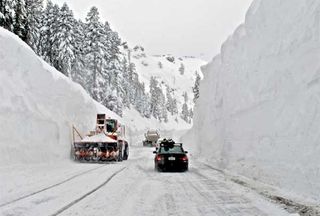
The recent California heat wave has not brought with it a flood of icy water from the snow packed Sierra’s, and experts say the snow should instead melt off at a slow, gradual rate in the coming months.

Hydrologists initially worried about the excess snowfall that accumulated in late May and is still intact at higher elevations. Over the past month, though, their fears have eased as any flooding was minor and localized to back country creeks.

“Everything’s been controlled and very manageable,” said Mark McLaughlin, a Tahoe weather historian and writer with Mic Mac Media. “None of the worst case scenarios have happened.”

In the Central Sierra region snow pack conditions are 205 percent of normal and statewide conditions are 200 percent of normal, according to the California Department of Water Resources.

McLaughlin said any major flooding would be the result of “widespread, prolonged heavy rains” rather than a heat wave, and that it would most likely happen during the winter.

In the winter of 1997, reservoirs were filled to capacity and there had been six feet of snow fall when a storm brought 20 inches of rain to the area and flooded the San Joaquin River Basin.

Randall Osterhuber, a researcher and manager at the UC Berkeley Central Sierra Snow Lab, said reservoir managers have to keep a close watch on water levels. They can’t release too much water for fear of losing their reserves, but also can’t hold too much in case of an influx like in 1997.

“That’s the real challenge,” said Osterhuber.

Dick Meister: Farm workers need drastic change

0

No workers are more in need of union protection than the nation’s miserably treated farm workers. Yet a promising new effort to ease their path to unionization has been blocked by one of their former champions, Gov. Jerry Brown.

Brown was rightly hailed for signing, in an earlier term as governor, the 1975 law that granted farm workers in California the collective bargaining rights denied them nationwide. It’s the weapon farm workers must have if they are to escape poverty and the arbitrary and often harmful actions of grower employers.

But now, Brown has vetoed a bill sponsored by the United Farm Workers union, the UFW, that would have made it much easier for farm workers to unionize. Currently, they can be granted bargaining rights only if a majority working for a particular grower votes for unionization. The vetoed measure, the so-called Card-Check Bill, would have granted bargaining rights simply on the showing of union membership cards or petitions for union recognition signed by a majority of workers.

Farm workers, of course, are among our most important workers. They help feed us, after all. Their pay nevertheless averages less than $10,000 a year, and most lack employer-paid health care and other benefits. They work hard, frequently under the blazing sun, with few  – if any – rest breaks and without even such simple on-the-job amenities as fresh drinking water and toilets.

The UFW, which sponsored California’s 1975 law, has been trying for many years to remedy farm workers’ conditions by leading them in drives aimed at winning union contracts that promise them decent treatment and an effective voice in determining their wages, hours and working conditions.

 It’s not been easy for the UFW, even with the law in effect. Thanks mainly to employer intimidation and high worker turnover, the union has been able to sign up only a small part of California’s farm labor force and to win only a relatively few contracts from growers. But it’s an important start. Without the law, it would have been nearly impossible.

So why in the world did self-proclaimed farm worker advocate Jerry Brown veto the bill that would have strengthened the union rights granted farm workers in the bill he signed 36 years earlier?

Well, Brown didn’t say much, but did say he didn’t like the bill because it called for “drastic change.”  Which it did, of course. That, as Brown must know, is exactly what’s needed.

Requiring union rights to be granted only by elections gives growers a great opportunity to unfairly pressure workers into voting against unionization – and many take full advantage of the opportunity.

It’s common for growers faced with elections to require workers to attend meetings at which they rail against unions, threaten to fire union supporters and warn that they might have to go out of business if their farms are unionized, or at least greatly curtail operations and thus job opportunities.

“You’re talking about voting on the employer’s site, with foremen and supervisors making eye-contact with you after they’ve alluded to or flat out threatened you with the loss of your job or your housing,” notes a UFW vice president, Armando Elenes. “It takes a lot of strength to even vote.”

There’s plenty of evidence that employers do indeed put lots of pressure on workers to vote against unionization. UFW President Arturo Rodriguez notes, for example, instances of growers pulling guns on workers who were trying to organize.  That may seem exaggerated – but not to anyone who’s experienced the superheated grower-worker confrontation up close.

The UFW is not giving up the struggle for Card-Check recognition. The union will soon re-introduce the Card-Check bill in Congress with the strong backing of the nation’s labor leaders. Some of them call it the single most important labor bill in the country this year.

It certainly is for farm workers and should be for workers in other industries throughout the country who also seek Card-Check rights, and for anyone who wants decent treatment for those whose vital work helps put food on our tables.


Dick Meister is co-author of “A Long Time Coming: The Struggle to Unionize America’s Farm Workers” (Macmillan). He can be reached through his website, www. dickmeister.com.


Ghost Fleet wanderers

5

Scott Haefner, Stephen Freskos, and Jon Haeber aren’t the types to stand out in a crowd. Haefner is a web developer, Freskos supervises projects for an engineering firm, and Haeber has a desk job at a company that helps businesses hit high on Google — three straight-laced Bay Area professionals who blend readily into the corporate world.

But everyone’s got their thing — a way to break out of bounds, or scratch the itch of some incessant curiosity.

For these three friends in their late-20s to mid-30s, their thing entails prowling around in rundown deserted places by the light of the full moon, at times taking great pains to avert detection by security patrols. “We go into places that most people don’t go,” Haefner says. They’ve been traipsing into the unknown and documenting their discoveries together for years, motivated as much by art as adrenaline.

This past May, after weighing the consequences, they publicized one of their boldest excursions yet: Sneaking aboard the Mothball Fleet in Suisun Bay to spend entire weekends roaming the bowels of the mildewed vintage ships, while dodging the beams of patrol-boat searchlights.

Unlike many nocturnal wanderers magnetically drawn to abandoned spaces — squatters, taggers, or scrappers, for instance — they don’t break in, vandalize, or steal. Instead, they adopt the same sense of reverence in decaying, chemical-laden industrial places that conscientious hikers assume on backwoods trails. They shoot night photos with professional quality gear, occasionally using flashlights to achieve a technique called light painting.

Haefner, Freskos and Haeber consider themselves advanced practitioners in the art of urban exploration (a.k.a. urbex or UE), an underground activity that’s grown trendier as it draws in adventuresome novices. Now that they’ve publicized their caper aboard the Mothball Fleet, however, they’ve also come under the watchful eye of the feds.


EXPIRATION DATE

At first they thought it was a pipe dream. Doubting their ability to access the Mothball Fleet was saying a lot, considering they’d once snuck onto the Vandenberg Air Force Base and wandered amid abandoned missile silos, absorbing the gravity of the military history those Cold War artifacts represented. Another time they’d managed a nighttime excursion to Neverland Ranch, the famed private amusement park of the late Michael Jackson.

But the ghost ships moored at Suisun Bay seemed out of their league. The rows of hulking, government-owned vessels were locked up and berthed offshore, surrounded by a security headquarters and a shoreline barricade plastered with “No Trespassing” signs. Patrol boats equipped with searchlights circled the docks 24 hours a day, and the prospect of climbing aboard without being spotted seemed crazy.

But then they got word that the last of the aging ships would soon be towed away and destroyed. For Haeber, the history nut of the bunch, this changed everything. “It was about the urgency of making sure these ships were documented,” he explained. “Getting them in the current state that they’re in is so important.”

Alternatively known as the Mothball Fleet and the Ghost Fleet, the ships are part of the National Defense Reserve Fleet, a collection of cargo ships, tankers, and military auxiliaries overseen by the U.S. Maritime Administration (MARAD). Created in 1946 to be ready for deployment in case a national emergency arose, the fleet consisted of 2,277 ships at its height in 1950, strategically stationed at eight anchorages nationwide. For most of the vessels, the call to service never came, and they declined into obsolescence. By April, the entire fleet had dwindled to just 178 ships, at dock in Suisun Bay; Fort Eustis, Va.; and Beaumont, Texas.

The ships that have been moored at Suisun Bay for decades have long since deteriorated, and now they’re being hauled off to the scrap yard bit by bit, though the spot will continue to serve as an anchorage for newer additions to the National Defense Reserve Fleet.

Some were constructed in the World War II era, while others date back to the 1960s and 1970s. While many are tankers or merchant vessels, there are also warships, relics of history deployed in World War II, the Korean War, the Vietnam War, and Operation Desert Storm.

Many of the roughly 70 dilapidated ships have become ecological hazards, leaching toxins and heavy metals into the tidal estuary, which flows into San Francisco Bay. The monumental task of removing and dismantling them began late last year, providing badly needed blue-collar jobs on Mare Island, in the economically depressed city of Vallejo.

By 2017, the last of the ghost ships will have met with torch cutters. At least one will be salvaged: the USS Iowa (BB-61) — a 1938 lead battleship that shuttled President Franklin D. Roosevelt to and from the Tehran Conference during World War II — will be donated and turned into a museum.

Aside from being scrapped, outmoded ships meet with a variety of fates. Some are donated for educational use while others are deliberately sunk to create artificial reefs. Still others are used for target practice in the Navy’s sink-at-sea live-fire training exercises program (SINKEX).

“We saw that these things were going to be gone,” Haefner said. “So we planned it out.”

Haeber examined satellite imagery on Google Earth. Freskos, who’d spent time at sea, studied the tidal patterns. The three scoured the Internet for online photos of the Ghost Fleet. They conducted a scouting mission with binoculars in hand, and gained a sense of when they could take advantage of windows of opportunity between the 30-minute patrol boat rounds.

Long before they even discovered a navigable slough that snaked through a marsh into Suisun Bay or spotted the Craigslist post advertising an inflatable raft for sale, Freskos went up to shoreline gate where the “No Trespassing” signs were posted. He peered through at the tantalizing rows of mothballed ships, and hollered as loud as he could. Nobody responded.


DECAYED TIME CAPSULES

After the months of planning left them confident that it was indeed possible to access the Mothball Fleet, the trio of photographers set out for their first visit, with about 700 pounds of gear in tow. They split the cost of a 12-foot inflatable Fish Hunter raft with a Minn Kota trolling motor. They carried the raft and their gear through a muddy expanse to a marshy spot where the low-profile craft could be set into a narrow slough, safely out of view.

“We always went on or exited at nighttime,” Haefner said. “We would go on nights near the full moon so we could take pictures. It makes it look even more ghostly.”

Their first target was Row F, a line of ships docked in a straight shot from where the slough filtered into the bay. They maneuvered down the narrow channel in their raft, dodging submerged obstacles along the way. Keeping tabs on the whereabouts of the security boat, they started rowing once they reached the open water, and managed to bridge the 800-foot distance to the first ship.

“Our plans were kept secret to all except our loved ones,” Haeber wrote in an online account of that first excursion. “Nobody, other than my girlfriend, knew exactly where I was that weekend. For all intents and purposes, I was on a fishing trip with some friends.”

“Keep Off” signs announcing an invisible 500-foot barrier that was not to be breached were affixed to the hull of every ship. The intruders maneuvered their raft between two Coast Guard cutters, Planetree and Iris, and tied up.

“It can be kind of a challenge getting on,” Haefner explained. “We’re risking ourselves, obviously, but we also brought a bunch of expensive camera gear.” He was the first one to climb aboard the Iris, reaching high to grab onto a bumper that he could then pull himself up on to gain access to the ship. While Freskos kept watch, Haeber handed the gear up to Haefner bit by bit. Once all three were aboard with their backpacks and camera equipment, they hauled up the raft and deflated it.

The Iris was commissioned in 1944. In 1970, it responded to the scene of an oil-rig fire in Galveston, Texas. In 1987, it assisted with cleanup operations in Prince William Sound after the Exxon-Valdez spill. It was decommissioned in 1995, so their entrance likely marked the first time anyone other than MARAD employees had been aboard in 16 years.

A handy feature of ghost ship exploration is that once aboard a ship, it’s possible to access any ship along the entire row, thanks to gangplanks connecting the vessels. So while many of the mothballed vessels were completely secured, there was always the chance that the next one down would have an unlocked entranceway. Part of the ethos of urban exploration is to avoid breaking anything, so they only accessed the interiors of unsecured ships. “They are fairly vigilant about keeping doors locked up tight,” Haefner said. “But there are just so many doors.”

Haeber found a single open door on the SS Exxon Gettysburg, a mammoth oil tanker constructed in 1957, and entered the ship alone, enthralled. The interior, he later wrote, smelled like a mix of mold, benzene, and soggy newspaper. He turned on his flashlight and began tiptoeing through the corridors and peering into the cabins. “They were like time capsules, untouched since the 1970s,” Haeber said.

“Some of the ships were 15 stories deep, like a maze,” Freskos said. “We’d get lost inside.” The trio split from Row F before sunrise and managed to get back to the slough without any mishaps, but they returned on a handful of other occasions with sleeping bags and enough food and water to last a weekend. On those subsequent journeys, they’d seek out places to sleep, often crashing in the once-luxurious captain’s quarters. They slept by day, so that entire nights could be devoted to wandering in awe of the decayed, post-apocalyptic industrial environs, shooting hundreds of photographs.

They visited rooms where crews once hung out playing board games, still littered with cigarettes. They photographed molded interiors, dark cavernous stairwells, engine parts, navigational equipment, and abandoned cabins with peeling wallpaper. “We found personal letters, cards, things people left,” Haefner said. “We were always looking for signs of life.” They wandered through mess halls, engine rooms, bathrooms, galleys, even chilling places with operating chairs and overhead spotlights. They climbed around on the decks in the open night air, wandering through derricks and cranes.

The old ships would make eerie creaking noises when the tide rushed in, and there was always that mild sensation that one experiences on a boat, of things not staying still. “It was like a cacophony of sound when the current was coming in,” Freskos recalled. Hawks, osprey, and owls nested aboard some of them, so the creaking noises were sometimes accompanied by screeching birds of prey.

“The place is steeped in history,” Freskos said. “I’d always think of what this room was used for, or what went on here, when people were experiencing the suffering, craziness, and nervousness of war.”


HIGHLIGHTS AND HAIR-RAISERS

A highlight of their journeys aboard the Mothball Fleet was stumbling across the sleek black Sea Shadow, a stealth ship, which was ensconced within a barge on Row G. Shrouded in secrecy, the angular vessel was developed by Lockheed for the U.S. Navy to test how low of a radar profile could be achieved, and it served as inspiration for a stealth ship featured in a James Bond film. According to the MARAD website, “Sea Shadow was constructed and tested under a high degree of secrecy; until the Navy made its existence public in 1993, all tests were conducted at night.” The ship entered the Suisun Bay Reserve Fleet in September 2006.

They also found their way aboard the USS Iowa, which bears the distinction of being the only U.S. Navy warship ever outfitted with a bathtub, so FDR could have a soak while crossing the Atlantic. While they didn’t manage to go inside, an eerie photograph of three enormous guns on deck conveys the magnitude of the battleship.

One of Haeber’s most cherished discoveries was a three-story-tall mural he photographed inside the SS President Lincoln, an American President Lines ship constructed in San Francisco in 1961. An early version of a containerized cargo vessel, the Lincoln doubled as a cruise ship catering to a small number of elite passengers, and remnants of the elegant interior décor remained. The ship has since been hauled to the scrap yard.

It wasn’t always smooth sailing for the three urban explorers. Once they narrowly dodged a work crew aboard a ship — “but we saw or heard them before they saw us,” Haefner said. Another time, while paddling back to the slough, they discovered their raft was punctured and had to manually pump air into it as they traveled. Then, at the tail end of their final journey to the Ghost Fleet, they found themselves fully illuminated by the dreaded patrol-boat searchlight for a full 10 seconds. They froze, convinced they’d been caught. But nothing happened, so they powered up and rowed like hell to get back ashore, and never returned.

Of course, posting interior photographs of the Mothball Fleet all over the Internet and delivering a public slideshow about their sneak-aboard escapades has attracted the attention of the federal government. “The Department of Homeland Security has been looking into it,” said Haefner, who can tell by monitoring web traffic on his blog. “I know that they know.” He also noticed hits from the U.S. State Department and the U.S. Department of Justice, but so far, none have come knocking.

In response to a Guardian request for comment about the Mothball Fleet photographers, Kim Riddle, a spokesperson for MARAD, e-mailed an official statement. “We were aware of the intrusion,” she wrote. “We are concerned about the safety of individuals onboard our ships. This is a dangerous industrial site, and we take significant precautions for our own workers when they are onboard the fleet to make sure that areas are safe for them to enter. While trespassing on federal property, these photographers put themselves in a very dangerous position and could have been severely injured or killed from a fall or by entering an enclosed space that doesn’t have enough oxygen. Since learning of this incident, we took additional security steps, reviewed our procedures, and reinforced training with our employees to stop these kinds of intrusions.”

Freskos touched on the safety issue in an online discussion about the project. “There were many long discussions about oxygen-deprived spaces such as anchor chain lockers and ballast tanks,” he wrote. “There were contingency plans made for injuries. We carried a medical kit, we wore [life jackets], and took many other precautions.” He also responded to those who questioned the wisdom of publicizing their late-night excursions to the Mothball Fleet. “I think I speak for the three of us when I say that we are well aware of the consequences,” Freskos wrote. “But it’s a passion of ours, and it’s worth it.”

The photographers’ work can be viewed here, here, and here.


Is LEED really green?

news@sfbg.com


The archangel of sustainable development has arrived, promising much needed city housing that will add to the “social fabric of the waterfront community” with its glamorous green rooftops and unheard-of bay views. This is going to be the greenest building of them all, or so we’ve been told, but the truth is a bit more complicated.


A condominium development 25-plus years in the making, 8 Washington would transform the site of the Golden Gateway Tennis and Swim Club near Pier 39. The developer plans to renovate the recreation center with a larger fitness facility, provide two new waterfront parks with public access, and supply 30,000 feet of ground-floor retail stores and restaurants beneath its 165 new luxury apartments.


Sounds nice, doesn’t it? The problem with this $345 million project is that it’s being touted, with its “green building” LEED certification, as the most sustainable structure it can possibly be.


But there’s nothing sustainable about building high-end condos in San Francisco, a city with too many high-end condos and not enough affordable housing. And LEED (Leadership in Energy and Environmental Design), the most popular sustainable development certification system in the country, is a lie — at least as your friendly neighborhood building developer is marketing it.


LEED, the baby of the U.S. Green Building Council (USGBC) is a great marketing tool for developers in San Francisco, the city with the single most LEED certified buildings in the United States. San Francisco was just named the “greenest” city in North America at the 2011 Aspen Ideas Festival, largely due to its extensive representation of green buildings — which normally means structures built with recycled materials, near a transportation hub, featuring some solar panels or other renewable energy sources.


“LEED is certainly a positive thing,” Planning Commission President Christina Olague told us. “There’s this whole push toward green sustainability.”


The project’s “platinum” LEED status is all a San Francisco developer could hope for to attract the green — and more important, the city’s approval.


“LEED certification is part and parcel to the vision for the project,” said PJ Johnston of PJ Johnston Communications, speaking for the developer. “The city, neighborhood, and waterfront deserve healthy, sustainable structures, living spaces, public spaces, and amenities. That’s exactly what 8 Washington will bring.”


LEED has become the final word in green building — if your building is LEED certified, you’re golden. But all this green they’ve been feeding us is really a misleading, incomplete rating system.


The first thing to consider is that sustainable development, even if it uses recycled materials and 10 percent sun-powered electricity, is still development. Any time a structure is torn down, “the energy and materials in that [original structure] are going to get sent to landfills somewhere. You gotta calculate all that,” said sustainable development activist Brad Paul, a former SF deputy mayor, who believes in considering the entire “life cycle of a building” in determining its sustainability.


Even the Environmental Protection Agency sometimes discounts essential considerations of sustainable building. When it sought a new SF office space in 2009, its intention was to find a home that was “a model of sustainable development,” the SF Biz Times reported. But its first choice was to build new development, at the site at 350 Bush Street — with its environmental costs of demolition, throwing out old materials, and starting from scratch.


Last month, the EPA decided to remain at 75-95 Hawthorne Street instead of moving to a new building, but not because it was the sustainable choice. No deal was reached for 350 Bush, and as Regional Public Affairs Officer Traci Madison said, “There was no other option to choose from.”


Although it’s a measure of a structure’s material sustainability, LEED does not consider a building’s life cycle, or even its use. Consider 8 Washington. The developer has boasted that it’s the most expensive housing project in San Francisco history, with a hefty price tag of $3 million to $10 million per apartment.


“Who can afford these luxury condos, and what do they use them for?” Paul asks. “These guys who work for hedge funds on Wall Street,” who use the condo as a second or third home and commute on their private jets to get there.


Johnston said 8 Washington will be marketed to a “mix of buyers, including young professionals, empty-nesters looking to move back to San Francisco, and families … The project has many two- and three-bedroom units, encouraging family living,” he said. But it’s unlikely that those who can afford a condo of this luxury will make it their only home.


“[Board President] David Chiu says he’s worried about SF becoming a bedroom community for Silicon Valley,” said Paul. “I’m more worried about this being a bedroom community for New York, Boston, L.A.”


Instead of providing the affordable housing that San Francisco so needs, projects like 8 Washington attract the wealthy, who aren’t using public transportation. Instead, Paul said, they burn tons of fossil fuels using their new condos as weekend getaways.


LEED FOR THE RICH


LEED certifies buildings as “sustainable developments” based on the following categories: sustainable sites, water efficiency, energy and atmosphere, materials and resources, indoor environmental quality, and innovation in design and regional priority.


Earning points in each category brings a building closer to LEED certification, which requires at least 40 points. Above “silver” and “gold” status, a “platinum” LEED certification requires 80 points. But how builders get the points is what matters. For example, a developer might skimp on the insulation to install extra solar panels and get more points for a less efficient building.


Does LEED consider a building’s actual use? “The short answer is no,” said Jennifer Easton, a communications associate at the USGBC who added, “We want [LEED] to be used by every type of project.” But despite its billing, LEED tells an incomplete story.


“It’s just green drapery,” said SF attorney Sue Hestor, a slow growth advocate. “They’ve really had a PR machine. They keep touting all this greenness.”


LEED certification has value, Paul said, but it doesn’t turn multimillion dollar condos green. “There is absolutely no need for high-end luxury housing in the city right now,” he said.


Building luxury condos in place of affordable housing encourages the “Manhattanization” phenomenon, attracting wealthy out-of-towners to expend fuel on their private jets to get to their new crash pads.


“They aren’t gonna be living there all year,” Olague said of residents of luxury housing. “We hear a lot of, ‘We need more housing.’ If you keep building housing for the top 2 percent, how does it lessen the demand on your average workforce?”


But not everyone sees luxury condo-building as counterproductive. “Building that project actually allows for more affordable housing,” said Gabriel Metcalf, executive director of SPUR (San Francisco Planning + Urban Research Association). “It’ll provide housing for some people, and that can only be helpful to the housing market. If you don’t build new condos, then people just compete for the crumbs, and that means people who are rich push the rest of us out.”


In other words, if you give the rich housing, then they won’t take over your flat in the Mission — if they ever really wanted it in the first place. “I don’t think we can impose some kind of hipster elitism that they’re not our kind of people so they’re not allowed in,” Metcalf said of the wealthy out-of-towners.


LEED agrees. “We don’t want [LEED] to be for one specific group of people,” Easton said. “We have LEED-certified homeless shelters, but having a LEED certified luxury condo building is an advantage. We can’t control if someone is flying across the country in a jumbo jet every day — but we can control their energy efficiency in a building.”


WHO RIDES BUSES?


For the typical working class San Franciscan, living modestly is a must and public transportation is essential. So there’s an inherent environmental advantage to attracting residents who don’t rely on polluting planes and cars.


“There’s a definite need for workforce housing, middle class housing in San Francisco,” Paul says. “I guarantee you none of those people get there by private jet. The less income people have, the more likely they’re going to be to use public transit.”


But 8 Washington and luxury developments like it don’t foster public transit. The more wealthy people who move in, the more low-income residents get displaced — to the East Bay or other areas with more affordable housing. It’s another strike against sustainability when these workers opt to drive back into the city for work instead paying for BART, says Paul, particularly when they drive older, less-efficient cars.


“LEED was a way to spell an environmentally friendly product, but you have to figure in the extra driving,” said Paul.


But 8 Washington gets LEED points for building on a site close to public transit in an attempt to discourage individual car pollution. But will wealthy condo owner actually take the infrequent F-line with all the tourists instead of parking their $150,000 car in the underground parking garage right below their feet?


“When you’re talking about sustainable practices and reducing greenhouse gas emissions and how it relates to land use planning, it makes you wonder if that’s supposed to [solely] relate to housing people near transit corridors,” said Olague. “It seems to me you have to look at equity.”


The garage at 8 Washington, to be built below sea level under the condos, will house 415-plus parking spaces. The developer says that 250 of the spaces will be offered as public parking for the busy Ferry Building down the street, but the 165 additional spaces guarantee one parking space for each residential unit.


“Given the larger size of the residential units and the fact that the majority of the units are two to three bedrooms, we believe that one parking space per dwelling is appropriate,” said Johnston. Appropriate, maybe, but not environmentally friendly.


PROMISES AND REALITY


Wealthy people and affordable housing aside, LEED doesn’t actually measure the energy used in a building, says New York City-based architectural associate Henry Gifford. He filed a $100 million class action lawsuit against LEED last October for gaining a monopoly on the sustainable development market by making false claims about buildings’ energy savings.


“They say that the building is required to be energy efficient. But the building doesn’t have to be energy efficient — it just has to earn points, to promise it’s going to be energy efficient,” Gifford said.


It’s up to the developer what computer software is used to predict a building’s energy efficiency, and Gifford says that computer diagrams can easily be manipulated and do not consider inconsistent factors, like weather.


“California is the promise land,” said Gifford. “All you’re required to do is provide a promise. The sad thing is that it removes all the integrity from the process — it encourages lying.”


Furthermore, once the building is built and has achieved LEED certification, the building’s actual energy use in its life cycle isn’t considered. The only way you can truly know if a building is energy efficient is by looking at the utility bills, says Gifford. But once it’s LEED-certified, who cares?


There is a voluntary program called Building Performance Partnership (BPP) that tracks a building’s energy and water use over time. “The idea is we want LEED to be a system where it enacts change in the actual building,” said Easton. But the problem is the building has already gained LEED certification before the first utility bill is even mailed.


“We publish baseball scores. With everything in life, people get scored,” said Gifford, who operates with transparency in developing energy efficient buildings in New York, hosting open houses after buildings are built with printouts of their recent utility bill history.


LEED was never intended to have the final say on sustainable building, to be a seal of green approval, according to a New York Times op-ed by Alec Appelbaum last year (“Don’t LEED us astray,” 5/19/10). “Rather it was to be a set of guidelines for architects, engineers, and others who want to make buildings less wasteful. However, developers quickly realized that its ratings — certified, silver, gold, or platinum — were great marketing tools, allowing them to charge a premium on rents.”


Therein lies the issue. Yes, 8 Washington will “allow for more ‘eyes on the street’ at all hours of the day” and provide two or three-bedroom units for families who can afford them, as it promises. But a sustainable structure is far different than the promise of a sustainable life cycle of a building. And a promise is just that. *


UPDATE: Jennifer Easton at LEED wrote to inform us that, although the 8 Washington website clearly states that the project will include LEED certified buidlings, “We would like to clarify that 8 Washington is not a LEED-certified project, nor a LEED-registered project.”


PLANNING COMMISSION HEARINGS


July 7: Community Vision for San Francisco’s Northeast Waterfront


July 14: City demographics and sustainability; the need for low-income housing; presentation of “jet fuel burn rate” argument.


July 21: 8 Washington’s EIR approval hearing


All hearings to be held at 12 p.m. in the Commission Chambers, Room 400, City Hall, 1 Dr. Carlton B. Goodlett Place.


JET FUEL BURN RATE FOR LUXURY CONDOS


Let’s assume that just five of the 165 condo buyers at 8 Washington (3 percent) are Wall Street hedge fund traders or venture capitalists using them as second or third homes. Let’s also assume they’ll use them 1.5 times a month and commute to SF aboard their business jet, a reasonable assumption for Wall Street execs making tens of millions in salary and bonuses. Why would they fly by private jet rather than take Southwest or Amtrak? Because they can. This must be factored into any environmental analysis of a project that explicitly markets to this demographic and include the following:


Mid to large size business jets used to fly cross country (Hawker 800XP, Gulfstream G2/ G3, Bombardier Global Express) on average burn 400 gallons of jet fuel/hour, take 6 hours to fly New York to SFO and 5 hours for return trip. Therefore, a single round trip burns:


11 hours X 400 gallons per hour = 4,400 gallons of jet fuel per trip. A typical family car uses 1,200 gallons of gas per year, so one flight from NYC to 8 Washington equals almost four years of driving a family car.


1.5 trips/mo. = 6,600 gallons X 12 months = 79,200 gallons of jet fuel/year or the equivalent of driving a family car for 66 YEARS each month.


Using our example of five residents, the numbers over one year and 20 years are:


5 X 79,200 gallons/per year = 396,000 GALLONS OF JET FUEL A YEAR or equal to driving a family car 330 years, A THIRD OF A MILLENNIUM, each year.


396,000 gal. X 20 yrs. = 7,920,000 gallons of jet fuel, equivalent of driving family car 6,600 years, OVER 6 MILLENNIUM, in 20 years.


Given this reality, the 8 Washington environmental impact report must analyze such questions as:


How many solar panels are needed compensate for burning 396,000 gallons of jet fuel/year? How many low flow toilets would make up for burning 396,000 gallons of jet fuel/year? Etc.

Radon gas is a leading cause of cancer

1

Remember how we were all freaking out a few months ago about radiation, in the wake of the devastating earthquake and tsunami in Japan that led to releases of radioactive material from Japan’s stricken Fukushiima Daiichi nuclear plant? Well, now comes news that the leading cause of non-smoking lung cancer in the United States is radon gas, a radioactive gas that comes from the natural decay of uranium found in nearly all soils. And the U.S. Environmental Protection Agency, which says radon gas leads to an estimated 21,000 deaths each year, apparently wants to help you test for it in your home.Typically, radon moves up through the ground to the air above and into people’s home through cracks and other holes in the foundation. In other words, your home can end up trapping and building up radon inside. This can happen in new and old homes, well-sealed and drafty homes, and homes with or without basements. And Sometimes radon can enter your home through well water, and occasionally building materials give off radon, too.

So, now U.S. EPA has announced a plan, which includes strategies to reach low-income families, many of whom, as the feds note, “do not have the resources to make the simple fixes necessary to protect their homes and loved ones.”

“With nearly one in 15 homes affected by elevated levels of radon and thousands dying each year from radon-induced cancer, it’s time to step up our actions in the federal government,” EPA Administrator Lisa P. Jackson said. “Through the Federal Radon Action Plan, we’re working with partner agencies to raise awareness about the threat of radon in our homes and to take steps to mitigate this hazard. Together our efforts will help reduce radon exposure and make our homes, schools and communities healthier places to live, learn, work and play.”

To learn more, check out the fed’s Radon Plan website, or call 1-800-SOS-RADON.

Our Weekly Picks: June 22-28, 2011

0

WEDNESDAY 22

DANCE

Hard Core: Getting Raw

Finding your identity is tough unless you are a vegetable. Asserting your identity — going against mom and dad — can be tough. However, if who you are and who you want to be goes against societal norms, be prepared to fight for your life. People have died doing it. It’s what the Queer Arts Festival is all about: paying tribute to and celebrating being “out there.” It’s most appropriate that hip-hop — street-born, street-nourished — is part of this yearly event. Hard Core: Getting Raw is a multimedia show put together by Josh Klipp and members of the Freeplay Dance Crew in which each artist (Klipp, Liz Angoff, Kevan Arrington, Hana Azman, and Molly Tsongas) tells a story about a journey undertaken. (Rita Felciano)

Wed/22–Thurs/23, 8 p.m., $15

Garage

975 Howard, SF

(415) 518-1517

www.brownpapertickets.com


THURSDAY 23

EVENT

Manic D Press showcase

In concert with this month’s Pride festivities, the recently relocated Modern Times Bookstore hosts a reading to spotlight luminaries from the queer independent scene. Many affiliated artists stop by, none of whom are exclusively tied to the literary scene but many of whom are pursuing a more experimental approach instead The night features poet Daphne Gottlieb (author of nine books), zinester Larry-Bob Roberts (he’s been called “the Stephen Colbert of queer culture”), badass trans musician-performer Lynn Breedlove, and performance artist extraordinaire Alvin Orloff. With such an eclectic collection of artists of the queer community gathered in one space, the night looks to be a classy, entertaining classy bookend to the flashier parties and parades to come. (David Getman)

7 p.m., free

Modern Times Bookstore

2919 24th St., SF

(415) 282-9246

www.mtbs.com


EVENT

Mara Hvistendahl

On glimpsing the title of Science magazine correspondent Mara Hvistendahl’s new book Unnatural Selection: Choosing Boys Over Girls, and the Consequences of a World Full of Men, I immediately thought what any reasonable boy-crazy person would: yeeeeesssss! Because in the meat-marketplace of a society burdened by a capitalistic priapism, the more infinite the choices, the better. But as usual, first impressions are incomplete. Join Hvistendahl as she explains the repercussions of selective sex abortion and the resulting 160 million women missing from Asia. How is this imbalance tweaking entire nations, and what does the West have to do with it (aside from having invented the ultrasound)? Can I get some ladies here? (Kat Renz)

6 p.m., $5–$15

World Affairs Council Auditorium

312 Sutter, Suite 200, SF

(415) 293-4600

www.itsyourworld.org


FRIDAY 24

PERFORMANCE

I Love Being Me, Don’t You?

A cherished comedian, singer, actress, gay deity, and recent Sarah Palin pummeler, Sandra Bernhard comes to town with a new show and new songs from a new album (both show and album are called I Love Being Me, Don’t You?) as well as dependably cutting observations about the world as such — all in time for Pride. Judging by reports from New York City’s sold-out Town Hall appearance, Bernhard — also working on a new musical with Justin Vivian Bond titled Arts and Crafts — flourishes trademark comedic and vocal chops while keeping outspoken, outrageous, and just plain out. (Robert Avila)

Fri/24–Sat/25, 7 p.m., $45–$75

Marines’ Memorial Theatre

609 Sutter, Second Floor., SF

(415) 771-6900

www.marinesmemorialtheatre.com


MUSIC

Brainfeeder Records Showcase

Started in 2008, the Brainfeeder label has essentially the same musical genetics as its founder, Flying Lotus: bass, hip-hop, electronic, things that go bleep-bloop, and jazz (all with a distinctively experimental bent). Following performances in New York City and L.A., Flying Lotus and a collection of labelmates will be bringing a showcase to 103 Harriet. Of particular interest will be 20-year-old Austin Peralta, a composer and jazz keyboardist who has drawn comparisons to McCoy Tyner and Chick Corea. His album, Endless Planets, has a sense of continuity with the forward elements of the genre (that seemed in part to stall outside of Japan in the ’70s) modernized for the 21st century. (Ryan Prendiville)

With Flying Lotus, Thundercat, Austin Peralta, Teebs, and Strangeloop

9 p.m., $22.50

103 Harriet, SF.

(415) 431-1200

www.1015.com


EVENT

“World’s Ugliest Dog Contest”

Festival season has arrived, and if the tie-dye at the Haight Ashbury Street Fair and the impending smolder of the Queer Tango Fest (June 29-July 3) hasn’t yet reminded you of the all-consuming special-ness of the Bay Area, I hereby announce the entrance of the ugly dogs. Yes, the Sonoma-Marin Fair was the birthplace of the snaggle-toothed, wonky-tailed trend of funky puppy adulation that has since made its way from The Tonight Show with Jay Leno show to Europe and back again. The day culminates in the crowning of another freaky furry friend (the 23rd annual!), but get to the fair early to enjoy dog training lessons, treat demonstrations, and, oh yes, the rest of the pig-and-pie county fair action. (Caitlin Donohue)

6 p.m. (fair hours, noon–midnight), $8–$15

Sonoma-Marin Fairgrounds

175 Fairgrounds, Petaluma

www.sonoma-marinfair.org


FILM

San Francisco United Film Festival

As per its mission statement, the San Francisco United Film Festival draws from an impressively varied pool of films for its third year in the city. From Bhopali, a somber look at the 1984 Union Carbide disaster in Bhopal, India, to The Dead Inside, a zombie-centric musical (the first?), there are strong indicators that the oft-used mantra “something for everyone” is apropos. Documentaries are the meat of this year’s selection and provide some of the more outstanding picks. Eat the Sun examines the practice of sun-gazing, or staring directly into the sun for prolonged periods of time in the belief that this will provide miraculous sustenance, and Superheroes dives mask-first into the world of real-life costumed vigilantes. Superheroes particularly holds promise as a crowd favorite as director Michael Barnett follows avengers Mr. Extreme on patrol and in their daily lives. Super! (Cooper Berkmoyer)

June 24–30, $10.75 (all-film pass, $25–$50)

Roxie Theater

3117 16th St., SF

(415) 863-1087

www.theunitedfest.com/sanfrancisco


SATURDAY 25

MUSIC

San Francisco Free Folk Festival

What better place than a middle school to host a wholesome folk festival? San Francisco’s 35th annual Free Folk Festival features music, dance, and art performances, workshops, and jam sessions for toddlers, teens, 20-somethings, and tried and true folks of any age. The festival provides a great opportunity to fine-tune your Gypsy jazz guitar, pennywhistle, left-handed mandolin, and countless other highly specialized instruments in hour-long workshops throughout the day. If listening and dancing are more your thing, there’ll be storytelling, Moroccan dance, jug band swing, and Bohemian national polka sessions galore. It seems no pocket of culture around the world will go untapped. On the off chance that you think something’s been overlooked, there’s a plain old open mic, too. (Getman)

Sat/25–Sun/26, noon–10 p.m., free

Presidio Middle School

450 30th Ave., SF

www.sffolkfest.org


MUSIC

“Rites of Massive”

Opulent Temple, the SF-based Burning Man camp that has been rocking the playa since 2003, is going big again on Treasure Island, drawing in a wide variety of Burning Man DJs, sculptures, performers, art cars, and music lovers. After filling Building 180 two years ago for its Massive Cox party featuring DJ Carl Cox, OT is moving to the larger Hangar 3 space for Rites of Massive (playing off this year’s Burning Man art theme “Rites of Passage”). Internationally acclaimed headliners DJ Dan, Christopher Lawrence, and Elite Force join notable local DJs on six stages, with burner sound collectives Distrikt, Symbiosis, and others joining the Opulent Temple hosts. Get ready to go big. (Steven T. Jones)

9 p.m.–4 a.m., $30–$50

Hangar 3, 600 California

Treasure Island, SF

www.opulenttemple.org


MUSIC

Cibo Matto

They’ve become hyperactive again. Prior to Cibo Matto’s split in 2001, the duo of instrumentalist Yuka Honda and singer Miho Hatori were responsible for some of the most infectious and bizarre sweet, sweet music of the 1990s. Based in New York City, Cibo Matto had a tendency to be mistaken for a J-Pop band at first listen, in part because of a consistent, aforementioned energy level, but in truth it skipped across the musical spectrum with a complete disregard for genres. The trip-hopping of “Sugar Water.” The ray-gun blap rap of “Working for Vacation.” The tropicalia version of “About a Girl.” Reunited for a Japanese benefit and now a small tour, the band is reportedly working on a new album. (Prendiville) With Chain Gang of 1974

9 p.m., $25

1025 Columbus, SF

(415) 474-0365

www.bimbos365club.com


SUNDAY 26

FILM

“Sand Up Your Vortex”

Since beach dreams rarely come true ’round these foggy, windy parts, why not ditch the S.P.F. and stuff your wild bikini at the Vortex Room instead? Tonight’s quadruple feature kicks off with Roger Corman’s 1957 Attack of the Crab Monsters (nukes made ’em giant; human flesh makes ’em hungry); Jack Curtis’ 1964 The Flesh Eaters (contains Nazis, beatniks, and — again — gruesomely gourmet human flesh); Monster from the Surf (1965), perhaps best explained by its alternate title, The Beach Girls and the Monster; and Nate Watt’s 1961 The Fiend of Dope Island (“He took everything and everyone he wanted!”), which is firmly ensconced on my list (along with 1976’s Shriek of the Mutilated and 1981’s Make Them Die Slowly) of all-time best movie titles. (Cheryl Eddy)

7 p.m., $5

Vortex Room

1082 Howard, SF

www.myspace.com/thevortexroom 


The Guardian listings deadline is two weeks prior to our Wednesday publication date. To submit an item for consideration, please include the title of the event, a brief description of the event, date and time, venue name, street address (listing cross streets only isn’t sufficient), city, telephone number readers can call for more information, telephone number for media, and admission costs. Send information to Listings, the Guardian Building, 135 Mississippi St., SF, CA 94107; fax to (415) 487-2506; or e-mail (paste press release into e-mail body — no text attachments, please) to listings@sfbg.com. Digital photos may be submitted in jpeg format; the image must be at least 240 dpi and four inches by six inches in size. We regret we cannot accept listings over the phone.


BYO Flair: A guide to this weekend’s festival explosion

0

If there is one thing I know about festivals it is this: the gear you pack can leave you hydrated, hip and happy — or break you down to a sunburned, schlubby hunk of bad vibes. (It’s true – shoddy preparation for Reggae on the River 2006 left me stranded in the psych tent with disoriented girlfriend during the Ziggy and Damian Marley concert. Clearly, a hipper fedora would have solved everything.) 

This weekend plays host to a freakishly large share of summer festivals, so consider this your guide to happy cavorting in the sun. Cups, caps, frocks, and foods: here, friends, are our picks for best festie flair.  

Sierra Nevada World Music Festival

The perfect weekend campout for those that can’t handle the crushing crowds of the more commercial festivals this summer. Even the little things (children) will appreciate the open-minded approach to beautiful noise here.

Bring: Consider SNWMF a three-day immersion program in getting loose. Translation: you need costumes. If you’re heading up from San Francisco, we’ve got the perfect sartorial layover for you. Sebastopol’s Funk & Flash vintage store is far enough removed from the big city that its stock hasn’t been picked to all hell by the club kid set, so festie-bound you can benefit from its racks of flowery skirts, and tons of sparkle. Go, do you! 

Fri/17-Sun/19, $60-150

Boonville Fairgrounds

CA-128, Boonville

www.snwmf.com


Juneteenth Festival and Parade

The website proclaims this celebration of African American heritage to be the largest gathering of blacks in Northern California, but it remains to be seen whether you’ll fixate on the cultural signifcance while attending the event itself: with an impressive classic car show and three-on-three basketball tournament, all the historical reflection might have to wait until after the festival. 

Bring: No brainer accessory: a hat from Hats of the Fillmore, an independent business that’s been holding it down on Fillmore’s main drag for years. High quality at surprisingly low prices, you can don one of these lids to fit in perfectly with the jazzy milieu of SF’s traditionally black neighborhood. 

Sat/18 11 a.m.-7 p.m., free

Fillmore and Geary, SF

www.sfjuneteenth.org


Alameda Sailing Festival

Hey Muffy, take a break from hating on the impending America’s Cup to catch a day of boating buoyancy. The Encinal Sailing Foundation will be providing turns on the high seas for a “nominal” fee, and there will be seminars on “pilates for sailors,” boating to Mexico, and how to get your captain’s license. Afterwards, we know some great places to get drunk in Alameda!

Bring: This really goes for every fest on the list, but possibly the most important piece of flair is a fun, functional backpack to hold your water (flask), sunscreen, cell phone, and snacks. We love the Brooklyn Circus’ BKc satchels – but for the moment you’ve gotta special order them from New York. That’s fine, this ain’t the last weekend of the summer! The store’s preppy style (without the snooty WASP-y supply chain behind it) would be divine if you’re looking to drop some dough on a nice sailing fest outfit. 

Sat/18 10 a.m.-8 p.m., free

Encinal Yacht Club

1251 Pacific Marina, Alameda

www.summersailstice.com


Bicycle Music Festival

You read our profile on Fossil Fool, so you know all about the current trend towards bike-fueled culture fun. According to all the volunteers that have been standing near Mona Caron’s bike mural behind the Church Street Safeway for the past few days, this fest will be the perfect spot to enjoy the zeitgeist. Saddle up for awesome tunes, and community-building bike rides between concert sites. 

Bring: Hedgehog mug from Gravel and Gold so you can (chicly, adorably) reap the benefits of the fest’s pedal-powered smoothie maker. It also comes in rabbit, fyi. The calories you consume in said smoothies work doubletime — once you’re done drinking, take your turn powering the generator for the drinks or one of the music stages yourself.

Sat/18 noon-11:25 p.m., free

Various locations, SF

www.bicyclemusicfestival.com


Berry Festival

You know this sun isn’t going to last past 4th of July, so now is the perfect time to up your antioxidant intake and arm the old immune system against “summer” colds. CUESA and the Ferry Building farmers market is holding this day of loving for berry season – sample the treats available in the market stalls and let chef Daniel Clayton of Nibblers Eatery and Wine Bar show you how to whip up some healthy, hearty grub with the juicy little devils. 

Bring: a nice navy sweatshirt from Mollusk for the Bay breezes and inevitable tayberry stains. 

Sat/18 11 a.m.-1 p.m., free

Ferry Building, SF

www.cuesa.org


California Big Time Indian Gathering

The Ohlones are hosting their first gathering of Native peoples in their ancestral lands in two centuries. Come to learn more about real SF locals through dance, rituals, and craft exhibitions.

Bring: Mocs that slip off easy – you’re not gonna want a layer of separations between the well-manicured lawns of Yerba Buena and your soles. 

Sat/18 noon-11 p.m., free

Yerba Buena Gardens

Howard between Second and Third St., SF

www.worldartswest.org


North Beach Festival

Sure, the neighborhood street fests all start to look the same after awhile. But there are good parts of that same: family-friendly musical acts, artery-busting festie food, and an excuse to run amok in the streets. The North Beach incarnation has been going for 56 years, and manages to sneak a couple unique facets into the standard cruise-shop-eat formula SF has perfected. 

Bring: your kitty cat companion for the yearly St. Francis of Assisi animal blessings. Also, a flirty, locally made frock from NooWorks is totally Maria from West Side Story – perfectly for the neo-Catholic-in-the-summertime vibe you’ll be channeling. 

Sat/18-Sun/19 10 a.m.-6 p.m., free

Washington Square Park

Union and Columbus, SF

www.northbeachchamber.com


Northern California Pirate Festival

Never underestimate the amount of people willing to drop serious time and dime on dressing up in period costumes. You’ve seen the Renaissance fairs and the Dickens Christmas Fair – now it’s time to peep the pirates. Two very full days of pirate entertainers and replica boats (not to mention squadrons of pirate clothing vendor booths) await you if you be brave enough to cross the seas to Vallejo. 

Bring: Your 826 Valencia designer spyglass, for scurvy-watching of course. 

Sat/18-Sun/19 10 a.m.-6 p.m., free

Vallejo Waterfront

Mare Island Way (near the ferry terminal), Vallejo

www.norcalpiratefestival.com


Picklewater Free Circus Festival

As we mentioned in last year’s profile of our favorite free circus troupe, Circus Bella, nothing quite highlights the magic (and eccentricity) of this city quite like catching a high-flying aerial act smack dab in the heart of downtown. Picklewater is taking over Union Square for the third year in a row this weekend, and we suggest you head down — if only to catch the amazed gaze of the throngs of tourists that’ll be on hand to remind you that yes, your city is freakin’ amazing. 

Bring: Your medical marijuana card, and attending accoutrements. 

Sun/19 2-4 p.m., free

Union Square

Post and Powell, SF

www.jewelssf.org


Sharon Jones and the Dap Kings at the Stern Grove Festival

The 74th season of this green glade’s free concert series kicks off with a killer show from the queen of throwback soul. 

Bring: The Stern Grove scene struts more with its picnic spread than by any accessory or fly outfit. A retro basket (check Goodwill, people are always ditching picnic baskets) will be a useful score, and in terms of snack to make (they must be homemade!), peep our favorite new vegan cooking blog, The Vegan Stoner. It’s perfect, even if you had to self-medicate your hangover before you started prepping for the journey out to the Sunset.  

Feat. Ben L’Oncle Soul

Sun/19 2 p.m., free

Stern Grove

19th Ave. and Sloat, SF

www.sterngrove.org


Mission Street mural unveiling

But why spend all your time at the big events? Artist Aaron Lawrence is holding an al fresco event of his own – pulling the dropcloth off the work he and muralist Rocky Villanueva did on a new apartment building on Mission. He’s making a party of it, so get there early if you want to get down on the free burritos provided. 

Bring: Tapatio, tall can Tecate. Bring two cans, share them. 

Sun/19 2-5:30 p.m., free

Mission between 18th and 19th St., SF

Facebook: Sunday Mural Reveal Party


The naughty list: Sex on screen at the SF International LGBT Film Fest

22

Relationships, emotions and identities? Yada yada yada. The San Francisco International LGBT Film Festival may explore all the complicated bits of queerness but lest we forget that this festival is dedicated to a community centered around sexual preference. Who wants to see some hot, artsy gay sex on the big screen? If your hand is waving high in anticipation (among other body parts) you won’t be disappointed when you see what this year’s festival has hot on the reel.

Romantic and handholding gay characters will be a dime a dozen throughout the 10 days of films, which is awesome and wonderful in itself, but eventually all those homo chick-flicks might start to make your mouth water for something a bit more juicy. Gay porn is always a couple blocks or clicks away, but the independent, inspiring, adventurous, and beautiful varieties are much harder to get your lubed hands on. The unique visions of filmmakers from around the globe will be represented during the festival’s 35th year anniversary and if you time it right, you could probably find yourself pleased in public for a consecutive week and a half. Some are provocative, some sexually explicit, and others just have a lot of enjoyable visuals. Here are some steamy recommendations to provoke that scandalous theater hard-on and maybe even a Pride-ful romp with a fellow film-fester. 

Longhorns

longhorns

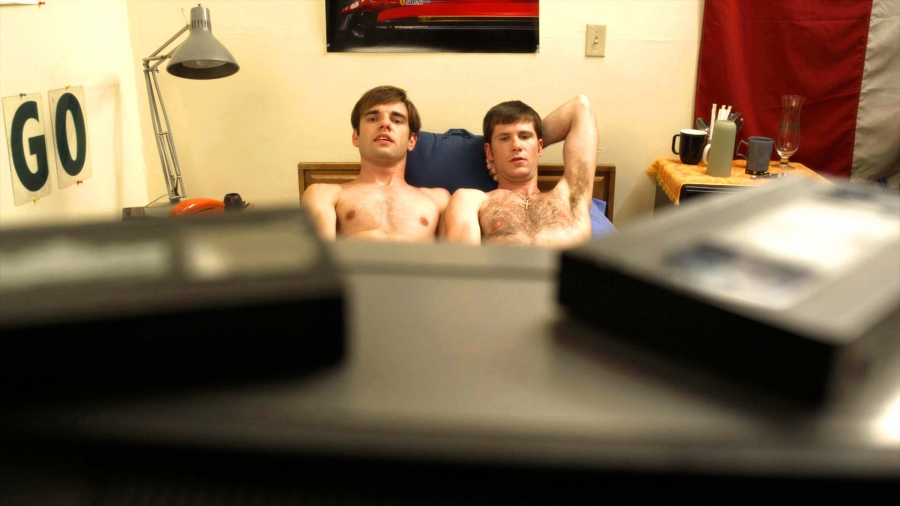
It’s Texas in 1982 when frat-boy Kevin and openly gay student Cesar become schoolmates. Kevin needs a little “help” and Cesar comes through with a helping hand. These study-buddies always end their homework and a well-deserved round of handjobs– lots of them. 


Community Action Center

cac

No dialogue. Just sex. Metallic bodies, gender-queer, paint splashing, fruit bashing, blood-red wooden dildos, witches, and dungeons will flash before your eyes in a series of shocking shorts. The performers were encouraged to go “hog wild” in this cinematic orgy and the results look dirty. 


I Want Your Love

want_love

Recreational sex always sounds like a good idea when booze does the convincing. Besties Jesse and Brenden decide to give it an arousing go, but predictably end up with sticky emotions. 


LA Zombie

la zombie

One word: wound fucking with prosthetic alien cocks. This sexy horror flick will get your adrenaline pumping all night.


May I Please Have Another

may_i_please

This series of six kinky shorts runs the gamete with a guitar-slaying transexual dominatrix, a queer leather family who sends off their bratty brother with a proper beating, the scenes behind International Mr. Leather, arousing poems, and surprising sexual encounters. 


Weekend

weekend

This extended one-night stand gets complicated as Russell and Glen get high, have loads of awesome sex, and chat for hours. Passionate and honest, it may be a love story but it’s also got enough skin to keep you perky. 


Three

three

From the director of Run Lola Run, Germany’s Tom Tykwer explores bisexuality and human motivation through three test subjects: Simon, Hanna, and Adam. The erotic chaos is a complete mind-fuck that will send you to bed with dripping dreams. 


SF INTERNATIONAL LGBT FILM FEST

Thurs/15 – Sun/26

Times, locations and ticket prices vary

Check the schedule and get tickets in advance at www.Frameline.org


Ready for takeoff

0

arts@sfbg.com

DANCE Life partners running a dance company together is rare, and when it happens the couple usually keeps responsibilities distinct. In ballet, Gerald Arpino and Robert Joffrey did it for many years; Thordal Christensen and Colleen Neary are making a go of it in Los Angeles. In modern dance, it is simply unheard of. Modern dance companies are one-man or one-woman affairs. But no longer: Janice Garrett and Charles Moulton have broken the mold.

A couple for the last 15 years, they plunged into choreographing together in 2007 with the splendidly original String Wreck. In 2009, they raised the ante with The Illustrated Book of Invisible Stories, which used a movement choir — something Moulton had perfected in his Precision Ball Passing works — of student performers and Garrett’s professional dancers. Now they have refined that model.

The exhilarating The Experience of Flight in Dreams was a wondrous meditation on the idea of being liberated from the boundaries and restrictions — physical and intellectual — that tie us down. With Experience, Garrett and Moulton have, in fact, taken flight. This new work tightly integrates the dancers and the choir into a propulsive whole without infringing on the essential identities between the two groups.

The choir was used ingeniously. Their many hands allowed the dancers to fly or float or swoop and dive. With their fingers, they delineated individual portraits. But they also became obstacles to be overcome and roads to be traveled. At one point supine on the floor, they were the dead calling out to dancer Nol Simonse.

The choreography for the five professional dancers was so fragmented and high-pitched that the relative calm of the choir’s activity created balance. Their unisons were also much less regimented; they were alive and filled with breath.

There were dreamers of many kinds in Experience. Dudley Flores was a loner who, encased by supporting arms, periodically woke up and tried to reach for the beyond. He finally succeeded at the end when, carried above the heads of everyone, he became a living image of transcendence — though it wasn’t an image I found convincing.

There was also the petite dynamo Tanya Bello and Yu-Mien Wu in spitfire encounters of kicks, rolls, and lock-steps. When carried aloft by the choir, Bello and Wu looked as if they had sunk into pillows and seemed slightly surprised at what happened to them. Wu is a stunning newcomer with a bravura elevation and leaps that hang in the air forever. He didn’t, however, need such a long solo to prove the point.

Simonse and Carolina Czechowska’s duet had a twitchy but distanced intensity to it as they tried to make contact. Simonse’s dream was a nightmare from which he couldn’t wake up. Like a wounded soldier who comes home, he couldn’t open his fists, no matter how hard he tried. Carried out by the choir, he looked like he had been crucified, or was a carcass. Always an intense artist, he outdid himself in this show.

But not all of Experience‘s dreams were lofty and profound. Some were earthy and simple, like a high-spirited social encounter to some gypsy music. Or Flores and Simonse in a hilarious, gesture-driven meet in which they went at each other, as a friend observed, like two roosters. Or perhaps Bello who, for the heck of it, interrupted a solemn proceeding with a running, screaming fit that, no surprise here, became infectious.

In the penultimate section, the choir hoisted and lowered big panels of fabric that created billowing waves the dancers had to pass through (not unlike the worshippers did in the “Wade in the Water” section of Alvin Ailey’s Revelations). Perhaps it was meant as a transition to the finale. It didn’t seem to make much sense.

Garrett and Moulton work well together; they also choose excellent collaborators. Foremost among them was group of eight top-flight musicians who, under the guidance of Jonathan Russell, played one of the most deliciously appropriate dance scores that has been heard in these parts in a long time (along with the absolute pleasure of having live music). Oana Botez Ban’s red and black palette for the costumes worked well, as did Jacob Petrie’s supportive lighting design.

Play the game, preserve the wetlands for your grandkids

0

Things we like: halting environmentally harmful development projects, healthy waterways, online timesucks, and free booze. So Save The Bay, thanks bunches for your new fundraising Internet game — but in the future, thanksmuch for staying out of our heads, regardless of the potential benefits of whatever mind reading technology you’ve got your benevolent little mitts on.

At the risk of revealing the pathway to our sasstivist hearts, meet Battle for the Bay. It’s Save The Bay’s newest gizmo, giving water-loving point-and-clickers the chance to journey from the 1960s (when the bay advocacy group was founded) to present day times, all the while besting historically accurate environmental menaces to our local lands, from David Rockefeller’s 1970s bid to level the San Bruno Mountains and create a Manhattanized version of the San Mateo County shoreline, to the Costco Busan spill, to Cargill’s current ploy to transform 1,436 acres of Redwood City salt ponds to suit its freaky agribusiness needs. (Coincidentally, Save The Bay is not in favor of this plan.)

You’ll never get your stubby fingers on Bair Island, 1980s Mobil man! 

And it’s not just an opportunity to crusade against cartoonized powers that be! Trivia questions give you a chance to brush up on your ephemeral wisdom of the Bay Area (from brothel main drags to historical transportation lines), and there are prizes: the Bay city with the most players will win a free happy hour at a watering hole in their ‘hood. 

Genius. “We worked with Free Range Studios to design the game,” says Cara Longpre, online communications manager at Save the Bay. “We heart them.” (You’ll heart them too after watching The Meatrix, the company’s viral video hit from 2003). 

Other people Longpre hearts: George A. Miller and Janet McKinley, two longtime Save The Bay members who’ve agreed to front up to $10,000 in $1 increments each time you (you!) click over to the site to defeat the evil Pete Wilson beast. 

So quick, go! We’ve already lost 90 percent of our tidal marsh to development. And we want our free happy hour, dammit. Longpre told us not to count our chickens before we hatch on that one, but hey, we know some people in the media. 


Our Weekly Picks: June 15-21, 2011

0

WEDNESDAY 15

EVENT

“Snakes and Lizards: The Summer of Slither”

“It is I; be not afraid.” Such were the comforting words, according to the Gospel of John, spoketh by Jesus C. unto his disciples after he reportedly walked across the sea. Now imagine another creature — right here, right now — capable of sprinting across the water: the neon-emerald mini-pterodactyl “green basilisk lizard,” expressing the same sentiment through its namesake stare. Need you be afraid of the 60 snakes and lizards — collectively known as “squamates” — visiting the California Academy of Sciences till September? Maybe. But these scaly species, along with their academy interpreters, have an important role this summer as live ambassadors from the reptilian realm. You just might find God, the devil, Darwin, or all three. (Kat Renz) Through Sept. 5

Mon.–Sat., 9:30 a.m.–5 p.m.;

Sun., 11 a.m.–-5 p.m., $19.95–$29.95

California Academy of Sciences

55 Music Concourse, Golden Gate Park, SF

(415) 379-8000

www.calacademy.org


THURSDAY 16

PERFORMANCE

Fresh Meat Festival

Fresh Meat, the transgender and queer performance festival, is 10 years fresh this year. And to celebrate, the festival offers its most ambitious program to date, four full nights’ worth of work, including Vogue Evolution, the New York City LGBT street dance group featured on the reality competition America’s Best Dance Crew. Also fleshing out this year’s roster: Los Angeles–based Robbie Tristan and Willem DeVries (same-sex ballroom world champions), New Mexico’s Cohdi Harrell (world-class trapeze artist), Sean Dorsey Dance, Na Lei Hulu I Ka Wekiu (an all-male hula company), the Gay Asian Pacific Alliance Men’s Chorus, glamourpuss singer-songwriter Shawna Virago, and comedian Natasha Muse. (Robert Avila)

Thurs/16–Sat/18, 8 p.m.;

Sun/19, 7 p.m., $15–$20

Z Space at Theater Artaud

450 Florida, SF

www.freshmeatproductions.org


FRIDAY 17

DANCE

Epiphany Productions Sonic Dance Theater

Recently returned from Mexicali, Mexico, the globetrotting choreographer Kim Epifano brings her art and travels back to SF with a home season work at the ODC Theater. Solo Lo Que Fue, a dance film shot at Cantina El Norteño, a historic bar in Mexicali, features a site-specific dance with performers from the region. The program also includes Heelomali, a multimedia piece created with composer and didgeridoo master Stephen Kent and Burmese harp player Su Wai, as well as Alonesome/Twosome, a duet inspired by an airmail drawing sent to Epifano by acclaimed artist Remy Charlip with live music by Epifano and Kent. Enjoy this armchair travel from the theater. (Julie Potter)

Fri/17–Sun/19, 8 p.m.; Sun/19, 7 p.m., $16–$20

ODC Theater

3153 17th St., SF

(415) 863-9834

www.odcdance.org


MUSIC

Horrid Red

Imagine an almost ludicrously compact car of obscure design speeding through the Teutonic countryside. It’s the early to mid-1980s. Driver and passenger, both with shaved heads and dressed entirely in black, are leaving their usual neon-soaked haunts in Berlin for a weekend in the mountains. They are very much in love, and Horrid Red is the soundtrack to their affections. Featuring three-fourths of shitgaze pioneers Teenage Panzerkorps, Horrid Red eschews the aggression of this other incarnation and opts instead for a near-perfect and haunting blend of krautrock, new wave, and early minimalist punk. Split between two continents (vocalist Bunker Wolf lives in Germany while the rest of the band resides right here in San Francisco), Horrid Red is a collaborative effort that only rarely allows for live performance. In other words, don’t miss them. (Cooper Berkmoyer)

With Burial Hex and Brute Heart

9:30 p.m., $8

Hemlock

1131 Polk, SF

(415) 923-0923

www.hemlocktavern.com


SATURDAY 18

DANCE

Patricia Bulitt

Patricia Bulitt is for the birds. Literally. She has been making dances about them for more than 30 years, first in Alaska, most recently in New Zealand and Japan. To her they are harbingers of peace and beauty, qualities she finds woefully absent in our humdrum existence, and her dances honor them. One piece was dedicated to the native birds of Lake Merritt in an Oakland refuge, another to a blackbird residing in grove on the UC Berkeley campus. But her biggest love is the majestic egret. Her Egretfully, performed on the lawn below the nesting couples at the Audubon Canyon Ranch, has become an annual event. (Rita Felciano)

2–4 p.m., free (contributions requested)

Audubon Canyon Ranch

4900 Shoreline Hwy., Stinson Beach

415-868-9244

www.egret.org


MUSIC

Pete Rock

Pete Rock recently tweeted about “dat Montel Williams blender, the fucking truth. Watch ur fingers, dat shit will blend ur joints up nicely lol.” A mainstay of classic 1990s hip-hop, Pete Rock isn’t new to blending, plucking from the depths of R&B, funk, and jazz records for his signature fusion of music styles. With his kitchen blender, Rock concocted an “apple, celery, parsley drink” and declared that “man dis shit is good.” Tonight is the chance to see what he’ll cook up outside the kitchen, as the legendary producer performs a two-hour set. In the spirit of remixes, Yoshi’s offers Japanese delicacies to sample alongside the music. (David Getman)

10:30 p.m., $25

Yoshi’s San Francisco

1330 Fillmore, SF

(415) 655-5600

www.yoshis.com


EVENT

Northern California Pirate Festival

Arrr! Forget about all other expeditions ye may have plotted for this here comin’ weekend, ya lousy bilge rats! Ye best be settin’ sail for swashbuckling adventures of all manner at the fifth annual Northern California Pirate Festival, a true buccaneer’s dream come true. Costumed revelry, sword-fighting, sailing ships, canon firings, music, food, grog, wenches, treasure, and more be in store, whether ye be a seasoned deck hand or a curious landlubber. What better way to spend Father’s Day weekend than to take Dad to see the new Pirates of the Caribbean flick — be warned, ye may want to bring along a healthy ration of rum — and then make way for a festival where you may actually walk away with $5,000 in gold coins and treasure? (Sean McCourt)

10 a.m.–6 p.m., free

Vallejo Waterfront Park

Adjacent to Vallejo Ferry Terminal

298 Mare Island Way, Vallejo

1-800-921-YARR

www.norcalpiratefestival.com


MUSIC

Bill Callahan

Apocalypse, Bill Callahan’s follow-up to 2009’s beautiful Sometimes I Wish We Were an Eagle, is a striking left turn from the lush production and personal reflection that populated much of that album. Instead, with his deeply rich baritone always front and center in the mix, Callahan has created a song cycle more in line with the fractured folk and wry humor of Smog, the alias he worked under for nearly 20 years. Apocalypse stretches eight songs over the course of 40 minutes, each full of stark takes on American roots music and wrapped in simple, haunting arrangements. It’s another example of Callahan’s slow, steady climb to the upper echelon of modern American songwriters. (Landon Moblad)

With Michael Chapman

9 p.m., $20

Independent

628 Divisadero, SF

(415) 771-1421

www.theindependentsf.com


SUNDAY 19

MUSIC

Sharon Jones and the Dap Kings

To ring in its 74th season of free summer performances, organizers of the Stern Grove Festival enlist Motown-revivalist masters Sharon Jones and the Dap Kings. With a massive voice in the lead and instruments authentic to the period, the band is tailor-made for the festival circuit and outdoor arenas. Today’s concert is the first of many to come this summer, including performances by Neko Case, Aaron Neville, and the trifecta that is the SF Symphony, Ballet, and Opera. Nothing beats listening to Sharon Jones and Co. jam — other than listening to Sharon Jones while picnicking on rolling hills.Beer and wine welcome. (Getman)

With Ben L’Oncle Soul

2 p.m., free

Sigmund Stern Grove

19th Ave. at Sloat, SF

(415) 252-6252

www.sterngrove.org


FILM

Wings of Desire

Before there was City of Angels (1998), and before there was “Stillness Is the Move,” there was 1987’s Wings of Desire. Three years after Paris, Texas, German New Wave director Wim Wenders made this art film that went on to inspire that insipid remake, as well as the Dirty Projectors’ pop song. An angel falls for a mortal trapeze artist amid the graffitied wasteland of West Berlin and sheds his wings in exchange for love, mortality, and coffee. With music from Nick Cave and Crime and the City Solution, it’s essential viewing for all the hopeless romantics hopelessly trapped in the ’80s, before being so was hip or ironic. Wenders just knows. (Ryan Lattanzio)

Sun/19–Mon/20, 7:30 p.m.

Also Sun/19, 2 and 4:45 p.m., $6–$9

Red Vic Movie House

1727 Haight, SF

(415) 668-3994

www.redvicmoviehouse.com


PERFORMANCE

“Hubba Hubba Revue: Flying Saucer Beach Party”

In the vein of classic B-movies from the 1950s and ’60s like Horror of Party Beach (1964), Hubba Hubba Revue’s Flying Saucer Beach Party promises to be a sci-fi summer kick off that will deliver a ghoulishly good time. In addition to a bevy of burlesque beauties from the Bay Area and the greater known universe, the afternoon will feature live surf rock from the Deadlies and Pollo Del Mar, special guests Balrok and the Cave Girls from Creepy KOFY Movie Time, a “Martians, Maidens, and Monsters” swimsuit and costume contest, and much more monstrous fun! (Sean McCourt)

2–8 p.m., $10–$12

DNA Lounge

375 11th St., SF

(415) 626-1409

www.dnalounge.com


TUESDAY 21

MUSIC

Martyrdod

When you describe a band as blackened crustcore from Sweden, you’re bound to raise a few eyebrows. Blackened crustcore? Why not just crustcore? Wait … what the hell is crustcore? Martyrdod has been around since 2001 and has consistently carried the banner high for heaviness in punk. What sets it apart from contemporaries, besides how utterly crushing it is, is the subtle way a black metal influence has worked itself into Martyrdod’s records; it’s punk and it’s heavy, but its also gloomy and terse. It’s filled with despair and anger and totally without hope. Think Motorhead if Lemmy was really into Crass and Darkthrone. The atmospheric considerations don’t diminish the intensity of the assault, and Martyrdod emerges on this, its West Coast tour, as a punishing force in punk. (Berkmoyer)

With No Statik and Yadokai

9:30 p.m., $7

Knockout

3223 Mission, SF

(415) 550-6994

www.theknockoutsf.com 


The Guardian listings deadline is two weeks prior to our Wednesday publication date. To submit an item for consideration, please include the title of the event, a brief description of the event, date and time, venue name, street address (listing cross streets only isn’t sufficient), city, telephone number readers can call for more information, telephone number for media, and admission costs. Send information to Listings, the Guardian Building, 135 Mississippi St., SF, CA 94107; fax to (415) 487-2506; or e-mail (paste press release into e-mail body — no text attachments, please) to listings@sfbg.com. Digital photos may be submitted in jpeg format; the image must be at least 240 dpi and four inches by six inches in size. We regret we cannot accept listings over the phone.


Avalos introduces SF-San Mateo Local Hire agreement

7

Last year, when Sup. John Avalos introduced and eventually won passage of the city’s landmark local hiring ordinance, a number of battles broke out, as folks in neighboring municipalities began fretting that the new law could shut them out of construction jobs in San Francisco. Avalos worked hard to make sure their concerns were addressed, but he continued to encounter resistance from San Mateo County.
And in February Assemblymember Jerry Hill (D-San Mateo) who is facing term limits and reapportionment, introduced a bill in Sacramento that was intended to limit the reach of the Avalos legislation, which aimed to put more San Francisco residents to work on city-funded construction projects.
Hill’s legislation, AB 356, sought to prohibit the use of state money on local-hire projects and prevent Avalos’ legislation from being applied to the city’s projects in counties within 70 miles of San Francisco, including upgrades to the Hetch Hetchy water system on the Peninsula.
“San Francisco can use its own money any way it wants,” Hill said at the time, “Taxpayers from San Mateo, Ventura, Solano and other California counties shouldn’t have to pay for the increased construction costs that will result from San Francisco’s local-hire ordinance.”
Plus, he said the city should be thinking regionally, not hyper-local.
But, as Avalos repeatedly pointed out, his local hire law doesn’t apply to projects funded with state money, and it only mandates 20 percent local hire this year, gradually increasing to 50 percent local hire over the next seven years.
At the time, the Guardian predicted that Hill’s bill would “probably go down the crapper because the San Francisco legislators, who have a fair amount of clout up in Sacramento these days, aren’t going to support it. Assemblymember Tom Ammiano and state Sens. Mark Leno and Leland Yee have all signed a letter supporting the city’s local hire law.”
And sure enough, after the mayors of San Francisco and Los Angeles, not to mention organizations from San Francisco, Oakland, Los Angeles and San Diego, and the State Building Trades Council made their views known, Assemblymember Charles Calderon requested June 3 that Hill’s legislation by ordered to the inactive file.
Local supporters of Avalos’ legislation say Hill’s bill got pulled because there was no chance in hell that it would ever get out of the State Assembly.
But Hill’s office claims it was because San Francisco and San Mateo reached a deal last week, and that this outcome was Hill’s intention all along.
“What happened was that the Assemblymember Jerry Hill put together a bill and his intention was to get his constituents in San Mateo a memorandum of understanding with San Francisco—and that MOU was signed last Friday (June 3) by San Francisco Mayor Ed Lee and San Mateo County Board President Carole Groom,” Hill’s legislative aide Aurelio Rojos told the Guardian.
And according to a statement that Hill’s office released June 3, Hill welcomed the signing of a reciprocity agreement that “ends a dispute between the counties of San Mateo and San Francisco by creating a level playing field for San Mateo County residents working on construction  projects in the county funded by San Francisco.”
Hill’s press release claims the MOU was “forged following weeks of negotiations that began in February after Hill introduced legislation that would have limited San Francisco’s recently enacted local hire ordinance to its geographic boundaries. The agreement allows contractors working on San Francisco public works projects located in San Mateo County to hire an equal number of workers from the two counties.  As a result of the agreement, Hill has agreed not to move forward with his legislation, Assembly Bill 356.”
 “San Mateo County construction workers will no longer be penalized by San Francisco’s local hire ordinance as a result of the agreement,” Hill said.  “I applaud Mayor Lee and Supervisor Groom for creating a level playing field that will enable San Mateo residents to work on construction projects within their county.”
 Hill claims that  with San Francisco scheduled to award $27 billion in public contracts during the next decade, the city’s local hire  provision would have impacted the ability of San Mateo County residents to work on construction projects in their county, including the San Francisco International Airport, the jail in San Bruno, Hetch Hetchy waterworks and other facilities on the Peninsula.”
Either way, today, Avalos, who has long maintained that Hill either didn’t understand his legislation or was refusing to understand the legislation, and Mayor Ed Lee are introducing a resolution, “approving a local hiring agreement between San Francisco and San Mateo County,” and reinforcing equal opportunity guaranteed under San Francisco’s Local Hire Policy and community-labor partnerships
Avalos, who is running for mayor, apparently led the negotiations alongside Lee to forge the agreement which allows contractors performing San Francisco public works projects in San Mateo County to equally draw workers from San Francisco and San Mateo to meet required staffing levels under the local hiring ordinance.
The agreement covers San Francisco-funded projects located in San Mateo County, including the San Francisco airport.  Under the agreement, San Mateo workers are included by the local hiring requirement for projects  in San Mateo County, and will be able to fill up to half of the local hiring requirement.
“This is a win-win for workers in San Francisco and San Mateo. Whatever we can do to support job creation in the Bay Area region during this very long recession is going to be very meaningful to the families that are struggling to stay in this area,” Avalos said.
“The achievement in securing this resolution is really a testament to the strength of communities united,” said Brightline executive director Joshua Arce. “Sup. Avalos always intended that his legislation would expand, in terms of opportunities on city-funded projects, outside San Francisco. On San Francisco-funded work in San Mateo, San Francisco and San Mateo workers will be working side by side, taking advantage of the local and regional aspects of the legislation.”
Or as Avalos put it,  “The local hiring ordinance is about making sure we create job opportunities in San Francisco when the city invests taxpayer dollars in construction projects. We included the flexibility to craft reciprocal agreements with other cities and counties, and that’s exactly what was accomplished in the deal that was reached between San Francisco and San Mateo.”

Film Listings

0

Film listings are edited by Cheryl Eddy. Reviewers are Kimberly Chun, Michelle Devereaux, Peter Galvin, Max Goldberg, Dennis Harvey, Johnny Ray Huston, Louis Peitzman, Lynn Rapoport, Ben Richardson, and Matt Sussman. For rep house showtimes, see Rep Clock. For first-run showtimes, see Movie Guide. Due to the Memorial Day holiday, theater information was incomplete at presstime.

ANOTHER HOLE IN THE HEAD

The eighth Another Hole in the Head Film Festival runs June 2-17 at the Roxie Theater, 3117 16th St., SF. For tickets ($11) and complete schedule, visit www.sfindie.com.

OPENING

*Blank City “No one was doing what they were trained to do” — key to the explosion in Super-8 movie-making in late ’70s and mid-’80s New York City, according to John Lurie, star of 1984’s Stranger Than Paradise. Filling in the blanks of a burnt-out city-turned-artistic playground, musicians like Lurie and Jim Jarmusch made films, and artists such as Jean-Michel Basquiat and Richard Kern plopped themselves in front of the camera or behind it. Those grainy artifacts were populated by performers oozing with character and charisma, à la Steve Buscemi and Debbie Harry, while combos that ran the generational gamut, from Patti Smith to the Contortions to Sonic Youth, provided the soundtracks as well as the vivid onstage visuals. French filmmaker Celine Danhier does the noble work of trying to encapsulate and couple the disparate No Wave and Transgressive cinemas under the umbrella of shared geography — the squatter-friendly, pre-Times Square-cleanup New York — though organizationally and conceptually Blank City has a tough time surmounting flaws like choppy chronology and uneven allotments of screen time. The No Wave years get short shrift — you’re yearning to see more of the actual films. Should these two movements be paired in the first place — and where does the wildly successful 1983 hip-hop document Wild Style fall (and why isn’t the same year’s Style Wars included)? Danhier fails to make convincing connections, though the snippets of interviews with provocateurs like Amos Poe and Lydia Lunch almost make up for it (who knew, say, that late Dreamlander Cookie Mueller was Rainer Werner Fassbinder’s dealer, as John Waters gossips?), and snippets of movies such as the vibrant Downtown 81 (1981) transmit the scene’s energy — loud, clear, and cacophonous. (1:35) (Chun)

*Dumbstruck Don’t get it twisted and splintered, Charlie McCarthy: this almost-earnest doc devoted to one of the world’s geekiest forms of entertainment, ventriloquism, knows its subject comes cloaked in cheese and then some. But despite a slightly clunky, by-the-book structure — writer-director Mark Goffman (The West Wing, Law & Order: SVU) never quite takes the potentially loaded material beyond its certain safe, linear confines — Dumbstruck surprises with its profiles of the very eccentric people who are driven to spiel through dummies. Kim, a former Miss Ohio beauty queen, is trying to rise above kiddie shows and hit the coveted cruise circuit, as her mother wrings her hands at home, worrying that her daughter will never stop playing with dolls and start popping out some real children. Wilma has hit rock bottom, ostracized by her family because of her love of ventriloquism and on the verge of eviction, and Terry has made it to the top after years of struggle, winning America’s Got Talent and ultimately a $100 million contract at a Vegas Casino. Goffman obviously put in the hours with his subjects — you just wish he had dug deeper into the interior life of his ventriloquists: why does Kim, who resembles a human Barbie doll, feel compelled to perform through her grotesque floozy puppet, and why did the waifish tween Dylan choose the smooth-talking black doll as his counterpart? I’ll be waiting for answers in the Waiting for Guffman-style feature that just might come in Dumbstruck‘s wake. (1:24) (Chun)

Empire of Silver Love, not money, is at the core of Empire of Silver — that’s the M.O. of a Shanxi banking family’s libertine third son, or “Third Master” (Aaron Kwok) in this epic tug-of-war between Confucian duty and free will. The Third Master pines for his true love, his stepmother (Hao Lei), yet change is going off all around the star-crossed couple in China at the end of the 19th century and the start of the 20th, and the youthful scion ends up pouring his passion into the family business, attempting to tread his own path, apart from his Machiavellian father (Tielin Zhang). Much like her protagonist, however, director (and Stanford alum) Christina Yao seems more besotted with romance than finance, bathing those scenes with the love light and sensual hues reminiscent of Zhang Yimou’s early movies. Though Yao handles the widescreen crowd scenes with aplomb, her chosen focus on money, rather than honey, leaches the action of its emotional charge. It doesn’t help that, on the heels of the Great Recession, it’s unlikely that anyone buys the idea of a financial industry with ironclad integrity — or gives a flying yuan about the lives of bankers. (1:52) (Chun)

Mia and the Migoo A young girl fights to protect the planet in this traditionally-animated French import. (1:32)

The Tree of Life See “The Importance of Being Self-Important.” (2:18)

X-Men: First Class Matthew Vaughn (2010’s Kick-Ass) helms this reboot of the comic-book series, with a new cast headed up by James McAvoy, Michael Fassbender, and January Jones. (2:20)

ONGOING

*L’Amour Fou Pierre Thoretton’s documentary L’amour fou opens with two clips of men bidding farewell. The first, from 2002, is of the French-Algerian couturier Yves Saint Laurent announcing his retirement in a moving and emotional speech worthy of his favorite writer Marcel Proust. The second is of Pierre Bergé, Saint Laurent’s longtime business partner and former lover, eulogizing his departed friend at the designer’s memorial service six years later. Thoretton’s film is suffused with goodbyes, many tender and candid, some portentous and rehearsed. To be sure, L’amour fou is a touching portrait of the powerful and tempestuous bond between Saint Laurent and Bergé, a bond that lasted close to five decades and resulted in one of the great empires of 20th century fashion. But it is also, alongside David Teboud’s two 2002 YSL documentaries, another entry in the hagiography of Saint Laurent, one cannily steered by Bergé as much as by Thoretton. Well-spoken and charming, Bergé still comes off as the punchy entrepreneurial foil to Saint Laurent’s dazzling but fragile genius. He can be both hyperbolic (praising Saint Laurent’s gifts) but also forthcoming (discussing the designer’s demons). Former muses Loulou de la Falaise and Betty Catroux are also interviewed, but this is clearly Bergé’s show. (1:43) (Sussman)

The Beaver It’s been more than 15 years since Jodie Foster sat in the director’s chair; she’s back with The Beaver, which tells the unique story of Walter Black (Mel Gibson), a clinically depressed man who struggles through his suicidal desires with the help of a beaver puppet. Walter uses the puppet — which he also voices — as a way of connecting with his family and the outside world. The film examines both the comedic aspects and the devastating reality of mental illness, and the script walks the line between dark and light — it’s the first feature from Kyle Killen, who created the critically adored but short-lived TV series Lone Star. The Beaver gets points for ambition, but it’s ultimately too all over the place to come together in the end. The moments of humanity are undercut by scenes of Walter and his wife Meredith (Foster) having sex with the puppet in the bed — intentionally funny, but jarring nonetheless. Still, Foster’s direction is solid and, for all its faults, The Beaver is a great reminder of Gibson’s legitimate talent. (1:31) (Peitzman)

*Bill Cunningham New York To say that Bill Cunningham, the 82-year old New York Times photographer, has made documenting how New Yorkers dress his life’s work would be an understatement. To be sure, Cunningham’s two decades-old Sunday Times columns — “On the Street,” which tracks street-fashion, and “Evening Hours,” which covers the charity gala circuit — are about the clothes. And, my, what clothes they are. But Cunningham is a sartorial anthropologist, and his pictures always tell the bigger story behind the changing hemlines, which socialite wore what designer, or the latest trend in footwear. Whether tracking the near-infinite variations of a particular hue, a sudden bumper-crop of cropped blazers, or the fanciful leaps of well-heeled pedestrians dodging February slush puddles, Cunningham’s talent lies in his ability to recognize fleeting moments of beauty, creativity, humor, and joy. That last quality courses through Bill Cunningham New York, Richard Press’ captivating and moving portrait of a man whose reticence and personal asceticism are proportional to his total devotion to documenting what Harold Koda, chief curator at the Costume Institute at the Metropolitan Museum of Art, describes in the film as “ordinary people going about their lives, dressed in fascinating ways.” (1:24) (Sussman)

*Bridesmaids For anyone burned out on bad romantic comedies, Bridesmaids can teach you how to love again. This film is an answer to those who have lamented the lack of strong female roles in comedy, of good vehicles for Saturday Night Live cast members, of an appropriate showcase for Melissa McCarthy. The hilarious but grounded Kristen Wiig stars as Annie, whose best friend Lillian (Maya Rudolph) is getting hitched. Financially and romantically unstable, Annie tries to throw herself into her maid of honor duties — all while competing with the far more refined Helen (Rose Byrne). Bridesmaids is one of the best comedies in recent memory, treating its relatable female characters with sympathy. It’s also damn funny from start to finish, which is more than can be said for most of the comedies Hollywood continues to churn out. Here’s your choice: let Bridesmaids work its charm on you, or never allow yourself to complain about an Adam Sandler flick again. (2:04) (Peitzman)

*Cave of Forgotten Dreams The latest documentary from Werner Herzog once again goes where no filmmaker — or many human beings, for that matter — has gone before: the Chauvet-Pont-d’Arc Cave, a heavily-guarded cavern in Southern France containing the oldest prehistoric artwork on record. Access is highly restricted, but Herzog’s 3D study is surely the next best thing to an in-person visit. The eerie beauty of the works leads to a typically Herzog-ian quest to learn more about the primitive culture that produced the paintings; as usual, Herzog’s experts have their own quirks (like a circus performer-turned-scientist), and the director’s own wry narration is peppered with random pop culture references and existential ponderings. It’s all interwoven with footage of crude yet beautiful renderings of horses and rhinos, calcified cave-bear skulls, and other time-capsule peeks at life tens of thousands of years ago. The end result is awe-inspiring. (1:35) (Eddy)

The Conspirator It may not be your standard legal drama, but The Conspirator is a lot more enjoyable when you think of it as an extended episode of Law & Order. The film chronicles the trial of Mary Surratt (Robin Wright), the lone woman charged in the conspiracy to assassinate Abraham Lincoln. It’s a fascinating story, especially for those who don’t know much of the history past John Wilkes Booth. But while the subject matter is compelling, the execution is hit-or-miss. Wright is sympathetic as Surratt, but the usually great James McAvoy is somewhat forgettable in the pivotal role of Frederick Aiken, Surratt’s conflicted lawyer. It’s hard to say what it is that’s missing from The Conspirator: the cast — which also includes Evan Rachel Wood and Tom Wilkinson — is great, and this is a story that’s long overdue to be told. Still, something is lacking. Could it be the presence of everyone’s favorite detective, the late Lennie Briscoe? (2:02) (Peitzman)

*The Double Hour Slovenian hotel maid Sonia (Ksenia Rappoport) and security guard Guido (Filippo Timi) are two lonely people in the Italian city of Turin. They find one another (via a speed-dating service) and things are seriously looking up for the fledgling couple when calamity strikes. This first feature by music video director Giuseppe Capotondi takes a spare, somber approach to a screenplay (by Alessandro Fabbri, Ludovica Rampoldi, and Stefano Sardo) that strikingly keeps raising, then resisting genre categorization. Suffice it to say their story goes from lonely-hearts romance to violent thriller, ghost story, criminal intrigue, and yet more. It doesn’t all work seamlessly, but such narrative unpredictability is so rare at the movies these days that The Double Hour is worth seeing simply for the satisfying feeling of never being sure where it’s headed. (1:35) Smith Rafael. (Harvey)

*Everything Must Go Just skirting the edge of sentimentality and banality, Everything Must Go aims to do justice by its source material: Raymond Carver’s rueful, characteristically spare short story, “Why Don’t You Dance?,” from the 1988 collection Where I’m Calling From. And it mostly succeeds with some restraint from its director-writer Dan Rush, who mainly helmed commercials in the past. Everything Must Go gropes toward a cinematic search for meaning for the Willy Lomans on both sides of the camera — it’s been a while since Will Ferrell attempted to stretch beyond selling a joke, albeit often extended ones about masculinity, and go further as an actor than 2006’s Stranger Than Fiction. The focus here turns to the despairing, voyeuristic whiskey drinker of Carver’s highly-charged short story, fills in the blanks that the writer always carefully threaded into his work, and essentially pushes him down a crevasse into the worst day of his life: Ferrell’s Nick has been fired and his wife has left him, changing the locks, putting a hold on all his bank accounts, and depositing his worldly possessions on the lawn of their house. Nick’s car has been reclaimed, his neighbors are miffed that he’s sleeping on his lawn, the cops are doing drive-bys, and he’s fallen off the wagon. His only reprieve, says his sponsor Frank (Michael Pena), is to pretend to hold a yard sale; his only help, a neighborhood boy Kenny who’s searching for a father figure (Christopher Jordan Wallace, who played his dad Notorious B.I.G. as a child in 2009’s Notorious) and the new neighbor across the street (Rebecca Hall). Though Rush expands the characters way beyond the narrow, brilliant scope of Carver’s original narrative, the urge to stay with those fallible people — as well as the details of their life and the way suburban detritus defines them, even as those possessions are forcibly stripped away — remains. It makes for an interesting animal of a dramedy, though in Everything Must Go‘s search for bright spots and moments of hope, it’s nowhere near as raw, uncompromising, and tautly loaded as Carver’s work can be. (1:36) (Chun)

Fast Five There are plenty of laugh-out-loud moments in Fast Five, in addition to a much demolition derby-style crunch — instances that stretch credulity and simultaneously trigger a chuckle at the OTT fantasy of the entire enterprise. Two unarmed men chained to the ceiling kick their way out of a torture cell, jump favela rooftops to freedom with nary a bullet wound in sight, and, in the movie’s smash-’em-up tour de force, use a bank vault as a hulking pair of not-so-fuzzy dice to pulverize an unsuspecting Rio de Janeiro. Not for nothing is rapper Ludacris attached to this franchise — his name says it all (why not go further than his simple closing track, director Justin Lin, now designated the keeper of Fast flame, and have him providing the rap-eratic score/running commentary throughout?) In this installment, shady hero Dominic (Vin Diesel) needs busting out of jail — check, thanks to undercover-cop-turned-pal Brian (Paul Walker) and Dominic’s sis Mia (Jordana Brewster). Time to go on the lam in Brazil and to bring bossa nova culture down to level of thieving L.A. gearheads, as the gearhead threesome assemble their dream team of thieves to undertake a last big heist that will set ’em up for life. Still, despite the predictable pseudo-twists — can’t we all see the bromance-bonding between testosteroni boys Diesel and Dwayne Johnson coming from miles of blacktop away? — there’s enough genre fun, stunt driving marvels, and action choreography here (Lin, who made his name in ambitious indies like 2002’s Better Luck Tomorrow, has developed a knack for harnessing/shooting the seeming chaos) — to please fans looking for a bigger, louder kick. (1:41) (Chun)

The First Grader After a government announcement offering free elementary school educations to all Kenyans, an elderly man, Maruge (Oliver Litondo), shuffles to the nearest rural classroom in search of reading lessons. Though school officials (and parents, miffed that the man would take a child’s place in the already overcrowded system) protest, open-minded head teacher Jane (Naomie Harris) allows him to stay and study. Maruge’s freedom-fighter past, which cost him his family at the brutal hands of the British, is an important part of this true story, which otherwise would’ve felt a bit too heavy on the heartwarming tip. (His classmates, actual students at the school used for filming, are pretty unavoidably adorable.) As directed by Justin Chadwick (2008’s The Other Boleyn Girl ), Harris and Litondo turn in passionate performances, but the film unfolds like a heavy-handed TV movie. The facts of this story are inspiring enough — the film shouldn’t have to try so hard. (1:43) Smith Rafael. (Eddy)

Forks Over Knives Lee Fulkerson steps up as the latest filmmaker-turned-guinea-pig to appear in his own documentary about nutrition. As he makes progress on his 12-week plan to adopt a “whole foods, plant-based diet” (and curb his Red Bull addiction), he meets with other former junk food junkies, as well as health professionals who’ve made it their mission to prevent or even reverse diseases strictly through dietary changes. Along the way, Forks Over Knives dishes out scientific factoids both enlightening and alarming about the way people (mostly us fatty Americans, though the film investigates a groundbreaking cancer study in China) have steadily gotten unhealthier as a direct result of what they are (or in some cases, are not) eating. Fulkerson isn’t as entertaining as Morgan Spurlock (and it’s unlikely his movie will have the mainstream appeal of 2004’s Super Size Me), but the staunchly pro-vegan Forks Over Knives certainly offers some interesting, ahem, food for thought. (1:36) (Eddy)

The Hangover Part II What do you do with a problematic mess like Hangover Part II? I was a fan of The Hangover (2009), as well as director-cowriter Todd Phillips’ 1994 GG Allin doc, Hated, so I was rooting for II, this time set in the East’s Sin City of Bangkok, while simultaneously dreading the inevitable Asian/”ching-chang-chong” jokes. Would this would-be hit sequel be funnier if they packed in more of those? Doubtful. The problem is that most of II‘s so-called humor, Asian or no, falls completely flat — and any gross-out yuks regarding wicked, wicked Bangkok are fairly old hat at this point, long after Shocking Asia (1976) and innumerable episodes of No Reservations and other extreme travel offerings. This Hangover around, mild-ish dentist Stu (Ed Helms) is heading to the altar with Lauren (The Real World: San Diego‘s Jamie Chung), with buds Phil (Bradley Cooper) and Doug (Justin Bartha) in tow. Alan (Zach Galifianakis) has completely broken with reality — he’s the pity invite who somehow ropes in the gangster wild-card Mr. Chow (Ken Jeong). Blackouts, natch, and not-very-funny high jinks ensue, with Jeong, surprisingly, pulling small sections of II out of the crapper. Phillips obviously specializes in men-behaving-badly, but II‘s most recent character tweaks, turning Phil into an arrogant, delusional creep and Alan into an arrogant, delusional kook, seem beside the point. Because almost none of the jokes work, and that includes the tired jabs at tranny strippers because we all know how supposedly straight white guys get hella grossed out by brown chicks with dicks. Lame. (1:42) (Chun)

*Hesher Young teen TJ (Devin Brochu) has lost his mom, and her shockingly sudden passing has sent his entire family into a tailspin. His father (Rainn Wilson) can barely rouse himself from his heavily medicated stupor, while his lonely grandmother (Piper Laurie) is left to care for the wrecked men folk as best she can. All TJ can do is to try to desperately hang onto the smashed car that has been sold to the used car salesman and then the junkyard. So it almost seems like a dream when he catches the attention of an aloof, threatening metalhead named Hesher (a typecast-squashing, perfectly on-point Joseph Gordon-Levitt), squatting in an empty suburban model home. Hesher threatens to kill him, then moves in, becoming his so-called “friend” and brand-new, unwanted shadow. What’s a grieving family lost in its own tragic inertia supposed to do with a home invasion staged by an angry, malevolent spirit? Coming to terms with Hesher’s presence becomes a lot like going through Kubler-Ross’s five stages of grief: there’s the denial that he’s taken over the living-room TV and rejiggered the cable to get a free porn channel, the anger that he’s set fire to your enemy’s hot rod and left you at the scene of the crime, and lastly the acceptance that there’s no good, right, or unmessy way to say goodbye. Director Spencer Susser (with co-writer David Michod of 2010’s Animal Kingdom) modeled the character of Hesher after late Metallica bassist Cliff Burton, and that fact, along with the film’s independent-minded spirit, is probably one of the reasons why Metallica allowed more than one of their songs to be used in the film. Hesher itself also likely had something to do with it: if the intrigue with heavy-metal-parking-lot culture doesn’t do donuts in your cul-de-sac, then the sobering story might. (1:45) (Chun)

Hobo With a Shotgun Hobo With a Shotgun began as a $150 faux-trailer short that got considerable exposure online and off. The resulting long-form debut for director Jason Eisener and scenarist John Davies is doubtless the zenith in Halifax, Nova Scotia-shot retro ‘ploitation splatter comedies to date. Which tells you nothing, of course. But it is pretty good — not great — insofar as spoofy gross-out nods to yesteryear’s exploitation cinema go. Better than Machete (2010), a whole lot better than the likes of Zombie Strippers! (2008) or 95 percent of what Troma puts out. Grizzled Rutger Hauer stars as the titular character who rides rails into an equally nameless berg nicknamed “Fuck Town” because it’s so plagued by drugs ‘n’ thugz. The hoodlums are led by crime kingpin “The Drake” (Brian Downey) and goon sons (Gregory Smith, Nick Bateman) whose violent perversities are Caligula-licious. With corrupt police force in pocket, they’re free to terrorize the populace via acts of degradation and violence pushed over the bad-taste top and then some. When Hauer’s hobo rescues a prostitute (Molly Dunsworth) from this clan’s clutches, he trips his own mental wire from peaceably detached transient to pawnshop-armed streetsweeper of scum, à la 1980s vintage vigilante cheese. Hobo With a Shotgun faithfully apes exploitation conventions, from its lurid widescreen Technicolor hues to a score combining overproduced 1970s funky soundtrack kitsch with ’80s direct-to-video synth pulsing. Throughout, Hauer maintains a straight face. Maybe a tad more so than necessary — this movie could have used the wilder streak crazy-coot comedic streak shown by Jeff Bridges in last year’s True Grit or Kurt Russell in 2007’s Grindhouse. (1:26) Lumiere. (Harvey)

*Incendies When tightly wound émigré Nawal (Luba Azabal) dies, she leaves behind adult twins Jeanne (Mélissa Désormeaux-Poulin) and Simon (Maxim Gaudette) — and leaves them documents that only compound their feelings of grief and anger, suggesting that what little they thought they knew about their background might have been a lie. While resentful Simon at first stays home in Montreal, Jeanne travels to fictive “Fuad” (a stand-in for source-material playwright Wajdi Mouawad’s native Lebanon), playing detective to piece together decades later the truth of why their mother fled her homeland at the height of its long, brutal civil war. Alternating between present-day and flashback sequences, this latest by Canadian director Denis Villeneuve (2000’s Maelstrom) achieves an urgent sweep punctuated by moments of shocking violence. Resembling The Kite Runner in some respects as a portrait of the civilian victimization excused by war, it also resembles that work in arguably piling on more traumatic incidences and revelations than one story can bear — though so much here has great impact that a sense of over-contrivance toward the very end only slightly mars the whole. (2:10) (Harvey)

*Into Eternity Danish artist Michael Madsen (no, not that Michael Madsen) sneaks into Werner Herzog territory with this rather existential documentary about nuclear waste storage. Though he lacks Herzog’s distinctive, delightful style (his narration is way too corny, and his interview subjects lack any discernable quirks), Madsen is onto something here. Ostensibly, his film is an exploration of Finland’s Onkalo, an enormous underground facility built to store highly dangerous waste until it is no longer radioactive. Ho-hum, until you realize the facility must remain intact and functional for 100,000 years. How, Into Eternity asks, can we plan that far in the future? We can anticipate most natural-disaster scenarios, but what about human intrusion? How can we prevent future civilizations from drilling into the deadly cache, either accidentally or deliberately? How do we warn them? Should we warn them? Will humans even be around that far in the future? All we are is dust in the wind? Needless to say, this quiet, stylistically unassuming doc goes way, way deeper than 500 meters below Finland’s ancient bedrock. (1:15) Roxie. (Eddy)

Kung Fu Panda 2 The affable affirmations of 2008’s Kung Fu Panda take a back seat to relentlessly elaborate, gag-filled action sequences in this DreamWorks Animation sequel, which ought to satisfy kids but not entertain their parents as much as its predecessor. Po (voiced by Jack Black), the overeating panda and ordained Dragon Warrior of the title, joins forces with a cavalcade of other sparring wildlife to battle Lord Shen (Gary Oldman), a petulant peacock whose arsenal of cannons threatens to overwhelm kung fu. But Shen is also part of Po’s hazy past, so the panda’s quest to save China is also a quest for self-fulfillment and “inner peace.” There’s less character development in this installment, though the growing friendship between Po and the “hardcore” Tigress (Angelina Jolie) is occasionally touching. The 3-D visuals are rarely more than a gimmick, save for a series of eye-catching flashbacks in the style of cel-shaded animation. (1:30) (Sam Stander)

*Meek’s Cutoff After three broke down road movies (1994’s River of Grass, 2006’s Old Joy, 2008’s Wendy and Lucy), Kelly Reichardt’s new frontier story tilts decisively towards socially-minded existentialism. It’s 1845 on the choked plains of Oregon, miles from the fertile valley where a wagon train of three families is headed. They’ve hired the rogue guide Meek to show them the way, but he’s got them lost and low on water. When the group captures a Cayeuse Indian, Solomon proposes they keep him on as a compass; Meek thinks it better to hang him and be done with it. The periodic shots of the men deliberating are filmed from a distance — the earshot range of the three women (Michelle Williams, Zoe Kazan, and Shirley Henderson) who set up camp each night. It’s through subtle moves like these that Meek’s Cutoff gives a vivid taste of being subject to fate and, worse still, the likes of Meek. Reichardt winnows away the close-ups, small talk, and music that provided the simple gifts of her earlier work, and the overall effect is suitably austere. (1:44) (Goldberg)

Midnight in Paris Owen Wilson plays Gil, a self-confessed “Hollywood hack” visiting the City of Light with his conservative future in-laws and crassly materialistic fiancée Inez (Rachel McAdams). A romantic obviously at odds with their selfish pragmatism (somehow he hasn’t realized that yet), he’s in love with Paris and particularly its fabled artistic past. Walking back to his hotel alone one night, he’s beckoned into an antique vehicle and finds himself transported to the 1920s, at every turn meeting the Fitzgeralds, Gertrude Stein (Kathy Bates), Dali (Adrien Brody), etc. He also meets Adriana (Marion Cotillard), a woman alluring enough to be fought over by Hemingway (Corey Stoll) and Picasso (Marcial di Fonzo Bo) — though she fancies aspiring literary novelist Gil. Woody Allen’s latest is a pleasant trifle, no more, no less. Its toying with a form of magical escapism from the dreary present recalls The Purple Rose of Cairo (1985), albeit without that film’s greater structural ingeniousness and considerable heart. None of the actors are at their best, though Cotillard is indeed beguiling and Wilson dithers charmingly as usual. Still — it’s pleasant. (1:34) (Harvey)

Pirates of the Caribbean: On Stranger Tides The last time we saw rascally Captain Jack Sparrow (Johnny Depp), he was fighting his most formidable enemy yet: the potentially franchise-ending Pirates of the Caribbean: At World’s End (2007). The first Pirates movie (2003) was a surprise critical success, earning Depp his first-ever Oscar nomination; subsequent entries, though no less moneymaking, suffered from a detectable case of sequel-itis. Overseeing this reboot of sorts is director Rob Marshall (2002’s Chicago), who keeps the World’s End notion of sending Jack to find the Fountain of Youth, but adds in a raft of new faces, including Deadwood‘s Ian McShane (as Blackbeard) and lady pirate Penélope Cruz. The story is predictably over-the-top, with the expected supernatural elements mingling with sparring both sword-driven and verbal — as well as an underlying theme about faith that’s nowhere near as fun as the film’s lesser motifs (revenge, for one). It’s basically a big swirl of silly swashbuckling, nothing more or less. And speaking of Depp, the fact that the oft-ridiculous Sparrow is still an amusing character can only be chalked up to the actor’s own brand of untouchable cool. If it was anyone else, Sparrow’d be in Austin Powers territory by now. (2:05) (Eddy)

Potiche When we first meet Catherine Deneuve’s Suzanne — the titular trophy wife (or potiche) of Francois Ozon’s new airspun comedy — she is on her morning jog, barely breaking a sweat as she huffs and puffs in her maroon Adidas tracksuit, her hair still in curlers. It’s 1977 and Suzanne’s life as a bourgeois homemaker in a small provincial French town has played out as smoothly as one of her many poly-blend skirt suits: a devoted mother to two grown children and loving wife who turns a blind eye to the philandering of husband Robert (Fabrice Luchini), Suzanne is on the fast track to comfortable irrelevance. All that changes when the workers at Robert’s umbrella factory strike and take him hostage. Suzanne, with the help of union leader and old flame Babin (Gerard Depardieu, as big as a house), negotiates a peace, and soon turns around the company’s fortunes with her new-found confidence and business savvy. But when Robert wrests back control with the help of a duped Babin, Suzanne does an Elle Woods and takes them both on in a surprise run for political office. True to the film’s light théâtre de boulevard source material, Ozon keeps things brisk and cheeky (Suzanne sings with as much ease as she spouts off Women’s Lib boilerplate) to the point where his cast’s hammy performances start blending into the cheery production design. Satire needs an edge that Potiche, for all its charm, never provides. (1:43) (Sussman)

Queen to Play From first-time feature director Caroline Bottaro comes this drama about … chess. Wait! Before your eyes glaze over, here are a few more fast facts: it’s set in idyllic Corsica and features, as an American expat, Kevin Kline in his first French-speaking role. (Side note: is there a Kline comeback afoot? First No Strings Attached, then The Conspirator, and now Queen to Play. All within a few short months.) Lovely French superstar Sandrine Bonnaire plays Héléne, a hotel maid who has more or less accepted her unremarkable life — until she happens to catch a couple (one half of which is played by Jennifer Beals, cast because Bottaro is a longtime fan of 1983’s Flashdance!) playing chess. An unlikely obsession soon follows, and she asks Kline’s character, a reclusive doctor who’s on her freelance house-cleaning route, to help her up her game. None too pleased with this new friendship are Héléne’s husband and nosy neighbors, who are both suspicious of the doctor and unsure of how to treat the formerly complacent Héléne’s newfound, chess-inspired confidence. Queen to Play can get a little corny (we’re reminded over and over that the queen is “the most powerful piece”), and chess is by nature not very cinematic (slightly more fascinating than watching someone type, say). But Bonnaire’s quietly powerful performance is worth sticking around for, even when the novelty of whiskery, cardigan-wearing, French-spouting Kline wears off. (1:36) Smith Rafael. (Eddy)

Rio (1:32)

Something Borrowed (1:53)

*13 Assassins 13 Assassins is clearly destined to be prolific director Takashi Miike’s greatest success outside Japan yet. It’s another departure for the multi-genre-conquering Miike, doubtless one of the most conventional movies he’s made in theme and execution. That’s key to its appeal — rigorously traditional, taking its sweet time getting to samurai action that is pointedly not heightened by wire work or CGI, it arrives at the kind of slam-dunk prolonged battle climax that only a measured buildup can let you properly appreciate. In the 1840s, samurai are in decline but feudalism is still hale. It’s a time of peace, though not for the unfortunates who live under regional tyrant Lord Naritsugu (Goro Inagaki), a li’l Nippon Caligula who taxes and oppresses his people to the point of starvation. Alas, the current Shogun is his sibling, and plans to make little bro his chief adviser — so a concerned Shogun official secretly hires veteran samurai Shinzaemon (Koji Yakusho) to assassinate the Lord. Fully an hour is spent on our hero doing “assembling the team” stuff, recruiting other unemployed, retired, or wannabe samurai. When the protagonists finally commence their mission, their target is already aware he’s being pursued, and he’s surrounded by some 200 soldiers by the time Miike arrives at the film’s sustained, spectacular climax: a small village which Shinzaemon and co. have turned into a giant boobytrap so that 13 men can divide and destroy an ogre-guarding army. A major reason why mainstream Hollywood fantasy and straight action movies have gotten so depressingly interchangeable is that digital FX and stunt work can (and does) visualize any stupid idea — heroes who get thrown 200 feet into walls by monsters then getting up to fight some more, etc. 13 Assassins is thrilling because its action, while sporting against-the-odds ingeniousness and sheer luck by our heroes as in any trad genre film, is still vividly, bloodily, credibly physical. (2:06) (Harvey)

*Thor When it comes to superhero movies, I’m not easily impressed. Couple that with my complete disinterest in the character of Thor, and I didn’t go into his big-screen debut with any level of excitement. Turns out Kenneth Branagh’s Thor is a genre standout — the best I’ve seen since 2008’s Iron Man. For those who don’t know the mythology, the film follows Thor (Chris Hemsworth) as he’s exiled from the realm of Asgard to Earth. Once there, he must reclaim his mighty hammer — along with his powers — in order to save the world and win the heart of astrophysicist Jane Foster (Natalie Portman). Hemsworth is perfectly cast as the titular hero: he’s adept at bringing charm to a larger-than-life god. The script is a huge help, striking the ideal balance between action, drama, and humor. That’s right, Thor is seriously funny. On top of that, the effects are sensational. Sure, the 3D is once again unnecessary, but it’s admittedly kind of fun when you’re zooming through space. (2:03) (Peitzman)

The Topp Twins: Untouchable Girls It’s hard to name an American equivalent of New Zealand’s Topp Twins — a folk-singing, comedy-slinging, cross-dressing duo who’re the biggest Kiwi stars you’ve never heard of (but may be just as beloved as, say, Peter Jackson in their homeland). Recent inductees in the New Zealand Music Hall of Fame, the fiftysomething Jools and Lynda, both lesbians, sing country-tinged tunes that slide easily from broad and goofy (with an array of costumed personas) to extremely political, sounding off on LGBT and Maori rights, among other topics. Even if you’re not a fan of their musical style, it’s undeniable that their identical voices make for some stirring harmonies, and their optimism, even when a serious illness strikes, is inspiring. This doc — which combines interviews, home movies, and performance footage — will surely earn them scores of new stateside fans. (1:24) (Eddy)

Water for Elephants A young man named Jacob Jankowski (Robert Pattinson) turns his back on catastrophe and runs off to join the circus. It sounds like a fantasy, but this was never Jacob’s dream, and the circus world of Water for Elephants isn’t all death-defying feats and pretty women on horses. Or rather, the pretty woman also rides an elephant named Rosie and the casualties tend to occur outside the big top, after the rubes have gone home. Stumbling onto a train and into this world by chance, Jacob manages to charm the sadistic sociopath who runs the show, August (Christophe Waltz), and is charmed in turn by August’s wife, Marlena (Reese Witherspoon), a star performer and the object of August’s abusive, obsessive affections. Director Francis Lawrence’s film, an adaptation of Sarah Gruen’s 2006 novel, depicts a harsh Depression-era landscape in which troupes founder in small towns across America, waiting to be scavenged for parts — performers and animals — by other circuses passing through. Waltz’s August is a frightening man who defines a layoff as throwing workers off a moving train, and the anxiety of anticipating his moods and moves supplies most of the movie’s dramatic tension; Jacob and Marlena’s pallid love story feeds off it rather than adding its own. The film also suffers from a frame tale that feels awkward and forced, though Hal Holbrook makes heroic efforts as the elderly Jacob, surfacing on the grounds of — what else? — a modern-day circus to recount his tale of tragedy and romance. (2:00) (Rapoport)

*Win Win Is Tom McCarthy the most versatile guy in Hollywood? He’s a successful character actor (in big-budget movies like 2009’s 2012; smaller-scale pictures like 2005’s Good Night, and Good Luck; and the final season of The Wire). He’s an Oscar-nominated screenwriter (2009’s Up). And he’s the writer-director of two highly acclaimed indie dramas, The Station Agent (2003) and The Visitor (2007). Clearly, McCarthy must not sleep much. His latest, Win Win, is a comedy set in his hometown of New Providence, N.J. Paul Giamatti stars as Mike Flaherty, a lawyer who’s feeling the economic pinch. Betraying his own basic good-guy-ness, he takes advantage of a senile client, Leo (Burt Young), when he spots the opportunity to pull in some badly-needed extra cash. Matters complicate with the appearance of Leo’s grandson, Kyle (newcomer Alex Shaffer), a runaway from Ohio. Though Mike’s wife, Jackie (Amy Ryan), is suspicious of the taciturn teen, she allows Kyle to crash with the Flaherty family. As luck would have it, Kyle is a superstar wrestler — and Mike happens to coach the local high school team. Things are going well until Kyle’s greedy mother (Melanie Lynskey) turns up and starts sniffing around her father’s finances. Lessons are learned, sure, and there are no big plot twists beyond typical indie-comedy turf. But the script delivers more genuine laughs than you’d expect from a movie that’s essentially about the recession. (1:46) (Eddy)


Appetite: Island bites, part five

0

Kauai: dreamy island respite, painfully beautiful, truly relaxing (other than east side traffic!) Last time, I covered restaurants and cheap eats, and killer cocktails on the island. This time, the final post in the series, I’ll focus on the best places to stay, and more on libations from coffee to rum.


HOTELS

Grand Hyatt Kauai, Poipu Beach:

Do yourself a favor and stay at Grand Hyatt Kauai. A resort in the full sense of the word, it is its own world unto itself. From lava rock waterways and multiple levels of pools (including a salt water-sand pool), to its world class spa, Anara, and open air couples cabanas, you leave here feeling as if you’ve truly had a vacation.

Dinner at Tidepools, features pina coladas sipped poolside, taking in the sunset from the deck of your room with a bottle of wine, conversing with the parrots in the massive open air atrium, live bands, and a scotch in Stevenson’s Library. It’s all unforgettable. Yes, it will cost you, but service is impeccable and the experience ranks up there with (or above) the best I’ve had, anywhere – and that includes the Ritz Carlton and the Four Seasons. The unreal setting, balmy by day, lit by tiki torches at night, is unbeatable.


Outrigger Waipoli Beach Resort, Kapaa:

My initial take on Outrigger Waipouli wasn’t strong. On a busy, strip mall-lined stretch of East Kauai in the town of Kapaa, its appears fairly generic from the outside, while kids swarm the lovely pool area (modeled loosely after Grand Hyatt’s incredible pools and waterways). At the time, the one spa for adults was overtaken by eight children.

But from a non-descript hallway, the door to our room opened onto what felt like our own private beach house. Two bedrooms, three bathrooms, a spacious living room and kitchen; each room had sliding doors opening onto the lawn than ran right down to the beach. Breezes flowed through the space, which felt private and removed from any of the hotel’s structure. Dishware, wine glasses, coffeemaker, everything we needed was in the kitchen, making it feel like a home away from home. It was the one part of the trip where we could cook and watch movies (Blue Hawaii, thank you very much) on flat screens in each room.

Though the location is not near as idyllic or removed as Grand Hyatt on Poipu Beach (it’s certainly more affordable), inside our room we felt secluded, rested and as if we could settle in for weeks.


DRINKS

Kauai Coffee Plantation, Eleele: 

The coast from the caffeinated climes of Kauai Coffee

Originally McBryde Sugar Plantation back in the 1880s, Kauai Coffee is Kauai’s one and only coffee plantation, encompassing over 3,000 acres set right on the ocean. A more striking setting I could hardly envision. A half day personal tour with its amazing sales manager, Marty Amaro, was a highlight in Kauai. We off-roaded in his truck over red dirt roads, through coffee fields, and next to ocean rocks where we watched sea turtles lolling.


Coffee plant at Kauai Coffee

They do everything locally themselves. I toured the factory, climbed atop a coffee harvesting tractor, witnessed bean roasting and bagging on a vertical form-fill-and-seal machine, and of course, sipped Kauai coffee. Amaro makes a mean iced mocha, let me tell you. I was envisioning a sweet, chocolate-y drink but it’s a bracing, coffee lover’s delight, refreshing and cool on a hot island day.

Kauai Coffee grows farm varietals of Arabic coffee: yellow catuai, red catuai (both with high levels of acidity for medium-bodied coffee), typica (medium acidity for medium-bodied coffee), Kauai Blue Mountain (medium acidity and full-bodied), and Mundo Novo (low acidity but full-bodied).

Coffee beans roasting

They run the largest drip-irrigated coffee estate in the world, sourcing waters from a nearby dam in the foothills, roasting over 600,000 pounds of coffee a year: an amazing feat when you see the size of the room it all happens in. Similar to wine, harvesting happens annually, around September through November, when staff double in size to get it all processed.

You can join the coffee club for a reasonable $15.25 to receive one 10 oz. bag, or $29 for two. Besides some of the elegant estate coffees, I find the newer Big Braddah a real representation of Kauai spirit: casual, familial, playful. I’m definitely not a flavored coffee type, but I am pleasantly embarrassed to admit I was taken with the Hawaiian coconut caramel crunch coffee. Each batch is painstakingly hand-flavored and the result is not so much sweet as integrated and nutty.

Kauai Coffee should be a stop on any visit to Kauai.


Koloa Rum, Lihue: 

I found Koloa Rum to be a bit of a mixed bag. The setting is memorably Hawaiian: a traditional sugar plantation-style tasting room on the grounds of the delightful Kilohana Plantation (a former sugar plantation preserved since its 1930s heyday). The distillery’s elegant packaging makes for a strong first impression.

Staff are gracious and aim to please. But complex Hawaii liquor laws are such that tastes remain exceptionally tiny, cannot be shared, and though they have created a mai tai mix, it’s illegal for them to mix alcohol – you won’t find cocktails of any kind here.

Using a 1,210 gallon copper pot still originally used for Kentucky bourbons post World War II, white, gold, and dark rums work best as entry points to the pleasures of rum. I know some who find them flat or not as nuanced as other rums, yet each one has won bronze or silver medals at esteemed rum tasting competitions like the Miami Rum Renaissance Festival.

I expected to find the gold ($30.95) and dark ($32.95) rums too sweet, given their somewhat unnatural coloring, which comes from crystallized sugar and molasses. But they were more balanced than I expected. But I’d be most inclined to drink the white ($29.95): clean and light, appropriate for cocktails. Another recent launch is the spiced rum.

If you’re in the area, it is a worthy stop: a local venture using the last of the little sugarcane left from the island, and pure mountain rainwater of nearby Mt. Wai’ale’ale.


Java Kai, Kapaa: 

The best coffee I had in Kauai, the bracing coffee at Java Kai is a local favorite for a strong cappuccino or espresso. It doesn’t have the friendliest staff (which is unusual in Hawaii), but that’s no matter when coffee is being prepared right. It was my regular morning stop on this side of the island (P.s. – it’s ideal iced, next door at Mermaids Cafe.


Kalaheo Cafe, Kalaheo: 

On the south shore of Kauai, this casual cafe would be at home in any hip, small town. Kalaheo Cafe has a healthy, locals vibe and is packed for breakfast. Eat-in or take-out, stand-outs include straight-from-the-oven baked goods (apple coffee cake is one). Using local coffees like Kauai Coffee, they serve robust espressos and cappuccinos. There may be no third wave, artful foam atop that capp, but rest assured it will wake you up. For one picky about coffee and how it is prepared, I didn’t feel like I had to suffer for good coffee on the sleepy island of Kauai.


— Subscribe to Virgina’s twice monthly newsletter, The Perfect Spot


(Wo)manhattan diaries

2

ruggy@yelp.com

Let’s be frank. Actually, let’s be Fran. In this cocktail-centric metropolis, the chances of sipping on a superlative Harvey Wallbanger or a provocative NOLA-inspired Sazerac made from the hands of a fully-tattooed male with an affinity for Rollie Fingers is a fair sight more likely than savoring a boozy palliative shaken by a member of the fairer species.

I (clearly) have no qualms about guzzling toothsome moonshine from the XY chromosomes at Bloodhound or Bourbon and Branch, but when barkeeps from Venus go toe-to-toe with the boys, my soul all but melts into a Spinal Tap-esque puddle of goop. Ah, gender equality. This week, we’ve got mad props for the wise women of classy intoxicants.


NOPA

This former-bank-turned-restaurant has evolved into a realtor’s nocturnal emission. While anyone living in the ‘hood for longer than a half decade is quick to point out that you’re actually hobnobbing in the Western Addition, it didn’t take long — the joint’s been open for five years now — for Divisadero denizens to become familiar with their new acronym, and the piquant potables of bartender Kitty Gallisa.

On any given evening on the corner of Hayes and Diviz (perhaps a tad less often these days since Gallisa’s been busy with her Hapa Ramen project), you’ll find her mixing and muddling to a local crowd of fervent followers. From White Dog manhattans, to Aston Martins, to the surprisingly delightful nonalcoholic quince lemonade, rest assured that when she’s slingin’ drinks, you’re in for a treat.

560 Divisadero, SF. (415) 864-8643, www.nopasf.com


15 ROMOLO

For many, 15 Romolo is one of the best reasons to saunter into the neon trees of North Beach. Among the many attractions at this Barbary-Coast-staple-turned-hipster-hideaway is a menu of seasonal, locally sourced bar bites and carnival fare that will engage and inspire, as well as a truly remarkable cocktail program aided by the affable New York City transplant (and recent Bar Star winner!) Morgan Young.

The sassy, inked up 20-something came onto the scene last summer, and her immediate impact as a force to be reckoned with was felt shortly thereafter. While she’s clearly able to mix up a fine, traditional Mad Men-era cocktail, if you’re torn on what to order just give her a base alcohol of preference and she’ll handle the dirty work of creating a luscious libation while you munch on smoked pulled pork sliders, burgers made with 100 percent grass fed beef, and some of the best chicken ‘n’ biscuits you’ll find west of the Mason-Dixon line.

And if you’re in a vivacious mood, ask Morgan for her signature Pebbles champagne cocktail with orange Curacao, peach bitters, rosé, sugar cubes, and a grapefruit twist. It’s like a party in your mouth, and everyone on Broadway and Columbus is invited.

15 Romolo Place. www.15romolo.com (415) 398-1359


HOTSY TOTSY CLUB

This one’s a bit of a trek, but if you have a pal with a whip who owes you a huge favor, burn a lifeline by scoring a lift to the Totsy. What was once a gritty, since-1939 rathskeller reserved solely for self-medicating WWI veterans has morphed into the coolest hang in all of Albany (actually a lot bigger feat than you’d think).

With free shuffleboard, free Wi-Fi, and a free 45-rpm jukebox filled with donated records spanning 1952 to the late ’70s, there’s no better place to enjoy artisanal fire water and eye-opening transgressive cinema streaming from a high def Magnavox. Bartender Keli Rivers oversees HTC’s cocktail program, and if you find a better mescal creation than Totsy owner Jessica Maria’s Mexican Velvet, a blend of Cazadores reposado, Chichicapa mescal, pineapple gum, and fresh lime in a velvet falernum-rinsed glass, I’d love to hear about it.

Save yourself the trouble of looking and dabble in Keli and Maria’s handiwork with a street taco from nearby Tacos al Autlense in one hand and your lap dog in the other (it’s a canine-friendly joint). If that ride isn’t forthcoming, catch Keli mixing it up tonight (Wednesday, May 25) at CUESA’s farmers market cocktail event at the Ferry Building.

601 San Pablo, Albany. (510) 526-5986, www.hotsytotsyclub.com 

The raffish Ruggy Joesten is senior community manager at Yelp.com.


The sun rising

0

arts@sfbg.com

 The sun is high and your freezie is melting at a rapid, uncontrollable pace. Somehow a trail of sticky red syrup traces a path from hand to elbow, where it casually drips onto your exposed thigh. You’re seven and you don’t flinch because in five minutes you’ll be treading lake water. It’s summer and it’s damn hot. Life is simple and sweeter than high fructose corn syrup.

Fast-forward to adult status and days stacked with adult plans. Growing up totally blows (well, at least in terms of responsibilities, because puberty was a bitch and having your own place, a paycheck, a lover, and as many pets as you want is nice). Nostalgia for blissful, super-fun days of yore means we grown-ups will jump at anything and everything with hints of kiddie innocence.

Think giant trampoline gyms, mac ‘n’ cheese bars, and dodgeball leagues, plus all kinds of spiked youth-inspired activities: drunken spelling bees, boozy slip ‘n’ slides, and bars with board games. This stuff is all about guzzling a cocktail and laughing until you nearly pee, just like you did in the third grade, minus the vodka. It’s about having fun, being weird, and enjoying the simple things.

We have now entered the perfect time of year for getting caught up in a totally relaxed, school’s-out mentality. Use those sick days. Grill hotdogs and stain your upper lip with fruit punch. Don’t be intimidated by your age or your nasty bills. May means summer, and although we’re in San Francisco and must be very patient for the corresponding weather, this is the ideal season for simple, juicy living.

This mindset may take a little coaxing and the best non-pharmaceutical solution lies in the perfect soundtrack. Ironically, a trio of friends from the dreary north has crafted the perfect beach-inspired treat: Seattle’s Seapony is sure to get you in the summer mood with its 12-song debut, Go With Me (Hardly Art).

Seapony’s modest surf pop induces the most delightful high, thanks to a combination of super lo-fi recording and innocent melodies. Fuzzy guitars and light drums wrap around Jen Weidl’s breathy vocals, all blowing like a warm summer breeze through tall palms. The entire album runs in under 35 minutes, but could easily sit on repeat for hours, keeping fresh and light with its unpretentious appeal.

Songs on Go With Me are vaguely distinct and play better as one long dose. Songwriter Danny Rowland has intentionally kept things as simple as possible, setting up each track with the same basic framework: minimal major chords, a quiet drum machine, and super chill bass.

Weidl’s lyrics are in the same, slow-moving boat. There are no swells or outbursts; the minimal phrases do not beg for a psychologist’s interpretation. Her lackluster tone speaks of love and sadness in generics and the poppy track “Dreaming” repeats the same six lines over and over.

The band also doesn’t like to talk during performances, preferring to play song after song with limited interruptions, foraging yet another attempt at simplicity. According to a quote on Seapony’s website, this makes the group’s live show “cooler,” which could very well be true. Band witty banter is never very impressive.

In a world where everyone is trying to speed past the competition with innovative ideas, Seapony is riding the lazy river — the only water park attraction that never has a line. Is Seapony jaded? Or just looking to get a better tan? Adults are expected to tote around all sorts of bells and whistles, their eyes fixated on being first place, but Seapony doesn’t want to race. Instead, the group is producing music that wins by default. It sounds nice; it compliments sunshine; and it’s made for days free of responsibility.

This summer, put on that swimsuit, run around the yard, and laugh obnoxiously loud like you did as an awkward adolescent. Or keep it San Francisco-style by trading out the yard for Dolores Park and adding a brown paper sack. Just don’t forget the Seapony. 

SAN FRANCISCO POP FEST: SEAPONY

With the Beets, Catwalk, Eternal Summer

Sun/29, 8 p.m., $12

Hemlock Tavern

1131 Polk, SF

www.sfpopfest.com


Earthly creations, unearthly longings

0

arts@sfbg.com

The San Francisco International Arts Festival’s model of presenting guest and local dancers side by side was initially designed to alleviate Bay Area artists’ concern that SFIAF might siphon off funding for their own work. Yet the format works artistically. The 2011 festival’s first week’s lineup of local and imported dance proved it. One-night stands at the Marines Memorial Theatre came from Israel’s Barak Marshall Company and Santa Fe’s Dancing Earth. From San Francisco, Hope Mohr Dance and FACT/SF shared evenings at Fort Mason.

Marshall is a Yemeni-Israeli American now primarily living in Israel. Apparently the 2010 Monger was influenced by servant-master dichotomies like those portrayed, most prominently, in the evergreen British TV show Upstairs, Downstairs. The work turned out to be a Kafkaesque film noir comedy that wore its desperation just barely covered by maids’ aprons and grooms’ suspenders. That the despot, a mysterious Mrs. Margaret, is a woman — Marshall calls her the Whore of Babylon — only heightened its impact. After the recent Middle East (and elsewhere) turmoil, it’s impossible not to see Monger as deeply political. Marshall first presents his 10 dancers wrapped in black, anxiously scanning the sky. He ends on the same pessimistic note.

Marshall’s variety show format separates Monger‘s acts with blackouts and punctuates them with the tinkling service bell. Both provided a welcome continuum, though most of the sections work individually. The servants scurried like road-runners; the emotionally temperature between them steadily increased like a boiler about to explode. Attempts at self-assertion, whether through love or violence, failed repeatedly. I saw a touch of Ohad Naharin — Marshall cut some of his teeth in Naharin’s Batsheva Dance Company — in the hilarious hate- and gossip-mongering “upstairs” ladies. Spitting venom, they bobbed up like corks in the sea. Monger gained valuable support from the choreographer’s own exceptionally imaginative patchwork score.

I have, however, major concerns with the choreography. Although the extensive use of unisons, punctuated by gestural language, made intellectual sense, they pulled the piece down toward monotony.

What’s your idea of “Native American dance?” Stomping feet, flying fringe, and pounding drums? Not a trace of a powwow could be found in the excellently danced Of Bodies Of Elements by Dancing Earth’s 10 dancers (plus two babies).

Choreographed by Rulan Tangen and performed by members from diverse North American tribal cultures, Bodies included contributions from traditional practices, including a “Deer Dance” (by guest artist Jesus “Jacoh” Cortes) and a “Prayer Dance” (by Deollo Johnson), suspiciously looking like an Eagle Dance with strong elements from women’s fancy dances. But this is a thoroughly contemporary work with performers — men and women alike — whose athleticism and multifarious talents and training acknowledge the air as much as the ground under their feet.

Bodies is presented as a creation myth whose believers become alienated from the natural order but find their way back into it. The choreography sometimes doesn’t spell out the narrative that clearly, so the program notes help for those unfamiliar with indigenous American beliefs.

A small ritual sets the tone. A member of the local Ohlone tribe blessed the space the company had asked permission to perform in.

At 90 minutes, the two-act Bodies could be tightened, though I wouldn’t give up a second of the opening, which imagines the natural world — including a splendid tree — emerging from an inchoate mass. Moving from hunter-gatherers to agricultural life was economically and clearly presented, though the water choreography for the women felt vapid. But Raul Trujillo’s “Cage Dance,” which used an elaborate double contraption (one part of it a hoop skirt) to indicate various forms of imprisonment, missed its target. The dancers physically struggled to get in and out of it — surely not the intent.

The second act included a haunting Ghost Dance. It was danced with traditional bobbing steps against a wailing wall (video by Alejandro Quintana) that documented the destruction humankind manages to inflict on itself. Perhaps Tangen’s idea that a deracinated people experiencing degradation can still hear Earth’s heartbeat in contemporary urban rhythms is overly romantic. But it’s a lovely idea to consider and made for some impressive hip-hop dancing.

Putting Hope Mohr and Charles Slender on the same double bill paired two artists who are relatively new in town — Mohr since 2007, Slender since 2008. They have nothing in common except that they clothe their formal concerns with clear expressive intent. For Mohr, this has sometimes meant working in tandem with community and professional dancers. Slender has elaborate theatrical trappings that he seems to be constantly reworking at his disposal.

Mohr’s world premiere, the deep-ringing Plainsong, was a fragile mediation for a sturdy performer, the renowned Aleta Hayes. The subject is the mythic Penelope, waiting for Odysseus to return. Katrina Rodabaugh wove-unraveled Plainsong‘s exquisite backdrop. Every meaning, every gesture of this 20-minute solo was suspended in ambiguity. In Hayes’ touch, the pile of wool became bloody entrails. She enclosed her space with a fragile thread — to imprison or to protect herself? With vigorously shoveling hands, she could have been unearthing or burying something. Her deep, almost masculine voice surged from inside her guts. The full-of-potential Plainsong is one of Hope’s finest works yet; she may want to consider refining it in the future.

Slender’s mildly witty Consumption Series is a chameleon that adapts to wherever his intrepid FACT/SF troupers take it. It’s a piece — this is the third time I’ve seen it — that looks at obsessions (food, sex, power) and envelops them with pseudo-baroque accoutrements and a slyly ballet-based vocabulary and its aberrations. The costumes and the ideas are beginning to look ragged; it’s time to retire both. 

SAN FRANCISCO INTERNATIONAL ARTS FESTIVAL

Through June 5

Various venues

www.sfiaf.org


Sushi Hunter

0

paulr@sfbg.com

If there are farms in Berkeley, there’s no reason there shouldn’t be sushi in North Beach, and there is, at Sushi Hunter. And it’s not only pretty wonderful, but right near the heart of things, on the corner of the block that used to host the Washington Square Bar and Grill, or the Washbag, for any Herbalists who might still linger out there nursing their vodka gimlets and memories of the good old days.

Some years ago, while wandering around Rome, I noticed signage announcing “ristorante Giapponese” — near Trajan’s Market, no less — and wondered what that might portend. Flaps of raw carp pulled from the Tiber? Hamachi in marinara sauce? A Trajan’s Roll? Thank you, but no. When in Rome, eat as the Romans eat — and when in North Beach, do the same.

But the comparison isn’t apt. We’re much closer to Japan than the Romans are. Also, we have a cold, fresh sea practically right out the front door, and we live in a city that mixes food cultures with abandon and whose populace expects a wide variety of choices and combinations. Sushi Hunter regularly packs them in, and if you run a restaurant, that’s all the proof you need that your neighborhood likes what you’re doing.

The interior design isn’t at all what you might expect. It certainly isn’t traditional Japanese; the influences seem to be more from the 1930s and the 1960s — a kind of mod Art Deco. If you’ve ever seen period footage of the Queen Elizabeth 2 — the Cunard liner made from aluminum, launched in the late 1960s and, at least in her early years, fitted out as if for a shoot for an Austin Powers movie — you’ll have a sense of Sushi Hunter. The deep blue walls make the space seem slightly like a drained swimming pool, except for the cream-colored, padded banquettes along the bottom edges (as if certain enthusiasts, undeterred by the lack of water — and maybe tanked up a bit on vodka gimlets — might dive in anyway). A small complaint: I caught chemical whiff in the dining room one cool evening — Lysol? I love a clean swimming pool, but there are some smells, no matter how reassuring in certain contexts, that don’t belong in others, such as dining rooms.

At the heart of the menu we find a variety of wonderful rolls, as inventively named as the fanciest cocktails and richly adulterated with such deli-style delights as avocado and cream cheese. Indeed, if you swapped in a couple of slices of rye bread for the sushi rice, you would wind up with some impressive sandwiches. Double KO roll ($11), for instance, found hamachi and cucumber in a passionate embrace under a double-deck roof of salmon and strings of fried onion. At last, a deployment of fried onion (and a witty one) that didn’t result in indigestion.

Another faux-sandwich would be the 360-degree roll ($12), with hamachi reprising its role as paramour, this time to avocado, and under another double-deck roof, this one of salmon and tuna slices. That’s a lot of protein punch.

I was pleased to find albacore, or tombo tuna, turning up in the sashimi passion platter ($9), with ponzu sauce and wasabi aioli — albacore being somewhat underrated, in my view, because of its putative dearth of fattiness. It’s often taken locally, which improves the quality of any fish, and I’ve never found it to lack a sublime creaminess.

More tuna turned up in the hunter salad ($8.50), basically a seaweed salad fortified with tuna cubes and enhanced with a sweet chili dressing; and still more in the half and half ($9), a spicy tuna roll fried to a delicate crunch, topped with tuna sashimi and finished with some well-balanced ponzu.

One of the most distinctive rolls was the white tuxedo ($12), a lavish assembly — worthy of a White Party somewhere — of albacore, cream cheese, and avocado, topped by flaps of butterfish and dabs of imitation crab (i.e. surimi, an industrial purée of Alaskan pollock). Mostly I noticed the cream cheese, as a flavor and sticky texture; it engulfed and smothered everything else the way a blizzard might.

Caterpillar roll ($11) joined barbecued eel and imitation crab meat under avocado slices scattered with flying-fish eggs, but the nice touch, the distinctive touch, was laying out the roll with a gentle squiggle. In my experience, they’ve always been laid out flat, as if for an autopsy. The Alaska king roll ($11), of salmon and avocado under a tasty hail of flying-fish and salmon roe, was unsquiggled. I pictured a scepter instead, something a pope might hold. 

SUSHI HUNTER

Mon.–Thurs., 5–10 p.m.; Fri., 5–11 p.m.

Sat. 1:30–11 p.m.; Sun. 1:30–9 p.m.

1701 Powell, SF

(415) 291-9268

www.sushi-hunter.com

Beer and wine

AE/DC/DS/MC/V

Noisy when busy

Wheelchair accessible