Water

Our weekly picks: Aug. 3-11, 2011

0

WEDNESDAY 3

FILM

“John Musker on the Art of Animation”

For the latest in its “Behind the Scenes: The Art and Craft of Cinema” series, the Pacific Film Archive turns to Disney animator John Musker, part of the writing-directing team for several of the studio’s new-revival hits, including 1989’s The Little Mermaid, 1992’s Aladdin, and 2009’s The Princess and the Frog. Musker’s three-day event kicks off with a clip show and discussion, sure to be jam-packed with insidery info (like, how much was Robin Williams’ Aladdin genie scripted, anyway? And how do animators deal with actors who like to improvise?). Next, he’ll introduce the most recent entry into Disney’s fairy tale arsenal, The Princess and the Frog, and Sunday brings a screening of 1940 classic Pinocchio — still magical, even without the benefit of newfangled 3D or CGI. (Cheryl Eddy)

Wed/3-Thurs/4, 6:30 p.m.; Sun/7, 3 p.m., $5.50–$9.50 Pacific Film Archive, 757 Bancroft, Berk. www.bampfa.berkeley.edu


THURSDAY 4

MUSIC

Exhumed

Exhumed could most assuredly provide the soundtrack if we were ever faced with a zombie apocalypse. As the still living population struggled in vain to escape dismemberment and ran screaming through the blood-soaked streets, blast beats and frenzied shredding would seal their doom. The goregrind pioneer from San Jose, Calif. has more than enough lyrical content to describe the ensuing mayhem and its ferocious riffs speak volumes on their own. Long dormant, Exhumed has returned with a new album and new line-up but retained its dependable brutality. Supporting Exhumed is the equally dependable Cephalic Carnage to unleash a further grind beat-down and aurally describe a world in which intestines pave the roads. (Cooper Berkmoyer)

With Macabre, Cephalic Carnage, and Withered

8 p.m., $16 Slim’s 333 11th St., SF. www.slims-sf.com


MUSIC

Shit Robot

When I last saw Shit Robot, the DJ was in a tin foil rocket ship in the 200s section of Madison Square Garden, performing during LCD Soundsystem’s “final” show. While thousands of people can say they were there for the end, Shit Robot a.k.a. Irish musician Marcus Lambkin is one of two who were there at the beginning, having reportedly swapped records with and introduced James Murphy to good dance music. Murphy would later return the favor, lending production and vocals to Shit Robot’s 2010 LP From the Cradle to the Rave. Featuring vocals from LCD’s Nancy Whang and Hot Chip’s Alexis Taylor, it was a long-awaited debut and distillation of electro, house, and (another result of that trade) rock. (Ryan Prendiville)

With Hands, and Popscene DJs 9 p.m., $10–$13 Rickshaw Stop 155 Fell, SF. www.rickshawstop.com


FRIDAY 5

MUSIC

Bastard Noise

Earlier this summer in East LA, Bastard Noise celebrated the 84th birthday of Grandpa, a longtime presence in the punk underground. Now they’re helping Amy Lawless, a DJ at Radio Valencia and ceaseless DIY supporter of local hardcore and metal, pummel into her 45th (her thrash heavy band, Voetsek, is playing too). Twenty years ago, Bastard Noise spawned from the legendary Man is the Bastard, which pioneered the aesthetics of powerviolence: fast, political, hectically tempo changing, dual basses yet no guitar, custom-crafted electronics. Perhaps their newest vocalist, Aimee Artz, and Landmine Marathon’s Grace Perry will team up for a growling version of “Happy Birthday.” “And many [deep breath]: Mmmooooorrrrre!” (Kat Renz)

With Landmine Marathon, Voetsek, Hosebeast 8 p.m., $10 Sub/Mission 2183 Mission, SF.  www.sf-submission.com


MUSIC

KMFDM

If ever there were a band synonymous with industrial music, KMFDM would be it. Buzzing guitars and a mechanical assault of synthesizers and drum machines have for over 20 years laid the groundwork for KMFDM’s unique sound. Add to that political overtones, German accents, and the ever-evolving vision of Sascha Konietzko, KMFMD’s founding member and front man, and you’d be hard pressed to find better music to lace up combat boots to. The live show is part Head Bangers Ball and part rave: a confluence of industrial beats, driving riffs, and performance art; the latter of which has diminished in recent years but continues to influence KMFDM’s endlessly mimicked aesthetic. (Berkmoyer)

With Army of the Universe, 16volt, and Human Factors Lab. 9 p.m., $14 Regency Ballroom 1300 Van Ness, SF (415) 673-5716 www.theregencyballroom.com


MUSIC

Low End Theory

Top billing for this stellar monthly has gone to Syd, one of OFWGKTA’s ancillary producers and (apparently) only female member. While that acronym brings out a contingent of hyped up little bros shouting “Swag!” until raw, tha Kyd has shown potential for a less posturing, honestly sexy sound on solo tracks. Next on this stacked deck are locals Secret Sidewalk, crafting beats live in a way reminiscent of the Glitch Mob. Also, Virtual Boy should be making a triumphant return (having killed at Public Works in the fall) and if you haven’t caught a set by regular the Gaslamp Killer (who DJs like a psychedelic Muppet come alive) you really should. (Ryan Prendiville)

With Mux Mool, Daddy Kev, DJ Nobody, D-Styles, and MC Nocando 10 p.m., $15 103 Harriet St., SF. www.1015.com


MUSIC

Think and Die Thinking Festival

Is San Jose finally . . . cool? The Bay Area’s largest city is held by many to also be its most boring: a suburban sprawl without the thriving radical-youth culture of it’s metropolitan neighbors. A close-knit community of D.I.Y. enthusiasts, however, is waging a battle to save their city’s soul and the Think and Die Thinking festival is as promising an opening sortie as any. The three-day festival will feature Grass Widow, Broken Water, Sourpatch, Brilliant Colors, and more as well as local arts, crafts, literature, and resources like the Billy DeFrank Center (which will receive some of the proceeds from the festival). Maybe one day soon, you’ll even want to live in San Jose. With an average daily temperature of 73 degrees and festivals like this one, who wouldn’t? (Berkmoyer)

With Grass Widow, Broken Water, Brilliant Colors, Sourpatch, and more Fri/5 — Sun/7, $7 — $10 Various locations, San Jose thinkanddiethinking.tumblr.com


SATURDAY 6

MUSIC

San Frandelic Summer Fest

Whatever you may find lacking in San Francisco, garage rock definitely isn’t going to be on that list. It makes sense that the city that gave the world the Mummies would be responsible for more lo-fi stripped down rocking than almost any other, although Oakland is fast overtaking SF in terms of the sheer volume of leather jackets and frayed jeans. San Frandelic Summer Fest is an opportunity for long hairs from both sides of the bay to join forces in bestowing fuzz, with acts such as Bare Wires and Nectarine Pie representing the East Bay, and Poor Sons and Outlaw, the west. The Groggs are coming all the way from Santa Cruz, and over ten bands is total will take part in the all day event. (Berkmoyer)

With Bare Wires, the Groggs, Nectarine Pie, Poor Sons, and more. 8 p.m., $10 Thee Parkside 1600 17th St., SF. www.theparkside.com


MUSIC

Kill Moi

San Francisco’s Kill Moi sets itself apart from other indie rock bands in the local and national scene with a mature mix of beautiful melodies, hypnotic rhythms, and a healthy sprinkling of trombone and trumpet accents. Led by Ryan Lambert, whose long musical journey not only includes a stint with local favorites Elephone, but reaches back all the way to his childhood, when he was a cast member on the ’80s TV show Kids Incorporated, Kill Moi celebrates the release of its brand new, debut full length album Hold Me, Motherfucker at tonight’s show. (Sean McCourt)

With Sioux City Kid and Tiny Television 10 p.m., $10 Bottom of the Hill 1833 17th St., SF. www.bottomofthehill.com


MUSIC

Big Business

There’s no mistaking the distinctive tones of Big Business. Drummer Coady Willis’ kit sounds like a shopping cart full of kitchenware careening down a stairwell. Singer-bassist Jared Warren sports an outraged yowl, like an otherwise mild-mannered man getting a mustard stain on his favorite t-shirt. Though Big Business added a guitarist, Toshi Kasai, in 2008, and then another, Scott Martin, in 2010, the six-string effect on the band is minimal. New EP Quadruple Single is still powered by bass, drums and vocals, although it may well be named in honor of the band’s new four-person line-up, which is referred to, hilariously, as a “power quartet.” No quibbling there — this band is powerful. (Ben Richardson)

With Torche, Thrones 9 p.m., $15 Slim’s 333 11th St., SF. www.slims-sf.com


MONDAY 8

COMEDY

Comedy Returns to El Rio!”

You can’t beat a night out at El Rio: cheap drinks, a huge patio, douchebag-free crowds, and a huge range of affordable entertainment, from metal bands to queer DJ nights to burlesque performers. Tonight, hit up the Mission District venue for five comedians, including local favorites Joe Klocek, Nick Leonard, and host Lisa “Kung Pao Kosher” Geduldig, a prolific event producer who got her start telling jokes on El Rio’s stage over 20 years ago. Also in the mix are SF native Carla Clayy and new local Karinda Dobbins, whose bio explains she’s “fluent in three languages: English, Lesbian Lingo, and Corporate-Speak.” (Eddy)

8 p.m., $7–$20 El Rio 3158 Mission, SF. www.koshercomedy.com


TUESDAY 9

MUSIC

Imelda May

Although many of her American fans may have gotten their first live stateside glimpse at Irish chanteuse Imelda May on The Tonight Show last month, the dervish from Dublin has been rocking stages for well over a decade in the UK. Taking the sounds of traditional rockabilly and giving them an injection of her own infectious energy and style, May’s sultry and sumptuous voice can make listeners swoon at a ballad or jump to attention on the searing rockers that pepper her set. May comes to the city tonight in support of her latest album Mayhem — catch the rising star in an intimate setting while you still can. (McCourt)

With Dustin Chance and the Allnighters 8 p.m., $10 Independent 628 Divisadero, SF. www.independentsf.com


The Guardian listings deadline is two weeks prior to our Wednesday publication date. To submit an item for consideration, please include the title of the event, a brief description of the event, date and time, venue name, street address (listing cross streets only isn’t sufficient), city, telephone number readers can call for more information, telephone number for media, and admission costs. Send information to Listings, the Guardian Building, 135 Mississippi St., SF, CA 94107; fax to (415) 487-2506; or e-mail (paste press release into e-mail body — no text attachments, please) to listings@sfbg.com. Digital photos may be submitted in jpeg format; the image must be at least 240 dpi and four inches by six inches in size. We regret we cannot accept listings over the phone.

Mayor’s race a tight pack, but Gascón lags in DA’s contest

25

Despite the hype and spin from various mayoral campaigns and newspapers, the big story in yesterday’s release of semi-annual campaign finance reports is that there isn’t much of a story: It’s pretty much what everyone has been expecting, a tight field of qualified mayoral candidates with comparable financial resources.

It was also no surprise that Progress for All, the deceptive committee behind the effort to draft Mayor Ed Lee into breaking his word and running to keep his job, was funded mostly by a narrow group of business interests connected to longtime power brokers Rose Pak and Willie Brown, mostly with $5,000 contributions, or 10 times the contribution limit for legitimate mayoral campaigns.

The real story in yesterday’s numbers was in the district attorney’s race where the conventional wisdom that incumbent George Gascón is the clear frontrunner (“wisdom” that we’ve always questioned given his lack of local roots) was cast into doubt by his lackluster fundraising, big spending for small results, and the fact that each of his two major challengers have twice as much money in the bank.

Alameda County prosecutor Sharmin Bock led the fundraising race this year with $240,337, about $6,000 more than Gascón. And after spending $156,916 in just six months, Gascón has just $77,570 in the bank. David Onek, who has been getting progressive support and retail campaigning up a storm, raised $126,386 this year, but his early start and frugal spending leaves him with $153,474 in the bank.

In the mayor’s race, while both the Chronicle and Examiner led with David Chiu’s impressive fundraising this year, leading the pack with almost $400,000, all that really did was put him into financial contention with the top-tier candidates who have been raising money since last year: Leland Yee, Dennis Herrera, Bevan Dufty, Joanna Rees, and Michela Alioto-Pier.

As of last month, their campaigns’ cash-on-hand was Herrera at $586,294, Dufty at $493,372, Yee at $444,820, Ress at $441,168, Alioto-Pier at $406,574, and Chiu at $396,754. On the next tier down, Phil Ting appears dead in the water, raising just $67,526 and having more debt than money in the bank, although his campaign consultant Eric Jaye said public funds are just starting to come in and the campaign is on track to meet its $300,000 fundraising goal.

Two other major candidates were also well behind the pack, but both are running with an outsiders’ appeal that should keep them in the running throughout the race. Tony Hall, a conservative with a strong independent appeal, raised $102,612, has $173,368, and will likely continue nipping at the heels of the mainstream pack.

And then there’s progressive favorite John Avalos, who has been running a visible, enthusiastic campaign with lots of volunteer support, although he raised just $86,882 this period and has about $100,000 in the bank (contrary the erroneous report in today’s Chronicle that he only had $500, apparently because the reporter looked at his supervisorial campaign report instead of his mayoral – whoops).

But Avalos supporter Chris Daly said the campaign has recently raised another $32,000 and is due to soon receive about $120,000 in matching funds, bringing them up to around $250,000. “That’s what [then-mayoral candidate Tom] Ammiano had in his entirety in ’99,” Daly said, noting that progressive mayoral favorites always get outspent and usually by margins greater than what Avalos now faces. “Our people don’t have as much money or city contracts.”

By contrast, Chiu has been raking in the dough this year, with lots of $500 contributions mostly from lawyers, bankers, developers, people with Chinese surnames, and employees of Google and other tech firms, with almost half of the contributions from out of town.

“We raised almost a hundred grand more than the closest competitor,” said Chiu campaign manager Nicole Derse. “We’re in a super strong position.”

In addition to the big money sources that usually gravitate to strong moderate candidates, Chiu also had some notable financial support from some progressive constituencies, including bicyclist activists (such as Gary Fisher, Dan Nguyen-Tan, Jason Henderson, architect David Baker, and MTA member Cheryl Brinkman), progressive activists Susan King and Amy Laitenen (Matt Gonzalez’s former board aide), and medical marijuana advocate Kevin Reed from Green Cross.

Jim Stearns, who is running the Yee and Bock campaigns, said the funding picture is about what he and others predicted would be the case given public financing (and its $1.475 million spending cap) and the large field of qualified candidates. “That’s the interesting thing about this race, it’s like the World Series of Poker with everyone getting the same stake,” he said. “This is unlike every other mayor’s race where there have been huge disparities in funding.”

Many political analysts privately fear that this dynamic, with nobody really pulling away from the pack of candidates, could encourage Lee to get into the race. But Stearns notes that Lee, despite the power of incumbency, will have a hard time catching up in fundraising and a huge target on his back because of breaking his word, the sleazy “Run Ed Run” campaign tactics, and just the fact that he would become the instant frontrunner.

“In the ranked choice voting scenario, if there’s someone who looks like he’s going to come in first, you don’t lose anything by attacking him because his second place votes aren’t going anywhere,” said Stearns, who said the current mayor’s race appears to be a game of inches. “It’s an infantry game rather than an air game, where the gains are slow and people are proceeding carefully.”


Appetite: At Beefeater Distillery, London

0

One jumps at the chance to spend a day at London’s Beefeater Distillery, particularly when given a personal tour by Beefeater‘s master distiller Desmond Payne. Gracious and mannered, Payne has been making gin for over 40 years, his early days being at Plymouth Gin. As a guest of Beefeater, my trip to London was full of unforgettable days, and this was one of them.

Join me on the photo tour, above, through the distillery, one that has been in operation since 1820 – the longest running London Dry Gin actually made in London.

Beefeater’s unique process is that they steep their 9 botanicals (juniper, angelica root, angelica seeds, coriander, liquorice, almonds, orris root, Seville oranges, lemon peel) for 24-hours in copper pot stills with water and a neutral grain base of English wheat. All this with only five year-round staff? Impressive at over 2 million cases a year.

Payne has been producing a series of seasonal releases, like Beefeater Winter Gin in December, a  Summer Gin (floral notes from elderflower and hibiscus), and a brand new London Market Gin (with kaffir lime and cardamom) that sadly we won’t see released in the US.

— Subscribe to Virgina’s twice-monthly newsletter, The Perfect Spot. Read more about Virginia’s exciting cocktail adventures in London here.

Appetite: Plans of attack for SF Chefs

0

SF Chefs year three starts this Monday, an event that has become San Francisco’s biggest food and drink showcase – our “food and wine classic”, if you will — utilizing much of the Bay Area’s best talent. (You can check out my coverage of the event from last year here).  

The event takes over Union Square for a week with events, classes, grand tastings, and nightly parties. There’s something magical about a tented Union Square, especially with the cable cars gliding by and tourists casually wondering what kind of fun is going on. After hours of tastings and music, one can walk to afterparties atop the Westin or other nearby locales, taking in the city lights until the wee hours with dancing and yes, more impeccable food and drink.

But with a week full of events, how does one begin to choose what to attend? I have covered a lot of ground every year I’ve attended and have some specific advice on what to make sure you don’t miss, depending on your preferences. Oh, and don’t forget to allow your stomach some recovery time.

If you’re a cocktail hound or celebrity chef follower

Don’t miss Friday night’s opening celebration and grand tasting (6:30-10 p.m.). Sure, the chef line-up is impressive. Everyone from Michael Mina to Tyler Florence will be there serving creative tastes of their food. There will be more food than you’ll ever be able to fit in one stomach, especially if you attempt to sample from the over 35 chefs who’ll be there.

On the cocktail front, you’ll work double-time to keep up with the amazing bartenders and bars represented as they shake up special event cocktails. There’s fine bartenders at many SF Chefs events, but Friday night particularly showcases a larger number of our city’s best bars in one place.

There’s also plenty of wine, beer, and spirits. You won’t suffer from choices. Chef Joey Altman and the Soul Peppers provide the live blues backdrop. Oh, did I mention that all tastes are unlimited with price of admission? That way you can keep going back for your favorites, if you do happen to pack stomach No. 2. 


If you want all this — and dancing too

Saturday night is another big shindig in “Union Square: Decadence After Dark” (7-10:30pm), again with over 35 chefs plus spirits, wine, beer, cocktails. Again, all unlimited. There will be dancing (if you’re still mobile) along with eats from chefs like David Bazirgan of Fifth Floor and Thomas McNaughton of flour + water.

Save room for the after parties. Friday night’s mayhem happens 10 p.m.-1 a.m. in private rooms at the City Club. With sponsors like Cigar Aficionado and Wente Vineyards, there’s cigars given out and Wente wines flowing along with cocktails, beer, chocolates, coffee, caviar, oysters, and desserts from Pastry Chef Leena Hung (The Restaurant at Wente Vineyards). Best of all, Hubert Keller will be stationed at the turntable. That man does everything.  

Saturday night offers a second afterparty option, this one hosted by Top Chef All-Stars winner Richard Blais and SF-based Skyy Spirits, the latter of whose portfolio includes beloved classics Campari and Wild Turkey, as well as the delightful Espolon Tequila. Chef Blais heads up a team of former Top Chef contestants (Fabio Viviani, Jen Biesty, Marisa Churchill, Mattin Noblia, Ryan Scott) for bites to go with cocktail creations by the Bon Vivants. There’s even more food from Dennis Lee (Namu) and Ryan Farr (4505 Meats) and music from Hot Pocket – a quintet comprised of members of the Best of the Bay winning group Bayonics – and DJ Dojah so you can dance it all off.


If you want demos, classes, and unlimited tastings 

There’s individual classes during the week, but for a full feast included, hit up the grand tasting tent all afternoon Saturday or Sunday. Both days feature food from over 30 big-name chefs like Hubert Keller and Elizabeth Faulkner. But there’s also ongoing demos from chefs like Martin Yan, NY’s Cesare Casella, Fabio Viviani, and Gary Danko, while cocktail experts such as H. Joseph Ehrmann and Charlotte Voisey school you on spirits and cocktails. Watch for a Negroni cart where top bartenders will mix you a classic negroni, a sbagliato (basically a sparkling negroni… with prosecco), or a negroni variation of your choice (even better, Campari is donating $200 per hour the cart is in operation to support USBG’s Bartenders Relief Fund).


If you want to get up close and personal

Choose from an array of classes, demos and meals taking place in the Westin for a more intimate focus than you’ll get in bustling Union Square during the Grand Tasting Tent and evening parties. You could watch Chris Cosentino (Incanto) and Elizabeth Falkner (Citizen Cake & Orson) take on Dominique Crenn (Atelier Crenn) and Russell Jackson (Lafitte) in a chef’s challenge. Maybe you want to attend a demo with Tyler Florence, a bartender’s cocktail breakfast, a Wine Spectator pinot noir panel, “Secrets of the Sommeliers” with Rajat Parr and Jordan Mackay, or a family cooking demo led by chefs Michael Mina, Craig Stoll (Delfina), Gerald Hirigoyen (Piperade), and their kids.

Another winning night last year was Thursday’s ‘Sugar and Spice” party. Smaller than Union Square events, tastes cover palate extremes, while cocktails from key bartenders and local wineries are featured. The line-up is strong (including Hoss Zaré of Zaré at Flytrap and Mourad Lahlou of Aziza), but it’s manageable and memorable in the stunning mezzanine ballroom of the Westin.


SF Chefs

Mon/1-Sun/7, $25-150

Various SF venues

www.sfchefs2011.com


— Subscribe to Virgina’s twice monthly newsletter, The Perfect Spot


Enviro justice groups spar with SFPUC on power program

A Pew Research Center analysis based on the latest U.S. Census data has found that Latino and African American households weathered deeper blows in the economic recession, driving the wealth gap between whites and minorities to an historic high. As things stand under current economic conditions, the Washington Post reports, the median net worth of a white family is now 20 times that of a black family, and 18 times that of a Latino family — roughly twice the gap that existed before the recession, and the biggest gap ever since 1984.

Meanwhile, a report issued yesterday by the Natural Resources Defense Council hit on another alarming trend, outlining the water-related challenges coastal cities will face as climate change takes its toll. The report highlights sea level rise, land erosion, saltwater intrusion, flooding, impacts to fisheries, and more frequent and intense storm events. (That’s to say nothing of wildfires.)

In San Francisco, a small group of environmental justice advocates has been working for the better part of a decade to help craft a municipal energy program with the aim of turning the tide, at least on a small local scale, to promote greater economic equality and fend off the worst impacts of climate change. Advocates from groups such as Global Exchange, the Local Clean Energy Alliance, the Sierra Club, the Brightline Defense Project, the San Francisco Green Party, and others have long envisioned CleanPower SF as a way to bolster local job creation, particularly for people who reside in the city’s low-income neighborhoods. The twin goal of CleanPower SF, also known as community choice aggregation (CCA), is to launch a local response to climate change by offering San Franciscans the option of purchasing clean electricity generated from local, renewable energy sources such as wind and solar.

At a July 26 meeting of the San Francisco Public Utilities Commission (SFPUC) in City Hall, however, it became clear that this overarching vision for the program wasn’t gaining traction with the agency that is tasked with implementing it. As the program inches closer to a review by the Board of Supervisors, advocates have reached an impasse with SFPUC staff as to how the whole endeavor should proceed.

Grassroots advocates raised concerns that the latest proposal for CleanPower SF amounted to a setup for failure, unless there was a concerted effort to plan for robust development of local green-energy sources. While SFPUC staff indicated that the current proposal would result in new jobs at call centers, advocates said more needed to be done to plan for installing local energy-generating sources which could truly bolster local job creation.

Yet SFPUC General Manager Ed Harrington said that what the advocates were asking for wasn’t realistic. He dismissed the original vision for CCA, articulated in a 2007 board-approved ordinance, as “not a realistic goal.” And he spoke in a condescending tone about the grassroots stakeholders, saying, “People saw that they would like green power to be cheaper, and therefore they believed that it was.”

Under the proposal that the SFPUC described to commissioners July 26, monthly electricity rates under CleanPower SF would be at least $7 more than estimated PG&E rates. That’s a key difference from the original draft implementation plan, hammered out in 2007, to “meet or beat” rates offered by the investor-owned utility.

The new proposal has also been scaled down considerably since 2007. As planned, CleanPower SF would contract with Shell Energy North America to begin offering 30 megawatts of 100 percent green power to just 75,000 municipal customers by the spring of 2012. That’s assuming most of the 229,000 residential account holders who will initially be enrolled will opt out; and SFPUC media relations representative Charles Sheehan noted that the full customer base would eventually roll up to the original goal of 340,000 customers. Still, the target at the outset represents just a fraction of the 360 megawatts of power for 340,000 customers originally called for, with a 51 percent renewable energy mix. Under this new scheme, electricity would be purchased through Shell on the open market, with long-term plans to develop local sources but no solid short-term goals for achieving that end.

SFPUC Commissoner Francesca Vietor asserted that SFPUC staff should continue working closely with the grassroots stakeholders and find a way to seriously plan for building local renewable sources, which could ultimately serve to drive municipal rates down and make the program more viable and competitive. “I think local build-out is a really exciting and important opportunity, and a critical piece of the CCA program,” she said.

Commissioners continued the decision on whether to approve parameters for a term sheet and submit it to the full board, pushing the discussion back until September unless a special meeting is called. Several commissioners raised concerns about the financial risk to the city, since the program would have higher rates than PG&E and is designed in such a way that a bulk of power would have to be purchased up front before the agency can determine how many customers will opt out.

“I was actually glad to hear a lot of commissioners raise a lot of concerns, especially about the financials,” Eric Brooks, a long-time CCA advocate speaking on behalf of the Green Party and an organization called Our City, told commissioners. “The more of a local build-out … the lower your price, and the lower you can get in terms of the risks.”

June Brashares, green energy director at Global Exchange, echoed Brooks’ comments in a telephone interview with the Guardian. “The proposal they’re doing now is really vulnerable,” because the higher rates will make the alternative power program less competitive, she said. “The whole reason for CCA — yes, we want cleaner energy — but the real key is the building of local energy sources to create an economic boost, and local green careers. And that’s not at the core of what the SFPUC is doing.”

This article has been corrected from an earlier version.

Best of the Bay 2011: BEST SING-ALONG FOR WANNABE SEA DOGS

0

Admit it. You’ve always wanted to run away to sea. But landlubbin’ reality just keeps on getting in the way. Still, those Captain Kidd fantasies won’t go gently, so isn’t it great that there’s a safe space to live out your water-logged fantasies in real swashbuckling style? On the first Saturday of the month, at the very end of Hyde Street Pier (a National Park Service sanctuary for historic boats) a diverse crowd of young buffs and old salts gather together for a spirited sing-along, the Sea Chantey Sing. The atmosphere is pretty wholesome overall, but still a convivial anarchy reigns supreme. Want to lead a chantey? Go ahead. Want to improvise a harmony line during the chorus? Do it. Want to take a break and tool around the meticulously-restored tall boat Balclutha where the sing is held, cup of hot cider in hand? Totally encouraged! It’s free. It’s fantastically fun. And this October it’ll be a tradition 30 years young.

First Saturdays of the month, 8 p.m., free, reservations required. The Balclutha, Hyde Street Pier, 2905 Hyde, SF. (415) 561-7171, www.nps.gov/safr/historyculture/chantey-sing

A skate day for creative community

0

At last, a weekend with weather resembling an actual summer vacation. With Saturday’s moderate temperature, a soothing breeze, and clear skies I was in a great mood to head to Tha Hood Games at the African American Art and Culture Complex (AAACC) on July 23 (click here to see our event preview). The vast majority of my experience with skateboarding has been watching the X Games religiously every year, so you could say that the bar was set high for day’s skating.

I didn’t have a problem finding the Western Addition venue; all I had to do was follow the heart-pounding, bass-pumping beats coming from the event’s speakers. Mistakingly anticipating a small crowd as I rounded the corner of Buchanan Street, it turned out the party had already started. A crowd stretched out in front of the AAACC for a lock down Fulton Street: skaters, parents, fans, everyone excited to check out the fun that was visible through the parking lot fence.

Not to be deterred by the onlooking SFPD police vehicle, the energy in the parking lot turned skate park was infectious. It appeared that every skateboarder in the city had turned out for the Games. 

Tha Hood Games was the kickoff event for an exhibit that will be on display in the AAACC’s Sargent Johnson Gallery through next year. Eye-grabbing smaller paintings and murals on helmets, car hoods, and other surfaces, all highlighting the past works of Tha Hood Games, which was created to give Bay Area youth a chance to showcase artistic talent in a positive skating environment. Saturday’s opening reception and fashion show were held following the parking lot open skate, which was held in tandem with music performances and a live mural painting.

But the skating was what caught my eye. The downhill orientation of the Complex’s parking lot acted as a natural drop-in for boarders who’d use it in their descent towards the various obstacles and quarter pipes that awaited them at the bottom. Boarders could grab a drink from vitamin water sponsors when thirsty, a bite from Gussie’s Chicken and Waffles booth when hungry, and if their board took a hit, visit the deck doctors stationed at, yes, another booth.

The crowd snapped to attention when the emcee and founder of Tha Hood Games, Keith “K-Dub” Williams announced that pro skater Nyjah Huston had arrived at the AAACC parking lot. Huston was the youngest-ever competitor in the X Games when he made his debut during the 2006 X Games at age eleven. Now, he was being ambushed by a group of skaters that ranged from youngsters to people twice his age. 

For a high-schooler like myself, to see a ‘5”7 17-year old admired on a ten-foot scale was really gratifying. For the skaters in attendance, Huston was the person to be: they were standing in front of a skateboarding prodigy. 

But the most the most rewarding part of the day was the sight of people of all ages coming together to enjoy a day of skateboarding. Literally, I took an informal poll. Whether it came out of the mouth of Williams or I overheard it from other attendees, the catch phrase of the day was clear: “this is just a beautiful sight.” 

Sk8 or die! “Tessa & Scott:” a sartorial appreciation

2

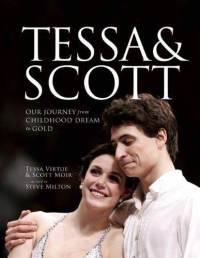
Taken as a sports glory confessional, Tessa & Scott: Our Journey from Childhood Dream to Gold (Anansi, 192 pages, $19.95) is pretty standard. It has more than its fair share of inspirational sound bites (“The young couple faced difficult challenges, but they were sustained by their love for skating and the knowledge that they could be champions.”). It’s also packed with glossy photographs and mildly amusing anecdotes. Yet, taken as a study in the evolution of dancing facial expressions, body chemistry, and ice dancing fashion choices, the book becomes exponentially more interesting. 

In terms of facial features, Tessa Virtue and Scott Moir (Canada’s 2010 Olympic ice-dancing champs, among their many accolades) were born to dance to together. They’ve got the distinctive “Are we siblings or are we lovers?” look that’s become a prerequisite for the sport. The fuzzier the line, the better. Ambiguous sexual preference is suggested, but not mandatory. Both Scott and Tessa have creamy skin and thick – slightly wavy – chocolate brown hair. It’s versatile enough to be tightly wound back, gelled, and hair-sprayed into oblivion, pre-show. Yet, they can also rock the slightly mussed-up, sweaty, post-dance routine look. Tessa is a huge fan of ponytails, though her go-to look for the ice is an intricate top bun. She’s got a strict anti-bangs policy. Scott has a fantastic variety of smiles (including a grimace that strikes a fine balance between warm and fierce), though he’s lacking a bit in the upper-lip department.

Tessa & Scott: Our Journey from Childhood Dream to Gold, or TSOJCDG, has about four major categories of photographs. The majority are mid-performance drama shots. The rest are the post-dance glory moments, cutesy childhood pics, and special nature photography shoots with Myra Klarman. Along the way, a few hybrids crop up. For example, take the classic moment when a pre-pubescent Tessa and Scott chomped on their medals to test the veracity of the gold.

The earliest evidence of Scott and Tessa’s signature pose is a photograph from early 2000. It’s an icy and intense glare at the cameras, complimented by the arched scowl of Scott’s eyebrows and a passionate clutching of his partner’s lower thigh or shoulder. Scott has a tendency to shut his eyes in passion, Tessa’s tend to widen for the crowd.

TSOJCDG is peppered with shots from a rustic shoot the couple commissioned from photog Klarman. For some reason, Klarman thought it would be a good idea for the couple to wade knee-deep into a lake, and pose crouched in the water. Tessa and Scott seem oblivious to their soaked clothing, and it’s one of those shots where you think more about what happened before and after than the actual image you’re looking at.

Back on the ice, I’d say Tessa has a great fashion sense, especially considering the track record her peers. She favors shades of pink, crystals, velvet, lace, fringe, pearls, and sheer fabric; usually all of the above at once. Scott tends to go for a more conservative image, with a classic tuxedo or suit. Tessa’s fashion climax probably arrived at the 2010 Olympics during a compulsory Tango Romantica. With her usual dark red lipstick and pulled back hair, Tessa wore a one-shouldered burgundy gown with a black tulle overlay, her bodice decked out in ruffles and intricately webbed pearls, jewels, and floral patterns. Underneath, she went for classic leggings and not much else: it seems the publishers didn’t catch an unfortunate nip-slip captured in some of the images.

Tessa only missteps when she ventures too far deep into Dancing with the Stars territory, as she did when competing earlier in her career in Andorra. She wore a magenta strappy dress, exposing lots of skin and bedazzled within an inch of her life. Not long after, Tessa took a risk with a three tiered, sparkling number – plus fringe and a diamond choker – for the 2009 Nationals, but it looks like one that paid off, landing the jump from tacky sad to tacky fun. 

Tessa & Scott: Our Journey From Childhood Dream to Gold is an enchanting look at the lives of two artistic and athletic champions. It may not be worth reading the 184 pages of copy and biographical detail, but it’s certainly worth a bookstore browse to check out over 171 shiny photographs of “big dreamers” and ice dancers Tessa Virtue and Scott Moir.

North Garberville Beach

0

Rating: C

Just five miles from Garberville, there’s a beach on the south fork of the Eel River that’s so secluded some visitors even camp nude there.  Its existence was kept secret by users for years, but it’s not unknown anymore — we unveiled directions to it last year.  The naked enclave, which is just off Highway 101, continues to get rave views.

“The beach is excellent for tents,” says reader Dave.  “It’s really private and fun.”

Legal status:

Believed to be public property.  Says Dave:  “I have called the Humboldt County Sheriff’s substation in Garberville.  They even called me back to clarify that you can camp … as long as you don’t plan on staying a week or more.”

How to find it:

Go north on Highway 101 about five miles north of Garberville to the Phillipsville exit.  Take the exit (also called Exit 645), turn left, and go a half mile to a service road.  Turn left onto the service road.  Or from the north, take Highway 101 south to Exit 645.  Take the exit to Hooker Creek Road and continue straight for about 100 feet, where you will see the service road.  You can only go one way onto the service road.  Follow it less than a half mile south along the river.  Then park where you see cars pulled over along the street.  Look for a path there marked by a rainbow streamer and follow it as it curves to the right and takes you about 100 yards to the beach.  Local nudies and campers tend to stay on the far right end of the beach.

The beach:

Adorned with some nice shade trees, the beach can’t be seen from the road, so it’s not only nice and sandy but fairly private.  “It’s shielded from view,” says reader Dave.  “It’s really great.”  Some visitors bring tubes or other floaties with them.  “It has about 30 yards of both shallow and deep swimming areas,” adds Dave.  

The crowd:  

Used by local visitors for years, the beach usually attracts only a few people.  But, says Dave, “the word is getting out,” so there’s been a gradual increase in visitation.  He’s seen clothing-optional use by others at the site on both weekdays and weekends.

Problems:

Cold water; rocks in river (wear flip flops or old tennis shoes to protect your feet in the water.)

North Marina

0

Rating: C

A series of sand dunes just over the state property line — about 100 yards north of Marina State Beach, which leaves them out of the range of park rangers — are being used by nude sunbathers to shield them from view.”People have been going here for more than two decades,” says Tom, of Monterey.The main spot used by nudies is between two large dunes close to shore.”It’s warm and secluded,” says Debbie, a frequent visitor and local business owner.

Legal status:

Unknown, believed to be private property.

How to find it:

From San Jose, take Highway 101 south to Prunedale, then Highway 146 west to join Highway 1 south at Castroville. Approaching Marina, exit at Reservation Road, turning left (east). At the first signal, turn right on Reservation and follow it to the little parking lot at the end. Walk back along Reservation to Dunes Drive and follow Dunes about 300 feet north, passing Marina Dunes Resort, located at 3295 Dunes Drive, and a sand-processing plant, until you see a yellow vehicle gate on the west (ocean) side of Dunes Drive, across from two motels. Limited parking is also available in front of the gate. The gate blocks traffic, not people, from a beach path; follow it up and down five dunes until just before the beach. The nude area is between the last two dunes, just to the right of the trail.

The beach:

“It’s warm and secluded,” says Debbie. “People have been going here for 25 years.” Veteran users say the best time to visit is June or autumn.

The crowd:

“The beach is never crowded because only local residents know about it,” says Tom.

Problems:

Unknown legal status; fog; cold water; proximity to path; limited street parking.

Shuttle wars at SFO

1

news@sfbg.com

It’s a misty morning at San Francisco International Airport, with the fog breaking into a slight drizzle. At the ground transportation area, travelers were repeatedly running in to each other in their head-down dash across packed taxi lanes.

The biggest bottleneck wasn’t the cars, though; it was the confused populace staring up at multicolored, multiarrowed transportation-related signs. Taxi? No. Shuttle? Yes, but which shuttle — reserved, hotel, or shared-ride?

I watch the collective confusion from the shared-ride zone, itself a tricolor ménage. A small sign shows that the red, yellow, and blue zones each correspond to a set of shuttle companies, but it takes some time to figure out which is which. Someone (official or not, I can’t tell) has crossed out and reassigned companies with a permanent marker. Good thing I don’t actually need a ride.

I ask a curb coordinator on duty, Carlos Marenco, about the colored zones. He explains that there are eight small shuttle companies that share the yellow zone — they rotate every five minutes. Two companies use the red zone and rotate every seven minutes. And one company, SuperShuttle, has its own blue zone. Why are the zones distributed like this, I ask?

“SuperShuttle and Lorrie’s (a red zone company) are bigger. More people know them, so they need more space,” Marenco said.

Just then a bewildered couple approached the shared-ride zone. They began talking to the driver of a small yellow zone company who is about to finish his allotted five minutes.

“No,” a coordinator shouts as he comes bustling toward passengers. “You need to go down to the blue zone.”

“Why?” the man asks.

“It is not this driver’s turn. You need to go to the blue zone,”

The coordinator takes their bags from the driver and begins wheeling them to the blue zone.

“They want to ride with me!” he shouts.

The couple is already down the sidewalk though, guiltily following their bags to a waiting SuperShuttle — and the next yellow zone driver idles nearby waiting for their spot at the curb. The driver curses, slams his door, and drives off empty.


AT THE CURB

Curb space at SFO is prime real estate, and a battle is underway between the giant SuperShuttle — owned by a French conglomerate — and a group of small, locally owned airport shuttle companies that say that they’re being pushed aside.

It gets heated out at the curb — when I talked to him after the unlucky driver left without his potential passengers, Marenco explained that the coordinators are often yelled at by enraged drivers.

“They think we cheat them, but we do not,” Marenco said. He says his job is to make sure drivers do not solicit passengers and that each zone gets an equal number of walk-up customers. He has come up with his own system — three large rectangular red, yellow, and blue magnets he puts on a pole at the front of the line to show drivers who gets the next passenger.

But Aaron Chan, owner of Advance Airporter, a small company stuck in the yellow zone, said that “the drivers are always telling me that the curb coordinators give many more passengers to SuperShuttle, even when it is not their turn.” And some small companies say that the big outfit pays the coordinators for more favorable treatment.

Marenco insists he never took money (which you can call tips or bribes, depending on your attitude). But Matt Curwood, San Francisco SuperShuttle general manager, acknowledged that “there have been a number of situations where our drivers are forced into circumstances where coordinators will only escort passengers to their shuttle if they are provided with payment of some form.”

There are no shining angels here. Both parties blame the other side; both deny bribery themselves (but claim the others do it), and the coordinators deny it happens at all.

And the whole mess is getting dropped in the lap of the Airport Commission, which in the past has been very friendly to SuperShuttle.


GET RID OF THE LITTLE GUYS

When the new Terminal 2 opened in April, airport staff asked each shuttle company to submit a letter discussing how zoning should be organized at the new curb. SuperShuttle responded — and took the opportunity to push a topic it has been trying to get SFO officials to adopt since the early 1990s: limiting the number of shuttle companies allowed to serve SFO to no more than two or three.

Curwood says that of the airports SuperShuttle operates in, SFO is the most difficult for customers to navigate. In the letter, he proposed the solution of “a competitive RFP process [that] enables competition and improves the quality of service the customer currently experiences. The essence of the problem SFO faces is that it is trying to accommodate too many substandard operators at the jeopardy of the public’s experience and safety.”

Gil Sharabi, general manager of Airport Express, a yellow zone company his father started in 1979, told me that his company has a perfect safety record and is just as qualified to serve the public as SuperShuttle. Sharabi says that SuperShuttle is really aiming to eliminate local business competition.

SuperShuttle’s corporate offices are in Illinois, and it serves 36 airports in the United States.

Curwood says it’s unfair to make this about the big company versus the little guy. “When you see one of those SuperShuttles on the road, that’s its own business. That’s its own franchise. I want that to be clear because we talk about small companies, and in fact what we are is a franchise for over 100 small companies.”

SuperShuttle may be made up of franchises, but the company itself is owned by Veolia Transportation, part of French multinational company Veolia Environment. Veolia is a Fortune 200 company with four divisions — water, energy, environmental services, and transport — and is the 34th-largest employer in the world. Its website boasts that it is the leading private water service provider in the world and the “No. 1 private transportation operator in Europe and North America.” So much for the little guy.

Sharabi says that aside from monopolization threats, the real problem is the special treatment SuperShuttle is given by airport staff.

The current tricolor system began in 1993 when the airport tried to terminate space in the yellow zone. The issue went to the Board of Supervisors, which directed the airport to give yellow zone companies their space back.

Since then, the companies in the yellow zone have been forced to share their space eight ways, which means fewer customers for them. If each colored zone gets one-third of walk-up customers, a company in the yellow zone — if it’s lucky — one out of every 24. SuperShuttle, on the other hand, gets all blue zone customers and can wait to pile in passengers, saving on gas and time. Furthermore, the eight yellow zone companies pay more of the third-party curb coordinator’s salaries than SuperShuttle.


A FREE BILLBOARD

Ray Sloan-Zayotti of the local lobbying firm Public Policy Advocates, which has represented the eight yellow zone companies since 1993, said that by not making SuperShuttle rotate, “they essentially have a free billboard right outside the terminal — and they don’t have to pay the fees the others pay to loop through the airport.”

Sharabi said the situation at SFO is unusual. “There are even more shuttles at Oakland Airport, but no one complains there,” Sharabi said. “It’s because everyone over there is treated fairly — and that’s all we’re asking for.”

Indeed, Sharabi said, one of the most aggravating parts of this debate is that the day after airport staff received SuperShuttle’s letter, it led to a long discussion at the Airport Commission. He said his and other yellow zone companies have been trying for years to get the commission and staff to listen to their complaints of unequal treatment.

“They don’t want to listen to us,” Sharabi said. “They have decided that they want SuperShuttle here, and not us. And they haven’t given us a reason why.

“We’ve been sending letters and doing proposals and lots of work for years,” he added. “And they have not only never cared for us, they have never forwarded anything to the commission,” Sharabi said.

In exasperation, the eight yellow zone companies sent a response letter directly to the Airport Commission outlining their position. “For nearly two decades a majority of companies — many that have been around much longer than SuperShuttle — have sent letters to SFO and the commission that have been received with little or no interest,” it stated. The letter went on to ask the commission to consider giving all 11 companies equal time at the curb.


A MATTER OF SURVIVAL

Sharabi and Sloan-Zayotti both point out that SuperShuttle hired Platinum Advisors, a well-known local lobbying firm. Curwood confirmed that SuperShuttle has hired the company, adding that it’s common for businesses dealing with the city to hire lobbyists. (Indeed, yellow zone companies have a lobbyist of their own.) He said SuperShuttle’s proposal will benefit passengers, but that it is ultimately up to the commissioners and airport staff.

“The system is right now catering to the small companies to ensure their survival rather than catering to the public,” Curwood said. “[The letter is] not saying ‘I want to kick everyone out of business,’ it’s saying that these are serious issues our customers say they face and proposing a way to put standards in place that will change it.”

“In all honesty, we understand what SuperShuttle is doing — and that’s reducing the competition for them,” Sharabi said. “It’s business, right? But what’s not right is that unelected officials get to make decisions that affect small business owners like us without having to answer to the public. That right there is the problem.”

“I do not know where that’s coming from,” said Michael McCarron, director of the SFO Bureau of Community Affairs. “We listen to everyone. We can’t make everyone happy, but we try to listen to everyone and work out the best possible arrangements for all the operators.”

Sharabi disagreed. “Everybody drops the line ‘You know we support the local people.’ But it couldn’t be further from the truth.”


Music Listings

0

WEDNESDAY 20

ROCK/BLUES/HIP-HOP

Barn Owl, Sean Smith, 3 Leafs Elbo Room. 9pm, $8.

Brush Prairie, Sexy Water Spiders, Ruby Feathers Knockout. 9pm, $10.

“DAMSF” DNA Lounge. 10pm. Emerging artists’ showcase with dancers, musicians, and more.

Liturgy, Chelsea Wolfe, Common Eider King Eider, DJ Rob Metal Bottom of the Hill. 9pm, $10.

Hamilton Loomis Biscuits and Blues. 8 and 10pm, $18.

Mental 99, Wesley Morgan Madrone Art Bar. 7pm, free. Every Wed. in July.

Jeremy Messersmith, Lumineers, Rin Tin Tiger Hotel Utah. 8pm, $10.

Paper City Kimo’s. 8pm, $6.

Tim Robbins and the Rogues Gallery Band Bimbo’s 365 Club. 8pm, $28.

Spyrals, VonVeederVeld, Nectarine Pie, Outlaw Hemlock Tavern. 8:30pm, $8.

JAZZ/NEW MUSIC

Cat’s Corner with Nathan Dias Savanna Jazz. 9pm, $10.

Cosmo Alleycats Le Colonial, 20 Cosmo, SF; www.lecolonialsf.com. 7pm.

Dink Dink Dink, Gaucho, Michael Abraham Amnesia. 7pm, free.

Jazz organ party with Graham Connah Royal Cuckoo, 3202 Mission, SF; www.royalcuckoo.com. 7:30pm, free.

Ben Marcato and the Mondo Combo Top of the Mark. 7:30pm, $10.

“Outsound New Music Summit: Face Music” San Francisco Community Music Center, 544 Capp, SF; www.outsound.org. 8:15pm, $12.

“Underground Sound” Stage Werx, 533 Sutter, SF; www.brownpapertickets.com. 8pm, $12. With Kurt Weill Project and Kat Downs.

DANCE CLUBS

Booty Call Q-Bar, 456 Castro, SF; www.bootycallwednesdays.com. 9pm. Juanita Moore hosts this dance party, featuring DJ Robot Hustle.

Buena Onda Little Baobab, 3388 19th St, SF; (415) 643-3558. 10pm, free. Funk, swing, rare grooves, and more with Dr. Musco and guests.

Joe Clausell, Afrolicious DJs Public Works, 161 Erie, SF; www.publicsf.com. 10pm.

Mary Go Round, the New Generation Lookout, 3600 16th St, SF; www.lookoutsf.com. 10pm, $5. Drag with Suppositori Spelling, Mercedez Munro, and Ginger Snap.

No Room For Squares Som., 2925 16th St, SF; (415) 558-8521. 6-10pm, free. DJ Afrodite Shake spins jazz for happy hour.

Third Wednesdays Underground SF. 10pm-2am, $3. With Ms. Jackson, DJ Loryn, and Becky Knox spinning electro, tech, house, and breaks.


THURSDAY 21

ROCK/BLUES/HIP-HOP

Big Talk with Ronnie Vannucci Rickshaw Stop. 10pm, $15. Plus Popscene DJs.

Con Brio, Audiafauna Café Du Nord. 8:30pm, $13.

Dreamdate, Lotus Moons, Skystone Amnesia. 9pm, $7.

Johnny Gill with live band Yoshi’s San Francisco. 8 and 10pm, $38.

Laurie Morvan Band Biscuits and Blues. 8 and 10pm, $16.

Mannequin Planet, Slave Unit, Spellbound, Scission Red Devil Lounge. 9pm, $6.

Memory Tapes, Painted Palms, Sleep Over Slim’s. 9pm, $15.

Asada Messiah, Lord Dying, Nether Regions, Pigs Thee Parkside. 9pm, $7.

Naked Fiction 50 Mason Social House, 50 Mason, SF; www.50masonsocialhouse.com. 9pm, free.

Soundgarden, Mars Volta Bill Graham Civic Auditorium, 99 Grove, SF; www.ticketmaster.com. 7:30pm, $62.75.

Steel Hot Cakes, Olive Ewe, Inferno of Joy Hemlock Tavern. 9pm, $6.

Superhumanoids, Easy Street, Half-handed Cloud Bottom of the Hill. 9pm, $10.

Chris Webby 330 Ritch. 8pm.

Zodiac Death Valley, Lilac, Cannons and Clouds, DJ Mikey Tashjian Independent. 8pm, $12.

JAZZ/NEW MUSIC

Dave Parker Quartet Purple Onion, 140 Columbus, SF; (415) 956-1653. 7:30-10:30pm, free.

Dime Store Dandy Rite Spot, 2099 Folsom, SF; www.ritespotcafe.net. 9pm.

Gilbert Fix Trio Rose Pistola, 532 Columbus, SF; www.rosepistola.com. 8pm, free.

Organsm featuring Jim Gunderson and “Tender” Tim Shea Bollyhood Café. 6:30-9pm, free.

“Outsound New Music Summit: The Freedom of Sound” San Francisco Community Music Center, 544 Capp, SF; www.outsound.org. 8:15pm, $12.

Savanna Jazz jam Savanna Jazz. 7pm, $5.

Soul jazz party with Chris Siebert Royal Cuckoo, 3202 Mission, SF; www.royalcuckoo.com. 7:30pm, free.

Stompy Jones Top of the Mark. 7:30pm, $10.

FOLK/WORLD/COUNTRY

Crooked Still, Cahalen Morrison and Eli West Great American Music Hall. 8pm, $20.

Muddy Roses, Emily Bonn and the Vivants Hotel Utah. 9pm, $6.

DANCE CLUBS

Afrolicious Elbo Room. 9:30pm, $5. Afrobeat, Tropicália, electro, samba, and funk with DJs Pleasuremaker and Señor Oz.

Culture Corner Koko Cocktails, 1060 Geary, SF; www.kokococktails.com. 10pm, free. Roots reggae, dub, rocksteady, and classic dancehall with DJ Tomas, Yusuke, Vinnie Esparza, and Basshaka and ILWF.

Double Down John Colins, 138 Minna, SF; www.johncolins.com. 9pm, $5. Soul, funk, and hip-hop with DJs Guillermo, E Da Boss, and Kung Fu Chris, plus a live performance by Myron & E.

Guilty Pleasures Gestalt, 3159 16th St, SF; (415) 560-0137. 9:30pm, free. DJ TophZilla, Rob Metal, DJ Stef, and Disco-D spin punk, metal, electro-funk, and 80s.

1984 Mighty. 9pm, $2. The long-running New Wave and 80s party features video DJs Mark Andrus, Don Lynch, and celebrity guests.

Thursday Special Tralala Revolution Café, 3248 22nd St, SF; (415) 642-0474. 5pm, free. Downtempo, hip-hop, and freestyle beats by Dr. Musco and Unbroken Circle MCs.

Thursdays at the Cat Club Cat Club. 9pm, $6 (free before 9:30pm). Two dance floors bumpin’ with the best of 80s mainstream and underground with Dangerous Dan, Skip, Low Life, and guests.

Tropicana Madrone Art Bar. 9pm, free. Salsa, cumbia, reggaeton, and more with DJs Don Bustamante, Apocolypto, Sr. Saen, Santero, and Mr. E.


FRIDAY 22

ROCK/BLUES/HIP-HOP

Automatic Rival, Endroit, Phantoms, Era Escape Blue Macaw, 2565 Mission, SF; www.thebluemacawsf.com. 9pm, $10.

B’z Fillmore. 8pm, $55.

Frank Bey Biscuits and Blues. 8 and 10pm, $20.

Mike Burns Rite Spot, 2099 Folsom, SF; www.ritespotcafe.net. 9pm.

Earth, Angelo Spencer et Les Hauts Sommets, Whirr Slim’s. 9pm, $15.

Ben Folds, Kenton Chen Warfield. 8pm, $38.

I The Mighty, A Lot Like Birds, Case In Theory, Quiet Game Starting Now Bottom of the Hill. 8:30pm, $12.

Love is Chemicals, Mist and Mast, To The Sea Hemlock Tavern. 9:30pm, $8.

Odd Future Regency Ballroom. 8pm, $22.

Old-Fashioned Way, Altars, Upstairs Downstairs, Honey for the Bears Café Du Nord. 9:30pm, $12.

Peeling Grey, Tongue + Teeth, DJ MIB Retox Lounge. 9pm.

Langhorne Slim, Henry Wolfe Independent. 9pm, $15.

Tainted Love, This Charming Band Bimbo’s 365 Club. 8pm, $23.

Velvet Teen, Silian Rail, Worker Bee, Not to Reason Why Great American Music Hall. 8:30pm, $13.

Nick Waterhouse and the Tarots, Allah-Las, DJ Lucky Elbo Room. 10pm, $10.

JAZZ/NEW MUSIC

Black Market Jazz Orchestra Top of the Mark. 9pm, $10.

Dan Heffez Trio Rose Pistola, 532 Columbus, SF; www.rosepistola.com. 8pm, free.

“Outsound New Music Summit: The Art of Composition” San Francisco Community Music Center, 544 Capp, SF; www.outsound.org. 8:15pm, $12.

Suzanna Smith Savanna Jazz. 7pm, $8.

Soul Jazz Party with Jules Broussard and Chris Siebert Royal Cuckoo, 3202 Mission, SF; www.royalcuckoo.com. 7:30pm, free.

Vaughan Johnson Jazz Combo Jack’s Club, 2545 24th St., SF; (415) 641-1880. 7pm, free.

FOLK/WORLD/COUNTRY

Spoonbill 50 Mason Social House, 50 Mason, SF; www.50masonsocialhouse.com. 9pm, free.

DANCE CLUBS

Afro Bao Little Baobab, 3388 19th St, SF; (415) 643-3558. 10pm, $5. Afro and world music with rotating DJs including Stepwise, Steve, Claude, Santero, and Elembe.

Baxtalo Drom Amnesia. 9pm, $7-10. Gypsy punk and belly dance.

DJ Cam Yoshi’s San Francisco. 10:30pm, $20.

Doc Martin, Garth, Nikola Baytala, Galen, Bo, Rouzbeh Public Works, 161 Erie, SF; www.publicsf.com. 10pm.

Duniya Dancehall Blue Macaw, 2565 Mission, SF; (415) 920-0577. 10pm, $10. With live performances by Duniya Drum and Dance Co. and DJs dub Snakr and Juan Data spinning bhangra, bollywood, dancehall, African, and more.

Dillon Francis, Adam F., Ototoxik, Manics, Ultraknock Rickshaw Stop. 10pm, $13-16.

Greasetrap Underground SF. 10pm. DJs Cutso, Doc Fu, and Mr. Lucky spin ghettotech, booty bass, and more.

Hubba Hubba Revue: That Old Time Religion DNA Lounge. 9pm, $10-15. Bible-thumpin’ bump n’ grind.

Soul Rebel Koko Cocktails, 1060 Geary, SF; www.kokococktails.com. 10pm, free. Reggae, punk, 2tone, oi, and more with Dougie, Tim, and Tomas.

Vintage Orson, 508 Fourth St, SF; (415) 777-1508. 5:30-11pm, free. DJ TophOne and guest spin jazzy beats for cocktalians.


SATURDAY 23

ROCK/BLUES/HIP-HOP

Ambrosia Biscuits and Blues. 8 and 10pm, $30.

Audiodub, Sean Tabor Band, Starving Millionaires Independent. 9pm, $15.

Alvarius B, Porest, Cave Bears Hemlock Tavern. 9:30pm, $12.

Alan Choy and Dingle 50 Mason Social House, 50 Mason, SF; www.50masonsocialhouse.com. 9pm, free.

Ferocious Few, Rad Cloud, Indianna Hale Amnesia. 9pm, $10.

Hallflowers Rite Spot, 2099 Folsom, SF; www.ritespotcafe.net. 9pm.

Mister Loveless, Books On Tape, Stripmall Architecture Bottom of the Hill. 10pm, $10.

Nothington, Build Us Airplanes, Semi Evolved Simians, Why I Hate Thee Parkside. 9pm, $8.

Socialists Party, Yes Gos Thee Parkside. 3pm, free.

Tainted Love, This Charming Band Bimbo’s 365 Club. 8pm, $23.

Uncle Rebel, Soft White Sixties, Hypnotist Collectors Slim’s. 8:30pm, $14.

Wallpaper, Hood Internet Great American Music Hall. 9pm, $19.

Zoo Station: The Complete U2 Experience, Lovefool: The Quintessential 90s Party Band Café Du Nord. 9pm, $15.

JAZZ/NEW MUSIC

Dee Dee Bridgewater Yoshi’s San Francisco. 8 and 10pm, $25-30.

Eddie Duran Duo Rose Pistola, 532 Columbus, SF; www.rosepistola.com. 8pm, free.

Escalay Seventh Avenue Performances, 1329 Seventh Ave, SF; www.sevenperforms.org. 7:30pm, $15-20.

Gina Harris and Mark Jordan Savanna Jazz. 7pm, $10.

Jazz Organ Party with Graham Connah Royal Cuckoo, 3202 Mission, SF; www.royalcuckoo.com. 7:30pm, free.

Lisa Mezzacappa’s Bait and Switch Red Poppy Art House. 9pm, $10-12.

“Outsound New Music Summit: Sonic Foundry Too!” San Francisco Community Music Center, 544 Capp, SF; www.outsound.org. 8:15pm, $12.

Sunday jazz jam 50 Mason Social House, 50 Mason, SF; www.50masonsocialhouse.com. 9pm, free.

FOLK/WORLD/COUNTRY

Hafez Modirzadeh and Ethel Yerba Buena Center for the Arts, 701 Mission, SF; www.ybca.org. 8pm, $25.

Maurice Tani, Jenn Courtney, 77 El Deora St. Cyprian’s Episcopal Church, 2097 Turk, SF; www.noevalleymusicseries.com. 8pm, $13-15.

DANCE CLUBS

Afro Bao Little Baobab, 3388 19th St, SF; (415) 643-3558. 10pm, $5. Afro and world music with rotating DJs including Stepwise, Steve, Claude, Santero, and Elembe.

Bootie SF: Mysterious D’s Birthday DNA Lounge. 9pm, $8-15. Mash-ups with a special birthday set by resident DJ Mysterious D.

Fog & Laser #2 Rickshaw Stop. 10pm, $7-10. With DJs EmDee and RamblinWorker, plus an electro set by Little Wings.

4OneFunktion Elbo Room. 10pm, $5-10. Hip-hop and funk DJs.

Go Bang! Deco Lounge, 510 Larkin, SF; www.gobangsf.com. 9pm, $5. Atomic dance floor disco action with DJs Pat Les Stache, Mykill, Kuze, Steve Fabus, and Sergio.


SUNDAY 24

ROCK/BLUES/HIP-HOP

Cody Canada and the Departed Slim’s. 8pm, $15.

Coathangers, Swann Danger, Morning Crazies Hemlock Tavern. 9pm, $7.

Cults Redwood Room and Velvet Room, Clift Hotel, 495 Geary, SF; cliftsessions@morganshotelgroup.com. 9pm, free (RSVP required).

Pokey LaFarge and the South City Three, Swamp Noir Amnesia. 9pm, $7-10.

Emily Wells, Blank Tapes Café Du Nord. 8pm, $10.

JAZZ/NEW MUSIC

Dee Dee Bridgewater Yoshi’s San Francisco. 5 and 7pm, $5-25.

Jazz organ party with Lavay Smith and Chris Siebert Royal Cuckoo, 3202 Mission, SF; www.royalcuckoo.com. 7:30pm, free.

Little Brown Brother Jazz and Blues Jam Savanna Jazz. 7pm, $5.

Rob Evans Trio Rose Pistola, 532 Columbus, SF; www.rosepistola.com. 8pm, free.

Sherri Roberts, David Udolf, Chris Amberger Bliss Bar, 4026 24th St, SF; www.blissbarsf.com. 4:30pm, $10.

San Francisco Symphony Sigmund Stern Grove, 19th Ave at Sloat, SF; www.sterngrove.org. 2pm, free.

Sunday jazz jam 50 Mason Social House, 50 Mason, SF; www.50masonsocialhouse.com. 9pm, free.

Tom Lander Duo Medjool, 2522 Mission, SF; www.medjoolsf.com. 6-9pm, free.

DANCE CLUBS

Batcave Cat Club. 10pm, $5. Death rock, goth, and post-punk with Steeplerot Necromos and c_death.

Dub Mission Elbo Room. 9pm, $6. Dub, roots, and classic dancehall with DJ Sep, J Boogie, and guest Dub Snakkr.

Jock Lookout, 3600 16th St, SF; www.lookoutsf.com. 3pm, $2. Raise money for LGBT sports teams while enjoying DJs and drink specials.

La Pachanga Blue Macaw, 2565 Mission, SF; www.thebluemacawsf.com. 6pm, $10. Salsa dance party with live Afro-Cuban salsa bands.


MONDAY 25

ROCK/BLUES/HIP-HOP

Zachary Cale, Fort King, Cabinet of Curiosities Knockout. 9pm, $7.

Cold Cave, Austra, Prurient Great American Music Hall. 8pm, $16.

Fucked Up Independent. 9pm, $15.

Iceage, Cult of Youth, DJ Omar Elbo Room. 9pm, $12.

Project Film, Moonbell, Horsefly Kimo’s. 8pm.

Ana Popovic Biscuits and Blues. 8 and 10pm, $22.

DANCE CLUBS

Death Guild DNA Lounge. 9:30pm, $3-5. Gothic, industrial, and synthpop with Joe Radio, Decay, and Melting Girl.

M.O.M. Madrone Art Bar. 6pm, free. DJs Timoteo Gigante, Gordo Cabeza, and Chris Phlek playing all Motown every Monday.

Sausage Party Rosamunde Sausage Grill, 2832 Mission, SF; (415) 970-9015. 6:30-9:30pm, free. DJ Dandy Dixon spins vintage rock, R&B, global beats, funk, and disco at this happy hour sausage-shack gig.


TUESDAY 26

ROCK/BLUES/HIP-HOP

Sharif Ali and the Radical Folksonomy Kimo’s. 8pm, $6.

Bombino, Magic Leaves Slim’s. 8pm, $25.

Faye Carol Yoshi’s San Francisco. 8pm, $10-20.

Ghost Animals, Kids on a Crime Spree, Permanent Collection Hemlock Tavern. 9pm, $7.

Iceage Amoeba, 1855 Haight, SF; www.amoeba.com. 6pm, free.

Thurston Moore, Kurt Vile, Hush Arbors Great American Music Hall. 8pm, $22.

Sheens, Sad Bastard Book Club, Cryptics Bottom of the Hill. 9pm, $8.

Tidelands, Debbie Neigher, Blue Rabbit Café Du Nord. 8pm, $10.

Yuck, Unknown Mortal Orchestra Independent. 8pm, $15.

Music listings are compiled by Cheryl Eddy. Since club life is unpredictable, it’s a good idea to call ahead to confirm bookings and hours. Prices are listed when provided to us. Submit items for the listings at listings@sfbg.com. For further information on how to submit items for the listings, see Picks.

Nude Beaches Guide 2011

18

garhan@aol.com

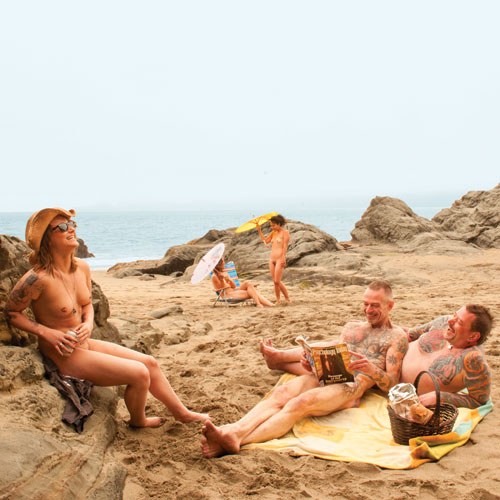
A few snippets from the year in nude beaches: TV installer Paul Jung enjoyed playing nude volleyball on the north end of Baker Beach. Stinson Beach local and attorney-teacher Fred Jaggi preferred to be naked while tossing a Frisbee on Red Rock Beach in the North Bay. And when he wasn’t busy representing an area that stretches from Tomales south to Muir Beach and as far east as Novato, Marin County Supervisor Steve Kinsey could sometimes be found without a stitch of clothing at a beach in Point Reyes National Seashore.

They’ll be able to continue enjoying their favorite clothing-optional spots. Unfortunately, that’s not the case for all Californians.


BUDGET CUTS TO NAKED SPACE

As you may have heard, our state government plans to close 70 state parks and beaches, including at least three places in Northern California that have traditionally attracted naturists: Montara’s Gray Whale Cove State Beach in San Mateo County, Garrapata State Park near Carmel, and Zmudowski State Beach in northern Monterey County. All three sites have seen declines in nude use recently.

But there’s good news too: After a July 8 meeting of the California State Park & Recreation Commission, Allen Baylis, a board member of the Naturist Action Committee, was hopeful that the state will soon officially designate some beaches as clothing-optional — and said that progress is being made behind the scenes. “We’re going to get there sooner or later,” he predicted. Plus, we’ve learned that none of the spots slated for closure will be fully shuttered before July 2012.

Roy Stearns, deputy director of communications of the California State Parks, says that until then “there may be service reductions and closures on non-peak days, such as Monday through Thursday,” but nothing firm has been decided yet.

“And how do you really close a beach?” asks a state official who wants to remain anonymous. “It’s never been done before in California, so it’s new territory to us. Sure, we can close the bathrooms and the doors, turn off the electricity, and stop the garbage pickup, but you probably can’t keep people out.”

To prevent them from being broken or vandalized, authorities may even decide to keep some gates open at closed beaches.


MARIN TIDINGS

Thankfully, Kinsey won’t have to worry about those concerns in Marin County, although he has had his hands full trying to broker an agreement between homeowners and nudists at Muir Beach in 2009 and 2010. In the end, county officials ordered a sign to be erected on the sand, warning visitors not to engage in lewd behavior and encouraging them to report violations to law enforcers.

“My favorite ongoing spot for going au natural is Limantour Beach, in the dunes heading toward Drakes Estero,” Kinsey says. In fact, while others were mowing their lawns or having barbecues with their families, Kinsey spent part of his Fourth of July weekend sunbathing in the nude area of Limantour.

Limantour isn’t the only clothing-optional place in Marin where Kinsey likes to relax. He was at Bass Lake, also in the Point Reyes National Seashore last year. “And I make it a point to check Red Rock once a year to make sure things are steady and stable,” Kinsey says.


THE NEW BEACH ON THE BLOCK

Even while some nude beaches face closure, we’re proud to add North Garberville Nude Beach in Humboldt County to our online guide this year.

Its discovery comes as a surprise to us, even though it has been known to locals for years. If there’s one thing we’ve learned about covering — and uncovering — nude beaches over the years, it’s to expect the unexpected.

For instance, at North Garberville some visitors even camp naked. “I’ve done it, but so have others,” says reader Dave.


NAKED ON THE MOUNTAINTOP

In January, the leader of the Tahoe Area Naturists, North Swanson, used snowshoes to walk down a flurry-covered hill and go nude with some friends at Secret Harbor Creek Beach, just south of Incline Village, in North Lake Tahoe. “If it’s above 40 degrees and there’s no wind, it’s okay,” says Swanson, who went back several more times that month.

A few times, bears have wandered onto nude beaches at Tahoe during broad daylight, though nobody’s been injured, and the bears have left quickly every time. Once, a federal park ranger on a trail near Marin County’s Bass Lake let a group of nudists pass without incident while he was busy writing a citation to a man (clothed) for not having his dog on a leash.

About the ratings: We give an A to spots that are large or well-established and where the crowd is mostly nude, B to places where fewer than half the visitors are nude, C to small or emerging nude areas, and D to areas we suggest you avoid.

Please send brainstorms, your new beach finds, trip reports, and improved directions (especially road milepost numbers), along with your phone number to garhan@aol.com or Gary Hanauer, c/o San Francisco Bay Guardian, 135 Mississippi St., San Francisco CA 94107


SAN FRANCISCO

NORTH BAKER BEACH

RATING: A

From the first day of summer, when several hundred people appeared — by the estimate of regular visitor Paul Jung — to the warm spells that followed, visitors have been swarming onto San Francisco’s North Baker Beach this year. And when it’s been hot, 60 percent to 80 percent of those people showing up on the shoreline have been nude. The only bummer: a mini-war has erupted between beach regulars and a few gawkers with cameras or binoculars who occasionally hang out in the rocks above the site. “Most of the regulars carry small mirrors to shine at them,” explains Jung, who keeps one in his beach bag. “Some people are even starting to shine laser pointers at them, with great success. Sometimes, five of us will aim up at one guy. So far, it’s been pretty effective in getting them to back off.”

Directions: Take the 29 Sunset or go north on 25th Avenue to Lincoln Boulevard. Turn right and take the second left onto Bowley Street. Follow Bowley to Gibson Road, turn right, and follow Gibson to the east parking lot. At the beach, head right to the nude area, which starts at the brown and yellow “Hazardous surf, undertow, swim at your own risk” sign. Some motorcycles in the lot have been vandalized, possibly by car owners angered by bikers parking in car spaces; to avoid trouble, motorcyclists should park in the motorcycle area near the cyclone fence.


LAND’S END BEACH

RATING: A

What ends at Land’s End? Quite possibly your tan lines. Shorts, bikini tops, and even a few work clothes seem to disappear during weekday lunch breaks on warm summer days at this fun cove, which attracts a few skinny-dippers among a mostly swimsuit-wearing crowd. The site features a mix of sand and rocks, plus some of the Bay Area’s best views. The beach is a quarter-mile long, with some nice sunbathing nooks. Bring a windbreaker in case the weather changes or check out the mini-windbreaks that visitors there have made with rocks and put together one of your own.

Directions: Follow Geary Boulevard to the end, then park in the dirt lot up the road from the Cliff House. Take the trail at the far end of the lot. About 100 yards (past a bench and some trash cans) the path narrows and bends, then rises and falls, eventually becoming the width of a road. Don’t take the road to the right, which leads to a golf course. Just past another bench, as the trail turns right, go left toward a group of dead trees where you will see a stairway and a “Dogs must be leashed” sign. Descend and head left to another stairway, which leads to a 100-foot walk to the cove. Or instead, take the service road below the El Camino del Mar parking lot for a quarter-mile until you reach a bench, then follow the trail there. It’s eroded in a few places. At the end, you’ll have to scramble over some rocks. Turn left (west) and walk until you find a good place to put down your towel.


GOLDEN GATE BRIDGE BEACH

RATING: A

Golden Gate Bridge Beach’s rocky shoreline features incredible views of the world-famous bridge, along with water that can be great for wading. “In low tide,” one woman says, “you can sometimes go 150 feet.” But if you want to be alone, don’t even think about visiting this site, where hundreds of gay men — along with some women and straight visitors — pack three side-by-side coves on the hottest days. No wonder it’s also known as Nasty Boy Beach!

Directions: From the toll booth area of Highway 101/1, take Lincoln Boulevard west about a half mile to Langdon Court. Turn right (west) on Langdon and look for space in the parking lots, across Lincoln from Fort Winfield Scott. Park and then take the beach trail, starting just west of the end of Langdon, down its more than 200 steps to Golden Gate Bridge Beach, also known as Marshall’s Beach. Despite recent improvements, the trail to the beach can still be slippery, especially in the winter and spring.


FORT FUNSTON BEACH

RATING: C

Even though Fort Funston has gone to the dogs — who appear here with their human entourages by the hundreds — a few naturists sneak in from time to time. But don’t even think about going naked here on weekends. Even on weekdays, be sure to use discretion before disrobing. Suit up quickly if you see rangers or families in the area. Authorities usually only issue several citations a year at Fort Funston, south of Ocean Beach, so if you don’t make a fuss and remain in the dunes, you may not be busted. If anyone complains, put on your beach gear right away. Two more fun activities at Fort Fun: watching the passing parade of people and their dogs, and watching the hanggliders that take off from the cliffs.

Directions: From San Francisco, go west to Ocean Beach, then south on the Great Highway. After Sloat Boulevard, the road heads uphill. From there, curve right onto Skyline Boulevard, go past one stoplight, and look for signs for Funston on the right. Turn into the public lot and find a space near the west side. At the southwest end, take the sandy steps to the beach, turn right, and walk to the dunes. Find a spot as far as possible from the parking lot. Don’t go nude here on the weekends. And if you dislike dogs, try another beach.


CONTRA COSTA COUNTY

LAS TRAMPAS REGIONAL WILDERNESS

RATING: C

Are you ready to moon the moon? Imagine walking nude on parkland in the East Bay Hills, with the trail silhouetted by a full moon and small herds of horses coming up to greet you: it’s a scene that makes you feel like you’re on Avatar‘s fictional planet Pandora, mingling with another species.

“It’s absolutely surreal,” says Jurek Zarzycki of Fremont. “The horses come within inches of you, so close you can feel their breath. It’s like being on a moonscape with aliens. You may be a little afraid at first, but the horses are very friendly.”

As part of a partnership between the Sequoians nudist park and the San Jose-based Bay Area Naturists, Hikers leave the Sequoians’ property fully clothed at dusk and walk through meadows and up hills until the moon rises, before heading back down the slopes completely nude, with their clothes folded neatly into their backpacks. Some people walk partially nude, especially near the top of the main ridge used by the hikers where, says Zarzycki, “there can be very cold winds.” San Leandro resident Dave Smith, who leads the naked treks, adds that “the coastal air just starts pouring over the hilltop. And the wind begins howling.” Once on the peak, almost everyone dons a windbreaker.

Zarzycki suggests hikers bring good hiking shoes, a flashlight — though most of the time, the moon provides plenty of light — and bug spray. And don’t forget baby carrots to give to the horses. “It’s truly wonderful,” says Smith. “We’re usually the only ones on the path.”

Zarzycki agrees. “It’s one of the best experiences I’ve ever had. I pitched my tent right there at the Sequoians and then slept under the sky.”

After the walk, most hikers shower at the Sequoians, then take a dip in the pool or hot tub.

Directions: Contact the Sequoians (www.sequoians.com) or the Bay Area Naturists (www.bayareanaturists.org) for details on how to join a walk. Meet at the Sequoians park. To get there, take Highway 580 east to the Crow Canyon Road exit. Or follow 580 west to the first Castro Valley off-ramp. Take Crow Canyon Road toward San Ramon three-quarters of a mile to Cull Canyon Road. Then follow Cull Canyon about 6.5 miles to the end of the paved road. Take the dirt road on the right until the Y in the road and keep left. Shortly after, you’ll see the Sequoians sign. Proceed for another three-quarters mile to the Sequoians front gate.


SAN MATEO COUNTY

DEVIL’S SLIDE, MONTARA

RATING: A

Though it’s one of 70 beaches and parks being closed by the state to save money, Gray Whale Cove is set to remain available for use through at least July 2012. (But days and hours may be reduced according to Roy Stearns, deputy director of communications of the California State Parks.) Today only a few visitors go nude: naturist numbers are down sharply form the several hundred that came during Devil Slide’s heyday as a privately operated nude beach. The nudists that do come tend to hang out on the pretty northern end of the shoreline. “It’s a good place to recharge from work,” says Ron, a regular visitor who enjoys swimming there, even though signs warn of dangerous surf. Dogs are prohibited.

Directions: Driving from San Francisco, take Highway 1 south through Pacifica. Three miles south of the Denny’s restaurant in Linda Mar, turn left (inland or east) on an unmarked road, which takes you to the beach’s parking lot and to a 146-step staircase that leads to the sand. Coming from the south on Highway 1, look for a road on the right (east), 1.2 miles north of the Chart House restaurant in Montara.


SAN GREGORIO NUDE BEACH, SAN GREGORIO

RATING: A

Now in its 45th year of operation, San Gregorio continues its reign as the USA’s longest continually used nude beach. The beach, adjacent to the no-nudity-allowed San Gregorio State Beach, usually attracts a large gay crowd, along with some nude and suited straight couples, singles, and families. First-timers should be wary of the driftwood structures on the sandy slope leading down to the beach, which are used by some visitors as “sex condos.” (If you see one with a t-shirt on a pole, it means it’s occupied.) However, fans of the beach savor San Gregorio’s stunning scenery. It has “awesome natural beauty,” says regular visitor Bob Wood. Attractions at this 120-acre site include two miles of great sand and intriguing tide pools to explore, as well as a lagoon and lava tube.

Directions: From San Francisco, drive south on Highway 1 past Half Moon Bay. Between mileposts 18 and 19, look on the right side of the road for telephone call box number SM 001 0195 at the Stage Road intersection. From there, continue 1.1 miles to the entrance, ABOUT 0.1 MILES from Junction 84. Turn into a gravel driveway, passing through an iron gate with 19429 on the gatepost. Drive past a grassy field to the parking lot, where you’ll be asked to pay an entrance fee. Take the long path from the lot to the sand; everything north of the trail’s end is clothing-optional (families and swimsuit-using visitors tend to stay on the south end of the beach). The beach is also accessible from the San Gregorio State Beach parking area to the south; from there, hike about a half mile north. Take the dirt road past the big white gate with the toll road sign to the parking lot.


SANTA CRUZ COUNTY

BONNY DOON NUDE BEACH, BONNY DOON

RATING: A

At Bonny Doon, “free bathers” head for the northernmost of two coves, where Santa Cruz County’s best-looking nude beach usually has a friendly, social crowd. In recent years, its delightful scenery and peaceful vibes have attracted more women and couples than most clothing-optional sites. However, the Doon’s reputation has been tarnished recently by reports of increased visits by law enforcers and comments left on message boards by men and women alike about some men on the sand making unwanted advances. Jill from Santa Cruz visited the beach in March and wrote that, even after she and her boyfriend left, “one of the men actually got up and followed us.” But after a June visit, Elizabeth from San Jose said, “I gave them the get-away-from-me look and things were cool after that.”

Directions: Go south on Highway 1 to the Bonny Doon parking lot at milepost 27.6 on the west side of the road, about 11 miles north of Santa Cruz. From Santa Cruz, head north on Highway 1 until you see Bonny Doon Road, which veers sharply to the right just south of Davenport. The beach is right off the intersection. Park in the paved lot to the west of Highway 1; don’t park on Bonny Doon Road or the shoulder of Highway 1. If the lot is full, drive north on Highway 1, park at the next beach lot and walk back to the first lot. To get to the beach, climb the berm next to the railroad tracks adjacent to the Bonny Doon lot, cross the tracks, descend, and take the trail to the sand. Walk north past most of the beach to the cove on the north end.


2222, SANTA CRUZ

RATING: A

Named for the house number across the street, America’s smallest nude beach could probably fit in your yard. And that’s what makes it a magical place. You won’t find crowds at this pocket size cove, which takes scrambling to reach and isn’t recommended for children or anyone who isn’t a good hiker. However, those who are agile enough to make it down a steep cliff and over some concrete blocks on the way down will probably be rewarded with an oasis of calm and a good spot to catch some sunrays. Even though there’s a walking path just above it, the beach can’t be seen from above. College students like to hang out here and, if they’re lucky, get a glimpse of a local juggler who can sometimes be seen practicing his routines on the sand.

Directions: The beach is a few blocks west of Natural Bridges State Beach and about 2.5 miles north of the Santa Cruz Boardwalk. From either north or south of Santa Cruz, take Highway 1 to Swift Street. Drive for 0.8 miles to the ocean, then turn right on West Cliff Drive. The beach is five blocks away. Past Auburn Avenue, look for 2222 West Cliff on the inland side of the street. Park in the nine-car lot next to the cliff. If it’s full, continue straight and park along Chico Avenue. Use care in following the path on the side of the beach closest to downtown Santa Cruz and the municipal wharf.


PRIVATES BEACH, SANTA CRUZ

RATING: A

Surf and turf conditions at Privates are excellent once again. The beach — 4524 Opal Cliff Drive, north of the Capitola Pier — is nearly always pristine. “Privates is one of my favorite beaches,” says Brittney Barrios, manager of the nearby Freeline Design Surfboards shop. “It’s always very peaceful.” Nudists, surfers, and families all mingle on the sand. “Everyone gets along,” adds Barrios. “And it’s never crowded.” Barrios, who likes to lay out in the sun at Privates, says many of the local naturists share a favorite pastime: “They like to play paddle ball.”

Directions: Some visitors walk north from Capitola Pier in low tide (not a good idea since at least four people have needed to be rescued). Others reach it in low tide via the stairs at the end of 41st Avenue, which lead to a surf spot called the Hook at the south end of a rocky shore known as Pleasure Point. Surfers can paddle on their boards for the short stretch between Privates and Capitola or the Hook. But most visitors buy a key to the beach gate for $100 a year at Freeline (821 41st Ave., Santa Cruz (831) 476-2950), 1.5 blocks west of the beach. Others go with someone with a key or wait outside the gate until a person with a key goes in, provided a security guard is not present (they often are). “Most people will gladly hold the gate open for someone behind them whose hands are full,” says Bay Area Naturists leader Rich Pasco. The nude area starts to the left of the bottom of the stairs.


MARIN COUNTY

MUIR NUDE BEACH

RATING: A

Happier times have returned to the clothing-optional portion of Muir Beach, long cherished by nudists and known to locals as Little Beach. “Dogs without leashes have replaced people without swimsuits as the top beach concern of the season,” says Steve Kinsey, the member of the Marin County Board of Supervisors who found himself smack dab in the middle of the brouhaha between some homeowners and nudists over use of the sand in the last few years. After several community meetings, it was decided that, while naked use of the incredibly beautiful cove would not be ended, a warning sign stressing “respect” for everyone and listing a phone number for complaints would be installed by the county. Unlike many other nude beaches, Muir doesn’t have a challenging beach path, with eroded steps or poison oak — and the swimming here can be good. To reach it, walk along the water to the north end of the public beach and follow the others you will see crossing over a line of rocks there.

Directions: From San Francisco, take Highway 1 north to Muir Beach to milepost 5.7. Turn left on Pacific Way and park in the Muir lot (to avoid tickets, don’t park on Pacific). Or, park on the long street off Highway 1 across from Pacific and about 100 yards north. From the Muir lot, follow a path and boardwalk to the sand. Then walk north to a pile of rocks between the cliffs and the sea. You’ll need good hiking or walking shoes to cross. In very low tide, try to cross closer to the water. The nude area starts north of it.


RED ROCK BEACH, STINSON BEACH

RATING: A

With what’s thought to be the friendliest Bay Area nude beach crowd, Marin’s Red Rock Beach plays host to Ultimate Frisbee games that last up to three hours. Nudists are also trying their luck at double disc court, for which players toss two Frisbees at once (“We throw them really hard and fast,” says Fred Jaggi, the attorney-teacher from Stinson Beach), and Befuddle, which, Jaggi explains, means that “you throw the first one soft and the second disc hard.” Naked Scrabble has replaced nude hearts as the most popular game played by sunbathers. Tips: the lower part of the trail sometimes is slippery, so wear good shoes on the path instead of flip-flops. For more sitting space, visit when the tide is low (check tide tables before visiting) and bring a folding beach chair. If possible, arrive early in the day, before crowds, or come on a Monday.

Directions: Go north on Highway 1 from Mill Valley, following the signs to Stinson Beach. At the long line of mailboxes next to the Muir Beach cutoff point, start checking your odometer. Look for a dirt lot full of cars to the left (west) of the highway 5.6 miles north of Muir and a smaller one on east side of the road. The lots are at milepost 11.3, one mile south of Stinson Beach. Limited parking is also available 150 yards to the south on the west side of Highway 1. Or from Mill Valley, take the West Marin/Bolinas Stage toward Stinson Beach and Bolinas. Get off at the intersection of Panoramic Highway and Highway 1. Then walk south 0.6 mile to the Red Rock lots. Follow the long, steep path to the beach that starts near the Dumpster next to the main parking lot.


BASS LAKE, BOLINAS

RATING: A

“It really was nice in May,” says Dave Smith of San Leandro regarding his visit to beautiful Bass Lake, deep in the Point Reyes National Seashore. The lake lies off a path that, if you continue past the lake turnoff, will eventually take you to a waterfall. “The trail was a little overgrown — but I had fun swimming nude in the lake.” Bass, though, doesn’t attract as many nudists as it did 10 years ago. “When I first went, everybody was nude,” says Smith, who usually leads a group of Bay Area Naturists once a year for picnicking and swimming outings at Bass — which, by the way, doesn’t have any bass fish. Pat, a recent visitor, says, “Most people are cool if you take off your clothes, but some are kind of freaked out.” Suggestions: bring an air mattress, water shoes, and a thick towel or tarp for sitting on the matted, sometimes prickly meadow near the water. For even more fun, try the lake’s rope swing.

Directions: From Stinson Beach, go north on Highway 1. Just north of Bolinas Lagoon, turn left on the often-unmarked exit to Bolinas. Follow the road as it curves along the lagoon and eventually ends at Olema-Bolinas Road. Continue along Olema-Bolinas Road to the stop sign at Mesa Road. Turn right on Mesa and drive four miles until it becomes a dirt road and ends at a parking lot. On hot days the lot fills quickly. A sign at the trailhead next to the lot will guide you down scenic Palomarin Trail to the lake. For directions to Alamere Falls, 1.5 miles past Bass Lake, please see “Elsewhere In Marin” in our online listings.


RCA BEACH, BOLINAS

RATING: A

Inspiring. Romantic. Isolated. Rugged. However you describe RCA Beach, a Point Reyes National Seashore property near Bolinas, you’ll probably say you like it. “It hasn’t changed much in 20 years,” says regular visitor Michael Velkoff. But it can be a bit breezy at the cove, which requires a moderately long walk to reach. The good news is that there are lots of nooks that are sheltered from the wind. And there’s so much driftwood on the sand that many people build windbreaks or even whole forts. Though seldom deserted, RCA is never crowded and averages five to 20 people per day. “It’s a quiet place,” says Velkoff. “Whenever I’ve been there, everyone’s been nude.”

Directions: From Stinson Beach, take Highway 1 (Shoreline Highway) north toward Calle Del Mar for4.5 miles. Turn left onto Olema Bolinas Road and follow it 1.8 miles to Mesa Road in Bolinas. Turn right and stay on Mesa until you see cars parked past some old transmission towers. Park and walk a quarter mile to the end of the pavement. Go left through the gap in the fence. The trail leads to a gravel road. Follow it until you see a path on your right, leading through a gate. Take it along the cliff top until it veers down to the beach. Or continue along Mesa until you come to a grove of eucalyptus trees. Enter through the gate here, then hike a half mile through a cow pasture on a path that will also bring you through thick brush. The second route is slippery and eroding, but less steep. “It’s shorter, but toward the end there’s a rope for you to hold onto going down the cliff,” says Velkoff.


LIMANTOUR BEACH, OLEMA

RATING: B

On warm days in the summer, arrive by 10:30 a.m. or the parking lot of this Olema-area clothing-optional beach may be full. More parking is located a half mile away. Even with several hundred visitors on a hot weekend day, Limantour is so large that it usually looks deserted. Recently named one of the USA’s top 10 national park beaches in the west by Sunset Magazine, you may just want to wear one thing: a pair of binoculars for watching birds, whales, and seals. Leashed dogs are okay, but only on the south half of the beach. Nudity is allowed away from main public areas like the parking lot or a picnic area, as long as nobody complains. A regular visitor says he walks several minutes from the lot before going nude. “The closest person is usually 100 to 150 yards away,” he says. Also popular for disrobing are the sand dunes on the north end.

Directions: Follow Highway 101 north to the Sir Francis Drake Boulevard exit, then follow Sir Francis through San Anselmo and Lagunitas to Olema. At the intersection with Highway 1, turn right onto 1. Just north of Olema, go left on Bear Valley Road. A mile after the turnoff for the Bear Valley Visitor Center, turn left (at the Limantour Beach sign) on Limantour Road and follow it 11 miles to the parking lot at the end. Walk north a half mile until you see some dunes about 50 yards east of the shore. Nudists usually prefer the valleys between the dunes for sunbathing, which may be nearly devoid of, or dotted with, users depending on the day.


GET NAKED: UPCOMING NUDIST EVENTS

BODYFEST

A five day long, clothing-optional summer camp at a retreat in the Santa Cruz Hills

July 20–26, www.photonaturals.com


SEQUOIANS NUDIST PARK

The family friendly Castro Valley park is holding a naked luau on July 30, an outdoor movie on the lawn Aug. 6, and a day of Jamaican food and reggae music Aug. 20.

www.sequoians.com


FULL MOON HIKE

For fun that’s not in the sun, join this group nude hike in the East Bay Hills.

Next hike Sept. 9. Leaves from the Sequoians, Castro Valley. www.sequoians.com


BONNY DOON BEACH CLEANUP

Want to help the environment and work on your tan at the same time? Drop by this nude beach to give back to nature, in your natural state.

Sept. 17. Bonny Doon Beach, Santa Cruz. www.bayareanaturists.org


NUDE BEACH PARTY DAY

Clothes-free races, nude fashion show, track and field events, naked sand sculpting, and body painting — and prizes up to $500 for winners.

Oct. 8, 11 a.m.–4 p.m., free. North Baker Beach, SF. www.photonaturals.com 


Winning big

0

le.chicken.farmer@gmail.com

CHEAP EATS In Lovelock at the Saddest Little Carnival Ever I threw ping-pong balls into little glass cups of water and in this manner won two goldfish. Live ones, looping insanely in a small plastic water cup with a lid on it.

“What do you have to do to win a stuffed one?” I said, indicating with a tilt of my head one of the strings of orange-and-white-striped Nemo fish adorning all four posts of the booth. These would have made much better travel companions. Then I could have given it to one of the chunks when I got home.

The carny flashed a piano keyboard smile and drawled, “Those are just for show.”

“I see,” I said, wishing I could have those five-for-a-dollar ping-pong balls back and miss this time. What was I going to do with a plastic cup of goldfish on a 10-day road trip?

There were about 14 other people at the Saddest Little Carnival Ever, and about 13 of them were not on the Zipper, the Orbit, the Spaceship 2000, or the merry-go-round. I found a 10-year-old mark who had gotten away from his parents for the moment and looked like he might know what to do with some goldfish on a 10-day road trip. Or maybe he lived in Lovelock.

“Do you want them?” I said.

“Yes,” he said.

So I handed him the little plastic cup and got the hell out of there before his parents came around.

I should have gambled, because lately I’ve been hitting my marks. In San Francisco, weirdly, I scored goals each of the past two Sundays. One was in a 14-4 win, so everyone was doing it, and the other — in a 6-5 win — was lucky cause it grazed off a defender’s head or their keeper surely would have gotten it.

But that’s what I’m saying. Lucky. I should have gambled in Lovelock. On money, not ping-pong balls and goldfish.

Alice Shaw the Person, my teammate and old friend, wanted to go to a barbecue with all the Brazilian boys on our team, and — having grilled the meats with Brazilian boys myself, once or twice — I wanted to go too.

Alas, I had me some childerns to tend to that afternoon, so Alice Shaw the Person went to the feast with someone else and lent me her car to get home.

In life, no one has lent me more cars than Alice Shaw the Person. The last thing I want to do is get onions all over her upholstery. But I was not only hungry as a fullback, I was running late for work and needed of course a bath.

So I did. I ate in the car. First I had to find a parking spot between Ghirardelli Square and the Mission, and that happened at Gough and Hayes. So Kebabs of Hayes Valley seemed like a pretty good idea.

Kebabs in cars, right? It’s like a giant toothpick only it’s putting in instead of taking out, and in the end everyone is happy, give or take the onions.

Yeah, but I didn’t get kebabs. They had Mediterranean wraps, and that seemed even better. Lamb and beef gyro on lavash, with lettuce, tomato, pepper, cukes, and tahini. Sounds to me like shawarma.

Whatever, it was so good, and I was so hungry, that I’m pretty sure none of it — not even a crumb — made it to the floor or even the seat of that car.

One thing, though: there wasn’t any lamb, or beef, in my lamb and beef gyro wrap. It was chicken. All chicken. And it was so juicy and delicious that instead of being mad I was like, yeah, that’s what I meant.

So: New favorite restaurant, for reading my mind. And for being there. It seemed like an okay place to eat in, too. Some people were. They looked happy and clean.

But what do I know?

I know there’s a little boy in Nevada whose parents are yelling at him, right now, and while this isn’t ideal, I’ll take it. 

KEBABS OF HAYES VALLEY

Sun.–Thu. 11 a.m.–10 p.m.;

Fri.–Sat. 11 a.m.–11 p.m.

406 Hayes, SF

(415) 252-5100

kebabsofhayesvalley.com

Beer and wine

MC/V


Chiu blocks health-care bill (for now)

22

Sup. David Chiu has blocked a health-care reform bill from advancing to the full Board of Supervisors. And it’s particularly ironic since he’s a cosponsor of the measure.


The bill, by Sup. David Campos, is a key labor priority this year. It modifies the Healthy San Francisco program, which requires businesses with more than 20 employees to either offer health insurance, pay about $1.09 an hour into a fund for the city’s own health-care system, or set aside money to reimburse workers for health-care expenses. The last option is the least effective; asthe Chron points out


Part of the problem, said Matt Goldberg of the city’s labor office, is that some individual employers tailor their plans so restrictively that it’s difficult for workers to tap into their accounts. At some businesses, he said, employees can’t get reimbursed for such expenses as dental work and health insurance premiums.


The other part of the problem: Employers set aside the money, and at the end of the year, if the workers haven’t used it, they simply take it back. The payments (which, frankly, are an alternative to benefits that an employee would consider part of his or her compensation) don’t roll over to the next year. Campos wants to change that (and in the process, perhaps, discourage businesses from using the benefits-account option, which doesn’t work very well for employees). The bill would require businesses to make the money they put aside in one year available for the next year.


The Chamber of Commerce hates it, of course, but Campos had six co-sponsors. Until July 14.


At the Government Audit and Oversight Committee, Campos — the committtee chair — sought to get the bill approved and sent on to the full board. Committee member Mark Farrell, of course, opposes it, so the swing vote was the third committee member, Chiu — who, to the surprise of Campos, insisted on holding it in committee.


Chiu told me that he still supports the idea of the legislation, but thinks it needs a little more work, and that it’s better to amend bills in committee than send them on to the full board with changes pending. His main concern, he said, was potential job loss.


The city’s economist, Ted Egan, concluded that there could be job loss — but not really. What he said was that the city could expect 20,000 new jobs next year, and 15,000 the year after — but this legislation might mean a loss of as many as 400. So instead of 20,000 new jobs, SF might wind up with 19,600. Since the 20,000 is clearly an estimate, the actual impact seems pretty minor. Chiu told me that 400 jobs lost out of 700 businesses wasn’t minor — but the reality is that this isn’t a huge economic deal for the businesses. Just for the employees.


Campos said he thinks Chiu “wants to water it down.”


Henoted: “from a public policy standpoint, the Health Care Security law was designed to relieve the burden on the taxpayers of coveirng the costs of uninsured employees, who wind up at the public hospital emergency room.” He noted that the health care accounts, which can amount to about $4,000 a year, are of only limited use for a lot of people — “that doesn’t even cover one night in the hospital.” (Tell me about it — when I broke my hand, I wasn’t even in the hospital overnight, but I had two surgeries, one to put pins in the bone and one to take them out, and the cost, before my insurance payments, was close to $20,000. I’d still be typing with one hand if I didn’t have real insurance.)


“I don’t know what the hesitation is,” Campos said. “That money is for the workers, it belongs to the workers, and in some restaurants, customers are being asked to pay extra fees to cover the cost of healthcare that isn’t being provided. The businesses that play by the rules are at a competitive disadvantage.”


It takes four votes to pull a measure out of committee and bring it to the board. Campos so far has three — himself, John Avalos and Eric Mar. I’ll keep you posted. 


The Perfomant: The future’s so bright

0

Rejecting planned obsolescence with chiptunes and Front Line Theatre

This week, The Performant turns one, so please excuse me a moment while I stick a candle in my Molotov cocktail, tie it to this big red balloon, and send it soaring. In the oft-imagined dystopian future, this may well be how all our landmark dates will be celebrated, not with a whimper but a bang. We’ll all get drunk on a rare flask of artesian well water, and play pin the tail to the Womprat. As for the party music, it’s tough to predict what we’ll be listening to in the 22nd century, but it’s a good bet that electronics are going to figure heavily into the equation—if only as a way to use up all the obsolete 21st century e-waste sure to be still piled around.
 
Take chip music, for example.

This hardy little strain of underground electronica, also known as chiptune and 8-bit, has been pulsating away for over a decade in its own little corner of the dance floor, creating a sound that is both futuristic and retro. Walking into the DNALounge for the West Coast edition of Pulsewave, New York’s premiere, monthly chip music event, was akin to walking into an 80’s-era video arcade. Primitive, 8-bit graphics loomed large on the projection screen (courtesy of VJ Max Capacity), and the blip and zoom of familiar video-game sounds wedded to danceable beats were being DJed by Doctor Popular. Anybody who’s ever felt compelled to dance along to the theme music of The Super Mario Brothers would feel right at home at a chip music event, where much-cherished Game Boys serve as instruments, a lo-fi medium for creating hi-tech ambiance.
 
Of course, not every chip musician is limited to just 8-bits. San Francisco’s The Glowing Stars featured Lizzie Cuevas on guitar, and Matt Payne on baby blue drums (and canary yellow key-tar), who doubled up on the Game Boy, tweaking the output of their “traditional” instruments with the bloopety-bloop of that iconic device. Morgan Tucker, or Crashfaster , added ominous, vocoder-distorted vocals over dark-edged, almost gothic layers of chiptune before inviting East Bay hip-hop ensemble Spirits in the Basement to rap along. And headliner Bit Shifter, who’s been creating chip music for over a decade, blew the top off with an eminently danceable set of hard yet chirpy, post-EBM deftly coaxed out of his modified Game Boy box. Watch for more chip music marathons in the future as Pulsewave SF goes monthly. It definitely beats dancing alone at the video arcade.   
 
Meanwhile, Front Line Theatre, presenting their “verse-and-movement comedy, ‘Rare Earth’” at CounterPULSE, created an entire world from abandoned electronics. Called Unland, this desolate island was poisoned by chemical landfill leachings and decorated by enigmatic sculptures made of empty consoles, motherboards, and chicken wire (designed by Honey McMoney). An unexpected “Tempest”-style shipwreck brought a wayward Unlander home, and a thinly-plotted revenge scheme emerged from the rusty rubble. Combining modern-day slang, future dilemmas, and age-old conflicts, “Rare Earth” provided a view of the future not too fantastic to accept, but disquieting enough to want to stave off for as long as possible. Finding a use for all those outdated electronics would be a good first step. Someone get Bit Shifter on the phone.

Great Bay escapes

0

culture@sfbg.com


AÑO NUEVO STATE PARK

Due to their penis-noses and penchant for lazing about, no animal invites as much tittering as the male elephant seal. We are currently in the thick of their molting season (older males nap and shed on the beach from July until the end of August), the perfect time to hike out to their hangout on the tip of Año Nuevo. Be sure you snag your visitor’s permit — you’ll need one to enter from April-August — from the entrance station.

Open March–Sept., 8 a.m.–6 p.m. 1 New Year’s Creek, Pescadero. (Off Highway 1) (650) 879-2025, www.parks.ca.gov


ALAMEDA BOOZE DISTRICT

On the western edge of the island of Alameda, a one-time naval station has been repurposed into the discerning boozehound’s day trip of choice. Located within a easy block’s stumble of one another lie the tasting rooms of St. George Spirits (boasting absinthe, flavored vodkas, and coffee liqueur on the shelves) and Rock Wall Wine Company, a co-op of local wineries. They’re both a sunny walk from the ferry terminal — stroll by the massive aircraft carriers docked farther down the shore if you need to sober up after, or west to Rosenblum Cellars (2900 Main, Alameda) if you need more tastes.

St. George Spirits, 2601 Monarch, Alameda. (510) 769-1601, www.stgeorgespirits.com; Rock Wall Wine Company, 2301 Monarch, Alameda. (510) 522-5700, www.rockwallwines.com


CANDLESTICK POINT STATE RECREATION AREA

Candlestick Point has gone through a lot of changes in its varied history — but its current incarnation as a well-tended, if sometimes landscaped-feeling, urban refuge perfectly jibes with our times. Refreshing views of the bay, some fantastic hiking trails, and a sense of seclusion (despite the nearness of Highway 101 and the stadium) make this a neato spot to picnic, bird watch, or fish. Don’t forget to bring those layers though becuase sometimes the wind attempts to rifle gently through you.

Candlestick Park exit off Highway 101, SF


CHINA CAMP STATE PARK

Historically this waterfront slice on San Pablo Bay is important as the site of a Cantonese immigrant shrimp-fishing village in the 1800s (there’s a wee museum). For nature, there’s a delightful salt marsh and lazy-day winding paths drenched in sunlight and the calls of waterfowl. But — why hide it? — this is one of the best make-out places on the bay, with couples gladly making hay in the grasses. After the picnic, of course. Wet your whistle for the Annual Heritage Day Celebration on Aug. 27, 11:30 a.m.–4 p.m.

101 Peacock Gap Trail, San Rafael. www.parks.ca.gov


INK WELLS

Damn this SF summer fog! Escape north to Marin, where just past Boonville and just inside the border of Samuel P. Taylor State Park lie these cool pools. The rocky, clothing-optional swimming holes cascade into each other and feature prime jump-off spots for the daredevils among us who can’t be satisfied with a shady forest and some cold water on a hot day. Park your car just past Shafter Bridge (coming from Lagunitas) and walk underneath the copper-colored bridge to arrive. Samuel P. Taylor Park, Sir Francis Drake, Lagunitas


SLACKER HILL

Don’t freak, you don’t have to go far for nature adventures. This inappropriately-named Marin Headlands summit is just a 15 minute — albeit gnarly — hike up a gorgeous trail from a stop on the No. 76 Muni line. Once you’ve peaked, rest in the tall grass with a phenomenal 180 degree view of Sausalito, the bay, the bridges, and the city from downtown to the avenues. It’s like you’re inside one of those awesome Panoramio pics, but it’s not freezing your computer.

Trailhead begins on the right, 100 feet downhill on McCollough from the Conzelman intersection, Marin County.


UPCOMING FESTIVALS

SUNSET CAMPOUT

Three-day dancing and frolicking to superlative house music with thousands of others. With DJ Larry Heard, a.k.a. Mr. Fingers.

Fri/15-Sun/17, $125–>$150, Belden. www.sunsetcampout.com


PAL BLUES FESTIVAL

A smokin’ BBQ competition will satisfy, as will roots and blues music from dozens of performers.

Friday, July 22, 6 p.m.–8 p.m. and Saturday, July 23, 11 a.m.–8 p.m., free.

Courthouse Square, 2200 Broadway, Redwood City. www.palbluesfestival.com


SONOMA COUNTY FAIR

It’s the 75th year for this bonanza of California country living, with carnival rides, turkey races, vaudeville performances, wine tasting, and live music.

July 27–Aug. 14, various times, $9, kids under six and seniors free. Sonoma County Fairgrounds, www.sonomacountyfair.com


WANDERLUST

Bend over backward, outdoors, as yoga meets music with Michael Franti and Spearhead, Girl Talk, Cornflower, MC Yogi, and more.

July 28–31, $24.50–$450, Squaw Valley. squaw.wanderlustfestival.com


GAIA FESTIVAL

Celebrate the earth by getting down (and dirty?) with India.Arie and Idan Raichel, Aaron Neville, the Wailers, Funky Meters, and dozens more.

Aug. 5-7, $5–$180. Black Oak Ranch, Laytonville. www.thegaiafestival.com


GOOD OLD FASHIONED BLUEGRASS FESTIVAL

The Northern California Bluegrass Society goes all out with three days of pickin’ and pluckin’ campground jams and family fun.

Aug. 12–14, $8.50–$65. Bolado Park, Tres Piños. www.scbs.org/events/gov


OUTSIDE LANDS

A revamped food and wine aspect refreshes the massive SF music fest, whose star power includes Muse, Phish, and Arcade Fire.

Aug. 12–14, times and prices vary. Golden Gate Park, www.sfoutsidelands.com


BODEGA SEAFOOD ART AND WINE FESTIVAL

Drink, dine, and shop to your heart’s content. Also: Bodega Seafood Festival rubber duck races!

Saturday, Aug. 27, 10 a.m.–6 p.m. and Sunday, Aug. 28, 10 a .m.–5 p.m., $8–$15. children under 12 free. 16855 Bodega Hwy, Bodega. www.winecountryfestivals.com


LOVEVOLUTION

The Bay’s hugest legal outdoor rave returns, now in Oakland for your fun-fur, hands-in-the-air pleasure. There will be a million DJs.

Sept. 24, price and time TBD. Oakland Coliseum Grounds, Oakl. www.sflovevolution.com


For more summer fairs and festival fun, visit www.sfbg.com/summerfests.


Big solar, little solar

4

rebeccab@sfbg.com

At a business conference this past May hosted by Wired Magazine, Bill Gates, the billionaire chair of Microsoft and an influential philanthropist, offered his two cents on solar energy. “If you’re going for cuteness,” he told Wired, “the stuff in the home is the place to go. It’s really kind of cool to have solar panels on your roof. But if you’re really interested in the energy problem, it’s those big things in the desert.”

Those big things in the desert are solar farms, designed to concentrate energy from the sun using arrays of mirrors or parabolic troughs spanning vast swaths of land. They’re green versions of the types of power plants big energy companies have always relied on — centralized, dependent on transmission lines, and requiring billions of dollars in investment. Some rely on water from desert aquifers for cooling, cleaning, and steam generation. Yet the plants can replace electricity that traditionally has been derived from burning coal, representing a significant advancement away from fossil fuels.

It’s too early to say whether California’s energy future will follow Gates’ maxim that rooftop solar is “cute” while desert solar represents the serious stuff. Others have argued just the opposite, and momentum is building on both fronts. Gov. Jerry Brown has endorsed the idea of installing 12,000 megawatts of rooftop solar, and was expected to bring stakeholders together in late July to discuss how to accomplish that goal.

At the same time, large-scale desert solar is attracting billions in investment, and big-name companies such as Bechtel, Chevron, AECOM, and Pacific Gas & Electric Co. are engaged in its development. The California Energy Commission approved nine desert solar-thermal projects last year, capable of producing 4,100 megawatts.

As California moves toward fulfilling a mandate of generating 33 percent of electricity from renewable power sources by 2020, there’s bound to be a political edge to solar development too. Giant utility companies profit by sending power along their transmission lines from desert solar farms to the grid. On the other hand, if energy-conscious customers generate more power than they use with rooftop solar panels, the utility company has to cut them a check. So there’s little incentive for utilities to encourage customer-owned, distributed generation of renewable power.

Jeanine Cotter, CEO of San Francisco-based Luminalt, a small solar installer, says it takes her work crew about a day and a half to mount new panels onto a rooftop. “That will produce power for that home for the next several decades,” Cotter notes. “It’s a rapidly deployable technology that is durable and will last a long time.”

Cotter practices what she preaches. “At my house, if you turn on all the appliances, you can look at the meter and see that we’re still relying on PG&E to bring us power,” she says. Cutting down results in the meter showing that the panels are producing electricity for the grid.

Self-empowerment is a major draw for proponents of rooftop solar. “The choice is pretty clear: pay for the ongoing cost of remote central-station renewable power or pocket the savings of locally-generated renewable power,” Al Weinrub of the Sierra Club writes in a pitch for decentralized solar generation in a January 2011 report. “Businesses with large rooftops or parking lots can become small power companies that feed electricity into the grid. Community cooperatives can pool the rooftop area of their neighborhoods to form, for example, an East Oakland Power Company.” The revenue could be rolled into job creation and more green-energy development.

Rooftop solar has gained traction in California over the past five years with a $3 billion program to subsidize installations. The California Public Utilities Commission recently touted the California Solar Initiative (CSI) program’s success — a 47 percent growth in installations since 2009. All told, the Golden State boasts 924 megawatts of solar generation capability, installed at 94,891 locations. Consultants for the California Public Utilities Commission found that 11,543 megawatts of solar could be generated on large urban rooftops statewide, while another 27,000 megawatts could be generated on empty lots near rural substations.

The potential is huge, but a cost barrier remains. Even with incentives, residential solar remains largely inaccessible to people who aren’t rich enough to own property or finance the upfront cost. In San Francisco — recently declared the greenest city in North America by Siemens — roughly 70 percent of residents are renters who almost never have the option of going solar. Proponents of desert solar farms claim that the large-scale, centralized technology offers something that rooftop panels can’t — the potential to bring renewable energy to the masses.

The largest desert solar plant under construction worldwide is BrightSource’s Ivanpah plant, which Bechtel is building in the Mojave Desert. Spearheaded by an Oakland company, the plant uses sunlight and mirrors to generate steam to power a turbine. The energy will flow onto the grid to serve PG&E and Southern California Edison customers. It’s a dramatic improvement compared with burning coal, but there are other issues. On a yearly basis, it will use enough groundwater in the arid desert to cover 100 acres, one-foot deep. And it riled environmentalists who worried that it would affect the habitat of an endangered tortoise.

No one disputes that on a per-watt basis, it’s cheaper to install desert solar than rooftop solar. According to estimates from Go Solar California, it costs more than $8 per watt to install small-scale rooftop solar systems, while recent costs for desert solar farms have been calculated at around $4 per watt. “Because they have the economy of scale, they can be built at less cost,” notes John White, executive director of the Sacramento-based Center for Energy Efficiency and Renewable Technologies.

Yet a renewable energy expert who formerly worked for the California Energy Commission (CEC) says comparing costs of desert and rooftop solar from the point of view of the customer tells a different story. In April, Sanford Miller delivered a presentation at UC Davis that could have been considered subversive. His analysis essentially found that ratepayers shell out less to subsidize rooftop solar installations than they do to finance the purchase of energy from desert solar farms once the full cost of transmission and environmental mitigation are factored in.

“From a ratepayers’ perspective, rooftop solar would be significantly cheaper than the desert solar,” Miller says. When he sent his findings around to his colleagues at the CEC, “no one disputed it,” he said. “But the view was that desert solar was inevitable.”

But that still leaves the question of who can afford solar — and this is where Tom Price, former executive director of Black Rock Solar and now part of a solar investment firm called CleanPath, believes he’s found a middle way. As things stand, every utility customer chips in to subsidize the cost of individualized solar panels for the lucky few who are installing them, he points out, and those same customers are footing the bill for energy companies to buy power from giant solar farms. He’s pushing the Community Solar Gardens bill as an alternative.

Introduced as Senate Bill 843 by Sen. Lois Wolk (D-Davis), the bill would allow any customer to purchase a subscription to a centralized renewable energy facility, and receive credit on their utility bill in exchange for the monthly fee.

White takes the view that all the different solar technologies are needed — rooftop, desert, and “intermediary” — the kind of small-scale, centralized facility that is located closer to the customers who will use it, like the solar array at the Sunset Reservoir in San Francisco. “After Fukushima [Daiichi Nuclear Power Plant in Japan], we need to begin talking seriously about reducing our dependence on nuclear power,” White says. “When you look at what we’re trying to replace and what we’re trying to avoid, it’s like we’re trying to assemble a new portfolio.”


State park closures raise difficult issues

0

The recent state budget cuts remind us to treasure the natural beauty of California reflected in our state parks that we’ve taken for granted — until now. For the first time in state history, budget cuts will require closing up to 70 of our 278 state parks by July 1, 2012.

The closures are a result of the budget cuts of $11 million for the next fiscal year 2011-12. Another $11 million will be cut for the following fiscal year 2012-13. In the Bay Area alone, 20 state parks are set for closure, including Samuel P. Taylor State Park in Marin County and Castle Rock State Park in Santa Cruz County. “These cuts are unfortunate, but the state’s current budget crisis demands that tough decisions be made,” Resources Secretary John Laird said in a prepared statement.

Because no state park has ever been closed before, “we’re still figuring out what a closed park looks like,” said Danita Rodriguez, state park superintendent of Marin County.

One option is to continue to let people into the parks, but without facilities—no potable water, no bathrooms. Rodriguez hopes to create new partnerships and operating agreements in an effort to keep some of the doomed parks open, at least seasonally. “We’re in a whole new ball game right now,” she said.

Though the state park system has no intention of privatizing its parks to keep them open, it is still developing plans and guidelines and could allow private companies to operate parks under state rules as equipment rental places and restaurants within parks already do.

“In Little Basin, there’s United Camps Conferences and Retreats that operates the campground for us,” said California Department of Parks and Recreation Deputy Director of Communications Roy Stearns. “If we can find more professional campground organizations that can run campgrounds, under our rules, we’re going to consider it.”

The goal is to keep the land public, but to keep it open with private sector help if necessary, a scenario that could raise controversial privatization issues depending on what the department allows. At least 92 percent of today’s park attendance will be retained, even with the closure of 70 parks. But no one knows how the individual parks will be affected. “There are many unanswered questions,” said Chet Bardo, state park superintendent of Santa Cruz County. One such question is, how do you close a beach?

“It would be very difficult to keep people out,” Rodriguez said. But if you continue to let people in, they could act as extra eyes and ears to discourage vandalism.

Bardo suggested shortening the parks’ open seasons. “We’ve just never done this before,” so they don’t know what’s going to happen. Bardo is in the middle of submitting draft proposals for alternatives to full park closures, which could begin as early as February 2012, according to Stearns, as park employees begin getting laid off or moved to vacancies in other parks.

“Anybody who cares for their parks should visit them now and in the future, if they can,” said Bardo. 


PARKS IDENTIFIED FOR CLOSURE IN BAY AREA

Candlestick Point State Recreation Area

Gray Whale Cove State Beach

Samuel P. Taylor State Park

Tomales Bay State Park

Castle Rock State Park

Portola Redwoods State Park

Henry W. Coe State Park

Twin Lakes State Beach

Santa Cruz Mission State Historic Park

Brennan Island State Recreation Area

Benicia Capitol State Historic Park/Benicia State Recreation Area

Olompali State Historic Park

China Camp State Park

Petaluma Adobe State Historic Park

Jack London State Historic Park

Annadel State Park

Sugarloaf Ridge State Park

Bale Grist Mill State Historic Park

Bothe-Napa Valley State Park

Austin Creek State Recreation Area

For a map of all parks identified for closure statewide, go to www.parks.ca.gov/?page_id=26685.


One month to read a 1,600-page DEIR on the America’s Cup: Ready, set, go!

Members of the public will have a chance to offer feedback on the massive draft environmental impact report (DEIR) for the America’s Cup at the Planning Commision on August 11 — one month from the date of the DEIR release, July 11. Anyone interested in weighing in on far-reaching plans for the Northern Waterfront during the world-famous sailing matches in 2012, 2013, and beyond ought to download the report now and start diving in. To absorb the whole thing, you’d have to read 53 pages a day.

Representatives from the Port of San Francisco, the Office of Economic and Workforce Development, and America’s Cup Race Management gathered in San Francisco City Hall July 11 for a briefing on the landmark document. Race organizers are aiming to wrap up the environmental review process by the end of the year.

Iain Murray, CEO of America’s Cup Race Management, spoke about the history of the regatta, the sailing events planned around the globe from now until the 2013 match, and the challenges even the world’s most skilled sailors will encounter while learning to pilot the specialized America’s Cup vessels.

Brad Benson of the Port of San Francisco explained that Pier 27 would serve as a primary public viewing area during the event and a focal point for city activities during the match, complete with spectator vessels. He also noted that preparations for the race would involve dredging and sub-structure improvements at Piers 30-32, which would house cranes for lifting the giant boats in and out of the water.

Yet none of the speakers spoke directly about the findings of the DEIR.

“What we’d like to do is let the document speak for itself,” said Michael Martin, America’s Cup Project Director, after a reporter asked him to provide a summary. Martin also noted that a number of locations were being studied as areas where members of the public could congregate during the races, including Crissy Field, Aquatic Park, and Fort Mason. Alcatraz would likely be used for private events, he added.

The DEIR is a hefty document which we’ve barely begun to peek at. It encompasses plans not only for the America’s Cup, but a two-story, 91,000-square foot cruise terminal at Pier 27 that would serve ships carrying as many as 4,000 passengers. (The green shoreside power hookup there, as we reported last week, will be temporarily disabled, negatively impacting air quality.)

If the proposal is approved as written, the core and shell of the cruise terminal would be built to house the America’s Cup operations as part of the America’s Cup Village at Piers 27-29. After the 2013 events, the rest of the facility would be completed.

Meanwhile, a coalition of environmental organizations that have been involved in the planning process released a statement expressing “guarded optimism” about the DEIR. Made up of representatives from San Francisco Baykeeper, San Francisco Tomorrow, and the Turtle Island Restoration Network, the groups signalled that they would be keeping a close eye on issues such as traffic congestion, the impacts of crowding near sensitive habitats in the Presidio and other viewing areas, carbon-reduction plans, and impacts to Bay water quality and marine life.

“Our organizations are committed to a green and carbon negative event and this is just the first step in ensuring that we get that,” said Teri Shore, Program Director of Turtle Island Restoration Network. “We need to have a thorough understanding of the impacts of the event, how they will be mitigated, and who will pay.” 

During America’s Cup, clean-air program takes a step backward

A $5 million clean-air program along the San Francisco waterfront will be temporarily halted to accommodate the America’s Cup, prompting criticism from environmental advocates.

In October of 2010, representatives from the Port of San Francisco joined former Mayor Gavin Newsom and Princess Cruises to unveil a shoreside power installation at San Francisco’s Pier 27 for cruise ships transporting tourists to the city. The fourth system of its kind ever installed, the shoreside power hookup was touted as a way to improve local air quality by supplying passenger vessels with municipal power, making it unecessary for ships to run large diesel generators while at dock.

The U.S. Environmental Protection Agency provided $1 million to finance the emissions-reduction project. Additional financing came from the San Francisco Public Utilities Commission, the Bay Area Air Quality Management District, and Port capital funds.

Modern cruise ships use between 6 and 12 megawatts of power. The Port estimated that 19.7 tons of carbon dioxide would be reduced for every 10-hour ship call, while harmful air pollutants such as particulate matter, nitrogen oxides, and sulfur oxides would be cleared while diesel generators were shut down. The shoreside power was fed by San Francisco’s gravity-based Hetch Hetchy Water System, a relatively green energy source.

The environmental gains from shoreside power could be temporarily lost, however, when America’s Cup racing teams take over Pier 27 in 2012 and 2013 during the high-profile sailing events.

“With just one stroke of a pen, it’s gone,” said Teri Shore, program director at the Turtle Island Restoration Network (TIRN), based in Marin County. While the shoreside power hookup is disabled, “The ships will be coming in and parking, and running their diesel engines” at other waterfront piers.

The Port had already anticipated temporarily halting the shoreside power for a year during construction of a Pier 27 cruise terminal, Brad Benson of the Port of San Francisco told the Guardian. “Assuming there were no America’s Cup, it would already not be in operation … for approximately one year,” he explained. After a year of construction that will mark the first phase of the cruise terminal project, the America’s Cup will move onto the site, he said. “As a result of the America’s Cup, shoreside power is not going to be available for one year.”

By 2014, when cruise ships will be required by state law to have the ability to plug in at the shore rather than run polluting generators, the shoreside power will be in operation again, Benson added. The America’s Cup Event Authority — the primary race organizing team — has agreed to finance a $2 million relocation cost.

Shore, who is working with a coalition of environmental advocates that’s closely watching America’s Cup plans, said she hopes to see the city find some way to offset the impacts from the lost air-quality improvements. As long as ships’ generators are running, “there’s an exposure level,” she pointed out.

Benson said the port is starting to look at how it could offset the impacts, saying there might be ways of reducing carbon outputs during the event in order to make up for the lost emissions reductions. “I can’t tell you whether we could achieve the same level of emissions reductions that shoreside power would provide,” he said. “It’s very effective.”

On Monday, July 11, the city is expected to release a draft environmental impact review for the America’s Cup project.