War

The art of martial arts

0

cheryl@sfbg.com

CAAMFEST Prolific producer Sir Run Run Shaw, an iconic figure for kung fu movie fans, died Jan. 7 at age 106 after an epic career in cinema. (Amazingly, he did not retire until 2011.) CAAMFest screens a trio of films in tribute: Li Han-hsiang’s musical The Kingdom and the Beauty (1959); King Hu’s Come Drink With Me (1966), a major influence on Ang Lee’s 2000 Crouching Tiger, Hidden Dragon — both feature lethal leading lady Cheng Pei-pei; and Chang-hwa Chung’s cult classic 1972 King Boxer (Five Fingers of Death), which one assumes Quentin Tarantino can recite in his sleep. (You only have to get as far as the title sequence to hear music he used to memorable effect in the Kill Bill films.)

Hong Kong International Film Festival Society Executive Director Roger Garcia penned Shaw’s obituary for the Jan. 13 Wall Street Journal, noting that “[Shaw’s] life and career grew alongside movies’ evolution from the black-and-white silents to today’s global media industry.” Shaw and his brother Runme opened Hong Kong’s largest studio in 1959, “a potent artistic and business combination that ushered in the era of Mandarin film production.” Shaw Brothers Studio “revolutionized the martial arts genre” via collaborations with directors like Come Drink With Me‘s Hu; it also served as a launch pad for actors who became international stars, like Jackie Chan.

I caught up with the HK-based Garcia by email to ask him a few more questions about the late, great Sir Run Run Shaw.

SF Bay Guardian The Shaw Brothers had an enormous filmography. What stands out about the three films in CAAMFest’s tribute?

Roger Garcia The films reflect some of the characteristics of Shaw Brothers Studio’s output at the time, when Mandarin language production dominated the HK film scene. Li Han-hsiang’s King and the Beauty is exemplary of the “quality” costume picture and Huangmei opera films of the time. It also features the great director King Hu in it — he was Li’s protégé. [He directed] Come Drink With Me, generally regarded as a groundbreaking martial arts film with its innovative staging. The film made a star of Cheng Pei-pei. She had previously featured in some Shaw Bros musicals and was a dancer originally. King Boxer is interesting because it was made by one of the best Korean action filmmakers, Chang-hwa Chung. It was a characteristic of the Shaw Brothers to bring in directors from other Asian countries to basically remake some of their native hits. [Another example] is Umetsugu Inoue, who specialized in remaking his hit Japanese musicals into Mandarin Shaw Brothers movies.

SFBG What other Shaw Brothers films do you recommend?

RG The most interesting are the films by Lau Kar-leung, especially Executioners From Shaolin (1977) and Dirty Ho (1979), which are masterpieces of the genre. 36th Chamber of Shaolin (1978) is also popular and an enjoyable film.

Other works are the coded lesbian and gay films, especially 1972’s Intimate Confessions of a Chinese Courtesan, which is a staggering work about lesbian love and intrigue by Chu Yuan. It is a pinnacle of gay cinema. I also find the camp aspect of Chang Cheh’s The Singing Thief (1969) quite charming.

SFBG What is Shaw’s lasting legacy?

RG I think in terms of film — because we must not forget he created TVB, the major Chinese TV corporation, and was also a major philanthropist in the last years of his life — he brought Chinese cinema to the post-war world. He also had a vision of pan-Asian cinema with distribution and production around the region that we are perhaps only catching up with now! *

“TRIBUTE: RUN RUN SHAW”

Sat/15, 2pm, The Kingdom and the Beauty; 5pm, Come Drink With Me; 8pm, King Boxer, $12 per film

Great Star Theater

636 Jackson, SF

www.caamedia.org


Telling tales

0

cheryl@sfbg.com

CAAMFEST The feel-good movie of last year’s Center for Asian American Media film festival was The Cheer Ambassadors, a documentary charting the high-flying accomplishments of Bangkok University’s cheerleading team. This year’s The Road to Fame taps the same performance theme, but there’s an undercurrent of melancholy that tugs at each of its peppy subjects. The setting is Beijing’s Central Academy of Drama, where young adults envision careers like those of celebrity alums Gong Li and Zhang Ziyi. The reality, of course, is that the majority of them will struggle to get any job after graduation, much less realize their show-biz fantasies.

Added pressure is applied by the kids’ parents. Though Chinese youth may have adopted Western-style dreams of the spotlight, many in the older generation were denied the chance to go to college or experience any freedom of occupational choice. All of The Road to Fame‘s featured subjects are in the 19-to-21 age range, born in the era of China’s one-child policy, so the incentive to succeed is particularly urgent, for both financial and emotional reasons. With two parents and four grandparents looking on, “There are six pairs of eyes on only one child,” points out drama teacher Liu Hongmei, whose own martial-arts movie career was supplanted by her desire to work with students.

http://www.youtube.com/watch?v=uzaI2IW0hLk

Given all of these factors, the choice of musical Fame — about a performing-arts school teeming with wannabe stars — as the kids’ final showcase is wonderfully apt. As a bonus, American teachers with Broadway bona fides (the lead has a hint of Corky St. Clair flair) have come to China to work with the students, including standouts like charismatic Chen Lei, who comes from “a simple family” that expects her to take care of them, frustrating her desires to work abroad; and Wu Heng, a talented singer with luxuriant pop-star hair whose parents joke (or are they joking?) about him supporting them. Tension arises during casting, and the expected backstage drama ensues as “A” and “B” casts are chosen and the kids — already fearing the uncertainty of life post-graduation — start to get a sense of how difficult making it will be. On a side note, The Road to Fame is the latest from Chinese-born, US-educated blogger and filmmaker (2005’s Beijing or Bust) Hao Wu, who was detained by Chinese authorities in 2006 while filming a documentary on Christian Chinese house churches. (Presumably, the government viewed musical theater as a more “appropriate” topic.)

Along with The Road to Fame, CAAMFest’s documentary competition is composed almost entirely of urgently contemporary tales. In American Arab, Iraqi American filmmaker Usama Alshaibi takes a deeply personal look at what it’s like to live in the US — specifically, small-town Iowa — post-9/11 with the first name “Usama.” (The results are not entirely surprising.) More compelling is Dianne Fukami and Eli Olson’s Stories From Tohoku, a sensitive study of Japanese still struggling to rebuild after the devastating 2011 earthquake and tsunami. Interviews with survivors, as well as Japanese Americans (including Kristi Yamaguchi, who visits the region to lend support), illuminate the incredible resilience of people whose communities were completely flattened.

“My history has disappeared, so at this point, all I can do is enjoy my life,” says one woman as she points out where her house used to stand. Though not everyone reacted with such calmness — a chef who volunteered at a relief center recalls becoming resentful amid increasing demand for his services — there’s an overall sense that the culture’s embrace of what Zen Buddhism terms “Gaman,” or “enduring the seemingly unbearable with patience and dignity,” helps Japanese recoup from tragedy, be it war, internment camps (in the case of Japanese Americans), or natural disaster.

Less elegantly crafted but no less searing is Duc Nguyen’s Stateless, about the handful of Vietnamese people still holding out hope for resettlement after years or even decades of living as illegal aliens in the Philippines. Aided by a determined lawyer whose practice seems to be their only source of advice and hope, the refugees — unable to return home and live under a post-war regime that’s marked them as troublemakers — struggle to get by, with the golden promise of asylum in the US shimmering just out of reach. It’s a moving tale, but it’s compressed into a 55-minute film that sometimes comes up short on context.

The sole film with experimental leanings in the documentary competition is Lordville, a quiet exploration of the nearly abandoned town of Lordville, NY. Though a few determined eccentrics have kept the population of the oft-flooded burg from dipping to zero, it’s the past that filmmaker Rea Tajiri, a Lordville resident, is most interested in, thanks to her ownership of a home owned by one of the town’s founders. Native American history, misty roads, broken-down houses, ever-present flowing water, and the musings of neighbors, a genealogist, and an environmental scientist fill in this portrait of a place where natural and human history are often at odds, and yet are inextricably bound.

The remaining films in the doc competition: Tenzin Tsetan Choklay’s Bringing Tibet Home, about a Tibetan artist who smuggles soil out of his embattled homeland for an installation in India; Masahiro Sugano’s Cambodian Son, about Cambodian American poet and activist Kosal Khiev; and Esy Casey’s Jeepney, about the Philippines’ iconic public-transport buses. *

CAAMFEST

March 13-23, most shows $12

Various SF and East Bay venues

www.caamedia.org


Women with movie cameras

0

arts@sfbg.com

CAAMFEST A beautiful butch moviemaker with a penchant for Peking opera divas. A dogged indie documentarian willing to stalk her prey, be it politically radical or the hard-partying dead. These are but a few of the unusual suspects caught in the viewfinders of CAAMFest 2014‘s Asian and Asian American female directors.

Is there a way to knit together their concerns, essentialize their imagery, and boil down their movies to something beyond stereotype and cliché? It would take a revolution in imagination, underlined by a political charge and peopled by well-defined personalities pushed to the margins. Their few numbers on a larger directorial stage dominated by white men throws their strong subject matter into sharp relief.

You can feel it in even the shortest of documentaries, like the 26-minute festival-closing documentary Delano Manongs, by Emmy-winning Berkeley moviemaker Marissa Aroy, who gives Filipino bachelor farmworkers and organizer Larry Itliong their due in the formation of the United Farm Workers union. Or in films that span more than a half a decade of interviews, such as American Revolutionary: The Evolution of Grace Lee Boggs, even when LA director Grace Lee quips in a voice-over aside that while interviewing Detroit activist and citizen intellectual Boggs, she’s not immune from “going back and forth with her on Skype trying to understand what she’s talking about.” (More on that film below.) What gets lost in translation? These directors, more often than not, foreground their attempts to read between the lines and penetrate a fog of forgetfulness and counter-histories in order to get to a few truths, subjective and otherwise.

Such is the case of Hong Kong documentarian S. Louisa Wei, who unearths the once-dumpster-relegated tale of SF Chinatown-born-and-bred Esther Eng, the first Chinese American woman director, in Golden Gate Girls — with rich, mixed results. Now little-known due to the loss of many of the 10 Cantonese-language features she made in the US with producer Joseph Sunn Jue (whose Grandview Film Company gets its own CAAMFest tribute), among others, and Hong Kong during its first “golden age” of moviemaking, the inspiring, enterprising Eng appeared to take difference in stride. First, she was a producer of likely the first Cantonese-language film made in Hollywood (the 1936 nationalist melodrama Heartaches), and then the versatile director and writer of women-centered features starring her favored Peking opera performers. All the while, she lived as an out lesbian who liked to be called “Brother Ha,” wore suits and her hair styled in a boyish crop, and cohabitated with one of her leading ladies and “bosom friends” in 1930s Hong Kong on the brink of Japanese invasion.

Candid about her struggles and sidetracks in uncovering the facts of the director’s life, Wei interviews intimates, like Eng’s youngest sister Sally, cohorts who knew her as a trans-Pacific moviemaker and film distributor who hobnobbed with legendary figures like James Wong Howe, and finally as a popular NYC restaurateur. The documentary maker fills out the cultural context of Eng’s life, with lengthy, at times highly editable, comparisons to Hollywood counterpart Dorothy Arzner and Anna May Wong; riddles the movie with fascinating if weird factoids (the infant Bruce Lee, for example, made his first film appearance in Golden Gate Girls as a baby girl); and regretfully loads on some rather cheesy, cheap-looking digital animation. Still, the sheer interest of Eng’s lost history makes up for any shortcomings.

Wei and Brooklyn Filipina American director Esy Casey know the road to piecing together a documentary is rarely a direct one. Casey’s affectionate Jeepney takes its time over the course of 61 minutes to enjoy the vibrant colors and refracted lights in its ride into the world of the wildly imaginative, color-splashed, mural-and-tagline-spangled jeeps, once in service to World War II US armed forces, now souped-up cheap-fare city buses. The chaos of Manila street traffic, as well as Casey’s interviews with jeepney auto painters, craftspeople, drivers, policy makers, and passengers, as taxes rise and threaten to put customizers and drivers out of business, spur the question “where next?” and add up to a freewheeling and pungently poetic slice of urban Filipino life.

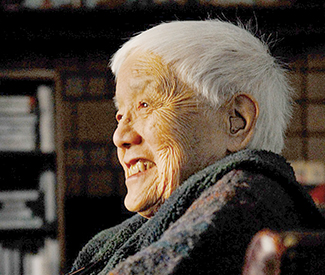
With American Revolutionary, Grace Lee goes deeper with one of the subjects of 2005’s The Grace Lee Project — her study of women who share her surprisingly common name — and plunges into an inspiring life. To say Boggs’ story could only happen in America is a grotesque understatement: Hers is an exceptional tale of American individualism working on behalf of those left behind by American exceptionalism.

Lee details her beginnings as that rare Asian American woman to earn her Ivy League doctorate in the ’30s, only to discover that she was barely employable due to her race and gender; the film then moves to Boggs’ organizing efforts in the African American community before and after the civil rights movement, her role as a grande dame in Black Power circles, and more recently as a community activist instrumental in founding the leadership-nurturing gardening and artmaking projects of Detroit Summer. Less grand but nonetheless revealing are the question ducks, the intellectual battle royales, and the moments when, say, Lee cuts Boggs’ hair in her kitchen. These instances — along with Lee’s highly entertaining 2007 mockumentary, American Zombie, also playing CAAMFest — reveal that Lee is also uniquely and, despite her protests to the contrary, compassionately, one of a kind. *

CAAMFEST

March 13-23, most shows $12

Various SF and East Bay venues

www.caamedia.org


Three upcoming events on housing in San Francisco

There are a few upcoming opportunities to have your say in the ongoing dialogue about the San Francisco tenants’ struggle as long-term renters grapple with rising rents and the threat of displacement.

Amid the housing pressure, a thriving tenants’ rights movement has unfolded in the city to spur multiple legislative pushes for reform. These conversations (and the art exhibit to piece these issues together on a deeper level) are timely.

Wed/12: San Francisco Neighborhoods on the Brink: A Panel Discussion on Displacement, Gentrification, Rising Rents & the Loss of Affordable Housing

Hosted by San Francisco Poet Laureate Alejandro Murguia, this panel discussion will feature comments by District 11 Sup. John Avalos, Public Policy Director of the Chinatown Community Development Center Gen Fujioka, and SFUSD teacher and Ellis Act target Sarah Brant.

An announcement description says the discussion will focus on the “dilemma facing long-time residents and renters of modest means — and the gutting and gentrification of San Francisco — as real estate speculation and a quickly widening income gap drive rents to dizzying heights while the rental supply dwindles.”

Details here.

“There’s a difference between a neighborhood changing—which is natural and organic—versus the destruction of a neighborhood, its history and legacy, which is what is happening right now in the Mission District.” Alejandro Murguía

Wed/12: “Sólo Mujeres: HOME / inside out” – An interdisciplinary exhibit at the Mission Cultural Center for Latino Arts

Curated by Susana Aragón and Indira Urrutia, this exhibition features 24 women artists in exploring the symbolic space of home through a variety of mediums, including installation, painting, photography, sculpture, poetry, video and mixed media. Artists include Yolanda Lopez, Xuchi Eggleton, Ximena Sosa, Windsong, Susana Aragón, Sofía Elías, Tina Escaja, Tanya Marie Vlach, Rebeca García Gonzales, Solange Bonilla Leahy, Natalia Anciso, Melanie Lacy Kusters, Marta R, Zabaleta, Mariella Zevallos, Indira Urrutia, Gabriela Luz Sierra, Flor Khan, Fan Warren, Cristina Ibarra, Clara Cheeves, Carmen Lang, Camila Perez-Goddard, Anna Simson, Alejandra Rassvetaieff, Adriana Camarena.

From the announcement: “A home is a place that is close to our heart, it triggers self-reflection, thoughts about who someone is or used to be or who they might become. Each room or space is connected to memories, feelings, ideas, dreams, etc. As part of the exhibit, the gallery will be transformed into a house which rooms will be delimited by see through fabric to show the fragility of housing in The San Francisco’s Mission District.

It opens at 7pm with a live performance by María José Montijo and Diana Gameros. Details here.

Wed/19: Affordable housing from multiple perspectives

The Noe Valley Democratic Club is hosting what it calls “a distinguished and authoritative panel of experts” who will speak about affordable housing in the Bay Area. What’s interesting about this event is that it will bring together folks who are leading a citywide push at the grassroots level to strengthen tenants’ rights, as well as people from more developer-friendly entities such as SPUR (San Francisco Bay Area Planning and   Research Association) and the San Francisco Housing Action Committee.

The panelists will include:

Sarah Karlinsky, (panel moderator), Deputy Director of SPUR (San Francisco Bay Area Planning and   Research Association)

Douglas Shoemaker, President of Mercy Housing California, a non-profit dedicated to affordable      housing development, fundraising and services.

Teresa Yanga, Deputy Director of the Mayor’s Office of Housing

Tim Colen , Executive Director of San Francisco Housing Action Committee

Fernando Martí, Co-Director of the Council of Community Housing Organizations (CCHO)

Sara Shortt, Executive Director of the San Francisco Housing Rights Committee 

Details here.

One final tidbit, tangentially related at best. Salon has a great article, Gentrifying the dharma” How the 1 percent is hijacking mindfulness, which thoughtfully examines a trend that has led Buddhists to fear that their religion is turning into a designer drug for the elite.”

(A few weeks ago activists with Eviction Free San Francisco disrupted a Google panel about mindfulness, triggering a decidedly unenlightened onstage tug-of-war over a banner.)

Best quote is from the Dalai Lama, who sees things this way: “Capitalism only takes the money. Then, exploitation.”

Norman Solomon: The problem with Obama denouncing a breach of international law in Ukraine

5

International law is suddenly very popular in Washington. President Obama responded to Russian military intervention in the Crimea by accusing Russia of a “breach of international law.” Secretary of State John Kerry followed up by declaring that Russia is “in direct, overt violation of international law.”

Unfortunately, during the last five years, no world leader has done more to undermine international law than Barack Obama. He treats it with rhetorical adulation and behavioral contempt, helping to further normalize a might-makes-right approach to global affairs that is the antithesis of international law.

Fifty years ago, another former law professor, Senator Wayne Morse, condemned such arrogance of power. “I don’t know why we think, just because we’re mighty, that we have the right to try to substitute might for right,” Morse said on national TV in 1964. “And that’s the American policy in Southeast Asia — just as unsound when we do it as when Russia does it.”

Today, Uncle Sam continues to preen as the globe’s big sheriff on the side of international law even while functioning as the world’s biggest outlaw.

Rather than striving for an evenhanded assessment of how “international law” has become so much coin of the hypocrisy realm, mainline U.S. media are now transfixed with Kremlin villainy.

On Sunday night, the top of the New York Times home page reported: “Russian President Vladimir V. Putin has pursued his strategy with subterfuge, propaganda and brazen military threat, taking aim as much at the United States and Europe as Ukraine itself.” That was news coverage.

Following close behind, a Times editorial appeared in print Monday morning, headlined “Russia’s Aggression,” condemning “Putin’s cynical and outrageous exploitation of the Ukrainian crisis to seize control of Crimea.” The liberal newspaper’s editorial board said that the United States and the European Union “must make clear to him that he has stepped far outside the bounds of civilized behavior.”

Such demands are righteous — but lack integrity and credibility when the same standards are not applied to President Obama, whose continuation of the Bush “war on terror” under revamped rhetoric has bypassed international law as well as “civilized behavior.”

In these circumstances, major U.S. media coverage rarely extends to delving into deviational irony or spotlighting White House hypocrisy. Yet it’s not as if large media outlets have entirely excluded key information and tough criticism.

For instance, last October the McClatchy news service reported that “the Obama administration violated international law with top-secret targeted-killing operations that claimed dozens of civilian lives in Yemen and Pakistan,” according to reports released by Amnesty International and Human Rights Watch.

Last week, just before Obama leapt to high dudgeon with condemnation of Putin for his “breach of international law,” the Los Angeles Times published an op-ed piecethat provided illuminating context for such presidential righteousness.

“Despite the president’s insistence on placing limits on war, and on the defense budget, his brand of warfare has helped lay the basis for a permanent state of global warfare via ‘low footprint’ drone campaigns and special forces operations aimed at an ever-morphing enemy usually identified as some form of Al Qaeda,” wrote Karen J. Greenberg, director of the Center on National Security at Fordham University’s law school.

Greenberg went on to indicate the scope of the U.S. government’s ongoing contempt for international law: “According to Senator Lindsey Graham (R-S.C.), the Obama administration has killed 4,700 individuals in numerous countries, including Pakistan, Yemen and Somalia. Obama has successfully embedded the process of drone killings into the executive branch in such a way that any future president will inherit it, along with the White House ‘kill list’ and its ‘terror Tuesday’ meetings. Unbounded global war is now part of what it means to be president.”

But especially in times of crisis, as with the current Ukraine situation, such inconvenient contradictions go out the mass-media window. What remains is an Orwellian baseline, melding conformist ideology and nationalism into red-white-and-blue doublethink.

Norman Solomon is co-founder of RootsAction.org and founding director of the Institute for Public Accuracy. His books include “War Made Easy: How Presidents and Pundits Keep Spinning Us to Death.” Information about the documentary based on the book is at www.WarMadeEasyTheMovie.org

(The Bruce blog is written and edited by Bruce B. Brugnann, editor at large of the Bay Guardian.  He is the former editor and co-founder and co-publisher of the Bay Guardian with his wife Jean Dibble, 1966-2012. B3) 

I always believed that the right song at the right moment could change history.  Pete Seeger, folksinger, 1919-2014

This Week’s Picks: March 5 -11, 2014

0

WEDNESDAY 5

San Francisco International Ocean Film Festival

Between Jaws (1975), Shark Week, and last year’s campy hit Sharknado, pop culture’s fascination with sharks is nearly as mighty as the predators themselves. Expand your knowledge beyond fact, fiction, and science fiction at the 11th San Francisco International Ocean Film Festival, which devotes an entire program (Sat/8) to our toothy friends, with a shorts program capped by hourlong doc Extinction Soup, about efforts to ban shark fin soup, followed by a panel of filmmakers and marine experts discussing “Shark Sanctuaries and Ecotourism.” Elsewhere in the fest, you’ll also find films about whales, surfing, and diving, as well as a spotlight on youth filmmakers. (Cheryl Eddy)

Through Sun/9, most programs $8-$15

Bay Theater

Pier 39, SF

www.oceanfilmfest.org


“Castro Theatre Remembers Philip Seymour Hoffman (1967-2014)”

In a time when nobody can agree on anything, a single event in recent weeks united us all: grief over the sudden, shocking loss of Philip Seymour Hoffman, one of the most universally beloved

actors of our time. He commanded respect (while also seeming like a cool, regular dude) by making interesting choices and fully committing himself to every role, even in sillier movies like Twister — which is, alas, not part of the Castro Theatre’s tribute. What is, however: his Oscar winning turn in Capote (2005), as well as The Master (2012), Boogie Nights (1997), Doubt (2008), Happiness (1998), and several others, all offering indelible performances. (Cheryl Eddy)

Wednesdays through March 26, plus March 28

Tonight, Capote, 7pm; The Master, 9:30pm, $8.50-$11

Castro Theatre

429 Castro, SF

www.castrotheatre.com


Personal & the Pizzas or The Pizza Underground (feat. Macaulay Culkin)

The “Pizza War” shows have grabbed San Francisco headlines like an appetite with the munchies does a Little Caesar’s “Hot-N-Ready.” It’s funny how local punk band Personal and the Pizzas had been laying low for a bit, but the recent news of former-child actor, one-time MJ playmate Macaulay Culkin forming a Velvet Underground-Lou Reed cover band seems to have awakened a sleeping giant. Everybody loves a good turf battle and high-profile beef. On March 5, SF has an opportunity to either swear allegiance to local favorites — or they can take a walk on the wild side and see how Hollywood does. (Andre Torrez)

The Pizza Underground

With Windham Flat and Toby Goodshank

Early show 6pm, $12

Neck of The Woods

406 Clement, SF

www.neckofthewoodssf.com

Personal & The Pizzas

9pm, free

Hemlock Tavern

1131 Polk, SF

www.hemlocktavern.com


THURSDAY 6

Glasvegas

Glasgow’s Glasvegas is Europe’s best-kept secret. The doo-wop tinged indie rockers have had albums chart at number two in the UK, number two in Sweden, have a platinum and a gold record under their belt, and are in total obscurity here in the colonies (despite spending half a year living on the best coast in 2010). Thank God they remain beautifully under-the-radar stateside, because who doesn’t want to see a band this good in a venue as small as the Rickshaw Stop? Old-school melody and new wave melancholy dominate the foursome’s body of work, perfect for slow dancing or single tears. If you’re not already sold, take into consideration the delicious thickness of James Allan’s brogue and the importance of supporting totally rad female drummers (Jonna Löfgren is a total badass). (Haley Zaremba)

With Popscene DJs

10pm, $17

Rickshaw Stop

155 Fell, SF

(415) 861-2011

www.rickshawstop.com


Midday Veil, White Cloud, 3 Leafs

A show can benefit greatly from atmospheric conditions. Lights, visuals, and sound are all conducive elements to what could enable the perfect night out. Seattle’s Midday Veil have played SF before and despite a name that might suggests a laid-back tone, it’s actually a slow burn that warms up to an incendiary frenzy that will get your attention. Expect visuals, experimental mind-melting noise and a solid bill of opening bands to bring the energy. (Torrez)

With White Cloud and 3 Leafs

9:30pm, $6

Knockout

3223 Mission, SF

www.theknockoutsf.com


“Meditations on Silk” Opening Reception

The ancient discipline of silk painting goes back thousands of years in Tibet. Silk painting, also known as “thangka” served as important teaching tools in Buddhism and the path to enlightenment. Ellen Brook has been creating silk designs in California for over 15 years. Focusing on the art form’s long tradition of enlightenment, the SF-based artist has created a collection of colorful abstract paintings on silk canvas, on display at the Hilliard Architects Gallery. Through her explorations with meditation, Brook discovered the parallels between painting and consciousness, and the vibrant hues and refined abstract composition pay homage to her meditative approach to art. The contemporary designs are a direct result of “getting out of the way” and “letting it flow,” as the artist puts it. “It’s a truly enlightening experience.” (Laura B. Childs)

5pm – 7pm, free

Hilliard Architects & Gallery

251 Post, Suite 620, SF

www.ellen-brook.com


FRIDAY 7

Ani DiFranco

When Ani DiFranco hit the scene in 1990 with a shaved head and a battered acoustic guitar, singing raw and emotive folk songs in noisy bars, she was easily and quickly pigeonholed as radical-lesbian-angry-women-with-guitars-man-hater music. Twenty years and nearly as many albums later, DiFranco is still oft-dismissed for the same small-minded reasons, but to this I say: Good. Because a) I love me some angry womanist music and b) any concert that repels people who have a problem with angry womanist music sounds like a great concert to me. DiFranco’s DIY ethic and career-long resistance to major labels is an inspiration. Her fierce autonomy, social activism, and brutally honest storytelling have inspired an uncountable number of artists and fans over several decades. Now in her forties, DiFranco is more of a Righteous Babe than ever. This show is not to be missed. (Zaremba)

With Jenny Scheinman

9pm, $33.50

The Fillmore

1805 Geary, SF

(415) 346-3000

www.thefillmore.com


Pump & Dump: A Parentally Incorrect Comedy Show

Postpartum depression be damned! Shayna Ferm and MC Doula are two new mothers who don’t take motherhood too seriously. Together, the comedian duo has created “Pump & Dump,” a two-hour “parentally incorrect” show filled with comedy, inappropriate music, drinking, swearing and commiseration. Through standup and song, they maintain that you don’t have to give up your life BC — before children. It’s not therapy per se, but the comedy show will prove to be quite cathartic. With segments including “Never Have I Ever – Parents Edition” and “Fucked up Things Your Kids Did This Week,” the live comedy event is designed to celebrate motherhood in all its throw up-filled glory. Don’t take parenthood too seriously: these MILFs embrace the insanity of motherhood with a musical set including songs like “Eat Your Fucking Food” and “I Wanna Come Back as a Dad.” “I’ve got a baby on my nip almost 24 hours a day. Sometimes I just wanna take a sip of my husband’s Tanqueray,” sings Ferm in the show’s theme song. “So I pump and dump, I’m not trying to get my baby drunk.” Go ahead mama, order another drink. (Laura B. Childs)

8pm, $20

Verdi Club

424 Mariposa, SF

www.verdiclub.net


SATURDAY 8

Nick Waterhouse

In this digital age, when many of us are scouring Spotify or Soundcloud to learn about artists and music, Nick Waterhouse credits Lower Haight’s cherished Rooky Ricardo’s Records as his primary source for inspiration and education. “I got my Master’s and my Ph.D in American music there,” Waterhouse told Seattle’s KEXP-FM in 2012. “All I wanted to do was hang out there and listen to records.” The troubadour’s dissertation, 2012’s “Time’s All Gone” (Innovative Leisure), embraces listeners with a soulful blend of R&B, blues and rock along with its warm, analog production. Waterhouse manages to evoke the electric rock style of Jim Morrison and the vocal power of James Brown, all while summoning a sound that is fresh and all his own. (Kevin Lee)

With Boogaloo Assassins, DJ Donnell

9 pm, $21

Great American Music Hall

859 O’Farrell, SF

(415) 885-0750

www.slimspresents.com


Midnite Snaxxx, The Shanghais, Quaaludes, No Bone, Bestfriend Grrlfriend

The Deli Magazine and The Process Records have come together to pack SUB/Mission with the Bay Area’s best grrl power punk rock. Headed by Oakland-based punk trio Midnite Snaxxx, this show is an opportunity not only to support the current local scene but to ensure the presence of female-fronted rock in the future. Proceeds from the show will go to the Bay Area Girls Rock Camp, an Oakland nonprofit organization striving to create a safe space where students can build confidence and learn to creatively collaborate with one another while challenging gender stereotypes. Spend 7 bucks on a show that passes the Bechdel test so that more young girls can get the opportunity to take stages and break boundaries. What could be a better cause than that? (Kirstie Haruta)

8pm, $7

SUB/Mission

2183 Mission, SF

(415) 255-7227

www.sf-submission.com


SUNDAY 9

Scarlett Fever

Calling all greasers, punks, hot rodders or anyone who just wants to have a blast while supporting a good cause — check out Scarlett Fever 2014 this afternoon and evening, a benefit for Miss Scarlett James, who suffers from Rett Syndrome, a childhood neurodevelopmental disorder. The annual benefits help pay for her care and for research into the disease, and this year’s outstanding lineup includes live music from The Chop Tops, Memphis Murder Men, Stigma 13 and more, along with burlesque, art shows, car clubs in attendance and raffle prizes from several TV shows and even Scarlett’s godfather Mike Ness’ band Social Distortion. (Sean McCourt)

1-9pm, $15

DNA Lounge

375 11th St, SF

(415) 626-1409

www.dnalounge.com


Richie Ramone

Though he was in the Ramones for only five years, Richie Ramone’s contributions to the iconic punk band have had a lasting impression on their legacy—in fact, the late Joey Ramone once said that he felt that the drummer had saved the group in the early 1980s. First hitting the skins on Too Tough To Die, Richie also wrote several songs that are now considered classics during his brief but important tenure, including “Somebody Put Something In My Drink.” He released his first solo record—Entitled—late last year—here’s your chance to hear the new material, and joyously sing along with some old favorites as well. (Sean McCourt)

8pm, $12-$15

Brick and Mortar Music Hall

1710 Mission, SF

(415) 800-8782

www.brickandmortarmusic.com


TUESDAY 11

Litquake Presents: Scott O’Connor and Eddie Muller at the Epicenter

Set in Cold War-era San Francisco, Half World, the new novel from LA-based writer Scott O’Connor was inspired by a program that sounds like the work of a conspiracy theorist but did, in fact, exist: Project MKULTRA, a CIA-run series of mind-control experiments on Americans that lasted for two decades. O’Connor’s literary thriller takes readers into one agent’s tug-of-war between duty and conscience, then transports us to 20 years later, when, against the backdrop of the Vietnam War, another troubled government worker risks everything to uncover the crimes and secrets of the past. Eddie Muller, filmmaker and director of the Noir City Film Festival will interview the author. (Emma Silvers)

7pm, $5-$15 suggested donation

Glass Door Gallery

245 Columbus #B, SF

www.litquake.org


The Guardian listings deadline is two weeks prior to our Wednesday publication date. To submit an item for consideration, please include the title of the event, a brief description of the event, date and time, venue name, street address (listing cross streets only isn’t sufficient), city, telephone number readers can call for more information, telephone number for media, and admission costs. Send information to Listings, the Guardian, 225 Bush, 17th Flr., SF, CA 94105; or email (paste press release into email body — no attachments, please) to listings@sfbg,com. Digital photos may be submitted in jpeg format; the image must be at least 240 dpi and four inches by six inches in size. We regret we cannot accept listings over the phone.

Rep Clock: March 5 -11, 2014

0

Schedules are for Wed/5-Tue/11 except where noted. Director and year are given when available. Double and triple features marked with a •. All times pm unless otherwise specified.

ARTISTS’ TELEVISION ACCESS 992 Valencia, SF; www.atasite.org. $5-10. “OpenScreening,” Thu, 8. “Mission Eye and Ear,” new music/sound and film collaborations curated by Lisa Mezzacappa and ATA, Fri, 8. Other Cinema: Pussy Riot: A Punk Prayer (Pozdorovkin and Lerner, 2013), Sat, 8:30.

BALBOA THEATRE 3630 Balboa, SF; cinemasf.com/balboa. $7.50-10. “Popcorn Palace:” Labyrinth (Henson, 1986), Sat, 10am. Matinee for kids.

BAY THEATER Pier 39, SF; www.oceanfilmfest.org. Most programs $8-15. San Francisco Ocean Film Festival, ocean-themed films from over 17 countries, plus discussions and special events, Wed-Sun.

BERKELEY CITY COLLEGE 2050 Center, Berk; www.mecaforpeace.org. $5-10. Middle East Children’s Alliance presents: A World Not Ours (Fleifel, 2012), Wed, 7.

CASTRO 429 Castro, SF; (415) 621-6120, www.castrotheatre.com. $8.50-11. “Philip Seymour Hoffman (1967-2014):” •Capote (Miller, 2005), Wed, 7, and The Master (Anderson, 2012), Wed, 9:10. American Hustle (Russell, 2013), Thu-Fri, 2:30, 5:30, 8:30. Call for Sat-Tue shows and times.

CHRISTOPHER B. SMITH RAFAEL FILM CENTER 1118 Fourth St, San Rafael; (415) 454-1222, www.cafilm.org. $6.50-$10.75. times. Omar (Abu-Assad, 2013), call for dates and times. America the Beautiful 3: The Sexualization of Our Youth (Roberts, 2014), Wed, 6:15. Benefit for Beyond Hunger; advance tickets ($25-50) at www.beyondhunger.org. Femme: Women Healing the World (Itier, 2013), Thu. 7. The Rocket (Mordaunt, 2013), March 7-13, call for times.

“EAST BAY INTERNATIONAL JEWISH FILM FESTIVAL” Various venues in Pleasant Hill, Livermore, and Orinda; www.eastbayjewishfilm.org. Most programs $8-11. Featuring more than 40 international movies.

EXPLORATORIUM Pier 15, SF; www.exploratorium.edu. Free with museum admission ($19-25). “After Dark: Extended Cinema,” Thu, 6-10.

GOETHE-INSTITUT SAN FRANCISCO 530 Bush, SF; goethe.de/ins/us/saf/enindex.htm. $5. 11 Freundinnen (Cho, 2013), Wed, 6:30.

KANBAR HALL JCCSF, 3200 California, SF; www.jccsf.org. $12-25. SF Jewish Film Festival presents: “Hummus, Falafel, and Brisket — Oh, My!”: Make Hummus Not War (Graham, 2012), Sun, 1; Meat Hooked! (Wasserman, 2012), Sun, 2:30; Falafel! Give Peas a Chanse (Cohen, 2012), Sun, 3:45.

MECHANICS’ INSTITUTE 57 Post, SF; milibrary.org/events. $10. “CinemaLit Film Series: Mystique of the City: Films Shot in San Francisco:” After the Thin Man (Van Dyke II, 1936), Fri, 6.

OSHER MARIN JCC 200 N. San Pedro, San Rafael; www.marinjcc.org. $10. “Best of the San Francisco Jewish Film Festival:” American Jerusalem: Jews and the Making of San Francisco (Shaffer, 2013), Tue, 7.

PACIFIC FILM ARCHIVE 2575 Bancroft, Berk; (510) 642-5249, bampfa.berkeley.edu. $5.50-9.50. “Film 50: History of Cinema:” Early Summer (Ozu, 1951), with lecture by Emily Carpenter, Wed, 3:10. “Jokers Wild: American Comedy, 1960-1989:” What’s New Pussycat? (Donner, 1965), Wed, 7; The Producers (Brooks, 1967), Fri, 7; Take the Money and Run (Allen, 1969), Fri, 8:50. “The Brilliance of Satyajit Ray:” Kanchenjungha (1962), Thu, 7; Charulata (1964), Sat, 6; The Hero (1965), Sun, 3. “Jean-Luc Godard: Expect Everything from Cinema:” Masculine Feminine (1966), Sat, 8:30; Pierrot le fou (1965), Sun, 5:30. “Inside the BAM/PFA Film Collection,” recently acquired short films, Mon, 7:30. “Documentary Voices:” Body of War (Spiro and Donahue, 2007), Tue, 7.

ROXIE 3117 and 3125 16th St, SF; (415) 863-1087, www.roxie.com. $6.50-11. The Men’s Story Project: Out Loud! (Lehrer, 2013), Wed, 7. 7 Boxes (Maneglia, 2014), Wed-Thu, 7, 9. Stranger by the Lake (Guiraudie, 2013), Wed, 9:30; Thu, 9:15. Groove Move (Coleman, 2014), Thu, 7. “Teenage Mutant Ninja Turtles All-You-Can-Eat Pizza Party:” •Teenage Mutant Ninja Turtles (Barron, 1990), Sat, 8, and Teenage Mutant Ninja Turtles II: The Secret of the Ooze (Pressman, 1991), Sat, 9:45. Tickets ($25) include hella pizza (including vegan options).

“SAN FRANCISCO INTERNATIONAL WOMEN’S FILM FESTIVAL” New Parkway, 474 24th St, Oakl; www.sfiwff.com. Free. “First Friday Shorts,” short films by local female filmmakers, Fri, 6. Also March 29, awards reception (1pm) and global shorts program

UNITY IN MARIN 600 Palm, Hamilton Center, Novato; www.unityinmarin.org. $10. Rebels With a Cause (Kelly, 2013), Fri, 7.

YERBA BUENA CENTER FOR THE ARTS 701 Mission, SF; www.ybca.org. $8-10. “Design and Architecture Films Showcase:” 16 Acres (Hankin, 2012), Thu and Sat, 7:30; Lost Rivers (Bacle, 2013), Sun, 2. *


Theater Listings: March 5 – 11, 2014

0

Stage listings are compiled by Guardian staff. Performance times may change; call venues to confirm. Reviewers are Robert Avila, Rita Felciano, and Nicole Gluckstern. Submit items for the listings at listings@sfbg.com.

THEATER

OPENING

Crystal Springs Eureka Theatre, 215 Jackson, SF; www.crystalspringstheplay.com. $20-65. Previews Thu/6, 8pm. Opens Fri/7, 8pm. Runs Fri-Sat, 8pm; Sun, 2pm. Through March 23. Eureka Theatre presents Kathy Rucker’s world-premiere drama about parenting in the digital age.

BAY AREA

Accidental Death of an Anarchist Berkeley Repertory Theatre, Roda Theatre, 2015 Addison, Berk; www.berkeleyrep.org. $29-99. Previews Fri/7-Sat/8 and Tue/11, 8pm; Sun/9, 7pm. Opens March 12, 8pm. Runs Tue and Thu-Sat, 8pm (no show April 18; additional 2pm shows March 20 and April 17; also Sat, 2pm, but no matinee March 22); Sun, 2 and 7pm. Through April 20. Berkeley Rep presents comic actor Steven Epp in Dario Fo’s explosive political farce, directed by Christopher Bayes,

Once On This Island Lucie Stern Theatre, 1305 Middlefield, Palo Alto; www.theatreworks.org. $19-73. Previews Wed/5-Fri/7, 8pm. Opens Sat/8, 8pm. Runs Tue-Wed, 7:30pm; Thu-Sat, 8pm (also Sat, 2pm); Sun, 2 and 7pm. Through March 30. TheatreWorks performs the Tony-nominated musical about a star-crossed love affair in the tropics, inspired by Hans Christian Andersen’s The Little Mermaid.

ONGOING

The Altruists Shelton Theater, 533 Sutter, SF; www.shewolftheater.com. $19-34. Thu/6-Sat/8, 8pm. She Wolf Theater performs Nicky Silver’s “politically incorrect” play that exposes the real motivations behind altruistic behavior.

Children Are Forever (All Sales are Final!) Stage Werx Theatre, 446 Valencia, SF; www.brownpapertickets.com. $15. Fri-Sat, 8pm. Through March 22. Writer-performer and comedian Julia Jackson’s well acted and consistently funny autobiographical solo show details her and her female partner’s attempt to adopt a newborn girl from a young African American mother in Florida. Along the way, Jackson’s smart script details the trials, red tape, and unexpected market incentives in the field of adoption for a same-sex, interracial couple. If the generally involving story nevertheless attenuates a little across its two-act structure, Coke Nakamoto’s precise direction (which builds on original direction by W. Kamau Bell) offers a lively framework for Jackson’s excellent characterizations as well as her frank and interesting commentary on the social, political messiness of certain natural urges. (Avila)

Feisty Old Jew Marsh San Francisco Main Stage, 1062 Valencia, SF; www.themarsh.org. $25-100. Sat, 8pm; Sun, 7pm (Sun/9, performance will be a reading of Charlie Varon’s Fish Sisters). Through March 16. Charlie Varon performs his latest solo show, a fictional comedy about “a 20th century man living in a 21st century city.”

Foodies! The Musical Shelton Theater, 533 Sutter, SF; www.foodiesthemusical.com. $32-34. Fri-Sat, 8pm. Open-ended. AWAT Productions presents Morris Bobrow’s musical comedy revue all about food.

Hundred Days Z Space, 450 Florida, SF; www.zspace.org. $10-100. Wed and Sun, 7pm; Thu-Sat, 8pm. Through April 6. Married musical duo the Bengsons (Abigail and Shaun) provide the real-life inspiration and guiding rock ‘n’ roll heart for this uneven but at times genuinely rousing indie musical drama, a self-referential meta-theater piece relating the story of a young couple in 1940s America who fall madly in love only to discover one of them is terminally ill. As an exploration of love, mortality, and the nature of time, the story of Sarah and Will (doubled by the Bengsons and, in movement sequences and more dramatically detailed scenes, by chorus members Amy Lizardo and Reggie D. White) draws force from the potent musical performances and songwriting of composer-creators Abigail and Shaun Bengson (augmented here by the appealing acting-singing chorus and backup band that also feature El Beh, Melissa Kaitlyn Carter, Geneva Harrison, Kate Kilbane, Jo Lampert, Delane Mason, Joshua Pollock). Playwright Kate E. Ryan’s book, however, proves too straightforward, implausible, and sentimental to feel like an adequate vessel for the music’s exuberant, urgent emotion and lilting, longing introspection. Other trappings of director Anne Kauffman’s elaborate production (including an inspired set design by Kris Stone that echoes the raw industrial shell of the theater; and less-than-inspired choreography by the otherwise endlessly inventive Joe Goode) can add texture at times but also prove either neutral figures or distracting minuses in conveying what truth and heft there is in the material. Ultimately, this still evolving world premiere has a strong musical beat at its core, which has a palpable force of its own, even if it’s yet to settle into the right combination of story and staging. (Avila)

Jerusalem San Francisco Playhouse, 450 Post, SF; www.sfplayhouse.org. $20-100. Wed/5-Thu/6, 7pm; Fri/7-Sat/8, 8pm (also Sat/8, 3pm). SF Playhouse presents the West Coast premiere of English playwright Jez Butterworth’s West End and Broadway hit, a three-act revel led by a larger-than-life rebel, a stout boozed-up drug-dealer, habitual fabulist, and latter-day Digger of sorts named Johnny “Rooster” Byron (Brian Dykstra). The dominion of this Falstaffian giant is the English countryside outside his squalid trailer door, not far from Stonehenge, where he seems to incarnate a rather dissipated version of an ancient English independence, like one of the great mythical beings of rural lore. Aptly enough, it’s Saint George’s Day, the feast day of England’s national saint, but it’s not all a party this time around. Authorities have issued a final 24-hour eviction notice on Rooster’s tin door; there are luxury apartments in the works; and there’s concern in town about the underage teens who flock to Rooster like so many fledglings — one, in particular, has gone missing: Phaedra (Julia Belanoff), who we see at the very outset of the play donning a fairy costume and singing the title song, based on the Blake poem and England’s unofficial national anthem. The next 24 hours will be either the breaking point or the apotheosis for all Rooster has made himself out to be. In Butterworth’s big-eyed comedy, we are meant to feel a stake in this outcome whether we actually like Rooster or not — his independence, the scope of his life and vision, suggests the outer limit of possibility in an ever more disciplined and circumscribed world. Director Bill English (who also designed the impressive bucolic-trailer-park set) and his large cast (which includes a strong Ian Scott McGregor as longtime Rooster sidekick, Ginger) dive into the comedy with gusto. But somehow the drama, the larger stakes in the storyline, falls short. A certain requisite intensity and momentum are only fitfully achieved. Dykstra, as the expansive antihero, has the biggest burden here. And while he has an appealing swagger throughout, his wayward brogue and unconvincing bellicosity undercut the culmination of the play’s (admittedly somewhat overwrought) mythopoeic proportions. (Avila)

Lovebirds Marsh San Francisco Studio, 1062 Valencia, SF; www.themarsh.org. $15-50. Thu-Fri, 8pm; Sat, 8:30pm. Through March 15. Theater artist and comedian Marga Gomez presents the world premiere of her 10th solo show, described as “a rollicking tale of incurable romantics.”

Mommy Queerest Exit Studio, 156 Eddy, SF; www.divafest.info. $15-25. Fri-Sat, 8pm. Through March 29. DIVAfest and Guerrilla Rep present Kat Evasco (who co-wrote with John Caldon) in an autobiographical solo comedy about the relationship between a lesbian daughter and her closeted lesbian mother.

Napoli! ACT’s Geary Theater, 415 Geary, SF; www.act-sf.org. $10-120. Wed/5-Sat/8, 8pm (also Sat/8, 2pm); Sun/9, 2pm. American Conservatory Theater offers Bay Area audiences a rare look at one of the Neapolitan plays by Italy’s famed writer Eduardo De Filippo (1900-1984). Set in a humble home in working-class Naples during and just after World War II, amid the transition from Fascism to the postwar order, the play’s broad comedy comes with a strong undercurrent of social drama, as well as unexpectedly poignant moments. Its hero is the head of the household, Gennaro (former ACT core company member Marco Barricelli in a boisterous and gently moving performance), whose upright nature proves increasingly out-of-step with the times and indeed his own family, as his wife, Amalia (a commanding Seana McKenna), begins a black-market trade in coffee beans that becomes an all-out family crime ring by war’s end. While this dynamic offers fodder for some rather hokey if not unenjoyable comedy, the play gathers itself into a serious and timely indictment of privilege and its corrosion of community, as well as the need for solidarity as the only viable, indeed the only satisfying way forward. If the message and the playwright-messenger (De Fillipo, also an actor, originated the part of Gennaro himself) come across today as somewhat heavy-handed, it remains hard to dismiss Napoli! as just a museum piece. That’s due in part to director Mark Rucker’s large and graceful cast, as well as a buoyant new translation by Linda Alper and ACT’s Beatrice Basso. But it’s also the prescience and appositeness for us, all these many years later and miles away, of the play’s fundamentally social and political concerns. (Avila)

“Risk Is This … The Cutting Ball New Experimental Plays Festival” Tides Theater, 533 Sutter, Second Flr; www.cuttingball.com. Free ($20 donation for reserved seating). Fri-Sat, 8pm. (Starting March 14, venue changes to Exit on Taylor, 277 Taylor, SF). Through March 29. Five new works in staged readings, including two from Cutting Ball resident playwright Andrew Saito.

The Scion Marsh San Francisco, 1062 Valencia, SF; www.themarsh.org. $15-60. Thu-Fri, 8pm; Sat, 5pm. Through April 18. In his latest solo show, Brian Copeland (Not a Genuine Black ManThe Waiting Period) explores an infamous crime in his hometown of San Leandro: the 2000 murder of three government meat inspectors by Stuart Alexander, owner of the Santos Linguisa Factory. The story is personal history for Copeland, at least indirectly, as the successful comedian and TV host recounts growing up nearby under the common stricture that “rules are rules,” despite evidence all around that equity, fairness, and justice are in fact deeply skewed by privilege. Developed with director David Ford, the multiple-character monologue (delivered with fitful humor on a bare-bones stage with supportive sound design by David Hines) contrasts Copeland’s own youthful experiences as a target of racial profiling with the way wealthy and white neighbor Stuart Alexander, a serial bully and thug, consistently evaded punishment and even police attention along his path to becoming the “Sausage King,” a mayoral candidate, and a multiple murderer (Alexander died in 2005 at San Quentin). The story takes some meandering turns in making its points, and not all of Copeland’s characterizations are equally compelling. The subject matter is timely enough, however, though ironically it is government that seems to set itself further than ever above the law as much as wealthy individuals or the bogus “legal persons” of the corporate world. The results of such concentrated power are indeed unhealthy, and literally so — Copeland’s grandmother (one of his more persuasive characterizations) harbors a deep distrust of processed food that is nothing if not prescient —but The Scion’s tale of two San Leandrans leaves one hungry for more complexity. (Avila)

Shit & Champagne Rebel, 1772 Market, SF; shitandchampagne.eventbrite.com. $25. Fri-Sat, 8pm. Open-ended. D’Arcy Drollinger is Champagne White, bodacious blonde innocent with a wicked left hook in this cross-dressing ’70s-style white-sploitation flick, played out live on Rebel’s intimate but action-packed barroom stage. Written by Drollinger and co-directed with Laurie Bushman (with high-flying choreography by John Paolillo, Drollinger, and Matthew Martin), this high-octane camp send-up of a favored formula comes dependably stocked with stock characters and delightfully protracted by a convoluted plot (involving, among other things, a certain street drug that’s triggered an epidemic of poopy pants) — all of it played to the hilt by an excellent cast that includes Martin as Dixie Stampede, an evil corporate dominatrix at the head of some sinister front for world domination called Mal*Wart; Alex Brown as Detective Jack Hammer, rough-hewn cop on the case and ambivalent love interest; Rotimi Agbabiaka as Sergio, gay Puerto Rican impresario and confidante; Steven Lemay as Brandy, high-end calf model and Champagne’s (much) beloved roommate; and Nancy French as Rod, Champagne’s doomed fiancé. Sprawling often literally across two buxom acts, the show maintains admirable consistency: the energy never flags and the brow stays decidedly low. (Avila)

The Speakeasy Undisclosed location (ticket buyers receive a text with directions), SF; www.thespeakeasysf.com. $60-90 (add-ons: casino chips, $5; dance lessons, $10). Thu-Sat, 7:40, 7:50, and 8pm admittance times. Through March 15. Boxcar Theater’s most ambitious project to date is also one of the more involved and impressively orchestrated theatrical experiences on any Bay Area stage just now. An immersive time-tripping environmental work, The Speakeasy takes place in an “undisclosed location” (in fact, a wonderfully redesigned version of the company’s Hyde Street theater complex) amid a period-specific cocktail lounge, cabaret, and gambling den inhabited by dozens of Prohibition-era characters and scenarios that unfold around an audience ultimately invited to wander around at will. At one level, this is an invitation to pure dress-up social entertainment. But there are artistic aims here too. Intentionally designed (by co-director and creator Nick A. Olivero with co-director Peter Ruocco) as a fractured super-narrative — in which audiences perceive snatches of overheard stories rather than complete arcs, and can follow those of their own choosing — there’s a way the piece becomes specifically and ever more subtly about time itself. This is most pointedly demonstrated in the opening vignettes in the cocktail lounge, where even the ticking of Joe’s Clock Shop (the “cover” storefront for the illicit 1920s den inside) can be heard underscoring conversations (deeply ironic in historical hindsight) about war, loss, and regained hope for the future. For a San Francisco currently gripped by a kind of historical double-recurrence of the roaring Twenties and dire Thirties at once, The Speakeasy is not a bad place to sit and ponder the simulacra of our elusive moment. (Avila)

Tipped & Tipsy Marsh Studio Theater, 1062 Valencia, SF; www.themarsh.org. $15-50. Sat, 5pm; Sun, 7pm. Through April 6. Solo performer Jill Vice performs her Fringe Festival hit.

Ubu Roi Exit on Taylor, 277 Taylor, SF; www.cuttingball.com. $10-50. Thu/6, 7:30pm; Fri/7-Sat/8, 8pm (also Sat/8, 2pm); Sun/9, 5pm. Cutting Ball Theater performs Alfred Jarry’s avant-garde parody of Shakespeare’s Macbeth, presented in a new translation by Cutting Ball artistic director Rob Melrose.

The World of Paradox Garage, 715 Bryant, SF; www.paradoxmagic.com. $12-15. Mon, 8pm (no show Mon/10). Through April 7. Footloose presents David Facer in his solo show, a mix of magic and theater.

The World’s Funniest Bubble Show Marsh San Francisco, 1062 Valencia, SF; www.themarsh.org. $8-11. Sun, 11am. Through March 9. The popular, kid-friendly show by Louis Pearl (aka “The Amazing Bubble Man”) returns to the Marsh.

Yellow New Conservatory Theatre Center, 25 Van Ness, SF; www.nctcsf.org. $25-45. Wed-Sat, 8pm; Sun, 2pm. Through March 23. New Conservatory Theatre Center performs the Bay Area premiere of Del Shores’ Mississippi-set family drama.

BAY AREA

Bread and Circuses La Val’s Subterranean, 1834 Euclid, Berk; www.impacttheatre.com. $20-25. Thu-Sat, 8pm; Sun, 7pm. Through April 6. Impact Theatre performs “a cavalcade of brutal and bloody new short plays” by various contemporary playwrights.

Escanabe in da Moonlight Live Oak Theatre, 1301 Shattuck, Berk; www.theatrefirst.com. $10-30. Thu/6-Sat/8, 8pm. TheatreFIRST performs Jeff Daniels’ raucous comedy.

Geezer Marsh Berkeley, 2120 Allston, Berk; www.themarsh.org. $25-50. Thu, 8pm; Sat, 5pm. Through April 26. Geoff Hoyle moves his hit comedy about aging to the East Bay.

Gideon’s Knot Aurora Theatre, 2081 Addison, Berk; www.auroratheatre.org. $32-60. Wed/5-Sat/8, 8pm; Sun/9, 2 and 7pm. Aurora and director Jon Tracy’s Bay Area premiere of Johnna Adams’ two-hander features strong acting, strong enough almost to make us believe in its premise. A harried mother named Corryn (a terrific Jamie J. Jones) arrives at the empty middle-school classroom overseen by a distracted teacher, Heather (a subdued yet agitated Stacy Ross). Corryn, proud but somehow desperate, admits to having not slept. Heather initially doesn’t know why she’s there — until it becomes clear she’s the mother of a recent suicide, who has come to keep her appointment for a parent-teacher conference. The two women await the arrival of the absent principal, but Corryn presses for answers now to the circumstances surrounding her child’s final days, which included his suspension from school and a beating received at the hands of fellow students. Heather, who seems to be hiding some separate anxiety or grief of her own (and is, though what we don’t learn until nearly the end of the play), does her best to deflect any such conversation until the principal arrives but is soon embroiled in an argument with the headstrong and canny mother in front of her, a literature professor at a major university. Their dance centers on Corryn’s son’s last assignment, a short story, one his teacher sees as nothing but “hate-filled poisonous attacks,” but his mother calls “poetry.” In addition to the clash between a teacher’s authority and a mother’s regard, there’s a class component to these differing perspectives, we presume. Yet there is a real issue here, somewhere, about art and education and authority — or would be if it did not end up buried along with the young writer we never meet. Playwright Adams advances the dramatic tension by tacking this way and that around her subject, but loses sight of the shore meanwhile, as her characters debate whether or not the short story contains a virtuous accusation against an instance of child abuse, only to drop this crux a moment later in a hard-to-credit squeamishness on Corryn’s part over the potentially homoerotic longings of her deceased son. The final note lands in an even hokier key of mutual sorrow and understanding. (Avila)

The House That Will Not Stand Berkeley Repertory Theatre, Thrust Stage, 2025 Addison, Berk; www.berkeleyrep.org. $29-59. Tue and Thu-Sat, 8pm (also Sat and March 13, 2pm); Wed, 7pm; Sun, 2 and 7pm. Through March 16. July 4, 1836: As a white New Orleans patriarch (Ray Reinhardt) passes from the scene, under somewhat mysterious circumstances, his longtime mistress, Beartrice (an imposing, memorable Lizan Mitchell), and their daughters (the charmingly varied trio of Joniece Abbott-Pratt, Flor De Liz Perez, and Tiffany Rachelle Stewart) — all free women of color — vie for dominance while trying to secure their respective futures in Berkeley Rep’s sumptuous and beautifully acted world premiere. Nationally acclaimed playwright and Oakland native Marcus Gardley (And Jesus Moonwalked the Mississippi; This World in a Woman’s Hands) brews up a historically rich and revealing, as well as witty and fiery tale here, based on the practice of plaçage (common-law marriages between white men and black Creole women), grounding it in the large personalities of his predominately female characters — who include a nosy and angling intruder (played with subtlety by Petronia Paley) — and lacing it all with a delirious dose of magical realism via the voodoo charms of Beartrice’s slave, Makeda (Harriett D. Foy, who with Keith Townsend Obadike also contributes lush, atmospheric compositions to the proceedings). Gardley delves productively into the history overall, although he sometimes indulges it too much in awkward and ultimately unnecessary expository dialogue. When he allows his characters full scope for expression of their personalities and relationships, however, the dialogue sails by with brio and punch —something the powerhouse cast, shrewdly directed by Patricia McGregor, makes the most of throughout. (Avila)

Lasso of Truth Marin Theatre Company, 397 Miller, Mill Valley; www.marintheatre.org. $37-58. Tue and Thu-Sat, 8pm (also Thu/6, 1pm; March 15, 2pm); Wed, 7:30pm; Sun, 2 and 7pm. Through March 16. Marin Theatre Company performs Carson Kreitzer’s new play about the history of Wonder Woman.

The Lion and the Fox Berkeley City Club, 2315 Durant, Berk; www.centralworks.org. $15-28. Thu-Sat, 8pm; Sun, 5pm. Through March 30. Central Works performs a prequel to its 2009 hit, Machiavelli’s The Prince, which depicts a face-off between Niccolo Machiavelli and Cesare Borgia.

A Maze Ashby Stage, 1901 Ashby, Berk; www.justtheater.org. $20-25. Wed/5-Sat/8, 8pm; Sun/9, 5pm. Following a well-received run last summer at Live Oak Theater, Just Theater’s West Coast premiere of Pittsburgh-based playwright Rob Handel’s 2011 jigsaw drama gets a second life, courtesy of presenter Shotgun Players, in this remounting at Ashby Stage. Half the pleasure of a play like this is the unfolding of its serpentine plot, which becomes much more linear in the second half but initially seems to hover around three very disparate situations: 17-year-old Jessica (Frannie Morrison), recently escaped from eight years of captivity in the home and cellar of her kidnapper, prepares for an interview with a Barbara Walters-like TV journalist (Lauren Spencer); Oksana (Sarah Moser) and Paul (Harold Pierce), who head up their own highly successful rock band (suggestively titled the Pathetic Fallacy), are in the midst of a tough transition as Oksana checks Paul into rehab; and a fairytale King (Lasse Christiensen) responds to the Queen’s (Janis DeLucia) news that they are about to have an “heir” by beginning construction on a gigantic, seemingly endless maze emanating outward from their cozy den to the furthest reaches of the kingdom. Meanwhile, the director of the rehab clinic (Carl Holvick-Thomas) introduces Paul to another artist-resident, a fussy, eccentric author named Beeson (Clive Worsley) at work on a multi-volume graphic novel of maddening intricacy. As the three storylines begin to coalesce, the play asks us to consider questions about artistic liberty, authorship, responsibility, human connection — big themes like that. It does so in a mostly playful, only slightly eerie way, despite the grim central situation revolving around the bright and surprisingly outgoing Jessica. Employing almost the identical cast as last time, again under director Molly Aaronson-Gelb, the proceedings unfold with generally solid acting, if not always persuasive dialogue, at least where things are meant to be more or less realistic (to an extent, the fairytale segment comes across more compellingly for being strictly bound by the artificial nature of its narrative). There’s a quirky quality to the play, and the production, that amuses, even as the coy plotline bemuses. And much like an amusement park adventure, the play makes sure no one really gets lost. This is a play that is happy to tell you the various ways the central “maze” might be read metaphorically, for instance, so that everything is tidy and clear — like a fairytale, or a graphic novel — not so mysterious in the end, just tinged with a kind of comfortable melancholy. (Avila)

The Music Man Julia Morgan Theater, 2640 College, Berk; www.berkeleyplayhouse.org. $17-60. Fri and March 20, 7pm; Sat, 1 and 6pm; Sun, noon and 5pm. Through March 23. There’s trouble in River City! See it unfold amid all those trombones at Berkeley Playhouse.

PERFORMANCE/DANCE

“Acentos Revival” Red Poppy Art House, 2698 Folsom, SF; www.redpoppyarthouse.org. Thu/6, 7:30pm. $10-15. Three featured poets and two open mic segments.

“Bad Ass B!tches” Bindlestiff Studio, 185 Sixth St, SF; www.bindlestiffstudio.org. Sat/8, 9pm. $12. Performance extravaganza in honor of International Women’s Day, with comedy, burlesque, live music, dance, and more.

“The Balcony” Exit on Taylor, 277 Taylor, SF; www.cuttingball.com. Sun/9, 1pm. Free. Cutting Ball Theater’s Hidden Classics Reading Series presents this reading of Jean Genet’s experimental play.

“Belles and Whistles Variety Show” Boom Boom Room, 1601 Fillmore, SF; www.boomboomblues.com. Tue/11, 8:30pm. $10. Comedian Danny Dechi hosts this variety show of music, comedy, magic, dance, and more.

“Black Choreographers Festival: Here & Now” ODC Theater, 3153 17th St, SF; www.bcfhereandnow.com. Thu/6-Sat/8, 8pm. $18-30. “Draft/By Series” presented by Robert Moses’ Kin in association with the Black Choreographers Festival and ODC Theater.

“The Buddy Club Children’s Shows” Randall Museum Theater, 199 Museum Wy, SF; www.thebuddyclub.com. Sun/9, 11am-noon. $8. With illusionist Timothy James.

Caroline Lugo and Carolé Acuña’s Ballet Flamenco Peña Pachamama, 1630 Powell, SF; www.carolinalugo.com. Sat/8, March 16, 22, and 30, 6:15pm. $15-19. Flamenco performance by the mother-daughter dance company, featuring live musicians.

“Comedy Bottle with Sean Keane” Purple Onion at Kells, 530 Jackson, SF; www.purpleonionatkells.com. Fri/7-Sat/8, 7pm. $10. The stand-up comedian performs.

Feinstein’s at the Nikko Hotel Nikko, 222 Mason, SF; www.feinsteinssf.com. This week: Paula West, Thu/6-Fri/7, 8pm; Sat/8-Sun/9, 7pm (also Sat/8, 9:30pm), $35-50.

“Letter from Birmingham Jail” Grace Cathedral, 1100 California, SF; www.gracecathedral.org. Mon/10, 7:30pm. $30-50. Acclaimed actor and playwright Anna Deavere Smith perfoms in this performance of Martin Luther King, Jr.’s landmark document of the civil rights movement.

“Magic at the Rex” Hotel Rex, 562 Sutter, SF; www.magicattherex.com. Sat, 8pm. Ongoing. $25. Magic and mystery with Adam Sachs and mentalist Sebastian Boswell III.

“The Magic Flute” Center for New Music, 55 Taylor, SF; themagicflute.brownpapertickets.com. Fri/7, 7pm. $15-20. Waffle Opera performs a stripped-down version of Mozart’s classic, with new English dialogue.

“Peiling Kao and Christy Funsch” Meridian Gallery, 535 Powell, SF; www.meridiangallery.org. Fri/7-Sat/8, 6pm. $8-10. Choreographer-performers Kao and Funsch perform a work inspired by Abby Leigh’s current exhibit in the gallery, with live music and additional performances by Aura Fischbeck and Celine Alwyn Parker.

“Point Break Live!” DNA Lounge, 373 11th St, SF; www.dnalounge.com. Fri/7 and April 4, 7:30 and 11pm. $25-50. Dude, Point Break Live! is like dropping into a monster wave, or holding up a bank, like, just a pure adrenaline rush, man. Ahem. Sorry, but I really can’t help but channel Keanu Reeves and his Johnny Utah character when thinking about the awesomely bad 1991 movie Point Break or its equally yummily cheesy stage adaptation. And if you do an even better Keanu impression than me — the trick is in the vacant stare and stoner drawl — then you can play his starring role amid a cast of solid actors, reading from cue cards from a hilarious production assistant in order to more closely approximate Keanu’s acting ability. This play is just so much fun, even better now at DNA Lounge than it was a couple years ago at CELLspace. But definitely buy the poncho pack and wear it, because the blood, spit, and surf spray really do make this a fully immersive experience. (Steven T. Jones)

“Rotunda Dance Series: Gamelan Sekar Jaya” San Francisco City Hall, 1 Carlton B. Goodlett Pl, SF; www.dancersgroup.org. Fri/7, noon. Free. The Balinese music and dance ensemble performs.

San Francisco A Cappella Festival Palace of Fine Arts, 3301 Lyon, SF; harmony-sweepstakes.com/bayarea.html. Sat/8, 8pm. $29.50. With hosts Ro Sham Bo and 38th Ave., Business Casual, Halfway to Midnight, Hearsay, Loose Interpretations, and others.

Sarah Berges Dance Dance Mission Theater, 3316 24th St, SF; www.sarahbergesdance.com. Fri/7-Sat/8, 8pm; Sun/9, 4pm. $10-15. Spring Season 2014 performance with premieres including The Black Dahlia, Kyrie, and The Kiss.

“Writers with Drinks” Make-Out Room, 3225 22nd St, SF; www.writerswithdrinks.com. Sat/8, 7:30pm. $5-10. With Clifford Chase, Rachel Cantor, AV Flox, and Melissa Broder.

BAY AREA

Bay Area Playback Theatre Open Secret, 923 C St, San Rafael; www.brownpapertickets.com. Sat/9, 8pm. $12-18. Improv based on true tales from the audience.

“Collage des Cultures Africaines Dance and Drum Conference” Oakland Technical High School Theater, 4351 Broadway, Oakl; www.diamanocoura.org. Sat/8, 8pm. $15-30. A gala performance highlights this weekend-long conference and class series hosted by the Diamano Coura West African Dance Company. Check website for complete schedule of events.

Diablo Ballet Lesher Center for the Arts, 1601 Civic, Walnut Creek; www.diabloballet.org. Thu/6, 6:30pm. $26-52. The company celebrates its 20th anniversary with this special performance, featuring premieres, a film retrospective, and more.

“MarshJam Improv Comedy Show” Marsh Berkeley, 2120 Allston, Berk; www.themarsh.org. Fri, 8pm. Ongoing. $10. Improv comedy with local legends and drop-in guests.

“Di Megileh” JCC East Bay, 1414 Walnut, Berk; www.jewishmusicfestival.org. Thu/6 and Sat/8, 8pm; Sun/9, 2pm; Mon/10, $15-22. Yiddish Theater Collective presents a Purim musical by Itzik Manger, performed in Yiddish with English supertitles.

“Pinball Prom with Feminist Tendencies” Pacific Pinball Museum, 1510 Webster, Alameda; www.pacificpinball.org. Sat/8, 8pm. $15. All-women’s pinball league Belles and Chimes and the Pacific Pinball Museum present this night of political comedy with Feminist Tendencies, followed by a “pinball prom” with dancing and photos.

“Poetry Express” Himalayan Flavors, 1585 University, Berk; poetryexpressberkeley.blogspot.com. Mon, 7pm. Free. Ongoing. This week: Hao Tran, plus open mic.

“The Pump and Dump: A Parentally Incorrect Comedy Show” Sweetwater Music Hall, 19 Corte Madera, Mill Valley; www.pumpanddumpshow.com. Wed/5, 8pm. $20. Also Fri/7, 8pm, $20, Verdi Club, 2424 Mariposa, SF. Comedian Shayna Ferm and sidekick MC Doula host this raucous evening of mom-focused comedy, music, and more.

“Some Girl(s)” Dragon Theatre, 2120 Broadway, Redwood City; www.dragonproductions.net. Fri-Sat, 8pm (also Sat, 2pm); Sun, 2pm. Through March 16. $15. Dragon Theater’s 2nd Stages Program kicks off with this production of Neil LaBute’s dark comedy. *


Film Listings: March 5 – 11, 2014

0

Film listings are edited by Cheryl Eddy. Reviewers are Kimberly Chun, Dennis Harvey, Lynn Rapoport, Sam Stander, and Sara Maria Vizcarrondo. For rep house showtimes, see Rep Clock.

OPENING

Bethlehem Teenaged Sanfur (Shadi Mar’i) is the younger brother of Ibrahim (Hisham Suliman), a leader in Palestinian militant group al-Aqsa Martyrs’ Brigades. When the latter claims responsibility for a suicide bombing in the center of Jerusalem, the Israelis want Ibrahim dead or in custody, immediately. That ought to be easy enough, since Sanfur is not just a potential freedom fighter himself but also, contrarily, an informant to Israeli Secret Service officer Razi (Tsahi Halevy). Their relationship is complex, to say the least, with an aspect of genuine paternal bonding even as Razi’s superiors pressure him to treat the youth as an expendable asset; Sanfur in turn resents the position he’s been cornered into. Just how he got there isn’t revealed until near the end of this taut thriller, co-written by Palestinian Ali Waked and Israeli director Yuval Adler, and acted with considerable power by non professional leads. Bethlehem isn’t quite as strikingly accomplished or ingeniously plotted as the concurrent, similarly themed Omar. But it delivers its own cumulative punch as characters likewise cross ethical and political lines in increasingly desperate efforts at self-preservation that can only end one bleak, bitter way. (1:39) Embarcadero. (Harvey)

The Lunchbox Ila (Nimrat Kaur) is a self-possessed housewife and a great cook, whose husband confuses her for another piece of furniture. She tries to arouse his affections with elaborate lunches she makes and sends through the city’s lunchbox delivery service. Like marriage in India, lunchbox delivery has a failure rate of zero, which is what makes aberrations seem like magical occurrences. So when widow Saajan (Irrfan Khan) receives her adoring food, he humbly receives the magical lunches like a revival of the senses. Once Ila realizes her lunchbox is feeding the wrong man she writes a note and Saajan replies — tersely, like a man who hasn’t held a conversation in a decade — and the impossible circumstances lend their exchanges a romance that challenges her emotional fidelity and his retreat from society. She confides her husband is cheating. He confides his sympathy for men of lower castes. It’s a May/December affair if it’s an affair at all — but the chemistry we expect the actors to have in the same room is what fuels our urge to see it; that’s a rare and haunting dynamic. Newcomer Kaur is perfect as Ila, a beauty unmarked by her rigorous distaff; her soft features and exhausted expression lend a richness to the troubles she can’t share with her similarly stoic mother (Lillete Dubey). Everyone is sacrificing something and poverty seeps into every crack, every life, without exception — their inner lives are their richness. (1:44) Clay. (Vizcarrondo)

Mr. Peabody and Sherman The time-traveling characters from the 1960s animated Rocky and Bullwinkle Show finally get their own feature film, with voices by Modern Family co-stars Ty Burrell and Ariel Winter. (1:30) Four Star, Presidio.

The Rocket When a terrible accident befalls a Laotian family already in a bad situation — they’re being displaced from their home thanks to a massive dam-building project — 10-year-old Ahlo (Sitthiphon Disamoe) is blamed, with particular malice coming from his superstitious grandmother, who believes the boy has been cursed since birth. In the squalid relocation camp, Ahlo finds a buddy in Kia (adorbs Loungnam Kaosainam), who lives with her James Brown-obsessed uncle (Thep Phongam), who provides drunken comic relief — but not without a certain sadness, since he’s a former soldier still suffering, like Laos itself, from the aftereffects of war. Ahlo may be unlucky, but he’s also crafty and fearless, and when he hears about a rocket-building competition offering a much-needed cash prize, he seizes the chance to prove to his family that he’s no bad penny. Though The Rocket was made in Laos, it’s from Australian writer-director Kim Mordaunt, who frames his simple story with gorgeous photography and an admirable lack of sentimentality. He’s also found a winner in first-time actor Disamoe, who’s a natural. (1:36) Opera Plaza, Shattuck, Smith Rafael. (Eddy)

Run & Jump San Francisco-born director Steph Green’s first feature is a likable seriocomedy about an Irish family trying to adjust to some drastic, unforeseen changes. After suffering a stroke and coming out of a coma, Conor Casey (Edward MacLiam) is a changed man — uncommunicative, sometimes volatile, seldom at all like the beloved husband and father he was. As wife Venetia (Maxine Peake) and their two kids tiptoe around him, they get a houseguest in the form of American neurologist Ted (Will Forte), who’s here to study Conor’s recovery (or lack thereof) with clinical detachment. The reserved, emotionally withdrawn Yank finds himself drawn into the Caseys’ shared warmth, particularly in its current need for a fill-in adult male — opening up to the children and, more riskily, striking romantic sparks with the Mrs. A bit formulaic but a crowd-pleaser nonetheless, the film is perhaps most notable for its winning dramatic turn by Saturday Night Live alum Forte, after another excellent showing in last year’s Nebraska. (1:42) Vogue. (Harvey)

300: Rise of An Empire Sequel to the 2006 action fantasy, because yelling “Spartaaaa!” never gets old. (1:43) Balboa, Marina.

Visitors Godfrey Reggio, the man behind the Qatsi Trilogy (1982’s Koyaanisqatsi, 1988’s Powaqqatsi, 2002’s Naqoyqatsi), delivers a new feature-length serving of chicken soup for the soul — this time aimed at a more scopophillic society. A procession of viewers (watching what, it’s never revealed) get patient close-ups, giving us time to observe the observers as their expressions change from elation to disappointment, rapture to ennui. The first observer is Triska, the famous gorilla on loan from the Bronx zoo, whose expressions are like a familiar foreign language conveyed by another species. Interpreting Triska begins a process that director Godfrey Reggio renews with every new take, and demands a degree of audience involvement that’s not to everyone’s taste — the Phillip Glass score throughout is a draw but is another factor for acquired tastes. Discretely we transition to a hollowed out building, an abandoned amusement park, the surface of the moon; in black and white the images have a coolness that undermines their grandeur. A slow moving camera circumnavigates an Louisiana swamp, and in the slits between the cypress roots you see new views of the distant terrain as if through a zoetrope, and the most mundane, ancient landscape is somehow new again. In an ocean of media, how often does a movie do that? (1:27) Embarcadero, Shattuck. (Vizcarrondo)

ONGOING

About Last Night (1:40) Metreon, 1000 Van Ness.

American Hustle David O. Russell’s American Hustle is like a lot of things you’ve seen before — put in a blender, so the results are too smooth to feel blatantly derivative, though here and there you taste a little Boogie Nights (1997), Goodfellas (1990), or whatever. Loosely based on the Abscam FBI sting-scandal of the late 1970s and early ’80s (an opening title snarks “Some of this actually happened”), Hustle is a screwball crime caper almost entirely populated by petty schemers with big ideas almost certain to blow up in their faces. It’s love, or something, at first sight for Irving Rosenfeld (Christian Bale) and Sydney Prosser (Amy Adams), who meet at a Long Island party circa 1977 and instantly fall for each other — or rather for the idealized selves they’ve both strained to concoct. He’s a none-too-classy but savvy operator who’s built up a mini-empire of variably legal businesses; she’s a nobody from nowhere who crawled upward and gave herself a bombshell makeover. The hiccup in this slightly tacky yet perfect match is Irving’s neglected, crazy wife Rosalyn (Jennifer Lawrence), who’s not about to let him go. She’s their main problem until they meet Richie DiMaso (Bradley Cooper), an ambitious FBI agent who entraps the two while posing as a client. Their only way out of a long prison haul, he says, is to cooperate in an elaborate Atlantic City redevelopment scheme he’s concocted to bring down a slew of Mafioso and presumably corrupt politicians, hustling a beloved Jersey mayor (Jeremy Renner) in the process. Russell’s filmmaking is at a peak of populist confidence it would have been hard to imagine before 2010’s The Fighter, and the casting here is perfect down to the smallest roles. But beyond all clever plotting, amusing period trappings, and general high energy, the film’s ace is its four leads, who ingeniously juggle the caricatured surfaces and pathetic depths of self-identified “winners” primarily driven by profound insecurity. (2:17) Castro, Metreon, 1000 Van Ness, Sundance Kabuki. (Harvey)

Beijing Love Story Writer-director-star Chen Sicheng adapts his 2012 Chinese TV series, adding movie stars Carina Lau and Tony Leung Ka-fai to the cast to up the big-screen wattage. The film follows an array of couples, starting with Chen and real-life wife Shen Yan as a young couple forced to make some hard choices after an unplanned pregnancy. “What’s love? It’s like a ghost. Everyone’s heard of it, nobody’s seen it,” the reluctant father-to-be’s cynical friend tells him. Said friend has been hitched for years; the film’s next storyline follows what happens when his wife finds out he’s been cheating (as it turns out, she has some secrets of her own). At one point, the action shifts from Beijing to Greece (for the Lau-Leung segment), before returning to the city for a teenage love story involving a cello prodigy who wants to compete on TV, and a boy who can “see auras,” among other fanciful talents. Finally, an elderly man embarks on a series of blind dates, looking for a second chance at love, with a twist that’s obvious to anyone who’s ever seen a rom-com before. By the time this flowery Valentine’s card of a movie reaches its melodramatic conclusion, it’s abundantly clear that Chen knows his target audience — see: the film’s multiple Titanic (1997) references — and that he’s a huge fan of the romance genre himself. (2:02) Metreon. (Eddy)

Dallas Buyers Club Dallas Buyers Club is the first all-US feature from Jean-Marc Vallée. He first made a splash in 2005 with C.R.A.Z.Y., which seemed an archetype of the flashy, coming-of-age themed debut feature. Vallée has evolved beyond flashiness, or maybe since C.R.A.Z.Y. he just hasn’t had a subject that seemed to call for it. Which is not to say Dallas is entirely sober — its characters partake from the gamut of altering substances, over-the-counter and otherwise. But this is a movie about AIDS, so the purely recreational good times must eventually crash to an end. Which they do pretty quickly. We first meet Ron Woodroof (Matthew McConaughey) in 1986, a Texas good ol’ boy endlessly chasing skirts and partying nonstop. Not feeling quite right, he visits a doctor, who informs him that he is HIV-positive. His response is “I ain’t no faggot, motherfucker” — and increased partying that he barely survives. Afterward, he pulls himself together enough to research his options, and bribes a hospital attendant into raiding its trial supply of AZT for him. But Ron also discovers the hard way what many first-generation AIDS patients did — that AZT is itself toxic. He ends up in a Mexican clinic run by a disgraced American physician (Griffin Dunne) who recommends a regime consisting mostly of vitamins and herbal treatments. Ron realizes a commercial opportunity, and finds a business partner in willowy cross-dresser Rayon (Jared Leto). When the authorities keep cracking down on their trade, savvy Ron takes a cue from gay activists in Manhattan and creates a law evading “buyers club” in which members pay monthly dues rather than paying directly for pharmaceutical goods. It’s a tale that the scenarists (Craig Borten and Melisa Wallack) and director steep in deep Texan atmospherics, and while it takes itself seriously when and where it ought, Dallas Buyers Club is a movie whose frequent, entertaining jauntiness is based in that most American value: get-rich-quick entrepreneurship. (1:58) Embarcadero, Presidio, Sundance Kabuki. (Harvey)

Endless Love Just about everything about this very, very loose rework of the 1981 Franco Zeffirelli schmaltzathon-slash-cinematic stab at Scott Spencer’s well-regarded novel — apart from Alex Pettyfer’s infallible chest — is endlessly laughable. The Zeffirelli effort was dedicated to the nation’s sexualization of all things Brooke Shields, with an added Reagan-era rebuff of perceived loosey-goosey boomer mores. Mixed messages, certainly, but that was a different time and place, and instead of viewing youthful sexual obsession-cum-romance as an almost-anarchic force of nature, threatening life, limb, and everything we hold dear, this venture defuses much of that dangerous passion and turns it all into a fairly weak broth of watered-down Romeo and Juliet. Here, Jade (Gabriella Wilde) is the privileged, golden-girl bookworm who has no social life — her family, headed by control-freak doctor dad (Bruce Greenwood), has been preoccupied with the care and finally passing of her beloved, cancer-striken brother. Enter hunky po’ boy David (Pettyfer), who finds a way into a lonely girl’s heart, with, natch, his social savvy and fulsome pecs. Standing in the way of endless love? A great medical internship for Jade and a bossy pants father who worked very hard to get that internship for her. Pfft. Love finds its work-around amid those low stakes, and we’re all left marveling at Wilde’s posh, coltishly thin limbs and Pettyfer’s depthless dimples. (1:44) Metreon. (Chun)

Frozen (1:48) Metreon, 1000 Van Ness, Shattuck.

Gloria The titular figure in Sebastian Lelio’s film is a Santiago divorcee and white collar worker (Paulina Garcia) pushing 60, living alone in a condo apartment — well, almost alone, since like Inside Llewyn Davis, this movie involves the frequent, unwanted company of somebody else’s cat. (That somebody is an upstairs neighbor whose solo wailings against cruel fate disturb her sleep.) Her two children are grown up and preoccupied with their adult lives. Not quite ready for the glue factory yet, Gloria often goes to a disco for the “older crowd,” dancing by herself if she has to, but still hoping for some romantic prospects. She gets them in the form of Rodolfo (Sergio Hernandez), who’s more recently divorced but gratifyingly infatuated with her. Unfortunately, he’s also let his daughters and ex-wife remain ominously dependent on him, not just financially but in every emotional crisis that affects their apparently crisis-filled lives. The extent to which Gloria lets him into her life is not reciprocated, and she becomes increasingly aware how distant her second-place priority status is whenever Rodolfo’s other loved ones snap their fingers. There’s not a lot of plot but plenty of incident and insight to this character study, a portrait of a “spinster” that neither slathers on the sentimental uplift or piles on melodramatic victimizations. Instead, Gloria is memorably, satisfyingly just right. (1:50) Opera Plaza. (Harvey)

Gravity “Life in space is impossible,” begins Gravity, the latest from Alfonso Cuarón (2006’s Children of Men). Egghead Dr. Ryan Stone (Sandra Bullock) is well aware of her precarious situation after a mangled satellite slams into her ship, then proceeds to demolition-derby everything (including the International Space Station) in its path. It’s not long before she’s utterly, terrifyingly alone, and forced to unearth near-superhuman reserves of physical and mental strength to survive. Bullock’s performance would be enough to recommend Gravity, but there’s more to praise, like the film’s tense pacing, spare-yet-layered script (Cuarón co-wrote with his son, Jonás), and spectacular 3D photography — not to mention George Clooney’s warm supporting turn as a career astronaut who loves country music almost as much as he loves telling stories about his misadventures. (1:31) Metreon, 1000 Van Ness, Presidio. (Eddy)

The Great Beauty The latest from Paolo Sorrentino (2008’s Il Divo) arrives as a high-profile contender for the Best Foreign Language Film Oscar, already annointed a masterpiece in some quarters, and duly announcing itself as such in nearly every grandiose, aesthetically engorged moment. Yes, it seems to say, you are in the presence of this auteur’s masterpiece. But it’s somebody else’s, too. The problem isn’t just that Fellini got there first, but that there’s room for doubt whether Sorrentino’s homage actually builds on or simply imitates its model. La Dolce Vita (1960) and 8 1/2 (1963) are themselves swaying, jerry-built monuments, exhileratingly messy and debatably profound. But nothing quite like them had been seen before, and they did define a time of cultural upheaval — when traditional ways of life were being plowed under by a loud, moneyed, heedless modernity that for a while chose Rome as its global capital. Sorrentino announces his intention to out-Fellini Fellini in an opening sequence so strenuously flamboyant it’s like a never-ending pirouette performed by a prima dancer with a hernia. There’s statuary, a women’s choral ensemble, an on-screen audience applauding the director’s baffled muse Toni Servillo, standing in for Marcello Mastroianni — all this and more in manic tracking shots and frantic intercutting, as if sheer speed alone could supply contemporary relevancy. Eventually The Great Beauty calms down a bit, but still its reason for being remains vague behind the heavy curtain of “style.” (2:22) Opera Plaza. (Harvey)

Her Morose and lonely after a failed marriage, Theodore (Joaquin Phoenix) drifts through an appealingly futuristic Los Angeles (more skyscrapers, less smog) to his job at a place so hipster-twee it probably will exist someday: beautifulhandwrittenletters.com, where he dictates flowery missives to a computer program that scrawls them onto paper for paying customers. Theodore’s scripting of dialogue between happy couples, as most of his clients seem to be, only enhances his sadness, though he’s got friends who care about him (in particular, Amy Adams as Amy, a frumpy college chum) and he appears to have zero money woes, since his letter-writing gig funds a fancy apartment equipped with a sweet video-game system. Anyway, women are what gives Theodore trouble — and maybe by extension, writer-director Spike Jonze? — so he seeks out the ultimate gal pal: Samantha, an operating system voiced by Scarlett Johansson in the year’s best disembodied performance. Thus begins a most unusual relationship, but not so unusual; Theodore’s friends don’t take any issue with the fact that his new love is a machine. Hey, in Her‘s world, everyone’s deeply involved with their chatty, helpful, caring, always-available OS — why wouldn’t Theo take it to the next level? Inevitably, of course, complications arise. If Her‘s romantic arc feels rather predictable, the film acquits itself in other ways, including boundlessly clever production-design touches that imagine a world with technology that’s (mostly) believably evolved from what exists today. Also, the pants they wear in the future? Must be seen to be believed. (2:00) 1000 Van Ness, SF Center, Sundance Kabuki. (Eddy)

In Secret Zola’s much-adapted 1867 novel Thérèse Raquin is the source for this rather tepid period melodrama with Elizabeth Olsen as that character, dumped by the seafaring father she never sees again on the doorstep of a joyless aunt (Jessica Lange). The latter pretty much forces Thérèse to eventually marry her own son, sickly Camille (Tom Felton), and even a move to Paris does little to brighten our heroine’s dreary existence. Until, that is, she meets Camille’s contrastingly virile office coworker Laurent (Oscar Isaac), with whom she’s soon more-or-less graphically doing all the sweaty sexy thangs Zola could only hint at. When their passion becomes more than they can bear maintaining “in secret,” they find themselves considering murder as one way out. The original author’s clever plot mechanizations create some suspense in the late going. But despite good performances around her, Olsen doesn’t make her heroine very interesting, and director-adaptor Charlie Stratton is all too faithful to the depressing nature of this classic tale — visually the film too often seems to be crouching beneath a heavy, damp cloak, proud to be saving on candle wax. (1:47) Metreon. (Harvey)

The Lego Movie (1:41) 1000 Van Ness, Presidio, SF Center.

The Monuments Men The phrase “never judge a book by its cover” goes both ways. On paper, The Monuments Men — inspired by the men who recovered art stolen by the Nazis during World War II, and directed by George Clooney, who co-wrote and stars alongside a sparkling ensemble cast (Cate Blanchett, Matt Damon, John Goodman, Jean Dujardin, Bob Balaban, Hugh “Earl of Grantham” Bonneville, and Bill Fucking Murray) — rules. Onscreen, not so much. After they’re recruited to join the cause, the characters fan out across France and Germany following various leads, a structural choice that results in the film’s number one problem: it can’t settle on a tone. Men can’t decide if it wants to be a sentimental war movie (as in an overlong sequence in which Murray’s character weeps at the sound of his daughter’s recorded voice singing “White Christmas”); a tragic war movie (some of those marquee names die, y’all); a suspenseful war movie (as the men sneak into dangerous territory with Michelangelo on their minds); or a slapstick war comedy (look out for that land mine!) The only consistent element is that the villains are all one-note — and didn’t Inglourious Basterds (2009) teach us that nothing elevates a 21st century-made World War II flick like an eccentric bad guy? There’s one perfectly executed scene, when reluctant partners Balaban and Murray discover a trove of priceless paintings hidden in plain sight. One scene, out of a two-hour movie, that really works. The rest is a stitched-together pile of earnest intentions that suggests a complete lack of coherent vision. Still love you, Clooney, but you can do better — and this incredible true story deserved way better. (1:58) 1000 Van Ness, SF Center, Sundance Kabuki. (Eddy)

Non-Stop You don’t want to get between Liam Neeson and his human shield duties. The Taken franchise has restyled the once-gentle acting giant into the type of weather-beaten, all-business action hero that Harrison Ford once had a lock on. Throw in a bit of the flying-while-addled antihero high jinks last seen in Flight (2012) and that pressured, packed-sardine anxiety that we all suffer during long-distance air travel, and we have a somewhat ludicrous but nonetheless entertaining hybrid that may have you believing that those salty snacks and the seat-kicking kids are the least of your troubles. Neeson’s Bill Marks signals the level of his freestyle alcoholism by giving his booze a stir with a toothbrush shortly before putting on his big-boy air marshal pants and boarding his fateful flight. Marks is soon contacted by a psycho who promises, via text, to kill one person at a time on the flight unless $150 million is deposited into a bank account that — surprise — is under the bad-good air marshal’s name. The twists and turns — and questions of who to trust, whether it’s Marks’ vaguely likeable seatmate (Julianne Moore) or his business class flight attendant (Michelle Dockery) — keep the audience on edge and busily guessing, though director Jaume Collet-Serra doesn’t quite dispel all the questions that arise as the diabolical scheme plays out and ultimately taxes believability. The fun is all in the getting there, even if the denouement on the tarmac deflates. (1:50) 1000 Van Ness, Presidio, SF Center. (Chun)

Omar Palestine’s contender for Best Foreign Language Film is a mighty strong one, with a top-notch script and direction by previous nominee Hany Abu-Assad (2006’s Paradise Now). After he’s captured following the shooting of an Israeli soldier, the titular freedom fighter (a compelling Adam Bakri) is given an unsavory choice by his handler (Waleed F. Zuaiter): rot in jail for 90 years, or become an informant (or “collaborator”) and rat out his co-conspirators. The situation is further complicated by the fact that Omar is in love with Nadia (Leem Lubany, blessed with a thousand-watt smile), the younger sister of his lifelong friend, Tarek (Iyad Hoorani), who planned the attack. Betrayals are imminent, but who will come out ahead, and at what price? Shot with gritty urgency — our hero is constantly on the run, ducking down alleys, scaling walls, scrambling across rooftops, sliding down drainpipes, etc. — Omar brings authenticity to its embattled characters and setting. A true thriller, right up until the last shot. (1:38) Opera Plaza, Smith Rafael. (Eddy)

“Oscar Nominated Short Films 2014: Animated” Five nominees — plus a trio of “highly commended” additional selections — fill this program. If you saw Frozen in the theater, you’ve seen Get a Horse!, starring old-timey Mickey Mouse and some very modern moviemaking techniques. There’s also Room on the Broom, based on a children’s book about a kindly witch who’s a little too generous when it comes to befriending outcast animals (much to the annoyance of her original companion, a persnickety cat). Simon Pegg narrates, and Gillian Anderson voices the red-headed witch; listen also for Mike Leigh regulars Sally Hawkins and Timothy Spall. Japanese Possessions is based on even older source material: a spooky legend that discarded household objects can gain the power to cause mischief. A good-natured fix-it man ducks into an abandoned house during a rainstorm, only to be confronted with playful parasols, cackling kimono fabric, and a dragon constructed out of kitchen junk. The most artistically striking nominee is Feral, a dialogue-free, impressionistic tale of a foundling who resists attempts to civilize him. But my top pick is another dialogue-free entry: Mr. Hublot, the steampunky tale of an inventor whose regimented life is thrown into disarray when he adopts a stray robot dog, which soon grows into a comically enormous companion. It’s cute without being cloying, and the universe it creates around its characters is cleverly detailed, right down to the pictures on Hublot’s walls. Embarcadero. (Eddy)

“Oscar Nominated Short Films 2014: Live Action” With the exception of one entry — wryly comedic The Voorman Problem, starring Sherlock‘s Martin Freeman as a prison doctor who has a most unsettling encounter with an inmate who believes he’s a god — children are a unifying theme among this year’s live-action nominees. Finnish Do I Have to Take Care of Everything?, the shortest in the bunch, follows a cheerfully sloppy family’s frantic morning as they scramble to get themselves to a wedding. Danish Helium skews a little sentimental in its tale of a hospital janitor who makes up stories about a fanciful afterlife (way more fun than heaven) for the benefit of a sickly young patient. Spanish That Wasn’t Me focuses on a different kind of youth entirely: a child soldier in an unnamed African nation, whose brutal encounter with a pair of European doctors leads him down an unexpected path. Though it feels more like a sequence lifted from a longer film rather than a self-contained short, French Just Before Losing Everything is the probably the strongest contender here. The tale of a woman (Léa Drucker) who decides to take her two children and leave her dangerously abusive husband, it unfolds with real-time suspense as she visits her supermarket job one last time to deal with mundane stuff (collecting her last paycheck, turning in her uniform) before the trio can flee to safety. If they gave out Oscars for short-film acting, Drucker would be tough to beat; her performance balances steely determination and extreme fear in equally hefty doses. Embarcadero. (Eddy).

Philomena Judi Dench gives this twist on a real-life scandal heart, soul, and a nuanced, everyday heft. Her ideal, ironic foil is Steve Coogan, playing an upper-crusty irreverent snob of an investigative journalist. Judging by her tidy exterior, Dench’s title character is a perfectly ordinary Irish working-class senior, but she’s haunted by the past, which comes tumbling out one day to her daughter: As an unwed teenager, she gave birth to a son at a convent. She was forced to work there, unpaid; as supposed penance, the baby was essentially sold to a rich American couple against her consent. Her yarn reaches disgraced reporter Martin Sixsmith (Coogan), who initially turns his nose up at the tale’s piddling “human interest” angle, but slowly gets drawn in by the unexpected twists and turns of the story — and likely the possibility of taking down some evil nuns — as well as seemingly naive Philomena herself, with her delight in trash culture, frank talk about sex, and simple desire to see her son and know that he thought, once in a while, of her. It turns out Philomena’s own sad narrative has as many improbable turnarounds as one of the cheesy romance novels she favors, and though this unexpected twosome’s quest for the truth is strenuously reworked to conform to the contours of buddy movie-road trip arc that we’re all too familiar with, director Stephen Frears’ warm, light-handed take on the gentle class struggles going on between the writer and his subject about who’s in control of the story makes up for Philomena‘s determined quest for mass appeal. (1:35) Embarcadero, Sundance Kabuki. (Chun)

Pompeii There’s not a single original idea in Resident Evil series prolonger Paul W.S. Anderson’s take on the legendary volcanic eruption, but what did you expect? Among its cast, only Kiefer Sutherland (as a lasciviously evil Roman senator) seems to be enjoying himself, camping it up alongside deeply serious young leads Emily Browning and Kit Harington. The mop-topped Game of Thrones stud doesn’t expand his brooding act beyond what we’ve seen him do in Westeros — though it’s likely he expanded his workout routine, what with all the muscular emoting he gets to do in the gladiator ring. The tissue-thin plot involves forbidden romance, revenge, a couple of swipes at big-city corruption, and male bonding ‘twixt Harington and Lost‘s Adewale Akinnuoye-Agbaje, who brings a certain amount of gravitas to his one-dimensional slave character. But the film’s most interesting player is giant Mount Vesuvius, which grumbles in the background as it readies for its big scene — reassuring the audience that deadly chunks will eventually spew all over this mediocre movie and hasten its necessary conclusion. (1:45) 1000 Van Ness, SF Center. (Eddy)

Ride Along By sheer dint of his ability to push his verbosity and non-threatening physicality into that nerd zone between smart and clueless, intelligent and irritating, Kevin Hart may be poised to become Hollywood’s new comedy MVP. In the case of Ride Along, it helps that Ice Cube has comic talents, too — proven in the Friday movies as well as in 2012’s 21 Jump Street — as the straight man who can actually scowl and smile at the same time. Together, in Ride Along, they bring the featherweight pleasures of Rush Hour-style odd-couple chortles. Hart is Ben, a gamer geek and school security guard shooting to become the most wrinkly student at the police academy. He looks up to hardened, street-smart cop James (Cube), brother of his new fiancée, Angela (Tika Sumpter). Naturally, instead of simply blessing the nuptials, the tough guy decides to haze the shut-in, disabusing him of any illusions he might have of being his equal. More-than-equal talents like Laurence Fishburne and John Leguizamo are pretty much wasted here — apart from Fishburne’s ultra lite impression of Matrix man Morpheus — but if you don’t expect much more than the chuckles eked out of Ride Along‘s commercials, you won’t be too disappointed by this nontaxing journey. (1:40) Metreon. (Chun)

RoboCop Truly, there was no need to remake 1987’s RoboCop, Paul Verhoeven’s smart, biting sci-fi classic that deploys heaps of stealth satire beneath its ultraviolent imagery. But the inevitable do-over is here, and while it doesn’t improve on what came before, it’s not a total lost cause, either. Thank Brazilian filmmaker José Padilha, whose thrilling Elite Squad films touch on similar themes of corruption (within police, political, and media realms), and some inspired casting, including Samuel L. Jackson as the uber-conservative host of a futuristic talk show. Though the suit that restores life to fallen Detroit cop Alex Murphy is, naturally, a CG wonder, the guy inside the armor — played by The Killing‘s Joel Kinnaman — is less dynamic. In fact, none of the characters, even those portrayed by actors far more lively than Kinnaman (Michael Keaton, Gary Oldman, Jackie Earle Haley), are developed beyond the bare minimum required to serve RoboCop‘s plot, a mixed-message glob of dirty cops, money-grubbing corporations, the military-industrial complex, and a few too many “Is he a man…or a machine?” moments. But in its favor: Though it’s PG-13 (boo), it’s also shot in 2D (yay). (1:50) Metreon, 1000 Van Ness. (Eddy)

7 Boxes If Paraguayan cinema can make such a splash with wheelbarrow chases, one wonders what Outer Mongolia can do with dolly races. Despite its determinedly lo-fi look and feel — US reality TV looks downright slick in comparison — and some very camp acting, 7 Boxes demands respect, like the scruffy street urchins it champions, for its will to cobble together movie magic out of gritty, street-level material. The scene is Asunción’s municipal marketplace. Fascinated by the pirated DVD crime dramas playing out on the screens around him, wheelbarrow delivery boy Victor (Celso Franco) is determined to get a camera of his own — attached, of course, to a way-too-expensive phone. It seems far out of reach, until butchers offer him a US $100 bill to cart seven mysterious boxes away until the coast is clear. The meat purveyors’ regular cart-pusher Nelson (Victor Sosa Traverzi) is desperate to get those boxes — and get paid — instead, and Victor has to depend on his mouthy, spunky friend Liz (Lali Gonzalez) to help him out, as they grapple with cops and robbers, attempt to collect, and uncover the boxes’ nasty secrets. Like charismatic leads Ferreira and Gonzalez, 7 Boxes is full of promise. Directors Juan Carlos Maneglia and Tana Schembori pour considerable energy into 7 Boxes‘ somewhat absurd wheelbarrow high jinks and attempt to humanize their characters while capturing some of the multicultural, screen-laden complexity of anarchic 21st-century urban life in Paraguay. Detracting from the cause are some of the more OTT, unintentionally laughable performances, gratuitous narrative twists, and the alternately jerky and fluid video work — which, appropriately enough, looks to be shot from a phone and, in spite of the moviemakers’ moments of bravura editing and inventive swings in and out of the marketplace labyrinth, never manages to rise above the unlovely. (1:45) Roxie. (Chun)

Stalingrad Behold, Russia’s highest-grossing blockbuster of all time, which presents (in 3D IMAX) a very small story contained within the enormous titular World War II battle, previously dramatized by the West in 2001’s Enemy at the Gates. Stalingrad begins in the aftermath of the 2011 Japanese earthquake, in which an aid worker tells stories to a group of trapped German tourists as they await rescue. Seems the man’s mother, a Russian teenager during the Battle of Stalingrad, met five Red Army soldiers who bonded while fighting the invading Nazis, and helped her survive while all kinda, sorta, falling for her at the same time. There are plenty of lavish battle scenes for war-movie buffs — likely the only people who will seek out this film during its limited US run, and it is interesting to see a WW2 tale with zero American perspective or involvement — but the film is earnest to a fault, with plot holes that may or may not be a result of cultural and language barriers. And speaking of the plot: isn’t the bloody, epic tale of Stalingrad compelling enough without awkward romance(s) shoehorned in? Eliminate that, and you eliminate the need for that ham-fisted frame story, too. (2:15) Metreon. (Eddy)

Stranger by the Lake Franck (Pierre Deladonchamps) is an attractive young French guy spending his summer days hanging at the local gay beach, where he strikes up a platonic friendship with chunky older loner Henri (Patrick d’Assumcao). Still, the latter is obviously hurt when Franck practically gets whiplash neck swiveling at the sight of Michel (Christophe Paou), an old-school gay fantasy figure — think Sam Elliott in 1976’s Lifeguard, complete with Marlboro Man ‘stache and twinkling baby blues. No one else seems to be paying attention when Franck sees his lust object frolicking in the surf with an apparent boyfriend, one that doesn’t surface again after some playful “dunking” gets rather less playful. Eventually the police come around in the form of Inspector Damroder (Jerome Chappatte), but Franck stays mum — he isn’t sure what exactly he saw. Or maybe it’s that he’s quite sure he’s happy how things turned out, now that sex-on-wheels Michel is his sorta kinda boyfriend. You have to suspend considerable disbelief to accept that our protagonist would risk potentially serious danger for what seems pretty much a glorified fuck-buddy situation. But Alain Guiraudie’s meticulously schematic thriller- which limits all action to the terrain between parking lot and shore, keeping us almost wholly ignorant of the characters’ regular lives — repays that leap with an absorbing, ingenious structural rigor. Stranger is Hitchcockian, all right, even if the “Master of Suspense” might applaud its technique while blushing at its blunt homoeroticism. (1:37) Roxie. (Harvey)

3 Days to Kill (1:40) 1000 Van Ness, SF Center.

Tim’s Vermeer “I’m not a painter,” admits Tim Jenison at the start of Tim’s Vermeer. He is, however, an inventor, a technology whiz specializing in video engineering, a self-made multimillionaire, and possessed of astonishing amounts of determination and focus. Add a bone-dry sense of humor and he’s the perfect documentary subject for magicians and noted skeptics Penn & Teller, who capture his multi-year quest to “paint a Vermeer.” Inspired by artist David Hockney’s book Secret Knowledge: Rediscovering the Lost Techniques of the Old Masters, Jenison became interested in the theory that 17th century painters used lenses and mirrors, or a camera obscura, to help create their remarkably realistic works. He was especially taken with Vermeer, feeling a “geek kinship” with someone who was able to apply paint to canvas and make it look like a video image. It took some trial-and-error, but Jenison soon figured out a way that would allow him — someone who barely knew how to hold a brush — to transform an old photograph into a strikingly Vermeer-like oil painting. He decides to recreate The Music Lesson (1662-65), using only materials Vermeer would have had access to, and working from an exact replica of the room in Vermeer’s house where the painting was made. A few slow moments aside (“This project is a lot like watching paint dry,” Jenison jokes), Tim’s Vermeer is otherwise briskly propelled by the insatiable curiosity of the man at its center. And Jenison’s finished work offers a clear challenge to anyone who subscribes to the modern notion that “art and technology should never meet.” Why shouldn’t they, when the end results are so sublime? (1:20) Balboa, Embarcadero, Sundance Kabuki. (Eddy)

12 Years a Slave Pop culture’s engagement with slavery has always been uneasy. Landmark 1977 miniseries Roots set ratings records, but the prestigious production capped off a decade that had seen some more questionable endeavors, including 1975 exploitation flick Mandingo — often cited by Quentin Tarantino as one of his favorite films; it was a clear influence on his 2012 revenge fantasy Django Unchained, which approached its subject matter in a manner that paid homage to the Westerns it riffed on: with guns blazing. By contrast, Steve McQueen’s 12 Years a Slave is nuanced and steeped in realism. Though it does contain scenes of violence (deliberately captured in long takes by regular McQueen collaborator Sean Bobbitt, whose cinematography is one of the film’s many stylistic achievements), the film emphasizes the horrors of “the peculiar institution” by repeatedly showing how accepted and ingrained it was. Slave is based on the true story of Solomon Northup, an African American man who was sold into slavery in 1841 and survived to pen a wrenching account of his experiences. He’s portrayed here by the powerful Chiwetel Ejiofor. Other standout performances come courtesy of McQueen favorite Michael Fassbender (as Epps, a plantation owner who exacerbates what’s clearly an unwell mind with copious amounts of booze) and newcomer Lupita Nyong’o, as a slave who attracts Epps’ cruel attentions. (2:14) Embarcadero, Four Star, Marina, Vogue. (Eddy)

The Wind Rises Hayao Miyazaki announced that Oscar nominee The Wind Rises would be his final film before retiring — though he later amended that declaration, as he’s fond of doing, so who knows. At any rate, it’d be a shame if this was the Japanese animation master’s final film before retirement; not only does it lack the whimsy of his signature efforts (2001’s Spirited Away, 1997’s Princess Mononoke), it’s been overshadowed by controversy — not entirely surprising, since it’s about the life of Jiro Horikoshi, who designed war planes (built by slave labor) in World War II-era Japan. Surprisingly, a pacifist message is established early on; as a young boy, his mother tells him, “Fighting is never justified,” and in a dream, Italian engineer Giovanni Caproni assures him “Airplanes are not tools for war.” But that statement doesn’t last long; Caproni visits Jiro in his dreams as his career takes him from Japan to Germany, where he warns the owlish young designer that “aircraft are destined to become tools for slaughter and destruction.” You don’t say. A melodramatic romantic subplot injects itself into all the plane-talk on occasion, but — despite all that political hullabaloo — The Wind Rises is more tedious than anything else. (2:06) Embarcadero, Sundance Kabuki. (Eddy)

The Wolf of Wall Street Three hours long and breathless from start to finish, Martin Scorsese’s tale of greed, stock-market fraud, and epic drug consumption has a lot going on — and the whole thing hinges on a bravado, breakneck performance by latter-day Scorsese muse Leonardo DiCaprio. As real-life sleaze Jordan Belfort (upon whose memoir the film is based), he distills all of his golden DiCaprio-ness into a loathsome yet maddeningly likable character who figures out early in his career that being rich is way better than being poor, and that being fucked-up is, likewise, much preferable to being sober. The film also boasts keen supporting turns from Jonah Hill (as Belfort’s crass, corrupt second-in-command), Matthew McConaughey (who has what amounts to a cameo — albeit a supremely memorable one — as Belfort’s coke-worshiping mentor), Jean Dujardin (as a slick Swiss banker), and newcomer Margot Robbie (as Belfort’s cunning trophy wife). But this is primarily the Leo and Marty Show, and is easily their most entertaining episode to date. Still, don’t look for an Oscar sweep: Scorsese just hauled huge for 2011’s Hugo, and DiCaprio’s flashy turn will likely be passed over by voters more keen on honoring subtler work in a shorter film. (2:59) 1000 Van Ness, SF Center, Sundance Kabuki. (Eddy) *


Sturm und drang

1

arts@sfbg.com

FILM It is awkward, no doubt, living in a land whose 20th-century legacy was becoming synonymous with evil — “Nazi,” “Hitler,” and “Holocaust” are still terms we use in describing or comparing the absolute worst human behaviors. Toward the end of Generation War, a three-part TV miniseries being shown here as a two-part movie, one character anticipates the cultural amnesia of peacetime by saying “Soon there will only be Germans and not a single Nazi.” That’s a canny statement in a nearly five-hour soap opera that doesn’t have quite enough of them.

Postwar Germany willed itself not only into economic rehabilitation, but into becoming one of the world’s more politically progressive and socially tolerant societies. (With exceptions, of course.) No doubt part of this was a function of guilt, and younger generations’ determination not to repeat the past. But it must also have been driven by a desire to bury that past as discreetly as possible without actually seeming to do so. Neo-Nazi freaks aside, you won’t likely now meet anyone in Germany who pledged allegiance to Hitler. Nor would you have 30 or 50 years ago. Even (or especially) guards at Auschwitz shared in the selective national amnesia that followed capitulation and the subsequent revelations of war atrocities. It’s understandable, if not entirely to be sympathized with: How do you live publicly with being on the side of the exterminators? You don’t, that’s how. You gradually build up personal distance until it’s a wall scarcely more abstract than the one that came down to reunite Germany in 1989.

Generation War was originally called Our Mothers, Our Fathers, to underline the relevancy of the discussion it’s presumably trying to stir at home — even if for many viewers the war generation would have been their grandparents’. Directed by Philipp Kadelbach and written by Stefan Kolditz, it starts out in dismayingly hackneyed fashion as we’re introduced to our youthful protagonists. Celebrating a birthday in 1941 near the war’s start, when Axis victory seems assured, they pose for a photo you know damn well is going to be the heart-tugging emblem of innocence horribly lost for the next 270 minutes.

There’s true-blue Wilhelm (Volker Bruch), who’s already served one tour of duty to the west, and is now heading to the Eastern front with younger brother Friedhelm (Tom Schilling), a dreamy pacifist. In love with Wilhelm but annoyingly reluctant — for years on end — to say so is sugary Charlotte (Miriam Stein), herself headed to the front as a nurse. Staying behind are Greta (Katharina Schüttler), who fancies herself the next Marlene Dietrich, and her boyfriend Viktor (Ludwig Trepte), who can’t convince his willfully oblivious parents that German Jews like themselves are in mortal danger.

Needless to say, all illusions are eventually dashed. Amid the grueling, endless, disastrous campaign against the Soviet Union, Wilhelm is embarrassed by his “cowardly” brother until the latter adapts to pervasive inhumanity by becoming a cold killing machine himself. Charlotte overcomes her squeamishness at the daily hospital carnage while retaining her compassion. Greta does become famous, thanks to the high-ranking Gestapo patron (Mark Waschke) she sleeps with. But the prima donna arrogance she develops proves perilous, and her attempts to get Viktor smuggled out to safety go awry — escaping a train headed to a concentration camp, he joins a group of Polish partisans scarcely less anti-Semitic than the Nazis.

Fast-paced yet never achieving the psychological depth of similarly scaled historical epics, Generation War grows most interesting in its late going, when for all practical purposes the Allies have already won the war (at least in Europe), but Germany continues to self-destruct. Imminent peace provides no relief for protagonists who’ve survived only to find themselves fucked no matter what side they stay on, or surrender to.

That moral and situational complexity is too often missing in a narrative that aims for sympathy via simplicity. None of the protagonists are “really” Nazis — they’re mysteriously free of racial prejudice and other drummed-in ideological points, even if (for a while) they dutifully speak about serving der Fatherland. (Only bad, subsidiary people seem to buy into those concepts; Wilhelm is never shown killing women or children, and the death camps remain off-screen.) The underrated recent film version of The Book Thief (2013) was criticized for soft-pedaling the era, but it was about (and from the viewpoint of) somewhat sheltered Aryan children living in a civilian wartime. Generation War‘s characters are of exactly the age to be fully indoctrinated young zealots, yet none of them seems touched by National Socialist dogma. Even though it’s mid-1941 when we meet them, they act like official anti-Semitism is still a some minor, misguided inconvenience.

Of course such naiveté is designed to maximize their later disillusionment. But War doesn’t even try to approach the serious analysis of national character in something like Ursula Hegi’s great novel Stones from the River, in which we come to understand how time, propaganda, and preyed-upon weaknesses can turn a town of perfectly nice Germans into fascists capable of turning a blind eye toward the Final Solution. Embarrassingly, this shallower fiction tries in the end to pass itself off as truth: Before the closing credits we’re given birth and death dates of principal characters as if they were inspired by real people. (One purportedly lives still.) It’s one thing when some dumb horror movie opens with “Based on a true story” — wanna buy a bridge too? — but in this context, the fib is worse than disingenuous, it’s slimy.

In addition to being hugely popular at home, Generation War stirred considerable controversy (not least among insulted Poles), which is good. “Never forget,” indeed — but for such a big populist cultural event, it’s an awfully soft reminder. If it were one of the 1970s miniseries it recalls, it wouldn’t be relatively hard-hitting Roots, but Rich Man, Poor Man, in which tough sociopolitical issues of postwar America were whipped into sudsy melodrama cloaked in somber self-seriousness. *


GENERATION WAR opens March 14 in San Francisco.

Theater Listings: February 26 – March 4, 2014

0

Stage listings are compiled by Guardian staff. Performance times may change; call venues to confirm. Reviewers are Robert Avila, Rita Felciano, and Nicole Gluckstern. Submit items for the listings at listings@sfbg.com.

THEATER

OPENING

Mommy Queerest Exit Studio, 156 Eddy, SF; www.divafest.info. $15-25. Opens Fri/28, 8pm. Runs Fri-Sat, 8pm. Through March 29. DIVAfest and Guerrilla Rep present Kat Evasco (who co-wrote with John Caldon) in an autobiographical solo comedy about the relationship between a lesbian daughter and her closeted lesbian mother.

“Risk Is This … The Cutting Ball New Experimental Plays Festival” Tides Theater, 533 Sutter, Second Flr; www.cuttingball.com. Free ($20 donation for reserved seating). Opens Fri/28, 8pm. Runs Fri-Sat, 8pm. (Starting March 14, venue changes to Exit on Taylor, 277 Taylor, SF). Through March 29. Five new works in staged readings, including two from Cutting Ball resident playwright Andrew Saito.

Tipped & Tipsy Marsh Studio Theater, 1062 Valencia, SF; www.themarsh.org. $15-50. Opens Sat/1, 5pm. Runs Sat, 5pm; Sun, 7pm. Through April 6. Solo performer Jill Vice performs her Fringe Festival hit.

ONGOING

The Altruists Shelton Theater, 533 Sutter, SF; www.shewolftheater.com. $19-34. Thu-Sat, 8pm. Through March 8. She Wolf Theater performs Nicky Silver’s “politically incorrect” play that exposes the real motivations behind altruistic behavior.

Children Are Forever (All Sales are Final!) Stage Werx Theatre, 446 Valencia, SF; www.brownpapertickets.com. $15. Fri-Sat, 8pm. Through March 22. W. Kamau Bell directs Julia Jackson in her solo show about adoption.

Feisty Old Jew Marsh San Francisco Main Stage, 1062 Valencia, SF; www.themarsh.org. $25-100. Sat, 8pm; Sun, 7pm (Sun/2, performance at 2pm; March 9, performance will be a reading of Charlie Varon’s Fish Sisters). Through March 16. Charlie Varon performs his latest solo show, a fictional comedy about “a 20th century man living in a 21st century city.”

Foodies! The Musical Shelton Theater, 533 Sutter, SF; www.foodiesthemusical.com. $32-34. Fri-Sat, 8pm. Open-ended. AWAT Productions presents Morris Bobrow’s musical comedy revue all about food.

Hundred Days Z Space, 450 Florida, SF; www.zspace.org. $10-100. Previews Wed/26, 7pm; Thu/27-Fri/28, 8pm. Opens Sat/1, 8pm. Runs Wed and Sun, 7pm; Thu-Sat, 8pm. Through April 6. Z Space presents the world premiere of a folk rock odyssey conceived and created by Abigail and Shaun Bengson.

An Indian Summer Exit Theatre, 156 Eddy, SF; www.wehavemet.org. $20-40. Thu/27-Sat/1, 8pm. Multi Ethnic Theater presents local playwright Charles Johnson’s parable of race relations in the Deep South of the 1980s. On a small stage split into two alternating scenes by a movable wall in director-designer Lewis Campbell’s set, two sets of working-class residents of rural Alabama, one white and one black, have their discrete worlds unexpectedly collide. Musician Charlie Ray (a less than convincing Kevin Wisney) is fresh from the pen and living with girlfriend Pearle (AJ Davenport). Plucking at his guitar, he dreams of getting some money to afford time in a recording studio. But his brother Bobby (Paul Rodriguez) has a way of talking him into sketchy schemes, which has Pearle worried, especially after a visit from the Sheriff (Richard Wenzel). For his part, Bobby is hoping to make some money to appease his pregnant wife, Sarah (Bree Swartwood), who wants Bobby to move her and their baby to Maine. Meanwhile, Junior (a forceful Bennie Lewis, alternating nights with Stuart Hall) is a feisty wheelchair bound African American man living in a small trailer. Junior’s friend Emmitt (Fabian Herd, alternating with Vernon Medearis) tries to convince him he should put his money in a bank rather than keeping it in his trailer — especially now that Junior is selling his land for a tidy sum — but Junior doesn’t trust banks. Next, Junior gets a letter from a lawyer claiming half the profit from the land sale on behalf of a long lost, half-white relative — the offspring of an illicit romance between Junior’s father and a white woman, related to Pearle. The situation, of course, spells trouble. But while we see it coming, there’s meant to be pathos in the tangled connections among these parallel stories. Unfortunately, the artificial nature of the plot makes it hard to credit, while the desultory pace and uneven acting make the going harder still. (Avila)

Jerusalem San Francisco Playhouse, 450 Post, SF; www.sfplayhouse.org. $20-100. Tue-Thu, 7pm; Fri-Sat, 8pm (also Sat, 3pm). Through March 8. SF Playhouse presents the West Coast premiere of English playwright Jez Butterworth’s West End and Broadway hit, a three-act revel led by a larger-than-life rebel, a stout boozed-up drug-dealer, habitual fabulist, and latter-day Digger of sorts named Johnny “Rooster” Byron (Brian Dykstra). The dominion of this Falstaffian giant is the English countryside outside his squalid trailer door, not far from Stonehenge, where he seems to incarnate a rather dissipated version of an ancient English independence, like one of the great mythical beings of rural lore. Aptly enough, it’s Saint George’s Day, the feast day of England’s national saint, but it’s not all a party this time around. Authorities have issued a final 24-hour eviction notice on Rooster’s tin door; there are luxury apartments in the works; and there’s concern in town about the underage teens who flock to Rooster like so many fledglings — one, in particular, has gone missing: Phaedra (Julia Belanoff), who we see at the very outset of the play donning a fairy costume and singing the title song, based on the Blake poem and England’s unofficial national anthem. The next 24 hours will be either the breaking point or the apotheosis for all Rooster has made himself out to be. In Butterworth’s big-eyed comedy, we are meant to feel a stake in this outcome whether we actually like Rooster or not — his independence, the scope of his life and vision, suggests the outer limit of possibility in an ever more disciplined and circumscribed world. Director Bill English (who also designed the impressive bucolic-trailer-park set) and his large cast (which includes a strong Ian Scott McGregor as longtime Rooster sidekick, Ginger) dive into the comedy with gusto. But somehow the drama, the larger stakes in the storyline, falls short. A certain requisite intensity and momentum are only fitfully achieved. Dykstra, as the expansive antihero, has the biggest burden here. And while he has an appealing swagger throughout, his wayward brogue and unconvincing bellicosity undercut the culmination of the play’s (admittedly somewhat overwrought) mythopoeic proportions. (Avila)

Lovebirds Marsh San Francisco Studio, 1062 Valencia, SF; www.themarsh.org. $15-50. Thu-Fri, 8pm; Sat, 8:30pm. Through March 15. Theater artist and comedian Marga Gomez presents the world premiere of her 10th solo show, described as “a rollicking tale of incurable romantics.”

Napoli! ACT’s Geary Theater, 415 Geary, SF; www.act-sf.org. $10-120. Wed-Sat, 8pm (also Sat, 2pm); Sun, 2pm; Tue, 7pm (Tue/4, show at 8pm). Through March 9. American Conservatory Theater offers Bay Area audiences a rare look at one of the Neapolitan plays by Italy’s famed writer Eduardo De Filippo (1900-1984). Set in a humble home in working-class Naples during and just after World War II, amid the transition from Fascism to the postwar order, the play’s broad comedy comes with a strong undercurrent of social drama, as well as unexpectedly poignant moments. Its hero is the head of the household, Gennaro (former ACT core company member Marco Barricelli in a boisterous and gently moving performance), whose upright nature proves increasingly out-of-step with the times and indeed his own family, as his wife, Amalia (a commanding Seana McKenna), begins a black-market trade in coffee beans that becomes an all-out family crime ring by war’s end. While this dynamic offers fodder for some rather hokey if not unenjoyable comedy, the play gathers itself into a serious and timely indictment of privilege and its corrosion of community, as well as the need for solidarity as the only viable, indeed the only satisfying way forward. If the message and the playwright-messenger (De Fillipo, also an actor, originated the part of Gennaro himself) come across today as somewhat heavy-handed, it remains hard to dismiss Napoli! as just a museum piece. That’s due in part to director Mark Rucker’s large and graceful cast, as well as a buoyant new translation by Linda Alper and ACT’s Beatrice Basso. But it’s also the prescience and appositeness for us, all these many years later and miles away, of the play’s fundamentally social and political concerns. (Avila)

The Scion Marsh San Francisco, 1062 Valencia, SF; www.themarsh.org. $15-60. Thu/27-Fri/28, 8pm; Sat/1, 5pm. Brian Copeland’s fourth solo show takes on “privilege, murder, and sausage.”

Shit & Champagne Rebel, 1772 Market, SF; shitandchampagne.eventbrite.com. $25. Fri/28-Sat/1, 8pm. D’Arcy Drollinger is Champagne White, bodacious blonde innocent with a wicked left hook in this cross-dressing ’70s-style white-sploitation flick, played out live on Rebel’s intimate but action-packed barroom stage. Written by Drollinger and co-directed with Laurie Bushman (with high-flying choreography by John Paolillo, Drollinger, and Matthew Martin), this high-octane camp send-up of a favored formula comes dependably stocked with stock characters and delightfully protracted by a convoluted plot (involving, among other things, a certain street drug that’s triggered an epidemic of poopy pants) — all of it played to the hilt by an excellent cast that includes Martin as Dixie Stampede, an evil corporate dominatrix at the head of some sinister front for world domination called Mal*Wart; Alex Brown as Detective Jack Hammer, rough-hewn cop on the case and ambivalent love interest; Rotimi Agbabiaka as Sergio, gay Puerto Rican impresario and confidante; Steven Lemay as Brandy, high-end calf model and Champagne’s (much) beloved roommate; and Nancy French as Rod, Champagne’s doomed fiancé. Sprawling often literally across two buxom acts, the show maintains admirable consistency: the energy never flags and the brow stays decidedly low. (Avila)

The Speakeasy Undisclosed location (ticket buyers receive a text with directions), SF; www.thespeakeasysf.com. $60-90 (add-ons: casino chips, $5; dance lessons, $10). Thu-Sat, 7:40, 7:50, and 8pm admittance times. Through March 15. Boxcar Theatre presents Nick A. Olivero’s re-creation of a Prohibition-era saloon, resulting in an “immersive theatrical experience involving more than 35 actors, singers, and musicians.”

Twelfth Night Intersection for the Arts, 925 Mission, SF; www.calshakes.org. $20. Thu/27-Sun/2, 8pm (also Sun/2, 2pm). California Shakespeare Theater kicks off its 40th anniversary season with a touring performance of Shakespeare’s classic romance, featuring an all-female cast.

Ubu Roi Exit on Taylor, 277 Taylor, SF; www.cuttingball.com. $10-50. Thu, 7:30pm; Fri-Sat, 8pm (also Sat, 2pm); Sun, 5pm. Through March 9. Cutting Ball Theater performs Alfred Jarry’s avant-garde parody of Shakespeare’s Macbeth, presented in a new translation by Cutting Ball artistic director Rob Melrose.

The World of Paradox Garage, 715 Bryant, SF; www.paradoxmagic.com. $12-15. Opens Mon/24, 8pm. Runs Mon, 8pm (no show March 10). Through April 7. Footloose presents David Facer in his solo show, a mix of magic and theater.

Yellow New Conservatory Theatre Center, 25 Van Ness, SF; www.nctcsf.org. $25-45. Wed-Sat, 8pm; Sun, 2pm. Through March 23. New Conservatory Theatre Center performs the Bay Area premiere of Del Shores’ Mississippi-set family drama.

The World’s Funniest Bubble Show Marsh San Francisco, 1062 Valencia, SF; www.themarsh.org. $8-11. Sun, 11am. Through March 9. The popular, kid-friendly show by Louis Pearl (aka “The Amazing Bubble Man”) returns to the Marsh.

BAY AREA

Can You Dig It? Back Down East 14th — the 60s and Beyond Marsh Berkeley, 2120 Allston, Berk; www.themarsh.org. $20-35. Fri/28, 8pm; Sat/1, 8:30pm. Don Reed’s new show offers more stories from his colorful upbringing in East Oakland in the 1960s and ’70s. More hilarious and heartfelt depictions of his exceptional parents, independent siblings, and his mostly African American but ethnically mixed working-class community — punctuated with period pop, Motown, and funk classics, to which Reed shimmies and spins with effortless grace. And of course there’s more too of the expert physical comedy and charm that made long-running hits of Reed’s last two solo shows, East 14th and The Kipling Hotel (both launched, like this newest, at the Marsh). Can You Dig It? reaches, for the most part, into the “early” early years, Reed’s grammar-school days, before the events depicted in East 14th or Kipling Hotel came to pass. But in nearly two hours of material, not all of it of equal value or impact, there’s inevitably some overlap and indeed some recycling. Note: review from an earlier run of the show. (Avila)

Escanabe in da Moonlight Live Oak Theatre, 1301 Shattuck, Berk; www.theatrefirst.com. $10-30. Thu-Sat, 8pm; Sun, 5pm. Through March 8. TheatreFIRST performs Jeff Daniels’ raucous comedy.

Geezer Marsh Berkeley, 2120 Allston, Berk; www.themarsh.org. $25-50. Thu/27, 8pm; Sat/1, 5pm. Geoff Hoyle moves his hit comedy about aging to the East Bay.

Gideon’s Knot Aurora Theatre, 2081 Addison, Berk; www.auroratheatre.org. $32-60. Wed-Sat, 8pm; Sun, 2 and 7pm. Through March 9. Aurora and director Jon Tracy’s Bay Area premiere of Johnna Adams’ two-hander features strong acting, strong enough almost to make us believe in its premise. A harried mother named Corryn (a terrific Jamie J. Jones) arrives at the empty middle-school classroom overseen by a distracted teacher, Heather (a subdued yet agitated Stacy Ross). Corryn, proud but somehow desperate, admits to having not slept. Heather initially doesn’t know why she’s there — until it becomes clear she’s the mother of a recent suicide, who has come to keep her appointment for a parent-teacher conference. The two women await the arrival of the absent principal, but Corryn presses for answers now to the circumstances surrounding her child’s final days, which included his suspension from school and a beating received at the hands of fellow students. Heather, who seems to be hiding some separate anxiety or grief of her own (and is, though what we don’t learn until nearly the end of the play), does her best to deflect any such conversation until the principal arrives but is soon embroiled in an argument with the headstrong and canny mother in front of her, a literature professor at a major university. Their dance centers on Corryn’s son’s last assignment, a short story, one his teacher sees as nothing but “hate-filled poisonous attacks,” but his mother calls “poetry.” In addition to the clash between a teacher’s authority and a mother’s regard, there’s a class component to these differing perspectives, we presume. Yet there is a real issue here, somewhere, about art and education and authority — or would be if it did not end up buried along with the young writer we never meet. Playwright Adams advances the dramatic tension by tacking this way and that around her subject, but loses sight of the shore meanwhile, as her characters debate whether or not the short story contains a virtuous accusation against an instance of child abuse, only to drop this crux a moment later in a hard-to-credit squeamishness on Corryn’s part over the potentially homoerotic longings of her deceased son. The final note lands in an even hokier key of mutual sorrow and understanding. (Avila)

The House That Will Not Stand Berkeley Repertory Theatre, Thrust Stage, 2025 Addison, Berk; www.berkeleyrep.org. $29-59. Tue and Thu-Sat, 8pm (also Sat and March 13, 2pm); Wed, 7pm; Sun, 2 and 7pm. Through March 16. July 4, 1836: As a white New Orleans patriarch (Ray Reinhardt) passes from the scene, under somewhat mysterious circumstances, his longtime mistress, Beartrice (an imposing, memorable Lizan Mitchell), and their daughters (the charmingly varied trio of Joniece Abbott-Pratt, Flor De Liz Perez, and Tiffany Rachelle Stewart) — all free women of color — vie for dominance while trying to secure their respective futures in Berkeley Rep’s sumptuous and beautifully acted world premiere. Nationally acclaimed playwright and Oakland native Marcus Gardley (And Jesus Moonwalked the Mississippi; This World in a Woman’s Hands) brews up a historically rich and revealing, as well as witty and fiery tale here, based on the practice of plaçage (common-law marriages between white men and black Creole women), grounding it in the large personalities of his predominately female characters — who include a nosy and angling intruder (played with subtlety by Petronia Paley) — and lacing it all with a delirious dose of magical realism via the voodoo charms of Beartrice’s slave, Makeda (Harriett D. Foy, who with Keith Townsend Obadike also contributes lush, atmospheric compositions to the proceedings). Gardley delves productively into the history overall, although he sometimes indulges it too much in awkward and ultimately unnecessary expository dialogue. When he allows his characters full scope for expression of their personalities and relationships, however, the dialogue sails by with brio and punch —something the powerhouse cast, shrewdly directed by Patricia McGregor, makes the most of throughout. (Avila)

An Ideal Husband Douglas Morrison Theatre, 22311 N. Third St, Hayward; www.dmtonline.org. $10-29. Thu/27-Sat/1, 8pm; Sun/2, 2pm. Douglas Morrison Theatre performs Scott Munson’s adaptation of the Oscar Wilde classic, reset in 1959 Washington, DC.

Lasso of Truth Marin Theatre Company, 397 Miller, Mill Valley; www.marintheatre.org. $37-58. Tue and Thu-Sat, 8pm (also Sat/1 and March 15, 2pm; March 6, 1pm); Wed, 7:30pm; Sun, 2 and 7pm. Through March 16. Marin Theatre Company performs Carson Kreitzer’s new play about the history of Wonder Woman.

The Lion and the Fox Berkeley City Club, 2315 Durant, Berk; www.centralworks.org. $15-28. Thu-Sat, 8pm; Sun, 5pm. Through March 30. Central Works performs a prequel to its 2009 hit, Machiavelli’s The Prince, which depicts a face-off between Niccolo Machiavelli and Cesare Borgia.

A Maze Ashby Stage, 1901 Ashby, Berk; www.justtheater.org. $20-25. Wed-Sat, 8pm; Sun, 5pm. Through March 9. Following a well-received run last summer at Live Oak Theater, Just Theater’s West Coast premiere of Pittsburgh-based playwright Rob Handel’s 2011 jigsaw drama gets a second life, courtesy of presenter Shotgun Players, in this remounting at Ashby Stage. Half the pleasure of a play like this is the unfolding of its serpentine plot, which becomes much more linear in the second half but initially seems to hover around three very disparate situations: 17-year-old Jessica (Frannie Morrison), recently escaped from eight years of captivity in the home and cellar of her kidnapper, prepares for an interview with a Barbara Walters-like TV journalist (Lauren Spencer); Oksana (Sarah Moser) and Paul (Harold Pierce), who head up their own highly successful rock band (suggestively titled the Pathetic Fallacy), are in the midst of a tough transition as Oksana checks Paul into rehab; and a fairytale King (Lasse Christiensen) responds to the Queen’s (Janis DeLucia) news that they are about to have an “heir” by beginning construction on a gigantic, seemingly endless maze emanating outward from their cozy den to the furthest reaches of the kingdom. Meanwhile, the director of the rehab clinic (Carl Holvick-Thomas) introduces Paul to another artist-resident, a fussy, eccentric author named Beeson (Clive Worsley) at work on a multi-volume graphic novel of maddening intricacy. As the three storylines begin to coalesce, the play asks us to consider questions about artistic liberty, authorship, responsibility, human connection — big themes like that. It does so in a mostly playful, only slightly eerie way, despite the grim central situation revolving around the bright and surprisingly outgoing Jessica. Employing almost the identical cast as last time, again under director Molly Aaronson-Gelb, the proceedings unfold with generally solid acting, if not always persuasive dialogue, at least where things are meant to be more or less realistic (to an extent, the fairytale segment comes across more compellingly for being strictly bound by the artificial nature of its narrative). There’s a quirky quality to the play, and the production, that amuses, even as the coy plotline bemuses. And much like an amusement park adventure, the play makes sure no one really gets lost. This is a play that is happy to tell you the various ways the central “maze” might be read metaphorically, for instance, so that everything is tidy and clear — like a fairytale, or a graphic novel — not so mysterious in the end, just tinged with a kind of comfortable melancholy. (Avila)

The Music Man Julia Morgan Theater, 2640 College, Berk; www.berkeleyplayhouse.org. $17-60. Fri and March 20, 7pm; Sat, 1 and 6pm; Sun, noon and 5pm. Through March 23. There’s trouble in River City! See it unfold amid all those trombones at Berkeley Playhouse.

PERFORMANCE/DANCE

“The Aftermath Affair” ODC Theater, 3153 17th St, SF; www.odcdance.org. Fri/28-Sun/2, 8pm. $20-35. Blind Tiger Society performs a world premiere by choreographer Bianca Cabrera.

Caroline Lugo and Carolé Acuña’s Ballet Flamenco Peña Pachamama, 1630 Powell, SF; www.carolinalugo.com. Sat/1, March 8, 16, 22, and 30, 6:15pm. $15-19. Flamenco performance by the mother-daughter dance company, featuring live musicians.

“Collected Stories” Cartwright Hotel, 524 Sutter, SF; www.collectedstoriessf.com. Thu/27-Sat/1, 8pm (also Sat/1, 2pm); Sun/2, 2pm. $21-28. Expression Productions performs a “pop-up theater” take on Donald Margulies’ drama about a university professor and her protégé.

“Dream Queens Revue” Aunt Charlie’s Lounge, 133 Turk, SF; www.dreamqueensrevue.com. Wed/26, 9:30pm. Free. Drag with Collette LeGrande, Ruby Slippers, Sophilya Leggz, Bobby Ashton, and more.

Feinstein’s at the Nikko Hotel Nikko, 222 Mason, SF; www.feinsteinssf.com. This week: Paula West, Thu/27-Fri/28, 8pm; Sat/1, 7 and 9:30pm, $35-50.

“Magic at the Rex” Hotel Rex, 562 Sutter, SF; www.magicattherex.com. Sat, 8pm. Ongoing. $25. Magic and mystery with Adam Sachs and mentalist Sebastian Boswell III.

“The Magic Flute” Center for New Music, 55 Taylor, SF; themagicflute.brownpapertickets.com. Thu/27 and March 7, 7pm; Sun/2, 2pm. $15-20. Waffle Opera performs a stripped-down version of Mozart’s classic, with new English dialogue.

“Partyiac Arrest: A Post-Valentine’s Hangover Cabaret” Mojo Theatre, 2940 16th St, #27, SF; www.mojotheatre.com. Fri/28-Sat/1, 8pm. $10-15. Raucous variety show (comedy, music, circus acts, short films, and more) with Mojo Theatre.

“Point Break Live!” DNA Lounge, 373 11th St, SF; www.dnalounge.com. March 7 and April 4, 7:30 and 11pm. $25-50. Dude, Point Break Live! is like dropping into a monster wave, or holding up a bank, like, just a pure adrenaline rush, man. Ahem. Sorry, but I really can’t help but channel Keanu Reeves and his Johnny Utah character when thinking about the awesomely bad 1991 movie Point Break or its equally yummily cheesy stage adaptation. And if you do an even better Keanu impression than me — the trick is in the vacant stare and stoner drawl — then you can play his starring role amid a cast of solid actors, reading from cue cards from a hilarious production assistant in order to more closely approximate Keanu’s acting ability. This play is just so much fun, even better now at DNA Lounge than it was a couple years ago at CELLspace. But definitely buy the poncho pack and wear it, because the blood, spit, and surf spray really do make this a fully immersive experience. (Steven T. Jones)

“The Romane Event Comedy Show” Make-Out Room, 3225 22nd St, SF; www.pacoromane.com. Wed/26, 8-10pm. $10. With Bay Area comedy all-stars Paco Romane, Will Durst, Karina Dobbins, and Nick Palm.

BAY AREA

“Black Choreographers Festival: Here & Now” This week: Laney College Theater, 900 Fallon, Oakl; www.bcfhereandnow.com. Fri/28-Sat/1, 8pm. $10-25.The festival, which runs through March 8, continues its 10th anniversary with “BCF Oakland,” featuring works by Joanna Haigood, Gregory Dawson, Marc Bamuthi Joseph, Portsha Jefferson, and Kendra Kimbrough Barnes.

“The Buddy Club Children’s Shows” JCC of the East Bay Theater, 1414 Walnut, Berk; www.thebuddyclub.com. Sun/2, 11am. $8. With acrobat and juggler Dana Smith. Also Sun/2, 11:30am, $8, Kanbar Center for the Performing Arts, 200 N. San Pedro, San Rafael; www.thebuddyclub.com. With magician Brian Scott.

“MarshJam Improv Comedy Show” Marsh Berkeley, 2120 Allston, Berk; www.themarsh.org. Fri, 8pm. Ongoing. $10. Improv comedy with local legends and drop-in guests.

“Poetry Express” Himalayan Flavors, 1585 University, Berk; poetryexpressberkeley.blogspot.com. Mon, 7pm. Free. Ongoing. This week: Zora Raab, plus open mic. *


Film Listings: February 26 – March 4, 2014

0

Film listings are edited by Cheryl Eddy. Reviewers are Kimberly Chun, Dennis Harvey, Lynn Rapoport, Sam Stander, and Sara Maria Vizcarrondo. For rep house showtimes, see Rep Clock.

OPENING

HUMP! Tour This new touring program pulls together a best-of collection from the first eight years of the annual Seattle-Portland amateur porn festival founded, curated and hosted by Savage Love columnist and queer pundit Dan Savage. “Amateur” is a slippery term here, as the general quality has improved greatly since HUMP! started in 2005 — maybe the truer distinction to make is that these movies are made by mostly anonymous (presumed) non-pros for shared amusement rather than profit. Or, frequently, arousal: Shorts like the mockumentary Mythical Proportions: Centaur Love in Contemporary America (“My fantasy often takes place in a meadow, and he emerges from a mist … his cum tastes like mountain spring water”) or hilarious time-travel fantasy Go Fuck Yourself are just comedies, period, with no real sexual content. On the other hand, humor and actual sexy-making match up in the likes of self-explanatory Dungeons & Dragons Orgy, as well as more straightforward porn mini-scenarios like Hot N’ Saucy Pizza Boy (yes, he makes a large delivery). Highlights in terms of both filmmaking and content include the genuinely erotic Edged (about a conditional blind date with restraints), Ouroboroughs (a hookup rewound from climax to first eye contact), the stop-motion fun of Magic Luv 2000, and Krutch (a woman demonstrates some private uses for the cane she needs to walk publicly). In the fetish realm, an eye-opener is Fun With Fire, whose happily hyperventilating thrill seeker at one point rationalizes “It’s just a fireball on my cunt, that’s all, no big deal.” Other shorts are just one-joke prospects, some clever, some not. But there’s a so-what-we’re-just-goofing-anyway esprit even to the dumbest among them that makes this a pleasant 75 minutes or so. Since SF is already the capital of “alternative” porn, HUMP! may not seem so transgressive here as it plays up north. Still, should inspiration strike, you have plenty of time yet to craft your own entry for the 2014 edition in November. Roxie. (Harvey)

If You Build It See “Constructing Change.” (1:25) Opera Plaza, Shattuck, Smith Rafael.

Non-Stop An air marshal (Liam Neeson) battles to save a plane full of passengers when a texting terrorist (textorrist?) starts issuing high-stakes demands. (1:50) Presidio, Shattuck.

Stalingrad Behold, Russia’s highest-grossing blockbuster of all time, which presents (in 3D IMAX) a very small story contained within the enormous titular World War II battle, previously dramatized by the West in 2001’s Enemy at the Gates. Stalingrad begins in the aftermath of the 2011 Japanese earthquake, in which an aid worker tells stories to a group of trapped German tourists as they await rescue. Seems the man’s mother, a Russian teenager during the Battle of Stalingrad, met five Red Army soldiers who bonded while fighting the invading Nazis, and helped her survive while all kinda, sorta, falling for her at the same time. There are plenty of lavish battle scenes for war-movie buffs — likely the only people who will seek out this film during its limited US run, and it is interesting to see a WW2 tale with zero American perspective or involvement — but the film is earnest to a fault, with plot holes that may or may not be a result of cultural and language barriers. And speaking of the plot: isn’t the bloody, epic tale of Stalingrad compelling enough without awkward romance(s) shoehorned in? Eliminate that, and you eliminate the need for that ham-fisted frame story, too. (2:15) 1000 Van Ness. (Eddy)

7 Boxes If Paraguayan cinema can make such a splash with wheelbarrow chases, one wonders what Outer Mongolia can do with dolly races. Despite its determinedly lo-fi look and feel — US reality TV looks downright slick in comparison — and some very camp acting, 7 Boxes demands respect, like the scruffy street urchins it champions, for its will to cobble together movie magic out of gritty, street-level material. The scene is Asunción’s municipal marketplace. Fascinated by the pirated DVD crime dramas playing out on the screens around him, wheelbarrow delivery boy Victor (Celso Franco) is determined to get a camera of his own — attached, of course, to a way-too-expensive phone. It seems far out of reach, until butchers offer him a US $100 bill to cart seven mysterious boxes away until the coast is clear. The meat purveyors’ regular cart-pusher Nelson (Victor Sosa Traverzi) is desperate to get those boxes — and get paid — instead, and Victor has to depend on his mouthy, spunky friend Liz (Lali Gonzalez) to help him out, as they grapple with cops and robbers, attempt to collect, and uncover the boxes’ nasty secrets. Like charismatic leads Ferreira and Gonzalez, 7 Boxes is full of promise. Directors Juan Carlos Maneglia and Tana Schembori pour considerable energy into 7 Boxes‘ somewhat absurd wheelbarrow high jinks and attempt to humanize their characters while capturing some of the multicultural, screen-laden complexity of anarchic 21st-century urban life in Paraguay. Detracting from the cause are some of the more OTT, unintentionally laughable performances, gratuitous narrative twists, and the alternately jerky and fluid video work — which, appropriately enough, looks to be shot from a phone and, in spite of the moviemakers’ moments of bravura editing and inventive swings in and out of the marketplace labyrinth, never manages to rise above the unlovely. (1:45) Roxie. (Chun)

ONGOING

About Last Night (1:40) Metreon, 1000 Van Ness.

American Hustle David O. Russell’s American Hustle is like a lot of things you’ve seen before — put in a blender, so the results are too smooth to feel blatantly derivative, though here and there you taste a little Boogie Nights (1997), Goodfellas (1990), or whatever. Loosely based on the Abscam FBI sting-scandal of the late 1970s and early ’80s (an opening title snarks “Some of this actually happened”), Hustle is a screwball crime caper almost entirely populated by petty schemers with big ideas almost certain to blow up in their faces. It’s love, or something, at first sight for Irving Rosenfeld (Christian Bale) and Sydney Prosser (Amy Adams), who meet at a Long Island party circa 1977 and instantly fall for each other — or rather for the idealized selves they’ve both strained to concoct. He’s a none-too-classy but savvy operator who’s built up a mini-empire of variably legal businesses; she’s a nobody from nowhere who crawled upward and gave herself a bombshell makeover. The hiccup in this slightly tacky yet perfect match is Irving’s neglected, crazy wife Rosalyn (Jennifer Lawrence), who’s not about to let him go. She’s their main problem until they meet Richie DiMaso (Bradley Cooper), an ambitious FBI agent who entraps the two while posing as a client. Their only way out of a long prison haul, he says, is to cooperate in an elaborate Atlantic City redevelopment scheme he’s concocted to bring down a slew of Mafioso and presumably corrupt politicians, hustling a beloved Jersey mayor (Jeremy Renner) in the process. Russell’s filmmaking is at a peak of populist confidence it would have been hard to imagine before 2010’s The Fighter, and the casting here is perfect down to the smallest roles. But beyond all clever plotting, amusing period trappings, and general high energy, the film’s ace is its four leads, who ingeniously juggle the caricatured surfaces and pathetic depths of self-identified “winners” primarily driven by profound insecurity. (2:17) Metreon, 1000 Van Ness, Piedmont, Presidio, Shattuck, Sundance Kabuki. (Harvey)

August: Osage County Considering the relative infrequency of theater-to-film translations today, it’s a bit of a surprise that Tracy Letts had two movies made from his plays before he even got to Broadway. Bug and Killer Joe proved a snug fit for director William Friedkin (in 2006 and 2011, respectively), but both plays were too outré for the kind of mainstream success accorded 2007’s August: Osage County, which won the Pulitzer, ran 18 months on Broadway, and toured the nation. As a result, August was destined — perhaps doomed — to be a big movie, the kind that shoehorns a distracting array of stars into an ensemble piece, playing jes’ plain folk. But what seemed bracingly rude as well as somewhat traditional under the proscenium lights just looks like a lot of reheated Country Gothic hash, and the possibility of profundity you might’ve been willing to consider before is now completely off the menu. If you haven’t seen August before (or even if you have), there may be sufficient fun watching stellar actors chew the scenery with varying degrees of panache — Meryl Streep (who else) as gorgon matriarch Violet Weston; Sam Shepard as her long-suffering spouse; Julia Roberts as pissed-off prodigal daughter Barbara (Julia Roberts), etc. You know the beats: Late-night confessions, drunken hijinks, disastrous dinners, secrets (infidelity, etc.) spilling out everywhere like loose change from moth-eaten trousers. The film’s success story, I suppose, is Roberts: She seems very comfortable with her character’s bitter anger, and the four-letter words tumble past those jumbo lips like familiar friends. On the downside, there’s Streep, who’s a wizard and a wonder as usual yet also in that mode supporting the naysayers’ view that such conspicuous technique prevents our getting lost in her characters. If Streep can do anything, then logic decrees that includes being miscast. (2:10) Four Star, Shattuck, Sundance Kabuki. (Harvey)

Beijing Love Story Writer-director-star Chen Sicheng adapts his 2012 Chinese TV series, adding movie stars Carina Lau and Tony Leung Ka-fai to the cast to up the big-screen wattage. The film follows an array of couples, starting with Chen and real-life wife Shen Yan as a young couple forced to make some hard choices after an unplanned pregnancy. “What’s love? It’s like a ghost. Everyone’s heard of it, nobody’s seen it,” the reluctant father-to-be’s cynical friend tells him. Said friend has been hitched for years; the film’s next storyline follows what happens when his wife finds out he’s been cheating (as it turns out, she has some secrets of her own). At one point, the action shifts from Beijing to Greece (for the Lau-Leung segment), before returning to the city for a teenage love story involving a cello prodigy who wants to compete on TV, and a boy who can “see auras,” among other fanciful talents. Finally, an elderly man embarks on a series of blind dates, looking for a second chance at love, with a twist that’s obvious to anyone who’s ever seen a rom-com before. By the time this flowery Valentine’s card of a movie reaches its melodramatic conclusion, it’s abundantly clear that Chen knows his target audience — see: the film’s multiple Titanic (1997) references — and that he’s a huge fan of the romance genre himself. (2:02) Metreon. (Eddy)

Dallas Buyers Club Dallas Buyers Club is the first all-US feature from Jean-Marc Vallée. He first made a splash in 2005 with C.R.A.Z.Y., which seemed an archetype of the flashy, coming-of-age themed debut feature. Vallée has evolved beyond flashiness, or maybe since C.R.A.Z.Y. he just hasn’t had a subject that seemed to call for it. Which is not to say Dallas is entirely sober — its characters partake from the gamut of altering substances, over-the-counter and otherwise. But this is a movie about AIDS, so the purely recreational good times must eventually crash to an end. Which they do pretty quickly. We first meet Ron Woodroof (Matthew McConaughey) in 1986, a Texas good ol’ boy endlessly chasing skirts and partying nonstop. Not feeling quite right, he visits a doctor, who informs him that he is HIV-positive. His response is “I ain’t no faggot, motherfucker” — and increased partying that he barely survives. Afterward, he pulls himself together enough to research his options, and bribes a hospital attendant into raiding its trial supply of AZT for him. But Ron also discovers the hard way what many first-generation AIDS patients did — that AZT is itself toxic. He ends up in a Mexican clinic run by a disgraced American physician (Griffin Dunne) who recommends a regime consisting mostly of vitamins and herbal treatments. Ron realizes a commercial opportunity, and finds a business partner in willowy cross-dresser Rayon (Jared Leto). When the authorities keep cracking down on their trade, savvy Ron takes a cue from gay activists in Manhattan and creates a law evading “buyers club” in which members pay monthly dues rather than paying directly for pharmaceutical goods. It’s a tale that the scenarists (Craig Borten and Melisa Wallack) and director steep in deep Texan atmospherics, and while it takes itself seriously when and where it ought, Dallas Buyers Club is a movie whose frequent, entertaining jauntiness is based in that most American value: get-rich-quick entrepreneurship. (1:58) California, Embarcadero. (Harvey)

Endless Love Just about everything about this very, very loose rework of the 1981 Franco Zeffirelli schmaltzathon-slash-cinematic stab at Scott Spencer’s well-regarded novel — apart from Alex Pettyfer’s infallible chest — is endlessly laughable. The Zeffirelli effort was dedicated to the nation’s sexualization of all things Brooke Shields, with an added Reagan-era rebuff of perceived loosey-goosey boomer mores. Mixed messages, certainly, but that was a different time and place, and instead of viewing youthful sexual obsession-cum-romance as an almost-anarchic force of nature, threatening life, limb, and everything we hold dear, this venture defuses much of that dangerous passion and turns it all into a fairly weak broth of watered-down Romeo and Juliet. Here, Jade (Gabriella Wilde) is the privileged, golden-girl bookworm who has no social life — her family, headed by control-freak doctor dad (Bruce Greenwood), has been preoccupied with the care and finally passing of her beloved, cancer-striken brother. Enter hunky po’ boy David (Pettyfer), who finds a way into a lonely girl’s heart, with, natch, his social savvy and fulsome pecs. Standing in the way of endless love? A great medical internship for Jade and a bossy pants father who worked very hard to get that internship for her. Pfft. Love finds its work-around amid those low stakes, and we’re all left marveling at Wilde’s posh, coltishly thin limbs and Pettyfer’s depthless dimples. (1:44) Metreon, 1000 Van Ness. (Chun)

Frozen (1:48) Metreon, 1000 Van Ness, Shattuck.

Gloria The titular figure in Sebastian Lelio’s film is a Santiago divorcee and white collar worker (Paulina Garcia) pushing 60, living alone in a condo apartment — well, almost alone, since like Inside Llewyn Davis, this movie involves the frequent, unwanted company of somebody else’s cat. (That somebody is an upstairs neighbor whose solo wailings against cruel fate disturb her sleep.) Her two children are grown up and preoccupied with their adult lives. Not quite ready for the glue factory yet, Gloria often goes to a disco for the “older crowd,” dancing by herself if she has to, but still hoping for some romantic prospects. She gets them in the form of Rodolfo (Sergio Hernandez), who’s more recently divorced but gratifyingly infatuated with her. Unfortunately, he’s also let his daughters and ex-wife remain ominously dependent on him, not just financially but in every emotional crisis that affects their apparently crisis-filled lives. The extent to which Gloria lets him into her life is not reciprocated, and she becomes increasingly aware how distant her second-place priority status is whenever Rodolfo’s other loved ones snap their fingers. There’s not a lot of plot but plenty of incident and insight to this character study, a portrait of a “spinster” that neither slathers on the sentimental uplift or piles on melodramatic victimizations. Instead, Gloria is memorably, satisfyingly just right. (1:50) Embarcadero, Smith Rafael. (Harvey)

Gravity “Life in space is impossible,” begins Gravity, the latest from Alfonso Cuarón (2006’s Children of Men). Egghead Dr. Ryan Stone (Sandra Bullock) is well aware of her precarious situation after a mangled satellite slams into her ship, then proceeds to demolition-derby everything (including the International Space Station) in its path. It’s not long before she’s utterly, terrifyingly alone, and forced to unearth near-superhuman reserves of physical and mental strength to survive. Bullock’s performance would be enough to recommend Gravity, but there’s more to praise, like the film’s tense pacing, spare-yet-layered script (Cuarón co-wrote with his son, Jonás), and spectacular 3D photography — not to mention George Clooney’s warm supporting turn as a career astronaut who loves country music almost as much as he loves telling stories about his misadventures. (1:31) Metreon, Presidio. (Eddy)

The Great Beauty The latest from Paolo Sorrentino (2008’s Il Divo) arrives as a high-profile contender for the Best Foreign Language Film Oscar, already annointed a masterpiece in some quarters, and duly announcing itself as such in nearly every grandiose, aesthetically engorged moment. Yes, it seems to say, you are in the presence of this auteur’s masterpiece. But it’s somebody else’s, too. The problem isn’t just that Fellini got there first, but that there’s room for doubt whether Sorrentino’s homage actually builds on or simply imitates its model. La Dolce Vita (1960) and 8 1/2 (1963) are themselves swaying, jerry-built monuments, exhileratingly messy and debatably profound. But nothing quite like them had been seen before, and they did define a time of cultural upheaval — when traditional ways of life were being plowed under by a loud, moneyed, heedless modernity that for a while chose Rome as its global capital. Sorrentino announces his intention to out-Fellini Fellini in an opening sequence so strenuously flamboyant it’s like a never-ending pirouette performed by a prima dancer with a hernia. There’s statuary, a women’s choral ensemble, an on-screen audience applauding the director’s baffled muse Toni Servillo, standing in for Marcello Mastroianni — all this and more in manic tracking shots and frantic intercutting, as if sheer speed alone could supply contemporary relevancy. Eventually The Great Beauty calms down a bit, but still its reason for being remains vague behind the heavy curtain of “style.” (2:22) Opera Plaza. (Harvey)

Her Morose and lonely after a failed marriage, Theodore (Joaquin Phoenix) drifts through an appealingly futuristic Los Angeles (more skyscrapers, less smog) to his job at a place so hipster-twee it probably will exist someday: beautifulhandwrittenletters.com, where he dictates flowery missives to a computer program that scrawls them onto paper for paying customers. Theodore’s scripting of dialogue between happy couples, as most of his clients seem to be, only enhances his sadness, though he’s got friends who care about him (in particular, Amy Adams as Amy, a frumpy college chum) and he appears to have zero money woes, since his letter-writing gig funds a fancy apartment equipped with a sweet video-game system. Anyway, women are what gives Theodore trouble — and maybe by extension, writer-director Spike Jonze? — so he seeks out the ultimate gal pal: Samantha, an operating system voiced by Scarlett Johansson in the year’s best disembodied performance. Thus begins a most unusual relationship, but not so unusual; Theodore’s friends don’t take any issue with the fact that his new love is a machine. Hey, in Her‘s world, everyone’s deeply involved with their chatty, helpful, caring, always-available OS — why wouldn’t Theo take it to the next level? Inevitably, of course, complications arise. If Her‘s romantic arc feels rather predictable, the film acquits itself in other ways, including boundlessly clever production-design touches that imagine a world with technology that’s (mostly) believably evolved from what exists today. Also, the pants they wear in the future? Must be seen to be believed. (2:00) Four Star, 1000 Van Ness, Piedmont, SF Center, Shattuck, Sundance Kabuki. (Eddy)

In Secret Zola’s much-adapted 1867 novel Thérèse Raquin is the source for this rather tepid period melodrama with Elizabeth Olsen as that character, dumped by the seafaring father she never sees again on the doorstep of a joyless aunt (Jessica Lange). The latter pretty much forces Thérèse to eventually marry her own son, sickly Camille (Tom Felton), and even a move to Paris does little to brighten our heroine’s dreary existence. Until, that is, she meets Camille’s contrastingly virile office coworker Laurent (Oscar Isaac), with whom she’s soon more-or-less graphically doing all the sweaty sexy thangs Zola could only hint at. When their passion becomes more than they can bear maintaining “in secret,” they find themselves considering murder as one way out. The original author’s clever plot mechanizations create some suspense in the late going. But despite good performances around her, Olsen doesn’t make her heroine very interesting, and director-adaptor Charlie Stratton is all too faithful to the depressing nature of this classic tale — visually the film too often seems to be crouching beneath a heavy, damp cloak, proud to be saving on candle wax. (1:47) Shattuck, Sundance Kabuki. (Harvey)

The Lego Movie (1:41) Metreon, 1000 Van Ness, Presidio, SF Center.

Like Father, Like Son A yuppie Tokyo couple are raising their only child in workaholic dad’s image, applying the pressure to excel at an early age. Imagine their distress when the hospital phones with some unpleasant news: It has only just been learned that a nurse mixed up their baby with another, with the result that both families have been raising the “wrong” children these six years. Polite, forced interaction with the other clan — a larger nuclear unit as warm, disorganized, and financially hapless as the first is formal, regimented and upwardly mobile — reveals that both sides have something to learn about parenting. This latest from Japanese master Hirokazu Koreeda (1998’s After Life, 2004’s Nobody Knows, 2008’s Still Walking) is, as usual, low-key, beautifully observed, and in the end deeply moving. (2:01) Shattuck. (Harvey)

The Monuments Men The phrase “never judge a book by its cover” goes both ways. On paper, The Monuments Men — inspired by the men who recovered art stolen by the Nazis during World War II, and directed by George Clooney, who co-wrote and stars alongside a sparkling ensemble cast (Cate Blanchett, Matt Damon, John Goodman, Jean Dujardin, Bob Balaban, Hugh “Earl of Grantham” Bonneville, and Bill Fucking Murray) — rules. Onscreen, not so much. After they’re recruited to join the cause, the characters fan out across France and Germany following various leads, a structural choice that results in the film’s number one problem: it can’t settle on a tone. Men can’t decide if it wants to be a sentimental war movie (as in an overlong sequence in which Murray’s character weeps at the sound of his daughter’s recorded voice singing “White Christmas”); a tragic war movie (some of those marquee names die, y’all); a suspenseful war movie (as the men sneak into dangerous territory with Michelangelo on their minds); or a slapstick war comedy (look out for that land mine!) The only consistent element is that the villains are all one-note — and didn’t Inglourious Basterds (2009) teach us that nothing elevates a 21st century-made World War II flick like an eccentric bad guy? There’s one perfectly executed scene, when reluctant partners Balaban and Murray discover a trove of priceless paintings hidden in plain sight. One scene, out of a two-hour movie, that really works. The rest is a stitched-together pile of earnest intentions that suggests a complete lack of coherent vision. Still love you, Clooney, but you can do better — and this incredible true story deserved way better. (1:58) California, Marina, 1000 Van Ness, Piedmont, SF Center, Sundance Kabuki. (Eddy)

Nebraska Alexander Payne may be unique at this point in that he’s in a position of being able to make nothing but small, human, and humorous films with major-studio money on his own terms. It’s hazardous to make too much of a movie like Nebraska, because it is small — despite the wide Great Plains landscapes shot in a wide screen format — and shouldn’t be entered into with overinflated or otherwise wrong-headed expectations. Still, a certain gratitude is called for. Nebraska marks the first time Payne and his writing partner Jim Taylor weren’t involved in the script, and the first one since their 1996 Citizen Ruth that isn’t based on someone else’s novel. (Hitherto little-known Bob Nelson’s original screenplay apparently first came to Payne’s notice a decade ago, but getting put off in favor of other projects.) It could easily have been a novel, though, as the things it does very well (internal thought, sense of place, character nuance) and the things it doesn’t much bother with (plot, action, dialogue) are more in line with literary fiction than commercial cinema. Elderly Woody T. Grant (Bruce Dern) keeps being found grimly trudging through snow and whatnot on the outskirts of Billings, Mont., bound for Lincoln, Neb. Brain fuzzed by age and booze, he’s convinced he’s won a million dollars and needs to collect it him there, though eventually it’s clear that something bigger than reality — or senility, even — is compelling him to make this trek. Long-suffering younger son David (Will Forte) agrees to drive him in order to simply put the matter to rest. This fool’s mission acquires a whole extended family-full of other fools when father and son detour to the former’s podunk farming hometown. Nebraska has no moments so funny or dramatic they’d look outstanding in excerpt; low-key as they were, 2009’s Sideways and 2011’s The Descendants had bigger set pieces and narrative stakes. But like those movies, this one just ambles along until you realize you’re completely hooked, all positive emotional responses on full alert. (1:55) Opera Plaza, Piedmont, Shattuck. (Harvey)

Omar Palestine’s contender for Best Foreign Language Film is a mighty strong one, with a top-notch script and direction by previous nominee Hany Abu-Assad (2006’s Paradise Now). After he’s captured following the shooting of an Israeli soldier, the titular freedom fighter (a compelling Adam Bakri) is given an unsavory choice by his handler (Waleed F. Zuaiter): rot in jail for 90 years, or become an informant (or “collaborator”) and rat out his co-conspirators. The situation is further complicated by the fact that Omar is in love with Nadia (Leem Lubany, blessed with a thousand-watt smile), the younger sister of his lifelong friend, Tarek (Iyad Hoorani), who planned the attack. Betrayals are imminent, but who will come out ahead, and at what price? Shot with gritty urgency — our hero is constantly on the run, ducking down alleys, scaling walls, scrambling across rooftops, sliding down drainpipes, etc. — Omar brings authenticity to its embattled characters and setting. A true thriller, right up until the last shot. (1:38) Clay, Shattuck. (Eddy)

“Oscar Nominated Short Films 2014: Animated” Five nominees — plus a trio of “highly commended” additional selections — fill this program. If you saw Frozen in the theater, you’ve seen Get a Horse!, starring old-timey Mickey Mouse and some very modern moviemaking techniques. There’s also Room on the Broom, based on a children’s book about a kindly witch who’s a little too generous when it comes to befriending outcast animals (much to the annoyance of her original companion, a persnickety cat). Simon Pegg narrates, and Gillian Anderson voices the red-headed witch; listen also for Mike Leigh regulars Sally Hawkins and Timothy Spall. Japanese Possessions is based on even older source material: a spooky legend that discarded household objects can gain the power to cause mischief. A good-natured fix-it man ducks into an abandoned house during a rainstorm, only to be confronted with playful parasols, cackling kimono fabric, and a dragon constructed out of kitchen junk. The most artistically striking nominee is Feral, a dialogue-free, impressionistic tale of a foundling who resists attempts to civilize him. But my top pick is another dialogue-free entry: Mr. Hublot, the steampunky tale of an inventor whose regimented life is thrown into disarray when he adopts a stray robot dog, which soon grows into a comically enormous companion. It’s cute without being cloying, and the universe it creates around its characters is cleverly detailed, right down to the pictures on Hublot’s walls. Embarcadero, Shattuck. (Eddy)

“Oscar Nominated Short Films 2014: Live Action” With the exception of one entry — wryly comedic The Voorman Problem, starring Sherlock‘s Martin Freeman as a prison doctor who has a most unsettling encounter with an inmate who believes he’s a god — children are a unifying theme among this year’s live-action nominees. Finnish Do I Have to Take Care of Everything?, the shortest in the bunch, follows a cheerfully sloppy family’s frantic morning as they scramble to get themselves to a wedding. Danish Helium skews a little sentimental in its tale of a hospital janitor who makes up stories about a fanciful afterlife (way more fun than heaven) for the benefit of a sickly young patient. Spanish That Wasn’t Me focuses on a different kind of youth entirely: a child soldier in an unnamed African nation, whose brutal encounter with a pair of European doctors leads him down an unexpected path. Though it feels more like a sequence lifted from a longer film rather than a self-contained short, French Just Before Losing Everything is the probably the strongest contender here. The tale of a woman (Léa Drucker) who decides to take her two children and leave her dangerously abusive husband, it unfolds with real-time suspense as she visits her supermarket job one last time to deal with mundane stuff (collecting her last paycheck, turning in her uniform) before the trio can flee to safety. If they gave out Oscars for short-film acting, Drucker would be tough to beat; her performance balances steely determination and extreme fear in equally hefty doses. Embarcadero, Shattuck. (Eddy)

“Oscar Nominated Short Films 2014: Documentary (presented in two separata programs)” Opera Plaza.

The Past Splits in country, culture, and a harder-to-pinpoint sense of morality mark The Past, the latest film by Asghar Farhadi, the first Iranian moviemaker to win an Oscar (for 2011’s A Separation.) At the center of The Past‘s onion layers is a seemingly simple divorce of a binational couple, but that act becomes more complicated — and startlingly compelling — in Farhadi’s capable, caring hands. Ahmad (Ali Mosaffa) has returned to Paris from Tehran, where he’s been living for the past four years, at the request of French wife Marie (Bérénice Bejo of 2011’s The Artist). She wants to legalize their estrangement so she can marry her current boyfriend, Samir (Tahar Rahim of 2009’s A Prophet), whose wife is in a coma. But she isn’t beyond giving out mixed messages by urging Ahmad to stay with her, and her daughters by various fathers, rather than at a hotel — and begging him to talk to teen Lucie (Pauline Burlet), who seems to despise Samir. The warm, nurturing Ahmad falls into his old routine in Marie’s far-from-picturesque neighborhood, visiting a café owned by fellow Iranian immigrants and easily taking over childcare duties for the overwhelmed Marie, as he tries to find out what’s happening with Lucie, who’s holding onto a secret that could threaten Marie’s efforts to move on. The players here are all wonderful, in particular the sad-faced, humane Mosaffa. We never really find out what severed his relationship with Marie, but in the end, it doesn’t really matter. We care about, and end up fearing for, all of Farhadi’s everyday characters, who are observed with a tender and unsentimental understanding that US filmmakers could learn from. The effect, when he finally racks focus on the forgotten member of this triangle (or quadrilateral?), is heartbreaking. (2:10) Albany. (Chun)

Philomena Judi Dench gives this twist on a real-life scandal heart, soul, and a nuanced, everyday heft. Her ideal, ironic foil is Steve Coogan, playing an upper-crusty irreverent snob of an investigative journalist. Judging by her tidy exterior, Dench’s title character is a perfectly ordinary Irish working-class senior, but she’s haunted by the past, which comes tumbling out one day to her daughter: As an unwed teenager, she gave birth to a son at a convent. She was forced to work there, unpaid; as supposed penance, the baby was essentially sold to a rich American couple against her consent. Her yarn reaches disgraced reporter Martin Sixsmith (Coogan), who initially turns his nose up at the tale’s piddling “human interest” angle, but slowly gets drawn in by the unexpected twists and turns of the story — and likely the possibility of taking down some evil nuns — as well as seemingly naive Philomena herself, with her delight in trash culture, frank talk about sex, and simple desire to see her son and know that he thought, once in a while, of her. It turns out Philomena’s own sad narrative has as many improbable turnarounds as one of the cheesy romance novels she favors, and though this unexpected twosome’s quest for the truth is strenuously reworked to conform to the contours of buddy movie-road trip arc that we’re all too familiar with, director Stephen Frears’ warm, light-handed take on the gentle class struggles going on between the writer and his subject about who’s in control of the story makes up for Philomena‘s determined quest for mass appeal. (1:35) Albany, Embarcadero, Sundance Kabuki. (Chun)

Pompeii There’s not a single original idea in Resident Evil series prolonger Paul W.S. Anderson’s take on the legendary volcanic eruption, but what did you expect? Among its cast, only Kiefer Sutherland (as a lasciviously evil Roman senator) seems to be enjoying himself, camping it up alongside deeply serious young leads Emily Browning and Kit Harington. The mop-topped Game of Thrones stud doesn’t expand his brooding act beyond what we’ve seen him do in Westeros — though it’s likely he expanded his workout routine, what with all the muscular emoting he gets to do in the gladiator ring. The tissue-thin plot involves forbidden romance, revenge, a couple of swipes at big-city corruption, and male bonding ‘twixt Harington and Lost‘s Adewale Akinnuoye-Agbaje, who brings a certain amount of gravitas to his one-dimensional slave character. But the film’s most interesting player is giant Mount Vesuvius, which grumbles in the background as it readies for its big scene — reassuring the audience that deadly chunks will eventually spew all over this mediocre movie and hasten its necessary conclusion. (1:45) 1000 Van Ness, SF Center. (Eddy)

The Pretty One Examined from a certain remove, the premise of writer-director Jenée LaMarque’s first feature is a pretty bizarre exercise in wish fulfillment. Zoe Kazan plays a pair of identical twins who, if you swirled their DNA together, would make up one pretty decent manic pixie dream girl, but separate out into perfectly drawn foils: awkward, stay-at-home oddball Laurel and LA professional hipster Audrey — aka the pretty one, who left their small hometown while Laurel hung back to look after their father in the long wake of their mother’s death. Laurel is clearly stuck. But it’s unfortunate that it takes a fiery car wreck that kills Audrey and leaves her body burned beyond recognition, while flinging Laurel to safety, to get her to move forward — which she does by letting everyone believe that she died and taking on Audrey’s identity, as well as her job, her BFF, the mortgage payments on her two-unit bungalow in L.A., and her tenant, scruffy charmer Basel (New Girl‘s Jake Johnson). Turning these circumstances into romantic comedy gold doesn’t sound likely. But in LaMarque’s sweet, funny, slightly off-center film, the oddity of the situation begins to give way, or rather to make some room for an odd girl to fumble around in. The glare of the artifice dims a bit, revealing a peculiar, affecting manifestation of grief and loss. And while LaMarque cuts a few corners in steering her protagonist toward a life of her own, Laurel and Basel’s engaging, comic rapport, as they begin keeping company, is pleasurable to watch. (1:30) Metreon. (Rapoport)

Ride Along By sheer dint of his ability to push his verbosity and non-threatening physicality into that nerd zone between smart and clueless, intelligent and irritating, Kevin Hart may be poised to become Hollywood’s new comedy MVP. In the case of Ride Along, it helps that Ice Cube has comic talents, too — proven in the Friday movies as well as in 2012’s 21 Jump Street — as the straight man who can actually scowl and smile at the same time. Together, in Ride Along, they bring the featherweight pleasures of Rush Hour-style odd-couple chortles. Hart is Ben, a gamer geek and school security guard shooting to become the most wrinkly student at the police academy. He looks up to hardened, street-smart cop James (Cube), brother of his new fiancée, Angela (Tika Sumpter). Naturally, instead of simply blessing the nuptials, the tough guy decides to haze the shut-in, disabusing him of any illusions he might have of being his equal. More-than-equal talents like Laurence Fishburne and John Leguizamo are pretty much wasted here — apart from Fishburne’s ultra lite impression of Matrix man Morpheus — but if you don’t expect much more than the chuckles eked out of Ride Along‘s commercials, you won’t be too disappointed by this nontaxing journey. (1:40) Metreon. (Chun)

RoboCop Truly, there was no need to remake 1987’s RoboCop, Paul Verhoeven’s smart, biting sci-fi classic that deploys heaps of stealth satire beneath its ultraviolent imagery. But the inevitable do-over is here, and while it doesn’t improve on what came before, it’s not a total lost cause, either. Thank Brazilian filmmaker José Padilha, whose thrilling Elite Squad films touch on similar themes of corruption (within police, political, and media realms), and some inspired casting, including Samuel L. Jackson as the uber-conservative host of a futuristic talk show. Though the suit that restores life to fallen Detroit cop Alex Murphy is, naturally, a CG wonder, the guy inside the armor — played by The Killing‘s Joel Kinnaman — is less dynamic. In fact, none of the characters, even those portrayed by actors far more lively than Kinnaman (Michael Keaton, Gary Oldman, Jackie Earle Haley), are developed beyond the bare minimum required to serve RoboCop‘s plot, a mixed-message glob of dirty cops, money-grubbing corporations, the military-industrial complex, and a few too many “Is he a man…or a machine?” moments. But in its favor: Though it’s PG-13 (boo), it’s also shot in 2D (yay). (1:50) Metreon, 1000 Van Ness. (Eddy)

Stranger by the Lake Franck (Pierre Deladonchamps) is an attractive young French guy spending his summer days hanging at the local gay beach, where he strikes up a platonic friendship with chunky older loner Henri (Patrick d’Assumcao). Still, the latter is obviously hurt when Franck practically gets whiplash neck swiveling at the sight of Michel (Christophe Paou), an old-school gay fantasy figure — think Sam Elliott in 1976’s Lifeguard, complete with Marlboro Man ‘stache and twinkling baby blues. No one else seems to be paying attention when Franck sees his lust object frolicking in the surf with an apparent boyfriend, one that doesn’t surface again after some playful “dunking” gets rather less playful. Eventually the police come around in the form of Inspector Damroder (Jerome Chappatte), but Franck stays mum — he isn’t sure what exactly he saw. Or maybe it’s that he’s quite sure he’s happy how things turned out, now that sex-on-wheels Michel is his sorta kinda boyfriend. You have to suspend considerable disbelief to accept that our protagonist would risk potentially serious danger for what seems pretty much a glorified fuck-buddy situation. But Alain Guiraudie’s meticulously schematic thriller- which limits all action to the terrain between parking lot and shore, keeping us almost wholly ignorant of the characters’ regular lives — repays that leap with an absorbing, ingenious structural rigor. Stranger is Hitchcockian, all right, even if the “Master of Suspense” might applaud its technique while blushing at its blunt homoeroticism. (1:37) Four Star. (Harvey)

That Awkward Moment When these bro-mancers call each other “idiots,” which they do repeatedly, it’s awkward all right, because that descriptor hits all too close to home. Jason (Zac Efron) and Daniel (Miles Teller) are douchey book-marketing boy geniuses, with all the ego and fratty attitude needed to dispense bad advice and push doctor friend Mikey (Michael B. Jordan), whose wife recently broke it off after an affair with her lawyer, into an agreement to play the field — no serious dating allowed. The pretext: Anything to avoid, yup, that awkward moment when the lady has the temerity to ask, “So — where is this going?” How fortuitous that Jason should run into the smartest, cutest author in NYC (Imogen Poots), all sharp-tongued charisma and sparkling Emma Stone-y cat eyes; that Daniel would get embroiled with his Charlotte Rampling-like wing woman (Mackenzie Davis); and Mikey would edge back into bed with his ex. That’s the worst — or best — these tepid lotharios can muster. The education of these numbskulls when it comes to love and lust aspires to the much-edgier self-criticism of Girls — but despite the presence of Fruitvale Station (2013) breakout Jordan and the likable Poots, first-time director Tom Gormican’s screenplay lets them down. (1:34) 1000 Van Ness. (Chun)

3 Days to Kill (1:40) Marina, 1000 Van Ness, SF Center.

Tim’s Vermeer “I’m not a painter,” admits Tim Jenison at the start of Tim’s Vermeer. He is, however, an inventor, a technology whiz specializing in video engineering, a self-made multimillionaire, and possessed of astonishing amounts of determination and focus. Add a bone-dry sense of humor and he’s the perfect documentary subject for magicians and noted skeptics Penn & Teller, who capture his multi-year quest to “paint a Vermeer.” Inspired by artist David Hockney’s book Secret Knowledge: Rediscovering the Lost Techniques of the Old Masters, Jenison became interested in the theory that 17th century painters used lenses and mirrors, or a camera obscura, to help create their remarkably realistic works. He was especially taken with Vermeer, feeling a “geek kinship” with someone who was able to apply paint to canvas and make it look like a video image. It took some trial-and-error, but Jenison soon figured out a way that would allow him — someone who barely knew how to hold a brush — to transform an old photograph into a strikingly Vermeer-like oil painting. He decides to recreate The Music Lesson (1662-65), using only materials Vermeer would have had access to, and working from an exact replica of the room in Vermeer’s house where the painting was made. A few slow moments aside (“This project is a lot like watching paint dry,” Jenison jokes), Tim’s Vermeer is otherwise briskly propelled by the insatiable curiosity of the man at its center. And Jenison’s finished work offers a clear challenge to anyone who subscribes to the modern notion that “art and technology should never meet.” Why shouldn’t they, when the end results are so sublime? (1:20) Embarcadero. (Eddy)

12 Years a Slave Pop culture’s engagement with slavery has always been uneasy. Landmark 1977 miniseries Roots set ratings records, but the prestigious production capped off a decade that had seen some more questionable endeavors, including 1975 exploitation flick Mandingo — often cited by Quentin Tarantino as one of his favorite films; it was a clear influence on his 2012 revenge fantasy Django Unchained, which approached its subject matter in a manner that paid homage to the Westerns it riffed on: with guns blazing. By contrast, Steve McQueen’s 12 Years a Slave is nuanced and steeped in realism. Though it does contain scenes of violence (deliberately captured in long takes by regular McQueen collaborator Sean Bobbitt, whose cinematography is one of the film’s many stylistic achievements), the film emphasizes the horrors of “the peculiar institution” by repeatedly showing how accepted and ingrained it was. Slave is based on the true story of Solomon Northup, an African American man who was sold into slavery in 1841 and survived to pen a wrenching account of his experiences. He’s portrayed here by the powerful Chiwetel Ejiofor. Other standout performances come courtesy of McQueen favorite Michael Fassbender (as Epps, a plantation owner who exacerbates what’s clearly an unwell mind with copious amounts of booze) and newcomer Lupita Nyong’o, as a slave who attracts Epps’ cruel attentions. (2:14) Embarcadero, Four Star, Presidio, Shattuck. (Eddy)

The Wind Rises Hayao Miyazaki announced that Oscar nominee The Wind Rises would be his final film before retiring — though he later amended that declaration, as he’s fond of doing, so who knows. At any rate, it’d be a shame if this was the Japanese animation master’s final film before retirement; not only does it lack the whimsy of his signature efforts (2001’s Spirited Away, 1997’s Princess Mononoke), it’s been overshadowed by controversy — not entirely surprising, since it’s about the life of Jiro Horikoshi, who designed war planes (built by slave labor) in World War II-era Japan. Surprisingly, a pacifist message is established early on; as a young boy, his mother tells him, “Fighting is never justified,” and in a dream, Italian engineer Giovanni Caproni assures him “Airplanes are not tools for war.” But that statement doesn’t last long; Caproni visits Jiro in his dreams as his career takes him from Japan to Germany, where he warns the owlish young designer that “aircraft are destined to become tools for slaughter and destruction.” You don’t say. A melodramatic romantic subplot injects itself into all the plane-talk on occasion, but — despite all that political hullabaloo — The Wind Rises is more tedious than anything else. (2:06) California, Embarcadero, Sundance Kabuki. (Eddy)

Winter’s Tale Adapted from Mark Helprin’s fantastical 1983 novel of the same name, but with most of the sense and all of the wonder drained from it, Winter’s Tale follows the fortunes of Peter Lake (Colin Farrell), a mechanic turned expert thief on the run from evil incarnate in early-19th-century New York City. Having incurred the wrath of one Pearly Soames (Russell Crowe) — presiding boss of the five boroughs and dedicated minion of Lucifer (Will Smith) — Peter Lake scrapes acquaintance with a magical white horse and then, while burglarizing her mansion home, with a lovely, doomed young consumptive named Beverly (Downton Abbey‘s Jessica Brown Findlay), with whom he falls in love. A marvelous destiny is much hinted at, and something about the balance of good and evil in the world, but it’s hard to connect these exalted bits, or a series of daffy voice-overs by the ethereal Beverly about light and stars and angels’ wings, with the tortured plotline. First-time feature director Akiva Goldsman, whose writing and producing credits include A Beautiful Mind (2001), I Am Legend (2007), and the TV show Fringe, has written a screenplay that attempts to rein in Helprin’s sprawling, complicated epic — and in doing so, simplifies his tale to the point of nonsensicality. The metaphysics are fuzzy, while the miraculous is so insistently heralded that when we see it, it doesn’t leave much of an impression.(1:58) 1000 Van Ness, SF Center. (Rapoport)

The Wolf of Wall Street Three hours long and breathless from start to finish, Martin Scorsese’s tale of greed, stock-market fraud, and epic drug consumption has a lot going on — and the whole thing hinges on a bravado, breakneck performance by latter-day Scorsese muse Leonardo DiCaprio. As real-life sleaze Jordan Belfort (upon whose memoir the film is based), he distills all of his golden DiCaprio-ness into a loathsome yet maddeningly likable character who figures out early in his career that being rich is way better than being poor, and that being fucked-up is, likewise, much preferable to being sober. The film also boasts keen supporting turns from Jonah Hill (as Belfort’s crass, corrupt second-in-command), Matthew McConaughey (who has what amounts to a cameo — albeit a supremely memorable one — as Belfort’s coke-worshiping mentor), Jean Dujardin (as a slick Swiss banker), and newcomer Margot Robbie (as Belfort’s cunning trophy wife). But this is primarily the Leo and Marty Show, and is easily their most entertaining episode to date. Still, don’t look for an Oscar sweep: Scorsese just hauled huge for 2011’s Hugo, and DiCaprio’s flashy turn will likely be passed over by voters more keen on honoring subtler work in a shorter film. (2:59) 1000 Van Ness, SF Center, Shattuck, Sundance Kabuki. (Eddy) *


 

Beautiful path to now

2

culture@sfbg.com

VISUAL ART/YOGA I attended my first yoga class in 2000, at the Mindful Body on California Street. I’d arrived by way of much prodding from a journalism colleague who thought yoga might help with an increasingly debilitating chronic pain condition I’d mysteriously developed. A Brooklyn-raised fiery gym rat in my early 20s, I had just moved to San Francisco and simply couldn’t fathom doing this New-Agey exercise routine. I’d also recently been to India (to see the country — not to learn yoga), and I’d resented the hippie Westerners who seemed to be eagerly consuming yoga study, but staying clear of the places where starvation and disease had riddled the practice’s homeland.

With all of this emotional baggage — and an additional few suitcases that I’ll leave unpacked for the moment — I put on a pair of old blue leggings and an oversized T-shirt, and dragged myself to yoga class. And then I went back again.

It was a good workout. But, more significantly, by the time each class was midway through, my pain would temporarily disappear. Plus, the practice made me feel a way no native New Yorker ever expects to feel: peaceful. I committed myself to yoga harder and faster than I had to anything in years. It was doing something to me, changing me in some way.

Now it’s 2014; I’ve become a yoga teacher. And tonight I’m at the opening party for the Asian Art Museum of San Francisco’s “Yoga: The Art of Transformation,” the first ever comprehensive art exhibit on yoga’s history. Upstairs, yoga teacher-rapper-celebrity-activist MC Yogi is performing his signature ditty “Ganesh is Fresh” to a crowd of fans, some dressed in colorful spandex yoga clothes, others in traditional Indian garb, and still others in contemporary SF duds. Downstairs, some people are engaged in high-level philosophical discussion about the winding path of yoga history, while others are learning AcroYoga maneuvers, drinking “all-natural, gluten-free” margaritas, or striking yoga poses for Instagram-able photos in the museum entranceway.

From an anthropological perspective, it’s quite the scene. And though I’m intimate with my own personal trajectory, there’s a bigger question at hand. How did we all get here?


UNEARTHING ROOTS

Though many of us have been taught (or have simply assumed) that ancient Indian sages were waking up at dawn to do sun salutations, we now know that this was likely not the case. Recent scholarly research tell us that the yoga we practice today in our heated, hard wood-floored, lavender-smelling classrooms is a new breed of practice, most of which was developed in the last century. So, what is the origin of this practice?

In town until May 25, this gorgeous 135-piece sprawling exhibit — which includes towering Tantric stone goddesses, colorful renderings of intricate yogic energy systems, and exciting film footage of 1930s yoga masters — offers some answers. Originally created by art historian Debra Diamond for the Sackler and Freer Galleries at the Smithsonian Institution in Washington, DC, the exhibit’s just arrived to town amid great enthusiasm. “San Francisco has such a long rich history with yoga,” says Qamar Adamjee, in a recent phone conversation, who, along with Jeff Durham, curated the local presentation of the exhibit. “It was a no-brainer to bring the exhibit here.”

Though yoga’s origin is typically thought to go back at least 2,500 years, the exhibit’s scope is from 100 CE to the 1940s; the museum, along with a board of local yoga advisers, also created supplemental content, like a California yoga timeline, and supplemental programming, including talks with local luminaries. “It’s important to have a sense of where you came from,” says senior yoga teacher Judith Hanson Lasater, founder of both the Iyengar Yoga Institute in San Francisco and Yoga Journal magazine, and one of the exhibit’s advisers, told me over the phone. “That helps us define who we are.”

The art here is laid out by topic, less than it is chronologically, because yoga’s history did not develop in a straight line; different aspects of the practice appeared in different places at different times. “When talking about the exhibit, I like to use the word histories instead of history,” says Adamjee. “While we associate yoga as primarily a Hindu practice, its history is actually shared by three main religious systems of ancient India: Buddhism, Jainism, and Hinduism.” She adds that connections to Islam and Sufism are also seen in the exhibit. “This multiplicity is what makes it so fascinating and rich.” It’s important to remember, too, that this is yoga’s history as depicted primarily by visual art, not by texts — and that the story could change (and likely will) as new findings surface. Yoga research is currently one of the fastest growing fields in South Asian studies.

But for now, our journey begins not where some might expect — say, with a serene yogi practicing Tree Pose by a river bank — but with practices of extreme austerity in the name of enlightenment.


ANCIENT RELEASE

In modern yoga culture, we use the practice to help heal the body — I know I did. But some of the earliest yogis had a different point of view. Well-preserved stone sculptures from the first millennium depict worshippers starving themselves in the hopes of being released from the cycle of reincarnation. (Mortal life here was viewed as pure suffering and these devotees were hoping not to come back again.) An emaciated, pre-enlightenment Buddha is depicted here, too, in an intricate ivory carving from 700-800 CE.

A thousand years later, the art becomes more sophisticated and more focused on deity worship, but practices of austerity and self-mortification remain. For instance, detailed paintings with tiny strokes show devotees of Shiva uncomfortably hanging themselves upside down from trees, or standing or sitting in one position for years. In the mid-late 1800s, photographs begin to appear showing Indian ascetics doing extreme things: lying on a bed of nails, wearing an irremovable contraption around one’s neck, even piercing one’s penis with a heavy metal object.

The images themselves are hard for our soft Western eyes to endure, but even less palatable is the story behind them. With the British invasion, the rights of wandering ascetics were restricted, so they moved from forests into cities, where they were forced financially to parade their devotional practices to local audiences for a quick rupee. Many of the photographs on display were shot by professional British photographers, and were then turned into postcards that the photographers sold for great profit throughout Europe. Non-yogi locals took note that money could be made from Europeans by staging tricks, and it soon became hard to tell who was a true ascetic, and who was a random yoga hack laying on a bed of nails for cash.


YOGA MAGIC

Though yoga was initially seen as a practice of bodily transcendence, some practitioners decided that, so long as they were in their bodies, it might be useful to score some superhuman psychic and physical abilities. During the Tantric era, these yogis are believed to have used practices like mantra, visualization, and goddess worship (sometimes occurring at cremation grounds) to channel these powers.

One of the exhibit highlights is a room filled with striking stone goddesses from this time. The slate-gray statues of worship, which date from 900-975 CE, show large-breasted, small-waisted female yogis (yoginis) complete with fangs and pet snakes, holding cups meant for liquor or blood. Today the word “yogini” is used when simply referring to female practitioners, but these original figures were fierce and to be feared. (They were also sculpted with perfect bods, offering an interesting parallel to the depictions of female practitioners in modern day yoga magazines.)

Later on, in 1830, Indian watercolor and gold paintings show the mystical use of yogic superpowers: to win battles by creating a flood where enemies are charging forth, and to magically fly through the sky. Of course, a hundred years later, the West chimes in, and starts making a mockery of yogic powers in the cinema and in profitable magic shows like “Koringa, the Female Yogi.”


MINING THE FLOW

Throughout the early years, we see all manners of meditators, perhaps practicing classical yoga (as handed down by Patanjali’s Yoga Sutras), often sitting with legs in a lotus-like position, gazing up or inward toward a third eye. But as the years pass, the physical body starts to take more prominence, in the Tantra and Hatha Yoga traditions, as a tool on the yogic path of self-realization. One treasure here is a 10-page excerpt from an early 1600s Muslim Sufi book called Bahr al-hayat (Ocean of Life), said to contain the earliest illustrated renderings of physical yoga poses. Most of the poses shown here are seats like lotus pose, but there is one drawing of a guy rocking a headstand.

Around the 1700-1800s, intricate Tantric renderings of the energetic yoga body, including the chakras (energy centers), appear. A total must-see: a watercolor scroll that contains detailed, gold-laced drawings of Ganesh and his two wives (at the root chakra), and Shiva and Shakti joined together (in the crown chakra).

In the final gallery, we come into the 20th century. Yoga made its big debut in the US when Swami Vivekananda, who practiced Raja Yoga, based on Hindu philosophy and meditation, made a speech about yoga at the first World’s Parliament of Religions in 1893. Seven years later, he set up the Vedanta Society in San Francisco to offer his teachings. (Many of his materials are displayed here.) The early 1900s is also where we begin to see evidence of the more athletic yoga practice most of us do today. This new form came about as prominent Indian yoga teachers began to blend ancient postures and energetic techniques with strength-training exercises that had been brought in by their British invaders.

A mesmerizing video shows T. Krishnamacharya (often considered the grandfather of modern day yoga) and his young disciple BKS Iyengar performing expertly executed postures in smooth, rhythmic flows — now things are really starting to look familiar. Displayed here are also numerous books promoting yoga as a way to improve one’s health, including a book by Indian bodybuilder Raja of Aundh called Surya Namaskars (The Ten-Point Way to Health). According to the exhibit, this text from the 1920s is where our beloved sun salutations were initially birthed.

While the new physical fitness-form of yoga may have looked different than its predecessors of seated meditation, goddess worship, and self-mortification, it required the same intense attention and dedication. It arrived to the US on the tails of Vivekananda’s yoga, so by the mid-1900s, West Coasters already had different practices from which to choose.

Yoga caught on quickly here in San Francisco. By 1955, Walt and Magana Baptiste (parents of famed modern-day yogi Baron Baptiste) had founded the Center for Physical Culture, one of SF’s first bona fide yoga studios. The 1970s saw the opening of Integral Yoga and the Iyengar Yoga Institute in San Francisco, as well as the birth of Yoga Journal magazine. Yoga soon became not only a practice, but a business and a lifestyle. Over the years, Americans here and throughout the country started blending various yoga teachings, shaping the practice to address our cultural, health, fitness, community, commercial, and varied spiritual (or anti-spiritual) needs and interests. Today, San Francisco is one of the world’s most booming yoga communities. Every offering one can imagine exists here: from contemplative retreats to sweaty flow classes to corporate yoga, ecstatic chanting, naked yoga, scholarly study, and yoga therapeutics.

IN THE NOW

The exhibit helps us get a sense of where the practice came from — but it still begs the question of what yoga actually is. Is yoga a practice of transcending the body in an effort to attain enlightenment? Is it a way of gaining supernatural powers so you can beat your opponents at war? Is it a seated meditation practice focused on stilling the mind, or a physical fitness routine designed to rid the body of impurities? Is it something you do on the weekends in your Lululemon leggings to feel good before going for mimosas at a hipster brunch spot?

“The exhibit forces some interesting self-reflection about our beliefs,” says Kaitlin Quistgaard, the former longtime editor of Yoga Journal magazine, in a phone conversation. “What do we actually know to be true about yoga?” Quistgaard was part of the advisory board that helped to create the exhibit’s supplementary content. “For me, the thing that ties it all together is self-awareness. Through any yoga practice, even one that would seem completely physical, there’s a process of coming to know yourself.” She adds that it’s the development of this deeper awareness that can enable us to lead more connected and fulfilling lives.

In the same vein, Adamjee reflects that one of the key aspects uniting all of the yoga paths over the years is the “radical insight that human beings possess the ability to transcend our own suffering.” Looking back at my own path, it’s easy to see the truth in this. Whether a yogi is engaged in intense physical or energetic practices, deep meditation, scholarly pursuit, or singing the names of Indian gods, the goal has always been — through devotion and attentive awareness — to find peace. To experience, if only briefly, that delicious taste of freedom.

As a writer and practitioner, I love the study of yogic history. But there is also a part of me that knows that the history is not as important as our actual practice — what we do each day, how we show up to our lives. As any yoga devotee will tell you, the past and the future don’t really exist; all we can ever really know is this very moment.

“Yoga will live on,” says Adamjee, somewhat wistfully. “But it will become something different. We are just another moment in that long timeline.”

YOGA: THE ART OF TRANSFORMATION

Through May 25

Asian Art Museum of San Francisco

200 Larkin, SF.

www.asianart.org

(See next page for more details)

HAS YOGA SOLD OUT?

Yoga started as a spiritual discipline. Now, it’s reportedly a $27 billion dollarindustry in the US with an estimated 15 million practitioners, not to mention high fashion clothing, expensive yoga vacations, and “yogalebrity” teachers. Some say that commercialization is just what the practice had to do to survive in a capitalist culture. Others, like Indian American graphic artist Chiraag Bhakta, find the face of modern day yoga disturbing. Bhakta’s art installation, #WhitePeopleDoingYoga, will be on view at the Asian Art Museum as a supplement to the larger yoga exhibit, March 26-May 25.

A 13-by-30-foot wall of Western yoga marketing materials (from the 1960s-80s), it includes book covers, advertisements, and album covers that depict white folks promoting yoga for all kinds of spiritual, dietary, and fitness purposes, wearing everything from canary yellow leotards to traditional Indian garb. The idea of putting all of this ephemera on one wall, he says, is to give the viewer a feeling of being suffocated — which is how the onslaught of these images have made him feel. “It’s fascinating to me that this ancient practice from my culture is being mined and then appropriated and commodified, while removing everyone that looks like me,” he adds. “The philosophy of yoga is the dissolution of one’s ego — and the irony is that there’s so much ego being attached to all of this.”

Bhakta’s exhibit is part of *Pardon My Hindi, a project he created to explore first generation Indian American identity using humor and serious social commentary. Bhakta admits that he himself practices yoga at studios in the Bay Area, and he’s not against the popularization of the practice. He simply questions the way in which it’s being done. “My goal is just to bring this discussion to the table,” he says.

GO DEEP

The museum is offering some amazing activities during the show’s run. Highlights include storytelling, dance, and yoga, as well as lectures by yoga luminaries. Among the scheduled speakers are Senior Iyengar teacher Manouso Manos, director of UCSF’s Osher Center for Integrative Medicine Dr. Margaret Chesney, curators Debra Diamond and Qamar Adamjee, AcroYoga co-founder Jenny Sauer-Klein, mindfulness educator Meena Srinivasan, Google’s Gopi Kallayil, graphic designer Chiraag Bhakta, and yoga historian Eric Shaw. For the full list of events, go to www.asianart.org/exhibitions_index/yoga-related-events.

Karen Macklin is a writer and yoga teacher living in San Francisco. Find out more about her at www.karenmacklin.com .

The spectacular docs of Sundance and Slamdance 2014

0

Hilla Medalia and Shosh Shlam’s Web Junkie (Israel-China-US) is an eye-opening investigation into China’s declared number-one threat against youth: internet addiction. The doc observes as kids are sent (often against their will) to video-game rehab — and the takeaway is that many generation-gapped parents are even more clueless about emotions than their sons.

http://www.youtube.com/watch?v=bOR77tWVxKc

On a similar note was Kate Logan’s Kidnapped For Christ (US/Dominican Republic), which screened at Slamdance. As the film shows, thousands of unmonitored rehabilitation schools have popped up over North America that are filled with kids who are sent (again, often against their will) by their parents. Logan, a young evangelical filmmaker, was granted unprecedented access inside one of these controversial “Christian behavior modification programs,” and finds that things are most definitely not what they are suppose to be. Haunting and extrememly upsetting, the film’s similarities to Heidi Ewing and Rachel Grady’s Jesus Camp (2006) are inevitable. But Logan’s own safety being put on the line adds a more urgent note of danger as events unfold. 

Back at Sundance, Göran Olsson’s Concerning Violence (Sweden/Finland/Denmark/US) was easily the standout from the World Cinema Documentary category this year. Similarly structured to his 2011 film The Black Power Mixtape 1967–1975, this jawdropping “fly on the wall” archival journey lets the viewer piece together the struggles of African liberation of the 1960s and 1970s. Psychologist-philosopher Frantz Fanon’s seminal anticolonial text, The Wretched of the Earth, is the only narration for this visual narrative (read by Lauryn Hill). Watch this at all costs. 

Don’t let Tony Gerber and Maxim Pozdorovkin’s The Notorious Mr. Bout (Russia/US) fall in between the cracks of festival mania this year. Bout follows the man who inspired one of Nicolas Cage’s best dramatic turns in Andrew Niccol’s Lord of War (2005), and it will send tingles down your spine. 

But nothing can prepare you for the winner of this year’s US Documentary Grand Jury Prize winner: Tracy Droz Tragos and Andrew Droz Palermo’s Rich Hill (US). Following three struggling youths in a Missouri small town, the filmmakers have created the perfect allegory for our “United” States of America. Broken-down homes and families are housing complex and confused young kids whose futures are terrifyingly bleak. The filmmakers’ unobtrusive, Wiseman-esque camerwork allow the quietest of moments to suddenly turn on a dime. And we the audience are forced to confront a dilemma that does not just get fixed by placing a website at the end of the credits.

Favorite Narratives of 2014 Park City

1. Memphis (US) – Tim Sutton

2. Boyhood (US) – Richard Linklater

3. Ida (Poland) – Paweł Pawlikowski

4. The Guest (US) – Adam Wingard/Simon Barrett

5. The One I Love (US) – Charlie McDowell

6. Nymphomaniac: Part One (Denmark/Germany/France) – Lars Von Trier

7. White Shadow (Italy/Germany/Tanzania) – Noaz Deshe

8. Love Is Strange (US) – Ira Sachs

9. The Better Angels (US) – A.J. Edwards/Terence Malick

10. The Trip to Italy (UK/Italy) – Michael Winterbottom

11. Kumiko, The Treasure Hunter (US/Japan) – The Zellner Brothers

12. Cold In July (US) – Jim Mickle

13. A Girl Walks Home Alone at Night (US) – Ana Lily Amirpour

14. Listen Up Phillip (US) – Alex Ross Perry

Film Listings: February 19 -25, 2014

0

Film listings are edited by Cheryl Eddy. Reviewers are Kimberly Chun, Dennis Harvey, Lynn Rapoport, Sam Stander, and Sara Maria Vizcarrondo. For rep house showtimes, see Rep Clock. Due to the Presidents’ Day holiday, theater information was incomplete at presstime.

OPENING

Barefoot Tonight, the part of manic pixie dream girl will be played by Evan Rachel Wood. (For another MPDG option, see The Pretty One, below.) (1:30)

Hank: Five Years from the Brink This latest doc from Joe Berlinger (the Paradise Lost trilogy) follows the template favored by Errol Morris in films like 2003’s The Fog of War and last year’s The Unknown Known, surrounding an extended sit-down interview with news footage and home movies reflecting on a political subject’s career. On the hot seat is former Treasury Secretary and Goldman Sachs CEO Hank Paulson, who walks us through the 2008 financial crisis (Jon Stewart referred to him as “Baron Von Moneypants”) with the benefit of hindsight, and a certain amount of self-effacing humor. Whether or not you agree with the guy’s actions, he’s actually pretty likeable, and Berlinger’s decision to include interviews with Paulson’s no-nonsense wife, Wendy, adds a human angle to the decisions behind the “too big to fail” fiasco. (1:25) Roxie. (Eddy)

In Secret Zola’s much-adapted 1867 novel Thérèse Raquin is the source for this rather tepid period melodrama with Elizabeth Olsen as that character, dumped by the seafaring father she never sees again on the doorstep of a joyless aunt (Jessica Lange). The latter pretty much forces Thérèse to eventually marry her own son, sickly Camille (Tom Felton), and even a move to Paris does little to brighten our heroine’s dreary existence. Until, that is, she meets Camille’s contrastingly virile office coworker Laurent (Oscar Isaac), with whom she’s soon more-or-less graphically doing all the sweaty sexy thangs Zola could only hint at. When their passion becomes more than they can bear maintaining “in secret,” they find themselves considering murder as one way out. The original author’s clever plot mechanizations create some suspense in the late going. But despite good performances around her, Olsen doesn’t make her heroine very interesting, and director-adaptor Charlie Stratton is all too faithful to the depressing nature of this classic tale — visually the film too often seems to be crouching beneath a heavy, damp cloak, proud to be saving on candle wax. (1:47) (Harvey)

Love & Air Sex Convinced his life has gone nowhere since/because they broke up, Stan (Michael Stahl-David) hops the next plane to Austin upon hearing that his ex girlfriend Cathy (Ashley Bell from the Last Exorcism movies) is headed there to visit BFF Kara (Sara Paxton), the ex-gf of his BFF Jeff (Zach Cregger). Cathy isn’t over him, either. But the other duo are apparently really, really over each other, as they have a full weekend of hopeful revenge sex with as-yet-unmet strangers planned out. Jeff is taking it even further by participating in the Alamo Drafthouse’s Air Sex Championship. (This is an actual event, and better yet, it tours. Best name for a team competing against Jeff: Insane Clown Pussy.) This raunchy independent comedy doesn’t stray too far from formula, coming up with a Mr. (Justin Arnold as a romance-novel-grade old school Southern gentleman) and Ms. Right (Addison Timlin, playing a Fiona Apple-like song with cello) for heroine and hero to be distracted by. Never mind that you have to accept two almost churchy-nice types like Cathy and Stan would be friends with the incredibly crass, filter-free likes of Kara and Jeff — if you expect credibility from a rom-com, you are barking up the wrong genre. Bryan Posner’s film is a bit hit-and-miss, but the cast is excellent, and there are a fair share of hilarious bits. Special honors go to native Austinite Marshall Allman as Ralphie, a very dim bulb with one extra-large virtue. (1:31) Roxie. (Harvey)

Omar Palestine’s contender for Best Foreign Language Film is a mighty strong one, with a top-notch script and direction by previous nominee Hany Abu-Assad (2006’s Paradise Now). After he’s captured following the shooting of an Israeli soldier, the titular freedom fighter (a compelling Adam Bakri) is given an unsavory choice by his handler (Waleed F. Zuaiter): rot in jail for 90 years, or become an informant (or “collaborator”) and rat out his co-conspirators. The situation is further complicated by the fact that Omar is in love with Nadia (Leem Lubany, blessed with a thousand-watt smile), the younger sister of his lifelong friend, Tarek (Iyad Hoorani), who planned the attack. Betrayals are imminent, but who will come out ahead, and at what price? Shot with gritty urgency — our hero is constantly on the run, ducking down alleys, scaling walls, scrambling across rooftops, sliding down drainpipes, etc. — Omar brings authenticity to its embattled characters and setting. A true thriller, right up until the last shot. (1:38) Embarcadero, Shattuck. (Eddy)

Pompeii Game of Thrones‘ Kit Harington stars as a gladiator in this action epic about Mount Vesuvius erupting all over you-know-which ancient city. (1:45)

The Pretty One Examined from a certain remove, the premise of writer-director Jenée LaMarque’s first feature is a pretty bizarre exercise in wish fulfillment. Zoe Kazan plays a pair of identical twins who, if you swirled their DNA together, would make up one pretty decent manic pixie dream girl, but separate out into perfectly drawn foils: awkward, stay-at-home oddball Laurel and LA professional hipster Audrey — aka the pretty one, who left their small hometown while Laurel hung back to look after their father in the long wake of their mother’s death. Laurel is clearly stuck. But it’s unfortunate that it takes a fiery car wreck that kills Audrey and leaves her body burned beyond recognition, while flinging Laurel to safety, to get her to move forward — which she does by letting everyone believe that she died and taking on Audrey’s identity, as well as her job, her BFF, the mortgage payments on her two-unit bungalow in L.A., and her tenant, scruffy charmer Basel (New Girl‘s Jake Johnson). Turning these circumstances into romantic comedy gold doesn’t sound likely. But in LaMarque’s sweet, funny, slightly off-center film, the oddity of the situation begins to give way, or rather to make some room for an odd girl to fumble around in. The glare of the artifice dims a bit, revealing a peculiar, affecting manifestation of grief and loss. And while LaMarque cuts a few corners in steering her protagonist toward a life of her own, Laurel and Basel’s engaging, comic rapport, as they begin keeping company, is pleasurable to watch. (1:30) Metreon. (Rapoport)

3 Days to Kill McG directs, Luc Besson produces, and Kevin Costner plays the dad-by-day, Secret-Service-agent badass by night. What, Liam Neeson had something better to do? (1:40)

The Wind Rises Hayao Miyazaki announced that Oscar nominee The Wind Rises would be his final film before retiring — though he later amended that declaration, as he’s fond of doing, so who knows. At any rate, it’d be a shame if this was the Japanese animation master’s final film before retirement; not only does it lack the whimsy of his signature efforts (2001’s Spirited Away, 1997’s Princess Mononoke), it’s been overshadowed by controversy — not entirely surprising, since it’s about the life of Jiro Horikoshi, who designed war planes (built by slave labor) in World War II-era Japan. Surprisingly, a pacifist message is established early on; as a young boy, his mother tells him, “Fighting is never justified,” and in a dream, Italian engineer Giovanni Caproni assures him “Airplanes are not tools for war.” But that statement doesn’t last long; Caproni visits Jiro in his dreams as his career takes him from Japan to Germany, where he warns the owlish young designer that “aircraft are destined to become tools for slaughter and destruction.” You don’t say. A melodramatic romantic subplot injects itself into all the plane-talk on occasion, but — despite all that political hullabaloo — The Wind Rises is more tedious than anything else. (2:06) Embarcadero. (Eddy)

ONGOING

About Last Night (1:40)

American Hustle David O. Russell’s American Hustle is like a lot of things you’ve seen before — put in a blender, so the results are too smooth to feel blatantly derivative, though here and there you taste a little Boogie Nights (1997), Goodfellas (1990), or whatever. Loosely based on the Abscam FBI sting-scandal of the late 1970s and early ’80s (an opening title snarks “Some of this actually happened”), Hustle is a screwball crime caper almost entirely populated by petty schemers with big ideas almost certain to blow up in their faces. It’s love, or something, at first sight for Irving Rosenfeld (Christian Bale) and Sydney Prosser (Amy Adams), who meet at a Long Island party circa 1977 and instantly fall for each other — or rather for the idealized selves they’ve both strained to concoct. He’s a none-too-classy but savvy operator who’s built up a mini-empire of variably legal businesses; she’s a nobody from nowhere who crawled upward and gave herself a bombshell makeover. The hiccup in this slightly tacky yet perfect match is Irving’s neglected, crazy wife Rosalyn (Jennifer Lawrence), who’s not about to let him go. She’s their main problem until they meet Richie DiMaso (Bradley Cooper), an ambitious FBI agent who entraps the two while posing as a client. Their only way out of a long prison haul, he says, is to cooperate in an elaborate Atlantic City redevelopment scheme he’s concocted to bring down a slew of Mafioso and presumably corrupt politicians, hustling a beloved Jersey mayor (Jeremy Renner) in the process. Russell’s filmmaking is at a peak of populist confidence it would have been hard to imagine before 2010’s The Fighter, and the casting here is perfect down to the smallest roles. But beyond all clever plotting, amusing period trappings, and general high energy, the film’s ace is its four leads, who ingeniously juggle the caricatured surfaces and pathetic depths of self-identified “winners” primarily driven by profound insecurity. (2:17) (Harvey)

August: Osage County Considering the relative infrequency of theater-to-film translations today, it’s a bit of a surprise that Tracy Letts had two movies made from his plays before he even got to Broadway. Bug and Killer Joe proved a snug fit for director William Friedkin (in 2006 and 2011, respectively), but both plays were too outré for the kind of mainstream success accorded 2007’s August: Osage County, which won the Pulitzer, ran 18 months on Broadway, and toured the nation. As a result, August was destined — perhaps doomed — to be a big movie, the kind that shoehorns a distracting array of stars into an ensemble piece, playing jes’ plain folk. But what seemed bracingly rude as well as somewhat traditional under the proscenium lights just looks like a lot of reheated Country Gothic hash, and the possibility of profundity you might’ve been willing to consider before is now completely off the menu. If you haven’t seen August before (or even if you have), there may be sufficient fun watching stellar actors chew the scenery with varying degrees of panache — Meryl Streep (who else) as gorgon matriarch Violet Weston; Sam Shepard as her long-suffering spouse; Julia Roberts as pissed-off prodigal daughter Barbara (Julia Roberts), etc. You know the beats: Late-night confessions, drunken hijinks, disastrous dinners, secrets (infidelity, etc.) spilling out everywhere like loose change from moth-eaten trousers. The film’s success story, I suppose, is Roberts: She seems very comfortable with her character’s bitter anger, and the four-letter words tumble past those jumbo lips like familiar friends. On the downside, there’s Streep, who’s a wizard and a wonder as usual yet also in that mode supporting the naysayers’ view that such conspicuous technique prevents our getting lost in her characters. If Streep can do anything, then logic decrees that includes being miscast. (2:10) (Harvey)

Dallas Buyers Club Dallas Buyers Club is the first all-US feature from Jean-Marc Vallée. He first made a splash in 2005 with C.R.A.Z.Y., which seemed an archetype of the flashy, coming-of-age themed debut feature. Vallée has evolved beyond flashiness, or maybe since C.R.A.Z.Y. he just hasn’t had a subject that seemed to call for it. Which is not to say Dallas is entirely sober — its characters partake from the gamut of altering substances, over-the-counter and otherwise. But this is a movie about AIDS, so the purely recreational good times must eventually crash to an end. Which they do pretty quickly. We first meet Ron Woodroof (Matthew McConaughey) in 1986, a Texas good ol’ boy endlessly chasing skirts and partying nonstop. Not feeling quite right, he visits a doctor, who informs him that he is HIV-positive. His response is “I ain’t no faggot, motherfucker” — and increased partying that he barely survives. Afterward, he pulls himself together enough to research his options, and bribes a hospital attendant into raiding its trial supply of AZT for him. But Ron also discovers the hard way what many first-generation AIDS patients did — that AZT is itself toxic. He ends up in a Mexican clinic run by a disgraced American physician (Griffin Dunne) who recommends a regime consisting mostly of vitamins and herbal treatments. Ron realizes a commercial opportunity, and finds a business partner in willowy cross-dresser Rayon (Jared Leto). When the authorities keep cracking down on their trade, savvy Ron takes a cue from gay activists in Manhattan and creates a law evading “buyers club” in which members pay monthly dues rather than paying directly for pharmaceutical goods. It’s a tale that the scenarists (Craig Borten and Melisa Wallack) and director steep in deep Texan atmospherics, and while it takes itself seriously when and where it ought, Dallas Buyers Club is a movie whose frequent, entertaining jauntiness is based in that most American value: get-rich-quick entrepreneurship. (1:58) (Harvey)

Endless Love Just about everything about this very, very loose rework of the 1981 Franco Zeffirelli schmaltzathon-slash-cinematic stab at Scott Spencer’s well-regarded novel — apart from Alex Pettyfer’s infallible chest — is endlessly laughable. The Zeffirelli effort was dedicated to the nation’s sexualization of all things Brooke Shields, with an added Reagan-era rebuff of perceived loosey-goosey boomer mores. Mixed messages, certainly, but that was a different time and place, and instead of viewing youthful sexual obsession-cum-romance as an almost-anarchic force of nature, threatening life, limb, and everything we hold dear, this venture defuses much of that dangerous passion and turns it all into a fairly weak broth of watered-down Romeo and Juliet. Here, Jade (Gabriella Wilde) is the privileged, golden-girl bookworm who has no social life — her family, headed by control-freak doctor dad (Bruce Greenwood), has been preoccupied with the care and finally passing of her beloved, cancer-striken brother. Enter hunky po’ boy David (Pettyfer), who finds a way into a lonely girl’s heart, with, natch, his social savvy and fulsome pecs. Standing in the way of endless love? A great medical internship for Jade and a bossy pants father who worked very hard to get that internship for her. Pfft. Love finds its work-around amid those low stakes, and we’re all left marveling at Wilde’s posh, coltishly thin limbs and Pettyfer’s depthless dimples. (1:44) (Chun)

Frozen (1:48)

Gloria The titular figure in Sebastian Lelio’s film is a Santiago divorcee and white collar worker (Paulina Garcia) pushing 60, living alone in a condo apartment — well, almost alone, since like Inside Llewyn Davis, this movie involves the frequent, unwanted company of somebody else’s cat. (That somebody is an upstairs neighbor whose solo wailings against cruel fate disturb her sleep.) Her two children are grown up and preoccupied with their adult lives. Not quite ready for the glue factory yet, Gloria often goes to a disco for the “older crowd,” dancing by herself if she has to, but still hoping for some romantic prospects. She gets them in the form of Rodolfo (Sergio Hernandez), who’s more recently divorced but gratifyingly infatuated with her. Unfortunately, he’s also let his daughters and ex-wife remain ominously dependent on him, not just financially but in every emotional crisis that affects their apparently crisis-filled lives. The extent to which Gloria lets him into her life is not reciprocated, and she becomes increasingly aware how distant her second-place priority status is whenever Rodolfo’s other loved ones snap their fingers. There’s not a lot of plot but plenty of incident and insight to this character study, a portrait of a “spinster” that neither slathers on the sentimental uplift or piles on melodramatic victimizations. Instead, Gloria is memorably, satisfyingly just right. (1:50) Smith Rafael. (Harvey)

Gravity “Life in space is impossible,” begins Gravity, the latest from Alfonso Cuarón (2006’s Children of Men). Egghead Dr. Ryan Stone (Sandra Bullock) is well aware of her precarious situation after a mangled satellite slams into her ship, then proceeds to demolition-derby everything (including the International Space Station) in its path. It’s not long before she’s utterly, terrifyingly alone, and forced to unearth near-superhuman reserves of physical and mental strength to survive. Bullock’s performance would be enough to recommend Gravity, but there’s more to praise, like the film’s tense pacing, spare-yet-layered script (Cuarón co-wrote with his son, Jonás), and spectacular 3D photography — not to mention George Clooney’s warm supporting turn as a career astronaut who loves country music almost as much as he loves telling stories about his misadventures. (1:31) (Eddy)

The Great Beauty The latest from Paolo Sorrentino (2008’s Il Divo) arrives as a high-profile contender for the Best Foreign Language Film Oscar, already annointed a masterpiece in some quarters, and duly announcing itself as such in nearly every grandiose, aesthetically engorged moment. Yes, it seems to say, you are in the presence of this auteur’s masterpiece. But it’s somebody else’s, too. The problem isn’t just that Fellini got there first, but that there’s room for doubt whether Sorrentino’s homage actually builds on or simply imitates its model. La Dolce Vita (1960) and 8 1/2 (1963) are themselves swaying, jerry-built monuments, exhileratingly messy and debatably profound. But nothing quite like them had been seen before, and they did define a time of cultural upheaval — when traditional ways of life were being plowed under by a loud, moneyed, heedless modernity that for a while chose Rome as its global capital. Sorrentino announces his intention to out-Fellini Fellini in an opening sequence so strenuously flamboyant it’s like a never-ending pirouette performed by a prima dancer with a hernia. There’s statuary, a women’s choral ensemble, an on-screen audience applauding the director’s baffled muse Toni Servillo, standing in for Marcello Mastroianni — all this and more in manic tracking shots and frantic intercutting, as if sheer speed alone could supply contemporary relevancy. Eventually The Great Beauty calms down a bit, but still its reason for being remains vague behind the heavy curtain of “style.” (2:22) (Harvey)

Her Morose and lonely after a failed marriage, Theodore (Joaquin Phoenix) drifts through an appealingly futuristic Los Angeles (more skyscrapers, less smog) to his job at a place so hipster-twee it probably will exist someday: beautifulhandwrittenletters.com, where he dictates flowery missives to a computer program that scrawls them onto paper for paying customers. Theodore’s scripting of dialogue between happy couples, as most of his clients seem to be, only enhances his sadness, though he’s got friends who care about him (in particular, Amy Adams as Amy, a frumpy college chum) and he appears to have zero money woes, since his letter-writing gig funds a fancy apartment equipped with a sweet video-game system. Anyway, women are what gives Theodore trouble — and maybe by extension, writer-director Spike Jonze? — so he seeks out the ultimate gal pal: Samantha, an operating system voiced by Scarlett Johansson in the year’s best disembodied performance. Thus begins a most unusual relationship, but not so unusual; Theodore’s friends don’t take any issue with the fact that his new love is a machine. Hey, in Her‘s world, everyone’s deeply involved with their chatty, helpful, caring, always-available OS — why wouldn’t Theo take it to the next level? Inevitably, of course, complications arise. If Her‘s romantic arc feels rather predictable, the film acquits itself in other ways, including boundlessly clever production-design touches that imagine a world with technology that’s (mostly) believably evolved from what exists today. Also, the pants they wear in the future? Must be seen to be believed. (2:00) Castro. (Eddy)

Inside Llewyn Davis In the Coen Brothers’ latest, Oscar Isaac as the titular character is well on his way to becoming persona non grata in 1961 NYC — particularly in the Greenwich Village folk music scene he’s an ornery part of. He’s broke, running out of couches to crash on, has recorded a couple records that have gone nowhere, and now finds out he’s impregnated the wife (Carey Mulligan) and musical partner of one among the few friends (Justin Timberlake) he has left. She’s furious with herself over this predicament, but even more furious at him. This ambling, anecdotal tale finds Llewyn running into one exasperating hurdle after another as he burns his last remaining bridges, not just in Manhattan but on a road trip to Chicago undertaken with an overbearing jazz musician (John Goodman) and his enigmatic driver (Garrett Hedlund) to see a club impresario (F. Murray Abraham). This small, muted, droll Coens exercise is perfectly handled in terms of performance and atmosphere, with pleasures aplenty in its small plot surprises, myriad humorous idiosyncrasies, and T. Bone Burnett’s sweetened folk arrangements. But whether it actually has anything to say about its milieu (a hugely important Petri dish for later ’60s political and musical developments), or adds up to anything more profound than an beautifully executed shaggy-dog story, will be a matter of personal taste — or perhaps of multiple viewings. (1:45) (Harvey)

Labor Day Sweet little home repairs, quickie car tune-ups, sensual pie-making, and sexed-up chili cookery — Labor Day seems to be taking its chick-flick cues from Porn For Women, Cambridge Women’s Pornography Cooperative’s puckish gift-booklet that strives to capture women’s real desires: namely, for vacuuming, folded laundry, and patient listening from their chosen hunks of beefcake. Let’s call it domestic close encounters of the most pragmatic, and maybe most realistic, kind. But that seems to sail over the heads of all concerned with Labor Day. Working with Joyce Maynard’s novel, director-screenwriter Jason Reitman largely dispenses with the wit that washes through Juno (2007) and Up in the Air (2009) and instead chooses to peer at his actors through the seriously overheated, poetically impressionistic prism of Terrence Malick … if Malick were tricked into making a Nicholas Sparks movie. Single mom Adele (Kate Winslet) is down in the dumps over multiple miscarriages and her husband’s (Clark Gregg) departure. Son Henry (Gattlin Griffith) becomes her caretaker of sorts — thus, when escaped convict Frank (Josh Brolin) forces the mother-and-son team to give him a ride and a hideout, it’s both a blessing and a curse, especially because the hardened tough guy turns out to be a compulsively domestic, hardworking ubermensch of a Marlboro Man, able to bake up a peach pie and teach Henry to throw a baseball, all within the course of a long Labor Day weekend. Hapless Adele is helpless to resist him, particularly after some light bondage and plenty of manly nurturing. Ultimately this masochistic fantasy about the ultimate, if forbidden, family man — and the delights of the Stockholm Syndrome — is much harder to swallow than a spoonful of homemade chili, despite its strong cast. (1:51) (Chun)

The Lego Movie (1:41)

Like Father, Like Son A yuppie Tokyo couple are raising their only child in workaholic dad’s image, applying the pressure to excel at an early age. Imagine their distress when the hospital phones with some unpleasant news: It has only just been learned that a nurse mixed up their baby with another, with the result that both families have been raising the “wrong” children these six years. Polite, forced interaction with the other clan — a larger nuclear unit as warm, disorganized, and financially hapless as the first is formal, regimented and upwardly mobile — reveals that both sides have something to learn about parenting. This latest from Japanese master Hirokazu Koreeda (1998’s After Life, 2004’s Nobody Knows, 2008’s Still Walking) is, as usual, low-key, beautifully observed, and in the end deeply moving. (2:01) (Harvey)

The Monuments Men The phrase “never judge a book by its cover” goes both ways. On paper, The Monuments Men — inspired by the men who recovered art stolen by the Nazis during World War II, and directed by George Clooney, who co-wrote and stars alongside a sparkling ensemble cast (Cate Blanchett, Matt Damon, John Goodman, Jean Dujardin, Bob Balaban, Hugh “Earl of Grantham” Bonneville, and Bill Fucking Murray) — rules. Onscreen, not so much. After they’re recruited to join the cause, the characters fan out across France and Germany following various leads, a structural choice that results in the film’s number one problem: it can’t settle on a tone. Men can’t decide if it wants to be a sentimental war movie (as in an overlong sequence in which Murray’s character weeps at the sound of his daughter’s recorded voice singing “White Christmas”); a tragic war movie (some of those marquee names die, y’all); a suspenseful war movie (as the men sneak into dangerous territory with Michelangelo on their minds); or a slapstick war comedy (look out for that land mine!) The only consistent element is that the villains are all one-note — and didn’t Inglourious Basterds (2009) teach us that nothing elevates a 21st century-made World War II flick like an eccentric bad guy? There’s one perfectly executed scene, when reluctant partners Balaban and Murray discover a trove of priceless paintings hidden in plain sight. One scene, out of a two-hour movie, that really works. The rest is a stitched-together pile of earnest intentions that suggests a complete lack of coherent vision. Still love you, Clooney, but you can do better — and this incredible true story deserved way better. (1:58) (Eddy)

Nebraska Alexander Payne may be unique at this point in that he’s in a position of being able to make nothing but small, human, and humorous films with major-studio money on his own terms. It’s hazardous to make too much of a movie like Nebraska, because it is small — despite the wide Great Plains landscapes shot in a wide screen format — and shouldn’t be entered into with overinflated or otherwise wrong-headed expectations. Still, a certain gratitude is called for. Nebraska marks the first time Payne and his writing partner Jim Taylor weren’t involved in the script, and the first one since their 1996 Citizen Ruth that isn’t based on someone else’s novel. (Hitherto little-known Bob Nelson’s original screenplay apparently first came to Payne’s notice a decade ago, but getting put off in favor of other projects.) It could easily have been a novel, though, as the things it does very well (internal thought, sense of place, character nuance) and the things it doesn’t much bother with (plot, action, dialogue) are more in line with literary fiction than commercial cinema. Elderly Woody T. Grant (Bruce Dern) keeps being found grimly trudging through snow and whatnot on the outskirts of Billings, Mont., bound for Lincoln, Neb. Brain fuzzed by age and booze, he’s convinced he’s won a million dollars and needs to collect it him there, though eventually it’s clear that something bigger than reality — or senility, even — is compelling him to make this trek. Long-suffering younger son David (Will Forte) agrees to drive him in order to simply put the matter to rest. This fool’s mission acquires a whole extended family-full of other fools when father and son detour to the former’s podunk farming hometown. Nebraska has no moments so funny or dramatic they’d look outstanding in excerpt; low-key as they were, 2009’s Sideways and 2011’s The Descendants had bigger set pieces and narrative stakes. But like those movies, this one just ambles along until you realize you’re completely hooked, all positive emotional responses on full alert. (1:55) (Harvey)

“Oscar Nominated Short Films 2014: Animated” Five nominees — plus a trio of “highly commended” additional selections — fill this program. If you saw Frozen in the theater, you’ve seen Get a Horse!, starring old-timey Mickey Mouse and some very modern moviemaking techniques. There’s also Room on the Broom, based on a children’s book about a kindly witch who’s a little too generous when it comes to befriending outcast animals (much to the annoyance of her original companion, a persnickety cat). Simon Pegg narrates, and Gillian Anderson voices the red-headed witch; listen also for Mike Leigh regulars Sally Hawkins and Timothy Spall. Japanese Possessions is based on even older source material: a spooky legend that discarded household objects can gain the power to cause mischief. A good-natured fix-it man ducks into an abandoned house during a rainstorm, only to be confronted with playful parasols, cackling kimono fabric, and a dragon constructed out of kitchen junk. The most artistically striking nominee is Feral, a dialogue-free, impressionistic tale of a foundling who resists attempts to civilize him. But my top pick is another dialogue-free entry: Mr. Hublot, the steampunky tale of an inventor whose regimented life is thrown into disarray when he adopts a stray robot dog, which soon grows into a comically enormous companion. It’s cute without being cloying, and the universe it creates around its characters is cleverly detailed, right down to the pictures on Hublot’s walls. (Eddy)

“Oscar Nominated Short Films 2014: Live Action” With the exception of one entry — wryly comedic The Voorman Problem, starring Sherlock‘s Martin Freeman as a prison doctor who has a most unsettling encounter with an inmate who believes he’s a god — children are a unifying theme among this year’s live-action nominees. Finnish Do I Have to Take Care of Everything?, the shortest in the bunch, follows a cheerfully sloppy family’s frantic morning as they scramble to get themselves to a wedding. Danish Helium skews a little sentimental in its tale of a hospital janitor who makes up stories about a fanciful afterlife (way more fun than heaven) for the benefit of a sickly young patient. Spanish That Wasn’t Me focuses on a different kind of youth entirely: a child soldier in an unnamed African nation, whose brutal encounter with a pair of European doctors leads him down an unexpected path. Though it feels more like a sequence lifted from a longer film rather than a self-contained short, French Just Before Losing Everything is the probably the strongest contender here. The tale of a woman (Léa Drucker) who decides to take her two children and leave her dangerously abusive husband, it unfolds with real-time suspense as she visits her supermarket job one last time to deal with mundane stuff (collecting her last paycheck, turning in her uniform) before the trio can flee to safety. If they gave out Oscars for short-film acting, Drucker would be tough to beat; her performance balances steely determination and extreme fear in equally hefty doses. (Eddy)

“Oscar Nominated Short Films 2014: Documentary (presented in two separata programs)”

Philomena Judi Dench gives this twist on a real-life scandal heart, soul, and a nuanced, everyday heft. Her ideal, ironic foil is Steve Coogan, playing an upper-crusty irreverent snob of an investigative journalist. Judging by her tidy exterior, Dench’s title character is a perfectly ordinary Irish working-class senior, but she’s haunted by the past, which comes tumbling out one day to her daughter: As an unwed teenager, she gave birth to a son at a convent. She was forced to work there, unpaid; as supposed penance, the baby was essentially sold to a rich American couple against her consent. Her yarn reaches disgraced reporter Martin Sixsmith (Coogan), who initially turns his nose up at the tale’s piddling “human interest” angle, but slowly gets drawn in by the unexpected twists and turns of the story — and likely the possibility of taking down some evil nuns — as well as seemingly naive Philomena herself, with her delight in trash culture, frank talk about sex, and simple desire to see her son and know that he thought, once in a while, of her. It turns out Philomena’s own sad narrative has as many improbable turnarounds as one of the cheesy romance novels she favors, and though this unexpected twosome’s quest for the truth is strenuously reworked to conform to the contours of buddy movie-road trip arc that we’re all too familiar with, director Stephen Frears’ warm, light-handed take on the gentle class struggles going on between the writer and his subject about who’s in control of the story makes up for Philomena‘s determined quest for mass appeal. (1:35) (Chun)

Ride Along By sheer dint of his ability to push his verbosity and non-threatening physicality into that nerd zone between smart and clueless, intelligent and irritating, Kevin Hart may be poised to become Hollywood’s new comedy MVP. In the case of Ride Along, it helps that Ice Cube has comic talents, too — proven in the Friday movies as well as in 2012’s 21 Jump Street — as the straight man who can actually scowl and smile at the same time. Together, in Ride Along, they bring the featherweight pleasures of Rush Hour-style odd-couple chortles. Hart is Ben, a gamer geek and school security guard shooting to become the most wrinkly student at the police academy. He looks up to hardened, street-smart cop James (Cube), brother of his new fiancée, Angela (Tika Sumpter). Naturally, instead of simply blessing the nuptials, the tough guy decides to haze the shut-in, disabusing him of any illusions he might have of being his equal. More-than-equal talents like Laurence Fishburne and John Leguizamo are pretty much wasted here — apart from Fishburne’s ultra lite impression of Matrix man Morpheus — but if you don’t expect much more than the chuckles eked out of Ride Along‘s commercials, you won’t be too disappointed by this nontaxing journey. (1:40) (Chun)

RoboCop Truly, there was no need to remake 1987’s RoboCop, Paul Verhoeven’s smart, biting sci-fi classic that deploys heaps of stealth satire beneath its ultraviolent imagery. But the inevitable do-over is here, and while it doesn’t improve on what came before, it’s not a total lost cause, either. Thank Brazilian filmmaker José Padilha, whose thrilling Elite Squad films touch on similar themes of corruption (within police, political, and media realms), and some inspired casting, including Samuel L. Jackson as the uber-conservative host of a futuristic talk show. Though the suit that restores life to fallen Detroit cop Alex Murphy is, naturally, a CG wonder, the guy inside the armor — played by The Killing‘s Joel Kinnaman — is less dynamic. In fact, none of the characters, even those portrayed by actors far more lively than Kinnaman (Michael Keaton, Gary Oldman, Jackie Earle Haley), are developed beyond the bare minimum required to serve RoboCop‘s plot, a mixed-message glob of dirty cops, money-grubbing corporations, the military-industrial complex, and a few too many “Is he a man…or a machine?” moments. But in its favor: Though it’s PG-13 (boo), it’s also shot in 2D (yay). (1:50) (Eddy)

Saving Mr. Banks Having promised his daughters that he would make a movie of their beloved Mary Poppins books, Walt Disney (Tom Hanks) has laid polite siege to author P.L. Travers (Emma Thompson) for over 20 years. Now, in the early 1960s, she has finally consented to discuss the matter in Los Angeles — albeit with great reluctance, and only because royalty payments have dried up to the point where she might have to sell her London home. Bristling at being called “Pam” and everything else in this sunny SoCal and relentlessly cheery Mouse House environ, the acidic English spinster regards her creation as sacred. The least proposed changes earn her horrified dismissal, and the very notion of having Mary and company “prancing and chirping” out songs amid cartoon elements is taken as blasphemy. This clash of titans could have made for a barbed comedy with satirical elements, but god forbid this actual Disney production should get so cheeky. Instead, we get the formulaically dramatized tale of a shrew duly tamed by all-American enterprise, with flashbacks to the inevitable past traumas (involving Colin Farrell as a beloved but alcoholic ne’er-do-well father) that require healing of Travers’ wounded inner child by the magic of the Magic Kingdom. If you thought 2004’s Finding Neverland was contrived feel-good stuff, you’ll really choke on the spoons full of sugar force-fed here. (2:06) Castro. (Harvey)

The Square Like the single lit candle at the very start of The Square — a flicker of hope amid the darkness of Mubarak’s 30-year dictatorship — the initial street scenes of the leader’s Feb. 11, 2011, announcement that he was stepping down launch Jehane Noujaim’s documentary on a euphoric note. It’s a lot to take in: the evocative shots of Tahrir Square, the graffiti on the streets, the movement’s troubadours, and the faces of the activists she follows — the youthful Ahmed Hassan, British-reared Kite Runner (2007) actor-turned-citizen journalist Khalid Abdalla, and Muslim Brotherhood acolyte Magdy Ashour, among them. Yet that first glimmer of joy and unity among the diverse individuals who toppled a dictatorship was only the very beginning of a journey — which the Egyptian American Noujaim does a remarkable job documenting, in all its twists, turns, multiple protests, and voices. Unflinching albeit even-handed footage of the turnabouts, hypocrisies, and injustices committed by the Brotherhood, powers-that-be, the army, and the police during the many actions occurring between 2011 and the 2013 removal of Mohammed Morsi will stay with you, including the sight of a tank plowing down protestors with murderous force and soldiers firing live rounds at activists armed only with stones. “We found ourselves loving each other without realizing it,” says Hassan of those heady first days, and Noujaim brings you right there and to their aftermath, beautifully capturing ordinary people coming together, eating, joking, arguing, feeling empowered and discouraged, forming unlikely friendships, setting up makeshift hospitals on the street, and risking everything, in this powerful document of an unfolding real-life epic. (1:44) (Chun)

Stranger by the Lake Franck (Pierre Deladonchamps) is an attractive young French guy spending his summer days hanging at the local gay beach, where he strikes up a platonic friendship with chunky older loner Henri (Patrick d’Assumcao). Still, the latter is obviously hurt when Franck practically gets whiplash neck swiveling at the sight of Michel (Christophe Paou), an old-school gay fantasy figure — think Sam Elliott in 1976’s Lifeguard, complete with Marlboro Man ‘stache and twinkling baby blues. No one else seems to be paying attention when Franck sees his lust object frolicking in the surf with an apparent boyfriend, one that doesn’t surface again after some playful “dunking” gets rather less playful. Eventually the police come around in the form of Inspector Damroder (Jerome Chappatte), but Franck stays mum — he isn’t sure what exactly he saw. Or maybe it’s that he’s quite sure he’s happy how things turned out, now that sex-on-wheels Michel is his sorta kinda boyfriend. You have to suspend considerable disbelief to accept that our protagonist would risk potentially serious danger for what seems pretty much a glorified fuck-buddy situation. But Alain Guiraudie’s meticulously schematic thriller- which limits all action to the terrain between parking lot and shore, keeping us almost wholly ignorant of the characters’ regular lives — repays that leap with an absorbing, ingenious structural rigor. Stranger is Hitchcockian, all right, even if the “Master of Suspense” might applaud its technique while blushing at its blunt homoeroticism. (1:37) (Harvey)

That Awkward Moment When these bro-mancers call each other “idiots,” which they do repeatedly, it’s awkward all right, because that descriptor hits all too close to home. Jason (Zac Efron) and Daniel (Miles Teller) are douchey book-marketing boy geniuses, with all the ego and fratty attitude needed to dispense bad advice and push doctor friend Mikey (Michael B. Jordan), whose wife recently broke it off after an affair with her lawyer, into an agreement to play the field — no serious dating allowed. The pretext: Anything to avoid, yup, that awkward moment when the lady has the temerity to ask, “So — where is this going?” How fortuitous that Jason should run into the smartest, cutest author in NYC (Imogen Poots), all sharp-tongued charisma and sparkling Emma Stone-y cat eyes; that Daniel would get embroiled with his Charlotte Rampling-like wing woman (Mackenzie Davis); and Mikey would edge back into bed with his ex. That’s the worst — or best — these tepid lotharios can muster. The education of these numbskulls when it comes to love and lust aspires to the much-edgier self-criticism of Girls — but despite the presence of Fruitvale Station (2013) breakout Jordan and the likable Poots, first-time director Tom Gormican’s screenplay lets them down. (1:34) (Chun)

Tim’s Vermeer “I’m not a painter,” admits Tim Jenison at the start of Tim’s Vermeer. He is, however, an inventor, a technology whiz specializing in video engineering, a self-made multimillionaire, and possessed of astonishing amounts of determination and focus. Add a bone-dry sense of humor and he’s the perfect documentary subject for magicians and noted skeptics Penn & Teller, who capture his multi-year quest to “paint a Vermeer.” Inspired by artist David Hockney’s book Secret Knowledge: Rediscovering the Lost Techniques of the Old Masters, Jenison became interested in the theory that 17th century painters used lenses and mirrors, or a camera obscura, to help create their remarkably realistic works. He was especially taken with Vermeer, feeling a “geek kinship” with someone who was able to apply paint to canvas and make it look like a video image. It took some trial-and-error, but Jenison soon figured out a way that would allow him — someone who barely knew how to hold a brush — to transform an old photograph into a strikingly Vermeer-like oil painting. He decides to recreate The Music Lesson (1662-65), using only materials Vermeer would have had access to, and working from an exact replica of the room in Vermeer’s house where the painting was made. A few slow moments aside (“This project is a lot like watching paint dry,” Jenison jokes), Tim’s Vermeer is otherwise briskly propelled by the insatiable curiosity of the man at its center. And Jenison’s finished work offers a clear challenge to anyone who subscribes to the modern notion that “art and technology should never meet.” Why shouldn’t they, when the end results are so sublime? (1:20) (Eddy)

12 Years a Slave Pop culture’s engagement with slavery has always been uneasy. Landmark 1977 miniseries Roots set ratings records, but the prestigious production capped off a decade that had seen some more questionable endeavors, including 1975 exploitation flick Mandingo — often cited by Quentin Tarantino as one of his favorite films; it was a clear influence on his 2012 revenge fantasy Django Unchained, which approached its subject matter in a manner that paid homage to the Westerns it riffed on: with guns blazing. By contrast, Steve McQueen’s 12 Years a Slave is nuanced and steeped in realism. Though it does contain scenes of violence (deliberately captured in long takes by regular McQueen collaborator Sean Bobbitt, whose cinematography is one of the film’s many stylistic achievements), the film emphasizes the horrors of “the peculiar institution” by repeatedly showing how accepted and ingrained it was. Slave is based on the true story of Solomon Northup, an African American man who was sold into slavery in 1841 and survived to pen a wrenching account of his experiences. He’s portrayed here by the powerful Chiwetel Ejiofor. Other standout performances come courtesy of McQueen favorite Michael Fassbender (as Epps, a plantation owner who exacerbates what’s clearly an unwell mind with copious amounts of booze) and newcomer Lupita Nyong’o, as a slave who attracts Epps’ cruel attentions. (2:14) (Eddy)

Vampire Academy After playing hooky for a year in the real world (if Portland, Ore. counts), nice vampire Lissa (Lucy Fry) and wisecracking half-human BFF Rose (Zoey Deutch, channeling plagiaristic levels of Ellen Page) are dragged back to their Hogswarts-like gated high school-estate where life is just like Beverly Hills 90210 except the parts that are more like Twilight or Harry Potter. I’m willing to believe Richelle Mead’s well-regarded series of YA novels are much better than the horrible first-last movie anyone will ever make from them. But once upon a time, the Brothers Waters made 1988’s Heathers (scenarist Daniel), Mean Girls (2004), and 1997’s The House of Yes (director Mark), so need this have been so bad? Vampire Academy is frantically paced in inverse proportion to its sluglike delivery of laughs, thrills, and general give-a-shit-ability. So you’ll be wide awake to all feelings of annoyance and déjà vu. Not to mention horror upon hearing such witty exchanges as “After all that, to be shamed by our queen bee?!” “You mean ‘queen bee-atch’?” Oh snap. As in, snap my cerebral cortex right off if you ever see me within a block of a theater playing Vampire Academy 2. (1:45) (Harvey)

Winter’s Tale Adapted from Mark Helprin’s fantastical 1983 novel of the same name, but with most of the sense and all of the wonder drained from it, Winter’s Tale follows the fortunes of Peter Lake (Colin Farrell), a mechanic turned expert thief on the run from evil incarnate in early-19th-century New York City. Having incurred the wrath of one Pearly Soames (Russell Crowe) — presiding boss of the five boroughs and dedicated minion of Lucifer (Will Smith) — Peter Lake scrapes acquaintance with a magical white horse and then, while burglarizing her mansion home, with a lovely, doomed young consumptive named Beverly (Downton Abbey‘s Jessica Brown Findlay), with whom he falls in love. A marvelous destiny is much hinted at, and something about the balance of good and evil in the world, but it’s hard to connect these exalted bits, or a series of daffy voice-overs by the ethereal Beverly about light and stars and angels’ wings, with the tortured plotline. First-time feature director Akiva Goldsman, whose writing and producing credits include A Beautiful Mind (2001), I Am Legend (2007), and the TV show Fringe, has written a screenplay that attempts to rein in Helprin’s sprawling, complicated epic — and in doing so, simplifies his tale to the point of nonsensicality. The metaphysics are fuzzy, while the miraculous is so insistently heralded that when we see it, it doesn’t leave much of an impression.(1:58) (Rapoport)

The Wolf of Wall Street Three hours long and breathless from start to finish, Martin Scorsese’s tale of greed, stock-market fraud, and epic drug consumption has a lot going on — and the whole thing hinges on a bravado, breakneck performance by latter-day Scorsese muse Leonardo DiCaprio. As real-life sleaze Jordan Belfort (upon whose memoir the film is based), he distills all of his golden DiCaprio-ness into a loathsome yet maddeningly likable character who figures out early in his career that being rich is way better than being poor, and that being fucked-up is, likewise, much preferable to being sober. The film also boasts keen supporting turns from Jonah Hill (as Belfort’s crass, corrupt second-in-command), Matthew McConaughey (who has what amounts to a cameo — albeit a supremely memorable one — as Belfort’s coke-worshiping mentor), Jean Dujardin (as a slick Swiss banker), and newcomer Margot Robbie (as Belfort’s cunning trophy wife). But this is primarily the Leo and Marty Show, and is easily their most entertaining episode to date. Still, don’t look for an Oscar sweep: Scorsese just hauled huge for 2011’s Hugo, and DiCaprio’s flashy turn will likely be passed over by voters more keen on honoring subtler work in a shorter film. (2:59) (Eddy) *


UPDATE: Rabblerousers drag Google down from astral plane

62

At one point protesting tech buses was new and shiny, but now it barely registers a shrug from San Franciscans. The newest eviction protest took a different turn.

On Saturday, protesters jumped up on stage to interrupt Googlers meditating at the annual Wisdom 2.0 conference. The Google corporateers sat on the stage, ready to share their secret to mindfulness “the Google way.” No one said “meditate on all the money you’re making,” but maybe it was implied. 

Meng Tan, who was identified on the Wisdom 2.0 website as “Google employee #107” (oh, inner circle!), is a corporate trainer who wrote the bestselling book Search Inside Yourself. He looked totally serene on stage, legs crossed. Next to him sat Bill Duane, a senior manager in charge of well-being, among other things. Hundreds were in the audience, watching. Duane began by trying to introduce Tan.

“I’ll start by introducing… not this person,” Duane said as the protesters unexpectedly strolled across the stage, carrying the now familiar banner championing an Eviction Free San Francisco, and the audience applauded.

“Wisdom means stop displacement, wisdom means stop surveillance, what do we want? Stop the evictions!” chanted Erin McElroy through a bullhorn, one of the lead organizers of the Anti-Eviction Mapping Project. She was at the forefront of the Google bus protests, as well as the TechCrunch protest, the Crappies.

The protesters were ushered off the stage, and security engaged in a tug of war with the protesters for their banner. 

The protest group, Heart of the City, noted in their press release that video from the protest was not available on the conference’s website (though the protesters had their own camera on hand). 

Was it intentional on Wisdom 2.0’s part to censor the protest?

“The only reason it’s not up is our AV guys cut the feed as soon as the protesters walked on stage,” Rita O’Connell, communications coordinator for Wisdom 2.0 told us. She said that other feeds were captured, and that it would be posted “as soon as humanly possible.”

“We are going to put it out,” she said. “We’re not intentionally trying to keep it from anyone’s view.”

We reached out to Google spokepeople, but our emails weren’t returned before press time. 

Many reading this no doubt will wonder about the point of interrupting a Google presentation  on meditation and spiritual well being to talk about evictions in San Francisco. What, if anything, do they have to do with one another?

The spiritual advocacy group The Bhuddist Peace Fellowship put it eloquently in its post “Why Google Protesters Were Right to Disrupt Wisdom 2.0”:

All the talk about kindness, happiness, and well being (with twin values of creativity, productivity, and profitability) focused on the users and innovators of technology. There was never any mention of the people who manufacture the gadgets that techies then outfit with meditation bell apps. What about the mindfulness, happiness, and well being of the people mining coltan in the DRC, or the people assembling iPhones at the infamous Foxconn sweatshops?

I mean, if we exclude them from the picture, then yes, we can calmly check in with our bodies. 

Things look very mindful and peaceful. Very reasonable, polite, and progressive.

But such deep exclusion invites deep delusion. Something important is missing. Entire groups of relevant people are cut out of the conversation altogether.

The fact is that waves of gentrification have pushed thousands of low-income, disproportionately (black and brown) residents out of San Francisco, and now the city is courting wealthy tech companies (like the ones at Wisdom 2.0) to move in.

Are we just going to ignore the people who are being displaced? Act like we don’t know about this history?

Are we going to pretend that there’s nothing we can do about it?

Hopefully, our friends with the banners won’t let us.”

After the protesters were ushered off the stage, the Google Senior Manager, Duane, then asked the audience to center themselves and consider their point of view. 

“Check in with your body and see what happens, and what it’s like to be around heartfelt people with ideas that may be different than what we’re thinking. Take a second and see what it’s like,” he instructed the audience. 

Meditating on other’s ills isn’t much, yet, but it’s a start. 

Update 2/19: The Wisdom 2.0 folks reached out to us to provide a correction, saying that the employee who engaged in a tug of war with the protesters for their banner was part of the Mariott A/V crew, and not security personnel. They also included this post on their blog:

We very much understand the concern about rent prices and evictions in San Francisco — we’re sure many Wisdom 2.0 conference attendees share the sentiment. There are many issues facing our culture that we try to address at Wisdom 2.0, and we freely admit that we do not always successfully cover every important topic that is worthy of public discussion. We do invite feedback about the topics we cover, and we also provide many opportunities for conference participants to engage in conversations with each other about topics that matter to them.  

In trying to communicate with the protesters after they left the stage, we were met with a great deal of aggression. The protesters chose to enter the conference using fabricated badges instead of reaching out to us to request that this conversation be included in conference programming. Rather than create more anger and division, we invite open dialogue in our community, and wish to support those who will engage with honesty and respect about the matters that are important to them.

That said: as part of Wisdom 2.0’s commitment to holding productive and inclusive conversations, we are currently designing a meetup that will focus on the creation and support of constructive dialogue around pressing social concerns like this one. If you are interested in participating, please email info@wisdom2conference.com to learn more.  

Film Listings: February 12 -18, 2014

0

Film listings are edited by Cheryl Eddy. Reviewers are Kimberly Chun, Dennis Harvey, Lynn Rapoport, Sam Stander, and Sara Maria Vizcarrondo. For rep house showtimes, see Rep Clock.

OPENING

About Last Night First remake of the week: a do-over of the 1986 ensemble rom-com, based (like the earlier film) on a David Mamet play. This version stars Kevin Hart, Regina Hall, Michael Ealy, and Joy Bryant. (1:40)

Beijing Love Story Writer-director-star Chen Sicheng adapts his 2012 Chinese TV series, adding movie stars Carina Lau and Tony Leung Ka-fai to the cast to up the big-screen wattage. The film follows an array of couples, starting with Chen and real-life wife Shen Yan as a young couple forced to make some hard choices after an unplanned pregnancy. “What’s love? It’s like a ghost. Everyone’s heard of it, nobody’s seen it,” the reluctant father-to-be’s cynical friend tells him. Said friend has been hitched for years; the film’s next storyline follows what happens when his wife finds out he’s been cheating (as it turns out, she has some secrets of her own). At one point, the action shifts from Beijing to Greece (for the Lau-Leung segment), before returning to the city for a teenage love story involving a cello prodigy who wants to compete on TV, and a boy who can “see auras,” among other fanciful talents. Finally, an elderly man embarks on a series of blind dates, looking for a second chance at love, with a twist that’s obvious to anyone who’s ever seen a rom-com before. By the time this flowery Valentine’s card of a movie reaches its melodramatic conclusion, it’s abundantly clear that Chen knows his target audience — see: the film’s multiple Titanic (1997) references — and that he’s a huge fan of the romance genre himself. Well, ’tis the season. (2:02) Metreon. (Eddy)

Endless Love Second remake of the week: a do-over of Franco Zeffirelli’s adaptation of Scott Spencer’s young-adult-love-gone-awry novel. (1:44) Shattuck.

Like Father, Like Son A yuppie Tokyo couple are raising their only child in workaholic dad’s image, applying the pressure to excel at an early age. Imagine their distress when the hospital phones with some unpleasant news: It has only just been learned that a nurse mixed up their baby with another, with the result that both families have been raising the “wrong” children these six years. Polite, forced interaction with the other clan — a larger nuclear unit as warm, disorganized, and financially hapless as the first is formal, regimented and upwardly mobile — reveals that both sides have something to learn about parenting. This latest from Japanese master Hirokazu Koreeda (1998’s After Life, 2004’s Nobody Knows, 2008’s Still Walking) is, as usual, low-key, beautifully observed, and in the end deeply moving. (2:01) Shattuck, Opera Plaza. (Harvey)

Lovers of Eternity Other Cinema’s latest season opens with something truly special: a new Kuchar Brothers movie. Well, not exactly “new” — that would be difficult, as SF’s own beloved George is with us no more — but one that, incredibly, has never been seen on the West Coast before. Lovers of Eternity (1964) is a half hour color “camp treasure” recently transferred to 16mm from a sole surviving 8mm print. No clue what the cast or content is, but having been made when the Bronx bros were 22 years old, just before they stopped directing as a team, how could it not be genius? The bill will also include Mike Kuchar in person presenting his 1966 The Secret of Wendel Samson, starring Pop artist Red Grooms, George, and Kuchar staples including Donna Kerness and Bob Cowan; plus his brand-new Soulmates. There will also be miscellany including “an orgy of erotic romps” and “psychedelic smut.” Valentine’s Day was for lovers; at this Sat/15 event, get retro-sleazy. More info at www.othercinema.com. Artists’ Television Access. (Harvey)

RoboCop Truly, there was no need to remake 1987’s RoboCop, Paul Verhoeven’s smart, biting sci-fi classic that deploys heaps of stealth satire beneath its ultraviolent imagery. But the inevitable do-over is here, and while it doesn’t improve on what came before, it’s not a total lost cause, either. Thank Brazilian filmmaker José Padilha, whose thrilling Elite Squad films touch on similar themes of corruption (within police, political, and media realms), and some inspired casting, including Samuel L. Jackson as the uber-conservative host of a futuristic talk show. Though the suit that restores life to fallen Detroit cop Alex Murphy is, naturally, a CG wonder, the guy inside the armor — played by The Killing‘s Joel Kinnaman — is less dynamic. In fact, none of the characters, even those portrayed by actors far more lively than Kinnaman (Michael Keaton, Gary Oldman, Jackie Earle Haley), are developed beyond the bare minimum required to serve RoboCop’s plot, a mixed-message glob of dirty cops, money-grubbing corporations, the military-industrial complex, and a few too many “Is he a man…or a machine?” moments. But in its favor: Though it’s PG-13 (boo), it’s also shot in 2D (yay). (1:50) Presidio. (Eddy)

Tim’s Vermeer See “Masterpiece Theater.” (1:20) Embarcadero.

Winter’s Tale Akiva Goldsman (Oscar-winning screenwriter of 2001’s A Beautiful Mind) directs Colin Farrell, Jessica Brown Findlay, Russell Crowe, and Jennifer Connelly in this adaptation of Mark Halprin’s supernatural romance. (1:58) Four Star, Presidio.

ONGOING

American Hustle David O. Russell’s American Hustle is like a lot of things you’ve seen before — put in a blender, so the results are too smooth to feel blatantly derivative, though here and there you taste a little Boogie Nights (1997), Goodfellas (1990), or whatever. Loosely based on the Abscam FBI sting-scandal of the late 1970s and early ’80s (an opening title snarks “Some of this actually happened”), Hustle is a screwball crime caper almost entirely populated by petty schemers with big ideas almost certain to blow up in their faces. It’s love, or something, at first sight for Irving Rosenfeld (Christian Bale) and Sydney Prosser (Amy Adams), who meet at a Long Island party circa 1977 and instantly fall for each other — or rather for the idealized selves they’ve both strained to concoct. He’s a none-too-classy but savvy operator who’s built up a mini-empire of variably legal businesses; she’s a nobody from nowhere who crawled upward and gave herself a bombshell makeover. The hiccup in this slightly tacky yet perfect match is Irving’s neglected, crazy wife Rosalyn (Jennifer Lawrence), who’s not about to let him go. She’s their main problem until they meet Richie DiMaso (Bradley Cooper), an ambitious FBI agent who entraps the two while posing as a client. Their only way out of a long prison haul, he says, is to cooperate in an elaborate Atlantic City redevelopment scheme he’s concocted to bring down a slew of Mafioso and presumably corrupt politicians, hustling a beloved Jersey mayor (Jeremy Renner) in the process. Russell’s filmmaking is at a peak of populist confidence it would have been hard to imagine before 2010’s The Fighter, and the casting here is perfect down to the smallest roles. But beyond all clever plotting, amusing period trappings, and general high energy, the film’s ace is its four leads, who ingeniously juggle the caricatured surfaces and pathetic depths of self-identified “winners” primarily driven by profound insecurity. (2:17) Four Star, Metreon, 1000 Van Ness, Presidio, Sundance Kabuki. (Harvey)

August: Osage County Considering the relative infrequency of theater-to-film translations today, it’s a bit of a surprise that Tracy Letts had two movies made from his plays before he even got to Broadway. Bug and Killer Joe proved a snug fit for director William Friedkin (in 2006 and 2011, respectively), but both plays were too outré for the kind of mainstream success accorded 2007’s August: Osage County, which won the Pulitzer, ran 18 months on Broadway, and toured the nation. As a result, August was destined — perhaps doomed — to be a big movie, the kind that shoehorns a distracting array of stars into an ensemble piece, playing jes’ plain folk. But what seemed bracingly rude as well as somewhat traditional under the proscenium lights just looks like a lot of reheated Country Gothic hash, and the possibility of profundity you might’ve been willing to consider before is now completely off the menu. If you haven’t seen August before (or even if you have), there may be sufficient fun watching stellar actors chew the scenery with varying degrees of panache — Meryl Streep (who else) as gorgon matriarch Violet Weston; Sam Shepard as her long-suffering spouse; Julia Roberts as pissed-off prodigal daughter Barbara (Julia Roberts), etc. You know the beats: Late-night confessions, drunken hijinks, disastrous dinners, secrets (infidelity, etc.) spilling out everywhere like loose change from moth-eaten trousers. The film’s success story, I suppose, is Roberts: She seems very comfortable with her character’s bitter anger, and the four-letter words tumble past those jumbo lips like familiar friends. On the downside, there’s Streep, who’s a wizard and a wonder as usual yet also in that mode supporting the naysayers’ view that such conspicuous technique prevents our getting lost in her characters. If Streep can do anything, then logic decrees that includes being miscast. (2:10) Metreon, Sundance Kabuki. (Harvey)

Dallas Buyers Club Dallas Buyers Club is the first all-US feature from Jean-Marc Vallée. He first made a splash in 2005 with C.R.A.Z.Y., which seemed an archetype of the flashy, coming-of-age themed debut feature. Vallée has evolved beyond flashiness, or maybe since C.R.A.Z.Y. he just hasn’t had a subject that seemed to call for it. Which is not to say Dallas is entirely sober — its characters partake from the gamut of altering substances, over-the-counter and otherwise. But this is a movie about AIDS, so the purely recreational good times must eventually crash to an end. Which they do pretty quickly. We first meet Ron Woodroof (Matthew McConaughey) in 1986, a Texas good ol’ boy endlessly chasing skirts and partying nonstop. Not feeling quite right, he visits a doctor, who informs him that he is HIV-positive. His response is “I ain’t no faggot, motherfucker” — and increased partying that he barely survives. Afterward, he pulls himself together enough to research his options, and bribes a hospital attendant into raiding its trial supply of AZT for him. But Ron also discovers the hard way what many first-generation AIDS patients did — that AZT is itself toxic. He ends up in a Mexican clinic run by a disgraced American physician (Griffin Dunne) who recommends a regime consisting mostly of vitamins and herbal treatments. Ron realizes a commercial opportunity, and finds a business partner in willowy cross-dresser Rayon (Jared Leto). When the authorities keep cracking down on their trade, savvy Ron takes a cue from gay activists in Manhattan and creates a law evading “buyers club” in which members pay monthly dues rather than paying directly for pharmaceutical goods. It’s a tale that the scenarists (Craig Borten and Melisa Wallack) and director steep in deep Texan atmospherics, and while it takes itself seriously when and where it ought, Dallas Buyers Club is a movie whose frequent, entertaining jauntiness is based in that most American value: get-rich-quick entrepreneurship. (1:58) Embarcadero, 1000 Van Ness, Presidio. (Harvey)

Devil’s Due (1:29) Metreon.

Frozen (1:48) Metreon, 1000 Van Ness.

Gloria The titular figure in Sebastian Lelio’s film is a Santiago divorcee and white collar worker (Paulina Garcia) pushing 60, living alone in a condo apartment — well, almost alone, since like Inside Llewyn Davis, this movie involves the frequent, unwanted company of somebody else’s cat. (That somebody is an upstairs neighbor whose solo wailings against cruel fate disturb her sleep.) Her two children are grown up and preoccupied with their adult lives. Not quite ready for the glue factory yet, Gloria often goes to a disco for the “older crowd,” dancing by herself if she has to, but still hoping for some romantic prospects. She gets them in the form of Rodolfo (Sergio Hernandez), who’s more recently divorced but gratifyingly infatuated with her. Unfortunately, he’s also let his daughters and ex-wife remain ominously dependent on him, not just financially but in every emotional crisis that affects their apparently crisis-filled lives. The extent to which Gloria lets him into her life is not reciprocated, and she becomes increasingly aware how distant her second-place priority status is whenever Rodolfo’s other loved ones snap their fingers. There’s not a lot of plot but plenty of incident and insight to this character study, a portrait of a “spinster” that neither slathers on the sentimental uplift or piles on melodramatic victimizations. Instead, Gloria is memorably, satisfyingly just right. (1:50) Embarcadero, Smith Rafael. (Harvey)

Gravity “Life in space is impossible,” begins Gravity, the latest from Alfonso Cuarón (2006’s Children of Men). Egghead Dr. Ryan Stone (Sandra Bullock) is well aware of her precarious situation after a mangled satellite slams into her ship, then proceeds to demolition-derby everything (including the International Space Station) in its path. It’s not long before she’s utterly, terrifyingly alone, and forced to unearth near-superhuman reserves of physical and mental strength to survive. Bullock’s performance would be enough to recommend Gravity, but there’s more to praise, like the film’s tense pacing, spare-yet-layered script (Cuarón co-wrote with his son, Jonás), and spectacular 3D photography — not to mention George Clooney’s warm supporting turn as a career astronaut who loves country music almost as much as he loves telling stories about his misadventures. (1:31) Metreon, 1000 Van Ness. (Eddy)

The Great Beauty The latest from Paolo Sorrentino (2008’s Il Divo) arrives as a high-profile contender for the Best Foreign Language Film Oscar, already annointed a masterpiece in some quarters, and duly announcing itself as such in nearly every grandiose, aesthetically engorged moment. Yes, it seems to say, you are in the presence of this auteur’s masterpiece. But it’s somebody else’s, too. The problem isn’t just that Fellini got there first, but that there’s room for doubt whether Sorrentino’s homage actually builds on or simply imitates its model. La Dolce Vita (1960) and 8 1/2 (1963) are themselves swaying, jerry-built monuments, exhileratingly messy and debatably profound. But nothing quite like them had been seen before, and they did define a time of cultural upheaval — when traditional ways of life were being plowed under by a loud, moneyed, heedless modernity that for a while chose Rome as its global capital. Sorrentino announces his intention to out-Fellini Fellini in an opening sequence so strenuously flamboyant it’s like a never-ending pirouette performed by a prima dancer with a hernia. There’s statuary, a women’s choral ensemble, an on-screen audience applauding the director’s baffled muse Toni Servillo, standing in for Marcello Mastroianni — all this and more in manic tracking shots and frantic intercutting, as if sheer speed alone could supply contemporary relevancy. Eventually The Great Beauty calms down a bit, but still its reason for being remains vague behind the heavy curtain of “style.” (2:22) Opera Plaza. (Harvey)

Her Morose and lonely after a failed marriage, Theodore (Joaquin Phoenix) drifts through an appealingly futuristic Los Angeles (more skyscrapers, less smog) to his job at a place so hipster-twee it probably will exist someday: beautifulhandwrittenletters.com, where he dictates flowery missives to a computer program that scrawls them onto paper for paying customers. Theodore’s scripting of dialogue between happy couples, as most of his clients seem to be, only enhances his sadness, though he’s got friends who care about him (in particular, Amy Adams as Amy, a frumpy college chum) and he appears to have zero money woes, since his letter-writing gig funds a fancy apartment equipped with a sweet video-game system. Anyway, women are what gives Theodore trouble — and maybe by extension, writer-director Spike Jonze? — so he seeks out the ultimate gal pal: Samantha, an operating system voiced by Scarlett Johansson in the year’s best disembodied performance. Thus begins a most unusual relationship, but not so unusual; Theodore’s friends don’t take any issue with the fact that his new love is a machine. Hey, in Her‘s world, everyone’s deeply involved with their chatty, helpful, caring, always-available OS — why wouldn’t Theo take it to the next level? Inevitably, of course, complications arise. If Her‘s romantic arc feels rather predictable, the film acquits itself in other ways, including boundlessly clever production-design touches that imagine a world with technology that’s (mostly) believably evolved from what exists today. Also, the pants they wear in the future? Must be seen to be believed. (2:00) Four Star, 1000 Van Ness, SF Center, Sundance Kabuki. (Eddy)

The Hobbit: The Desolation of Smaug Just when you’d managed to wipe 2012’s unwieldy The Hobbit: An Unexpected Journey from your mind, here comes its sequel — and it’s actually good! Yes, it’s too long (Peter Jackson wouldn’t have it any other way); arachnophobes (and maybe small children) will have trouble with the creepy, giant-spider battle; and Orlando Bloom, reprising his Lord of the Rings role as Legolas the elf, has been CG’d to the point of looking like he’s carved out of plastic. But there’s much more to enjoy this time around, with a quicker pace (no long, drawn-out dinner parties); winning performances by Martin Freeman (Bilbo), Ian McKellan (Gandalf); and Benedict Cumberbatch (as the petulent voice of Smaug the dragon); and more shape to the quest, as the crew of dwarves seeks to reclaim their homeland, and Gandalf pokes into a deeper evil that’s starting to overtake Middle-earth. (We all know how that ends.) In addition to Cumberbatch, the cast now includes Lost‘s Evangeline Lilly as elf Tauriel, who doesn’t appear in J.R.R. Tolkien’s original story, but whose lady-warrior presence is a welcome one; and Luke Evans as Bard, a human poised to play a key role in defeating Smaug in next year’s trilogy-ender, There and Back Again. (2:36) Metreon. (Eddy)

The Hunger Games: Catching Fire Before succumbing to the hot and heavy action inside the arena (intensely directed by Francis Lawrence) The Hunger Games: Catching Fire force-feeds you a world of heinous concept fashions that’d make Lady Gaga laugh. But that’s ok, because the second film about one girl’s epic struggle to change the world of Panem may be even more exciting than the first. Suzanne Collins’ YA novel The Hunger Games was an over-literal metaphor for junior high social survival and the glory of Catching Fire is that it depicts what comes after you reach the cool kids’ table. Katniss (Jennifer Lawrence) inspired so much hope among the 12 districts she now faces pressures from President Snow (a portentous Donald Sutherland) and the fanatical press of Capital City (Stanley Tucci with big teeth and Toby Jones with big hair). After she’s forced to fake a romance with Peeta (Josh Hutcherson), the two watch with horror as they’re faced with a new Hunger Game: for returning victors, many of whom are too old to run. Amanda Plummer and Jeffrey Wright are fun as brainy wackjobs and Jena Malone is hilariously Amazonian as a serial axe grinder still screaming like an eighth grader. Inside the arena, alliances and rivalries shift but the winner’s circle could survive to see another revolution; to save this city, they may have to burn it down. (2:26) Metreon. (Vizcarrondo)

I, Frankenstein (1:33) Metreon.

Inside Llewyn Davis In the Coen Brothers’ latest, Oscar Isaac as the titular character is well on his way to becoming persona non grata in 1961 NYC — particularly in the Greenwich Village folk music scene he’s an ornery part of. He’s broke, running out of couches to crash on, has recorded a couple records that have gone nowhere, and now finds out he’s impregnated the wife (Carey Mulligan) and musical partner of one among the few friends (Justin Timberlake) he has left. She’s furious with herself over this predicament, but even more furious at him. This ambling, anecdotal tale finds Llewyn running into one exasperating hurdle after another as he burns his last remaining bridges, not just in Manhattan but on a road trip to Chicago undertaken with an overbearing jazz musician (John Goodman) and his enigmatic driver (Garrett Hedlund) to see a club impresario (F. Murray Abraham). This small, muted, droll Coens exercise is perfectly handled in terms of performance and atmosphere, with pleasures aplenty in its small plot surprises, myriad humorous idiosyncrasies, and T. Bone Burnett’s sweetened folk arrangements. But whether it actually has anything to say about its milieu (a hugely important Petri dish for later ’60s political and musical developments), or adds up to anything more profound than an beautifully executed shaggy-dog story, will be a matter of personal taste — or perhaps of multiple viewings. (1:45) Sundance Kabuki. (Harvey)

Jack Ryan: Shadow Recruit Throwback Terror Thursday, anyone? If the early Bourne entries leapt ahead of then-current surveillance technology in their paranoia-inducing ability to Find-Replace-Eliminate international villains wherever they were in the world, then Jack Ryan: Shadow Recruit flails in the opposite direction — toward a nonsensical, flag-waving mixture of Cold War and War on Terror phobias. So when covert mucky-muck Thomas Harper (Kevin Costner) solemnly warns that if mild-mannered former Marine and secret CIA analyst Jack Ryan stumbles, the US is in danger of … another Great Depression, you just have to blink, Malcolm Gladwell-style. Um, didn’t we just do that? And is this movie that out of touch? It doesn’t help that director Kenneth Branagh casts himself as the sleek, camp, and illin’ Russian baddie Viktor Cherevin, who’s styled like a ’90s club tsar in formfitting black clothing with a sheen that screams “Can this dance-floor sadist buy you another cosmo?” He’s intended to pass for something resembling sex — and soul — in Shadow Recruit‘s odd, determinedly clueless universe. That leaves a colorless, blank Chris Pine with the thankless task of rescuing whiney physician love Cathy (Keira Knightley) from baddie clutches. Pine’s no Alec Baldwin, lacking the latter’s wit and anger management issues, or even Ben Affleck, who has also succumbed to blank, beefcake posturing on occasion. Let’s return this franchise to its box, firmly relegated to the shadows. (1:45) Metreon, 1000 Van Ness. (Chun)

Labor Day Sweet little home repairs, quickie car tune-ups, sensual pie-making, and sexed-up chili cookery — Labor Day seems to be taking its chick-flick cues from Porn For Women, Cambridge Women’s Pornography Cooperative’s puckish gift-booklet that strives to capture women’s real desires: namely, for vacuuming, folded laundry, and patient listening from their chosen hunks of beefcake. Let’s call it domestic close encounters of the most pragmatic, and maybe most realistic, kind. But that seems to sail over the heads of all concerned with Labor Day. Working with Joyce Maynard’s novel, director-screenwriter Jason Reitman largely dispenses with the wit that washes through Juno (2007) and Up in the Air (2009) and instead chooses to peer at his actors through the seriously overheated, poetically impressionistic prism of Terrence Malick … if Malick were tricked into making a Nicholas Sparks movie. Single mom Adele (Kate Winslet) is down in the dumps over multiple miscarriages and her husband’s (Clark Gregg) departure. Son Henry (Gattlin Griffith) becomes her caretaker of sorts — thus, when escaped convict Frank (Josh Brolin) forces the mother-and-son team to give him a ride and a hideout, it’s both a blessing and a curse, especially because the hardened tough guy turns out to be a compulsively domestic, hardworking ubermensch of a Marlboro Man, able to bake up a peach pie and teach Henry to throw a baseball, all within the course of a long Labor Day weekend. Hapless Adele is helpless to resist him, particularly after some light bondage and plenty of manly nurturing. Ultimately this masochistic fantasy about the ultimate, if forbidden, family man — and the delights of the Stockholm Syndrome — is much harder to swallow than a spoonful of homemade chili, despite its strong cast. (1:51) 1000 Van Ness, SF Center, Sundance Kabuki. (Chun)

The Lego Movie (1:41) Balboa, 1000 Van Ness, Presidio, SF Center.

Lone Survivor Peter Berg (2012’s Battleship, 2007’s The Kingdom) may officially be structuring his directing career around muscular tails of bad-assery. This true story follows a team of Navy SEALs on a mission to find a Taliban group leader in an Afghani mountain village. Before we meet the actors playing our real-life action heroes we see training footage of actual SEALs being put through their paces; it’s physical hardship structured to separate the tourists from the lifers. The only proven action star in the group is Mark Wahlberg — as Marcus Luttrell, who wrote the film’s source-material book. His funky bunch is made of heartthrobs and sensitive types: Taylor Kitsch (TV’s Friday Night Lights); Ben Foster, who last portrayed William S. Burroughs in 2013’s Kill Your Darlings but made his name as an officer breaking bad news gently to war widows in 2009’s The Messenger; and Emile Hirsch, who wandered into the wilderness in 2007’s Into the Wild. We know from the outset who the lone survivors won’t be, but the film still manages to convey tension and suspense, and its relentlessness is stunning. Foster throws himself off a cliff, bounces off rocks, and gets caught in a tree — then runs to his also-bloody brothers to report, “That sucked.” (Yesterday I got a paper cut and tweeted about it.) But the takeaway from this brutal battle between the Taliban and America’s Real Heroes is that the man who lived to tell the tale also offers an olive branch to the other side — this survivor had help from the non-Taliban locals, a last-act detail that makes Lone Survivor this Oscar season’s nugget of political kumbaya. (2:01) Metreon. (Vizcarrondo)

The Monuments Men The phrase “never judge a book by its cover” goes both ways. On paper, The Monuments Men — inspired by the men who recovered art stolen by the Nazis during World War II, and directed by George Clooney, who co-wrote and stars alongside a sparkling ensemble cast (Cate Blanchett, Matt Damon, John Goodman, Jean Dujardin, Bob Balaban, Hugh “Earl of Grantham” Bonneville, and Bill Fucking Murray) — rules. Onscreen, not so much. After they’re recruited to join the cause, the characters fan out across France and Germany following various leads, a structural choice that results in the film’s number one problem: it can’t settle on a tone. Men can’t decide if it wants to be a sentimental war movie (as in an overlong sequence in which Murray’s character weeps at the sound of his daughter’s recorded voice singing “White Christmas”); a tragic war movie (some of those marquee names die, y’all); a suspenseful war movie (as the men sneak into dangerous territory with Michelangelo on their minds); or a slapstick war comedy (look out for that land mine!) The only consistent element is that the villains are all one-note — and didn’t Inglourious Basterds (2009) teach us that nothing elevates a 21st century-made World War II flick like an eccentric bad guy? There’s one perfectly executed scene, when reluctant partners Balaban and Murray discover a trove of priceless paintings hidden in plain sight. One scene, out of a two-hour movie, that really works. The rest is a stitched-together pile of earnest intentions that suggests a complete lack of coherent vision. Still love you, Clooney, but you can do better — and this incredible true story deserved way better. (1:58) Balboa, Marina, 1000 Van Ness, SF Center, Sundance Kabuki. (Eddy)

Nebraska Alexander Payne may be unique at this point in that he’s in a position of being able to make nothing but small, human, and humorous films with major-studio money on his own terms. It’s hazardous to make too much of a movie like Nebraska, because it is small — despite the wide Great Plains landscapes shot in a wide screen format — and shouldn’t be entered into with overinflated or otherwise wrong-headed expectations. Still, a certain gratitude is called for. Nebraska marks the first time Payne and his writing partner Jim Taylor weren’t involved in the script, and the first one since their 1996 Citizen Ruth that isn’t based on someone else’s novel. (Hitherto little-known Bob Nelson’s original screenplay apparently first came to Payne’s notice a decade ago, but getting put off in favor of other projects.) It could easily have been a novel, though, as the things it does very well (internal thought, sense of place, character nuance) and the things it doesn’t much bother with (plot, action, dialogue) are more in line with literary fiction than commercial cinema. Elderly Woody T. Grant (Bruce Dern) keeps being found grimly trudging through snow and whatnot on the outskirts of Billings, Mont., bound for Lincoln, Neb. Brain fuzzed by age and booze, he’s convinced he’s won a million dollars and needs to collect it him there, though eventually it’s clear that something bigger than reality — or senility, even — is compelling him to make this trek. Long-suffering younger son David (Will Forte) agrees to drive him in order to simply put the matter to rest. This fool’s mission acquires a whole extended family-full of other fools when father and son detour to the former’s podunk farming hometown. Nebraska has no moments so funny or dramatic they’d look outstanding in excerpt; low-key as they were, 2009’s Sideways and 2011’s The Descendants had bigger set pieces and narrative stakes. But like those movies, this one just ambles along until you realize you’re completely hooked, all positive emotional responses on full alert. (1:55) Opera Plaza. (Harvey)

The Nut Job (1:26) Metreon.

“Oscar Nominated Short Films 2014: Animated” Five nominees — plus a trio of “highly commended” additional selections — fill this program. If you saw Frozen in the theater, you’ve seen Get a Horse!, starring old-timey Mickey Mouse and some very modern moviemaking techniques. There’s also Room on the Broom, based on a children’s book about a kindly witch who’s a little too generous when it comes to befriending outcast animals (much to the annoyance of her original companion, a persnickety cat). Simon Pegg narrates, and Gillian Anderson voices the red-headed witch; listen also for Mike Leigh regulars Sally Hawkins and Timothy Spall. Japanese Possessions is based on even older source material: a spooky legend that discarded household objects can gain the power to cause mischief. A good-natured fix-it man ducks into an abandoned house during a rainstorm, only to be confronted with playful parasols, cackling kimono fabric, and a dragon constructed out of kitchen junk. The most artistically striking nominee is Feral, a dialogue-free, impressionistic tale of a foundling who resists attempts to civilize him. But my top pick is another dialogue-free entry: Mr. Hublot, the steampunky tale of an inventor whose regimented life is thrown into disarray when he adopts a stray robot dog, which soon grows into a comically enormous companion. It’s cute without being cloying, and the universe it creates around its characters is cleverly detailed, right down to the pictures on Hublot’s walls. Embarcadero. (Eddy)

“Oscar Nominated Short Films 2014: Live Action” With the exception of one entry — wryly comedic The Voorman Problem, starring Sherlock‘s Martin Freeman as a prison doctor who has a most unsettling encounter with an inmate who believes he’s a god — children are a unifying theme among this year’s live-action nominees. Finnish Do I Have to Take Care of Everything?, the shortest in the bunch, follows a cheerfully sloppy family’s frantic morning as they scramble to get themselves to a wedding. Danish Helium skews a little sentimental in its tale of a hospital janitor who makes up stories about a fanciful afterlife (way more fun than heaven) for the benefit of a sickly young patient. Spanish That Wasn’t Me focuses on a different kind of youth entirely: a child soldier in an unnamed African nation, whose brutal encounter with a pair of European doctors leads him down an unexpected path. Though it feels more like a sequence lifted from a longer film rather than a self-contained short, French Just Before Losing Everything is the probably the strongest contender here. The tale of a woman (Léa Drucker) who decides to take her two children and leave her dangerously abusive husband, it unfolds with real-time suspense as she visits her supermarket job one last time to deal with mundane stuff (collecting her last paycheck, turning in her uniform) before the trio can flee to safety. If they gave out Oscars for short-film acting, Drucker would be tough to beat; her performance balances steely determination and extreme fear in equally hefty doses. Embarcadero. (Eddy)

“Oscar Nominated Short Films 2014: Documentary (presented in two separata programs)” Opera Plaza.

The Past Splits in country, culture, and a harder-to-pinpoint sense of morality mark The Past, the latest film by Asghar Farhadi, the first Iranian moviemaker to win an Oscar (for 2011’s A Separation.) At the center of The Past‘s onion layers is a seemingly simple divorce of a binational couple, but that act becomes more complicated — and startlingly compelling — in Farhadi’s capable, caring hands. Ahmad (Ali Mosaffa) has returned to Paris from Tehran, where he’s been living for the past four years, at the request of French wife Marie (Bérénice Bejo of 2011’s The Artist). She wants to legalize their estrangement so she can marry her current boyfriend, Samir (Tahar Rahim of 2009’s A Prophet), whose wife is in a coma. But she isn’t beyond giving out mixed messages by urging Ahmad to stay with her, and her daughters by various fathers, rather than at a hotel — and begging him to talk to teen Lucie (Pauline Burlet), who seems to despise Samir. The warm, nurturing Ahmad falls into his old routine in Marie’s far-from-picturesque neighborhood, visiting a café owned by fellow Iranian immigrants and easily taking over childcare duties for the overwhelmed Marie, as he tries to find out what’s happening with Lucie, who’s holding onto a secret that could threaten Marie’s efforts to move on. The players here are all wonderful, in particular the sad-faced, humane Mosaffa. We never really find out what severed his relationship with Marie, but in the end, it doesn’t really matter. We care about, and end up fearing for, all of Farhadi’s everyday characters, who are observed with a tender and unsentimental understanding that US filmmakers could learn from. The effect, when he finally racks focus on the forgotten member of this triangle (or quadrilateral?), is heartbreaking. (2:10) Smith Rafael. (Chun)

Philomena Judi Dench gives this twist on a real-life scandal heart, soul, and a nuanced, everyday heft. Her ideal, ironic foil is Steve Coogan, playing an upper-crusty irreverent snob of an investigative journalist. Judging by her tidy exterior, Dench’s title character is a perfectly ordinary Irish working-class senior, but she’s haunted by the past, which comes tumbling out one day to her daughter: As an unwed teenager, she gave birth to a son at a convent. She was forced to work there, unpaid; as supposed penance, the baby was essentially sold to a rich American couple against her consent. Her yarn reaches disgraced reporter Martin Sixsmith (Coogan), who initially turns his nose up at the tale’s piddling “human interest” angle, but slowly gets drawn in by the unexpected twists and turns of the story — and likely the possibility of taking down some evil nuns — as well as seemingly naive Philomena herself, with her delight in trash culture, frank talk about sex, and simple desire to see her son and know that he thought, once in a while, of her. It turns out Philomena’s own sad narrative has as many improbable turnarounds as one of the cheesy romance novels she favors, and though this unexpected twosome’s quest for the truth is strenuously reworked to conform to the contours of buddy movie-road trip arc that we’re all too familiar with, director Stephen Frears’ warm, light-handed take on the gentle class struggles going on between the writer and his subject about who’s in control of the story makes up for Philomena‘s determined quest for mass appeal. (1:35) Embarcadero, Sundance Kabuki. (Chun)

Ride Along By sheer dint of his ability to push his verbosity and non-threatening physicality into that nerd zone between smart and clueless, intelligent and irritating, Kevin Hart may be poised to become Hollywood’s new comedy MVP. In the case of Ride Along, it helps that Ice Cube has comic talents, too — proven in the Friday movies as well as in 2012’s 21 Jump Street — as the straight man who can actually scowl and smile at the same time. Together, in Ride Along, they bring the featherweight pleasures of Rush Hour-style odd-couple chortles. Hart is Ben, a gamer geek and school security guard shooting to become the most wrinkly student at the police academy. He looks up to hardened, street-smart cop James (Cube), brother of his new fiancée, Angela (Tika Sumpter). Naturally, instead of simply blessing the nuptials, the tough guy decides to haze the shut-in, disabusing him of any illusions he might have of being his equal. More-than-equal talents like Laurence Fishburne and John Leguizamo are pretty much wasted here — apart from Fishburne’s ultra lite impression of Matrix man Morpheus — but if you don’t expect much more than the chuckles eked out of Ride Along‘s commercials, you won’t be too disappointed by this nontaxing journey. (1:40) Metreon, 1000 Van Ness. (Chun)

Saving Mr. Banks Having promised his daughters that he would make a movie of their beloved Mary Poppins books, Walt Disney (Tom Hanks) has laid polite siege to author P.L. Travers (Emma Thompson) for over 20 years. Now, in the early 1960s, she has finally consented to discuss the matter in Los Angeles — albeit with great reluctance, and only because royalty payments have dried up to the point where she might have to sell her London home. Bristling at being called “Pam” and everything else in this sunny SoCal and relentlessly cheery Mouse House environ, the acidic English spinster regards her creation as sacred. The least proposed changes earn her horrified dismissal, and the very notion of having Mary and company “prancing and chirping” out songs amid cartoon elements is taken as blasphemy. This clash of titans could have made for a barbed comedy with satirical elements, but god forbid this actual Disney production should get so cheeky. Instead, we get the formulaically dramatized tale of a shrew duly tamed by all-American enterprise, with flashbacks to the inevitable past traumas (involving Colin Farrell as a beloved but alcoholic ne’er-do-well father) that require healing of Travers’ wounded inner child by the magic of the Magic Kingdom. If you thought 2004’s Finding Neverland was contrived feel-good stuff, you’ll really choke on the spoons full of sugar force-fed here. (2:06) Metreon. (Harvey)

The Square Like the single lit candle at the very start of The Square — a flicker of hope amid the darkness of Mubarak’s 30-year dictatorship — the initial street scenes of the leader’s Feb. 11, 2011, announcement that he was stepping down launch Jehane Noujaim’s documentary on a euphoric note. It’s a lot to take in: the evocative shots of Tahrir Square, the graffiti on the streets, the movement’s troubadours, and the faces of the activists she follows — the youthful Ahmed Hassan, British-reared Kite Runner (2007) actor-turned-citizen journalist Khalid Abdalla, and Muslim Brotherhood acolyte Magdy Ashour, among them. Yet that first glimmer of joy and unity among the diverse individuals who toppled a dictatorship was only the very beginning of a journey — which the Egyptian American Noujaim does a remarkable job documenting, in all its twists, turns, multiple protests, and voices. Unflinching albeit even-handed footage of the turnabouts, hypocrisies, and injustices committed by the Brotherhood, powers-that-be, the army, and the police during the many actions occurring between 2011 and the 2013 removal of Mohammed Morsi will stay with you, including the sight of a tank plowing down protestors with murderous force and soldiers firing live rounds at activists armed only with stones. “We found ourselves loving each other without realizing it,” says Hassan of those heady first days, and Noujaim brings you right there and to their aftermath, beautifully capturing ordinary people coming together, eating, joking, arguing, feeling empowered and discouraged, forming unlikely friendships, setting up makeshift hospitals on the street, and risking everything, in this powerful document of an unfolding real-life epic. (1:44) Marina. (Chun)

Stranger by the Lake Franck (Pierre Deladonchamps) is an attractive young French guy spending his summer days hanging at the local gay beach, where he strikes up a platonic friendship with chunky older loner Henri (Patrick d’Assumcao). Still, the latter is obviously hurt when Franck practically gets whiplash neck swiveling at the sight of Michel (Christophe Paou), an old-school gay fantasy figure — think Sam Elliott in 1976’s Lifeguard, complete with Marlboro Man ‘stache and twinkling baby blues. No one else seems to be paying attention when Franck sees his lust object frolicking in the surf with an apparent boyfriend, one that doesn’t surface again after some playful “dunking” gets rather less playful. Eventually the police come around in the form of Inspector Damroder (Jerome Chappatte), but Franck stays mum — he isn’t sure what exactly he saw. Or maybe it’s that he’s quite sure he’s happy how things turned out, now that sex-on-wheels Michel is his sorta kinda boyfriend. You have to suspend considerable disbelief to accept that our protagonist would risk potentially serious danger for what seems pretty much a glorified fuck-buddy situation. But Alain Guiraudie’s meticulously schematic thriller- which limits all action to the terrain between parking lot and shore, keeping us almost wholly ignorant of the characters’ regular lives — repays that leap with an absorbing, ingenious structural rigor. Stranger is Hitchcockian, all right, even if the “Master of Suspense” might applaud its technique while blushing at its blunt homoeroticism. (1:37) Clay. (Harvey)

That Awkward Moment When these bro-mancers call each other “idiots,” which they do repeatedly, it’s awkward all right, because that descriptor hits all too close to home. Jason (Zac Efron) and Daniel (Miles Teller) are douchey book-marketing boy geniuses, with all the ego and fratty attitude needed to dispense bad advice and push doctor friend Mikey (Michael B. Jordan), whose wife recently broke it off after an affair with her lawyer, into an agreement to play the field — no serious dating allowed. The pretext: Anything to avoid, yup, that awkward moment when the lady has the temerity to ask, “So — where is this going?” How fortuitous that Jason should run into the smartest, cutest author in NYC (Imogen Poots), all sharp-tongued charisma and sparkling Emma Stone-y cat eyes; that Daniel would get embroiled with his Charlotte Rampling-like wing woman (Mackenzie Davis); and Mikey would edge back into bed with his ex. That’s the worst — or best — these tepid lotharios can muster. The education of these numbskulls when it comes to love and lust aspires to the much-edgier self-criticism of Girls — but despite the presence of Fruitvale Station (2013) breakout Jordan and the likable Poots, first-time director Tom Gormican’s screenplay lets them down. (1:34) Metreon, 1000 Van Ness. (Chun)

12 Years a Slave Pop culture’s engagement with slavery has always been uneasy. Landmark 1977 miniseries Roots set ratings records, but the prestigious production capped off a decade that had seen some more questionable endeavors, including 1975 exploitation flick Mandingo — often cited by Quentin Tarantino as one of his favorite films; it was a clear influence on his 2012 revenge fantasy Django Unchained, which approached its subject matter in a manner that paid homage to the Westerns it riffed on: with guns blazing. By contrast, Steve McQueen’s 12 Years a Slave is nuanced and steeped in realism. Though it does contain scenes of violence (deliberately captured in long takes by regular McQueen collaborator Sean Bobbitt, whose cinematography is one of the film’s many stylistic achievements), the film emphasizes the horrors of “the peculiar institution” by repeatedly showing how accepted and ingrained it was. Slave is based on the true story of Solomon Northup, an African American man who was sold into slavery in 1841 and survived to pen a wrenching account of his experiences. He’s portrayed here by the powerful Chiwetel Ejiofor. Other standout performances come courtesy of McQueen favorite Michael Fassbender (as Epps, a plantation owner who exacerbates what’s clearly an unwell mind with copious amounts of booze) and newcomer Lupita Nyong’o, as a slave who attracts Epps’ cruel attentions. (2:14) Embarcadero. (Eddy)

Vampire Academy (1:45) Metreon, 1000 Van Ness.

The Wolf of Wall Street Three hours long and breathless from start to finish, Martin Scorsese’s tale of greed, stock-market fraud, and epic drug consumption has a lot going on — and the whole thing hinges on a bravado, breakneck performance by latter-day Scorsese muse Leonardo DiCaprio. As real-life sleaze Jordan Belfort (upon whose memoir the film is based), he distills all of his golden DiCaprio-ness into a loathsome yet maddeningly likable character who figures out early in his career that being rich is way better than being poor, and that being fucked-up is, likewise, much preferable to being sober. The film also boasts keen supporting turns from Jonah Hill (as Belfort’s crass, corrupt second-in-command), Matthew McConaughey (who has what amounts to a cameo — albeit a supremely memorable one — as Belfort’s coke-worshiping mentor), Jean Dujardin (as a slick Swiss banker), and newcomer Margot Robbie (as Belfort’s cunning trophy wife). But this is primarily the Leo and Marty Show, and is easily their most entertaining episode to date. Still, don’t look for an Oscar sweep: Scorsese just hauled huge for 2011’s Hugo, and DiCaprio’s flashy turn will likely be passed over by voters more keen on honoring subtler work in a shorter film. (2:59) Marina, 1000 Van Ness, SF Center, Sundance Kabuki, Vogue. (Eddy) *


Events: February 12 – 18, 2014

0

Listings are compiled by Guardian staff. Submit items for the listings at listings@sfbg.com. For further information on how to submit items for the listings, see Selector.

WEDNESDAY 12

Black History Month programs San Francisco Maritime National Historical Park, aboard the Balclutha, Hyde St Pier, and in the Visitor Center, 499 Jefferson, SF; nps.gov/safr. Daily throughout Feb (9:30am-5pm in the Visitor Center, free): “African Americans in the Maritime Trades: A Photographic Exhibition.” Sat/15-Sun/16 (3pm in the Visitor Center, free): “The Saga of Captain William Shorey,” slide lecture. Sun/16 and Feb 23 (2:15pm aboard the Balclutha, $5): “The Great Migration in Alaska: African Americans, the Alaska Packers Association, and the Politics of Race at Sea, 1896-1929,” interactive program. Feb 22 (1-1:45pm aboard the Balclutha, $5): “Chanteys: The African American and Caribbean Connection,” musical program.

“Darwin Day Celebration” Revolution Books, 2425 Channing, Berk; www.revolutionbooks.org. 7pm, free. Presentations and videos on the topic “Evolution: What it Means for Science and the Struggle to Radically Change the World.”

Habitot Children’s Museum Valentine Play Date Habitot Children’s Museum, 2065 Kittredge, Berk; www.habitot.org. Children with special needs and their families are invited to this free afternoon of hands-on, safe, and accessible fun at the museum.

Cecile Pineda Latino Hispanic Community Room, San Francisco Main Library, 100 Larkin, SF; www.sfpl.org. 6:30pm, free. The Neustadt International Prize for Literature nominee, also a noted anti-war activist, reads from her award-winning first novel, Face.

San Francisco Middle School Science Fair Randall Museum, 199 Museum Wy, SF; www.randallmuseum.org. On display through Feb 21; museum hours Tue-Sat, 10am-5pm. Free. Check out all the exhibits in the 32nd annual fair, with participants hailing from 30 local public and private schools. The 200 projects on display are chosen from 4,000 total entries, with prizes going to the top three winners in each grade. Sat/15, 10am-2pm, visit the “Science Fair Fest,” celebrating the fair and engaging in interactive science experiments.

THURSDAY 13

Falu Bakrania Booksmith, 1644 Haight, SF; www.booksmith.com. 7:30pm, free. The author reads from Bhangra and Asian Underground: South Asian Music and the Politics of Belonging in Britain.

Eileen Cronin Book Passage, 1 Ferry Bldg, SF; www.bookpassage.com. 6pm, free. The author reads from Mermaid: A Memoir of Resilience.

“Curator’s Talk with Professor Al Camarillo” California Historical Society, 678 Mission, SF; www.californiahistoricalsociety.org. 6-8pm, $5. The curator and Stanford university prof discusses the exhibit “Juana Briones y Su California: Pionera, Fundadora, Curandera,” as well as the life and legacy of its subject.

“Ricky Vincent: Party Music: The Inside Story of the Black Panthers’ Band” Humanist Hall, 390 27th St, Oakl; www.humanisthall.org. 7:30pm, $15. With hip-hop historian Davey D, Marcus Books proprietor Blanche Richardson, original Black Panthers, and others.

“Valentine’s Day from Cleis Press” Books Inc., 2275 Market, SF; www.booksinc.net. 7:30pm, free. The veteran LGBT publisher visits the indie bookseller for a night of reading and romance, with authors Felice Picano, Lewis DeSimone, and Rob Rosen, plus the releases of the Best Gay Romance 2014 and Best Gay Erotica 2014 anthologies.

FRIDAY 14

Mass wedding Downtown Berkeley BART Plaza, Berk; www.downtownberkeley.com. 5pm, free. Any and all couples (queer and straight, as long as you have your IDs and a valid marriage license) can get hitched at this mass wedding to celebrate Valentine’s Day and the end of Prop 8 and DOMA; three couples will win a mini honeymoon package for dinner, hotel, theater tickets, and more Berkeley-centric gifts. Yes, there will be cake.

SATURDAY 15

Chinese New Year Spring Festival Chinese Culture Center, 750 Kearny, Third Flr, SF; www.c-c-c.org. 11am-3pm, free. This year’s theme, “Old School/New School,” is embodied by performances by Starr King Elementary School students and Pacific Wushu, as well as China Dance Theater, traditional lion dancing, calligraphy art activities, and more. Make sure to visit the exhibit Between Modern and Contemporary: Fong Chung-ray, highlighting the work of the abstract art pioneer.

“Oakland Art Murmur’s Third Saturday Guided Gallery District Tour: Developing a Critical Eye” Meet at Manna Gallery, 473 25th St, Oakl; oaklandartmurmur.org/walking-tours. 2-4pm, free. Free guided walking tour of several galleries in Uptown Oakland.

“Valentine’s Day Weekend at Playland-Not-at-the-Beach” Playland-Not-at-the-Beach, 10979 San Pablo, El Cerrito; www.playland-not-at-the-beach.org. Sat/15-Mon/17, 10am-5pm. $10-15. Special Valentine’s-themed games and prizes in addition to all of the arcade’s usual attractions: pinball, amusement devices, penny arcades, and more.

SUNDAY 16

“Ex Postal Facto Lectures” Koret Auditorium, San Francisco Main Library, 100 Larkin, SF; www.sfpl.org. 1-4:30pm, free. Correspondence art is the topic of this lecture series, with panels entitled “The History of West Coast Mail Art” and “Artistamps and Their Makers: Seeing the World in Miniature,” plus a reception and “passport stamping.” Participants include artists Lowell Darling, Leslie Caldera, Carl Chew, and Anna Banana, as well as James Cline, James Felter, Harley, and Ginny Lloyd.

TUESDAY 18

“Capp Street Project’s 30th Birthday Party” CCA Wattis Institute for Contemporary Arts, 350 Kansas, SF; www.wattis.org. 8pm, free. Celebrate the groundbreaking visual-arts residency program Capp Street Project with 1980s jams, a display of custom-crafted piñatas by Capp Street alum, and more.

Peter Mountford Booksmith, 1644 Haight, SF; www.booksmith.com. 7:30pm, free. The author reads from The Dismal Science and discusses his work with Peter Orner. *


New movies: Clooney, vampires, stellar imports, and more!

0

This week’s big release, George Clooney’s The Monuments Men, is a dud. So what else should you see instead? Options include a pair of well-received foreign imports (Gloria and Stranger by the Lake), as well as a tribute to a 1980s comedy classic courtesy of SF Sketchfest. Read on!

Gloria The titular figure in Sebastian Lelio’s film is a Santiago divorcee and white collar worker (Paulina Garcia) pushing 60, living alone in a condo apartment — well, almost alone, since like Inside Llewyn Davis, this movie involves the frequent, unwanted company of somebody else’s cat. (That somebody is an upstairs neighbor whose solo wailings against cruel fate disturb her sleep.) Her two children are grown up and preoccupied with their adult lives. Not quite ready for the glue factory yet, Gloria often goes to a disco for the “older crowd,” dancing by herself if she has to, but still hoping for some romantic prospects. She gets them in the form of Rodolfo (Sergio Hernandez), who’s more recently divorced but gratifyingly infatuated with her. Unfortunately, he’s also let his daughters and ex-wife remain ominously dependent on him, not just financially but in every emotional crisis that affects their apparently crisis-filled lives. The extent to which Gloria lets him into her life is not reciprocated, and she becomes increasingly aware how distant her second-place priority status is whenever Rodolfo’s other loved ones snap their fingers. There’s not a lot of plot but plenty of incident and insight to this character study, a portrait of a “spinster” that neither slathers on the sentimental uplift or piles on melodramatic victimizations. Instead, Gloria is memorably, satisfyingly just right. (1:50) (Dennis Harvey)

The Lego Movie The toy becomes a movie. Fun fact: Nick Offerman gives voice to a character named “Metalbeard,” a revenge-seeking pirate. So it’s got that going for it, which is nice. (1:41) 

The Monuments Men The phrase “never judge a book by its cover” goes both ways. On paper, The Monuments Men — inspired by the men who recovered art stolen by the Nazis during World War II, and directed by George Clooney, who co-wrote and stars alongside a sparkling ensemble cast (Cate Blanchett, Matt Damon, John Goodman, Jean Dujardin, Bob Balaban, Hugh “Earl of Grantham” Bonneville, and Bill Fucking Murray) — rules. Onscreen, not so much. After they’re recruited to join the cause, the characters fan out across France and Germany following various leads, a structural choice that results in the film’s number one problem: it can’t settle on a tone. Men can’t decide if it wants to be a sentimental war movie (as in an overlong sequence in which Murray’s character weeps at the sound of his daughter’s recorded voice singing “White Christmas”); a tragic war movie (some of those marquee names die, y’all); a suspenseful war movie (as the men sneak into dangerous territory with Michelangelo on their minds); or a slapstick war comedy (look out for that land mine!) The only consistent element is that the villains are all one-note — and didn’t Inglourious Basterds (2009) teach us that nothing elevates a 21st century-made World War II flick like an eccentric bad guy? There’s one perfectly executed scene, when reluctant partners Balaban and Murray discover a trove of priceless paintings hidden in plain sight. One scene, out of a two-hour movie, that really works. The rest is a stitched-together pile of earnest intentions that suggests a complete lack of coherent vision. Still love you, Clooney, but you can do better — and this incredible true story deserved way better. (1:58) (Cheryl Eddy)

Oscar Nominated Short Films 2014: DocumentaryThis year, the Oscar-nominated docs are presented in two separate feature-length programs. Program A contains The Lady in Number 6: Music Saved My Life, about a Holocaust survivor; Karama Has No Walls, about protestors in Yemen during the Arab Spring; and Facing Fear, about a gay man who encounters the neo-Nazi who terrorized him 25 years prior. Program B contains Cavedigger, about environmental sculptor Ra Paulette; and Prison Terminal: The Last Days of Private Jack Hall, about a dying prisoner being cared for by other prisoners.

Stranger by the Lake Franck (Pierre Deladonchamps) is an attractive young French guy spending his summer days hanging at the local gay beach, where he strikes up a platonic friendship with chunky older loner Henri (Patrick d’Assumcao). Still, the latter is obviously hurt when Franck practically gets whiplash neck swiveling at the sight of Michel (Christophe Paou), an old-school gay fantasy figure — think Sam Elliott in 1976’s Lifeguard, complete with Marlboro Man ‘stache and twinkling baby blues. No one else seems to be paying attention when Franck sees his lust object frolicking in the surf with an apparent boyfriend, one that doesn’t surface again after some playful “dunking” gets rather less playful. Eventually the police come around in the form of Inspector Damroder (Jerome Chappatte), but Franck stays mum — he isn’t sure what exactly he saw. Or maybe it’s that he’s quite sure he’s happy how things turned out, now that sex-on-wheels Michel is his sorta kinda boyfriend. You have to suspend considerable disbelief to accept that our protagonist would risk potentially serious danger for what seems pretty much a glorified fuck-buddy situation. But Alain Guiraudie’s meticulously schematic thriller- which limits all action to the terrain between parking lot and shore, keeping us almost wholly ignorant of the characters’ regular lives — repays that leap with an absorbing, ingenious structural rigor. Stranger is Hitchcockian, all right, even if the “Master of Suspense” might applaud its technique while blushing at its blunt homoeroticism. (1:37) (Dennis Harvey)

Top Secret! After the sleeper smash of 1980’s Airplane! (and the TV failure of 1982’s Police Squad! series, which nonetheless led directly to the later, successful Naked Gun movies), the Madison, Wisc.-spawned comedy trio of David Zucker, Jim Abrahams, and Jerry Zucker had one more exclamation point up their collective sleeves. That resulted in this hit 1984 parody of Cold War spy movies (and Elvis Presley musicals) starring Val Kilmer (in his perpetually open-mouthed film debut) as hip-swiveling American rock star Nick Rivers, who is dispatched to East Germany on a diplomatic entertainment mission. Instead, he gets yanked into major intrigue that includes kidnapped scientists, Omar Sharif, an elaborate Blue Lagoon (1980) spoof, and of course extremely realistic cow disguises. It also features this immortal exchange between Nazi-Commies, as they’re torturing captured Nick: “Do you vant me to bring out ze LeRoy Neiman paintings?” “No — ve cannot risk violating ze Geneva Convention!” Herrs Zucker, Abrahams, and Zucker will reunite on the Castro stage to screen and discuss their incisive political classic as it enters its fourth decade of cultdom. The 30th anniversary afternoon program Sat/8 is co-presented by SF Sketchfest (www.sfsketchfest.com), Midnites for Maniacs, Noise Pop, and the Jewish Film Festival. Castro. (Dennis Harvey)

Vampire Academy Bloodsuckers go to high school in this adaptation of the YA series directed by Mark Waters (2004’s Mean Girls). (1:45)

Sue Hestor’s 70th birthday party: “We Shall Overcome.”

110

By Bruce B. Brugmann

Plus: Tim Redmond reports on Sue Hestor and her environmental legacy on his new local  website 48 Hills.org.  

How do you say happy birthday to a San Francisco icon like Sue Hestor?

Some 200 of her friends, allies, pro bono legal clients, political heavies, and fellow warriors against big developers and their pals in City Hall gathered Saturday at Delancey Street for a surprise party to celebrate Sue’s 70th birthday.

When she arrived, she was obviously surprised to find a band playing “We shall overcome” and her friends standing, clapping, cheering, and singing  in admiration for a woman who has spent more than four decades as a citizen activist and attorney fighting for one good cause after another, usually at bad odds against the big guys, often for clients without pay. It was truly a historic moment in the history of San Francisco politics. 

I first knew Sue when she popped up as a feisty volunteer in the Alvin Duskin anti-high rise campaign of the the early 1970s. The Bay Guardian was doing an investigative book, “The Ultimate HIghrise,” on the impact of highrises on the city. She pitched in on the project and was in the book’s  staff photo, jauntily wearing her trademark straw hat, standing next to the hole in the ground for the Yerba Buena Center development.

 We billed a central feature of the book as “the world’s first comprehensive study of the true cost of skyscrapers.” Our research group demonstrated that highrises cost much more in services than they bring back in revenue,  a finding that infuriated the Chamber of Commerce because they could never effectively refute it. We also laid out in detail for the first time the power structure behind pellmell Manhattanizaton, how destructive those policies are, how they shift the tax burden from dowotown to neighborhoods and small business, who profits from them, why there are more muckmakers than muckrakers. Our talented art director Louis Dunn provided brilliant graphics that drove home the damaging points about highrises.

Our conclusion was most prophetic: “The most disturbing finding can’t be quantified–but it should be shouted to the heavens.  It is this: unless the city of San Francisco reverses past practice and immediately enacts an ironclad land-use policy such as Duskin’s proposed height limit, the long scoffed at ‘Manhattanization’ of the entire city is a surefire, 100%-guaranteed inevitability.” 

I like to think this project and its results were a fitting start to Sue’s career in land use litigation and terrorizing big developers, City Hall enablers, and their ever more virulent forms of Manhattanization. 

In the early l990s, I called on Sue again, this time to be the founding chair of the spanking new Sunshine Task Force. It was a new task force formed to enforce the Sunshine Ordinance, which gave citizens the right to make complaints about government secrecy and its tradition of keeping City Hall safe for PG&E, big landlords, and developers etal. The task force would, I knew, drive the bureaucrats nuts and  it thus needed a strong attorney as chair who would be smart enough and tough enough to go up against the city attorney and the crocodiles in the back bays of City Hall.

 The neat thing was that nobody could kick Sue off the task force.  She was one of two members who were “grandfathered” in by the ordinance–an attorney (Sue)  and a media rep (B3) –who were selected by the Northern Chapter of the Society of Professional Journalists, not the supervisors. She performed admirably and got the task force on a firm footing as the first and still the best local open government task force in the country, if not the world. 

Through the years of development battles, it was often Sue and Calvin, Calvin and Sue.  Calvin being Calvin Welch, a crafty environmental and neighborhood strategist who worked with Sue and others in developing counters and initiatives and all kinds of hellish moves to beat or slow down and mitigate development.  He said Sue’s career could be summed up in two words: “cumulative impacts.”  The good thing was that we all knew, when the developers brought up their heavy artillery or their sneaky back alley maneuvers, Sue and Calvin would be there to blow the whistle and take on the fight. Call Sue, call Calvin was the watchword but they usually called us first at the Bay Guardian. 

Let me call now on Tim Redmond, a Guardian reporter who covered Sue and Calvin and the highrise battles from 1982 on, to explain what Calvin meant.  Tim laid out the political points in his piece, “Sue Hestor’s birthday and a lesson in SF environmental history,” on his new local  website “48 Hills.org.”  Read Tim’s first paragraphs for the fun stuff on Sue and the last paragraphs for the really important contributions she has made to the city and urban planning, as explained by Calvin.

As Tim concludes, “In 1964, Hestor, representing San Franciscans for Reasonable Growth, sued and won a stunning decision in the California Court of Appeal mandating that the city start studying the cumulative impacts of development. As Welch noted, ‘there was an obligation for developers to prioritize mitigations.’ That’s where the affordable housing program, the transit-impact fees–and the entire concept of analyzing development on the macro, not the micro level emerged.  That was the idea behind the 1986 measure Prop. M, which included no height limits at all–but did include programs and policies designed to protect neighborhoods from the effects of unlimited growth.” 

Well, the Hestor faithful may not have “overcome” the big developers and their latest monstrous Manhattanization plans.   But they have come pretty damn close. On Sunday, the day after Sue’s party, the Warriors caved on its waterfront project and Matier and Ross did a Chronicle column with the head, “Warriors call for timeout on Waterfront arena plan.” And on Monday, the waterfront warriors marched triumphantly into City Hall and, as the  Chronicle’s John Cote reported,  “turned in more than double the number of signatures needed to qualify a measure for the June 3 ballot that would require voter approval for any development on the San Francisco waterfront to exceed existing height limits.”

That could kill the massively inappropriate project.  “If passed,” the Chronicle continued, “the measure would put a check on high-rise hotels and condo towers along the bay and require voter approval for height increases for three major waterfront development plans, the Golden State Warriors’ proposal for an 18,000-seat arena complex, the San Francisco Giants’ plan for an urban neighborhood on what is their main parking lot and the development of the industrial Pier 70 area.”

Whew! That’s what I call a nifty bit of Hestoring and Calvinizing.   b3

If you don’t like the news, go out and make some of your own. (Wes “Scoop” Nisker on KSAN radio during the dark days of the Vietnam War.) 

(The Bruce blog is written and edited by Bruce B. Brugmann, editor at large of the Bay Guardian.  He is the former editor and co-founder and co-publisher of the Bay Guardian with his wife Jean Dibble, from 1966 to 2012.)