War

Treasure Island Music Fest lineup is out: xx, M83, Public Enemy, Best Coast

0

It’s not ’till October, but the Treasure Island Music Festival lineup was let loose on the web today — and tickets go on sale this week. The popular San Francisco fest, created and curated by Noise Pop, this year includes a buzzy, bloggy mix of EDM and chillwave, rock’n’roll and pop.

As opposed to previous years, the split two day lineups (Saturday and Sunday) seem less rigidly defined by genre. Headliners include Girl Talk, xx, the Presets, M83, Porter Robinson, and Gossip. There are some locals in there as well – Tycho, Dirty Ghosts, K. Flay, Imperial Teen, and the like.

See the current list below (undoubtedly, others will be added down the line).

Saturday: Oct. 13, 2012
Girl Talk
The Presets
Porter Robinson
Public Enemy
SBTRKT
Tycho
Araabmuzik
Matthew Dear
Toro Y Moi
Grimes
The Coup
K. Flay
Dirty Ghosts

http://www.youtube.com/watch?v=JtH68PJIQLE

Sunday: Oct. 14, 2012
The xx
M83
Gossip
Best Coast
Divine Fits
Youth Lagoon
Los Campesinos!
The War on Drugs
Ty Segall
Hospitality
Imperial Teen
Neighbourhood

Two-day tickets ($109.50-$129.50) are on sale Wednesday, June 27 at 10am.
One-day passes ($75) are on sale Friday, June 29 at 10am.

Keep tabs on the festival here.

Pixar! Vampires! And more new movies to tide you over ’till the return of a certain web-slinger…

1

This week: Frameline continues. Where have you been?

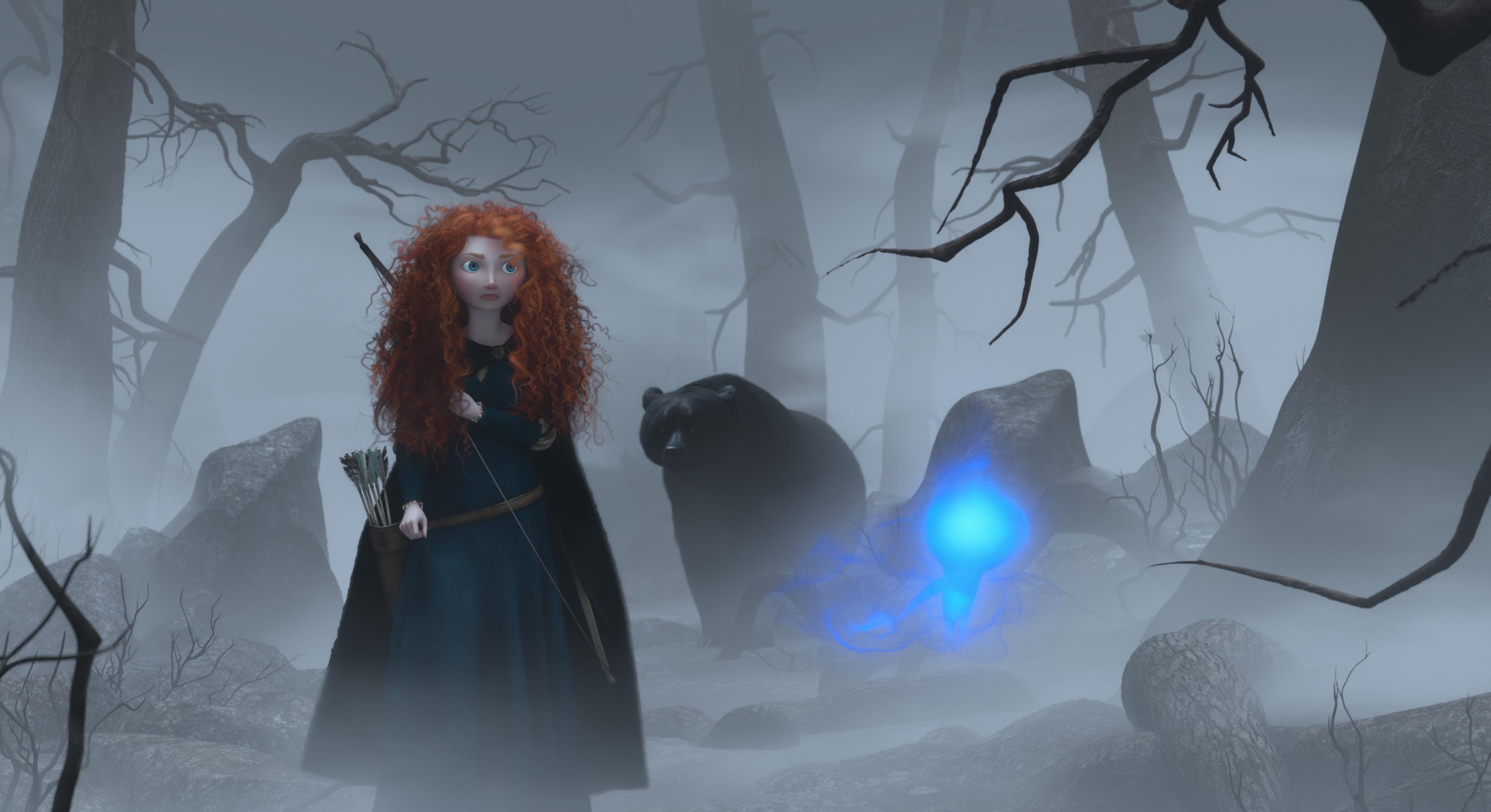
Hollywood’s great hopes this week involve, as Game of Thrones would say, “the pointy end”: the arrow-slingin’ grrl rebel (a character type that’s all the rage lately) in Pixar’s Brave and and the monster-staking activities of the 16th prez in Abraham Lincoln: Vampire Hunter. (Let’s be honest, Abe: mash-ups are kinda 2001, and vampires are so 2008.) Our reviews below.

Also from the factory of mass-marketed dreams is Steve Carell’s uninspiring road trip into the apocalypse, Seeking a Friend for the End of the World. Read Dennis Harvey’s review here.

Abraham Lincoln: Vampire Hunter Are mash-ups really so 2001? Not according to the literary world, where writer Seth Graham-Smith has been doing brisk trade in gore-washing perfectly interesting historical figures and decent works of literature — a fan fiction-rooted strategy that now reeks of a kind of camp cynicism when it comes to a terminally distracted, screen-aholic generation. Still, I was strangely excited by the cinematic kitsch possibilities of Graham-Smith’s Lincoln alternative history-cum-fantasy, here in the hands of Timur Bekmambetov (2004’s Night Watch). Historians, prepare to fume — it helps if you let go of everything you know about reality: as Vampire Hunter opens, young Lincoln learns some harsh lessons about racial injustice, witnessing the effects of slavery and the mistreatment of his black friend Will. As a certain poetic turn would have it, slave owners here are invariably vampires or in cahoots with the undead, as is the wicked figure, Jack Barts (Marton Csokas), who beats both boys and sucks Lincoln’s father dry financially. In between studying to be a lawyer and courting Mary Todd (Mary Elizabeth Winstead), the adult Lincoln (Benjamin Walker) vows to take revenge on the man who caused the death of his mother and enters the tutelage of vampire hunter Henry (Dominic Cooper), who puts Abe’s mad skills with an ax to good use. Toss in a twist or two; more than few freehand, somewhat humorous rewrites of history (yes, we all wish we could have tweaked the facts to have a black man working by Lincoln’s side to abolish slavery); and Bekmambetov’s tendency to direct action with the freewheeling, spectacle-first audacity of a Hong Kong martial arts filmmaker (complete with at least one gaping continuity flaw) — and you have a somewhat amusing, one-joke, B-movie exercise that probably would have made a better short or Grindhouse-esque trailer than a full-length feature — something the makers of the upcoming Pride and Prejudice and Zombies should bear in mind. (1:45) (Kimberly Chun)

http://www.youtube.com/watch?v=TEHWDA_6e3M

Brave Pixar’s latest is a surprisingly familiar fairy tale. Scottish princess Merida (voiced by Kelly Macdonald) would rather ride her horse and shoot arrows than become engaged, but it’s Aladdin-style law that she must marry the eldest son of one of three local clans. (Each boy is so exaggeratedly unappealing that her reluctance seems less tomboy rebellion than common sense.) Her mother (Emma Thompson) is displeased; when they quarrel, Merida decides to change her fate (Little Mermaid-style) by visiting the local spell-caster (a gentle, absent-minded soul that Ursula the Sea Witch would eat for brunch). Naturally, the spell goes awry, but only the youngest of movie viewers will fear that Merida and her mother won’t be able to make things right by the end. Girl power is great, but so are suspense and originality. How, exactly, is Brave different than a zillion other Disney movies about spunky princesses? Well, Merida’s fiery explosion of red curls, so detailed it must have had its own full-time team of animators working on it, is pretty fantastic. (1:33) (Cheryl Eddy)

And, as always, there’s more! A doc shot on the frontlines of the Middle East conflict; a doc shot on the frontlines of the sexual-assault epidemic in the American military; a heroin movie; and a “claustrophobic conspiracy thriller” opening at the Roxie that looks to be this week’s hidden-gem pick.

http://www.youtube.com/watch?v=XID_UuxiGxM

5 Broken Cameras Palestinian Emad Burnat bought his first camcorder in 2005 with the intention of bottling family memories, but when Israeli forces began the construction of settlements in Bil’in (his home village in the West Bank) Burnat stumbled into activist-filmmaker territory. In documenting his community’s nonviolent resistance to the Israeli occupation, Burnat’s friends and family (much like his cameras) are shot at, injured, and even killed. His son Gabreel’s first words are “wall” and “cartridge,” epitomizing the psychological toll of the struggle. Israeli forces are depicted as an eerily faceless entity, with colonialist aspirations run amok. Burnat isn’t interested in highlighting the political delicacy of the situation, and frankly, he’s given us something far more powerful than your average piece of fair-and-balanced journalism on the Israel-Palestine conflict. Splitting the difference between home-video montage and war-zone nightmare, 5 Broken Cameras skillfully merges the political and the personal, profoundly humanizing the Palestinian movement for independence. (1:30) (Taylor Kaplan)

http://www.youtube.com/watch?v=3fBaFQk6aE0

The Invisible War Kirby Dick’s searing documentary takes a look at the prevalence of rape within U.S. military ranks, a problem whose unbelievably high levels of occurrence would long ago have caused huge public outcry and imposed reform in any other institutional context. Yet because it’s the military — where certain codes of loyalty, machismo, and insularity dominate from the grunt level to the highest ranks — the issue has not only been effectively kept secret, but perpetrators almost never suffer any disciplinary measures, let alone jail time or dishonorable discharges. Meanwhile the women — some studies estimate 20% of all female personnel (and 1% of the men) suffer sexual assault from colleagues — are further traumatized by an atmosphere that creates ideal conditions for stalking, rape, and “blame the victim” aftermaths from superiors. (Indeed, for many the superior to whom they would have reported an attack was the one who attacked them.) Most end up quitting promising service careers (often pursued because of generations of family enlistment), dealing with the serious mental health consequences on their own. The subjects who’ve come forward on the issue here are inspiring in their bravery, and dedication to a patriotic cause and vocation that ultimately, bitterly betrayed them. Their stories are so engrossing that The Invisible War is as compulsively watchable as its topic and statistics are inherently appalling. (1:39) (Dennis Harvey)

Oslo, August 31st Heroin movies are rarely much fun, and Oslo is no exception, though here the stress lies not in grisly realism but visceral emotional honesty. Following an abortive, Virginia Woolf-esque suicide attempt during evening leave from his rehab center, recovering addict Anders visits Oslo for a job interview. He reconnects bittersweetly with an old friend, tries and fails to meet up with his sister, and eventually submerges himself in the nightlife that once fueled his self-destruction. Expressionistic editing conveys Anders’ sense of detachment and urge for release, with scenes and sounds intercut achronologically and striking sound design which homes in on stray conversations. A late intellectual milieu is signified throughout, quite humorously, by serious discussions of popular television dramas, presumably an update of similar concerns addressed in Pierre Drieu La Rochelle’s 1931 novel Le Feu follet, on which the film is based. (1:35) (Sam Stander)

http://www.youtube.com/watch?v=vVKLCRnb51U

Ultrasonic Is it madness to imagine a stylish new twist on the claustrophobic conspiracy thriller? Multi-hyphenate director, co-writer, and cinematographer (and musician and software engineer) Rohit Colin Rao manages just that with this head-turning indie feature film debut, while managing to translate a stark indie aesthetic encapsulated by Dischord and Touch and Go bands, lovers of Rust Belt warehouses and waffle houses, culture vultures who revere both Don DeLillo and Wisconsin Death Trip, and critics who lean too hard on the descriptor “angular.” Musician Simon York (Silas Gordon Brigham) is one denizen firmly placed in that cultural landscape, but the pressures of funding his combo’s album, coping with the diminishing returns of his music teacher livelihood, and anticipating the arrival of a baby with his wife, Ruth (Cate Buscher), seem to be piling on his murky brow. Simon begins to hear a hard-to-pin-down sound that no one else can detect, though Ruth’s eccentric and possibly certified conspiracy-theorist brother Jonas (Sam Repshas) is quick to affirm — and build on — his fears. Painting his handsome, stylized mise-en-scène in noiry blacks and wintry whites, Rohit positively revels in this post-punk jewel of a world he’s assembled, and it’s a compelling one even if it’s far from perfect and ultimately shies away from the deepest shadows. (1:30) Roxie. (Chun)

Guardian voices: Outside the Bay Area Bubble

7

This week I’m back in the midwest, where my roots are strong and my mother is approaching her retirement years. I’m thinking about the vast geographic and cultural distance –both real and imagined — between the San Francisco, California where I now live, and the great state of Iowa, which made me so much of who I am.

Here I am, sweating through a ridiculously muggy midwest summer heatwave, thinking about how it is that I am black, a lifelong social justice activist and organizer, and a married, dyke mama who hails from a small, working-class Iowa town where sweet corn and tomatoes once grew in my own backyard.

When I tell people that I’m from Cedar Rapids, Iowa, there is a kind of shocked silence I’ve become accustomed to. I’m used to people’s confusion about how I – given my politics and identities — could possibly be from such a place. And, while I find it extremely problematic, I’ve also gotten used to a dismissive arrogance about Iowa, a comfortable ignorance about the heartland, and a total failure to comprehend why I long for my Nana’s lilac-lined house at 1339 10th Street and why I have so much hope for middle America.

I work, organize and am raising a family in the “Bay Area bubble” but being from Iowa has developed in me core values that are decidedly anti-bubble, and deeply pro-working America. My ancestors built the wealth of this nation, and I consider the whole place mine – to love and rage over, to listen to and understand, to organize and to challenge. I have not committed my life to social change just for a privileged few on the East and West Coasts. This is, fundamentally about all of us, the 99 percent in San Francisco, through the heartland, down South and all the way to upper tip of Maine.

My four-year-old son was born in San Francisco, and he is a proud Frisco kid through and through. We have a multi-racial community that dances and organizes for justice together, he considers Salvadoran pupusas a special treat, and he loves remembering the day the Giants won the World Series and it seemed like everyone in the city was a member of the same big family.

But today, I’m writing from a cramped apartment in a seven-story public housing building in Michigan where my mother now lives with her scores of books, photography equipment and cute dresses from QVC. She and I are from a clan of Gibsons, black folks from working-class Iowa where my great grandparents worked on the railroads, and where my grandfather slaughtered pigs and went on strike with his white coworkers to defend the gains of their union.

We’re from the Iowa, where my mother attended black churches as a child and found Islam as an adult, and where she, as a struggling single mother, read black feminist poetry and first fought battles with Ronald Reagan’s backwards welfare policies.

We’re from the Iowa that is a center of agribusiness and everything that’s bad about corporate food production in this country. We’re from the Iowa that rallied for Jesse Jackson’s run for president, voted for same-sex marriage, and where Obama won the caucuses back in 2008.

But Iowa has also gone from unionized, inter-racial meatpacking plants to non-union poultry factories that exploit undocumented Latino workers from as far away as El Salvador and Guatemela. We’re from the Iowa that is indeed mostly white, where my first best friend grew up – a sweet white working class red head – and our mothers shared survival stories of single, working-poor motherhood. And I’m from the Cedar Rapids, Iowa that, unlike San Francisco, is actually growing its black population and is home to a thriving center of African American community history.

For most of my adult life, as I’ve been marching against war and racism, I’ve also been defending this Iowa, fighting against the tendency toward self-righteous superiority I’ve found among too many activists in the Bay and on the East Coast. It’s the same arrogance that the Right exploits in its scandalous but effective pseudo-populist campaigns against so-called liberal elitism.

It’s my experience that people on the left think they know what it means to be Iowan. Iowans are used as stand-in for a stereotypical idea of backwards, irrationally racist white America that ‘doesn’t vote its class interests’; Iowa is a convenient marker for everything less cool, hip, cosmopolitan and liberal than, well, San Francisco.

This kind of dismissive arrogance leads to a refusal to develop, in any meaningful, long-term way, an organizing agenda for the majority of the country, and has been one of the errors of progressive politics for a long time.

We can change this. When we are thinking about the politics of immigration policy, Occupy Wall Street, gay marriage, the movement against corporate food policy, or the politics of race, poverty and labor unions, we have to think about Iowa. Think about the white working class Republicans. Think about my mom’s friend in Iowa, raised on an old fashioned farm and now leading an organic farming collective there. Think about the proud struggle for small farms, union work, and participatory democracy there.

And think about what it will really take to make the Bay, Iowa and the whole nation a place where we can all develop our full human potential, have true mutual respect for one another, and are able to struggle through our deep divisions without exclusionary moral superiority, top-down “we know what’s best for you” politics and where all of us who want to live out our old age on a quiet lilac-lined porch in Iowa, can do so in peace and dignity.
As we make our plan to build a new progressive majority, let’s stay open-minded and take our organizing to a whole new level.

Our Weekly Picks: June 20-26

0

THURSDAY 21

SF Symphony Presents: Duke Bluebeard’s Castle

This’ll be dark and delicious. Young British filmmaker Nick Hillel’s innovative, sculptural projections have appeared in videos for the Beastie Boys, Baaba Maal, Cirque du Soleil, and Matthew Herbert. He’s set to direct and design the SF Symphony’s semi-staged performance of composer Bela Bartok’s wickedly gorgeous 1911 mini-opera setting of the Bluebeard legend: a young bride wanders through her older husband’s nightmarish castle, discovering seven rooms that include a torture chamber, a gleaming treasure, a lake of tears, and, finally, her own horrible fate. Somehow this is not a downer! Probably because the music’s so entrancing — here voiced by mezzo-soprano Michelle DeYoung and bass-baritone Alan Held — and the tale so engrossing. Plus you get awesome pianist Jeremy Denk performing Franz Liszt’s Piano Concerto #1 and a clubby afterparty on Fri/22 with John Vanderslice and Magik*Magik Orchestra. No lake of tears here. (Marke B.)

Thu/21-Sat/23, 8pm, $35–$145

Davies Symphony Hall

201 Van Ness, SF

www.sfsymphony.org


FRIDAY 22

“David Shrigley: Brain Activity”

Glasgow-based artist David Shrigley’s signature cartoons are hilariously deadpan: crude drawings and doodles; short stories filled with crossed-out corrections; a “Lost Pet” poster, taped to a tree, seeing a certain pigeon (“Normal size. A bit mangy looking.”) He’s also an animator, spoken-word performer, photographer, music-video director, occasional DJ, and taxidermist — witness the “I’m Dead” image, featuring a stiffly obedient Jack Russell, being used to promote “Brain Activity” at the Yerba Buena Center for the Arts (“Is this the sickest art show ever?” tut-tutted the Daily Mail). This is the only stateside stop for “Brain Activity,” so don’t miss the chance to witness, and chuckle at, the work of this offbeat art star. (Cheryl Eddy)

Through Sept. 23

Opening tonight with performance by Blasted Canyons, 8-10pm, $12–$15

Artist lecture Sat/23, 2pm, free with gallery admission ($8–$10)

Yerba Buena Center for the Arts

701 Mission, SF

www.ybca.org


“Mission in the Mix”

Talk to anybody who has ever sat through an evening of hip-hop, you are likely to hear: “It was so much fun.” Talk to somebody dancing in a hip-hop group, same thing: “so much fun.” In some ways the yearly “Mission in the Mix” is a kind of preview of the big hip-hop fiesta in November, to which dancers fly in from who knows where. But, Micaya, the soul force behind that event, has always stressed her love for the local dancers who might not necessarily be ready yet for the big tent. So this is her chance to make them shine in a more intimate but no less rollicking environment. (Rita Felciano)

Through June 30; Fri-Sat, 8pm, Sun, 7pm, $17

Dance Mission Theater

3316 24th St. SF

(415) 826-4441

www.dancemission.com


Royal Headache

Musical debates can give you a…total migraine. With the US release of the self-titled album from Australia’s Royal Headache earlier this year, finding out about the band now is like coming into an argument halfway. Having built up a reputation through its live performances, the band — whose members are named Law, Joe, Shorty, and Shogun — is at the center of Sydney’s burgeoning garage rock scene, combining additional powerpop and R&B. The key element, though, is the naturally soulful voice of singer Shogun, alternately hailed as either a rock’n’roll messiah or the unwelcome return of Rod Stewart. (Ryan Prendiville)

With Yi, Synthetic ID

7pm, $8

1-2-3-4 GO! Records

423 40th St., Oakl.

www.1234gorecords.com


Death to All

Seven members of the pioneering death metal band Death are uniting to embark on a seven-stop tour beginning in San Francisco. The band’s first album Scream Bloody Gore, released 25 years ago, is widely considered to be the first true death metal album. This tour comes 11 years after the death of founding member Chuck Schuldiner due to brain cancer, and is intended to celebrate his life as well as to raise awareness and money for Sweet Relief, a nonprofit organization that helps foot medical bills for musicians. Never before has shredding, head-banging brutality been so morally sound. (Haley Zaremba)

With Gorguts

9pm, $32

Regency Ballroom

1300 Van Ness, SF

(415) 673-5716

www.theregencyballroom.com


Horse Meat Disco

Honey Soundsystem has good reason to be proud. Its parties — focused more on quality music than marketing to a stereotype — have been an energizing force for and beyond the SF gay community. Now Honey is starting off a packed Pride weekend by bringing out London’s Horse Meat Disco. Boldly called “without a doubt the most important disco club night in the world” the collective shares Honey’s expansive take on the genre, releasing borderless mixes as likely to feature edits of Talking Heads and Mungolian Jetset as Sylvester. The night also features the return of DIY synth wiz Gavin Russom, not in a DJ set, but with his live ensemble, the Crystal Ark.(Prendiville)

With Poolside (live), Honey Soundsystem DJs

9pm Doors, $17 Advance

Mezzanine

444 Jessie, SF

(415) 625-8880

www.mezzaninesf.com


SATURDAY 23

Bicycle Music Festival

Though LovEvolution may have be out-Darwined by the War on Fun, we (gosh darn) still have Bicycle Music Festival providing ambulatory audio in our city streets. The fest, split between two free outdoor locations, is completely pedal-powered — attendees morph into volunteers when they grab saddles and lend their quad muscles to the generator cause. This year, festival co-founder Shake Your Peace! makes its triumphal return, attendance may hit 1,000, and Birds & Batteries, Rupa and the April Fishes, and Major Powers and the Lo-Fi Symphony will be among those taking the stage. Catch the thrilling cross-city processional at 5pm to see members of Jazz Mafia roll through intersections without missing a beat. (Caitlin Donohue)

Noon-11pm, free

Noon-5pm: Log Cabin Meadow, Golden Gate Park, SF

6-11pm: Showplace Triangle, Irwin and 8th St., SF

www.bicyclemusicfestival.com


Mark Gardener

A mainstay of Britain’s legendary early-’90s shoegaze scene, Ride embraced the Beatles-on-drugs songbook, turned its guitars up to 11, and filtered the result through a viscous, Phil Spectorian cloud of pink noise. Now, 15 years after Ride’s disbandment, the band’s vocalist and guitarist Mark Gardener is coming stateside to honor the 20th anniversary of its sophomore effort, Going Blank Again: an album equally indebted to the Stone Roses’ jangly pop, and Kevin Shields’ shapeshifting production dynamics. Those of you jonesing for another My Bloody Valentine reunion appearance, take note: this is the show of the weekend to seize upon. (Taylor Kaplan)

With Sky Parade, Silent Pictures, DJ Dennis the Menace

9:30pm, $15

Cafe du Nord

2170 Market, SF

(415) 861-5016

www.cafedunord.com


MONDAY 25

Friends

Friends will be friends. But only the best of them will house your ass after a bedbug infestation — or so the story of Bushwick, Brooklyn’s dynamo five-piece, Friends, goes. Frontperson Samantha Urbani opened her home to future bandmates Lesley Hann (bassist) and Oliver Duncan (drummer) after the two were hit with a bout of the six-legged bloodsuckers, and jamming ensued. Tapping Matthew Molnar and Nikki Shapiro to round out the lineup, Urbani and friends instantly honed in on a funky, tropical, soul-tinged, and totally danceable kind of pop music. Friends — formerly known as Perpetual Crush — hit the ground flying in 2011, releasing much buzzed about singles “Friend Crush” and “I’m His Girl.” Debut full-length album Manifest! is out now — just in time to have a summah. (Julia B. Chan)

With Splash!, Young Digerati

9pm, $12

Bottom of the Hill

1233 17th, SF

(415) 621-4455

www.bottomofthehill.com


TUESDAY 26

“Jurassic Live: Dino Action Show”

The T.rex is coming! The velociraptors are here! All the way from Austin, Tex., Old Murder House Theatre — producers of Aliens on Ice … I highly recommend YouTubing it — brings its latest blockbuster homage to the Children’s Fairyland Theatre. This venue usually excludes grown-ups without kids in tow, but this interpretation of 1993’s Jurassic Park is “intended for mature audiences,” which I hope means plenty of stage blood during the “clever girl” scene. Also in store: cardboard-and-duct-tape reptiles, DIY contraband-toting devices disguised as shaving-cream cans, a bewigged dude playing Laura Dern, and more. Eat your heart out, Spielberg! (Eddy)

8:30pm, $20

Children’s Fairyland Theatre

699 Bellevue, Oakl.

www.oldmurderhousetheatre.com


The Hundred in the Hands

This glammed-out electro duo from Brooklyn produces dreamy pop songs with a shimmery disco tinge. Vocalist Eleanore Everdell is classically trained, her background in opera leading not to overpowering vibrato but instead to lush vocal stylings that add a warm depth to their dance-friendly tracks. Keyboardist and programmer Jason Friedman brings his art school education to the band’s online publication THITH ZINE, which highlights their favorite music, art, and design. The zine’s DIY foundation compliments the raw feel of the duo’s catchy homemade beats. Named after the Lakota Nation term for a battle resulting in the slaying of 100 members of the opposing army, the Hundred in the Hands promise to deliver a powerful, take-no-prisoners performance. (Zaremba)

With Silver Swans, Teenage Sweater

8pm, $12

Rickshaw Stop

155 Fell, SF

(415) 861-2011

www.rickshawstop.com


KWJAZ

Often associated with the “hypnagogic pop” movement that’s put the blogosphere into overdrive (think chillwave, but artier/weirder/more “washed out”) SF’s own KWJAZ has taken the cassette-fetishist subculture by storm. Churning out a gloriously hazy brand of jam-based pop, mastermind Peter Berends specializes in a more drawn-out approach than most of his peers; KWJAZ’s self-titled debut, released this year on the hipper-than-thou Not Not Fun Records, consists solely of two extended tracks, jazzily oozing from one murky, spliffed-out groove to the next. Pink Floyd for Hype Williams fans? Ariel Pink for the Soft Machine crowd? Bear witness, and decide for yourself. (Kaplan)

With Aloonaluna, Aja

9pm, $5

Hemlock

1131 Polk, SF

(415) 923-0923

www.hemlocktavern.com

The Guardian listings deadline is two weeks prior to our Wednesday publication date. To submit an item for consideration, please include the title of the event, a brief description of the event, date and time, venue name, street address (listing cross streets only isn’t sufficient), city, telephone number readers can call for more information, telephone number for media, and admission costs. Send information to Listings, 71 Stevenson Street, Second Floor, SF, CA 94105 or email (paste press release into email body — no attachments, please) to listings@sfbg.com. Digital photos may be submitted in jpeg format; the image must be at least 240 dpi and four inches by six inches in size. We regret we cannot accept listings over the phone.

Film Listings

0

Frameline36, the San Francisco International LGBT Film Festival, runs through Sun/24 at Castro Theatre, 429 Castro, SF; Roxie Theater, 3117 16th St., SF; Victoria Theatre, 2961 16th St., SF; and Rialto Cinemas Elmwood, 2966 College, Berk. For tickets (most shows $9-$11) and schedule, visit www.frameline.org.

OPENING

Abraham Lincoln: Vampire Hunter America’s 16th president jumps aboard the bloodsucker bandwagon. (1:45) Presidio.

Brave Kelly Macdonald, Emma Thompson, and Billy Connolly star in Pixar’s fantasy about a strong-willed girl who brings turmoil upon her Scottish kingdom when she defies a long-held tradition. (1:33) Balboa, Presidio, Shattuck.

5 Broken Cameras Palestinian Emad Burnat bought his first camcorder in 2005 with the intention of bottling family memories, but when Israeli forces began the construction of settlements in Bil’in (his home village in the West Bank) Burnat stumbled into activist-filmmaker territory. In documenting his community’s nonviolent resistance to the Israeli occupation, Burnat’s friends and family (much like his cameras) are shot at, injured, and even killed. His son Gabreel’s first words are “wall” and “cartridge,” epitomizing the psychological toll of the struggle. Israeli forces are depicted as an eerily faceless entity, with colonialist aspirations run amok. Burnat isn’t interested in highlighting the political delicacy of the situation, and frankly, he’s given us something far more powerful than your average piece of fair-and-balanced journalism on the Israel-Palestine conflict. Splitting the difference between home-video montage and war-zone nightmare, 5 Broken Cameras skillfully merges the political and the personal, profoundly humanizing the Palestinian movement for independence. (1:30) Embarcadero, Shattuck. (Taylor Kaplan)

Found Memories The literal Portuguese-to-English translation of this film’s title — “stories that exist only when remembered” — is clunky, but more poignantly accurate than Found Memories. At first, it’s not entirely clear if Brazilian Júlia Murat is making a narrative or a documentary. In an tiny, isolated community populated by elderly people, Madalena (Sonia Guedes) follows a schedule she’s kept for years, probably decades: making bread, attending church, doing chores, tending the cemetery gates, writing love letters to a long-absent partner (“Isn’t it strange that after all these years, I still find your things around the house?”), and grousing at the “annoying old man” who grinds the town’s coffee beans. One day, young photographer Rita (Lisa Fávero) drifts into the village, an exotic import from the outside, modern world. Slowly, despite their differences, the women become friends. That’s about it for plot, but as this deliberately-paced film reflects on aging, dying, and memories (particularly in the form of photographs), it offers atmospheric food for thought, and a few moments of droll humor. Note, however, that viewer patience is a requirement to reap its rewards. (1:38) SF Film Society Cinema. (Eddy)

The Invisible War Kirby Dick’s searing documentary takes a look at the prevalence of rape within U.S. military ranks, a problem whose unbelievably high levels of occurrence would long ago have caused huge public outcry and imposed reform in any other institutional context. Yet because it’s the military — where certain codes of loyalty, machismo, and insularity dominate from the grunt level to the highest ranks — the issue has not only been effectively kept secret, but perpetrators almost never suffer any disciplinary measures, let alone jail time or dishonorable discharges. Meanwhile the women — some studies estimate 20% of all female personnel (and 1% of the men) suffer sexual assault from colleagues — are further traumatized by an atmosphere that creates ideal conditions for stalking, rape, and “blame the victim” aftermaths from superiors. (Indeed, for many the superior to whom they would have reported an attack was the one who attacked them.) Most end up quitting promising service careers (often pursued because of generations of family enlistment), dealing with the serious mental health consequences on their own. The subjects who’ve come forward on the issue here are inspiring in their bravery, and dedication to a patriotic cause and vocation that ultimately, bitterly betrayed them. Their stories are so engrossing that The Invisible War is as compulsively watchable as its topic and statistics are inherently appalling. (1:39) Metreon. (Harvey) 

Oslo, August 31st Heroin movies are rarely much fun, and Oslo is no exception, though here the stress lies not in grisly realism but visceral emotional honesty. Following an abortive, Virginia Woolf-esque suicide attempt during evening leave from his rehab center, recovering addict Anders visits Oslo for a job interview. He reconnects bittersweetly with an old friend, tries and fails to meet up with his sister, and eventually submerges himself in the nightlife that once fueled his self-destruction. Expressionistic editing conveys Anders’ sense of detachment and urge for release, with scenes and sounds intercut achronologically and striking sound design which homes in on stray conversations. A late intellectual milieu is signified throughout, quite humorously, by serious discussions of popular television dramas, presumably an update of similar concerns addressed in Pierre Drieu La Rochelle’s 1931 novel Le Feu follet, on which the film is based. (1:35) Elmwood, Embarcadero, Smith Rafael. (Sam Stander)

Seeking a Friend for the End of the World See “Apocalypse Meh.” (1:41) Marina, Piedmont, Shattuck.

Ultrasonic Is it madness to imagine a stylish new twist on the claustrophobic conspiracy thriller? Multi-hyphenate director, co-writer, and cinematographer (and musician and software engineer) Rohit Colin Rao manages just that with this head-turning indie feature film debut, while managing to translate a stark indie aesthetic encapsulated by Dischord and Touch and Go bands, lovers of Rust Belt warehouses and waffle houses, culture vultures who revere both Don DeLillo and Wisconsin Death Trip, and critics who lean too hard on the descriptor “angular.” Musician Simon York (Silas Gordon Brigham) is one denizen firmly placed in that cultural landscape, but the pressures of funding his combo’s album, coping with the diminishing returns of his music teacher livelihood, and anticipating the arrival of a baby with his wife, Ruth (Cate Buscher), seem to be piling on his murky brow. Simon begins to hear a hard-to-pin-down sound that no one else can detect, though Ruth’s eccentric and possibly certified conspiracy-theorist brother Jonas (Sam Repshas) is quick to affirm — and build on — his fears. Painting his handsome, stylized mise-en-scène in noiry blacks and wintry whites, Rohit positively revels in this post-punk jewel of a world he’s assembled, and it’s a compelling one even if it’s far from perfect and ultimately shies away from the deepest shadows. (1:30) Roxie. (Chun)

Ongoing 

Bel Ami Judging from recent attempts to shake off the gloomy atmosphere and undead company of the Twilight franchise, Robert Pattinson enjoys a good period piece, but hasn’t quite worked out how to help make one. Last year’s Depression-era Water for Elephants was a tepid romance, and Declan Donnellan and Nick Ormerod’s belle epoque–set Bel Ami is an ungainly, oddly paced adaptation of the Guy de Maupassant novel of the same name. A down-and-out former soldier of peasant stock, Georges Duroy (Pattinson) — or “Bel Ami,” as his female admirers call him — gains a brief entrée into the upper echelons of France’s fourth estate and parlays it into a more permanent set of social footholds, campaigning for the affections of a triumvirate of Parisian power wives (Christina Ricci, Uma Thurman, and Kristin Scott Thomas) as he makes his ascent. His route is confusing, though; the film pitches forward at an alarming pace, its scenes clumsily stacked together with little character development or context to smooth the way, and Pattinson’s performance doesn’t clarify much. Duroy shifts perplexingly between rapacious and soulful modes, eyeing the ladies with a vaguely carnivorous expression as he enters drawing rooms, dining rooms, and bedrooms, but leaving us with little sense of his true appetites or other motivations. (1:42) Lumiere, Smith Rafael. (Rapoport) 

Bernie Jack Black plays the titular new assistant funeral director liked by everybody in small-town Carthage, Tex. He works especially hard to ingratiate himself with shrewish local widow Marjorie (Shirley MacLaine), but there are benefits — estranged from her own family, she not only accepts him as a friend (then companion, then servant, then as virtual “property”), but makes him her sole heir. Richard Linklater’s latest is based on a true-crime story, although in execution it’s as much a cheerful social satire as I Love You Philip Morris and The Informant! (both 2009), two other recent fact-based movies about likable felons. Black gets to sing (his character being a musical theater queen, among other things), while Linklater gets to affectionately mock a very different stratum of Lone Star State culture from the one he started out with in 1991’s Slacker. There’s a rich gallery of supporting characters, most played by little-known local actors or actual townspeople, with Matthew McConaughey’s vainglorious county prosecutor one delectable exception. Bernie is its director’s best in some time, not to mention a whole lot of fun. (1:39) Embarcadero, Four Star, Presidio, Shattuck, Smith Rafael. (Harvey)

The Best Exotic Marigold Hotel (1:42) Albany, Four Star, Piedmont, SF Center, Sundance Kabuki.

A Cat in Paris This year’s Best Animated Film nominees: big-budget entries Kung Fu Panda 2, Puss in Boots, and eventual winner Rango, plus Chico and Rita, which opened just before Oscar night, and French mega-dark-horse A Cat in Paris. Sure, Jean-Loup Felicioli and Alain Gagnol’s film failed to cash in on 2011’s Paris craze, but it’s still a charming if featherweight noir caper, being released stateside in an English version that features the voices of Marcia Gay Harden and Anjelica Huston. A streetwise kitty named Dino spends his days hanging with Zoey, a little girl who’s gone mute since the death of her father — a cop killed in the line of duty. Zoey’s mother (Harden), also a cop, is hellbent on catching the murderer, a notorious crook named Costa who runs his criminal empire with Reservoir Dogs-style imprecision. At night, Dino sneaks out and accompanies an affable burglar on his prowlings. When Zoey falls into Costa’s clutches, her mom, the thief, and (natch) the feisty feline join forces to rescue her, in a series of rooftop chase scenes that climax atop Notre Dame. At just over an hour, A Cat in Paris is sweetly old-fashioned and suitable for audiences of all ages, though staunch dog lovers may raise an objection or two. (1:07) Opera Plaza. (Eddy) 

Dark Shadows Conceptually, there’s nothing wrong with attempting to turn a now semi-obscure supernaturally themed soap opera with a five-year run in the late 1960s and early ’70s into a feature film. Particularly if the film brings together the sweetly creepy triumvirate of Tim Burton, Johnny Depp, and Helena Bonham Carter and emerges during an ongoing moment for vampires, werewolves, and other things that go hump in the night. Depp plays long-enduring vampire Barnabas Collins, the undead scion of a once-powerful 18th-century New England family that by the 1970s — the groovy decade in which the bulk of the story is set — has suffered a shabby deterioration. Barnabas forms a pact with present-day Collins matriarch Elizabeth (Michelle Pfeiffer) to raise the household — currently comprising her disaffected daughter, Carolyn (Chloë Grace Moretz), her derelict brother, Roger (Jonny Lee Miller), his mournful young son, David (Gulliver McGrath), David’s live-in lush of a psychiatrist, Dr. Hoffman (Carter), and the family’s overtaxed manservant, Willie (Jackie Earle Haley) — to its former stature, while taking down a lunatic, love-struck, and rather vindictive witch named Angelique (Eva Green). The latter, a victim of unrequited love, is the cause of all Barnabas’s woes and, by extension, the entire clan’s, but Angelique can only be blamed for so much. Beyond her hocus-pocus jurisdiction is the film’s manic pileup of plot twists, tonal shifts, and campy scenery-chewing by Depp, a startling onslaught that no lava lamp joke, no pallid reaction shot, no room-demolishing act of paranormal carnality set to Barry White, and no cameo by Alice Cooper can temper. (2:00) SF Center. (Rapoport)

The Dictator As expected, The Dictator is, yet again, Sacha Baron Cohen doing his bumbling-foreigner shtick. Said character (here, a ruthless, spoiled North African dictator) travels to America and learns a heaping teaspoon of valuable lessons, which are then flung upon the audience — an audience which, by film’s end, has spent 80 minutes squealing at a no-holds-barred mix of disgusting gags, tasteless jokes, and schadenfreude. If you can’t forgive Cohen for carbon-copying his Borat (2006) formula, at least you can muster admiration for his ability to be an equal-opportunity offender (dinged: Arabs, Jews, African Americans, white Americans, women of all ethnicities, and green activists) — and for that last-act zinger of a speech. If The Dictator doesn’t quite reach Borat‘s hilarious heights, it’s still proudly repulsive, smart in spite of itself, and guaranteed to get a rise out of anyone who watches it. (1:23) 1000 Van Ness, SF Center, Shattuck. (Eddy)

Double Trouble When crooks nab a priceless painting from a Taipei museum, two security guards — wannabe hero Jay (Jaycee “Son of Jackie” Chan) and Chinese-tourist-on-vacation Ocean (Xia Yu) — reluctantly team up to recover the piece. A road trip of sorts ensues, laden with petty bickering, wacky melees, bonding moments, mistaken identity, gangsters both comical and sinister, and other buddy-comedy trappings. As expected, there are a few high-flying fight scenes; in the film’s production notes, director David Hsun-Wei Chang reveals he was inspired by the Rush Hour movies. Alas, Chan is neither as charismatic nor as breathtakingly nimble as his father (and, obvi, Xia is no Chris Tucker). It should be noted, however, that one of the slithery art thieves is played by underwear model Jessica C., famed in Hong Kong for her “police siren boobs.” So there’s that. (1:29) Metreon. (Eddy)

Elena The opening, almost still image of breaking dawn amid bare trees — the twigs in the foreground almost imperceptibly developing definition and the sky gradually growing ever lighter and pinker in the corners of the frame — beautifully exemplifies the crux of this well-wrought, refined noir, which spins slowly on the streams of dog-eat-dog survival that rush beneath even the most moneyed echelons of Moscow. Sixtyish former nurse Elena (Nadezhda Markina) is still little more than a live-in caretaker for Vladimir (Andrey Smirnov), her affluent husband of almost 10 years. She sleeps in a separate bed in their modernist-chic condo and dutifully funnels money to her beloved layabout son and his family. Vladimir has less of a relationship with his rebellious bad-seed daughter (Yelena Lyadova), who may be too smart and hedonistic for her own good. When a certain unlikely reunion threatens Elena’s survival — and what she perceives as the survival of her own spawn — a kind of deadly dawn breaks over the seemingly obedient hausfrau, and she’s driven to desperate ends. Bathing his scenes in chilled blue light and velvety dark shadows, filmmaker Andrey Zvyagintsev (2003’s The Return) keeps a detached but close eye on the proceedings while displaying an uncanny talent for plucking the telling detail out of the wash of daily routine and coaxing magnetic performances from his cast. (1:49) Lumiere. (Chun)

Headhunters Despite being the most sought-after corporate headhunter in Oslo, Roger (Aksel Hennie) still doesn’t make enough money to placate his gorgeous wife; his raging Napoleon complex certainly doesn’t help matters. Crime is, as always, the only solution, so Roger’s been supplementing his income by stealthily relieving his rich, status-conscious clients of their most expensive artworks (with help from his slightly unhinged partner, who works for a home-security company). When Roger meets the dashing Clas Greve (Nikolaj Coster-Waldau of Game of Thrones) — a Danish exec with a sinister, mysterious military past, now looking to take over a top job in Norway — he’s more interested in a near-priceless painting rumored to be stashed in Greve’s apartment. The heist is on, but faster than you can say “MacGuffin,” all hell breaks loose (in startlingly gory fashion), and the very charming Roger is using his considerable wits to stay alive. Based on a best-selling “Scandi-noir” novel, Headhunters is just as clever as it is suspenseful. See this version before Hollywood swoops in for the inevitable (rumored) remake. (1:40) Lumiere. (Eddy)

The Hunger Games Katniss Everdeen (Jennifer Lawrence) is a teenager living in a totalitarian state whose 12 impoverished districts, as retribution for an earlier uprising, must pay tribute to the so-called Capitol every year, sacrificing one boy and one girl each to the Hunger Games. A battle royal set in a perilous arena and broadcast live to the Capitol as gripping diversion and to the districts as sadistic propaganda, the Hunger Games are, depending on your viewpoint, a “pageant of honor, courage, and sacrifice” or a brutal, pointless bloodbath involving children as young as 12. When her little sister’s name comes up in the ann­ual lottery, Katniss volunteers to take her place and is joined by a boy named Peeta Mellark (Josh Hutcherson), with whom she shares an old, unspoken bond. Tasked with translating to the screen the first installment of Suzanne Collins’s rabidly admired trilogy, writer-director Gary Ross (2003’s Seabiscuit, 1998’s Pleasantville) telescopes the book’s drawn-out, dread-filled tale into a manageable two-plus-hour entertainment, making great (and horrifying) use of the original work’s action, but losing a good deal of the narrative detail and emotional force. Elizabeth Banks is comic and unrecognizable as Effie Trinket, the two tributes’ chaperone; Lenny Kravitz gives a blank, flattened reading as their stylist, Cinna; and Donald Sutherland is sufficiently creepy and bloodless as the country’s leader, President Snow. More exceptionally cast are Woody Harrelson as Katniss and Peeta’s surly, alcoholic mentor, Haymitch Abernathy, and Stanley Tucci as games emcee Caesar Flickerman, flashing a bank of gleaming teeth at each contestant as he probes their dire circumstances with the oily superficiality of a talk show host. (2:22) 1000 Van Ness. (Rapoport)

Hysteria Tanya Wexler’s period romantic comedy gleefully depicts the genesis of the world’s most popular sex toy out of the inchoate murk of Victorian quackishness. In this dulcet version of events, real-life vibrator inventor Mortimer Granville (Hugh Dancy) is a handsome young London doctor with such progressive convictions as a belief in the existence of germs. He is, however, a man of his times and thus swallows unblinking the umbrella diagnosis of women with symptoms like anxiety, frustration, and restlessness as victims of a plague-like uterine disorder known as hysteria. Landing a job in the high-end practice of Dr. Robert Dalrymple (Jonathan Pryce), whose clientele consists entirely of dissatisfied housewives seeking treatments of “medicinal massage” and subsequent “parosysm,” Granville becomes acquainted with Dalrymple’s two daughters, the decorous Emily (Felicity Jones) and the first-wave feminist Charlotte (Maggie Gyllenhaal). A subsequent bout of RSI offers empirical evidence for the adage about necessity being the mother of invention, with the ever-underused Rupert Everett playing Edmund St. John-Smythe, Granville’s aristocratic friend and partner in electrical engineering. (1:35) Opera Plaza. (Rapoport)

The Intouchables Cries of “racism” seem a bit out of hand when it comes to this likable albeit far-from-challenging French comedy loosely based on a real-life relationship between a wealthy white quadriplegic and his caretaker of color. The term “cliché” is more accurate. And where were these critics when 1989’s Driving Miss Daisy and 2011’s The Help — movies that seem designed to make nostalgic honkies feel good about those fraught relationships skewed to their advantage—were coming down the pike? (It also might be more interesting to look at how these films about race always hinge on economies in which whites must pay blacks to interact with/educate/enlighten them.) In any case, Omar Sy, portraying Senegalese immigrant Driss, threatens to upset all those pundits’ apple carts with his sheer life force, even when he’s shaking solo on the dance floor to sounds as effortlessly unprovocative, and old-school, as Earth, Wind, and Fire. In fact, everything about The Intouchables is as old school as 1982’s 48 Hrs., spinning off the still laugh-grabbing humor that comes with juxtaposing a hipper, more streetwise black guy with a hapless, moneyed chalky. The wheelchair-bound Philippe (Francois Cluzet) is more vulnerable than most, and he has a hard time getting along with any of his nurses, until he meets Driss, who only wants his signature for his social services papers. It’s not long before the cultured, classical music-loving Philippe’s defenses are broken down by Driss’ flip, somewhat honest take on the follies and pretensions of high culture — a bigger deal in France than in the new world, no doubt. Director-writer Olivier Nakache and Eric Toledano aren’t trying to innovate —they seem more set on crafting an effervescent blockbuster that out-blockbusters Hollywood — and the biggest compliment might be that the stateside remake is already rumored to be in the works. (1:52) Embarcadero. (Chun)

Jiro Dreams of Sushi Celebrity-chef culture has surely reached some kind of zeitgeist, what with the omnipresence of Top Chef and other cooking-themed shows, and the headlines-making power of people like Paula Deen (diabetes) and Mario Batali (sued for ripping off his wait staff). Unconcerned with the trappings of fame — you’ll never see him driving a Guy Fieri-style garish sports car — is Jiro Ono, 85-year-old proprietor of Sukiyabashi Jiro, a tiny, world-renowned sushi restaurant tucked into Tokyo’s Ginza station. Jiro, a highly-disciplined perfectionist who believes in simple, yet flavorful food, has devoted his entire life to the pursuit of “deliciousness” — to the point of sushi invading his dreams, as the title of David Gelb’s reverential documentary suggests. But Jiro Dreams of Sushi goes deeper than food-prep porn (though, indeed, there’s plenty of that); it also examines the existential conflicts faced by Jiro’s two middle-aged sons. Both were strongly encouraged to enter the family business — and in the intervening years, have had to accept the soul-crushing fact that no matter how good their sushi is, it’ll never be seen as exceeding the creations of their legendary father. (1:21) Bridge. (Eddy)

Lola Versus Greta Gerwig’s embattled late-twentysomething, the titular Lola, apologetically invokes the Saturn return to explain the chaos that enters her life when her emotionally underdeveloped boyfriend proposes, panics, and dumps her. Workaday elements of the industry-standard romantic comedy surface, lightly revised: a crass, loopy BFF (co-writer Zoe Lister Jones) who can’t find true love and says things like “I have to go wash my vagina”; a vaguely soulful male friend (Hamish Linklater, 2011’s The Future) who’s secretly harboring nonplatonic feelings (or maybe just an opportunistic streak); wacky yet vaguely successful Age of Aquarius parents (a somewhat toneless Debra Winger and a nicely gone-to-seed Bill Pullman). One can see why it would be tempting to blame a planet’s galactic travels for the solipsistic meandering that Lola engages in, bemusedly lurching, often under chemical influences, from one bout of poor decision-making to the next. She claims to be searching for a path out of the chaos into some calmer place (fittingly, she’s a comp lit Ph.D. candidate who’s writing her dissertation on silence), but as the movie transports us mercilessly from one scene of turmoil to the next, we have little reason to believe her. The script has funny moments, and Gerwig sometimes succeeds in making Lola feel like a charming disaster, but her personal discoveries, while certainly valuable, feel false and forced. (1:26) Metreon. (Rapoport)

Madagascar 3: Europe’s Most Wanted (1:33) Balboa, Metreon, 1000 Van Ness, Presidio.

Marvel’s The Avengers The conflict — a mystical blue cube containing earth-shattering (literally) powers is stolen, with evil intent — isn’t the reason to see this long-hyped culmination of numerous prequels spotlighting its heroic characters. Nay, the joy here is the whole “getting’ the band back together!” vibe; director and co-writer Joss Whedon knows you’re just dying to see Captain America (Chris Evans) bicker with Iron Man (a scene-stealing Robert Downey Jr.); Thor (Chris Hemsworth) clash with bad-boy brother Loki (Tom Hiddleston); and the Hulk (Mark Ruffalo) get angry as often as possible. (Also part of the crew, but kinda mostly just there to look good in their tight outfits: Jeremy Renner’s Hawkeye and Scarlett Johansson’s Black Widow.) Then, of course, there’s Nick Fury (Samuel L. Jackson) running the whole Marvel-ous show, with one good eye and almost as many wry quips as Downey’s Tony Stark. Basically, The Avengers gives you everything you want (characters delivering trademark lines and traits), everything you expect (shit blowing up, humanity being saved, etc.), and even makes room for a few surprises. It doesn’t transcend the comic-book genre (like 2008’s The Dark Knight did), but honestly, it ain’t trying to. The Avengers wants only to entertain, and entertain it does. (2:23) Metreon, 1000 Van Ness, Sundance Kabuki. (Eddy)

Men in Black III Why not? It’s been ten years since Men in Black II (the one where Lara Flynn Boyle and Johnny Knoxville — remember them? — played the villains), Will Smith has barely aged, and he hasn’t made a full-on comedy since, what, 2005’s Hitch? Here, he does a variation on his always-agreeable exasperated-guy routine, clashing with his grim, gimlet-eyed partner Agent K (Tommy Lee Jones, and in a younger incarnation, a spot-on Josh Brolin) in a plot that involves a vicious alien named Boris (Flight of the Conchords’ Jermaine Clement), time travel, Andy Warhol, the moon (as both space-exploration destination and modern-day space-jail location), and lines that only Smith’s delivery can make funny (“This looks like it comes from planet damn.“) It’s cheerful (save a bit of melodrama at the end), crisply paced, and is neither a must-see masterpiece nor something you should mindfully sleep through if it pops up among your in-flight selections. Oh, and it’s in 3D. Well, why not? (1:42) 1000 Van Ness, SF Center, Shattuck. (Eddy)

Moonrise Kingdom Does Wes Anderson’s new film mark a live-action return to form after 2007’s disappointingly wan Darjeeling Limited? More or less. Does it tick all the Andersonian style and content boxes? Indubitably. In the most obvious deviation Anderson has taken with Moonrise, he gives us his first period piece, a romance set in 1965 on a fictional island off the New England coast. After a chance encounter at a church play, pre-teen Khaki Scout Sam (newcomer Jared Gilman) instantly falls for the raven-suited, sable-haired Suzy Bishop (Kara Hayward, ditto). The two become pen pals, and quickly bond over the shared misery of being misunderstood by both authority figures and fellow kids. The bespectacled Sam is an orphan, ostracized by his foster parents and scout troop (much to the dismay of its straight-arrow leader Edward Norton). Suzy despises her clueless attorney parents, played with gusto by Bill Murray and Frances McDormand in some of the film’s funniest and best scenes. When the two kids run off together, the whole thing begins to resemble a kind of tween version of Godard’s 1965 lovers-on the-lam fantasia Pierrot le Fou. But like most of Anderson’s stuff, it has a gauzy sentimentality more akin to Truffaut than Godard. Imagine if the sequence in 2001’s The Royal Tenenbaums where Margot and Richie run away to the Museum of Natural History had been given the feature treatment: it’s a simple yet inspired idea, and it becomes a charming little tale of the perils of growing up and selling out the fantasy. But it doesn’t feel remotely risky. It’s simply too damn tame. (1:37) California, Metreon, Piedmont, Sundance Kabuki. (Michelle Devereaux)

Music From the Big House See review at sfbg.com/pixel_vision. (1:27) Sundance Kabuki.

Peace, Love and Misunderstanding How is that even as a bona fide senior, Jane Fonda continues to embody this country’s ambivalence toward women? I suspect it’s a testament to her actorly prowess and sheer charisma that she’s played such a part in defining several eras’ archetypes — from sex kitten to counterculture-heavy Hanoi Jane to dressed-for-success feminist icon to aerobics queen to trophy wife. Here, among the talents in Bruce Beresford’s intergenerational chick-flick-gone-indie as a loud, proud, and larger-than-life hippie earth mama, she threatens to eclipse her paler, less colorful offspring, women like Catherine Keener and Elizabeth Olsen, who ordinarily shine brighter than those that surround them. It’s ostensibly the tale of high-powered lawyer Diane (Keener): her husband (Kyle MacLachlan) has asked for a divorce, so in a not-quite-explicable tailspin, she packs her kids, Zoe (Olsen) and Jake (Nat Wolff), into the car and heads to Woodstock to see her artist mom Grace (Fonda) for the first time in two decades. Grace is beyond overjoyed — dying to introduce the grandchildren to her protests, outdoor concerts, and own personal growhouse — while urbanite Diane and her kids find attractive, natch, diversions in the country, in the form of Jude (Jeffrey Dean Morgan), Cole (Chace Crawford), and Tara (Marissa O’Donnell). Yet there’s a lot of troubled water for the mother and daughter to cross, in order to truly come together. Despite some strong characterization and dialogue, Peace doesn’t quite fly — or make much sense at its close — due to the some patchy storytelling: the schematic rom-com arch fails to provide adequate scaffolding to support the required leaps of faith. But that’s not to deny the charm of the highly identifiable, generous-spirited Grace, a familiar Bay Area archetype if there ever was one, who Fonda charges with the joy and sadness of fallible parent who was making up the rules as she went along. (1:36) Opera Plaza, Shattuck, Smith Rafael. (Chun)

Prometheus Ridley Scott’s return to outer space — after an extended stay in Russell Crowe-landia — is most welcome. Some may complain Prometheus too closely resembles Scott’s Alien (1979), for which it serves as a prequel of sorts. Prometheus also resembles, among others, The Thing (1982), 2001: A Space Odyssey (1968), and Event Horizon (1997). But I love those movies (yes, even Event Horizon), and I am totally fine with the guy who made Alien borrowing from all of them and making the classiest, most gorgeous sci-fi B-movie in years. Sure, some of the science is wonky, and the themes of faith and creation can get a bit woo-woo, but Prometheus is deep-space discombobulation at its finest, with only a miscast Logan Marshall-Green (apparently, cocky dude-bros are still in effect at the turn of the next millennium) marring an otherwise killer cast: Noomi Rapace as a dreamy (yet awesomely tough) scientist; Idris Elba as Prometheus‘ wisecracking captain; Charlize Theron as the Weyland Corportation’s icy overseer; and Michael Fassbender, giving his finest performance to date as the ship’s Lawrence of Arabia-obsessed android. (2:03) Metreon, 1000 Van Ness, Sundance Kabuki. (Eddy)

Rock of Ages (2:03) California, Four Star, Marina, 1000 Van Ness, SF Center, Sundance Kabuki.

Safety Not Guaranteed San Francisco-born director Colin Trevorrow’s narrative debut feature Safety Not Guaranteed, written by Derek Connolly, has an improbable setup: not that rural loner Kenneth (Mark Duplass) would place a personal ad for a time travel partner (“Must bring own weapons”), but that a Seattle alt-weekly magazine would pay expenses for a vainglorious staff reporter (Jake Johnson, hilarious) and two interns (Aubrey Plaza, Karan Soni) to stalk him for a fluff feature over the course of several days. The publishing budget allowing that today is true science-fiction. But never mind. Inserting herself “undercover” when a direct approach fails, Plaza’s slightly goth college grad finds she actually likes obsessive, paranoid weirdo Kenneth, and is intrigued by his seemingly insane but dead serious mission. For most of its length Safety falls safely into the category of off-center indie comedics, delivering various loopy and crass behavior with a practiced deadpan, providing just enough character depth to achieve eventual poignancy. Then it takes a major leap — one it would be criminal to spoil, but which turns an admirable little movie into something conceptually surprising, reckless, and rather exhilarating. (1:34) Metreon, Shattuck. (Harvey)

Snow White and the Huntsman It’s unclear why the zeitgeist has blessed us this year with two warring iterations of the Snow White fairy tale, one broadly comedic (April’s Mirror Mirror), one starkly emo. But it was only natural that Kristen Stewart would land in the latter rendering, breaking open the hearts of swamp beasts and swordsmen alike with the chaste glory of her mien. As Snow White flees the henchmen and hired killers dispatched by her seriously evil stepmother, Queen Ravenna (Charlize Theron), and traverses a blasted, virulent forest populated with hallucinogenic vapors and other life-threatening obstacles, Stewart need not act so much as radiate a dazzling benignity, weeping the tears of a martyr rather than a frightened young girl. (Unfortunately, when required to deliver a rallying declaration of war, she sounds as if she’s speaking in tongues after a heavy hit on the crack pipe.) It’s slightly uncomfortable to be asked, alongside a grieving, drunken huntsman (The Avengers’ Chris Hemsworth), a handful of dwarfs (including Ian McShane and Toby Jones), and the kingdom’s other suffering citizenry, to fall worshipfully in line behind such a creature. But first-time director Rupert Sanders’s film keeps pace with its lovely heroine visually, constructing a gorgeous world in which armies of black glass shatter on battlefields, white stags dissolve into hosts of butterflies, and a fairy sanctuary within the blighted kingdom is an eye-popping fantasia verging on the hysterical. Theron’s Ravenna, equipped in modernist fashion with a backstory for her sociopathic tendencies, is credible and captivating as an unhinged slayer of men, thief of youth, destroyer of kingdoms, and consumer of the hearts of tiny birds. (2:07) Metreon, 1000 Van Ness, Shattuck. (Rapoport)

That’s My Boy (1:55) Metreon, SF Center.

Turn Me On, Dammit! The 15-year-old heroine of writer-director Jannicke Systad Jacobsen’s Turn Me On, Dammit! is first heard in voice-over, flatly cataloging the over familiar elements of the small town in rural Norway where she lives — and first seen lying on the kitchen floor of her house sharing an intimate moment with a phone sex operator named Stig (Per Kjerstad). Largely ruled by her hormones and longing to get it on with someone other than herself and the disembodied Stig, Alma (Helene Bergsholm) spends large segments of her life unspooling sexual fantasies starring Artur (Matias Myren), the boy she has a crush on, and Sebjorn (Jon Bleiklie Devik), who runs the grocery store where she works and is the father of her two closest friends: burgeoning political activist Sara (Malin Bjorhovde) and full-fledged mean girl Ingrid (Beate Stofring). Back in real life, a strange and awkward physical interaction with Artur leads Alma, excited and confused, to describe the experience to her friends, a mistake that precipitously leads to total social ostracism among her peers. With the possible exception of some unnecessary dog reaction shots during the aforementioned opening scene, documentary maker Jacobsen’s first narrative feature film is an engaging and impressive debut, presenting a sympathetic and uncoy depiction of a young girl’s sexuality and exploiting the rich contrast between Alma’s gauzier fantasies and the realities of her waking world to poignantly comic effect. (1:16) Opera Plaza. (Rapoport)

The Woman in the Fifth A rumpled American writer with a hinted-at dark past (Ethan Hawke) shows up in Paris, to the horror of his French ex-wife and confused delight of his six-year-old daughter. An ill-advised nap on public transportation results in all of his bags being stolen; broke and out of sorts, he takes a grimy room above a café and a gig monitoring the surveillance-cam feed at what’s obviously some kind of illegal enterprise. During the day he stalks his daughter and romances both sophisticated Margit (Kristen Scott Thomas) and nubile Ania (Joanna Kulig); he also dodges his hostile neighbor (Mamadou Minte) and shady boss (Samir Guesmi). Based on Douglas Kennedy’s novel, the latest from Pawel Pawlikowski (2004’s My Summer of Love), offers some third-act twists (gory, distressing ones) that suggest Hawke’s character (and, by extension, the viewer) may not be perceiving reality with 100 percent accuracy. Moody, melancholy, not-entirely-satisfying stuff. (1:23) SF Film Society Cinema. (Eddy)

Your Sister’s Sister The new movie from Lynn Shelton — who directed star and (fellow mumblecore director) Mark Duplass in her shaggily amusing Humpday (2009) — opens somberly, at a Seattle wake where his Jack makes his deceased brother’s friends uncomfortable by pointing out that the do-gooder guy they’d loved just the last couple years was a bully and jerk for many years before his reformation. This outburst prompts an offer from friend-slash-mutual-crush Iris (Emily Blunt) that he get his head together for a few days at her family’s empty vacation house on a nearby island. Arriving via ferry and bike, he is disconcerted to find someone already in residence — Iris’ sister Hannah (Rosemarie DeWitt), who’s grieving a loss of her own (she’s split with her girlfriend). Several tequila shots later, two Kinsey-scale opposites meet, which creates complications when Iris turns up the next day. A bit slight in immediate retrospect and contrived in its wrap-up, Shelton’s film is nonetheless insinuating, likable, and a little touching while you’re watching it. That’s largely thanks to the actors’ appeal — especially Duplass, who fills in a blunderingly lucky (and unlucky) character’s many blanks with lived-in understatement. (1:30) Albany, Embarcadero, Sundance Kabuki. (Harvey)


Dick Meister: Dolores Huerta merits our highest honor

0

By Dick Meister

Dick Meister, former labor editor of the SF Chronicle and KQED-TV Newsroom, is co-author of “A Long Time Coming: The Struggle To Unionize America’s Farm Workers” (Macmillan). Contact him through his website, www.dickmeiste.com, which includes more than 350 of his columns.

How fitting it is that Dolores Huerta has been awarded the Presidential Medal of Freedom.  Her many years of hard and invaluable work for union rights and civil rights generally deserve no less than the country’s highest civilian honor, bestowed on her May 30 by President Obama.

Huerta, now a vibrant 80 years old, has had a remarkable career spanning more than a half-century. She’s probably best known for her work with Cesar Chavez in the founding and operations of the United Farm Workers union. But that’s been just part of her lifelong and extraordinarily successful and courageous fight for economic and social justice.

Huerta, five-foot-two, 110 pounds, hardly looks the part. What’s more, she’s had 11 children to raise along the way, much of the time as a single mother. She’s traveled the country, speaking out and joining demonstrations in behalf of a wide variety of causes.

She’s lobbied legislators to win important gains for Latino immigrants and others.  She was a leader in the worldwide grape boycott that forced growers to agree in 1970 to the country’s first farm union contracts. Which she negotiated despite her utter lack of experience in negotiating. She remains a leading Latina, feminist, labor and anti-war activist, and a key role model for women everywhere.

Huerta started out as an elementary school teacher in Stockton, California, in 1955. But she quickly tired of “seeing little children come to school hungry and without shoes.”

That, and her anger at “the injustices that happened to farm workers” in the area, led Huerta to quit teaching to join the Community Services Organization, the CSO, which helped local Chicanos wage voter registration drives and take other actions to win a political and economic voice.

Cesar Chavez, who was general director of the 22-chapter CSO, stressed above all what he called “grass roots organizing with a vengeance.” Huerta agreed, and generally agreed with Chavez on tactics as well. That included an unwavering commitment to non-violence.

But where Chavez was shy, she was bold and outspoken. She had to be if she was to assume the leadership to which her commitment had drawn her. Mexican-American men did not easily grant leadership to women, most certainly not to small, attractive women like Huerta.

She was assigned to the State Capitol in Sacramento as the CSO’s full-time lobbyist. It was an unfamiliar task, but during two years at the capitol, Huerta pushed through an impressive array of legislation, including bills that extended social insurance coverage to farm workers and immigrants and liberalized welfare benefits.

Huerta soon realized, however, that legislation could not solve the real problems of the poor she represented. What they needed was not government aid passed down from above to try to ease their poverty, but some way to escape the poverty.  The way out, Huerta concluded, was farm labor organizing.

Chavez agreed. And in 1962, when the other CSO leaders and members rejected his plans for organizing farm workers, he quit the CSO to start organizing on his own. Huerta soon followed, helping create the organizations that evolved into the United Farm Workers, the United Farm Workers with Chavez as president and Huerta as vice president and chief negotiator, later as secretary-treasurer. She, like Chavez, was paid but five dollars a week plus essential expenses.

Chavez quarreled frequently with Huerta. That was inevitable, given Huerta’s excitable temperament and the harsh discipline Chavez imposed on himself and his close associates. But they were always headed in the same direction. And though Chavez was not entirely immune to the Mexican ideal of male supremacy, he was not the traditional macho leader by any means, He marveled at Huerta for being “physically, spiritually and psychologically fearless – absolutely.”

Like Chavez, she believed fervently in getting people to organize themselves, to get them to set their own goals and decide for themselves how to reach them. Huerta directed the message particularly to the many women among the farm workers.

She joined their picket lines outside struck fields, defying growers, sheriff’s deputies and other sometimes violent opponents.  As one picket said, “Dolores was our example of something different. We could see one of our leaders was a woman, and she was always out in front, and she would talk back.”

Huerta paid a heavy physical price for her militancy. She nearly died in 1988 after being clubbed by a policeman while demonstrating with about 1,000 others outside a fundraiser for the presidential campaign of then Vice President George H.W. Bush, who had ridiculed the UFW and the grape boycott. Huerta’s spleen was ruptured and had to be removed, leading to a near fatal loss of blood.

She was operated on for other serious problems in 2000.  Huerta stepped down as a UAW officer that year to join Democrat Al Gore’s presidential campaign, and has remained active in UFW and Democratic Party affairs, notably by lobbying for immigrant rights, helping train a new generation of organizers and joining campaigns to improve the lot of janitors, nursing home employees and other highly exploited workers.

Dolores Huerta has shown us, beyond doubt, that injustice can be overcome if we confront it forcefully, if we heed the demand she has been known to shout in urging passers-by to join picket lines and other demonstrations: “Don’t be a marshmallow! Stop being vegetables! Work for justice!”

Dick Meister, former labor editor of the SF Chronicle and KQED-TV Newsroom, is co-author of “A Long Time Coming: The Struggle To Unionize America’s Farm Workers” (Macmillan). Contact him through his website, www.dickmeiste.com, which includes more than 350 of his columns.


The Performant: Interpreting Iraq

0

Aftermath at Stagewerx attempts to humanize recent refugee experience.

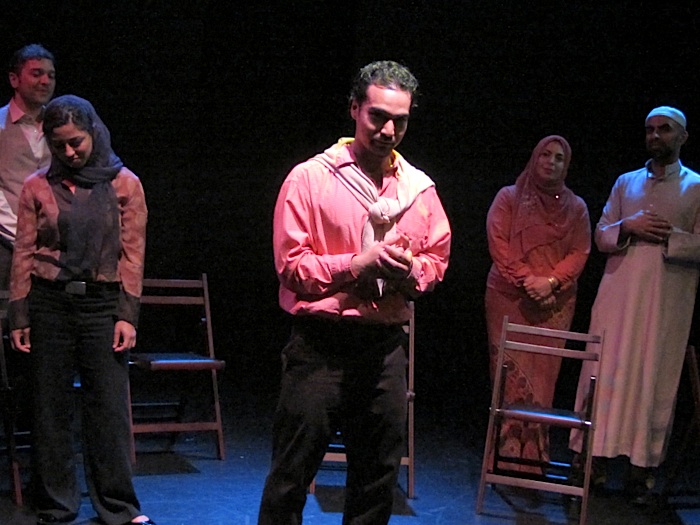
An austere set greets the assembled theater-goers in the black box arena of Stagewerx: a projection of a shop-lined street in the Middle East, a few chairs, an aerial photograph of Iraq perched on an easel, an incongruous television, and a pair of shoes.

A lone figure in a headscarf and wide trousers, Rafidain (Yara Badday), approaches the centerstage and begins to speak in Arabic, offering chai, looking anxiously over her shoulder for her interpreter, Shahid (Mohamed Chakmahchi). In Theatre Period’s ongoing production of Aftermath, the year is 2008, the location is Jordan, and all of the characters are Iraqi refugees, their stories gleaned from a series of interviews conducted by Jessica Blank and Erik Jensen on the subject of the 2003 US invasion and occupation of Iraq, and its ongoing repercussions. 

Throughout the course of the play, the individual character traits of the interviewees reveal themselves through text and minimal movement. The independent fierceness of Rafidian, a pharmacist; the brash materialism of action-film aficionado and dermatologist Yassar (Shoresh Alaudini); the righteous anger of Imam Abdul-Aliyy (Munaf Alsafi); the only partially-subdued optimism of a pair of exiled theater artists played by Andrea Ali and Hassan Alnawar.

Facing reality: a scene from Aftermath. Guardian photo by Nicole Gluckstern

A familiar ritual accompanies each introduction, as each character offers tea, coffee, baklava, a peek at the family photo album or a proud pair of diplomas — acts of culturally-ingrained hospitality reminiscent of similar scenes in Joe Sacco’s documentary graphic novel, Palestine.  

Since most of the text is in English, the role of the “interpreter,” a composite character created by Blank and Jensen, spends much of his stage time interpreting not language, but rather the timeline and the historical role of tribalism in Iraq for audience edification.

As for the other characters, their discourse is scripted directly from interview material: a Christian woman, Basmina (Jasmin Kimberley Ali) describing the sound of falling bombs, a young couple (Dolfakar Mardan and Susu Attar) struggling with painful nostalgia for the home they built themselves and then had to leave behind, the dignified Abdul-Aliyy elucidating the tortures he survived during his unwarranted incarceration at Abu Ghraib. The play focuses not so much on creating a linear narrative, but on creating awareness that each character is not mere statistical data to collect — they are full-fledged, multifaceted members of the human race. 

The production is not without its awkwardness. The material is intense, often discomfiting, and unadorned, mirrored by the minimal staging, stark lighting, and the stilted bearing of a few of the actors, (some of whom have never performed in a play before).

The scenes play out mostly like a televised eyewitness documentary, populated primarily by static talking heads, any intricacies of decor (save the television) left to the audience to visualize on their own. But ultimately with a play like this, the less that detracts from the simple honesty of the stories being told the better. There’s simply no need to dress this production up with stagecraft, the stories are compelling enough on their own.

Aftermath

Through June 30, $25

Stagewerx

446 Valencia, SF

www.stagewerx.org

www.theatreperiod.com


Guardian Voices: On losing

80

I’m turning 43 today and feeling glad to be alive. I would love to be writing about the joy of raising children and the mysteries of the universe. But instead, today I’m thinking about last week’s elections, about losing and the nature of long-term struggle. I’m thinking about being born black in 1969, and how, in fact, our side has been losing my whole life. And while this sobering reality about the balance of forces in the nation could make a sane person completely despondent, today I’m considering it a challenge to radically rethink the way we progressives try to change the world. 

The truth is that despite historic victories and truly incredible grassroots organizing over the last several decades, we’ve been getting our asses kicked for a long, long time. Since the right and the state got together to crush people’s movements of the 1960s. Since the Republicans built this rightwing coalition, began pushing wedge politics, winning the hearts and minds of white working people, and winning elections all over the country. And since capitalism shifted gears in the 1970s – we call it neoliberalism now — and the war on poverty was pushed aside to make way for the war on poor people specifically and working people generally. Since then, our cities have lost good jobs, union members, safety net services, and in San Francisco, more than half of the entire black population.

Thanks to Fox News, billionaire Republicans, and fragmentation on the left, conservative ideas about government, about individual vs. institutional responsibility, and about the supposed virtues of free markets have taken a powerful hold over the thinking of most Americans. One result: Last week in Wisconsin, despite the truly historic mobilization against the right’s Scott Walker, labor and social justice forces lost a big one. And here in San Francisco, in the heart of the “left coast,” progressives lost control of the Democratic Party to that special brand of “moderate” big-business Democrats who are socially liberal but have been making me embarrassed to be a registered Democrat since – well, since Bill Clinton was in the White House.

Clinton’s “ending welfare as we know it” third-way politics made it ok to talk about ending poverty while at the same time helping people get rich at the expense of poor people all over the world. Gavin Newsom was our local version – more socially liberal, and therefore successfully confusing to a lot of people, but he was nonetheless made of the same cloth.

Are you ready for the good news? Well, not quite yet. I didn’t mention the economic crisis.

If this were a boxing match, I don’t think the referees would have trouble judging this one. The current economic crisis was indeed once a crisis for capitalists — some financial institutions were forced to close shop, other lost billions and Wall Street seemed for a while to be in complete disarray. At one point, one third of Americans supported the Occupy movement and thought socialism was something to consider.

But even taking the ongoing Eurozone crisis into account, the US corporate elites in 2012 are more like a dazed prize fighter momentarily wobbly on his feet than a boxer who’s down for the count. Now, four years after the financial crash, the crisis is primarily a crisis for the rest of us, and our suffering is real. Even the middle class has taken serious punches, and our communities are badly bruised.

Good political spin will not change these real conditions. And the problem is not that organizers and activists, here in the Bay and around the country, aren’t brave and brilliant and working just remarkably hard. And even creating new forms of activism and alliances for the 21st century. But we have to think differently about how we do politics.

Most fundamentally, after so many years of losing in one way or another, too many social justice activists have lost hope of ever winning a truly more just society. Too many of us have settled for short-term gains, defensive fights, and building organizational power.

Don’t get me wrong – I’m deeply committed to local organizing that builds leadership and political power and win’s concrete improvements in people’s lives. But we will certainly never see the society we hold in our dreams without a bold, audacious belief that we can in fact win and govern our city, our state, and the entire country. Like the right – which was, objectively speaking, once weak and playing defense — progressive forces have to share a common belief that we too can build a majority, that we can govern the entire country based on values of racial justice, equity, sustainability and the collective good.  There’s a big difference between losing and feeling, en masse, like losers.

There is so much already in motion to build upon, so much potential to seize the opportunities that this historic moment provides. Inspired by Arab Spring, we too can be bold and audacious in our visions of what’s possible. After we rally against what’s wrong, let’s make plans for how we are really going to solve the crises of the 21st century and make the world a better place. Local political battles are essential opportunities to build new leadership (especially in communities of color), to change everyday people’s consciousness, and defend the ground we’ve already won. Across the nation, more organizations should take lessons from efforts like the National Domestic Workers Alliance, San Francisco Rising, CA Calls, and the national Unity Alliance that are breaking the fragmentation of progressive forces, moving beyond organizational ego, and consolidating people power. But above all, we have to let go of the idea that it’s someone else’s role to run the world or that having power is just for self-serving politicians. Unafraid of power and determined to slug it out, let’s make my next forty years about how we turned it around, had the Right on the run, built a movement and a society that we are proud to leave our children.

We are not down for the count. We are still in the ring swinging. Our opponent is powerful, and we’re already weak from a long fight, but we have the capacity to regroup, take advantage of our opponent’s weaknesses and make the most of our strengths, plot a new offensive strategy, and win — and win decisively. Losing is part of political struggle, it’s part of history, but there are more rounds to go. And what’s even better, unlike boxing, in the real world of building a movement for social justice, we engage in the struggle together. What happens next is up for grabs, and history is ours to make.

N’Tanya Lee was formerly the director of Coleman Advocates and one of the founding members of San Francisco Rising. She’s a veteran organizer with racial justice and LGBT and youth movement struggles in New York City, Michigan and the Bay. She now works on national movement building projects, advises local social justice leaders and is raising a son with her wife in Southeastern San Francisco.

Out for more

0

arts@sfbg.com

FRAMELINE It was Blue (1993) and Swoon (1992) and Frisk (1995), or My Own Private Idaho (1991) and The Hours and Times (1991). Paris Is Burning (1990). The Incredibly True Adventure of Two Girls in Love (1995).

It probably depended a little on who you were and what you’d seen lately that made you feel grateful to be coinciding with this point on the timeline of queer cinema. For me, it was Lilies (1996) and Go Fish (1997), and All Over Me (1997) and Beautiful Thing (1996), and every other gay teen romance, and any totally f***ed up thing Gregg Araki chose to put onscreen (including 1995’s Doom Generation, billed as “a heterosexual film by Gregg Araki,” which made straight look like a fairly provisional state of being). It was kind of like irony or porn — I couldn’t exactly define it, but I was pretty sure I knew it when I saw it while bingeing, mid–gay adolescence, on whatever the 1990s had to offer in the way of LGBT experience on film. “It” being this thing called New Queer Cinema, a term that film critic and scholar (and past Guardian contributor) B. Ruby Rich had coined in a 1992 essay in the British film journal Sight & Sound.

Rich, these days teaching in UC Santa Cruz’s Film and Digital Media Department, offered up the idea of New Queer Cinema as a way to frame a ragged-edged genre that she saw emerging. Populating it were films that told unfamiliar, upsetting, outrageous, and sometimes deeply lyrical stories of queer experience, forcing a more complicated picture onto the screen. As many of them gained a cultural foothold (seldom reaching deep into the mainstream, but drawing respectable numbers of art-house-goers), they made a space around themselves for more such films to follow their unsettling examples.

Over the next decade and beyond, the genre, and the larger, disparate queer culture, welcomed a world of untold stories; films like My Own Private Idaho and later Velvet Goldmine (1998) and Boys Don’t Cry (1999) entered the popular culture by way of some combination of star and story power; and one morning we woke up to the sight of significant swaths of the country heading to the multiplex to watch a swoony, gloomy tale of two cowboys in love.

Now, somehow, Brokeback Mountain (2005) is starting to seem like a long time ago, and you could say that New Queer Cinema has both evolved and devolved, a fact reflected in the rom-com-packed LGBT section of your friendly neighborhood video store as well as in each passing year’s Frameline festival catalog. This year, the San Francisco International LGBT Film Festival offers the opportunity to compare and contrast, casting its eyes back on the genre 20 years after Rich pronounced its existence and sketched its parameters.

In addition to presenting Rich with its annual Frameline Award, the fest has programmed a retrospective of four films that offer a sense of New Queer Cinema’s expansive scope and permeable borders: Alex Sichel’s dark-and-light, riot grrrl music–infused All Over Me (costarring a baby-faced Leisha Hailey from The L Word); Ana Kokkinos’s Head On (1998), about a reckless but closeted young man living in a tight-knit Greek Australian community; Gregg Araki’s violent, trashily romantic, HIV-inflected road movie The Living End (1992); and Cheryl Dunye’s experimental mix of documentary and dyke drama The Watermelon Woman (1996). (In 2012’s Mommy Is Coming, also screening, Dunye adds to the mix Berlin sex clubs, explicit taxicab-backseat role play, and a parent-child dynamic likely to leave you flinching in horror.)

Elsewhere in the fest, French writer-director Virginie Despentes’s Bye Bye Blondie has a mosh pit soundtrack and follows, clumsily, Araki’s frenetic and unrestrained example. Béatrice Dalle (1986’s Betty Blue) and Emmanuelle Béart (2002’s 8 Women) play former teenage punk rock sweethearts who met in a mental institution and reunite after a long estrangement to reenact the past and rip open old wounds. A high point, though not for their relationship, occurs when Dalle’s slightly unhinged character tells a woman at a highbrow cocktail party, populated by Paris’s public-intellectual set, that her dress is sectarian, before physically assaulting another guest. Cloying and soap operatic, offering the gauzy fantasy fulfillment of a Harlequin Romance, Nicole Conn’s A Perfect Ending nevertheless earns points for its premise of an uptight housewife who employs the services of a call girl — and for casting Morgan Fairchild as a madam who uses her Barbie collection as a staffing organizational tool.

Other queer stories are more successfully delineated. Aurora Guerrero’s coming-of-age tale Mosquita y Mari, which screened at the SF International Film Fest in April, soulfully and subtly captures the ambiguous friendship that develops between two Latina high schoolers struggling with unspoken feelings as well as pressures both familial and financial. In Joshua Sanchez’s Four, adapted from a play by Christopher Shinn, Fourth of July fireworks and a mood of lonely isolation serve as a backdrop to four disparate individuals’ uncomfortable attempts to find physical and emotional connection. Stephen Cone’s The Wise Kids is set in and around a Southern Baptist church in Charleston, South Carolina, and tracks a trio of teenagers as they sort out the facts of their religious and sexual identities.

There’s a startlingly small quantity of queer baby-making going on in this year’s fest compared with recent years, and the family proposed in writer-director Jonathan Lisecki’s romantic comedy Gayby (as well as Ash Christian’s Petunia) is not necessarily nuclear or easy to encapsulate in kindergarten on “Let’s draw our family tree!” day, marrying the concept of queer family to the Heather-has-two-mommies narrative. The film’s gay-boy Matt and straight-girl BFF Jenn decide that it’s time to settle down and start a family together, but reject the idea of turkey basting or consulting a fertility specialist in favor of comically awkward, highly unerotic, goal-oriented sexual intercourse.

Come to think of it, their method could resonate with the procreation-only, can’t-wait-to-be-raptured crowd, who might be less enthusiastic when the pair switch to good old-fashioned DIY insemination and Matt’s friend Nelson (a scene-stealing Lisecki) brings over a container of holy cat cremains to sanctify the proceedings. Either way, with queer spawning sometimes serving as the rope in a tug-of-war argument about heteronormativity, queer identity, transgression, and basic rights, an unruly rom-com about queer family planning is a fitting entry in a genre and a festival that have both grown into panoramic representations of the queer world.

FRAMELINE36

June 14-24, most shows $9-$11

Various venues

www.frameline.org

Our Weekly Picks: June 13-19

0

WEDNESDAY 13

Rappin’ 4-Tay

More Champagne, Mr. 4-Tay? It’s been almost 20 years since Anthony Forté dropped the infectious Bay Area anthem “Playaz Club,” but I think it’s safe to assume the answer is still a resounding, “Yes.” Born and raised in the Fillmore District of San Francisco, the rapper will be performing at Mezzanine for the Tupac Birthday Celebration in honor of what would have been the fallen artist’s 41st name day. Presented by local emcee and activist Sellassie, a bevy of hip-hop stars will be joining Forté in the spotlight as they remember a musical pioneer. In 1996, Forté was featured on the track “Only God Can Judge Me” on Shakur’s critically acclaimed album, All Eyez on Me. Party forecast: Mostly cloudy with a heavy chance of champagne. (Julia B. Chan)

With Mac Mall, Ray Luv, Spice 1

8pm, $15 advance

Mezzanine

444 Jessie, SF

(415) 625-8880

www.mezzaninesf.com


Action Bronson

This NY-based loudmouth foodie rapper is not for the easily offended. When Action Bronson is not creating social media scandals (a too-far Instagram photo he’s since deleted and apologized for) or spitting tongue-in-cheek verses, Bronson, a former gourmet chef, can be found filming his YouTube cooking series Action in the Kitchen. Bronson’s appeal stems from his ability to seamlessly mix elaborate food imagery into otherwise raunchy-style verse. Who doesn’t want to listen to a song about both “bitches” and prosciutto? (Haley Zaremba)

9pm, $17

With Richie Cunning, Davinci

Independent

628 Divisadero, SF

(415) 771-1421

www.theindependentsf.com


THURSDAY 14

Turtle Power Nightlife

Get aquatic at the Cal Academy of Sciences with a turtle-powered installment of their Thursday NightLife series. The diverse array of performances and activities offered will surely keep your head swimming: watch dance troupe Capacitor performing an excerpt from “Okeanos” (a portrait of the ocean as body, environment, resource, metaphor, and force), then show your skills in the classic Teenage Mutant Ninja Turtles Nintendo game. Talk to conservation groups and sea turtle researcher J. Nichols; next observe the sea turtle skulls on your own. Check out a dive show in the Philippine Coral Reef, and finally, take in some movies in the Planetarium (Sea Turtle Spotlight and Earthquake). Turtle power indeed! (Shauna C. Keddy)

With DJ Jaysonik (Hottub/Le Heat)

6pm, $10–<\d>$12

California Academy of Sciences

55 Music Concourse Drive

Golden Gate Park, SF

(415) 379-8000

www.calacademy.org


The Slippery Slope

Take the lounge-lizard persona of Tom Waits circa Nighthawks at the Diner, sprinkle it with some surf and exotica overtones, and dunk it in the heady atmosphere of a David Lynch score; you might end up with something like Oakland’s the Slippery Slope. This self-described “psychedelic cabaret” ensemble recently expanded to a 10-piece, with the addition of a horn section, hinting at a funkier, groovier approach. However, with its sultry vocals, reverb-soaked guitars, and vast sense of space intact, the Slippery Slope’s warped vision of lounge music remains front and center. (Taylor Kaplan)

With the Bodice Rippers, Go Van Gogh

9pm, $10

Bottom of the Hill

1233 17th St., SF

(415) 626-4455

www.bottomofthehill.com


FRIDAY 15

“DEEPER Architectural Meditations”

Site-specificity is a specialty of Lizz Roman and Dancers, and their upcoming CounterPULSE show, “DEEPER Architectural Meditations,” will not be an exception. Expect to see a side of CounterPULSE you might never have previously taken note of, as Lizz and her merry troupe reveal the hidden nooks and crannies of the space with their body of work, not to mention with their bodies. Exposing not just the architectural complexities of CounterPULSE but also those of the irresistible impulse to interact communally with our immediate environment, the Lizz Roman team will perform all over the CounterPULSE space with live backing from WaterSaw and guest DJ Jerome Lindner. (Nicole Gluckstern)

Through July 1, 8pm, $20–<\d>$25

CounterPULSE

1310 Mission, SF

(415) 626-2060

www.counterpulse.org


How to Dress Well

Like the rest of us, Tom Krell must dream in light and shadows. Unlike the rest of us, he is able to translate those dreams into signature ethereal compositions full of dark emotions and R&B passions. Experimental pop producer How to Dress Well has been well received among critics, bloggers, and music lovers alike since popping onto the radar by posting his own tunes online in 2009. Krell’s singing voice can be described as pleasant but when coupled with his piercing falsetto, is a force steeped in textures. His lo-fi, DIY approach to an urban-sounding kind of electronic music is well done and the result is hypnotic. Touring in anticipation of his Acéphale debut album Total Loss, Krell recently released first single “Ocean Floor for Everything.” (Chan)

With Babe Rainbow, Finally Boys 9pm, $14 Rickshaw Stop 155 Fell, SF (415) 861-2011 www.rickshawstop.com


Sarah Jaffe

Sarah Jaffe’s smoky voice should be a good kickoff for your weekend. Jaffe is an enthralling musician — this Texas crooner’s voice is as layered as her music is driving. She’s currently touring in support of her recently released album The Body Wins, hailed by Interview Magazine as “show[ing] a new shade of musical maturity.” Let her denser, still emotional sounds draw you in, and let the newfound musical complexity she displays on this album wrap around you like a balmy summer night. Secret Colours opens, a fun dance-rock band with a pyschedelic, “newgaze,” and garage rock sound. (Keddy)

9pm, $12

New Parish

570 18th St., Oakl.

(510) 444-7474

www.thenewparish.com


San Francisco Black Film Festival

The San Francisco Black Film Festival kicks off tonight with Robert Townsend’s latest: based-on-a-true-story drama In the Hive, about a group of at-risk teens struggling to continue their educations (with the help of tough-love administrators played by Loretta Devine and Michael Clarke Duncan). The rest of the fest includes a “Focus on Fathers Family Day” featuring a new short doc by Kevin Epps; a games and animation-focused program topped off by a panel with Leo Sullivan (Fat Albert) and Morrie Turner (Wee Pals); and, of course, a huge slate of features and shorts, on a wide-cast net of subjects: pick-up basketball, hip-hop in Ghana, “good hair,” and more. Don’t miss mockumentary Thugs, The Musical — comedian Kevin Avery’s show biz satire in the vein of Townsend’s 1987 Hollywood Shuffle. (Cheryl Eddy)

Fri/15-Sun/17, $5–<\d>$50

Various venues, SF

www.sfbff.org


SATURDAY 16

Motion City Soundtrack

So pop-punk didn’t die with Avril Lavigne’s career after all. More than 15 years after its conception and 10 years past its life expectancy, Minneapolis rock band Motion City Soundtrack just released Go, its fifth studio album. Leaked by Epitaph Records almost a month early, the record is a continuation of singer Justin Pierre’s established flare for sunny melodies and pitch-black lyrics. With song titles such as “Everyone Will Die” and “The Worst is Yet to Come” listeners might expect to hear something much heavier than the danceable tracks that the quintet has become known for. Instead, Pierre explores his many neuroses in a soaring falsetto that promises to get stuck in your head. No headbanging required. (Zaremba)

8pm, $22

With the Henry Clay People, the Front Bottoms

Slim’s

333 11th St, SF

(415) 255-0333

www.slimspresents.com


SUNDAY 17

Emily Jane White and Mariee Sioux

Lucky us, Amoeba Music is offering a free showcase for its Home Grown Independent Artist Series stars of May and June: Emily Jane White and Mariee Sioux. Sioux’s music is focused on narratives and sparse guitar work. White is also noted for her vocals and story-like lyrics. White’s third album, Ode to Sentience, finds her compositions as lush as ever, filled out with organ, pedal steel guitar, and electric guitar. In still images, White is often seen walking in a forest or sitting pensively by a pond, like some sort of mystical being in a painting — and her music allows you to close your eyes and picture that you too are traveling through a misty forest filled with rich stories and woodland creature secrets. Sioux and White will weave tales at this afternoon show. (Keddy)

4pm, free

Amoeba Music

2455 Telegraph, Berk.

(510) 549-1125

www.amoeba.com


Marduk

Formed in Sweden in 1990, legendary black metal group Marduk was designed, in the words of founding member Morgan Hakansson, to be “the most blasphemous metal act ever.” Although they draw from similar lyrical themes as other groups in their genre, with the requisite references to Satanism and gore, Marduk adds several other diabolical layers, notably adding historical imagery and themes from World War II in more recent recorded offerings. Last year’s Iron Dawn EP continued the band’s mighty campaign for metal dominance, and local fans won’t want to miss the only Northern California appearance on this blitzkrieg, er, tour. (Sean McCourt)

With 1349, Withered, Weapon, Black Fucking Cancer, DJ Rob Metal.

6:30pm, $25

DNA Lounge

375 11th St., SF.

(415) 626-1409

www.dnalounge.com


Lemonade

The boys are back in town! The former Mission dwelling, burrito scarfing, epic house party throwing trio — better known as Lemonade — is rolling back into San Francisco behind the release of the beautifully emotive and love-laced LP Diver. Now based in Brooklyn, singer Callan Clendenin, drummer Alex Pasternak, and bassist Ben Steidel (who is currently playing keyboards for their live shows) are embarking on pretty pop territory as the latest full-length finds them coasting on warm waves of synth melodies, tropical sensibilities, and a lush ambience layered in R&B grooves and coos — in easy-to-digest, 3-to-5 minute increments. The Rickshaw show will see the guys playing mostly newer tunes, with an ensuing dance party all but assured. (Chan)

With LE1F, Water Borders

8pm, $12

Rickshaw Stop

155 Fell, SF

(415) 861-2011

www.rickshawstop.com

The Guardian listings deadline is two weeks prior to our Wednesday publication date. To submit an item for consideration, please include the title of the event, a brief description of the event, date and time, venue name, street address (listing cross streets only isn’t sufficient), city, telephone number readers can call for more information, telephone number for media, and admission costs. Send information to Listings, 71 Stevenson Street, Second Floor, SF, CA 94105 or email (paste press release into email body — no attachments, please) to listings@sfbg.com. Digital photos may be submitted in jpeg format; the image must be at least 240 dpi and four inches by six inches in size. We regret we cannot accept listings over the phone.

On the Cheap Listings

0

Submit items for the listings at listings@sfbg.com. For further information on how to submit items for the listings, see Picks.

THURSDAY 14

Screening of Ken Russel’s Gothic Pacific Film Archive, 2575 Bancroft, Berk. bampfa.berkeley.edu. 7:30pm, $9.50. Director Ken Russell passed away this year, but his 1986 feature film continues to transport audiences. Gothic takes audiences into the country estate where Lord Byron (Gabriel Byrne), Mary Shelley (Natasha Richardson), and her partner Percy Bysshe Shelly (Julian Sands), give birth to the idea for Frankenstein’s monster. Prior to the screening, listen to a brief set by the world’s only Ken Russell tribute band Brale.

Oakland Landmarks book signing Cathedral Gift Shop, 2121 Harrison, Oakl. www.cltcathedral.org. Noon-1:30pm, free. Oakland historian and columnist AnnaLee Allen and artist Heidi Wyckoff raised enough donations through Kickstarter to publish their new book Oakland Landmarks, a melding of Wyckoff’s watercolor images and Allen’s detailed descriptions of historical sites. The project is a tribute to the city in honor of its 160th birthday this year. Today, come meet the author and illustrator, eager to sign your copy this afternoon.

Celebrate Flag Day with America the Philosophical Mechanic’s Institute, 57 Post, SF. (415) 393-0114, www.milibrary.org. 6pm, $12, members free. Just in time for Flag Day, award-winning book critic Carlin Romano challenges the idea that our nation is anti-intellectual. Using the examples of talk shows, social media, blogs, and an online trend he calls “cyber philosophy,” he argues that the USA is still a nation of innovation and public debate. Listen as Romano speaks up for the intelligence of you and yours at tonight’s reading.

FRIDAY 15

Rex Ray pop-up show and Information release Gallery 16, 501 Third St., SF. www.gallery16.com. Also Sat/16, 6pm-9pm, free. To celebrate Rex Ray’s new book, Information, this pop-up gallery displays images of his artwork, photographs, and private moments of inspiration. The new book highlights a collection of happenings that the artist says inspired his life’s work. Ask him more about it in person.

Faetopia reclaims vacant Castro space for public joy Vacant Tower Records building, 2286 Market, SF. www.faetopia.com. Through Fri/22, event times vary, $10 suggested donation. Faetopia imagines a world where queer people are honored and respected for their gifts and perspectives. Artists and collaborators have created a space for the LGBTQQ community and their allies in the long, vacant storefront. During the day, Faetopia will host a visual arts gallery, workshops, meditations, teach-ins, and more. Theater, poetry, cinema, and sexy book readings in a land where the arts reign supreme.

SATURDAY 16

“The Stuff That Dreams are Made of: San Francisco and the Movies” Old Mint, Fifth St. and Mission, SF. www.sanfranciscomuseum.org. Through Sat/24, 11am-4pm, $10. Thanks largely to cinema, people everywhere know about our city by the bay, even if they’ve never visited it. To highlight the movies and filmmakers that make San Francisco one of the world’s film capitals, the San Francisco Museum and Historical Society present this exhibition.

Father’s Day weekend at Playland-Not-at-the-Beach 10979 San Pablo, El Cerrito. www.playland-not-at-the-beach.org. 10am-5pm, $15. Don’t let Dad spend his special day sitting on the couch watching other people play. Accompany him to Playland, where the two of you can raise a ruckus with pinball and carnival games galore — there’s even an ugly tie contest. Pops also gets $3 off admission this weekend — perfect for Playland’s theme of the week: celebrating everyday American heroes.

San Francisco Crystal Fair Fort Mason Center, SF. www.crystalfair.com. 10am-6pm; also Sun/17 10am-4pm, $6. The Pacific Crystal Guild hosts a magical mix of crystals, minerals, beads, jewelry, and the healing arts today and tomorrow. Crystal enthusiasts can gawk at some of the most hard-to-find gems around, and those new to the world of geology can learn about the history and potential healing powers of these natural treasures.

North Beach Festival North Beach neighborhood, SF. www.sresproductions.com. Also Sun/17, 10am-6pm, free. One of the country’s original outdoor festivals, this 58th annual event brings you to the city’s Little Italy for 125 arts and crafts booths, 20 gourmet food booths, three stages of live entertainment, Italian street painting, beverage gardens, and the blessing of the animals. Join in this longstanding San Francisco tradition.

Marin Art Festival, Marin Civic Center, 3501 Civic Center Dr., San Rafael. (415) 388-0151, www.marinartfestival.com. 10am-6pm, $10. Enjoy the famed Marin oyster feast while you view the works of more than 250 fine artists. This annual event takes place in the spectacular Marin Civic Center designed by Frank Lloyd Wright, so be sure to look up and down and all around at the architecture while you’re there.

SUNDAY 17

Open Cockpit for Father’s Day Oakland Aviation Museum, 8252 Earhart, Building No. 621, Oakl. www.oaklandaviationmuseum.org. Noon-4pm, $9. Sit in a Korean War MiG-15 next to Dad, and feel what it would have been like to fly for the “other side” in America’s first war of the jet age. Learn about the training involved for naval flight officers in the 1970s via a Navy A-6 simulator trailer, horse around on a carrier deck in the Navy A-3 Sky Warrior, tour the Solent Flying Boat from Indiana Jones: Raiders of the Lost Ark.

MONDAY 18

Baasics.2: The Future Oberlin Dance Collective Theater, 3153 17th St., SF. www.baasics.com. 7:30pm-9:30pm, free. Do flying cars and android housekeepers to mind when you ponder the future? Will humanity populate other planets and interact with extraterrestrial beings? Or, do you fret about the imminent environmental catastrophe, the rise of a totalitarian mega-state, and the end of our species? This event brings together Bay Area artists, inventors, researchers, and musicians whose projects and musings provide a sense of what they think lies ahead.

TUESDAY 19

Activists read from The Harvey Milk interviews: In His Own Words HRC Store, 575 Castro, SF. (415) 387-2272. 6pm, free. This newly released collection of never-before published transcripts of unrehearsed interviews with Harvey Milk will be read live tonight by Bay Area activists and novelists. Learn about the local icon on a deeper level.


Alerts

0

yael@sfbg.com

THURSDAY 14

Solitary confinement at Pelican Bay, Audre Lourde Room, Women’s Building, 3548 18th St., SF; www.womensbuilding.org. 6:30pm, free. This panel discussion on the use of solitary confinement in the criminal justice system comes soon after a class action lawsuit challenging solitary confinement in California prisons. The Center for Constitutional Rights filed the lawsuit, Ruiz v. Brown, May 31 on behalf of prisoners at Pelican Bay State Prison. The plaintiffs have spent between 10 and 28 years in solitary confinement, generally spending at least 22 hours per day alone in windowless cells, and often denied letters, visits, any sunlight, or time spent outdoors. Many of the plaintiffs also participated in last year’s hunger strikes against inhumane conditions in prison, including solitary confinement. This lawsuit may be the crucial next step in their fight.

FRIDAY 15

India to Ireland, Sports Basement, 1590 Bryant, SF; www.indiatoireland.org. A brother and sister who rode bicylces12,000 km from India to Ireland are back with photos and stories. See what they saw and hear the tales at this fundraiser for Room to Read. The international nonprofit works “to promote literacy and gender equality in education by establishing libraries, constructing classrooms, publishing local-language children’s books, training educators and supporting girls’ education.”

SATURDAY 16

Art, culture and resistance, Redstone building, 2940 16th St., SF; www.norcalsocialism.org. 6pm, $5-10 suggested donation. What’s the music of today’s social justice movement? If it’s anyone, it’s The Coup, and frontman Boots Riley. Riley has written and performed powerful and revolutionary music for decades, from hip hop edutainment concerts that promoted efforts like the Women’s Economic Project Agenda and Copwatch to traveling guerilla hip hop concerts in protest of Prop 21 in 2000. Recently, he’s been organizing with Occupy Oakland. In July, he’ll be teaching a workshop at the Socialism 2012 conference in Chicago; the next month his book, Lyrics in Context, will be released. On Saturday he’ll discuss a tradition he helps to keep alive in Oakland: how art and resistance work together. Refreshments and mingling to follow.

Juneteenth festival, parade starts at African American Arts & Culture Complex, 762 Fulton St., SF; www.sfjuneteenth.org. Parade at 11am, festival runs through June 17. Start summer off right with the biggest Juneteenth festival on the West Coast. Juneteenth commemorates the announcement of the abolition of slavery and celebrates African American heritage, and this year will mark the 62nd annual Juneteenth in the Fillmore District. The two-day festival kicks off with a parade, followed by a family-friendly weekend complete with a classic car and motorcycle show, basketball games, fashion show, petting zoo, pony rides, live entertainment, community info booths and health fair, and more.

SUNDAY 17

African American veterans and the Civil Rights Movement, Niebyl-Proctor Marxist Library, 6501 Telegraph, Oakl; www.marxistlibr.org. 10:30am-12:30pm, free. Despite growing up in a United States that still had Jim Crow laws, African Americans fought in wars throughout the 20th century. When many of them returned and joined in civil rights and black liberation movements, however, they risked their lives once again. Perhaps best known is Medgar Evers, civil rights leader and World War II soldier who was assassinated by a Ku Klux Klan member in 1963. This event will explore the many veterans who joined civil rights struggles, their reasons for doing so, and how, in many cases, experiences in military service prompted involvement in the struggle back home. It will also feature a screening of the documentary Negroes With Guns, which follows the life of Army and Marine Corps veteran Robert F. Williams, who later took up arms against violent racist groups like the KKK as part of his work with the Black Armed Guard.

Sutter’s CPMC deal isn’t healthy

28

At 10am on Friday, June 15, at the main chambers of the Board of Supervisors, the first of a series of public hearings will be held on specific aspects of the  development agreement governing the $1.9 billion Sutter Health/California Pacific Medical Center proposal to expand and centralize the giant health-care outfit’s health center by building a new 555 bed hospital at Geary and Van Ness. The deal involves demolishing the existing 220-bed hospital at St. Luke’s at Mission and Cesar Chavez and rebuilding a new 80-bed facility, expanding the Ralph K. Davies hospital at Duboce and Noe and closing down the old Children’s Hospital in Laurel Heights.

The hearing will be the first before the Board of Supervisors. Thus far, the project has been before only the executive branch: the Planning Commission and the mayor. After a brief introduction on the overall project the hearing will focus on the issue of jobs.

This is the largest project to be negotiated by the Lee administration — and although the mayor introduced it to the board in May, not one supervisor has yet joined him to sponsor the legislation. That’s an an odd situation given the importance of the project – and the fact that Mayor Lee can usually count on an automatic four votes from the conservative faction of the board. But not this time.

The hearing was requested by a coalition of more than 60 community, neighborhood, labor, and environmental organizations — San Franciscans for Healthcare, Housing, Jobs and Justice (SFHHJJ) — which has been closely following the project for the last two years.  Members of the coalition have already appealed the project’s environmental impact report, passed last month by the Planning Commission, and SFHHJJ has developed a series of amendments to the agreement that it has been pressing on the Board of Supervisors.  Board President David Chiu agreed to set a series of hearings on the project before it voted on, along with the determination of the appeal of the EIR, in  late July.  SGHHJJ hopes to use the hearings to get across the serious shortcoming of the agreement.  In addition, depending upon the appeal of the EIR,  a law suit may well be filed by some members of the Coalition.

In short, what starts next Friday is a big deal.

Not only is it a big deal in the development war that is at the heart of San Francisco politics, but it also is a big deal given what may well be done by the Supreme Court in deciding the constitutionality of all or part of the Affordable Health Care Act. If Obama’s health reform is struck down by the court, in all or in part, which seems almost certain, Sutter/CPMC’s plan will most definitely take on even more importance for the future of health care and its costs in San Francisco.

Sutter currently controls about a third of the market for health care in San Francisco.  With the construction of this project, it will control about 40 percent — a portion most knowledgable observers feel will give it market dominance  and an ability to actually set health care costs in San Francisco. Sutter’s business model — as shown in Berkeley when it took over Alta Bates and elsewhere in the state – demonstrates that  with a dominate market position, it jacks up prices.

As the San Francisco Chronicle noted in 2010: “…Sutter Health Co. has market power that commands prices 40 to 70 percent higher than its rivals per typical procedure — and pacts with insurers that keep those prices secret”.

A US Supreme Court that weakens or strikes down health care reform will simply re-establish the status-quo ante, a situation in which Sutter will thrive.

And that’s why the board’s conservative members are not supporting Mayor Lee’s deal: it simply does not protect the city — itself a major health care consumer for both its workforce and Healthy San Francisco — from Sutter’s history of turning market power into high health care charges.

SFHHJJ want the development agreement amended to place a cap on the costs charged to the city, allowing Sutter no more than 115 percent of the average charged  by  San Francisco’s other private, nonprofit hospitals.  It also wants Sutter/CPMC low charity care payments pegged at an average of what other nonprofit hospitals contribute, and it is calling for rebuilding St. Luke’s in San Francisco medically underserved south east to 180 beds, not the sure-to-fail size of 80 beds.

But there’s even more to deplore about the proposed deal.

In housing, although the EIR showed that a demand would be created for some 1,500 new two-bedroom homes, Sutter/CPMC agreed to only provide funds to build about 90 such homes. Such a massive shortfall will boost housing prices all other San Franciscans will pay.

The project’s impact on public transit at the Geary / Van Ness intersection will be large and ongoing. More than 20,000 new car trips will be generated at that intersection by the new hospital. Plans for a Bus Rapid Transit raised roadway for the 38 Geary — the most used bus line in the city — will have to be altered at an unknown price since the project calls for all auto traffic to enter the site on the Geary Avenue side.

Again, San Francisco taxpayers will be on the hook to pay for these new costs.

But it is the jobs aspect of the deal that is the most distressing. Sutter/CPMC has a long history of labor disputes with its workforce. Last year it replaced nurses who took a day off to protest their working conditions, and a replacement nurse hired by Sutter accidentally killed a patient. Sutter/CPMC refuses to agree to hire all of its 6,000 current employees for the new facilities. It’s requiring them all to apply as new workers, losing all of their seniority, with a real prospect that many currently employed San Francisco residents will lose their jobs once the new facility opens. All that Sutter/CPMC has agreed to do is hire 50 residents a year for four years – 200 new local jobs, total.

The  June 15 hearing will focus on the jobs issue and public comment is sure to be hot on this laughable “commitment” agreed to by the “jobs” administration.

Calvin Welch is a longtime community organizer living in San Francisco. He currently teachs a course in the development history of San Francisco at San Francisco State University and the University of San Francisco.

A range of rage at Obama visit

0

Hundreds gathered in the financial district today as President Obama came through San Francisco for a brief visit, consisting of a high-priced fundraising lunch and no public events. A mostly silent crowd waited patiently to watch the president’s motorcade drive by this afternoon, first at 1 Market St and then at 456 California, before he went off to SFO. On the crowd’s sidelines, handfuls of dissenters from various groups held signs and spoke up with a diverse range of reasons for protesting the president.

On Market, the motorcade went past the Occupy SF campsite at 101 Market St, where a dozen protesters had gathered. Their signs and chants focused on the National Defense Authorization Act. Sections 1021 and 1022 of the act, which the president signed Dec. 31 2011, have been interpreted as allowing for indefinite detention of terrorism suspects in the United States without charge or trial.

National groups Code Pink and World Can’t Wait brought attention to what they called Obama’s war crimes. 

“Code Pink is asking Obama to kill the kill list,” said Nancy Mancias, an organizer with the womens’ peace organization, referring to a list of terror suspects targeted for US attacks that Obama personally oversees. “We want more transparency in the CIA drone program, and victim compensation to the families of those who have been killed in drone strikes.”

World Can’t Wait demonstrators emphasized that Guantanamo Bay detention facility is still open and housing almost 200 prisoners, despite President Obama signing an executive order to close it days after taking office.

For demonstrators from the Center for Biological Diversity and Greenpeace, it’s imperative that the president stop oil drilling in the Arctic.

“There are a couple small permits they still need to get, but Shell is ready to drill in the Arctic in July,” said Miyoko Sakashita, an attorney at the Center for Biological Diversity. 

Sakashita said that drilling there could be dangerous for residents of the region, as well as polar bears, walruses and seals. 

“The conditions are terrible for drilling,” said Sakashita, citing low visibility and icy terrain. “If they can’t stop an oil spill in the gulf of Mexico, how will they stop it in the Arctic?” 

If these conditons do indeed lead to a disastrous oil spill, Greenpeace volunteers will be there first hand to witness it, as the group plans to send vessels of their own to monitor the operations.

Tea party protesters and Ron Paul supporters also came out to see the president. 

“It’s an issue of competence,” said Charles Cagnon, a protester who held a sign calling President Obama a “bad hire.”

“A president is our employee, not a king.”

But Cognan wasn’t too pleased with the competition either. 

“I was a Ron Paul kind of guy,” he said, “but I’ll take Romney. He’s level-headed and competent, and he likes arithmetic.”

“Obama doesn’t like arithmetic,” he continued, as evidenced, according to Cagnon, by the senate rejection of Obama’s budget May 16.

“Bush was terrible,” Cagnon added. “Romney is uninspiring.”

Cagnon and his group sported “Nobama” gear, Code Pink protesters came with signature pink clothing and signs, and a Greenpeace volunteer was dressed as “Frostpaw the polar bear.” Focused for the day on a common enemy of sorts, no conflicts arose between the divergent protest groups. For his part, Cagnon added that despite his right leanings, he loves KPFA radio, and that he believes the tea party has a distrust of government in common with Occupy.

“I’m just glad there’s people out there dissenting,” he said. “We need people like that.”

Free Berlin: 3 city summer destinations for when you’re broke and German

0

It was 2pm by the time I stumbled out of Berghain and rode my bike home along the Spree-side still-standing section of the Berlin Wall, veering between the tourists snapping away at its murals. Hopefully they got a good shot of the bleary-eyed girl in the see-through dress. (Tag me!) Luckily, once you’ve steered clear of the hordes there is plenty of fun to be had in Berlin that had nothing to do with techno church and tawdry dark rooms. Here’s four of my favorite free spots in the city to check out when the clubs close, from naked lakes to repurposed airport tarmacs and abandoned Ferris wheels.

TARMAC TIME

Close by Berlin’s Schöneberg neighborhood (where one can stride amidst blocks of leather stores and spendy gay bars — it’s the Castro’s sister swisher), a venerable European airport wades into a new era. Tempelhof Airport is one forboding arc of concrete, so feel free to lose yourself in its defunct fascist embrace and bizarro history. But then turn around, because the tarmac now serves as park land. It’s vast grassy fields are perfect for getting lost, its runways are currently being used by bicyclists and breakneck windsurfers, and over a dozen public art projects are being developed in various corners. These include an incredible DIY community garden where one can sit placidly atop a hammered-together lifeguard’s chair, surrounded by sprouting greens. The sun can get a little intense at times, but to the side under a few leafy trees stands a perfectly German beer garden where you can take a load off. 

NAKED LAKES

“This is where all the Grimm Brothers fairytales took place.” Quite an introduction to the forest that will soon see your naked ass — it’s lake time! Lake Teufelsee, that is, which you can easily reach with a nice walk from the metro stop. Teufelsee is one of the shady dells in which Berliners take advantage of Freikörperkultur, or the area’s longstanding tradition of free body culture. On our recent visit to Teufelsee, we posted up next to a multi-generational family of nakeds — grandpa, kids, parents, tossing a ball around and generally feeling good about not having tanlines. No one wears clothes. Bonus: looming over the Grunewald Forest surrounding the lake are the Epcot Center-like remains of an abandoned Soviet spy tower. Follow your nose up the hill to them for good old-fashioned Berlin pastime of exploring falling-down beautiful structures. 

CRIME SPREE

… Speaking of, how about an abandoned amusement park? Amid whirling rumors of cocaine trafficking and out-of-control debt, Spreepark closed in 2001, leaving such tantalizing treasurs as a brackish moat-encircled Ferris wheel, Viking ships, and tunnels shaped like roaring rainbow lion’s mouths. It is easy as pie to hop over the fence (walk to Spreepark from the Treptower Park metro stop), and when we visited any fears of being apprehended by the guard that is supposed to be patrolling the area were quickly alleviated by the shrieking Germans attempting to sway the rickety Ferris wheel. If beheaded dinosaur statues and belligerant graffiti (“Who cares? Be poor”) is your thing, you need to come check out this ruin-kitsch wonder. Americans recently bought the property to start up a multidisciplinary community art project — so go quickly while it’s still deviant. If you’re on your way out there, you might want to swing by the revisionist history explosion that is the stately Soviet War Memorial. A 39-foot tall statue of a blonde Soviet soldier cradling a lost German child and crushing a swatiska beneath his feet presides over the complex. 

Pinoy rising

0

arts@sfbg.com

FILM Cinema has had a long and colorful history in the Philippines, with a first “golden age” of home-grown product in the 1950s, a turn toward exportable exploitation films in the ’60s, notable new-wave directors (like Lino Brocka) emerging in the ’70s, and so forth — sustaining one of the world’s most prolific film industries despite difficulties political and otherwise. At the turn of the millennium those wheels were wobbling and slowing, however, hard-hit by a combination of too many low-grade formula films, shrinking audiences, and stiffer competition from slick imported entertainments. The commercial sector stumbled on, but as a shadow of its robust former self.

But there’s something percolating beyond hard consonants on the archipelago these days, signs of a new DIY vigor coming from independent sectors juiced by the inexpensive accessibility of digital technology, undaunted (at least so far) by problems of exhibition and income-generating at home. It’s a sprawling, unpredictable, work-in-progress scene that some figure could well become the next “it” spot for cineaste types seeking one of those spontaneous combustions of fresh talent that arise occasionally where you least expect it — like Romania, to name one recent example.

One person who definitely thinks that’s the case is Joel Shepard, Yerba Buena Center for the Arts’ longtime Film/Video Curator. He’s traveled to the Philippines several times in recent years (once serving on the jury at CineManila), and has previously programmed a few prime examples of the country’s edgy new voices — particularly Brilliante Mendoza, whose notorious 2009 police-corruption grunge horror Kinatay (a.k.a. Butchered) was one of the most hotly divisive Cannes jury-prize winners in recent history. Now YBCA is presenting “New Filipino Cinema,” Shepard’s first “big fat snapshot” — hopefully to be continued on an annual basis — of a wildly diverse current filmic landscape, assembled in collaboration with Manila critic Philbert Ortiz Dy.

Shepard’s program notes call the Philippines “an extremely fascinating country…but the more I learned about the place and its people, the less I felt like I actually understood anything. The truth felt more and more slippery.” One might get a similar sensation watching the films in this expansive (nearly 30 titles, shorts included) sampler, in that they’re all over the map stylistically and thematically — from lyrical to gritty, satirical to anarchistic — suggesting no single defining “movement” or aesthetic to New Filipino Cinema.

Nor should they, since these movies reflect very different cultures, politics, and issues in regions hitherto underrepresented onscreen. After all, Manila isn’t the only place you can get your hands on a digital camera; and Tagalog is primary language for just one-third of all Filipinos.

The series opener has significant local ties: Loy Arcenas is a lauded stage set designer who’s worked frequently with our own American Conservatory Theater. Unavailable for preview, in description his feature directorial debut Niño (2011) sounds redolent of Luchino Visconti and The Garden of the Finzi-Continis (as well as, perhaps, 1975’s Grey Gardens) as it depicts a once grand family of Spanish émigrés living in decrepit splendor, diminished over generations by political inconvenience and a proud, fatal inability to adapt.

Their aristocratic pretensions are a far cry from the rowdier real life captured or depicted in other YBCA selections. A bizarre footnote to the United States’ complicated, incriminating relationship with the Philippines is documented in Monster Jiminez’s Kano: An American and His Harem (2010). Its subject is a Yankee Vietnam vet whose military pension allowed him to construct a sort of one-man imperialist paradise centered around his penis. Whether he was a gracious benefactor, a bullying rapist, or both is a puzzle only clouded further by contradictory input from former/current wives and mistresses (even while he’s in prison), stateside relatives who recall a childhood ideal to shape a sociopath, and the authorities who’ve lately kept him in prison.

War is ongoing, marriage an impractical hope in Arnel M. Mardoquio’s impressive Crossfire (2011), whose young lovers in southern region Mindanao must dodge government-vs.-rebel-vs.-bandit guns as well as a rural poverty sufficient to make our heroine vulnerable to being offered as a lender-debt payoff. Their plight is starkly contrasted with the spectacular scenery of countryside few tourists will ever hazard.

Its atmospheric opposite is Lawrence Fajardo’s Amok (2011), whose thousand threads of seemingly free-floating narrative depict life dedicatedly melting down all race, age, class, and economic divisions during a heat wave passage through one of Manila’s busiest intersections. What birth and development keeps apart gets nail-gunned together, however, once this string of naturalistic vignettes hits a plot device that delivers deus ex machina to all with no melodramatic restraint. Fate also lays heavy hand on the junior protagonists of Mes de Guzman’s At the Corner of Heaven and Earth (2011), a crude but honest neo-realist drama about four orphaned and runaway boys trying to eke out a marginal existence in Nueva Vizcaya.

Should this all sound pretty grim, be informed there’s lots of levity — albeit much of it gallows-humored — on the YBCA slate. Jade Castro’s exuberantly silly Remington and the Curse of the Zombadings (2011) finds the funny in homophobia as its crass young hero (a farcically deft Mart Escudero) is “cursed” by an angry queen he’d insulted to become gay himself; meanwhile somebody goes around their regional burg assassinating cross-dressers via ray-gun. Plus: zombies, and the proverbial kitchen sink. Also on the frivolous side is Antoinette Jadaone’s mockumentary Six Degrees of Separation from Lilia Cuntapay (2011), in which the titular veteran screen thespian struggles for recognition after decades playing bit parts and occasional showier ones, notably as witchy folkloric “aswang” attempting to suck the lifeblood from newborn babes. (See aswang-related coverage in this week’s Trash column, too.)

Yet those are but moderately playful New Filipino Cinema exercises compared to the determined off-map outrages practiced by Mondomanila (2011). This gonzo eruption of spermazoidal huzzah! by multimedia Manila punk underground mover Khavn de la Cruz seeks to leave no societal cavity unexplored, or unoffended. Opening with an infamous quote from Brokedown Palace (1999) star Claire Danes, who characterized Manila as a “ghastly and weird city … [with] no sewage system,” it delivers both fuck-you and fuck-me to that judgment via 75 minutes of mad under caste collage. There isn’t much plot. But there’s variably judged arson, pedophilia, yo-yo trick demonstrations, poultry abuse, upscale mall shopping, voyeuristic pornographia, Tagalog rap, rooftop drum soloing, and limbless-little-person salesmanship of duck eggs.

Further complicating your comprehension of a very complex scene, the YBCA series encompasses avant-garde shorts by veteran John Torres and newer experimentalists. There’s also a free afternoon Indie-Pino Music Fest Sat/9, and on June 17 there’s a postscript: Lav Diaz’s Florentina Hubaldo, CTE, the six-hour latest epic in a career whose patience-testing wide open cinematic spaces make Béla Tarr look like Michael Bay. 

“NEW FILIPINO CINEMA”

June 7-17, $8

Yerba Buena Center for the Arts

701 Mission, SF

www.ybca.org

Our Weekly Picks: June 6-12

0

WEDNESDAY 6

Church of Misery

A preternaturally crunchy, riff-savvy stoner rock band from Tokyo, Japan, whose influences are culled from the back catalogues of ’70s esoterica — think Mountain, Sir Lord Baltimore, and my beloved Captain Beyond, played through the kind of crustified old school black metal sensibilities that seem to inform a number of Japan’s most popular heavy metal exports. There’s also the serial killer thing — the vast majority of Church of Misery’s lyrics treat America’s most infamous murderers and sadists. A sly commentary on our obsession with the vaguely menacing sexuality of our cock rock icons? They do a mean cover of “Cities On Flame with Rock and Roll,” too. (Tony Papanikolas)

With Hail! Hornet, Gates of Slumber

9pm, $18

Elbo Room

647 Valencia, SF

(415) 552-7788

www.elbo.com


Teen Daze

Recalling the Balearic escapism of Air France and the Tough Alliance, Vancouver’s Teen Daze specializes in a blissed-out, beach-bound approach to DIY-electronica. His upcoming full-length, All of Us, Together (to be released June 5 on Lefse Records), sees the producer taking a cleaner, less hazy approach to his chillwavy pop aesthetic than ever before. Laptop-based sets can leave a whole lot to be desired, so let’s hope this one-man project has what it takes to translate its vision to the stage in a compelling way. (Taylor Kaplan)

With the One AM Radio, Giraffage, Slow Magic

8pm, $12

Rickshaw Stop

155 Fell, SF

(415) 861-2011

www.rickshawstop.com


THURSDAY 7

“BY Series”

In his new “BY Series,” Robert Moses formalizes a process he has engaged in over the years: inviting other choreographers to set work on his dancers. But why put Molissa Fenley, Ramon Ramos Alayo, and Sidra Bell — who probably have never even shared a cup of coffee, much less a stage — together? Like Moses, they speak with powerful 21st century voices from within the African Diaspora. Fenley spent formative years in Nigeria, Alayo in Cuba, and Bell, the youngest of the three, started her company as a community project in Harlem. Yet these artists couldn’t be more different from each other, and that’s the point. Also on the program will be the world premiere of Moses’ “Scrubbing the Dog.” (Rita Felciano)

Through June 17

Thu-Sat, 8pm; Sun, 2pm, $25

ODC Theater

3153 17th St., SF

(415) 863-9834

www.odcdance.org


The Polecats

Neo-rockabilly legends the Polecats formed in London in the late 1970s, and brought back the ’50s rock genre with classic tunes such as “Rockabilly Guy” and “Make A Circuit With Me.” Although the group fractured for several years, with singer Tim Worman performing with 13 Cats, and guitarist Boz Boorer going on to play guitar and write music with Morrissey, they still find time to reunite occasional and play a show here and there. Don’t miss this rare local appearance, a warm-up gig before the Polecats head south to perform at the Ink-N-Iron Festival in Long Beach this weekend. (Sean McCourt)

With This Charming Band, Texas Steve & the Tornadoes

9pm, $12–$15

Uptown

1928 Telegraph, Oakl.

(510) 451-8100

www.uptownnightclub.com


Sasha

Globe-trotting Welshman Alexander Coe (a.k.a. Sasha) went from underground acid house DJ in the late ’80s to worldwide icon in the early 90’s when he paired with English DJ and producer John Digweed. Sasha and Digweed would go on to become one of electronic music’s most celebrated acts, producing mix albums and performing live together for a decade. The duo broke ground with their ambitious Delta Heavy tour across the US in 2002, proving electronic musicians had gained critical mass stateside. After the pair split, Sasha continued to venture into unchartered territory, becoming among the first DJs to remix tracks during live performances. While he’s bounced around genres throughout his career, his live sets typically carry a 4/4 beat and occupy the space between driving techno and house. (Kevin Lee)

Base Seven-Year Anniversary

10pm, $25

Vessel

85 Campton, SF

(415) 433-8585

www.vesselsf.com


FRIDAY 8

The Shants

Plenty of Americana tunes will be offered at this Starry Plough show thanks to co-headliners the Shants and Sean McArdle. Sit back and enjoy the musical complexity and lyrical beauty of the Shants, then let their faster songs bring you to your feet to dance. Such classically rural sounds as the pedal steel guitar bring their sound a weary and rich twangy soul, and the use of harmonica gets the boots stomping. Their latest album Beautiful Was the Night features Brianna Lea Pruett and Quinn Deveaux on vocal harmonies, as well as violin by Howie Cockrill and horns by Ralph Carney; and in the past they’ve shared the stage with artists such as Canadian alterna-folk autoharpist Basia Bulat. This week they play both the Starry Plough tonight, and the Great American Music Hall Sat/9. (Shauna C. Keddy)

With Paige and the Thousand, Sean McArdle

9:30pm, $7–$10

Starry Plough

3101 Shattuck, Berk.

(510) 841-2082

www.starryploughpub.com

With Dirty Hand Family Band, the Famous, the Rogers, the Hot Pink Feathers

Sat/9, 8:30pm, $13

Great American Music Hall

859 O’Farrell, SF

(415) 885-0750

www.slimspresents.com

This Will Destroy You and A Place to Bury Strangers

Two headliners; two brands of face-melting guitar-rock. Hailing from San Marcos, Texas, self-described “doomgaze” outfit This Will Destroy You is sure to devastate, with its mountains of distortion and extreme dynamic range. A Place to Bury Strangers (a.k.a “The Loudest Band in NYC”) should overwhelm in equal measure, with its suffocating barrage of squalling guitars, insistent basslines, and unrelenting drums. With two distinct walls-of-sound to get lost in, this double-bill should offer up one of the most viscerally affecting evenings of music this town has seen in a while. Bring earplugs… or, don’t. (Kaplan)

With Dusted

10pm, $14

Bottom of the Hill

1233 17th St., SF

(415) 621-4455

www.bottomofthehill.com


SATURDAY 9

“I Call the Shots: New Works By Ben Venom”

Local artist Ben Venom’s signature quilts, stitched from chopped band tees, are spectacular to behold. A featured artist at the Yerba Buena Center for the Arts’ “Bay Area Now 6” exhibit last year, Venom combines traditional hesher motifs (skulls, wolves, Satan, Slayerrr!) with traditional crafting techniques. (As his artist’s statement points out, “even the beasts of metal need a warm blanket to sleep with.”) Venom’s new solo show, “I Call the Shots,” includes wing-themed quilts I Go Where Eagles Dare and War Bird West (you could spend hours staring at each, picking out all the band logos embedded within), plus embroidered jean jackets and pillows suitable for cradling lazy demon heads. And speaking of heads, they will bang: local rockers Hazzard’s Cure and Dalton perform live at the opening. (Cheryl Eddy)

Also featuring work by Adam Feibelman

Through July 7

Opening reception tonight, 7-11pm, free

Guerrero Gallery

2700 19th St., SF

www.guerrerogallery.com


Superman: The Movie

Ever had the urge to watch Christopher Reeve valiantly save a busload of helpless schoolchildren on Golden Gate Bridge… in front of the bridge itself? Well, here’s your chance. In commemoration of the SF landmark’s 75th anniversary, The Presidio Trust and the Walt Disney Family Museum are curating “The Bridge on the Big Screen,” a series of seven bridge-centric films to be screened outdoors over the coming weeks, and Superman: The Movie is the second installment. Stay tuned for Hitchcock’s Vertigo, to be shown next Saturday. And remember to bring a blanket or low lawn chair. (Kaplan)

6pm, free

Main Post Green

Presidio, SF

www.presidio.gov


Corrosion of Conformity

It’s not every band that can wear two hats, or wear them both as well as Corrosion of Conformity. The Raleigh, NC outfit began in 1982 as a frenzied hardcore band before evolving into a slower, fuzzier stoner rock beast, starting with 1991’s Blind. More than 20 years later, though, the frenzy is back, courtesy of a stripped-down, power trio lineup and a new, self-titled album. With bassist Mike Dean taking over vocal duties from guitarist Pepper Keenan (busy playing in Down), COC have returned to their hardcore roots. Expect high tempos and chaos in the pit. (Ben Richardson)

With Torche, Black Cobra, Gaza

8pm, $21

Slim’s

333 11th St., SF

(415)-255-0333

www.slimspresents.com


SUNDAY 10

Sunset Island

Now in its fourth year, this annual “electronic music picnic” from the generous party mavens at SUNSET comes with a fee for the first time. But given the music on offer — including live sets from Magda, the always enticing genre-crossing daughter of Berlin and Detroit, and shadowy UK producer BNJMN, who made a double album debut last year with Black Square and Plastic World — the tickets still are coming at a steal. And that’s not factoring in the possibility of nice weather, a pleasant crowd, and an unparalleled view from one of the best venues/lawns in the Bay Area. Just, uh, remember to pick up your trash. (Ryan Prendiville)

With Eddie C, Galen, Solar, J-Bird

Noon, $5–$15

Great Lawn, Treasure Island

www.sunsetmusicelectric.com


TUESDAY 12

Here We Go Magic

A four-piece band of Brooklynites, Here We Go Magic received a notable nod from one Thom Yorke in the summer of 2010 — he said the act was his favorite at Glastonbury that year. Since then, songwriter Luke Temple and friends have continued making saliently synthy music while touring the globe, and even picked up a hitchhiking John Waters along the way. The indie-poppers are performing in support of their third full-length album A Different Ship, a percussion-driven record that is also purely melodic in its nature. Here We Go Magic at the Independent will be a chance to catch this fast-rising band at a smaller venue before the summer festival season is upon us, and before several high-profile tour dates with Coldplay in July. (Julia B. Chan)

With Harriet

8pm, $15

Independent

628 Divisadero, SF

(415) 771-1421

www.theindependentsf.com

The Guardian listings deadline is two weeks prior to our Wednesday publication date. To submit an item for consideration, please include the title of the event, a brief description of the event, date and time, venue name, street address (listing cross streets only isn’t sufficient), city, telephone number readers can call for more information, telephone number for media, and admission costs. Send information to Listings, 71 Stevenson Street, Second Floor, SF, CA 94105 or email (paste press release into email body — no attachments, please) to listings@sfbg.com. Digital photos may be submitted in jpeg format; the image must be at least 240 dpi and four inches by six inches in size. We regret we cannot accept listings over the phone.

Film Listings

0

Film listings are edited by Cheryl Eddy. Reviewers are Kimberly Chun, Max Goldberg, Dennis Harvey, and Lynn Rapoport. For rep house showtimes, see Rep Clock. For complete film listings, see www.sfbg.com.

OPENING

Bel Ami Judging from recent attempts to shake off the gloomy atmosphere and undead company of the Twilight franchise, Robert Pattinson enjoys a good period piece, but hasn’t quite worked out how to help make one. Last year’s Depression-era Water for Elephants was a tepid romance, and Declan Donnellan and Nick Ormerod’s belle epoque–set Bel Ami is an ungainly, oddly paced adaptation of the Guy de Maupassant novel of the same name. A down-and-out former soldier of peasant stock, Georges Duroy (Pattinson) — or “Bel Ami,” as his female admirers call him — gains a brief entrée into the upper echelons of France’s fourth estate and parlays it into a more permanent set of social footholds, campaigning for the affections of a triumvirate of Parisian power wives (Christina Ricci, Uma Thurman, and Kristin Scott Thomas) as he makes his ascent. His route is confusing, though; the film pitches forward at an alarming pace, its scenes clumsily stacked together with little character development or context to smooth the way, and Pattinson’s performance doesn’t clarify much. Duroy shifts perplexingly between rapacious and soulful modes, eyeing the ladies with a vaguely carnivorous expression as he enters drawing rooms, dining rooms, and bedrooms, but leaving us with little sense of his true appetites or other motivations. (1:42) Clay, Smith Rafael. (Rapoport)

Double Trouble When crooks nab a priceless painting from a Taipei museum, two security guards — wannabe hero Jay (Jaycee “Son of Jackie” Chan) and Chinese-tourist-on-vacation Ocean (Xia Yu) — reluctantly team up to recover the piece. A road trip of sorts ensues, laden with petty bickering, wacky melees, bonding moments, mistaken identity, gangsters both comical and sinister, and other buddy-comedy trappings. As expected, there are a few high-flying fight scenes; in the film’s production notes, director David Hsun-Wei Chang reveals he was inspired by the Rush Hour movies. Alas, Chan is neither as charismatic nor as breathtakingly nimble as his father (and, obvi, Xia is no Chris Tucker). It should be noted, however, that one of the slithery art thieves is played by underwear model Jessica C., famed in Hong Kong for her “police siren boobs.” So there’s that. (1:29) Metreon. (Eddy)

Elena The opening, almost still image of breaking dawn amid bare trees — the twigs in the foreground almost imperceptibly developing definition and the sky gradually growing ever lighter and pinker in the corners of the frame — beautifully exemplifies the crux of this well-wrought, refined noir, which spins slowly on the streams of dog-eat-dog survival that rush beneath even the most moneyed echelons of Moscow. Sixtyish former nurse Elena (Nadezhda Markina) is still little more than a live-in caretaker for Vladimir (Andrey Smirnov), her affluent husband of almost 10 years. She sleeps in a separate bed in their modernist-chic condo and dutifully funnels money to her beloved layabout son and his family. Vladimir has less of a relationship with his rebellious bad-seed daughter (Yelena Lyadova), who may be too smart and hedonistic for her own good. When a certain unlikely reunion threatens Elena’s survival — and what she perceives as the survival of her own spawn — a kind of deadly dawn breaks over the seemingly obedient hausfrau, and she’s driven to desperate ends. Bathing his scenes in chilled blue light and velvety dark shadows, filmmaker Andrey Zvyagintsev (2003’s The Return) keeps a detached but close eye on the proceedings while displaying an uncanny talent for plucking the telling detail out of the wash of daily routine and coaxing magnetic performances from his performers. (1:49) Lumiere. (Chun)

Madagascar 3: Europe’s Most Wanted The animated zoo animals (voiced by Ben Stiller, Chris Rock, David Schwimmer, and Jada Pinkett Smith) join a circus. Hence the clown wigs. (1:33)

Peace, Love and Misunderstanding How is that even as a bona fide senior, Jane Fonda continues to embody this country’s ambivalence toward women? I suspect it’s a testament to her actorly prowess and sheer charisma that she’s played such a part in defining several eras’ archetypes — from sex kitten to counterculture-heavy Hanoi Jane to dressed-for-success feminist icon to aerobics queen to trophy wife. Here, among the talents in Bruce Beresford’s intergenerational chick-flick-gone-indie as a loud, proud, and larger-than-life hippie earth mama, she threatens to eclipse her paler, less colorful offspring, women like Catherine Keener and Elizabeth Olsen, who ordinarily shine brighter than those that surround them. It’s ostensibly the tale of high-powered lawyer Diane (Keener): her husband (Kyle MacLachlan) has asked for a divorce, so in a not-quite-explicable tailspin, she packs her kids, Zoe (Olsen) and Jake (Nat Wolff), into the car and heads to Woodstock to see her artist mom Grace (Fonda) for the first time in two decades. Grace is beyond overjoyed — dying to introduce the grandchildren to her protests, outdoor concerts, and own personal growhouse — while urbanite Diane and her kids find attractive, natch, diversions in the country, in the form of Jude (Jeffrey Dean Morgan), Cole (Chace Crawford), and Tara (Marissa O’Donnell). Yet there’s a lot of troubled water for the mother and daughter to cross, in order to truly come together. Despite some strong characterization and dialogue, Peace doesn’t quite fly — or make much sense at its close — due to the some patchy storytelling: the schematic rom-com arch fails to provide adequate scaffolding to support the required leaps of faith. But that’s not to deny the charm of the highly identifiable, generous-spirited Grace, a familiar Bay Area archetype if there ever was one, who Fonda charges with the joy and sadness of fallible parent who was making up the rules as she went along. (1:36) Embarcadero, Smith Rafael. (Chun)

Prometheus Ridley Scott returns to Alien (1979) turf with this sci-fi thriller starring Charlize Theron, Michael Fassbender, Idris Elba, Noomi Rapace, and Guy Pearce. (2:03)

ONGOING

Bernie Jack Black plays the titular new assistant funeral director liked by everybody in small-town Carthage, Tex. He works especially hard to ingratiate himself with shrewish local widow Marjorie (Shirley MacLaine), but there are benefits — estranged from her own family, she not only accepts him as a friend (then companion, then servant, then as virtual “property”), but makes him her sole heir. Richard Linklater’s latest is based on a true-crime story, although in execution it’s as much a cheerful social satire as I Love You Philip Morris and The Informant! (both 2009), two other recent fact-based movies about likable felons. Black gets to sing (his character being a musical theater queen, among other things), while Linklater gets to affectionately mock a very different stratum of Lone Star State culture from the one he started out with in 1991’s Slacker. There’s a rich gallery of supporting characters, most played by little-known local actors or actual townspeople, with Matthew McConaughey’s vainglorious county prosecutor one delectable exception. Bernie is its director’s best in some time, not to mention a whole lot of fun. (1:39) Embarcadero, Smith Rafael. (Harvey)

A Cat in Paris This year’s Best Animated Film nominees: big-budget entries Kung Fu Panda 2, Puss in Boots, and eventual winner Rango, plus Chico and Rita, which opened just before Oscar night, and French mega-dark-horse A Cat in Paris. Sure, Jean-Loup Felicioli and Alain Gagnol’s film failed to cash in on 2011’s Paris craze, but it’s still a charming if featherweight noir caper, being released stateside in an English version that features the voices of Marcia Gay Harden and Anjelica Huston. A streetwise kitty named Dino spends his days hanging with Zoey, a little girl who’s gone mute since the death of her father — a cop killed in the line of duty. Zoey’s mother (Harden), also a cop, is hellbent on catching the murderer, a notorious crook named Costa who runs his criminal empire with Reservoir Dogs-style imprecision. At night, Dino sneaks out and accompanies an affable burglar on his prowlings. When Zoey falls into Costa’s clutches, her mom, the thief, and (natch) the feisty feline join forces to rescue her, in a series of rooftop chase scenes that climax atop Notre Dame. At just over an hour, A Cat in Paris is sweetly old-fashioned and suitable for audiences of all ages, though staunch dog lovers may raise an objection or two. (1:07) Opera Plaza. (Eddy)

The Color Wheel Carlen Altman, a nervous comedian who moonlights as a Jewish rosary maker, was doing stand-up in Brooklyn when filmmaker Alex Ross Perry approached her about collaborating on a project. The idea for a brother-sister movie came to be: The Color Wheel, a droll and perverse take on vexed lives in transition, tinged with 16mm. Perry directed, produced, and edited the film while co-writing with Altman. When the film begins, a dopey JR (Altman) shows up at the apartment of her misanthropic brother Colin (Perry). JR convinces him to help move her stuff out of her professor ex-boyfriend’s place. Inevitably, their Northeastern road trip follows other tangents, taking the pair on a hilarious and sad journey that raises more questions than answers about their fraught relationship. They meet a lot of jerks, but no one more so than themselves; their characters, filterless with no desire to grow up or shut up, are far behind everyone they encounter. With all its zeitgeisty humor and lovably awful people, The Color Wheel takes some dark turns — it begins as a charming, dour comedy, but ends up viscerally queasy and pitiful, with its two leads as mixed-up as ever. (1:23) Roxie. (Ryan Lattanzio)

I Wish It’s tempting to hold Hirokazu Kore-eda’s I Wish up to that other kids adventure story in the theaters, Wes Anderson’s Moonrise Kingdom, but that’s a disservice to Anderson: his arch look back at an age of innocence comes off as loftily contrived in contrast to this gently empathetic, ground-level view of children’s dreams and desires, one that falls well short of preciousness, thanks to Kore-eda’s acute eye for a changing Japan. Brothers Koichi and Ryunosuke (real-life sibs Koki and Ohshiro Maeda) are living apart like their two parents: the former bunks with his mother (Nene Otsuka) and grandparents in Kagoshima, where he plots to get his parents together again and frets over the ash-spewing still-active volcano; the latter is busy enabling his laid-back guitar-playing father (Jo Odagiri of 2003’s Bright Future) on the other side of the island, where he grows fava beans, eats takeout, and hangs out with pals like budding actress Megumi (Kara Uchida). These offspring of Peter Pan-like parents, who have had a tough time growing up and fulfilling their own dreams, have been forced to grow up fast — but Koichi is pinning his hopes on something faster: the new bullet train line that will link his town with his brother’s. He gets it in his mind that if a wish is made when the first trains pass each other, a miracle, like his bickering parents’ reunion, will occur. The kids conspire to grab to that magical moment, by hook or crook, and a little help from an elderly couple that might have stepped out of an older, more gracious Japan, as rhapsodized by Yasujiro Ozu. And as with his devastating portrait of abandoned kids eking out a living on their own, Nobody Knows (2004), Kore-eda effortlessly coaxes great performances out of his child actors. Like Nobody Knows‘s Akira, Koichi and Ryunosuke are determined to persevere, post-familial meltdown, through all personal Armageddons, be they triggered by volcano, tsunami, or heartbreak. (2:08) Opera Plaza, Smith Rafael. (Chun)

Moonrise Kingdom Does Wes Anderson’s new film mark a live-action return to form after 2007’s disappointingly wan Darjeeling Limited? More or less. Does it tick all the Andersonian style and content boxes? Indubitably. In the most obvious deviation Anderson has taken with Moonrise, he gives us his first period piece, a romance set in 1965 on a fictional island off the New England coast. After a chance encounter at a church play, pre-teen Khaki Scout Sam (newcomer Jared Gilman) instantly falls for the raven-suited, sable-haired Suzy Bishop (Kara Hayward, ditto). The two become pen pals, and quickly bond over the shared misery of being misunderstood by both authority figures and fellow kids. The bespectacled Sam is an orphan, ostracized by his foster parents and scout troop (much to the dismay of its straight-arrow leader Edward Norton). Suzy despises her clueless attorney parents, played with gusto by Bill Murray and Frances McDormand in some of the film’s funniest and best scenes. When the two kids run off together, the whole thing begins to resemble a kind of tween version of Godard’s 1965 lovers-on the-lam fantasia Pierrot le Fou. But like most of Anderson’s stuff, it has a gauzy sentimentality more akin to Truffaut than Godard. Imagine if the sequence in 2001’s The Royal Tenenbaums where Margot and Richie run away to the Museum of Natural History had been given the feature treatment: it’s a simple yet inspired idea, and it becomes a charming little tale of the perils of growing up and selling out the fantasy. But it doesn’t feel remotely risky. It’s simply too damn tame. (1:37) Metreon, Sundance Kabuki. (Michelle Devereaux)

Snow White and the Huntsman It’s unclear why the zeitgeist has blessed us this year with two warring iterations of the Snow White fairy tale, one broadly comedic (April’s Mirror Mirror), one starkly emo. But it was only natural that Kristen Stewart would land in the latter rendering, breaking open the hearts of swamp beasts and swordsmen alike with the chaste glory of her mien. As Snow White flees the henchmen and hired killers dispatched by her seriously evil stepmother, Queen Ravenna (Charlize Theron), and traverses a blasted, virulent forest populated with hallucinogenic vapors and other life-threatening obstacles, Stewart need not act so much as radiate a dazzling benignity, weeping the tears of a martyr rather than a frightened young girl. (Unfortunately, when required to deliver a rallying declaration of war, she sounds as if she’s speaking in tongues after a heavy hit on the crack pipe.) It’s slightly uncomfortable to be asked, alongside a grieving, drunken huntsman (The Avengers’ Chris Hemsworth), a handful of dwarfs (including Ian McShane and Toby Jones), and the kingdom’s other suffering citizenry, to fall worshipfully in line behind such a creature. But first-time director Rupert Sanders’s film keeps pace with its lovely heroine visually, constructing a gorgeous world in which armies of black glass shatter on battlefields, white stags dissolve into hosts of butterflies, and a fairy sanctuary within the blighted kingdom is an eye-popping fantasia verging on the hysterical. Theron’s Ravenna, equipped in modernist fashion with a backstory for her sociopathic tendencies, is credible and captivating as an unhinged slayer of men, thief of youth, destroyer of kingdoms, and consumer of the hearts of tiny birds. (2:07) Metreon, 1000 Van Ness. (Rapoport) *

Just when you thought it was safe to go back in the theater: new movies!

0

Admit it: you’ve already searched showtimes for Piranha 3DD (I totally did). It wasn’t screened for critics (duh). There’s plenty more to report on in the world o’cinema, however, including buzzed-about indie The Color Wheel at the Roxie and Smith Rafael (check out Ryan Lattanzio’s review/interview here) and the latest from Wes Anderson, Moonrise Kingdom (Michelle Devereaux has mixed feelings here).

By dint of its cast (which includes an Oscar winner, a vampire baby mama, a superhero, and a cocksucker), Snow White and the Huntsman will probably rake in the most of any new movie. But is it worth seeing?

Snow White and the Huntsman It’s unclear why the zeitgeist has blessed us this year with two warring iterations of the Snow White fairy tale, one broadly comedic (April’s Mirror Mirror), one starkly emo. But it was only natural that Kristen Stewart would land in the latter rendering, breaking open the hearts of swamp beasts and swordsmen alike with the chaste glory of her mien. As Snow White flees the henchmen and hired killers dispatched by her seriously evil stepmother, Queen Ravenna (Charlize Theron), and traverses a blasted, virulent forest populated with hallucinogenic vapors and other life-threatening obstacles, Stewart need not act so much as radiate a dazzling benignity, weeping the tears of a martyr rather than a frightened young girl. (Unfortunately, when required to deliver a rallying declaration of war, she sounds as if she’s speaking in tongues after a heavy hit on the crack pipe.) It’s slightly uncomfortable to be asked, alongside a grieving, drunken huntsman (The Avengers‘ Chris Hemsworth), a handful of dwarfs (including Ian McShane and Toby Jones), and the kingdom’s other suffering citizenry, to fall worshipfully in line behind such a creature. But first-time director Rupert Sanders’s film keeps pace with its lovely heroine visually, constructing a gorgeous world in which armies of black glass shatter on battlefields, white stags dissolve into hosts of butterflies, and a fairy sanctuary within the blighted kingdom is an eye-popping fantasia verging on the hysterical. Theron’s Ravenna, equipped in modernist fashion with a backstory for her sociopathic tendencies, is credible and captivating as an unhinged slayer of men, thief of youth, destroyer of kingdoms, and consumer of the hearts of tiny birds. (2:07) (Lynn Rapoport)

Also among this week’s top offerings: an Oscar-nominated animated film, a touching coming-out story, and the latest fractured-childhood tale from Japanese director Hirokazu Kore-eda.

A Cat in Paris This year’s Best Animated Film nominees: big-budget entries Kung Fu Panda 2, Puss in Boots, and eventual winner Rango, plus Chico and Rita, which opened just before Oscar night, and French mega-dark-horse A Cat in Paris. Sure, Jean-Loup Felicioli and Alain Gagnol’s film failed to cash in on 2011’s Paris craze, but it’s still a charming if featherweight noir caper, being released stateside in an English version that features the voices of Marcia Gay Harden and Anjelica Huston. A streetwise kitty named Dino spends his days hanging with Zoey, a little girl who’s gone mute since the death of her father — a cop killed in the line of duty. Zoey’s mother (Harden), also a cop, is hellbent on catching the murderer, a notorious crook named Costa who runs his criminal empire with Reservoir Dogs-style imprecision. At night, Dino sneaks out and accompanies an affable burglar on his prowlings. When Zoey falls into Costa’s clutches, her mom, the thief, and (natch) the feisty feline join forces to rescue her, in a series of rooftop chase scenes that climax atop Notre Dame. At just over an hour, A Cat in Paris is sweetly old-fashioned and suitable for audiences of all ages, though staunch dog lovers may raise an objection or two. (1:07) (Cheryl Eddy)

http://www.youtube.com/watch?v=j-v4K8pRQ74

Chely Wright: Wish Me Away Grab a jumbo-sized box of tissues for this doc, which follows country singer Chely Wright as she counts down the days until her very public coming-out — via full-court-press media blitz. In candid interviews (which feel more like therapy sessions) and some extremely emotional, self-shot home video footage, a fragile Wright recounts the reasons why she stayed closeted for so long: her troubled upbringing in small-town Kansas, a steely determination to make it in a biz not known for open-mindedness, and her own deeply-held religious beliefs. Hiding who she was led to years of personal agony, even as her career took off (her biggest hit: 1999 number-one “Single White Female”). With this level of honest, raw build-up, Wright’s decision to come out feels like a full-scale personal revolution. It’s an inspiring tale. (1:36) Elmwood. (Eddy)

I Wish It’s tempting to hold Hirokazu Kore-eda’s I Wish up to that other kids adventure story in the theaters, Wes Anderson’s Moonrise Kingdom, but that’s a disservice to Anderson: his arch look back at an age of innocence comes off as loftily contrived in contrast to this gently empathetic, ground-level view of children’s dreams and desires, one that falls well short of preciousness, thanks to Kore-eda’s acute eye for a changing Japan. Brothers Koichi and Ryunosuke (real-life sibs Koki and Ohshiro Maeda) are living apart like their two parents: the former bunks with his mother (Nene Otsuka) and grandparents in Kagoshima, where he plots to get his parents together again and frets over the ash-spewing still-active volcano; the latter is busy enabling his laid-back guitar-playing father (Jo Odagiri of 2003’s Bright Future) on the other side of the island, where he grows fava beans, eats takeout, and hangs out with pals like budding actress Megumi (Kara Uchida). These offspring of Peter Pan-like parents, who have had a tough time growing up and fulfilling their own dreams, have been forced to grow up fast — but Koichi is pinning his hopes on something faster: the new bullet train line that will link his town with his brother’s. He gets it in his mind that if a wish is made when the first trains pass each other, a miracle, like his bickering parents’ reunion, will occur. The kids conspire to grab to that magical moment, by hook or crook, and a little help from an elderly couple that might have stepped out of an older, more gracious Japan, as rhapsodized by Yasujiro Ozu. And as with his devastating portrait of abandoned kids eking out a living on their own, Nobody Knows (2004), Kore-eda effortlessly coaxes great performances out of his child actors. Like Nobody Knows’s Akira, Koichi and Ryunosuke are determined to persevere, post-familial meltdown, through all personal Armageddons, be they triggered by volcano, tsunami, or heartbreak. (2:08)(Kimberly Chun)

Sunshine eclipse: Supervisors ramp up their war on sunshine

1

And so the San Francisco supervisors ramped up their war on sunshine on Tuesday (May 22) when they rejected five qualified candidates for the sunshine task force and substituted five in experienced in candidates with no experience or visible qualifications.

The key vote was to reject Bruce Wolfe, an experienced task force member, and substitute Todd David, a self-employed investor whose application for the task force said he had never attended a task force meeting and left blank the statement of his qualifications. Here’s the story I wrote for the current Guardian:

http://www.sfbg.com/2012/05/30/sunshine-eclipsed

Bikes and business, a new and evolving union in SF

3

Building Owners and Managers Association of San Francisco (BOMA) is being honored by the San Francisco Bicycle Coalition at next week’s annual Golden Wheel Awards, recognizing BOMA’s help earlier this year in passing a city law requiring commercial landlords to let workers bring their bikes indoors or another secure bike parking area.

It is a strange and noteworthy honor for BOMA, a downtown force that is usually at odds with SFBC and progressive political entities, including opposing an effort to pass similar bikes-in-buildings legislation a decade ago. But this time, BOMA was an early partner on legislation sponsored by progressive Sup. John Avalos, an indicator of just how much the politics surrounding urban cycling have changed in recent years, particularly in San Francisco.

In the city where Critical Mass was born 20 years ago this fall – since then exported to dozens of cities around the world, globalizing urban cyclists’ demand for the equal right to use roadways often built mainly for automobiles – the bicycle has moved from the preferred mode of rebels, children, and the poor into a mainstream transportation option recognized even by the suits in the corner offices.

“They’re responding to a market demand. They see lots of employees looking for bike access in their buildings,” San Francisco Bicycle Coalition Executive Director Lean Shahum said BOMA.

It was a point echoed by John Bozeman, BOMA’s government and public affairs manager and a regular cyclist. “Ten years ago, our members didn’t see it as something their tenants were asking of them,” Bozeman told us. “With the rise of young workers coming into our buildings, there was a greater demand for better bike access.”

But there are different ways of looking at this switch, which could undermine the progressive movement in San Francisco as SFBC increasingly adopts a more neoliberal approach of reliance on corporate support, rather than relying primarily on the political strength of their 12,000-plus members. For example, the Sunday Streets road closures that SFBC helped initiate are sponsored by a long list of corporations looking to improve their public image, including Bank of America (whose representative recently joined SFBC and city officials at a press conference announcing an expansion of the program), California Pacific Media Center, and Clear Channel, and in the past PG&E and Lennar.

“It reflects that bicycling sells real estate, and that’s a recent trend in hip, tech-focused cities,” says Jason Henderson, a San Francisco State University geography professor now finishing up a book on the politics of transportation, which explores these shifting dynamics.

The relationship with and dependence upon the business community could diminish SFBC’s willingness to champion bold reforms to our transportation system, such as congestion pricing charges for cars entering the city core during peak hours or demanding public transit mitigation fees of downtown corporations.

“On the other hand, it’s helping legitimize the bike as a legitimate form of transportation when the power elite accept it,” Henderson said.

Whatever the case, SFBC decision to honor BOMA with an award – which will be presented on the evening of June 5 during an event at the swank War Memorial Building – represents a new and evolving political dynamic for San Francisco.

“San Francisco has become a very different place in terms of embracing bicycling,” Shahum said. “There is a strong understanding that biking is good for the economy.”