Treasure Island

5 Things: May 5, 2011

0

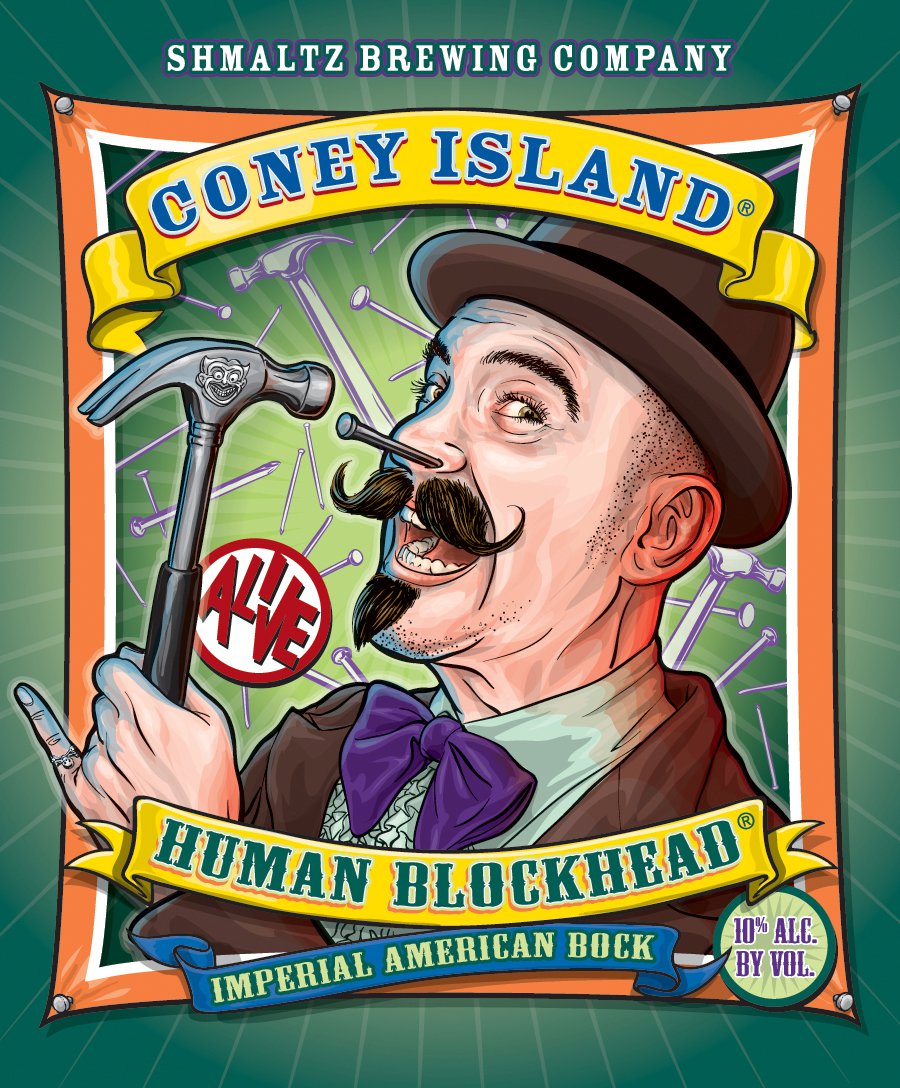
>>FINELY BREWED PROSE Though his boozy empire is no longer based in the Bay Area of his youth, we still have a soft spot in our hardened alcoholic hearts (or is that livers) for Jeremy Cowan. The founder of Shmaltz Brewing, Cowan has brought corny Jewish wit into the world of craft beers — see the label for his nut brown Messiah Bold: “the beer you’ve been waiting for” — and done so at a time when we all still considered Sam Adams a microbrew. He’s written a memoir about his rise to beer lord, which he’ll be back in the Bay promoting this week. Check out his signing at Omnivore Books on Sat/7, and tell him l’chaim for us.

>>A WEDNESDAY KNIGHT Sharon Funchess contributed vocals to a standout track on Teengirl Fantasy’s album 7AM, but her main musical project is Light Asylum, with Bruno Coviello. “Knights and Week Ends,” one of four songs on the recent tour EP In Tension, exemplifies the duo’s melding of powerfully dramatic ’80s diva vocalization and cold metallic beats. The Brooklyn-based Funchess and Coviello have an album due next year on Mexican Summer, and they return to SF for a show this month.

Light Asylum, “Dark Allies”:

>>PREPARE TO STOP The clusterfuck of a new-bike-lane-meets-intersection that is Fell and Scott streets is being revamped in an effort to un-fuck and un-cluster the mess. The center of-the-street bike lane—a recent addition to assist cyclists turning left from Route 47 on Scott to Route 30 on Fell—has proved perilous to pedestrians crossing east and west due to hordes of cyclists who don’t stop for them, and to drivers turning left from Fell onto Scott who have had to swerve to avoid oncoming cyclists in their lane. This week the city installed two more signals, which have yet to be turned on but will likely be dedicated left-turn lights for bikes and cars. Now, if the city can only do something about doofuses turning right onto Fell -– right into three lanes of oncoming traffic…like maybe a “No right turn” sign?

Signs of a messy pedestrian, cyclist, and driver intersection.

Signs of a pedestrian, cyclist, and driver intersection.

>>CINCO DE DRINKO? On the hunt for the best deal on a bucket of Pacifico bottles, we ran across Colorlines’ timely reflection on the de-politification of Cinco de Mayo. Kinda crazy how all immigrant commmunity celebrations become occasions for the country to get shit-faced (see: St. Patrick’s Day).

 >>REINSTALLATION Bliss Dance, a 40-foot sculpture of a dancing nude woman, was one of the best art projects at Burning Man last year. And this week, artist Marco Cochrane and his talented and hard-working crew have been installing the piece on Treasure Island, where she’ll be dancing for city residents until at least October. The build, sponsored in part by the Black Rock Arts Foundation, should be finished by the weekend. An opening reception is set for May 26.

Bliss Dance giving the hand on the playa in 2010. Photo by DJ Guacamole/Guacarazzi Photography


Editor’s notes

6

tredmond@sfbg.com

The candidates for mayor of San Francisco are already lining up endorsements — the Sierra Club held its interviews April 23, which seems awfully early to me, since some of the most interesting contenders in this town (Tom Ammiano, Matt Gonzalez) have a tendency to jump in at the last minute. And the filing deadline isn’t until August.

But the sooner the big names and organizations are lined up and the money is locked in, the harder it will be for anyone to pull off an August surprise. So unless the redistricting commission seriously messes with Mark Leno’s state Senate seat or Ed Lee bows to the pressure from Willie Brown, Rose Pak, and their allies and decides to go back on his promise and seek a full term, we’re probably looking at a rough approximation of what the voters will face in November.

With John Avalos in the race, the ballot’s become a lot more attractive to progressives. It’s not as if the other major candidates don’t have a lot to offer, and in some cases, they have a lot to offer to the left. There are smart, experienced, qualified people running.

But let’s be honest here: David Chiu, Dennis Herrera, Phil Ting, Leland Yee, and Bevan Dufty all operate somewhere in the squishy political center, a place where tax breaks for corporations are okay, where “homeownership opportunities” tend to trump the needs of tenants, where deals with big private developers are sculpted around the edges but never rejected outright, and where cuts in services are a larger part of the budget solution than taxes on the rich.

Michela Alioto-Pier is off on the far right of the San Francisco political world, and if she looks at all credible and gets any significant traction (and that’s a big if) she’ll be downtown’s favorite candidate. But until now, there was nobody holding the solid progressive banner.

I don’t think that means Avalos’ appeal is limited to the left; he’s in a swing district, and he’s very popular there, and he can talk about small business and community development and open, honest government. He doesn’t sound like a crazy radical; he’s polite and respectful and listens to people.

But I’m glad we have a candidate who won’t try to argue that 25 percent affordable housing at Treasure Island is something to be proud of, or that the Twitter tax break will create jobs, or that social inequality can’t be addressed through local policy. I’m glad there’s someone who can push the discussion and debate out of the middle, can force some of the others who want progressive support to take strong stands, and can liven things up a bit. Because without him, all of the candidates were sounding a lot alike — and I really don’t want to be bored this fall.

Reject the Treasure Island plan

18

EDITORIAL After a long, long hearing April 21, as the San Francisco Planning Commission prepared to vote on an ambitious development plan for Treasure Island, Commissioner Gwyneth Borden acknowledged that the plan wasn’t perfect. But, she said, on balance it ought to be approved: “Twenty five percent affordable housing is better than zero percent.”

That’s not necessarily true.

Treasure Island is an usual piece of real estate, 403 acres of artificial land created in 1937 by dumping sand and dirt on a shallow part of the bay. It’s less than two miles from downtown San Francisco — but there’s no rail service, no BART station. The only way off the island is by boat — or by driving onto a Bay Bridge that’s already jammed way beyond capacity every morning and afternoon.

The soil is unstable, prone to liquefying in an earthquake — and if sea levels rise as high as some predictions suggest, the whole place could be underwater in a few decades.

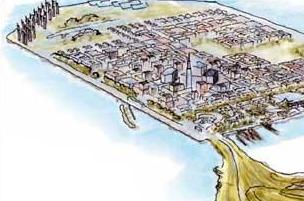
A strange hybrid agency called the Treasure Island Development Authority, created by former Mayor Willie Brown, cut a deal with Lennar Urban (the same outfit that has the redevelopment deal for Bayview Hunters Point) and several partners to construct a neighborhood of some 19,000 people on the island. Among the features: a 450-foot condominium tower and 6,000 units of high-end housing. The developers brag that a fleet of new ferries will offer a 13-minute ride to the city and that some streets will be designed for pedestrians and bicycles.

But the fact remains that the developers want to add 19,000 new residents — almost all of whom will work off the island somewhere — to a place that has no credible transportation system. City studies show that even with an extensive (and costly) ferry service, at least half the new residents would drive cars to work (and, presumably, to shop, and go to movies, and eat and drink), joining the mob of vehicles heading east or west on the bridge. That’s almost 10,000 new cars each day trying to jam onto a roadway that can’t handle the existing traffic. The backups would stretch well onto San Francisco surface streets and as far back as Berkeley.

A rail line on the Bay Bridge would solve part of the problem. So would bike lanes. Neither option is even remotely possible in the foreseeable future. Free, or heavily subsidized ferries could, indeed, be a positive alternative — but who is going to pay for that service? Nonsubsidized ferries would be far more expensive than current Muni or BART service, a particular burden on the residents of the below-market housing.) And does anybody really think there’s going to be enough ferry capacity to carry 10,000 people a day to downtown SF, the East Bay, and the Peninsula?

The bottom line: this isn’t a good deal for San Francisco. The affordable housing level is too low. The transportation problems are nightmarish. The last thing Treasure Island needs is a 450-foot tower.

There’s no rush to approve this — and no immediate downside to waiting for a better deal. The supervisors should tell Lennar to come back with a project that has fewer residents, better transit options, and more affordable housing. Because zero is looking a lot better than what’s on the table.

PS: The 4-3 Planning Commission vote demonstrated exactly why it’s important to have key commission appointments split between the mayor and the Board of Supervisors. The mayoral appointees all rolled over — but at least the board-appointed members made strong points, forced real debate, and gave the supervisors plenty of ammunition to demand a better deal.

Editorial: Reject the Treasure Island plan

1

After a long, long hearing April 21, as the San Francisco Planning Commission prepared to vote on an ambitious development plan for Treasure Island, Commissioner Gwyneth Borden acknowledged that the plan wasn’t perfect. But, she said, on balance it ought to be approved: “Twenty five percent affordable housing is better than zero percent.”

That’s not necessarily true.

Treasure Island is an usual piece of real estate, 403 acres of artificial land created in 1937 by dumping sand and dirt on a shallow part of the bay. It’s less than two miles from downtown San Francisco — but there’s no rail service, no BART station. The only way off the island is by boat — or by driving onto a Bay Bridge that’s already jammed way beyond capacity every morning and afternoon.

The soil is unstable, prone to liquefying in an earthquake — and if sea levels rise as high as some predictions suggest, the whole place could be underwater in a few decades.

A strange hybrid agency called the Treasure Island Development Authority, created by former Mayor Willie Brown, cut a deal with Lennar Urban (the same outfit that has the redevelopment deal for Bayview Hunters Point) and several partners to construct a neighborhood of some 19,000 people on the island. Among the features: a 450-foot condominium tower and 6,000 units of high-end housing. The developers brag that a fleet of new ferries will offer a 13-minute ride to the city and that some streets will be designed for pedestrians and bicycles.

But the fact remains that the developers want to add 19,000 new residents — almost all of whom will work off the island somewhere — to a place that has no credible transportation system. City studies show that even with an extensive (and costly) ferry service, at least half the new residents would drive cars to work (and, presumably, to shop, and go to movies, and eat and drink), joining the mob of vehicles heading east or west on the bridge. That’s almost 10,000 new cars each day trying to jam onto a roadway that can’t handle the existing traffic. The backups would stretch well onto San Francisco surface streets and as far back as Berkeley.

A rail line on the Bay Bridge would solve part of the problem. So would bike lanes. Neither option is even remotely possible in the foreseeable future. Free, or heavily subsidized ferries could, indeed, be a positive alternative — but who is going to pay for that service? Nonsubsidized ferries would be far more expensive than current Muni or BART service, a particular burden on the residents of the below-market housing.) And does anybody really think there’s going to be enough ferry capacity to carry 10,000 people a day to downtown SF, the East Bay, and the Peninsula?

The bottom line: this isn’t a good deal for San Francisco. The affordable housing level is too low. The transportation problems are nightmarish. The last thing Treasure Island needs is a 450-foot tower.

There’s no rush to approve this — and no immediate downside to waiting for a better deal. The supervisors should tell Lennar to come back with a project that has fewer residents, better transit options, and more affordable housing. Because zero is looking a lot better than what’s on the table.

PS: The 4-3 Planning Commission vote demonstrated exactly why it’s important to have key commission appointments split between the mayor and the Board of Supervisors. The mayoral appointees all rolled over — but at least the board-appointed members made strong points, forced real debate, and gave the supervisors plenty of ammunition to demand a better deal. *


The Treasure Island nightmare

83

There are times when people like me, who think development should be driven by public needs, not private profit, are in something of a bind. I don’t like the Lennar plan for Bayview Hunters Point — but I agree that doing nothing isn’t a very good alternative. Sometimes, the “no-project” alternative isn’t an alternative at all — which gives the developers a huge hand up in negotiations with the city. Gee, you want affordable housing? We can give you 15 percent — or we can walk away and you’ll get nothing.


But when it comes to Treasure Island, I think we’re in a different situation. The proposed development is so out of whack, so looney, that it makes no sense to me — and the alternative of doing nothing, at least for now, isn’t so bad at all.


The plan calls for 19,000 new residents on the 403-acre artificial island in the Bay. At most, 25 percent of the units would be below-market. Which means some 13,700 rich people, virtually all of them with jobs in San Francisco, the Peninsula or the East Bay, would be plunked into a place with no viable transportation alternatives.


I wonder if any of these planners have ever tried to leave TI by car; it’s a nightmare. And there’s no way to fix it: Even if they build a new acceleration ramp (the current stop-and-go into 60-mile-an-hour traffic is a death trap), the Bay Bridge is already at full capacity during a very long rush hour in the morning and evening. And does anybody really think those 13,700 people will all take the ferry to work every day?


Impossible: There’s no way to provide enough ferry service for that population at anything resemble the cost the developers are willing to pay. How about all the Google and Yahoo and Genentech employees (and that’s a big part of the population buying new high-end condos in San Francisco)? You think they’re all going to take a ferry to downtown SF then hop on a bus or train then take another bus to the office? Not these folks. A lot of them will want to drive.


And the bridge, which is already backed up, will back up further, driving more traffic onto the streets of SOMA and creating a slowdown all the way back to Berkeley.


Meanwhile, the island is sinking, and water levels are rising. Forget the fancy engineering plans to sink stone columns deep into the clay under the Bay; what happens when the water rises? Are we going to surround the entire place with seawalls?


And here’s the bottom line: The current situation isn’t all that awful. There’s a small amount of housing out there, some of it affordable. There’s lots of open space. A little effort and the playing fields and parkland could be upgraded and TI could, for the intermediate term, be a day-use area for the city. Not a terrible alternative.


At some point, either the island’s going to sink back into the Bay or it’s going to have to be completely redeveloped. But right now, with no public money available, we’re at the whims of private developers. And what they’re offering doesn’t even remotely meed the city’s needs — and will create a catastrophic transportation problem.


So the supervisors are in a great position to negotiate. We want 50 percent affordable housing, we want the developer to pay for substantially increased bus and ferry service (or maybe we want to add a rail line to the Bay Bridge). And if that’s not something the developers want to do, fine: we’ll wait. Nothing wrong with that.


Board considers extra $75.4 million for Mission Bay redevelopment

0

UPDATE: An earlier version of this post reported that the Board was meeting in closed session. This was incorrect.

The Board is meeting today  to consider amending the San Francisco Redevelopment Agency’s (SFRA)  budget to issue an additional $70 million in tax increment bonds and appropriate $75.4 million ($70 million in bond proceeds, plus $5.4 million tax increment). The request, which comes on the heels of last year’s $64 million request, represents a 109.4 increase of tax increment bonds in 2010-2011. The city says thiis has nothing to do with Gov. Jerry Brown’s proposal to eliminate redevelopment agencies. But the last-minute timing of today’s session looks a tad fishy at best. And it’s playing out as a vote on Treasure Island’s final environmental impact report approaches, and against a backdrop of extreme funcertaintly related to all things Redevelopment, as Mayor Ed Lee and other city leaders try to figure out ways to prevent or reduce the affordable housing fallout from the governor’s elimination proposal.

According to a Budget and Legislative Analyst’s summary of today’s request, the requested bond issuance and expenditure is part of the “SFRA’s normal course of fulfilling its obligations under the tax increment allocation pledge agreements between the city, SFRA and FOCIL-MB (Catellus’ successor entity at the Mission Bay redevelopment sites), and not as a result of the Governor’s proposal to eliminate local redevelopment agencies. Ms. Lee [deputy executive director at the SFRA] states, that, as of the writing of this report, the impact of the Governor’s proposal on the Mission Bay Redevelopment Project is currently unclear and ambiguous as to whether approval of the Governor’s proposal would affect the requested bond issuance and expenditure authority.”

“At the time of the development and approval of the FY 2010-2011 budget, the Agency and Tax Assessor did not have available tax roll information that resulted in a significant increase in property taxes in Mission Bay due to the accelerated assessment agreement between the Assessor and the Agency,” states today’s Board resolution that Mayor Lee sponsored, explaining why there’s a request for an additional $70 million in bonds, so soon on the heels of the $64 million that the Board approved last year.

“The Agency wishes to amend its budget for the fiscal year 2010-2011 to permit the receipt of additional tax increment of $5.44 million and bond proceeds in the amount of $70 million for the purposes of low moderate housing and for the reimbursement of public improvements made by Catellus pursuant to the tax increment allocation pledge agreement between the City and County of San Francisco, San Francisco Redevelopment Agency and Catellus made in November 16,1998 for Mission Bay North and South,” the resolution continues.

 Mission Bay North and South are two separate redevelopment areas that encompass 303 acres, bounded by King Street and AT&T Park on the north, the San Francisco Bay and the I-280 freeway on the east and west, and Mariposa Street to the south, according to Redevelopment Agency documents.

The Budget and Legislative Analyst notes that of the $5.4 million in additional tax increment, an estimated $3.48 million would fund a portion of the Agency’s required educational revenue augmentation fund payment to the state for FY 2010-2011. And that the remaining $1.95 million would be distributed to tax entities, with $870,400 to be expended on the agency’s low and moderate income housing fund.

 The BLA notes that the proposed sale of $70 million in tax increment bonds will provide $60.345 million bond proceeds, including $12 million (20 percent) to fund the construction of 1180 4th Street, a development of 150 units of family rental housing, including 25 units for formerly homeless families and $48. 276 million (80 percent) to reimburse Catellus’ successor, FOCIL-MB, LLC, for public infrastructure development that FOCIL-MB constructed..

“If the proposed resolution is approved, of the $177 million total estimated debt service, $100, 890,000 or 57 percent will be paid from the City’s General Fund. The City’s General Fund estimated additional annual cost would be $3,648,000 for the first 20 years, decreasing to $2,793,000 for the next ten years.” The BLA concludes, explaining that approval of the proposed resolution is a Board policy decision because it adds up to a total General Fund cost of more than $100 million.

 According to the BLA report, Amy Lee, SF Redevelopment Agency deputy executive director, the requested $70 million in tax increment bonds would be sold in late March 2011, “such that no debt service payments would be required in FY 2010-2011.

 The BLA also notes that if the Board approves the proposed resolution, the net effect of each property tax dollar expended for tax increment that is provided to SFRA would result in a reduction of $0.57 on each dollar from the city’s General Fund.

“In other words, for each tax increment dollar provided to SFRA, the City would no longer have to provide payments to other tax entities,” the BLA observes.

These entities include the city’s Children’s Fund, Library Preservation Fund, Open Space Acquisition Fund, and the General City Bond Debt fund, the Community College district, the San Francisco United School District, BART, and the Bay Area Air Quality Management District, which total approximately $0.43 of each property tax dollar.

It’s because of these property tax dollar equations that the annual cost to the city’s general fund for proposed increased debt service would rise, if the Board approves today’s Redevelopment resolution, by more than $100 million over the next 30 years.

And as local Democratic Party chair and former Board President Aaron Peskin explains, there’s nothing much the Board can do about the deal today, but they might want to reconsider getting into more deals like this at Treasure Island and beyond, in future.

“A deal is a deal is a deal,” Peskin said. ‘So, there’s nothing the Board could do differently, but that’s $3.648 million that otherwise would be going into the General Fund, and it’s a sign we should pay attention to, when considering Treasure Island, as deals like this will continue to impoverish the General Fund.”

 “Even though they deny it has nothing to do with Gov. Jerry Brown’s pending legislation to eliminate redevelopment agencies, I have never seen something scheduled so quickly,” Peskin added, noting that the Board’s agenda is published Thursday evening or Friday morning, but this item wasn’t on that agenda, hence the need to publish a separate notice.

Meanwhile, Treasure Island’s final environmental impact report has been released, and the way the current plan looks, will forever alter our view of the Bay.

“It will have enormous impacts on services for the City and traffic for the entire Bay Area,” Saul Bloom, executive director of Arc Ecology, told the Guardian.

On April 7, a joint session of the San Francisco Planning Commission and Treasure Island Development Authority will be meeting to consider certifying the EIR, but Arc is asking for an extension of two more weeks to provide the public with 42 days for review.

“Fourteen additional days for public review is a very modest request for a project with such significant impacts yet, the City has thus far refused,” Bloom notes.

Redevelopment debate full of bum choices

3

At the Potrero Hill Democratic Club’s debate about Gov. Jerry Brown’s proposal to ax local redevelopment agencies to balance the state’s $26 billion deficit, folks attempted to evaluate if redevelopment agencies are essential for job creation and community revitalization, if reform, not total destruction, is possible, and if bum choices are all we have to look forward to.

The Chronicle’s Marisa Lagos, who moderated the debate, noted that redevelopment agencies were created over 60 years ago to create economic development opportunities by borrowing against future tax increases that agencies think they can create.

 “That’s a fancy way to say ‘borrow against future taxes,’” Lagos joked, pointing to the Candlestick Point/Hunters Point Shipyard project as an example of an ongoing project, and the Yerba Buena project as an example of a completed success.

 “The Governor is arguing that when the state is cutting schools and other essential services, this is not the best use of tax dollars,” Lagos stated.

 Panelist Olson Lee, deputy executive director of San Francisco’s Redevelopment Agency, pointed to affordable housing as evidence of the agency’s positive impact.

 “I think Redevelopment is important because of the good things it has done,” Lee said, pointing to 11,000 units of affordable housing that the agency helped build in the city.

 Panelist Carroll Wills, the communications director for the California Professional Firefighters, said “many wonderful projects” have occurred under Redevelopment. But he pointed to what he called “a decade of tricks and games,” on the part of Redevelopment agencies as one reason why the state is in a fiscal crisis that threatens firefighters’ jobs.

 “Concrete does not trump core services,” Wills said, arguing that it’s not clear that many affordable housing projects would not have been built without redevelopment aid

Arc Ecology’s Saul Bloom accused Gov. Brown of “short-circuiting” what could have been an important statewide discussion about redevelopment reform, with his bombshell suggestion in January to eliminate redevelopment agencies entirely

 “I’m sympathetic to the argument that Redevelopment takes money away from core services,” Bloom said. “But what do we do to replace it? And is economic development versus core services a false choice?”

Lee pointed to Mission Bay as further evidence of Redevelopment’s success.

“It was considered a brown field, and through development, it’s much different,” Lee said, noting that 20 percent of tax increment financing goes to the General Fund to pay for redevelopment infrastructure. “Clearly the university would not have been there. It was an opportunity to place UC there and generate economic opportunities.”

 Wills argued that Redevelopment Agencies are a luxury we can no longer afford, even as he acknowledged being unfamiliar with local redevelopment projects.

“At best, redevelopment moves around the pieces,” Wills said. “It doesn’t increase economic development and it doesn’t necessarily pay for itself.”

Bloom noted that developments like Mission Bay are dependent on large institutions, like the University of California, which can’t be forced to implement city laws like local hire.

And he said he found it “disappointing” that there wasn’t much more of a dialogue around the plans to redevelop Candlestick Point and the Shipyard, despite the fact that the city held hundreds of meetings over the past decade.

“It was more a case of, Here’s our idea, tell us what you think of it,’” Bloom said. “Perhaps if we had invited the nation’s largest industrial developer, instead of the nation’s second largest home developer, we would have had a different dialogue.”

 Lee replied that the Shipyard has been under discussion for 15 years.

“It’s a very large project, the largest in the Western United States,” Lee said. “It’s a brownfield, though I know Espanola will say it’s a Superfund site,” he continued, as Bayview elder Espanola Jackson bristled under her hat, and the audience wondered if Lee meant that the US E.P.A. somehow got it all wrong.

Lee further shocked audience members by saying Treasure Island was not a redevelopment project (leading Bloom to clarify that Treasure Island is under the jurisdiction of the local Treasure Island Development Authority, if not the SF Agency).

“People felt they wanted economic development at the shipyard,” Lee continued, noting that the neighborhood suffered after the Navy withdrew from the shipyard in the 1970s. But he did not mention that major bones of contention around the redevelopment proposal, centered on plans to build 10,000 mostly market-rate condos, a bridge over an environmentally sensitive slough, the taking of a chunk of the community’s only major park, and no proof that thousands of promised jobs will materialize.

Wills noted that most local redevelopment commissions are peopled by the members of each municipality’s city council, a situation he believes leads to a lack of accountability. But members of the audience, including this reporter, noted that San Francisco’s Redevelopment Agency consists entirely of mayoral appointees, who, unlike elected officials, can’t easily be voted off the proverbial island.

It was at this point that panelist Calvin Welch, a longtime housing activist, showed up at the debate, apologizing for being late, but blaming his tardiness on being on a phone call with Sen. Mark Leno to discuss Brown’s redevelopment proposal.

And from there, the conversation veered towards discussions of what could happen to existing redevelopment projects if Brown goes through with his elimination threat.

 Lee noted that if projects simply had a disposition and development Aagreement (DDA), but Redevelopment was no longer there, there would be no project financing. “The devil’s in the details,” Lee said. “Because if you don’t have bonds, what’s the point of having an agreement.”

 Wills opined that Gov. Brown’s proposal has “a vehicle to roll back the bum’s rush” of projects that local municipalities have been trying to push across the finish line, ever since Brown dropped his Redevelopment elimination bomb in January.

 Welch went off on a historical riff about how the San Francisco Redevelopment Agency (SFRA) was met with controversy and outrage until 1988, when Art Agnos was elected mayor, and brokered a deal under which SFRA could do tax increment financing, provided the majority of funds were used for affordable housing.

“It became a finance agency to build infrastructure and affordable housing,” Welch said, noting that attempts to build out Mission Bay around commercial offices and high rises failed, until the Agency used tif to redevelop the site.

 “But mark my words, Lennar is going to come out of this just fine,” Welch added, reminding me of a recent comment that former Lennar executive Emile Haddad reportedly made that suggests Haddad believes the California housing market is poised for a rebound.

(The article outlined how Haddad sold 12,000 acres in California for a $277 million profit at the housing market’s peak four years ago, reacquired it at half the price in 2009, and is now saying it’s time to build in his new role as CEO of FivePoint Communities Inc., which is developing four new master-planned communities with a combined 45,000 residences at Newhall Ranch north of L.A., the El Toro Marine Corps Air Station in Orange County, the Candlestick Point/Hunters Point shipyard and Treasure Island  in San Francisco, with investors including Lennar, Michael S. Dell’s MSD Capital LP, Ross Perot Jr.’s Hillwood Development Co. and Rockpoint Group LLC. “I don’t want the party to show up and I’m not dressed,” Haddad, 52, reportedly said in a recent interview. “When the market says ‘I’m here,’ we’ll be one of the few that can deliver inventory.” 

(The Haddad article, which appears to be a non-bylined reprint from Bloomberg News, also claimed that Hunters Point sales are set to begin by late 2012 with prices starting at $525,000, as the Navy continues its cleanup of the 700-acre site. And that the plan now calls for as many as 12,000 homes, 3 million square feet (of commercial space and a new stadium for the 49ers. And that 7,000 homes may eventually be built on Treasure Island and adjoining Yerba Buena Island, under terms of a final development agreement that may go before the San Francisco Board of Supervisors for approval in May, with units averaging  $800,000 and reaching up to $2 million, according to Lennar V.P Kofi Bonner.)

And during the Potrero Hill Dems debate, Bloom noted that the Treasure Island plan is being “sped up” and that the Board is expected to vote on the plan as soon as possible. “But since these plans were not bonded before January [when Gov. Brown took office], what’s the point of speeding up the process?” Bloom asked.

“We’re basically seeing a brick wall,” Welch interjected. “There are virtually no funds for permanent affordable housing in San Francisco.But Jerry Brown is not going to commit financial hari kari. Every major developer of market rate housing will come out just fine, because of state actions, not because of a local vote. Deals are going to be made. It’s the question of affordable housing that’s our challenge. You’re gonna be stuck with public housing, as it is, unless there’s affordable housing financing.”

 Wills claimed that Prop. 22, which voters approved last November, “created a mechanism so rigid,” that the state’s only option was to eliminate redevelopment. “Basic services are dying on the vine,” he said. “We can’t afford to give developers subsidies.”

 Lee noted that SFRA built thousands of affordable units over the years that saved the city thousands in terms of core services it would otherwise have to provide. “Affordable housing is so basic, you can’t do things we take for granted if you are living under a freeway,” he said.

 Bloom suggested Redevelopment could do a better job of economic development, including the creation of permanent and sustainable jobs, like his proposal to create maritime uses at the Shipyard—something not entertained under the city’s Shipyard plan.

 Welch connected the dots between the taxpayer revolt that led to Prop. 13’s passage and the current fiscal woes of municipalities unable to raise taxes on commercial development. “That’s a killer,” he said, noting that housing costs more to build and maintain than it generates property taxes, especially if it’s family housing. ‘It’s those damn kids,” he joked.

Welch noted that Gov. Brown used redevelopment money to enable market rate development in downtown Oakland when he was mayor of Oakland—and claimed that Brown equated affordable housing with crime, at the time.

“We love Brown better than Meg Whitman, but it’s 2011 and we face bum choices.”

Community advocate Sharen Hewitt, who heads the C.L.A.E.R. project, asked if the panel thought San Francisco could be a “demonstration model” for using Redevelopment funds to build 50 percent affordable housing.

Welch said conversations have “already happened” between Mayor Ed Lee and Gov. Jerry Brown that have led him to believe that, “all of San Francisco’s redevelopment projects will be made whole, affordable housing will be protected and Brown will be committed to a San Francisco model.”

“It’s like the film Casablanca, when people are shocked to find out that gambling is going on in a casino,” Welch said. “People are shocked to find out that capital talks in a capitalist system.”

 Espanola Jackson asked Welch what will happen to the shipyard development, in face of a lawsuit that POWER brought that’s due to be heard March 24.

“The shipyard plan has a political function,” Welch said, noting that it was the result of a citywide vote in 2008. ‘We opposed it, but we lost. The structure of that deal flows from the vote.”

 City College Board member Chris Jackson expressed frustration that the Redevelopment conversation had devolved into a housing conversation.

“Mission Bay is all about biotech, but who works at UCSF?” Jackson said, noting that Redevelopment, as a state-funded agency, does not have to agree to the city’s newly approved local hire law.

Welch acknowledged that there has never been a study to determine the tipping point required to lift the Bayview out of poverty.

Lee admitted that Redevelopment’s focus has been housing, “because San Francisco is such an unaffordable city.” But he claimed that SFRA had a “much more aggressive program on local hire than the city, for many years.” Noting that SFRA has tried to attract restaurants and food establishments to Third Street, over the years, Lee said, “It hasn’t been something we’ve been particularly successful at.”

Welch opined that the “skills and abilities of the San Francisco community are far greater at stopping projects and protecting neighborhood character, but we can’t figure out how community-based organizations can employ their own people.”

 And then it was time to go back out into the cold March wind and try to wrap our minds about the true meaning of “bum choices” in 2011.


Our Weekly Picks: February 16-22

0

WEDNESDAY 16

MUSIC

Dum Dum Girls

Dee Dee, bandleader of Dum Dum Girls, a 1960s pop-meets-early punk, all-girl four piece, is no dummy. Named not for the lollipops, but after the Vaselines’ album Dum-Dum and the Iggy Pop song “Dum Dum Boys,” DDG was initially a solo project on Dee Dee’s DIY record label, Zoo Music. To take her music beyond her bedroom, she called on the help of her friends: Jules (guitar and vocals), Bambi (bass), and Sandy (drums and vocals). DDR’s most recent album, Sub Pop release I Will Be, features Nick Zinner of the Yeah Yeah Yeahs, Crocodiles’ Brandon Welchez, and Los Angeles musician Andrew Miller. (Jen Verzosa)

With Minks and Dirty Beaches

9 p.m., $12

Bottom Of The Hill

1233 17th St., SF

(415) 621-4455

www.bottomofthehill.com


THURSDAY 17

EVENT

The Tribes of Burning Man

Either you are or you aren’t: I’m an aren’t. As in, not a Burning Man person. But that won’t stop me from trumpeting the release of The Tribes of Burning Man, the end result of six years of work by Steven T. Jones, known around the Guardian as Steve the City Editor and on Burning Man’s playa as “Scribe.” Chances are you’ve seen Jones’ Burning Man coverage in the Guardian’s pages over the years; his new book examines the history and philosophy of the annual event, as well as the ways that Burning Man has become a year-round lifestyle for some and a (counter-) cultural touchstone for hundreds of thousands of desert-goers. The Tribes launch party features readings by Jones and appearances by Burning Man leader Larry Harvey, circus performers Fou Fou Ha, beat boxer Kid Beyond, and other colorful characters from the book. (Cheryl Eddy)

7 p.m., $5 ($20 with book)

Project One

251 Rhode Island, SF

www.p1sf.com


MUSIC

3 Inches of Blood

Though it has endured many lineup changes, 3 Inches of Blood is always instantly recognizable, thanks to the falsetto assault of vocalist Cam Pipes (his real name). Drawing on power metal and thrash but hewing closely to the classic sounds of the New Wave of British Heavy Metal, Pipes and his Vancouver-based band have plied their rock the world over. Fire Up the Blades (2007) experimented with polished, immaculate production, with Slipknot drummer Joey Jordison producing, but 2009 release Here Waits Thy Doom stripped away the gloss, returning the band to its raw, urgent roots. Now that it’s coming to town, you won’t have to wait for your doom any longer. (Ben Richardson)

With Eluveitie, Holy Grail, System Divide

7:30 p.m., $20

Slim’s

333 11th St., SF

(415) 255-0333

www.slims-sf.com


FILM

“Around the World in 33 Films: The Jeonju Digital Project”

The still-young Jeonju International Film Festival is exceptional for privileging film culture over film markets. To take one significant example of this emphasis, for each edition the festival commissions three half-hour digital films by major auteurs. It’s almost impossible to imagine an American festival apportioning funds in this internationalist, art-first manner. Yerba Buena Center for the Arts screens all 33 Jeonju commissions from 2000-10 over the next two weeks. It’s an ambitious — and, one imagines, costly — program, so make it count. This first show features an especially strong class of 2010 (James Benning, Denis Côté, and Matías Piñeiro), with works by the new century’s preeminent film artists (Pedro Costa, Apichatpong Weerasethakul, Jia Zhangke, etc.) waiting in the wings. (Max Goldberg)

Feb 17–27 (2010 program: tonight, 7:30 p.m.), $8

YBCA Screening Room

701 Mission, SF

(415) 978-2700

www.ybca.org


FRIDAY 18

MUSIC

Chromeo

At first listen, Chromeo’s music would seem to run the risk of being a little tough to take seriously — if only it wasn’t so damn well-executed. Instead, the Montreal-based electro-funk duo creates perfectly retro-minded jams that skimp refuse to scrimp on creative songcraft or purely visceral dance floor diversion. The fantastic talk box solos don’t hurt either. Taking its cues from classic era funk, Hall and Oates-style blue-eyed soul, and modern synthpop, Chromeo’s 2010 album Business Casual has led to a slew of strong reviews, festival appearances, and a top 10 slot on Billboard’s dance/electronic chart. (Landon Moblad)

With MNDR and the Suzan

8 p.m., $25

Fox Theater

1807 Telegraph, Oakl.

(510) 548-3010

www.thefoxoakland.com


MUSIC

Bart B More

How old is Bart B More? In videos from his recent Asian tour, he’s got the pallid complexion that my friends did in high school. Maybe a result of the DJ lifestyle, spending too much time in clubs around 2 a.m. (or being Danish). The rest of Bart B’s existence, from what I can tell, consists of lifting weights and looking at Lamborghinis. Ah, to be an international beat maker, an up-and-comer who’s reputedly worth checking out. Anyway, Blasthaus resident Nisus has proven himself a reliable dance floor driver, delivering a binaural set at the Treasure Island Music Festival and excellently setting up the Twelves earlier this month. (Ryan Prendiville)

With Nisus and Tron Jeremy

9 p.m., $12.50

Rickshaw Stop

155 Fell, SF

(415) 861-2011

www.rickshawstop.com


MUSIC

Mark Growden

Back from another long stretch of touring and recording, wandering minstrel Mark Growden lands at the Brava Theatre with a brand new album Lose Me in the Sand and a posse of old-school Tucson troubadours as the backing band. Less sweepingly-thematic than 2010’s Saint Judas, the new album combines oddments of philosophy, romance, humor, and reminiscence, covering familiar tunes in startlingly unfamiliar ways, plus a handful of originals including a breakneck-paced courting song “Settle in a Little While” and a sepia-toned hometown lament “Killing Time.” Growden’s long-time collaborator and Porto Franco labelmate Seth Ford Young opens and also releases his eponymous debut album. (Nicole Gluckstern)

With Seth Ford Young

Fri/18–Sat/19, 8 p.m., $20–$50

Brava Theatre

2781 24th St., SF

(415) 641-7657

www.brava.org


PERFORMANCE

Move Thru Me

“I’m with the band” may sound smoother than “I’m with the dance company,” although either could be stated by the performers of Move Thru Me, a collaboration of Christine Cali’s Cali & Co Dance and Matthew Langlois’ the Welcome Matt band. A hybrid of rock ‘n’ roll and modern dance, the performance responds to the pursuit of a creative life and ongoing artistic practice. Prior to joining forces, Cali and Langlois each worked as independent artists for more than 15 years. The work includes a soundtrack of original music as well as online dance videos. As with any good concert tour — T-shirts! (Julie Potter)

Fri/18–Sat/19, 8 p.m. (also Sun/20, 5 p.m.), $10–$20

Dance Mission Theater

3316 24th St., SF

(415) 826-4441

www.dancemission.com


SATURDAY 19

EVENT

“From Produce to Production: New Traditions in Bay Area Food Culture”

Bay Area Now (BAN6), a triennial celebrating local artists from diverse disciplines, begins with a series of Bay Area-centric conversations about food, environmentalism, futurism, community activism, radical identities, and technology. The first roundtable discussion addresses new practices for growing, preparing and shopping for food, during which YBCA Executive Director Ken Foster will speak with food luminaries Bryant Terry, eco-chef and activist from Oakland and author of Vegan Soul Kitchen; Novella Carpenter, journalist, farmer and author of Farm City; and Leif Hedendal, a self-educated chef at San Francisco’s Greens and Oakland’s Citron restaurants, whose Bay Area culinary events combine art and food. (Potter)

1 p.m., free

Yerba Buena Center for the Arts

701 Mission, SF

(415) 987-2787

www.ybca.org


EVENT

The Fortune Cookie Chronicles

Planning on consuming a little New Year’s nosh during this weekend’s bunny-fueled festivities? Then you might be interested to know that the Japanese — not Chinese — invented the fortune cookie; Chinese takeout cartons can be found everywhere but China; and chop suey may or may not be an elaborate American hoax. I see all you smartphone nerds plinking “chop suey” into snopes.com right now, but save yourselves the trouble: New York Times reporter and author of The Fortune Cookie Chronicles Jennifer 8. Lee is here to unravel the history of Chinese cookery — and just in time for the Chinese New Year. The book is also seasoned with a healthy smattering of SF history to spice things up. (Emily Appelbaum)

2:30–4 p.m., free

San Francisco Public Library

Chinatown Branch

1135 Powell, SF

(415) 557-4400

www.sfpl.org


SUNDAY 20

EVENT

“San Francisco Mixtape Society presents Guilty Pleasures”

Listening to Ke$ha on repeat? Excited about Britney Spears’ upcoming release, Femme Fatale? Love to share music? Then the San Francisco Mixtape Society has you covered. It presents “Guilty Pleasures,” a night of music mixtape exchanges. Assemble a mixtape according to the theme in any format — cassette, CD, or USB — and leave with a fellow attendee’s mixtape; they’ll be exchanged throughout the evening via a raffle. Those who come armed with tunes will receive a free drink — and all the joy guilty pleasures can provide. (Verzosa)

4–6 p.m., free

Make-Out Room

3225 22nd St., SF

(415) 647-2888

www.sfmixtapesociety.com


MONDAY 21

EVENT

“The Cleveland Confidential Book Tour”

As the guitarist for Rocket from the Tombs and the Dead Boys, Cheetah Chrome helped write the sonic blueprint for punk rock — and now he’s written an autobiography, Cheetah Chrome: A Dead Boy’s Tale From The Front Lines of Punk Rock, which chronicles his explosive life and his role in one of the most infamous movements in modern pop culture. Joining him for “The Cleveland Confidential Book Tour” are Mike Hudson from the Pagans and Bob Pfeifer from Human Switchboard; don’t miss your chance to hear the story straight from the mouths of a triumvirate of punks’ founding fathers. (Sean McCourt)

Tonight, 6 p.m., $10

Hemlock Tavern

1131 Polk, SF

(415) 923-0923

www.hemlocktavern.com.

Tues/22, 7 p.m., free

Moe’s Books

2476 Telegraph, Berk.

(510) 849-2087

www.moesbooks.com

Feb. 23, 7 p.m., free

Gallery Fifty24

218 Fillmore, SF

www.noisepop.com


TUESDAY 22

MUSIC

Odd Future

The Internet has birthed yet another rap group with disturbing lyrics (see also: Die Antwoord), but this time there’s no doubt regarding the collective’s genuine intentions. Members of Los Angeles hip-hop skate crew Odd Future Wolfgang Kill Them All (OFWKTA) range in age from 16 to 23 and wax philosophical about typical teenage concerns, from school and love to murder and bondage. Sometimes the music comes off like a hip-hop parallel to horror metal, but ultimately Odd Future is less about fetishizing violence than it is about offering an unfettered forum for the group’s personalities. Though their ages imply novelty, listening to the sharp, dense flow of Earl Sweatshirt or the lo-fi contorted funk of Tyler the Creator confirms there can be no doubt that these kids are headed for big, big things. (Peter Galvin)

9 p.m., $16

Slim’s

333 11th St., SF

(415) 255-0333

www.slims-sf.com

The Guardian listings deadline is two weeks prior to our Wednesday publication date. To submit an item for consideration, please include the title of the event, a brief description of the event, date and time, venue name, street address (listing cross streets only isn’t sufficient), city, telephone number readers can call for more information, telephone number for media, and admission costs. Send information to Listings, the Guardian Building, 135 Mississippi St., SF, CA 94107; fax to (415) 487-2506; or e-mail (paste press release into e-mail body — no text attachments, please) to listings@sfbg.com. Digital photos may be submitted in jpeg format; the image must be at least 240 dpi and four inches by six inches in size. We regret we cannot accept listings over the phone.

Highlights of Ed Lee’s nomination

25

An awful lot went down at City Hall today: four Board members were termed out, new Board members were moving into their offices, the old Board nominated Ed Lee as interim mayor, and Gavin Newsom revealed he’ll be gone as mayor by Monday afternoon. Here in no particular order are some of the highlights:


When termed-out D6 Sup. Chris Daly suggested that Rose Pak be nominated mayor, since she apparently managed to broker the Lee deal in three short days, Pak shot back, “I would do it, only if Chris Daly would be my Chief of Staff.”


Pak told me that she persuaded Lee to take the job, over the cell phone, while he was at the airport in Hong Kong.


Pak outlined her reasons for supporting Ed Lee as mayor. “Ed Lee has devoted 35 years to San Francisco. He’s earned his stripes. He’s the most qualified, the most unifying agent, and the most talented.”


 The crowd of seniors from the Self Help for the Elderly non-profit who crammed City Hall today are a likely preview of things to come during the mayor’s race.


 Board President David Chiu’s insistence that there were no back room deals. “Shortly after Gavin Newsom was elected Lt. Governor, I said Ed Lee should be considered as a candidate,” Chiu told me. “There was never a deal.”


The strong sense that Chiu is running for mayor in November, though he hasn’t filed. Asked if he was running, Chiu said. “I’m here at the Board focused on the work.” Asked if he wasn’t running, Chiu said, “I’m here at the Board focused on the work.” (That’s not a very convincing denial, David!)


On being reminded that the Year of the Rabbit kicks off in February, Chiu added,  “Hopefully, this will be a very fortunate year for San Francisco.”


Oakland and San Francisco will both have Asian American mayors—160 years after Chinese immigrants first settled in San Francisco and 129 years after the Chinese Exclusion Act sought to prevent these immigrants from rising to the top.


The rejoicing that reportedly is going in the Asian community, right now.“Chinatown is excited,” a reporter for Sing Tao Daily told me. “Ed Lee is a low-key kinda guy. No one really knows him, but as former DPW director, he was always filling up pot holes.”


The stated hope that Lee will support Sup. Avalos local hire ordinance, which kicks in Feb. 23, implement Sup. David Campos’ due process for immigrant youth ordinance, and enforce the recommendations of the Mayor’s African American Out Migration Task Force.


The growing sense that Sup. John Avalos is a strong contender as new Board President.


Sharen Hewitt’s observation that burgeoning racial tensions between African Americans, Asian Americans and Latinos need to be addressed. Now.


Julian Davis’ observation that while the way Lee was appointed is not something San Francisco should be proud of, the fact that we now have an Asian American mayor with the almost unanimous support of the old Board is (Daly was the lone dissenter).


Newsom’s reminder that the old Board’s vote was symbolic.“Today was an extraordinary historic vote,” Newsom said. “But remember, it’s symbolic. The new Board will make the appointment.”


 Newsom’s description of Lee as a ‘recruitment” as he, too, insisted there were no backroom deals. “There were no deals, no backroom deals,” Newsom insisted. “He’s the right person at the right time.”


Newsom’s claim that this isn’t about Lee (or anyone else who’d been nominated.) “It’s not about you,” Newsom said, recreating a conversation he allegedly recently had to convince Lee, who’d just been guaranteed five more years employment as City Administrator, to become interim mayor for the rest of 2011. “You are that something more, that something better. You’re the one guy who can pull it altogether, including if disaster strikes, which is my biggest fear.”


Newsom’s relief that he only needs to prepare a 3-page budget brief. “Someone who understands so much of the process doesn’t need 20 pages,” he said.


Newsom’s claim that ideologues make terrible mayors.”If this city gets off track, plays some ideological game, it impacts the entire region,” he said. “I love that Lee is not even in the country. If he had been here, he’d probably have been convinced not to do it. Ideologues make terrible mayors, and mayors make terrible ideologues.”


Newsom’s explanation of how Lee will be able to get back his job, though the charter prohibits people who served in elected office from working for the city for at least a year.
”Hopefully, the Board will make it easy for him. Four members of the Board can put a charter amendment on the ballot. Or Lee can do it himself.”


Newsom’s revelation that he will be sworn in as Lt. Governor at 1:30 p.m, Jan. 10, and San Francisco will find out who the next District Attorney is by then.


Newsom’s claim that 2010 was an “incredible” year. “The Shipyard, Treasure Island, the America’s Cup, Doyle Drive, the Transbay Terminal. All these things are groundbreaking,” he said.


The perils of unaccountable power

3

By Saul Bloom

OPINION San Francisco has two redevelopment commissions that together have broad, sweeping authority over land use and development in the city. The Redevelopment Agency Commission and the Treasure Island Development Authority (TIDA) have more power in some respects than the Board of Supervisors — people you actually vote for.

There is no way to overstate the importance of the power of these commissions. The Candlestick Shipyard and Treasure Island projects by themselves account for an area the size of the Presidio. Over the next decade, the commissions will oversee the outcome of the Schlage Lock parcel in Visitacion Valley, the Bayview-Hunters Point Project Area, the Hunters Point Shipyard and Candlestick Point, India Basin, Mission Bay, South of Market, and Treasure and Yerba Buena islands.

Two important questions these commissions raise are: 1) Is It healthy for our city and county to vest so much authority into two essentially unaccountable authorities; and 2) Would it be better to vest this responsibility in the Board of Supervisors — considering that it’s the norm around the state for these local legislatures to also act as redevelopment commissions?

In San Francisco, redevelopment commissioners are appointed by the mayor and confirmed by the Board of Supervisors. The board cannot select its own representatives. The commissions wield the power of independent financial authority, multimillion dollar agency contracts, and the ability to destroy a community near you. This is a substantial amount of authority for an unelected body.

The mayor and six members of the Board of Supervisors are all that is required to allow a commissioner to serve for life. There are no term limits for commissioners. There are no meaningful criteria to judge a commissioner’s appointment. There is no yard stick by which to measure a panel member’s worthiness for reappointment every four years. The board’s confirmation and reappointment process is more a popularity party than a Supreme Court nominee review.

Other than the courts, there is no recourse to a commission decision. During the recent Candlestick Point-Hunters Point Shipyard debate members of the Board of Supervisors learned they actually has to seek the approval of these political appointees to modify an environmental impact report.

As a consequence, the appointment of commissioners is highly political. The power of the two commissions makes appointments prime objectives for influential sectors of the city’s political establishment. Those commissioners who disagree with the Mayor’s Office over important issues are not reappointed.

There’s no need to abolish the redevelopment authorities, which have unique legal benefits, particularly in project financing. But we can modify the way the city oversees the agencies.

In most counties in California the Board of Supervisors also serves as the Redevelopment Commission. While that could be a bit unnerving in a city as complicated as San Francisco, it is difficult to see how the process could become more politicized, less accountable, and less democratic.

Having the board oversee redevelopment would at least ensure that agency plans reflect the needs and interests of all 11 districts — and an elected body could be held accountable for those plans.

San Francisco deserves a dialogue about whether this is the best way to chart our course into a very foggy future. 

Saul Bloom is executive director of Arc Ecology.

Treasure Island Music Fest preview, take one

0

Cords. Pedals. Buttons. Plugs and pieces. What is electronic music but a soundtrack of electricity flowing from one plastic part to another; a collection of volts humming and vibrating in an ironically harmonious fashion that somehow manages to tantalize our organic bones and flesh? Treasure Island’s Saturday lineup is dedicated to the electronic elements of today’s sound waves, but the event’s artist grouping distorts the genre’s seemingly obvious definition to one that is tattered with new sound bytes and unlikely additions.

Out goes the assumption that “electronic music” equals tranquilized club kids, and in come the offshoots of chill wave, electro-pop, electro-rock, folktronica, dance rock, and all kinds of made-up names. From the dance-party infiltrators, LCD Soundsystem, to the “next level shit” of Die Antwoord, each of the 13 acts playing Saturday’s Island stage hold unique qualities. DeadMau5 and Kruder and Dorfmeister remain strictly digital; Little Dragon and Holy Fuck incorporate traditional instruments; French duo Jamaica bans synth completely, while Miike Snow and Wallpaper might consider their vintage plug-in pianos family members. When it comes to defining today’s electronic scene, DJs and professional remixers definitely count, but the full set of rules is still TBD.

Music is what frees us from our overloaded lives, cutting through our webbed-out existence with sounds that take us “away from it all,” yet electronic music seems to work as both an escape and a reminder. Aren’t we tired of hearing our computers bleep? How about those ridiculously catchy videogame noises and horrid ringtones that rot the brain? Electronically-inclined musicians are adding such sounds to their repertoire, disguising them with mustaches and wigs, tangling them with bass and dreamy melodies then handing them back in a totally rad new package.

It’s a streamlined recycling process, melting, molding, and converting junk sounds into something that injects new movement into our robot routines. No, not everything has been thought of before — here is one area where fresh sounds are being discovered.

In fact, things are so new and up in the air that some bands included in the electronic half of this weekend don’t even consider themselves part of the genre. Sarah Barthel, half of the newest blog sensation Phantogram, is one example, though she and bandmate Josh Carter use a fair amount of outlet-powered instruments like samplers, synths, beat machines, and loop machines. “Sound has so many options today. It’s mind boggling and amazing,” she says while riding in a tour van to Atlanta.

Phantogram’s mysterious electro-rock doesn’t necessarily call out “brand new” when it spins, mostly due to its throwbacks to ’90s trip-hop. But similar to a fair portion of Saturday’s bill, the duo is living somewhere off the classic genre map.

“People will ask, ‘Where’s your drummer? Why don’t you have one?” and I just tell them, ‘We don’t want one,'” Barthel says with a laugh, remembering that just moments prior she had expressed her excitement over Phantogram’s newest addition to the tour family— a real drummer to replace their box with buttons. “In general, we’re just trying to go for a different aesthetic. And typically, more traditional elements like a live drummer wouldn’t fit that. But right now, it’s totally working.”

Electronic music today is full of contradictions — as many loopholes as loops. Anything goes and nothing fits quite right, which is why Antoine Hilarie of Jamaica doesn’t even know how to answer the question, What is electronic music?

“I don’t have the slightest idea, to be honest,” he says, before taking it a philosophical step farther and questioning the point of my question altogether. “Genre-defining is a bit obsolete in my opinion. These days I only listen to bands I like, whether they’re rap, electronic music, rock, or folk.”

It’s a genre that can incorporate all genres, meaning it’s own definition is completely lost for words. But none of the bands on Saturday will be playing unplugged. And if the power does disconnect any of our electric artists, we’ll have a very quiet island. 

TREASURE ISLAND MUSIC FESTIVAL

Sat/16, noon–11 p.m.; Sun/17, noon–10:30 p.m.;

$67.50–$475

Treasure Island, SF

www.treasureislandfestival.com


Treasure Island Music Fest preview, take two

0

Don’t make Gollum come over here. Is 2010 the year that Treasure Island’s indie rock programming skews “precious, precious,” playing to our staider, more subdued selves, in search of sure things and still uncertain that we’ve recovered from that doozy of a Great Recession hangover?

How else would Ms. Indieface Snap-Judgement — always a tough critic — size up a day crowned by the excellent, seldom-seen, but never-too-outta-hand Belle and Sebastian? A day studded with such dutiful students of well-behaved melodicism as She and Him (whose “Home,” off Volume 2 [Merge], is either ironic or one of the most overly-sugared numbers this year) and the National, deep-throating dryly and eloquently about masculine banalities via Matt Berninger’s well-used baritone?

Down, girl — no blubbering, land-lubber. Listen to the still-raging, feisty Superchunk, navigating its own frothing white-water distortion. Behold a different breed of rock-out madness in the crowd-control maestros of Monotonix and the passionate school-band kids of Ra Ra Riot. You know there’s no way to dismiss Treasure Island’s rock seafarers as simply too-cute weak geeks and stubborn post-punk freaks.

Nay, matey, if anything unites the washed and unwashed swept ashore Sunday at Treasure Island fest, it’s the conceit that indie is completely fractured in 2010: a broken social scene, for sure, encapsulated by no one sound. This year’s rock labels skew toward the other coast — more Matador/4AD and Merge than Sub Pop — and the bands trend older rather than younger, tending toward the proven rather than the unknown. A few common themes thread through disparate bands’ songs in ways that might amuse followers of the collective unconscious — whether it’s the ghosts that float through Belle and Sebastian and the National’s latest discs, or the way Superchunk hollers, “I stopped swimming/ Learned to surf” on, of course, “Learned to Surf,” while Surfer Blood, natch, warbles, “If you move out west, you better learn how to surf” in “Floating Vibe.”

Catholic tastes, classical gases come out to play, although nothing is ever clear-cut. In fact, Belle and Sebastian appear to be making moves toward Saturday’s electronics with Write About Love (Matador), as subtle synthesizers shimmer along the surfaces of “I Didn’t See It Coming,” and guest vocalist Norah Jones slathers buttery soul over the mannered Dusty-goes-to-Memphis-Sunday-service of “Little Lou, Ugly Jack, Prophet John.” Picture B&S dragging itself — via Northern soul and brassy, oh-so-forward grooves — into, gulp, the 1970s and even ’80s. Not that Stuart Murdoch is going easily into middle age: tracks such as “Calculating Bimbo” hinge on barbed jabs. Are B&S feeling sinister and bitter to be woken from a twee dream, one that the Pains of Being Pure at Heart and the Crystal Stilts seemed to be taking for their own last year?

There’s no need to retreat to precious twee when bands like the National are brooding so prettily and anthemically. On High Violet (4AD), the blandly, grandiosely monikered combo sounds like ‘burb-bound Ian Curtises wandering betwixt the sadlands of Bruce Springsteen and the cushy enclaves of Coldplay. Ms. Snap wonders how the group can reproduce the recording’s plush, simultaneously warm and coolly detached production in concert. It’s as much a character as any of the dour, pathetic, and somewhat mean-spirited men populating High Violet.

Better still are groups like Broken Social Scene, which keep you guessing while lobbing one wobbly, janky curveball after another on Forgiveness Rock Record (Arts and Crafts), dipping toes into puddles of foghorn-like electronics (“World Sick”), toying with dynamic highs and lows while embracing the rock-out (“Meet Me in the Basement”) and the close-up (“Sentimental X’s”). You forgot that indie rock could still do it, but songs like “Forced to Love” and “Sweetest Kill” jolt you out of cozy complacency.

TREASURE ISLAND MUSIC FESTIVAL

Sat/16, noon–11 p.m.; Sun/17, noon–10:30 p.m.;

$67.50–$475

Treasure Island, SF

www.treasureislandfestival.com


Our Weekly Picks: October 6-12, 2010

0

WEDNESDAY 6

MUSIC

Caribou

Electronic music whiz Dan Snaith, a.k.a. Caribou, has a spirited stage show. In contrast to the solo job of the albums, Caribou gigs include a full live band and have been known to feature multiple drummers and percussionists (including Snaith himself), plus trippy, projected visuals. For a taste of his knack for polishing 1960s psych and ’70s krautrock weirdness with a modern dance club sheen, check out this year’s Polaris Music Prize runner-up, Swim, or 2003’s excellent Up In Flames. (Landon Moblad)

With Emeralds

9:30 p.m., $18

Regency Ballroom

1290 Sutter, SF

1-800-745-3000

www.theregencyballroom.com


THURSDAY 7

PERFORMANCE

Ralph Lemon

Early in his career Ralph Lemon made intimate, highly formal, nonnarrative dances. Then he engaged in huge, multiyear, multidisciplinary enterprises that took him from Abidjan to Beijing and Kyoto. Now he has come home — sort of. Lemon was raised in Minnesota, but in researching his family he encountered a now 102-year old Mississippian with whom he has worked for the last eight years on How Can you Stay in the House and Not Go Anywhere? The work consists of a performance, film, and visual arts installation — all on one ticket. Lemon’s work has always been well considered and choreographically cogent. No reason to think How Can You? will diverge from the norm. (Rita Felciano)

Through Sat/9

8 p.m., $25–$30

Novellus Theater

Yerba Buena Center for the Arts

701 Mission, SF

(415) 978-2787

www.ybca.org


MUSIC

Glass Candy

The music industry is a fickle mistress, and when bands take a long time to release material it becomes really easy to forget their past accomplishments. Take Glass Candy: it’s been a minute since the band made any significant waves, instead laying low the past few years and releasing 12-inch singles on trusty record label Italians Do It Better. The band’s style is a mash of disco and contemporary electronics that recall the best John Carpenter scores if they had blasé vocals by Nico. Candy’s singer Ida No remains the group’s greatest asset, and her delivery manages to be silly and sexy at the same time. This show proves that Italians Do It Better understands how to properly conduct a comeback, casting Candy, the label’s biggest successes, as headliners on an all-star bill that includes spin-off outfit Chromatics and, most surprisingly, label owner Mike Simonetti with a DJ set. (Peter Galvin)

With Chromatics, DJ Mike Simonetti, Soft Metals, and DJ Omar

9 p.m., $15

Rickshaw Stop

155 Fell, SF

(415) 861-2011

www.rickshawstop.com


MUSIC

Tera Melos

Roseville three-piece Tera Melos storms Bottom of the Hill for a night of loud, mathy, prog-inspired rock ‘n’ roll. With new album Patagonian Rats fresh off the presses, Tera Melos seems poised to make some noise in indie-rock circles all over the country. Guitarist Nick Reinhart possesses a bottomless bag of wildly frantic riffs and finger taps, while the rhythm section thrashes along with shifting time signatures and complex song structures. Tera Melos isn’t the first or only band to make this kind of music these days, but it’s certainly one of the best. (Moblad)

With Skinwalker and Glaciers

9 p.m., $10

Bottom of the Hill

1233 17th St., SF

(415) 621-4455

www.bottomofthehill.com


DANCE

Margaret Jenkins Dance Company

If you are at all interested in seeing out how mature artists — let’s say, with a track record of more than 35 years — keep turning out good work, there is probably no better way than to keep watching the Margaret Jenkins Dance Company. Jenkins’ MO — she suggests ideas; the dancers come up with responses; she edits the responses — has worked remarkably well, even for San Francisco Ballet dancers, who certainly are not trained along the lines of individual responsibility. This one-night stand offers a return of the wondrous first section of last year’s Other Suns I and a preview peek at Light Moves. Jenkins works for the first time with multimedia artist Naomie Kremer, who creates moving images based on her own paintings. (Felciano)

8 p.m., $18–$26

Jewish Community Center of San Francisco

3200 California, SF

(415) 292-1200

www.jccsf.org/arts


FRIDAY 8

MUSIC

Fool’s Gold

Drag rock is very big right now. Who needs authenticity when you can see a band like Edward Sharpe and the Magnetic Zeros being all folk, as if everyone just forgot about Ima Robot? (Oh wait, we did.) Well, same deal with Fool’s Gold and afropop. Of course, Vampire Weekend tries to do the same thing (it’s also known as Graceland-ing), but Fool’s Gold doesn’t have that annoying ka-ching of a cash register in every one of its songs. With a pair of ’60s throwbacks opening, it should make for a musical voyage through time and space. (Ryan Prendiville)

With Bitter Honeys and Soft White Sixties

8:30 p.m., $12

Rickshaw Stop

155 Fell St., SF

(415) 861-2011

www.rickshawstop.com


MUSIC

“Tankcrimes Brainsqueeze”

Tankcrimes is a resolutely underground Oakland record label, kicking out small-scale, mostly vinyl releases of criminally overlooked punk and metal bands. Focusing on breakneck tempos, DIY values, and that delicious intersection between punk’s manic energy and metal’s lumbering power, the label has nurtured a small stable of unimpeachable acts. “Tankcrimes Brainsqueeze” is a two-day festival celebrating these crossover crusaders, headlined by Richmond, Va., party animals Municipal Waste and Oakland’s own splattercore dungeon masters Ghoul. Hard-punning death metallers Cannabis Corpse will also appear. Look forward to 48 hours of demented double-time, disemboweled corpses, and decimated beer supplies. (Ben Richardson)

With Vitamin X, Toxic Holocaust, Direct Control, A.N.S., Voetsek, Ramming Speed, and more

Fri/8, 7:30 p.m.; Sat/9, 7 p.m., $15–$17 (two-day pass, $30)

Oakland Metro

630 Third St., Oakl.

(510) 763-1146

www.oaklandmetro.org


MUSIC

Davy Jones

As a member of the Monkees, Davy Jones was one of the original teen idols — he sang lead on some of their biggest hits, including “Daydream Believer” and “A Little Bit Me, A Little Bit You.” Unlike many of the other early pop heartthrobs, however, he has since gone on to a highly successful four-decade (and counting) career in show biz. His many other memorable performances and appearances over the years include a variety of acclaimed stage roles, television cameos (think The Brady Bunch) and solo albums. Expect a little bit of everything at these intimate shows. (Sean McCourt)

Fri/8, 8 p.m.; Sat/9-Sun/10, 7 p.m.

(also Sat/9, 9:30 p.m.), $45–$47.50

Rrazz Room

Hotel Nikko

222 Mason, SF

(415) 866-3399

www.therrazzroom.com


SATURDAY 9

EVENT

“Behind the Scenes on Treasure Island with Harrison Ellenshaw”

Now considered a swashbuckling classic, Disney’s Treasure Island (1950) was the first entirely live-action film that the studio produced. And one of the people who helped bring the tale of Long John Silver to life was the immensely talented Peter Ellenshaw, who created a series of matte paintings that provided the wondrous sense and grand scope of the various background scenes. His son Harrison, an equally accomplished artist in his own right (having worked on projects such as The Empire Strikes Back (1980)) will be on hand today to discuss his father’s work on the perennial pirate favorite, sharing some of his family’s history and the secrets that went into creating the magic for Walt Disney. (McCourt)

3 p.m., $9–$12;

Screenings, 1 and 4 p.m. daily through Oct. (except today), $5–$7

Walt Disney Family Museum Theater

104 Montgomery, Presidio, SF

(415) 345-6800

www.waltdisney.org


MONDAY 11

DANCE

WestWave Dance Festival

Monday nights are livening up this fall during WestWave Dance’s 19th annual contemporary choreography festival. Designed to allow new and established choreographers to develop and present work without the hassles of self-production, the festival presents 20 choreographers from the Bay Area and beyond in four showcases through December. Evening two of the series is an eclectic mix of choreographers hailing from various backgrounds and aesthetics: Viktor Kabaniaev, Tammy Cheney, Rachel Barnett, Annie Rosenthal Parr, and Kara Davis’ project-agora deliver to audiences a sampling of what our rich and unique contemporary dance scene has to offer. (Emmaly Wiederholt)

8 p.m., $22

Cowell Theater

Fort Mason Center

Marina at Laguna, SF

www.westwavedancefestival.org


MUSIC

Valient Thorr

Chapel Hill, N.C’.s Southern rocking punks Valient Thorr may sound good on record, but they have to be seen to be believed. Frontperson “Valient Himself” is a bearded lunatic, flying around the stage and spreading the rock gospel with the verbose alacrity of a storefront preacher. The band behind him provides no-holds-barred punk-rock rave-ups with a hefty dose of Southern rock filigree and a dash of unhinged weirdness. New platter The Stranger was produced by knob-god Jack Endino, who thickened the sound without diluting the band’s digressive tendencies. The Thorriors will be cranking it out from atop Bottom of the Hill’s lofty stage, raining down sweat while they do it. (Richardson)

With Red Fang and FlexXBronco

9 p.m., $12

Bottom of the Hill

1233 17th St., SF

(415) 626-4455

www.bottomofthehill.com


TUESDAY 12

MUSIC

PS I Love You

Sure, the White Stripes blew the doors open for guitar drum duos to rock and have mainstream success, but the Black Keys proved that it wasn’t all just a quasi-incestuous fluke. Now all the boys feel comfortable doing it together. We’re not going to try and claim that Ontario, Canada’s PS I Love You is the only stripped down, sticks and picks outfit in town tonight, but if the spiraling, echoing post-pop songs off their just released first album (the single “Facelove” in particular) are any indication, you’d be hard up to find one that gives it to you like this. (Prendiville)

With Gold Medalists and Downer Party

9 p.m., $7

Hemlock Tavern

1131 Polk St., SF

www.hemlocktavern.com 


The Guardian listings deadline is two weeks prior to our Wednesday publication date. To submit an item for consideration, please include the title of the event, a brief description of the event, date and time, venue name, street address (listing cross streets only isn’t sufficient), city, telephone number readers can call for more information, telephone number for media, and admission costs. Send information to Listings, the Guardian Building, 135 Mississippi St., SF, CA 94107; fax to (415) 487-2506; or e-mail (paste press release into e-mail body — no text attachments, please) to listings@sfbg.com. We cannot guarantee the return of photos, but enclosing an SASE helps. Digital photos may be submitted in jpeg format; the image must be at least 240 dpi and four inches by six inches in size. We regret we cannot accept listings over the phone.


Dollars or sense?

28

rebeccab@sfbg.com

It’s no secret that San Francisco is a particularly costly place to live. It consistently ranks in the top 10 most expensive cities nationwide, and it isn’t uncommon to see people renting out their walk-in closets as makeshift bedrooms to make ends meet.

There’s ample evidence that the city’s market-rate housing is out of reach for many families, middle-class workers, and low-income populations, particularly during the recession. Yet the shortage of affordable housing is a problem that is going largely unaddressed at City Hall.

The city’s General Plan estimates that a full 61 percent of new housing would have to be affordable to satisfy the housing needs of city residents, but even the most demanding development standards fall far short, producing only about half that amount. And while most new affordable housing is built for low-income people, a sizable portion is intended for first-time homebuyers with salaries at the highest threshold of affordability. In recent years, about one-third of new “affordable housing” was built to sell to people with “moderate” incomes.

So as big plans are mapped out for new residential developments composed of mostly market-rate units, what’s the strategy for addressing the underlying affordability gap? And will it ever be enough to keep from further turning San Francisco into a city of rich people while its workers are forced to live elsewhere?

This map, which appears in San Francisco’s Five-Year Consolidated Plan, charts concentrations of low- and moderate-income households in the city using HUD 2000 income data. Under federal guidelines, people with low and moderate income could be eligible for affordable housing.

A San Francisco Unified School District proposal to create new housing for San Francisco teachers underscores just how mismatched housing prices are to income. The National Low Income Housing Coalition (NLIHC) estimates that San Francisco renters paying market rate in 2010 would have to earn $56,240 to afford rent a one-bedroom apartment, $70,400 for a two-bedroom unit, and $94,000 for a three-bedroom unit, assuming they spend no more than about one-third of their income on housing.

A starting teacher’s salary in San Francisco is $50,000, so early-career educators may feel the squeeze. A survey of teachers conducted for the proposal found that 81 percent of respondents were renters, most living with unrelated roommates. More than half had plans to relocate in five years to a city where they could afford to be homeowners.

Housing was a hot-button issue at the Sept. 16 Planning Commission hearing on the environmental impact review for a hospital and housing complex that California Pacific Medical Center wants to build near Van Ness Avenue.

“The CPMC EIR fails miserably to analyze the income of the CPMC work force, and where it’s supposed to be housed,” affordable housing advocate Calvin Welch told the Guardian. “It’s a profoundly important question. If they are [providing] jobs that produce incomes that are insufficient to pay for average market-rate housing in San Francisco, who’s responsibility is it going to be to build housing for that workforce?”


WHO CAN AFFORD IT?

San Francisco has a reputation as a diverse, politically engaged hub that supports emerging artists, independent thinkers, and advocates for youth, workers’ rights, healthy ecosystems, protections for the most vulnerable segments of society, and hundreds of other causes. Without economic diversity — which is only possible when housing is available to people with a range of incomes — it might be a different place.

NLIHC estimates that 65 percent of San Francisco households are renters, and a significant number are what the Mayor’s Office of Housing (MOH) calls “cost-burdened,” shelling out more than a third of their incomes on rent. To get by, tenants have been known to cram roommates in like sardines, or cling tenaciously to a rent-controlled unit.

In a thick report outlining affordable housing goals for 2010–14, MOH and two other city agencies clearly articulate the housing challenges facing low-income renters. For one thing, the report says rents are going up despite the economic recession and declining home prices. And most people’s salaries don’t stretch far enough to cover those high prices. Even though there are 16 billionaires and some fabulously wealthy CEOs residing in San Francisco, the majority of people work in more mundane occupations like waiting tables, retail, office work, nonprofit jobs, teaching, health care, or public service.

The MOH report notes that despite the city’s relatively high median income, there’s a widening gap between top earners and people on the lower end of the spectrum, so few households actually wind up in that middle zone. “In fact, over a quarter of San Francisco’s population earns under 50 percent of [area median income],” the report states. For individuals in 2010, this translates to one in four people earning $34,800 or less. Compounding that problem are recent unemployment figures indicating that nearly one in 10 is jobless.

About one half of San Francisco’s population is considered low- or moderate-income, the housing report notes, using the standards used to formulate affordable housing prices. MOH uses a tiered income matrix, calculated using federal guidelines, to determine who could qualify for housing below the market rate. If you make $20,900 or less, you’re counted as “extremely low income.” You’re “very low income” if you make between $21,000 and $34,800, “low income” if you earn between $35,496 and $55,700, and if you make between $56,376 and $83,500, you count as “moderate income.” Even these figures are skewed higher because they include data from wealthy Marin County. As a point of comparison, U.S. Census data estimates that the median income for American workers was $29,530 over the last several years.

Most of the new affordable housing constructed in San Francisco is aimed toward people in the lowest ranges, but in recent years one-third was built for those with moderate incomes, which could gentrify some parts of the city. “Supervisorial Districts 3, 6 and 10 had rates of more than 40 percent extremely low and low-income,” the MOH report notes. “These three districts make up the entire eastern part of the city.”

A Guardian analysis of Bureau of Labor Statistics occupational and wage estimates for 2009 suggests that about 71 percent of people who work in San Francisco (many commute from less expensive places) earned less than that highest “moderate” salary limit of $83,500. It suggests that the vast majority of the workforce could not afford market-rate housing unless they sought it in pairs or groups.

“A big issue is the inability of San Francisco’s employment market to produce jobs that pay people enough to afford housing,” Welch says. “There’s a mismatch between market-rate income and market-rate housing costs. We’re housing somebody else’s workforce.”

Another stab at assessing the affordable housing need gazes into the future. The Housing Element of the San Francisco General Plan includes an estimate for the city’s future housing needs for the better part of the decade. The city should build 31,200 new housing units to meet its need, the General Plan says, and “at least 39 percent of these new units must be affordable to very low and low-income households. Another 22 percent should be affordable to households with moderate incomes.”

What this adds up to is a full 61 percent of new residential development in San Francisco ought to be dedicated to some form of affordable housing. The calculation reveals a lot about the condition San Francisco is in, but it might as well be chalked up as a hollow academic exercise. Indeed, the report deems this goal “unrealistic.” The reality of the market and chronic government deficits ensures that there will not even be an attempt to meet it.


IF YOU BUILD IT

The trouble with affordable housing is that developers won’t build it unless there is a financial incentive. “The only way it works is not in the marketplace,” Welch said. “There’s no such thing as affordable land, affordable sheetrock, affordable architects, or affordable engineers. The profound condition … is that the market cannot produce affordable housing.” As long as developers can make higher profits building market-rate, they will.

That’s why government steps in to subsidize or mandate new affordable housing construction or preserve existing stock. Under the Inclusionary Housing Ordinance, if developers decide not to build the required 15 percent of affordable units, they must pay an in-lieu fee that gets funneled into an affordable housing fund.

In a good year, MOH Executive Director Douglas Shoemaker told the Guardian, the city receives $10 to $15 million from these fees, which is used in partnership with developers to build affordable projects. That system hasn’t worked so well lately. Last year funds for affordable housing were depleted instead of bolstered. Developers who paid their fees in anticipation of building new projects requested refunds after their projects were stalled, Shoemaker told the Guardian, so MOH gave back up to $12 million to developers instead of using that money to build new affordable housing.

This year, Mayor Gavin Newsom introduced what he called an “economic stimulus” program that allowed developers to defer payment of in-lieu fees. This guarantees that it will be a long, long time before new affordable housing can be built using those funds. So as it stands, the inclusionary housing law isn’t so effective at producing new affordable housing.

Projects done in conjunction with the San Francisco Redevelopment Agency, meanwhile, do include higher portions of affordable housing. With all of the planned Redevelopment projects combined — Treasure Island, the Hunter’s Point shipyard, and others — the city can expect to see perhaps 7,000 new affordable housing units in coming years, a portion of which will be condos meant for people in the “moderate” income range. It may well be better than other cities have offered, but it doesn’t begin to address the true need for more than 19,000 units outlined in the General Plan.

Shoemaker noted that San Francisco is a cut above the rest when it comes to affordable-housing requirements. “I just don’t think you could find a city that has more aggressive goals,” he said, noting that in major redevelopment areas, “We’re getting like 30 percent of homes to be affordable on some level.” Yet Shoemaker acknowledged, “the need is intense,” and “there’s more people we would like to serve.”

Olson Lee, deputy executive director of the San Francisco Redevelopment Agency, also described San Francisco as taking a very aggressive stance on affordable housing. Redevelopment devotes 50 percent of its tax-increment financing to affordable housing, where the state requires just 20 percent, Lee said. And some Redevelopment project areas include twice as much affordable housing as is required by state law, he added. “The city has done a tremendous amount of affordable housing,” he said. However, “the fact of the matter is, there’s a greater demand for affordable housing than the number of units.”

From 2005 to 2009, there were 3,607 new affordable housing units constructed, mostly for people at the lowest end of the pay scale, MOH reports. But in that same time frame, 3,465 rental units were converted to condominiums. One could argue that the city essentially broke even with its affordable housing stock in a decade where housing prices almost doubled. As San Francisco housing prices skyrocketed, the city’s 170,000 rent-controlled units served as the saving grace for the majority who couldn’t afford market-rate, and condo conversions continue to threaten the erosion of that very significant housing stock.

Debra Walker, a candidate for District 6 and a tenant representative on the Building Inspection Commission, told the Guardian that she believes a new financing system is needed for affordable housing. “The argument for development is that we get affordable housing money out of it,” she said, but “the inclusionary doesn’t get us enough housing. We cannot include affordable in those high-rises, because they’re so expensive to build.”

She has talked up the idea of a real estate transfer tax that would create a dedicated fund that could then be used in partnerships with affordable-housing developers. Shoemaker, for his part, noted that having a dedicated revenue stream for affordable housing would be very helpful. A committee comprised of the San Francisco Planning and Urban Research Association, Welch, developer Oz Erickson, and Shoemaker was formed earlier this year and actually arrived at a deal, but Newsom ultimately rejected it. Other creative solutions, Walker says, might include reusing shuttered commercial properties or building cheaper by design using different building materials. “It’s about looking at what it is we need,” she said, “and realizing people are in a pinch.”

The greatest complicating factor of the current system, in which the city relies on market-rate development to get new affordable housing, is that even though there a some 40,000 new residential units in the pipeline, developers can’t secure financing to start building them. For now, in the down economy, they only exist on paper.

“They’ll never get built,” Welch predicts, and as long as Newsom continues to extend entitlements for those planned projects in hopes that the market will get a jump, “it’s freezing September 2008 conditions, evidently forever,” limiting opportunities to build something more reasonable.

“They’re zombies,” Welch added. “Who the fuck is going to pay $2 million for a new condo when they can buy a $4 million building for $1 million in foreclosure?” But if the need for affordable housing began to be addressed, he said, something might start to happen. “If you converted half the pipeline units to rental,” he theorized, “they might get built.”

On the Cheap listings

0

On the Cheap listings are compiled by Paula Connelly. Submit items for the listings at listings@sfbg.com.

WEDNESDAY 22

Big Book Sale Festival Pavilion, Fort Mason Center, Laguna at Beach, SF; (415) 626-7500. Wed.-Sat. 10am-8pm, Sun. 10am-4pm; free. Head out to the annual big book sale and browse through a half a million books, DVDs, CDs, books on tape, vinyl, and more, all for $5 or less. Proceeds to benefit the San Francisco Public Library and literacy programs.

Party with Carnivores Conservatory of Flowers, 100 John F. Kennedy Dr., SF; (415) 831-2090. 5:30pm, $5. Take a tropical vacation for a night at the Conservatory of Flowers special exhibition, "Chomp 2: Return of the Carnivorous Plants" featuring artists Sarah Filley and Yvette Molina, who are working on a project to float a giant terrarium on Lake Merritt. This event is 21 and over, cocktails will be available for purchase.

THURSDAY 23

City of Stairways Red Poppy Art House, 2698 Folsom, SF; (415) 826-2402. 7pm, $5-$10. Join the young authors of WritersCorps for a reading of this new travel guide and literary anthology, packed with poetry, photography, artwork, maps, and tips on seeing some of the most memorable sites and neighborhoods in San Francisco. Also featuring live music by Hopie Spitshard, Tbird, and the Invisible Cities.

"Copyright Criminals" Mighty, 119 Utah, SF; www.theslayersclub.com/cc. 8:30pm, $10. Attend this screening of Copyright Criminals, a film about the history of music sampling, followed by a panel discussion with hip hop historian Jeff Chang, entertainment lawyer Tony Berman, Tim Jones, and more. Featuring live performances by controversial music collage master Steinski and DJ Amp Live, live painting by Nick Fregosi, b-boy performances, and more.

Fancy French Cologne Casanova Lounge, 527 Valencia, SF; www.fancyfrenchcologne.com. 7pm, free. Attend the launch party for this new web boutique inspired by classic San Francisco style and curated by two local ladies to carry fashion-forward clothing, bag, and accessory labels and handmade items from independent designers. Featuring complimentary treats and music by DJ Eli Glad.

FRIDAY 24

Farm Film Night Hayes Valley Farm, 450 Laguna, SF; www.hayesvalleyfarm.com. 6pm; free, $5 suggested donation for honeybee outreach efforts and programming. See the newly released eco-documentary Vanishing of the Bees, co-directed by Maryam Henein and George Langworthy and presented in partnership with Holos Institute. Featuring live music by local duo The Secrets. The film will start at sundown.

Leather Art The Eagle Tavern, 398 12th St., SF; (415) 626-0880. 9pm, free. Celebrate leather week at this art show and auction of homoerotic leather and exotic art by celebrities, known, and unknown artists, curated by Leather Daddy IV Tom Rodgers. Proceeds to benefit Visual Aid, a support program for artists living with HIV/AIDS and other life-threatening illnesses.

24 Days kickoff Mint Plaza, Jesse at Mary, SF; www.centralmarketarts.org. Fri. Noon-7pm, Sat. and Sun. 1pm-5pm; free. Enjoy three days of music and performances at Mint Plaza to kickoff a three week visual art and performance schedule happening at various locations in the Central Market district. The kickoff to include a free concerts and performances throughout the weekend by twenty dance and performance companies, including Project Bandaloop, Labayen Dance, Virginia Iglesias, LEVY Dance, KUNST-STOFF Dance Company, and many more.

SATURDAY 25

Dragon Boat Festival Treasure Island, SF; www.sfdragonboat.com. Racing Sat.-Sun. 8am-5pm, Festival Sat.-Sun. 10am-5pm; free. Watch the 15th annual dragon boat races following the Chinese tradition, where each boat uses 20 paddlers, a drummer, and a steers person to compete to win. There will also be a festival featuring live dance and music performances, international food vendors, arts and crafts, and more.

Festa Coloniale Italiana San Francisco Athletic Club, 1630 Stockton, SF; (415) 781-0165. 11am-6pm, free. Celebrate San Francisco’s rich Italian and Italian-American heritage at this festa featuring live Italian music, a pizza toss demonstration, dancers, delicious food, drinks, and wares. Promenade through the temporary piazza in the main ballroom and you’re sure to sing "vita bella."

Green Presidio Enter at the 15th Ave. gate, 15th Ave. at Lake, SF; (415) 561-5418. 11am-4pm, free. Attend the grand opening of the Presidio’s new Public Health Service District, a re-imagining of landmark buildings and homes to create a welcoming park, new apartments, cultural and educational programs, and new trails. The opening to feature local food, art, live music, and sustainable vendors.

North Beach Art Walk Start at Live Worms Gallery, 1345 Grant, SF; www.northbeachartwalk.org. Sat.-Sun. 11am-5pm, free. Pick up a map at Live Worms Gallery while you check out the group show by all participating art walk artists and then visit various venues along Columbus, Grant, and other neighboring streets for poetry, music, and art.

Polk Street Blues Festival Polk from Pacific to Union, SF; 1-800-310-6563. Sat.-Sun. 10am-6pm, free. Attend this first annual blues festival featuring two days of live blues on two stages, vendor booths, arts and crafts, gourmet food, a family area, café seating, and more.

Tour de Fat Lindley Meadow, Golden Gate Park, SF; www.sfbike.org. 11am-5pm, free. The day begins with a Bike Parade through Golden Gate Park at 11am and continues with fire-jumping bicycle acts, cycling games, live music, New Belgium beer, bike maintenance, and, of course, free bike valet parking. All proceeds to benefit the San Francisco Bicycle Coalition and the Bay Area Ridge Trail Council.

SUNDAY 26

BAY AREA

Tropical Time Machine Forbidden Island Tiki Lounge, 1304 Lincoln, Alameda; (510) 749-0332. 2pm, free. Browse through vintage tiki, Hawaiiana, rockabilly, vinyl, collectibles along with original art, collectible mugs, vintage furniture, and more. DJ Tanoa will be spinning exotica and the Reefriders will be playing live surf music in the evening. Food will be available from the La Piñata Taco Truck and drink specials and surprises will be on hand all day.

For sale: Panhandle Bandshell

1

If you’re an environmentally minded lover of the arts who wants to start hosting cool gatherings on your property, have we got a centerpiece for you! Remember the Panhandle Bandshell? That was the temporary performance venue that a group of local artists built from old car hoods and other recycled materials back in 2007. And now, for the right price, it can be yours.

“It’s a classic bandshell and the ideal use is for community to gather and performers to do their things,” says Will Chase of Finch Mob, which collaborated on the project with Rebar and CMG Landscape Architecture. “If people are interested in recycling and reuse, this is a great example of that in action.”

After its initial (slightly controversial) run on the Panhandle in the summer of 2007, where it hosted regular performances, the bandshell has been more recently been on display at Fort Mason, from where it must be removed by Oct. 8.

Its artist-owners have the opportunity now to move it out to Treasure Island, either for storage or display, but first they wanted to see whether a private party would want to give it a more permanent home. They’re hoping to pull down around $30,000 for the piece, which they’ll pour into other projects, so make them an offer if you’re interested. Contact info and details on the piece can be found on their website.

Blocking the bridge

1

sarah@sfbg.com

The Sierra Club and Golden Gate Audubon Society have sued to block the final environmental impact report on the Lennar Corp. redevelopment project, a move that could force reconsideration of a bridge over Yosemite Slough.

The suit against the city, Board of Supervisors, and Redevelopment Agency charges that the final EIR for Lennar’s Candlestick Point-Hunters Point Shipyard project was inadequate, in part because it didn’t consider all the impacts of the bridge or look properly at alternatives.

The move comes as no big surprise: these environmental groups vowed to file a suit within 30 days of the city’s August certification of the project EIR. But advocates hope it will lead to a change in the proposal.

Arthur Feinstein, a member of the Sierra Club’s San Francisco Bay Chapter, said the EIR didn’t comply with the California Environmental Quality Act, or CEQA.

The introduction to the Sierra Club suit notes that “the FEIR failed to identify or underestimated the significance of environmental impacts associated with the project; failed to address the alternative proposed by Arc Ecology, which provides for a bus rapid transit route around Yosemite Slough; and failed to provide adequate responses to comments on the draft EIR.”

Or as Feinstein puts it: “There’s a bridge, and it’s going through a nature area where they say the sound level from the buses will be the equivalent to standing 50 feet from a freeway.

“They say there is no impact and that you can’t have an undisturbed nature experience in an urban area, but you can,” Feinstein continued, pointing to the Presidio, Golden Gate Park, and Crissy Field as examples of places where you can have undisturbed experiences.

Feinstein noted that Candlestick Point State Recreation Area is the only large park on the city’s eastern shoreline, and the only park that people in the Bayview can access easily.

“The city boasts about how much it was improving the Bayview, but this park is the only major open space where you can get away from urban stress — and folks have a lot of stress in the Bayview,” Feinstein said. He added that building the bridge will involve sinking pilings in Yosemite Slough that will disturb wildlife and stir up PCBs and other known contaminants.

“Noise, light and glare all have impacts on wildlife, but the city’s EIR said these are insignificant because these critters are insignificant,” Feinstein said.

Feinstein noted that the city’s final environmental impact report did make a finding of overriding concern that the project will cause air pollution at levels that exceed Bay Area Air Quality Management District (BAAQMD) health standards.

“But [the city] decided that this was a regional problem, so they did not attempt any mitigations for the 25,000 new residents that this 700-acre redevelopment plan is supposed to bring into the Bayview — which already has the city’s highest asthma and cancer rate and the largest number of polluting sources,” Feinstein said. “But they could say that all buses going into the development need to be electrified, or they could limit the number of parking spaces the way they did at Octavia-Market and South of Market.”

Feinstein said the next step in this CEQA lawsuit in a pretrial negotiation session to see if a settlement can be reached. “We’re not looking for a long drawn out fight. We’re ready for one, but we’re also ready to negotiate because that’s how you achieve things.”

Feinstein also noted that the Sierra Club had to go to Los Angeles to hire a traffic consultant to work on its suit because Lennar has contracts with just about every shop in the Bay Area, thanks to its various projects at Hunters Point, Treasure Island, and Mare Island.

“The related problem is that the city is no longer looking at the project with a steely eye,” Feinstein said. “Instead, they have become the developer — except that they are working with Lennar and not reviewing Lennar’s plans with objectivity. By filing this lawsuit, we’re keeping the conversation about this project alive and reminding folks that you don’t have to take everything this mayor and his administration gives you.”

The Sierra Club/Audubon Society suit came four days after the San Francisco Chronicle reported that the California State Parks Foundation entered into an agreement with Lennar to help prepare conceptual designs that reportedly will be used as the basis for the actual bridge over the Yosemite Slough.

Some critics interpreted the timing of CSPF’s announcement, which the Chronicle reported under a confusing “Environmentalists to help design span” headline, as an attempt by Lennar’s well-oiled PR machine to undermine the Sierra Club/Audubon Society suit.

They also questioned CSPF’s independence from Lennar, and from the Mayor’s Office, because Guillermo Rodriguez Jr. from the Mayor’s Office of Economic and Workforce Development sits on CSPF’s board. So does Peter Weiner, a partner at Paul, Hastings, Janofsky & Walker, which has contracts with Lennar. Representatives from Southern California Edison, Toyota, the Walt Disney Company, Pacific Gas and Electric Co., and several other companies that either have contracts with Lennar or have given to Mayor Gavin Newsom’s campaign for lieutenant governor campaign also sit on the park foundation board.

CPSF’s President Elizabeth Goldstein told us that “as park supporters and defenders, we consider ourselves environmentalists.” CSPF originally planned to fight approval of the project’s final EIR when it came before the board in July. But unlike the Sierra Club, CSPF pulled its appeal at the last minute.

Goldstein told the Guardian that the foundation reversed its decision because it had initiated what she characterized as “a fruitful discussion with Lennar.”

“We wanted to play that out,” Goldstein said. “And now we’re glad we did, because the design criteria look quite good and hopefully will be compatible with the project.”

“What we’ve agreed with Lennar about is a set of design criteria to be applied to the bridge, she continued. “These criteria are intended to make sure the bridge fits aesthetically into the park as much as is possible. Lennar asked us, and we agreed, to develop the first set of conceptual plans — obviously in cooperation with them — to make sure that they are, from their first iteration, as sympathetic as possible to the park.”

Goldstein said that some of these design criteria are “quite global.”

“Some are big arcs of things that are very important to us, such as impact from light, glare and noise,” she said, noting that they don’t want to see the proposed bridge lighted at night, à la the Golden Gate Bridge.

“We want the environment at dusk to be as unimpacted as possible,” she said.

Other CSPF concerns are more situation specific.

“We want safe, attractive, easy-to-use signage,” Goldstein said, referring to need to help users and neighbors find their way around and across the bridge. “We also talk about minimizing piers in the water at the slough, and if possible, eliminating them altogether since they impact vehicles and kayaks.”

Goldstein agreed that the foundation’s roots are not in political advocacy. “We were founded as a philanthropic land acquisition partner to the Department of State Parks.” But she noted that the group was involved in blocking a proposed toll road through Orange County and is a leading supporter of Proposition 21, which seeks to raise nearly $500 million a year for state parks by tacking on an $18 vehicle registration fee that would give all vehicles registered in California free access to the majority of state parks.

As Feinstein observed, “The CSPF does great work, but they are not usually advocates for conservation and biodiversity. That is what the club and Audubon Society does.”

Stuart Flashman, attorney for the Sierra Club and the Golden Gate Audubon Society, said that in the long run the lawsuit won’t stop the project from going forward. “But in the short term, if the court finds that the EIR wasn’t adequate and that there are significant impacts from the bridge that could have been avoided, then the city has to go back and redo that part of the EIR, a process that could take two to four months. And if they conclude, yeah, the impacts from the bridge are unavoidable, then they’d have to redo it to go around the slough.”

Flashman says he hasn’t seen the proposal CPSF and Lennar are working on. “But as part of this suit, we are required to sit down with the city and see if we can settle — and we are hopeful we can do that.”

Magic 8-Ball

0

superego@sfbg.com

FALL ARTS/ SUPER EGO What does the immediate future of nightlife hold? “Cloud” DJs, quantum trannies, Hovaround races, de-friending parties, cocktail holography, xylophones? Honey. I just rolled in from a night at Aunt Charlie’s in the TL. Answer hazy, ask again later — maybe after I score some hot hangover grits from Eddie’s on Diviz. In the meanwhile, here’s all tomorrow’s parties I want to see your pretty game face at.


LOVETECH

A recent tipsy visit to the California Academy of Science’s Thursday Nightlife party confirmed that it’s still one of the most consistently intriguing events on the scene. (It’s also full of gorgeous, smart women — hint, hint all you lonely geeks). Appropriately for its “Inventors Month” theme, this week will see nonstop live electronic music performances from the likes of Edison, Scuzzy, Seventh Swami, Moldover, Spit Brothers, and the Evolution Control Committee. Will the penguins dance? Yes. Yes, they will dance.

Thurs/26, 6 p.m.–10 p.m., $12. California Academy of Sciences, 55 Music Concourse Drive, Golden Gate Park, SF. www.calacademy.org/nightlife


THE BEAT ELECTRIC DANCE SHOW

Kind of freaking out about this. Mezzanine is getting done up like 1982 Detroit cable dance show The Scene (think Soul Train but with early techno and house) — tinsel curtains, dance runway, platforms, and all. Party Effects, BT Magnum, Black Shag, and more keep you popping and locking — and it’ll all be filmed VHS-style. Jihaari T. hosts, and the Miss Honey children, including Terry T and Manicure Versace, preside.

Fri/27, 9 p.m., $5. Mezzanine, 444 Jessie, SF. www.mezzaninesf.com


OSUNLADE

Very deep, very spiritual, very fantastic global house grooves from the busy Yoruba Soul artist. Carlos Mena of Oakland’s lovely Yoruba Dance Sessions weekly and hometown funkologist J-Boogie support, with live drum troupe Loco Bloco.

Fri/27, 10 p.m.–late, $20. Mighty, 119 Utah, SF. www.mighty119.com


TRANNYSHACK BJÖRK TRIBUTE

Koo-koo queens once again take on the Icelandic idol in true Trannyshack fashion. With Cousin Wonderlette, Miss Rahni, Elijah Minnelli, Jupiter, Fruitbomb, Suppositori Spelling, Raya Light, Ambrosia Salad (who was born to Björk out), and of course Heklina herself, the queen of creamed salmon. Ever-stylish DJ Omar tickles your medulla.

Fri/27, 10 p.m.–3 a.m., $12. DNA Lounge, 375 11th St., SF. www.trannyshack.com


GIRL UNIT

Intensely funky, forward-thinking Night Slugs artist brings the future grime with a side of early Chicago spooky house feel. He’ll be at the quite nice Icee Hot monthly with Disco Shawn, Rollie Fingers, and Ghosts on Tape.

Sat/28, 10 p.m., $5. 222 Hyde, SF. www.222hyde.com


GO BANG!

So, what’s the retro-disco scene like in Omaha, Neb.? Find out when cutie Omahanian DJ Brent Crampton heats up the tables at one of my favorite monthly parties. Headliners funky Cole Medina and Sergio V from L.A. join residents Steve Fabus and Sergio Fedasz, plus newcomers Tres Lingerie, to call down the spirits.

Sat/28, 9 p.m.-late, $5. Deco Lounge, 510 Larkin, SF. www.decosf.com


BIG TOP THIRD ANNIVERSARY

Promoter Joshua J’s parties are curious mélanges of disparate nightlife flavors, dizzying yet fun. His monthly circus-themed extravaganza Big Top certainly operates under the big tent principle: this anniversary gig includes electro-indie DJ Jeffrey Paradise, fab photog Ava Berlin, drag-vogue shenanigans by the Miss Honey Children and Hoku Mama Swamp, a “lights out” makeout lounge, clothing optional Twister, go-go boys, and a fortune teller. Whew!

Sat/28, 9 p.m.–3 a.m., $5 advance. Club Eight, 1151 Folsom, SF., www.joshuajpresents.com


DJ CAM

The dreamy French hip-hopiste comes bearing surreal stoner grooves. (His new album Seven includes an appearance by reclusive house legend Nicolette!) Sway along with local bass-twister Mophono of mind-bending weekly Change the Beat and Carey Kopp.

Sat., Sept. 4,10 p.m.–late, $10 advance. Mighty, 119 Utah, SF. www.mighty119.com


DUB MISSION 14TH ANNIVERSARY

San Francisco’s original dub haven, this weekly joint always makes me smile while turning my head all spacey. Mission maestro DJ Sep welcomes Dr. Israel, Patch Dub, Katrina Blackstone, Turbo Sonidero Futuristico, and MC Mex Tape for a global-eared night of true vibes.

Sun., Sept. 5, 9 p.m., $10 advance. Elbo Room, 647 Valencia, SF. www.elbo.com


THE FUTURE 06

The sixth installment of this amazing party brings Brainfeeder knob-god Flying Lotus back from L.A. (via space). Trust, you will not know what hit you when he’s done. Also on deck: dubstep slayer Caspa, who radiates a classic bonkers feel.

Fri., Sept. 24, 9 p.m.–late, $20 advance. Mezzanine, 444 Jessie, SF. www.mezzaninesf.com


DESIGNER DRUGS

I caught this tireless NYC banger duo a few years back when they opened at a Blow Up party — they seemed far too sweet for the face-melting (yet strangely melodic) set they went on to unleash. It was madness! They’re a lot more well-known now, but their funhouse-electro sound still causes heart murmurs and panty drops.

Sat., Sept. 25, 9 p.m.–late, $12 advance. Mezzanine, 444 Jessie, SF. www.mezzaninesf.com


DEVIANTS

Thanks to some canny programming, the Folsom Street Fair is turning into a major music festival in its own right — this year’s performers include Nitzer Ebb, Dragonette, FM Attack, and HOTTUB. Folsom 2010 also sees the launch of a crazy-sounding new after-party, Deviants, with an ear toward extending the pervy deliciousness for hip omnisexuals. House-y thrill The Juan Maclean performs, with DJs Zach Moore of Space Cowboys and Johnny Seymour of Stereogamous opening the floodgates.

Sun., Sept. 26, 6 p.m., $30 advance. 525 Harrison, SF. www.flsomstreetfair.org/deviants


LOVEVOLUTION

Change is in the air for this fantastic mega dance festival, formerly known as Lovefest. The party has outgrown its Civic Center location, and a new one is soon to be announced. What hasn’t changed is that the Bay Area is home to several kinds of electronic music, and it would be a shame if we couldn’t all celebrate once a year outdoors, safely and peacefully.

Sat., Oct. 2. Check website for times, location, and price. www.sflovevolution.org


NEW WAVE CITY 18TH ANNIVERSARY

Ain’t nothing wrong with a little straight-up, nonironic New Wave nostalgia, especially if venerable 1980s-obsessed DJs Skip and Shindog are serving. Of course, the fun part about this being NWC’s 18th is that the ’80s were barely over before the nostalgia began. Also of course, you won’t be able to not sing and dance along.

Sat., Oct. 2, 9 p.m.–3.am., $12. DNA Lounge, 375 11th St., SF. www.newwavecity.com


TREASURE ISLAND MUSIC FESTIVAL

My fondest wishes for this fab four-year-old? More local talent and a DJ tent playing continuous tunes for dancing. Still, it’s hard to argue with a lineup that includes Four Tet, Die Antwoord, Wallpaper, Little Dragon, and more undergroundish acts.

Sat., Oct. 17 and Sun., Oct. 18, $67.50 single day, $119.50 advance two-day package. Treasure Island, www.treasureislandfestival.com


PUBLIC WORKS OPENING

I’ve been dying to sing the praises of the awesome crew of DJs and artists involved in this new club and gallery space, located on a nifty street called Erie and marked by a Banksy mural. Now that they’ve set an opening date, I can gush: if all goes well, this should be another hot spot to make the city proud. The launch should be a dance dream.

Wed., Oct. 20, 9 p.m.–4 a.m., price tba. Public Works, 161 Erie, SF.

Lennar’s plan illustrates San Francisco’s redevelopment problem

9

Today, the Board of Supervisors confirmed that though they are elected officials, they have been told that they can’t do anything except second a massive redevelopment plan for the Bayview that was developed, first by Mayor Willie Brown and then by Mayor Gavin Newsom’s administrations. in cohoots with Lennar, an out-of-state private developer, and approved by a bunch of Brown and Newsom’s political appointees.


“At this point, a deal has been done and the Board has been neutralized,” Arc Ecology’s Saul Bloom said today. “It says a great deal about the process.”


Bloom spent today visiting the supervisors to explain the problems with the current Lennar plan, including a bridge that is proposed to be built across the environmentally sensitive Yosemite Slough.


“Sup. Ross Mirkarimi said the bridge plan reminds him of the exact same through way that was argued for during the Fillmore plan,” Bloom said.”That would never happen now, at least not overtly,


Bloom added that shopping the no-bridge alternative around to the Board today wasn’t exactly uplifting.
“The sense we got was that we were dragging a dead body around.”


So far, Board President David Chiu has taken major heat by deciding to suggest a narrower bridge rather than no bridge.


But at least he took a stand. That is more than can be said for those colleagues of his on the Board that sat silently through the July 13/14 proceedings, presumably making sure they can be reelected with the help of deep-pocketed developers.


Here’s hoping that this latest redevelopment charade convinces the progressives on the Board to reform the Redevelopment Agency, so that private developers and political appointees can no longer trump the legitimate concerns of the residents of San Francisco and their duly elected supervisors


And no matter what people in the Bayview have been led to believe, the sad truth if that the promised jobs and housing aren’t likely to happen any time soon.


“The developer is not going to be running hog wild out there,” Bloom observed. “Part of the sad trick is that the only rush was for them to have control over the property.”


Bloom predicts that the plan will ultimately be headed to court.
“They will have lawsuits and elections to contend with,” he said. “The message that the environmental community takes away from all this is that it doesn’t pay to play well. No matter how much you spend to try and ensure that litigation is not the only way to obtain the desired outcome, ultimately the message that comes back from the city and the developer is, ‘Sue us!’ That brings out the worst political conduct not the most appropriate.”


The good news? Lennar’s Treasure Island’s EIR is on the street, and environmental justice advocates should be fully versed in reading such hefty tomes and figuring out where the body is buried. The bad news? Redevelopment and the Mayor’s Office still control the process.

She’s a briiide

0

marke@sfbg.com

SUPER EGO A couple of Friday evenings ago, Hunky Beau and I went out on a bourgeois love date in SoMa. It was there that I was reminded that, along with loquats, plums, figs, and fat guys on the Internet pretending they’re in armed militias, we are in the midst of bachelorette season. Children, be warned!

To kickstart our romantic rendezvous, Hunky had called me from Mr. Smith’s, a bar that still exists, where he’d gathered with coworkers for clock-out cocktails. Alas, I couldn’t hear him over all the squealing. “Always a bridesmaid. Always.” he texted. “Run for your wife!!1!” I pecked back. We sheltered ourselves in the tidy environs of Terroir (www.terroirsf.com) on Folsom Street, a chill unmarked wine bar that reminds me of Seattle’s Living Room, with a nifty furnished mezzanine and vinyl Shins and Cure on the phonograph. Settling in with a few glasses from the smart and sassy list and some fatty-licious French food cart grub from Spencer On the Go across the street, we commenced our rendezvousing. Until a look of terror clouded the cute Terroir co-owner’s face and the screaming started streaming in. No exit! Bachelorette attack! It was Sex and the City 3-D: less menopause, more claws.

Hastily, the besieged Terroirier apologized, saying “We’re not usually this back country.” I would’ve gone off, but mocking roving bachelorette parties (or BPs, ’cause that shit’s toxic and endless) is like shooting Kardashians in a barrel. Viva stereotypical drunk heterosexuals, all is full of love. So I just plugged my good ear with a Bordeaux cork and marveled at my favorite BPers: the sheepish bridesmaid of color, the childhood friend who can’t stop making toasts to hide her unfathomable bitterness, the warring former college roommates, the pushy “leader,” and — bestest— the puggy one with bad bangs and a lemon face who wanders around picking fights with random strangers, slurring, “Leave ‘er alone … sh-sh-she’s a briiide.” Snooki lives. And I want a girls night out with 10 of her.

Treasure Island preview: Get your Long John Silvers out — the lineup’s been announced for this year’s festival on Oct. 16 and 17, and it’s pretty rad. “Electronic music” highlights? Four Tet, Holy Fuck, our own Wallpaper party boys, LCD Soundsystem, and (zef yes!) Die Antwoord. Kruder and Dorfmeister will be drifting us back to the early ’00s. I am typing the name Deadmau5. Full lineup and tickets at www.treasureislandfestival.com


HOT WAX

An all-vinyl night always guarantees my nightlife blessing — and this regular one at 222 is too-too-too nice to pass up. This month’s installment is themed “Ladies of the ’80s,” with an all-female DJ crew that includes Sweaterfunk’s DJ Mamabear, Shred One, Chungtech, and Sabrina spinning you delightful, deep-crated retro R&B and soul shakers of the XX-generated variety.

Thu/15, 9 p.m., $5. 222 Hyde, SF. www.222hyde.com


DJ DRM

I’m loving the jazzy beats revival raining down this summer, spawned by the choppy R&B re-edits scene, dubstep’s more melodic turn, a Latin funk infusion, and a general interest in sparkling, danceable vibes. Killer weekly Loose Joints is bringing in Brooklyn sizzler DRM of Bastard Jazz Recordings to get swingy. Loose Joints regulars Tom Thump, Centipede, and Damon Bell warm it up.

Fri/16, 10 p.m., $5. Make-Out Room, 3225 22nd St., SF. www.makeoutroom.com


SOME THING ELSE

Fresh off its cheeky “9/11 in July” night, weekly dragstravaganza Some Thing is getting even more dangerous, with an imposters night that sends up San Francisco’s most boisterous queens of stage and toilet. Newcomers will impersonate — with affection! — old-schoolers. Expect some bewigged heads to explode as some big fish in our little pond get roasted, one birdseed boob at a time.

Fri/16, 10 p.m.–late, $7. The Stud, 399 Ninth St., SF. www.studsf.com


RAIZ

Vividly named L.A. brothers Vangelis and Vidal Vargas, formerly known as Acid Circus, have aptly switched monikers to Raiz, but still deliver the throbbing, bass-heavy minimal tech that razes the roof. They’ll be in town, accompanying local melodic thumper DJ Zenith, to celebrate the fierce monthly Tekandhaus party’s first anniversary.

Fri/16, 10 p.m., $5. Anu, 43 Sixth St., SF. www.tekandhaus.com

On the cheap listings

0

On the Cheap listings are compiled by Paula Connelly. Submit items for the listings at listings@sfbg.com.

WEDNESDAY 7

“Misspelled” Robert Berman/E6 Gallery, 1632 Market, SF; (415) 558-9975. 7pm, free. Attend the opening reception for Victor Reyes’ public art installation turned gallery exhibition that explores Reyes’ unique approach to graffiti, by dissecting individual letters and exposing the anatomy and architecture found in the symbols we use to communicate. Inspired by San Francisco’s streets, these alphabets recontextualize abandoned city surfaces to raise questions about how we interpret these spaces and the content within them.

FRIDAY 9

Japanese Superheroes Viz Cinema, New People, 1746 Post, SF; (415) 525-8600. 7pm, $10. Join hosts Patrick Macias, August Ragone, and Tomohiro Machiyama for a new talk in the TokyoScope Talk Series about the fascinating history and origins of Japanese superheroes featuring rare film clips and images from numerous tokusatsu, sentai, and henshin hero productions including Ultra Seven, Kikaida, Space Sheriff Gavan, and more.

BAY AREA

Juggling and Unicycling Festival Berkeley High School, Jacket Gym, 1980 Allston, Berk.; www.berkeleyjuggling.org/festival. Fri. 3pm-Midnight, Sat. 9am-Midnight, Sun. 9am-5pm; free. Vaudeville style variety show Sat. 7:30pm, $15. Meet and watch some of the best jugglers and unicyclists on the West Coast and learn some tricks of the trade for all skill levels at juggling, unicycle, and circus arts workshops.

SATURDAY 10

Art Riot Space Gallery, 1141 Polk, SF; www.hyphenmagazine.com. 7pm; $5, or $15 including a one year subscription to Hyphen Magazine. Featuring an exhibit by illustrators and painters from across the country, live painting, music by DJs B-Haul and Gordon Gartrell, and vegan cupcakes by Black Orchid Bakery. Featured artists include Danny Neece, Eve Skyler, Jon Stich, Jorge Mascarenhas, and more.

“Borders” Root Division, 3175 17th St., SF; (415) 863-7668?. 7pm, free. This exhibit about lines and how we cross them will feature work by artists from 9 different states, representing 9 different ethnicities, that explores how we define and interact with the borders that surround us. Mediums to include interactive sculpture, video, photography, installation, performance, and new media.

Hayes Valley Community Picnic Patricia’s Green Park, Hayes at Octavia, SF; RSVP at (415) 240-2433. 1pm, free. Join members of your community for a picnic brought to you by the Dean Clark Store, where revelers will share food, soft drinks, play games, and exchange gifts.

Strike Reenactment Hyde Street Pier, Jefferson at Hyde, SF; www.laborfest.net. Noon and 3pm, free. See a live reenactment of the 1901 San Francisco Waterfront strike, when sailors, teamsters, and longshoremen went on strike for better pay and working conditions. Hear speeches and join the march to implore ships’ crews to join the ranks. Part of the 2010 LaborFest.

Summer Freedom School St. Francis Lutheran Church, 152 Church, SF; (415) 703-0465. Saturdays through Aug. 14; 10am, free. This six week seminar on the Civil Rights Movement (aka the Southern Freedom Movement) serves as a case study for how social movements happen and a tool for getting ready for the next one. Mornings will feature guest speakers, short films and discussions, followed by a pot luck lunch, and an afternoon portion of discussions and activities. For more information visit www.educationanddemocracy.org.

A Voice for Justice in Honduras Mission Cultural Center for Latino Arts Theater, 2868 Mission, SF; 415-643-5001. 7pm, donations encouraged. Hear Karla Lara sing from the classic “Nueva Trova” repertoire with added themes of love, motherhood, and human rights. Lara and other musicians formed Artists in Resistance, a group that performs to maintain an open public opposition to the de facto governments of Roberto Micheletti and Porfirio Lobo, which repress media and democracy. Proceeds benefit Artists in Resistencia in Honduras.

BAY AREA

Treasure Island Triathlon 533 California, Treasure Island, San Francisco Bay; www.tricalifornia.com. 5k-10k Run Race, Sat. 7am-Noon; Olympic Distance Triathlon, Sat. 7:30am-5pm; Sprint Distance Triathlon, Sun. 7am-Noon; Sports Expo, Sat. 7am-3pm, Sun. 7am-Noon. All events free for spectators. Enjoy views from the scenic looped course as you watch athletes compete, including 50 contestants from past seasons of the TV series The Biggest Losers. A Sports Expo will be going on all weekend featuring the latest triathlon gear, athlete services and food vendors.

SUNDAY 11

Big Umbrella Open Studios Big Umbrella Studios, 906.5 Divisadero, SF; (415) 359-9211. 3:30pm; free, suggested donation for use of supplies. Join Big Umbrella artists in art making, art being, or art gazing at this participatory workshop for adults and children. Bring supplies, found objects, and works in progress. Art making supplies will also be available. Collaboration encouraged.

Jewish Music Festival Party Yerba Buena Gardens, Mission at 3rd. St., SF; (510) 848-0237 ext. 119. Noon, free. Celebrate the 25th Anniversary of the Jewish Music Festival at this picnic and party featuring performances, instrumental jams, a parade, and an instrument petting zoo for all ages. Instruments encouraged. Artists to include Eprhyme, Glenn Hartman and the Klezmer Playboys, Peter Jacques, Elana Jagoda, and more.

World Cup Finals Civic Center Plaza, Polk between McAllister and Grove, SF; (415) 831-2782. 11:30 a.m., free. Join fellow San Francisco soccer fans for a big screen broadcast of the World Cup finals featuring soccer-related activities for youth, food vendors, and valet bike parking. No glass bottles or alcohol permitted.

MONDAY 12

“What’s Cookin’ with Josh Kornbluth” Contemporary Jewish Museum Café, 736 Mission, SF; (415) 655-7800. Noon, free. Liven up your Mondays with an interactive improvised lunch performance by monologist Josh Kornbluth, who will entertain and engage you with lively lunchtime banter all summer long. Every Monday through August 30.


An online defense of print—and a plug for the Public Press’ first print edition

2

I spent my lunch hour yesterday indulging in what media critics say could soon be a lost experience: reading the first print issue of a newspaper.

As I turned the pages of a pilot print edition of the San Francisco Public Press, which has been in existence online since March 2009, I was surrounded by folks who were tapping out messages on plastic coated cell phones or sitting scrunched at table trying to read stuff on laptops.

And I began to wonder, will there be a print renaissance in my life time as upcoming generations begin to feel the impacts of too much screen and keyboard time? And begin to realize the benefits of having a print presence in this increasingly digital world? Or is print really going to go the way of the dinosaurs?

Maybe it’s because I’m old school, but I actually believe there’s a future for print journalism, though it may be a limited one. To my mind you can’t beat the sensation that comes from leafing through a newspaper, while sipping morning coffee, or the welcome relief of reading the news in hard copy, after staring at computer screens all day. And then there’s the fact that I’m never going to get mugged, or have my car broken into, because someone wants to steal a newspaper–something that can’t be said if you leave your Kindle or Blackberry or fancy laptop around.

Yeah, I never have to worry about sand at the beach, or water in the bath, when I read a print newspaper. And I can rest assured that when I am done with my paper, and leave it in a coffee shop, someone else can read it, or recycle it in their blue bin or reuse it as the proverbial bird cage liner or fish wrap.

Now, what’s especially interesting about the San Francisco Public Press—and distinguishes it from most other print newspapers currently available—is that it’s free of advertisements. Or, as the folks at the Public Press like to say, it’s “ad-free news in the public interest.”

    “Why no ads?” the Public Press asks. “As the newspaper advertising market has drained to Internet competitors, we need to search for other sources of income to support quality journalism. Advertising has also warped the content of the newsroom, both explicitly and subtly, encouraging newspapers to shift their coverage to topics of interest to businesses and wealthy readers—the target of ads. Noncommercial news, while often less lucrative, has the luxury of independence.”

The Public Press also devotes some wordage to explaining why they have turned to ink:
    “Newspapers help bridge the digital divide,” they state, noting that San Francisco’s 2009 City Survey showed that more than 34 percent of households with income under $50,000 cannot access the Internet at home via personal computers.
    “Newspapers serve as communal touchstones,” they continue, observing how isolating digital widgets can be, compared to reading a print newspaper in public.
    “We want to pay our hardworking staff for the work they do,” they add, reminding us that folks buy 50 million newspapers everyday in the US, but are still averse to paying for news online.
    “People use paper and electronic devices differently,” they conclude. “There are times and places when even the most tech-savvy Bay Area digerati enjoy some screen relief.”

I got my hands on a copy of the San Francisco Public Press’ first print edition, because Lila Lahood, SFPP’s director of operations, and SFPP contributor Christopher D. Cook, who wrote a timely piece about Lennar using federal taxpayer funds to balance its books, stopped by the Guardian with a stack of papers.

And while they were in newspaper delivery mode, Lahood and Cook also shared their thoughts on “Lessons Learned” from their first foray into print.

“We missed our deadline,” Lahood admitted, observing how, in future, the Public Press plans to focus less on breaking news and more on timely features to avoid deadline stress. The plan going forward, Lahood said, is to publish a print edition on a quarterly basis, with the hope of becoming a monthly print publication at some point next year.

“Some of us we stayed up the whole night, filings our full package at 6 in the morning,” Lahood added, tipping her hat to the “strong and committed core” of Public Press workers that made this first print edition possible.

‘Though most of us are journalists, we worked for publications that were already in existence before we arrived,” Lahood continued, acknowledging that the team had much to learn about putting out a print edition from start to finish this first time around.

‘But we showed it could be done,” Cook added.  “There is a solid professional publication now in the public sphere, making a dent in the San Francisco community.”

Available in 35 bookstores and newsstands in the Bay Area, the Public Press’ print edition is also available on the street for $2 a pop—an exercise in sales that isn’t as easy as the guys who peddle the Street Sheet (a monthly tabloid written primarily by homeless and formerly homeless people) make it look.

“It’s hard to sell newspapers on the street,” Cook acknowledged. “We knew it was going to be challenging. When you are out there, standing on the corner in the urban crunch, no one has an interest, but the minute you connect to folks, on an individual level, it changes.”

On June 22, the Public Press’s first pilot newspaper hit the streets. At 28 pages long, it includes two sections, three investigative reports, a full-page graphic novel and 50 articles from staff members and a broad spectrum of public media and civic groups, including KALW, KQED, Commonwealth Club, World Affairs Council, California Watch and Consumers Union.

I found the Public Press’ special section on Treasure Island intriguing and informative—the kind of in-depth investigation that’s hard for one journalist to pull off, but is crucial if the city of San Francisco and all its many residents are going to make informed planning and development decisions.

I appreciated the wide-range of articles in the Public Press’ main section, including items on the ongoing battle over the future of the open-air sewage digesters that have been stinking up the Bayview for decades now.

I loved the “Sit, Lie, Get Deported” comic strip that merges photos with hand-drawn illustrations and uses the actual words of politicians, city officials, activists and gadflies to help illustrate its point.

And I’m still trying to finish the crossword. In fact,  I plan to read the SFPP’s first printedition from front to back over the July 4 holiday weekend, when I’ll have the time to really absorb and enjoy it.

“Ideally, news will appear in print first, then online, so there’s interest in seeking out the print edition,” Lahood told me, noting that the Public Press’ first edition amounts to about 70,000 words. “So, it a novel, in length,” Lahood laughed. “People are, if not starving, at least very hungry for news analysis and investigative reporting. There are a lot of online sites that aggregate other publications content, and then there’s the corporate model of the Chronicle, but while there is some good reporting in town, there are fewer reporters.”

No kidding. All the more reason for this reporter to write an online defense of print, in the hope that you rush out to secure your copy of the Public Press’s first print edition and evaluate this new model of journalism. I think you’ll be glad you did.

Danger zone

0

rebeccab@sfbg.com

Rita Connolly, a registered nurse who has worked with inmates in San Francisco jails since 1985, says she’ll never forget the time she had to act fast to save a prisoner’s life.

The man had just arrived from a different jail and was waiting to go through intake. He was slumped over and looking ill, too weak to voice a complaint. Several worried inmates beckoned Connolly over, and once she examined him, she realized he was in the midst of a heart attack. He was rushed to the emergency room. He lived — but sustained irreversible heart damage.

“He could have been someone who didn’t live,” Connolly told the Guardian, but he also could have had a better outcome. The inmate had alerted someone that he was having chest pains earlier in the day, she later learned, as he was boarding a bus from an Alameda County Jail. A medical services worker examined him just before the bus left, but allowed him to proceed. By the time he arrived in San Francisco, the warning signals had progressed to a full-blown heart attack.

The story highlights an extreme example of a trend Connolly said she observes regularly — inmates from counties that use privatized jail health services aren’t receiving the same standard of care that San Francisco provides. Sometimes, there are obvious signs that the care is inadequate, placing inmates’ health at risk.

Alameda’s jail health services contractor, Tennessee-based Prison Health Services Inc. (PHS), has made headlines before for a track record marred by inmate deaths and lawsuits alleging negligence. PHS has expressed interest in contracting with San Francisco if the city opened the door to privatization, which Mayor Gavin Newsom has once again proposed in his latest budget.

That budget also calls for cuts to community-based health and human service programs that threaten to erode the safety net for those battling mental health issues, drug addiction, and chronic health problems, all proposals now being weighed by the Board of Supervisors Budget and Finance Committee.

But it is the debate over whether to make a $11 million cut to jail health services that raises the most thorny and telling questions about what sacrifices are considered acceptable — and what populations can be the most easily targeted — in the quest to balance a budget without the tax increases that Newsom opposes.


OPEN WOUNDS

In San Francisco, the city’s Department of Public Health contracts with the Sheriff’s Department to address inmates’ medical needs. Privatized jail health care would be cheaper, though by how much is a moving target. But nobody is arguing that the care would be better.

Newsom’s budget proposes switching to a private firm as early as January 2011 to help solve a daunting budget deficit. The proposal originated with the Mayor’s Office, and Sheriff Mike Hennessey — whose department would realize the potential savings — went along by including the item in his departmental budget.

In years past, the Board of Supervisors has repeatedly resisted the proposal and is likely to do so again — but rejecting it would mean finding up to $11 million in savings elsewhere.

“The fear is that when you bring privatization into the picture, there is a financial pressure to cut corners. And even though that may end up saving some money … the price that comes with it is too high,” Sup. David Campos said at a recent budget hearing. Referencing stories about inmates who died needlessly in jail under the care of for-profit firms, Campos said he isn’t willing to risk a similar tragedy occurring in San Francisco.

The proposal has been floated repeatedly since as far back as the early 1990s, according to healthcare workers whose jobs have been jeopardized by privatization before. Newsom proposed the cut last year, and the year before.

“In absence of the budget problem, [Hennessey] probably would not have proposed this, nor would we have proposed this,” Newsom’s budget director, Greg Wagner, told members of the Budget and Finance Committee at a May 26 hearing, adding that the mayor shares concerns about prisoner safety. Newsom’s office did not return multiple calls requesting comment for this story.

The U.S. Supreme Court recently agreed to a hear an appeal by the state of California to the federal court ruling that substandard medical care in California prisons constitutes cruel and unusual punishment and necessitates the early release of about 40,000 prisoners. At the May 26 hearing, healthcare workers familiar with the interiors of county jails and state penitentiaries came forward with horror stories.

“Every week I receive at least one inmate who has an open gunshot wound. They have not seen medical care in the county jails,” Dr. Elena Tootell, chief medical officer at San Quentin state prison, told committee members. “It’s quite surprising to me that they send inmates with gunshot wounds to prison. They just walk off the bus. They often have paper towels stuck to their bodies, seeping the blood. And then we are obligated to take care of them. This does not happen from San Francisco County, I’m going to tell you that right now.”

Tootell said she’d observed a significant difference between those counties using private firms and those using public health care. “They will have a fracture — they’ve never been splinted, they’ve never seen a doctor. They’re on anticoagulation [medication], but haven’t had their blood checked in weeks and have bruises all over their body.”

Connolly echoed similar concerns. For example, she told the Guardian, she’s found herself asking questions like, “You were on AIDS medication before you got arrested and now you’re not?”

Susanne Paradis, a healthcare research contractor with SEIU Local 1021, rejects the premise that the same services could be provided at a lower price. Under a private model, she says, the priority is to keep costs low — and that means doing less.

A key issue, Paradis said, is that private firms tend to rely more heavily on licensed vocational nurses (LVNs) — lower-paid medical staffers who aren’t trained to assess patient’s medical needs and cannot administer the same care that registered nurses (RNs) can. Using PHS data, Paradis found that in Alameda, there is one RN for every 92 inmates, compared with one RN per 32 inmates in San Francisco.

“An RN has the ability to assess, observe, and determine if there’s emergency care needed,” Paradis explained. “An LVN does not have the ability to do that.”

John Poh, a nurse practitioner stationed at a jail in San Francisco’s Hall of Justice, explained the difference this way: “The more RNs you have working for you, the fewer deaths you have.”

PHS, an obvious point of comparison with San Francisco since it serves Alameda, declined to answer questions about its services. Instead, media spokesperson Pat Nolan e-mailed a brief statement. “We are excited to hear that San Francisco is considering the contracting of correctional health care,” he wrote. “Should the city choose to go through an RFP process, we would look forward to participating. We think it is the right thing to do for the city and its taxpayers.”


LINES OF DEFENSE

While those incarcerated in San Francisco jails can be thought of by some as criminals, nuisances, or miscreants, those requiring medical attention are patients in the eyes of the jail healthcare workers.

Inmates routinely enter the system with diabetes, HIV/AIDS, hepatitis C, heart problems, liver disease, and substance abuse issues, Connolly said. On occasion, a woman will arrive in jail only to learn that she is pregnant. Mental health problems are common, and some battle psychiatric issues in combination with physical ailments.

“Overall, our patient population has had little access to health care. For many people, we’re the only show in town,” Connolly noted.

Poh said some problems could spiral out of control if jail health staff didn’t nip them in the bud. If an inmate is exhibiting signs of tuberculosis, for instance, they’ll immediately get a mask and be sent to the hospital for screening. Sexually transmitted diseases are also a priority for treatment. “You don’t want that person going out infected,” Poh explained.

The city takes a proactive stance when it comes to treating inmates, Poh said, because at the end of the day, county jail is a revolving door. “Everybody leaves county jail. They’re either going home, to a program, or to prison.” If people are released back into the community with contagious, untreated health problems, the risk of exposure can spread beyond jailhouse walls.

San Francisco’s current system is considered a first line of defense, in which inmates are “seen as members of the community who happen to be in jail right now,” Paradis said.

Privatizing jail-health services would constitute a blow to a wider public health safety net in San Francisco that is already weathering painful cuts. At a June 15 Beilenson Hearing, a state-mandated opportunity for community members to explain the impacts of proposed health and human services cuts to the Board of Supervisors, people came out in droves to protest cuts to programs serving vulnerable residents.

Kristie Miller, executive assistant of the Standing Against Global Exploitation (SAGE) Project, told the Guardian that her organization serves 350 clients a year who are victims of human trafficking and commercial sexual exploitation. The organization stands to lose its mental health funding, so Miller had come out to speak against the cut. “It provides trauma-focused psychotherapy for survivors who’ve experienced a lot of abuse, violence, and exploitation,” she said.

Jeff Schindler, chief development officer for the Haight Ashbury Free Clinics, said he was there protesting a 79 percent funding cut to his organization’s 108-bed residential program on Treasure Island. “We won’t have a place for people to actually go into residential treatment for their mental health and substance abuse issues,” he said. “These are individuals who are going to get their needs met somehow, somewhere, and generally that’s going to be at San Francisco General Hospital.”

It’s in this context that the proposal to contract out for jail health services is being proposed. “It’s easy to dismiss prisoners as probably the least valued sector of our society,” Deirdre Wilson, of the California Coalition for Women Prisoners, noted at a May 26 hearing. “But the right to health care is a human right.”


FOR THE RECORD

According to an estimate prepared by the Sheriff’s Department, the city could save anywhere from $11 million to $14 million by contracting out for jail health services, and Newsom’s budget assumes a savings of “over $11 million per year.”

However, the Controller’s Office continues to revise that figure as the debate shifts and concerns are raised about the skill mix that a private firm would use. “We don’t really know what it would cost to contract out, unless there was an RFP and a response to the proposal and some discussion about what the staffing requirements would be,” Deputy City Controller Monique Zmuda explained at a June 17 hearing. She added that the potential range of savings spanned from $3 million to $11 million annually, depending on decisions that would have to be made about acceptable staffing levels.

San Francisco’s inmate population has shrunk in the wake of the crime lab scandal, and a city-owned facility in San Bruno has been temporarily shuttered. Sheriff Hennessey told the Guardian he believed medical care in the jails could be provided either by city workers or a private firm, but added that he’s “quite happy” with the status quo. Noting that 25 of the 58 counties in California already use private firms, he added, “It’s not an unusual or unique thing.” Hennessey also said the decision was linked to a broader philosophical and political question, and that he doubted there was support on the board for the proposal to go forward.

Mitch Katz, director of the city’s Department of Public Health, did not directly say whether he supported Newsom’s proposal. “I think our Jail Health Services does a great job, but I do understand that the city is facing an extremely difficult budget year and that ultimately the budget must be balanced,” Katz wrote in an e-mail.

Gabriel Haaland, who represents SEIU Local 1021 union members whose jobs would be affected by the proposal, voiced strong opposition at a June 17 Budget and Finance Committee meeting. “‘We don’t care about these people because they’re poor and they’re in jail.’ That’s the message” in the decision to contract out, Haaland charged. The item was continued and will be revisited as budget deliberations unfold.