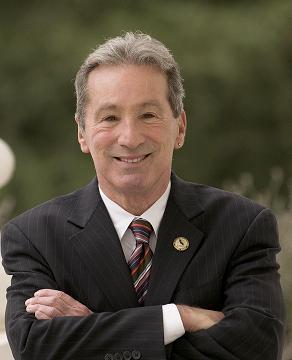
Tom Ammiano

Prop. B will save healthcare

59

By Jeff Adachi and Jim Illig

Editors note: Last week we ran an op-ed by Assemblymember Tom Ammiano opposing Proposition B. Public Defender Jeff Adachi asked for space to respond. His position follows.

OPINION San Francisco prides itself on the excellent health care services it provides to its residents. Per capita, San Francisco provides better quality healthcare to its poorest and most vulnerable residents than any other city in our state. Our city’s Healthy San Francisco program, which provides low- cost access to healthcare for all uninsured residents, has been heralded as a model program nationwide.

But the healthcare system that serves the city’s employees is teetering on the brink of insolvency. This year, the city will spend $456 million for healthcare costs for 26,000 city employees, and 28,000 retirees and their 47,000 dependents. According to the Controller’s Office, the city’s health system has an unfunded liability of $4 billion — meaning that it has made $4 billion in promised coverage to city employees and their dependents that it doesn’t have the money to pay for.

That’s a major reason why two city departments that serve the poorest residents, the Public Defender and Public Health, must cut millions of dollars of essential services each year, to save the city’s General Fund for growing employee healthcare and pension costs.

Currently most city employees contribute nothing for their own healthcare. Taxpayers subsidize the entire cost, which runs between $2,890 and $5,560 per year for each employee. Proposition B would change this by requiring that an employee insured under the basic health plan pay just $96 a year ($8 a month) for their healthcare. Under Prop. B, city employees would still pay 22 times less than private sector employees, who pay an average of $2,185 per year for their health insurance.

City employees with dependents currently pay $8 a month. Under Prop. B, they would pay $2,988 per year. Private sector employees with dependents pay an average of $7,026 a year. And this doesn’t include the 31 percent of San Franciscans who do not receive employer-paid health care costs and pay the entire cost themselves.

Opponents of Prop. B claim that city workers cannot afford to pay the health benefits if Prop B. passes. Their argument ignores the fact that the average San Francisco city employee earns $93,000 a year in salary alone, excluding benefits, while the average private sector salary is $46,000.

They also argue that “a single mother will be forced to pay up to $5,600 per year for her child’s health care — in addition to the $8,154 she already pays.”

First, this is not true. A city employee with two dependents only pays a total of $448 a month for full health coverage. Only if the city employee chooses the most expensive health plan, which costs $31,645, would the employee have to pay $19,561 a year under Prop. B instead of the $16,922, which he or she now pays.

Even with contributions required by Prop. B, city employees will receive a benefit package that is unparalleled in the private sector. Even more important, the city’s healthcare fund will be made more sustainable by ensuring that the funding for the city’s healthcare program doesn’t run dry when the city can no longer afford to pay these costs.

According to the Controller’s ballot statement, Prop. B would save the city $121 million annually. Some of these funds could be used to prevent the devastating cuts to the city’s mental health, substance abuse, and other community health programs for poverty-stricken adults and children who do not have healthcare coverage.

Voting yes on Prop. B is an antidote to continuing cuts to healthcare for the poorest San Franciscans. *

Jeff Adachi is a proponent of Proposition B and the city’s public defender. Jim Illig is the president of the San Francisco Health Commission.

Prop. B is bad medicine

57

OPINION Proposition B on the November ballot would eviscerate health care for tens of thousands of public workers and their families. It would double the cost of children’s health care for more than 30,000 public employees including teachers, nurses, firefighters, custodians, and gardeners — regardless of their ability to pay.

But you wouldn’t know this is actually what Prop. B does because the recent focus has been on the measure’s "reforms" to employee retirement. You wouldn’t know this has anything to do with children’s health care — because proponents don’t want you to know the true costs of Prop. B.

What are those true costs?

A single mother will be forced to pay up to $5,600 per year for her child’s health care — in addition to the $8,154 she already pays.

A custodian making only $40,000 per year would have to pay the same hike in health insurance premiums as the city’s top brass, who could be making three times as much.

Talk about unintended consequences.

That’s not reform, and it’s not fair. The workers being blamed are the same city employees who this year voluntarily agreed to $250 million in wage concessions. These are the same workers who have willingly taken pay cuts totaling $750 million the last decade.

Proponents have framed Prop. B as an answer to the city’s pension and retirement costs, but in reality, this measure is about health care. San Francisco’s Office of the Controller’s impartial analysis of Prop. B concludes that 70 percent of the savings from the measure would come from dramatically increasing the cost of dependent health care for working families.

A deep recession spurred by costly wars and reckless behavior on Wall Street has had devastating effects on our city and nation. Prop. B punishes city workers for this economic collapse by radically increasing the cost of their health care.

San Francisco has led the nation in providing universal access to health care. As author and founder of our HealthySF program, I encourage you to resist the attempt reverse progress on health care. Vote no on B.

Assembly Member Tom Ammiano represents the 13th District.

Ammiano calls the Other Cafe’s record on gays not so funny

1

“When people tell someone a history it’s always one side of it. What I know is a little darker.” Assemblyman Tom Ammiano had seen our post on this weekend’s Other Cafe reunion (Sat/25), and had a bone to pick with our description of the defunct Haight-Ashbury stand up club’s progressive approach to comedy. Namely, the Other’s attitude when it came to gay comics during its 1980s heyday – a view which club founder Bob Ayres vehemently disputes.

Ammiano should know – in addition to his early career as a special education teacher and current one as the political voice of the 13th Assembly District, he was a gay stand up comedian in a city that has been hollered at as the modern day creche of homo wisecracking. He founded the gay comedy night Valencia Rose Cabaret in 1980, thereby earning himself the grand distinction of “Mother of Gay Comedy.”

But he couldn’t get work just everywhere. “The interesting thing is that this was San Francisco – I can’t really think of a gayer city than that,” he told me on the phone today. “When we tried entry to the Other Cafe and Punchline [another club open to this day], we were denied access.” Ammiano said that club schedulers would tell them that due to the AIDS crisis, audiences weren’t comfortable with “gay material.” Or else that audiences just didn’t like listening to gay jokes, or they would be less direct but still firm on the fact that no gigs with them would be forthcoming. “It was really a bummer. We had our audiences and everything, but [club owners and schedulers] were homophobic.”

Ayres’ comments on the matter implies a bit of sour grapes on the part of Assemblyman Ammiano. Quoth he:

 “At the height of the comedy boom it was tough for many comedians to get gigs there. We were able to pick from among the very brightest of acts from around the country. It was the hardest thing about owning a high profile comedy room, saying no to deserving comics. The charge that we closeted comics or disallowed gay material is blatantly untrue nor is it supported by the facts. We had many gay comedians play and even headline the club. Must we list them? Tom as a beginning comedian back then may have felt he deserved more stage time and maybe he knows others that feel that way. But there are also hundreds of straight comedians who feel they deserved more gigs there. We simply tried to bring the funniest comedians we could find to our club every night. Their sexual preference was of no concern to us ever. It still isn’t. We would never have survived nor prospered as a comedy club had we told comedians what material to do.” 

When I read Ammiano a list that Ayres had sent me of gay comedians that had performed at the club, Ammiano said that most of the names were people that had performed there “in the ’90s” (note: the club had already closed by then), or had performed closeted, or hadn’t done explicitly “gay material.”

Which is not to negate all of Ammiano’s respect for the Other’s comedic legacy. “It was just amazing. People got their careers started, we had a lot of heavyweights get their start here, they’re absolutly right that way,” he said.


Chron endorsement dishonestly attacks marijuana measure

5

Once again proving itself to be an corporate-run embarrassment to a city that has been at the forefront of progressive reform – including the movement to legalize medical marijuana – the San Francisco Chronicle this morning recommended that voters reject Prop. 19, which would allow cities and counties to legalize marijuana use by adults. And it did so with tortured logic and a cowardly, disingenuous claim to support legalizing marijuana.

As a journalist who has covered the medical marijuana industry in the Bay Area, I didn’t recognize the chaos that Chron editorial writers say resulted from the landmark 1996 measure Prop. 215, the medical marijuana measure written right here in San Francisco, home to a well-regulated, professional network of cannabis dispensaries, thanks to the city proactively setting guidelines. The cities cited in the Chron all did nothing to set standards for medical marijuana dispensaries, whereas in cities like San Francisco that did, an increasingly important sector of the local economy flourished with few problems.

Prop. 19 would similarly allow cities and counties to create systems for regulating marijuana for recreational use – or to not allow it if they so chooses. Yet the Chron takes issue with this localized approach, writing, “The measure establishes no state controls over distribution and product standards; it does nothing to help cure the state’s budget deficit.”

Both statements simply aren’t true. The measure explicitly gives the state authority to tax and regulate marijuana, Assembly member Tom Ammiano already has proposed legislation to do so if the Prop. 19 passes, and the California Legislative Analyst’s Office has estimated it could bring in more than $1.5 billion annually into state coffers.

Although the Chron claims “that the ‘war on drugs’ – especially as it applies to marijuana – has been an abject failure,” it bemoans a provision in the measure that prevent employers from firing employees simply for having marijuana in their systems, as it would be if someone smoked a joint three weeks ago, despite having no impact on job performance. “Pre-employment testing would be banned,” the Chron writes, as if that were a bad thing. The editorial also complains that people would be allowed to grow small plots of marijuana in their backyards. Again, and the problem with that is what exactly?

Bottom line: Chron editorial writers fall into the same old tired reefer madness stereotypes that have driven the drug war’s “abject failure,” but they just aren’t honest enough to admit the contradiction with their stated claim that “if this were simple a referendum on the status quo, and the ability of a 21-or-older Californian to possess an ounce or less for personal use, it might be an easy ‘yes’ vote.”

Because the reality is that’s what this measure does, simply lift the prohibition on pot, while also including language supporting local control and basic civil rights. There are some valid arguments against Prop. 19 – such as it lets jurisdictions tax or regulate pot too much – but those honest disagreements weren’t raised by the newspaper.

Instead, the paper made it sound like measure would fill the roads with stoned drivers and every neighborhood with the stench of marijuana, which is laughably alarmist. San Francisco’s experience with medical marijuana should serve as an indicator. This city has been the most accepting and legitimizing of marijuana for decades. It’s part of our culture. But drug surveys from our school district and others show that the rate of marijuana use among young people here is lower than the state average, and we have been at the forefront of world-renowned technological innovation and academic research, so clearly the normalization of marijuana hasn’t corrupted our youth or turned us all into menacing zombies.

The Chronicle’s presentation of the issue, and its recommendation on this measure, are anachronistic throwbacks to another era and should be tossed into the dustbin of history where they belong.

Legislators behaving badly

15

There’s only one country in the world that allows children to be sentenced to life without parole. Only one place on Earth where a 16-year-old can be sent to prison for life, without any chance at redemption. Only one place that doesn’t recognize that brain development, including judgment, isn’t complete until a person reaches his or her 20s.


And that’s the United States.


State Sen. Leland Yee, a child psychologist, had a very moderate bill in the Legislature this year that would have given juveniles sentenced to LWOP a chance after 15 years to be reconsidered for parole. That would put California somewhere close to the rest of the civilized world.


“SB 399 is not a get-out-of-jail-free card; it is an incredibly modest proposal that respects victims, international law, and the fact that children have a greater capacity for rehabilitation than adults,” Yee noted.


It cleared the state Senate, and should have cleared the Assembly Aug 24. But even with the Democrats firmly in control of that body, Yee failed to get enough votes for SB 399. And one of the people who refused to vote for it was San Francisco Assembly member Fiona Ma.


You expect this sort of shit from Republicans and from some conservative law-ond-order Democrats. But it’s inconceivable that a San Francisco Democrat would be against a bill like this. 


What on Earth was Ma thinking? I couldn’t get her on the phone, but her communications aide, Cataline Hayes-Bautista, sent the following Ma statement:


 “I did not come to my decision on SB 399 easily – it’s legislation that I have carefully reviewed and considered for months. While I acknowledge that some juveniles in the correctional system may have the capacity to be rehabilitated after decades of being incarcerated, I feel that we cannot reset a defendant’s clock 25 years later expecting a victim’s family will reset their hearts.


I know our District Attorneys do not take life sentences lightly. These crimes are limited to first and second degree murder offenses with a special circumstance which include the most troublesome crimes: murdering a peace officer, murdering to achieve a hate crime, committing a murder that’s especially heinous, murdering for financial gain, and murdering while escaping lawful custody.


All of these sentences were handed down after murder victims’ families had the chance to speak out and address the court on the impact of these murders. To re-open these closed cases to new sentencing hearings would re-open the wounds already suffered by murder victims’ families, forcing these victims to re-visit and re-live cases they were told had been closed forever. I think it would be unfair to these victims’ families to have to re-live these horrific crimes and for that reason I felt compelled to oppose this legislation.


There are already deliberative checks in place throughout the system where prosecutors, defense attorneys, jurors, and particularly our judges, have the ultimate discretion to choose a lesser juvenile sentence when sentencing a juvenile murderer. In addition, the Governor has the power to grant pardons and commute sentences. This already provides an avenue for juveniles to seek extraordinary relief if justice calls for it.


 While I appreciate Senator Yee’s intent to create opportunities to rehabilitate juvenile criminals, these particular crimes rise to a standard in which we need to hold those responsible accountable for their actions.”


Sorry, but that’s just terrible. To say that the victims’ families are better off if juveniles — people who were too young to be fully responsible for what they did, and who in some cases didn’t even kill anyone (just being present when someone kills someone can be a life sentence) are locked up until they die is just kind of sick. I don’t know what else to say. Except to give an example of who is serving life without parole (from Yee’s press release):


One such case involves Anthony C., who was 16 and had never before been in trouble with the law. Anthony belonged to a “tagging crew” that paints graffiti.  One day Anthony and his friend James went down to a wash (a cement-sided stream bed) to graffiti.  James revealed to Anthony that he had a gun in his backpack and when another group of kids came down to the wash, James decided to rob them. James pulled out the gun, and the victim told him, “If you don’t kill me, I’ll kill you.” At that point, Anthony thought the bluff had been called, and turned to pick up his bike. James shot the other kid.


 The police told Anthony’s parents that he did not need a lawyer. He was interviewed by the police and released, but later re-arrested on robbery and murder charges. Anthony was offered a 16-to-life sentence before trial if he pled, but he refused, believing he was innocent. Anthony was found guilty of first degree murder and sentenced to life in prison without parole. Charged with aiding and abetting, he was held responsible for the actions of James.


 Okay, this kid doesn’t belong in prison for life, without any chance of parole. Thanks, Fiona.


Meanwhile, without the support of Yee, Assemblymember Tom Ammiano’s bill that would allow a traffic camera at Market and Octavis narrowly squeaked by the state Senate Aug. 24 and will now head for the governor’s desk. The bill has generated a lot of commentary on this blog; bicyclists and pedestrians think it will save lives in a crazy intersection, and privacy types worry about the creeping police state.


Adam Keigwin, Yee’s chief of staff, insists that Yee didn’t do anything to block the bill:


FYI: Senator Yee did not block the bill.  In fact, he told his colleagues who were looking for his input on a San Francisco specific bill that it was ok for them to vote for it, even though he voted no.  The bill passed today.  Again, the Senator has opposed all camera enforcement bills for several reasons: such cameras create a police state; law enforcement could use the film to enforce other laws; we should use actual officers, have better traffic improvements – like we have done on 19th avenue where we have gone from several deaths a year to zero; open government problem – film (government document) is allowed to be destroyed without the public ever gaining access to it; and finally other privacy concerns.


Still, he didn’t vote for it, forcing Ammiano and Sen. Mark Leno to scramble around trying to find another vote to put it over the top.

Alioto-Pier vows to take D. 2 re-election bid to California Supreme Court

4

Sup. Michela Alioto-Pier announced today that she will file an appeal with the California Supreme Court by the end of tomorrow (August 25), following today’s California Court of Appeal ruling that found she was ineligible to seek another term.

Alioto-Pier’s announcement came shortly after City Attorney Dennis Herrera issued a press release, announcing that today’s California Court of Appeals’ decision “strongly vindicates” his office.

Herrera’s office advised Alioto-Pier in a February 2008 legal opinion that she was ineligible to seek another term on the Board due to the city charter’s term limits provisions.

“More than two years later, Alioto-Pier sued to force Elections Department officials to place her name on the ballot,” Herrera’s office stated, noting that a San Francisco Superior Court judge granted Alioto-Pier’s petition on July 22, holding that voters had implicitly rendered the 20-year-old term limits rule “ineffective” with subsequent charter amendments. 

“Today’s appellate court ruling restores the legal effect of the voter-approved ‘rounding-up rule,’ which provides that if an appointed incumbent serves more than two years of a term, it counts as a full four-year term for purposes of term limits,” Herrera’s office said.  “In so doing, the decision affirms Herrera’s original conclusion that Alioto-Pier is ineligible to seek another term on the Board.”

Herrera included a personal statement in his office’s press release, indicating that he does not want this decision to be seen as a personal attack on Alioto-Pier.

“I am grateful to the Court of Appeal for recognizing the obvious intent of San Francisco voters, and for affirming the clear meaning of the law,” Herrera stated. “This case has always been about the principle of upholding voters’ will, and I regret that some political pundits focused instead on personalities.  I’ve consistently defended Sup. Alioto-Pier’s right to pursue this dispute in the courts, and I wish her and her family every success in their future endeavors.  I know I join the vast majority of San Franciscans in expressing gratitude for her record of public service to the City we share.”

But Alioto-Pier isn’t about to give up on her bid just because of an appeal court ruling.

“Clearly, we disagree with that ruling,” Tom Pier, Alioto-Pier’s husband, told me. “We feel that the panel failed to look at the clear language of the charter in which voters expressed their clear intent that no supervisor should serve no more than two consecutive four-year terms.”

Pier noted that the City Attorney’s Office applied this same argument when it allowed now Assembly member Tom Ammiano to serve on the Board for 14 years, a decision Pier believes was rendered in 1998.

One difference between these two cases is that Ammiano was elected to serve all those years, while Alioto-Pier was initially appointed by Gavin Newsom to fill his D. 2 seat in January 2004, when he became  mayor. Alioto-Pier was then elected to the Board in November 2004. As a result, Alioto-Pier will have served on the Board for seven years, when her term expires in January 2011.

Rumor has it that Elections has had to print two versions of the ballot, one with Alioto-Pier’s name on it, and one without, in face of uncertainty about her appeal.
And now the question becomes if and when the California Supreme Court will agree to hear her appeal in time, given that the election is less than 10 weeks away.

 “The exact date by which they need to render an opinion is yet to be determined,” Pier said.

Yee blocks traffic camera at Octavia

37

The Market-Octavia intersection is one of the most dangerous places in the city for bicyclists. Cars making an illegal right turn onto the freeway ramp hit riders; there were nine collisions in 2008 alone, and there have been 20 injury accidents since the freeway ramp opened. The city’s built barriers and traffic signs, but the illegal turns continue.


So with the backing of the SF Bicycle Coalition, Assemblymember Tom Ammiano introduced a bill that would allow the city to install a trafic camera to monitor illegal turns at that intersection. It’s a modest pilot project, a test run until 2014. It cleared the Assembly easily, with bipartisan support, and right now it’s just one state Senate vote away from the governor’s desk. That is, Ammiano is one state Senate vote short.


And Sen. Leland Yee of San Francisco is refusing to vote for it.


That kind of mystified me; why would Yee be against a fairly common-sense safety measure? I called Yee’s aide, Adam Keigwin, who said it was a matter of principle: “He’s never voted for traffic cameras,” Keigwin said. “He sees it as a police state issue. Once they take pictures of you driving, what else are they going to take pictures of?”


Again: That’s a bit odd. Yee’s usually a law-and-order type of guy. And I’m not for cameras everywhere; I have problems with the cops wanting to put “crime cameras” in neighborhoods. But this one seems fairly harmless — it’s a busy intersection where someone’s going to die one of these days, and I don’t think a traffic camera is going to take us down a slippery slope to a police state.


In fact, the bike coalition’s acting director, Renee Rivera, told me that she understands Yee’s concern, but “in this case, the safety concern takes precedence. This camera enforcement is going to make it safer for people walking and biking.”


Anyway, if you want to express an opinion on this, Yee’s office is (916) 651-4008.

High time

34

steve@sfbg.com

DRUGS With polls showing that California voters are probably poised to approve Proposition 19 in November and finally fully legalize marijuana, this should be a historic moment for jubilant celebration among those who have long argued for an end to the government’s costly war on the state’s biggest cash crop. But instead, many longtime cannabis advocates — particularly those in the medical marijuana business — are voicing only cautious optimism mixed with fear of an uncertain future.

Part of the problem is that things have been going really well for the medical marijuana movement in the Bay Area, particularly since President Barack Obama took office and had the Justice Department stop raiding growing operations in states that legalized cannabis for medical uses, as California did through Proposition 215 in 1996.

In San Francisco, for example, more than two dozen clubs form a well-run, regulated, taxed, and legitimate sector of the business community that has been thriving even through the recession (see “Marijuana goes mainstream,” Jan. 27). The latest addition to that community, San Francisco Patient and Resource Center (SPARC), opened for business on Mission Street on Aug. 13, an architecturally beautiful center that sets a new standard for quality control and customer service.

“This is the culmination of a 10-year dream. We’re going to have a real community center for patients with a great variety of services,” longtime cannabis advocate Michael Aldrich, who cofounded SPARC along with Erich Pearson, told us at the club, which includes certified laboratory testing of all its cannabis and free services through Quan Yin Healing Arts Center and other providers.

Yet cash-strapped government agencies have been hastily seeking more taxes and permitting fees from the booming industry, particularly since the ballot qualification of Prop. 19, an initiative that was written and initially financed by Oaksterdam University founder Richard Lee that would let counties legalize and regulate even recreational uses of marijuana.

Oakland, Berkeley, Richmond, and other California cities have placed measures on the November ballot to tax marijuana sales, and the Oakland City Council last month approved a controversial plan to permit large-scale cannabis-growing operations on industrial land (see “Growing pains,” July 20).

In an increasingly competitive industry, many small growers fear they’ll be put out of business and patient rights will suffer once Prop. 19 passes and counties are free to set varying regulatory and tax systems, concerns that have been aired publicly by advocates ranging from Prop. 15 author Dennis Peron to Kevin Reed, founder of the Green Cross medical marijuana delivery service.

“It’s tearing the medical marijuana movement apart,” Reed told the Guardian. “It’s a little scary that we’re going to go down an uncertain road that may well scare the hell out of mainstream America.” Indeed, U.S. Attorney General Eric Holder — who ended the raids on medical marijuana growers — has said the feds may reengage with California if voters legalize recreational weed.

Yet Lee said people shouldn’t get distracted from the measure’s core goal: “The most important thing is to stop the insanity of prohibition.” He expects the same jurisdictions that set up workable systems to deal with medical marijuana to also take the lead in setting rules for other uses of marijuana.

“It will be just like medical marijuana was after [Prop.] 215, when a few cities were doing it, like San Francisco, Oakland, and Berkeley,” Lee told us. “And for cities just coming to grips with medical marijuana, it will be clean-up language that clarifies how they can regulate and tax it.”

Indeed, the tax revenue — estimated to be around $2 billion for the state annually, according to the California Legislative Analyst’s Office — has been the main selling point for the Yes on 19 campaign (whose website is www.taxcannabis.org) and Assembly Member Tom Ammiano, who authored bills to legalize marijuana and has current legislation to set up a state regulatory framework if Prop. 19 passes.

“It makes it more seductive,” Ammiano said of revenue potential from legalized marijuana. “I’ve been working with Betty Yee [who chairs the California Board of Equalization, the state’s main taxing authority] on a template and structure for taxing it.”

Reed and others say they fear taxes at the state and local levels will drive up the price of marijuana, as governments have done with tobacco and alcohol, and hinder access by low-income patients. But Ammiano scoffed at that concern: “Even with the tax structure on booze, there was no diminishing of access to booze.”

Pearson said he believes Prop. 19 will actually help the medical marijuana industry. “Anything that takes the next step toward legalizing recreational use only helps medical cannabis,” he said. Pearson moved to California to grow medical marijuana more than 10 years ago, at a time when the federal government was aggressively trying to crush the nascent industry.

“When you’re packing up and running from the DEA all the time, you’re not thinking about the quality of the medicine. You’re trying to stay out of jail,” Pearson said. “Now, we can be transparent, which is huge.”

Like most dispensaries, SPARC is run as a nonprofit cooperative where most of the growing is done by member-patients. Speaking from his office, with its clear glass walls in SPARC’s back room, Pearson said the Obama election ushered in a new openness in the industry.

“Everything is on the books now, whereas before nothing was on the books because it would be evidence if we got busted … We are allowed to have banks accounts; we’re allowed to use accountants; I can write checks; we can talk to government officials,” Pearson said. “It helps with the public and governments, where they see the transparency, to normalize things.”

He also said Prop. 19 will only further that normalizing of the industry, which ultimately helps patients and growers of medical marijuana. SPARC, for example, gives free marijuana to 40 low-income patients and offers cheap specials for others (opening day, it was an eighth of Big Buddha Cheese for $28) because others are willing to pay $55 for a stinky eighth of OG Kush.

“Our objective here is to bring the cost of cannabis down. We can subsidize the medicine for people who can’t afford it with sales to people who can,” Pearson said, noting that dynamic will get extended further if the legal marketplace is expanded by Prop. 19.

While Pearson strongly supports the measure, he does have some minor concerns about it. “The biggest concern is if local governments muddy the line between medical and nonmedical,” Pearson said, noting that he plans to remain exclusively in medical marijuana and develop better strains, including those with greater CBD content, which doesn’t get users high but helps with neuromuscular diseases and other disorders.

Reed also said he’s concerned that patients who now grow their own and sell their excess to the clubs to support themselves will be hurt if big commercial interests enter the industry. Yet for all his concerns, Reed said he plans to reluctantly vote for Prop. 19 (which he doesn’t believe will pass).

“They’ll get my vote because not having enough yes votes will send the wrong message to law enforcement and politicians [that Californians don’t support legalizing marijuana],” Reed said, noting that would rather see marijuana uniformly legalized nationwide, or at least statewide.

Attorney David Owen, who works with SPARC, said the momentum is now there for the federal government to revisit its approach to marijuana. But in the meantime, he said Prop. 19 has come along at a good time, given the need for more revenue and more legal clarity following the federal stand-down.

And even if the measure isn’t perfect, he said those who have devoted their lives to legalizing marijuana will still vote for it: “A lot of these folks, intellectually and emotionally, will have a hard time voting against Prop. 19.”

Judge rules that says same-sex marriage ban is unconstitutional

0

Judge Vaughn Walker’s ruling that California’s Prop. 8 is unconstitutional got Assemblymember Tom Ammiano, Mayor Gavin Newsom and City Attorney Dennis Herrera issuing praise-filled statements today. And Herrera’s statement included comments that reaffirmed the pivotal role that the City Attorney’s Office played in this landmark case.

“U.S. District Court Judge Vaughn Walker has issued a powerful, thoughtful, and well-reasoned decision,” Ammiano said. “In overturning Proposition 8, this court fulfilled its legacy as a champion for equality.  The court recognized that it is unconstitutional to put a minority’s rights up for a popular vote.  Today’s decision reaffirmed our U.S. Constitution’s promise of equality for all.”

Newsom, who stuck out his neck in 2004 when he decided to issue marriage licenses to same-sex couples, said Walker’s decision, “is a victory for the fundamental American idea enshrined in our Constitution that separate is not equal and that all people deserve equal rights and treatment under the law. It is a victory for the thousands of California couples, their families and friends whose lives and loving, committed relationships have once again been affirmed in the eyes of the law.

“As Judge Walker states in his ruling,” Newsom continued, “Proposition 8 fails to advance any rational basis in singling out gay men and lesbians for denial of a marriage license. Indeed, the evidence shows Proposition 8 does nothing more than enshrine in the California Constitution the notion that opposite-sex couples are superior to same-sex couples. Because California has no interest in discriminating against gay men and lesbians, and because Proposition 8 prevents California from fulfilling its constitutional obligation to provide marriages on an equal basis, the court concludes that Proposition 8 is unconstitutional.’

“In the words of Dr. King, ‘the arc of history is long, but it bends towards justice.’” Newsom commented. “Today in California, history took another great step for all Americans towards fully realizing the principals of equality and fairness on the long march to justice. I salute the team of Ted Olsen, David Boies and City Attorney Dennis Herrera for so clearly and eloquently presenting the case against Prop 8. We will look to their commitment and wisdom again as the fight for marriage equality moves through appeal and, one day, to the Supreme Court of the United States.”

Herrera, for his part, said the ruling, “strikes a resonant chord against discrimination that should not only withstand appeal, but change hearts and minds.”

“I’m extremely grateful to Judge Walker for a thorough and well reasoned decision that powerfully affirms the U.S. Constitution’s promise of equal protection,” Herrera said. He noted that today’s federal court decision relied on key arguments and evidence presented by his office about the adverse governmental consequences of Prop. 8, the 2008 ballot measure, which eliminated fundamental marriage rights for same-sex partners in California. 

Nearly a year ago, Walker granted Herrera’s motion to intervene in the case, which the American Foundation for Equal Rights orginally filed on behalf of two California couples. Today, Herrera noted that San Francisco was the first government in U.S. history to sue to strike down marriage laws that discriminate against same-sex partners.

“And the San Francisco City Attorney’s Office is the only party to have played a role in virtually every iteration of the legal battle for marriage equality in California,” Herrera continued, noting that his office entered the fight for equal marriage rights in defense of Newsom’s decision to issue marriage licenses to same-sex couples in 2004. 

“Later, the office sued to strike down the anti-same sex marriage exclusion in state courts, a legal endeavor that ultimately succeeded with the California Supreme Court’s landmark ruling in 2008,” Herrera continued.  “Later that year, after California voters narrowly passed Proposition 8, the City was among the co-plaintiffs to challenge the amendment in the California Supreme Court; that effort was unsuccessful.” 

But while today’s news is a hopeful sign, same-sex couples are urged not to rush to get a license from City Hall, at least not just yet: Shortly after issuing the ruling, Judge Walker issued a temporary stay, and an appeal is expected.

Bad faith

3

steve@sfbg.com

Mayor Gavin Newsom and his business allies are actively trying to sabotage the various revenue measures that have been put forth by the labor movement and progressive members of the Board of Supervisors, employing deceptive rhetoric, sneaky tactics, and a refusal to bargain in good faith.

In fact, Newsom — the Democratic nominee for lieutenant governor — is so averse to supporting anything that could be called a “tax” that he rejected a hard-won compromise measure created by powerful developers, affordable housing advocates, a pro-business think tank, the building trades, and his own directors of housing and economic development.

Just as that story was breaking in the New York Times (produced by Bay Citizen) on July 9, members of the Board of Supervisors Budget and Finance Committee discovered that Newsom’s proposed ballot measure to close loopholes in the city’s hotel tax that favored airline employees and online travel companies — a widely supported change, but one worth just $6 million per year — contains language that would nullify any increases in the hotel tax. Earlier in the week, labor unions turned in signatures on an initiative to increase the hotel tax by 2 percent, which would bring in more than $30 million per year.

“This poison pill is an intentionally deceptive, underhanded move,” Gabriel Haaland, an organizer with Service Employees International Union Local 1021, which sponsored the hotel tax, told us. “It’s so frustrating. It’s not even a good faith fight. He’s trying to create confusion and fool the voters. If our measure passes fair and square, it should be implemented.”

Meanwhile, Newsom and business groups have been attacking a reform measure by Board President David Chiu that would make the currently flat payroll tax more progressive, exempt more small businesses from paying it, and create a commercial rent tax to spread the tax burden more widely than the 10 percent of businesses who now pay tax to the city.

Critics complained that the measure would hurt local businesses — but that’s just not true. The city’s Office of Economic Analysis concluded that Chiu’s original proposal would have no effect on private sector jobs and would generate $34 million annually for the city, preserving some government jobs and spending.

Then Chiu amended the measure to spare even more small businesses. Now the OEA says that the measure would actually create private sector jobs — and still bring $28 million in to the city. Yet Newsom and the business community are still withholding their support.

This trio of Machiavellian moves comes just a week after Newsom pulled out of budget negotiations with board progressives concerning about $40 million in board add-backs to programs that Newsom proposed to cut after they wouldn’t agree to his precondition that they withdraw unrelated measures proposed for the November ballot, such as splitting appointments to the Rent, Recreation and Park, and Municipal Transportation Agency boards and requiring police officers to do foot patrols.

The series of events has led many progressives to say that conservative ideological blinders — a knee-jerk opposition to anything that saves government jobs and services or that Republicans might criticize — is the only logical explanation for the intransigent stance adopted downtown and by Newsom.

“It’s ideological. It’s not economic, and it’s not even political,” said Calvin Welch, the affordable housing activist who helped negotiate the transfer tax compromise with developer Oz Erickson, San Francisco Planning Urban Research Association director Gabriel Metcalf, Mayor’s Office of Housing Director Doug Shoemaker, and others.

That measure would have created a transfer tax on sales of properties over $875,000 and generated approximately $50 million annually for affordable housing (funds that were drastically reduced in Newsom’s proposed 2010-11 budget) while cutting in half the current requirements and fees on market-rate developers to create below-market-rate units. The plan would have stimulated both types of housing and created desperately needed construction work — an approach those involved called an elegant solution to several problems.

“To me, this was a win-win, solving two problems that are each a big deal,” Metcalf told us. “I don’t know what his reasons were for not supporting it. I was surprised.”

But Welch said, “It collapsed straight up because the mayor didn’t want to support a tax.” Although Newsom told the Times it was because there wasn’t broad enough consensus yet, “the mayor’s reason is whole-cloth bullshit,” Welch said, noting the role of the Mayor’s Office in brokering the deal. “The mayor walks away from it because everyone wasn’t in the room? Well, it’s your room, motherfucker. Show some leadership.”

Newsom Press Secretary Tony Winnicker refused to discuss these issues by phone, responding to our written inquires by noting that Newsom opposes taxes and thinks the best way to address budget deficits are privatizing city services and pension reform (although he opposes Public Defender Jeff Adachi’s initiative, the only pension reform measure on the fall ballot).

“The mayor is opposed to the Board of Supervisors’ proposals to increase taxes because they’re not needed to balance the budget and they will strangle our still young economic recovery,” Winnicker wrote, refusing to answer follow-up questions or support a statement about Chiu’s measure that the OEA concludes is not accurate.

Like many political observers of all stripes, those from downtown and progressive circles, Welch criticized Newsom for his lack of engagement with city business and its long-term fiscal outlook, contrasting him with former Mayor Willie Brown, who met regularly with former Board of Supervisors President Tom Ammiano even as the two ran a bitter campaign for mayor against one another in 1999. “They dealt with the city’s business like two adults who cared about the city,” he said.

Welch acknowledged that there was still work to be done building political support for the transfer tax measure. He and other progressives would have had to win over city employee unions who wouldn’t like the budget set-aside aspect, and Erickson and Metcalf would need to placate some of their downtown allies who oppose taxes on ideological grounds. But given how downtown groups are behaving right now, that might not have been an easy sell.

“There are members of the small business community that are averse to any taxes,” said Regina Dick-Endrizzi, director of the city’s Office of Small Business and staffer to the Small Business Commission, which was withholding a recommendation on the Chiu measure but planned to meet again to consider it July 12 (look for an update on the sfbg.com Politics blog). She said the small business community is having tough times and “they are just not sensitive to keeping city workers employed.”

Larger commercial interests are being even more forceful in opposing the revenue measures. While a parade of workers, social service providers, and progressive activists testifying at the July 9 Budget Committee hearing implored supervisors to place all the proposed revenue measures on the ballot, representatives from the Building Owners and Managers Association (BOMA) and San Francisco Chamber of Commerce were the only two speakers urging supervisors to drop the measures and focus instead on creating private sector jobs.

“You’re trying to create a little revenue here and it’s not going to work,” said Ken Cleaveland, director of BOMA SF, arguing that big banks and financial services companies — entities exempt from the payroll tax that Chiu is hoping to target with the commercial rent tax — will buy their buildings to avoid paying the tax. “They aren’t going to create more jobs and they really aren’t going to create more revenue.”

Yet Chiu noted that it was the business community and fiscal conservatives who pushed to create the Office of Economic Analysis, whose work they have regularly used to attack progressive legislation. Now that the office has concluded that a piece of progressive legislation is good for the local economy, Chiu told Cleaveland and the Chamber spokesperson Rob Black at the hearing, “I ask you to respect the work this office has done.”

Black said the Chamber board will consider Chiu’s amended legislation, but said businesses are in no mood to help the city. “How many times have you gone to your neighborhood merchant and had them say, ‘Gee, my rent’s too cheap’?<0x2009>” he said during his testimony.

Yet Chiu said landlords of small tenants (those paying less than $65,000 in rent per year) are exempt from the rent tax and only 26 percent of SF businesses would pay any city business tax under his plan. “I hope the mayor will support this proposal and the business community will give it a good look,” Chiu said as the hearing ended.

At the beginning of the hearing, Chiu framed the dire situation facing San Francisco, citing Controller’s Office figures showing this year’s $500 million budget deficit (out of a $6 billion total budget) will be followed by a $700 million deficit next year and a $800 million gap the following budget cycle as a result of a deep structural budget imbalance.

“We have budget deficits as far as the eye can see,” Chiu said at the hearing. “We have to consider measures that will provide more stable sources of revenue.”

He also noted that city employee unions have agreed to give back about $250 million in salary and had their ranks reduced by about 2,000 workers in the last two years. So he and the other progressive supervisors say it’s time for the rest of San Francisco to help address the problem.

“We, as a city, should not be trying to balance this budget simply through cutting,” Sup. David Campos said.

Sup. John Avalos, the committee chair, amended his transfer tax measure in the wake of Newsom’s rejection of the deal by making it a simple 2 percent tax on properties that sell for more than $5 million, and 2.5 percent tax on properties over $10 million. He estimates it will bring in about $25 million per year from the city’s wealthiest corporations and landlords.

“That’s who we’re socking it to,” Avalos told us, saying he was disappointed the compromise fell through. “The amendment is going to be more progressive than what was originally planned.”

Even Sup. Sean Elsbernd, a strong fiscal conservative who announced early in the hearing, “You want to do that [balance future budgets] by adding taxes, but I want to do it through ongoing service cuts,” later told the Guardian that he was intrigued by the amendments Avalos and Chiu made to their measures and has not yet taken a position on them.

Sup. Ross Mirkarimi is also sponsoring a measure to increase the city’s tax on parking lot operators from 25 percent to 35 percent, the first change to that tax in 30 years, and will include valet parking for the first time. The measure would bring in up to $24 million per year, and OEA analysis shows it would decrease the number of cars trips by 1.3 percent, another benefit.

SFMTA supports the measure, with board member Cameron Beach testifying that the money will be used to subsidize Muni and “it links the use of private automobiles and is consistent with the city’s transit-first policy.” Mirkarimi, who chairs the Transportation Authority, also has proposed a $10 local vehicle license fee surcharge that would bring in another $5 million per year for Muni.

All the revenue measures require six votes by the full Board of Supervisors, which is scheduled to consider them July 20, after which they would need a simple majority approval by voters in November to take effect.

The mayor has the authority to directly place measures on the ballot, so the committee hearing on his hotel tax loophole measure and a $39 million general obligation bond that he’s proposing to create a revolving loan fund for private sector seismic improvements were mere formalities, so supervisors criticized aspects of each but were unable to make changes.

Avalos even grudgingly acknowledged the hotel tax poison pill was an effective way to kill that revenue source, saying at the hearing, “This is very smart. I don’t agree with it, but it’s very smart.”

Haaland was less charitable, criticizing a provision designed to confuse voters. “This kind of move means both measures won’t pass because now we have to oppose [Newsom’s measure],” he said, criticizing the mayor for running away from the hard decisions facing the city. “He won’t be around next year, when we have an even bigger structural budget deficit, to clean up this mess. Absent new revenue sources, this city starts to fall apart.”

Beyond the rage

46

rebeccab@sfbg.com

Downtown Oakland became supercharged with emotion in the hours following the July 8 announcement of the verdict in the trial of former BART police officer Johannes Mehserle. And in the days that followed, the city remained electrified as residents struggled to make sense of the verdict, the rioting that occurred in its wake, and the historic significance of these developments.

But as the emotions dissipate, the issues behind the verdict and its aftermath remain — along with a series of questions that could determine whether this intensely scrutinized shooting of an unarmed man will lead to any changes in police practices or the justice system, as well as how the community will react if the judge imposes a light sentence.

After being moved out of the Bay Area because the publicity surrounding the case, a Los Angeles jury found Mehserle, a white officer, guilty of involuntary manslaughter for fatally shooting Oscar Grant, a 22-year-old unarmed black man who was detained on a BART train platform in Oakland on Jan. 1, 2009 following reports of a fight.

The verdict stood out as an almost unprecedented conviction of an officer in a case involving deadly use of force, and a departure from an all-too-familiar narrative in which tragedies resulting from police shootings bring no consequences for those responsible for pulling the trigger. However, in the wake of the verdict, Grant’s family members made it clear that they did not believe that justice had been served.

“This involuntary manslaughter verdict is not what we wanted, nor do we accept it,” Oscar Grant’s uncle, Cephus “Bobby” Johnson, said at a July 10 press conference at True Vine Ministries, a West Oakland church. “It’s been a long, hard road, but there are chapters in this war. The battle’s just getting started.”

To Grant’s relatives and a coalition of supporters who came together in response to the shooting, the trial is intrinsically linked to a long history of police brutality that occurs with impunity in cases involving youth of color. Meetings organized by clergy and community members have been held weekly in West Oakland over the past 19 months with the ultimate goal of bringing about greater oversight of the BART police and effective police reform on a broader scale.

On July 9, the U.S. Department of Justice announced that its Civil Rights Division, the U.S. Attorney’s Office, and the FBI have opened an investigation into the shooting and would determine whether prosecution at the federal level is warranted. Defense Attorney Michael Rains also made a motion to move Mehserle’s sentencing to a date later than Aug. 6, the date it was originally expected.

As the events of July 8 solidify into the Bay Area’s collective memory, attention is now shifting toward the next steps, and to lingering questions. Mehserle’s sentencing is key: will his sentence be light, reflecting the jury’s conclusion that he simply made a mistake — or will it include substantial prison time, reflecting the fact that he shot and killed an unarmed man without justification? Will he receive a lighter sentence than someone else without a criminal record found guilty of involuntary manslaughter simply because of his identity as a former officer with law enforcement organizations still in his corner? If Mehserle receives a long sentence, will it signify a shift in a justice system that many perceive as biased — or a stand-alone result of intense public scrutiny?

And as a result of all this, will the BART police finally get the type of training and serious civilian oversight they so badly need?


RAW REACTION

On the day the verdict was announced, thousands turned out for a peaceful rally near Oakland’s 12th Street BART Station and City Hall to hear speakers sound off about how their lives had been affected by police brutality.

As night fell, looting and rioting began to break out as the media covered scenes of rage set against small trash fires, causing anger and frustration for many Oakland residents who were dismayed and frightened by the chaos and disorder. More than 80 arrests were made, and dozens of stores including Sears, Whole Foods, Subway, Foot Locker, and numerous banks were damaged or looted. Police efforts to respond to the situation gave downtown city blocks the feeling of a war zone for several hours.

Reactions to the verdict, and the chaotic aftermath that followed, varied in the following days.

“The truth is that in American history, this is both a high point and a low point,” Olis Simmons, executive director of Youth UpRising — an Oakland nonprofit that works with youth of color — told the Guardian the following day. Speaking to the fact that an officer had been convicted in a case involving a wrongful death, she said: “I think it really is a signal that America is changing. This is the farthest we’ve ever gone.”

She said she hoped that people who were infuriated enough to react violently on the evening of July 8 would channel that energy toward constructive goals of pushing for a more satisfactory outcome. Before rallies and later rioting began that night, Youth UpRising sent people into the crowd to hand out glossy flyers proclaiming “violence isn’t justice.”

Davey D Cook, an independent radio journalist who extensively covered activity surrounding Grant’s death on a news site called Davey D’s Hip Hop Corner, said he thought the mainstream media was ready to have “a field day” with the riots, pointing out that they ran special coverage in the days leading up to verdict, building up anticipation of violent outbreaks. He also said that the scope of the rioting should be kept in perspective.

On his July 9 KPFA radio show, Hard Knock Radio, Cook added a salient point: “Broken windows can be replaced, and in two weeks, they will be. Stolen merchandise can be replaced, and it will be. But who’s going to replace this justice system that got looted? What insurance policy takes care of that?”

Just before the July 10 press conference, a town hall meeting was held inside True Vine Ministries. It was crammed full of supporters from Oakland, San Francisco, and beyond who listened as Minister Keith Muhammad — a representative of the Nation of Islam who has worked closely with the Grant family and traveled to Los Angeles to watch the trial — spoke at length. Muhammad was dressed immaculately in a suit and tie, and spoke with an air of fiery conviction.

“In the outcome of this case, there is surely more to be resolved that has yet to be addressed,” Muhammad said. He emphasized that “we’re not satisfied,” but added: “You should know that dissatisfaction is the foundation of all change.”

He raised a number of questions about the proceedings, asking why there was an absence of African Americans on the jury, and why the judge called an early recess when Grant’s teenage friend, Jamil Dewar, sobbed uncontrollably on the witness stand — but not when Mehserle sobbed on the stand. He noted that Grant’s friends were kept in handcuffs for six hours after witnessing Grant’s death.

In the days following July 8, much was also said about mainstream media coverage of the events, in particular the notion that “outside agitators” would come in and start trouble. “I do not like this divisive campaign to divide our community and protestors by calling people outsiders,” Oakland defense attorney Walter Riley wrote in a statement posted on Indybay.org. “This is a great metropolitan area … we expect people from all over the map to participate in Oakland. Calling people outsiders in this instance is a political attack on the movement. The subtext is that the outsiders are white and not connected to Oakland. From the days of the civil rights movement to now, the outsider labeling failed to address the underlying problems for which people came together. We must engage in respectful political struggle. I understand the frustration. I do not support destruction and looting as political protest.”


LOOKING FORWARD

Mehserle’s conviction suggests the jurors believed his defense that he meant to draw and fire his Taser instead of his gun. In legal terms, settling on involuntary manslaughter, rather than second-degree murder or voluntary manslaughter, means the jury was not convinced beyond a reasonable doubt that Mehserle had malice toward Grant. But the jury found that he was criminally negligent when he failed to notice that he had his gun instead of his Taser in the moments before he pulled the trigger.

“In California, and really in any state, it is extremely difficult for jurors to convict a police officer. There’s an extreme reluctance to do that,” Whitney Leigh, an attorney who formerly worked in the San Francisco Public Defender’s Office, told us.

“There are undoubtedly instances where things like this have happened at some time in the past in California, that weren’t videotaped,” Leigh continued. “But for the videotape, if you walked 10 witnesses in who said that what happened, happened, no one would believe them if the officer took the stand and said that’s not what happened. The only reason there’s a case at all is that there’s a videotape.”

Leigh said he thought that unless the public develops a better awareness that police misconduct regularly occurs, “individuals are going to continue to be victimized by a system that effectively encourages officers to believe that they can act with significant impunity.”

Asked whether he thought it was likely that the federal government would decide to step in after concluding its investigation, he said it was a tough call. “The Justice Department is highly selective in the cases it chooses to prosecute for these crimes,” he cautioned. “That said, the kinds of cases they choose are ones that tend to have a lot of public attention and concern, so this fits within that category. Since it’s such a public case, it can have more of a widespread impact.”

If Mehserle was prosecuted at the federal level, the case would invoke Criminal Code 18 U.S.C. Sec. 242, used when a government agent or an individual acting under the color of authority denies someone their civil rights through force, threats, or intimidation, based on their race, gender, or another protected category.

Then again, the federal government’s decision over whether or not to step in may be linked to the degree of severity of Mehserle’s sentence.

California Penal Code Section 193 specifies the mitigated, midterm, and aggravated sentences for involuntary manslaughter: two, three, or four years in state prison, respectively. Because Mehserle’s case involves his personal use of a firearm, a sentence enhancement of three, four, or 10 years can be added to his prison time under California Penal Code Section 12022.5.

The judge will weigh circumstances to determine Mehserle’s sentence, possibly including his record as a police officer, his criminal record, age, remorse, and other factors, explained Jim Hammer, a former prosecutor and current San Francisco Police Commission member. The judge could toss out the sentence enhancement for personal use of a gun — and there’s a possibility he would deem extreme circumstances, such as his police record, to warrant probation rather than prison time. But Hammer said he thought both of those outcomes are unlikely.

“The judge will want to appear more than fair, not giving special treatment,” Hammer said. “Judges have to stand [for] election too, and in the light of the fact that somebody’s dead, I think the chance of probation is incredibly slim.”

Even if Mehserle receives a light sentence and then faces prosecution at the federal level, there is a chance that information about his past record as an officer — which was not admitted as evidence, thanks to laws that afford protections for police officers in these kinds of cases — would continue to be shielded. The protection applies even though Mehserle resigned.

“The average person just wants courts to be fair,” Leigh said. “And there’s an inherent unfairness in a system that allows a government or a police department that has all the resources and records to … use against you while shielding what might be much more serious and relevant acts by police officers. That’s one change that would be great if that did happen.”

A key legal issue in the case and any possible federal case is reasonable doubt, Hammer said. “Reasonable doubt is everything, and no one talks about it. They just say, ‘Oh, he didn’t have intent.’ That’s not the issue. Can anybody really, honestly say that they don’t have some doubts about his intent?”

At the same time, Hammer tempered his legal analysis with some understanding of Grant’s mother’s pain in light of what happened to her son and as the verdict was reached.

“If the dictionary had three pictures of murder for a picture image, one would be shooting somebody in the back who is unarmed,” he told the Guardian. “What she’s saying is not outrageous. If it were my relative I would probably call it murder too. She’s not crazy.”

As things continue to unfold with Mehserle’s sentencing and the federal civil rights investigation, civil litigation is in the works too. Wrongful death civil lawsuits will likely be filed against BART by Oakland civil rights attorney John Burris on behalf of Grant’s mother, as well as another suit by five friends who were with Grant the night he was killed. BART settled a suit filed on behalf of Tatiana Grant, the slain man’s five-year-old daughter, in January. That total settlement should amount to more than $5.1 million, according to a media release on Burris’ website.

During an interview after the July 10 press conference, Johnson was asked how Grant’s young daughter was doing. He responded: “Tatiana is still struggling with the issue of when her daddy’s coming home. So it’s going to take time for her, when she does understand that he is not coming back home.”

Outside Grant’s family, many observers hope to see systemic change come out of this tragedy. Assembly Member Tom Ammiano introduced legislation to create civilian oversight of BART police after the shooting, but was unhappy to see how it was watered down during the legislative process. Now he wants to see stronger reforms.

“I think Oscar Grant’s death was inevitable based on the lack of caring about how those police were trained,” he told us. “If you’re going to have the kind of independent civilian oversight that’s going to prevent a repeat of what happened to Oscar Grant, you can’t have this namby-pamby law. The mantra has been, well, this is better than nothing. Unless they’re made to do it … it’s not going to happen the way we want.”

Fix the BART police force – or disband it

0

EDITORIAL Who murdered Oscar Grant? Part of the equation is the years of neglect of the BART Police. — Assembly Member Tom Ammiano

We’re angry, too.

Angry that a police officer who shot and killed an unarmed man could wind up with little or no prison time. Angry that the news media whipped up such a fervor over the potential for a riot in Oakland that it almost guaranteed someone would show up and break a few windows. Angry that the jury who decided this case was 400 miles away and included no African Americans.

But mostly we’re angry that 18 months after a BART cop shot Oscar Grant, the transit agency still doesn’t have effective police oversight. And until the BART board recognizes that it still has 200 poorly trained, poorly supervised,* armed officers on the streets — and that this shooting wasn’t an anomaly, it was simply the latest in a series of criminal acts by BART police officers that led to the deaths of innocent people — and until the BART Board starts treating this like the emergency that it is, the problems are going to continue.

There are elements of this case that are historic — and very positive. This is the first time we can remember that a police officer in California has faced murder charges for an on-duty shooting. That alone sends a powerful message — and the Alameda County District Attorney deserves immense credit for taking the case to trial. And let’s not forget: Johannes Mehserle was, in fact, convicted. With the additional penalties for using a handgun, he could wind up with a sentence of more than 10 years.

Much of that is now in the hands of Los Angeles County Superior Court Judge Robert Perry, who will sentence Mehserle later this summer. The judge in an involuntary manslaughter case has considerable discretion; he could, conceivably, sentence Mehserle to probation, and the killer of an unarmed man could walk away with no jail time at all. Perry could sentence him to five years (of which the former officer would probably serve no more than three). He could also go as high as 14 years, which seems more reasonable.

Most of the protesters in Oakland were peaceful; most recognized that the verdict was mixed, that at least Mehserle was convicted, and that there’s still a chance justice will be done. It’s hard to imagine that the patience of the community will last long in the wake of an unacceptably short sentence.

But even if Perry issues a sentence that reflects the crime, there’s still the problem of the BART Police. This isn’t the first time a BART cop has killed an unarmed person; twice before, the subway system’s finest have committed crimes just as heinous as the one that put Johannes Mehserle in the dock. The difference is that the previous shootings — which we covered in depth and the mainstream media ignored — were never caught on video. BART never took either killing seriously, never changed police oversight procedures — and shouldn’t be surprised that nothing changed.

Now the agency, with much reluctance and gnashing of teeth, has created a modest civilian oversight program. But it’s not enough — and the reason is simple: The BART directors don’t want to spend the time it takes to monitor and control an armed police force. They’ve always happily delegated that job to someone else — a general manager, an assistant general manager, a police chief — and never done the job they were elected to do.

Now time’s up. The BART directors need to take direct control of the police, including holding hearings on disciplinary action and quickly acting on complaints against problem officers. Or they need to recognize that they can’t run a police force, disband the BART police, and let a professional law enforcement agency from one or more of the BART counties take over.

Get rid of the water bond, now

0

OPINION A Field Poll released last week showed decent support among progressives for Proposition 18, the $11 billion water bond on the November ballot. We shouldn’t let the bond’s cheery name fool us. Prop. 18 is a con job.

Sold as the Safe, Clean, and Reliable Drinking Water Act, Prop. 18 has been getting a lot of press recently for the “pork” that was added to it to gain votes when it went before the Legislature last November. But for progressives, the real concern isn’t the pork; it’s the other meat in the bond. Prop. 18 would maintain a status quo that’s bad for our budget and water supply.

With polls showing lagging support for the bond, Gov. Schwarzenegger asked the Legislature to delay the measure until 2012. Bay Area residents have nothing to gain from the measure — this year or in two years. We need our legislators to fight for the bond’s termination, now.

Prop. 18 provides a $2 billion downpayment for a peripheral canal to send more water from the Sacramento Delta to deep-pocketed interests to the south. In 1982, Northern Californians overwhelmingly rejected the peripheral canal; we should do the same with the bond. The Westlands Water District, Beverly Hills billionaire-owned Paramount Farms and other megafarms stand to gain immensely from any additional water these projects might bring. The Bay Area does not.

Worse, some of these landholders skip farming altogether in order to resell the water we’ve subsidized at a huge profit to real estate developers. They pay about $25 to $50 per acre-foot of water, but can easily resell the water for over $200 per acre-foot. Corporate giant Cargill is looking to buy water from landowners in Kern County to supply its proposed 12,000-unit housing development on bay salt marshes in Redwood City.

The meat of Prop. 18 is $3 billion for the construction of more dams, an expensive and inefficient way to manage water. California’s rivers already have hundreds of dams. The water that evaporates from them each year is enough to supply 4 million people.

With interest, Prop. 18 would add $24 billion in debt to the state’s General Fund — roughly $16 million a week for 30 years. Already facing a $19 billion deficit, California has made drastic cuts to vital public services like education, housing, and healthcare — and this bond will make things worse.

Although there is some money in the bond for projects that could actually benefit us, it’s too little, too late. And the state still has $7 billion available from past water bonds that has not been spent. When the Legislature passed a bill in 2009 to invest that money in regional water projects, the governor vetoed the bill. The same will likely be true here. And even if we do see that money someday, will the trade-offs be worth it?

There is no question that California needs to invest billions in rebuilding and upgrading our vital water infrastructure. Here in the Bay Area, we are already spending billions on rebuilding our sewer and drinking water systems. Unfortunately, the bond provides only a trickle of money for such important investments or to boost conservation and efficiency in the urban and agricultural sectors. It’s no wonder that the Sierra Club, Food & Water Watch, San Francisco Baykeeper, Clean Water Action, the California Teachers Association, and United Farm Workers all oppose the bond.

Fortunately, state Sens. Mark Leno, Leland Yee, and Ellen Corbett and Assembly Members Tom Ammiano, Loni Hancock, and Nancy Skinner all voted against placing this bond on the ballot. We now need them to step up and urge their colleagues not just to delay but to repeal this bond, now. *

Elanor Starmer is the western region director for the consumer advocacy nonprofit Food and Water Watch (www.foodandwaterwatch.org).

Editor’s Notes

23

Tredmond@sfbg.com

Jane Kim, the San Francisco school board president running for supervisor in District 6, has a tough question to answer. When there’s already a solid progressive in the race, Debra Walker, someone who has lived in the district for years and agrees with Kim on almost all the key issues, why is Kim running?

She gave a hint at her campaign kickoff June 24 on how she’s going to portray herself: "I’m not part of anyone’s machine, and I’m certainly not part of anyone’s master plan." It’s an attractive statement — nobody likes machine politics — and the idea that she’s an independent candidate makes her all the more appealing.

Except that it also says something about the progressive movement in San Francisco — and that’s a little disturbing. Because no matter how you try to spin it, when you say you aren’t part of anyone’s machine, you’re implying that maybe your opponents are.

Let me take a step back here, because this is important stuff. There’s a fine line between an effective, organized political coalition that can actually win elections and a political machine, which stifles political innovation and grassroots candidates. And in part it’s about motivation.

When Willie Brown ran San Francisco, it was all about Willie Brown. I’ve never believed the guy had much of an ideology or that any political cause really mattered to him; he loved power, he knew how to use it and he didn’t want to give it up. That was the bottom line.

Now that he’s pretty much out of the picture — although he was at Kim’s party, he’s not a factor anymore — there’s a very different power balance in this city. There’s nobody at City Hall (or in Sacramento, or Washington, or downtown, or anywhere else) who has machine-style control of local politics.

There are people who can build coalitions that work — Aaron Peskin, for example, did exceptionally well with putting together a campaign to elect progressive Democratic County Central Committee elections. And there are people who would love to be power brokers.

But I’ve been around politics here a long time, and I can tell you: Aaron Peskin doesn’t have a machine. Neither does Mark Leno, or Gavin Newsom, or Tom Ammiano, or David Chiu, or anyone else. Thanks in part to district elections, there aren’t many call-up votes on the Board of Supervisors these days. In fact, the left in San Francisco is famously unable to agree on much of anything half the time. Note, for example, the fact that Chiu — often called a Peskin ally — is not supporting Peskin’s candidate in D-6. He’s with Jane Kim.

The thing is, unlike the players in a typical political machine, most of the progressives care about issues. It’s about a shared ideology more than it’s about power. That’s a hugely important difference.

The way the mainstream media has it, the San Francisco left is either fatally fractured and can’t do anything — or it’s becoming a machine. For the moment — a great moment — neither is true. Let’s all keep that in mind. Because when we beat each other up with words like "machine," we undermine the whole progressive movement.

Bad way to start a campaign.

Mirkarimi wants state franchise fee change

1

Sup. Ross Mirkarimi has introduced a resolution calling on the state Legislature to reform the law that allows Pacific Gas and Electric Company to pay a miniscule fee, in perpetuity, for the right to run its lines, poles and cables on and below the city streets.


The franchise fee was signed in 1939, and requires PG&E to pay just one half of one percent of its revenue to the city. Berkeley charges ten times that much. But since the deal has no expiration date, the supervisors can’t renegotiate it.


If San Francisco raised its fee to 5 percent for both electricity and gas the city would pick up an extra $50 million a year.


Both state Sen. Mark Leno and Assemblymember Tom Ammiano have told us they’re looking at ways the state Legislature could end perpetual franchise deals.


Supreme Court rejects Healthy SF challenge

1

The U.S. Supreme Court has decided not to consider a challenge to the Healthy San Francisco program that provides low-cost health coverage to city residents, partially funded by employers who refuse to provide health insurance for their employees, a mandate that prompted a lawsuit from the Golden Gate Restaurant Association.

The decision was a big victory for low-wage workers in the city, as well as California Assembly member Tom Ammiano, who was the driving force behind the program as a member of the Board of Supervisors, taking abuse from the business community for almost a year and holding firm on the need for employers to take responsibility for their employees. Without that mandate, Ammiano successfully argued, businesses that didn’t offer health benefits would enjoy a competitive advantage and their employees’ health care costs would often end up be paid by city taxpayers.

“Today’s Supreme Court decision is an affirmation of San Francisco’s landmark efforts to provide affordable health care to the uninsured. With over 50,000 people receiving health care services and prescription drugs, Healthy San Francisco is a national model for what can be accomplished when the public and private sector work in partnership towards a common goal”, Ammiano said in a prepared statement.

Mayor Gavin Newsom was eventually persuaded to support the mandate and he worked with Ammiano in crafting the final program, which he has since trumpeted as his own while campaigning for governor and then lieutenant governor, for which he won the Democratic nomination.

“The Supreme Court’s rejection of the challenge to Healthy San Francisco is a victory for the 53,000 San Franciscans who have healthcare today through our groundbreaking universal healthcare program. Healthy San Francisco is a model for healthcare reform that works. The High Court’s decision today ensures we can continue providing health care coverage to thousands who would otherwise go without care,” Newsom said in a prepared statement.

Newsom is a former restauranteur and GGRA member, but he did little to dissuade the group from bringing the lawsuit or in urging them to drop it. Many restaurants in San Francisco have taken to adding surcharges on customers’ bills, explicitly citing the increased cost of offering health insurance. But no restaurants that I know of include explicit surcharges for the membership dues they pay to GGRA or the extra contributions some restaurants made to continue pushing this lawsuit after the Ninth Circuit Court of Appeals ruled in the city’s favor.

City Attorney Dennis Herrera, who personally lobbied the Obama Administration to change the federal government stance on whether employer mandates violate federal law, also released a statement thanking the relevant players and singling out businesses that opposed the GGRA lawsuit: “I applaud Assemblymember Tom Ammiano and Mayor Gavin Newsom for their leadership in crafting this policy.  We should be very thankful to the Ninth Circuit Court of Appeals, too, whose thorough decision powerfully affirmed our arguments that Healthy San Francisco’s spending provisions were reasonable, fair and legal.  I would finally express my gratitude to all those from the business community who voiced their support for this program — especially Zazie and Medjool Restaurants, and Nibbi Construction, which filed amicus briefs on our behalf.”

How SF can get $50 million a year from PG&E

1

EDITORIAL Sup. John Avalos, who chairs the Budget Committee, is looking for ways to bring another $100 million into the city’s coffers this year. There’s a hotel tax initiative headed for the fall ballot. He’s talking about an increase in the real-estate transfer tax for high-end properties. And he and his colleagues are looking into a tax on commercial rents.

Those are all valid ideas. But there’s another way the city can bring in as much as $50 million more a year — without raising anyone’s taxes. It just involves increasing the franchise fee Pacific Gas and Electric Co. pays to the city.

PG&E uses the city’s streets and rights-of-way to run its gas lines and electricity cables; the company doesn’t pay rent for that space. Instead, it pays an annual franchise fee to the city, a percentage of its gross sales. Other utilities pay, too — Comcast, for example, pays 5 percent of its gross to San Francisco every year for its cable-TV franchise.
PG&E pays 0.05 percent for electricity sales, and 1 percent for natural gas.

That deal was reached in 1939. The Board of Supervisors back then gave PG&E the lowest franchise fee in California, a pittance, a fraction of what other cities and counties charge — and the contract has no expiration date. It’s a perpetual deal, something highly unusual.

Sup. Ross Mirkarimi wants to open up the 72-year-old contract for renegotiation and raise the fee significantly. It seems like a perfectly reasonable idea — Berkeley charges PG&E 5 percent for electricity. San Diego charges 3.5 percent. If the city is desperately scrambling for money to close the budget gap, why are we leaving so many millions on the table?

The numbers are big. In 2008, according to the Controller’s Office, PG&E paid San Francisco $3.5 million for electricity sales and $3.16 million for gas. If the city raised both fees to the level that cable TV providers pay, the general fund would pick up another $50 million.

It seems crazy that a franchise deal signed seven decades ago, by a board that was in PG&E’s pocket, should tie the hands of elected officials today. Most legislative bodies have rules barring any laws that would tie the hands of future legislators forever.

It’s particularly ironic for this to happen in the only city in the United States that is mandated by federal law (the Raker Act) to run a public power system.

But according to City Attorney Dennis Herrera, raising the fee would be very difficult; California law allows perpetual utility franchises. If Herrera is right (and no city attorney has ever been willing to challenge PG&E on this), then the state Legislature needs to act.

One idea from Mirkarimi’s office: simply mandate that all perpetual utility franchises increase every year by the cost of living index, up to a maximum of, say, 5 percent. If all the years since 1939 were counted, the city would be at the max today.

An even simpler option: the state could outlaw perpetual franchise deals — something that should have been done years ago — and mandate that all existing deals expire on, say, Jan. 1, 2011. That would give San Francisco six months to negotiate a new deal with PG&E, and the money from that deal would save a lot of city services.

Both Assembly Member Tom Ammiano and state Sen. Mark Leno have expressed interest in a bill that would open up San Francisco’s franchise fee, and both told us that they’re looking into it. Leno already has a bill barring PG&E from using ratepayer money on political campaigns; potentially, a franchise fee amendment could be added to it. The deadline for introducing bills for this session has already passed, so it would be a little tricky to find a way to change state law in the next few months. But it’s worth a try: there’s never been a time when PG&E was less popular in Sacramento. The company violated its own agreement with the Legislature, promising to support the law authorizing local community choice aggregation systems then turned around and spent nearly $50 million to overturn it.

Leno and Ammiano should pursue a bill as soon as possible to get rid of one of the great scandals in city history, a sweetheart deal in 1939 that has saved PG&E billions and cost the city dearly.

How SF can get $50 million a year from PG&E

1

EDITORIAL Sup. John Avalos, who chairs the Budget Committee, is looking for ways to bring another $100 million into the city’s coffers this year. There’s a hotel tax initiative headed for the fall ballot. He’s talking about an increase in the real-estate transfer tax for high-end properties. And he and his colleagues are looking into a tax on commercial rents.

Those are all valid ideas. But there’s another way the city can bring in as much as $50 million more a year — without raising anyone’s taxes. It just involves increasing the franchise fee Pacific Gas and Electric Co. pays to the city.

PG&E uses the city’s streets and rights-of-way to run its gas lines and electricity cables; the company doesn’t pay rent for that space. Instead, it pays an annual franchise fee to the city, a percentage of its gross sales. Other utilities pay, too — Comcast, for example, pays 5 percent of its gross to San Francisco every year for its cable-TV franchise.

PG&E pays 0.05 percent for electricity sales, and 1 percent for natural gas.

That deal was reached in 1939. The Board of Supervisors back then gave PG&E the lowest franchise fee in California, a pittance, a fraction of what other cities and counties charge — and the contract has no expiration date. It’s a perpetual deal, something highly unusual.

Sup. Ross Mirkarimi wants to open up the 72-year-old contract for renegotiation and raise the fee significantly. It seems like a perfectly reasonable idea — Berkeley charges PG&E 5 percent for electricity. San Diego charges 3.5 percent. If the city is desperately scrambling for money to close the budget gap, why are we leaving so many millions on the table?

The numbers are big. In 2008, according to the Controller’s Office, PG&E paid San Francisco $3.5 million for electricity sales and $3.16 million for gas. If the city raised both fees to the level that cable TV providers pay, the general fund would pick up another $50 million.

It seems crazy that a franchise deal signed seven decades ago, by a board that was in PG&E’s pocket, should tie the hands of elected officials today. Most legislative bodies have rules barring any laws that would tie the hands of future legislators forever.

It’s particularly ironic for this to happen in the only city in the United States that is mandated by federal law (the Raker Act) to run a public power system.
But according to City Attorney Dennis Herrera, raising the fee would be very difficult; California law allows perpetual utility franchises. If Herrera is right (and no city attorney has ever been willing to challenge PG&E on this), then the state Legislature needs to act.

One idea from Mirkarimi’s office: simply mandate that all perpetual utility franchises increase every year by the cost of living index, up to a maximum of, say, 5 percent. If all the years since 1939 were counted, the city would be at the max today.

An even simpler option: the state could outlaw perpetual franchise deals — something that should have been done years ago — and mandate that all existing deals expire on, say, Jan. 1, 2011. That would give San Francisco six months to negotiate a new deal with PG&E, and the money from that deal would save a lot of city services.

Both Assembly Member Tom Ammiano and state Sen. Mark Leno have expressed interest in a bill that would open up San Francisco’s franchise fee, and both told us that they’re looking into it. Leno already has a bill barring PG&E from using ratepayer money on political campaigns; potentially, a franchise fee amendment could be added to it. The deadline for introducing bills for this session has already passed, so it would be a little tricky to find a way to change state law in the next few months. But it’s worth a try: there’s never been a time when PG&E was less popular in Sacramento. The company violated its own agreement with the Legislature, promising to support the law authorizing local community choice aggregation systems then turned around and spent nearly $50 million to overturn it.

Leno and Ammiano should pursue a bill as soon as possible to get rid of one of the great scandals in city history, a sweetheart deal in 1939 that has saved PG&E billions and cost the city dearly.

Ammiano wants to clean up crime labs

1

Why could the San Francisco crime lab operate with so many problems for such a long time? One reason: There’s little or no effective state oversight or regulation of local crime labs in California.


That seems like a glaring problem — crime labs can mean the difference between guilt and innocent, the difference between a long prison term and a free life, between an innocent party getting wrongly convicted and a guilty party getting away with murder.


Assemblymember Tom Ammiano told me he’s worried that problems in cities and counties are going to continue unless somebody’s paying attention — so he’s introducing a bill that would create some form of state oversight body to monitor crime labs and make sure they maintain credible standards.


“I think it’s like the BART Police, they aren’t going to reform unless the state tells them they have to,” Ammiano said. He’s going to have legislation drafted shortly.

Newsom’s plan for DCCC domination

4

Gavin’s not quite ready to take over the world, or even California, but he’s not leaving office without trying to mess up the progressive majority on the Democratic County Central Committee. The plan he hatched June 15: Ban elected city officials from sitting on the DCCC. The idea: Get rid of Supervisors David Campos, David Chiu, John Avalos and Eric Mar. The overall plan: With the progressive supervisors — who have high name recognition and thus get easily elected — gone, the Newsom allies can take back control of the local Democratic Party.


It’s a pretty blatant move — far beyond Aaron Peskin’s so-called coup. And I must say, it’s a bit hypocritical.


See, the DCCC isn’t just made up of 24 elected members. Every San Francisco Democrat who holds state or national office — or who is a candidate for state or national office — is also an automatic member. So Senator Diane Feinstein is a DCCC member; so is House Speaker Nancy Pelosi, Assemblymember Tom Ammiano and Sen. Mark Leno. And guess who gets a seat this fall? Lt. governor candidate Gavin Newsom. People like Feinstein and Pelosi never show up; at best, they send a proxy. They rarely pay much attention to the local party, don’t help out much with party fundraising, don’t even come to the party’s annual dinner (Newsom didn’t show this year, even though he’s the mayor of a Democratic city.)


There have been members of the Board of Supervisors on the DCCC for years. The late Sue Bierman was always a member, and actually cared about and paid attention to the local Democratic Party. Leslie Katz was a member as a supe, and still is. It’s never been that big a deal to anyone — until the progressives starting winning seats. Then suddenly it’s a horrible conflict.


The real conflict has nothing to do with city officials sitting on the committee; it’s the fundraising issue. The city’s campaign finance rules don’t apply to DCCC races, so candidates for DCCC who are also running for supervisor — Scott Wiener, Rafael Mandelman, Debra Walker — can raise unlimited money for their DCCC races and use that additional name recognition for the fall elections. The thing is, I think most of the candidates who benefit from this loophole agree that it needs to be fixed; Mandelman certainly does, and he’s told me that several times. I couldn’t reach Walker or Wiener this morning, but I’d be very surprised if both of them wouldn’t endorse some kind of contribution limits for DCCC races.


I asked Newsom’s press spokesperson, Tony Winnicker, if the mayor would support fundraising limits. Apparently he doesn’t (or at least, he doesn’t want to push the issue):


“For this November’s local ballot, which the Mayor can place an initiative on, we propose eliminating the potential conflict that exists between City officeholders also holding office as elected County Party Committee members.”


How about getting rid of all the elected officials, and creating a real grassroots county committee? No, that won’t fly with Newsom either. Winnicker:


It’s appropriate for state and federal Democratic elected officials from San Francisco to serve on the Democratic County Central Committee.


The city/local offices — Mayor, Board, Treasurer, Assessor, City Atty, Sheriff, District Atty, Public Defender — are nonpartisan offices who have direct oversight over City business. That’s the difference and conflict. This is a local initiative, so our focus and concern is local good government and local conflicts or appearance of conflicts.


From everything I can figure, Newsom doesn’t want campaign-finance reform and doesn’t want to put the party in the hands of local activists; he just wants to get rid of the supervisors who take positions he doesn’t like. That seems like a pretty bad way to make public policy. 


UPDATE: Just talked to Scott Wiener, who told me he agrees that the whole issue of DCCC campaign spending ought to be on the table. And he said he is not at this point prepared to support Newsom’s initiative. “I have concerns with the number of elected officials on the DCCC,” he said, “but there are times when it’s entirely appropriate to have people who have a demonstrated commitment to the DCCC and then get elected supervisor to stay on it.”

Elsbernd blocks state budget resolution

1

The Democratic leadership in the state Assembly has a budget plan that challenges the entire approach Gov. Schwarzenegger is taking on the state budget. It’s not perfect; it relies on borrowing (although it’s borrowing against the revenues from a new oil severance tax). But it will, Speaker John Perez says, save more than 400,000 jobs. And it’s way, way better than what the governor wants to do. “It’s good,” Assembly member Tom Ammiano, who has always been willing to challenge party leadership and take progressive stands. “It’s something we can support.”

Among other things, it would bring San Francisco another $40 million next year as part of a plan to end the raids on city and county treasuries.

So the Dems in the Assembly are trying to get cities, counties and school boards to endorse their plan. Sup. David Chiu did the honors in San Francisco, asking the supes to approve, on consent calendar, a fairly innocuous resolution endorsing the so-called “Jobs Budget.” Nobody objected — except Sup. Sean Elsbernd, who demanded that the measure be sent to committee for further review.

I don’t get that; San Francisco’s support won’t determine the future of this budget, and it’s not a huge deal — but Elsbernd’s a Democrat, he doesn’t like what the governor is doing, and if this could help even a little bit with the forces pushing for an alternative, what’s the big deal?

Well, I talked to Elsbernd about it (one of the things I respect about Elsbernd is that he never ducks questions; unlike some politicians I know, he always returns my calls, always responds, is willing to have an intelligent discussion and doesn’t try to hide). His argument: “I’m not following the details of the state budget yet. I would love to hear a little more about it.” His concern is with the borrowing; “I’m sure,” he said (perhaps a bit sarcastically) “that President Chiu will be able to explain to me why this isn’t just kicking the can down the road.”

He went further: “If the mayor tried to balance the budget by borrowing money with general obligation bonds, you guys would blast him, right?” Well, not necessarily, I told him. Sometimes, governments ought to borrow money, to save and create jobs during an economic downtown. In fact, that’s exactly what President Obama did, borrowing heavily and adding to the already massive federal debt with a stimulus plan that probably prevented the recession from becoming another depression.

I mean, didn’t Sup. Elsbernd support the Obama stimulus package?

“Frankly, Tim,” he said, “I’ve been too busy trying to do my job in San Francisco to be taking a stand on state and federal issues.”

Okay, Sean — it’s a good line. But every elected official in every city in America was paying attention to the Obama economic plans. And SF supervisors have to be paying attention to the state budget. Counties are, in part, the local arms of the state; making sure there’s money to do what the state tells us is part of the job.

Everyone hates PG&E

5

Well, maybe not everyone, but the results from last night’s election are fascinating. A $50 million campaign, with the opposition struggling to come up with $100,000 — and PG&E still lost. Calitics has a fun comparison that makes one of the key points: The company lost most heavily in its own service areas. People who have to deal with PG&E — and its high rates, poor service, blackouts, botched smart-meter program and financial greed — voted strongly against allowing the company to further entrench its monopoly power. In essence, PG&E lost at home.


A couple of other interesting factors: The results show, I think, that whatever you say about the decline of newspapers, their endorsements still matter. Every major newspaper in the state opposed Prop. 16, and that clearly had an impact. The No on 16 campaign didn’t have the money for any media buys; the press coverage and strong anti-PG&E endorsements had to carry the message.


TURN, Ross Mirkarmi, Mark Leno, Tom Ammiano and consultant Gail Kaufman deserve credit for raising what little money they could and leveraging it into a stunning statewide victory. Considering that the turnout skewed heavily Republican, the defeat of Prop. 16 will go down as one of the great progressive victories in California history.


The local numbers were astounding: In San Francisco, Prop. 16 went down 2-1, with 67 percent of the voters rejecting PG&E’s ploy. That’s the strongest mandate for public power I’ve ever seen. Same for the rest of the Bay Area: Alameda County, 64 percent No. San Mateo County, 60 percent No. Marin County, 61 percent No. Mayor Gavin Newsom ought to take a look at the map on the Secretary of State’s website; it shows that the voters he needs to get elected lieutenant governor have rejected PG&E and want a public-power option.


The collapse of PG&E’s attempt to buy democracy in California gives San Francisco some breathing room on its community choice aggregation contract, which is excellent news. The supervisors can now take some time to go over the details — and prepare for the next major battle, the marketing campaign to education local residents about the value of community-controlled green energy.


PG&E is clearly on the run — CEO Peter Darbee has driven the company to a point where it has no friends left. Could be a great era for public power efforts.

Another bloody budget

6

rebeccab@sfbg.com

In the days since June 1, when Mayor Gavin Newsom unveiled his proposal for San Francisco’s $6.48 billion budget for the next fiscal year, public sector employees and community organizations have been poring over the hefty document to determine how their jobs, services, and programs survived cuts made to close a $483 million shortfall.

For police and firefighters, a key Newsom constituency, the news is good. There were no layoffs to San Francisco firefighters, and while members of the Police Officer’s Association gave up $9.3 million in wage concessions under the lucrative contract Newsom gave them a few years ago, police officers will still receive a 4 percent wage increase on July 1.

For others, the release of the mayor’s budget signified a tough fight looming before the Board of Supervisors, one with high stakes. Cuts to homeless services, mental health care, youth programs, and housing assistance, along with privatization proposals, have raised widespread concern among labor and liberal advocacy organizations. Public input on the budget will continue at the Board of Supervisors Budget and Finance Committee until July 15, when the amended document is considered by the full board.

At a June 1 announcement ceremony, Newsom asserted that the budget was balanced “without draconian cuts,” saying, “We were able to avoid the kind of cataclysmic devastation that some had argued was inevitable in this budget.”

Nearly a week later, Board President David Chiu told the Guardian that sort of cataclysm wouldn’t be staved off for long if the city continues on the course of repeatedly making deep budget cuts without proposing any significant new sources of revenue.

“Now that the smoke has cleared, it is clear that the mayor’s proposed budget is perfect for a mayor who is only going to be around for the short term, but it does not address the long-term fiscal crisis that our city is in,” Chiu said. “Next year, we’re looking at over a $700 million budget deficit. The year after that, we’re looking at almost an $800 million budget deficit. The budget proposal that Newsom put out balances the … deficit on many one-time tricks and assumptions of uncertain revenue.”

Meanwhile, advocates said even the cuts proposed this time would bring serious consequences, especially with unemployment on the rise, state programs being cut in Sacramento, and families feeling the pinch more than ever.

“Poor and working class families, and families of color in San Francisco, are facing kind of an assault on funding and on safety net services on multiple levels,” said Chelsea Boilard, family policy and communications associate for Coleman Advocates for Children and Youth. “I think a lot of it is that families are concerned about their ability to stay in the city and raise their kids here.”


“NO NEW TAXES”

During the budget announcement, Newsom emphasized the positive. He found $12 million in new revenue simply by closing a loophole that had allowed Internet-based companies to avoid paying that amount in hotel taxes. He said 350 currently occupied positions would be cut, but noted that it was less than a cap of 425 that public sector unions had agreed to. Cuts were inevitable since the ailing economy inflicted the city’s General Fund with significant losses, particularly from business and property tax revenues.

Nonetheless, Newsom’s budget is already coming under fire from progressive leaders. For one, there are no new revenue-generating measures in the form of general taxes, which could have averted the worst blows to critical safety-net services and might help remedy the city’s economic woes in the long-term.

“There are no new taxes in this budget,” Newsom declared. “I know some folks just prefer tax increases. I don’t.”

Yet Chiu said many of Newsom’s assumptions for revenue were on shaky ground, prompting City Controller Ben Rosenfield — Newsom’s former budget director — to place $142 million on reserve in case the projected revenues don’t pan out.

“These budget deficits continue as far as the eye can see,” Chiu noted. “Even if those amounts come in, something like 90 percent of them are one-time fixes. So even if the mayor is right, it doesn’t solve next year’s problem, or the year after. Which is why many of us at the board believe that we have to consider additional revenue proposals to think about the long-term fiscal health of the city.”

Sup. John Avalos, chair of the Budget and Finance Committee, described Newsom’s budget as “pretty much an all-cuts budget,” noting that he and Chiu planned to introduce revenue-generating measures. They were expected to introduce proposals — including an increase in the hotel tax and a change in the business tax — at the June 8 board meeting.

Because despite Newsom’s rosy assessment, many of his proposed cuts are deep and painful: the Recreation and Park Department would be cut by 42 percent (with its capital projects budget slashed by 90 percent), Economic and Workforce Development by 34 percent, Ethics Commission by 23 percent (basically eliminating public financing for candidates), Department of the Environment by 14 percent, Emergency Management by 10 percent, and the list goes on.


CUTS TO SOCIAL SERVICES

Progressives say Newsom’s budget reflects skewed priorities. While relatively little is asked of public safety departments, health and human services programs face major staffing and funding losses. “Poor people are being asked to shoulder the burden,” noted Jennifer Friedenbach, director of the Coalition on Homelessness.

Nearly $31 million would be slashed from the Department of Public Health, and more than $22 million would be cut from the Human Services Agency under Newsom’s proposed budget. While this reflects only 2–3 percent of the departmental budgets, there’s widespread concern that the cuts target programs designed to shield the most vulnerable residents.

Proposals that deal with housing are of special concern. “We have more and more families moving into SRO hotel rooms. We have families in garages. We have a really scary situation for many families,” Friedenbach said.

Affordable housing programs within the Mayor’s Office of Housing would get slashed from $16.8 million currently down to just $1.2 million, a 92 percent cut. Other cuts seem small, but will have big impacts of those affected. Newsom’s budget eliminates 42 housing subsidies, which boost rent payments for families on the brink of homelessness, for a savings of $264,000. Meanwhile, a locally funded program that subsidizes housing costs for people with AIDS would be cut, for a savings of $559,000.

Transitional housing would be affected, too, such as 59 beds at a homeless shelter on Otis Street, which Friedenbach says would be lost under Newsom’s budget proposal. “We’ve already lost more than 400 shelter beds since Newsom came to office, so that’d be a huge hit,” she said. Since the recession began, she added, the wait-list at shelters has tripled. The Ark House, a temporary housing facility that serves LGBT youth, would also be closed.

Overall, homeless services delivered by HSA would take a $12 million hit in Newsom’s budget, or about 13 percent, offset slightly by homeless services being increased by $2 million within the Mayor’s Office budget, a 71 percent increase.

Outpatient mental health services, such as Community Behavioral Health Services, would also be affected (See “Cutting from the bottom”), in violation of current city law. Several years ago, then-Sup. Tom Ammiano introduced legislation establishing a “single standard of care” to guarantee access to mental health services for indigent and uninsured residents.

“If timely, effective, and coordinated mental health treatment is not provided to indigent and uninsured residents who are not seriously mentally ill, those residents are at risk of becoming seriously mentally ill and hence requiring more expensive and comprehensive mental health care from San Francisco,” according to the ordinance, which was passed in June of 2005. Newsom’s budget proposes changing this legislation to enable cuts to those services, which would result in 1,600 people losing treatment, according to Friedenbach.

Unfortunately, advocates for the poor has gotten used to this ritual of trying to restore cuts made by Newsom. “There are some sacred cows that seem to survive year after year, and then we’re left fighting over what we can get,” said Randy Shaw, executive director of the Tenderloin Housing Clinic (THC).

The Central City SRO Collaborative, which supports tenants living in single-room occupancy hotels in the mid-Market Street area and is operated through THC, is slated to be cut by 40 percent along with three other similar programs — a replay from last year when the mayor proposed eliminating funding and the Board of Supervisors restored the cut.

“I think you’d see more fires, more people dying from overdoses. You’d see really bad conditions,” Jeff Buckley, director of the program, told us of the potential consequences of eliminating the inspections and resident training that is part of the program.

Funding was also eliminated for THC’s Ellis Eviction Defense Program, the city’s only free legal defense program with capacity to serve 55 low-income tenants facing eviction under the Ellis Act.


THREAT TO RENTERS

One of the most controversial proposals to emerge from Newsom’s budget is a way for property owners and real estate speculators to buy their way out of the city lottery that limits conversion of rental properties and tenants-in-common (TICs) to privately-owned condos if they pay between $4,000 and $20,000 (depending on how long they have waited for conversion), a proposal to raise about $8 million for the city.

“I went back and forth because I know the Board of Supervisors can’t stand this,” Newsom said as he broached the subject at the June 1 announcement. “I still don’t get this argument completely. Except it’s a big-time ideological discussion. It’s so darn ideological that I think it gets in the way of having a real discussion.”

Yet Ted Gullicksen, director of the San Francisco Tenants Union, said the argument is quite clear: making it easier to convert rental units into condos will accelerate the loss of rental housing in a city where two-thirds of residents are tenants, in the process encouraging real estate speculation and evictions.

“It will encourage TIC conversions and evictions because it makes the road to converting TICs to condos that much easier,” Gullicksen said. “It’s going to be a huge gift to real estate speculators.”

Newsom press secretary Tony Winnicker disputes that impact, saying that “these units were going to convert anyway, whether next year or six years. This merely accelerates that conversion without altering the lottery to protect jobs and services.”

But Gullicksen said the proposal obviously undermines the lottery system, which is the only tool tenant advocates have to preserve the finite supply of rent-controlled apartments, noting that even if the condos are later rented out, they will no longer to subject to rent control. That’s one reason why the Board of Supervisors has repeatedly rejected this idea, and why Newsom probably knows they will do so again.

Avalos said he and other progressive supervisors will oppose the proposal, despite the difficulties that will create in balancing the budget. “It’s kind of like putting a gun to our heads,” Avalos said of Newsom’s inclusion of that revenue in his budget.

To offset that revenue loss, Avalos has proposed a tax on alcohol sold in bars and Gullicksen is proposing the city legalize illegal housing units that are in habitable condition for property owners willing to pay an amnesty fee.

Some housing advocates were also struck by the timing of proposing condo conversion fees while also eliminating the Ellis Eviction Defense Program. “We’re really the only ones doing this,” Shaw noted. He said the program is crucial because it serves low-income tenants, many of whom are monolingual Chinese or Spanish speakers who lack the ability to pay for private attorneys to resist aggressive landlords.


PRIVATIZATION PROPOSALS RETURN

The Department of Children, Youth. and Families budget would be reduced by 20 percent under Newsom’s budget, with the greatest cuts affecting after school and youth leadership programs. Roughly a $3 million cut will result in the loss of around 300 subsidized slots for after school programs, said Boilard of Coleman Youth Advocates. Another $3 million is expected to come out of violence-prevention programs for troubled youth; an additional $1 million would affect youth jobs programs.

Patricia Davis, a Child Protective Services employee who lives in the Mission District with her two teenage sons, said she was concerned about the implications for losses to youth programs, particularly during the summer. “You can imagine what’s going to happen this summer,” she said. “I feel that a lot of kids are going to do a lot of things that they have no business doing.”

Davis, who says she’ll have to look for a new job come Sept. 30 because the federal stimulus package funding that supports her position will run out, said she was not happy to hear that police officers would be getting raises just as that summer school programs are being threatened with closure. “Couldn’t the 4 percent [raise] go somewhere else — like to the children?” she wondered.

Meanwhile, privatization proposals are causing anxiety for SEIU Local 1021 members, who recently gave millions in wage concessions and furloughs along with other public employees to help balance the budget. A proposal to contract out for jail health services cropped up last year and was shot down by the board, but it’s back again.

“When you make it a for-profit enterprise, the bottom line is the profit. It’s not about the health care,” SEIU Local 1021 organizer Gabriel Haaland told us. “It isn’t the same quality of care.”

Haaland said he believes the mayor’s assumption that the proposal could save $13 million should be closely examined. Other privatization schemes would contract out for security at city museums and hospitals.

Institutional police in the mental health ward at SF General Hospital and other sensitive facilities are well trained and experienced with difficult situations so, Haaland said, “the workers feel a lot safer” than they would with private contractors.

Regarding Newsom’s privatization proposal, Avalos said the board was “opposed last year and the year before, and we’ll oppose [them] this year.”

In the coming weeks, Avalos and other members of the Budget and Finance Committee will carefully go over Newsom’s proposed budget — which is now being sized up by Budget Analyst Harvey Rose’s office — and solicit input from the public. Chances are, they’ll get an earful.

“People are scared. They are scared to death right now,” Boilard said. “As it is, people’s hours are being reduced. And it’s getting harder and harder to find a job because so many people are out of work that the level of competition has gotten really fierce. This is the time that we need to invest in safety net services for young people and families more than ever — and all those services and programs and relationships that people depend on are disappearing.”

Steven T. Jones and Kaitlyn Paris contributed to this report.