Theater

Theater Listings: April 2 – 8, 2014

0

Stage listings are compiled by Guardian staff. Performance times may change; call venues to confirm. Reviewers are Robert Avila, Rita Felciano, and Nicole Gluckstern. Submit items for the listings at listings@sfbg.com.

THEATER

OPENING

E-i-E-i-OY! In Bed with the Farmer’s Daughter NOHSpace, 2840 Mariposa, SF; www.vivienstraus.com. $20. Opens Fri/4, 8pm. Runs Fri-Sat, 8pm. Through May 10. Vivien Straus performs her autobiographical solo show.

Painting the Clouds With Sunshine Eureka Theatre, 215 Jackson, SF; www.42ndStMoon.org. $25-75. Previews Wed/2-Thu/3, 7pm. Opens Fri/4, 8pm. Runs Wed-Thu, 7pm; Fri, 8pm; Sat, 6pm (also April 12, 1pm); Sun, 3pm. Through April 20. 42nd Street Moon performs a world premiere, a first for the company: Greg MacKellan and Mark D. Kaufmann’s tribute to songs from 1930s movie musicals.

BAY AREA

The Hound of the Baskervilles Mountain View Center for the Performing Arts, 500 Castro, SF; www.theatreworks.org. $19-73. Previews Wed/2-Fri/4, 8pm. Opens Sat/5, 8pm. Runs Tue-Wed, 7:30pm; Thu-Sat, 8pm (also Sat, 2pm); Sun, 2 and 7pm. Through April 27. TheatreWorks performs Stephen Canny and John Nicholson’s comedic send-up of Sherlock Holmes.

The 25th Annual Putnam County Spelling Bee Julia Morgan Theater, 2640 College, Berk; www.berkeleyplayhouse.org. $18-60. Previews Sat/5, 1pm. Opens Sat/5, 6pm. Runs Fri, April 24, and May 1, 7pm; Sat, 1 and 6pm; Sun, noon and 5pm. Through May 4. Berkeley Playhouse performs the Tony-winning musical comedy.

Wittenberg Aurora Theatre, 2081 Addison, Berk; www.auroratheatre.org. $32-60. Previews Fri/4-Sat/5 and April 9, 8pm; Sun/6, 2pm; Tue/8, 7pm. Opens April 10, 8pm. Runs Tue, 7pm; Wed-Sat, 8pm; Sun, 2 and 7pm. Through May 4. Aurora Theatre Company performs David Davalos’ comedy about reason versus faith.

ONGOING

Bauer San Francisco Playhouse, 450 Post, SF; www.sfplayhouse.org. Tue-Thu, 7pm; Fri-Sat, 8pm (also Sat, 3pm); April 13, 2pm. Through April 19. San Francisco Playhouse presents the world premiere of Lauren Gunderson’s drama about artist Rudolf Bauer.

Every Five Minutes Magic Theatre, Fort Mason Center, Marina at Laguna, SF; www.magictheatre.org. $20-60. Previews Wed/2, 8pm. Opens Thu/3, 8pm. Runs Tue, 7pm; Fri-Sat, 8pm (also April 9, 2:30pm); Sun, 2:30pm (also Sun/6, 7pm). Through April 20. Magic Theatre presents the world premiere of Linda McLean’s drama about a man’s homecoming after years behind bars.

Feisty Old Jew Marsh San Francisco Main Stage, 1062 Valencia, SF; www.themarsh.org. $25-100. Sat, 8pm; Sun, 7pm. Extended through May 4. Charlie Varon performs his latest solo show, a fictional comedy about “a 20th century man living in a 21st century city.”

Foodies! The Musical Shelton Theater, 533 Sutter, SF; www.foodiesthemusical.com. $32-34. Fri-Sat, 8pm. Open-ended. AWAT Productions presents Morris Bobrow’s musical comedy revue all about food.

The Habit of Art Z Below Theatre, 470 Florida, SF; www.therhino.org. $15-25. Wed-Sat, 8pm; Sun, 3pm. Through April 13. Theatre Rhinoceros performs a “very British comedy” by History Boys author Alan Bennett.

Hundred Days Z Space, 450 Florida, SF; www.zspace.org. $10-100. Wed/2 and Sun/6, 7pm; Thu/3-Sat/5, 8pm. Married musical duo the Bengsons (Abigail and Shaun) provide the real-life inspiration and guiding rock ‘n’ roll heart for this uneven but at times genuinely rousing indie musical drama, a self-referential meta-theater piece relating the story of a young couple in 1940s America who fall madly in love only to discover one of them is terminally ill. As an exploration of love, mortality, and the nature of time, the story of Sarah and Will (doubled by the Bengsons and, in movement sequences and more dramatically detailed scenes, by chorus members Amy Lizardo and Reggie D. White) draws force from the potent musical performances and songwriting of composer-creators Abigail and Shaun Bengson (augmented here by the appealing acting-singing chorus and backup band that also feature El Beh, Melissa Kaitlyn Carter, Geneva Harrison, Kate Kilbane, Jo Lampert, Delane Mason, Joshua Pollock). Playwright Kate E. Ryan’s book, however, proves too straightforward, implausible, and sentimental to feel like an adequate vessel for the music’s exuberant, urgent emotion and lilting, longing introspection. Other trappings of director Anne Kauffman’s elaborate production (including an inspired set design by Kris Stone that echoes the raw industrial shell of the theater; and less-than-inspired choreography by the otherwise endlessly inventive Joe Goode) can add texture at times but also prove either neutral figures or distracting minuses in conveying what truth and heft there is in the material. Ultimately, this still evolving world premiere has a strong musical beat at its core, which has a palpable force of its own, even if it’s yet to settle into the right combination of story and staging. (Avila)

I Never Lie: The Pinocchio Project Phoenix Theatre, 414 Mason, SF; www.99stockproductions.org. $15. Fri-Sat and April 10, 8pm; Sun, 5pm. Through April 12. 99 Stock Productions performs Meredith Eden’s bold fairytale retelling.

Lottie’s Ghosts Brava Theater Center, 2781 24th St, SF; www.brava.org. $20. Thu/3-Sat/5, 8pm; Sun/6, 3pm. Dancer, storyteller, and Brava artist-in-residence Shakiri presents a new work based on her novel of the same name.

Lovebirds Marsh San Francisco Studio, 1062 Valencia, SF; www.themarsh.org. $15-50. Thu-Fri, 8pm; Sat, 8:30pm. Extended through April 12. Theater artist and comedian Marga Gomez presents the world premiere of her 10th solo show, described as “a rollicking tale of incurable romantics.”

Pearls Over Shanghai Hypnodrome Theatre, 575 10th St, SF; www.thrillpeddlers.com. $30-35. Thu-Sat, 8pm. Through May 31. Thrillpeddlers present the fifth anniversary revival production of its enormously popular take on the 1971 Cockettes musical.

The Scion Marsh San Francisco, 1062 Valencia, SF; www.themarsh.org. $15-60. Thu-Fri, 8pm; Sat, 5pm. Through April 18. In his latest solo show, Brian Copeland (Not a Genuine Black ManThe Waiting Period) explores an infamous crime in his hometown of San Leandro: the 2000 murder of three government meat inspectors by Stuart Alexander, owner of the Santos Linguisa Factory. The story is personal history for Copeland, at least indirectly, as the successful comedian and TV host recounts growing up nearby under the common stricture that “rules are rules,” despite evidence all around that equity, fairness, and justice are in fact deeply skewed by privilege. Developed with director David Ford, the multiple-character monologue (delivered with fitful humor on a bare-bones stage with supportive sound design by David Hines) contrasts Copeland’s own youthful experiences as a target of racial profiling with the way wealthy and white neighbor Stuart Alexander, a serial bully and thug, consistently evaded punishment and even police attention along his path to becoming the “Sausage King,” a mayoral candidate, and a multiple murderer (Alexander died in 2005 at San Quentin). The story takes some meandering turns in making its points, and not all of Copeland’s characterizations are equally compelling. The subject matter is timely enough, however, though ironically it is government that seems to set itself further than ever above the law as much as wealthy individuals or the bogus “legal persons” of the corporate world. The results of such concentrated power are indeed unhealthy, and literally so — Copeland’s grandmother (one of his more persuasive characterizations) harbors a deep distrust of processed food that is nothing if not prescient — but The Scion’s tale of two San Leandrans leaves one hungry for more complexity. (Avila)

She Rode Horses Like the Stock Exchange Thick House, 1695 18th St, SF; www.crowdedfire.org. $15-35. Wed-Sat, 8pm. Through April 12. Crowded Fire offers a fine West Coast premiere of a clever if less than satisfying satire of the nouveaux riche and pauvre by American playwright Amelia Roper, in which two married couples meet on the grass of their neighborhood park and unravel their tangled, starkly childlike relations and dreams. Amy (a sharp and spirited Zehra Berkman) is a smart and restless woman who knows what she wants and can get it too, but without the slightest idea of how to sit comfortably still and enjoy a sunnySunday morning. Her husband, Henry (a droll, unfussy, good-natured George Sellner), is clearly the antidote to the corporate jungle Amy works in, an agreeably boyish nurse and nurturer, who alleviates the stress of his own workweek in a children’s cancer ward with a scoop of strawberry-flavored ice cream on a cone. Soon they are sharing their modest picnic blanket with a bounding, slightly older couple, well-pampered housewife Sara (Marilee Talkington, alternately splendid and deflated in a beautifully modulated performance) and bank-owning breadwinner Max (an equally dynamic Kevin Clarke, outwardly suave yet reveling in Ubu-esque paroxysms of infantile yearning). Against a backdrop of post-pastoral suburban ease (succinctly evoked in scenic designer Maya Linke’s dangling mobiles, a lovely abstraction of dappled light and trees), we see the couples first commiserate then trade places, like pirate ships on the high seas of finance capitalism. Yet their viciousness has a gentleness around it too, like children playing pirates. In their jockeying, they seem both utterly willful and beyond their ken, while the triumphs and possibilities of a bygone innocence reassert themselves in unguarded moments like a lost Eden. If anything, the play hits its themes (including this sandbox metaphor) a little too forcefully even for satire, and its fleet 80 minutes get only so far in producing a sense of personal and systemic exhaustion as well as transcendence. The play’s agile humor and director M. Graham Smith’s strong and astute cast make the going a pleasure, however, even if we leave wanting a deeper excavation of that pristine lawn. (Avila)

Shit & Champagne Rebel, 1772 Market, SF; shitandchampagne.eventbrite.com. $25. Fri-Sat, 8pm. Open-ended. D’Arcy Drollinger is Champagne White, bodacious blond innocent with a wicked left hook in this cross-dressing ’70s-style white-sploitation flick, played out live on Rebel’s intimate but action-packed barroom stage. Written by Drollinger and co-directed with Laurie Bushman (with high-flying choreography by John Paolillo, Drollinger, and Matthew Martin), this high-octane camp send-up of a favored formula comes dependably stocked with stock characters and delightfully protracted by a convoluted plot (involving, among other things, a certain street drug that’s triggered an epidemic of poopy pants) — all of it played to the hilt by an excellent cast that includes Martin as Dixie Stampede, an evil corporate dominatrix at the head of some sinister front for world domination called Mal*Wart; Alex Brown as Detective Jack Hammer, rough-hewn cop on the case and ambivalent love interest; Rotimi Agbabiaka as Sergio, gay Puerto Rican impresario and confidante; Steven Lemay as Brandy, high-end calf model and Champagne’s (much) beloved roommate; and Nancy French as Rod, Champagne’s doomed fiancé. Sprawling often literally across two buxom acts, the show maintains admirable consistency: The energy never flags and the brow stays decidedly low. (Avila)

The Speakeasy Undisclosed location (ticket buyers receive a text with directions), SF; www.thespeakeasysf.com. $70 (gambling chips, $5-10 extra; after-hours admission, $10). Thu-Sat, 7:40, 7:50, and 8pm admittance times. Extended through May 24. Boxcar Theater’s most ambitious project to date is also one of the more involved and impressively orchestrated theatrical experiences on any Bay Area stage just now. An immersive time-tripping environmental work, The Speakeasy takes place in an “undisclosed location” (in fact, a wonderfully redesigned version of the company’s Hyde Street theater complex) amid a period-specific cocktail lounge, cabaret, and gambling den inhabited by dozens of Prohibition-era characters and scenarios that unfold around an audience ultimately invited to wander around at will. At one level, this is an invitation to pure dress-up social entertainment. But there are artistic aims here too. Intentionally designed (by co-director and creator Nick A. Olivero with co-director Peter Ruocco) as a fractured super-narrative — in which audiences perceive snatches of overheard stories rather than complete arcs, and can follow those of their own choosing — there’s a way the piece becomes specifically and ever more subtly about time itself. This is most pointedly demonstrated in the opening vignettes in the cocktail lounge, where even the ticking of Joe’s Clock Shop (the “cover” storefront for the illicit 1920s den inside) can be heard underscoring conversations (deeply ironic in historical hindsight) about war, loss, and regained hope for the future. For a San Francisco currently gripped by a kind of historical double-recurrence of the roaring Twenties and dire Thirties at once, The Speakeasy is not a bad place to sit and ponder the simulacra of our elusive moment. (Avila)

“Standing On Ceremony: The Gay Marriage Plays” New Conservatory Theatre Center, 25 Van Ness, SF; www.nctcsf.org. $25-45. Wed-Sat, 8pm; Sun, 2pm. Through April 27. New Conservatory Theatre Center performs short plays about marriage equality by Mo Gaffney, Neil LaBute, Wendy MacLeod, Paul Rudnick, and others.

Tipped & Tipsy Marsh Studio Theater, 1062 Valencia, SF; www.themarsh.org. $15-50. Sat/5, 5pm; Sun/6, 7pm. Last fall’s San Francisco Fringe Festival began on a high note with Jill Vice’s witty and deft solo, Tipped & Tipsy, and the Best of Fringe winner is now enjoying another round at solo theater outpost the Marsh. Without set or costume changes, Vice (who developed the piece with Dave Dennison and David Ford) brings the querulous regulars of a skid-row bar to life both vividly and with real quasi–Depression-Era charm. She’s a protean physical performer, seamlessly inhabiting the series of oddball outcasts lined up each day at Happy’s before bartender Candy — two names as loaded as the clientele. After some hilarious expert summarizing of the do’s and don’ts of bar culture, a story unfolds around a battered former boxer and his avuncular relationship with Candy, who tries to cut him off in light of his clearly deteriorating health. Her stance causes much consternation, and even fear, in his barfly associates, while provoking a dangerous showdown with the bar’s self-aggrandizing sleaze-ball owner, Rico. With a love of the underdog and strong writing and acting at its core, Tipsy breezes by, leaving a superlative buzz. (Avila)

Top Girls Gough Street Playhouse, 1620 Gough, SF; www.custommade.org. $15-35. Thu-Sat, 8pm; Sun, 7pm. Through April 13. Custom Made Theatre Company performs Caryl Churchill’s celebration of powerful women.

Twisted Fairy Tales Shelton Theater, 533 Sutter, SF; www.leftcoasttheatreco.org. $15-25. Thu/3-Sat/5, 8pm. Left Coast Theatre Co. performs the world premiere of seven one-act LGBT-themed plays based on classic children’s stories.

The Two Chairs Bindlestiff Studios, 185 Sixth St, SF; www.performersunderstress.com. $10-30. Thu-Sat, 8pm; Sun, 2pm. Through April 13. In this world premiere by Performers Under Stress of its cofounder Charles Pike’s play, two chairs, per title, come matched with two cameras projecting two angles on two characters — He (Vince Faso, alternating nights with Duane Lawrence) and She (Juliana Egley, alternating nights with Valerie Fachman) — who sit at right angles to one another in a series of terse, vaguely clinical encounters. Introduced and concluded each time with cheeky inter-titles (à la Beckett) and the sound of a buzzer (à la Beckett — pretty much everything here is à la Beckett), their interactions unfold as progressive variations on a theme, freighted with references to the Goldberg Variations and other pretentious class markers (belied somewhat by the characters’ less than wholly sophisticated demeanors). Each mysterious not to say unorthodox session also concludes with a limp slap and the exchange of an envelope, as a banal male heterosexual masochist fantasy is jokily and tediously pursued to the point of He’s final erasure. Directed by PUS’s Scott Baker, the production adds a generational variation too across the alternating casts. But at least with the younger cast (Faso and Egley), the exploration comes across as glib and lifeless, and Pike’s self-conscious regression to an old-school avant-garde style feels too ersatz to be persuasive. (Avila)

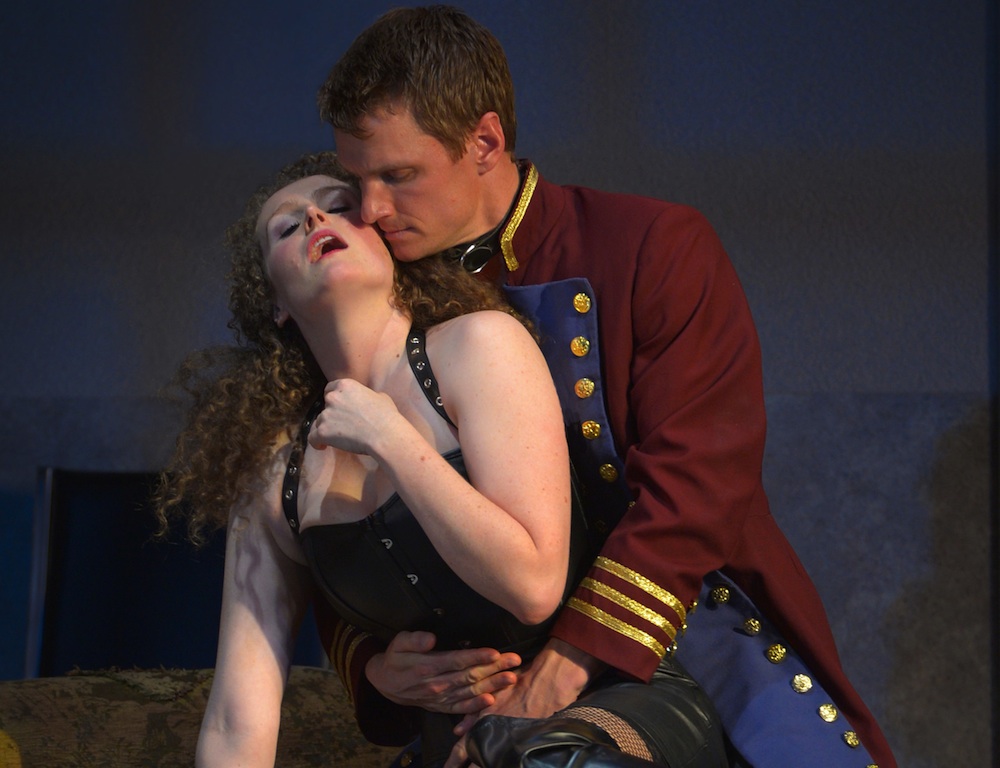
Venus in Fur Geary Theater, 415 Geary, SF; www.act-sf.org. $20-120. Wed-Sat and Tue, 8pm (also Sat, 2pm); Sun, 7pm. Through April 13. American Conservatory Theater performs a new production of David Ives’ 2012 Tony-nominated play.

The World of Paradox Garage, 715 Bryant, SF; www.paradoxmagic.com. $12-15. Mon/7, 8pm. Footloose presents David Facer in his solo show, a mix of magic and theater.

The World’s Funniest Bubble Show Marsh San Francisco, 1062 Valencia, SF; www.themarsh.org. $8-11. Sun, 11am. Extended through May 25. The popular, kid-friendly show by Louis Pearl (aka “The Amazing Bubble Man”) returns to the Marsh.

Wrestling Jerusalem Intersection for the Arts, 925 Mission, SF; www.theintersection.org. $20-30. Thu/3-Sat/5, 7:30pm; Sun/6, 2pm. Intersection for the Arts presents Aaron Davidman in his multicharacter solo performance piece about Israel and Palestine.

BAY AREA

Accidental Death of an Anarchist Berkeley Repertory Theatre, Roda Theatre, 2015 Addison, Berk; www.berkeleyrep.org. $29-99. Tue and Thu-Sat, 8pm (no show April 18; also Sat and April 17, 2pm); Sun, 2 and 7pm. Through April 20. Berkeley Rep presents comic actor Steven Epp in Dario Fo’s explosive political farce, directed by Christopher Bayes,

Arms and the Man Barn Theatre, 30 Sir Francis Drake, Ross; www.rossvalleyplayers.com. $13-26. Thu, 7:30pm; Fri-Sat, 8pm; Sun, 2pm. Through April 13. Ross Valley Players perform George Bernard Shaw’s romantic comedy.

Bread and Circuses La Val’s Subterranean, 1834 Euclid, Berk; www.impacttheatre.com. $20-25. Thu/3-Sat/5, 8pm; Sun/6, 7pm. Impact Theatre performs “a cavalcade of brutal and bloody new short plays” by various contemporary playwrights.

The Coast of Utopia Ashby Stage, 1901 Ashby, Berk; www.shotgunplayers.org. $20-35 (three-show marathon days, $100-125). Part One: Voyage runs through April 17; Part Two: Shipwreck runs through April 19; Part Three: Salvage runs through April 27. Three-play marathon, Sat/5 and April 26. Through April 27. Check website for showtime info. Shotgun Players performs Tom Stoppard’s epic The Coast of Utopia trilogy, with all three plays performed in repertory.

East 14th Marsh Berkeley, 2120 Allston, Berk; www.themarsh.org. $20-50. Fri, 8pm; Sat, 8:30pm. Through April 26. Don Reed’s hit autobiographical solo show returns to the Marsh Berkeley.

Fool For Love Pear Avenue Theatre, 1220 Pear, Mtn View; www.thepear.org. $10-35. Thu/3-Sat/5, 8pm; Sun/6, 2pm. Pear Avenue Theatre performs Sam Shepard’s iconic play, about a pair of former lovers who reunite at a lonely desert motel.

Geezer Marsh Berkeley, 2120 Allston, Berk; www.themarsh.org. $25-50. Thu, 8pm; Sat, 5pm. Through April 26. Geoff Hoyle moves his hit comedy about aging to the East Bay.

Johnny Guitar, the Musical Masquers Playhouse, 105 Park Place, Point Richmond; www.masquers.org. $22. Fri-Sat, 8pm; Sun, 2pm. Through April 26. Masquers Playhouse performs the off-Broadway hit based on the campy Joan Crawford Western.

Sleuth Center REPertory Company, 1601 Civic, Walnut Creek; www.centerrep.org. $33-54. Wed, 7:30pm; Thu-Sat, 8pm (also April 26, 2:30pm); Sun, 2:30pm. Through April 26. Center REPertory Company performs Anthony Shaffer’s classic, Tony-winning thriller.

Vampire Lesbians of Sodom and Sleeping Beauty or Coma Live Oaks Theater, 1301 Shattuck, Berk; www.viragotheatre.org. $28. Thu-Sat, 8pm; Sun, 2pm. Through April 19. Virago Theatre Company performs Charles Busch’s outrageous double bill.

PERFORMANCE/DANCE

“California Dreamin’, A Musical Celebration of our Golden State” Ebenezer Herchurch, 678 Portola, SF; www.sflgfb.org. Sun/6, 4pm. Free. The San Francisco Lesbian/Gay Freedom Band performs. Check website for info on Davis and Woodland concerts.

Caroline Lugo and Carolé Acuña’s Ballet Flamenco Peña Pachamama, 1630 Powell, SF; www.carolinalugo.com. Sun/6, April 12, 19, 30, May 4, 10-11, 17, and 25, 6:15pm. $15-19. Flamenco performance by the mother-daughter dance company, featuring live musicians.

“Conjuring Wonder” Prescott Hotel, 545 Post, SF; www.miraclemagic.com. Thu/3, 7pm. (Ongoing first Thursday of every month). $35. Dennis Kyriakos performs close-up magic to a small audience; advance ticket purchase recommended.

“Dance Discourse Project #18: Exploring Choreographic Thinking” CounterPULSE, 1310 Mission, SF; www.counterpulse.org. Thu/3, 7:30pm, Free. CounterPULSE and Dancers’ Group present a panel discussion exploring “choreographic thinking.” Participants include moderator Megan Nicely and choreographers Christian Burns and Christy Funsch, and dancer-scholar Rebecca Chaleff.

“Drone Magic: San Francisco Bagpipe Festival” Croatian American Cultural Center, 60 Onondaga, SF; www.croatianamericanweb.org. Sun/6, 2-6pm. $15 (children free). With bagpipe music from around the world.

“Dying While Black and Brown” ZACCHO Studio, 1777 Yosemite #330, SF; www.zaccho.org. Fri/4, 8pm; Sat/5, 2pm. Free. ZACCHO Dance Theatre presents two free performances of Joanna Haigood’s San Francisco Equal Justice Society-commissioned work investigating capital punishment and incarcerated people of color.

“Falsehoods & Fairytales” Exit Theater, 156 Eddy, SF; www.mindofkevin.com. Fri/4-Sat/5, 8pm. $20. Kevin Ferguson — “mind-screwer, thought-fiddler, and perception-twiddler” — performs his new magical stage show.

“The Flow Show” Dance Mission Theater, 3316 24th St, SF; www.theflowshow.org. Fri/4, 8pm. $20. “A cutting-edge showcase of object manipulation” with dance, circus acts, and more.

“Interlace” ODC Dance Commons, 351 Shotwell, SF; www.odctheater.org. Sat/5, 8pm; Sun/6, 4 and 7pm. $10-15. Teen dancers performs works by KT Nelson, Kimi Okada, and others in this 17th season of the ODC Dance Jam.

Morgan James Venetian Room, Fairmont San Francisco, 950 Mason, SF; www.bayareacabaret.org. Sun/6, 7:30pm. $48. The Broadway and jazz singer performs.

“The Life You’ll Never Have” Stage Werx Theatre, 446 Valencia, SF; www.foulplaysf.com. April 8-9, 7pm writing party; 8pm performance. $20. The audience crafts each evening’s soap opera-inspired play at this interactive, immersive performance by Exquisite Corpse Theatre.

“Magic at the Rex” Hotel Rex, 562 Sutter, SF; www.magicattherex.com. Sat, 8pm. Ongoing. $25. Magic and mystery with Adam Sachs and mentalist Sebastian Boswell III.

Margaret Jenkins Dance Company Yerba Buena Center for the Arts, 701 Mission, SF; www.ybca.org. Thu/3-Sat/5, 7:30pm; Sun/6, 3pm. $30-35. The company marks its 40th anniversary season with the West Coast premiere of Times Bones, plus a collaboration with Kolben Dance Company of Jerusalem, The Gate of Winds.

“Mi Corazón es tu Piñata” Stage Werx Theatre, 446 Valencia, SF; www.corazonpinata.com. Fri/4-Sat/5, 8pm. $16-20. Fully improvised telenovela (in English) based on audience suggestions.

“Mutiny Radio Comedy Showcase” Mutiny Radio, 2781 21st St, SF; www.mutinyradio.fm. Fri/4, 8pm. $10. Also Sat/5, 5pm, $10, Purple Onion at Kells, 530 Jackson, SF; www.mutinyradio.fm. Local comedians perform.

“Point Break Live!” DNA Lounge, 373 11th St, SF; www.dnalounge.com. Fri/4, 7:30 and 11pm. $25-50. Dude, Point Break Live! is like dropping into a monster wave, or holding up a bank, like, just a pure adrenaline rush, man. Ahem. Sorry, but I really can’t help but channel Keanu Reeves and his Johnny Utah character when thinking about the awesomely bad 1991 movie Point Break or its equally yummily cheesy stage adaptation. And if you do an even better Keanu impression than me — the trick is in the vacant stare and stoner drawl — then you can play his starring role amid a cast of solid actors, reading from cue cards from a hilarious production assistant in order to more closely approximate Keanu’s acting ability. This play is just so much fun, even better now at DNA Lounge than it was a couple years ago at CELLspace. But definitely buy the poncho pack and wear it, because the blood, spit, and surf spray really do make this a fully immersive experience. (Steven T. Jones)

“Schubertiade” Salle Pianos, 1632 C Market, SF; modernschubertiade.brownpapertickets.com. Fri/4, 8pm. $30. Kathryn Roszak’s Danse Lumière performs an updated version of an 1820s salon, with music, dance, and poetry.

“Strange Things” One Grove Street, SF; www.ftloose.org. Sat/5, 8pm. $20-30. Magician Christian Cagigal and mentalist Paul Draper perform together.

Terminator Too: Judgment Play DNA Lounge, 373 11th St, SF; www.dnalounge.com. Thu/3 and May 1, 9pm. $25-50. The creators of Point Break Live! take on James Cameron’s 1991 sci-fi classic, with an audience member picked on the night of the show to embody Schwarzenegger’s iconic role.

BAY AREA

Alvin Ailey American Dance Theater Zellerbach Hall, Bancroft at Telegraph, UC Berkeley, Berk; www.calperformances.org. Wed/2-Sun/6, 8pm. $30-92. The company performs new works by top choreographers, as well as company classics, as part of its annual Cal Performances residency.

“Feisty Old Jew” Osher Marin JCC, 200 N. San Pedro, San Rafael; www.marinjcc.org. Sun/6, 2pm. Free. Charlie Varon performs his latest solo, a fictional comedy about “a 20th century man living in a 21st century city.” Opening the show is Maxine Epstein’s 15-minute monologue, Pushin’ the Pushka.

“IMPACT” Odell Johnson Theater, Laney College, 900 Fallon, Oakl; www.destinyarts.org. Fri/4-Sat/5 and April 11-12, 7:30pm (also April 12, 2pm). $13-30. Destiny Arts Youth Performance Company celebrates the youth arts and violence prevention organization’s 25th anniversary with this world-premiere show, a mix of dance, theater, spoken word, rap, and song.

“MarshJam Improv Comedy Show” Marsh Berkeley, 2120 Allston, Berk; www.themarsh.org. Fri, 8pm. Ongoing. $10. Improv comedy with local legends and drop-in guests. *


Film Listings: April 2 – 8, 2014

0

Film listings are edited by Cheryl Eddy. Reviewers are Kimberly Chun, Dennis Harvey, Lynn Rapoport, Sam Stander, and Sara Maria Vizcarrondo. For rep house showtimes, see Rep Clock.

OPENING

Breathe In In Drake Doremus’s lyrical tale of a man in midlife crisis, Guy Pearce plays Keith Reynolds, a high school music teacher living in upstate New York with his wife, Megan (Amy Ryan), and teenage daughter, Lauren (Mackenzie David). Quietly harboring his discontent, Keith spends solitary moments wistfully sifting through glory-days photographs of his former band and memories of the undomesticated life he and Megan led two decades ago in New York City, which the two revisit in a low-toned call-and-response that doesn’t need to erupt into a blistering argument to clarify their incompatible positions. The melancholy calm is disrupted by the arrival of a British exchange student named Sophie (Felicity Jones, who also starred in Doremus’s 2011 film, Like Crazy). Evading a scene of loss and heartbreak at home, 18-year-old Sophie has come to spend a semester at Lauren’s high school, a juxtaposition that presents us with two wildly distinct species of teenager. Lauren is a brittle, popular party girl whom we watch making poor choices with a predatory classmate; Sophie is a soulful, reserved young woman whose prodigious talent at the piano first jars Keith out of his malaise into an uncomfortable awareness. A scene before Sophie’s arrival in which the family plays Jenga and Keith pulls out the wrong piece, toppling the tower, perhaps presses its ominous visual message too hard. Meanwhile, similarities to 2012’s Nobody Walks underscore the argument that this subject matter is an old, tired tale. But for the most part, the intimacy that develops between Keith and Sophie is constructed with delicate restraint, and Doremus and writing partner Ben York Jones have crafted a textured portrait of a man trying to repossess the past. (1:37) Sundance Kabuki. (Rapoport)

Captain America: The Winter Soldier Marvel’s most wholesome hero returns in this latest film in the Avengers series, and while it doesn’t deviate from the expected formula (it’s not a spoiler to say that yes, the world is saved yet again), it manages to incorporate a surprisingly timely plot about the dangers of government surveillance. Steve Rogers (Chris Evans), hunkiest 95-year-old ever, is still figuring out his place in the 21st century after his post-World War II deep freeze. Nick Fury (Samuel L. Jackson) has him running random rescue missions with the help of Black Widow (Scarlett Johansson), but SHIELD is working on a top-secret project that will allow it to predict crimes before they occur. It isn’t long before Cap’s distrust of the weapon — he may be old-fashioned, but he ain’t stupid — uncovers a sinister plot led by a familiar enemy, with Steve’s former BFF Bucky doing its bidding as the science-experiment-turned-assassin Winter Soldier (Sebastian Stan). Anthony Mackie, Robert Redford, and series regular Colbie Smulders are fine in supporting roles, and Johansson finally gets more to do than punch and pose, but the likable Evans ably carries the movie — he may not have the charisma of Robert Downey Jr., but he brings wit and depth to a role that would otherwise be defined mainly by biceps and CG-heavy fights. Oh, and you know the drill by now: superfans will want to stick around for two additional scenes tucked into the end credits. (2:16) (Eddy)

Frankie & Alice Halle Berry plays a go-go dancer with dissociative identity disorder. (1:42)

Goodbye World The end begins with a text — “Goodbye world,” sent to every cell phone. Once the computer virus-spawned anarchy really gets rolling (internet and power outages, violence and chaos), a group with nerdy-tech past connections descends on the survivalist-chic homestead of responsible James (Adrian Grenier) and “zany” Lily (Kerry Bishé): uptight Becky (Caroline Dhavernas) and unhappy Nick (Ben McKenzie); Lev (Scott Mescudi, aka musician Kid Cudi), who may have accidentally unleashed the virus; Laura (Gaby Hoffman), haunted by a recent political scandal; and ex-con Benji (Marc Webber) with his nubile tagalong (Remy Nozik). Most of these folks — even the ones married to each other — are frenemies at best, and their relationships disintegrate as civilization crumbles from afar. Physical menace enters this Big Chill-off-the-grid reunion when surly National Guardsmen emerge from the woods, but the main dramas take place ‘twixt the members of the angsty ensemble — all of whom are actually in desperate need of a fresh start. Among a cast composed mostly of TV veterans, Hoffman (last seen scene-stealing on Girls) is the standout performer, not to mention the MVP of this particular apocalypse. (1:41) Four Star. (Eddy)

Island of Lemurs: Madagascar Morgan Freeman narrates this 3D IMAX look at lemurs. (:39)

It Felt Like Love Set on the outer edges of Brooklyn and Queens, writer-director Eliza Hittman’s debut feature tracks the summertime wanderings and missteps of 14-year-old Lila (Gina Piersanti), whose days mainly consist of trailing in the wake of her more sexually experienced and perpetually coupled-off best friend, Chiara (Giovanna Salimeni). The camera repeatedly finds Lila in voyeur mode, as Chiara and her boyfriend, Patrick (Jesse Cordasco), negotiate their physical relationship and redefine the limits of PDA, unfazed by Lila’s silent, watchful presence. It’s clear she wants some part of this, though her motivations are a murky compound of envy, loneliness, and longing for a sense of place among her peers. A brief encounter with an older boy, Sammy (Ronen Rubinstein), whom Chiara knows — more of a sighting, really — provides the tiniest of openings, and Lila forces her way through it with an awkward insistence that is uncomfortable and sometimes painful to witness. Lila lacks Chiara’s fluid verbal and physical vernacular, and her attempts at mimicry in the cause of attracting Sammy’s attention only underline how unready and out of her depth she is. As Lila pushes into his seedy, sleazy world — a typical night is spent getting wasted and watching porn with his friends — their encounters don’t look like they feel like love, though Piersanti poignantly signals her character’s physical desire in the face of Sammy’s bemused ambivalence. Hittman unflinchingly leads her hapless protagonist through scenes that hover uneasily between dark comedy and menace without ever quite landing, and this uncertainty generates an emotional force that isn’t dispelled by the drifting, episodic plot. (1:22) Roxie. (Rapoport)

Jinn Horror movie based on the mythical creature from Arabic folklore. (1:37)

The Missing Picture Rithy Panh’s latest film about the homeland he fled as a teenager is atypically, directly autobiographical, and most unusually crafted. He re-creates his once comfortable Phnom Penh family’s grim fate after Pol Pot and company seized control of Cambodia in 1975 — as all fell prey to the starvation, forced labor, and other privations suffered by perceived “enemies” of the new regime — not by any conventional means but via elaborate dioramas of handmade clay figures depicted in prison camp life (and death). There’s also ample surviving propagandic footage of the Khmer Rouge trumpeting its “model society” that was in reality little more than an experiment in mass execution and torture. The result is a unique and powerful take on one of the 20th century’s worst crimes against humanity. (1:36) Opera Plaza. (Harvey)

Nymphomaniac, Volume II The second half of Lars von Trier’s anecdotal epic begins with Joe (Charlotte Gainsbourg) recalling the quasi-religious experience of her spontaneous first orgasm at age 12. Then she continues to tell bookish good Samaritan Seligman (Stellan Skarsgard) — who reveals he’s an asexual 60-something virgin — the story of her sexually compulsive life to date. Despite finding domestic stability at last with Jerome (Shia LeBeouf), she proves to have no talent for motherhood, and hits a tormenting period of frigidity eventually relieved only by the brutal ministrations of sadist K (Jamie Bell, burying Billy Elliott for good). She finds a suitable professional outlet for her peculiarly antisocial personality, working as a sometimes ruthless debt collector under the tutelage of L (Willem Dafoe), and he in turn encourages her to develop her own protégé in the form of needy teenager P (Mia Goth). If Vol. I raised the question “Will all this have a point?,” Vol. II provides the answer, and it’s (as expected) “Not really.” Still, there’s no room for boredom in the filmmaker’s most playfully arbitrary, entertaining, and least misanthropic (very relatively speaking) effort since his last four-hour-plus project 20 years ago, TV miniseries The Kingdom. Never mind that von Trier (in one of many moments when he uses Joe or Seligman as his mouthpiece) protests against the tyranny of political correctitude that renders a word like “Negro” unsayable — you’re still free to feel offended when his camera spends more time ogling two African men’s variably erect dicks in one brief scene that it does all the white actors’ cocks combined. But then there’s considerably more graphic content all around in this windup, which ends on a predictable note of cheap, melodramatic irony. But that’s part of the charm of the whole enterprise: Reeling heedlessly from the pedantic to the shocking to the trivial, like a spoiled child it manages to be kinda cute even when it’s deliberately pissing you off. (2:10) Embarcadero, Smith Rafael. (Harvey)

On My Way Not for nothing too does the title On My Way evoke Going Places (1974): director Emmanuelle Bercot is less interested in exploring Catherine Deneuve’s at-times-chilled hauteur than roughing up, grounding, and blowing fresh country air through that still intimidatingly gorgeous image. Deneuve’s Bettie lost her way long ago — the former beauty queen, who never rose beyond her Miss Brittany status, is in a state of stagnation, working at her seafood restaurant, having affairs with married men, living with her mother, and still sleeping in her girlhood room. One workday mid-lunch hour, she gets in her car and drives, ignoring all her ordinary responsibilities and disappearing down the wormhole of dive bars and back roads. She seems destined to drift until her enraged, equally lost daughter Muriel (Camille) calls in a favor: give her son Charly (Nemo Schiffman) a ride to his paternal grandfather’s. It’s chance to reconnect and correct course, even after Bettie’s money is spent, her restaurant appears doomed, and the adorable, infuriating Charly acts out. The way is clear, however: what could have been a musty, predictable affair, in the style of so many boomer tales in the movie houses these days, is given a crucial infusion of humanity and life, as Bercot keeps an affectionate eye trained on the unglamorous everyday attractions of a French backwater and Deneuve works that ineffable charm that draws all eyes to her onscreen. Her Bettie may have kicked her cigarette habit long ago, but she’s still smokin’ — in every way. (1:53) Clay. (Chun)

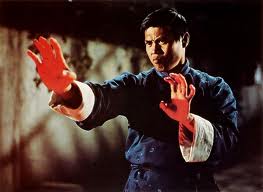
The Raid 2 See “Brawl Opera.” (2:19) Metreon, Sundance Kabuki, Shattuck.

Rob the Mob Based on a stranger-than-fiction actual case, this rambunctious crime comedy stars Michael Pitt and Nina Arianda as Tommy and Rosie, a coupla crazy kids in early 1990s Queens — crazy in love, both before and after their strung-out robbery antics win them both a stint in the pen. When Tommy gets out 18 months later, he finds Rosie has managed to stay clean, even getting a legit job as a debt collector for positive-thinking nut and regular employer of strays Dave (a delightful Griffin Dunne). She wants Tommy to do likewise, but the high visibility trial of mob kingpin John Gotti gives him an idea: With the mafia trying to keep an especially low profile at present, why not go around sticking up the neighborhood “social clubs” where wise guys hang out, laden with gold chains and greenbacks but (it’s a rule) unarmed? Whatta they gonna do, call the police? This plan is so reckless it just might work, and indeed it does, for a while. But these endearingly stupid lovebirds can’t be counted on to stay under the radar, magnetizing attention from the press (Ray Romano as a newspaper columnist), the FBI, and of course the “organization” — particularly one “family” led by Big Al (Andy Garcia). Written by Jonathan Fernandez, this first narrative feature from director Raymond DeFitta since his terrific 2009 sleeper hit City Island is less like that screwball fare and more like a scaled down, economically downscaled American Hustle (2013), another brashly comedic period piece inspired by tabloid-worthy fact. Inspiration doesn’t fully hold up to the end, but the film has verve and style to spare, and the performances (also including notable turns from Cathy Moriarty, Frank Whaley, Burt Young, Michael Rispoli, Yul Vazquez and others) are sterling. (1:42) Embarcadero. (Harvey)

The Unknown Known After winning an Oscar for 2003’s The Fog of War: Eleven Lessons from the Life of Robert S. McNamera, Errol Morris revisits the extended-interview documentary format with another Secretary of Defense, Donald Rumsfeld. The film delves into Rumsfeld’s lengthy political career — from Congress to the Nixon, Ford, and George W. Bush administrations — drawing insights from the man himself and his extensive archive of memos (“there have to be millions”) on Vietnam, 9/11, Osama bin Laden, the “chain of command,” torture, the Iraq War, etc., as well as archival footage that suggests the glib Rumsfeld’s preferred spin on certain events is not always factually accurate (see: Saddam Hussein and WMDs). Morris participates from behind the camera, lobbing questions that we can hear and therefore gauge Rumsfeld’s immediate reaction to them. (The man is 100 percent unafraid of prolonging an awkward pause.) A gorgeous Danny Elfman score soothes some of the anger you’ll feel digesting Rumsfeld’s rhetoric, but you still may find yourself wanting to shriek at the screen. In other words, another Morris success. (1:42) Elmwood, Presidio. (Eddy)

ONGOING

Afternoon of a Faun: Tanaquil Le Clercq Writer-director Nancy Buirski’s documentary follows the short, brilliant career of a young dancer named Tanaquil Le Clercq, who came up in the New York City ballet world of the 1940s and ’50s. Le Clercq was discovered by George Balanchine, married him (as three other dancers had done before her), sparked a paradigm shift in the ballet world regarding what was considered the quintessential dancer’s body, had numerous ballets set on her by Balanchine and Jerome Robbins, and then, at the peak of her career, at age 27, was stricken by polio and left paralyzed in both legs. The film takes its time moving toward this catastrophe, recounting Le Clercq’s early adult life through interviews with her contemporaries and tracking her professional progress through gorgeous archival footage of her performances. Equally moving archival material are the letters from a longtime correspondence between Le Clercq and Robbins that documented two very different periods of her life: the first, when Robbins was choreographing ballets for her, including Afternoon of a Faun, and professing his love; the second, after her paralysis, when she wrote him a series of poignant communications describing her impressions of her illness and her new, circumscribed world. The film has some trouble holding on to its center — as in life, Balanchine proves a magnetic force, and Afternoon of a Faun feels inexorably drawn to his professional and personal details. We don’t get enough of Le Clercq, which you could say is the tragedy of her story — nobody did. But the letters do provide a sense of someone resourceful and responsive to life’s richness and joys, someone who would get past this crisis and find a way to reshape her life. (1:31) Opera Plaza. (Rapoport)

American Hustle David O. Russell’s American Hustle is like a lot of things you’ve seen before — put in a blender, so the results are too smooth to feel blatantly derivative, though here and there you taste a little Boogie Nights (1997), Goodfellas (1990), or whatever. Loosely based on the Abscam FBI sting-scandal of the late 1970s and early ’80s (an opening title snarks “Some of this actually happened”), Hustle is a screwball crime caper almost entirely populated by petty schemers with big ideas almost certain to blow up in their faces. It’s love, or something, at first sight for Irving Rosenfeld (Christian Bale) and Sydney Prosser (Amy Adams), who meet at a Long Island party circa 1977 and instantly fall for each other — or rather for the idealized selves they’ve both strained to concoct. He’s a none-too-classy but savvy operator who’s built up a mini-empire of variably legal businesses; she’s a nobody from nowhere who crawled upward and gave herself a bombshell makeover. The hiccup in this slightly tacky yet perfect match is Irving’s neglected, crazy wife Rosalyn (Jennifer Lawrence), who’s not about to let him go. She’s their main problem until they meet Richie DiMaso (Bradley Cooper), an ambitious FBI agent who entraps the two while posing as a client. Their only way out of a long prison haul, he says, is to cooperate in an elaborate Atlantic City redevelopment scheme he’s concocted to bring down a slew of Mafioso and presumably corrupt politicians, hustling a beloved Jersey mayor (Jeremy Renner) in the process. Russell’s filmmaking is at a peak of populist confidence it would have been hard to imagine before 2010’s The Fighter, and the casting here is perfect down to the smallest roles. But beyond all clever plotting, amusing period trappings, and general high energy, the film’s ace is its four leads, who ingeniously juggle the caricatured surfaces and pathetic depths of self-identified “winners” primarily driven by profound insecurity. (2:17) Metreon. (Harvey)

Bad Words Settling a grudge score whose precise origin remains unclear until late in the game, world-class misanthrope Guy Trilby (Jason Bateman) is celebrating his 40th birthday by competing in a national spelling bee. Yes, spelling bees are generally for children, and so is this one. But Guy has found a legal loophole permitting his participation, and the general hate wending his way from contest staff (Allison Janney, Philip Baker Hall) — let alone the tiger-mom-and-dad parents ready to form a lynch mob — is just icing on the cake where he’s concerned. What’s more, as some sort of majorly underachieving near-genius, he’s in fact well equipped to whup the bejesus out of overachieving eight-year-olds when it comes to saying the right letters out loud. The only people on his side, sorta, are the online journalist (Kathryn Hahn) reporting on his perverse quest, and the insidiously cute Indian American competitor (Rohan Chand) who wants to be besties, or perhaps just to psych him out. (Note: The tyke’s admitted favorite word is “subjugate.”) Written by Andrew Dodge, this comedy in the tradition (a little too obviously) of 2003’s Bad Santa and such provides the always enjoyable Bateman with not only a tailor-made lead role, but a directorial debut as well. He does just fine by both. Yet as nicely crafted and frequently-pretty-funny Bad Words is, at core it’s a rather petty movie — small, derivative, and cynically mean-spirited without the courage of genuine biliousness. It’s at once not-half-bad, and not half as badass as it pretends to be. (1:29) Marina, 1000 Van Ness, SF Center, Sundance Kabuki. (Harvey)

Boys of Abu Ghraib First-time feature director-writer Luke Moran stars as Jack, an all-American lad who signs on for an Army stint in the wake of 9/11, and finds himself posted to the titular Iraqi prison turned U.S. military detainee camp 20 miles outside Baghdad. Despite the occasional bombing, however, life is mostly underutilized tedium for he and his fellow grunts. With nothing else to do, Jack volunteers for MP duty as a guard in the cell blocks — where his initial shock at the torture and abuse of prisoners is exacerbated by his friendship with the well educated, friendly, convincingly innocent captive Ghazi (Omid Abtahi). Shot at an abandoned New Mexico penitentiary, this drama is effective as far as it goes in exploring one fictive soldier’s rocky road under the influence of stress, isolation, and boredom. But as it ultimately encompasses the real-life international Abu Ghraib scandal of 2004 — in which leaked photos revealed widespread humiliation and abuse of prisoners for no evident purpose save enlistees’ loutish amusement — Boys falls well short in illuminating just how that kind of systemic breakdown can occur amongst seemingly normal, disciplined military personnel. Moran and company do raise the issue, but it turns out to be a weightier, more disturbing issue than this modestly ambitious feature is equipped to handle. (1:42) Metreon. (Harvey)

Cesar Chavez “You always have a choice,” Cesar Chavez (Michael Peña) tells his bullied son when advising him to turn the other cheek. Likewise, actor-turned-director Diego Luna had a choice when it came to tackling his first English-language film; he could have selected a less complicated, sprawling story. So he gets props for that simple act — especially at a time when workers’ rights and union power have been so dramatically eroded — and for his attempts to impact some complicated nuance to Chavez’s fully evident heroism. Painting his moving pictures in dusty earth tones and burnt sunlight with the help of cinematographer Enrique Chediak, Luna vaults straight into Chavez’s work with the grape pickers that would come to join the United Farm Workers — with just a brief voiceover about Chavez’s roots as the native-born son of a farm owner turned worker, post-Depression. Uprooting wife Helen (America Ferrera) and his family and moving to Delano as a sign of activist commitment, Chavez is seemingly quickly drawn into the 1965 strike by the Mexican workers’ sometime rivals: Filipino pickers (see the recent CAAMFest short documentary Delano Manongs for some of their side of the story). From there, the focus hones in on Chavez, speaking out against violence and “chicken shit macho ideals,” hunger striking, and activating unions overseas, though Luna does give voice to cohorts like Dolores Huerta (Rosario Dawson), growers like Bogdanovitch (John Malkovich), and the many nameless strikers — some of whom lost their lives during the astonishingly lengthy, taxing five-year strike. Luna’s win would be a blue-collar epic on par with 1979’s Norma Rae, and on some levels, he succeeds; scanning the faces of the weathered, hopeful extras in crowd scenes, you can’t help but feel the solidarity. The people have the power, as a poet once put it, and tellingly, his choice of Peña, stolidly opaque when charismatic warmth is called for, might be the key weakness here. One suspects the director or his frequent costar Gael García Bernal would make a more riveting Chavez. (1:38) Metreon. (Chun)

Divergent Based on the blockbuster dystopian-future YA novel by Veronica Roth (the first in a trilogy), Divergent is set in a future city-state version of Chicago in which society is divided into five character-based, color-coded factions: Erudite, Amity, Candor, Abnegation, and Dauntless. Like her peers, Beatrice Prior (Shailene Woodley), the film’s Abnegation-born teenage heroine, must choose a permanent faction — with the help of a standardized aptitude test that forgoes penciling in bubbles in favor of virtual reality psychic manipulation. When the test fails to triangulate her sole innate personality trait, she learns that she belongs to a secret, endangered sixth category: Divergent, an astonishing set of people who are not only capable of, say, acts of selflessness but can also produce intelligent thought, or manifest bravery in the face of danger. Forced to hide her aberrant nature in a society whose leaders (Kate Winslet) are prone to statements like “The future belongs to those who know where they belong,” and seemingly bored among Abnegation’s hive of gray cardigan-wearing worker bees, Beatrice chooses Dauntless, a dashing gang of black-clad, alterna-rock music video extras who jump on and off moving trains and live in a warehouse-chic compound whose dining hall recalls the patio at Zeitgeist. Fittingly, a surly, tattooed young man named Four (Theo James) leads Beatrice, now Tris, and her fellow initiates through a harsh proving regimen that, if they fail, will cast them into an impoverished underclass. Director Neil Burger (2006’s The Illusionist, 2011’s Limitless) and the behemoth marketing force behind Divergent are clearly hoping to stir up the kind of madness stoked by the Twilight and Hunger Games series, but while there are bones a-plenty to pick with those franchises, Divergent may have them beat for pure daffiness of premise and diameter of plot holes — and that’s after screenwriters Evan Daugherty and Vanessa Taylor’s major suturing of the source material’s lacunae. The daffiness doesn’t translate into imaginative world-building, and while a couple of scenes convey the visceral thrills of life in Dauntless, the tension between Tris and Four is awkwardly ratcheted up, and the film’s shift into a mode of crisis is equally jolting without generating much heat. (2:20) Balboa, Metreon, 1000 Van Ness, Sundance Kabuki. (Rapoport)

Ernest & Celestine Belgian animators Vincent Patar and Stéphane Aubier are best known for the stop-motion shorts series (and priceless 2009 subsequent feature) A Town Called Panic, an anarchic, absurdist, and hilarious creation suitable for all ages. Their latest (co-directed with Benjamin Renner) is … not like that at all. Instead, it’s a sweet, generally guileless children’s cartoon that takes its gentle, watercolor-type visual style from late writer-illustrator Gabrielle Vincent’s same-named books. Celestine (voiced by Pauline Brunner) is an orphaned girl mouse that befriends gruff bear Ernest (the excellent Lambert Wilson), though their improbable kinship invites social disapproval and scrapes with the law. There are some clever satirical touches, but mostly this is a softhearted charmer that will primarily appeal to younger kids. Adults will find it pleasant enough — but don’t expect any Panic-style craziness. (1:20) Embarcadero. (Harvey)

Frozen (1:48) Metreon.

The Grand Budapest Hotel Is this the first Wes Anderson movie to feature a shootout? It’s definitely the first Anderson flick to include a severed head. That’s not to say The Grand Budapest Hotel, “inspired by” the works of Austrian novelist Stefan Zweig, represents too much of a shift for the director — his intricate approach to art direction is still very much in place, as are the deadpan line deliveries and a cast stuffed with Anderson regulars. But there’s a slightly more serious vibe here, a welcome change from 2012’s tooth-achingly twee Moonrise Kingdom. Thank Ralph Fiennes’ performance as liberally perfumed concierge extraordinaire M. Gustave, which mixes a shot of melancholy into the whimsy, and newcomer Tony Revolori as Zero, his loyal lobby boy, who provides gravitas despite only being a teenager. (Being played by F. Murray Abraham as an older adult probably helps in that department.) Hotel‘s early 20th century Europe setting proves an ideal canvas for Anderson’s love of detail — the titular creation rivals Stanley Kubrick’s rendering of the Overlook Hotel — and his supporting cast, as always, looks to be enjoying the hell out of being a part of Anderson’s universe, with Willem Dafoe, Jeff Goldblum, and Adrien Brody having particularly oversized fun. Is this the best Wes Anderson movie since 2001’s The Royal Tenenbaums? Yes. (1:40) 1000 Van Ness, SF Center, Sundance Kabuki, Vogue. (Eddy)

Gravity “Life in space is impossible,” begins Gravity, the latest from Alfonso Cuarón (2006’s Children of Men). Egghead Dr. Ryan Stone (Sandra Bullock) is well aware of her precarious situation after a mangled satellite slams into her ship, then proceeds to demolition-derby everything (including the International Space Station) in its path. It’s not long before she’s utterly, terrifyingly alone, and forced to unearth near-superhuman reserves of physical and mental strength to survive. Bullock’s performance would be enough to recommend Gravity, but there’s more to praise, like the film’s tense pacing, spare-yet-layered script (Cuarón co-wrote with his son, Jonás), and spectacular 3D photography — not to mention George Clooney’s warm supporting turn as a career astronaut who loves country music almost as much as he loves telling stories about his misadventures. (1:31) Metreon. (Eddy)

The Great Beauty The latest from Paolo Sorrentino (2008’s Il Divo) arrives as a high-profile contender for the Best Foreign Language Film Oscar, already annointed a masterpiece in some quarters, and duly announcing itself as such in nearly every grandiose, aesthetically engorged moment. Yes, it seems to say, you are in the presence of this auteur’s masterpiece. But it’s somebody else’s, too. The problem isn’t just that Fellini got there first, but that there’s room for doubt whether Sorrentino’s homage actually builds on or simply imitates its model. La Dolce Vita (1960) and 8 1/2 (1963) are themselves swaying, jerry-built monuments, exhileratingly messy and debatably profound. But nothing quite like them had been seen before, and they did define a time of cultural upheaval — when traditional ways of life were being plowed under by a loud, moneyed, heedless modernity that for a while chose Rome as its global capital. Sorrentino announces his intention to out-Fellini Fellini in an opening sequence so strenuously flamboyant it’s like a never-ending pirouette performed by a prima dancer with a hernia. There’s statuary, a women’s choral ensemble, an on-screen audience applauding the director’s baffled muse Toni Servillo, standing in for Marcello Mastroianni — all this and more in manic tracking shots and frantic intercutting, as if sheer speed alone could supply contemporary relevancy. Eventually The Great Beauty calms down a bit, but still its reason for being remains vague behind the heavy curtain of “style.” (2:22) Opera Plaza. (Harvey)

Jodorowsky’s Dune A Chilean émigré to Paris, Alejandro Jodorowsky had avant-garde interests that led him from theater and comic book art to film, making his feature debut with 1968’s Fando y Lis. Undaunted by its poor reception, he created El Topo (1970), a blood-soaked mix of spaghetti western, mysticism, and Buñuellian parabolic grotesquerie that became the very first “midnight movie.” After that success, he was given nearly a million dollars to “do what he wanted” with 1973’s similarly out-there The Holy Mountain, which became a big hit in Europe. French producer Michel Seydoux asked Jodorowsky what he’d like to do next. Dune, he said. In many ways it seemed a perfect match of director and material. Yet Dune would be an enormous undertaking in terms of scale, expense, and technical challenges. What moneymen in their right mind would entrust this flamboyant genius/nut job with it? They wouldn’t, as it turned out. So doc Jodorowsky’s Dune is the story of “the greatest film never made,” one that’s brain-exploding enough in description alone. But there’s more than description to go on here, since in 1975 the director and his collaborators created a beautifully detailed volume of storyboards and other preproduction minutiae they hoped would lure Hollywood studios aboard this space phantasmagoria. From this goldmine of material, as well as input from the surviving participants, Pavich is able to reconstruct not just the film’s making and unmaking, but to an extent the film itself — there are animated storyboard sequences here that offer just a partial yet still breathtaking glimpse of what might have been. (1:30) Embarcadero. (Harvey)

The Lego Movie (1:41) Metroen, 1000 Van Ness.

The Lunchbox Ila (Nimrat Kaur) is a self-possessed housewife and a great cook, whose husband confuses her for another piece of furniture. She tries to arouse his affections with elaborate lunches she makes and sends through the city’s lunchbox delivery service. Like marriage in India, lunchbox delivery has a failure rate of zero, which is what makes aberrations seem like magical occurrences. So when widow Saajan (Irrfan Khan) receives her adoring food, he humbly receives the magical lunches like a revival of the senses. Once Ila realizes her lunchbox is feeding the wrong man she writes a note and Saajan replies — tersely, like a man who hasn’t held a conversation in a decade — and the impossible circumstances lend their exchanges a romance that challenges her emotional fidelity and his retreat from society. She confides her husband is cheating. He confides his sympathy for men of lower castes. It’s a May/December affair if it’s an affair at all — but the chemistry we expect the actors to have in the same room is what fuels our urge to see it; that’s a rare and haunting dynamic. Newcomer Kaur is perfect as Ila, a beauty unmarked by her rigorous distaff; her soft features and exhausted expression lend a richness to the troubles she can’t share with her similarly stoic mother (Lillete Dubey). Everyone is sacrificing something and poverty seeps into every crack, every life, without exception — their inner lives are their richness. (1:44) Embarcadero. (Vizcarrondo)

Mistaken for Strangers Tom Berninger, brother to the National vocalist Matt Berninger, is the maker of this doc — ostensibly about the band but a really about brotherly love, competition, and creation. It spins off a somewhat genius conceit of brother vs. brother, since the combo is composed of two sets of siblings: twins Aaron and Bryce Dessner on guitars and Scott and Bryan Devendorf on bass and drums respectively. The obvious question — what of singer Matt and his missing broheim? Turns out little bro Tom is one of those rock fans — of metal and not, it seems, the National — more interested in living the life and drinking the brewskis than making the music. So when Matt reaches out to Tom, adrift in their hometown of Cincinnati, to work as a roadie for the outfit, it’s a handout, sure, but also a way for the two to spend time together and bond. A not-quite-realized moviemaker who’s tried to make his own Z-budget scary flicks but never seems to finish much, Tom decides to document, and in the process gently poke fun at, the band (aka his authority-figures-slash-employers), which turns out to be much more interesting than gathering their deli platters and Toblerone. The National’s aesthetic isn’t quite his cup of tea: they prefer to wrap themselves in slinky black suits like Nick Cave’s pickup band, and the soft-spoken Matt tends to perpetually stroll about with a glass of white wine or bubbly in hand when he isn’t bursting into fourth-wall-busting high jinks on stage. Proud of his sib yet also intimidated by the National’s fame and not a little envious of the photo shoots, the Obama meetings, and the like, Tom is all about having fun. But it’s not a case of us vs. them, Tom vs. Matt, he discovers; it’s a matter of connecting with family and oneself. In a Michael Moore-ian sense, the sweet-tempered Mistaken for Strangers is as much, if not more so, about the filmmaker and the journey to make the movie than the supposed subject. (1:15) Roxie. (Chun)

Mr. Peabody and Sherman Mr. P. (voiced by Ty Burrell) is a Nobel Prize-winning genius dog, Sherman (Max Charles) his adopted human son. When the latter attends his first day of school, his extremely precocious knowledge of history attracts jealous interest from bratty classmate Penny (Ariel Winter), with the eventual result that all three end up being transported in Peabody’s WABAC time machine to various fabled moments — involving Marie Antoinette, King Tut, the Trojan Horse, etc. — where Penny invariably gets them in deep trouble. Rob Minkoff’s first all-animation feature since The Lion King 20 years ago is spun off from the same-named segments in Jay Ward’s TV Rocky and Bullwinkle Show some decades earlier. It’s a very busy (sometimes to the brink of clutter), often witty, imaginatively constructed, visually impressive, and for the most part highly enjoyable comic adventure. The only minuses are some perfunctory “It’s about family”-type sentimentality — and scenarist Craig Wright’s determination to draw from history the “lesson” that nearly all women are pains in the ass who create problems they must then be rescued from. (1:30) 1000 Van Ness. (Harvey)

Muppets Most Wanted Building on the success of The Muppets, Jim Henson’s beloved creations return to capitalize on their revitalized (and Disney-owned) fame. This follow-up from Muppets director James Tobin — technically, it’s the seventh sequel to the original 1979 Muppet Movie, as Dr. Bunsen Honeydew points out in one of the film’s many meta moments — improves upon the 2011 film, which had its charms but suffered by concentrating too much on the Jason Segal-Amy Adams romance, not to mention annoying new kid Walter. Here, human co-stars Ricky Gervais, Tina Fey, and others (there are more cameos than you can count) are relegated to supporting roles, with the central conflict revolving around the Muppets’ inability to notice that Constantine, “the world’s most dangerous frog,” has infiltrated their group, sending Kermit to Siberian prison in his place. Constantine and his accomplice (Gervais, whose character’s last name is “Badguy”) use the Muppets’ world tour as a front for their jewel-heist operation; meanwhile, his infatuated warden (Fey) forces Kermit to direct the annual gulag musical. Not helping matters are a bumbling Interpol agent (Ty Burrell) and his CIA counterpart (Sam the American Eagle, natch). Really, all that’s needed is a simple plot, catchy songs, and plenty of room to let the Muppets do their thing — Miss Piggy and Animal are particularly enjoyable here; Walter’s still around, but he’s way more tolerable now that he’s gotten past his “man or muppet” angst — and the film delivers. All the knowing winks to the grown-up fans in the audience are just an appreciated bonus. (1:46) Balboa, 1000 Van Ness, SF Center. (Eddy)

Need for Speed Speed kills, in quite a different way than it might in Breaking Bad, in Aaron Paul’s big-screen Need for Speed. “Big” nonetheless signals “B” here, in this stunt-filled challenge to the Fast and the Furious franchise, though there’s no shame in that — the drive-in is paved with standouts and stinkers alike. Tobey (Paul) is an ace driver who’s in danger of losing his auto shop, also the hangout for his pals (Scott Mescudi, Rami Malek, Ramon Rodriguez) and young sidekick Pete (Harrison Gilbertson), when archrival Dino (Dominic Cooper) arrives with a historic Mustang in need of restoration. Tragedy strikes, and Tobey must hook up with that fateful auto once more to win a mysterious winner-takes-all race, staged by eccentric, rich racing-fiend Monarch (Michael Keaton). Along for the ride are the (big) eyes and ears for the Mustang’s new owner — gearhead Julia (Imogen Poots). All beside the point, since the racing stunts, including a showy helicopter canyon save, are the real stars of Speed, while the touchstone for stuntman-turned-director Scott Waugh — considering the car and the final SF and Northern California race settings — is, of course, Bullitt (1968), which is given an overt nod in the opening drive-in scene. The overall larky effect, however, tends toward Smokey and the Bandit (1977), especially with Keaton’s camp efforts at Wolfman Jack verbiage-slanging roaring in the background. And despite the efforts of the multicultural gallery of wisecracking side guys, this script-challenged popcorn-er tends to blur what little chemistry these characters have with each other, skip the residual car culture insights of the more specific, more urban Fast series, and leave character development, in particular Tobey’s, in the dust in its haste to get from point A to B. (2:10) Metreon, 1000 Van Ness. (Chun)

Noah Darren Aronofsky’s Biblical epic begins with a brief recap of prior Genesis events — creation is detailed a bit more in clever fashion later on — leading up to mankind’s messing up such that God wants to wipe the slate clean and start over. That means getting Noah (Russell Crowe), wife Naameh (Jennifer Connelly), and their three sons and one adopted daughter (Emma Watson) to build an ark that can save them and two of every animal species from the imminent slate-wiping Great Flood. (The rest of humanity, having sinned too much, can just feed the fishes.) They get some help from fallen angels turned into Ray Harryhausen-type giant rock creatures voiced by Nick Nolte and others. There’s an admirable brute force and some startling imagery to this uneven, somber, Iceland-shot tale “inspired” by the Good Book (which, needless to say, has endured more than its share of revisions over the centuries). Purists may quibble over some choices, including the device of turning minor Biblical figure Tubal-Cain (Ray Winstone) into a royal-stowaway villain, and political conservatives have already squawked a bit over Aronofsky’s not-so-subtle message of eco-consciousness, with Noah being bade to “replenish the Earth” that man has hitherto rendered barren. But for the most part this is a respectable, forceful interpretation that should stir useful discussion amongst believers and non believers alike. Its biggest problem is that after the impressively harrowing flood itself, we’re trapped on the ark dealing with the lesser crises of a pregnancy, a discontented middle son (Logan Lerman), and that stowaway’s plotting — ponderous intrigues that might have been leavened if the director had allowed us to hang out with the animals a little, rather than sedating the whole menagerie for the entire voyage. (2:07) 1000 Van Ness, SF Center, Shattuck, Sundance Kabuki. (Harvey)

Non-Stop You don’t want to get between Liam Neeson and his human shield duties. The Taken franchise has restyled the once-gentle acting giant into the type of weather-beaten, all-business action hero that Harrison Ford once had a lock on. Throw in a bit of the flying-while-addled antihero high jinks last seen in Flight (2012) and that pressured, packed-sardine anxiety that we all suffer during long-distance air travel, and we have a somewhat ludicrous but nonetheless entertaining hybrid that may have you believing that those salty snacks and the seat-kicking kids are the least of your troubles. Neeson’s Bill Marks signals the level of his freestyle alcoholism by giving his booze a stir with a toothbrush shortly before putting on his big-boy air marshal pants and boarding his fateful flight. Marks is soon contacted by a psycho who promises, via text, to kill one person at a time on the flight unless $150 million is deposited into a bank account that — surprise — is under the bad-good air marshal’s name. The twists and turns — and questions of who to trust, whether it’s Marks’ vaguely likeable seatmate (Julianne Moore) or his business class flight attendant (Michelle Dockery) — keep the audience on edge and busily guessing, though director Jaume Collet-Serra doesn’t quite dispel all the questions that arise as the diabolical scheme plays out and ultimately taxes believability. The fun is all in the getting there, even if the denouement on the tarmac deflates. (1:50) Metreon, 1000 Van Ness. (Chun)

Nymphomaniac: Volume I Found battered and unconscious in a back alley, Joe (Charlotte Gainsbourg) is taken in by good Samaritan Seligman (Stellan Skarsgaard), to whom she explains “It’s all my fault — I’m just a bad human being.” But he doesn’t believe there are such things. She seeks to enlighten him by narrating the story of her life so far, from carnally curious childhood to sexually voracious adulthood. Stacy Martin plays her younger self through a guided tour of excesses variously involving Christian Slater and Connie Nielsen as her parents; a buncha guys fucked on a train, on a teenage dare; Uma Thurman as one histrionically scorned woman; and Shai LaBeouf as a first love who’s a cipher either because he’s written that way, or because this particular actor can’t make sense out of him. For all its intended provocation, including some graphic but unsurprisingly (coming from this director) unerotic XXX action, von Trier’s latest is actually less offensive than much of his prior output: He’s regained his sense of humor here, and annoying as its “Look at me, I’m an unpredictable artist” crap can be (notably all the stuff about fly-fishing, cake forks, numerology, etc. that seems randomly drawn from some Great Big Book of Useless Trivia), the film’s episodic progress is divertingly colorful enough. But is Joe going to turn out to be more than a two-dimensional authorial device from a director who’s never exactly sussed women (or liked people in general)? Will Nymphomaniac arrive at some pointed whole greater than the sum of its naughty bits? The answer to both is probably “Nah.” But we won’t know for sure until the two-hour second half arrives (April 4) of a movie that, in fairness, was never really intended to be split up like this. (1:50) Embarcadero, Smith Rafael. (Harvey)

Particle Fever “We are hearing nature talk to us,” a physicist remarks in awe near the end of Particle Fever, Mark Levinson’s intriguing doc about the 2012 discovery of the Higgs boson particle. Earlier, another scientist says, “I’ve never heard of a moment like this in [science] history, where an entire field is hinging on a single event.” The event, of course, is the launch of the Large Hardon Collider, the enormous machine that enabled the discovery. Though some interest in physics is probably necessary to enjoy Particle Fever, extensive knowledge of quarks and such is not, since the film uses elegant animation to refresh the basics for anyone whose eyes glazed over during high-school science. But though he offers plenty of context, Levinson wisely focuses his film on a handful of genial eggheads who are involved in the project, either hands-on at the European Organization for Nuclear Research (CERN), or watching from afar as the mighty LHC comes to life. Their excitement brings a welcome warmth to the proceedings — and their “fever” becomes contagious. (1:39) Opera Plaza. (Eddy)

RoboCop Truly, there was no need to remake 1987’s RoboCop, Paul Verhoeven’s smart, biting sci-fi classic that deploys heaps of stealth satire beneath its ultraviolent imagery. But the inevitable do-over is here, and while it doesn’t improve on what came before, it’s not a total lost cause, either. Thank Brazilian filmmaker José Padilha, whose thrilling Elite Squad films touch on similar themes of corruption (within police, political, and media realms), and some inspired casting, including Samuel L. Jackson as the uber-conservative host of a futuristic talk show. Though the suit that restores life to fallen Detroit cop Alex Murphy is, naturally, a CG wonder, the guy inside the armor — played by The Killing‘s Joel Kinnaman — is less dynamic. In fact, none of the characters, even those portrayed by actors far more lively than Kinnaman (Michael Keaton, Gary Oldman, Jackie Earle Haley), are developed beyond the bare minimum required to serve RoboCop‘s plot, a mixed-message glob of dirty cops, money-grubbing corporations, the military-industrial complex, and a few too many “Is he a man…or a machine?” moments. But in its favor: Though it’s PG-13 (boo), it’s also shot in 2D (yay). (1:50) Metreon. (Eddy)

Sabotage Puzzle over the bad Photoshop job on the Sabotage poster. The hard-to-make-out Arnold Schwarzenegger in the foreground could be just about any weathered, sinewy body — telling, in gory action effort that wears its grit like a big black sleeve tattoo on its bicep and reads like an attempt at governator reinvention. Yet this blood-drenched twister, front-loaded with acting talent and directed by David Ayer (2012’s End of Watch), can’t quite make up its mind where it stands. Is it a truth-to-life cop drama about a particularly thuggy DEA team, an old-fashioned murder mystery-meets-heist-exercise, or just another crowd-pleasing Pumping Arnie flick? Schwarzenegger is Breacher, the leader of a team of undercover DEA agents who like to caper on the far reaches of bad lieutenant behavior: wild-eyed coke snorting (a scene-chomping Mireille Enos); sorry facial hair (Sam Worthington, as out of his element as the bead at the end of his goatee); unfortunate cornrows (Joe Manganiello); trash-talking (Josh Holloway); and acting like a suspiciously colorless man of color (Terrence Howard). We know these are bad apples from the start — the question is just how bad they are. Also, how fast can the vanilla homicide cops (Olivia Williams, Harold Perrineau) lock them down, as team members are handily, eh, dismembered and begin to turn on each other and Schwarzenegger gets in at least one semi-zinger concerning an opponent with 48 percent body fat? Still, the sutured-on archetypal-Arnie climax comes as a bit of a shock in its broad-stroke comic-book violence, as the superstar pulls rank, sabotages any residual pretense to realism, and dons a cowboy hat to tell his legions of shooting victims, “I’m different!” Get to the choppers, indeed. (1:49) Metreon, 1000 Van Ness. (Chun)

300: Rise of An Empire We pick up the 300 franchise right where director Zack Snyder left off in 2006, with this prequel-sequel, which spins off an as-yet-unreleased Frank Miller graphic novel. In the hands of director Noam Murro, with Snyder still in the house as writer, 300: Rise of an Empire contorts itself, flipping back and forth in time, in an attempt to explain the making of Persian evil prince stereotype Xerxes (Rodrigo Santoro) —all purring androgyny, fashionable piercings, and Iran-baiting, Bush-era malevolence — before following through on avenging 300‘s romantically outnumbered, chesty Spartans. As told by the angry, mourning Spartan Queen Gorgo (Lena Headey of Game of Thrones), the whole mess apparently began during the Battle of Marathon, when Athenian General Themistokles (Sullivan Stapleton) killed Xerxes’s royal father with a well-aimed miracle arrow. That act ushers in Xerxes’s transformation into a “God King” bent on vengeance, aided and encouraged by his equally vengeful, elegantly mega-goth naval commander Artemisia (Eva Green), a Greek-hating Greek who likes to up the perversity quotient by making out with decapitated heads. In case you didn’t get it: know that vengeance is a prime mover for almost all the parties (except perhaps high-minded hottie Themistokles). Very loosely tethered to history and supplied with plenty of shirtless Greeks, taut thighs, wildly splintering ships, and even proto-suicide bombers, Rise skews toward a more naturalistic, less digitally waxy look than 300, as dust motes and fire sparks perpetually telegraph depth of field, shrieking, “See your 3D dollars hard at work!” Also working hard and making all that wrath look diabolically effortless is Green, who as the pitch-black counterpart to Gorga, turns out to be the real hero of the franchise, saving it from being yet another by-the-book sword-and-sandal war-game exercise populated by wholesome-looking, buff, blond jock-soldiers. Green’s feline line readings and languid camp attitude have a way of cutting through the sausage fest of the Greek pec-ing order, even during the Battle of, seriously, Salamis. (1:43) Metreon, 1000 Van Ness. (Chun)

Veronica Mars Since the cult fave TV show Veronica Mars went off the air in 2007, fans of the series, about a smart, cynical teenager who solves mysteries and battles her high school’s 1 percenters — a sort of adolescent noir minus the ex nihilo patois of Rian Johnson’s 2005 Brick — have had their hopes raised and dashed several times regarding the possibility of a big-screen coda. While that sort of scenario usually involves a few of the five stages of grief, this one has a twist happy ending: a full-length film, directed by show creator Rob Thomas and cowritten by Thomas and show producer-writer Diane Ruggiero (with a budget aided by a crowdfunding campaign), that doesn’t suck. It’s been a decade since graduation, and Veronica Mars (Kristen Bell) has put a continent between herself and her creepy, class war–torn hometown of Neptune, Calif. — leaving behind her P.I. vocation and a track record of exposing lies, corruption, and the dark side of the human soul in favor of a Columbia law degree and a career of covering up same. But when Logan Echolls (Jason Dohring), her brooding, troubled ex, gets charged with the murder of his pop star girlfriend and asks Veronica for help, she can’t resist the pull of what she admits is a pathological impulse. Plus, it’s her 10-year reunion. And indeed, pretty much anyone who had a character arc during the show’s three seasons makes an appearance — plus (naturally) James Franco, Dax Shepard (Bell’s husband), and (oddly) Ira Glass. It could have been a cameo fusillade, but the writing here is as smart, tight, funny, and involving as it was on the TV series, and Thomas and Ruggiero for the most part manage to thread everyone in, taking pressure off a murder mystery that falls a little flat, updating the story to reflect current states of web surveillance and pop cultural mayhem, and keeping the focus on the joy of seeing Veronica back where she belongs. (1:43) Metreon. (Rapoport)

Le Week-End Director Roger Michell and writer Hanif Kureishi first collaborated two decades ago on The Buddha of Suburbia, when the latter was still in the business of being Britain’s brashest multiculti hipster voice. But in the last 10 years they’ve made a habit of slowing down to sketching portraits of older lives — and providing great roles for the nation’s bottomless well of remarkable veteran actors. Here Lindsay Duncan and Jim Broadbent play a pair of English academics trying to re-create their long-ago honeymoon’s magic on an anniversary weekend in Paris. They love each other, but their relationship is thorny and complicated in ways that time has done nothing to smooth over. This beautifully observed duet goes way beyond the usual adorable-old-coot terrain of such stories on screen; it has charm and humor, but these are unpredictable, fully rounded characters, not comforting caricatures. Briefly turning this into a seriocomedy three-way is Most Valuable Berserker Jeff Goldblum as an old friend encountered by chance. It’s not his story, but damned if he doesn’t just about steal the movie anyway. (1:33) Embarcadero, Sundance Kabuki. (Harvey)

The Wind Rises Hayao Miyazaki announced that Oscar nominee The Wind Rises would be his final film before retiring — though he later amended that declaration, as he’s fond of doing, so who knows. At any rate, it’d be a shame if this was the Japanese animation master’s final film before retirement; not only does it lack the whimsy of his signature efforts (2001’s Spirited Away, 1997’s Princess Mononoke), it’s been overshadowed by controversy — not entirely surprising, since it’s about the life of Jiro Horikoshi, who designed war planes (built by slave labor) in World War II-era Japan. Surprisingly, a pacifist message is established early on; as a young boy, his mother tells him, “Fighting is never justified,” and in a dream, Italian engineer Giovanni Caproni assures him “Airplanes are not tools for war.” But that statement doesn’t last long; Caproni visits Jiro in his dreams as his career takes him from Japan to Germany, where he warns the owlish young designer that “aircraft are destined to become tools for slaughter and destruction.” You don’t say. A melodramatic romantic subplot injects itself into all the plane-talk on occasion, but — despite all that political hullabaloo — The Wind Rises is more tedious than anything else. (2:06) Sundance Kabuki. (Eddy) *


 

All (really, all) are welcome

0

By Whitney Phaneuf

arts@sfbg.com

Mark Growden had a passion for jazz and classical music from a young age, growing up in the small northeast California mountain town of Westwood. So he set out to be a composer. He only learned to sing as an adult — out of necessity, when his instruments were stolen — and only then did his rich baritone vocals become a way to book gigs and get his music heard.

Now he’s teaching others to sing — often, amateurs who have never sung before — and writing original songs for them to perform. His Calling All Choir, now in its second season, is a 150-person choir made up of singers who, for the most part, have never taken the stage before in their lives.

Growden has always found inspiration in unexpected places. His take on American roots music blends his love of jazz with influences as varied as Appalachian folk, cabaret, and prison work songs from the old South. He started out composing for local dance companies, mainly on saxophone, before learning to play more folk-oriented instruments such as banjo and accordion. He’s spent the last 20-some years nomadically touring the country as a one-man band and in ensembles. In between shows, he’d stick around a city long enough to hold a singing workshop, which was as much about technique as it was about playful exercises that opened people up to music. Soon, Growden was known for both his songwriting and teaching abilities.

“The people in SF [in particular] kept coming back to the workshop,” said Growden, now an Oakland resident. “They asked ‘why do we have to stop for two months while you go on tour?’ I had it in my mind that I had to be on the road to make money.”

In September of last year, having just moved back to Oakland to settle down, Growden told his San Francisco workshop members, “Let’s try it.” He studied the community choir model, in which members pay dues to compensate the director, and started designing a program around his original compositions. He knew from the beginning that there would be no auditions; to reinforce its inclusive nature, he called it The Calling All Choir.

Growden spread the word online and through his previous workshop attendees, forming chapters in Sonoma and the East Bay, in addition to San Francisco. He set the dues on a sliding scale, ranging from $0 to $500 per person for the 18-week season. The inaugural season last year kicked off with about 40 members in each location. The three groups rehearsed separately — once a week for two hours a night — before coming together in January for dress rehearsals and final performances at The Sebastopol Center for the Arts and The Crucible in Oakland. The choir also performs at local hospitals and retirement homes.

First season member Gianna Smart had never heard Growden’s music before joining, but it ended up being part of the appeal.

“I imagined I’d find a Christmas choir in a church basement somewhere, and was okay with that, but when I met Mark and discovered that he wrote all of his own original compositions, I was really excited,” said Smart, who lives in Healdsburg. “The choir is a safe place to explore your own voice and be a part of a bigger sound. You don’t have to hit all the notes because you’re supported — someone always has your back.”

The second season is already five weeks under way, with 150 members. They’re set to perform four compositions by Growden in the coming weeks, plus a 1936 cantata by Ralph Vaughan Williams called “Dona nobis pacem.”

“It’s a classic round that the older generations know,” Growden said. “It’s important to keep those rounds alive in our culture.” So how do amateurs go from zero experience to singing in Latin? Growden said it usually comes down to practice: “There were people who couldn’t match pitch, but I kept having them come in early to work with them one-on-one or with a buddy,” he said. “People who I thought absolutely couldn’t sing, end up being able to sing.”

During a recent rehearsal, his patience seemed endless and his energy infectious. When the choir formed a circle grouped by vocal ranges — sopranos, altos, tenors, and basses — Growden sprinted from section to section, signaling with his arms and voice when and how to sing. He encouraged them “to lean” into their next notes, reminded them not to bury their heads in their black binders filled with sheet music, and even stopped them when they sounded flat. Sure, there were a few off-key, cringe-worthy moments.

But there was also something beautiful in those imperfections. “I don’t like to use the word spiritual – it’s way overused – but there is something sacred in people singing together. Even if they’re just drinking together,” Growden said later by phone.

Each rehearsal begins with vocal exercises, many of which Growden borrowed from theater, and usually some form of dancing to encourage people to use their entire body as an instrument. The rehearsals also end with a dance party, for which Growden lowers the lights and blasts everything from hip-hop to ABBA. For the rehearsal he let us sit in on, it happened to be James Brown.

The second season will culminate with a finale June 20, at a venue TBD, and the third season will begin in September 2014. The choir accepts members within the first three weeks of the season, though Growden said he makes exceptions for experienced singers who know how to read music.

“When you’re writing for amateurs, it’s harder. I’ve got to set them up for success,” he said. “But as a composer, I am really lucky. Vivaldi was a music teacher at an all-girls orphanage, Duke Ellington had his band…I mean, do you know how hard it is for composers to have their music made?”

For upcoming shows and more information: www.callingallchoir.org

Alerts: April 2 – 8, 2014

0

WEDNESDAY 2


Anti-eviction march

24th and Mission BART Station, SF. evictionfreesf.org. 11:30am, free. Eviction Free San Francisco will lead “a spirited lunchtime march and picket” to the Mission offices of Vanguard Properties, in response to an Ellis Act eviction that has been filed against longtime tenant Benito Santiago, a Duboce Triangle resident who was born and raised in San Francisco.

THURSDAY 3


Public meeting on tech shuttle plan

City Hall, 1 Dr Carlton B Goodlett, SF. 3pm, free. The San Francisco Board of Supervisors will vote on a controversial pilot program that will allow private shuttles, such as Google buses, to use Muni bus stops for a fee of $1 per stop per day. The program, approved by the San Francisco Metropolitan Transportation Agency in January, has been appealed on the grounds that it should undergo a full environmental review under the California Environmental Quality Act. The Board will vote on whether the appeal should move forward.


FRIDAY 4


IMPACT

Laney College, 900 Fallon, Oakl. www.destinyarts.org. 7:30pm, $20. This is the opening night of IMPACT, a full-length work featuring a cast of 42 talented youth ages 9 to 18 performing a combination of hip-hop, modern and aerial dance, theater, spoken word, rap and song. This group has chosen to take a stand around issues that have powerful impact on themselves, their communities and their world: Environmental destruction, unhealthy food and water, negative attitudes about their bodies, and violence of all kinds.


Talk: Robots and new media

Banatao Auditorium, Sutardja Dai Hall, UC Berkeley. 2594 Hearst, Berk. robotsandnewmedia.com. 9am-5pm, free. The Center for New Media at UC Berkeley will host this daylong symposium to explore “a new range of more social, personal, expressive, nurturing, and emotional robotic platforms and applications.” Featuring talks by philosopher Hubert Dreyfus of UC Berkeley, Mark Pauline of Survival Research Labs, UC Berkeley robotics professor Ken Goldberg and more.


SATURDAY 5


SF LGBT Center’s Annual Soiree

City View at Metreon, 135 4th St, SF. tinyurl.com/lgbtsoiree. 6:30-8pm VIP reception; party admission 8pm-midnight; $150 or $95 respectively. Come out in support of San Francisco’s Lesbian Gay Bisexual Transgender (LGBT) Community Center, which offers free services like career counseling, job fairs, social activities, mentorships, youth meals, daycare and a space for LGBT people to organize and secure equal rights. With a hosted bar, gourmet morsels, silent auction, music, dancing and live entertainment it promises to be a fancy affair.

SUNDAY 6

Ending Solitary Confinement Berkeley Fellowship of Unitarian Universalists’ Hall, 1924 Bonita, Berk. www.bfuu.org. 2pm, $5-10 suggested donation, no one turned away for lack of funds. Laura Magnani of the American Friends Service Committee will be speaking on Solitary Confinement in California prisons, and what we can do to work to abolish it or promote its more limited use. She will be joined by Marie Levin, sister of a prisoner who has organized and participated in prisoner hunger strikes in the past few years.

One Lorde to rule them all: An evening at the Fox with one seriously royal 17-year-old

15

I woke up this morning wondering if I could pull off an orange jumpsuit. I wasn’t contemplating how I would fare in a state penitentiary, mind you, but rather whether or not I was as cool as Lorde.

It’s Wednesday night at the Fox Theater in Oakland and, clad in an wide-legged orange jumpsuit, Lorde looks like the newest addition to Orange Is the New Black. The oversized one-piece cinches at the waist and is cropped at the elbow and calf. It’s not particularly flattering, but Lorde rocks it. She marches on stage in her signature footwear: clunky black leather platform boots. When the singer turns around the suit reveals a horizontal cutout in the middle of her back — just a hint of sex appeal.

She’s not trying to impress the boys, though. The jumpsuit at times gives the singer a slight camel toe. In stark contrast to her peers, the Disney princesses and even the post-Disney Miley Cyrus, Lorde revels in darkness, growing pains, and awkward dancing.

When she’s performing on stage, it’s easy to forget that Ella Marija Lani Yelich-O’Connor is only 17 years old. The New Zealand singer known as Lorde was launched into international fame when her first single, “Royals,” became radio’s most played song last summer. What began as the summer’s catchiest tune quickly turned into an overplayed hit that even Lorde herself tried to ban from the radio.

From the first song of the set, Lorde commands her audience into a deep trance with “Glory and Gore.” She walks to the center of the stage, where she meets the microphone, and dives right in. A single spotlight shining from above shadows the singer’s face as she chants the opening verse. All you have is her voice, the silhouette of her long curly mane and hints of spastic movements. The awkward dancing is utterly relatable, a combination of an epileptic fit and teenage white girl dance that I’ve certainly been a victim of. In the split second that the bass drops, strobe lights shine directly onto Lorde’s face. When the strobes hit, she sings out to the audience, dramatically unveiling her signature pale complexion and dark lipstick.

lorde
Lorde. All photos by Charles Russo.

Curly-haired, black lipstick-sporting clones squeal in excitement after her opening song. The curtain rises as Lorde launches into “Biting Down,” the darkest track on the extended issue of her debut album, Pure Heroine. The trance-like song is layered with deep synths and repetitive vocals. “It feels better biting down,” she repeats over psychedelic instrumentals. Her two-person band sports an all-white ensemble. The keyboard player and drummer’s outfits resemble straightjackets, furthering the correctional institution feel. White kaleidoscope lights project out to the audience, onto the ornate walls of the Fox Theatre and onto the ostentatious chandelier balancing above stage. The monochromatic strobe lights and costumes put all eyes on the lady in red. Tonight, we are in the Dark Lorde’s world and she is the ruler.

“It’s so good to see you again,” she croons. Last time she was in San Francisco was for Not So Silent Night; this time, it’s for the last leg of her US tour. “Beautiful city by the way, so green.” A definite reference to the city’s favorite pastime.

With “Buzzcut Season,” three screens display a daze of water reflections. The poetic lyrics written by the singer herself builds imagery of serenity and solace. Lorde hides behind a sea of lights. Her silhouette sways back and forth in a dreamlike state. She brings us away from the dreariness of the world and into the beautifully twisted realm of her dreams. Lorde glides her hands through the air to the rhythm of the music. The deep trance sets in with “Swinging Party,” a track that exposes the natural vibrato of Lorde’s dark voice over soft synths. Mirrored projections of Lorde’s performance hit the screen, creating a kaleidoscope of her face.

lorde

The visuals build throughout the show, from all-white lights to rich purple, red, and orange hues that saturate the stage. Smoke machines create a dark playground for the young ruler. Lorde comfortably plays with the shadows, dances in the smoke, and hides from the light. She touches the security blanket that is her hair and whips it back and forth as she bends over in song.

The familiar horn of the opening of “400 Lux” signals my favorite song. The bass drops, and visuals of moving landscapes hit the screen as she belts out exceptional vocals. “We’re never done with killing time / Can I kill it with you?” The poetic lyrics dismiss any feelings of unworthiness — she likes you. The Lorde then covers Son Lux’s “Easy” as she sways in and out of the eerie smoke. Later, the spectacular rendition of “Royals” makes the song bearable, retrieving memories of summer bliss. The slight remix carries entrancing vocals and repetitive verses. Her voice echoes phenomenally through the hollow hall, and giant ornate digital crowns are displayed on the screen during the chorus, cementing Lorde’s title as our ruler.

“Oakland, you’re here,” the Dark Lorde hums affectionately. The crowd wails back in admiration. “You sold out this theater tonight, because you’re 17 or you’re 15 or you’re 22. You’ve gone through it. You understand what it’s like to feel like this. And I’m so lucky that every night I get to play in a different city, a different theater full of people who understand what I’m talking about…who get it. There is nothing more important that that connection.”

lorde

After singing “Ribs,” Lorde dives into her finale. She performs her third single, “Team,” which becomes a psychedelic rave. A rain of purple, white, and pink lights shower the stage and the singer sneaks offstage in a mesmerizing 30-second interlude of instrumentals and beautifully entrancing lights.

She reemerges, not in her plebeian jumpsuit but in an ostentatious metallic lamé number. Lorde opens her arms to reveal a gold gown with a long gold cloak attached to her hands. The cape gives her gold wings — only the best for our queen. Like a phoenix, the awkward teenager dies and is reborn into full-fledged royalty. She belts out the chorus to “Team” one final time. Shots of Lorde-stamped confetti jet into the air, floating majestically down to her worshippers.

Lorde closes the show fittingly with the final song from Pure Heroine, “A World Alone.” The stark guitar, dreamy beats, and symbolic lyrics bring the sublime performance to its end. “You’re my best friend and we’re dancing in a world alone,” she tenderly sings to the crowd. The 15-year-olds, 17-year-olds, the 22-year-olds gaze at the teenager onstage, mesmerized by her honesty, poetic genius, and ability to transcend puberty. If only we could all come out of our awkward teenage years in a gold lamé cape.

‘Venus in Fur’ electrifies at A.C.T.

1

Good lord, this play is hot, hot, hot. Rave reviews of its run in New York last year — mostly heralding the rise of Broadway newcomer Nina Arianda — gave me pause. Could our own A.C.T. pull off this super-steamy, sometimes-harrowing, consistently enthralling sex comedy without Arianda’s now-famous starpower?

No fear. Sensational actors Brenda Meaney and Henry Clarke stole the audience’s breath away, when playwright David Ives’ perverse 2010 take on novelist Leopold von Sacher-Masoch’s perverse 1870 masterpiece opened at A.C.T. last night. Prepare to be intellectually and emotionally (and even a bit physically) whipped, beaten, and thrilled into submission.

And yes, there will be a touch of Velvet Underground.

The basic story: Thomas (Henry) is auditioning actresses for a play he’s written and will direct, based on Sacher-Masoch’s groundbreaking 19th-century “romance,” Venus in Fur, from which the term “S&M” is derived. A hyperenergetic Vanda (Meaney), one of those wonderfully scattered-but-brassy NYC actress-types, bursts in late and cajoles Henry into giving her a shot.

But how does she already know the whole script, which hasn’t been released yet, by heart — not to mention intimate details of Henry’s personal life? How does she slip so effortlessly and expertly into the role of her dominatrix namesake in the novel, and eventually take on aspects of a goddess herself? And how is it that Henry, too, channels Venus in Fur’s love-smitten sex slave with such erotic aplomb?

Mysteries and personalities start multiplying as the pair engages in a vertiginous pas de deux, slipping surreally between contemporary arguments about sexism and gender roles and smokin’ hot scenes of 19th century parlor-sex games. Soon it all begins to slip off the rails into a timeless mystery of psychological conquest and mythological lust, with more than a little taste of danger. 

Meaney, lanky and sensuous, and Clarke, tightly wound yet passionate, held the crowd spellbound for an intermissionless, many times hilarious 90 minutes. (Casey Stangl’s ace direction kept things moving swiftly yet with admirable lucidity.) One excruciatingly erotic scene, featuring a pair of thigh-high leather boots, almost turned me straight! Which may well be one of Ives’ points — in the context of human power dynamics and fetish objects, some desires transcend all contemporary sexual categories, and appeal to murkier, more ancient aspects within us.

VENUS IN FUR

Through April 13

American Conservatory Theater

Geary Theater

415 Geary, SF.

More info here 


State of possession

0

arts@sfbg.com

THEATER In one of the more arresting moments in Aaron Davidman’s new solo play, Wrestling Jerusalem, the Bay Area actor-playwright and former Jewish Theatre artistic director recounts being in a West Bank café with his Palestinian host when four young Israeli IDF soldiers enter in full battle gear. It’s an estranging moment for Davidman, a liberal American Jew on a hunt for answers to his quandary over Israel and its relation to occupied Palestine. But the estrangement he feels is complex, slippery: His first response is to feel estrangement from the soldiers; then a look of recognition from one of the soldiers opens up the difference between Davidman and his new Arab friends; but then Davidman also feels himself very much an American, not an Israeli — just where does he belong?

A self divided among multiple, conflicting affiliations and ideals is a general condition in this complex and stressful world, but it achieves a concentrated poignancy here for the artist son of progressive parents who rooted their liberal values in Judaic tradition. As a young man visiting Israel for the first time in 1992, Davidman had finally to face the contradictions that this would entail in the context of Israel as a Jewish homeland but also as a nation state and, especially, as a colonial power occupying Palestinian land. At the same time, criticism of Israel on the left alienates him when he sees it slipping into a broader pit of anti-Semitism — as he did during an antiracism rally at UC Berkeley’s Sproul Plaza in the immediate aftermath of 9/11.

Many return trips to Israel only made matters worse, more complicated, as his excursions became more purposeful — geared to interviewing people on both sides of the conflict — and his vantage extended into the occupied territories themselves. Grim details of that occupation come out in the course of this sure 85-minute solo performance, but so do voices justifying or qualifying the excesses of the Israeli state in the name of security and historical or political circumstance. While cleaving to core values of equity and justice throughout, Davidman respectfully represents views that range to extreme points on either side of the messy debate.

At the same time, the act of doing so becomes its own trauma. As if in a state of possession, Davidman manifests the inner and outer turmoil in a physical performance marked by often-anguished gestural passages, stirring liturgical verses, unexpected humor, and a series of neatly etched characters. These come all the more forcefully across for being set in an intimate thrust stage arrangement, carved into the central space at Intersection for the Arts. There the play unfolds against scenic designer Nephelie Andonyadis’s beautiful cloth backdrop, dyed in muted desert tones that come atmospherically alive in Allen Willner’s blood-and-earth–hued lighting design.

On one hand, Wrestling Jerusalem‘s airing of opposing views is as timely as ever. News of human rights abuses and more violence in and around the occupied territories comes almost daily, while the US State Department once again meanders down its long and winding road to nowhere with respect to jump-starting “peace talks.” Meanwhile the growing BDS (Boycott Divestment Sanctions) movement across US campuses and around the world is meeting with increasing right-wing pushback (most recently at Northeastern University). And new books by prominent American Jews and gentiles — most recently the New Republic’s John B. Judis — dissent from the usual narratives around Israel-Palestine, stirring charges of apostasy (and anti-Semitism).

On the other hand, for these very reasons Davidman’s measured search for understanding and balance can seem slightly behind these urgent, increasingly polarized times. Directed by Michael John Garcés of Los Angeles’s Cornerstone Theater, the play rehearses mostly familiar, albeit still charged and important, arguments. Its most persuasive aspects instead lie in Davidman’s representation of his personal journey, the expansion of conscience and understanding it spurs. While its mingled voices intentionally unsettle the mind and emotions, they achieve a tentative truce in the play’s final affirmation.

That affirmation — a recommitment to core values that are both traditional and universal — in turn opens common ground in which all might enter. Far from over at this point, the conversation is just getting under way. Pairing performances with something he calls the Peace Café, an opportunity for direct dialogue among audiences members, as well as other post-show discussions moderated by professional mediator Rachel Eryn Kalish, Wrestling Jerusalem is less a political argument (though it contains several) than an invitation to dialogue. Maybe more importantly still, it’s an invitation to listen. *

WRESTLING JERUSALEM

Through April 6

Thu-Sat, 7:30pm; Sun, 2pm, $20-$30

Intersection for the Arts

925 Mission, SF

www.theintersection.org


This Week’s Picks: March 26 – April 1, 2014

0

WEDNESDAY 26

Carcass

For nearly 30 years now, British metal titans Carcass have been a pioneer in the grindcore and melodic death metal genres, from their musical style and sound to lyrical content and artwork. After releasing a slew of records now considered classics, including 1993’s landmark Heartwork (Earache) the band eventually called it quits for 10 years before reforming in 2007. With original members Jeff Walker and Bill Steer still bashing out vocals, guitar, and bass, the foursome released Surgical Steel (Nuclear Blast) last year, their first new record in a decade and a half. The Black Dahlia Murder, Repulsion, Gorguts, and Noisem also appear tonight, as part of the Decibel Magazine Tour. (Sean McCourt)

6:30pm, $28.50-$30

Regency Ballroom

1300 Van Ness, SF

www.theregencyballroom.com


Linda Perhacs

In 1970, a dental hygienist living in LA’s Topanga Valley cut a record called Parallelograms. This album, Linda Perhac’s debut, went on virtually unlistened-to for the next 35 years. Dug up by diligent audiophiles, the record was passed around, becoming a cult-classic gem of hippie-era folk. One of these newfound fans was indie musician Devandra Banhart, who coaxed Perhacs into the studio with him in 2003. Seven years later, she would play her first live show…ever. Now Perhacs has been sampled by Daft Punk, covered by Opeth, and adored by many more fans than anyone could have predicted. This year, the 44-years-in-the-making follow up to Parallelograms has finally been released on Sufjan Stevens’ Asthmatic Kitty label, and Perhacs is hitting the road, finally getting the recognition her deeply resonant and ethereally beautiful songwriting deserves. (Haley Zaremba)

9pm, $20

The Chapel

777 Valencia, SF

(415) 551-5157

www.thechapelsf.com


THURSDAY 27

Sharon Jones and the Dap-Kings

Last year, just three months before the Dap-Kings’ fifth studio album was slated for release, frontwoman Sharon Jones was diagnosed with stage two pancreatic cancer. But Jones is a fighter. A former bank security guard, corrections officer, and starving artist, Jones is no delicate flower. Now, after surgery and chemo, Jones and company are back on the road to support the rip-roaring Give the People What They Want, the most unintentionally aptly titled album ever. For those who have never seen Sharon Jones and the Dap-Kings over the course of the band’s 12-year career, know this: they are inhuman. Their musicianship is impeccable, their energy unstoppable, their groove makes it impossible to stand still. And then there’s Jones. She didn’t achieve commercial success until middle age, and she dances like she’s been storing up her energy and radiance for her entire life. As she’s proven through her career and in her battle with cancer, she is a force of nature — wild, unflappable, and unbeatable. (Zaremba)

With Valerie June

8pm, $35

Fillmore

1805 Geary, SF

(415) 346-3000

www.thefillmore.com


Madonna Look-Alike Night

“Only when I’m dancing can I feel this free.” Cat Club is honoring our favorite material girl this Thursday night. While you can’t truly re-live the Reagan years without Madonna’s top hits, SoMa’s favorite cat-themed nightclub is hosting a special rendition of its weekly “Class of 1984” dance party, and this tribute goes way beyond the music. Strap on your Boy Toy belts, cone bras, and fingerless leather gloves for the Madonna Look-Alike Contest. (The $6 cover charge is waived for all those in costume before 11pm, and the contest begins at 11:30pm.) Madonna’s most iconic songs and music videos along with many other New Wave and pop one-hit wonders will be playing all night long. Gyrate the night away in your favorite queen of pop fashion, whether it’s the corseted wedding gown and lace veil of “Like A Virgin,” the Marilyn Monroe-inspired silhouette from “Express Yourself,” or the boyish bad girl look à la “Papa Don’t Preach.” Make Madge proud! (Laura B. Childs)

9pm, $6

Cat Club

1190 Folsom, SF

(415) 703-8965

www.sfcatclub.com


FRIDAY 28

Mamma Mia!

Disco is back and very much alive! One of Broadway’s most acclaimed musicals makes its way to SHN Orpheum Theatre tonight through April 6. Mamma Mia! is one of those feel-good shows for everyone, whether you’re a newcomer or a cult-following veteran. With a soundtrack by immortal Swedish pop titans ABBA, exuberant disco costumes, and slapstick comedy, the musical follows a young girl’s quest to find her father on the eve of her wedding. The audience is the winner during this 150-minute performance. Expect to sing along to chart-topping hits such as “Super Trouper,” “Take A Chance on Me,” and others — you’ll leave the show with a smile across your face and (careful) “Dancing Queen” in your head for days. (Childs)

8pm, $40-$160

SHN Orpheum Theatre

1192 Market, SF

(888) 746-1799

www.shnsf.com


Johnny Guitar, the Musical

Calling all railroad tramps! There are no other Westerns quite like Nicholas Ray’s 1954 Johnny Guitar. Starring Joan Crawford (as a brazen saloon owner), Mercedes McCambridge (as a feisty local who hates her; conveniently, the actors hated each other in real life, too), and Sterling Hayden (as the titular outlaw), Johnny Guitar also features a bank robber named “the Dancin’ Kid,” unintentionally(?) hilarious dialogue, and a helluva theme song performed by Peggy Lee. Campy and action-packed, it’s perfect fodder for a musical; first adapted in 2004, the Off-Broadway hit makes its Bay Area premiere at the Masquers Playhouse. (Cheryl Eddy)

Through April 26

Runs Fri-Sat, 8pm; Sun, 2pm (no show Sun/30), $22

Masquers Playhouse

105 Park Place, Point Richmond

www.masquers.org


Work MORE! #6

Under the guiding hand of founder and creative director Mica Sigourney, Work MORE! aims to “provide a platform for collaborative artmaking that utilizes drag to disturb traditional notions of beauty, femininity, and masculinity while promoting interdisciplinary collaborations among artists,” according to its mission statement. Its latest incarnation: drag queens paired with fine artists. The resulting non-performative works go on display at an opening that features (what else?) a drag show; future events include a “fake docent tour” with Laura Arrington and Phillip Huang, and a panel discussion on “Illegitimate Art” with co-curator Cara Rose DeFabio. (Eddy)

Exhibit runs through April 24

Opening party and performance tonight, 7pm, free

SOMArts Gallery

934 Brannan, SF

www.cargocollective.com/workmore


SATURDAY 29


Sagrada: The Mystery of Creation

“I am not a creator,” the architect Antonio Gaudi once said. “I only copy.” Purely original or not, Barcelona’s Sagrada Familia, an enormous church that blends Gothic and Art Nouveau forms that imitate the rolling hills and landscapes of the Catalan countryside, is not exactly a common sight to behold. With only eight of its 18 steeples built and an ambitious blueprint, the Sagrada Familia has been under construction for 132 years with no end in sight. Stefan Haupt’s documentary Sagrada: The Mystery of Creation explores the cathedral’s construction — delayed by Gaudi’s death and by the complexity of the building’s designs — through the voices of the artisans working on the cathedral and its historical and philosophical context. Like the construction itself, the film moves slowly, pondering the unfinished masterpiece Gaudi left behind, and delivers sublime cinematography exploring Sagrada’s unusual shapes and meditative history. Get caught up in the rapture at the Yerba Buena Center for the Arts. (Childs)

7:30pm, $10

Yerba Buena Center for the Arts

701 Mission, SF

(415) 978-2787

www.ybca.org


The Apache Relay

Since getting their start just a few short years ago, Nashville-based band The Apache Relay have come a long way — they’ve released several well-received albums, and toured with acts such as Mumford and Sons. Mixing Springsteen-esque rock with the sweet country sounds of their adopted hometown, the band’s new, self-titled album, out on So Recordings, was put to tape at Fairfax Recordings — the former location of legendary Sound City Studios. The first single from the record (which hits stores April 22), “Katie Queen of Tennessee,” takes inspiration from another icon of the recording industry, namely Phil Spector and his “Wall of Sound.” With The Lonely Wild and The Soil & The Sun. (McCourt)

9pm, $12

The Chapel

777 Valencia, SF

(415) 551-5157

www.thechapelsf.com


SUNDAY 30

Beauty and the Beast Sing-Along

Come and relive your childhood — assuming your childhood included adults in princess-themed costume contests — at the best Castro Theatre sing-along event of the year. At 23 years old, Disney’s Beauty and the Beast on a big screen is still, well, beautiful — from the rich, ahead-of-its-time animation and cinematography to Angela Lansbury’s tear-jerking rendition of the title song to non-stop, grown-up-funny quips from an ensemble cast that, for a brief moment, made us all covet furniture that came to life and gave us advice in French accents. In addition to the aforementioned costume contest, all attendees receive a goodie bag with bubbles, noisemakers, and other accessories to be used en masse at exciting points in the film. It’s tradition — and as Cogsworth always says, “If it’s not Baroque, don’t fix it.” (Emma Silvers)

2:30pm and 7pm, $16 general/$10 kids

Castro Theatre

429 Castro, SF

www.castrotheatre.com


MONDAY 31

Opening Day Viewing Party at AT&T Park

Giants fans, we can stop counting down the days, obsessing over every news nugget about Timmy’s mustache that comes out of Spring Training — the 2014 baseball season is on. Though the boys are on the road for Opening Day, the Giants organization isn’t one to miss the chance to throw a party (er, cash in on fandom), so they’re opening the ballpark to fans who want to watch the season opener, with sweetheart Madison Bumgarner pitching against the Diamondbacks, on a very big screen. Admission is free, as are hot dogs for the first 5000 orange-and-black-clad die-hards through the door. Beers, we assume, will still be roughly $40 a pop. (Silvers)

5:30pm, free

AT&T Park

24 Willie Mays Plaza, SF

www.giants.mlb.com


TUESDAY 31

Alvin Ailey American Dance Theater

One of the most encouraging things that can happen to a highly successful, well-established dance company is a willingness to change gear. When Robert Battle assumed the artistic directorship of the Alvin Ailey American Dance Theater, you immediately felt a new spirit entering the much beloved ensemble. The dancers have always been astounding; now to see them in appropriately challenging choreography is simply exhilarating. These three programs are bringing the best of Ailey, but also some of the best of this generation’s choreographers. The astoundingly inventive and also deeply spiritual Ronald K. Brown’s Four Corners is not to be missed. Yes, Revelations is still with us; but perhaps one of these years it can be retired for a while, and Ailey will still be Ailey. (Rita Felciano)

April 1-5, 8pm,

also April 5, 2pm, April 6, 3pm

$30-92

Cal Performances

Zellerbach Hall

Berkeley

(510) 642-9988

www.calperformances.org


The Guardian listings deadline is two weeks prior to our Wednesday publication date. To submit an item for consideration, please include the title of the event, a brief description of the event, date and time, venue name, street address (listing cross streets only isn’t sufficient), city, telephone number readers can call for more information, telephone number for media, and admission costs. Send information to Listings, the Guardian, 225 Bush, 17th Flr., SF, CA 94105; or email (paste press release into email body — no attachments, please) to listings@sfbg,com. Digital photos may be submitted in jpeg format; the image must be at least 240 dpi and four inches by six inches in size. We regret we cannot accept listings over the phone.

Theater Listings: March 26 – April 1, 2014

0

Stage listings are compiled by Guardian staff. Performance times may change; call venues to confirm. Reviewers are Robert Avila, Rita Felciano, and Nicole Gluckstern. Submit items for the listings at listings@sfbg.com.

THEATER

OPENING

Every Five Minutes Magic Theatre, Fort Mason Center, Marina at Laguna, SF; www.magictheatre.org. $20-60. Previews Wed/26-Sat/29 and April 2, 8pm; Sun/30, 2:30pm; Tue/1, 7pm. Opens April 3, 8pm. Runs Tue, 7pm; Fri-Sat, 8pm (also April 9, 2:30pm); Sun, 2:30pm (also April 6, 7pm). Through April 20. Magic Theatre presents the world premiere of Linda McLean’s drama about a man’s homecoming after years behind bars.

The Habit of Art Z Below Theatre, 470 Florida, SF; www.therhino.org. $15-25. Previews Thu/27-Fri/28, 8pm. Opens Sat/29, 8pm. Runs Wed-Sat, 8pm; Sun, 3pm. Through April 13. Theatre Rhinoceros performs a “very British comedy” by History Boys author Alan Bennett.

I Never Lie: The Pinocchio Project Phoenix Theatre, 414 Mason, SF; www.99stockproductions.org. $15. Previews Fri/28, 8pm. Opens Sat/29, 8pm. Runs Fri-Sat and April 10, 8pm; Sun, 5pm. Through April 12. 99 Stock Productions performs Meredith Eden’s bold fairytale retelling.

“Standing On Ceremony: The Gay Marriage Plays” New Conservatory Theatre Center, 25 Van Ness, SF; www.nctcsf.org. $25-45. Previews Wed/26-Fri/28, 8pm. Opens Sat/29, 8pm. Runs Wed-Sat, 8pm; Sun, 2pm. Through April 27. New Conservatory Theatre Center performs short plays about marriage equality by Mo Gaffney, Neil LaBute, Wendy MacLeod, Paul Rudnick, and others.

BAY AREA

East 14th Marsh Berkeley, 2120 Allston, Berk; www.themarsh.org. $20-50. Opens Fri/21, 8pm. Runs Fri, 8pm; Sat, 8:30pm. Through April 26. Don Reed’s hit autobiographical solo show returns to the Marsh Berkeley.

Johnny Guitar, the Musical Masquers Playhouse, 105 Park Place, Point Richmond; www.masquers.org. $22. Opens Fri/28, 8pm. Runs Fri-Sat, 8pm; Sun, 2pm (no show Sun/30). Through April 26. Masquers Playhouse performs the off-Broadway hit based on the campy Joan Crawford Western.

Sleuth Center REPertory Company, 1601 Civic, Walnut Creek; www.centerrep.org. $33-54. Previews Fri/28-Sat/29, 8pm; Sun/30, 2:30pm. Opens Tue/1, 7:30pm. Runs Wed, 7:30pm; Thu-Sat, 8pm (also April 26, 2:30pm); Sun, 2:30pm. Through April 26. Center REPertory Company performs Anthony Shaffer’s classic, Tony-winning thriller.

Vampire Lesbians of Sodom and Sleeping Beauty or Coma Live Oaks Theater, 1301 Shattuck, Berk; www.viragotheatre.org. $28. Previews Fri/28, 8pm. Opens Sat/29, 8pm. Runs Thu-Sat, 8pm; Sun, 2pm. Through April 19. Virago Theatre Company performs Charles Busch’s outrageous double bill.

ONGOING

Bauer San Francisco Playhouse, 450 Post, SF; www.sfplayhouse.org. Tue-Thu, 7pm; Fri-Sat, 8pm (also Sat, 3pm); April 13, 2pm. Through April 19. San Francisco Playhouse presents the world premiere of Lauren Gunderson’s drama about artist Rudolf Bauer.

Feisty Old Jew Marsh San Francisco Main Stage, 1062 Valencia, SF; www.themarsh.org. $25-100. Sat, 8pm; Sun, 7pm (Sun/30 show at 2pm). Extended through May 4. Charlie Varon performs his latest solo show, a fictional comedy about “a 20th century man living in a 21st century city.”

Foodies! The Musical Shelton Theater, 533 Sutter, SF; www.foodiesthemusical.com. $32-34. Fri-Sat, 8pm. Open-ended. AWAT Productions presents Morris Bobrow’s musical comedy revue all about food.

Hundred Days Z Space, 450 Florida, SF; www.zspace.org. $10-100. Wed and Sun, 7pm; Thu-Sat, 8pm. Through April 6. Married musical duo the Bengsons (Abigail and Shaun) provide the real-life inspiration and guiding rock ‘n’ roll heart for this uneven but at times genuinely rousing indie musical drama, a self-referential meta-theater piece relating the story of a young couple in 1940s America who fall madly in love only to discover one of them is terminally ill. As an exploration of love, mortality, and the nature of time, the story of Sarah and Will (doubled by the Bengsons and, in movement sequences and more dramatically detailed scenes, by chorus members Amy Lizardo and Reggie D. White) draws force from the potent musical performances and songwriting of composer-creators Abigail and Shaun Bengson (augmented here by the appealing acting-singing chorus and backup band that also feature El Beh, Melissa Kaitlyn Carter, Geneva Harrison, Kate Kilbane, Jo Lampert, Delane Mason, Joshua Pollock). Playwright Kate E. Ryan’s book, however, proves too straightforward, implausible, and sentimental to feel like an adequate vessel for the music’s exuberant, urgent emotion and lilting, longing introspection. Other trappings of director Anne Kauffman’s elaborate production (including an inspired set design by Kris Stone that echoes the raw industrial shell of the theater; and less-than-inspired choreography by the otherwise endlessly inventive Joe Goode) can add texture at times but also prove either neutral figures or distracting minuses in conveying what truth and heft there is in the material. Ultimately, this still evolving world premiere has a strong musical beat at its core, which has a palpable force of its own, even if it’s yet to settle into the right combination of story and staging. (Avila)

Lottie’s Ghosts Brava Theater Center, 2781 24th St, SF; www.brava.org. $20. Thu-Sat, 8pm (no show Fri/28); Sun, 3pm. Through April 6. Dancer, storyteller, and Brava artist-in-residence Shakiri presents a new work based on her novel of the same name.

Lovebirds Marsh San Francisco Studio, 1062 Valencia, SF; www.themarsh.org. $15-50. Thu-Fri, 8pm; Sat, 8:30pm. Extended through April 12. Theater artist and comedian Marga Gomez presents the world premiere of her 10th solo show, described as “a rollicking tale of incurable romantics.”

Mommy Queerest Exit Studio, 156 Eddy, SF; www.divafest.info. $15-25. Fri/28-Sat/29, 8pm. Sex scenes in solo shows might sound a little onanistic, but in the right circumstances a door jam or a love seat can serve as a fine co-star. Stand-up comic and actor Kat Evasco demonstrates as much in this raunchy and high-spirited story of her sexual awakening as a lesbian-identifying bisexual, coming out in a household dominated by her closeted mother, a Filipina American drama queen with a long-term female companion she insists is the “gay” one. Presented by Guerrilla Rep and the Exit Theatre’s DIVAfest, and directed by Guerrilla Rep’s John Caldon (who co-wrote the play with Evasco), the story follows a familiar and predictable arc in some ways — familial hypocrisy giving way to inspirational cross-generational understanding — and the characterizations and set-ups (including a family feud on Jerry Springer) come with not always inspired choices. Moreover not all the jokes land where they should in a performance that starts as stand-up but immediately shifts into the style of a solo-play confessional. (A more thoroughgoing subversion of the stand-up format might have produced more complex, less foreseeable results.) At the same time, there’s no denying Evasco’s charm and energy, or her buoyant comedic talent, which makes it easier to forgive the play’s structural shortcomings. (Avila)

Pearls Over Shanghai Hypnodrome Theatre, 575 10th St, SF; www.thrillpeddlers.com. $30-35. Thu-Sat, 8pm. Through May 31. Thrillpeddlers present the fifth anniversary revival production of its enormously popular take on the 1971 Cockettes musical.

“Risk Is This … The Cutting Ball New Experimental Plays Festival” Exit on Taylor, 277 Taylor, SF; www.cuttingball.com. Free ($20 donation for reserved seating). Fri/28-Sat/29, 8pm. Five new works in staged readings, including two from Cutting Ball resident playwright Andrew Saito.

The Scion Marsh San Francisco, 1062 Valencia, SF; www.themarsh.org. $15-60. Thu-Fri, 8pm; Sat, 5pm. Through April 18. In his latest solo show, Brian Copeland (Not a Genuine Black ManThe Waiting Period) explores an infamous crime in his hometown of San Leandro: the 2000 murder of three government meat inspectors by Stuart Alexander, owner of the Santos Linguisa Factory. The story is personal history for Copeland, at least indirectly, as the successful comedian and TV host recounts growing up nearby under the common stricture that “rules are rules,” despite evidence all around that equity, fairness, and justice are in fact deeply skewed by privilege. Developed with director David Ford, the multiple-character monologue (delivered with fitful humor on a bare-bones stage with supportive sound design by David Hines) contrasts Copeland’s own youthful experiences as a target of racial profiling with the way wealthy and white neighbor Stuart Alexander, a serial bully and thug, consistently evaded punishment and even police attention along his path to becoming the “Sausage King,” a mayoral candidate, and a multiple murderer (Alexander died in 2005 at San Quentin). The story takes some meandering turns in making its points, and not all of Copeland’s characterizations are equally compelling. The subject matter is timely enough, however, though ironically it is government that seems to set itself further than ever above the law as much as wealthy individuals or the bogus “legal persons” of the corporate world. The results of such concentrated power are indeed unhealthy, and literally so — Copeland’s grandmother (one of his more persuasive characterizations) harbors a deep distrust of processed food that is nothing if not prescient — but The Scion’s tale of two San Leandrans leaves one hungry for more complexity. (Avila)

She Rode Horses Like the Stock Exchange Thick House, 1695 18th St, SF; www.crowdedfire.org. $15-35. Wed-Sat, 8pm. Through April 12. Crowded Fire kicks off its 2014 season with the world premiere of Amelia Roper’s dry comedy about financial disaster.

Shit & Champagne Rebel, 1772 Market, SF; shitandchampagne.eventbrite.com. $25. Fri-Sat, 8pm. Open-ended. D’Arcy Drollinger is Champagne White, bodacious blond innocent with a wicked left hook in this cross-dressing ’70s-style white-sploitation flick, played out live on Rebel’s intimate but action-packed barroom stage. Written by Drollinger and co-directed with Laurie Bushman (with high-flying choreography by John Paolillo, Drollinger, and Matthew Martin), this high-octane camp send-up of a favored formula comes dependably stocked with stock characters and delightfully protracted by a convoluted plot (involving, among other things, a certain street drug that’s triggered an epidemic of poopy pants) — all of it played to the hilt by an excellent cast that includes Martin as Dixie Stampede, an evil corporate dominatrix at the head of some sinister front for world domination called Mal*Wart; Alex Brown as Detective Jack Hammer, rough-hewn cop on the case and ambivalent love interest; Rotimi Agbabiaka as Sergio, gay Puerto Rican impresario and confidante; Steven Lemay as Brandy, high-end calf model and Champagne’s (much) beloved roommate; and Nancy French as Rod, Champagne’s doomed fiancé. Sprawling often literally across two buxom acts, the show maintains admirable consistency: The energy never flags and the brow stays decidedly low. (Avila)

The Speakeasy Undisclosed location (ticket buyers receive a text with directions), SF; www.thespeakeasysf.com. $70 (gambling chips, $5-10 extra; after-hours admission, $10). Thu-Sat, 7:40, 7:50, and 8pm admittance times. Extended through May 24. Boxcar Theater’s most ambitious project to date is also one of the more involved and impressively orchestrated theatrical experiences on any Bay Area stage just now. An immersive time-tripping environmental work, The Speakeasy takes place in an “undisclosed location” (in fact, a wonderfully redesigned version of the company’s Hyde Street theater complex) amid a period-specific cocktail lounge, cabaret, and gambling den inhabited by dozens of Prohibition-era characters and scenarios that unfold around an audience ultimately invited to wander around at will. At one level, this is an invitation to pure dress-up social entertainment. But there are artistic aims here too. Intentionally designed (by co-director and creator Nick A. Olivero with co-director Peter Ruocco) as a fractured super-narrative — in which audiences perceive snatches of overheard stories rather than complete arcs, and can follow those of their own choosing — there’s a way the piece becomes specifically and ever more subtly about time itself. This is most pointedly demonstrated in the opening vignettes in the cocktail lounge, where even the ticking of Joe’s Clock Shop (the “cover” storefront for the illicit 1920s den inside) can be heard underscoring conversations (deeply ironic in historical hindsight) about war, loss, and regained hope for the future. For a San Francisco currently gripped by a kind of historical double-recurrence of the roaring Twenties and dire Thirties at once, The Speakeasy is not a bad place to sit and ponder the simulacra of our elusive moment. (Avila)

Tipped & Tipsy Marsh Studio Theater, 1062 Valencia, SF; www.themarsh.org. $15-50. Sat, 5pm; Sun, 7pm. Through April 6. Last fall’s San Francisco Fringe Festival began on a high note with Jill Vice’s witty and deft solo, Tipped & Tipsy, and the Best of Fringe winner is now enjoying another round at solo theater outpost the Marsh. Without set or costume changes, Vice (who developed the piece with Dave Dennison and David Ford) brings the querulous regulars of a skid-row bar to life both vividly and with real quasi–Depression-Era charm. She’s a protean physical performer, seamlessly inhabiting the series of oddball outcasts lined up each day at Happy’s before bartender Candy — two names as loaded as the clientele. After some hilarious expert summarizing of the do’s and don’ts of bar culture, a story unfolds around a battered former boxer and his avuncular relationship with Candy, who tries to cut him off in light of his clearly deteriorating health. Her stance causes much consternation, and even fear, in his barfly associates, while provoking a dangerous showdown with the bar’s self-aggrandizing sleaze-ball owner, Rico. With a love of the underdog and strong writing and acting at its core, Tipsy breezes by, leaving a superlative buzz. (Avila)

Twisted Fairy Tales Shelton Theater, 533 Sutter, SF; www.leftcoasttheatreco.org. $15-25. Thu-Sat, 8pm. Through April 5. Left Coast Theatre Co. performs the world premiere of seven one-act LGBT-themed plays based on classic children’s stories.

The Two Chairs Bindlestiff Studios, 185 Sixth St, SF; www.performersunderstress.com. $10-30. Thu-Sat, 8pm; Sun, 2pm. Through April 13. Performers Under Stress performs Charles Pike’s new play, described as “No Exit as a love story set in Napa on the Silverado Trail.”

Venus in Fur Geary Theater, 415 Geary, SF; www.act-sf.org. $20-120. Opens Wed/26, 8pm. Runs Wed-Sat and Tue, 8pm (also Sat, 2pm; Tue/1, show at 7pm); Sun, 7pm. Through April 13. American Conservatory Theater performs a new production of David Ives’ 2012 Tony-nominated play.

The World of Paradox Garage, 715 Bryant, SF; www.paradoxmagic.com. $12-15. Mon, 8pm. Through April 7. Footloose presents David Facer in his solo show, a mix of magic and theater.

The World’s Funniest Bubble Show Marsh San Francisco, 1062 Valencia, SF; www.themarsh.org. $8-11. Sun, 11am. Extended through May 25. The popular, kid-friendly show by Louis Pearl (aka “The Amazing Bubble Man”) returns to the Marsh.

Wrestling Jerusalem Intersection for the Arts, 925 Mission, SF; www.theintersection.org. $20-30. Thu-Sat, 7:30pm; Sun, 2pm. Through April 6. Intersection for the Arts presents Aaron Davidman in his multicharacter solo performance piece about Israel and Palestine.

BAY AREA

Accidental Death of an Anarchist Berkeley Repertory Theatre, Roda Theatre, 2015 Addison, Berk; www.berkeleyrep.org. $29-99. Tue and Thu-Sat, 8pm (no show April 18; also Sat and April 17, 2pm); Sun, 2 and 7pm. Through April 20. Berkeley Rep presents comic actor Steven Epp in Dario Fo’s explosive political farce, directed by Christopher Bayes,

Arms and the Man Barn Theatre, 30 Sir Francis Drake, Ross; www.rossvalleyplayers.com. $13-26. Thu, 7:30pm; Fri-Sat, 8pm; Sun, 2pm. Through April 13. Ross Valley Players perform George Bernard Shaw’s romantic comedy.

Bread and Circuses La Val’s Subterranean, 1834 Euclid, Berk; www.impacttheatre.com. $20-25. Thu-Sat, 8pm; Sun, 7pm. Through April 6. Impact Theatre performs “a cavalcade of brutal and bloody new short plays” by various contemporary playwrights.

The Coast of Utopia Ashby Stage, 1901 Ashby, Berk; www.shotgunplayers.org. $20-35 (three-show marathon days, $100-125). Previews Wed/26-Fri/28. Opens Sat/29. Part Three: Salvage runs through April 27; Part One: Voyage runs March 26-April 17; Part Two: Shipwreck runs March 27-April 19. Three-play marathon, April 5 and 26. Through April 27. Check website for showtime info. Shotgun Players performs Tom Stoppard’s epic The Coast of Utopia trilogy, with all three plays performed in repertory.

Fool For Love Pear Avenue Theatre, 1220 Pear, Mtn View; www.thepear.org. $10-35. Thu-Sat, 8pm; Sun, 2pm. Through April 6. Pear Avenue Theatre performs Sam Shepard’s iconic play, about a pair of former lovers who reunite at a lonely desert motel.

Geezer Marsh Berkeley, 2120 Allston, Berk; www.themarsh.org. $25-50. Thu, 8pm; Sat, 5pm. Through April 26. Geoff Hoyle moves his hit comedy about aging to the East Bay.

The Lion and the Fox Berkeley City Club, 2315 Durant, Berk; www.centralworks.org. $15-28. Thu/27-Sat/29, 8pm; Sun/30, 5pm. Central Works performs a prequel to its 2009 hit, Machiavelli’s The Prince, which depicts a face-off between Niccolo Machiavelli and Cesare Borgia.

Once On This Island Lucie Stern Theatre, 1305 Middlefield, Palo Alto; www.theatreworks.org. $19-73. Wed/26, 7:30pm; Thu/27-Sat/29, 8pm (also Sat/29, 2pm); Sun/30, 2 and 7pm. TheatreWorks performs the Tony-nominated musical about a star-crossed love affair in the tropics, inspired by Hans Christian Andersen’s The Little Mermaid.

PERFORMANCE/DANCE

Caroline Lugo and Carolé Acuña’s Ballet Flamenco Peña Pachamama, 1630 Powell, SF; www.carolinalugo.com. Sat/29-Sun/30, April 6, 12, 19, and 30, 6:15pm. $15-19. Flamenco performance by the mother-daughter dance company, featuring live musicians.

“Dance Anywhere” Various locations; www.danceanywhere.org. Fri/28, noon. Free. Add yourself to this international public-art happening — or catch performances by local pros, busting loose at public venues like the Yerba Buena Gardens (Lizz Roman and Dancers) and the Embarcadero in Oakland (Pink Puppy Project). Check the website for a complete list.

Dandelion Dancetheater with Ysaye M. Barnwell ODC Theater, 351 Shotwell, SF; www.dandeliondancetheater.org. Wed/26, 7:30pm. $7-12. One-night-only collaboration between the dance company and the Sweet Honey and the Rock vocalist, performing Tongues/Gather.

“Drag Queens of Comedy” Castro Theatre, 429 Castro, SF; thedragqueensofcomedy.eventbrite.com. Sat/29, 7 and 10pm. $35-100. With Coco Peru, Sasha Soprano, Lady Bunny, Shangela, Pandora Boxx, Bianca Del Rio, and DWV, plus hosts Heklina and Peaches Christ.

“Dream Queens Revue” Aunt Charlie’s Lounge, 133 Turk, SF; www.dreamqueensrevue.com. Wed/26, 9:30pm. Free. Drag with Collette LeGrande, Ruby Slippers, Sophilya Leggz, Bobby Ashton, and more.

Daisy Eagan Society Cabaret, Hotel Rex, 562 Sutter, SF; www.societycabaret.com. Fri/28-Sat/29, 8pm. $25-45. The Tony winner performs her new solo show, One For My Baby.

“Honest to God” Dance Mission Theater, 3316 24th St, SF; www.dancemission.com. Fri/28-Sat/29, 8pm; Sun/30, 7pm. $20. Dance company Number9 performs its latest evening-length work.

Jim Jeffries Warfield, 982 Market, SF; www.thewarfieldtheatre.com. Fri/28, 8pm. $37.50. The actor-comedian (Legit) performs his new live show, Day Streaming.

Sean Keane Purple Onion at Kells, 530 Jackson, SF; www.purpleonionatkells.com. Fri/28-Sat/29, 7:30pm. $10. The SF comedian performs.

“A Killer Story” Mechanics’ Institution, 57 Post, SF; www.milibrary.org. Wed/26-Thu/27, 7pm. $15-25. Staged dramatic reading of Dan Harder’s noir play.

“Luster: An American Songbook” Davies Symphony Hall, 201 Van Ness, SF; www.sfgmc.org. Wed/26, 8pm. $25-75. San Francisco Gay Men’s Chorus performs works by Gershwin, Porter, Ellington, and Berlin, as well as the world premiere of a tribute to Tyler Clementi.

“Magic at the Rex” Hotel Rex, 562 Sutter, SF; www.magicattherex.com. Sat, 8pm. Ongoing. $25. Magic and mystery with Adam Sachs and mentalist Sebastian Boswell III.

Mona Khan Company Garage, 715 Bryant, SF; ticketfly.com/event/475517. Sun/30, 5:30 and 7:30pm. $20. The Indian contemporary dance company presents Soch, a night of vignettes.

“The Naked Stage” Bayfront Theater, B350 Fort Mason Center, SF; www.improv.org. Sat/29, 8pm. $20. BATS Improv performs a completely improvised play.

“ODC/Dance Downtown” Yerba Buena Center for the Arts Theater, 700 Howard, SF; www.ybca.org. Wed/26-Thu/27, 7:30pm; Fri/28-Sat/29, 8pm; Sun/30, 4pm. $20-75. The acclaimed contemporary dance company marks its 43rd season with world premiere boulders and bones, inspired by the work of artist Andy Goldsworthy, among other works.

“Pilot 64 — Sound Bodies: New Dance and Live Music” ODC Theater, 3153 17th St, SF; www.odcdance.org. Fri/28-Sat/29, 8pm. $15. Choreographers work in close collaboration with composers and musicians.

“Point Break Live!” DNA Lounge, 373 11th St, SF; www.dnalounge.com. April 4, 7:30 and 11pm. $25-50. Dude, Point Break Live! is like dropping into a monster wave, or holding up a bank, like, just a pure adrenaline rush, man. Ahem. Sorry, but I really can’t help but channel Keanu Reeves and his Johnny Utah character when thinking about the awesomely bad 1991 movie Point Break or its equally yummily cheesy stage adaptation. And if you do an even better Keanu impression than me — the trick is in the vacant stare and stoner drawl — then you can play his starring role amid a cast of solid actors, reading from cue cards from a hilarious production assistant in order to more closely approximate Keanu’s acting ability. This play is just so much fun, even better now at DNA Lounge than it was a couple years ago at CELLspace. But definitely buy the poncho pack and wear it, because the blood, spit, and surf spray really do make this a fully immersive experience. (Steven T. Jones)

Push Dance Company Museum of the African Diaspora, 685 Mission, SF; push.eventbrite.com. Sat/29-Sun/30, 1 and 3pm. $10-25. The company presents the premiere of a dance installation, Point Shipyard Project, inspired by the community living near the toxic Hunters Point Naval Shipyard.

Right Now Improv Trio Exit Theatre, 156 Eddy, SF; therightnowatexittheatre.eventbrite.com. Fri/28-Sat/29, 8pm. $20. The all-female comedy improv troupe performs, plus special guest Huge, an improv musical comedy duo.

“The Romane Event Comedy Show: Grand Hiatus Show” Make-Out Room, 3225 22nd St, SF; www.pacoromane.com. Wed/26, 8pm. $10. Comedian Paco Romane hosts his ninth-anniversary show, the last regular entry in his “Romane Event” series, with an all-star lineup that includes Marga Gomez, Joe Tobin, Kaseem Bentley, Sean Keane, David Gborie, and others.

“Women on the Move” Brava Theater, 2781 24th St, SF; www.dancemission.com. Fri/28, 8pm. $15-30. Singers Holly Near and Gina Breedlove, plus Dance Brigade and Grrrl Brigade, perform at this Grrrl Brigade benefit. Come early (7pm) for the silent auction and raffle.

“Work MORE! #6” SOMArts Gallery, 934 Brannan, SF; cargocollective.com/workmore. Fri/28, 7pm. Free. Mica Sigourney (a 2014 SOMArts Commons Curatorial Residency recipient) presents the opening-night party and interactive drag show to celebrate a new exhibit of drag performer and artist collaborations.

BAY AREA

“MarshJam Improv Comedy Show” Marsh Berkeley, 2120 Allston, Berk; www.themarsh.org. Fri, 8pm. Ongoing. $10. Improv comedy with local legends and drop-in guests.

“Placas: The Most Dangerous Tattoo” Laney College Theater, 900 Fallon, Oakl; www.sfiaf.org. Wed/26-Sat/29, 8pm. $12-40. Ric Salinas of Culture Clash stars in Paul S. Flores’ acclaimed play about one man’s struggle to keep his family together amid street violence in the Mission. *


Lost in space

2

FILM It’s so seldom a film of major scale and budget is made without at least some standard commercial aspirations — however misguided — that the rare exceptions seem as curious, improbable, and wonderful as unicorns. (And about as useless, any bottom-line-oriented producer might say.) We’re not talking Heaven’s Gate (1980), Ishtar (1987), or Battlefield Earth

It’s rare enough for an artist to complete one such project. Alejandro Jodorowsky stands nearly alone in having made at least two. A Chilean émigré to Paris, he had avant-garde interests that led him from theater and comic book art to film, making his feature debut with 1968’s Fando y Lis — a low-budget, little-seen harbinger of things to come, based on a play by likeminded Spanish stage and screen surrealist Fernando Arrabal. Undaunted by its poor reception, he created El Topo (1970), a blood-soaked mix of spaghetti western, mysticism, and Buñuellian parabolic grotesquerie with the director playing a messianic lone gunman whose spiritual path requires violent cleanup of a corrupt society. It gradually became the very first “midnight movie” sensation, playing for years to audiences of stoned hippies — no doubt causing some bad trips en route.

After that success, he was given nearly a million dollars to “do what he wanted” with 1973’s The Holy Mountain. It was, essentially, El Topo redux, albeit without the western motifs and with a staggering Pop-Op-surreal pictorialism to its less-Leone-more-Hesse vision quest. He played the Alchemist, a seer-trickster who leads nine representatives of the modern world on a journey to their own souls. It ended with the camera turning on itself and cast turning toward the audience, “breaking the illusion” because “real life awaits us.”

This extraordinary, singular, pretentious, crazy epic was a big hit in Europe. (Rather strangely, it utterly flopped in the US, and its revival was tied up in legal woes for years; before one announced SF screening at the old York Theater, a private collector’s print was seized and impounded.) French producer Michel Seydoux asked Jodorowsky what he’d like to do next. Dune, he said — though as he confesses in Frank Pavich’s fascinating new documentary, he hadn’t actually read Frank Herbert’s cult science-fiction novel yet, though a friend “told [him] it was fantastic.”

In many ways it seemed a perfect match of director and material. Yet Dune would be an enormous undertaking in terms of scale, expense, and technical challenges. What moneymen in their right mind would entrust this flamboyant genius/nut job with it?

They wouldn’t, as it turned out. So doc Jodorowsky’s Dune is the story of “the greatest film never made,” one that’s brain-exploding enough in description alone. But there’s more than description to go on here, since in 1975 the director and his collaborators created a beautifully detailed volume of storyboards and other preproduction minutiae they hoped would lure Hollywood studios aboard this $15 million space phantasmagoria. From this goldmine of material, as well as input from the surviving participants, Pavich is able to reconstruct not just the film’s making and unmaking, but to an extent the film itself — there are animated storyboard sequences here that offer just a partial yet still breathtaking glimpse of what might have been. Intending to create “a cinematographic god … a prophet to change the minds of all the young people in the world,” Jodorowsky’s plans were more fabulously grandiose even than Herbert’s fantasy of galactic war over a planet producing hallucinogenically enlightening “spice.” (The author himself did not appreciate all the director’s ideas.) His cast, to be led by son Brontis (like dad, an eerily ageless interviewee), would include such outsize personalities as Mick Jagger, Orson Welles, Salvador Dali, and David Carradine. Music would be provided in part by Pink Floyd; designers included H.R. Giger, Moebius, and Dan O’Bannon. Not everyone met the filmmaker’s requirements for collaborative “spiritual warriors” — Douglas Trumbull, the FX wizard for 2001: A Space Odyssey (1968), was rejected for being all business.

As the documentary details, this dazzling package did indeed impress the Hollywood suits needed to complete its financing. They had just one quibble: Jodorowsky. It was his vision, but he was too much of a wild card for a commercial gamble of this scale.

Finally, bitter defeat was admitted. Screen rights were later acquired by Dino De Laurentiis’ company. Hired after numerous other directors jumped ship, David Lynch still considers 1984’s Dune his worst, most creatively compromised film. (Thirty years later it’s still awful, despite some stubborn defenders.) Jodorowsky, who admires Lynch, admits he was perversely relieved at how abysmally that costly flop turned out.

His own filmic career took a hard hit from which it never really recovered. 1980’s Tusk and 1990’s The Rainbow Thief were incongruous, barely-seen, half-hearted stabs at the mainstream; 1989’s Santa Sangre a welcome return to form, yet it also a somewhat pale imitation of earlier work. (His forthcoming first feature since, The Dance of Reality, has elicited similar responses.) He busied himself in other projects, notably writing fantasy comics. His Dune became a mostly forgotten industry tale — ah, the Seventies, when they were that crazy. (But not that crazy, alas.)

Yet the incredible storyboard tome got circulated around. As vividly suggested here via clips, its influence is unacknowledged yet hard to deny in umpteen subsequent movies and other media, from the Star Wars and Alien films to recent releases. As the now 85-year-old Jodorowsky serenely observes, “[My] Dune is in the world like a dream. But dreams change the world, also.” *

JODOROWSKY’S DUNE opens Fri/28 in San Francisco.

Theater Listings: March 19 – 25, 2014

0

Stage listings are compiled by Guardian staff. Performance times may change; call venues to confirm. Reviewers are Robert Avila, Rita Felciano, and Nicole Gluckstern. Submit items for the listings at listings@sfbg.com.

THEATER

OPENING

Lottie’s Ghosts Brava Theater Center, 2781 24th St, SF; www.brava.org. $20. Previews Thu/20, 8pm. Opens Fri/21, 8pm. Runs Thu-Sat, 8pm (no show March 28); Sun, 3pm. Through April 6. Dancer, storyteller, and Brava artist-in-residence Shakiri presents a new work based on her novel of the same name.

Pearls Over Shanghai Hypnodrome Theatre, 575 10th St, SF; www.thrillpeddlers.com. $30-35. Opens Thu/20, 8pm. Runs Thu-Sat, 8pm. Through May 31. Thrillpeddlers present the fifth anniversary revival production of its enormously popular take on the 1971 Cockettes musical.

She Rode Horses Like the Stock Exchange Thick House, 1695 18th St, SF; www.crowdedfire.org. $15-35. Previews Thu/20-Sat/22, 8pm. Opens Mon/24, 8pm. Runs Wed-Sat, 8pm. Through April 12. Crowded Fire kicks off its 2014 season with the world premiere of Amelia Roper’s dry comedy about financial disaster.

The Two Chairs Bindlestiff Studios, 185 Sixth St, SF; www.performersunderstress.com. $10-30. Previews Thu/20-Fri/21, 8pm. Opens Sat/22, 8pm. Runs Thu-Sat, 8pm; Sun, 2pm. Through April 13. Performers Under Stress performs Charles Pike’s new play, described as “No Exit as a love story set in Napa on the Silverado Trail.”

Venus in Fur Geary Theater, 415 Geary, SF; www.act-sf.org. $20-120. Previews Wed/19-Sat/22 and Tue/25, 8pm (also Sat/22, 2pm); Sun/23, 7pm. Opens March 26, 8pm. Runs Wed-Sat and Tue, 8pm (also Sat, 2pm; April 1, show at 7pm); Sun, 7pm. Through April 13. American Conservatory Theater performs a new production of David Ives’ 2012 Tony-nominated play.

BAY AREA

The Coast of Utopia Ashby Stage, 1901 Ashby, Berk; www.shotgunplayers.org. $20-35 (three-show marathon days, $100-125). Previews March 20-28. Opens March 29. Part Three: Salvage runs March 20-April 27; Part One: Voyage runs March 26-April 17; Part Two: Shipwreck runs March 27-April 19. Three-play marathon, April 5 and 26. Through April 27. Check website for showtime info. Shotgun Players performs Tom Stoppard’s epic The Coast of Utopia trilogy, with all three plays performed in repertory.

ONGOING

Bauer San Francisco Playhouse, 450 Post, SF; www.sfplayhouse.org. Previews Wed/19-Fri/21, 8pm. Opens Sat/22, 8pm. Runs Tue-Thu, 7pm; Fri-Sat, 8pm (also Sat, 3pm); Sun/23 and April 13, 2pm. Through April 19. San Francisco Playhouse presents the world premiere of Lauren Gunderson’s drama about artist Rudolf Bauer.

Children Are Forever (All Sales are Final!) Stage Werx Theatre, 446 Valencia, SF; www.brownpapertickets.com. $15. Fri/21-Sat/22, 8pm. Writer-performer and comedian Julia Jackson’s well acted and consistently funny autobiographical solo show details her and her female partner’s attempt to adopt a newborn girl from a young African American mother in Florida. Along the way, Jackson’s smart script details the trials, red tape, and unexpected market incentives in the field of adoption for a same-sex, interracial couple. If the generally involving story nevertheless attenuates a little across its two-act structure, Coke Nakamoto’s precise direction (which builds on original direction by W. Kamau Bell) offers a lively framework for Jackson’s excellent characterizations as well as her frank and interesting commentary on the social, political messiness of certain natural urges. (Avila)

Crystal Springs Eureka Theatre, 215 Jackson, SF; www.crystalspringstheplay.com. $20-65. Fri/21-Sat/22, 8pm; Sun/23, 2pm. Eureka Theatre presents Kathy Rucker’s world-premiere drama about parenting in the digital age.

Feisty Old Jew Marsh San Francisco Main Stage, 1062 Valencia, SF; www.themarsh.org. $25-100. Sat, 8pm; Sun, 7pm (March 30 show at 2pm). Extended through May 4. Charlie Varon performs his latest solo show, a fictional comedy about “a 20th century man living in a 21st century city.”

Foodies! The Musical Shelton Theater, 533 Sutter, SF; www.foodiesthemusical.com. $32-34. Fri-Sat, 8pm. Open-ended. AWAT Productions presents Morris Bobrow’s musical comedy revue all about food.

Hundred Days Z Space, 450 Florida, SF; www.zspace.org. $10-100. Wed and Sun, 7pm; Thu-Sat, 8pm. Through April 6. Married musical duo the Bengsons (Abigail and Shaun) provide the real-life inspiration and guiding rock ‘n’ roll heart for this uneven but at times genuinely rousing indie musical drama, a self-referential meta-theater piece relating the story of a young couple in 1940s America who fall madly in love only to discover one of them is terminally ill. As an exploration of love, mortality, and the nature of time, the story of Sarah and Will (doubled by the Bengsons and, in movement sequences and more dramatically detailed scenes, by chorus members Amy Lizardo and Reggie D. White) draws force from the potent musical performances and songwriting of composer-creators Abigail and Shaun Bengson (augmented here by the appealing acting-singing chorus and backup band that also feature El Beh, Melissa Kaitlyn Carter, Geneva Harrison, Kate Kilbane, Jo Lampert, Delane Mason, Joshua Pollock). Playwright Kate E. Ryan’s book, however, proves too straightforward, implausible, and sentimental to feel like an adequate vessel for the music’s exuberant, urgent emotion and lilting, longing introspection. Other trappings of director Anne Kauffman’s elaborate production (including an inspired set design by Kris Stone that echoes the raw industrial shell of the theater; and less-than-inspired choreography by the otherwise endlessly inventive Joe Goode) can add texture at times but also prove either neutral figures or distracting minuses in conveying what truth and heft there is in the material. Ultimately, this still evolving world premiere has a strong musical beat at its core, which has a palpable force of its own, even if it’s yet to settle into the right combination of story and staging. (Avila)

Lovebirds Marsh San Francisco Studio, 1062 Valencia, SF; www.themarsh.org. $15-50. Thu-Fri, 8pm; Sat, 8:30pm. Extended through April 12. Theater artist and comedian Marga Gomez presents the world premiere of her 10th solo show, described as “a rollicking tale of incurable romantics.”

Mommy Queerest Exit Studio, 156 Eddy, SF; www.divafest.info. $15-25. Fri-Sat, 8pm. Through March 29. Sex scenes in solo shows might sound a little onanistic, but in the right circumstances a door jam or a love seat can serve as a fine co-star. Stand-up comic and actor Kat Evasco demonstrates as much in this raunchy and high-spirited story of her sexual awakening as a lesbian-identifying bisexual, coming out in a household dominated by her closeted mother, a Filipina American drama queen with a long-term female companion she insists is the “gay” one. Presented by Guerrilla Rep and the Exit Theatre’s DIVAfest, and directed by Guerrilla Rep’s John Caldon (who co-wrote the play with Evasco), the story follows a familiar and predictable arc in some ways — familial hypocrisy giving way to inspirational cross-generational understanding — and the characterizations and set-ups (including a family feud on Jerry Springer) come with not always inspired choices. Moreover not all the jokes land where they should in a performance that starts as stand-up but immediately shifts into the style of a solo-play confessional. (A more thoroughgoing subversion of the stand-up format might have produced more complex, less foreseeable results.) At the same time, there’s no denying Evasco’s charm and energy, or her buoyant comedic talent, which makes it easier to forgive the play’s structural shortcomings. (Avila)

“Risk Is This … The Cutting Ball New Experimental Plays Festival” Exit on Taylor, 277 Taylor, SF; www.cuttingball.com. Free ($20 donation for reserved seating). Fri-Sat, 8pm. Through March 29. Five new works in staged readings, including two from Cutting Ball resident playwright Andrew Saito.

The Scion Marsh San Francisco, 1062 Valencia, SF; www.themarsh.org. $15-60. Thu-Fri, 8pm; Sat, 5pm. Through April 18. In his latest solo show, Brian Copeland (Not a Genuine Black ManThe Waiting Period) explores an infamous crime in his hometown of San Leandro: the 2000 murder of three government meat inspectors by Stuart Alexander, owner of the Santos Linguisa Factory. The story is personal history for Copeland, at least indirectly, as the successful comedian and TV host recounts growing up nearby under the common stricture that “rules are rules,” despite evidence all around that equity, fairness, and justice are in fact deeply skewed by privilege. Developed with director David Ford, the multiple-character monologue (delivered with fitful humor on a bare-bones stage with supportive sound design by David Hines) contrasts Copeland’s own youthful experiences as a target of racial profiling with the way wealthy and white neighbor Stuart Alexander, a serial bully and thug, consistently evaded punishment and even police attention along his path to becoming the “Sausage King,” a mayoral candidate, and a multiple murderer (Alexander died in 2005 at San Quentin). The story takes some meandering turns in making its points, and not all of Copeland’s characterizations are equally compelling. The subject matter is timely enough, however, though ironically it is government that seems to set itself further than ever above the law as much as wealthy individuals or the bogus “legal persons” of the corporate world. The results of such concentrated power are indeed unhealthy, and literally so — Copeland’s grandmother (one of his more persuasive characterizations) harbors a deep distrust of processed food that is nothing if not prescient —but The Scion’s tale of two San Leandrans leaves one hungry for more complexity. (Avila)

Shit & Champagne Rebel, 1772 Market, SF; shitandchampagne.eventbrite.com. $25. Fri-Sat, 8pm. Open-ended. D’Arcy Drollinger is Champagne White, bodacious blond innocent with a wicked left hook in this cross-dressing ’70s-style white-sploitation flick, played out live on Rebel’s intimate but action-packed barroom stage. Written by Drollinger and co-directed with Laurie Bushman (with high-flying choreography by John Paolillo, Drollinger, and Matthew Martin), this high-octane camp send-up of a favored formula comes dependably stocked with stock characters and delightfully protracted by a convoluted plot (involving, among other things, a certain street drug that’s triggered an epidemic of poopy pants) — all of it played to the hilt by an excellent cast that includes Martin as Dixie Stampede, an evil corporate dominatrix at the head of some sinister front for world domination called Mal*Wart; Alex Brown as Detective Jack Hammer, rough-hewn cop on the case and ambivalent love interest; Rotimi Agbabiaka as Sergio, gay Puerto Rican impresario and confidante; Steven Lemay as Brandy, high-end calf model and Champagne’s (much) beloved roommate; and Nancy French as Rod, Champagne’s doomed fiancé. Sprawling often literally across two buxom acts, the show maintains admirable consistency: The energy never flags and the brow stays decidedly low. (Avila)

The Speakeasy Undisclosed location (ticket buyers receive a text with directions), SF; www.thespeakeasysf.com. $70 (gambling chips, $5-10 extra; after-hours admission, $10). Thu-Sat, 7:40, 7:50, and 8pm admittance times. Extended through May 24. Boxcar Theater’s most ambitious project to date is also one of the more involved and impressively orchestrated theatrical experiences on any Bay Area stage just now. An immersive time-tripping environmental work, The Speakeasy takes place in an “undisclosed location” (in fact, a wonderfully redesigned version of the company’s Hyde Street theater complex) amid a period-specific cocktail lounge, cabaret, and gambling den inhabited by dozens of Prohibition-era characters and scenarios that unfold around an audience ultimately invited to wander around at will. At one level, this is an invitation to pure dress-up social entertainment. But there are artistic aims here too. Intentionally designed (by co-director and creator Nick A. Olivero with co-director Peter Ruocco) as a fractured super-narrative — in which audiences perceive snatches of overheard stories rather than complete arcs, and can follow those of their own choosing — there’s a way the piece becomes specifically and ever more subtly about time itself. This is most pointedly demonstrated in the opening vignettes in the cocktail lounge, where even the ticking of Joe’s Clock Shop (the “cover” storefront for the illicit 1920s den inside) can be heard underscoring conversations (deeply ironic in historical hindsight) about war, loss, and regained hope for the future. For a San Francisco currently gripped by a kind of historical double-recurrence of the roaring Twenties and dire Thirties at once, The Speakeasy is not a bad place to sit and ponder the simulacra of our elusive moment. (Avila)

Tipped & Tipsy Marsh Studio Theater, 1062 Valencia, SF; www.themarsh.org. $15-50. Sat, 5pm; Sun, 7pm. Through April 6. Last fall’s San Francisco Fringe Festival began on a high note with Jill Vice’s witty and deft solo, Tipped & Tipsy, and the Best of Fringe winner is now enjoying another round at solo theater outpost the Marsh. Without set or costume changes, Vice (who developed the piece with Dave Dennison and David Ford) brings the querulous regulars of a skid-row bar to life both vividly and with real quasi–Depression-Era charm. She’s a protean physical performer, seamlessly inhabiting the series of oddball outcasts lined up each day at Happy’s before bartender Candy — two names as loaded as the clientele. After some hilarious expert summarizing of the do’s and don’ts of bar culture, a story unfolds around a battered former boxer and his avuncular relationship with Candy, who tries to cut him off in light of his clearly deteriorating health. Her stance causes much consternation, and even fear, in his barfly associates, while provoking a dangerous showdown with the bar’s self-aggrandizing sleaze-ball owner, Rico. With a love of the underdog and strong writing and acting at its core, Tipsy breezes by, leaving a superlative buzz. (Avila)

Twisted Fairy Tales Shelton Theater, 533 Sutter, SF; www.leftcoasttheatreco.org. $15-25. Thu-Sat, 8pm. Through April 5. Left Coast Theatre Co. performs the world premiere of seven one-act LGBT-themed plays based on classic children’s stories.

The World of Paradox Garage, 715 Bryant, SF; www.paradoxmagic.com. $12-15. Mon, 8pm. Through April 7. Footloose presents David Facer in his solo show, a mix of magic and theater.

Wrestling Jerusalem Intersection for the Arts, 925 Mission, SF; www.theintersection.org. $20-30. Thu-Sat, 7:30pm; Sun, 2pm. Through April 6. Intersection for the Arts presents Aaron Davidman in his multicharacter solo performance piece about Israel and Palestine.

Yellow New Conservatory Theatre Center, 25 Van Ness, SF; www.nctcsf.org. $25-45. Wed/19-Sat/22, 8pm; Sun/23, 2pm. Playwright Del Shores (Sordid Lives, Southern Baptist Sissies) returns to his native South — while detouring from previous camp-comedy treatments — with this affirming family drama set in Vicksburg, Miss., about a progressive white couple whose marriage and family are rocked in the wake of their son’s illness. Kate (Dana Zook) and Bobby (Andrew Nance) are celebrating 19 years together. Their oldest son, Dayne (Damion Matthews), is a handsome high school senior and football star; their daughter, Gracie (Ali Haas), is his high-strung younger sister, a drama devotee in more ways than one with plans to be the next Meryl Streep. Gracie’s best friend, Kendall (Maurice André San-Chez), is an effeminate young man with a golden singing voice but a strict fundamentalist mother (Linsay Rousseau) from whom he must hide his plan to join Gracie in the school’s production of Oklahoma! Kendall’s fractured family encourages his tight orbit around Gracie’s — including Dayne, on whom Kendall has an impossible-to-disguise crush — all of whom accept the closeted, innocent youth unequivocally. But when Dayne comes down with a rare liver disease (the title has nothing to do with race, which is not explored here, but references, at a literal level, the sickly color that overcomes Dayne at one point), the seemingly ideal family itself fractures along lines of a deeply buried secret regarding his paternity. Amid their worry for Dayne’s future, and the painful dynamic opened between Kate and Bobby, Kendall’s mother moves in with proselyting zeal, alienating her son to the point of total rejection, but also adding to an already volatile tension between his adoptive parents. Helmed by New Conservatory Theatre Center’s founding artistic director, Ed Decker, the production achieves (after some initial warming up) decent performances across the cast, which, along with Shores’ careful plotting and consistent humor, helps keep this sentimental, somewhat too neat story involving until the end. (Avila)

BAY AREA

Accidental Death of an Anarchist Berkeley Repertory Theatre, Roda Theatre, 2015 Addison, Berk; www.berkeleyrep.org. $29-99. Tue and Thu-Sat, 8pm (no show April 18; additional 2pm shows Thu/20 and April 17; also Sat, 2pm, but no matinee Sat/22); Sun, 2 and 7pm. Through April 20. Berkeley Rep presents comic actor Steven Epp in Dario Fo’s explosive political farce, directed by Christopher Bayes,

Arms and the Man Barn Theatre, 30 Sir Francis Drake, Ross; www.rossvalleyplayers.com. $13-26. Thu, 7:30pm; Fri-Sat, 8pm; Sun, 2pm. Through April 13. Ross Valley Players perform George Bernard Shaw’s romantic comedy.

Bread and Circuses La Val’s Subterranean, 1834 Euclid, Berk; www.impacttheatre.com. $20-25. Thu-Sat, 8pm; Sun, 7pm. Through April 6. Impact Theatre performs “a cavalcade of brutal and bloody new short plays” by various contemporary playwrights.

Fool For Love Pear Avenue Theatre, 1220 Pear, Mtn View; www.thepear.org. $10-35. Thu-Sat, 8pm; Sun, 2pm. Through April 6. Pear Avenue Theatre performs Sam Shepard’s iconic play, about a pair of former lovers who reunite at a lonely desert motel.

Geezer Marsh Berkeley, 2120 Allston, Berk; www.themarsh.org. $25-50. Thu, 8pm; Sat, 5pm. Through April 26. Geoff Hoyle moves his hit comedy about aging to the East Bay.

The Lion and the Fox Berkeley City Club, 2315 Durant, Berk; www.centralworks.org. $15-28. Thu-Sat, 8pm; Sun, 5pm. Through March 30. Central Works performs a prequel to its 2009 hit, Machiavelli’s The Prince, which depicts a face-off between Niccolo Machiavelli and Cesare Borgia.

The Music Man Julia Morgan Theater, 2640 College, Berk; www.berkeleyplayhouse.org. $17-60. Thu/20-Fri/21, 7pm; Sat/22, 1 and 6pm; Sun/23, noon and 5pm. There’s trouble in River City! See it unfold amid all those trombones at Berkeley Playhouse.

Once On This Island Lucie Stern Theatre, 1305 Middlefield, Palo Alto; www.theatreworks.org. $19-73. Tue-Wed, 7:30pm; Thu-Sat, 8pm (also Sat, 2pm); Sun, 2 and 7pm. Through March 30. TheatreWorks performs the Tony-nominated musical about a star-crossed love affair in the tropics, inspired by Hans Christian Andersen’s The Little Mermaid.

PERFORMANCE/DANCE

“Attractive Camp” Lost Weekend Video, 1034 Valencia, SF; www.eventbrite.com. Sun/23, 8pm. $10. Stand-up comedy, sketch comedy, and short films with Greg Edwards, Sean Keane, Lydia Popovich, and others.

“Awaiting Dawn” Dennis Gallagher Arts Pavilion, 66 Page, SF; internationalsf.org/awaiting_dawn. Thu/20-Sat/22 and March 27-28, 7pm; March 29, 2pm. $10-30. The French-American International School presents this series of performances exploring the intersections of art, education, and democracy.

Caroline Lugo and Carolé Acuña’s Ballet Flamenco Peña Pachamama, 1630 Powell, SF; www.carolinalugo.com. Sat/22, March 30, April 6, 12, 19, and 30, 6:15pm. $15-19. Flamenco performance by the mother-daughter dance company, featuring live musicians.

“Comedy Returns to El Rio” El Rio, 3158 Mission, SF; www.brownpapertickets.com. Thu/20, 8pm. $7-20. Stand-up with Steve Lee, Bob McIntyre, Johan Miranda, Kat Evasco, and Lisa Geduldig.

Feinstein’s at the Nikko Hotel Nikko, 222 Mason, SF; www.feinsteinssf.com. This week: Jason Grae’s “49 1/2 Shades of Grae,” Thu/20, 8pm, $25-35; Vonda Shepard, Fri/21, 8pm, $40-55.

Flamenco Del Oro Emerald Tablet, 80 Fresno, SF; www.emtab.org. Fri/21, 8pm. $15 suggested donation. Flamenco dance and music.

“Izzies Dance Awards” Brava Theater Center, 2781 24th St, SF; www.brava.org. Mon/24, 6-8pm. Free. The 28th annual Isadora Duncan Dance Awards honors achievements by members of the Bay Area dance community, with awards for choreography, performance, visual design, and other categories.

Richard Lewis Cobb’s Comedy Club, 915 Columbus, SF; www.cobbscomedyclub.com. Fri/21, 8pm; Sat/22-Sun/23, 7pm (also Sat/22, 9:15pm). $25. The comedian performs.

“Luster: An American Songbook” Davies Symphony Hall, 201 Van Ness, SF; www.sfgmc.org. March 25-26, 8pm. $25-75. San Francisco Gay Men’s Chorus performs works by Gershwin, Porter, Ellington, and Berlin, as well as the world premiere of a tribute to Tyler Clementi.

“Magic at the Rex” Hotel Rex, 562 Sutter, SF; www.magicattherex.com. Sat, 8pm. Ongoing. $25. Magic and mystery with Adam Sachs and mentalist Sebastian Boswell III.

Mona Khan Company Garage, 715 Bryant, SF; ticketfly.com/event/475517. Sun/23 and March 30, 7:30pm (also March 30, 5:30pm). $20. The Indian contemporary dance company presents Soch, a night of vignettes.

“The Naked Stage” Bayfront Theater, B350 Fort Mason Center, SF; www.improv.org. Sat, 8pm. Through March 29. $20. BATS Improv performs a completely improvised play.

“ODC/Dance Downtown” Yerba Buena Center for the Arts Theater, 700 Howard, SF; www.ybca.org. Thu/20-Sat/22 and March 28-29, 8pm; Sun/23 and March 30, 4pm; March 26-27, 7:30pm. $20-75. The acclaimed contemporary dance company marks its 43rd season with world premiere boulders and bones, inspired by the work of artist Andy Goldsworthy, among other works.

“Paper Wing” NOHspace, 2840 Mariposa, SF; www.theatreofyugen.org. Fri/21-Sat/22, 8pm. $15-35. Sculptural costume artist Sha Sha Higby presents a new solo performance.

“Point Break Live!” DNA Lounge, 373 11th St, SF; www.dnalounge.com. April 4, 7:30 and 11pm. $25-50. Dude, Point Break Live! is like dropping into a monster wave, or holding up a bank, like, just a pure adrenaline rush, man. Ahem. Sorry, but I really can’t help but channel Keanu Reeves and his Johnny Utah character when thinking about the awesomely bad 1991 movie Point Break or its equally yummily cheesy stage adaptation. And if you do an even better Keanu impression than me — the trick is in the vacant stare and stoner drawl — then you can play his starring role amid a cast of solid actors, reading from cue cards from a hilarious production assistant in order to more closely approximate Keanu’s acting ability. This play is just so much fun, even better now at DNA Lounge than it was a couple years ago at CELLspace. But definitely buy the poncho pack and wear it, because the blood, spit, and surf spray really do make this a fully immersive experience. (Steven T. Jones)

“Sausage Fest Comedy Show” Club OMG, 43 Sixth St, SF; www.clubomgsf.com. Tue/25, 8pm. $10. Charlie Ballard hosts this night of shirtless comedy, with Mark Smalls, Hayden Greif-Neill, Mark Burg, Noah Gain, and others.

Sidra Bell Dance New York Dance Mission Theater, 3316 24th St, SF; www.dancemission.com. Fri/21-Sun/23, 8pm. $12-20. The NYC-based movement arts company performs garment and STELLA as part of its San Francisco season.

“Silenced” and “The CONTACT Project” CounterPULSE, 1310 Mission, SF; www.counterpulse.org. Thu/20-Sat/22, 8pm; Sun/23, 2pm. Counterpulse’s Artist Residency Commissioning Program presents a double bill by its winter residents. Dancer-choreographer Charya Burt’s Silenced blends traditional and modern dance as well as live music in a pointed homage to Cambodian pop star Ros Sereysothea, an iconic face and voice of the swinging Cambodian Sixties who ended up among the two million Cambodians murdered during the genocide under Pol Pot and the Khmer Rouge (1975–1979). Backed by dancers Sandra Ruano and Ravy Mey and guitarist Nahuel Bronzini, Burt creates charming moments within a limited narrative arc, embodying in dance and song the artistry and resilience of her subject, who brought Cambodian sensibilities to Western popular musical forms. An enveloping montage of archival images by video designer Olivia Ting and a period score of Sereysothea’s hits supplemented by composer Alexis Alrich add further context and atmosphere. Choreographer Krista DeNio’s The CONTACT project reconfigures the theater space in an intimate exploration of the experiences and perspectives of male and female American military veterans. Created in collaboration with the performers (Daniel Bear Davis, Sonia Decker, Katarina Eriksson, Remi Frazier, Stephen Funk, Hope Hutman, Daniel Lippel, William McQueen, Utam Moses, Susan Pfeffer, Misty Rose Snyder, and Tina Taylor), some of whom are actual veterans, the piece is perhaps necessarily jagged in shape and execution, but DeNio offers connective tissue in the form of group movement and staging. Some of this brings audience members into the fold and even literally following in the steps of the vets, here the subjects and agents of an artificial and unraveling conformity. The emphasis on validating the personal experience of veterans is a political act in itself, and can make for some emotionally potent moments, although the rough balance strived for here can also inhibit a more rigorous political understanding and critique of ever-expanding American militarism. (Avila)

“Sister Spit 2014” Elbo Room, 647 Valencia, SF; www.radarproductions.org. Wed/19, 8pm. $10. Also Thu/20, 8pm, free, Mills College, Student Union, 5000 MacArthur, Oakl. Also Fri/21, 8pm, $10, Rock Paper Scissors Collective, 2278 Telegraph, Oakl. Michelle Tea hosts the 2014 “spring fling” performances by the groundbreaking queer and feminist literature series. Performers include Rhiannon Argo, Dia Felix, Chinaka Hodge, Beth Lisick, Jerry Lee Abram, and Virgie Tovar, plus special guests.

“Sorya! 2014: We Are Still At It” NOHspace, 2840 Mariposa, SF: www.brownpapertickets.com. Sat/22-Sun/23, 2pm; Mon/24, 7pm. Theatre of Yugen presents its 35th anniversary season with a performance by founder Yuriko Doi in the kyogen play Kawakami.

BAY AREA

“Fleetwood Mask: The Ultimate Tribute to Fleetwood Mac” Live Oak Theatre, 1301 Shattuck, Berk; www.theatrefirst.com. Sat/22, 8pm; Sun/23, 2pm. $30. Theatrical tribute to the iconic rock band.

“MarshJam Improv Comedy Show” Marsh Berkeley, 2120 Allston, Berk; www.themarsh.org. Fri, 8pm. Ongoing. $10. Improv comedy with local legends and drop-in guests.

Pilobolus Marin Veterans’ Memorial Auditorium, 10 Avenue of the Flags, San Rafael; www.marincenter.org. Sat/22, 8pm. $20-75. The dance company performs an eclectic program of past work and three Bay Area premieres.

“Poetry Express” Himalayan Flavors, 1585 University, Berk; poetryexpressberkeley.blogspot.com. Mon, 7pm. Free. Ongoing. This week: Ambrose Mohler, plus open mic. *


On the Rise: Major Powers & the Lo-Fi Symphony

4

Surefire way to stand out in the musical landscape right now: Have an obviously playful, self-aware, lyrical sense of humor about your music, and also be exceedingly good musicians, songwriters and entertaining live performers — i.e., take it seriously without taking it too seriously. It’s not easy to do, but man, do Major Powers & the Lo-Fi Symphony make it look fun.

Pianist Nick Powers and brothers Kevin and Dylan Gautschi, on guitar and drums respectively (they all sing), are from the North-East Bay towns of Crockett and Port Costa, where they all grew up playing in bands from a young age. But it wasn’t until the trio formed in 2011 that the Major Powers sound emerged, fully formed, ready to conquer the world — or, at least, the eardrums of anyone who assumed there’d never be an heir to Queen’s glam-rock throne. When pressed, Powers says the band’s genre could be described as “Adventure Rock™” or “Mary Poppins meets Weezer” or “Freddie Mercury and Tom Waits in a cliff-diving competition” or “Danny Elfman making out with Indiana Jones while they play Dungeons & Dragons.”

Throw in an educated series of jokes about Russian history, sweeping musical theater-style choruses, They Might Be Giants-esque verbal gymnastics, and serious piano chops, and you get a grin-inducing live show, to say the least. The band gained traction with a few singles and a 7-inch last year, but they’re currently in the studio, hammering away on a full-length that they hope to tour with by the end of 2014 (working title: Now This Is Happening). In the meantime, you should catch them on March 26 at Slim’s and/or at BottleRock Napa at the end of May.

Where does the name come from?

Nick: I woke up from sleeping on the couch one night after my wife kicked me out of bed for snoring too loud. And I sat up and said, “the Lo-Fi Symphony.” The band was tossing that one around along with some other options. Then a week or two later Dylan (the drummer’s) girlfriend Alana says, “name it Major Powers & The Lo-Fi Symphony.” I like to make it clear to people that I didn’t name the band after myself. I think I’m awesome, but not that awesome. But what am I supposed to do, turn down a band name with my last name in it?

Weirdest thing that’s happened at a show?

I have a half-sister who likes to come to shows sometimes and yell at me that I’m fatter than Zach Galifianakis in between songs. I love her dearly. Also when we did a release at Slim’s last year, and another one at Bottom of the Hill before that, the front 10 or 15 rows were singing along with every lyric. That’s fucking awesome as fuck, and super-duper surreal.

Everyone loves Queen. Why aren’t there more Queen-inspired bands right now?

I think every music epoch has a zeitgeist. Musicians see some A-wave band hitting it big, so it behooves them to emulate that band. It makes financial sense. Nirvana starts blowing up, and then bands all around the world start getting their grunge on…the Lumineers play the Grammys with a two-minute hey-ho bridgeless Nu-folk anthem, and then like 600,000 Nu-folk urban prairie bands start storming the scene. There’s certainly a ’70s-blues-rock-swamp revival going pretty strong right now that was spurred on by some popular A-wavers. Right?

I think it’s great. It’d be easy to lament some ostensible groupthink mentality, but I don’t…also, whatever kind of music a band is playing is just basically the kind of music they like the most. It moves them.

Part 2 of the answer: Theatrical-style stuff is a little more dorky than your average whatever. It’s not as sexy or cool as a lot of genres, and the road to Cleveland is littered with the bones of sexy, dangerous band corpses. Singing about dorky shit for five minutes with intricate Disney melodies isn’t really a recipe for getting laid (a lot).

www.lofisymphony.com

On the Rise: Friction Quartet

0

Opening for infamously iconoclastic, 40-year-old Bay Area contemporary music heroes Kronos Quartet, as the young Friction Quartet did earlier this year, might launch even the most experienced string player into a bow-snapping fit of nerves. But the Friction foursome was built on determination and fearlessness. “I wanted to start a contemporary string quartet since I was in high school,” co-founder and violinist Kevin Rogers explained. “Doug [Machiz] and I decided that if he ever moved to San Francisco, that we would form one together. A year later, we founded Friction Quartet.”

Cellist Machiz, who hails from Washington, D.C., had his own contemporary music conversion high in the Italian Alps with Rogers, playing Philip Glass’s third string quartet with Rogers at the Zephyr Music Festival. (They opened for Kronos with an exhilarating take on Glass’s fifth string quartet). Friction’s other members — Alaskan violist Taija Warbelow and violinist Otis Harriel, from Arcata — joined for a breathless, edgy past two years, featuring a run of festival dates, 26 commissions, and 22 premieres. Highlights include Transmediation, “a ground-breaking exploration of composer-performer-audience interaction through technology”; Unmanned, a resonant, war-themed environmental-electronic piece by Ian Dicke; and the odd haunting Radiohead cover here and there.

“Initially, finding other like-minded musicians was difficult,” Rogers said, but now the quartet seems up for anything — including reaching a larger audience with their upcoming debut studio album EQM. “It stands for Electronic Quartet Music, a play on the Electronic Dance Music genre, and reflects our interest in all kinds of music.” In May, the quartet will perform “A Show of Hands” at ODC Theater with dance company Garrett-Moulton Productions, and June will see an appearance at the Switchboard presents series. Oh, and they’re also involved in “Little Opera,” an after-school program that guides children through the process of creating an opera, from music to story to costumes.

Rogers summarizes the friction between life and art that sparks creativity and draws many to contemporary music: “Despite, or possibly because of, growing up in the South, I was opposed to a lot of the ideas from the culture. Specifically the conservative ideas about how one should act, or what political party they should follow. I always stuck out a little bit, being this guy that played violin and wrote poetry and advocated for the rights of those who were different. What better place to move to than San Francisco?”

What musicians or works of music have inspired you?

Taija: March from The Love of Three Oranges by Prokofiev — I used to listen to it endlessly on repeat. The work ethic of Midori and Hilary Hahn. Cat Empire also makes me very happy.

Otis: Henryk Szeryng’s Bach Ciaccone, watching violinist Jascha Heifetz’s first movement of the Tchaikovsky violin concerto, Justice, and Ladysmith Black Mambazo.

Doug: Radiohead, Tortoise, and Bang on a Can All Stars are huge influences for me. Brahms’ “Academic Festival Overture” is the piece that inspired me to study the cello.

Kevin: My three major teachers; Nan Hudson, William Terwilliger, and Bettina Mussumeli; Radiohead, Johnny Greenwood, Gidon Kremer (violinist), Kronos Quartet, and eighth blackbird.

What’s the most underrated local act that people should know more about?

Kevin: The Living Earth Show, another post-classical group. They are an electric guitar and percussion duo that slides easily between the realms of the most esoteric contemporary art music and the dirtiest rock-influenced traditions. Check out “north pacific garbage patch” on Soundcloud.

www.frictionquartet.com

On the Rise: Nu Dekades

0

“If Rakim and MC Lyte had a baby” is the short version, when you ask the Oakland duo Nu Dekades — made up of writer-emcees RyanNicole and K.E.V., for Kickin’ Every Verse — for a description of their sound. But the longer version is worth hearing, too.

“By iTunes standards, we are defined simply as hip-hop, but we describe our sound as the convergence of Black music combining elements of jazz, funk, soul, and reggae…as expressed through hip hop,” explains RyanNicole, an Oakland native who’s also stage actress — this spring she’ll appear in the California Shakespeare Theater’s production of A Raisin In The Sun. The pair considers themselves anthropologists for the genre, describing their second full-length album, 2013’s NEXUS, as “a love song to our people…people of the African diaspora, experiencing life in the context of color, be it beautiful or tragic.”

What that means sonically: A warm, energetic landscape of old-school hip-hop built over the French producer Dela’s jazzy beats, be-bop influences that recall Digable Planets, but with the emcees trading verses that displays a thoroughly modern determination — a lyrical focus that’s not afraid to be directly political or spiritual, or both at the same time.

“We’re not studio revolutionaries,” says RyanNicole. “Kev and I are products and servants of our community, and our stances and statements do not come from a thin veneer of political experience or social awareness, as may be the case with many ‘conscious’ artists.” The duo is at work on their third record, tentatively titled Recomposition, and have plans to tour in the second half of 2014.

How do you survive here as a musician? What’s the best and worst thing about being a musician in the Bay Area?

A mentor of ours used to say to us that “Real MCs have day jobs.” We certainly do, as we are the primary funders of our own projects&ldots;also, we are learning that, ironically, as much as we love the Bay, the best way for the Bay to love us back is to perform elsewhere. Gil Scott Heron said “home is where the hatred is.” We’ve come to learn that home doesn’t necessarily love you until another place validates you. That truism is the best and worst thing about being a musician in the Bay.

Weirdest /coolest thing that’s happened at a show?

Everything about performing is cool and weird! Rocking shows and being respected in cyphers with people we grew up listening to, like MC Lyte, Camp Lo, and Phife of A Tribe Called Quest. One of our weirdest shows — we performed in front of a very small audience of mostly drug addicts. It was one of the smallest and liveliest crowds we’ve ever rocked!

Nu Dekades on Bandcamp

‘Budapest,’ ‘Mars,’ and more: CAAMFest + new movies!

1

Last night heralded the opening of the Center for Asian American Media’s CAAMFest; it runs through March 23 at the Castro Theatre, 429 Castro, SF; Great Star Theater, 636 Jackson, SF; New Parkway Theater, 474 24th St, Oakl; New People Cinema, 1746 Post, SF; Pacific Film Archive, 2575 Bancroft, Berk; and Sundance Kabuki Cinemas, 1881 Post, SF. For tickets (most shows $12) and complete schedule, visit www.caamedia.org. For commentary, see “The Art of Martial Arts,” “Telling Tales, ” and “Women With Movie Cameras.”

New movies after the jump.

Better Living Through Chemistry Sam Rockwell, Olivia Wilde, and Michelle Monaghan star in this dark comedy about a mild-mannered pharmacist whose life is upended when he meets a pill-addicted trophy wife. (1:31) 

Elaine Stritch: Shoot Me See “Shooting Straight.” (1:21)

The Face of Love Five years after her husband, Garrett (Ed Harris), drowns while on vacation for their 30th anniversary, Nikki (Annette Bening) chances upon his exact double, Tom (Harris again). She pretends to be a divorcée and hides all photographic evidence that would out her reason for pursing Tom, an easygoing art professor and painter who actually is divorced (he’s buddies with his ex, a low-key Amy Brennemen). To her delight, he reciprocates her interest — but as their relationship grows, it becomes harder to conceal the, uh, doppelgänger situation from Nikki’s adult daughter (Jess Weixler) and neighbor (Robin Williams), a widower who’s jealous of Nikki’s new love. Harris and especially Bening are great — and they’re great together — but The Face of Love, from director and co-writer Arie Posin (2005’s The Chumscrubber), is the romantic melodrama equivalent of a one-joke comedy (with at least one Vertigo-inspired scene, and a drippy score that underlines every emotional story beat). The end to Nikki’s agonizing charade, and the end of the movie, can’t come soon enough. (1:32) (Cheryl Eddy)

Generation War German import Generation War was originally called Our Mothers, Our Fathers, to underline the relevancy of the discussion it’s presumably trying to stir at home — even if for many viewers the war generation would have been their grandparents’. Directed by Philipp Kadelbach and written by Stefan Kolditz, it starts out in dismayingly hackneyed fashion as we’re introduced to our youthful protagonists. Celebrating a birthday in 1941 near the war’s start, when Axis victory seems assured, they pose for a photo you know damn well is going to be the heart-tugging emblem of innocence horribly lost for the next 270 minutes. Fast-paced yet never achieving the psychological depth of similarly scaled historical epics, Generation War grows most interesting in its late going, when for all practical purposes the Allies have already won the war, but Germany continues to self-destruct. Imminent peace provides no relief for protagonists who’ve survived only to find themselves fucked no matter what side they stay on, or surrender to. That moral and situational complexity is too often missing in a narrative that aims for sympathy via simplicity. The underrated recent film version of The Book Thief (2013) was criticized for soft-pedaling the era, but it was about (and from the viewpoint of) somewhat sheltered Aryan children living in a civilian wartime. Generation War’s characters are of exactly the age to be fully indoctrinated young zealots, yet none of them seems touched by National Socialist dogma. Of course such naiveté is designed to maximize their later disillusionment. But War doesn’t even try to approach the serious analysis of national character in something like Ursula Hegi’s great novel Stones from the River, in which we come to understand how time, propaganda, and preyed-upon weaknesses can turn a town of perfectly nice Germans into fascists capable of turning a blind eye toward the Final Solution. Note: longer review here(4:30) (Dennis Harvey)

The Grand Budapest Hotel Is this the first Wes Anderson movie to feature a shootout? It’s definitely the first Anderson flick to include a severed head. That’s not to say The Grand Budapest Hotel, “inspired by” the works of Austrian novelist Stefan Zweig, represents too much of a shift for the director — his intricate approach to art direction is still very much in place, as are the deadpan line deliveries and a cast stuffed with Anderson regulars. But there’s a slightly more serious vibe here, a welcome change from 2012’s tooth-achingly twee Moonrise Kingdom. Thank Ralph Fiennes’ performance as liberally perfumed concierge extraordinare M. Gustave, which mixes a shot of melancholy into the whimsy, and newcomer Tony Revolori as Zero, his loyal lobby boy, who provides gravitas despite only being a teenager. (Being played by F. Murray Abraham as an older adult probably helps in that department.) Hotel‘s early 20th century Europe setting proves an ideal canvas for Anderson’s love of detail — the titular creation rivals Stanley Kubrick’s rendering of the Overlook Hotel — and his supporting cast, as always, looks to be enjoying the hell out of being a part of Anderson’s universe, with Willem Dafoe, Jeff Goldblum, and Adrien Brody having particularly oversized fun. Is this the best Wes Anderson movie since 2001’s The Royal Tenenbaums? Yes. (1:40) (Cheryl Eddy)

Love and Demons A man (Chris Pfleuger) in the midst of a midlife crisis, a woman (Lucia Frangione) starting to realize she’s completely dissatisfied with her life — does this relationship have a chance? Enter each partner’s personal demon, eager to have a hand in shaping events in what turns into a not-so-friendly competition. At first, the intervention seems helpful; the male demon encourages the man, a wannabe screenwriter, to get a better job, clean up the apartment, and blurt out feel-good-isms like “I want to build something together.” But what’s this about murder? Meanwhile, the female demon (Arnica Skulstad Brown) appears to be the ultimate gal pal, stroking the woman’s ego by telling her she could do so much better, going on shopping sprees with her, and sharing her stay-skinny coke stash. Temptations ahoy! Written, directed by, and costarring local filmmaker JP Allen (as the male demon, he’s the cast’s cigarette-smoking, smirking high point) this intriguing look at modern love earns bonus points for its excellent use of SF locations — and creative editing that helps break up the film’s many voice-overs and fourth-wall-breaking moments. (1:24) (Cheryl Eddy)

Need for Speed Breaking Bad‘s Aaron Paul stars in this tale of a breakneck cross-country car race, an adaptation of the popular video game. (2:10)

Particle Fever “We are hearing nature talk to us,” a physicist remarks in awe near the end of Particle Fever, Mark Levinson’s intriguing doc about the 2012 discovery of the Higgs boson particle. Earlier, another scientist says, “I’ve never heard of a moment like this in [science] history, where an entire field is hinging on a single event.” The event, of course, is the launch of the Large Hardon Collider, the enormous machine that enabled the discovery. Though some interest in physics is probably necessary to enjoy Particle Fever, extensive knowledge of quarks and such is not, since the film uses elegant animation to refresh the basics for anyone whose eyes glazed over during high-school science. But though he offers plenty of context, Levinson wisely focuses his film on a handful of genial eggheads who are involved in the project, either hands-on at the European Organization for Nuclear Research (CERN), or watching from afar as the mighty LHC comes to life. Their excitement brings a welcome warmth to the proceedings — and their “fever” becomes contagious. (1:39) (Cheryl Eddy)

Veronica Mars Since the cult fave TV show Veronica Mars went off the air in 2007, fans of the series, about a smart, cynical teenager who solves mysteries and battles her high school’s one percenters — a sort of adolescent noir minus the ex nihilo patois of Rian Johnson’s 2005 Brick — have had their hopes raised and dashed several times regarding the possibility of a big-screen coda. While that sort of scenario usually involves a few of the five stages of grief, this one has a twist happy ending: a full-length film, directed by show creator Rob Thomas and cowritten by Thomas and show producer-writer Diane Ruggiero (with a budget aided by a crowdfunding campaign), that doesn’t suck. It’s been a decade since graduation, and Veronica Mars (Kristen Bell) has put a continent between herself and her creepy, class war–torn hometown of Neptune, Calif. — leaving behind her P.I. vocation and a track record of exposing lies, corruption, and the dark side of the human soul in favor of a Columbia law degree and a career of covering up same. But when Logan Echolls (Jason Dohring), her brooding, troubled ex, gets charged with the murder of his pop star girlfriend and asks Veronica for help, she can’t resist the pull of what she admits is a pathological impulse. Plus, it’s her 10-year reunion. And indeed, pretty much anyone who had a character arc during the show’s three seasons makes an appearance — plus (naturally) James Franco, Dax Shepard (Bell’s husband), and (oddly) Ira Glass. It could have been a cameo fusillade, but the writing here is as smart, tight, funny, and involving as it was on the TV series, and Thomas and Ruggiero for the most part manage to thread everyone in, taking pressure off a murder mystery that falls a little flat, updating the story to reflect current states of web surveillance and pop cultural mayhem, and keeping the focus on the joy of seeing Veronica back where she belongs. (1:43) (Lynn Rapoport)

Theater Listings: March 12 – 18, 2014

0

Stage listings are compiled by Guardian staff. Performance times may change; call venues to confirm. Reviewers are Robert Avila, Rita Felciano, and Nicole Gluckstern. Submit items for the listings at listings@sfbg.com.

THEATER

OPENING

Bauer San Francisco Playhouse, 450 Post, SF; www.sfplayhouse.org. Previews March 18-21, 8pm. Opens March 22, 8pm. Runs Tue-Thu, 7pm; Fri-Sat, 8pm (also Sat, 3pm); March 23 and April 13, 2pm. Through April 19. San Francisco Playhouse presents the world premiere of Lauren Gunderson’s drama about artist Rudolf Bauer.

Twisted Fairy Tales Shelton Theater, 533 Sutter, SF; www.leftcoasttheatreco.org. $15-25. Opens Fri/14, 8pm. Runs Thu-Sat, 8pm. Through April 5. Left Coast Theatre Co. performs the world premiere of seven one-act LGBT-themed plays based on classic children’s stories.

Wrestling Jerusalem Intersection for the Arts, 925 Mission, SF; www.theintersection.org. $20-30. Previews Wed/12-Fri/14, 7:30pm. Opens Sat/15, 7:30pm. Runs Thu-Sat, 7:30pm; Sun, 2pm. Intersection for the Arts presents Aaron Davidman in his multicharacter solo performance piece about Israel and Palestine.

BAY AREA

Arms and the Man Barn Theatre, 30 Sir Francis Drake, Ross; www.rossvalleyplayers.com. $13-26. Previews Thu/13, 7:30pm. Opens Fri/14, 8pm. Runs Thu, 7:30pm; Fri-Sat, 8pm; Sun, 2pm (no show Sun/16). Through April 13. Ross Valley Players perform George Bernard Shaw’s romantic comedy.

ONGOING

Children Are Forever (All Sales are Final!) Stage Werx Theatre, 446 Valencia, SF; www.brownpapertickets.com. $15. Fri-Sat, 8pm. Through March 22. Writer-performer and comedian Julia Jackson’s well acted and consistently funny autobiographical solo show details her and her female partner’s attempt to adopt a newborn girl from a young African American mother in Florida. Along the way, Jackson’s smart script details the trials, red tape, and unexpected market incentives in the field of adoption for a same-sex, interracial couple. If the generally involving story nevertheless attenuates a little across its two-act structure, Coke Nakamoto’s precise direction (which builds on original direction by W. Kamau Bell) offers a lively framework for Jackson’s excellent characterizations as well as her frank and interesting commentary on the social, political messiness of certain natural urges. (Avila)

Crystal Springs Eureka Theatre, 215 Jackson, SF; www.crystalspringstheplay.com. $20-65. Fri-Sat, 8pm; Sun, 2pm. Through March 23. Eureka Theatre presents Kathy Rucker’s world-premiere drama about parenting in the digital age.

Feisty Old Jew Marsh San Francisco Main Stage, 1062 Valencia, SF; www.themarsh.org. $25-100. Sat/15, 8pm; Sun/16, 7pm. Charlie Varon performs his latest solo show, a fictional comedy about “a 20th century man living in a 21st century city.”

Foodies! The Musical Shelton Theater, 533 Sutter, SF; www.foodiesthemusical.com. $32-34. Fri-Sat, 8pm. Open-ended. AWAT Productions presents Morris Bobrow’s musical comedy revue all about food.

Hundred Days Z Space, 450 Florida, SF; www.zspace.org. $10-100. Wed and Sun, 7pm; Thu-Sat, 8pm. Through April 6. Married musical duo the Bengsons (Abigail and Shaun) provide the real-life inspiration and guiding rock ‘n’ roll heart for this uneven but at times genuinely rousing indie musical drama, a self-referential meta-theater piece relating the story of a young couple in 1940s America who fall madly in love only to discover one of them is terminally ill. As an exploration of love, mortality, and the nature of time, the story of Sarah and Will (doubled by the Bengsons and, in movement sequences and more dramatically detailed scenes, by chorus members Amy Lizardo and Reggie D. White) draws force from the potent musical performances and songwriting of composer-creators Abigail and Shaun Bengson (augmented here by the appealing acting-singing chorus and backup band that also feature El Beh, Melissa Kaitlyn Carter, Geneva Harrison, Kate Kilbane, Jo Lampert, Delane Mason, Joshua Pollock). Playwright Kate E. Ryan’s book, however, proves too straightforward, implausible, and sentimental to feel like an adequate vessel for the music’s exuberant, urgent emotion and lilting, longing introspection. Other trappings of director Anne Kauffman’s elaborate production (including an inspired set design by Kris Stone that echoes the raw industrial shell of the theater; and less-than-inspired choreography by the otherwise endlessly inventive Joe Goode) can add texture at times but also prove either neutral figures or distracting minuses in conveying what truth and heft there is in the material. Ultimately, this still evolving world premiere has a strong musical beat at its core, which has a palpable force of its own, even if it’s yet to settle into the right combination of story and staging. (Avila)

Lovebirds Marsh San Francisco Studio, 1062 Valencia, SF; www.themarsh.org. $15-50. Thu/13-Fri/14, 8pm; Sat/15, 8:30pm. Theater artist and comedian Marga Gomez presents the world premiere of her 10th solo show, described as “a rollicking tale of incurable romantics.”

Mommy Queerest Exit Studio, 156 Eddy, SF; www.divafest.info. $15-25. Fri-Sat, 8pm. Through March 29. Sex scenes in solo shows might sound a little onanistic, but in the right circumstances a door jam or a love seat can serve as a fine co-star. Stand-up comic and actor Kat Evasco demonstrates as much in this raunchy and high-spirited story of her sexual awakening as a lesbian-identifying bisexual, coming out in a household dominated by her closeted mother, a Filipina American drama queen with a long-term female companion she insists is the “gay” one. Presented by Guerrilla Rep and the Exit Theatre’s DIVAfest, and directed by Guerrilla Rep’s John Caldon (who co-wrote the play with Evasco), the story follows a familiar and predictable arc in some ways — familial hypocrisy giving way to inspirational cross-generational understanding — and the characterizations and set-ups (including a family feud on Jerry Springer) come with not always inspired choices. Moreover not all the jokes land where they should in a performance that starts as stand-up but immediately shifts into the style of a solo-play confessional. (A more thoroughgoing subversion of the stand-up format might have produced more complex, less foreseeable results.) At the same time, there’s no denying Evasco’s charm and energy, or her buoyant comedic talent, which makes it easier to forgive the play’s structural shortcomings. (Avila)

“Risk Is This … The Cutting Ball New Experimental Plays Festival” Exit on Taylor, 277 Taylor, SF; www.cuttingball.com. Free ($20 donation for reserved seating). Fri-Sat, 8pm. Through March 29. Five new works in staged readings, including two from Cutting Ball resident playwright Andrew Saito.

The Scion Marsh San Francisco, 1062 Valencia, SF; www.themarsh.org. $15-60. Thu-Fri, 8pm; Sat, 5pm. Through April 18. In his latest solo show, Brian Copeland (Not a Genuine Black ManThe Waiting Period) explores an infamous crime in his hometown of San Leandro: the 2000 murder of three government meat inspectors by Stuart Alexander, owner of the Santos Linguisa Factory. The story is personal history for Copeland, at least indirectly, as the successful comedian and TV host recounts growing up nearby under the common stricture that “rules are rules,” despite evidence all around that equity, fairness, and justice are in fact deeply skewed by privilege. Developed with director David Ford, the multiple-character monologue (delivered with fitful humor on a bare-bones stage with supportive sound design by David Hines) contrasts Copeland’s own youthful experiences as a target of racial profiling with the way wealthy and white neighbor Stuart Alexander, a serial bully and thug, consistently evaded punishment and even police attention along his path to becoming the “Sausage King,” a mayoral candidate, and a multiple murderer (Alexander died in 2005 at San Quentin). The story takes some meandering turns in making its points, and not all of Copeland’s characterizations are equally compelling. The subject matter is timely enough, however, though ironically it is government that seems to set itself further than ever above the law as much as wealthy individuals or the bogus “legal persons” of the corporate world. The results of such concentrated power are indeed unhealthy, and literally so — Copeland’s grandmother (one of his more persuasive characterizations) harbors a deep distrust of processed food that is nothing if not prescient —but The Scion’s tale of two San Leandrans leaves one hungry for more complexity. (Avila)

Shit & Champagne Rebel, 1772 Market, SF; shitandchampagne.eventbrite.com. $25. Fri-Sat, 8pm. Open-ended. D’Arcy Drollinger is Champagne White, bodacious blond innocent with a wicked left hook in this cross-dressing ’70s-style white-sploitation flick, played out live on Rebel’s intimate but action-packed barroom stage. Written by Drollinger and co-directed with Laurie Bushman (with high-flying choreography by John Paolillo, Drollinger, and Matthew Martin), this high-octane camp send-up of a favored formula comes dependably stocked with stock characters and delightfully protracted by a convoluted plot (involving, among other things, a certain street drug that’s triggered an epidemic of poopy pants) — all of it played to the hilt by an excellent cast that includes Martin as Dixie Stampede, an evil corporate dominatrix at the head of some sinister front for world domination called Mal*Wart; Alex Brown as Detective Jack Hammer, rough-hewn cop on the case and ambivalent love interest; Rotimi Agbabiaka as Sergio, gay Puerto Rican impresario and confidante; Steven Lemay as Brandy, high-end calf model and Champagne’s (much) beloved roommate; and Nancy French as Rod, Champagne’s doomed fiancé. Sprawling often literally across two buxom acts, the show maintains admirable consistency: The energy never flags and the brow stays decidedly low. (Avila)

The Speakeasy Undisclosed location (ticket buyers receive a text with directions), SF; www.thespeakeasysf.com. $70 (gambling chips, $5-10 extra; after-hours admission, $10). Thu-Sat, 7:40, 7:50, and 8pm admittance times. Extended through May 24. Boxcar Theater’s most ambitious project to date is also one of the more involved and impressively orchestrated theatrical experiences on any Bay Area stage just now. An immersive time-tripping environmental work, The Speakeasy takes place in an “undisclosed location” (in fact, a wonderfully redesigned version of the company’s Hyde Street theater complex) amid a period-specific cocktail lounge, cabaret, and gambling den inhabited by dozens of Prohibition-era characters and scenarios that unfold around an audience ultimately invited to wander around at will. At one level, this is an invitation to pure dress-up social entertainment. But there are artistic aims here too. Intentionally designed (by co-director and creator Nick A. Olivero with co-director Peter Ruocco) as a fractured super-narrative — in which audiences perceive snatches of overheard stories rather than complete arcs, and can follow those of their own choosing — there’s a way the piece becomes specifically and ever more subtly about time itself. This is most pointedly demonstrated in the opening vignettes in the cocktail lounge, where even the ticking of Joe’s Clock Shop (the “cover” storefront for the illicit 1920s den inside) can be heard underscoring conversations (deeply ironic in historical hindsight) about war, loss, and regained hope for the future. For a San Francisco currently gripped by a kind of historical double-recurrence of the roaring Twenties and dire Thirties at once, The Speakeasy is not a bad place to sit and ponder the simulacra of our elusive moment. (Avila)

Tipped & Tipsy Marsh Studio Theater, 1062 Valencia, SF; www.themarsh.org. $15-50. Sat, 5pm; Sun, 7pm. Through April 6. Solo performer Jill Vice performs her Fringe Festival hit.

The World of Paradox Garage, 715 Bryant, SF; www.paradoxmagic.com. $12-15. Mon, 8pm. Through April 7. Footloose presents David Facer in his solo show, a mix of magic and theater.

Yellow New Conservatory Theatre Center, 25 Van Ness, SF; www.nctcsf.org. $25-45. Wed-Sat, 8pm; Sun, 2pm. Through March 23. Playwright Del Shores (Sordid Lives, Southern Baptist Sissies) returns to his native South — while detouring from previous camp-comedy treatments — with this affirming family drama set in Vicksburg, Miss., about a progressive white couple whose marriage and family are rocked in the wake of their son’s illness. Kate (Dana Zook) and Bobby (Andrew Nance) are celebrating 19 years together. Their oldest son, Dayne (Damion Matthews), is a handsome high school senior and football star; their daughter, Gracie (Ali Haas), is his high-strung younger sister, a drama devotee in more ways than one with plans to be the next Meryl Streep. Gracie’s best friend, Kendall (Maurice André San-Chez), is an effeminate young man with a golden singing voice but a strict fundamentalist mother (Linsay Rousseau) from whom he must hide his plan to join Gracie in the school’s production of Oklahoma. Kendall’s fractured family encourages his tight orbit around Gracie’s — including Dayne, on whom Kendall has an impossible-to-disguise crush — all of whom accept the closeted, innocent youth unequivocally. But when Dayne comes down with a rare liver disease (the title has nothing to do with race, which is not explored here, but references, at a literal level, the sickly color that overcomes Dayne at one point), the seemingly ideal family itself fractures along lines of a deeply buried secret regarding his paternity. Amid their worry for Dayne’s future, and the painful dynamic opened between Kate and Bobby, Kendall’s mother moves in with proselyting zeal, alienating her son to the point of total rejection, but also adding to an already volatile tension between his adoptive parents. Helmed by New Conservatory Theatre Center’s founding artistic director, Ed Decker, the production achieves (after some initial warming up) decent performances across the cast, which, along with Shores’ careful plotting and consistent humor, helps keep this sentimental, somewhat too neat story involving until the end. (Avila)

BAY AREA

Accidental Death of an Anarchist Berkeley Repertory Theatre, Roda Theatre, 2015 Addison, Berk; www.berkeleyrep.org. $29-99. Opens Wed/12, 8pm. Runs Tue and Thu-Sat, 8pm (no show April 18; additional 2pm shows March 20 and April 17; also Sat, 2pm, but no matinee March 22); Sun, 2 and 7pm. Through April 20. Berkeley Rep presents comic actor Steven Epp in Dario Fo’s explosive political farce, directed by Christopher Bayes,

Bread and Circuses La Val’s Subterranean, 1834 Euclid, Berk; www.impacttheatre.com. $20-25. Thu-Sat, 8pm; Sun, 7pm. Through April 6. Impact Theatre performs “a cavalcade of brutal and bloody new short plays” by various contemporary playwrights.

Geezer Marsh Berkeley, 2120 Allston, Berk; www.themarsh.org. $25-50. Thu, 8pm; Sat, 5pm. Through April 26. Geoff Hoyle moves his hit comedy about aging to the East Bay.

The House That Will Not Stand Berkeley Repertory Theatre, Thrust Stage, 2025 Addison, Berk; www.berkeleyrep.org. $29-59. Wed/12, 7pm; Thu/13-Sat/15, 8pm (also Thu/13 and Sat/15, 2pm); Sun/16, 2 and 7pm. July 4, 1836: As a white New Orleans patriarch (Ray Reinhardt) passes from the scene, under somewhat mysterious circumstances, his longtime mistress, Beartrice (an imposing, memorable Lizan Mitchell), and their daughters (the charmingly varied trio of Joniece Abbott-Pratt, Flor De Liz Perez, and Tiffany Rachelle Stewart) — all free women of color — vie for dominance while trying to secure their respective futures in Berkeley Rep’s sumptuous and beautifully acted world premiere. Nationally acclaimed playwright and Oakland native Marcus Gardley (And Jesus Moonwalked the Mississippi; This World in a Woman’s Hands) brews up a historically rich and revealing, as well as witty and fiery tale here, based on the practice of plaçage (common-law marriages between white men and black Creole women), grounding it in the large personalities of his predominately female characters — who include a nosy and angling intruder (played with subtlety by Petronia Paley) — and lacing it all with a delirious dose of magical realism via the voodoo charms of Beartrice’s slave, Makeda (Harriett D. Foy, who with Keith Townsend Obadike also contributes lush, atmospheric compositions to the proceedings). Gardley delves productively into the history overall, although he sometimes indulges it too much in awkward and ultimately unnecessary expository dialogue. When he allows his characters full scope for expression of their personalities and relationships, however, the dialogue sails by with brio and punch —something the powerhouse cast, shrewdly directed by Patricia McGregor, makes the most of throughout. (Avila)

Lasso of Truth Marin Theatre Company, 397 Miller, Mill Valley; www.marintheatre.org. $37-58. Wed/12, 7:30pm;Thu/13-Sat/15, 8pm (also Sat/15, 2pm); Sun/16, 2 and 7pm. Marin Theatre Company performs Carson Kreitzer’s new play about the history of Wonder Woman.

The Lion and the Fox Berkeley City Club, 2315 Durant, Berk; www.centralworks.org. $15-28. Thu-Sat, 8pm; Sun, 5pm. Through March 30. Central Works performs a prequel to its 2009 hit, Machiavelli’s The Prince, which depicts a face-off between Niccolo Machiavelli and Cesare Borgia.

The Music Man Julia Morgan Theater, 2640 College, Berk; www.berkeleyplayhouse.org. $17-60. Fri and March 20, 7pm; Sat, 1 and 6pm; Sun, noon and 5pm. Through March 23. There’s trouble in River City! See it unfold amid all those trombones at Berkeley Playhouse.

Once On This Island Lucie Stern Theatre, 1305 Middlefield, Palo Alto; www.theatreworks.org. $19-73. Tue-Wed, 7:30pm; Thu-Sat, 8pm (also Sat, 2pm); Sun, 2 and 7pm. Through March 30. TheatreWorks performs the Tony-nominated musical about a star-crossed love affair in the tropics, inspired by Hans Christian Andersen’s The Little Mermaid.

PERFORMANCE/DANCE

Caroline Lugo and Carolé Acuña’s Ballet Flamenco Peña Pachamama, 1630 Powell, SF; www.carolinalugo.com. Sun/16, March 22, 30, April 6, 12, 19, and 30, 6:15pm. $15-19. Flamenco performance by the mother-daughter dance company, featuring live musicians.

Companhia Urbana de Dança Yerba Buena Center for the Arts, 701 Mission, SF; www.ybca.org. Thu/13-Sat/15, 8pm. $25-35. Brazilian dance troupe under the direction of Sonia Destri Lie.

“Dream Queens Revue” Aunt Charlie’s Lounge, 133 Turk, SF; www.dreamqueensrevue.com. Wed/12, 9:30pm. Free. Drag with Collette LeGrande, Ruby Slippers, Sophilya Leggz, Bobby Ashton, and more.

Feinstein’s at the Nikko Hotel Nikko, 222 Mason, SF; www.feinsteinssf.com. This week: Cheyenne Jackson with musical director Ben Toth, Fri/14, 8pm; Sat/15-Sun/16, 7pm, $60-75.

Greg Fitzsimmons Punch Line Comedy Club, 444 Battery, SF; www.punchlinecomedyclub.com. Thu/13, 8pm; Fri/14, 8 and 10pm; Sat/15, 7:30 and 9:30pm. $23.50. The comedian performs.

“The Garden Party” Phoenix Theatre, 414 Mason, SF; www.overcasttheatre.com. Fri/14-Sat/15 and March 19-22, 8pm; Sun/16, 5pm. $11-13. Overcast Theatre performs Václav Havel’s 1963 comedy.

“LEVYdance Presents: The Salon” LEVYstudio, 19 Heron, SF; www.levydance.org. Sat/15, 8:30pm. $10. Performing arts showcase featuring 10 local artists of various disciplines.

“LOL Mondays at OMG” OMG, 43 Sixth St, SF; www.clubomgsf.com. Mon/17, 7pm. Free. Comedy show hosted by Valerie Branch, with featured performers Imran G., Samantha Gilweit, and Barry Fischer, plus an open mic.

“Magic at the Rex” Hotel Rex, 562 Sutter, SF; www.magicattherex.com. Sat, 8pm. Ongoing. $25. Magic and mystery with Adam Sachs and mentalist Sebastian Boswell III.

“The Naked Stage” Bayfront Theater, B350 Fort Mason Center, SF; www.improv.org. Sat, 8pm. Through March 29. $20. BATS Improv performs a completely improvised play.

“New Winter: Winter Choreographers Showcase” Dance Mission Theater, 3316 24th St, SF; www.brownpapertickets.com. Fri/14-Sat/15, 8pm. $14. Works by Tika Morgan’s Reggaeton Fusion Performance Workshop, Allan Frias’ Hip-Hop Performance Workshop, Maurice Stokes, Natasha Carlitz Dance Ensemble, and more.

“Paper Wing” NOHspace, 2840 Mariposa, SF; www.theatreofyugen.org. Fri-Sat, 8pm. Through March 22. $15-35. Sculptural costume artist Sha Sha Higby presents a new solo performance.

“Point Break Live!” DNA Lounge, 373 11th St, SF; www.dnalounge.com. April 4, 7:30 and 11pm. $25-50. Dude, Point Break Live! is like dropping into a monster wave, or holding up a bank, like, just a pure adrenaline rush, man. Ahem. Sorry, but I really can’t help but channel Keanu Reeves and his Johnny Utah character when thinking about the awesomely bad 1991 movie Point Break or its equally yummily cheesy stage adaptation. And if you do an even better Keanu impression than me — the trick is in the vacant stare and stoner drawl — then you can play his starring role amid a cast of solid actors, reading from cue cards from a hilarious production assistant in order to more closely approximate Keanu’s acting ability. This play is just so much fun, even better now at DNA Lounge than it was a couple years ago at CELLspace. But definitely buy the poncho pack and wear it, because the blood, spit, and surf spray really do make this a fully immersive experience. (Steven T. Jones)

“Shotz: Featuring a Strong Female Lead” Tides Theatre, 533 Sutter, SF; www.amiosnyc.com. Tue/18, 8pm. $10. Seven plays, five minutes each, created in less than a month, and united under the theme “Featuring a Strong Female Lead.”

“Silenced” and “The CONTACT Project” CounterPULSE, 1310 Mission, SF; www.counterpulse.org. Fri-Sat and March 20, 8pm; Sun, 2pm. Through March 23. Performance works by Charya Burt and Krista DeNio.

“Sorya! 2014: We Are Still At It” NOHspace, 2840 Mariposa, SF: www.brownpapertickets.com. Sat-Sun, 2pm; Mon, 7pm. Through March 24. Theatre of Yugen presents its 35th anniversary season with a performance by founder Yuriko Doi in the kyogen play Kawakami.

SOULSKIN Dance Joe Goode Annex, 401 Alabama, SF; soulskindance.brownpapertickets.com. Fri/14-Sat/15, 8pm. $20. A multimedia pop culture journey directed by Adrianna Thompson.

“Speechless” Public Works SF, 161 Erie, SF; www.speechlesslive.com. Wed/12, 7:30pm. $20. One-year anniversary special of the PowerPoint-based comedy show.

Stephen Petronio Company Yerba Buena Center for the Arts Theater, 700 Howard, SF; www.sfperformances.org. Fri/14-Sat/15, 7:30pm. $35-50. The company performs the West Coast premiere of Like Lazarus Did.

BAY AREA

“An Evening of Relentless Humor in Multiple Formats from SOB” 142 Throckmorton Theatre, 142 Throckmorton, Mill Valley; www.142throckmorton.com. Sat/15, 8pm. $25-35. Sketch and improv comedy.

Savion Glover Marin Veterans’ Memorial Auditorium, 10 Avenue of the Flags, San Rafael; www.marincenter.org. Fri/14, 8pm. $20-60. The tap dancer performs his new work, StePz.

“The Ironbound” Marin Theatre Company, 397 Miller, Mill Valley; www.marintheatre.org. Mon/17, 7pm. Free. Staged reading of a new play by Martyna Majok.

“MarshJam Improv Comedy Show” Marsh Berkeley, 2120 Allston, Berk; www.themarsh.org. Fri, 8pm. Ongoing. $10. Improv comedy with local legends and drop-in guests.

“Mortified: March Madness” Uptown, 1928 Telegraph, Oakl; www.getmortified.com. Thu/13, 7:30pm. $20. Also Fri/14, 7:30pm, $21. DNA Lounge, 375 11th St, SF. Fearless storytellers share their most adorably embarrassing childhood writings.

Oakland Interfaith Gospel Choir’s Annual Spring Musical First Congregational Church of Oakland, 2501 Harrison, Oakl; www.oigc.org. Sat/15, 7:30pm. Free. OIGC performs spiritual and gospel music under the direction of Terrance Kelly, with special guest Calvin B. Rhone.

“Poetry Express” Himalayan Flavors, 1585 University, Berk; poetryexpressberkeley.blogspot.com. Mon, 7pm. Free. Ongoing. This week: Richard Silberg, plus open mic. Next week: Ambrose Mohler, plus open mic.

“Some Girl(s)” Dragon Theatre, 2120 Broadway, Redwood City; www.dragonproductions.net. Fri/14-Sat/15, 8pm (also Sat/15, 2pm); Sun/16, 2pm. $15. Dragon Theater’s 2nd Stages Program kicks off with this production of Neil LaBute’s dark comedy. *


Film Listings: March 12 – 18, 2014

0

Film listings are edited by Cheryl Eddy. Reviewers are Kimberly Chun, Dennis Harvey, Lynn Rapoport, Sam Stander, and Sara Maria Vizcarrondo. For rep house showtimes, see Rep Clock.

CAAMFEST

The Center for Asian American Media’s CAAMFest runs March 13-23. Major venues include the Castro Theatre, 429 Castro, SF; Great Star Theater, 636 Jackson, SF; New Parkway Theater, 474 24th St, Oakl; New People Cinema, 1746 Post, SF; Pacific Film Archive, 2575 Bancroft, Berk; and Sundance Kabuki Cinemas, 1881 Post, SF. For tickets (most shows $12) and complete schedule, visit www.caamedia.org. For commentary, see “The Art of Martial Arts,” “Telling Tales, ” and “Woman With a Movie Camera.”

OPENING

Better Living Through Chemistry Sam Rockwell, Olivia Wilde, and Michelle Monaghan star in this dark comedy about a mild-mannered pharmacist whose life is upended when he meets a pill-addicted trophy wife. (1:31) Balboa.

Elaine Stritch: Shoot Me See “Shooting Straight.” (1:21) Opera Plaza, Shattuck.

The Face of Love Five years after her husband, Garrett (Ed Harris), drowns while on vacation for their 30th anniversary, Nikki (Annette Bening) chances upon his exact double, Tom (Harris again). She pretends to be a divorcée and hides all photographic evidence that would out her reason for pursing Tom, an easygoing art professor and painter who actually is divorced (he’s buddies with his ex, a low-key Amy Brennemen). To her delight, he reciprocates her interest — but as their relationship grows, it becomes harder to conceal the, uh, doppelgänger situation from Nikki’s adult daughter (Jess Weixler) and neighbor (Robin Williams), a widower who’s jealous of Nikki’s new love. Harris and especially Bening are great — and they’re great together — but The Face of Love, from director and co-writer Arie Posin (2005’s The Chumscrubber), is the romantic melodrama equivalent of a one-joke comedy, with at least one Vertigo-inspired scene, and a drippy score that underlines every emotional story beat. (1:32) Embarcadero. (Eddy)

Generation War German import Generation War was originally called Our Mothers, Our Fathers, to underline the relevancy of the discussion it’s presumably trying to stir at home — even if for many viewers the war generation would have been their grandparents’. Directed by Philipp Kadelbach and written by Stefan Kolditz, it starts out in dismayingly hackneyed fashion as we’re introduced to our youthful protagonists. Celebrating a birthday in 1941 near the war’s start, when Axis victory seems assured, they pose for a photo you know damn well is going to be the heart-tugging emblem of innocence horribly lost for the next 270 minutes. Fast-paced yet never achieving the psychological depth of similarly scaled historical epics, Generation War grows most interesting in its late going, when for all practical purposes the Allies have already won the war, but Germany continues to self-destruct. Imminent peace provides no relief for protagonists who’ve survived only to find themselves fucked no matter what side they stay on, or surrender to. That moral and situational complexity is too often missing in a narrative that aims for sympathy via simplicity. The underrated recent film version of The Book Thief (2013) was criticized for soft-pedaling the era, but it was about (and from the viewpoint of) somewhat sheltered Aryan children living in a civilian wartime. Generation War‘s characters are of exactly the age to be fully indoctrinated young zealots, yet none of them seems touched by National Socialist dogma. Of course such naiveté is designed to maximize their later disillusionment. But War doesn’t even try to approach the serious analysis of national character in something like Ursula Hegi’s great novel Stones from the River, in which we come to understand how time, propaganda, and preyed-upon weaknesses can turn a town of perfectly nice Germans into fascists capable of turning a blind eye toward the Final Solution. (4:30) Embarcadero, Opera Plaza. (Harvey)

The Grand Budapest Hotel Is this the first Wes Anderson movie to feature a shootout? It’s definitely the first Anderson flick to include a severed head. That’s not to say The Grand Budapest Hotel, “inspired by” the works of Austrian novelist Stefan Zweig, represents too much of a shift for the director — his intricate approach to art direction is still very much in place, as are the deadpan line deliveries and a cast stuffed with Anderson regulars. But there’s a slightly more serious vibe here, a welcome change from 2012’s tooth-achingly twee Moonrise Kingdom. Thank Ralph Fiennes’ performance as liberally perfumed concierge extraordinaire M. Gustave, which mixes a shot of melancholy into the whimsy, and newcomer Tony Revolori as Zero, his loyal lobby boy, who provides gravitas despite only being a teenager. (Being played by F. Murray Abraham as an older adult probably helps in that department.) Hotel‘s early 20th century Europe setting proves an ideal canvas for Anderson’s love of detail — the titular creation rivals Stanley Kubrick’s rendering of the Overlook Hotel — and his supporting cast, as always, looks to be enjoying the hell out of being a part of Anderson’s universe, with Willem Dafoe, Jeff Goldblum, and Adrien Brody having particularly oversized fun. Is this the best Wes Anderson movie since 2001’s The Royal Tenenbaums? Yes. (1:40) California. (Eddy)

Love and Demons A man (Chris Pfleuger) in the midst of a midlife crisis, a woman (Lucia Frangione) starting to realize she’s completely dissatisfied with her life — does this relationship have a chance? Enter each partner’s personal demon, eager to have a hand in shaping events in what turns into a not-so-friendly competition. At first, the intervention seems helpful; the male demon encourages the man, a wannabe screenwriter, to get a better job, clean up the apartment, and blurt out feel-good-isms like “I want to build something together.” But what’s this about murder? Meanwhile, the female demon (Arnica Skulstad Brown) appears to be the ultimate gal pal, stroking the woman’s ego by telling her she could do so much better, going on shopping sprees with her, and sharing her stay-skinny coke stash. Temptations ahoy! Written, directed by, and costarring local filmmaker JP Allen (as the male demon, he’s the cast’s cigarette-smoking, smirking high point) this intriguing look at modern love earns bonus points for its excellent use of SF locations — and creative editing that helps break up the film’s many voice-overs and fourth-wall-breaking moments. (1:24) Opera Plaza. (Eddy)

Need for Speed Breaking Bad‘s Aaron Paul stars in this tale of a breakneck cross-country car race, an adaptation of the popular video game. (2:10)

Particle Fever “We are hearing nature talk to us,” a physicist remarks in awe near the end of Particle Fever, Mark Levinson’s intriguing doc about the 2012 discovery of the Higgs boson particle. Earlier, another scientist says, “I’ve never heard of a moment like this in [science] history, where an entire field is hinging on a single event.” The event, of course, is the launch of the Large Hardon Collider, the enormous machine that enabled the discovery. Though some interest in physics is probably necessary to enjoy Particle Fever, extensive knowledge of quarks and such is not, since the film uses elegant animation to refresh the basics for anyone whose eyes glazed over during high-school science. But though he offers plenty of context, Levinson wisely focuses his film on a handful of genial eggheads who are involved in the project, either hands-on at the European Organization for Nuclear Research (CERN), or watching from afar as the mighty LHC comes to life. Their excitement brings a welcome warmth to the proceedings — and their “fever” becomes contagious. (1:39) Embarcadero, Shattuck. (Eddy)

Veronica Mars The cult-beloved TV show hits the big screen, with Kristen Bell reprising her breakout role as the titular sleuth. (1:43)

ONGOING

About Last Night (1:40) Metreon.

American Hustle David O. Russell’s American Hustle is like a lot of things you’ve seen before — put in a blender, so the results are too smooth to feel blatantly derivative, though here and there you taste a little Boogie Nights (1997), Goodfellas (1990), or whatever. Loosely based on the Abscam FBI sting-scandal of the late 1970s and early ’80s (an opening title snarks “Some of this actually happened”), Hustle is a screwball crime caper almost entirely populated by petty schemers with big ideas almost certain to blow up in their faces. It’s love, or something, at first sight for Irving Rosenfeld (Christian Bale) and Sydney Prosser (Amy Adams), who meet at a Long Island party circa 1977 and instantly fall for each other — or rather for the idealized selves they’ve both strained to concoct. He’s a none-too-classy but savvy operator who’s built up a mini-empire of variably legal businesses; she’s a nobody from nowhere who crawled upward and gave herself a bombshell makeover. The hiccup in this slightly tacky yet perfect match is Irving’s neglected, crazy wife Rosalyn (Jennifer Lawrence), who’s not about to let him go. She’s their main problem until they meet Richie DiMaso (Bradley Cooper), an ambitious FBI agent who entraps the two while posing as a client. Their only way out of a long prison haul, he says, is to cooperate in an elaborate Atlantic City redevelopment scheme he’s concocted to bring down a slew of Mafioso and presumably corrupt politicians, hustling a beloved Jersey mayor (Jeremy Renner) in the process. Russell’s filmmaking is at a peak of populist confidence it would have been hard to imagine before 2010’s The Fighter, and the casting here is perfect down to the smallest roles. But beyond all clever plotting, amusing period trappings, and general high energy, the film’s ace is its four leads, who ingeniously juggle the caricatured surfaces and pathetic depths of self-identified “winners” primarily driven by profound insecurity. (2:17) Metreon, 1000 Van Ness, Piedmont, Shattuck, Sundance Kabuki. (Harvey)

Beijing Love Story Writer-director-star Chen Sicheng adapts his 2012 Chinese TV series, adding movie stars Carina Lau and Tony Leung Ka-fai to the cast to up the big-screen wattage. The film follows an array of couples, starting with Chen and real-life wife Shen Yan as a young couple forced to make some hard choices after an unplanned pregnancy. “What’s love? It’s like a ghost. Everyone’s heard of it, nobody’s seen it,” the reluctant father-to-be’s cynical friend tells him. Said friend has been hitched for years; the film’s next storyline follows what happens when his wife finds out he’s been cheating (as it turns out, she has some secrets of her own). At one point, the action shifts from Beijing to Greece (for the Lau-Leung segment), before returning to the city for a teenage love story involving a cello prodigy who wants to compete on TV, and a boy who can “see auras,” among other fanciful talents. Finally, an elderly man embarks on a series of blind dates, looking for a second chance at love, with a twist that’s obvious to anyone who’s ever seen a rom-com before. By the time this flowery Valentine’s card of a movie reaches its melodramatic conclusion, it’s abundantly clear that Chen knows his target audience — see: the film’s multiple Titanic (1997) references — and that he’s a huge fan of the romance genre himself. (2:02) Metreon. (Eddy)

Bethlehem Teenaged Sanfur (Shadi Mar’i) is the younger brother of Ibrahim (Hisham Suliman), a leader in Palestinian militant group al-Aqsa Martyrs’ Brigades. When the latter claims responsibility for a suicide bombing in the center of Jerusalem, the Israelis want Ibrahim dead or in custody, immediately. That ought to be easy enough, since Sanfur is not just a potential freedom fighter himself but also, contrarily, an informant to Israeli Secret Service officer Razi (Tsahi Halevy). Their relationship is complex, to say the least, with an aspect of genuine paternal bonding even as Razi’s superiors pressure him to treat the youth as an expendable asset; Sanfur in turn resents the position he’s been cornered into. Just how he got there isn’t revealed until near the end of this taut thriller, co-written by Palestinian Ali Waked and Israeli director Yuval Adler, and acted with considerable power by non professional leads. Bethlehem isn’t quite as strikingly accomplished or ingeniously plotted as the concurrent, similarly themed Omar. But it delivers its own cumulative punch as characters likewise cross ethical and political lines in increasingly desperate efforts at self-preservation that can only end one bleak, bitter way. (1:39) Opera Plaza. (Harvey)

Dallas Buyers Club Dallas Buyers Club is the first all-US feature from Jean-Marc Vallée. He first made a splash in 2005 with C.R.A.Z.Y., which seemed an archetype of the flashy, coming-of-age themed debut feature. Vallée has evolved beyond flashiness, or maybe since C.R.A.Z.Y. he just hasn’t had a subject that seemed to call for it. Which is not to say Dallas is entirely sober — its characters partake from the gamut of altering substances, over-the-counter and otherwise. But this is a movie about AIDS, so the purely recreational good times must eventually crash to an end. Which they do pretty quickly. We first meet Ron Woodroof (Matthew McConaughey) in 1986, a Texas good ol’ boy endlessly chasing skirts and partying nonstop. Not feeling quite right, he visits a doctor, who informs him that he is HIV-positive. His response is “I ain’t no faggot, motherfucker” — and increased partying that he barely survives. Afterward, he pulls himself together enough to research his options, and bribes a hospital attendant into raiding its trial supply of AZT for him. But Ron also discovers the hard way what many first-generation AIDS patients did — that AZT is itself toxic. He ends up in a Mexican clinic run by a disgraced American physician (Griffin Dunne) who recommends a regime consisting mostly of vitamins and herbal treatments. Ron realizes a commercial opportunity, and finds a business partner in willowy cross-dresser Rayon (Jared Leto). When the authorities keep cracking down on their trade, savvy Ron takes a cue from gay activists in Manhattan and creates a law evading “buyers club” in which members pay monthly dues rather than paying directly for pharmaceutical goods. It’s a tale that the scenarists (Craig Borten and Melisa Wallack) and director steep in deep Texan atmospherics, and while it takes itself seriously when and where it ought, Dallas Buyers Club is a movie whose frequent, entertaining jauntiness is based in that most American value: get-rich-quick entrepreneurship. (1:58) Embarcadero, Presidio, Shattuck, Sundance Kabuki. (Harvey)

Frozen (1:48) Metreon, 1000 Van Ness, Shattuck.

Gloria The titular figure in Sebastian Lelio’s film is a Santiago divorcee and white collar worker (Paulina Garcia) pushing 60, living alone in a condo apartment — well, almost alone, since like Inside Llewyn Davis, this movie involves the frequent, unwanted company of somebody else’s cat. (That somebody is an upstairs neighbor whose solo wailings against cruel fate disturb her sleep.) Her two children are grown up and preoccupied with their adult lives. Not quite ready for the glue factory yet, Gloria often goes to a disco for the “older crowd,” dancing by herself if she has to, but still hoping for some romantic prospects. She gets them in the form of Rodolfo (Sergio Hernandez), who’s more recently divorced but gratifyingly infatuated with her. Unfortunately, he’s also let his daughters and ex-wife remain ominously dependent on him, not just financially but in every emotional crisis that affects their apparently crisis-filled lives. The extent to which Gloria lets him into her life is not reciprocated, and she becomes increasingly aware how distant her second-place priority status is whenever Rodolfo’s other loved ones snap their fingers. There’s not a lot of plot but plenty of incident and insight to this character study, a portrait of a “spinster” that neither slathers on the sentimental uplift or piles on melodramatic victimizations. Instead, Gloria is memorably, satisfyingly just right. (1:50) Opera Plaza. (Harvey)

Gravity “Life in space is impossible,” begins Gravity, the latest from Alfonso Cuarón (2006’s Children of Men). Egghead Dr. Ryan Stone (Sandra Bullock) is well aware of her precarious situation after a mangled satellite slams into her ship, then proceeds to demolition-derby everything (including the International Space Station) in its path. It’s not long before she’s utterly, terrifyingly alone, and forced to unearth near-superhuman reserves of physical and mental strength to survive. Bullock’s performance would be enough to recommend Gravity, but there’s more to praise, like the film’s tense pacing, spare-yet-layered script (Cuarón co-wrote with his son, Jonás), and spectacular 3D photography — not to mention George Clooney’s warm supporting turn as a career astronaut who loves country music almost as much as he loves telling stories about his misadventures. (1:31) Castro, Metreon, 1000 Van Ness, Presidio. (Eddy)

The Great Beauty The latest from Paolo Sorrentino (2008’s Il Divo) arrives as a high-profile contender for the Best Foreign Language Film Oscar, already annointed a masterpiece in some quarters, and duly announcing itself as such in nearly every grandiose, aesthetically engorged moment. Yes, it seems to say, you are in the presence of this auteur’s masterpiece. But it’s somebody else’s, too. The problem isn’t just that Fellini got there first, but that there’s room for doubt whether Sorrentino’s homage actually builds on or simply imitates its model. La Dolce Vita (1960) and 8 1/2 (1963) are themselves swaying, jerry-built monuments, exhileratingly messy and debatably profound. But nothing quite like them had been seen before, and they did define a time of cultural upheaval — when traditional ways of life were being plowed under by a loud, moneyed, heedless modernity that for a while chose Rome as its global capital. Sorrentino announces his intention to out-Fellini Fellini in an opening sequence so strenuously flamboyant it’s like a never-ending pirouette performed by a prima dancer with a hernia. There’s statuary, a women’s choral ensemble, an on-screen audience applauding the director’s baffled muse Toni Servillo, standing in for Marcello Mastroianni — all this and more in manic tracking shots and frantic intercutting, as if sheer speed alone could supply contemporary relevancy. Eventually The Great Beauty calms down a bit, but still its reason for being remains vague behind the heavy curtain of “style.” (2:22) Opera Plaza. (Harvey)

Her Morose and lonely after a failed marriage, Theodore (Joaquin Phoenix) drifts through an appealingly futuristic Los Angeles (more skyscrapers, less smog) to his job at a place so hipster-twee it probably will exist someday: beautifulhandwrittenletters.com, where he dictates flowery missives to a computer program that scrawls them onto paper for paying customers. Theodore’s scripting of dialogue between happy couples, as most of his clients seem to be, only enhances his sadness, though he’s got friends who care about him (in particular, Amy Adams as Amy, a frumpy college chum) and he appears to have zero money woes, since his letter-writing gig funds a fancy apartment equipped with a sweet video-game system. Anyway, women are what gives Theodore trouble — and maybe by extension, writer-director Spike Jonze? — so he seeks out the ultimate gal pal: Samantha, an operating system voiced by Scarlett Johansson in the year’s best disembodied performance. Thus begins a most unusual relationship, but not so unusual; Theodore’s friends don’t take any issue with the fact that his new love is a machine. Hey, in Her‘s world, everyone’s deeply involved with their chatty, helpful, caring, always-available OS — why wouldn’t Theo take it to the next level? Inevitably, of course, complications arise. If Her‘s romantic arc feels rather predictable, the film acquits itself in other ways, including boundlessly clever production-design touches that imagine a world with technology that’s (mostly) believably evolved from what exists today. Also, the pants they wear in the future? Must be seen to be believed. (2:00) 1000 Van Ness, SF Center, Shattuck, Sundance Kabuki. (Eddy)

The Lego Movie (1:41) 1000 Van Ness, Presidio, SF Center.

The Lunchbox Ila (Nimrat Kaur) is a self-possessed housewife and a great cook, whose husband confuses her for another piece of furniture. She tries to arouse his affections with elaborate lunches she makes and sends through the city’s lunchbox delivery service. Like marriage in India, lunchbox delivery has a failure rate of zero, which is what makes aberrations seem like magical occurrences. So when widow Saajan (Irrfan Khan) receives her adoring food, he humbly receives the magical lunches like a revival of the senses. Once Ila realizes her lunchbox is feeding the wrong man she writes a note and Saajan replies — tersely, like a man who hasn’t held a conversation in a decade — and the impossible circumstances lend their exchanges a romance that challenges her emotional fidelity and his retreat from society. She confides her husband is cheating. He confides his sympathy for men of lower castes. It’s a May/December affair if it’s an affair at all — but the chemistry we expect the actors to have in the same room is what fuels our urge to see it; that’s a rare and haunting dynamic. Newcomer Kaur is perfect as Ila, a beauty unmarked by her rigorous distaff; her soft features and exhausted expression lend a richness to the troubles she can’t share with her similarly stoic mother (Lillete Dubey). Everyone is sacrificing something and poverty seeps into every crack, every life, without exception — their inner lives are their richness. (1:44) Albany, Clay. (Vizcarrondo)

The Monuments Men The phrase “never judge a book by its cover” goes both ways. On paper, The Monuments Men — inspired by the men who recovered art stolen by the Nazis during World War II, and directed by George Clooney, who co-wrote and stars alongside a sparkling ensemble cast (Cate Blanchett, Matt Damon, John Goodman, Jean Dujardin, Bob Balaban, Hugh “Earl of Grantham” Bonneville, and Bill Fucking Murray) — rules. Onscreen, not so much. After they’re recruited to join the cause, the characters fan out across France and Germany following various leads, a structural choice that results in the film’s number one problem: it can’t settle on a tone. Men can’t decide if it wants to be a sentimental war movie (as in an overlong sequence in which Murray’s character weeps at the sound of his daughter’s recorded voice singing “White Christmas”); a tragic war movie (some of those marquee names die, y’all); a suspenseful war movie (as the men sneak into dangerous territory with Michelangelo on their minds); or a slapstick war comedy (look out for that land mine!) The only consistent element is that the villains are all one-note — and didn’t Inglourious Basterds (2009) teach us that nothing elevates a 21st century-made World War II flick like an eccentric bad guy? There’s one perfectly executed scene, when reluctant partners Balaban and Murray discover a trove of priceless paintings hidden in plain sight. One scene, out of a two-hour movie, that really works. The rest is a stitched-together pile of earnest intentions that suggests a complete lack of coherent vision. Still love you, Clooney, but you can do better — and this incredible true story deserved way better. (1:58) 1000 Van Ness, Piedmont, SF Center, Shattuck, Sundance Kabuki. (Eddy)

Mr. Peabody and Sherman Mr. P. (voiced by Ty Burrell) is a Nobel Prize-winning genius dog, Sherman (Max Charles) his adopted human son. When the latter attends his first day of school, his extremely precocious knowledge of history attracts jealous interest from bratty classmate Penny (Ariel Winter), with the eventual result that all three end up being transported in Peabody’s WABAC time machine to various fabled moments — involving Marie Antoinette, King Tut, the Trojan Horse, etc. — where Penny invariably gets them in deep trouble. Rob Minkoff’s first all-animation feature since The Lion King 20 years ago is spun off from the same-named segments in Jay Ward’s TV Rocky and Bullwinkle Show some decades earlier. It’s a very busy (sometimes to the brink of clutter), often witty, imaginatively constructed, visually impressive, and for the most part highly enjoyable comic adventure. The only minuses are some perfunctory “It’s about family”-type sentimentality — and scenarist Craig Wright’s determination to draw from history the “lesson” that nearly all women are pains in the ass who create problems they must then be rescued from. (1:30) Four Star, 1000 Van Ness, Presidio, SF Center. (Harvey)

Non-Stop You don’t want to get between Liam Neeson and his human shield duties. The Taken franchise has restyled the once-gentle acting giant into the type of weather-beaten, all-business action hero that Harrison Ford once had a lock on. Throw in a bit of the flying-while-addled antihero high jinks last seen in Flight (2012) and that pressured, packed-sardine anxiety that we all suffer during long-distance air travel, and we have a somewhat ludicrous but nonetheless entertaining hybrid that may have you believing that those salty snacks and the seat-kicking kids are the least of your troubles. Neeson’s Bill Marks signals the level of his freestyle alcoholism by giving his booze a stir with a toothbrush shortly before putting on his big-boy air marshal pants and boarding his fateful flight. Marks is soon contacted by a psycho who promises, via text, to kill one person at a time on the flight unless $150 million is deposited into a bank account that — surprise — is under the bad-good air marshal’s name. The twists and turns — and questions of who to trust, whether it’s Marks’ vaguely likeable seatmate (Julianne Moore) or his business class flight attendant (Michelle Dockery) — keep the audience on edge and busily guessing, though director Jaume Collet-Serra doesn’t quite dispel all the questions that arise as the diabolical scheme plays out and ultimately taxes believability. The fun is all in the getting there, even if the denouement on the tarmac deflates. (1:50) 1000 Van Ness, Presidio, SF Center, Shattuck. (Chun)

Omar Palestine’s contender for Best Foreign Language Film is a mighty strong one, with a top-notch script and direction by previous nominee Hany Abu-Assad (2006’s Paradise Now). After he’s captured following the shooting of an Israeli soldier, the titular freedom fighter (a compelling Adam Bakri) is given an unsavory choice by his handler (Waleed F. Zuaiter): rot in jail for 90 years, or become an informant (or “collaborator”) and rat out his co-conspirators. The situation is further complicated by the fact that Omar is in love with Nadia (Leem Lubany, blessed with a thousand-watt smile), the younger sister of his lifelong friend, Tarek (Iyad Hoorani), who planned the attack. Betrayals are imminent, but who will come out ahead, and at what price? Shot with gritty urgency — our hero is constantly on the run, ducking down alleys, scaling walls, scrambling across rooftops, sliding down drainpipes, etc. — Omar brings authenticity to its embattled characters and setting. A true thriller, right up until the last shot. (1:38) Shattuck, Smith Rafael. (Eddy)

Philomena Judi Dench gives this twist on a real-life scandal heart, soul, and a nuanced, everyday heft. Her ideal, ironic foil is Steve Coogan, playing an upper-crusty irreverent snob of an investigative journalist. Judging by her tidy exterior, Dench’s title character is a perfectly ordinary Irish working-class senior, but she’s haunted by the past, which comes tumbling out one day to her daughter: As an unwed teenager, she gave birth to a son at a convent. She was forced to work there, unpaid; as supposed penance, the baby was essentially sold to a rich American couple against her consent. Her yarn reaches disgraced reporter Martin Sixsmith (Coogan), who initially turns his nose up at the tale’s piddling “human interest” angle, but slowly gets drawn in by the unexpected twists and turns of the story — and likely the possibility of taking down some evil nuns — as well as seemingly naive Philomena herself, with her delight in trash culture, frank talk about sex, and simple desire to see her son and know that he thought, once in a while, of her. It turns out Philomena’s own sad narrative has as many improbable turnarounds as one of the cheesy romance novels she favors, and though this unexpected twosome’s quest for the truth is strenuously reworked to conform to the contours of buddy movie-road trip arc that we’re all too familiar with, director Stephen Frears’ warm, light-handed take on the gentle class struggles going on between the writer and his subject about who’s in control of the story makes up for Philomena‘s determined quest for mass appeal. (1:35) Albany. (Chun)

Pompeii There’s not a single original idea in Resident Evil series prolonger Paul W.S. Anderson’s take on the legendary volcanic eruption, but what did you expect? Among its cast, only Kiefer Sutherland (as a lasciviously evil Roman senator) seems to be enjoying himself, camping it up alongside deeply serious young leads Emily Browning and Kit Harington. The mop-topped Game of Thrones stud doesn’t expand his brooding act beyond what we’ve seen him do in Westeros — though it’s likely he expanded his workout routine, what with all the muscular emoting he gets to do in the gladiator ring. The tissue-thin plot involves forbidden romance, revenge, a couple of swipes at big-city corruption, and male bonding ‘twixt Harington and Lost‘s Adewale Akinnuoye-Agbaje, who brings a certain amount of gravitas to his one-dimensional slave character. But the film’s most interesting player is giant Mount Vesuvius, which grumbles in the background as it readies for its big scene — reassuring the audience that deadly chunks will eventually spew all over this mediocre movie and hasten its necessary conclusion. (1:45) Metreon, 1000 Van Ness. (Eddy)

The Rocket When a terrible accident befalls a Laotian family already in a bad situation — they’re being displaced from their home thanks to a massive dam-building project — 10-year-old Ahlo (Sitthiphon Disamoe) is blamed, with particular malice coming from his superstitious grandmother, who believes the boy has been cursed since birth. In the squalid relocation camp, Ahlo finds a buddy in Kia (adorbs Loungnam Kaosainam), who lives with her James Brown-obsessed uncle (Thep Phongam), who provides drunken comic relief — but not without a certain sadness, since he’s a former soldier still suffering, like Laos itself, from the aftereffects of war. Ahlo may be unlucky, but he’s also crafty and fearless, and when he hears about a rocket-building competition offering a much-needed cash prize, he seizes the chance to prove to his family that he’s no bad penny. Though The Rocket was made in Laos, it’s from Australian writer-director Kim Mordaunt, who frames his simple story with gorgeous photography and an admirable lack of sentimentality. He’s also found a winner in first-time actor Disamoe, who’s a natural. (1:36) Shattuck, Smith Rafael. (Eddy)

RoboCop Truly, there was no need to remake 1987’s RoboCop, Paul Verhoeven’s smart, biting sci-fi classic that deploys heaps of stealth satire beneath its ultraviolent imagery. But the inevitable do-over is here, and while it doesn’t improve on what came before, it’s not a total lost cause, either. Thank Brazilian filmmaker José Padilha, whose thrilling Elite Squad films touch on similar themes of corruption (within police, political, and media realms), and some inspired casting, including Samuel L. Jackson as the uber-conservative host of a futuristic talk show. Though the suit that restores life to fallen Detroit cop Alex Murphy is, naturally, a CG wonder, the guy inside the armor — played by The Killing‘s Joel Kinnaman — is less dynamic. In fact, none of the characters, even those portrayed by actors far more lively than Kinnaman (Michael Keaton, Gary Oldman, Jackie Earle Haley), are developed beyond the bare minimum required to serve RoboCop‘s plot, a mixed-message glob of dirty cops, money-grubbing corporations, the military-industrial complex, and a few too many “Is he a man…or a machine?” moments. But in its favor: Though it’s PG-13 (boo), it’s also shot in 2D (yay). (1:50) Metreon, 1000 Van Ness. (Eddy)

7 Boxes If Paraguayan cinema can make such a splash with wheelbarrow chases, one wonders what Outer Mongolia can do with dolly races. Despite its determinedly lo-fi look and feel — US reality TV looks downright slick in comparison — and some very camp acting, 7 Boxes demands respect, like the scruffy street urchins it champions, for its will to cobble together movie magic out of gritty, street-level material. The scene is Asunción’s municipal marketplace. Fascinated by the pirated DVD crime dramas playing out on the screens around him, wheelbarrow delivery boy Victor (Celso Franco) is determined to get a camera of his own — attached, of course, to a way-too-expensive phone. It seems far out of reach, until butchers offer him a US $100 bill to cart seven mysterious boxes away until the coast is clear. The meat purveyors’ regular cart-pusher Nelson (Victor Sosa Traverzi) is desperate to get those boxes — and get paid — instead, and Victor has to depend on his mouthy, spunky friend Liz (Lali Gonzalez) to help him out, as they grapple with cops and robbers, attempt to collect, and uncover the boxes’ nasty secrets. Like charismatic leads Ferreira and Gonzalez, 7 Boxes is full of promise. Directors Juan Carlos Maneglia and Tana Schembori pour considerable energy into 7 Boxes‘ somewhat absurd wheelbarrow high jinks and attempt to humanize their characters while capturing some of the multicultural, screen-laden complexity of anarchic 21st-century urban life in Paraguay. Detracting from the cause are some of the more OTT, unintentionally laughable performances, gratuitous narrative twists, and the alternately jerky and fluid video work — which, appropriately enough, looks to be shot from a phone and, in spite of the moviemakers’ moments of bravura editing and inventive swings in and out of the marketplace labyrinth, never manages to rise above the unlovely. (1:45) Roxie. (Chun)

Stalingrad Behold, Russia’s highest-grossing blockbuster of all time, which presents (in 3D IMAX) a very small story contained within the enormous titular World War II battle, previously dramatized by the West in 2001’s Enemy at the Gates. Stalingrad begins in the aftermath of the 2011 Japanese earthquake, in which an aid worker tells stories to a group of trapped German tourists as they await rescue. Seems the man’s mother, a Russian teenager during the Battle of Stalingrad, met five Red Army soldiers who bonded while fighting the invading Nazis, and helped her survive while all kinda, sorta, falling for her at the same time. There are plenty of lavish battle scenes for war-movie buffs — likely the only people who will seek out this film during its limited US run, and it is interesting to see a WW2 tale with zero American perspective or involvement — but the film is earnest to a fault, with plot holes that may or may not be a result of cultural and language barriers. And speaking of the plot: isn’t the bloody, epic tale of Stalingrad compelling enough without awkward romance(s) shoehorned in? Eliminate that, and you eliminate the need for that ham-fisted frame story, too. (2:15) Metreon. (Eddy)

3 Days to Kill (1:40) Metreon, 1000 Van Ness.

300: Rise of An Empire We pick up the 300 franchise right where director Zack Snyder left off in 2006, with this prequel-sequel, which spins off an as-yet-unreleased Frank Miller graphic novel. In the hands of director Noam Murro, with Snyder still in the house as writer, 300: Rise of an Empire contorts itself, flipping back and forth in time, in an attempt to explain the making of Persian evil prince stereotype Xerxes (Rodrigo Santoro) —all purring androgyny, fashionable piercings, and Iran-baiting, Bush-era malevolence — before following through on avenging 300‘s romantically outnumbered, chesty Spartans. As told by the angry, mourning Spartan Queen Gorgo (Lena Headey of Game of Thrones), the whole mess apparently began during the Battle of Marathon, when Athenian General Themistokles (Sullivan Stapleton) killed Xerxes’s royal father with a well-aimed miracle arrow. That act ushers in Xerxes’s transformation into a “God King” bent on vengeance, aided and encouraged by his equally vengeful, elegantly mega-goth naval commander Artemisia (Eva Green), a Greek-hating Greek who likes to up the perversity quotient by making out with decapitated heads. In case you didn’t get it: know that vengeance is a prime mover for almost all the parties (except perhaps high-minded hottie Themistokles). Very loosely tethered to history and supplied with plenty of shirtless Greeks, taut thighs, wildly splintering ships, and even proto-suicide bombers, Rise skews toward a more naturalistic, less digitally waxy look than 300, as dust motes and fire sparks perpetually telegraph depth of field, shrieking, “See your 3D dollars hard at work!” Also working hard and making all that wrath look diabolically effortless is Green, who as the pitch-black counterpart to Gorga, turns out to be the real hero of the franchise, saving it from being yet another by-the-book sword-and-sandal war-game exercise populated by wholesome-looking, buff, blond jock-soldiers. Green’s feline line readings and languid camp attitude have a way of cutting through the sausage fest of the Greek pec-ing order, even during the Battle of, seriously, Salamis. (1:43) Balboa, Marina, Metreon, 1000 Van Ness, Sundance Kabuki. (Chun)

Tim’s Vermeer “I’m not a painter,” admits Tim Jenison at the start of Tim’s Vermeer. He is, however, an inventor, a technology whiz specializing in video engineering, a self-made multimillionaire, and possessed of astonishing amounts of determination and focus. Add a bone-dry sense of humor and he’s the perfect documentary subject for magicians and noted skeptics Penn & Teller, who capture his multi-year quest to “paint a Vermeer.” Inspired by artist David Hockney’s book Secret Knowledge: Rediscovering the Lost Techniques of the Old Masters, Jenison became interested in the theory that 17th century painters used lenses and mirrors, or a camera obscura, to help create their remarkably realistic works. He was especially taken with Vermeer, feeling a “geek kinship” with someone who was able to apply paint to canvas and make it look like a video image. It took some trial-and-error, but Jenison soon figured out a way that would allow him — someone who barely knew how to hold a brush — to transform an old photograph into a strikingly Vermeer-like oil painting. He decides to recreate The Music Lesson (1662-65), using only materials Vermeer would have had access to, and working from an exact replica of the room in Vermeer’s house where the painting was made. A few slow moments aside (“This project is a lot like watching paint dry,” Jenison jokes), Tim’s Vermeer is otherwise briskly propelled by the insatiable curiosity of the man at its center. And Jenison’s finished work offers a clear challenge to anyone who subscribes to the modern notion that “art and technology should never meet.” Why shouldn’t they, when the end results are so sublime? (1:20) Balboa. (Eddy)

12 Years a Slave Pop culture’s engagement with slavery has always been uneasy. Landmark 1977 miniseries Roots set ratings records, but the prestigious production capped off a decade that had seen some more questionable endeavors, including 1975 exploitation flick Mandingo — often cited by Quentin Tarantino as one of his favorite films; it was a clear influence on his 2012 revenge fantasy Django Unchained, which approached its subject matter in a manner that paid homage to the Westerns it riffed on: with guns blazing. By contrast, Steve McQueen’s 12 Years a Slave is nuanced and steeped in realism. Though it does contain scenes of violence (deliberately captured in long takes by regular McQueen collaborator Sean Bobbitt, whose cinematography is one of the film’s many stylistic achievements), the film emphasizes the horrors of “the peculiar institution” by repeatedly showing how accepted and ingrained it was. Slave is based on the true story of Solomon Northup, an African American man who was sold into slavery in 1841 and survived to pen a wrenching account of his experiences. He’s portrayed here by the powerful Chiwetel Ejiofor. Other standout performances come courtesy of McQueen favorite Michael Fassbender (as Epps, a plantation owner who exacerbates what’s clearly an unwell mind with copious amounts of booze) and newcomer Lupita Nyong’o, as a slave who attracts Epps’ cruel attentions. (2:14) Embarcadero, Four Star, Marina, 1000 Van Ness, Shattuck, Sundance Kabuki. (Eddy)

The Wind Rises Hayao Miyazaki announced that Oscar nominee The Wind Rises would be his final film before retiring — though he later amended that declaration, as he’s fond of doing, so who knows. At any rate, it’d be a shame if this was the Japanese animation master’s final film before retirement; not only does it lack the whimsy of his signature efforts (2001’s Spirited Away, 1997’s Princess Mononoke), it’s been overshadowed by controversy — not entirely surprising, since it’s about the life of Jiro Horikoshi, who designed war planes (built by slave labor) in World War II-era Japan. Surprisingly, a pacifist message is established early on; as a young boy, his mother tells him, “Fighting is never justified,” and in a dream, Italian engineer Giovanni Caproni assures him “Airplanes are not tools for war.” But that statement doesn’t last long; Caproni visits Jiro in his dreams as his career takes him from Japan to Germany, where he warns the owlish young designer that “aircraft are destined to become tools for slaughter and destruction.” You don’t say. A melodramatic romantic subplot injects itself into all the plane-talk on occasion, but — despite all that political hullabaloo — The Wind Rises is more tedious than anything else. (2:06) California, Embarcadero, Sundance Kabuki. (Eddy)

The Wolf of Wall Street Three hours long and breathless from start to finish, Martin Scorsese’s tale of greed, stock-market fraud, and epic drug consumption has a lot going on — and the whole thing hinges on a bravado, breakneck performance by latter-day Scorsese muse Leonardo DiCaprio. As real-life sleaze Jordan Belfort (upon whose memoir the film is based), he distills all of his golden DiCaprio-ness into a loathsome yet maddeningly likable character who figures out early in his career that being rich is way better than being poor, and that being fucked-up is, likewise, much preferable to being sober. The film also boasts keen supporting turns from Jonah Hill (as Belfort’s crass, corrupt second-in-command), Matthew McConaughey (who has what amounts to a cameo — albeit a supremely memorable one — as Belfort’s coke-worshiping mentor), Jean Dujardin (as a slick Swiss banker), and newcomer Margot Robbie (as Belfort’s cunning trophy wife). But this is primarily the Leo and Marty Show, and is easily their most entertaining episode to date. Still, don’t look for an Oscar sweep: Scorsese just hauled huge for 2011’s Hugo, and DiCaprio’s flashy turn will likely be passed over by voters more keen on honoring subtler work in a shorter film. (2:59) Marina, 1000 Van Ness, Sundance Kabuki. (Eddy) *
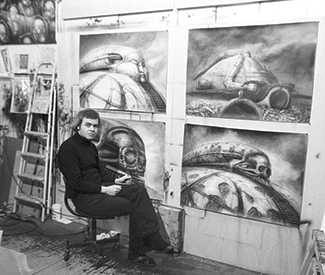
 

Telling tales

0

cheryl@sfbg.com

CAAMFEST The feel-good movie of last year’s Center for Asian American Media film festival was The Cheer Ambassadors, a documentary charting the high-flying accomplishments of Bangkok University’s cheerleading team. This year’s The Road to Fame taps the same performance theme, but there’s an undercurrent of melancholy that tugs at each of its peppy subjects. The setting is Beijing’s Central Academy of Drama, where young adults envision careers like those of celebrity alums Gong Li and Zhang Ziyi. The reality, of course, is that the majority of them will struggle to get any job after graduation, much less realize their show-biz fantasies.

Added pressure is applied by the kids’ parents. Though Chinese youth may have adopted Western-style dreams of the spotlight, many in the older generation were denied the chance to go to college or experience any freedom of occupational choice. All of The Road to Fame‘s featured subjects are in the 19-to-21 age range, born in the era of China’s one-child policy, so the incentive to succeed is particularly urgent, for both financial and emotional reasons. With two parents and four grandparents looking on, “There are six pairs of eyes on only one child,” points out drama teacher Liu Hongmei, whose own martial-arts movie career was supplanted by her desire to work with students.

http://www.youtube.com/watch?v=uzaI2IW0hLk

Given all of these factors, the choice of musical Fame — about a performing-arts school teeming with wannabe stars — as the kids’ final showcase is wonderfully apt. As a bonus, American teachers with Broadway bona fides (the lead has a hint of Corky St. Clair flair) have come to China to work with the students, including standouts like charismatic Chen Lei, who comes from “a simple family” that expects her to take care of them, frustrating her desires to work abroad; and Wu Heng, a talented singer with luxuriant pop-star hair whose parents joke (or are they joking?) about him supporting them. Tension arises during casting, and the expected backstage drama ensues as “A” and “B” casts are chosen and the kids — already fearing the uncertainty of life post-graduation — start to get a sense of how difficult making it will be. On a side note, The Road to Fame is the latest from Chinese-born, US-educated blogger and filmmaker (2005’s Beijing or Bust) Hao Wu, who was detained by Chinese authorities in 2006 while filming a documentary on Christian Chinese house churches. (Presumably, the government viewed musical theater as a more “appropriate” topic.)

Along with The Road to Fame, CAAMFest’s documentary competition is composed almost entirely of urgently contemporary tales. In American Arab, Iraqi American filmmaker Usama Alshaibi takes a deeply personal look at what it’s like to live in the US — specifically, small-town Iowa — post-9/11 with the first name “Usama.” (The results are not entirely surprising.) More compelling is Dianne Fukami and Eli Olson’s Stories From Tohoku, a sensitive study of Japanese still struggling to rebuild after the devastating 2011 earthquake and tsunami. Interviews with survivors, as well as Japanese Americans (including Kristi Yamaguchi, who visits the region to lend support), illuminate the incredible resilience of people whose communities were completely flattened.

“My history has disappeared, so at this point, all I can do is enjoy my life,” says one woman as she points out where her house used to stand. Though not everyone reacted with such calmness — a chef who volunteered at a relief center recalls becoming resentful amid increasing demand for his services — there’s an overall sense that the culture’s embrace of what Zen Buddhism terms “Gaman,” or “enduring the seemingly unbearable with patience and dignity,” helps Japanese recoup from tragedy, be it war, internment camps (in the case of Japanese Americans), or natural disaster.

Less elegantly crafted but no less searing is Duc Nguyen’s Stateless, about the handful of Vietnamese people still holding out hope for resettlement after years or even decades of living as illegal aliens in the Philippines. Aided by a determined lawyer whose practice seems to be their only source of advice and hope, the refugees — unable to return home and live under a post-war regime that’s marked them as troublemakers — struggle to get by, with the golden promise of asylum in the US shimmering just out of reach. It’s a moving tale, but it’s compressed into a 55-minute film that sometimes comes up short on context.

The sole film with experimental leanings in the documentary competition is Lordville, a quiet exploration of the nearly abandoned town of Lordville, NY. Though a few determined eccentrics have kept the population of the oft-flooded burg from dipping to zero, it’s the past that filmmaker Rea Tajiri, a Lordville resident, is most interested in, thanks to her ownership of a home owned by one of the town’s founders. Native American history, misty roads, broken-down houses, ever-present flowing water, and the musings of neighbors, a genealogist, and an environmental scientist fill in this portrait of a place where natural and human history are often at odds, and yet are inextricably bound.

The remaining films in the doc competition: Tenzin Tsetan Choklay’s Bringing Tibet Home, about a Tibetan artist who smuggles soil out of his embattled homeland for an installation in India; Masahiro Sugano’s Cambodian Son, about Cambodian American poet and activist Kosal Khiev; and Esy Casey’s Jeepney, about the Philippines’ iconic public-transport buses. *

CAAMFEST

March 13-23, most shows $12

Various SF and East Bay venues

www.caamedia.org