Television

Opinion: Let reporters into prisons

23

As a young public defender, I represented an innocent man who was convicted of
murder.

John Tennison was serving a sentence of 25 years to life when, in 1997, I
contacted a 20/20 news producer, who agreed to feature the case.

Tennison had already lost seven years of his freedom. A national broadcast
exposing concealed evidence, perjury and misconduct by police and prosecutors in
the case could reverse his fate and reunite him with his family.

But when prison officials denied the television crew an interview with my
client, producers were forced to withdraw. No interview meant no story.
 
Tennison was eventually exonerated, but it took 14 years. Fortunately, a
reporter from the SF Bay Guardian named Adam Clay Thompson accompanied me during
a prison interview as my paralegal and was able to meet and interview Tennison.
He wrote a cover story that exposed the injustice of Tennison’s case and
started the ball rolling towards his eventual exoneration. I am convinced that
if media access were granted in this case, it would have restored his freedom
years earlier.
 
For the past 15 years, California’s prisons have operated in a virtual media
blackout. With the flick of his pen, Governor Jerry Brown has the opportunity to
turn on the light.
 
Now on his desk is AB 1270, also known as the Prison Media Access Bill. The
bill, authored by Assemblyman Tom Ammiano, would restore the press’ ability to
conduct pre-arranged, face-to-face interviews with specific prison inmates.
 
Currently, reporters may interview inmates who are hand-picked by prison
officials. They are not allowed follow-up contact, making it impossible to know
whether a prisoner has suffered retaliation as a result of the interview.
 
It wasn’t always this way. During Brown’s first stint as governor, the press was
free to fulfill its watchdog role in California prisons.
 
In 1996, prison officials clamped down on press access under the guise of
discouraging tabloid media from making celebrities of notorious killers. In the
process, it also made it far harder to expose systematic abuse, fiscal
mismanagement and unsafe conditions for guards and inmates alike.
 
It was under this information shut-out that inhumane conditions were allowed to
fester to the point that the Supreme Court intervened in 2011, ordering the
release of 46,000 inmates.
 
It was nearly a century ago that US Supreme Court Justice Louis Brandeis wrote
that sunlight is the best disinfectant. It remains no less true today.

Government accountability is impossible without media access. The 2011-2012

state budget allocates $9.2 billion in taxpayer money to the CaliforniaDepartment of Corrections and
Rehabilitation, yet public information is limited by CDCR’s current restrictive
media policies.

Taxpayers deserve to know where their money is going. Like John Tennison,
innocent men and women languishing in California’s prisons deserve to tell their
stories.

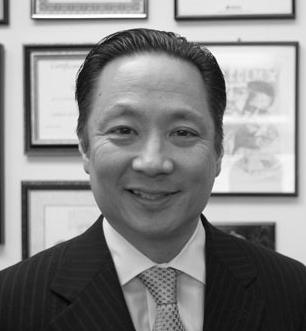
Jeff Adachi is San Francisco’s public defender.

Symptom of the universe

0

cheryl@sfbg.com

TRASH Get ready, Damon Packard fans — the mad genius behind underground cult sensations Reflections of Evil (2002) and SpaceDisco One (2007) unfurls his latest, Foxfur, at Other Cinema’s fall season kickoff (also on the bill: Marcy Saude with a slideshow on ufologist George Van Tassel, free champagne and VHS tapes, and more). I spoke with the Los Angeles-based Packard, who hopes to attend in person, ahead of the event.

San Francisco Bay Guardian How long did it take you to make Foxfur?

Damon Packard A little less than two years. I mean, it should have taken a week, because there were so few shooting days. It just took that long because it’s so difficult when you’re working with no money. I was adding little bits right up to the last minute [before the film’s July 21 premiere in SoCal]. Shots of cats, stuff like that.

SFBG Is that why you have something like six different women playing the lead role?

DP Yes. There were always these short windows of time when we had to shoot, and I had to get whoever was available. It became an experiment in the end, with the multiple actresses.

SFBG When people ask you what Foxfur is about, how do you explain it?

DP It’s difficult to sum it up. I would say it’s a UFO sci-fi fantasy, mostly about the Billy Meier Pleiadian contacts of the 1970s. That was the inspiration.

SFBG Many of your previous films made use of non-original footage, like Carpenters videos and old commercials, but Foxfur is all original, isn’t it?

DP Well, I do use music from Tangerine Dream scores: Firestarter, Wavelength (both 1984), things like that. Also some ambient tracks by Steve Roach and Michael Stearns.

SFBG In addition to Foxfur‘s Billy Meier references, the film also has actors portraying David Icke and Bob Lazar. Why conspiracy theorists?

DP Well, they’re part of the Foxfur universe — I like taking real-life characters and incorporating them into a story. Foxfur is obsessed with New Age elements — crystals, dolphins, the Pleiadians — which includes people like David Icke and Richard Hoagland. She’s an avid Coast to Coast AM listener. So yeah, it was supposed to be about her disillusionment. She’s so devastated when she discovers that it’s not real.

SFBG There’s a line in Foxfur about how “everyone is operating in their own vacuum of reality,” and scenes depicting people zoned out on their phones, unhelpful store clerks, and so on. Were those your 21st century frustrations coming out?

DP It happens a lot in real life — everywhere you go, you sort of run into that. Nobody knows anything about anything and nobody wants to help anyone. It’s a kind of apathetic, clueless, state of mind. Or if you need to call your bank, for example, you’re gonna get transferred to all these different worthless departments where people won’t be able to help you. There are always problems, errors, computer systems going down. You can’t get any answers to anything.

SFBG You’ve said in the past that you’re anti-CGI, and Foxfur (which contains the line “I hate Peter Jackson!”) suggests you still feel this way.

DP I do think there’s room for a good balance between practical and digital effects — there’s no reason not to use modern technology. For the most part, though, I hate it. It usually looks awful. I don’t know why other filmmakers, including veteran filmmakers, don’t see that.

I think practical effects are better and always will be, but there aren’t any companies set up to do practical effects anymore. It’s incredibly difficult to do and there aren’t any filmmakers pushing for it. But real explosions, real pyro, always looks better than any kind of digital explosion.

SFBG Is there any hope for the future of film? Or — since Foxfur takes place on the eve of the apocalypse — of humanity?

DP One of the themes of Foxfur is about the “dead zone” — in the film, it’s the time we’re in now, where everything is revolving in circles. It’s a time that wasn’t meant to exist. We’re in the end of the world already.

To me, it feels like music, fashion, it’s all reaching to the past. There’s no new movements going on. It’s a strange time. And movies feel that way too; it seems like everything’s been done already. Everything is an updated variation. I wanted Foxfur to be really pressing in that sense: that there’s no hope, there’s no point in anything. I can’t imagine there’s any future to cinema, or what movies will be like in even five to ten years from now. Are we going to see reboots of reboots? How many reboots can they keep going on with? If it’s not a reboot or a sequel, it’s a reboot or a sequel in disguise.

OTHER CINEMA

Sat/15, 8:30pm (reception at 8pm), $6

Artists’ Television Access

992 Valencia, SF

www.othercinema.com

Rep Clock

0

Schedules are for Wed/12-Tue/18 except where noted. Director and year are given when available. Double and triple features marked with a •. All times pm unless otherwise specified.

ARTISTS’ TELEVISION ACCESS 992 Valencia, SF; www.othercinema.com. $6. "Other Cinema:" works by Damon Packard, Marcy Saude, and more, Sat, 8:30.

BRIDGE 3010 Geary, SF; www.landmarktheatres.com. $8-10.50. "Studio Ghibli Animation Retrospective:" Ponyo (Miyazaki, 2008), Wed, 2:45, 7, English language version; The Cat Returns (Morita, 2002), Wed, 5:10, 9:25, in Japanese with English subtitles; Howl’s Moving Castle (Miyazaki, 2004), Thu, 2, 7, English language version; My Neighbors the Yamadas (Takahata, 1999), Thu, 4:30, 9:35, in Japanese with English subtitles.

CALIFORNIA 2113 Kittredge St, SF; www.landmarktheatres.com. $8-10.50. Nausicaä of the Valley of the Wind (Miyazaki, 1984), Fri-Sat, 1:50, 4:25, 7, 9:35; Kiki’s Delivery Service (Miyazaki, 1989), Sun-Mon, 1:55, 7; Castle in the Sky (Miyazaki, 1986), Sun-Mon, 4:15, 9; Porco Rosso (Miyazaki, 1992), Tue, 2:50, 7; The Cat Returns (Morita, 2002), Tue, 5, 9:10. All films in Japanese with English subtitles.

CASTRO 429 Castro, SF; (415) 621-6120, www.castrotheatre.com. $8.50-11. •The Breakfast Club (Hughes, 1985), Wed, 7, and Animal House (Landis, 1978), Wed, 8:55. •Bad Day at Black Rock (Sturges, 1955), Thu, 2:30, 7, and The Wild Bunch (Peckinpah, 1969), Thu, 4:10, 8:35. "Midnights for Maniacs: Trix Are For Kids" •The Iron Giant (Bird, 1999), Fri, 7:30; Labyrinth (Henson, 1986), Fri, 9:20; Phenomena: Unrated Director’s Cut (Argento, 1985), Fri, 11:30. One or all three films, $13. Sutro’s: The Palace at Lands End (Wyrsch, 2011), Sat, 2. Remembering Playland At the Beach (Wyrsch, 2010), Sat, 3:30. Kill Bill: Vol. 1 (Tarantino, 2003), Sat, 7. Kill Bill: Vol. 2 (Tarantino, 2004), Sat, 9:10. Willy Wonka and the Chocolate Factory (Stuart, 1971), Sun, 2. Punch-Drunk Love (Anderson, 2002), Sun, 5, 8:45. Death Proof (Tarantino, 2007), Sun, 7. Moonrise Kingdom (Anderson, 2012), Mon-Tue, 7, 9:05 (also Tue, 2:30, 4:45).

CHRISTOPHER B. SMITH RAFAEL FILM CENTER 1118 Fourth St, San Rafael; (415) 454-1222, www.cafilm.org. $6.75-$10.25. Ai Weiwei: Never Sorry (Klayman, 2012), call for dates and times. Beasts of the Southern Wild (Zeitlin, 2012), call for dates and times. The Queen of Versailles (Greenfield, 2012), call for dates and times. 2 Days in New York (Delpy, 2012), call for dates and times. Arbitrage (Jarecki, 2012), Sept 14-20, call for times. Cane Toads: The Conquest 3D (Lewis, 2012), Sept 14-20, call for times. This event, $10-12.

"CINE + MAS SAN FRANCISCO LATINO FILM FESTIVAL" Various Bay Area locations; www.sflatinofilmfestival.com. Most shows $12. Forty features, documentaries, and shorts from Latin America, Spain, and the United States. Sept 13-28.

"FILM NIGHT IN THE PARK" This week: Dolores Park, 19th Ave and Dolores, SF; www.filmnight.org. Donations accepted. The Graduate (Nichols, 1967), Sat, 8.

GOETHE-INSTITUT SAN FRANCISCO 530 Bush, SF; (415) 263-8760. $5 suggested donation. "Homage to Romy Schneider:" The Swimming Pool (Dery, 1969), Wed, 7:30.

MANDELA VILLAGE ARTS CENTER 1357 Fifth St, Oakl; www.ticketweb.com. $10. Brainwash Drive-In/Bike-In/Walk-In Movie Festival, Sat and Sept 21-22, 9. Outdoor screenings with live music and food trucks.

PACIFIC FILM ARCHIVE 2575 Bancroft, Berk; (510) 642-5249, bampfa.berkeley.edu. $5.50-9.50. "Alternative Visions:" "Nights and Days: A Decade of Lebanese Short Films," Wed, 7. "LA Rebellion: Creating a New Black Cinema:" Bush Mama (Gerima, 1975), Thu, 7. "Grand Illusions: French Cinema Classics, 1928-1960:" La jour se lève (Carné, 1939), Fri, 7; Casque d’or (Becker, 1952), Fri, 8:50; Hôtel du Nord (Carné, 1938), Sat, 8:20. "Life is Short: Nikkatsu Studios at 100:" Hometown (Mizoguchi, 1930), Sat, 6:30. "A Theater Near You:" Once Upon a Time in Anatolia (Bilge Ceylan, 2011), Sun, 5.

ROXIE 3117 and 3125 16th St, SF; (415) 863-1087, www.roxie.com. $6.50-10. Kumaré (Gandhi, 2011), Wed, 6:45, 8:45. Red Hook Summer (Lee, 2012), Wed, 6:45, 9. Freedom House: Street Saviors (Starzenski, 2009), Thu, 7:30. "Projector Magazine Screening," Thu, 8. Beauty is Embarrassing (Berkeley, 2012), Sept 14-20, 7, 8:45 (also Sun, 3:15, 5).

SIBLEY AUDITORIUM Bechtel Engineering Center, UC Berkeley, Berk; nature.berkeley.edu. Free (limited seating). California Forever: The Future of Our State Parks (Vassar, 2012), Thu, 5:30. Followed by a panel discussion with filmmakers and environmentalists.

TANNERY 708 Gilman, Berk; berkeleyundergroundfilms.blogspot.com. Donations accepted. "Berkeley Underground Film Society:" Sixteen Candles (Hughes, 1984), Sun, 7:30.

2969 MISSION 2969 Mission, SF; www.answersf.org. $5-10. Attica (Firestone, 1974), Wed, 7.

YERBA BUENA CENTER FOR THE ARTS 701 Mission, SF; www.ybca.org. $8-10. "Femina Potens’ Askew Film and Performance Festival:" "Intersections: LOVE:SEX:PORN:ART: Our Intimate Identity," Thu, 7; "The Birth of Something New: Explorations of Queer Home, Family, and Community," Fri, 7; "In/Visible: Women fighting for visibility and survival in a world that doesn’t always celebrate difference," Sat, 7. Guest-curated by Madison Young of Femina Potens Gallery. *

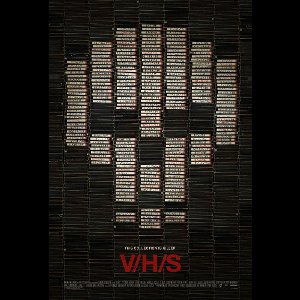
Score yourself free tickets to an advance screening of V/H/S!

0

When a group of petty criminals is hired by a mysterious party to retrieve a rare piece of found footage from a rundown house in the middle of nowhere, they soon realize that the job isn’t going to be as easy as they thought. In the living room, a lifeless body holds court before a hub of old television sets, surrounded by stacks upon stacks of VHS tapes. As they search for the right one, they are treated to a seemingly endless number of horrifying videos, each stranger than the last.

Bringing together some of the top filmmakers in the game today, this wickedly conceived horror anthology sends the viewer through a gauntlet of suspense, terror, shock, and downright brutality—instantly distinguishing itself from a sea of lackluster found-footage horror flicks. The diverse and deviously creative minds behind V/H/S shatter any preconceived notions about the genre, making it feel inventive and captivating once again.  Directors are David Bruckner, Glenn McQuaid, Radio Silence, Joe Swanberg, Ti West, Adam Wingard; starring Calvin Reeder, Lane Hughes, Adam Wingard. Magnet Releasing presents V/H/S, opening on October 5 at Landmark’s Lumiere Theatre in San Francisco, and Landmark’s Shattuck Cinemas in Berkeley. get more info on the film here.

For a chance to receive a pass good for two to see an advance screening of V/H/S, simply send an email to SanFranciscoPromo@LandmarkTheatres.com with “V/H/S Guardian contest” in subject line.

Thursday, September 27 at 7PM @ Embarcadero Center Cinema, 1 Embarcadero Center, Promenade Level, SF

What Critics say about V/H/S:

“GRADE A – TERRIFYING. One of the scariest movies in recent memory. Loaded with scares that play on a primal nightmare level. The final segment feels like the brakes are off and you’re flying off the mountain into the void. It is a film designed to shake you with abandon, and there is no doubt… I am shaken.” – Drew McWeeny, HitFix

“A PHENOMENAL PIECE OF WORK. 5 OUT OF 5.” – Kalebson, Dread Centra

Hoping for change in Obama’s acceptance speech

22

Four years ago, when I watched Barack Obama accept the Democratic Party’s presidential nomination in Denver’s Mile High Stadium, I was hopeful about the prospects for change, but disappointed by his safely centrist acceptance speech. This year, opting to watch tonight’s speech on television rather than being there, the only hope I feel is that Obama will finally focus on fighting for the 99 percent, which seems like his best chance of keeping his job.

Frankly, I had just about given up on two-party politics – cynical about the feckless Democrats, refusing to be driven by fear of Republican boogie-men, ready to advocate for the Guardian to endorse Green Party nominee Jill Stein – when the Democrats speaking at the DNC rediscovered their populism and turned their rhetorical guns on the predatory rich who are exploiting most Americans.

“People feel like the system is rigged against them,” Elizabeth Warren, the consumer advocate and Senate candidate from Massachusetts, told the convention last night. “And here’s the painful part: They’re right.”

Yes, they are right. Most people understand that both the political and economic systems are rigged games controlled by powerful interests, for powerful interests. And it’s good to hear top Democrats sounding that theme again, as First Lady Michelle Obama did Tuesday night and former President Bill Clinton did last night.

Obama has been battered by his bi-partisan approach these last four years. Aggressive conservatives fought his every move, demonizing the first black president in ways that defy reason, labeling him a socialist taking over the health care for pushing health care reform that left insurance companies in charge and requires people to buy coverage, an idea long advocated by Republicans. And Progressives felt like Obama sold them out on issue after issue, from extending tax breaks on the rich to propping up predatory banks to escalating the wars on drugs and Afghanistan.

Now, Obama finds himself in a tight race with a Republican ticket that insanely wants to “double down on trickle down,” as Clinton put it. And if Obama thinks his centrist approach of four years ago is going to win this race – and, more importantly, break the debilitating political gridlock that his conciliatory approach and conservative intransigence have created – then all of us concerned about rising plutocracy could be sorely disappointed.

At this point, I’m not yet ready to place my hope back in a president whose unwillingness to fight for traditional Democratic Party values has delayed meaningful action on this country’s most pressing problems. But tonight, in setting the tone and themes for this election and his second term, my hope is that he makes a change and begins to fight for my side and my vote.

Where to watch: Rather than surrounded by tens of thousands of hopeful Democrats in a stadium, like four years ago, I’ll be surrounded by a few dozen hopeful Democrats at a watch party sponsored by the San Francisco Democratic County Central Committee. Join us at the Laborer’s Local 261, 3271 18th Street, San Francisco. It is from 6-8:30pm and the suggested donation is $25.

Louis Dunn: Clint and Mitt

0

Louis Dunn, longtime Guardian cartoonist, comments on the entry of Clint Eastwood into prime time television before Mitt Romney’s acceptance speech at the 2012 Republican National Convention. Click on the art to view the full poster.

Follow the jump to watch Clint’s 12-minute improv “speech.”


The agri-chem industry’s secrets

3

OPINION This November, California voters will decide on a question that affects us all: Do we have the right to know what’s in the food we’re eating and feeding our families?

This high-stakes food fight has become the most expensive issue of the upcoming election. Pesticide and junk-food corporations have already poured $25 million into an effort to defeat Proposition 37, a simple labeling measure that would inform California consumers about whether our food has been genetically engineered.

What is it that these corporations don’t want us to know?

Right now, many foods on supermarket shelves, from baby formula to corn chips, contain genetically engineered ingredients that are hidden from consumers. Also called GMOs, these are crops that have been artificially altered in a lab with the DNA of other species in ways that cannot occur in nature.

Numerous studies link genetically engineered foods to allergies and other adverse health effects. But the U.S. government requires no safety studies of GMOs, no long-term health studies have been conducted, and no labeling is required to notify consumers so we can make our own choices about whether we want to eat these foods.

Genetically engineered foods are also linked to serious environmental concerns, including an overall increase in pesticide use, a rise in super weeds that are threatening farm land, and the unintentional contamination of organic crops.

These concerns have led 50 other countries to require GMO labeling. But here in the U.S., the agri-chemical companies have deployed their massive lobby power to stop the federal government and at least 19 U.S. states from passing simple labeling bills.

Now it’s up to the voters of California — and the heavy-artillery corporate lobbying campaign is heading our way.

The Yes on 37 Campaign is currently tracking far ahead in the polls. But the voters have not yet been subjected to the wave of deceptive television ads designed to convince us that GMO labeling is too scary or too expensive.

When you see these ads, consider the source. The largest funders of No on 37 are Monsanto and DuPont, two corporations that hardly have a track record of integrity when it comes to truth in advertising. These are the same companies that told us DDT and Agent Orange were safe.

Major funders of the No campaign also include junk-food companies that have a long history of opposing common-sense labels to give consumers information about their food. Look for these companies to spend tens of millions trying to convince voters that adding a few words to food labels will force them to raise the cost of groceries “hundreds of dollars a year.”

Over on the Yes on 37 side is a true people’s movement made up of millions of moms, dads, and consumers in California, and the many farmers and California businesses that are part of the state’s thriving natural and sustainable food industry.

Now is the time and this is our chance to make sure we have the right to know what’s in our food. Visit Yes on 37 at Carighttoknow.org to volunteer, donate and stay up to date with the latest news about this historic campaign.

Stacy Malkan is the media director for Yes on 37, the California Right to Know campaign to label genetically engineered foods.

How to be a sex-positive parent, from a woman who knows

1

“It’s almost a cliché to say that families come in all shapes and sizes, but they really do”

I’ve always found the expression “the birds and the bees” queer. As a child I somehow knew the expression had sexual connotations, but I could never understand why the birds and bees were having sex together. They seem like such an odd pairing.

Airial Clark, or as she’s known on her blog, the Sex-Positive Parent, could have explained to a prepubescent me that the expression was merely a metaphor about having a talk about sex with kids. More importantly, I’m hoping Clark will teach me how to explain to my future child how it is that one of their daddies used to be a little girl.

Clark has a master’s degree in human sexuality from San Francisco State University, and is the proud parent of two beautiful children. She hosts a Youtube channel on which she provides sex-positive schooling. If you’re in town this weekend, you should check out her series of four workshops on sex-positive parenting at the Center for Sex and Culture. I caught up with her via email for a sneak peek at what she’ll be sharing. 

SFBG: What  have you told your children about sex and your own sexuality?

Arial Clark: When talking about sexuality with kids, the focus has to be on them. Where are they at in their development? What do they need to know? What are they comfortable hearing? What have they been observing? It shouldn’t be about me as the adult. 

SFBG: In interviews you often discuss the wide range of familial matrixes, or ways that families are configured. How do we go about cultivating acceptance among kids about the diversity of the family matrix? 

AC: This is a great question- especially in the Bay Area where respecting cultural diversity is a goal we are all striving for. It’s almost a cliché to say that families come in all shapes and sizes, but they really do. Families also change shape over time. The first step in cultivating acceptance and respect is to let kids know that not all families look like their own and that is just how the world works. This message works for kids in more traditional family structures as well as for kids in under-represented family structures too. 

SFBG: You also talk a lot about diversity among parents — gay parents, kinky parents, poly parents. What kind of parent would you describe yourself to be?  

AC: Like all parents, I have to maintain healthy boundaries with my kids and focus on what they need for their healthy development. I also have to respect their privacy. The important thing for parents to remember is that labels are secondary to your role in their life. Your child sees you a parent first and everything else second. When I refer to a certain type of parent, that is more about self-identification for seeking support. All parents need role models. Finding other parents who share your same concerns is vital so we have this system of identification around sexuality in order to combat stigma and prejudice of all kinds. 

SFBG: How can parents begin to identify some of the sex-negative and hetero-normative scripts they may be passing along to their children? 

AC: This is the first suggestion I make to parents who want to create a more sex-positive dialogue in their family: what are your beliefs about sexuality and gender? It takes some self-reflection and bravery to differentiate yourself from how you may have been raised. How do you talk about relationships in front of your kids? What language do you use about feeling desirable, or feeling protected, or feeling uncomfortable? Most parents choose silence as opposed to directly voicing their dissent with more traditional cultural norms, so kids depend on subtext. My suggestion is to start bringing it out into the open. 

SFBG: You discuss at length what a sex-positive parent should be. How would you describe a sex-positive child?

AC: A sex-positive child is safe, protected, and knows about consent and boundaries. They have access to accurate and age-appropriate information about reproductive biology as well as the emotional and social realities of sexuality. A sex-positive child is not a sexualized child. 

SFBG: What are some practical tools parents can start using to cultivate healthy conversations around sexual diversity with their children? 

AC: I always recommend asking questions first. Ask your kids what they think about characters on a TV show, or their friend’s parents. Begin by asking and then listen. Let them know that what they think matters. Ask them why they think people dress in a certain or way, or what they think the lyrics to a song means. Using media to distance the conversation can make both parent and child more comfortable. 

Also, sharing stories from when you were their age is a great way to know what to say and to relate to where they are now. Share anxieties you had, or weird situations you were in. You don’t have to tell them everything, you’re the adult so you’re in control of the narrative, but start with something true and go from there. As they get older the depth of the topic will increase. Remember these are life long conversations; it’s a gradual process in parallel to their maturation. 

SFBG: Is there an ideal time for parents to start having conversations about sex with their kids? 

AC: Before they become sexually active! Parents need to set the foundation way in advance. That is why age-appropriateness is so important. At every stage of development, there are conversations relating to sexuality to be had. 

SFBG: How does one create a sex-positive environment in such a sex saturated culture (with television, social-media, books, and conversations you may have with other adults)? 

AC: I remember being so overwhelmed by how much sexualized imagery and content was being directed at my kids when they were pre-school-aged. Everything around them had to do with gender and reenacting sexualized behavior. I felt inundated. All you have to do is take a step back to see how much sexuality is used in marketing to kids and in children’s programming. Placing that constant stream of sexualized information into a container, detaching it from the child, is something parents can do to cultivate sex-positivity. We can talk to our kids about what is being directed at them by problematizing the messages about sexuality. 

SFBG: You are hosting a sex-positive workshop this weekend. What can attendees expect?

AC: Saturday’s classes are tailored to parents with alternative sexualities- parents who often don’t see themselves in parenting books or online forums. In the morning we’re going to talk about stigma and finding support as both parents and members of sexual minority groups. In the afternoon we’ll work on coming-out strategies specific to non-traditional families. I’m going to teach parents how to both educate and advocate from a sex-positive perspective. 

Sunday’s workshops are designed for a broad audience. The morning workshop is about what to say and when to say it. The afternoon class is about how to communicate your sex education values with other adults in your child’s life. Maybe you and Grandma need to talk about how you plan to teach your kids about sexuality because it is going to look a lot different then how she taught you. Having those conversations are tough as well. 

SFBG: What is your favorite thing about being a parent?

AC: Watching my children grow into the people they are is pretty amazing. I am so proud of them, and I am consistently impressed with the things they come up with. Being a parent is the ultimate form of geekery for me. 

Sex Positive Parenting

Four sessions: Sat/25 and Sun/26, 10:30am and 1pm, $25/each, $75/four sessions

Center of Sex and Culture

1349 Mission, SF

www.sexandculture.org


Eliana steals the show at Thursday’s dueling City Hall rallies

48

Eliana Lopez once again stole the show as the Ethics Commission Thursday debated the “ethical fate” of her husband Sheriff Ross Mirkarimi inside City Hall while the Stand With Ross forces and their opponents staged back to back rallies on the City Hall steps.

Eliana sat with and supported her husband during the morning at the hearing on the misconduct case and then made an early afternoon dramatic entrance to the Mirkarimi rally. (The commission later Thursday unanimously rejected most of Mayor Ed Lee’s official misconduct charges against the suspended sheriff but voted 4-l to recommend the Board of Supervisors find him guilty of official misconduct for grabbing his wife’s arm on Dec. 31 and pleading guilty to the resulting misdemeanor charge of false imprisonment.  See Steve Jones Guardian blog.)

Eliana was greeted with cheers as the tv cameras and reporters crowded in on her.  

She spoke with ease and authority, greeted many friends, spoke in Spanish to several Spanish language radio and television reporters, and walked easily through the crowd shaking hands and talking with supporters in two languages.

“We don’t want any more hate,” she said. “We want love.” She said the case was
“about democracy” and she said that the community stands behind her husband.

I asked her about her plans.  She said she had finished her movie in Venezuela and was back living with Ross in their home with their young son Theo.   “I have good feelings,” she said.

The two groups worked out an informal modus vivendi.  The Remove Ross group had a permit for using the steps so they went first with their press conference rally with banners saying “We stand with survivors” and “The facts do matter.” Their group was largely from the three organizations leading the charge against Ross, La Casa de las Madres, Domestic Violence Consortium and Futures Without Violence.

The Mirkarimi group initially gathered across Polk Street, waved signs and chanted “Stand With Ross.” The group then got a permit to use the City Hall steps and held its rally after the first rally ended.  Sharon Hewitt, executive director of the Community Leadership project, said that the city owed an “act of apology for the violence” that it had caused to Ross and his family.

The police officer on duty estimated to me that there were 40 or so in the domestic violence group. My count was about 50 or so.  The Stand With Ross group had more people and they were more spirited in their chants and marching.   

Why?

44

steve@sfbg.com

Just a couple years ago, it seemed like the golden age of marijuana in San Francisco, the birthplace of the movement to legalize medical pot and a national leader in creating an effective regulatory framework to govern an industry that had become a legitimate, respected member of the business community.

More than two dozen patient cooperatives jumped through a variety of bureaucratic hoops to become licensed dispensaries, most of them opening storefront businesses that were often the most attractive, clean, and secure retail outlets on their blocks, sometimes in gritty stretches of SoMa, the Tenderloin, or the Mission.

“Pretty much everyone involved agrees that San Francisco’s system for distributing marijuana to those with a doctor’s recommendation for it is working well: the patients, growers, dispensary operators, doctors, politicians, police, and regulators with the planning and public health departments,” I wrote in “Marijuana goes mainstream” (1/28/10).

Since then, San Francisco’s medical marijuana industry has only become more established and professional, complying with new city regulations (such as changing how edibles are packaged to avoid tempting children), paying taxes and fees — and making very few waves. According to city officials, there have been almost no complaints from anyone about the dispensaries — and in San Francisco, people complain about everything.

But in the last six months, the full force of the federal government has brought the hammer down hard on this budding business sector, forcing the closure of eight brick-and-mortar dispensaries and instilling paranoia and insecurity in those that remain.

In just the past few weeks, two of the city’s oldest and most respected dispensaries –- HopeNet and the Vapor Room -– were forced to close their doors.

There’s been little rhyme or reason to which clubs get those dreaded letters warning operators and landlords to shut it down or be subject to asset forfeiture and prison time — and the officials involved have refused to explain their actions, except with moralistic anti-drug statements or unsupported accusations.

“These are people who played by the rules and paid their taxes, and now they’re being punished for it,” said Assembly member Tom Ammiano, a leader in creating a state regulatory framework to govern the distribution of medical marijuana, which California voters legalized in 1996. “This is pure thuggery. They are ignoring due process out of blind prejudice and ambition.”

Ammiano met with Melinda Haag, the US Attorney for the Northern District of California, who has coordinated the local crackdown from her 11th floor office in the Federal Building near City Hall, shortly after she announced her intentions to go after medical marijuana. He said she was like a throwback to a less enlightened era.

“In talking to Haag, not only is she a bit of a bully, but she’s totally uneducated about the issue,” Ammiano told us. When she told him that her office has received many complaints about the dispensaries, he asked to see them -– even making a formal Freedom of Information Act document request –- but she has yet to produce them. “Her duplicity is very moralistic, it’s like going back 100 years.”

Neither Haag nor anyone from the White House or Justice Department would grant an interview to the Guardian to discuss the reasons for and implications of the crackdown, or to answer the list of written questions her office asked us to submit. Instead, Haag gave the Guardian this statement and refused to respond to our follow-up questions:

“Although all marijuana stores are illegal under federal law, I decided to use our limited resources to address those that are in close proximity to schools, parks and playgrounds and operations so large that they constitute marijuana superstores. I hope that those who believe marijuana stores should be left to operate without restriction can step back for a moment and understand that not everyone shares their point of view, and that my office has received many phone calls, letters and emails from people who are deeply troubled by the tremendous growth of the marijuana industry in California and its influence on their communities.”

But in San Francisco, where more than 80 percent of residents consistently support medical marijuana in polls and at the ballot box, most people don’t share Haag’s point of view. And city officials contest many of her claims, from saying the dispensaries are “left to operate without restriction” to her implication that they promote crime or endanger children to the haphazard way she has targeted dispensaries to the characterization that many people are “deeply troubled by the tremendous growth of the marijuana industry.”

In fact, to talk to city officials, virtually nothing Haag says is true.

“We’re not getting nuisance complaints [about the dispensaries],” Dr. Rajiv Bhatia, the city’s medical director who oversees regulation of the dispensaries by the Department of Public Health, told the Guardian. “We’ve had very few complaints over the years and good cooperation with the storefront part of the regulations.”

Almost across the board, city officials and club operators praise one another and the cooperative relationship they’ve established over the last four years. Some of San Francisco’s biggest dispensaries have somehow avoided Haag’s wrath, but their once-open operators are now afraid to speak publicly, warily checking the mailbox each day. A thriving industry eager to pay its taxes and submit to regulation is being driven back underground, with all the uncertainty and hazards that creates.

“The question everyone is asking: Why here, why now, why these businesses? Nobody knows the answer,” Bhatia said. “We’re left to speculate and guess about motives.”

MULTI-AGENCY ATTACK

The federal crackdown has been stunning in both its speed and breadth, with various federal agencies coordinating their attacks. The IRS is auditing the biggest clubs and denying write-offs for routine business expenses, the DEA is threatening asset forfeiture efforts, and Haag and the DOJ are threatening prison time and court injunctions.

Underlying all of that is President Barack Obama, who pledged not to use federal resources to go after those in compliance with state law in the 17 states where medical marijuana is legal. Then, last year, Attorney General Eric Holder suddenly announced a new policy: “It will not be a priority to use federal resources to prosecute patients with serious illnesses or their caregivers who are complying with state laws on medical marijuana, but we will not tolerate drug traffickers who hide behind claims of compliance with state law to mask activities that are clearly illegal.”

When we sought an explanation and clarification from the White House Communications Office about why well-established medical marijuana collectives carefully operating under California law were suddenly deemed “drug traffickers” that wouldn’t be tolerated, they refused to answer and referred us to a statement Obama made to Rolling Stone magazine.

“What I specifically said was that we were not going to prioritize prosecutions of persons who are using medical marijuana. I never made a commitment that somehow we were going to give carte blanche to large-scale producers and operators of marijuana -— and the reason is, because it’s against federal law. I can’t nullify congressional law,” Obama told the magazine.

That simplistic explanation – which conveniently ignores how people are supposed to get this medicine – has infuriated local growers and patients. It’s particularly galling for those who supported Obama and took him at his word in the last election, and who don’t understand why he is suddenly escalating the federal war on drugs, ignoring local laws and values, and re-criminalizing their communities.

FUNERAL PROCESSION

Hundreds of medical marijuana supporters gathered on Aug. 1 for a New Orleans-style funeral procession at the Lower Haight intersection near where Vapor Room had operated -– without incident and with praise as a model business from three successive district supervisors –- from 2004 until the previous day.

The mood was festive and defiant on that sunny afternoon, where advocates from both sides of the bay gathered to express solidarity with the closed clubs and resolve to battle through the recent setbacks.

“I’m feeling the fight,” Steve DeAngelo, star of the reality television show Weed Wars and head of Oakland’s Harborside Health Center, which received Haag’s shut-down-or-else letter last month, told the Guardian. “I don’t think we can allow taking a few hits to break our spirit….We started this struggle to win it and we’re not going to stop until we do.”

Local politicians and business leaders also came to offer their support.

“As president of the Lower Haight Merchants Association, I’m upset that Vapor Room had to shut down,” Thea Selby, who is also running for the District 5 supervisorial seat, told us. “The Vapor Room did a lot of good for this neighborhood and was a great business.”

Marchers, most clad in black, carried “Cannabis is Medicine: Let States Regulate” and other signs -– as well as a makeshift coffin and massive puppet depicting a scowling Haag -– and danced down the middle of the street as Brass Mafia horns belted out lively jazz tunes. By the time the procession reached Haag’s office at the Federal Building, a chill fog had darkened the skies and the mood.

DeAngelo took the bullhorn first and called out Obama directly: “Either you were lying, sir, or your employees are out of step with your policies.” Steph Sherer, executive director of the DC-based Americans for Safe Access, told the crowd, “We need to tell Obama to lose Haag or lose California.”

Ammiano and the other mostly Democratic Party politicians who spoke tried to avoid putting Obama directly into the crosshairs of the angry activists, although he did say those executing this crackdown “are harming Obama’s chances of winning.” He also urged activists to put the pressure on politicians in Sacramento and Washington DC: “We need to be a voice in reshaping what’s happened in these last few months.”

Ammiano said the crackdown “empowers the cartels and the people who use violence,” contrasting that with San Francisco’s civilized approach to regulating marijuana.

“We in San Francisco have been a model for how to regulate this industry and we have been successful. We are not going to let the federal government interfere with our rights in this city,” Sup. David Campos told the crowd.

Cathy Smith, the founder of HopeNet, who was still reeling from watching her club gutted and shuttered the day before, also sounded an angry and defiant tone, urging supporters to make their voices heard by Haag and others.

“Everybody that’s here needs to go up to this evil woman’s office tomorrow and tell them what we think,” Smith said.

The general feeling was that if the feds can target model clubs like HopeNet and Vapor Room –- which had deep community roots and generous compassionate care programs for low-income patients -– then all clubs are in danger.

“I’m very upset that we’re losing two great medical marijuana dispensaries where patients could medicate on site,” said David Goldman, a local ASA activist and member of the city’s Medical Cannabis Task Force, noting how important that is for patients who live in apartments that ban smoking.

HopeNet and Vapor Room were some of the only dispensaries in town where smoking was allowed on site, because they were more than 1,000 feet from schools, playgrounds, or day care facilities, the city’s standard. Bhatia said that’s a very strict standard in a city as dense as San Francisco, which is why only four clubs ever met it.

Yet the feds saw things differently, ostensibly targeting HopeNet because a small private school opened two blocks away last year, and the Vapor Room because the feds didn’t use the city’s standard of being more than 1,000 feet from the playground at Duboce Park, instead deciding the dispensary was a community menace because it was a little under 1,000 feet from that dog-friendly park’s nearest patch of grass.

LAST DAYS

Vapor Room founder Martin Olive was a bundle of complicated emotions on the club’s last day in business (it will still operates as delivery-only, just like HopeNet, Medithrive, and a few other shuttered clubs have done). Initially, he didn’t want to talk to us: “I’m trying to keep a lower profile because it’s scary out there now.”

But he slowly opened up and tried to describe the feeling of watching his proudest accomplishment so rapidly undone by the one-two punch of a letter from the merchant services company cutting off credit card access (just like every dispensary in the city, returning pot sales to a cash-only status) followed days later by Haag’s shut-down letter.

“It’s complicated emotions that I’m feeling -– let down, confused. At the end of the day, I don’t understand why this is happening,” Olive said. “It’s a community tragedy, it really is.”

Vapor Room was a welcoming gathering place for its members and a supporter of a variety of community events and causes.

“I’ve always treated this as if it were just a nice coffee house. I’m not an outlaw,” Olive said. “I almost forgot I was breaking federal law. It was so normal, so legitimate.”

In fact, some club owners say their establishments helped clean up rough streets. “We took care of the entire block. Before us, it was all dealers, so there’s a safety issue,” HopeNet’s Smith told me as the once-welcoming club on 9th Street near Howard was reduced to bare walls.

Patients were also feeling the pain, including a 48-year-old ex-con who said he was paroled two years ago after serving 25 years in prison for attempted murder. “I have anger issues, big time. The only thing that keeps me calm and quiet and not blowing up is medical marijuana,” he told us, seething, before praising HopeNet’s “homelike environment” and supportive community. “It’s important to sit and relax in an environment that is comfortable and safe. All this is doing is pushing us into the streets.”

DRIVEN UNDERGROUND

Before going through his latest official misconduct battles and fighting to return to his job as the elected sheriff, Ross Mirkarimi was the District 5 supervisor who sponsored the creation of the city’s medical marijuana regulatory system, the product of a long and arduous legislative process.

“We developed the system out of stark necessity because neither local government nor state government gave a roadmap to the dispensaries,” Mirkarimi said. “Prop. 215 legalized medical marijuana, but there were no rules around it.”

After an intensely collaborative process that lasted more than a year, the city in 2005 adopted a process for licensing dispensaries that balanced the needs of this nascent industry with concerns by police, patients, disability rights activists, neighborhood groups, and health officials. Mirkarimi said that maybe it’s time for city officials to consider an idea he floated a few years ago of having the city itself directly distribute medical marijuana through General Hospital.

“I still think that’s a good idea, particularly if the feds are going to force medical marijuana dispensaries back into the dark ages.” For all his praise of the city’s dispensaries, Dr. Bhatia will admit that the industry still needed better oversight -– dealing with issues such as standards for growing and transporting cannabis, fiscal transparency, and potency and dosage standards –- but the federal crackdown has scuttled his efforts to expand the city’s regulatory system.

“This DEA action stops us from making progress on the regulation of clubs that we need to make,” Bhatia said. “There are lots of issues, but we had just finished getting the clubs into their housing.” Now the industry is being driven back underground.

Ironically, Haag and other federal officials have accused dispensary operators of profiteering, which they’ll certainly be more free to do now that local officials have lost their leverage to begin regulating the finances of the supposedly nonprofit patient collectives that officially operate each dispensary.

“That was one of the areas that we never developed the tools or capacity to look at,” said Bhatia, who proposed more transparent record-keeping by dispensaries last year, only to have the operators express concern about how the feds might use that information, which turned out to be an understandable fear.

Off the walls

3

arts@sfbg.com

VISUAL ART As the Cindy Sherman retrospective draws huge crowds to the San Francisco Museum of Modern Art’s fourth floor, visitors will find it the gateway drug par excellence for a neighboring show just a few steps away. Taking in Sherman’s frozen drag — in which visual art harnesses performance as both subject and tactic — is already to broach the invigorating dialogue underway in “Stage Presence: Theatricality in Art and Media.”

>>Drag artists re-enact Cindy Sherman portraits: view our “Tastes of Cindy” photo essay

The eclectic group show, curated by SFMOMA’s Rudolf Frieling, gathers choice pieces from the museum’s collection, plus some vital loans, to consider the increasing role of theatricality as theme and strategy in contemporary art since the 1980s.

It further includes a “live art” component courtesy of the museum’s curator of public programs, Frank Smigiel — a weekly performance series that continues through Labor Day weekend in a commissioned space adjacent to the gallery, a lush little jewel box of a theater-cinema designed by Bay Area artist Tucker Nichols. This week’s performance piece is a highly anticipated appearance by Los Angeles-based troupe My Barbarian: Broke People’s Baroque Peoples’ Theater, a raucous, multi-layered work that figures the American financial system as a garishly absurd spectacle of waste. (In addition to this site-specific series, a performance finale takes place October 4 in the museum’s atrium: Rashaad Newsome’s Shade Compositions, a choreographed choral work for 20 women of color.)

Whether live or otherwise, the bridging of the visual and performing arts in “Stage Presence” encompasses a truly wide range of work. Highlights include some fascinating projected pieces on view in one or another of the floor’s darkened recesses — each one furnished with a glass window allowing visual access from the gallery proper, whether or not one wants to venture into the screening room.

One of these is Charles Atlas’s Hail the New Puritan (1986), which collapses the visual and performing arts by way of a made-for-BBC faux-documentary portrait of Scottish dancer-choreographer Michael Clark, supposedly captured over the course of one monumental but half-desultory day as he and his company rehearse his New Puritan (1984). With endless interruptions and segues — and a soundtrack sharpened by ample doses of post punk’s jolly downers, the Fall (whose Mark E. Smith and Brix Smith even appear in a staged TV “interview” with Clark) — Hail the New Puritan remains a gorgeous work whose ’80s-era aesthetic (a little like Godard meets Culture Club) retains a questioning and mocking insouciance.

http://www.youtube.com/watch?v=PLm0tgyH4cc

It’s such jubilant indifference, including toward previous standards of seriousness or taste, that has contributed to a significant turn in much new work in the 1980s. Frieling, in an email correspondence from Europe, describes it as “a moment where the historic era of performance art and conceptualism had been challenged by a more exuberant, playful, and hybrid way of working — Charles Atlas, Peter Fischli and David Weiss, or Robert Wilson [all represented in the show] being three examples from that time despite their huge differences.”

Other salient themes running through the show explore the conceptual and practical possibilities in rehearsal, reenactment, and the speech act. To this end, the installation Today Is Not a Dress Rehearsal — which repurposes video of a Judith Butler lecture and other materials from an eponymous three-day collaborative performance by Mika Tajima (with her group New Humans) and Charles Atlas in the museum’s atrium in 2009 — offers subtle food for thought amid a visual and aural repositioning of a privileged form of address.

Also intriguing along similar lines is Sharon Hayes’s restrained yet progressively enthralling four channel video work, Symbionese Liberation Army (SLA) Screeds #13, 16, 20, & 29 (2003). In each of four television screens fixed with audio headphones, viewers see and hear the artist reciting from memory each of Patty Hearst’s four video messages to her parents while a hostage of the SLA in 1974, with prompting from an unseen audience each time she veers even slightly from the script. It becomes, especially in the era of Occupy, a resonant occasion for a collective act of remembering as well as re-presenting, re-creating, resituating, and reformulating an iconic but elusive link to a radical past.

“Rethinking formats of presentation is a key to many of the works and the whole show,” says Frieling. “We were ultimately interested in art works that stress this open process while reflecting about the conscious act of staging.” *

“STAGE PRESENCE: THEATRICALITY IN ART AND MEDIA”

Through Oct. 8, $11-$18

San Francisco Museum of Modern Art

151 Third St., SF

www.sfmoma.org


Let it learn

1

culture@sfbg.com

CAREERS AND ED Be not dazzled by the big show across the pond into forgetting your studies! Regardless of how assured and gosh-darn perfect the Olympians may seem, few of us will ever find our dream job by cutting another tenth of a second off our 100-meter dash, or adding another five pounds onto our barbell (egads! Didn’t you people check that Korean weightlifter’s horrific elbow dislocation last week? Low weight, high reps out there, please.) But there are ample ways to improve your lot in life, by attending a class or two or enrolling at one of our fine educational institutions. We’ve compiled some amazing options within your grasp here. Grasp… poor, poor Sa Jae-hyouk.

EXTRACURRICULARS

INTRODUCTION TO ACCORDION

Saturdays at the Accordion Apocalypse repair shop offer a shot in SoMa at learning to tickle the ivories on sweet, sweet squeezebox. For only $20, staff teach accordion-playing hopefuls about the inner workings of the instrument. It’s said you’ll even emerge from your day of instruction knowing how to wheeze an entire song. Lessons happen once a week and hey, how convenient! If you really take to the accordion, fine specimens are available for purchase mere feet from your classroom.

Saturdays, 4pm. $20. Accordion Apocalypse, 255 10th St, SF. www.accordianapocalypse.com

CAMP WAKEUPOBAMA

You don’t have to be a stoner to be upset about the way the federal government has been shutting down our cannabis dispensaries and raiding marijuana trade schools here in the Bay Area. And you don’t have to be a stoner to not know, like, what the hell to do about it. Enter patient advocacy group Americans For Safe Access, who is teaching you how to stand up for medical marijuana with its free Camp WakeUpObama program. Earn online merit badges for calling your elected officials, making protest art projects — even coordinating pot-themed street theater with the help of ASA’s exhaustive website’s educational resources.

www.americansforsafeaccess.org/campwakeupobama

STUDIO SCULPTURE

Maybe you don’t want to go back to college, but you are down to take a college class. It happens, and San Francisco State’s extended learning department gets it. Register for an Open University course for this kind of real class, real life confluence. For example, its Studio Sculpture course. It’s a rare opportunity to get a in-depth studio sculpting experience without all the boring prerequisites. That doesn’t mean you won’t get ample lessons in theoretical background. You didn’t think your trip back to college will be all clay and play, did you?

Tuesdays and Thursdays Aug. 27-Dec. 17, 9:10-11:55am. $960. SFSU Fine Arts Building, 1600 Holloway, SF. www.sfsu.edu

WE BE SUSHI WORKSHOP

Sharpen your hamachi-making skills at this City College of San Francisco two-session course on the best in raw fish prep. We Be Sushi owner Andy Tonozuka opened his first sushi shop in 1987, so he should be able to impart all you need to know, from rolls to sashimi. Best of all: the lessons take place in Tonozuka’s classic Mission District eatery. You can’t get more San Francisco sushi-authentic than that — and we’ll bet you your class fee covers at least a free sample or two.

Sundays, Sept. 26-Oct. 6, 10am-1pm. $65-80. We Be Sushi, 538 Valencia, SF. www.ccsf.edu

SURVIVAL TOOL MAKING

From camp-happy urbanites to professional explorers, Bay Area citizens can take their wilderness savvy to the next level with Adventure Out, one of NorCal’s ultimate resources on all things wild. With the organization’s flintknapping and stone tools course, students will be introduced and trained in stone technology, which sound like an oxymoron, but actually entails exacting processes like spalling, percussion, and pressure flaking. Apocalypse now!

Sep. 29-30, 10am, $250. Adventure Out, Santa Cruz. www.adventureout.com

DEGREE PROGRAMS

DRAMA THERAPY

A concentration within the school’s counseling psychology degree, this is one of the nation’s only master’s in drama therapy. The program is intended for those who’d like to make their living implementing Erik Erikson’s psychological prescription to “play it out.” Courses focus on broadening self-understanding and activating dormant aspects of the human psyche.

California Institute of Integral Studies, 1453 Mission, SF. (415) 575-1600, www.ciis.edu

BROADCAST JOURNALISM

If you can’t beat ’em, join ’em. After all, if our media sources aren’t covering the news to your liking, it may be high time you became a newscaster. This program teaches students the appropriate research, writing, and reporting skills for careers in media forms including radio, television, cable, syndicated, Internet, and satellite news organizations.

Community College of San Francisco, 50 Phelan, SF. (415) 239-3285, www.ccsf.edu

PRODUCT DESIGN AND DEVELOPMENT

For every consumer consuming, there must be an industry creating. San Francisco State keeps this basic fact of capitalism on the books by offering a degree that is as much kooky inventor as it is savvy economist. Process, people, and product provide the basis for this bachelor’s degree in industrial design with a concentration in product design and development. Students will learn product design through researching technology, material, aesthetics, and the nuances of that ever-present invisible hand.

San Francisco State University, 1600 Holloway, SF. (415) 338-1111, www.sfsu.edu

DIETETICS

Body-conscious, food-obsessed Californians can thank their stars that some of the state’s brightest students are equally as nutrition-oriented, and driven to make moves in the world of healthy eating. UC Berkeley’s College of Natural Resource undergraduate degree in dietetics focuses on disease prevention through understanding metabolic regulation, genetics, and the biological and chemical sciences of nutritional studies. Graduates from the program are generally expected to gun for a future in food production, clinical settings, or community and governmental leadership.

UC Berkeley, 318 Sproul Hall No. 5900, Berk. (510) 642-7405, www.berkeley.edu

Our Weekly Picks: August 8-14

0

WEDNESDAY 8

Beats for Lunch

Tired of eating lunch at your cubicle, under harsh fluorescent lighting? Monarch feels your pain, and wants to do something about it. Launched last month as RECESS, Beats for Lunch is the second installment of the club’s rather experimental stab at an afternoon, workday dance party. Featuring several Motown DJs from MOM SF, the party crew that’s had our fair city shaking it on a weekly basis since 2009, this is exactly the kind of all-inclusive dance-a-thon we could use more of. With free cover (and free sandwiches!) to boot, checking out this month’s Beats for Lunch should be a no-brainer. It doesn’t matter what you wear, just as long as you are there. (Taylor Kaplan)

Noon-2pm, free

Monarch

101 Sixth St., SF

(415) 284-9774

www.monarchsf.com


Fox & Woman

A group of poets in the Mission District of San Francisco formed the band Fox & Woman over a year ago, with a goal to “stretch and tear at the shortcomings in pop music.” In turn, they offer a refreshing mix of the rambunctious and the beautiful. Along with riveting lyrical and vocal power, the band treats listeners to violin, mandolin, cello, and ukelele, creating lush orchestration. Check out “Break Into My Heart” off its six-song EP (streaming on the band’s website) and peep the rest of the album while you’re at it; nod your head to passionate anthems, stomp your feet to every tight rhythm. Let the slower ballads created by this five-piece woo you, and then be prepared to jump right back into the dance groove. (Shauna C. Keddy)

With the Thoughts, Split Screens

9pm, $10

Brick and Mortar Music Hall

1710 Mission, SF

(415) 800-8782

www.brickandmortarmusic.com


Redd Kross

When brothers Jeff and Steve McDonald first formed the band that would become Redd Kross in the late 1970s, they were just 11 and 15 years old — and famously played their first gig opening for Black Flag. Returning with their first new album in 15 years, the excellent Researching The Blues, which dropped this week, the group continues to twist infectious melodies and pop sensibilities into short, stunning bursts of rock’n’roll. Some acts would struggle to regain that explosive chemistry after such a long break, but Redd Kross picked up right where it left off. (Sean McCourt)

With the Mantles, Warm Soda

8pm, $20

Great American Music Hall

859 O’Farrell, SF

(415) 885-0750

www.slimspresents.com


THURSDAY 9

The Big Eat

Why Leo Beckerman and Evan Bloom would reveal the secrets to their divine pastrami is beyond me. The Wise Sons Delicatessen founders and local meat men-of-the-moment are among the mavens congregating at The Big Eat to discuss the nexus between cuisine and creativity. Each expert has a story to tell — distiller Arne Hillesland, a.k.a The Ginerator, created a kosher-for-Passover gin in 40 days. Artist Deborah Lozier fixed Norwegian wood to vintage silverware in a series of pieces that blend nature and civilization. SFMOMA pastry chef Leah Rosenberg uses ongoing exhibitions as inspirations for her stylized cakes, while Bryon Waibel harvests honey in the Mission, laying legitimate claim to being the world’s first urban beekeeper.

(Kevin Lee)

6:30-8:30pm; $10 general, free for museum members Contemporary Jewish Museum 736 Mission, SF (415) 655-7800 www.thecjm.org


Young Moon

Sure, Phil Spector and My Bloody Valentine are great, but we’ve officially reached a saturation point with this whole wall-of-sound thing. Too many imitators using viscous layers of reverb to conceal lazy songwriting, ill-conceived lyrics, and half-baked hooks. However, Young Moon stands out as an exception. Recalling Deerhunter’s balance between the robust and the ethereal, this project of local multitracker Trent Montgomery pays tribute to the goopy production of Pet Sounds, while churning out the bona-fide hooks to back it up. A release party for his debut album, Navigated Like the Swans, Montgomery’s set this Thursday might well be the beginning of something. (Kaplan)

With Danny Paul Grody, Vestals 9pm, $6 Hemlock 1131 Polk, SF (415) 923-0923 www.hemlocktavern.com


YG

Though his name stands for Young Gangsta, this Compton-based rapper abandoned his gang-affiliated lifestyle when he got signed to Def Jams at just 19 years old. Now 22, YG has produced some of the best guilty-pleasure tracks in recent hip-hop history, including 2010’s “Toot it and Boot it” and this year’s charmingly titled “Bitches Ain’t Shit,” both of which cracked Billboard’s Hot 100. 2012 has also seen YG’s acting debut alongside Snoop Dogg in the hip-hop teen flick We the Party. Though the rapper is yet to release his debut album, he’s been keeping himself busy with side projects and collaborations. YG’s hyper-sexual and hook-laden mix tapes have kept a hold on the industry’s attention. (Haley Zaremba)

8:30pm, $18

New Parish

579 18th, Oakl.

(510) 444-7474

www.thenewparish.com


FRIDAY 10


Christeene

After six video singles — starting with attention-grabber “Fix My Dick” (all directed and produced by PJ Raval) — insatiable, downright nasty, slyly loveable CHRISTEENE is unleashing a full album. The release party for the Austin-based sensation and self-described “drag terrorist” (alter ego of actor Paul Soileau) headlines the first installment of Church, a new nightlife event by co-presenters Peaches Christ, Bearracuda, and DJ Carnita. Sure, the back-alley beauty looks like a thorough mess with stringy black hair framing a wild-eyed pan whose rubbed out lipstick makes a skanky halo around her gold-flecked smile, but her rhymes (delivered over salacious hip-hip, R&B, and techno beats) and balls-out floor show got more business than Mitt. (Robert Avila)

With Peaches Christ, Bearracuda, DJ Carnita

9pm, $20

Public Works

161 Erie, SF

(415) 932-0955

www.publicsf.com

www.peacheschrist.com


SATURDAY 11

James and the Giant Peach

Though 1993’s The Nightmare Before Christmas gets more cult love (and 2009’s Neil Gaiman-inspired Coraline snagged an Oscar nom; we won’t speak of 2001’s Monkeybone), James and the Giant Peach, director Henry Selick’s 1996 take on the beloved Roald Dahl tale, is well worth revisiting. Especially this week, when the Tim Burton-produced film — rendered in an exquisite mix of stop-motion animation and live action — screens at the SF Film Society Cinema alongside a presentation by artists who contributed to the San Francisco-made project. Puppets and props from the film will be in attendance (Miss Spider FTW!), and superfans take note: these artists are also working with Selick on his next film, another spooky Gaiman adaptation. (Cheryl Eddy)

11am, $8

SF Film Society Cinema

1746 Post, SF

sffs.org/cinema


Tornado Wallace

Melbourne-based producer Lewie Day lives a double life. By day, he produces house music for electronic labels like Murmur and 8bit. By night, he’s one of the biggest DJs in Australia’s electronic scene. As a teenager, he threw himself into the DJ scene as a favor to a friend who needed a spot filled. Today, Tornado Wallace is extremely prolific, churning out original disco-tinged tracks and remixes at lightning speed. His quantity plus quality approach has garnered the attention of many of the house scene’s major players, and Resident Advisor recently featured him on their highly esteemed podcast — and named him as an artist to watch out for. This summer marks Tornado Wallace’s first-ever US tour. (Zaremba)

With Bells & Whistles, Habitat SF

9:30pm, $12

Public Works

161 Erie, SF

(415) 932-0955

www.publicsf.com


SUNDAY 12

Al Jarreau, George Duke Trio

One of the most versatile, expressive vocalists of the last 50 years, Al Jarreau jumps restlessly between soul, jazz, pop, and samba traditions, refusing to let any genre tags define him. George Duke is an undisputed keyboard champion, whose ’70s jazz-fusion recordings have permeated modern hip-hop and neo-soul to an astonishing degree. These two legends will share the beautiful Stern Grove stage, collaborating on a range of jazz tunes, in an afternoon of (free!) music, not to be missed. Bring a beach towel and a six-pack, and cross your fingers for some Keytar action from Mr. Duke, himself. (Kaplan)

With Mara Hruby 2pm, free

Stern Grove

19th Ave. and Sloat, SF

(415) 252-6252

www.sterngrove.org


MONDAY 13

“Incredibly Strange Television!”

Sure, your nightly channel-surf turns up some intense weirdness: Extreme Couponing, Cajun Pawn Stars, Bikini Barbershop. But make no mistake — TVs were beaming uber-bizarreness into living rooms long before reality programming took over. The one and only Johnny Legend invades the Roxie for three nights of brain-blowing transmissions, presented under the banner “Incredibly Strange Television!” First up is tonight’s two-part ode to comedy (featuring premiere eps, forgotten pilots, and more, with glimpses of greats like Jackie Gleason, George Burns, Don Knotts, and a young Betty White). Tomorrow, it’s the world premiere of “Johnny Legend’s TV in Acidland,” a live-TV extravaganza spanning decades; Wednesday’s “Shock and Noir!” promises “strange and demented” prime-time snippets from the 1950s and 60s. (Eddy)

Aug. 13-15, 6:15, 8, and 9:45pm, $11

Roxie Cinema

3117 16th St., SF

www.roxie.com


TUESDAY 14

Red Hot Chili Peppers

“Let me tell you about the Chili Peppers,” intoned comedian Chris Rock in April. “If Brian Wilson and George Clinton had a kid, he’d be as ugly as fuck, but he would sound like the Chili Peppers.” Rock helped induct the Chilis into the Rock and Roll Hall of Fame, three decades after four high school friends began jamming together in Los Angeles. Through the drugs and death of founding member Hillel Slovak, through eight Grammy Awards and 85 million records sold, the Chili Peppers have endured with their funk-punk sound. Even now, with lead singer Anthony Kiedis and bassist Flea pushing 50, the Chili Peppers remain one of the most dynamic live shows in rock. Darling Swedish electronic group Little Dragon open. (Lee)

With Little Dragon

8pm, $39.50–$59.50

Oracle Arena

7000 Coliseum Way, Oakl.

(510) 569-2121

 www.coliseum.com


The Guardian listings deadline is two weeks prior to our Wednesday publication date. To submit an item for consideration, please include the title of the event, a brief description of the event, date and time, venue name, street address (listing cross streets only isn’t sufficient), city, telephone number readers can call for more information, telephone number for media, and admission costs. Send information to Listings, the Guardian, 71 Stevenson St., Second Floor, SF, CA 94105; fax to (415) 487-2506; or e-mail (paste press release into e-mail body — no text attachments, please) to listings@sfbg.com. Digital photos may be submitted in jpeg format; the image must be at least 240 dpi and four inches by six inches in size. We regret we cannot accept listings over the phone.

Donorsexual: One man explains why he spreads his sperm around

0

At this point, I am not one for making babies. Perhaps this has to do with the unpleasantness of cervix dialation, or maybe it’s the salary of an alternative journalist. At any rate, this week I had an email correspondence with a Fremont man that is very much one for making babies. 15 of them, in fact. But he is not one for having sex. He’s a virgin, with a strong and understandably conflicted relationship with Jesus. He loves to help gay couples have kiddos (check out his website!) On Sun/5, this Trent Arsenault will be profiled on TLC’s new TV show look at unique sexualities, Strange Sexalong with a woman who is able to orgasm sans physical stimulation, which sounds amazing. Trent, what’s up with you?

San Francisco Bay Guardian: So why be a sperm donor? 

Trent Arsenault: I’m donorsexual. I knew this was my identity as young as 10 years old. It’s kind of like asking someone why they were born straight or gay, I don’t really know why.

SFBG: How’d you get started? At what point did you decide that this is what you want to dedicate yourself to? 

TA: Growing up in a religious family, it was instilled in me to be a servant to others. I started out doing the normal volunteer things (soup kitchens, missionary trips, building playgrounds). The church that I grew up in didn’t believe that infertile couples should have children (other than adoption). I thought it was wrong to discriminate. So as a teenager I parted with the church’s ideas and hung up the hat on religion, but held onto the basic teachings. I knew there was something about my sexuality that was different, and when I moved to the Bay Area I had been searching for a way to use it to help others when I found out there were childless couples searching for sperm donors. I vowed to begin helping the very group that my church descrimated against, which was gays and lesbians. So the first 10 babies that I was the donor for were lesbian couples in the Bay Area. After my family back in Missouri found out, they haven’t  talked to me to this day because they say I am a servant to sinners. The Bay Area couples who I donate to have become my new family.

SFBG: What is involved in maintaining your top sperm donor conditioning? 

TA: Above all, sticking to your beliefs and making sacrifices for others.  For example, when Strange Sex was filming with me in Fremont, I received a call from Meg Whitman’s office. After almost 15 years working at Hewlett Packard’s HQ in Palo Alto, the corporate officers wanted to investigate my activity as a sperm donor, and asked me to out the families at HP who I had donated to as part of their investigation.   Knowing that Ms. Whitman was against gay marriage and gays having children, I felt it was worth me to sacrifice my job versus letting the HP board bully the families who I donated to (some who had newborns at the time). So my response to Meg Whitman was, I didn’t cave to the US government (the FDA) when they demanded I stop donating, so I’m certainly not going to cave to a corrupt politician such as yourself. Needless to say, I was fired by HP for not cooperating in their investigation of my activity as a sperm donor. My first thought was to sue HP, but the biblical scripture from Jesus “if anyone wants to sue you and take your shirt, hand over your coat as well” changed my mind. I’m remaining a sperm donor without my six-digit salary from HP. But I’m committed to hanging in there. And HP’s stock is hitting a multi-year low, so I have the last laugh.

SFBG: Have you ever thought about having a kid through sex with a woman or having a kid of your own? 

TA: I don’t see non-donor sex in my future. I’m probably the only virgin with over a dozen biological children, but this passage from Matthew 19:11-12 sums it up. Jesus said, “Some people were born differently to be celibate, so accept the fact and use it to further God’s kingdom.” I doubt anyone who ever read that scripture would have ever guessed how being a virgin can make you the person with the most biological children in California.  

It is wonderful to hear the stories from parents I have helped telling me how the children have brought joy into their lives and make them laugh every day. I guess hearing this feedback from the parents makes up for whatever else might be lacking in my life by not having my own children.

SFBG: Have you met any of your children? What was that like? 

TA: I just received a birthday invitation in the mail from the parents of a two-year old girl who lives in Sacramento. Never thought that day would happen! I think it’s going to be a little awkard for me to show up to the party, being the donor — meeting the grandparents, and sitting around having birthday cake, and chatting. I replied to the RSVP and said I would make it, so I’ll let you know how it goes!

Catch Arsenault on TLC’s Strange Sex on Sun/5 at 10pm


The Performant: Arctic mysteria

0

Cold trippin’, direct from Berlin

Thirty seconds after we walk into Bindlestiff Studio, S. is sold on kInDeRdEuTsCh pRoJeKtS’ production of “Arctic Hysteria.” He instantly recognizes their preshow music as being a Neue Deutsche Welle song he’s currently enamored with, “Eisbaer” by Grauzone, in which the author expresses a deep desire to be a polar bear. “Alles waer so klar!”

“This is the song I was just talking about,” he exclaims with satisfaction (it’s true) as we settle into our seats to gaze at the Community Thrift meets Matthew Barney set (designed by Sue Rees): corrugated white pressboard walls, an easy chair and matching ottoman covered in leopard print, an uncomfortable-looking brocade couch, a static-filled television set in the corner, a silver decanter and goblets on a roller tray. An innocuous enough setting for a play named for a contested form of madness particular to the arctic, supposedly characterized by uncontrolled outbursts, mimicry, echolalia, and coprophagia; keywords which might also be used to describe a typical Saturday night out in San Francisco.


A musical introduction performed by Stefanie Fiedler, aka Cuddles, sets the tone, “we disappear into madness,” she croons, outfitted in a fantstical snowflake-white majorette outfit with a matching knitted polar bear cap. “I feel nothing…and I haven’t for a long time.” After she exits, her siblings Goneregan (Thorsten Bihegue) whose amalgamated name is one of several vague King Lear markers scattered throughout the piece, and Fool (another Lear reference, played by Molly Shaiken), enter the room, discussing their coerced reunion. A cantankerous voiceover begins to querulously direct them and finally to inhabit their bodies, repeating a promise to each that “this will all be yours someday,” deftly setting up an atmosphere of suspicion and sibling rivalry.

Veering away from Shakespearean cliché, their rivalry takes on animalistic overtones as Fool and Cuddles spar with and attempt to devour each other while rolling around the floor, growling and gnawing. A sequence of denunciation sessions in which each comes up with intensely creative insults for the others (“you little shit, I saw you picking lice and eating it!”) morphs into a long-winded soliloquy from Goneregan on ruling the sea, during which a staggering number of stuffed toys make their first appearance, quizzically peeking over the back of the sofa, floating through the air, propelled by the silent hands of Cuddles and Fool.

Lost yet? Us too, honestly, and we’ve only reached the halfway point. Still to come is a riotous game of musical chairs, colorful costume changes, a tender interlude with a polar bear, an incestuous cuddle puddle leading to the “happiest death ever recorded—death inside the anus of a walrus,” intense flirtations with a televised image of an Arctic hunter, German-language interludes, penguin dances, prospective eye-gouging, and a revelation of filicide. For a play set in a sterile white world, it’s a murky and fantastical carnival for the senses, punctuated with bursts of childish enthusiasm, nonsensical verbiage, and giddy violence, pushing the audience into the disorienting depths of the apocryphal Inughuit malady for which it is named. Indeed, it might be the only play running that makes the comparative excesses of life on Sixth Street seem relatively tame.

Through August 4
Bindlestiff Studio
185 Sixth St., SF
$15-$25
www.bindlestiffstudio.org
www.kinderdeutsch.org

The Friedkin connection

0

arts@sfbg.com

FILM Like many directors who emerged in the 1960s, William Friedkin started out in television before trying his luck on the big screen. Between 1967 and 1970 he directed four films from which it was difficult to perceive anything beyond a rather wild flexibility.

Two were offbeat quasi-musicals — Good Times (1967), a mod skit-based showcase for Sonny and Cher, and retro burlesque homage The Night They Raided Minsky’s (1968) — while two were vivid if inescapably stagy adaptations of plays by Harold Pinter (1968’s The Birthday Party) and Mart Crowley (groundbreaking 1970 gay drama The Boys in the Band).

Then Friedkin made two enormously popular movies that defined his career, and helped define the early 1970s as an era of unusually adventurous mainstream Hollywood product. The French Connection (1971) was an electric police thriller with a thuggish cop hero (Gene Hackman); it was both familiar as a genre piece and fresh as something harsher, more deeply cynical than before. Then there was 1973’s The Exorcist, a bona fide pop culture phenomenon that scared the pants off millions and somehow drained supernatural hocus-pocus of its usual comforting, campy silliness.

Suddenly Friedkin was a king of the New Hollywood. But four years later Sorcerer, his striking remake of 1953 French suspense classic Wages of Fear, was a disastrous, costly flop. The crown was revoked.

Hardly alone among directors of his generation, he went back to projects that seemed seldom of his choosing — some on TV, some beleaguered by studio or other inference, all hit-and-miss in both critical and popular appeal, none equaling the triumphs of his peak moment. Most have their defenders (I’ll take 1987’s Rampage; you can keep 1980’s Cruising), though not all — 1990’s The Guardian was about a sexy murderous ancient tree spirit, a subject fit perhaps for Apichatpong Weerasethakul but not for a mainstream American horror film.

After a couple biggish action movies, it seemed a step down for him to be doing Bug (2006), a claustrophobic stage adaptation with falling star Ashley Judd, never-was Harry Connick Jr., and as-yet-little-heard-of Michael Shannon. But while Bug had its limits as a psychological quasi-horror that perhaps belabored its narrow concept a bit too far, you could feel the cracking recognition of like minds between cast, director, and playwright Tracy Letts.

The latter two are back in Killer Joe, which was a significant off-Broadway success for Letts in 1998 (and more recently for Marin Theatre Company, in a production that transferred to the Magic Theatre), paving early road to the 2008 Pulitzer for August: Osage County. That last is quippily updated, three-act dysfunctional family “well-made play” par excellence, with Meryl Streep duly on board for the movie somebody else (not Friedkin) is making.

Killer Joe is its bastard cousin — short, violent, bracing, with no assurances that anything, let alone everything, will turn out all right in the end. Once again Friedkin gets the ghoulish jet-black-comedic tone just right, and his actors let themselves get pushed way out on a limb to their great benefit. (We’re informed that Gina Gershon suggested Popeye’s fried chicken be served after a recent promotional screening, an inside joke you won’t appreciate until you’ve seen the film, but one suggesting she is a very, very good sport.) It’s very NC-17, a nasty piece of narrative work just soberly presented enough to trouble you with the similarities to old yokelspoitation like Tobacco Road (1941), Poor White Trash (1957), and Shanty Tramp (1967) — rather than let you dismiss outright it as just a more graphically cruel update of the same.

The Smith clan of Texas may pass many things from generation to generation, but brains are not among them. The current dimmest-bulb end product is Chris (Emile Hirsch), a yelping young fool whose solution to his temporary homelessness and a bungled drug deal is murdering the mother who just threw him out to collect her life insurance money. This scheme doesn’t particularly bother his pa, equally slow Ansel (Thomas Haden Church), or the latter’s somewhat sharper albeit slutty second wife Sharla (Gina Gershon). But none are capable or courageous enough to pull off such a stunt themselves, so an outside party is enlisted in the form of Joe (Matthew McConaughey), a corrupt police detective slash hit man for hire.

“Killer” Joe enters the Smith family mobile home like he owns it, cutting through their fumbling promises and excuses with bored, bullying impatience. When it becomes clear these yokels can’t possibly come up with his required $25,000 deposit, he announces he’ll accept as retainer the temporary possession of Dottie (Juno Temple) — Chris’ younger sister, an untouched innocent so wide-eyed she almost seems mentally deficient — with aforementioned to be forfeited entirely should they fail to come through.

Needless to say, almost nothing goes as planned, escalating mayhem to new heights of trailer-trash Grand Guignol. Things get fugly to the point where Killer Joe becomes one of those movies whose various abuses (physical and otherwise) are shocking enough to court charges of gratuitous violence and misogyny. Unlike the 2010 Killer Inside Me, for instance, it can’t really be justified as a commentary upon those very entertainment staples; Letts is highly skilled, but those looking for a message here will have to think one up for themselves.

Still, Friedkin and his cast do such good work that Killer Joe‘s grimly humorous satisfaction in its worst possible scenarios seems quite enough. He’s never been a moralizing director; The French Connection, The Exorcist, and Sorcerer remain great in part because they stare into spectacular voids with clinical, nonjudgmental fascination.

This latest is a more artificially contrived piece, but it still hits Friedkin’s sweet spot, with his actors more than rising to the occasion. In particular, McConaughey brings a snake’s cold-blooded sinuousness to the role of the most lethal weapon here. Coming on the heels of Bernie and Magic Mike, two movies in which he made deft fun of his own narcissism, this turn makes it a very good year for him — although Killer Joe is sure to be a little too much for awards notice, just as it is for MPAA tolerance. 


KILLER JOE opens Fri/3 in Bay Area theaters.

Cell phone radiation documentary screens tomorrow

17

The pre-screening wine bar won’t erase the sinister implications of tomorrow’s Artist’s Television Access showing of Reconnect. On Sat/28, filmmaker Kevin Kunze will show a rough cut of the film that will make you think twice about answering your next phone call.

When East Bay father Alan Marks pegged his brain tumor on cell phone usage a few years ago, the issue of cell phone radiation had its brief moment in the limelight. But the media focus eventually fizzled out. And with so many friends to talk to, deals to make, lunch dates to plan, and distant relatives to keep at bay, our reliance on phones wasn’t so easily put on hold. 

But some kept their eyes on the story. One of these believers was independent filmmaker and activist Kunze, who was deeply affected by meeting Alan Marks’ wife Ellie and later teamed up with Nobel Prize-winning author and scientist Devra Davis to make a documentary on the issue of cell phone radiation and its rather serious implications. The film picks up the story at the industry’s initial boom in 1993. 

Reconnect (formerly called Disconnect) interviews experts hailing from Yale, Stanford, UC Berkeley, and UCLA. Apple co-founder Steve Wozniak and California Senators Mark Leno and Leland Yee offer their thoughts on the matter, and Kunze digs up the stories of multiple brain tumor sufferers, whose stories went oddly uncovered by the media. Though the potential for brain cancer was a projected side-effect that’s been discussed since the promulgation of mobile phones, more and more studies are popping up that suggest the long-term usage of devices cause DNA damage, blood-brain barrier damage, breast cancer, sperm reduction, and infertility.

San Francisco’s own history with cell phone health has been an intense one. The Right to Know Act of 2010 required cell phone retailers post information about possible health risks associated with phone usage. The law came under fierce attack from the telecommunications industry, however. 

“Since the beginning,” says Kunze in explanation of the film on a fundraising website. “There was always talk of cell phone radiation and the possibility it could cause cancer.” Check out the screening at Artists’ Television Access this Saturday, have a drink, and take the post-film Q&A as an opportunity to ask Kunze about what life looks like post-iPhone.

Reconnect

Sat/28 7pm cocktail hour, 8pm screening, free

Artists’ Television Access

998 Valencia, SF 

www.atasite.org