taxes

Uncertain developments

0

sarah@sfbg.com

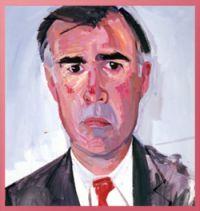
Gov. Jerry Brown’s proposal to eliminate redevelopment agencies and enterprise zones has San Francisco officials confused about which local projects will be affected.

Currently, the state allows municipalities to redevelop specified areas by borrowing against estimated future property taxes. Brown says he doesn’t want to interfere with any redevelopment bonds or commitments that have been contractually entered into — but the plan would redirect billions from development projects to schools, public safety, and other local programs.

“Redevelopment takes money from schools, cities, and counties,” Brown said at a Jan. 10 budget proposal press conference. “We want to take that money and leave it at the local level for the purposes it was historically intended. That’s police or fire or local activities, county, or schools.”

Brown says his proposal will save the state’s general fund $2.7 billion over the next 18 months. And he wants to help cities and counties raise taxes to replace that money.

But local officials say it remains to be seen what Brown’s plan means for existing obligations, and details won’t emerge until the governor releases a draft budget in March.

“I don’t think we’ll really know until we see what the legislation says,” said Redevelopment general counsel Jim Morales. “Clearly if you have a binding contract, that’s enforceable in court. The Legislature couldn’t pass a law that interferes with that.”

Redevelopment already has contracts related to the Hunters Point Naval Shipyard and Mission Bay. “The fact that we have an agreement is helpful. But a redevelopment plan of itself is not an agreement,” Morales said. “It goes to the question of what is the obligation, who gets it, and what tools do they have to fulfill those obligations.”

Morales said he believes the passage of Proposition 22 in November — which blocked the state from taking local redevelopment funds — lies at the heart of Brown’s proposal.

“The way Prop. 22 was drafted doesn’t give the state Legislature much room to use these funds except to eliminate redevelopment agencies,” he said. “It’s a legal as well as a political strategy to amend by another ballot measure or somehow modify Prop. 22.”

Brown’s bombshell landed just as city officials announced that a settlement had been reached with the Sierra Club and Golden Gate Audubon Society over charges that the city’s environmental impact report for Lennar Corp.’s massive development proposal for Candlestick Point and the former Naval Shipyard was inadequate.

The agreement includes criteria for the design and construction of a bridge across Yosemite Slough to lessen environmental impacts and provide habitat improvements.

“A settlement that provides great benefits to people and wildlife is not one that is often achievable. We’re extraordinarily pleased to have done so in this case,” said Arthur Feinstein, chair of the Sierra Club’s San Francisco Bay Chapter in a Jan. 8 press release.

“The agreement creates benefits for the community and the open space, habitats, and wildlife throughout the project area,” said Mark Welther, executive director of the Golden Gate Audubon Society. “The lagoon and other improvements will create an area whose beauty and ecological significance will rival Crissy Field.”

Lennar’s Kofi Bonner said the settlement helps clear the way for fundraising efforts. “It means we have one less lawsuit to deal with,” Bonner told the Guardian at the Jan. 11 swearing-in for interim Mayor Ed Lee.

Still on the table is a suit that Bayview-based Green Action and Power (People Organized to Win Employment Rights) brought against the city’s EIR for Lennar’s project.

Bonner said POWER’s lawsuit is about issues that the developer does not control. “POWER’s suit is about toxins removal and how the Navy is handling the issue,” he said.

POWER counters that it’s premature for the city to certify the EIR for the Lennar project. “The problem is that we are asking the city to approve future uses at the shipyard when we don’t know the result of the Navy’s clean-up process,” said Jaron Browne, a spokesperson for POWER.

Browne said that there’s nothing in POWER’s lawsuit to prevent Lennar from moving forward at Candlestick Point or with rebuilding the Alice Griffith public housing project.

SF’s new political era

31

news@sfbg.com

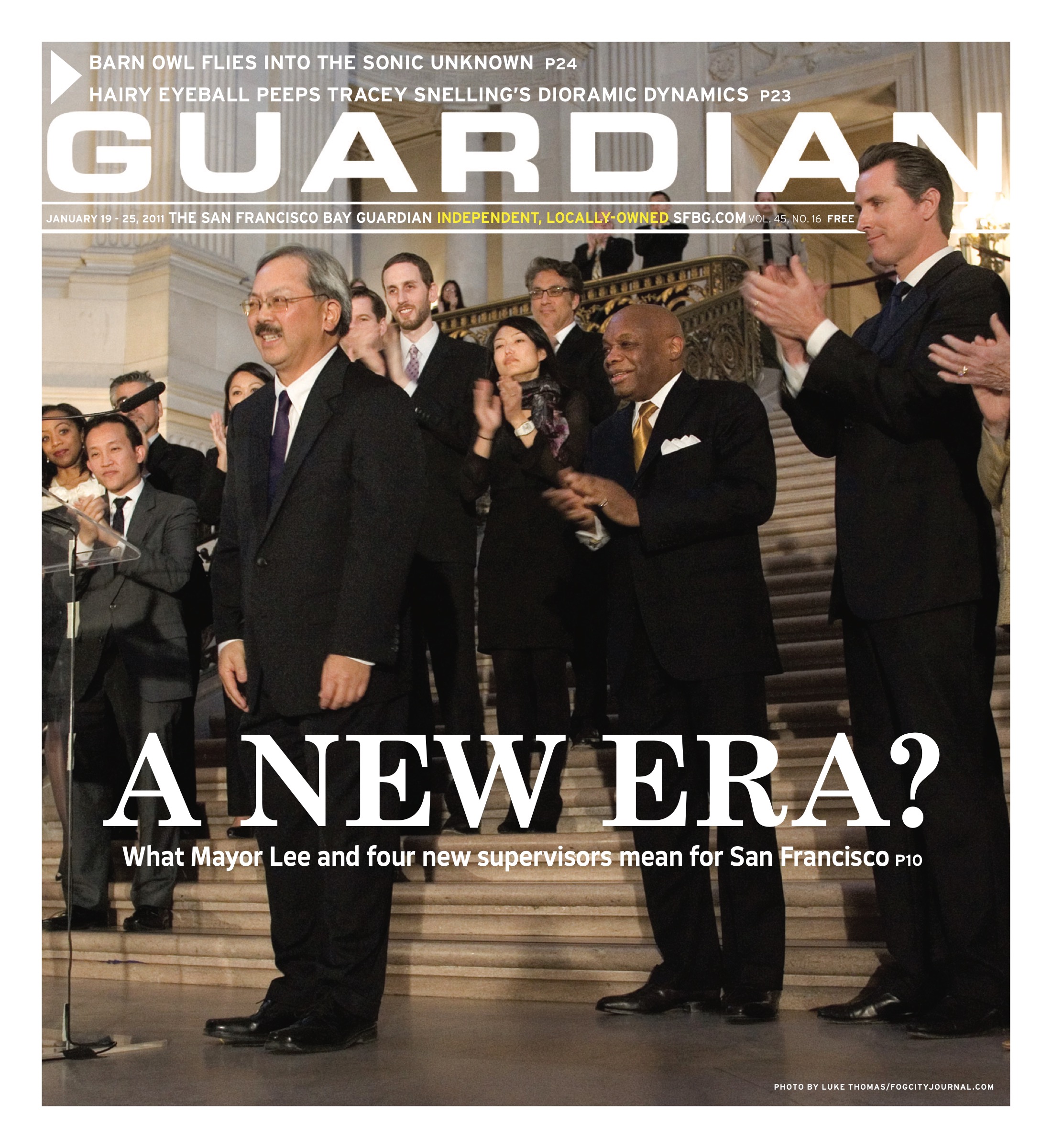
You can argue about what the word “progressive” means, and you can argue about the process and the politics that put Ed Lee in the Mayor’s Office. And you can talk forever about which group or faction has how much of a majority on the San Francisco Board of Supervisors, but you have to admit: this city has just undergone a significant political realignment.

Some of that was inevitable. The last members of the class of 2000, the supervisors who were elected in a rebellion against the sleaze, corruption, and runaway development policies of the Willie Brown administration, have left office. Gavin Newsom, the mayor who was often at war with the board and who encouraged a spirit of rancor and partisanship, is finally off to Sacramento. For the first time since 1978, the supervisors will be working with a mayor they chose themselves.

For much of the past 15 years, progressive politics was as much about stopping bad things — preventing Brown and then Newsom from wrecking the city — as it was about promoting good things. But the “politics of anti,” as San Francisco State political scientist Rich DeLeon describes is, wasn’t a central theme in the November elections, and this generation of supervisors comes into office with a different agenda.

Besides, one of the clear divisions on the board the past seven years was the Newsom allies against the progressives — something that dissipated instantly when Lee took over.

But the realignment goes deeper.

Until recently, the progressives on the board had a working majority — a caucus, so to speak — and they tended to vote together much of the time. The lines on the board were drawn almost entirely by what Newsom disparagingly calls ideology but could more accurately be described as a shared set of political values, a shared urban agenda.

There are still six supervisors who call themselves progressives, but the idea that they’ll stick together was shattered in the battle over a new mayor — and the notion that there’s anything like a progressive caucus died with Board President David Chiu’s election (his majority came in part from the conservative side, with three progressives opposing him) and with Chiu’s new committee assignments, which for the first time in a decade put control of key assignments in the hands of the fiscal conservatives.


A PROGRESSIVE MAJORITY?

The progressive bloc on the board was never monolithic. There were always disagreements and fractures. And, thanks to the Brown Act, the progressives don’t actually meet outside of the formal board sessions. But it was fair and accurate to say that, most of the time, the six members of the board majority functioned almost as a political party, working together on issues and counting on each other for key votes. There was, for example, a dispute two years ago over the board presidency — but in the end, Chiu was elected with exactly six votes, all from the progressive majority that came together in the end.

That all started to fall apart the minute the board was faced with the prospect of choosing a new mayor. For one thing, the progressives couldn’t agree on a strategy — should they look for someone who would seek reelection in November, or try to find an acceptable interim mayor? The rules that barred supervisors from voting for themselves made it more tricky; six votes were not enough to elect any of the existing members. And, not surprisingly, some of the progressives had mayoral ambitions themselves.

When state Assemblymember Tom Ammiano — who would have had six votes easily — took himself out of the running, there was no other obvious progressive candidate. And with no other obvious candidate, and little opportunity for open discussion, the progressives couldn’t come to an agreement.

But by the Jan. 4 board meeting, five of the six had coalesced around Sheriff Mike Hennessey. Chiu, however, was supporting Ed Lee, someone he had known and worked with in the Asian community and whom he considered a progressive candidate. And once it became clear that Lee was headed toward victory, Sup. Eric Mar announced that he, too, would be in Lee’s camp.

A few days later, when the new board convened to choose a president, the progressive solidarity was gone. Sups. David Campos, John Avalos, and Ross Mirkarimi, now the solid left wing of the board, voted for Avalos. Chiu won with the support of Mar, Sup. Jane Kim, and the moderate-to-conservative flank.

Now the Budget Committee — long controlled by a progressive chair and a progressive majority — will be led by Carmen Chu, who is among the most fiscally conservative board members. The Land Use and Development Committee will be chaired by Mar, but two of the three members are from the moderate side. Same goes for Rules, where Sup. Sean Elsbernd, for years the most conservative board member, will work with ideological ally Sup. Mark Farrell on confirming mayoral appointments, redrawing supervisorial districts, and promoting or blocking charter amendments as Kim, the chair, does her best to contain the damage.

You can argue that having independent-minded supervisors who don’t vote as a caucus is a good thing. You can also argue that a fractured left will never win against a united downtown. And both arguments have merit.

But you can’t argue any more that the board has the same sort of progressive majority it’s had for the past 10 years. That’s over. It’s a new — and different — political era.

What happens now? Will the progressives hold enough votes to have an influence on the city budget (and ensure that the deficit solutions include new revenue and not just cuts)? What legislative priorities will the supervisors be pushing in the next year? How will the votes shake out on difficult new proposals (and ongoing issues like community choice aggregation)?

Mayor Lee has pledged to work with the board and will show up for monthly questions. How will he respond to the sorts of progressive legislation — like tenant protections, transit-first policies, immigrant rights measures, and stronger affordable housing standards — that Newsom routinely vetoed?

How will this all play out in a year when the city will also be electing a new mayor?


IDENTITY POLITICS?

When Sups. Chiu, Mar, and Kim broke with their three progressive colleagues to support Chiu for board president — just as Chiu and Mar helped clear the path for Ed Lee to become mayor days earlier — it seemed to many political observers that identity had trumped ideology on the board. There’s some truth to that observation, but it’s too simple an explanation. There’s also the fact that Chiu strongly supported Kim, who is a personal friend and former roommate, in her election, so it’s no surprise she went with him for board president.

And the phrase itself is so laden with baggage and problems that it’s hard to talk about. It has come to signify a wide range of political activity and theorizing founded in the shared experiences of injustice of members of certain social groups. “Rather than organizing solely around belief systems, programmatic manifestoes, or party affiliation, identity political formations typically aim to secure the political freedom of a specific constituency marginalized within its larger context,” says the Stanford Encyclopedia of Philosophy, an ongoing research project by the students and faculty at Stanford University.

Although the notion of identity politics took hold during the social movements of the 1960s and ’70s — when liberation and organizing movements among women and various ethic and other identity groups fed a larger liberal democratic surge that targeted war, economic inequity, social injustice, and other issues — it’s also a political approach that has divided the populace.

“One of the central charges against identity politics by liberals, among others, has been its alleged reliance on notions of sameness to justify political mobilization,” says the Stanford Encyclopedia. “Looking for people who are like you rather than who share your political values as allies runs the risk of sidelining critical political analysis of complex social locations and ghettoizing members of social groups as the only persons capable of making or understanding claims to justice.”

Mar explains that the reality of identity politics and whether it’s a factor in the current politics at City Hall is far more complex.

“With me, David Chiu, and Jane Kim as a block of three progressive Asians — and I still define David Chiu as a progressive though I think some are questioning that — we all come out of what I would call a pro-housing justice, transit-first, and environmental sustainability [mindset],” Mar told us. “But I think because of our ethnic background and experiences, we may have different perspectives at times than other progressives.”

For example, Mar said, many working class families of color need to drive a car so they’ll differ from progressives who want to limit parking spaces to discourage driving. He also has reservations about the proposed congestion pricing fee and how it might affect low-income drivers.\

“I think often when progressive people of color come into office — Jane Kim might be one of the best examples — that sometimes there’s an assumption that her issues are going to be the same as a white progressive or a Latino progressive,” he said. “But I think kind of the different identities that we all have mean that we’re more complex.”

Campos, a Latino immigrant who is openly gay, noted that “as a progressive person of color, I have at times felt that the progressive movement didn’t recognize the importance of identity politics and what it means for me to have another person of color in power.”

But, he added, “I don’t think identity politics alone should guide what happens. A progressive agenda isn’t just about race but class, sexual orientation, and other things. It’s not enough to say that identity politics justifies everything.”

University of San Francisco political science professor Corey Cook told the Guardian that identity has always been a strong factor in San Francisco politics, even if it was overshadowed by the political realignment around progressive ideology that occurred in 2000, mostly as a reaction to an economic agenda based on rapid development and political cronyism.

“I’m not sure that identity wasn’t relevant, but it was swamped by ideology,” Cook told the Guardian. Now, he said, another political realignment seems to be occurring, one that downplays ideology compared to the position it has held for the last 10 years. “I’m not sure that ideology is dead. But the dynamics have definitely changed.”

Cook sees what may be a more important change reflected in Chiu’s decision to put the political moderates in control of key board committees. But he said that shift was probably inevitable given the difficulties of unifying the diverse progressive constituencies.

“It’s hard to hold a progressive coalition together, and it’s amazing that it has lasted this long,” he said.

There’s another kind of identity politics at play as well — that of native San Franciscans, who often express resentment at progressive newcomers talking about what kind of city this is, versus those who see San Francisco as a city of immigrants and ideas, a place being shaped by a wider constituency than the old-timers like to acknowledge.

“I’m honored to join Sups. Elsbernd and Cohen in representing the neighborhoods they grew up in,” Sup. Mark Farrell said during his opening remarks after being sworn in Jan. 8., sobbing when he thanked his parents for their support.

As he continued, he fed the criticism of the notion of ideology-based politics that has been a popular trope with Gavin Newsom and other fiscal conservatives in recent years, telling the crowd he wanted “to turn City Hall into a place based on issues and ideas, not ideology.”

Cohen also placed more importance on her birthright than on her political philosophy, telling stories about entering board chambers through the back door at age 16 when she was part of a youth program created by then-Mayor Frank Jordan, and with former Mayor Dianne Feinstein coming to speak at Cohen’s third-grade class. “I am a San Francisco native, and that is a responsibility I take seriously,” said Cohen, who graduated from the Emerge Program, which grooms women for political office,

“We will have another woman as president of the Board of Supervisors, and we will have a woman as mayor of San Francisco,” she added. And as the sole African American on the board, she also pledged, “I will be working to add more members of the African American community to the elected family of San Francisco.”

But what issues she plans to focus on and what values she’ll represent were unclear in her comments — as they were throughout her campaign, despite the efforts of journalists and activists to discern her political philosophy. In her public comments, her only stated goal was to build bridges between the community and City Hall and let decisions be guided by the people “not political ideologies.”

Oftentimes in recent San Francisco history, identity and ideology have worked in concert, as they did with former Sup. Harvey Milk, who broke barriers as the first openly gay elected official, but who also championed a broad progressive agenda that included tenants rights, protecting civil liberties, and creating more parks and public spaces.

Sup. Scott Wiener, shortly after being sworn into office, acknowledged the legacy of his district, which was once represented by Milk and fellow gay progressive leader Harry Britt, telling the crowd: “I’m keenly aware of the leadership that has come through this district and I have huge shoes to fill.”

Yet Wiener, a moderate, comes from a different ideological camp than Milk and Britt and he echoed the board’s new mantra of collaboration and compromise. “I will always try to find common ground. There is always common ground,” he said.


GETTING THINGS DONE?

Chiu is making a clear effort to break with the past, and has been critical of some progressive leaders. “I think it’s important that we do not have a small group of progressive leaders who are dictating to the rest of the progressive community what is progressive,” he said.

While he didn’t single out former Sup. Chris Daly by name, he does seem to be trying to repudiate Daly’s leadership style. “I think that while the progressive left and the progressive community leaders have had very significant accomplishments over the past 10 years, I do think that there are many times when our oppositional tactics have set us back.”

When Chiu was reelected board president, he told the crowd that “none of us were voted into office to take positions. We were voted into office to get things done.”

Some progressives were not at all happy with that comment. “I thought that was a terrible thing to say,” Avalos told the Guardian, arguing the positions that elected officials take shape the legislation that follows. As an example, he cited the positions that progressive members of Congress took in favor of the public option during the health care reform debate.

Talking about getting things done is “a sanctimonious talking point that fits well with what the Chronicle and big papers want to hear,” Avalos said. He said the Chronicle and other downtown interests are more interested in preserving the status quo and blocking progressive reforms. “It’s what they want to see not get done.”

Campos even challenged the comment publicly during the Jan. 11 board meeting when he said, “It’s important to get things done, but I don’t think getting things done is enough. We have to ask ourselves: what is it that we’re getting done? How is it that we’re getting things done? And for whom is it that we’re doing what we’re doing? Is it for the people, or the downtown corporate interests? I hope it’s not getting things done behind closed doors.”

Chiu said that, for him, getting things done is about expanding the progressive movement and consolidating its recent gains. “I think we all share a political goal. As progressives, we all share a political goal of getting things done and growing mainstream support for our shared progressive principles so that they really become the values of our entire city.”

To do that, he said, progressives are going to need to be more conciliatory and cooperative than they’ve been in the past. “I think it’s easy to slip into a more oppositional way of discussing progressive values, but I’m really pushing to move beyond that.”

The biggest single issue this spring will be the budget — and it’s hard to know exactly where the board president will draw his lines. “I have spoken to Mayor Lee about the need for open, transparent, and community-based budget processes and he’s open to that,” Chiu told us — and that alone would be a huge change. But the key progressive priority for the spring will be finding ways to avoid brutal budget cuts — and that means looking for new revenue.

When asked whether new general revenue will be a part of the budget solution, instead of Newsom’s Republican-style cuts-only approaches, Chiu was cautious. “I am open to considering revenues as part of the overall set of solutions to close the budget deficit,” he said. “I am willing to be one elected here that will try to make that argument.” But with his political clout and connections right now, he can do a lot more than be one person making an argument.

Chiu has always been open to new revenue solutions and even led the way in challenging the cuts-only approach to both the city budget and MTA budget two years in a row, only to back down in the end and cut a deal with Newsom. When asked whether things will be better this year given his closer relationship to Lee, Chiu replied, “I think things are going to be different in the coming months.”

During the board’s Jan. 7 deliberation on Lee, Sup. Eric Mar also said that based on his communications with Lee, Mar believed that the Mayor’s Office is open to supporting new revenue measures. He echoed the point later to us.

In addition to supporting the open, inclusive budget process, Mar called for “a humane budget that protects the safety net and services to the most vulnerable people in San Francisco is kind of the critical, top priority.

“I think it’s going to be difficult working with the different forces in the budget process,” he added. “That’s why I wish it could have been a progressive who was chairing the budget process.”

Mar said progressive activism on the budget process is needed now more than ever. “The Budget Justice Coalition from last year I think has to be reenergized so that so many groups are not competing for their own piece of the pie, but that it’s more of a for-all, share-the-pain budget with as many people communicating from outside as possible, putting the pressure on the mayor and the board to make sure that the critical safety net’s protected.”


CUTS WILL BE CENTER STAGE

But major cuts — and the issue of city employees pay and benefits — will also be center stage.

At the board’s Jan. 11 meeting, before the supervisors voted unanimously to nominate Lee as interim mayor, Sup. Elsbernd signaled that city workers’ retirement and health benefits will once again be at the center of the fight to balance the budget.

Elsbernd noted that in past years he was accused of exaggerating the negative impacts that city employees’ benefits have on the city’s budget. “But rather than being inflated, they were deflated,” Elsbernd said, noting that benefits will soon consume 18.14 percent of payroll and will account for 26 percent in three years.

“Does the budget deficit include this amount?” he asked.

And at the after-party that followed Lee’s swearing-in, Public Defender Jeff Adachi, who caused a furor last fall when he launched the ill-considered Measure B, which sought to reform workers’ benefits packages, told us he is not one to give up lightly.

“We learned a lot from that,” Adachi said. “This is still the huge elephant in City Hall. The city’s pension liability just went up another 1 percent, which is another $30 million”

Chu agreed that worker benefits would be a central part of the budget-balancing debate. “Any conversation about the long-term future of San Francisco’s budget has to look at the reality of where the bulk of our spending is,” she said.

Avalos noted that he plans to talk to labor and community based organizations about ways to increase city revenue. “I’m going to work behind the scene on the budget to make sure the communities are well-spoken for,” Avalos said, later adding, “But it’s hard, given that we need a two-thirds majority to pass stuff on the ballot.”

Last year, Avalos helped put two measures on the ballot to increase revenue: Prop. J, which sought to close loopholes in the city’s current hotel tax and asked visitors to pay a slightly higher hotel tax (about $3 a night) for three years, and Prop. N, the real property transfer tax that slightly increased the tax charged by the city on the sale of property worth more than $5 million.

Prop. N should raise $45 million, Avalos said. “I’ve always had my sights set on raising revenue, but making cuts is inevitable.”


THE IDEOLOGY ARGUMENT

Newsom and his allies loved to use “ideology” as a term of disparagement, a way to paint progressives as crazies driven by some sort of Commie-plot secret agenda. But there’s nothing wrong with ideology; Newsom’s fiscal conservative stance and his vow not to raise taxes were ideologies, too. The moderate positions some of the more centrist board members take stem from a basic ideology. Wiener, for example, told us that he thinks that in tough economic times, local government should do less but do it better. That’s a clear, consistent ideology.

For much of the past decade, the defining characteristic of the progressives on the board has been a loosely shared urban ideology supported by tenants, immigrant-rights groups, queer and labor activists, environmentalists, preservationists, supporters of public power and sunshine and foes of big corporate consolidation and economic power. Diversity and inclusiveness was part of that ideology, but it went beyond any one political interest or identity group.

It was often about fighting — against corruption and big-business hegemony and for economic and social equality. The progressive agenda started from the position that city government under Brown and Newsom had been going in the wrong direction and that substantive change was necessary. And sometimes, up against powerful mayors and their well-heeled backers, being polite and accommodating and seeking common ground didn’t work.

As outgoing Sup. Daly put it at his final meeting: “I’ve seen go-along to get along. If you want to do more than that, if you think there’s a fundamental problem with the way things are in this world, then go-along to get along doesn’t do it.” When Chiu announced that the new progressive politics is one of pragmatism, he was making a break from that ideology. He was signaling a different kind of politics. He has urged us to be optimistic about the new year — but we still don’t know what the new agenda will look like, how it will be defined, or at what point Chiu and his allies will say they’ve compromised and reached out enough and are ready to take a strong, even oppositional, stand. We do know the outcome will affect the lives of a lot of San Franciscans. And when the budget decisions start rolling down the pike, the political lines will be drawn fairly clearly. Because reaching across the aisle and working together sounds great in theory — but in practice, there is nothing even resembling a consensus on the board about how the city’s most serious problems should be resolved. And there are some ugly battles ahead.

They have issues: Members of the new Board speak

20

Board President David Chiu touched off a broad political discussion in recent weeks with his statement that officials were elected “not to take positions, but to get things done.” Delivered just before his reelection as Board President with the solid backing of the board’s moderate faction, Chiu’s comment has been viewed in light of City Hall’s shifting political dynamic, a subject the Guardian explores in a Jan. 19 cover story. Politics aside, Chiu’s statement also begs the question: Just what do members of the board hope to get done, and how do they propose to accomplish the items on their agenda?
Last week, Guardian reporters tracked down every member of the board to find out. We asked, what are your top priorities? And how do you plan to achieve them? Some spoke with us for 25 minutes, and others spoke for just 5 minutes, but the result offers some insight into what’s on their radar. Not surprisingly, getting the budget right was mentioned by virtually everyone as a top priority, but there are sharp differences in opinion in terms of how to do that. Several supervisors, particularly those in the moderate wing, mentioned ballooning pension and healthcare costs. Aiding small business also emerged as a priority shared by multiple board members.

Sup. Eric Mar
District 1

Issues:
*Budget
*Assisting small businesses
*Programs and services for seniors
*Food Security
*Issues surrounding Golden Gate Park

Elected in 2008 to represent D1, Sup. Eric Mar has been named chair of the powerful Land Use & Economic Development Committee and vice chair of the City Operations and Neighborhood Services Committee.

Asked to name his top priorities, Mar said, “A humane budget that protects the safety net and services to the must vulnerable people in San Francisco is kind of the critical, top priority.”

It’s bound to be difficult, he added. “That’s why I wish it could have been a progressive that was chairing the budget process. Now, we have to work with Carmen Chu to ensure that it’s a fair, transparent process.”

A second issue hovering near the top of Mar’s agenda is lending a helping hand to the small businesses of the Richmond District. “There’s a lot of anxiety about the economic climate for small business. We’re trying to work closely with some of the merchant associations and come up with ideas on how the city government can be more supportive,” he said. Mar also spoke about the need to respond to the threat of big box stores, such as PetCo, that could move in and harm neighborhood merchants. “I’m worried about too many of the big box stores trying to come in with an urban strategy and saying that they’re different — but they sure have an unfair advantage,” he noted.

Programs and services for the senior population ranked high on his list. Mar noted that he’d been working with senior groups on how to respond to a budget analyst’s report showing a ballooning need for housing – especially affordable housing – for seniors. “It’s moving from the Baby Boom generation to the Senior Boomers, and I think the population, if I’m not mistaken, by 2020 it’s going up 50 percent,” he said. “It’s a huge booming population that I don’t think we’re ready to address.”

Addressing food security issues through the Food Security Task Force also ranked high on Mar’s list, and he noted that he’s been working with a coalition that includes UCSF and the Department of Public Health to study the problem. “We’ve had a number of strategy meetings already, but we’re trying to launch different efforts to create healthier food access in many of our lowest income neighborhoods,” Mar said.

Finally, Mar talked about issues relating to the park. “I do represent the district that has Golden Gate Park, so I’m often busy with efforts to preserve the park, prevent privatization, and ensure enjoyment for the many residents not just in the Richmond but throughout the city that enjoy the park.” Although it’s not technically in his district, Mar noted that he is very supportive of HANC Recycling Center – and plans to advocate on their behalf to Mayor Lee.

Sup. Mark Farrell
District 2
Issues:
*Pension reform
*Long-term economic plan for city
*Job creation
*Quality-of-life issues

Elected to replace termed-out D2 Sup. Michela Alioto-Pier, Farrell has been named vice-chair of the Government Audits & Oversight Committee and a member of the Rules Committee. A native of D2, Farrell told the Guardian he believes his roots in the city and background as a venture capitalist would be an asset to the city’s legislative body. “I know at the last board, Carmen [Chu] was the only one who had any finance background,” he said. “To have someone come from the private sector with a business / finance background, I really do believe … adds to the dialogue and the discussion here at City Hall.”

Along those lines, Farrell said one of his top priorities is the budget. “I’m not on the budget and finance committee this time around, but given my background, I am going to play a role in that,” he said.

So what’s his plan for closing the budget deficit? In response, he alluded to slashing services. “In the past, there have been views that we as a city don’t provide enough services and we need to raise revenues to provide more, or the perspective that we first need to live within our means and then provide more services. Everyone’s going to disagree, but I’m in the latter camp,” he said. “I do believe we need to make some tough choices right now – whether it be head count, or whether it be looking at …pension reform. I do believe pension reform needs to be part of the dialogue. Unfortunately, it’s unsustainable.”

He also said he wanted to be part of “trying to create and focus on a framework for a long-term financial plan here in San Francisco.”

Secondly, Farrell discussed wanting to put together a “jobs bill.”

“Jobs is a big deal,” he said. “It’s something I want to focus on. There are only so many levers we can pull as a city. I think the biotech tax credits have spurred a lot of business down in Mission Bay.”

Next on Farrell’s agenda was quality-of-life issues, but rather than talk about enforcing San Francisco’s sit/lie ordinance – supported by political forces who organized under the banner of maintaining ‘quality-of-life’ – Farrell revealed that he is incensed about parking meter fines. “It is so strikingly unjust when you are 1 minute late to your parking meter and you have a $65 parking fine,” he said.

Farrell also mentioned development projects that would surely require time and attention. “CPMC is going to be a major dominant issue,” he said. He also mentioned Doyle Drive, and transitional age youth housing projects proposed in D2 – but as far as the housing project planned for the King Edward II Inn, which has generated some controversy among neighborhood groups, he didn’t take a strong position either way, saying he wanted to listen to all the stakeholders first.

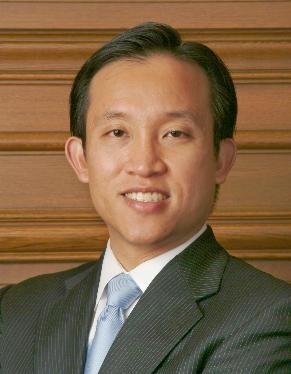
Board President David Chiu
District 3
Issues:
*Budget
*Preserving neighborhood character
*Immigrant rights
*Preserving economic diversity
*Transit

Elected for a second two-year term as President of the Board, D3 Sup. David Chiu is rumored to be running in the mayor’s race, after he turned down former Mayor Gavin Newsom’s offer to appoint him as District Attorney. That offer was made after Kamala Harris won the state Attorney General’s race this fall. And when Chiu turned it down, former Mayor Gavin Newsom shocked just about everybody by appointing San Francisco Police Chief George Gascon, who is not opposed to the death penalty and was a longtime Republican before he recently registered as a Democrat, instead.

A temporary member of the Board’s Budget acommittee, Chiu is also a permanent member of the Board’s Government Audits & Oversight Committee.

Asked about his top priorities, Chiu spoke first and foremost about  “ensuring that we have a budget that works for all San Franciscans, particularly the most vulnerable.” He also said he wanted to see a different kind of budget process: “It is my hope that we do not engage in the typical, Kabuki-style budget process of years past under the last couple of mayors, where the mayor keeps under wraps for many months exactly what the thinking is on the budget, gives us something on June 1 for which we have only a couple of weeks to analyze, and then engage in the tired back-and-forth of debates in the past.” Chiu also spoke about tackling “looming pension and health care costs.”

Another priority, he said, was “Ensuring that our neighborhoods continue to remain the distinctive urban villages that they are, and protecting neighborhood character,” a goal that relates to “development, … historic preservation, [and] what we do around vacant commercial corridors.”

*Immigrant rights also made his top-five list. “I was very sad that last November we didn’t prevail in allowing all parents to have a right and a voice in school board elections,” he said, referencing ballot measure Proposition D which appeared on the November 2010 ballot. “I think we are going to reengage in discussion around Sanctuary City, another topic I have discussed twice already with Mayor Lee.”

Another issue for Chiu was  “ensuring again that hopefully San Francisco continues to remain an economically diverse city, and not just a city for the very wealthy.” He spoke about reforming city contracts: “In particular, dealing with the fact that in many areas, 70 to 80 percent of city contracts are awarded to non-San Francisco businesses. … I think there is more significant reform that needs to happen in our city contracting process.” Another economic-diversity measure, he said, was tax policy, “particularly around ensuring that our business tax is incenting the type of economic growth that we want.”

Finally, Chiu spoke about “Creating a transit-first city. This is not just about making sure MUNI is more reliable and has stable funding, but ensuring that we’re taking steps to reach a 2020 goal of 20 percent cycling in the city. Earlier this week I called for our transit agencies to look at pedestrian safety, because we are spending close to $300 million a year to deal with pedestrian deaths and injuries.”

Sup. Carmen Chu
District 4
*Budget
*Core Services
*Jobs
*Economy

Chiu has just named Sup. Carmen Chu as chair of the powerful Board and Finance Committee. And Chu, who worked as a budget analyst for Newsom’s administration, says the budget, core services, employment and the economy are her top priorities.

“My hope is that this year the budget is going to be a very collaborative and open process,” Chu said.

Chu believes workers benefits will be a central part of the budget-balancing debate.
“Any conversation about the long-term future of San Francisco’s budget has to look at the reality of where the bulk of our spending is,” she said.

Chu noted that the budget debate will have to take the state budget into account.
“At the end of the day, we need to take into account the context of the state budget, in terms of new cuts and taxes, because anything we do will be on top of the state level.

“We need to ask who do these measures really impact,” she added, noting that there were attempts to put revenue measures on the ballot last year.

Sup. Ross Mirkarimi
District 5
* Local Hire / First Source / Reentry programs
* Budget / generating revenue
* Infrastructure improvements
*Reversing MTA service cuts

With only two years left to serve on the Board, D5 Sup. Ross Mirkarimi has been named chair of the Board’s Public Safety Committee and vice-chair of the Budget and Finance Committee.

“One of my top priorities is building on and strengthening the work that I’ve already done and that Avalos is doing on mandatory local hire and First Source programs,” Mirkarimi said. He also spoke about “strengthening reentry programs for those coming out of the criminal justice system, because we still have an enormously high recidivism rate.”

The budget also ranked high on Mirkarimi’s list, and he stressed the need for “doing surgical operations on our budget to make sure that services for the vulnerable are retained, and looking for other ways to generate revenue beyond the debate of what’s going on the ballot.

“For instance, I helped lead the charge for the America’s Cup, and while the pay-off from that won’t be realized for years, the deal still needs to be massaged. What we have now is an embryonic deal that still needs to be watched.”

Mirkarimi mentioned safeguarding the city against privatization, saying one of his priorities was “retooling our budget priorities to stop the escalating practice of privatizing city services.”

 He spoke about “ongoing work citywide to make mixed-use commercial and residential infrastructure improvements, which coincide with bicycle and pedestrian improvements.”

Finally, Mirkarimi said he wanted to focus on transportation issues. “As Chair of the Transportation Authority, if I even continue to be chair, to take the lead on signature transit projects and work with the M.T.A. to reverse service cuts.”

Sup. Jane Kim
District 6
Issues:
*Jobs
*Economic Development
*Small Business
*Pedestrian Safety
*Legislation to control bedbug infestations

Elected to replace termed-out D6 Sup. Chris Daly, Kim has been named chair of the Rules Committee and a member of the Budget & Finance committee.

Kim believes that she will prove her progressive values through her work and she’s trying to take the current debate about her allegiances on the Board in her stride.

“The one thing I learned from serving on the School Board was to be really patient,” Kim told me, when our conversation turned to the issue of “progressive values.”

“I didn’t want to be President of the School Board for the first few years, because I loved pushing the envelope,” Kim added, noting that as Board President David Chiu is in the often-unenviable position of chief negotiator between the Board and the Mayor.

But with Ed Lee’s appointment as interim mayor, Kim is excited about the coming year.
“There are a lot of new opportunities, a different set of players, and it’s going to be very interesting to learn how to traverse this particular scene.”

Kim is kicking off her first term on the Board with two pieces of legislation. The first seeks to address bedbug infestations. “Particularly around enforcement, including private landlords,” Kim said, noting that there have also been bedbug problems in Housing Authority properties.

Her second immediate goal is to look at pedestrian safety, a big deal in D6, which is traversed by freeways with off-ramps leading into residential zones.
“Pedestrian safety is a unifying issue for my district, particularly for all the seniors,” Kim said, citing traffic calming, speed limit enforcement and increased pedestrian traffic, as possible approaches.

Beyond those immediate goals, Kim plans to focus on jobs, economic development and small businesses in the coming year. “What can we do to create jobs and help small businesses? That is my focus, not from a tax reduction point of view, but how can we consolidate the permitting and fees process, because small businesses are a source of local jobs.”

Kim plans to help the Mayor’s Office implement Sup. John Avalos’ local hire legislation, which interim Mayor Ed Lee supports, unlike his predecessor Mayor Gavin Newsom.

“Everyone has always liked the idea of local hire, but without any teeth, it can’t be enforced,” Kim observed. “It’s heartbreaking that young people graduate out of San Francisco Unified School District and there’s been not much more than retail jobs available.”

She noted that jobs, land use and the budget are the three overarching items on this year’s agenda. “I’m a big believer in revenue generation, but government has to come half-way by being able to articulate how it will benefit people and being able to show that it’s more than just altruistic. I think we have to figure out that balance in promoting new measures. That’s why it’s important to be strong on neighborhood and community issues, so that folks feel like government is listening and helping them. I don’t think it’s a huge ask to be responsive to that.”

Kim said she hoped the new mayor would put out a new revenue measure, enforce local hire, and implement Sup. David Campos’ legislation to ensure due process for immigrant youth.

“I think Ed can take a lot of the goodwill and unanimous support,” Kim said. “We’ve never had a mayor without an election, campaigns, and a track record. Usually mayors come in with a group of dissenters. But he is in a very unique position to do three things that are very challenging to do. I hope raising revenues is one of those three. As a big supporter of local hire, I think it helps having a mayor that is committed to implement it. And I’m hoping that Ed will implement due process for youth. For me, it’s a no brainer and Ed’s background as a former attorney  for Asian Law Caucus is a good match. Many members of my family came to the U.S. as undocumented youth, so this is very personal. Kids get picked up for no reason and misidentified. People confuse Campos and Avalos, so imagine what happens to immigrant youth.”

Sup. Sean Elsbernd
District 7
Issues:
*Parkmerced
*Enforcing Prop G
*Pension & healthcare costs
*CalTrain

With two years left to serve on the Board, D7 Sup. Sean Elsbernd has been named vice-chair of the Rules Committee and a member of the City Operations & Neighborhood Services Committee. He was congratulated by Chinatown powerbroker Rose Pak immediately after the Board voted 11-0 to nominated former City Administrator Ed Lee as interim mayor, and during Lee’s swearing-in, former Mayor Willie Brown praised Elsbernd for nominating Lee for the job.

And at the Board’s Jan. 11 meeting before the supervisors voted for Lee, Elsbernd signaled that city workers’ retirement and health benefits will be at the center of the fight to balance the budget in the coming year.

Elsbernd noted that in past years, he was accused of exaggerating the negative impacts that city employees’ benefits have on the city’s budget. “But rather than being inflated, they were deflated,” Elsbernd said, noting that benefits will soon consume 18.14 percent of payroll and will account for 26 percent in three years. “Does the budget deficit include this amount?” he asked.

And at the afterparty that followed Lee’s swearing in, Public Defender Jeff Adachi, who caused a furor last fall when he launched Measure B, which sought to reform workers’ benefits packages, told the Guardian he is not one to give up lightly. “We learned a lot from that,” Adachi said. “This is still the huge elephant in City Hall. The city’s pension liability just went up another 1 percent, which is another $30 million.”

As for priorities, Elsbernd broke it down into district, city, and regional issues. In D7, “Hands-down, without question the biggest issue … is Parkmerced,” he said, starting with understanding and managing the environmental approval process. If it gets approved, he said his top concerns was that “the tenant issue. And the overriding concern of if they sell, which I think we all think is going to happen in the near-term – do those guarantees go along with the land?”

Also related to Parkmerced was planning for the traffic conditions that the development could potentially create, which Elsbernd dubbed a “huge 19th Avenue issue.”

Citywide, Elsbernd’s top priorities included enforcing Proposition G – the voter-approved measure that requires MUNI drivers to engage in collective bargaining – and tackling pension and healthcare costs. He spoke about “making sure that MTA budget that comes to us this summer is responsive” to Prop G.

As for pension and healthcare, Elsbernd said, “I’ve already spent a good deal of time with labor talking about it, and will continue to do that.” But he declined to give further details. Asked if a revenue-generating measure could be part of the solution to that problem, Elsbernd said, “I’m not saying no to anything right now.”

On a regional level, Elsbernd’s priority was to help CalTrain deal with its crippling financial problem. He’s served on that board for the last four years. “The financial situation at CalTrain – it is without question the forgotten stepchild of Bay Area transit, and the budget is going to be hugely challenging,” he said. “I think they’ll survive, but I think they’re going to see massive reductions in services.”

Sup. Scott Wiener
District 8
Issues:
*Transportation
*Reasonable regulation of nightlife & entertainment industry
*Pension reform

Elected in November 2010 to replace termed-out D8 Sup. Bevan, Wiener has been named a temporary member of the Board’s Budget and Finance Committee and a permanent member of the Land Use and Economic Development Committee.

“Transportation is a top priority,” Wiener said. ‘That includes working with the M.T.A. to get more cabs on the street, and making sure that the M.T.A. collectively bargains effectively with its new powers, under Prop. G.”

“I’m also going to be focusing on public safety, including work around graffiti enforcement, though I’m not prepared to go public yet about what I’ll be thinking,” he said.

“Regulating nightlife and entertainment is another top priority,” Wiener continued. “I want to make sure that what we do is very thoughtful in terms of understanding the economic impacts, in terms of jobs and tax  revenues, that this segment has. With some of the unfortunate incidents that have happened, it’s really important before we jump to conclusions that we figure out what happened and why. Was it something the club did inappropriately, or was it just a fluke? That way, we can avoid making drastic changes across the board. I think we have been very reactive to some nightclub issues. I want us to be more thoughtful in taking all the factors into consideration.”

“Even if we put a revenue measure on the June or November ballot, we’d need a two-thirds majority, so realistically, it’s hard to envision successfully securing significant revenue measure before November 2012,” Wiener added. “And once you adopt a revenue measure, it takes time to implement it and revenue to come in, so it’s hard to see where we’ll get revenue that will impact the 2012 fiscal year. In the short term, for fiscal year 2011/2012, the horse is out of the barn”

“As for pension stuff, I’m going to be very engaged in that process and hopefully we will move to further rein in pension and retirement healthcare costs.”

Sup. David Campos
District 9
Issues:
*Good government
*Community policing
*Protecting immigrant youth
*Workers’ rights and healthcare

Elected in 2008, D9 Sup. David Campos has been named chair of the Board’s Government Audit & Oversight Committee and a member of the Public Safety Committee. And, ever since he declared that the progressive majority on the Board no longer exists, in the wake of the Board’s 11-0 vote for Mayor Ed Lee, Campos has found his words being used by the mainstream media as alleged evidence that the entire progressive movement is dead in San Francisco.

“They are trying to twist my words and make me into the bogey man,” Campos said, noting that his words were not a statement of defeat but a wake-up call.

“The progressive movement is very much alive,” Campos said. “The key here is that if you speak your truth, they’ll go after you, even if you do it in a respectful way. I didn’t lose my temper or go after anybody, but they are trying to make me into the next Chris Daly.”

Campos said his overarching goal this year is to keep advancing a good government agenda.

“This means not just making sure that good public policy is being pursued, but also that we do so with as much openness and transparency as possible,” he said.

As a member of the Board’s Public Safety Committee, Campos says he will focus on making sure that we have “as much community policing as possible.

He plans to focus on improving public transportation, noting that a lot of folks in his district use public transit.

And he’d like to see interim mayor Ed Lee implement the due process legislation that Campos sponsored and the former Board passed with a veto-proof majority in 2009, but Mayor Gavin Newsom refused to implement. Campos’ legislation sought to ensure that immigrant youth get their day in court before being referred to the federal immigration authorities for possible deportation, and Newsom’s refusal to implement it, left hundreds of youth at risk of being deported, without first having the opportunity to establish their innocence in a juvenile court.
‘We met with Mayor Lee today,” Campos told the Guardian Jan. 18. “And we asked him to move this forward as quickly as possible. He committed to do that and said he wants to get more informed, but I’m confident he will move this forward.”

Campos also said he’ll be focusing on issues around workers’ rights and health care.
“I want to make sure we keep making progress on those fronts,” Campos said.

“It’s been a rough couple of days,” Campos continued, circling back to the beating the press gave him for his “progressive” remarks.“But I got to keep moving, doing my work, calling it as a I see it, doing what’s right, and doing it in a respectful way. The truth is that if you talk about the progressive movement and what we have achieved, which includes universal healthcare and local hire in the last few years, you are likely to become a target.”

Sup. Malia Cohen
District 10
Issues:
*Public safety
*Jobs
*Preserving open space
*Creating Community Benefit Districts
*Ending illegal dumping
Elected to replace termed-out D10 Sup. Sophie Maxwell, Cohen has been named chair of the City & School District committee, vice chair of the Land Use and Economic Development Committee and vice chair of the Public Safety Committee.

Cohen says her top priorities are public safety, jobs, open space, which she campaigned on, as well as creating community benefits districts and putting an end to illegal dumping.

“I feel good about the votes I cast for Ed Lee as interim mayor and David Chiu as Board President. We need to partner on the implementation of local hire, and those alliances can help folks in my district, including Visitation Valley.”

“I was touched by Sup. David Campos words about the progressive majority on the Board,” she added. “I thought they were thoughtful.”

Much like Kim, Cohen believes her legislative actions will show where her values lie.
“I’d like to see a community benefits district on San Bruno and Third Street because those are two separate corridors that could use help,” Cohen said. 

She pointed to legislation that former D10 Sup. Sophie Maxwell introduced in November 2010, authorizing the Department of Public Works to expend a $350,000 grant from the Solid Waste Disposal Clean-Up Site trust fund to clean up 25 chronic illegal dumping sites.
“All the sites are on public property and are located in the southeast part of the city, in my district,” Cohen said, noting that the city receives over 16,000 reports of illegal dumping a year and spends over $2 million in cleaning them up.

Sup. John Avalos
District 11
*Implementing Local Hire
*Improving MUNI / Balboa Park BART
*Affordable housing
*Improving city and neighborhood services

Sup. John Avalos, who chaired the Budget committee last year and has just been named Chair of the Board’s City Operations and Neighborhood Services Committee, said his top priorities were implementing local hire, improving Muni and Balboa Park BART station, building affordable housing at Balboa, and improving city and neighborhood services.

“And despite not being budget chair, I’ll make sure we have the best budget we can,” Avalos added, noting that he plans to talk to labor and community based organizations about ways to increase city revenues. “But it’s hard, given that we need a two-thirds majority to pass stuff on the ballot,” he said.

Last year, Avalos helped put two measures on the ballot to increase revenues. Prop. J sought to close loopholes in the city’s current hotel tax, and asked visitors to pay a slightly higher hotel tax (about $3 a night) for three years. Prop. N, the real property transfer tax, h slightly increased the tax charged by the city on the sale of property worth more than $5 million.

Prop. J secured only 45.5 percent of the vote, thereby failing to win the necessary two-thirds majority. But it fared better than Prop. K, the competing hotel tax that Newsom put on the ballot at the behest of large hotel corporations and that only won 38.5 percent of the vote. Prop. K also sought to close loopholes in the hotel tax, but didn’t include a tax increase, meaning it would have contributed millions less than Prop. J.

But Prop. N did pass. “And that should raise $45 million,” Avalos said. “So, I’ve always had my sights set on raising revenue, but making cuts is inevitable.”


The problem with parking tickets

63

Naturally, C.W. Nevius is outraged that the poor drivers in San Francisco are going to get hit with more parking tickets since the Municipal Transportation Agency has a budget shortfall. We’re going to hear the usual whining form the cars-have-rights-too crowd; why is everybody always picking on the owners of internal combustion vehicles? I mean, they pollute the air and are destroying the planet, but paying for the right to drive in a city is such a horrible oppresive burden. 


But here’s the thing: In this case, I don’t thing Nevius and the gang are entirely wrong.


Parking tickets were never meant to be primarily a revenue source. If you ask any rational urban planner or transporation expert, they’ll tell you that parking meter rates should be designed to encourage turnover of spaces and fines should be used to discourage illegal parking. In a perfect urban setting, the parking fines would be adequate to keep everyone following the rules, and there would be no revenue from tickets at all.


You start depending on illegal behavior as a source of revenue and you get into trouble fast. You get to the point where the city wants you to break the law so there will be enough money to pay for Muni service. Which makes no sense.


The system is also utterly unfair. Some people will never get parking tickets in San Francisco — because they have garages where they live (and garages seriously jack up the cost of housing) and garages where they work (and subsidized parking is an untaxed benefit for the few that harms society as a whole) and large parking lots where they shop (which encourages people to use big chain stores instead of neighborhood merchants.) Those people who never get tickets do just as much damage to the environment — and pay nothing for it.


In the end, parking fines are a somewhat regressive source of revenue. The very rich either don’t pay them or don’t care (in which case the deterrent is missing). Companies that do a lot of deliveries in congested parts of the city just factor the tickets into the cost of doing business — which means the drivers have no reason not to double-park. The average person who is five minutes late to pick the kids at child care (and is getting a $1 a minute penalty for being late; that’s standard in this city) and in desperation sticks the damn car in a yellow zone for just a couple of seconds and gets caught — that person is paying the cost of everyone else’s bad behavior.


But there’s no question that cars have serious negative impacts on the city, and San Franciscans shouldn’t be subsidizing their use. In fact, car users should be subsidizing Muni, big time. It just ought to be fair.


So for once, I’m with Nevius: Let’s use parking fines to discourage illegal parking, free up spaces and stop the damn double-parkers, who screw up everything, particularly Muni service (ever watch a trolley coach try to pull around a double-parked delivery truck downtown?). But when it comes to MTA revenue, we should try to go for a single, annual, progressive car tax. And it should be based on the value of the car.


You own and operate a $50,000 car in San Francisco? Costs you $500 a year in city taxes. Your car’s a 15-year-old beater worth $5,000? Pay $50. Yes, some people will cheat and pretend to live in Berkeley (although once we make this work, every other Bay Area city’s going to join us). Some people always cheat. If they get caught, their car gets towed and impounded. Most people will pay the tax.


Oh, and the neighborhood parking stickers need to be fixed. It costs, what, $300 a month to rent a garage these days — and for $70 A YEAR, you get the equivalent of a city-owned parking space on the street, all yours, all the time. That should be at least doubled. Then in exchange we can cut back on the street sweeping in neighborhoods.


I’ve always suspected that the city’s street-cleaning program was largely a post-Prop.13 way of raising revenue by taxing the people who are well enough off to own a car but not rich enought to have a garage. Sure, the city needs to clean Mission Street three times a week, but where I work, in Potrero Hill, the streets would be fine with a monthly sweeping. Save the city some money, too.


Owning a car in the city should be expensive. But the taxes ought to be fair. That’s all I’m saying.


Chiu stiffs progressives on key committee appointments

21

Belying his repeated claims to being part of the progressive movement, Board of Supervisors President David Chiu has ousted his progressive colleagues from key leadership positions on board committees, placing fiscal conservatives into the chairs and majorities on the three most important committees and giving downtown interests more control over city legislation and projects than they’ve had in a decade.

Most notably, the chair of the Budget & Finance Committee was taken away from Sup. John Avalos – who challenged Chiu for the board presidency on Saturday – and given to Sup. Carmen Chu. While Chu did work on budget issues as a staffer in the Mayor’s Office before being appointed supervisor, which Chiu cited in support of his decision, she has consistently voted with the three-member minority of fiscal conservatives throughout her tenure as supervisor, opposing even the most widely accepted revenue proposals and progressive initiatives.

Chiu also placed himself in the swing vote role on that committee, naming Sups. Ross Mirkarimi and Jane Kim as the permanent committee members and Scott Wiener and himself as the temporary members who serve on the committee from March 1 through budget season. Asked if that was intentional, Chiu told us, “Sure was.” With the city facing a budget deficit of almost $400 million after seven years of budget deficits that were closed almost entirely through service cuts and fee increases – rather than general revenue increases targeted at the city’s richest individuals and corporations – the committee will be a key battleground between progressives and fiscal conservatives this year.

“The makeup of the committee reflects a real need for collaboration at this time of transition,” Chiu said of the Budget Committee. But Sup. David Campos was among the many progressives calling the committee assignments a major political realignment, telling us, “I don’t see how you can look at the committee assignments and not see some kind of realignment. The progressives are no longer in control of the key committees.” Avalos called it, “the price of moderates voting for Chiu.”

Also disappointing to progressives were Chiu’s choices for the Rules and Land Use committees. On the Rules Committee, which confirms mayoral appointments, approves the placement of charter amendments on the ballot, and will play a big role this year in approving the redrawing of supervisorial districts in the wake of the 2010 Census, Chiu named Kim and Sups. Sean Elsbernd and Mark Farrell, the latter two childhood buddies who represent the city’s two most conservative districts.

The committee takes the lead role in proposing the board’s three appointees to a task force that will draw the new legislative lines, as well as reviewing the other six appointees (three each from the Mayor’s Office and Elections Commission) and approving the plan that the task force produces. Downtown groups are expected to use the opportunity to negate the gains progressives have made in electing supervisors, probably in collaboration with Elsbernd and Farrell, a venture capitalist new to politics.

“Sean and Mark understand that if they push things through Rules that are outside the mainstream of who the board is, I expect that the full board will stop them,” Chiu told us. He also emphasized that Kim is chairing the committee, a role that can influence what items the committee considers: “On Rules, Sup. Kim will set the agenda there.”

Chiu sounded a similar rationale in defending a makeup on the Land Use & Economic Development Committee, to which he named new Sups. Scott Wiener and Malia Cohen – who were backed by development interests and opposed by tenant groups in last year’s election – along with Sup. Eric Mar as chair.

“With Eric at the helm, he will do a very good job at fighting for neighborhoods, tenants, and other interests,” Chiu said. But Avalos noted that Mar will have his hands full trying to manage a high-stakes, high-profile agenda with little help from his colleagues. “There’s a lot on Eric Mar’s shoulders. It’s his coming of age moment and he’ll have to step up big time to run that committee,” Avalos said.

Avalos said he was disappointed to be removed from the Budget Committee after working on it for eight of the last 10 years, first as Sup. Chris Daly’s legislative aide and then as a supervisor. “But I’m going to work behind the scene on the budget to make sure the communities are well-spoken for,” he said.

Chiu said he has gotten assurances from both Chu and Mayor Ed Lee “about the need for an open, transparent, and community-based budget process.” Carmen Chu echoed the point, telling us, “My hope is that this year the budget is going to be a very collaborative and open process.”

But on the need for need for revenue solutions, which Avalos has said are vital, David Chiu only went this far: “I am open to considering revenues as part of the overall set of solutions to close the budget deficit.” And Carmen Chu wouldn’t even go that far.

“At the end of the day, we need to take into account the context of the state budget, in terms of new cuts and taxes, because anything we do will be on top of the state level,” she told us, adding this about the revenue measures that she opposed last year, “We need to ask who do these measures really impact.”

For progressives, the only bright spots in the committee appointments were Avalos chairing the City Operations & Neighborhood Services Committees, with Mar and Elsbernd also serving; and Sup. Ross Mirkarimi chairing the Public Safety Committee, with Cohen and Campos on it as well.

“I told people I was going to be fair in committee assignments and I have been,” Chiu said.

Sarah Phelan and Tim Redmond contributed to this report.

About pragmatism

8

I want to say a word about pragmatism, about Sup. David Chiu’s contention that “we were voted into office to get things done.” 


I’ll all for pragmatism. I’ve even for compromise sometimes. And I’m certainly in favor of getting things done. But just for a moment, I want to take a step back and remember what Chris Daly (who was actually quite good at getting things done) said during his final board meeting:


“I’ve seen go along to get along. If you want to do more than that, if you think there’s a fundamental problem with the way things are in this world, then go along to get along doesn’t do it.”


Daly’s tactics weren’t always terribly helpful. And working with people who don’t always agree with you doesn’t necessarily mean “going along to get along.” But I share Daly’s basic premise: There are fundamental problemws with the way things are in this city, and “getting things done” has to be about changing the situation. It’s not enough to keep the lights on and the cogs spinning; the city under Mayor Newsom went in the wrong direction, and the new administration has to take a new path.


Civility is good, as far as it goes. Reaching across the aisle and forming a progressive-centrist alliance, as Paul Hogarth suggests, can be useful. But President Obama quickly learned the dangers of an obesssion with bipartisanship, and while we all try to work together, we have to remember: The financial interests that supported Newsom and the conservatives on the Board of Supervisors don’t want to compromise on the big issues. They don’t want substantive change. They want to win, on their terms. And sometimes you just have to fight back.


So the question for 2011 is this: How much is David Chiu a fighter who is willing to use his substantial political capital to push for a progressive agenda? At what point will he say, gee, love working with all of you but some things are right and some things are wrong and there really are two opposing visions of this city and only one of them can win?


I remain the optimist, as always. But naming Carmen Chu, who is strongly opposed to taxes and is one of the most fiscally conservative members of the board, as Budget Committe chair, is enough to make me nervous. 

In the red

5

rebeccab@sfbg.com

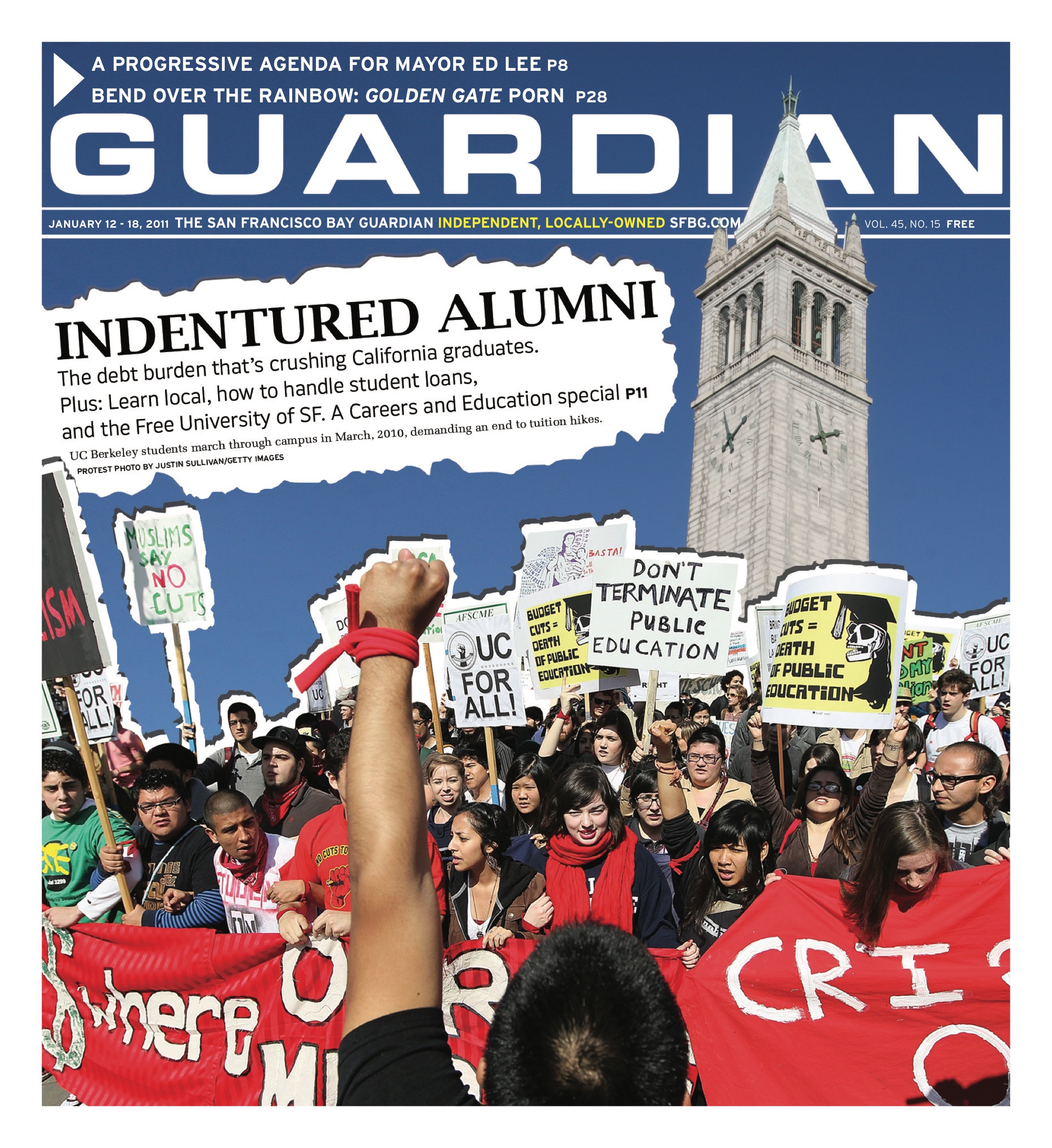
CAREERS AND ED When the University of California Board of Regents met Nov. 17, 2010 to approve an 8 percent tuition hike, roughly 300 UC students who were furious about the decision converged outside the University of California, San Francisco (UCSF) campus at Mission Bay to rally in opposition, some traveling from as far away as Los Angeles.

“We had been organizing with all the campuses to get students to come up because we really wanted to be there to let them know that it’s not what we want, and it’s something they can’t just get away with doing year after year,” said UC Student Association President Claudia Magana. The protests were raucous, and police cracked down by discharging pepper spray and making 13 arrests.

Despite the palpable fury outside and impassioned student opposition delivered to the Regents inside, the 8 percent fee increase was approved. It came on the heels of a 32 percent tuition increase imposed the year before, and the price was ratcheted up by 9 percent and 7 percent in the years prior to that.

The tuition hikes were steep, but hardly new. Indeed, the cost of attending UC schools has been rising steadily for quite a while. According to a study by economist Peter Donohue, student tuition and fees increased 277 percent from 1990-91 to 2008-09, and that was prior to the 40 percent increase that followed. That trend is repeated in rising costs at the California State University and California Community College systems (See “Access Denied,” April 6, 2010).

Student protesters have sought to make it clear that their outrage isn’t rooted in selfish unwillingness to shell out more money, but instead is linked to a broader concern about privatization and the increasingly limited accessibility of public education.

Magana expressed concern that the climbing cost of instruction at UC, though still a relative bargain compared with private institutions, would ultimately start to affect who could and couldn’t attain higher education through the public university system. The question isn’t limited to UC — tuition is increasing at public and private colleges across the board, and as income inequality sharpens, more students seek higher education.

“Students will always pay to be here,” she noted. “The issue is going to be, which students are here? That’s really the big problem — the huge class issue that’s going to come up. Although there are some forms of support for low-income students, it’s not easy.”


DEEPER IN DEBT

Rising costs at UC mirror the upward trend at private nonprofit and for-profit postsecondary institutions nationwide, and those higher prices have triggered a dramatic increase in student borrowing. While students from low- or medium-income families can access higher education at any institution they’re admitted to as long as they’re willing to take out significant sums in student loans, many find themselves at a serious disadvantage once they have to start repaying their debt.

A study conducted by the Public Interest Research Group (PIRG) noted that hefty debt burdens often dissuade graduates from pursuing careers in teaching, social work, the nonprofit sector, or other low-paying occupations that foster social justice. PIRG found that 23 percent of public four-year college grads and 38 percent of private four-year college grads were saddled with too much debt to manage paying back student loans on a starting teacher’s salary.

For students pursuing careers as social workers, the economic bind looked even worse: 37 percent of public school grads and 55 percent of private school grads with student loans wouldn’t be able to manage repayment with starting salaries in that field, the study concluded.

“Because students with lower incomes are more dependent on student loans than higher income students, students who already face significant challenges to attending college will more strongly feel the effect of loan debt on career choice,” the report points out.

“It’s a serious problem for so many young people to be starting out their working life so deep in debt,” said Edie Irons, spokesperson for The Institute on College Access and Success (TICAS), an Oakland-based research organization. “It really does limit people’s ability to take advantage of the opportunities education is supposed to provide. In concrete terms, it can make it really hard to buy a house, or start a business, or start a family, or go back to grad school, or to save for retirement or your own children’s education. And that’s all assuming you can keep up with the payments.”

Student loan debt has intensified over the past two decades. In 1993, just one third of all four-year college students graduated with debt, owing on average slightly more than $9,000, according to PIRG.

Today, the majority of college students take out loans to finance their education. Around 62 percent of public university students graduate with student loans, as do 72 percent of students attending private nonprofit institutions, and 96 percent of students attending for-profit institutions such as the University of Phoenix or the Academy of Art University, according to TICAS. Nationally, students graduate owing an average of $24,000, not counting debt associated with advanced degrees.

While young people must invest more than ever before to obtain higher education, the return on investment isn’t showing signs of improvement. The expected median income for UC graduates has stayed the same over the last decade, even as the cost of tuition has ballooned.

What’s more, says Bob Meister, president of the Council of UC Faculty Associations and professor of Political and Social Thought at UC Santa Cruz, is that an estimated 40 percent of public university students entering the workforce will either be unable to find a job, or will land in a lower-paying job that doesn’t require a college degree.

“For college graduates under 25, the unemployment rate is nearly as high as the national unemployment rate,” around 10 percent, Meister notes. “Over the past decade, what’s happened is that the median hasn’t risen. The top has risen very fast, and the bottom has fallen.”


IN A DIFFERENT CLASS

There’s no doubt that diminished state funding is affecting California’s public universities.

“A lot of departments are being eliminated, and a lot of professors who are really amazing are leaving to other universities,” Magana says. “And the waiting lists for classes are just ridiculous.” Academic goals are being compromised — for example, students had to abandon their push for an ethnic studies program at UCSC, she added, because the American studies department that would have partially supported it was slashed.

While diminished public funding has been used to explain the need to raise tuition, Meister has published numerous essays suggesting that the root cause of rising tuition costs at UC goes deeper than that, and he has gone so far as to publicly encourage students not to accept higher tuition without first demanding financial information.

Meister previously served on the UC budget committee and has observed the institution’s evolving financial policies for years. He doesn’t seem surprised that tuition is going up, regardless of what condition the economy is in or what amount of public funding is available because, as he puts it, “the universities will cost as much as they can.” UC had long sought to boost revenue by raising tuition, he noted, yet its leaders feared a rollback in state funding in response. But that changed under Gov. Arnold Schwarzenegger, who agreed to increase state support only on condition of that UC in turn require students to contribute more.

Around the same time that Schwarzenegger provided this new incentive to raise tuition, UC pooled its various revenue streams into a consolidated general revenue fund, Meister said, a departure from the old way of keeping separate accounts. This new fund, which included all non-state revenue and funding that wasn’t legally required to be used for certain purposes, could be pledged entirely as collateral for bonds for new construction projects, greatly increasing the institution’s borrowing power and boosting its revenue with the addition of new facilities.

To maintain its stellar bond rating, UC had to ensure an increase in revenues, according to Meister’s explanation, and to do that, UC ratcheted up the one source of revenue it had full control over: tuition. Meister laid bare this financial play in a 2009 open letter to students, titled “They Pledged Your Tuition.” Since it was published, a small corps of student activists has become deeply engaged in studying campus finance documents and airing criticism of financial policies.

Just before the Nov. 17 protests at UCSF Mission Bay, Meister published another open letter, this one addressed to UC President Mark Yudof. This one contemplated, “Why they think they can increase revenues regardless of how fast the economy grows … and regardless of whether the income of graduates is stagnant.”

His answer is somewhat surprising: “Their ability to raise tuition is a function of the growth of income inequality,” he told the Guardian. In the letter, Meister charges, “In the 21st century, when almost all income growth has been in the top 1 to 2 percent of California’s population, UC is still marketing income inequality to students as its most important product. It now expects all students to pay more for an ever-shrinking chance of reaping the ever-growing rewards that our economy makes available to the few. Your plan to increase revenue through tuition growth is feasible, of course, only because the federal government still allows students to borrow more for education despite the greater likelihood that they will not be able to repay — student loans may be the last form of subprime credit available in our economy.”

His theory highlights a paradox. “Being in the have-not category is increasingly worse,” he explains, “and so they are willing to take on more debt, which actually dampens their prospects for income growth.”

The question now is what will happen under Gov. Jerry Brown, who is likely to take a different stance toward rising tuition than Schwarzenegger but nonetheless is expected to unveil harsh cuts to education as a way to address a $26 billion budget deficit.

In a recent interview with the San Francisco Chronicle, UC Regent Richard Blum indicated that it probably would not be feasible to raise tuition again, so the message was that students should brace for more cuts to education.

When Brown unveiled his proposed budget on Jan. 10, he announced further cuts to higher education in California to balance the state budget. Brown’s revised 2010-11 budget decreases the state funding for UC, CSU, the community college system, and other higher education programs by $1.7 billion for the 2011-12 budget. The UC system would take a 13.3 percent hit in general fund support; the proposed cut to the CSU system is 12.5 percent; and the community college system would be cut by 6.9 percent.

Brown, who also wants to hold a special election to ask voters to maintain the current level of tax rates for income, sales, and vehicle license taxes for five years rather than let them expire later this year, expressed regret about making cuts to higher education. But he emphasized the need to make tough decisions in the face of a bleak financial outlook, saying, “We need to face the music.”

The agenda for Mayor Lee

0

EDITORIAL San Francisco has its first Chinese American mayor, and that’s a major, historic milestone. Let’s remember: Chinese immigrants were among the most abused and marginalized communities in the early days of San Francisco. In 1870, the city passed a series of laws limiting the rights of Chinese people to work and live in large parts of the city. Chinese workers built much of the Transcontinental Railroad — at slave wages and in desperately unsafe conditions that led to a large number of deaths. The United States didn’t even repeal the Chinese Exclusion Act (an anti-immigration law) until 1943, and for years, Chinatown was one of the poorest and most neglected city neighborhoods.

So there’s good reason for Asians to celebrate that the last door in San Francisco political power is now open. And Mayor Ed Lee comes from a civil rights background; he got his start in politics working as a poverty lawyer and tenant organizer.

Unfortunately, his path to Room 200 was badly marred by some ugly backroom dealing involving Willie Brown, the most corrupt mayor in modern San Francisco history. Even Lee’s supporters agree the process was a mess and that it undermines Lee’s credibility. So it’s important for Mayor Lee to immediately establish that he’s independent of Brown and his cronies, that his administration will not just be a Gavin Newsom rerun, and that progressives can and should support him.

He has a tough job ahead. We urge him to make a clean break with the past and set the city in a new direction. Here are a few ways to get started.

Clear out the Newsom operatives and bring some new people with progressive credentials into the senior ranks. Newsom’s chief of staff, Steve Kawa, has been a shadow mayor for the past year while Newsom was on the campaign trail, and is the architect of much of what the outgoing administration has done to sow political division and cripple city government. Lee needs his own chief advisor.

Show up for question time and work with the district-elected supervisors. Newsom was openly dismissive of the board and refused to take the supervisors seriously as partners in city government. Lee should appear once a month to answer questions from the board in public, should meet regularly with all the supervisors and appoint a liaison that the board can work with and trust. He needs to make his administration as transparent and open as possible and ensure that everyone at City Hall follows the letter and spirit of the Sunshine Ordinance.

Make it clear that the next city budget includes substantial new revenue. Newsom offered nothing but Republican politics when it came to city finance; his only solutions to the massive structural deficit involved service cuts.

The deficit will be even worse than projected this year, since Gov. Jerry Brown wants to transfer much of the state’s responsibility for public safety and public health back to local government — and there won’t be enough state money attached to handle the new burden. Lee needs to publicly call on Brown and the Legislature to give cities more ability to raise taxes on the local levee. Then he should start planning for a June ballot package that will raise as much as $250 million in new revenue for the city.

A substantially higher vehicle license fee on expensive cars, a congestion management fee, a significant annual transit impact fee on downtown offices, a restructured business tax, and a progressive tax on income of more than $50,000 a year would more than eliminate the structural deficit.

There are plenty of other revenue ideas out there; not all can or would pass on a single ballot. But Lee needs to make it clear that revenue will be part of the solution — and that he will use all the political capital he can muster to convince the voters to go along.

<\!s> Get serious about community choice aggregation. Newsom loved to talk about his environmental agenda, but when it came to challenging the hegemony of Pacific Gas and Electric Co. and its dirty power portfolio, he ran for cover. His hand-picked Public Utilities Commission director, Ed Harrington, has been an obstacle to implementing the city’s CCA plan. Lee needs to get rid of Harrington or direct him to cooperate with the supervisors and get San Francisco on the path to clean public power.

<\!s> Establish a real affordable housing program. The city plans to build housing for as many as 60,000 new residents in the southeast neighborhoods — but only a fraction of them will be affordable. This city is already well on its way to becoming a high-end bedroom community for Silicon Valley; only a clear policy that limits new market-rate condos until there’s a plan for adequate affordable housing will turn things around.

<\!s> Support Sanctuary City and quit helping federal immigration authorities break up families. Newsom was just awful on this issue; Lee needs to work with Sup. David Campos to implement more humane laws.

<\!s> End the demonization of homeless people and public employees. Newsom came to power attacking the homeless (with Care Not Cash) and went out attacking the homeless (with the sit-lie law). Lee ought to tell the Police Department not to aggressively enforce the ordinance.

<\!s> Take on the sacred cows of the Police and Fire departments. The biggest salary and pension problems in the city are in the two public safety departments. The Fire Department budget has been bloated for years. If everyone else is taking cuts, so should the highest-paid cops and the overstaffed fire stations.

Some of Lee’s supporters insist he’s a solid progressive and that we shouldn’t hold the details of his selection — or the fact that he was chosen by people who are openly hostile to the progressive agenda — against him. We’re open to that — but the progressive community will judge him on his record. And he has to start right away.

EDITORIAL: The Agenda for Mayor Lee

6

San Francisco has its first Chinese American mayor, and that’s a major, historic milestone. Let’s remember: Chinese immigrants were among the most abused and marginalized communities in the early days of San Francisco. In 1870, the city passed a series of laws limiting the rights of Chinese people to work and live in large parts of the city. Chinese workers built much of the Transcontinental Railroad at slave wages and in desperately unsafe conditions that led to a large number of deaths. The United States didn’t even repeal the Chinese Exclusion Act (an anti-immigration law) until 1943, and for years, Chinatown was one of the poorest and most neglected city neighborhoods.

So there’s good reason for Asians to celebrate that the last door in San Francisco political power is now open. And Mayor Ed Lee comes from a civil rights background; he got his start in politics working as a poverty lawyer and tenant organizer.

Unfortunately, his path to Room 200 was badly marred by some ugly backroom dealing involving Willie Brown, the most corrupt mayor in modern San Francisco history. Even Lee’s supporters agree the process was a mess and that it undermines Lee’s credibility. So it’s important for Mayor Lee to immediately establish that he’s independent of Brown and his cronies, that his administration will not just be a Gavin Newsom rerun, and that progressives can and should support him.

He has a tough job ahead. We urge him to make a clean break with the past and set the city in a new direction. Here are a few ways to get started.

Clear out the Newsom operatives and bring some new people with progressive credentials into the senior ranks. Newsom’s chief of staff, Steve Kawa, has been a shadow mayor for the past year while Newsom was on the campaign trail, and is the architect of much of what the outgoing administration has done to sow political division and cripple city government. Lee needs his own chief advisor.

Show up for question time and work with the district-elected supervisors. Newsom was openly dismissive of the board and refused to take the supervisors seriously as partners in city government. Lee should appear once a month to answer questions from the board in public, should meet regularly with all the supervisors and appoint a liaison that the board can work with and trust. He needs to make his administration as transparent and open as possible and ensure that everyone at City Hall follows the letter and spirit of the Sunshine Ordinance.

Make it clear that the next city budget includes substantial new revenue. Newsom offered nothing but Republican politics when it came to city finance; his only solutions to the massive structural deficit involved service cuts.

The deficit will be even worse than projected this year, since Gov. Jerry Brown wants to transfer much of the state’s responsibility for public safety and public health back to local government and there won’t be enough state money attached to handle the new burden. Lee needs to publicly call on Brown and the Legislature to give cities more ability to raise taxes on the local levee. Then he should start planning for a June ballot package that will raise as much as $250 million in new revenue for the city.

A substantially higher vehicle license fee on expensive cars, a congestion management fee, a significant annual transit impact fee on downtown offices, a restructured business tax, and a progressive tax on income of more than $50,000 a year would more than eliminate the structural deficit.

There are plenty of other revenue ideas out there; not all can or would pass on a single ballot. But Lee needs to make it clear that revenue will be part of the solution and that he will use all the political capital he can muster to convince the voters to go along.

Get serious about community choice aggregation. Newsom loved to talk about his environmental agenda, but when it came to challenging the hegemony of Pacific Gas and Electric Co. and its dirty power portfolio, he ran for cover. His hand-picked Public Utilities Commission director, Ed Harrington, has been an obstacle to implementing the city’s CCA plan. Lee needs to get rid of Harrington or direct him to cooperate with the supervisors and get San Francisco on the path to clean public power.

Establish a real affordable housing program. The city plans to build housing for as many as 60,000 new residents in the southeast neighborhoods but only a fraction of them will be affordable. This city is already well on its way to becoming a high-end bedroom community for Silicon Valley; only a clear policy that limits new market-rate condos until there’s a plan for adequate affordable housing will turn things around.

Support Sanctuary City and quit helping federal immigration authorities break up families. Newsom was just awful on this issue; Lee needs to work with Sup. David Campos to implement more humane laws.

End the demonization of homeless people and public employees. Newsom came to power attacking the homeless (with Care Not Cash) and went out attacking the homeless (with the sit-lie law). Lee ought to tell the Police Department not to aggressively enforce the ordinance.

Take on the sacred cows of the Police and Fire departments. The biggest salary and pension problems in the city are in the two public safety departments. The Fire Department budget has been bloated for years. If everyone else is taking cuts, so should the highest-paid cops and the overstaffed fire stations.

Some of Lee’s supporters insist he’s a solid progressive and that we shouldn’t hold the details of his selection or the fact that he was chosen by people who are openly hostile to the progressive agenda against him. We’re open to that but the progressive community will judge him on his record. And he has to start right away.

Jerry Brown and local government

1

So Jerry Brown wants to go back to the days before Prop. 13. He wants to do what a lot of people say, in retrospect, he should have done in 1978: Leave local government with the responsibility for all those things that property taxes used to fund.


His idea is being framed as a little more gentle than that:


“We’re going to shift funding to the local level, we’re going to make sure there’s enough responsibility and discretion to use the money in the wisest possible ways,” Brown told reporters after the meeting, adding that he does not believe it will be an easy change. “There will be controversies.”


But the reality is simple: the state doesn’t have the money to fund all the things that cities and counties need to do. And Brown would be solving (some of) Sacramento’s problems by adding to the burdens of local government.


He’s crazy like a fox, though, Jerry is. Back in June, 1978, when the voters approved Prop. 13, local officials said the results would be disastrous — schools closing, fire stations shuttered, police departments devastated by layoffs, bus service collapsing … and at first, none of those things happened. That’s because under Gov. Brown, the state was running a huge budget surplus — and Brown shared it with the cities and counties.


Now more than 70 percent of every dollar of state spending goes directly to local government. When people complain about the state’s budget increasing over the past few decades, they need to understand — not only has population expanded and the federal government cut back on programs that the state now has to pay for, but the state has taken on programs that used to be funded by local property taxes.


And Brown wants the cities and counties to take some of that responsibility again. In the process, he might wind up doing what no politician in the state has managed in in 32 years. He might show Californians how bad Prop. 13 really is.


Because unless the state gives local government significant new power to raise taxes (and I’d love to see that happen), the cuts over the next two years will hit particularly hard on the things that people see around them every day: Local government services.


It is, indeed, shock doctrine. And the only way it can possibly work is if local government is given the authority to raise enough money to pay for the services people want, need and expect — and if people start to realized that there’s nobody in Sacramento or Washington to bail them out, and that if they want good schools, safe streets, nice parks, etc. they’re going to have to pay for it.


It’s going to be a fascinating spring.


Jerry Brown wants to eliminate Redevelopment

10

Calitics reveals today that newly sworn-in Gov. Jerry Brown told the Sacramento Bee that he’s proposing to eliminate local redevelopment agencies as part of a set of austerity measures that he is proposing in a purported effort to shock folks into approving new revenues

Brown’s shocking proposal got me calling tenants rights activist Calvin Welch and Arc Ecology executive director Saul Bloom, who both have strong and well- informed views on what’s up with local redevelopment agencies and how they could be improved. And interestingly neither Bloom nor Welch was in favor of eliminating redevelopment.

Welch, who hadn’t yet had time to read the article when I called him, actually laughed when I outlined Brown’s basic idea, which admittedly is big on shock value and thin on explanations, at least at this point.
‘That would be very interesting, but the devil’s in the details.” Welch observed, noting that voters just approved Prop. 22 in Nov. 2010 to prevent the state from taking city redevelopment money to balance the budget in Sacramento. (Unfortunately, Prop. 22’s passage still doesn’t protect San Francisco from having its budget raided by the state, since it’s defined as both a city and a county.)

“That’s an astounding idea,” Welch added, trying to wrap his mind around Brown’s out-of-the-blue proposal. “Because in San Francisco, there are redevelopment areas, including Bayview Hunters Point, Mission Bay and the Transbay Terminal, that have already been authorized for another 25-30 years.”

“Perhaps the language would be ‘no new redevelopment’ but I don’t know how you would do that,” Welch added, noting that Brown has not only been governor before, but was also mayor of Oakland. (During his term as mayor, Brown was credited with starting the revitalization of Oakland but was also accused of being more interested in downtown redevelopment and economic growth than political ideology.)

Welch noted that San Francisco was fortunate in being able to reshape its Redevelopment financing arrangements in 1990 under then mayor Art Agnos.

“It was probably the most progressive and long standing reform of Art Agnos’ administration—and no one understands it,” Welch said. As Welch tells it, when Agnos came into office, he inherited a city that had been bankrupted by a decade of mayor Dianne Feinstein’s business-friendly policies, much like how San Francisco has been milked in the past decade by Newsom’s business-friendly policies.

“Redevelopment doesn’t pay its way in the post Prop. 13 world,” Welch stated. “Under Mayor Gavin Newsom, we’ve had the most market rate housing produced and the biggest deficits in what was a real estate collapse, as part of the collapse of the economic markets. And under Mayor Feinstein’s 10-year rule, we saw massive amounts of commercial office space built that never paid its way, leaving Agnos with a $103 million deficit.”

Welch notes that Agnos also inherited a huge homeless crisis (something Welch says Feinstein was in denial over) and that Agnos sought to reform Redevelopment in large part as a way to address the city’s growing lack of affordable housing. “Art basically said, let’s take a look at tax increment financing,” Welch said, referring to a tax financing arrangement, under which a municipality can a) do an assessed value of an area before redevelopment takes place, b) estimate what that same area’s local taxes would be after redevelopment, and c) borrow money against the incremental difference between a) and b).

“Art said, ‘I want to do that and I want to use the hundreds of millions of dollars available through redevelopment for affordable housing,’” Welch recalled. He noted that Agnos succeeded in his mission by shifting the San Francisco Redevelopment Agency’s mission from ‘urban renewal’ (which had negative connotations following the displacement of African American and other low-income communities from the Fillmore in the 1960s) to ‘community development,’ making Redevelopment subject to the same budgetary process as other departments, and insisting that 20 percent of tax increment financing dollars be devoted to affordable housing.
“But we said, ‘no, 50 percent has to be devoted to affordable housing and Art agreed, and that’s been the case since 1990,” Welch recalled. “And since then our Redevelopment Agency has been the principal source of affordable housing revenue in San Francisco.”

So, in another words, the San Francisco Redevelopment Agency is pretty much alone in the state, in terms of devoting half its tax increment financing revenues to affordable housing. But by the same token, San Francisco’s Redevelopment Agency is pretty much alone in the state in terms of not being governed directly by a city council or a county Board of Supervisors. Instead, it’s governed by a Commission, whose members are appointed solely by the mayor . And therein lies the problem, Welch says.
‘It would only take six votes on the Board of Supervisors, or eight votes to override a mayoral veto, to change that,” Welch observed.

But to date there haven’t been eight votes to do that, even with a progressive Board.
Welch believes the problem is that supervisors, who currently each only have two legislative aides, fear swampage from Redevelopment responsibilities.
“To contemplate taking over a multibillion dollar agencies and taking on the likes of Catellus with only two staffers, well it’s a recipe for disaster,” Welch said, acknowledging that additional reforms, including splitting appointments on the Redevelopment Commission between the mayor and the Board, or allowing the Board to hire additional legislative staff to work on redevelopment issues, could solve the problem.

Bloom, who recently sued after the Redevelopment Commission threw his non-profit under the bus, said his non-profit’s recent experience perfectly illustrates why and how Redevelopment should be reformed, rather than completely eliminated.
“Redevelopment is a process that has been much abused, so it’s easy to say, let’s get rid of it, but I’m not there, ”Bloom said, noting that his beef has been with the way his non-profit was treated by Redevelopment Commissioners, rather than Redevelopment staff.
“But I do believe there needs to be a modification of the process, in which redevelopment is put in the hands of an entity that is answerable to the public.”

Bloom believes this modification could be achieved by making the Board of Supervisors the governing body of the Redevelopment Agency, which is already the case in almost all municipalities in California.
“Give that role to the Board of Supervisors because you can fire your supervisor,” Bloom said, noting that currently there are no limits on how long individuals, who are appointed by the mayor, can serve on the Redevelopment Commission. ‘If you give that role to the supervisors, they will be able to utilize more staff to become better Board members. So, this is an opportunity to increase people’s participation in the process.”

Meanwhile, it’s possible that Brown’s threat to eliminate Redevelopment will be like the time Warren Buffett, who’d just been announced as then newly elected Gov. Arnold Schwarzenegger’s financial adviser, caused a brou-haha when he threatened to reform that even holier of cows, Prop. 13.


Maybe bankruptcy would save California

54

First of all: ain’t going to happen. The state needs to spend $6.6 billion on bond debt, and has more than $50 million available. No default looming. I’m with Robert Cruickshank at Calitics: The law shouldn’t give bondholders first claim on the state’s money. But it does.


That said, some of the people who commented on my last post on the subject seem almost to be drooling at the prospect of a state or municipal bankruptcy; a judge, they argue, could force big reductions in employee pensions.


But there’s another twist on this that my colleague Johnny Angel Wendell just passed along to me:


In a normal bankruptcy, a judge looks not just at debts and obligations but at assets. A bankrupt corporation has to turn over all it has, including accounts receivable; hiding money isn’t legal. So suppose a bankruptcy judge looked at California and said: This is a rich state with lots of assets, and the only reason it can’t collect on those assets and make good on its debts — the number one responsibility of a bankruptcy judge — is that it’s hamstrung by some ridiculous laws. Bankruptcy judges have sweeping authority to restructure corporations; perhaps by the same standard, a judge could restructure not only California’s accounts payable and obligations but its ability to bring in money.


Imagine a court saying: Prop. 13 interferes with California’s ability to pay its debts. The two-thirds requirement for tax hikes interferes with California’s ability to pay its debts. Sorry, those laws are gone.


A federal judge has already mandated that California spend billions on better prison health care; why not mandate that the state raise taxes to cover its costs?


So all you fiscal conservatives who are looking only at the debts and liabilities side of the balance sheet, think about what you’re asking for. Because there’s an asset side, too — and California’s is pretty big.

Editor’s Notes

3

tredmond@sfbg.com

When the talk comes around to budget politics these days — and these days, nobody in politics can talk about much else — there’s a pretty consistent line out there, from the mainstream left to the far right, and it goes like this:

Public employees have been riding high on great pay and benefits, and they’re going to have to accept that those days are over. We can do it nicely, and negotiate and all, but the people who work for the city and the state are getting a haircut. Pension reform. Health care premium hikes. Two-tiered wage systems. Sorry, folks — there’s no other choice.

And I understand the feeling. There are plenty of unemployed people out there who aren’t happy that they’re still paying taxes to support generous pay and health benefits for workers who are consistently maligned as lazy. There are small business owners who can barely afford minimally adequate health insurance for themselves and their employees. There are underpaid private-sector workers who get jealous when they hear what you make over at City Hall.

I get it, and in terms of political reality, public-sector pensions, pay, and benefits are going to have to be part of any budget resolution in Sacramento or San Francisco.

But let me say something else.

In the past 30 years, while public-sector unions were getting organized, becoming a political force and negotiating decent pay and benefits, the United States economy was shifting radically, in a way that we hadn’t seen since the turn of the Century. From Reagan on through Bush I, Clinton and Bush II, powerful forces in Washington launched a class war in this country, one that has as many victims as most of the traditional wars we’ve fought in the past century. The winners have been a small number of people and businesses that have grown impossibly rich — by taking money away from everyone else.

And they aren’t getting any cuts. In fact, their pay, pensions, benefits, and wealth aren’t even on the table. Which is profoundly unfair.

Of the 400 richest people in America (according to Forbes), 80 live in California. Their combined new worth is $231.8 billion — about 10 times the size of the state’s budget deficit. If they gave up just a modest amount of the benefits they get from living in this state and this country (and yes, the rich got that way in part because of the benefits they get from living here), we wouldn’t have a budget crisis at all.

The people who declared this war were smart enough to figure out how to divide the opposition, to turn us against each other. That’s why they keep winning.

Newsom tries to defy City Charter

31

Gavin Newsom knew that if he got elected lieutenant governor, the supervisors would be able to choose his replacement. That was part of the deal. Now he wants to game the system, and delay his swearing in until the new board takes over. The claim: “The board should pick a caretaker, not a politician.”


A politician? In the mayor’s office? Um, dude: What are you?


This is not only annoying and dubiously legal, but stupid. Does Newsom really think the incoming board is more likely to choose a caretaker? No such luck. The incoming board is likely to choose David Chiu — a politician who will likely run in November.


Besides, the state Constitution says the lite guv takes office Jan. 3rd. So if Newsom refuses to take the oath of office, one could certainly argue that he has vacated that position, meaning the governor, Jerry Brown, could appoint a replacement. I think if Newsom carries through with his lame threat that Jerry should do exactly that.


PS: Newsom also said he “can’t just walk away and see everything blow up and there are a few politicians in this town that want to serve on ideological agenda.” Let’s be clear here: Newsom also has an ideological agenda. He thinks same-sex marriage should be legal and taxes should be low. He thinks it should be illegal to sit on the sidewalk. He’s got plenty of ideology.


He just doesn’t want a mayor whose ideology he disagrees with. Too late, Gav: You decided to leave the city. Now leave the rest of us alone to deal with the consequences. 


SFBG Radio: Why the rich won’t flee

10

Every time I talk about taxing the rich, some cretin comments and tells me that if you raise their taxes, they’ll all leave California. I’ve heard the same thin about businesses — and there is no factual evidence to support that. Johnny and I talk about this lunacy after the break.

sfbgradio12162010 by endorsements2010

The politics of the last great depression

4

The American economy’s worse now than at any time since the Great Depression — and whatever the Republicans say in Congress (and the president signs on to) the private sector alone can’t possible pull us out. The only reason we’re not at 1930s levels of unemployment is that we’ve had some modest federal stimulus money over the past two years.


But we’ve got this dilemma: Although every smart economist agrees that it will take more massive federal spending to turn things around, all we’re getting out of Washington is the worst kind of spending — tax cuts for the rich, which will cost $900 billion and do very little to help the economy.


Part of what’s going on — and Jerry Brown talked about it at his education summit — is that the public doesn’t trust government to spend their money wisely. Brown cited a poll saying that nearly half of Californians still think we can solve most of the budget problems in the state by getting rid of government waste.


The Pew Research Center has put together a couple of fascinating papers on attitudes toward the public sector, and they’re worth a rad. (Thanks, Gabriel Metcalf at SPUR for tipping me off about this.) The first one is called “How a different America responded to the Great Depression.” Researcher Jodie Allen’s conclusion:


Quite unlike today’s public, what Depression-era Americans wanted from their government was, on many counts, more not less. And despite their far more dire economic straits, they remained more optimistic than today’s public. Nor did average Americans then turn their ire upon their Groton-Harvard-educated president — this despite his failure, over his first term in office, to bring a swift end to their hardship. FDR had his detractors but these tended to be fellow members of the social and economic elite.


More:


The most striking difference between the 1930s and the present day is that, by the standards of today’s political parlance, average Americans of the mid-1930s revealed downright “socialistic” tendencies in many of their views about the proper role of government.


True, when asked to describe their political position, fewer than 2% of those surveyed were ready to describe themselves as “socialist” rather than as Republican, Democratic or independent. But by a lopsided margin of 54% to 34%, they expressed the opinion that if there were another depression (and fears of one were mounting), the government should follow the same spending pattern as FDR’s administration had followed before.


And, those surveyed said they supported Roosevelt, the architect of the New Deal’s expansive programs, over his 1936 Republican opponent, Alfred Landon by more than two-to-one (62%-30%).


The charts are fascinating. A full 73 percent of Americans polled in 1936 thought government should provide free medical care to the poor. Sixty-four percent thought government should regulate and control war-time profits. In fact, 59 percent thought the government should take over the electric power industry and 69 percent favored nationalizing the wartime munitions industry.


And the people who were polled in these early surveys were overwhelmingly white, male and relatively well off. They were also socially conservative — 60 percent favored the death penalty and 67 percent wanted to deport all immigrants who were on public relief. Allen:


Is there a message in this for today’s America? Two possible lessons: First, it’s worth remembering that the social programs and banking controls that the New Deal era produced stood the nation in good stead over many decades of unprecedented prosperity. Second, Depression-era Americans’ faith in the country and its guiding institutions steeled them against the challenges of a double-dip recession and, years later, World War II. They had it worse, but they also expected it to get better, faster.


Compare that to a 1983 poll taken in the depth of the Reagan Recession, when 65 percent said that government had gone too far in regulating business, 62 percent rarely trusted the government in Washington and 78 percent opposed raising income taxes.


Fifty years, two generations, and the entire attitude of the American public toward government was turned on its head. It’s one of the fundamental dilemmas of American life, and one of the central reasons we’re in this mess.

80 billionaires — and California’s broke?

67

Jerry Brown’s message to educators was framed as bleak — but as I pointed out, there were some bright spots. At least the new gov mentioned that this is a rich state that ought to be able to afford education. Robert Cruickshank at Calitics has a nice post on the point:


A tax increase of about $20 billion would secure our public services for years to come with a very tiny impact on our economic activity. Surely 1% of our GDP can be harnessed to fund the services that we must have for broadly shared prosperity in this state.


Let me take it a step further. I just went through the Forbes 400 list of the richest Americans and started counting, and guess what? A full 80 of the 400 live in California. That’s one out of every five billionaires in America, living right here in a state that can’t afford to educate its kids.


Then I took out my calculator and added up a long row of numbers and got a big one: The total net worth of the billionaires in California is $231.8 billion. Ten percent of that wipes out the budget deficit. And that doesn’t even count the folks worth $900 million or less; they didn’t make the list.


Folks: This is a very, very rich state. A very modest tax increase on a very tiny number of people could solve our budget problems not just today but into the foreseeable future.


This is the message Brown needs to deliver to the people of the state — and if the antitax people (or my trolls) want to argue that all the rich people would leave if we taxed them just a little bit, let me say: That’s ridiculous. David Geffen is going to move out of Malibu because he has to pay a teeny bit more of his income, money he won’t miss, in taxes? Ain’t happening.


That’s it, Jerry. That’s your answer. Now get to work.

School kids and Muni

6

So SFUSD just decided to cut half of its school bus routes (including, I believe, one that my son sometimes takes to Aptos Middle School). I should be outraged — but I’m not. Jerry Brown has made it clear that even if he raises taxes, it’s going to be an ugly year for schools and everyone else, and I’d rather see cuts in transportation than in teachers and classes.


But if this is the approach, then the city and the school district need to do a better job coordinating around Muni.


Elementary school kids shouldn’t be on Muni; I’d save the school bus routes for them. But older kids can use the city system, and many do — and more would, if it were just a little easier.


My son often takes Muni after school — to the library, to his Tae Kwon Do class — and soon I’ll let him ride the bus home. But to buy him a youth pass, I have to take him personally to a Muni pass outlet, once every month, and it’s a pain. I understand why they won’t sell me a youth pass for my kid; I could cheat (well, nobody would really believe I was under 18, sigh; I don’t even get carded in bars). But why don’t they sell youth passes in the schools? 


It would be pretty simple: Muni issues a number of youth passes to each middle school and high school, the schools sell them out of the office and hand kids Muni maps with routes near the school marked off. I can use Nextbus to tell my son when to head out to the bus stop; there’s no reason the schools couldn’t do that, too. Post the schedules; sell the passes. Maybe even change a few Muni routes to make them more convenient for students.


It seems silly for a city as geographically small as San Francisco to have two parallel transportation systems. With a little creativity Muni could work for the schools, too. 

Oooh, let’s have a border war

17

If San Francisco tries to enact a congestion management fee, San Mateo officials are going to fight back with their own. How fun; a border war. Since I’ve long suggested that our future may be in city-states, not nations, it strikes me as an interesting political moment.


But on a serious note: what would be wrong with a toll in both directions? What would be wrong with asking California motorists, who enjoy among the lowest gas tax rates in the western world and who for the past few years have had a dramatic reduction in annual registration fees, to pay a little more to local government? What’s wrong with making it cost more to drive your car during commute hours?


Yeah, that means it will cost more for a San Franciscan to go shop at Serramonte Mall (during rush hour; who shops then anyway?). So what? That might encourage San Franciscans to shop locally. Yeah, it will cost more to commute by car, in either direction; maybe more people will ride their bikes or take the bus. (Particularly if the money goes into improving transit.)


I’m not going all Smoot-Hawley here, but congestion-management fees — extra charges for driving in certain areas during certain times of day — are generally a good idea. And if San Mateo wants one, too, excellent.


Cities have been fighting for years over who can cut taxes more for big businesses. This seems a much more reasonable fight. So: Border war? Bring it on.


Progressives oppose Obama’s deal with Republicans

10

With San Francisco’s own Rep. Nancy Pelosi leading the way, House Democrats have voted to oppose the tax cut deal that President Barack Obama cut with the Republicans – a deal most Americans oppose because of its expensive extension of tax cuts for the wealthy – demonstrating that progressives and even mainstream liberals are increasingly willing to push back against a president that has take their support for granted.

During his press conference this week, Obama adopted a belittling attitude toward his progressive critics who have pointed that Obama ran for office overtly opposing President George W. Bush’s policy of slashing taxes on the super-rich, which ballooned the federal deficit. And now, in interests of “getting things done,” Obama is standing with Republicans to promote that very policy.

Obama even boasted “the polls are on our side on this,” a statement polls taken since then have shown is simply untrue, as he ridiculed his progressive critics as willing to let unemployment payments expire and middle class tax cuts expire, as Republicans have threatened if Democratic are unwilling to extend tax cuts for the wealthy.

Speaking on PBS’s NewsHour the other night, Nobel Prize winning economist Paul Krugman said he was appalled that Obama would echo this right-wing way of looking at the world, saying, “The president going after his progressive critics is enormously self-indulgent.”

Indeed it was, and those progressive critics now seem to have the upper hand, leaving Obama in the position of either working with Republicans to “ram this down the throats of the American people” (to borrow the GOP description of his health care reform measure) or to finally start working cooperatively with progressives to oppose the Republicans’ transparently hypocritical and unsustainable fiscal policy.

This is a big test for the Democratic Party and it’ll be interesting to see how it plays out in the coming days.

An astonishing tax ripoff

0

Calitics alterted me to this amazing blog post by David Cay Johnston, one of the foremost tax experts in the country and one of the few reporters who understands and writes honestly about tax law. Turns out that the California Public Utilities Commission wants to allow regulated utilities to collect money from ratepayers for taxes that the utilities never have to pay.


That’s right — the utilities (in this case a gas pipeline company, but the policy could apply just as well to PG&E at some point) charge you for the money they are supposed to pay in corporate income taxes — except that they’re exempt from those taxes. So they just keep your money. Wow.

Class of 2010: Jane Kim

7

steve@sfbg.com

Despite fears that a candidate backed by downtown could replace firebrand progressive leader Sup. Chris Daly in District 6, in the end it was the two progressive candidates — Jane Kim and Debra Walker — who finished far in front of the large pack of candidates, with Kim winning the race. And she thinks that says something about how the progressive movement has matured.

“To have the two leading candidates be progressives says a lot about the progressive political community,” Kim said. “The race was really between Debra and me in end.”

Kim, a 33-year-old attorney and the outgoing president of the San Francisco Board of Education, has been active in progressive politics in San Francisco for many years, from doing community organizing with the Chinatown Community Development Center to running the short-lived San Francisco People’s Organization, which Daly helped create.

Yet part of her campaign strategy, and the message that she’s sending in the wake of an election that divided the progressive community, focuses on issues and themes that are more common to political moderates: job creation, clean streets, public safety, and neighborhood services.

“I think it’s important for progressives to cross over, and I don’t think it should be viewed as selling out,” Kim told us. “Progressives need to do a good job at maintaining voters’ faith in the progressives’ ability to lead.”

In addition to courting progressive groups and voters, Kim’s campaign aggressively targeted residents of the residential condo towers in Rincon Hill and Eastern SoMa, voters who are generally more affluent and newer to San Francisco than the typical progressive constituencies.

“It’s a lot of new residents who don’t feel like they’re a part of any political faction and they’re really open,” Kim said. “People just want to see that things are better. They want the streets to be clean and safe.”

With a new mayor and new blood on the Board of Supervisors, Kim said this is an important political moment for San Francisco, “a huge opportunity” to redefine San Francisco politics in the wake of Mayor Gavin Newsom and progressive supervisors such as Aaron Peskin, Matt Gonzalez, Tom Ammiano, and Daly.

“The Class of 2000 was able to show how progressive we can be with policy. They really pushed the envelope,” Kim said, citing new worker and tenant protections and programs such as Healthy San Francisco. Now, she said, the challenge for progressives in the Classes of 2010 and 2008 is to show that they can provide effective leadership in realms like public safety and economic development. “If we’re able to lead on those two issues, it would really firm up our leadership of the city,” Kim said, noting that it would also affect the dynamics of next year’s mayor’s race.

While Kim didn’t go into detail about how she intends to deal with what she says is the biggest challenge facing the new board — a budget deficit of $700 million over two years, coming at a time when all the easy cuts have already been made in recent years — she said the city needs to be aggressive in boosting the local economy and ensuring San Franciscans get most city contracts.

“We need to figure out how we can partner with small business to create a diversity of jobs in San Francisco,” she said, noting that the average San Franciscan has more faith in the moderates’ ability to create jobs, something that progressives need to address. But how can she help break the grip that the conservative San Francisco Chamber of Commerce has on small businesses?

“Part of the problem is that small businesses aren’t organized,” Kim said, noting how that hurt Sup. David Chiu’s ability to win support this year for his business tax reform measure that would have helped most small businesses and made some large corporations pay more taxes. “They’re busy running their businesses and they don’t have the time to look at the details, so they just read the briefing of the Chamber of Commerce.”

Kim said she respects the leadership role Daly has played in progressive politics and that she’d “like to be part of the moral compass of the Board of Supervisors.” But she also said that Daly’s sometimes abrasive style unnecessarily hardened the opposition of moderates to important progressive issues.

“He made it harder to talk about affordable housing,” Kim said, noting that the city’s dearth of affordable housing should be an issue that’s important to middle class voters, noting that it includes housing for people who earn up to 120 percent of the median income for the region. But after Daly hammered on the issue, “It was like a bad word coming out, and people would turn off to the issue.”

But she thinks it’s a fixable problem if she and her allies do the hard work, an ability they demonstrated this year by defeating Walker, who had been running for the seat for years and lining up all the key endorsements. “Voters do respond to campaigns that work really hard, and that bodes well for progressives,” Kim said, noting that she intends to reach out to Walker’s supporters. “I don’t think I can be successful as a supervisor if I don’t work with all the camps in the progressive community.”

Class of 2010: Scott Wiener

3

rebeccab@sfbg.com

Scott Wiener, who is 40, gay, soft-spoken, and remarkably tall, seems to have made an impression on voters with his successful campaign for District 8 (the Castro, Noe Valley) supervisor. On a recent Wednesday afternoon, several patrons of a Market Street café stopped to say hello and congratulate him. “I saw millions of signs about you!” one exclaimed.

A deputy city attorney, Wiener claimed one of the most decisive victories among contenders vying for seats on the San Francisco Board of Supervisors. He’s more fiscally conservative than Rafael Mandelman, who was his progressive opponent in the race, and is more in step politically with Mayor Gavin Newsom than San Francisco progressives. Yet Wiener stressed to the Guardian that he should ultimately be viewed as an independent thinker. “For me, it’s about having mutual respect for everyone,” he said. “Even if you disagree on some issues, and even if you disagree on a lot of issues, you can always find areas of agreement.”

Asked about his priorities in office, Wiener put public transit at the top of the list. Over the next few decades, the population of San Francisco and the Bay Area will dramatically increase, he said. “And at the same time, we’ve been underfunding public transportation, and particularly our roads. It could potentially be a catastrophe if we’re not able to not just keep the system as it is, but actually expand it. That is a really big priority.” To raise money for Muni, he doesn’t support extending parking meter hours, but does support a local vehicle license fee. There’s some question surrounding that prospect since California voters approved Proposition 26, which requires a two-thirds majority vote for fees. But Wiener said he wanted to be involved in efforts to implement a VLF in San Francisco.

Another priority is finding ways to stimulate job growth. He approves of the city’s move to use a tax credit for biotech industry businesses as a means of encouraging job creation, but said that mechanism should be used sparingly since it creates a revenue hole. Instead, Wiener said he was more in favor of looking at payroll-tax reform — but only if it doesn’t result in a tax increase.

Wiener also places importance on supporting the city’s Entertainment Commission and preserving San Francisco’s vibrant nightlife. “That’s an issue that I’ve always worked on and I’ll be speaking at [the California Music and Culture Association] next Friday, which I’m hoping will become a really effective voice for that community,” Wiener noted. “It needs a really unified and strong voice. and I want to make sure that we are really prioritizing having a vibrant nightlife and outdoor festival scene, and that we’re not blaming the entertainment community for societal ills like gun violence.” He also mentioned bolstering the Entertainment Commission’s budget.

But might that pro nightlife stance place him at odds with the San Francisco Police Department? “In some ways, I’m from a public-safety background,” he said in response. “I’ve been involved in a lot of safety issues on a neighborhood level. I’ve worked closely with SFPD and I am supportive of Chief [George] Gascon. In a way, I think that gives me some credibility.”

Speaking of working closely with people, whom does Wiener see himself forming alliances with on the new board? “I definitely have a great relationship with Sean Elsbernd and Carmen Chu, and I will be working closely with them. But I don’t agree with them on everything,” he said. Board President David Chiu and Sup. David Campos were both his classmates at Harvard, he noted, so he feels confident in his ability to work with them even if they don’t always see eye to eye. “One thing I see about this board that I’m optimistic about is that I think it’s going to be a more collegial board,” he added.

On the question on everyone’s mind — who will succeed Mayor Gavin Newsom to serve as the interim mayor? — Wiener said he thinks the best idea is to appoint a caretaker mayor. “Next year’s going to be really hard year,” he said and a caretaker mayor could “help make some really hard choices that need to be made. I may not like all of those choices, but they can do something that someone who’s a brand new mayor seeking reelection may be timid about doing.”

Who might he support if the new board selects the successor mayor? “There are some really solid names that have been bandied about, like [San Francisco Public Utilities Director] Ed Harrington or [Sherriff] Mike Hennessey,” he replied.

Wiener’s going to be mostly a fiscal conservative when it comes to the budget. Any new revenue, he said, “should be very policy-based,” for example transit-oriented instead of raising business taxes.

And he has plenty of cuts in mind, including “the way we contract for nonprofits,” looking at shared overhead, and consolidation. He also said that “we need to continue moving forward with pension and benefit reform [and] aggressively address overtime in all departments.” And what can voters expect from Sup. Scott Wiener that’s different from Sup. Bevan Dufty, a mayoral hopeful who currently represents D8? Wiener didn’t go too far out on a limb on that one. “There have been some tenant issues that Bevan voted against and I supported,” he said. “We’ve had times where he’s been to my left, or I’ve been to his left, but I can’t speculate as to the future. It’s going to be case by case.” *