Sunshine

Hardly Strictly’s fresh blood

0

Hardly Strictly Bluegrass is a badge of San Francisco life. You move here and inevitably in your citywide journeys you’re part of a conversation debating the lineup of this unbelievably free, always-entertaining fall fest that takes in Golden Gate Park the first weekend of October each year.

It’s become a staple of the fall calendar, because well, the bands are good and we like our events free in this town. Now in its 11th year, there are still many new-to-HSB acts, along with the yearly frequenters Steve Earle, Emmylou Harris, Robert Earl Keen, and Ralph Stanley. Festival publicist Tracey Buck says there are at least half a dozen new local bands in 2011, and roughly 50 new touring acts.

Acquaint yourselves with a few from this year’s HSB freshman class. (Though keep in mind: they may be fresh blood at Hardly Strictly, but most have been at this whole music thing for quite some time.) The big weekend is pretty much here: Fri/30-Sun/2.

Locals:
Nell Robinson & Jim Nunally: Honky tonk at its finest. Robinson’s voice quavers like a modern-day Patsy Cline, on par with her contemporary (and fellow HSB performer) Emmylou Harris. Robinson lends her voice more to vintage sounds, than bending to current trends. It’s old time twang and classic country. (Sat/1, 6:05 p.m., Porch Stage)

The Devil Makes Three: One of the new locals that can rep the “bluegrass” marker of Hardly Strictly, Devil Makes Three plays a swinging mix of blues, rockabilly, ragtime, and yes, bluegrass. It’s roots American music with a hint of sinister mischief, all tattooed and bearded, whiskey-ed up toe-tapping fun. It’s been described as “dark bluegrass.”  Expect to hear tracks off the trio’s newest output, live album Stomp and Smash, which comes out Oct. 25. (Sun/2, 1:10 p.m., Arrow Stage)

Bob Mould:
Can you believe it’s Bob Mould’s first Hardly Strictly appearance? With all his local appearances, prestige, and now current Bay Area address, we could have sworn we’d seem him there before. The former Husker Du and Sugar frontperson, and current globally-adored indie rock solo artist (and recent memoirist/Herbst Theater interviewee) even inspired a tribute concert – it goes down in Los Angeles in November with Ryan Adams and No Age among others. But first, the rocker will appear at HSB. Perhaps he’ll read a passage or two from his new book See A Little Light: The Trail of Rage and Melody. (Sun/2, 2 p.m., Towers of Gold Stage)

Nationals/Internationals:
Kurt Vile & the Violators: One of the festival’s always-welcome surprises. Who would have guessed that straggly Mr. Vile would be playing the same event as Merle Haggard ? But actually, it makes sense. He of jangly guitars and mumbly, hoarse vocals, Vile has said that he grew up inspired by vintage records and is vocally inspired by Townes Van Zandt and Gram Parsons The critically acclaimed rocker will likely be one of the event’s highlights this year. (Fri/1, 2:25 p.m., The Rooster Stage)

http://www.youtube.com/watch?v=Y4-vvlkWE4Q

Thurston Moore: Catching Moore is a pretty big coup for festival organizers and goers alike. And his slot at HSB is well-earned. After years of beating guitars to a bloody pulp with Sonic Youth, he debuted the elegant, nearly all acoustic solo album, Demolished Thoughts, this year, produced by fellow luminary, Beck. I mean, the man was named one of Rolling Stones “100 Greatest Guitarists of All Time” – he can play his instrument damn well. (Fri/30, 5 p.m., Arrow Stage)

Broken Social Scene: While it’s Broken Social Scene’s first time at HSB, it may also be its last, at least for the time being. Following the Canadian indie (super)group’s highly anticipated show at the Fillmore on Oct. 1 (i.e. a few hours after its Hardly Strictly appearance), the massive act will go on indefinite hiatus. Here’s your chance to catch it in the fog-hampered sunshine, free of cost. (Sat/1, 3:25 p.m., Towers of Gold)

Foreplay: Two pre-Folsom scenes

0

As Folsom Street Fair (Sat/24) looms over us like a leather daddy with an itchy whip paw, the city readies itself for the roughest, naughiest, sweatiest weekend of the year. Yesterday, I ran all over the city checking in with the sex scene. I kept my clothes mostly on, but then it is only Thursday… 

Monarchy-Andrew Wedge fitting at Mr. S Leather

“This is Spartaaa!” I’m standing outside one of SoMa’s crucial leather one-stops with an old hand local kink photographer Rich Trove (check his site after the Fair for shots of your flings in the sunshine) and a fashion journalist from the Chronicle. Guess which one is trying to explain to the other what a traditional S&M harness looks like?

Our motley crew has been assembled by Folsom Street Fair’s executive director Demetri Moshoyannis to lurk around Mr. S‘s fitting room while British synthpoppers Monarchy was being fitted for their custommade Andrew Wedge harnesses. The band will be wearing them at their FSF performance on Sunday at 5:10 p.m. on the 12th Street stage. 

“We have no idea what we’re in for,” smiled a member of the band’s entourage. Of course, that wasn’t exactly true — keyboardist Andrew Armstrong attended the fair with a friend six years ago. 

“It kind of freaked me out in a good way,” said Armstrong, modeling the tight neoprene half-tank that Wedge (who vends high end fur and leather designs from places like the Castro’s Sui Generis) had fit over he and his bandmate’s white dress shirts and under the sharp black blazers they were sporting. 

“There’s something a bit religious about it,” he said of Wedge’s designs, which had been agreed upon after a series of emails between the two of them. “It’s futuristic, but masculine as well. Even though we’re basically wearing bra tops.”

“England is very prudish. Well, we take these things seriously, but we do it behind closed doors,” he continued. Again, I found it hard to take him at his word, seeing as the band supplied its own imposing, matching black latex masks for the occasion. They don’t go out in public without them, it turns out, a comment on the nature of celebrity. 

The crew and designer lined up for one last photo opportunity in front of Mr. S’s black leather and harness covered four post king-sized bed. “Not in front of the dildos!” cautioned Moshoyannis. “We want these to be pictures they can use.” Clearly he meant in the Chronicle. 

Side note: if you’re still checking for some sexy threads for this weekend, you could do worse than check out Mr. S’s new sports section. Complete with urinals on the walls and an impressive selection of wrestling singlets, I found myself especially turned on by the display of $12 Style Pig knee socks. I picked some up in red, or as the helpful sales assistant clarified, fisting.


Good Vibrations’ Indie Erotic Film Festival at the Castro Theatre

Best reason to finally buy an iPhone: the Ohmibod Freestyle G. I snagged the mp3 compatible vibrator (really, really feel the rhythmn on your favorite beats) at the IXFF’s pre-party upstairs at the Castro, where Jiz Lee, Carol Queen, Kitty Stryker, and other SF local lustfuls drank cocktails of St. George absinthe and rootbeer, slapped on costume mustaches and generally enjoyed the burlesque stylings of Twilight Vixen Revue. 

When the short erotic film competition began, it got surprisingly jocky. Lucia Aniello’s Dildo Sport, Kelly Robinson and Oscar Salisbury’s Fight, Flight, Or Fuck, and Rollo Wenlock’s computer-aged 30 Love all featured tennis, so I guess the New York Times article was onto something with that balls metaphor

“30 love” – short film. from Rollo Wenlock on Vimeo.


Not everything was heavy breathing-appropriate, either. SF’s own Levni Yilmaz entered one of his backlit Magic Marker-ed creations from his series “Tales of Mere Existence,” What Would Penis Do?, a look at his awkward childhood forays into sexual activity. There was the quirky bunnies and peanuts and women’s rooms in Always, Only, Ever — an entry from Barbara Benas of Brooklyn — not to mention an I-guess-hot tryst between a female American soldier and burkha-clad woman in a designer cave, Julien Rotterman’s Salam and Love

But some of it was. Erika Lust — who earlier this week had an IXFF evening dedicated to her erotic, high glamour European flicks — shared Love Hotel, a threesome flick that made a trip to Barcelona seem highly advisable. Sadly, as the evening’s hosts (Peaches Christ, Hugs Bunny, Lady Bear, and Dr. Carol Queen — when Carol Queen plays the evening’s straightman you know you’re in for it) pointed out, Lust edited out all signs of genitals. Sigh.

The evening’s winner, as determined by an overwhelming audience response at the end of the night, was La Putiza. Created by Mexican director Gerardo Delgado, the short flick combined erotic comic art, overblown superhero crusading, and joyful, copious amounts of gay sex. Sure, the aesthetic was refined and the lead actor was fuckable, but one suspects that the secret to Delgado’s success, entering into this most phallic of all SF weekends, went back to Peaches Christ’s gleeful promise at the start of the night’s program: 30-foot penises. For Good Vibes’ interview with the filmmaker, voyage here

Thanks Castro Theatre, hope we didn’t make too much of a mess. 

Consequences of inaction

8

news@sfbg.com

The San Francisco Sunshine Ordinance, although it sounds bright and cheery, remains shrouded in a cloud of inaction. Meant to increase transparency in city government, it hasn’t emerged from the bureaucratic fog since its establishment in 1994. Cases wait years to be heard and even blatant violations go unpunished, due to infighting and power disputes between the commissions that are supposed to enforce government compliance.

The Sunshine Ordinance outlines citizen’s rights to request document and information. Citizens can take their complaints about request denials to the Sunshine Ordinance Task Force, an 11-member committee appointed by the Board of Supervisors to ensure government compliance. If the task force decides a violation has occurred the case is handed over to the Ethics Commission, a five-member appointed board that will supposedly enforce the rulings with fines or ordering documents to be made public.

George Wooding, reporter for the Westside Observer and president of the West of Twin Peaks Central Council, is the complainant in one of the task force’s most recent cases. This spring Wooding requested emails from the Recreation and Park Department multiple times but was told the documents did not exist. What RPD didn’t know was that Wooding had the emails all along.

The task force unanimously found RPD guilty of withholding emails. This is the third major sunshine violation by RPD in three years. Even more surprising, not one RPD employee has been fined, suspended, or faced any kind of punishment or corrective action.

The episode is a case study in the total eclipse of sunshine enforcement in the city, and how one embattled department — the RPD, which has come under heavy scrutiny for efforts to monetize park resources (see “Parks Inc.”, July 12) — used that dysfunction to stifle dissent.


DILUTING DISSENT

George Wooding v. RPD began when Wooding was asked to be a panelist at a Commonwealth Club event on May 11. The event, titled “Golden Gate Park Under Siege,” was to be a discussion about possible development projects in the park. Other panelists were representatives of environmental and anti-development groups who claimed they were not given time to voice their concerns in Board of Supervisors meetings, and wanted a forum to do so.

Wooding says that the Commonwealth Club was bombarded with phone calls and emails weeks before the discussion.

“They were saying our panel was one-sided, which is really unusual, and the Commonwealth Club told us they were getting a lot of heat for such a little panel discussion,” Wooding said. “It was not going to be a big deal, in all honesty.”

The emails that Wooding had and the department denied include correspondence from Sarah Ballard, RPD’s director of policy and public affairs, to Kerry Curtis, co-chair of the Commonwealth Club Environment & Natural Resources Forum, indicating she had phoned the club as well and asked that the discussion be canceled due to its “deeply biased panel that has no interest in discussing facts.”

There are also emails between Susan Hirsch, director of the City Fields Foundation, a private group that has been installing artificial turf in public parks, from her business email address to the panel moderator Jim Chappell’s private email, urging him to reconsider the event.

“You and I discussed this project years ago; the private sector is contributing far more than $20 million to provide safe, accessibly, and yes, environmentally sound fields for kids all across San Francisco to use. We have a unique private/public partnership with Rec and Park; it’s too bad the focus is on something negative, rather than the positive impact,” Hirsch wrote.

Mark Buell, president of the Recreation and Park Commission, also emailed Greg Dalton, Commonwealth Club’s COO, from his private email address: “I find the title inflammatory, the participants biased, and the fact that no one from the Rec and Park Department invited hard to understand. As president of the Commission I would like to urge the club to both alter the title of the event to ‘issues facing the park’ and have the club ask a representative of the department to be on the panel.”

Shortly thereafter, Buell was added to the panel and the event was renamed “Golden Gate Park Under Siege?”

Buell says the situation has been blown out of proportion. “I got on the panel because I’ve been active with the Commonwealth Club for years and all of a sudden I read a very slanted title about something tantamount to the ruination of Golden Gate Park, and a panel of people who are all critics,” Buell told us.

Wooding says the panel went smoothly, but he was unsettled by the last minute changes. He asked around for any information about what happened and got the emails through a knowledgeable source close to the RPD.

“[RPD] has pissed off a lot of people because they came in with a hammer when they didn’t need a sledge hammer. One of the people they pissed off was really upset and ended up giving me the correspondence,” Wooding told us.

As a journalist, Wooding said, “I was thinking, ‘this is a great story but wait, I can’t use any of this information,’ so I thought about how I could get the information legitimately?”

Wooding immediately emailed Olivia Gong, a RPD secretary, making clear that he was requesting the emails in accordance with the Sunshine Ordinance. Gong replied that the department did not have any documents matching the request.

“Imagine how amazed I was when they claimed they didn’t exist,” Wooding said.

After a second request turned up nothing, Wooding knew they were hiding the emails. He then asked Gong how she had determined the emails did not exist. Gong forwarded emails she had sent to department members who replied they did not have responsive documents.

Wooding then filed a complaint with the task force, which voted unanimously that RPD was in the wrong. Not only did it claim the emails did not exist, but when it became clear that they did, the department said that members deleted the emails because some were sent on private accounts and did not directly pertain to RPD affairs.

“I just delete everything,” Buell says. “It’s not that I did anything, it’s just that I didn’t know the rules that you’re supposed to keep everything.”

Task Force Chair Hope Johnson says she was shocked by this argument. The California Public Records Act, which is more lenient than the Sunshine Ordinance, clearly lists emails as a form of government document that must be handed over on request. The Sunshine Ordinance covers emails as well, and all officials who serve on city boards were required to undergo sunshine training last year, outlining what public documents are and noting that it’s illegal under state law to destroy them.

“Just switching over to another email address lends itself to the idea that this is something they knew was underhanded and would not be received positively by the public,” Johnson said.

She says this is becoming a problem throughout city government.

“There’s not a lot of specificity about keeping emails. They need a retention policy,” Johnson says. “Obviously I think that they prefer it to be as vague as possible.”


POSSIBLE PUNISHMENT?

Although the task force found RDP in violation, punishment is up to the Ethics Commission, a separate entity at City Hall.

Enter bureaucratic gloom and doom.

Since 1993 the task force has given the Ethics Commission 19 sunshine violation cases. Only one has even been heard. The other 18 were dismissed or are still “pending investigation.” Government officials are therefore under no serious threat if they disobey the law.

Richard Knee, former chair of the task force, says there is obvious animosity between the task force and commission staff. Rather than enforcing punishment, the Ethic Commission staff claim that cases can be dismissed on the grounds of insufficient evidence, or require additional investigation, which stalls the process indefinitely.

“I don’t think there’s any confusion, I think it’s merely resistance,” Knee said. “We are not asking the Ethics Commission to re-adjudicate something we have already adjudicated. When we refer a matter to the Ethics Commission we are asking them to tack some kind of enforcement action on a violation we have already found exists.”

In the one case Ethics did hear, it turned the punishment decision over to the mayor as the “appointing officer,” who did nothing. It has, therefore, never enforced a penalty on any government official that the task force found guilty.

A report released in August by the Civil Grand Jury, entitled “San Francisco’s Ethics Commission: The Sleeping Watchdog,” criticizes the body’s record of inaction on both sunshine and campaign finance complaints.

“Because of the Ethics Commission’s lack of enforcement, no city employee has been disciplined for failing to adhere to the Sunshine Ordinance. The Commission has allowed some city officials to ignore the rulings of the Sunshine Ordinance Task Force,” the report says.

Johnson says that since the report came out, her correspondence with the Ethics Commission has shifted slightly.

“They used to send us letters back saying they dismissed it, but recently we’ve sent over two cases and they agreed that there had been a violation,” Johnson said. “But they said they wouldn’t be able to do enforcements of any kind.”

She says that the Sunshine Ordinance won’t be taken seriously until the very people it is meant to monitor begin to enforce its stipulations.

“It’s difficult with the Ethics Commission because they keep all of their investigations secret,” Johnson says. “There is no external oversight, it is all the politicians, all of the people who appointed them, they are the only people who monitor what they’re doing.”

In response to the report, Johnson hopes the Ethics Commission will be urged to actually hear sunshine cases, and Wooding’s could be one of the first.

“The George Wooding case is a good example of how the Sunshine Ordinance can reveal oppression of a group of people who wanted to come together and have a constructive analysis,” Johnson said. “That should be something that’s allowed, and here’s the very entity that they want to have an analysis and discussion about shutting them down. And here are some documents that prove it.”

Wooding’s case will be heard once more by the task force on Sept. 27. It will almost certainly be sent to the Ethics Commission, but Wooding may be waiting awhile for any resolution.

“It’s probably going to take forever,” Wooding says. “Either I’ll just end up being another file in a cabinet somewhere, or this may even become an example, if it moves through, of how things should be done. There might be a lot more life in this than anyone ever imagined.”

Our Weekly Picks: September 21-27

0

WEDNESDAY 21

Veronica Falls CANCELLED

Apparently, this UK indie rock band found its relaxed retro pop sound right from the get-go. Singles “Found Love in a Graveyard” and “Beachy Head” combined jangly, propulsive rhythms with light, morbid lyrics for a result that could easily find an anachronistic home in the recent remake of Brighton Rock (and not just because every video for the band looks like it was ran through a Hipstamatic app.) Now with a self-titled debut album on Slumberland Records, Veronica Falls is scheduled to tour in support of the Drums and Dum Dum Girls next month. This will be their West Coast record release show. (Ryan Prendiville)

With The Mantles, Brilliant Colors

9 p.m., $13

Brick and Mortar Music Hall

1710 Mission, SF

(415) 800-8782

www.brickandmortarmusic.com


THURSDAY 22

Teengirl Fantasy at Icee Hot

They put something in the water over at Oberlin. Beach House, Blondes, Teengirl Fantasy. Now at work in the real world, which includes opening for Crystal Castles, Teengirl Fantasy has found a style that’s just as likely to draw from the pop charts as it is from their academic pedigree. A little Lil Jon on one track, a little Raymond Scott on the next. With cooled, slo-mo beats and hyped up MCs turned down, the result is an aural muscle relaxant, allowing you to focus on making bedroom eyes across the dance floor. Teengirl Fantasy comes our way to play monthly party Icee Hot. (Prendiville)

With Total Freedom, Magic Touch (Damon Palermo), Shawn Reynaldo, and Rollie Fingers

10 p.m., $5-10

Public Works

161 Erie, SF

(415) 932-0955

www.publicsf.com


FRIDAY 23

Smuin Ballet

The late Michael Smuin was not one of my favorite choreographers. But he left behind a substantial inheritance that had gained him respectable audiences. Smuin choreographed one his most serious pieces, “Stabat Mater” — Dvorak’s response to the death of his infant daughter — in the aftermath of 9/11. He also loved to play with pop eroticism; “The Eternal Idol” — you can see its inspiration at the Legion of Honor — and “Tango Palace” showcase that propensity. Amy Seiwert premieres what she calls her “most “Smuinesque” piece yet — to Patsy Cline. Not the least of the company’s attractions these days is the quality of its dancers. Parking around the Palace — because of the Doyle Drive reconstruction — is somewhat restricted, so plan for extra time. Muni 43 goes there as well. (Rita Felciano)

9/23-Oct.1

$25-62

Palace of Fine Arts, San Francisco

(415) 556-5000

www.smuinballet.org


FRIDAY 23

“Hong Kong Cinema”

Though this is the San Francisco Film Society’s first-ever Hong Kong Cinema mini-fest, there’s no shortage of HK film fanatics in this town, what with the SF International Asian American Film Festival, the programming at Frank Lee’s Four Star Theatre, and even the occasional HK flick that arrives via Hollywood. If you dug Benny Chan’s now-at-the-Four-Star Shaolin, you won’t want to miss his City Under Siege, about bank-robbing, superpowered circus performers. Also on tap: another superhero action comedy, Vincent Kok’s (Pixar-inspired?) Mr. and Mrs. Incredible; Clement Chan and Yan Yan Mak’s multigenerational drama Merry-Go-Round; All About Love, from Ann Hui (her latest, A Simple Life, has been tearing up the international fest circuit); Law Wing-cheong’s kidnap thriller Punished (starring Anthony Wong, always full of win); Alex Law’s coming-of-age drama Echoes of the Rainbow; and rom-com Don’t Go Breaking My Heart, a genre departure for action man Johnnie To. (Cheryl Eddy)

Through Sun/25, $13–$20

San Francisco Film Society New People Cinema

1746 Post, SF

www.sffs.org


FRIDAY 23

SF Cocktail Week: Barbary Coast Bazaar

San Franciscans have long enjoyed a romance with alcohol — from the debauchery of the Barbary Coast era, to the modern renaissance of the artisan cocktail, the city knows how to knock ’em back. Celebrate this high-proof history with SF Cocktail Week, which features a variety of tastings, dinners, seminars, and parties, including “Barbary Coast Bazaar,” a huge fete inside the Old Mint. Expect a roaring 1920s themed party, with vintage circus acts such as stilt walkers, jugglers, contortionists, magicians, and carnival games, along with food, and of course, a wide variety of tasty cocktails. (Sean McCourt)

SF Cocktail Week events run through 9/25, pricing varies

Barbary Coast Bazaar, 9/23

8-11 p.m., $85–$95

The Old Mint

88 5th St., SF

www.sfcocktailweek.com


SATURDAY 24

Moving Planet Worldwide Rally Day

You can make yourself sick thinking about it: what are you going to tell your kids (or — hey sexy single! — the neighbor’s kids) when they ask you what you did to stop climate change back when we still had a chance and the Bayview-Sunset commute didn’t call for a rowboat? Are we creeping you out? Then let us recommend Moving Planet Day. A worldwide rally for sustainability, it’s sponsored by 350.org and will include Sept. 24 actions from Buenos Aires to Nairobi. In SF, a march of self-propelled peoples on foot, bike, and skate will trek from Justin Herman Plaza to the Civic Center, where an afternoon of speakers, music, and other events awaits. (Caitlin Donohue)

10-a.m.-6 p.m., free

March starts at Justin Herman Plaza, SF

Afternoon activities at Civic Center Plaza, SF

www.moving-planet.org


Hank 3

The grandson of country music royalty, Hank Williams III, or as he’s now known, Hank 3, continues to hone his own brand of diverse music, releasing not one, but four brand new albums this month: Ghost to a Ghost/Guttertown, a double record in a country vein, Attention Deficient Domination, with more of a “hellbilly” feeling, and Cattle Callin, which is more on the metal side of things. The modern torch bearer of outlaw country is promising that this tour will touch on all of them, which he released through his own label, Hank 3 Records, and that fans can expect a two-and-a-half to thee-hour set at each barn burning show. (McCourt)

8:30 p.m., $26

The Regency Ballroom

1290 Sutter, SF

www.theregencyballroom.com


SATURDAY 24

Celsius 7

The superchill but often splendidly goofy Bay rapper, a former member of the Psychokinetics crew, hails from one of the golden ages of local hip-hop — that late ’90s-early ’00s period when earnest showmanship and a healthy dose of good humor trumped aggro attention-seeking, niche genre overload, and crass product placement. Cel’s kept himself busy through Bay rap’s recent twists and turns, though, traveling the world and dropping some ace tracks, all the while staying true to his roots. This release party for his poppin’ second solo album, Life Well Spent (which features a nice roster of collaborators including Dirt Nasty, iLL MEDiA, and Baby Jaymes) will showcase his grin-inducing verbal dexterity, be loaded with special guest appearances, and serve as a convention of true school heads. (Marke B.)

9 p.m., $10 (includes copy of album)

Shattuck Downlow

2284 Shattuck, Berk.

(415) 455-4735

www.shattuckdownlow.com


SUNDAY 25

Chinatown Music Festival

The Yerba Buena Center for the Arts has an exhibit going on called “Daily Lives,” a group showing by local Asian American artists that takes prosaic trinkets and uses them to express the psychic winds that ruffle our insides. This weekend, “Daily Lives” is taking this exploration of the private, public. Put on your dark glasses and check out the sidewalk art exhibit in Chinatown — where your ambling will be soundtracked by a day of rad live music; traditional tunes from the SF Guzheng Society and pianist Jon Jang (who will be sharing his recently-penned homage to the Xinhai Revolution of 1911), plus more modern grooves by the grown-up local kids in Jest Jammin’ and the SF Latin Jazz Youth Ensemble. (Donohue)

1-7 p.m., free

Portsmouth Square Kearny between Clay and Washington, SF

www.apiculturalcenter.org


SUNDAY 25

Ladytron

Given the harder direction that Ladytron has gone in over the last few albums — even touring with Nine Inch Nails — I was not expecting what I heard on Gravity the Seducer: ABBA. Whether or not they were invoking the Swedish gods of pop on purpose, the opener “White Elephant” sets a tone for a lighter album. Not simply a step backwards to the sounds of Ladytron’s early albums, it’s its most synthetically dreamy, spaced out record yet. Of course, harder and softer are relative terms with the band, which has generally stuck to a distinctive sound, becoming electronic pop mainstays and developing a cult following in the process. (Prendiville)

With SONOIO, Polaris at Noon, and DJ Omar

8 p.m., $25

The Regency Ballroom

1300 Van Ness, SF

(800) 745-3000

www.theregencyballroom.com


MONDAY 26

Dr Ruth

We all fondly recall Dr. Ruth Westheimer as the funny, entertaining, and educational “sexpert” that hit the mainstream media in the 1980s and 90s, but did you know her amazing background before she was a household name? Born in 1928 in Germany, she lost her parents in the Holocaust, and actually fought (and was wounded) as a sniper during Israel’s war of independence. The icon will be touching on all these subjects, along with her new book, Heavenly Sex: Sexuality in the Jewish Tradition, at tonight’s special event. (McCourt)

7 p.m., $20–$35

Jewish Community Center of San Francisco

3200 California St., SF

(415) 292-1200

www.jccsf.org


TUESDAY 27

Tony Bennett Night

As San Francisco Giants fans know, whenever the team wins a game here at home, the crowd exits the ballpark to the sounds of the legendary crooner Tony Bennett’s signature song “I Left My Heart In San Francisco.” The 85-year-old icon performed the song live at last year’s World Series, and the team is honoring him with this special event where he will be celebrated in a pre-game ceremony. He also will perform a short set, and fans will receive a “Tony Bennett” bobblehead that has a sound chip that plays his beloved ode to our city by the bay. (McCourt)

Game starts at 7:15 p.m.; arrive early for pre-game events. Pricing varies; see website for current availability.

AT&T Park

24 Willie Mays Plaza, SF

(415) 972-2000

www.sfgiants.com/specialevents


TUESDAY 27

Nurses

If you listened to Nurses’ earliest album, you might not recognize the groovy melodic rock trio that stands before you today, presenting 2011’s Dracula (Dead Oceans). In the past five years, the harmonic freak-folk band — with a penchant for toy instruments and pianos — has gone through lineup changes, sound modifications, and location shifts. The two Nurses mainstays, singer-guitarist Aaron Chapman and singer-keyboardist John Bowers, have lived in the sweet sunshine of San Diego, close quarters during cold winters — the tour van in Chicago — and finally, settled in the dewy DIY spirit of Portland, Oreg., where they gained drummer James Mitchell, and further developed their technique. But that’s the test of a true musician, isn’t it? The ability to roll with the punches, to grow, to evolve. (Emily Savage)

With Dominant Legs

9 p.m., $12

Cafe Du Nord

2170 Market, SF

(415) 861-5016

www.cafedunord.com


The Guardian listings deadline is two weeks prior to our Wednesday publication date. To submit an item for consideration, please include the title of the event, a brief description of the event, date and time, venue name, street address (listing cross streets only isn’t sufficient), city, telephone number readers can call for more information, telephone number for media, and admission costs. Send information to Listings, the Guardian Building, 135 Mississippi St., SF, CA 94107; fax to (415) 487-2506; or e-mail (paste press release into e-mail body — no text attachments, please) to listings@sfbg.com. Digital photos may be submitted in jpeg format; the image must be at least 240 dpi and four inches by six inches in size. We regret we cannot accept listings over the phone.

Free Farm Stand faces an uncertain fall harvest after call from Rec and Parks Department

1

Every Sunday at the Parque Niños Unidos in the Mission, an eager group of people gather to receive free, organic food from the Free Farm Stand. The incredible project has been going on since since 2008 and has to date given out almost 17,000 pounds of fresh produce.

This is the brainchild of Tree Rub, a volunteer who started the project “to create a network of neighbors and local farmers who grow fruit, vegetables, and flowers and share their surplus with the community and especially with those in need.” But last Sunday Tree announced that the SF Recreation and Parks Department had received two complaints that the Free Farm Stand is “having a negative impact on the park.”

He was also informed that the group would need a permit for its tent, which it set up to protect to food and volunteers from the sun. Tree says he applied for a permit in 2008 but “never heard back” from authorities.

Sometime the produce that’s given out is extremely ripe and almost past it’s peak, but the savvy San Franciscans who receive the Free Farm Stand’s food (the bounty can include heirloom tomatoes and sun-kissed white peaches) are happy to take the time to can and preserve them. The stand not only creates access to extremely nutritious foods, it saves them from getting composted. Tree also distributes organic seedlings so that people can grow their own veggies and then share any surplus they might have with the community — a feedback loop of neighbors nourishing each other.

I contacted the permits office at SF Rec and Park to ask about the future of the Free Farm Stand and got a message back from Dana Ketcham, the permits and reservations manager.

According to Ketcham, her office doesn’t want to shut down the Free Farm Stand, but employees there “have received complaints that families feel overwhelmed by the crowds as they use this park with their children.”

As of two weeks ago, people waited in line outside of the park, and were only actually in the park when receiving produce. Since the lines have gotten long, last Sunday a new system had been implemented in which numbers are handed out so that people can relax in the grass until it their turn to get food.

Ketcham said that parks are “not authorized places for distribution of food” and “that we needed to give the organizer time to find a new location.” The Free Farm Stand has until October 15th to find an alternative location.

As a long time patron of the Free Farm Stand, this came as very sad news. Tree has created an amazing community that feels like a gigantic potluck. You can meet up with friends and enjoy the sunshine there, in addition to getting fresh food for dinner.

Ketcham suggested the Free Farm Stand re-locate to an “empty parking lot” in her email to me. That plan would mar the beauty of having the stand alongside a community garden where people sometimes wander while they wait and are able to relax in the shade of a tree.

I made of a video of the Free Farm Stand right when it opened, back when it was still a pretty small operation. Tree was handing out jars of honey from his personal bee hives and sprouts. Now, there’s the Free Farm and more than 200 people receiving food each week. It would be a horrible loss to San Francisco if Free Farm Stand disappears.

If you know of any locations where the Free Farm Stand might be able to re-locate, please contact Tree at: iamtree99@gmail.com.


Ms. Mirliton

2

CHEAP EATS First time I went to Criolla was with Coach and company and I was just tickled to death to be eating chicken and waffles within walking distance from my home. Chicken and waffles! I forgave them the dry chicken, even though it was all dark meat and dark meat is of course harder to overcook, because the waffle was good. And they offered real, true Vermont maple syrup for one worth-it dollar more.

And it was chicken and waffles. And walking distance. And so forth: sweet potato tater tots, limeade, sunshine, just a beautiful sidewalky San Francisco day at Market and Noe.

I thought: OK, new favorite restaurant. It ain’t Farmer Brown’s Little Skillet, or even Auntie April’s, but it ain’t Baghdad Café anymore, either. It’s chicken and waffles! In the Castro, and that was overall a happy thought.

Next time I went was with Hedgehog on an also-beautiful day, but we sat inside. In the window, and looked out upon the sidewalk there. It’s a colorful corner. Men stroll by naked. Nobody blinks.

All right.

But if you are going to make fried chicken anywhere in the world, including the Castro, including walking distance to my house, you are going to need to make it to order. Fried chicken don’t sit well. It never has, and it never will. So unless you’re a place that sells it as fast as you can crank it out, you’re going to serve some hit-or-miss soggy-breading-ed and dry-meat fried chicken. Most of the time.

I don’t know if Criolla Kitchen fries or tries to fry their chickens to order. If they do, they better get better at it.

The good news is, since it isn’t just a chicken and waffle place, or even a fried chicken place, you’ve got plenty of other options. And a lot of them sound kinda good. Almost all of them, besides the chicken and waffles, sound Louisianic: chicken gizzards with pepper jelly, mirliton salad, red beans and rice, shrimp po’oy …

I got the Louisiana farm-raised catfish mojito isleño on the sheer strength of the number of words in its name. If there were green olives in the tomato-ey, onion-y smother as advertised, I didn’t see or taste them. But it was pretty good anyway.

Hedgehog’s chicken was soggy-topped and dry inside. I’d warned her, but she had to see for herself, poor li’l prickly. Anyway, the red beans and rice that came with it were good.

Warning: the black beans are vegetarian, and therefore not very good. Unless maybe if you’re a vegetarian, but even then I think they might could use a little something.

The best thing I’ve had, in my two visits to Criolla, was the mirliton salad. Hedgehog, being an issue-taker by nature, took issue with our waiterperson’s mispronunciation of mirliton. She’s also a former and future resident of New Orleans, so has heard the word more than most of us’ns.

The way she says it sounds like mella tone, as in melatonin — which has helped me sleep once or twice, so I like it. But the salad is something else entirely: almost see-through, thinly sliced strips of mirliton — or chayote, a kind of gourd with crunch, which tastes pretty much exactly like whatever you put on it, in this case a lemon-cumin vinaigrette.

And avocado, which needs no introduction.

Yum! So that was the best thing I have had at my new favorite restaurant. A little tiny starter salad. Still, I will go back, I’m sure, because even though I’m mad at them for their fried chicken, and disappointed in the catfish, there are still the shrimp po’oys and charbroiled oysters to be tried.

If those oysters come even close to the chargrilled ones I ate one day at Acme Oyster House in Metairie after buying some shirts at the mall last spring, then I will be the happiest little glaze-eyed chicken farmer in the whole wide city, and will promise to never ever leave the Bay Area ever again.

Which. Wait. I have promised before, and broken. And broken. And will break again, I promise. 

le_chicken_farmer@yahoo.com

CRIOLLA KITCHEN

Daily: 7 a.m.-2 a.m.

2295 Market, SF

(415) 552-5811

www.criollakitchen.com

AE/D/MC/V

Beer and wine


Ting wants instant public records

6

When Assessor and mayoral candidate Phil Ting came by for his endorsement interview, we talked about open government, and I mentioned an idea that sunshine advocate Kimo Crossman first proposed back in 2008: Why not make all city documents (with a few limited exceptions) public the moment they’re created?

Why not send a copy of every memo, every email, every contract, every check, everything anyone at City Hall produces, into a public server, where the rest of us can see what our elected officials and civil servants are doing? No more hassles with sunshine requests — the docs would already be there, in a searchable database.

Well, apparently Ting liked the idea — and it’s now part of his mayoral platform. In a release posted Sept. 13, Ting argues that “everything should be public.”

And I mean just about everything. I think that every email, every memo, every check, every contract, every phone message, every tweet, every cell phone call and every other single government document that is not part of an employee personnel decision, about an immediate public safety issue, protected by state law or part of a pending lawsuit should be made public at the time it is created. The reality is that technology has outstripped our city’s Sunshine laws. And it would be far less expensive – and far more productive – simply to have all digital public records (which is now nearly all public records) simply posted to a City Sunshine Site at the time they are created. This site should quickly include, and certainly be the basis of, an Application Programming Interface (API) that gives San Franciscans the tools and the data they need to help hold government accountable.

He explains:

So as mayor, if I send an email to my chief of staff on an issue – that should be made public when I send it. When I have a meeting at City Hall or anywhere else, that would be part of an online calendar, which should be made public. A direct message – a tweet from the mayoral account – just about anything that is created, said or discussed should be made public in real time.

Every document created by city government (with the noted exceptions) should be made available to the public at the time it is created. That should include every check written – and every dollar spent or promised. And every contract. And every subcontract. Everything.

There is simply no supportable reason for any work product created by a public employee to be hidden from the public – or perhaps even worse, to be put behind the barrier of a “sunshine” process that is now so complicated, time consuming and expensive that it promises public accountability without always being able to deliver it.

It makes perfect sense — the technology exists, and is relatively inexpensive (particularly compared to the time it takes city agencies to respond to public records requests). It would be easy to allow people creating confidential documents (legal strategy memos in the City Attorney’s Office, say, or personnel records) to add a tag to the file that would keep it out of the public database — and, of course, it would be easy for an agency (or the Sunshine Task Force) to search those tagged files later to see what should and shouldn’t have been kept secret.

I don’t think anyone else has ever done this; San Francisco could be the first city in the country to make sunshine a part of everyday life at city Hall. I hope this becomes part of the mayoral debates.

Finally, sunshine at UC, CSU

3

Finally, after three years, a bill that would open up the secret foundation records at University of California, Cal State University and community college campuses has been signed into law.

The bill, by Senator Leland Yee, ends a sorry chapter in the history of the state’s public higher-education system, culminating in the refusal of CSU Stanislaus to make public a lucrative speaking contact with Sarah Palin.

These little hands-off foundation fiefdoms can be hotbeds of problems — the City College Foundation was part of a scandal that has lead to criminal charges against the former chancellor, Philip Day. And at the heart of all of this is secrecy: These sorta, kinda, but not really official parts of the UC, CSU and community college systems have been operating without enough oversight for years — and they have insisted that they aren’t public institutions and thus are exempt from public records laws.

Yee has been trying to open up this sleaze pit since 2009, but the former governor, Arnold Schwarzenegger, vetoed two previous versions. 

The law doesn’t actually take effect until January. The schools all ought to start opening their records today.

The Fillmore’s facelift: Independent Artists Week fills the street

1

Bayview native Meaghan Mitchell first started working in the neighborhood as a hostess at 1300 on Fillmore. Not anymore – now she co-owns a pop-up neighborhood art gallery across the street from the restaurant and is organizing an entire week of events geared towards filling the historic neighborhood’s streets again (Independent Artists Week, now through Sun/11).

The Fillmore’s the kind of neighborhood that inspires creative growth, famous for its days as a cultural hub where African Americans celebrated the arts, succeeded in the business arena, and solidified community. This week’s lineup of IAW events hopes to highlight that legacy, with speed networking for creative types, free art walks, and more. 

Because right now, the area definitely needs some shine.

“We’re struggling with the identity of the Fillmore right now,” says Mitchell, who sits in her small gallery space surrounded by paintings and sculptures done by local artists during her interview with the Guardian. Sisters Melorra and Melonie Green co-own the space, and Mitchell gives us a tour of the neighborhood art the three have filled their gallery with, from elaborate metal wall sculptures to small drawings by local grade-schoolers. The Greens are the other two lead organizers of Independent Artists Week. 

Mitchell gestures to the towering condo and apartment buildings visible through the gallery’s front windows. “Look at all those apartment buildings. Where do those people go?”

Despite its history of locally-owned businesses, Fillmore is far from bustling during the daytime, when the street’s renowned jazz clubs are closed. There’s a handful of black-owned businesses (including New Chicago Barbershop, which we profiled earlier this summer) that are still standing, but you see a lot of empty storefronts when you walk down the sidewalk. 

Mitchell and her partners would like to reverse that trend. “There’s so much potential for African American people to take back our neighborhood,” she says. “Facilitating our own events is a part of that.”

She should know – she learned from an event-planner extraordinaire. Mitchell says she owes her organizing skills to Ave Montague, the woman who was in charge of public relations at 1300 when Mitchell was first hired on. 

“She made this neighborhood poppin’,” remembers Mitchell. Montague organized the Black Film Festival, and took Mitchell under her wing, training her to help coordinate a slew of other events that were important to the Fillmore community – and the country. Montague passed away shortly after she threw the official West Coast inauguration party for Barack Obama in 2008. 

“When she died, this neighborhood was in a different place,” says Mitchell. “It was grey.”

There was some question about who would take up Montague’s crusade to make Fillmore Street a vibrant center of black Bay Area culture once again. But not for long – soon Mitchell and the other neighborhood business-owners and advocates from the Fillmore Community Benefit District were back in talks with the Mayor’s Office, which is now once again subsidizing their event-planning efforts. 

Of course, Mitchell says, there are challenges to this kind of city government-funded community organizing in a neighborhood that was gutted by “redevelopment” campaigns in the past. Long-time residents are less than thrilled to put the future of the neighborhood in the hands of organizations responsible for driving out black families in the first place. She’s attended CBD meetings that ended in shouting and finger-pointing over who did and didn’t deserve a piece of the $800,000 the Mayor’s Office had contributed to their work. 

“You’ve got to check in with folks.” Mitchell says that even though she is a San Francisco native, she’s still a newcomer to the Fillmore scene – and that a big part of her work is involving the long-time movers and shakers in the area. She now holds monthly merchant meetings that started out with three and now generally attract 11 participants. 

But it’s worth it to become a part of a neighborhood this unique. “[Working in] the Fillmore, it was the first time I worked in a place where I really felt appreciated,” she says. “I met all these prestigious African American people who helped me and who I could look up to.” 

Hopefully this week’s events will provide similar opportunities for other up-and-comers – check out the schedule below to see what’s on offer for artists, art lovers, wannabe yogis, and anyone who is into the idea of a new, brighter Fillmore. 

Photo above right: Mitchell has joined Fillmore’s entrepreneurs with a gallery space of her own on the strip. Photo by Caitlin Donohue


“Opportunity Knocks” speed-networking event

Local music scenesters, public relations experts, and other sources of knowledge on making a living off of art in the Bay Area will be available to chat with artists on those topics and more. 

Tues/6 7-9 p.m., $15. Yoshi’s, 1330 Fillmore, SF. 


Sustainable fashion fair-clothing swap

Trade in your clothes for other people’s hand-me-downs – style on a budget (and with a low carbon profile, hell yeah). 

Wed/7 7-10 p.m. African American Cultural Arts Center, 762 Fulton, SF. 


Thank You Awards

Honorees will include filmmaker Kevin Epps, Sup. Ross Mirkarimi, and other supporters of the local arts community. 

Thu/8 7-9 p.m., $15. African American Cultural Arts Center. 


Fillmore Art Walk

Art in the streets! Tour the neighborhood’s galleries and businesses (including Mitchell’s space at 

Fri/9 6 p.m.-midnight, free. Fillmore between Post and McAllister, SF. 


Healing arts demonstration

The perfect, low-commitment intro to tai chi, yoga, acupuncture, meditation, and more. Swing through to ask about body and soul woes with experienced practitioners in the sunshine. 

Sat/10 9 a.m.-1 p.m., free. Fillmore Center Plaza, Fillmore and O’Farrell, SF. 


Western Addition Sunday Streets

A huge swath of Fillmore, Divisadero, and the Panhandle will be blessed with a free roller disco, break dancing lessons, free bike repair and rental, and of course lots of car-free asphalt for walking, biking, boarding, and blading community members. 

Sun/11 11 a.m.-4 p.m., free. Various streets in Western Addition, SF. www.sundaystreetssf.com


The real Leland Yee

53

tredmond@sfbg.com

It’s early January 2011, and the Four Seas restaurant at Grant and Clay is packed. Everyone who is anyone in Chinatown is there — and for good reason. In a few days, the Board of Supervisors is expected to appoint the city’s first Asian mayor.

The rally is billed as a statement of support for Ed Lee, the mild-mannered bureaucrat and reluctant mayoral hopeful. But that’s not the entire — or even, perhaps, the central — agenda.

Rose Pak, who describes herself as a consultant to the Chinese Chamber of Commerce but who is more widely known as a Chinatown powerbroker, is the host of the event. She stands in front of the room, takes the microphone, and, in Cantonese, delivers a remarkable political speech.

According to people in the audience, she says, in essence, that the community has come out to celebrate and support Ed Lee — but that’s just the start. She also urges them not just to promote their candidate — but to do everything possible to prevent Leland Yee from becoming mayor.

She continues on for several minutes, lambasting Yee, the state Senator who lived in Chinatown as a child, accusing him of about every possible political sin — and turning the Lee rally into an anti-Yee crusade. And nobody in the crowd seems terribly surprised.

Across Chinatown, from the liberal nonprofits to the conservative Chamber of Commerce, there’s a palpable fear and distrust of the man who for years has been among San Francisco’s most prominent Asian politicians — and who, had Lee not changed his mind and decided to run for a full term this fall, was the odds-on favorite to become the city’s first elected Chinese mayor.

The reasons for that fear are complex and say a lot about the changing politics of Asian San Francisco, the power structure of a city where an old political machine is making a bold bid to recover its lucrative clout — and about the career of Yee himself.

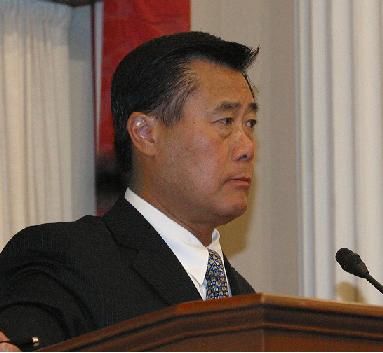
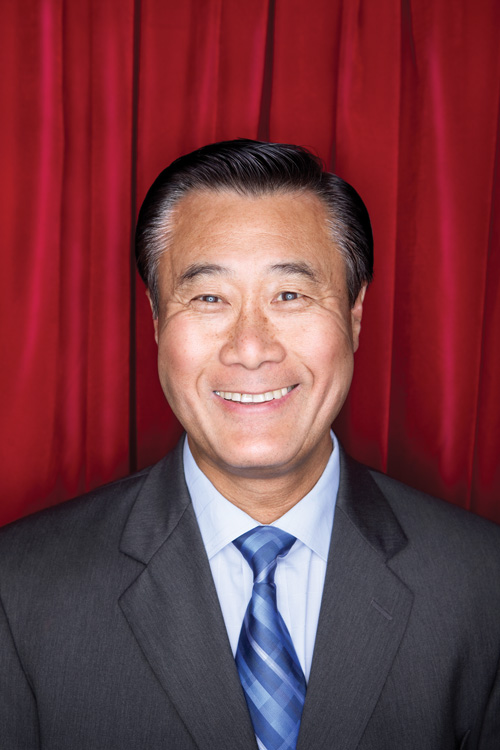
Senator Leland Yee is a political puzzle. He’s a Chinese immigrant who has built a political base almost entirely outside of the traditional Chinatown community. He’s a politician who once represented a deeply conservative district, opposed tenant protections, voted against transgender health benefits and sided with Pacific Gas and Electric Co. on key environmental issues — and now has the support of some of the most progressive organizations in the city. He’s taken large sums of campaign money from some of the worst polluters in California, but gets high marks from the Sierra Club.

His roots are as a fiscal conservative — yet he’s been the only Democrat in Sacramento to reject budget compromises on the grounds that they required too many spending cuts.

He’s grown, changed, and developed his positions over time. Or he’s become an expert at political pandering, telling every group exactly what it wants to hear. He’s the best chance progressives have of keeping the corrupt old political machine out of City Hall — or he’s a chameleon who will be a nightmare for progressive San Francisco.

Or maybe he’s a little bit of all of that.


Leland Yin Yee was born in Taishan, a city in China’s Guangdong province on the South China Sea. The year was 1948; Mao Zedong’s Communist Party of China had taken control of much of the countryside and was moving rapidly to take the major cities. The nationalist army of General Chiang Kai-Shek was falling apart, and Yee’s father, who owned a store, decided it was time for the family to leave.

The Yees made it to Hong Kong, and since Mee G. Yee had previously lived in the United States and served in the U.S. Army during World War II, he was ultimately able to move the family to San Francisco. In 1951, the three-year-old Leland Yee arrived in Chinatown.

For four years, Yee lived with his sister and mother in a one-room apartment with a shared bathroom while his father worked as a sailor in the merchant marine. It was, Yee recalled in a recent interview, a tight, closed, and largely self-sufficient community.

“The movie theater, the shoe store, the barber shop, food — everything you needed you could get in Chinatown,” Yee said. “You never had to leave.”

Of course, after a while, Yee and his mom started to venture out, down Stockton Street to Market, where they’d shop at the Emporium, the venerable department store. “It was like walking into a different country,” he said. “If you didn’t know English, they didn’t have time for you.”

Yee, like a lot of young Chinese immigrants of his era, put much of his time into his studies — in the San Francisco public schools and in a local Chinese school. “My mom spoke a village dialect, and we had to learn Cantonese,” he said. “Every little kid had to go to Chinese school. We hated it.”

When Yee was eight, his parents managed to buy a four-unit building on Dolores Street, and the family moved to the Mission, where he would spend not only the rest of his childhood but much of his early adult life. He graduated from Mission High School, enrolled in City College, studied psychology and after two years won admission to UC Berkeley.

Berkeley in 1968 was a very different world from Chinatown and even the relatively controlled environment he’d experienced at home in the Mission. “You didn’t protest in school. You’d have been sent home, and your mother would kill you,” he said.

At Berekely, all hell was breaking loose, with the antiwar protests, the People’s Park demonstrations, the campaign to create a Third World College (which led to the first Ethnic Studies Department), and a general attitude of mistrust for authority. “I developed a sense of activism,” Yee said. “I realized I could speak out.”

That spirit quickly vanished when Yee lost faith in some of his fellow activists. “People would work with us, then get into positions of power and use that against you,” he recalled. “A lot of my friends said ‘forget it.’ I left the scene.”

Yee once again devoted his energy to school, earning a masters at San Francisco State University and a Ph.D in child psychology from the University of Hawaii. Along the way, he met his wife, Maxine.

With his new degree, the Yees moved back to San Francisco — and back in with his parents at the Dolores property, where he, Maxine and a family that would grow to four kids would live for more than a decade.


Yee worked as a child psychologist for the San Francisco Department of Public Health, starting the city’s first high school mental-health clinic. He went on to become a child psychologist at the Oakland Unified School District, then joined a nonprofit mental health program in San Jose.

In 1986, Yee decided to get active in politics for the first time since college, and ran for the San Francisco School Board. He lost — and that would be the only election he would ever lose. In 1988, he won a seat, and established himself as an advocate for students of color, fighting school closures in minority neighborhoods. He also tried to get the district to modify its harsh disciplinary rules, arguing against mandatory expulsions.

On fiscal issues, though, Yee was a conservative. For his first term, despite the brutal cutbacks of the recession of the late 1980s and early 1990s, he insisted that the district make do with the money it had. His solution to the red ink: Cut waste. Only in 1992, when he was up for re-election, did he acknowledge that the district needed more cash; at that point, he supported a statewide initiative to tax the rich to bring money to the schools.

The sense of fiscal conservatism — of holding the line on taxes, but mandating open and fair contracting procedures and tight financial controls — was a hallmark of much of his political career. When the Guardian endorsed him for re-election to the board in 1992, we wrote that “there’s real value in his continuing vigilance against administrative fat and favoritism in contracts.”

Over the next four years, Yee worked with then-Superintendent Waldemar “Bill” Rojas, a deeply polarizing figure who pushed his own personal theory of “reconstitution” — firing all the staff at low-performing schools — and later was enmeshed in a scandal that led to prison time for a contractor he’d hired. Yee told me he was the only board member to vote against hiring Rojas, but people who were watching the board closely back then say he didn’t always stand up to the superintendent.

He also became what some say was a bit too close with Tim Tronson, a consultant hired by the district as a $1,000-a-day facilities consultant. Tronson wound up getting indicted on 22 counts of grand theft, embezzlement, and conspiracy in a scheme to steal $850,000 from the schools, and was sentenced to four years in state prison.

In 1998, when some school board members wanted to build housing for teachers on property that the district owned in the Sunset, Yee led the opposition — with Tronson’s help. At one meeting at Sunset Elementary School, Yee went so far as to say, according to people present, that “Tim Tronson is my man, and I rely on him for advice.”

Yee acknowledged that he worked closely with Tronson to defeat that housing project. “He was the facilities manager,” Yee explained, “and I said that I trusted his judgment.”


Yee has either a great sense of political timing or exceptional luck. He ran for the Board of Supervisors in 1996, facing one of the weakest fields in modern San Francisco history. He was the only Chinese candidate and one of just two Asians (the other, appointed incumbent Michael Yaki, barely squeaked to re-election). In an at at-large election with the top five winning seats, Yee came in third, with 103,000 votes.

He was never a progressive supervisor. In 2000, the Guardian ranked the good votes of what we referred to as Willie Brown’s Board, and Yee scored only 43 percent. He was against campaign finance reform. He supported the brutal gentrification and community displacement represented by the Bryant Square development. He voted to kill a public-power feasibility study and opposed the Municipal Utility District initiative. He opposed a moratorium on uncontrolled live-work development.

In 2002, Yee was one of only three supervisors to oppose Proposition D, a crucial public-power measure that would have broken up PG&E’s monopoly in the city. He stood with PG&E (and then-Sups. Tony Hall and Gavin Newsom) in opposition to the measure, then signed a pro-PG&E ballot argument packed with PG&E lies.

When I asked him about that stand, Yee at first didn’t recall opposing Prop. D, but then said he “stood with labor” on the issue. In fact, the progressive unions didn’t oppose Prop. D at all; the opposition was led by PG&E’s house union, IBEW Local 1245.

Yee was particularly bad on tenant issues. He not only voted to deny city funding for the Eviction Defense Collaborative, which helped low-income tenants fight evictions; he actually tried to get the city to put up money for a free legal fund to help landlords evict their tenants. He opposed a ballot measure limiting condo conversions. He opposed a measure to limit the ability of landlords to pass improvement costs on to their tenants.

In 2001, Yee voted to uphold a Willie Brown veto of legislation to limit tenancies in common, a backdoor way to get around the city’s condo conversion ordinance. Only Hall and Newsom, then the most conservative supervisors on the board, joined Yee. At one point, he started asking whether the city should consider repealing rent control.

He opposed an affordable housing bond in 2002, joining the big landlord groups in arguing that it would raise property taxes. Every tenant group in town supported the measure, Proposition B; every landlord group opposed it.

I asked Yee about his tenant record, and he told me that he now supports rent control. But he said that he was always on the side of homeowners and small landlords, and that property ownership was central to Chinese culture. “I was responding to the Chinese community and the West Side,” he said.

He wasn’t much of an environmentalist, either — at least not in today’s terms. He was one of the only city officials to support a “Critical Car” rally in 1999, aimed at promoting the rights of vehicle drivers (and by implication, criticizing Critical Mass and the bicycle movement).

His record on LGBT issues was mixed. While he supported a counseling program for queer youth when he was on the school board, he also supported JROTC, angering queer leaders who didn’t want a program in the public schools run by, and used as a recruiting tool for, the military, which at that point open discriminated against gay and lesbian people.


Yee was also one of only two supervisors who voted in 2001 against extending city health benefits to transgender employees.

That was a dramatic moment in local politics. Nine votes were needed to pass the measure, and while eight of the supervisors were in favor, Yee and Hall balked. At one point, Board President Tom Ammiano had to direct the Sheriff’s Office to go roust Sup. Gerardo Sandoval, who was ducking the issue in his office, to provide the crucial ninth vote.

Yee didn’t just vote against the bill. According to one reliable source who was there at the time, Yee spoke to a community meeting out on Ulloa Street in the Sunset and berated his colleagues, quipping that the city should have better things to do than “spend taxpayer money on sex-change operations.”

It was a bit shocking to trans people — Yee had, over the years, befriended some of the most marginalized members of what was already a marginalized community. “There was one person at the rail crying, saying ‘Leland, how could you do this to us,'” Ammiano recalled.

The LGBT community was furious with Yee. “I didn’t speak to him for at least a year,” Gabriel Haaland, one of the city’s most prominent transgender activists, told me.

Yee now says the vote was a mistake — but at the time, he told me, he was under immense pressure. When he voted for the queer youth program, he said, “the elders of the Chinese community ripped me apart. They called my mother’s friends back in the village [where he was born] and said her son was embarrassing the Chinese community.”

That must have been difficult — and he said that “if I had known the pain I had caused, I wouldn’t have voted that way.” But it was hard to miss that pain his vote caused.

On the other hand, people learn from their experiences, attitudes evolve, we all grow up and get smarter, and the way Yee describes it, that’s what happened to him.

In 2006, when he was running for state Senate, Yee met with a group of trans leaders and formally — many now say sincerely — apologized. It was an important gesture that made a lot of his critics feel better about him.

“He didn’t have to do that,” Haaland said. “People change, and he paid for his crime, and that’s genuine enough for me.”

As a former school board member, Yee kept an interest in the schools — but not always a healthy one. At one point, he actually proposed splitting SFUSD into two districts, one on the (poorer) east side of town and one on the (richer) west. “We strongly opposed that,” recalled Margaret Brodkin, who at the time ran Coleman Advocates for Children and Youth. “Eventually he dropped the idea.”

For all the problems, in his time on the Board of Supervisors, Yee developed a reputation for independence from the Brown Machine, which utterly dominated much of city politics in the late 1990s. His weak 43 percent rating on the Guardian scorecard was actually third-best among the supervisors, after Ammiano and the late Sue Bierman.

In 1998, he was one of the leaders in a battle to prevent the owners of Sutro Tower from defying the city’s zoning administrator and placing hundreds of new antennas on Sutro Tower. He, Bierman, and Ammiano were the only supervisors opposing Brown’s crackdown on homeless people in Union Square.

When he ran in the first district elections, in 2000, against two opponents who had Brown’s support and big downtown money, the Guardian endorsed him, noting that while he “can’t be counted on to support worthy legislation … He’s one of only two board members who regularly buck the mayor on the big issues.”

(He never liked district elections, and used to take any opportunity to denounce the system, at times forcing Ammiano to use his position as president to tell Yee to quit dissing the electoral process and get to the point of his speech.)


In 2002, the westside state Assembly district seat opened up, and both Yee and his former school board colleague Dan Kelly ran in the Democratic primary. Yee won, and went on to win the general election with only token opposition.

His legislative record in the Assembly wasn’t terribly distinguished. Yee never chaired a policy committee — although he did win a leadership post as speaker pro tem. And he cast some surprisingly bad votes.

In 2003, for example, then-Assemblymember Mark Leno introduced a bill that would have exempted single-room occupancy hotels from the Ellis Act, which allows landlords to evict tenants for no reason. Yee refused to vote for the bill. Leno was furious — he was one vote short of a majority and Yee’s position would have doomed the bill. At the last minute, a conservative Republican who had grown up in an SRO hotel voted in favor.

When he ran for re-election in 2004, we noted: “What’s Leland Yee doing up in Sacramento? We can’t figure it out — and neither, as far as we can tell, can his colleagues or constituents. He’s introduced almost no significant bills — compared, for example, to Assemblymember Mark Leno’s record, Yee’s is an embarrassment. The only high-profile thing he’s done in the past several years is introduce a bill to urge state and local governments to allow feng shui principles in building codes.”

In 2006, Yee decided to move up to the state Senate, and he won handily, beating a weak opponent (San Mateo County Supervisor and former San Francisco cop Mike Nevin) by almost 2-1. His productivity increased significantly in the upper chamber — and in some ways, he moved to the left. He’s begun to support taxes — particularly, an oil severance tax — and when I’ve questioned him, he somewhat grudgingly admits that Prop. 13 deserves review.

He’s done some awful stuff, like trying to sell off the Cow Palace land to private developers. But he has consistently been one of the best voices in the Legislature on open government, and that’s brought him some national attention.

Yee has been a harsh critic of spending practices and secrecy at the University of California, and when UC Stanislaus refused in 2010 to release the documents that would show how much the school was paying Sarah Palin to speak at a fundraiser, Leland flew into action. He not only blasted the university and introduced legislation to force university foundations to abide by sunshine laws; he worked with two Stanislaus students who had found the contract in a dumpster and made headlines all over the country.

He’s fought for student free speech rights and this year pushed a bill mandating that corporations that get tax breaks for job creation prove that they’ve actually created jobs — or pay the tax money back. He’s also won immense plaudits from youth advocates and criminal justice reformers for his bill that would end life-without-parole sentences for offenders under 18.

Along the way, he compiled a 100 percent voting record from the major labor unions, including the California Nurses Association and SEIU, and with the Sierra Club. All three organizations have endorsed him for mayor.

Yee told me that he thinks he’s become more progressive over the years. “My philosophy has shifted,” he said.

Yet when you talk to his colleagues in Sacramento, including Democrats, they aren’t always happy with him. Yee has a tendency to be a bit of a loner — he’s never chaired a policy committee and in some of the most bitter budget fights, he’s refused to go along with the Democratic majority. Yee insists that he’s taken principled stands, declining to vote for budget bills that include deep service cuts. But the reality in Sacramento is that budget bills have until this year required a two-thirds vote, meaning two or three Republicans have had to accept the deal — and losing a Democratic vote has its cost.

“You have to give up all sorts of things, make terrible compromises, to get even two Republicans,” one legislative insider told me. “When a Democrat goes south, you have to find another Republican, and give up even more.”

In other words: It’s easy to take a principled stand, and make a lot of liberal constituencies happy, when you aren’t really trying to make the state budget work.


I met Rose Pak on a July afternoon at the Chinatown Hilton. She brought along her own loose tea, in a paper package; the waitress, who clearly knew the drill, took it back to the kitchen to brew. Pak and I have not been on the greatest of terms; she’s called the Guardian all kinds of names, and I’ve had my share of critical things to say about her. But on this day, she was polite and even at times charming.

After we got the niceties out of the way (she told me I was unfair to her, and I told her I didn’t like the way she and Willie Brown played politics), we started talking about Yee. And Pak (unlike some people I interviewed for this story) was happy to speak on the record.

She told me Yee had “no moral character.” She told me she couldn’t trust him. She told me a lot of stories and made a lot of allegations that we both knew neither she nor I could ever prove.

Then we got to talking about the politics of Chinatown and Asians in San Francisco, and a lot of the animosity toward Yee became more clear.

For decades, Chinatown and the institutions and people who live and work there have been the political center of the Chinese community. Nonprofits like the Chinatown Community Development Center have trained several generations of community organizers and leaders. The Chinese Chamber of Commerce, the Six Companies, and other business groups have represented the interests of Chinese merchants. And while the various players don’t always get along, there’s a sense of shared political culture.

“In Chinatown,” Gordon Chin, CCDC’s director, likes to say, “it’s all about personal connections.”

There’s a lively infrastructure of community-service programs, some of which get city money. There’s also a sense that any mayor or supervisor who wants to work with the Chinese community needs to at least touch base with the Chinatown establishment.

Yee doesn’t do that. “He doesn’t give a shit about them,” David Looman, a political consultant who has worked with many Chinese candidates over the years, told me.

Yee’s Asian political base is outside of Chinatown; he told me he sees himself representing more of the Chinese population of the Sunset and Richmond and the growing Asian community in Visitacion Valley and Bayview.

Pak is connected closely to Brown, who Yee often clashed with. For Pak, Brown, and their allies, strong connections to City Hall mean lucrative lobbying deals and public attention to the needs of Chinatown businesses. Then there’s the nonprofit sector.

CCDC and other nonprofits do important, sometimes crucial work, building and maintaining affordable housing, taking care of seniors, fighting for workers rights, and protecting the community safety net. Yee, Pak said, “has never shown any interest in our local nonprofits. We all work together here, and he doesn’t seem to care what we do.” Yee told me he has no desire to see funding cut for any critical social services in any part of town. But he has also made no secret of the fact that he questions the current model of delivering city services through a large network of nonprofits, some of which get millions of taxpayer dollars. And the way Pak sees it, all of that — the nonprofits, the business benefits, the contracts — are all at risk. “If Leland Yee is elected mayor,” she told me, “we are all dead.”

I ran into an old San Francisco political figure the other day, a man who has been around since the 1970s, inside and outside of City Hall, who remains an astute observer of the players and the power relationships in the local scene. At the time we talked, he wasn’t supporting any of the mayoral candidates, but he had a thought for me. “This town,” he said, “is being taken over by a syndicate. Willie Brown is the CEO, and Rose Pak is the COO, and it’s all about money and influence.”

That’s not a pleasant thought — I’ve lived through the era of political machine dominance in this town, and it was awful. In the days when Brown ran San Francisco, politics was a tightly controlled operation; only a small number of people managed to get elected to office without the support of the machine. Developers made land-use policy; gentrification and displacement were rampant; corruption at City Hall turned a lot of San Franciscans off, not only to the political process but to the whole notion that government could be a positive force in society.

A few years ago, I thought those days were over — and to a certain extent, district elections will always make machine politics more difficult. But when I see signs of the syndicate popping up — and I see a candidate like Ed Lee, who’s close friends with Brown, leading the Mayor’s Race — it makes me nervous. And for all his obvious flaws, at least Leland Yee isn’t part of that particular operation. If there’s a better reason to vote for him, I don’t know what it is.

YEE HOME PURCHASE RAISES SUSPICIONS

Rose Pak has a question about Leland Yee. “How,” she asked me, “did the guy manage to buy a million-dollar house on a $30,000 City Hall salary?”

Pak isn’t the only one asking — numerous media reports over the years have examined how Yee raised a family of four and bought a house in the Sunset on very little visible income. And while I’m not usually that interested in the personal finances of political candidates, I decided that it was worth a look.

Here’s what I found: Public records show that in July 1999, Yee and his wife, Maxine, purchased a house on 24th Avenue for $875,000 (it’s now assessed at slightly more than $1 million). At the time, Yee was a San Francisco supervisor, earning a little more than $30,000 a year. (The salary of the supervisors was raised dramatically shortly after Yee left the board and went to the state Assembly.) His wife wasn’t working. And his economic interest statements for that period show no other outside earnings. So the disposable, after-tax income of the entire Yee family couldn’t have been much more than $25,000.

That, by any normal standard, shouldn’t have been enough to float a mortgage that, records show, totaled $516,000. In fact, the interest payments alone on that mortgage alone would total $3,600 a month — more than Yee’s gross income.

Documents in the Assessor’s Office show another paper trail, too. In 1989, Jung H. Lee, Yee’s mother, transferred the deed on a four-unit Dolores St. building where the family had been living to Maxine and Leland Yee — for no money. And a few months before the Yees bought the Sunset house, they took out a $320,000 home-equity loan on that property. That was the down payment on the Sunset property.

Still: At that point, the Yees would have been paying off two mortgages, with a total nut of about $5,000 a month — and supporting four kids, in San Francisco. In 2002, Yee’s economic interest statement’s show some modest income from teaching at Lincoln University — but nowhere near enough to pay that level of expenses.

What happened? Yee explains it this way: “For more than 10 years, we were living rent-free in my parents’ property,” he told me I an interview. “We were a close Chinese family, and my parents provided the food and helped pay for the children’s clothing. So we had almost no expenses and we lived very frugally.”

During that period, Yee was working for the San Francisco Department of Public Health, the Oakland Unified School District, and a San Jose nonprofit, earning, he said, between $50,000 and $90,000 a year. If he saved almost all of that money, he would have had more than a half-million dollars in the bank when he bought the Sunset house.

There’s nothing on any of his economic disclosure forms showing any ownership of stocks or other reportable financial interests during that period, so he wasn’t investing the money. In fact, he says, it was, and is, all in simple savings accounts. A bit unusual for that large a sum of money.

How did he get a mortgage? “Back then,” he said, “banks were willing to lend a lot more freely than they do today.”

Starting in 2003, Yee was in the state Assembly, making a higher salary — but still not much in excess of $100,000 a year. After taxes, he was probably taking home about $75,000 — and $60,000 was going to the two mortgages.

How did he do it? “We have been supplementing our income with our savings,” he said. “We don’t take vacations, we are very careful with our money.” And they clearly aren’t desperate for cash — Yee’s daughter occupies two of the four units in the Dolores St. building they own, but the other two units are vacant.

It’s possible. It’s plausible. But I don’t blame people for wondering how he managed to pull it off. (Tim Redmond, with research assistance by Oona Robertson) 


BIG CORPORATIONS HAVE BACKED YEE

Yee became a prodigious fundraiser in Sacramento — and a lot of the money came from big corporations that had business in the Legislature. And while he has perfect scores from the Sierra Club and the big labor unions, he’s taken tens of thousands of dollars from some of the biggest corporations, agribusiness interests, and polluters in the state. And at times, he’s voted their way.

Since 1993, for example, campaign finance records show Yee has taken more than $20,000 from Chevron, ExxonMobil, Valero, Conoco Phillips, and BP. He’s received another $22,450 from the chemical industry (and industry employees). Most of it came from Clorox, Dow Chemical, and Dupont.

And while the Sierra Club may not have considered it a priority, Sen. Mark Leno has worked hard to pass a bill limiting chemical fire retardants in furniture. In 2008, Yee voted against Leno’s AB 706.

That year he also refused to support a bill that would prohibit the use of the chemical diacetyl in workplaces. The industries that opposed AB 514 (including Bayer, Abbott Laboratories, Pfizer, and Johnson & Johnson) have given Yee a total of more than $60,000.

In 2003, Yee voted against a crucial tenant bill, one that would have prevented the owners of single room occupancy hotels from using the Ellis Act to evict tenants. He received a campaign check for $2,500 from the San Francisco Apartment Association the next day. Landlords in general have given Yee close to $40,000.

Then there’s agribusiness. Yee gets a lot of money from the farming industry, despite the fact that there obviously aren’t many farms in his district. Why, for example, would the California Poultry Association, the California Cattlemen’s Association, and the California Farm Bureau give him money? The Poultry Association’s Bill Mattos told us that Yee “has taken a keen interest in California’s poultry industry.”

Yee also took immense flak from the San Francisco Chronicle and other papers over a 2003 vote against a bill to limit emissions from farm vehicles. In an editorial, the paper wrote that he was “doing dirty work for the lobbyists.” In the end, under immense public pressure, he switched positions and voted for the bill. I asked Yee about all that money from all those bad operators, and he told me — as most politicians will — that campaign cash has never influenced any of his votes.

So why do all these groups give him money? “It’s about whether you will sit down and listen,” Yee said. “I will talk to all sides and at least consider the arguments as a thoughtful human being. Then I vote my conscience.” (Tim Redmond, with research by Oona Robertson) 

Cluck and shuck

0

le.chicken.farmer@gmail.com

CHEAP EATS Beignets have cheese in them. Boudin does not have rice. Andouille is made of tripe. It’s not the least bit spicy. I’m learning a lot in France, and one of the things I’m learning is I can’t wait to be back in New Orleans.

In Rochefort they are building a ship, a more-or-less exact replica of the Hermione, which carried LaFayette from Rochefort to Boston in 1780 with news that yo, the French had our back. According to some Frenchies who I ate with, the new Hermione upon completion will also sail from Rochefort to Boston! You know, for old time’s sake.

I’ve tried more than once to get into the little shipyard there and have a peek at it. I want to know approximately how much time I have to get back home and start a revolution. But alas, I haven’t got a clue.

Yesterday I cooked up one of Farmer Fabienne’s chickens for dinner and we ate it again for lunch today, and I still can’t believe how goddamn awful good it tasted. And juicy! Even the breast. Even warmed over. I’m accustomed to true free-range chickens being a tad too easily overcooked. In fact, until we sunk our teeth into it, I was sure I had overcooked this one and had already started my suicide note while I was waiting for Fabienne and Fred to come in for dinner from the fields.

“You raise you a fine, fine chicken, farmer,” I said to Fabienne.

“And you cooked it perfectly, farmer,” she said to me.

We call each other farmer. Fred, technically, is a carpenter.

The secret from her end, Fabienne said, was in the corn, which (allegedly) “builds lipids.” So her feed, which she grows herself organically, is more corn than wheat or sunflower seeds. And the chickens of course also have access to grass and bugs and sunshine.

Hedgehog is in New York now, working on a movie. When I sent her a picture of our dinner and explained about the lipid-ish juicy excellence of it all, she of course wanted to know if the corn was sweet corn or “ratty yellow stuff.”

“Hold on a second,” I said (but in an email). And I went out into yon cornfield to check.

Yellow. I didn’t see any rats and or rattiness, but I’m guessing it ain’t exactly sweet corn by Hedgehog’s standards. I’m not saying she’s a sweet corn snob, but she is. And she has every right to be, like I’m a snob about butter. And together we shall make the best popcorn in the history of the world, if not cinema.

So, yeah, she’s working on a movie and I’m working on a book. And I send her pictures of the food I’m feeding the French and she sends me baseball reports from the States.

As if I cared. Which I do. Again. Thanks to both her and Baseball Mary. Baseball Mary, you will recall, presides at the Clement Street Bar and Grill, my new favorite bar. And grill, come to think of it.

Hedgehog and I had the honor of house and garden-sitting for my pals Papa and Papi, thanks to which you will be reading about much more avenue-y than usual restaurants over the next few weeks.

The Clement Street Bar and Grill was where we watched our baseball, except for one evening we also ate there, along with the Choo-Choo Train, Ding-a-Ling-a-Ling, Earl Butter, and a couple of visiting beloveds from Ohio.

Me, I got osso buco with garlic mashed potatoes. Hedgehog had the duck breast special. Earl Butter had a steak, and I forget what all else was flying around the table. But for sure, a lot of happy faces and good times, not to mention full bellies.

This is a real gem of an unpretentiously old-school filler-upper, whether you’re eating or drinking.

We bellied up to the bar afterwards to watch the end of the Giants game, and Baseball Mary joined us for a little while, but then the game went into extra innings and we all had to leave.

CLEMENT STREET BAR AND GRILL

Tue.-Thu. 4:30 — 9:30 p.m.; Fri.-Sat. 4:30-10 p.m.; Sun. 10 a.m.-3 p.m. & 4:30 — 9 p.m.

708 Clement, SF

(415) 386-2200

Full bar

AE/D/MC/V


Green buds

56

steve@sfbg.com

CANNABIS Most marijuana sold in Bay Area dispensaries is grown indoors, where the ability to precisely control conditions creates the kind of buds — strong, dense, crystal-covered, fragrant, beautiful — that consumers have come to expect. But that perfection comes at a high price, both financially and environmentally.

So some local leaders in the medical marijuana movement have begun to nudge the industry to return to its roots, to the days before prohibition and the helicopter raids of the Campaign Against Marijuana Planting chased the pot growers indoors. They say it’s time for California to start growing more of its cannabis outdoors again, in the soil and sunlight, just like the rest of the state’s crops.

Growers have long known how inefficient it is to grow indoors. All they need to do is look at their huge monthly energy bills. Between the powerful grow lights, constantly running air conditioners, elaborate ventilation systems, pumps and water purifiers, and heaters used for drying and curing, this is an energy-intensive endeavor.

But a widely circulated study released in April — “Energy Up in Smoke: The Carbon Footprint of Indoor Cannabis Production” by Evan Mills, a researcher with Lawrence Berkeley National Laboratory — revealed just what a huge cumulative toll the practice was taking on California and the planet.

It found that indoor pot production accounts for about 8 percent of California household energy use, costing about $3 billion annually and producing about 4 millions tons of greenhouse gases each year, the equivalent of 1 million automobiles. Producing one joint was the equivalent of driving 15 miles in a 44 mpg car.

“The emergent industry of indoor Cannabis production results in prodigious energy use, costs, and greenhouse-gas pollution. Large-scale industrialized and highly energy-intensive indoor cultivation of cannabis is driven by criminalization, pursuit of security, and the desire for greater process control and yields,” Mills wrote in the report’s summary.

Yet while opponents of marijuana seized on the report to condemn the industry, proponents say there’s a very simple solution to the problem: grow it outdoors. And with the artisanship and quality in the fields and greenhouses now rivaling that of indoor buds, the biggest barriers to moving most marijuana production outdoors are federal laws and the biases of pot consumers.

“There’s a misconception out there that indoor is better marijuana than outdoor, but we don’t think that’s true,” Erich Pearson, who runs the San Francisco Patient and Resource Center (SPARC) dispensary and sits on the city’s Medical Cannabis Task Force. “Marijuana is a plant that came from the earth and that’s where we should grow it, just like our food.”


INDOOR VS. OUTDOOR

There are definitely some benefits to growing indoors, beyond just the ability to hide it from the prying eyes of law enforcement. The grow cycles are shorter, allowing for multiple harvests around the year. The generally small operations and precise control over growing conditions also tend to produce the best-looking buds, which command the highest prices and win the top prizes in competitions.

Kevin Reed, who runs Green Cross — a venerable medical marijuana delivery service that works closely with an established group of growers — told us there are several reasons why indoor buds have dominated the marketplace.

“The most important factor is local laws and regulations and the enforcement of those various laws. A second factor is space and climate — obviously outdoor cultivation will flourish is some places better than other. And, a final factor is sustainability of the market; indoor cultivators can produce crops on a year-round basis, providing some stability in the market over the long-term, especially in the event of crop failure or other unforeseen and unexpected disasters,” Reed told us.

Yet he also said, “If cultivated correctly and with care, there should be no difference between the same strain grown in- or outdoors.” And he said that from an environmental standpoint, outdoor is clearly superior: “So far as environmental factors are concerned, there is little doubt in my mind that outdoor cultivation is kinder to Mother Earth.”

Wilson Linker, with Steep Hill Laboratories, Northern California’s largest tester of medical marijuana, said that outdoor plants generally have more vegetative growth because of the longer light cycles, meaning that “indoor tests generally higher in cannabanoids, with THC [marijuana’s main psychoactive compound] in particular.”

But he and other marijuana experts also say that the quality of the buds ultimately depends on a wide variety of factors, from the strain used to the expertise of the cultivators to the time and care taken by the trimmers.

“I’ve seen outdoor that can compete with the best indoor strains,” said David Goldman, who runs San Francisco’s Americans for Safe Access (ASA) chapter, sits on the city’s Medical Marijuana Task Force, and is active in rating the various dispensaries and pot strains in terms of quality, using magnifying glasses to investigate the trichomes and other characteristics. “I would match the best outdoor I know up with anybody’s indoor, any day.”

Even when indoor buds look better, Pearson said, that doesn’t means they are better. Looks can be deceiving, he said, noting how local consumers now accept that those perfect-looking, genetically modified apples and tomatoes in the store aren’t as tasty or good for you as their ugly, organic counterparts.

“It’s not all about appearance,” he said, noting that marijuana grown in the sunshine is more robust and complex than its indoor cousins.

“We’re starting to find [outdoor] strains that were scoring just as high as indoor,” says Rick Pfrommer, the purchasing manager for Oakland’s Harborside Health Center.

And that’s especially true when the cannabis is grown in greenhouses, where it gets natural sunlight but growing conditions can be controlled better than in the fields.

“Greenhouses can attain a level of cosmetic attractiveness that is right up there with indoor,” Pfrommer said.

“There are a lot of products coming out of greenhouses that even trained eyes can’t tell the difference with [compared to indoors],” Linker said. “Greenhouses are the future.”

Or at least they might be the future if there is a change in the federal laws, which still view any marijuana cultivation as a crime — which is why indoor grows flourished in the first place.


LINGERING PROHIBITION

Rising demand for medical marijuana has created some regulatory pushback, even in pot-friendly San Francisco, where the Department of Public Health announced earlier this year that it wanted to create a registry of growers that work with the dispensaries in order to weed out the illegal growing operations.

“In the last few years, there’s been a proliferation of both illegal and legal cultivators,” Dr. Rajiv Bhatia, San Francisco’s environmental health director, told us earlier this summer. “We’re asking for this information to try to steer them back toward legal cultivation.”

Reed, Goldman, and other industry representatives strongly condemned the move, mostly on the grounds that creating lists of growers could subject them to federal prosecution, so the idea was shelved for now. But Bhatia said the problem remains, and in San Francisco, it’s a problem created largely by the demand for cannabis grown indoors.

But allowing for a more widespread conversion to sustainably grown marijuana will require a relaxation of the federal enforcement to allow for more land cultivation and the development of high-tech greenhouses.

“A lot of that rests in the hands of law enforcement,” Pearson said.

But it isn’t just the cops. Consumers are also supporting indoor grows.


SUPPLY AND DEMAND

Pfrommer said there are many factors that influence whether customers choose indoor or outdoor, or what he calls the “bag appeal” that causes customers to zero in on one strain among the 40 or so that can be offered at one time.

Generally, indoor grows are smaller operations, allowing greater care in the tending and processing of the buds, whereas outdoor grows usually produce large crops harvested all at once, “so frequently people won’t manicure it as well,” Pfrommer said.

Smell is another big factor, Pfrommer said, and that’s one area where he thinks outdoor actually has an advantage. “Outdoor generally has a more pungent smell,” he said. “Cannabis is very sensitive to the environment, so it can pick up elements from the soil, the wind, and the surroundings. It picks up different qualities.”

For that reason, he also said, “I personally find outdoor to taste better when it’s grown well,” comparing it to the subtle qualities that various appellations can give to fine wines.

The final factor is price, and that’s one area where outdoor has a distinct advantage. SPARC is currently selling quarter-ounces of greenhouse-grown Big Buddha Cheese with a THC content of more than 17 percent for just $70. And when the buds from open outdoor fields arrive this fall, they’ll be as low as $50.

“This,” Pearson said, holding up a beautiful bud of greenhouse-grown Green Dragon, “was grown at a fraction of the cost of indoor and it’s outstanding.”

“That’s why indoor sells for so much more,” Goldman said, ” because it costs so much more to grow.”

So if outdoor cannabis is cheaper, better for the environment, less risky for the industry, and just as good, why are the indoor stains still so much more popular?

“You’re looking a 20-plus years of indoor being the standard,” Pfrommer said, noting that the hardest part of creating a more substantial changeover in people’s buying habits is their expectations.

He said Harborside started offering more outdoor strains three years ago, “but the market wasn’t responding as strongly.” In other words, people still preferred indoor.

Yet things are changing, prompted partly by the Mills study. “That was what kicked off this latest round,” Pfrommer said. “There is a small but growing awareness among the regular marijuana consumers about the costs of growing indoors…The consciousness is starting to shift, but it’ll be slow, probably over the next two seasons.”

Harvests usually take place during the full moons in September and October, after which they are cured and processed for about four weeks, finally coming to market around Thanksgiving.

“It’s mostly an education process,” Pfrommer said. “We’re going to have a vigorous push around harvest time this year.”

“We’re trying to transition completely to outdoor because the environmental toll is less, the cost is less, the yield is higher, and our testing is showing that the quality is just as good,” said Nick Smilgys, who has done both marketing and purchasing at SPARC. “It just makes more sense to grow it outdoors.”

An unresponsive landlord could mean the end of Sixth Street’s DA Arts

0

All photos by Allison Ekevara / The Aperturist

“When I was growing up, the space was empty the whole time.” And as it stands, Sixth Street resident and photographer Reynaldo Ruetas Cayetano Jr. will be seeing the storefront gallery where his collective Inks of Truth created a community art project stand empty once again. 

“No one’s even been back in to turn off the lights,” he told the Guardian when he stopped by our offices last week. On August 6, Inks of Truth was holding a release party for its new zine – until the owner of 135 Sixth Street (which also houses the Sunshine Hotel, an SRO) stopped by to kick everyone out.

Cayetano grew up across the street from the DA Arts building, which occupies a central space on Sixth and Minna streets. It was once a liaison office for the city’s district attorney, filled with file cabinets. But the space became a creative hub in 2006 when Tenderloin Housing Clinic started leasing it to display art by local residents. 

Years of gallery shows culminated in THC turning artistic control of the space over to Ujima Artists, a group that hosted four to five shows before, THC artistic director Patrick Flanagan remembers, members began squatting in the small space, which faces onto Sixth Street and has massive windows. 

“It was a total party scene,” says Flanagan, who told the Guardian he ignored the misuse until he found crack vials in the gallery. Ujima Artists were kicked out, but the PR damage done to the gallery may have been too late to correct.

But Cayetano was ready for his crack at DA Arts. He contacted Flanagan, and within a month Inks of Truth had cleaned out the space. Mikio “Ears” Rose airbrushed galaxy designs across the walls, and on April 1 of this year, the group held a block party that attracted young artists, older Sixth Street residents, and everyone in between. On the gallery walls: black-and-white photos of the neighbors that rendered Sixth Street in all its grittiness, but also showed all the striving and community on the block.

“Not everyone can just go in there and have this community event. Knowing how my neighborhood is, I wanted [the people that live on Sixth Street] to be comfortable,” says Cayetano. 

Inks of Truth made a concerted effort to include everyone – not just artists and conventional art lovers, but the low-income elderly folk and those dealing with addiction. The gallery became a space for those who’d never shown an interest in art before, passers-by excited by their likenesses on the wall asking collective members where they could get a camera of their own.

Cayetano says his events rendered the neighborhood become a more inclusive place. “Basically, every time we had a show at DA Arts we all had a hood pass.”

But was the gallery’s owner impressed by the changes taking place on his ground floor?

Apparently not. When Flanagan, Cayetano, and Inks of Truth member Chris Beale attempted to set up a meeting with the owner of DA Arts and the Sunshine Hotel about extending THC’s lease on the place past May 28, Surajnaben Indrasinh Solanki was less than enthusiastic. In fact, he would hardly get back to them at all. 

“The guy’s not saying anything. He’s not even giving us an offer,” says Flanagan, who along with the Inks of Truth members left phone numbers and messages for Solanki at the Sunshine Hotel’s front desk to little avail. (The Guardian had a similar experience – Sunshine Hotel staff would hang up on us when we called to speak with Solanki, and leaving contact information in person at the front desk didn’t yield a call back). 

Eventually, the three managed to set up a meeting with Solanki on August 1. When the day came, he stood them up. 

“It reflects his style of overseeing that space,” says Cayetano.

Later that week Flanagan (who lives across Minna Street at the Rose Hotel and flips the lights on at DA Arts every evening to illuminate the corner and the art inside the gallery) ran into Solanki. “He told me not to go into the space, that we weren’t supposed to be in there, and that’d he call the police.”

Which Flanagan could have done – but he didn’t. “The ball’s was in his court,” he told the Guardian, frustrated that Solanki wouldn’t communicate with the Inks of Truth team about the future of the building. “So I said, let’s keep putting on shows.” 

When asked why he thought Solanki didn’t express any interest in the young people holding their events at DA Arts, Flanagan had two theories: that the owner is reluctant to get involved in any more leases because he’d like to be able to sell the building (which is in a SF Redevelopment Agency project area), or maybe because he was wary of Flanagan’s history as a tenant organizer. 

At any rate, Flanagan told Cayetano to go along with the previously-scheduled zine release party. 

So they did – and for a few hours, Inks of Truth and the rest of Sixth Street got to see their images published and bound (you can too – go here for a copy of Sixth Sense). That’s when Solanki finally showed up, yelling for everyone to get out. 

The collective grabbed everything from the gallery – framed photography, boxes of zines, the bottles of red wine that were being shared, everything but the Best of the Bay award they’d won the week before – and migrated across the street to Rancho Parnassus, a cafe that’s hosted Inks of Truth shows in the past. 

There, they rearranged the photos on the cafe tables and regrouped. Cayetano hyped the group up for October’s Sixth Street art walk, and reassured everyone that Inks of Truth would still have a presence on Sixth Street, with or without DA Arts. 

Reflecting on the tribulations the collective has undergone, Cayetano’s not ready to let go of his dream of bringing pride to his neighborhood. “We’re not here just to have a show and disappear,” he says. “Sixth Street is the heart for me.”


End the BART cover-up

3

Ten days have passed since a BART police officer shot and killed a man at the Civic Center station — and the public still knows almost nothing about what happened. BART will only say that an officer (unnamed) shot a man who was “aggressive” and “holding a bottle and a knife.” One witness told the Bay Citizen that the man “looked like a drunk hippie” and wasn’t running or lunging toward the two officers on duty. The coroner has identified the victim as Charles Blair Hill, 45; he had no known address.

And that’s about it. BART is investigating and so is the San Francisco Police Department, but neither agency has released a single police report or any further information. BART is still withholding a security video from the station that shows part of the incident. All that either police department will say at this point is that the investigation is under way — but nobody will offer any time frame for its completion.

For an agency still reeling from the last police shooting and still trying to win some kind of public confidence in its ability to run a law-enforcement operation, this kind of stonewalling is a big mistake.

We understand that the surveillance video might influence potential witnesses and perhaps should be kept under wraps until everyone on the scene has made a statement. But how long can that take? Two weeks? Three? At a certain point, the cops will have found all the witnesses they’re going to find — and the public needs to know that there will be a reasonable time limit after which the video will be made public.

The same goes for police reports on the incident, including the statements of other witnesses — and the names of the officers involved.

BART’s spokesperson, Linton Johnson, told us he can’t release the names of the officers because state law forbids it. He says he will release the video footage as soon as the investigation is complete. When will that be? Nobody’s giving so much as a hint. Johnson says he doesn’t know because the San Francisco Police Department is the lead agency; SFPD public affairs says the only person authorized to talk about the case is Johnson at BART.

SFPD has no business giving BART the final says on this — San Francisco ought to release the information from its incident reports immediately.

We’d be more patient about this if BART didn’t have such a long, disgraceful history of cover-ups, obfuscation, and lies about police shootings. Since 1992, when the agency completely fabricated a story to justify the shooting of an 19-year-old Jerrold Hall (BART said Hall was struggling for control of the cop’s gun; evidence showed he was actually shot in the back, from a considerable distance) it’s been hard to trust anything the transit system says.

A BART cop shot and killed a naked, mentally ill man in 2001 (and tried to cover up the scandal). And of course, the 2009 Oscar Grant shooting was marked by misinformation and cover-ups.

So BART has a particular responsibility to handle this case with the greatest amount of sunshine possible. For starters, the basic police reports — the officers’ own accounts and the reports of the initial response team — ought to be public (even if the names of the officers and witnesses are redacted). And if there’s a legal issue, the BART board ought to take the initiative to ask a judge to authorize the release of at least some relevant information.

If the officer who fired on Charles Blair Hill acted properly, then there’s nothing to hide. If the officer shot too quickly, then the public needs to know that BART is aware of the problem and is going to act on it — before anyone else gets killed.


Editorial: End the BART coverup

4

Ten days have passed since a BART police officer shot and killed a man at the Civic Center station — and the public still knows almost nothing about what happened. BART will only say that an officer (unnamed) shot a man who was “aggressive” and “holding a bottle and a knife.” One witness told the Bay Citizen that the man “looked like a drunk hippie” and wasn’t running or lunging toward the two officers on duty. The coroner has identified the victim as Charles Blair Hill, 45; he had no known address.

And that’s about it. BART is investigating and so is the San Francisco Police Department, but neither agency has released a single police report or any further information. BART is still withholding a security video from the station that shows part of the incident. All that either police department will say at this point is that the investigation is under way — but nobody will offer any time frame for its completion.For an agency still reeling from the last police shooting and still trying to win some kind of public confidence in its ability to run a law-enforcement operation, this kind of stonewalling is a big mistake.

We understand that the surveillance video might influence potential witnesses and perhaps should be kept under wraps until everyone on the scene has made a statement. But how long can that take? Two weeks? Three? At a certain point, the cops will have found all the witnesses they’re going to find — and the public needs to know that there will be a reasonable time limit after which the video will be made public.

The same goes for police reports on the incident, including the statements of other witnesses — and the names of the officers involved.

BART’s spokesperson, Linton Johnson, told us he can’t release the names of the officers because state law forbids it. He says he will release the video footage as soon as the investigation is complete. When will that be? Nobody’s giving so much as a hint. Johnson says he doesn’t know because the San Francisco Police Department is the lead agency; SFPD public affairs says the only person authorized to talk about the case is Johnson at BART.

SFPD has no business giving BART the final says on this — San Francisco ought to release the information from its incident reports immediately.

We’d be more patient about this if BART didn’t have such a long, disgraceful history of cover-ups, obfuscation, and lies about police shootings. Since 1992, when the agency completely fabricated a story to justify the shooting of an 19-year-old Jerrold Hall (BART said Hall was struggling for control of the cop’s gun; evidence showed he was actually shot in the back, from a considerable distance) it’s been hard to trust anything the transit system says.

A BART cop shot and killed a naked, mentally ill man in 2001 (and tried to cover up the scandal). And of course, the 2009 Oscar Grant shooting was marked by misinformation and cover-ups.

So BART has a particular responsibility to handle this case with the greatest amount of sunshine possible. For starters, the basic police reports — the officers’ own accounts and the reports of the initial response team — ought to be public (even if the names of the officers and witnesses are redacted). And if there’s a legal issue, the BART board ought to take the initiative to ask a judge to authorize the release of at least some relevant information.

If the officer who fired on Charles Blair Hill acted properly, then there’s nothing to hide. If the officer shot too quickly, then the public needs to know that BART is aware of the problem and is going to act on it — before anyone else gets killed.

Ameri-cows rejoice!

0

Come our nation’s day of independence, all non-meat eaters will eat one: a homogenized, unexciting tofu dog. Especially if they are shy and/or lazy – the dog package conveniently slips into one’s red-white-and-blue woven straw tote, and they are easily sneakable onto BBQ grills without a huge amount of haranguing from friends pumped up on animal proteins. 

But they suck (except for Field Roast sausages, whole food fist pump). And thankfully, this year all you little veggies have an option to the tube-shaped madness: the San Francisco Vegetarian Society‘s Healthy Holiday BBQ on Sun/3.

Belly up to the benefit for Go Vegan Radio (which airs Sundays at 3 p.m. on am channel GREEN 960) BBQ for treats from a tummy grumbling V-list: Souley Vegan, Rudi’s Bakery, and Sunshine Burger among other moo-friendly vegan magic makers. 

But what would a vegan gathering be without a little speechifying on topics that affect your belly and other things? Dr. Elliott Katz, the founder of In Defense of Animals will give a talk to reaffirm your anti-burger convictions, and at 2:30 p.m., animal rights crusaders Jake Conroy of the persecuted e-activists Shac Seven, Alfredo Kuba, and Pat Cuviello will flap jaw in a panel discussion entitled “Coffee, Cake, and Constitution.” 

Oh, and vegan bodybuilder Kenneth G. Williams will be there. Stoked!

Meat-free muscles: Kenneth G. Williams

Should Sunday’s festivities leave you unable to stomach the thought of being restricted to one kind of coleslaw and buns on the Fourth itself, you’re in luck: bring your best cornmeal-crusted tempeh over to the Presidio for a conveniently-located potluck before the fireworks, also sponsored by the Veg Society (details below).


San Francisco Healthy Holiday BBQ

Sun/3 noon-3:30 p.m., $10 suggested donation

First Unitarian Universalist Center

1187 Franklin, SF

www.sfvs.org


Fourth of July SF Vegetarian Society-Living Foods picnic potluck

Mon/4 1 p.m., free

O’Reilly Avenue between Lincoln and Eddy, SF

www.sfvs.org


The Performant: Impossible weekend! Or: what to do when there’s everything to do?

0

Bicycle Music Festival and “A Clockwork Orange Afternoon”

Oh lordy, let me catch my breath. Weekend, you have officially kicked my ass.

Merely mortal, I found it difficult to plot an itinerary efficient enough to be able to hit every event that beckoned my attention over those bright and sunny 48 hours. Would I attend the annual Juneteenth street festival or a lecture on the benefits of zombie domestication? Journey to the End of the Night or a CLASH scavenger hunt? Sharon Jones and the Dap Kings at Stern Grove or Klaus Kinski at YBCA? Cloning myself seems a more attractive option by the day.

Spoiled for choice, and seeking the sun, I was wooed by the Bicycle Music Festival on Saturday afternoon. Located in the comfy meadow just past the De Young in Golden Gate Park, the Bicycle Music Fest kicked off with local folk rockers StitchCraft. Heather Normandale’s Jolie-Holland husk accompanied by her own guitar and Joey “Cello Joe” Chang wafted sweetly in the mild breeze while a team of stationary-bike pedalers powered up the PA system. 

Introduced by festival organizer and Rock the Bike founder Paul “Fossil Fool” Freedman as an “OG” of the Bicycle Music movement, Normandale is a fixture with the Pleasant Revolution bicycle-powered music touring group, including a five-month tour of Europe with fellow BMF-featured performers, The Ginger Ninjas, as well as a participant of the Shake Your Peace 2009 Winter Walking Tour. Next up, Cradle Duende brought the gypsy noise followed by Evan Francis and fellow jazz mafiosos  who played a mellow, sax-heavy set, warm as the rare June sunshine.

Solar-charged, pedal-powered, and ready for shade, I made tracks on Sunday for “A Clockwork Orange Afternoon” at the Edinburgh Castle. A celebration of the 40-year anniversary of the notorious Kubrick film made of the Anthony Burgess book of the same name, choice excerpts were read, and partly enacted, by Castle regulars: Jack Boulware as narrator, pub proprietor Alan Black as a slew of bit characters (including a spot-on interpretation of the Prison Chaplain), and bowler-hatted Crispin Barker as “Little Alex”. 

At 49, the book itself is still pretty spry, alternating between restless and relentless, full of ultra-violence, yes, and weepy devotchkas and the red, red vino on tap — but not far below the shock value of its remorseless protagonist’s actions lies Burgess’ unwavering belief that the basis for our humanity is our power of choice, for good or for ill. 

“When a man cannot choose he ceases to be a man,” asserts the prison chaplain doggedly, a statement echoed by Burgess himself in his 1986 essay “A Clockwork Orange, Resucked”. Stripped of his ability to choose his own moral path, and simultaneously losing his ability to listen to Beethoven’s Ninth (for Burgess, a self-taught composer, this was undoubtedly the ultimate cruelty), Alex pays dearly for his state-sanctioned “freedom”. And nearly fifty years later, the dire implications of the “Ludovico technique” still provoke as strongly as any spot of “twenty-to-one”.