Sunshine

Clouds and mirrors

1

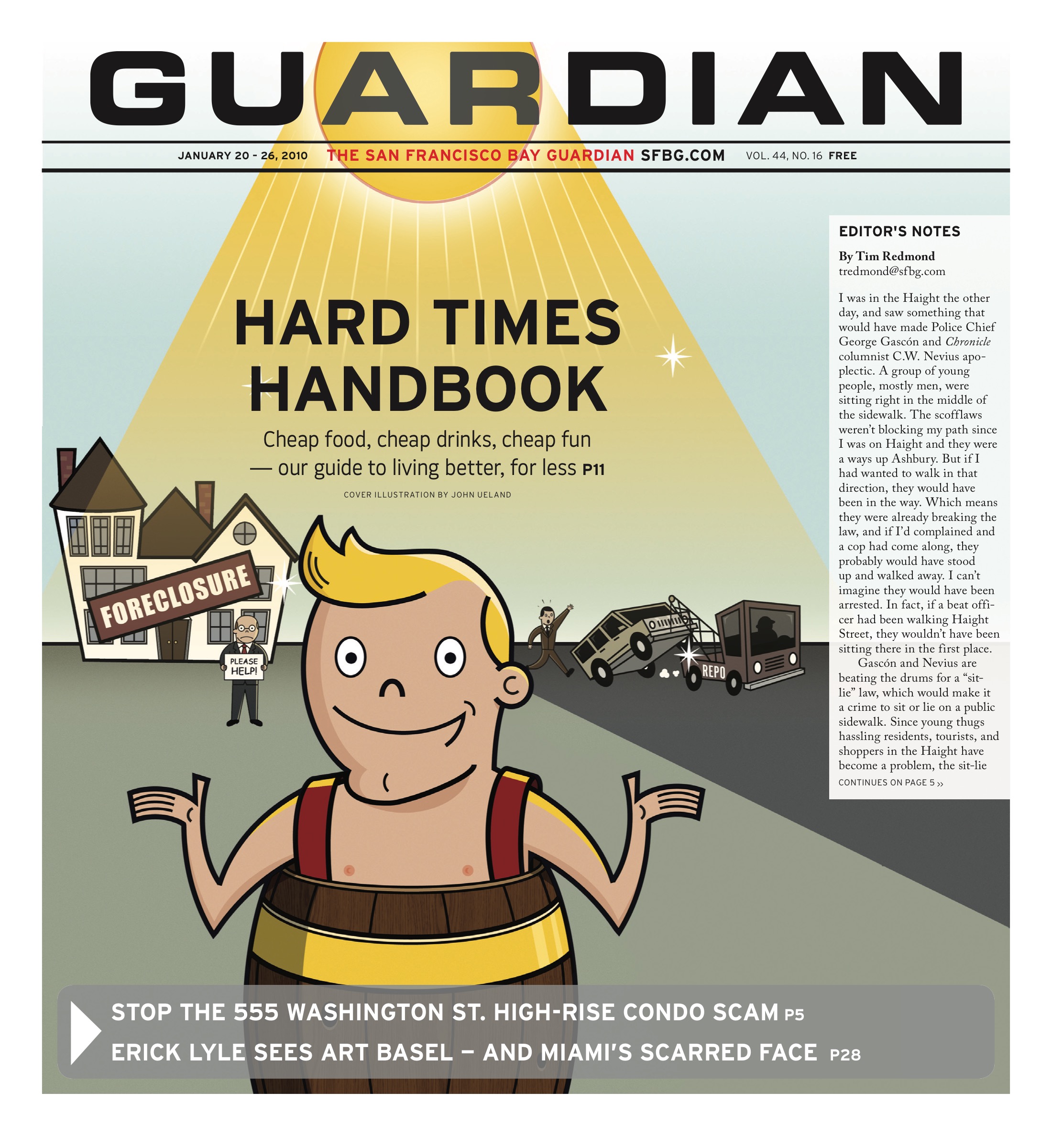
Carl Fisher turned a mosquito-plagued, malarial sandbar into Miami Beach, “The Sun and Fun Capital of The World,” in less than a decade — dredging up sea bottom to build the island paradise, an all-American Las Vegas-by-the- Sea, where Frank Sinatra and Jackie Gleason partied and Richard Nixon received two Republican nominations for president. Art Deco hotels lined the beach, bold as Cadillacs, defiant in the path of hurricanes, their confident Modern lines projecting postwar American power. Morris Lapidus, the architect of the Fontainebleau Hotel, understood that the skin-deep city Fisher conjured out of neon and sunshine was a stage for the leisure fantasies of the ruling class. When his iconic Collins Avenue hotel opened in 1954, Lapidus said he wanted to design a place “where when (people) walk in, they do feel ‘This is what I’ve dreamed of, this is what we saw in the movies.'”

For many years in Miami, that movie was Scarface, as Colombian drug lords shot it out in mall parking lots. A shiny new downtown skyline of banks and condos emerged during a recession economy from the laundered proceeds of drug smuggling. Today the cocaine cowboys have all died, or done their time and moved on. Their descendents are selling art.

Art Basel came to Miami Beach in 2002, and the rise of Miami as an international art world capital neatly coincided with the glory days of the housing bubble. According to Peter Zalewski of Condovulture.com, around 23,000 new condo units were built in and around downtown Miami during the Art Basel era — twice the amount built in the 40 previous years. The success of the international art exhibition has inspired a fever dream among city leaders, in which Miami’s skyline and neighborhoods are radically transformed by art world-related real estate development.

Cesar Pelli’s $461 million, 570,000-square-foot Carnival Center for the Performing Arts opened in 2006 in a moribund section of downtown known for its proximity to the faded 1970s-era mall, the Omni. That same year, the Miami Art Museum (MAM) hired as its new director Terence Riley, the former curator for architecture and design at the New York Museum of Modern Art. Heralded in his new city as “the Robert Moses of the new Miami millennium,” Riley initiated the development of Museum Park. This 29-acre complex would be home to new buildings for the Miami Art Museum and the Miami Museum of Science and Planetarium. It was to be built on the site of Miami’s last public waterfront park, Bicentennial Park, long a sort-of autonomous zone for Miami’s homeless residents. While the new MAM is not scheduled for completion until 2013, by 2007, a 50-floor, 200-unit luxury condo development, 10 Museum Park, had already been finished across the street.

Art Basel Miami Beach brings an estimated 40,000 people to Miami each year to look at art, party, and more important, look at celebrities as they look at art and party. The art fair, once dubbed “the planet’s highest concentration of wealth and talent,” generates an estimated $500 million in art sales each year. Yet while Miami leaders seek to present to the world Basel’s image of wealth and glamour, the iconic image of South Florida today has abruptly become the newly built and entirely empty condo development. Zalewski estimates that 40% of the condo units built since 2003 remain unsold. Florida’s foreclosure rate is the second-highest in the nation, and for the first time since World War II, people are leaving Florida faster than they are arriving. Just months before this year’s Art Basel Miami Beach, a New York Times cover story told of the lone occupant in a towering Broward County condo that had gone entirely into foreclosure. As the fair approached, I wondered: can art really save a city like Miami? Or is its reliance on art world money part of the city’s collapse?

ATLANTIS CITY

At this year’s Art Basel, the glitz was, of course, played down, what with the global economic collapse and Art Basel’s main corporate sponsor, top Swiss bank UBS, now the subject of an FBI probe on charges of helping billionaire clients evade taxes. In the weeks before the opening of the fair, it was announced that the legendary UBS free caviar tent would not be open this year. One could not help but notice that the ice sculptures on the beach itself, hallmarks of the recent boom, were gone, already as fabled as the lost city of Atlantis.

Still, the epic “Arts and Power” issue of Miami magazine hit the stands on time, luxurious full-color spreads on oversize glossy pages. Press from all over the world wrote a month’s worth of previews leading up to the event, and on the day of the VIP vernissage, TV news reporters from all continents were there to dutifully record the arrivals of billionaires, celebrities, and fashion models at the Miami Beach Convention Center. As Art Basel Miami Beach 2009 opened, the floor of the convention center was eerily quiet, with hardly a sound except a hushed, determined whisper a bit like paper money being rubbed together. It seemed to me like everyone was doing her or his part, as if the whole art fair was a sort of performance art piece demonstrating the vigor of the free market in dark times.

This murmur ceased completely, and the air filled with the muted clicking of camera shutters, as Sylvester Stallone passed me on the convention floor. Stallone, too, was stoic, his expression hidden by dark sunglasses at mid-day. He stopped next to me and began to talk to TV news cameras about his own paintings on display, presented by the gallery Gmurzynska. Close-up and in person, clumps of the actor’s face, now just inches from mine, seemed to lay inert and dead like the unfortunate globs of oil paint he had arranged on his own canvasses. Pieces of puffy cheek hung limp and jowly under taut eyebrow skin, Botox and facelifts fighting age for control. For a paparazzi flashbulb moment, I thought I saw in Rambo’s sagging face a metaphor for the doomed efforts to prop up a whole failing way of life.

The Miami Beach Convention Center’s 500,000 square feet had been blocked out into booths and concourses that comprised a pseudo-city of art. As a city, it most resembled some parts of the new Manhattan — crowded yet curiously hollowed out and lifeless, under relentless surveillance, full of nostalgia for its former, more vital self. Groundbreaking art that once had the power to shock, move, or startle — Rauschenberg’s collages, Richard Prince’s Marlboro men, Barbara Krueger’s text block barrages — were presented here as high-priced real estate. In the city of art, time stood still; Matisse, de Kooning, and Duchamp had all retired to the same street. A sailor portrayed in a 2009 life-size portrait by David Hockney seemed to gaze wistfully across the hall toward a 1981 silk-screened print of a dollar sign by Andy Warhol. The life-size portraits by Kehinde Wiley felt just like the city in summer, how the radio of every passing car seems to be blasting the same song. A print of a photo of Warhol and Basquiat together in SoHo stood catty-corner to a 1985 Warhol paining of the text, “Someone Wants To Buy Your Apartment Building.”

I wondered if this city of art offered clues as to the kind of city that developers imagined Miami might become.

ART MAUL

Across Biscayne Bay, away from Miami Beach in the city of Miami, the fever dream of art was turning a down-and-out neighborhood in the poorest city in America into an outdoor art mall. Fifteen satellite art fairs and 60 galleries staged simultaneous exhibitions in Miami during the week of Art Basel Miami Beach. Virtually all this art was crammed into about 80 square blocks north of downtown Miami, bisected by North Miami Avenue. The area included Miami’s African American ghetto, Overtown, the warehouse district of the low rent Puerto Rican neighborhood, Wynwood, and the resurgent Miami Design District up to its shifting borders with Little Haiti.

Walking up North Miami Avenue and Northwest Second Avenue the night before the exhibitions began, I could see the usually moribund main drags transforming before my eyes. Warehouses vacant the other 50 weeks of the year were hastily being turned into galleries or party spaces. Solely for Art Basel week, the Lower East Side hipster bar Max Fish had built an exact replica of its Ludlow Street digs in an Overtown storefront. In Wynwood, the paint still appeared wet on a fresh layer of murals and graffiti running up and down the streets.

The modern-day Carl Fisher most perhaps most responsible for dredging this new art world Miami up from the bottom of the sea is Craig Robins. “I transformed the image of my city from Scarface into Art Deco,” is how Robins put it when I talked to him in the Design District offices of his development firm, Dacra. Widely considered to be the person who brought Art Basel to Miami Beach, Robins is, at a youthful 46, the man who perhaps more than anyone embodies the values and tastes of a new Miami where art and real estate have become as inseparable as fun and sun. Robins takes art seriously — he is a major collector of artists like John Baldessari, Elizabeth Peyton, Rirkrit Tiravanija, and Richard Tuttle — and he made his name and fortune by restoring the derelict Art Deco motels on his native Miami Beach during the early 1990s into the international high-end tourist destination now known as South Beach. Today Robins is one of the principal owners of the warehouses in the Miami Design District and Wynwood.

With his casual dress, shaved head, and stylish Euro glasses, Robins could easily fit in as one of the German tourists who flock to the discos on the South Beach that he developed. His offices offer a rotating display of the works of art in his collection. Around the time of Art Basel, his staff had installed many works by the SoCal conceptual artist John Baldessari, in honor of Baldessari’s upcoming career retrospective at the Tate Gallery in London. Robins was friendly and projected a relaxed cool; when I’d met him on the convention center floor and asked for an interview, he gave me an affectionate shoulder squeeze and said, “Call my assistant and we’ll hang, OK?” A few days later, he grinned somewhat impishly when I sat down said, “I notice you sat in the Martin Bas chair,” as if it was a Rorschach test. Honestly, it was the only piece of furniture in the design collector’s office that looked dependably functional.

Not surprisingly, Robins was adept at explaining the art theory behind his development projects, and the ways Dacra is bringing art, design, and real estate together “to make Miami a brand name.” He said he learned from the successful preservation of historic buildings in his South Beach projects that consumers were starting to reject the cookie-cutter commodities of the mall and “starting to value unique experiences” made from “a combination of permanent and temporary things.” On the streets of the Design District and Wynwood, Robins sought to bring together restaurants, fashion showrooms, and high-end retail stores, surrounded by parties, international art shows, and public art. “This gives a richness to the experience of Miami,” Robins said. “That is the content that Miami is evolving toward right now.” I thought of Lapidus, the Godfather of Art Deco, and his quote about the Fontainebleau: In Wynwood, Robins wanted to turn not just a hotel lobby but an entire neighborhood into a place where visitors feel they have entered a movie.

Robins grew more excited as he discussed his vision. “With my work at Dacra, I build communities,” he told me. “When we brought Art Basel here, Miami immediately became recognized as a world-class city.”

Others are skeptical. “Miami will always be an attractive place for people to visit in December, but you can’t graft culture onto a city,” says Alan Farago of the widely read blog Eye On Miami. “It’s a mistaken belief that art can be a totem or a symbol of a great city without there being any substance. Miami will continue to be a pretender because there is no investment in local culture beyond building massive edifices like the Performing Arts Center.”

Indeed, the center — now renamed the Adrienne Arsht Performing Arts Center, in honor of a wealthy benefactor — has become perhaps another in a long line of tragicomic failed improvements for the area. Bunker-like, it has been likened by some architecture critics to an upside-down Jacuzzi. Though 20 years in the making and long heralded by boosters as a building that would instantly make Miami a “world-class city,” the center has operated at a deficit and suffered from poor attendance since its opening. The future of Museum Park suddenly turned cloudy a month before the opening of this year’s Art Basel, when Miami Art Museum director Terrence Riley unexpectedly resigned days after unveiling the architects Herzog and de Meuron’s final model for the new buildings. Riley sited a desire to return to private practice as an architect, but online speculation had it that he already knew cash-strapped Miami would ultimately be unable to raise the money to build the museum.

Farago wonders what would change if the city did have the money. “In Miami on one hand, we have public school teachers using their own salaries to buy art supplies for their students,” he says. “Then we have these one-off art events and a performing arts center that brings us road shows of Rent, Annie, and 101 Dalmatians.”

When I asked Robins what lasting benefits Art Basel provided to the community, he cited a roster of new restaurants opened by star chefs and fashion showrooms. “It encourages people to come down here year-round,” he said. It was clear that Robins was discussing amenities designed for tourists, or for a speculative community of future residents who might be enticed to come to Miami.

I suggested that there were actually two different communities in Wynwood with potentially opposing interests. I told Robins I’d attended a community meeting held by the activist groups Power University and the Miami Workers Center. There, Wynwood residents discussed how their rents had doubled, how the city continued to neglect the facilities at Roberto Clemente Park, and how the increased presence of police escorting the art patrons to the new galleries had made them feel like they didn’t belong in their own neighborhood.

Robins, who had been very loose and calm during the first 45 minutes of our talk, became visibly upset. He launched into a sustained rant. “Well, look, active communities are a good thing,” he said, shaking his head. “But just because a community is active doesn’t mean it is rational. You go and sit in these meetings and half the people are nuts. Half are just there because they are miserable people and they have some soapbox to go and rant about all these things that they think they have some entitlement to attack government about when they never do anything themselves for anyone. I find that 20 percent of these people are totally irrational, mean-spirited people who would never agree with anyone about anything good.”

“What kind of people do you mean?” I asked.

“People who feel disenfranchised! They’re very angry. They have psychological problems and they want a forum to vent. I’m not implying we should stifle democracy — I’m a big believer in it! I’m saying these people should not be taken seriously by enlightened people!”

Robins rose to look at a clock on his desk. Not surprisingly, our time was up. I politely excused myself to the restroom. When I returned it was like no tantrum had ever happened. Robins’ impish grin even returned as I asked him to pose for a photo in front of one of his Baldessari prints. I had him stand in front of Cigar Smoke to Match Clouds That are Different (By Sight/ First Version), a 1972-3 triptych of photos. As the artist looks into a mirror at clouds over his shoulder in the sky, he blows out a mouthful of twisting cigar smoke, trying to match their elusive shape in the air.

GIMME DANGER

Out on the streets of Wynwood, it was still mostly quiet, expectant, but the scene at David Lynch’s art opening gave one a sense of what the coming weekend would be like. Lynch was presenting photos from a book of staged stills he is releasing with a CD of music by Danger Mouse. Hundreds of hipsters, mostly locals, guzzled free booze and gawked when new Miami resident Iggy Pop showed up, shirtless as usual, in a Miami Vice-style blue blazer. As I watched the Godfather of Punk pose for pictures with his arm around Danger Mouse, I thought of the city of art, the Jackson Pollacks and Donald Judds together at last, on the convention center floor. I had the eerie feeling that the Internet had come to life.

I left the opening and walked at random through the streets of Wynwood at 2:00 a.m. While looking at murals and thinking about the changes Art Basel had wrought, I unexpectedly came upon a small street party of people I knew. The side street intersection was lit up like a stage with an enormous floodlight. Street artist SWOON stood high on a scissor lift, painting a mural on a warehouse wall, while below a couple of kids dressed like old tramps wrestled with a big, brown stuffed bear.

The bear split open, and thousands of tiny white particles of stuffing poured out into a warm Miami breeze, swirling high into the air and reflecting the glow from the floodlight. I ran to join the kids, who were now playing and laughing in the sudden snowstorm. A guy I recognized from Brooklyn rode by on a tall bike. Bay Area artist Monica Canilao went careening by on a scooter with no helmet. A cop drove by and smiled and waved. Guys from Overtown with cornrows and gold teeth were laying out a spread of huge chicken legs on a flaming grill. Some punk kids from Brooklyn sat on the curb, drinking beer. A girl in the group laid her head on a boy’s shoulder as they all watched SWOON work.

For a second, I flashed back to the Stallone scene earlier in the day, back on the convention floor. Here, in this intersection, I had found something living and breathing. This could be the real city of art. But I also knew the SWOON mural was commissioned by Jeffrey Deitch. I stood and watched the painting and the dancing and laughing and eating in the fake December snowstorm and contemplated what the city would be like if we all had the free time, resources, and permission to take to the streets and transform the city any way we pleased. Was this a window to a different world where anything might be possible?

Or was it just art?

The second half of this essay will run in the Jan. 27 Guardian. *


Pics: Sunning it out in the Yucatán

0

SFBG photog Ariel Soto — of Street Threads fame — documented her recent trip to Mexico, to help chase away our rainy week blues

mexico1_0110.jpg
Cozumel

mexico2_0110.jpg
Tulum

mexico3_0110.jpg
Tulum

With winter upon us, my fiance and I found ourselves yearning for sunshine and so we packed a few small bags and headed south to Mexico. The Yucatán had been calling to us for years, ever since my parents told us of their trip back in the mid 1970s, where they walked through forgotten Mayan ruins at Uxmal and Chichen Itza and experienced the frenzy of the bustling vegetable markets in Merida. We also found all these monuments, cities and markets busy and alive. Everything was saturated in all the colors of the rainbow and dripping with history. And of course there was the aqua-colored ocean, so clear you could look straight down to the sandy floor.

mexico4_0110.jpg
Chichen Itza

mexico5_0110.jpg
Chichen Itza

mexico6_0110.jpg
Tacos con Pibil, Piste

mexico7_0110.jpg
Merida


mexico8_0110.jpg
Merida

mexico9_0110.jpg
Merida

mexico10_0110.jpg
Uxmal

Everyday we munched on fresh tortillas, slathered in guacamole or pibil, a slow cooked pork dish, spiced with achiote and topped with tangy pickled red onions. The ruins made our imaginations run wild, with unsettling stories of human sacrifice and wide-eye awe in the massiveness of these ancient structures. The Yucatán would take months, if not years, to thoroughly explore, but in our two weeks there we at least got a sense of their unique cuisine, cultural norms and incredible past. Mexico is such a vast and diverse country and each part has so much to offer that it’s impossible to say which is the best. Now, where should we go next? Viva Mexico!

mexico11_0110.jpg
Uxmal

mexico12_0110.jpg
Tulum

mexico13_0110.jpg
Merida

mexico14_0110.jpg
Merida

mexico15_0110.jpg
Merida

Nightlife and Entertainment

0

BEST REP FILM HOUSE

Red Vic

From rock docs to cult classics, this Upper Haight co-op’s schedule has kept its cozy couches filled with popcorn-munching film buffs since 1980.

1727 Haight, SF. (415) 668-3994, www.redvicmoviehouse.com

Runners up: Castro, Roxie

BEST MOVIE THEATER

Balboa Theater

Packing the house with film festivals, second-run faves, indie darlings, and carefully chosen new releases, this Richmond gem offers old-school charm with a cozy neighborhood vibe.

3630 Balboa, SF. (415) 221-8184, www.balboamovies.com

Runners up: Castro, Kabuki Sundance

BEST THEATER COMPANY

Un-Scripted Theater Company

The Un-Scripted improv troupe elevates comedy from one-liners and shtick to full-fledged theatrical productions with a talented cast and eccentric sensibilities.

533 Sutter, SF. (415) 869-5384, www.un-scripted.com

Runners up: ACT, Shotgun Players

BEST DANCE COMPANY

Hot Pink Feathers

Blurring the line between cabaret and Carnaval, this burlesque troupe drips with samba flavor (and feathers, of course).

www.hotpinkfeathers.com

Runners up: DholRhythms, Fou Fou Ha!

BEST ART GALLERY

Creativity Explored

The cherished nonprofit provides a safe haven for artists of all ages, abilities, and skill levels while making sure that great works remain accessible to art lovers without trust funds.

3245 16th St., SF. (415) 863-2108, www.creativityexplored.org

Runners up: 111 Minna, Hang

BEST MUSEUM

De Young

Golden Gate Park’s copper jewel boasts stunning architecture, one hell of a permanent collection, and an impressive schedule of rotating exhibitions.

50 Hagiwara Tea Garden Drive, SF. (415) 750-3600, www.famsf.org/deyoung

Runners up: Asian Art Museum, SF MOMA

BEST MIXED-USE ARTS SPACE

CellSPACE

From aerial circus arts to metalsmithing, fire dancing to roller-skating parties, CellSPACE has had its fingers all over San Francisco’s alternative art scene.

2050 Bryant, SF. (415) 648-7562, www.cellspace.org

Runners up: SomArts, 111 Minna

BEST DANCE CLUB

DNA Lounge

DNA scratches just about every strange dance floor itch imaginable — from ’80s new wave and glam-goth to transvestite mashups and humongous lesbian dance parties.

375 11th St., SF. (415) 626-1409, www.dnalounge.com

Runners up: Temple, 1015 Folsom

BEST ROCK CLUB

Bottom of the Hill

San Francisco’s quintessential “I saw ’em here first” dive, Bottom of the Hill consistently delivers stellar booking, cheap drinks, and great sound.

1233 17th St., SF. (415) 621-4455, www.bottomofthehill.com

Runners up: Slim’s, The Independent

BEST HIP-HOP CLUB

Club Six

Six blurs the line between high and low, offering an upstairs lounge in which to see and be seen and a basement dance floor for those who want to show off their b-boy prowess.

60 Sixth St., SF. (415) 531-6593, www.clubsix1.com

Runners up: Poleng, Milk

BEST JAZZ CLUB

Yoshi’s

Nothing says “Bay Area” quite like Yoshi’s masterful combo of classic cocktails, inventive maki rolls, and world-class jazz acts.

510 Embarcadero West, Jack London Square, Oakl. (510) 238-9200; 1330 Fillmore, SF. (415) 655-5600; www.yoshis.com

Runners up: Jazz at Pearl’s, Biscuits and Blues

BEST SALSA CLUB

Cafe Cocomo

Smartly dressed regulars, smoking-hot entertainment, and plenty of classes keep the Cocomo’s floor packed with sweaty salsa enthusiasts year-round.

650 Indiana, SF. (415) 824-6910, www.cafecocomo.com

Runners up: El Rio, Roccapulco

BEST PUNK CLUB

Annie’s Social Club

The club maintains its cred by presciently booking on-the-rise punk and hardcore bands and adding a sprinkle of punk rock karaoke, photo-booth antics, and ’80s dance parties.

917 Folsom, SF. (415) 974-1585, www.anniessocialclub.com

Runners up: Thee Parkside, 924 Gilman

BEST AFTER-HOURS CLUB

Endup

Where the drunken masses head after last call, the aptly named Endup is probably the only club left where you can rub up against a fishnetted transvestite until the sun comes up. And after.

401 Sixth St., SF. (415) 646-0999, www.theendup.com

Runners up: Mighty, DNA Lounge

BEST HAPPY HOUR

El Rio

“Cash is queen” at this Mission haunt, but you won’t need much of it. El Rio’s infamous happy hour — which lasts five hours and begins at 4 p.m. — consists of dirt cheap drinks and yummy freebies.

3158 Mission, SF. (415) 282-3325, www.elriosf.com

Runners up: Midnight Sun, Olive

BEST DIVE BAR

500 Club

A mean manhattan might not be the hallmark of a typical dive, but just add in ridiculously low prices, well-worn booths, and legions of scruffy hipsters.

500 Guerrero, SF. (415) 861-2500

Runners up: Broken Record, Phone Booth

BEST SWANKY BAR

Bourbon and Branch

Mirrored tables, exclusive entry, fancy specialty cocktails, and a well-appointed library root this speakeasy firmly in “upscale” territory.

501 Jones, SF. (415) 346-1735, www.bourbonandbranch.com

Runners up: Red Room, Bubble Lounge

BEST TRIVIA NIGHT

Brain Farts at the Lookout

“Are you smarter than a drag queen?” Brain Fart hostesses BeBe Sweetbriar and Pollo del Mar ask every Wednesday at 7:30 p.m. at this gay hot spot. Maybe.

3600 16th St., SF. (415) 431-0306

Runners up: Castle Quiz (Edinburgh Castle), Trivia Night (Board Room)

BEST JUKEBOX

Lucky 13

Bargain drinks, a popcorn machine, and Thin Lizzy, Hank 3, Motörhead, and Iggy on heavy rotation: Lucky 13 never disappoints.

2140 Market, SF. (415) 487-1313

Runners up: Phone Booth, Lexington Club

BEST KARAOKE BAR

The Mint

It may be nigh impossible to get mic time at this mid-Market mainstay, but once you do, there are hordes of adoring (read: delightfully catty) patrons to applaud you.

942 Market, SF. (415) 626-4726, www.themint.net

Runners up: Encore, Annie’s Social Club

BEST CLUB FOR QUEER MEN

Bearracuda at Deco

Bears at the free buffet, bears on the massage table — bears, bears everywhere, but mostly on the dance floor at this big gay biweekly hair affair in the Tenderloin.

510 Larkin, SF. (415) 346-2025, www.bearracuda.com

Runners up: The Cinch, The Stud

BEST CLUB FOR QUEER WOMEN

Lexington Club

With a pool table, a rotating gallery of kick-ass art, and regular rock DJ nights, this beer-and-shot Mission dive has been proving that dykes drink harder for more than a decade.

3464 19th St., SF. (415) 863-2052, www.lexingtonclub.com

Runners up: Cockblock, Wild Side West

BEST CLUB FOR TRANNIES

Trannyshack

Say hello, wave good-bye: Heklina’s legendary trash drag mecca hangs up its bloody boa in August, but it’s still the best bang for your tranny buck right now.

Stud, 399 Ninth St., SF. (415) 252-7883, www.trannyshack.com

Runners up: AsiaSF, Diva’s

BEST SINGER-SONGWRITER

Curt Yagi

Multi-instrumentalist Curt Yagi has been making the rounds at local venues, strumming with the swagger of Lenny Kravitz and the lyrical prowess of Jack Johnson.

www.curtyagi.com

Runners up: Jill Tracy, Kitten on the Keys

BEST METAL BAND

A Band Called Pain

If you didn’t get the hint from their name, the Oakland-based A Band Called Pain bring it hard and heavy and have lent their distinct brooding metal sound to the Saw II soundtrack and Austin’s SXSW.

www.abandcalledpain.com

Runners up: Thumper, Death Angel

BEST ELECTRONIC MUSIC ACT

Lazer Sword

Rooted in hip-hop but pulling influences from every genre under the sun, the laptop composers seamlessly meld grime and glitch sensibilities with ever-pervasive bass.

www.myspace.com/lazersword

Runners up: Kush Arora, Gooferman

BEST HIP-HOP ACT

Beeda Weeda

Murder Dubs producer and rapper Beeda Weeda may make stuntin’ look easy, but he makes it sound even better: case in point, his upcoming album Da Thizzness.

www.myspace.com/beedaweeda

Runners up: Deep Dickollective, Zion I

BEST INDIE BAND

Ex-Boyfriends

San Francisco outfit and Absolutely Kosher artists the Ex-Boyfriends dole out catchy power pop with a shiny Brit veneer and a dab of emo for good measure.

www.myspace.com/exboyfriends

Runners up: Gooferman, Making Dinner

BEST COVER BAND

ZooStation

A mainstay at festivals, parties, and Slim’s cover-band nights, ZooStation storm through the U2 catalog (they take on more than 140 of the band’s tunes).

www.zoostation-online.com

Runners up: AC/DShe, Interchords

BEST BAND NAME

The Fucking Ocean

Fuck Buttons, Holy Fuck, Fucked Up, Fuck, indeed: the time is ripe for band names that can’t be uttered on the airwaves, and the Fucking Ocean leads the pack. George Carlin would be so proud.

www.myspace.com/thefuckingocean

Runners up: Stung, Gooferman

BEST DJ

Smoove

Ian Chang, aka DJ Smoove, keeps late hours at the Endup, DNA Lounge, 111 Minna, Mighty, and underground parties all over, pumping out power-funk breaks.

www.myspace.com/smoovethedirtypunk

Runners up: Jimmy Love, Maneesh the Twister

BEST PARTY PRODUCERS

Adrian and the Mysterious D, Bootie

Five years in, the Bay’s groundbreaking original mashup party, Bootie, has expanded coast-to-coast and to three continents. This duo displays the power of tight promotion and superb party skills.

DNA Lounge, 375 11th St., SF. (415) 626-1409, www.bootiesf.com

Runners up: NonStop Bhangra crew, Mike Gaines (Bohemian Carnival)

BEST BURLESQUE ACT

Twilight Vixen Revue

Finally, someone thinks to combine pirates, wenches, classic burlesque, and foxy lesbians. This all-queer burlesque troupe has been waving its fans (and fannies) since 2003.

www.twilightvixen.com

Runners up: Sparkly Devil, Hot Pink Feathers

BEST DRAG ACT

Katya Ludmilla Smirnoff-Skyy

Gorgeous costumes, a glamorous backstory, and a jam-packed social calendar are reasons enough to catch this opera diva, but it’s her flawless mezzo that keeps fans hurling roses.

www.russianoperadiva.com

Runners up: Charlie Horse, Cookie Dough

BEST COMEDIAN

Marga Gomez

One of America’s first openly gay comics, San Francisco’s Marga Gomez is a Latina firebrand who’s equally at home performing at Yankee Stadium or Theatre Rhinoceros.

www.margagomez.com

Runners up: Robert Strong, Paco Romane

BEST CIRCUS TROUPE

Vau de Vire Society

Offering a full-on circus assault, the wildly talented and freakishly flexible troupe’s live show delivers plenty of fire performances, aerial stunts, and contortionism.

www.vaudeviresociety.com

Runners up: Teatro Zinzani, Pickle Family Circus

BEST OPEN MIC NIGHT

Hotel Utah

One of the city’s strongest breeding grounds for new musical talent, Hotel Utah’s open mic series opens the floor for all genres (and abilities).

500 Fourth St., SF. (415) 546-6300, www.hotelutah.com

Runners up: Queer Open Mic (3 Dollar Bill), Brain Wash

BEST CABARET/VARIETY SHOW


Hubba Hubba Review: Best Cabaret/Variety Show
PHOTO BY PATRICK MCCARTHY

Hubba Hubba Revue

Vaudeville comedy, tassled titties, and over-the-top burlesque teasing make the Hubba Hubba Revue the scene’s bawdiest purveyor of impropriety.

www.hubbahubbarevue.com

Runners up: Bohemian Carnival, Bijou (Martuni’s)

BEST LITERARY NIGHT

Writers with Drinks

This roving monthly literary night takes it on faith that writers like to drink. Sex workers, children’s book authors, and bar-stool prophets all mingle seamlessly, with social lubrication.

www.writerswithdrinks.com

Runners up: Porchlight Reading Series, Litquake

BEST CRUSHWORTHY BARTENDER

Laura at Hotel Utah

Whether you just bombed onstage at open mic night or are bellied up to the Hotel Utah bar to drink your sorrows away, the ever-so-crushworthy Laura is there with a heavy-handed pour and a smile. She’s even nice to tourists — imagine!

500 Fourth St., SF. (415) 546-6300, www.hotelutah.com

Runners up: Chupa at DNA Lounge, Vegas at Cha Cha Cha

Nightlife and Entertainment — Editors Picks

BEST CREEP-SHOW CHANTEUSE

There’s just something about the inimitable Jill Tracy that makes us swoon like a passel of naive gothic horror heroines in too-tight corsets. Is it her husky midnight lover’s croon, her deceptively delicate visage, her vintage sensibilities? Who else could have written the definitive elegy on the “fine art of poisoning,” composed a hauntingly lush live score for F.W. Murnau’s classic silent film Nosferatu, joined forces with that merry band of bloodthirsty malcontents, Thrillpeddlers, and still somehow remain a shining beacon of almost beatific grace? Part tough-as-nails film fatale, part funeral parlor pianist, Tracy manages to adopt many facades yet remain ever and only herself — a precarious and delicious balancing act. Her newest CD, The Bittersweet Constrain, glides the gamut from gloom to glamour, encapsulating her haunted highness at her beguiling best.

www.jilltracy.com

BEST CINEMATIC REFUGE FOR GERMANIACS

Can’t wait for the annual Berlin and Beyond film fest to get your Teuton on? The San Francisco Goethe-Institut screens a select handful of German-language films throughout the year at its Bush Street language-school location. For a $5 suggested donation, you can treat yourself to a klassische F.W. Murnau movie or something slightly more contemporary from Margarethe von Trotta. Flicks are subtitled, so there’s no need to brush up on verb conjugations ahead of time. And the Bush Street location is within respectable stumbling distance of many Tendernob bars, not to mention the Euro-chic Café de la Presse, should your cinematic adventure turn into an unexpected Liebesabenteuer. Unlike SF filmic events offering free popcorn, free-for-all heckling, or staged reenactments of the action, Goethe-Institut screenings need no gimmickry to attract their audiences — a respectable singularity perhaps alone worth the price of admission.

530 Bush, SF. (415) 263-8760, www.goethe.de

BEST UNFORCED BAY AREA BALKANIZATION

Despite all the countless reasons to give in to despair — the weight of the world, the headline news, those endless measured teaspoons — sometimes you just have to say fuck it and get your freak on. No party in town exemplifies this reckless surrender to the muse of moving on better than the frenetic, freewheeling proslava that is Kafana Balkan. No hideaway this for the too-cool-for-school, hands-slung-deep-in-pockets, head-bobber crowd. The brass-and-beer-fueled mayhem that generally ensues at Kafana Balkan, often held at 12 Galaxies, is a much more primitive and fundamental form of bacchanal. Clowns! Accordions! Brass bands! Romany rarities! Unfurled hankies! The unlikely combination of high-stepping grannies and high-spirited hipsters is joined together by the thread that truly binds: a raucous good time. Plus, all proceeds support the Bread and Cheese Circus’s attempts to bring succor and good cheer to orphans in Kosovo. Your attendance will help alleviate angst in more ways than one.

www.myspace.com/kafanabalkan

BEST GOREY BALL

There’s no doubt about it — we San Franciscans love to play dress-up. From the towering Beach Blanket Babylon–esque bonnets at the annual Sisters of Perpetual Indulgence Easter Sunday to the costumed free-for-all of All Hallows Eve, the more elaborate the excuse to throw on some gay apparel, the more elaborate the apparel. This makes the annual Edwardian Ball tailor-made for San Francisco’s tailored maids and madcap chaps. An eager homage to the off-kilter imaginings of Edward Gorey, whose oft-pseudonymous picture books delved into the exotic, the erotic, and the diabolic within prim and proper, vaguely British settings, the Edwardian Ball is a midwinter ode to woe. From the haunting disharmonies of Rosin Coven to the voluptuous vigor of the Vau de Vire Society’s reenactment of Gorey tales, the ball — which now encompasses an entire three-day weekend — is a veritable bastion of dark-hued revelry and unfettered fetish.

www.myspace.com/edwardianball

BEST PROGRESSIVE LOUD ‘N’ PROUD

We love Stephen Elliott. The fearless writer, merciless poker opponent, and unrepentant romantic’s well-documented fall from political innocence — recounted in Looking Forward to It (Picador, 2004) and Politically Inspired (MacAdam/Cage, 2003) — has kept him plunged into the fray ever since. Like most other ongoing literary salons, Elliott’s monthly Progressive Reading Series offers a thrilling showcase of local and luminary talent, highlighting up-and-comers along with seasoned pros — shaken, stirred, and poured over ice by the unflappable bar staff at host venue the Make-Out Room. All of the proceeds from the door benefit selected progressive causes — such as, most recently, fighting the good fight against California state proposition 98. Books, booze, and ballot boxing — a good deed never went down more smoothly or with such earnest verbiage and charm.

www.progressivereadingseries.org

BEST UNDERAGE SANDWICH

When it comes to opportunities to see live independent music, most Bay Area venues hang kids under 21 out to dry. Outside of 924 Gilman in Berkeley and the occasional all-ages show at Bottom of the Hill, the opportunities are painfully sparse. But thanks to members of Bay Area show promotion collective Club Sandwich, the underground music scene is becoming more accessible. Committed to hosting exclusively all-ages shows featuring under-the-radar local and national touring bands, Club Sandwich has booked more than a hundred of them since 2006, ranging from better-known groups like No Age, Marnie Stern, and Lightning Bolt to more obscure acts like South Seas Queen and Sexy Prison. Club Sandwich shows tend to cross traditional genre boundary lines (noise, punk, folk, etc.), bringing together different subcultures within the Bay Area’s underground music scene that don’t usually overlap. And the collective organizes shows at wildly diverse venues: from legitimate art spaces like ATA in San Francisco and Lobot in Oakland to warehouse spaces and swimming pools.

www.clubsandwichbayarea.com

BEST BEER PONG PALACE

Pabst Blue Ribbon, American Spirits, track bikes, tattoos, stretchy jeans, slip-ons, facial hair, Wayfarers. Blah, blah, blah. If you live in the Mission — and happen to be between 22 and 33 years old — you see it all, every night, at every bar in the hood. Boooring. If you’re sick of all the hipster shit, but not quite ready to abandon the scene entirely, take a baby step over to the Broken Record, a roomy dive bar in the Excelsior that serves gourmet game sausage, gives away free beer every Friday(!), rents out Scrabble boards, and isn’t afraid to drop the attitude and get down with a goofy night of beer pong or a bar-wide foosball match. The cheap swill, loud music, and street art will make you feel right at home, but the Broken Record’s decidedly Outer Mission vibe will give you a much-needed respite from the glam rockers, bike messengers, “artists,” and cokeheads you have to hang out with back in cool country.

1166 Geneva, SF. (415) 255-3100

BEST VOLUPTUOUS VISIBILITY

Every June, the Brava Theater quietly morphs into the center of the known universe for queer women of color. And what a delectable center it is. Over the course of three days, the Queer Women of Color Film Festival, produced by the Queer Women of Color Media Arts Project, screens more than 30 works by emerging filmmakers for a raucously supportive audience — an audience that happens to be cute as all hell. In fact, some would call the festival the cruising event of the year for queer women of color. Of course, the films are worth scoping too. Students of QWOCMAP’s no-cost Filmmaker Training Program create most of the festival’s incredible array of humorous and sensitive films, which explore topics such as romance and family ties. For festivalgoers, this heady mixture of authentic representation, massive visibility, and community pride (all screenings are copresented with social justice groups) is breathtakingly potent. It’s no wonder a few love connections are made each fest. Want just a little more icing on that cake? All screenings are free.

(415) 752-0868, www.qwocmap.org

BEST DANCE-FLOOR FLICKS FIX

The San Francisco Film Society is best known for putting on America’s oldest film fest, the San Francisco Film Festival. But the organization also hosts a TV show, publishes an amazingly vibrant online magazine, and throws a slew of events throughout the year under its SF360 umbrella, a collection of organizations dedicated to covering film in San Francisco from all angles. There’s SF360 movie nights held in homes across the city, Live at the Apple Store film discussions, and special screenings of hard-to-see films held at theaters throughout the Bay Area. But our favorite SF360 shindig is its monthly SF360 Film+Club Night at Mezzanine, which screens underground films to a room of intoxicated cinephiles who are encouraged to hoot, holler, and at times — like during the annual R. Kelly Trapped in tha Closet Singalong — flex their vocal cords. Past Film+Club screenings have included a B-movie skate-film retrospective, prescreenings of Dave Eggers’s Wholphin compilations, and an Icelandic music documentary night, at which, we’ll admit, we dressed up like Björk.

www.sf360.org

BEST HORIZONTAL MAMBO ON HIGH


Project Bandaloop: Best Horizontal Mambo on High
PHOTO BY TODD LABY

Normally when one mentions doing the horizontal mambo, nudges and winks ensue. But when Project Bandaloop gets together to actually do it, the group isn’t getting freaky, it’s getting wildly artistic — hundreds of feet up in the air. The aerial dance company creates an exhilarating blend of kinetics, sport, and environmental awareness, hanging from bungee cords perpendicular to tall building walls. The troupe is composed of climbers and dancers, who rappel, jump, pas de deux, and generally do incredibly graceful things while hoisted hundreds of feet up in the air. Founded in 1991 and currently under the artistic direction of Amelia Rudolph, Project Bandaloop’s company of dancer-athletes explores the cultural possibilities of simulated weightlessness, drawing on a complete circumferential vocabulary of movement to craft site-specific dances, including pieces for Seattle’s Space Needle and Yosemite’s El Capitan. (Once it even performed for the sheikh of Oman.) Now, if there were only a way to watch the rapturous results without getting a stiff neck.

(415) 421-5667, www.projectbandaloop.org

BEST YODELALCOHOL

From the sidewalk, Bacchus Kirk looks like so many other dimly lit San Francisco bars. Yet to walk inside is to step into a little bit of Lake Tahoe or the Haute-Savoie on the unlikely slopes of lower Nob Hill. With its raftered A-frame ceiling, warm wood-paneled walls, and inviting fireplace, the alpine Bacchus Kirk only needs a pack of bellowing snowboarders to pass as a ski lodge — albeit one that provides chocolate martinis, raspberry drops, and mellow mango cocktails rather than hot cocoa, vertiginous funicular rides, and views of alpenhorn-wielding shepherds. This San Francisco simulation of the après-ski scene is populated by a friendly, low-key crowd of art students, Euro hostelers, and diverse locals — no frosty snow bunnies here — drawn by the congenial atmosphere, the pool table, and that current nightlife rarity, a smoking room. Tasty drinks and lofty conversation flow freely: if you leave feeling light-headed, you won’t be able to blame it on the altitude.

925 Bush, SF. (415) 474-4056, www.bacchuskirk.org

BEST COCKTAILS WITH CANINES

Plenty of bars around town call themselves pooch-friendly — as if a pampered shih tzu housed in a Paris Hilton wannabe’s purse, its exquisitely painted paw-nails barely deigning to rest atop the bar, represents the be-all and end-all of canine cocktail companionship. The Homestead, however, goes the extra mile to make four-legged patrons of all shapes and sizes at home with its “open dog” policy. Permanently stationed below the piano is a water dish, and the bar is stocked with an ample supply of doggie treats. At slack times, the bartenders will even come out from behind the bar to dispense said treats directly to their panting customers. Talk about service! As for the bipeds, they will undoubtedly appreciate the Homestead’s well-worn 19th-century working-class-bar decor (complete with a potbellied stove!) and relaxed modern-day atmosphere. It’s the perfect spot to catch up with old friends — either furry or slightly slurry — and make a few new ones.

2301 Folsom, SF. (415) 282-4663

BEST VISA TO MARTINI VICTORY


Bartender Visa Victor: Best Visa to Martini Victory
PHOTO BY NEIL MOTTERAM

When überfancy personalized cocktails started popping up all over town, it was only a matter of time before we of the plebeian class started demanding our fair share. Looking to be poured something special, but can’t afford a drink at Absinthe? Want to sample a few stupendously constructed tipples in the Bourbon and Branch vein with limited ducats? Score: Visa Victor the bartender has what you want. Once a journeyman slinger, Visa has started filling regular shifts — typically Wednesdays and Sundays — at Argus Lounge on Mission Street. What he offers: his own DJ, a well-populated e-mail list of fans, and an array of unique ingredients including rare berries, savory herbs, and meat. Yes, meat — his recent bacon martini turned out to be not just an attempt to tap into the city’s growing “meat consciousness” but damn good to boot. And hey, we didn’t have to take out a phony second mortgage to down it.

BEST JAZZ JUKE

Pesky Internet jukeboxes are everywhere: any decent night out can be ruined by some freshly 21-year-old princess bumping her “birthday jam” incessantly. The old-school jukebox, on the other hand, has the oft-undervalued ability to maintain a mood, or at least ensure that you won’t be “bringing sexy back” 27 times in one evening. Aub Zam Zam in the Upper Haight maintains an exceptional jukebox chock-full of timeless blues, jazz, and R&B slices. Selections include Robert Johnson, Miles Davis, Louis Armstrong, Bessie Smith, Taj Mahal … the list of smooth crooners and delicate instrumentalists goes on and on. This is in perfect keeping with Aub Zam Zam’s rep as a mighty fine cocktail lounge, established in the 1940s. New owner Bob Clarke has made the place a lot more welcoming than it was in the days of notoriously tyrannical founder Bruno, who proudly boasted of 86ing 80 percent of the Zam Zam’s would-be customers. But Clarke’s kept at least one thing from Bruno’s days besides mouthwatering drinks: his favorite juke jams.

1633 Haight, SF. (415) 861-2545

BEST FUNNY UH-OH

It’s hard to tell if the entity known as Something with Genitals is a comedy act or a cultural experiment designed to monitor human behavior under unusual circumstances. Take, for example, the night one member of this duo, sometimes trio, of dudes made his way through the crowded Hemlock Tavern on cross-country skis. When he finally maneuvered himself onto the stage, the lights went out and the show was over. Sometimes no one gets onstage at all. Instead the audience gets treated to one of the group’s ingeniously simple short films, which are way better at summing up every one-night stand you’ve had than a regular joke with a punch line. Check out their video on MySpace of a guy who strikes up a conversation with a shrub on some Mission District street, invites it to a party, offers it a beer, asks it to dance, shares some personal secrets and heartfelt dreams, then proceeds to drunkenly fuck it, and you’ll wonder if they’ve been reading your diary. Funny uh-oh, not funny ha-ha.

www.myspace.com/somethingwithgenitals

BEST WEIRD EYE FOR WEIRD TIMES

Even if you’re not in the market for stock footage — the chief focus of Oddball Film + Video, which maintains an archive crammed with everything from World War II clips to glamour shots of TV dinners circa 1960 to images of vintage San Francisco street scenes — you can still take advantage of this incredible resource. Director and founder Stephen Parr loves film, and he loves the unusual; lucky for us, he also loves sharing his collection with the public. RSVPs are essential to attend screenings at the small space, which in recent months has hosted such programs as “Shock! Cinema,” a collection of hygiene and safety films (Narcotics: Pit of Despair) from bygone but no less hysterical eras, and “Strange Sinema,” featuring yet-to-be-cataloged finds from Oddball’s ever-growing library (a 1950s dude ranch promo, an extended trailer for 1972 porn classic Behind the Green Door). Other past highlights have included programs on sex, monkeys, India, and avant-gardists and nights with guest curators like Los Angeles “media ecologist” Gerry Fialka.

275 Capp, SF. (415) 558-8117, www.oddballfilm.com

BEST SWEET ISLE OF ROCK

It doesn’t get much sweeter, in terms of massive multistage music gatherings soaked with mucho cerveza and plenty of sunshine: looking out over the bay at our sparkling city from the top of a Ferris wheel as Spoon gets out the jittery indie rock on the main stage below. That was the scene at last year’s inaugural two-day Treasure Island Music Festival, a smooth-sailing dream of a musical event presented by the Noise Pop crew and Another Planet Entertainment. The locale was special — how often do music fans who don’t live or work on the isle ever get out to that human-made spot, a relic from the utopian era of “We can do it!” engineering and World’s Fairs. The shuttles were plentiful and zero emission. The food was reasonably priced, varied, and at times vegetarian. About 72 percent of the waste generated by the fest was diverted to recycling and composting. Most important, the music was stellar: primo critical picks all the way. This year’s gathering, featuring Justice, Hot Chip, and the Raconteurs, looks to do even better.

www.treasureislandfestival.com

BEST WHITE-HOT WALLS

Pristine walls couldn’t get much more white-hot than at Ratio 3 gallery. Chris Perez has a nose for talent — and an eye for cool — when it comes to programming the new space on Stevenson near SoMa. The curator has been on a particular roll of late with exhibitions by such varied artists as psychedelia-drenched video installationist Takeshi Murata, resurgent abstractionist Ruth Laskey, and utopian beautiful-people photog Ryan McGinley, while drawing attendees such as Mayor Gavin Newsom and sundry celebs to openings. Perez also has a worthy stable of gallery artists on hand, including local legend Barry McGee (whose works slip surprisingly well among recent abstract shows at the space), rough-and-ready sculptor Mitzi Pederson, op-art woodworker Ara Peterson, and hallucinatory dreamscape creator Jose Alvarez. Catch ’em while the ratio is in your favor.

1447 Stevenson, SF. (415) 821-3371, www.ratio3.org

BEST ON-SCREEN MIND WARP

When edgy director of programming Bruce Fletcher left the San Francisco Independent Film Festival (IndieFest), fans who’d relied on his horror and sci-fi picks were understandably a little worried. Fortunately, Fletcher’s Dead Channels: The San Francisco Festival of Fantastic Film proved there’s room enough in this town for multiple fests with an eye for sleazy, gory, gruesome, unsettling, and offbeat films, indie and otherwise. There’s more: this summer Dead Channels teamed up with Thrillpeddlers to host weekly screenings at the Grand Guignol theater company’s space, the Hypnodrome. “White Hot ‘N’ Warped Wednesdays” are exactly that — showcasing all manner of psychotronica, from Pakistani gore flick Hell’s Ground to culty grind house classics like She-Freak (1967). Come this October, will the Dead Channels fest be able to top its utterly warped Hump Day series? Fear not for the programming, dark-dwelling weirdos — fear only what’s on the screen.

www.deadchannels.com

BEST BACKROOM SHENANIGANS

Everyone knows when Adobe Books’ backroom art openings are in full swing: the bookstore is brightly lit and buzzing at an hour when most other literature peddlers are safely tucked in bed, the crowd is spilling onto the 16th Street sidewalk, and music might be wafting into the night. Deep within, in the microscopic backroom gallery, you might discover future art stars like Colter Jacobsen, Barbra Garber, and Matt Furie, as well as their works. Call the space and its soirees the last living relic of Mission District bohemia or dub it a San Francisco institution — just don’t try to clean it up or bring order to its stacks. Wanderers, seekers, artists, and musicians have found a home of sorts here, checking out art, bickering over the accuracy and comprehensiveness of the time line of Mission hipster connections that runs along the upper walls, sinking into the old chairs to hang, and maybe even picking up a book and paging through.

3166 16th St., SF. (415) 864-3936, adobebooksbackroomgallery.blogspot.com

BEST HELLO MUMBAI


DJ Cheb i Sabbah at Bollyhood Café: Best Hello Mumbai
PHOTO BY NEIL MOTTERAM

India produces more movies than any other place on the planet, although you’d scarcely know it from the few that make it stateside. But the American Bollywood cult is growing, and Indian pop culture is dancing its eye-popping way into San Francisco’s heart with invigorating bhangra club nights and piquant variations on traditional cuisine. Bollywood-themed Bollyhood Café, a colorful dance lounge, restaurant, and bar on 19th Street, serves beloved Indian street food–style favorites, with tweaked names like Something to Chaat About, Bhel “Hood” Puri, and Daal-Icious. The joint also delights fans of the subcontinent with nonstop Bollywood screenings and parties featuring DJs Cheb i Sabbah and Jimmy Love of NonStop Bhangra. The crowd’s cute, too: knock back a few mango changos or a lychee martini and prepare to kick up your heels with some of the warmest daals and smoothest lassis (har, har) this side of Mumbai.

3372 19th St., SF. (415) 970-0362, www.bollyhoodcafe.com

BEST POP ‘N’ CHILL


Sheila Marie Ang at Bubble Lounge: Best Pop ‘N’ Chill
PHOTO BY NEIL MOTTERAM

When people get older and perhaps wiser, they begin to feel out of place in hipstery dive bars and tend to lose the desire to rage all night in sweaty dance clubs. But that doesn’t mean they don’t want to party; it just means they’d rather do it in a more sophisticated setting. Thank goddess, then, for Bubble Lounge, the Financial District’s premier purveyor of sparkling social lubricant. For a decade, this superswanky champagne parlor has dazzled with its 10 candlelit salons, each decked out with satin couches, overstuffed chairs, and mahogany tables. BL specializes in tasters, flights, and full-size flutes of light and full-bodied sparkling wines and champagnes. But if poppin’ bub ain’t your style, you can always go the martini route and order a specialty cocktail like the Rasmatini or the French tickler — whatever it takes to make you forget about the office and just chill.

714 Montgomery, SF. (415) 434-4204, www.bubblelounge.com

BEST REGGAE ON BOTH SIDES

Reggae may not be the hippest or newest music in town, but there are few other genres that can inspire revolutionary political thought, erase color lines, and make you shake your ass all at the same time. Grind away your daily worries and appreciate the unity of humanity all night long on both sides of the bay — second Saturdays of the month at the Endup and fourth Saturdays at Oakland’s Karibbean City — at Reggae Gold, the Bay Area’s smoothest-packed party for irie folk and dance machines. Resident DJs Polo Moquuz, Daddy Rolo, and Mendoja spin riddim, dancehall, soca, and hip-hop mashup faves as a unified nation of dub heads rocks steady on the dance floor. Special dress-up nights include Flag Party, Army Fatigue Night, and the Black Ball, but otherwise Reggae Gold keeps things on the classy side with a strict dress policy: no sneakers, no baseball caps, no sports attire, and for Jah’s sake, no white T-shirts. This isn’t the Dirty South, you know.

www.reggaegoldsf.com

BEST MEGACLUB REINCARNATION

Its a wonder no one thought of it before. Why not combine green business practices with a keen sense of after-hours dance floor mayhem, inject the whole enchilada with shots of mystical spirituality (giant antique Buddha statues, a holistic healing center) and social justice activism (political speaker engagements, issue awareness campaigns), attach a yummy Thai restaurant, serve some fancy drinks, and call it a groundbreaking megaclub? That’s a serviceably bare-bones description of Temple in SoMa, but this multilevel, generously laid out mecca for dance music lovers is so much more. Cynical clubgoers like ourselves, burnt out on the steroidal ultralounge excesses of the Internet boom, cast a wary eye when it was announced that Temple would set up shop in defunct-but-still-beloved club DV8’s old space, and feared a mainstream supastar DJ onslaught to cover the costs. Temple brings in the big names, all right, but it also shows much love for the local scene, giving faves like DJ David Harness and the Compression crew room to do their thing. The sound is impeccable, the staff exceedingly friendly, and even if we have to wade politely but firmly through some bridge and tunnel crowd to get to the dance floor, we can use the extra karma points.

540 Howard, SF. www.templesf.com

BEST BANGERS AND FLASH


Blow Up: Best Bangers and Flash
PHOTO BY MELEKSAH DAVID

Disco, house, techno, rave, hip-hop, electroclash … all well and good for us old-timers who like to stash our pimped-out aluminum walkers in the coat check and “get wild” on the dance floor. But what about the youth? With what new genre are they to leave their neon mark upon nightlife? Which party style will mark their generation for endless send-ups and retro nights 30 years hence? The banger scene, of course, fronting a hardcore electro sound tinged with sweet silvery linings and stuttery vocals that’s captured the earbuds and bass bins of a new crop of clubbers. Nowhere are the bangers hotter (or younger) than at the sort-of weekly 18-and-over party Blow Up at the Rickshaw Stop, now entering its third year of booming rapaciousness. Blow Up, with resident DJs Jeffrey Paradise and Richie Panic and a mindblowing slew of globe-trotting guests, doesn’t just stop with killer tunes — almost all of its fabulously sweat-drenched, half-dressed attendees seem to come equipped with a digital camera and a camera-ready look, as befits the ever-online youth of today. Yet Blow Up somehow leaves hipper-than-thou attitude behind. Hangovers, however, often lie ahead.

www.myspace.com/blow_up_415

BEST SCRIBBLER SMACKDOWN

It may not be the Saudi tradition of dueling poets, in which two men swap lines until one can’t think of any more couplets (and is severely punished), but the Literary Death Match series, put on by Opium magazine, is San Francisco’s excellent equivalent, though perhaps less civilized. Try to remember the last poetry reading you attended. Tweedy professors and be-sweatered Mary Oliver acolytes, right? Literary Death Match is not this mind-numbing affair. It’s competitive. It’s freaking edge-of-your-seat. And everyone’s drunk. Readers from four featured publications, either online or in print, do their thing for less than 10 minutes, and guest “celebrity” judges rip participants apart based on three categories: literary merit, performance, and “intangibles” (everything in between). Two finalists duke it out to the literary death until one hero is left standing, unless she or he’s been hitting up the bar between sets. Who needs reality television when we’ve got San Francisco’s version — one in which literary aspirations breed public humiliation, with the possibility of geeky bragging rights afterward?

Various locations. www.literarydeathmatch.com

BEST MISTRESS OF MOTOWN

Drag queens — is there nothing they can’t make a little brighter with their glittering presence? Squeeze a piece of coal hard enough between a perma-smiley tranny’s clenched cheeks and out pops cubic zirconium, dripping with sparkling bon mots. Yet not all gender illusionists go straight for ditzy comic gold or its silver-tongued twin, cattiness. Some “perform.” Others perform. And here we must pause to tip our feathery fedora to she who reps the platinum standard of awe-inspiring cross-dressing performance: Miss Juanita More. No mere Streisand-syncher, class-act Juanita dusts off overlooked musical nuggets of the past and gives them their shiny due. Despite punk-rock tribute trends and goth night explosions, Juanita’s focus stays primarily, perfectly, on that sublime subcultural slice of sonic history known formerly as “race music” and currently as R&B. Her dazzling production numbers utilize large casts of extras, several acts, and impeccable costumery that pays tribute to everything from Scott Joplin’s ragtime to Motown’s spangled sizzle, dirty underground ’70s funk to Patti LaBelle’s roof-raising histrionics. When she’s on spliff-passing point, as she so often is, her numbers open up a pulse-pounding window into other, more bootyful, worlds.

www.juanitamore.com

BEST AMBASSADORS OF DREAD BASS

That cracked and funky dubstep sound surged through Clubland’s speakers last year, an irresistible combination of breakbeats energy, dub wooziness, sly grime, intel glitch, and ragga relaxation. Many parties took the sound into uncharted waters, infusing it with hip-hop hooks, Bollywood extravaganza, roots rock swing, or “world music” folksiness. But only one included all those variations simultaneously, while pumping local and international live acts, fierce visuals, multimedia blowouts, and an ever-smiling crowd of rainbow-flavored fans: Surya Dub, a monthly lowdown hoedown at Club Six. The Surya crew, including perennial Bay favorites DJ Maneesh the Twister and Jimmy Love, and wondrous up-and-comers like Kush Arora, Kid Kameleon, DJ Amar, Ripley, and MC Daddy Frank on the mic, describes its ass-thumping sound as “dread bass,” which moves beyond wordy genre description into a cosmic territory the rumble in your eardrums can surely attest to. Surya Dub keeps it in the community, too, helping to promote a growing network of citywide dubstep events and spreading their dread bass gospel with parties in India.

www.suryadub.com

BEST HELLA GAY BEST OF THE BAY

Very few things in this world are gay enough to warrant the Nor Cal Barney modifier “hella,” but for tattooed karaoke-master Porkchop’s sort-of-monthly series at Thee Parkside, Porkchop Presents, the term seems an understatement. At least three times a season, the mysterious Porkchop gathers her posse of scruffy boozehounds and butt-rockin’ hipsters to the best little dive bar in Potrero for a daylong celebration of the gayest shit on earth. Past events have included Hella Gay Karaoke, Hella Gay Jell-O Wrestling, a Hella Gay Beer Bust, and the all-encompassing nod to gaydom, Something Hella Gay, an ongoing event during which gay folks go drink-for-drink to see who’s the gayest of them all. Join Porkchop and her crew of lowbrow beer snobs at Thee Parkside for arm wrestling competitions, tattoo-offs, and hella gay sing-along battles. You probably won’t win anything because the competition is so stiff and the rules are so lax, but you can rest assured that the smell of stale cigarettes, cheap beer, and sweaty ass will stay in your clothes for at least a week after the show. And that’s all that really matters, isn’t it?

Little Stinson Beach

0

Rating: D

On Memorial Day, we saw streams of visitors clamboring over the rocks at the far south end of Stinson Beach into a rock-filled cove that serves as the gateway to Little Stinson, around the next point to the south — and, for research purposes, followed them as far as we could, while stopping to take photos and marvel over pieces of jadeite and agate we found along the water’s edge.

It was a windy afternoon, with only partial sunshine, but because it was a holiday the crowd on the main public beach was still impressively large. People were flying kites and making sand castles. My girlfriend spotted a bluebird in a nearby parking lot.

Tiny Little Stinson is sandwiched between Red Rock and Stinson Beach. It’s so small that the cove, which has become a hangout for a few nude gay men, is sometimes is covered by water.

“It has more rocks than sand,” says Red Rock Beach regular Fred Jaggi, of Stinson Beach. “There’s not much of a place to lie down.”

Worse yet, just getting there, over the large rocks described above is dangerous. Adults could easily trip and fall — and children are at even higher risk.

If rangers see you heading in the direction of Little Stinson, they’ll ask you to leave. Nudity is banned here and at neighboring Stinson Beach. Anyone trying to ford the often wind-whipped waves to reach the cove from Stinson risks drowning and injury.  In low tide, a few Little Stinson visitors sometimes walk to Red Rock, which also isn’t advised.

Legal status:

Part of the GGNRA’s Stinson Beach Park, where nudity is not allowed.

How to find it:

Users park in the main Stinson Beach lot and walk along the sand from the main beach in low tide or north from Red Rock Beach. Neither route is recommended.

The beach:

Mostly rocks, with dabs of sand, backed by a cave between two coves directly north of Red Rock.

The crowd:

Little Stinson only gets a few visitors. It’s almost totally a gay hangout.

Problems:

Dangerous access; rocks; high waves; law enforcement; great white sharks tend to appear in the waters off Stinson every few years.

Brunch fitness

0

Good morning, sunshine! Or shall we say good afternoon? You are perhaps in need of a solid dose of protein, vitamin C, and a little hair of the dog in observance of this fine new trip around the sun? No worries — we are blessed to live in a city that takes its lingering late morning gluttony very seriously. Here are eight sites to struggle out to for New Year’s Day brunch.

FRONT PORCH

Get your beauty sleep before you’re ready to face the waiting lists and mimosa-or-bloody mary decision. You’ll fit right in with the crew at this South Mission favorite. Front Porch’s “fried and pickled” crab boil doesn’t start serving till noon. Couple your shellfish with a heaping side of black-eyed peas — traditional food for good luck in the new year — and nod your head to beats graciously supplied by KUSF’s DJ Adam.

65A 29th St., SF. (415) 695-7800. www.thefrontporch.com

FARMERBROWN

Where other chefs see the holidays as a chance to shill higher-priced, posh versions of their menu, farmerbrown is taking a different route. The industrial chic Tenderloin hot spot will be offering a discounted price tag on its popular brunch buffet this New Year’s Day. Sure, chef Jay Foster has a few tricks up his sleeve — almond and orange brioche french toast and fried catfish will find their way into grateful 2010 bellies — but $25 will still get you fed on Southern comfort food, drunk on a bottomless mimosa, and happy from sweet tunes by jazz group Blue Roots.

25 Mason, SF. (415) 409-FARM. www.farmerbrownsf.com

PRESIDIO SOCIAL CLUB

Originally built in 1903 as enlisted men’s barracks, the Social Club has a bygone-era atmosphere — a feeling echoed by their throwback 1960s brunch, heavy on the beignets and stick-to-your-ribs biscuits and gravy plates. On Jan. 1, it is also busting out $12 bottomless bloodys or Harvey Wallbangers — for the uninitiated, Mad Men-worthy cocktails made of vodka, Galliano, and orange juice.

563 Ruger, SF. (415) 885-1888. www.presidiosocialclub.com

MAMA’S

Fight the post-Christmas tourists to this old school North Beach spot, open for 40 years right across the street from Washington Square. Mama is taking advantage of this season’s iconic SF fruit of the sea by serving up a Dungeness crab benedict with fresh baby spinach ($11.50), or a crab omelet with avocado and brie ($18).

1701 Stockton, SF. (415) 362-6421. www.mamas-sf.com

BOARDROOM

What if you’re having trouble finding that after-after party and your stomach is starting to rumble? Enter this aesthetically pleasing sports bar, which starts its full brunch at 6 a.m., plying the “still awake and hungover” crowd with a $5 chicken and waffles special — a tradition that started last year. Also present: four televisions blasting college athletic competitions all day long to make intelligible conversation a non-issue.

1609 Powell, SF. (415) 982-8898. www.woodyzips.com

TRIPTYCH

This SoMa hangout is adding a few special New Year’s items to its already formidable brunch arsenal. They range from traditional (crabcake benedict with a side of sweet chile, english muffin, poached egg, and roasted potatoes for $12) to veggie-friendly fare (a Malibu organic garden burger made with wild rice, bell peppers, and oats for $8). Couple one of these plates with a side of Triptych’s crowd-pleasing sweet potato fries and an orange, mango, or raspberry mimosa ($8 a glass, $20 a pitcher) while you recap what dropped after the ball last night.

1155 Folsom, SF. (415) 703-0557. www.triptychsf.com

DOTTIE’S TRUE BLUE CAFE

Blessed/cursed with a worshipful crowd of customers (lines regularly extend out the door), Dottie’s is the spot for affordable breakfast classics to ring in 2010. This year it’ll be guaranteeing you prosperity with its traditional black-eyed pea cake, topped with sour cream and homemade pico de gallo and accompanied by eggs, a piece of grilled chile-cheddar cornbread, and home fries ($8.95). Now that’ll set you on your feet after a season of champagne and eggnog.

522 Jones, SF. (415) 885-2767

ZAZIE

Did you pass out before you had time to blow through all that cash in your wallet? If you’re part of the financially stable set, you can head to Cole Valley’s finest for its $39 prix fixe, which includes an appetizer, entrée, a half bottle of Charles de Fere champagne, a pitcher of your favorite juice, and espresso. Among your options are homemade cream cheese coffee cake, gingerbread pancakes with lemon curd and roasted Bosc pears, eggs monaco, and roasted white trout. That diet resolution can probably start tomorrow, right?

941 Cole, SF. (415) 564-5332. www.zaziesf.com

This Week’s Picks

0

WEDNESDAY 30th

DANCE

Rhythm & Motion 30th Anniversary Dance Bash

If you’re really going to throw down on the dance floor this New Year’s Eve, it’s time to train, and there is no better time or place than the 30th birthday celebration of Rhythm and Motion, a center for global dance and dance workout created by Consuelo Faust. The events include team-taught, all-star master classes, an evening performance by the Rhythm and Motion teachers, and a dance party finale. Everyone is invited. (Johnny Ray Huston)

10 a.m.–midnight, free

ODC Dance Commons

351 Shotwell, SF

(415) 863-9830 x100

www.rhythmandmotion.com

MUSIC

X

Legendary Los Angeles punk rockers X distinguished themselves from other bands of their era by honing the same searing energy that propelled their counterparts and adding the rock solid rhythms of DJ Bonebrake, the guitar virtuosity of Billy Zoom, and the poetic lyrics and intimate vocal interplay of John Doe and Exene Cervenka. This holiday season finds the band celebrating a “Merry Xmas,” having recently released new recordings of holiday favorites “Jingle Bells” and “Santa Claus Is Coming To Town.” Despite Cervenka’s recent multiple sclerosis diagnosis, she and the band sound stronger than ever. They’re the perfect musical friends to help welcome in a rockin’ New Year. (Sean McCourt)

With Dave Gleason and the Golden Cadillacs (Wed.) and the Heavenly States (Thurs.)

9 p.m. (also Thurs/31), $31–$71

Slim’s

333 11th St., SF

(415) 255-0333

www.slims-sf.com.

THURSDAY 31st

MUSIC

Boyz IV Men

Don’t be fooled: you might think this band altered their name in parodic jest, but really, it was just an evasive maneuver to throw everyone off while they continue campaigning under their banner of complicit subjection to everything that is male. Boyz IV Men like to think of it as being in the closet — a closet inside an even bigger closet. Their sound is of equal subterfuge: two of them play children’s keyboards with pinky fingers while the third cranks out aggressive, tantrum-driven disco beats. This is all to say that I also grow my beard out for every one of their shows. Spending NYE with a bunch of sweaty, hairy-chested boys and men? Count. Me. Down. (Spencer Young)

With 1.2..3 … Knife!, DJ Summer Camp, and B4M DJ Set

9 p.m., free

Five Points Art House

72 Tehama, SF

(415) 989-1166

www.fivepointsarthouse.com

FILM

“Quintessential Chaplin”

Things you could do tonight at the movie theater: visit an overstuffed multiplex, and suffer through something with the word “Squeakquel” in its title. What you should do instead: head to gorgeous Grace Cathedral for three Charlie Chaplin shorts with live organ accompaniment by Dorothy Papadakos. The bill compiles three movies from 1917: The Cure, in which the Little Tramp is a drunk on the mend; The Immigrant, in which he encounters immediate money woes upon landing in America; and The Adventurer, in which he’s an escaped convict. Classic shenanigans all, with nary a chipmunk in sight. (Cheryl Eddy)

7 and 10 p.m., $10–$15

Grace Cathedral

1100 California, SF

(415) 392-4400

www.gracecathedral.org

MUSIC

Disco 2010 with Glass Candy

Mirror mirror, on the wall, which is the fairest disco NYE event of all? No question: it’s Disco 2010. Aside from some Popscene DJ spots, this is a showcase for the formidable Johnny Jewel, bringing two of his musical projects together on one bill. Most people know of Glass Candy and their aerobic appeal. Not as well-known and newer on the scene is Desire, whose debut recording on Italians Do it Better brought one of 2009’s catchiest and most haunting pop songs, “Don’t Call,” a four-minute breakup anthem that tapped into the “Billie Jean” backbeat before MJ’s death, adding a mournful but propulsive string arrangement to a tale of new independence. (Huston)

9 p.m., $45

Rickshaw Stop

155 Fell, SF

(415) 861-2011

www.rickshawstop.com

FRIDAY 1st

EVENT

Supper Club’s Breakfast in Bed

I enjoy my bed. Comfortable, familiar, a place where everybody knows my name. But after this year’s fabulous New Year’s Eve carousing, how anticlimactic will it be to sink into the same old sheets? Luckily, I don’t have to, because Supper Club is planning a party. Breakfast in Bed includes a breakfast buffet, mimosas, the chain’s trademark mattress hangouts, and house beats that are respectful of the fact that this is probably not the first party you’ve gone to in the last 12 hours. For $140, you and three of your accomplices can even reserve your own bedstead, complete with pillow-side food and drink service. If you’re not a total hedonistic degenerate, you can go to bed when the ball drops and head out here sober to live vicariously through the hangovers of others. (Caitlin Donohue)

5–11 a.m., $10–$40

Supper Club

657 Harrison, SF

(415) 348-0900

www.supperclub.com

SATURDAY 2nd

VISUAL ART

“When Lives Become Form: Contemporary Brazilian Art, From the 1960s to the Present”

Kick off the new year with a blast of Technicolor via this traveling exhibition dedicated to the formidable and ever-morphing visual art and music phenom known as tropicália. With a range that extends from the Brazilian movement’s originator, Hélio Oiticica, to newer artists such as the pre-Ryan Trecartin and pre-Paper Rad color assaults of assume vivid astro focus, “When Lives Become Form” might make it a little easier to forgive Os Mutantes for that McDonald’s commercial. (Huston)

Noon-8 p.m. (through Jan. 31), $5–$7

Yerba Buena Center for the Arts

701 Mission, SF

(415) 978-2787

www.ybca.org

SUNDAY 3rd

FILM

You, the Living

“Be pleased then, you the living, in your delightfully warmed bed, before Lethe’s ice-cold wave will lick your escaping foot.” This Goethe quote opens Roy Andersson’s You, the Living, the sequel to his 2000 tragicomedy Songs From the Second Floor. Composed of 50 absurdist vignettes, You, the Living does not transcend existential ennui; neither does it wallow in angst. Rather, it couples pain with love, portraying a bleakly comic world where despair and happiness carry the same weight. The palette of drab blues and yellows mimic the color of pills, and one could say the film serves as an advertisement for Prozac. The dissonant noise of sousaphones, bass drums, and banjos create an artifice of comedic musicality set against a backdrop of frumpy bedrooms, bars, and office buildings, where nothing really happens. Just everyday life. (Lorian Long)

2, 4, 7:15 and 9:20 p.m. (also Mon/4, 7:15 and 9:20 p.m.)

Red Vic Movie House

1727 Haight, SF

(415) 668-3994

www.redvicmoviehouse.com

CLASS

Yoga and Ayurveda for Real Life

Here, tallied and totaled, is the approximate intake of the average festive individual over the last week: a cheese plate, a bite of questionable ham, three scoops of black-eyed peas, two pounds of turkey, 15 latkes with applesauce, 110 frosted cookies, a barely edible door off of some poor child’s gingerbread house, a carafe of mulled cider, six cups of eggnog, eight flutes of champagne, a half bottle of Jack Daniels, three trips to the mall after you said you weren’t going to go this year, and the guilt of getting a camera tripod from Aunt Sara when you sent her a very nice bar of soap. A few days late. Yes, your body hates you. Get back in its good graces with a class from one of the most affordable, least judging yoga/massage studios in the city. The Mindful Body’s Kate Lumsden is offering a tutorial on integrating yoga — back? — into your life for the new year, the perfect chance to feel centered again before Monday. (Donohue)

1–4 p.m., $35

The Mindful Body

2876 California, SF

(415) 931-2639

www.themindfulbody.com

MUSIC

Hunx and His Punx, Brilliant Colors

The world was in need of a true gay Teen Beat pin-up, not a closeted one. Luckily, the fun and sexy Hunx came to the rescue, posing in a jockstrap splayed out on a bed filled with pop culture treasures. He’s made some great clips with music video wunderkind Justin Kelly, and his new LP Gay Singles (True Panther/Matador) is great front and back — as evidenced by its cover, which presents crotch-and-ass close-ups of zebra bikini briefs. Do your makeup, and then do someone at this show, which doubles the pop appeal with Slumberland girls Brilliant Colors. (Huston)

With Gun Outfit

9 p.m., $6

Hemlock Tavern

1131 Polk, SF

(415) 923-0923

www.hemlocktavern.com

TUESDAY 5th

MUSIC

Pirate Cat Radio Benefit Show

After 13 years of putting the “arr!” in radio (sorry, couldn’t resist), Pirate Cat Radio has officially been fucked by the FCC. The corporate whores slapped the unlicensed broadcast radio station with a $10,000 fine back in August, and gave founder Daniel K. Roberts (“Monkey”) 30 days to either pay up or challenge the fine. As Roberts fights to put Pirate back on the air, several benefit shows are being held to help save SF’s favorite renegade station. One such show will be at Bottom of the Hill, where local music cuties Hey Young Believer and Blood and Sunshine will play electropop alongside UK electronic artist Con Brio. (Long)

8:30 p.m., $9

Bottom of the Hill

1233 17th St., SF

(415) 621-4455

www.bottomofthehill.com

FILM

Rocky

SFMOMA’s “Museum Highs, Museum Lows” film series continues the binary theme of last year’s film series “Vegas Highs, Vegas Lows,” but shifts locales. The Italian stallion, Mr. Balboa, starts things off, not just because he’s everyone’s favorite underdog — and thus the perfect archetype for overcoming the terrible economy — but because he’s enshrined in bronze at the top of the Philadelphia MoMA’s steps. The thought behind this whole “High/Low” dichotomy is in line with camp — so bad it’s good — so perhaps SFMOMA’s is out to reverse Philly MoMA’s embarrassment about the statue. But who cares about that damned thing? It’s Rocky’s will to survive that we want to see. (Young)

Noon, free

Phyllis Wattis Theater

San Francisco Museum of Modern Art

151 Third St., SF

(415) 357-4400

www.sfmoma.org

Queen EB: Emily Blunt on “The Young Victoria”

0

By Louis Peitzman

Emily Blunt quickly made a name for herself with a breakthrough supporting role in The Devil Wears Prada (2006). Since then, she’s appeared in numerous films, including The Jane Austen Book Club (2007), Charlie Wilson’s War (2007), and Sunshine Cleaning (2008), garnering plenty of fans and critical attention. Now she takes on her largest role yet as the titular queen in The Young Victoria.

San Francisco Bay Guardian: How do you approach a role when you’re playing a historical figure?

Emily Blunt: Well, you want to do it justice, and factually of course, you want to remain as close to what you’ve researched. In a way there’s a challenge because it’s your take on her as well. And it’s not that I wanted to make her contemporary, but I wanted to have a fresher look on that period, so that I presented her as the girl rather than as the queen. Because I think that’s more relatable, and I think that people can understand being young and being in love and feeling overwhelmed, rather than a rather stiff portrayal of a monarch. Not many people can relate to that. What I loved about the script is that it allowed us so much room to explore the private side of her. The public side was such a performance, in a way. And that’s what I loved — I found it revealing and intimate, and I liked that.

Joe Lynn, 1945-2009

3

By Tim Redmond

121209lynn.jpg
Joe Lynn with Sup. John Avalos at a celebration of Lynn’s life in August. Photo by Luke Thomas.

Joe Lynn — crusader for sunshine, crusader for honest, ethical government, font of wisdom and knowledge about campaign reform and wonderful, sweet man — died yesterday after a six-month battle with leukemia.

The former staffer at the Ethics Commission was fearless, willing to risk his own job to take on the likes of Pacific Gas and Electric Co. After leaving the commission, he was a frequent critic of its practices.

He was a fighter to the end; a lot of us didn’t think he’d make it through the summer, but he left the hospital, and when I saw him at the Guardian Best of the Bay party in September, he was in great spirits. But his body finally gave out at 5:45 p.m. Dec. 9th.

The web is full of plaudits for Lynn, but one of my favorites comes from Marc Salomon:

Let’s hope that instead of the usual hyperventilating memorializing by politicos, that instead of mourning, they can organize to pass the Joe Lynn Ethics Reform Act of 2010 so that Joe’s passing will not be cause for the clinking of champagne glasses by the elites in their mansions who feel entitled to own San Francisco politics.

Well said. We’ll miss you, Joe.

Will Newsom follow Obama’s sunshine lead?

2

By Tim Redmond

The Obama administration has begun releasing a complete list of White House visitors. It’s pretty cool — who knew that my old friend David Binder, who did some polling work for the Obama campaign, is now hanging out at the White House?

But it raises a question: If the president of the United States is willing to tell us who is visiting what may be the most secure facility in America, why can’t the mayor of San Francisco tell us who’s coming to see him at City Hall?

No such list has ever been released. The mayor’s appointment calendar is sparse and incomplete.

I emailed the mayor’s press spokesperson, Joe Arellano, to ask if Newsom was willing to become as sunshine-friendly as the prez, but no word yet.

Crosses and losses

0

a&eletters@sfbg.com

VISUAL ART "Amish Abstractions," the de Young Museum’s exhibition of 48 quilts made primarily by anonymous Amish girls and women, gains its conceptual interest from the unusual pairing of the words Amish and abstraction.

The collectors of these quilts were initially drawn to them by their similarity to works by 20th century abstract artists. While the attendant monograph asserts this juxtaposition several times, within the show itself you only get a disclaimer by curator Robert Shaw. "Many have compared the abstract geometry of Amish quilts to the works of acclaimed modernist painters such as Paul Klee, Piet Mondrian, Josef Albers, Ellsworth Kelly, Clyfford Still, Mark Rothko, and Victor Vasarely," he writes. "Any such comparisons are problematic, however, because they are built on visual coincidence, not on any documented historical connection or known influence in either direction."

The collectors behind "Amish Abstraction," Faith and Stephen Brown, add Frank Stella and Sol LeWitt to such a list. Still, with the exception of Albers, and to a lesser degree Stella and Vasarely, the visual coincidence feels forced. As Shaw points out, it’s a big leap from the ideals of Abstract Expressionism to the ideals of Amish culture: submission to a masculine God, submission to husband and father, humility, community. We are told by the exhibition notes that the quilts are "individual and expressive" and "contradict our preconceptions of Amish society," but there is little exploration of how, why, or where this might be the case within in a culture that restricts both self-expression and self-representation.

Having actually slept under frumpier and more polyester Amish quilts — ones my Amish grandmother and cousins made — I came to this show with low expectations. The quilts, however, are stunning. The concentration of geometric patterns, optical illusions, and bright colors create an energy in the room that feels anything but Amish. The quilts suggest extravagance, hedonism, and the revolt of the body against whatever abstract principle might be crushing it.

It certainly seems that these Amish women might have intuited aspects of Albers’ color theory. Their optical illusions are considerably more restrained than Vasarely’s, and the palette considerably more subdued than Stella’s. Few rainbows here; the Amish women favored black backgrounds and less busy juxtapositions that allow a sense of calm to pervade the constant movement suggsted by the patterns. Yet even the names of some of the patterns are hallucinogenic: Crazy Quilt, Jacob’s Ladder, Crosses and Losses, Old Maid’s Puzzle, Stairway to Heaven, Broken Star, Crazy Star, Sunshine and Shadow.

The radiance and abstraction of the quilts in "Amish Abstractions" suggest transcendence, deep spiritual harmonies, and the pleasures to be found in egolessness. In our own culture, with its pathological celebration of self and merging of personality and advertising, the idea of dispensing with the ego altogether might seem healthy. As Shaw says, "[The quilters] proceed from the place modern artists sought to find, and they reflect the stoic quietude of the Amish — their rich interior world of spiritual calm, shared values, and mutually beneficial self-denial."

The curators do an excellent job of elucidating, in very specific ways, the relationships between Amish and non-Amish communities, and the relationships between quilting patterns and specific local Amish traditions. They discuss the evolution of these specific traditions, but by restricting the quilts on display to the period from 1880 to 1940, they have trapped the Amish in the past, before the widespread use of synthetic fabrics or the "discovery" of Amish quilts by the art market.

Suggesting that historical specificity doesn’t apply to the timeless Amish, the large blow-up photographs throughout the exhibit of Amish children playing and Amish men building barns freeze the Amish in a different past. The photographs date from the 1980s, before the disappearance of affordable farmland sent young Amish men into factories, and before the Amish brand was tainted by meth-fueled megaparties of Amish kids on rumspringa and reality TV shows about corrupting "the innocent."

Since the 1930s, the major function of the Amish, for Americans in general, has been to represent an innocence the rest of us have supposedly lost. America, like the Amish, is imagined to have once been peaceful, rural, white, and untroubled by introspection. But surrounded by the bold colors and intricate stitching of "Amish Abstractions," it is easy to imagine that the Amish women who created them were secret sensualists or feminist mystics. If I didn’t know better, I’d guess they were created by revolutionary cells, possibly lesbians, who drank mushroom tea and let their hair out of their bonnets while their men were out working the fields.

But I do know better. My Amish grandmother was a young woman in Ohio during the 1930s, and so it is possible, although not likely, that she had a hand in one or two of the quilts on display. She left behind a written record of her life, condensed from diaries, a litany marked by births, weddings, and deaths, barns struck by lightning ("There was nothing to do but let it burn …"), accidents and near-accidents, bedbugs and prayer, dead children and epidemics of diptheria, influenza, whooping cough, measles, and delirium. This record is more than 100 pages long, and at times incredibly detailed about trips taken, people visited, and beets canned. Yet three years pass in a single paragraph which begins, "In the summer of 1945 I had a nervous breakdown." My father remembered little about his mother’s "nervous breakdown," but he thought she had probably been given some tranquilizers.

For the Amish, what a person might feel or want is never removed from what the community demands, from the work to be done, and from theological doctrine. Whether this constitutes spiritual calm and mutually beneficial self-denial or deeply oppressive self-abnegation is another question.

AMISH ABSTRACTIONS: QUILTS FROM THE COLLECTION OF FAITH AND STEPHEN BROWN

Through June 6, 2010

de Young Museum

50 Hagiwara Tea Garden Drive

Golden Gate Park, SF

(415) 750-3600

www.famsf.org

Sunshine heroes: Call for nominations!

1

By Rebecca Bowe

sunshine.jpg

Not every bright star who snags a James Madison Freedom of Information Award is a superstar investigative journalist. The annual contest, administered by the Northern California Chapter of the Society of Professional Journalists, honors citizens and journalists alike who’ve exercised their right to obtain public documents and used the information to produce stellar work. The awards also recognize those who’ve poured time and energy into promoting greater government transparency.

Right now, the SPJ NorCal Chapter’s Freedom of Information Committee is accepting nominations for The 25th Annual James Madison Awards. The awards recognize Northern California organizations and individuals who have made significant contributions to the advancement of freedom of information and expression in the spirit of James Madison, the creative force behind the First Amendment.

Click here to go to an online nomination form. The last day to send a nomination is January 9, 2010.

The awards are presented at a ceremony in March during National Freedom of Information Week, near the anniversary of Madison’s birth. Eligible for nomination are Northern California journalists, citizens, media organizations, or community groups who, during 2009, have defended public access to meetings, public records, or court proceedings or otherwise promoted the public’s right to know, publish and speak freely about issues of public concern.

Encapsuutf8g pulses

0

I happened upon the opening of "Our Best Machines are Made of Sunshine," a sound installation by Jacqueline Gordon at Queen’s Nails Projects that has inspired noisy throngs both inside and outside the gallery’s small walls. The work relays miked sound from the sidewalk and street outside QNP, ricocheting it through the gallery’s innards via four white constructions of paneled vinyl and protruding, point-less (but sharp with meaning) pyramids. The result is a lot of fun; outsiders can create sound from outside the gallery’s walls, while those inside are subject to an echo of cacophony. Inspired by anechoic chambers, John Cage, Brutalist architecture, the limitations of technology, utopia and dystopia, and, of course, sunshine, "Our Best Machines" is simultaneously intimidating and intimate, especially when visited alone. I recently sat down with QNP director Julio Cesar Morales and Gordon on the gallery’s comfy floor cushions to get a sense of why this is, and what’s so special about sunshine.

SFBG How did you arrive at the gap and tension between nature and machines?

Jacqueline Gordon I’m interested in the history of technology and how we create — or not necessarily how we create, but why we create — and the kind of tools that we create for ourselves. In particular, the tools and the ideas and machines created in pursuit of utopia, and how that approach can actually be a confining thing. So it’s that push-pull between the search for an escape and then the confinement of that search. To me, this search is a universally human, psychological phenomenon.

SFBG Why or how does this search become confining?

JG It could become limiting because maybe you’re only focused on one thing, and you kind of get stuck.

I started knitting when I was really depressed, which I think a lot of people do (laughs). And I was noticing that I couldn’t not knit for eight hours a day. I got really into it. But then I started noticing that I wasn’t progressing; I was just continuing on and I wasn’t necessarily improving on certain aspects of my life. Instead, I was just totally obsessed with knitting.

SFBG It just became really repetitive.

JG Yeah, it was really soothing and comforting, but just total escape.

SFBG Would you say that "Our Best Machines are Made of Sunshine" is an attempt to elucidate or expose the push of technology and its tools toward a utopia, or an attempt to break out and disrupt that occurrence?

JG I’m investigating that occurrence by asking "What is that?" or "Why do we do these things, and how do we see them related to our lives?"

SFBG I’ve noticed that some of your earlier work, such as "Black Matters," takes its design direction from the natural world. And the title for this work obviously privileges sunshine (the natural) over the man-made (machine). How does this inform its form?

JG All the designs came from the natural environment. These patterns [the cone or stud-looking shapes that house the speakers] came from a building on the corner of Market and 11th streets. The vinyl pieces come from log cabin quilting patterns. It’s very simple. All of it is from the world. I like to think of it as actually coming from reality.

SFBG So, architecturally speaking, you’re interested in being "site-specific." What else?

JG In terms of architecture, in terms of inspiration, I was looking at a lot of Brutalist architecture.

SFBG How come?

JG I think that in a way it demonstrates a striving for progression. Brutalist architecture was a kind of symbol for, or the epitome of, progress. Yet the buildings are so derelict; they’re not good to live in. But they are these emblems of power and structure — they symbolize utopia.

SFBG Why did you choose to house the speakers in the Brutalist forms as opposed to the quilted patterns? Could it have been the other way around?

JG I wanted the sound to come out of something hard. I also wanted it to be a little, I don’t know if "scary" is the word, but a little intimidating.

When I first started working with sound I got the idea that I wanted to make an anechoic chamber. I had read about John Cage’s theory of the anechoic chamber and I eventually got to experience an installation of one in New Jersey. The walls’ insides were patterned, and wedges come out in different directions.

SFBG Aside from the obvious "white cube" connection, why else did you choose white?

JG I’m interested in the manipulation of the senses and perception. I wanted to do something that was all white, but it’s also a way of creating sensory deprivation. (Spencer Young)

OUR BEST MACHINES ARE MADE OF SUNSHINE

Through Nov. 20,

(music performance with Wobbly, Nate Boyce and Greg Zifcak, Thurs/12, 8 p.m.)

Queen’s Nails Project

3191 Mission, SF

(415) 314-6785

www.queensnailsprojects.com

Music listings

0

Music listings are compiled by Paula Connelly and Cheryl Eddy. Since club life is unpredictable, it’s a good idea to call ahead to confirm bookings and hours. Prices are listed when provided to us. Submit items at listings@sfbg.com.

WEDNESDAY 11

ROCK/BLUES/HIP-HOP

Shareef Ali, Tenderloins, Middle Initials, Scotch and Bones Rock-It Room. 8:30pm.

All Time Low, We The Kings, Hey Monday, Friday Night Boys Regency Ballroom. 7pm, $22.

Chris Barron Swedish American Hall (upstairs from Café du Nord). 8pm, $15.

Burning the Masses, Enfold Darkness, Dismal Lapse, Fallujah, Witness the Horror Thee Parkside. 8pm, $8.

Tia Carroll and the Hard Work Biscuits and Blues. 8pm, $15.

Jesse DeNatale, Scott Nolan Hotel Utah. 9pm, $10.

Jad Fair, Grass Widow Hemlock Tavern. 8pm, $12.

Forget About Boston, Pills and Jackets, Frontwomyn Elbo Room. 9pm, $5.

Javelin, Lucky Dragons Knockout. 9pm, $8.

Lawrence Arms, Teenage Bottlerocket, Cobra Skulls, Druglords of the Avenues Bottom of the Hill. 8:30pm, $14.

Magik*Magik Orchestra, Birds and Batteries, Eric Jakabson Quartet San Francisco Conservatory of Music, 50 Oak, SF; www.sfcm.edu. 7pm, $40-100. Benefit for scholarship students at the San Francisco Conservatory of Music; line-up also features 49 Special, Edmund Welles: The Bass Clarinet Quartet, Pacific Guitar Ensemble, Venus Loops, and Bay Area DJs.

Pete and J, Blackstone Heist Red Devil Lounge. 8pm, $10.

Supersuckers, Last Vegas, Cockpit Slim’s. 8pm, $16.

Used, Almost, Drive A Warfield. 7:30pm, $29.

JAZZ/NEW MUSIC

"B3 Wednesdays" Coda. 9pm, $7. With Patrick Greene Organ Combo.

Blas River Trio Café du Nord. 9:30pm, $22.

Ben Marcato and the Mondo Combo Top of the Mark. 7:30pm, $10.

Marcus Shelby Jazz Jam Revolution Café, 3248 22nd St, SF; (415) 642-0474. 8:45pm, free.

"Meridian Music: Composers in Performance" Meridian Gallery, 535 Powell, SF; www.meridiangallery.org. 7:30pm, $10.

Leon Russell Yoshi’s San Francisco. 8pm, $35.

Tin Cup Serenade Le Colonial, 20 Cosmo Place, SF; (415) 931-3600. 7pm, free.

FOLK/WORLD/COUNTRY

Cook County Corrections, Sara Judge, Hyde West El Rio. 8pm, $5.

Gaucho, Michael Abraham Jazz Session Amneisa. 8pm, free.

Halau O Keikiali’l, Kumu Hula Kawika Alfiche Peña Pachamama, 1630 Powell, SF; (415) 646-0018. 7:30pm; $10.

Julian Marley feat. Stephen Marley, Javaughn, Gully Bank Sound System Independent. 9pm, $25.

Orquesta Borinquen Jelly’s, Terry Francois Boulevard, SF; (415) 399-9554. 7pm, $15-150. A fundraiser for the San Francisco International Arts Festival featuring special guests John Calloway, John Santos, Wayne Wallace, and more.

Somerville and Keehan Plough and Stars. 9pm.

DANCE CLUBS

Booty Call Q-Bar, 456 Castro; www.bootycallwednesdays.com. 9pm. Juanita Moore hosts this dance party, featuring DJ Robot Hustle.

Hands Down! Bar on Church. 9pm, free. With DJs Claksaarb, Mykill, and guests spinning indie, electro, house, and bangers.

Jam Wednesday Infusion Lounge. 10pm, free. DJ Slick Dee.

Open Mic Night 330 Ritch. 9pm, $7.

Qoöl 111 Minna Gallery. 5-10pm, $5. Pan-techno lounge with DJs Spesh, Gil, Hyper D, and Jondi.

RedWine Social Dalva. 9pm-2am, free. DJ TophOne and guests spin outernational funk and get drunk.

Respect Wednesdays End Up. 10pm, $5. Rotating DJs Daddy Rolo, Young Fyah, Irie Dole, I-Vier, Sake One, Serg, and more spinning reggae, dancehall, roots, lovers rock, and mash ups.

Synchronize Il Pirata, 2007 16th St.; (415) 626-2626. 10pm, free. Psychedelic dance music with DJs Helios, Gatto Matto, Psy Lotus, Intergalactoid, and guests.

THURSDAY 12

ROCK/BLUES/HIP-HOP

Anvil Chorus, Warning SF, Ghost Next Door Slim’s. 8pm, $14.

Ray Davies Warfield. 8pm, $42.50-59.50.

Distance from Shelter, Gnarboots, Tribe of Shadows, Noise Clinic Annie’s Social Club. 8pm, $7.

Dorado, Resin 7 Boom Boom Room. 9:30pm, $7.

Electric Six, Gay Blades, Millions of Brazilians Independent. 8pm, $16.

Fine Frenzy, Landon Pigg, Among the Oak and Ash Great American Music Hall. 8pm, $18.

Headlights, Anni Rossi, Pomegranates Café du Nord. 9pm, $12.

Inflight Nymphs, Blair Hansen El Rio. 9pm, $8.

Lawrence Arms, Teenage Bottlerocket, Cobra Skulls, For.The.Win Bottom of the Hill. 8:30pm, $14.

Loch Lomond, Dame Satan, Tether Horse Hotel Utah. 9pm, $8.

Michael Musika, Quinn DeVeaux and the Blue Beat Review, Loyd Family Players, Indianna Hale Rickshaw Stop. 7:30pm, $12.

New Maps of the West, Stella Royale, Catherine Anne Davis Bollyhood Café. 7pm, $5.

Off With Their Heads, Smalltown, Young Offenders, Detournement, Complaints Thee Parkside. 9pm, $8.

Sex Type Thing Red Devil Lounge. 8pm, $10.

Unauthorized Rolling Stones Biscuits and Blues. 8pm, $15.

Worker Bee, Jet Age, Crazies Will Destroy You Hemlock Tavern. 9pm, $6.

BAY AREA

Widespread Panic Fox Theater. 8pm, $45.

JAZZ/NEW MUSIC

Joe Bagale Amnesia. 9pm, $5. A tribute to Ray Charles.

Celia Malheiros Trio Yoshi’s San Francisco. 8pm, $20.

Michael Coleman Revolution Café, 3248 22nd St, SF; (415) 642-0474. 8:45pm, free.

Graham Connah Socha Café, 3235 Mission, SF; (415) 643-6848. 8:30pm.

Eric Kurtzrock Trio Ana Mandara, Ghirardelli Square, 891 Beach, SF; (415) 771-6800. 7:30pm, free.

Laurent Fourgo Le Colonial, 20 Cosmo Place, SF; (415) 931-3600. 7:30pm, free.

Lloyd Gregory Shanghai 1930. 7pm, free.

Marlina Teich Trio Brickhouse, 426 Brannan, SF; (415) 820-1595. 7-10pm, free.

Wally Schnalle Coda. 9pm, $7.

"SF Jazz Presents Hotplate: Joe Bagale Plays Ray Charles" Amnesia. 8pm, $5.

Shayne Steele Yoshi’s San Francisco. 10:30pm, $14.

Stompy Jones Top of the Mark. 7:30pm, $10.

FOLK/WORLD/COUNTRY

Banish the Dogs Plough and Stars. 9pm.

Jueves Flamencos Peña Pachamama, 1630 Powell, SF; (415) 646-0018. 8:15pm, 9:30pm; $10-12.

Shut-Ins Atlas Café. 8pm, free.

Theresa Perez and guests Duboce Park Café, 2 Sanchez, SF; (415) 621-1108. 7:30pm, free.

DANCE CLUBS

Afrolicious Elbo Room. 9:30pm, $5-6. DJs Pleasuremaker, Señor Oz, J Elrod, B Lee, and special guest DJ Tomas spin Afrobeat, Tropicália, electro, samba, and funk.

CakeMIX SF Wish, 1539 Folsom, SF. 10pm, free. DJ Carey Kopp spinning funk, soul, and hip hop.

Caribbean Connection Little Baobab, 3388 19th St; 643-3558. 10pm, $3. DJ Stevie B and guests spin reggae, soca, zouk, reggaetón, and more.

Data Beez DNA Lounge. 8pm, $12. Chip music with Minusbaby, Trash80, Starpause, Crashfaster, and more.

Drop the Pressure Underground SF. 6-10pm, free. Electro, house, and datafunk highlight this weekly happy hour.

Funky Rewind Skylark. 9pm, free. DJ Kung Fu Chris, MAKossa, and rotating guest DJs spin heavy funk breaks, early hip-hop, boogie, and classic Jamaican riddims.

Gymnasium Matador, 10 6th St., SF; (415) 863-4629. 9pm, free. With DJ Violent Vickie and guests spinning electro, hip hop, and disco.

Heat Icon Ultra Lounge. 10pm, free. Hip-hop, R&B, reggae, and soul.

Kick It Bar on Church. 9pm. Hip-hop with DJ Jorge Terez.

Kissing Booth Make Out Room. 9pm, free. DJs Jory, Commodore 69, and more spinning indie dance, disco, 80’s, and electro.

Koko Puffs Koko Cocktails, 1060 Geary; 885-4788. 10pm, free. Dubby roots reggae and Jamaican funk from rotating DJs.

Mercury Lounge 111 Minna. 5pm, $4. With DJ Masonic and MarsBassMan on the upright bass bringing you groovy downtempo mixed with classical.

Mestiza Bollywood Café, 3376 19th St., SF; (415) 970-0362. 10pm, free. Showcasing progressive Latin and global beats with DJ Juan Data.

Motion Sickness Vertigo, 1160 Polk; (415) 674-1278. 10pm, free. Genre-bending dance party with DJs Sneaky P, Public Frenemy, and D_Ro Cyclist.

Popscene 330 Rich. 10pm, $10. Rotating DJs spinning indie, Britpop, electro, new wave, and post-punk.

Represent Icon Lounge. 10pm, $5. With Resident DJ Ren the Vinyl Archaeologist and guest.

Solid Club Six. 9pm, $5. With resident DJ Daddy Rolo and rotating DJs Mpenzi, Shortkut, Polo Mo’qz and Fuze spinning roots, reggae, and dancehall.

FRIDAY 13

ROCK/BLUES/HIP-HOP

Cartel, This Providence, Summer Set, Dares Slim’s. 7:30pm, $18.

Chemystry Set, Love, Isabel, Luke Thomas Trio Hotel Utah. 9pm, $8.

Cy Curnin, Love Seat Trio Red Devil Lounge. 8pm, $12.

Dead To Me, Grant Hart, Started-Its Thee Parkside. 9pm, $10.

Distant Relatives El Rincon. 9pm, $5.

Foma, Like Trains and Taxis, Blood and Sunshine Rock-It Room. 8pm, $8.

Fuck Buttons, Growing Bottom of the Hill. 10pm, $10.

Glassjaw Regency Ballroom. 9pm, $25.

Mark Growden Cowell Theater, Fort Mason Center, Marina at Laguna, SF; www.brownpapertickets.com. 8pm, $25-55.

Insane Clown Posse, (hed) p.e., Dayton Family, Mars Warfield. 7pm, $30.

DJ Lebowitz Madrone Art Bar. 6-9pm, free.

Lover!, Splinters, Bass Drum of Death Hemlock Tavern. 9:30pm, $7.

My First Earthquake, Generationals, Attachments Café du Nord. 9:30pm, $14.

Orange Peels, Hollyhocks Make-Out Room. 7:30pm, $7.

Persephone’s Bees, Sonny and the Sunsets, Stilts, Thorny Brocky Knockout. 9pm, $7.

Pinback, Joe Jack Talcum Bimbo’s 365 Club. 9pm, $22.

Pomplamoose, Danielle Ate the Sandwich, Greet National Road Brainwash, 1122 Folsom, SF; (415) 861-3663. 8pm, free.

Psychology of Genocide, Farticus, Nerv Annie’s Social Club. 6-9pm, $5.

Raekwon Independent. 9pm, $30.

They Might Be Giants Fillmore. 9pm, $26.50.

BAY AREA

Buddy Guy, Elvin Bishop Marin Center, 10 Avenue of the Flags, San Rafael; www.marincenter.org. 8pm, $25-75.

Widespread Panic Fox Theater. 8pm, $45.

JAZZ/NEW MUSIC

Audium 9 1616 Bush, SF; (415) 771-1616. 8:30pm, $15.

Black Market Jazz Orchestra Top of the Mark. 9pm, $10.

Eric Kurtzrock Trio Ana Mandara, Ghirardelli Square, 891 Beach, SF; (415) 771-6800. 8pm, free.

Steve Gadd and friends Yoshi’s San Francisco. 8 and 10pm, $25.

Lucid Lovers Rex Hotel, 562 Sutter, SF; (415) 433-4434. 6-8pm.

Mr. Lonesome and the Blue Bells Revolution Café, 3248 22nd St, SF; (415) 642-0474. 8:45pm, free.

Proteges of Hyler Jones Shanghai 1930. 7pm.

Hannah Rifkin Socha Café, 3235 Mission, SF; (415) 643-6848. 8:30pm.

Lavay Smith and Her Red-Hot Skillet Lickers Biscuits and Blues. 8 and 10pm, $20.

FOLK/WORLD/COUNTRY

Acoustic Grateful Dead Music Plough and Stars. 9pm. With David Gans and Dave Stein.

Boca Do Rio Coda. 10pm, $10.

Café Flamenco Verdi Club, 2424 Mariposa, SF; (415) 861-9199. 8pm, $22.

Cuban Nights Peña Pachamama, 1630 Powell, SF; (415) 646-0018. 8:30pm; $19.95 with tapas.

Rapid Transit Acapella Duboce Park Café, 2 Sanchez, SF; (415) 621-1108. 7:30pm, free.

Rob Reich, Craig Ventresco Amnesia. 7pm, free.

Dawn Richardson and guests Dolores Park Café. 7:30pm, free.

Quijeremá Red Poppy Art House. 8pm, $12-15. Latin American fusion jazz.

Sol’Jibe Mojito, 1337 Grant, SF; (415) 596-3986. 10pm, $5.

DANCE CLUBS

Activate! Lookout, 3600 16th St; (415) 431-0306. 9pm, $3. Face your demigods and demons at this Red Bull-fueled party.

Bar on Church 9pm. Rotating DJs Zax, Zhaldee, and Nuxx.

Blow Up Rickshaw Stop. 10pm, $15. With DJs Jeffrey Paradise and Richie Panic spinning dance music.

Deviant Nation DNA Lounge. 10pm, $18. Rock and industrial with Kaura, Everything Goes Cold, Deconbrio, and more.

DJ T Mighty. 9pm, $8.

Exhale, Fridays Project One Gallery, 251 Rhode Island; (415) 465-2129. 5pm, $5. Happy hour with art, fine food, and music with Vin Sol, King Most, DJ Centipede, and Shane King.

Fat Stack Fridays Koko Cocktails, 1060 Geary, SF; (415) 885-4788. 10pm, free. With rotating DJs Romanowski, B-Love, Tomas, Toph One, and Vinnie Esparza.

Fo’ Sho! Fridays Madrone. 10pm, $5. DJs Kung Fu Chris, Makossa, and Quickie Mart spin rare grooves, soul, funk, and hip-hop classics.

Future 003 103 Harriet, 103 Harriet, SF; (415) 431-3609. 10pm, $13. With DJs Daedelus, James Pants, and Free the Robots.

Gay Asian Paradise Club Eight, 1151 Folsom, SF; www.eightsf.com. 9pm, $8. Featuring two dance floors playing dance and hip hop, smoking patio, and 2 for 1 drinks before 10pm. Gymnasium Stud. 10pm, $5. With DJs Violent Vickie and guests spinning electro, disco, rap, and 90s dance and featuring performers, gymnastics, jump rope, drink specials, and more.

I can’t feel my face Amnesia. 10pm, $3. With DJs EUG and J Montag.

Look Out Weekend Bambuddha Lounge. 4pm, free. Drink specials, food menu and resident DJs White Girl Lust, Swayzee, Philie Ocean, and more.

Lovebuzz Annie’s Social Club. 9pm, $5. DJs Jawa and Melody Nelson spin 90s, punk, and classic rock.

M4M Fridays Underground SF. 10pm-2am. Joshua J and Frankie Sharp host this man-tastic party.

Punk Rock and Shlock Karaoke Annie’s Social Club. 9pm-2am, $5. Eileen and Jody bring you songs from multiple genres to butcher: punk, new wave, alternative, classic rock, and more.

6 to 9 800 Larkin, 800 Larkin, SF; (415) 567-9326. 6pm, free. DJs David Justin and Dean Manning spinning downtempo, electro breaks, techno, and tech house. Free food by 800 Larkin.

Soulclap and Dance-off 111 Minna. 9pm, $5. With DJs ian Svenonius, Jonathan Toubin, Paul Paul, Jello Biafra, and Primo spinning some 45 rpm soul action.

Treat Em Right Elbo Room. 10pm, $5. Hip-hop and funk with DJs Vinnie Esparza, Josh B, and Doctor Delay.

Claude VonStroke Mezzanine. 10pm, $20. With DJ Solar.

SATURDAY 14

ROCK/BLUES/HIP-HOP

AC/DShe, High Voltage, Powerage Slim’s. 9pm, $14.

*Cash’d Out, Bone Cootes, Hobo Nephews of Uncle Frank Thee Parkside. 9pm, $10.

Crimson Ivy, Cynical Mass, Crash Faster Annie’s Social Club. 8pm, $8.

Josh Damigo, Tan Sister Radio, Jordan Epcar Brainwash Café, 1122 Folsom, SF; (415) 861-3663. 8pm, free.

Dear and the Headlights, Kinch, Distraction Fit Bottom of the Hill. 9pm, $12.

Destruments, Raw Deluxe Coda. 9pm, $7.

Zakiya Hooker Biscuits and Blues. 8 and 10pm, $20.

Jackopierce, Creede Williams Red Devil Lounge. 9pm, $25.

Victor Jones and Culture-Versy Boom Boom Room. 9:45pm, $12.

Mission of Burma, Erase Errata Independent. 9pm, $20.

Mountain Goats, Final Fantasy Fillmore. 9pm, $25.

Or, The Whale, Hello Kavita, Brothers Comatose Café du Nord. 9:30pm, $10.

Ty Segall, Baths, Culture Kids Amnesia. 9pm, $7.

Thunderheist, Winter Gloves 330 Ritch. 8pm.

Turks, Rats Eyes, La Guardia Hemlock Tavern. 9:30pm, $6.

White Flag Down, Aires and Graces Hemlock Tavern. 6pm, free.

BAY AREA

Widespread Panic Fox Theater. 8pm, $45.

JAZZ/NEW MUSIC

Audium 9 1616 Bush, SF; (415) 771-1616. 8:30pm, $15.

Eric Kurtzrock Trio Ana Mandara, Ghirardelli Square, 891 Beach, SF; (415) 771-6800. 8pm, free.

Steve Gadd and friends Yoshi’s San Francisco. 8 and 10pm, $25.

Janis Mercer San Francisco Community Music Center, 544 Capp, SF; http://sfcmc.org. 8pm, free.

Rob Modica and friends Simple Pleasures, 3434 Balboa, SF; (415) 387-4022. 8pm, free.

Jack Pollard Shanghai 1930. 7pm, free.

Regina Pontillo Revolution Café, 3248 22nd St, SF; (415) 642-0474. 8:45pm, free.

Ricardo Scales Top of the Mark. 9pm, $15.

Valerie Troutt and Classical Revolution Red Poppy Art House. 8 and 9pm, $12-15.

FOLK/WORLD/COUNTRY

Black Crown Stringband, Water Tower Bucket Boys Swedish American Hall, 2170 Market, SF; (415) 861-5016. 7:30pm, $15. A benefit for a rare form of leukemia.

Buraka Som Sistema Mezzanine. 9:30pm, $16. With DJ Shane King.

Hamsa Lila with Airto Moriera Regency Ballroom. 9pm, $28.

Johnson Girls Ship Balclutha, Hyde Street Pier, Fisherman’s Wharf, SF; (415) 561-6662 x33. 8pm, $14.

Klezmer en Buenos Aires JCCSF, 3200 California, SF; (415) 292-1233. 8pm, $35. With the Lerner Moguilevsky Dúo.

Roy McNamara Plough and Stars. 9pm.

Mystical Arts of Tibet Herbst Theater, 401 Van Ness, SF; (415) 392-4400. 8pm, $25-45. Featuring the multiphonic singers of Drepung Loseling monastery.

SF Hootenenny Night Café International, 508 Haight, SF; (415) 665-9915. 7pm, free. With Quake City Jug Band, Jugtown Pirates, and Blvd Park.

Yellow Dress, Maggie Morris Amnesia. 7pm, free.

DANCE CLUBS

BADNB Club Six. 9pm, $10. With DJs 2Cents, Method One, Mikebee, Push, and more spinning drum and bass.

Bar on Church 9pm. Rotating DJs Foxxee, Joseph Lee, Zhaldee, Mark Andrus, and Niuxx.

Bootie DNA Lounge. 9pm, $12. Mash-ups with DJ Tripp, Adrian and Mysterious D, and Dada.

HYP Club Eight, 1151 Folsom, SF; www.eightsf.com. 10pm, free. Gay and lesbian hip hop party, featuring DJs spinning the newest in the top 40s hip hop and hyphy.

Reggae Gold SF Endup. 10pm, $5. With DJs Daddy Rolo, Polo Mo’Quuz, and more spinning reggae, dancehall, and remixes all night.

Same Sex Salsa and Swing Magnet, 4122 18th St., SF; (415) 305-8242. 7pm, free.

Spirit Fingers Sessions 330 Ritch. 9pm, free. With DJ Morse Code and live guest performances.

Strength in Flavor DNA Lounge. 3-8pm, $15. Hip-hop with DJ Kool Herc, two on two dance battles, and more.

Tormenta Tropical Elbo Room. 10pm, $5. Electro cumbia DJs L-Vis 1990 and Bok Bok, plus Disco Shawn and Oro 11.

SUNDAY 15

ROCK/BLUES/HIP-HOP

Black Heart Procession, Bellini Independent. 8pm, $15.

Blacklist Knockout. 8pm, $10.

*Christ on Parade, Lewd, Eskapo, Kim Phuc Thee Parkside. 8pm, $8.

Dr. Mojo Boom Boom Room. 9:30pm, free.

Lloyd Gregory Biscuits and Blues. 8pm, $15.

Grant Hart, Blank Stares, Off Campus Hemlock Tavern. 8pm, $7.

David Lindley, John Hammond Great American Music Hall. 8pm, $25.

*Russian Circles, Young Widows, Helms Alee Bottom of the Hill. 9pm, $13.

Sippy Cups, Frances England Bimbo’s 365 Club. 1 and 4pm, $17.

20 Minute Loop, True Margrit, Griddle Bottom of the Hill. 1pm, $8.

White Tie Affair: The Traveling Talent Show, Every Avenue, Stereo Skyline, Runner Runner Slim’s. 7pm, $15.

JAZZ/NEW MUSIC

Steve Gadd and friends Yoshi’s San Francisco. 7pm, $25.

FOLK/WORLD/COUNTRY

David Choi Café du Nord. 8pm, $12.

Festa de São Martinho Horatius, 350 Kansas, SF; (415) 252-3500. 6pm, $35. With a performance by Ramana Vieira and featuring traditional Portuguese food.

Pokey LaFarge and the South City Three, Sour Mash Hug Band, Shovelman Amnesia. 9pm, $7-10.

Los Boleros Peña Pachamama, 1630 Powell, SF; (415) 646-0018. 7:30pm, 11:45pm; $10-12.

Makru Coda. 9pm, $7.

Playing for Change Band Palace of Fine Arts, 3301 Lyon, SF; www.ticketmaster.com. 8pm, $45.

Reduced to Ruin, Hang Jones Thee Parkside. 4pm, free.

Seisiún Plough and Stars. 4pm.

DANCE CLUBS

DiscoFunk Mashups Cat Club. 10pm, free. House and 70’s music.

Dub Mission Elbo Room. 9pm, $6. Dub, roots, and classic dancehall with DJ Sep, Ludichris, and guest Roommate.

Gloss Sundays Trigger, 2344 Market, SF; (415) 551-CLUB. 7pm. With DJ Hawthorne spinning house, funk, soul, retro, and disco.

Green Festival After Party 1015 Folsom. 8pm, $15. Featuring performances by Dead Prez, Speech of Arrested Development, and Hard Knock Radio’s Davey D and DJs Sake One, Wisdom with DJ Skwint and Seasunz, JBoogie, and more.

Honey Soundsystem Paradise Lounge. 8pm-2am. "Dance floor for dancers – sound system for lovers." Got that?

Jock! Lookout, 3600 16th; 431-0306. 3pm, $2. This high-energy party raises money for LGBT sports teams.

Kick It Bar on Church. 9pm. Hip-hop with DJ Zax.

Play DNA Lounge. 5pm-midnight, $30. House with DJ Ted Eiel.

Religion Bar on Church. 3pm. With DJ Nikita.

Stag AsiaSF. 6pm, $5. Gay bachelor parties are the target demo of this weekly erotic tea dance.

MONDAY 16

ROCK/BLUES/HIP-HOP

Big, Round, Rad Cloud, Pine Away El Rio. 8pm, $5.

DJ Spooky Independent. 9pm, $17.

Crystal Monee Hall Coda. 9pm, $7.

Lovvers, An Albatross, Fresh and Onlys, Religious Girls Elbo Room. 8:30pm, $10.

Terry Riley’s In C, Lickets, Julianna Barwich, DJ Stereo Steve and the World of Living Sound Café du Nord. 8pm, $10.

JAZZ/NEW MUSIC

Clarinet Thing Yoshi’s San Francisco. 8pm, $14.

"Jazz at the Rrazz" Rrazz Room, Hotel Nikko, 222 Mason, SF; 1-866-468-3399. 8pm, $25. With the Mike Greensill Trio and Noel Jewkes.

Lavay Smith Trio Enrico’s, 504 Broadway, SF; www.enricossf.com. 7pm, free.

FOLK/WORLD/COUNTRY

Homespun Rowdy, Bluegrass Jam Amnesia. 6:30pm, free.

DANCE CLUBS

Black Gold Koko Cocktails, 1060 Geary; 885-4788. 10pm-2am, free. Senator Soul spins Detroit soul, Motown, New Orleans R&B, and more — all on 45!

Death Guild DNA Lounge. 9:30pm, $5. Gothic, industrial, and synthpop with Decay, Joe Radio, and Melting Girl.

Going Steady Dalva. 10pm, free. DJs Amy and Troy spinning 60’s girl groups, soul, garage, and more.

King of Beats Tunnel Top. 10pm. DJs J-Roca and Kool Karlo spinning reggae, electro, boogie, funk, 90’s hip hop, and more.

Manic Mondays Bar on Church. 9pm. Drink 80-cent cosmos with Djs Mark Andrus and Dangerous Dan.

Monster Show Underground SF. 10pm, $5. Cookie Dough and DJ MC2 make Mondays worth dancing about, with a killer drag show at 11pm.

Network Mondays Azul Lounge, One Tillman Pl; www.inhousetalent.com. 9pm, $5. Hip-hop, R&B, and spoken word open mic, plus featured performers.

Spliff Sessions Tunnel Top. 10pm, free. DJs MAKossa, Kung Fu Chris, and C. Moore spin funk, soul, reggae, hip-hop, and psychedelia on vinyl.

TUESDAY 17

ROCK/BLUES/HIP-HOP

Blue Rabbit, Valerie Orth Band, Deborah Crooks, Tiffany Petrossi, Monica Pasqual Café du Nord. 8pm, $12.

Body or Brain, Finish Ticket Bottom of the Hill. 9pm, $8.

BrokeNCYDE, Breathe Electric, Watchout! There’s Ghosts, Blood on the Dance Floor DNA Lounge. 7:30pm, $14.

Julian Casablancas Regency Ballroom. 8pm, $33.

Flobots Slim’s. 8pm, $15.

Flood, City of Ships, Kowloon Walled City Knockout. 10pm, free.

Foxtail Somersault, Threadspinner, Tomihira Elbo Room. 9pm, $6.

Little Claw, Talk Normal, Short Hair Hemlock Tavern. 9pm, $7.

Ron Thompson Union Room at Biscuits and Blues. 8pm, $10.

Whigs, Features Independent. 8pm, $14.

JAZZ/NEW MUSIC

"Booglaloo Tuesday" Madrone Art Bar. 9:30pm, $3. With Oscar Myers.

Dave Parker Quintet Rasselas Jazz. 8pm.

Euliptian Quartet Socha Café, 3235 Mission, SF; (415) 643-6848. 8:30pm.

"Jazz Mafia Tuesdays" Coda. 9pm, $7. With Shotgun Wedding Quintet.

MO Jazz Simple Pleasures, 3434 Balboa, SF; (415) 387-4022. 8pm, free.

Ricardo Scales Top of the Mark. 6:30pm, $5.

FOLK/WORLD/COUNTRY

Lea Grant, Andy Pratt El Rio. 8pm, free.

Slow Session Plough and Stars. 9pm. With Vince Keehan and friends.

DANCE CLUBS

Alcoholocaust Presents Argus Lounge. 9pm, free. With DJs What’s His Fuck, Classic Bar Music, and Denim Yeti.

Drunken Monkey Annie’s Social Club. 9pm-2am, free. Rock ‘n’ roll for inebriated primates like you.

Eclectic Company Skylark, 9pm, free. DJs Tones and Jaybee spin old school hip hop, bass, dub, glitch, and electro.

La Escuelita Pisco Lounge, 1817 Market, SF; (415) 874-9951. 7pm, free. DJ Juan Data spinning gay-friendly, Latino sing-alongs but no salsa or reggaeton.

Rock Out Karaoke! Amnesia. 7:30pm. With Glenny Kravitz.

Share the Love Trigger, 2344 Market, SF; (415) 551-CLUB. 5pm, free. With DJ Pam Hubbuck spinning house.

Shout at the Devil Red Devil Lounge. 8pm, free. Karaoke with a smoke machine and heavy metal tunes.

Womanizer Bar on Church. 9pm. With DJ Nuxx.


Film listings

0

Film listings are edited by Cheryl Eddy. Reviewers are Kimberly Chun, Michelle Devereaux, Max Goldberg, Dennis Harvey, Johnny Ray Huston, Louis Peitzman, Lynn Rapoport, Ben Richardson, Matt Sussman, and Laura Swanbeck. The film intern is Fernando F. Croce. For rep house showtimes, see Rep Clock. For first-run showtimes, see Movie Guide.

OPENING

Art and Copy Doc maker Doug Pray (1996’s Hype!, 2001’s Scratch, 2007’s Surfwise) uses the mid-twentieth century’s revolution in advertising to background an absorbing portrait of the industry’s leading edge, with historical commentary, philosophical observations, and pop-psych self-scrutiny by some of the rebel forces and their descendants (including locals Jeff Goodby and Rich Silverstein). We see the ads that made a permanent dent in our consciousness over the past five decades. We hear conference-room tales of famous campaigns, like "Got Milk?" and "I Want My MTV." And during quieter interludes, stats on advertising’s global cultural presence drift on-screen to astonish and unnerve. Lofty self-comparisons to cave painters and midwives may raise eyebrows, but Pray has gathered some of the industry’s brighter, more engaging lights, and his subjects discuss their métier thoughtfully, wittily, and quite earnestly. There are elisions in the moral line some of them draw in the process, and it would have been interesting to hear, amid the exalted talk of advertising that rises to the level of art, some philosophizing on where all this packaging and selling gets us, in a branding-congested age when it’s hard to deny that breakneck consumption is having a deleterious effect on the planet. Instead the film occasionally veers in the direction of becoming an advertisement for advertising. Still, Art and Copy complicates our impressions of a vilified profession, and what it reveals about these creatives’ perceptions of their vocation (one asserts that "you can manufacture any feeling that you want to manufacture") makes it worth watching, even if you usually fast-forward through the ads. (1:30) Roxie. (Rapoport)

The Boondock Saints II: All Saint’s Day Track down 2003’s Overnight if you have any urge to see this. (1:57)

For the Love of Movies: The Story of American Film Criticism Informative, nostalgic, and incredibly depressing, Gerald Peary’s For the Love of Movies traces film criticism from ye olden days (Vachel Lindsay’s appreciation of Mary Pickford) to today (Harry Knowles drooling over Michael Bay). Peary, himself a film critic, captures big-name writers working (or recently out-of-work) today, with Roger Ebert, A.O. Scott, J. Hoberman, Jonathan Rosenbaum, and multiple others explaining why they chose to make a career out of their love for movies, and how the gig has changed over the years. Peary clearly believes the heyday of film criticism is over, having hit peak in the 60s and 70s, when new releases by filmmakers like Scorsese and Altman were argued-about in print and on talk shows by longtime rivals Andrew Sarris (who weighs in here) and the late Pauline Kael. Of course, these days, anyone with a blog can call him or herself a film critic, and while For the Love of Movies acknowledges the importance of the internet, it also points out that when "everyone’s a critic," quality control suffers. Welcome to the future. (1:21) Roxie, Smith Rafael. (Eddy)

The Maid See "Clean Freak." (1:35) Shattuck, Smith Rafael.

Pirate Radio I wanted to like Pirate Radio, a.k.a., The Boat That Rocked –- really, I did. The raging, stormy sounds of the British Invasion –- sex, drugs, rock ‘n’ roll, and all that rot. Pirate radio outlaw sexiness, writ large, influential, and mind-blowingly popular. This shaggy-dog of a comedy about the boat-bound, rollicking Radio Rock is based loosely on the history of Radio Caroline, which blasted transgressive rock ‘n’ roll (back when it was still subversive) and got around stuffy BBC dominance by broadcasting from a ship off British waters. Alas, despite the music and the attempts by filmmaker Richard Curtis to inject life, laughs, and girls into the mix (by way of increasingly absurd scenes of imagined listeners creaming themselves over Radio Rock’s programming), Pirate Radio will be a major disappointment for smart music fans in search of period accuracy (are we in the mid- or late ’60s or early or mid-’70s –- tough to tell judging from the time-traveling getups on the DJs, played by Philip Seymour Hoffman and Rhys Darby, among others?) and lame writing that fails to rise above the paint-by-the-numbers narrative buttressing, irksome literalness (yes, a betrayal by a lass named Marianne is followed by "So Long, Marianne"), and easy sexist jabs at all those slutty birds. Still, there’s a reason why so many artists –- from Leonard Cohen to the Stones –- have lent their songs to this shaky project, and though it never quite gets its sea legs, Pirate Radio has its heart in the right place –- it just lost its brains somewhere along the way down to its crotch. (2:00) Oaks, Piedmont. (Chun)

*Precious: Based on the Novel Push By Sapphire This gut-wrenching, little-engine-that-could of a film shows the struggles of Precious, an overweight, illiterate 16-year-old girl from Harlem. Newcomer Gabourey Sidibe is so believably vigilant (she was only 15 at the time of filming) that her performance alone could bring together the art-house viewers as well as take the Oscars by storm. But people need to actually go and experience this film. While Precious did win Sundance’s Grand Jury and Audience Award awards this year, there is a sad possibility that filmgoers will follow the current trend of "discussing" films that they’ve actually never seen. The daring casting choices of comedian Mo’Nique (as Precious’ all-too-realistically abusive mother) and Mariah Carey (brilliantly understated as an undaunted and dedicated social counselor) are attempts to attract a wider audience, but cynics can hurdle just about anything these days. What’s most significant about this Dancer in the Dark-esque chronicle is how Damien Paul’s screenplay and director Lee Daniels have taken their time to confront the most difficult moments in Precious’ story –- and if that sounds heavy-handed, so be it. Stop blahging for a moment and let this movie move you. (1:49) Shattuck. (Jesse Hawthorne Ficks)

2012 Smash-happy director Roland Emmerich (1996’s Independence Day; 2004’s The Day After Tomorrow) returns with yet another sapocalyptic tale. (2:40) California.

ONGOING

Amelia Unending speculation surrounds the fate of aviator Amelia Earhart, who, with navigator Fred Noonan, disappeared in 1937 over the Pacific while attempting to circumnavigate the globe. However, Mira Nair’s biopic Amelia clarifies at least one fact: that Earhart (played by Hilary Swank) was a free-spirited freedom-loving lover of being free. We learn this through passages of her writing intoned in voice-over; during scenes with publisher and eventual husband George Putnam (Richard Gere); and via wildlife observations as she flies her Lockheed Electra over some 22,000 miles of the world. Not much could diminish the glory of Earhart’s achievements in aviation, particularly in helping open the field to other female pilots. And Swank creates the impression of a charming, intelligent, self-possessed woman who manages to sidestep many of fame’s pitfalls while remaining resolute in her lofty aims. She’s also slightly unknowable in her cheery, near-seamless virtue, and the film’s adoring depiction, with its broad, heavy strokes, at times inspires a different sort of restlessness than the kind that compels Earhart to take flight. Amelia is structured as a series of flashbacks in which the aviator, while circling the earth, retraces her life –- or rather, the highlights of her career in flying, her marriage to Putnam, and her affair with Gene Vidal (Ewan McGregor), another champion of aviation (and the father of author Gore). And this, too, begins to feel lazily repetitive, as we return and return again to that cockpit to stare at a doomed woman as she stares emotively into the wild blue yonder. (1:51) Oaks. (Rapoport)

Antichrist Will history judge Lars von Trier as the genius he’s sure he is? Or as a humorless, slightly less cartoonish Ken Russell, whipping images and actors into contrived frenzies for ersatz art’s sake? You’re probably already on one side of the fence or the other. Notorious Cannes shocker Antichrist will only further divide the yeas and nays, though the film does offers perhaps the most formally beautiful filmmaking von Trier’s bothered with since 1984’s The Element of Crime. Grieving parents Charlotte Gainsbourg and Willem Dafoe retreat to a forest primeval enabling widescreen images of poetic succulence. Yet that beauty only underlines Antichrist‘s garishness. One film festival viewer purportedly barfed onto the next row — and you too might recoil, particularly if unaccustomed to gore levels routinely surpassed by mainstream horror. Does Antichrist earn such viewer punishment by dint of moral, character, narrative, or artistic heft? Like slurp it does. What could be more reactionary than an opening in which our protagonists "cause" their angelic babe’s accidental death by obliviously enjoying one another? Shot in "lyrical" slow-mo black and white, it’s a shampoo commercial hard-selling Victorian sexual guilt. Later, Dafoe’s "He" clings to hollow psychiatric reason as only an embittered perennial couch case might imagine. Gainsbourg’s "She" morphs from maternal mourner to castrating shrike as only one terrified of femininity could contrive. They’re tortured by psychological and/or supernatural events existing solely to bend game actors toward a tyrant artiste’s whims. There’s no devil here — just von Trier’s punitive narcissism. (1:49) Smith Rafael. (Harvey)

*The Box In recent interviews, Donnie Darko (2001) director Richard Kelly has sounded like he’s outright begging to go Hollywood with The Box. But try as he might (and the horribly cheesy trailer does try to puff up this dread-imbued, downbeat thriller into the stuff of big-box blockbuster numbers), Kelly can’t stop himself from making a movie that rises above its intentions — and its trashy entertainment value. Norma (Cameron Diaz) and Arthur (James Marsden) seem like a perfect, beautiful couple, until the cracks begin to quickly appear in their sporty, well-groomed facade: the victim of a girlhood accident, Norma has a startling masochistic streak, while NASA engineer and would-be astronaut Arthur is eager to channel his interest in exploring outer space toward mysteries closer to home: a box that suddenly appears, courtesy of the maimed, besuited Arlington Stewart (Frank Langella). Press the button and someone will die — but the couple will receive one million dollars. Pointing to the existential parable of No Exit like a pretentious, AP-course-loaded high-schooler, The Box also touches on such memorable genre-busters as Kiss Me Deadly (1955) with its Pandora’s box conceit, but more obviously it’s boxed in and stuck in the ’70s, fascinated by the fear, loathing, and paranoia generated by conspiracy-obsessed flicks like The Parallax View (1974) and Three Days of the Condor (1975). Those films reveled in a romantic fatalism and radiating all-encompassing negativity that had its roots in the conformity-fearing Invasion of the Body Snatchers (1956) and found its amplified, arguable apotheosis in the body horror of David Cronenberg. The analog synth score by Arcade Fire’s Win Butler and Regine Chassagne and Final Fantasy’s Owen Pallett also cues memories of Cronenberg, while the soft-focus shots of Cameron Diaz with Charlie’s Angels hair and well-chosen songs like "Bell Bottom Blues" conjure a mood that overcomes narrative potholes as big as the Scanners-like gap in Arlington Stewart’s face. (1:56) 1000 Van Ness, Presidio, SF Center, Shattuck. (Chun)

*Capitalism: A Love Story Gun control. The Bush administration. Healthcare. Over the past decade, Michael Moore has tackled some of the most contentious issues with his trademark blend of humor and liberal rage. In Capitalism: A Love Story, he sets his sights on an even grander subject. Where to begin when you’re talking about an economic system that has defined this nation? Predictably, Moore’s focus is on all those times capitalism has failed. By this point, his tactics are familiar, but he still has a few tricks up his sleeve. As with Sicko (2007), Moore proves he can restrain himself — he gets plenty of screen time, but he spends more time than ever behind the camera. This isn’t about Moore; it’s about the United States. When he steps out of the limelight, he’s ultimately more effective, crafting a film that’s bipartisan in nature, not just in name. No, he’s not likely to please all, but for every Glenn Beck, there’s a sane moderate wondering where all the money has gone. (2:07) California. (Peitzman)

Cirque du Freak: The Vampire’s Assistant (1:48) SF Center.

Coco Before Chanel Like her designs, Gabrielle "Coco" Chanel was elegant, très chic, and utterly original. Director Anne Fontaine’s French biopic traces Coco (Audrey Tautou) from her childhood as a struggling orphan to one of the most influential designers of the 20th century. You’ll be disappointed if you expect a fashionista’s up close and personal look at the House of Chanel, as Fontaine keeps her story firmly rooted in Coco’s past, including her destructive relationship with French playboy Etienne Balsar (Benoît Poelvoorde) and her ill-fated love affair with dashing Englishman Arthur "Boy" Capel (Alessandro Nivola). The film functions best in scenes that display Coco’s imagination and aesthetic magnetism, like when she dances with Capel in her now famous "little black dress" amidst a sea of stiff, white meringues. Tautou imparts a quiet courage and quick wit as the trailblazing designer, and Nivola is unmistakably charming and compassionate as Boy. Nevertheless, Fontaine rushes the ending and never truly seizes the opportunity to explore how Coco’s personal life seeped into her timeless designs that were, in the end, an extension of herself. (1:50) Albany, SF Center, Sundance Kabuki. (Swanbeck)

Couples Retreat You could call Couples Retreat a romantic comedy, but that would imply that it was romantic and funny instead of an insipid, overlong waste of time. This story of a group of married friends trying to bond with their spouses in an exotic island locale is a failure on every level. Romantic? The titular couples — four total — represent eight of the most obnoxious characters in recent memory. Sure, you’re rooting for them to work out their issues, but that’s only because awful people deserve one another. (And in a scene with an almost-shark attack, you’re rooting for the shark.) Funny? The jokes are, at best, juvenile (boners are silly!) and, at worse, offensive (sexism and homophobia once more reign supreme). There is an impressive array of talent here: Vince Vaugh, Jason Bateman, Kristen Bell, Jean Reno, etc. Alas, there’s no excusing the script, which puts these otherwise solid actors into exceedingly unlikable roles. Even the gorgeous island scenery — Couples Retreat was filmed on location in Bora-Bora — can’t make up for this waterlogged mess. (1:47) 1000 Van Ness, Presidio, SF Center. (Peitzman)

Disney’s A Christmas Carol (1:36) 1000 Van Ness, Presidio, Sundance Kabuki.

*An Education The pursuit of knowledge — both carnal and cultural — are at the tender core of this end-of-innocence valentine by Danish filmmaker Lone Scherfig (who first made her well-tempered voice heard with her 2000 Dogme entry, Italian for Beginners), based on journalist Lynn Barber’s memoir. Screenwriter Nick Hornby breaks further with his Peter Pan protagonists with this adaptation: no man-boy mopers or misfits here. Rather, 16-year-old schoolgirl Jenny (Carey Mulligan) is a good girl and ace student. It’s 1961, and England is only starting to stir from its somber, all-too-sober post-war slumber. The carefully cloistered Jenny is on track for Oxford, though swinging London and its high-style freedoms beckon just around the corner. Ushering in those freedoms — a new, more class-free world disorder — is the charming David (Peter Sarsgaard), stopping to give Jenny and her cello a ride in the rain and soon proffering concerts and late-night suppers in the city. He’s a sweet-faced, feline outsider: cultured, Jewish, and given to playing fast and loose in the margins of society. David can see Jenny for the gem she is and appreciate her innocence with the knowing pleasure of a decadent playing all the angles. The stakes are believably high, thanks to An Education‘s careful attention to time and place and its gently glamored performances. Scherfig revels in the smart, easy-on-eye curb appeal of David and his friends while giving a nod to the college-educated empowerment Jenny risks by skipping class to jet to Paris. And Mulligan lends it all credence by letting all those seduced, abandoned, conflicted, rebellious feelings flicker unbridled across her face. (1:35) Albany, Piedmont, Sundance Kabuki. (Chun)

The Fourth Kind (1:38) 1000 Van Ness.

*Gentlemen Broncos One of the sweet (and pleasantly sour) surprises to come out of the otherwise deadly serious fall movie season, Gentlemen Broncos is both a jab in the gut and loving wink to freaks and geeks of the homeschooled, sci-fi/fantasy-loving variety. Napoleon Dynamite (2004) director Jared Hess is apparently their chief champion — and tormenter — by the looks of Gentlemen Broncos, which wallows in the quirk of high-waisted, acid-washed mom jeans; mullets and outta-hand facial hair; and the clumsily airbrushed, outsider fantasies that accompany them. Perpetually put-upon, home-schooled Benjamin (Michael Angarano) has a healthy fantasy life, which he jots down in the form of thinly veiled and highly sexualized sci-fi stories collected in collaged binders when he isn’t helping his mother Judith (Jennifer Coolidge) sell her "country balls" and prim nighties. The latest — starring redneck space-cowboy figure Bronco (Sam Rockwell) who bears an uncanny resemblance to Benjamin’s dead father and a lost yeti member of Lynyrd Skynyrd — makes its way to a writing workshop and into the hands of pompous sci-fi author Dr. Chevalier (Jemaine Clement of Flight of the Conchords). Benjamin must cope with a Hollywood screenwriter’s fate as his work is (hilariously) mangled by friends and would-be indie filmmakers Tabatha (Halley Feiffer) and Lonnie (Hector Jimenez) and mooched by the plagiarizing Chevalier. Much snake poo and many ardent would-be Wondercon attendees later, Benjamin learns how to fight for his vision — and we learn that Hess is the Mormon nerd bard, its latest latter-day cinematic saint. (1:51) Embarcadero. (Chun)

Inglourious Basterds With Inglourious Basterds Quentin Tarantino pulls off something that seemed not only impossible, but undesirable, and surely unnecessary: making yet another of his in-jokey movies about other movies, albeit one that also happens to be kinda about the Holocaust — or at least Jews getting their own back on the Nazis during World War II — and (the kicker) is not inherently repulsive. As Rube Goldbergian achievements go, this is up there. Nonetheless, Basterds is more fun, with less guilt, than it has any right to be. The "basterds" are Tennessee moonshiner Pvt. Brad Pitt’s unit of Jewish soldiers committed to infuriating Der Fuhrer by literally scalping all the uniformed Nazis they can bag. Meanwhile a survivor (Mélanie Laurent) of one of insidious SS "Jew Hunter" Christoph Waltz’s raids, now passing as racially "pure" and operating a Paris cinema (imagine the cineaste name-dropping possibilities!) finds her venue hosting a Third Reich hoedown that provides an opportunity to nuke Hitler, Himmler, Goebbels, and Goering in one swoop. Tactically, Tarantino’s movies have always been about the ventriloquizing of that yadadada-yadadada whose self-consciousness is bearable because the cleverness is actual; brief eruptions of lasciviously enjoyed violence aside, Basterds too almost entirely consists of lengthy dialogues or near-monologues in which characters pitch and receive tasty palaver amid lethal danger. Still, even if he’s practically writing theatre now, Tarantino does understand the language of cinema. There isn’t a pin-sharp edit, actor’s raised eyebrow, artful design excess, or musical incongruity here that isn’t just the business. (2:30) Oaks. (Harvey)

Law Abiding Citizen "Spike Lee’s Inside Man (2006) as re-imagined by the Saw franchise folks" apparently sounded like a sweet pitch to someone, because here we are, stuck with Jamie Foxx and Gerard Butler playing bloody and increasingly ludicrous cat-and-mouse games. Foxx stars as a slick Philadelphia prosecutor whose deal-cutting careerist ways go easy on the scummy criminals responsible for murdering the wife and daughter of a local inventor (Butler). Cut to a decade later, and the doleful widower has become a vengeful mastermind with a yen for Hannibal Lecter-like skills, gruesome contraptions, and lines like "Lessons not learned in blood are soon forgotten." Butler metes out punishment to his family’s killers as well as to the bureocratic minions who let them off the hook. But the talk of moral consequences is less a critique of a faulty judicial system than mere white noise, vainly used by director F. Gary Gray and writer Kurt Wimmer in hopes of classing up a grinding exploitation drama. (1:48) 1000 Van Ness. (Croce)

The Men Who Stare at Goats No! The Men Who Stare at Goats was such an awesome book (by British journalist Jon Ronson) and the movie boasts such a terrific cast (George Clooney, Kevin Spacey, Jeff Bridges, Ewan McGregor). How in the hell did it turn out to be such a lame, unfunny movie? Clooney gives it his all as Lyn Cassady, a retired "supersolider" who peers through his third eye and realizes the naïve reporter (McGregor) he meets in Kuwait is destined to accompany him on a cross-Iraq journey of self-discovery; said journey is filled with flashbacks to the reporter’s failed marriage (irrelevant) and Cassady’s training with a hippie military leader (Bridges) hellbent on integrating New Age thinking into combat situations. Had I the psychic powers of a supersoldier, I’d use some kind of mind-control technique to convince everyone within my brain-wave radius to skip this movie at all costs. Since I’m merely human, I’ll just say this: seriously, read the book instead. (1:28) Cerrito, Empire, 1000 Van Ness, Presidio, Shattuck, Sundance Kabuki. (Eddy)

*Michael Jackson’s This Is It Time –- and a tragic early death –- has a way of coloring perception, so little surprise that these thought pops into one’s head throughout This Is It: when did Michael Jackson transform himself into such an elegant, haute-pop sylph? Such a pixie-nosed, lacy-haired petit four of music-making delicacy? And where can I get his to-die-for, pointy-shouldered, rhinestone-lapeled Alexander McQueen-ish jacket? Something a bit bewitching this way comes as Michael Jackson –- now that he’s gone, seemingly less freakish than an outright phenomenon –- gracefully flits across the screen in this final (really?) document of his last hurrah, the rehearsals for his sold-out shows at O2 Arena in London. This Is It is far from perfect: this grainy video scratchpad of a film obviously wasn’t designed by the perfectionist MJ to be his final testament to pop. Director Kenny Ortega does his best to cobble together what looks like several rehearsal performances with teary testimonials from dancers (instilled with the intriguing idea that they are extensions of the surgery-friendly Jackson’s body onstage), interviews with musicians, minimal archival footage, and glimpses of Jacko protesting about being encouraged to "sing through" certain songs when he’s trying to preserve his voice, urging the band to play it "like the record," and still moving, dancing, and gesticuutf8g with such grace that you’re left with more than a tinge of regret that "This Is It," the tour, never came to pass. It’s a pure, albeit adulterated, pleasure to watch the man do the do, even with the gaps in the flow, even with the footage filtered by a family intent on propping up the franchise. Amid the artistry and kitsch, critics, pop academics, and superfans will find plenty to chew over –- from Jackson’s curiously timed physical complaints as the Jackson 5 segment kicks in, to the surreally CGI-ed, golden-age-of-Hollywood mash-up sequence. (1:52) Cerrito , Empire, Four Star, Marina, 1000 Van Ness, SF Center, Sundance Kabuki. (Chun)

New York, I Love You A dreamy mash note to the city that never sleeps, New York, I Love You is the latest installment in a series of omnibus odes to world metropolises and the denizens that live and love within the city limits. Less successful than the Paris, je t’aime (2006) anthology — which roped in such disparate international directors as Gus Van Sant and Wes Craven, Alfonso Cuaron and Olivier Assayas — New York welcomes a more minor-key host of directors to the project with enjoyable if light-weight results. Surely any bite of the Big Apple would be considerably sexier. Bradley Cooper and Drea de Matteo tease out a one-night stand with legs, and Ethan Hawke and Maggie Q generate a wee bit of verbal fire over street-side cigs, yet there’s surprisingly little heat in this take on a few of the 8 million stories in the archetypal naked city. Most memorable are the strangest couplings, such as that of Natalie Portman, a Hasidic bride who flirtatiously haggles with Irrfan Khan, a Jain diamond merchant, in a tale directed by Mira Nair. Despite the pleasure of witnessing Julie Christie, Eli Wallach, and Cloris Leachman in action, many of these pieces — written by the late Anthony Minghella, Israel Horovitz, and Portman, among others — feel a mite too slight to nail down the attention of all but the most desperate romantics. (1:43) Shattuck. (Chun)

*Paranormal Activity In this ostensible found-footage exercise, Katie (Katie Featherson) and Micah (Micah Sloat) are a young San Diego couple whose first home together has a problem: someone, or something, is making things go bump in the night. In fact, Katie has sporadically suffered these disturbances since childhood, when an amorphous, not-at-reassuring entity would appear at the foot of her bed. Skeptical technophile Micah’s solution is to record everything on his primo new video camera, including a setup to shoot their bedroom while they sleep — surveillance footage sequences that grow steadily more terrifying as incidents grow more and more invasive. Like 1999’s The Blair Witch Project, Oren Peli’s no-budget first feature may underwhelm mainstream genre fans who only like their horror slick and slasher-gory. But everybody else should appreciate how convincingly the film’s very ordinary, at times annoying protagonists (you’ll eventually want to throttle Micah, whose efforts are clearly making things worse) fall prey to a hostile presence that manifests itself in increments no less alarming for being (at first) very small. When this hits DVD, you’ll get to see the original, more low-key ending (the film has also been tightened up since its festival debut two years ago). But don’t wait — Paranormal‘s subtler effects will be lost on the small screen. Not to mention that it’s a great collective screaming-audience experience. (1:39) Metreon, 1000 Van Ness, Sundance Kabuki. (Harvey)

Saw VI (1:30) 1000 Van Ness.

*The September Issue The Lioness D’Wintour, the Devil Who Wears Prada, or the High Priestess of Condé Nasty — it doesn’t matter what you choose to call Vogue editor-in-chief Anna Wintour. If you’re in the fashion industry, you will call her — or at least be amused by the power she wields as the overseer of style’s luxury bible, then 700-plus pages strong for its legendary September fall fashion issue back in the heady days of ’07, pre-Great Recession. But you don’t have to be a publishing insider to be fascinated by director R.J. Cutler’s frisky, sharp-eyed look at the making of fashion’s fave editorial doorstop. Wintour’s laser-gazed facade is humanized, as Cutler opens with footage of a sparkling-eyed editor breaking down fashion’s fluffy reputation. He then follows her as she assumes the warrior pose in, say, the studio of Yves St. Laurent, where she has designer Stefano Pilati fluttering over his morose color choices, and in the offices of the magazine, where she slices, dices, and kills photo shoots like a sartorial samurai. Many of the other characters at Vogue (like OTT columnist André Leon Talley) are given mere cameos, but Wintour finds a worthy adversary-compatriot in creative director Grace Coddington, another Englishwoman and ex-model — the red-tressed, pale-as-a-wraith Pre-Raphaelite dreamer to Wintour’s well-armored knight. The two keep each other honest and craftily ingenious, and both the magazine and this doc benefit. (1:28) Marina. (Chun)

*A Serious Man You don’t have to be Jewish to like A Serious Man — or to identify with beleaguered physics professor Larry Gopnik (the grandly aggrieved Michael Stuhlbarg), the well-meaning nebbishly center unable to hold onto a world quickly falling apart and looking for spiritual answers. It’s a coming of age for father and son, spurred by the small loss of a radio and a 20-dollar bill. Larry’s about-to-be-bar-mitzvahed son is listening to Jefferson Airplane instead of his Hebrew school teachers and beginning to chafe against authority. His daughter has commandeered the family bathroom for epic hair-washing sessions. His wife is leaving him for a silkily presumptuous family friend and has exiled Larry to the Jolly Roger Motel. His failure-to-launch brother is a closeted mathematical genius and has set up housekeeping on his couch. Larry’s chances of tenure could be spoiled by either an anonymous poison-pen writer or a disgruntled student intent on bribing him into a passing grade. One gun-toting neighbor vaguely menaces the borders of his property; the other sultry nude sunbather tempts with "new freedoms" and high times. What’s a mild-mannered prof to do, except envy Schrodinger’s Cat and approach three rungs of rabbis in his quest for answers to life’s most befuddling proofs? Reaching for a heightened, touched-by-advertising style that recalls Mad Men in look and Barton Fink (1991) in narrative — and stooping for the subtle jokes as well as the ones branded "wide load" — the Coen Brothers seem to be turning over, examining, and flirting with personally meaningful, serious narrative, though their Looney Tunes sense of humor can’t help but throw a surrealistic wrench into the works. (1:45) California, Empire, Piedmont, Sundance Kabuki. (Chun)

*Skin This is one of those movies that works in large part because you know it’s a true story –- its truth is almost too strange to be credible as fiction. In 1955 the Laings, a white Afrikaner couple (played by the blond and blue-eyed likes of Sam Neill and Alice Krige) gave birth to a second child quite unlike their first, or themselves. Indeed, Sandra (Ella Ramangwane) was, by all appearances, black. Mrs. Laing insisted she hadn’t been unfaithful –- further, the couple were firm believers in the apartheid system –- and it was eventually determined Sandra’s looks were the result of a rare but not-unheard-of flashback to some "colored" genes no doubt well-buried far in their colonialist ancestry. Living in rural isolation, the well-intentioned Laings were able to keep Sandra oblivious to her being at all "different." But when time came to send her off to boarding school, she got a rude awakening in matters of race and class, resulting in court battles and myriad humiliations. Sophie Okonedo (2004’s Hotel Rwanda) plays the rebellious adult Sandra, who must reject her upbringing to find an identity she can live with –- as opposed to the wishful-thinking one her parents insist upon. Based on the real protagonist’s memoir, Anthony Fabian’s first feature observes the institutional cruelty and eventual fall of apartheid from the uniquely vivid perspective of someone yanked from privilege to prejudice. It’s a sprawling, involving story that affords excellent opportunities for its very good lead actors (also including Tony Kgoroge as Sandra’s abusive eventual husband). (1:47) Shattuck, Smith Rafael. (Harvey)

(Untitled) The sometimes absurd pretensions of the modern art world have –- for many decades –- been so easily, condescendingly ridiculed that its intelligently knowing satire is hard to come by. (How much harder still would it be for a fictive film to convey the genius of, say Anselm Kiefer? Even Ed Harris’ 2000 Pollock less vividly captured the art or its creation –- better done by Francis Ford Coppola and Nick Nolte in their 1989 New York Stories segment –- than the usual tortured-artist histrionics.) Bay Arean Jonathan Parker attempts to correct that with this perhaps overly low-key witticism. Erstwhile Hebrew Hammer Adam Goldberg plays a composer of painfully retro, plink-plunk 1950s avant-gardism. (His favorite instrument is the tin bucket.) His lack of success is inevitable yet chafes nonetheless, because he’s a) humorlessly self-important, and b) sibling to a painter (Eion Bailey) whose pleasant, unchallenging abstracts are hot properties amongst corporate-art buyers. But not hot enough for his gorgeous agent (Marley Shelton), who puts off showing him at her Chelsea gallery in favor of cartoonishly "edgy" artists –- like soccer hooligan Vinnie Jones as a proponent of lurid taxidermy sculpture –- and takes a contrary (if unlikely) fancy to Goldberg. (How could her educated like not know his music is even less cutting-edge than the brother’s canvases?) (Untitled) holds interest, but it’s at once too glib and modest –- exaggerative sans panache. This is equivalently if differently problematic from Parker’s 2005 Henry James-goes-Marin County The Californians. It can’t compare to his 2001 feature debut, the excellent Crispin Glover-starring translation of Melville’s Bartleby to Rhinoceros-like modern office culture. (1:30) Shattuck. (Harvey)

Where the Wild Things Are From the richly delineated illustrations and sparse text of Maurice Sendak’s 1963 children’s book, director Spike Jonze and cowriter (with Jones) Dave Eggers have constructed a full-length film about the passions, travails, and interior/exterior wanderings of Sendak’s energetic young antihero, Max. Equally prone to feats of world-building and fits of overpowering, destructive rage, Max (Max Records) stampedes off into the night during one of the latter and journeys to the island where the Wild Things (voiced by James Gandolfini, Catherine O’Hara, Forest Whitaker, Chris Cooper, Lauren Ambrose, Paul Dano, and Michael Berry Jr.) live — and bicker and tantrum and give in to existential despair and no longer all sleep together in a big pile. The place has possibilities, though, and Max, once crowned king, tries his best to realize them. What its inhabitants need, however, is not so much a visionary king as a good family therapist — these are some gripey, defensive, passive-aggressive Wild Things, and Max, aged somewhere around 10, can’t fix their interpersonal problems. Jonze and Eggers do well at depicting Max’s temporary kingdom, its forests and deserts, its creatures and their half-finished creations from a past golden era, as well as subtly reminding us now and again that all of this — the island, the arguments, the sadness — is streaming from the mind of a fierce, wildly imaginative young child with familial troubles of his own, equally beyond his power to resolve. They’ve also invested the film with a slow, grim depressive mood that can make for unsettling viewing, particularly when pondering the Maxes in the audience, digesting an oft-disheartening tale about family conflict and relationship repair. (1:48) 1000 Van Ness, Sundance Kabuki. (Rapoport)

Whip It What’s a girl to do? Stuck in small town hell, Bliss Cavendar (Ellen Page), the gawky teen heroine of Drew Barrymore’s directorial debut, Whip It, faces a pressing dilemma — conform to the standards of stifling beauty pageantry to appease her mother or rebel and enter the rough-and tumble world of roller derby. Shockingly enough, Bliss chooses to escape to Austin and join the Hurl Scouts, a rowdy band of misfits led by the maternal Maggie Mayhem (Kristin Wiig) and the accident-prone Smashley Simpson (Barrymore). Making a bid for grrrl empowerment, Bliss dawns a pair of skates, assumes the moniker Babe Ruthless, and is suddenly throwing her weight around not only in the rink, but also in school where she’s bullied. Painfully predictable, the action comes to a head when, lo and behold, the dates for the Bluebonnet Pageant and the roller derby championship coincide. At times funny and charming with understated performances by Page and Alia Shawcat as Bliss’ best friend, Whip It can’t overcome its paper-thin characters, plot contrivances, and requisite scenery chewing by Jimmy Fallon as a cheesy announcer and Juliette Lewis as a cutthroat competitor. (1:51) SF Center. (Swanbeck)

*The Yes Men Fix the World Can you prank shame, if not sense, into the Powers That Be? Andy Bichlbaum and Mike Bonnano, the jesters-activists who punked right-wing big-business in the documentary The Yes Men (2003), continue to play Groucho Marx to capitalism’s mortified Margaret Dumont in this gleeful sequel. Decked in sharp suits and packing fake websites and catchphrases, the duo bluffs its way into conferences and proceeds to give corporate giants the Borat treatment. The stunts are often inspired and, in their visions of fantasy justice, poignant: Bichlbaum and Bonnano pose as Dow envoys and announce the company’s plans to send billions to treat victims of the 1984 Bhopal chemical disaster, and later appear as HUD representatives offering a corrective to the shameful neglect of New Orleans in the wake of Hurricane Katrina. The Yes Men may not fix the world, but their ruses once more prove the awareness-raising potential of comedy. (1:30) Roxie, Smith Rafael. (Croce)

*Zombieland First things first: it’s clever, but it ain’t no Shaun of the Dead (2004). That said, Zombieland is an outstanding zombie comedy, largely thanks to Woody Harrelson’s performance as Tallahassee, a tough guy whose passion for offing the undead is rivaled only by his raging Twinkie jones. Set in a world where zombies have already taken over (the beginning stages of the outbreak are glimpsed only in flashback), Zombieland presents the creatures as yet another annoyance for Columbus (Jesse Eisenberg, who’s nearly finished morphing into Michael Cera), a onetime antisocial shut-in who has survived only by sticking to a strict set of rules (the "double tap," or always shooting each zombie twice, etc.) This odd couple meets a sister team (Emma Stone, Abigail Breslin), who eventually lay off their grifting ways so that Columbus can have a love interest (in Stone) and Tallahassee, still smarting from losing a loved one to zombies, can soften up a scoch by schooling the erstwhile Little Miss Sunshine in target practice. Sure, it’s a little heavy on the nerd-boy voiceover, but Zombieland has just enough goofiness and gushing guts to counteract all them brrraiiinss. (1:23) 1000 Van Ness, Shattuck. (Eddy)

Our weekly picks

0

WEDNESDAY 11th

MUSIC

Supersuckers


Ripping up stages on the road for more than 20 years now, the Supersuckers continue to bring their high-octane blend of unadulterated rock ‘n’ roll to fans around the globe. Starting out in Tucson, Eddie Spaghetti and co. made their way to the Pacific Northwest in 1989, and thrived in the burgeoning Seattle scene, but never quite sounded like their local contemporaries. The broad range of American musical influences that make up the band’s sonic DNA have spawned a country album, collaborations with people such as Willie Nelson, and an overall appreciation for honest music made for real people. That fiercely independent attitude led the band to start its own label, Mid-Fi, on which it has been releasing material since 2001, including the latest, last year’s raucous Get It Together. (Sean McCourt)

With Last Vegas and Cockpit

8 p.m., $16

Slim’s

333 11th St., SF

(415) 255-0333

www.slimstickets.com

THURSDAY 12th

MUSIC

Andy Caldwell


If you grew up in the 1990s, then you may remember dancing to mellifluous old-school house jams like "Superfunkidiculous," by Santa Cruz-born, San Francisco-turned-Los Angeles resident Andy Caldwell. A globally-renowned DJ and remixer of futuristic and experimental beats, the multifaceted Caldwell spun with late R&B legend James Brown and also happens to be a classically-trained trumpeter and pianist. His latest, Obsession (on his own Uno Recordings), offers what his Web site dubs "electro club thumpers" and draws on yet another Caldwell talent — pop songwriting. (Jana Hsu)

10 p.m., $20

Vessel

85 Campton Place, SF

(415) 433-8585

www.vesselsf.com

DANCE

DV8 Physical Theatre


When the British DV8 Physical Theatre made its San Francisco debut in 1997 with Enter Achilles, an angry and visceral examination of the idea of manhood and masculinity during the AIDS pandemic, the company was still relatively unknown. Audiences here were stunned by the raw, abrasive quality with which these guys threw themselves across barroom furniture and each other. Now the company is back with its 2008 To Be Straight With You, in which choreographer Lloyd Newson tackles religion, tolerance, and homosexuality. Integral to Straight are interviews with people who agreed — sometimes reluctantly — to speak on those topics. Many of DV8’s works have been reinterpreted for the camera. This engagement offers an opportunity to see some of them, including Saturday’s free screening of 2004’s The Cost of Living, starring legless dancer David Tool at 7 p.m.(Rita Felciano)

Through Nov. 14

8 p.m., $39

Yerba Buena Center for the Arts

701 Mission, SF

(415) 978-2787

www.ybca.org

MUSIC

Frank Fairfield


Frank Fairfield calls Los Angeles home, but his sound is strictly Appalachia: the valleys where British ballads were reborn in the craggy, high, lonesome lyricism of American country blues. The story of Fairfield’s being discovered busking at a Hollywood farmers market sounds like a Robert Altman plot, but then 20something’s mesmerizing apprenticeship of old ballads is something more than a PR pitch. Fairfield’s reedy voice returns familiar tunes to restless wandering. The warbly fiddle and dusky banjo inscribe the album in 78rpm shadows, but for all the cracks, Fairfield’s arrangements bear the emotive precision of a true disciple. (Max Goldberg)

With Devine’s Washboard Band

8 p.m., free

Adobe Books

3166 16th St., SF

(415) 864-3936,

www.adobebooksbackroomgallery.blogspot.com

VISUAL ART

"Jigsawmentallama"


There are many ways to divide and read this curious title. JIG-SAW-MENTAL-LAMA is the obvious one, but does this suggest a mindful Tibetan monk who saw a jig? Or, shifting the "S" and "L," the mouth of a llama jigs in aw(e)? Perhaps I’m way off and this complicated mashup actually refers to a picture puzzle of tall men and Japanese female sea divers in search of shiny pearls. However you cut it up, the title of this group exhibition and weekly film and video screening series — involving 18 locally and internationally acclaimed artists — foreshadows endless entertainment. (Spencer Young)

Through Dec. 19

Opening tonight, 7 p.m.

Gallery hours Thurs.–Sat., noon–6 p.m. and by appointment)

David Cunningham Projects

1928 Folsom, SF

(415) 341-1538

www.davidcunninghamprojects.com

FRIDAY 13th

MUSIC

Raekwon


Fourteen years after Raekwon crowned himself the king of gangsta grit with the classic Only Built 4 Cuban Linx … (Loud Records), he returns to the sonic kitchen with the long-awaited sequel, Only Built 4 Cuban Linx … Pt. II (H2O/EMI Records). Part myth, part manifesto, Pt. II continues the coke-addled narrative found on the first album. With RZA and Busta Rhymes serving as executive producers, the tracks spin kung fu soul radio and pounding instrumentation, creating an aesthetic that is vintage Wu-Tang but also prescient. After a decade of lackluster hip-hop releases, Rae’s Mafioso style has returned to change the game with a pack of veterans: Ghostface, Masta Killa, and Method Man all show up on the record. Ghostface even tops his own solo album, Wizard of Poetry (Def Jam), on songs like "Penitentiary" and "Cold Outside" — an open wound of a track dealing with love and death in a world where two-year-olds get strangled in the street. Lyrically genius, Only Built 4 Cuban Linx … Pt. II carries its promise of greatness all the way to the end. (Lorian Long)

9 p.m., $25–$30

Independent

628 Divisadero, SF

(415) 771-1422

www.independentsf.com

MUSIC

Fuck Buttons


This British dirty electro drone duo have cleaned up real proper with their latest release, Tarot Sport (ATPR). By distilling the grating vocals and grinding, blitzkrieg gradients of their previous album (Street Horrrsing, on ATPR) for the ethereal and quixotic, Tarot Sport sounds more like Moby’s Play (V2/BMG Records) and less like Throbbing Gristle meets Kraftwerk. It’s actually somewhere in between, lost in the mist of glitter tank tops, autobahns, and leather dungeons. That being said, this is the only show I can imagine neon wand-twirling, pacifier-sucking, pogo-jumping, shoegazing, and head-banging all happily coalescing into one full house at Bottom of the Hill. (Young)

With Growing and Chen Santa Maria

10 p.m., $10

Bottom of the Hill

1233 17th St., SF

(415) 621-4455

www.bottomofthehill.com

SATURDAY 14th

MUSIC

Mountain Goats


Before the new Mountain Goats album dropped, John Darnielle wrote on his Web site that the new album consisted of "12 hard lessons the Bible taught me, kind of." Indeed, The Life of the World to Come (4AD) does consist of 12 Bible verses that trigger Darnielle’s memory of Midwestern skies before rainfall, glances between lovers, dying family members, and old houses creaking beneath the weight of one’s hesitation to enter. Not one to suffer without hope, Darnielle comes close to finding salvation with King James’ heavy hand. In "Isaiah 45:23" he sings "And I won’t get better, but someday I’ll be free / ‘cuz I am not this body that imprisons me." In Chapter 45, God appoints Cyrus as the restorer of Jerusalem. In Darnielle’s verse, he calls for an existence without bodies. "1 John 14:16" sounds like a Jon Brion score from Eternal Sunshine of the Spotless Mind (2004). Darnielle considers his own "counselor" in that verse, as a source of love despite the beasts that too often surround him. (Long)

With Final Fantasy

9 p.m., $25

Fillmore

1805 Geary, SF

(415) 346-6000

www.ticketmaster.com

SUNDAY 15th

FILM

Erased James Franco


With roles including James Dean and Harvey Milk’s boyfriend, Scott Smith, it’s clear why James Franco is hovering around gay icon status. Is it any surprise, then, that he’ll be appearing in person at the Castro Theatre? Maybe not, but it’s still exciting. True Franco fans can catch a double-dose of the eclectic actor, who will also be introducing episodes of Freaks and Geeks at SFMOMA earlier in the day. Sure, you’ve seen them 80 times already, but can you ever really have too much Daniel Desario? The Castro event is equally intriguing: Franco appears alongside artist Carter and SFMOMA associate curator Frank Smigiel for a screening of Erased James Franco. The film presents Franco stripped to the status of art object as he discusses his past performances. One word of caution: "stripped" is merely a euphemism. For actual James Franco nudity, you’ll have to use your imagination. (Louis Peitzman)

3 p.m., $10

San Francisco Museum of Modern Art

151 Third St., SF

www.sfmoma.org

8 p.m., $10

Castro Theatre

429 Castro St, SF

www.ticketweb.com

MUSIC

Young Widows


Young Widows are redemptive heroes for a once-burgeoning post-hardcore scene. Seemingly everyone’s friend, they have unleashed a veritable tidal wave of split 7-inches in recent years, along with two full-lengths of their own. Alloying plutonium-heavy guitar tones with squalling, unpredictable lead-work, the trio produce a distinctive brand of sleazy, noisy hardcore, with anthemic gang-vocals and the occasional rusty hook layered on top. The band’s Louisville, Ky., roots grant them membership in a growing class of talented, idiosyncratic Southern headbangers. (Ben Richardson)

With Russian Circles and Helms Alee

9 p.m., $13

Bottom of the Hill

1233 17th St, SF

(415) 621-4455

www.bottomofthehill.com

EVENT

SkirtChaser 5K


Ladies and gentlemen, start your engines! The SkirtChaser 5K is a race with a twist: women runners get a three-minute head start on the menfolk, who must then sprint to catch up to the pack (athletic skirts are optional, but encouraged — pick one up along with your registration fees). Part of a series of races held nationwide (the Bay Area version benefits Chances for Children), SkirtChaser offers a grand prize of $500 to the first finisher (male or female), and additional bonus goodies, like free sunglasses to the first couple who cross the line together. There’s also a post-dash fashion show and live entertainment segment, complete with dating games. (Hsu)

2 p.m. (women’s start); 2:03 p.m. (men’s start), $35–$85

Golden Gate Park, Music Pavilion,

36th Ave. at Fulton, SF

www.skirtchaser5k.com

The Guardian listings deadline is two weeks prior to our Wednesday publication date. To submit an item for consideration, please include the title of the event, a brief description of the event, date and time, venue name, street address (listing cross streets only isn’t sufficient), city, telephone number readers can call for more information, telephone number for media, and admission costs. Send information to Listings, the Guardian Building, 135 Mississippi St., SF, CA 94107; fax to (415) 487-2506; or e-mail (paste press release into e-mail body — no text attachments, please) to listings@sfbg.com. We cannot guarantee the return of photos, but enclosing an SASE helps. Digital photos may be submitted in jpeg format; the image must be at least 240 dpi and four inches by six inches in size. We regret we cannot accept listings over the phone.

Film listings

0

Film listings are edited by Cheryl Eddy. Reviewers are Kimberly Chun, Michelle Devereaux, Max Goldberg, Dennis Harvey, Johnny Ray Huston, Louis Peitzman, Lynn Rapoport, Ben Richardson, Matt Sussman, and Laura Swanbeck. The film intern is Fernando F. Croce. For rep house showtimes, see Rep Clock. For first-run showtimes, see Movie Guide.

OPENING

The Box Donnie Darko (2001) director Richard Kelly’s latest is an adaptation of the Richard Matheson story about a mysterious box causes both riches and destruction. Cameron Diaz and Frank Langella star. (1:56) California, Four Star, Presidio.

Disney’s A Christmas Carol Jim Carrey plays multiple roles in this 3-D animated take on the Dickens classic, directed by Robert Zemeckis (2004’s The Polar Express). (1:36) Presidio.

The Fourth Kind Milla Jovovich stars as an Alaska doctor investigating alien abductions. (1:38)

Gentlemen Broncos The latest from Napoleon Dynamite (2004) director Jared Hess is about a Utah teen (Michael Angarano) who is obsessed with science fiction. (1:51) Embarcadero.

The Men Who Stare at Goats Jon Ronson’s nonfiction book about government psy-ops gets the lighthearted screen treatment, with George Clooney, Kevin Spacey, Jeff Bridges, and Ewan McGregor. (1:28) Cerrito, Presidio, Shattuck.

*Skin This is one of those movies that works in large part because you know it’s a true story –- its truth is almost too strange to be credible as fiction. In 1955 the Laings, a white Afrikaner couple (played by the blond and blue-eyed likes of Sam Neill and Alice Krige) gave birth to a second child quite unlike their first, or themselves. Indeed, Sandra (Ella Ramangwane) was, by all appearances, black. Mrs. Laing insisted she hadn’t been unfaithful –- further, the couple were firm believers in the apartheid system –- and it was eventually determined Sandra’s looks were the result of a rare but not-unheard-of flashback to some "colored" genes no doubt well-buried far in their colonialist ancestry. Living in rural isolation, the well-intentioned Laings were able to keep Sandra oblivious to her being at all "different." But when time came to send her off to boarding school, she got a rude awakening in matters of race and class, resulting in court battles and myriad humiliations. Sophie Okonedo (2004’s Hotel Rwanda) plays the rebellious adult Sandra, who must reject her upbringing to find an identity she can live with –- as opposed to the wishful-thinking one her parents insist upon. Based on the real protagonist’s memoir, Anthony Fabian’s first feature observes the institutional cruelty and eventual fall of apartheid from the uniquely vivid perspective of someone yanked from privilege to prejudice. It’s a sprawling, involving story that affords excellent opportunities for its very good lead actors (also including Tony Kgoroge as Sandra’s abusive eventual husband). (1:47) Clay, Shattuck, Smith Rafael. (Harvey)

(Untitled) The sometimes absurd pretensions of the modern art world have –- for many decades –- been so easily, condescendingly ridiculed that its intelligently knowing satire is hard to come by. (How much harder still would it be for a fictive film to convey the genius of, say Anselm Kiefer? Even Ed Harris’ 2000 Pollock less vividly captured the art or its creation –- better done by Francis Ford Coppola and Nick Nolte in their 1989 New York Stories segment –- than the usual tortured-artist histrionics.) Bay Arean Jonathan Parker attempts to correct that with this perhaps overly low-key witticism. Erstwhile Hebrew Hammer Adam Goldberg plays a composer of painfully retro, plink-plunk 1950s avant-gardism. (His favorite instrument is the tin bucket.) His lack of success is inevitable yet chafes nonetheless, because he’s a) humorlessly self-important, and b) sibling to a painter (Eion Bailey) whose pleasant, unchallenging abstracts are hot properties amongst corporate-art buyers. But not hot enough for his gorgeous agent (Marley Shelton), who puts off showing him at her Chelsea gallery in favor of cartoonishly "edgy" artists –- like soccer hooligan Vinnie Jones as a proponent of lurid taxidermy sculpture –- and takes a contrary (if unlikely) fancy to Goldberg. (How could her educated like not know his music is even less cutting-edge than the brother’s canvases?) (Untitled) holds interest, but it’s at once too glib and modest –- exaggerative sans panache. This is equivalently if differently problematic from Parker’s 2005 Henry James-goes-Marin County The Californians. It can’t compare to his 2001 feature debut, the excellent Crispin Glover-starring translation of Melville’s Bartleby to Rhinoceros-like modern office culture. (1:30) Embarcadero, Shattuck. (Harvey)

Visual Acoustics Chances are you’ve seen one of Julius Shulman’s photographs. As the premiere architectural photographer during an outpouring of California-based creativity, Shulman captured the work of legends like Richard Neutra and Frank Lloyd Wright, transutf8g their constructive triumphs into powerful, iconic images. He is the subject of Visual Acoustics, a documentary by director Eric Bricker, which splits its time between the photographer’s long history and his current activities. A vital, avuncular nonagenarian, Shulman’s wit, optimistic outlook, and undimmed passion for design provide the film’s best moments; he is frequently found strolling arm and arm with the owner of some Modernist marvel, dispensing wisdom with a smile. The film is not strictly for the architectural cognoscenti, and though a familiarity with the medium is recommended, it holds up well enough as the story of a lovable, talented old man. (1:24) Lumiere. (Richardson)

ONGOING

Amelia Unending speculation surrounds the fate of aviator Amelia Earhart, who, with navigator Fred Noonan, disappeared in 1937 over the Pacific while attempting to circumnavigate the globe. However, Mira Nair’s biopic Amelia clarifies at least one fact: that Earhart (played by Hilary Swank) was a free-spirited freedom-loving lover of being free. We learn this through passages of her writing intoned in voice-over; during scenes with publisher and eventual husband George Putnam (Richard Gere); and via wildlife observations as she flies her Lockheed Electra over some 22,000 miles of the world. Not much could diminish the glory of Earhart’s achievements in aviation, particularly in helping open the field to other female pilots. And Swank creates the impression of a charming, intelligent, self-possessed woman who manages to sidestep many of fame’s pitfalls while remaining resolute in her lofty aims. She’s also slightly unknowable in her cheery, near-seamless virtue, and the film’s adoring depiction, with its broad, heavy strokes, at times inspires a different sort of restlessness than the kind that compels Earhart to take flight. Amelia is structured as a series of flashbacks in which the aviator, while circling the earth, retraces her life –- or rather, the highlights of her career in flying, her marriage to Putnam, and her affair with Gene Vidal (Ewan McGregor), another champion of aviation (and the father of author Gore). And this, too, begins to feel lazily repetitive, as we return and return again to that cockpit to stare at a doomed woman as she stares emotively into the wild blue yonder. (1:51) Oaks, 1000 Van Ness, Piedmont, Sundance Kabuki. (Rapoport)

Antichrist Will history judge Lars von Trier as the genius he’s sure he is? Or as a humorless, slightly less cartoonish Ken Russell, whipping images and actors into contrived frenzies for ersatz art’s sake? You’re probably already on one side of the fence or the other. Notorious Cannes shocker Antichrist will only further divide the yeas and nays, though the film does offers perhaps the most formally beautiful filmmaking von Trier’s bothered with since 1984’s The Element of Crime. Grieving parents Charlotte Gainsbourg and Willem Dafoe retreat to a forest primeval enabling widescreen images of poetic succulence. Yet that beauty only underlines Antichrist‘s garishness. One film festival viewer purportedly barfed onto the next row — and you too might recoil, particularly if unaccustomed to gore levels routinely surpassed by mainstream horror. Does Antichrist earn such viewer punishment by dint of moral, character, narrative, or artistic heft? Like slurp it does. What could be more reactionary than an opening in which our protagonists "cause" their angelic babe’s accidental death by obliviously enjoying one another? Shot in "lyrical" slow-mo black and white, it’s a shampoo commercial hard-selling Victorian sexual guilt. Later, Dafoe’s "He" clings to hollow psychiatric reason as only an embittered perennial couch case might imagine. Gainsbourg’s "She" morphs from maternal mourner to castrating shrike as only one terrified of femininity could contrive. They’re tortured by psychological and/or supernatural events existing solely to bend game actors toward a tyrant artiste’s whims. There’s no devil here — just von Trier’s punitive narcissism. (1:49) Lumiere, Shattuck, Smith Rafael. (Harvey)

*Astro Boy How can a robo-kid so cute be so sad? That’s the beautiful paradox of Astro Boy, the atomic age Japanese manga-cum-Pinocchio parable here given loving new life. Genius creator Osamu Tezuka’s original Astro Boy cannily grappled with the seductions and dangers of Japan’s economic miracle, the country’s conflicted emotions about the technology that fueled both Astro Boy and the war machine, and the struggle between industrialization and the environment. This update adds the recurring favorite sci-fi leitmotif of artificial intelligence — and by extension what it means to be human and non-human — to the mix. This adorable toaster (voiced by Freddie Highmore) awakens with memories of Toby, the brilliant, rebellious son of robotics genius Dr. Tenma (Nicolas Cage), believing he is a boy not a robot. The grief-stricken Tenma built him after the original Toby was killed during the test of a new robotic weapon. Eventually cast out by his Frankenstein father-creator and coping with some major identity issues, Astro Boy finds his place among a slew of outcasts on the now garbage- and robot part-strewn Wall-E-esque Earth, where his sense of compassion and mega powers threaten to bridge the seemingly insurmountable differences between humans and robots. Despite the speed with which director David Bowers and his team put together this animated feature, which boasts the voicings of stars like Charlize Theron and Nathan Lane, Astro Boy succeeds in delivering that crucial hybrid of action, comedy, and emotional heft that the best of classic animation offers, while touching lightly out relevant ideas about technology. (1:34) 1000 Van Ness, Shattuck. (Chun)

*The Beaches of Agnès Director’s commentaries are par for the course in the DVD age, but few filmmakers posses the élan to warrant a feature length auto-exegesis. Agnès Varda is one, and her most recent memory machine — she claims it’s her last — cheerfully dissolves the boundaries between memoir, retrospective, and installation. We begin on the beach, with the 80-year old Varda spryly instructing her young assistants on the placement of various mirrors. "If we opened people up, we’d find landscapes," she explains of her motivation for filmmaking, before embarking on an unclassifiable daisy chain of reenactment and reminiscence. The film moves at the leisurely pace of the flâneur’s walk, the better to relish Varda’s joie de vivre and sweet bawdiness. Her chameleon colored bowl cut dares us to keep abreast of her quicksilver digressions on the past (fact or fiction matters less than then and now). As with 2000’s The Gleaners and I, she’s most free with the things she adores: blurry foregrounds, old photographs, heart-shaped potatoes, ancient frescoes, the human body and neighbors. "All the dead lead me back to Jacques," she says, referring to her great love, Jacques Demy, and their life together loops The Beaches of Agnès with a beauty not soon forgotten. (1:40) Opera Plaza, Shattuck. (Goldberg)

*Bright Star Is beauty truth; truth, beauty? John Keats, the poet famed for such works as "Ode on a Grecian Urn," and Jane Campion, the filmmaker intent on encapsuutf8g the last romance of the archetypal Romantic, would have undoubtedly bonded over a love of sensual details — and the way a certain vellum-like light can transport its viewer into elevated reverie. In truth, Campion doesn’t quite achieve the level of Keats’ verse with this somber glimpse at the tubercular writer and his final love, neighbor Fanny Brawne. But she does bottle some of their pale beauty. Less-educated than the already respected young scribe, Brawne nonetheless may have been his equal in imagination as a seamstress, judging from the petal-bonneted, ruffled-collar ensembles Campion outfits her in. As portrayed by the soulful-eyed Abbie Cornish, the otherwise-enigmatic, plucky Brawne is the singularly bright blossom ready to be wrapped in a poet’s adoration, worthy of rhapsody by Ben Whishaw’s shaggily, shabbily puppy-dog Keats, who snatches the preternaturally serene focus of a fine mind cut short by illness, with the gravitational pull of a serious indie-rock hottie. The two are drawn to each other like the butterflies flittering in Brawne’s bedroom/farm, one of the most memorable scenes in the dark yet sweetly glimmering Bright Star. Bathing her scenes in lengthy silence, shot through with far-from-flowery dialogue, Campion is at odds with this love story, so unlike her joyful 1990 ode to author Janet Frame, An Angel at My Table (Kerry Fox appears here, too, as Fanny’s mother): the filmmaker refuses to overplay it, sidestepping Austenian sprightliness. Instead she embraces the dark differences, the negative inevitability, of this death-steeped coupling, welcoming the odd glance at the era’s intellectual life, the interplay of light and shadow. (1:59) Elmwood. (Chun)

*Capitalism: A Love Story Gun control. The Bush administration. Healthcare. Over the past decade, Michael Moore has tackled some of the most contentious issues with his trademark blend of humor and liberal rage. In Capitalism: A Love Story, he sets his sights on an even grander subject. Where to begin when you’re talking about an economic system that has defined this nation? Predictably, Moore’s focus is on all those times capitalism has failed. By this point, his tactics are familiar, but he still has a few tricks up his sleeve. As with Sicko (2007), Moore proves he can restrain himself — he gets plenty of screen time, but he spends more time than ever behind the camera. This isn’t about Moore; it’s about the United States. When he steps out of the limelight, he’s ultimately more effective, crafting a film that’s bipartisan in nature, not just in name. No, he’s not likely to please all, but for every Glenn Beck, there’s a sane moderate wondering where all the money has gone. (2:07) California, 1000 Van Ness. (Peitzman)

Cirque du Freak: The Vampire’s Assistant (1:48) 1000 Van Ness, SF Center.

Coco Before Chanel Like her designs, Gabrielle "Coco" Chanel was elegant, très chic, and utterly original. Director Anne Fontaine’s French biopic traces Coco (Audrey Tautou) from her childhood as a struggling orphan to one of the most influential designers of the 20th century. You’ll be disappointed if you expect a fashionista’s up close and personal look at the House of Chanel, as Fontaine keeps her story firmly rooted in Coco’s past, including her destructive relationship with French playboy Etienne Balsar (Benoît Poelvoorde) and her ill-fated love affair with dashing Englishman Arthur "Boy" Capel (Alessandro Nivola). The film functions best in scenes that display Coco’s imagination and aesthetic magnetism, like when she dances with Capel in her now famous "little black dress" amidst a sea of stiff, white meringues. Tautou imparts a quiet courage and quick wit as the trailblazing designer, and Nivola is unmistakably charming and compassionate as Boy. Nevertheless, Fontaine rushes the ending and never truly seizes the opportunity to explore how Coco’s personal life seeped into her timeless designs that were, in the end, an extension of herself. (1:50) Albany, SF Center, Sundance Kabuki. (Swanbeck)

Couples Retreat You could call Couples Retreat a romantic comedy, but that would imply that it was romantic and funny instead of an insipid, overlong waste of time. This story of a group of married friends trying to bond with their spouses in an exotic island locale is a failure on every level. Romantic? The titular couples — four total — represent eight of the most obnoxious characters in recent memory. Sure, you’re rooting for them to work out their issues, but that’s only because awful people deserve one another. (And in a scene with an almost-shark attack, you’re rooting for the shark.) Funny? The jokes are, at best, juvenile (boners are silly!) and, at worse, offensive (sexism and homophobia once more reign supreme). There is an impressive array of talent here: Vince Vaugh, Jason Bateman, Kristen Bell, Jean Reno, etc. Alas, there’s no excusing the script, which puts these otherwise solid actors into exceedingly unlikable roles. Even the gorgeous island scenery — Couples Retreat was filmed on location in Bora-Bora — can’t make up for this waterlogged mess. (1:47) 1000 Van Ness, Presidio, SF Center. (Peitzman)

*The Damned United Like last year’s Frost/Nixon, The Damned United features a lush 70’s backdrop, a screenplay by Peter Morgan, and a commanding performance by Michael Sheen as an ambitious egotist. A promising young actor, Sheen puts on the sharp tongue and charismatic monomania of real-life British soccer coach Brian Clough like a familiar garment, blustering his way through a fictionalized account of Clough’s unsuccessful 44-day stint as manager of Leeds United. Though the details of high-stakes professional "football" will likely be lost on American viewers, the tale of a talented, flawed sports hero spiraling deeper into obsession needs no trans-Atlantic translation, and the film is an engrossing portrait of a captivating, quotable character. (1:38) Elmwood, Opera Plaza. (Richardson)

*An Education The pursuit of knowledge — both carnal and cultural — are at the tender core of this end-of-innocence valentine by Danish filmmaker Lone Scherfig (who first made her well-tempered voice heard with her 2000 Dogme entry, Italian for Beginners), based on journalist Lynn Barber’s memoir. Screenwriter Nick Hornby breaks further with his Peter Pan protagonists with this adaptation: no man-boy mopers or misfits here. Rather, 16-year-old schoolgirl Jenny (Carey Mulligan) is a good girl and ace student. It’s 1961, and England is only starting to stir from its somber, all-too-sober post-war slumber. The carefully cloistered Jenny is on track for Oxford, though swinging London and its high-style freedoms beckon just around the corner. Ushering in those freedoms — a new, more class-free world disorder — is the charming David (Peter Sarsgaard), stopping to give Jenny and her cello a ride in the rain and soon proffering concerts and late-night suppers in the city. He’s a sweet-faced, feline outsider: cultured, Jewish, and given to playing fast and loose in the margins of society. David can see Jenny for the gem she is and appreciate her innocence with the knowing pleasure of a decadent playing all the angles. The stakes are believably high, thanks to An Education‘s careful attention to time and place and its gently glamored performances. Scherfig revels in the smart, easy-on-eye curb appeal of David and his friends while giving a nod to the college-educated empowerment Jenny risks by skipping class to jet to Paris. And Mulligan lends it all credence by letting all those seduced, abandoned, conflicted, rebellious feelings flicker unbridled across her face. (1:35) Albany, Embarcadero, Empire, Piedmont, Sundance Kabuki. (Chun)

*Good Hair Spurred by his little daughter’s plaintive query ("Daddy, how come I don’t have good hair?"), Chris Rock gets his Michael Moore freak on and sets out to uncover the racial and cultural implications of African-American hairstyling. Visiting beauty salons, talking to specialists, and interviewing celebrities ranging from Maya Angelou to Ice-T, the comic wisecracks his way into some pretty trenchant insights about how black women’s coiffures can often reflect Caucasian-set definitions of beauty. (Leave it to Rev. Al Sharpton to voice it ingeniously: "You comb your oppression every morning!") Rock makes an affable guide in Jeff Stilson’s breezy documentary, which posits the hair industry as a global affair where relaxers work as "nap-antidotes" and locks sacrificially shorn in India end up as pricey weaves in Beverly Hills. Maybe startled by his more disquieting discoveries, Rock shifts the focus to flamboyant, crowd-pleasing shenanigans at the Bronner Bros. International Hair Show. Despite such softball detours, it’s a genial and revealing tour. (1:35) Lumiere, Shattuck. (Croce)

*Heart of Stone With metal-detectors blocking its entrance, gang fights breaking out in the halls, and teachers wearing bulletproof vests, it’s clear that Weequahic High School is not your usual blackboard jungle. Once one of the nation’s most respected schools, the Newark, NJ institution was by 2000 plagued by the urban violence that claimed an alarming number of lives. Beth Toni Kruvant’s first-rate documentary chronicles the place’s gradual recovery thanks to Ron Stone, the passionate principal who, using a mixture of diplomacy and compassion, struggled to control the brutality that loomed over a new generation of students. Though similar in subject to Rollin Binzer’s recent The Providence Effect, Heart of Stone is easily the better film, less an infomercial for enrollment than a tough-minded analysis of the historical upheavals and social conditions forming Weequahic’s fall and rise. "Inspiring" is an abused term when it comes to movies about teachers, but Kruvant’s inquiry and Stone’s dedication earn it. (1:24) Roxie. (Croce)

Inglourious Basterds With Inglourious Basterds Quentin Tarantino pulls off something that seemed not only impossible, but undesirable, and surely unnecessary: making yet another of his in-jokey movies about other movies, albeit one that also happens to be kinda about the Holocaust — or at least Jews getting their own back on the Nazis during World War II — and (the kicker) is not inherently repulsive. As Rube Goldbergian achievements go, this is up there. Nonetheless, Basterds is more fun, with less guilt, than it has any right to be. The "basterds" are Tennessee moonshiner Pvt. Brad Pitt’s unit of Jewish soldiers committed to infuriating Der Fuhrer by literally scalping all the uniformed Nazis they can bag. Meanwhile a survivor (Mélanie Laurent) of one of insidious SS "Jew Hunter" Christoph Waltz’s raids, now passing as racially "pure" and operating a Paris cinema (imagine the cineaste name-dropping possibilities!) finds her venue hosting a Third Reich hoedown that provides an opportunity to nuke Hitler, Himmler, Goebbels, and Goering in one swoop. Tactically, Tarantino’s movies have always been about the ventriloquizing of that yadadada-yadadada whose self-consciousness is bearable because the cleverness is actual; brief eruptions of lasciviously enjoyed violence aside, Basterds too almost entirely consists of lengthy dialogues or near-monologues in which characters pitch and receive tasty palaver amid lethal danger. Still, even if he’s practically writing theatre now, Tarantino does understand the language of cinema. There isn’t a pin-sharp edit, actor’s raised eyebrow, artful design excess, or musical incongruity here that isn’t just the business. (2:30) Oaks. (Harvey)

The Invention of Lying Great concept. Great cast. All The Invention of Lying needed was a great script editor and it might have reached classic comedy territory. As it stands, it’s dragged down to mediocrity by a weak third act. This is the story of a world where no one can lie — and we’re not just talking about big lies either. The Invention of Lying presents a vision of no sarcasm, no white lies, no — gasp —creative fiction. All that changes when Mark Bellison (Ricky Gervais) realizes he can bend the truth. And because no one else can, everything Mark makes up becomes fact to the rubes around him. If you guessed that hilarity ensues, you’re right on the money! Watching Mark use his powers for evil (robbing the bank! seducing women!) makes for a very funny first hour. Then things take a turn for the heavy when Mark becomes a prophet by letting slip his vision of the afterlife. Faster than you can say "Jesus beard," he’s rocking a God complex and the audience is longing for the simpler laughs, like Jennifer Garner admitting to some pre-date masturbation. (1:40) 1000 Van Ness. (Peitzman)

Law Abiding Citizen "Spike Lee’s Inside Man (2006) as re-imagined by the Saw franchise folks" apparently sounded like a sweet pitch to someone, because here we are, stuck with Jamie Foxx and Gerard Butler playing bloody and increasingly ludicrous cat-and-mouse games. Foxx stars as a slick Philadelphia prosecutor whose deal-cutting careerist ways go easy on the scummy criminals responsible for murdering the wife and daughter of a local inventor (Butler). Cut to a decade later, and the doleful widower has become a vengeful mastermind with a yen for Hannibal Lecter-like skills, gruesome contraptions, and lines like "Lessons not learned in blood are soon forgotten." Butler metes out punishment to his family’s killers as well as to the bureocratic minions who let them off the hook. But the talk of moral consequences is less a critique of a faulty judicial system than mere white noise, vainly used by director F. Gary Gray and writer Kurt Wimmer in hopes of classing up a grinding exploitation drama. (1:48) 1000 Van Ness. (Croce)

*Michael Jackson’s This Is It Time –- and a tragic early death –- has a way of coloring perception, so little surprise that these thought pops into one’s head throughout This Is It: when did Michael Jackson transform himself into such an elegant, haute-pop sylph? Such a pixie-nosed, lacy-haired petit four of music-making delicacy? And where can I get his to-die-for, pointy-shouldered, rhinestone-lapeled Alexander McQueen-ish jacket? Something a bit bewitching this way comes as Michael Jackson –- now that he’s gone, seemingly less freakish than an outright phenomenon –- gracefully flits across the screen in this final (really?) document of his last hurrah, the rehearsals for his sold-out shows at O2 Arena in London. This Is It is far from perfect: this grainy video scratchpad of a film obviously wasn’t designed by the perfectionist MJ to be his final testament to pop. Director Kenny Ortega does his best to cobble together what looks like several rehearsal performances with teary testimonials from dancers (instilled with the intriguing idea that they are extensions of the surgery-friendly Jackson’s body onstage), interviews with musicians, minimal archival footage, and glimpses of Jacko protesting about being encouraged to "sing through" certain songs when he’s trying to preserve his voice, urging the band to play it "like the record," and still moving, dancing, and gesticuutf8g with such grace that you’re left with more than a tinge of regret that "This Is It," the tour, never came to pass. It’s a pure, albeit adulterated, pleasure to watch the man do the do, even with the gaps in the flow, even with the footage filtered by a family intent on propping up the franchise. Amid the artistry and kitsch, critics, pop academics, and superfans will find plenty to chew over –- from Jackson’s curiously timed physical complaints as the Jackson 5 segment kicks in, to the surreally CGI-ed, golden-age-of-Hollywood mash-up sequence. (1:52) Cerrito , Empire, Four Star, Marina, 1000 Van Ness, SF Center, Sundance Kabuki. (Chun)

My One and Only (1:48) Opera Plaza.

New York, I Love You A dreamy mash note to the city that never sleeps, New York, I Love You is the latest installment in a series of omnibus odes to world metropolises and the denizens that live and love within the city limits. Less successful than the Paris, je t’aime (2006) anthology — which roped in such disparate international directors as Gus Van Sant and Wes Craven, Alfonso Cuaron and Olivier Assayas — New York welcomes a more minor-key host of directors to the project with enjoyable if light-weight results. Surely any bite of the Big Apple would be considerably sexier. Bradley Cooper and Drea de Matteo tease out a one-night stand with legs, and Ethan Hawke and Maggie Q generate a wee bit of verbal fire over street-side cigs, yet there’s surprisingly little heat in this take on a few of the 8 million stories in the archetypal naked city. Most memorable are the strangest couplings, such as that of Natalie Portman, a Hasidic bride who flirtatiously haggles with Irrfan Khan, a Jain diamond merchant, in a tale directed by Mira Nair. Despite the pleasure of witnessing Julie Christie, Eli Wallach, and Cloris Leachman in action, many of these pieces — written by the late Anthony Minghella, Israel Horovitz, and Portman, among others — feel a mite too slight to nail down the attention of all but the most desperate romantics. (1:43) Bridge, Shattuck. (Chun)

The Nightmare Before Christmas 3D (1:16) Castro.

*Paranormal Activity In this ostensible found-footage exercise, Katie (Katie Featherson) and Micah (Micah Sloat) are a young San Diego couple whose first home together has a problem: someone, or something, is making things go bump in the night. In fact, Katie has sporadically suffered these disturbances since childhood, when an amorphous, not-at-reassuring entity would appear at the foot of her bed. Skeptical technophile Micah’s solution is to record everything on his primo new video camera, including a setup to shoot their bedroom while they sleep — surveillance footage sequences that grow steadily more terrifying as incidents grow more and more invasive. Like 1999’s The Blair Witch Project, Oren Peli’s no-budget first feature may underwhelm mainstream genre fans who only like their horror slick and slasher-gory. But everybody else should appreciate how convincingly the film’s very ordinary, at times annoying protagonists (you’ll eventually want to throttle Micah, whose efforts are clearly making things worse) fall prey to a hostile presence that manifests itself in increments no less alarming for being (at first) very small. When this hits DVD, you’ll get to see the original, more low-key ending (the film has also been tightened up since its festival debut two years ago). But don’t wait — Paranormal‘s subtler effects will be lost on the small screen. Not to mention that it’s a great collective screaming-audience experience. (1:39) Metreon, 1000 Van Ness, Sundance Kabuki. (Harvey)

*Paris Cédric Klapisch’s latest offers a series of interconnected stories with Paris as the backdrop, designed — if you’ll pardon the cliché — as a love letter to the city. On the surface, the plot of Paris sounds an awful lot like Paris, je t’aime (2006). But while the latter was composed entirely of vignettes, Paris has an actual, overarching plot. Perhaps that’s why it’s so much more effective. Juliette Binoche stars as Élise, whose brother Pierre (Romain Duris) is in dire need of a heart transplant. A dancer by trade, Pierre is also a world-class people watcher, and it’s his fascination with those around him that serves as Paris‘ wraparound device. He sees snippets of these people’s lives, but we get the full picture — or at least, something close to it. The strength of Paris is in the depth of its characters: every one we meet is more complex than you’d guess at first glance. The more they play off one another, the more we understand. Of course, the siblings remain at the film’s heart: sympathetic but not pitiable, moving but not maudlin. Both Binoche and Duris turn in strong performances, aided by a supporting cast of French actors who impress in even the smallest of roles. (2:04) Opera Plaza, Shattuck. (Peitzman)

Saw VI (1:30) 1000 Van Ness.

*The September Issue The Lioness D’Wintour, the Devil Who Wears Prada, or the High Priestess of Condé Nasty — it doesn’t matter what you choose to call Vogue editor-in-chief Anna Wintour. If you’re in the fashion industry, you will call her — or at least be amused by the power she wields as the overseer of style’s luxury bible, then 700-plus pages strong for its legendary September fall fashion issue back in the heady days of ’07, pre-Great Recession. But you don’t have to be a publishing insider to be fascinated by director R.J. Cutler’s frisky, sharp-eyed look at the making of fashion’s fave editorial doorstop. Wintour’s laser-gazed facade is humanized, as Cutler opens with footage of a sparkling-eyed editor breaking down fashion’s fluffy reputation. He then follows her as she assumes the warrior pose in, say, the studio of Yves St. Laurent, where she has designer Stefano Pilati fluttering over his morose color choices, and in the offices of the magazine, where she slices, dices, and kills photo shoots like a sartorial samurai. Many of the other characters at Vogue (like OTT columnist André Leon Talley) are given mere cameos, but Wintour finds a worthy adversary-compatriot in creative director Grace Coddington, another Englishwoman and ex-model — the red-tressed, pale-as-a-wraith Pre-Raphaelite dreamer to Wintour’s well-armored knight. The two keep each other honest and craftily ingenious, and both the magazine and this doc benefit. (1:28) Marina. (Chun)

*A Serious Man You don’t have to be Jewish to like A Serious Man — or to identify with beleaguered physics professor Larry Gopnik (the grandly aggrieved Michael Stuhlbarg), the well-meaning nebbishly center unable to hold onto a world quickly falling apart and looking for spiritual answers. It’s a coming of age for father and son, spurred by the small loss of a radio and a 20-dollar bill. Larry’s about-to-be-bar-mitzvahed son is listening to Jefferson Airplane instead of his Hebrew school teachers and beginning to chafe against authority. His daughter has commandeered the family bathroom for epic hair-washing sessions. His wife is leaving him for a silkily presumptuous family friend and has exiled Larry to the Jolly Roger Motel. His failure-to-launch brother is a closeted mathematical genius and has set up housekeeping on his couch. Larry’s chances of tenure could be spoiled by either an anonymous poison-pen writer or a disgruntled student intent on bribing him into a passing grade. One gun-toting neighbor vaguely menaces the borders of his property; the other sultry nude sunbather tempts with "new freedoms" and high times. What’s a mild-mannered prof to do, except envy Schrodinger’s Cat and approach three rungs of rabbis in his quest for answers to life’s most befuddling proofs? Reaching for a heightened, touched-by-advertising style that recalls Mad Men in look and Barton Fink (1991) in narrative — and stooping for the subtle jokes as well as the ones branded "wide load" — the Coen Brothers seem to be turning over, examining, and flirting with personally meaningful, serious narrative, though their Looney Tunes sense of humor can’t help but throw a surrealistic wrench into the works. (1:45) California, Embarcadero, Empire, Piedmont, Sundance Kabuki. (Chun)

The Stepfather (1:41) 1000 Van Ness.

Where the Wild Things Are From the richly delineated illustrations and sparse text of Maurice Sendak’s 1963 children’s book, director Spike Jonze and cowriter (with Jones) Dave Eggers have constructed a full-length film about the passions, travails, and interior/exterior wanderings of Sendak’s energetic young antihero, Max. Equally prone to feats of world-building and fits of overpowering, destructive rage, Max (Max Records) stampedes off into the night during one of the latter and journeys to the island where the Wild Things (voiced by James Gandolfini, Catherine O’Hara, Forest Whitaker, Chris Cooper, Lauren Ambrose, Paul Dano, and Michael Berry Jr.) live — and bicker and tantrum and give in to existential despair and no longer all sleep together in a big pile. The place has possibilities, though, and Max, once crowned king, tries his best to realize them. What its inhabitants need, however, is not so much a visionary king as a good family therapist — these are some gripey, defensive, passive-aggressive Wild Things, and Max, aged somewhere around 10, can’t fix their interpersonal problems. Jonze and Eggers do well at depicting Max’s temporary kingdom, its forests and deserts, its creatures and their half-finished creations from a past golden era, as well as subtly reminding us now and again that all of this — the island, the arguments, the sadness — is streaming from the mind of a fierce, wildly imaginative young child with familial troubles of his own, equally beyond his power to resolve. They’ve also invested the film with a slow, grim depressive mood that can make for unsettling viewing, particularly when pondering the Maxes in the audience, digesting an oft-disheartening tale about family conflict and relationship repair. (1:48) 1000 Van Ness, Sundance Kabuki. (Rapoport)

Whip It What’s a girl to do? Stuck in small town hell, Bliss Cavendar (Ellen Page), the gawky teen heroine of Drew Barrymore’s directorial debut, Whip It, faces a pressing dilemma — conform to the standards of stifling beauty pageantry to appease her mother or rebel and enter the rough-and tumble world of roller derby. Shockingly enough, Bliss chooses to escape to Austin and join the Hurl Scouts, a rowdy band of misfits led by the maternal Maggie Mayhem (Kristin Wiig) and the accident-prone Smashley Simpson (Barrymore). Making a bid for grrrl empowerment, Bliss dawns a pair of skates, assumes the moniker Babe Ruthless, and is suddenly throwing her weight around not only in the rink, but also in school where she’s bullied. Painfully predictable, the action comes to a head when, lo and behold, the dates for the Bluebonnet Pageant and the roller derby championship coincide. At times funny and charming with understated performances by Page and Alia Shawcat as Bliss’ best friend, Whip It can’t overcome its paper-thin characters, plot contrivances, and requisite scenery chewing by Jimmy Fallon as a cheesy announcer and Juliette Lewis as a cutthroat competitor. (1:51) SF Center. (Swanbeck)

*The Yes Men Fix the World Can you prank shame, if not sense, into the Powers That Be? Andy Bichlbaum and Mike Bonnano, the jesters-activists who punked right-wing big-business in the documentary The Yes Men (2003), continue to play Groucho Marx to capitalism’s mortified Margaret Dumont in this gleeful sequel. Decked in sharp suits and packing fake websites and catchphrases, the duo bluffs its way into conferences and proceeds to give corporate giants the Borat treatment. The stunts are often inspired and, in their visions of fantasy justice, poignant: Bichlbaum and Bonnano pose as Dow envoys and announce the company’s plans to send billions to treat victims of the 1984 Bhopal chemical disaster, and later appear as HUD representatives offering a corrective to the shameful neglect of New Orleans in the wake of Hurricane Katrina. The Yes Men may not fix the world, but their ruses once more prove the awareness-raising potential of comedy. (1:30) Oaks, Roxie, Smith Rafael, Sundance Kabuki. (Croce)

*Zombieland First things first: it’s clever, but it ain’t no Shaun of the Dead (2004). That said, Zombieland is an outstanding zombie comedy, largely thanks to Woody Harrelson’s performance as Tallahassee, a tough guy whose passion for offing the undead is rivaled only by his raging Twinkie jones. Set in a world where zombies have already taken over (the beginning stages of the outbreak are glimpsed only in flashback), Zombieland presents the creatures as yet another annoyance for Columbus (Jesse Eisenberg, who’s nearly finished morphing into Michael Cera), a onetime antisocial shut-in who has survived only by sticking to a strict set of rules (the "double tap," or always shooting each zombie twice, etc.) This odd couple meets a sister team (Emma Stone, Abigail Breslin), who eventually lay off their grifting ways so that Columbus can have a love interest (in Stone) and Tallahassee, still smarting from losing a loved one to zombies, can soften up a scoch by schooling the erstwhile Little Miss Sunshine in target practice. Sure, it’s a little heavy on the nerd-boy voiceover, but Zombieland has just enough goofiness and gushing guts to counteract all them brrraiiinss. (1:23) 1000 Van Ness, Shattuck. (Eddy)

A key public records victory

1

By Tim Redmond

The Arizona Supreme Court has just ruled that metadata — that is, internal electronic coding embedded in word-processing documents — is a matter of public record.

That’s a major ruling: It’s the first time a court has said that government agencies have to produce the metadata in their records — something public-records activists have been pushing for several years now.

The ruling doesn’t directly apply in California, but it could have an impact in San Francisco, where sunshine advocates have been fighting for access to metadata. Too early to know if the city attorney will now accept the AZ precedent, but Kimo Crossman and the Sunshine Posse will be pushing the issue.

Film listings

0

Film listings are edited by Cheryl Eddy. Reviewers are Kimberly Chun, Michelle Devereaux, Max Goldberg, Dennis Harvey, Johnny Ray Huston, Louis Peitzman, Lynn Rapoport, Ben Richardson, Matt Sussman, and Laura Swanbeck. The film intern is Fernando F. Croce. For rep house showtimes, see Rep Clock. For first-run showtimes, see Movie Guide.

SF DOCFEST

The eighth annual San Francisco Documentary Film Festival runs through Oct 29 at the Roxie, 3117 16th St, SF. Tickets ($11) are available by visiting www.sfindie.com. All times p.m.

WED/28

American Artifact: The Rise of American Rock Poster Art 7. The Great Contemporary Art Bubble 7. The Philosopher Kings 9:15. Pop Star on Ice 9:15.

THURS/20

Nursery University 7. Speaking in Code 7. Trimpin: The Sound of Invention 9:15. Cropsey 9:15.

OPENING

*The Beaches of Agnès Director’s commentaries are par for the course in the DVD age, but few filmmakers posses the élan to warrant a feature length auto-exegesis. Agnès Varda is one, and her most recent memory machine — she claims it’s her last — cheerfully dissolves the boundaries between memoir, retrospective, and installation. We begin on the beach, with the 80-year old Varda spryly instructing her young assistants on the placement of various mirrors. "If we opened people up, we’d find landscapes," she explains of her motivation for filmmaking, before embarking on an unclassifiable daisy chain of reenactment and reminiscence. The film moves at the leisurely pace of the flâneur’s walk, the better to relish Varda’s joie de vivre and sweet bawdiness. Her chameleon colored bowl cut dares us to keep abreast of her quicksilver digressions on the past (fact or fiction matters less than then and now). As with 2000’s The Gleaners and I, she’s most free with the things she adores: blurry foregrounds, old photographs, heart-shaped potatoes, ancient frescoes, the human body and neighbors. "All the dead lead me back to Jacques," she says, referring to her great love, Jacques Demy, and their life together loops The Beaches of Agnès with a beauty not soon forgotten. (1:40) Opera Plaza. (Goldberg)

Brain Dead With the zombedy combedy genre — I’m sick of "zomcom," aren’t you? — having reached mass impact via Zombietown, you might be hungry if not chalk-facedly ravenous for more of the same. In which case you’ll enjoy this Thrillville-presented West Coast theatrical debut of 1980s horror fave (1986’s Witchboard) Kevin Tenney’s own more modestly scaled mixup of undead mayhem and laughs. When a tiny asteroid lands in a rural area — instantly turning one unlucky fisherman into green-faced chomper and his buddy into lunch — it’s not long before shambling carnivores are imperiling the requisite cabinful of ill-matched strandees. Their number include a televangelist, lost sorority sisters, and two escaped convicts, one nice and one psycho-mean. While the latter takes everyone hostage at gunpoint, those carnivorous ghouls gathering outside have a strictly take-no-hostages policy. They’ll take brains, though. BRAAAAAAAAINS!!! Brain Dead is fun — if kinda dumb fun, compared to Shaun of the Dead or even Zombieland. (Let alone Peter Jackson’s 1992 splatsterpiece Braindead, or the 1990 Bill Paxton-Bill Pullman non-zom horror faceoff also called Brain Dead). But if it lacks that special edge of originality and/or wit, it’s still a whole lot better than 2008’s Zombie Strippers, of which we shall never speak again. (1:35) Four Star. (Harvey)

*Bronson In 2000’s Chopper (2000), Eric Bana killed as Australia’s most notorious psychotic extortionist-killer-jailbird-celebrity autobiographer — more vividly than in any part serving his subsequent, slightly bland leading-hunk status. Tom Hardy is another handsome bloke at risk of looking competent and versatile without fully impressing. Yet here comes Bronson, a film (and role) offering up a dramatized "Man. Myth. Celebrity" (as per its ad line) of actual "worst prisoner in Britain." The real Michael Gordon Peterson, better known as "Charles Bronson" (a PR-minded friend fitted the Death Wish star as nom de notoriety), was an extreme anger-management case whose working-class struggle ended when he robbed a post office in 1974. As the film details, prison spectacularly agreed with him. He enjoyed the tension and violence — between himself and fellow inmates as well as guards — so much that he got sent to a high-security psychiatric hospital. Worry not: even drugged to the gills, he managed to create ruckuses that won national attention. This is the second English-language directing effort by Dane Nicolas Winding Refn, of the crime-drama Pusher trilogy. Bronson is utterly revved up in a way that’s showy but not at all dumbed-down, and it’s pure cinematic inspiration at least half-transcending even a case of snarkish homophobia as you haven’t seen since … well, Chopper maybe? (1:32) Lumiere. (Harvey)

The Canyon See "Into the Wild." (1:42) Opera Plaza.

Gentlemen Broncos The latest from Napoleon Dynamite (2004) director Jared Hess is about a Utah teen (Michael Angarano) who is obsessed with science fiction. (1:51)

*Heart of Stone With metal-detectors blocking its entrance, gang fights breaking out in the halls, and teachers wearing bulletproof vests, it’s clear that Weequahic High School is not your usual blackboard jungle. Once one of the nation’s most respected schools, the Newark, NJ institution was by 2000 plagued by the urban violence that claimed an alarming number of lives. Beth Toni Kruvant’s first-rate documentary chronicles the place’s gradual recovery thanks to Ron Stone, the passionate principal who, using a mixture of diplomacy and compassion, struggled to control the brutality that loomed over a new generation of students. Though similar in subject to Rollin Binzer’s recent The Providence Effect, Heart of Stone is easily the better film, less an infomercial for enrollment than a tough-minded analysis of the historical upheavals and social conditions forming Weequahic’s fall and rise. "Inspiring" is an abused term when it comes to movies about teachers, but Kruvant’s inquiry and Stone’s dedication earn it. (1:24) Roxie. (Croce)

Michael Jackson’s This Is It This concert doc compiles behind-the-scenes rehearsal footage for what would have been Jacko’s run of London shows. (1:52) Cerrito , Four Star, Marina.

Walt and El Grupo This highly authorized documentary chronicles the 1941 South American tour Disney staff took as part of the U.S. "Good Neighbor" policies. The creative results were several fascinating wartime pastiches, including 1944’s anarchic, marvelous feature Three Caballeros. But that last is inexplicably not excerpted here — while tedious home-movie footage with Walt and company on their well-recorded trip, not to mention surviving relatives’ clucking over how wonderful it all was, go on and on. It’s worth noting that this studio vanity project has reached theaters, if minimally — while John-Paul Davidson and Trudi Styler’s The Sweatbox, an unvarnished behind-scenes portrait of the thorny processes behind latter-day Disney ‘toon The Emperor’s New Groove (2000), mysteriously vanished from the planet after its 2002 festival debut. That documentary offered real insight without reducing appreciation for its original talents. This one is a timid, worshipful bore. (1:46) (Harvey)

*The Yes Men Fix the World Can you prank shame, if not sense, into the Powers That Be? Andy Bichlbaum and Mike Bonnano, the jesters-activists who punked right-wing big-business in the documentary The Yes Men (2003), continue to play Groucho Marx to capitalism’s mortified Margaret Dumont in this gleeful sequel. Decked in sharp suits and packing fake websites and catchphrases, the duo bluffs its way into conferences and proceeds to give corporate giants the Borat treatment. The stunts are often inspired and, in their visions of fantasy justice, poignant: Bichlbaum and Bonnano pose as Dow envoys and announce the company’s plans to send billions to treat victims of the 1984 Bhopal chemical disaster, and later appear as HUD representatives offering a corrective to the shameful neglect of New Orleans in the wake of Hurricane Katrina. The Yes Men may not fix the world, but their ruses once more prove the awareness-raising potential of comedy. (1:30) Oaks, Roxie. (Croce)

ONGOING

Amelia Unending speculation surrounds the fate of aviator Amelia Earhart, who, with navigator Fred Noonan, disappeared in 1937 over the Pacific while attempting to circumnavigate the globe. However, Mira Nair’s biopic Amelia clarifies at least one fact: that Earhart (played by Hilary Swank) was a free-spirited freedom-loving lover of being free. We learn this through passages of her writing intoned in voice-over; during scenes with publisher and eventual husband George Putnam (Richard Gere); and via wildlife observations as she flies her Lockheed Electra over some 22,000 miles of the world. Not much could diminish the glory of Earhart’s achievements in aviation, particularly in helping open the field to other female pilots. And Swank creates the impression of a charming, intelligent, self-possessed woman who manages to sidestep many of fame’s pitfalls while remaining resolute in her lofty aims. She’s also slightly unknowable in her cheery, near-seamless virtue, and the film’s adoring depiction, with its broad, heavy strokes, at times inspires a different sort of restlessness than the kind that compels Earhart to take flight. Amelia is structured as a series of flashbacks in which the aviator, while circling the earth, retraces her life –- or rather, the highlights of her career in flying, her marriage to Putnam, and her affair with Gene Vidal (Ewan McGregor), another champion of aviation (and the father of author Gore). And this, too, begins to feel lazily repetitive, as we return and return again to that cockpit to stare at a doomed woman as she stares emotively into the wild blue yonder. (1:51) California, 1000 Van Ness, Piedmont, SF Center, Sundance Kabuki. (Rapoport)

Antichrist Will history judge Lars von Trier as the genius he’s sure he is? Or as a humorless, slightly less cartoonish Ken Russell, whipping images and actors into contrived frenzies for ersatz art’s sake? You’re probably already on one side of the fence or the other. Notorious Cannes shocker Antichrist will only further divide the yeas and nays, though the film does offers perhaps the most formally beautiful filmmaking von Trier’s bothered with since 1984’s The Element of Crime. Grieving parents Charlotte Gainsbourg and Willem Dafoe retreat to a forest primeval enabling widescreen images of poetic succulence. Yet that beauty only underlines Antichrist‘s garishness. One film festival viewer purportedly barfed onto the next row — and you too might recoil, particularly if unaccustomed to gore levels routinely surpassed by mainstream horror. Does Antichrist earn such viewer punishment by dint of moral, character, narrative, or artistic heft? Like slurp it does. What could be more reactionary than an opening in which our protagonists "cause" their angelic babe’s accidental death by obliviously enjoying one another? Shot in "lyrical" slow-mo black and white, it’s a shampoo commercial hard-selling Victorian sexual guilt.

Later, Dafoe’s "He" clings to hollow psychiatric reason as only an embittered perennial couch case might imagine. Gainsbourg’s "She" morphs from maternal mourner to castrating shrike as only one terrified of femininity could contrive. They’re tortured by psychological and/or supernatural events existing solely to bend game actors toward a tyrant artiste’s whims. There’s no devil here — just von Trier’s punitive narcissism. (1:49) Embarcadero, Shattuck. (Harvey)

*Astro Boy How can a robo-kid so cute be so sad? That’s the beautiful paradox of Astro Boy, the atomic age Japanese manga-cum-Pinocchio parable here given loving new life. Genius creator Osamu Tezuka’s original Astro Boy cannily grappled with the seductions and dangers of Japan’s economic miracle, the country’s conflicted emotions about the technology that fueled both Astro Boy and the war machine, and the struggle between industrialization and the environment. This update adds the recurring favorite sci-fi leitmotif of artificial intelligence — and by extension what it means to be human and non-human — to the mix. This adorable toaster (voiced by Freddie Highmore) awakens with memories of Toby, the brilliant, rebellious son of robotics genius Dr. Tenma (Nicolas Cage), believing he is a boy not a robot. The grief-stricken Tenma built him after the original Toby was killed during the test of a new robotic weapon. Eventually cast out by his Frankenstein father-creator and coping with some major identity issues, Astro Boy finds his place among a slew of outcasts on the now garbage- and robot part-strewn Wall-E-esque Earth, where his sense of compassion and mega powers threaten to bridge the seemingly insurmountable differences between humans and robots. Despite the speed with which director David Bowers and his team put together this animated feature, which boasts the voicings of stars like Charlize Theron and Nathan Lane, Astro Boy succeeds in delivering that crucial hybrid of action, comedy, and emotional heft that the best of classic animation offers, while touching lightly out relevant ideas about technology. (1:34) 1000 Van Ness, Presidio, Shattuck. (Chun)

*Big Fan The Wrestler screenwriter Robert Siegel continues to trawl tri-state working class blues for his directorial debut, Big Fan, a darkened fairy tale of sports mania and the male ego. Sandpaper rough comic Patton Oswalt is Paul Aufiero, a thirtysomething New York Giants nut who lives with his mother and scripts huffy raps for his nightly 1AM "Paul from Staten Island" call to the local sports radio station. Siegel locates a revealing stage for anxious performances of masculinity in the motor-mouthed rituals of sports talk radio. Big Fan is at its best when Aufiero is locked in dubious battle with abstract foes like "Philadelphia Phil," but the film starts to slow down as soon as our anti-hero and his lone pal Sal (Kevin Corrigan) spot Giants QB Quantrell Bishop (Jonathan Hamm) at a Staten Island gas station. They tail him to a strip club in New York City, where Bishop gives Aufiero a bruising upon discovering he’s been followed, thus compromising the Giants’ playoff chances. What a tangled web we weave and all that. It’s telling of Siegel’s limited talents that the best part of the fateful trip into Manhattan is Oswalt’s grimace when faced with a nine buck Budweiser. We’re so hungry for any kind of regionalism in mainstream filmmaking that even Big Fan‘s cheapest shots (all its women characters, for instance) don’t overpower the pleasure of Oswalt’s marshy profanities and the provincial jabber of New York vs. Philadelphia and Staten Island vs. Manhattan. (1:35) Lumiere, Shattuck. (Goldberg)

*Bright Star Is beauty truth; truth, beauty? John Keats, the poet famed for such works as "Ode on a Grecian Urn," and Jane Campion, the filmmaker intent on encapsuutf8g the last romance of the archetypal Romantic, would have undoubtedly bonded over a love of sensual details — and the way a certain vellum-like light can transport its viewer into elevated reverie. In truth, Campion doesn’t quite achieve the level of Keats’ verse with this somber glimpse at the tubercular writer and his final love, neighbor Fanny Brawne. But she does bottle some of their pale beauty. Less-educated than the already respected young scribe, Brawne nonetheless may have been his equal in imagination as a seamstress, judging from the petal-bonneted, ruffled-collar ensembles Campion outfits her in. As portrayed by the soulful-eyed Abbie Cornish, the otherwise-enigmatic, plucky Brawne is the singularly bright blossom ready to be wrapped in a poet’s adoration, worthy of rhapsody by Ben Whishaw’s shaggily, shabbily puppy-dog Keats, who snatches the preternaturally serene focus of a fine mind cut short by illness, with the gravitational pull of a serious indie-rock hottie. The two are drawn to each other like the butterflies flittering in Brawne’s bedroom/farm, one of the most memorable scenes in the dark yet sweetly glimmering Bright Star. Bathing her scenes in lengthy silence, shot through with far-from-flowery dialogue, Campion is at odds with this love story, so unlike her joyful 1990 ode to author Janet Frame, An Angel at My Table (Kerry Fox appears here, too, as Fanny’s mother): the filmmaker refuses to overplay it, sidestepping Austenian sprightliness. Instead she embraces the dark differences, the negative inevitability, of this death-steeped coupling, welcoming the odd glance at the era’s intellectual life, the interplay of light and shadow. (1:59) Elmwood, Opera Plaza. (Chun)

*Capitalism: A Love Story Gun control. The Bush administration. Healthcare. Over the past decade, Michael Moore has tackled some of the most contentious issues with his trademark blend of humor and liberal rage. In Capitalism: A Love Story, he sets his sights on an even grander subject. Where to begin when you’re talking about an economic system that has defined this nation? Predictably, Moore’s focus is on all those times capitalism has failed. By this point, his tactics are familiar, but he still has a few tricks up his sleeve. As with Sicko (2007), Moore proves he can restrain himself — he gets plenty of screen time, but he spends more time than ever behind the camera. This isn’t about Moore; it’s about the United States. When he steps out of the limelight, he’s ultimately more effective, crafting a film that’s bipartisan in nature, not just in name. No, he’s not likely to please all, but for every Glenn Beck, there’s a sane moderate wondering where all the money has gone. (2:07) California, Empire, Grand Lake, 1000 Van Ness, SF Center. (Peitzman)

Cirque du Freak: The Vampire’s Assistant (1:48) 1000 Van Ness, SF Center, Shattuck.

Cloudy With a Chance of Meatballs (1:21) Oaks.

Coco Before Chanel Like her designs, Gabrielle "Coco" Chanel was elegant, très chic, and utterly original. Director Anne Fontaine’s French biopic traces Coco (Audrey Tautou) from her childhood as a struggling orphan to one of the most influential designers of the 20th century. You’ll be disappointed if you expect a fashionista’s up close and personal look at the House of Chanel, as Fontaine keeps her story firmly rooted in Coco’s past, including her destructive relationship with French playboy Etienne Balsar (Benoît Poelvoorde) and her ill-fated love affair with dashing Englishman Arthur "Boy" Capel (Alessandro Nivola). The film functions best in scenes that display Coco’s imagination and aesthetic magnetism, like when she dances with Capel in her now famous "little black dress" amidst a sea of stiff, white meringues. Tautou imparts a quiet courage and quick wit as the trailblazing designer, and Nivola is unmistakably charming and compassionate as Boy. Nevertheless, Fontaine rushes the ending and never truly seizes the opportunity to explore how Coco’s personal life seeped into her timeless designs that were, in the end, an extension of herself. (1:50) Albany, SF Center, Sundance Kabuki. (Swanbeck)

Couples Retreat You could call Couples Retreat a romantic comedy, but that would imply that it was romantic and funny instead of an insipid, overlong waste of time. This story of a group of married friends trying to bond with their spouses in an exotic island locale is a failure on every level. Romantic? The titular couples — four total — represent eight of the most obnoxious characters in recent memory. Sure, you’re rooting for them to work out their issues, but that’s only because awful people deserve one another. (And in a scene with an almost-shark attack, you’re rooting for the shark.) Funny? The jokes are, at best, juvenile (boners are silly!) and, at worse, offensive (sexism and homophobia once more reign supreme). There is an impressive array of talent here: Vince Vaugh, Jason Bateman, Kristen Bell, Jean Reno, etc. Alas, there’s no excusing the script, which puts these otherwise solid actors into exceedingly unlikable roles. Even the gorgeous island scenery — Couples Retreat was filmed on location in Bora-Bora — can’t make up for this waterlogged mess. (1:47) 1000 Van Ness, Presidio, SF Center, Shattuck. (Peitzman)

*The Damned United Like last year’s Frost/Nixon, The Damned United features a lush 70’s backdrop, a screenplay by Peter Morgan, and a commanding performance by Michael Sheen as an ambitious egotist. A promising young actor, Sheen puts on the sharp tongue and charismatic monomania of real-life British soccer coach Brian Clough like a familiar garment, blustering his way through a fictionalized account of Clough’s unsuccessful 44-day stint as manager of Leeds United. Though the details of high-stakes professional "football" will likely be lost on American viewers, the tale of a talented, flawed sports hero spiraling deeper into obsession needs no trans-Atlantic translation, and the film is an engrossing portrait of a captivating, quotable character. (1:38) Elmwood, Embarcadero. (Richardson)

*An Education The pursuit of knowledge — both carnal and cultural — are at the tender core of this end-of-innocence valentine by Danish filmmaker Lone Scherfig (who first made her well-tempered voice heard with her 2000 Dogme entry, Italian for Beginners), based on journalist Lynn Barber’s memoir. Screenwriter Nick Hornby breaks further with his Peter Pan protagonists with this adaptation: no man-boy mopers or misfits here. Rather, 16-year-old schoolgirl Jenny (Carey Mulligan) is a good girl and ace student. It’s 1961, and England is only starting to stir from its somber, all-too-sober post-war slumber. The carefully cloistered Jenny is on track for Oxford, though swinging London and its high-style freedoms beckon just around the corner. Ushering in those freedoms — a new, more class-free world disorder — is the charming David (Peter Sarsgaard), stopping to give Jenny and her cello a ride in the rain and soon proffering concerts and late-night suppers in the city. He’s a sweet-faced, feline outsider: cultured, Jewish, and given to playing fast and loose in the margins of society. David can see Jenny for the gem she is and appreciate her innocence with the knowing pleasure of a decadent playing all the angles. The stakes are believably high, thanks to An Education‘s careful attention to time and place and its gently glamored performances. Scherfig revels in the smart, easy-on-eye curb appeal of David and his friends while giving a nod to the college-educated empowerment Jenny risks by skipping class to jet to Paris. And Mulligan lends it all credence by letting all those seduced, abandoned, conflicted, rebellious feelings flicker unbridled across her face. (1:35) Albany, Embarcadero, Empire, Piedmont, Sundance Kabuki. (Chun)

*Good Hair Spurred by his little daughter’s plaintive query ("Daddy, how come I don’t have good hair?"), Chris Rock gets his Michael Moore freak on and sets out to uncover the racial and cultural implications of African-American hairstyling. Visiting beauty salons, talking to specialists, and interviewing celebrities ranging from Maya Angelou to Ice-T, the comic wisecracks his way into some pretty trenchant insights about how black women’s coiffures can often reflect Caucasian-set definitions of beauty. (Leave it to Rev. Al Sharpton to voice it ingeniously: "You comb your oppression every morning!") Rock makes an affable guide in Jeff Stilson’s breezy documentary, which posits the hair industry as a global affair where relaxers work as "nap-antidotes" and locks sacrificially shorn in India end up as pricey weaves in Beverly Hills. Maybe startled by his more disquieting discoveries, Rock shifts the focus to flamboyant, crowd-pleasing shenanigans at the Bronner Bros. International Hair Show. Despite such softball detours, it’s a genial and revealing tour. (1:35) Lumiere, Shattuck. (Croce)

Inglourious Basterds With Inglourious Basterds Quentin Tarantino pulls off something that seemed not only impossible, but undesirable, and surely unnecessary: making yet another of his in-jokey movies about other movies, albeit one that also happens to be kinda about the Holocaust — or at least Jews getting their own back on the Nazis during World War II — and (the kicker) is not inherently repulsive. As Rube Goldbergian achievements go, this is up there. Nonetheless, Basterds is more fun, with less guilt, than it has any right to be. The "basterds" are Tennessee moonshiner Pvt. Brad Pitt’s unit of Jewish soldiers committed to infuriating Der Fuhrer by literally scalping all the uniformed Nazis they can bag. Meanwhile a survivor (Mélanie Laurent) of one of insidious SS "Jew Hunter" Christoph Waltz’s raids, now passing as racially "pure" and operating a Paris cinema (imagine the cineaste name-dropping possibilities!) finds her venue hosting a Third Reich hoedown that provides an opportunity to nuke Hitler, Himmler, Goebbels, and Goering in one swoop. Tactically, Tarantino’s movies have always been about the ventriloquizing of that yadadada-yadadada whose self-consciousness is bearable because the cleverness is actual; brief eruptions of lasciviously enjoyed violence aside, Basterds too almost entirely consists of lengthy dialogues or near-monologues in which characters pitch and receive tasty palaver amid lethal danger. Still, even if he’s practically writing theatre now, Tarantino does understand the language of cinema. There isn’t a pin-sharp edit, actor’s raised eyebrow, artful design excess, or musical incongruity here that isn’t just the business. (2:30) Oaks, SF Center. (Harvey)

*The Informant! The best satire makes you uncomfortable, but nothing will make you squirm in your seat like a true story that feels like satire. Director Steven Soderbergh introduces the exploits of real-life agribusiness whistleblower Mark Whitacre with whimsical fonts and campy music — just enough to get the audience’s guard down. As the pitch-perfect Matt Damon — laden with 30 extra pounds and a fright-wig toupee — gee-whizzes his way through an increasingly complicated role, Soderbergh doles out subtle doses of torturous reality, peeling back the curtain to reveal a different, unexpected curtain behind it. Informant!’s tale of board-room malfeasance is filled with mis-directing cameos, jokes, and devices, and its ingenious, layered narrative will provoke both anti-capitalist outrage and a more chimerical feeling of satisfied frustration. Above all, it’s disquietingly great. (1:48) SF Center. (Richardson)

The Invention of Lying Great concept. Great cast. All The Invention of Lying needed was a great script editor and it might have reached classic comedy territory. As it stands, it’s dragged down to mediocrity by a weak third act. This is the story of a world where no one can lie — and we’re not just talking about big lies either. The Invention of Lying presents a vision of no sarcasm, no white lies, no — gasp —creative fiction. All that changes when Mark Bellison (Ricky Gervais) realizes he can bend the truth. And because no one else can, everything Mark makes up becomes fact to the rubes around him. If you guessed that hilarity ensues, you’re right on the money! Watching Mark use his powers for evil (robbing the bank! seducing women!) makes for a very funny first hour. Then things take a turn for the heavy when Mark becomes a prophet by letting slip his vision of the afterlife. Faster than you can say "Jesus beard," he’s rocking a God complex and the audience is longing for the simpler laughs, like Jennifer Garner admitting to some pre-date masturbation. (1:40) 1000 Van Ness. (Peitzman)

Law Abiding Citizen "Spike Lee’s Inside Man (2006) as re-imagined by the Saw franchise folks" apparently sounded like a sweet pitch to someone, because here we are, stuck with Jamie Foxx and Gerard Butler playing bloody and increasingly ludicrous cat-and-mouse games. Foxx stars as a slick Philadelphia prosecutor whose deal-cutting careerist ways go easy on the scummy criminals responsible for murdering the wife and daughter of a local inventor (Butler). Cut to a decade later, and the doleful widower has become a vengeful mastermind with a yen for Hannibal Lecter-like skills, gruesome contraptions, and lines like "Lessons not learned in blood are soon forgotten." Butler metes out punishment to his family’s killers as well as to the bureocratic minions who let them off the hook. But the talk of moral consequences is less a critique of a faulty judicial system than mere white noise, vainly used by director F. Gary Gray and writer Kurt Wimmer in hopes of classing up a grinding exploitation drama. (1:48) 1000 Van Ness. (Croce)

My One and Only (1:48) Opera Plaza.

New York, I Love You A dreamy mash note to the city that never sleeps, New York, I Love You is the latest installment in a series of omnibus odes to world metropolises and the denizens that live and love within the city limits. Less successful than the Paris, je t’aime (2006) anthology — which roped in such disparate international directors as Gus Van Sant and Wes Craven, Alfonso Cuaron and Olivier Assayas — New York welcomes a more minor-key host of directors to the project with enjoyable if light-weight results. Surely any bite of the Big Apple would be considerably sexier. Bradley Cooper and Drea de Matteo tease out a one-night stand with legs, and Ethan Hawke and Maggie Q generate a wee bit of verbal fire over street-side cigs, yet there’s surprisingly little heat in this take on a few of the 8 million stories in the archetypal naked city. Most memorable are the strangest couplings, such as that of Natalie Portman, a Hasidic bride who flirtatiously haggles with Irrfan Khan, a Jain diamond merchant, in a tale directed by Mira Nair. Despite the pleasure of witnessing Julie Christie, Eli Wallach, and Cloris Leachman in action, many of these pieces — written by the late Anthony Minghella, Israel Horovitz, and Portman, among others — feel a mite too slight to nail down the attention of all but the most desperate romantics. (1:43) Bridge, Shattuck. (Chun)

The Nightmare Before Christmas 3D (1:16) Castro, Grand Lake.

Ong Bak 2: The Beginning Important: though it does star the original’s Tony Jaa, this is not a sequel to 2003 Thai hit Ong-bak, about a pious martial-arts master who journeys to the big city to retrieve the stolen head of his village’s sacred Buddha. Rather, Ong Bak 2 travels back in time so that lethally limber star Jaa (who also directs) can portray a young man adopted by bandits after his noble parents are slaughtered by a corrupt general. Along the way, he learns multiple fighting styles; bones are crunched, elephants are charmed, and emo flashbacks abound. The cool thing about Ong-bak was that it showcased Jaa’s unique Thai fighting style in an urban environment — his country-bumpkin character took down mobs of petty hoods and smugglers, and he faced an array of ridiculous foes in underground pit fights (for righteous reasons, natch). Ong Bak 2‘s historic setting feels a tad generic, even if it does provide an excuse for a crocodile-wrestling scene. Also, the tragic storyline calls for the kind of acting depth Jaa simply doesn’t have. Though he glowers with conviction, his fists and feet are the most charismatic things about him. (1:55) Lumiere, Shattuck. (Eddy)

*Paranormal Activity In this ostensible found-footage exercise, Katie (Katie Featherson) and Micah (Micah Sloat) are a young San Diego couple whose first home together has a problem: someone, or something, is making things go bump in the night. In fact, Katie has sporadically suffered these disturbances since childhood, when an amorphous, not-at-reassuring entity would appear at the foot of her bed. Skeptical technophile Micah’s solution is to record everything on his primo new video camera, including a setup to shoot their bedroom while they sleep — surveillance footage sequences that grow steadily more terrifying as incidents grow more and more invasive. Like 1999’s The Blair Witch Project, Oren Peli’s no-budget first feature may underwhelm mainstream genre fans who only like their horror slick and slasher-gory. But everybody else should appreciate how convincingly the film’s very ordinary, at times annoying protagonists (you’ll eventually want to throttle Micah, whose efforts are clearly making things worse) fall prey to a hostile presence that manifests itself in increments no less alarming for being (at first) very small. When this hits DVD, you’ll get to see the original, more low-key ending (the film has also been tightened up since its festival debut two years ago). But don’t wait — Paranormal‘s subtler effects will be lost on the small screen. Not to mention that it’s a great collective screaming-audience experience. (1:39) Metreon, 1000 Van Ness, Presidio, Sundance Kabuki. (Harvey)

*Paris Cédric Klapisch’s latest offers a series of interconnected stories with Paris as the backdrop, designed — if you’ll pardon the cliché — as a love letter to the city. On the surface, the plot of Paris sounds an awful lot like Paris, je t’aime (2006). But while the latter was composed entirely of vignettes, Paris has an actual, overarching plot. Perhaps that’s why it’s so much more effective. Juliette Binoche stars as Élise, whose brother Pierre (Romain Duris) is in dire need of a heart transplant. A dancer by trade, Pierre is also a world-class people watcher, and it’s his fascination with those around him that serves as Paris‘ wraparound device. He sees snippets of these people’s lives, but we get the full picture — or at least, something close to it. The strength of Paris is in the depth of its characters: every one we meet is more complex than you’d guess at first glance. The more they play off one another, the more we understand. Of course, the siblings remain at the film’s heart: sympathetic but not pitiable, moving but not maudlin. Both Binoche and Duris turn in strong performances, aided by a supporting cast of French actors who impress in even the smallest of roles. (2:04) Embarcadero, Shattuck. (Peitzman)

Saw VI (1:30) 1000 Van Ness.

*The September Issue The Lioness D’Wintour, the Devil Who Wears Prada, or the High Priestess of Condé Nasty — it doesn’t matter what you choose to call Vogue editor-in-chief Anna Wintour. If you’re in the fashion industry, you will call her — or at least be amused by the power she wields as the overseer of style’s luxury bible, then 700-plus pages strong for its legendary September fall fashion issue back in the heady days of ’07, pre-Great Recession. But you don’t have to be a publishing insider to be fascinated by director R.J. Cutler’s frisky, sharp-eyed look at the making of fashion’s fave editorial doorstop. Wintour’s laser-gazed facade is humanized, as Cutler opens with footage of a sparkling-eyed editor breaking down fashion’s fluffy reputation. He then follows her as she assumes the warrior pose in, say, the studio of Yves St. Laurent, where she has designer Stefano Pilati fluttering over his morose color choices, and in the offices of the magazine, where she slices, dices, and kills photo shoots like a sartorial samurai. Many of the other characters at Vogue (like OTT columnist André Leon Talley) are given mere cameos, but Wintour finds a worthy adversary-compatriot in creative director Grace Coddington, another Englishwoman and ex-model — the red-tressed, pale-as-a-wraith Pre-Raphaelite dreamer to Wintour’s well-armored knight. The two keep each other honest and craftily ingenious, and both the magazine and this doc benefit. (1:28) Presidio. (Chun)

*A Serious Man You don’t have to be Jewish to like A Serious Man — or to identify with beleaguered physics professor Larry Gopnik (the grandly aggrieved Michael Stuhlbarg), the well-meaning nebbishly center unable to hold onto a world quickly falling apart and looking for spiritual answers. It’s a coming of age for father and son, spurred by the small loss of a radio and a 20-dollar bill. Larry’s about-to-be-bar-mitzvahed son is listening to Jefferson Airplane instead of his Hebrew school teachers and beginning to chafe against authority. His daughter has commandeered the family bathroom for epic hair-washing sessions. His wife is leaving him for a silkily presumptuous family friend and has exiled Larry to the Jolly Roger Motel. His failure-to-launch brother is a closeted mathematical genius and has set up housekeeping on his couch. Larry’s chances of tenure could be spoiled by either an anonymous poison-pen writer or a disgruntled student intent on bribing him into a passing grade. One gun-toting neighbor vaguely menaces the borders of his property; the other sultry nude sunbather tempts with "new freedoms" and high times. What’s a mild-mannered prof to do, except envy Schrodinger’s Cat and approach three rungs of rabbis in his quest for answers to life’s most befuddling proofs? Reaching for a heightened, touched-by-advertising style that recalls Mad Men in look and Barton Fink (1991) in narrative — and stooping for the subtle jokes as well as the ones branded "wide load" — the Coen Brothers seem to be turning over, examining, and flirting with personally meaningful, serious narrative, though their Looney Tunes sense of humor can’t help but throw a surrealistic wrench into the works. (1:45) California, Embarcadero, Empire, Piedmont, Sundance Kabuki. (Chun)

The Stepfather (1:41) 1000 Van Ness.

The Vanished Empire Pink Floyd records may become contraband once behind the Iron Curtain, but coming-of-age clichés remain the same in Karen Shakhnazarov’s seriocomic tale of adolescent ecstasies and agonies in 1973 Moscow. Lenin’s words are taught in school, though 18-year-old Sergey (Alexander Lyapin) is more interested in chasing girls, scoring pot, and savoring such illicit pop pleasures as jeans and rock music. Cool Kostya (Ivan Kupreyenko) and geeky Stepan (Yegor Baranovsky) are his contrasting cohorts, forming a trio of pubescent anxiety whose rites of passage are complicated by the arrival of Sergey’s girlfriend, Lyuda (Lidiya Milyuzina). The empire of the title is an ideological one, crumbled by a pleasure-seeking new generation who sell their grandfathers’ Marxist tomes in order to pay for Mick Jagger’s latest hit. Despite its evocative sense of time and place, however, the film’s teen nostalgia remains frustratingly amorphous, squandering the chance to find the youthful pulse of the nation’s transitory upheavals. (1:45) Sundance Kabuki. (Croce)

Where the Wild Things Are From the richly delineated illustrations and sparse text of Maurice Sendak’s 1963 children’s book, director Spike Jonze and cowriter (with Jones) Dave Eggers have constructed a full-length film about the passions, travails, and interior/exterior wanderings of Sendak’s energetic young antihero, Max. Equally prone to feats of world-building and fits of overpowering, destructive rage, Max (Max Records) stampedes off into the night during one of the latter and journeys to the island where the Wild Things (voiced by James Gandolfini, Catherine O’Hara, Forest Whitaker, Chris Cooper, Lauren Ambrose, Paul Dano, and Michael Berry Jr.) live — and bicker and tantrum and give in to existential despair and no longer all sleep together in a big pile. The place has possibilities, though, and Max, once crowned king, tries his best to realize them. What its inhabitants need, however, is not so much a visionary king as a good family therapist — these are some gripey, defensive, passive-aggressive Wild Things, and Max, aged somewhere around 10, can’t fix their interpersonal problems. Jonze and Eggers do well at depicting Max’s temporary kingdom, its forests and deserts, its creatures and their half-finished creations from a past golden era, as well as subtly reminding us now and again that all of this — the island, the arguments, the sadness — is streaming from the mind of a fierce, wildly imaginative young child with familial troubles of his own, equally beyond his power to resolve. They’ve also invested the film with a slow, grim depressive mood that can make for unsettling viewing, particularly when pondering the Maxes in the audience, digesting an oft-disheartening tale about family conflict and relationship repair. (1:48) Cerrito, Four Star, Grand Lake, Marina, 1000 Van Ness, Sundance Kabuki. (Rapoport)

Whip It What’s a girl to do? Stuck in small town hell, Bliss Cavendar (Ellen Page), the gawky teen heroine of Drew Barrymore’s directorial debut, Whip It, faces a pressing dilemma — conform to the standards of stifling beauty pageantry to appease her mother or rebel and enter the rough-and tumble world of roller derby. Shockingly enough, Bliss chooses to escape to Austin and join the Hurl Scouts, a rowdy band of misfits led by the maternal Maggie Mayhem (Kristin Wiig) and the accident-prone Smashley Simpson (Barrymore). Making a bid for grrrl empowerment, Bliss dawns a pair of skates, assumes the moniker Babe Ruthless, and is suddenly throwing her weight around not only in the rink, but also in school where she’s bullied. Painfully predictable, the action comes to a head when, lo and behold, the dates for the Bluebonnet Pageant and the roller derby championship coincide. At times funny and charming with understated performances by Page and Alia Shawcat as Bliss’ best friend, Whip It can’t overcome its paper-thin characters, plot contrivances, and requisite scenery chewing by Jimmy Fallon as a cheesy announcer and Juliette Lewis as a cutthroat competitor. (1:51) SF Center. (Swanbeck)

*Zombieland First things first: it’s clever, but it ain’t no Shaun of the Dead (2004). That said, Zombieland is an outstanding zombie comedy, largely thanks to Woody Harrelson’s performance as Tallahassee, a tough guy whose passion for offing the undead is rivaled only by his raging Twinkie jones. Set in a world where zombies have already taken over (the beginning stages of the outbreak are glimpsed only in flashback), Zombieland presents the creatures as yet another annoyance for Columbus (Jesse Eisenberg, who’s nearly finished morphing into Michael Cera), a onetime antisocial shut-in who has survived only by sticking to a strict set of rules (the "double tap," or always shooting each zombie twice, etc.) This odd couple meets a sister team (Emma Stone, Abigail Breslin), who eventually lay off their grifting ways so that Columbus can have a love interest (in Stone) and Tallahassee, still smarting from losing a loved one to zombies, can soften up a scoch by schooling the erstwhile Little Miss Sunshine in target practice. Sure, it’s a little heavy on the nerd-boy voiceover, but Zombieland has just enough goofiness and gushing guts to counteract all them brrraiiinss. (1:23) 1000 Van Ness, Shattuck, Sundance Kabuki. (Eddy)

Film listings

0

Film listings are edited by Cheryl Eddy. Reviewers are Kimberly Chun, Michelle Devereaux, Max Goldberg, Dennis Harvey, Johnny Ray Huston, Louis Peitzman, Lynn Rapoport, Ben Richardson, Matt Sussman, and Laura Swanbeck. The film intern is Fernando F. Croce. For rep house showtimes, see Rep Clock. For first-run showtimes, see Movie Guide.

SF DOCFEST

The eighth annual San Francisco Documentary Film Festival runs through Oct 29 at the Roxie, 3117 16th St, SF. Tickets ($11) are available by visiting www.sfindie.com. For commentary, see "Is the Truth Out There?" All times p.m.

WED/21

"Bay Area Shorts: The People and Places of the SF Experience" (shorts program) 7. Shooting Robert King 7. Cat Ladies 9:15. Houston We Have a Problem 9:15.

THURS/22

Dust and Illusion 7. What’s the Matter With Kansas? 7. The Entrepreneur 9:15. Homegrown 9:15.

FRI/23

Johnny Cash at Folsom Prison 7. Mine 7. October Country 9:15. Speaking in Code 9:15.

SAT/24

Johnny Cash at Folsom Prison 2:30. Nursery University 2:30. Apology of an Economic Hitman 4:45. Youth Knows No Pain 4:45. Marina of the Zabbaleen 7. Trimpin: The Sound of Invention 7. The Philosopher Kings 9:15. Proceed and Be Bold! 9:15.

SUN/25

Pop Star on Ice 2:30. "Worldwide Shorts: Snapshots of Life in Five Different Countries" (shorts program) 2:30. Junior 4:45. Only When I Dance 4:45. The Great Contemporary Art Bubble 7. Rabbit Fever 7. American Artifact 9:15. Cropsey 9:15.

MON/26

Vampiro: Angel, Devil, Hero 7. "Worldwide Shorts" 7. Proceed and Be Bold! 9:15. Youth Knows No Pain 9:15.

TUES/27

Junior 7. "Worldwide Shorts" 7. Marina of the Zabbaleen 9:15. Mine 9:15.

OPENING

Amelia Mira Nair directs Hilary Swank in this Amelia Earhart biopic. (1:51) Albany, Piedmont, Sundance Kabuki.

Antichrist See "Lars Loves Lars." (1:49) Embarcadero.

Astro Boy The popular manga and Japanese television series finally gets an animated film, featuring voice work by Freddie Highmore, Nicolas Cage, Kristen Bell, and others. (1:34) Presidio, Shattuck.

*Big Fan The Wrestler screenwriter Robert Siegel continues to trawl tri-state working class blues for his directorial debut, Big Fan, a darkened fairy tale of sports mania and the male ego. Sandpaper rough comic Patton Oswalt is Paul Aufiero, a thirtysomething New York Giants nut who lives with his mother and scripts huffy raps for his nightly 1AM "Paul from Staten Island" call to the local sports radio station. Siegel locates a revealing stage for anxious performances of masculinity in the motor-mouthed rituals of sports talk radio. Big Fan is at its best when Aufiero is locked in dubious battle with abstract foes like "Philadelphia Phil," but the film starts to slow down as soon as our anti-hero and his lone pal Sal (Kevin Corrigan) spot Giants QB Quantrell Bishop (Jonathan Hamm) at a Staten Island gas station. They tail him to a strip club in New York City, where Bishop gives Aufiero a bruising upon discovering he’s been followed, thus compromising the Giants’ playoff chances. What a tangled web we weave and all that. It’s telling of Siegel’s limited talents that the best part of the fateful trip into Manhattan is Oswalt’s grimace when faced with a nine buck Budweiser. We’re so hungry for any kind of regionalism in mainstream filmmaking that even Big Fan‘s cheapest shots (all its women characters, for instance) don’t overpower the pleasure of Oswalt’s marshy profanities and the provincial jabber of New York vs. Philadelphia and Staten Island vs. Manhattan. (1:35) Lumiere, Shattuck. (Goldberg)

Cirque du Freak: The Vampire’s Assistant Time to officially declare a vampire overload. (1:48) Shattuck.

*The Damned United Like last year’s Frost/Nixon, The Damned United features a lush 70’s backdrop, a screenplay by Peter Morgan, and a commanding performance by Michael Sheen as an ambitious egotist. A promising young actor, Sheen puts on the sharp tongue and charismatic monomania of real-life British soccer coach Brian Clough like a familiar garment, blustering his way through a fictionalized account of Clough’s unsuccessful 44-day stint as manager of Leeds United. Though the details of high-stakes professional "football" will likely be lost on American viewers, the tale of a talented, flawed sports hero spiraling deeper into obsession needs no trans-Atlantic translation, and the film is an engrossing portrait of a captivating, quotable character. (1:38) Embarcadero. (Richardson)

*Good Hair Spurred by his little daughter’s plaintive query ("Daddy, how come I don’t have good hair?"), Chris Rock gets his Michael Moore freak on and sets out to uncover the racial and cultural implications of African-American hairstyling. Visiting beauty salons, talking to specialists, and interviewing celebrities ranging from Maya Angelou to Ice-T, the comic wisecracks his way into some pretty trenchant insights about how black women’s coiffures can often reflect Caucasian-set definitions of beauty. (Leave it to Rev. Al Sharpton to voice it ingeniously: "You comb your oppression every morning!") Rock makes an affable guide in Jeff Stilson’s breezy documentary, which posits the hair industry as a global affair where relaxers work as "nap-antidotes" and locks sacrificially shorn in India end up as pricey weaves in Beverly Hills. Maybe startled by his more disquieting discoveries, Rock shifts the focus to flamboyant, crowd-pleasing shenanigans at the Bronner Bros. International Hair Show. Despite such softball detours, it’s a genial and revealing tour. (1:35) Lumiere. (Croce)

Motherhood Introducing this film at the Mill Valley Festival recently, director Katherine Dieckmann — of 2000’s awkward A Good Baby and ingratiating 2006 Diggers, on whose screenplays she did and didn’t contribute, respectively — said she made it because she’d never seen a movie reflecting modern motherhood "as it really is." So why does this slick indie seriocomedy feel like a baby-burpup of things we’ve seen a million times before? Perhaps because its beleaguered heroine (Uma Thurman, straining for stringy-haired, sweaty "realism") is the same comically frazzled, faux-deglamorized, supposedly endearing quirky girl sitcoms have served up for decades. She’s got a brash single-mom pal (Minnie Driver, suddenly doing Catherine Zeta-Jones), a semi-negligent husband (Anthony Edwards), aching authorial aspirations (currently expressed via an unconvincingly delightful motherhood blog), and two very young children. Taking place over a single day’s contrived mummy stressouts, Motherhood self-sabotages at nearly every turn. It renders the seldom unappealing Thurman a tiresome ditz whose potential extra-parental fulfillment arrives stupidly deus-ex-machina. No less plastic than Baby Boom (1987), this movie suffocates her, while that one at least gave Diane Keaton room to rise above condescending material. (1:30) (Harvey)

The Nightmare Before Christmas 3D The Tim Burton-produced tale returns in 3D form. (1:16) Castro, Grand Lake.

Ong Bak 2: The Beginning Important: though it does star the original’s Tony Jaa, this is not a sequel to 2003 Thai hit Ong-bak, about a pious martial-arts master who journeys to the big city to retrieve the stolen head of his village’s sacred Buddha. Rather, Ong Bak 2 travels back in time so that lethally limber star Jaa (who also directs) can portray a young man adopted by bandits after his noble parents are slaughtered by a corrupt general. Along the way, he learns multiple fighting styles; bones are crunched, elephants are charmed, and emo flashbacks abound. The cool thing about Ong-bak was that it showcased Jaa’s unique Thai fighting style in an urban environment — his country-bumpkin character took down mobs of petty hoods and smugglers, and he faced an array of ridiculous foes in underground pit fights (for righteous reasons, natch). Ong Bak 2‘s historic setting feels a tad generic, even if it does provide an excuse for a crocodile-wrestling scene. Also, the tragic storyline calls for the kind of acting depth Jaa simply doesn’t have. Though he glowers with conviction, his fists and feet are the most charismatic things about him. (1:55) Lumiere, Shattuck. (Eddy)

Saw VI If this keeps up, ol’ Jigsaw will soon have as many movies as Godzilla. (1:30)

The Vanished Empire Pink Floyd records may become contraband once behind the Iron Curtain, but coming-of-age clichés remain the same in Karen Shakhnazarov’s seriocomic tale of adolescent ecstasies and agonies in 1973 Moscow. Lenin’s words are taught in school, though 18-year-old Sergey (Alexander Lyapin) is more interested in chasing girls, scoring pot, and savoring such illicit pop pleasures as jeans and rock music. Cool Kostya (Ivan Kupreyenko) and geeky Stepan (Yegor Baranovsky) are his contrasting cohorts, forming a trio of pubescent anxiety whose rites of passage are complicated by the arrival of Sergey’s girlfriend, Lyuda (Lidiya Milyuzina). The empire of the title is an ideological one, crumbled by a pleasure-seeking new generation who sell their grandfathers’ Marxist tomes in order to pay for Mick Jagger’s latest hit. Despite its evocative sense of time and place, however, the film’s teen nostalgia remains frustratingly amorphous, squandering the chance to find the youthful pulse of the nation’s transitory upheavals. (1:45) Sundance Kabuki. (Croce)

ONGOING

*Bright Star Is beauty truth; truth, beauty? John Keats, the poet famed for such works as "Ode on a Grecian Urn," and Jane Campion, the filmmaker intent on encapsuutf8g the last romance of the archetypal Romantic, would have undoubtedly bonded over a love of sensual details — and the way a certain vellum-like light can transport its viewer into elevated reverie. In truth, Campion doesn’t quite achieve the level of Keats’ verse with this somber glimpse at the tubercular writer and his final love, neighbor Fanny Brawne. But she does bottle some of their pale beauty. Less-educated than the already respected young scribe, Brawne nonetheless may have been his equal in imagination as a seamstress, judging from the petal-bonneted, ruffled-collar ensembles Campion outfits her in. As portrayed by the soulful-eyed Abbie Cornish, the otherwise-enigmatic, plucky Brawne is the singularly bright blossom ready to be wrapped in a poet’s adoration, worthy of rhapsody by Ben Whishaw’s shaggily, shabbily puppy-dog Keats, who snatches the preternaturally serene focus of a fine mind cut short by illness, with the gravitational pull of a serious indie-rock hottie. The two are drawn to each other like the butterflies flittering in Brawne’s bedroom/farm, one of the most memorable scenes in the dark yet sweetly glimmering Bright Star. Bathing her scenes in lengthy silence, shot through with far-from-flowery dialogue, Campion is at odds with this love story, so unlike her joyful 1990 ode to author Janet Frame, An Angel at My Table (Kerry Fox appears here, too, as Fanny’s mother): the filmmaker refuses to overplay it, sidestepping Austenian sprightliness. Instead she embraces the dark differences, the negative inevitability, of this death-steeped coupling, welcoming the odd glance at the era’s intellectual life, the interplay of light and shadow. (1:59) Empire, Four Star, Opera Plaza, Piedmont. (Chun)

*Capitalism: A Love Story Gun control. The Bush administration. Healthcare. Over the past decade, Michael Moore has tackled some of the most contentious issues with his trademark blend of humor and liberal rage. In Capitalism: A Love Story, he sets his sights on an even grander subject. Where to begin when you’re talking about an economic system that has defined this nation? Predictably, Moore’s focus is on all those times capitalism has failed. By this point, his tactics are familiar, but he still has a few tricks up his sleeve. As with Sicko (2007), Moore proves he can restrain himself — he gets plenty of screen time, but he spends more time than ever behind the camera. This isn’t about Moore; it’s about the United States. When he steps out of the limelight, he’s ultimately more effective, crafting a film that’s bipartisan in nature, not just in name. No, he’s not likely to please all, but for every Glenn Beck, there’s a sane moderate wondering where all the money has gone. (2:07) California, Empire, Grand Lake, 1000 Van Ness, Presidio, SF Center. (Peitzman)

Cloudy With a Chance of Meatballs (1:21) Oaks, 1000 Van Ness.

Coco Before Chanel Like her designs, Gabrielle "Coco" Chanel was elegant, très chic, and utterly original. Director Anne Fontaine’s French biopic traces Coco (Audrey Tautou) from her childhood as a struggling orphan to one of the most influential designers of the 20th century. You’ll be disappointed if you expect a fashionista’s up close and personal look at the House of Chanel, as Fontaine keeps her story firmly rooted in Coco’s past, including her destructive relationship with French playboy Etienne Balsar (Benoît Poelvoorde) and her ill-fated love affair with dashing Englishman Arthur "Boy" Capel (Alessandro Nivola). The film functions best in scenes that display Coco’s imagination and aesthetic magnetism, like when she dances with Capel in her now famous "little black dress" amidst a sea of stiff, white meringues. Tautou imparts a quiet courage and quick wit as the trailblazing designer, and Nivola is unmistakably charming and compassionate as Boy. Nevertheless, Fontaine rushes the ending and never truly seizes the opportunity to explore how Coco’s personal life seeped into her timeless designs that were, in the end, an extension of herself. (1:50) Albany, SF Center, Sundance Kabuki. (Swanbeck)

Couples Retreat You could call Couples Retreat a romantic comedy, but that would imply that it was romantic and funny instead of an insipid, overlong waste of time. This story of a group of married friends trying to bond with their spouses in an exotic island locale is a failure on every level. Romantic? The titular couples — four total — represent eight of the most obnoxious characters in recent memory. Sure, you’re rooting for them to work out their issues, but that’s only because awful people deserve one another. (And in a scene with an almost-shark attack, you’re rooting for the shark.) Funny? The jokes are, at best, juvenile (boners are silly!) and, at worse, offensive (sexism and homophobia once more reign supreme). There is an impressive array of talent here: Vince Vaugh, Jason Bateman, Kristen Bell, Jean Reno, etc. Alas, there’s no excusing the script, which puts these otherwise solid actors into exceedingly unlikable roles. Even the gorgeous island scenery — Couples Retreat was filmed on location in Bora-Bora — can’t make up for this waterlogged mess. (1:47) Marina, 1000 Van Ness, SF Center, Shattuck. (Peitzman)

*District 9 As allegories go, District 9 is not all that subtle. This is a sci-fi action flick that’s really all about racial intolerance — and to drive the point home, they went and set it in South Africa. Here’s the set-up: 20 years ago, an alien ship arrived and got stuck, hovering above the Earth. Faster than you can say "apartheid," the alien refugees were confined to a camp — the titular District 9 — where they have remained in slum-level conditions. As science fiction, it’s creative; as a metaphor, it’s effective. What’s most surprising about District 9 is the way everything comes together. This is a big, bloody summer blockbuster with feelings: for every viscera-filled splatter, there’s a moment of poignant social commentary, and nothing ever feels forced or overdone. Writer-director Neill Blomkamp has found the perfect balance and created a film that doesn’t have to compromise. District 9 is a profoundly distressing look at the human condition. It’s also one hell of a good time. (1:52) Castro. (Peitzman)

*An Education The pursuit of knowledge — both carnal and cultural — are at the tender core of this end-of-innocence valentine by Danish filmmaker Lone Scherfig (who first made her well-tempered voice heard with her 2000 Dogme entry, Italian for Beginners), based on journalist Lynn Barber’s memoir. Screenwriter Nick Hornby breaks further with his Peter Pan protagonists with this adaptation: no man-boy mopers or misfits here. Rather, 16-year-old schoolgirl Jenny (Carey Mulligan) is a good girl and ace student. It’s 1961, and England is only starting to stir from its somber, all-too-sober post-war slumber. The carefully cloistered Jenny is on track for Oxford, though swinging London and its high-style freedoms beckon just around the corner. Ushering in those freedoms — a new, more class-free world disorder — is the charming David (Peter Sarsgaard), stopping to give Jenny and her cello a ride in the rain and soon proffering concerts and late-night suppers in the city. He’s a sweet-faced, feline outsider: cultured, Jewish, and given to playing fast and loose in the margins of society. David can see Jenny for the gem she is and appreciate her innocence with the knowing pleasure of a decadent playing all the angles. The stakes are believably high, thanks to An Education‘s careful attention to time and place and its gently glamored performances. Scherfig revels in the smart, easy-on-eye curb appeal of David and his friends while giving a nod to the college-educated empowerment Jenny risks by skipping class to jet to Paris. And Mulligan lends it all credence by letting all those seduced, abandoned, conflicted, rebellious feelings flicker unbridled across her face. (1:35) Albany, Embarcadero, Empire, Sundance Kabuki. (Chun)

The Horse Boy Rupert Isaacson and Kristin Neff are a Texas couple struggling to raise their five-year-old autistic son Rowan. When they discover that the boy’s tantrums are soothed by contact with horses, they set out on a journey to Mongolia, where horseback riding is the preferred mode of traveling across the steppe and sacred shamans hold the promise of healing. Michael Orion Scott’s documentary is many things — lecture on autism, home video collage, family therapy session, and exotic travelogue. Above all, unfortunately, it’s a star vehicle for Isaacson, whose affecting concern for his son is constantly eclipsed by his screen-hogging concern for his own paternal image (more than once he declares that he’s a better father thanks to Rowan’s condition). The contradiction brings to mind doomed activist Timothy Treadwell in Grizzly Man (2005), and indeed the film could have used some of Werner Herzog’s inquisitive touch, if only to question the artistic merits of showing your son going "poopie." Twice. (1:33) Opera Plaza, Shattuck. (Croce)

*In the Loop A typically fumbling remark by U.K. Minister of International Development Simon Foster (Tom Hollander) ignites a media firestorm, since it seems to suggest war is imminent even though Brit and U.S. governments are downplaying the likelihood of the Iraq invasion they’re simultaneously preparing for. Suddenly cast as an important arbiter of global affairs — a role he’s perhaps less suited for than playing the Easter Bunny — Simon becomes one chess piece in a cutthroat game whose participants on both sides of the Atlantic include his own subordinates, the prime minister’s rageaholic communications chief, major Pentagon and State Department honchos, crazy constituents, and more. Writer-director Armando Iannucci’s frenetic comedy of behind-the-scenes backstabbing and its direct influence on the highest-level diplomatic and military policies is scabrously funny in the best tradition of English television, which is (naturally) just where its creators hail from. (1:49) Opera Plaza. (Harvey)

Inglourious Basterds With Inglourious Basterds Quentin Tarantino pulls off something that seemed not only impossible, but undesirable, and surely unnecessary: making yet another of his in-jokey movies about other movies, albeit one that also happens to be kinda about the Holocaust — or at least Jews getting their own back on the Nazis during World War II — and (the kicker) is not inherently repulsive. As Rube Goldbergian achievements go, this is up there. Nonetheless, Basterds is more fun, with less guilt, than it has any right to be. The "basterds" are Tennessee moonshiner Pvt. Brad Pitt’s unit of Jewish soldiers committed to infuriating Der Fuhrer by literally scalping all the uniformed Nazis they can bag. Meanwhile a survivor (Mélanie Laurent) of one of insidious SS "Jew Hunter" Christoph Waltz’s raids, now passing as racially "pure" and operating a Paris cinema (imagine the cineaste name-dropping possibilities!) finds her venue hosting a Third Reich hoedown that provides an opportunity to nuke Hitler, Himmler, Goebbels, and Goering in one swoop. Tactically, Tarantino’s movies have always been about the ventriloquizing of that yadadada-yadadada whose self-consciousness is bearable because the cleverness is actual; brief eruptions of lasciviously enjoyed violence aside, Basterds too almost entirely consists of lengthy dialogues or near-monologues in which characters pitch and receive tasty palaver amid lethal danger. Still, even if he’s practically writing theatre now, Tarantino does understand the language of cinema. There isn’t a pin-sharp edit, actor’s raised eyebrow, artful design excess, or musical incongruity here that isn’t just the business. (2:30) Oaks, 1000 Van Ness, SF Center. (Harvey)

*The Informant! The best satire makes you uncomfortable, but nothing will make you squirm in your seat like a true story that feels like satire. Director Steven Soderbergh introduces the exploits of real-life agribusiness whistleblower Mark Whitacre with whimsical fonts and campy music — just enough to get the audience’s guard down. As the pitch-perfect Matt Damon — laden with 30 extra pounds and a fright-wig toupee — gee-whizzes his way through an increasingly complicated role, Soderbergh doles out subtle doses of torturous reality, peeling back the curtain to reveal a different, unexpected curtain behind it. Informant!’s tale of board-room malfeasance is filled with mis-directing cameos, jokes, and devices, and its ingenious, layered narrative will provoke both anti-capitalist outrage and a more chimerical feeling of satisfied frustration. Above all, it’s disquietingly great. (1:48) Oaks, Opera Plaza, 1000 Van Ness, SF Center. (Richardson)

The Invention of Lying Great concept. Great cast. All The Invention of Lying needed was a great script editor and it might have reached classic comedy territory. As it stands, it’s dragged down to mediocrity by a weak third act. This is the story of a world where no one can lie — and we’re not just talking about big lies either. The Invention of Lying presents a vision of no sarcasm, no white lies, no — gasp —creative fiction. All that changes when Mark Bellison (Ricky Gervais) realizes he can bend the truth. And because no one else can, everything Mark makes up becomes fact to the rubes around him. If you guessed that hilarity ensues, you’re right on the money! Watching Mark use his powers for evil (robbing the bank! seducing women!) makes for a very funny first hour. Then things take a turn for the heavy when Mark becomes a prophet by letting slip his vision of the afterlife. Faster than you can say "Jesus beard," he’s rocking a God complex and the audience is longing for the simpler laughs, like Jennifer Garner admitting to some pre-date masturbation. (1:40) 1000 Van Ness, Piedmont, Shattuck. (Peitzman)

Law Abiding Citizen "Spike Lee’s Inside Man (2006) as re-imagined by the Saw franchise folks" apparently sounded like a sweet pitch to someone, because here we are, stuck with Jamie Foxx and Gerard Butler playing bloody and increasingly ludicrous cat-and-mouse games. Foxx stars as a slick Philadelphia prosecutor whose deal-cutting careerist ways go easy on the scummy criminals responsible for murdering the wife and daughter of a local inventor (Butler). Cut to a decade later, and the doleful widower has become a vengeful mastermind with a yen for Hannibal Lecter-like skills, gruesome contraptions, and lines like "Lessons not learned in blood are soon forgotten." Butler metes out punishment to his family’s killers as well as to the bureocratic minions who let them off the hook. But the talk of moral consequences is less a critique of a faulty judicial system than mere white noise, vainly used by director F. Gary Gray and writer Kurt Wimmer in hopes of classing up a grinding exploitation drama. (1:48) 1000 Van Ness, Presidio. (Croce)

My One and Only (1:48) Opera Plaza.

New York, I Love You A dreamy mash note to the city that never sleeps, New York, I Love You is the latest installment in a series of omnibus odes to world metropolises and the denizens that live and love within the city limits. Less successful than the Paris, je t’aime (2006) anthology — which roped in such disparate international directors as Gus Van Sant and Wes Craven, Alfonso Cuaron and Olivier Assayas — New York welcomes a more minor-key host of directors to the project with enjoyable if light-weight results. Surely any bite of the Big Apple would be considerably sexier. Bradley Cooper and Drea de Matteo tease out a one-night stand with legs, and Ethan Hawke and Maggie Q generate a wee bit of verbal fire over street-side cigs, yet there’s surprisingly little heat in this take on a few of the 8 million stories in the archetypal naked city. Most memorable are the strangest couplings, such as that of Natalie Portman, a Hasidic bride who flirtatiously haggles with Irrfan Khan, a Jain diamond merchant, in a tale directed by Mira Nair. Despite the pleasure of witnessing Julie Christie, Eli Wallach, and Cloris Leachman in action, many of these pieces — written by the late Anthony Minghella, Israel Horovitz, and Portman, among others — feel a mite too slight to nail down the attention of all but the most desperate romantics. (1:43) Bridge, Shattuck. (Chun)

*Paranormal Activity In this ostensible found-footage exercise, Katie (Katie Featherson) and Micah (Micah Sloat) are a young San Diego couple whose first home together has a problem: someone, or something, is making things go bump in the night. In fact, Katie has sporadically suffered these disturbances since childhood, when an amorphous, not-at-reassuring entity would appear at the foot of her bed. Skeptical technophile Micah’s solution is to record everything on his primo new video camera, including a setup to shoot their bedroom while they sleep — surveillance footage sequences that grow steadily more terrifying as incidents grow more and more invasive. Like 1999’s The Blair Witch Project, Oren Peli’s no-budget first feature may underwhelm mainstream genre fans who only like their horror slick and slasher-gory. But everybody else should appreciate how convincingly the film’s very ordinary, at times annoying protagonists (you’ll eventually want to throttle Micah, whose efforts are clearly making things worse) fall prey to a hostile presence that manifests itself in increments no less alarming for being (at first) very small. When this hits DVD, you’ll get to see the original, more low-key ending (the film has also been tightened up since its festival debut two years ago). But don’t wait — Paranormal‘s subtler effects will be lost on the small screen. Not to mention that it’s a great collective screaming-audience experience. (1:39) Metreon, 1000 Van Ness, Presidio, Sundance Kabuki. (Harvey)

*Paris Cédric Klapisch’s latest offers a series of interconnected stories with Paris as the backdrop, designed — if you’ll pardon the cliché — as a love letter to the city. On the surface, the plot of Paris sounds an awful lot like Paris, je t’aime (2006). But while the latter was composed entirely of vignettes, Paris has an actual, overarching plot. Perhaps that’s why it’s so much more effective. Juliette Binoche stars as Élise, whose brother Pierre (Romain Duris) is in dire need of a heart transplant. A dancer by trade, Pierre is also a world-class people watcher, and it’s his fascination with those around him that serves as Paris‘ wraparound device. He sees snippets of these people’s lives, but we get the full picture — or at least, something close to it. The strength of Paris is in the depth of its characters: every one we meet is more complex than you’d guess at first glance. The more they play off one another, the more we understand. Of course, the siblings remain at the film’s heart: sympathetic but not pitiable, moving but not maudlin. Both Binoche and Duris turn in strong performances, aided by a supporting cast of French actors who impress in even the smallest of roles. (2:04) Embarcadero, Shattuck. (Peitzman)

The Providence Effect Located in Chicago’s gang-infested West side, the illustrious Providence St. Mel School rises above its surroundings like a flower in a swamp. Or at least it does in Rollin Binzer’s documentary, where analysis of the institution’s great achievements at times edges into a virtual pamphlet for enrollment. Focusing mainly on affable school president Paul J. Adams III, a veteran of the civil rights movement whose "impossible dream" made Providence possible, the film chronicles the daily activities of teachers and students vying for success in the face of poverty and crime. Given the school’s notoriously unwholesome environment, it’s a bit disappointing that the film chooses to exclusively follow the trajectory of model pupils, trading grittier tales of struggle in favor of a smoother ride of feel-god buzzwords and uplifting anecdotes. The documentary isn’t free of scholarly platitudes straight out of Goodbye, Mr. Chips (1939), but, in times when teachers get as much respect as Rodney Dangerfield, its celebration of the importance of education is valuable. (1:32) Opera Plaza, Shattuck. (Croce)

*The September Issue The Lioness D’Wintour, the Devil Who Wears Prada, or the High Priestess of Condé Nasty — it doesn’t matter what you choose to call Vogue editor-in-chief Anna Wintour. If you’re in the fashion industry, you will call her — or at least be amused by the power she wields as the overseer of style’s luxury bible, then 700-plus pages strong for its legendary September fall fashion issue back in the heady days of ’07, pre-Great Recession. But you don’t have to be a publishing insider to be fascinated by director R.J. Cutler’s frisky, sharp-eyed look at the making of fashion’s fave editorial doorstop. Wintour’s laser-gazed facade is humanized, as Cutler opens with footage of a sparkling-eyed editor breaking down fashion’s fluffy reputation. He then follows her as she assumes the warrior pose in, say, the studio of Yves St. Laurent, where she has designer Stefano Pilati fluttering over his morose color choices, and in the offices of the magazine, where she slices, dices, and kills photo shoots like a sartorial samurai. Many of the other characters at Vogue (like OTT columnist André Leon Talley) are given mere cameos, but Wintour finds a worthy adversary-compatriot in creative director Grace Coddington, another Englishwoman and ex-model — the red-tressed, pale-as-a-wraith Pre-Raphaelite dreamer to Wintour’s well-armored knight. The two keep each other honest and craftily ingenious, and both the magazine and this doc benefit. (1:28) Presidio. (Chun)

*A Serious Man You don’t have to be Jewish to like A Serious Man — or to identify with beleaguered physics professor Larry Gopnik (the grandly aggrieved Michael Stuhlbarg), the well-meaning nebbishly center unable to hold onto a world quickly falling apart and looking for spiritual answers. It’s a coming of age for father and son, spurred by the small loss of a radio and a 20-dollar bill. Larry’s about-to-be-bar-mitzvahed son is listening to Jefferson Airplane instead of his Hebrew school teachers and beginning to chafe against authority. His daughter has commandeered the family bathroom for epic hair-washing sessions. His wife is leaving him for a silkily presumptuous family friend and has exiled Larry to the Jolly Roger Motel. His failure-to-launch brother is a closeted mathematical genius and has set up housekeeping on his couch. Larry’s chances of tenure could be spoiled by either an anonymous poison-pen writer or a disgruntled student intent on bribing him into a passing grade. One gun-toting neighbor vaguely menaces the borders of his property; the other sultry nude sunbather tempts with "new freedoms" and high times. What’s a mild-mannered prof to do, except envy Schrodinger’s Cat and approach three rungs of rabbis in his quest for answers to life’s most befuddling proofs? Reaching for a heightened, touched-by-advertising style that recalls Mad Men in look and Barton Fink (1991) in narrative — and stooping for the subtle jokes as well as the ones branded "wide load" — the Coen Brothers seem to be turning over, examining, and flirting with personally meaningful, serious narrative, though their Looney Tunes sense of humor can’t help but throw a surrealistic wrench into the works. (1:45) California, Embarcadero, Piedmont, Sundance Kabuki. (Chun)

The Stepfather (1:41) 1000 Van Ness.

Toy Story and Toy Story 2 1000 Van Ness, SF Center.

Where the Wild Things Are From the richly delineated illustrations and sparse text of Maurice Sendak’s 1963 children’s book, director Spike Jonze and cowriter (with Jones) Dave Eggers have constructed a full-length film about the passions, travails, and interior/exterior wanderings of Sendak’s energetic young antihero, Max. Equally prone to feats of world-building and fits of overpowering, destructive rage, Max (Max Records) stampedes off into the night during one of the latter and journeys to the island where the Wild Things (voiced by James Gandolfini, Catherine O’Hara, Forest Whitaker, Chris Cooper, Lauren Ambrose, Paul Dano, and Michael Berry Jr.) live — and bicker and tantrum and give in to existential despair and no longer all sleep together in a big pile. The place has possibilities, though, and Max, once crowned king, tries his best to realize them. What its inhabitants need, however, is not so much a visionary king as a good family therapist — these are some gripey, defensive, passive-aggressive Wild Things, and Max, aged somewhere around 10, can’t fix their interpersonal problems. Jonze and Eggers do well at depicting Max’s temporary kingdom, its forests and deserts, its creatures and their half-finished creations from a past golden era, as well as subtly reminding us now and again that all of this — the island, the arguments, the sadness — is streaming from the mind of a fierce, wildly imaginative young child with familial troubles of his own, equally beyond his power to resolve. They’ve also invested the film with a slow, grim depressive mood that can make for unsettling viewing, particularly when pondering the Maxes in the audience, digesting an oft-disheartening tale about family conflict and relationship repair. (1:48) Four Star, Grand Lake, Marina, 1000 Van Ness, Sundance Kabuki. (Rapoport)

Whip It What’s a girl to do? Stuck in small town hell, Bliss Cavendar (Ellen Page), the gawky teen heroine of Drew Barrymore’s directorial debut, Whip It, faces a pressing dilemma — conform to the standards of stifling beauty pageantry to appease her mother or rebel and enter the rough-and tumble world of roller derby. Shockingly enough, Bliss chooses to escape to Austin and join the Hurl Scouts, a rowdy band of misfits led by the maternal Maggie Mayhem (Kristin Wiig) and the accident-prone Smashley Simpson (Barrymore). Making a bid for grrrl empowerment, Bliss dawns a pair of skates, assumes the moniker Babe Ruthless, and is suddenly throwing her weight around not only in the rink, but also in school where she’s bullied. Painfully predictable, the action comes to a head when, lo and behold, the dates for the Bluebonnet Pageant and the roller derby championship coincide. At times funny and charming with understated performances by Page and Alia Shawcat as Bliss’ best friend, Whip It can’t overcome its paper-thin characters, plot contrivances, and requisite scenery chewing by Jimmy Fallon as a cheesy announcer and Juliette Lewis as a cutthroat competitor. (1:51) 1000 Van Ness, SF Center. (Swanbeck)

*Zombieland First things first: it’s clever, but it ain’t no Shaun of the Dead (2004). That said, Zombieland is an outstanding zombie comedy, largely thanks to Woody Harrelson’s performance as Tallahassee, a tough guy whose passion for offing the undead is rivaled only by his raging Twinkie jones. Set in a world where zombies have already taken over (the beginning stages of the outbreak are glimpsed only in flashback), Zombieland presents the creatures as yet another annoyance for Columbus (Jesse Eisenberg, who’s nearly finished morphing into Michael Cera), a onetime antisocial shut-in who has survived only by sticking to a strict set of rules (the "double tap," or always shooting each zombie twice, etc.) This odd couple meets a sister team (Emma Stone, Abigail Breslin), who eventually lay off their grifting ways so that Columbus can have a love interest (in Stone) and Tallahassee, still smarting from losing a loved one to zombies, can soften up a scoch by schooling the erstwhile Little Miss Sunshine in target practice. Sure, it’s a little heavy on the nerd-boy voiceover, but Zombieland has just enough goofiness and gushing guts to counteract all them brrraiiinss. (1:23) 1000 Van Ness, Shattuck, Sundance Kabuki. (Eddy)

REP PICKS

*Sorry, Thanks Though part of San Francisco Film Society’s week-long "Cinema by the Bay" program and featuring plenty of choice views of the Mission district, Dia Sokol’s feature debut is really set in the mythical land of Mumblecoria, where conversations are only half heard and fuzzy twentysomethings looking for self-discovery make up most of the population. We meet Kira (Kenya Miles) and Max (Wiley Wiggins) in the awkward aftermath of a one-night stand, hoping to not run into each other as they go their separate paths. Naturally, the opposite happens and the two develop a tentatively flirtatious relationship, complicated by Kira’s recent romantic woes and Max’s sweet-natured girlfriend (Ia Hernandez). Brimming with alternately whimsical and irritating mumblecore staples (complete with an appearance by mumble-auteur Andrew Bujalski as Max’s crabby pal), Sorry, Thanks is a modest but often affecting deadpan comedy that, due to Sokol’s deft sense of crisscrossing emotions and winning performances by Miles and Wiggins (who still has the softness he showed in 1993’s Dazed and Confused), ends up more "thanks" than "sorry." (1:33) Clay. (Croce)

Film listings

0

Film listings are edited by Cheryl Eddy. Reviewers are Kimberly Chun, Michelle Devereaux, Max Goldberg, Dennis Harvey, Johnny Ray Huston, Louis Peitzman, Lynn Rapoport, Ben Richardson, Matt Sussman, and Laura Swanbeck. The film intern is Fernando F. Croce. For rep house showtimes, see Rep Clock. For first-run showtimes, see Movie Guide.

SF DOCFEST

The eighth annual San Francisco Documentary Film Festival runs Oct 16-29 at the Roxie, 3117 16th St, SF. Tickets ($11) are available by visiting www.sfindie.com. For commentary, see "Is the Truth Out There?" All times p.m.

FRI/16

The Entrepreneur 7. Shooting Robert King 7. Drums Inside Your Chest 9:15. Houston We Have a Problem 9:15.

SAT/17

Drums Inside Your Chest 2:30. Waiting for Hockney 2:30. Between the Folds 4:45. Finding Face 4:45. HomeGrown 7. The Wild and Wonderful Whites of West Virginia 7. Dust and Illusions 9:15. The Earth Is Young 9:15.

SUN/18

"Bay Area Shorts" (shorts program) 2:30. We Said, No Crying 2:30. Another Planet 4:45. I Need That Record: The Death (or Possible Survival) of the Independent Record Store 4:45. Cat Ladies 7. Off and Running 7. Vampiro 9:15. What’s the Matter with Kansas? 9:15.

MON/19

Between the Folds 7. We Said, No Crying 7. October Country 9:15. Waiting for Hockney 9:15.

TUES/20

The Earth Is Young 7. I Need That Record: The Death (or Possible Survival) of the Independent Record Store 7. Another Planet 9:15. The Wild and Wonderful Whites of West Virginia 9:15.

MILL VALLEY FILM FESTIVAL

The 32nd Mill Valley Film Festival runs through Sun/18 at the Century Cinema, 41 Tamal Vista, Corte Madera; CinéArts@Sequoia, 25 Throckmorton, Mill Valley; 142 Throckmorton Theatre, 142 Throckmorton, Mill Valley; and Smith Rafael Film Center, 1118 Fourth St, San Rafael. Tickets (most shows $12.50) available by calling 1-877-874-MVFF or visiting www.mvff.org. All times p.m. unless otherwise noted.

WED/14

Rafael The Horse Boy 4:30. "5@5: America Is Not the World" (shorts program) 5. "Spotlight on Jason Reitman:" Up in the Air 6:30. White Wedding 7. Linoleum 7:15. Tapped 9. The Eclipse 9:15. Up in the Air 9:40.

Sequoia The Swimsuit Issue 4:15. "5@5: Oscillate Wildly" (shorts program) 5. Trimpin: The Sound of Invention 6:30. Surrogate 7. Elevator 8:45. Hellsinki 9.

Throck "Insight: The Cassel Touch" (interview and discussion) 8.

THURS/15

Rafael The Girl on the Train 4. Reach for Me 4:30. "5@5: The More You Ignore Me, the Closer I Get" (shorts program) 5. Icons Among Us: jazz in the present tense 6:30. Meredith Monk: Inner Voice 6:45. "Tribute to Woody Harrelson:" The Messenger 7. Hipsters 9. Barking Water 9:15.

Sequoia "5@5: Sister I’m a Poet" (shorts program) 5. Jim Thorpe: The World’s Greatest Athlete 5:15. Apron Strings 6:45. The Missing Person 7:30. This Is the Husband I Want! 9. Winnebago Man 9:30.

Throck Storm 7.

FRI/16

Rafael Sweet Rush 4. "5@5: The Edges Are No Longer Parallel" (shorts program) 5. Stalin Thought of You 6. "Tribute to Anna Karina:" Victoria 6:30. Zombie Girl: The Movie 7. Jermal 8:15. Trimpin: The Sound of Invention 9. Red Cliff 9:30.

Sequoia Shylock 4. Shameless 5. Tenderloin 6:45. A Thousand Suns and Mustang: Journey of Transformation 7. One Crazy Ride 8:45. Happy Tears 9:15.

Throck Troupers: 50 Years of the San Francisco Mime Troupe 7:30.

SAT/17

Rafael [Blank.] 11am. A Thousand Suns and Mustang: Journey of Transformation noon. Ricky Rapper 1. The Girl on the Train 1:45. Hellsinki 2. Oh My God 3. The Strength of Water 4:15. Awakening from Sorrow 4:45. The Missing Person 5:30. The Most Dangerous Man in America: Daniel Ellsberg 6:45. The Swimsuit Issue 6:45. Surrogate 7:45. Tenderloin 9. Hipsters 9:15.

Sequoia The Letter for the King 10:30am. Eat the Sun noon. White Wedding 1:30. Miracle in a Box: A Piano Reborn 2:30. Dark and Stormy Night 3:45. Mine 5. A Year Ago in Winter 6:15. Reach for Me 7:15. "Hi De Ho Show" (shorts and music) 9:15. Winnebago Man 9:45.

Throck "New Movie Labs: Distribution of Specialty Film" (seminar) 12:30. Project Happiness 3. "5@5: The Edges Are No Longer Parallel" (shorts program) 5. "Cinemasports" (shorts program of films made in one day) 7:30.

SUN/18

Rafael Stella and the Star of the Orient noon. This Is the Husband I Want! noon. Mine 12:30. Apron Strings 2:30. Soundtrack for a Revolution 2:45. One Crazy Ride 3. Project Happiness 5. The Young Victoria 5:15. Race to Nowhere 5:45. Skin 7:30. Bomber 7:45.

Sequoia The Ten Lives of Titanic the Cat 12:30. Meredith Monk: Inner Voice 1. Oh My God 2:30. The Most Dangerous Man in America: Daniel Ellsberg 3:15. Looking for Eric 5:15. The Strength of Water 5:45.

Throck "New Movies Lab: Active Cinema" 12:30. "A Sweeter Music: Live Concert with Sarah Cahill and John Sanborn" 3:30.

OPENING

Birdwatchers War-painted natives don bows and arrows and watch from the Amazon riverbank as a boat of tourists passes by. Away from white eyes, they slip back into their modern clothes and are paid by the tour guide for a job well done. Had it sustained the evocative wryness of its opening scene throughout its running time, Marco Bechi’s film would have been more than a frequently striking culture-clash tract. As it is, there’s much to admire in this Brazil-set account of a disbanded Guarani-Kaiowà tribe struggling to hang on to their expiring heritage, from its clear-eyed view of the lingering human toll of colonialism to its uncondescending portrait of indigenous mysticism. Unfortunately, Bechi’s penchant for underlined contrasts and clumsy staging often threaten to sabotage his evocative mix of ethnography, satire, and social critique. While far from being as complacent as the titular sightseers, in the end the film is similarly content to merely skim over an ongoing cultural genocide. (1:40) Sundance Kabuki. (Croce)

*An Education See "Culture Class." (1:35) Albany, Embarcadero.

The Horse Boy Rupert Isaacson and Kristin Neff are a Texas couple struggling to raise their five-year-old autistic son Rowan. When they discover that the boy’s tantrums are soothed by contact with horses, they set out on a journey to Mongolia, where horseback riding is the preferred mode of traveling across the steppe and sacred shamans hold the promise of healing. Michael Orion Scott’s documentary is many things — lecture on autism, home video collage, family therapy session, and exotic travelogue. Above all, unfortunately, it’s a star vehicle for Isaacson, whose affecting concern for his son is constantly eclipsed by his screen-hogging concern for his own paternal image (more than once he declares that he’s a better father thanks to Rowan’s condition). The contradiction brings to mind doomed activist Timothy Treadwell in Grizzly Man (2005), and indeed the film could have used some of Werner Herzog’s inquisitive touch, if only to question the artistic merits of showing your son going "poopie." Twice. (1:33) Embarcadero, Shattuck. (Croce)

Law Abiding Citizen "Spike Lee’s Inside Man (2006) as re-imagined by the Saw franchise folks" apparently sounded like a sweet pitch to someone, because here we are, stuck with Jamie Foxx and Gerard Butler playing bloody and increasingly ludicrous cat-and-mouse games. Foxx stars as a slick Philadelphia prosecutor whose deal-cutting careerist ways go easy on the scummy criminals responsible for murdering the wife and daughter of a local inventor (Butler). Cut to a decade later, and the doleful widower has become a vengeful mastermind with a yen for Hannibal Lecter-like skills, gruesome contraptions, and lines like "Lessons not learned in blood are soon forgotten." Butler metes out punishment to his family’s killers as well as to the bureocratic minions who let them off the hook. But the talk of moral consequences is less a critique of a faulty judicial system than mere white noise, vainly used by director F. Gary Gray and writer Kurt Wimmer in hopes of classing up a grinding exploitation drama. (1:48) Presidio. (Croce)

*More Than a Game In the late 1990s, armed with a camera and a certain amount of tenacity, Kristopher Belman set out to capture the glory that was regularly manifesting itself on a certain Akron, Ohio basketball court. The main reason: a future superstar named LeBron James. But James’ remarkable teenage career (at least until the age of 18, when the St. Vincent-St. Mary High School grad became the number one NBA draft pick) wasn’t completely a solo act; his core group of friends, the team’s starting line-up, was so tight they were called "the Fab Five." Despite Belman’s determination to equally divide the spotlight, James was clearly a star then as he is now, slam-dunking on hapless opponents even as he grappled with his burgeoning celebrity status. I’ll never tire of the tale of how James raised eyebrows when he started driving a brand-new Hummer — only to quash whispers of misconduct when it was revealed that his mother, Gloria, was able to secure a loan for the gift based solely on the understanding (shared by all) that her son’s skills would make him a zillionaire before his next birthday. (1:45) (Eddy)

New York, I Love You A variety of filmmakers (including Fatih Akin, Shekhar Kapur, Mira Nair, and Brett Ratner) directed segments of this stateside answer to 2006’s Paris, je t’aime. (1:43) Bridge, Shattuck.

The Providence Effect Located in Chicago’s gang-infested West side, the illustrious Providence St. Mel School rises above its surroundings like a flower in a swamp. Or at least it does in Rollin Binzer’s documentary, where analysis of the institution’s great achievements at times edges into a virtual pamphlet for enrollment. Focusing mainly on affable school president Paul J. Adams III, a veteran of the civil rights movement whose "impossible dream" made Providence possible, the film chronicles the daily activities of teachers and students vying for success in the face of poverty and crime. Given the school’s notoriously unwholesome environment, it’s a bit disappointing that the film chooses to exclusively follow the trajectory of model pupils, trading grittier tales of struggle in favor of a smoother ride of feel-god buzzwords and uplifting anecdotes. The documentary isn’t free of scholarly platitudes straight out of Goodbye, Mr. Chips (1939), but, in times when teachers get as much respect as Rodney Dangerfield, its celebration of the importance of education is valuable. (1:32) Lumiere, Shattuck. (Croce)

The Stepfather Dylan Walsh: as scary as Terry O’Quinn? Discuss. (1:41)

Where the Wild Things Are Spike Jonze directs a live-action version of Maurice Sendak’s classic children’s tale. (1:48) Four Star, Grand Lake, Marina.

ONGOING

*Bright Star Is beauty truth; truth, beauty? John Keats, the poet famed for such works as "Ode on a Grecian Urn," and Jane Campion, the filmmaker intent on encapsuutf8g the last romance of the archetypal Romantic, would have undoubtedly bonded over a love of sensual details — and the way a certain vellum-like light can transport its viewer into elevated reverie. In truth, Campion doesn’t quite achieve the level of Keats’ verse with this somber glimpse at the tubercular writer and his final love, neighbor Fanny Brawne. But she does bottle some of their pale beauty. Less-educated than the already respected young scribe, Brawne nonetheless may have been his equal in imagination as a seamstress, judging from the petal-bonneted, ruffled-collar ensembles Campion outfits her in. As portrayed by the soulful-eyed Abbie Cornish, the otherwise-enigmatic, plucky Brawne is the singularly bright blossom ready to be wrapped in a poet’s adoration, worthy of rhapsody by Ben Whishaw’s shaggily, shabbily puppy-dog Keats, who snatches the preternaturally serene focus of a fine mind cut short by illness, with the gravitational pull of a serious indie-rock hottie. The two are drawn to each other like the butterflies flittering in Brawne’s bedroom/farm, one of the most memorable scenes in the dark yet sweetly glimmering Bright Star. Bathing her scenes in lengthy silence, shot through with far-from-flowery dialogue, Campion is at odds with this love story, so unlike her joyful 1990 ode to author Janet Frame, An Angel at My Table (Kerry Fox appears here, too, as Fanny’s mother): the filmmaker refuses to overplay it, sidestepping Austenian sprightliness. Instead she embraces the dark differences, the negative inevitability, of this death-steeped coupling, welcoming the odd glance at the era’s intellectual life, the interplay of light and shadow. (1:59) Empire, Piedmont, Presidio, Sundance Kabuki. (Chun)

*Capitalism: A Love Story Gun control. The Bush administration. Healthcare. Over the past decade, Michael Moore has tackled some of the most contentious issues with his trademark blend of humor and liberal rage. In Capitalism: A Love Story, he sets his sights on an even grander subject. Where to begin when you’re talking about an economic system that has defined this nation? Predictably, Moore’s focus is on all those times capitalism has failed. By this point, his tactics are familiar, but he still has a few tricks up his sleeve. As with Sicko (2007), Moore proves he can restrain himself — he gets plenty of screen time, but he spends more time than ever behind the camera. This isn’t about Moore; it’s about the United States. When he steps out of the limelight, he’s ultimately more effective, crafting a film that’s bipartisan in nature, not just in name. No, he’s not likely to please all, but for every Glenn Beck, there’s a sane moderate wondering where all the money has gone. (2:07) California, Empire, Grand Lake, 1000 Van Ness, Presidio, SF Center, Sundance Kabuki. (Peitzman)

Cloudy With a Chance of Meatballs (1:21) Oaks, 1000 Van Ness.

Coco Before Chanel Like her designs, Gabrielle "Coco" Chanel was elegant, très chic, and utterly original. Director Anne Fontaine’s French biopic traces Coco (Audrey Tautou) from her childhood as a struggling orphan to one of the most influential designers of the 20th century. You’ll be disappointed if you expect a fashionista’s up close and personal look at the House of Chanel, as Fontaine keeps her story firmly rooted in Coco’s past, including her destructive relationship with French playboy Etienne Balsar (Benoît Poelvoorde) and her ill-fated love affair with dashing Englishman Arthur "Boy" Capel (Alessandro Nivola). The film functions best in scenes that display Coco’s imagination and aesthetic magnetism, like when she dances with Capel in her now famous "little black dress" amidst a sea of stiff, white meringues. Tautou imparts a quiet courage and quick wit as the trailblazing designer, and Nivola is unmistakably charming and compassionate as Boy. Nevertheless, Fontaine rushes the ending and never truly seizes the opportunity to explore how Coco’s personal life seeped into her timeless designs that were, in the end, an extension of herself. (1:50) Albany, SF Center. (Swanbeck)

Couples Retreat You could call Couples Retreat a romantic comedy, but that would imply that it was romantic and funny instead of an insipid, overlong waste of time. This story of a group of married friends trying to bond with their spouses in an exotic island locale is a failure on every level. Romantic? The titular couples — four total — represent eight of the most obnoxious characters in recent memory. Sure, you’re rooting for them to work out their issues, but that’s only because awful people deserve one another. (And in a scene with an almost-shark attack, you’re rooting for the shark.) Funny? The jokes are, at best, juvenile (boners are silly!) and, at worse, offensive (sexism and homophobia once more reign supreme). There is an impressive array of talent here: Vince Vaugh, Jason Bateman, Kristen Bell, Jean Reno, etc. Alas, there’s no excusing the script, which puts these otherwise solid actors into exceedingly unlikable roles. Even the gorgeous island scenery — Couples Retreat was filmed on location in Bora-Bora — can’t make up for this waterlogged mess. (1:47) Grand Lake, Marina, 1000 Van Ness, SF Center, Shattuck. (Peitzman)

*District 9 As allegories go, District 9 is not all that subtle. This is a sci-fi action flick that’s really all about racial intolerance — and to drive the point home, they went and set it in South Africa. Here’s the set-up: 20 years ago, an alien ship arrived and got stuck, hovering above the Earth. Faster than you can say "apartheid," the alien refugees were confined to a camp — the titular District 9 — where they have remained in slum-level conditions. As science fiction, it’s creative; as a metaphor, it’s effective. What’s most surprising about District 9 is the way everything comes together. This is a big, bloody summer blockbuster with feelings: for every viscera-filled splatter, there’s a moment of poignant social commentary, and nothing ever feels forced or overdone. Writer-director Neill Blomkamp has found the perfect balance and created a film that doesn’t have to compromise. District 9 is a profoundly distressing look at the human condition. It’s also one hell of a good time. (1:52) Four Star. (Peitzman)

Eating Out 3: All You Can Eat A third entry in the low-budget gay franchise that goes mano-a-mano for crassness with mainstream teen sex comedies, this latest ages past even collegiate youth. That’s doubtless due to the expired jeune-fille status of series fave Rebekah Kochan, whose character Tiffani is a bitchy, potty-mouthed, horndoggie drag queen improbably inhabiting the person of an actual heterosexual born-female. Who operates a nail shop in West Hollywood, yet. That she bears no resemblance to credible real-world womanhood doesn’t entirely erase the line-snapping panache of Kochan herself, a gifted comedienne. If only she had better material to work with. After a truly horrific opening reel — duly tasteless but so, so unfunny — director Glenn Gaylord (is that really his name?) and scenarist Phillip J. Bartell’s sequel mercifully goes from rancid to semisweet. There’s little surprise in the Tiffani-assisted pursuit of slightly nelly dreamboat Zack (Chris Salvatore) by pseudo-nerdy, equally bodyfat-deprived new kid in town Casey (Daniel Skelton). But there is a pretty amusing climax involving a three-way (theoretically four) recalling the original’s hilarious phone-sex-coaching highlight. (1:23) Roxie. (Harvey)

Fame Note to filmmakers: throwing a bunch of talented young people together does not a good film make. And that’s putting it mildly. Fame is an overstuffed mess, a waste of teenage performers, veteran actors, and, of course, the audience’s time. Conceptually, it’s sound: it makes sense to update the 1980 classic for a new, post-High School Musical generation. But High School Musical this ain’t. Say what you will about the Disney franchise — but those films have (at the very least) some semblance of cohesion and catchy tunes. Fame is music video erratic, with characters who pop up, do a little dance, then disappear for a while. The idea that we should remember them is absurd — that we should care about their plights even stranger. It doesn’t help that said plights are leftovers from every other teen song-and-dance movie ever: unsupportive parents, tough-love teachers, doomed romance. "Fame" may mean living forever, but I give this movie two weeks. (1:45) 1000 Van Ness. (Peitzman)

(500) Days of Summer There’s a warning at the tender, bruised heart of (500) Days of Summer, kind of like an alarm on a clock-radio set to MOPEROCK-FM, going off somewhere in another room. Tom (Joseph Gordon-Levitt), a student of architecture turned architect of sappy greeting card messages, opts to press snooze and remain in the dream world of "I’m the guy who can make this lovely girl believe in love." The agnostic in question is a luminous, whimsical creature named Summer (Zooey eschanel), who’s sharp enough to flirtatiously refer to Tom as "Young Werther" but soft enough to seem capable of reshaping into a true believer. Her semi-mysterious actions throughout (500) Days raise the following question, though: is a mutual affinity for Morrissey and Magritte sufficient predetermining evidence of what is and is not meant to be? Over the course of an impressionistic film that flips back and forth and back again through the title’s 500 days, mimicking the darting, perilous maneuvers of ungovernable memory, first-time feature director Marc Webb and screenwriters Scott Neustadter and Michael H. Weber answer this and related questions in a circuitous fashion, while gently querying our tendency to edit and manufacture perceptions. (1:36) Shattuck. (Rapoport)

*In the Loop A typically fumbling remark by U.K. Minister of International Development Simon Foster (Tom Hollander) ignites a media firestorm, since it seems to suggest war is imminent even though Brit and U.S. governments are downplaying the likelihood of the Iraq invasion they’re simultaneously preparing for. Suddenly cast as an important arbiter of global affairs — a role he’s perhaps less suited for than playing the Easter Bunny — Simon becomes one chess piece in a cutthroat game whose participants on both sides of the Atlantic include his own subordinates, the prime minister’s rageaholic communications chief, major Pentagon and State Department honchos, crazy constituents, and more. Writer-director Armando Iannucci’s frenetic comedy of behind-the-scenes backstabbing and its direct influence on the highest-level diplomatic and military policies is scabrously funny in the best tradition of English television, which is (naturally) just where its creators hail from. (1:49) Shattuck. (Harvey)

Inglourious Basterds With Inglourious Basterds Quentin Tarantino pulls off something that seemed not only impossible, but undesirable, and surely unnecessary: making yet another of his in-jokey movies about other movies, albeit one that also happens to be kinda about the Holocaust — or at least Jews getting their own back on the Nazis during World War II — and (the kicker) is not inherently repulsive. As Rube Goldbergian achievements go, this is up there. Nonetheless, Basterds is more fun, with less guilt, than it has any right to be. The "basterds" are Tennessee moonshiner Pvt. Brad Pitt’s unit of Jewish soldiers committed to infuriating Der Fuhrer by literally scalping all the uniformed Nazis they can bag. Meanwhile a survivor (Mélanie Laurent) of one of insidious SS "Jew Hunter" Christoph Waltz’s raids, now passing as racially "pure" and operating a Paris cinema (imagine the cineaste name-dropping possibilities!) finds her venue hosting a Third Reich hoedown that provides an opportunity to nuke Hitler, Himmler, Goebbels, and Goering in one swoop. Tactically, Tarantino’s movies have always been about the ventriloquizing of that yadadada-yadadada whose self-consciousness is bearable because the cleverness is actual; brief eruptions of lasciviously enjoyed violence aside, Basterds too almost entirely consists of lengthy dialogues or near-monologues in which characters pitch and receive tasty palaver amid lethal danger. Still, even if he’s practically writing theatre now, Tarantino does understand the language of cinema. There isn’t a pin-sharp edit, actor’s raised eyebrow, artful design excess, or musical incongruity here that isn’t just the business. (2:30) 1000 Van Ness, SF Center, Shattuck. (Harvey)

*The Informant! The best satire makes you uncomfortable, but nothing will make you squirm in your seat like a true story that feels like satire. Director Steven Soderbergh introduces the exploits of real-life agribusiness whistleblower Mark Whitacre with whimsical fonts and campy music — just enough to get the audience’s guard down. As the pitch-perfect Matt Damon — laden with 30 extra pounds and a fright-wig toupee — gee-whizzes his way through an increasingly complicated role, Soderbergh doles out subtle doses of torturous reality, peeling back the curtain to reveal a different, unexpected curtain behind it. Informant!’s tale of board-room malfeasance is filled with mis-directing cameos, jokes, and devices, and its ingenious, layered narrative will provoke both anti-capitalist outrage and a more chimerical feeling of satisfied frustration. Above all, it’s disquietingly great. (1:48) Empire, Four Star, Oaks, 1000 Van Ness, SF Center. (Richardson)

The Invention of Lying Great concept. Great cast. All The Invention of Lying needed was a great script editor and it might have reached classic comedy territory. As it stands, it’s dragged down to mediocrity by a weak third act. This is the story of a world where no one can lie — and we’re not just talking about big lies either. The Invention of Lying presents a vision of no sarcasm, no white lies, no — gasp —creative fiction. All that changes when Mark Bellison (Ricky Gervais) realizes he can bend the truth. And because no one else can, everything Mark makes up becomes fact to the rubes around him. If you guessed that hilarity ensues, you’re right on the money! Watching Mark use his powers for evil (robbing the bank! seducing women!) makes for a very funny first hour. Then things take a turn for the heavy when Mark becomes a prophet by letting slip his vision of the afterlife. Faster than you can say "Jesus beard," he’s rocking a God complex and the audience is longing for the simpler laughs, like Jennifer Garner admitting to some pre-date masturbation. (1:40) 1000 Van Ness, Piedmont, Shattuck. (Peitzman)

Julie and Julia As Julie Powell, disillusioned secretary by day and culinary novice by night, Amy Adams stars as a woman who decides to cook and blog her way through 524 of Julia Child’s recipes in 365 days. Nora Ephron oscillates between Julie’s drab existence in modern-day New York and the exciting life of culinary icon and expatriate, Julia Child (Meryl Streep), in 1950s Paris. As Julia gains confidence in the kitchen by besting all the men at the Cordon Bleu, Julie follows suit, despite strains on both her marriage and job. While Streep’s Julia borders on caricature at first, her performance eventually becomes more nuanced as the character’s insecurities about cooking, infertility, and getting published slowly emerge. Although a feast for the eyes and a rare portrait of a female over 40, Ephron’s cinematic concoction leaves you longing for less Julie with her predictable empowerment storyline and more of Julia and Streep’s exuberance and infectious joie de vivre. (2:03) Oaks, Sundance Kabuki. (Swanbeck)

*9 American animation rarely gets as dark and dystopian as the PG-13-rated 9, the first feature by Shane Acker, who dreamed up the original short. The end of the world has arrived, the cities are wastelands of rubble, and the machines — robots that once functioned as the War of the Worlds-like weapons of an evil dictator — have triumphed. Humans have been eradicated — or maybe not. Some other, more vulnerable, sock-puppet-like machines, concocted with a combination of alchemy and engineering, have been created to counter their scary toaster brethren, like 9 (voiced by Elijah Wood), who stumbles off his worktable like a miniature Pinocchio, a so-called stitch-punk. He’s big-eyed, bumbling, and vulnerable in his soft knitted skin and deprived of his guiding Geppetto. But he quickly encounters 2 (Martin Landau), who helps him jump start his nerves and fine-tune his voice box before a nasty, spidery ‘bot snatches his new friend up, as well a mysterious object 9 found at his creator’s lab. Too much knowledge in this ugly new world is something to be feared, as he learns from the other surviving models. The crotchety would-be leader 1 (Christopher Plummer), the one-eyed timid 5 (John C. Reilly), and the brave 7 (Jennifer Connelly) have very mixed feelings about stirring up more trouble. Who can blame them? People — and machines and even little dolls with the spark of life in their innocent, round eyes — die. Still, 9 manages to sidestep easy consolation and simple answers — delivering the always instructive lesson that argument and dialogue is just as vital and human as blowing stuff up real good — while offering heroic, relatively complicated thrills. And yes, our heros do get to run for their little AI-enhanced lives from a massive fireball. (1:19) SF Center. (Chun)

*Paranormal Activity In this ostensible found-footage exercise, Katie (Katie Featherson) and Micah (Micah Sloat) are a young San Diego couple whose first home together has a problem: someone, or something, is making things go bump in the night. In fact, Katie has sporadically suffered these disturbances since childhood, when an amorphous, not-at-reassuring entity would appear at the foot of her bed. Skeptical technophile Micah’s solution is to record everything on his primo new video camera, including a setup to shoot their bedroom while they sleep — surveillance footage sequences that grow steadily more terrifying as incidents grow more and more invasive. Like 1999’s The Blair Witch Project, Oren Peli’s no-budget first feature may underwhelm mainstream genre fans who only like their horror slick and slasher-gory. But everybody else should appreciate how convincingly the film’s very ordinary, at times annoying protagonists (you’ll eventually want to throttle Micah, whose efforts are clearly making things worse) fall prey to a hostile presence that manifests itself in increments no less alarming for being (at first) very small. When this hits DVD, you’ll get to see the original, more low-key ending (the film has also been tightened up since its festival debut two years ago). But don’t wait — Paranormal‘s subtler effects will be lost on the small screen. Not to mention that it’s a great collective screaming-audience experience. (1:39) Metreon. (Harvey)

*Paris Cédric Klapisch’s latest offers a series of interconnected stories with Paris as the backdrop, designed — if you’ll pardon the cliché — as a love letter to the city. On the surface, the plot of Paris sounds an awful lot like Paris, je t’aime (2006). But while the latter was composed entirely of vignettes, Paris has an actual, overarching plot. Perhaps that’s why it’s so much more effective. Juliette Binoche stars as Élise, whose brother Pierre (Romain Duris) is in dire need of a heart transplant. A dancer by trade, Pierre is also a world-class people watcher, and it’s his fascination with those around him that serves as Paris‘ wraparound device. He sees snippets of these people’s lives, but we get the full picture — or at least, something close to it. The strength of Paris is in the depth of its characters: every one we meet is more complex than you’d guess at first glance. The more they play off one another, the more we understand. Of course, the siblings remain at the film’s heart: sympathetic but not pitiable, moving but not maudlin. Both Binoche and Duris turn in strong performances, aided by a supporting cast of French actors who impress in even the smallest of roles. (2:04) Shattuck. (Peitzman)

*The September Issue The Lioness D’Wintour, the Devil Who Wears Prada, or the High Priestess of Condé Nasty — it doesn’t matter what you choose to call Vogue editor-in-chief Anna Wintour. If you’re in the fashion industry, you will call her — or at least be amused by the power she wields as the overseer of style’s luxury bible, then 700-plus pages strong for its legendary September fall fashion issue back in the heady days of ’07, pre-Great Recession. But you don’t have to be a publishing insider to be fascinated by director R.J. Cutler’s frisky, sharp-eyed look at the making of fashion’s fave editorial doorstop. Wintour’s laser-gazed facade is humanized, as Cutler opens with footage of a sparkling-eyed editor breaking down fashion’s fluffy reputation. He then follows her as she assumes the warrior pose in, say, the studio of Yves St. Laurent, where she has designer Stefano Pilati fluttering over his morose color choices, and in the offices of the magazine, where she slices, dices, and kills photo shoots like a sartorial samurai. Many of the other characters at Vogue (like OTT columnist André Leon Talley) are given mere cameos, but Wintour finds a worthy adversary-compatriot in creative director Grace Coddington, another Englishwoman and ex-model — the red-tressed, pale-as-a-wraith Pre-Raphaelite dreamer to Wintour’s well-armored knight. The two keep each other honest and craftily ingenious, and both the magazine and this doc benefit. (1:28) Presidio, Shattuck, Sundance Kabuki. (Chun)

*A Serious Man You don’t have to be Jewish to like A Serious Man — or to identify with beleaguered physics professor Larry Gopnik (the grandly aggrieved Michael Stuhlbarg), the well-meaning nebbishly center unable to hold onto a world quickly falling apart and looking for spiritual answers. It’s a coming of age for father and son, spurred by the small loss of a radio and a 20-dollar bill. Larry’s about-to-be-bar-mitzvahed son is listening to Jefferson Airplane instead of his Hebrew school teachers and beginning to chafe against authority. His daughter has commandeered the family bathroom for epic hair-washing sessions. His wife is leaving him for a silkily presumptuous family friend and has exiled Larry to the Jolly Roger Motel. His failure-to-launch brother is a closeted mathematical genius and has set up housekeeping on his couch. Larry’s chances of tenure could be spoiled by either an anonymous poison-pen writer or a disgruntled student intent on bribing him into a passing grade. One gun-toting neighbor vaguely menaces the borders of his property; the other sultry nude sunbather tempts with "new freedoms" and high times. What’s a mild-mannered prof to do, except envy Schrodinger’s Cat and approach three rungs of rabbis in his quest for answers to life’s most befuddling proofs? Reaching for a heightened, touched-by-advertising style that recalls Mad Men in look and Barton Fink (1991) in narrative — and stooping for the subtle jokes as well as the ones branded "wide load" — the Coen Brothers seem to be turning over, examining, and flirting with personally meaningful, serious narrative, though their Looney Tunes sense of humor can’t help but throw a surrealistic wrench into the works. (1:45) California, Piedmont. (Chun)

*Still Walking Hirokazu Kore-eda’s 1998 After Life stepped into a bureaucratic beyond. His 2001 Distance probed the aftermath of a religious cult’s mass suicide. Likewise loosely inspired by fact, Nobody Knows (2004) charted the survival of an abandoning mother’s practically feral children in a Tokyo apartment. 2006’s Hana was a splashy samurai story — albeit one atypically resistant to conventional action. Despite their shared character nuance, these prior features don’t quite prepare one for the very ordinary milieu and domestic dramatics of Still Walking. Kore-eda’s latest recalls no less than Ozu in its seemingly casual yet meticulous dissection of a broken family still awkwardly bound — if just for one last visit — by the onerous traditions and institution of "family" itself. There’s no conceptually hooky lure here. Yet Walking is arguably both Kore-eda’s finest hour so far, and as emotionally rich a movie experience as 2009 has yet afforded. One day every summer the entire Yokohama clan assembles to commemorate an eldest son’s accidental death 15 years earlier. This duty calls, even if art restorer Ryota (Hiroshi Abe) chafes at retired M.D. dad’s (Yoshio Harada) obvious disappointment over his career choice, at the insensitivity of his chatterbox mum (Kiri Kirin), and at being eternally compared to a retroactively sainted sibling. Not subject to such evaluative harshness, simply because she’s a girl, is many-foibled sole Yokohama daughter Chinami (Nobody Knows‘ oblivious, helium-voiced mum You). Small crises, subtle tensions, the routines of food preparation, and other minutae ghost-drive a narrative whose warm, familiar, pained, touching, and sometimes hilarious progress seldom leaves the small-town parental home interior — yet never feels claustrophobic in the least. (1:54) Roxie. (Harvey)

Surrogates In a world where cops don’t even leave the house to eat doughnuts, Bruce Willis plays a police detective wrestling with life’s big questions while wearing a very disconcerting blond wig. For example, does it count as living if you’re holed up in your room in the dark 24/7 wearing a VR helmet while a younger, svelter, pore-free, kind of creepy-looking version of yourself handles — with the help of a motherboard — the daily tasks of walking, talking, working, and playing? James Cromwell reprises his I, Robot (2004) I-may-have-created-a-monster role (in this case, a society in which human "operators" live vicariously through so-called surrogates from the safe, hygienic confines of their homes). Willis, with and sans wig, and with the help of his partner (Radha Mitchell), attempts to track down the unfriendly individual who’s running around town frying the circuits of surrogates and operators alike. (While he’s at it, perhaps he could also answer this question: how is it that all these people lying in the dark twitching their eyeballs haven’t turned into bed-sore-ridden piles of atrophied-muscle mush?) Director Jonathan Mostow (2003’s Terminator 3) takes viewers through the twists and turns at cynically high velocity, hoping we won’t notice the unsatisfying story line or when things stop making very much sense. (1:44) 1000 Van Ness. (Rapoport)

Toy Story and Toy Story 2 Castro, Grand Lake, 1000 Van Ness, SF Center, Sundance Kabuki.

*We Live in Public Documentarian Ondi Timoner (2004’s DiG!) turns her camera on a longtime acquaintance, internet pioneer Josh Harris, as talented and maddening a subject as DiG! trainwreck Anton Newcombe. From the internet’s infancy, Harris exhibited a creative and forward-thinking outlook that seized upon the medium’s ability to allow people to interact virtually (via chat rooms) and also to broadcast themselves (via one of the internet’s first "television" stations). Though he had an off-putting personality — which sometimes manifested itself in his clown character, "Luvvy" (drawn from the TV-obsessed Harris’ love for Gilligan’s Island) — he racked up $80 million. Some of those new-media bucks went into his art project, "Quiet," an underground bunker stuffed full of eccentrics who allowed themselves to be filmed 24/7. Later, he and his girlfriend moved into a Big Brother-style apartment that was outfitted with dozens of cameras; unsurprisingly, the relationship crumbled under such constant surveillance. His path since then has been just as bizarre, though decidedly more low-tech (and far less well-funded). Though I’m not entirely sold on Timoner’s thesis that Harris’ experiments predicted the current social-networking obsession, her latest film is fascinating, and crafted with footage that only someone who was watching events unfurl first-hand could have captured. (1:30) Roxie. (Eddy)

The Wedding Song Continuing the examination of Muslim-Jewish tensions and female sexuality that she started in La Petit Jerusalem (2005), writer-director Karin Albou’s sophomore feature places the already volatile elements in the literally explosive terrain of World War II. Set in Tunis in 1942, it charts the relationship between Nour (Olympe Borval), a young Arab woman engaged to her handsome cousin, and Myriam (Lizzie Brocheré), the outspoken Jew she’s known since childhood. Bombs rain down from the sky and toxic Nazi propaganda fills the air, but to Albou the most trenchant conflict lies between the two heroines, who bond over their place in an oppressive society while secretly pining for each other’s lives and loves. Jettisoning much of the didacticism that weighted down her previous film, Albou surveys the mores, rituals, and connections informing the thorny politics of female identity with an assured eye worthy of veteran feminist filmmaker Margarethe von Trotta (1986’s Rosa Luxemburg). (1:40) Sundance Kabuki. (Croce)

Whip It What’s a girl to do? Stuck in small town hell, Bliss Cavendar (Ellen Page), the gawky teen heroine of Drew Barrymore’s directorial debut, Whip It, faces a pressing dilemma — conform to the standards of stifling beauty pageantry to appease her mother or rebel and enter the rough-and tumble world of roller derby. Shockingly enough, Bliss chooses to escape to Austin and join the Hurl Scouts, a rowdy band of misfits led by the maternal Maggie Mayhem (Kristin Wiig) and the accident-prone Smashley Simpson (Barrymore). Making a bid for grrrl empowerment, Bliss dawns a pair of skates, assumes the moniker Babe Ruthless, and is suddenly throwing her weight around not only in the rink, but also in school where she’s bullied. Painfully predictable, the action comes to a head when, lo and behold, the dates for the Bluebonnet Pageant and the roller derby championship coincide. At times funny and charming with understated performances by Page and Alia Shawcat as Bliss’ best friend, Whip It can’t overcome its paper-thin characters, plot contrivances, and requisite scenery chewing by Jimmy Fallon as a cheesy announcer and Juliette Lewis as a cutthroat competitor. (1:51) 1000 Van Ness, SF Center, Sundance Kabuki. (Swanbeck)

*Zombieland First things first: it’s clever, but it ain’t no Shaun of the Dead (2004). That said, Zombieland is an outstanding zombie comedy, largely thanks to Woody Harrelson’s performance as Tallahassee, a tough guy whose passion for offing the undead is rivaled only by his raging Twinkie jones. Set in a world where zombies have already taken over (the beginning stages of the outbreak are glimpsed only in flashback), Zombieland presents the creatures as yet another annoyance for Columbus (Jesse Eisenberg, who’s nearly finished morphing into Michael Cera), a onetime antisocial shut-in who has survived only by sticking to a strict set of rules (the "double tap," or always shooting each zombie twice, etc.) This odd couple meets a sister team (Emma Stone, Abigail Breslin), who eventually lay off their grifting ways so that Columbus can have a love interest (in Stone) and Tallahassee, still smarting from losing a loved one to zombies, can soften up a scoch by schooling the erstwhile Little Miss Sunshine in target practice. Sure, it’s a little heavy on the nerd-boy voiceover, but Zombieland has just enough goofiness and gushing guts to counteract all them brrraiiinss. (1:23) 1000 Van Ness, Shattuck, Sundance Kabuki. (Eddy)

REP PICKS

*"Robert Beavers: My Hand Outstretched to the Winged Distance and Sightless Measure" See "Camera Lucida." Pacific Film Archive.

Endorsements

0

San Francisco is facing the worst budget crisis in modern history. More than 1,000 employees, mostly front-line workers in the Department of Public Health, have been laid off, and the red ink continues. Yet the only measure on the November ballot that would raise any money for the city is Sup. Bevan Dufty’s plan to sell off naming rights for Candlestick Park.

That’s pathetic. During the summer budget discussions, Mayor Newsom vowed to work with business, labor, and the supervisors to come up with a reasonable plan to bring in some new cash for the city. But that collapsed — largely because state law would have made it hard to raise taxes this fall without a unanimous vote of the supervisors. And while eight members were willing to put a revenue measure on the ballot, the three supervisors closest to the mayor — Sean Elsbernd, Carmen Chu, and Michela Alioto-Pier, all Newsom appointees — refused to go along. And the mayor made only a weak effort to change their minds.

So while Democrats everywhere decry Gov. Arnold Schwarzenegger’s insistence on a cuts-only budget, the Democratic mayor of San Francisco has forced essentially the same approach on this city. The only revenue increases we’re seeing are fees, like Muni fare hikes, that amount to taxes on the poor.

That’s the state of San Francisco as we head into what will almost certainly be a low-turnout election. Only two elected officials are on the ballot, and both are unopposed. Five ballot measures — several fairly significant — round out the local ballot. And with no big-name races at the top, they will win or lose on the votes of a small majority.

That’s too bad, because the issues matter. Vote Nov. 3 — and let’s hope next year’s ballot actually includes some new, progressive taxes.

OUR RECOMMENDATIONS


City Attorney

Dennis Herrera

San Francisco hasn’t always had a good track record with city attorneys. George Agnost, who ran the office in the 1970s and 1980s, was a dour, secretive, conservative lawyer who let downtown call all the shots. Louise Renne, who took over from Agnost, ran the office in the 1990s as if it was a wholly-owned subsidiary of Pacific Gas and Electric Co. Herrera, who took over in 2001, has been a major improvement. He’s turned the office into a modern operation, professionalized the administration, and taken on an activist role on consumer, environmental, and public-interest issues. He’s been a big supporter of marriage equality and of the city’s landmark health-care legislation. On his own initiative, he sued to end gender rating in health insurance and crack down on predatory payday lenders. He also moved to enforce health codes in housing and has been out front going after corrupt landlords like Skyline Realty.

We have some concerns about Herrera. Although he’s been far more sunshine-friendly than his predecessors, open-government activists are still sometimes forced to sue the city to get access to records. He won’t use his power as city attorney to enforce the Raker Act and bring public power to San Francisco. And during the current budget crisis, he cut the number of city attorney hours the supervisors can use to draft legislation.

And if, as rumored, he wants to run for mayor, Herrera needs to start taking public stands on major issues — like the unfairness of the local tax code and the need for new revenue.

But we’re happy to endorse him for another term.

Treasurer

Jose Cisneros

The incumbent treasurer is running unopposed, and we see no reason not to endorse him. He’s done some very positive things: Cisneros worked to get the big downtown law firms and other partnerships to pay their fair share of city taxes. He closed a tax loophole exploited by the big airlines that put up flight crews in local hotels.

He also convinced local banks and credit unions to accept consular identification cards to allow immigrants to open accounts and has pushed those institutions to offer "second-chance banking" to people with past credit problems. During his tenure, more than half of the 50,000 households in the city that lacked bank accounts have been able to get away from predatory check-cashing outfits and open legitimate accounts.

As an elected official, however, he could be doing a lot more. The city still keeps all its short-term accounts in one bank — Bank of America, which isn’t even local. Cisneros has promised to open that deal up to competitive bidding, but doesn’t have a timeline. And although nobody knows better than the treasurer how unfair and regressive the city’s tax codes are, he has never spoken out or offered any solutions. Cisneros says he wants his office to be apolitical, but city money is, by its nature, a political issue, and we’d like to see a little more leadership from the person who handles it. But overall, he’s a professional money manager who’s done a decent job and deserves another term.

Proposition A

Budget process

YES

We’re a little nervous about Prop. A, which would institute a two-year budget cycle for the city. Sup. Chris Daly, who opposes it, points out that the city controller’s budget projections are often wrong — badly wrong — and trying to plan 24 months ahead when economic conditions (and thus the city’s revenue stream) can change so quickly and unpredictably is a dangerous game.

But on balance, the approach in Prop. A makes sense. The budget debates would still take place every year, and the supervisors would still have to approve an annual budget — although the budget would be a rolling two-year projection. So next year, the board would approve a budget for 2010 and 2011, the following year for 2011 and 2012, and so on — leaving plenty of room for adjusting to meet economic changes. And two-year cycles might make it easier for nonprofits that rely on city funding to do some serious long-term planning.

Equally important, Prop. A requires the police and firefighters to negotiate their union contracts the same time the other unions do — before the budget deadline. The current system allows those unions to make demands that are unrelated to — and often outside — the current year’s budget realities.

Every progressive on the board except Daly supports this, and Sups. Alioto-Pier, Elsbernd and Chu oppose it.

Proposition B

Board of Supervisors aides

YES

This one’s a no-brainer. The City Charter mandates that each supervisor be allowed to hire two aides. The requirement dates back to a long-ago era when city budgets were far smaller, problems were less pressing and complex, and the supervisors worked part-time. It makes perfect sense to take such an archaic law out of the City Charter and allow the supervisors to set their own budgets — and staffing levels — the same way the mayor does. Vote yes.

Proposition C

Candlestick Park Naming Rights

NO

You have to give Sup. Bevan Dufty, the author of Prop. C, credit for trying. He’s looking for any angle he can use to help keep the 49ers in town, and allowing a corporate sponsor to pay for naming rights might possibly help cover the immense cost of substantially renovating aging Candlestick Park. And, like Prop. D (see below), this measure has a nice beneficiary: part of the money from naming rights would go to save the jobs of recreation directors, many of whom have faced budget-driven layoffs.

We agree that rec directors play a crucial role, particularly in neighborhoods with large numbers of at-risk youth. And we wish the Chamber of Commerce, Sup. Elsbernd, and other supporters of Prop. C were willing to accept some progressive tax hikes to fund those jobs.

But this isn’t a good deal. The city owns the stadium; the taxpayers financed its construction and spent 30 years paying off the bonds. But the 49ers, a private outfit owned by a very wealthy family, would get half the money from any naming deal. And the money that would come in would be radically short of what the team would need to rebuild the ‘Stick. Vote no.

Proposition D

Mid-Market special sign district

NO

Again: credit for the effort. David Addington, who owns the Warfield Theater and several other properties on mid-Market Street, accurately notes that the city’s main thoroughfare, between Fifth and Seventh streets, is rundown, ignored, and badly in need of an economic boost. He argues that allowing new digital billboards would create something of a Times Square in San Francisco, attracting tourists and turning mid-Market into a thriving theater district. Nothing else the city has done has worked — why not give this a try?

We aren’t necessarily opposed to digital billboards and we’d love to see mid-Market reinvigorated. But Prop. D would give too much authority to an unelected, unrepresentative group. It would amount to privatizing city planning and set a terrible precedent.

Under the measure, the Central Market Community Benefits District, a private group of property owners, organizations, and residents, would be authorized to approve new general advertising billboards as large as 500 square feet. The ads would have to meet city codes, but the Planning Department and supervisors would have no ability to block new installations. And the money — potentially millions of dollars a year — would go entirely to the property owners and the CBD, which would decide how to distribute it.

Yes, like Prop. C, this measure would help a worthy group: some of the new money would go to youth programs in the Tenderloin. But the process this measure describes isn’t at all democratic. The CBD board selects its own members, and the only oversight the city has is the ability of the Board of Supervisors to abolish the agency and start over.

We’re open to new ideas for central Market Street. We’re open to lights and ads and maybe even billboards. But we’re not willing to turn over zoning and public finance decisions to a private group. Vote no.

Proposition E

Advertisements on city property

YES

Proposition E, written by former Sup. Jake McGoldrick, would freeze new commercial billboards and ads on street furniture at 2008 levels and outlaw advertising on public buildings. It’s an extension of existing city policy, which seeks to limit the increasing blight of commercial ads in public space. Vote yes.

Live Shots: Hardly Strictly Bluegrass, 10/2-10/4

0

Text and photos by Ariel Soto

bluegrass10_1009.jpg

bluegrass1_1009.jpg

bluegrass3_1009.jpg

Continuing with the constant flow of summer concerts, the Hardly Strictly Bluegrass Festival constructed five stages in Golden Gate Park and brought three days of music for one of the most popular events of the summer. The stages, with quirky names like the Rooster and Banjo, hosted musicians whose tunes ranged from hometown bluegrass to music that could have backed a Ford truck commercial. The crowds were rather overwhelming, with huge human traffic jams of people
trying to get from one stage to the next. But despite the throngs of fans, everyone seemed to be enjoying themselves, soaking up the last bits of Indian summer sunshine and throwing back more than a couple bottles of beers.

bluegrass4_1009.jpg

bluegrass5_1009.jpg

Film listings

0

Film listings are edited by Cheryl Eddy. Reviewers are Kimberly Chun, Michelle Devereaux, Max Goldberg, Dennis Harvey, Johnny Ray Huston, Louis Peitzman, Lynn Rapoport, Ben Richardson, Matt Sussman, and Laura Swanbeck. The film intern is Fernando F. Croce. For rep house showtimes, see Rep Clock. For first-run showtimes, see Movie Guide.

MILL VALLEY FILM FESTIVAL

The 32nd Mill Valley Film Festival runs October 8-18 at the Century Cinema, 41 Tamal Vista, Corte Madera; CinéArts@Sequoia, 25 Throckmorton, Mill Valley; 142 Throckmorton Theatre, 142 Throckmorton, Mill Valley; and Smith Rafael Film Center, 1118 Fourth St, San Rafael. Tickets (most shows $12.50) available by calling 1-877-874-MVFF or visiting www.mvff.org. For commentary, see article at www.sfbg.com. All times p.m. unless otherwise noted.

THURS/8

Sequoia The Boys Are Back 7 and 7:15. The Road 9:40.

Smith Rafael Precious: Based on the Novel Push By Sapphire 7.

FRI/9

Sequoia An Education 6:30. Saint Misbehavin’: The Wavy Gravy Movie 6:45. The Bass Player: A Song for Dad 9. Ricky 9:15.

Smith Rafael Aching Hearts 6. Bomber 6:30. "Spotlight on Clive Owen: Croupier" 7. Eat the Sun 8:30. Original 8:45.

SAT/10

Sequoia Ricky Rapper 1:30. Breath Made Visible 2. Race to Nowhere 3:30. Awakening from Sorrow 4:30. Here and There 6. Soundtrack for a Revolution 7. Fish Tank 8:30. Guy and Madeline on a Park Bench 9:30.

Smith Rafael The Ten Lives of Titanic the Cat 1. Stalin Thought of You 1:15. Miracle in a Box: A Piano Reborn 3. Four of a Kind 3:30. Aching Hearts 3:45. "Tribute to Uma Thurman: Motherhood" 6. Original 6:15. Passengers 6:30. Superstar 8:30. Imbued 9. Dark and Stormy Night 9:15.

Throck Zombie Girl: The Movie 1. Concert for a Revolution 9:30.

SUN/11

Sequoia Stella and the Star of the Orient 10:30am. Homegrown 1. Jim Thorpe, the World’s Greatest Athlete 1:15. Ricky 3:30. Icons Among Us: jazz in the present tense 4. Tapped 6. Motherhood 6:30. The Maid 8:15. Sorry, Thanks 9.

Smith Rafael The Letter for the King 12:30. Shylock 1:15. "New Movies Lab: Girl Geeks" 1. "Insight: Henry Selick and the Art of Coraline" 3:15. Guy and Madeline on a Park Bench 3:30. The Red Machine 3:45. Elevator 5:30. The Private Lives of Pippa Lee 5:45. Room and a Half 6. The Bass Player: A Song for Dad 7:30. The Eclipse 8:15. Imbued 9.

Throck "Children’s FilmFest Party" 12:30. "Live Show: Jazz Icons Among Us" 8.

MON/12

Sequoia "5@5: America is Not the World" (shorts program) 5. Barking Water 6. Storm 6:45. The Private Lives of Pippa Lee 7. Four of a Kind 8. Sparrow 9:30.

Smith Rafael Room and a Half 4. The Red Machine 4:30. "5@5: Oscillate Wildly" (shorts program) 5. Breath Made Visible 6:45. Linoleum 7. Jermal 7:15. A Year Ago in Winter 9. Here and There 9:15. Sorry, Thanks 9:30.

TUES/13

Cinema Youth in Revolt 7.

Sequoia "5@5: The More You Ignore Me, the Closer I Get" (shorts program) 5. The Horse Boy 6:30. Skin 6:45. Fish Tank 9. Passengers 9:15.

Smith Rafael "5@5: Sister I’m a Poet" 5. Pierrot le fou 6. HomeGrown 6:45. Saint Misbehavin’: The Wavy Gravy Movie 7. Shameless 8:45. Superstar 9. The Maid 9:15.

OPENING

The Boys Are Back "Inspired by a true story," as its poster trumpets, The Boys Are Back is truly all about inspiration. It hopes to propel its parenting-age demographic to be their better selves, wooing them with elusive shots of adorable, floppy-haired youngsters whooping it up — or at least to make them feel good about their own attempts at child-rearing. Director Scott Hicks (1996’s Shine) positively luxuriates in Australia’s countryside — its rippling, golden waves of grass, dazzling vistas of ocean — in way that seems to simulate the honey-hued memories of an adult looking back fondly on his or her own childhood. But alas, despite some lyrical cinematography, The Boys Are Back doesn’t rise far beyond its heart-tugging TV movie material. Clive Owen is a sports writer who finds his life torn asunder when his wife dies of cancer: like a true sportsman, he’s game to the task of learning to care, solo, for the scrumptiously shaggy 7-year-old Arthur (Nicholas McAnulty) as best he can — all is permissible in his household except swearing and do whatever dad says. And when his guarded older son Harry (George MacKay) jets in from boarding school in England, it’s as if The Dangerous Book for Boys has come to cinematic fruition, with a few mildly tough lessons to boot. Owen does his best to transfigure that scary, albeit sexy, rage lurking behind blue eyes into the stuff of parental panic, but for half the audience at least, that can’t save this feel-gooder designed for women about a man among boys. The gender breakdown at my screening could be encapsulated by the woman quietly sobbing at the start and the man gently snoring through two-thirds. (1:45) California, Embarcadero. (Chun)

Chelsea on the Rocks Abel Ferrara’s first documentary should be a sure thing: a storied New York extremist contemplates the place where others before him went to push the edge in a kind of ritualized bohemia. The Chelsea Hotel is a long poem of death at an early age, with a registry that includes Dylan Thomas’s chasers, Harry Smith’s debts, Warhol’s superstars, Leonard Cohen and Janis Joplin in a room, and Sid and Nancy at the end. One doesn’t expect a straight-laced historical record from the prowling Ferrara; what disappoints about Chelsea on the Rocks isn’t the film’s loose, marinating narration, but rather Ferrara’s refusal to pursue any conversational threads past a convivial but stultifying, "No fucking way." One wants more of the longtime residents’ molasses-slow anecdotes and further investigation of their own private Xanadus. The film is a fount of New York conversation, but it’s also teeming with irritating "wish you were here" postcards from a bygone underground. The question isn’t one of self-regard — the Chelsea wouldn’t exist without it — so much as editing. Milos Foreman’s Cheshire grin is fun, but do we really need to watch him network with Julian Schnabel’s daughter? At the heart of Chelsea on the Rocks is a fairly conventional underdog story: longtime manager and patron Stanley Bard has been cut out by a new board looking to cash in on the Chelsea’s legend, leaving the "real" bohemians in the lurch. But then, pace Ethan Hawke, hasn’t this hipster haunted house been cannibalizing its own past all along? (1:28) Lumiere, Shattuck. (Goldberg)

Couples Retreat Vince Vaughn heads up an ensemble cast in this comedy about four couples who unwittingly vacation at a resort for couples who need relationship therapy. (1:47) Grand Lake, Marina.

Eating Out 3: All You Can Eat A third entry in the low-budget gay franchise that goes mano-a-mano for crassness with mainstream teen sex comedies, this latest ages past even collegiate youth. That’s doubtless due to the expired jeune-fille status of series fave Rebekah Kochan, whose character Tiffani is a bitchy, potty-mouthed, horndoggie drag queen improbably inhabiting the person of an actual heterosexual born-female. Who operates a nail shop in West Hollywood, yet. That she bears no resemblance to credible real-world womanhood doesn’t entirely erase the line-snapping panache of Kochan herself, a gifted comedienne. If only she had better material to work with. After a truly horrific opening reel — duly tasteless but so, so unfunny — director Glenn Gaylord (is that really his name?) and scenarist Phillip J. Bartell’s sequel mercifully goes from rancid to semisweet. There’s little surprise in the Tiffani-assisted pursuit of slightly nelly dreamboat Zack (Chris Salvatore) by pseudo-nerdy, equally bodyfat-deprived new kid in town Casey (Daniel Skelton). But there is a pretty amusing climax involving a three-way (theoretically four) recalling the original’s hilarious phone-sex-coaching highlight. (1:23) Roxie. (Harvey)

*Paranormal Activity In this ostensible found-footage exercise, Katie (Katie Featherson) and Micah (Micah Sloat) are a young San Diego couple whose first home together has a problem: someone, or something, is making things go bump in the night. In fact, Katie has sporadically suffered these disturbances since childhood, when an amorphous, not-at-reassuring entity would appear at the foot of her bed. Skeptical technophile Micah’s solution is to record everything on his primo new video camera, including a setup to shoot their bedroom while they sleep — surveillance footage sequences that grow steadily more terrifying as incidents grow more and more invasive. Like 1999’s The Blair Witch Project, Oren Peli’s no-budget first feature may underwhelm mainstream genre fans who only like their horror slick and slasher-gory. But everybody else should appreciate how convincingly the film’s very ordinary, at times annoying protagonists (you’ll eventually want to throttle Micah, whose efforts are clearly making things worse) fall prey to a hostile presence that manifests itself in increments no less alarming for being (at first) very small. When this hits DVD, you’ll get to see the original, more low-key ending (the film has also been tightened up since its festival debut two years ago). But don’t wait — Paranormal‘s subtler effects will be lost on the small screen. Not to mention that it’s a great collective screaming-audience experience. (1:39) Metreon. (Harvey)

*A Serious Man You don’t have to be Jewish to like A Serious Man — or to identify with beleaguered physics professor Larry Gopnik (the grandly aggrieved Michael Stuhlbarg), the well-meaning nebbishly center unable to hold onto a world quickly falling apart and looking for spiritual answers. It’s a coming of age for father and son, spurred by the small loss of a radio and a 20-dollar bill. Larry’s about-to-be-bar-mitzvahed son is listening to Jefferson Airplane instead of his Hebrew school teachers and beginning to chafe against authority. His daughter has commandeered the family bathroom for epic hair-washing sessions. His wife is leaving him for a silkily presumptuous family friend and has exiled Larry to the Jolly Roger Motel. His failure-to-launch brother is a closeted mathematical genius and has set up housekeeping on his couch. Larry’s chances of tenure could be spoiled by either an anonymous poison-pen writer or a disgruntled student intent on bribing him into a passing grade. One gun-toting neighbor vaguely menaces the borders of his property; the other sultry nude sunbather tempts with "new freedoms" and high times. What’s a mild-mannered prof to do, except envy Schrodinger’s Cat and approach three rungs of rabbis in his quest for answers to life’s most befuddling proofs? Reaching for a heightened, touched-by-advertising style that recalls Mad Men in look and Barton Fink (1991) in narrative — and stooping for the subtle jokes as well as the ones branded "wide load" — the Coen Brothers seem to be turning over, examining, and flirting with personally meaningful, serious narrative, though their Looney Tunes sense of humor can’t help but throw a surrealistic wrench into the works. (1:45) Embarcadero. (Chun)

The Wedding Song Continuing the examination of Muslim-Jewish tensions and female sexuality that she started in La Petit Jerusalem (2005), writer-director Karin Albou’s sophomore feature places the already volatile elements in the literally explosive terrain of World War II. Set in Tunis in 1942, it charts the relationship between Nour (Olympe Borval), a young Arab woman engaged to her handsome cousin, and Myriam (Lizzie Brocheré), the outspoken Jew she’s known since childhood. Bombs rain down from the sky and toxic Nazi propaganda fills the air, but to Albou the most trenchant conflict lies between the two heroines, who bond over their place in an oppressive society while secretly pining for each other’s lives and loves. Jettisoning much of the didacticism that weighted down her previous film, Albou surveys the mores, rituals, and connections informing the thorny politics of female identity with an assured eye worthy of veteran feminist filmmaker Margarethe von Trotta (1986’s Rosa Luxemburg). (1:40) Smith Rafael. (Croce)

ONGOING

Amreeka Dreaming of freedom and white picket fences in the US, West Bank transplants Muna (Nisreen Faour) and son Fadi (Melkar Muallem) instead get racist slurs and White Castle. Despite being overqualified with previous experience as a banker, Muna must work at the restaurant chain to make ends meet while Fadi struggles with bigotry and culture shock in school. Set in the days following September 11, Amreeka (the Arabic word for "America") details the backlash against innocent, unsuspecting minorities who many labeled as terrorists. Cherien Dabis’ feature film debut is smart and enticing (a sign outside White Castle meant to spell "Support Our Troops" drops the "tr" to display a clever preternatural clairvoyance) and creates a lively debate on immigration and discrimination. Ending with a symbolic dance between two nationalities, Dabis recognizes that while people may be bombarded with empty promises of freedom and hope on the Internet, the real American Dream doesn’t exist online but, instead, in small pockets of the community where a Palestinian and a Polish Jew can dance side by side. (1:37) Opera Plaza. (Swanbeck)

*The Baader Meinhof Complex "The Baader Meinhof gang? Those spoiled, hipster terrorists?" That was the response of one knowledgeable pop watcher when I told her about The Baader Meinhof Complex, the new feature from Uli Edel (1989’s Last Exit to Brooklyn). The violence-prone West German anarchist group, otherwise known as the Red Army Faction (RAF), still inspires both venomous spew and starry-eyed fascinatio; Edel’s sober, clear-eyed view of the youthful and sexy yet arrogant and murderous, gun-toting radicals at the center of Baader-Meinhof’s mythology — a complex construct, indeed — manages to do justice to the core of their sprawling chronology, while never overstating their narrative’s obvious post-9/11 relevance. The director’s far from sympathetic when it comes to these self-absorbed, smug rebels, yet he’s not immune to their cocky, idealistic charms. Cool-headed yet fully capable of thrilling to his subjects’ eye-popping audacity, the filmmaker does an admirable job of contextualizing the group within the global student and activist movements and bringing the viewer, authentically, to the still timely question: how does one best (i.e., morally) respond to terrorism? (2:24) Opera Plaza. (Chun)

*Bright Star Is beauty truth; truth, beauty? John Keats, the poet famed for such works as "Ode on a Grecian Urn," and Jane Campion, the filmmaker intent on encapsuutf8g the last romance of the archetypal Romantic, would have undoubtedly bonded over a love of sensual details — and the way a certain vellum-like light can transport its viewer into elevated reverie. In truth, Campion doesn’t quite achieve the level of Keats’ verse with this somber glimpse at the tubercular writer and his final love, neighbor Fanny Brawne. But she does bottle some of their pale beauty. Less-educated than the already respected young scribe, Brawne nonetheless may have been his equal in imagination as a seamstress, judging from the petal-bonneted, ruffled-collar ensembles Campion outfits her in. As portrayed by the soulful-eyed Abbie Cornish, the otherwise-enigmatic, plucky Brawne is the singularly bright blossom ready to be wrapped in a poet’s adoration, worthy of rhapsody by Ben Whishaw’s shaggily, shabbily puppy-dog Keats, who snatches the preternaturally serene focus of a fine mind cut short by illness, with the gravitational pull of a serious indie-rock hottie. The two are drawn to each other like the butterflies flittering in Brawne’s bedroom/farm, one of the most memorable scenes in the dark yet sweetly glimmering Bright Star. Bathing her scenes in lengthy silence, shot through with far-from-flowery dialogue, Campion is at odds with this love story, so unlike her joyful 1990 ode to author Janet Frame, An Angel at My Table (Kerry Fox appears here, too, as Fanny’s mother): the filmmaker refuses to overplay it, sidestepping Austenian sprightliness. Instead she embraces the dark differences, the negative inevitability, of this death-steeped coupling, welcoming the odd glance at the era’s intellectual life, the interplay of light and shadow. (1:59) Marina, Piedmont, Sundance Kabuki. (Chun)

*Capitalism: A Love Story Gun control. The Bush administration. Healthcare. Over the past decade, Michael Moore has tackled some of the most contentious issues with his trademark blend of humor and liberal rage. In Capitalism: A Love Story, he sets his sights on an even grander subject. Where to begin when you’re talking about an economic system that has defined this nation? Predictably, Moore’s focus is on all those times capitalism has failed. By this point, his tactics are familiar, but he still has a few tricks up his sleeve. As with Sicko (2007), Moore proves he can restrain himself — he gets plenty of screen time, but he spends more time than ever behind the camera. This isn’t about Moore; it’s about the United States. When he steps out of the limelight, he’s ultimately more effective, crafting a film that’s bipartisan in nature, not just in name. No, he’s not likely to please all, but for every Glenn Beck, there’s a sane moderate wondering where all the money has gone. (2:07) California, Empire, Grand Lake, Marina, 1000 Van Ness, SF Center, Sundance Kabuki. (Peitzman)

Cloudy With a Chance of Meatballs (1:21) Grand Lake, 1000 Van Ness.

Coco Before Chanel Like her designs, Gabrielle "Coco" Chanel was elegant, très chic, and utterly original. Director Anne Fontaine’s French biopic traces Coco (Audrey Tautou) from her childhood as a struggling orphan to one of the most influential designers of the 20th century. You’ll be disappointed if you expect a fashionista’s up close and personal look at the House of Chanel, as Fontaine keeps her story firmly rooted in Coco’s past, including her destructive relationship with French playboy Etienne Balsar (Benoît Poelvoorde) and her ill-fated love affair with dashing Englishman Arthur "Boy" Capel (Alessandro Nivola). The film functions best in scenes that display Coco’s imagination and aesthetic magnetism, like when she dances with Capel in her now famous "little black dress" amidst a sea of stiff, white meringues. Tautou imparts a quiet courage and quick wit as the trailblazing designer, and Nivola is unmistakably charming and compassionate as Boy. Nevertheless, Fontaine rushes the ending and never truly seizes the opportunity to explore how Coco’s personal life seeped into her timeless designs that were, in the end, an extension of herself. (1:50) Albany, Clay, SF Center. (Swanbeck)

*District 9 As allegories go, District 9 is not all that subtle. This is a sci-fi action flick that’s really all about racial intolerance — and to drive the point home, they went and set it in South Africa. Here’s the set-up: 20 years ago, an alien ship arrived and got stuck, hovering above the Earth. Faster than you can say "apartheid," the alien refugees were confined to a camp — the titular District 9 — where they have remained in slum-level conditions. As science fiction, it’s creative; as a metaphor, it’s effective. What’s most surprising about District 9 is the way everything comes together. This is a big, bloody summer blockbuster with feelings: for every viscera-filled splatter, there’s a moment of poignant social commentary, and nothing ever feels forced or overdone. Writer-director Neill Blomkamp has found the perfect balance and created a film that doesn’t have to compromise. District 9 is a profoundly distressing look at the human condition. It’s also one hell of a good time. (1:52) Four Star, 1000 Van Ness, Sundance Kabuki. (Peitzman)

Fame Note to filmmakers: throwing a bunch of talented young people together does not a good film make. And that’s putting it mildly. Fame is an overstuffed mess, a waste of teenage performers, veteran actors, and, of course, the audience’s time. Conceptually, it’s sound: it makes sense to update the 1980 classic for a new, post-High School Musical generation. But High School Musical this ain’t. Say what you will about the Disney franchise — but those films have (at the very least) some semblance of cohesion and catchy tunes. Fame is music video erratic, with characters who pop up, do a little dance, then disappear for a while. The idea that we should remember them is absurd — that we should care about their plights even stranger. It doesn’t help that said plights are leftovers from every other teen song-and-dance movie ever: unsupportive parents, tough-love teachers, doomed romance. "Fame" may mean living forever, but I give this movie two weeks. (1:45) 1000 Van Ness. (Peitzman)

(500) Days of Summer There’s a warning at the tender, bruised heart of (500) Days of Summer, kind of like an alarm on a clock-radio set to MOPEROCK-FM, going off somewhere in another room. Tom (Joseph Gordon-Levitt), a student of architecture turned architect of sappy greeting card messages, opts to press snooze and remain in the dream world of "I’m the guy who can make this lovely girl believe in love." The agnostic in question is a luminous, whimsical creature named Summer (Zooey eschanel), who’s sharp enough to flirtatiously refer to Tom as "Young Werther" but soft enough to seem capable of reshaping into a true believer. Her semi-mysterious actions throughout (500) Days raise the following question, though: is a mutual affinity for Morrissey and Magritte sufficient predetermining evidence of what is and is not meant to be? Over the course of an impressionistic film that flips back and forth and back again through the title’s 500 days, mimicking the darting, perilous maneuvers of ungovernable memory, first-time feature director Marc Webb and screenwriters Scott Neustadter and Michael H. Weber answer this and related questions in a circuitous fashion, while gently querying our tendency to edit and manufacture perceptions. (1:36) Shattuck. (Rapoport)

*Five Minutes of Heaven Most bad guys were good guys once — it’s a process, not a natal condition. It’s unpleasant but valuable work to imagine exactly how fanaticism can create a sense of righteousness in violence. Who really knows what we’re be capable of after a few weeks, months, years of deprivation or indoctrination? It took Patty Hearst just 71 days to become machine-gun-wielding Tania. Who can blame her if she chose a life of John Waters cameos and never discussed the matter afterward? Alistair, the character played by Liam Neeson in Five Minutes of Heaven, deals with his terroristic youth in precisely the opposite fashion — it’s become both penitentiary cause and ruination of his life. At age 17, he assassinated a young Catholic local to prove mettle within a midsize Irish city’s pro-England, Protestant guerrilla sect. He served 12 years for that crime. But in mind’s eye he keeps seeing his young self committing murder — as witnessed by the victim’s little brother, Joe. Directed by Oliver Hirschbiegel, German director of 2004’s Downfall, Five Minutes of Heaven — the ecstatic timespan James Nesbitt’s flop-sweating adult Joe figures he’d experience upon killing Alistair — is divided into three acts. The first is a vivid, gritty flashback. The second finds our anxious protagonists preparing for a "reconciliation" TV show taping that doesn’t go as planned. Finally the two men face each other in an off-camera meeting that vents Joe’s pent-up lifetime of rage. Heaven has been labeled too theatrical, with its emphasis on two actors and a great deal of dialogue. But there’s nothing stagy in the skillful way both rivet attention. This very good movie asks a very human question: how do you live with yourself after experiencing the harm fanaticism can wreak, as perp or surviving victim? (1:30) Opera Plaza, Smith Rafael. (Harvey)

*Food, Inc. Providing a broader survey of topics already covered in prior documentaries like 2004’s Super Size Me and 2007’s King Corn, Robert Kenner’s feature taps the expertise of authors Eric Schlosser (Fast Food Nation), Michael Pollan (The Omnivore’s Dilemma), and others to explore how agribusiness’ trend toward "faster, fatter, bigger, cheaper" is bad news for your health, and that of the planet. Corporations have monopolized factory farming, slaughterhouses, and processing plants — and made themselves largely immune from regulatory agencies while creating more risks of food poisoning and diabetes through the use of food engineering, antibiotics, pesticides, and even ammonia. Lobbyists, in-pocket legislators (Clarence Thomas is just one of the many policy-setters still loyal to their behemoth ex-employer Monsanto), immigrant worker exploitation, grotesque livestock conditions, and much more figure among the appetite-suppressing news spread here. This informative, entertaining documentary with slick graphics ends on an upbeat note, stressing that your own consumer choices remain the most powerful tool for changing this juggernaut of bad culinary capitalism. (1:34) Roxie. (Harvey)

*In the Loop A typically fumbling remark by U.K. Minister of International Development Simon Foster (Tom Hollander) ignites a media firestorm, since it seems to suggest war is imminent even though Brit and U.S. governments are downplaying the likelihood of the Iraq invasion they’re simultaneously preparing for. Suddenly cast as an important arbiter of global affairs — a role he’s perhaps less suited for than playing the Easter Bunny — Simon becomes one chess piece in a cutthroat game whose participants on both sides of the Atlantic include his own subordinates, the prime minister’s rageaholic communications chief, major Pentagon and State Department honchos, crazy constituents, and more. Writer-director Armando Iannucci’s frenetic comedy of behind-the-scenes backstabbing and its direct influence on the highest-level diplomatic and military policies is scabrously funny in the best tradition of English television, which is (naturally) just where its creators hail from. (1:49) Lumiere, Shattuck. (Harvey)

Inglourious Basterds With Inglourious Basterds Quentin Tarantino pulls off something that seemed not only impossible, but undesirable, and surely unnecessary: making yet another of his in-jokey movies about other movies, albeit one that also happens to be kinda about the Holocaust — or at least Jews getting their own back on the Nazis during World War II — and (the kicker) is not inherently repulsive. As Rube Goldbergian achievements go, this is up there. Nonetheless, Basterds is more fun, with less guilt, than it has any right to be. The "basterds" are Tennessee moonshiner Pvt. Brad Pitt’s unit of Jewish soldiers committed to infuriating Der Fuhrer by literally scalping all the uniformed Nazis they can bag. Meanwhile a survivor (Mélanie Laurent) of one of insidious SS "Jew Hunter" Christoph Waltz’s raids, now passing as racially "pure" and operating a Paris cinema (imagine the cineaste name-dropping possibilities!) finds her venue hosting a Third Reich hoedown that provides an opportunity to nuke Hitler, Himmler, Goebbels, and Goering in one swoop. Tactically, Tarantino’s movies have always been about the ventriloquizing of that yadadada-yadadada whose self-consciousness is bearable because the cleverness is actual; brief eruptions of lasciviously enjoyed violence aside, Basterds too almost entirely consists of lengthy dialogues or near-monologues in which characters pitch and receive tasty palaver amid lethal danger. Still, even if he’s practically writing theatre now, Tarantino does understand the language of cinema. There isn’t a pin-sharp edit, actor’s raised eyebrow, artful design excess, or musical incongruity here that isn’t just the business. (2:30) Lumiere, 1000 Van Ness, SF Center, Shattuck. (Harvey)

*The Informant! The best satire makes you uncomfortable, but nothing will make you squirm in your seat like a true story that feels like satire. Director Steven Soderbergh introduces the exploits of real-life agribusiness whistleblower Mark Whitacre with whimsical fonts and campy music — just enough to get the audience’s guard down. As the pitch-perfect Matt Damon — laden with 30 extra pounds and a fright-wig toupee — gee-whizzes his way through an increasingly complicated role, Soderbergh doles out subtle doses of torturous reality, peeling back the curtain to reveal a different, unexpected curtain behind it. Informant!’s tale of board-room malfeasance is filled with mis-directing cameos, jokes, and devices, and its ingenious, layered narrative will provoke both anti-capitalist outrage and a more chimerical feeling of satisfied frustration. Above all, it’s disquietingly great. (1:48) Bridge, Empire, Four Star, Marina, Oaks, 1000 Van Ness, SF Center. (Richardson)

The Invention of Lying Great concept. Great cast. All The Invention of Lying needed was a great script editor and it might have reached classic comedy territory. As it stands, it’s dragged down to mediocrity by a weak third act. This is the story of a world where no one can lie — and we’re not just talking about big lies either. The Invention of Lying presents a vision of no sarcasm, no white lies, no — gasp —creative fiction. All that changes when Mark Bellison (Ricky Gervais) realizes he can bend the truth. And because no one else can, everything Mark makes up becomes fact to the rubes around him. If you guessed that hilarity ensues, you’re right on the money! Watching Mark use his powers for evil (robbing the bank! seducing women!) makes for a very funny first hour. Then things take a turn for the heavy when Mark becomes a prophet by letting slip his vision of the afterlife. Faster than you can say "Jesus beard," he’s rocking a God complex and the audience is longing for the simpler laughs, like Jennifer Garner admitting to some pre-date masturbation. (1:40) 1000 Van Ness, Piedmont, Shattuck. (Peitzman)

Irene in Time With a scheduled limited release following Father’s Day, Irene in Time no doubt hoped to capitalize on its father/daughter sob stories of altruism and abandonment alike. Set in modern-day L.A., the film opens with Irene, a neurotic, self-absorbed singer, listening eagerly to recollections of her late father, a compulsive gambler and philanderer whom she nonetheless idealizes. Plagued by "daddy issues," Irene believes that her father’s inconsistent presence has left her unable to form a mature and lasting relationship. When not strung along by a procession of two-timing suitors, she is scaring them away with her manic bravado. Additionally, her fundamental need to recapture her father in the form of a lover (can you say "Electra complex"?) comes across as creepy and borderline incestuous. This self-indulgent endeavor of epic proportions finally descends into soap-opera kitsch when a family secret surfaces (explaining Irene’s pipes but not her grating personality) and sinks further still with a slow-mo musical montage using old footage of Irene and her father frolicking in the surf. (1:35) Opera Plaza. (Swanbeck)

Julie and Julia As Julie Powell, disillusioned secretary by day and culinary novice by night, Amy Adams stars as a woman who decides to cook and blog her way through 524 of Julia Child’s recipes in 365 days. Nora Ephron oscillates between Julie’s drab existence in modern-day New York and the exciting life of culinary icon and expatriate, Julia Child (Meryl Streep), in 1950s Paris. As Julia gains confidence in the kitchen by besting all the men at the Cordon Bleu, Julie follows suit, despite strains on both her marriage and job. While Streep’s Julia borders on caricature at first, her performance eventually becomes more nuanced as the character’s insecurities about cooking, infertility, and getting published slowly emerge. Although a feast for the eyes and a rare portrait of a female over 40, Ephron’s cinematic concoction leaves you longing for less Julie with her predictable empowerment storyline and more of Julia and Streep’s exuberance and infectious joie de vivre. (2:03) Oaks, Piedmont. (Swanbeck)

My One and Only (1:48) Opera Plaza, Shattuck.

*9 American animation rarely gets as dark and dystopian as the PG-13-rated 9, the first feature by Shane Acker, who dreamed up the original short. The end of the world has arrived, the cities are wastelands of rubble, and the machines — robots that once functioned as the War of the Worlds-like weapons of an evil dictator — have triumphed. Humans have been eradicated — or maybe not. Some other, more vulnerable, sock-puppet-like machines, concocted with a combination of alchemy and engineering, have been created to counter their scary toaster brethren, like 9 (voiced by Elijah Wood), who stumbles off his worktable like a miniature Pinocchio, a so-called stitch-punk. He’s big-eyed, bumbling, and vulnerable in his soft knitted skin and deprived of his guiding Geppetto. But he quickly encounters 2 (Martin Landau), who helps him jump start his nerves and fine-tune his voice box before a nasty, spidery ‘bot snatches his new friend up, as well a mysterious object 9 found at his creator’s lab. Too much knowledge in this ugly new world is something to be feared, as he learns from the other surviving models. The crotchety would-be leader 1 (Christopher Plummer), the one-eyed timid 5 (John C. Reilly), and the brave 7 (Jennifer Connelly) have very mixed feelings about stirring up more trouble. Who can blame them? People — and machines and even little dolls with the spark of life in their innocent, round eyes — die. Still, 9 manages to sidestep easy consolation and simple answers — delivering the always instructive lesson that argument and dialogue is just as vital and human as blowing stuff up real good — while offering heroic, relatively complicated thrills. And yes, our heros do get to run for their little AI-enhanced lives from a massive fireball. (1:19) Four Star, 1000 Van Ness, SF Center. (Chun)

*Oblivion We go to documentaries to learn about the lives of others, but rarely are we put in touch with the patience, sensitivity, and grit required of listening. Heddy Honigmann’s films privilege the social aspect of these encounters and are the emotionally richer for it — I’d bet her hard-earned humanism would appeal to a wide cross-section of audiences if given the chance, but her documentaries remain woefully under-distributed. Oblivion is her first set in Lima since 1992’s Metal and Melancholy, still my favorite film of hers. Honigmann, who was born in Lima to Holocaust survivors but left the city to study and work in Europe, made that first film to clarify the everyday reality of Peru’s economic ruin. In Oblivion, Honigmann reverses angle, following children and adolescents as they flip cartwheels for stopped traffic, the crosswalk their stage. She also zeroes in on the more established service class, from a stunned shoeshine boy up to a dexterous master of the pisco sour. Slowly, we realize Honigmann’s interviews are an exercise in political geography: she talks to people in the near proximity of the presidential palace, the long shadow of Peru’s ignominious political history framing their discreet stories. Oblivion exhibits both class consciousness and formal virtuosity in its coterminous realizations of an Altman-numbered array of characters. As ever, Honigmann’s ability to transform the normally airless interview format into a cohesive band of intimate encounters is simply stunning. History consigned them to oblivion, but as Honigmann adroitly shows by periodic cut-aways to past presidential inaugurations, personal memory often outlasts the official record. (1:33) Sundance Kabuki. (Goldberg)

Pandorum (1:48) 1000 Van Ness.

*Paris Cédric Klapisch’s latest offers a series of interconnected stories with Paris as the backdrop, designed — if you’ll pardon the cliché — as a love letter to the city. On the surface, the plot of Paris sounds an awful lot like Paris, je t’aime (2006). But while the latter was composed entirely of vignettes, Paris has an actual, overarching plot. Perhaps that’s why it’s so much more effective. Juliette Binoche stars as Élise, whose brother Pierre (Romain Duris) is in dire need of a heart transplant. A dancer by trade, Pierre is also a world-class people watcher, and it’s his fascination with those around him that serves as Paris‘ wraparound device. He sees snippets of these people’s lives, but we get the full picture — or at least, something close to it. The strength of Paris is in the depth of its characters: every one we meet is more complex than you’d guess at first glance. The more they play off one another, the more we understand. Of course, the siblings remain at the film’s heart: sympathetic but not pitiable, moving but not maudlin. Both Binoche and Duris turn in strong performances, aided by a supporting cast of French actors who impress in even the smallest of roles. (2:04) Albany, Embarcadero. (Peitzman)

*Passing Strange: The Movie Spike Lee should do more concert films. His records of theatrical events like the all-star stand-up gathering in The Original Kings of Comedy (2000) or Roger Guenveur Smith’s one-man show in A Huey P. Newton Story (2001) are not without the director’s trademark stylistic bombast, yet they show how, when serving the material, Lee’s overheated camera tricks become rollicking rather than overbearing. So it goes with this kinetic filmed performance of the Tony-winning Broadway rock musical, shot during its last two nights at New York’s Belasco Theater. Starting slow but building to a cheering frenzy, the show takes its timbre from the rich rumble of writer-composer-narrator Stew (nee Mark Stewart), who regales the audience with an autobiographical tale of restless youth (energetically embodied by Daniel Breaker), clinging motherhood (Eisa Davis), and burgeoning artistic identity. Performed and directed with celebratory vigor, this is Lee’s most purely enjoyable work in nearly a decade. (2:15) Shattuck. (Croce)

*The September Issue The Lioness D’Wintour, the Devil Who Wears Prada, or the High Priestess of Condé Nasty — it doesn’t matter what you choose to call Vogue editor-in-chief Anna Wintour. If you’re in the fashion industry, you will call her — or at least be amused by the power she wields as the overseer of style’s luxury bible, then 700-plus pages strong for its legendary September fall fashion issue back in the heady days of ’07, pre-Great Recession. But you don’t have to be a publishing insider to be fascinated by director R.J. Cutler’s frisky, sharp-eyed look at the making of fashion’s fave editorial doorstop. Wintour’s laser-gazed facade is humanized, as Cutler opens with footage of a sparkling-eyed editor breaking down fashion’s fluffy reputation. He then follows her as she assumes the warrior pose in, say, the studio of Yves St. Laurent, where she has designer Stefano Pilati fluttering over his morose color choices, and in the offices of the magazine, where she slices, dices, and kills photo shoots like a sartorial samurai. Many of the other characters at Vogue (like OTT columnist André Leon Talley) are given mere cameos, but Wintour finds a worthy adversary-compatriot in creative director Grace Coddington, another Englishwoman and ex-model — the red-tressed, pale-as-a-wraith Pre-Raphaelite dreamer to Wintour’s well-armored knight. The two keep each other honest and craftily ingenious, and both the magazine and this doc benefit. (1:28) Presidio, Shattuck, Sundance Kabuki. (Chun)

*Still Walking Hirokazu Kore-eda’s 1998 After Life stepped into a bureaucratic beyond. His 2001 Distance probed the aftermath of a religious cult’s mass suicide. Likewise loosely inspired by fact, Nobody Knows (2004) charted the survival of an abandoning mother’s practically feral children in a Tokyo apartment. 2006’s Hana was a splashy samurai story — albeit one atypically resistant to conventional action. Despite their shared character nuance, these prior features don’t quite prepare one for the very ordinary milieu and domestic dramatics of Still Walking. Kore-eda’s latest recalls no less than Ozu in its seemingly casual yet meticulous dissection of a broken family still awkwardly bound — if just for one last visit — by the onerous traditions and institution of "family" itself. There’s no conceptually hooky lure here. Yet Walking is arguably both Kore-eda’s finest hour so far, and as emotionally rich a movie experience as 2009 has yet afforded. One day every summer the entire Yokohama clan assembles to commemorate an eldest son’s accidental death 15 years earlier. This duty calls, even if art restorer Ryota (Hiroshi Abe) chafes at retired M.D. dad’s (Yoshio Harada) obvious disappointment over his career choice, at the insensitivity of his chatterbox mum (Kiri Kirin), and at being eternally compared to a retroactively sainted sibling. Not subject to such evaluative harshness, simply because she’s a girl, is many-foibled sole Yokohama daughter Chinami (Nobody Knows‘ oblivious, helium-voiced mum You). Small crises, subtle tensions, the routines of food preparation, and other minutae ghost-drive a narrative whose warm, familiar, pained, touching, and sometimes hilarious progress seldom leaves the small-town parental home interior — yet never feels claustrophobic in the least. (1:54) Roxie. (Harvey)

Surrogates In a world where cops don’t even leave the house to eat doughnuts, Bruce Willis plays a police detective wrestling with life’s big questions while wearing a very disconcerting blond wig. For example, does it count as living if you’re holed up in your room in the dark 24/7 wearing a VR helmet while a younger, svelter, pore-free, kind of creepy-looking version of yourself handles — with the help of a motherboard — the daily tasks of walking, talking, working, and playing? James Cromwell reprises his I, Robot (2004) I-may-have-created-a-monster role (in this case, a society in which human "operators" live vicariously through so-called surrogates from the safe, hygienic confines of their homes). Willis, with and sans wig, and with the help of his partner (Radha Mitchell), attempts to track down the unfriendly individual who’s running around town frying the circuits of surrogates and operators alike. (While he’s at it, perhaps he could also answer this question: how is it that all these people lying in the dark twitching their eyeballs haven’t turned into bed-sore-ridden piles of atrophied-muscle mush?) Director Jonathan Mostow (2003’s Terminator 3) takes viewers through the twists and turns at cynically high velocity, hoping we won’t notice the unsatisfying story line or when things stop making very much sense. (1:44) Empire, 1000 Van Ness, Sundance Kabuki. (Rapoport)

Toy Story and Toy Story 2 Castro, Grand Lake, 1000 Van Ness, SF Center, Sundance Kabuki.

*We Live in Public Documentarian Ondi Timoner (2004’s DiG!) turns her camera on a longtime acquaintance, internet pioneer Josh Harris, as talented and maddening a subject as DiG! trainwreck Anton Newcombe. From the internet’s infancy, Harris exhibited a creative and forward-thinking outlook that seized upon the medium’s ability to allow people to interact virtually (via chat rooms) and also to broadcast themselves (via one of the internet’s first "television" stations). Though he had an off-putting personality — which sometimes manifested itself in his clown character, "Luvvy" (drawn from the TV-obsessed Harris’ love for Gilligan’s Island) — he racked up $80 million. Some of those new-media bucks went into his art project, "Quiet," an underground bunker stuffed full of eccentrics who allowed themselves to be filmed 24/7. Later, he and his girlfriend moved into a Big Brother-style apartment that was outfitted with dozens of cameras; unsurprisingly, the relationship crumbled under such constant surveillance. His path since then has been just as bizarre, though decidedly more low-tech (and far less well-funded). Though I’m not entirely sold on Timoner’s thesis that Harris’ experiments predicted the current social-networking obsession, her latest film is fascinating, and crafted with footage that only someone who was watching events unfurl first-hand could have captured. (1:30) Roxie. (Eddy)

Whip It What’s a girl to do? Stuck in small town hell, Bliss Cavendar (Ellen Page), the gawky teen heroine of Drew Barrymore’s directorial debut, Whip It, faces a pressing dilemma — conform to the standards of stifling beauty pageantry to appease her mother or rebel and enter the rough-and tumble world of roller derby. Shockingly enough, Bliss chooses to escape to Austin and join the Hurl Scouts, a rowdy band of misfits led by the maternal Maggie Mayhem (Kristin Wiig) and the accident-prone Smashley Simpson (Barrymore). Making a bid for grrrl empowerment, Bliss dawns a pair of skates, assumes the moniker Babe Ruthless, and is suddenly throwing her weight around not only in the rink, but also in school where she’s bullied. Painfully predictable, the action comes to a head when, lo and behold, the dates for the Bluebonnet Pageant and the roller derby championship coincide. At times funny and charming with understated performances by Page and Alia Shawcat as Bliss’ best friend, Whip It can’t overcome its paper-thin characters, plot contrivances, and requisite scenery chewing by Jimmy Fallon as a cheesy announcer and Juliette Lewis as a cutthroat competitor. (1:51) 1000 Van Ness, Presidio, SF Center, Sundance Kabuki. (Swanbeck)

A Woman in Berlin As titles go, A Woman in Berlin is rather vague. A clearer option, to borrow from a popular children’s books series, would be A Series of Unfortunate Events. Based on a true story published anonymously by, well, a woman in Berlin, the film recounts the tribulations faced by German women at the end of World War II. As the Russian army occupies Berlin, these ladies must defend themselves against rape and domination while they await their husbands’ return. It’s a dark chapter in history—and a frequently forgotten one at that. But though A Woman in Berlin may be an important film, it’s not a good one. Without the cinematic flair required to handle a story of this magnitude, writer-director Max Färberböck turns the movie into something monotonous and draining. The characters are morally ambiguous but not interesting; the plot is depressing but tedious. I’m reminded of a quote from The History Boys (2006), another film that touches on (albeit briefly) the atrocities of the second world war: "How do I define history? It’s just one fuckin’ thing after another." (2:11) Four Star. (Peitzman)

*Zombieland First things first: it’s clever, but it ain’t no Shaun of the Dead (2004). That said, Zombieland is an outstanding zombie comedy, largely thanks to Woody Harrelson’s performance as Tallahassee, a tough guy whose passion for offing the undead is rivaled only by his raging Twinkie jones. Set in a world where zombies have already taken over (the beginning stages of the outbreak are glimpsed only in flashback), Zombieland presents the creatures as yet another annoyance for Columbus (Jesse Eisenberg, who’s nearly finished morphing into Michael Cera), a onetime antisocial shut-in who has survived only by sticking to a strict set of rules (the "double tap," or always shooting each zombie twice, etc.) This odd couple meets a sister team (Emma Stone, Abigail Breslin), who eventually lay off their grifting ways so that Columbus can have a love interest (in Stone) and Tallahassee, still smarting from losing a loved one to zombies, can soften up a scoch by schooling the erstwhile Little Miss Sunshine in target practice. Sure, it’s a little heavy on the nerd-boy voiceover, but Zombieland has just enough goofiness and gushing guts to counteract all them brrraiiinss. (1:23) 1000 Van Ness, Shattuck, Sundance Kabuki. (Eddy)

REP PICKS

*"Pink Cinema Revolution: The Radical Films of Koji Wakamatsu" See article at www.sfbg.com. Yerba Buena Center for the Arts.

Best Castro Street Fair T-shirts

1

By Tim Redmond

My cell phone battery was dead, so I didn’t get pictures, but I’ll give you the slogans on may two favorite T-SHirts from the Castro Street Fair Sunday:

1. “Marriage is SO gay”

2. “I’d fuck me.”

And bright sunshine and cold beer … you couldn’t beat it.