Style

Appetite: Drinking in the Wente Vineyards Concert Series

0

There may be other Bay Area concert winery venues (Mountain Winery, for example), but none like family-run Wente Vineyards in Livermore. Run by the same family for five generations and set on a 3000-acre expanse of golden rolling hills and vineyards, Wente is managed by delightfully down-to-earth members of the family who keep the business alive, yes, with wine-making, but also with a scenic golf course, a restaurant, and the aforementioned concert venue.

It’s magic sitting out under the warm Livermore night sky, cradled by palms, vineyards and foliage, in a venue big enough to feel like an event, small enough to offer visibility. On August 19, I trekked out for a Chris Isaak show. I was a fan in high school, pleased to say he’s utterly charming in person, maintaining old-fashioned showmanship and witty banter in a sparkly, classic country/Elvis-style wardrobe. The setting could not have enhanced the enchantment of his music more. The range (and randomness) of Wente shows is wide — with appearances from my longtime hero, Harry Connick, Jr., or the likes of Liza Minnelli, Earth, Wind & Fire, The Fray, even ZZ Top (!)

The rest of this year’s line-up includes Willie Nelson with Ryan Bingham on Monday, September 13, the one-and-only Harry Connick (sadly, his show is sold out) on September 21st, and a just-added Don Henley show on September 20th. Tickets are pricey, running just shy of $90 to nearly $150 for seats, or anywhere from $150 to just below $300 with dinner, whether it be outdoor picnics or a multi-course meal, wine included, in their restaurant. Of course, you can eat at the restaurant on non-concert days without concert prices.

But the combo of the two certainly makes for a memorable special occasion or date, and what surprises most is the quality of the food in a full, three-course dinner. My dinner was paired nicely with bottles of 2006 Murrieta’s Well, a melon, vanilla-tinged white Meritage ($11 glass; $40 bottle), and a 2006 Annika Syrah, rich with plum and wild blackberry ($24 glass; $96 bottle).

Executive chef Eric Berg uses produce and herbs from their own organic garden (there’s even a master gardener, Diane Dovholuk, on staff) and unusual offerings, like bison tenderloin tartare with yellow beets, green onion, creme fraiche, sorrel puree and beet greens. It was a treat to eat bison raw, tender and fresh with garden accents. Simple and pure shines in the case of Frog Hollow Peaches with red onion, toasted hazelnuts, mizuna greens and pancetta vinaigrette. A perfect Summer dish.

Liberty Farms duck breast “scaloppini” with leg confit, horseradish gnocchi, charred lemon zest and smoked eggplant puree was appropriately prepared medium-rare with the confit leg adding succulence. Wagyu flatiron steak & Maine lobster is a pleasing “surf and turf” combo, prepared with stewed heirloom chiles, fingerling potato fondant, in a lobster-veal sauce.

Though I especially liked the sound of frozen horchata with hibiscus soup, local strawberries and mint, it was more like a bright palate cleanser than spiced with horchata flavor, while a local nectarine tartlette with sweet corn ice cream and salted caramel lingered longer and pleasurably.

Needless to say, it’s a hefty splurge, but the whole package, both dinner and concert, is a uniquely California experience: vineyards, palm trees, garden-fresh cuisine, even an Old West feeling of remoteness out among dry, rolling hills, create a bewitching evening.

New twists on the Negroni challenge the original

0

Those who know me well are aware of my love of the Negroni. The perfect aperitif and a favorite since my first visit to Italy 11 years ago, I crave Campari’s bitter crispness balanced with gin. I concur with Victoria Moore who says in her book, How to Drink: “The negroni is a beautiful thing, garnet in color, sweet-astringent to taste, and decisively highbrow. Drinking it feels like taking a sip of Florence, Renaissance frescoes, students swooping about on scooters…” My typically adventurous palate sees no reason to vary from a traditional, already perfect Negroni recipe (http://www.imbibemagazine.com/Negroni), but the skilled bartenders in our fair city and the makers of a brilliant new product, Gran Classico Bitter have been opening my eyes in recent months to other Negroni vistas.

TEMPUS FUGIT NEGRONI at Spoonbar — Scott Beattie offers three versions of Negronis at the wonderful new Spoonbar in Healdsburg. The Tempus Fugit Negroni ($8.50) particularly wows. Made with Ransom’s (http://www.ransomspirits.com) impeccable Old Tom Gin, Dolin Rouge Vermouth, orange zest and Tempus Fugit’s Gran Classico Bitter, it’s a musky, full revelation.

PISCO NEGRONI at Cantina — Duggan McDonnell at Cantina showed me another way as realized as a classic Negroni: a Pisco Negroni. Out of all four here, this one tastes most like the original, bright with pisco instead of gin, Gran Classico instead of Campari. It’s lush, almost caramel-y with his lovely Encanto Pisco, while the favored bitter/tart Campari offers is illuminated in the Gran Classico.

Brian MacGregor’s NEGRONI d’OR — Brian MacGregor is shaking cocktails for his last week at Jardiniere, a loss for that bastion of 1930’s, supperclub-style elegance, but a gain for the upcoming Locanda, opening in the Mission from the Delfina crew, where MacGregor will be Bar Manager. He went all the way to Cognac, France, for the G’Vine Gin World Finals with this pristine beauty that comes unadorned in a wine glass. It’s golden-hued and smooth with G’vine Nouasion gin, Dolin White vermouth and, yes, Gran Classico. It may no longer be on order at Jardiniere once MacGregor departs after 9/9, but if you ask nicely, he might be able to make it for you in his new digs.

LO SCANDINAVO at 15 Romolo
The gifted crew at 15 Romolo continually does it right, pushing boundaries while maintaining taste and classic standards. The Negroni gets a Scandinavian makeover with the Lo Scandinavo ($11), aka Aquavit Negroni: North Shore Aquavit, Gran Classico Bitter and Carpano Antica. Here, an astringent smoothness is accented by a slice of lemon peel. The aquavit forms a clean foundation for the bitter qualities to shine.

Subscribe to Virgina’s twice monthly newsletter, The Perfect Spot

Our Weekly Picks: September 8-14, 2010

0

WEDNESDAY 8

DANCE

Project Thrust

Many might think the bigger the bust, the better. But when it comes to the female body, shit gets complicated. Tits are either too big, too small, too this, too that. “How, when, and why are women aware and unaware of their feminine features? When do women hide curves and when do they flaunt them? Is it difficult to sustain sexiness?” These are some of the crucial questions choreographer and dancer Malinda LaVelle — who has danced with the Foundry and is now an artist in residence at the Garage — explores with her dance company Project Thrust and its newest work, Project Bust. Whether you love or hate the twins, LaVelle’s bold and funny choreography will leave you with a profound new respect for the female form. (Katie Gaydos)

Through Thurs/9

8 p.m., $15

Garage

975 Howard, SF

(415) 518-1517

www.projectthrust.org


THURSDAY 9

THEATER

Jerry Springer the Opera

Time for a big, dramatic, Jerry Springer Show-style revelation: I’m the father of your baby! Uh, just kidding. Actually, I was going to say that I had to ask the Googles if The Jerry Springer Show is still on TV. And indeed, 19 seasons along, it is. Even if its zeitgeist was a few years ago, and the most scandalous stuff on the idiot box now comes courtesy of Real Housewives, there’s no excuse for any self-respecting Springer fan (oxymoron?) to miss Jerry Springer the Opera, which promises “strippers and rednecks, incest and coprophilia, Jesus, Satan, and the Virgin Mary, the Ku Klux Klan, and a lesbian dwarf.” Adventurous local company Ray of Light Theatre ushers in its 10th anniversary season with this lurid, award-winning spectacular. (Cheryl Eddy)

Through Oct. 16

Wed.–Sat., 8 p.m., $20–$36

Victoria Theatre

2961 16th St, SF

www.jerrysf.com


MUSIC

Apocalyptica

Thanks to Judgement Day, Grayceon, and Giant Squid, San Francisco concert-goers are familiar with the peculiar potency of heavy metal cello. Unlike those bands, however, Finland’s Apocalyptica consists entirely of cellists. Since its beginnings in 1993 (sawing out Metallica covers), the quintet (four cellos, drums) has built up a cult following and turned its talents toward writing original songs. A new album, 7th Symphony, was released Aug. 20, featuring collaborations with Dave Lombardo (strong) and Gavin Rossdale (weak). Apocalyptica’s live show, nevertheless, is not to be missed. If you’re never seen someone play a cello while standing up and headbanging — well, what’s taken you so long? (Ben Richardson)

with Dir En Grey, Evaline

8 p.m., $28

Regency Ballroom

1290 Sutter, SF

1-866-448-7849

www.theregencyballroom.com


FILM

“Infinite City: Cinema City”

Writer Rebecca Solnit’s “Infinite City: A San Francisco Atlas” mapmaking project has investigated butterflies, queer history, hippies, and the SF vs. L.A. rivalry. Now, and perhaps inevitably, Solnit and her collaborators turn their attention to local cinema. Tonight’s work-in-progress screening, “Housing Shadows and Projecting Fog,” includes films on film (and fog) by Andy Black and Sam Green, and Christian Bruno. Saturday’s sprawling “cinema crawl” invites the movie-minder to various theaters. Two highlights: the Roxie spreads sparkle with Pickup’s Tricks, Gregory Pickup’s 1973 profile of founding Cockette Hibiscus; and the obligatory Vertigo screening (1958) at the Vogue. (Eddy)

7 p.m., free with museum admission ($9–$18)

(Sat/11, “A Few Dream Palaces of San Francisco” cinema crawl, various venues and times)

Phyllis Wattis Theater

SF Museum of Modern Art

151 Third St., SF

(415) 357-4000

www.sfmoma.org


MUSIC

Coliseum

Having stormed out of Kentucky onto the national scene with 2007’s No Salvation LP, Coliseum took an abrupt left turn when it came time to write this year’s follow-up, House With A Curse. Throttling back the incendiary crust-punk crossover of their previous albums, the trio debuted a new drummer and a stately post-punk sound — its tempos, at least when compared to precedent, sound almost meditative. Despite the switch, the songwriting remains stellar, and mastermind Ryan Patterson’s throaty yowl is wielded with mastery. Joined by local troublemakers Walken on Potrero Hill’s lowest stage, the band will deploy its new bread and circuses. (Richardson)

With Burning Love, Walken, Buried at Birth

9 p.m., $8

Thee Parkside

1600 17th St., SF

(415) 252-1330

www.theeparkside.com


MUSIC

The Gories

Looking for some good clean fun? This ain’t the show for you. As their name suggests, garage-rock vets the Gories play dirty, sinister blues with vocals that wail about feral girlfriends, explosive girlfriends, and motorcycle heroes, intercut with harmonica blasts and impassioned, slightly insane woo-hoo!s. Formed in Detroit circa 1986 — when squares were jamming to Whitney Houston and “Addicted to Love” — the band’s sound suggests nothing about the ’80s; it’s more like the tunes you’d want to hear while drag-racing to a midnight rager in a cemetery. Singer Mick Collins went on to form the Dirtbombs, a band that’s commanded its own rightful following, and this Gories reunion gig is a rare affair indeed. Turn up early for Haunted George, a kindred lo-fi cat whose discography includes an album titled Pile O’ Meat. Have mercy! (Eddy)

With Haunted George and Nice Smile

8 p.m., $20

Independent

628 Divisadero, SF

(415) 771-1421

www.theindependentsf.com


FRIDAY 10


DANCE

Paul Laurey and Christine Bonasea

Paul Laurey grew up in the Blue Ridge Mountains of West Virginia; he was training to be a scientist when the desire to dance hit him. Christine Bonasea was born in France and also tried academia and dance. Dance won out for her as well. Now courtesy of Joe Landini’s RAW — or resident artist workshop, which offers no money but free rehearsal space — they are sharing an evening of independent choreography. Both work with excellent, equally committed fellow performers: Laurey in Pull, Push and Things that Matter with Christine Cali and Sonsheree Giles; Bonasea in the matter of things with Rosemary Hannon, Jorge Rodolfo de Hoyos, and Kira Kirsh. The thrill comes from watching good dancers taking new risks and committing themselves to new contexts. (Rita Felciano)

Through Sat/11

8 p.m., $15

Garage

975 Howard, SF

www.975howard.com


FILM

“Drawn From Life: Comic Books and Graphic Novels Adapted”

When it comes to adapting a work for film, some preexisting properties have proven more successful than others. Video games: bad; Jane Austen novels: better; comic books: blockbusters, even when the movie ends up sucking. There’s yet to be a Best Adapted Screenplay Oscar doled out for a graphic novel or comic adaptation, but can such a breakthrough be far off? Missing from the Pacific Film Archive’s lineup are Ghost World (2001) and Scott Pilgrim vs. the World (still in theaters), but as graphic novel geeks the world over await/assault news regarding the Y: The Last Man movie, there’s plenty of tiding-over afoot. Campy delight Flash Gordon (1980) kicks off the series, with Hellboy (2004), Popeye (1980), American Splendor (2003), and Wes Craven’s oft-overlooked 1982 Swamp Thing among future selections. (Eddy)

“Drawn From Life: Comic Books and Graphic Novels Adapted”

Through Oct 31, $5.50–$9.50

Pacific Film Archive

2575 Bancroft, Berk.

(510) 642-5249

www.bampfa.berkeley.edu


SATURDAY 11

COMEDY

Craig Ferguson

In the supposedly madcap, late-night TV landscape (see: 1996’s The Late Shift), it’s surprising that Craig Ferguson has ultimately emerged as the least traditional of them all. The Scottish comedian — accent and all — makes up jokes on the fly, curses like a sailor, and often references his past as an alcoholic, a bartender, and a punk band drummer, every night on The Late Late Show. But in sticking to his guns, Ferguson comes off as a real talent rather than a manufactured experience, and the program’s unpredictable nature is the real reason to tune in — who cares about the guests anymore? You don’t have to visit the L.A. studio to see the man work; this week he brings his wanton charm to Davies Symphony Hall. (Peter Galvin)

8 p.m., $45–$55

Davies Symphony Hall

201 Van Ness, SF

1-866-448-7849

www.ticketmaster.com


VISUAL ART

“Castration Myth”

So there was this artist named Rudolf Schwarzkogler who was affiliated with Viennese Actionism — a 1960s art movement that used the body as canvas and violence as paint — and in 1965 he scared the art world and discredited the avant-garde by cutting off his penis. Or so people thought; turns out it was just a friend and a filleted fish. Fast-forward 36 years to 9/11 and we have the whole world scared, the term post-avant, and not one, but two dismembered phalluses — this time for real. Is there another fish myth at stake? Seeing this exhibit of Rudolph’s “Aktion” performance photographs is one way to find out. (Spencer Young)

Through Oct. 9

6–8 p.m., free

Steven Wolf Fine Arts

2747 19th St, SF

(415) 263 3677

www.stevenwolffinearts.com


COMEDY

Dylan Moran

Perhaps best known to American audiences for his appearances in Shaun of the Dead and Run, Fatboy, Run, Irish comedian Dylan Moran is a huge hit in his native U.K., notably for his brilliant role as a cantankerous and drunk yet lovable book shop owner in the tragically short-lived BBC series Black Books. His live stand-up is where he’s really made his name though; biting, sarcastic, and side-splittingly hilarious observations of a variety of topics we all encounter in our day-to-day lives — along with ones that most of us presumably don’t, such as having a weekend tryst with a Smurf. (Sean McCourt)

8 p.m., $36

Marines Memorial Theatre

609 Sutter, 2nd floor, SF

(415) 771-6900

www.marinesmemorialtheatre.com


TUESDAY 14


MUSIC

Suckers

Taking equal parts David Bowie-fetishism, avant-garde pop, and the sort of world eclecticism pioneered by Paul Simon and Peter Gabriel — and recently invigorated by Yeasayer and Vampire Weekend — this Brooklyn band hits just the right measures of each to create its signature Suckers sound. While that description might lead you to believe the foursome’s sound might be aloof or reserved, its debut Wild Smile is surprisingly sunny, like a collection of the slowest dance songs. Forget the name, a sucker is the last thing you’d be for getting a ticket to this one. (Galvin)

With Menomena and Tu Fawning

Through Sun/15

8 p.m., $18

Great American Music Hall

859 O’Farrell, SF

(415) 885-0750

www.gamh.com 


The Guardian listings deadline is two weeks prior to our Wednesday publication date. To submit an item for consideration, please include the title of the event, a brief description of the event, date and time, venue name, street address (listing cross streets only isn’t sufficient), city, telephone number readers can call for more information, telephone number for media, and admission costs. Send information to Listings, the Guardian Building, 135 Mississippi St., SF, CA 94107; fax to (415) 487-2506; or e-mail (paste press release into e-mail body — no text attachments, please) to listings@sfbg.com. We cannot guarantee the return of photos, but enclosing an SASE helps. Digital photos may be submitted in jpeg format; the image must be at least 240 dpi and four inches by six inches in size. We regret we cannot accept listings over the phone.


Stone age drop out

0

arts@sfbg.com

MUSIC Dopesmoker (Tee Pee Records, 2003) begins with a move characteristic of Al Cisneros’ style. Striking a series of low to mid-range notes, Sleep’s bassist and incantatory vocalist draws forth a series of monster bass tones that warp and disassociate as they decay.

As the listener focuses on the subtle permutations in the drone-overture — sometimes Cisneros’ bass notes vibrating into ever-smaller tonal subdivisions, at other moments, they radiate volume ever-outward — the DNA sequence for an unfolding doom metal magnum opus begins to take shape. The double kick bass follows in a steady trek to the foreground of the mix, followed by the guitar, which sounds almost grafted onto the bass, like a membrane of barbed amplifier fuzz circumscribing Cisneros’ hypnotic line. The riff snakes Geezer Butler-like into crevices and apertures, then rises to a Tony Iommian trill before pausing against a rain of cymbals — Black Sabbath as ancient, unstable organism.

With its relentless, uninterrupted hour-plus length, Dopesmoker unfolds like one of those naturally occurring geographical wonders that embodies thousands of years of passing time. Granite sheets, city-sized coral reefs, and Sleep’s culminating musical statement: all sprawling patterns dependent on vast expansions and mutations. This is what the undiluted version of Sleep’s masterpiece has over the abridged Jerusalem, released unofficially five years after Dopesmoker was completed. Where Jerusalem is divided and fragmented, seeking to place this freakish growth in track-length components and excising some of the weird arabesques of feedback that emerge at the margins, Dopesmoker, like Sleep’s music itself, evolves into ever more bizarre shapes via its own unintelligible logic.

Sleep broke up in 1995, after the band’s then-label, London Records, famously didn’t “get” Dopesmoker. The label felt (probably correctly), that a 60 minutes-plus quasi-Wagnerian “fuck you” to brevity would be career suicide for a band making its first foray on a major. In a sense, it was. It’s almost poetic that the album — a time-bending epic about traveling through sonic time and space — was released posthumously and out of chronology.

In the interim, Sleep has become the quintessential band for people who like their metal baked and ponderous. Following two discrete reunion shows at London’s All Tomorrow’s Parties festival in 2009 with Jason Roeder of Neurosis replacing Chris Hakius on drums, the group is set to reunite for a series of U.S. dates. As if this long dreamed-of tour wasn’t enough to make metal heads across the country flip the fuck out, the band’s set is to be comprised of Sleep’s Holy Mountain (Earache, 1993) played cover-to-cover, as well as excerpts from the now semi-mythical Dopesmoker. The returning sonic titans are set to once again engulf the Bay in a haze, one which smells mysteriously like the backroom of a T-shirt shop. But even if the band is notorious for its heroic weed consumption and all-around stoney pedigree, Sleep’s body of work — as challenging as it is impenetrably heavy — demands a staggering attention span on the listener’s part.

None of the San Jose trio’s albums reveal themselves on first listen; nor is Sleep’s catalogue by any means “feel good music.” Sleep purveys dark, unsettling grooves; its music ruins your buzz. Consider “Holy Mountain,” where Cisneros’ chant-vocal — like a Gregorian monk after a particularly harsh bong rip — approximates the desolate textures of his “earth drenched in black,” while Pike’s insistent riff (here anticipating High on Fire, perhaps) circles back in on itself like it’s spiraling toward the menacing “ohm” that distends across the mix of the titular track. This is heavy metal warped and skewed; an exercise in bad vibes that pulverizes thought in the same way that ultrasonic waves are used to crush kidney stones.

I can’t recall the specifics of picking up my copy of Sleep’s Holy Mountain, but what I do remember is hearing Matt Pike’s opening lick on “Dragonaut,” and the ensuing maelstrom of psychedelic electricity — maze-like and abstract, like the interlocking web of shapes on the album cover, only suffused with dripping, inexpressible colors. This is perhaps why Sleep’s sound has always been infinitely more compelling to me than feel-good psychedelia. Of all the bands to engage in the doom tradition, Sleep makes the increasingly relevant (sub)genre entirely its own. Familiar Sabbathisms — pentatonic bass grooves, monolithic power chords, a savvy manipulation of the lexicon of the blues — become building blocks within a phantasmal landscape of drones and echoes.

I also can’t help but feel that, as natives, Sleep has created a sound that forever superimposes itself over the Bay Area, so that cityscape surroundings, such as an ivy-choked chain-link fence or the cavernous opening of a BART tunnel (which doesn’t extend to their San Jose home) take on a weird, fantastical dimension, oscillating between solid matter and buzzing amplifier fuzz like the weird nebulas that seem to obsess Cisneros.

The way I hear music has been informed by Sleep since I first heard Sleep’s Holy Mountain in high school. Seventeen years after the album’s initial release, it still manages to yield stretches of unexplored musical terrain, as if it has been reproducing via osmosis while we were away. Like the elite cadre of spacey predecessors to the Great Drone, Sleep uses metal as a kind of vehicle for processing experience through rhythms and patterns, abstract tones and intricate layers of sound synching up with surroundings (like that Wizard of Oz/Pink Floyd thing you tried when you were 16, but in this case it actually works.)

The underlying genius of Sleep is the way the band manages to diffuse the atomic foundations of its monolithic riffs throughout entire albums and into a sprawling, seemingly endless landscape, a sonic cartography that — like a good Lovecraft yarn — perpetually expands past the next horizon point. The shape-shifting resonances of a decaying power-chord or bass fill flesh out the contours of an interminable sonic desert, a labyrinth of sound we find ourselves compelled to reexplore ad infinitum. “Drop out of life” are the first words we hear Cisneros chant on Dopesmoker. 

SLEEP

Sun/12–Mon/13, 8 p.m.; $23–$25

With Thrones (Sun/12) and Saviours (Mon/13)

Regency Ballroom

1290 Sutter, SF

www.theregencyballroom.com

Azztronaughty

0

It’s impossible for me to think of Big Freedia without exploding into happy feathers. As the fierce national face of New Orleans’ bounce music movement (along with her drag daughter, Sissy Nobby), Freedia’s been shoehorned into several media narratives that don’t necessarily do her justice — popular performer who bridges a supposed gap between flamboyant gayness and macho rap, evidence that original regional roots music is still being generated in our monocultural-seeming musical world, post-Katrina beat-healer of ravished communities, anthropological curiosity. But she’s all that and more: a canny, hard-working force of nature who can really turn you out.

Bounce, with its quick-step, butt-thundering beats and hypersexual call-and-response template, has done a lot to push New Orleans back to the forefront of the American dance music scene. That a shoulder-shrugging attitude toward its superstar’s transgender appearance and cartoonish sexuality accompanies the sound should only surprise those who somehow missed Little Richard and Prince, not to mention Cameo and Cam’ron. Still, Freedia’s matter-of-fact, out-and-proud “Queen Diva” stance is all too rare in hip-hop. First-time listeners, after taking in Freedia’s feminine peacocking, still get floored when her gravelly voice orders straight crowds to “bend ovah like I told ya!” in her hit “Azz Everywhere.” (And then they do.)

Outsiders have called Freedia’s style “sissy bounce” — a niche label she rejects, and one that’s pretty inaccurate. Freedia’s first appearance in the Bay, last year at a San Francisco drag party, left the sissy audience completely befuddled. This time around, she’ll be in Oakland at a mixed affair put on by the fab Le Heat and Hella Gay parties. And now that she’s been featured everywhere from Diplo’s blog to The New York Times Magazine, Bay crowds may be ready to “jump back, shoot it up now, bitches get down” the Big Easy way.

Big Freedia Wed/9, 9 p.m., $10. The New Parrish, 579 18th St., Oakl. www.thenewparish.com


PEPE BRADOCK

The jazz-educated Frenchman could have been beamed up after he gifted the world with orchestral house classic “Deep Burnt” in 1999 and still been lionized. But he’s consistently delivered deep-streaming tracks that drop at just the right moments. He’ll be headlining the Staple boys’ ear-ticking Darkroom monthly with Fil Latorre and Javaight.

Thu/9, 9 p.m., $10. 222 Hyde, SF. www.222hyde.com


DRUMCODE: ADAM BEYER AND IDA ENGBERG

Attack of the Swedish techno giants! Drumcode label head Adam Beyer and “Disco Volante” hitmaker Ida Engberg bring news from the detail-oriented Stockholm scene to the perfectly curated weekly Base party at Vessel. My longtime local bass-maven crush Nikola Baytala warms up.

Thurs/9, 10 p.m., $15. Vessel, 85 Campton Place, SF. www.vesselsf.com


ARTIFICIAL

The debut of this dark wave, minimal synth, and rare post-punk party last month was fashionably bananas — don’t miss the follow up with DJ Justin of Nachtmusik, Banshee, Dreamweapon, Julian DeStrukt, and Nary Guman of Warm Leatherette.

Fri/10, 9:30 p.m., $7. Cat Club, 1190 Folsom, SF. www.sfcatclub.com


BACK TO SCHOOL

Aw, already? Meet and greet the new freshman class of clubgoers, probably wearing even more fantastically mismatched ensembles than previously imagined, at this electro blowout put on by the Blow Up kids. Tenderloins, Udachi, Sticky K, Lucky Date, Jeffrey Paradise, and more stoke your higher learning.

Sat/11, 9 p..m.–3 a.m., $15 for 18+, $10 for 21+. Kelly’s Mission Rock, 817 Terry Francois Blvd., SF. www.blowupsf.com


BLOOD, SWEAT, AND QUEERS

Bmore funk and booty jams from DJs Davo and Bunnystyle for two floors of hot queers in a Chinatown dive. ‘Nuff said!

Sat/11, 10:30 p.m., $5. Li Po Lounge, 916 Grant, SF.


MIXMASTER MIKE WITH DEL THE FUNKY HOMOSAPIEN

It’ll be a classic hip-hop throwdown when the Beastie Boys DJ and mind-warping rapper join forces at this Electronic Arts shindig. There’s something about a ” sexy exotic cars” showcase, too, but why burn the fossil fuels when you can inflame the brain cells? With DJs Sake One, Ren the Vinyl Archeologist, and more.

Sat/11, 9 p.m., free with RSVP at Mighty website. Mighty, 119 Utah, SF. www.mighty119.com

Izakaya Sozei

0

paulr@sfbg.com

DINE A specter is haunting America — the specter of deflation, according to the worthies at the Fed, who, having played no small role in conjuring said specter, are now kind enough to warn us of it. Let the excellent adventure begin, but first, a stop at Sozai (full name: Izakaya Sozai), a twice-reinvented Japanese restaurant in the mid-Sunset, where the crush of youth is so massive that even the most slithery of specters would have a tough time worming their way in.

One tends to associate youth-crushed restaurants with Valencia Street, those droves of 30-year-olds in jeans and black shoes with disposable incomes adequate to support restaurant-going as a form of entertainment. Irving Street would hardly seem to be a serious competitor to the Mission extravaganza, and Sozai looks demure from the sidewalk: Japanese-style screens over the large windows and modest signage. But once inside, it’s all energy. The space seats only a few dozen, and as we all remember from high-school physics, compression produces heating.

The clientele is substantially Asian, which makes for a complex comment on the food. Despite the name, Sozai is far from a traditional Japanese restaurant. Its nearest relation is Namu, which stitches together Korean, Japanese, and Californian influences into a new piece of small-plate cloth. At both places, overflow spills onto the sidewalk, where wait-listers can be observed in deep communion with their smart phones, fingers jabbing away.

Sozai’s menu does offer a base of recognizably Japanese dishes, including otsumami, sashimi, nimono, and yakitori. The kitsune udon ($7) — fat wheat noodles in broth — is wonderful, despite a difficult-to-eat block of tofu floating on top. But the more exciting action is posted on the chalkboard; there the dishes can slide away from categories, and in some cases from Asian influences altogether.

An octopus ceviche ($8) served in a martini glass, for instance, with a gap-toothed fence of tortilla chips ranged around the lip, was like something you’d find in tony Peruvian or pan-Latino restaurants. The marinade was splendidly tangy; the octopus itself tough. But where would you look to find chunks of boneless, slightly fatty duck meat ($6) grilled on skewers after a bath in blueberry port? The port was vanishingly unpresent, while the meat itself was gamy and chewy, neither pleasant nor unpleasant. Equally oddball were skewers of brussels sprouts ($5) wrapped in bacon and grilled. I am a big believer in both grilling and combining bacon and cruciferous, but here the method — which left the vegetable in a semi-raw state while failing to crisp the bacon — did not impress.

Pulled-pork croquettes ($5) resembled a pair of whole-wheat English muffins but lacked any crust or crispness and, worse, were seriously underseasoned. If it hadn’t been for the side dish of ginger-charged hoisin sauce, we might not have finished them. The bed of daikon threads did offer a subtle heavenly quality and some texture, but no flavor.

The kitchen’s best dishes seem to be the simplest and the most Japanese, and maybe this shouldn’t surprise us. Mackerel, or aji, tataki sashimi ($10) was about as straightforward as it gets, a low heap of fish strips with skin still attached. It looked like a gathering of eels.

A salad of yuzu-dressed mozuku seaweed ($4) couldn’t have been improved upon while acquiring a sheen of elegance from the martini glass it was served in. And a plate of blanched baby yellow carrots ($4) needed only a shallow dish of lumpy miso paste on the side to offer a complete, and remarkably vivid, experience.

Taking chances does raise the risk of failure, and Sozai’s kitchen takes more chances than most, perhaps with the understanding that even serious culinary failures are almost sure to fall well short of inedible disaster. But one of the desserts, fig tempura ($5) arguably crossed the line. It consisted of halved figs, dipped in a light tempura batter and fried just enough to be crisp (why couldn’t the croquettes have been this crunchy?) and arranged around a helmet of vanilla ice cream.

The figs were neither sweet nor mealy inside, so call that a draw. The ice cream was fine. But why oh why drizzle everything with a too-tart balsamic reduction? It looked nice, like chocolate syrup, but knocked the dessert off balance. If not for the ice cream, the figs and balsamic could have been served as an hors d’oeuvre. As a dessert, it left us deflated.

IZAKAYA SOZAI

Dinner: Wed.-Mon., 5:30–11 p.m.

1500 Irving, SF

(415) 742-5122

www.izakayasozai.com

Beer and wine

MC/V

Noisy

Wheelchair accessible


Film listings

0

Film listings are edited by Cheryl Eddy. Reviewers are Kimberly Chun, Michelle Devereaux, Peter Galvin, Max Goldberg, Dennis Harvey, Johnny Ray Huston, Louis Peitzman, Lynn Rapoport, Ben Richardson, and Matt Sussman. For rep house showtimes, see Rep Clock. For first-run showtimes, see Movie Guide. Due to the Labor Day holiday, theater information was incomplete at presstime.

OPENING

*The Agony and the Ecstasy of Phil Spector See “Agony Uncle.” (1:42) Roxie, Smith Rafael.

Bran Nue Dae An energetic screen translation of a 1990 Australian stage musical, Rachel Perkins’ film is tourist cliché spun into crowd-pleasing slop, like a Down Under Riverdance. Young Aboriginal Willie (Rockie McKenzie) escapes the “corrective” environ of a 1969 Perth Catholic boarding school and flees homeward, only to be pursued by mercilessly hammy Geoffrey Wright’s racist priest baddie. The crude humor, generic tunes, and hectically shot and dance-poor numbers have about as much to do with Aussie abo culture as The Lion King does with “Africa” — it’s prefab feel-good pap posing as multicultural representation. (1:28) Sundance Kabuki. (Harvey)

Change of Plans Emmanuelle Seigner stars in this ensemble comedy revolving around a dysfunctional Parisian dinner party. (1:40) Sundance Kabuki.

I’m Still Here Casey Affleck’s long-awaited Joaquin Phoenix documentary follows the maybe-crazy actor during his mountain man-bearded hip-hop phase. (1:48)

*Mademoiselle Chambon See “Mellow Noir.” (1:41)

Resident Evil: Afterlife Milla Jovovich picks up her guns again, this time to fight zombies in 3D. (1:30)

*White Wedding Every culture’s gotta have its own version of the wacky road-trip movie, in which a series of snafus (mechanical failure, miscommunication, booze, rednecks, farm animals, etc.) sidetrack hapless travelers en route to their (inevitably very important) destination. If the basic structure of Jann Turner’s White Wedding feels rather familiar, at least this South African import has its share of original charm. Groom-to-be Elvis (Kenneth Nkosi) misses a bus at the beginning of the film (we know he’s a nice guy, because he misses it helping a lost child), setting in motion a series of mostly comical disasters en route to his Johannesburg wedding. While his beloved, Ayanda (Zandile Msutwana), clashes with her mother over her choice of wedding (she wants a modern, sophisticated affair; mom wants a more traditional party) — and fends off the advances of a suave ex — Elvis and best friend Tumi (Rapulana Seiphemo, who co-wrote with Turner and Nkosi) attempt to cross miles of countryside despite fate throwing every kind of theoretical and metaphorical roadblock in their paths. One happy distraction is Rose (Jodie Whittaker), an English doctor grappling with travel woes of her own. There’s never any real doubt that Elvis and Ayanda will get hitched at film’s end, but White Wedding‘s journey, which is mostly featherlight despite some eye-opening insights into South Africa’s post-apartheid culture, is worth taking. (1:33) (Eddy)

A Woman, a Gun and a Noodle Shop Zhang Yimou remakes (kind of) the Coen Brothers’ 1984 Blood Simple. (1:35)

ONGOING

*The American George Clooney caught in a moodily paranoid, yet exquisitely photographed, ’70s-style suspense-arthouse death-trap? Belmondo and Beatty could empathize. Nonetheless, veteran rock photographer and Control (2007) director Anton Corbijn suffuses the chilly proceedings with a fresh, wintry beauty, the carefully balanced sense of highly charged tension and silky smoothness that a gunsmith would appreciate, and a resonance that feels personal. How else would an ex-rock shooter like Corbijn, who’s made iconic images of the Clash, U2, and others, connect with this tale of an assassin masquerading as a photographer, one who’s constantly glancing behind and around himself — justifiably wary of being caught in another killer’s sights — and seemingly just as wary of the director’s, and audience’s, gaze? A character who wouldn’t be out of place in a Camus novella or a Melville brooder, Jack/Edward, or more accurately “the American,” (Clooney) is in exile after a bad collision with a girlfriend and hitmen in Sweden and hiding out in a picturesque Italian village, conspicuously the more-cold-than-cool outsider and doing one immaculate job for a gorgeous mysterious woman (Thekla Reuten). Is he a good or bad guy? The local priest (Paolo Bonacelli), who knows and sees all like a great eye in the sky, is trying to find out, as is the most beautiful prostitute in town (Violante Placido). The answers are nowhere near as clear or as plainly painted as a Sergio Leone Western, although Corbijn nods to the maestro when stone-cold killer Henry Fonda, then playing shockingly against type, appears on a cafe TV screen in Once Upon a Time in the West (1968). But the director’s care and attention to beauty — as well as the lines carved in the face of Clooney’s lean, mean-looking American, a whore like any other — say more than words. (1:43) (Chun)

*Animal Kingdom More renowned for its gold rush history and Victorian terrace homes than its criminal communities, Melbourne, Australia gets put on the same gritty map as Martin Scorsese’s ’70s-era New York City and Quentin Tarantino’s ’90s Los Angeles with the advent of director-writer David Michôd’s masterful debut feature. The metropolis’ sun-blasted suburban homes, wood-paneled bedrooms, and bleached-bone streets acquire a chilling, slowly building power, as Michôd follows the life and death of the Cody clan through the eyes of its newest member, an unformed, ungainly teenager nicknamed J (James Frecheville). When J’s mother ODs, he’s tossed into the twisted arms of her family: the Kewpie doll-faced, too-close-for-comfort matriarch Smurf (Jacki Weaver), dead-eyed armed robber Pope (Ben Mendelsohn), Pope’s best friend Baz (Joel Edgerton), volatile younger brother and dealer Craig (Sullivan Stapleton), and baby bro Darren (Luke Ford). Learning to hide his responses to the escalating insanity surrounding the Codys’ war against the police — and the rest of the world — and finding respite with his girlfriend, Nicky (Laura Wheelwright), J becomes the focus of a cop (Guy Pearce) determined to take the Codys down — and discovers he’s going to have use all his cunning to survive in the jungle called home. Stunning performances abound — from Frecheville, who beautifully hides a growing awareness behind his character’s monolithic passivity, to the adorably scarifying Weaver — in this carefully, brilliantly detailed crime-family drama bound to land at the top of aficionados’ favored lineups, right alongside 1972’s The Godfather and 1986’s At Close Range and cult raves 1970’s Bloody Mama and 1974’s Big Bad Mama. (2:02) (Chun)

Avatar: Special Edition (2:51)

Cairo Time (1:29)

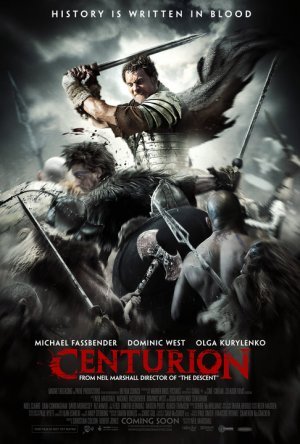
*Centurion Neil Marshall is the kind of filmmaker who inspires glee among horror and action junkies, but indifference among mainstream moviegoers. Centurion isn’t likely to change this. It’s the second century, and Romans are invading what’s now the Scottish Highlands, much to the displeasure of the Picts, the tribal people who’re already living there. Enter Quintus Dias (Michael Fassbender), a Roman soldier who becomes the de facto leader of an ever-shrinking group of men trapped behind enemy lines after their general (The Wire‘s Dominic West) is captured. Devotees of Marshall (2002’s Dog Soldiers, 2005’s The Descent, 2008’s Doomsday) will recognize certain elements: an ensemble cast, a military setting, the presence of a fierce female (Bond heroine Olga Kurylenko, who makes Pict warrior drag both spooky and sexy). Unlike his earlier films, though, there’s no supernatural twist; it’s just good old battlefield guts and gore. Sure, the romantic subplot feels a little forced, but this is genre filmmaking in its purest form, to be celebrated with gusto by those who appreciate grisly decapitations and the like. (Read my interview with Marshall at www.sfbg.com/pixel_vision.) (1:39) (Eddy)

The Concert (1:47)

Despicable Me Judging from the adorable, booty-shaking, highly merchandisable charm of its sunny-yellow Percocet-like minions, Despicable Me‘s makers have more than a few fond memories of the California Raisins. That gives you an idea of the 30-second attention-span level at work here. Thanks to Pixar and company, our expectations for animated features are high, but despite the single lob at Lehman Brothers aimed toward the grown-ups, the humor here is pitched straight at the eight and younger crowd: from the mugging, child-like minions to the all-in-good-fun, slightly quease-inducing 3-D roller-coaster ride. Gru (Steve Carell) is Despicable‘s also-ran supervillain — a bit too old and too unoriginal for a game that’s been rigged in the favor of the youthful, annoyingly perky Vector (Jason Segel), who’s managed to swipe the Giza Pyramids and become the world’s number one bad dude. When Vector steals away the crucial shrink ray needed for Gru’s plot to thieve the moon, the latter pulls out the big guns: three adorable orphans who have managed to penetrate Vector’s defenses with their fund-raising cookie sales. It turns out kids have their own insidiously heart-warming way of wrecking havoc on one’s well-laid plans. Filmmakers Pierre Coffin and Chris Renaud do their best to exploit the 3-D medium, but Avatar (2009) this is not. Nor will many adults be able to withstand the onslaught of cute undertaken by all those raisins, I mean, minions. (1:35) (Chun)

Dinner for Schmucks When he attracts favorable notice and a possible promotion from his corporate boss, Tim (Paul Rudd) is invited to an annual affair in which executives compete to see who can dig up the freakiest loser dweeb for everyone to snicker at. He literally runs into the perfect candidate: Barry (Steve Carrell), an IRS employee whose hobby is making elaborate tableaux with stuffed dead nice in tiny human clothes. He’s also the sort of person who, in trying to be helpful, inevitably wreaks havoc on the unlucky person being helped. Which means the 24 hours or so before the “Biggest Idiot” contest provide plenty of time for well-intentioned Barry to nearly destroy Tim’s relationship with a girlfriend (Stephanie Szostak), reunite him with Crazy Stalker Chick (Lucy Punch), and imperil his wooing of a multimillion-dollar account. Director Jay Roach (of the Austin Powers and Meet the Fockers series) has a full load of comedy talent on board here. So why are the results so tepid? This remake softens the bite of Francis Veber’s 1998 original French The Dinner Game by making Tim not a yuppie scumbag but a nice guy who just happens to have a jerk’s job (his company seizes ailing firms and liquidates them), and who doesn’t really want to expose hapless Barry to humiliation. But even with that satirical angle removed and a wider streak of sentimentality, it should cough up more laughs than it does. (1:50) (Harvey)

Dogtooth A man, his wife, and their three children live in a country house with a swimming pool and a huge yard enclosed by a high fence. So far, so good. But the kids, who don’t have names, appear to be in their 20s. They’ve never left the property, and they won’t, Dad (Christos Stergioglou) says, until they lose a “dogtooth,” at which time they’ll be mature enough to deal with the terrors of the outside world. In the meantime, they’re trapped in the only world they’ve ever known, carefully constructed by their domineering father. Greek writer-director Yorgos Lanthimos, who picked up the Prize Un Certain Regard at Cannes for this slice of disturbing domesticity, offers little explanation for Dad’s motives, or why Mom (Michelle Valley) goes along with his plan. The only hint comes from one of few scenes set outside the family’s compound, in which Dad goes to check on the progress of the family’s soon-to-be new dog. “Dogs are like clay, and our job here is to mold them,” the trainer explains. “Every dog is waiting for us to show it how to behave.” Indeed. It’s pretty clear Dad — master of his own private North Korea — is aware of that concept. Though Dogtooth‘s main themes enfold cruelty and child abuse, it also deploys the kind of black humor and button-pushing that fans of shock-trader Harmony Korine would appreciate. There is casual violence, extreme animal cruelty, full-frontal nudity, several disturbing sex scenes, and maybe the most alarming dance routine ever captured on film. (1:36) (Eddy)

Eat Pray Love The new film based on Elizabeth Gilbert’s chart-busting memoir, Eat Pray Love, benefits greatly from the lead performance by Julia Roberts, an actor who can draw from her own reserves of pathos when a project has none of its own. The adaptation, about a whiny American author farting around the globe in search of what amounts to spiritual room service, is nothing without her. The journey begins with the Type-A, book contract-inspired premise that Gilbert will travel to three appointed countries over the course of a year in order that, having thrice denied herself absolutely nothing, she might come out the other end a better-balanced human being. The first stop is Italy, where her entire plan is to finally unbutton her jeans and indulge in a celebrated cuisine, as if her home base of Manhattan were a culinary backwater. But this film is all about tired equivalencies, so Italy equals food, and expressive hand gestures, and “the art of doing nothing.” India, her next stop, equals enlightenment (her discovery that the guru she’s come to see is currently at an ashram in New York is an irony lost on the movie). And Bali, her final getaway, apparently equals contradictory but flattering aphorisms and thematically hypocritical romances. The sole appeal to a moviegoer here is aspirational. What’s so embarrassing about Eat Pray Love is its insistence that this appeal sprouts from the spiritual quest itself, and not just from the privilege that enables Gilbert to have such an extravagant quest in the first place. But then, self-awareness is supposed to be a obstacle to enlightenment. She’s got nothing to worry about there. (2:30) (Jason Shamai)

The Expendables Exactly what you’re expecting: a completely ludicrous explosion-o-thon about mercenaries hired by Bruce Willis to take down a South American general who’s actually a puppet for evil CIA agent-turned-coke kingpin Eric Roberts. Clearly, Sylvester Stallone (who directed, co-wrote, stars, and even coaxed a cameo out of Schwarzenegger) knows his audience, but The Expendables — bulging with a muscle-bound cast, including Dolph Lundgren, Terry Crews, Jason Statham, and Steve Austin, plus Jet Li, who suffers many a short-guy joke — is content to simply tap every expected rung on the 80s-actioner homage ladder. There’s no self-awareness, no truly witty one-liners, no plot twists, and certainly no making a badass out of any female characters (really, couldn’t the South American general’s daughter have packed some heat, or kicked someone in the balls — anything besides simply heaving her cleavage around?) The only truly memorable thing here is the inclusion of Mickey Rourke as Stallone’s tattoo-artist pal; I would possibly wager that Rourke was allowed to write his own weepy monologue, delivered in a close-up so extreme it’s more mind-searing than any of the film’s many machine-gun brawls. (1:43) (Eddy)

The Extra Man The polar opposite of buddy cop action flicks and spoofs a la The Other Guys, with only a faint resemblance to the bromances of Judd Apatow, Adam McKay, Will Ferrell, Seth Rogen, and so on, The Extra Man is a gently weird throwback to another era, much like its title character, Henry Harrison (Kevin Kline). Sweet, cross-dressing-curious teacher and would-be writer Louis Ives (Paul Dano) is drifting though life passively when he stumbles on eccentric playwright Harrison’s room-for-let and his oddball realm of hangers-on. A blustery, prickly, proudly misogynistic collector of Christmas balls, given to spasms of improvisational dancing, Harrison relishes his role as an escort to aged socialites, crankily shucking and jiving to score invites to fancy dinner parties and vacation homes in Florida. When Ives isn’t courting environmental magazine editor Mary (Katie Holmes) or hiding from the fearsome-looking wooly recluse Gershon (John C. Reilly), the mentor-able young man turns out to be more adept at the role than Harrison ever imagined. And like fossilized grande dames in Chanel, literate audiences also might be charmed by director-writer Shari Springer Berman’s unassuming, crushed-out bon mot, based on the novel by Jonathan Ames, to a few mannered, less-than-examined, happily twisted New York City subcultures. (1:45) (Chun)

Flipped I’m sure a “he said/she said” film exists that makes good on the premise, but Rob Reiner’s Flipped doesn’t quite cut it. Nestled safely in 1960s small-town America, the film is first narrated by Bryce, an eighth grader who’s spent the past four years rebuking the advances of Juli, the girl who lives across the street. Bryce is a pretty typical boy, bumbling and unsure of just what he wants, but soon the story “flips” and we see the same events narrated from Juli’s POV. Juli is drawn to Bryce’s “sparkling eyes,” yes, but with a poor family and an annoyingly sincere love for life, she has problems outside of lusting for Bryce. Based on a tween-hit novel by author Wendelin Van Draanen, the story’s familiarity perhaps stems from the source material — in my experience those sorts of novels rarely invite readers older than high school — and similarly in the case of Flipped, I think this might be something we should leave to the kids. (1:30) (Galvin)

Get Low Born from the true story of Felix Bush, an eccentric Tennessee hermit who invited the world to celebrate his funeral in advance of his own death, Get Low is a loose take on what might inspire a man to do a thing like that. It’s a small story, and unlikely to attract the attention of popcorn-addled viewers in the midst of the summer blockbuster season, but Get Low has a whopper of a character in Felix Bush. Robert Duvall becomes Bush, constructing a quiet man who sees it all and speaks only when he has something to say, and supporting roles from Sissy Spacek and Bill Murray are expectedly solid, but the real surprise is what a strong eye director Aaron Schnieder has. In allowing scenes to unfold on their own terms and in their own time, Schneider gives a real humanity to what could have been a Hallmark movie. (1:42) (Galvin)

*The Girl Who Played With Fire Lisbeth Salander is cooler than you are. The heroine of Stieg Larsson’s bestselling book series is fierce, mysterious, and utterly captivating: in the movie adaptations, she’s perfectly realized by Noomi Rapace, who has the power to transform Lisbeth from literary hero to film icon. Rapace first impressed audiences in The Girl With the Dragon Tattoo (2009), a faithful adaptation of Larsson’s premiere novel, and she returns as Lisbeth in The Girl Who Played With Fire. The sequel, as is often the case, isn’t quite on par with the original, but it’s still a page-to-screen success. And while the first film spent equal time on journalist Mikael Blomkvist (Michael Nyqvist), The Girl Who Played With Fire is almost entirely Lisbeth’s story. Sure, there’s more to the movie than the hacker-turned-sleuth — and the actor who plays her — but she carries the film. Rapace is Lisbeth; Lisbeth is Rapace. I’d watch both in anything. (2:09) Smith Rafael. (Peitzman)

Going the Distance If you live in San Francisco, don’t try to date someone in New York. It’s just not worth the hassle. But hey, maybe you’re as adorable as Drew Barrymore, and your boyfriend’s as charming as Justin Long — you can’t be expected to let a little geographical complication get in the way. That’s the driving force behind Going the Distance, a romcom that stars real-life couple Barrymore and Long as Erin and Garrett, two crazy kids trying to make it work cross-country. In many ways, the film is your standard boy-meets-girl story, but it’s cute enough that the predictability factor doesn’t really matter. The cast is universally strong, with bonus points to the standouts: It’s Always Sunny in Philadelphia‘s Charlie Day as Garrett’s embarrassing roommate, and Christina Applegate as Erin’s germaphobe sister. The humor is surprisingly sharp — and raunchy, which earned Going the Distance an R-rating. I’m not going to say Long’s bare ass is worth the price of admission, but it’s certainly a selling point. (1:43) (Peitzman)

Highwater The latest from the first family of surf movies comes courtesy of Dana Brown (2003’s Step Into Liquid), son of Bruce (1964’s The Endless Summer) and father of Wes (an up-and-comer who co-edited Highwater). The film focuses on Oahu’s legendary North Shore — “the one path all surfers must take,” per Dana’s occasionally woo-woo narration — and the annual big-wave contests held there each year. Though the majority of screen time is (of course) taken up by sweeping, slo-mo shots of pros tangling with looming walls of water, Highwater reaches out to civilian audiences with sidebars on the North Shore’s eccentric local culture, the science behind the 10-mile beach’s massive waves, and profiles of the sport’s more colorful characters. Brown is also careful to highlight the growing amount of women in the sport, who surf the exact same breaks as the men but earn far less prize money for it. Diehards might notice events in the film feel a bit dated, and indeed, Highwater was shot in 2005. But since surfers operate under the assumption that “one wave can make a person’s career” (especially if it’s captured on film), there’s presumably no sell-by date violation here. (1:30) (Eddy)

Inception As my movie going companion pointed out, “Christopher Nolan must’ve shit a brick when he saw Shutter Island.” In Nolan’s Inception, as in Shutter Island, Leonardo DiCaprio is a troubled soul trapped in a world of mind-fuckery, with a tragic-vengeful wife (here, Marion Cotillard) and even some long-lost kids looming in his thoughts at all times. But Inception, about a team of corporate spies who infiltrate dreams to steal information and implant ideas, owes just as much to The Matrix (1999), Eternal Sunshine of the Spotless Mind (2004), and probably a James Bond flick or two. Familiar though it may feel, at least Inception is based on a creative idea — how many movies, much less summer blockbusters, actually require viewer brain power? If its complex house-of-cards plot (dreams within dreams within dreams) can’t quite withstand nit-picking, its action sequences are confidently staged and expertly directed, including a standout sequence involving a zero-gravity fist fight and elevator ride. Though it’s hardly genius — and Leo-recycle aside — Inception is worth it, if you don’t mind your puzzle missing a few pieces. (2:30) (Eddy)

Jean-Michel Basquiat: The Radiant Child In 1986, filmmaker Tamra Davis was six years away from her breakthrough (1992’s Guncrazy; she also made 1998’s Half Baked and 2002 Britney Spears misfire Crossroads, and is married to one of the Beastie Boys). But she was already friends with artist Jean-Michel Basquiat, then at the height of his career. He died two years later of a heroin overdose, equally shaken by close friend Andy Warhol’s death and the pressures of his own skyrocketing fame. This tender doc weaves Davis’ 1986 interview with a low-key Basquiat (shot in a Beverly Hills hotel room) with recollections from his New York City circle (girlfriends, gallery owners, fellow artists, art critics). Though his art-world rise was breathtaking — he went from graffiti-scrawling kid to a hip painter whose works sold for hundreds of thousands (and now, multi-millions) — Davis’ doc suggests it was too much, too soon, creating distractions that first interfered with his creativity, then his well-being. Even if you don’t care for his art, Radiant Child is a compelling, insidery look at the dark side of celebrity. (1:34) (Eddy)

*Joan Rivers: A Piece of Work Whether you’re a fan of its subject or not, Ricki Stern and Annie Sundberg’s documentary is an absorbing look at the business of entertainment, a demanding treadmill that fame doesn’t really make any easier. At 75, comedian Rivers has four decades in the spotlight behind her. Yet despite a high Q rating she finds it difficult to get the top-ranked gigs, no matter that as a workaholic who’ll take anything she could scarcely be more available. Funny onstage (and a lot ruder than on TV), she’s very, very focused off-, dismissive of being called a “trailblazer” when she’s still actively competing with those whose women comics trail she blazed for today’s hot TV guest spot or whatever. Anyone seeking a thorough career overview will have to look elsewhere; this vérité year-in-the-life portrait is, like the lady herself, entertainingly and quite fiercely focused on the here-and-now. (1:24) (Harvey)

*The Kids Are All Right In many ways, The Kids Are All Right is a straightforward family dramedy: it’s about parents trying to do what’s best for their children and struggling to keep their relationship together. But it’s also a film in which Jules (Julianne Moore) goes down on Nic (Annette Bening) while they’re watching gay porn. Director Lisa Cholodenko (1998’s High Art) co-wrote the script (with Stuart Blumberg), and the film’s blend between mainstream and queer is part of what makes Kids such an important — not to mention enjoyable — film. Despite presenting issues that might be contentious to large portions of the country, the movie maintains an approachability that’s often lacking in queer cinema. Of course, being in the gay mecca of the Bay Area skews things significantly — most locals wouldn’t bat an eye at Kids, which has Nic and Jules’ children inviting their biological father (“the sperm donor,” played by Mark Ruffalo) into their lives. But for those outside the liberal bubble, the idea of a nontraditional family might be more eye-opening. It’s not a message movie, but Kids may still change minds. And even if it doesn’t, the film is a success that works chiefly because it isn’t heavy-handed. It refuses to take itself too seriously. At its best, Kids is laugh-out-loud funny, handling the heaviest of issues with grace and humor. (1:47) (Peitzman)

The Last Exorcism Latest in a long line of Louisiana preachers, genial extrovert Cotton Marcus (Patrick Fabian) isn’t even sure he believes in God anymore — but it’s the family business, and it’s a living. He definitely doesn’t believe in demonic possession, yet has presided over many an “exorcism” if only to fool the psychologically damaged into thinking they’re “cured” of delusional ails. But now he’s decided such hijinks might be more harmful than helpful. So to debunk the whole idea, he takes a documentary filmmaking crew on one last “soul-saving” trek, answering a desperate letter from a widowed farmer (Louis Herthum) whose 16-year-old daughter (Ashley Bell) is believed possessed. Cotton deploys theatrical tricks to rig an alleged purging of Satan’s minion. And it works … but this wouldn’t be a horror movie if that rationalist triumph didn’t turn out to be a false finish, followed by all kinds of inexplicable WTF. German director Daniel Stamm’s first English-language feature (written by Huck Botko and Andrew Gurland) is being positioned by Lionsgate as the next viral word-of-mouth horror sensation a la prior faux-docs The Blair Witch Project (1999) and Paranormal Activity (2007). But the “reality” illusion is more transparent here. Despite some clever buildup tactics, okay twists, and a handful of scares, this ultimately disappoints — a preview audience’s catcalls at its underwhelming fadeout suggested there will be no Last Exorcism 2. (1:27) (Harvey)

Lebanon Das Boot in a tank” has been the thumbnail summary of writer-director Samuel Maoz’s film in its festival travels to date, during which it’s picked up various prizes including a Venice Golden Lion. On the first day of Israel’s 1982 invasion (which Maoz fought in), an Israeli army tank with a crew of three fairly green 20-somethings — soon joined by a fourth with even less battle experience — crosses the border, enters a city already halfway reduced to rubble, and promptly gets its inhabitants in the worst possible fix, stranded without backup. Highly visceral and, needless to say, claustrophobic (there are almost no exterior shots), Lebanon may for some echo The Hurt Locker (2009) in its intense focus on physical peril. It also echoes that film’s lack of equally gripping character development. But taken on its own willfully narrow terms, this is a potent exercise in squirmy combat you-are-thereness. (1:33) Smith Rafael. (Harvey)

The Life and Times of Allen Ginsberg Here’s your chance to get to know the late poet before he’s portrayed by non-doppelgänger James Franco in the upcoming Howl. Whereas Howl, title drawn from his most famous and controversial creation, focuses on Ginsberg’s 1957 obscenity trial, Jerry Aronson’s 1994 doc offers a more sweeping take on his life. Friends and relatives (in both new and archival interviews), home-movie footage and photographs, talk show excerpts (William F. Buckley: so not down with the counterculture), and the man himself (reading his work, powerfully) help piece together what was undeniably a passionate and remarkable existence. (1:22) Roxie. (Eddy)

Lottery Ticket (1:39)

*Machete Probably the first movie that was initially conceived solely as a fake-movie trailer (as part of Quentin Tarantino and Robert Rodriguez’s 2007 Grindhouse), Rodriguez’s Machete emerges in full-length form to take on everyone’s sky-high expectations. I mean, the trailer promised motorcycles soaring through flames, a gun-toting priest, and the line “You just fucked with the wrong Mexican.” Fortunately, Machete the film does Machete the trailer proud; its deliberately silly revenge plot is both spot-on vintage homage and semi-serious commentary on America’s ongoing immigration debate. In addition, it features more severed limbs, gunshots to the head, irresponsible sex, and smirking Steven Seagal close-ups than any other movie in recent memory. Frequent Rodriguez supporting player Danny Trejo pretty much kills it as the title badass — but then, you already knew he would. (1:45) (Eddy)

*Mao’s Last Dancer Based on the subject’s autobiography of the same name, this Australian-produced drama chronicles the real-life saga of Li Cunxin (played as child, teen, and adult by Huang Wen Bin, Chengwu Guo, and Chi Cao), who was plucked from his rural childhood village in 1972 to study far from home at the Beijing Dance Academy. He attracted notice from Houston Ballet artistic director Ben Stevenson (Bruce Greenwood) during a cultural-exchange visit, and was allowed to go abroad for a Texas summer residency. At first the film looks headed toward well-handled but slightly pat inspirational territory pitting bad China against good America, as it cuts between Li’s grueling training by (mostly) humorless Party ideologues, and his astonishment at the prosperity and freedom in a country he’d been programmed to believe was a capitalist hellhole of injustice and deprivation. (Though as a Chinese diplomat cautions, not untruthfully, he’s only been exposed to “the nice parts.”) Swayed by love and other factors, Li created an international incident — tensely staged here — when he chose to defect rather than return home. But Jan Sardi’s script and reliable Aussie veteran Bruce Beresford’s direction refuse to settle for easy sentiment, despite a corny situation or two. Our hero’s new life isn’t all dream-come-true, nor is his past renounced without serious consequence (a poignant Joan Chen essays his peasant mother). The generous ballet excerpts (only slightly marred by occasional slow-mo gimmickry) offer reward enough, but the film’s greatest achievement is its honestly earning the right to jerk a few tears. (1:57) (Harvey)

*Mesrine: Killer Instinct This first half of a two-part film about notorious French bank robber Jacques Mesrine examines the early life of its subject, before he was a flamboyant, headline-grabbing folk hero. The very first scene uses 70s-style split-screens to revel Mesrine’s violent 1979 death; writer-director Jean-François Richet (2005’s Assault on Precinct 13) then jumps back 15 or so years for a glimpse of our (anti-) hero’s soldiering days in Algeria. Before long, “Jacky” (an outstanding Vincent Cassel, in a César-winning performance) is back in Paris, horrifying his upper-class parents and young wife by choosing the underworld over conventional pencil-pushing. (A near-unrecognizable Gérard Depardieu appears as a mob boss.) Killer Instinct, which is adapted from Mesrine’s own prison-penned autobiography, suffers from some standard biopic problems — it tries to cram in too much, and feels mighty rushed at times. But there’s still plenty of bad, bad behavior to enjoy, including the film’s spectacular last act, a breakneck recreation of one of the daring prison escapes that helped make Mesrine a legend. Continuation Mesrine: Public Enemy No. 1, which beings where this film ends, is now playing. (1:53) (Eddy)

*Mesrine: Public Enemy No. 1 If you see writer-director Jean-François Richet’s Mesrine: Killer Instinct (review below), you’re pretty much obligated to see this sequel, especially since the earlier film beings with the main character’s death, then flashes back and never catches up to it. This installment was actually filmed first, allowing star Vincent Cassell to pack on nearly 50 pounds to play the oldier, portlier version of the legendary French bank robber. Mesrine’s prowess as an escape artist allows him to spend much of this film on the lam with partner François (Mathieu Amalric) and girlfriend Sylvia (Ludivine Sagnier). Along the way, the headline-hungry crook declares himself a revolutionary, poses for Paris Match, kidnaps a billionaire, spends his ill-gotten money on diamonds and BMWs, tortures a journalist, and does as much as he can to further the Myth of Mesrine. The foreknowledge of Mesrine’s ultimate end lends a sense of ticking-clock doom; the first time we see it, in Killer Instinct, it’s from the point of view of Mesrine and Sylvia. Richet films the death scene here from the perspective of the police who tracked him, with increasing frustration, for years. Clever twists like this make it preferable to watch both films back-to-back, though Cassell’s commanding performance makes each a worthwhile stand-alone. (2:14) (Eddy)

Nanny McPhee Returns Emma Thompson is back as the titular Mary Poppins type who’s far from practically perfect, her extreme case of the uglies lessening whenever children in her charge learn a “lesson.” The family in need this time belongs to harried Isabel Green (Maggie Gyllenhaal, trying a little too hard like everyone here), who’s got way more than she can handle raising three unruly children and running an English farm while her husband’s away fighting World War II. Making matters worse is the arrival of a horribly bratty nephew and niece fleeing the London Blitz, not to mention the constant pestering of a brother-in-law (Rhys Ifans) who wants the farm sold to cover his secret gambling debts. Enter guess who, restoring order and civility with the thump of her magic walking stick. The first Nanny McPhee (2005) movie, adapted from Christianna Brand’s children’s books by Thompson and directed by Kirk Jones, was an old-fashioned delight adults could thoroughly enjoy. This sequel, again written by Thomson though directed by Susanna White, is roughly what Babe: Pig in the City (1998) was to the original Babe (1995): something endearingly simple and charming turned shrill, overproduced, and charmless, with way too many CGI animals doing stupid things (like porcine synchronized swimming). It’s bad enough that Ralph Fiennes and Ewan McGregor — no doubt beguiled by the earlier film — chose to do thankless cameos in such dross. But it’s pretty unforgivable that Dame Maggie Smith should suffer a career nadir as a senile old dear who at one point happily plops down on a big pat of cow shit. (1:48) (Harvey)

The Other Guys Will Ferrell and Adam McKay can do no wrong in some bro-medy aficionados’ eyes, but The Other Guys is no Talladega Nights: The Ballad of Ricky Bobby (2006) or Anchorman: The Legend of Ron Burgundy (2004). The other two Ferrell-McKay team-ups made short work of men’s jobs, in addition to genre filmmaking tropes, with crisper, cut-to-the-gag punchiness. And despite its laugh-out-loud first quarter — and some surprising TLC references by Michael Keaton, of all people, The Other Guys is about half a genuinely hilarious film that pokes fun at masculinity, as well as, interestingly, whiteness and beyond-the-pale, big-bucks white-collar crime. This lampoon of action buddy-cop flicks is dealt a semi-fatal blow when excess-loving, damage-dealing supercops Samuel Jackson and Dwayne Johnson exit, manically chewing scenery as they go. Two forgotten desktop jocks, forensic accounting investigator-with-a-past Allen (Ferrell) and ragaholic screwup Terry (Mark Wahlberg), must step it up when the dynamic duo dissipates, and go after crooked financier David Ershon (Steve Coogan). The second half of The Other Guys could have used some of the dramatic tension budding between buddy team Jackson-Johnson and reluctant cohorts Ferrell-Wahlberg, especially when Wahlberg begins to get bogged down in single-gear disbelief. But perhaps we should just be grateful for what few yuks we can glean from the atrocities of Great Recession-era robber barons. (1:47) (Chun)

The People I’ve Slept With Legions of walk-ons lay claim to the title role in the latest from Quentin Lee (1997’s Shopping for Fangs). The People I’ve Slept With‘s heroine, late-twentysomething L.A. dweller Angela (Karin Anna Cheung), leads a life of qualm-free sexual rapaciousness. That is, until the day when she finds herself — whether owing to a drunken bout of bad judgment or a breakdown in latex technology — pregnant, perplexed in regard to the issue of paternity, and forced to consult the thick stack of homemade baseball-style trading cards with which she documents her sexploits, using descriptive monikers and salient stats. Is Daddy dildo-lovin’ Mr. Hottie from down the hall? The smarmy gent with whom she briefly exchanged intimacies in the bathroom of a bar, a.k.a. Five-Second-Guy? Or the most appealing and least absurd contender, a local politico dubbed Mystery Man? Nothing in Angela’s track record suggests that the answer should matter as much as the location of the nearest Planned Parenthood clinic, but as in Knocked Up (2007), if it was less inexplicable, it would be a much shorter film. Instead, Angela, with the help of her snarky, romantically challenged gay BFF Gabriel (Wilson Cruz), sets off in pursuit of DNA samples from the likeliest candidates and, with slightly unhinged optimism, starts planning her nuptials. These events offer some very mild comedy and the occasional gross-out gag; the film’s maneuverings as Angela fumbles toward a position on motherhood, slutdom, and constructing the perfect life are sweet, earnest, and a little clumsy. (1:29) Viz Cinema. (Rapoport)

Piranha 3D (1:29)

Salt Angelina Jolie channels the existential crisis of Jason Bourne and the DIY spirit of MacGyver in a film positing that America’s most pressing concern is extant Russian cold warriors, who are plotting to reestablish their country’s pre-glasnost glory via nuclear holocaust and a Dark Angel–style army of spy kids. Jolie plays CIA agent Evelyn Salt, a woman who can stymie the top-shelf surveillance system at work using her undergarments and fashion a shoulder-mounted rocket out of interrogation-room furniture and cleaning supplies. These talents surface after Salt is accused of being a Russian operative in league with the aforementioned disturbers of the new world order and takes flight, with her agency coworkers (Liev Schreiber and Chiwetel Ejiofor) in hot pursuit. What ensues is a vicious and confounding assault on the highest levels of the U.S. government, most known rules of logic, and the viewer’s patience and powers of suspending disbelief. Salt’s off-the-ranch maneuverings are moderately engaging, particularly in the first leg of the chase, but clunky expository flashbacks, B-movie-grade dialogue, and an absurd plotline slow the momentum considerably. (1:31) (Rapoport)

*Scott Pilgrim vs. The World For fans of Bryan Lee O’Malley’s just-completed comics saga Scott Pilgrim, the announcement that Edgar Wright (2004’s Shaun of the Dead, 2007’s Hot Fuzz) would direct a film version was utterly surreal. Geeks get promises like this all the time, all too often empty (Guillermo del Toro’s Hobbit, anyone?). But miraculously, Wright indeed spent the past five years crafting the winning Scott Pilgrim vs. the World. The film follows hapless Toronto 20-something Scott Pilgrim (Michael Cera), bassist for crappy band Sex Bob-omb, as he falls for delivery girl Ramona Flowers (Mary Elizabeth Winstead), only to find he must defeat her seven evil exes — like so many videogame bosses — before he can comfortably date her. As it happens, he’s already dating a high-schooler, Knives (Ellen Wong), who’s not coping well with Scott moving on. Cera plays a good feckless twerp; his performance isn’t groundbreaking, but it dodges the Cera-playing-his-precious-self phenomenon so many have lamented. The film’s ensemble cast maintains a sardonic tone, with excellent turns by Alison Pill, Aubrey Plaza, and newcomer Wong. Jason Schwartzman is perfectly cast as the ultimate evil ex-boyfriend — there’s really no one slimier, at least under 35.The film brilliantly cops the comics’ visual language, including snarky captions and onomatopoetic sound effects, reminiscent onscreen of 1960s TV Batman. Sometimes this tends toward sensory overload, but it’s all so stylistically distinctive and appropriate that excess is easily forgiven. (1:52) (Sam Stander)

Soul Kitchen Director Fatih Akin (2004’s Head-On) offers a tribute to the German Heimat (“homeland”) film, as well as to his own hometown, Hamburg, with this gritty comedy set in a restaurant dubbed Soul Kitchen. Star Adam Bousdoukos, who co-wrote the script with Akin, really did own a similar greasy spoon, and his knowledge of what makes an eatery soar or fail is exaggerated here to humorous and occasionally surreal effect. Bousdoukos’ character, the scruffy Zinos, loves funk music; he’s also in an existential funk, having just seen his girlfriend move to Shanghai. What’s worse, he’s just injured his back, necessitating the hiring of snooty chef Shayn (Head-On‘s Birol Ünel); his ne’er-do-well brother (Moritz Bleibtreu) is freshly out of jail; and he owes big bucks to the local tax board. Also, an old childhood pal turned sleazy businessman (Wotan Wilke Möhring) is circling his property with sharky hunger. Will everything that can possibly go wrong, go wrong, with a side of ketchup and mayonnaise? Of course it will. Stylish direction and a game cast, including winning newcomer Anna Bederke as Zinos’ shot-gulping waitress, make Soul Kitchen a fun if non-essential diversion. (1:33) Smith Rafael. (Eddy)

Step Up 3D The third installment of the Step Up enterprise graduates performing arts high school and moves to the sidewalks, rooftops, and warehouses of New York City, as well as the occasional venue — part underground club, part ad-plastered sports arena — where packs of street dancers battle and mop up the floor with their rivals, employing only the weaponry of a fierce routine. That, and the fast-forward button in the editing suite — beyond drop kicks and droplets of water coming out of the screen at your face, Step Up 3D unabashedly adopts the choreographed F/X of contemporary action films, manipulating footage to make the dancers look like nimble, ferocious, supernatural creatures with a youthful disdain for gravity and the space-time continuum. There is a plot of sorts, involving a crew called the Pirates; their fearless leader Luke (Rick Malambri); his mysterious lady friend Natalie (Sharni Vinson); an NYU freshman named Moose (Adam Sevani of 2008’s Step Up 2: The Streets), who was, in Luke’s oft-repeated words, “born from a boombox” (or BFAB); and the warehouse wonderland where the Pirates live and train, amid a decor of tape-deck-womb walls and galleries of limited-edition sneakers. It’s best, though, not to follow along too closely on the rare occasions when director Jon Chu (Step Up 2) mistakenly lets more than four lines of earnest dialogue stack up without a dance-scene intervention. The near-continuous wave of choreographed outbursts is like eye candy injected with multiple shots of 5-Hour Energy drink, but those who flinch at the idea of Auto-Tuning dance performance may want to stay home and rent 2000’s Center Stage. (1:46) (Rapoport)

*The Switch Has any hard-working actor ever made as many mediocre, albeit vigorously marketed, movies as Jennifer Aniston? It seems like an age since her last good one, Nicole Holofcener’s Friends with Money (2006), though some might go as far back as 2002’s The Good Girl, her dramatic and cinematic breakthrough. Perhaps that dry spell seems extra long due to Aniston’s tabloid overexposure, or maybe it’s just the feeble conceits (a la 2009’s Love Happens) that Aniston allows herself to get roped into. In any case, armed with a sharp script based on a Jeffrey Eugenides short story and a less-than-perfect but comically well-equipped everyman foil in Jason Bateman, The Switch turns out to be a refreshing break from Aniston’s run of predictability: it’s actually good, girl (if a bit far-fetched that even a neurotic, successful financial whiz could be so emotionally constipated). Heeding her biological alarm clock over the objections of best friend Wally (Bateman), Kassie (Aniston) decides to get artificially inseminated by handsome, smart, and charming donor Roland (Patrick Wilson), but nothing goes according to plan when Wally gets wasted at her insemination party and — no use crying over spilled semen — woozily decides to substitute his own emissions for Roland’s. Funny, tender, heart-strings-tugging shenanigans ensue when Kassie returns to NYC after seven years with her adorable, neurotic mini-Wally Sebastian (Thomas Robinson). Bateman is as reliably excellent as ever. Blades of Glory (2007) directors Will Speak and Josh Gordon put care into the details — from the lighting, to the scene-swiping cameos by Juliette Lewis and Jeff Goldblum, to the on-point yet relatively realistic dialogue, and it shows, making this, along with The Kids Are All Right, a, ahem, seminal year for donor-coms. (1:56) (Chun)

*Takers Likely the best movie to be advertised on billboards all over Oakland in a while, Takers is one of those likeable, smart, and faintly ludicrous genre flicks — a gangsta B with a hip-hop heart, centered on a cadre of high-style, Rat Pack-like bank robbers — that redeems its playas all around. It gives T.I., in both starring and executive producer roles and tellingly emerging from the clink in his first scene, a career beyond the rap game and the pen: he’s a snottily charmismatic Little Caesar here, a slight, serpentine mini-Snoop. It gives the formidable Idris Elba (The Wire) as the group’s leader something to wrap his sonorous Cockney around as he plays off crack ‘ho sister (Marianne Jean-Baptiste) as if they were English-accented castaways on island L.A. It gives Paul Walker, the second-banana princeling of the urban action flick, something to do: namely function as Elba’s lieutenant. And it gives the benighted Chris Brown, who gets his share of fast-stepping glory via a nice, meaty chase scene, a way to recast and strive toward redeeming himself on the silver screen — while giving the little-girls-who-love-bad-boys something to scream about. See, something for everyone (except maybe Zoe Saldana, who gets saddled with the arm candy role). (1:57) (Chun)

*The Tillman Story To what extent is our government prepared to lie to us? Not just on a policy level, but a personal level, perverting actual instances of heroic self-sacrifice into propagandistic pablum? The answer during our prior White House administration was clearly: as far as possible, until caught. Perhaps the most egregious such instance was the case of Pat Tillman, who gave up a lucrative NFL contract, becoming a U.S. Army Ranger enlistee in a burst of genuine patriotic fervor post-9/11. He was subsequently killed in Afghanistan — but the “friendly fire” circumstances of that death, and its apparent cover-up, scandalized not only his military superiors but a command chain of deliberate disinformation stretching all the way to the White House. Amir Bar-Lev’s The Tillman Story is a documentary expose of unusual immediacy, narrative thrust, and outrage, which may partly stem from its being such a Bay Area story. The deceased subject’s South Bay family were diehard liberals dedicated to values that might be considered eccentric anywhere else. The mistake authorities made in casting Tillman’s death as a battlefield martyrdom — a scenario amply undermined by footage and testimony here — lay in underestimating the well-educated skepticism and doggedness of his blood relations, most notably mom, Mary. While other families might have simply accepted an official scenario, the Tillmans found logistical gaps, then pushed, and pushed. The Tillman Story is a journey toward justice (if not nearly enough). It’s engrossing, appalling, heartrending, and enraging, the nonfiction equivalent to last year’s underseen body bag drama The Messenger. (1:34) (Harvey)

Vampires Suck (1:40)

The Wildest Dream: Conquest of Everest The Everest documentary has, by now, become a genre unto itself. It’s got its own tropes (sweeping shots of the mountain’s face, somber voice-over philosophizing about the human struggle with nature) and its own canon (topped, perhaps, by the harrowing 1998 IMAX hit Everest). The latest entry into this field is National Geographic Entertainment’s The Wildest Dream, which chronicles early-20th century explorer George Mallory’s lifelong — and ultimately life-ending — quest to reach Everest’s summit, and modern mountaineer Conrad Anker’s attempt to recreate his predecessor’s final climb. Director Anthony Geffen unfolds his tale in standard adventure-doc fashion. We get a lot of scratchy footage from Mallory’s climbs, a few risibly awkward dramatic re-creations, and quite a lot of portentous voiceover work. These are worn techniques, to be sure, but that doesn’t make the story told any less compelling. Mallory himself emerges as a particularly fascinating figure — a talented and charming scholar, a devoted husband, and an irresponsible, borderline suicidal obsessive. It’s a shame that we’re only able to observe him at a century’s distance. (1:33) (Zach Ritter)

*Winter’s Bone Winter’s Bone has already won awards at the Berlin International Film Festival and the Sundance Film Festival, but it’s the kind of downbeat, low-key, quiet film that may elude larger audiences (and, as these things go, Oscar voters). Like Andrea Arnold’s recent Fish Tank, it tells the story of a teenage girl who draws on unlikely reserves of toughness to navigate an unstable family life amid less-than-ideal economic circumstances. And it’s also directed by a woman: Debra Granik, whose previous feature, 2004’s Down to the Bone, starred Vera Farmiga (2009’s Up in the Air) as a checkout clerk trying to balance two kids and a secret coke habit. Drugs also figure into the plot of the harrowing Winter’s Bone, though its protagonist, Ree Dolly (Jennifer Lawrence), is faced with a different set of circumstances: her meth head father has jumped bail, leaving the family’s humble mountain home as collateral; the two kids at stake are her younger siblings. With no resources other than her own tenacity, Ree strikes out into her rural Missouri community, seeking information from relatives who clearly know where her father is — but ain’t sayin’ a word. It’s a journey fraught with menace, shot with an eye for near-documentary realism and an appreciation for slow-burn suspense; Lawrence anchors a solid cast with her own powerful performance. Who says American independent film is dead? (1:40) (Eddy)


Party Radar: Stereo Total, Sabo, Cam, Dub Mission, more

0

Whoo! There’s a lot going on nightlifewise this long weekend. Besides the parties upon which I shined a woozy post-Canadian spotlight in this week’s Super Ego clubs column, here’s a few more great soirees at which you can work out your frustration or relief that you aren’t at Burning Man. The city is ours!

STEREO TOTAL

I caught the seminal ’90s dance-pop-punk, pan-European duo at Bimbo’s last year, with leslie and the Lys opening. Leslie was her usual oddball-amazeball whackadoodle self, but the Totals were a revelation. The place was packed, but even though there were only two of them, they enthralled the crowd with over-the-top mugging and anarchic, scenery-chewing live antics. And of course the infectious music turned into a massive singalong. Long story short: do not miss.

Thu/2, 9 pm, $18. Slim’s, 333 11th St., SF. www.slims-sf.com, www.stereototal.de 


BRAZA! FEATURING DJ SABO

NYC beatmaster Sabo has played to glorious acclaim at the Afrolicious and Tormenta Tropical parties, and SF crowds eat his Afro-Latin-tropical-hop beats up. (Does it help that he’s a total babe? Maybe for you — I would never even consider such a thing when evaluating a DJ’s skills.) For this month’s installment of the Braza! party, he’ll be laying down an all-Brazilian set to get your Ipanema jumpin’.

Fri/3, 10pm-3am, $10. SOM, 2925 16th St., SF. www.som-bar.com 


DJ CAM


The dreamy French hip-hopiste comes bearing surreal stoner grooves. (His new album Sevenincludes an appearance by reclusive house legend Nicolette!) Sway along with local bass-twister Mophono of mind-bending weekly Change the Beat and Carey Kopp.


Sat/4,10 pm–late, $10 advance. Mighty, 119 Utah, SF. www.mighty119.com 


PROJECT RUNTOVER

Those artsy-crafty drag queens behind weekly Friday night sensation Some Thing at the Stud (go there this week as well) are at it again, bringing their enormously fun — and actually quite genius,fashionwise –  parody of Project Runway to Cat Club. Sublebrity SF alternaqueer teams (pretty much everyone who’s anyone in the city) are given a series of surprise challenges and must use the club’s decorations to formulate a fab outfit. Then the model must perform a drag number in said outfit for judges. It’s a total hoot, and DJ Down-E helps you dance through it all.

Sat/4, 10pm-3:30am, $7. Cat Club, 1190 Folsom, SF. www.sfcatclub.com


DUB MISSION 14TH ANNIVERSARY


San Francisco’s original dub haven, this weekly joint always makes me smile while turning my head all spacey. Mission maestro DJ Sep welcomes Dr. Israel, Patch Dub, Katrina Blackstone, Turbo Sonidero Futuristico, and MC Mex Tape for a global-eared night of true vibes.

Sun/5, 9 pm, $10 advance. Elbo Room, 647 Valencia, SF. www.elbo.com


DJ DIZ

One of my favorite old(ish) school Chicago house DJs comes in for a special Sunday Sessions party at the EndUp. This one’s going til 5 folks, so bring a bottle of water and prepare to get souled-out, classic-style. With Dawn of Sound, Ryan Nyberg, Rick Preston and more.

Sun/5, 8pm-5am, $20. EndUp, 401 6th St., SF. www.theendup.com


Good enough, fella?

0

Here’s a game that piles on hot-rods, collectible Playboy centerfolds, piano joints with framed Bogie posters, and one instance of a full-fledged Sinatra sing-along. Mafia II (2K Czech/2K Games, Xbox 360/PS3/PC)is the sequel to 2004’s Mafia: The City of Lost Heaven, a well-received PC game that put players in the shoes of a cab driver as he rose through the ranks of the 1930s mafia. Its sequel mines similar Coppola and Scorsese territory, set this time in the 1940s and ’50s, as you play a young war vet looking to settle his late father’s debts.


The American war-era backdrop is a fantastic sandbox to play in: there are old-school billboards, decorative storefronts, and lavish little details like Christmastime snow slowly blowing away from your car as you drive down the street. But in the case of Mafia II, the freedom of the open world becomes largely an irrelevant means to an end: a set of roads that direct you to your next mission. There are really no side-quests to perform apart from stealing a few cars or hunting for Playboys, and even the old pastime of shooting it up with the cops is pretty unsatisfying. I spent most of my travel time with the cops trailing helplessly behind me. You have to wonder why the developers spent so much time creating an open world city that exists only to shuffle you from shootout to exposition.

Jack Scalici, director of production for developer 2K Games, told me that, for him, the story is the game’s most important aspect and he hopes that Mafia II‘s cinematic style will be best appreciated by film critics rather than traditional game journalists. The game does lend itself more to plot deconstruction than gameplay analysis, but unfortunately Mafia II doesn’t quite nail the story either.

The game’s scope is vast — it spans years as you leave the dreary 1940s for the sunny ’50s — but Mafia II never manages a truly satisfying character arc, content instead to putter along in standalone vignettes. The gangster lifestyle ain’t always shits and giggles and there are some fantastic little moments — jail yard fights, lugging a day-old dead body around in the trunk — but tension quickly fizzles, leaving the story a wildly inconsistent experience of highs and lows.

Actually, “wildly inconsistent” describes Mafia II to a T. Bum checkpoints, spiking difficulty, funky camera tics: it seems for every pro there’s a con. But if the aesthetic appeals to you, there’s enough play here to make the game worth a spin. I had a good time; the most promising games always get the most flak.

Our Weekly Picks: September 1-7, 2010

0

WEDNESDAY 1

FILM

“Oskar Fischinger Classics”

That one of cinema’s greatest modernists should have worked in animation is perhaps not so surprising — it’s the mode of film production most easily bent by a singular vision, in which aesthetic achievement is inextricable from mechanical innovation. Still, there’s no accounting for a genius like Oskar Fischinger, who channeled his knowledge of engineering, architectural design, and organ-building into his dense visual symphonies. Like many intellectual émigrés who fled Nazi Germany for Southern California, Fischinger found L.A.’s bottom-line culture inhospitable to his working methods. But a career-spanning program at the Pacific Film Archive reveals a master artisan who devised countless fresh ways to impress the rigor of form with sheer delight. (Max Goldberg)

7:30 p.m., $5.50–$9.50

Pacific Film Archive

2575 Bancroft, Berk.

(510) 642-1412

www.bampfa.berkeley.edu


EVENT

Ending Mountaintop Removal: Appalachian Activists in San Francisco

Another talk on humankind’s crusade to beat our planet to a bloody pulp is coming to town. But be forewarned: this ain’t no Sierra Club meeting. To save the last remaining mountaintop in their home from removal by coal mining corporations, the Appalachian community in Coal River Valley, W.V., (the name alone implies environmental havoc) has gone rogue — tree sittings, road blockades, and protests, leading to more than 150 arrests and exorbitant bail fees. Key activists from their group Climate Ground Zero have taken to the road to share the underreported story of their struggle. Raise a nonviolent fist in solidarity. (Caitlin Donohue)

7–9 p.m., $5–$10 donation suggested

Station 40

3030B 16th St., SF

(415) 235-0596

www.indybay.org

www.climategroundzero.org


THURSDAY 2

MUSIC

“On Land Festival”

Noise-waffle diehards, aural experimentalists, and, yes, Mills College students, have a world of ear-tugging wonder in store when Jefre Cantu-Ledesma’s and Maxwell Croy’s Root Strata label throws its second annual On Land music festival. “What I felt most happy about was the fact that the musicians thought it was really great,” Cantu-Ledesma said. “Not ‘blah, blah, blah,’ but a good response that really made it worth doing it another year.” This time they unearth a veritable treasure trove of juicy, internationally recognized undergroundlings, including some past residents of the Bay like Charalambides’ Tom Carter, Grouper’s Liz Harris, and Yellow Swans’ Pete Swanson. Top it off with the first West Coast appearance by New York’ Citys Oneohtrix Point Never (which put out the stirring Returnal not long ago and performs with live video by local artist Nate Boyce) and Zelienople, and you have something you might dub “must-see sounds” for the serious follower of well-grounded, out-there sounds. (Kimberly Chun)

Through Sun/5

7:30 p.m. (Sun/5 show at 6:30 p.m.), $10–$20 (four-show pass, $45)

Café du Nord and Swedish American Hall

2170 Market, SF

(415) 861-5016

www.cafedunord.com


EVENT

Arts Market SF

The Tenderloin-Civic Center neighborhood takes its knocks, but its rough exterior belies an urban work of art. Even historically speaking: Miles Davis blew his horn at the Blackhawk nightclub at the corner of Turk and Hyde streets and the Grateful Dead recorded American Beauty here. Today it’s one of the last remaining places in the city a real boho can afford to hunker down and throw paint at a canvas. So it makes perfect sense the hood hosts the city’s newest arts bazaar. Participating locals include T-shirt company the loin (which screens its wares in a nearby basement), plus jewelry artists, painters, and printers. Go to grow the artist network in our city’s hard knocks hub. (Donohue) Noon–8 p.m., free

U.N. Plaza

Market and Seventh, SF

www.artsmarketsf.org


FRIDAY 3

MUSIC

Terry Riley

At 75, “In C” composer Terry Riley is still capable of guiding several thousand souls in devotional listening. His caterwauling piano figures are anything but immobile, so it’s a dream to be able to move around during one of his concerts. Circling the Berkeley Art Museum during his last performance there, I came upon several unexpected pockets of resonance; for his part, Riley seemed perfectly calm, as if playing in his own private den (or geodesic dome, as the case may be). He returns for an encore performance tonight, again accompanied by his son Gyan on guitar, and once again for a bargain price. (Goldberg)

8 p.m., $7

Berkeley Art Museum

2626 Bancroft, Berk.

(510) 642-0808

www.bampfa.berkeley.edu


MUSIC

Miami Horror

Australian producer Benjamin Plant started out just a few short years ago as a remix artist and DJ in Melbourne, Australia, creating dance music inspired by ’70s disco and electronic soundtracks. The name said it all, really — Miami Horror. Since then, his quickly rising profile has sent Plant branching out (natch) into pop and making the inspired decision to tour with a live band. Having added the pizzazz of on-stage guitar and drums to the shimmery synths, Miami Horror isn’t just referencing the past any longer, it’s challenging contemporary dance acts to pick up the pace. (Peter Galvin)

With Parallels, Pance Party, and Eli Glad

9 p.m., $15

Mezzanine

444 Jessie, SF

(415) 625-8880

www.mezzaninesf.com


SATURDAY 4

DANCE

RAWDance

Lots of people, apparently, like watching dance in an almost-hidden space spawned from a ballroom hooking up with a bowling alley. RAWdance’s biannual Concept series has been smash hit ever since the first one in 2007. The idea is to informally present in-progress or excerpts from recent works on a pay-as-you-can, free-popcorn-and-coffee-and-snacks basis. Unfortunately, the current lineup — Holly Johnston, Lisa Townsend, Kelly Kemp, RAWdance, Catherine Galasso, and Laura Bernasconi/Carlos Ventura — may be one of the last. The James Howell Studio is on the market. Any suggestions for a new home for this nicely curated, always intriguing, and ever-so-welcoming dance series? (Rita Felciano)

Through Sun/5

8 p.m. (also Sun/5, 3 p.m.), pay what you can

James Howell Studio

66 Sanchez, SF

(415) 686-0728

www.rawdance.org


SUNDAY 5

MUSIC

Abe Vigoda

Once you get over the initial disappointment that this is not the actor Abe Vigoda opening for Cold Cave, I think you’ll be pleased to find an L.A. punk crew that plays a distinctly Caribbean style of punk — a lot of steel drums and reverbed guitars — and sounds like fellow Smell bands No Age and HEALTH while maintaining a personality very much their own. Abe Vigoda also exhibits something slightly unusual in the punk industry: a willingness to grow. Each subsequent record release has introduced new ideas into the band’s sound, from changes in tempo to exploring electronic textures. With a seemingly bright future, it’s possible that someday the band might even overtake the actor in popularity. Tell Abe it was only business; I always liked him. (Galvin)

With Cold Cave

9 p.m., $16

Great American Music Hall

859 O’Farrell, SF

(415) 885-0750

www.gamh.com


MONDAY 6

MUSIC

Panda Bear

One of the many mysteries of the intentionally mysterious Animal Collective is how the group’s later albums manage to make indie music so danceable. The man behind that particular mystery is Panda Bear (a.k.a. Noah Lennox), co-singer and sampling man, who seems to draw as much inspiration from electronic music as the ’70s psychedelia that is the Collective’s bread and butter. In his solo incarnation, Lennox tones down the grandiosity of his day job, drawing inspiration from the Beach Boys, R&B, and the widely eulogized hip-hop producer extraordinaire J Dilla to create a slower and more laid back atmosphere. Currently residing in Lisbon, which Lennox calls “the European California,” Panda Bear’s music is a clear reflection of a sunnier, sweeter lifestyle than we normally see here in Fogland. (Galvin)

With Nite Jewel

8 p.m., $25

Fox Theatre

1807 Telegraph, Oakl.

1-800-745-3000

www.thefoxoakland.com


MUSIC

“Cowgirl Palooza”

Saddle up, buttercup. It’s Labor Day weekend, all your pals are on the Playa, and you don’t know what to do with your dog day afternoon but head out for some honky-tonkin’. And sugar, El Rio’s got you covered. At the eighth annual Cowgirl Palooza, you can drown your sorrows with one of its signature margaritas, eat your fill of free BBQ (while supplies last), and scoot your boots to the cheekily country-fried tunage of one of San Francisco’s finest, most underrated bar bands, 77 El Deora. When Jenn Courtney dominates the mic, demanding a bad boy to do her good, poison for her heartbreak, and someone to please change the record, which sucks because it reminds her of “you,” you’ll be glad you skipped that silly little party in the desert after all. What’s it called again? (Nicole Gluckstern)

With Wicked Mercies, Bootcuts, Evangenitals, and Los Train Wrecks

3 p.m., $10

El Rio

3158 Mission, SF

(415) 282-3325

www.elriosf.com


TUESDAY 7

MUSIC

Extreme Animals

The Extreme Animals are difficult to pin down. The band’s website describes its sound as “No Doubt + Linkin Park + New Red Hot Chili Peppers,” and Jacob Ciocci, TEA’s spasmodic, pepperoni-pizza-eating leader, tries to pinpoint it further with this recent tweet: “If anyone ever asks, ‘What is Extreme Animals the band?’ say ‘it’s like Lady Gaga — it’s music AND art!'” Far from some self-effacing ironic gesture, these descriptors are entirely genuine and accurate. If anything, they leave out a smorgasbord of equally embarrassing acts and kitsch culture destined to be forgotten if not for zealous karaoke bars and garage sales. In other words, TEA doesn’t shy from absorbing and acknowledging its influences; it binges on anything and everything the pop entertainment world dishes out, then it shits and pukes it out on stage in phantasmagoric pixelated form. (Spencer Young)

9 p.m., free

Southern Exposure

3030 20th St., SF

(415) 863-2141

www.soex.org


MUSIC

Hope Sandoval and the Warm Inventions

Hope Sandoval’s voice remains a seductive study in contrast, sounding at once near and far, with a hollowed core and warm edges, always lingering. The darks shadows of that voice flicker over a whole generation of younger singers — male and female — woozy bedroom-pop types, and psych-folk melancholy cases. Mazzy Star’s “Fade Into You” is still a classic slow-burn ballad, but she’s recorded several fine, less remarked-upon albums since. In any case, you don’t forget a voice like hers. Sandoval doesn’t play out much. Jim Jarmusch talked her into his All Tomorrow’s Parties dream bill in New York City, but that’s her only other show in the States on this “tour” — so expect the Great American to be packed to sway. (Goldberg)

8 p.m., $26

Great American Music Hall

859 O’Farrell, SF

(415) 885-0750

www.gamh.com 


The Guardian listings deadline is two weeks prior to our Wednesday publication date. To submit an item for consideration, please include the title of the event, a brief description of the event, date and time, venue name, street address (listing cross streets only isn’t sufficient), city, telephone number readers can call for more information, telephone number for media, and admission costs. Send information to Listings, the Guardian Building, 135 Mississippi St., SF, CA 94107; fax to (415) 487-2506; or e-mail (paste press release into e-mail body — no text attachments, please) to listings@sfbg.com. We cannot guarantee the return of photos, but enclosing an SASE helps. Digital photos may be submitted in jpeg format; the image must be at least 240 dpi and four inches by six inches in size. We regret we cannot accept listings over the phone.


Curry Boyzz

0

paulr@sfbg.com

DINE If no good deed goes unpunished, then it must follow, by some inexorable law, that no rule goes unbroken — not even my cherished guidance that oft-flipped restaurant spaces in this city tend to end up as Japanese places. Sometimes spaces go in another direction — like toward the Asian subcontinent. Early in the year, Curry Boyzz opened on a second-floor space, across 18th Street from DeLano’s Market, that for a number of years had been the home of Côte Sud, a credible French restaurant, and before that a Cuban spot.

The space is one of the more appealing in the area, in large part because of a glassed-in terrace that gives an expansive view over the street scene. Côte Sud made some tasty Parisian-style hay from this terrace while meaningfully contributing toward an elevation of culinary standards in the Castro.

But the times, they are a’ changin,’ and by the look of it, not for the better. People are more sensitive about bang-for-buck ratios than they were just three or four years ago, and hardly any culinary tradition gives you more bang for the buck than the south Asian (or, as the menu card puts it, “Indian-Pak”). In this important respect, Curry Boyzz (a sibling of Curry Stop in the Barbary Coast) doesn’t disappoint, although they might have spelled it “Bois” if they were interested in upping the twink, or at least the twink-involved, traffic.

You know you are in downmarket-land when you order at a counter and carry a number to your table. At Curry Boyzz you are further on your own scaring up utensils and napkins from bins near the entrance to the terrace. But — a thoughtful touch — there’s also a refrigerator filled with carafes of water, a flourish that puts this crucial matter right in your hands.

The menu includes many Indian staples, ably prepared, along with some unexpected items. Several involve karela, or bitter melon. It turned up cooked, with various meats, and also on its own ($5.99), rather pretty striped green strips in a stew with ginger, garlic, and onions. “Bitter” is a word that has no good connotation in America, where palatal pleasures tend to revolve around an infantile sweet tooth. But bitterness is one of the basic tastes, and is therefore essential. When moderated and modulated, as here, by strong counter-presences, it becomes something rich, deep, and satisfying.

Another dish I couldn’t recall having seen before was lamb cholay ($7.99), knuckles of meat cooked with chickpeas — but maybe that was just because my spice eye tends to be drawn toward lamb vindaloo. The cholay edition was well-behaved in the chili-heat department; its most obvious characteristic, in fact, was the presence of so many bones to be navigated around.

Tikka masala so often means chicken tikka masala, chunks of boneless meat simmered in a creamy curry sauce, but fish ($9.99) works just as well. We liked the big pieces, almost like whole filets instead of the more typical chicken chunks. And we loved the palak paneer ($5.99), the classic dish of spinach and chunks of white cheese, for its mysterious, transporting spice breath. Did I catch a whiff of some extra cardamom in there?

The ancillary items were also reliable. Pappadum (99 cents) were crisp and glistening with a sheen of oil. (Not all sheens of oil are undesirable.) Naan, on the other hand, weren’t glistening; they had the dry, slightly chapped faces of pita bread. Luckily, naan need not be moist and oily to succeed. Indeed, since naan chunks tend to get used to mop up sauce, a bit of dryness and absorbency is preferable, as with bath towels.

We were a little surprised to find the keema naan ($2.99), a flatbread disk stuffed with what the menu card called “ground meat” — shades of freshman-year mystery meat! but the faint gaminess suggested lamb — to be nearly as dry as its unstuffed sibling. No matter: it was good for sopping, and we had plenty to sop.

Considering that the terrace is glassed-in, we found the presence of bugs — tiny bugs, smaller than gnats — to be both ironic and irritating. But maybe even the bugs (or do I mean bugzz?) have found this cold and gloomy summer (the chilliest in nearly 40 years, say the TV weather boffins) to be tough going, and, like us, find themselves seeking shelter inside. 

CURRY BOYZZ

Sun.–Thurs., noon–11 p.m.;

Fri.–Sat., noon–2 a.m.

4238 18th St., SF

(415) 255-6565

curryboyzz.com

Beer and wine

MC/V

Modest noise

Not wheelchair accessible


Film listings

0

Film listings are edited by Cheryl Eddy. Reviewers are Kimberly Chun, Michelle Devereaux, Peter Galvin, Max Goldberg, Dennis Harvey, Johnny Ray Huston, Louis Peitzman, Lynn Rapoport, Ben Richardson, and Matt Sussman. For rep house showtimes, see Rep Clock. For first-run showtimes, see Movie Guide.

OPENING

*The American George Clooney caught in a moodily paranoid, yet exquisitely photographed, ’70s-style suspense-arthouse death-trap? Belmondo and Beatty could empathize. Nonetheless, veteran rock photographer and Control (2007) director Anton Corbijn suffuses the chilly proceedings with a fresh, wintry beauty, the carefully balanced sense of highly charged tension and silky smoothness that a gunsmith would appreciate, and a resonance that feels personal. How else would an ex-rock shooter like Corbijn, who’s made iconic images of the Clash, U2, and others, connect with this tale of an assassin masquerading as a photographer, one who’s constantly glancing behind and around himself — justifiably wary of being caught in another killer’s sights — and seemingly just as wary of the director’s, and audience’s, gaze? A character who wouldn’t be out of place in a Camus novella or a Melville brooder, Jack/Edward, or more accurately "the American," (Clooney) is in exile after a bad collision with a girlfriend and hitmen in Sweden and hiding out in a picturesque Italian village, conspicuously the more-cold-than-cool outsider and doing one immaculate job for a gorgeous mysterious woman (Thekla Reuten). Is he a good or bad guy? The local priest (Paolo Bonacelli), who knows and sees all like a great eye in the sky, is trying to find out, as is the most beautiful prostitute in town (Violante Placido). The answers are nowhere near as clear or as plainly painted as a Sergio Leone Western, although Corbijn nods to the maestro when stone-cold killer Henry Fonda, then playing shockingly against type, appears on a cafe TV screen in Once Upon a Time in the West (1968). But the director’s care and attention to beauty — as well as the lines carved in the face of Clooney’s lean, mean-looking American, a whore like any other — say more than words. (1:43) Cerrito, Presidio. (Chun)

Dogtooth See "Father Knows Best." (1:36) Sundance Kabuki.

Going the Distance If you live in San Francisco, don’t try to date someone in New York. It’s just not worth the hassle. But hey, maybe you’re as adorable as Drew Barrymore, and your boyfriend’s as charming as Justin Long — you can’t be expected to let a little geographical complication get in the way. That’s the driving force behind Going the Distance, a romcom that stars real-life couple Barrymore and Long as Erin and Garrett, two crazy kids trying to make it work cross-country. In many ways, the film is your standard boy-meets-girl story, but it’s cute enough that the predictability factor doesn’t really matter. The cast is universally strong, with bonus points to the standouts: It’s Always Sunny in Philadelphia‘s Charlie Day as Garrett’s embarrassing roommate, and Christina Applegate as Erin’s germaphobe sister. The humor is surprisingly sharp — and raunchy, which earned Going the Distance an R-rating. I’m not going to say Long’s bare ass is worth the price of admission, but it’s certainly a selling point. (1:43) California, Marina. (Peitzman)

Highwater The latest from the first family of surf movies comes courtesy of Dana Brown (2003’s Step Into Liquid), son of Bruce (1964’s The Endless Summer) and father of Wes (an up-and-comer who co-edited Highwater). The film focuses on Oahu’s legendary North Shore — "the one path all surfers must take," per Dana’s occasionally woo-woo narration — and the annual big-wave contests held there each year. Though the majority of screen time is (of course) taken up by sweeping, slo-mo shots of pros tangling with looming walls of water, Highwater reaches out to civilian audiences with sidebars on the North Shore’s eccentric local culture, the science behind the 10-mile beach’s massive waves, and profiles of the sport’s more colorful characters. Brown is also careful to highlight the growing amount of women in the sport, who surf the exact same breaks as the men but earn far less prize money for it. Diehards might notice events in the film feel a bit dated, and indeed, Highwater was shot in 2005. But since surfers operate under the assumption that "one wave can make a person’s career" (especially if it’s captured on film), there’s presumably no sell-by date violation here. (1:30) Metreon. (Eddy)

Jean-Michel Basquiat: The Radiant Child Director Tamra Davis, a personal friend of Basquiat’s, draws on her insider knowledge for this doc about the late artist. (1:34) Lumiere, Shattuck.

The Life and Times of Allen Ginsberg Here’s your chance to get to know the late poet before he’s portrayed by non-doppelgänger James Franco in the upcoming Howl. Whereas Howl, title drawn from his most famous and controversial creation, focuses on Ginsberg’s 1957 obscenity trial, Jerry Aronson’s 1994 doc offers a more sweeping take on his life. Friends and relatives (in both new and archival interviews), home-movie footage and photographs, talk show excerpts (William F. Buckley: so not down with the counterculture), and the man himself (reading his work, powerfully) help piece together what was undeniably a passionate and remarkable existence. (1:22) Roxie. (Eddy)

*Machete Probably the first movie that was initially conceived solely as a fake-movie trailer (as part of Quentin Tarantino and Robert Rodriguez’s 2007 Grindhouse), Rodriguez’s Machete emerges in full-length form to take on everyone’s sky-high expectations. I mean, the trailer promised motorcycles soaring through flames, a gun-toting priest, and the line "You just fucked with the wrong Mexican." Fortunately, Machete the film does Machete the trailer proud; its deliberately silly revenge plot is both spot-on vintage homage and semi-serious commentary on America’s ongoing immigration debate. In addition, it features more severed limbs, gunshots to the head, irresponsible sex, and smirking Steven Seagal close-ups than any other movie in recent memory. Frequent Rodriguez supporting player Danny Trejo pretty much kills it as the title badass — but then, you already knew he would. (1:45) Presidio. (Eddy)

*Mesrine: Public Enemy No. 1 If you see writer-director Jean-François Richet’s Mesrine: Killer Instinct (review below), you’re pretty much obligated to see this sequel, especially since the earlier film beings with the main character’s death, then flashes back and never catches up to it. This installment was actually filmed first, allowing star Vincent Cassell to pack on nearly 50 pounds to play the oldier, portlier version of the legendary French bank robber. Mesrine’s prowess as an escape artist allows him to spend much of this film on the lam with partner François (Mathieu Amalric) and girlfriend Sylvia (Ludivine Sagnier). Along the way, the headline-hungry crook declares himself a revolutionary, poses for Paris Match, kidnaps a billionaire, spends his ill-gotten money on diamonds and BMWs, tortures a journalist, and does as much as he can to further the Myth of Mesrine. The foreknowledge of Mesrine’s ultimate end lends a sense of ticking-clock doom; the first time we see it, in Killer Instinct, it’s from the point of view of Mesrine and Sylvia. Richet films the death scene here from the perspective of the police who tracked him, with increasing frustration, for years. Clever twists like this make it preferable to watch both films back-to-back, though Cassell’s commanding performance makes each a worthwhile stand-alone. (2:14) Embarcadero, Shattuck. (Eddy)

The People I’ve Slept With Legions of walk-ons lay claim to the title role in the latest from Quentin Lee (1997’s Shopping for Fangs). The People I’ve Slept With‘s heroine, late-twentysomething L.A. dweller Angela (Karin Anna Cheung), leads a life of qualm-free sexual rapaciousness. That is, until the day when she finds herself — whether owing to a drunken bout of bad judgment or a breakdown in latex technology — pregnant, perplexed in regard to the issue of paternity, and forced to consult the thick stack of homemade baseball-style trading cards with which she documents her sexploits, using descriptive monikers and salient stats. Is Daddy dildo-lovin’ Mr. Hottie from down the hall? The smarmy gent with whom she briefly exchanged intimacies in the bathroom of a bar, a.k.a. Five-Second-Guy? Or the most appealing and least absurd contender, a local politico dubbed Mystery Man? Nothing in Angela’s track record suggests that the answer should matter as much as the location of the nearest Planned Parenthood clinic, but as in Knocked Up (2007), if it was less inexplicable, it would be a much shorter film. Instead, Angela, with the help of her snarky, romantically challenged gay BFF Gabriel (Wilson Cruz), sets off in pursuit of DNA samples from the likeliest candidates and, with slightly unhinged optimism, starts planning her nuptials. These events offer some very mild comedy and the occasional gross-out gag; the film’s maneuverings as Angela fumbles toward a position on motherhood, slutdom, and constructing the perfect life are sweet, earnest, and a little clumsy. (1:29) Viz Cinema. (Rapoport)

Soul Kitchen Director Fatih Akin (2004’s Head-On) offers a tribute to the German Heimat ("homeland") film, as well as to his own hometown, Hamburg, with this gritty comedy set in a restaurant dubbed Soul Kitchen. Star Adam Bousdoukos, who co-wrote the script with Akin, really did own a similar greasy spoon, and his knowledge of what makes an eatery soar or fail is exaggerated here to humorous and occasionally surreal effect. Bousdoukos’ character, the scruffy Zinos, loves funk music; he’s also in an existential funk, having just seen his girlfriend move to Shanghai. What’s worse, he’s just injured his back, necessitating the hiring of snooty chef Shayn (Head-On‘s Birol Ünel); his ne’er-do-well brother (Moritz Bleibtreu) is freshly out of jail; and he owes big bucks to the local tax board. Also, an old childhood pal turned sleazy businessman (Wotan Wilke Möhring) is circling his property with sharky hunger. Will everything that can possibly go wrong, go wrong, with a side of ketchup and mayonnaise? Of course it will. Stylish direction and a game cast, including winning newcomer Anna Bederke as Zinos’ shot-gulping waitress, make Soul Kitchen a fun if non-essential diversion. (1:33) Embarcadero, Smith Rafael. (Eddy)

*The Tillman Story "See Notes on a Scandal." (1:34) Shattuck.

ONGOING

*Animal Kingdom More renowned for its gold rush history and Victorian terrace homes than its criminal communities, Melbourne, Australia gets put on the same gritty map as Martin Scorsese’s ’70s-era New York City and Quentin Tarantino’s ’90s Los Angeles with the advent of director-writer David Michôd’s masterful debut feature. The metropolis’ sun-blasted suburban homes, wood-paneled bedrooms, and bleached-bone streets acquire a chilling, slowly building power, as Michôd follows the life and death of the Cody clan through the eyes of its newest member, an unformed, ungainly teenager nicknamed J (James Frecheville). When J’s mother ODs, he’s tossed into the twisted arms of her family: the Kewpie doll-faced, too-close-for-comfort matriarch Smurf (Jacki Weaver), dead-eyed armed robber Pope (Ben Mendelsohn), Pope’s best friend Baz (Joel Edgerton), volatile younger brother and dealer Craig (Sullivan Stapleton), and baby bro Darren (Luke Ford). Learning to hide his responses to the escalating insanity surrounding the Codys’ war against the police — and the rest of the world — and finding respite with his girlfriend, Nicky (Laura Wheelwright), J becomes the focus of a cop (Guy Pearce) determined to take the Codys down — and discovers he’s going to have use all his cunning to survive in the jungle called home. Stunning performances abound — from Frecheville, who beautifully hides a growing awareness behind his character’s monolithic passivity, to the adorably scarifying Weaver — in this carefully, brilliantly detailed crime-family drama bound to land at the top of aficionados’ favored lineups, right alongside 1972’s The Godfather and 1986’s At Close Range and cult raves 1970’s Bloody Mama and 1974’s Big Bad Mama. (2:02) Shattuck, Sundance Kabuki. (Chun)

Avatar: Special Edition (2:51) 1000 Van Ness, SF Center, Sundance Kabuki.

Cairo Time (1:29) Embarcadero, Piedmont, Shattuck, Smith Rafael.

*Centurion Neil Marshall is the kind of filmmaker who inspires glee among horror and action junkies, but indifference among mainstream moviegoers. Centurion isn’t likely to change this. It’s the second century, and Romans are invading what’s now the Scottish Highlands, much to the displeasure of the Picts, the tribal people who’re already living there. Enter Quintus Dias (Michael Fassbender), a Roman soldier who becomes the de facto leader of an ever-shrinking group of men trapped behind enemy lines after their general (The Wire‘s Dominic West) is captured. Devotees of Marshall (2002’s Dog Soldiers, 2005’s The Descent, 2008’s Doomsday) will recognize certain elements: an ensemble cast, a military setting, the presence of a fierce female (Bond heroine Olga Kurylenko, who makes Pict warrior drag both spooky and sexy). Unlike his earlier films, though, there’s no supernatural twist; it’s just good old battlefield guts and gore. Sure, the romantic subplot feels a little forced, but this is genre filmmaking in its purest form, to be celebrated with gusto by those who appreciate grisly decapitations and the like. (Read my interview with Marshall at www.sfbg.com/pixel_vision.) (1:39) Lumiere, Shattuck. (Eddy)

The Concert (1:47) Clay.

Despicable Me Judging from the adorable, booty-shaking, highly merchandisable charm of its sunny-yellow Percocet-like minions, Despicable Me‘s makers have more than a few fond memories of the California Raisins. That gives you an idea of the 30-second attention-span level at work here. Thanks to Pixar and company, our expectations for animated features are high, but despite the single lob at Lehman Brothers aimed toward the grown-ups, the humor here is pitched straight at the eight and younger crowd: from the mugging, child-like minions to the all-in-good-fun, slightly quease-inducing 3-D roller-coaster ride. Gru (Steve Carell) is Despicable‘s also-ran supervillain — a bit too old and too unoriginal for a game that’s been rigged in the favor of the youthful, annoyingly perky Vector (Jason Segel), who’s managed to swipe the Giza Pyramids and become the world’s number one bad dude. When Vector steals away the crucial shrink ray needed for Gru’s plot to thieve the moon, the latter pulls out the big guns: three adorable orphans who have managed to penetrate Vector’s defenses with their fund-raising cookie sales. It turns out kids have their own insidiously heart-warming way of wrecking havoc on one’s well-laid plans. Filmmakers Pierre Coffin and Chris Renaud do their best to exploit the 3-D medium, but Avatar (2009) this is not. Nor will many adults be able to withstand the onslaught of cute undertaken by all those raisins, I mean, minions. (1:35) SF Center. (Chun)

Dinner for Schmucks When he attracts favorable notice and a possible promotion from his corporate boss, Tim (Paul Rudd) is invited to an annual affair in which executives compete to see who can dig up the freakiest loser dweeb for everyone to snicker at. He literally runs into the perfect candidate: Barry (Steve Carrell), an IRS employee whose hobby is making elaborate tableaux with stuffed dead nice in tiny human clothes. He’s also the sort of person who, in trying to be helpful, inevitably wreaks havoc on the unlucky person being helped. Which means the 24 hours or so before the "Biggest Idiot" contest provide plenty of time for well-intentioned Barry to nearly destroy Tim’s relationship with a girlfriend (Stephanie Szostak), reunite him with Crazy Stalker Chick (Lucy Punch), and imperil his wooing of a multimillion-dollar account. Director Jay Roach (of the Austin Powers and Meet the Fockers series) has a full load of comedy talent on board here. So why are the results so tepid? This remake softens the bite of Francis Veber’s 1998 original French The Dinner Game by making Tim not a yuppie scumbag but a nice guy who just happens to have a jerk’s job (his company seizes ailing firms and liquidates them), and who doesn’t really want to expose hapless Barry to humiliation. But even with that satirical angle removed and a wider streak of sentimentality, it should cough up more laughs than it does. (1:50) 1000 Van Ness, SF Center. (Harvey)

Eat Pray Love The new film based on Elizabeth Gilbert’s chart-busting memoir, Eat Pray Love, benefits greatly from the lead performance by Julia Roberts, an actor who can draw from her own reserves of pathos when a project has none of its own. The adaptation, about a whiny American author farting around the globe in search of what amounts to spiritual room service, is nothing without her. The journey begins with the Type-A, book contract-inspired premise that Gilbert will travel to three appointed countries over the course of a year in order that, having thrice denied herself absolutely nothing, she might come out the other end a better-balanced human being. The first stop is Italy, where her entire plan is to finally unbutton her jeans and indulge in a celebrated cuisine, as if her home base of Manhattan were a culinary backwater. But this film is all about tired equivalencies, so Italy equals food, and expressive hand gestures, and "the art of doing nothing." India, her next stop, equals enlightenment (her discovery that the guru she’s come to see is currently at an ashram in New York is an irony lost on the movie). And Bali, her final getaway, apparently equals contradictory but flattering aphorisms and thematically hypocritical romances. The sole appeal to a moviegoer here is aspirational. What’s so embarrassing about Eat Pray Love is its insistence that this appeal sprouts from the spiritual quest itself, and not just from the privilege that enables Gilbert to have such an extravagant quest in the first place. But then, self-awareness is supposed to be a obstacle to enlightenment. She’s got nothing to worry about there. (2:30) Cerrito, Empire, Marina, 1000 Van Ness, SF Center, Sundance Kabuki. (Jason Shamai)

The Expendables Exactly what you’re expecting: a completely ludicrous explosion-o-thon about mercenaries hired by Bruce Willis to take down a South American general who’s actually a puppet for evil CIA agent-turned-coke kingpin Eric Roberts. Clearly, Sylvester Stallone (who directed, co-wrote, stars, and even coaxed a cameo out of Schwarzenegger) knows his audience, but The Expendables — bulging with a muscle-bound cast, including Dolph Lundgren, Terry Crews, Jason Statham, and Steve Austin, plus Jet Li, who suffers many a short-guy joke — is content to simply tap every expected rung on the 80s-actioner homage ladder. There’s no self-awareness, no truly witty one-liners, no plot twists, and certainly no making a badass out of any female characters (really, couldn’t the South American general’s daughter have packed some heat, or kicked someone in the balls — anything besides simply heaving her cleavage around?) The only truly memorable thing here is the inclusion of Mickey Rourke as Stallone’s tattoo-artist pal; I would possibly wager that Rourke was allowed to write his own weepy monologue, delivered in a close-up so extreme it’s more mind-searing than any of the film’s many machine-gun brawls. (1:43) 1000 Van Ness. (Eddy)

The Extra Man The polar opposite of buddy cop action flicks and spoofs a la The Other Guys, with only a faint resemblance to the bromances of Judd Apatow, Adam McKay, Will Ferrell, Seth Rogen, and so on, The Extra Man is a gently weird throwback to another era, much like its title character, Henry Harrison (Kevin Kline). Sweet, cross-dressing-curious teacher and would-be writer Louis Ives (Paul Dano) is drifting though life passively when he stumbles on eccentric playwright Harrison’s room-for-let and his oddball realm of hangers-on. A blustery, prickly, proudly misogynistic collector of Christmas balls, given to spasms of improvisational dancing, Harrison relishes his role as an escort to aged socialites, crankily shucking and jiving to score invites to fancy dinner parties and vacation homes in Florida. When Ives isn’t courting environmental magazine editor Mary (Katie Holmes) or hiding from the fearsome-looking wooly recluse Gershon (John C. Reilly), the mentor-able young man turns out to be more adept at the role than Harrison ever imagined. And like fossilized grande dames in Chanel, literate audiences also might be charmed by director-writer Shari Springer Berman’s unassuming, crushed-out bon mot, based on the novel by Jonathan Ames, to a few mannered, less-than-examined, happily twisted New York City subcultures. (1:45) Opera Plaza. (Chun)

Flipped I’m sure a "he said/she said" film exists that makes good on the premise, but Rob Reiner’s Flipped doesn’t quite cut it. Nestled safely in 1960s small-town America, the film is first narrated by Bryce, an eighth grader who’s spent the past four years rebuking the advances of Juli, the girl who lives across the street. Bryce is a pretty typical boy, bumbling and unsure of just what he wants, but soon the story "flips" and we see the same events narrated from Juli’s POV. Juli is drawn to Bryce’s "sparkling eyes," yes, but with a poor family and an annoyingly sincere love for life, she has problems outside of lusting for Bryce. Based on a tween-hit novel by author Wendelin Van Draanen, the story’s familiarity perhaps stems from the source material — in my experience those sorts of novels rarely invite readers older than high school — and similarly in the case of Flipped, I think this might be something we should leave to the kids. (1:30) Opera Plaza. (Galvin)

Get Low Born from the true story of Felix Bush, an eccentric Tennessee hermit who invited the world to celebrate his funeral in advance of his own death, Get Low is a loose take on what might inspire a man to do a thing like that. It’s a small story, and unlikely to attract the attention of popcorn-addled viewers in the midst of the summer blockbuster season, but Get Low has a whopper of a character in Felix Bush. Robert Duvall becomes Bush, constructing a quiet man who sees it all and speaks only when he has something to say, and supporting roles from Sissy Spacek and Bill Murray are expectedly solid, but the real surprise is what a strong eye director Aaron Schnieder has. In allowing scenes to unfold on their own terms and in their own time, Schneider gives a real humanity to what could have been a Hallmark movie. (1:42) Albany, Empire, Opera Plaza. (Galvin)

*The Girl Who Played With Fire Lisbeth Salander is cooler than you are. The heroine of Stieg Larsson’s bestselling book series is fierce, mysterious, and utterly captivating: in the movie adaptations, she’s perfectly realized by Noomi Rapace, who has the power to transform Lisbeth from literary hero to film icon. Rapace first impressed audiences in The Girl With the Dragon Tattoo (2009), a faithful adaptation of Larsson’s premiere novel, and she returns as Lisbeth in The Girl Who Played With Fire. The sequel, as is often the case, isn’t quite on par with the original, but it’s still a page-to-screen success. And while the first film spent equal time on journalist Mikael Blomkvist (Michael Nyqvist), The Girl Who Played With Fire is almost entirely Lisbeth’s story. Sure, there’s more to the movie than the hacker-turned-sleuth — and the actor who plays her — but she carries the film. Rapace is Lisbeth; Lisbeth is Rapace. I’d watch both in anything. (2:09) Lumiere, Shattuck, Smith Rafael. (Peitzman)

Inception As my movie going companion pointed out, "Christopher Nolan must’ve shit a brick when he saw Shutter Island." In Nolan’s Inception, as in Shutter Island, Leonardo DiCaprio is a troubled soul trapped in a world of mind-fuckery, with a tragic-vengeful wife (here, Marion Cotillard) and even some long-lost kids looming in his thoughts at all times. But Inception, about a team of corporate spies who infiltrate dreams to steal information and implant ideas, owes just as much to The Matrix (1999), Eternal Sunshine of the Spotless Mind (2004), and probably a James Bond flick or two. Familiar though it may feel, at least Inception is based on a creative idea — how many movies, much less summer blockbusters, actually require viewer brain power? If its complex house-of-cards plot (dreams within dreams within dreams) can’t quite withstand nit-picking, its action sequences are confidently staged and expertly directed, including a standout sequence involving a zero-gravity fist fight and elevator ride. Though it’s hardly genius — and Leo-recycle aside — Inception is worth it, if you don’t mind your puzzle missing a few pieces. (2:30) Empire, 1000 Van Ness, Sundance Kabuki. (Eddy)

*Joan Rivers: A Piece of Work Whether you’re a fan of its subject or not, Ricki Stern and Annie Sundberg’s documentary is an absorbing look at the business of entertainment, a demanding treadmill that fame doesn’t really make any easier. At 75, comedian Rivers has four decades in the spotlight behind her. Yet despite a high Q rating she finds it difficult to get the top-ranked gigs, no matter that as a workaholic who’ll take anything she could scarcely be more available. Funny onstage (and a lot ruder than on TV), she’s very, very focused off-, dismissive of being called a "trailblazer" when she’s still actively competing with those whose women comics trail she blazed for today’s hot TV guest spot or whatever. Anyone seeking a thorough career overview will have to look elsewhere; this vérité year-in-the-life portrait is, like the lady herself, entertainingly and quite fiercely focused on the here-and-now. (1:24) Four Star. (Harvey)

*The Kids Are All Right In many ways, The Kids Are All Right is a straightforward family dramedy: it’s about parents trying to do what’s best for their children and struggling to keep their relationship together. But it’s also a film in which Jules (Julianne Moore) goes down on Nic (Annette Bening) while they’re watching gay porn. Director Lisa Cholodenko (1998’s High Art) co-wrote the script (with Stuart Blumberg), and the film’s blend between mainstream and queer is part of what makes Kids such an important — not to mention enjoyable — film. Despite presenting issues that might be contentious to large portions of the country, the movie maintains an approachability that’s often lacking in queer cinema. Of course, being in the gay mecca of the Bay Area skews things significantly — most locals wouldn’t bat an eye at Kids, which has Nic and Jules’ children inviting their biological father ("the sperm donor," played by Mark Ruffalo) into their lives. But for those outside the liberal bubble, the idea of a nontraditional family might be more eye-opening. It’s not a message movie, but Kids may still change minds. And even if it doesn’t, the film is a success that works chiefly because it isn’t heavy-handed. It refuses to take itself too seriously. At its best, Kids is laugh-out-loud funny, handling the heaviest of issues with grace and humor. (1:47) Bridge, Piedmont, Presidio, SF Center, Shattuck. (Peitzman)

The Last Exorcism Latest in a long line of Louisiana preachers, genial extrovert Cotton Marcus (Patrick Fabian) isn’t even sure he believes in God anymore — but it’s the family business, and it’s a living. He definitely doesn’t believe in demonic possession, yet has presided over many an "exorcism" if only to fool the psychologically damaged into thinking they’re "cured" of delusional ails. But now he’s decided such hijinks might be more harmful than helpful. So to debunk the whole idea, he takes a documentary filmmaking crew on one last "soul-saving" trek, answering a desperate letter from a widowed farmer (Louis Herthum) whose 16-year-old daughter (Ashley Bell) is believed possessed. Cotton deploys theatrical tricks to rig an alleged purging of Satan’s minion. And it works … but this wouldn’t be a horror movie if that rationalist triumph didn’t turn out to be a false finish, followed by all kinds of inexplicable WTF. German director Daniel Stamm’s first English-language feature (written by Huck Botko and Andrew Gurland) is being positioned by Lionsgate as the next viral word-of-mouth horror sensation a la prior faux-docs The Blair Witch Project (1999) and Paranormal Activity (2007). But the "reality" illusion is more transparent here. Despite some clever buildup tactics, okay twists, and a handful of scares, this ultimately disappoints — a preview audience’s catcalls at its underwhelming fadeout suggested there will be no Last Exorcism 2. (1:27) 1000 Van Ness, Shattuck. (Harvey)

Lebanon "Das Boot in a tank" has been the thumbnail summary of writer-director Samuel Maoz’s film in its festival travels to date, during which it’s picked up various prizes including a Venice Golden Lion. On the first day of Israel’s 1982 invasion (which Maoz fought in), an Israeli army tank with a crew of three fairly green 20-somethings — soon joined by a fourth with even less battle experience — crosses the border, enters a city already halfway reduced to rubble, and promptly gets its inhabitants in the worst possible fix, stranded without backup. Highly visceral and, needless to say, claustrophobic (there are almost no exterior shots), Lebanon may for some echo The Hurt Locker (2009) in its intense focus on physical peril. It also echoes that film’s lack of equally gripping character development. But taken on its own willfully narrow terms, this is a potent exercise in squirmy combat you-are-thereness. (1:33) Smith Rafael. (Harvey)

Lottery Ticket (1:39) 1000 Van Ness.

*Mao’s Last Dancer Based on the subject’s autobiography of the same name, this Australian-produced drama chronicles the real-life saga of Li Cunxin (played as child, teen, and adult by Huang Wen Bin, Chengwu Guo, and Chi Cao), who was plucked from his rural childhood village in 1972 to study far from home at the Beijing Dance Academy. He attracted notice from Houston Ballet artistic director Ben Stevenson (Bruce Greenwood) during a cultural-exchange visit, and was allowed to go abroad for a Texas summer residency. At first the film looks headed toward well-handled but slightly pat inspirational territory pitting bad China against good America, as it cuts between Li’s grueling training by (mostly) humorless Party ideologues, and his astonishment at the prosperity and freedom in a country he’d been programmed to believe was a capitalist hellhole of injustice and deprivation. (Though as a Chinese diplomat cautions, not untruthfully, he’s only been exposed to "the nice parts.") Swayed by love and other factors, Li created an international incident — tensely staged here — when he chose to defect rather than return home. But Jan Sardi’s script and reliable Aussie veteran Bruce Beresford’s direction refuse to settle for easy sentiment, despite a corny situation or two. Our hero’s new life
isn’t all dream-come-true, nor is his past renounced without serious consequence (a poignant Joan Chen essays his peasant mother). The generous ballet excerpts (only slightly marred by occasional slow-mo gimmickry) offer reward enough, but the film’s greatest achievement is its honestly earning the right to jerk a few tears. (1:57) Albany, Embarcadero, Sundance Kabuki. (Harvey)

*Mesrine: Killer Instinct This first half of a two-part film about notorious French bank robber Jacques Mesrine examines the early life of its subject, before he was a flamboyant, headline-grabbing folk hero. The very first scene uses 70s-style split-screens to revel Mesrine’s violent 1979 death; writer-director Jean-François Richet (2005’s Assault on Precinct 13) then jumps back 15 or so years for a glimpse of our (anti-) hero’s soldiering days in Algeria. Before long, "Jacky" (an outstanding Vincent Cassel, in a César-winning performance) is back in Paris, horrifying his upper-class parents and young wife by choosing the underworld over conventional pencil-pushing. (A near-unrecognizable Gérard Depardieu appears as a mob boss.) Killer Instinct, which is adapted from Mesrine’s own prison-penned autobiography, suffers from some standard biopic problems — it tries to cram in too much, and feels mighty rushed at times. But there’s still plenty of bad, bad behavior to enjoy, including the film’s spectacular last act, a breakneck recreation of one of the daring prison escapes that helped make Mesrine a legend. Continuation Mesrine: Public Enemy No. 1, which beings where this film ends, comes out Fri/3. (1:53) Embarcadero, Shattuck, Sundance Kabuki. (Eddy)

Nanny McPhee Returns Emma Thompson is back as the titular Mary Poppins type who’s far from practically perfect, her extreme case of the uglies lessening whenever children in her charge learn a "lesson." The family in need this time belongs to harried Isabel Green (Maggie Gyllenhaal, trying a little too hard like everyone here), who’s got way more than she can handle raising three unruly children and running an English farm while her husband’s away fighting World War II. Making matters worse is the arrival of a horribly bratty nephew and niece fleeing the London Blitz, not to mention the constant pestering of a brother-in-law (Rhys Ifans) who wants the farm sold to cover his secret gambling debts. Enter guess who, restoring order and civility with the thump of her magic walking stick. The first Nanny McPhee (2005) movie, adapted from Christianna Brand’s children’s books by Thompson and directed by Kirk Jones, was an old-fashioned delight adults could thoroughly enjoy. This sequel, again written by Thomson though directed by Susanna White, is roughly what Babe: Pig in the City (1998) was to the original Babe (1995): something endearingly simple and charming turned shrill, overproduced, and charmless, with way too many CGI animals doing stupid things (like porcine synchronized swimming). It’s bad enough that Ralph Fiennes and Ewan McGregor — no doubt beguiled by the earlier film — chose to do thankless cameos in such dross. But it’s pretty unforgivable that Dame Maggie Smith should suffer a career nadir as a senile old dear who at one point happily plops down on a big pat of cow shit. (1:48) 1000 Van Ness, SF Center. (Harvey)

The Other Guys Will Ferrell and Adam McKay can do no wrong in some bro-medy aficionados’ eyes, but The Other Guys is no Talladega Nights: The Ballad of Ricky Bobby (2006) or Anchorman: The Legend of Ron Burgundy (2004). The other two Ferrell-McKay team-ups made short work of men’s jobs, in addition to genre filmmaking tropes, with crisper, cut-to-the-gag punchiness. And despite its laugh-out-loud first quarter — and some surprising TLC references by Michael Keaton, of all people, The Other Guys is about half a genuinely hilarious film that pokes fun at masculinity, as well as, interestingly, whiteness and beyond-the-pale, big-bucks white-collar crime. This lampoon of action buddy-cop flicks is dealt a semi-fatal blow when excess-loving, damage-dealing supercops Samuel Jackson and Dwayne Johnson exit, manically chewing scenery as they go. Two forgotten desktop jocks, forensic accounting investigator-with-a-past Allen (Ferrell) and ragaholic screwup Terry (Mark Wahlberg), must step it up when the dynamic duo dissipates, and go after crooked financier David Ershon (Steve Coogan). The second half of The Other Guys could have used some of the dramatic tension budding between buddy team Jackson-Johnson and reluctant cohorts Ferrell-Wahlberg, especially when Wahlberg begins to get bogged down in single-gear disbelief. But perhaps we should just be grateful for what few yuks we can glean from the atrocities of Great Recession-era robber barons. (1:47) California, 1000 Van Ness, Presidio. (Chun)

Pirahna 3D (1:29) 1000 Van Ness.

Salt Angelina Jolie channels the existential crisis of Jason Bourne and the DIY spirit of MacGyver in a film positing that America’s most pressing concern is extant Russian cold warriors, who are plotting to reestablish their country’s pre-glasnost glory via nuclear holocaust and a Dark Angel–style army of spy kids. Jolie plays CIA agent Evelyn Salt, a woman who can stymie the top-shelf surveillance system at work using her undergarments and fashion a shoulder-mounted rocket out of interrogation-room furniture and cleaning supplies. These talents surface after Salt is accused of being a Russian operative in league with the aforementioned disturbers of the new world order and takes flight, with her agency coworkers (Liev Schreiber and Chiwetel Ejiofor) in hot pursuit. What ensues is a vicious and confounding assault on the highest levels of the U.S. government, most known rules of logic, and the viewer’s patience and powers of suspending disbelief. Salt’s off-the-ranch maneuverings are moderately engaging, particularly in the first leg of the chase, but clunky expository flashbacks, B-movie-grade dialogue, and an absurd plotline slow the momentum considerably. (1:31) 1000 Van Ness, Sundance Kabuki. (Rapoport)

*Scott Pilgrim vs. The World For fans of Bryan Lee O’Malley’s just-completed comics saga Scott Pilgrim, the announcement that Edgar Wright (2004’s Shaun of the Dead, 2007’s Hot Fuzz) would direct a film version was utterly surreal. Geeks get promises like this all the time, all too often empty (Guillermo del Toro’s Hobbit, anyone?). But miraculously, Wright indeed spent the past five years crafting the winning Scott Pilgrim vs. the World. The film follows hapless Toronto 20-something Scott Pilgrim (Michael Cera), bassist for crappy band Sex Bob-omb, as he falls for delivery girl Ramona Flowers (Mary Elizabeth Winstead), only to find he must defeat her seven evil exes — like so many videogame bosses — before he can comfortably date her. As it happens, he’s already dating a high-schooler, Knives (Ellen Wong), who’s not coping well with Scott moving on. Cera plays a good feckless twerp; his performance isn’t groundbreaking, but it dodges the Cera-playing-his-precious-self phenomenon so many have lamented. The film’s ensemble cast maintains a sardonic tone, with excellent turns by Alison Pill, Aubrey Plaza, and newcomer Wong. Jason Schwartzman is perfectly cast as the ultimate evil ex-boyfriend — there’s really no one slimier, at least under 35.The film brilliantly cops the comics’ visual language, including snarky captions and onomatopoetic sound effects, reminiscent onscreen of 1960s TV Batman. Sometimes this tends toward sensory overload, but it’s all so stylistically distinctive and appropriate that excess is easily forgiven. (1:52) California, Four Star, 1000 Van Ness. (Sam Stander)

Step Up 3D The third installment of the Step Up enterprise graduates performing arts high school and moves to the sidewalks, rooftops, and warehouses of New York City, as well as the occasional venue — part underground club, part ad-plastered sports arena — where packs of street dancers battle and mop up the floor with their rivals, employing only the weaponry of a fierce routine. That, and the fast-forward button in the editing suite — beyond drop kicks and droplets of water coming out of the screen at your face, Step Up 3D unabashedly adopts the choreographed F/X of contemporary action films, manipulating footage to make the dancers look like nimble, ferocious, supernatural creatures with a youthful disdain for gravity and the space-time continuum. There is a plot of sorts, involving a crew called the Pirates; their fearless leader Luke (Rick Malambri); his mysterious lady friend Natalie (Sharni Vinson); an NYU freshman named Moose (Adam Sevani of 2008’s Step Up 2: The Streets), who was, in Luke’s oft-repeated words, "born from a boombox" (or BFAB); and the warehouse wonderland where the Pirates live and train, amid a decor of tape-deck-womb walls and galleries of limited-edition sneakers. It’s best, though, not to follow along too closely on the rare occasions when director Jon Chu (Step Up 2) mistakenly lets more than four lines of earnest dialogue stack up without a dance-scene intervention. The near-continuous wave of choreographed outbursts is like eye candy injected with multiple shots of 5-Hour Energy drink, but those who flinch at the idea of Auto-Tuning dance performance may want to stay home and rent 2000’s Center Stage. (1:46) 1000 Van Ness, SF Center. (Rapoport)

*The Switch Has any hard-working actor ever made as many mediocre, albeit vigorously marketed, movies as Jennifer Aniston? It seems like an age since her last good one, Nicole Holofcener’s Friends with Money (2006), though some might go as far back as 2002’s The Good Girl, her dramatic and cinematic breakthrough. Perhaps that dry spell seems extra long due to Aniston’s tabloid overexposure, or maybe it’s just the feeble conceits (a la 2009’s Love Happens) that Aniston allows herself to get roped into. In any case, armed with a sharp script based on a Jeffrey Eugenides short story and a less-than-perfect but comically well-equipped everyman foil in Jason Bateman, The Switch turns out to be a refreshing break from Aniston’s run of predictability: it’s actually good, girl (if a bit far-fetched that even a neurotic, successful financial whiz could be so emotionally constipated). Heeding her biological alarm clock over the objections of best friend Wally (Bateman), Kassie (Aniston) decides to get artificially inseminated by handsome, smart, and charming donor Roland (Patrick Wilson), but nothing goes according to plan when Wally gets wasted at her insemination party and — no use crying over spilled semen — woozily decides to substitute his own emissions for Roland’s. Funny, tender, heart-strings-tugging shenanigans ensue when Kassie returns to NYC after seven years with her adorable, neurotic mini-Wally Sebastian (Thomas Robinson). Bateman is as reliably excellent as ever. Blades of Glory (2007) directors Will Speak and Josh Gordon put care into the details — from the lighting, to the scene-swiping cameos by Juliette Lewis and Jeff Goldblum, to the on-point yet relatively realistic dialogue, and it shows, making this, along with The Kids Are All Right, a, ahem, seminal year for donor-coms. (1:56) 1000 Van Ness. (Chun)

*Takers Likely the best movie to be advertised on billboards all over Oakland in a while, Takers is one of those likeable, smart, and faintly ludicrous genre flicks — a gangsta B with a hip-hop heart, centered on a cadre of high-style, Rat Pack-like bank robbers — that redeems its playas all around. It gives T.I., in both starring and executive producer roles and tellingly emerging from the clink in his first scene, a career beyond the rap game and the pen: he’s a snottily charmismatic Little Caesar here, a slight, serpentine mini-Snoop. It gives the formidable Idris Elba (The Wire) as the group’s leader something to wrap his sonorous Cockney around as he plays off crack ‘ho sister (Marianne Jean-Baptiste) as if they were English-accented castaways on island L.A. It gives Paul Walker, the second-banana princeling of the urban action flick, something to do: namely function as Elba’s lieutenant. And it gives the benighted Chris Brown, who gets his share of fast-stepping glory via a nice, meaty chase scene, a way to recast and strive toward redeeming himself on the silver screen — while giving the little-girls-who-love-bad-boys something to scream about. See, something for everyone (except maybe Zoe Saldana, who gets saddled with the arm candy role). (1:57) 1000 Van Ness, Shattuck. (Chun)

*The Two Escobars In America, the World Cup ends, and most sports fans turn their attentions elsewhere. In other countries, soccer is a year-round happening that inspires religious devotion. Putting this fact into perspectives both glorious and cruel is The Two Escobars, Jeff and Michael Zimbalist’s involving new doc about the rise of "narco-soccer" in Colombia, circa the coke-crazed 1980s and early 90s. One Escobar, we’ve all heard of: Pablo, a noted drug kingpin who was also a hero to the slum-dwellers who benefited from his donations of housing and, perhaps more importantly, soccer fields. A rabid footy fan himself, Pablo invested in Colombian teams, an influx of cash that helped the national team become one of the strongest in the world. Escobar number two is Andrés, the affable, wholesome defender who served as team captain in the 1994 World Cup. The events that caused both Escobars to meet untimely and brutal deaths are detailed here, by people who knew them well, in a moving, well-edited film that’s as cautionary as it is celebratory. Highly recommended. (1:40) Sundance Kabuki. (Eddy)

Vampires Suck (1:40) 1000 Van Ness.

The Wildest Dream: Conquest of Everest The Everest documentary has, by now, become a genre unto itself. It’s got its own tropes (sweeping shots of the mountain’s face, somber voice-over philosophizing about the human struggle with nature) and its own canon (topped, perhaps, by the harrowing 1998 IMAX hit Everest). The latest entry into this field is National Geographic Entertainment’s The Wildest Dream, which chronicles early-20th century explorer George Mallory’s lifelong — and ultimately life-ending — quest to reach Everest’s summit, and modern mountaineer Conrad Anker’s attempt to recreate his predecessor’s final climb. Director Anthony Geffen unfolds his tale in standard adventure-doc fashion. We get a lot of scratchy footage from Mallory’s climbs, a few risibly awkward dramatic re-creations, and quite a lot of portentous voiceover work. These are worn techniques, to be sure, but that doesn’t make the story told any less compelling. Mallory himself emerges as a particularly fascinating figure — a talented and charming scholar, a devoted husband, and an irresponsible, borderline suicidal obsessive. It’s a shame that we’re only able to observe him at a century’s distance. (1:33) Opera Plaza. (Zach Ritter)

*Winter’s Bone Winter’s Bone has already won awards at the Berlin International Film Festival and the Sundance Film Festival, but it’s the kind of downbeat, low-key, quiet film that may elude larger audiences (and, as these things go, Oscar voters). Like Andrea Arnold’s recent Fish Tank, it tells the story of a teenage girl who draws on unlikely reserves of toughness to navigate an unstable family life amid less-than-ideal economic circumstances. And it’s also directed by a woman: Debra Granik, whose previous feature, 2004’s Down to the Bone, starred Vera Farmiga (2009’s Up in the Air) as a checkout clerk trying to balance two kids and a secret coke habit. Drugs also figure into the plot of the harrowing Winter’s Bone, though its protagonist, Ree Dolly (Jennifer Lawrence), is faced with a different set of circumstances: her meth head father has jumped bail, leaving the family’s humble mountain home as collateral; the two kids at stake are her younger siblings. With no resources other than her own tenacity, Ree strikes out into her rural Missouri community, seeking information from relatives who clearly know where her father is — but ain’t sayin’ a word. It’s a journey fraught with menace, shot with an eye for near-documentary realism and an appreciation for slow-burn suspense; Lawrence anchors a solid cast with her own powerful performance. Who says American independent film is dead? (1:40) Empire, Four Star, Opera Plaza. (Eddy)

Psychic Dream Astrology

0

September 1–7

Mercury is still retrograde!

ARIES

March 21-April 19

There’s no good reason to avoid matters of the heart, ’cause they’re gonna getcha one way or another. Acknowledge the true state of affairs in your relationships, even if that means letting go. Sad is better than fake.

TAURUS

April 20-May 20

When you don’t know what you want, you’re still responsible for you.. Now is not the time to shirk accountability. Support the parts of your life you are sure of as you investigate the questions that plague you.

GEMINI

May 21-June 21

Beat Mercury retrograde with this strategy … don’t overthink and under-communicate. Minimize fearful expectations by focusing on the big picture and setting smaller goals that will bring you slowly closer to your aim.

CANCER

June 22-July 22

You are not in perfect control. You can only try your hardest to understand what’s going on in your life and handle it with the most open and pure intentions you can muster. Support instead of manage this week.

LEO

July 23-Aug. 22

Be willing to tear sh*t up and make some noise, Leo! Now is not the time to be a wallflower. Start shaking things up, because some radical changes are just what the doctor ordered.

VIRGO

Aug. 23-Sept. 22

In a strange twist of fate, this last week of Mercury retrograde that is moonwalking in your sign is a great one for you to step up and communicate your little heart out. Break down the truth, whatever the cost.

LIBRA

Sept. 23-Oct. 22

You have come to the end of a cycle, and there’s no way you can keep doing the same old thing without hitting the same old wall. Put your creative cap on and do something different, even if just an experiment.

SCORPIO

Oct. 23-Nov. 21

There’s a fine line between fighting for what’s yours and being a jerk. Whether your style is passive or aggro, this isn’t the time to mince words. Do what you need to do for you as sensitively and directly as you can.

SAGITTARIUS

Nov. 22-Dec. 21

The best way to stay focused this week is to go to a little place called me. Invest in some quality alone time with yourself so you can reconnect with your insides. It’ll allow you to support yourself on a deeper level.

CAPRICORN

Dec. 22-Jan. 19

This is a momentous time for giving the old heave-ho to crap your hella attached to. Be very patient and act in concert with your environment. Make sure your choices and investments still represent you.

AQUARIUS

Jan. 20-Feb. 18

Take it down a notch and notice where you are. Rushing toward or away from things all the time is tiring, and is burning you out. It may make you feel more vulnerable, but slow down and be here now.

PISCES

Feb. 19-March 20

It’s not exactly that you’re confused, it’s that you’re undecided about which things to focus on. Take time to realign with your priorities and your path will clear from there.

Jessica Lanyadoo has been a Psychic Dreamer for 16 years. Check out her website at www.lovelanyadoo.com or contact her for an astrology or intuitive reading at (415) 336-8354 or dreamyastrology@gmail.com.

Appetite: Wine Country’s new hot spots

0

SPOONBAR, Healdsburg – I could write a piece on the cocktails alone at brand new Spoonbar in the h2hotel off of Healdsburg’s town square. You’ve already heard me mention Scott Beattie over the years, who is truly one of our country’s great bartenders. His cocktail menu at Spoonbar is a revelation.

Yes, you’ll get waylaid by the initial cocktail list, but don’t let that stop you from asking for the additional one. It’s a glory of new creations, featuring edible flowers and the herbal, produce-driven beauties Beattie has perfected since his Cyrus days. But there’s the added bonus of classics done with a Beattie sensibility. I get giddy at the site of three versions each of Old-Fashioneds, Negronis, Manhattans, and Sazeracs, the holy foursome of cocktails. I sampled five, each exquisite. It feels right seeing Beattie behind the bar again.

I chose the Tempus Fugit Negroni ($8.50). How could I not? Made with Ransom‘s impeccable Old Tom Gin, Dolin Rouge Vermouth, orange zest and Tempus Fugit’s brilliant Gran Classico Bitter, it’s a musky, full revelation. As I mentioned in my last Appetite, I’m beginning to see a whole new possibility when it comes to Negronis, thanks to Gran Classico and bartenders willing to experiment with it.

On the classics front, Beattie’s Dark ‘n Stormy trumps all others. There’s a lovely Appleton Reserve version for $7.50 (or pitcher for five at $37.50). I’ll put my money on the version with Ron Zacapa Solera 23 (a rum I’ve long been a fan of already) for $9/$45. With fresh lime juice and Angostura bitters, Beattie adds drops of essential oil of ginger for a more pure, round taste. Locally grown sunflower leaves are a vivid garnish.

Going the creative Beattie route is equally thrilling. John Chapman ($10.5) is a taste of fall. When you take St. George Whiskey and Pear Eau de Vie, then mix it with lemon, apple, ginger and a Thai coconut foam, you get magic. Ditto, on the other side of the spectrum, for the Summery taste of  Siddartha ($9.5). I normally wouldn’t choose a vodka drink, but this one utilizes Hangar One Buddha’s Hand Citron with Beefeater Gin, St. Germain Elderflower, lemon, Thai coconut milk and lemon verbena. It’s silky, seductively bright and garden fresh.

But the joys at Spoonbar are many as the food and wine list are likewise robust, the space open and airy (playful with hints of mid-century modern), the price point a nice mid-range. In early opening weeks, this has automatically become my # 1 Healdsburg spot for drink or food (since I can only afford Cyrus for a special occasion), and one of my tops in all of Wine Country.

Where to start? There’s wines on tap, a trend I am happy to see growing from an environmental and casual accessibility standpoint. Let wine director Ross Hallett, choose and you’ll likely get a nice range of local and international wines. With dinner, he paired a dry 2000 Villa Claudia Gattinara and a full  ‘05 Savuto Odoardi that yielded spice notes when paired with the Spoonbar Burger. For dessert, he poured thoughtful choices like Rare Wine Co.’s New York Malmsey Special Reserve Madeira, rich with earthy, coffee notes, and Ratafia de Bourgogne, a sweet but balanced liqueur.

The food? With Moroccan and Mediterranean influences, Chef Rudy Mihal’s menu shines as fine bar food with cocktails or as multi-course dinner. Appetizers offer all kinds of goodness, like addictive little Fried Smelt Fish ($8) dipped in a caper aioli. Or how about skewers of plump, grilled Calamari ($12) in a preserved lemon vinaigrette? You’ll find me equally hyped over imported Burrata ($13), creamy heaven in a pool of fine olive oil with meltingly soft brioche and a finely diced beet tartare.

On the entree front, the lamb/beef mix is right in the Spoonbar Burger ($15), albeit small, on a house-sesame bun with a mini-bucket of fries. Kudos for a restrained but permeating burger topping of sweet tomato confit, cucumber chutney and spiced yogurt.

Though I am easily bored with chicken, their signature Moorish-style Brick Chicken ($24) is rife with flavor from herbs and spices, tender over grilled lemon couscous. Definitely a highlight.

Restaurant Manager, Darren Abel, runs a relaxed, festive restaurant that truly is the whole package. I’ll be plotting my next chance to get to Spoonbar when up that way – at the very least for cocktails and apps. If only this place was in the city…

MORIMOTO NAPA, Napa – Despite the celebrity chef status of the one and only Masaharu Morimoto (yes, I love the original Iron Chef), and the high price tag, the brand new Morimoto Napa restaurant is an experience and a welcome addition to Wine Country.

The space is huge, with a sea of greys enlivened by bright, yellow chairs. There’s patio waterfront seating and an ultra-cool touch of grape vines dramatically running the wall over the bar and in the lobby, as if to say, “Morimoto is now in Wine Country.”

As for the food, it adds up fast, but thankfully there’s beyond-the-norm presentations lending excitement to the expensive meal. Like me, you may have eaten a thousand tartares, but you haven’t had one quite like this: Toro Tartare ($25) comes on a little wood tray you scrape with a mini paddle, then dip in nori paste, wasabi, sour cream, chives, or a house dashi soy, smoky with a hint of bonito. Finish with a bright palate cleanser of Japanese plum.

Green Fig Tempura ($16) is a playful change of pace on the tempura front, but the real clincher is a creamy peanut butter foie gras sauce underneath, dotted with pomegranate reduction. Again, as a big beef tartare fan, I’ve had many a version. This one stands out. Beef Tartare ($18) Morimoto-style comes with asparagus flan hiding an egg in the center. As you slice through it, it oozes over the beef, asparagus slivers, lotus chips and teriyaki sauce. Morimoto Bone Marrow ($16) is an intriguing version: one giant bone loaded with gloppy, warm marrow, perked up with caramelized onions, teriyaki and spices on top.

Entrees continued in this creative vein, though Whole Roasted Lobster “Espice” ($35) had its flaws. It’s a generous portion but the lobster meat is lost in too much garam masala spice, coriander, peppercorn, and cayenne, even though that was what sold me on the dish initially. It was over-spiced but the saving grace was a divine, whipped lemon creme fraiche, contrasting the blackened spice aspect with airy tart.

Duck Duck Goose ($36) was my preferred entree – essentially duck in four parts, from a bowl of duck confit fried rice with frozen foie gras shavings topped with duck egg, to duck soup, duck confit leg, and slices of duck meat with gooseberries. Tofu Cheesecake ($12) in coffee maple syrup with maple ice cream is a signature dish for Morimoto, but though I liked the light texture of the tofu cheesecake, it was overwhelmed by thick maple syrup. A Raspberry Wasabi Sorbet was a better finish for me, hitting strong on both key ingredients.

Morimoto sat at the table next to us with friends, surveying the expansion of his growing restaurant empire. The GM stopped by our table to see how things were going and mentioned that Morimoto loved it so much here he was staying for a couple months. Even when the novelty of his first West Coast venture wears off (he’s opening in LA next – http://eater.com/archives/2010/07/23/morimoto-hits-la.php), my initial visit, merely a week after opening, suggests that this restaurant will long remain one of downtown Napa’s destinations.

Space is the place: The Sword’s “Warp Riders”

1

Once a metal album has surpassed a certain threshold of ambition, it is obligated to begin with an instrumental intro track. If said album is a concept album, this is doubly important. Warp Riders, the latest album by Austin, TX quartet the Sword, is a concept album in the most deliciously nerdy sense.

Weaving a dense science fiction tale of a distant plant caught in the throes of “tidal locking” (confining one hemisphere to dark and one to light), its songs regale the listener with visions of archers, mystical orbs, time travel, space travel, time/space travel, and beings called Chronomancers. The instrumental intro, “Acheron/Unleashing the Orb,” is therefore exactly as epic as you would suspect, erupting out shuddering guitar effects into hard-charging downbeat thrash.

The Sword have traveled a long way since their debut Age of Winters landed them on tour with Metallica. Warp Riders’ second track (and first single) “Tres Brujas” bears the trappings of this journey, boasting a chunky, arena-ready riff that prepares to bang heads in the nosebleed seats without sacrificing the band’s distinctive sound.

In the hands of producer Matt Bayles, this sound is rounded, warmed and perfected. Full of crystal clarity and meticulous composition, the album represents a milestone of professional accomplishment, if nothing else. Every note seems to fall in it’s proper place; every fill is carefully constructed and performed. Even the palm-muting sounds mysteriously augmented.

Third track “Arrows in the Dark” is a classic Sword singalong, taking advantage of singer J.D. Cronise’s improved vocal power and enunciation. Cronise is responsible for the album’s impenetrable plotting, so any questions about why arrows play such a big role in a sci-fi story should be directed to him (or possibly James Cameron).

“Chronomancer I: Hubris,” which follows, provides the album’s best riff, an anthemic masterpiece that resolves into vocal-powered verse that inches the story along. “Lawless Lands,” immediately after, is more of a sleeper hit, a stylistic departure that allows the band to settle deep into a hypnotic groove, showcasing bassist Bryan Richie.

After a methodical beginning, the tempo revs up for “Astraea’s Dream,” which is sure to please fans of the band’s more adrenaline-soaked early material. The title track that follows is a barn-burner along the lines of “Freya” (the song that got the Sword their big break), delivering big chunks of exposition along with a massive, concept-encapsulating chorus.

If there’s a song on the album destined to get goats, it’s “Night City,” a mid-tempo Thin Lizzy-style butt rocker with a chorus riff that borders on tongue-in-cheek. But when you consider what the lyrics describe — “You’re in a place they call the Night-side/In the shadows where the killers and the pirates hide/Stick around if you think you can survive” — the choice of a bloozy, verse-chorus-verse number to match a hard-drinking, hard-partying spaceport makes much more sense.

“Chronomancer II: Nemesis” opens with thunderous heaviness and finishes with a guitar solo – Kyle Shutt joins Cronise on a hair-raising tapped harmony as they conclude the enigmatic time-sorceror’s story. The table is then set for “(The Night the Sky Cried) Tears of Fire,” a valedictory epic built around the “Immigrant Song” drum pattern, lovingly adapted by drummer Trivett Wingo. Rife with cataclysmic imagery and infectious choruses, the song burns hot before breaking apart, resolving into the same keening guitar that began the album.

Though it represents the band at its most accessible, but also its most self-indulgent, Warp Riders is nothing if not a smashing success. That a band with such ability has the time, skill, inclination, and funding to craft an impeccable stoner rock album about time travel can be viewed in this day and age as a great boon. The Sword have escaped the gravity of their Sabbath homage roots, and dodged the asteroids of their detractors. Only one question remains: where is this rock ‘n’ roll spaceship headed next?

Gunning solo: Slash speaks!

0

For more than 20 years, Saul Hudson — better known to his millions of fans around the world simply as Slash — has exuded the very essence of what it means to be a rock star. His iconic stage image, with the trademark top hat, sunglasses, and low-slung Les Paul, is instantly recognizable, as are his innumerable guitar licks and solos that are now part of the rock n’ roll canon. He plays the Warfield Sun/29.

Having made a name for himself first with the titanic sound and success of Guns N’ Roses in the late 1980s and early 1990s, then capturing lightening in a bottle yet again in Velvet Revolver, the agile axeman released his first solo album in April, recruiting some of biggest names in music to lend their vocal talents to the self-titled effort. Ozzy Osbourne, Lemmy Kilmister, Dave Grohl, Iggy Pop, Ian Astbury, and more fill out of the collection of tracks that feature Slash’s trademark sound and style, yet explore some new territory when it comes to the sonic soundscape that he’s canvassed over the years.

Slash wrote the music, and then sent the track to the performer that he thought best fit the song, asking if they would like to participate. The approach to the record was an almost compete role reversal for the guitar slinger, who has recorded countless guest appearances and performances over the past two decades.

“That was exactly what inspired the record, really — I’ve done so much stuff on other people’s records it finally got to the point where I wanted to do a record where I get everybody,” says Slash, speaking by phone from his home in Los Angeles.

“The music dictated who should sing each song, that’s where the choices came from; the music inspired in my mind who should sing it.”

The process of writing and recording for the album was a collaborative effort, with Slash providing the foundation for the songs, then giving his friends free reign to write their own lyrics and change the arrangements if they wanted to.

“It was really open ended — I had what I considered to be some sort of an arrangement; a riff, a couple parts, maybe a chorus. That was open to interpretation to whoever I was working with — the vocal melodies and the lyrics were totally up to the singer. All these people are obviously great, I didn’t need to tell them what to sing,” he laughs.

“I would send them the demo and if they had some ideas to change anything then I was totally open to it, so in some cases we really dissected the song and rebuilt it from the ground up.”

The first video from the album, “Back From Cali,” was released earlier this month, and Slash’s U.S. tour in support of the new record kicks off at this weekend’s Sunset Strip Music Festival, where he will also be honored for his contributions to the Strip and the music world in general. The city of West Hollywood even declared August 26 to be “Slash Day,” something that the soft-spoken and humble musician has trouble wrapping his brain around.

“It’s a huge honor, but it’s really surreal, you know what I’m saying, I mean, ‘Slash Day’? Come on,” he laughs. “But they called me up and told me that I was going to be the honoree for this year’s festival, and it’s a little overwhelming. Being that I’m at home, I haven’t left the house — there’s a lot of activity going on around Sunset right now.”

The six string shredder will also be inducted into the Hollywood Walk of Fame and receive his own star on Hollywood Boulevard next year, another honor that has left him almost speechless.

“That’s even more surreal, that’s one of those things where you don’t even know what to say. I feel like very much a part of L.A. because I came up here — I wasn’t transplanted here later on, I got here when I was five years old, and I’ve been in this area for that long. Being recognized as being significant enough to be honored a star, that’s a whole different trip, it’s very flattering.”

He pauses before laughing and adding, “I’m wondering if there was some payola involved.”

Slash says that fans can expect to hear a wide range of songs on the upcoming tour, both from the new album, and broad sampling of tunes from across his back catalog, including Guns N’ Roses and Velvet Revolver tracks. His new band, featuring singer Myles Kennedy from Alter Bridge, hits the Warfield this weekend, a place that Slash says holds some good memories for him.

“It’s actually one of my favorite theaters in the country, I remember the first time Guns N’ Roses played the Warfield, it was just one of those amazing magic nights. I don’t think I’ve ever had a bad gig at the Warfield. It’s just one of those iconic old theaters, always a hell of a good time.”

Slash

Sun/29, 8 p.m., $29.50-$40.
Warfield
982 Market, SF
www.thewarfieldtheatre.com


Herrera’s gang injunction becomes part of D. 10 dialogue

0

As stated in this week’s article about City Attorney Dennis Herrera’s Viz Valley gang injunction, Herrera’s move gives D. 10 candidates an opportunity to show they are tracking all the issues in a district that is home to the city’s largest public housing site.

As C.L.A.E.R. Project director Sharen Hewitt put it at a debriefing session about the injunction, “D. 10 has been reduced to the Lennar issue, and that’s what’s criminal.”

And the injunction is becoming part of the dialogue in the D. 10 race, with eleven candidates in that race sounding off on the injunction, many of them critiquing Dennis Herrera’s approach and/or advocating for legal representation for those named in the suit, and more services in this historically neglected district.

Candidates Isaac Bowers, Kristine Enea, Chris Jackson, Nyese Joshua, Steve Moss and Marlene Tran attended Hewitt’s August 12 gang injunction debriefing.

And by meeting’s end, Bowers and Enea said they would help community members get legal representation.
“A lot of people being served, don’t know what an injunction is, or don’t show up at the hearing and then they become subject to the injunction,”  Bowers said.

Enea said she was glad that City Attorney Yvonne Mere clarified at the debriefing that the 41 young men named in Herrera’s filing could not be included in the actual injunction until they have been served.

“It was important to clarify the notice process,” Enea said.

Jackson said he’s committed to helping these men access job and education opportunities.
“If you i.d. folks as low-income gang members, there is a lot more you can do than simply hand over their names to law enforcement,” Jackson said.
“Before the City Attorney puts in a gang injunction, that office should talk about it with the community.” Jackson continued. “Ultimately this is about land use.”

“For the City Attorney to have a top down approach to gang injunctions is unfortunate,” Jackson said, noting that Herrera’s injunctions have been in predominantly
African American and Latino neighborhoods.

“And in terms of taking away people’s civil rights, it’s unacceptable, “ Jackson added, noting that the City Attorney’s list of targeted individuals is public information.

Reached by phone, Moss says he’d like to see a time limit imposed on gang injunctions. Currently, injunctions are indefinite, once they have been granted.

“I haven’t studied the precise details,” Moss said, noting that he went to Hewitt’s debriefing and has leaved through materials the City Attorney’s Office provided.
“Generally, no one likes gang injunctions because they potentially threaten civil liberties and sometimes the city gets it wrong,” Moss said, referring to cases where folks have been wrongly named in previous injunctions. “But in places where injunctions have been brought, they do seem to have reduced the violence and calmed down the district. I’d like there to be a time limit, a sunset clause.”

D. 10 candidate Marlene Tran said she thinks the injunction could help reduce violence in the neighborhood.
“I was trying to listen to the different input at the debriefing session,” Tran said. “But on TV, I heard that when Herrera talked to the Chinese press, he cited some 200 incidents in the proposed safety zone. About 100 of those incidents involved guns, and there have been ten homicides in three years. Those are really glaring statistics. And this morning I read that there is another injunction in Oakland, and they talked about success with gang injunctions in Salinas, where the homicide rate dropped from 50 to 5, compared to 2008/2009.”

Tran, who sits on the Community Advisory Board for the Police Department’s Ingleside Station, said she heard from Ingleside Captain Louis Cassenego that he wants to serve all 41 respondents named in the injunction peacefully.
“If this is done without any casualties to the district and the community, and if it prevents any further violence, then this is the way to go,” Tran said.

Tran expressed some due process concerns.
“If they spend that much personnel and time [on putting the injunction together], it should be done with due process,” Tran said.

But she feels the current level of violence in Viz Valley is unacceptable.
“I’ve lived here for twenty something years, and if you talk to residents and children, who wants to hear gun fire,” Tran said. “So I think we have to work for a peaceful community to prevent these problems. That’s why we call ourselves the emergent district.”

D. 10 candidate Ed Donaldson believes the injunctions are a product of neglect.
“It comes back to a question of overall neglect in the district,” Donaldson explained.  When you have that level of social and economic neglect, gang injunctions become “necessary’. But when you look at the resources coming into the district through local non-profits, which comes, I believe to $110 million a year, 80 percent of which is city money, paid mostly to non-profits that may not be based in the district, you have to ask, Are we getting what we paid for? And do these non-profits have enough integrity to make sure there is a level of impact to transform people’s lives? “

Donaldson says that, given the overall level of neglect in public housing, it’s not surprising the district has challenges.

“So, are we willing to invest in the neighborhood in a very transformative way, or are we going to continue to give money to police and prisons?” Donaldson asked.
He notes that every year, 1,600 men and women return to the southeast side of San Francisco, and there is a 71 percent recidivism rate among these folks.

“Why is this rate so high in a progressive city like San Francisco?” Donaldson said. “Part of the answer lies with our public housing policy: if you can’t get public housing, you can’t apply for a job, you can’t go to school to better yourself.”

Donaldson says there is a direct connection between the district’s homicide rate and the people getting out of prison, returning to the district and re-offending.
“So, what’s so hard about getting our arms around 1,600 people a year and stabilizing them? Because then a lot of stuff about public safety will go away.”

D. 10 candidate Tony Kelly believes that if there were gangs in Viz Valley, then Herrera’s injunction would be valid.
 “There is gang-like activity, but it’s small scale turf wars, shootings and retaliations, and it’s not organized,” Kelly said. “ Instead, you’ve got unorganized young black men with no other options, doing whatever it takes to get ahead. But instead of doing something constructive, the City Attorney calls them gangs.”

Kelly notes that the City Attorney claims that most of the individuals named in the Viz Valley injunction don’t live in the proposed safety zone.
“But according to what I’m hearing on the ground, a bunch of them do live here and/or grew up here,” Kelly said. “So, we want their families to get involved. They need safe havens. But combined with last year’s budget cuts, all this does is criminalize young people and pushes the problem around. As long as we have 40-50 percent unemployment, we are not going to solve our crime problem.”

DeWitt Lacy, also a D. 10 candidate, said he is concerned that gang injunctions are circumventing people’s due process rights.
“In a criminal case, you have the right to an attorney, but that’s not so in a civil action,” Lacy said.

Lacy worries that gang injunctions lend themselves to racial profiling.
“Folks have to stay in their house or quickly go to and fro because they can’t hang out in the neighborhood,” Lacy said. “A smarter approach would be to do community policy that Sup. Ross Mirkarimi introduced in the Western Addition. It’s been shown to have a positive impact on criminal activity. We should have officers walking around in troubled areas. The more we change a foot patrol pilot into citywide policy, the more we actually address serious issues and problems. Everyone understands the value that police bring and everyone wants to be able to rely on them. When we only use police to bring a punitive action it reinforces the notion that they are evil enforcers.”

D. 10 candidate Malia Cohen said she was concerned by Herrera’s approach.
“I think we need a more comprehensive approach, otherwise, we’ll simply be moving crime two blocks over,” Cohen said. “We need long-term, not short-term solutions.”

Cohen noted that there are Chinese and Russian gangs in town, as well as African American ones, and Latino gangs like the Nortenos and Sudenos.
“But the style of how each gang manifests is different, which makes African Americans an easy target. We need to have a uniform approach to how we deal with this.”

The 41 men identified in Herrera’s latest injunction all appear to be African American, and many have family ties and roots in Sunnydale, meaning the injunction impacts a much larger circle of folks than those simply named in Herrera’s filings.
“The impact on families caught up in this can’t be overstated,” Cohen said.  “Either they’ll have to take bus down to court, or drag down and pay hella money for parking, and for food, and even take a day off from work if they are employed. And then there’s the emotional effect. We could be using our resources in a more productive way. I understand that Dennis Herrera is ambitious, but this is playing on people’s racism. It’s tantamount to ethnic cleansing. Maybe Herrera wants to be seen as tough on crime, but ut how about being seen as big on compassion? Or big on fair? This is not going to help people get jobs and housing. And it prevents American citizens from being able to travel.”

Eric Smith, also a D. 10 candidate, says it’s right to question the injunctions.
“David Campos and Eric Quezada both expressed concerns about Herrera’s injunction against the Nortenos, when they were running in the 2008 race for D. 9,” Smith observed.
“They talked about the unintended consequences of that injunction in terms of deporting folks who then train the next generation in the ways of gangs.”

Smith questions how effective gang injunctions are in the long-term.
“They are a band-aid,” Smith said. “This is like putting a finger in the dike, or using a hammer to kill a flea. Because the root causes are not addressed. If you don’t deal with young people’s lack of education and joblessness, their hopelessness, their choicelessness, the gang becomes their family. So, if the city did community policing and had great youth programs, it would help.”

Smith, who is a professional jazz musician, wants to see more music, poetry and spoken word programs and activities in the neighborhood.
“There’s a lot of untapped talent,” he said. “When you have arts, music and theater, those are life-saving opportunities.”

Also a bio-diesel advocate, Smith wants to see people who are returning to the community after a stint inside, being able to access green jobs, instead of doing more of the same stuff, only better, than the activities that landed them inside in the first place.

“I care about everyone in the district, but most of all about those who have been kicked to the curb and end up in gangs, on drugs, or dead.”

And D. 10 candidate Diane Wesley Smith believes there are better solutions than gang injunctions

“African American culture is almost opposite in terms of physical mannerisms and gestures and tone of voice, and that can be scary to someone who is used to being conservative,” Wesley Smith said, speaking to the rising tensions between some black and Asian residents in the district.

“I believe these things could be solved with town hall meetings, where there is food and translators so folks could talk things out, “ she said. “It’s never going to be worked out through the police. Only law enforcement benefits from these kinds of proceedings. We need to reach out and touch each other, so that the Chinese community knows that the black community has the same goals as they do, which are employment, housing and safety.”

“When we talk about violating people’s civil rights, posting people’s pictures on websites, preying on people’s fears, well, that’s how we got into the war,” Wesley-Smith said. “Unemployment. Lack of access to opportunity. Lack of education. No money for our schools, but an increase in spending on our jails. These all send the same message: You are not wanted.”

Wesley Smith is concerned that the gang injunctions will accelerate the mass exodus of blacks and people of color from San Francisco.
“We all want a safe San Francisco,” she observed. “The solution is more jobs, not war. People are just going to go more underground in face of these injunctions. Meanwhile, the kids in my district don’t have toilet paper or computer paper in their schools.”

“I understand that Dennis Herrera is a career politician, and time will tell what his true aspirations are, but this is not legislation we propose in a caring society,” Wesley-Smith concluded. “We’re not showing any of these kids any love. All we need to do is partner with business and government and work this out. Te thought that four men standing on a corner drinking an energy drink could be considered gang members is shocking. That’s how they perpetuated slavery, and that’s why blacks have problems today. All my nephews dress similarly. So, are we going to consider them gang members? The good and the bad kids dress the same. We need people and parents to understand that none of us can be safe, until we take care of those who have the least in our community. I’d venture that everyone who is a safety concern has not pursued their education, has not been assisted in pursuing education, and has not been assisted in pursuing employment.”

D. 10 candidate Lynette Sweet promised to call me back to talk about the gang injunction, and if and when she does, I’ll be sure to include her comments here. The same goes for Nyese Joshua, Geoffrea Morris and Steve Weber  who had not returned my calls as of blog time, and for any other D. 10 candidates that I was unable to reach for this article. So, stay tuned…

Our Weekly Picks: August 25-31, 2010

0

WEDNESDAY 25

THEATER

The Penny Dreadful Project

If you know what a penny dreadful is, and you know who Andrea Yates is, and you’re still reading this, The Penny Dreadful Project will probably be up your alley (you sick freak!) Directed by Mario El Caponi Mendoza, this experimental play concerns an anonymous woman and a triad of men who are three different versions of her son. Mommy goes mad, and potentially murderous, as she finds herself in the hell she’s created. The production is also inspired by Susan Eubanks who, like Yates, murdered her sons. It’s one thing to read about this stuff, and another to see it unfold in front of you. Prepare to be shaken. Oh, and don’t bring the kids. (Ryan Lattanzio)

8:30 p.m., free

Studio Theatre

Creative Arts Bldg., Room 102

SF State University

1600 Holloway, SF

(415) 338-2467

www.creativearts.sfsu.edu


THURSDAY 26

MUSIC

“Mexico: Los Soneros de la Bahía”

Under the artistic direction of Nydia Algazzali Gonzalez, the music ensemble Los Soneros de la Bahía brings traditional Mexican son to the Yerba Buena Gardens lunchtime concert series. Known for its danceable, dynamic rhythmic patterns and elements of improvisation, son fuses colonial and indigenous music traditions and embodies Mexican mestizo culture. Dedicated to preserving and reviving this unique art form, the musicians, dancers, and poets (also known as soneros) of Los Soneros de la Bahía deliver Mexican music and dance that evoke both old traditions and contemporary aesthetics. Let’s just hope their lively son brings out some sol. (Katie Gaydos)

12:30 p.m., free

Yerba Buena Gardens Esplanade

740 Mission, SF

(415) 543-1718

www.ybgf.org


MUSIC

Boris

It’s easy to reflexively dislike Boris, if only because it’s the one heavy band that a guy wearing a purple keffiyeh to a cocktail party will profess his undying affection for. But despite all the too-cool-for-school trappings, the Japanese trio is a potent rock ‘n’ roll force, combining drone, doom, and scuzz into a noisy, inimitably raw package. It’s a particular favorite of the band’s fellow musicians, having collaborated with SunnO))), Torche, and the Cult’s Ian Astbury, with whom they’ll release a four-track EP in September. Great American Music Hall — one of the city’s best-sounding venues — should be a perfect location for its sonic excursions and incursions. (Ben Richardson)

With Red Sparowes and Helms Alee

9 p.m., $18

Great American Music Hall

859 O’Farrell, SF

(415) 885-0750

www.gamh.com


FILM

“Dark in August: Rare Vampire Films”

For folks of the ever-more-prevalent view that vampire cinema these days totally bites, the Yerba Buena Center for the Arts is here to staunch the wound. Over four days, it is screening bloodsucking fare from decades past, kicking off with Kathryn Bigelow’s cult Western-tinged fang flick Near Dark (1987). The following days bring Vampire Hookers (1978), ostensibly a trashy vamp romp shot in the Philippines and starring David Carradine; and two showings of Vampyr (1932), Carl Theodor Dreyer’s first sound film. Hookers is reportedly standing in for an unsatisfactory print of Daughters of Darkness (1971), but it seems the range of camp to class will still be maintained. (Sam Stander)

Near Dark tonight, 7:30 p.m.; Vampire Hookers Fri/27, 7:30 p.m.;

Vampyr Sat/28, 7:30 p.m. and Sun/29, 4:30 p.m., $6–$8

Yerba Buena Center for the Arts

701 Mission, SF

(415) 978-2787

www.ybca.org


FRIDAY 27

MUSIC

Nekromantix

Expect some spooky and sinfully delightful musical mayhem when Danish imports Nekromantix hits the stage tonight after the sun goes down. You may just want to bring some wooden stakes and holy water with you, unless you’ve already been bitten — er, smitten — by its infectious songs. Founding member Kim Nekroman’s wild antics on his signature coffin bass have given unholy life to the band’s funeral-march-on-speed psychobilly blasts since 1989, when he played the part of the classic movie mad scientist and melded the sounds of punk and rockabilly and fused them together. Listen to them, children of the night. What music they make. (Sean McCourt)

With Howlers and Mutilators

9 p.m., $15

Slim’s

333 11th St., SF

(415) 255-0333

www.slims-sf.com


DANCE

“Café Flamenco”

So you can’t go to Andalucia for your flamenco fix this summer. Not to worry. This time of the year its cities are really hot and the parking is lousy. Much better to indulge that all-encompassing passion at home, offered in a fresh guise to boot: Caminos Flamencos, SF’s foremost flamenco company, is inviting pianist-composer Alex Conde from Valencia and bassist Haggai Cohen of Israel for a jazz-flavored evening. They join Caminos’ own formidable dancers and musicians, including the always-welcome singer Jesus Montoya from Seville. (Rita Felciano)

8 p.m., $22

Verdi Club

2424 Mariposa, SF

1-800-838-3006

www.caminosflamencos.com


SATURDAY 28

VISUAL ART

16777216

A Web browser-based digital art piece, Richard S. Mitchell’s new work comprises millions of single-colored frames, across the spectrum that makes up the RGB color model. It runs for seven days, 18 hours, 24 minutes, and 48.64 seconds, and is simultaneously viewable from any computer that accesses the Jancar Jones Gallery website. That may seem like a mouthful of data, and there’s more to be had on the site, but little in the way of stated intent or contextual mumbo-jumbo. This is a minimalist exercise focusing on color rather than shape and allowing anyone, anywhere to synchronously experience a nonstatic piece of art. But if you want to rub elbows with other appreciators, it will be showing in the gallery for three hours. (Stander)

Through Sept. 5

Reception tonight, 6–9 p.m., free

Jancar Jones Gallery

965 Mission, Suite 120, SF

(415) 281-3770

www.jancarjones.com


MUSIC

Valerie Orth

Valerie Orth is a sexy, soulful singer-songwriter whom I’ve been lucky enough to catch for truly memorable sets ranging from a powerful performance at Cafe du Nord to an intimate acoustic session rolling across the playa in an art car with a konked out generator at Burning Man last year. Now the SF artist has just come out with a new album, Faraway City, that beautifully captures a voice and style that is reminiscent of Ani DiFranco or Björk, two of her key influences. The album, filled with catchy original songs developed over the last two years, was produced by Jon Evans, another local who plays bass for Tori Amos and helped record music for the likes of Tom Waits, Third Eye Blind, and Boz Scaggs. Stop by this CD release party and see what I mean. (Steven T. Jones)

With Emily Wells and Kindness and Lies

8 p.m., $15

Slim’s

333 11th St., SF

(415) 255-0333

www.slims-sf.com


SUNDAY 29

MUSIC

Slash

For more than 20 years, Saul Hudson — better known to his millions of fans around the world simply as Slash — has exuded the very essence of what it means to be a rock star. His iconic stage image: trademark top hat, sunglasses, and low-slung Les Paul is instantly recognizable, as are his innumerable guitar licks and solos that are now part of the rock ‘n’ roll canon. Although on this tour he’s supporting his new self-titled solo album, which hit stores in April, fans should probably expect a decent dose of some classic Guns N’ Roses tunes in the mix as well. (McCourt)

With Myles Kennedy and Taking Dawn

8 p.m., $32–$40

Warfield

982 Market, SF

www.thewarfieldtheatre.com


MONDAY 30

MUSIC

Mazel Tov, Mis Amigos

Es la hora de salsa — or make that, la hora de hora. Either dance would be an appropriate response to the music at this live album recreation. The year was 1961 when Mazel Tov, Mis Amigos was released, Yiddish folk tunes remixed by top Latin jazz musicians into dance floor fusions fit to blow off your yarmulke. The Idelsohn Society is sponsoring its on-stage rebirth featuring Larry “El Judio Maravilloso” Harlow, Wil-Dog of Ozomatli, and Jeremiah Lockwood of the Sway Machinery; the whole shebang is led by Arturo O’Farrill of the Afro Cuban Sextet. They’re playing in conjunction with an exhibit at the Contemporary Jewish Museum that highlights congruent notions of Zion, “Black Sabbath: The Secret Musical History of Black-Jewish Relations.” (Caitlin Donohue) 8 p.m., $18

Yoshi’s San Francisco

1330 Fillmore, SF

(415) 655-5600

www.yoshis.com


TUESDAY 31

MUSIC

Lower Dens

If you combine Jana Hunter’s saturnine vocals, or found (like Nico’s) between masculine and feminine, with Will Adams’ shoegazing guitar, you get what sounds like something caught in the wind. Or sometimes you get music that sounds like was recorded in the most depressing bedroom ever. For the most part, the Baltimore, Md., quartet Lower Dens keeps things in a minor key, and its 2010 debut Twin-Hand Movement glistens with brooding songcraft, riding a dark and stormy (new) wave. This band was already on the rise before it was stabbed with a certain Pitchfork, as Hunter had been kicking it solo since early in the aughts. (Lattanzio)

9 p.m., $10

Hotel Utah

500 Fourth St., SF

(415) 546-6300

www.thehotelutahsaloon.com EVENT


MUSIC/LIT

Mustaine: A Heavy Metal Memoir

Dave Mustaine has seen more than his fair share of difficult obstacles to overcome throughout his musical career due to his past drug and alcohol addictions, which famously got him kicked out of an early Metallica lineup. Even during his ensuing triumphs with long-time metal favorites Megadeth, he struggled often with his demons. Now clean and sober, the singer and guitarist is riding high on his current successes, which include a new autobiography, Mustaine: A Heavy Metal Memoir (Harper Collins), that hit the New York Times Best Sellers List earlier this month. Fans won’t want to miss this rare opportunity to meet a true metal icon when he signs copies this afternoon before taking the stage at the Cow Palace tonight with Slayer and Testament. (McCourt)

10:30 a.m. (updated event time!), free

Borders Stonestown

233 Winston, SF

(415) 731-0665

www.borders.com 


The Guardian listings deadline is two weeks prior to our Wednesday publication date. To submit an item for consideration, please include the title of the event, a brief description of the event, date and time, venue name, street address (listing cross streets only isn’t sufficient), city, telephone number readers can call for more information, telephone number for media, and admission costs. Send information to Listings, the Guardian Building, 135 Mississippi St., SF, CA 94107; fax to (415) 487-2506; or e-mail (paste press release into e-mail body — no text attachments, please) to listings@sfbg.com. We cannot guarantee the return of photos, but enclosing an SASE helps. Digital photos may be submitted in jpeg format; the image must be at least 240 dpi and four inches by six inches in size. We regret we cannot accept listings over the phone.


Music, lovers

0

arts@sfbg.com

FALL ARTS La-dee-dah, ’tis autumn, and to hold your loved ones close really is no crime — just ask the birds and the trees and old Father Time. So an old song goes, one that applies to some lovely new songs by Kisses. Musical and romantic partners Jesse Kivel and Zinzi Edmundson have crafted what might be my favorite album of the year so far, Heart of the Nightlife, a ten-song collection that summons a strong sense of longing in a resort setting, thanks to Kivel’s handsome voice and way with a melody. Perhaps too fittingly, considering the album’s atmosphere, Heart of the Nightlife has yet to find a label to call home, but that hasn’t stopped the duo from moving forward with a fall tour, including a November stop in San Francisco. I recently caught up with Kivel on the phone.

SFBG Travel and a sense of place and of displacement sort of dance with one another throughout Heart of the Nightlife. Can you tell me a bit about that, both in terms of personal experience and inspiration?

JK A year and a half ago I quit my day job and was trying to find ways to make money. I found an ad on Craigslist about writing for a travel site. It focused on vacation spots and timeshares. I thought it might be a scam, but then I started getting paid. They didn’t care about me going anywhere — it wasn’t mandatory for me to go to a hotel before recommending it. In terms of journalistic integrity it was pretty low, but it was a funny way of making money. Kisses was already happening. The song “Weekend in Brooklyn” was the first song I recorded. I’d been listening to a lot of Arthur Russell.

SFBG To me Kisses brings a sort of new new romanticism or Postcard (as in the record label) romance. In the ’80s, new romanticism was a pop phenom. There are waves of groups with ’80s qualities at the moment, but Kisses is the only one that seems to distill or refine them into something potent and distinct.

JK My favorite artists have always toed the line in terms of sentimentality, where the lyrics might be heart-on-your-sleeve or sentimental, but it works. Instead of writing lyrics about vague, cool, things — with so many bands now, you can’t even hear the lyrics.

That’s why I get so mad about being lumped in with chillwave. No one knows how to write songs, but there’s an aesthetic to it that can be easily imitated and people take advantage of that. They can’t sing, but the vocals are covered in reverb. I like a cool vibe, but at the end of the day there’s nothing unique about it. Being a part of a scene like that is degrading to me in terms of songwriting and work put into music.

SFBG The beat of “People Can Do the Most Amazing Things,” puts me in mind of Arthur Russell’s “Platform on the Ocean.” I also feel like there a kinship between the tender and human quality of Russell’s lyrics and yours.

JK It’s unbelievable how few people have even recognized that. Everybody is so engrossed with what is happening this second. There are bands I don’t mind being lumped in with — the Balearic and Swedish bands, the people on Sincerely Yours. But that isn’t chillwave. Culturally, those groups pull off a lot of lyrics because of their unique relationship to the English language. They phrase things in a more poetic way but its incidental.

SFBG How and when did you come up with the line “I would like to take you out for a nice steak dinner” [from “Midnight Lover”]?

JK Have you ever seen Catch Me If You Can? That line is in the movie, and Leonardo DiCaprio says it in this weird accent to a girl, and she loves it. There’s something archaic and formal about it. There are so many things you’re assuming with that line. You’re assuming that a girl would eat red meat. That’s a bold move in this day and age. I liked the image I got from that lyric.

SFBG The other line I have to bring up is “I thought all my friends were over me,” from “Bermuda.” I love how it mixes solitude and closeness.

JK That’s one of the most honest lyrics on the record. I’ve seen this happen with me, and with Zinzi and her friends. You can be wrapped up in your life and have this insecurity about your friends being over you. After school, you are restricted by space and time from hanging out with the people you grew up with, and you wonder whether you’re still important.

SFBG Disco producers such as Alec Costanidos and Gino Soccio are mentioned in relation to Kisses. How does Constanidos figure in your music?

JK I’ve known Alec my entire life. My mom’s best friend is married to Alec, and I remember going to his studio when I was little and dancing around to MC Hammer. I never cared about what he made — in the ’90s, disco was something cheesy and irrelevant.

I revisited Alec after listening to more contemporary artists revive disco in a way that I thought was exciting — people like Lindstrom and Glass Candy and Chromatics. I was trying to figure out my voice in dance music. Songs like Cerrone’s “Supernature” and “Love in C Minor,” which Alec wrote with him, really inspired the style and feeling of Kisses. There are pop elements to them — even though they’re long-playing, with tons of repetition, they have great hooks. 

www.myspace.com/blowkissess

Magic 8-Ball

0

superego@sfbg.com

FALL ARTS/ SUPER EGO What does the immediate future of nightlife hold? “Cloud” DJs, quantum trannies, Hovaround races, de-friending parties, cocktail holography, xylophones? Honey. I just rolled in from a night at Aunt Charlie’s in the TL. Answer hazy, ask again later — maybe after I score some hot hangover grits from Eddie’s on Diviz. In the meanwhile, here’s all tomorrow’s parties I want to see your pretty game face at.


LOVETECH

A recent tipsy visit to the California Academy of Science’s Thursday Nightlife party confirmed that it’s still one of the most consistently intriguing events on the scene. (It’s also full of gorgeous, smart women — hint, hint all you lonely geeks). Appropriately for its “Inventors Month” theme, this week will see nonstop live electronic music performances from the likes of Edison, Scuzzy, Seventh Swami, Moldover, Spit Brothers, and the Evolution Control Committee. Will the penguins dance? Yes. Yes, they will dance.

Thurs/26, 6 p.m.–10 p.m., $12. California Academy of Sciences, 55 Music Concourse Drive, Golden Gate Park, SF. www.calacademy.org/nightlife


THE BEAT ELECTRIC DANCE SHOW

Kind of freaking out about this. Mezzanine is getting done up like 1982 Detroit cable dance show The Scene (think Soul Train but with early techno and house) — tinsel curtains, dance runway, platforms, and all. Party Effects, BT Magnum, Black Shag, and more keep you popping and locking — and it’ll all be filmed VHS-style. Jihaari T. hosts, and the Miss Honey children, including Terry T and Manicure Versace, preside.

Fri/27, 9 p.m., $5. Mezzanine, 444 Jessie, SF. www.mezzaninesf.com


OSUNLADE

Very deep, very spiritual, very fantastic global house grooves from the busy Yoruba Soul artist. Carlos Mena of Oakland’s lovely Yoruba Dance Sessions weekly and hometown funkologist J-Boogie support, with live drum troupe Loco Bloco.

Fri/27, 10 p.m.–late, $20. Mighty, 119 Utah, SF. www.mighty119.com


TRANNYSHACK BJÖRK TRIBUTE

Koo-koo queens once again take on the Icelandic idol in true Trannyshack fashion. With Cousin Wonderlette, Miss Rahni, Elijah Minnelli, Jupiter, Fruitbomb, Suppositori Spelling, Raya Light, Ambrosia Salad (who was born to Björk out), and of course Heklina herself, the queen of creamed salmon. Ever-stylish DJ Omar tickles your medulla.

Fri/27, 10 p.m.–3 a.m., $12. DNA Lounge, 375 11th St., SF. www.trannyshack.com


GIRL UNIT

Intensely funky, forward-thinking Night Slugs artist brings the future grime with a side of early Chicago spooky house feel. He’ll be at the quite nice Icee Hot monthly with Disco Shawn, Rollie Fingers, and Ghosts on Tape.

Sat/28, 10 p.m., $5. 222 Hyde, SF. www.222hyde.com


GO BANG!

So, what’s the retro-disco scene like in Omaha, Neb.? Find out when cutie Omahanian DJ Brent Crampton heats up the tables at one of my favorite monthly parties. Headliners funky Cole Medina and Sergio V from L.A. join residents Steve Fabus and Sergio Fedasz, plus newcomers Tres Lingerie, to call down the spirits.

Sat/28, 9 p.m.-late, $5. Deco Lounge, 510 Larkin, SF. www.decosf.com


BIG TOP THIRD ANNIVERSARY

Promoter Joshua J’s parties are curious mélanges of disparate nightlife flavors, dizzying yet fun. His monthly circus-themed extravaganza Big Top certainly operates under the big tent principle: this anniversary gig includes electro-indie DJ Jeffrey Paradise, fab photog Ava Berlin, drag-vogue shenanigans by the Miss Honey Children and Hoku Mama Swamp, a “lights out” makeout lounge, clothing optional Twister, go-go boys, and a fortune teller. Whew!

Sat/28, 9 p.m.–3 a.m., $5 advance. Club Eight, 1151 Folsom, SF., www.joshuajpresents.com


DJ CAM

The dreamy French hip-hopiste comes bearing surreal stoner grooves. (His new album Seven includes an appearance by reclusive house legend Nicolette!) Sway along with local bass-twister Mophono of mind-bending weekly Change the Beat and Carey Kopp.

Sat., Sept. 4,10 p.m.–late, $10 advance. Mighty, 119 Utah, SF. www.mighty119.com


DUB MISSION 14TH ANNIVERSARY

San Francisco’s original dub haven, this weekly joint always makes me smile while turning my head all spacey. Mission maestro DJ Sep welcomes Dr. Israel, Patch Dub, Katrina Blackstone, Turbo Sonidero Futuristico, and MC Mex Tape for a global-eared night of true vibes.

Sun., Sept. 5, 9 p.m., $10 advance. Elbo Room, 647 Valencia, SF. www.elbo.com


THE FUTURE 06

The sixth installment of this amazing party brings Brainfeeder knob-god Flying Lotus back from L.A. (via space). Trust, you will not know what hit you when he’s done. Also on deck: dubstep slayer Caspa, who radiates a classic bonkers feel.

Fri., Sept. 24, 9 p.m.–late, $20 advance. Mezzanine, 444 Jessie, SF. www.mezzaninesf.com


DESIGNER DRUGS

I caught this tireless NYC banger duo a few years back when they opened at a Blow Up party — they seemed far too sweet for the face-melting (yet strangely melodic) set they went on to unleash. It was madness! They’re a lot more well-known now, but their funhouse-electro sound still causes heart murmurs and panty drops.

Sat., Sept. 25, 9 p.m.–late, $12 advance. Mezzanine, 444 Jessie, SF. www.mezzaninesf.com


DEVIANTS

Thanks to some canny programming, the Folsom Street Fair is turning into a major music festival in its own right — this year’s performers include Nitzer Ebb, Dragonette, FM Attack, and HOTTUB. Folsom 2010 also sees the launch of a crazy-sounding new after-party, Deviants, with an ear toward extending the pervy deliciousness for hip omnisexuals. House-y thrill The Juan Maclean performs, with DJs Zach Moore of Space Cowboys and Johnny Seymour of Stereogamous opening the floodgates.

Sun., Sept. 26, 6 p.m., $30 advance. 525 Harrison, SF. www.flsomstreetfair.org/deviants


LOVEVOLUTION

Change is in the air for this fantastic mega dance festival, formerly known as Lovefest. The party has outgrown its Civic Center location, and a new one is soon to be announced. What hasn’t changed is that the Bay Area is home to several kinds of electronic music, and it would be a shame if we couldn’t all celebrate once a year outdoors, safely and peacefully.

Sat., Oct. 2. Check website for times, location, and price. www.sflovevolution.org


NEW WAVE CITY 18TH ANNIVERSARY

Ain’t nothing wrong with a little straight-up, nonironic New Wave nostalgia, especially if venerable 1980s-obsessed DJs Skip and Shindog are serving. Of course, the fun part about this being NWC’s 18th is that the ’80s were barely over before the nostalgia began. Also of course, you won’t be able to not sing and dance along.

Sat., Oct. 2, 9 p.m.–3.am., $12. DNA Lounge, 375 11th St., SF. www.newwavecity.com


TREASURE ISLAND MUSIC FESTIVAL

My fondest wishes for this fab four-year-old? More local talent and a DJ tent playing continuous tunes for dancing. Still, it’s hard to argue with a lineup that includes Four Tet, Die Antwoord, Wallpaper, Little Dragon, and more undergroundish acts.

Sat., Oct. 17 and Sun., Oct. 18, $67.50 single day, $119.50 advance two-day package. Treasure Island, www.treasureislandfestival.com


PUBLIC WORKS OPENING

I’ve been dying to sing the praises of the awesome crew of DJs and artists involved in this new club and gallery space, located on a nifty street called Erie and marked by a Banksy mural. Now that they’ve set an opening date, I can gush: if all goes well, this should be another hot spot to make the city proud. The launch should be a dance dream.

Wed., Oct. 20, 9 p.m.–4 a.m., price tba. Public Works, 161 Erie, SF.

Leap into fall

0

Looking over the fall dance schedule, two ingredients jump out: celebration and experimentation. Given the depressed economy and vacuous political conversations, this optimism comes as a welcome surprise. But then dancers are a resilient lot; they are used to rock bottom or nonexistent budgets and functioning below the radar screen of the pundits who try to tell us which way the culture is tilting. They simply go about doing what they sense needs to be done and put their own stamp on the social ecology. Here is a glimpse at what you can expect until Nutcracker time. 

Flyaway Productions Jo Kreiter’s troupe of strong female warriors — one of our more innovative equipment-based ensembles — is taking to the air to celebrate the Women’s Building’s centennial. They have an open rehearsal Aug. 26 at 5:30 p.m. Sept. 10–18, Women’s Building; www.flyawayproductions.com.

Central Market Arts This is a truly exciting initiative by four Mid-Market Street arts organizations: Alonzo King’s LINES Dance Center, The Garage, Kunst-Stoff Arts and Project Bandaloop. Billed as “24 Days of Art, Music, Dance & Theater,” it presents art in the places where it is made. One idea is to show that the “theater district” exists on the streets. It kicks off with free performances by a who’s who of talents at the Mint Plaza by Fifth and Martet. Kunst-Stoff, LEVYdance, and Robert Moses Kin are the among those doing the honors. Sept. 24–Oct. 17, Market St. corridor; www.jonsimsctr.org.

San Francisco Hip-Hop Dancefest Taking its cue from the jam-packed auditions for the San Francisco Ethnic Festival, the San Francisco Hip-Hop Dance Fest is opening its local company auditions to the public. There are so many applicants, it had to create two separate Sept. 12 sessions at Cowell Theater: one from 11 a.m–2: 30 p.m. and another from 3:30 p.m. –7 p.m. (Out-of-town groups undergo separate evaluations.) This all-day event offers a fabulous opportunity to sample Bay Area hip-hop dance and should whet the appetite for the big event in November. Nov. 19–21, Palace of Fine Arts; www.sfhiphopdancefest.com.

West Wave Dance West Wave is back for its 19th season, this time structured as a monthly series falling on usually dance-free Sunday and Monday nights. Each program features five choreographers. Including a night devoted to dance on film, this is a must for anyone wanting a perspective on Bay Area dance. Sept.20–Dec. 13, Cowell Theater; www.westwavedancefestival.org.

Mark Morris Dance Company The much-welcome perennial returns with three West Coast premieres: this year’s Socrates, about dying; 2007’s Looky, about gallery-hopping; and 1990’s Behemoth, which has been described as “cold, abstract, and silent.” Doesn’t sound much like MM, does it? Sept. 30–Oct. 2, Zellerbach Hall, Berk; www.calperformances.org.

“Traditions Engaged: Dance, Drama, Rhythm” To celebrate its 30th anniversary, Chitresh Das Dance Company follows its 2006 “Kathak at the Crossroads” — which brought together an amazing assembly of dancers, teachers, scholars, and aficionados — with a performance that expands to other classical Indian dance forms: bharata natyam, kathakali, kuchipudi. and odissi. Oct. 1–3, Yerba Buena Center for the Arts; www.kathak.org.

Smuin Ballet Try McIntyre has made himself a reputation for skillful, congenial, and exuberantly danceable choreography. So his Smuin Ballet world premiere — set to indie rock by the Shins — is a good match for the company’s fine crop of dancers. It joins Michael Smuin’s Blue Grass/Slide (which involves pole dancing), and Brahms/Haydn Variation, one of Smuin’s more refined essays on a gorgeous piece of music. Oct. 1–19, Palace of Fine Arts; www.smuinballet.org.

ODC Theater (Oct. 1–3, ODC Theater, SF) is opening its new facilities with a firework of performances. First in line is the world premiere of Brenda Way’s “Architecture of Light”, then comes “JumpstART” (Oct. 16), a daylong celebration of dance, music, and theater, to be followed throughout the fall by a series of commissions, the first one for Kunst-Stoff and LEVYdance (Oct.21–28).

Na Lei Hulu I Ka Wekiu Happy 25th birthday to Patrick Makuakane’s company. If you have seen these remarkable hula dancers, you know that every concert by them is a celebration of contemporary and old-style Hawaiian culture. You can expect a cross-section of their repertoire as well as a special one-hour family matinee on closing day. Oct. 16–24, Palace of Fine Arts; www.naleihulu.org.

Scheherazade Today the Orientalism and racism of Mikhael Fokine’s 1910 extravaganza Scheherazade make the work just about unperformable. Not so, says Alonzo King of LINES Ballet Company, who accepted a commission from the Monaco Dance Forum to rethink the tale. Zakir Hussein does the honors for the Rimsky-Korsakov score. This is the U.S. premiere. Oct. 14–24, Yerba Buena Center for the Arts; www.ybca.org.

“Harvest: The Fall 2010 Choreographers Showcase” Dance Mission Theater’s fall showcase rides in on an unlikely premise. Unjuried and programmed on a first-come, first-serve basis, it includes beginners and experienced artists. The results should be surprising, and are frequently satisfying. Oct. 22–23, Dance Mission Theater; www.dancemission.com.

Sankai Juku For sheer elegance of presentation of a very demanding dance style, the 35-year-old Sankai Juku has few equals. It is bringing 2002’s mesmerizing Hibiki: Resonance from Far Away to San Francisco. If you want to see a newer work, head for Stanford, where it presents Tobari (As If In an Inexhaustible Flux), from 2008. Nov. 9, Memorial Auditorium, Stanford; www.livelyarts.stanford.edu. Nov. 11–13, Yerba Buena Center for the Arts; www.ybca.org.

Funny face, fecal face

0

arts@sfbg.com

FALL ARTS/HAIRY EYEBALL “New Work: R. H. Quaytman” It’s appropriate that the paintings commissioned by SFMOMA for R.H. Quaytman’s first West Coast showing were conceived in response to the museum’s own photography holdings as well as the work of SF Renaissance poet Jack Spicer. I’m curious to see what sort of conversation Quaytman’s precise, labor-intensive, and site-specific silk-screens (in “seven interrelated sizes based on the golden ratio”) stage with Spicer’s salty and spicy verse. Oct. 22-Jan. 16, 2011; San Francisco Museum of Modern Art, www.sfmoma.org.

“Masami Teraoka: The Inversion of the Sacred” Masami Teraoka built his reputation in the 1980s and ’90s on his apocalyptic ukiyo-e-style paintings, which juxtaposed topical content (AIDS, the globalization of fast food) against their faithful reproduction of an older, “traditional” aesthetic. In recent years he’s turned to Renaissance altar painting as the medium of choice to express his disgust over a whole host of new evils. His latest gilded blasphemy — a triptych that reenvisions the Last Supper as a Papal stag party in hell — encompass the ever-mounting sex abuse scandals linked to the Catholic Church and the gulf oil spill. Oct. 2-Nov.13; Catharine Clark Gallery, cclarkgallery.com.

“Tammy Rae Carland: Funny Face, I Love You” For her second solo show at Silverman Gallery, Mr. Lady Records cofounder and visual artist Tammy Rae Carland presents a suite of new work inspired by female comedians. Carland’s photographs of empty stand-up stages give off a slightly forlorn vibe, to be sure, but her anywhere clubs are also sites of possibility to laugh off gender difference as well as to laugh at it. You’ll leave in stitches. Sept. 10-Oct. 23, 2010; Silverman Gallery, www.silverman-gallery.com.

“10 Years of Fecal Face, An Anniversary Show” A decade in Internet years is a long-ass time, so three cheers to founder John Trippe and his army of global correspondents for sticking to their guns these past 10 years and creating an invaluable resource and platform for Bay Area artists and visual art fans. Tripp has pulled together a who’s who of site and Fecal Face Dot Gallery alum — David Choe, Matt Furie, and Jeremy Fish, to name a few — for this epic retrospective. Support the scene that supports you. Sept. 10-Oct. 9, 2010; Luggage Store Gallery, www.luggagestoregallery.org.

“HARVEST: what have you gathered?” Just in time for the lead-up to Thanksgiving, the North of Market/Tenderloin Community Benefit District Gallery lays out quite a spread. “Harvest” asked a diverse group of TL-based artists, “What have you gathered?” Their responses should make for an interesting snapshot of the lives that comprise a neighborhood in flux. Sept. 1–Nov. 30; 134 A Golden Gate, www.nom-tlcbd.org.

“Reclaimed: Paintings From the Collection of Jacques Goudstikker” Fact: the Nazis did many shitty things, such as taking other people’s (wealthy Jews, in particular) cultural property as their own. Such was the fate of the collection of prominent Dutch art dealer Jacques Goudstikker, who had amassed a sizable number of Northern Renaissance rarities. After much effort conservators finally repieced together the collection in 2006, and now SF gets a peek at Goudstikker’s greatest hits. And what hits they are: for starters, Hendrick Avercamp’s Winter Landscape with Iceskaters (1608) could give Breughel’s peasantry a run for their money. Oct. 29-March 11, 2011; Contemporary Jewish Museum, www.thecjm.org.

“Chris Duncan: Eye Against I” Though it takes its title from a seminal album by Washington, D.C., hardcore-legends Bad Brains, “Eye Against I” can also refer to the mind/body split one undergoes when staring down one of Chris Duncan’s refracted whirlpools of color. Fry art by way of Saul Bass is one way to think about Duncan’s carefully hued spirals of isosceles triangles, but some of the guest artists scheduled for a series of accompanying live events might provide some other ways to re-see the work. Sept. 11- Oct. 16, 2010; Baer Ridgway Exhibitions, www.baerridgway.com.

“One Night Stand: A Mills MFA Group Show” Art doesn’t come much cheaper than this. The bright-eyed and bushy-tailed talents in the 2011 Mills MFA class are selling their work for under $50 a pop. Buy now or cry later after they’ve won a SECA award and made the cover of Juxtapoz. Oct. 8, 6-9 p.m.; Branch Gallery, www.branchgallery.com.

“Cliff Hengst and Wayne Smith: New Work” Both Hengst and Smith have been longtime fixtures on the SF art scene, but their work — different as it is in tone and medium — is always refreshing. Here’s hoping Hengst unveils work in line with the small gems in his last showing at 2nd Floor Projects: news photo-sourced images of demonstrations in which everything but the protestors’ signs have been blackened out. Sept. 10-Oct. 29; Gallery 16, www.gallery16.com.

“Suggestions of Life Being Lived” This exciting group show curated by Danny Orendorff and Adriane Skye Roberts promises to live up to the dare laid down by Bikini Kill many moons ago to be “worse than queer.” Bypassing the usual identity politics-centered narratives and concerns that have defined much LGBT art practice, “Suggestions” seeks out new territory for queerness, whether it be in Kirstyn Russell’s photos of gay bars past, Jeannie Simm’s intimate study of an Indonesian maid training agency, or Chris Vargas and Greg Youman’s humorous “real life” Web sitcom Falling in Love With Chris and Greg. Sept. 9-Oct. 23; SF Camerawork, www.sfcamerawork.org.


OUT OF TOWN

Not all fall hits are in the city. Borrow some wheels and head to points north and south to check out these promising shows:

“THE GOLDEN DECADE: PHOTOGRAPHY AT THE CALIFORNIA SCHOOL OF FINE ARTS, 1945-55”

Before SF Art Institute was SF Art Institute, it was known as the California School of Fine Arts and had one of the finest photography programs in post-World War II America. Set up by Ansel Adams, the program counted such celebrated photographers as Dorothea Lange, Homer Page, and Imogen Cunningham among its illustrious faculty. Smith Anderson North in San Anselmo collects an unprecedented showing of photographers who came out of the program at the height of its fame. Sept. 14-Oct. 15; Smith Anderson North, www.smithandersonnorth.com.

“2010 01SJ BIENNIAL”

You may know the way to San Jose, but San Jose knows the way to the future. The 01SJ Biennial has grown into one of the Bay Area’s premier art events, bringing together visual artists, architects, computer programmers, and a whole host of other creative doers and thinkers and unleashing their creations and collaborations across the city, this year, with the prompt to “Build Your Own World.” Sept. 16-19; www.01sj.org.

Girlschool 2010

17

arts@sfbg.com

FALL ARTS/MUSIC When I last looked at the state of all-female bands in 2006, Sleater-Kinney, Destiny’s Child, and Le Tigre had hung up their guitars, mics, and samplers. Since then, the Bay Area has produced a motherlode of female-dominated rock outfits — including Grass Widow, the Splinters, Brilliant Colors, the Twinks, the Sandwitches, the Sarees, the Glassines, and Shannon and the Clams — while frontperson Dee Dee (née Kristin Gundred) of the Dum Dum Girls has moved back to SF, where she grew up.

Is there a girl band revolution on the horizon? Mainstream charts don’t reflect a change, despite the rising national profiles of the Dum Dum Girls, Vivian Girls, Frankie Rose and the Outs, and the all-female band backing Beyonce during her last tour. Yet since 2007, waves of all-female bands have been breaking locally — outfits often informed by girl groups, as well as garage rock and generations of punk. Jess Scott of Brilliant Colors told me she recently broached this subject with riot grrrl vet Layla Gibbon, editor of Maximum Rocknroll: “I think people are writing about the music itself, which is exciting. I’m always for new music, and I’m doubly for girls in music.”

But just because girl bands are becoming more of a norm doesn’t mean that sexism has evaporated, much like the election of Barack Obama hasn’t dispelled racism. “When we go on tour in the South or Midwest or anywhere else, you realize how different it is,” says Lillian Maring of Grass Widow. “You’re loading into the venue and hearing, ‘Where’s the band?’ ‘Heh-heh, it’s us — we’re the band.’ ‘You’re traveling by yourselves?'” She looks flabbergasted. “Are you fucking kidding me?”

Intriguingly, the very idea of foregrounding gender, above music, chafes against some musicians. “There’s definitely a history of women being objectified in all kinds of visual culture,” says Grass Widow’s Hannah Lew. “We’re thoughtful people who work hard at writing songs and are trying to challenge that whole system of objectification, so it would kind of be an oxymoron if we were to capitalize on the idea of being a girl group. Our gender is an element of what we do, but the first thing is our thoughts and our music.”

Still, others see gender as an inextricable part of writing music, often collaboratively, about their own experiences. “I think it’s a powerful thing to be a troupe of women together writing music,” says the Splinters’ Lauren Stern. “The lyrics are totally different, and there are certain things that a woman writer conveys differently.” Her bandmate Caroline Partamian believes the popularity of all-female combos like the Vivian Girls may be “subconsciously giving girl bands more power to keep writing songs and keep playing shows.”

The Girlschool class of 2010, would probably agree that a new paradigm is in order. Scott, for instance, confesses she’d rather align herself with politically like-minded labels like Make a Mess than simply other all-female bands that “want the same old things tons of guy bands have wanted.” The same old won’t get you a passing grade.


MEAT THE BAND: GRASS WIDOW

The dilemma of so many women’s bands — to be on the CD or LP cover, or not to be — is beside the point when it comes to SF’s Grass Widow, hunkering down over burgers and shakes in the belly of a former meatpacking building at 16th and Mission streets, in a onetime-meat locker-now-practice space jammed with drum kits, amps, and gear.

“I think it’s annoying to try and sensationalize girl groups, but at the same token maybe it’s cool because it might normalize, a bit, the idea of gender,” says bassist-vocalist Hannah Lew. “But it’s definitely the thing we don’t like to talk about first. I almost don’t want to use our image in anything. People are automatically, ‘They’re hot! Omigod, that one is hot!'”

The cover of Grass Widow’s second, newly released album, Past Time (Kill Rock Stars), appears to sidestep the issue, until you look closely and notice Lew, guitarist-vocalist Raven Mahon, and drummer-vocalist Lillian Maring poking their heads out a car window in the background. “We’re very blurry, but we could be really hot!” Lew jokes. “We probably are really hot!”

Some consider Grass Widow hot for altogether different reasons: the band is often brought up by other all-female local bands as a favorite, and Past Time stands to find a place beside such influential groups as the Raincoats for its blend of sweetness and dissonance, spare instrumentation and sing-out confidence, and interwoven vocals. In some ways, Grass Widow sounds as if it’s starting from scratch in a post-punk universe and going forward from there, violating rockist convention.

Are they, as their name might suggest, mourning an indie rock that might or might not be dead? Well, when Lew, Mahon, and Maring started playing together in 2007 under the moniker Shit Storm (“It was a self-fulfilling prophecy, like the facial tattoo of band names!” says Lew), they probably couldn’t predict how sadly apropos Grass Widow — a centuries-old phrase referring to a woman whose husband is away at sea or war or on duty — would become. Last year, among other events, Lew’s father, noted SF Rabbi Alan Lew, passed away. “We took a six-month break during this intense grieving period, and it was strange to come out of it and think, we’re in a band called Grass Widow,” Lew says now. “And we were grass widows to each other! Then playing again, it felt right to be in a band like that — it took on this other meaning.”

In a similar way, the group regularly works together to transform their experiences, thoughts, and dreams through allegory into song lyrics — and for its release party, it plans to incorporate a string section and a 35-lady choir. “We’re not a girl group mourning the loss of our boyfriends and waiting for them to return,” muses Mahon. “It’s more like we’re working together to create and we’re functioning just fine that way.”

BRIGHT STARS: BRILLIANT COLORS

“We’re associated with a lot of bands that came along a few years later, but when I started writing songs three or four years ago, it was a wasteland,” says Jess Scott, Brilliant Colors’ vocalist, guitarist, and songwriter. “It was really hard to find people who wanted to play pop, not hardcore. It seems like a given now, but it was hard to find people who were into Aislers Set.”

Scott’s tenacity and focus comes through — loud, clear, and as vivid as the brightest hues in your paint set, and the most resonant melodies of Aislers Set — on Brilliant Colors’ 2009 debut, Introducing (Slumberland). Her breathy vocals and rhythm guitar — a crisp combination of post-punk spunk and drone — bound off drummer Diane Anastacio’s frisky, skipping beats and bassist Michelle Hill’s simple, straight-to-the-gut bass lines like the most natural thing in the world, recalling punk classics by early Buzzcocks and Wire as well as later successors Delta 5 and LiliPUT and riot grrrl-era kin Heavens to Betsy and Huggy Bear.

Scott has been writing songs since she was 15, which, full disclosure, was around the time I first met her, the daughter of two moms, one of whom I worked with. At the time, her sound was softer, more melodic, and at times weirder than the punk outfits that frequented 924 Gilman Street Project, her pals’ preferred hangout. Nevertheless, Brilliant Colors has gone on to somehow fuse Gilman’s political-punk commitment with Scott’s obsession with perfecting pop songcraft.

“We get offers to do cheesy things and we don’t do it. We’re extremely liberal punk kids, y’know,” explains Scott, who sees all of her band’s numbers as love songs, with a few intriguing angles: “Motherland,” say, is “an overtly feminist song about solidarity between women,” while “Absolutely Anything” concerns vaginal imagery in art.

Call Brilliant Colors’ inspired tunes a true reflection of its music-obsessed maker: Scott studied political science and economics as an undergraduate at Mills College, and arts journalism as a fellow at University of Southern California, and she regularly writes for Maximum Rocknroll. She also runs a cassette label, Tape It to the Limit.

“You could say we’re conscious of who we play with and where we play and what we say,” says. That means saying “no way” to playing at chain clothing stores such as Top Shop, though she humbly adds, “I don’t want to seem ungrateful or rude about it, but we want to stick to shows that are all ages and cheap.”

Snackable: The Sandwitches

Give naivete a good, hard twist and you get something close to the rock ‘n’ roll-primitive originality of the Sandwitches. Little wonder that two of the winsome ‘Witches, vocalist-guitarists Grace Cooper and Heidi Alexander, were once backup vocalists for the Fresh and Onlys — the Sandwitches’ music rings out with the ear-cleansing clarity of smart girls who understand the importance of preserving the best, raw parts of their innocence, even amid the pleasures and perils of age, wisdom, snarking hipsters, and intimidating record collections.

One of the SF trio’s recent tunes, “Beatle Screams,” embodies that fresh, crunchy, approach: its lo-fi echo; lumbering, click-clack drums; and sad carnival-organ sounds are topped off with the comic pathos of girlish, ghoulish shrieks from the depths of groupie hell.

Live, the Sandwitches come across as offhand, upbeat, and surprisingly passionate, playing music that harks to lonely teardrops, mom ‘n’ pop low-watt radio stations, the Everlys and Gene Pitney, with a twinge of country and a dose of dissonance. The trio’s recordings have a nuanced view of love and lust. They assume the perspective of infatuated naifs on “Idiot Savant,” and warble “Fire … I fill the room, I fill the womb,” on “Fire” from the 2009 debut album, How to Make Ambient Sad Cake (Turn Up). Produced by the Fresh and Onlys’ Wymond Miles, the new Sandwitches EP, Duck, Duck, Goose! (Empty Cellar/Secret Seven) plunges even deeper into the shadows, tackling “Baby Mine,” Fresh and Onlys’ honcho Tim Cohen’s “Rock of Gibraltar,” and other eerie lullabies with confidence and tangible vision.

The Sandwitches materialized two years ago when Alexander and drummer Roxy Brodeur began playing together. “She said she really liked the way I drummed and we should play music sometime,” recalls Brodeur, who has also drummed in Brilliant Colors and Pillars of Silence. Alexander had also been playing with Cooper, and it seemed only natural for the three to join forces.

Brodeur was adept at following along: “I play to the vocals a lot, and it depends on the song because Grace and Heidi write in pretty different styles — with Grace it’s lighter and jazzier and with Heidi it’s a little heavier and thumpy.”

GRASS WIDOW

Sept. 10, 7 p.m., all ages

Cyclone Warehouse

Illinois and Cesar Chavez, SF

www.myspace.com/grasswidowmusic

POSITIVELY TEMESCAL: THE SPLINTERS

What do Canadian tuxes, temporary tats, TLC, and touring by pickup truck have in common? They’re all pleasures, guilty or not, for the Splinters. The soon-to-be-bicoastal Bay Area all-girl combo is all about fun and friendship, gauging the laughter levels as guitarist Caroline Partamian and vocalist-tambourine player Lauren Stern sip PBRs by the hideaway fireplace in the back of Oakland’s Avenue Bar. Some other choice subjects: seedy green rooms, messy Texas shows, honey-dripping Southern accents, and bandmates that make their own thongs.

“Sometimes being girls has gotten us out of trouble,” says Stern, chuckling. Like that time at an Austin house party when the Splinters got grossed out by the bathroom and decided to go pee next to their truck instead. “We had baby wipes,” Partamian explains. “And we had the truck doors open.”

“So we’re all squatting in a row, and this guy walks out with his dog and his friend,” continues Stern, “and he’s like, ‘You guys are peeing in front of our house!'” Girlish oohing and aahing over his pooch saved the day, and the aggrieved dog walker ended up replacing the truck’s brake pads at a drastic discount.

Likewise, positivity and camaraderie infuse the Splinters’ all-fun debut, Kick (Double Negative), though “Sea Salt Skin” injects melancholy into the garage-rocking shenanigans and “Oranges” levels its gaze at girl-on-girl violence with a withering Black Sabbath-style riff. “Cool” and “Dark Shades” flip the dance-party ethos on its side, playfully critiquing the hip crowd like wiseacre modern-day Shangri-Las. No surprise, then, that these women were friends and fellow students at UC Berkeley before they started playing together in late 2007, inspired by Partamian’s four-track birthday gift. The first show was an Obama house-party fundraiser. “It was $5 for a 40 and a corn dog,” Stern remembers.

The ensemble has turned out to be much more than an end-of-school lark. A New York City move is next for Stern and Partamian — the latter will be starting the museum studies graduate program at NYU. But the Splinters will stay together, in part for four female superfans who sing along to all the Splinters’ songs, and for a Bristol, U.K. father and son who have bonded over their affection for the group.

“I don’t know, we just love playing music together,” says Partamian.

“It’s so much fun,” Stern adds. “Almost in an addictive way.”


YOUNG AND FUN: THE TWINKS

Whether you see the term as sweet talk or a slam, the Twinks’ name couldn’t be more appropriate. After all, as drummer Erica Eller says with a laugh, “We’re cute and we like boys!”

True to form, they’re young — the foursome’s first show took place last month — and fun. The Twinks are all-girl, rather than a band of adorable and hairless young gay men. Their sugar-sweet, hip-shaking rockin’ pop unabashedly finds inspiration in the first wave of girl groups — vessels of femininity and Tin Pan Alley aspiration such as the Crystals, the Shirelles, the Dixie Cups, and the Shangri-Las. But in the Twinks’ case, girls, not the producers, are calling the shots. Tunes like “Let’s Go” and “There He Was” are tracked by the group on a portable recorder and overdubbed with Garage Band. It’s a rough but effective setup, capturing keyboardist and primary songwriter Kelly Gabaldon, guitarist Melissa Wolfe, and bassist Rita Sapunor as they take turns on lead vocals and harmonize with abandon.

The band came to life amid an explosion of creativity, when Gabaldon, who also plays in the all-girl Glassines with Eller, wrote a slew of songs last winter. “All of a sudden I had a burst of inspiration,” Gabaldon marvels. “I’d email them a new song every day.” The numbers seemed less suited to the “moodier, singer-songwriter” Glassines, so Gabaldon got her friend Wolfe and finally Sapunor into the act.

Says Gabaldon: “I started listening to a lot more oldies music than I had been before.”

“We also went to a bunch of shows in the past year,” adds Eller as the group sits around the kitchen table at her Mission District warehouse space. “Shannon and the Clams, Hunx and His Punx, a lot of local bands, for sure.”

“I got influenced by Girls,” interjects Gabaldon.

Eller: “All these concerts going on — Nobunny — “

“We went to a lot of shows in the past year!” says Gabaldon. “It was like, ‘We want to do that!'<0x2009>”

Now the Twinks are just trying to play out as much as they can and record their songs. They work ties and other menswear delights into their stage getups, and drink shots of Chartreuse before each show. “I think we all have similar ambitions,” says Sapunor, “but there’s a sense of lightness and playfulness and fun, so it doesn’t seem like work. I think that’s how female culture plays into the overall experience for us, and hopefully for audience members, too.”

BRILLIANT COLORS

With Milk Music and White Boss

Sept. 9, 9 p.m., $7

Hemlock Tavern

1131 Polk, SF

(415) 923-0923

www.hemlocktavern.com

GRASS WIDOW

Sept. 10, 7 p.m., all ages

Cyclone Warehouse Illinois and Cesar Chavez, SF www.myspace.com/grasswidowmusic

The “Roman Wild West”: chatting with “Centurion” director Neil Marshall

0

Genre junkies, rejoice! Neil Marshall — 2002 werewolf thriller Dog Soldiers, 2005 cave-monster chiller The Descent, and 2008 post-apocalyptic actioner Doomsday — has a brand-new film: Centurion. The latest from the man some call “the new John Carpenter” is getting a release with actual fanfare (however humble in comparision to, say, The Expendables or whatever), though you’d best hustle to the theater if you care to see Centurion, about a Roman soldier doing battle with tribal Picts in what’s now Scotland, on the big screen. (It’s also now available On Demand, but c’mon: the big screen is always better.) Evident in Marshall’s films is the fact that he himself is a movie fan, which makes him all the more pleasurable to talk to. [Spoiler warning: there are some. Just so you know.]

San Francisco Bay Guardian: Centurion takes a documented event, the building of Hadrian’s Wall, and creatively fills in some of the history surrounding it. Why did you write the story this way?

Neil Marshall: It was kind of a case of compacting a couple of dates, which weren’t that far apart anyway. The myth of the Ninth Legion is based around 117 AD, which is when the film is set. That was when the entire Ninth Legion marched into Scotland and supposedly vanished without a trace. Historians have since been spoilsports and disproved that, and proved that they were attacked but they didn’t get massacred, they were dispersed, and such like. But then, in 122 AD, Hadrian’s Wall started being built. And I just thought, “Well, couldn’t I tie the two in together somehow, that logically, what happened to the Ninth Legion could have been part of the reason for Hadrian to build the wall in the first place?” So, yeah, it was a question of kind of condensing that slightly.

In terms of the Ninth Legion legend, I kind of went with that old adage: when the legend becomes fact, print the legend. Because it’s far more interesting! But the story was kind of book ended: yes, my Ninth Legion goes into Scotland, and at the end of it, it becomes a cover-up by the Romans. Which is kind of what happened in truth, that they disbanded the legion to avoid the embarrassment of having lost so many people to the Picts. So I was playing around to a degree, and I know that to a large extent the story is a fiction, a hypothesis of what might have happened to them based on the legend, but I tried to make that within the most authentic world I could create.

SFBG: The historical setting is new for you. Had you been wanting to do a period film?

NM: I’d been itching to do a historical movie. I love those kind of movies. I love watching those kind of movies. What guy wouldn’t want to make a movie about Romans and Picts, and ancient history, and battles, and stuff like that? It’s great fun! I’d grown up with all that history as well. In Newcastle, it’s one end of Hadrian’s Wall. So I was surrounded by Roman history — ruins of forts, Roman roads, and all sorts of stuff. You can’t avoid it if you grow up in that part of the world. We used to go on school trips to these places, and my dad’s a big history buff, and all that kind of stuff. I think it was kind of in my blood that I would want to make a movie about this stuff, one day or another.

SFBG: Unlike your previous films, Centurion doesn’t have a supernatural element. Did you decide that ahead of time, on purpose?

NM: It was very tempting. When I first came up with the story, I’d just made Dog Soldiers. And when I heard about the entire legion vanishing without a trace, initially I went down a supernatural path. I was thinking, was it gonna be some monsters? An alien abduction? Were they eaten by the Loch Ness Monster or something? And then I quickly thought, “I don’t want to immediately repeat myself. What might have actually happened to them? Who are these Picts?” I mean, these Picts sound pretty scary, because the Romans built this 60-mile wall to keep them out. So I figured maybe I didn’t need to go down a supernatural path to find a terrifying opponent or enemy. And that’s when I kind of based it more in reality, I guess.

SFBG: Something else that’s new is Centurion‘s romantic subplot. It softens the tone of the film somewhat. Why did you decide to include that?

NM: Yes, it’s new for me. Um, I don’t know. It just felt right. I thought, maybe it’s time I do have a bit of a romance in one of my films. It’s a long way from suddenly going down the route of turning to romantic comedies, but a little bit of a love story going on seemed like, I don’t know, a step for me. Getting older, maybe maturing as a writer. I didn’t really think about it that much. It just naturally fell into place.

The other thing is that, in the original draft of the script, there was more to [Imogen Poots’] character [Arianne] than just being a love interest. In the original ending of the film, it’s revealed that she’s half-sister to [Olga Kurylenko’s character] Etain, and it was Etain who in fact gave her the cut on the face, and there’s this really kind of issue between the two of them. Originally, Etain survived until the end of the film, when it was Arianne who killed her and not Quintus. When I was writing the film, it seemed like less of just a love story and more of an integral part of the plot.

SFBG: Why did you change it?

NM: It was under producer pressure. I don’t know why they wanted to change it, but they kind of pressured me into changing it. Those are the perils. Even in a low-budget film like this, the idea that I have absolute control is a myth. [Laughs.]

SFBG: Even with a low budget, it seems like you got a good cast together.

NM: We were incredibly lucky with timing. When we cast Michael [Fassbender, who plays Quintus], I hadn’t seen Hunger (2008), and Inglourious Basterds (2009) hadn’t been released yet. But we knew that he’d done this stuff. I’d actually auditioned both him and Dominic [West, who plays Virilus] for Doomsday. Due to scheduling difficulties I wasn’t able to get either of them in that movie but I still wanted to work with them. So when the opportunities came to have them in this movie, I just jumped at the chance. So that just fell into place perfectly. The rest of was just getting the best caliber of actors that we could in those roles. We were very lucky. Somebody like David Morrissey — I never figured he would take what is essentially a supporting role, but he was just really itching to do an action movie, and, you know, play a Roman soldier and hack people to bits with swords. So, he jumped at the chance. Same with everybody else, really.

SFBG: Were you a fan of [Dominic West’s TV show] The Wire?

NM: Oh yeah. I’m a huge fan of Dominic. Amazing work in The Wire. Really phenomenal stuff. So phenomenal, I think, that many people forget that he’s an English guy. [Laughs] He’s such a larger-than-life presence as well, and it was perfect for the role of Virilus.

SFBG: When I talked to you about The Descent, we discussed how the movie was incredibly physical though it was shot mostly on sets. With Centurion, it seems like you actually went out and shot it in the elements. Did that present any particular challenges?

NM: The first day of filming, we were 3,000 feet up a mountain in a blizzard, and it was minus 18 degrees. That set the standard for the rest of the shoot. I deliberately went out to get the most miserable, hard conditions that we could find. My ethos in this film was to kind of do the anti-300. It was never gonna be on a soundstage. It was never gonna be green-screen, and all kind of in slo-mo. This was gonna be in the rain, in the mud, in the snow, and it was gonna be tough, very very tough for everyone involved. And everybody embraced that. The crew, the cast. I warned everybody beforehand: “You know, this isn’t going to be easy. This is gonna be tough.” And everybody signed up for it, and nobody ever complained because they were just 100 percent for it.

SFBG: You said that there were four films that influenced you when making The Descent: Deliverance (1972), The Shining (1980), Alien (1979), and The Texas Chain Saw Massacre (1974). Did you have any touchstones like that when making Centurion? Braveheart (1995) or Gladiator (2000) …

NM: Actually, I tried to put Braveheart and Gladiator to the back of my mind as much as possible. With this one, it was like The Warriors (1979), She Wore a Yellow Ribbon (1949), Fort Apache (1948), Last of the Mohicans (1992). Stuff like that. I actually saw a lot of Westerns, and not many Roman movies at all. Chase movies, things like Figures in a Landscape (1970) which is a kind of obscure movie about people running across mountaintops.

SFBG: What elements of the Western do you think you brought to Centurion?

NM: I see this as a Western in two ways. Historically, it’s a Western, because this frontier, ancient Britain, was the equivalent of the Roman’s Wild West. It was their furthest Western frontier. It was lawless, it was violent. They were battling the natives. So it was their Wild West. As a film, I consider it to be akin to John Ford’s cavalry movies. The Romans are the cavalry, the Picts are the Comanches, and the landscape is absolutely integral to everything. I kind of had that in the back of my mind all the time. And also from the point of view that, if Ford was trying to make those movies today, they’d be seen as incredibly un-PC, because you’re telling them from the point of view of the invading army. Which is exactly what I’m doing here, telling it from the Roman point of view. I was never saying the Roman point of view was right. I was just saying, that’s what it was.

SFBG: The main Roman character has a change of heart from beginning to end.

NM: Absolutely. It’s primarily about the individuals. I’m not asking the audience to sympathize with the Romans. I am asking the audience to sympathize with Quintus and his band of brothers as it were, because they kind of get left in the lurch and are disillusioned by the whole system. They basically just want to get home.

SFBG: There’s also a more contemporary subtext within the film, since the invading-army story mirrors the current Iraq war in some ways. Did you set out to make that parallel?

NM: I didn’t write it with that in mind, but it became really obvious when I was writing it that there is a subtext there. Things are happening today that were happening 2,000 years ago. This is about a superpower marching into a country and being held back by a guerrilla fighting style. The comparisons are screamingly obvious. But, once I recognized that fact, I made a conscious decision not to turn it into a political allegory, to ram it down the audience’s throat, or make that kind of movie. It had to be seen first and foremost as a historical action-adventure movie. And if people read that into it, if people see that, that’s fantastic. It’s certainly there. But it shouldn’t distract from the story.

SFBG: What’s next for you?

NM: I’m producing a film called The Ghost of Slaughterford, that’s being directed by my wife, Axelle Carolyn [who plays a supporting role in Centurion]. For myself, I’m attached to a project that Sam Raimi’s producing, called Burst. It’s gonna be a horror movie, it’s in 3D, and it’s all about people exploding.

SFBG: Ah, I was going to ask you what you thought of the 3D trend. Obviously you’re in favor!

NM: I’m gonna give it a go. I’m dubious about the 3D trend. I’m worried that it’s going to be applied to anything and everything, when it should be very specialized. But it’s a great tool, and I want to have a go at seeing what I can do with it.

http://www.youtube.com/watch?v=yiQCofKrYAI

Centurion opens Fri/27 in Bay Area theaters.